EP0427862B1 - Generator of isothiocyanic ester vapor, method of sterilizing with isothiocyanic ester vapor, and apparatus therefor - Google Patents
Generator of isothiocyanic ester vapor, method of sterilizing with isothiocyanic ester vapor, and apparatus therefor Download PDFInfo
- Publication number
- EP0427862B1 EP0427862B1 EP90905667A EP90905667A EP0427862B1 EP 0427862 B1 EP0427862 B1 EP 0427862B1 EP 90905667 A EP90905667 A EP 90905667A EP 90905667 A EP90905667 A EP 90905667A EP 0427862 B1 EP0427862 B1 EP 0427862B1
- Authority
- EP
- European Patent Office
- Prior art keywords
- isotc
- vapor
- solution
- isothiocyanate
- germ
- Prior art date
- Legal status (The legal status is an assumption and is not a legal conclusion. Google has not performed a legal analysis and makes no representation as to the accuracy of the status listed.)
- Expired - Lifetime
Links
Images


Classifications
-
- A—HUMAN NECESSITIES
- A01—AGRICULTURE; FORESTRY; ANIMAL HUSBANDRY; HUNTING; TRAPPING; FISHING
- A01N—PRESERVATION OF BODIES OF HUMANS OR ANIMALS OR PLANTS OR PARTS THEREOF; BIOCIDES, e.g. AS DISINFECTANTS, AS PESTICIDES OR AS HERBICIDES; PEST REPELLANTS OR ATTRACTANTS; PLANT GROWTH REGULATORS
- A01N3/00—Preservation of plants or parts thereof, e.g. inhibiting evaporation, improvement of the appearance of leaves or protection against physical influences such as UV radiation using chemical compositions; Grafting wax
-
- A—HUMAN NECESSITIES
- A61—MEDICAL OR VETERINARY SCIENCE; HYGIENE
- A61L—METHODS OR APPARATUS FOR STERILISING MATERIALS OR OBJECTS IN GENERAL; DISINFECTION, STERILISATION OR DEODORISATION OF AIR; CHEMICAL ASPECTS OF BANDAGES, DRESSINGS, ABSORBENT PADS OR SURGICAL ARTICLES; MATERIALS FOR BANDAGES, DRESSINGS, ABSORBENT PADS OR SURGICAL ARTICLES
- A61L2/00—Disinfection or sterilisation of materials or objects, in general; Accessories therefor
- A61L2/16—Disinfection or sterilisation of materials or objects, in general; Accessories therefor using chemical substances
- A61L2/20—Gaseous substances, e.g. vapours
-
- A—HUMAN NECESSITIES
- A01—AGRICULTURE; FORESTRY; ANIMAL HUSBANDRY; HUNTING; TRAPPING; FISHING
- A01N—PRESERVATION OF BODIES OF HUMANS OR ANIMALS OR PLANTS OR PARTS THEREOF; BIOCIDES, e.g. AS DISINFECTANTS, AS PESTICIDES OR AS HERBICIDES; PEST REPELLANTS OR ATTRACTANTS; PLANT GROWTH REGULATORS
- A01N47/00—Biocides, pest repellants or attractants, or plant growth regulators containing organic compounds containing a carbon atom not being member of a ring and having no bond to a carbon or hydrogen atom, e.g. derivatives of carbonic acid
- A01N47/40—Biocides, pest repellants or attractants, or plant growth regulators containing organic compounds containing a carbon atom not being member of a ring and having no bond to a carbon or hydrogen atom, e.g. derivatives of carbonic acid the carbon atom having a double or triple bond to nitrogen, e.g. cyanates, cyanamides
- A01N47/46—Biocides, pest repellants or attractants, or plant growth regulators containing organic compounds containing a carbon atom not being member of a ring and having no bond to a carbon or hydrogen atom, e.g. derivatives of carbonic acid the carbon atom having a double or triple bond to nitrogen, e.g. cyanates, cyanamides containing —N=C=S groups
-
- A—HUMAN NECESSITIES
- A23—FOODS OR FOODSTUFFS; TREATMENT THEREOF, NOT COVERED BY OTHER CLASSES
- A23B—PRESERVATION OF FOODS, FOODSTUFFS OR NON-ALCOHOLIC BEVERAGES; CHEMICAL RIPENING OF FRUIT OR VEGETABLES
- A23B2/00—Preservation of foods or foodstuffs, in general
- A23B2/70—Preservation of foods or foodstuffs, in general by treatment with chemicals
- A23B2/704—Preservation of foods or foodstuffs, in general by treatment with chemicals in the form of gases, e.g. fumigation; Compositions or apparatus therefor
-
- A—HUMAN NECESSITIES
- A23—FOODS OR FOODSTUFFS; TREATMENT THEREOF, NOT COVERED BY OTHER CLASSES
- A23B—PRESERVATION OF FOODS, FOODSTUFFS OR NON-ALCOHOLIC BEVERAGES; CHEMICAL RIPENING OF FRUIT OR VEGETABLES
- A23B2/00—Preservation of foods or foodstuffs, in general
- A23B2/70—Preservation of foods or foodstuffs, in general by treatment with chemicals
- A23B2/704—Preservation of foods or foodstuffs, in general by treatment with chemicals in the form of gases, e.g. fumigation; Compositions or apparatus therefor
- A23B2/721—Preservation of foods or foodstuffs, in general by treatment with chemicals in the form of gases, e.g. fumigation; Compositions or apparatus therefor in a controlled atmosphere comprising other gases in addition to CO2, N2, O2 or H2O
-
- A—HUMAN NECESSITIES
- A23—FOODS OR FOODSTUFFS; TREATMENT THEREOF, NOT COVERED BY OTHER CLASSES
- A23B—PRESERVATION OF FOODS, FOODSTUFFS OR NON-ALCOHOLIC BEVERAGES; CHEMICAL RIPENING OF FRUIT OR VEGETABLES
- A23B2/00—Preservation of foods or foodstuffs, in general
- A23B2/70—Preservation of foods or foodstuffs, in general by treatment with chemicals
- A23B2/725—Preservation of foods or foodstuffs, in general by treatment with chemicals in the form of liquids or solids
- A23B2/729—Organic compounds; Microorganisms; Enzymes
- A23B2/767—Organic compounds containing sulfur
Definitions
- This invention relates to isothiocyanate vapor-generating agents and a germ-destroying treatment method and apparatus using such isothiocyanate vapor-generating agents.
- Mold is apt to form on various foods, glass products such as lenses, leather products such as leather boots, leather jumpers and fur coats and products of paints and pastes formed of starch or cellulose. This considerably reduces validity of the goods or calls for waste disposal thereof.
- Eutrema wasabi is known to have an excellent germicidal activity. It is also known to subject food to a germ-destroying treatment using an isothiocyanate which is a major component of wasabi.
- Japanese Published Unexamined Patent Application No. Sho-57-99182 discloses an aqueous emulsion composition obtained by emulsion-dispersing, in water in the presence of an emulsifier, a solution of isothiocyanate dissolved in an oil. This aqueous emulsion composition is used by being mixed into a food so as to sterilize the food.
- Japanese Published Unexamined Patent Application No. Sho-58-63348 discloses a method for preserving vegetables and fruits wherein the vegetables and fruits are packed in a packaging vessel together with a synthetic zeolite which has a pore diameter of 5-10 ⁇ . and which is impregnated with isothiocyanate in a proportion of about 5% by weight.
- the isothiocyanate-impregnated zeolite does not generate an effective amount of isothiocyanate vapors in air.
- allyl isothiocyanate (hereafter referred to simply as ISOTC) is an oily liquid, that the amount of ISOTC generated can be advantageously and finely controlled by controlling the concentration of ISOTC in a solution obtained by dissolving ISOTC in an oily liquid having a vapor pressure at 30°C of 2 mmHg (2.66x10 2 Pa) or less, and that a germ-destroying treatment of various articles can be effectively and advantageously performed, without encountering any noticeable deterioration of working environments, by contacting various articles with ISOTC vapors generated from the solution.
- ISOTC allyl isothiocyanate
- an ISOTC vapor-generating agent comprising a porous substance supporting and impregnated with the above ISOTC solution.
- an ISOTC vapor-generating agent composed of an encapsulated body, containing a core material which is the above ISOTC solution.
- an ISOTC vapor-generating agent comprising a gel-like substance containing the above ISOTC solution.
- germ-destroying action and similar terms, used in the present invention are intended to refer to "antimicrobial action" which includes both germicidal action and germistatic action.
- the term “germ” herein is intended to include bacteria, fungi, spore, alga and other harmful microorganisms.
- the ISOTC vapor-generating agents used according to the present invention are applied, by virtue of strong germ-destroying action of ISOTC vapors generated therefrom, to the food field and various other fields which involve problems of growth of harmful microorganisms.
- the agent may be used for the prevention of mold on foods or for the prevention of mold which grows on various solid surfaces such as glasses and concrete walls.
- the agent may be used for the prevention of rot or fermentation of foods and for prevention of deterioration of the freshness thereof.
- the agent may be used for destroying body odors such as armpit odors, sweat odors and foot odors or for preventing the generation of such odors through the prevention of bacterial decomposition of sweat and sebum. Because of its fungicidal effect, the agent may be used for the treatment of skin disease caused by fungi such as water-eczema or ringworm.
- the solution generating ISOTC vapors used according to the present invention is a solution obtained by dissolving ISOTC in an oily liquid.
- the oily liquid there is used one which haws vapor pressure (saturated vapor pressure) at 30 °C of 2 mmHg (2.66x10 2 Pa)or less, preferably 1 mmHg (1.33x10 2 Pa) or less. Since a solution of ISOTC dissolved in an oily liquid having such a low vapor pressure can significantly suppress the vaporization of ISOTC and since vapors emanating from such a solution contains almost no vapors of the oily liquid and substantially consist of the ISOTC vapors, the contact of an article with such vapors does not cause troubles resulting from the vapors of the oily liquid.
- An oily liquid having a boiling point of at least 180 °C, preferably at least 200 °C, more preferably 230 °C, is generally advantageously used.
- the oily liquid there may be mentioned, for example, fats and oils such as olive oil, sesame oil, safflower oil, soybean oil, tsubaki oil, corn oil, rape oil, castor oil, sunflower oil, cottonseed oil, peanut oil, cacao butter, palm oil, clove oil, coconut oil, beef tallow, fish oil, hardened oil, turtle oil and yolk oil; waxes such as liquid lanolin; hydrocarbon oils such as liquid paraffin, liquid polyisobutylene and squalane; higher fatty acid oils such as oleic acid, ricinolic acid and lysinol; higher alcohols such as octyl alcohol and oleyl alcohol; polyalcohols such as polyethylene glycol, polypropylene glycol and glycerin; and ester oils such as linol a
- the amount of ISOTC dissolved in the oily liquid is 0.01-50 % by weight, preferably 0.1-40 % by weight based on the oily liquid solution of ISOTC.
- ISOTC generates a strong irritating odor even if present in a small amount and is difficult to handle.
- vaporization of ISOTC is effectively prevented so that ISOTC can be handled without difficulty.
- the ISOTC solution may be used as such as an ISOTC vapor-generating agent.
- auxiliary components may be added or dissolved thereinto as desired.
- auxiliary components include a surfactant; a high molecular weight substance; a higher alcohol, a higher fatty acid, a fatty acid ester or a fat and oil which are solids at ambient temperature; a colorant; viscosity-controlling agent; and an antioxidant.
- a lower alcohol such as ethanol or propyl alcohol or a low boiling point solvent such as acetone, methyl ethyl ketone, ether, ethyl acetate or hexane may be added in a small amount as an auxiliary component to control the amount of ISOTC vaporized from the oily liquid.
- the ISOTC-containing oily liquid used according to the present invention may be prepared by dispersing ISOTC-containing seeds or cells, as such or after pulverization, into an oily liquid.
- the amount of the seeds or cells dispersed in the oily liquid is 1-80 % by weight, preferably 10-60 % by weight based on the oily liquid.
- Such an ISOTC-containing oily liquid may be used under a condition where the seeds or cells are present.
- a ISOTC vapor-generating agent of this invention may be obtained by impregnating a porous substance with the above-mentioned oily liquid solution of ISOTC (hereinafter referred to also merely as ISOTC solution).
- ISOTC solution oily liquid solution of ISOTC
- a porous substance is impregnated with ISOTC by itself, a large amount of ISOTC vapors is generated at the time of impregnation of the porous substance with ISOTC because of the high evaporation rate thereof.
- the working environment becomes poor due to ISOTC vapors.
- porous substance those which are generally used as an absorbent, a filler, etc. may be used.
- examples of such substances include clay or clay minerals such as diatomaceous earth, yellow earth, clay, talc, zeolite, attapulgite and sepiolite and other substances such as activated carbon, silica, silica gel, alumina, magnesia, silica-alumina, silica-magnesia and synthetic aluminosilicate.
- the porous substance there may be used those of a variety of shapes such as in the form of powder, pellet, sphere, column and cylinder.
- Impregnation of the porous substance with the solution may be performed, for example, by a method wherein the porous substance is mixed with the ISOTC solution, a method wherein the ISOTC solution is sprayed over the porous substance, or a method wherein the porous substance is immersed in the ISOTC solution.
- the amount of the ISOTC solution supported by impregnation by the porous substance is not greater than the saturated absorbing capacity of the porous substance and, generally, is 1-100 parts by weight per 100 parts by weight of the porous substance.
- Preferred content is suitably determined according to the kind of the ISOTC solution and the kind of the porous substance.
- the porous substance impregnated with the ISOTC solution when the porous substance impregnated with the ISOTC solution is in the form of powder, it is possible to shape it by a conventional shaping method into tablets, spheres, columns, pellets, etc.
- the shaping may be effected by a tablet shaping method, an extrusion molding method, etc.
- a molding aid is used.
- the molding aid include organic binders such as carboxymethyl cellulose, polyvinyl alcohol and sodium alginate and inorganic binders such as bentonite, kaolin, alumina hydrogel and silicic acid hydrogel.
- various short fibers such as gypsum whisker may also be used.
- the ISOTC solution-containing porous substance may be coated with a resin pervious to ISOTC vapors. Provision of such a coating can further suppress the emanation of ISOTC from the porous substance.
- Another type of the ISOTC vapor-generating agent may be obtained by encapsulating the above-mentioned ISOTC solution.
- the encapsulation may be performed by various known methods, for example, a method wherein the ISOTC solution and a high molecular weight solution are simultaneously ejected into an aqueous medium through inner and outer nozzles, respectively, of a dual liquid nozzle, a surface polymerization method, etc.
- the encapsulation may also be effected by a method wherein the ISOTC or a porous substance impregnated with the ISOTC solution is mixed with a melt of a fusible material which is solid at room temperature and which has a melting point of 100 °C or less, preferably in the range of 40-60 °C, the resulting mixture being cooled for solidification and then ground.
- a fusible material there may be mentioned higher alcohols or esters thereof, fats and oils, waxes, etc.
- the encapsulation may also be effected by a method wherein the ISOTC or a porous substance impregnated with the ISOTC solution is mixed with a melt of a thermosetting resin composition (such as epoxy resin composition or unsaturated polyether resin composition) which is liquid at room temperature or at a temperature of 100 °C or less, the resulting mixture being cooled for solidification and then ground.
- a reaction of the ISOTC solution with an inclusion compound-forming agent such as cyclodextrin, urea, etc. may also give encapsulated materials.
- the above-mentioned ISOTC solution, porous substance impregnated with the ISOTC solution, shaped article of the ISOTC solution-containing porous substance or encapsulated material of the ISOTC solution may be used in a state in which it is seal-packed with a packing material.
- a packing material there may be used one at least a portion of which is pervious to ISOTC vapors.
- Illustrative of such packing materials are films, sheets and vessels pervious to ISOTC vapors and formed of a plastic such as polypropylene, polyethylene or ethylene/vinyl acetate copolymer.
- a packing material formed of a plastic impervious to ISOTC vapors may be used as a packing material pervious to ISOTC vapors by forming therein fine holes using, for example, a laser beam.
- paper, non-woven fabric, a surface-treated material of paper or non-woven fabric, or a laminate of a paper, non-woven fabric or cloth with a plastic film pervious to ISOTC vapors may also be used.
- a further ISOTC vapor-generating agent according to the present invention may be obtained by incorporating the above-mentioned ISOTC solution in a gel-like substance.
- Various kinds of conventionally known gel-like substances may be used. Illustrative of these substances are agar, carrageenan, gelatin, carboxymethyl cellulose, starch, alginic acid, polyvinyl alcohol and dextrin.
- the incorporation of the ISOTC solution into the gel-like substance may be effected, for example, by a method in which the ISOTC solution is mixed and dispersed in a previously formed gel-like substance, or a method in which the ISOTC solution is added during the preparation of the gel-like substance, especially to a raw material for the preparation of the gel-like substance.
- the content of the ISOTC in the gel-like substance is generally 0.05-20 % by weight, preferably 0.5-10 % by weight.
- An appropriate content of ISOTC is determined in each case according to the object of use of the gel like substance.
- the ISOTC solution may be used as a previously encapsulated form.
- the above-mentioned ISOTC vapor-generating agent according to the present invention is generally used after being filled or packed in a bag of a paper which has been subjected to a water-repelling or oil-repelling treatment or in a bag or vessel formed of a plastic film which is pervious to ISOTC vapors.
- various articles showing germicidal activity may be obtained by using the above-mentioned ISOTC vapor-generating agents.
- a conventionally known coating composition such as an adhesive composition, a paint composition or ink composition having incorporated thereinto, as a blending ingredient, the above-mentioned ISOTC solution, powdery porous substance impregnated with the ISOTC solution or encapsulated material of the ISOTC solution.
- These compositions may be in the form of a liquid or a film.
- These articles may be utilized in a variety of fields such as the food, packing materials, construction materials fields, etc. as a coating composition having germicidal activity.
- a sheet-like material in which a sheet or film, such as paper, non-woven fabric or a plastic film, has coated thereon a coating composition containing the above-mentioned ISOTC.
- the coating may be formed on one or both sides of the sheet-like material or between respective plural laminated sheets.
- the sheet-like material may be used, as a sheet-like material having a germicidal activity, in various fields such as of foods, packing materials, construction materials, etc.
- boards having germicidal activity may be obtained by mixing the above-mentioned powdery porous substance impregnated with the ISOTC solution with cellulosic materials such as wood powder, wood chips, etc together with an adhesive, followed by molding into plates.
- a gypsum board having germicidal activity may be obtained by mixing the above ISOTC-containing powdery porous substance with calcined gypsum together with powder such as pulp powder or wood powder, followed by molding into plates.
- a plastic board having germicidal activity may be further obtained by mixing the powdery porous substance impregnated with the ISOTC solution with a resin composition hardenable at ambient or a low temperature, such as an epoxy resin composition or an unsaturated polyester resin composition, followed by molding and hardening.
- a resin composition hardenable at ambient or a low temperature such as an epoxy resin composition or an unsaturated polyester resin composition
- the articles may be used in the field of construction materials as a germicidal or mildew-proof board (plate-like material).
- the solution may be used by itself as an ISOTC vapor-generating agent and, moreover, utilized in various fields as a germicide, a mildew-proof agent, a freshness-keeping agent, a deodorizer, etc by virtue of the germicidal property of ISOTC vapors emanated therefrom. Furthermore, the solution may be utilized in a variety of fields as a functional material having germicidal activity, as already described.
- the above-mentioned coating composition containing the ISOTC solution, the ISOTC solution-impregnated porous substance or the ISOTC solution-encapsulated material may be used as a functional composition having germicidal activity in various fields.
- a coating of the composition gradually generates ISOTC vapors to attain a desired germicidal effect.
- the above-mentioned sheet-like material using the coating composition gradually generates ISOTC vapors so that it may be utilized in various fields such as foods, packing materials, printing materials, construction materials, as a functional sheet-like material having germicidal property, mildew-proof property, freshness-keeping property and deodorizing property.
- the gel-like substance according to the present invention containing the ISOTC solution generates ISOTC vapors, in an extremely suppressed manner, gradually for a long period of time and is excellent in retentivity of germicidal activity. Thus, it is advantageously utilized in the field of foods, etc.
- the method for the germ-destroying treatment of an article according to the present invention includes a step of contacting the article with ISOTC vapors whose generation is effected with the use of the above mentioned ISOTC solution or various solid materials containing the ISOTC solution.
- the concentration of the ISOTC vapors in a gas to be contacted with the article is at least 5 ppm (v/v) but is lower than the saturation concentration in the gas. More particularly, the concentration is generally 20-5,000 ppm, preferably 50-1,000 ppm and may be suitably determined according to the article.
- the contact time depends upon the concentration of ISOTC in the gas and is 0.1 to 60 minutes, preferably 0.5 to 30 minutes when the concentration of ISOTC vapors is 20 ppm or more. The treatment time may be adequately determined according to the article to be treated.
- the article to be contacted with ISOTC vapors may be packed with a plastic packing material such as of polyethylene, polypropylene or ethylene/vinyl acetate copolymer.
- a plastic packing material such as of polyethylene, polypropylene or ethylene/vinyl acetate copolymer.
- the concentration of ISOTC vapors in the gas with which the packed article is contacted is preferably higher than that used in treating an unpacked article and is generally 100-5,000 ppm.
- the packing material for packing an article should be broadly construed and comprises vessels of various shapes as well as films and sheet-like materials.
- Suitable methods for packing an article include a method in which the article is accommodated in a bag and packed therewith; a method in which the article is placed in an open vessel such as a tray, the open end being subsequently sealed with a film; a method in which the article is placed in an open vessel such as a tray, the vessel being subsequently entirely wrapped with a film; a method in which the article is packed in a box, the box being subsequently wrapped with a film; and a method in which the article being a liquid is placed in a plastic vessel, the vessel being subsequently closed with a lid.
- packing of an article used for the purpose of the present invention is intended to include a state of packing where the article may be prevented from contamination with harmful germs and is not intended to refer only to a perfectly sealed state in which the article in the package is perfectly isolated from ambient air.
- packing material to be used for packing an article is pervious to ISOTC vapors.
- packing materials may be, for example, films, sheets and vessels formed of a plastic pervious to ISOTC vapors such as polypropylene, polyethylene, an ethylene/vinyl acetate copolymer or an ethylene/propylene copolymer.
- a packing material formed of a plastic impervious to ISOTC vapors (such as aluminum foil or nylon) may be used as a packing material pervious to ISOTC vapors by forming fine holes using, for example, a laser beam.
- paper, non-woven fabric, a surface-treated material of paper or non-woven fabric, or a laminate of a paper, non-woven fabric or cloth with a plastic film pervious to ISOTC vapors may also be used.
- a packed or unpacked article is contacted with a gas containing ISOTC vapors.
- Methods for achieving this contact include, for example, a method in which the package is placed in an air-tight chamber to which ISOTC is fed in the form of vapors and a method in which the package is placed into an air-tight chamber precharged with ISOTC vapors, the package being taken out of the chamber after a predetermined period of time.
- One simple method includes the steps of enclosing the article in a big plastic bag, and adding an ISOTC vapor-generating agent into the bag.
- ISOTC vapors may be effected with the use of the above-mentioned ISOTC solution or various solid materials containing the ISOTC solution. With such ISOTC solution or solid materials containing same, ISOTC vapors slowly emanate in a controlled amount.
- ISOTC vapors When a packed article is contacted with ISOTC vapors in a manner as described above, ISOTC vapors enter the package.
- the intruded ISOTC vapors after completion of the germ-destroying treatment permeate through the packing material and are gradually dispersed out of the package.
- the concentration of ISOTC vapors in the package be high and ISOTC vapors remain therein for a long period of time.
- ISOTC vapors be present in a concentration of 10 ppm or more for 10 minutes or more.
- the concentration of ISOTC vapors in the package gradually decreases with time as the vapors are dispersed out of the package.
- the decrease of the concentration of ISOTC vapors may be controlled by previously incorporating an adsorbent into the package. Namely, when an absorbent is previously placed in the package, the adsorbent can adsorb ISOTC vapors during the treatment of the packed article by contact with ISOTC vapors. Thus, after the completion of the treatment, the adsorbent can still emanate ISOTC vapors so that the concentration of ISOTC vapors in the package and the retention time of the vapors may be controlled. Presence of ISOTC vapors for a long time in the package is not desirable because of the occurrence of problems that the vapors excessively migrate to the article to cause deterioration of the properties of the article. It is generally preferable to suitably select the kind of the packing material and the amount of the adsorbent so that the concentration of ISOTC vapors be decreased to 10 ppm or less within 48 hours.
- An article which is not packed may be first subjected to a germ-destroying treatment and thereafter packed with a packing material to protect the article from secondary contamination with harmful germs.
- a germ-destroying treatment When there is a fear that ISOTC vapors migrate excessively to the article after the treatment to cause deterioration of the property of the article, it is desirable to previously pack the article together with an absorbent so as to let the excess ISOTC vapors absorbed by the absorbent.
- an absorbent there may be used various porous substances mentioned previously.
- the ISOTC vapors in the package of the article which has been subjected to the germ-destroying treatment are gradually dispersed out thereof with time and are almost exhausted during the circulation and sealing of the package. Therefore, a person who opens the package will not sense the irritating odor of ISOTC.
- harmful germs which are present in a closed space can be destroyed by incorporating a gas containing ISOTC vapors, generated from ISOTC solution or from a vapor-generating agent containing it, into the closed space, so that the closed space and articles contained in the closed space may be sterilized.
- the term "closed space” used herein is intended to refer to a space whose ambient gas (air) contained therein cannot be freely communicated with the outside thereof.
- Such a space may be, for example, a space of various buildings such as factories and warehouses, rooms of hospitals, hatches of cargo-boats, a space defined by hoods or sheets and various containers.
- a method for the treatment of an article for destroying germs characterized in that said method comprises steps of: introducing an ISOTC in the form of vapors generated from ISOTC solution or from a vapor-generating agent containing it into a germ destroying treatment chamber to form an ISOTC vapor-containing atmosphere in said germ-destroying treatment chamber; feeding the article to said germ-destroying treatment chamber; contacting the article with a gas of the ISOTC vapor-containing atmosphere in said germ-destroying treatment chamber to effect germ-destroying treatment; discharging the atmosphere gas from said germ-destroying treatment chamber after the germ-destroying treatment; and removing the ISOTC vapors from the discharged gas.
- an apparatus for the treatment of an article for destroying germs characterized in that said apparatus comprises a germ-destroying treatment chamber provided with a feed conduit for introducing an ISOTC in the form of vapors into said treatment chamber therethrough and a discharge conduit for discharging the atmosphere gas from said treatment chamber therethrough; a storage vessel connected to said feed conduit and accommodating ISOTC solution or a vapor-generating agent containing it; and a device connected to said discharge conduit for removing vapors of the ISOTC.
- a germ-destroying treatment chamber (also referred simply as treatment chamber in the present specification) is used.
- the germ-destroying treatment chamber there may be used one which has an inside space adapted to receive a desired article therein and which is air-tight so that the inside gas is prevented from escaping therefrom.
- the treatment chamber is provided with an inlet conduit for introducing ISOTC in the form of vapors or liquid microdroplets into the chamber therethrough and with an outlet pipe for discharging an ambient gas in the chamber therethrough out of the chamber.
- the structure of the treatment chamber is suitably determined according to the manner in which the article is treated, i.e. whether the treatment is performed in a continuous mode or a batchwise mode.
- the treatment chamber is provided with inlet and exit ports and with a conveyor running in circulation between these ports.
- the inlet and exit ports are constructed into an air-tight structure so as to prevent the ambient gas within the chamber from discharging out of the chamber.
- these ports are constructed so that they open only when the article enters or exits the chamber.
- Such entrance and exit of the air-tight structure may be constructed in conventionally known means.
- the inlet and outlet portions of the treatment chamber may be closed with a curtain formed of a synthetic rubber or a plastic sheet to provide an air tight structure.
- a curtain formed of a synthetic rubber or a plastic sheet to provide an air tight structure.
- a reservoir for containing ISOTC in the form of ISOTC solution or liquid or solid vapor generating agent containing it optionally via mixer or heater, so that ISOTC required for germ-destroying treatment is fed therefrom in the form of fine droplets or vapor.
- the method for the germ-destroying treatment of an article includes the steps of (A) feeding the article to the germ-destroying treatment chamber and (B) introducing ISOTC in the form of vapor or fine droplets into the chamber to form an ISOTC vapor containing atmosphere therein.
- the step (A) for the introduction of ISOTC into the treatment chamber is followed by the step (B) for the introduction of the article thereinto.
- the step (A) for the introduction of ISOTC is preceded by the step (B) for feeding the article to the treatment chamber.
- ISOTC is introduced into the treatment chamber from the reservoir through the inlet conduit in the form of vapors or fine droplets.
- ISOTC is previously vaporized to form an ISOTC-containing gas.
- ISOTC is sprayed into the treatment chamber together with a gas from a mixing nozzle.
- the gas air, nitrogen gas or carbon dioxide gas may be used.
- a method for vaporizing ISOTC to form an ISOTC vapor-containing gas there may be mentioned a method in which ISOTC solution is heated to form vapors with which a gas is subsequently mixed or a method in which ISOTC vapors are formed from an ISOTC vapor-generating agent, with which a gas is subsequently mixed.
- the concentration of ISOTC in the gas is 5 ppm or more.
- the upper limit is the amount corresponding to the saturated vapor pressure of ISOTC in the gas. Generally, the concentration is 10-5,000 ppm.
- the method of treating an article for destroying germs also includes a step (C) of contacting the article with an atmosphere gas containing ISOTC vapors.
- the treatment varies with the kind of the article but is generally 0-100°C, ordinarily 20-60°C. In the case of fresh foods, ambient temperature or a low temperature of 0-15°C is used.
- the treatment pressure is not specifically limited. A reduced pressure to an increased pressure may be used. Preferably, a reduced pressure or normal pressure is used.
- a reduced pressure of -5 to -50 mm in terms of water column for the purpose of preventing escape of the atmosphere gas out of the chamber at the time of opening and closing of the entrance and exit thereof.
- the atmosphere gas within the chamber be homogeneously stirred by rotation of a fan or by withdrawing the gas from a portion of the chamber while introducing the withdrawn gas into the chamber from another portion thereof.
- the germ-destroying treatment method further includes the steps of (D) discharging the atmosphere gas within the treatment chamber after completion of the germ-destroying treatment of the article and (E) removing the ISOTC gas contained in the discharged gas.
- the withdrawal of the atmosphere gas from the treatment chamber may be effected using a suction pump, while the removal of the ISOTC vapors from the discharged gas may be effected using a cooler, an adsorbing tower or the like device.
- the cooler may be of any structure as long as it can cool the gas to a temperature below that of the treatment chamber, preferably to a temperature near 0°C.
- the adsorbing tower there may be used one which is filled with a gas adsorbent such as activated carbon, sepiolite, silica or alumina.
- a gas adsorbent such as activated carbon, sepiolite, silica or alumina.
- the use of a combination of the cooler and the adsorbing tower is effective to perfectly remove the ISOTC vapors from the gas.
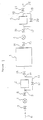
- blowers as 2 is an ISOTC vapor generating chamber, as 3 a germ treatment chamber and as 5 an ISOTC vapor-adsorbing device.
- the ISOTC vapor-generating chamber 2 has a structure adapted for storing ISOTC therein.
- the ISOTC is in the form of ISOTC solution or isothiocyanate vapor-generating agent containing it.
- the ISOTC vapor-adsorbing device 5 contains an adsorbent and can remove by adsorption ISOTC vapors contained in a gas fed thereto.
- an adsorbent activated carbon, sepiolite, diatomoaceous earth, alumina, silica, silica gel, silica-alumina, magnesia or zeolite may be generally used, though any adsorbent may be used as long as it can adsorb ISOTC vapors.
- the germ-destroying treatment of the article is carried out by operating the blower 1 to cause a gas to pass via line 6 through the vapor generating chamber 2 and to cause an ISOTC-containing gas to be discharged therefrom through line 10 and fed to the treatment chamber 3 in which the article is accommodated.
- the carrier gas for ISOTC air is generally used. Nitrogen gas or carbon dioxide gas may also be used.
- a portion of the gas discharged from the ISOTC vapor-generating chamber 2 may be recirculated through a line 11 and a valve 12 to a line 9 to control the concentration of ISOTC vapors in the gas passing through the line 10.
- the concentration of ISOTC vapors in the treatment chamber is 5-5,000 ppm (v/v), preferably 10-2,000 ppm (v/v), on volume basis.
- the treatment is performed for a period of time sufficient to obtain sufficient germicidal effect on the article.
- the treatment time varies with the kind of the article and the concentration of ISOTC in the treatment chamber and is not determined in the same rule. Generally, however, a short period of time of 1-60 minutes, preferably 5-20 minutes is sufficient.
- a valve 15 is opened and the blower 4 is actuated to discharge the gas within the treatment chamber via adsorption device 5 through a line 22 to the air.
- a valve opening to the air is suitably connected to the treatment chamber.
- ISOTC vapors contained in the gas are removed by adsorption due to the action of the adsorbent contained therein.
- the contact of the gas in the adsorbing device may be carried out for a period of time sufficient to achieve the removal by adsorption.
- the contact time can be controlled by recirculating a portion of the gas discharged from the adsorbing chamber 5 through a line 18 to a line 17 via line 17 via line 19 and valve 20.
- the treatment chamber 3 and the adsorbing device 5 may be provided with heating and cooling mechanisms to effect temperature control.
- a heating medium such as steam may be passed therethrough for regeneration.
- the mixing of ISOTC into the gas in the treatment chamber may be carried out by directly spraying ISOTC solution into the chamber instead of feeding ISOTC vaporized in the above vapor-generating chamber.
- the removal and separation of ISOTC from the gas may be effected using a chemical reaction with a substance reactive with ISOTC, such as a solid amine, in place of using the adsorbent.
- any chamber of an air-tight structure may be used as the germ-destroying treatment chamber 3.
- the gas containing ISOTC vapors may be fed to the treatment chamber 3 not only intermittently as described above but also continuously while discharging same through a line 14. In this case, part of the gas discharged from the line 14 may be recirculated to the treatment chamber through a flow control valve.
- the germ-destroying treatment in the chamber 3 may be carried out in a continuous system or in a batch system.
- the article is passed through the treatment chamber 3 at a constant speed.
- Fig. 2 designated as 1 is a germ-destroying treatment chamber, as 2 an ISOTC vapor-generating chamber, as 3 a blower, as 4 a gas distributor and as 5 an ISOTC adsorbing device.
- the germ-destroying treatment chamber 1 and the ISOTC vapor-generating chamber 2 are interconnected by a pipe 6 provided with an open-close valve
- the germ-destroying treatment chamber 1 and the blower 3 are interconnected by a pipe 11 provided with an open-close valve 12
- the blower 3 and the gas distributor 4 are interconnected by a pipe 14 provided with an open-close valve 15.
- the gas distributor may be, for example, of a structure (header pipe) having a close-ended, large diameter pipe to which a gas inlet conduit and gas outlet conduits are connected.
- the gas distributor 4 and the ISOTC adsorbing device 5 are interconnected by a pipe 16 having an open-close valve 17.
- the gas distributor 4 and the ISOTC vapor-generating chamber 2 are interconnected by a pipe 18 having an open-close valve 19.
- the gas distributor 4 and the germ-destroying treatment chamber 1 are interconnected by a pipe 20 having an open-close valve 21.
- the upstream and downstream sides of the blower are interconnected by a pipe 24 having a gas flow rate controlling valve 25 so that the gas feed rate by the blower 3 may be controlled.
- the open-close valves are electrically actuated and operated in a control panel.
- the above-described apparatus performs germ-destroying treatments of an article as follows. First, a door 10 of the treatment chamber 1 is opened to place an article to be treated therein. After closing the door 10, the blower 3 is actuated while maintaining the valves 9, 17 and 21 in a closed state and the valves 7, 12, 15 and 19 in an open state. By the operation of the blower 3, the ambient gas (air) within the treatment chamber 1 is caused to flow and circulate successively through a recirculating path including the blower 3, gas distributor 4, the ISOTC vapor-generating chamber 2 and the treatment chamber 1.
- ISOTC vapors vaporized in the ISOTC vapor-generating chamber 2 are entrained in the recirculating gas and fed to the treatment chamber 1, so that the concentration of ISOTC in the treatment chamber 1 is increased with time.
- the valve 21 is opened and the valves 7 and 19 are closed so that the gas containing the predetermined concentration of ISOTC vapors is recirculated without preventing the passage through the ISOTC vapor-generating chamber.
- the detection of the concentration of ISOTC in the gas may be made with a concentration analyzer provided in the treatment chamber 1 or the pipe 11.
- concentration analyzer any known type may be adopted such as of a gas chromatography type or an electrical conductivity meter type.
- the valve 17 is opened while the valves 19 and 21 are closed.
- the operation for opening and closing of the valves may be automatically performed using timers.
- a purge gas is introduced through a pipe 8 into the treatment chamber 1.
- air may be used, though the use of sterilized air or nitrogen gas is preferred.
- the purge gas is passed through the treatment chamber 1 and withdrawn therefrom through the line 11 and is then introduced through the blower 3 and the gas distributor 4 into the ISOTC adsorbing device 5.
- the gas from which ISOTC has been removed is withdrawn as an exhaust gas through a pipe 30 and discharged into the air.
- the blower is stopped and the door 10 is opened to take the treated article out of the chamber.
- the germ-destroying treatment process is over.
- the germ-destroying treatment may be further continued.
- a treatment device of a continuous system may be adopted by using a structure capable of continuously feeding and discharging articles.
- the basic operation in this case is similar to that described above.
- a pipe 20 having an open-close valve 21 capable of controlling a flow rate of a gas may be provided between the gas distributor 4 and the treatment chamber 1 as shown in Fig. 2, so as to introduce a portion of air introduced into the gas distributor 4 into the treatment chamber 1 through the pipe 20 while controlling the proportion of the gas flow rates flowing through the pipes 20 and 18.
- the ISOTC vapor-containing gas in the treatment chamber is fed, after completion of the treatment, to the ISOTC-adsorbing device together with a purge gas, where ISOTC is removed by adsorption. Thereafter the gas is discharged to the air.
- the strong irritating odor of ISOTC does not emanate during the process, so that deterioration of working environment may be prevented.
- FIG. 3 indicated as 1 is an ISOTC vapor-generating device, as 2 a closed space, as 3 an ISOTC vapor-adsorbing device and as 4 and 5 are blowers.
- the ISOTC vapor-generating device 1 is provided with heating and cooling mechanisms and is constructed to accommodate ISOTC therewithin.
- the ISOTC present in the device 1 may be in the form of ISOTC solution or isothiocyanate vapor-generating agent containing it.
- the ISOTC vapor-adsorbing device 3 contains an adsorbent therewithin and is adapted to remove ISOTC vapors contained in a feed gas by adsorption. Any adsorbent may be used as long as it can adsorb ISOTC vapors,.
- the blower 4 is actuated to cause air to pass through the ISOTC vapor-generating chamber 1 through a line 6 and to let the ISOTC vapor-containing gas introduced into the space 2 through a line 8.
- a valve 7 is closed while recirculating the gas within the space using a valve 10, thereby to effect the germ-destroying treatment of the closed space.
- the blower is stopped and the valve 10 is closed. Valves 15 and 12 are opened and a blower 13 is actuated.
- a purge gas is fed through a line 14 to the closed space 2 so that an ISOTC vapor-containing gas is discharged therefrom and is introduced into the ISOTC vapor-adsorbing device 3 where the ISOTC vapors contained therein are removed by adsorption.
- the resulting ISOTC vapor-free gas is discharged through a find 16.
- the closed space is sterilized and the ISOTC vapors used in the sterilization treatment is removed from the space. Therefore, the space is free of irritating odor attributed to ISOTC vapors.
- air may be used as the above purge gas, the use of sterilized air or nitrogen gas is preferred.
- the present invention it is preferable to install at least a portion of the ISOTC vapor-generating chamber 1, the blowers 4 and 5 and the ISOTC vapor-adsorbing device in the closed space according to the size of the space. When the closed space is small, they are installed outside thereof.
- the concentration of the ISOTC vapors in the closed space is 5-2,000 ppm, preferably 10-500 ppm, and the ISOTC vapors are retained in the closed space for 1 minute to 12 hours. By the use of these conditions, harmful microorganisms in the closed space may be almost completely destroyed.
- the air within the closed space and surfaces of machines and equipments disposed therein may be effectively sterilized. Further, since ISOTC does not corrode metals, there is no fear of corrosion of metals. Moreover, even when ISOTC vapors remain unremoved in trace amounts, they do not adversely affect human bodies.
- Allyl isothiocyanate was dissolved in an edible oil (soybean oil) as an oily liquid to obtain an ISOTC solution.
- allyl isothiocyanate were placed in a "schale" of the same size as above and similar test was performed. The irritating odor causing eyes to smart emanated for 30 minutes but, after 1 hour, no odor was detected. Concentration of allyl isothiocyanate in solution (%) Time passed (day) 30 min. 1 5 10 15 20 0.5 B C C C C D 1 B B C C C C 5 A A B B B C 10 A A B B B B B 20 A A A B B B 30 A A A A B B B
- Allyl isothiocyanate was dissolved in corn oil to obtain ISOTC solutions with various concentrations. Each solution (about 9 g) was placed in a "schale" having a diameter of 85 mm (bottom area: 56.7 cm 2 ) and a height of 15 mm. The. "schale” was placed in a closed, constant-temperature vessel (volume: 88 liters) and the change of the amount of evaporation of allyl isothiocyanate was investigated. The results are shown in Table 2. The amount of evaporation of allyl isothiocyanate shown in Table 2 is in terms of parts by weight of allyl isothiocyanate evaporated per 100 parts by weight of the solution present in the "schale" at the start of the measurement.
- Allyl isothiocyanate was dissolved in corn oil to obtain a 50 % ISOTC solution.
- Granules (diameter: about 1 mm, length: about 3.5 mm) of calcined diatomaceous earth (100 parts) was impregnated with this solution (40 parts) to obtain an ISOTC vapor-generating agent.
- the change of the amount of evaporation of ISOTC with time was investigated in the same manner as that in Example 2. The results are shown in Table 3.
- the amount of evaporation of allyl isothiocyanate shown in Table 3 is in terms of parts by weight of allyl isothiocyanate evaporated per 100 parts by weight of the solution present in the "schale" at the start of the measurement.
- Time passed 1 2 3 4 5 6 Evaporation amount (parts by weight) 4.4 10.1 12.9 14.3 14.6 14.9
- Allyl isothiocyanate was dissolved in corn oil to obtain solutions with concentrations of 50 (v/v) %, 20 (v/v) %, 10 (v/v) % and 5 (v/v) %.
- Mildew germs to be tested were exposed in a closed space (room temperature) to vapors emanating from the solutions. Thereafter, they were incubated at 28 °C for 3 days to investigate growth of germs. The results were as shown in Table 4.
- the mold germs subjected to the test are three kinds of eumycetes specified in JIS Z 2911-1981 (Anti-mold Test Method); Penicillium Funiculosum Thom IFO 6345, green mold, referred to as Germ A in Table 4), Chaetomiun globosum Kunze ex Fries IFO 6347 (belonging to Chaetomium, referred to as Germ B in Table 4), and Cladosporium cladosporiolides (Fresenius) de vries IFO 6348 (FERM S-8; IAM F517, belonging to Kurokawa mold, referred to as Germ C in Table 4).
- Example 5 was repeated in the same manner as described except that cut rice-cake was used in place of the dried fish. As a result, mold was found to form after 3 days on the rice-cake stored by itself, whereas no mold was found to form even after 1 month in the case of the rice-cake stored together with the allyl isothiocyanate solution.
- Mustard seeds (30 parts by weight) were mixed with an edible oil (soybean oil, 70 parts by weight). The mixing was able to easily performed without causing deterioration of the working environment since mustard seeds were almost free of irritating odor of an isothiocyanate.
- This ISOTC solution was tested by sense for change in degree of emanation of allyl isothiocyanate with time.
- 20 g of the ISOTC solution were placed in a "schale" (dimension; diameter: 70 mm, height: 15 mm) and strength of odor emanating from the "schale" at room temperature was judged based on the following ratings. The results are shown in Table 5.
- 0.05 g of allyl isothiocyante were placed in a "schale" of the same size as above and similar test was performed.
- the irritating odor causing eyes to smart emanated for 30, minutes but, after 1 hour, no odor was detected.
- Allyl isothiocyanate was dissolved in a commercially available edible oil (soybean oil) to obtain solutions with concentrations of 1-10 %. 10 parts of each ISOTC solution were homogeneously mixed and dispersed into 100 parts of carrageenan gel obtained from 5 % of carrageenan and 95 % of water, thereby to obtain a gel like material containing allyl isothiocyanate.
- the gel-like material (10 g) of Sample No. 4 of Example 8 was placed in a beaker and this beaker in turn was placed in a commercially available, air-tight, plastic vessel (dimension; length: 150 mm, width: 200 mm, height: 150 mm) together with a commercially available, cut rice-cake. After covering with a lid for sealing, the vessel was allowed to stand at ambient temperature.
- Example 9 was repeated in the same manner as described except that bread was used in place of the rice-cake. As a result, while mold was found to form after 3 days preservation in the comparative test in which no gel-like material of the present invention was used, no mold was found to form even after 30 days preservation in the case of the test wherein the gel-like material of the present invention was employed.
Landscapes
- Life Sciences & Earth Sciences (AREA)
- Engineering & Computer Science (AREA)
- Health & Medical Sciences (AREA)
- Wood Science & Technology (AREA)
- Zoology (AREA)
- Chemical & Material Sciences (AREA)
- General Health & Medical Sciences (AREA)
- Polymers & Plastics (AREA)
- Food Science & Technology (AREA)
- Environmental Sciences (AREA)
- Plant Pathology (AREA)
- Agronomy & Crop Science (AREA)
- Dentistry (AREA)
- General Chemical & Material Sciences (AREA)
- Toxicology (AREA)
- Chemical Kinetics & Catalysis (AREA)
- Pest Control & Pesticides (AREA)
- Epidemiology (AREA)
- Animal Behavior & Ethology (AREA)
- Public Health (AREA)
- Veterinary Medicine (AREA)
- Agricultural Chemicals And Associated Chemicals (AREA)
- Apparatus For Disinfection Or Sterilisation (AREA)
- Food Preservation Except Freezing, Refrigeration, And Drying (AREA)
- Organic Low-Molecular-Weight Compounds And Preparation Thereof (AREA)
Abstract
Description
- This invention relates to isothiocyanate vapor-generating agents and a germ-destroying treatment method and apparatus using such isothiocyanate vapor-generating agents.
- Mold is apt to form on various foods, glass products such as lenses, leather products such as leather boots, leather jumpers and fur coats and products of paints and pastes formed of starch or cellulose. This considerably reduces validity of the goods or calls for waste disposal thereof.
- Apart from mold, increased growth of harmful microorganisms, too, considerably reduces validity of the goods or demands for waste disposal thereof. For example, in the case of foods, there are caused problems of fermentation and food poisoning due to increased growth of bacteria.
- It is known to seal-pack an article together with an oxygen absorber with a packing material and to maintain the oxygen concentration within the pack below 1% or less for the purpose of preventing the growth of mold on the article. While this method can effectively prevent generation of mold by aerobic bacteria, this cannot be an effective means for preventing increase and growth of anaerobic bacteria which account, for food poisoning or fermentation.
- It is also known to seal-pack an article together with an ethanol-emanating agent and to fill the inside of the pack with ethanol vapors for the purpose of preventing the formation of mold and the growth of ordinary bacteria. With this method, satisfactory effect cannot be obtained unless ethanol, which is expensive, is used in a relatively large amount.
- Further, a number of mildew-proofing agents and anti-bacterial agents are hitherto known. Most of these chemicals, however, have toxicity to human bodies so that the use thereof is subjected to severe restriction.
- A number of natural products having an antimicrobial action are hitherto known. Especially, Eutrema wasabi is known to have an excellent germicidal activity. It is also known to subject food to a germ-destroying treatment using an isothiocyanate which is a major component of wasabi. For example, Japanese Published Unexamined Patent Application No. Sho-57-99182 discloses an aqueous emulsion composition obtained by emulsion-dispersing, in water in the presence of an emulsifier, a solution of isothiocyanate dissolved in an oil. This aqueous emulsion composition is used by being mixed into a food so as to sterilize the food. However, the incorporation of such an aqueous emulsion into foods is not preferable not only because the taste of the foods deteriorates but also because isothiocyanate in foods is apt to decompose. Japanese Published Unexamined Patent Application No. Sho-58-63348 discloses a method for preserving vegetables and fruits wherein the vegetables and fruits are packed in a packaging vessel together with a synthetic zeolite which has a pore diameter of 5-10 Å. and which is impregnated with isothiocyanate in a proportion of about 5% by weight. The isothiocyanate-impregnated zeolite does not generate an effective amount of isothiocyanate vapors in air. It can adsorb moisture in air when subjected to a high humidity condition of a relative humidity, of 90% or more with the simultaneous generation of isothiocyanate adsorbed therein. This known method has problems because the synthetic zeolite with a pore diameter of 5-10 Å to be used as an absorbent of isothiocyanate is expensive and because the amount of isothiocyanate adsorbed thereon is very low, ie about 5% by weight. The known, isothiocyanate-absorbed, synthetic zeolite has also a drawback because it cannot generate isothiocyanate vapors unless it is subjected to a high humidity condition. Thus, the isothiocyanate adsorbed, synthetic zeolite is not effectively utilized as a general isothiocyanate vapor-generating agent.
- As described in the foregoing, several techniques for destroying germs with the use of isothiocyanate which is a major ingredient of wasabi are known. However, none of them are satisfactory from the practical standpoint.
- The present inventors have made various studies and, as a result, have found on the basis of paying attention to the fact that allyl isothiocyanate (hereafter referred to simply as ISOTC) is an oily liquid, that the amount of ISOTC generated can be advantageously and finely controlled by controlling the concentration of ISOTC in a solution obtained by dissolving ISOTC in an oily liquid having a vapor pressure at 30°C of 2 mmHg (2.66x10²Pa) or less, and that a germ-destroying treatment of various articles can be effectively and advantageously performed, without encountering any noticeable deterioration of working environments, by contacting various articles with ISOTC vapors generated from the solution.
- In accordance with the present invention in one aspect there is provided an ISOTC vapor-generating agent comprising a porous substance supporting and impregnated with the above ISOTC solution.
- In accordance with the present invention in another aspect there is provided an ISOTC vapor-generating agent composed of an encapsulated body, containing a core material which is the above ISOTC solution.
- In accordance with the present invention in a further aspect there is provided an ISOTC vapor-generating agent comprising a gel-like substance containing the above ISOTC solution.
- Other aspects of the present invention will be described below and are defined in the appended claims.
- The term "germ-destroying action", and similar terms, used in the present invention are intended to refer to "antimicrobial action" which includes both germicidal action and germistatic action. The term "germ" herein is intended to include bacteria, fungi, spore, alga and other harmful microorganisms.
- The ISOTC vapor-generating agents used according to the present invention are applied, by virtue of strong germ-destroying action of ISOTC vapors generated therefrom, to the food field and various other fields which involve problems of growth of harmful microorganisms. For example, the agent may be used for the prevention of mold on foods or for the prevention of mold which grows on various solid surfaces such as glasses and concrete walls. Further, the agent may be used for the prevention of rot or fermentation of foods and for prevention of deterioration of the freshness thereof. Furthermore, the agent may be used for destroying body odors such as armpit odors, sweat odors and foot odors or for preventing the generation of such odors through the prevention of bacterial decomposition of sweat and sebum. Because of its fungicidal effect, the agent may be used for the treatment of skin disease caused by fungi such as water-eczema or ringworm.
- The term "article" used in the present specification is intended to involve various products, such as foods, in connection with which growth of harmful microorganisms poses problems. In the present invention, mustard oil may be used as such as the source of allyl isothiocyanate.
- The present invention will now be described in more detail.
- The solution generating ISOTC vapors used according to the present invention is a solution obtained by dissolving ISOTC in an oily liquid. As the oily liquid, there is used one which haws vapor pressure (saturated vapor pressure) at 30 °C of 2 mmHg (2.66x10²Pa)or less, preferably 1 mmHg (1.33x10²Pa) or less. Since a solution of ISOTC dissolved in an oily liquid having such a low vapor pressure can significantly suppress the vaporization of ISOTC and since vapors emanating from such a solution contains almost no vapors of the oily liquid and substantially consist of the ISOTC vapors, the contact of an article with such vapors does not cause troubles resulting from the vapors of the oily liquid. An oily liquid having a boiling point of at least 180 °C, preferably at least 200 °C, more preferably 230 °C, is generally advantageously used. As the oily liquid, there may be mentioned, for example, fats and oils such as olive oil, sesame oil, safflower oil, soybean oil, tsubaki oil, corn oil, rape oil, castor oil, sunflower oil, cottonseed oil, peanut oil, cacao butter, palm oil, clove oil, coconut oil, beef tallow, fish oil, hardened oil, turtle oil and yolk oil; waxes such as liquid lanolin; hydrocarbon oils such as liquid paraffin, liquid polyisobutylene and squalane; higher fatty acid oils such as oleic acid, ricinolic acid and lysinol; higher alcohols such as octyl alcohol and oleyl alcohol; polyalcohols such as polyethylene glycol, polypropylene glycol and glycerin; and ester oils such as linol acetate and hexyl laurate. It is preferred that the oily liquid to be used in the present invention be preferably odorless or almost odorless.
- The amount of ISOTC dissolved in the oily liquid is 0.01-50 % by weight, preferably 0.1-40 % by weight based on the oily liquid solution of ISOTC.
- ISOTC generates a strong irritating odor even if present in a small amount and is difficult to handle. However, when used in the form of an oily liquid solution as described above, vaporization of ISOTC is effectively prevented so that ISOTC can be handled without difficulty. The ISOTC solution may be used as such as an ISOTC vapor-generating agent.
- In dissolving ISOTC in the oily liquid, various auxiliary components may be added or dissolved thereinto as desired. Examples of such auxiliary components include a surfactant; a high molecular weight substance; a higher alcohol, a higher fatty acid, a fatty acid ester or a fat and oil which are solids at ambient temperature; a colorant; viscosity-controlling agent; and an antioxidant. Further, a lower alcohol such as ethanol or propyl alcohol or a low boiling point solvent such as acetone, methyl ethyl ketone, ether, ethyl acetate or hexane may be added in a small amount as an auxiliary component to control the amount of ISOTC vaporized from the oily liquid.
- The ISOTC-containing oily liquid used according to the present invention may be prepared by dispersing ISOTC-containing seeds or cells, as such or after pulverization, into an oily liquid. The amount of the seeds or cells dispersed in the oily liquid is 1-80 % by weight, preferably 10-60 % by weight based on the oily liquid. Such an ISOTC-containing oily liquid may be used under a condition where the seeds or cells are present.
- A ISOTC vapor-generating agent of this invention may be obtained by impregnating a porous substance with the above-mentioned oily liquid solution of ISOTC (hereinafter referred to also merely as ISOTC solution). When a porous substance is impregnated with ISOTC by itself, a large amount of ISOTC vapors is generated at the time of impregnation of the porous substance with ISOTC because of the high evaporation rate thereof. As a result, the working environment becomes poor due to ISOTC vapors. Additionally, it becomes difficult for the porous substance to stably support ISOTC for a long period of time since the vaporizability of ISOTC carried by the porous substance is still high. According to the present invention, such difficulties have been overcome by supporting ISOTC as a solution dissolved in the above oily liquid to a porous substance by impregnation. While ISOTC easily reacts with water and is poor in storage stability, this problem has been also solved by using it in the form of a solution in the above-mentioned oily liquid.
- As the porous substance, those which are generally used as an absorbent, a filler, etc. may be used. Examples of such substances include clay or clay minerals such as diatomaceous earth, yellow earth, clay, talc, zeolite, attapulgite and sepiolite and other substances such as activated carbon, silica, silica gel, alumina, magnesia, silica-alumina, silica-magnesia and synthetic aluminosilicate. As the porous substance, there may be used those of a variety of shapes such as in the form of powder, pellet, sphere, column and cylinder. As the porous substances, it is preferable to use calcined or dried materials from which moisture has been sufficiently removed.
- Impregnation of the porous substance with the solution may be performed, for example, by a method wherein the porous substance is mixed with the ISOTC solution, a method wherein the ISOTC solution is sprayed over the porous substance, or a method wherein the porous substance is immersed in the ISOTC solution. The amount of the ISOTC solution supported by impregnation by the porous substance is not greater than the saturated absorbing capacity of the porous substance and, generally, is 1-100 parts by weight per 100 parts by weight of the porous substance. Preferred content is suitably determined according to the kind of the ISOTC solution and the kind of the porous substance.
- In the present invention, when the porous substance impregnated with the ISOTC solution is in the form of powder, it is possible to shape it by a conventional shaping method into tablets, spheres, columns, pellets, etc. The shaping may be effected by a tablet shaping method, an extrusion molding method, etc. In performing the shaping, a molding aid is used. Examples of the molding aid include organic binders such as carboxymethyl cellulose, polyvinyl alcohol and sodium alginate and inorganic binders such as bentonite, kaolin, alumina hydrogel and silicic acid hydrogel. As the molding aid, various short fibers such as gypsum whisker may also be used. For the purpose of controlling the emanation of ISOTC, the ISOTC solution-containing porous substance may be coated with a resin pervious to ISOTC vapors. Provision of such a coating can further suppress the emanation of ISOTC from the porous substance.
- Another type of the ISOTC vapor-generating agent may be obtained by encapsulating the above-mentioned ISOTC solution. The encapsulation may be performed by various known methods, for example, a method wherein the ISOTC solution and a high molecular weight solution are simultaneously ejected into an aqueous medium through inner and outer nozzles, respectively, of a dual liquid nozzle, a surface polymerization method, etc. The encapsulation may also be effected by a method wherein the ISOTC or a porous substance impregnated with the ISOTC solution is mixed with a melt of a fusible material which is solid at room temperature and which has a melting point of 100 °C or less, preferably in the range of 40-60 °C, the resulting mixture being cooled for solidification and then ground. In this case, as the fusible material, there may be mentioned higher alcohols or esters thereof, fats and oils, waxes, etc. The encapsulation may also be effected by a method wherein the ISOTC or a porous substance impregnated with the ISOTC solution is mixed with a melt of a thermosetting resin composition (such as epoxy resin composition or unsaturated polyether resin composition) which is liquid at room temperature or at a temperature of 100 °C or less, the resulting mixture being cooled for solidification and then ground. A reaction of the ISOTC solution with an inclusion compound-forming agent such as cyclodextrin, urea, etc. may also give encapsulated materials.
- In the present invention, the above-mentioned ISOTC solution, porous substance impregnated with the ISOTC solution, shaped article of the ISOTC solution-containing porous substance or encapsulated material of the ISOTC solution, may be used in a state in which it is seal-packed with a packing material. As the packing material, there may be used one at least a portion of which is pervious to ISOTC vapors. Illustrative of such packing materials are films, sheets and vessels pervious to ISOTC vapors and formed of a plastic such as polypropylene, polyethylene or ethylene/vinyl acetate copolymer. A packing material formed of a plastic impervious to ISOTC vapors may be used as a packing material pervious to ISOTC vapors by forming therein fine holes using, for example, a laser beam. In addition, paper, non-woven fabric, a surface-treated material of paper or non-woven fabric, or a laminate of a paper, non-woven fabric or cloth with a plastic film pervious to ISOTC vapors may also be used.
- A further ISOTC vapor-generating agent according to the present invention may be obtained by incorporating the above-mentioned ISOTC solution in a gel-like substance.
- Various kinds of conventionally known gel-like substances may be used. Illustrative of these substances are agar, carrageenan, gelatin, carboxymethyl cellulose, starch, alginic acid, polyvinyl alcohol and dextrin. The incorporation of the ISOTC solution into the gel-like substance may be effected, for example, by a method in which the ISOTC solution is mixed and dispersed in a previously formed gel-like substance, or a method in which the ISOTC solution is added during the preparation of the gel-like substance, especially to a raw material for the preparation of the gel-like substance. The content of the ISOTC in the gel-like substance is generally 0.05-20 % by weight, preferably 0.5-10 % by weight. An appropriate content of ISOTC is determined in each case according to the object of use of the gel like substance. In case where the ISOTC solution is incorporated into the gel-like substance, the ISOTC solution may be used as a previously encapsulated form.
- The above-mentioned ISOTC vapor-generating agent according to the present invention is generally used after being filled or packed in a bag of a paper which has been subjected to a water-repelling or oil-repelling treatment or in a bag or vessel formed of a plastic film which is pervious to ISOTC vapors.
- According to the present invention, various articles showing germicidal activity may be obtained by using the above-mentioned ISOTC vapor-generating agents. As one such article, for example, there is provided a conventionally known coating composition such as an adhesive composition, a paint composition or ink composition having incorporated thereinto, as a blending ingredient, the above-mentioned ISOTC solution, powdery porous substance impregnated with the ISOTC solution or encapsulated material of the ISOTC solution. These compositions may be in the form of a liquid or a film. These articles may be utilized in a variety of fields such as the food, packing materials, construction materials fields, etc. as a coating composition having germicidal activity.
- According to the present invention, there is also provided a sheet-like material in which a sheet or film, such as paper, non-woven fabric or a plastic film, has coated thereon a coating composition containing the above-mentioned ISOTC. In this case, the coating may be formed on one or both sides of the sheet-like material or between respective plural laminated sheets. The sheet-like material may be used, as a sheet-like material having a germicidal activity, in various fields such as of foods, packing materials, construction materials, etc.
- According to the present invention, boards (hard-board, semihard-board, insulation board, particle board, etc.) having germicidal activity may be obtained by mixing the above-mentioned powdery porous substance impregnated with the ISOTC solution with cellulosic materials such as wood powder, wood chips, etc together with an adhesive, followed by molding into plates. Also, a gypsum board having germicidal activity may be obtained by mixing the above ISOTC-containing powdery porous substance with calcined gypsum together with powder such as pulp powder or wood powder, followed by molding into plates. A plastic board having germicidal activity may be further obtained by mixing the powdery porous substance impregnated with the ISOTC solution with a resin composition hardenable at ambient or a low temperature, such as an epoxy resin composition or an unsaturated polyester resin composition, followed by molding and hardening. The articles may be used in the field of construction materials as a germicidal or mildew-proof board (plate-like material).
- Since a solution of ISOTC dissolved in an oily liquid having a vapor pressure of 2 mmHg (2.66x10²Pa) or less at 30°C shows an extremely suppressed emanation of ISOTC, handling of the solution is very easy. Additionally, since the ISOTC solution gradually emanates ISOTC for a long period of time, retentivity in ISOTC vapor-generating effect of the solution is excellent. Therefore, the solution may be used by itself as an ISOTC vapor-generating agent and, moreover, utilized in various fields as a germicide, a mildew-proof agent, a freshness-keeping agent, a deodorizer, etc by virtue of the germicidal property of ISOTC vapors emanated therefrom. Furthermore, the solution may be utilized in a variety of fields as a functional material having germicidal activity, as already described.
- In the above-mentioned porous substance impregnated with the ISOTC solution and the above-mentioned encapsulated material of the ISOTC solution, the generation of ISOTC vapors is much more suppressed so that they may be used as a solid agent emanating ISOTC in various fields such as foods, packing materials and, construction materials.
- The above-mentioned coating composition containing the ISOTC solution, the ISOTC solution-impregnated porous substance or the ISOTC solution-encapsulated material may be used as a functional composition having germicidal activity in various fields. A coating of the composition gradually generates ISOTC vapors to attain a desired germicidal effect.
- The above-mentioned sheet-like material using the coating composition gradually generates ISOTC vapors so that it may be utilized in various fields such as foods, packing materials, printing materials, construction materials, as a functional sheet-like material having germicidal property, mildew-proof property, freshness-keeping property and deodorizing property.
- The gel-like substance according to the present invention containing the ISOTC solution generates ISOTC vapors, in an extremely suppressed manner, gradually for a long period of time and is excellent in retentivity of germicidal activity. Thus, it is advantageously utilized in the field of foods, etc.
- The method for the germ-destroying treatment of an article according to the present invention includes a step of contacting the article with ISOTC vapors whose generation is effected with the use of the above mentioned ISOTC solution or various solid materials containing the ISOTC solution. The concentration of the ISOTC vapors in a gas to be contacted with the article is at least 5 ppm (v/v) but is lower than the saturation concentration in the gas. More particularly, the concentration is generally 20-5,000 ppm, preferably 50-1,000 ppm and may be suitably determined according to the article. The contact time depends upon the concentration of ISOTC in the gas and is 0.1 to 60 minutes, preferably 0.5 to 30 minutes when the concentration of ISOTC vapors is 20 ppm or more. The treatment time may be adequately determined according to the article to be treated.
- In the present invention, the article to be contacted with ISOTC vapors may be packed with a plastic packing material such as of polyethylene, polypropylene or ethylene/vinyl acetate copolymer. Investigation by the present inventors has revealed that the above-described plastic materials show high permeability to ISOTC vapors and that such an article packed with the packing material and once subjected to germ-destroying treatment is no longer susceptible to secondary contamination with harmful germs and is effectively protected from infection of harmful germs as long as the package is kept as is.
- The concentration of ISOTC vapors in the gas with which the packed article is contacted is preferably higher than that used in treating an unpacked article and is generally 100-5,000 ppm.
- The packing material for packing an article should be broadly construed and comprises vessels of various shapes as well as films and sheet-like materials. Suitable methods for packing an article include a method in which the article is accommodated in a bag and packed therewith; a method in which the article is placed in an open vessel such as a tray, the open end being subsequently sealed with a film; a method in which the article is placed in an open vessel such as a tray, the vessel being subsequently entirely wrapped with a film; a method in which the article is packed in a box, the box being subsequently wrapped with a film; and a method in which the article being a liquid is placed in a plastic vessel, the vessel being subsequently closed with a lid.
- The term "packing of an article" used for the purpose of the present invention is intended to include a state of packing where the article may be prevented from contamination with harmful germs and is not intended to refer only to a perfectly sealed state in which the article in the package is perfectly isolated from ambient air.
- At least a portion of the packing material to be used for packing an article is pervious to ISOTC vapors. Such packing materials may be, for example, films, sheets and vessels formed of a plastic pervious to ISOTC vapors such as polypropylene, polyethylene, an ethylene/vinyl acetate copolymer or an ethylene/propylene copolymer. A packing material formed of a plastic impervious to ISOTC vapors (such as aluminum foil or nylon) may be used as a packing material pervious to ISOTC vapors by forming fine holes using, for example, a laser beam. In addition, paper, non-woven fabric, a surface-treated material of paper or non-woven fabric, or a laminate of a paper, non-woven fabric or cloth with a plastic film pervious to ISOTC vapors may also be used.
- In performing the germ-destroying treatment according to the present invention, a packed or unpacked article is contacted with a gas containing ISOTC vapors. Methods for achieving this contact include, for example, a method in which the package is placed in an air-tight chamber to which ISOTC is fed in the form of vapors and a method in which the package is placed into an air-tight chamber precharged with ISOTC vapors, the package being taken out of the chamber after a predetermined period of time. One simple method includes the steps of enclosing the article in a big plastic bag, and adding an ISOTC vapor-generating agent into the bag.
- The generation of ISOTC vapors may be effected with the use of the above-mentioned ISOTC solution or various solid materials containing the ISOTC solution. With such ISOTC solution or solid materials containing same, ISOTC vapors slowly emanate in a controlled amount.
- When a packed article is contacted with ISOTC vapors in a manner as described above, ISOTC vapors enter the package. The intruded ISOTC vapors after completion of the germ-destroying treatment permeate through the packing material and are gradually dispersed out of the package. From the standpoint of germicidal effect, it is preferred that the concentration of ISOTC vapors in the package be high and ISOTC vapors remain therein for a long period of time. In general, it is preferred that ISOTC vapors be present in a concentration of 10 ppm or more for 10 minutes or more. The concentration of ISOTC vapors in the package gradually decreases with time as the vapors are dispersed out of the package. The decrease of the concentration of ISOTC vapors may be controlled by previously incorporating an adsorbent into the package. Namely, when an absorbent is previously placed in the package, the adsorbent can adsorb ISOTC vapors during the treatment of the packed article by contact with ISOTC vapors. Thus, after the completion of the treatment, the adsorbent can still emanate ISOTC vapors so that the concentration of ISOTC vapors in the package and the retention time of the vapors may be controlled. Presence of ISOTC vapors for a long time in the package is not desirable because of the occurrence of problems that the vapors excessively migrate to the article to cause deterioration of the properties of the article. It is generally preferable to suitably select the kind of the packing material and the amount of the adsorbent so that the concentration of ISOTC vapors be decreased to 10 ppm or less within 48 hours.
- An article which is not packed may be first subjected to a germ-destroying treatment and thereafter packed with a packing material to protect the article from secondary contamination with harmful germs. When there is a fear that ISOTC vapors migrate excessively to the article after the treatment to cause deterioration of the property of the article, it is desirable to previously pack the article together with an absorbent so as to let the excess ISOTC vapors absorbed by the absorbent. As such an absorbent, there may be used various porous substances mentioned previously.
- The ISOTC vapors in the package of the article which has been subjected to the germ-destroying treatment are gradually dispersed out thereof with time and are almost exhausted during the circulation and sealing of the package. Therefore, a person who opens the package will not sense the irritating odor of ISOTC.
- In an embodiment of the present invention, harmful germs which are present in a closed space can be destroyed by incorporating a gas containing ISOTC vapors, generated from ISOTC solution or from a vapor-generating agent containing it, into the closed space, so that the closed space and articles contained in the closed space may be sterilized. The term "closed space" used herein is intended to refer to a space whose ambient gas (air) contained therein cannot be freely communicated with the outside thereof. Such a space may be, for example, a space of various buildings such as factories and warehouses, rooms of hospitals, hatches of cargo-boats, a space defined by hoods or sheets and various containers.
- In accordance with a preferred germ-destroying method of the present invention, there is provided a method for the treatment of an article for destroying germs characterized in that said method comprises steps of: introducing an ISOTC in the form of vapors generated from ISOTC solution or from a vapor-generating agent containing it into a germ destroying treatment chamber to form an ISOTC vapor-containing atmosphere in said germ-destroying treatment chamber; feeding the article to said germ-destroying treatment chamber; contacting the article with a gas of the ISOTC vapor-containing atmosphere in said germ-destroying treatment chamber to effect germ-destroying treatment; discharging the atmosphere gas from said germ-destroying treatment chamber after the germ-destroying treatment; and removing the ISOTC vapors from the discharged gas.
- According to the present invention, there is also provided an apparatus for the treatment of an article for destroying germs, characterized in that said apparatus comprises a germ-destroying treatment chamber provided with a feed conduit for introducing an ISOTC in the form of vapors into said treatment chamber therethrough and a discharge conduit for discharging the atmosphere gas from said treatment chamber therethrough; a storage vessel connected to said feed conduit and accommodating ISOTC solution or a vapor-generating agent containing it; and a device connected to said discharge conduit for removing vapors of the ISOTC.
- The germ-destroying method and apparatus will be explained in detail below.
- In the above method and apparatus, a germ-destroying treatment chamber (also referred simply as treatment chamber in the present specification) is used. As the germ-destroying treatment chamber, there may be used one which has an inside space adapted to receive a desired article therein and which is air-tight so that the inside gas is prevented from escaping therefrom. The treatment chamber is provided with an inlet conduit for introducing ISOTC in the form of vapors or liquid microdroplets into the chamber therethrough and with an outlet pipe for discharging an ambient gas in the chamber therethrough out of the chamber.
- The structure of the treatment chamber is suitably determined according to the manner in which the article is treated, i.e. whether the treatment is performed in a continuous mode or a batchwise mode. In the case of a continuous mode, the treatment chamber is provided with inlet and exit ports and with a conveyor running in circulation between these ports. In this case, the inlet and exit ports are constructed into an air-tight structure so as to prevent the ambient gas within the chamber from discharging out of the chamber. Thus, these ports are constructed so that they open only when the article enters or exits the chamber. Such entrance and exit of the air-tight structure may be constructed in conventionally known means. For example, the inlet and outlet portions of the treatment chamber may be closed with a curtain formed of a synthetic rubber or a plastic sheet to provide an air tight structure. When the germ-destroying treatment for an article is performed in a batch mode, an air tight door permitting the feeding and discharging of an article is provided in the treatment chamber.
- To the ISOTC feeding conduit of the treatment chamber is connected a reservoir for containing ISOTC in the form of ISOTC solution or liquid or solid vapor generating agent containing it, optionally via mixer or heater, so that ISOTC required for germ-destroying treatment is fed therefrom in the form of fine droplets or vapor.
- The method for the germ-destroying treatment of an article includes the steps of (A) feeding the article to the germ-destroying treatment chamber and (B) introducing ISOTC in the form of vapor or fine droplets into the chamber to form an ISOTC vapor containing atmosphere therein. When the germ destroying treatment is performed in a continuous system, the step (A) for the introduction of ISOTC into the treatment chamber is followed by the step (B) for the introduction of the article thereinto. When the treatment is performed in a batch system, the step (A) for the introduction of ISOTC is preceded by the step (B) for feeding the article to the treatment chamber.
- ISOTC is introduced into the treatment chamber from the reservoir through the inlet conduit in the form of vapors or fine droplets. In the case of introduction as vapors, ISOTC is previously vaporized to form an ISOTC-containing gas. When introduced as fine droplets, ISOTC is sprayed into the treatment chamber together with a gas from a mixing nozzle. As the gas, air, nitrogen gas or carbon dioxide gas may be used.
- As a method for vaporizing ISOTC to form an ISOTC vapor-containing gas, there may be mentioned a method in which ISOTC solution is heated to form vapors with which a gas is subsequently mixed or a method in which ISOTC vapors are formed from an ISOTC vapor-generating agent, with which a gas is subsequently mixed. The concentration of ISOTC in the gas is 5 ppm or more. The upper limit is the amount corresponding to the saturated vapor pressure of ISOTC in the gas. Generally, the concentration is 10-5,000 ppm. When suction-mixing ISOTC or its solution with a gas using an ejector, there is obtained a gas containing both ISOTC vapors and ISOTC fine droplets. The introduction of such a gas into the treatment chamber is also an effective method.
- The method of treating an article for destroying germs also includes a step (C) of contacting the article with an atmosphere gas containing ISOTC vapors. In this case, the treatment varies with the kind of the article but is generally 0-100°C, ordinarily 20-60°C. In the case of fresh foods, ambient temperature or a low temperature of 0-15°C is used. The treatment pressure is not specifically limited. A reduced pressure to an increased pressure may be used. Preferably, a reduced pressure or normal pressure is used. When the germ-destroying treatment is carried out in a continuous system, it is preferable to use a reduced pressure of -5 to -50 mm in terms of water column for the purpose of preventing escape of the atmosphere gas out of the chamber at the time of opening and closing of the entrance and exit thereof. It is also preferred that the atmosphere gas within the chamber be homogeneously stirred by rotation of a fan or by withdrawing the gas from a portion of the chamber while introducing the withdrawn gas into the chamber from another portion thereof.
- The germ-destroying treatment method further includes the steps of (D) discharging the atmosphere gas within the treatment chamber after completion of the germ-destroying treatment of the article and (E) removing the ISOTC gas contained in the discharged gas. The withdrawal of the atmosphere gas from the treatment chamber may be effected using a suction pump, while the removal of the ISOTC vapors from the discharged gas may be effected using a cooler, an adsorbing tower or the like device. The cooler may be of any structure as long as it can cool the gas to a temperature below that of the treatment chamber, preferably to a temperature near 0°C. As the adsorbing tower there may be used one which is filled with a gas adsorbent such as activated carbon, sepiolite, silica or alumina. The use of a combination of the cooler and the adsorbing tower is effective to perfectly remove the ISOTC vapors from the gas.
-
- Fig. 1 is a view explanatory of performing germ-destroying treatment of an article, Fig. 2 is a flow diagram of an apparatus for carrying out the germ-destroying treatment of an article, and Fig. 3 is a view explanatory of performing germ-destroying treatment in a closed space.
-
- Referring to Fig. 1, designated as 1 and 4 are blowers, as 2 is an ISOTC vapor generating chamber, as 3 a germ treatment chamber and as 5 an ISOTC vapor-adsorbing device. The ISOTC vapor-generating
chamber 2 has a structure adapted for storing ISOTC therein. The ISOTC is in the form of ISOTC solution or isothiocyanate vapor-generating agent containing it. - The ISOTC vapor-adsorbing device 5 contains an adsorbent and can remove by adsorption ISOTC vapors contained in a gas fed thereto. As the adsorbent, activated carbon, sepiolite, diatomoaceous earth, alumina, silica, silica gel, silica-alumina, magnesia or zeolite may be generally used, though any adsorbent may be used as long as it can adsorb ISOTC vapors.
- The germ-destroying treatment of the article is carried out by operating the blower 1 to cause a gas to pass via
line 6 through thevapor generating chamber 2 and to cause an ISOTC-containing gas to be discharged therefrom throughline 10 and fed to thetreatment chamber 3 in which the article is accommodated. As the carrier gas for ISOTC, air is generally used. Nitrogen gas or carbon dioxide gas may also be used. A portion of the gas discharged from the ISOTC vapor-generatingchamber 2 may be recirculated through a line 11 and avalve 12 to aline 9 to control the concentration of ISOTC vapors in the gas passing through theline 10. - When ISOTC vapors are mixed into a gas within the
treatment chamber 3 in a predetermined concentration, the blower 1 is stopped and avalve 13 is closed so that the treatment chamber is maintained in a closed state. This state is maintained for a predetermined period of time to effect the treatment of the article by absorption of ISOTC. It is preferred that a fan be provided in thetreatment chamber 3 to stir the atmosphere therein for the purpose of expediting diffusion of ISOTC vapors therein. The concentration of ISOTC vapors in the treatment chamber is 5-5,000 ppm (v/v), preferably 10-2,000 ppm (v/v), on volume basis. The treatment is performed for a period of time sufficient to obtain sufficient germicidal effect on the article. The treatment time varies with the kind of the article and the concentration of ISOTC in the treatment chamber and is not determined in the same rule. Generally, however, a short period of time of 1-60 minutes, preferably 5-20 minutes is sufficient. - After completion of the germ-destroying treatment, a
valve 15 is opened and the blower 4 is actuated to discharge the gas within the treatment chamber via adsorption device 5 through aline 22 to the air. In this case, for the purpose of preventing the inside of the treatment chamber from being rendered in a reduced pressure condition, a valve opening to the air is suitably connected to the treatment chamber. In the adsorbing device 5, ISOTC vapors contained in the gas are removed by adsorption due to the action of the adsorbent contained therein. The contact of the gas in the adsorbing device may be carried out for a period of time sufficient to achieve the removal by adsorption. The contact time can be controlled by recirculating a portion of the gas discharged from the adsorbing chamber 5 through aline 18 to aline 17 vialine 17 vialine 19 andvalve 20. Thetreatment chamber 3 and the adsorbing device 5 may be provided with heating and cooling mechanisms to effect temperature control. When the adsorbent in the adsorbing device becomes saturated, a heating medium such as steam may be passed therethrough for regeneration. - In the present invention, the mixing of ISOTC into the gas in the treatment chamber may be carried out by directly spraying ISOTC solution into the chamber instead of feeding ISOTC vaporized in the above vapor-generating chamber. The removal and separation of ISOTC from the gas may be effected using a chemical reaction with a substance reactive with ISOTC, such as a solid amine, in place of using the adsorbent.
- Any chamber of an air-tight structure may be used as the germ-destroying
treatment chamber 3. The gas containing ISOTC vapors may be fed to thetreatment chamber 3 not only intermittently as described above but also continuously while discharging same through aline 14. In this case, part of the gas discharged from theline 14 may be recirculated to the treatment chamber through a flow control valve. - The germ-destroying treatment in the
chamber 3 may be carried out in a continuous system or in a batch system. In the case of continuous system, the article is passed through thetreatment chamber 3 at a constant speed. - In Fig. 2, designated as 1 is a germ-destroying treatment chamber, as 2 an ISOTC vapor-generating chamber, as 3 a blower, as 4 a gas distributor and as 5 an ISOTC adsorbing device.
- The germ-destroying treatment chamber 1 and the ISOTC vapor-generating
chamber 2 are interconnected by apipe 6 provided with an open-close valve, the germ-destroying treatment chamber 1 and theblower 3 are interconnected by a pipe 11 provided with an open-close valve 12, and theblower 3 and the gas distributor 4 are interconnected by apipe 14 provided with an open-close valve 15. - The gas distributor may be, for example, of a structure (header pipe) having a close-ended, large diameter pipe to which a gas inlet conduit and gas outlet conduits are connected.
- The gas distributor 4 and the ISOTC adsorbing device 5 are interconnected by a
pipe 16 having an open-close valve 17. The gas distributor 4 and the ISOTC vapor-generatingchamber 2 are interconnected by apipe 18 having an open-close valve 19. The gas distributor 4 and the germ-destroying treatment chamber 1 are interconnected by apipe 20 having an open-close valve 21. Further, the upstream and downstream sides of the blower are interconnected by apipe 24 having a gas flowrate controlling valve 25 so that the gas feed rate by theblower 3 may be controlled. - The open-close valves are electrically actuated and operated in a control panel.
- The above-described apparatus performs germ-destroying treatments of an article as follows. First, a
door 10 of the treatment chamber 1 is opened to place an article to be treated therein. After closing thedoor 10, theblower 3 is actuated while maintaining thevalves valves blower 3, the ambient gas (air) within the treatment chamber 1 is caused to flow and circulate successively through a recirculating path including theblower 3, gas distributor 4, the ISOTC vapor-generatingchamber 2 and the treatment chamber 1. As a result of the gas recirculation, ISOTC vapors vaporized in the ISOTC vapor-generatingchamber 2 are entrained in the recirculating gas and fed to the treatment chamber 1, so that the concentration of ISOTC in the treatment chamber 1 is increased with time. When the concentration of ISOTC vapors reaches a predetermined value, thevalve 21 is opened and thevalves - After lapse of a predetermined period of time, the
valve 17 is opened while thevalves pipe 8 into the treatment chamber 1. As the purge gas, air may be used, though the use of sterilized air or nitrogen gas is preferred. The purge gas is passed through the treatment chamber 1 and withdrawn therefrom through the line 11 and is then introduced through theblower 3 and the gas distributor 4 into the ISOTC adsorbing device 5. The gas from which ISOTC has been removed is withdrawn as an exhaust gas through apipe 30 and discharged into the air. When the concentration of ISOTC vapors in the exhaust gas is decreased to a predetermined value, the blower is stopped and thedoor 10 is opened to take the treated article out of the chamber. Thus, the germ-destroying treatment process is over. By repeating the above operations, the germ-destroying treatment may be further continued. - While a treatment device of a batch system is shown in Fig. 2, a treatment device of a continuous system may be adopted by using a structure capable of continuously feeding and discharging articles. The basic operation in this case is similar to that described above. However, it is necessary to continuously feed a gas containing a determined concentration of ISOTC vapors to a germ destroying treatment chamber. For this purpose, a
pipe 20 having an open-close valve 21 capable of controlling a flow rate of a gas may be provided between the gas distributor 4 and the treatment chamber 1 as shown in Fig. 2, so as to introduce a portion of air introduced into the gas distributor 4 into the treatment chamber 1 through thepipe 20 while controlling the proportion of the gas flow rates flowing through thepipes - According to the above-described germ-destroying treatment, various articles such as foods may be efficiently sterilized in a safe manner. In this case, the ISOTC vapor-containing gas in the treatment chamber is fed, after completion of the treatment, to the ISOTC-adsorbing device together with a purge gas, where ISOTC is removed by adsorption. Thereafter the gas is discharged to the air. As a consequence, the strong irritating odor of ISOTC does not emanate during the process, so that deterioration of working environment may be prevented.
- In Fig. 3, indicated as 1 is an ISOTC vapor-generating device, as 2 a closed space, as 3 an ISOTC vapor-adsorbing device and as 4 and 5 are blowers.
- The ISOTC vapor-generating device 1 is provided with heating and cooling mechanisms and is constructed to accommodate ISOTC therewithin. The ISOTC present in the device 1 may be in the form of ISOTC solution or isothiocyanate vapor-generating agent containing it.
- The ISOTC vapor-adsorbing
device 3 contains an adsorbent therewithin and is adapted to remove ISOTC vapors contained in a feed gas by adsorption. Any adsorbent may be used as long as it can adsorb ISOTC vapors,. - In treating the
closed space 2 for germ-destroying purposes, the blower 4 is actuated to cause air to pass through the ISOTC vapor-generating chamber 1 through aline 6 and to let the ISOTC vapor-containing gas introduced into thespace 2 through aline 8. When the concentration of ISOTC vapors in thespace 2 is increased to a predetermined value, avalve 7 is closed while recirculating the gas within the space using avalve 10, thereby to effect the germ-destroying treatment of the closed space. - After completion of the treatment, the blower is stopped and the
valve 10 is closed.Valves blower 13 is actuated. By this, a purge gas is fed through aline 14 to theclosed space 2 so that an ISOTC vapor-containing gas is discharged therefrom and is introduced into the ISOTC vapor-adsorbingdevice 3 where the ISOTC vapors contained therein are removed by adsorption. The resulting ISOTC vapor-free gas is discharged through afind 16. In like manner, the closed space is sterilized and the ISOTC vapors used in the sterilization treatment is removed from the space. Therefore, the space is free of irritating odor attributed to ISOTC vapors. - Though air may be used as the above purge gas, the use of sterilized air or nitrogen gas is preferred.
- In the present invention, it is preferable to install at least a portion of the ISOTC vapor-generating chamber 1, the blowers 4 and 5 and the ISOTC vapor-adsorbing device in the closed space according to the size of the space. When the closed space is small, they are installed outside thereof.
- The concentration of the ISOTC vapors in the closed space is 5-2,000 ppm, preferably 10-500 ppm, and the ISOTC vapors are retained in the closed space for 1 minute to 12 hours. By the use of these conditions, harmful microorganisms in the closed space may be almost completely destroyed.
- According to the above-described method, the air within the closed space and surfaces of machines and equipments disposed therein may be effectively sterilized. Further, since ISOTC does not corrode metals, there is no fear of corrosion of metals. Moreover, even when ISOTC vapors remain unremoved in trace amounts, they do not adversely affect human bodies.
- The present invention is illustrated by the Examples which follow, and in which parts and % are by weight unless otherwise specifically noted.
- Allyl isothiocyanate was dissolved in an edible oil (soybean oil) as an oily liquid to obtain an ISOTC solution.
- This solution was tested by sense for change in degree of emanation of allyl isothiocyanate with time. In this test, 5 g of the ISOTC solution were placed in a "schale" (dimension; diameter: 75 mm, height: 20 mm) and strength of odor emanating from the "schale" at room temperature was judqed based on the following ratings. The results are shown in Table 1.
- A:
- Eyes smart from irritating odor
- B:
- Smell of mustard
- C:
- Slight smell of mustard
- D:
- No smell
- For the purpose of comparison, 0.05 g of allyl isothiocyanate were placed in a "schale" of the same size as above and similar test was performed. The irritating odor causing eyes to smart emanated for 30 minutes but, after 1 hour, no odor was detected.
Concentration of allyl isothiocyanate in solution (%) Time passed (day) 30 min. 1 5 10 15 20 0.5 B C C C C D 1 B B C C C C 5 A A B B B C 10 A A B B B B 20 A A A B B B 30 A A A A B B - Allyl isothiocyanate was dissolved in corn oil to obtain ISOTC solutions with various concentrations. Each solution (about 9 g) was placed in a "schale" having a diameter of 85 mm (bottom area: 56.7 cm2) and a height of 15 mm. The. "schale" was placed in a closed, constant-temperature vessel (volume: 88 liters) and the change of the amount of evaporation of allyl isothiocyanate was investigated. The results are shown in Table 2. The amount of evaporation of allyl isothiocyanate shown in Table 2 is in terms of parts by weight of allyl isothiocyanate evaporated per 100 parts by weight of the solution present in the "schale" at the start of the measurement.
Concentration of ISOTC Amount of evaporation (part by weight) Time passed (hr) 1 2 3 4 5 6 100 13.3 22.9 33.7 47.0 56.2 66.2 50 9.0 18.5 27.0 33.9 37.1 39.9 23 7.8 15.2 20.7 24.9 27.2 29.8 20 5.9 10.5 14.6 17.5 19.3 19.7 5 1.3 2.2 2.9 3.4 3.9 4.2 0.5 0.14 0.2 0.26 0.3 0.33 0.36 - Allyl isothiocyanate was dissolved in corn oil to obtain a 50 % ISOTC solution. Granules (diameter: about 1 mm, length: about 3.5 mm) of calcined diatomaceous earth (100 parts) was impregnated with this solution (40 parts) to obtain an ISOTC vapor-generating agent. The change of the amount of evaporation of ISOTC with time was investigated in the same manner as that in Example 2. The results are shown in Table 3. The amount of evaporation of allyl isothiocyanate shown in Table 3 is in terms of parts by weight of allyl isothiocyanate evaporated per 100 parts by weight of the solution present in the "schale" at the start of the measurement.
Time passed 1 2 3 4 5 6 Evaporation amount (parts by weight) 4.4 10.1 12.9 14.3 14.6 14.9 - Allyl isothiocyanate was dissolved in corn oil to obtain solutions with concentrations of 50 (v/v) %, 20 (v/v) %, 10 (v/v) % and 5 (v/v) %. Mildew germs to be tested were exposed in a closed space (room temperature) to vapors emanating from the solutions. Thereafter, they were incubated at 28 °C for 3 days to investigate growth of germs. The results were as shown in Table 4.
- The mold germs subjected to the test are three kinds of eumycetes specified in JIS Z 2911-1981 (Anti-mold Test Method); Penicillium Funiculosum Thom IFO 6345, green mold, referred to as Germ A in Table 4), Chaetomiun globosum Kunze ex Fries IFO 6347 (belonging to Chaetomium, referred to as Germ B in Table 4), and Cladosporium cladosporiolides (Fresenius) de vries IFO 6348 (FERM S-8; IAM F517, belonging to Kurokawa mold, referred to as Germ C in Table 4).
- The above three mold germs were found to completely destroyed upon 15 minutes exposure to vapors from the 50 (v/v) % ISOTC solution and upon 120 minutes exposure to vapors from the 5 (v/v) % ISOTC solution.
Germ Concentration of ISOTC in solution (%) Number of cells remaining after germ-destroying treatment (%) Exposure time (minutes) 0 2 4 8 15 30 60 120 A 50 100 0 20 100 87.2 62.4 0 10 100 85.4 66.7 30.2 0 5 100 86.4 71.8 19.4 5.8 0 B 50 100 42.6 0 20 100 85.7 30.4 24.5 1.0 0 10 100 60.6 32.3 18.2 5.1 0 5 100 62.7 36.6 16.9 10.2 0 C 50 100 33.3 24.2 19.7 0 20 100 95.9 64.9 35.1 18.9 0 10 100 71.7 64.6 46.0 28.3 15.0 0 5 100 74.8 57.0 53.3 37.4 17.8 9.3 0 - In one vessel (about 3 liters) was placed a dried fish (horse mackerel) while in another vessel was placed 10 cc of 1 % allyl isothiocyanate solution in soybean oil in an open state in addition to a dried fish (horse mackerel). The vessels were lid and allowed to stand at room temperature. The dried fish in each vessel was occasionally taken out therefrom for examine the odor. As a result, the dried fish stored together with the allyl isothiocyanate solution was found to retain its fish-like smell inherent to dried fish even after 6 days. In contrast, the dried fish stored by itself was found to generate a putrid smell and to be poor in freshness. -
- Example 5 was repeated in the same manner as described except that cut rice-cake was used in place of the dried fish. As a result, mold was found to form after 3 days on the rice-cake stored by itself, whereas no mold was found to form even after 1 month in the case of the rice-cake stored together with the allyl isothiocyanate solution.
- Mustard seeds (30 parts by weight) were mixed with an edible oil (soybean oil, 70 parts by weight). The mixing was able to easily performed without causing deterioration of the working environment since mustard seeds were almost free of irritating odor of an isothiocyanate.
- This ISOTC solution was tested by sense for change in degree of emanation of allyl isothiocyanate with time. In this test, 20 g of the ISOTC solution were placed in a "schale" (dimension; diameter: 70 mm, height: 15 mm) and strength of odor emanating from the "schale" at room temperature was judged based on the following ratings. The results are shown in Table 5.
- A:
- Eyes smart from irritating odor
- B:
- Smell of mustard
- C:
- Slight smell of mustard
- D:
- No smell
- For the purpose of comparison, 0.05 g of allyl isothiocyante were placed in a "schale" of the same size as above and similar test was performed. The irritating odor causing eyes to smart emanated for 30, minutes but, after 1 hour, no odor was detected.
- Allyl isothiocyanate was dissolved in a commercially available edible oil (soybean oil) to obtain solutions with concentrations of 1-10 %. 10 parts of each ISOTC solution were homogeneously mixed and dispersed into 100 parts of carrageenan gel obtained from 5 % of carrageenan and 95 % of water, thereby to obtain a gel like material containing allyl isothiocyanate.
- Each of the gel-like materials was then tested by sense for change in degree of emanation of allyl isothiocyanate with time. In this test, 5 g of the gel-like material were placed in a "schale" (dimension; diameter: 75 mm, height: 20 mm) and strength of odor emanating from the "schale" at room temperature was judged based on the following ratings. The results are shown in Table 6.
- A:
- Eyes smart from irritating odor
- B:
- Smell of mustard
- C:
- Slight smell of mustard
- D:
- No smell
- For the purpose of comparison, 0.05 g of ally isothiocyanate were placed in a "schale" of the same size as above and similar test was performed. The irritating odor causing eyes to smart emanated for 30 minutes but, after 1 hour, no odor was detected.
Sample No. Concentration of allyl isothiocyanate in solution (%) Time passed (day) 60 min. 2 3 5 10 14 20 1 1 B B C C D D D 2 2 B B B C C C D 3 3 A B B B B C C 4 5 A B B B B B B 5 1 A B B B B B B - The gel-like material (10 g) of Sample No. 4 of Example 8 was placed in a beaker and this beaker in turn was placed in a commercially available, air-tight, plastic vessel (dimension; length: 150 mm, width: 200 mm, height: 150 mm) together with a commercially available, cut rice-cake. After covering with a lid for sealing, the vessel was allowed to stand at ambient temperature.
- For the purpose of comparison, similar test was repeated in the same manner as described above except that no gel-like material was used.
- As a result of the above preservation test of the rice-cake, mold was found to form after three days from the commencement of the preservation in the case of the comparative test wherein no gel-like material of the present invention was used. In contrast, in the test wherein the gel-like material of the present invention was used, no mold was found to form on the surface of the rice-cake even after 30 days preservation. This suggests that the gel-like substance has excellent anti-mold property, excellent germicidal property and excellent freshness-retaining property.
- Example 9 was repeated in the same manner as described except that bread was used in place of the rice-cake. As a result, while mold was found to form after 3 days preservation in the comparative test in which no gel-like material of the present invention was used, no mold was found to form even after 30 days preservation in the case of the test wherein the gel-like material of the present invention was employed.
- Bread is sliced to a thickness of 1 cm and the following three groups of samples (A, B and C) were prepared:
- A group: Three slices of bread were inserted into respective polyethylene bags (thickness: 100 µm) and each of the bags was then heat-sealed.
- B group: Three slices of bread were inserted into respective polyethylene bags (thickness: 100 µm). Into each of the bags was further inserted a polyethylene bag (thickness: 30 µm) containing an ISOTC solution composed of 20 cc of soybean oil and 10% of allyl isothiocyanate. The resulting bags were then heat-sealed.
- C group: Three slices of bread were inserted into respective polyethylene bags (thickness: 100 µm). Each of the bags was then evacuated and heat-sealed. These bags were then placed in an air-tight vessel with an inside volume of about 2 liters. This vessel contained about 5 cc of allyl isothiocyanate at 25°C so that the inside thereof was filled with allyl isothiocyanate vapors. The bread containing bags were retained in the vessel for 1 hour.
-
- Three bags of each of the groups A-C (total 9 bags) were allowed to stand at room temperature to see whether or not each bread in the bag was molded. The results are shown in Table 7.
Sample Time passed (day) 1 3 7 10 20 30 Group A - ++ +++ +++ +++ +++ Group B - - - - - - Group C - - - - - - Remarks:
-: Not molded
+: 1 or 2 molds formed
++: 3 or 4 molds formed
+++: 5 or more molds formed. Or round mold spread to a diameter of at least 1 cm.
| Time passed | 30 minutes | 1 day | 5 | 10 | 15 | 20 days |
| Strength of Odor | D | C | C | C | C | C |
Claims (17)
- An isothiocyanate vapor-generating agent comprising a porous substance supporting and impregnated with a solution of allyl isothiocyanate dissolved in an oily liquid in a concentration of 0.01-50% by weight of said solution, said oily liquid having a vapor pressure of 2 mmHg (2.66 x 10²Pa) or less at 30°C.
- An isothiocyanate vapor-generating agent according to Claim 1, wherein said oily liquid has a boiling point of at least 180°C.
- An isothiocyanate vapor-generating agent according to any preceding claim, wherein said concentration of allyl isothiocyanate is 0.1-40% by weight of said solution.
- An isothiocyanate vapor-generating agent comprising a shaped body of a porous powder substance containing an allyl isothiocyanate solution as defined in any preceding claim.
- An isothiocyanate vapor-generating agent comprising an encapsulated body containing a core material which is an allyl isothiocyanate solution as defined in any one of Claims 1-4.
- An isothiocyanate vapor-generating agent comprising a gel-like substance containing an allyl isothiocyanate solution as defined in any one of Claims 1-4.
- A coating composition comprising, as a blending ingredient, an allyl isothiocyanate solution as defined in any one of Claims 1-4 or an isothiocyanate vapor-generating agent containing an ally] isothiocyanate solution as defined in any one of Claims 1-4.
- A coating composition according to Claim 7 and formulated as an adhesive composition, a paint composition or an ink composition.
- A sheet-like material coated with a coating composition according to Claim 7 or Claim 8.
- A plate-like material formed by molding a mixture of an isothiocyanate vapor-generating agent according to Claim 1, a cellulosic material and an adhesive.
- A method for the treatment of an article for destroying germs, wherein the article is contacted with vapors generated from a solution of allyl isothiocyanate dissolved in an oily liquid in a concentration of 0.01-50% by weight, said oily liquid having a vapor pressure of 2 mmHg (2.66 x 10² Pa) or less at 30°C, or from an ally] isothiocyanate vapor-generating agent containing said solution.
- A method according to Claim 11, wherein said article was previously packed with a packing material permeable to said ally] isothiocyanate vapors.
- A method for the treatment of an article for destroying germs characterized in that said method comprises steps of: introducing allyl isothiocyanate in the form of vapors generated as defined in Claim 11 into a germ-destroying treatment chamber to form an ally] isothiocyanate vapor-containing atmosphere in said germ-destroying treatment chamber; feeding the article to said germ-destroying treatment chamber; contacting the article with a gas of the allyl isothiocyanate vapor-containing atmosphere in said germ-destroying treatment chamber to effect germ-destroying treatment; discharging the atmosphere gas from said germ-destroying treatment chamber after the germ-destroying treatment; and removing the allyl isothiocyanate vapors from the discharged gas.
- A method according to Claim 13, wherein the article is previously packed with a packing material permeable to vapors of the allyl isothiocyanate.
- An apparatus for the treatment of an article for destroying germs, characterized in that said apparatus comprises a germ-destroying treatment chamber provided with a feed conduit for introducing allyl isothiocyanate in the form of vapors into said treatment chamber therethrough and, a discharge conduit for discharging the atmosphere gas from said treatment chamber therethrough; a storage vessel connected to said feed conduit and accommodating a solution of allyl isothiocyanate dissolved in an oily liquid in a concentration of 0.01-50% by weight, said oily liquid having a vapor pressure of 2 mmHg (2.66 x 10² Pa) or less at 30°C, or an allyl isothiocyanate vapor-generating agent containing said solution, and a device connected to said discharge conduit for removing vapors of the isothiocyanate.
- An apparatus for the treatment of an article for destroying germs, characterized in that said apparatus comprises a germ-destroying treatment chamber, an allyl isothiocyanate vapor-generating chamber connected to said germ-destroying treatment chamber through an open-close valve and containing a solution of allyl isothiocyanate dissolved in an oily liquid in a concentration of 0.01-50% by weight, said oily liquid having a vapor pressure of 2 mmHg (2.66 x 10² Pa) or less at 30°C, or an ally] isothiocyanate vapor generating agent containing said solution, a blower connected to said germ-destroying treatment chamber through an open-close valve, a gas distributor connected to said blower through an open-close valve, an allyl isothiocyanate vapor-adsorbing device connected to said gas distributor through an open-close valve, a pipe provided with an open-close valve and connected between said gas distributor and said allyl isothiocyanate vapor-generating chamber, a pipe provided with an open-close valve and connected between an upstream side of said blower and said allyl isothiocyanate vapor-generating chamber, and a purge gas inlet conduit provided with an open-close valve and connected to said germ-destroying treatment chamber.
- A process for destroying germs in a closed space, wherein a gas containing allyl isothiocyanate is fed to the closed space for subjecting the closed space to a germ-destroying treatment, and thereafter, the gas within the closed space is passed through an allyl isothiocyanate vapor-removing device to remove the allyl isothiocyanate from the closed space, wherein said allyl isothiocyanate-containing gas is generated from a solution of allyl isothiocyanate dissolved in an oily liquid in a concentration of 0.01-50% by weight, said oily liquid having a vapor pressure of 2 mmHg (2.66 x 10² Pa) or less at 30°C, or from an allyl isothiocyanate vapor generating agent containing said solution.
Applications Claiming Priority (28)
| Application Number | Priority Date | Filing Date | Title |
|---|---|---|---|
| JP8827489 | 1989-04-07 | ||
| JP88274/89 | 1989-04-07 | ||
| JP8827489 | 1989-04-07 | ||
| JP8827789 | 1989-04-07 | ||
| JP8827689 | 1989-04-07 | ||
| JP88277/89 | 1989-04-07 | ||
| JP88275/89 | 1989-04-07 | ||
| JP8827789 | 1989-04-07 | ||
| JP88276/89 | 1989-04-07 | ||
| JP8827589 | 1989-04-07 | ||
| JP8827589 | 1989-04-07 | ||
| JP8827689 | 1989-04-07 | ||
| JP94770/89 | 1989-04-14 | ||
| JP9477089A JP2926616B2 (en) | 1989-04-14 | 1989-04-14 | Spray solution containing isothiocyanate and spray device containing the same |
| JP9477089 | 1989-04-14 | ||
| JP137793/89 | 1989-05-30 | ||
| JP13779389 | 1989-05-30 | ||
| JP137792/89 | 1989-05-30 | ||
| JP13779289 | 1989-05-30 | ||
| JP1137793A JP2982176B2 (en) | 1989-05-30 | 1989-05-30 | Polymer molded article containing isothiocyanate |
| JP13779289 | 1989-05-30 | ||
| JP23955589 | 1989-09-14 | ||
| JP23955489 | 1989-09-14 | ||
| JP23955489 | 1989-09-14 | ||
| JP239554/89 | 1989-09-14 | ||
| JP1239555A JPH03101604A (en) | 1989-09-14 | 1989-09-14 | Sterilization of closed space |
| JP239555/89 | 1989-09-14 | ||
| PCT/JP1990/000469 WO1990011686A1 (en) | 1989-04-07 | 1990-04-06 | Generator of isothiocyanic ester vapor, method of sterilizing with isothiocyanic ester vapor, and apparatus therefor |
Publications (3)
| Publication Number | Publication Date |
|---|---|
| EP0427862A1 EP0427862A1 (en) | 1991-05-22 |
| EP0427862A4 EP0427862A4 (en) | 1992-11-04 |
| EP0427862B1 true EP0427862B1 (en) | 1999-06-16 |
Family
ID=27577253
Family Applications (1)
| Application Number | Title | Priority Date | Filing Date |
|---|---|---|---|
| EP90905667A Expired - Lifetime EP0427862B1 (en) | 1989-04-07 | 1990-04-06 | Generator of isothiocyanic ester vapor, method of sterilizing with isothiocyanic ester vapor, and apparatus therefor |
Country Status (7)
| Country | Link |
|---|---|
| EP (1) | EP0427862B1 (en) |
| KR (3) | KR0153265B1 (en) |
| AT (1) | ATE181207T1 (en) |
| AU (1) | AU636342B2 (en) |
| CA (1) | CA2030548C (en) |
| DE (1) | DE69033163T2 (en) |
| WO (1) | WO1990011686A1 (en) |
Families Citing this family (3)
| Publication number | Priority date | Publication date | Assignee | Title |
|---|---|---|---|---|
| EP0452512A4 (en) * | 1989-11-09 | 1992-11-04 | Minato Company, Ltd. | Process involving sterilization step, product having bacteriocidal activity and process for preparing the same, fumigant, fumigation method, and bacteriocidal gas composition, and process and apparatus for preparing the same |
| JP3076822B2 (en) * | 1991-07-18 | 2000-08-14 | ウェルファイド株式会社 | Allyl isothiocyanate spray |
| JP3270559B2 (en) | 1992-02-26 | 2002-04-02 | 三菱ウェルファーマ株式会社 | Composition containing allyl isothiocyanate and use thereof |
Citations (1)
| Publication number | Priority date | Publication date | Assignee | Title |
|---|---|---|---|---|
| JPS608212A (en) * | 1983-06-28 | 1985-01-17 | Showa Denko Kk | Solid agricultural chemical composition |
Family Cites Families (8)
| Publication number | Priority date | Publication date | Assignee | Title |
|---|---|---|---|---|
| DE1492466A1 (en) * | 1964-07-01 | 1969-12-18 | Kroeber Ernst Rudolf | Process for disinfecting objects infected with pathogenic fungi or bacteria by fumigation with a disinfecting substance |
| CS193834B1 (en) * | 1977-04-18 | 1979-11-30 | Eduard Marval | Method of protection and care of the plant products |
| NO146671C (en) * | 1978-10-13 | 1982-11-17 | Janssen Pharmaceutica Nv | (1-ARYLYCYCLOYLMETHYL) ISOTIOCYANATES WITH FUNGICIDE, BACTERICIDE AND INSECTICIDE EFFECT |
| GB2088714A (en) * | 1980-11-26 | 1982-06-16 | Marinello Rosolino | Pharmaceutical compositions containing allyl isothiocyanate |
| JPS5916810A (en) * | 1982-07-21 | 1984-01-28 | Showa Denko Kk | Particulate or granular solid agricultural chemical composition |
| IT1174572B (en) * | 1984-07-06 | 1987-07-01 | Montedison Spa | SLOW DISPENSER OF VOLATILE PRODUCTS |
| JP2579755B2 (en) * | 1986-07-17 | 1997-02-12 | 塩野義製薬株式会社 | New suspension pesticide formulation |
| GB2206789A (en) * | 1987-07-09 | 1989-01-18 | Rentokil Ltd | Fumigation apparatus and method |
-
1990
- 1990-04-06 AT AT90905667T patent/ATE181207T1/en not_active IP Right Cessation
- 1990-04-06 AU AU53582/90A patent/AU636342B2/en not_active Ceased
- 1990-04-06 KR KR1019900701606A patent/KR0153265B1/en not_active Expired - Fee Related
- 1990-04-06 WO PCT/JP1990/000469 patent/WO1990011686A1/en not_active Ceased
- 1990-04-06 EP EP90905667A patent/EP0427862B1/en not_active Expired - Lifetime
- 1990-04-06 CA CA002030548A patent/CA2030548C/en not_active Expired - Lifetime
- 1990-04-06 DE DE69033163T patent/DE69033163T2/en not_active Expired - Fee Related
-
1998
- 1998-04-24 KR KR1019980702995A patent/KR0153131B1/en not_active Expired - Fee Related
- 1998-04-24 KR KR1019980702994A patent/KR0153130B1/en not_active Expired - Fee Related
Patent Citations (1)
| Publication number | Priority date | Publication date | Assignee | Title |
|---|---|---|---|---|
| JPS608212A (en) * | 1983-06-28 | 1985-01-17 | Showa Denko Kk | Solid agricultural chemical composition |
Also Published As
| Publication number | Publication date |
|---|---|
| CA2030548C (en) | 2000-11-28 |
| WO1990011686A1 (en) | 1990-10-18 |
| KR920700001A (en) | 1992-02-19 |
| AU636342B2 (en) | 1993-04-29 |
| ATE181207T1 (en) | 1999-07-15 |
| KR0153265B1 (en) | 1998-10-15 |
| EP0427862A1 (en) | 1991-05-22 |
| CA2030548A1 (en) | 1990-10-08 |
| DE69033163D1 (en) | 1999-07-22 |
| AU5358290A (en) | 1990-11-05 |
| KR0153131B1 (en) | 1998-10-15 |
| DE69033163T2 (en) | 1999-10-21 |
| KR0153130B1 (en) | 1998-10-15 |
| EP0427862A4 (en) | 1992-11-04 |
Similar Documents
| Publication | Publication Date | Title |
|---|---|---|
| KR0153246B1 (en) | Process for processing food with sterilization using isothiocyanate | |
| US5246663A (en) | Isothiocyanate vapor-generating agent, germ-destroying treatment method using isothiocyanate vapors and apparatus therefor | |
| US4510162A (en) | Composition for absorbing oxygen and carrier therefore | |
| JP4869534B2 (en) | Humidity sensitive composition | |
| EP0229380B1 (en) | Preservative composition | |
| US5958479A (en) | Antioxidant/desiccant packet and method for use thereof | |
| KR100353918B1 (en) | Antimicrobial agent containing allyl isothiocyanate and method for controlling the release rate of allyl isothiocyanate | |
| AU636342B2 (en) | Generator of isothiocyanic ester vapor, method of sterilizing with isothiocyanic ester vapor, and apparatus therefor | |
| US5436268A (en) | Processes including germ-destroying step, germicidal products and their preparation method, fumigant and fumigation method, as well as germicidal gas compositions, their preparation method and apparatus therefor | |
| JPH03178902A (en) | Vapor producing agent of isothiocyanic acid ester, sterilizing treatment using vapor of isothiocyanic acid ester and apparatus therefor | |
| JP3643846B2 (en) | Disinfection method and apparatus using isothiocyanate vapor | |
| US2665217A (en) | Method for controlling mold and decay on fresh fruits and vegetables | |
| KR0159753B1 (en) | Freshness preservation method of food and freshness preservative | |
| EP1385557A1 (en) | Gaseous blend of co 2 and o x and its use for biological burden reduction | |
| JP2864592B2 (en) | Container having sterilizing and freshness preserving effects, method for producing the same, and method for transporting articles using the container | |
| JP2982176B2 (en) | Polymer molded article containing isothiocyanate | |
| CN1053330C (en) | A germ-destroying treatment method using isothiocyanate vapors | |
| US3380884A (en) | 1, 2-epoxyalkane volatile residual space fungicides adsorbed in pelleted molecular sieves | |
| KR100227693B1 (en) | Aromatic Disinfectant Insecticide Food Packaging Process | |
| AU2001250152B2 (en) | Humidity sensitive composition | |
| JPH03153607A (en) | Fumigant and fumigation method | |
| HK1022248B (en) | Use of a germicidal agent comprising an isothiocyanic acid ester | |
| JPH03206010A (en) | Material for inhibiting microorganism adsorbing ozone and method for inhibiting microorganism | |
| CN1302567A (en) | Immersion-type antistaling disinfectant | |
| JPH0751036A (en) | Treatment for keeping freshness of food and apparatus therefor |
Legal Events
| Date | Code | Title | Description |
|---|---|---|---|
| PUAI | Public reference made under article 153(3) epc to a published international application that has entered the european phase |
Free format text: ORIGINAL CODE: 0009012 |
|
| 17P | Request for examination filed |
Effective date: 19901205 |
|
| AK | Designated contracting states |
Kind code of ref document: A1 Designated state(s): AT BE CH DE FR GB IT LI LU NL SE |
|
| A4 | Supplementary search report drawn up and despatched |
Effective date: 19920911 |
|
| AK | Designated contracting states |
Kind code of ref document: A4 Designated state(s): AT BE CH DE FR GB IT LI LU NL SE |
|
| RAP1 | Party data changed (applicant data changed or rights of an application transferred) |
Owner name: THE GREEN CROSS CORPORATION |
|
| 17Q | First examination report despatched |
Effective date: 19951206 |
|
| GRAG | Despatch of communication of intention to grant |
Free format text: ORIGINAL CODE: EPIDOS AGRA |
|
| GRAG | Despatch of communication of intention to grant |
Free format text: ORIGINAL CODE: EPIDOS AGRA |
|
| GRAG | Despatch of communication of intention to grant |
Free format text: ORIGINAL CODE: EPIDOS AGRA |
|
| GRAG | Despatch of communication of intention to grant |
Free format text: ORIGINAL CODE: EPIDOS AGRA |
|
| GRAH | Despatch of communication of intention to grant a patent |
Free format text: ORIGINAL CODE: EPIDOS IGRA |
|
| RAP1 | Party data changed (applicant data changed or rights of an application transferred) |
Owner name: YOSHITOMI PHARMACEUTICAL INDUSTRIES, LTD. |
|
| GRAH | Despatch of communication of intention to grant a patent |
Free format text: ORIGINAL CODE: EPIDOS IGRA |
|
| GRAA | (expected) grant |
Free format text: ORIGINAL CODE: 0009210 |
|
| AK | Designated contracting states |
Kind code of ref document: B1 Designated state(s): AT BE CH DE FR GB IT LI LU NL SE |
|
| PG25 | Lapsed in a contracting state [announced via postgrant information from national office to epo] |
Ref country code: IT Free format text: LAPSE BECAUSE OF FAILURE TO SUBMIT A TRANSLATION OF THE DESCRIPTION OR TO PAY THE FEE WITHIN THE PRE;WARNING: LAPSES OF ITALIAN PATENTS WITH EFFECTIVE DATE BEFORE 2007 MAY HAVE OCCURRED AT ANY TIME BEFORE 2007. THE CORRECT EFFECTIVE DATE MAY BE DIFFERENT FROM THE ONE RECORDED.SCRIBED TIME-LIMIT Effective date: 19990616 Ref country code: CH Free format text: LAPSE BECAUSE OF FAILURE TO SUBMIT A TRANSLATION OF THE DESCRIPTION OR TO PAY THE FEE WITHIN THE PRESCRIBED TIME-LIMIT Effective date: 19990616 Ref country code: SE Free format text: THE PATENT HAS BEEN ANNULLED BY A DECISION OF A NATIONAL AUTHORITY Effective date: 19990616 Ref country code: LI Free format text: LAPSE BECAUSE OF FAILURE TO SUBMIT A TRANSLATION OF THE DESCRIPTION OR TO PAY THE FEE WITHIN THE PRESCRIBED TIME-LIMIT Effective date: 19990616 Ref country code: NL Free format text: LAPSE BECAUSE OF FAILURE TO SUBMIT A TRANSLATION OF THE DESCRIPTION OR TO PAY THE FEE WITHIN THE PRESCRIBED TIME-LIMIT Effective date: 19990616 Ref country code: AT Free format text: LAPSE BECAUSE OF FAILURE TO SUBMIT A TRANSLATION OF THE DESCRIPTION OR TO PAY THE FEE WITHIN THE PRESCRIBED TIME-LIMIT Effective date: 19990616 Ref country code: BE Free format text: LAPSE BECAUSE OF FAILURE TO SUBMIT A TRANSLATION OF THE DESCRIPTION OR TO PAY THE FEE WITHIN THE PRESCRIBED TIME-LIMIT Effective date: 19990616 |
|
| REF | Corresponds to: |
Ref document number: 181207 Country of ref document: AT Date of ref document: 19990715 Kind code of ref document: T |
|
| REG | Reference to a national code |
Ref country code: CH Ref legal event code: EP |
|
| REF | Corresponds to: |
Ref document number: 69033163 Country of ref document: DE Date of ref document: 19990722 |
|
| ET | Fr: translation filed | ||
| NLV1 | Nl: lapsed or annulled due to failure to fulfill the requirements of art. 29p and 29m of the patents act | ||
| REG | Reference to a national code |
Ref country code: CH Ref legal event code: PL |
|
| PG25 | Lapsed in a contracting state [announced via postgrant information from national office to epo] |
Ref country code: LU Free format text: LAPSE BECAUSE OF NON-PAYMENT OF DUE FEES Effective date: 20000406 |
|
| PLBE | No opposition filed within time limit |
Free format text: ORIGINAL CODE: 0009261 |
|
| STAA | Information on the status of an ep patent application or granted ep patent |
Free format text: STATUS: NO OPPOSITION FILED WITHIN TIME LIMIT |
|
| 26N | No opposition filed | ||
| REG | Reference to a national code |
Ref country code: FR Ref legal event code: CD |
|
| REG | Reference to a national code |
Ref country code: GB Ref legal event code: IF02 |
|
| PGFP | Annual fee paid to national office [announced via postgrant information from national office to epo] |
Ref country code: GB Payment date: 20030402 Year of fee payment: 14 |
|
| PGFP | Annual fee paid to national office [announced via postgrant information from national office to epo] |
Ref country code: FR Payment date: 20030408 Year of fee payment: 14 |
|
| PGFP | Annual fee paid to national office [announced via postgrant information from national office to epo] |
Ref country code: DE Payment date: 20030417 Year of fee payment: 14 |
|
| REG | Reference to a national code |
Ref country code: FR Ref legal event code: CD |
|
| PG25 | Lapsed in a contracting state [announced via postgrant information from national office to epo] |
Ref country code: GB Free format text: LAPSE BECAUSE OF NON-PAYMENT OF DUE FEES Effective date: 20040406 |
|
| PG25 | Lapsed in a contracting state [announced via postgrant information from national office to epo] |
Ref country code: DE Free format text: LAPSE BECAUSE OF NON-PAYMENT OF DUE FEES Effective date: 20041103 |
|
| GBPC | Gb: european patent ceased through non-payment of renewal fee | ||
| PG25 | Lapsed in a contracting state [announced via postgrant information from national office to epo] |
Ref country code: FR Free format text: LAPSE BECAUSE OF NON-PAYMENT OF DUE FEES Effective date: 20041231 |
|
| REG | Reference to a national code |
Ref country code: FR Ref legal event code: ST |