EP0425298B1 - Sustained-release preparation of basic medical agent hydrochloride - Google Patents
Sustained-release preparation of basic medical agent hydrochloride Download PDFInfo
- Publication number
- EP0425298B1 EP0425298B1 EP90311748A EP90311748A EP0425298B1 EP 0425298 B1 EP0425298 B1 EP 0425298B1 EP 90311748 A EP90311748 A EP 90311748A EP 90311748 A EP90311748 A EP 90311748A EP 0425298 B1 EP0425298 B1 EP 0425298B1
- Authority
- EP
- European Patent Office
- Prior art keywords
- hydrochloride
- granules
- release
- medical agent
- basic medical
- Prior art date
- Legal status (The legal status is an assumption and is not a legal conclusion. Google has not performed a legal analysis and makes no representation as to the accuracy of the status listed.)
- Expired - Lifetime
Links
Images



Classifications
-
- A—HUMAN NECESSITIES
- A61—MEDICAL OR VETERINARY SCIENCE; HYGIENE
- A61K—PREPARATIONS FOR MEDICAL, DENTAL OR TOILETRY PURPOSES
- A61K9/00—Medicinal preparations characterised by special physical form
- A61K9/48—Preparations in capsules, e.g. of gelatin, of chocolate
- A61K9/50—Microcapsules having a gas, liquid or semi-solid filling; Solid microparticles or pellets surrounded by a distinct coating layer, e.g. coated microspheres, coated drug crystals
-
- A—HUMAN NECESSITIES
- A61—MEDICAL OR VETERINARY SCIENCE; HYGIENE
- A61K—PREPARATIONS FOR MEDICAL, DENTAL OR TOILETRY PURPOSES
- A61K9/00—Medicinal preparations characterised by special physical form
- A61K9/20—Pills, tablets, discs, rods
- A61K9/2072—Pills, tablets, discs, rods characterised by shape, structure or size; Tablets with holes, special break lines or identification marks; Partially coated tablets; Disintegrating flat shaped forms
- A61K9/2077—Tablets comprising drug-containing microparticles in a substantial amount of supporting matrix; Multiparticulate tablets
- A61K9/2081—Tablets comprising drug-containing microparticles in a substantial amount of supporting matrix; Multiparticulate tablets with microcapsules or coated microparticles according to A61K9/50
-
- A—HUMAN NECESSITIES
- A61—MEDICAL OR VETERINARY SCIENCE; HYGIENE
- A61K—PREPARATIONS FOR MEDICAL, DENTAL OR TOILETRY PURPOSES
- A61K31/00—Medicinal preparations containing organic active ingredients
- A61K31/33—Heterocyclic compounds
- A61K31/395—Heterocyclic compounds having nitrogen as a ring hetero atom, e.g. guanethidine or rifamycins
- A61K31/41—Heterocyclic compounds having nitrogen as a ring hetero atom, e.g. guanethidine or rifamycins having five-membered rings with two or more ring hetero atoms, at least one of which being nitrogen, e.g. tetrazole
- A61K31/425—Thiazoles
-
- A—HUMAN NECESSITIES
- A61—MEDICAL OR VETERINARY SCIENCE; HYGIENE
- A61K—PREPARATIONS FOR MEDICAL, DENTAL OR TOILETRY PURPOSES
- A61K9/00—Medicinal preparations characterised by special physical form
- A61K9/14—Particulate form, e.g. powders, Processes for size reducing of pure drugs or the resulting products, Pure drug nanoparticles
- A61K9/16—Agglomerates; Granulates; Microbeadlets ; Microspheres; Pellets; Solid products obtained by spray drying, spray freeze drying, spray congealing,(multiple) emulsion solvent evaporation or extraction
- A61K9/1605—Excipients; Inactive ingredients
- A61K9/1629—Organic macromolecular compounds
- A61K9/1635—Organic macromolecular compounds obtained by reactions only involving carbon-to-carbon unsaturated bonds, e.g. polyvinyl pyrrolidone, poly(meth)acrylates
-
- A—HUMAN NECESSITIES
- A61—MEDICAL OR VETERINARY SCIENCE; HYGIENE
- A61K—PREPARATIONS FOR MEDICAL, DENTAL OR TOILETRY PURPOSES
- A61K9/00—Medicinal preparations characterised by special physical form
- A61K9/14—Particulate form, e.g. powders, Processes for size reducing of pure drugs or the resulting products, Pure drug nanoparticles
- A61K9/16—Agglomerates; Granulates; Microbeadlets ; Microspheres; Pellets; Solid products obtained by spray drying, spray freeze drying, spray congealing,(multiple) emulsion solvent evaporation or extraction
- A61K9/1605—Excipients; Inactive ingredients
- A61K9/1629—Organic macromolecular compounds
- A61K9/1652—Polysaccharides, e.g. alginate, cellulose derivatives; Cyclodextrin
-
- A—HUMAN NECESSITIES
- A61—MEDICAL OR VETERINARY SCIENCE; HYGIENE
- A61K—PREPARATIONS FOR MEDICAL, DENTAL OR TOILETRY PURPOSES
- A61K9/00—Medicinal preparations characterised by special physical form
- A61K9/48—Preparations in capsules, e.g. of gelatin, of chocolate
- A61K9/50—Microcapsules having a gas, liquid or semi-solid filling; Solid microparticles or pellets surrounded by a distinct coating layer, e.g. coated microspheres, coated drug crystals
- A61K9/5005—Wall or coating material
- A61K9/5021—Organic macromolecular compounds
- A61K9/5036—Polysaccharides, e.g. gums, alginate; Cyclodextrin
- A61K9/5042—Cellulose; Cellulose derivatives, e.g. phthalate or acetate succinate esters of hydroxypropyl methylcellulose
- A61K9/5047—Cellulose ethers containing no ester groups, e.g. hydroxypropyl methylcellulose
Definitions
- the present invention relates to a sustained-release preparation which, when orally administered, releases a basic medical agent at a controlled release rate without being influenced by the physiological factors of the gastrointestinal tract of a patient, and also relates to a method for preparing the sustained-release preparation.
- peroral drugs require to be administered one to three times per day, but for facilitating the compliance of a patient it is considered desirable that only once administraction per day is effective enough.
- the peroral drugs are usually prepared in the farm of sustained-release preparations for maintaining their effective concentration in blood for a long period, and various techniques for such preparations have been reported.
- the osmotic pressure pump device is a widely applicable technology but its production requires a very complicated process. Moreover, the following possibility has been pointed out. Since the osmotic pressure pump device usually has a single-unit dosage form, the bioavailability of an active agent is varied by the difference of the enterokinesis of a patient, in particular, the difference of gastric emptying rate, or a preparation stagnates at one place of the gastrointestinal tract, so that the local concentration of a drug is increased, resulting in adverse side effects caused in the mucosa of the gastrointestinal tract [A. H. Beckett, The Pharmaceutical Journal, Vol. 231, p. 232 (1983)].
- Matrix type sustained-release preparations, coating type sustained-release preparations, or preparations having a controlled drug release rate independent of pH value by virtue of the addition of a buffer and the like to granules, tablets or the like as cores, are easily producible and commercially advantageous.
- it is often observed that the release of the agents varies depending on the composition and fluidity of the liquid in release environment.
- sustained-release preparations In the case of sustained-release preparations, the dose is usually larger than that in the case of ordinary rapidly soluble preparations, and hence the variation of the bioavailability is very dangerous to a patient. Therefore, it is eagerly desirable to develop a sustained-release preparation in which the release of a basic medical agent is not affected by the composition and fluidity of the liquid in release environment.
- EP-A-322 277 discloses a prolonged release pharmaceutical formulation which allows controlled dissolution of an active ingredient independently of pH.
- the formulation comprises a core of an active ingredient, a diluent and a binder, coated with a mixture of ethylcellulose and Eudragit® RS.
- the present inventors have conducted various researches on the dissolution behaviors of basic agent hydrochlorides and preparations containing them, and consequently have found that by coating granules containing both a basic agent hydrochloride and a polyanion the particles of which are present in the form of a discontinuous layer with a film containing a slightly water-soluble substance, the release speed of the agent can be controlled, whereby the present invention has been accomplished.
- the present invention relates to a sustained-release preparation characterized in that its sustained-release function is formed by coating granules containing both a basic medical agent hydrochloride and a polyanion the particles of which are present in the form of a discontinuous layer, with a film containing a slightly water-soluble substance.
- the present invention also relates to a method for preparing the sustained-release preparation, which comprises the steps of: mixing and kneading a basic medical agent hydrochloride with a polyanion to form granules under the condition that the polyanion is not completely dissolved; and coating said granules with a film containing a slightly water-soluble substance.
- the sustained-release preparation of the present invention may be applicable to various drugs.
- it may be applicable to various drugs such as depressors, vitamin compounds, anti-inflammatory agents, drugs for arteriosclerosis, hormone preparations, immunomodulators and anti-infectives.
- Fig. 1 shows the results of the dissolution test in Comparative Example 1.
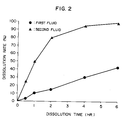
- Fig. 2 shows the results of the dissolution test in Comparative Example 2.
- Fig. 3 shows the results of the dissolution test in Example 1.
- Fig. 4 shows the results of the dissolution test in Example 2.
- Fig. 5 shows the results of the dissolution test in Example 3.
- the agent used in the sustained-release preparation of the present invention may be either solid or liquid, so long as it is a basic medical agent and is dissociated and dissolved to exhibit some therapeutic effect in the liquid in gastrointestinal tract when orally administered.
- it When it is solid, it may be used in the form of fine powders as obtained by pulverization.
- the polyanion used in the sustained-release preparation of the present invention has a carboxyl group in the side chain and is a carboxyvinyl polymer, a salt of a carboxymethyl cellulose or a mixture thereof.
- the salts include, for example, calcium salts and sodium salts. The above substances become polyanions when the carboxyl group present in the molecule is dissociated.
- the slightly water-soluble substance used in the sustained-release preparation of the present invention has a very low solubility in water and forms a coating film at ordinary temperature by its intermolecular force.
- the slightly water-soluble substance is polyvinyl acetate, ethyl cellulose, hydroxypropylmethyl cellulose acetate succinate, aminoalkylmethacrylate copolymer, methacrylic acid copolymer, cellulose acetate, polyethylene, polymethyl methacrylate, polydimethylsiloxane, hardened oil, beeswax, carnauba wax, sucrose fatty acid ester, sorbitan monostearate, glyceryl monostearate, glyceryl monomyristate, glyceryl distearate, stearic acid, stearyl alcohol, and mixtures thereof.
- slightly water-soluble substance ethyl celluloses, hydroxypropylmethyl cellulose acetate succinates, aminoalkyl methacrylate copolymers, methacrylic acid copolymers, and mixtures thereof.
- the release of a drug from granules having a coating film outside is affected by (1) the existence or formation of flow paths by which a liquid and the drug flow, (2) the diffusion rates of the drug in the granules and in the liquid in release environment, and (3) the solubility of the drug in the liquid in release environment.
- the solubility and the diffusion rate of the drug in the liquid in release environment are unequivocally determined and hence uncontrollable, but the other factors may be considered controllable.
- granules containing, besides a basic medical agent hydrochloride, a polyanion the particles of which are present in the form of a discontinuous layer are used in order to limit the existence or formation of flow paths by which the liquid in release environment and the drug flow and to limit the diffusion rate of the drug in the granules.
- the effect of the polyanion may be explained as follows.
- a polyanion is dissociated and dissolved or swollen in a neutral liquid having a low ionic strength. Therefore also, when contained in granules, it undergoes the same change as described above, in the case where the liquid in release environment which invades from the outside of a coating layer is a neutral liquid having a low ionic strength.
- the polyanion increases the viscosity of the liquid, which is characteristic of a macromolecular substance, and hence it limits the diffusion rate of a drug in the granules.
- the polyanion is swollen, spaces which are present at early stage are filled with the swollen polymer, resulting in restriction of the formation of flow paths through which the liquid in release environment flows.
- the particles of the polyanion are present in the form of a discontinuous layer. If they are present in the form of a continuous layer in contrast to the present invention, in the case where the liquid in release environment is acidic owing to the existence of hydrochloric acid, the whole granules containing the drug are not dissolved or swollen, so that the liquid in release environment does not invade the granules at all, and therefore the drug is not released at all.
- the particles of the polyanion are present in the form of a discontinuous layer, so that also when the liquid in release environment is acidic owing to the existence of hydrochloric acid, the liquid invade the granules in an amount sufficient for dissolution of the drug.
- the solubility of the basic medical agent hydrochloride is lower in a solution which is acidic owing to the existence of hydrochloric acid, because of the common-ion effect than in a neutral liquid having a low ionic strength. That is, normal gastric juice is acidic owing to the existence of hydrochloric acid under physiologically conceivable conditions, so that the solubility of the basic medical agent hydrochloride in the gastric juice is low, while the gastric juice of the stomach of a patient with achlorhydria is a neutral liquid having a low ionic strength, so that the solubility of the basic medical agent hydrochloride is high.
- the release rate of the agent is determined by the effect of the polyanion.
- the release rate of the agent is determined by the solubility of the basic agent hydrochloride.
- the granules are coated with a film former containing a slightly water-soluble substance in order to limit paths for the liquid and the drug into the coating film, and the release rate of the agent can be properly controlled by changing the composition or thickness of the coating film.
- the release of the agent from the preparation is substantially constant even when there varies the composition and fluidity of a liquid in release environment.
- the release of the agent from the preparation is not influenced by the physiological factors in the gastrointestinal tract of a patient. This means that the release of the agent from the preparation is not different even when the gastric juice secretion of a patient is excessive, or even when it is not sufficient, or even when a large amount of water or food is taken. Such a characteristic is very useful in practice.
- pharmaceutically acceptable additives may be used in addition to the components as described above.
- the pharmaceutically acceptable additives include additives which are essential in view of formulation technique, such as excipients, disintegrators, binders, lubricants and coating agents; additives as used in a slight amount for enhancing the commercial value of the preparation, such as coloring agents and flavoring agents; and drugs other than the basic medical agent hydrochloride contained in the coated granules.
- Such additives may be used also as either constituents of the granules as cores, or constituents of the coating film outside the granules.
- such additives may be made into particles of pharmaceutically acceptable additives or a particulate matter comprising pharmaceutically acceptable additives, mixed with the coated granules containing the basic medical agent hydrochloride, and then packed into hard gelatin capsules or pressed into tablets.
- the same drug as the basic medical agent hydrochloride contained in the coated granules can be added as a rapidly soluble component to a portion in the preparation other than the coated granules.
- the sustained-release preparation of the present invention there may be employed various combinations of the proportions of constituents of the core of the coated granule with the proportions of constituents of the coating film.
- the effect of the present invention can be expected, for example, by employing the following composition: the medical agent hydrochloride and the polyanion are 99 w/w% or less and 1 - 70 w/w%, respectively, based on the weight of the granule as core; the slightly water-soluble substance is 40 w/w% or more based on the weight of the coating film.
- a preferable combination is as follows: the medical agent hydrochloride and the polyanion are 70% or less and 1 - 60%, respectively, based on the weight of the granule as core; the slightly water-soluble substance is 50% or more based on the weight of the coating film.
- a particularly preferably combination is as follows: the medical agent hydrochloride and the polyanion are 50% or less and 2 - 50%, respectively, based on the weight of the granule as core; the slightly water-soluble substance is 60% or more based on the weight of the coating film.
- the above proportions are those of the components only in the coated granules of a preparation, and components of the preparation other than the coated granule are not included in the above proportions.
- the ratio of the total coated granules to the total of components of the preparation other than the coated granules is not critical because it does not participate in the control of release rate of the medical agent.
- a method for preparing a preparation wherein the above-mentioned coated granules, i.e., the granules containing both the basic medical agent hydrochloride and the polyanion the particles of which are present in the form of a discontinuous layer are coated with the film containing the slightly water-soluble substance, is not critical. Said preparation may be obtained by various methods which are well known as techn&ques for preparing pharmaceuticals.
- a wet granulation method for preparing the granules as cores, there may be employed a wet granulation method, dry granulation method, fluidized-bed granulation method and melt granulation method.
- the most useful method is extrusion granulation method belonging to the wet granulation method.
- the extrusion granulation method the basic medical agent hydrochloride, the polyanion and if necessary, other constituents are mixed, thereafter kneaded together by the use of water or an organic solvent, and then subjected to extrusion granulation.
- a kneading liquid as prepared by dissolving or dispersing a well-known binder in water or an organic solvent.
- the granules as cores may be obtained by forming the granules obtained by the extrusion granulation into a spherical shape or shifting them to make the particle size uniform, and then conducting drying, or by shifting them to make the particle size uniform, after drying.
- the constituents of the granules as cores other than the polyanion may be used in the form of powder or a kneading liquid as obtained by dissolving or suspending them in organic solvent.
- the particles of the polyanions should be present in the granules in the form of a discontinuous layer, and therefore the polyanion is used usually in powder form. Depending on circumstances, it may be used also in suspension form by the use of a solvent in which the polyanion is not completely soluble. In either case, in a usual kneaded state, i.e., a state in which the solid component is wetted with a liquid component, the polyanion particles are present in the form of a discontinuous layer and does not form a continuous layer on subsequent granulation and drying.
- the polyanion particles can be allowed to exist in the form of a discontinuous layer preferably by using the polyanion in the form of power or by using a suspension in a solvent in which the polyanion is not completely soluble.
- a method for coating the granules as cores with a film containing a slightly water-soluble substance there may be employed a pan coating method, a fluidized-bed coating method and a centrifugal flow coating method.
- the coating agent containing the slightly water-soluble substance is sprayed in the form of a coating liquid obtained by dissolving or dispersing the coating agent in water or an organic solvent, and the water or the organic solvent is allowed to evaporate in warm air, whereby coating films are formed outside the granules as cores.
- the coated granule is formed.
- a portion in the preparation which participates in the control of the dissolution rate of the sustained-release preparation is the coated granule portion.
- the coated granules may be used as a granular preparation as they are. It is also possible to obtain the sustained-release preparation of the present invention by formulating the coated granules into any of various solid preparations such as hard capsules and tablets by a heretofore well-known formulation procedure such as packing into capsules or tableting.
- a plurality of the coated granules are dispersed in one piece of the preparation.
- the preparation is disintegrated to release the basic medical agent sustainedly from the individual coated granules.
- the release of the basic medical agent is controlled by taking advantage of not only characteristics of the basic medical agent hydrochloride but also the effects of the polyanion and the slightly water-soluble substance in the coated granules portion contained in said preparation. Accordingly, the release of the basic medical agent is not easily affected by the composition, fluidity and the like of the liquid in release environment, and when the preparation is administered to a patient, the release rate of the agent does not varies depending on the physiological factors of the gastrointestinal tract, in particular, the amount and fluidity of the digestive juice or the amount and quality of meals, so that the variation of concentration of the medical agent in blood can be minimized.
- the present invention has made it possible to provide a useful sustained-release preparation having an improved bioavailability, in the case of a basic agent hydrochloride.
- an arotinolol hydrochloride [chemical name: 5- ⁇ 2-[(3-tert-butylamino-2-hydroxypropyl)thio]-4-thiazolyl ⁇ -2-thiophenecarboxamide hydrochloride] prolonged-action preparation using a matrix solid composed of a slightly water-soluble substance and an excipient, which is a heretofore well-known technique.
- arotinolol hydrochloride and corn starch were mixed in a stirring type mixer for 10 minutes, and then a polyvinyl acetate solution was added, followed by kneading for 5 minutes. Thereafter, the kneaded product was passed through a No. 12 sieve to obtain a particulate matter, which was then dried to obtain a matrix solid particulate matter.
- the polyvinyl acetate was used for kneading in the form of a 30 w/w% solution of the polyvinyl acetate in a mixed solvent of 50 w/w% of ethanol and 50 w/w% of dichloromethane.
- arotinolol hydrochloride and corn starch were coated with the polyvinyl acetate which is not a polyanion and which forms a continuous layer, and the preparation is therefore different from the preparation of the present invention.
- the first fluid in the disintegration method prescribed in the 11th revised Japanese Pharmacopoeia is 900 ml of an aqueous solution with pH of about 1.2 containing hydrochloric acid and sodium chloride
- the second solution in the disintegration method prescribed in the 11th revised Japanese Pharmacopoeia is 900 ml of an aqueous solution with a pH of about 6.8 containing monobasic potassium phosphate and sodium hydroxide.
- the revolution rate of paddle is 100 r.p.m.
- Fig. 1 indicate that the release of arotinolol hydrochloride from the sustained-release preparation of the present comparative example is greatly affected by the composition, fluidity and the like of the liquid in release environment.
- arotinolol hydrochloride sustained-release preparation consisting of arotinolol-hydrochloride-containing granules coated with a film former containing a slightly water-soluble substance, which is a heretofore well-known technology.
- the four ingredients from arotinolol hydrochloride to lactose were mixed in a stirring type mixer for 10 minutes, and 300 g of a 10 w/w% aqueous polyvinyl alcohol solution was added, followed by kneading for 5 minutes.
- the kneaded product was subjected to extrusion granulation by means of a granulator having a screen with a diameter of 0.8 mm, formed into a spherical shape by a conventional method, and then dried in a fluidized-bed dryer, whereby granules as cores were prepared.
- the granules did not contain a polyanion, and the preparation is therefore different from the preparation of the present invention.
- Fig. 2 indicate that the release of arotinolol hydrochloride from the sustained-release preparation of the present comparative example is greatly affected by the composition, fluidity and the like of the liquid in release environment.
- the sustained-release preparation of the present invention was prepared in the following manner by using arotinolol hydrochloride.
- arotinolol hydrochloride and carboxymethyl cellulose calcium were mixed in a stirring type mixer for 10 minutes, and then 240 g of a 10 w/w% aqueous polyvinyl alcohol solution was added, followed by kneading for 5 minutes.
- the kneaded product was subjected to extrusion granulation by means of a granulator having a screen with a diameter of 0.8 mm, dried in a fluidized-bed dryer, and then shifted to make the particle size uniform, whereby granules as cores were prepared.
- Fig. 3 indicate that the release of arotinolol hydrochloride from the sustained-release preparation of the present example is not affected by the composition, fluidity and the like of the liquid in release environment.
- the sustained-release preparation of the present invention was prepared in the following manner by using arotinolol hydrochloride.
- the five ingredients from arotinolol hydrochloride to lactose were mixed in a stirring type mixer for 10 minutes, and then 300 g of deionized water was added, followed by kneading for 5 minutes.
- the kneaded product was subjected to extrusion granulation by means of a granulator having a screen with a diameter of 0.7 mm, formed into a spherical shape by a conventional method, and then dried in a fluidized-bed dryer, whereby granules as cores were prepared.
- Fig. 4 indicate that the release of arotinolol hydrochloride from the sustained-release preparation of the present example is not affected by the composition, fluidity and the like of the liquid in release environment.
- the sustained-release preparation of the present invention was prepared in the following manner by using the arotinolol hydrochloride sustained-release preparation of Example 2.
- Rapidly soluble granules were prepared according to the above recipe by conventional wet crushing granulation. 240 Grams of these granules, 160 g of the sustained-release granules prepared in Example 2, and 0.8 g of magnesium stearate were mixed. Using the resulting mixture, tablets of 8 mm in diameter each having a weight of about 200 mg were prepared by means of a rotary tableting machine.
- Fig. 5 indicate that the release of arotinolol hydrochloride from the sustained-release preparation of the present example is not affected by the composition, fluidity and the like of the liquid in release environment.
Landscapes
- Health & Medical Sciences (AREA)
- Bioinformatics & Cheminformatics (AREA)
- Engineering & Computer Science (AREA)
- Animal Behavior & Ethology (AREA)
- Epidemiology (AREA)
- Life Sciences & Earth Sciences (AREA)
- Pharmacology & Pharmacy (AREA)
- General Health & Medical Sciences (AREA)
- Public Health (AREA)
- Veterinary Medicine (AREA)
- Medicinal Chemistry (AREA)
- Chemical & Material Sciences (AREA)
- Medicinal Preparation (AREA)
- Acyclic And Carbocyclic Compounds In Medicinal Compositions (AREA)
- Pharmaceuticals Containing Other Organic And Inorganic Compounds (AREA)
Abstract
Description
- The present invention relates to a sustained-release preparation which, when orally administered, releases a basic medical agent at a controlled release rate without being influenced by the physiological factors of the gastrointestinal tract of a patient, and also relates to a method for preparing the sustained-release preparation.
- In general, many of peroral drugs require to be administered one to three times per day, but for facilitating the compliance of a patient it is considered desirable that only once administraction per day is effective enough. In such a case, the peroral drugs are usually prepared in the farm of sustained-release preparations for maintaining their effective concentration in blood for a long period, and various techniques for such preparations have been reported.
- For example, there have been reported a preparation in which the release rate of a drug is controlled by using a slightly water-soluble macromolecular substance or a wax together with the drug to form matrix [GB 2017113A], a preparation in which the release rate of a drug is controlled by coating an ordinary preparation such as granules, tablets or the like with films of a slightly water-soluble macromolecular substance or a wax [Japanese Patent Kokoku JP-B-61-13683 and US-A-4138475], and an osmotic pressure pump device comprising a drug-holding portion and a portion capable of generating a pressure on contact with water, which are coated with a film of a slightly water-soluble macromolecular substance, the film having pores formed after the coating (US-A-4449983) .
- As a technique which is a modification of techniques stated above, there is an attempt to control the dependence of drug release rate on pH value by adding a buffer and the like to granules, tablets or the like as cores, and coating the thus treated cores with films of a slightly water-soluble macromolecular substance [GB 1468172A, GB 2025227A, GB 2075343A; and Japanese Patent Kokoku JP-B-63-53966].
- As the other techniques, some attempts have been reported to control the release rate of a medical agent from a preparation by utilizing the swelling of a polymer substance. For example, there may be exemplified a preparation prepared by mixing a medical agent with carboxyvinylpolymer or polyvinylpyrrolidone followed by capsulation or by compression to prepare a tablet (U.S. Patent Nos. 4,798,725 and 3,458,622), or by coating with film after tabletting (G.B.-A- 1,568,837).
- Of the conventional techniques, the osmotic pressure pump device is a widely applicable technology but its production requires a very complicated process. Moreover, the following possibility has been pointed out. Since the osmotic pressure pump device usually has a single-unit dosage form, the bioavailability of an active agent is varied by the difference of the enterokinesis of a patient, in particular, the difference of gastric emptying rate, or a preparation stagnates at one place of the gastrointestinal tract, so that the local concentration of a drug is increased, resulting in adverse side effects caused in the mucosa of the gastrointestinal tract [A. H. Beckett, The Pharmaceutical Journal, Vol. 231, p. 232 (1983)].
- Matrix type sustained-release preparations, coating type sustained-release preparations, or preparations having a controlled drug release rate independent of pH value by virtue of the addition of a buffer and the like to granules, tablets or the like as cores, are easily producible and commercially advantageous. However, when such techniques are applied to hydrochlorides of basic medical agents, it is often observed that the release of the agents varies depending on the composition and fluidity of the liquid in release environment.
- This is because the solubility of the basic medical agent hydrochloride varies depending not only on pH value but also on the concentration of chloride ion present together with them. This fact indicates that when a preparation is administered to a patient, the agent concentration in blood varies, namely, the bioavailability varies, owing to the variation of the release rate of the agent which is dependent on the physiological factors of the gastrointestinal tract, in particular, the amount and fluidity of the digestive juice or the amount and quality of meals.
- In the case of sustained-release preparations, the dose is usually larger than that in the case of ordinary rapidly soluble preparations, and hence the variation of the bioavailability is very dangerous to a patient. Therefore, it is eagerly desirable to develop a sustained-release preparation in which the release of a basic medical agent is not affected by the composition and fluidity of the liquid in release environment.
- EP-A-322 277 discloses a prolonged release pharmaceutical formulation which allows controlled dissolution of an active ingredient independently of pH. The formulation comprises a core of an active ingredient, a diluent and a binder, coated with a mixture of ethylcellulose and Eudragit® RS.
- In order to solve such problems, the present inventors have conducted various researches on the dissolution behaviors of basic agent hydrochlorides and preparations containing them, and consequently have found that by coating granules containing both a basic agent hydrochloride and a polyanion the particles of which are present in the form of a discontinuous layer with a film containing a slightly water-soluble substance, the release speed of the agent can be controlled, whereby the present invention has been accomplished.
- That is, the present invention relates to a sustained-release preparation characterized in that its sustained-release function is formed by coating granules containing both a basic medical agent hydrochloride and a polyanion the particles of which are present in the form of a discontinuous layer, with a film containing a slightly water-soluble substance.
- The present invention also relates to a method for preparing the sustained-release preparation, which comprises the steps of:
mixing and kneading a basic medical agent hydrochloride with a polyanion to form granules under the condition that the polyanion is not completely dissolved; and
coating said granules with a film containing a slightly water-soluble substance. - The sustained-release preparation of the present invention may be applicable to various drugs. For example, it may be applicable to various drugs such as depressors, vitamin compounds, anti-inflammatory agents, drugs for arteriosclerosis, hormone preparations, immunomodulators and anti-infectives.
- Fig. 1 shows the results of the dissolution test in Comparative Example 1.
- Fig. 2 shows the results of the dissolution test in Comparative Example 2.
- Fig. 3 shows the results of the dissolution test in Example 1.
- Fig. 4 shows the results of the dissolution test in Example 2.
- Fig. 5 shows the results of the dissolution test in Example 3.
- The agent used in the sustained-release preparation of the present invention may be either solid or liquid, so long as it is a basic medical agent and is dissociated and dissolved to exhibit some therapeutic effect in the liquid in gastrointestinal tract when orally administered. When it is solid, it may be used in the form of fine powders as obtained by pulverization.
- The polyanion used in the sustained-release preparation of the present invention has a carboxyl group in the side chain and is a carboxyvinyl polymer, a salt of a carboxymethyl cellulose or a mixture thereof.
The salts include, for example, calcium salts and sodium salts. The above substances become polyanions when the carboxyl group present in the molecule is dissociated. - The slightly water-soluble substance used in the sustained-release preparation of the present invention has a very low solubility in water and forms a coating film at ordinary temperature by its intermolecular force. The slightly water-soluble substance is polyvinyl acetate, ethyl cellulose, hydroxypropylmethyl cellulose acetate succinate, aminoalkylmethacrylate copolymer, methacrylic acid copolymer, cellulose acetate, polyethylene, polymethyl methacrylate, polydimethylsiloxane, hardened oil, beeswax, carnauba wax, sucrose fatty acid ester, sorbitan monostearate, glyceryl monostearate, glyceryl monomyristate, glyceryl distearate, stearic acid, stearyl alcohol, and mixtures thereof. More preferable examples of the slightly water-soluble substance are ethyl celluloses, hydroxypropylmethyl cellulose acetate succinates, aminoalkyl methacrylate copolymers, methacrylic acid copolymers, and mixtures thereof.
- Next, the mechanism of the sustained-release preparation of the present invention is explained below.
- It may be considered that in general, the release of a drug from granules having a coating film outside is affected by (1) the existence or formation of flow paths by which a liquid and the drug flow, (2) the diffusion rates of the drug in the granules and in the liquid in release environment, and (3) the solubility of the drug in the liquid in release environment. The solubility and the diffusion rate of the drug in the liquid in release environment are unequivocally determined and hence uncontrollable, but the other factors may be considered controllable.
- Accordingly, in the sustained-release preparation of the present invention, granules containing, besides a basic medical agent hydrochloride, a polyanion the particles of which are present in the form of a discontinuous layer are used in order to limit the existence or formation of flow paths by which the liquid in release environment and the drug flow and to limit the diffusion rate of the drug in the granules. The effect of the polyanion may be explained as follows.
- In general, a polyanion is dissociated and dissolved or swollen in a neutral liquid having a low ionic strength. Therefore also, when contained in granules, it undergoes the same change as described above, in the case where the liquid in release environment which invades from the outside of a coating layer is a neutral liquid having a low ionic strength. When dissolved, the polyanion increases the viscosity of the liquid, which is characteristic of a macromolecular substance, and hence it limits the diffusion rate of a drug in the granules. When the polyanion is swollen, spaces which are present at early stage are filled with the swollen polymer, resulting in restriction of the formation of flow paths through which the liquid in release environment flows.
- On the other hand, when the liquid in release environment is acidic owing to the existence of hydrochloric acid, the polyanion is not dissolved or swollen and hence does not exert the actions as described above.
- What is important here is that the particles of the polyanion are present in the form of a discontinuous layer. If they are present in the form of a continuous layer in contrast to the present invention, in the case where the liquid in release environment is acidic owing to the existence of hydrochloric acid, the whole granules containing the drug are not dissolved or swollen, so that the liquid in release environment does not invade the granules at all, and therefore the drug is not released at all. However, in the present invention, the particles of the polyanion are present in the form of a discontinuous layer, so that also when the liquid in release environment is acidic owing to the existence of hydrochloric acid, the liquid invade the granules in an amount sufficient for dissolution of the drug.
- On the other hand, the solubility of the basic medical agent hydrochloride is lower in a solution which is acidic owing to the existence of hydrochloric acid, because of the common-ion effect than in a neutral liquid having a low ionic strength. That is, normal gastric juice is acidic owing to the existence of hydrochloric acid under physiologically conceivable conditions, so that the solubility of the basic medical agent hydrochloride in the gastric juice is low, while the gastric juice of the stomach of a patient with achlorhydria is a neutral liquid having a low ionic strength, so that the solubility of the basic medical agent hydrochloride is high.
- That is, in a neutral liquid having a low ionic strength in which the solubility of the basic medical agent hydrochloride is high, the release rate of the agent is determined by the effect of the polyanion. On the other hand, in a solution which is acidic owing to the existence of hydrochloric acid, the release rate of the agent is determined by the solubility of the basic agent hydrochloride.
- Furthermore, in the sustained-release preparation of the present invention, the granules are coated with a film former containing a slightly water-soluble substance in order to limit paths for the liquid and the drug into the coating film, and the release rate of the agent can be properly controlled by changing the composition or thickness of the coating film.
- By virtue of such effects, the release of the agent from the preparation is substantially constant even when there varies the composition and fluidity of a liquid in release environment. In other words, the release of the agent from the preparation is not influenced by the physiological factors in the gastrointestinal tract of a patient. This means that the release of the agent from the preparation is not different even when the gastric juice secretion of a patient is excessive, or even when it is not sufficient, or even when a large amount of water or food is taken. Such a characteristic is very useful in practice.
- In the sustained-release preparation of the present invention, pharmaceutically acceptable additives may be used in addition to the components as described above. The pharmaceutically acceptable additives include additives which are essential in view of formulation technique, such as excipients, disintegrators, binders, lubricants and coating agents; additives as used in a slight amount for enhancing the commercial value of the preparation, such as coloring agents and flavoring agents; and drugs other than the basic medical agent hydrochloride contained in the coated granules.
- All of these pharmaceutically acceptable additives are not critical and those generally used in solid preparations may be used.
- Such additives may be used also as either constituents of the granules as cores, or constituents of the coating film outside the granules. In addition, when hard capsules or tablets are prepared as one embodiment of the present invention, such additives may be made into particles of pharmaceutically acceptable additives or a particulate matter comprising pharmaceutically acceptable additives, mixed with the coated granules containing the basic medical agent hydrochloride, and then packed into hard gelatin capsules or pressed into tablets.
- Furthermore, like the above-mentioned pharmaceutically acceptable additives, the same drug as the basic medical agent hydrochloride contained in the coated granules can be added as a rapidly soluble component to a portion in the preparation other than the coated granules.
- In the sustained-release preparation of the present invention, there may be employed various combinations of the proportions of constituents of the core of the coated granule with the proportions of constituents of the coating film. The effect of the present invention can be expected, for example, by employing the following composition: the medical agent hydrochloride and the polyanion are 99 w/w% or less and 1 - 70 w/w%, respectively, based on the weight of the granule as core; the slightly water-soluble substance is 40 w/w% or more based on the weight of the coating film. A preferable combination is as follows: the medical agent hydrochloride and the polyanion are 70% or less and 1 - 60%, respectively, based on the weight of the granule as core; the slightly water-soluble substance is 50% or more based on the weight of the coating film. A particularly preferably combination is as follows: the medical agent hydrochloride and the polyanion are 50% or less and 2 - 50%, respectively, based on the weight of the granule as core; the slightly water-soluble substance is 60% or more based on the weight of the coating film. The above proportions are those of the components only in the coated granules of a preparation, and components of the preparation other than the coated granule are not included in the above proportions. The ratio of the total coated granules to the total of components of the preparation other than the coated granules is not critical because it does not participate in the control of release rate of the medical agent.
- A method for preparing a preparation wherein the above-mentioned coated granules, i.e., the granules containing both the basic medical agent hydrochloride and the polyanion the particles of which are present in the form of a discontinuous layer are coated with the film containing the slightly water-soluble substance, is not critical. Said preparation may be obtained by various methods which are well known as techn&ques for preparing pharmaceuticals.
- First, for preparing the granules as cores, there may be employed a wet granulation method, dry granulation method, fluidized-bed granulation method and melt granulation method. The most useful method is extrusion granulation method belonging to the wet granulation method. In the case of the extrusion granulation method, the basic medical agent hydrochloride, the polyanion and if necessary, other constituents are mixed, thereafter kneaded together by the use of water or an organic solvent, and then subjected to extrusion granulation. In this case, there may be used a kneading liquid as prepared by dissolving or dispersing a well-known binder in water or an organic solvent. The granules as cores may be obtained by forming the granules obtained by the extrusion granulation into a spherical shape or shifting them to make the particle size uniform, and then conducting drying, or by shifting them to make the particle size uniform, after drying. Here, the constituents of the granules as cores other than the polyanion may be used in the form of powder or a kneading liquid as obtained by dissolving or suspending them in organic solvent.
- In the present invention, the particles of the polyanions should be present in the granules in the form of a discontinuous layer, and therefore the polyanion is used usually in powder form. Depending on circumstances, it may be used also in suspension form by the use of a solvent in which the polyanion is not completely soluble. In either case, in a usual kneaded state, i.e., a state in which the solid component is wetted with a liquid component, the polyanion particles are present in the form of a discontinuous layer and does not form a continuous layer on subsequent granulation and drying. For preparating the granules as cores, there may also be employed a wet granulation method, a dry granulation method, a fluidized-bed granulation method and a melt granulation method. When any of these methods is employed, the polyanion particles can be allowed to exist in the form of a discontinuous layer preferably by using the polyanion in the form of power or by using a suspension in a solvent in which the polyanion is not completely soluble.
- Next, as a method for coating the granules as cores with a film containing a slightly water-soluble substance, there may be employed a pan coating method, a fluidized-bed coating method and a centrifugal flow coating method. In all of these methods, on a layer in which the granules as cores are being rolled or allowed to flow, the coating agent containing the slightly water-soluble substance is sprayed in the form of a coating liquid obtained by dissolving or dispersing the coating agent in water or an organic solvent, and the water or the organic solvent is allowed to evaporate in warm air, whereby coating films are formed outside the granules as cores. These methods are per se well known and the sustained-release preparation of the present invention may be prepared by any of them.
- Thus, the coated granule is formed. A portion in the preparation which participates in the control of the dissolution rate of the sustained-release preparation is the coated granule portion. The coated granules may be used as a granular preparation as they are. It is also possible to obtain the sustained-release preparation of the present invention by formulating the coated granules into any of various solid preparations such as hard capsules and tablets by a heretofore well-known formulation procedure such as packing into capsules or tableting.
- In such preparations, a plurality of the coated granules are dispersed in one piece of the preparation. When administered in practice, the preparation is disintegrated to release the basic medical agent sustainedly from the individual coated granules.
- As explained above in detail, in the sustained-release preparation of a basic medical agent hydrochloride of the present invention, the release of the basic medical agent is controlled by taking advantage of not only characteristics of the basic medical agent hydrochloride but also the effects of the polyanion and the slightly water-soluble substance in the coated granules portion contained in said preparation. Accordingly, the release of the basic medical agent is not easily affected by the composition, fluidity and the like of the liquid in release environment, and when the preparation is administered to a patient, the release rate of the agent does not varies depending on the physiological factors of the gastrointestinal tract, in particular, the amount and fluidity of the digestive juice or the amount and quality of meals, so that the variation of concentration of the medical agent in blood can be minimized.
- Therefore, the present invention has made it possible to provide a useful sustained-release preparation having an improved bioavailability, in the case of a basic agent hydrochloride.
- The present invention is specifically illustrated with reference to the following comparative examples and examples of the present invention, which should not be construed as limiting the scope of the invention.
- For comparison with the sustained-release preparation of the present invention, there was prepared an arotinolol hydrochloride [chemical name: 5-{2-[(3-tert-butylamino-2-hydroxypropyl)thio]-4-thiazolyl}-2-thiophenecarboxamide hydrochloride] prolonged-action preparation using a matrix solid composed of a slightly water-soluble substance and an excipient, which is a heretofore well-known technique.

- According to the above recipe, arotinolol hydrochloride and corn starch were mixed in a stirring type mixer for 10 minutes, and then a polyvinyl acetate solution was added, followed by kneading for 5 minutes. Thereafter, the kneaded product was passed through a No. 12 sieve to obtain a particulate matter, which was then dried to obtain a matrix solid particulate matter. The polyvinyl acetate was used for kneading in the form of a 30 w/w% solution of the polyvinyl acetate in a mixed solvent of 50 w/w% of ethanol and 50 w/w% of dichloromethane.
- In the thus obtained preparation, arotinolol hydrochloride and corn starch were coated with the polyvinyl acetate which is not a polyanion and which forms a continuous layer, and the preparation is therefore different from the preparation of the present invention.
- In accordance with the second method (the paddle method) in the dissolution test methods prescribed in the 11th revised Japanese Pharmacopoeia, the dissolution test for arotinolol hydrochloride was carried out on the matrix solid particulate matter to give the results shown in Fig. 1. In the present comparative example, there was observed a large difference between the dissolution rate in the first fluid and the second fluid in the disintegration test method prescribed in the 11th revised Japanese Pharmacopoeia.
- The first fluid in the disintegration method prescribed in the 11th revised Japanese Pharmacopoeia is 900 ml of an aqueous solution with pH of about 1.2 containing hydrochloric acid and sodium chloride, and the second solution in the disintegration method prescribed in the 11th revised Japanese Pharmacopoeia is 900 ml of an aqueous solution with a pH of about 6.8 containing monobasic potassium phosphate and sodium hydroxide. The revolution rate of paddle is 100 r.p.m.
- Therefore, the results shown in Fig. 1 indicate that the release of arotinolol hydrochloride from the sustained-release preparation of the present comparative example is greatly affected by the composition, fluidity and the like of the liquid in release environment.
- For comparison with the sustained-release preparation of the present invention, there was prepared an arotinolol hydrochloride sustained-release preparation consisting of arotinolol-hydrochloride-containing granules coated with a film former containing a slightly water-soluble substance, which is a heretofore well-known technology.

- According to the above recipe, the four ingredients from arotinolol hydrochloride to lactose were mixed in a stirring type mixer for 10 minutes, and 300 g of a 10 w/w% aqueous polyvinyl alcohol solution was added, followed by kneading for 5 minutes. The kneaded product was subjected to extrusion granulation by means of a granulator having a screen with a diameter of 0.8 mm, formed into a spherical shape by a conventional method, and then dried in a fluidized-bed dryer, whereby granules as cores were prepared.

- 300 Grams of the granules as cores were coated with the above coating liquid by means of a fluidized-bed coating apparatus to obtain sustained-release granules.
- In the thus obtained preparation, the granules did not contain a polyanion, and the preparation is therefore different from the preparation of the present invention.
- The dissolution test for arotinolol hydrochloride was carried out on the sustained-release granules in the same way as in Comparative Example 1 to give the results shown in Fig. 2. In the present comparative example, there was observed a large difference between the dissolution rate in the first fluid and the second solution in the disintegration test method prescribed in the 11th revised Japanese Pharmacopoeia.
- Therefore, the results shown in Fig. 2 indicate that the release of arotinolol hydrochloride from the sustained-release preparation of the present comparative example is greatly affected by the composition, fluidity and the like of the liquid in release environment.
- The sustained-release preparation of the present invention was prepared in the following manner by using arotinolol hydrochloride.

- According to the above recipe, arotinolol hydrochloride and carboxymethyl cellulose calcium were mixed in a stirring type mixer for 10 minutes, and then 240 g of a 10 w/w% aqueous polyvinyl alcohol solution was added, followed by kneading for 5 minutes. The kneaded product was subjected to extrusion granulation by means of a granulator having a screen with a diameter of 0.8 mm, dried in a fluidized-bed dryer, and then shifted to make the particle size uniform, whereby granules as cores were prepared.

- 400 Grams of the granules as cores were coated with the above coating liquid by means of a fluidized-bed coating apparatus to obtain sustained-release granules.
- The dissolution test for arotinolol hydrochloride was carried out on the sustained-release granules in the same way as in Comparative Example 1 to give the results shown in Fig. 3. In the present example, there was observed little difference between the dissolution rates in the first fluid and the second fluid in the disintegration test method prescribed in the 11th revised Japanese Pharmacopoeia.
- Therefore, the results shown in Fig. 3 indicate that the release of arotinolol hydrochloride from the sustained-release preparation of the present example is not affected by the composition, fluidity and the like of the liquid in release environment.
- The sustained-release preparation of the present invention was prepared in the following manner by using arotinolol hydrochloride.

- According to the above recipe, the five ingredients from arotinolol hydrochloride to lactose were mixed in a stirring type mixer for 10 minutes, and then 300 g of deionized water was added, followed by kneading for 5 minutes. The kneaded product was subjected to extrusion granulation by means of a granulator having a screen with a diameter of 0.7 mm, formed into a spherical shape by a conventional method, and then dried in a fluidized-bed dryer, whereby granules as cores were prepared.

- 400 Grams of the granules as cores were coated with the above coating liquid by means of a fluidized-bed coating apparatus to obtain sustained-release granules.
- The dissolution test for arotinolol hydrochloride was carried out on the sustained-release granules in the same way as in Comparative Example 1 to give the results shown in Fig. 4. In the present example, there was observed little difference between the release rates in the first fluid and the second fluid in the disintegration test method prescribed in the 11th revised Japanese Pharmacopoeia.
- Therefore, the results shown in Fig. 4 indicate that the release of arotinolol hydrochloride from the sustained-release preparation of the present example is not affected by the composition, fluidity and the like of the liquid in release environment.
- The sustained-release preparation of the present invention was prepared in the following manner by using the arotinolol hydrochloride sustained-release preparation of Example 2.

- Rapidly soluble granules were prepared according to the above recipe by conventional wet crushing granulation. 240 Grams of these granules, 160 g of the sustained-release granules prepared in Example 2, and 0.8 g of magnesium stearate were mixed. Using the resulting mixture, tablets of 8 mm in diameter each having a weight of about 200 mg were prepared by means of a rotary tableting machine.
- The dissolution test for arotinolol hydrochloride was carried out on the thus obtained sustained-release tablets containing the rapidly soluble portion in the same way as in Comparative Example 1 to give the results shown in Fig. 5. In the present example, there was observed little difference between the release rates in the first fluid and the second fluid in the disintegration test method prescribed in the 11th revised Japanese Pharmacopoeia.
- Therefore, the results shown in Fig. 5 indicate that the release of arotinolol hydrochloride from the sustained-release preparation of the present example is not affected by the composition, fluidity and the like of the liquid in release environment.
Claims (9)
- A sustained-release preparation comprising coated granules containing both a basic medical agent hydrochloride and a polyanion having a carboxyl group in the side chain the particles of which are present in the form of a discontinuous layer, said polyanion being a carboxyvinyl polymer, a salt of a carboxymethyl cellulose or a mixture thereof, said granules being coated with a film containing a slightly water-soluble macromolecular substance selected from polyvinyl acetate, ethyl cellulose, hydroxypropylmethyl cellulose acetate succinate, aminoalkylmethacrylate copolymer, methacrylic acid copolymer, cellulose acetate, polyethylene, polymethyl methacrylate, polydimethyl-siloxane, hardened oil, beeswax, carnauba wax, sucrose fatty acid ester, sorbitan monostearate, glyceryl monostearate, glyceryl monomyristate, glyceryl distearate, stearic acid, stearyl alcohol, and mixtures thereof.
- A preparation according to claim 1 wherein arotinolol hydrochloride is used as the basic medical agent hydrochloride.
- A preparation according to claim 1 or 2 wherein the slightly water-soluble macromolecular substance is an ethyl cellulose, a hydroxypropylmethyl cellulose acetate succinate, an aminoalkylmethacrylate copolymer, a methacrylic acid copolymer, or a mixture thereof.
- A preparation according to any one of the preceding claims comprising particles of at least one pharmaceutically acceptable additive or a particulate composition comprising at least one pharmaceutically acceptable additive packed into hard gelatin capsules or tableted together with the coated granules.
- A preparation according to claim 4 comprising at least one pharmaceutically acceptable additive which is a basic medical agent or the hydrochloride thereof packed into hard gelatin capsules or tableted together with coated granules which contain the hydrochloride of the same basic medical agent.
- A process for producing a sustained-release preparation according to claim 1, which process comprises the steps of:
mixing and kneading a basic medical agent hydrochloride with a polyanion to form granules under such conditions that the polyanion is not completely dissolved; and
coating the granules so produced with a film containing a slightly water-soluble macromolecular substance. - A process according to claim 6 which further comprises the step of:
packing the coated granules into hard gelatin capsules or tableting the coated granules, together with particles of at least one pharmaceutically acceptable additive particle or a particulate composition comprising at least one pharmaceutically acceptable additive. - A process according to claim 6 or 7 for producing a preparation according to any one of claims 2 to 5.
- A process according to claim 8 wherein at least one of the pharmaceutically acceptable additives is a basic medical agent or the hydrochloride thereof and the coated granules are formed of the hydrochloride of the same basic medical agent.
Priority Applications (1)
| Application Number | Priority Date | Filing Date | Title |
|---|---|---|---|
| AT90311748T ATE104146T1 (en) | 1989-10-27 | 1990-10-26 | DELAYED-RELEASE PREPARATION OF A HYDROCHLORIDE OF A BASIC DRUG. |
Applications Claiming Priority (2)
| Application Number | Priority Date | Filing Date | Title |
|---|---|---|---|
| JP280579/89 | 1989-10-27 | ||
| JP1280579A JPH03145418A (en) | 1989-10-27 | 1989-10-27 | Sustained release preparation of basic drug hydrochloride |
Publications (3)
| Publication Number | Publication Date |
|---|---|
| EP0425298A2 EP0425298A2 (en) | 1991-05-02 |
| EP0425298A3 EP0425298A3 (en) | 1991-09-11 |
| EP0425298B1 true EP0425298B1 (en) | 1994-04-13 |
Family
ID=17627005
Family Applications (1)
| Application Number | Title | Priority Date | Filing Date |
|---|---|---|---|
| EP90311748A Expired - Lifetime EP0425298B1 (en) | 1989-10-27 | 1990-10-26 | Sustained-release preparation of basic medical agent hydrochloride |
Country Status (7)
| Country | Link |
|---|---|
| US (1) | US5234691A (en) |
| EP (1) | EP0425298B1 (en) |
| JP (1) | JPH03145418A (en) |
| KR (1) | KR910007517A (en) |
| AT (1) | ATE104146T1 (en) |
| CA (1) | CA2028633A1 (en) |
| DE (1) | DE69008107T2 (en) |
Families Citing this family (15)
| Publication number | Priority date | Publication date | Assignee | Title |
|---|---|---|---|---|
| US5085866A (en) * | 1988-12-02 | 1992-02-04 | Southern Research Institute | Method of producing zero-order controlled-released devices |
| US5492700A (en) * | 1991-11-26 | 1996-02-20 | Warner-Lambert Company | Process and composition for the development of controlled release gemfibrozil dosage form |
| DE19504831A1 (en) * | 1995-02-14 | 1996-09-05 | Basf Ag | Solid active substance preparations containing hydroxypropyl cellulose |
| DE19842753A1 (en) | 1998-09-18 | 2000-03-23 | Bayer Ag | Multiple-unit retard oral dosage formulation having controlled release independent of agitation and food effect, containing particles of combination of drug and hydroxypropyl cellulose |
| ES2162746B1 (en) * | 1999-10-21 | 2003-02-16 | Lipotec Sa | MICROCAPSULES FOR THE STABILIZATION OF COSMETIC, PHARMACEUTICAL OR FOOD PRODUCTS. |
| GB0025208D0 (en) * | 2000-10-13 | 2000-11-29 | Euro Celtique Sa | Delayed release pharmaceutical formulations |
| US20030175342A1 (en) * | 2002-03-14 | 2003-09-18 | Karl Kolter | Coated pharmaceutical single-unit delayed-release forms, based on polyvinyl acetate |
| US7037521B2 (en) * | 2003-03-28 | 2006-05-02 | Bausch & Lomb Incorporated | Using a laser for cutting a hole in a capsule for controlled drug delivery |
| TWI478712B (en) | 2008-09-30 | 2015-04-01 | Astellas Pharma Inc | Pharmaceutical composition for modified release |
| WO2011122524A1 (en) | 2010-03-29 | 2011-10-06 | アステラス製薬株式会社 | Controlled release pharmaceutical composition |
| CN111513192A (en) * | 2020-05-19 | 2020-08-11 | 北京中联华康科技有限公司 | Esterified cysteamine hydrochloride stable powder and preparation method and application thereof |
| CN116172968A (en) * | 2022-12-30 | 2023-05-30 | 山东中健康桥制药有限公司 | Alolol hydrochloride preparation and preparation method thereof |
| CN117064861B (en) * | 2023-09-28 | 2025-04-08 | 石家庄格瑞药业有限公司 | A kind of arotinolol sustained-release tablet and preparation method thereof |
| CN117100721B (en) * | 2023-10-07 | 2025-01-28 | 石家庄格瑞药业有限公司 | A kind of arotinolol sustained-release micropellet capsule and preparation method thereof |
| US12097189B1 (en) | 2024-02-09 | 2024-09-24 | Astellas Pharma Inc. | Pharmaceutical composition for modified release |
Family Cites Families (15)
| Publication number | Priority date | Publication date | Assignee | Title |
|---|---|---|---|---|
| US3458622A (en) * | 1967-04-07 | 1969-07-29 | Squibb & Sons Inc | Controlled release tablet |
| US3909444A (en) * | 1971-08-05 | 1975-09-30 | Ncr Co | Microcapsule |
| GB1468172A (en) * | 1973-03-28 | 1977-03-23 | Benzon As Alfred | Oral drug preparations |
| CA1097220A (en) * | 1975-10-10 | 1981-03-10 | Aaron L. Weiss | Controlled release tablet |
| GB1561204A (en) * | 1977-06-01 | 1980-02-13 | Ici Ltd | Sustained release pharmaceutical composition |
| CA1125698A (en) * | 1978-03-09 | 1982-06-15 | Masaru Yoshida | Process for preparing a polymer composition |
| DD146547A5 (en) * | 1978-07-15 | 1981-02-18 | Boehringer Sohn Ingelheim | MEDICINAL RETARDANT SHAPE WITH UNFORGETTABLE POROESEN DIFFUSION SHELLS |
| FR2470599A1 (en) * | 1979-12-07 | 1981-06-12 | Panoz Donald | IMPROVEMENTS IN PROCESSES FOR THE PREPARATION OF GALENIC SHAPES WITH DELAYED ACTION AND PROGRAMMED RELEASE AND GALENIC FORMS OF MEDICAMENTS THUS OBTAINED |
| US4449983A (en) * | 1982-03-22 | 1984-05-22 | Alza Corporation | Simultaneous delivery of two drugs from unit delivery device |
| JPS6113683A (en) * | 1984-06-28 | 1986-01-21 | Oki Electric Ind Co Ltd | Semiconductor laser and manufacture thereof |
| EP0205336B1 (en) * | 1985-06-11 | 1991-09-11 | Teijin Limited | Oral sustained release pharmaceutical preparation |
| US4904649A (en) * | 1986-05-23 | 1990-02-27 | New England Medical Center Hospitals, Inc. | Method and solution for treating glaucoma |
| US4798725A (en) * | 1986-06-16 | 1989-01-17 | Norwich Eaton Pharmaceuticals, Inc. | Sustained release capsule |
| JPS6353966A (en) * | 1986-08-22 | 1988-03-08 | Fuji Xerox Co Ltd | Read-only memory and manufacture thereof |
| FR2624732B1 (en) * | 1987-12-21 | 1991-02-15 | Synthelabo | SUSTAINED RELEASE PHARMACEUTICAL FORMULATION |
-
1989
- 1989-10-27 JP JP1280579A patent/JPH03145418A/en active Pending
-
1990
- 1990-10-26 US US07/603,484 patent/US5234691A/en not_active Expired - Fee Related
- 1990-10-26 AT AT90311748T patent/ATE104146T1/en not_active IP Right Cessation
- 1990-10-26 CA CA002028633A patent/CA2028633A1/en not_active Abandoned
- 1990-10-26 DE DE69008107T patent/DE69008107T2/en not_active Expired - Fee Related
- 1990-10-26 EP EP90311748A patent/EP0425298B1/en not_active Expired - Lifetime
- 1990-10-27 KR KR1019900017296A patent/KR910007517A/en not_active Withdrawn
Also Published As
| Publication number | Publication date |
|---|---|
| CA2028633A1 (en) | 1991-04-28 |
| DE69008107D1 (en) | 1994-05-19 |
| US5234691A (en) | 1993-08-10 |
| JPH03145418A (en) | 1991-06-20 |
| ATE104146T1 (en) | 1994-04-15 |
| EP0425298A3 (en) | 1991-09-11 |
| EP0425298A2 (en) | 1991-05-02 |
| KR910007517A (en) | 1991-05-30 |
| DE69008107T2 (en) | 1994-08-04 |
Similar Documents
| Publication | Publication Date | Title |
|---|---|---|
| EP0523847B1 (en) | Taste mask coating for preparation of chewable pharmaceutical tablets | |
| KR880001090B1 (en) | Process for preparing oral dipyridamale forms | |
| KR960005140B1 (en) | Sustained release matrix formulations | |
| US8968777B2 (en) | Tranexamic acid formulations with reduced adverse effects | |
| US5234691A (en) | Sustained-release prepararation of basic medical agent hydrochloride | |
| JPS63280021A (en) | Ibuprofen slow-reasing matrix and manufacture | |
| JPH0122245B2 (en) | ||
| EP1162973A1 (en) | Cilostazol preparation | |
| EP0211946B1 (en) | Controlled release potassium chloride | |
| JPS6248618A (en) | Slow-releasing drug preparation and production thereof | |
| JPH0587488B2 (en) | ||
| JP2002326927A (en) | Immediate release tablets containing metformin hydrochloride | |
| EP0473431B1 (en) | Rotogranulations and taste masking coatings for preparation of chewable pharmaceutical tablets | |
| US4863743A (en) | Controlled release potassium chloride | |
| WO2006115770A2 (en) | Orally disintegrating pharmaceutical tablet formulations of olanzapine | |
| RS20060009A (en) | Saquinavir mesylate oral dosage form | |
| JP2638604B2 (en) | Sustained release formulation | |
| EP1978950A2 (en) | Pharmaceutical sustained release compositions comrising in particular thyroid hormones | |
| JP3592723B2 (en) | Non-disintegrating and sustained capsule formulation | |
| JP2003306428A (en) | Hard capsule having improved administrable property | |
| JPH0130A (en) | sustained release formulation | |
| AU2003227039B9 (en) | Pharmaceutical compositions | |
| JPH0440327B2 (en) | ||
| JPH02193914A (en) | Matrix type long active preparation | |
| CN120324437A (en) | Treatment for hypozincemia |
Legal Events
| Date | Code | Title | Description |
|---|---|---|---|
| PUAI | Public reference made under article 153(3) epc to a published international application that has entered the european phase |
Free format text: ORIGINAL CODE: 0009012 |
|
| 17P | Request for examination filed |
Effective date: 19901221 |
|
| AK | Designated contracting states |
Kind code of ref document: A2 Designated state(s): AT BE CH DE DK ES FR GB GR IT LI LU NL SE |
|
| PUAL | Search report despatched |
Free format text: ORIGINAL CODE: 0009013 |
|
| RHK1 | Main classification (correction) |
Ipc: A61K 31/425 |
|
| AK | Designated contracting states |
Kind code of ref document: A3 Designated state(s): AT BE CH DE DK ES FR GB GR IT LI LU NL SE |
|
| 17Q | First examination report despatched |
Effective date: 19921030 |
|
| GRAA | (expected) grant |
Free format text: ORIGINAL CODE: 0009210 |
|
| ITF | It: translation for a ep patent filed | ||
| AK | Designated contracting states |
Kind code of ref document: B1 Designated state(s): AT BE CH DE DK ES FR GB GR IT LI LU NL SE |
|
| PG25 | Lapsed in a contracting state [announced via postgrant information from national office to epo] |
Ref country code: SE Free format text: THE PATENT HAS BEEN ANNULLED BY A DECISION OF A NATIONAL AUTHORITY Effective date: 19940413 Ref country code: NL Effective date: 19940413 Ref country code: GR Free format text: LAPSE BECAUSE OF FAILURE TO SUBMIT A TRANSLATION OF THE DESCRIPTION OR TO PAY THE FEE WITHIN THE PRESCRIBED TIME-LIMIT Effective date: 19940413 Ref country code: ES Free format text: THE PATENT HAS BEEN ANNULLED BY A DECISION OF A NATIONAL AUTHORITY Effective date: 19940413 Ref country code: DK Effective date: 19940413 Ref country code: BE Effective date: 19940413 |
|
| REF | Corresponds to: |
Ref document number: 104146 Country of ref document: AT Date of ref document: 19940415 Kind code of ref document: T |
|
| REF | Corresponds to: |
Ref document number: 69008107 Country of ref document: DE Date of ref document: 19940519 |
|
| ET | Fr: translation filed | ||
| PGFP | Annual fee paid to national office [announced via postgrant information from national office to epo] |
Ref country code: CH Payment date: 19940913 Year of fee payment: 5 |
|
| NLV1 | Nl: lapsed or annulled due to failure to fulfill the requirements of art. 29p and 29m of the patents act | ||
| PGFP | Annual fee paid to national office [announced via postgrant information from national office to epo] |
Ref country code: GB Payment date: 19941018 Year of fee payment: 5 |
|
| PGFP | Annual fee paid to national office [announced via postgrant information from national office to epo] |
Ref country code: AT Payment date: 19941025 Year of fee payment: 5 |
|
| PGFP | Annual fee paid to national office [announced via postgrant information from national office to epo] |
Ref country code: FR Payment date: 19941028 Year of fee payment: 5 |
|
| PG25 | Lapsed in a contracting state [announced via postgrant information from national office to epo] |
Ref country code: LU Free format text: LAPSE BECAUSE OF NON-PAYMENT OF DUE FEES Effective date: 19941031 |
|
| PGFP | Annual fee paid to national office [announced via postgrant information from national office to epo] |
Ref country code: DE Payment date: 19941229 Year of fee payment: 5 |
|
| PLBE | No opposition filed within time limit |
Free format text: ORIGINAL CODE: 0009261 |
|
| STAA | Information on the status of an ep patent application or granted ep patent |
Free format text: STATUS: NO OPPOSITION FILED WITHIN TIME LIMIT |
|
| 26N | No opposition filed | ||
| PG25 | Lapsed in a contracting state [announced via postgrant information from national office to epo] |
Ref country code: GB Effective date: 19951026 Ref country code: AT Effective date: 19951026 |
|
| PG25 | Lapsed in a contracting state [announced via postgrant information from national office to epo] |
Ref country code: LI Effective date: 19951031 Ref country code: CH Effective date: 19951031 |
|
| REG | Reference to a national code |
Ref country code: CH Ref legal event code: PL |
|
| GBPC | Gb: european patent ceased through non-payment of renewal fee |
Effective date: 19951026 |
|
| PG25 | Lapsed in a contracting state [announced via postgrant information from national office to epo] |
Ref country code: FR Effective date: 19960628 |
|
| PG25 | Lapsed in a contracting state [announced via postgrant information from national office to epo] |
Ref country code: DE Effective date: 19960702 |
|
| REG | Reference to a national code |
Ref country code: FR Ref legal event code: ST |
|
| PG25 | Lapsed in a contracting state [announced via postgrant information from national office to epo] |
Ref country code: IT Free format text: LAPSE BECAUSE OF NON-PAYMENT OF DUE FEES;WARNING: LAPSES OF ITALIAN PATENTS WITH EFFECTIVE DATE BEFORE 2007 MAY HAVE OCCURRED AT ANY TIME BEFORE 2007. THE CORRECT EFFECTIVE DATE MAY BE DIFFERENT FROM THE ONE RECORDED. Effective date: 20051026 |