EP0422948B1 - Use of a water soluble ionene polymer for inhibiting bacterial adhesion and controlling biological fouling in aqueous systems - Google Patents
Use of a water soluble ionene polymer for inhibiting bacterial adhesion and controlling biological fouling in aqueous systems Download PDFInfo
- Publication number
- EP0422948B1 EP0422948B1 EP90311183A EP90311183A EP0422948B1 EP 0422948 B1 EP0422948 B1 EP 0422948B1 EP 90311183 A EP90311183 A EP 90311183A EP 90311183 A EP90311183 A EP 90311183A EP 0422948 B1 EP0422948 B1 EP 0422948B1
- Authority
- EP
- European Patent Office
- Prior art keywords
- ionene polymer
- polymer
- aqueous
- ppm
- biological fouling
- Prior art date
- Legal status (The legal status is an assumption and is not a legal conclusion. Google has not performed a legal analysis and makes no representation as to the accuracy of the status listed.)
- Revoked
Links
- 229920000642 polymer Polymers 0.000 title claims description 50
- LTMQZVLXCLQPCT-UHFFFAOYSA-N 1,1,6-trimethyltetralin Chemical compound C1CCC(C)(C)C=2C1=CC(C)=CC=2 LTMQZVLXCLQPCT-UHFFFAOYSA-N 0.000 title claims description 44
- XLYOFNOQVPJJNP-UHFFFAOYSA-N water Substances O XLYOFNOQVPJJNP-UHFFFAOYSA-N 0.000 title claims description 21
- 230000002401 inhibitory effect Effects 0.000 title description 4
- 230000010065 bacterial adhesion Effects 0.000 title description 2
- 230000001580 bacterial effect Effects 0.000 claims description 27
- 239000007788 liquid Substances 0.000 claims description 13
- -1 dihalo alkyl compound Chemical class 0.000 claims description 8
- KWYHDKDOAIKMQN-UHFFFAOYSA-N N,N,N',N'-tetramethylethylenediamine Chemical compound CN(C)CCN(C)C KWYHDKDOAIKMQN-UHFFFAOYSA-N 0.000 claims description 7
- 150000001412 amines Chemical class 0.000 claims description 7
- ROSDSFDQCJNGOL-UHFFFAOYSA-N Dimethylamine Chemical group CNC ROSDSFDQCJNGOL-UHFFFAOYSA-N 0.000 claims description 6
- BRLQWZUYTZBJKN-UHFFFAOYSA-N Epichlorohydrin Chemical compound ClCC1CO1 BRLQWZUYTZBJKN-UHFFFAOYSA-N 0.000 claims description 6
- QGZKDVFQNNGYKY-UHFFFAOYSA-N Ammonia Chemical compound N QGZKDVFQNNGYKY-UHFFFAOYSA-N 0.000 claims description 4
- ZNSMNVMLTJELDZ-UHFFFAOYSA-N Bis(2-chloroethyl)ether Chemical compound ClCCOCCCl ZNSMNVMLTJELDZ-UHFFFAOYSA-N 0.000 claims description 4
- 125000002924 primary amino group Chemical group [H]N([H])* 0.000 claims description 4
- 125000000217 alkyl group Chemical group 0.000 claims description 3
- 125000004432 carbon atom Chemical group C* 0.000 claims description 3
- 239000007787 solid Substances 0.000 claims description 3
- ZCYVEMRRCGMTRW-UHFFFAOYSA-N 7553-56-2 Chemical compound [I] ZCYVEMRRCGMTRW-UHFFFAOYSA-N 0.000 claims description 2
- WKBOTKDWSSQWDR-UHFFFAOYSA-N Bromine atom Chemical compound [Br] WKBOTKDWSSQWDR-UHFFFAOYSA-N 0.000 claims description 2
- ZAMOUSCENKQFHK-UHFFFAOYSA-N Chlorine atom Chemical compound [Cl] ZAMOUSCENKQFHK-UHFFFAOYSA-N 0.000 claims description 2
- 229910021529 ammonia Inorganic materials 0.000 claims description 2
- GDTBXPJZTBHREO-UHFFFAOYSA-N bromine Substances BrBr GDTBXPJZTBHREO-UHFFFAOYSA-N 0.000 claims description 2
- 229910052794 bromium Inorganic materials 0.000 claims description 2
- 229920006317 cationic polymer Polymers 0.000 claims description 2
- 229910052801 chlorine Inorganic materials 0.000 claims description 2
- 239000000460 chlorine Substances 0.000 claims description 2
- 239000000498 cooling water Substances 0.000 claims description 2
- GKIPXFAANLTWBM-UHFFFAOYSA-N epibromohydrin Chemical compound BrCC1CO1 GKIPXFAANLTWBM-UHFFFAOYSA-N 0.000 claims description 2
- 229910052740 iodine Inorganic materials 0.000 claims description 2
- 239000011630 iodine Substances 0.000 claims description 2
- 125000005843 halogen group Chemical group 0.000 claims 1
- 238000002834 transmittance Methods 0.000 description 9
- 241000894006 Bacteria Species 0.000 description 8
- VMGAPWLDMVPYIA-HIDZBRGKSA-N n'-amino-n-iminomethanimidamide Chemical compound N\N=C\N=N VMGAPWLDMVPYIA-HIDZBRGKSA-N 0.000 description 8
- BOLDJAUMGUJJKM-LSDHHAIUSA-N renifolin D Natural products CC(=C)[C@@H]1Cc2c(O)c(O)ccc2[C@H]1CC(=O)c3ccc(O)cc3O BOLDJAUMGUJJKM-LSDHHAIUSA-N 0.000 description 8
- 239000000243 solution Substances 0.000 description 8
- 241000195493 Cryptophyta Species 0.000 description 6
- 239000007864 aqueous solution Substances 0.000 description 6
- 238000000034 method Methods 0.000 description 6
- 239000000123 paper Substances 0.000 description 6
- 239000000126 substance Substances 0.000 description 6
- 230000015572 biosynthetic process Effects 0.000 description 5
- 230000001464 adherent effect Effects 0.000 description 4
- 239000008346 aqueous phase Substances 0.000 description 4
- JORABGDXCIBAFL-UHFFFAOYSA-M iodonitrotetrazolium chloride Chemical compound [Cl-].C1=CC([N+](=O)[O-])=CC=C1N1[N+](C=2C=CC(I)=CC=2)=NC(C=2C=CC=CC=2)=N1 JORABGDXCIBAFL-UHFFFAOYSA-M 0.000 description 4
- 229910001220 stainless steel Inorganic materials 0.000 description 4
- 239000010935 stainless steel Substances 0.000 description 4
- 238000012360 testing method Methods 0.000 description 4
- YMWUJEATGCHHMB-UHFFFAOYSA-N Dichloromethane Chemical compound ClCCl YMWUJEATGCHHMB-UHFFFAOYSA-N 0.000 description 3
- 239000013078 crystal Substances 0.000 description 3
- 239000001963 growth medium Substances 0.000 description 3
- 244000005700 microbiome Species 0.000 description 3
- 241000894007 species Species 0.000 description 3
- 241000196324 Embryophyta Species 0.000 description 2
- 241000233866 Fungi Species 0.000 description 2
- CSNNHWWHGAXBCP-UHFFFAOYSA-L Magnesium sulfate Chemical compound [Mg+2].[O-][S+2]([O-])([O-])[O-] CSNNHWWHGAXBCP-UHFFFAOYSA-L 0.000 description 2
- 241001465754 Metazoa Species 0.000 description 2
- 241000237852 Mollusca Species 0.000 description 2
- 230000000844 anti-bacterial effect Effects 0.000 description 2
- 230000001413 cellular effect Effects 0.000 description 2
- 238000001816 cooling Methods 0.000 description 2
- 239000008367 deionised water Substances 0.000 description 2
- 229910021641 deionized water Inorganic materials 0.000 description 2
- WQYVRQLZKVEZGA-UHFFFAOYSA-N hypochlorite Chemical compound Cl[O-] WQYVRQLZKVEZGA-UHFFFAOYSA-N 0.000 description 2
- 239000002054 inoculum Substances 0.000 description 2
- 229910052500 inorganic mineral Inorganic materials 0.000 description 2
- 238000004519 manufacturing process Methods 0.000 description 2
- 239000011707 mineral Substances 0.000 description 2
- 235000010755 mineral Nutrition 0.000 description 2
- LWIHDJKSTIGBAC-UHFFFAOYSA-K potassium phosphate Substances [K+].[K+].[K+].[O-]P([O-])([O-])=O LWIHDJKSTIGBAC-UHFFFAOYSA-K 0.000 description 2
- 230000003134 recirculating effect Effects 0.000 description 2
- 239000004753 textile Substances 0.000 description 2
- 231100000331 toxic Toxicity 0.000 description 2
- 230000002588 toxic effect Effects 0.000 description 2
- 125000000391 vinyl group Chemical group [H]C([*])=C([H])[H] 0.000 description 2
- 229920002554 vinyl polymer Polymers 0.000 description 2
- WSLDOOZREJYCGB-UHFFFAOYSA-N 1,2-Dichloroethane Chemical compound ClCCCl WSLDOOZREJYCGB-UHFFFAOYSA-N 0.000 description 1
- YHRUOJUYPBUZOS-UHFFFAOYSA-N 1,3-dichloropropane Chemical compound ClCCCCl YHRUOJUYPBUZOS-UHFFFAOYSA-N 0.000 description 1
- KJDRSWPQXHESDQ-UHFFFAOYSA-N 1,4-dichlorobutane Chemical compound ClCCCCCl KJDRSWPQXHESDQ-UHFFFAOYSA-N 0.000 description 1
- LBKDGROORAKTLC-UHFFFAOYSA-N 1,5-dichloropentane Chemical compound ClCCCCCCl LBKDGROORAKTLC-UHFFFAOYSA-N 0.000 description 1
- QRSIATZYIUKISS-UHFFFAOYSA-N 1-chloro-3-[(3-chloro-2-hydroxypropyl)-methylamino]propan-2-ol Chemical compound ClCC(O)CN(C)CC(O)CCl QRSIATZYIUKISS-UHFFFAOYSA-N 0.000 description 1
- YYTSGNJTASLUOY-UHFFFAOYSA-N 1-chloropropan-2-ol Chemical compound CC(O)CCl YYTSGNJTASLUOY-UHFFFAOYSA-N 0.000 description 1
- PAWQVTBBRAZDMG-UHFFFAOYSA-N 2-(3-bromo-2-fluorophenyl)acetic acid Chemical compound OC(=O)CC1=CC=CC(Br)=C1F PAWQVTBBRAZDMG-UHFFFAOYSA-N 0.000 description 1
- 239000010963 304 stainless steel Substances 0.000 description 1
- 241000206761 Bacillariophyta Species 0.000 description 1
- 108010023063 Bacto-peptone Proteins 0.000 description 1
- 239000002028 Biomass Substances 0.000 description 1
- 241000237519 Bivalvia Species 0.000 description 1
- 241001474374 Blennius Species 0.000 description 1
- UXVMQQNJUSDDNG-UHFFFAOYSA-L Calcium chloride Chemical compound [Cl-].[Cl-].[Ca+2] UXVMQQNJUSDDNG-UHFFFAOYSA-L 0.000 description 1
- KZBUYRJDOAKODT-UHFFFAOYSA-N Chlorine Chemical compound ClCl KZBUYRJDOAKODT-UHFFFAOYSA-N 0.000 description 1
- 241000238586 Cirripedia Species 0.000 description 1
- 229910021578 Iron(III) chloride Inorganic materials 0.000 description 1
- 241000588749 Klebsiella oxytoca Species 0.000 description 1
- 239000001888 Peptone Substances 0.000 description 1
- 108010080698 Peptones Proteins 0.000 description 1
- 241000589517 Pseudomonas aeruginosa Species 0.000 description 1
- 229910000589 SAE 304 stainless steel Inorganic materials 0.000 description 1
- 240000004808 Saccharomyces cerevisiae Species 0.000 description 1
- FAPWRFPIFSIZLT-UHFFFAOYSA-M Sodium chloride Chemical compound [Na+].[Cl-] FAPWRFPIFSIZLT-UHFFFAOYSA-M 0.000 description 1
- 238000004378 air conditioning Methods 0.000 description 1
- 125000004429 atom Chemical group 0.000 description 1
- 239000001110 calcium chloride Substances 0.000 description 1
- 229910001628 calcium chloride Inorganic materials 0.000 description 1
- 230000000711 cancerogenic effect Effects 0.000 description 1
- 231100000315 carcinogenic Toxicity 0.000 description 1
- 239000003153 chemical reaction reagent Substances 0.000 description 1
- 150000001805 chlorine compounds Chemical class 0.000 description 1
- NEHMKBQYUWJMIP-UHFFFAOYSA-N chloromethane Chemical class ClC NEHMKBQYUWJMIP-UHFFFAOYSA-N 0.000 description 1
- 235000020639 clam Nutrition 0.000 description 1
- 230000001332 colony forming effect Effects 0.000 description 1
- 238000010276 construction Methods 0.000 description 1
- 238000012258 culturing Methods 0.000 description 1
- 238000011161 development Methods 0.000 description 1
- 238000010586 diagram Methods 0.000 description 1
- 125000005265 dialkylamine group Chemical group 0.000 description 1
- 125000004982 dihaloalkyl group Chemical group 0.000 description 1
- 150000002013 dioxins Chemical class 0.000 description 1
- ZPWVASYFFYYZEW-UHFFFAOYSA-L dipotassium hydrogen phosphate Chemical compound [K+].[K+].OP([O-])([O-])=O ZPWVASYFFYYZEW-UHFFFAOYSA-L 0.000 description 1
- 229910000396 dipotassium phosphate Inorganic materials 0.000 description 1
- 235000019797 dipotassium phosphate Nutrition 0.000 description 1
- 239000012990 dithiocarbamate Substances 0.000 description 1
- 150000004659 dithiocarbamates Chemical class 0.000 description 1
- 238000005516 engineering process Methods 0.000 description 1
- 229910052736 halogen Inorganic materials 0.000 description 1
- 150000002367 halogens Chemical class 0.000 description 1
- 239000004615 ingredient Substances 0.000 description 1
- RBTARNINKXHZNM-UHFFFAOYSA-K iron trichloride Chemical compound Cl[Fe](Cl)Cl RBTARNINKXHZNM-UHFFFAOYSA-K 0.000 description 1
- 239000004816 latex Substances 0.000 description 1
- 229920000126 latex Polymers 0.000 description 1
- 229910052943 magnesium sulfate Inorganic materials 0.000 description 1
- 235000019341 magnesium sulphate Nutrition 0.000 description 1
- 239000000463 material Substances 0.000 description 1
- 230000007246 mechanism Effects 0.000 description 1
- 229910052751 metal Inorganic materials 0.000 description 1
- 239000002184 metal Substances 0.000 description 1
- JWZXKXIUSSIAMR-UHFFFAOYSA-N methylene bis(thiocyanate) Chemical compound N#CSCSC#N JWZXKXIUSSIAMR-UHFFFAOYSA-N 0.000 description 1
- 230000003641 microbiacidal effect Effects 0.000 description 1
- 230000000813 microbial effect Effects 0.000 description 1
- 229910000402 monopotassium phosphate Inorganic materials 0.000 description 1
- 235000019796 monopotassium phosphate Nutrition 0.000 description 1
- QJGQUHMNIGDVPM-UHFFFAOYSA-N nitrogen group Chemical group [N] QJGQUHMNIGDVPM-UHFFFAOYSA-N 0.000 description 1
- 231100000344 non-irritating Toxicity 0.000 description 1
- 235000015097 nutrients Nutrition 0.000 description 1
- 235000019645 odor Nutrition 0.000 description 1
- 230000003287 optical effect Effects 0.000 description 1
- 150000002894 organic compounds Chemical class 0.000 description 1
- 239000011087 paperboard Substances 0.000 description 1
- 235000019319 peptone Nutrition 0.000 description 1
- 238000012643 polycondensation polymerization Methods 0.000 description 1
- 239000011148 porous material Substances 0.000 description 1
- GNSKLFRGEWLPPA-UHFFFAOYSA-M potassium dihydrogen phosphate Chemical compound [K+].OP(O)([O-])=O GNSKLFRGEWLPPA-UHFFFAOYSA-M 0.000 description 1
- 239000002243 precursor Substances 0.000 description 1
- 230000002265 prevention Effects 0.000 description 1
- 238000011112 process operation Methods 0.000 description 1
- 125000001453 quaternary ammonium group Chemical group 0.000 description 1
- 239000002994 raw material Substances 0.000 description 1
- 230000009467 reduction Effects 0.000 description 1
- 238000012552 review Methods 0.000 description 1
- 238000002798 spectrophotometry method Methods 0.000 description 1
- 239000004094 surface-active agent Substances 0.000 description 1
- 230000009182 swimming Effects 0.000 description 1
- 231100000419 toxicity Toxicity 0.000 description 1
- 230000001988 toxicity Effects 0.000 description 1
- 238000012546 transfer Methods 0.000 description 1
- 239000006150 trypticase soy agar Substances 0.000 description 1
- 239000002699 waste material Substances 0.000 description 1
Images
Classifications
-
- C—CHEMISTRY; METALLURGY
- C02—TREATMENT OF WATER, WASTE WATER, SEWAGE, OR SLUDGE
- C02F—TREATMENT OF WATER, WASTE WATER, SEWAGE, OR SLUDGE
- C02F1/00—Treatment of water, waste water, or sewage
- C02F1/50—Treatment of water, waste water, or sewage by addition or application of a germicide or by oligodynamic treatment
Definitions
- This invention relates to the use of a water-soluble ionene polymer for the prevention of the adhesion of bacterial cells to surfaces in aqueous systems by treating the water in contact with such surfaces with very low concentrations. More particularly, it relates to the use for controlling the biological fouling of such surfaces by inhibiting the formation of a bacterial biofilm that is the common precursor to such fouling.
- Bio fouling of surfaces is a serious economic problem in many commercial and industrial aqueous processes and water-handling systems.
- the fouling is caused by the buildup of microorganisms, macroorganisms, extracellular substances, and dirt and debris that become trapped in the biomass.
- the organisms involved include bacteria, fungi, yeasts, algae, diatoms, protozoa, macroalgae, barnacles, and small mollusks like Asiatic clams. If not controlled, the biofouling caused by these organisms can interfere with process operations, lower the efficiency of processes, waste energy, and reduce product quality.
- cooling water systems used in power-generating plants, refineries, chemical plants, air-conditioning systems, and other commercial and industrial operations frequently encounter biofouling problems.
- Such water systems are commonly contaminated with airborne organisms entrained from cooling towers as well as waterborne organisms from the system's makeup water supply.
- the water in such systems is generally an excellent growth medium for these organisms, with aerobic and heliotropic organisms flourishing on the towers and other organisms colonizing and growing in such areas as the tower sump, pipelines, heat exchangers, etc. If not controlled, the biofouling resulting from such growth can plug the towers, block pipelines, and coat heat-transfer surfaces with layers of slime, and thereby prevent proper operation and reduce cooling efficiency.
- Certain organic compounds such as methylenebis(thiocyanate), dithiocarbamates, haloorganics, and quaternary ammonium surfactants, have also been used. While many of these are quite efficient in killing microorganisms or inhibiting their growth, they also tend to be toxic or harmful to humans, animals, or other non-target organisms.
- Ionene polymers have also been shown to be effective in the control of fouling by mollusks (see EP-A-330494).
- the inventors have discovered that the use of ionene polymers in aqueous systems prevents or inhibits the adhesion of bacterial cells to surfaces in the aqueous systems and thereby controls the biological fouling of the surfaces.
- the invention thus relates to the use of a water soluble ionene polymer to inhibit the adhesion of bacterial cells to solid surfaces and control biological fouling in aqueous systems wherein said ionene polymer is added to said aqueous system in an amount of 0.1 ppm to 50 ppm based on the weight of aqueous liquid in the system.
- ionene polymers in the present invention advantageously does not cause the formation of harmful substances in the effluent from the systems treated.
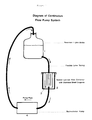
- Figure 1 is a flow diagram of a continuous Flow Pump System.
- Ionene polymers as used in this invention are cationic polymers in which a substantial proportion of the atoms providing the positive charge are quaternized nitrogens located in the main polymeric chain or backbone rather than in pendant groups.
- the polymers of this invention can be derived from the condensation polymerization of an organic dihalo alkyl compound and/or an epihalohydrin with one or more amines, amino compounds or ammonia.
- the alkyl groups of the dihalo alkyl compound have from 1 to about 20 carbon atoms, and the halogen is selected from the group consisting of bromine, chlorine, and iodine.
- Suitable organic dihalo alkyl compounds include 1,2-dichloroethane, 1,3-dichloropropane, 1,4-dichlorobutane, 1,5-dichloropentane, 1-6-dichlorohexane, and 1,1′-oxybis(2-chloroethane).
- Suitable epihalohydrins include epichlorohydrin and epibromohydrin.
- the alkyl groups of the amines or amino compounds have from 1 to about 20 carbon atoms.
- Suitable amines or amino compounds include dialkylamino trialkylamines, dialkylamino alkylamines, alkyldiamines, dialkylamines and ditertiary amines.
- ionene polymers for the purposes of this invention are related more to the structure of the polymer than to its molecular weight.
- ionene polymers with molecular weights ranging from about 1,000 to 2,000,000 are suitable, preferably from about 1,000 to 100,000.
- the ionene polymers used in this invention are commercially available or are easily synthesized from commercially available raw materials.
- the processes for making such polymers have been described in U.S. Patent No. 2,261,002 to Ritter, U. S. Patent No. 2,271,378 to Searle, U.S. Patent No. 3,489,663 to Bayer et al., U.S. Patent Reissue Nos. 28,807 and 28,808 to Panzer, U.S. Patent No. 4,054,542 to Buckman et al., U.S. Patent No. 4,506,081 to Fenyes et al. and U.S. Patent No. 4,581,058 to Fenyes et al.
- the polymers of this invention are manufactured and sold by a number of manufacturers.
- Some examples of ionene polymers that are manufactured and sold by Buckman Laboratories, Inc. under various trademarks and that have been found especially effective in the practice of this invention are: N,N,N′,N′-Tetramethyl-1,2-ethanediamine polymer with 1,1′-oxybis[2-chloroethane] (CAS Reg. No. 31075-24-8) N,N,N′,N′-Tetramethyl-1,2-ethanediamine polymer with (chloromethyl)oxirane (CAS Reg. No. 25988-98-1) N-Methylmethanamine polymer with (chloromethyl)oxirane (CAS Reg. No.
- Fig. 1 The ionene polymers of this invention were evaluated for their effectiveness in preventing the adhesion of bacterial cells by use of closed continuous circulation devices set up as shown in Fig. 1.
- Each setup consisted of a reservoir 1, a laminar flow container 2, in which was mounted rectangular Type 304 stainless steel coupons 3, and a centrifugal circulation pump 4. All components in the loop were connected as shown by means of flexible latex tubing.
- the metal coupons in the container were fastened in place so that when liquid was circulated in the loop, laminar flow of the liquid over the surface of the coupons were obtained.
- an aqueous solution containing bacterial nutrients was placed in the reservoir and circulated from the reservoir to the laminar flow container, then through the pump and back to the reservoir.
- the circulating liquid was inoculated with a measured amount of a bacterial culture, and appropriate concentrations of the products to be tested were added to the liquid.
- an aqueous growth medium known as Bushnell-Haas Mineral Solution was prepared and modified with peptone, according to the following formula: Magnesium sulfate 0.2 gram Calcium chloride 0.02 gram Monopotassium phosphate 1.0 gram Dipotassium phosphate 1.0 gram Ammonium nitrate 1.0 gram Ferric chloride 0.05 gram Bacto peptone 0.250 gram Deionized water 1.0 liter Final pH 7.0 ⁇ 0.2 at 25°C All ingredients were dissolved in the deionized water and sterilized in an autoclave for 20 minutes at 120°C.
- the inoculum for the tests was prepared by culturing known adherent species of bacteria on Tryptic Soy Agar plates. These plates were washed with normal saline solution (0.85%) and diluted appropriately to 1 X 10⁹ cfu/mL colony forming units per milliliter). This mixed stock inoculum was added to each reservoir in an amount that provided an initial concentration of 1 X 10⁶ cfu/mL in the circulating liquid.
- Determination of the adherent cells on the coupons was made by use of the reagent 2-(p-iodophenyl)-3-(p-nitrophenyl)-5-phenyl tetrazolium chloride, also known as INT. It is known that living, respiring bacterial cells will reduce INT and deposit red formazan crystals inside the cells. These crystals can then be extracted and measured quantitatively by visible light spectrophotometry.
- the stainless steel coupons were removed from the recirculating loop system, rinsed with water, and immersed for 30 minutes in a 0.02% aqueous solution of INT.
- the coupons were then removed from the solution and the colored formazan crystals on each coupon were extracted with 5.0 mL of methylene chloride.
- the resulting solution was filtered through a 0.45-micron pore size filter to remove cellular debris, the filtered solution was transferred to standard 3-mL cuvettes, and the optical transmittance of the solution at 490 nm was measured by means of a spectrophotometer. Since the transmittance is inversely related to the amount of cellular mass on the coupon, the higher the transmittance the lower would be the amount of bacterial cells adhering to the coupons.
Landscapes
- Organic Chemistry (AREA)
- Hydrology & Water Resources (AREA)
- Engineering & Computer Science (AREA)
- Environmental & Geological Engineering (AREA)
- Water Supply & Treatment (AREA)
- Chemical & Material Sciences (AREA)
- Life Sciences & Earth Sciences (AREA)
- Agricultural Chemicals And Associated Chemicals (AREA)
- Macromolecular Compounds Obtained By Forming Nitrogen-Containing Linkages In General (AREA)
- Micro-Organisms Or Cultivation Processes Thereof (AREA)
- Paints Or Removers (AREA)
- Pretreatment Of Seeds And Plants (AREA)
- Immobilizing And Processing Of Enzymes And Microorganisms (AREA)
Description
- This invention relates to the use of a water-soluble ionene polymer for the prevention of the adhesion of bacterial cells to surfaces in aqueous systems by treating the water in contact with such surfaces with very low concentrations. More particularly, it relates to the use for controlling the biological fouling of such surfaces by inhibiting the formation of a bacterial biofilm that is the common precursor to such fouling.
- Biological fouling of surfaces is a serious economic problem in many commercial and industrial aqueous processes and water-handling systems. The fouling is caused by the buildup of microorganisms, macroorganisms, extracellular substances, and dirt and debris that become trapped in the biomass. The organisms involved include bacteria, fungi, yeasts, algae, diatoms, protozoa, macroalgae, barnacles, and small mollusks like Asiatic clams. If not controlled, the biofouling caused by these organisms can interfere with process operations, lower the efficiency of processes, waste energy, and reduce product quality.
- For example, cooling water systems used in power-generating plants, refineries, chemical plants, air-conditioning systems, and other commercial and industrial operations frequently encounter biofouling problems. Such water systems are commonly contaminated with airborne organisms entrained from cooling towers as well as waterborne organisms from the system's makeup water supply. The water in such systems is generally an excellent growth medium for these organisms, with aerobic and heliotropic organisms flourishing on the towers and other organisms colonizing and growing in such areas as the tower sump, pipelines, heat exchangers, etc. If not controlled, the biofouling resulting from such growth can plug the towers, block pipelines, and coat heat-transfer surfaces with layers of slime, and thereby prevent proper operation and reduce cooling efficiency.
- Industrial processes subject to problems with biofouling include those used for the manufacture of pulp, paper, paperboard, and textiles, particularly water-laid nonwoven textiles. For example, paper machines handle very large volumes of water in recirculating systems called "white water systems." The furnish to a paper machine typically contains only about 0.5% of fibrous and nonfibrous papermaking solids, which means that for each ton of paper almost 200 tons of water pass through the headbox, most of it being recirculated in the white water system.
- These water systems provide excellent growth media for microorganisms, which can result in the formation of microbial slime in headboxes, waterlines, and papermaking equipment. Such slime masses not only can interfere with water and stock flows, but when they break loose they can cause spots, holes, and bad odors in the paper as well as web breaks that cause costly disruptions in paper machine operations.
- To control biological fouling, it has been common in the art to treat the affected water systems with certain chemical substances in concentrations sufficient to kill or greatly inhibit the growth of the causative organisms. For example, chlorine gas and hypochlorite solutions made with the gas have long been added to water systems to kill or inhibit the growth of bacteria, fungi, algae, and other troublesome organisms. However, chlorine compounds are not only damaging to materials of construction, they also react with organics to form undesirable substances in effluent streams, such as carcinogenic chloromethanes and chlorinated dioxins.
- Certain organic compounds, such as methylenebis(thiocyanate), dithiocarbamates, haloorganics, and quaternary ammonium surfactants, have also been used. While many of these are quite efficient in killing microorganisms or inhibiting their growth, they also tend to be toxic or harmful to humans, animals, or other non-target organisms.
- Ionene polymers have also been shown to be effective in the control of fouling by mollusks (see EP-A-330494).
- Scientific studies have shown that the first stage of biological fouling in aqueous systems is generally the formation of a thin bacterial film on the surface exposed to the water. The bacteria initiate the attachment and early colonization of the surface and modify it in a manner that favors the development of the more complex community of organisms that make up the advanced fouling of the surface. For example, P. E. Holmes (Appl. Environ. Microbiol. 52(6):1391-3, Dec. 1986) found that bacterial growth on the submerged surfaces of vinyl swimming pool liners was a significant factor in the fouling of these surfaces by algae. When in association, the bacteria attached to the vinyl within 24 hours and the algae within 48 hours. In the absence of bacteria, however, one species of algae did not attach even after 7 days and another algae species did begin to attach by 7 days but in numbers an order of magnitude lower than those of the bacteria-contaminated counterpart. A general review of the mechanisms of biological fouling and the importance of the bacterial biofilm as the initial stage is given by C. A. Kent in "Biological Fouling: Basic Science and Models" (in Melo, L. F., Bott, T. R., Bernardo, C. A. (eds.), Fouling Science and Technology, NATO ASI Series, Series E, Applied Sciences: No. 145, Kluwer Acad. Publishers, Dordrecht, The Netherlands, 1988).
- Based on these findings, one possible way to control the biological fouling of surfaces would be to prevent or inhibit the formation of the initial bacterial biofilm. This can be done, of course, by use of bactericidal substances, but they generally have the disadvantages mentioned above. It is therefore an object of the present invention to provide a method of controlling the biological fouling of surfaces that obviates the disadvantages of the prior art. Other objects and advantages of this invention will become apparent from a reading of the specifications and appended claims.
- The inventors have discovered that the use of ionene polymers in aqueous systems prevents or inhibits the adhesion of bacterial cells to surfaces in the aqueous systems and thereby controls the biological fouling of the surfaces. The invention thus relates to the use of a water soluble ionene polymer to inhibit the adhesion of bacterial cells to solid surfaces and control biological fouling in aqueous systems wherein said ionene polymer is added to said aqueous system in an amount of 0.1 ppm to 50 ppm based on the weight of aqueous liquid in the system.
- Such use effectively inhibits the adhesion of the bacterial cells to exposed surfaces without killing the fouling organisms and also without harming non-target organisms. In addition, the use of ionene polymers in the present invention advantageously does not cause the formation of harmful substances in the effluent from the systems treated.
- Figure 1 is a flow diagram of a continuous Flow Pump System.
- Ionene polymers as used in this invention are cationic polymers in which a substantial proportion of the atoms providing the positive charge are quaternized nitrogens located in the main polymeric chain or backbone rather than in pendant groups. The polymers of this invention can be derived from the condensation polymerization of an organic dihalo alkyl compound and/or an epihalohydrin with one or more amines, amino compounds or ammonia.
- The alkyl groups of the dihalo alkyl compound have from 1 to about 20 carbon atoms, and the halogen is selected from the group consisting of bromine, chlorine, and iodine. Suitable organic dihalo alkyl compounds include 1,2-dichloroethane, 1,3-dichloropropane, 1,4-dichlorobutane, 1,5-dichloropentane, 1-6-dichlorohexane, and 1,1′-oxybis(2-chloroethane). Suitable epihalohydrins include epichlorohydrin and epibromohydrin.
- The alkyl groups of the amines or amino compounds have from 1 to about 20 carbon atoms. Suitable amines or amino compounds include dialkylamino trialkylamines, dialkylamino alkylamines, alkyldiamines, dialkylamines and ditertiary amines.
- The efficacy of ionene polymers for the purposes of this invention are related more to the structure of the polymer than to its molecular weight. Thus, ionene polymers with molecular weights ranging from about 1,000 to 2,000,000 are suitable, preferably from about 1,000 to 100,000.
- The ionene polymers used in this invention are commercially available or are easily synthesized from commercially available raw materials. The processes for making such polymers have been described in U.S. Patent No. 2,261,002 to Ritter, U. S. Patent No. 2,271,378 to Searle, U.S. Patent No. 3,489,663 to Bayer et al., U.S. Patent Reissue Nos. 28,807 and 28,808 to Panzer, U.S. Patent No. 4,054,542 to Buckman et al., U.S. Patent No. 4,506,081 to Fenyes et al. and U.S. Patent No. 4,581,058 to Fenyes et al.
- The polymers of this invention are manufactured and sold by a number of manufacturers. Some examples of ionene polymers that are manufactured and sold by Buckman Laboratories, Inc. under various trademarks and that have been found especially effective in the practice of this invention are:
N,N,N′,N′-Tetramethyl-1,2-ethanediamine polymer with 1,1′-oxybis[2-chloroethane] (CAS Reg. No. 31075-24-8)
N,N,N′,N′-Tetramethyl-1,2-ethanediamine polymer with (chloromethyl)oxirane (CAS Reg. No. 25988-98-1)
N-Methylmethanamine polymer with (chloromethyl)oxirane (CAS Reg. No. 25988-97-0)
1,1′-(Methylimino)bis[3-chloro-2-propanol] polymer with N,N,N′,N′-tetramethyl-1,2-ethanediamine (CAS Reg. No. 68140-76-1)
These polymers have been found to be essentially nonfoaming in water, non-irritating to the skin, and extremely low in toxicity to warm-blooded animals. Such polymers have been shown to be microbicidal at certain levels and under certain conditions as evidenced in the following U.S. patents: 3,771,989 to Pera et al., 4,018,592 to Buckman et al., 4,054,542 to Buckman et al, 4,506,081 to Fenyes et al., 4,111,679 to Shair et al, 4,089,977 to Green et al and 4,140,798 to Merianos et al. While these polymers are bactericidal at concentrations above certain threshold levels, the inventors have found that they are effective in preventing the adhesion of bacteria even at concentrations substantially below these threshold levels. - In order to disclose the nature of the invention more clearly, the following illustrative examples will be given. It is to be understood, however, that the invention is not limited to the specific conditions or details set forth in the examples which follow.
- The ionene polymers of this invention were evaluated for their effectiveness in preventing the adhesion of bacterial cells by use of closed continuous circulation devices set up as shown in Fig. 1. Each setup consisted of a
reservoir 1, alaminar flow container 2, in which was mounted rectangular Type 304stainless steel coupons 3, and acentrifugal circulation pump 4. All components in the loop were connected as shown by means of flexible latex tubing. The metal coupons in the container were fastened in place so that when liquid was circulated in the loop, laminar flow of the liquid over the surface of the coupons were obtained. In operation, an aqueous solution containing bacterial nutrients was placed in the reservoir and circulated from the reservoir to the laminar flow container, then through the pump and back to the reservoir. The circulating liquid was inoculated with a measured amount of a bacterial culture, and appropriate concentrations of the products to be tested were added to the liquid. - For the tests, an aqueous growth medium known as Bushnell-Haas Mineral Solution was prepared and modified with peptone, according to the following formula:
Magnesium sulfate 0.2 gram Calcium chloride 0.02 gram Monopotassium phosphate 1.0 gram Dipotassium phosphate 1.0 gram Ammonium nitrate 1.0 gram Ferric chloride 0.05 gram Bacto peptone 0.250 gram Deionized water 1.0 liter Final pH 7.0 ± 0.2 at 25°C
All ingredients were dissolved in the deionized water and sterilized in an autoclave for 20 minutes at 120°C. - The inoculum for the tests was prepared by culturing known adherent species of bacteria on Tryptic Soy Agar plates. These plates were washed with normal saline solution (0.85%) and diluted appropriately to 1 X 10⁹ cfu/mL colony forming units per milliliter). This mixed stock inoculum was added to each reservoir in an amount that provided an initial concentration of 1 X 10⁶ cfu/mL in the circulating liquid.
- Each test was run with continuous circulation of the treated liquid for seven days. Then the system was shut down, and the stainless steel coupons were removed from the container and checked for adherent bacterial cells. Bacterial colony counts were also run on the circulating aqueous liquid by conventional Petri dish plate counts procedures in order to determine any inhibitory effect of the polymers on the growth of the bacteria in the liquid itself.
- Determination of the adherent cells on the coupons was made by use of the reagent 2-(p-iodophenyl)-3-(p-nitrophenyl)-5-phenyl tetrazolium chloride, also known as INT. It is known that living, respiring bacterial cells will reduce INT and deposit red formazan crystals inside the cells. These crystals can then be extracted and measured quantitatively by visible light spectrophotometry.
- At the end of the seven day test period, the stainless steel coupons were removed from the recirculating loop system, rinsed with water, and immersed for 30 minutes in a 0.02% aqueous solution of INT. The coupons were then removed from the solution and the colored formazan crystals on each coupon were extracted with 5.0 mL of methylene chloride. The resulting solution was filtered through a 0.45-micron pore size filter to remove cellular debris, the filtered solution was transferred to standard 3-mL cuvettes, and the optical transmittance of the solution at 490 nm was measured by means of a spectrophotometer. Since the transmittance is inversely related to the amount of cellular mass on the coupon, the higher the transmittance the lower would be the amount of bacterial cells adhering to the coupons.
- The following four polymer products were evaluated for their effectiveness in preventing bacterial adhesion by two known bacterial adherent species, Klebsiella oxytoca and Pseudomonas aeruginosa, by use of the procedures outlined in the foregoing paragraphs:
- Product A:
- N,N,N′,N′-Tetramethyl-1,2-ethanediamine polymer with 1,1′-oxybis[2-chloroethane], 60% (w/w) aqueous solution, 3,000 average molecular weight.
- Product B:
- N,N,N′,N′-Tetramethyl-1,2-ethanediamine polymer with (chloromethyl)oxirane, 60% (w/w) aqueous solution, 3,000 average molecular weight.
- Product C:
- N-Methylmethanamine polymer with (chloromethyl)-oxirane, 60% (w/w) aqueous solution, 3,000 average molecular weight.
- Product D:
- 1,1′-(Methylimino)[3-chloro-2-propanol] polymer with N,N,N′,N′-tetramethyl-1,2-ethanadiamine, 25% (w/w) aqueous solution, 60,000 average molecular weight.
- For each polymer, four separate circulating systems were set up. One liter of the sterilized Bushnell-Haas Mineral Solution was added to each reservoir, the liquid was inoculated with the bacterial culture as described previously, the amount of polymer product indicated below was added, the circulation pump was started, and circulation of the liquid was continued for seven days. For each polymer, the following weight for weight concentrations were used: 0 ppm ("Control"), 1.0 ppm, 5.0 ppm and 10 ppm.
- The results, which are summarized in Tables 1 through 4, show that these ionene polymers, when used in accordance with the present invention, provide major reductions in the adhesion of bacterial cells to the stainless steel coupons, as evidence by the greater transmittance (lower amounts of formazan) with increasing dosages of the polymers. The near 100% transmittance at the 10 ppm levels indicates the virtual absence of formazan and thus the virtual absence of bacterial cells on the stainless steel coupons. In addition, the results indicate that, even at the maximum concentrations tested, the fouling organisms in the circulating aqueous liquid were not killed and thus the total bacterial population was not affected.
- This showing demonstrates that polymers intended for use in the present invention can inhibit the adhesion of bacterial cells to surfaces in aqueous systems at concentrations below the toxic threshold of the polymers.
TABLE 1 Polymer Product A Dose Level, ppm 0 1 5 10 Bacterial Count (cfu/mL) x 10⁶ (Aqueous phase) 165 162 158 153 Transmittance, % (extracted formazan) 1 11 57 97 TABLE 2 Polymer Product B Dose Level, ppm 0 1 5 10 Bacterial Count (cfu/mL) x 10⁶ (Aqueous phase) 143 142 137 129 Transmittance, % (extracted formazan) 1 4 61 99 TABLE 3 Polymer Product C Dose Level, ppm 0 1 5 10 Bacterial Count (cfu/mL) x 10⁶ (Aqueous phase) 155 154 143 141 Transmittance, % (extracted formazan) 1 8 64 99 TABLE 4 Polymer Product D Dose Level, ppm 0 1 5 10 Bacterial Count (cfu/mL) x 10⁶ (Aqueous phase) 125 122 119 106 Transmittance, % (extracted formazan) 1 11 55 98
Claims (13)
- Use of a water soluble ionene polymer to inhibit the adhesion of bacterial cells to solid surfaces and control biological fouling in aqueous systems wherein said ionene polymer is added to said aqueous system in an amount of 0.1 ppm to 50 ppm based on the weight of aqueous liquid in the system.
- Use as claimed in claim 1, wherein the ionene polymer is added to the aqueous system in an amount of 0.1 to 10 ppm.
- Use as claimed in claim 2, wherein the ionene polymer is added to the aqueous system in an amount of 0.5 to 5 ppm.
- Use as claimed in any preceding claim, wherein the ionene polymer has a molecular weight from 1,000 to 2,000,000.
- Use as claimed in claim 4, wherein the ionene polymer has a molecular weight from 1,000 to 100,000.
- Use as claimed in any preceding claim, wherein the ionene polymer is a cationic polymer.
- Use as claimed in any preceding claim, wherein the ionene polymer is derived from a reaction of an organic dihalo alkyl compound and/or an epihalohydrin with one or more amines, amino compounds or ammonia.
- Use as claimed in claim 7, wherein the alkyl groups of the organic dihalo alkyl compound and/or the amine have from 1 to 20 carbon atoms.
- Use as claimed in claim 7, wherein the halogen atom of the organic dihalo alkyl compound is bromine, chlorine or iodine.
- Use as claimed in claim 7, wherein the organic dihalo alkyl compound or epihalohydrin is epichlorohydrin, epibromohydrin or 1,1'-oxybis(2-chloroethane).
- Use as claimed in claim 7, wherein the amine is N-methylmethanamine or N,N,N',N'-tetramethyl-1,2-ethanediamine.
- Use as claimed in any preceding claim, wherein the aqueous system is a cooling water system.
- Use as claimed in any of claims 1 to 11, wherein the aqueous system is a paper machine white water system.
Applications Claiming Priority (2)
| Application Number | Priority Date | Filing Date | Title |
|---|---|---|---|
| US42032689A | 1989-10-12 | 1989-10-12 | |
| US420326 | 1989-10-12 |
Publications (3)
| Publication Number | Publication Date |
|---|---|
| EP0422948A2 EP0422948A2 (en) | 1991-04-17 |
| EP0422948A3 EP0422948A3 (en) | 1991-10-16 |
| EP0422948B1 true EP0422948B1 (en) | 1995-01-25 |
Family
ID=23666007
Family Applications (1)
| Application Number | Title | Priority Date | Filing Date |
|---|---|---|---|
| EP90311183A Revoked EP0422948B1 (en) | 1989-10-12 | 1990-10-12 | Use of a water soluble ionene polymer for inhibiting bacterial adhesion and controlling biological fouling in aqueous systems |
Country Status (16)
| Country | Link |
|---|---|
| EP (1) | EP0422948B1 (en) |
| JP (1) | JPH03209304A (en) |
| AR (1) | AR243854A1 (en) |
| AT (1) | ATE117661T1 (en) |
| AU (1) | AU650624B2 (en) |
| BR (1) | BR9004991A (en) |
| CA (1) | CA2025910C (en) |
| DE (1) | DE69016344T2 (en) |
| DK (1) | DK0422948T3 (en) |
| ES (1) | ES2068346T3 (en) |
| FI (1) | FI904830A7 (en) |
| GR (1) | GR3015654T3 (en) |
| MX (1) | MX172773B (en) |
| NO (1) | NO305311B1 (en) |
| NZ (1) | NZ235510A (en) |
| ZA (1) | ZA907268B (en) |
Families Citing this family (3)
| Publication number | Priority date | Publication date | Assignee | Title |
|---|---|---|---|---|
| US5387717A (en) * | 1992-08-12 | 1995-02-07 | Buckman Laboratories International, Inc. | Method for the detoxification of mustard gas, sulfur-containing quaternary ammonium ionene polymers and their use as microbicides |
| DE4340665A1 (en) * | 1993-11-30 | 1995-06-01 | Stockhausen Chem Fab Gmbh | Oil-in-water emulsions to replace microbicides (biocides) in water-bearing systems |
| US6405582B1 (en) * | 2000-06-15 | 2002-06-18 | Hercules Incorporated | Biosensor and deposit sensor for monitoring biofilm and other deposits |
Family Cites Families (7)
| Publication number | Priority date | Publication date | Assignee | Title |
|---|---|---|---|---|
| US3943255A (en) * | 1974-05-22 | 1976-03-09 | Nalco Chemical Company | Alkyl polymaine microbiocides |
| US4026945A (en) * | 1974-10-03 | 1977-05-31 | Millmaster Onyx Corporation | Anti-microbial quaternary ammonium co-polymers |
| US4140798A (en) * | 1976-11-24 | 1979-02-20 | Kewanee Industries, Inc. | Method of inhibiting microorganisms |
| US4462914A (en) * | 1983-01-03 | 1984-07-31 | Calgon Corporation | Method of controlling Corbicula |
| DE3674640D1 (en) * | 1985-05-28 | 1990-11-08 | Ciba Geigy Ag | A WATER-BASED AQUEOUS SYSTEM. |
| CA1287573C (en) * | 1986-07-23 | 1991-08-13 | Larry A. Lyons | Method for controlling macroinvertebrates |
| US4789489A (en) * | 1988-02-26 | 1988-12-06 | Buckman Laboratories International, Inc. | Method for the control of mollusks |
-
1990
- 1990-09-04 AR AR90317752A patent/AR243854A1/en active
- 1990-09-12 ZA ZA907268A patent/ZA907268B/en unknown
- 1990-09-21 CA CA002025910A patent/CA2025910C/en not_active Expired - Fee Related
- 1990-09-28 BR BR909004991A patent/BR9004991A/en not_active IP Right Cessation
- 1990-09-28 NZ NZ235510A patent/NZ235510A/en unknown
- 1990-10-01 FI FI904830A patent/FI904830A7/en not_active IP Right Cessation
- 1990-10-02 MX MX022655A patent/MX172773B/en unknown
- 1990-10-10 AU AU63940/90A patent/AU650624B2/en not_active Ceased
- 1990-10-11 NO NO904398A patent/NO305311B1/en not_active IP Right Cessation
- 1990-10-12 JP JP2275133A patent/JPH03209304A/en active Pending
- 1990-10-12 AT AT90311183T patent/ATE117661T1/en not_active IP Right Cessation
- 1990-10-12 DK DK90311183.9T patent/DK0422948T3/en active
- 1990-10-12 ES ES90311183T patent/ES2068346T3/en not_active Expired - Lifetime
- 1990-10-12 EP EP90311183A patent/EP0422948B1/en not_active Revoked
- 1990-10-12 DE DE69016344T patent/DE69016344T2/en not_active Revoked
-
1995
- 1995-04-03 GR GR950400798T patent/GR3015654T3/en unknown
Also Published As
| Publication number | Publication date |
|---|---|
| DE69016344D1 (en) | 1995-03-09 |
| NZ235510A (en) | 1993-04-28 |
| JPH03209304A (en) | 1991-09-12 |
| MX172773B (en) | 1994-01-12 |
| AU650624B2 (en) | 1994-06-30 |
| FI904830A0 (en) | 1990-10-01 |
| AR243854A1 (en) | 1993-09-30 |
| DK0422948T3 (en) | 1995-03-27 |
| NO305311B1 (en) | 1999-05-10 |
| CA2025910A1 (en) | 1991-04-13 |
| NO904398D0 (en) | 1990-10-11 |
| NO904398L (en) | 1991-04-15 |
| ZA907268B (en) | 1991-07-31 |
| GR3015654T3 (en) | 1995-07-31 |
| ES2068346T3 (en) | 1995-04-16 |
| AU6394090A (en) | 1991-04-18 |
| BR9004991A (en) | 1991-09-10 |
| FI904830A7 (en) | 1991-04-13 |
| CA2025910C (en) | 1995-11-07 |
| DE69016344T2 (en) | 1995-09-07 |
| EP0422948A3 (en) | 1991-10-16 |
| ATE117661T1 (en) | 1995-02-15 |
| EP0422948A2 (en) | 1991-04-17 |
Similar Documents
| Publication | Publication Date | Title |
|---|---|---|
| US5128100A (en) | Process for inhibiting bacterial adhesion and controlling biological fouling in aqueous systems | |
| EP0873277B1 (en) | Use of amides for controlling biofouling using amides | |
| CA2157535C (en) | Chemical for the prevention of attachment of microorganisms to surfaces | |
| EP0999746B1 (en) | Methods and compositions for controlling biofouling using sulfamic acids | |
| EP0854842B1 (en) | Inhibition of biofouling using polyglycol fatty acid esters | |
| US5879623A (en) | Methods and compositions for controlling biofouling using fluorosurfactants | |
| CA2025910C (en) | Process for inhibiting bacterial adhesion and controlling biological fouling in aqueous systems | |
| CA2298609C (en) | Methods and compositions for controlling biofouling using amino methyl phosphonic acids | |
| EP0874783B1 (en) | Controlling biofouling using n-alkyl heterocyclic compounds | |
| EP0910552B1 (en) | Use of COMBINATIONS OF AN IONENE POLYMER AND A SALT OF DODECYLAMINE for controlling biofouling | |
| EP0873048B1 (en) | Methods and compositions for controlling biofouling using oxime esters | |
| EP0876300B1 (en) | Use of thiourea compounds for controlling biofouling | |
| EP0861210B1 (en) | Use of sulfonamides for controlling biofouling | |
| CA1276796C (en) | Aqueous system treated with a biocide |
Legal Events
| Date | Code | Title | Description |
|---|---|---|---|
| PUAI | Public reference made under article 153(3) epc to a published international application that has entered the european phase |
Free format text: ORIGINAL CODE: 0009012 |
|
| AK | Designated contracting states |
Kind code of ref document: A2 Designated state(s): AT BE CH DE DK ES FR GB GR IT LI LU NL SE |
|
| PUAL | Search report despatched |
Free format text: ORIGINAL CODE: 0009013 |
|
| AK | Designated contracting states |
Kind code of ref document: A3 Designated state(s): AT BE CH DE DK ES FR GB GR IT LI LU NL SE |
|
| 17P | Request for examination filed |
Effective date: 19911204 |
|
| 17Q | First examination report despatched |
Effective date: 19920914 |
|
| GRAA | (expected) grant |
Free format text: ORIGINAL CODE: 0009210 |
|
| AK | Designated contracting states |
Kind code of ref document: B1 Designated state(s): AT BE CH DE DK ES FR GB GR IT LI LU NL SE |
|
| REF | Corresponds to: |
Ref document number: 117661 Country of ref document: AT Date of ref document: 19950215 Kind code of ref document: T |
|
| ITF | It: translation for a ep patent filed | ||
| EAL | Se: european patent in force in sweden |
Ref document number: 90311183.9 |
|
| REF | Corresponds to: |
Ref document number: 69016344 Country of ref document: DE Date of ref document: 19950309 |
|
| REG | Reference to a national code |
Ref country code: DK Ref legal event code: T3 |
|
| REG | Reference to a national code |
Ref country code: ES Ref legal event code: FG2A Ref document number: 2068346 Country of ref document: ES Kind code of ref document: T3 |
|
| ET | Fr: translation filed | ||
| REG | Reference to a national code |
Ref country code: GR Ref legal event code: FG4A Free format text: 3015654 |
|
| PLBI | Opposition filed |
Free format text: ORIGINAL CODE: 0009260 |
|
| 26 | Opposition filed |
Opponent name: W.R. GRACE & CO.-CONN. Effective date: 19951025 |
|
| NLR1 | Nl: opposition has been filed with the epo |
Opponent name: W.R. GRACE & CO.-CONN. |
|
| PLBF | Reply of patent proprietor to notice(s) of opposition |
Free format text: ORIGINAL CODE: EPIDOS OBSO |
|
| PLBF | Reply of patent proprietor to notice(s) of opposition |
Free format text: ORIGINAL CODE: EPIDOS OBSO |
|
| PLBF | Reply of patent proprietor to notice(s) of opposition |
Free format text: ORIGINAL CODE: EPIDOS OBSO |
|
| PLBF | Reply of patent proprietor to notice(s) of opposition |
Free format text: ORIGINAL CODE: EPIDOS OBSO |
|
| PLAW | Interlocutory decision in opposition |
Free format text: ORIGINAL CODE: EPIDOS IDOP |
|
| APAC | Appeal dossier modified |
Free format text: ORIGINAL CODE: EPIDOS NOAPO |
|
| APAE | Appeal reference modified |
Free format text: ORIGINAL CODE: EPIDOS REFNO |
|
| APAC | Appeal dossier modified |
Free format text: ORIGINAL CODE: EPIDOS NOAPO |
|
| PGFP | Annual fee paid to national office [announced via postgrant information from national office to epo] |
Ref country code: LU Payment date: 19981127 Year of fee payment: 9 |
|
| PGFP | Annual fee paid to national office [announced via postgrant information from national office to epo] |
Ref country code: CH Payment date: 19981218 Year of fee payment: 9 |
|
| PGFP | Annual fee paid to national office [announced via postgrant information from national office to epo] |
Ref country code: DK Payment date: 19990913 Year of fee payment: 10 |
|
| PGFP | Annual fee paid to national office [announced via postgrant information from national office to epo] |
Ref country code: NL Payment date: 19990921 Year of fee payment: 10 |
|
| PG25 | Lapsed in a contracting state [announced via postgrant information from national office to epo] |
Ref country code: LU Free format text: LAPSE BECAUSE OF NON-PAYMENT OF DUE FEES Effective date: 19991012 |
|
| PGFP | Annual fee paid to national office [announced via postgrant information from national office to epo] |
Ref country code: GR Payment date: 19991027 Year of fee payment: 10 |
|
| PG25 | Lapsed in a contracting state [announced via postgrant information from national office to epo] |
Ref country code: LI Free format text: LAPSE BECAUSE OF NON-PAYMENT OF DUE FEES Effective date: 19991031 Ref country code: CH Free format text: LAPSE BECAUSE OF NON-PAYMENT OF DUE FEES Effective date: 19991031 |
|
| REG | Reference to a national code |
Ref country code: CH Ref legal event code: PL |
|
| PGFP | Annual fee paid to national office [announced via postgrant information from national office to epo] |
Ref country code: GB Payment date: 20000918 Year of fee payment: 11 Ref country code: AT Payment date: 20000918 Year of fee payment: 11 |
|
| PGFP | Annual fee paid to national office [announced via postgrant information from national office to epo] |
Ref country code: SE Payment date: 20001004 Year of fee payment: 11 |
|
| PGFP | Annual fee paid to national office [announced via postgrant information from national office to epo] |
Ref country code: FR Payment date: 20001009 Year of fee payment: 11 |
|
| PG25 | Lapsed in a contracting state [announced via postgrant information from national office to epo] |
Ref country code: DK Free format text: LAPSE BECAUSE OF NON-PAYMENT OF DUE FEES Effective date: 20001012 |
|
| PGFP | Annual fee paid to national office [announced via postgrant information from national office to epo] |
Ref country code: ES Payment date: 20001016 Year of fee payment: 11 |
|
| PGFP | Annual fee paid to national office [announced via postgrant information from national office to epo] |
Ref country code: DE Payment date: 20001030 Year of fee payment: 11 |
|
| PGFP | Annual fee paid to national office [announced via postgrant information from national office to epo] |
Ref country code: BE Payment date: 20001120 Year of fee payment: 11 |
|
| APAC | Appeal dossier modified |
Free format text: ORIGINAL CODE: EPIDOS NOAPO |
|
| RDAH | Patent revoked |
Free format text: ORIGINAL CODE: EPIDOS REVO |
|
| RDAG | Patent revoked |
Free format text: ORIGINAL CODE: 0009271 |
|
| STAA | Information on the status of an ep patent application or granted ep patent |
Free format text: STATUS: PATENT REVOKED |
|
| REG | Reference to a national code |
Ref country code: DK Ref legal event code: EBP |
|
| NLV4 | Nl: lapsed or anulled due to non-payment of the annual fee |
Effective date: 20010501 |
|
| 27W | Patent revoked |
Effective date: 20010313 |
|
| GBPR | Gb: patent revoked under art. 102 of the ep convention designating the uk as contracting state |
Free format text: 20010313 |
|
| APAH | Appeal reference modified |
Free format text: ORIGINAL CODE: EPIDOSCREFNO |