EP0420699A2 - Ferromagnetic member consiting of organic material - Google Patents
Ferromagnetic member consiting of organic material Download PDFInfo
- Publication number
- EP0420699A2 EP0420699A2 EP90310708A EP90310708A EP0420699A2 EP 0420699 A2 EP0420699 A2 EP 0420699A2 EP 90310708 A EP90310708 A EP 90310708A EP 90310708 A EP90310708 A EP 90310708A EP 0420699 A2 EP0420699 A2 EP 0420699A2
- Authority
- EP
- European Patent Office
- Prior art keywords
- temperature
- organic
- organic compound
- substituted
- ferromagnetism
- Prior art date
- Legal status (The legal status is an assumption and is not a legal conclusion. Google has not performed a legal analysis and makes no representation as to the accuracy of the status listed.)
- Granted
Links
- 0 CCCC(*)CCCC*CNC(C)C* Chemical compound CCCC(*)CCCC*CNC(C)C* 0.000 description 1
Images


Classifications
-
- H—ELECTRICITY
- H01—ELECTRIC ELEMENTS
- H01F—MAGNETS; INDUCTANCES; TRANSFORMERS; SELECTION OF MATERIALS FOR THEIR MAGNETIC PROPERTIES
- H01F1/00—Magnets or magnetic bodies characterised by the magnetic materials therefor; Selection of materials for their magnetic properties
- H01F1/42—Magnets or magnetic bodies characterised by the magnetic materials therefor; Selection of materials for their magnetic properties of organic or organo-metallic materials, e.g. graphene
-
- C—CHEMISTRY; METALLURGY
- C08—ORGANIC MACROMOLECULAR COMPOUNDS; THEIR PREPARATION OR CHEMICAL WORKING-UP; COMPOSITIONS BASED THEREON
- C08F—MACROMOLECULAR COMPOUNDS OBTAINED BY REACTIONS ONLY INVOLVING CARBON-TO-CARBON UNSATURATED BONDS
- C08F38/00—Homopolymers and copolymers of compounds having one or more carbon-to-carbon triple bonds
Definitions
- This invention relates to an organic ferromagnetic member having a spontaneous magnetization useful for such applications as recording media, temperature sensors, timers, magnetic shields, etc. as magnetic materials and a process for producing the same.
- Ohtani et al disclosed that ferromagnetic organic materials were obtained by photo-irradiation of condensation products of pyrene-aromatic aldehyde (COPNA resin) together with a photosensitizer such as benzoquinone, etc. [Chemical Society of Japan, No. 57 Annual Meeting in Autumn, 3D410 - 3D413 (1988)].
- COPNA resin pyrene-aromatic aldehyde
- a photosensitizer such as benzoquinone, etc.
- An object of the present invention is to provide an organic magnetic member capable of developing a ferromagnetism without conducting complicated synthesis or treatment.
- Another object of the present invention is to provide a novel organic ferromagnetic member that unnecessitates complicated synthesis or treatment for developing a ferromagnetism.
- Another object of the present invention is to provide a time-responsible organic ferromagnetic member capable of controlling development of ferromagnetism with time.
- Further object of the present invention is to provide a process for producing an organic ferromagnetic member, which can produce an organic compound having a ferromagnetism without conducting any complicated synthesis or treatment.
- Still further object of the present invention is to provide a process for controlling development of ferromagnetism of time-responsible organic ferromagnetic member, which can control the development of ferromagnetism with time.
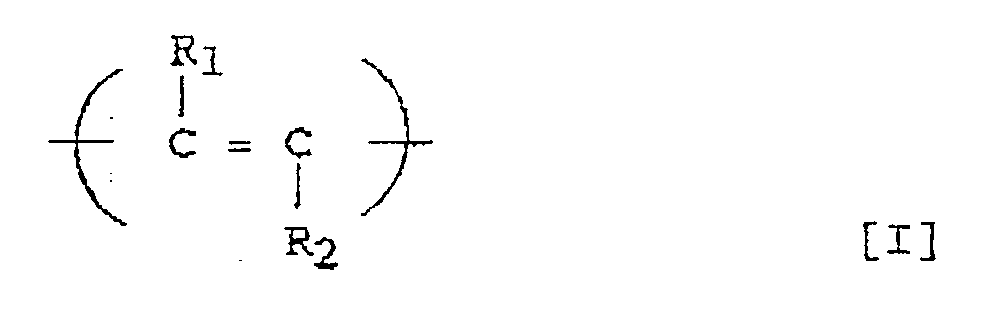
- the present organic magnetic member comprises repetition units represented by the following general formula [I] : , wherein at least one of R1 and R2 is a substituted or unsubstituted aryl group or a substituted or unsubstituted heterocyclic group, and is spontaneously magnetized.
- the present organic magnetic member comprises repetition units represented by the following general formula: , wherein at least one of R1 and R2 is a substituted or unsubstituted aromatic ring or a substituted or unsubstituted heterocyclic ring, and is convertible to an organic ferromagnetic member having a ferromagnetism by bringing the member to a temperature T1 and then retaining the member in a range of the temperature T1 and a temperature T2 for a given time.
- the present organic ferromagnetic member comprises repetition units represented by the following general formula [I] : , wherein at least one of R1 and R2 is a substituted or unsubstituted aromatic ring or a substituted or unsubstituted heterocyclic ring and has a ferromagnetism.
- the present organic ferromagnetic member comprises an organic compound having repetition units represented by the following general formula [I] : , wherein at least one of R1 and R2 is a substituted or unsubstituted aromatic ring or a substituted or unsubstituted heterocyclic ring, the organic compound being brought to a temperature T1 and then retained in a range between the temperature T1 and a temperature T2, for a given time, wherein T1 ⁇ T2 ⁇ T c , where T c is the Curie temperature of the organic ferromagnetic member.
- the present process for producing an organic ferromagnetic member comprises bringing an organic compound having repetition units represented by the following general formula [I] : , wherien at least one of R1 and R2 is a substituted or unsubstituted aromatic ring or a substituted or unsubstituted heterocyclic ring to a temperature T1, and then retaining the compound in a range between the temperature T1 and a temperature T2 for a given time, wherein T 1 ⁇ T2 ⁇ T c where T c is the Curie temperature of the organic ferromagnetic member.
- the present time-responsible organic ferromagnetic member comprises an organic compound having repetition units represented by the following general formula [I] : , wherien at least one of R1 and R2 is a substituted or unsubstituted aromatic ring or a substituted or unsubstituted heterocyclic ring, and the organic compound being brought to a temperature T1 and then retained in a range between the temperature T1 and a temperature T2 for a given time, thereby developing a ferromagnetism, wherein T1 ⁇ T2 ⁇ T c , where T c is the Curie temperature of the organic ferromagnetic member.
- the present process for controlling development of ferromagnetism of a time-responsible ferromagnetic member comprises a step of bringing an organic compound having repetition units represented by the following general formula [I] : , wherein at least one of R1 and R2 is a substituted or unsubstituted aromatic ring or a substituted or unsubstituted heterocyclic ring, to a temperature T1, and then retaining the compound in a range of the temperature T1 and a temperature T2, thereby developing a ferromagnetism on the organic compound after time t1, where the organic compound is subjected to at least one treatment selected from a heat treatment, an electrolytic treatment, a solvent treatment, an electric discharge treatment, a light irradiation treatment and a stretching treatment, thereby developing the ferromagnetism after time t2, where T 1 ⁇ T 2 ⁇ T c , where T c is the Curie temperature of the organic ferromagne
- polyacetylene has been regarded as a peculiar polymer having conjugated double bonds and its applications to many fields such as polymer battery, etc., utilizing its electroconductivity, photoconductivity, and oxidation-reduction property, have been so far studied. Furthermore, synthesis of polyacetylene having aromatic rings as the side chains has been also studied. For example, poly(phenylacetylene) derivatives having p-methoxy groups, p-methyl groups, p-chloro groups, etc. were proposed [ K. Hasegawa et al: Macromolecules, 8 , 255 - 259, 1975; Japanese Patent Applications Kokai (Laid-Open) Nos.
- the present organic magnetic member has repetition units represented by the following general formula [I] and is spontaneously magnetized: , wherein monovalent groups represented by R1 and R2 are, for example, hydrogen atom, halogen atoms, alkyl, cycloalkyl, aryl, heterocyclic groups, aromatic heterocyclic groups, amino, alkylamino, dialkylamino, amido, mercapto, alkylthio, arylthio, alkoxy, aryloxy, acyl, trialkylsilyl, nitro, cyano, sulfo, etc. These groups may have a substituent.
- R1 and R2 are a substituted or unsubstituted aryl group or a substituted or unsubstituted heterocyclic group.
- More preferable substituent R1 is a hydrogen atom, alkyl or cycloalkyl and more preferable substituent R2 is represented by the following general formula [II] : wherein X is a carbon atom or a nitrogen atom, and has a substituent Y when X is a carbon atom and has no substituent Y when X is a nitrogen atom; the substituent Y is an electron acceptor group or an electron donor group; and Z1 to Z4 are hydrogen atoms, electron acceptor groups or electron donor groups.
- Examples of the electron donor groups in Y and Z1 to Z4 include alkoxy, aryloxy, alkyl, cycloalkyl, aralkyl, aryl, amino, alkylamino, dialkylamino, 1-piperidino, 1-piperazino, 1-pyrrolidino, acylamino, halogen atoms, hydroxy, mercapto, alkylthio, arylthio, trialkylsilyl, trialkylsiloxy, etc.
- electron acceptor groups examples include nitro, cyano, acryl, acryloxy, carboxamido, alkoxysulfonyl, phenylsulfonyl, etc.
- the substituent Y is preferably alkoxy, halogen atoms, and nitro as electron acceptor groups.
- the substituents Z1 to Z4 are preferably hydrogen atom and alkyl.
- the present polyacetylene derivatives include polymers having repetition units of the following general formula [III] or [IV] :
- the present polyacetylene derivatives include polymers whose R2 is aryl or aromatic heterocyclic group and which have repetition units represented by the following general formula [V] or [VI] :
- organic magnetic member for example, polymers of acetylene-derived monomers are appropriately used. Particularly to develop a ferromagnetism, it is preferable to use monomers represented by the following general formula [VII] : wherein R1, Z1 to Z4, X and Y have the same meanings as defined before.
- the monomers include p-methoxy-phenylacetylene, p-chlorophenylacetylene, 2,4,6-trimethoxyphenylacetylene, 2,4,6-trichlorophenylacetylene, 4-methyl-2,6-dimethoxyphenylacetylene, 4-dimethylaminophenylacetylene, p-nitrophenylacetylene, p-cyanophenylacetylene, 2,4,6-tricyanophenylacetylene, 4-acetylenylpyridine, 4-acetylenyl-3,5-dimethylpyridine, 1-methyl-2-p-fluorophenylacetylene, 4-nitro-2-methylphenylacetylene, 2,6-dimethyl-4-nitroacetylene, 2,6-dimethyl-4-nitroacetylene, 2,6-dimethoxy-4-nitrophenylacetylene, 4-methoxy-2-nitroacetylene,
- preferable monomers include p-chlorophenylacetylene, p-methoxyphenylacetylene, 2,4,6-trimethoxyphenylacetylene, 2,4,6-trichlorophenylacetylene, 4-methyl-2,6-dimethoxyphenylacetylene, 4-dimethylaminophenylacetylene, p-nitrophenylacetylene, p-cyanophenylacetylene, 2,4,6-tricyanophenylacetylene, 4-acetynylpyridine, 1-methyl-2-p-fluorophenylacetylene, 4-nitro-2-methylphenylacetylene, 2,6-dimethyl-4-nitrophenylacetylene, 2,6-dimethyl-4-nitrophenylacetylene, 2,6-dimethoxy-4-nitrophenylacetylene, 4-methoxy-2-nitrophenylacetylene, etc. It is possible to copolymerize at least two kinds
- Examples of L in the foregoing general formula (VIII) are olefins, acetylene, dienes, cyclodienes, carbon monoxide, etc.; examples of H include compounds having such atoms as nitrogen, phosphorus, arsenic, oxygen, sulfur, etc.; examples of Q include halogens ⁇ , PF6 ⁇ , BF6 ⁇ , ClO4 ⁇ , etc.; and examples of M include transition metals having d electrons, particularly preferably metals belonging to Groups VII a and VIII of the periodic table.
- L is allyl, butadienyl, cyclooctadienyl, carbon monoxide, phenylacetylenyl, etc. and particularly preferable is cyclooctadienyl.
- H is pyridine, bipyridyl, ethylenediamine, triethylenediamine, diphenyl ether, diphenyl thioether, diethyl ether, triphenylphosphine, trioctylphosphine, triphenylarsine, phenanthroline, etc.
- Q are PF6 ⁇ , Cl ⁇ , etc.
- M are rhodium, ruthenium, rhenium, nickel, platinum, etc.
- catalysts represented by the general formula (VIII) are as follows: [Rh(COD)bipy]PF6, [Rh(COD)bipyam]PF6, [Rh(COD)(pph3)2]PF6, [Rh(NBD)bipy]PF6, [Rh(COD)EDA]Cl, [Rh(COD)TEDA]Cl, [ Rh(COD)Cl]2, Re(CO)3X,[Re(CO)3Cl]2, Rh2 (COD)2Cl2, Re(CO)6(PPh3) Cl, Re(CO)6(bipy)Cl, Re(CO)3(PPh3)2Cl, [Re(CO)4Cl] 2, Re(CO)3(Ph2PCH2CH2PPh2)Cl, Ni(CO)2(PPh3)2, Rh(PPh3)2Cl, Ni(PPh3)2X2, Pt(PPh3)3(C ⁇ CPh)2, Pt(PPh3)
- the following compounds (A) to (D) can be used besides the above-mentioned compounds.
- the catalyst for use in the synthesis of polyacetylene derivatives is not limited to the above-mentioned catalysts.
- the amount of the catalyst is usualy about 1 x 10 ⁇ 5 to 1 x 10 ⁇ 1 mole %.
- the polymerization can be carried out in the present of an inert solvent, for example, alcohols such as methanol, ethanol, etc.; ethers such as diethyl ether, tetrahydrofuran, dioxane, anisol, etc.; aromatic hydrocarbons; aliphatic amines; and a mixture of these solvents.
- an inert solvent for example, alcohols such as methanol, ethanol, etc.; ethers such as diethyl ether, tetrahydrofuran, dioxane, anisol, etc.; aromatic hydrocarbons; aliphatic amines; and a mixture of these solvents.
- the reaction temperature is usually -30° to 120°C, preferably about 0° to about 100°C, and the polymerization reaction is usually completed for one minute to 64 hours.
- Polyacetylene derivatives thus synthesized and applicable as the present organic magnetic members are characterized by being spontaneously magnetized.
- spontaneous magnetization means bringing a compound into a ferromagnetism-developable state by subjecting the compound to a heat treatment of retaining the compound at a temperature not more than the Curie temperature for a given time.
- the polyacetylene derivative obtained by the polymerization develops a ferromagnetism by the heat treatment, the polyacetylene derivative is deemed to be spontaneously magnetized.
- the present organic ferromagnetic member can be obtained by bringing an organic magnetic member having repetition units represented by the above-mentioned general formula [I] , where at least one of R1 and R2 is a substituted or unsubstituted aromatic ring or a substituted or unsubstituted heterocyclic ring and being spontaneously magnetized to a temperature T1, and then to a range between the temperature T1 and a temperature T2 for a given time, where T1 ⁇ T2 and both T1 and T2 are not more than the Curie temperature (T c ) of the present organic ferromagnetic member. That is, the organic magnetic member spontaneous magnetized is a precursor of the present organic ferromagnetic member.
- Temperature T2 for the heat treatment depends upon the species of substituted or unsubstituted aromatic ring or heterocyclic ring bonded to the main chain carbon of the polyacetylene derivative and also upon the hysteresis of substituents bonded to the ring or the compound, and is preferably not more than 115K, more preferably not more than 110K, and most preferably not more than 100K.
- the retention time in a range between the temperatures T1 and T2 is preferably 5 minutes or more, more preferably 20 minutes or more, most preferably one hour or more.
- the present polyacetylene derivatives are subjected to an oxidation-reduction treatment, a treatment with good solvent, or a mechanical stretching, the time of heat treatment of retaining in a range between the temperatures T1 and T2, which is necessary for the development of a ferromagnetism, can be shortened, and the heat treatment tempeature for the development of a ferromagnetism can be increased, and also the susceptibility can be increased.
- the oxidation-reduction treatment refers to all the treatments involving donating and acceptance of electrons. Examples of the oxidation-reduction treatment include heating, photoirradiation, electrolytic oxidation or reduction, electric discharge, etc.
- Specific exmaples of the oxidation-reduction treatment include a method for heat treating a polyacetylene derivative at a temperature of about 50° to about 200°C; a method for oxidizing a polyacetylene derivative by hetero reaction using a halogen such as I2, etc.
- a halide an oxide such as PbO2, etc., or a metal such as Na, etc.
- a releasing reaction using a peroxide or an azo compound a method for using a reaction system capable of producing a structure defect such as cleavage of chemical bonds when a polyacetylene derivative is to be produced; oxidation-reduction reaction on the electrode surface of a metal, etc.; irradiation with radioactive ray, electromagnetic wave, etc.; photoirradiation with an actinic ray such as ultraviolet ray, etc.; and a method using silent electric discharge with a DC current or low frequency, glow discharge, high frequency discharge, microwave and discharge.
- the above-mentioned effects such as shortening of the heat treatment time for the development of a ferromagnetism, etc. can be obtained also by treating the polyacetylene derivative with a good solvent.
- the solvent for use in the treatment may be a good solvent for the polyacetylene derivative, and specific examples of the good solvents include aromatic solvents and halogen-containing solvents such as benzene, toluene, xylene, chloroform, etc.
- the polyacetylene derivative is crystallized, and thus it seems that these effects are due to a change in the crystal structure and orientation of polymers.
- the foregoing treatments are preferably carried out in an inert gas atmosphere or under degassing.
- the above-mentioned oxidation-reduction treatments, treatment with a good solvent and a stretching treatment can be carried out alone or in combination of at least two thereof.
- the treatment time can be selected as desired, in view of the treating method and conditions.
- These treatments can be carried out before or after the heat treatment of polyacetylene compound for the development of a ferromagnetism, and the photoirradiation, electromagnetic wave irradiation, radioactive ray irradiation, and electric discharge can be carried out during the heat treatment.
- the time required for the development of a ferromagnetism on the organic magnetic member can be changed by controlling the degree of these treatments of the organic magnetic member. That is, the present organic ferromagnetic member has a time response.
- the present organic ferromagnetic member having a ferromagnetism has an absorbance at a lower magnetic field side in the electron spin resonance (ESR) spectrum than the absorbance due to the paramagnetic radical shown by the organic magnetic member at the ordinary temperature.
- ESR electron spin resonance
- the spin density of the present organic ferromagnetic member is preferably not less than 1016 spins/g. Furthermore, a higher saturation magnetization and a higher saturation magnetic flux density are desirable, and thus the spin density is more preferably not less than 1017 spins/g.
- a ferromagnetism can be developed on a polyacetylene derivative as an organic compound according to the present invention, and also an organic ferromagnetic member can be obtained without any complicated synthesis or treatment. Furthermore, a time-responsible organic ferromagnetic member capable of controlling the development of a ferromagnetism with time can be obtained according to the present invention.
- the present organic ferromagnetic member is useful for applications to such fields as recording media, magnetic shields, or timers utilizing the time response or temperature sensors, etc.
- IR spectrum of the thus synthesized poly (4-methoxyphenylacetylene) is shown in Fig. 1.
- Measurement of the molecular weight was made by gel permeation chromatography (HLC-8020, trade name of Toso K.K., Japan), and tetrahydrofuran was used as the solvent.
- Poly(4-methoxyphenylacetylene) synthesized in Synthesis Example 1 was subjected to heat treatment and then to measurement of magnetic characteristics.
- Powders of poly(4-methoxyphenylacetylene) were filled into capsules to prepare samples. Then, the sample space of a superconductive quantum interference-type, magnetization meter, (which will be hereinafter referred to as SQUID), Model MPMS (trade name of Quantum Design Co.) was kept at 5K with liquid helium. Then, the sample was inserted into the sample space from a space at room temperature, and a magnetic field of 10,000 Oe was applied. The sample was cooled to 2K and heated to 100K and then cooled to 2K again.
- SQUID superconductive quantum interference-type, magnetization meter
- the temperature-increasing and temperature-decreasing rates were each 5K /10 minutes.
- the measurement of magnetic characteristics was made while keeping the sample at that temperature.
- the susceptibility-temperature characteristics in the temperature-increasing and temperature-decreasing steps are shown in Fig. 3. It is obvious from Fig. 3 that the susceptibility was increased to 1.15 x 10 ⁇ 6 emu/g by cooling poly(4-methoxyphenylacetylene) to 2 K,and there was a difference in the susceptibility between the temperature-increasing step and the temperature decreasing step. That is, the susceptibility was made larger after the temperature-increasing step of heating the sample once to 100 K than before the temperature-increasing step.
- Magnetization curve of poly(4-methoxyphenylacetylene) at 5 K is shown in Fig. 4. It is obvious from Fig. 4 that after magnetic saturation under 20,000 Oe magnetization took place in the direction opposite to the applied magnetic field. From the foregoing results, it is presumable that the compound of the present Example has a ferromagnetic moiety and a diamagnetic moiety. It is also presumable that the increase in the susceptibility at a low temperature after the temperature-increasing step as shown in Fig. 3 is based not on the Curie-Weiss behavior of spin susceptibility, but on the generation of ferromagnetic moment.
- Poly(4-methoxyphenylacetylene) obtained in Synthesis Example 1 was cooled to 77 K from room temperature with liquid nitrogen and kept at that temperature for 48 hours.
- Susceptibility-temperature characteristics of the sample were measured in the same manner as in Example 1-1 by cooling the sample to 2 K and heating it to 300 K. Likewise, susceptibility-temperature characteristics of a sample not kept at 77 K were measured. The results are shown in Fig. 5. It is obvious from Fig. 5 that the susceptibility of the sample not kept at 77 K for 48 hours (as identified by mark "X”) was increased in the low temperature region, and the susceptibility of the sample kept at 77 K for 48 hours (as identified by mark "O") was increased about 10 times as large as that of the sample not kept at 77 K.
- Electron resonance spectrum (ESR spectrum) of poly(4-methoxyphenylacetone) at the ordinary temperature is shown in Fig. 6A
- that of poly(4-methoxyphenylacetylene) cooled to 77 K and kept at 77 K for 48 hours is shown in Fig. 6B.
- Figs. 6A and 6B a very broad absorbance due to the heat treatment appeared in a low magnetic field of 1,500 to 3,000 G in addition to the sharp absorbance at about 3,300 G due to the paramagnetic radical usually existing in the poly(4-methoxyphenylacetylene). It seemes that the broad absorbance is due to the ferromagnetic interaction. The broad absorbance was developed by keeping the sample at 77 K for 30 to 48 hours.
- ESR spectrum of the samples was measured by an ESR spectrometer of 100 KHz magnetic field modulation, JEOL-JES-FEIXG (trade name Nihon Denshi K.K., Japan) by throughly degassing the samples in a sample tube.
- C N 3k S (S + 1) g2 ⁇ 2 (2) wherein ⁇ is a susceptibility; ⁇ 0 is a diamagnetic susceptibility; C is a Curie constant; T is a temperature; N is a spin number; S is a spin quantum number; g is a g value; ⁇ is a Bohr magneton; and k is a Boltzmaun constant.
- the spin density calculated from the susceptibility at 77 K meausred by SQUID after the sample was kept at 77 K for 48 hours was about 104 times as large as the spin density calculated from the double integral of the absorbance due to paramagnetic radical of the sample, measured by ESR as shown in Table 1.
- Table 1 Spin density (spins/g) SQUID ESR 4.83 x 10²⁰ 4.5 x 10¹⁶
- Poly(4-methoxyphenylacetylene) was degassified, heat treated at 150 °C for 30 minutes and cooled to 77 K, whereby the time for developing the ferromagnetism was shortened. That is, it was found that the susceptibility of the sample kept at 77 K for about 18 hours was about 10 times as large as that of the sample not kept at 77 K, as in Example 1-2.
- Poly(4-chlorophenylacetylene) obtained in Synthesis Example 2 was subjected to measurement of magnetic characteristics in the same manner as in Example 1-1.
- Fig. 7 susceptibility-temperature characteristics are shown. It is obvious from Fig. 7, that the susceptibility of poly(4-chlorophenylacetylene) was increased in the low temperature region and there was a very large difference in the susceptibility between the temperature-increasing step and the temperature-decreasing step.
- the sample was subjected to a second heat treatment by changing the temperature from 2 K to 100 K and then to 2 K, and the magnetization curve of the sample at 5 K is shown in Fig. 9. It is obvious from Fig. 9 that the magnetic moment was further increased by the second heat treatment, and a magnetic saturation was also observed as in Fig. 8.
- the spontaneous magnetization was in the order of 1 emu/g at that time. It is presumable from the disappearance of the ferromagnetism at about 100 K in Fig. 7 that the Curie temperature of poly(4-chlorophenylacetylene) was 100 K or higher.
- the sample was subjected to temperature increase and temperature decrease between 2K and 100 K at a rate of 5 K/10 minutes to measure the susceptibility-temperature characteristics.
- the results are shown in Fig. 11.
- the susceptibility was larger than that of the sample merely cooled as shown in Fig. 7. It is presumable therefrom that the susceptibility can be increased by keeping the sample at a temperature below the Curie temperature for a long time.
- Poly(4-chlorophenylacetylene) obtained in Synthesis Example 2 was cooled to 77 K from room temperature and kept at 77 K for 15 hours.
- Yellow powdery polyphenylacetylene having a weight average molecular weight of 200,000 was produced in the same manner as in Synthesis Example 1, except that phenylacetylene was used in place of 4-methoxyphenylacetylene of Synthesis Example 1.
- Polyphenylacetylene produced in Synthesis Example 3 was cooled to 77 K from room temperature and kept at 77 K for 24 hours.
- Susceptibility-temperature characteristics of the sample were measured in the same manner as in Example 2-3, and it was found that the susceptibility was about 10 times as large as that of the sample not kept at 77 K, as in Example 2-3.
- Susceptibility-temperature characteristics of electrolytically treated polyphenylacetylene were measured in the same manner as in Example 1-2 without keeping it at 77 K, and it was found that the susceptibility was increased to substantial equal degree to that of the susceptibility observed in Exmaple 3-1, and the time for the heat treatment for the development of a ferromagnetism could be shortened.
- Polyphenylacetylene obtained in Synthesis Example 3 was treated with toluene, whereby it was changed to crystalline polymer having a crystallization degree of 60 to 75 % as a red rubbery material.
- Magnetic moment-magnetic field characteristics of polyphenylacetylene cooled to a temperature of 2.5 to 7 K from room temperature before the toluene treatment are shown in Fig. 15A, and those of polyphenylacetylene likewise cooled to a temperature of 2.5 to 7 K from room temperature after the toluene treatment are shown in Fig. 15B. It is obvious from Figs. 15A and 15B that the magnetic moment was made about 10 times as large by treating polyphenylacetylene with toluene. That is, the time required for the development of a ferromagnetism could be shortened by treating polyphenylacetylene with toluene.
- Poly(4-methoxyphenylacetylene-4-chlorophenylacetylene)copolymer was produced in the same manner as in Synthesis Example 1 except that 1.0 mole of 4-methoxyphenylacetylene and 1.0 mole of 4-chlorophenylacetylene were used in place of 4-methoxyphenylacetylene of synthesis Example 1.
- the copolymer obtained in Synthesis Example 4 was kept at 77 K for 12 hours, and the susceptibility-temperature characteristics of the sample were measured in the same manner as in Example 2-3. It was found that the susceptibility was about 10 times as large as the sample not kept at 77 K.
Landscapes
- Chemical & Material Sciences (AREA)
- Health & Medical Sciences (AREA)
- Chemical Kinetics & Catalysis (AREA)
- Medicinal Chemistry (AREA)
- Polymers & Plastics (AREA)
- Organic Chemistry (AREA)
- Engineering & Computer Science (AREA)
- Power Engineering (AREA)
- Hard Magnetic Materials (AREA)
- Addition Polymer Or Copolymer, Post-Treatments, Or Chemical Modifications (AREA)
Abstract
, wherein at least one of R₁ and R₂ is a substituted or unsubstituted aromatic ring, or a substituted or unsubstituted heterocyclic ring, and being spontaneously magnetized.
Description
- This invention relates to an organic ferromagnetic member having a spontaneous magnetization useful for such applications as recording media, temperature sensors, timers, magnetic shields, etc. as magnetic materials and a process for producing the same.
- So many magnetic members, that is, compounds having a ferromagnetism, are known. In compounds containing elements of the iron group and rare earth elements, that is, atoms having the d orbit and f orbit, a ferromagnetism due to the spin multiplicity is shown by degeneracy of d orbit electrons and f orbit electrons by electron spin > 1/2.
- On the other hand, it has been so far not known at all that organic compounds composed of carbon holding electrons only in the p orbit as the main constituent element show a ferromagnetism. However, it is a recent trend to make ferromagnetic members from organic compounds and several attempts have been already made. For example, Obchinnikov et al disclosed that diacetylene polymers combined with a nitroso compound showed a ferromagnetism [Nature, 326, 370 (1987)] . It was disclosed also in Int. Conf. on Science and Technology of Synthetic Metals, June, 1988, Santa Fe, N.M.) that ferromagnetic polymers were formed by thermal decomposition of polyacrylonitrile.
- Furthermore, Ohtani et al disclosed that ferromagnetic organic materials were obtained by photo-irradiation of condensation products of pyrene-aromatic aldehyde (COPNA resin) together with a photosensitizer such as benzoquinone, etc. [Chemical Society of Japan, No. 57 Annual Meeting in Autumn, 3D410 - 3D413 (1988)].
- However, these organic ferromagnetic members have such problems as poor reproducibility of their magnetization characteristics and complicatedness in their synthesis or treatments for the development of ferromagnetism.
- An object of the present invention is to provide an organic magnetic member capable of developing a ferromagnetism without conducting complicated synthesis or treatment.
- Another object of the present invention is to provide a novel organic ferromagnetic member that unnecessitates complicated synthesis or treatment for developing a ferromagnetism.
- Other object of the present invention is to provide a time-responsible organic ferromagnetic member capable of controlling development of ferromagnetism with time.
- Further object of the present invention is to provide a process for producing an organic ferromagnetic member, which can produce an organic compound having a ferromagnetism without conducting any complicated synthesis or treatment.
- Still further object of the present invention is to provide a process for controlling development of ferromagnetism of time-responsible organic ferromagnetic member, which can control the development of ferromagnetism with time.
- The present organic magnetic member comprises repetition units represented by the following general formula [I] :

- Furthermore, the present organic magnetic member comprises repetition units represented by the following general formula:

- Still furthermore, the present organic ferromagnetic member comprises repetition units represented by the following general formula [I] :

- Still furthermore, the present organic ferromagnetic member comprises an organic compound having repetition units represented by the following general formula [I] :

- Still furthermore, the present process for producing an organic ferromagnetic member comprises bringing an organic compound having repetition units represented by the following general formula [I] :

- Still furthermore, the present time-responsible organic ferromagnetic member comprises an organic compound having repetition units represented by the following general formula [I] :

- Still furthermore, the present process for controlling development of ferromagnetism of a time-responsible ferromagnetic member comprises a step of bringing an organic compound having repetition units represented by the following general formula [I] :

- On the other hand, polyacetylene has been regarded as a peculiar polymer having conjugated double bonds and its applications to many fields such as polymer battery, etc., utilizing its electroconductivity, photoconductivity, and oxidation-reduction property, have been so far studied. Furthermore, synthesis of polyacetylene having aromatic rings as the side chains has been also studied. For example, poly(phenylacetylene) derivatives having p-methoxy groups, p-methyl groups, p-chloro groups, etc. were proposed [ K. Hasegawa et al: Macromolecules, 8, 255 - 259, 1975; Japanese Patent Applications Kokai (Laid-Open) Nos. 63-275613 and 63-275614] , and poly(phenylacetylene) derivatives having substituents such as phenylthiophenyl groups, etc. were proposed [ Japanese Patent Application Kokai (Laid-Open) No. 60-63212]. It was disclosed therein that these poly(phenylacetylene) derivatives were useful as electroconductive polymers. However, these prior art references fail to disclose that polyphenylacetylene derivatives show a ferromagnetism.
-
- Figs. 1 and 2 are IR spectrum charts of compounds obtained in Synthesis Examples 1 and 2, respectively.
- Fig. 3 is a diagram showing susceptibility-temperature curves of poly(4-methoxyphenylacetylene) obtained in Synthesis Example 1.
- Fig. 4 is a diagram showing a magnetization curve of poly(4-methoxyphenylacetylene) obtained in Synthesis Example 1.
- Fig. 5 is a diagram showing susceptibility-temperature curves of poly(4-methoxyphenylacetylene) retained at 77K for 48 hours.
- Figs. 6A and 6B are electron spin resonance (ESR) spectrum diagrams of poly(4-methoxyphenylacetylene) before and after the heat treatment, respectively.
- Fig. 6C is an ESR spectrum diagram of poly(4-methoxyphenylacetylene) cooled after heat treatment at 150 °C.
- Fig. 7 is a diagram showing susceptibility-temperature curves of poly(4-chlorophenylacetylene) obtained in Synthesis Example 2.
- Fig. 8 is a diagram showing a magnetization curve of poly(4-chlorophenylacetylene).
- Fig. 9 is a diagram showing a magnetization curve of poly(4-chlorophenylacetylene) subjected to a second heat treatment.
- Fig. 10 is a diagram showing a magnetization curve of poly(4-chlorophenylacetylene) subjected to a heat treatment without any application of a magnetic field.
- Fig. 11 is a diagram showing susceptibility-temperature curves of poly(4-chlorophenylacetylene) of Example 2-2.
- Fig. 12 is a diagram showing susceptibility-temperature curves of poly(4-chlorophenylacetylene) retained at 77K for 48 hours.
- Fig. 13 is a diagram showing changes in the visible spectrum during the electrolytic treatment of polyphenylacetylene.
- Fig. 14 is an ESR spectrum diagram of polyphenylacetylene before and after the electrolytic treatment.
- Figs. 15A and 15B are diagrams showing relations between the magnetic field and the magnetic moment before and after the toluene treatment of Example 3-3 respectively.
- Figs. 16A, 16B, 16C and 16D are diagrams showing changes in the ESR spectrum of polyphenylacetylene subjected to the toluene treatment at 77K with lapse of time, respectively.
- Fig. 17 is a diagram showing relations between the susceptibility and the time in Example 3-3.
- Figs. 18A, 18B and 18C are ESR spectrum diagrams of the copolymer of Example 4 before and after the heat treatment, respectively.
- The present invention will be described in detail below.
- The present organic magnetic member has repetition units represented by the following general formula [I] and is spontaneously magnetized:


- Examples of the electron donor groups in Y and Z₁ to Z₄ include alkoxy, aryloxy, alkyl, cycloalkyl, aralkyl, aryl, amino, alkylamino, dialkylamino, 1-piperidino, 1-piperazino, 1-pyrrolidino, acylamino, halogen atoms, hydroxy, mercapto, alkylthio, arylthio, trialkylsilyl, trialkylsiloxy, etc.
- Examples of the electron acceptor groups include nitro, cyano, acryl, acryloxy, carboxamido, alkoxysulfonyl, phenylsulfonyl, etc.
- The substituent Y is preferably alkoxy, halogen atoms, and nitro as electron acceptor groups.
- The substituents Z₁ to Z₄ are preferably hydrogen atom and alkyl.
- In the ESR spectrum of the present polyacetylene derivatives, a peak showing a paramagnetism is observable. Thus, the present polyacetylene derivatives include polymers having repetition units of the following general formula [III] or [IV] :

- Furthermore, the present polyacetylene derivatives include polymers whose R₂ is aryl or aromatic heterocyclic group and which have repetition units represented by the following general formula [V] or [VI] :

- As the present organic magnetic member, for example, polymers of acetylene-derived monomers are appropriately used. Particularly to develop a ferromagnetism, it is preferable to use monomers represented by the following general formula [VII] :

- Specific examples of the monomers include p-methoxy-phenylacetylene, p-chlorophenylacetylene, 2,4,6-trimethoxyphenylacetylene, 2,4,6-trichlorophenylacetylene, 4-methyl-2,6-dimethoxyphenylacetylene, 4-dimethylaminophenylacetylene, p-nitrophenylacetylene, p-cyanophenylacetylene, 2,4,6-tricyanophenylacetylene, 4-acetylenylpyridine, 4-acetylenyl-3,5-dimethylpyridine, 1-methyl-2-p-fluorophenylacetylene, 4-nitro-2-methylphenylacetylene, 2,6-dimethyl-4-nitroacetylene, 2,6-dimethyl-4-nitroacetylene, 2,6-dimethoxy-4-nitrophenylacetylene, 4-methoxy-2-nitroacetylene, phenylacetylene, o-methylphenylacetylene, o-trifluoromethylphenylacetylene, t-butylacetylene, n-butylacetylene, 1-chloro-2-n-butylacetylene, 1-chloro-1-octylacetylene, trimethylsilylacetylene, trimethylsilylpropylene, 3,5-dimethyl-4-methoxyphenylacetylene, 3,5-di-t-butyl-4-methoxyphenylacetylene, 3,5-dimethyl-4-hydroxyphenylacetylene, 3,5-di-t-butyl-4-hydroxyphenylacetylene, etc.
- Examples of preferable monomers include p-chlorophenylacetylene, p-methoxyphenylacetylene, 2,4,6-trimethoxyphenylacetylene, 2,4,6-trichlorophenylacetylene, 4-methyl-2,6-dimethoxyphenylacetylene, 4-dimethylaminophenylacetylene, p-nitrophenylacetylene, p-cyanophenylacetylene, 2,4,6-tricyanophenylacetylene, 4-acetynylpyridine, 1-methyl-2-p-fluorophenylacetylene, 4-nitro-2-methylphenylacetylene, 2,6-dimethyl-4-nitrophenylacetylene, 2,6-dimethyl-4-nitrophenylacetylene, 2,6-dimethoxy-4-nitrophenylacetylene, 4-methoxy-2-nitrophenylacetylene, etc. It is possible to copolymerize at least two kinds of these monomers.
- Polymerization of these monomers can be carried out in the presence of a transition metal complex represented by the following general formula [VIII] :
[ MIℓ Hn] qQp [ VIII]
wherein L is a ligand derived from a compound having a multiple bond; H is a ligand derived from a compound having a lone electron pair; Q is an anion; M is a transition metal having d electrons; and ℓ = 0-5, n = 0-1, p=1-2 and q=1-2. - Examples of L in the foregoing general formula (VIII) are olefins, acetylene, dienes, cyclodienes, carbon monoxide, etc.; examples of H include compounds having such atoms as nitrogen, phosphorus, arsenic, oxygen, sulfur, etc.; examples of Q include halogens ⊖, PF₆ ⊖, BF₆ ⊖, ClO₄ ⊖, etc.; and examples of M include transition metals having d electrons, particularly preferably metals belonging to Groups VII a and VIII of the periodic table.
- Specific examples of L are allyl, butadienyl, cyclooctadienyl, carbon monoxide, phenylacetylenyl, etc. and particularly preferable is cyclooctadienyl.
- Specific examples of H are pyridine, bipyridyl, ethylenediamine, triethylenediamine, diphenyl ether, diphenyl thioether, diethyl ether, triphenylphosphine, trioctylphosphine, triphenylarsine, phenanthroline, etc.
- Specific examples of Q are PF₆ ⁻, Cl⁻, etc., and specific examples of M are rhodium, ruthenium, rhenium, nickel, platinum, etc.
- Specific examples of the catalysts represented by the general formula (VIII) are as follows:
[Rh(COD)bipy]PF₆, [Rh(COD)bipyam]PF₆,
[Rh(COD)(pph₃)₂]PF₆, [Rh(NBD)bipy]PF₆,
[Rh(COD)EDA]Cl, [Rh(COD)TEDA]Cl, [ Rh(COD)Cl]₂,
Re(CO)₃X,[Re(CO)₃Cl]₂, Rh₂ (COD)₂Cl₂, Re(CO)₆(PPh₃) Cl,
Re(CO)₆(bipy)Cl, Re(CO)₃(PPh₃)₂Cl, [Re(CO)₄Cl] ₂,
Re(CO)₃(Ph₂PCH₂CH₂PPh₂)Cl, Ni(CO)₂(PPh₃)₂,
Rh(PPh₃)₂Cl, Ni(PPh₃)₂X₂, Pt(PPh₃)₃(C≡CPh)₂,
Pt(PPh₃)₃HCl, and Pt(PPh₃)₃Cl₂
wherein: COD: cyclooctadienyl
NBD: norbonadienyl
EDA: ethylenediamine
TEDA: triethylenediamine
bipy: bipyridyl
bipyam: bipyran
Ph: phenyl
X: halogen - As the catalyst, the following compounds (A) to (D) can be used besides the above-mentioned compounds.
- (A) Halides of Group 6A metals of the periodic table
- (B) Combinations of halides of Group 6A metals of the periodic table with organometallic compounds
- (C) Mo(CO)₆-CCl₄ hν or W(CO)₆-CCl₄ hν
- (D) Oxyhalides of Group 6A metals of the periodic table alone or combinations of the oxyhalides with organometallic compounds and/or Lewis bases, or combinations of halides of Group 6A metals of the periodic table with organometallic compounds and Lewis bases.
- The catalyst for use in the synthesis of polyacetylene derivatives is not limited to the above-mentioned catalysts.
- The amount of the catalyst is usualy about 1 x 10⁻⁵ to 1 x 10⁻¹ mole %.
- The polymerization can be carried out in the present of an inert solvent, for example, alcohols such as methanol, ethanol, etc.; ethers such as diethyl ether, tetrahydrofuran, dioxane, anisol, etc.; aromatic hydrocarbons; aliphatic amines; and a mixture of these solvents. The reaction temperature is usually -30° to 120°C, preferably about 0° to about 100°C, and the polymerization reaction is usually completed for one minute to 64 hours.
- Polyacetylene derivatives thus synthesized and applicable as the present organic magnetic members are characterized by being spontaneously magnetized. In the present invention, the term "spontaneous magnetization" means bringing a compound into a ferromagnetism-developable state by subjecting the compound to a heat treatment of retaining the compound at a temperature not more than the Curie temperature for a given time. When the polyacetylene derivative obtained by the polymerization develops a ferromagnetism by the heat treatment, the the polyacetylene derivative is deemed to be spontaneously magnetized.
- The present process for producing an organic ferromagnetic member will be described below.
- The present organic ferromagnetic member can be obtained by bringing an organic magnetic member having repetition units represented by the above-mentioned general formula [I] , where at least one of R₁ and R₂ is a substituted or unsubstituted aromatic ring or a substituted or unsubstituted heterocyclic ring and being spontaneously magnetized to a temperature T₁, and then to a range between the temperature T₁ and a temperature T₂ for a given time, where T₁ ≦ T₂ and both T₁ and T₂ are not more than the Curie temperature (Tc) of the present organic ferromagnetic member. That is, the organic magnetic member spontaneous magnetized is a precursor of the present organic ferromagnetic member.
- Temperature T₂ for the heat treatment depends upon the species of substituted or unsubstituted aromatic ring or heterocyclic ring bonded to the main chain carbon of the polyacetylene derivative and also upon the hysteresis of substituents bonded to the ring or the compound, and is preferably not more than 115K, more preferably not more than 110K, and most preferably not more than 100K. The retention time in a range between the temperatures T₁ and T₂ is preferably 5 minutes or more, more preferably 20 minutes or more, most preferably one hour or more.
- When the present polyacetylene derivatives are subjected to an oxidation-reduction treatment, a treatment with good solvent, or a mechanical stretching, the time of heat treatment of retaining in a range between the temperatures T₁ and T₂, which is necessary for the development of a ferromagnetism, can be shortened, and the heat treatment tempeature for the development of a ferromagnetism can be increased, and also the susceptibility can be increased. The oxidation-reduction treatment refers to all the treatments involving donating and acceptance of electrons. Examples of the oxidation-reduction treatment include heating, photoirradiation, electrolytic oxidation or reduction, electric discharge, etc. Specific exmaples of the oxidation-reduction treatment include a method for heat treating a polyacetylene derivative at a temperature of about 50° to about 200°C; a method for oxidizing a polyacetylene derivative by hetero reaction using a halogen such as I₂, etc. or a halide, an oxide such as PbO₂, etc., or a metal such as Na, etc.; a releasing reaction using a peroxide or an azo compound; a method for using a reaction system capable of producing a structure defect such as cleavage of chemical bonds when a polyacetylene derivative is to be produced; oxidation-reduction reaction on the electrode surface of a metal, etc.; irradiation with radioactive ray, electromagnetic wave, etc.; photoirradiation with an actinic ray such as ultraviolet ray, etc.; and a method using silent electric discharge with a DC current or low frequency, glow discharge, high frequency discharge, microwave and discharge.
- The above-mentioned effects, such as shortening of the heat treatment time for the development of a ferromagnetism, etc. can be obtained also by treating the polyacetylene derivative with a good solvent. The solvent for use in the treatment may be a good solvent for the polyacetylene derivative, and specific examples of the good solvents include aromatic solvents and halogen-containing solvents such as benzene, toluene, xylene, chloroform, etc.
- The reasons why such effects as shortening of the heat treatment time, increase in the magnetic moment, etc. by these treatments are not clarified yet, but it seems that so many magnetic electrons taking part in the development of a ferromagnetism are formed by these treatments.
- In the case of solvent treatment, the polyacetylene derivative is crystallized, and thus it seems that these effects are due to a change in the crystal structure and orientation of polymers. The foregoing treatments are preferably carried out in an inert gas atmosphere or under degassing.
- The above-mentioned oxidation-reduction treatments, treatment with a good solvent and a stretching treatment can be carried out alone or in combination of at least two thereof. The treatment time can be selected as desired, in view of the treating method and conditions.
- These treatments can be carried out before or after the heat treatment of polyacetylene compound for the development of a ferromagnetism, and the photoirradiation, electromagnetic wave irradiation, radioactive ray irradiation, and electric discharge can be carried out during the heat treatment.
- Furthermore, the time required for the development of a ferromagnetism on the organic magnetic member can be changed by controlling the degree of these treatments of the organic magnetic member. That is, the present organic ferromagnetic member has a time response.
- It is preferable that the present organic ferromagnetic member having a ferromagnetism has an absorbance at a lower magnetic field side in the electron spin resonance (ESR) spectrum than the absorbance due to the paramagnetic radical shown by the organic magnetic member at the ordinary temperature.
- The spin density of the present organic ferromagnetic member is preferably not less than 10¹⁶ spins/g. Furthermore, a higher saturation magnetization and a higher saturation magnetic flux density are desirable, and thus the spin density is more preferably not less than 10¹⁷ spins/g.
- As described above, a ferromagnetism can be developed on a polyacetylene derivative as an organic compound according to the present invention, and also an organic ferromagnetic member can be obtained without any complicated synthesis or treatment. Furthermore, a time-responsible organic ferromagnetic member capable of controlling the development of a ferromagnetism with time can be obtained according to the present invention.
- The present organic ferromagnetic member is useful for applications to such fields as recording media, magnetic shields, or timers utilizing the time response or temperature sensors, etc.
- The present invention will be described in detail below, referring to Examples.
- A 50-ml flat bottom flask was flushed with N₂, and ethanol was placed therein and 1.32 g (0.01 moles) of 4-methoxyphenylacetylene was added thereto. After stirring, 1/300 mole of cyclooctadienylrohdium chloride was added thereto on the basis of the monomer, and the monomer was subjected to reaction at 40 °C for 24 hours. The formed polymer was precipitated in the ethanol, recovered therefrom by filtration and washed with ethanol, whereby poly(4-methoxyphenylacetylene) having a weight average molecular weight of 100,000 to 260,000 was obtained.
- IR spectrum of the thus synthesized poly (4-methoxyphenylacetylene) is shown in Fig. 1. Measurement of the molecular weight was made by gel permeation chromatography (HLC-8020, trade name of Toso K.K., Japan), and tetrahydrofuran was used as the solvent.
- Reaction was carried out in the same manner as in Synthesis Example 1, except that 4-chlorophenylacetylene was used in place of 4-methoxyphenylacetylene. IR spectrum of tht thus obtained poly (4-chlorophenylacetylene) is shown in Fig. 2.
- Poly(4-methoxyphenylacetylene) synthesized in Synthesis Example 1 was subjected to heat treatment and then to measurement of magnetic characteristics.
- Powders of poly(4-methoxyphenylacetylene) were filled into capsules to prepare samples. Then, the sample space of a superconductive quantum interference-type, magnetization meter, (which will be hereinafter referred to as SQUID), Model MPMS (trade name of Quantum Design Co.) was kept at 5K with liquid helium. Then, the sample was inserted into the sample space from a space at room temperature, and a magnetic field of 10,000 Oe was applied. The sample was cooled to 2K and heated to 100K and then cooled to 2K again.
- The temperature-increasing and temperature-decreasing rates were each 5K /10 minutes. The measurement of magnetic characteristics was made while keeping the sample at that temperature. The susceptibility-temperature characteristics in the temperature-increasing and temperature-decreasing steps are shown in Fig. 3. It is obvious from Fig. 3 that the susceptibility was increased to 1.15 x 10⁻⁶ emu/g by cooling poly(4-methoxyphenylacetylene) to 2 K,and there was a difference in the susceptibility between the temperature-increasing step and the temperature decreasing step. That is, the susceptibility was made larger after the temperature-increasing step of heating the sample once to 100 K than before the temperature-increasing step.
- Magnetization curve of poly(4-methoxyphenylacetylene) at 5 K is shown in Fig. 4. It is obvious from Fig. 4 that after magnetic saturation under 20,000 Oe magnetization took place in the direction opposite to the applied magnetic field. From the foregoing results, it is presumable that the compound of the present Example has a ferromagnetic moiety and a diamagnetic moiety. It is also presumable that the increase in the susceptibility at a low temperature after the temperature-increasing step as shown in Fig. 3 is based not on the Curie-Weiss behavior of spin susceptibility, but on the generation of ferromagnetic moment.
- No residual magnetization was observed in the measurement, because a superparamagnetic behavior prevailed owing to separate existence of ferromagnetic zones in the sample.
- It is also presumable from the disappearance of a ferromagnetism at about 100 K in Fig. 3 that the Curie temperature of ferromagnetic poly(4-methoxyphenylacetylene) was about 100 K.
- Poly(4-methoxyphenylacetylene) obtained in Synthesis Example 1 was cooled to 77 K from room temperature with liquid nitrogen and kept at that temperature for 48 hours.
- Susceptibility-temperature characteristics of the sample were measured in the same manner as in Example 1-1 by cooling the sample to 2 K and heating it to 300 K. Likewise, susceptibility-temperature characteristics of a sample not kept at 77 K were measured. The results are shown in Fig. 5. It is obvious from Fig. 5 that the susceptibility of the sample not kept at 77 K for 48 hours (as identified by mark "X") was increased in the low temperature region, and the susceptibility of the sample kept at 77 K for 48 hours (as identified by mark "O") was increased about 10 times as large as that of the sample not kept at 77 K.
- Electron resonance spectrum (ESR spectrum) of poly(4-methoxyphenylacetone) at the ordinary temperature is shown in Fig. 6A, and that of poly(4-methoxyphenylacetylene) cooled to 77 K and kept at 77 K for 48 hours is shown in Fig. 6B. As shown in Figs. 6A and 6B, a very broad absorbance due to the heat treatment appeared in a low magnetic field of 1,500 to 3,000 G in addition to the sharp absorbance at about 3,300 G due to the paramagnetic radical usually existing in the poly(4-methoxyphenylacetylene). It seemes that the broad absorbance is due to the ferromagnetic interaction. The broad absorbance was developed by keeping the sample at 77 K for 30 to 48 hours.
- ESR spectrum of the samples was measured by an ESR spectrometer of 100 KHz magnetic field modulation, JEOL-JES-FEIXG (trade name Nihon Denshi K.K., Japan) by throughly degassing the samples in a sample tube.
- χ⁰, C and ϑ values were obtained by the following equation (1) according to the method of least squares and a spin density was calculated by the following equation (2) on the basis of g = 2 and s = 1/2
χ = χ⁰ + C/(T - ϑ) (1)
C =
wherein χ is a susceptibility; χ⁰ is a diamagnetic susceptibility; C is a Curie constant; T is a temperature; N is a spin number; S is a spin quantum number; g is a g value; β is a Bohr magneton; and k is a Boltzmaun constant. - The spin density calculated from the susceptibility at 77 K meausred by SQUID after the sample was kept at 77 K for 48 hours was about 10⁴ times as large as the spin density calculated from the double integral of the absorbance due to paramagnetic radical of the sample, measured by ESR as shown in Table 1.
Table 1 Spin density (spins/g) SQUID ESR 4.83 x 10²⁰ 4.5 x 10¹⁶ - Poly(4-methoxyphenylacetylene) was degassified, heat treated at 150 °C for 30 minutes and cooled to 77 K, whereby the time for developing the ferromagnetism was shortened. That is, it was found that the susceptibility of the sample kept at 77 K for about 18 hours was about 10 times as large as that of the sample not kept at 77 K, as in Example 1-2.
- As shown in Fig. 6C, a broad absorbance appeared in a low magnetic field region by cooling the sample to 77 K and keeping it at 77 K for about 5 minutes, and a very broad absorbance appeared in the low magnetic field region by keeping it at 77 K for 18 hours. That is, the spin density was increased in a short time, as compared with the sample not subjected to the heat treatment.
- Poly(4-chlorophenylacetylene) obtained in Synthesis Example 2 was subjected to measurement of magnetic characteristics in the same manner as in Example 1-1.
- In Fig. 7, susceptibility-temperature characteristics are shown. It is obvious from Fig. 7, that the susceptibility of poly(4-chlorophenylacetylene) was increased in the low temperature region and there was a very large difference in the susceptibility between the temperature-increasing step and the temperature-decreasing step.
- Then, the sample was subjected to measurement of magnetization at 5 K. The magnetization curve is shown in Fig. 8. It is obvious from Fig. 8 that a magnetic saturation was obtained with increasing intensity of applied magnetic field and thus it is presumable therefrom that a ferromagnetic moment was developed.
- Then, the sample was subjected to a second heat treatment by changing the temperature from 2 K to 100 K and then to 2 K, and the magnetization curve of the sample at 5 K is shown in Fig. 9. It is obvious from Fig. 9 that the magnetic moment was further increased by the second heat treatment, and a magnetic saturation was also observed as in Fig. 8. The spontaneous magnetization was in the order of 1 emu/g at that time. It is presumable from the disappearance of the ferromagnetism at about 100 K in Fig. 7 that the Curie temperature of poly(4-chlorophenylacetylene) was 100 K or higher.
- Magnetic characteristic of poly(4-chlorophenylacetylene) obtained in Synthesis Example 2 as a sample were measured by the same apparatus as used in Example 1-1 in the following manners:
- 1) Keep the sample space at 5 K.
- 2) Insert the sample into the sample space from a space at room temperature.
- 3) Heat the sample space and keep it at 100 K for one hour.
- 4) Cool the sample space again to 5 K and apply a magnetic field thereto to measure magnetic characteristics.
- The results are shown in Fig. 10. It is obvious from Fig. 10 that a magnetic saturation was observed as in Figs. 8 and 9, and a ferromagnetic moment was developed on the sample.
- Then, the sample was subjected to temperature increase and temperature decrease between 2K and 100 K at a rate of 5 K/10 minutes to measure the susceptibility-temperature characteristics. The results are shown in Fig. 11. As is obvious from Fig. 11, the susceptibility was larger than that of the sample merely cooled as shown in Fig. 7. It is presumable therefrom that the susceptibility can be increased by keeping the sample at a temperature below the Curie temperature for a long time.
- It is also obvious from Fig. 11 that there was no substantial difference in the susceptibility between the temperature-increasing step and the temperature-decreasing step and particularly the susceptibility in the low temperature region in the temperature-increasing step has no substantial difference from the susceptibility in the temperature-decreasing step. This shows that the increase in the susceptibility in the low temperature zone in the temperature-decreasing step shown in Fig. 7 is not due to the thermal residual magnetization caused by cooling in the magnetic field.
- Poly(4-chlorophenylacetylene) obtained in Synthesis Example 2 was cooled to 77 K from room temperature and kept at 77 K for 15 hours.
- Susceptibility-temperature characteristics of the sample were measured in the same manner as in Example 1-2. The results are shown in Fig. 12. It is obvious from Fig. 12 that the susceptibility of the sample kept at 77 K for 15 hours was about 10 times that of the sample not kept at 77 K.
- Spin denisty of the sample kept at 77 K for 15 hours was measured by SQUID and ESR in the same manner as in Example 1-2. The results are shown in Table 2.
Table 2 Spin density (spins/g) SQUID ESR 8.42x10¹⁹ 1.2x10¹⁷ - It is obvious from Table 2 that the spin density of the sample kept at 77 K obtained by SQUID was 100 times as high as that obtained by double integral of paramagnetic absorbance of ESR spectrum.
- Yellow powdery polyphenylacetylene having a weight average molecular weight of 200,000 was produced in the same manner as in Synthesis Example 1, except that phenylacetylene was used in place of 4-methoxyphenylacetylene of Synthesis Example 1.
- Polyphenylacetylene produced in Synthesis Example 3 was cooled to 77 K from room temperature and kept at 77 K for 24 hours.
- Susceptibility-temperature characteristics of the sample were measured in the same manner as in Example 2-3, and it was found that the susceptibility was about 10 times as large as that of the sample not kept at 77 K, as in Example 2-3.
- 15.5 millimoles of polyphenylacetylene obtained in Synthesis Example 3 was subjected to an electrolytic treatment in an electrolytic solution containing 0.1 M Bu₄NClO₄/CH₂Cl₂ at a voltage of 1.2 V for 6 hours.
- Changes in the visible spectrum of polyphenylacetylene depending on the electrolytic treatment time are shown in Fig. 13, where curve (a) is directed to zero time; curve (b) to the time of 5 minutes, curve (c) to the time of 30 minutes, curve (d) to the time of 60 minutes and curve (e) to the time of 90 minutes.
- Susceptibility-temperature characteristics of electrolytically treated polyphenylacetylene were measured in the same manner as in Example 1-2 without keeping it at 77 K, and it was found that the susceptibility was increased to substantial equal degree to that of the susceptibility observed in Exmaple 3-1, and the time for the heat treatment for the development of a ferromagnetism could be shortened.
- In Fig. 14, ESR spectrum of electrolytically treated polyphenylacetylene at room temperature is shown as curve (a), and ESR spectrum of electrolytically treated polyphenylacetylene, cooled to 77 K, is shown as curve (b). Furthermore, ESR spectrum of polyphenylacetylene at room temperature, not subjected to the electrolytic treatment is shown as curve (c).
- It is obvious from Fig. 14 that an ordinary signal due to the paramagnetic radical appeared at g = 2.0028 on the electrolytically treated polyphenylacetylene at room temperature, and a signal of line width Δ Hmsl ≃ 86G appeared at about 2870 G on the low magnetic field side on the electrolytically treated polyphenylacetylene at room temperature. When the electrolytically treated polyphenylacetylene was cooled to 77 K, a very broad signal appeared in the low magnetic field region.
- Polyphenylacetylene obtained in Synthesis Example 3 was treated with toluene, whereby it was changed to crystalline polymer having a crystallization degree of 60 to 75 % as a red rubbery material. Magnetic moment-magnetic field characteristics of polyphenylacetylene cooled to a temperature of 2.5 to 7 K from room temperature before the toluene treatment are shown in Fig. 15A, and those of polyphenylacetylene likewise cooled to a temperature of 2.5 to 7 K from room temperature after the toluene treatment are shown in Fig. 15B. It is obvious from Figs. 15A and 15B that the magnetic moment was made about 10 times as large by treating polyphenylacetylene with toluene. That is, the time required for the development of a ferromagnetism could be shortened by treating polyphenylacetylene with toluene.
- ESR spectrum of the toluene-treated crystalline polymer at 286 K and zero time (t = 0) is shown in Fig. 16A, and changes in the ESR spectrum at 77 K with time are shown in Figs. 16B to 16D. It is obvious from Figs. 16A to 16D that a broad signal appeared in the low magnetic field region with time when the polyphenylacetylene was cooled.
- Results of measurement of the susceptibility of the crystalline polymer with time at 77 K and magnetic fields of 0.5 to 5 teslas are shown in Fig. 17. It is obvious from Fig. 17 that the magnetic moment was increased with time by cooling the polyphenylacetylene and was in a high correlation to the susceptibility.
- Poly(4-methoxyphenylacetylene-4-chlorophenylacetylene)copolymer was produced in the same manner as in Synthesis Example 1 except that 1.0 mole of 4-methoxyphenylacetylene and 1.0 mole of 4-chlorophenylacetylene were used in place of 4-methoxyphenylacetylene of synthesis Example 1.
- The copolymer obtained in Synthesis Example 4 was kept at 77 K for 12 hours, and the susceptibility-temperature characteristics of the sample were measured in the same manner as in Example 2-3. It was found that the susceptibility was about 10 times as large as the sample not kept at 77 K.
- ESR spectrum of the copolymer was measured at room temperature (Fig. 18A), and at 77 K with time (Figs. 18B and 18C). It is obvious from the ESR spectrum of the copolymer in Figs. 18A to 18C that a broad signal was observed at room temperature in the low magnetic field region, and the broad signal was increased by cooling the copolymer.
Claims (15)


R₁ comprises a hydrogen, alkyl or cycloalkyl group; and/or
R₂ comprises a substituent of general formula (II)


Applications Claiming Priority (2)
| Application Number | Priority Date | Filing Date | Title |
|---|---|---|---|
| JP25553189 | 1989-09-29 | ||
| JP255531/89 | 1989-09-29 |
Publications (3)
| Publication Number | Publication Date |
|---|---|
| EP0420699A2 true EP0420699A2 (en) | 1991-04-03 |
| EP0420699A3 EP0420699A3 (en) | 1992-10-14 |
| EP0420699B1 EP0420699B1 (en) | 1995-11-22 |
Family
ID=17280028
Family Applications (1)
| Application Number | Title | Priority Date | Filing Date |
|---|---|---|---|
| EP90310708A Expired - Lifetime EP0420699B1 (en) | 1989-09-29 | 1990-09-28 | Ferromagnetic member consiting of organic material |
Country Status (4)
| Country | Link |
|---|---|
| US (1) | US5461132A (en) |
| EP (1) | EP0420699B1 (en) |
| JP (1) | JPH03174703A (en) |
| DE (1) | DE69023731T2 (en) |
Cited By (3)
| Publication number | Priority date | Publication date | Assignee | Title |
|---|---|---|---|---|
| EP3136410A1 (en) * | 2015-08-26 | 2017-03-01 | Evonik Degussa GmbH | Use of certain polymers as charge storage |
| US10756348B2 (en) | 2015-08-26 | 2020-08-25 | Evonik Operations Gmbh | Use of certain polymers as a charge store |
| US10957907B2 (en) | 2015-08-26 | 2021-03-23 | Evonik Operations Gmbh | Use of certain polymers as a charge store |
Families Citing this family (1)
| Publication number | Priority date | Publication date | Assignee | Title |
|---|---|---|---|---|
| KR102736183B1 (en) | 2021-12-07 | 2024-12-03 | 광주과학기술원 | Organic magnetic material and semiconductor device including the same |
Family Cites Families (7)
| Publication number | Priority date | Publication date | Assignee | Title |
|---|---|---|---|---|
| DE67380C (en) * | P. SCHNEIDER in Neustrelitz, Am Bahnhof Nr. 1 | Saw setting pliers | ||
| DE3123802A1 (en) * | 1981-06-16 | 1983-01-05 | Bayer Ag, 5090 Leverkusen | OXIDIZED POLYACETYLENE AND METHOD FOR PRODUCING THE SAME |
| JPS6063212A (en) * | 1983-09-19 | 1985-04-11 | Mitsubishi Chem Ind Ltd | Acetylene polymer |
| US4603187A (en) * | 1985-03-11 | 1986-07-29 | Celanese Corporation | Polyacetylenic compositions |
| JP2527737B2 (en) * | 1987-05-07 | 1996-08-28 | 昌祥 田畑 | Process for producing para-substituted phenylacetylene polymers |
| JPH01270910A (en) * | 1988-04-22 | 1989-10-30 | Mitsubishi Heavy Ind Ltd | Form separating mechanism |
| EP0414537B1 (en) * | 1989-08-23 | 1999-02-17 | Director-General Of The Agency Of Industrial Science And Technology | Organic ferromagnetic substance |
-
1990
- 1990-09-28 EP EP90310708A patent/EP0420699B1/en not_active Expired - Lifetime
- 1990-09-28 DE DE69023731T patent/DE69023731T2/en not_active Expired - Fee Related
- 1990-09-29 JP JP2261661A patent/JPH03174703A/en active Pending
-
1994
- 1994-03-03 US US08/205,340 patent/US5461132A/en not_active Expired - Lifetime
Cited By (3)
| Publication number | Priority date | Publication date | Assignee | Title |
|---|---|---|---|---|
| EP3136410A1 (en) * | 2015-08-26 | 2017-03-01 | Evonik Degussa GmbH | Use of certain polymers as charge storage |
| US10756348B2 (en) | 2015-08-26 | 2020-08-25 | Evonik Operations Gmbh | Use of certain polymers as a charge store |
| US10957907B2 (en) | 2015-08-26 | 2021-03-23 | Evonik Operations Gmbh | Use of certain polymers as a charge store |
Also Published As
| Publication number | Publication date |
|---|---|
| EP0420699A3 (en) | 1992-10-14 |
| EP0420699B1 (en) | 1995-11-22 |
| DE69023731D1 (en) | 1996-01-04 |
| DE69023731T2 (en) | 1996-05-09 |
| JPH03174703A (en) | 1991-07-29 |
| US5461132A (en) | 1995-10-24 |
Similar Documents
| Publication | Publication Date | Title |
|---|---|---|
| Hmyene et al. | Magnetic properties of ferrocene‐based conjugated polymers | |
| Nguyen et al. | High molecular weight poly (ferrocenediyl-silanes): synthesis and electrochemistry of [-(C5H4) Fe (C5H4) SiR2-] n, R= Me, Et, n-Bu, n-Hex | |
| Wasserman et al. | The electron paramagnetic resonance of triplet CNN, NCN, and NCCCN | |
| Rajca et al. | Poly (arylmethyl) quartet triradicals and quintet tetraradicals | |
| Watt et al. | Samarium (II) dicyclopentadienide 1-tetrahydrofuranate | |
| Davison et al. | Stereochemistry of four-coordinate bis (methinodiphosphinate) metal (II) chelate complexes | |
| Hyatt et al. | The Preparation of B10CH13-Derivatives by Carbon Atom Insertion with Alkyl Isocyanides | |
| EP0420699B1 (en) | Ferromagnetic member consiting of organic material | |
| Hickman et al. | Deuterium NMR spectroscopic studies of low-valent iron porphyrin species | |
| Matteson et al. | Nuclear magnetic resonance studies of rates of electron exchange between isonitrile complexes of manganese (I) and-(II) | |
| Sato et al. | Magnetic Susceptibilities of Crystalline Phenothiazine, N-Methylphenothiazine and Thianthrene Radical Salts with Antimony Pentachloride | |
| Kunin et al. | Chemical reduction of bis [bis (diphenylphosphino) ethane] rhodium (1+),[Rh (dppe) 2]+. characterization of Rh (dppe) 20 and Rh (dppe) 2 | |
| Venkatachalam et al. | ESR and magnetic properties of electrically conducting metallophthalocyanine polymers | |
| Blondin et al. | Electron paramagnetic resonance study of the S= ½ ground state of a radiolysis-generated manganese (III)–trimanganese (IV) form of [Mn IV 4 O 6 (bipy) 6] 4+(bipy= 2, 2′-bipyridine). Comparison with the photosynthetic Oxygen Evolving Complex | |
| Salmon et al. | Versatility of the nature of the magnetic Cu (II)–U (IV) interaction. Syntheses, crystal structures and magnetic properties of Cu2U and CuU compounds | |
| Tanaka | Recent developments in radical stabilization in polymers and in polymerization | |
| Rowe et al. | Bonding studies from charge-transfer absorption and magnetic circular dichroism spectra. I. D4h complexes of iridium (IV) | |
| Hilbig et al. | Asymmetric paramagnetic bimetallocenes of nickel and cobalt | |
| Crayston et al. | Polyradicals: synthesis, spectroscopy, and catalysis | |
| Williams et al. | Europium-151 Moessbauer effect study of several organoeuropium (II) complexes | |
| Friend et al. | An examination of the optical absorption spectrum of poly (p-phenylene sulphide) films when exposed to arsenic pentafluoride: comparison with poly (p-phenylene) | |
| Grigoryan et al. | Electrical, magnetic, and spectral properties of the new class of charge transfer salts based on phthalocyanines and iodine | |
| La Mar | Relative covalencies from nuclear magnetic resonance contact shifts in isostructural transition metal complexes | |
| Yang et al. | Poly (carbon suboxide): a photosensitive paramagnetic ladder polymer | |
| Rossitto et al. | Solid‐state photochemical generation of polymeric polyradicals: Poly (4‐vinylphenoxy) and copolymers with styrene |
Legal Events
| Date | Code | Title | Description |
|---|---|---|---|
| PUAI | Public reference made under article 153(3) epc to a published international application that has entered the european phase |
Free format text: ORIGINAL CODE: 0009012 |
|
| 17P | Request for examination filed |
Effective date: 19901231 |
|
| AK | Designated contracting states |
Kind code of ref document: A2 Designated state(s): DE ES FR GB IT |
|
| PUAL | Search report despatched |
Free format text: ORIGINAL CODE: 0009013 |
|
| AK | Designated contracting states |
Kind code of ref document: A3 Designated state(s): DE ES FR GB IT |
|
| 17Q | First examination report despatched |
Effective date: 19930707 |
|
| GRAA | (expected) grant |
Free format text: ORIGINAL CODE: 0009210 |
|
| AK | Designated contracting states |
Kind code of ref document: B1 Designated state(s): DE ES FR GB IT |
|
| PG25 | Lapsed in a contracting state [announced via postgrant information from national office to epo] |
Ref country code: IT Free format text: LAPSE BECAUSE OF FAILURE TO SUBMIT A TRANSLATION OF THE DESCRIPTION OR TO PAY THE FEE WITHIN THE PRE;WARNING: LAPSES OF ITALIAN PATENTS WITH EFFECTIVE DATE BEFORE 2007 MAY HAVE OCCURRED AT ANY TIME BEFORE 2007. THE CORRECT EFFECTIVE DATE MAY BE DIFFERENT FROM THE ONE RECORDED.SCRIBED TIME-LIMIT Effective date: 19951122 Ref country code: ES Free format text: THE PATENT HAS BEEN ANNULLED BY A DECISION OF A NATIONAL AUTHORITY Effective date: 19951122 |
|
| REF | Corresponds to: |
Ref document number: 69023731 Country of ref document: DE Date of ref document: 19960104 |
|
| ET | Fr: translation filed | ||
| PLBE | No opposition filed within time limit |
Free format text: ORIGINAL CODE: 0009261 |
|
| STAA | Information on the status of an ep patent application or granted ep patent |
Free format text: STATUS: NO OPPOSITION FILED WITHIN TIME LIMIT |
|
| 26N | No opposition filed | ||
| REG | Reference to a national code |
Ref country code: GB Ref legal event code: IF02 |
|
| PGFP | Annual fee paid to national office [announced via postgrant information from national office to epo] |
Ref country code: GB Payment date: 20080911 Year of fee payment: 19 |
|
| PGFP | Annual fee paid to national office [announced via postgrant information from national office to epo] |
Ref country code: DE Payment date: 20080930 Year of fee payment: 19 |
|
| PGFP | Annual fee paid to national office [announced via postgrant information from national office to epo] |
Ref country code: FR Payment date: 20080923 Year of fee payment: 19 |
|
| GBPC | Gb: european patent ceased through non-payment of renewal fee |
Effective date: 20090928 |
|
| REG | Reference to a national code |
Ref country code: FR Ref legal event code: ST Effective date: 20100531 |
|
| PG25 | Lapsed in a contracting state [announced via postgrant information from national office to epo] |
Ref country code: DE Free format text: LAPSE BECAUSE OF NON-PAYMENT OF DUE FEES Effective date: 20100401 Ref country code: FR Free format text: LAPSE BECAUSE OF NON-PAYMENT OF DUE FEES Effective date: 20090930 |
|
| PG25 | Lapsed in a contracting state [announced via postgrant information from national office to epo] |
Ref country code: GB Free format text: LAPSE BECAUSE OF NON-PAYMENT OF DUE FEES Effective date: 20090928 |