EP0414755B1 - Interaction system comprising a surfactant-stabilized disperse aqueous phase containing an antibody or antibody fragment - Google Patents
Interaction system comprising a surfactant-stabilized disperse aqueous phase containing an antibody or antibody fragment Download PDFInfo
- Publication number
- EP0414755B1 EP0414755B1 EP89905519A EP89905519A EP0414755B1 EP 0414755 B1 EP0414755 B1 EP 0414755B1 EP 89905519 A EP89905519 A EP 89905519A EP 89905519 A EP89905519 A EP 89905519A EP 0414755 B1 EP0414755 B1 EP 0414755B1
- Authority
- EP
- European Patent Office
- Prior art keywords
- antibody
- aqueous phase
- fragment
- surfactant
- water
- Prior art date
- Legal status (The legal status is an assumption and is not a legal conclusion. Google has not performed a legal analysis and makes no representation as to the accuracy of the status listed.)
- Expired - Lifetime
Links
Images


Classifications
-
- C—CHEMISTRY; METALLURGY
- C07—ORGANIC CHEMISTRY
- C07K—PEPTIDES
- C07K16/00—Immunoglobulins [IG], e.g. monoclonal or polyclonal antibodies
- C07K16/44—Immunoglobulins [IG], e.g. monoclonal or polyclonal antibodies against material not provided for elsewhere, e.g. haptens, metals, DNA, RNA, amino acids
-
- A—HUMAN NECESSITIES
- A61—MEDICAL OR VETERINARY SCIENCE; HYGIENE
- A61K—PREPARATIONS FOR MEDICAL, DENTAL OR TOILETRY PURPOSES
- A61K39/00—Medicinal preparations containing antigens or antibodies
- A61K39/395—Antibodies; Immunoglobulins; Immune serum, e.g. antilymphocytic serum
- A61K39/39591—Stabilisation, fragmentation
-
- A—HUMAN NECESSITIES
- A61—MEDICAL OR VETERINARY SCIENCE; HYGIENE
- A61K—PREPARATIONS FOR MEDICAL, DENTAL OR TOILETRY PURPOSES
- A61K9/00—Medicinal preparations characterised by special physical form
- A61K9/10—Dispersions; Emulsions
- A61K9/107—Emulsions ; Emulsion preconcentrates; Micelles
- A61K9/1075—Microemulsions or submicron emulsions; Preconcentrates or solids thereof; Micelles, e.g. made of phospholipids or block copolymers
Definitions
- the present invention relates to a system comprising a surfactant-stabilized disperse aqueous phase containing an antibody or antibody fragment in a catalytic functional state, and to methods for making such systems as well as to methods of utilizing such systems.
- Luisi et al. (6) found that chymotrypsin, and other low molecular weight enzymes, trypsin and pepsin (23K and 35K daltons, respectively), retained their enzymatic activity in the water-immiscible solvent cyclohexane when complexed with the cationic detergent methyltrioctylammonium chloride. Luisi et al. suggested that those enzymes retained their basic natural structure within a small aqueous core surrounded by a sphere of detergent and organic solvent.
- Such structures were termed “reverse micelles”, forming within water-immiscible solvents when detergent content is above the critical micelle concentration (“CRC”) and when the molar ratio of water to detergent (“W o ”) is in the range from 5:1 to 50:1, inclusive.
- CRC critical micelle concentration
- W o molar ratio of water to detergent
- Factors such as protein size and charge, solution pH, surfactant composition and concentration as well as ionic strength, determine if a particular type of protein can be successfully stabilized within reverse micelles. Particular combinations of these factors are specific to different types of proteins, and this undercuts the predictability of whether one protein type can be stabilized from the finding that a different protein type can. Accordingly, it would not have logically followed that the teachings of the aforementioned workers could be extrapolated beyond the specific conditions and materials utilized by them.
- Eremin et al. (18) examined the effects of antibodies directed against horseradish peroxidase in 50 mM aqueous AOT solutions in heptane. The thrust of this work was to study the loss of peroxidase activity observed due to mixing of enzyme and polyclonal anti-peroxidase antibodies. But there is no indication that the antibody was of a monoclonal nature or had a molecular weight which would have been conducive to solubilization in the reverse micelles at the conditions utilized, that the enzyme was inactivated by the antibody, or even that the system of Eremin et al. contained an effective amount of antibody in a functional state.
- an interaction system including an antibody or antibody fragment, characterised in that it comprises a surfactant-stabilised microheterogeneous dispersion of aqueous phase in a water-immiscible medium having a water to surfactant ratio of 5:1 to 50:1, and in that said antibody or said fragment in said aqueous phase has catalytic functionality.
- the present invention is, in a water-immiscible medium, an interaction system including an antibody, or a fragment thereof having functional catalytic capability, which comprises a plurality of surfactant-stabilized microheterogeneously disperse aqueous phase particles, said particles containing an amount of said antibody or fragment in a catalytic functional state sufficient to effect said interaction.
- the invention is a method of forming an interaction system including an antibody, or a fragment thereof having functional catalytic capability, which comprises surfactant-stabilizing a microheterogeneous dispersion of aqueous phase in a water-immiscible medium, said aqueous phase containing an amount of said antibody or fragment in a functional catalytic state sufficient to effect the interaction.
- the present invention is a method of interacting an antibody, or a fragment thereof having functional catalytic capability, with at least one species, which comprises maintaining a system comprising a surfactant-stabilized microheterogeneous dispersion of aqueous phase in a water-immiscible medium, said aqueous phase containing an amount of said antibody or fragment in a functional catalytic state under which the antibody or fragment is accessible to said species, and that are sufficient to effect said interaction, at conditions sufficient to effect said interaction for a time sufficient for said interaction to occur.
- the present invention is a method of interacting an antibody, or a fragment thereof having functional catalytic capability, with at least one species, which comprises maintaining said antibody in a plurality of surfactant-stabilized microheterogeneously dispersed aqueous phase particles, said aqueous phase particles containing an amount of said antibody or fragment in a functional catalytic state sufficient to effect said interaction, at conditions under which the antibody or fragment is accessible to said species, and that are sufficient to effect said interaction, for a time sufficient for said interaction to occur.
- a stabilized system for interacting an antibody, or fragment thereof as aforesaid, with one or more species of interest is provided; the antibody component is maintained in a functional catalytic state and is therefore readily available for interaction with the species (e.g. antigens, or haptens, substrates or reactants).
- the invention provides a reliable, viable catalytic antibody (or catalytic antibody fragment) system, especially one in which the interaction of the catalyst with one or more lipophilic reactants or products is achieved. This makes possible the catalysis of interactions in an aqueous/non-aqueous biphasic solvent system for which enzymatic or other man-made catalysts are not available.
- a catalytic antibody (or catalytic antibody fragment) system can be utilized to control the effective concentration of respective reactants and products in the vicinity of the catalyst. This offers an elegant means for minimizing reaction rate-limiting effects.
- the microheterogeneously dispersed aqueous phase has different thermodynamic properties than bulk aqueous phases, interactions with the antibody (or fragment thereof as aforesaid) which could not be feasibly carried out in a bulk aqueous material (for instance, an interaction which is only favored at well below 0°C, the freezing point of water) can be performed successfully with the invention (because the freezing point of the microheterogeneous disperse aqueous phase is so much lower than 0°C that the reaction can proceed).
- the overall rate constant acceleration of catalysis with an antibody or appropriate fragment thereof is increased by reducing or effectively eliminating undesirable solvent-catalyzed background reaction.
- the invention has utility in analytical, synthetic, separation and therapeutic applications. Its versatility and adaptability make evident its significance as a step forward in the art.
- Fig. 1 is a set of curves showing progression of a hydrolysis reaction catalyzed with 48-G7 antibody in aqueous solution in accordance with the invention.
- Fig. 2 is a set of curves showing the results of the hydrolysis reaction with the same concentration of reactant and antibody catalyst in aqueous solution also containing 24 ⁇ M transition state analog inhibitor.
- Fig. 3 is a set of curves comparing the progression of an antibody-catalyzed hydrolysis reaction in the microemulsion in accordance with the invention and a similar antibody solution inhibited by 24 ⁇ M transition state analog.
- Fig. 4 is a set of curves showing the effect of varying the water to surfactant ratio on antibody activity and reverse micelle formation (by absolute 270 nm absorbance).
- Fig. 5 is a curve showing progression of a hydrolysis reaction catalyzed with 20-G9 antibody in the microemulsion phase in accordance with the invention.
- Fig. 6 is a curve showing results of the hydrolysis reaction with a similar 20-G9 antibody solution in the microemulsion phase inhibited by transition state analog inhibitor.
- the antibody, or antibody fragment having functional catalytic capability, contained in the aqueous phase be capable of interacting with species of interest normally contained in the water-immiscible medium.
- species of interest normally contained in the water-immiscible medium.
- This makes feasible an interaction between an antibody or fragment, which is hydrophilic, and one or more lipophilic species contained in the water-immiscible medium, even when such species are insoluble or only sparingly soluble in water - a reaction which would not be feasible if the antibody or fragment were in a bulk aqueous phase.
- practice of the present invention provides a manner in which the antibody (or antibody fragment) and species of interest can be interacted in a medium which accommodates both for at least the time necessary for the desired interaction to occur.
- the catalytic antibody's or fragment's function is to bind with specific pre-selected molecules, either temporarily or permanently.
- the antibody fragment is a portion of the antibody whole, which portion is capable of binding with a molecule of interest on its own, without the balance of the antibody).
- a contaminant such as an organic liquid, which adversely affects the antibody or fragment by causing it to lose its native conformation, and thus its ability to bind to the species of interest.
- the antibody or fragment is solubilized in water.
- a catalytic antibody or fragment is maintained in a functional state by surrounding it with an aqueous shield which protects it against contact with substances that would denature it and yet provides a medium with which both the hydrophilic antibody or fragment and lipophilic species are compatible - at least for the time necessary to effect the desired interaction.
- the essence of the invention is the formation of a microheterogeneously disperse aqueous phase, particles of which contain antibody, or antibody fragment having functional catalytic capability, stabilized by the action of a surfactant.
- the aqueous phase is typically in microemulsion form, or present as a plurality of reverse micelles.
- a microheterogeneous dispersion of the aqueous phase is not limited to either a microemulsion or reverse micelle formation, but encompasses any embodiment in which the aqueous phase particles are of appropriate mass so that, when stabilized (as further explained hereinafter), the properties of that phase render it suitable for containing the antibody or fragment thereof, for temporarily accommodating species which are insoluble or only sparingly soluble in water, and for permitting diffusion of such species as desired across the aqueous phase/water-immiscible medium boundary at an acceptably high rate.
- the water pools of the aqueous phase particles are not of such large mass that they exhibit bulk properties incompatible with the present invention's practice.
- the properties of the constituent water of the aqueous phase particles differ favorably from those of a bulk aqueous mass - for example, in their increased capacity to protect the antibody or antibody - fragment while accommodating species not appreciably soluble in the bulk mass, and in their lower freezing points.
- microheterogeneously dispersed aqueous phase particles are usually smaller in maximum dimension when unoccupied than if they contain an antibody or antibody fragment, or its complex or conjugate with one or more species with which the antibody or fragment is to interact. It is a special advantage of using properly surfactant-stabilized microheterogeneously dispersed aqueous phase particles that, despite their much smaller size than the antibody (or fragment) and the above-mentioned complex or conjugate, the particles are sufficiently "elastic" that they can expand to envelope the antibody, antibody fragment, complex or conjugate.
- a typical surfactant-stabilized reverse micelle is spheroidal and of a size approximately 10 nanometers in its maximum dimension when it does not contain an antibody, antibody fragment complex or conjugate.
- the micelle when stabilized in accordance with the present invention, can accommodate an antibody or fragment of size much greater then the unoccupied micelle. This is accomplished by providing sufficient water in the micelle so that it can surround the antibody or fragment and conform to its configuration. This provides an aqueous exterior shield protecting the antibody or fragment from contact with denaturing substances, and at the same time presenting a medium in which interaction between an antibody (or fragment) and one or more species of interest can be conducted. It can be seen that the size of an antibody, antibody fragment, complex or conjugate as aforesaid will ordinarily determine the size of the aqueous particle in which the antibody, fragment, complex or conjugate is contained.
- the microheterogeneous dispersion of aqueous phase is so fine that light can typically be passed through the dispersion in a water-immiscible medium because - even when the aqueous phase particles are occupied by an antibody, antibody fragment, complex or conjugate - their maximum dimension is less than the wavelength of visible light, which is approximately 350-400 nanometers.
- the microheterogeneous dispersion mimics a solution of the antibody or antibody fragment in a water-immiscible medium even to the extent of being transparent.
- a further benefit of practicing the invention is that solubilizing the antibody or antibody fragment in microheterogeneously disperse aqueous phase particles these aqueous phase particles are typically liquid particles in a water-immiscible medium minimizes background interaction in the medium. This is especially helpful when the interaction is a reaction in which making of the desired product(s) is normally accompanied by undesirable by-products resulting from background reaction such as when the desired reaction yields only a single specific isomer, but the background reaction produces a racemic mixture of two isomers. Catalysis by an antibody or antibody fragment according to the invention which effectively eliminates background reaction yields a pure isomer as desired. The invention's conferring of this benefit is confirmed in one of the examples set forth hereinafter.
- the concentration of the antibody or fragment in the aqueous phase is at least that giving an amount of antibody or fragment in a functional state sufficient to effect the desired interaction. Due to the special properties of the microheterogeneously dispersed aqueous phase particles, the antibody or fragment can be contained in the aqueous phase/fluid system in large amounts, e.g. up to and including 2g/ml of fluid. In certain embodiments, use of a lesser amount of antibody or fragment, for instance, 30-50 ⁇ g/ml of fluid suffices.
- solubilizing an antibody or fragment thereof it is often advantageous to add to the aqueous phase at least one buffering compound, such as a phosphate buffer, to give it a desired pH.
- a buffering compound such as a phosphate buffer
- additional suitable buffering compounds are imidazole, borate, or tris buffer.
- the compound is selected in light of the pH which is desired for the aqueous phase.
- the pH is typically in a range from 4-11, preferably 5-10, especially 6-10.
- the water-immiscible medium is, generally speaking, a water-immiscible fluid or a water-immiscible supercritical fluid.
- the particular water-immiscible medium employed is chosen (where applicable) for its ability to solubilize one or more species to be interacted with the antibody or antibody fragment, and/or (if applicable) any product to which one or more of such species are converted.
- Another factor which governs the choice of the water-immiscible medium is the temperature range of interest.
- the water-immiscible fluid is an organic liquid, or a mixture of organic liquids, which are not miscible with water.
- organic liquids are aromatics and substituted aromatics such as benzene, toluene, xylene, ethylbenzene, propylbenzene, chlorobenzene, biphenyl, and diphenylmethene, alkanes and substituted alkanes such as n-pentane, n-hexane, cyclohexane, n-heptane, iso-octane, decane, trichloromethane, dichloromethane and trichloroethane, and ethers such as diisopropyl ether and ethyl ether, as well as sparingly water-soluble substances such as acetone and dioxane.
- aromatics and substituted aromatics such as benzene, toluene, xylene, e
- any organic solvent will do, so long as it is water-immiscible (i.e., it is at most sparingly soluble in water, and thus is suitable for formation of the desired microheterogeneous dispersion of the aqueous phase) and (if applicable) it solubilizes the species to be reacted with the antibody or antibody fragment in the aqueous phase, and/or any products which are produced, that the practitioner desires be solubilized.
- a water-immiscible fluid which is not in liquid form per se.
- An example of such a fluid would be a fog composed of droplets each made of an organic liquid, for instance benzene, surrounding an aqueous phase droplet containing an antibody or antibody fragment, with the benzene-enveloped aqueous phase droplets dispersed in air or an inert gaseous medium such as nitrogen. Under these conditions, the fog of water-immiscible fluid would act more like a gas, but would still be useful in practicing the invention.
- a supercritical fluid is a dense gas that is maintained above its critical temperature (the temperature above which it cannot be liquified by any pressure). Such fluids are less viscous and diffuse more readily than liquids.
- supercritical fluids which are useful in practicing the present invention are carbon dioxide, and certain alkanes such as methane, ethane and propane. The conditions at which supercritical behavior is exhibited are known in the art. See, for instance, Smith U.S. Patent No. 4,582,731 granted April 15, 1986. Use of a supercritical fluid is advantageous in several ways.
- supercritical fluids exhibit more gas properties than liquid properties and accordingly diffusion rates will be higher, and interaction rates correspondingly higher if they are diffusion-controlled.
- liquids are by nature incompressible; there can be substantial resistance to diffusion across a boundary between a water-immiscible organic liquid and an aqueous phase.
- this is not the case with a supercritical fluid because it is compressible, thereby allowing for variation of the pressure exerted on the supercritical fluid and corresponding variation of the rate of diffusion, such that a pressure which maximizes the rate of diffusion can be applied.
- solubility of certain species to be interacted is increased, and the controlling of the solubility of certain species to be interacted is facilitated, by use of supercritical fluids as compared to organic liquids.
- the pressure-responsiveness of a supercritical fluid permits the convenient breaking of a microheterogeneous dispersion of aqueous phase in the fluid simply by manipulation of the pressure exerted on the fluid.
- a key aspect of the invention is the surfactant-stabilization of a microheterogeneous dispersion of the aqueous phase containing an antibody or fragment thereof.
- the formation of a microheterogeneous dispersion of aqueous phase containing an antibody or antibody fragment in a catalytic functional state is directly dependent on the amount of surfactant used.
- the surfactant is present in at least the critical micelle concentration (which varies from surfactant to surfactant) and up to and including a concentration of 0.5 M.
- W o the ratio of the amount of water present to the amount of surfactant utilized. This ratio is referred to as W o .
- the selection of the ratio of water present to amount of surfactant is determined by a number of factors, the principal ones being protein (e.g. antibody or antibody fragment) size, the nature of the water-immiscible medium, the ionic strength of the aqueous phase, and the molecular radius of the protein.
- the desired effect of surfactant-stabilization is to maximize the amount of water-ensheathed antibody or antibody fragment in a functional state.
- W o water to surfactant ratio
- a controlling factor is the amount of water in the aqueous phase particle as compared to the size of the protein (e.g. antibody or fragment) to be solubilized.
- the aqueous phase particles contain ample water for enveloping the antibody or fragment and preserving its catalytic functionality, and the ability of the antibody or fragment in each such particle to bind a species of interest is also optimal; the aqueous phase particles contain only a barely adequate amount of water in which to solubilize the antibody or fragment thereof, and thus the ability of the antibody or fragment to bind to one or more species of interest will be marginal; the aqueous phase particles will not contain enough water to envelope the antibody or fragment in the manner necessary to maintain it in a catalytic functional state.
- the number of aqueous phase particles which can accommodate an antibody or fragment thereof and maintain its catalytic functionality in order for it to be useful in practicing the present invention will drop to an unacceptably low number and in some instances zero for practical purposes.
- the aqueous phase will not contain an effective amount of antibody or fragment in a functional state. This amount varies depending on the application to which the invention is put.
- One of ordinary skill in the art, having knowledge of the present invention, will be able to determine empirically what amount of catalytic functional antibody or antibody fragment is an effective amount for his purposes without undue experimentation.
- the amount of surfactant utilized for stabilization in accordance with the present invention is typically in the water/surfactant molar ratio of 5:1 - 50:1. It can be appreciated by those of ordinary skill in the art that the optimal W o will vary from system to system, depending upon the size of the antibody or fragment employed (IgA, IgD, IgE and IgG antibodies all have molecular weights between 150K and 180 K daltons, whereas IgM antibodies have a molecular weight of about 970K), the species of interest to be interacted with the antibody or fragment, temperature conditions, and the nature of the water-immiscible medium employed. Typically, the W o range is 7:1-45:1, more specifically 10:1-45:1, and even more specifically 15:1-40:1. For example, when employing sodium bi-(2-ethylhexyl)-sulfosuccinate in the hydrolysis of phenylacetate, the range of water/surfactant ratios which are useful is 21:1 - 31:1.
- a water/surfactant ratio which will result in a substantial number of the aqueous phase particles having an ample amount of water to envelope the antibody or antibody fragment and maintain it in a catalytic functional state.
- 80% of the aqueous phase particles maintain the antibody or fragment in at least a state of marginal catalytic functionality.
- the water/surfactant ratio is sufficient to maintain at least about 50%, in some instances at least about 25%, and in yet other instances at least about 10%, of the aqueous phase particles in a condition which will preserve such catalytic functionality of the antibody or fragment.
- the effective amount of antibody in a catalytic functional state is at least 0.5%, preferably at least 1%, especially at least 10%, of the total antibody or antibody fragment present.
- the surfactants employed are suitably anionic, such as sodium bi-(2-ethylhexyl)-sulfosuccinate ("AOT”) and phospholipids, cationic, such as cetyltrimenthylammonium bromide (“cTAB”) or chloride and methyltrioctylammonium chloride, or non-ionic, such as polyoxyethylene ethers.
- AOT sodium bi-(2-ethylhexyl)-sulfosuccinate
- cationic such as cetyltrimenthylammonium bromide (“cTAB”) or chloride and methyltrioctylammonium chloride
- non-ionic such as polyoxyethylene ethers.
- any molecule containing an aliphatic or aromatic moiety at one end of the molecule and a polar (either charged or neutral) moiety at the other can function as a surfactant.
- surfactant to be utilized is principally determined by the following factors: the antibody (or fragment)/antigen interaction desired, the pH of that interaction and the iso-electric point of the protein.
- the ordinarily skilled worker equipped with the teachings herein, is capable of determining empirically which particular surfactant or surfactants (since the surfactants can be used in mixtures of two or more) is most suitable for his purposes without undue experimentation.
- suitable anionic, cationic and non-ionic surfactants as well as of amphoteric surfactants which can also be used are set forth in the following table I:
- the present invention can successfully be practiced with both polyclonal and monoclonal antibodies, as well as fragments or such antibodies (as previously described).
- antibodies such as IgM antibodies, which have a weight of approximately 970K daltons, can be solubilized if the water/surfactant ratio is sufficiently high.
- IgM antibodies which have a weight of approximately 970K daltons
- These high molecular weight IgM antibodies are often found in polyclonal antibody samples, and are in many instances a substantial component of the polyclonal antibody sample.
- antibody fragments have molecular weights which are some fraction of the antibody from which they are derived.
- the embodiments of the present invention have a wide-ranging utility in that the aforementioned system can be adapted to many different applications.
- the invention can be used in catalysis of interactions in which one or more reactants are converted to one or more desired products.
- one of the reactants can initially reside in a water-immiscible medium and/or at least one of the products can return to that medium after formation, but this is not a necessary condition to catalysis in accordance with the invention.
- the system of the present invention is useful in catalyzing reactions in which water is produced, such as the formation of peptide or phosphate linkages; reactions in which water is consumed, such as hydrolysis reactions; reactions in which a water-insoluble reactant is employed, such as steroid reductions; reactions in which one or more of the reactants are prostaglandins, alkanes, aromatics, and similar water-immiscible organic substances; and reactions in which substances reactive with water and thus unstable in it, such as chloroformate derivatives, are produced.
- the invention is suitable for carrying out operations in which the antibody or antibody fragment in the aqueous phase binds with one or more species in the water-immiscible medium. Such operations are of importance, for example, in carrying out assays.
- the binding affinity of the antibody or fragment for these species of interest is preserved in connection with practicing the present invention, and thus provides a highly sensitive technique for use in performing assays, such as by an ELISA analysis.
- a catalytic antibody or antibody fragment temporarily binds with a species of interest, and that binding event causes the occurrence of some signal indicating the presence of the species, such as formation of a telltale reaction product.
- the antibody or fragment now once again free to bind, repeats the cycle with yet unreacted species.
- An integration over time of the signal given off as a result of binding is a measure of the amount of species present.
- the invention also encompasses a method in which an antibody or fragment thereof which is surfactant-stabilized in a microheterogeneously disperse aqueous phase interacts with one or more species having access to the antibody, for example because they are in a water-immiscible medium in which such dispersion is formed.
- the amount of antibody or antibody fragment in a functional catalytic state is sufficient to effect the desired interaction.
- the method is conducted at conditions (for instance, temperature, pH, ionic strength of the aqueous phase, etc.) which are effective to bring about such interaction for a time sufficient for the interaction to occur (including without limitation, and depending on the particular interaction, times ranging from fractions of a second (e.g. 1 msec) to several hours (e.g. 10 hours)).
- Certain particularly advantageous methods are those in which a catalytic antibody is used to effect the conversion of one or more reactants into one or more desired products.
- the invention is also encompasses a method for producing the interaction system comprising an antibody or antibody fragment in a functional catalytic state contained in a microheterogeneously dispersed aqueous phase.
- Any method by which an effective amount (as previously discussed) of antibody or antibody fragment is retained in an aqueous solution is suitable for practicing the present invention.
- the essential step in the method of producing the system in accordance with the present invention is surfactant-stabilizing the microheterogeneous dispersion of the aqueous phase containing an amount of antibody or antibody-fragment in a functional catalytic state sufficient to effect the desired interaction.
- Conditions governing these embodiments are temperature, pressure, buffer strength, and the composition of the atmosphere (especially if a gaseous component thereof is a co-reactant). Three advantageous methods which can be utilized to achieve this are described below.
- an interaction system including an antibody, or antibody fragment as discussed in preceding paragraphs, is formed by injecting an aqueous solution of the antibody or antibody fragment into a solution of a surfactant in a water-immiscible fluid or a water-immiscible supercritical fluid.
- the surfactant is present in an amount sufficient to effect the formation of a surfactant-stabilized microheterogeneous dispersion of aqueous phase in the fluid employed, and is also present in an amount sufficient to cause the aqueous phase to contain an amount of antibody or antibody fragment in a catalytic functional state sufficient for effecting the desired interaction.
- a freeze-dried antibody or antibody fragment in powder form is added to a surfactant-stabilized microheterogeneous dispersion of an aqueous phase in a water-immiscible medium.
- the protein powder is mixed with the microheterogeneous dispersion of the aqueous phase in the medium to form a microheterogeneous surfactant-stabilized dispersion of aqueous phase, with the surfactant being present in an amount sufficient to stabilize the dispersion and cause it to contain an amount of antibody or antibody fragment in a catalytic functional state sufficient to effect the interaction.
- Yet another embodiment of the method of forming an interaction system in accordance with the present invention is one in which an aqueous solution of an antibody or antibody fragment and a solution of a surfactant in a water-immiscible medium are combined, and then the combination is agitated to form in the medium a surfactant-stabilized microheterogeneous dispersion of aqueous phase, with the antibody or antibody fragment contained in such phase.
- the water in the aqueous phase and the surfactant are provided in relative amounts sufficient to stabilize the microheterogeneous dispersion and cause it to be capable of containing an amount of antibody or antibody fragment in a catalytic functional state sufficient to effect the desired interaction.
- a solution of the 48-G7 antibody was purified from ascites fluid by Protein A chromatography. Following dialysis of the IgG fractions which were obtained into 10 mM tris buffer, 4.0 ml of a 3.0 mg/ml solution of this protein was lyophilyzed to dryness. The protein powder was then resuspended in 1.5 ml of 10 mM tris buffer (pH 8.5). When 10 ⁇ l of this antibody solution was added to one milliliter of buffer, a protein concentration of 0.090 mg/ml resulted (as determined from 280 nm and 260 nm absorbances). Thus, the stock antibody solution was 9.0 mg/ml.
- the rate of antibody catalyzed hydrolysis of p-nitrophenylcarbonate was determined by adding 15 ⁇ l of a 50 mM p-nitrophenylcarbonate (p-NPC) solution dissolved in tetrahydrofuran to 3.0 ml of 10 mM tris buffer (pH 8.5). After this solution was mixed to homogeneity, 1.0 ml was transferred into a reference cuvette and 1.0 ml was transferred into a sample cuvette. An assay was initiated by addition of 10 ⁇ l of the 48-G7 antibody solution (0.090 mg). The progress of the reaction was monitored with a Hitachi Model 3200 double beam spectrophotometer (to screen out the rate of solvent-induced background hydrolysis) at 400 nm. The extinction coefficient for the product, p-nitrophenol, was 18,300 M -1 cm -1 at pH 8.5.
- p-NPC p-nitrophenylcarbonate
- the rate of 48-G7 antibody-catalyzed hydrolysis of p-NPC was determined in a 50 mM solution of sodium bi-(2-ethylhexyl) sulfosuccinate ("AOT") in iso-octane containing 888 ⁇ M of p-NPC.
- AOT sodium bi-(2-ethylhexyl) sulfosuccinate
- To this solution 10 ⁇ l mM of 10 mM 10 tris buffer (pH 8.5) and 10 ⁇ l of the 48-G7 antibody solution were added.
- a microemulsion of disperse aqueous phase in the iso-octane was obtained by mixing.
- the hydrolysis of p-NPC and the production of p-nitrophenol was monitored at 400 nm, although an accurate conversion between 400 nm absorbance and moles of p-nitrophenol formed was not possible because the pH inside the microemulsified aqueous phase particles could not be accurately determined.
- the biphasic system Upon addition of the 48-G7 antibody solution, the biphasic system became turbid as the antibody-containing, microemulsified aqueous phase particles formed. This was reflected in a decrease in 400 nm absorbance during the first seven minutes of the experiment, as shown in Fig. 3. Subsequently, absorbance at 400 nm began to increase as p-nitrophenol was formed. The rate of 400 nm absorbance increase was 0.00028 Abs/minute.
- the initial 400 nm absorbance was similar to the non-inhibited antibody solution. However, unlike the non-inhibited antibody solution, the 400 nm absorbance did not rise after seven or even twenty minutes. Instead, the 400 nm absorbance continued to decrease. This was indicative of continued microemulsion formation without p-nitrophenylcarbonate hydrolysis. The experiment also demonstrated that p-nitrophenylcarbonate hydrolysis did not occur in the iso-octane microemulsion when the 48-G7 antibody did not retain its catalytic activity.
- the 48-G7 and 20-G9 antibodies were purified by Protein A affinity chromatography and then separately sealed within dialysis membranes (Spectra Por 23 mm, 6-8K dalton cutoff) and dialyzed with constant stirring for 7 hours at 4°C against 1.5 L of 10 mM tris-HCl (pH 8.4). Protein concentrations of 3.8 and 3.4 mg/ml were determined for the 48-G7 and 20-G9 antibodies, respectively, by ultraviolet light absorption at 260 nm and 280 nm.
- the concentration of recovered protein was then determined by a BioRad coomassie blue protein assay with varying aliquots (0-30 ⁇ g) of bovine IgG (BioRad Standard I) as the protein standard.
- Antibody samples in 10 mM tris-HCl, 150 mM KCl (pH 7.4) buffer and antibody samples recovered from the AOT/iso-octane microemulsion into 10 mM tris-HCl, 150 mM KCl (pH 7.4) buffer were diluted ten-fold with phosphate buffered saline solution (2.7 mM KCl, 1.8 mM KH 2 PO 4 , 138 mM NaCl, 8 mM Na 2 HPO 4 ).
- Antibody samples and standards (0.8 ml) and coomassie blue dye (0.2 ml) were mixed and incubated for 30 minutes at room temperature. Subsequently their 595 nm absorbance was determined on a Beckman DU-50 spectrophotometer. Protein recovery from AOT/iso-octane was determined by comparison with the protein standards as shown in Table II.
- the binding ability of the recovered antibodies was measured in an ELISA analysis.
- Microtiter 96 well ELISA plates (Corning) were treated for 24 hours at 4°C with either 0.20 ⁇ g bovine serum albumin or 0.20 ⁇ g of hapten covalently linked to keyhole limpet hemocyanin per well in carbonate buffer (35mM NaHCO 3 , 15mM Na 2 CO 3 , pH 9.6). Plates were washed 3 times with 350 ⁇ l of PBS + 0.05% Tween 20 buffer per well. Any remaining binding sites on the ELISA plates were blocked by adding 100 ⁇ l of PBS + 2% bovine serum albumin + 0.05% Tween 20 buffer per well and incubating for 2 hours at 36°C.
- Control proteins both the 48-G7 and 20-G9 monoclonal antibodies not added to the AOT/iso-octane solution
- the antibody samples recovered from the iso-octane microemulsion were serially diluted by tenfold in PBS + 0.05% Tween 20 buffer.
- Antibody samples were then added to ELISA plates at 50 ⁇ l per well and incubated for 1 hour at 36°C. Plates were washed 3 times (as above).
- a goat anti-mouse IgG peroxidase conjugate was added to each well and incubated for 1 hour at 36°C.
- the AOT surfactant was obtained from Pfaltz and Bauer, Inc. (Cat. #D48645) and purified via the method of Kotlarchyk et al. (Physical Review A. 1984, 29 , 2054-2069) as follows.
- the resulting solid was then vacuum dried at about 50 mTorr and room temperature for 24 hours.
- the resulting AOT powder which contains a 1:1 mole amount of water (Kotlarchyk et al.), was rapidly placed in an air-tight bottle within a dessicator.
- the 20-G9 antibody was isolated from ascites fluid by Protein A chromatography (Bio-Rad; #153-6153). This involved pre-equilibration of the 5.0 ml column with 100 ml of pH 9.0 binding buffer (Bio-Rad; #153-6161) followed by 15 ml of ascites fluid mixed with 15 ml of binding buffer. After the column was washed with another 100 ml of binding buffer the monoclonal antibody was eluted with Bio-Rad elution buffer (Cat #153-6162) and recovered in 2.1 ml aliquots collected into 1.6 ml volumes of 1.0 M tris buffer (pH 9.0).
- Fractions with protein concentrations over 2.0 mg/ml were combined and dialyzed into 20 mM tris buffer pH 8.5.
- the resulting protein solution was then lypholyzed to dryness in a FTS System, Inc. Flexi-Dry apparatus.
- the resulting protein powder was resuspended in sufficient 20 mM tris buffer, pH 8.5, to yield a protein concentration of 27.4 mg/ml.
- a solution of 50 mM AOT in iso-octane was prepared by mixing 0.445 g of AOT into 20 ml of iso-octane (Cat. #15,501-2; 2,2,3-trimethylpentane, Aldrich Chemical Co.). To this solution sufficient phenylacetate (Sigma Chem. Co., Cat. No. P 2396) was added to yield a solution of 280 ⁇ M (as judged by the absorbance at 264 nm).
- the order of addition was, first, preparation of the 50 mM AOT/iso-octane solution (40 ml) , and then addition of phenylacetate. One ml aliquots were distributed into 1.0 ml cuvettes and the appropriate amount of buffer was added to the iso-octane solution, without stirring. Finally, the reaction was initiated by addition of 3.5 ⁇ l of monoclonal antibody (96 ⁇ g). After shaking for 10 seconds the reaction vessel was placed in a single beam spectrophotometer (Hitachi Model # 3200) and the increase in absorbance was monitored at 270 nm. (Subtraction of the background rate of phenylacetate hydrolysis (uncatalyzed) was not necessary because under these conditions no phenylacetate hydrolysis was observed over a period of 12 hours (data not displayed).)
- the catalyzed reaction is:
- the ratio of water to detergent (W o ) was critical to determining the extent of both antibody activity and microemulsion formation. While the monoclonal antibody at a W o of 16 was not catalytic, at a W o of approximately 21 the antibody was catalytic. Consistent with these findings is the lowest 270 nm absorbance observed during each kinetic run, which reflects both the concentration of phenylacetate and phenol in the cuvette (which is effectively consistent for each cuvette) as well as the turbidity of the solution. Turbidity is indicative of the effectiveness of forming antibody microemulsion; the highest activity antibody solutions have the lowest absolute absorbance at 270 nm.
- the antibody 20-G9 was obtained by immunization of mice to a phenylphosphonate hapten followed by the normal procedures of hybridoma fusion and monoclonal antibody screening by ELISA analysis for antigen and hapten binding.
- the final preparation of this antibody involved Protein A column chromatography, combination of fractions with protein concentrations greater than 2.0 mg/ml, dialysis into 20 mM tris buffer pH 8.5, and finally lyophilization in a FTSTM Systems, Inc. Flexi-Dry apparatus. The resulting protein powder was resuspended in 78 ⁇ l of 20 mM tris buffer pH 8.5.
- This solution was divided into two equal parts and to each fraction 30 ⁇ l 20 mM tris buffer containing 1.22 mM transition state analog (i.e., the eliciting hapten) were added.
- the protein concentration of these solutions was determined to be 60 mg/ml by differential absorbance at 280 nm and 260 nm.
- a solution of 50 mM AOT in iso-octane was prepared by dissolving 0.89 g of AOT in 40 ml of iso-octane. To this solution sufficient phenylacetate was added to yield a final substrate concentration of 155 ⁇ M (0.0775 Abs. units at 264 nm).
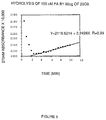
- the change in 270 nm absorbance was monitored at 30 second intervals for 10 minutes. These measurements were performed in a Hitachi 3200 spectrophotometer in the single beam mode, because prior experiments demonstrated that spontaneous decomposition of phenylacetate (i.e., background hydrolysis) did not occur in the microemulsion during the time period of our rate measurements. Thus, a blank or reference solution was not required. Changes observed in the 270 nm absorbance during each kinetic run, as shown in Fig. 5, reflected both the formation of a microemulsion (resulting in an absorbance decrease) and phenol production (resulting in an absorbance increase).
- 155 M phenylacetate (PA) was hydrolyzed by 60 ⁇ g of 20-G9 antibody at a rate of about 0.00022 Abs. units/minute (or 0.12 nanomoles/minute). Any "burst reaction” caused by the antibody hydrolysis of substrate was hidden by the decreased 270 nm absorbance which occurred during the first two minutes of the rate assay.
Landscapes
- Health & Medical Sciences (AREA)
- Chemical & Material Sciences (AREA)
- Life Sciences & Earth Sciences (AREA)
- Medicinal Chemistry (AREA)
- General Health & Medical Sciences (AREA)
- Immunology (AREA)
- Molecular Biology (AREA)
- Organic Chemistry (AREA)
- Biophysics (AREA)
- Pharmacology & Pharmacy (AREA)
- Epidemiology (AREA)
- Animal Behavior & Ethology (AREA)
- Veterinary Medicine (AREA)
- Public Health (AREA)
- Proteomics, Peptides & Aminoacids (AREA)
- Mycology (AREA)
- Bioinformatics & Cheminformatics (AREA)
- Dispersion Chemistry (AREA)
- Biochemistry (AREA)
- Genetics & Genomics (AREA)
- Engineering & Computer Science (AREA)
- Microbiology (AREA)
- Medicines Containing Antibodies Or Antigens For Use As Internal Diagnostic Agents (AREA)
- Peptides Or Proteins (AREA)
- Emulsifying, Dispersing, Foam-Producing Or Wetting Agents (AREA)
- Preparation Of Compounds By Using Micro-Organisms (AREA)
- Colloid Chemistry (AREA)
Abstract
Description
- The present invention relates to a system comprising a surfactant-stabilized disperse aqueous phase containing an antibody or antibody fragment in a catalytic functional state, and to methods for making such systems as well as to methods of utilizing such systems.
- While living systems are often viewed as the reaction of biochemicals in water, considerable research has been devoted to the study of the structure and function of biochemicals in mixed water-organic solvent systems. In 1969, Kaminsky and Davidson (1) (see bibliography concluding this section for citations to referenced publications) examined the effects of organic solvents on the low molecular weight protein cytochrome c (12K daltons). A similar approach was used by A.A. Klyosov et al. (2) and Bettelheim and Lukton (3) to measure the enzymatic activity of small molecular weight proteins.
- Gitler and Montal (4) radically departed from these early studies in their stabilization of cytochrome c in a solvent system composed primarily (90%) of a water-immiscible solvent, decane, by complexation with a biological detergent, i.e., phospholipids. Marinek et al. (5) explored the stabilization and subsequent enzymatic activity of another low molecular weight protein, chymotrypsin (22K daltons), in iso-octane. The anionic detergent used by Marinek et al. was a non-biological mimic of phospholipids, namely sodium bis-(2-ethylhexyl)-sulfosuccinate ("AOT"). Similarly, Luisi et al. (6) found that chymotrypsin, and other low molecular weight enzymes, trypsin and pepsin (23K and 35K daltons, respectively), retained their enzymatic activity in the water-immiscible solvent cyclohexane when complexed with the cationic detergent methyltrioctylammonium chloride. Luisi et al. suggested that those enzymes retained their basic natural structure within a small aqueous core surrounded by a sphere of detergent and organic solvent. Such structures were termed "reverse micelles", forming within water-immiscible solvents when detergent content is above the critical micelle concentration ("CRC") and when the molar ratio of water to detergent ("Wo") is in the range from 5:1 to 50:1, inclusive. The bulk of these solutions (80-90%) is composed of a water-immiscible organic solvent.
- Physical evidence tending to confirm the existence of reverse micelles has been gained from quasi-elastic light scattering, Huang and Kim (7), and small-angle neutron scattering measurements, M. Kotlarchyk et al. (8). Structural and mechanistic information concerning proteins within reverse micelles has been obtained through NMR (DeMarco et al. (9)), ultraviolet, circular dichroism and fluorescence (P.L. Luisi, 1979 (6)) spectroscopies, as well as enzymatic kinetic analyses.
- A variety of low molecular weight proteins and enzymes have been stabilized in a variety of solvents and with a variety of surfactant and co-surfactant systems (P.L. Luisi, 1985 (10)). Although a diverse set of conditions was used in these experiments, some conclusions can be drawn. First, these studies were largely performed with relatively low molecular weight proteins (e.g., cytochrome c (12K daltons), ribonuclease (13K daltons), lysozyme (14K daltons), chymotrypsin (23K daltons), trypsin (35K daltons), alcohol dehydrogenase (37K daltons), rhodopsin (38K daltons), and lipase (45K daltons)), when compared to the molecular weight of the immunoglobulin molecules (150K daltons). Second, the majority of these proteins displays maximal catalytic activity at a water-to-detergent ratio (Wo) of about 10-15. (We note that lipase of 100K daltons has been reported, and that this enzyme has been said to have an activity which increases up to Wo of about 30 and then levels off with (Luisi et al. (12)); however, the molecular weight of this enzyme is significantly less than that of an antibody as contemplated by the present invention, and further the enzyme is lipophilic rather than hydrophilic, and thus its behavior should not be viewed as indicative of antibody behavior.) And finally, as suggested by P.L. Luisi et al. (6), "Another interesting property of the phase transfer process . . . is its selectivity towards certain proteins" (p. 751). Factors such as protein size and charge, solution pH, surfactant composition and concentration as well as ionic strength, determine if a particular type of protein can be successfully stabilized within reverse micelles. Particular combinations of these factors are specific to different types of proteins, and this undercuts the predictability of whether one protein type can be stabilized from the finding that a different protein type can. Accordingly, it would not have logically followed that the teachings of the aforementioned workers could be extrapolated beyond the specific conditions and materials utilized by them.
- It is also important to note that while stabilization of enzymes within water/water-immiscible biphasic systems was explored to catalyze reactions with water-insoluble substrates (Larsson (11); P.L. Luisi et al. (12)), or for mimicking physiological conditions (Han and Rhee (13)), there are other applications of reverse micelles such as both liquid and HPLC chromatography (M.A. Herandez, 1986 (14)), with supercritical fluids (R.W. Gale et al., 1987 (15)) and in protein extraction (Goklen and Hatton, 1985 (16)).
- However, reports of antibody stabilization in these water-immiscible solvents (both organic liquids and supercritical fluids) are extremely limited.
- Karr et al. (17) examined a covalent modification of IgG molecules with polyethylene glycol (PEG) as a method of improving the solubility of antibodies in a dextran phase of a biphasic solution. While a dextran phase is far more water-miscible than iso-octane or benzene, the major drawback of this approach is the extra time-consuming steps required for forming the PEG-antibody covalent complex and the possibility that chemical modification of a protein with PEG could also covalently modify amino acid residues in the antigen binding site, thereby reducing the antibody's antigen-binding capacity. In addition, there is no guarantee that this technique works with water-immiscible solvents.
- Eremin et al. (18) examined the effects of antibodies directed against horseradish peroxidase in 50 mM aqueous AOT solutions in heptane. The thrust of this work was to study the loss of peroxidase activity observed due to mixing of enzyme and polyclonal anti-peroxidase antibodies. But there is no indication that the antibody was of a monoclonal nature or had a molecular weight which would have been conducive to solubilization in the reverse micelles at the conditions utilized, that the enzyme was inactivated by the antibody, or even that the system of Eremin et al. contained an effective amount of antibody in a functional state. Significantly, no attempt was made to test the antibody's antigen-binding capability in an ELISA analysis after solubilization in iso-octane. Since the presence of large antibodies in the polyclonal mixture, such as those of the IgM nature (970K daltons), could well have caused the applied conditions to be unfavorable for solubilization of antibodies or horseradish peroxidase, this article would not have disclosed use of an effective amount of functional antibodies in an aqueous/non-aqueous biphasic system to the skilled worker.
- The development of information concerning conditions for stabilizing an effective amount of antibody or antibody fragment in a heterogeneous system comprising a dispersed aqueous phase, with retention of an effective amount of antibody or antibody fragment in a functional state, would be a significant step forward in the art.
- (1) L.S. Kaminsky and A.J. Davidson, FEBS Letters 3, 338 (1969).
- (2) A.A. Klyosov, N. Van Viet, and I.V. Berezin, Eur. J. Biochem. 59, 3 (1975).
- (3) F.A. Bettelheim and A. Lukton, Nature 198, 357 (1963).
- (4) (a) C. Gitler and M. Montal, Biochem and Biophys Res. Comm. 47, 1486 (1972); (b) FEBS Letters 28, 329 (1972).
- (5) K. Martinek, A.V. Levashoft, N.L. Klyachko, and I.V. Berezin, Doklad Ada Nauk SSSR (Engl. edit), 236, 951 (1978).
- (6) P.L. Luisi, F.J. Bonner, A. Pellegrini, P. Wiget, and R. Wolf, Helv. Chim. Acta 62, 740 (1979).
- (7) J.S. Huang and M.W. Kim, Phys. Rev. Lett. 47, 1462 (1981).
- (8) M. Kotlarchyk, S.-H Chen, J.S. Huang, and M.W. Kim, Phys. Rev. A 29, 2054 (1984).
- (9) A. De Marco, E. Menegatti, and P.L. Luisi, J. Biochem and Biphys Meth. 12, 325 (1986).
- (10) P.L. Luisi, Angew Chem Int Ed Engl. 24, 439 (1985).
- (11) K. Larsson, P. Adlecreutz, and B. Mattiasson, "Biocatalysis in Organic Media," C. Laane, J. Tramper, and M.D. Lilly, Eds., Elsevier Science Publishers B.V., Amsterdam, p. 355 (1986).
- (12) P.L. Luisi, P. Luthi, I. Tomka, J. Prenosil, and A. Pande, Annals N.Y. Acad. of Sci. 434, 549 (1984).
- (13) D. Han and J.S. Rhee, Biotech and Bioeng 28, 1250 (1986).
- (14) M.A. Hernandez-Torres, J.S. Landy, and J.G. Dorsey, Anal. Chem. 58, 744 (1986).
- (15) R.W. Gale, J.L. Fulton, and R.D. Smith, Anal Cheml 59, 1977 (1987).
- (16) K.E. Goklen and T. Alan Hatton,
Biotech Progress 1, 69, (1985). - (17) L.J. Karr, S.G. Shafer, J.M. Harris, J.M. Van Alstine, and R.S. Snyder, J. Chromatography 354, 269 (1986).
- (18) A.N. Eremin, M.I. Savenkova, and D.I. Metelitsa,
Bioorg Khim 12, 606 (1986). - Also referred to as background art is:
- (19) WO 85/02414 (Igen Inc.).
- It is an object of this invention to provide a system for interacting an antibody or fragment thereof with one or more other species of interest.
- It is another object of the present invention to provide stabilized antibodies or antibody fragments contained in a system comprising a microheterogeneously dispersed aqueous phase.
- It is yet another object of the present invention to provide a system in which an antibody or fragment thereof having a catalytic functionality is made available for the conversion of one or more reactants into one or more desired products.
- It is a further object of this invention to increase the acceleration factor for catalysis by an antibody or antibody fragment (i.e., the rate constant of an antibody-catalyzed reaction divided by the rate constant of the uncatalyzed reaction in solvent (background hydrolysis) in which the one or more reactants are contained).
- It is a still further object of the present invention to provide catalysis by an antibody or fragment thereof in a system comprising a microheterogeneously dispersed aqueous phase for which there is no existing enzyme or man-mode catalyst.
- It is another object of the present invention to provide a highly sensitive antibody-containing antibody-fragment-containing system having an enhanced capability to detect one or more species of interest in a water-immiscible medium.
- It is yet another object of the present invention to provide an antibody-containing or antibody-fragment- containing system well-suited for the isolation of protein or non-protein materials.
- It is also a further object of this invention to provide a method for making a system in which one or more of the objectives set forth above can be achieved, and a method for utilizing such a system.
- According to a first aspect of the invention there is provided an interaction system, including an antibody or antibody fragment, characterised in that it comprises a surfactant-stabilised microheterogeneous dispersion of aqueous phase in a water-immiscible medium having a water to surfactant ratio of 5:1 to 50:1, and in that said antibody or said fragment in said aqueous phase has catalytic functionality.
- References in the description to an interaction system or a system for carrying out an interaction are to be understood as referring to the interaction system as defined above.
- In another aspect, the present invention is, in a water-immiscible medium, an interaction system including an antibody, or a fragment thereof having functional catalytic capability, which comprises a plurality of surfactant-stabilized microheterogeneously disperse aqueous phase particles, said particles containing an amount of said antibody or fragment in a catalytic functional state sufficient to effect said interaction.
- In yet another aspect, the invention is a method of forming an interaction system including an antibody, or a fragment thereof having functional catalytic capability, which comprises surfactant-stabilizing a microheterogeneous dispersion of aqueous phase in a water-immiscible medium, said aqueous phase containing an amount of said antibody or fragment in a functional catalytic state sufficient to effect the interaction.
- In still another of its aspects, the present invention is a method of interacting an antibody, or a fragment thereof having functional catalytic capability, with at least one species, which comprises maintaining a system comprising a surfactant-stabilized microheterogeneous dispersion of aqueous phase in a water-immiscible medium, said aqueous phase containing an amount of said antibody or fragment in a functional catalytic state under which the antibody or fragment is accessible to said species, and that are sufficient to effect said interaction, at conditions sufficient to effect said interaction for a time sufficient for said interaction to occur.
- And, in a still further aspect, the present invention is a method of interacting an antibody, or a fragment thereof having functional catalytic capability, with at least one species, which comprises maintaining said antibody in a plurality of surfactant-stabilized microheterogeneously dispersed aqueous phase particles, said aqueous phase particles containing an amount of said antibody or fragment in a functional catalytic state sufficient to effect said interaction, at conditions under which the antibody or fragment is accessible to said species, and that are sufficient to effect said interaction, for a time sufficient for said interaction to occur.
- Practice of the present invention affords many advantages. A stabilized system for interacting an antibody, or fragment thereof as aforesaid, with one or more species of interest is provided; the antibody component is maintained in a functional catalytic state and is therefore readily available for interaction with the species (e.g. antigens, or haptens, substrates or reactants). Also, the invention provides a reliable, viable catalytic antibody (or catalytic antibody fragment) system, especially one in which the interaction of the catalyst with one or more lipophilic reactants or products is achieved. This makes possible the catalysis of interactions in an aqueous/non-aqueous biphasic solvent system for which enzymatic or other man-made catalysts are not available. Additionally, by taking advantage of the antibody's (or fragment's) greater affinity toward one reactant relative to another reactant or to a product, or the relatively greater solubility of a reactant in the microheterogeneously disperse aqueous phase as compared to the solubility of that reactant under bulk aqueous conditions, or the relatively greater solubility in the water-immiscible medium of a reactant or product vis-a-vis another reactant, a catalytic antibody (or catalytic antibody fragment) system can be utilized to control the effective concentration of respective reactants and products in the vicinity of the catalyst. This offers an elegant means for minimizing reaction rate-limiting effects. Further, since the microheterogeneously dispersed aqueous phase has different thermodynamic properties than bulk aqueous phases, interactions with the antibody (or fragment thereof as aforesaid) which could not be feasibly carried out in a bulk aqueous material (for instance, an interaction which is only favored at well below 0°C, the freezing point of water) can be performed successfully with the invention (because the freezing point of the microheterogeneous disperse aqueous phase is so much lower than 0°C that the reaction can proceed). Moreover, with the practice of the invention, the overall rate constant acceleration of catalysis with an antibody or appropriate fragment thereof is increased by reducing or effectively eliminating undesirable solvent-catalyzed background reaction. This can be critical to a synthesis if the catalyzed reaction (such as a reaction producing one of a pair of stereoisomers) normally proceeds simultaneously with a non-stereospecific background reaction (that is, a reaction producing a racemic mixture), because in the absence of the background reaction the pure isomer desired is obtained.
- Thus, the invention has utility in analytical, synthetic, separation and therapeutic applications. Its versatility and adaptability make evident its significance as a step forward in the art.
- Fig. 1 is a set of curves showing progression of a hydrolysis reaction catalyzed with 48-G7 antibody in aqueous solution in accordance with the invention.
- Fig. 2 is a set of curves showing the results of the hydrolysis reaction with the same concentration of reactant and antibody catalyst in aqueous solution also containing 24 µM transition state analog inhibitor.
- Fig. 3 is a set of curves comparing the progression of an antibody-catalyzed hydrolysis reaction in the microemulsion in accordance with the invention and a similar antibody solution inhibited by 24 µM transition state analog.
- Fig. 4 is a set of curves showing the effect of varying the water to surfactant ratio on antibody activity and reverse micelle formation (by absolute 270 nm absorbance).
- Fig. 5 is a curve showing progression of a hydrolysis reaction catalyzed with 20-G9 antibody in the microemulsion phase in accordance with the invention.
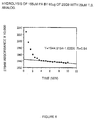
- Fig. 6 is a curve showing results of the hydrolysis reaction with a similar 20-G9 antibody solution in the microemulsion phase inhibited by transition state analog inhibitor.
- It is important that the antibody, or antibody fragment having functional catalytic capability, contained in the aqueous phase be capable of interacting with species of interest normally contained in the water-immiscible medium. This makes feasible an interaction between an antibody or fragment, which is hydrophilic, and one or more lipophilic species contained in the water-immiscible medium, even when such species are insoluble or only sparingly soluble in water - a reaction which would not be feasible if the antibody or fragment were in a bulk aqueous phase. As explained below, practice of the present invention provides a manner in which the antibody (or antibody fragment) and species of interest can be interacted in a medium which accommodates both for at least the time necessary for the desired interaction to occur.
- As pertains to the present invention, the catalytic antibody's or fragment's function is to bind with specific pre-selected molecules, either temporarily or permanently. (The antibody fragment is a portion of the antibody whole, which portion is capable of binding with a molecule of interest on its own, without the balance of the antibody). When the antibody or fragment is in a denatured state, it has lost its binding affinity. This can occur when the antibody or fragment is exposed to a contaminant, such as an organic liquid, which adversely affects the antibody or fragment by causing it to lose its native conformation, and thus its ability to bind to the species of interest. Thus, to be maintained in a functional catalytic state the antibody or fragment is solubilized in water.
- This behavior presents a significant dilemma, namely, how to introduce the antibody or fragment into a water-immiscible environment for reaction with hydrophobic species contained therein while still protecting the antibody or fragment from contaminants which would denature it. The present invention's elegance is in the resolution of that dilemma. A catalytic antibody or fragment is maintained in a functional state by surrounding it with an aqueous shield which protects it against contact with substances that would denature it and yet provides a medium with which both the hydrophilic antibody or fragment and lipophilic species are compatible - at least for the time necessary to effect the desired interaction.
- The essence of the invention is the formation of a microheterogeneously disperse aqueous phase, particles of which contain antibody, or antibody fragment having functional catalytic capability, stabilized by the action of a surfactant. The aqueous phase is typically in microemulsion form, or present as a plurality of reverse micelles. However, a microheterogeneous dispersion of the aqueous phase is not limited to either a microemulsion or reverse micelle formation, but encompasses any embodiment in which the aqueous phase particles are of appropriate mass so that, when stabilized (as further explained hereinafter), the properties of that phase render it suitable for containing the antibody or fragment thereof, for temporarily accommodating species which are insoluble or only sparingly soluble in water, and for permitting diffusion of such species as desired across the aqueous phase/water-immiscible medium boundary at an acceptably high rate. In general, the water pools of the aqueous phase particles are not of such large mass that they exhibit bulk properties incompatible with the present invention's practice. On the other hand, they are not of such small mass that they cannot be surfactant-stabilized so as to be capable of containing the antibody or antibody fragment, not to mention the complex or conjugate of the antibody (or fragment) and species of interest. When a suitable water:surfactant ratio (Wo) is used, the properties of the constituent water of the aqueous phase particles differ favorably from those of a bulk aqueous mass - for example, in their increased capacity to protect the antibody or antibody - fragment while accommodating species not appreciably soluble in the bulk mass, and in their lower freezing points.
- The microheterogeneously dispersed aqueous phase particles are usually smaller in maximum dimension when unoccupied than if they contain an antibody or antibody fragment, or its complex or conjugate with one or more species with which the antibody or fragment is to interact. It is a special advantage of using properly surfactant-stabilized microheterogeneously dispersed aqueous phase particles that, despite their much smaller size than the antibody (or fragment) and the above-mentioned complex or conjugate, the particles are sufficiently "elastic" that they can expand to envelope the antibody, antibody fragment, complex or conjugate. For example, a typical surfactant-stabilized reverse micelle is spheroidal and of a size approximately 10 nanometers in its maximum dimension when it does not contain an antibody, antibody fragment complex or conjugate. But, when stabilized in accordance with the present invention, the micelle can accommodate an antibody or fragment of size much greater then the unoccupied micelle. This is accomplished by providing sufficient water in the micelle so that it can surround the antibody or fragment and conform to its configuration. This provides an aqueous exterior shield protecting the antibody or fragment from contact with denaturing substances, and at the same time presenting a medium in which interaction between an antibody (or fragment) and one or more species of interest can be conducted. It can be seen that the size of an antibody, antibody fragment, complex or conjugate as aforesaid will ordinarily determine the size of the aqueous particle in which the antibody, fragment, complex or conjugate is contained. Indeed, the microheterogeneous dispersion of aqueous phase is so fine that light can typically be passed through the dispersion in a water-immiscible medium because - even when the aqueous phase particles are occupied by an antibody, antibody fragment, complex or conjugate - their maximum dimension is less than the wavelength of visible light, which is approximately 350-400 nanometers. Thus, the microheterogeneous dispersion mimics a solution of the antibody or antibody fragment in a water-immiscible medium even to the extent of being transparent.
- A further benefit of practicing the invention is that solubilizing the antibody or antibody fragment in microheterogeneously disperse aqueous phase particles these aqueous phase particles are typically liquid particles in a water-immiscible medium minimizes background interaction in the medium. This is especially helpful when the interaction is a reaction in which making of the desired product(s) is normally accompanied by undesirable by-products resulting from background reaction such as when the desired reaction yields only a single specific isomer, but the background reaction produces a racemic mixture of two isomers. Catalysis by an antibody or antibody fragment according to the invention which effectively eliminates background reaction yields a pure isomer as desired. The invention's conferring of this benefit is confirmed in one of the examples set forth hereinafter.
- The concentration of the antibody or fragment in the aqueous phase is at least that giving an amount of antibody or fragment in a functional state sufficient to effect the desired interaction. Due to the special properties of the microheterogeneously dispersed aqueous phase particles, the antibody or fragment can be contained in the aqueous phase/fluid system in large amounts, e.g. up to and including 2g/ml of fluid. In certain embodiments, use of a lesser amount of antibody or fragment, for instance, 30-50 µg/ml of fluid suffices.
- In solubilizing an antibody or fragment thereof, it is often advantageous to add to the aqueous phase at least one buffering compound, such as a phosphate buffer, to give it a desired pH. This is to maintain conditions which are conducive to solubilization of the antibody or fragment in an aqueous phase and/or which favor the driving of the desired interaction to completion. Examples of additional suitable buffering compounds are imidazole, borate, or tris buffer. The compound is selected in light of the pH which is desired for the aqueous phase. The pH is typically in a range from 4-11, preferably 5-10, especially 6-10.
- Once equipped with the teachings herein, it will be well within the skill of the art to determine empirically the amount of antibody or antibody fragment which is most advantageously utilized, and the pH of the aqueous phase in which the antibody or antibody fragment is solubilized, without undue experimentation.
- The water-immiscible medium is, generally speaking, a water-immiscible fluid or a water-immiscible supercritical fluid. The particular water-immiscible medium employed is chosen (where applicable) for its ability to solubilize one or more species to be interacted with the antibody or antibody fragment, and/or (if applicable) any product to which one or more of such species are converted. Another factor which governs the choice of the water-immiscible medium is the temperature range of interest.
- Typically, the water-immiscible fluid is an organic liquid, or a mixture of organic liquids, which are not miscible with water. Examples of such liquids are aromatics and substituted aromatics such as benzene, toluene, xylene, ethylbenzene, propylbenzene, chlorobenzene, biphenyl, and diphenylmethene, alkanes and substituted alkanes such as n-pentane, n-hexane, cyclohexane, n-heptane, iso-octane, decane, trichloromethane, dichloromethane and trichloroethane, and ethers such as diisopropyl ether and ethyl ether, as well as sparingly water-soluble substances such as acetone and dioxane. However, any organic solvent will do, so long as it is water-immiscible (i.e., it is at most sparingly soluble in water, and thus is suitable for formation of the desired microheterogeneous dispersion of the aqueous phase) and (if applicable) it solubilizes the species to be reacted with the antibody or antibody fragment in the aqueous phase, and/or any products which are produced, that the practitioner desires be solubilized.
- It is also suitable, in certain embodiments of the invention, to use a water-immiscible fluid which is not in liquid form per se. An example of such a fluid would be a fog composed of droplets each made of an organic liquid, for instance benzene, surrounding an aqueous phase droplet containing an antibody or antibody fragment, with the benzene-enveloped aqueous phase droplets dispersed in air or an inert gaseous medium such as nitrogen. Under these conditions, the fog of water-immiscible fluid would act more like a gas, but would still be useful in practicing the invention.
- Another type of water-immiscible medium which is suitably employed in certain embodiments of the invention is a supercritical fluid. A supercritical fluid is a dense gas that is maintained above its critical temperature (the temperature above which it cannot be liquified by any pressure). Such fluids are less viscous and diffuse more readily than liquids. Examples of supercritical fluids which are useful in practicing the present invention are carbon dioxide, and certain alkanes such as methane, ethane and propane. The conditions at which supercritical behavior is exhibited are known in the art. See, for instance, Smith U.S. Patent No. 4,582,731 granted April 15, 1986. Use of a supercritical fluid is advantageous in several ways. For example, supercritical fluids exhibit more gas properties than liquid properties and accordingly diffusion rates will be higher, and interaction rates correspondingly higher if they are diffusion-controlled. This results from the fact that liquids are by nature incompressible; there can be substantial resistance to diffusion across a boundary between a water-immiscible organic liquid and an aqueous phase. However, this is not the case with a supercritical fluid because it is compressible, thereby allowing for variation of the pressure exerted on the supercritical fluid and corresponding variation of the rate of diffusion, such that a pressure which maximizes the rate of diffusion can be applied. Additionally, solubility of certain species to be interacted is increased, and the controlling of the solubility of certain species to be interacted is facilitated, by use of supercritical fluids as compared to organic liquids. Also, the pressure-responsiveness of a supercritical fluid permits the convenient breaking of a microheterogeneous dispersion of aqueous phase in the fluid simply by manipulation of the pressure exerted on the fluid.
- A key aspect of the invention is the surfactant-stabilization of a microheterogeneous dispersion of the aqueous phase containing an antibody or fragment thereof. The formation of a microheterogeneous dispersion of aqueous phase containing an antibody or antibody fragment in a catalytic functional state is directly dependent on the amount of surfactant used. Typically, the surfactant is present in at least the critical micelle concentration (which varies from surfactant to surfactant) and up to and including a concentration of 0.5 M. However, in successfully practicing the invention it is essential to consider not only the absolute amount of surfactant but also the ratio of the amount of water present to the amount of surfactant utilized. This ratio is referred to as Wo.
- The selection of the ratio of water present to amount of surfactant is determined by a number of factors, the principal ones being protein (e.g. antibody or antibody fragment) size, the nature of the water-immiscible medium, the ionic strength of the aqueous phase, and the molecular radius of the protein. The desired effect of surfactant-stabilization is to maximize the amount of water-ensheathed antibody or antibody fragment in a functional state.
- The closer the water to surfactant ratio (Wo) is to its optimal value, the greater the amount of aqueous phase particles containing antibody or antibody fragment in the catalytic functional state. A controlling factor is the amount of water in the aqueous phase particle as compared to the size of the protein (e.g. antibody or fragment) to be solubilized. The possible conditions in which the aqueous phase and antibody or antibody fragment can exist are principally as follows: the aqueous phase particles contain ample water for enveloping the antibody or fragment and preserving its catalytic functionality, and the ability of the antibody or fragment in each such particle to bind a species of interest is also optimal; the aqueous phase particles contain only a barely adequate amount of water in which to solubilize the antibody or fragment thereof, and thus the ability of the antibody or fragment to bind to one or more species of interest will be marginal; the aqueous phase particles will not contain enough water to envelope the antibody or fragment in the manner necessary to maintain it in a catalytic functional state. The closer the practitioner of the present invention comes to the optimal water/surfactant ratio, which varies from one system to another, the greater will be the number of aqueous phase particles containing optimally functional antibody or antibody fragment. On the other hand, the further away the practitioner moves from optimal values of the water/surfactant ratio, the fewer will be the number of aqueous phase particles which can accommodate an antibody or antibody fragment and preserve its catalytic functionality.
- When one departs from the range of water/surfactant ratios which is suitable to get even a minimal number of aqueous phase particles containing ample water - or at least marginally adequate water - for antibody or fragment solubilization, the number of aqueous phase particles which can accommodate an antibody or fragment thereof and maintain its catalytic functionality in order for it to be useful in practicing the present invention will drop to an unacceptably low number and in some instances zero for practical purposes. Thus, the aqueous phase will not contain an effective amount of antibody or fragment in a functional state. This amount varies depending on the application to which the invention is put. One of ordinary skill in the art, having knowledge of the present invention, will be able to determine empirically what amount of catalytic functional antibody or antibody fragment is an effective amount for his purposes without undue experimentation.
- The amount of surfactant utilized for stabilization in accordance with the present invention is typically in the water/surfactant molar ratio of 5:1 - 50:1. It can be appreciated by those of ordinary skill in the art that the optimal Wo will vary from system to system, depending upon the size of the antibody or fragment employed (IgA, IgD, IgE and IgG antibodies all have molecular weights between 150K and 180 K daltons, whereas IgM antibodies have a molecular weight of about 970K), the species of interest to be interacted with the antibody or fragment, temperature conditions, and the nature of the water-immiscible medium employed. Typically, the Wo range is 7:1-45:1, more specifically 10:1-45:1, and even more specifically 15:1-40:1. For example, when employing sodium bi-(2-ethylhexyl)-sulfosuccinate in the hydrolysis of phenylacetate, the range of water/surfactant ratios which are useful is 21:1 - 31:1.
- In practicing the invention, it is desirable to use a water/surfactant ratio which will result in a substantial number of the aqueous phase particles having an ample amount of water to envelope the antibody or antibody fragment and maintain it in a catalytic functional state. In certain embodiments of the invention, 80% of the aqueous phase particles maintain the antibody or fragment in at least a state of marginal catalytic functionality. However, in other embodiments of the invention it is sufficient if the water/surfactant ratio is sufficient to maintain at least about 50%, in some instances at least about 25%, and in yet other instances at least about 10%, of the aqueous phase particles in a condition which will preserve such catalytic functionality of the antibody or fragment. Looked at from another view, in certain embodiments the effective amount of antibody in a catalytic functional state (regardless of whether contained in a particle having ample water or only marginally adequate water) is at least 0.5%, preferably at least 1%, especially at least 10%, of the total antibody or antibody fragment present.
- The surfactants employed are suitably anionic, such as sodium bi-(2-ethylhexyl)-sulfosuccinate ("AOT") and phospholipids, cationic, such as cetyltrimenthylammonium bromide ("cTAB") or chloride and methyltrioctylammonium chloride, or non-ionic, such as polyoxyethylene ethers. The choice is made based on which is the most beneficial to the achievement of the desired interaction and result. Theoretically, any molecule containing an aliphatic or aromatic moiety at one end of the molecule and a polar (either charged or neutral) moiety at the other can function as a surfactant. However, practically speaking the type of surfactant to be utilized is principally determined by the following factors: the antibody (or fragment)/antigen interaction desired, the pH of that interaction and the iso-electric point of the protein. The ordinarily skilled worker, equipped with the teachings herein, is capable of determining empirically which particular surfactant or surfactants (since the surfactants can be used in mixtures of two or more) is most suitable for his purposes without undue experimentation. Further examples of suitable anionic, cationic and non-ionic surfactants as well as of amphoteric surfactants which can also be used are set forth in the following table I:

- The present invention can successfully be practiced with both polyclonal and monoclonal antibodies, as well as fragments or such antibodies (as previously described). Thus, antibodies such as IgM antibodies, which have a weight of approximately 970K daltons, can be solubilized if the water/surfactant ratio is sufficiently high. These high molecular weight IgM antibodies are often found in polyclonal antibody samples, and are in many instances a substantial component of the polyclonal antibody sample. However, it is more common and usually more desirable from the standpoint of ease of forming a suitable system, attainment of a high degree of specificity in the desired interaction, and reproducibility of the desired result, to utilize a monoclonal antibody. These samples contain only a single antibody which can be either an IgA, IgD, IgE or IgG (with molecular weights of 150K - 180K daltons) or IgM. Of course, as understood by those or ordinary skill in the art, antibody fragments have molecular weights which are some fraction of the antibody from which they are derived.
- As discussed in the preceding disclosure, the embodiments of the present invention have a wide-ranging utility in that the aforementioned system can be adapted to many different applications. The invention can be used in catalysis of interactions in which one or more reactants are converted to one or more desired products. In some embodiments one of the reactants can initially reside in a water-immiscible medium and/or at least one of the products can return to that medium after formation, but this is not a necessary condition to catalysis in accordance with the invention. Thus, the system of the present invention is useful in catalyzing reactions in which water is produced, such as the formation of peptide or phosphate linkages; reactions in which water is consumed, such as hydrolysis reactions; reactions in which a water-insoluble reactant is employed, such as steroid reductions; reactions in which one or more of the reactants are prostaglandins, alkanes, aromatics, and similar water-immiscible organic substances; and reactions in which substances reactive with water and thus unstable in it, such as chloroformate derivatives, are produced.
- Additionally, the invention is suitable for carrying out operations in which the antibody or antibody fragment in the aqueous phase binds with one or more species in the water-immiscible medium. Such operations are of importance, for example, in carrying out assays. The binding affinity of the antibody or fragment for these species of interest is preserved in connection with practicing the present invention, and thus provides a highly sensitive technique for use in performing assays, such as by an ELISA analysis. In yet another embodiment of the invention, a catalytic antibody or antibody fragment temporarily binds with a species of interest, and that binding event causes the occurrence of some signal indicating the presence of the species, such as formation of a telltale reaction product. The antibody or fragment, now once again free to bind, repeats the cycle with yet unreacted species. An integration over time of the signal given off as a result of binding is a measure of the amount of species present.
- The invention also encompasses a method in which an antibody or fragment thereof which is surfactant-stabilized in a microheterogeneously disperse aqueous phase interacts with one or more species having access to the antibody, for example because they are in a water-immiscible medium in which such dispersion is formed. As is clear, the amount of antibody or antibody fragment in a functional catalytic state is sufficient to effect the desired interaction. The method is conducted at conditions (for instance, temperature, pH, ionic strength of the aqueous phase, etc.) which are effective to bring about such interaction for a time sufficient for the interaction to occur (including without limitation, and depending on the particular interaction, times ranging from fractions of a second (e.g. 1 msec) to several hours (e.g. 10 hours)).
- Certain particularly advantageous methods are those in which a catalytic antibody is used to effect the conversion of one or more reactants into one or more desired products.
- As previously noted, the invention is also encompasses a method for producing the interaction system comprising an antibody or antibody fragment in a functional catalytic state contained in a microheterogeneously dispersed aqueous phase. Any method by which an effective amount (as previously discussed) of antibody or antibody fragment is retained in an aqueous solution is suitable for practicing the present invention. The essential step in the method of producing the system in accordance with the present invention is surfactant-stabilizing the microheterogeneous dispersion of the aqueous phase containing an amount of antibody or antibody-fragment in a functional catalytic state sufficient to effect the desired interaction. Conditions governing these embodiments are temperature, pressure, buffer strength, and the composition of the atmosphere (especially if a gaseous component thereof is a co-reactant). Three advantageous methods which can be utilized to achieve this are described below.
- In one, an interaction system including an antibody, or antibody fragment as discussed in preceding paragraphs, is formed by injecting an aqueous solution of the antibody or antibody fragment into a solution of a surfactant in a water-immiscible fluid or a water-immiscible supercritical fluid. The surfactant is present in an amount sufficient to effect the formation of a surfactant-stabilized microheterogeneous dispersion of aqueous phase in the fluid employed, and is also present in an amount sufficient to cause the aqueous phase to contain an amount of antibody or antibody fragment in a catalytic functional state sufficient for effecting the desired interaction.
- In another embodiment of the method for forming an interaction system in accordance with the invention, a freeze-dried antibody or antibody fragment in powder form is added to a surfactant-stabilized microheterogeneous dispersion of an aqueous phase in a water-immiscible medium. Then, the protein powder is mixed with the microheterogeneous dispersion of the aqueous phase in the medium to form a microheterogeneous surfactant-stabilized dispersion of aqueous phase, with the surfactant being present in an amount sufficient to stabilize the dispersion and cause it to contain an amount of antibody or antibody fragment in a catalytic functional state sufficient to effect the interaction.
- Yet another embodiment of the method of forming an interaction system in accordance with the present invention is one in which an aqueous solution of an antibody or antibody fragment and a solution of a surfactant in a water-immiscible medium are combined, and then the combination is agitated to form in the medium a surfactant-stabilized microheterogeneous dispersion of aqueous phase, with the antibody or antibody fragment contained in such phase. The water in the aqueous phase and the surfactant are provided in relative amounts sufficient to stabilize the microheterogeneous dispersion and cause it to be capable of containing an amount of antibody or antibody fragment in a catalytic functional state sufficient to effect the desired interaction.
- Additional objects, advantages and details relating to the practice of the present invention will be evident from the following examples.
- A solution of the 48-G7 antibody was purified from ascites fluid by Protein A chromatography. Following dialysis of the IgG fractions which were obtained into 10 mM tris buffer, 4.0 ml of a 3.0 mg/ml solution of this protein was lyophilyzed to dryness. The protein powder was then resuspended in 1.5 ml of 10 mM tris buffer (pH 8.5). When 10 µl of this antibody solution was added to one milliliter of buffer, a protein concentration of 0.090 mg/ml resulted (as determined from 280 nm and 260 nm absorbances). Thus, the stock antibody solution was 9.0 mg/ml.
- The rate of antibody catalyzed hydrolysis of p-nitrophenylcarbonate was determined by adding 15 µl of a 50 mM p-nitrophenylcarbonate (p-NPC) solution dissolved in tetrahydrofuran to 3.0 ml of 10 mM tris buffer (pH 8.5). After this solution was mixed to homogeneity, 1.0 ml was transferred into a reference cuvette and 1.0 ml was transferred into a sample cuvette. An assay was initiated by addition of 10 µl of the 48-G7 antibody solution (0.090 mg). The progress of the reaction was monitored with a Hitachi Model 3200 double beam spectrophotometer (to screen out the rate of solvent-induced background hydrolysis) at 400 nm. The extinction coefficient for the product, p-nitrophenol, was 18,300 M-1 cm-1 at pH 8.5.
- As shown in Fig. 1, under these conditions 90 µg/ml of 48-G7 antibody hydrolyzes 0.49 µmolar p-NPC (0.0089 Abs/min) per minute. However, when the reaction was repeated under the same conditions, except for the addition in the second instance of 24 µM p-nitrophenylphosphonate (the eliciting hapten or transition state analog which competitively bound with the antibody, delivered from a 2.4 mM stock solution dissolved in 10mM tris buffer (pH 8.5)), the rate of hydrolysis was significantly reduced to 0.002 Abs units/minute or 0.109 µmolar/minute. This is shown in Fig. 2. The hapten-induced inhibition of the hydrolysis demonstrates that catalysis was occurring at the antigen binding site of the 48-G7 antibody.
- The rate of 48-G7 antibody-catalyzed hydrolysis of p-NPC was determined in a 50 mM solution of sodium bi-(2-ethylhexyl) sulfosuccinate ("AOT") in iso-octane containing 888 µM of p-NPC. First 20 ml of the iso-octane solution containing 0.445 g of AOT (M.W.=445g) and 3.5 mg of p-NPC (M.W.-197g) were prepared. To this
solution 10 µl mM of 10mM 10 tris buffer (pH 8.5) and 10 µl of the 48-G7 antibody solution were added. A microemulsion of disperse aqueous phase in the iso-octane was obtained by mixing. The hydrolysis of p-NPC and the production of p-nitrophenol was monitored at 400 nm, although an accurate conversion between 400 nm absorbance and moles of p-nitrophenol formed was not possible because the pH inside the microemulsified aqueous phase particles could not be accurately determined. - Upon addition of the 48-G7 antibody solution, the biphasic system became turbid as the antibody-containing, microemulsified aqueous phase particles formed. This was reflected in a decrease in 400 nm absorbance during the first seven minutes of the experiment, as shown in Fig. 3. Subsequently, absorbance at 400 nm began to increase as p-nitrophenol was formed. The rate of 400 nm absorbance increase was 0.00028 Abs/minute.
- When this experiment was repeated with the 10 µl of tris buffer containing 2.4 mM p-nitrophosphonate hapten (24 µM final concentration), the initial 400 nm absorbance was similar to the non-inhibited antibody solution. However, unlike the non-inhibited antibody solution, the 400 nm absorbance did not rise after seven or even twenty minutes. Instead, the 400 nm absorbance continued to decrease. This was indicative of continued microemulsion formation without p-nitrophenylcarbonate hydrolysis. The experiment also demonstrated that p-nitrophenylcarbonate hydrolysis did not occur in the iso-octane microemulsion when the 48-G7 antibody did not retain its catalytic activity. It further demonstrated that solvent-induced background hydrolysis of p-nitrophenylcarbonate was eliminated, since even when the antibody was inhibited there was no appreciable hydrolysis. Thus, the rate of antibody catalyzed hydrolysis of p-nitrophenylcarbonate could be determined in a single beam spectrophotometric mode when the reaction was performed in a water/iso-octane microemulsion.
- Summarizing for context, we note that in this example unmodified monoclonal IgG antibodies 48-G7, made against a p-nitrophenylphosphonate hapten, and 20-G9, made against a phenylphosphonate hapten (and therefore a non-p-nitrophenylcarbonate control), were each dissolved in a 50 mM solution of sodium bi-2-(ethylhexyl)-sulfosuccinate ("AOT") in iso-octane. The 48-G7 and 20-G9 antibodies were each subsequently recovered from their respective microemulsion solutions by adding a buffered aqueous salt solution into which they partitioned. These recovered antibodies maintained their reactivity as shown in an enzyme linked immunosorbant assay (ELISA).
- More specifically, the 48-G7 and 20-G9 antibodies were purified by Protein A affinity chromatography and then separately sealed within dialysis membranes (Spectra Por 23 mm, 6-8K dalton cutoff) and dialyzed with constant stirring for 7 hours at 4°C against 1.5 L of 10 mM tris-HCl (pH 8.4). Protein concentrations of 3.8 and 3.4 mg/ml were determined for the 48-G7 and 20-G9 antibodies, respectively, by ultraviolet light absorption at 260 nm and 280 nm.
- Before the antibodies were added into iso-octane, 15 µl of water were added to 1.0 ml of an iso-octane solution containing 50 mM AOT (0.445 g/; 20 ml of iso-octane). Five µl samples each of the 48-G7 and 20-G9 antibodies (7.6 nmoles of binding sites per 5 µl of 48-G7 antibody) were added to 1.0 ml samples of this 50.0 mM AOT solution in iso-octane and mixing was achieved by pipetting several times with Pastuer pipets. These solutions were sealed in 1.0 ml spectrophotometric cuvettes and then stored in the dark at room temperature. After 30 minutes the iso-octane solutions were entirely clear. This was indicative of the fact that an antibody-containing microemulsion had formed.
- 100 µl of a 10 mM tris-HCL, 150 mM KCl (pH 7.4) buffer was then introduced in each cuvette. The aqueous (bottom) phase was recovered from each cuvette by microliter syringe. As a control, 5 µl of the 48-G7 and 20-G9 antibodies were added to respective 100 µl portions of the 10 mM Tris-HCl, 150 mM KCL (pH 7.4) buffer for subsequent comparison of antibody binding activity (with and without incubation in a water/iso-octane microemulsion). The concentration of recovered protein was then determined by a BioRad coomassie blue protein assay with varying aliquots (0-30 µg) of bovine IgG (BioRad Standard I) as the protein standard. Antibody samples in 10 mM tris-HCl, 150 mM KCl (pH 7.4) buffer and antibody samples recovered from the AOT/iso-octane microemulsion into 10 mM tris-HCl, 150 mM KCl (pH 7.4) buffer were diluted ten-fold with phosphate buffered saline solution (2.7 mM KCl, 1.8 mM KH2PO4, 138 mM NaCl, 8 mM Na2HPO4). Antibody samples and standards (0.8 ml) and coomassie blue dye (0.2 ml) were mixed and incubated for 30 minutes at room temperature. Subsequently their 595 nm absorbance was determined on a Beckman DU-50 spectrophotometer. Protein recovery from AOT/iso-octane was determined by comparison with the protein standards as shown in Table II.
TABLE II PROTEIN RECOVERY Antibody Sample Protein Recovered ( g/ml) % Recovery 48-G7 Control (not added to iso-octane) 311 -- 48-G7 (After iso-octane) 22 7.1 20-G9 Control (not added to iso-octane) 144 -- 20-G9 (After iso-octane) 23 16.0 - The binding ability of the recovered antibodies was measured in an ELISA analysis. Microtiter 96 well ELISA plates (Corning) were treated for 24 hours at 4°C with either 0.20 µg bovine serum albumin or 0.20 µg of hapten covalently linked to keyhole limpet hemocyanin per well in carbonate buffer (35mM NaHCO3, 15mM Na2CO3, pH 9.6). Plates were washed 3 times with 350 µl of PBS + 0.05
% Tween 20 buffer per well. Any remaining binding sites on the ELISA plates were blocked by adding 100 µl of PBS + 2% bovine serum albumin + 0.05% Tween 20 buffer per well and incubating for 2 hours at 36°C. The wells were then emptied and blotted dry. Control proteins (both the 48-G7 and 20-G9 monoclonal antibodies not added to the AOT/iso-octane solution), and the antibody samples recovered from the iso-octane microemulsion, were serially diluted by tenfold in PBS + 0.05% Tween 20 buffer. Antibody samples were then added to ELISA plates at 50 µl per well and incubated for 1 hour at 36°C. Plates were washed 3 times (as above). A goat anti-mouse IgG peroxidase conjugate (Kirkegaard and Perry Laboratories) was added to each well and incubated for 1 hour at 36°C. Plates were washed 3 times (as above). To each ELISA well 50 µl of substrate (hydrogen peroxide, 2,2'-azino-di-(3-ethyl-benzthiazoline sulfonate, Kirkegaard and Perry Laboratories) was added and incubated for an additional 30 minutes at room temperature. Absorbance of light at 414 nm was used as a quantitative measure of active antigen binding ability. As shown below in Table III, the 48-G7 antibody retained its antigen-binding capability after recovery from iso-octane.TABLE III ANTIBODY BINDING TO p-NITROPHENYLPHOSPHONATE-KLH Antibody Sample Mean (n=2) 414nm Absorbance at 1/10,000 Antibody Dilution % Binding Efficiency 48-G7 (not added to iso-octane) 0.954 100% 48-G7 (after iso-octane) 0.766 80% 20-G9 (not added to iso-octane) 0.332 35% 20-G9 (after iso-octane) 0.276 29% - The AOT surfactant was obtained from Pfaltz and Bauer, Inc. (Cat. #D48645) and purified via the method of Kotlarchyk et al. (Physical Review A. 1984, 29, 2054-2069) as follows.
- Fifty grams of the surfactant was dissolved in approximately 200 grams of absolute methanol by stirring at room temperature for 10 minutes. The resulting solution was then filtered by gravity through a medium-fine grade filter- paper. The resulting solid was resuspended in another 200 ml of absolute methanol and gravity filtered through a medium-fine paper filter again. The resulting solution was then rotor evaporated to dryness and the resulting solid was resuspended in 50 ml of hexane. To the resulting
solution 10 grams of activated charcoal was added and after stirring at room temperature for 2 minutes, the charcoal was removed by gravity filtration through a medium-fine filterpaper. The solid AOT was then recovered from the hexane solution by rotor evaporation. The resulting solid was then vacuum dried at about 50 mTorr and room temperature for 24 hours. The resulting AOT powder which contains a 1:1 mole amount of water (Kotlarchyk et al.), was rapidly placed in an air-tight bottle within a dessicator. - The 20-G9 antibody was isolated from ascites fluid by Protein A chromatography (Bio-Rad; #153-6153). This involved pre-equilibration of the 5.0 ml column with 100 ml of pH 9.0 binding buffer (Bio-Rad; #153-6161) followed by 15 ml of ascites fluid mixed with 15 ml of binding buffer. After the column was washed with another 100 ml of binding buffer the monoclonal antibody was eluted with Bio-Rad elution buffer (Cat #153-6162) and recovered in 2.1 ml aliquots collected into 1.6 ml volumes of 1.0 M tris buffer (pH 9.0). Fractions with protein concentrations over 2.0 mg/ml (as determined by the ratio of the absorbances at 280 nm and 260 nm) were combined and dialyzed into 20 mM tris buffer pH 8.5. The resulting protein solution was then lypholyzed to dryness in a FTS System, Inc. Flexi-Dry apparatus. The resulting protein powder was resuspended in sufficient 20 mM tris buffer, pH 8.5, to yield a protein concentration of 27.4 mg/ml.
- A solution of 50 mM AOT in iso-octane was prepared by mixing 0.445 g of AOT into 20 ml of iso-octane (Cat. #15,501-2; 2,2,3-trimethylpentane, Aldrich Chemical Co.). To this solution sufficient phenylacetate (Sigma Chem. Co., Cat. No. P 2396) was added to yield a solution of 280 µM (as judged by the absorbance at 264 nm). Solutions containing different water to surfactant ratios (Wo) were prepared by the following recipes:
TABLE IV (Iso-Octane) Monoclonal Antibody 20- G9 Buffer 20 mM Tris Total Added Wo* 991 µl 3.5 µl 5.5µl 9.0µl 11 986.5 µl 3.5 µl 10µl 13.5µl 16 982 µl 3.5 µl 14.5µl 18.0µl 21 980 µl 3.5 µl 17µl 20.5µl 23.5 977.5 µl 3.5 µl 18.0µl 22.5µl 26 975 µl 3.5 µl 21.5µl 24.8µl 28.5 973 µl 3.5 µl 23.5µl 27µl 31 968.5 µl 3.5 µl 28.0µl 31.5µl 36 * Note the calculated water:surfactant ratios include the contribution of 1 mole of water added per mole of surfactant, which is present in the vacuum-dried AOT solid. - The order of addition was, first, preparation of the 50 mM AOT/iso-octane solution (40 ml) , and then addition of phenylacetate. One ml aliquots were distributed into 1.0 ml cuvettes and the appropriate amount of buffer was added to the iso-octane solution, without stirring. Finally, the reaction was initiated by addition of 3.5 µl of monoclonal antibody (96 µg). After shaking for 10 seconds the reaction vessel was placed in a single beam spectrophotometer (Hitachi Model # 3200) and the increase in absorbance was monitored at 270 nm. (Subtraction of the background rate of phenylacetate hydrolysis (uncatalyzed) was not necessary because under these conditions no phenylacetate hydrolysis was observed over a period of 12 hours (data not displayed).)
- The catalyzed reaction is:

- The data in Table IV and Figure 4 were determined by monitoring the increase in 270 nm absorbance every two minutes for at least 30 minutes.
TABLE V Antibody Catalyzed Hydrolysis of Phenylacetate as a Function of Wo Wo (Lowest 270 nm Abs.) Change in 270 nm Absorbance/Min Nanomoles of Phenol Produced per Minute 11(0.3099 Abs) -0.0002 None 16(0.2624 Abs) +0.00006 0.03 21(0.2502 Abs) 0.0016 0.84 23.5(0.184 Abs) 0.0014 0.73 26(0.1583 Abs) 0.0017 0.89 28.5(0.1722 Abs) 0.0017 0.89 31(0.1492 Abs) +0.0005 0.026 36(0.2351 Abs) -0.0026 None - The ratio of water to detergent (Wo) was critical to determining the extent of both antibody activity and microemulsion formation. While the monoclonal antibody at a Wo of 16 was not catalytic, at a Wo of approximately 21 the antibody was catalytic. Consistent with these findings is the lowest 270 nm absorbance observed during each kinetic run, which reflects both the concentration of phenylacetate and phenol in the cuvette (which is effectively consistent for each cuvette) as well as the turbidity of the solution. Turbidity is indicative of the effectiveness of forming antibody microemulsion; the highest activity antibody solutions have the lowest absolute absorbance at 270 nm. Thus, below a Wo of 21 and above a Wo of 31 functionality of the antibody is not favored. Instead, denatured protein solutions result. This effect is most likely related to the large molecular weight of the antibodies and would cause other protein solutions containing antibodies as a major component to exhibit corresponding behavior as a function of Wo.
- The antibody 20-G9 was obtained by immunization of mice to a phenylphosphonate hapten followed by the normal procedures of hybridoma fusion and monoclonal antibody screening by ELISA analysis for antigen and hapten binding. The final preparation of this antibody involved Protein A column chromatography, combination of fractions with protein concentrations greater than 2.0 mg/ml, dialysis into 20 mM tris buffer pH 8.5, and finally lyophilization in a FTS™ Systems, Inc. Flexi-Dry apparatus. The resulting protein powder was resuspended in 78 µl of 20 mM tris buffer pH 8.5. This solution was divided into two equal parts and to each
fraction 30µl 20 mM tris buffer containing 1.22 mM transition state analog (i.e., the eliciting hapten) were added. The protein concentration of these solutions was determined to be 60 mg/ml by differential absorbance at 280 nm and 260 nm.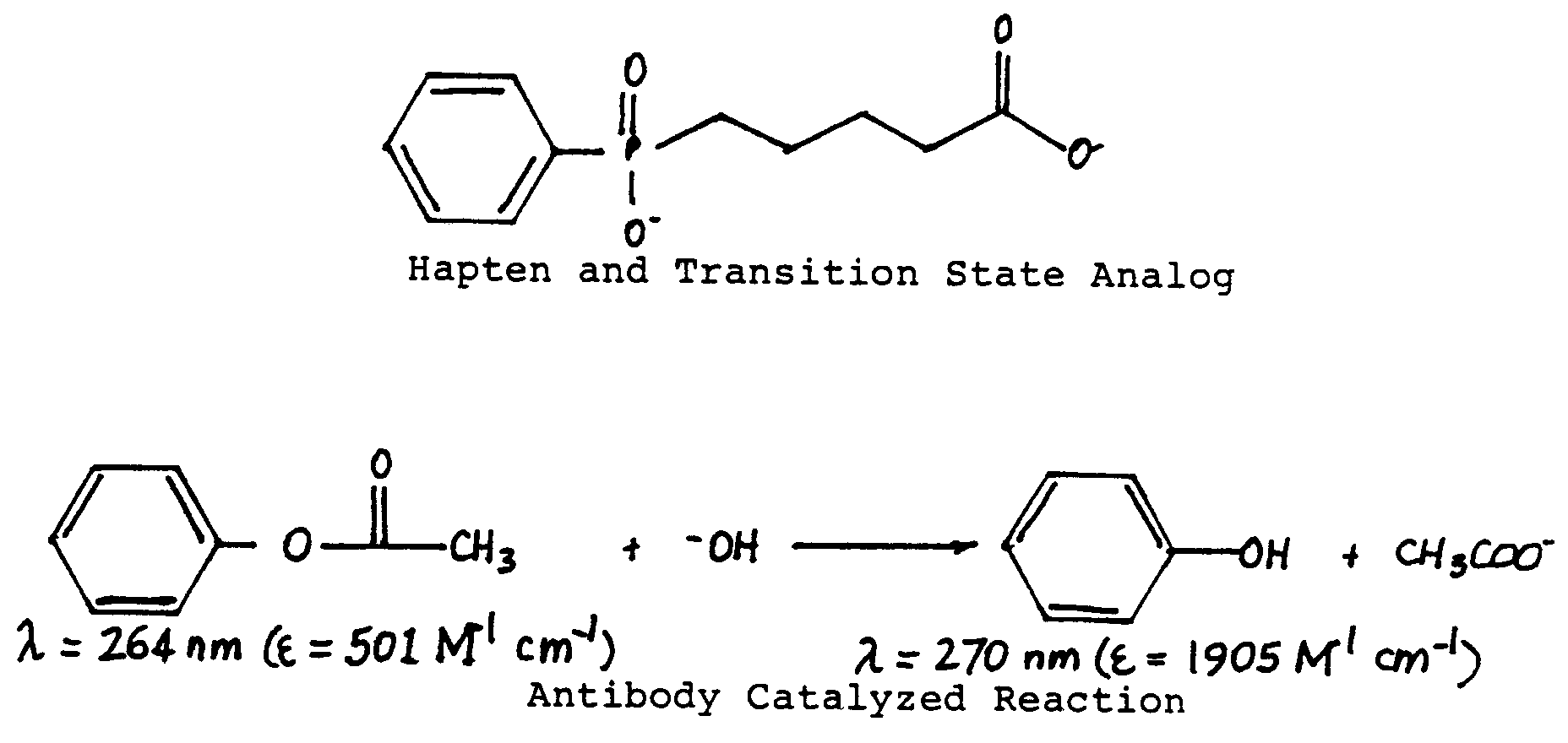
- A solution of 50 mM AOT in iso-octane was prepared by dissolving 0.89 g of AOT in 40 ml of iso-octane. To this solution sufficient phenylacetate was added to yield a final substrate concentration of 155 µM (0.0775 Abs. units at 264 nm).
- The antibody catalyzed hydrolysis of phenylacetate was initiated by adding 1 µl of monoclonal antibody (about 60 µg) to a solution containing 24 µl of tris buffer, 155 µM phenylacetate and 50 mM AOT (Wo=27.8) dissolved in 1.0 ml of iso-octane. The change in 270 nm absorbance was monitored at 30 second intervals for 10 minutes. These measurements were performed in a Hitachi 3200 spectrophotometer in the single beam mode, because prior experiments demonstrated that spontaneous decomposition of phenylacetate (i.e., background hydrolysis) did not occur in the microemulsion during the time period of our rate measurements. Thus, a blank or reference solution was not required. Changes observed in the 270 nm absorbance during each kinetic run, as shown in Fig. 5, reflected both the formation of a microemulsion (resulting in an absorbance decrease) and phenol production (resulting in an absorbance increase).
- Again referring to Fig. 5, 155 M phenylacetate (PA) was hydrolyzed by 60 µg of 20-G9 antibody at a rate of about 0.00022 Abs. units/minute (or 0.12 nanomoles/minute). Any "burst reaction" caused by the antibody hydrolysis of substrate was hidden by the decreased 270 nm absorbance which occurred during the first two minutes of the rate assay.
- In contrast, the presence of 29 µmolar hapten totally inhibited the 20-G9 catalyzed hydrolysis of phenylacetate. See the results depicted in Fig. 6. The observed change in 270 nm absorbance ( 0.0001 Abs. units per minute) was caused by continued decrease in solution turbidity as the antibody microemulsion formed. No background hydrolysis of phenylacetate was observed during this experiment, which is consistent with previous experiments on the spontaneous rate of phenylacetate hydrolysis in a microemulsion.
- The results presented above demonstrate that antigen-antibody complexes were formed in solutions of AOT in iso-octane. Thus, both the immunological and catalytic functions of antibodies can be maintained in a microemulsion environment. The precise conditions used in this study were: 60 µg of antibody, 25 µl of water (Wo=27.8) dissolved in 50mM AOT, 155 µM phenylacetate and an iso-octane solvent.
- An additional point of interest was the lack of background or spontaneous phenylacetate hydrolysis observed when the substrate was dissolved in a microemlusion system. This result would appear to require a re-ordering of the way in which antibody catalyzed reactions are described. Conventionally, the efficiency of an antibody- catalyzed reaction is reported in the literature as an acceleration factor which is defined by the ratio of the rate constant for the antibody catalyzed reaction (kcat) divided by the rate constant for the background hydrolysis reaction (kuncat). In the scientific literature the value of this constant acceleration factor is said to be between a few hundred and several million for different antibody catalyzed reactions. Clearly, in a microemulsion in accordance with the invention the value of kuncat goes to zero, and therefore the rate constant acceleration factor becomes so large that it is undefined.
- The industrial significance of this observation is that reactions which might occur in solution in a non-stereospecific manner, and formerly would have competed with a stereospecific antibody-catalyzed (or antibody-fragment-catalyzed) reaction, can now be avoided. This would permit the synthesis of a single steroisomer, instead of a racemic mixture, by the catalytic antibody or antibody fragment techniques of the present invention.
Claims (28)
- An interaction system, including an antibody or antibody fragment, characterised in that it comprises a surfactant-stabilised microheterogeneous dispersion of aqueous phase in a water-immiscible medium having a water to surfactant ratio of 5:1 to 50:1, and in that said antibody or said fragment in said aqueous phase has catalytic functionality.
- A system as claimed in Claim 1, which comprises a surfactant-stabilised microheterogeneous dispersion of aqueous phase particles in an organic liquid selected from the group consisting of aromatics, substituted aromatics, alkanes, substituted alkanes, ethers, acetone and dioxane.
- A system as claimed in Claim 1 or 2, wherein said antibody or antibody fragment is adapted to effect a catalytic conversion of one or more reactants into one or more products.
- A system as claimed in Claim 2, wherein said aqueous phase particles contain a monoclonal antibody, a polyclonal antibody, monoclonal antibody fragment or polyclonal antibody fragment.
- An interaction system as claimed in any of Claims 1 to 4, wherein the system comprises a surfactant-stabilised dispersion of aqueous phase particles containing said antibody or said fragment in a water-immiscible organic liquid or a water-immiscible supercritical fluid, the aqueous phase particles being of size in the maximum dimension less than the wavelength of visible light such that the system is transparent to such light.
- An interaction system as claimed in any of Claims 1 to 4, wherein the system comprises a plurality of surfactant-stabilised microheterogeneously dispersed aqueous phase particles, the aqueous phase particles being of size in the maximum dimension less than the wavelength of visible light, and said aqueous phase particles containing said antibody or said fragment.
- An interaction system as claimed in any of Claims 1 to 4, wherein the system comprises a surfactant-stabilised microemulsion of aqueous phase, or a dispersion of surfactant-stabilised aqueous reverse micelles, in a water-immiscible fluid or a water-immiscible supercritical fluid, said aqueous phase or reverse micelles containing said antibody or said fragment.
- An interaction system as claimed in any of Claims 1 to 4, wherein the system comprises a plurality of surfactant-stabilised microemulsified aqueous phase particles, or a dispersion of surfactant stabilised aqueous reverse micelles, containing said antibody or said fragment.
- A system as claimed in any preceding claim, wherein the antibody is a monoclonal antibody.
- A system as claimed in any preceding claim, wherein the surfactant is anionic, cationic, non-ionic, amphoteric or a combination of at least two of the foregoing.
- A system as claimed in any preceding claim for interacting a catalytic antibody, or catalytic antibody fragment with a reactant, which system comprises a surfactant-stabilised microheterogeneous dispersion of aqueous phase in a water-immiscible medium, said aqueous phase containing an amount of said catalytic antibody or catalytic antibody fragment sufficient to effect said catalysis.
- A system as claimed in any of Claims 1 to 10 for interacting a catalytic antibody or catalytic antibody fragment with a reactant, which system comprises a plurality of surfactant-stabilised microheterogeneously dispersed aqueous phase particles containing an amount of said catalytic antibody or catalytic antibody fragment sufficient to effect the interaction.
- A system as claimed in Claim 12, wherein said microheterogeneous dispersion of aqueous phase particles is a surfactant-stabilised microemulsion or a dispersion of aqueous reverse micelles, said aqueous phase contains a catalytic monoclonal antibody, and is adapted for the conversion of one or more reactants to one or more products.
- A system as claimed in any preceding claim wherein the molar ratio of water to surfactant is in the range 21:1 to 31:1 inclusive.
- A system as claimed in any of Claims 1 to 13, wherein the surfactant is sodium bi-(2-ethylhexyl)-sulfosuccinate and the molar ratio of water to surfactant is in the range from 21:1 to 31:1 inclusive.
- A method of forming an interaction system including an antibody, or antibody fragment, characterised in that it comprises surfactant-stabilising a microheterogeneous dispersion of aqueous phase in a water-immiscible medium having a water to surfactant ratio of 5:1 to 50:1 and in that said antibody or fragment in said aqueous phase has a catalytic functionality.
- A method as claimed in Claim 16, wherein said aqueous phase contains a monoclonal antibody, a polyclonal antibody, monoclonal antibody fragment, or polyclonal antibody fragment.
- A method as claimed in Claim 17, wherein the antibody is monoclonal.
- A method as claimed in any of Claims 16 to 18, wherein the molar ratio of water to surfactant is in the range 21:1 to 31:1 inclusive.
- A method as claimed in any of Claims 16 to 19 which comprises the steps of combining an aqueous solution of said catalytic antibody or fragment and a solution of a surfactant in a water-immiscible fluid or a water-immiscible supercritical fluid, and agitating the combination to form in said fluid a surfactant-stabilised microheterogeneous dispersion of aqueous phase in said fluid, said surfactant being present in an amount sufficient to effect formation of said dispersion and containing an amount of said antibody or fragment in a functional state sufficient to effect said interaction.
- A method as claimed in any of Claims 16 to 19 which comprises injecting an aqueous solution of said catalytic antibody or fragment into a solution of a surfactant in a water-immiscible fluid or a water-immiscible supercritical fluid, said surfactant being present in an amount sufficient to effect the formation of a surfactant-stabilised microheterogeneous dispersion of aqueous phase in said fluid, and said aqueous phase containing an amount of said antibody or fragment in a functional state sufficient to effect said interaction.
- A method as claimed in any of Claims 16 to 19 which comprises adding to a surfactant-stabilised microheterogeneous dispersion of aqueous phase in a water-immiscible fluid or a water-immiscible supercritical fluid, a freeze-dried antibody, or antibody fragment having functional catalytic capability, in powder form, and mixing the protein powder with the microheterogeneous dispersion of aqueous phase in the fluid to form a microheterogeneous surfactant-stabilised dispersion of aqueous phase in the fluid, said aqueous phase containing said antibody or fragment in a functional state.
- A method as claimed in any of Claims 16 to 22, wherein the surfactant is sodium bi-(2,ethylhexyl)-sulfosuccinate said ratio is in the range from 21:1 to 31:1.
- A method as claimed in any of Claims 16 to 23, wherein said aqueous solution contains a catalytic monoclonal antibody.
- A method of interacting an antibody or antibody fragment having functional catalytic capability, with at least one species, which comprises maintaining a system as claimed in any of Claims 1 to 15 at conditions under which the antibody or fragment is accessible to the species and that are sufficient to effect said interaction for a time sufficient for said interaction to occur.
- A method as claimed in Claim 25 which comprises maintaining said catalytic antibody or fragment in a plurality of surfactant-stabilised microheterogeneously dispersed aqueous phase particles, said aqueous phase particles containing an amount of said antibody or fragment in a functional state sufficient to effect said interaction, at conditions under which the antibody or fragment is accessible to said species and that are sufficient to effect said interaction for a time sufficient for said interaction to occur.
- A method as claimed in Claim 25 or 26 in which said species is an antigen, hapten, substrate or reactant.
- A method of converting at least one reactant to at least one product which comprises maintaining a system as claimed in any of Claims 1 to 15 comprising a surfactant-stabilised microheterogeneous dispersion of aqueous phase, said aqueous phase containing an amount of catalytic antibody or catalytic antibody fragment sufficient to effect said conversion, at conditions under which the catalytic antibody or catalytic antibody fragment is accessible to said at least one reactant, and that are sufficient to effect the interaction between said catalytic antibody or catalytic antibody fragment and said at least one reactant to form said at least one product for a time sufficient for said interaction to occur.
Applications Claiming Priority (3)
| Application Number | Priority Date | Filing Date | Title |
|---|---|---|---|
| US18825188A | 1988-04-29 | 1988-04-29 | |
| US188251 | 1988-04-29 | ||
| PCT/US1989/001804 WO1989010142A1 (en) | 1988-04-29 | 1989-04-28 | Interaction system comprising a surfactant-stabilized disperse aqueous phase containing an antibody or antibody fragment |
Publications (3)
| Publication Number | Publication Date |
|---|---|
| EP0414755A1 EP0414755A1 (en) | 1991-03-06 |
| EP0414755A4 EP0414755A4 (en) | 1991-12-11 |
| EP0414755B1 true EP0414755B1 (en) | 1996-10-16 |
Family
ID=22692379
Family Applications (1)
| Application Number | Title | Priority Date | Filing Date |
|---|---|---|---|
| EP89905519A Expired - Lifetime EP0414755B1 (en) | 1988-04-29 | 1989-04-28 | Interaction system comprising a surfactant-stabilized disperse aqueous phase containing an antibody or antibody fragment |
Country Status (9)
| Country | Link |
|---|---|
| EP (1) | EP0414755B1 (en) |
| JP (1) | JPH03505299A (en) |
| AT (1) | ATE144147T1 (en) |
| AU (1) | AU641357B2 (en) |
| CA (1) | CA1340526C (en) |
| DE (1) | DE68927347T2 (en) |
| IL (1) | IL90103A (en) |
| WO (1) | WO1989010142A1 (en) |
| ZA (1) | ZA893106B (en) |
Families Citing this family (3)
| Publication number | Priority date | Publication date | Assignee | Title |
|---|---|---|---|---|
| ZA889546B (en) * | 1987-12-24 | 1990-08-29 | Igen Inc | Chemical sensors employing catalytic antibodies |
| IL106887A (en) * | 1993-09-02 | 1997-02-18 | Yissum Res Dev Co | Pharmaceutical and diagnostic compositions and a method for drug targeting |
| ITBA20020032A1 (en) * | 2002-09-24 | 2004-03-25 | Bio D Soc | METHOD FOR STABILIZING PROTEINS FOR HIGH TEMPERATURE STORAGE. |
Family Cites Families (1)
| Publication number | Priority date | Publication date | Assignee | Title |
|---|---|---|---|---|
| US4888281A (en) * | 1983-11-29 | 1989-12-19 | Igen, Inc. | Method of catalyzing chemical reactions |
-
1989
- 1989-04-26 ZA ZA893106A patent/ZA893106B/en unknown
- 1989-04-27 IL IL9010389A patent/IL90103A/en unknown
- 1989-04-28 DE DE68927347T patent/DE68927347T2/en not_active Expired - Fee Related
- 1989-04-28 AT AT89905519T patent/ATE144147T1/en not_active IP Right Cessation
- 1989-04-28 EP EP89905519A patent/EP0414755B1/en not_active Expired - Lifetime
- 1989-04-28 WO PCT/US1989/001804 patent/WO1989010142A1/en not_active Ceased
- 1989-04-28 JP JP1505272A patent/JPH03505299A/en active Pending
- 1989-04-28 AU AU35587/89A patent/AU641357B2/en not_active Ceased
- 1989-06-14 CA CA000598144A patent/CA1340526C/en not_active Expired - Fee Related
Non-Patent Citations (3)
| Title |
|---|
| ANGEWANDTE CHEMIE, vol. 24, no. 6, June 1985; P.L. LUISI, pp. 441, 447-448/ * |
| CHEMICAL ABSTRACTS, vol. 103, no. 9, 02 September 1985, Columbus, OH (US); K.E. GOKLEN, p. 337, no. 67780t/ * |
| CHEMICAL ABSTRACTS, vol. 107, no. 13, 28 September 1987, Columbus, OH (US); K. E. GOKLEN, p. 509, no. 114174t/ * |
Also Published As
| Publication number | Publication date |
|---|---|
| IL90103A0 (en) | 1989-12-15 |
| ZA893106B (en) | 1990-01-31 |
| WO1989010142A1 (en) | 1989-11-02 |
| AU641357B2 (en) | 1993-09-23 |
| AU3558789A (en) | 1989-11-24 |
| CA1340526C (en) | 1999-05-04 |
| ATE144147T1 (en) | 1996-11-15 |
| EP0414755A4 (en) | 1991-12-11 |
| DE68927347T2 (en) | 1997-02-20 |
| DE68927347D1 (en) | 1996-11-21 |
| JPH03505299A (en) | 1991-11-21 |
| EP0414755A1 (en) | 1991-03-06 |
| IL90103A (en) | 1994-10-07 |
Similar Documents
| Publication | Publication Date | Title |
|---|---|---|
| Bron et al. | Membrane fusion of Semliki Forest virus in a model system: correlation between fusion kinetics and structural changes in the envelope glycoprotein. | |
| Pollack et al. | A semisynthetic catalytic antibody | |
| Bessen et al. | Non-genetic propagation of strain-specific properties of scrapie prion protein | |
| Melchior Jr et al. | Ethoxyformylation of proteins. Reaction of ethoxyformic anhydride with. alpha.-chymotrypsin, pepsin, and pancreatic ribonuclease at pH 4 | |
| Schmid et al. | A role for clathrin light chains in the recognition of clathrin cages by ‘uncoating ATPase’ | |
| Torchilin et al. | Incorporation of hydrophilic protein modified with hydrophobic agent into liposome membrane | |
| US3876501A (en) | Binding enzymes to activated water-soluble carbohydrates | |
| EP0247497A2 (en) | Novel functionalized liposomes and a process for production thereof | |
| Smith et al. | Specific release of the thioesterase component of the fatty acid synthetase multienzyme complex by limited trypsinization. | |
| Uyeda | Reaction of phosphofructokinase with maleic anhydride, succinic anhydride, and pyridoxal 5'-phosphate | |
| WO1998024889A1 (en) | Enzyme composition for tissue dissociation | |
| Ako et al. | The purification by affinity chromatography of a proteinase inhibitor binding species of anhydro-chymotrypsin | |
| Bolli et al. | Monocarboxylate and α-ketoglutarate carriers from bovine heart mitochondria: purification by affinity chromatography on immobilized 2-cyano-4-hydroxycinnamate | |
| Gyongyossy-Issa et al. | The covalent coupling of Arg-Gly-Asp-containing peptides to liposomes: purification and biochemical function of the lipopeptide | |
| AU641357B2 (en) | Interaction system comprising a surfactant-stabilized disperse aqueous phase containing an antibody or antibody fragment | |
| US5641865A (en) | Interaction system comprising a surfactant-stabilized disperse aqueous phase containing an antibody or antibody fragment | |
| Jahn et al. | Large scale expression, purification and 2D crystallization of recombinant plant plasma membrane H+-ATPase | |
| US6087398A (en) | Sickle cell anemia treatment | |
| Wennekes et al. | Purification and characterization of glucose-6-phosphate dehydrogenase from Aspergillus niger and Aspergillus nidulans | |
| NOMURA et al. | STUDIES ON AMYLASE FORMATION BY BACILLUS SUBTILIS V. IMMUNOCHEMICAL STUDIES OF AMYLASE PRODUCED BY BACILLUS SUBTILIS | |
| Haghighi et al. | Glucose 6-phosphate dehydrogenase from Leuconostoc mesenteroides. Kinetics of reassociation and reactivation from inactive subunits | |
| Rothman | Association of bovine alpha-chymotrypsinogen and trypsinogen with rat zymogen granules | |
| Tajima et al. | Two-domain structure of microsomal reduced nicotinamide adenine dinucleotide-cytochrome b5 reductase | |
| Mozhaev et al. | The influence of effectors on the refolding (reactivation) of immobilized trypsin | |
| Light et al. | Further evidence for independent folding of domains in serine proteases. |
Legal Events
| Date | Code | Title | Description |
|---|---|---|---|
| PUAI | Public reference made under article 153(3) epc to a published international application that has entered the european phase |
Free format text: ORIGINAL CODE: 0009012 |
|
| 17P | Request for examination filed |
Effective date: 19901025 |
|
| AK | Designated contracting states |
Kind code of ref document: A1 Designated state(s): AT BE CH DE FR GB IT LI LU NL SE |
|
| A4 | Supplementary search report drawn up and despatched |
Effective date: 19911023 |
|
| AK | Designated contracting states |
Kind code of ref document: A4 Designated state(s): AT BE CH DE FR GB IT LI LU NL SE |
|
| 17Q | First examination report despatched |
Effective date: 19931203 |
|
| GRAG | Despatch of communication of intention to grant |
Free format text: ORIGINAL CODE: EPIDOS AGRA |
|
| GRAH | Despatch of communication of intention to grant a patent |
Free format text: ORIGINAL CODE: EPIDOS IGRA |
|
| GRAH | Despatch of communication of intention to grant a patent |
Free format text: ORIGINAL CODE: EPIDOS IGRA |
|
| RAP1 | Party data changed (applicant data changed or rights of an application transferred) |
Owner name: IGEN, INC. |
|
| GRAA | (expected) grant |
Free format text: ORIGINAL CODE: 0009210 |
|
| AK | Designated contracting states |
Kind code of ref document: B1 Designated state(s): AT BE CH DE FR GB IT LI LU NL SE |
|
| REF | Corresponds to: |
Ref document number: 144147 Country of ref document: AT Date of ref document: 19961115 Kind code of ref document: T |
|
| ITF | It: translation for a ep patent filed | ||
| REG | Reference to a national code |
Ref country code: CH Ref legal event code: NV Representative=s name: ISLER & PEDRAZZINI AG |
|
| REF | Corresponds to: |
Ref document number: 68927347 Country of ref document: DE Date of ref document: 19961121 |
|
| ET | Fr: translation filed | ||
| PLBE | No opposition filed within time limit |
Free format text: ORIGINAL CODE: 0009261 |
|
| STAA | Information on the status of an ep patent application or granted ep patent |
Free format text: STATUS: NO OPPOSITION FILED WITHIN TIME LIMIT |
|
| 26N | No opposition filed | ||
| REG | Reference to a national code |
Ref country code: CH Ref legal event code: PFA Free format text: IGEN, INC. TRANSFER- IGEN INTERNATIONAL, INC. |
|
| REG | Reference to a national code |
Ref country code: GB Ref legal event code: 732E |
|
| NLS | Nl: assignments of ep-patents |
Owner name: IGEN INTERNATIONAL, INC A DELAWARE CORPORATION |
|
| REG | Reference to a national code |
Ref country code: FR Ref legal event code: TP |
|
| REG | Reference to a national code |
Ref country code: GB Ref legal event code: IF02 |
|
| PGFP | Annual fee paid to national office [announced via postgrant information from national office to epo] |
Ref country code: NL Payment date: 20070524 Year of fee payment: 19 |
|
| PGFP | Annual fee paid to national office [announced via postgrant information from national office to epo] |
Ref country code: SE Payment date: 20070529 Year of fee payment: 19 |
|
| PGFP | Annual fee paid to national office [announced via postgrant information from national office to epo] |
Ref country code: CH Payment date: 20070530 Year of fee payment: 19 |
|
| PGFP | Annual fee paid to national office [announced via postgrant information from national office to epo] |
Ref country code: DE Payment date: 20070531 Year of fee payment: 19 |
|
| PGFP | Annual fee paid to national office [announced via postgrant information from national office to epo] |
Ref country code: AT Payment date: 20070601 Year of fee payment: 19 |
|
| PGFP | Annual fee paid to national office [announced via postgrant information from national office to epo] |
Ref country code: LU Payment date: 20070605 Year of fee payment: 19 |
|
| PGFP | Annual fee paid to national office [announced via postgrant information from national office to epo] |
Ref country code: BE Payment date: 20070615 Year of fee payment: 19 |
|
| REG | Reference to a national code |
Ref country code: CH Ref legal event code: PCAR Free format text: ISLER & PEDRAZZINI AG;POSTFACH 1772;8027 ZUERICH (CH) |
|
| PGFP | Annual fee paid to national office [announced via postgrant information from national office to epo] |
Ref country code: GB Payment date: 20070525 Year of fee payment: 19 |
|
| PGFP | Annual fee paid to national office [announced via postgrant information from national office to epo] |
Ref country code: IT Payment date: 20070523 Year of fee payment: 19 |
|
| PGFP | Annual fee paid to national office [announced via postgrant information from national office to epo] |
Ref country code: FR Payment date: 20070530 Year of fee payment: 19 |
|
| BERE | Be: lapsed |
Owner name: *IGEN INTERNATIONAL INC. Effective date: 20080430 |
|
| REG | Reference to a national code |
Ref country code: CH Ref legal event code: PL |
|
| EUG | Se: european patent has lapsed | ||
| GBPC | Gb: european patent ceased through non-payment of renewal fee |
Effective date: 20080428 |
|
| NLV4 | Nl: lapsed or anulled due to non-payment of the annual fee |
Effective date: 20081101 |
|
| PG25 | Lapsed in a contracting state [announced via postgrant information from national office to epo] |
Ref country code: NL Free format text: LAPSE BECAUSE OF NON-PAYMENT OF DUE FEES Effective date: 20081101 Ref country code: LI Free format text: LAPSE BECAUSE OF NON-PAYMENT OF DUE FEES Effective date: 20080430 Ref country code: DE Free format text: LAPSE BECAUSE OF NON-PAYMENT OF DUE FEES Effective date: 20081101 Ref country code: CH Free format text: LAPSE BECAUSE OF NON-PAYMENT OF DUE FEES Effective date: 20080430 |
|
| REG | Reference to a national code |
Ref country code: FR Ref legal event code: ST Effective date: 20081231 |
|
| PG25 | Lapsed in a contracting state [announced via postgrant information from national office to epo] |
Ref country code: AT Free format text: LAPSE BECAUSE OF NON-PAYMENT OF DUE FEES Effective date: 20080428 |
|
| PG25 | Lapsed in a contracting state [announced via postgrant information from national office to epo] |
Ref country code: BE Free format text: LAPSE BECAUSE OF NON-PAYMENT OF DUE FEES Effective date: 20080430 |
|
| PG25 | Lapsed in a contracting state [announced via postgrant information from national office to epo] |
Ref country code: FR Free format text: LAPSE BECAUSE OF NON-PAYMENT OF DUE FEES Effective date: 20080430 |
|
| PG25 | Lapsed in a contracting state [announced via postgrant information from national office to epo] |
Ref country code: GB Free format text: LAPSE BECAUSE OF NON-PAYMENT OF DUE FEES Effective date: 20080428 |
|
| PG25 | Lapsed in a contracting state [announced via postgrant information from national office to epo] |
Ref country code: IT Free format text: LAPSE BECAUSE OF NON-PAYMENT OF DUE FEES Effective date: 20080428 |
|
| PG25 | Lapsed in a contracting state [announced via postgrant information from national office to epo] |
Ref country code: LU Free format text: LAPSE BECAUSE OF NON-PAYMENT OF DUE FEES Effective date: 20080428 |
|
| PG25 | Lapsed in a contracting state [announced via postgrant information from national office to epo] |
Ref country code: SE Free format text: LAPSE BECAUSE OF NON-PAYMENT OF DUE FEES Effective date: 20080429 |