EP0413145B1 - Radioactive diagnostic agent - Google Patents
Radioactive diagnostic agent Download PDFInfo
- Publication number
- EP0413145B1 EP0413145B1 EP90113475A EP90113475A EP0413145B1 EP 0413145 B1 EP0413145 B1 EP 0413145B1 EP 90113475 A EP90113475 A EP 90113475A EP 90113475 A EP90113475 A EP 90113475A EP 0413145 B1 EP0413145 B1 EP 0413145B1
- Authority
- EP
- European Patent Office
- Prior art keywords
- brain
- radioactive
- abga
- glucosamine
- diagnostic agent
- Prior art date
- Legal status (The legal status is an assumption and is not a legal conclusion. Google has not performed a legal analysis and makes no representation as to the accuracy of the status listed.)
- Expired - Lifetime
Links
Images

Classifications
-
- A—HUMAN NECESSITIES
- A61—MEDICAL OR VETERINARY SCIENCE; HYGIENE
- A61K—PREPARATIONS FOR MEDICAL, DENTAL OR TOILETRY PURPOSES
- A61K51/00—Preparations containing radioactive substances for use in therapy or testing in vivo
- A61K51/02—Preparations containing radioactive substances for use in therapy or testing in vivo characterised by the carrier, i.e. characterised by the agent or material covalently linked or complexing the radioactive nucleus
- A61K51/04—Organic compounds
- A61K51/0491—Sugars, nucleosides, nucleotides, oligonucleotides, nucleic acids, e.g. DNA, RNA, nucleic acid aptamers
-
- A—HUMAN NECESSITIES
- A61—MEDICAL OR VETERINARY SCIENCE; HYGIENE
- A61K—PREPARATIONS FOR MEDICAL, DENTAL OR TOILETRY PURPOSES
- A61K2123/00—Preparations for testing in vivo
Definitions
- the present invention relates to a radioactive diagnostic agent. More particularly, it relates to a radioactive diagnostic agent comprising a radioactive iodine-labeled glucosamine derivative, which is useful for measurement of the capability of glucose transportation or glucose phosphorylation in various tissues and organs.
- 18F-labeled deoxyglucose (18F-FDG), which is obtainable from glucose by substitution of the hydroxyl group at the 2-position with fluorine-18 (B. M. Gallagher et al.: J.Nucl.Med., 19 , 1154 (1978)).
- Said 18F-FDG shows the same behavior in a living body and passes through a cell membrane into a cell according to the glucose carrier system. It is phosphorylated at the 6-position by the action of hexokinase inside the cell and is stored therein.
- 18F-FDG is a radioactive medicine developed for the purpose of nuclear medical diagnosis based on the dynamic function of gluocse and admitted to be useful for diagnosis of local function of brain or heart, detection of tumor or judgement of malignancy.
- fluorine-18 used for 18F-FDG is a positron-emitting nuclide
- a special imaging method such as positron-emission tomography (PET) is needed for the radioactive diagnosis with such nuclide.
- PET positron-emission tomography
- fluorine-18 has such a short half life time as 109 minutes, restriction on time is unavoidable for the transportation and supply between the manufacture at a pharmaceutical plant and the use is a medical institution.
- Positron nuclides such as carbon-11, nitrogen-13 and oxygen-15 are usual elements, which constitute metabolites themselves, and therefore can be used for labeling of metabolites without the material modification of their structure.
- single photon emitting nuclides as technetium-99 and iodine-123 are unusual elements to a living body, and therefore labeling of metabolites with such elements results in great change of their properties.
- a radioactive diagnostic agent which comprises as an active ingredient a glucosamine derivative of the formula: wherein Ac is an acetyl group and X is a radioactive iodine atom.
- the glucosamine derivative of the invention is acetylated at the hydroxyl groups of the glucose moiety in BGA. It is deacetylated by the action of an esterase in brain to give BGA, on which the capability of glucose phorphorylation can be evaluated and which can be retained in brain.
- the glucosamine derivative of the invention is dissolved in a pharmaceutically acceptable liquid diluent such as physiologically saline solution and injected intravenously into a mammalian body such as a human body usually at a dose of 1 to 20 mCi, preferably 3 to 10 mCi. After a sufficient time for transfer into brain and deacetylation (usually several hours), imaging is carried by the use of a gamma-camera.
- a pharmaceutically acceptable liquid diluent such as physiologically saline solution
- injected intravenously into a mammalian body such as a human body usually at a dose of 1 to 20 mCi, preferably 3 to 10 mCi.
- imaging is carried by the use of a gamma-camera.
- N-p-methoxybenzylidene-D-glucosamine (5 g; 0.017 mol) was suspended in acetic anhydride (15 ml), and dry pyridine (27 ml) was added thereto while cooling with ice, followed by stirring for 5 minutes.
- the resultant mixture was allowed to stand at room temperature for 24 hours, admixed with ice water (85 ml) and again allowed to stand for 2 hours.
- the precipitated crystals were collected by filtration, washed with cold water and recrystallized from methanol to give N-p-methoxy-benzylidene-1,3,4,6-tetra-O-acetyl-D-glucosamine (7.1 g).
- N-p-methoxybenzylidene-1,3,4,6-tetra-O-acetyl-D-glucosamine 5 g; 0.010 mol was dissolved in acetone (25 ml) and hot, conc. hydrochloric acid (1 ml) was added thereto, and the resultant mixture was allowed to stand for 24 hours.
- the precipitated crystals were collected by filtration and washed with cold ether.
- the resulting crystals were suspended in 2 M sodium acetate solution (50 ml) and extracted with a three time volume of chloroform, followed by crystallization to give 1,3,4,6-tetra-O-acetyl-D-glucosamine (2.9 g).
- N-(m-Iodobenzoyl)-1,3,4,6-tetra-O-acetyl-D-glucosamine (4 mg) was dissolved in a mixture of ethanol (0.5 ml) and distilled water (0.5 ml), cupric sulfate solution, ammonium sulfate solution and 125I-NaI (1 mCi) were added thereto, and the resultant mixture was heated at 85°C for 3 hours.
- reaction mixture was subjected to silica gel column chromatography using a mixture of chloroform and methanol (8 : 2 by volume) for removal of the decomposition product and the unreacted 125I-labeled N-(m-iodobenzoyl)-1,3,4,6-tetra-O-acetyl-D-glucosamine (125I-ABGA) (0.81 mCi). Yield, 81.8 ⁇ 9.9 %.
- 125I-ABGA as obtained in Example 2 was added, followed by stirring and allowing to stand. The radioactivity of each layer was measured, and the distribution ratio was determined. The results are shown in Table 1, from which it is understood that 125I-ABGA is lypophilic.
- 125I-ABGA was injected into ddY strain male mice at the tail vein, and after a certain period of time, the mice were sacrificed.
- the blood was collected from the heart, and the brain was taken out.
- the blood and the brain were respectively admixed with 5 % trichloroacetic acid (1 ml), homogenized and centrifuged at 3,000 rpm and at 0°C for 10 minutes.
- the supernatant was analyzed by thin layer chromatography using a mixture of chloroform and methanol (7 : 3 by volume) as a developing solvent.
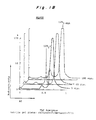
- the results are shown in Figs. 1A and 1B of the accompanying drawings.
- the solid line, and dotted line and the solid-dot mixed line represent respectively the ones of 5 minutes, 60 minutes and 180 minutes after the administration.
- 125I-ABGA was injected into ddY strain male mice at the tail vein, and the body distribution was determined in the same manner as in Example 6. The results are shown in Table 4.
- the radioactive diagnostic agent of the invention comprising the glucosamine derivative passes through the blood-brain barrier and is transferred into brain. In brain, it is converted into BGA by the action of esterase. Accordingly, it is useful for evaluation of the capability of glucose phosphorylation, especially for diagnosing the diseases in various tissues and organs such as brain, heart or tumor, which are correlated to the glucose metabolism.
Landscapes
- Health & Medical Sciences (AREA)
- Life Sciences & Earth Sciences (AREA)
- Chemical & Material Sciences (AREA)
- Engineering & Computer Science (AREA)
- Biochemistry (AREA)
- Biotechnology (AREA)
- Molecular Biology (AREA)
- Proteomics, Peptides & Aminoacids (AREA)
- Physics & Mathematics (AREA)
- Medicinal Chemistry (AREA)
- Optics & Photonics (AREA)
- Pharmacology & Pharmacy (AREA)
- Epidemiology (AREA)
- Animal Behavior & Ethology (AREA)
- General Health & Medical Sciences (AREA)
- Public Health (AREA)
- Veterinary Medicine (AREA)
- Medicines Containing Antibodies Or Antigens For Use As Internal Diagnostic Agents (AREA)
- Saccharide Compounds (AREA)
Abstract
Description
- The present invention relates to a radioactive diagnostic agent. More particularly, it relates to a radioactive diagnostic agent comprising a radioactive iodine-labeled glucosamine derivative, which is useful for measurement of the capability of glucose transportation or glucose phosphorylation in various tissues and organs.
- Since glucose is a major energy source in brain, heart, tumor, etc., tracing of its dynamic variation is considered to be useful for diagnosis of tissues and organs. Based on this consideration, there is developed ¹⁸F-labeled deoxyglucose (¹⁸F-FDG), which is obtainable from glucose by substitution of the hydroxyl group at the 2-position with fluorine-18 (B. M. Gallagher et al.: J.Nucl.Med., 19, 1154 (1978)). Said ¹⁸F-FDG shows the same behavior in a living body and passes through a cell membrane into a cell according to the glucose carrier system. It is phosphorylated at the 6-position by the action of hexokinase inside the cell and is stored therein. Thus, ¹⁸F-FDG is a radioactive medicine developed for the purpose of nuclear medical diagnosis based on the dynamic function of gluocse and admitted to be useful for diagnosis of local function of brain or heart, detection of tumor or judgement of malignancy.
- With respect to measurement of the local circulation metabolism in brain, it is observed that in normal cases, the blood stream, the oxygen consumption and the glucose consumption are all high in the grey matter where nerve cells are abundant and low in the white matter. Thus, coincidence is recognized between the blood stream and the metabolism. In view of this fact, attempt is also made to measure not the metabolism or glucose but the blood stream, which is assumed to reflect the metabolism. A typical example in this respect is ¹²³I-labeled amphetamine derivative, which passes through the blood-brain barrier and is retained in the brain for a period of time sufficient to accomplish nuclear medical examination. It is therefore used for measurement of the local blood stream in brain.
- Since fluorine-18 used for ¹⁸F-FDG, with which the glucose metabolism can be measured, is a positron-emitting nuclide, a special imaging method such as positron-emission tomography (PET) is needed for the radioactive diagnosis with such nuclide. Also, fluorine-18 has such a short half life time as 109 minutes, restriction on time is unavoidable for the transportation and supply between the manufacture at a pharmaceutical plant and the use is a medical institution.
- Because of the above reasons, the appearance of a substance which is labeled with a single photon emitting nuclide, has a broader use and makes it possible to measure- the metabolism itself is demanded.
- Positron nuclides such as carbon-11, nitrogen-13 and oxygen-15 are usual elements, which constitute metabolites themselves, and therefore can be used for labeling of metabolites without the material modification of their structure. To the contrary, single photon emitting nuclides as technetium-99 and iodine-123 are unusual elements to a living body, and therefore labeling of metabolites with such elements results in great change of their properties.
- Due to the above reason, consideration was made on not tracing the metabolism itself but evaluating the function correlated to the metabolism, and according to this consideration, development of radioactive medicines was attempted Thus, study was made on radioactive medicines which can evaluate the function correlated to the glucose metabolism for the capability of glucose transportation and glucose phosphorylation with hexokinase, and taking into consideration the facts that N-acyl derivatives of glucosamine participate in the reaction wits hexokinase and that the glucose derivative wherein radioactive iodine is directly introduced into the carbon chain is unstable to produce deiodization, there was designed N-m-iodobenzoyl-D-glucosamine (BGA) in which the bonding of iodine is stable. In J. Nuclear Med., vol.29, supp.5, 1988, pp. 928, 929, Abstract No. 787, H. Saji et al. the synthesis and biological functionality of radioactive BGA is described. From the results of the body distribution of BGA in mice, it was understood that BGA is low in stomach accumulation as the index of deiodization and thus stable in a body. It was also understood that BGA is not phosphorylated with hexokinase but shows a non-antagonistic inhibition to the phosphorylation of glucose and an antagonistic inhibition to the ATP action. On the other hand, however, it was observed that the disappearance of the radioactivity of BGA from brain is parallel to the blood clearance. Thus, BGA can hardly pass through the blood-brain barrier (BBB) in vivo and is therefore difficult to be transferred into brain.
- An extensive study has been made seeking a radioactive medicine which can be transferred easily through the blood-brain barrier into brain and retained there for a period of time sufficient for diagnosis so as to make possible the evaluation of the capability of glucose phosphorylation with esterase, it has now been found that esterification of BGA results in enhancing its lipophylic property so that the esterified product can pass easily through the blood-brain barrier. Among various esterification products, the acetylation product is quite advantageous, because after taken up into brain, it is converted into BGA, on which the capability of glucose phosphorylation can be evaluated, by the action of brain esterase and retained in brain over a period of time sufficient for examination, e.g. imaging. The present invention is based on the above finding.
- According to the present invention, there is provided a radioactive diagnostic agent which comprises as an active ingredient a glucosamine derivative of the formula:

wherein Ac is an acetyl group and X is a radioactive iodine atom. - As understood from the above, the glucosamine derivative of the invention is acetylated at the hydroxyl groups of the glucose moiety in BGA. It is deacetylated by the action of an esterase in brain to give BGA, on which the capability of glucose phorphorylation can be evaluated and which can be retained in brain.
- For the practical use, the glucosamine derivative of the invention is dissolved in a pharmaceutically acceptable liquid diluent such as physiologically saline solution and injected intravenously into a mammalian body such as a human body usually at a dose of 1 to 20 mCi, preferably 3 to 10 mCi. After a sufficient time for transfer into brain and deacetylation (usually several hours), imaging is carried by the use of a gamma-camera.
- Practical and presently preferred embodiments of the invention are illustratively shown in the following examples.
- To a solution of glucosamine hydrochloride (9 g; 0.042 mol) in 1 N sodium hydroxide solution (42.3 ml) anisaldehyde (5.76 g; 0.042 mol) was added, and the resultant mixture was stirred at room temperature for 3 hours and then cooled at 0°C for 30 minutes. The precipitated crystals were collected by filtration, washes with cold water and a mixture of ethanol and ether (1 : 1 by volume) in order to give N-p-methoxybenzylidene-D-glucosamine (9.6 g).
- The thus obtained N-p-methoxybenzylidene-D-glucosamine (5 g; 0.017 mol) was suspended in acetic anhydride (15 ml), and dry pyridine (27 ml) was added thereto while cooling with ice, followed by stirring for 5 minutes. The resultant mixture was allowed to stand at room temperature for 24 hours, admixed with ice water (85 ml) and again allowed to stand for 2 hours. The precipitated crystals were collected by filtration, washed with cold water and recrystallized from methanol to give N-p-methoxy-benzylidene-1,3,4,6-tetra-O-acetyl-D-glucosamine (7.1 g).
- The above obtained N-p-methoxybenzylidene-1,3,4,6-tetra-O-acetyl-D-glucosamine (5 g; 0.010 mol) was dissolved in acetone (25 ml) and hot, conc. hydrochloric acid (1 ml) was added thereto, and the resultant mixture was allowed to stand for 24 hours. The precipitated crystals were collected by filtration and washed with cold ether. The resulting crystals were suspended in 2 M sodium acetate solution (50 ml) and extracted with a three time volume of chloroform, followed by crystallization to give 1,3,4,6-tetra-O-acetyl-D-glucosamine (2.9 g).
- A mixture of m-iodobenzoic acid (1.6 g; 6.45 x 10⁻³ mol) and thionyl chloride (10 ml) was stirred at 65°C for 24 hours, benzene was added thereto, and excessive thionyl chloride was removed by distillation under reduced pressure. The thus prepared m-iodobenzoyl chloride was dissolved in benzene (2 ml), and a solution of 1,3,4,6-tetra-O-acetyl-D-glucosamine (2 g; 5.76 x 10⁻³ mol) in benzene (10 ml) and pyridine (2 ml) was added thereto, followed by stirring for 48 hours. The resulting mixture was neutralized with 0.1 N hydrochloric acid and extracted with chloroform, followed by crystallization from methanol to give N-(m-iodobenzoyl)-1,3,4,6-tetra-O-acetyl-D-glucosamine (ABGA) (1.50 g).
- Identification of the product to ABGA was made by the analytical results as set forth below.
- Elementary analysis for C₂₁H₂₄O₁₀NI (%) :
- Calcd.:
- C, 43.69; H, 4.19; N, 2.43.
- Found:
- C, 43.67; H, 4.21; N, 2.33.
- NMR (CDCl₃) (TMS) ppm: 2.04 (s, 3H), 2.08 (s, 6H), 2.11 (s, 3H), 3.90 (ddd, 1H), 4.17 (dd, 1H), 4.30 (dd, 1H), 4.58 (ddd, 1H), 5.22 (t, 1H), 5.36 (dd, 1H), 5.80 (d, 1H), 6.57 (d, 1H), 7.13 (t, 1H), 7.65 (dt, 1H), 7.83 (dt, 1H), 8.06 (t, 1H).
-
- N-(m-Iodobenzoyl)-1,3,4,6-tetra-O-acetyl-D-glucosamine (ABGA) (4 mg) was dissolved in a mixture of ethanol (0.5 ml) and distilled water (0.5 ml), cupric sulfate solution, ammonium sulfate solution and ¹²⁵I-NaI (1 mCi) were added thereto, and the resultant mixture was heated at 85°C for 3 hours. After cooling, the reaction mixture was subjected to silica gel column chromatography using a mixture of chloroform and methanol (8 : 2 by volume) for removal of the decomposition product and the unreacted ¹²⁵I-labeled N-(m-iodobenzoyl)-1,3,4,6-tetra-O-acetyl-D-glucosamine (¹²⁵I-ABGA) (0.81 mCi). Yield, 81.8±9.9 %.
- To a mixture of octanol (3 ml) and phosphate buffer (PBS) (3 ml), ¹²⁵I-ABGA as obtained in Example 2 was added, followed by stirring and allowing to stand. The radioactivity of each layer was measured, and the distribution ratio was determined. The results are shown in Table 1, from which it is understood that ¹²⁵I-ABGA is lypophilic.

- A solution of ¹²⁵I-ABGA in dimethylsulfoxide was added to a buffer of
pH 
- Swine liver esterase (100 U) was added to phosphate buffer (pH 7.4), and ¹²⁵I-ABGA (50 kBq) was added thereto, followed by incubation at 37°C for a certain period of time. The reaction mixture was sampled, and ethanol was added thereto, followed by centrifugation. The supernatant was subjected to thin layer chromatography, and the results are shown in Table 3, from which it is understood that ¹²⁵I-ABGA is deesterified in a very short time to give N-m-iodobenzoyl-D-glucosamine (BGA).

- ¹²⁵I-ABGA was injected into ddY strain male mice at the tail vein, and after a certain period of time, the mice were sacrificed. The blood was collected from the heart, and the brain was taken out. The blood and the brain were respectively admixed with 5 % trichloroacetic acid (1 ml), homogenized and centrifuged at 3,000 rpm and at 0°C for 10 minutes. The supernatant was analyzed by thin layer chromatography using a mixture of chloroform and methanol (7 : 3 by volume) as a developing solvent. The results are shown in Figs. 1A and 1B of the accompanying drawings. In Figs. 1A and 1B showing respectively the analytical results on the brain homogenate and the blood homogenate, the solid line, and dotted line and the solid-dot mixed line represent respectively the ones of 5 minutes, 60 minutes and 180 minutes after the administration.
- From Figs. 1A and 1B, it is understood that the peaks of ABGA and BGA appear in
brain 5 minutes after the administration. The peak of ABGA decreases with the lapse of time. Thus, ABGA is transferred to brain at the initial stage of administration and thereafter deesterified, whereby it behaves as BGA. - ¹²⁵I-ABGA was injected into ddY strain male mice at the tail vein, and the body distribution was determined in the same manner as in Example 6. The results are shown in Table 4.
- From Table 4, it is understood that ABGA shows rapid clearance from the blood and, in comparison with BGA, higher uptake in the brain. It gives retention in the brain and indicates the increase of the brain/blood ratio with the lapse of time.

- The radioactive diagnostic agent of the invention comprising the glucosamine derivative passes through the blood-brain barrier and is transferred into brain. In brain, it is converted into BGA by the action of esterase. Accordingly, it is useful for evaluation of the capability of glucose phosphorylation, especially for diagnosing the diseases in various tissues and organs such as brain, heart or tumor, which are correlated to the glucose metabolism.
Claims (3)
- A radioactive diagnostic agent which comprises as an active ingredient a glucosamine derivative of the formula I

- The radioactive diagnostic agent according to claim 1, wherein the radioactive iodine atom is chosen from I-123, I-125, I-131 and I-132.
- A method for preparing the radioactive diagnostic agent according to claim 1 or 2, which comprises combining the glucosamine derivative of the formula I with a physiologically acceptable diluent.
Priority Applications (1)
| Application Number | Priority Date | Filing Date | Title |
|---|---|---|---|
| AT90113475T ATE86122T1 (en) | 1989-07-13 | 1990-07-13 | RADIOACTIVE DIAGNOSTIC AGENT. |
Applications Claiming Priority (2)
| Application Number | Priority Date | Filing Date | Title |
|---|---|---|---|
| JP181502/89 | 1989-07-13 | ||
| JP1181502A JP2690018B2 (en) | 1989-07-13 | 1989-07-13 | Radioactive diagnostic agent consisting of glucosamine derivative |
Publications (2)
| Publication Number | Publication Date |
|---|---|
| EP0413145A1 EP0413145A1 (en) | 1991-02-20 |
| EP0413145B1 true EP0413145B1 (en) | 1993-03-03 |
Family
ID=16101881
Family Applications (1)
| Application Number | Title | Priority Date | Filing Date |
|---|---|---|---|
| EP90113475A Expired - Lifetime EP0413145B1 (en) | 1989-07-13 | 1990-07-13 | Radioactive diagnostic agent |
Country Status (9)
| Country | Link |
|---|---|
| US (1) | US5034212A (en) |
| EP (1) | EP0413145B1 (en) |
| JP (1) | JP2690018B2 (en) |
| AT (1) | ATE86122T1 (en) |
| AU (1) | AU626702B2 (en) |
| CA (1) | CA2021173C (en) |
| DE (1) | DE69001000T2 (en) |
| DK (1) | DK0413145T3 (en) |
| ES (1) | ES2054171T3 (en) |
Families Citing this family (6)
| Publication number | Priority date | Publication date | Assignee | Title |
|---|---|---|---|---|
| JP3320734B2 (en) * | 1993-07-28 | 2002-09-03 | ダイアタイド・インコーポレイテッド | Glucans labeled with radioisotopes |
| JP3645580B2 (en) * | 1993-10-22 | 2005-05-11 | 株式会社フジモト・ブラザーズ | Brain metabolism improving agent containing glucose ester derivative |
| DK0798309T3 (en) * | 1996-03-28 | 2003-03-31 | Nihon Mediphysics Co Ltd | Diagnostic agent for glycometabolic function |
| WO1999020316A1 (en) * | 1997-10-20 | 1999-04-29 | Board Of Regents, The University Of Texas System | Single photon-emitting radiotraces and methods for their use |
| WO2003059149A2 (en) | 2001-12-21 | 2003-07-24 | Threshold Pharmaceuticals, Inc. | Methods for cancer imaging |
| CN106565797B (en) * | 2016-10-18 | 2019-06-14 | 浙江工业大学 | Glucose amide compound and preparation and application thereof |
-
1989
- 1989-07-13 JP JP1181502A patent/JP2690018B2/en not_active Expired - Fee Related
-
1990
- 1990-07-13 EP EP90113475A patent/EP0413145B1/en not_active Expired - Lifetime
- 1990-07-13 AU AU59020/90A patent/AU626702B2/en not_active Ceased
- 1990-07-13 AT AT90113475T patent/ATE86122T1/en not_active IP Right Cessation
- 1990-07-13 CA CA002021173A patent/CA2021173C/en not_active Expired - Fee Related
- 1990-07-13 ES ES90113475T patent/ES2054171T3/en not_active Expired - Lifetime
- 1990-07-13 DE DE9090113475T patent/DE69001000T2/en not_active Expired - Fee Related
- 1990-07-13 US US07/552,196 patent/US5034212A/en not_active Expired - Lifetime
- 1990-07-13 DK DK90113475.9T patent/DK0413145T3/en active
Also Published As
| Publication number | Publication date |
|---|---|
| JPH0347137A (en) | 1991-02-28 |
| EP0413145A1 (en) | 1991-02-20 |
| JP2690018B2 (en) | 1997-12-10 |
| ES2054171T3 (en) | 1994-08-01 |
| DK0413145T3 (en) | 1993-04-05 |
| US5034212A (en) | 1991-07-23 |
| AU5902090A (en) | 1991-01-17 |
| ATE86122T1 (en) | 1993-03-15 |
| AU626702B2 (en) | 1992-08-06 |
| DE69001000T2 (en) | 1993-06-09 |
| CA2021173C (en) | 1999-12-28 |
| CA2021173A1 (en) | 1991-01-14 |
| DE69001000D1 (en) | 1993-04-08 |
Similar Documents
| Publication | Publication Date | Title |
|---|---|---|
| US4746505A (en) | Technetium radiodiagnostic fatty acids derived from bisamide bisthiol ligands | |
| CN100400107C (en) | Medicament for diagnosing tissue proliferative activity or treating proliferative diseases | |
| US4425319A (en) | Radioactive diagnostic agent and non-radioactive carrier therefor | |
| US5034212A (en) | Method of imaging using a radioactive glucosamine derivative | |
| HUT73665A (en) | Bifunctional-chelating agents braked with calcogene atoms, pharmaceutical compositions containing them , and use of these compositions in radio- diagnosis and radiotherapy | |
| US3981980A (en) | Radiopharmaceuticals for cholescintigraphy | |
| Heinrich et al. | Synthesis of fluorine-18 labeled rhodamine B: A potential PET myocardial perfusion imaging agent | |
| Yang et al. | Synthesis and bioevaluation of radioiodinated nitroimidazole hypoxia imaging agents by one-pot click reaction | |
| Wang et al. | Design, synthesis and evaluation of novel prostate-specific membrane antigen-targeted aryl [18F] fluorosulfate PET tracers | |
| US5904915A (en) | Method of diagnosing pathological state of tumor cells using a diagnostic agent for glycometabolic function | |
| Mukai et al. | Design of Ga–DOTA-based bifunctional radiopharmaceuticals: Two functional moieties can be conjugated to radiogallium–DOTA without reducing the complex stability | |
| US20150297759A1 (en) | Novel fluorine-18 labeled rhodamine derivatives for imaging with positron emission tomography | |
| CN118878582B (en) | A marker precursor and probe for bone metastasis and its preparation method and application | |
| US5770179A (en) | Radiolabeled glucans | |
| CN107337681B (en) | A kind of superoxide anion probe and its preparation method and application | |
| US4925651A (en) | Radiofluoro-tyrosine derivatives, the preparation and use thereof | |
| US4350674A (en) | Substituted acetanilidoiminodiacetic acid compounds, diagnostic agents containing such compounds labeled with technetium-99m, and methods for making and using such compounds and agents | |
| WO1999020316A1 (en) | Single photon-emitting radiotraces and methods for their use | |
| JPH09176179A (en) | Glucose or mannose derivative, and radioactive diagnostic agent containing the derivative | |
| EP1046401A2 (en) | Fatty acid derivative labelled with a radioactive transition metal | |
| CN113368264A (en) | Radiolabeled cinnamycin, preparation method and application thereof | |
| KR920005662B1 (en) | Medical Diagnosis (Liver and Biliary System) ^ 9 ^ 9 ^ m Tc Labeling Radiopharmaceutical Manufacturing Method | |
| ES2354151T3 (en) | ANTIGONISTS OF THE RADIOMARCED NEUROQUININE-1 RECEIVER. | |
| Magata et al. | Development of a novel radioiodinated glucose derivative with interaction to hexokinase | |
| EP0449824A1 (en) | Method of localizing and quantifying regional energy metabolism in a warm-blooded living being and composition therefor. |
Legal Events
| Date | Code | Title | Description |
|---|---|---|---|
| PUAI | Public reference made under article 153(3) epc to a published international application that has entered the european phase |
Free format text: ORIGINAL CODE: 0009012 |
|
| AK | Designated contracting states |
Kind code of ref document: A1 Designated state(s): AT BE CH DE DK ES FR GB GR IT LI LU NL SE |
|
| 17P | Request for examination filed |
Effective date: 19901228 |
|
| 17Q | First examination report despatched |
Effective date: 19911205 |
|
| GRAA | (expected) grant |
Free format text: ORIGINAL CODE: 0009210 |
|
| AK | Designated contracting states |
Kind code of ref document: B1 Designated state(s): AT BE CH DE DK ES FR GB GR IT LI LU NL SE |
|
| PG25 | Lapsed in a contracting state [announced via postgrant information from national office to epo] |
Ref country code: GR Free format text: LAPSE BECAUSE OF FAILURE TO SUBMIT A TRANSLATION OF THE DESCRIPTION OR TO PAY THE FEE WITHIN THE PRESCRIBED TIME-LIMIT Effective date: 19930303 |
|
| REF | Corresponds to: |
Ref document number: 86122 Country of ref document: AT Date of ref document: 19930315 Kind code of ref document: T |
|
| ITF | It: translation for a ep patent filed | ||
| REG | Reference to a national code |
Ref country code: DK Ref legal event code: T3 |
|
| REF | Corresponds to: |
Ref document number: 69001000 Country of ref document: DE Date of ref document: 19930408 |
|
| ET | Fr: translation filed | ||
| PLBE | No opposition filed within time limit |
Free format text: ORIGINAL CODE: 0009261 |
|
| STAA | Information on the status of an ep patent application or granted ep patent |
Free format text: STATUS: NO OPPOSITION FILED WITHIN TIME LIMIT |
|
| 26N | No opposition filed | ||
| EPTA | Lu: last paid annual fee | ||
| REG | Reference to a national code |
Ref country code: ES Ref legal event code: FG2A Ref document number: 2054171 Country of ref document: ES Kind code of ref document: T3 |
|
| EAL | Se: european patent in force in sweden |
Ref document number: 90113475.9 |
|
| PGFP | Annual fee paid to national office [announced via postgrant information from national office to epo] |
Ref country code: SE Payment date: 19990531 Year of fee payment: 10 |
|
| PGFP | Annual fee paid to national office [announced via postgrant information from national office to epo] |
Ref country code: BE Payment date: 19990623 Year of fee payment: 10 |
|
| PGFP | Annual fee paid to national office [announced via postgrant information from national office to epo] |
Ref country code: LU Payment date: 19990629 Year of fee payment: 10 |
|
| PGFP | Annual fee paid to national office [announced via postgrant information from national office to epo] |
Ref country code: CH Payment date: 19990630 Year of fee payment: 10 |
|
| PGFP | Annual fee paid to national office [announced via postgrant information from national office to epo] |
Ref country code: ES Payment date: 19990716 Year of fee payment: 10 |
|
| PGFP | Annual fee paid to national office [announced via postgrant information from national office to epo] |
Ref country code: AT Payment date: 19990723 Year of fee payment: 10 |
|
| PGFP | Annual fee paid to national office [announced via postgrant information from national office to epo] |
Ref country code: DK Payment date: 19990729 Year of fee payment: 10 |
|
| PGFP | Annual fee paid to national office [announced via postgrant information from national office to epo] |
Ref country code: NL Payment date: 19990730 Year of fee payment: 10 |
|
| PG25 | Lapsed in a contracting state [announced via postgrant information from national office to epo] |
Ref country code: LU Free format text: LAPSE BECAUSE OF NON-PAYMENT OF DUE FEES Effective date: 20000713 Ref country code: AT Free format text: LAPSE BECAUSE OF NON-PAYMENT OF DUE FEES Effective date: 20000713 Ref country code: DK Free format text: LAPSE BECAUSE OF NON-PAYMENT OF DUE FEES Effective date: 20000713 |
|
| PG25 | Lapsed in a contracting state [announced via postgrant information from national office to epo] |
Ref country code: SE Free format text: LAPSE BECAUSE OF NON-PAYMENT OF DUE FEES Effective date: 20000714 Ref country code: ES Free format text: LAPSE BECAUSE OF NON-PAYMENT OF DUE FEES Effective date: 20000714 |
|
| PG25 | Lapsed in a contracting state [announced via postgrant information from national office to epo] |
Ref country code: BE Free format text: LAPSE BECAUSE OF NON-PAYMENT OF DUE FEES Effective date: 20000731 Ref country code: CH Free format text: LAPSE BECAUSE OF NON-PAYMENT OF DUE FEES Effective date: 20000731 Ref country code: LI Free format text: LAPSE BECAUSE OF NON-PAYMENT OF DUE FEES Effective date: 20000731 |
|
| BERE | Be: lapsed |
Owner name: NIHON MEDI- PHYSICS CO. LTD Effective date: 20000731 |
|
| PG25 | Lapsed in a contracting state [announced via postgrant information from national office to epo] |
Ref country code: NL Free format text: LAPSE BECAUSE OF NON-PAYMENT OF DUE FEES Effective date: 20010201 |
|
| REG | Reference to a national code |
Ref country code: CH Ref legal event code: PL |
|
| EUG | Se: european patent has lapsed |
Ref document number: 90113475.9 |
|
| REG | Reference to a national code |
Ref country code: DK Ref legal event code: EBP |
|
| NLV4 | Nl: lapsed or anulled due to non-payment of the annual fee |
Effective date: 20010201 |
|
| REG | Reference to a national code |
Ref country code: GB Ref legal event code: IF02 |
|
| REG | Reference to a national code |
Ref country code: ES Ref legal event code: FD2A Effective date: 20010810 |
|
| PGFP | Annual fee paid to national office [announced via postgrant information from national office to epo] |
Ref country code: DE Payment date: 20050707 Year of fee payment: 16 |
|
| PGFP | Annual fee paid to national office [announced via postgrant information from national office to epo] |
Ref country code: FR Payment date: 20050708 Year of fee payment: 16 |
|
| PG25 | Lapsed in a contracting state [announced via postgrant information from national office to epo] |
Ref country code: IT Free format text: LAPSE BECAUSE OF NON-PAYMENT OF DUE FEES;WARNING: LAPSES OF ITALIAN PATENTS WITH EFFECTIVE DATE BEFORE 2007 MAY HAVE OCCURRED AT ANY TIME BEFORE 2007. THE CORRECT EFFECTIVE DATE MAY BE DIFFERENT FROM THE ONE RECORDED. Effective date: 20050713 |
|
| PGFP | Annual fee paid to national office [announced via postgrant information from national office to epo] |
Ref country code: GB Payment date: 20050713 Year of fee payment: 16 |
|
| PG25 | Lapsed in a contracting state [announced via postgrant information from national office to epo] |
Ref country code: GB Free format text: LAPSE BECAUSE OF NON-PAYMENT OF DUE FEES Effective date: 20060713 |
|
| PG25 | Lapsed in a contracting state [announced via postgrant information from national office to epo] |
Ref country code: DE Free format text: LAPSE BECAUSE OF NON-PAYMENT OF DUE FEES Effective date: 20070201 |
|
| GBPC | Gb: european patent ceased through non-payment of renewal fee |
Effective date: 20060713 |
|
| REG | Reference to a national code |
Ref country code: FR Ref legal event code: ST Effective date: 20070330 |
|
| PG25 | Lapsed in a contracting state [announced via postgrant information from national office to epo] |
Ref country code: FR Free format text: LAPSE BECAUSE OF NON-PAYMENT OF DUE FEES Effective date: 20060731 |