EP0399504B1 - Aryloxyphenylpropylamines their preparation and use - Google Patents
Aryloxyphenylpropylamines their preparation and use Download PDFInfo
- Publication number
- EP0399504B1 EP0399504B1 EP90109829A EP90109829A EP0399504B1 EP 0399504 B1 EP0399504 B1 EP 0399504B1 EP 90109829 A EP90109829 A EP 90109829A EP 90109829 A EP90109829 A EP 90109829A EP 0399504 B1 EP0399504 B1 EP 0399504B1
- Authority
- EP
- European Patent Office
- Prior art keywords
- compound
- alkyl
- alkoxy
- cycloalkyl
- methyl
- Prior art date
- Legal status (The legal status is an assumption and is not a legal conclusion. Google has not performed a legal analysis and makes no representation as to the accuracy of the status listed.)
- Expired - Lifetime
Links
- 0 C*C(CCC1)CCC1(*)*1CCCC1 Chemical compound C*C(CCC1)CCC1(*)*1CCCC1 0.000 description 2
Classifications
-
- C—CHEMISTRY; METALLURGY
- C07—ORGANIC CHEMISTRY
- C07C—ACYCLIC OR CARBOCYCLIC COMPOUNDS
- C07C217/00—Compounds containing amino and etherified hydroxy groups bound to the same carbon skeleton
- C07C217/54—Compounds containing amino and etherified hydroxy groups bound to the same carbon skeleton having etherified hydroxy groups bound to carbon atoms of at least one six-membered aromatic ring and amino groups bound to acyclic carbon atoms or to carbon atoms of rings other than six-membered aromatic rings of the same carbon skeleton
- C07C217/64—Compounds containing amino and etherified hydroxy groups bound to the same carbon skeleton having etherified hydroxy groups bound to carbon atoms of at least one six-membered aromatic ring and amino groups bound to acyclic carbon atoms or to carbon atoms of rings other than six-membered aromatic rings of the same carbon skeleton with amino groups linked to the six-membered aromatic ring, or to the condensed ring system containing that ring, by carbon chains further substituted by singly-bound oxygen atoms
- C07C217/66—Compounds containing amino and etherified hydroxy groups bound to the same carbon skeleton having etherified hydroxy groups bound to carbon atoms of at least one six-membered aromatic ring and amino groups bound to acyclic carbon atoms or to carbon atoms of rings other than six-membered aromatic rings of the same carbon skeleton with amino groups linked to the six-membered aromatic ring, or to the condensed ring system containing that ring, by carbon chains further substituted by singly-bound oxygen atoms with singly-bound oxygen atoms and six-membered aromatic rings bound to the same carbon atom of the carbon chain
- C07C217/72—Compounds containing amino and etherified hydroxy groups bound to the same carbon skeleton having etherified hydroxy groups bound to carbon atoms of at least one six-membered aromatic ring and amino groups bound to acyclic carbon atoms or to carbon atoms of rings other than six-membered aromatic rings of the same carbon skeleton with amino groups linked to the six-membered aromatic ring, or to the condensed ring system containing that ring, by carbon chains further substituted by singly-bound oxygen atoms with singly-bound oxygen atoms and six-membered aromatic rings bound to the same carbon atom of the carbon chain linked by carbon chains having at least three carbon atoms between the amino groups and the six-membered aromatic ring or the condensed ring system containing that ring
-
- A—HUMAN NECESSITIES
- A61—MEDICAL OR VETERINARY SCIENCE; HYGIENE
- A61P—SPECIFIC THERAPEUTIC ACTIVITY OF CHEMICAL COMPOUNDS OR MEDICINAL PREPARATIONS
- A61P21/00—Drugs for disorders of the muscular or neuromuscular system
- A61P21/02—Muscle relaxants, e.g. for tetanus or cramps
-
- A—HUMAN NECESSITIES
- A61—MEDICAL OR VETERINARY SCIENCE; HYGIENE
- A61P—SPECIFIC THERAPEUTIC ACTIVITY OF CHEMICAL COMPOUNDS OR MEDICINAL PREPARATIONS
- A61P25/00—Drugs for disorders of the nervous system
- A61P25/04—Centrally acting analgesics, e.g. opioids
-
- A—HUMAN NECESSITIES
- A61—MEDICAL OR VETERINARY SCIENCE; HYGIENE
- A61P—SPECIFIC THERAPEUTIC ACTIVITY OF CHEMICAL COMPOUNDS OR MEDICINAL PREPARATIONS
- A61P25/00—Drugs for disorders of the nervous system
- A61P25/06—Antimigraine agents
-
- A—HUMAN NECESSITIES
- A61—MEDICAL OR VETERINARY SCIENCE; HYGIENE
- A61P—SPECIFIC THERAPEUTIC ACTIVITY OF CHEMICAL COMPOUNDS OR MEDICINAL PREPARATIONS
- A61P25/00—Drugs for disorders of the nervous system
- A61P25/08—Antiepileptics; Anticonvulsants
-
- A—HUMAN NECESSITIES
- A61—MEDICAL OR VETERINARY SCIENCE; HYGIENE
- A61P—SPECIFIC THERAPEUTIC ACTIVITY OF CHEMICAL COMPOUNDS OR MEDICINAL PREPARATIONS
- A61P9/00—Drugs for disorders of the cardiovascular system
- A61P9/10—Drugs for disorders of the cardiovascular system for treating ischaemic or atherosclerotic diseases, e.g. antianginal drugs, coronary vasodilators, drugs for myocardial infarction, retinopathy, cerebrovascula insufficiency, renal arteriosclerosis
-
- C—CHEMISTRY; METALLURGY
- C07—ORGANIC CHEMISTRY
- C07C—ACYCLIC OR CARBOCYCLIC COMPOUNDS
- C07C217/00—Compounds containing amino and etherified hydroxy groups bound to the same carbon skeleton
- C07C217/02—Compounds containing amino and etherified hydroxy groups bound to the same carbon skeleton having etherified hydroxy groups and amino groups bound to acyclic carbon atoms of the same carbon skeleton
- C07C217/48—Compounds containing amino and etherified hydroxy groups bound to the same carbon skeleton having etherified hydroxy groups and amino groups bound to acyclic carbon atoms of the same carbon skeleton the carbon skeleton being unsaturated and containing rings
-
- C—CHEMISTRY; METALLURGY
- C07—ORGANIC CHEMISTRY
- C07C—ACYCLIC OR CARBOCYCLIC COMPOUNDS
- C07C255/00—Carboxylic acid nitriles
- C07C255/49—Carboxylic acid nitriles having cyano groups bound to carbon atoms of six-membered aromatic rings of a carbon skeleton
- C07C255/58—Carboxylic acid nitriles having cyano groups bound to carbon atoms of six-membered aromatic rings of a carbon skeleton containing cyano groups and singly-bound nitrogen atoms, not being further bound to other hetero atoms, bound to the carbon skeleton
- C07C255/59—Carboxylic acid nitriles having cyano groups bound to carbon atoms of six-membered aromatic rings of a carbon skeleton containing cyano groups and singly-bound nitrogen atoms, not being further bound to other hetero atoms, bound to the carbon skeleton the carbon skeleton being further substituted by singly-bound oxygen atoms
-
- C—CHEMISTRY; METALLURGY
- C07—ORGANIC CHEMISTRY
- C07D—HETEROCYCLIC COMPOUNDS
- C07D317/00—Heterocyclic compounds containing five-membered rings having two oxygen atoms as the only ring hetero atoms
- C07D317/08—Heterocyclic compounds containing five-membered rings having two oxygen atoms as the only ring hetero atoms having the hetero atoms in positions 1 and 3
- C07D317/44—Heterocyclic compounds containing five-membered rings having two oxygen atoms as the only ring hetero atoms having the hetero atoms in positions 1 and 3 ortho- or peri-condensed with carbocyclic rings or ring systems
- C07D317/46—Heterocyclic compounds containing five-membered rings having two oxygen atoms as the only ring hetero atoms having the hetero atoms in positions 1 and 3 ortho- or peri-condensed with carbocyclic rings or ring systems condensed with one six-membered ring
- C07D317/48—Methylenedioxybenzenes or hydrogenated methylenedioxybenzenes, unsubstituted on the hetero ring
- C07D317/62—Methylenedioxybenzenes or hydrogenated methylenedioxybenzenes, unsubstituted on the hetero ring with hetero atoms or with carbon atoms having three bonds to hetero atoms with at the most one bond to halogen, e.g. ester or nitrile radicals, directly attached to atoms of the carbocyclic ring
- C07D317/64—Oxygen atoms
-
- C—CHEMISTRY; METALLURGY
- C07—ORGANIC CHEMISTRY
- C07C—ACYCLIC OR CARBOCYCLIC COMPOUNDS
- C07C2601/00—Systems containing only non-condensed rings
- C07C2601/02—Systems containing only non-condensed rings with a three-membered ring
-
- C—CHEMISTRY; METALLURGY
- C07—ORGANIC CHEMISTRY
- C07C—ACYCLIC OR CARBOCYCLIC COMPOUNDS
- C07C2602/00—Systems containing two condensed rings
- C07C2602/02—Systems containing two condensed rings the rings having only two atoms in common
- C07C2602/04—One of the condensed rings being a six-membered aromatic ring
- C07C2602/10—One of the condensed rings being a six-membered aromatic ring the other ring being six-membered, e.g. tetraline
Definitions
- CH-A-609331 discloses a process for the preparation of 3-aryloxy-3-phenylpropylamines useful as phychotropic agents, particularly as antidepressants.
- Well known calcium antagonists such as nifedipine, verapamil and diltiazem have activity against pheripheral calcium uptake, e.g. in blood vessels and the heart, however have shown only very low activity against calcium overload in brain cells.
- the pharmacological properties of the compounds of the invention can be illustrated by determining their capability to inhibit calcium uptake into brain synaptosomes.
- VOC calcium channels'
- a male Wistar rat is decapitated and the cerebral cortex removed and homogenized in 20 ml. of ice-cold 0.32 M sucrose using a glass homogenizer with a teflon pestle. All subsequent steps for isolation of synaptosomes are done at 0-4°C.
- the homogenate is centrifuged at 1000 x g for 10 min and the resulting supernatant is re-centrifuged at 18000 x g for 20 min. This pellet (P2) is resuspended in 0.32 M sucrose (10 ml per g of original tissue) with a teflon pestle.
- the uptake is terminated by rapid filtration through GF-C glass fiber filters which are washed three times with 5 ml of a cold solution containing 145 mM KCl, 7 mM EGTA and 20 mM Tris HCl, pH 7.4.
- the amount of radioactivity on the filter disc is determined by liquid scintillation spectrometry.
- Test substances are dissolved in 10 ml of 48% ethanol at a concentration of 0.44 mg/ml. Dilution are made in 48% ethanol to give final concentrations of 0.1, 0.3, 1, 3 and 10 »g/ml. Experiments are performed in duplicate. Controls for depolarized and nondepolarized samples are included in the assay and test substances are only tested in depolarized samples.
- the compound of the invention together with a conventional adjuvant, carrier, or diluent, and if desired in the form of a pharmaceutically-acceptable acid addition salt thereof, may be placed into the form of pharmaceutical compositions and unit dosages thereof, and in such form may be employed as solids, such as tablets or filled capsules, or liquids, such as solutions, suspensions, emulsions, elixirs, or capsules filled with the same, all for oral use, in the form of suppositories for rectal administration; or in the form of sterile injectable solutions for parenteral (including subcutaneous) use.
- the compounds of this invention can thus be used for the formulation of pharmaceutical preparations, e.g. for oral and parenteral administration to mammals including humans, in accordance with conventional methods of galenic pharmacy.
- Such carriers are water, salt solutions, alcohols, polyethylene glycols, polyhydroxyethoxylated castor oil, gelatine, lactose, amylose, magnesium stearate, talc, silicic acid, fatty acid monoglycerides and diglycerides, pentaerythritol fatty acid esters, hydroxymethylcellulose and polyvinylpyrrolidone.
- the pharmaceutical preparations can be sterilized and mixed, if desired, with auxiliary agents, emulsifiers, salt for influencing osmotic pressure, buffers and/or coloring substances, which do not deleteriously react with the active compounds.
- injectable solutions or suspensions preferably aqueous solutions with the active compound dissolved in polyhydroxylated castor oil.
- a syrup, elixir of the like can be used in cases where a sweetened vehicle can be employed.
- the compounds of this invention are dispensed in unit form comprising 0.05-100 mg in a pharmaceutically acceptable carrier per unit dosage.
- the dosage of the compounds according to this invention is 0.1-300 mg/day, preferably 10-100 mg/day, when administered to patients, e.g. humans, as a drug.
- the compounds of the invention are extremely useful in the treatment of symptoms related to an accumulation of calcium in brain cells of mammals , when administered in an amount effective for blocking calcium overload in brain cells.
- the important calcium overload blocking activity of compounds of the invention includes both activity against anoxia, ischemia, migraine, epilepsy, traumatic injury and neurodegenerative diseases.
- Suitable dosage ranges are 0.1-300 milligrams daily, preferably 10- 100 milligrams daily, and especially 30-70 milligrams daily, depending as usual upon the exact mode of administration, form in which administered, the indication toward which the administration is directed, the subject involved and the body weight of the subject involved, and the preference and experience of the physician or veterinarian in charge.
- the title compound was prepared from (+-) N-methyl-3-(3,4-methylenedioxyphenoxy)-3-phenylpropylamine (0.5 g) potassium carbonate (2 g) and 3-bromopropionitrile (2 ml) by reflux in abs. ethanol (50 ml) for 3 h. The mixture was cooled and filtered. The filtrate was evaporated to dryness and subsequently dilute NaOH was added and extracted with ether. The etheral layer was dried (MgSO4) and evaporated to dryness. The title compound was precipitated as the oxalate by mixing with an equimolar amount of anhydrous oxalic acid in acetone solution. M.p. 125-127°C.
- This compound was prepared from (compound 8) and cyclopropylmethylbromide as described in example 1. Reflux time 5 h. M.p. 134-136°C.
Landscapes
- Chemical & Material Sciences (AREA)
- Organic Chemistry (AREA)
- Health & Medical Sciences (AREA)
- Bioinformatics & Cheminformatics (AREA)
- Engineering & Computer Science (AREA)
- Pharmacology & Pharmacy (AREA)
- Nuclear Medicine, Radiotherapy & Molecular Imaging (AREA)
- Veterinary Medicine (AREA)
- Public Health (AREA)
- Chemical Kinetics & Catalysis (AREA)
- General Chemical & Material Sciences (AREA)
- Medicinal Chemistry (AREA)
- General Health & Medical Sciences (AREA)
- Animal Behavior & Ethology (AREA)
- Life Sciences & Earth Sciences (AREA)
- Pain & Pain Management (AREA)
- Neurology (AREA)
- Neurosurgery (AREA)
- Biomedical Technology (AREA)
- Heart & Thoracic Surgery (AREA)
- Cardiology (AREA)
- Vascular Medicine (AREA)
- Urology & Nephrology (AREA)
- Orthopedic Medicine & Surgery (AREA)
- Physical Education & Sports Medicine (AREA)
- Organic Low-Molecular-Weight Compounds And Preparation Thereof (AREA)
- Acyclic And Carbocyclic Compounds In Medicinal Compositions (AREA)
- Luminescent Compositions (AREA)
- Pharmaceuticals Containing Other Organic And Inorganic Compounds (AREA)
- Heterocyclic Compounds That Contain Two Or More Ring Oxygen Atoms (AREA)
- Hydrogenated Pyridines (AREA)
- Pyrrole Compounds (AREA)
Abstract
Description
- The present invention relates to therapeutically active aryloxyphenylpropylamines, a method of preparing the same and to pharmaceutical compositions comprising the compounds. The novel compounds are useful for the preparation of a medicament for the treatment of anoxia, ischemia, migraine and epilepsy.
- CH-A-609331 discloses a process for the preparation of 3-aryloxy-3-phenylpropylamines useful as phychotropic agents, particularly as antidepressants.
- It is well known that accumulation of calcium in the brain cells (calcium overload) is seen after periods of uncontrolled hyperactivity in the brain, such as after convulsions, migraine, anoxia and ischemia. As the concentration of calcium in the cells is of vital importance for the regulation of cell function, an uncontrolled high concentration of the cell calcium will lead to, or indirectly cause the symptoms and possibly also the degenerative changes combined with the above diseases.
- Therefore calcium overload blockers selective for brain cells will be useful in the treatment of anoxia, ischemia, migraine and epilepsy.
- Well known calcium antagonists such as nifedipine, verapamil and diltiazem have activity against pheripheral calcium uptake, e.g. in blood vessels and the heart, however have shown only very low activity against calcium overload in brain cells.
- Accordingly it is an object of the invention to provide novel compounds having activity against calcium overload in brain cells.
- The novel compounds of the invention are aryloxyphenylpropylamines having the general formula I

wherein
X is H, cyano, halogen, halogenoalkyl, C₁₋₆-alkoxy, C₁₋₆-alkyl, C₁₋₅-alkanoyl, C₃₋₅-alkylene, aryloxy or aralkoxy, and
R is 3,4-methylenedioxyphenyl, aryl or heteroaryl which are optionally substituted with one or more cyano, halogeno, C₁₋₆-alkyl, C₁₋₆-alkoxy, C₂₋₆-alkenyl, trifluoromethyl, C₃₋₅-alkylene, aryloxy or aralkoxy; and
R¹ and R² are C₁₋₁₀-alkyl, C₃₋₇-cycloalkyl, C₂₋₁₀-alkenyl, C₃₋₆-cycloalkyl C₁₋₅-alkyl, unsubstituted or substituted with C₁₋₅-alkoxy or cyano;
or
R¹ and R² may together with the N-atom form a ring
or a salt thereof with a pharmaceutically acceptable acid, provided however that R¹ is not C₃₋₇-cycloalkyl, C₃₋₁₀-alkyl, or alkenyl which may be straight, branched or cyclic, nonsubstituted or substituted with C₁₋₄-alkoxy when X is H and R² is a methyl, and provided that both R¹ and R² are not methyl when X is H. - Alkyl is intended to mean straight or branched alkyl radicals.
- Examples of such salts include inorganic and organic acid addition salts such as hydrochloride, hydrobromide, sulphate, phosphate, acetate, fumarate, maleate, citrate, lactate, tartrate and oxalate.
- The invention also relates to a method of preparing the above mentioned compounds. This methods comprises
- a) reacting a compound having the general formula II

- b) reacting a compound having the formula III

ROH (IV)
wherein X, R, R¹ and R² have the meaning defined above, giving compounds of the general formula V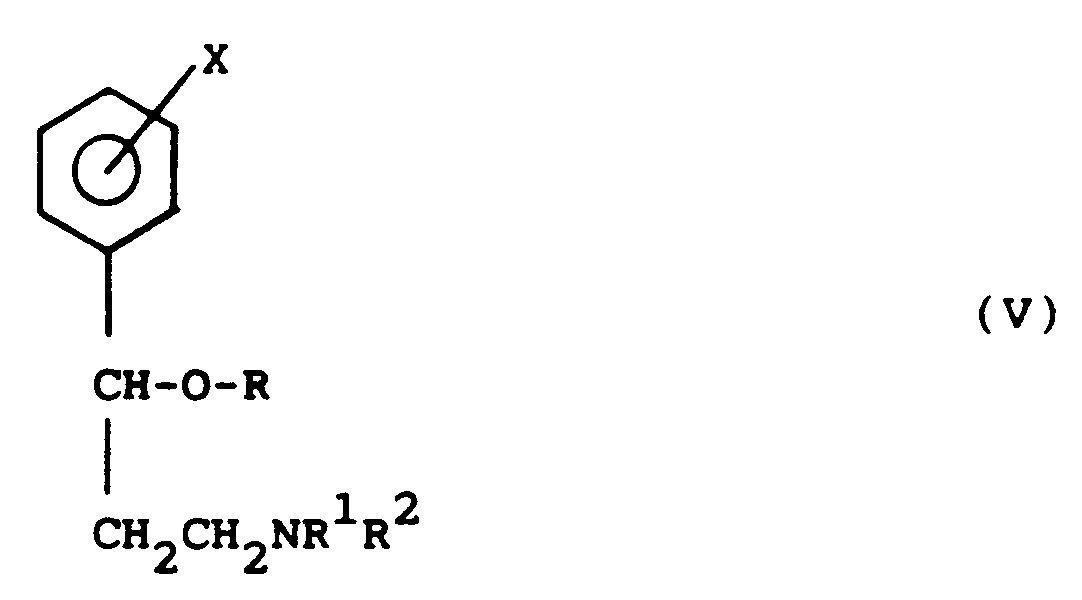
- c) preparing compounds having the formula III from the corresponding hydroxy compound by means of SOCl₂. The hydroxy compounds being prepared by a NaBH₄ reduction of the corresponding oxo-compound, which is prepared by a Mannich reaction
- d) preparing compounds of the general formula II by demethylating compounds of the general formula V by means of ClCOOCHClCH₃
- e) reacting a compound having the general formula

- f) Reacting a compound having the general formula


- The pharmacological properties of the compounds of the invention can be illustrated by determining their capability to inhibit calcium uptake into brain synaptosomes.
- Depolarization of neuronal membranes leads to an opening of socalled 'voltage operated calcium channels' (VOC) in the membranes which allows a massive influx of calcium from the extracellular space. A crude synaptosomal preparation (socalled P₂ fraction) contains small vesicles surrounded by neuronal membrane and it is possible in such a preparation to study a depolarization-induced opening of VOC. In the present model ⁴⁵Ca influx is induced in the synaptosomes by depolarization with elevated potassium concentrations, and the effect of test substances on this stimulated uptake is studied (Nachshen, D.A. and Blaustein, M.P., Mol. Pharmcol., 16, 579 (1979)).
- A male Wistar rat is decapitated and the cerebral cortex removed and homogenized in 20 ml. of ice-cold 0.32 M sucrose using a glass homogenizer with a teflon pestle. All subsequent steps for isolation of synaptosomes are done at 0-4°C. The homogenate is centrifuged at 1000 x g for 10 min and the resulting supernatant is re-centrifuged at 18000 x g for 20 min. This pellet (P₂) is resuspended in 0.32 M sucrose (10 ml per g of original tissue) with a teflon pestle.
- Aliquots (0.050 ml) of this crude synaptosomal suspension are added to glass tubes containing 0.625 ml of NaCl buffer (136 mM NaCl, 4 mM KCl, 0.35 mM CaCl₂, 1.2 mM MgCl₂, 20 mM Tris HCl, 12 mM glucose, pH 7.4) and 0.025 ml of various drug solutions in 48% Ethanol. The tubes are pre-incubated for 30 min on ice and then for 6 min at 37°C in a water bath.
- The uptake is immediately initiated by adding 0.4 ml of ⁴⁵CaCl₂ (specific activity = 29-39 Ci/g; 0.5 Ci/assay), in 145 mM NaCl for non-depolarized samples and in 145 mM KCl for depolarized samples. The incubation is continued for 15 s.
- The uptake is terminated by rapid filtration through GF-C glass fiber filters which are washed three times with 5 ml of a cold solution containing 145 mM KCl, 7 mM EGTA and 20 mM Tris HCl, pH 7.4. The amount of radioactivity on the filter disc is determined by liquid scintillation spectrometry.
- Test substances are dissolved in 10 ml of 48% ethanol at a concentration of 0.44 mg/ml. Dilution are made in 48% ethanol to give final concentrations of 0.1, 0.3, 1, 3 and 10 »g/ml. Experiments are performed in duplicate. Controls for depolarized and nondepolarized samples are included in the assay and test substances are only tested in depolarized samples.
- The test value will be given as MEC (the minimum concentration (»g/ml) of test substance which inhibit stimulated uptake of ⁴⁵Ca significantly different from control (P < 0.05, Student's t-test).
- Test results obtained by testing some compounds of the present invention will appear from the following table 1.
TABLE 1 Compound MEC (»g/ml) 11 1 12 1 8 >1 13 1 18 1 21 >1 22 ≧1 25 0.3 - The compound of the invention, together with a conventional adjuvant, carrier, or diluent, and if desired in the form of a pharmaceutically-acceptable acid addition salt thereof, may be placed into the form of pharmaceutical compositions and unit dosages thereof, and in such form may be employed as solids, such as tablets or filled capsules, or liquids, such as solutions, suspensions, emulsions, elixirs, or capsules filled with the same, all for oral use, in the form of suppositories for rectal administration; or in the form of sterile injectable solutions for parenteral (including subcutaneous) use. Such pharmaceutical compositions and unit dosage forms thereof may comprise conventional ingredients in conventional proportions, with or without additional active compounds or principles, and such unit dosage forms may contain any suitable effective calcium overload blocking amount of the active ingredient commensurate with the intended daily dosage range to be employed. Tablets containing ten (10) milligrams of active ingredient or, more broadly, ten (10) to hundred (100) milligrams, per tablet, are accordingly suitable representative unit dosage forms.
- The compounds of this invention can thus be used for the formulation of pharmaceutical preparations, e.g. for oral and parenteral administration to mammals including humans, in accordance with conventional methods of galenic pharmacy.
- Conventional excipients are such pharmaceutically acceptable organic or inorganic carrier substances suitable for parenteral or enteral application which do not deleteriously react with the active compounds.
- Examples of such carriers are water, salt solutions, alcohols, polyethylene glycols, polyhydroxyethoxylated castor oil, gelatine, lactose, amylose, magnesium stearate, talc, silicic acid, fatty acid monoglycerides and diglycerides, pentaerythritol fatty acid esters, hydroxymethylcellulose and polyvinylpyrrolidone.
- The pharmaceutical preparations can be sterilized and mixed, if desired, with auxiliary agents, emulsifiers, salt for influencing osmotic pressure, buffers and/or coloring substances, which do not deleteriously react with the active compounds.
- For parenteral application, particularly suitable are injectable solutions or suspensions, preferably aqueous solutions with the active compound dissolved in polyhydroxylated castor oil.
- Ampoules are convenient unit dosage forms.
- Tablets,dragees, or capsules having talc and/or a carbohydrate carrier or binder, the carrier preferably being lactose and/or corn starch and/or potato starch, are particularly suitable for oral application. A syrup, elixir of the like can be used in cases where a sweetened vehicle can be employed.
- Generally, the compounds of this invention are dispensed in unit form comprising 0.05-100 mg in a pharmaceutically acceptable carrier per unit dosage.
- The dosage of the compounds according to this invention is 0.1-300 mg/day, preferably 10-100 mg/day, when administered to patients, e.g. humans, as a drug.
- A typical tablet which may be prepared by conventional tabletting techniques contains:
Active compound 5.0 mg Lactosum 67.8 mg Ph.Eur. Avicel® 31.4 mg Amberlite® IRP 88 1.0 mg Magnesii stearas 0.25 mg Ph.Eur. - Due to the high calcium overload blocking activity , the compounds of the invention are extremely useful in the treatment of symptoms related to an accumulation of calcium in brain cells of mammals , when administered in an amount effective for blocking calcium overload in brain cells. The important calcium overload blocking activity of compounds of the invention includes both activity against anoxia, ischemia, migraine, epilepsy, traumatic injury and neurodegenerative diseases. The compounds of the invention may accordingly be administered to a subject, e.g., a living animal body, including a human, in need of a calcium overload blocker , and if desired in the form of a pharmaceutically acceptable acid addition salt thereof (such as the hydrobromide, hydrochloride, or sulfate, in any event prepared in the usual or conventional manner, e.g., evaporation to dryness of the free base in solution together with the acid), ordinarily concurrently, simultaneously, or together with a pharmaceutically-acceptable carrier or diluent, especially and preferably in the form of a pharmaceutical composition thereof, whether by oral, rectal, or parenteral (including subcutaneous) route, in an effective calcium overload blocking amount, and in any event an amount which is effective for the treatment of anoxia, ischemia, migraine, epilepsy, traumatic injury or neurodegenerative diseases due to their calcium overload blocking activity. Suitable dosage ranges are 0.1-300 milligrams daily, preferably 10- 100 milligrams daily, and especially 30-70 milligrams daily, depending as usual upon the exact mode of administration, form in which administered, the indication toward which the administration is directed, the subject involved and the body weight of the subject involved, and the preference and experience of the physician or veterinarian in charge.
- The invention will now be described in further detail with reference to the following examples:
- The title compound was prepared from (+-) N-methyl-3-(3,4-methylenedioxyphenoxy)-3-phenylpropylamine (0.5 g) potassium carbonate (2 g) and 3-bromopropionitrile (2 ml) by reflux in abs. ethanol (50 ml) for 3 h. The mixture was cooled and filtered. The filtrate was evaporated to dryness and subsequently dilute NaOH was added and extracted with ether. The etheral layer was dried (MgSO₄) and evaporated to dryness. The title compound was precipitated as the oxalate by mixing with an equimolar amount of anhydrous oxalic acid in acetone solution. M.p. 125-127°C.
- Was prepared as described above using 5-bromovaleronitrile as the alkylating agent. Reflux for 14 h. Purification on a silicagel using CH₂Cl₂/CH₃OH 9/1 as eluent. M.p. 114-116°C.
- 4-fluoroacetophenone (48.3 g), dimethylamine hydrochloride (37 g), paraformaldehyde (13.6 g) and conc. HCl (0.75 ml) was refluxed in 96% ethanol (57 ml) for 4 h. The mixture was subsequently stirred at R.T. overnight resulting in a precipitate. This was isolated and washed with ether and acetone resulting in 68.2 g of 3-dimethylamino-1-(4-fluorophenyl)-propanal hydrochloride (compound 4).
- 35 g of (compound 4) was converted to the amine by means of OH⁻/ether extraction and reduced with NaBH₄ (2.2 g) in abs. ethanol (200 ml) by stirring at R.T. for 20 h. The mixture was evaporated to dryness and the residue extracted with OH⁻/CH₂Cl₂. Evaporation of the CH₂Cl₂ phase gave 23.2 g of (+-) 3-dimethylamino-1-(4-fluorophenyl)-1-propanol (compound 5). Identified by ¹H NMR.
- (Compound 5) was dissolved in CH₂Cl₂ (200 ml). The solution was saturated with HCl (g) and thionyl chloride (20 ml in 50 ml CH₂Cl₂) was added dropwise. Stirring at R.T. overnight and subsequent evaporation gave a crystalline compound which was washed with acetone. The resulting crystals were identified as (+-) 3-chloro-N,N-dimethyl-3-(4-fluorophenyl)propyl amine, hydrochloride (compound 6) by ¹H NMR.
- 5.3 g of (compound 6) was added to a solution of 3-trifluoromethylphenol (6.8 g) and NaOH (2 g) in abs. ethanol (100 ml). Reflux for 10 h. The mixture was subsequently filtered and evaporated, extracted with OH⁻/CH₂Cl₂ and the CH₂Cl₂ phase was dried and evaporated. The resulting oil was precipitated as the oxalate from acetone solution. M.p. 155-156°C identified as (+-) N,N-dimethyl-3-(3-trifluoromethylphenoxy)-3-(4-fluorophenyl) propylamine, oxalate (compound 3) by ¹H NMR.
- 3 g of (compound 3) as the base was dissolved in dry toluene (50 ml). 1-Chloroethyl chloroformate (1.4 ml) was added dropwise and the mixture stirred for 3 h at 50°C and subsequently at 80°C for 1 h. The mixture was evaporated, CH₃OH (50 ml) was added and the solution refluxed for 8 h. The solution was evaporated to dryness and the residue was crystallized from petrol ether. M.p. 97-102°C.
- This compound was prepared from (compound 8) and cyclopropylmethylbromide as described in example 1. Reflux time 5 h. M.p. 134-136°C.
- Preparation from (compound 8) and 1-bromobutane as described in example 1. Reflux time 6 h. M.p. 138-142°C.
- Was prepared from (compound 6) and 5,6,7,8-tetrahydro-2-naphthol as described for (compound 3). Reflux for 10 h. M.p. 179-183°C.
- N-methyl-3-(4-fluorophenyl)-3-(5,6,7,8-tetrahydro-2-naphthoxy) propylamine, oxalate (1.2 mmol), cyclopropylmethylbromide (1.2 ml) and K₂CO₃ (1 g) were refluxed in abs. ethanol (25 ml) for 4 h. Rinse up as described in example 1 gave (compound 11). M.p. 112°C.
- Preparation as described for (compound 11). Reflux time 7 h. M.p. 142-146°C.
- 3-Chloropropiophenone (25.2 g) was dissolved in abs. ethanol (200 ml), NaBH₄ (2.2 g) was slowly added and the mixture stirred overnight at R.T. The mixture was filtered and the filtrate evaporated to dryness. H₂O was added and the solution extracted with ether, the ether phase dried (MgSO₄) and evaporated. The resulting oil purified on silicagel CH₂Cl₂ as eluent giving 3-chloro-1-phenyl-1-propanol (compound 14), identified by ¹H NMR.
- (Compound 14) (10.1 g) was dissolved in acetone (200 ml) saturated with NaI. The mixture was refluxed for 12 h and subsequently stirred at RT for 3 days. The mixture was evaporated to dryness and the residue extracted with H₂O/ether. The etheral layer separated and washed with H₂O and saturated NaCl-solution. Resulting in 12.5 g of 3-iodo-1-phenyl-1-propanol (compound 15).
- (Compound 15) (12.5 g) was treated with butylamine (40 ml) in THF (75 ml) at RT for 4 h. The mixture evaporated and the residue extracted with OH⁻/ether. The ether phase washed with H₂O and saturated NaCl-solution, dried (MgSO₄) and evaporated giving 6.2 g of 3-butylamino-1-phenyl-1-propanol (compound 16). Identified by ¹H-NMR.
- (Compound 16) (4.7 g) was dissolved in dimethyl acetamide (50 ml), NaH (ether washed, 1 g) was added and the solution heated to 70°C for 0.5 h. 4-fluorobenzotrifluoride (4.0 g) was added and the mixture heated at 90°C for 6 h. Subsequently H₂O (150 ml) was added and the mixture extracted with CH₂Cl₂. The organic phase was washed with H₂O and saturated NaCl-solution, dried and evaporated. The resulting oil (8.5 g) was purified on silicagel using CH₂Cl₂/CH₃OH 9/1 as eluent. Precipitation with oxalic acid (anh.) in acetone solution gave (compound 13). M.p. 183-4°C.
- Preparation from (compound 13) and ethyliodide by reflux for 3 h as described in example 1. M.p. 139-141°C.
- Preparation from (compound 13) and 1-bromobutane as described in example 1. Reflux for 10 h. M.p. 128.6°C.
- Prepared by reaction of (compound 13) and cyclopropylmethylbromide as described in example 1. Reflux for 10 h. M.p. 124-126°C.
- Prepared from (compound 16) and 2-fluorobenzotrifluoride as described for (compound 13). Heating to 70°C for 24 h. M.p. 160-165°C.
- Preparation from (compound 20) and cyclopropylmethylbromide as described in example 1. Reflux for 4 h. M.p. 90-96°C.
- Was prepared from 4-cyanoacetophenone using the reaction described for (compound 4) giving 1-(4-cyanophenyl)-3-dimethylaminopropanal (compound 23) and further reaction to 1-(4-cyanophenyl)-3-dimethylaminopropanol (compound 24) as described for (compound 5) and finally reaction to (compound 22) with 4-fluorobenzotrifluoride as described for (compound 13). M.p. 138-140°C.
- 3-chloro-3-(4-cyanophenyl)-N,N-dimethylpropylamine (compound 26) was prepared from (compound 24) by means of SOCl₂ as described for (compound 6).
- (Compound 25) was subsequently prepared by treating (compound 26) with 5,6,7,8-tetrahydro-2-naphthol as described for the preparation of (compound 3). Reflux time 2 days. M.p. 132°C.
- This was prepared from 4-methoxyacetophenone using the reaction described for (compound 4) giving 1-(4-methoxyphenyl)-3-dimethylaminopropanal (compound 27), further reaction to 1-(4-methoxyphenyl)-3-dimethylaminopropanol (compound 5) and finally reaction to (compound 29) with 4-fluorobenzotrifluoride by means of NaH as described for (compound 13). M.p. 146-148°C.
Claims (9)
- Aryloxyphenylpropylamines having the general formula I

X is H, cyano, halogen, halogenoalkyl, C₁₋₆-alkoxy, c₁₋₆- alkyl, C₁₋₅-alkanoyl, C₃₋₅-alkylene, aryloxy or aralkoxy, and
R is 3,4-methylenedioxyphenyl, aryl or heteroaryl which are optionally substituted with one or more cyano, halogeno, C₁₋₆-alkyl, C₁₋₆-alkoxy, C₂₋₆-alkenyl, trifluoromethyl, c₃₋₅-alkylene, aryloxy or aralkoxy; and
R¹ and R² independently are C₁₋₁₀-alkyl, C₃₋₇-cycloalkyl, C₂₋₁₀-alkenyl or C₃₋₆-cycloalkyl-C₁₋₅-alkyl which are optionally substituted with C₁₋₅-alkoxy or cyano; or
or
R¹ and R² may together with the N-atom form a ring or a salt thereof with a pharmaceutically acceptable acid, provided that R¹ is not C₃₋₇-cycloalkyl, C₃₋₁₀-alkyl or alkenyl which may be straight, branched or cyclic, nonsubstituted or substituted with C₁₋₄-alkoxy, when X is H and R² is methyl, and provided that both R¹ and R² are not methyl when X is H. - A compound of claim 1 which is 3-(4-cyanophenyl)-N,N-dimethyl-3-(5,6,7,8-tetrahydro-2-naphthoxy) propylamine
- A compound of claim 1 which is N-butyl-N-methyl-3-(4-fluorophenyl)-3-(5,6,7,8-tetrahydro-2-naphthoxy) propylamine
- A compound of claim 1 which is N,N-dibutyl-3-(4-trifluoromethylphenoxy)-3-phenylpropylamine
- A compound of claim 1 which is N-cyclopropylmethyl-N-methyl-3-(4-fluorophenyl)-3-(5,6,7,8-tetrahydro-2-naphthoxy) propylamine
- A method of preparing a compound according to claim 1, CHARACTERIZED in:a) reacting a compound having the general formula II

- A pharmaceutical composition suitable for use in preventing calcium overload in brain cells of mammals, including humans, comprising an amount of a compound of claim 1, which is effective for inhibiting calcium uptake into brain cells together with a pharmaceutically-acceptable carrier or diluent.
- A pharmaceutical composition according to claim 7 wherein it is in the form of an oral dosage unit containing 1-100 mg of the active compound.
- The use of aryloxyphenylpropylamines according to claim 1 for the preparation of a medicament for treating an indication related to calcium overload in brain cells of mammals.
Applications Claiming Priority (2)
| Application Number | Priority Date | Filing Date | Title |
|---|---|---|---|
| DK2583/89 | 1989-05-26 | ||
| DK258389A DK258389D0 (en) | 1989-05-26 | 1989-05-26 | ARYLOXYPHENYL PROPYLAMINES, THEIR PREPARATION AND USE |
Publications (3)
| Publication Number | Publication Date |
|---|---|
| EP0399504A2 EP0399504A2 (en) | 1990-11-28 |
| EP0399504A3 EP0399504A3 (en) | 1992-02-12 |
| EP0399504B1 true EP0399504B1 (en) | 1995-05-03 |
Family
ID=8113376
Family Applications (1)
| Application Number | Title | Priority Date | Filing Date |
|---|---|---|---|
| EP90109829A Expired - Lifetime EP0399504B1 (en) | 1989-05-26 | 1990-05-23 | Aryloxyphenylpropylamines their preparation and use |
Country Status (16)
| Country | Link |
|---|---|
| US (2) | US5145870A (en) |
| EP (1) | EP0399504B1 (en) |
| JP (1) | JPH0317046A (en) |
| AT (1) | ATE122031T1 (en) |
| AU (1) | AU641653B2 (en) |
| CA (1) | CA2017468A1 (en) |
| DE (1) | DE69019060T2 (en) |
| DK (2) | DK258389D0 (en) |
| ES (1) | ES2071699T3 (en) |
| FI (1) | FI902629A7 (en) |
| IE (1) | IE70070B1 (en) |
| IL (1) | IL94452A (en) |
| NO (1) | NO174342C (en) |
| NZ (1) | NZ233809A (en) |
| PT (1) | PT94167B (en) |
| ZA (1) | ZA904072B (en) |
Families Citing this family (22)
| Publication number | Priority date | Publication date | Assignee | Title |
|---|---|---|---|---|
| EP0576766A1 (en) * | 1992-06-29 | 1994-01-05 | Novo Nordisk A/S | Propanolamine derivatives, their preparation and use |
| US6071970A (en) * | 1993-02-08 | 2000-06-06 | Nps Pharmaceuticals, Inc. | Compounds active at a novel site on receptor-operated calcium channels useful for treatment of neurological disorders and diseases |
| US6017965A (en) * | 1993-02-08 | 2000-01-25 | Nps Pharmaceuticals, Inc. | Compounds active at a novel site on receptor-operated calcium channels useful for treatment of neurological disorders and diseases |
| US6211245B1 (en) | 1993-02-08 | 2001-04-03 | Nps Pharmaceuticals, Inc. | Compounds active at a novel site on receptor-operated calcium channels useful for treatment of neurological disorders and diseases |
| US6750244B2 (en) | 1993-02-08 | 2004-06-15 | Nps Pharmaceuticals, Inc. | Compounds active at a novel site on receptor-operated calcium channels useful for treatment of neurological disorders and diseases |
| US7087765B2 (en) | 1995-06-07 | 2006-08-08 | Nps Pharmaceuticals, Inc. | Compounds active at a novel site on receptor-operated calcium channels useful for treatment of neurological disorders and diseases |
| KR100366745B1 (en) | 1994-02-08 | 2003-04-18 | 엔피에스 파마슈티칼즈, 인코포레이티드 | Compounds active at novel sites of receptor-activated calcium channels useful for the treatment of neurological diseases and neurological diseases |
| DE4426245A1 (en) * | 1994-07-23 | 1996-02-22 | Gruenenthal Gmbh | 1-phenyl-3-dimethylamino-propane compounds with pharmacological activity |
| IT1304874B1 (en) * | 1998-07-17 | 2001-04-05 | Univ Firenze | AMINO ALCOHOLS, AMINO KETONES AND THEIR DERIVATIVES, THEIR PREPARATION AND USE AS DRUGS FOR THE PATHOLOGIES OF THE CENTRAL NERVOUS SYSTEM (SNC) AND |
| GB0004152D0 (en) | 2000-02-23 | 2000-04-12 | Astrazeneca Uk Ltd | Novel compounds |
| GB0004153D0 (en) * | 2000-02-23 | 2000-04-12 | Astrazeneca Uk Ltd | Novel use |
| GB0004151D0 (en) | 2000-02-23 | 2000-04-12 | Astrazeneca Uk Ltd | Novel use |
| SE0102641D0 (en) * | 2001-07-31 | 2001-07-31 | Astrazeneca Ab | Novel compounds |
| SE0102640D0 (en) | 2001-07-31 | 2001-07-31 | Astrazeneca Ab | Novel compounds |
| SE0102639D0 (en) * | 2001-07-31 | 2001-07-31 | Astrazeneca Ab | Novel compounds |
| US6846957B2 (en) * | 2002-11-22 | 2005-01-25 | Board Of Regents, The University Of Texas System | Synthesis of 3-aminomethyl-1-propanol, a fluoxetine precursor |
| WO2005063707A1 (en) * | 2003-12-26 | 2005-07-14 | Natco Pharma Limited | Enantiospecific process for the preparation of paroxetine intermediate |
| ITMI20061987A1 (en) * | 2006-10-16 | 2008-04-17 | Archimica Srl | PROCESS FOR THE SYNTHESIS OF ARYLOSSIPROPYLAMINES AND HETERARYLOSOSIPROPYLAMINES. |
| WO2008081477A1 (en) * | 2007-01-04 | 2008-07-10 | Natco Pharma Limited | 3-aryloxy 3-substituted propanamines |
| JP5246715B2 (en) * | 2009-01-27 | 2013-07-24 | 独立行政法人科学技術振興機構 | Protein crosslinking inhibitors and uses thereof |
| DE102009036164B4 (en) | 2009-05-28 | 2011-06-09 | Schott Ag | Method for bending and thermally tempering radiation protection glass |
| WO2014046544A1 (en) * | 2012-09-21 | 2014-03-27 | Aapa B.V. | Substituted 3-heteroaryloxy-3-(hetero)aryl-propylamines as serotonin transporter and serotonin ht2c receptor modulators |
Family Cites Families (11)
| Publication number | Priority date | Publication date | Assignee | Title |
|---|---|---|---|---|
| US3095449A (en) * | 1957-08-06 | 1963-06-25 | Bayer Ag | 1-(gamma-dimethylaminopropoxy)-2-alkoxy alkenylbenzenes |
| US4314081A (en) * | 1974-01-10 | 1982-02-02 | Eli Lilly And Company | Arloxyphenylpropylamines |
| US4194009A (en) * | 1974-01-10 | 1980-03-18 | Eli Lilly And Company | Aryloxyphenylpropylamines for obtaining a psychotropic effect |
| CH609331A5 (en) * | 1974-01-10 | 1979-02-28 | Lilly Co Eli | Process for the preparation of 3-aryloxy-3-phenyl-propylamines |
| FR2432500A1 (en) * | 1978-02-24 | 1980-02-29 | Roussel Uclaf | NOVEL BENZENE PROPANAMINE DERIVATIVES AND SALTS THEREOF, PROCESS FOR THEIR PREPARATION AND APPLICATION AS MEDICAMENTS |
| DE2940765A1 (en) * | 1979-10-08 | 1981-04-23 | Basf Ag, 6700 Ludwigshafen | SUBSTITUTED ALKYLAMONIUM SALTS, THEIR PRODUCTION, THEIR USE FOR REGULATING THE PLANT GROWTH AND MEANS THEREFORE |
| DE2950135A1 (en) * | 1979-12-13 | 1981-06-19 | Merck Patent Gmbh, 6100 Darmstadt | BASIC AETHER, PHARMACEUTICAL PREPARATIONS CONTAINING THEM AND METHOD FOR THE PRODUCTION THEREOF |
| ZA817863B (en) * | 1980-11-14 | 1983-06-29 | Lilly Co Eli | (-)n-methyl-3-(2-methylphenoxy)-3-phenylpropylamnie,antidepressant |
| US4956388A (en) * | 1986-12-22 | 1990-09-11 | Eli Lilly And Company | 3-aryloxy-3-substituted propanamines |
| CA1329937C (en) * | 1987-04-09 | 1994-05-31 | Dennis Charles Thompson | 1-phenyl-3-naphthalenyloxypropanamines |
| DK630987D0 (en) * | 1987-12-01 | 1987-12-01 | Ferrosan As | ARYLOXYPHENYL PROPYLAMINES, THEIR PREPARATION AND USE |
-
1989
- 1989-05-26 DK DK258389A patent/DK258389D0/en not_active Application Discontinuation
-
1990
- 1990-05-18 IE IE179090A patent/IE70070B1/en not_active IP Right Cessation
- 1990-05-21 IL IL9445290A patent/IL94452A/en not_active IP Right Cessation
- 1990-05-22 AU AU55821/90A patent/AU641653B2/en not_active Ceased
- 1990-05-23 AT AT90109829T patent/ATE122031T1/en not_active IP Right Cessation
- 1990-05-23 DE DE69019060T patent/DE69019060T2/en not_active Expired - Fee Related
- 1990-05-23 DK DK90109829.3T patent/DK0399504T3/en active
- 1990-05-23 EP EP90109829A patent/EP0399504B1/en not_active Expired - Lifetime
- 1990-05-23 ES ES90109829T patent/ES2071699T3/en not_active Expired - Lifetime
- 1990-05-24 CA CA002017468A patent/CA2017468A1/en not_active Abandoned
- 1990-05-24 JP JP2132771A patent/JPH0317046A/en active Pending
- 1990-05-24 US US07/529,004 patent/US5145870A/en not_active Expired - Fee Related
- 1990-05-24 NZ NZ233809A patent/NZ233809A/en unknown
- 1990-05-25 NO NO902338A patent/NO174342C/en unknown
- 1990-05-25 FI FI902629A patent/FI902629A7/en not_active Application Discontinuation
- 1990-05-25 PT PT94167A patent/PT94167B/en not_active IP Right Cessation
- 1990-05-28 ZA ZA904072A patent/ZA904072B/en unknown
-
1992
- 1992-06-12 US US07/898,060 patent/US5310756A/en not_active Expired - Fee Related
Also Published As
| Publication number | Publication date |
|---|---|
| DK258389D0 (en) | 1989-05-26 |
| US5310756A (en) | 1994-05-10 |
| ATE122031T1 (en) | 1995-05-15 |
| US5145870A (en) | 1992-09-08 |
| NZ233809A (en) | 1993-04-28 |
| NO902338L (en) | 1990-11-27 |
| AU5582190A (en) | 1990-11-29 |
| EP0399504A2 (en) | 1990-11-28 |
| NO174342B (en) | 1994-01-10 |
| NO174342C (en) | 1994-04-20 |
| IL94452A (en) | 1995-11-27 |
| AU641653B2 (en) | 1993-09-30 |
| NO902338D0 (en) | 1990-05-25 |
| ES2071699T3 (en) | 1995-07-01 |
| IE901790L (en) | 1990-11-26 |
| CA2017468A1 (en) | 1990-11-26 |
| FI902629A7 (en) | 1990-11-27 |
| DK0399504T3 (en) | 1995-09-04 |
| FI902629A0 (en) | 1990-05-25 |
| JPH0317046A (en) | 1991-01-25 |
| EP0399504A3 (en) | 1992-02-12 |
| ZA904072B (en) | 1991-03-27 |
| PT94167B (en) | 1996-12-31 |
| DE69019060T2 (en) | 1995-08-31 |
| IE70070B1 (en) | 1996-10-30 |
| DE69019060D1 (en) | 1995-06-08 |
| IL94452A0 (en) | 1991-03-10 |
| PT94167A (en) | 1991-01-08 |
Similar Documents
| Publication | Publication Date | Title |
|---|---|---|
| US5145870A (en) | Aryloxyphenylpropylamines their preparation and use | |
| EP0266574B1 (en) | Piperidine compounds and their preparation and use | |
| EP0339579B1 (en) | Piperidine compositions and their preparation and use | |
| EP0318727B1 (en) | Aryloxphenylpropylamines and their preparation and use | |
| EP0558487B1 (en) | Piperidine compounds, their preparation and use | |
| EP0576766A1 (en) | Propanolamine derivatives, their preparation and use | |
| EP0571685A1 (en) | Aryloxyheteroarylpropylamines, their preparation and use | |
| US5158961A (en) | Piperidine compounds and their preparation and use | |
| US5227379A (en) | Piperidine compounds and their preparation and use | |
| US5102894A (en) | Substituted piperidine compounds and their use | |
| US5208232A (en) | Piperidine compounds and their preparation and use | |
| JP4781362B2 (en) | Quinuclidine compound having a quaternary ammonium group, its preparation method, and use as an acetylcholine blocker |
Legal Events
| Date | Code | Title | Description |
|---|---|---|---|
| PUAI | Public reference made under article 153(3) epc to a published international application that has entered the european phase |
Free format text: ORIGINAL CODE: 0009012 |
|
| AK | Designated contracting states |
Kind code of ref document: A2 Designated state(s): AT BE CH DE DK ES FR GB GR IT LI LU NL SE |
|
| RAP1 | Party data changed (applicant data changed or rights of an application transferred) |
Owner name: NOVO NORDISK A/S |
|
| PUAL | Search report despatched |
Free format text: ORIGINAL CODE: 0009013 |
|
| AK | Designated contracting states |
Kind code of ref document: A3 Designated state(s): AT BE CH DE DK ES FR GB GR IT LI LU NL SE |
|
| 17P | Request for examination filed |
Effective date: 19920317 |
|
| 17Q | First examination report despatched |
Effective date: 19931029 |
|
| GRAA | (expected) grant |
Free format text: ORIGINAL CODE: 0009210 |
|
| AK | Designated contracting states |
Kind code of ref document: B1 Designated state(s): AT BE CH DE DK ES FR GB GR IT LI LU NL SE |
|
| REF | Corresponds to: |
Ref document number: 122031 Country of ref document: AT Date of ref document: 19950515 Kind code of ref document: T |
|
| REF | Corresponds to: |
Ref document number: 69019060 Country of ref document: DE Date of ref document: 19950608 |
|
| REG | Reference to a national code |
Ref country code: ES Ref legal event code: FG2A Ref document number: 2071699 Country of ref document: ES Kind code of ref document: T3 |
|
| ITF | It: translation for a ep patent filed | ||
| ET | Fr: translation filed | ||
| REG | Reference to a national code |
Ref country code: GR Ref legal event code: FG4A Free format text: 3016489 |
|
| REG | Reference to a national code |
Ref country code: DK Ref legal event code: T3 |
|
| PLBE | No opposition filed within time limit |
Free format text: ORIGINAL CODE: 0009261 |
|
| STAA | Information on the status of an ep patent application or granted ep patent |
Free format text: STATUS: NO OPPOSITION FILED WITHIN TIME LIMIT |
|
| 26N | No opposition filed | ||
| PGFP | Annual fee paid to national office [announced via postgrant information from national office to epo] |
Ref country code: GB Payment date: 19980424 Year of fee payment: 9 |
|
| PGFP | Annual fee paid to national office [announced via postgrant information from national office to epo] |
Ref country code: AT Payment date: 19980427 Year of fee payment: 9 |
|
| PGFP | Annual fee paid to national office [announced via postgrant information from national office to epo] |
Ref country code: GR Payment date: 19980430 Year of fee payment: 9 |
|
| PGFP | Annual fee paid to national office [announced via postgrant information from national office to epo] |
Ref country code: FR Payment date: 19980518 Year of fee payment: 9 Ref country code: ES Payment date: 19980518 Year of fee payment: 9 |
|
| PGFP | Annual fee paid to national office [announced via postgrant information from national office to epo] |
Ref country code: LU Payment date: 19980519 Year of fee payment: 9 |
|
| PGFP | Annual fee paid to national office [announced via postgrant information from national office to epo] |
Ref country code: DK Payment date: 19980522 Year of fee payment: 9 |
|
| PGFP | Annual fee paid to national office [announced via postgrant information from national office to epo] |
Ref country code: SE Payment date: 19980525 Year of fee payment: 9 |
|
| PGFP | Annual fee paid to national office [announced via postgrant information from national office to epo] |
Ref country code: BE Payment date: 19980526 Year of fee payment: 9 |
|
| PGFP | Annual fee paid to national office [announced via postgrant information from national office to epo] |
Ref country code: NL Payment date: 19980527 Year of fee payment: 9 |
|
| PGFP | Annual fee paid to national office [announced via postgrant information from national office to epo] |
Ref country code: DE Payment date: 19980610 Year of fee payment: 9 |
|
| PGFP | Annual fee paid to national office [announced via postgrant information from national office to epo] |
Ref country code: CH Payment date: 19980618 Year of fee payment: 9 |
|
| PG25 | Lapsed in a contracting state [announced via postgrant information from national office to epo] |
Ref country code: LU Free format text: LAPSE BECAUSE OF NON-PAYMENT OF DUE FEES Effective date: 19990523 Ref country code: GB Free format text: LAPSE BECAUSE OF NON-PAYMENT OF DUE FEES Effective date: 19990523 Ref country code: AT Free format text: LAPSE BECAUSE OF NON-PAYMENT OF DUE FEES Effective date: 19990523 |
|
| PG25 | Lapsed in a contracting state [announced via postgrant information from national office to epo] |
Ref country code: SE Free format text: LAPSE BECAUSE OF NON-PAYMENT OF DUE FEES Effective date: 19990524 Ref country code: ES Free format text: LAPSE BECAUSE OF NON-PAYMENT OF DUE FEES Effective date: 19990524 |
|
| PG25 | Lapsed in a contracting state [announced via postgrant information from national office to epo] |
Ref country code: LI Free format text: LAPSE BECAUSE OF NON-PAYMENT OF DUE FEES Effective date: 19990531 Ref country code: GR Free format text: LAPSE BECAUSE OF NON-PAYMENT OF DUE FEES Effective date: 19990531 Ref country code: DK Free format text: LAPSE BECAUSE OF NON-PAYMENT OF DUE FEES Effective date: 19990531 Ref country code: CH Free format text: LAPSE BECAUSE OF NON-PAYMENT OF DUE FEES Effective date: 19990531 Ref country code: BE Free format text: LAPSE BECAUSE OF NON-PAYMENT OF DUE FEES Effective date: 19990531 |
|
| BERE | Be: lapsed |
Owner name: NOVO NORDISK A/S Effective date: 19990531 |
|
| PG25 | Lapsed in a contracting state [announced via postgrant information from national office to epo] |
Ref country code: NL Free format text: LAPSE BECAUSE OF NON-PAYMENT OF DUE FEES Effective date: 19991201 |
|
| REG | Reference to a national code |
Ref country code: CH Ref legal event code: PL |
|
| GBPC | Gb: european patent ceased through non-payment of renewal fee |
Effective date: 19990523 |
|
| EUG | Se: european patent has lapsed |
Ref document number: 90109829.3 |
|
| PG25 | Lapsed in a contracting state [announced via postgrant information from national office to epo] |
Ref country code: FR Free format text: LAPSE BECAUSE OF NON-PAYMENT OF DUE FEES Effective date: 20000131 |
|
| NLV4 | Nl: lapsed or anulled due to non-payment of the annual fee |
Effective date: 19991201 |
|
| PG25 | Lapsed in a contracting state [announced via postgrant information from national office to epo] |
Ref country code: DE Free format text: LAPSE BECAUSE OF NON-PAYMENT OF DUE FEES Effective date: 20000301 |
|
| REG | Reference to a national code |
Ref country code: FR Ref legal event code: ST |
|
| REG | Reference to a national code |
Ref country code: DK Ref legal event code: EBP |
|
| REG | Reference to a national code |
Ref country code: ES Ref legal event code: FD2A Effective date: 20010503 |
|
| PG25 | Lapsed in a contracting state [announced via postgrant information from national office to epo] |
Ref country code: IT Free format text: LAPSE BECAUSE OF NON-PAYMENT OF DUE FEES;WARNING: LAPSES OF ITALIAN PATENTS WITH EFFECTIVE DATE BEFORE 2007 MAY HAVE OCCURRED AT ANY TIME BEFORE 2007. THE CORRECT EFFECTIVE DATE MAY BE DIFFERENT FROM THE ONE RECORDED. Effective date: 20050523 |