EP0397211B1 - Percutaneous administration of 3'-azide-3'-deoxythymidine - Google Patents
Percutaneous administration of 3'-azide-3'-deoxythymidine Download PDFInfo
- Publication number
- EP0397211B1 EP0397211B1 EP90109019A EP90109019A EP0397211B1 EP 0397211 B1 EP0397211 B1 EP 0397211B1 EP 90109019 A EP90109019 A EP 90109019A EP 90109019 A EP90109019 A EP 90109019A EP 0397211 B1 EP0397211 B1 EP 0397211B1
- Authority
- EP
- European Patent Office
- Prior art keywords
- azt
- glyceryl
- promoting agent
- acid
- percutaneous
- Prior art date
- Legal status (The legal status is an assumption and is not a legal conclusion. Google has not performed a legal analysis and makes no representation as to the accuracy of the status listed.)
- Expired - Lifetime
Links
- 239000000203 mixture Substances 0.000 claims description 46
- 238000010521 absorption reaction Methods 0.000 claims description 34
- 239000003795 chemical substances by application Substances 0.000 claims description 30
- 230000001737 promoting effect Effects 0.000 claims description 26
- SECXISVLQFMRJM-UHFFFAOYSA-N N-Methylpyrrolidone Chemical compound CN1CCCC1=O SECXISVLQFMRJM-UHFFFAOYSA-N 0.000 claims description 22
- ZQPPMHVWECSIRJ-UHFFFAOYSA-N Oleic acid Natural products CCCCCCCCC=CCCCCCCCC(O)=O ZQPPMHVWECSIRJ-UHFFFAOYSA-N 0.000 claims description 21
- ZQPPMHVWECSIRJ-MDZDMXLPSA-N elaidic acid Chemical compound CCCCCCCC\C=C\CCCCCCCC(O)=O ZQPPMHVWECSIRJ-MDZDMXLPSA-N 0.000 claims description 21
- QXJSBBXBKPUZAA-UHFFFAOYSA-N isooleic acid Natural products CCCCCCCC=CCCCCCCCCC(O)=O QXJSBBXBKPUZAA-UHFFFAOYSA-N 0.000 claims description 21
- WRIDQFICGBMAFQ-UHFFFAOYSA-N (E)-8-Octadecenoic acid Natural products CCCCCCCCCC=CCCCCCCC(O)=O WRIDQFICGBMAFQ-UHFFFAOYSA-N 0.000 claims description 18
- LQJBNNIYVWPHFW-UHFFFAOYSA-N 20:1omega9c fatty acid Natural products CCCCCCCCCCC=CCCCCCCCC(O)=O LQJBNNIYVWPHFW-UHFFFAOYSA-N 0.000 claims description 18
- QSBYPNXLFMSGKH-UHFFFAOYSA-N 9-Heptadecensaeure Natural products CCCCCCCC=CCCCCCCCC(O)=O QSBYPNXLFMSGKH-UHFFFAOYSA-N 0.000 claims description 18
- 239000005642 Oleic acid Substances 0.000 claims description 18
- DNIAPMSPPWPWGF-UHFFFAOYSA-N Propylene glycol Chemical compound CC(O)CO DNIAPMSPPWPWGF-UHFFFAOYSA-N 0.000 claims description 18
- AXTGDCSMTYGJND-UHFFFAOYSA-N 1-dodecylazepan-2-one Chemical compound CCCCCCCCCCCCN1CCCCCC1=O AXTGDCSMTYGJND-UHFFFAOYSA-N 0.000 claims description 17
- 208000030507 AIDS Diseases 0.000 claims description 16
- 239000003814 drug Substances 0.000 claims description 10
- PEDCQBHIVMGVHV-UHFFFAOYSA-N Glycerol Natural products OCC(O)CO PEDCQBHIVMGVHV-UHFFFAOYSA-N 0.000 claims description 7
- 210000004369 blood Anatomy 0.000 claims description 7
- 239000008280 blood Substances 0.000 claims description 7
- -1 glycerol ester Chemical class 0.000 claims description 7
- 239000004615 ingredient Substances 0.000 claims description 7
- SECPZKHBENQXJG-FPLPWBNLSA-N palmitoleic acid Chemical compound CCCCCC\C=C/CCCCCCCC(O)=O SECPZKHBENQXJG-FPLPWBNLSA-N 0.000 claims description 6
- GHBFNMLVSPCDGN-UHFFFAOYSA-N rac-1-monooctanoylglycerol Chemical compound CCCCCCCC(=O)OCC(O)CO GHBFNMLVSPCDGN-UHFFFAOYSA-N 0.000 claims description 6
- 235000014113 dietary fatty acids Nutrition 0.000 claims description 5
- 239000000194 fatty acid Substances 0.000 claims description 5
- 229930195729 fatty acid Natural products 0.000 claims description 5
- ARIWANIATODDMH-UHFFFAOYSA-N rac-1-monolauroylglycerol Chemical compound CCCCCCCCCCCC(=O)OCC(O)CO ARIWANIATODDMH-UHFFFAOYSA-N 0.000 claims description 5
- QSKPZDMBULYMDQ-UHFFFAOYSA-N 2,3-dihydroxypropyl pentadecanoate Chemical compound CCCCCCCCCCCCCCC(=O)OCC(O)CO QSKPZDMBULYMDQ-UHFFFAOYSA-N 0.000 claims description 4
- 239000006071 cream Substances 0.000 claims description 4
- 239000002674 ointment Substances 0.000 claims description 4
- 150000007524 organic acids Chemical class 0.000 claims description 4
- OQQOAWVKVDAJOI-UHFFFAOYSA-N (2-dodecanoyloxy-3-hydroxypropyl) dodecanoate Chemical compound CCCCCCCCCCCC(=O)OCC(CO)OC(=O)CCCCCCCCCCC OQQOAWVKVDAJOI-UHFFFAOYSA-N 0.000 claims description 3
- LKUNXBRZDFMZOK-GFCCVEGCSA-N Capric acid monoglyceride Natural products CCCCCCCCCC(=O)OC[C@H](O)CO LKUNXBRZDFMZOK-GFCCVEGCSA-N 0.000 claims description 3
- 235000021319 Palmitoleic acid Nutrition 0.000 claims description 3
- DTOSIQBPPRVQHS-PDBXOOCHSA-N alpha-linolenic acid Chemical compound CC\C=C/C\C=C/C\C=C/CCCCCCCC(O)=O DTOSIQBPPRVQHS-PDBXOOCHSA-N 0.000 claims description 3
- 235000020661 alpha-linolenic acid Nutrition 0.000 claims description 3
- SECPZKHBENQXJG-UHFFFAOYSA-N cis-palmitoleic acid Natural products CCCCCCC=CCCCCCCCC(O)=O SECPZKHBENQXJG-UHFFFAOYSA-N 0.000 claims description 3
- 150000004665 fatty acids Chemical class 0.000 claims description 3
- 229960004488 linolenic acid Drugs 0.000 claims description 3
- KQQKGWQCNNTQJW-UHFFFAOYSA-N linolenic acid Natural products CC=CCCC=CCC=CCCCCCCCC(O)=O KQQKGWQCNNTQJW-UHFFFAOYSA-N 0.000 claims description 3
- 239000007788 liquid Substances 0.000 claims description 3
- LKUNXBRZDFMZOK-UHFFFAOYSA-N rac-1-monodecanoylglycerol Chemical compound CCCCCCCCCC(=O)OCC(O)CO LKUNXBRZDFMZOK-UHFFFAOYSA-N 0.000 claims description 3
- DCBSHORRWZKAKO-UHFFFAOYSA-N rac-1-monomyristoylglycerol Chemical compound CCCCCCCCCCCCCC(=O)OCC(O)CO DCBSHORRWZKAKO-UHFFFAOYSA-N 0.000 claims description 2
- 125000003976 glyceryl group Chemical group [H]C([*])([H])C(O[H])([H])C(O[H])([H])[H] 0.000 claims 6
- OYHQOLUKZRVURQ-HZJYTTRNSA-N Linoleic acid Chemical compound CCCCC\C=C/C\C=C/CCCCCCCC(O)=O OYHQOLUKZRVURQ-HZJYTTRNSA-N 0.000 claims 2
- 229940074049 glyceryl dilaurate Drugs 0.000 claims 2
- 229940068939 glyceryl monolaurate Drugs 0.000 claims 2
- 235000020778 linoleic acid Nutrition 0.000 claims 2
- OYHQOLUKZRVURQ-IXWMQOLASA-N linoleic acid Natural products CCCCC\C=C/C\C=C\CCCCCCCC(O)=O OYHQOLUKZRVURQ-IXWMQOLASA-N 0.000 claims 2
- 239000000499 gel Substances 0.000 claims 1
- 238000009472 formulation Methods 0.000 description 19
- 229940079593 drug Drugs 0.000 description 9
- 239000000243 solution Substances 0.000 description 8
- 241000700159 Rattus Species 0.000 description 7
- 238000002360 preparation method Methods 0.000 description 6
- XLYOFNOQVPJJNP-UHFFFAOYSA-N water Substances O XLYOFNOQVPJJNP-UHFFFAOYSA-N 0.000 description 6
- 238000000338 in vitro Methods 0.000 description 5
- 210000004027 cell Anatomy 0.000 description 4
- 230000000694 effects Effects 0.000 description 4
- 238000001727 in vivo Methods 0.000 description 4
- 238000000034 method Methods 0.000 description 4
- 230000035515 penetration Effects 0.000 description 4
- 239000008194 pharmaceutical composition Substances 0.000 description 4
- KFZMGEQAYNKOFK-UHFFFAOYSA-N Isopropanol Chemical compound CC(C)O KFZMGEQAYNKOFK-UHFFFAOYSA-N 0.000 description 3
- 239000007864 aqueous solution Substances 0.000 description 3
- 230000036765 blood level Effects 0.000 description 3
- LFQSCWFLJHTTHZ-UHFFFAOYSA-N Ethanol Chemical compound CCO LFQSCWFLJHTTHZ-UHFFFAOYSA-N 0.000 description 2
- 230000003187 abdominal effect Effects 0.000 description 2
- 125000004432 carbon atom Chemical group C* 0.000 description 2
- 239000000969 carrier Substances 0.000 description 2
- 239000000463 material Substances 0.000 description 2
- GLDOVTGHNKAZLK-UHFFFAOYSA-N octadecan-1-ol Chemical compound CCCCCCCCCCCCCCCCCCO GLDOVTGHNKAZLK-UHFFFAOYSA-N 0.000 description 2
- 239000002504 physiological saline solution Substances 0.000 description 2
- 229920000136 polysorbate Polymers 0.000 description 2
- 230000002035 prolonged effect Effects 0.000 description 2
- JNYAEWCLZODPBN-JGWLITMVSA-N (2r,3r,4s)-2-[(1r)-1,2-dihydroxyethyl]oxolane-3,4-diol Chemical compound OC[C@@H](O)[C@H]1OC[C@H](O)[C@H]1O JNYAEWCLZODPBN-JGWLITMVSA-N 0.000 description 1
- OYHQOLUKZRVURQ-NTGFUMLPSA-N (9Z,12Z)-9,10,12,13-tetratritiooctadeca-9,12-dienoic acid Chemical compound C(CCCCCCC\C(=C(/C\C(=C(/CCCCC)\[3H])\[3H])\[3H])\[3H])(=O)O OYHQOLUKZRVURQ-NTGFUMLPSA-N 0.000 description 1
- ZORQXIQZAOLNGE-UHFFFAOYSA-N 1,1-difluorocyclohexane Chemical compound FC1(F)CCCCC1 ZORQXIQZAOLNGE-UHFFFAOYSA-N 0.000 description 1
- JFBCSFJKETUREV-UHFFFAOYSA-N 1,2 ditetradecanoylglycerol Chemical compound CCCCCCCCCCCCCC(=O)OCC(CO)OC(=O)CCCCCCCCCCCCC JFBCSFJKETUREV-UHFFFAOYSA-N 0.000 description 1
- GNSDEDOVXZDMKM-UHFFFAOYSA-N 1,2-didecanoylglycerol Chemical compound CCCCCCCCCC(=O)OCC(CO)OC(=O)CCCCCCCCC GNSDEDOVXZDMKM-UHFFFAOYSA-N 0.000 description 1
- ARIWANIATODDMH-AWEZNQCLSA-N 1-lauroyl-sn-glycerol Chemical compound CCCCCCCCCCCC(=O)OC[C@@H](O)CO ARIWANIATODDMH-AWEZNQCLSA-N 0.000 description 1
- IAZDPXIOMUYVGZ-UHFFFAOYSA-N Dimethylsulphoxide Chemical compound CS(C)=O IAZDPXIOMUYVGZ-UHFFFAOYSA-N 0.000 description 1
- 102100034343 Integrase Human genes 0.000 description 1
- 208000007766 Kaposi sarcoma Diseases 0.000 description 1
- 108010092799 RNA-directed DNA polymerase Proteins 0.000 description 1
- 229920002125 Sokalan® Polymers 0.000 description 1
- 235000021355 Stearic acid Nutrition 0.000 description 1
- 210000001744 T-lymphocyte Anatomy 0.000 description 1
- 241000700605 Viruses Species 0.000 description 1
- 230000037374 absorbed through the skin Effects 0.000 description 1
- 230000001133 acceleration Effects 0.000 description 1
- 239000000654 additive Substances 0.000 description 1
- 239000000427 antigen Substances 0.000 description 1
- 102000036639 antigens Human genes 0.000 description 1
- 108091007433 antigens Proteins 0.000 description 1
- 150000001875 compounds Chemical class 0.000 description 1
- 230000003247 decreasing effect Effects 0.000 description 1
- 231100000223 dermal penetration Toxicity 0.000 description 1
- 238000009792 diffusion process Methods 0.000 description 1
- 229960001760 dimethyl sulfoxide Drugs 0.000 description 1
- 239000002552 dosage form Substances 0.000 description 1
- 239000003623 enhancer Substances 0.000 description 1
- 150000002148 esters Chemical class 0.000 description 1
- 235000019441 ethanol Nutrition 0.000 description 1
- 239000003205 fragrance Substances 0.000 description 1
- 239000011521 glass Substances 0.000 description 1
- 238000004128 high performance liquid chromatography Methods 0.000 description 1
- 239000003112 inhibitor Substances 0.000 description 1
- 238000012423 maintenance Methods 0.000 description 1
- 229920000609 methyl cellulose Polymers 0.000 description 1
- 239000001923 methylcellulose Substances 0.000 description 1
- GOQYKNQRPGWPLP-UHFFFAOYSA-N n-heptadecyl alcohol Natural products CCCCCCCCCCCCCCCCCO GOQYKNQRPGWPLP-UHFFFAOYSA-N 0.000 description 1
- QIQXTHQIDYTFRH-UHFFFAOYSA-N octadecanoic acid Chemical compound CCCCCCCCCCCCCCCCCC(O)=O QIQXTHQIDYTFRH-UHFFFAOYSA-N 0.000 description 1
- OQCDKBAXFALNLD-UHFFFAOYSA-N octadecanoic acid Natural products CCCCCCCC(C)CCCCCCCCC(O)=O OQCDKBAXFALNLD-UHFFFAOYSA-N 0.000 description 1
- 235000005985 organic acids Nutrition 0.000 description 1
- 229940068965 polysorbates Drugs 0.000 description 1
- 229920000036 polyvinylpyrrolidone Polymers 0.000 description 1
- 239000001267 polyvinylpyrrolidone Substances 0.000 description 1
- 235000013855 polyvinylpyrrolidone Nutrition 0.000 description 1
- 235000013772 propylene glycol Nutrition 0.000 description 1
- 238000011084 recovery Methods 0.000 description 1
- 239000001593 sorbitan monooleate Substances 0.000 description 1
- 229940035049 sorbitan monooleate Drugs 0.000 description 1
- 235000011069 sorbitan monooleate Nutrition 0.000 description 1
- 239000012177 spermaceti Substances 0.000 description 1
- 229940084106 spermaceti Drugs 0.000 description 1
- 239000008117 stearic acid Substances 0.000 description 1
- 229960004274 stearic acid Drugs 0.000 description 1
- 229940012831 stearyl alcohol Drugs 0.000 description 1
- 230000000699 topical effect Effects 0.000 description 1
- 241001430294 unidentified retrovirus Species 0.000 description 1
- 235000021122 unsaturated fatty acids Nutrition 0.000 description 1
- 150000004670 unsaturated fatty acids Chemical class 0.000 description 1
- 238000005303 weighing Methods 0.000 description 1
Images


Classifications
-
- A—HUMAN NECESSITIES
- A61—MEDICAL OR VETERINARY SCIENCE; HYGIENE
- A61K—PREPARATIONS FOR MEDICAL, DENTAL OR TOILETRY PURPOSES
- A61K31/00—Medicinal preparations containing organic active ingredients
- A61K31/70—Carbohydrates; Sugars; Derivatives thereof
-
- A—HUMAN NECESSITIES
- A61—MEDICAL OR VETERINARY SCIENCE; HYGIENE
- A61K—PREPARATIONS FOR MEDICAL, DENTAL OR TOILETRY PURPOSES
- A61K47/00—Medicinal preparations characterised by the non-active ingredients used, e.g. carriers or inert additives; Targeting or modifying agents chemically bound to the active ingredient
- A61K47/06—Organic compounds, e.g. natural or synthetic hydrocarbons, polyolefins, mineral oil, petrolatum or ozokerite
- A61K47/08—Organic compounds, e.g. natural or synthetic hydrocarbons, polyolefins, mineral oil, petrolatum or ozokerite containing oxygen, e.g. ethers, acetals, ketones, quinones, aldehydes, peroxides
- A61K47/12—Carboxylic acids; Salts or anhydrides thereof
-
- A—HUMAN NECESSITIES
- A61—MEDICAL OR VETERINARY SCIENCE; HYGIENE
- A61K—PREPARATIONS FOR MEDICAL, DENTAL OR TOILETRY PURPOSES
- A61K47/00—Medicinal preparations characterised by the non-active ingredients used, e.g. carriers or inert additives; Targeting or modifying agents chemically bound to the active ingredient
- A61K47/06—Organic compounds, e.g. natural or synthetic hydrocarbons, polyolefins, mineral oil, petrolatum or ozokerite
- A61K47/08—Organic compounds, e.g. natural or synthetic hydrocarbons, polyolefins, mineral oil, petrolatum or ozokerite containing oxygen, e.g. ethers, acetals, ketones, quinones, aldehydes, peroxides
- A61K47/14—Esters of carboxylic acids, e.g. fatty acid monoglycerides, medium-chain triglycerides, parabens or PEG fatty acid esters
-
- A—HUMAN NECESSITIES
- A61—MEDICAL OR VETERINARY SCIENCE; HYGIENE
- A61K—PREPARATIONS FOR MEDICAL, DENTAL OR TOILETRY PURPOSES
- A61K47/00—Medicinal preparations characterised by the non-active ingredients used, e.g. carriers or inert additives; Targeting or modifying agents chemically bound to the active ingredient
- A61K47/06—Organic compounds, e.g. natural or synthetic hydrocarbons, polyolefins, mineral oil, petrolatum or ozokerite
- A61K47/22—Heterocyclic compounds, e.g. ascorbic acid, tocopherol or pyrrolidones
-
- A—HUMAN NECESSITIES
- A61—MEDICAL OR VETERINARY SCIENCE; HYGIENE
- A61K—PREPARATIONS FOR MEDICAL, DENTAL OR TOILETRY PURPOSES
- A61K9/00—Medicinal preparations characterised by special physical form
- A61K9/0012—Galenical forms characterised by the site of application
- A61K9/0014—Skin, i.e. galenical aspects of topical compositions
-
- A—HUMAN NECESSITIES
- A61—MEDICAL OR VETERINARY SCIENCE; HYGIENE
- A61K—PREPARATIONS FOR MEDICAL, DENTAL OR TOILETRY PURPOSES
- A61K9/00—Medicinal preparations characterised by special physical form
- A61K9/70—Web, sheet or filament bases ; Films; Fibres of the matrix type containing drug
- A61K9/7023—Transdermal patches and similar drug-containing composite devices, e.g. cataplasms
- A61K9/703—Transdermal patches and similar drug-containing composite devices, e.g. cataplasms characterised by shape or structure; Details concerning release liner or backing; Refillable patches; User-activated patches
- A61K9/7038—Transdermal patches of the drug-in-adhesive type, i.e. comprising drug in the skin-adhesive layer
- A61K9/7046—Transdermal patches of the drug-in-adhesive type, i.e. comprising drug in the skin-adhesive layer the adhesive comprising macromolecular compounds
- A61K9/7053—Transdermal patches of the drug-in-adhesive type, i.e. comprising drug in the skin-adhesive layer the adhesive comprising macromolecular compounds obtained by reactions only involving carbon to carbon unsaturated bonds, e.g. polyvinyl, polyisobutylene, polystyrene
- A61K9/7061—Polyacrylates
-
- A—HUMAN NECESSITIES
- A61—MEDICAL OR VETERINARY SCIENCE; HYGIENE
- A61P—SPECIFIC THERAPEUTIC ACTIVITY OF CHEMICAL COMPOUNDS OR MEDICINAL PREPARATIONS
- A61P31/00—Antiinfectives, i.e. antibiotics, antiseptics, chemotherapeutics
- A61P31/12—Antivirals
-
- A—HUMAN NECESSITIES
- A61—MEDICAL OR VETERINARY SCIENCE; HYGIENE
- A61P—SPECIFIC THERAPEUTIC ACTIVITY OF CHEMICAL COMPOUNDS OR MEDICINAL PREPARATIONS
- A61P31/00—Antiinfectives, i.e. antibiotics, antiseptics, chemotherapeutics
- A61P31/12—Antivirals
- A61P31/14—Antivirals for RNA viruses
- A61P31/18—Antivirals for RNA viruses for HIV
Definitions
- the present invention relates to a method of percutaneous administration of 3'-azide-3'-deoxythymidine (AZT) to AIDS patients.
- the invention also relates to a pharmaceutical composition for percutaneous administration of AZT.
- AIDS acquired immunodeficiency syndrome
- AZT 3'-Azide-3'-deoxythymidine
- US-A-4,724,232 relates to oral administration of AZT for Treatment of AIDS patients.
- Column 5 lines 14 - 19 of this patent states that AZT may be administered percutaneously. However, it does not disclose any specific information as to how AZT is given to a patient through the skin.
- EP-A-0 289 229 describes AZT formulations in form of topical ointments or creams comprising as dermal penetration enhancers dimethylsulphoxide and related analogues.
- An object of the present invention is to provide a percutaneous composition for use in a method for administering AZT at a consistent rate for a prolonged period of time through the skin of AIDS patients. More specifically, the percutaneous composition according to the present invention can be used in a method for treating AIDS patients with a higher degree of efficacy and fewer side effects as compared to the conventional oral administration of AZT to patients.
- the main object of the present invention is to provide a pharmaceutical composition which comprises AZT and certain absorption promoting agents for administering AZT at a substantially constant rate through the skin of a patient which is effective for treating AIDS.
- Fig. 1 illustrates in vitro percutaneous absorption of AZT in the presence of 10% oleic acid through removed skin of a rat.
- Fig. 2 illustrates in vivo percutaneous absorption of AZT in the presence of a) 3% Azone + 20% N-methyl-2-pyrrolidone, or b) 5% S-318 + 10% oleic acid + 20% propylene glycol + 10% N-methyl-2-pyrrolidone.
- Fig. 3 illustrates in vitro percutaneous absorption of AZT in the presence of 3% Azone + 20% N-methyl-2-pyrrolidone through removed human skin.
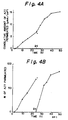
- Fig. 4 illustrates in vitro percutaneous absorption of AZT in the presence of 5% S-318 + 10% oleic acid + 20% propylene glycol + 10% methyl pyrrolidone through removed human skin.
- the inventors have conducted an extensive study to provide a method and a composition for administering AZT which enables the maintenance of a consistent and effective blood AZT level for a prolonged period of time. They have discovered that AZT can be absorbed into the blood stream through the human skin at a substantially consistent rate thereby enabling a constant blood level of the drug for a long period of time.
- the present invention provides a percutaneous composition which comprises 3'-azide-3'-deoxythymidine represented by the following formula: as an effective ingredient together with a selected pharmaceutically acceptable absorption promotor.
- 3'-Azide-3'-deoxythymidine is a known compound which is disclosed ,for example, in J. R. Horwitz et al, J. Org. Chem., 29 . July 1964, pp. 2076-2078; M. Imazawa et al, J. Org. Chem., 43(15) , 1978, pp. 3044-3048. AZT has been used for treating AIDS patients specifically by oral administration.
- AZT is contained in the composition of the present invention at a rate of 0.1 - 20%, preferably 5 - 10% and most preferably about 3% by weight relative to the total weight of the composition.
- the composition should contain AZT so as to facilitate percutaneous administration of 20 - 2,000 mg and preferably 200 - 2,000 mg of AZT in a dosage unit.
- the absorption promoting agent may be an organic acid acceptable as an ingredient of pharmaceutical compositions.
- organic acids include unsaturated fatty acid containing 10 - 20 carbon atoms such as oleic acid, palmitoleic acid, elaidic acid, linoleic acid, and linolenic acid.
- the absorption promoting agent may be a pharmaceutically acceptable fatty acid ester.
- Preferred fatty acid esters are those of a fatty acid of 6 - 16 carbon atoms and glycerol.
- esters include glycerol monomyristate, glycerol dimyristate, glycerol monocaprate, glycerol dicaprate, glycerol-monolaurate, glycerol dilaurate, glycerol monopentadecanoate and glycerol monopentadecanoate.
- absorption promoting agents may be used preferably at a rate of about 10% by weight of the total composition, though the rate may be changed in the range between about 1 and 40% by weight.
- One preferred absorption promoting agent is Sefsol-318 which is used alone or in combination with one or more other absorption promoting agents such as oleic acid, propylene glycol and/or methyl pyrrolidone.
- the rate of Sefsol-318 in the total composition is typically about 5% by weight, though the rate may change between 1% and 20%.
- a further preferred penetration promoting agent is 1-dodecylazacycloheptane-2-one known as the common name Azone.
- the typical rate of Azone in the total composition is about 3% by weight, though it may change between 0.1 to 10%.
- the most preferred absorption promoting agent is a combination of Azone and N-methyl-2-pyrrolidone used at 1:20 to 20:1, and typically at 3:20 by weight.
- the optimum amount of the absorption promoting agent in the composition of the present invention may be determined depending on particular agent considering the expected level of AZT in the blood of a patient who is in need of treatment.
- stable and constant absorption of AZT through the skin of a patient is effected independently of the location or the condition of the skin to which AZT is applied.
- the skin condition of the patient has changed because of Kaposi's sarcoma which is a characteristic of AIDS, such a change will not result in any excessively high concentration of AZT in the blood which would otherwise cause troublesome side effect or shorten the period in which AZT concentration in the blood is maintained in an effective range.
- the pharmaceutical composition of the present invention may be formulated in various forms including liquid, cataplasm, cream, ointment and tape.
- conventionally used inert carriers and additives may be incorporated.
- Typical inert carriers which may be included in the foregoing dosage forms include conventional formulating materials, such as, for example, water, isopropyl alcohol, freons, ethyl alcohol, polyvinyl pyrrolidone, propylene glycol, fragrance. gel-producing materials such as "Carbopol", stearyl alcohol, stearic acid, spermaceti, sorbitan monooleate, "Polysorbates", “Tweens”, and sorbitan methylcellulose.
- Example 2 In vivo study - plasma AZT level by percutaneous administrations of AZT
- a) an aqueous solution containing 3% Azone and 20% MP, and b) an aqueous solution containing 5% S-318, 10% OA, 20% PG and 10% MP were prepared.
- AZT was dissolved at 3.7 mM concentration in each of said absorption agents and 1 ml of the resulting solution was applied to the skin of rats in a similar manner as in Example 2.
- AZT level in the plasma was monitored at a 2 hours interval for 10 hours and plotted as shown in Fig. 2. The results show that a high AZT level in the plasma was achieved over a period of 10 hours due to the percutaneous absorption of AZT.
- the above two promoting agents assisted the penetration of AZT through the skin even though the skin had not been preteated with 10% oleic acid. Said efficient penetration was achieved by 3.7 mM AZT solution which is lower by 5 times than the AZT solution (18.7 mM) used in Example 2. This efficient penetration was especially remarkable by the promoting agent a) which contains 3% Azone and 20% MP.
- FIG. 3 depicts the results with the composition of Formulation Example 7 and Fig. 4 depicts the results with the composition of Formulation Example 8 wherein the drug on the skin was replenished after 24 hours.
- Css and Cltot are 1 ⁇ M and 78 l/h, respectively according to Klecker et al (Clin Pharmacol. Ther., 41 , 407, 1987).
- the required skin area calculated from these values was 260 cm2 for the composition of Formulation Example 7 and 111 cm2 for the composition of Formulation Example 8. Therefore, the efficacy of the percutaneous composition of the present invention has reached a level practically applicable in the treatment of AIDS patients.
- a viscous gel preparation was produced from the following ingredients:
- a viscous gel preparation was produced from the following ingredients:
Landscapes
- Health & Medical Sciences (AREA)
- Chemical & Material Sciences (AREA)
- Life Sciences & Earth Sciences (AREA)
- Pharmacology & Pharmacy (AREA)
- Veterinary Medicine (AREA)
- Public Health (AREA)
- General Health & Medical Sciences (AREA)
- Animal Behavior & Ethology (AREA)
- Medicinal Chemistry (AREA)
- Epidemiology (AREA)
- Engineering & Computer Science (AREA)
- General Chemical & Material Sciences (AREA)
- Chemical Kinetics & Catalysis (AREA)
- Dermatology (AREA)
- Bioinformatics & Cheminformatics (AREA)
- Oil, Petroleum & Natural Gas (AREA)
- Virology (AREA)
- Molecular Biology (AREA)
- Oncology (AREA)
- Communicable Diseases (AREA)
- Organic Chemistry (AREA)
- Nuclear Medicine, Radiotherapy & Molecular Imaging (AREA)
- AIDS & HIV (AREA)
- Tropical Medicine & Parasitology (AREA)
- Medicinal Preparation (AREA)
- Pharmaceuticals Containing Other Organic And Inorganic Compounds (AREA)
- Saccharide Compounds (AREA)
Description
- The present invention relates to a method of percutaneous administration of 3'-azide-3'-deoxythymidine (AZT) to AIDS patients. The invention also relates to a pharmaceutical composition for percutaneous administration of AZT.
- In recent years the increase in the incidence of acquired immunodeficiency syndrome (AIDS) has become a serious problem all over the world. The agent responsible for AIDS is a certain type of retro virus which selectively attacks T-cells having OKT4 surface antigen.
- 3'-Azide-3'-deoxythymidine (AZT) is an effective inhibitor of reverse transcriptases which are indispensable for the growth of the virus and for this reason AZT is considered to be a promising drug for curing AIDS patients. However, there has, so far, been no cases of a complete recovery from AIDS due to treatment with AZT. The strong side effects of ACT often prevents continuation of the treatment.
- Following is an explanation of one of the reasons why treatment with AZT has not been satisfactory in clinical applications. Because of the mechanism of its action, AZT requires a certain period of time to exert its action in vivo, whereas it is impossible to maintain an adequate AZT level in blood by the conventional oral administration (Japanese Patent Laid Open No. 290895/1988) even if AZT is given to a patient as frequently as every 4 hours, i.e. 6 times a day, at a dose of 5 mg/kg in each administration (Klecker et al. Clin. Pharmacol. Ther., 41, 407(1987)). However, if AZT is orally administered at a higher dose in order to maintain a sufficiently high blood level of the drug for prolonged periods of time, the resulting high blood level of AZT shortly after administration causes serious and unacceptable side effects.
- US-A-4,724,232 relates to oral administration of AZT for Treatment of AIDS patients.
Column 5 lines 14 - 19 of this patent states that AZT may be administered percutaneously. However, it does not disclose any specific information as to how AZT is given to a patient through the skin. - EP-A-0 289 229 describes AZT formulations in form of topical ointments or creams comprising as dermal penetration enhancers dimethylsulphoxide and related analogues.
- An object of the present invention is to provide a percutaneous composition for use in a method for administering AZT at a consistent rate for a prolonged period of time through the skin of AIDS patients. More specifically, the percutaneous composition according to the present invention can be used in a method for treating AIDS patients with a higher degree of efficacy and fewer side effects as compared to the conventional oral administration of AZT to patients.
- Thus the main object of the present invention is to provide a pharmaceutical composition which comprises AZT and certain absorption promoting agents for administering AZT at a substantially constant rate through the skin of a patient which is effective for treating AIDS.
- Fig. 1 illustrates in vitro percutaneous absorption of AZT in the presence of 10% oleic acid through removed skin of a rat.
- Fig. 2 illustrates in vivo percutaneous absorption of AZT in the presence of a) 3% Azone + 20% N-methyl-2-pyrrolidone, or b) 5% S-318 + 10% oleic acid + 20% propylene glycol + 10% N-methyl-2-pyrrolidone.
- Fig. 3 illustrates in vitro percutaneous absorption of AZT in the presence of 3% Azone + 20% N-methyl-2-pyrrolidone through removed human skin.
- Fig. 4 illustrates in vitro percutaneous absorption of AZT in the presence of 5% S-318 + 10% oleic acid + 20% propylene glycol + 10% methyl pyrrolidone through removed human skin.
- The inventors have conducted an extensive study to provide a method and a composition for administering AZT which enables the maintenance of a consistent and effective blood AZT level for a prolonged period of time. They have discovered that AZT can be absorbed into the blood stream through the human skin at a substantially consistent rate thereby enabling a constant blood level of the drug for a long period of time.
- Thus, the present invention provides a percutaneous composition which comprises 3'-azide-3'-deoxythymidine represented by the following formula:

as an effective ingredient together with a selected pharmaceutically acceptable absorption promotor. - 3'-Azide-3'-deoxythymidine (AZT) is a known compound which is disclosed ,for example, in J. R. Horwitz et al, J. Org. Chem., 29. July 1964, pp. 2076-2078; M. Imazawa et al, J. Org. Chem., 43(15), 1978, pp. 3044-3048. AZT has been used for treating AIDS patients specifically by oral administration.
- AZT is contained in the composition of the present invention at a rate of 0.1 - 20%, preferably 5 - 10% and most preferably about 3% by weight relative to the total weight of the composition. In any event, the composition should contain AZT so as to facilitate percutaneous administration of 20 - 2,000 mg and preferably 200 - 2,000 mg of AZT in a dosage unit.
- The absorption promoting agent may be an organic acid acceptable as an ingredient of pharmaceutical compositions. Examples of preferred organic acids include unsaturated fatty acid containing 10 - 20 carbon atoms such as oleic acid, palmitoleic acid, elaidic acid, linoleic acid, and linolenic acid. The absorption promoting agent may be a pharmaceutically acceptable fatty acid ester. Preferred fatty acid esters are those of a fatty acid of 6 - 16 carbon atoms and glycerol. More preferably, such esters include glycerol monomyristate, glycerol dimyristate, glycerol monocaprate, glycerol dicaprate, glycerol-monolaurate, glycerol dilaurate, glycerol monopentadecanoate and glycerol monopentadecanoate. These absorption promoting agents may be used preferably at a rate of about 10% by weight of the total composition, though the rate may be changed in the range between about 1 and 40% by weight.
- One preferred absorption promoting agent is Sefsol-318 which is used alone or in combination with one or more other absorption promoting agents such as oleic acid, propylene glycol and/or methyl pyrrolidone. The rate of Sefsol-318 in the total composition is typically about 5% by weight, though the rate may change between 1% and 20%.
- A further preferred penetration promoting agent is 1-dodecylazacycloheptane-2-one known as the common name Azone. The typical rate of Azone in the total composition is about 3% by weight, though it may change between 0.1 to 10%. The most preferred absorption promoting agent is a combination of Azone and N-methyl-2-pyrrolidone used at 1:20 to 20:1, and typically at 3:20 by weight.
- In any event, the optimum amount of the absorption promoting agent in the composition of the present invention may be determined depending on particular agent considering the expected level of AZT in the blood of a patient who is in need of treatment.
- In accordance with the present invention, stable and constant absorption of AZT through the skin of a patient is effected independently of the location or the condition of the skin to which AZT is applied. In particular even if the the skin condition of the patient has changed because of Kaposi's sarcoma which is a characteristic of AIDS, such a change will not result in any excessively high concentration of AZT in the blood which would otherwise cause troublesome side effect or shorten the period in which AZT concentration in the blood is maintained in an effective range.
- The pharmaceutical composition of the present invention may be formulated in various forms including liquid, cataplasm, cream, ointment and tape. In order to formulate into such a form, conventionally used inert carriers and additives may be incorporated. Typical inert carriers which may be included in the foregoing dosage forms include conventional formulating materials, such as, for example, water, isopropyl alcohol, freons, ethyl alcohol, polyvinyl pyrrolidone, propylene glycol, fragrance. gel-producing materials such as "Carbopol", stearyl alcohol, stearic acid, spermaceti, sorbitan monooleate, "Polysorbates", "Tweens", and sorbitan methylcellulose.
- The following examples and formulation examples are given for illustration purposes.
-
- A. The abdominal skin of a rat (Wistar strain, male, 200g) was removed after shaving and placed between the chambers of a diffusion cell comprising two chambers having an effective permeation area of 0.95 cm² and a capacity of 2.3 ml each chamber. The chamber of the corneum side received an AZT solution to be tested and the other chamber received water. The cell was warmed to 37°C while the permeation of the drug towards the opposite chamber was measured. The AZT solution contained 18.7 mM (5 mg/ml) AZT either in water or an aqueous solution of 10% oleic acid. The results indicated that oleic acid promoted permeation of AZT through the skin. The results are plotted in Fig. 1. The permeation rate during the stable permeation state (Fss) was determined as follows from the slope of the plots between 10 and 24 hours:

- B. In a manner similar to that described in A, further agents capable of promoting permeation of AZT were searched. The promotion rate by each of the tested agents was expressed in relative terms when the rate of 10% oleic acid is tentatively determined as 1. The results are given in Table 1.

The results indicate that the permeation of AZT through the skin is greatly accelerated by Azone and S-318 than by 10% oleic acid. This acceleration was further enhanced by appropriately combining Azone and S-318 with one or more other promoting agents. - C. In the similar manner as in A and B, the permeation of AZT as a Function of its concentration (3.7 mM - 112 mM) was studied. 112 mM (about 3%) is a preferred concentration of AZT for practical purposes in producing a percutaneous AZT composition. The combination of a) 3% Azone + 20% MP or b) 5% S-318 + 10% OA + 20% PG + 10% MP was used as a permeation promoting agent. The results are summarized in Table 2.
- The results indicate that efficient percutaneous absorption of AZT will be effected by appropriately selecting a promoting agent and the concentration of AZT in the percutaneous preparation.
- Three male rats of Wistar strain weighing about 200 g was allotted to each group. The abdominal portion of the rat was shaven and pretreated with 10% oleic acid for 24 hours. Then a 1 ml aliquot of a solution containing 0.5% (18.7 mM) AZT and 10% oleic acid in water was applied over 4.9 cm² area of the skin by a glass cell secured on the body of the rat. AZT level in the plasma sampled at 0, 5, 1, 2, 4, 6, 8 and 24 hours after the administration was determined by HPLC. A control group orally received 0.5 ml water containing 0.6 mg AZT. The results are summarized in Table 3.

- The results show that, in the presence of oleic acid. AZT was gradually absorbed through the skin and could be detected in the plasma over 24 hours whereas the percutaneous absorption of AZT was not observed at all when the drug was applied to the skin as a simple water solution (data is not shown). When AZT was administered orally, the drug level in the plasma decreased to already be undetectable at 6 hours after the administration.
- In a manner similar to that described in Example 2, the possibility of percutaneous absorption of AZT without pretreatment with 10% oleic acid was studied.
- As absorption promoting agents, a) an aqueous solution containing 3% Azone and 20% MP, and b) an aqueous solution containing 5% S-318, 10% OA, 20% PG and 10% MP were prepared. AZT was dissolved at 3.7 mM concentration in each of said absorption agents and 1 ml of the resulting solution was applied to the skin of rats in a similar manner as in Example 2. AZT level in the plasma was monitored at a 2 hours interval for 10 hours and plotted as shown in Fig. 2. The results show that a high AZT level in the plasma was achieved over a period of 10 hours due to the percutaneous absorption of AZT.
- The above two promoting agents assisted the penetration of AZT through the skin even though the skin had not been preteated with 10% oleic acid. Said efficient penetration was achieved by 3.7 mM AZT solution which is lower by 5 times than the AZT solution (18.7 mM) used in Example 2. This efficient penetration was especially remarkable by the promoting agent a) which contains 3% Azone and 20% MP.
- A piece of human skin was set between the chambers of a permeation cell having an effective permeation area of 4.9 cm². The chamber of the corium side received a physiological saline solution and the temperature of the solution was warmed to maintain at 37°C. The percutaneous preparation produced in Formulation Example 7 or 8 hereinafter described was applied on the opposite surface of the skin (corneum). The amount of AZT permeated into the physiological saline was monitored at an appropriate interval. Fig. 3 depicts the results with the composition of Formulation Example 7 and Fig. 4 depicts the results with the composition of Formulation Example 8 wherein the drug on the skin was replenished after 24 hours.
- The permeation rate of AZT at the stable permeation state for each drug was 0.30 µmol/cm²/h and 0.70 µmol/cm²/h, respectively for drugs of Formulation Examples 7 and 8. On the basis of the results of this study as well as of the following equation, skin area required for achieving sufficient percutaneous absorption of AZT from these compositions can be calculated.

wherein - A:
- skin area (cm²)
- Css:
- plasma AZT level (µM) required for AIDS treatment
- Cltot:
- clearance (ℓ/h/kg)
- Fss:
- permeation rate at the stable state (µmol/cm²/h)
- Css and Cltot are 1 µM and 78 ℓ/h, respectively according to Klecker et al (Clin Pharmacol. Ther., 41, 407, 1987). The required skin area calculated from these values was 260 cm² for the composition of Formulation Example 7 and 111 cm² for the composition of Formulation Example 8. Therefore, the efficacy of the percutaneous composition of the present invention has reached a level practically applicable in the treatment of AIDS patients.
- The invention will be further illustrated by way of the following non-limiting formulation examples.
-

-

-

-

-


-

- The above ingredients were thoroughly mixed and the mixture was coated on a tape film to give a tape preparation.
- A viscous gel preparation was produced from the following ingredients:

- A viscous gel preparation was produced from the following ingredients:

- The ingredients given in
Formulation 7 or 8 were mixed and coated on a tape film such that the tape contains 10 µmol AZT/cm² to give a tape preparation.

Claims (13)
- A percutaneous composition comprising 3'-azide-3'-deoxythymidine, which is hereafter abbreviated as AZT, as an effective ingredient together with an absorption promoting agent in an amount effective for assisting percutaneous absorption of AZT through the human skin,
characterized in that the absorption promoting agent is selected from:(i) an unsaturated C₁₀₋₂₀ organic acid selected from oleic acid, palmitoleic acid, elaidic acid, linoleic acid and linolenic acid,(ii) a glycerol ester of a C₆₋₁₆ fatty acid selected from glyceryl monomyristate, glyceryl dimyristate, glyceryl monocaprate, glyceryl dicaprate, glyceryl monolaurate, glyceryl dilaurate, glyceryl monopentadecanoate and glyceryl dipentadecanoate,(iii) 1-dodecylazacycloheptane-2-one, or(iv) Sefsol-318. - A percutaneous composition as claimed in Claim 1, wherein AZT is contained at 0.5 - 10% by weight of the percutaneous composition.
- A percutaneous composition as claimed in Claim 2, wherein said composition is formulated as a liquid, cataplasm, cream, ointment, gel or tape.
- A percutaneous composition as claimed in Claim 1, wherein the absorption promoting agent is 1-dodecylazacycloheptane-2-one and N-methyl-2-pyrrolidone.
- A percutaneous composition as claimed in Claim 4, wherein 1-dodecylazacycloheptane-2-one and N-methyl-2-pyrrolidone are contained in the absorption promoting agent at a ratio by weight of about 3:20.
- A percutaneous composition as claimed in Claim 1, wherein the absorption promoting agent comprises Sefsol-318 and at least one of oleic acid, propylene glycol and N-methyl-2-pyrrolidone.
- The use of AZT together with an absorption promoting agent capable of assisting absorption of AZT through the skin into the blood stream for the making of a medicament for percutaneous administration effective against AIDS,
characterized in that the absorption promoting agent is selected from:(i) an unsaturated C₁₀₋₂₀ organic acid selected from oleic acid, palmitoleic acid, elaidic acid, linoleic acid and linolenic acid,(ii) a glycerol ester of a C₆₋₁₆ fatty acid selected from glycery monomyristate, glyceryl dimyristate, glyceryl monocaprate, glyceryl dicaprate, glyceryl monolaurate, glyceryl dilaurate, glyceryl monopentadecanoate and glyceryl dipentadecanoate,(iii) 1-dodecylazacycloheptane-2-one, or(iv) Sefsol-318. - The use as claimed in Claim 7, wherein 20 - 2,000 mg of AZT at a time is applied to the skin.
- The use as claimed in Claim 7, wherein the absorption promoting agent is 1-dodecylazacycloheptane-2-one and N-methyl-2-pyrrolidone.
- The use as claimed in Claim 9, wherein 1-dodecylazacycloheptane-2-one and N-methyl-2-pyrrolidone are contained in the absorption promoting agent at a ratio by weight of about 3:20.
- The use as claimed in Claim 7, wherein the absorption promoting agent comprises Sefsol-318 and at least one of oleic acid, propylene glycol and N-methyl-2-pyrrolidone.
- The use as claimed in Claim 7, wherein AZT is applied to an area of skin of less than about 300 cm² and an effective amount of AZT for the treatment of AIDS can be absorbed by the skin.
- The use as claimed in Claim 7, wherein the effective AZT level in the plasma of the patient can be kept stable over a period of 10 hours or more.
Applications Claiming Priority (2)
| Application Number | Priority Date | Filing Date | Title |
|---|---|---|---|
| JP117450/89 | 1989-05-12 | ||
| JP1117450A JP2831030B2 (en) | 1989-05-12 | 1989-05-12 | Composition for transdermal administration preparation containing 3'-azido-3'deoxythymidine as active ingredient |
Publications (3)
| Publication Number | Publication Date |
|---|---|
| EP0397211A2 EP0397211A2 (en) | 1990-11-14 |
| EP0397211A3 EP0397211A3 (en) | 1991-04-10 |
| EP0397211B1 true EP0397211B1 (en) | 1993-05-12 |
Family
ID=14711955
Family Applications (1)
| Application Number | Title | Priority Date | Filing Date |
|---|---|---|---|
| EP90109019A Expired - Lifetime EP0397211B1 (en) | 1989-05-12 | 1990-05-14 | Percutaneous administration of 3'-azide-3'-deoxythymidine |
Country Status (4)
| Country | Link |
|---|---|
| US (1) | US5248674A (en) |
| EP (1) | EP0397211B1 (en) |
| JP (1) | JP2831030B2 (en) |
| DE (1) | DE69001580T2 (en) |
Families Citing this family (5)
| Publication number | Priority date | Publication date | Assignee | Title |
|---|---|---|---|---|
| CA2122585A1 (en) * | 1991-12-13 | 1993-06-24 | Martin J. Griffin | Transdermal azidothymidine |
| IL104283A (en) * | 1992-12-30 | 1996-12-05 | Agis Ind 1983 Ltd | Non-emulsion antiviral topical pharmaceutical composition comprising acyclovir an aqueous gel agent and an alkali oleate |
| KR100382105B1 (en) * | 1995-12-30 | 2003-07-18 | 주식회사 엘지생명과학 | Transdermal preparation containing hiv protease inhibitor and method for manufacturing the same |
| GB9605293D0 (en) * | 1996-03-13 | 1996-05-15 | Glaxo Group Ltd | Medicaments |
| FR2767697B1 (en) * | 1997-09-01 | 2000-05-05 | Boots Co Plc | DERMATOLOGICAL COMPOSITION FOR PREVENTING THE APPEARANCE OF SKIN HYPERSENSITIVITY AND INTOLERANCE SYMPTOMS |
Family Cites Families (13)
| Publication number | Priority date | Publication date | Assignee | Title |
|---|---|---|---|---|
| US3991203A (en) * | 1975-06-19 | 1976-11-09 | Nelson Research & Development Company | Vehicle composition containing 1-substituted azacyclopentan-2-ones |
| US4405616A (en) * | 1975-06-19 | 1983-09-20 | Nelson Research & Development Company | Penetration enhancers for transdermal drug delivery of systemic agents |
| US3989816A (en) * | 1975-06-19 | 1976-11-02 | Nelson Research & Development Company | Vehicle composition containing 1-substituted azacycloheptan-2-ones |
| US4557934A (en) * | 1983-06-21 | 1985-12-10 | The Procter & Gamble Company | Penetrating topical pharmaceutical compositions containing 1-dodecyl-azacycloheptan-2-one |
| US4724232A (en) * | 1985-03-16 | 1988-02-09 | Burroughs Wellcome Co. | Treatment of human viral infections |
| US4690683A (en) * | 1985-07-02 | 1987-09-01 | Rutgers, The State University Of New Jersey | Transdermal varapamil delivery device |
| US4847244A (en) * | 1985-09-17 | 1989-07-11 | Burroughs Wellcome Co. | Treatment of human viral infections |
| DE3868125D1 (en) * | 1987-04-24 | 1992-03-12 | Wellcome Found | ANTIVIRAL MIXTURES. |
| US4784489A (en) * | 1987-04-29 | 1988-11-15 | Hewlett-Packard Company | Fiber-optic based remote receiver for laser interferometer systems |
| US4804651A (en) * | 1987-06-09 | 1989-02-14 | Board Of Regents, The University Of Texas System | Methods and compositions for the treatment of psoriasis |
| GB8823353D0 (en) * | 1988-10-05 | 1988-11-09 | Wellcome Found | Therapeutic nucleosides |
| US4900548A (en) * | 1987-11-13 | 1990-02-13 | Harvard University | Use of diethylcarbamazine to enhance antigen-antibody and antigen-host immune cell interactions |
| US4883813A (en) * | 1988-08-24 | 1989-11-28 | American Biotechnology Company | Method of treating inflammation in mammals utilizing ketobutyrolactones and furylbutyrolactones |
-
1989
- 1989-05-12 JP JP1117450A patent/JP2831030B2/en not_active Expired - Lifetime
-
1990
- 1990-05-14 US US07/523,246 patent/US5248674A/en not_active Expired - Fee Related
- 1990-05-14 DE DE90109019T patent/DE69001580T2/en not_active Expired - Fee Related
- 1990-05-14 EP EP90109019A patent/EP0397211B1/en not_active Expired - Lifetime
Also Published As
| Publication number | Publication date |
|---|---|
| DE69001580T2 (en) | 1993-11-04 |
| EP0397211A3 (en) | 1991-04-10 |
| US5248674A (en) | 1993-09-28 |
| DE69001580D1 (en) | 1993-06-17 |
| JP2831030B2 (en) | 1998-12-02 |
| JPH03128390A (en) | 1991-05-31 |
| EP0397211A2 (en) | 1990-11-14 |
Similar Documents
| Publication | Publication Date | Title |
|---|---|---|
| US5069909A (en) | Transdermal administration of buprenorphine | |
| US5612056A (en) | Transdermal formulations | |
| JP2660839B2 (en) | Penetration-enhancing pharmaceutical composition for topical application | |
| US5164189A (en) | Single layer transdermal drug administration system | |
| KR20100047840A (en) | A novel non-aqueous topical solution of diclofenac and process for preparing the same | |
| US20040028617A1 (en) | Transnasal anticonvulsive compositions and modulated process | |
| MX9401331A (en) | PHARMACEUTICAL COMPOSITION AND USEFUL ARTICLE TO INHIBIT SKIN IRRITATION. | |
| CA1118351A (en) | Transdermal medication system for isosorbide dinitrate | |
| EP0662819B1 (en) | An antivirally active pharmaceutical oil-in-water emulsion containing 9-[(2-hydroxyethoxy)methyl]guanine (acyclovir) or a salt or ester thereof | |
| CA2101496A1 (en) | Base for transdermal administration | |
| US4832954A (en) | Nicorandil containing external preparations | |
| CZ240297A3 (en) | Transdermal preparation | |
| HU220861B1 (en) | Active-substance patch for releasing estradiol to the skin | |
| EP1589973B1 (en) | Formulation and methods for the treatment of thrombocythemia | |
| US5858393A (en) | Transdermal formulation | |
| GB2203044A (en) | Nasal compositions | |
| EP0430491A2 (en) | Transdermal delivery device for estradiol and process for manufacturing said device | |
| EP1847264B1 (en) | Bisoprolol patch | |
| US5248674A (en) | Percutaneous administration of 3'-azide'-deoxythymidine | |
| EP0440811B1 (en) | Composition for percutaneous administration | |
| WO1996025042A1 (en) | Transdermal formulation | |
| US5128135A (en) | Percutaneous or trans-mucosal absorption enhancers, preparations containing the enhancers, and a method of preparing thereof | |
| HU204692B (en) | Process for producing a composition increasing the percutaneous absorption of pharmaceutical active ingredients | |
| EP1270007A2 (en) | Microemulsions for the transdermal administration of apomorphine, for the treatment of Parkinson's disease | |
| EP0420264A2 (en) | Transdermal delivery of (+)(2S,3S)-3-acetoxy-8-chloro-5-(2-dimethyl-aminoethyl)-2,3-dihydro-2-(4-methoxyphenyl)-1,5-benzothiazepin-4-(5H)-one |
Legal Events
| Date | Code | Title | Description |
|---|---|---|---|
| PUAI | Public reference made under article 153(3) epc to a published international application that has entered the european phase |
Free format text: ORIGINAL CODE: 0009012 |
|
| AK | Designated contracting states |
Kind code of ref document: A2 Designated state(s): DE FR GB IT |
|
| PUAL | Search report despatched |
Free format text: ORIGINAL CODE: 0009013 |
|
| AK | Designated contracting states |
Kind code of ref document: A3 Designated state(s): DE FR GB IT |
|
| 17P | Request for examination filed |
Effective date: 19910828 |
|
| 17Q | First examination report despatched |
Effective date: 19911220 |
|
| ITF | It: translation for a ep patent filed | ||
| GRAA | (expected) grant |
Free format text: ORIGINAL CODE: 0009210 |
|
| AK | Designated contracting states |
Kind code of ref document: B1 Designated state(s): DE FR GB IT |
|
| REF | Corresponds to: |
Ref document number: 69001580 Country of ref document: DE Date of ref document: 19930617 |
|
| ET | Fr: translation filed | ||
| REG | Reference to a national code |
Ref country code: GB Ref legal event code: 732E |
|
| REG | Reference to a national code |
Ref country code: FR Ref legal event code: TP |
|
| ITPR | It: changes in ownership of a european patent |
Owner name: CESSIONE;SUMITOMO CORPORATION |
|
| PGFP | Annual fee paid to national office [announced via postgrant information from national office to epo] |
Ref country code: GB Payment date: 20000503 Year of fee payment: 11 |
|
| PGFP | Annual fee paid to national office [announced via postgrant information from national office to epo] |
Ref country code: FR Payment date: 20000515 Year of fee payment: 11 |
|
| PGFP | Annual fee paid to national office [announced via postgrant information from national office to epo] |
Ref country code: DE Payment date: 20000524 Year of fee payment: 11 |
|
| PG25 | Lapsed in a contracting state [announced via postgrant information from national office to epo] |
Ref country code: GB Free format text: LAPSE BECAUSE OF NON-PAYMENT OF DUE FEES Effective date: 20010514 |
|
| GBPC | Gb: european patent ceased through non-payment of renewal fee |
Effective date: 20010514 |
|
| PG25 | Lapsed in a contracting state [announced via postgrant information from national office to epo] |
Ref country code: FR Free format text: LAPSE BECAUSE OF NON-PAYMENT OF DUE FEES Effective date: 20020131 |
|
| PG25 | Lapsed in a contracting state [announced via postgrant information from national office to epo] |
Ref country code: DE Free format text: LAPSE BECAUSE OF NON-PAYMENT OF DUE FEES Effective date: 20020301 |
|
| PG25 | Lapsed in a contracting state [announced via postgrant information from national office to epo] |
Ref country code: IT Free format text: LAPSE BECAUSE OF NON-PAYMENT OF DUE FEES;WARNING: LAPSES OF ITALIAN PATENTS WITH EFFECTIVE DATE BEFORE 2007 MAY HAVE OCCURRED AT ANY TIME BEFORE 2007. THE CORRECT EFFECTIVE DATE MAY BE DIFFERENT FROM THE ONE RECORDED. Effective date: 20050514 |
|
| PLBE | No opposition filed within time limit |
Free format text: ORIGINAL CODE: 0009261 |
|
| STAA | Information on the status of an ep patent application or granted ep patent |
Free format text: STATUS: NO OPPOSITION FILED WITHIN TIME LIMIT |