EP0390187B1 - Poly(vinyl ethers) as shrinkage control agents - Google Patents
Poly(vinyl ethers) as shrinkage control agents Download PDFInfo
- Publication number
- EP0390187B1 EP0390187B1 EP90106151A EP90106151A EP0390187B1 EP 0390187 B1 EP0390187 B1 EP 0390187B1 EP 90106151 A EP90106151 A EP 90106151A EP 90106151 A EP90106151 A EP 90106151A EP 0390187 B1 EP0390187 B1 EP 0390187B1
- Authority
- EP
- European Patent Office
- Prior art keywords
- poly
- molding composition
- vinyl
- polymer
- ether
- Prior art date
- Legal status (The legal status is an assumption and is not a legal conclusion. Google has not performed a legal analysis and makes no representation as to the accuracy of the status listed.)
- Expired - Lifetime
Links
- -1 Poly(vinyl ethers) Polymers 0.000 title claims abstract description 110
- 239000000654 additive Substances 0.000 claims abstract description 58
- 239000000203 mixture Substances 0.000 claims abstract description 50
- 238000000465 moulding Methods 0.000 claims abstract description 42
- 230000000996 additive effect Effects 0.000 claims abstract description 31
- 229920000728 polyester Polymers 0.000 claims abstract description 30
- 229920000642 polymer Polymers 0.000 claims description 52
- 229920005989 resin Polymers 0.000 claims description 37
- 239000011347 resin Substances 0.000 claims description 37
- 239000000178 monomer Substances 0.000 claims description 35
- 239000000835 fiber Substances 0.000 claims description 24
- 125000004432 carbon atom Chemical group C* 0.000 claims description 22
- 229920001577 copolymer Polymers 0.000 claims description 22
- 125000000217 alkyl group Chemical group 0.000 claims description 13
- 125000003178 carboxy group Chemical group [H]OC(*)=O 0.000 claims description 12
- 229920006305 unsaturated polyester Polymers 0.000 claims description 12
- 239000004744 fabric Substances 0.000 claims description 10
- 125000002887 hydroxy group Chemical group [H]O* 0.000 claims description 10
- RTZKZFJDLAIYFH-UHFFFAOYSA-N Diethyl ether Chemical compound CCOCC RTZKZFJDLAIYFH-UHFFFAOYSA-N 0.000 claims description 9
- 239000000049 pigment Substances 0.000 claims description 8
- 239000002562 thickening agent Substances 0.000 claims description 8
- 229920006337 unsaturated polyester resin Polymers 0.000 claims description 8
- 239000000945 filler Substances 0.000 claims description 7
- 239000003365 glass fiber Substances 0.000 claims description 7
- 125000001997 phenyl group Chemical group [H]C1=C([H])C([H])=C(*)C([H])=C1[H] 0.000 claims description 7
- 239000001257 hydrogen Substances 0.000 claims description 6
- 229910052739 hydrogen Inorganic materials 0.000 claims description 6
- 239000006082 mold release agent Substances 0.000 claims description 6
- 230000002787 reinforcement Effects 0.000 claims description 6
- 229920000049 Carbon (fiber) Polymers 0.000 claims description 5
- 239000000126 substance Substances 0.000 claims description 5
- 229920001567 vinyl ester resin Polymers 0.000 claims description 5
- NLHHRLWOUZZQLW-UHFFFAOYSA-N Acrylonitrile Chemical compound C=CC#N NLHHRLWOUZZQLW-UHFFFAOYSA-N 0.000 claims description 4
- 241000531908 Aramides Species 0.000 claims description 3
- 229920003235 aromatic polyamide Polymers 0.000 claims description 3
- 239000004917 carbon fiber Substances 0.000 claims description 3
- 239000003054 catalyst Substances 0.000 claims description 3
- 150000002978 peroxides Chemical class 0.000 claims description 3
- 239000004743 Polypropylene Substances 0.000 claims description 2
- 125000004423 acyloxy group Chemical group 0.000 claims description 2
- 125000004453 alkoxycarbonyl group Chemical group 0.000 claims description 2
- 125000005119 alkyl cycloalkyl group Chemical group 0.000 claims description 2
- 125000005037 alkyl phenyl group Chemical group 0.000 claims description 2
- 239000010425 asbestos Substances 0.000 claims description 2
- 125000000753 cycloalkyl group Chemical group 0.000 claims description 2
- 125000004435 hydrogen atom Chemical class [H]* 0.000 claims description 2
- 229920001155 polypropylene Polymers 0.000 claims description 2
- 229910052895 riebeckite Inorganic materials 0.000 claims description 2
- VNWKTOKETHGBQD-UHFFFAOYSA-N methane Chemical compound C VNWKTOKETHGBQD-UHFFFAOYSA-N 0.000 claims 1
- 230000019612 pigmentation Effects 0.000 abstract description 12
- PPBRXRYQALVLMV-UHFFFAOYSA-N Styrene Chemical compound C=CC1=CC=CC=C1 PPBRXRYQALVLMV-UHFFFAOYSA-N 0.000 description 43
- 229920001169 thermoplastic Polymers 0.000 description 31
- 239000004416 thermosoftening plastic Substances 0.000 description 27
- 229920006395 saturated elastomer Polymers 0.000 description 17
- 239000000463 material Substances 0.000 description 16
- XTXRWKRVRITETP-UHFFFAOYSA-N Vinyl acetate Chemical compound CC(=O)OC=C XTXRWKRVRITETP-UHFFFAOYSA-N 0.000 description 15
- DNIAPMSPPWPWGF-UHFFFAOYSA-N Propylene glycol Chemical compound CC(O)CO DNIAPMSPPWPWGF-UHFFFAOYSA-N 0.000 description 12
- 229920001225 polyester resin Polymers 0.000 description 10
- 239000004645 polyester resin Substances 0.000 description 10
- 238000000034 method Methods 0.000 description 9
- 239000000243 solution Substances 0.000 description 9
- 229920001187 thermosetting polymer Polymers 0.000 description 9
- VZCYOOQTPOCHFL-UHFFFAOYSA-N trans-butenedioic acid Natural products OC(=O)C=CC(O)=O VZCYOOQTPOCHFL-UHFFFAOYSA-N 0.000 description 9
- VZCYOOQTPOCHFL-OWOJBTEDSA-N Fumaric acid Chemical compound OC(=O)\C=C\C(O)=O VZCYOOQTPOCHFL-OWOJBTEDSA-N 0.000 description 8
- 239000002253 acid Substances 0.000 description 8
- 150000008064 anhydrides Chemical class 0.000 description 8
- 125000004122 cyclic group Chemical group 0.000 description 8
- VTYYLEPIZMXCLO-UHFFFAOYSA-L Calcium carbonate Chemical compound [Ca+2].[O-]C([O-])=O VTYYLEPIZMXCLO-UHFFFAOYSA-L 0.000 description 7
- OFOBLEOULBTSOW-UHFFFAOYSA-N Malonic acid Chemical compound OC(=O)CC(O)=O OFOBLEOULBTSOW-UHFFFAOYSA-N 0.000 description 7
- 239000004793 Polystyrene Substances 0.000 description 7
- 238000009472 formulation Methods 0.000 description 7
- CPLXHLVBOLITMK-UHFFFAOYSA-N magnesium oxide Inorganic materials [Mg]=O CPLXHLVBOLITMK-UHFFFAOYSA-N 0.000 description 7
- FPYJFEHAWHCUMM-UHFFFAOYSA-N maleic anhydride Chemical compound O=C1OC(=O)C=C1 FPYJFEHAWHCUMM-UHFFFAOYSA-N 0.000 description 7
- 229920002223 polystyrene Polymers 0.000 description 7
- LYCAIKOWRPUZTN-UHFFFAOYSA-N Ethylene glycol Chemical compound OCCO LYCAIKOWRPUZTN-UHFFFAOYSA-N 0.000 description 6
- QYKIQEUNHZKYBP-UHFFFAOYSA-N Vinyl ether Chemical compound C=COC=C QYKIQEUNHZKYBP-UHFFFAOYSA-N 0.000 description 6
- MTHSVFCYNBDYFN-UHFFFAOYSA-N diethylene glycol Chemical compound OCCOCCO MTHSVFCYNBDYFN-UHFFFAOYSA-N 0.000 description 6
- 229920001519 homopolymer Polymers 0.000 description 6
- QQVIHTHCMHWDBS-UHFFFAOYSA-N isophthalic acid Chemical compound OC(=O)C1=CC=CC(C(O)=O)=C1 QQVIHTHCMHWDBS-UHFFFAOYSA-N 0.000 description 6
- RRHGJUQNOFWUDK-UHFFFAOYSA-N Isoprene Chemical compound CC(=C)C=C RRHGJUQNOFWUDK-UHFFFAOYSA-N 0.000 description 5
- 150000007513 acids Chemical class 0.000 description 5
- 229920000180 alkyd Polymers 0.000 description 5
- 239000004927 clay Substances 0.000 description 5
- 150000001875 compounds Chemical class 0.000 description 5
- 150000001993 dienes Chemical class 0.000 description 5
- 239000011152 fibreglass Substances 0.000 description 5
- 239000011521 glass Substances 0.000 description 5
- 239000000395 magnesium oxide Substances 0.000 description 5
- VZCYOOQTPOCHFL-UPHRSURJSA-N maleic acid Chemical compound OC(=O)\C=C/C(O)=O VZCYOOQTPOCHFL-UPHRSURJSA-N 0.000 description 5
- 239000011976 maleic acid Substances 0.000 description 5
- 230000008719 thickening Effects 0.000 description 5
- AZQWKYJCGOJGHM-UHFFFAOYSA-N 1,4-benzoquinone Chemical compound O=C1C=CC(=O)C=C1 AZQWKYJCGOJGHM-UHFFFAOYSA-N 0.000 description 4
- 239000003677 Sheet moulding compound Substances 0.000 description 4
- KKEYFWRCBNTPAC-UHFFFAOYSA-N Terephthalic acid Chemical compound OC(=O)C1=CC=C(C(O)=O)C=C1 KKEYFWRCBNTPAC-UHFFFAOYSA-N 0.000 description 4
- WNLRTRBMVRJNCN-UHFFFAOYSA-N adipic acid Chemical compound OC(=O)CCCCC(O)=O WNLRTRBMVRJNCN-UHFFFAOYSA-N 0.000 description 4
- PNEYBMLMFCGWSK-UHFFFAOYSA-N aluminium oxide Inorganic materials [O-2].[O-2].[O-2].[Al+3].[Al+3] PNEYBMLMFCGWSK-UHFFFAOYSA-N 0.000 description 4
- 239000003638 chemical reducing agent Substances 0.000 description 4
- YACLQRRMGMJLJV-UHFFFAOYSA-N chloroprene Chemical compound ClC(=C)C=C YACLQRRMGMJLJV-UHFFFAOYSA-N 0.000 description 4
- 238000004132 cross linking Methods 0.000 description 4
- 238000005516 engineering process Methods 0.000 description 4
- 239000001530 fumaric acid Substances 0.000 description 4
- 239000007788 liquid Substances 0.000 description 4
- 229920001451 polypropylene glycol Polymers 0.000 description 4
- JAHNSTQSQJOJLO-UHFFFAOYSA-N 2-(3-fluorophenyl)-1h-imidazole Chemical compound FC1=CC=CC(C=2NC=CN=2)=C1 JAHNSTQSQJOJLO-UHFFFAOYSA-N 0.000 description 3
- NIXOWILDQLNWCW-UHFFFAOYSA-N 2-Propenoic acid Natural products OC(=O)C=C NIXOWILDQLNWCW-UHFFFAOYSA-N 0.000 description 3
- 239000004215 Carbon black (E152) Substances 0.000 description 3
- VYZAMTAEIAYCRO-UHFFFAOYSA-N Chromium Chemical compound [Cr] VYZAMTAEIAYCRO-UHFFFAOYSA-N 0.000 description 3
- PEDCQBHIVMGVHV-UHFFFAOYSA-N Glycerine Chemical compound OCC(O)CO PEDCQBHIVMGVHV-UHFFFAOYSA-N 0.000 description 3
- UFHFLCQGNIYNRP-UHFFFAOYSA-N Hydrogen Chemical compound [H][H] UFHFLCQGNIYNRP-UHFFFAOYSA-N 0.000 description 3
- CERQOIWHTDAKMF-UHFFFAOYSA-M Methacrylate Chemical compound CC(=C)C([O-])=O CERQOIWHTDAKMF-UHFFFAOYSA-M 0.000 description 3
- CERQOIWHTDAKMF-UHFFFAOYSA-N Methacrylic acid Chemical compound CC(=C)C(O)=O CERQOIWHTDAKMF-UHFFFAOYSA-N 0.000 description 3
- VVQNEPGJFQJSBK-UHFFFAOYSA-N Methyl methacrylate Chemical compound COC(=O)C(C)=C VVQNEPGJFQJSBK-UHFFFAOYSA-N 0.000 description 3
- 229910000019 calcium carbonate Inorganic materials 0.000 description 3
- 125000002843 carboxylic acid group Chemical group 0.000 description 3
- 150000001735 carboxylic acids Chemical class 0.000 description 3
- 238000006243 chemical reaction Methods 0.000 description 3
- 230000000052 comparative effect Effects 0.000 description 3
- 229920001971 elastomer Polymers 0.000 description 3
- HQQADJVZYDDRJT-UHFFFAOYSA-N ethene;prop-1-ene Chemical group C=C.CC=C HQQADJVZYDDRJT-UHFFFAOYSA-N 0.000 description 3
- 239000011888 foil Substances 0.000 description 3
- 125000000524 functional group Chemical group 0.000 description 3
- 229930195733 hydrocarbon Natural products 0.000 description 3
- AXZKOIWUVFPNLO-UHFFFAOYSA-N magnesium;oxygen(2-) Chemical compound [O-2].[Mg+2] AXZKOIWUVFPNLO-UHFFFAOYSA-N 0.000 description 3
- 238000005259 measurement Methods 0.000 description 3
- 150000002734 metacrylic acid derivatives Chemical class 0.000 description 3
- 229910052751 metal Inorganic materials 0.000 description 3
- 239000002184 metal Substances 0.000 description 3
- LVHBHZANLOWSRM-UHFFFAOYSA-N methylenebutanedioic acid Natural products OC(=O)CC(=C)C(O)=O LVHBHZANLOWSRM-UHFFFAOYSA-N 0.000 description 3
- 125000001820 oxy group Chemical group [*:1]O[*:2] 0.000 description 3
- 229920000058 polyacrylate Polymers 0.000 description 3
- 229920005862 polyol Polymers 0.000 description 3
- 150000003077 polyols Chemical class 0.000 description 3
- 239000000047 product Substances 0.000 description 3
- 229920001897 terpolymer Polymers 0.000 description 3
- GJBRNHKUVLOCEB-UHFFFAOYSA-N tert-butyl benzenecarboperoxoate Chemical compound CC(C)(C)OOC(=O)C1=CC=CC=C1 GJBRNHKUVLOCEB-UHFFFAOYSA-N 0.000 description 3
- 238000012546 transfer Methods 0.000 description 3
- 125000000391 vinyl group Chemical group [H]C([*])=C([H])[H] 0.000 description 3
- XOOUIPVCVHRTMJ-UHFFFAOYSA-L zinc stearate Chemical compound [Zn+2].CCCCCCCCCCCCCCCCCC([O-])=O.CCCCCCCCCCCCCCCCCC([O-])=O XOOUIPVCVHRTMJ-UHFFFAOYSA-L 0.000 description 3
- MYRTYDVEIRVNKP-UHFFFAOYSA-N 1,2-Divinylbenzene Chemical compound C=CC1=CC=CC=C1C=C MYRTYDVEIRVNKP-UHFFFAOYSA-N 0.000 description 2
- OZCMOJQQLBXBKI-UHFFFAOYSA-N 1-ethenoxy-2-methylpropane Chemical compound CC(C)COC=C OZCMOJQQLBXBKI-UHFFFAOYSA-N 0.000 description 2
- SMZOUWXMTYCWNB-UHFFFAOYSA-N 2-(2-methoxy-5-methylphenyl)ethanamine Chemical compound COC1=CC=C(C)C=C1CCN SMZOUWXMTYCWNB-UHFFFAOYSA-N 0.000 description 2
- NIXOWILDQLNWCW-UHFFFAOYSA-M Acrylate Chemical compound [O-]C(=O)C=C NIXOWILDQLNWCW-UHFFFAOYSA-M 0.000 description 2
- VVJKKWFAADXIJK-UHFFFAOYSA-N Allylamine Chemical compound NCC=C VVJKKWFAADXIJK-UHFFFAOYSA-N 0.000 description 2
- IJGRMHOSHXDMSA-UHFFFAOYSA-N Atomic nitrogen Chemical compound N#N IJGRMHOSHXDMSA-UHFFFAOYSA-N 0.000 description 2
- OMPJBNCRMGITSC-UHFFFAOYSA-N Benzoylperoxide Chemical compound C=1C=CC=CC=1C(=O)OOC(=O)C1=CC=CC=C1 OMPJBNCRMGITSC-UHFFFAOYSA-N 0.000 description 2
- 239000004412 Bulk moulding compound Substances 0.000 description 2
- KAKZBPTYRLMSJV-UHFFFAOYSA-N Butadiene Chemical compound C=CC=C KAKZBPTYRLMSJV-UHFFFAOYSA-N 0.000 description 2
- SOGAXMICEFXMKE-UHFFFAOYSA-N Butylmethacrylate Chemical compound CCCCOC(=O)C(C)=C SOGAXMICEFXMKE-UHFFFAOYSA-N 0.000 description 2
- VGGSQFUCUMXWEO-UHFFFAOYSA-N Ethene Chemical group C=C VGGSQFUCUMXWEO-UHFFFAOYSA-N 0.000 description 2
- 239000005977 Ethylene Substances 0.000 description 2
- BAPJBEWLBFYGME-UHFFFAOYSA-N Methyl acrylate Chemical compound COC(=O)C=C BAPJBEWLBFYGME-UHFFFAOYSA-N 0.000 description 2
- VYPSYNLAJGMNEJ-UHFFFAOYSA-N Silicium dioxide Chemical compound O=[Si]=O VYPSYNLAJGMNEJ-UHFFFAOYSA-N 0.000 description 2
- NINIDFKCEFEMDL-UHFFFAOYSA-N Sulfur Chemical compound [S] NINIDFKCEFEMDL-UHFFFAOYSA-N 0.000 description 2
- XLOMVQKBTHCTTD-UHFFFAOYSA-N Zinc monoxide Chemical compound [Zn]=O XLOMVQKBTHCTTD-UHFFFAOYSA-N 0.000 description 2
- 230000009471 action Effects 0.000 description 2
- 239000001361 adipic acid Substances 0.000 description 2
- 235000011037 adipic acid Nutrition 0.000 description 2
- 230000002411 adverse Effects 0.000 description 2
- 125000005250 alkyl acrylate group Chemical group 0.000 description 2
- XXROGKLTLUQVRX-UHFFFAOYSA-N allyl alcohol Chemical compound OCC=C XXROGKLTLUQVRX-UHFFFAOYSA-N 0.000 description 2
- 229910052782 aluminium Inorganic materials 0.000 description 2
- XAGFODPZIPBFFR-UHFFFAOYSA-N aluminium Chemical compound [Al] XAGFODPZIPBFFR-UHFFFAOYSA-N 0.000 description 2
- QVQLCTNNEUAWMS-UHFFFAOYSA-N barium oxide Chemical compound [Ba]=O QVQLCTNNEUAWMS-UHFFFAOYSA-N 0.000 description 2
- 229920006217 cellulose acetate butyrate Polymers 0.000 description 2
- 239000007795 chemical reaction product Substances 0.000 description 2
- 238000007906 compression Methods 0.000 description 2
- 230000006835 compression Effects 0.000 description 2
- 239000007859 condensation product Substances 0.000 description 2
- LDHQCZJRKDOVOX-NSCUHMNNSA-N crotonic acid Chemical compound C\C=C\C(O)=O LDHQCZJRKDOVOX-NSCUHMNNSA-N 0.000 description 2
- 150000001991 dicarboxylic acids Chemical class 0.000 description 2
- 235000014113 dietary fatty acids Nutrition 0.000 description 2
- 150000002009 diols Chemical class 0.000 description 2
- 239000006185 dispersion Substances 0.000 description 2
- 230000009977 dual effect Effects 0.000 description 2
- 150000002148 esters Chemical class 0.000 description 2
- FJKIXWOMBXYWOQ-UHFFFAOYSA-N ethenoxyethane Chemical compound CCOC=C FJKIXWOMBXYWOQ-UHFFFAOYSA-N 0.000 description 2
- 239000000194 fatty acid Substances 0.000 description 2
- 229930195729 fatty acid Natural products 0.000 description 2
- 150000004665 fatty acids Chemical class 0.000 description 2
- 239000012530 fluid Substances 0.000 description 2
- 150000002430 hydrocarbons Chemical group 0.000 description 2
- XLYOFNOQVPJJNP-UHFFFAOYSA-M hydroxide Chemical compound [OH-] XLYOFNOQVPJJNP-UHFFFAOYSA-M 0.000 description 2
- 235000015243 ice cream Nutrition 0.000 description 2
- 230000006872 improvement Effects 0.000 description 2
- 238000001746 injection moulding Methods 0.000 description 2
- VTHJTEIRLNZDEV-UHFFFAOYSA-L magnesium dihydroxide Chemical compound [OH-].[OH-].[Mg+2] VTHJTEIRLNZDEV-UHFFFAOYSA-L 0.000 description 2
- 239000000347 magnesium hydroxide Substances 0.000 description 2
- 229910001862 magnesium hydroxide Inorganic materials 0.000 description 2
- 238000004519 manufacturing process Methods 0.000 description 2
- 229910044991 metal oxide Inorganic materials 0.000 description 2
- 239000012778 molding material Substances 0.000 description 2
- SLCVBVWXLSEKPL-UHFFFAOYSA-N neopentyl glycol Chemical compound OCC(C)(C)CO SLCVBVWXLSEKPL-UHFFFAOYSA-N 0.000 description 2
- 239000002245 particle Substances 0.000 description 2
- XNGIFLGASWRNHJ-UHFFFAOYSA-N phthalic acid Chemical compound OC(=O)C1=CC=CC=C1C(O)=O XNGIFLGASWRNHJ-UHFFFAOYSA-N 0.000 description 2
- 230000000704 physical effect Effects 0.000 description 2
- 229920002432 poly(vinyl methyl ether) polymer Polymers 0.000 description 2
- 229920001228 polyisocyanate Polymers 0.000 description 2
- 239000005056 polyisocyanate Substances 0.000 description 2
- 239000003505 polymerization initiator Substances 0.000 description 2
- 229920002635 polyurethane Polymers 0.000 description 2
- 239000004814 polyurethane Substances 0.000 description 2
- 238000002360 preparation method Methods 0.000 description 2
- 150000003254 radicals Chemical class 0.000 description 2
- 239000012744 reinforcing agent Substances 0.000 description 2
- 239000011342 resin composition Substances 0.000 description 2
- 239000005060 rubber Substances 0.000 description 2
- 229920003048 styrene butadiene rubber Polymers 0.000 description 2
- 125000001424 substituent group Chemical group 0.000 description 2
- 229910052717 sulfur Inorganic materials 0.000 description 2
- 239000011593 sulfur Substances 0.000 description 2
- 125000000999 tert-butyl group Chemical group [H]C([H])([H])C(*)(C([H])([H])[H])C([H])([H])[H] 0.000 description 2
- 238000010136 thermoset moulding Methods 0.000 description 2
- LDHQCZJRKDOVOX-UHFFFAOYSA-N trans-crotonic acid Natural products CC=CC(O)=O LDHQCZJRKDOVOX-UHFFFAOYSA-N 0.000 description 2
- 238000005690 transetherification reaction Methods 0.000 description 2
- 238000001721 transfer moulding Methods 0.000 description 2
- 229920002554 vinyl polymer Polymers 0.000 description 2
- MUTGBJKUEZFXGO-OLQVQODUSA-N (3as,7ar)-3a,4,5,6,7,7a-hexahydro-2-benzofuran-1,3-dione Chemical compound C1CCC[C@@H]2C(=O)OC(=O)[C@@H]21 MUTGBJKUEZFXGO-OLQVQODUSA-N 0.000 description 1
- PRBHEGAFLDMLAL-GQCTYLIASA-N (4e)-hexa-1,4-diene Chemical compound C\C=C\CC=C PRBHEGAFLDMLAL-GQCTYLIASA-N 0.000 description 1
- 125000004400 (C1-C12) alkyl group Chemical group 0.000 description 1
- 229920002818 (Hydroxyethyl)methacrylate Polymers 0.000 description 1
- XHAFIUUYXQFJEW-UHFFFAOYSA-N 1-chloroethenylbenzene Chemical compound ClC(=C)C1=CC=CC=C1 XHAFIUUYXQFJEW-UHFFFAOYSA-N 0.000 description 1
- HECLRDQVFMWTQS-RGOKHQFPSA-N 1755-01-7 Chemical compound C1[C@H]2[C@@H]3CC=C[C@@H]3[C@@H]1C=C2 HECLRDQVFMWTQS-RGOKHQFPSA-N 0.000 description 1
- DSCFFEYYQKSRSV-UHFFFAOYSA-N 1L-O1-methyl-muco-inositol Natural products COC1C(O)C(O)C(O)C(O)C1O DSCFFEYYQKSRSV-UHFFFAOYSA-N 0.000 description 1
- GOXQRTZXKQZDDN-UHFFFAOYSA-N 2-Ethylhexyl acrylate Chemical compound CCCCC(CC)COC(=O)C=C GOXQRTZXKQZDDN-UHFFFAOYSA-N 0.000 description 1
- WFUGQJXVXHBTEM-UHFFFAOYSA-N 2-hydroperoxy-2-(2-hydroperoxybutan-2-ylperoxy)butane Chemical compound CCC(C)(OO)OOC(C)(CC)OO WFUGQJXVXHBTEM-UHFFFAOYSA-N 0.000 description 1
- DRBNNXKDUBUOFD-UHFFFAOYSA-N 2-methylprop-2-enoyl dodecanoate Chemical compound CCCCCCCCCCCC(=O)OC(=O)C(C)=C DRBNNXKDUBUOFD-UHFFFAOYSA-N 0.000 description 1
- JLBJTVDPSNHSKJ-UHFFFAOYSA-N 4-Methylstyrene Chemical compound CC1=CC=C(C=C)C=C1 JLBJTVDPSNHSKJ-UHFFFAOYSA-N 0.000 description 1
- HRPVXLWXLXDGHG-UHFFFAOYSA-N Acrylamide Chemical compound NC(=O)C=C HRPVXLWXLXDGHG-UHFFFAOYSA-N 0.000 description 1
- 239000005995 Aluminium silicate Substances 0.000 description 1
- 239000004342 Benzoyl peroxide Substances 0.000 description 1
- WKBOTKDWSSQWDR-UHFFFAOYSA-N Bromine atom Chemical compound [Br] WKBOTKDWSSQWDR-UHFFFAOYSA-N 0.000 description 1
- KXDHJXZQYSOELW-UHFFFAOYSA-M Carbamate Chemical compound NC([O-])=O KXDHJXZQYSOELW-UHFFFAOYSA-M 0.000 description 1
- BVKZGUZCCUSVTD-UHFFFAOYSA-L Carbonate Chemical compound [O-]C([O-])=O BVKZGUZCCUSVTD-UHFFFAOYSA-L 0.000 description 1
- ZAMOUSCENKQFHK-UHFFFAOYSA-N Chlorine atom Chemical compound [Cl] ZAMOUSCENKQFHK-UHFFFAOYSA-N 0.000 description 1
- JIGUQPWFLRLWPJ-UHFFFAOYSA-N Ethyl acrylate Chemical compound CCOC(=O)C=C JIGUQPWFLRLWPJ-UHFFFAOYSA-N 0.000 description 1
- IAYPIBMASNFSPL-UHFFFAOYSA-N Ethylene oxide Chemical compound C1CO1 IAYPIBMASNFSPL-UHFFFAOYSA-N 0.000 description 1
- PXGOKWXKJXAPGV-UHFFFAOYSA-N Fluorine Chemical compound FF PXGOKWXKJXAPGV-UHFFFAOYSA-N 0.000 description 1
- WOBHKFSMXKNTIM-UHFFFAOYSA-N Hydroxyethyl methacrylate Chemical compound CC(=C)C(=O)OCCO WOBHKFSMXKNTIM-UHFFFAOYSA-N 0.000 description 1
- VQTUBCCKSQIDNK-UHFFFAOYSA-N Isobutene Chemical group CC(C)=C VQTUBCCKSQIDNK-UHFFFAOYSA-N 0.000 description 1
- GYCMBHHDWRMZGG-UHFFFAOYSA-N Methylacrylonitrile Chemical compound CC(=C)C#N GYCMBHHDWRMZGG-UHFFFAOYSA-N 0.000 description 1
- LGRFSURHDFAFJT-UHFFFAOYSA-N Phthalic anhydride Natural products C1=CC=C2C(=O)OC(=O)C2=C1 LGRFSURHDFAFJT-UHFFFAOYSA-N 0.000 description 1
- 239000004698 Polyethylene Substances 0.000 description 1
- GOOHAUXETOMSMM-UHFFFAOYSA-N Propylene oxide Chemical compound CC1CO1 GOOHAUXETOMSMM-UHFFFAOYSA-N 0.000 description 1
- 229910000831 Steel Inorganic materials 0.000 description 1
- 239000002174 Styrene-butadiene Substances 0.000 description 1
- 241001422033 Thestylus Species 0.000 description 1
- XSTXAVWGXDQKEL-UHFFFAOYSA-N Trichloroethylene Chemical compound ClC=C(Cl)Cl XSTXAVWGXDQKEL-UHFFFAOYSA-N 0.000 description 1
- ZJCCRDAZUWHFQH-UHFFFAOYSA-N Trimethylolpropane Chemical compound CCC(CO)(CO)CO ZJCCRDAZUWHFQH-UHFFFAOYSA-N 0.000 description 1
- XSQUKJJJFZCRTK-UHFFFAOYSA-N Urea Chemical compound NC(N)=O XSQUKJJJFZCRTK-UHFFFAOYSA-N 0.000 description 1
- BZHJMEDXRYGGRV-UHFFFAOYSA-N Vinyl chloride Chemical compound ClC=C BZHJMEDXRYGGRV-UHFFFAOYSA-N 0.000 description 1
- IAXXETNIOYFMLW-COPLHBTASA-N [(1s,3s,4s)-4,7,7-trimethyl-3-bicyclo[2.2.1]heptanyl] 2-methylprop-2-enoate Chemical compound C1C[C@]2(C)[C@@H](OC(=O)C(=C)C)C[C@H]1C2(C)C IAXXETNIOYFMLW-COPLHBTASA-N 0.000 description 1
- 150000001336 alkenes Chemical class 0.000 description 1
- 125000005907 alkyl ester group Chemical group 0.000 description 1
- 125000002947 alkylene group Chemical group 0.000 description 1
- HXBPYFMVGFDZFT-UHFFFAOYSA-N allyl isocyanate Chemical compound C=CCN=C=O HXBPYFMVGFDZFT-UHFFFAOYSA-N 0.000 description 1
- 125000003118 aryl group Chemical group 0.000 description 1
- 150000005840 aryl radicals Chemical class 0.000 description 1
- QVGXLLKOCUKJST-UHFFFAOYSA-N atomic oxygen Chemical compound [O] QVGXLLKOCUKJST-UHFFFAOYSA-N 0.000 description 1
- 235000019400 benzoyl peroxide Nutrition 0.000 description 1
- GDTBXPJZTBHREO-UHFFFAOYSA-N bromine Substances BrBr GDTBXPJZTBHREO-UHFFFAOYSA-N 0.000 description 1
- 229910052794 bromium Inorganic materials 0.000 description 1
- DQXBYHZEEUGOBF-UHFFFAOYSA-N but-3-enoic acid;ethene Chemical compound C=C.OC(=O)CC=C DQXBYHZEEUGOBF-UHFFFAOYSA-N 0.000 description 1
- MTAZNLWOLGHBHU-UHFFFAOYSA-N butadiene-styrene rubber Chemical compound C=CC=C.C=CC1=CC=CC=C1 MTAZNLWOLGHBHU-UHFFFAOYSA-N 0.000 description 1
- WERYXYBDKMZEQL-UHFFFAOYSA-N butane-1,4-diol Chemical class OCCCCO WERYXYBDKMZEQL-UHFFFAOYSA-N 0.000 description 1
- JHIWVOJDXOSYLW-UHFFFAOYSA-N butyl 2,2-difluorocyclopropane-1-carboxylate Chemical compound CCCCOC(=O)C1CC1(F)F JHIWVOJDXOSYLW-UHFFFAOYSA-N 0.000 description 1
- 229920005549 butyl rubber Polymers 0.000 description 1
- AXCZMVOFGPJBDE-UHFFFAOYSA-L calcium dihydroxide Chemical compound [OH-].[OH-].[Ca+2] AXCZMVOFGPJBDE-UHFFFAOYSA-L 0.000 description 1
- 239000000920 calcium hydroxide Substances 0.000 description 1
- 229910001861 calcium hydroxide Inorganic materials 0.000 description 1
- BRPQOXSCLDDYGP-UHFFFAOYSA-N calcium oxide Chemical compound [O-2].[Ca+2] BRPQOXSCLDDYGP-UHFFFAOYSA-N 0.000 description 1
- 239000000292 calcium oxide Substances 0.000 description 1
- ODINCKMPIJJUCX-UHFFFAOYSA-N calcium oxide Inorganic materials [Ca]=O ODINCKMPIJJUCX-UHFFFAOYSA-N 0.000 description 1
- CJZGTCYPCWQAJB-UHFFFAOYSA-L calcium stearate Chemical compound [Ca+2].CCCCCCCCCCCCCCCCCC([O-])=O.CCCCCCCCCCCCCCCCCC([O-])=O CJZGTCYPCWQAJB-UHFFFAOYSA-L 0.000 description 1
- 235000013539 calcium stearate Nutrition 0.000 description 1
- 239000008116 calcium stearate Substances 0.000 description 1
- 239000004202 carbamide Substances 0.000 description 1
- 239000006229 carbon black Substances 0.000 description 1
- 238000005266 casting Methods 0.000 description 1
- 230000015556 catabolic process Effects 0.000 description 1
- 239000003795 chemical substances by application Substances 0.000 description 1
- 239000000460 chlorine Substances 0.000 description 1
- 229910052801 chlorine Inorganic materials 0.000 description 1
- 125000002603 chloroethyl group Chemical group [H]C([*])([H])C([H])([H])Cl 0.000 description 1
- HNEGQIOMVPPMNR-IHWYPQMZSA-N citraconic acid Chemical compound OC(=O)C(/C)=C\C(O)=O HNEGQIOMVPPMNR-IHWYPQMZSA-N 0.000 description 1
- 238000007334 copolymerization reaction Methods 0.000 description 1
- QSAWQNUELGIYBC-UHFFFAOYSA-N cyclohexane-1,2-dicarboxylic acid Chemical compound OC(=O)C1CCCCC1C(O)=O QSAWQNUELGIYBC-UHFFFAOYSA-N 0.000 description 1
- 125000000113 cyclohexyl group Chemical group [H]C1([H])C([H])([H])C([H])([H])C([H])(*)C([H])([H])C1([H])[H] 0.000 description 1
- 125000001511 cyclopentyl group Chemical group [H]C1([H])C([H])([H])C([H])([H])C([H])(*)C1([H])[H] 0.000 description 1
- 238000006731 degradation reaction Methods 0.000 description 1
- 229910003460 diamond Inorganic materials 0.000 description 1
- 239000010432 diamond Substances 0.000 description 1
- 239000003085 diluting agent Substances 0.000 description 1
- 239000000539 dimer Substances 0.000 description 1
- SZXQTJUDPRGNJN-UHFFFAOYSA-N dipropylene glycol Chemical compound OCCCOCCCO SZXQTJUDPRGNJN-UHFFFAOYSA-N 0.000 description 1
- 238000009826 distribution Methods 0.000 description 1
- 230000000694 effects Effects 0.000 description 1
- 239000000806 elastomer Substances 0.000 description 1
- 239000000839 emulsion Substances 0.000 description 1
- MEGHWIAOTJPCHQ-UHFFFAOYSA-N ethenyl butanoate Chemical compound CCCC(=O)OC=C MEGHWIAOTJPCHQ-UHFFFAOYSA-N 0.000 description 1
- GFJVXXWOPWLRNU-UHFFFAOYSA-N ethenyl formate Chemical compound C=COC=O GFJVXXWOPWLRNU-UHFFFAOYSA-N 0.000 description 1
- SUPCQIBBMFXVTL-UHFFFAOYSA-N ethyl 2-methylprop-2-enoate Chemical compound CCOC(=O)C(C)=C SUPCQIBBMFXVTL-UHFFFAOYSA-N 0.000 description 1
- 125000001495 ethyl group Chemical group [H]C([H])([H])C([H])([H])* 0.000 description 1
- 239000005038 ethylene vinyl acetate Substances 0.000 description 1
- 238000011156 evaluation Methods 0.000 description 1
- 230000008020 evaporation Effects 0.000 description 1
- 238000001704 evaporation Methods 0.000 description 1
- 229910052731 fluorine Inorganic materials 0.000 description 1
- 239000011737 fluorine Substances 0.000 description 1
- 229910052736 halogen Inorganic materials 0.000 description 1
- 150000002367 halogens Chemical class 0.000 description 1
- AHAREKHAZNPPMI-UHFFFAOYSA-N hexadiene group Chemical group C=CC=CCC AHAREKHAZNPPMI-UHFFFAOYSA-N 0.000 description 1
- XXMIOPMDWAUFGU-UHFFFAOYSA-N hexane-1,6-diol Chemical compound OCCCCCCO XXMIOPMDWAUFGU-UHFFFAOYSA-N 0.000 description 1
- FUZZWVXGSFPDMH-UHFFFAOYSA-N hexanoic acid group Chemical group C(CCCCC)(=O)O FUZZWVXGSFPDMH-UHFFFAOYSA-N 0.000 description 1
- 150000002431 hydrogen Chemical class 0.000 description 1
- 150000004679 hydroxides Chemical class 0.000 description 1
- 239000004615 ingredient Substances 0.000 description 1
- 238000002347 injection Methods 0.000 description 1
- 239000007924 injection Substances 0.000 description 1
- 230000003993 interaction Effects 0.000 description 1
- PNDPGZBMCMUPRI-UHFFFAOYSA-N iodine Chemical compound II PNDPGZBMCMUPRI-UHFFFAOYSA-N 0.000 description 1
- 229910052740 iodine Inorganic materials 0.000 description 1
- 238000012690 ionic polymerization Methods 0.000 description 1
- 229940119545 isobornyl methacrylate Drugs 0.000 description 1
- 239000012948 isocyanate Substances 0.000 description 1
- WARQUFORVQESFF-UHFFFAOYSA-N isocyanatoethene Chemical compound C=CN=C=O WARQUFORVQESFF-UHFFFAOYSA-N 0.000 description 1
- 125000001449 isopropyl group Chemical group [H]C([H])([H])C([H])(*)C([H])([H])[H] 0.000 description 1
- 239000000314 lubricant Substances 0.000 description 1
- 150000002739 metals Chemical class 0.000 description 1
- 125000005395 methacrylic acid group Chemical class 0.000 description 1
- 125000002496 methyl group Chemical group [H]C([H])([H])* 0.000 description 1
- 239000003607 modifier Substances 0.000 description 1
- 125000004108 n-butyl group Chemical group [H]C([H])([H])C([H])([H])C([H])([H])C([H])([H])* 0.000 description 1
- 125000001280 n-hexyl group Chemical group C(CCCCC)* 0.000 description 1
- 229910052757 nitrogen Inorganic materials 0.000 description 1
- SJYNFBVQFBRSIB-UHFFFAOYSA-N norbornadiene Chemical compound C1=CC2C=CC1C2 SJYNFBVQFBRSIB-UHFFFAOYSA-N 0.000 description 1
- WWZKQHOCKIZLMA-UHFFFAOYSA-N octanoic acid Chemical compound CCCCCCCC(O)=O WWZKQHOCKIZLMA-UHFFFAOYSA-N 0.000 description 1
- 239000003921 oil Substances 0.000 description 1
- JRZJOMJEPLMPRA-UHFFFAOYSA-N olefin Natural products CCCCCCCC=C JRZJOMJEPLMPRA-UHFFFAOYSA-N 0.000 description 1
- ZQPPMHVWECSIRJ-KTKRTIGZSA-N oleic acid group Chemical group C(CCCCCCC\C=C/CCCCCCCC)(=O)O ZQPPMHVWECSIRJ-KTKRTIGZSA-N 0.000 description 1
- 125000000962 organic group Chemical group 0.000 description 1
- 150000002924 oxiranes Chemical group 0.000 description 1
- 125000005740 oxycarbonyl group Chemical group [*:1]OC([*:2])=O 0.000 description 1
- 125000006353 oxyethylene group Chemical group 0.000 description 1
- 239000001301 oxygen Substances 0.000 description 1
- 229910052760 oxygen Inorganic materials 0.000 description 1
- 239000003973 paint Substances 0.000 description 1
- IPCSVZSSVZVIGE-UHFFFAOYSA-N palmitic acid group Chemical group C(CCCCCCCCCCCCCCC)(=O)O IPCSVZSSVZVIGE-UHFFFAOYSA-N 0.000 description 1
- PNJWIWWMYCMZRO-UHFFFAOYSA-N pent‐4‐en‐2‐one Natural products CC(=O)CC=C PNJWIWWMYCMZRO-UHFFFAOYSA-N 0.000 description 1
- 230000000737 periodic effect Effects 0.000 description 1
- 229920000233 poly(alkylene oxides) Polymers 0.000 description 1
- 229920001200 poly(ethylene-vinyl acetate) Polymers 0.000 description 1
- 229920003229 poly(methyl methacrylate) Polymers 0.000 description 1
- 229920001610 polycaprolactone Polymers 0.000 description 1
- 229920000573 polyethylene Polymers 0.000 description 1
- 239000004926 polymethyl methacrylate Substances 0.000 description 1
- 238000012545 processing Methods 0.000 description 1
- 238000010526 radical polymerization reaction Methods 0.000 description 1
- 239000012763 reinforcing filler Substances 0.000 description 1
- 230000000717 retained effect Effects 0.000 description 1
- 150000004671 saturated fatty acids Chemical class 0.000 description 1
- 125000002914 sec-butyl group Chemical group [H]C([H])([H])C([H])([H])C([H])(*)C([H])([H])[H] 0.000 description 1
- 238000007573 shrinkage measurement Methods 0.000 description 1
- 239000000377 silicon dioxide Substances 0.000 description 1
- 239000007787 solid Substances 0.000 description 1
- 239000002904 solvent Substances 0.000 description 1
- 239000010421 standard material Substances 0.000 description 1
- 239000010959 steel Substances 0.000 description 1
- 239000011115 styrene butadiene Substances 0.000 description 1
- 150000003440 styrenes Chemical class 0.000 description 1
- 150000005846 sugar alcohols Polymers 0.000 description 1
- 150000003463 sulfur Chemical class 0.000 description 1
- 239000004094 surface-active agent Substances 0.000 description 1
- 239000003784 tall oil Substances 0.000 description 1
- CIHOLLKRGTVIJN-UHFFFAOYSA-N tert‐butyl hydroperoxide Chemical compound CC(C)(C)OO CIHOLLKRGTVIJN-UHFFFAOYSA-N 0.000 description 1
- 229920002803 thermoplastic polyurethane Polymers 0.000 description 1
- DVKJHBMWWAPEIU-UHFFFAOYSA-N toluene 2,4-diisocyanate Chemical compound CC1=CC=C(N=C=O)C=C1N=C=O DVKJHBMWWAPEIU-UHFFFAOYSA-N 0.000 description 1
- 150000004670 unsaturated fatty acids Chemical class 0.000 description 1
- 235000021122 unsaturated fatty acids Nutrition 0.000 description 1
- 238000007666 vacuum forming Methods 0.000 description 1
- 239000011787 zinc oxide Substances 0.000 description 1
Images

Classifications
-
- C—CHEMISTRY; METALLURGY
- C08—ORGANIC MACROMOLECULAR COMPOUNDS; THEIR PREPARATION OR CHEMICAL WORKING-UP; COMPOSITIONS BASED THEREON
- C08L—COMPOSITIONS OF MACROMOLECULAR COMPOUNDS
- C08L63/00—Compositions of epoxy resins; Compositions of derivatives of epoxy resins
- C08L63/10—Epoxy resins modified by unsaturated compounds
-
- C—CHEMISTRY; METALLURGY
- C08—ORGANIC MACROMOLECULAR COMPOUNDS; THEIR PREPARATION OR CHEMICAL WORKING-UP; COMPOSITIONS BASED THEREON
- C08F—MACROMOLECULAR COMPOUNDS OBTAINED BY REACTIONS ONLY INVOLVING CARBON-TO-CARBON UNSATURATED BONDS
- C08F261/00—Macromolecular compounds obtained by polymerising monomers on to polymers of oxygen-containing monomers as defined in group C08F16/00
- C08F261/06—Macromolecular compounds obtained by polymerising monomers on to polymers of oxygen-containing monomers as defined in group C08F16/00 on to polymers of unsaturated ethers
-
- C—CHEMISTRY; METALLURGY
- C08—ORGANIC MACROMOLECULAR COMPOUNDS; THEIR PREPARATION OR CHEMICAL WORKING-UP; COMPOSITIONS BASED THEREON
- C08F—MACROMOLECULAR COMPOUNDS OBTAINED BY REACTIONS ONLY INVOLVING CARBON-TO-CARBON UNSATURATED BONDS
- C08F283/00—Macromolecular compounds obtained by polymerising monomers on to polymers provided for in subclass C08G
- C08F283/01—Macromolecular compounds obtained by polymerising monomers on to polymers provided for in subclass C08G on to unsaturated polyesters
-
- C—CHEMISTRY; METALLURGY
- C08—ORGANIC MACROMOLECULAR COMPOUNDS; THEIR PREPARATION OR CHEMICAL WORKING-UP; COMPOSITIONS BASED THEREON
- C08L—COMPOSITIONS OF MACROMOLECULAR COMPOUNDS
- C08L67/00—Compositions of polyesters obtained by reactions forming a carboxylic ester link in the main chain; Compositions of derivatives of such polymers
- C08L67/06—Unsaturated polyesters
Definitions
- Unsaturated polyester resins are widely employed commercially in a variety of reinforced fabrication systems including among others matched metal-die compression, transfer, pultrusion and injection molding. These systems involve curing a formulated compound at high temperatures and pressures in hardened and chrome plated molds. These methods provide the highest volume and highest part uniformity of any thermoset molding technique.
- the system to which the present invention relates is a "fiber reinforced resin system", i.e., a resin system in which there is provided a sufficient amount of one or more fibers as reinforcing agents that make a positive contribution to the physical properties of the molded product derived from the fiber reinforced resin system.
- a fiber reinforced resin system contemplates the optional presence of non-fiber reinforcing agent(s).
- Low profile additives are typically described as thermoplastic polymers such as vinyl acetate polymers, acrylic polymers, polystyrene, saturated polyesters, polycaprolactones, polyurethanes, cellulose acetate butyrate, polyalkylene oxides, and others. However, the most significant of them are the vinyl acetate polymers and the acrylic polymers.
- the low profile additive is at least partly soluble in the uncured thermosetting resin such as a polyester/styrene solution. As the polyester/styrene mixture crosslinks, the thermoplastic polymer becomes incompatible or less soluble and at least partly comes out of solution. This action causes a volume expansion that compensates for the shrinkage that occurs when the polyester/styrene mixture crosslinks.
- thermosetting molding technology A major advance in commercial thermosetting molding technology was the introduction a number of years ago of chemically thickened systems. Chemical thickening is always employed in sheet molding compounds (“SMC"), and is increasingly being used in bulk molding compounds (“BMC”).
- SMC sheet molding compounds
- BMC bulk molding compounds
- an alkaline material such as magnesium oxide or magnesium hydroxide is added to, for example, an uncured polyester along with fillers, glass fiber, and other standard materials.
- the alkaline material interacts with residual acidity in the polyester to build viscosity.
- the thickened system is relatively tack free and easy to handle, and the high viscosity carries the glass fiber reinforcement to the extremities of the mold during crosslinking of the system.
- the use of thickened systems has made a major contribution to the commercial expansion of polyester molding.
- JP-A-7136462 (Chem. Abstr. vol. 77, no 12, 18 September 1972, ref. no. T6144k) is directed to unsaturated polyester resin compositions containing polyvinyl methyl ether as schrinkage control additive. Said compositions, when containing, i.a. CaCo3, are reported to result in white nontransparent moldings with smooth glossy surface when used in combination with a glass fiber mat.
- compositions of the invention comprise:
- the invention is concerned with an improvement in thermosetting resin molding compositions and additive compositions which may be employed in making effective pigmentable thermosetting resin molding compositions.
- the invention contemplates molding compositions suitable for compression, casting, transfer, injection, pultrusion, vacuum forming, and the like, molding techniques.
- the invention is directed to thermoset molding systems possessing enhanced flow characteristics and surface control, but in particular, molding systems possessing unique pigmentability and excellent shrinkage control.
- the invention provides unique compositions and methods for making molding compositions and molded products that provide low shrink, curable, fiber reinforced molding compositions that can be used to generate molded parts at high temperature molding conditions which possess exceptional surface smoothness with increased physical properties, particularly uniform pigmentability even when the molded article contains fiber reinforcement.
- Thermosetting polyester resins used in the practice of the invention are polyester resins that are reaction products of a dicarboxylic acid or anhydride, with a polyhydric alcohol.
- the dicarboxylic acids or anhydrides that are employed to produce the polyester include those that contain olefinic unsaturation, preferably wherein the olefinic unsaturation is alpha, beta- to at least one of the carboxylic acid groups.
- Such acids include maleic acid or anhydride, fumaric acid, methyl maleic acid, and itaconic acid.
- Maleic acid or anhydride and fumaric acid are the most widely used commercially.
- saturated and/or aromatic dicarboxylic acids or anhydrides can also be employed in producing the polyester.
- Such acids include phthalic acid or anhydride, terephthalic acid, hexahydrophthalic acid or anhydride, adipic acid, isophthalic acid, and "dimer” acid (i.e., dimerized fatty acids).
- a polyol is also employed to produce the polyester.
- Such polyols include ethylene glycol, diethylene glycol, propylene glycol, dipropylene glycol, butylene glycols, neopentyl glycol, glycerol and 1,1,1-trimethylolpropane.
- not more than about 20 mole percent of the polyol will be a triol, with the remainder being one or more diols.
- polyesters that are employed in thickened molding compositions should contain residual acidity in order to enter into the thickening reaction.
- the nature and production of the polyesters used in such applications, such as dicyclopentadiene modified resins, are known in the art and are described in US-A-3,933,757 and 3,883,612.
- Vinyl ester resins that have been advantageously employed in both balk molding compounds (BMC) and sheet molding compounds (SMC) are resins wherein the secondary hydroxyl group formed by the interaction of an epoxide group with a carboxylic acid group has been reacted with a dicarboxylic acid anhydride to produce pendant carboxylic acid groups.
- a variety of saturated and unsaturated anhydrides similar to those described as useful in preparing polyester resins may be used in proportions of at least 0.1 mole of anhydride per equivalent of hydroxyl group up to an amount sufficient to react with each hydroxyl.
- Thermosetting resins that are classified herein as vinyl ester resins, which contain the characteristic linkages and terminal, polymerizable unsaturated groups are disclosed in US-A-3,887,515, along with the preparation of such resins.
- the resin systems of the invention employ low viscosity crosslinking monomers.
- the monomers contain ethylenic unsaturation such that the monomer is copolymerizable with the polyester and terminally unsaturated vinyl ester resins.
- Useful monomers include monostyrene, alkyl acrylates and methacrylates such as C1 ⁇ 12 alkyl acrylates and methacrylates, substituted styrenes such as ⁇ -methy styrene, ⁇ -chlorostyrene, 4-methylstyrene, divinylbenzene, acrylonitrile and methacrylonitrile.
- Styrene is the preferred monomer in commercial practice today, although others can be used.
- the low viscosity crosslinking monomer is also employed in the resin composition (the thermosetting resin may be a solid at ambient temperatures, i.e., 20°-25°C.) to dissolve the resin thereby ensuring that the resin composition is a fluid.
- the monomer acts as a reactive diluent. Enough monomer is employed so that the viscosity of the fluid is at a convenient level for processing. Excessive amounts of the monomer should be avoided because an excess can have an adverse effect on the cured resin's properties. For example, too much monomer tends to cause embrittlement of the cured polyester. With these guidelines, effective proportions of the monomer are normally found within the range of from 25 to 70, and preferably 40 to 55, weight percent, based on weight of thermosetting polyester resin plus monomer ad thermoplastic additive.
- the poly(vinyl ether) polymers of this invention include poly(vinyl ethyl ether), poly(methyl vinyl ether), poly(isobutyl vinyl ether), as well as vinyl ether polymers of higher alkyl and various aryl derivatives. These polymers can also include copolymers, and terpolymers of various vinyl ether monomers with other monomers with which they are reactive. These vinyl ether polymers can either be used alone as the low profile additive or can be mixed with other known low profile additives to provide desirable properties to these compositions. Molecular weights (weight average) of these poly(vinyl ethers) can vary broadly from 50,000 to over 3,000,000.
- the poly(vinyl ether) polymer usable in the practice of the invention concern homopolymers and copolymers possessing repeating units of the formula wherein R may be one or more of alkyl of 1 to 18 carbon atoms, cycloalkyl of 3 to 8 ring carbon atoms, phenyl, alkcycloalkyl possessing 1 to 8 carbon atoms in the alkyl moiety thereof, alkylphenyl possessing 1 to 8 carbon atoms in the alkyl moieties thereof.
- the poly(vinyl ether) polymer may be a copolymer of the formula wherein each R' and R'' may be hydrogen and organo, such as alkyl of from 1 to 12 carbon atoms, phenyl, acyloxy, alkoxycarbonyl, hydroxyalkoxycarbonyl, oxy, hydroxy and carboxylic.
- the preferred copolymer contains at least 50 mole percent of vinyl ether moieties of the formula in the polymer backbone, the remainder being other repeating units.
- R t and R s may each be one or more of alkyl (preferably from 1 to 4 carbon atoms), phenyl, or -(-CH2CH2-0-) x -H
- the functional monomer may be incorporated into the copolymer by conventional bulk, solution or emulsion free radical or ionic polymerization.
- Such functional monomers are, e.g., ethylenically unsaturated carboxylic acids, such as acrylic acid , methacrylic acid, crotonic acid, maleic acid, fumaric acid and itaconic acid, or anhydrides such as maleic anhydride, vinyl alkanoates which can be copolymerized and then hydrolyzed to form the -OH group along the backbone, such as vinyl formate, vinyl acetate and vinyl butyrate, alkenyl isocyanate such as vinylisocyanate, allylisocyanate and the one to one molar reaction product of toluene diisocyanate and allyl alcohol; alkenyl amines such as allyl amine.
- carboxylic acids such as acrylic acid , methacrylic acid, crotonic acid, maleic acid, fumaric acid and itaconic acid, or anhydrides such as maleic anhydride
- vinyl alkanoates which can be copolymerized and then hydrolyze
- a poly(vinyl ether) polymer may be subjected to a transetherification reaction to substitute a functional group as a pendant reactive group.
- a transetherification reaction to substitute a functional group as a pendant reactive group.
- Transetherification is typically carried in a solvent solution of the poly(vinyl ether) and the functional monomer at elevated temperatures generally greater than 100°C. and commonly less than 200°C.
- a preferred embodiment of the invention includes a poly(vinyl ether) polymer containing a small amount of such functionality in the polymer structure, typically not more than 10 weight percent of the weight of the poly(vinyl ether) low profile additive.
- the functionality will comprise, when it is present, at least 0.25 weight percent of the weight of the poly(vinyl ether) low profile additive.
- the amount of the exemplified poly(vinyl ethers) typically contemplated in the resin systems of this invention are from 1 - 25 percent based on the weight of unsaturated polyester resin, low profile additive and crosslinkable monomer, such as styrene, in the resin system.
- the most preferred range is from 4 - 18 percent.
- the invention also contemplates the use of other more conventional low profile additives in admixture with the poly(vinyl ether) low profile additive of the invention.
- Such mixtures will typically include the poly(vinyl ether) low profile additive as the predominant, in terms of weight of low profile additive in the resin system.
- the amount by weight of the poly(vinyl ether) low profile additive in the resin system relative to the amount of other low profile additive in the resin system of the invention is generally in a ratio of greater than 0.3/1, preferably greater than 1.2/1, and most preferably greater than 1.5/1.
- a wide variety of other low profile additives may be employed in the resin system, especially in the fiber reinforced resin system of the invention. It is to be appreciated that the presence of these other low profile additives will adversely affect the degree of good pigmentability of the molded composition, i.e., the resin system, the fiber reinforced resin system.
- the other low profile additive may be the thermoplastic polymers of vinyl acetate, saturated thermoplastic polyesters, mixtures of the same.
- the other low profile additives may be thermoplastic polyalkyl methacrylate polymers.
- the other thermoplastic low profile additives may be such materials as polyurethanes, styrene-butadiene, polystyrene, and similarly used materials.
- Suitable thermoplastic vinyl acetate polymer low profile additives are poly(vinyl acetates) homopolymers and thermoplastic copolymers containing at least 50 weight percent vinyl acetate.
- Such polymers include, for example, vinyl acetate homopolymer, carboxylated vinyl acetate polymers including copolymers of vinyl acetate and ethylenically unsaturated carboxylic acids, such as acrylic acid , methacrylic acid, crotonic acid, maleic acid, fumaric acid and itaconic acid, or anhydrides such as maleic anhydride and vinyl acetate/vinyl chloride/maleic acid terpolymers.
- the useful vinyl acetate polymer low profile additives ordinarily have molecular weights within the range of from 10,000 to 250,000 and preferably from 25,000 to 175,000. They are usually employed in proportions of from 5 to 25, and preferable from 9 to 16, weight percent, based on weight of polyester plus thermoplastic, plus monomer.
- thermoplastic saturated polyester low profile additives are, in general, low molecular weight saturated polymers of polymerizable linear and/or cyclic esters and carboxylated saturated polymers of said polymerizable esters having at least one carboxyl group per molecule.
- Polymers of linear and/or cyclic esters, including carboxylated polymers having an average of at least one carboxyl group per molecule which may be used in accordance with the present invention are those which possess a reduced viscosity of at least 0.1, and preferably from 0.15 to 15 and higher.
- the preferred polymers of cyclic esters have a reduced viscosity of 0.2 to 10.
- Suitable polymers are further characterized by the following basic recurring structural Unit I UNIT I -[-O-(-CRR-) x (-A-) z (-CRR-) y -CO-]- wherein each R, which can be the same or different, is hydrogen, halogen, i.e. chlorine, bromine, iodine, or fluorine, or a monovalent hydrocarbon radical generally containing a maximum of 12 carbon atoms, and preferably containing a maximum of eight carbon atoms.
- A is an oxy (-O-) group; x is an integer having a value of 1 to 4 inclusive, y is an integer having a value of 1 to 4 inclusive, z is an integer having a value of 0 or 1, with the proviso that (a) the sum of x + y + z is 4 to 6 inclusive and (b) the total number of R variables which are substituents other than hydrogen does not exceed 2.
- alkyl radicals such as methyl, ethyl, isopropyl, n-butyl, sec-butyl, t-butyl, n-hexyl, 2-ethylhexyl, n-dodecyl, chloroethyl and chloropropyl
- alkoxy radicals such as methoxy, ethoxy, n-propoxy, n-hexoxy and n-dodecoxy
- aryl radicals such as phenyl, ethylphenyl, n-propylphenyl and n-butylphenyl
- aryloxy radicals such as phenoxy, n-propylphenoxy and n-butylphenoxy
- cycloaliphatic radicals such as cyclopentyl and cyclohexyl.
- desirable polymers of cyclic esters are characterized by both basic recurring structural Unit I supra and basic recurring structural Unit II, as are obtained from a mixture containing a cyclic ester and a cyclic monomer such as ethylene oxide, and propylene oxide.
- Particularly preferred polymers of cyclic esters are those which are characterized by the oxypentamethylenecarbonyl chain as seen in basic recurring structural Unit III UNIT III -[-O-(-CR1R1-)5-CO-]- wherein each R1 is hydrogen or lower alkyl, that is, alkyl having a maximum of 4 carbon atoms, with the proviso that no more than three R1 variables are substituents other than hydrogen.
- thermoplastic saturated polymers of linear and/or cyclic esters are well known and the carboxylated saturated esters are well known and such thermoplastic saturated polymers, and particularly polymers prepared from epsilon-caprolactones, have been advantageously employed as low profile additives.
- thermoplastic, saturated polyesters based on saturated (i.e., free of olefinic unsaturation that is reactive with the resin in the molding application) dicarboxylic acids, such as adipic acid, isophthalic acid and terephthalic acid, and organic diols, such as ethylene glycol, diethylene glycol, neopentyl glycol and 1,6-hexanediol.
- dicarboxylic acids such as adipic acid, isophthalic acid and terephthalic acid
- organic diols such as ethylene glycol, diethylene glycol, neopentyl glycol and 1,6-hexanediol.
- Thermoplastic urethanes are useful low profile additives, alone or in admixture with other low profile additives, and examples of them can be found in US-A-4,035,439, EP-A-74 746 and US-A-4,421,894.
- thermoplastic saturated polyester low profile additives may usually be employed in the compositions of the invention in proportions similar to those of thermoplastic vinyl acetate polymers, i.e., in proportions from 5 to 25 weight percent, and preferably from 10 to 20 weight percent, based on the weight of polyester, thermoplastic polymer and crosslinkable monomer.
- thermoplastic polymeric alkyl acrylates or methacrylates low profile additives including, for example, homopolymers of methyl methacrylate, ethyl methacrylate, butyl methacrylate, methyl acrylate, ethyl acrylate; copolymers of methyl methacrylate and lower alkyl esters of acrylic and methacrylic acids, and copolymers of methyl methacrylate with minor amounts of one or more of the following: lauroyl methacrylate, isobornyl methacrylate, acrylamide, hydroxyethyl methacrylate, styrene, 2-ethylhexyl acrylate, acrylonitrile, and methacrylic acid.
- thermoplastics for the low profile additive function include polystyrene, styrene copolymers, such as styrene/butadiene copolymers, cellulose acetate butyrate and alkylene oxide polymers.
- Molecular weight of the all acrylate or methacrylate polymers useful in the invention may vary over a wide range from 10,000 to 1,000,000, and preferably from 25,000 to 500,000.
- thermoplastic acrylate or methacrylate polymers should be present in amounts raging from 1 to 25 percent by weight, based on the weight of polyester, low profile additive and crosslinking monomer, and preferably from 5 to 20 percent by weight.
- compositions of the invention is a viscosity reducing agent.
- the invention employs in combination with thermoplastic vinyl ether polymer, a viscosity reducing agent which is an aliphatic monocarboxylic acid having at least 6 carbon atoms.
- the aliphatic monocarboxylic acid viscosity reducing agent employed usually has at least 6 carbon atoms in the chain, and is frequently a saturated or unsaturated fatty acid having from 6 to 24 or more carbon atoms in the chain.
- Such carboxylic acids may be caproic (hexanoic), caprylic (octanoic), capric (C10), lauric (C14), palmitic (C16), palmitoleic (C16), stearic (C18), oleic (C18), and linoleic (C18), acids, and the acids may be either straight chain or branched chain. Products in which matures of acids of the foregoing kind occur, such as tall oil acid, may be used.
- the viscosity reducing agent can be present in amounts ranging from 0.4 to 6 weight percent, ad preferably from 1 to 4 weight percent, based on the combined weight of thermosetting resin, copolymerizable monomer and low profile additive.
- a thickening agent can also be employed in the compositions of the invention.
- Such materials are known in the art, and include the oxides and hydroxides of the metals of Group I, II and III of the Periodic Table.
- Illustrative examples of the thickening agents include magnesium oxide, calcium oxide, calcium hydroxide, zinc oxide, barium oxide and magnesium hydroxide, including mixtures of the same.
- Thickening agents are normally employed in proportions of from 0.1 to 6 weight percent, based upon weight of polyester resin, plus monomer, plus low profile additive.
- a dual thickening system maybe employed wherein, for example, a metallic oxide or hydroxide ad polyisocyanate in amounts of polyisocyanate sufficient to react with at least thirty percent of the hydroxyl groups but not more than one hundred and five percent of the hydroxyl groups present and an amount of metallic oxide or hydroxide sufficient to react with at least thirty percent of the carboxyl groups but not more than seventy-five percent of the carboxyl groups present.
- BE-A-849,135 for a description of such dual thickening systems. Other illustrations can be found in US-A-4,535,110.
- these materials are also effective when these low profile polymers are used in the presence of other shrinkage control additives.
- polyester molding compositions may also contain one or more of the known types of conventional additives, which are employed for their known purposes in the usual amounts.
- additives which are employed for their known purposes in the usual amounts. The following are illustrative of such additives:
- compositions of the present invention additionally contain filler, peroxide catalyst and mold release agent.
- the filler was next added to the pan contents (agitator off) then mixed, using medium to high speed, until a consistent paste was obtained,
- the mixer was again stopped and the weighed amount of thickening agent, if desired, was mixed into the paste over a period of 2 - 3 minutes, the mixer was again stopped and 175 grams of the paste were removed from the pan (using a large spatula) and transferred to a wide-mouthed 120 ml (4 oz. ) bottle.
- This paste sample was stored in the capped bottle at room temperature and the viscosity was measured periodically using a Model HBT 5X Brookfield Synchro-Lectric® Viscometer on a Helipath® Stand.
- the contents were reweighed and styrene loss made up, the chopped glass fibers were added slowly (from an ice cream carton) to the paste with the mixer running on slow speed.
- the mixer was run for approximately 30 seconds after all the glass was in the paste. This short time gave glass wet without glass degradation.
- the pan was then removed from the mixer and separate portions of the BMC mix of a appropriate amount were removed using spatulas and transferred to aluminum foil lying on a balance pan (balance in the hood).
- the mix was tightly wrapped in the aluminum foil (to prevent loss of styrene via evaporation) and stored at room temperature until the viscosity of the retained paste sample reached molding viscosity.
- the weight of the BMC added to the foil varies with the molding application.
- a 45.7 cm x 45.7 cm x 3.18 mm (18"x18"x0.125”) flat panel is molded in a highly polished chrome plated matched metal die mold in a 200 ton press. The exact dimensions of the four sides of this mold are measured to the ten-thousandths of a cm at room temperature. The exact length of the four sides of the flat molded panel is also determined to the ten-thousandths of a cm.
- the transfer molding was accomplished by charging the BMC to a ram and injecting into the "tree mold" as outlined in Figure 1.
- Shrinkage was measured by measuring one of the 10 cm (4 inch) bars with microcalipers and comparing this bar length to that of the bar length of the mold both measured at room temperature. Pigmentation was judged on the bars as well as the two circular discs.
- A is used as a tensile bar for tensile measurements and for measuring shrinkage
- B and C are impact bars for measuring impact strength and for measuring shrinkage
- D is used for evaluating surface profile
- E is used to evaluate surface profile, pigmentation and impact measurements.
- the following BMC formulation was used to examine the performance of poly(vinyl ethers) as shrinkage control additives to fiber reinforced unsaturated polyester molding compounds.
- PBW Unsaturated Polyester Resin2 (alkyd) 40.2 Thermoplastic Shrinkage Control Additive 12.0 Styrene 47.8 Calcium Carbonate (5 »m Average Particle Size) 150 Hydrated Alumina 50 Clay (ASP-400) 38 Zinc Stearate 4 Black Pigment Dispersion-1 12 t-Butyl Perbenzoate 1.2 p-Benzoquinone 0.03 Glass (6.35 mm (1/4 inch) Fibers) OCF-498AA 20 wt. %
- the unsaturated polyester alkyd, thermoplastic shrinkage control additive and styrene were introduced as styrene solutions.
- the polyester resin contained about 35 weight percent of styrene and the thermoplastics were used at 35 - 40 weight percent solutions in styrene.
- mixtures of thermoplastics are given they are used at 50/50 mixtures in the 12 parts of thermoplastic in the formulation.
- the bar lengths indicate essentially equal shrinkage control between the materials.
- the poly(vinyl ether) yields good pigmentation with two different resin structures.
- thermoplastic shrinkage control additive Using a formulation identical to that in Examples 9 through 13, 42 parts of a 40% solution of poly(vinyl ether)-4 in styrene was used as the sole thermoplastic shrinkage control additive. When molded as those examples, an essentially zero shrinkage panel was obtained with very good pigmentation.
Landscapes
- Chemical & Material Sciences (AREA)
- Health & Medical Sciences (AREA)
- Chemical Kinetics & Catalysis (AREA)
- Medicinal Chemistry (AREA)
- Polymers & Plastics (AREA)
- Organic Chemistry (AREA)
- Compositions Of Macromolecular Compounds (AREA)
- Macromonomer-Based Addition Polymer (AREA)
Abstract
Description
- Unsaturated polyester resins are widely employed commercially in a variety of reinforced fabrication systems including among others matched metal-die compression, transfer, pultrusion and injection molding. These systems involve curing a formulated compound at high temperatures and pressures in hardened and chrome plated molds. These methods provide the highest volume and highest part uniformity of any thermoset molding technique.
- For the purposes of the descriptions dealt with herein, these resins are characterized in terms of systems containing them. The system to which the present invention relates is a "fiber reinforced resin system", i.e., a resin system in which there is provided a sufficient amount of one or more fibers as reinforcing agents that make a positive contribution to the physical properties of the molded product derived from the fiber reinforced resin system. A fiber reinforced resin system contemplates the optional presence of non-fiber reinforcing agent(s).
- One technical improvement that has made a significant contribution to commercial unsaturated polyester fiber reinforced molding technology is the use of low profile additives to reduce shrinkage during the curing reaction and to thereby improve dimensional stability and surface smoothness (through good mold reproduction). Low profile additives are typically described as thermoplastic polymers such as vinyl acetate polymers, acrylic polymers, polystyrene, saturated polyesters, polycaprolactones, polyurethanes, cellulose acetate butyrate, polyalkylene oxides, and others. However, the most significant of them are the vinyl acetate polymers and the acrylic polymers.
- References are made to the following United States Patents as examples of this technology: U.S.-A-3,718,714; 3,549,586; 3,668,178; 4,284,736; 3,701,748; 3,772,241; 3,503,921; 3,736,728; 3,489,707; 3,988,388; 3,665,055; 4,491,642; 4,374,215; 4,525,498; and 4,555,534.
- There are a number of theories that seek to explain the low profile or anti-shrinkage action of these polymers, but the one that seems to best explain the phenomenon is the following:
The low profile additive is at least partly soluble in the uncured thermosetting resin such as a polyester/styrene solution. As the polyester/styrene mixture crosslinks, the thermoplastic polymer becomes incompatible or less soluble and at least partly comes out of solution. This action causes a volume expansion that compensates for the shrinkage that occurs when the polyester/styrene mixture crosslinks. - A major advance in commercial thermosetting molding technology was the introduction a number of years ago of chemically thickened systems. Chemical thickening is always employed in sheet molding compounds ("SMC"), and is increasingly being used in bulk molding compounds ("BMC"). In such systems, an alkaline material such as magnesium oxide or magnesium hydroxide is added to, for example, an uncured polyester along with fillers, glass fiber, and other standard materials. The alkaline material interacts with residual acidity in the polyester to build viscosity. The thickened system is relatively tack free and easy to handle, and the high viscosity carries the glass fiber reinforcement to the extremities of the mold during crosslinking of the system. Thus, the use of thickened systems has made a major contribution to the commercial expansion of polyester molding.
- However, there are cases where chemical thickening is undesirable because it reduces the shelf life of the molding compound or because various molding techniques such as injection molding can be sensitive to viscosity changes in the molding material.
- For all of the advancements in low shrink or low profile molding technology one problem has defied an optimum solution. That is the uneven distribution of pigment when the molding compound is cured resulting in a non-uniform, lightened and "marbled" appearance which is unacceptable for many applications. To be able to achieve this color uniformity could preclude having to paint some parts molded from these materials and would also make the utility of these molding materials possible in other applications.
- The history of the study of this problem has shown:
- 1. Reasonable pigment uniformity can be obtained with shrinkage control materials such as polystyrene and polyethylene but only fair shrinkage control can be achieved; e.g., no better than 0.001-0.0015 cm/cm (1.0 - 1.5 mils/inch) shrinkage.
- 2. Acceptable pigment uniformity cannot be obtained with the very good shrinkage control materials such as the vinyl acetate or acrylate polymers.
- 3. With a special vinyl acetate - maleic acid copolymer using surface active agents in chemically thickened systems (see U.S.-A-4,555,534), progress was made towards the goal of very good shrinkage control and uniform pigmentation but in a restricted area.
- No general polymer type has been identified that can combine the excellent shrinkage control properties and uniform pigmentation, particularly across chemically thickened and unthickened formulations.
- JP-A-7136462 (Chem. Abstr. vol. 77, no 12, 18 September 1972, ref. no. T6144k) is directed to unsaturated polyester resin compositions containing polyvinyl methyl ether as schrinkage control additive. Said compositions, when containing, i.a. CaCo₃, are reported to result in white nontransparent moldings with smooth glossy surface when used in combination with a glass fiber mat.
- It has been found, quite surprisingly, that polyester molding compositions meeting the above described needs of excellent shrinkage control and uniform pigmentation across chemically thickened and unthickened systems is obtainable by utilizing poly(vinyl ether) as the low profile additive. The compositions of the invention comprise:
- a. an unsaturated polyester resin,
- b. an olefinically unsaturated monomer that is copolymerizable with said unsaturated polyester resin,
- c. a pigment,
- d. fiber reinforcement, and
- e. a poly(vinyl ether) polymer having a weight average molecular weight of a least 50,000 to control shrinkage.
- The invention is concerned with an improvement in thermosetting resin molding compositions and additive compositions which may be employed in making effective pigmentable thermosetting resin molding compositions. The invention contemplates molding compositions suitable for compression, casting, transfer, injection, pultrusion, vacuum forming, and the like, molding techniques. The invention is directed to thermoset molding systems possessing enhanced flow characteristics and surface control, but in particular, molding systems possessing unique pigmentability and excellent shrinkage control. The invention provides unique compositions and methods for making molding compositions and molded products that provide low shrink, curable, fiber reinforced molding compositions that can be used to generate molded parts at high temperature molding conditions which possess exceptional surface smoothness with increased physical properties, particularly uniform pigmentability even when the molded article contains fiber reinforcement.
- Thermosetting polyester resins used in the practice of the invention are polyester resins that are reaction products of a dicarboxylic acid or anhydride, with a polyhydric alcohol. The dicarboxylic acids or anhydrides that are employed to produce the polyester, either singly or in combination, include those that contain olefinic unsaturation, preferably wherein the olefinic unsaturation is alpha, beta- to at least one of the carboxylic acid groups. Such acids include maleic acid or anhydride, fumaric acid, methyl maleic acid, and itaconic acid. Maleic acid or anhydride and fumaric acid are the most widely used commercially.
- In addition to the olefinically unsaturated acid or anhydride, saturated and/or aromatic dicarboxylic acids or anhydrides can also be employed in producing the polyester. Such acids include phthalic acid or anhydride, terephthalic acid, hexahydrophthalic acid or anhydride, adipic acid, isophthalic acid, and "dimer" acid (i.e., dimerized fatty acids).
- A polyol is also employed to produce the polyester. Such polyols include ethylene glycol, diethylene glycol, propylene glycol, dipropylene glycol, butylene glycols, neopentyl glycol, glycerol and 1,1,1-trimethylolpropane. As a rule, not more than about 20 mole percent of the polyol will be a triol, with the remainder being one or more diols.
- As is known in the art, polyesters that are employed in thickened molding compositions should contain residual acidity in order to enter into the thickening reaction. The nature and production of the polyesters used in such applications, such as dicyclopentadiene modified resins, are known in the art and are described in US-A-3,933,757 and 3,883,612.
- Vinyl ester resins that have been advantageously employed in both balk molding compounds (BMC) and sheet molding compounds (SMC) are resins wherein the secondary hydroxyl group formed by the interaction of an epoxide group with a carboxylic acid group has been reacted with a dicarboxylic acid anhydride to produce pendant carboxylic acid groups. A variety of saturated and unsaturated anhydrides similar to those described as useful in preparing polyester resins may be used in proportions of at least 0.1 mole of anhydride per equivalent of hydroxyl group up to an amount sufficient to react with each hydroxyl.
- Thermosetting resins that are classified herein as vinyl ester resins, which contain the characteristic linkages and terminal, polymerizable unsaturated groups are disclosed in US-A-3,887,515, along with the preparation of such resins.
- The resin systems of the invention employ low viscosity crosslinking monomers. Where the resin is an unsaturated polyester or vinyl ester, it is preferred that the monomers contain ethylenic unsaturation such that the monomer is copolymerizable with the polyester and terminally unsaturated vinyl ester resins. Useful monomers include monostyrene, alkyl acrylates and methacrylates such as C₁₋₁₂ alkyl acrylates and methacrylates, substituted styrenes such as α-methy styrene, α-chlorostyrene, 4-methylstyrene, divinylbenzene, acrylonitrile and methacrylonitrile. Styrene is the preferred monomer in commercial practice today, although others can be used.
- The low viscosity crosslinking monomer is also employed in the resin composition (the thermosetting resin may be a solid at ambient temperatures, i.e., 20°-25°C.) to dissolve the resin thereby ensuring that the resin composition is a fluid. In this case, the monomer acts as a reactive diluent. Enough monomer is employed so that the viscosity of the fluid is at a convenient level for processing. Excessive amounts of the monomer should be avoided because an excess can have an adverse effect on the cured resin's properties. For example, too much monomer tends to cause embrittlement of the cured polyester. With these guidelines, effective proportions of the monomer are normally found within the range of from 25 to 70, and preferably 40 to 55, weight percent, based on weight of thermosetting polyester resin plus monomer ad thermoplastic additive.
- The poly(vinyl ether) polymers of this invention include poly(vinyl ethyl ether), poly(methyl vinyl ether), poly(isobutyl vinyl ether), as well as vinyl ether polymers of higher alkyl and various aryl derivatives. These polymers can also include copolymers, and terpolymers of various vinyl ether monomers with other monomers with which they are reactive. These vinyl ether polymers can either be used alone as the low profile additive or can be mixed with other known low profile additives to provide desirable properties to these compositions. Molecular weights (weight average) of these poly(vinyl ethers) can vary broadly from 50,000 to over 3,000,000.
- The poly(vinyl ether) polymer usable in the practice of the invention concern homopolymers and copolymers possessing repeating units of the formula

wherein R may be one or more of alkyl of 1 to 18 carbon atoms, cycloalkyl of 3 to 8 ring carbon atoms, phenyl, alkcycloalkyl possessing 1 to 8 carbon atoms in the alkyl moiety thereof, alkylphenyl possessing 1 to 8 carbon atoms in the alkyl moieties thereof. The poly(vinyl ether) polymer may be a copolymer of the formula
wherein each R' and R'' may be hydrogen and organo, such as alkyl of from 1 to 12 carbon atoms, phenyl, acyloxy, alkoxycarbonyl, hydroxyalkoxycarbonyl, oxy, hydroxy and carboxylic. The preferred copolymer contains at least 50 mole percent of vinyl ether moieties of the formula
in the polymer backbone, the remainder being other repeating units. - Functional moieties such as carboxyl and hydroxyl groups may be introduced into these polymers by a variety of methods. These moieties could present advantages in chemically thickened systems. For example, the poly(vinyl ether) may be made by the copolymerization of a vinyl ether monomer of the formula
CH₂=CH0R
with a functional monomer of the formula
wherein Ra, Rb, Rc and Rd may each be one or more of alkyl (preferably from 1 to 4 carbon atoms) or phenyl, and at least one of Ra, Rb, Rc and Rd is a functional group capable of reaction with a thickening agent or a hydroxyl or carboxyl group in the resin system, and may include one or more or the following groups:
wherein w, y and z may be 0 or 1, w' has a value equal to the free valence of K less the value of o and o has a value of 0 to a value equal to the free valence of K and x may be at least 1, so as to form one or more of e.g. a carbonate, carboxyl, oxycarbonyl, carbamate, urea, ether and the sulfur analogs; K is one of oxygen, sulfur or nitrogen, and Rt and Rs may each be one or more of alkyl (preferably from 1 to 4 carbon atoms), phenyl, or
-(-CH₂CH₂-0-)x-H
The functional monomer may be incorporated into the copolymer by conventional bulk, solution or emulsion free radical or ionic polymerization. Illustrative of such functional monomers are, e.g., ethylenically unsaturated carboxylic acids, such as acrylic acid , methacrylic acid, crotonic acid, maleic acid, fumaric acid and itaconic acid, or anhydrides such as maleic anhydride, vinyl alkanoates which can be copolymerized and then hydrolyzed to form the -OH group along the backbone, such as vinyl formate, vinyl acetate and vinyl butyrate, alkenyl isocyanate such as vinylisocyanate, allylisocyanate and the one to one molar reaction product of toluene diisocyanate and allyl alcohol; alkenyl amines such as allyl amine. - In addition, a poly(vinyl ether) polymer may be subjected to a transetherification reaction to substitute a functional group as a pendant reactive group. For example, an ether compound of the formula
Rv-0-Ru-X
wherein X is a functional group such as -OH, -COOH and -O-CO-OH, which can be reacted with a poly(vinyl ether) to substitute small amounts of functionality that is reactable with thickening agents so as to assist the interreactability of the low profile additive with the thickening agent and the polyester resin. Transetherification is typically carried in a solvent solution of the poly(vinyl ether) and the functional monomer at elevated temperatures generally greater than 100°C. and commonly less than 200°C. - A preferred embodiment of the invention includes a poly(vinyl ether) polymer containing a small amount of such functionality in the polymer structure, typically not more than 10 weight percent of the weight of the poly(vinyl ether) low profile additive. Generally, the functionality will comprise, when it is present, at least 0.25 weight percent of the weight of the poly(vinyl ether) low profile additive.
- The amount of the exemplified poly(vinyl ethers) typically contemplated in the resin systems of this invention are from 1 - 25 percent based on the weight of unsaturated polyester resin, low profile additive and crosslinkable monomer, such as styrene, in the resin system. The most preferred range is from 4 - 18 percent.
- The invention also contemplates the use of other more conventional low profile additives in admixture with the poly(vinyl ether) low profile additive of the invention. Such mixtures will typically include the poly(vinyl ether) low profile additive as the predominant, in terms of weight of low profile additive in the resin system. Preferably, the amount by weight of the poly(vinyl ether) low profile additive in the resin system relative to the amount of other low profile additive in the resin system of the invention, is generally in a ratio of greater than 0.3/1, preferably greater than 1.2/1, and most preferably greater than 1.5/1. A wide variety of other low profile additives may be employed in the resin system, especially in the fiber reinforced resin system of the invention. It is to be appreciated that the presence of these other low profile additives will adversely affect the degree of good pigmentability of the molded composition, i.e., the resin system, the fiber reinforced resin system.
- For example, the other low profile additive may be the thermoplastic polymers of vinyl acetate, saturated thermoplastic polyesters, mixtures of the same. In another aspect of the invention, the other low profile additives may be thermoplastic polyalkyl methacrylate polymers. In still other aspects of the invention, the other thermoplastic low profile additives may be such materials as polyurethanes, styrene-butadiene, polystyrene, and similarly used materials.
- Suitable thermoplastic vinyl acetate polymer low profile additives are poly(vinyl acetates) homopolymers and thermoplastic copolymers containing at least 50 weight percent vinyl acetate. Such polymers include, for example, vinyl acetate homopolymer, carboxylated vinyl acetate polymers including copolymers of vinyl acetate and ethylenically unsaturated carboxylic acids, such as acrylic acid , methacrylic acid, crotonic acid, maleic acid, fumaric acid and itaconic acid, or anhydrides such as maleic anhydride and vinyl acetate/vinyl chloride/maleic acid terpolymers. Reference is made to US-A-3,718,714 and GB-A-1,361,841 for descriptions of some of the suitable vinyl acetate polymer low profile additives.
- The useful vinyl acetate polymer low profile additives ordinarily have molecular weights within the range of from 10,000 to 250,000 and preferably from 25,000 to 175,000. They are usually employed in proportions of from 5 to 25, and preferable from 9 to 16, weight percent, based on weight of polyester plus thermoplastic, plus monomer.
- Suitable thermoplastic saturated polyester low profile additives are, in general, low molecular weight saturated polymers of polymerizable linear and/or cyclic esters and carboxylated saturated polymers of said polymerizable esters having at least one carboxyl group per molecule.
- Polymers of linear and/or cyclic esters, including carboxylated polymers having an average of at least one carboxyl group per molecule which may be used in accordance with the present invention are those which possess a reduced viscosity of at least 0.1, and preferably from 0.15 to 15 and higher. The preferred polymers of cyclic esters have a reduced viscosity of 0.2 to 10.
- Suitable polymers are further characterized by the following basic recurring structural Unit I
UNIT I -[-O-(-CRR-)x(-A-)z(-CRR-)y-CO-]-
wherein each R, which can be the same or different, is hydrogen, halogen, i.e. chlorine, bromine, iodine, or fluorine, or a monovalent hydrocarbon radical generally containing a maximum of 12 carbon atoms, and preferably containing a maximum of eight carbon atoms. A is an oxy (-O-) group; x is an integer having a value of 1 to 4 inclusive, y is an integer having a value of 1 to 4 inclusive, z is an integer having a value of 0 or 1, with the proviso that (a) the sum of
- Illustrative of suitable monovalent hydrocarbon radicals for R are the following: alkyl radicals such as methyl, ethyl, isopropyl, n-butyl, sec-butyl, t-butyl, n-hexyl, 2-ethylhexyl, n-dodecyl, chloroethyl and chloropropyl; alkoxy radicals such as methoxy, ethoxy, n-propoxy, n-hexoxy and n-dodecoxy; aryl radicals such as phenyl, ethylphenyl, n-propylphenyl and n-butylphenyl; aryloxy radicals such as phenoxy, n-propylphenoxy and n-butylphenoxy; cycloaliphatic radicals such as cyclopentyl and cyclohexyl.
- In one embodiment, desirable polymers of cyclic esters are characterized by both basic recurring structural Unit I supra and basic recurring structural Unit II, as are obtained from a mixture containing a cyclic ester and a cyclic monomer such as ethylene oxide, and propylene oxide.
UNIT II -[-O-CHR'-CHR'-]-
wherein each R', is as defined for R of Unit I, or in which the two R' variables together with the ethylene moiety of the oxyethylene chain of Unit II form a saturated cycloaliphatic hydrocarbon ring having from four to eight carbon atoms inclusive. It is preferred that recurring Unit II contains from two to twelve carbon atoms inclusive. The interconnection of Unit I and the Unit II does not involve or result in the direct bonding of two oxy groups i.e., -O-O-. - Particularly preferred polymers of cyclic esters are those which are characterized by the oxypentamethylenecarbonyl chain as seen in basic recurring structural Unit III
UNIT III -[-O-(-CR₁R₁-)₅-CO-]-
wherein each R₁ is hydrogen or lower alkyl, that is, alkyl having a maximum of 4 carbon atoms, with the proviso that no more than three R₁ variables are substituents other than hydrogen. - Thermoplastic saturated polymers of linear and/or cyclic esters are well known and the carboxylated saturated esters are well known and such thermoplastic saturated polymers, and particularly polymers prepared from epsilon-caprolactones, have been advantageously employed as low profile additives. Reference, for example, is made to US-A-3,549,586 and 3,668,178 for descriptions of thermoplastic saturated polyester low profile additives and carboxylated thermoplastic saturated polyester low profile additives prepared from cyclic esters.
- Also included are thermoplastic, saturated polyesters based on saturated (i.e., free of olefinic unsaturation that is reactive with the resin in the molding application) dicarboxylic acids, such as adipic acid, isophthalic acid and terephthalic acid, and organic diols, such as ethylene glycol, diethylene glycol, neopentyl glycol and 1,6-hexanediol. These polyesters are described in, for example, US-A-3,909,483; 3,994,853; 3,736,278; and 3,929,868.
- Thermoplastic urethanes are useful low profile additives, alone or in admixture with other low profile additives, and examples of them can be found in US-A-4,035,439, EP-A-74 746 and US-A-4,421,894.
- The thermoplastic saturated polyester low profile additives may usually be employed in the compositions of the invention in proportions similar to those of thermoplastic vinyl acetate polymers, i.e., in proportions from 5 to 25 weight percent, and preferably from 10 to 20 weight percent, based on the weight of polyester, thermoplastic polymer and crosslinkable monomer.
- Also suitable in certain aspects of the invention are thermoplastic polymeric alkyl acrylates or methacrylates low profile additives including, for example, homopolymers of methyl methacrylate, ethyl methacrylate, butyl methacrylate, methyl acrylate, ethyl acrylate; copolymers of methyl methacrylate and lower alkyl esters of acrylic and methacrylic acids, and copolymers of methyl methacrylate with minor amounts of one or more of the following: lauroyl methacrylate, isobornyl methacrylate, acrylamide, hydroxyethyl methacrylate, styrene, 2-ethylhexyl acrylate, acrylonitrile, and methacrylic acid. Other useful thermoplastics for the low profile additive function include polystyrene, styrene copolymers, such as styrene/butadiene copolymers, cellulose acetate butyrate and alkylene oxide polymers.
- Molecular weight of the all acrylate or methacrylate polymers useful in the invention may vary over a wide range from 10,000 to 1,000,000, and preferably from 25,000 to 500,000.
- The thermoplastic acrylate or methacrylate polymers should be present in amounts raging from 1 to 25 percent by weight, based on the weight of polyester, low profile additive and crosslinking monomer, and preferably from 5 to 20 percent by weight.
- Another optional component of the compositions of the invention is a viscosity reducing agent. In one aspect, the invention employs in combination with thermoplastic vinyl ether polymer, a viscosity reducing agent which is an aliphatic monocarboxylic acid having at least 6 carbon atoms.
- The aliphatic monocarboxylic acid viscosity reducing agent employed usually has at least 6 carbon atoms in the chain, and is frequently a saturated or unsaturated fatty acid having from 6 to 24 or more carbon atoms in the chain. Such carboxylic acids may be caproic (hexanoic), caprylic (octanoic), capric (C₁₀), lauric (C₁₄), palmitic (C₁₆), palmitoleic (C₁₆), stearic (C₁₈), oleic (C₁₈), and linoleic (C₁₈), acids, and the acids may be either straight chain or branched chain. Products in which matures of acids of the foregoing kind occur, such as tall oil acid, may be used.
- The viscosity reducing agent can be present in amounts ranging from 0.4 to 6 weight percent, ad preferably from 1 to 4 weight percent, based on the combined weight of thermosetting resin, copolymerizable monomer and low profile additive.
- When desired a thickening agent can also be employed in the compositions of the invention. Such materials are known in the art, and include the oxides and hydroxides of the metals of Group I, II and III of the Periodic Table. Illustrative examples of the thickening agents include magnesium oxide, calcium oxide, calcium hydroxide, zinc oxide, barium oxide and magnesium hydroxide, including mixtures of the same. Thickening agents are normally employed in proportions of from 0.1 to 6 weight percent, based upon weight of polyester resin, plus monomer, plus low profile additive.
- Alternatively, a dual thickening system maybe employed wherein, for example, a metallic oxide or hydroxide ad polyisocyanate in amounts of polyisocyanate sufficient to react with at least thirty percent of the hydroxyl groups but not more than one hundred and five percent of the hydroxyl groups present and an amount of metallic oxide or hydroxide sufficient to react with at least thirty percent of the carboxyl groups but not more than seventy-five percent of the carboxyl groups present. Reference is made to BE-A-849,135 for a description of such dual thickening systems. Other illustrations can be found in US-A-4,535,110. In addition to combining with polymeric low profile additives these materials are also effective when these low profile polymers are used in the presence of other shrinkage control additives.
- The polyester molding compositions may also contain one or more of the known types of conventional additives, which are employed for their known purposes in the usual amounts. The following are illustrative of such additives:
- 1. Polymerization initiators such as t-butyl hydroperoxide, t-butyl perbenzoate, benzoyl peroxide, t-butyl peroctoate, and methyl ethyl ketone peroxide. The polymerization initiator is employed in a catalytically effective amount, such as from 0.3 to 2 to 3 weight percent, based on the weight of the polyester plus monomer plus low profile additive;
- 2. Fillers such as clay, hydrated alumina, silica, and calcium carbonate;
- 3. Reinforcing fillers such as glass fibers or fabrics, carbon fibers and fabrics, aramide fibers and fabrics, asbestos fibers or fabrics, polypropylene, acrylonitrile/vinyl chloride copolymers, PAN fibers and fabrics;
- 4. Mold release agents or lubricants, such as zinc stearate, and calcium stearate; and
- 5. Rubbers or elastomers such as:
- a. homopolymers or copolymers of conjugated dienes have a weight average molecular weight of 30,000 to 400,000 or higher as described in US-A-4,020,036. The conjugated dienes contain from 4 - 12 carbon atoms per molecule such as 1,3-butadiene and isoprene;
- b. epihalohydrin monomer(s), or a copolymer of an epihalohydrin monomer(s) with (an) oxide monomer(s) having a number average molecular weight (Mn) which varies from 800 to 50,000 as described in US-A-4,101,604;
- c. chloroprene polymers including homopolymers of chloroprene and copolymers of chloroprene with sulfur ad/or with at least one copolymerizable organic monomer wherein chloroprene constitutes at least 50 weight percent of the organic monomer make-up of the copolymer as described in US-A-4,161,471;
- d. hydrocarbon polymers including ethylene/propylene copolymers and copolymers of ethylene/propylene and at least one nonconjugated diene, such as ethylene/propylene/hexadiene terpolymers and ethylene/propylene/ 1,4-hexadiene/norbornadiene, as described in US-A-4,161,471;
- e. conjugated diene butyl elastomers, such as copolymers consisting of from 85 to 99.5% by weight of an olefin having 4 to 14 carbon atoms, copolymers of isobutylene and isoprene where a major portion of the isoprene units combined therein have conjugated diene unsaturation as described in US-A-4,160,759.
- According to a particularly preferred embodiment the compositions of the present invention additionally contain filler, peroxide catalyst and mold release agent.
- Whereas the exact scope of the instant invention is set forth in the appended claims, the following specific examples illustrate certain aspects of the present invention and, more particularly, point out methods of evaluating the same. However, the examples are set forth for illustration only and are not to be construed as limitations on the present invention except as set forth in the appended claims. All parts and percentages are by weight unless otherwise specified.
-
- 1. Unsaturated Polyester Resin-1 is a polyester resin that is manufactured by North American Rockwell and sold under the trade designation of NR-3529. It is the condensation product of maleic anhydride and propylene glycol and contains approximately 35 weight percent of styrene.
- 2. Unsaturated Polyester Resin-2 (alkyd) is a polyester resin in which the the alkyd portion of an unsaturated polyester resin/styrene solution is a resin produced by Freeman Chemical as Stypol 40-2955. This alkyd is based on 0.25 moles of isophthalic acid, 0.75 mole of maleic anhydride and 1.10 moles of propylene glycol.
- 3. Unsaturated Polyester Resin-3 is the resin of unsaturated polyester resin-2 in its commercial form containing approximately 35 weight percent of styrene.
- 4. Unsaturated Polyester Resin-4 is a polyester resin based on the condensation product of maleic anhydride and propylene glycol and containing approximately 37 weight percent of styrene monomer which is sold by Owens Corning Fiberglass as CX-1652.
- 5. Poly(vinyl ethyl ether)-1 is a poly(vinyl ethyl ether) having a molecular weight of about 2,000,000.
- 6. Poly(vinyl ether)-2 is a poly (vinyl ethyl ether) polymer of approximate molecular weight of
M n - 40,000,M w - 150,000. It is sold by BASF as Lutanol™ A-50. - 7. Poly(vinyl ether)-3 is a poly (vinyl isobutyl ether) polymer of approximate molecular weight of
M n - 10,000,M w - 23,000. It is sold by BASF as Lutanol™ I-30. - 8. Poly(vinyl ether)-4 - a poly (vinyl isobutyl ether) polymer of approximate molecular weight of
M n - 22,000,M w - 300,000. It is sold by BASF as Lutanol™ I-60. - 9. "Polystyrene" is a rubber modified material manufactured by Union Carbide as LPS-80 for use as a shrink control additive.
- 10. Poly (methyl methacrylate) is a carboxyl containing polymer manufactured by Rohm and Haas as P-701 for use as a shrink control additive.
- 11. Poly (vinyl acetate)-1 is a carboxyl containing vinyl acetate polymer manufactured by Union Carbide as LP-40A for use as a shrink control additive.
- 12. Ethylene-Vinyl Acetate Copolymer-1 is a 40 weight percent ethylene - 60 weight percent vinyl acetate copolymer manufactured by IGF Bayer AG as Levapren™ 450.
- 13. Al-Sil-Ate LO is a clay filler from Freeport-Kaolin.
- 14. ASP-400 is a clay filler from Engelhard.
- 15. L-256 is a peroxide catalyst from Lucidol.
- 16. Zelec® UN is a mold release agent from DuPont.
- 17. OCF 498AA is a chopped fiberglass manufactured by Owens Corning Fiberglass.
- 18. PPG 303 is a chopped fiberglass manufactured by PPG Industries.
- 19. PPG 3075 is a chopped fiberglass manufactured by PPG Industries.
- 20. Black pigment dispersion-1 is a carbon black dispersion at about 30 weight percent sold by Plasticolors, Inc. as CM-2015.
- 21. MgO Dispersion-1 is a magnesium oxide dispersion at about 33 weight percent in an unsaturated polyester carrier resin sold by USS Chemicals as Modifier M.
- 22. Hydrated alumina is Alcoa® C-331 grade.
- All the liquid components were weighed individually into a Hobart mixing pan placed on a Toledo balance. The pan was attached to a Model C-100 Hobart mixer (in a hood). The agitator was started at slow speed, then increased to medium speed to completely mix the liquids over a period of 3 - 5 minutes. The agitator was then stopped and the internal mold release agent and/or fatty acid was next added to the liquid from an ice cream carton. The Hobart mixer was restarted and the mold release agent mixed with the liquid until it was completely wet out. The filler was next added to the pan contents (agitator off) then mixed, using medium to high speed, until a consistent paste was obtained, The mixer was again stopped and the weighed amount of thickening agent, if desired, was mixed into the paste over a period of 2 - 3 minutes, the mixer was again stopped and 175 grams of the paste were removed from the pan (using a large spatula) and transferred to a wide-mouthed 120 ml (4 oz. ) bottle. This paste sample was stored in the capped bottle at room temperature and the viscosity was measured periodically using a Model HBT 5X Brookfield Synchro-Lectric® Viscometer on a Helipath® Stand.
- After removal of the paste sample, the contents were reweighed and styrene loss made up, the chopped glass fibers were added slowly (from an ice cream carton) to the paste with the mixer running on slow speed. The mixer was run for approximately 30 seconds after all the glass was in the paste. This short time gave glass wet without glass degradation. The pan was then removed from the mixer and separate portions of the BMC mix of a appropriate amount were removed using spatulas and transferred to aluminum foil lying on a balance pan (balance in the hood). The mix was tightly wrapped in the aluminum foil (to prevent loss of styrene via evaporation) and stored at room temperature until the viscosity of the retained paste sample reached molding viscosity. The weight of the BMC added to the foil varies with the molding application.
- Flat panels 45.7 cm x 45.7 cm (18 inches x 18 inches) of varying thickness were molded using an extremely smooth, highly polished matched metal die set of chrome plated molds. Both platens were oil heated separately to allow for varying temperature. The molding was conducted in a 200 ton press and the panel removed with the aid of ejector pins. A standard molding temperature is 300 - 305°F. (149-152°C.) at pressures of 3.45 or 6.9 MPa (500 or 1000 psi). Laminate thicknesses are typically 2.54 mm and 3.18 mm (0.10 and 0.125 inches).
- A 45.7 cm x 45.7 cm x 3.18 mm (18"x18"x0.125") flat panel is molded in a highly polished chrome plated matched metal die mold in a 200 ton press. The exact dimensions of the four sides of this mold are measured to the ten-thousandths of a cm at room temperature. The exact length of the four sides of the flat molded panel is also determined to the ten-thousandths of a cm. These measurements are substituted into the equation below:

a=the sum of the lengths of the four sides of the mold
b=the sum of the lengths of the four side of the molded panel
A positive (+) number recorded indicates and expansion of the molded part as measured at room temperature compared to the dimensions of the mold measured at room temperature. A negative (-) number indicates shrinkage by the same comparison. The larger the positive number the better the performance. - The transfer molding was accomplished by charging the BMC to a ram and injecting into the "tree mold" as outlined in Figure 1. Shrinkage was measured by measuring one of the 10 cm (4 inch) bars with microcalipers and comparing this bar length to that of the bar length of the mold both measured at room temperature. Pigmentation was judged on the bars as well as the two circular discs. In Figure 1, A is used as a tensile bar for tensile measurements and for measuring shrinkage, B and C are impact bars for measuring impact strength and for measuring shrinkage, D is used for evaluating surface profile, and E is used to evaluate surface profile, pigmentation and impact measurements.
- This is a measure of surface smoothness and was determined using a Bendix microrecorder profilometer. A diamond stylus is passed over a molded panel and the stylus moves up and down the peaks and valleys of the surface. The lower the number the better. Automotive grade steel measures approximately 200.
- The following BMC formulation was used to examine the performance of poly(vinyl ethers) as shrinkage control additives to fiber reinforced unsaturated polyester molding compounds.
PBW Unsaturated Polyester Resin2 (alkyd) 40.2 Thermoplastic Shrinkage Control Additive 12.0 Styrene 47.8 Calcium Carbonate (5 »m Average Particle Size) 150 Hydrated Alumina 50 Clay (ASP-400) 38 Zinc Stearate 4 Black Pigment Dispersion-1 12 t-Butyl Perbenzoate 1.2 p-Benzoquinone 0.03 Glass (6.35 mm (1/4 inch) Fibers) OCF-498AA 20 wt. % - The unsaturated polyester alkyd, thermoplastic shrinkage control additive and styrene were introduced as styrene solutions. The polyester resin contained about 35 weight percent of styrene and the thermoplastics were used at 35 - 40 weight percent solutions in styrene. When mixtures of thermoplastics are given they are used at 50/50 mixtures in the 12 parts of thermoplastic in the formulation.
- These materials are all molded in a transfer press into a tree mold as previously described. Cure conditions in all cases was 2.5 minutes at 149°C (300°F). Approximately 180 grams of charges was used for each molding. Ram pressure to inject the BMC was about 5.5 MPa gauge (800 psig). Each material was evaluated for shrinkage control and pigmentability.
Example Thermoplastic Shrink Control Additive Pigmentation Rating Shrinkage Control (cm/cm x 1000) 1* Polystyrene Fair 3 -2.0 2 Poly(vinyl ethyl ether)-1 Good 2+0.2 3* Poly(vinyl acetate)-1 Bad 5 0.0 4* Poly(methyl methacrylate)-1 Bad 5 -1.6 5* Poly styrene/poly(vinyl ethyl ether) Fair 2.5 0.0 The pigmentation rating scale is from 1 (very good) to 5 (very bad). * = comparative example - The following BMC formulation was used to evaluate poly(vinyl ethers) as shrinkage control additives.
Parts By Weight 6 7 8* Unsaturated Polyester-3 58 - - Unsaturated Polyester-1 - 58 58 40% Poly(vinyl acetate-1) in styrene - - 30 Poly(vinyl ethyl ether-1) 38% in styrene 42 42 - Styrene - - 12 Calcium Carbonate (2.5 »m average particle size) 150 150 150 Hydrated Alumina 50 50 50 Clay (ASP-400) 38 38 38 Zinc Stearate 2 4 4 Black Pigment Dispersion-1 14 14 14 t-Butylperbenzoate 1.2 1.2 1.2 p-benzoquinone 0.03 0.03 0.3 MgO dispersion-1 (33%) 2.5 3.0 2.0 Glass (6.35 mm (1/4 inch fibers) wt. % PPG-303 20 20 20 * = comparative example - These materials were left standing for several days to chemically thicken them and then the chemically thickened materials were molded on the same equipment as Examples 1 through 5. Curing conditions were 149°C. for two minutes using a 180 gram charge and ram pressure of 5.5 MPa (800 psi).
- In this case the shrinkage control was judged by measuring the length of one of the bars from the tree mold with microcalipers. The longer the bar the better the shrinkage control. Pigmentation was judged as above on a scale of 1 to 5 with 1 being very good and 5 being very bad.
Example Bar Length cm (inches) Pigmentation Rating 6 12.667 (4.987) 1 7 12.670 (4.988) 1 8* 12.664 (4.986) 3 * = comparative example - The bar lengths indicate essentially equal shrinkage control between the materials. However, the poly(vinyl ether) yields good pigmentation with two different resin structures.
- The following BMC formulations were made for evaluation of thermoplastic shrinkage control additives.


- Using a formulation identical to that in Examples 9 through 13, 42 parts of a 40% solution of poly(vinyl ether)-4 in styrene was used as the sole thermoplastic shrinkage control additive. When molded as those examples, an essentially zero shrinkage panel was obtained with very good pigmentation.
Claims (12)
- A polyester-based molding composition comprising:(a) an unsaturated polyester resin;(b) an olefinically unsaturated monomer that is copolymerizable with said unsaturated polyester resin;(c) a pigment;(d) fiber reinforcement; and(e) a poly(vinyl ether) polymer having a weight average molecular weight of at least 50,000 as shrinkage control additive.
- The molding composition of claim 1 wherein the fiber reinforcement comprises glass fibers or fabrics, carbon fibers and fabrics, aramide fibers and fabrics, asbestos fibers or fabrics, polypropylene, acrylonitrile/vinyl chloride copolymers, PAN fibers and fabrics.
- The molding composition of claim 2 wherein the fiber reinforcement comprises glass fiber, carbon fiber or aramide fiber.
- The molding composition of one or more of the claims 1-3 wherein the unsaturated polyester (a) comprises a vinyl ester resin.
- The molding composition of one or more of the claims 1-4 wherein the poly(vinyl ether) polymer (e) comprises units of the formula
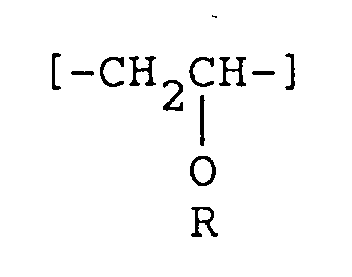
- The molding composition of one or more of the claims 1-4 wherein the poly(vinyl ether) polymer (e) comprises copolymeric units of the formulae

- The molding composition of one or more of the claims 1-6 wherein the poly(vinyl ether) polymer (e) is poly(vinyl ethyl) ether, poly(vinyl methyl) ether or poly(vinyl isobutyl)ether.
- The molding composition of one or more of the claims 1-7 containing filler, peroxide catalyst and mold release agent.
- The molding composition of one or more of the claims 1-8 containing a chemical thickening agent.
- The molding composition of one or more of the claims 1-9 in which the poly(vinyl ether) polymer (e) is used in conjunction with other shrinkage control additives.
- The molding composition of one or more of the claims 1-10 wherein the poly(vinyl ether) polymer (e) contains at least one of carboxyl and hydroxyl groups bonded thereto.
- A molded article made by the molding at elevated temperatures of the molding composition of one or more of the claims 1-11.
Applications Claiming Priority (2)
| Application Number | Priority Date | Filing Date | Title |
|---|---|---|---|
| US331696 | 1981-12-17 | ||
| US33169689A | 1989-03-31 | 1989-03-31 |
Publications (3)
| Publication Number | Publication Date |
|---|---|
| EP0390187A2 EP0390187A2 (en) | 1990-10-03 |
| EP0390187A3 EP0390187A3 (en) | 1991-03-20 |
| EP0390187B1 true EP0390187B1 (en) | 1995-04-05 |
Family
ID=23294987
Family Applications (1)
| Application Number | Title | Priority Date | Filing Date |
|---|---|---|---|
| EP90106151A Expired - Lifetime EP0390187B1 (en) | 1989-03-31 | 1990-03-30 | Poly(vinyl ethers) as shrinkage control agents |
Country Status (6)
| Country | Link |
|---|---|
| US (1) | US5637630A (en) |
| EP (1) | EP0390187B1 (en) |
| JP (1) | JPH03269055A (en) |
| AT (1) | ATE120771T1 (en) |
| CA (1) | CA2013513A1 (en) |
| DE (1) | DE69018296T2 (en) |
Families Citing this family (14)
| Publication number | Priority date | Publication date | Assignee | Title |
|---|---|---|---|---|
| WO1993007216A1 (en) * | 1991-09-30 | 1993-04-15 | Union Carbide Chemicals & Plastics Technology Corporation | Thermosetting polyester plastic compositions containing blocked polyisocyanate and isocyanate-reactive material |
| US5932309A (en) * | 1995-09-28 | 1999-08-03 | Alliedsignal Inc. | Colored articles and compositions and methods for their fabrication |
| TW359642B (en) * | 1997-04-21 | 1999-06-01 | Toray Industries | Resin composition for fiber-reinforced complex material, prepreg and fiber-reinforced complex material |
| US5883166A (en) * | 1997-06-26 | 1999-03-16 | Jennings; Thomas C. | Liquid internal mold release agents for unsaturated polyester thermosetting molding compounds |
| DK1023394T3 (en) | 1997-10-10 | 2002-04-22 | Cook Composites & Polymers | Water resistant, unsaturated polyester resin compositions |
| ZA9962B (en) * | 1998-01-20 | 1999-07-06 | Cook Composites & Polymers | Aromatic polyol end-capped unsaturated polyetherester resins and resin compositions containing the same having improved chemical and/or water resistance. |
| DE19913725C1 (en) * | 1999-03-26 | 2001-03-01 | Byk Chemie Gmbh | Process for the preparation of modified vinyl ether polymers |
| JP3358606B2 (en) * | 1999-12-14 | 2002-12-24 | 日本電気株式会社 | Liquid crystal display panel manufacturing method |
| US6623672B2 (en) | 2000-10-03 | 2003-09-23 | Vec Technology Inc. | Method and apparatus for molding composite articles |
| US20030215588A1 (en) * | 2002-04-09 | 2003-11-20 | Yeager Gary William | Thermoset composition, method, and article |
| US7553435B2 (en) * | 2004-01-23 | 2009-06-30 | Vec Industries, L.L.C. | Method and apparatus for molding composite articles |
| JP5308737B2 (en) * | 2008-08-21 | 2013-10-09 | 昭和電工株式会社 | Unsaturated polyester resin composition for lamp reflector and molded product thereof, and lamp reflector |
| JP5675813B2 (en) * | 2009-08-26 | 2015-02-25 | ビーエーエスエフ ソシエタス・ヨーロピアBasf Se | Coating agent containing unsaturated polyester resin and vinyl ether |
| US20160067167A1 (en) * | 2012-11-15 | 2016-03-10 | Isp Investments Inc. | Oral care compositions for treatment of sensitive teeth |
Family Cites Families (47)
| Publication number | Priority date | Publication date | Assignee | Title |
|---|---|---|---|---|
| NL107342C (en) * | 1954-10-21 | |||
| NL120401C (en) * | 1959-03-05 | |||
| GB1098132A (en) * | 1964-02-19 | 1968-01-03 | Distillers Co Yeast Ltd | Polymer compositions |
| US3772241A (en) * | 1966-07-20 | 1973-11-13 | Rohm & Haas | Unsaturated polyester resinous compositions |
| US3701748A (en) * | 1966-07-20 | 1972-10-31 | Rohm & Haas | Unsaturated polyester resinous compositions |
| US3503921A (en) * | 1967-10-18 | 1970-03-31 | Grace W R & Co | Polyester premix containing polystyrene and monomeric styrene |
| US3549586A (en) * | 1969-04-01 | 1970-12-22 | Union Carbide Corp | Polyester compositions |
| US3665055A (en) * | 1969-10-22 | 1972-05-23 | John A Hatton Jr | Polymerizable unsaturated polyester resin compositions and articles made therefrom |
| CA945699A (en) * | 1970-02-02 | 1974-04-16 | Percy L. Smith | Polyester compositions |
| USRE31975E (en) * | 1970-02-02 | 1985-08-27 | Union Carbide Corp. | Polyester compositions |
| FR2080072A5 (en) * | 1970-02-23 | 1971-11-12 | Rhone Poulenc Sa | |
| US3721722A (en) * | 1970-07-16 | 1973-03-20 | Koppers Co Inc | Thickenable unsaturated polyester resin system |
| US3718714A (en) * | 1970-09-16 | 1973-02-27 | Union Carbide Corp | Unsaturated polyester compositions |
| JPS4926712B1 (en) * | 1970-12-23 | 1974-07-11 | ||
| US4284736A (en) * | 1971-01-18 | 1981-08-18 | Union Carbide Corporation | Unsaturated polyester compositions |
| US3883612A (en) * | 1971-06-07 | 1975-05-13 | Scm Corp | Low-shrink thermosetting polymers |
| US3801693A (en) * | 1971-09-07 | 1974-04-02 | Diamond Shamrock Corp | Method of coloring low profile reinforced unsaturated polyesters |
| US3909483A (en) * | 1972-06-08 | 1975-09-30 | Hooker Chemicals Plastics Corp | Tack free polymerizable polyester compositions |
| US3842142A (en) * | 1972-07-20 | 1974-10-15 | Union Carbide Corp | Unsaturated polyester compositions |
| US3923928A (en) * | 1973-01-31 | 1975-12-02 | Union Carbide Corp | Unsaturated polyesters and compositions based thereon |
| US3887515A (en) * | 1973-02-05 | 1975-06-03 | Dow Chemical Co | Process for making low profile molding compounds |
| US3933757A (en) * | 1973-02-08 | 1976-01-20 | Scm Corporation | Dicyclopentadiene thermosetting polyester |
| US3929868A (en) * | 1973-08-15 | 1975-12-30 | Eastman Kodak Co | Saturated polyester useful as low shrink additive for molding compositions containing unsaturated polyesters |
| NO750494L (en) * | 1974-03-02 | 1975-09-03 | Bayer Ag | |
| US3994853A (en) * | 1974-04-09 | 1976-11-30 | Hooker Chemicals & Plastics Corporation | Tack free polymerizable polyester compositions |
| JPS50139888A (en) * | 1974-04-30 | 1975-11-08 | ||
| US4035439A (en) * | 1975-10-17 | 1977-07-12 | Scm Corporation | Low-shrink thermosetting polyesters |
| US4067845A (en) * | 1975-12-08 | 1978-01-10 | The Budd Company | Maturation of polyester compositions for viscosity index control |
| US4032484A (en) * | 1976-01-19 | 1977-06-28 | Texaco Development Corporation | Fire-retardant polyurethane composition |
| US4020036A (en) * | 1976-04-22 | 1977-04-26 | Phillips Petroleum Company | Thermosetting polyester composition containing normally solid carboxy-containing diene polymer |
| US4101604A (en) * | 1977-07-18 | 1978-07-18 | The B. F. Goodrich Company | Unsaturated polyester molding compositions |
| US4160759A (en) * | 1978-01-30 | 1979-07-10 | Exxon Research & Engineering Co. | Elastomer modified polyester molding compound |
| US4172059A (en) * | 1978-02-08 | 1979-10-23 | Union Carbide Corporation | Low shrinking thermosetting molding compositions having reduced initial viscosity |
| US4161471A (en) * | 1978-04-13 | 1979-07-17 | E. I. Du Pont De Nemours And Company | Elastomer modified unsaturated molding compositions |
| US4170612A (en) * | 1978-04-13 | 1979-10-09 | National Starch And Chemical Corporation | Pressure sensitive adhesive compositions |
| JPS5580423A (en) * | 1978-12-13 | 1980-06-17 | Hitachi Chem Co Ltd | Low shrinkage unsaturated polyester resin composition |
| US4421894A (en) * | 1979-03-02 | 1983-12-20 | Olin Corporation | Polyurethane oligomer impact and shrinkage modifiers for thermoset polyesters |
| US4263199A (en) * | 1979-11-13 | 1981-04-21 | Union Carbide Corporation | Polyester molding compositions |
| US4374215A (en) * | 1979-11-13 | 1983-02-15 | Union Carbide Corporation | Polyester moldings |
| US4525498A (en) * | 1980-10-16 | 1985-06-25 | Union Carbide Corporation | Polyester fiber reinforced molding compounds |
| US4673706A (en) * | 1981-02-24 | 1987-06-16 | Union Carbide Corporation | Polyester molding compositions |
| US4555534A (en) * | 1981-03-26 | 1985-11-26 | Union Carbide Corporation | Uniformly pigmented, low shrinking polyester molding compositions |
| AU558337B2 (en) * | 1981-09-03 | 1987-01-29 | Olin Corporation | Polyurethane modifiers for thermoset polyesters |
| US4491642A (en) * | 1982-09-20 | 1985-01-01 | Union Carbide Corporation | Uniformly pigmented, low shrinking polyester molding compositions |
| US4535110A (en) * | 1984-06-25 | 1985-08-13 | The Budd Company | Dual functional additive |
| US4678711A (en) * | 1985-10-03 | 1987-07-07 | Union Carbide Corporation | Process for promoting the adhesion of epoxy bonded fiber reinforced plastics |
| WO1990001512A1 (en) * | 1988-08-12 | 1990-02-22 | Desoto, Inc. | Photo-curable vinyl ether compositions |
-
1990
- 1990-03-30 DE DE69018296T patent/DE69018296T2/en not_active Expired - Fee Related
- 1990-03-30 CA CA002013513A patent/CA2013513A1/en not_active Abandoned
- 1990-03-30 AT AT90106151T patent/ATE120771T1/en not_active IP Right Cessation
- 1990-03-30 EP EP90106151A patent/EP0390187B1/en not_active Expired - Lifetime
- 1990-03-30 JP JP2081480A patent/JPH03269055A/en active Pending
-
1991
- 1991-11-22 US US07/799,727 patent/US5637630A/en not_active Expired - Fee Related
Non-Patent Citations (1)
| Title |
|---|
| CHEMICAL ABSTRACTS, vol. 77, no. 12, 18 September 1972 Columbus, Ohio, USA ref.no. 76144K & JP-A-7 136 462 * |
Also Published As
| Publication number | Publication date |
|---|---|
| DE69018296D1 (en) | 1995-05-11 |
| EP0390187A2 (en) | 1990-10-03 |
| JPH03269055A (en) | 1991-11-29 |
| DE69018296T2 (en) | 1995-08-24 |
| CA2013513A1 (en) | 1990-09-30 |
| US5637630A (en) | 1997-06-10 |
| ATE120771T1 (en) | 1995-04-15 |
| EP0390187A3 (en) | 1991-03-20 |
Similar Documents
| Publication | Publication Date | Title |
|---|---|---|
| US5202366A (en) | Crosslinkable polyester compositions with improved properties | |
| US5637630A (en) | Composition of unsaturated polyester, copolymerizable monomer and poly (vinyl ether) shrinkage control agent | |
| US5756554A (en) | Low profile additives for polyester resin systems based on asymmetric glycols and aromatic diacids | |
| US4585833A (en) | Low shrinkling curable poly(acrylate) molding compositions | |
| US4524162A (en) | Low shrinking curable molding compositions containing a poly(acrylate) | |
| EP0075765B1 (en) | Polyester molding compositions | |
| EP0451258B1 (en) | Unsaturated polyester resin compositions containing compatible compounds | |
| US7989557B2 (en) | Surface improver for reinforced composite compositions | |
| US5089544A (en) | Unsaturated polyester resin compositions containing compatible compounds | |
| EP0335406B1 (en) | Low profile molding system | |
| CA1171585A (en) | Composition containing an unsaturated polyester, a low profile thermoplastic polymer additive, a polymerizable monomer and an epoxy compound | |
| EP0877771A1 (en) | Low profile additives for polyester resin systems based on asymmetric glycols and aromatic diacids | |
| WO1997028204A9 (en) | Low profile additives for polyester resin systems based on asymmetric glycols and aromatic diacids | |
| US5004765A (en) | Low profile molding system | |
| EP0383609B1 (en) | Resin composition and method of manufacturing the same | |
| US5166291A (en) | Polyester compositions | |
| EP0129725B1 (en) | Improved low shrinking curable poly(acrylate) molding compositions | |
| US4575473A (en) | Curable poly(acrylate) molding compositions containing a thermoplastic polymer low profile additive | |
| EP0351830B1 (en) | Polyester compositions with improved properties | |
| CA2097330A1 (en) | Thermosetting polyester plastic compositions containing blocked polyisocyanate and isocyante-reactive material | |
| US3969311A (en) | Fiber reinforced polyester resin having a low surface profile | |
| EP0755976A1 (en) | Cured thermosets and glass-reinforced composites from unsaturated polyetherester resins and dicyclopentadiene polyester resins | |
| US4487798A (en) | Curable poly(acrylate) molding compositions containing a thermoplastic polymer low profile additive | |
| KR100201802B1 (en) | Low profile additive based on asymmetric glycols and aromatic diacids for polyester resin systems | |
| CA1152682A (en) | Process for fracture toughening resins and resins produced therefrom |
Legal Events
| Date | Code | Title | Description |
|---|---|---|---|
| PUAI | Public reference made under article 153(3) epc to a published international application that has entered the european phase |
Free format text: ORIGINAL CODE: 0009012 |
|
| AK | Designated contracting states |
Kind code of ref document: A2 Designated state(s): AT BE CH DE ES FR GB GR IT LI LU NL SE |
|
| PUAL | Search report despatched |
Free format text: ORIGINAL CODE: 0009013 |
|
| 17P | Request for examination filed |
Effective date: 19901219 |
|
| AK | Designated contracting states |
Kind code of ref document: A3 Designated state(s): AT BE CH DE ES FR GB GR IT LI LU NL SE |
|
| RHK1 | Main classification (correction) |
Ipc: C08F283/01 |
|
| 17Q | First examination report despatched |
Effective date: 19920826 |
|
| GRAA | (expected) grant |
Free format text: ORIGINAL CODE: 0009210 |
|
| AK | Designated contracting states |
Kind code of ref document: B1 Designated state(s): AT BE CH DE ES FR GB GR IT LI LU NL SE |
|
| PG25 | Lapsed in a contracting state [announced via postgrant information from national office to epo] |
Ref country code: NL Free format text: LAPSE BECAUSE OF FAILURE TO SUBMIT A TRANSLATION OF THE DESCRIPTION OR TO PAY THE FEE WITHIN THE PRESCRIBED TIME-LIMIT Effective date: 19950405 Ref country code: LI Effective date: 19950405 Ref country code: GR Free format text: LAPSE BECAUSE OF FAILURE TO SUBMIT A TRANSLATION OF THE DESCRIPTION OR TO PAY THE FEE WITHIN THE PRESCRIBED TIME-LIMIT Effective date: 19950405 Ref country code: ES Free format text: THE PATENT HAS BEEN ANNULLED BY A DECISION OF A NATIONAL AUTHORITY Effective date: 19950405 Ref country code: CH Effective date: 19950405 Ref country code: BE Effective date: 19950405 Ref country code: AT Effective date: 19950405 |
|
| REF | Corresponds to: |
Ref document number: 120771 Country of ref document: AT Date of ref document: 19950415 Kind code of ref document: T |
|
| REF | Corresponds to: |
Ref document number: 69018296 Country of ref document: DE Date of ref document: 19950511 |
|
| ITF | It: translation for a ep patent filed | ||
| PG25 | Lapsed in a contracting state [announced via postgrant information from national office to epo] |
Ref country code: SE Effective date: 19950705 |
|
| ET | Fr: translation filed | ||
| REG | Reference to a national code |
Ref country code: CH Ref legal event code: PL |
|
| NLV1 | Nl: lapsed or annulled due to failure to fulfill the requirements of art. 29p and 29m of the patents act | ||
| PLBE | No opposition filed within time limit |
Free format text: ORIGINAL CODE: 0009261 |
|
| STAA | Information on the status of an ep patent application or granted ep patent |
Free format text: STATUS: NO OPPOSITION FILED WITHIN TIME LIMIT |
|
| 26N | No opposition filed | ||
| PG25 | Lapsed in a contracting state [announced via postgrant information from national office to epo] |
Ref country code: LU Free format text: LAPSE BECAUSE OF NON-PAYMENT OF DUE FEES Effective date: 19960331 |
|
| PGFP | Annual fee paid to national office [announced via postgrant information from national office to epo] |
Ref country code: FR Payment date: 19990302 Year of fee payment: 10 |
|
| PGFP | Annual fee paid to national office [announced via postgrant information from national office to epo] |
Ref country code: GB Payment date: 19990303 Year of fee payment: 10 |
|
| PGFP | Annual fee paid to national office [announced via postgrant information from national office to epo] |
Ref country code: DE Payment date: 19990305 Year of fee payment: 10 |
|
| PG25 | Lapsed in a contracting state [announced via postgrant information from national office to epo] |
Ref country code: GB Free format text: LAPSE BECAUSE OF NON-PAYMENT OF DUE FEES Effective date: 20000330 |
|
| GBPC | Gb: european patent ceased through non-payment of renewal fee |
Effective date: 20000330 |
|
| PG25 | Lapsed in a contracting state [announced via postgrant information from national office to epo] |
Ref country code: FR Free format text: LAPSE BECAUSE OF NON-PAYMENT OF DUE FEES Effective date: 20001130 |
|
| REG | Reference to a national code |
Ref country code: FR Ref legal event code: ST |
|
| PG25 | Lapsed in a contracting state [announced via postgrant information from national office to epo] |
Ref country code: DE Free format text: LAPSE BECAUSE OF NON-PAYMENT OF DUE FEES Effective date: 20010103 |
|
| PG25 | Lapsed in a contracting state [announced via postgrant information from national office to epo] |
Ref country code: IT Free format text: LAPSE BECAUSE OF NON-PAYMENT OF DUE FEES;WARNING: LAPSES OF ITALIAN PATENTS WITH EFFECTIVE DATE BEFORE 2007 MAY HAVE OCCURRED AT ANY TIME BEFORE 2007. THE CORRECT EFFECTIVE DATE MAY BE DIFFERENT FROM THE ONE RECORDED. Effective date: 20050330 |