EP0388909A2 - Thiazole compounds, processes for the preparation thereof and pharmaceutical composition comprising the same - Google Patents
Thiazole compounds, processes for the preparation thereof and pharmaceutical composition comprising the same Download PDFInfo
- Publication number
- EP0388909A2 EP0388909A2 EP90105289A EP90105289A EP0388909A2 EP 0388909 A2 EP0388909 A2 EP 0388909A2 EP 90105289 A EP90105289 A EP 90105289A EP 90105289 A EP90105289 A EP 90105289A EP 0388909 A2 EP0388909 A2 EP 0388909A2
- Authority
- EP
- European Patent Office
- Prior art keywords
- alkanoyl
- compound
- salt
- formula
- amino
- Prior art date
- Legal status (The legal status is an assumption and is not a legal conclusion. Google has not performed a legal analysis and makes no representation as to the accuracy of the status listed.)
- Withdrawn
Links
- 0 C*=C(N)N*=C Chemical compound C*=C(N)N*=C 0.000 description 6
Classifications
-
- C—CHEMISTRY; METALLURGY
- C07—ORGANIC CHEMISTRY
- C07D—HETEROCYCLIC COMPOUNDS
- C07D417/00—Heterocyclic compounds containing two or more hetero rings, at least one ring having nitrogen and sulfur atoms as the only ring hetero atoms, not provided for by group C07D415/00
- C07D417/02—Heterocyclic compounds containing two or more hetero rings, at least one ring having nitrogen and sulfur atoms as the only ring hetero atoms, not provided for by group C07D415/00 containing two hetero rings
- C07D417/12—Heterocyclic compounds containing two or more hetero rings, at least one ring having nitrogen and sulfur atoms as the only ring hetero atoms, not provided for by group C07D415/00 containing two hetero rings linked by a chain containing hetero atoms as chain links
-
- A—HUMAN NECESSITIES
- A61—MEDICAL OR VETERINARY SCIENCE; HYGIENE
- A61P—SPECIFIC THERAPEUTIC ACTIVITY OF CHEMICAL COMPOUNDS OR MEDICINAL PREPARATIONS
- A61P29/00—Non-central analgesic, antipyretic or antiinflammatory agents, e.g. antirheumatic agents; Non-steroidal antiinflammatory drugs [NSAID]
-
- A—HUMAN NECESSITIES
- A61—MEDICAL OR VETERINARY SCIENCE; HYGIENE
- A61P—SPECIFIC THERAPEUTIC ACTIVITY OF CHEMICAL COMPOUNDS OR MEDICINAL PREPARATIONS
- A61P37/00—Drugs for immunological or allergic disorders
- A61P37/08—Antiallergic agents
-
- A—HUMAN NECESSITIES
- A61—MEDICAL OR VETERINARY SCIENCE; HYGIENE
- A61P—SPECIFIC THERAPEUTIC ACTIVITY OF CHEMICAL COMPOUNDS OR MEDICINAL PREPARATIONS
- A61P43/00—Drugs for specific purposes, not provided for in groups A61P1/00-A61P41/00
-
- A—HUMAN NECESSITIES
- A61—MEDICAL OR VETERINARY SCIENCE; HYGIENE
- A61P—SPECIFIC THERAPEUTIC ACTIVITY OF CHEMICAL COMPOUNDS OR MEDICINAL PREPARATIONS
- A61P7/00—Drugs for disorders of the blood or the extracellular fluid
- A61P7/02—Antithrombotic agents; Anticoagulants; Platelet aggregation inhibitors
-
- A—HUMAN NECESSITIES
- A61—MEDICAL OR VETERINARY SCIENCE; HYGIENE
- A61P—SPECIFIC THERAPEUTIC ACTIVITY OF CHEMICAL COMPOUNDS OR MEDICINAL PREPARATIONS
- A61P9/00—Drugs for disorders of the cardiovascular system
- A61P9/08—Vasodilators for multiple indications
-
- C—CHEMISTRY; METALLURGY
- C07—ORGANIC CHEMISTRY
- C07D—HETEROCYCLIC COMPOUNDS
- C07D277/00—Heterocyclic compounds containing 1,3-thiazole or hydrogenated 1,3-thiazole rings
- C07D277/02—Heterocyclic compounds containing 1,3-thiazole or hydrogenated 1,3-thiazole rings not condensed with other rings
- C07D277/20—Heterocyclic compounds containing 1,3-thiazole or hydrogenated 1,3-thiazole rings not condensed with other rings having two or three double bonds between ring members or between ring members and non-ring members
- C07D277/22—Heterocyclic compounds containing 1,3-thiazole or hydrogenated 1,3-thiazole rings not condensed with other rings having two or three double bonds between ring members or between ring members and non-ring members with only hydrogen atoms, hydrocarbon or substituted hydrocarbon radicals, directly attached to ring carbon atoms
- C07D277/28—Radicals substituted by nitrogen atoms
-
- C—CHEMISTRY; METALLURGY
- C07—ORGANIC CHEMISTRY
- C07D—HETEROCYCLIC COMPOUNDS
- C07D277/00—Heterocyclic compounds containing 1,3-thiazole or hydrogenated 1,3-thiazole rings
- C07D277/02—Heterocyclic compounds containing 1,3-thiazole or hydrogenated 1,3-thiazole rings not condensed with other rings
- C07D277/20—Heterocyclic compounds containing 1,3-thiazole or hydrogenated 1,3-thiazole rings not condensed with other rings having two or three double bonds between ring members or between ring members and non-ring members
- C07D277/32—Heterocyclic compounds containing 1,3-thiazole or hydrogenated 1,3-thiazole rings not condensed with other rings having two or three double bonds between ring members or between ring members and non-ring members with hetero atoms or with carbon atoms having three bonds to hetero atoms with at the most one bond to halogen, e.g. ester or nitrile radicals, directly attached to ring carbon atoms
- C07D277/38—Nitrogen atoms
- C07D277/40—Unsubstituted amino or imino radicals
-
- C—CHEMISTRY; METALLURGY
- C07—ORGANIC CHEMISTRY
- C07D—HETEROCYCLIC COMPOUNDS
- C07D471/00—Heterocyclic compounds containing nitrogen atoms as the only ring hetero atoms in the condensed system, at least one ring being a six-membered ring with one nitrogen atom, not provided for by groups C07D451/00 - C07D463/00
- C07D471/02—Heterocyclic compounds containing nitrogen atoms as the only ring hetero atoms in the condensed system, at least one ring being a six-membered ring with one nitrogen atom, not provided for by groups C07D451/00 - C07D463/00 in which the condensed system contains two hetero rings
- C07D471/04—Ortho-condensed systems
-
- Y—GENERAL TAGGING OF NEW TECHNOLOGICAL DEVELOPMENTS; GENERAL TAGGING OF CROSS-SECTIONAL TECHNOLOGIES SPANNING OVER SEVERAL SECTIONS OF THE IPC; TECHNICAL SUBJECTS COVERED BY FORMER USPC CROSS-REFERENCE ART COLLECTIONS [XRACs] AND DIGESTS
- Y02—TECHNOLOGIES OR APPLICATIONS FOR MITIGATION OR ADAPTATION AGAINST CLIMATE CHANGE
- Y02P—CLIMATE CHANGE MITIGATION TECHNOLOGIES IN THE PRODUCTION OR PROCESSING OF GOODS
- Y02P20/00—Technologies relating to chemical industry
- Y02P20/50—Improvements relating to the production of bulk chemicals
- Y02P20/55—Design of synthesis routes, e.g. reducing the use of auxiliary or protecting groups
Definitions
- This invention relates to new thiazole compounds. More particularly, this invention relates to new thiazole compounds and pharmaceutically acceptable salts thereof which have pharmacological activities, processes for preparation thereof, a pharmaceutical composition comprising the same and a use of the same.
- one object of this invention is to provide the new and useful thiazole compounds and pharmaceutically acceptable salts thereof which possess antithrombotic, vasodilating, antiallergic, anti-inflammatory and 5-lipoxygenase inhibitory activities.
- Another object of this invention is to provide processes for preparation of the thiazole compounds and salt thereof.
- a further object of this invention is to provide a pharmaceutical composition comprising said thiazole compounds or a pharmaceutically acceptable salt thereof.
- Still further object of this invention is to provide a use of said thiazole compound or a pharmaceutically acceptable salts thereof as a medicament for prophylactic and therapeutic treatment of thrombosis, hypertension, cardiovascular or cerebrovascular diseases, allergy and inflammation, particularly thrombosis, in human being and animals.
- the object thiazole compounds of the present invention are novel and represented by the following general formula : wherein A is lower alkylene or carbonyl, R1 and R2 are each halogen, lower alkyloxy, lower alkylthio, or lower alkylsulfinyl, R3 is amino-protective group, and R4 is hydrogen, lower alkyl which may have heterocyclic group, piperidyl which may have suitable substituent(s), amidino or amino-protective group.
- the object compound (I) of the present invention can be prepared by the following processes. wherein A, R1, R2, R3 and R4 are each as defined above, R 3 a is protected carboxy(lower)alkanoyl, R 3 b is carboxy(lower)alkanoyl, and X is an acid residue.
- the partial structure of the compounds (I), (Ia), (Ib), and (IV) in case A is lower alkylene are represented by the following one expression for convenient sake, and the compounds (I), (Ia), (Ib) and (IV) are named on the basis of such formula, when A is lower alkylene.
- Suitable salts of the compounds (I), (Ia), (Ib), or (IV) are conventional non-toxic, pharmaceutically acceptable salts and may include e.g. a salt with a base or an acid addition salt such as a salt with an inorganic base, for example, an alkali metal salt (e.g. sodium salt, potassium salt, etc.), an alkaline earth metal salt (e.g. calcium salt, magnesium salt, etc.), an ammonium salt; a salt with an organic base, for example, an organic amine salt, (e.g.
- triethylamine salt pyridine salt, picoline salt, ethanolamine salt, triethanolamine salt, dicyclohexylamine salt, N,N′-dibenzylethylenediamine salt, etc.
- an inorganic acid addition salt e.g. hydrochloride, hydrobromide, sulfate, phosphate, etc.
- an organic carboxylic or sulfonic acid addition salt e.g. formate, acetate, trifluoroacetate, maleate, tartrate, methanesulfonate, benzenesulfonate, toluenesulfonate, etc.
- a salt with a basic or acidic amino acid e.g. arginine, aspartic acid, glutamic acid, etc.
- lower is used to intend a group having 1 to 6, preferably 1 to 4, carbon atom(s), unless otherwise provided.
- Suitable "lower alkyl” and lower alkyl moiety in the term “lower alkyloxy”, “lower alkylthio”, “lower alkylsulfinyl” and “lower alkyl which may have heterocyclic group” may include straight or branched one having 1 to 6 carbon atom(s), such as methyl, ethyl, propyl, iso-propyl, butyl, iso-butyl, sec-butyl, tert-butyl, pentyl, tert-pentyl, hexyl, and the like, preferably one having 1 to 4 carbon atom(s), and the most preferably methyl.
- Suitable "lower alkylene” may be straight or branched one having 1 to 6 carbon atom(s), such as methylene, ethylene, trimethylene, propylene, tetramethylene, pentamethylene, hexamethylene, dimethylmethylene and the like, preferably one having 1 to 4 carbon atom(s), and the most preferably methylene, ethylene and dimethylmethylene.
- Suitable "halogen” may be fluorine, chlorine, bromine or iodine.
- Suitable “amino-protective group” may include acyl such as aliphatic acyl, aromatic acyl, heterocyclic acyl, aliphatic acyl substituted with aromatic or heterocyclic group, which are derived from carboxylic, sulfonic and carbamic acid, and the like.
- the aliphatic acyl may include : lower alkanoyl which may have one or more suitable substituent(s) such as carboxy, protected carboxy, and the like, preferably lower alkanoyl (e.g. formyl, acetyl, propionyl, butyryl, iso-butyryl, valeryl, iso-valeryl pivaloyl, hexanoyl, etc.), carboxy(lower)alkanoyl (e.g.
- carbamoyl methylcarbamoyl, ethylcarbamoyl, propylcarbamoyl, iso-propylcarbamoyl, butylcarbamoyl, iso-butylcarbamoyl, sec-butylcarbamoyl, pentylcarbamoyl, tert-pentylcarbamoyl, hexylcarbamoyl, etc.); lower alkoxycarbonyl having 2 to 7 carbon atoms (e.g.
- the aromatic acyl may include aroyl which may have one or more suitable substituent(s) such as nitro (e.g. benzoyl, toluoyl, xyloyl, naphthoyl, nitrobenzoyl, dinitrobenzoyl, nitronaphthoyl, etc.), arenesulfonyl which may have one or more suitable substituent(s) such as halogen (e.g.
- benzenesulfonyl toluenesulfonyl, xylenesulfonyl, naphthalenesulfonyl, fluorobenzenesulfonyl, chlorobenzenesulfonyl, bromobenzenesulfonyl, iodobenzenesulfonyl, etc.), and the like.
- heterocyclic acyl may include aliphatic or aromatic, heteromonocyclic or heteropolycyclic group containing at least one hetero atom such as nitrogen, oxygen and sulfur atoms, which may have suitable substituent(s), and more suitable heterocyclic group thus defined may include 5 to 7 membered aliphatic heteromonocyclic group having one to three atom(s) selected from nitrogen, oxygen and sulfur or 5 to 10 membered aromatic heteromono- or bi-cyclic group having one to three hetero atom(s) selected from nitrogen, oxygen and sulfur, such as morpholino; morpholinyl; thiazolidinyl which may have oxo group(s) (e.g.
- imidazopyridyl which may have lower alkyl group (e.g. imidazo[1,2-a]pyridin-2-yl, 7-methylimidazo[1,2-a]pyridin-2-yl, imidazo[4,5-c]pyridin-2-yl, etc.); and the like.
- the aliphatic acyl substituted with aromatic group may include ar(lower)alkanoyl (e.g. phenylacetyl, phenylpropionyl, naphtylacetyl, etc.); arenethio(lower)alkanoyl (e.g. (phenylthio)acetyl, (phenylthio)propionyl, etc.); arylsulfonylamino(lower)alkanoyl [e.g. N-(benzenesulfonyl)glycyl, N-(p-toluenesulfonyl)glycyl, etc.]; and the like.
- ar(lower)alkanoyl e.g. phenylacetyl, phenylpropionyl, naphtylacetyl, etc.
- arenethio(lower)alkanoyl e.g. (phenylthio)ace
- the aliphatic acyl substituted with heterocyclic group may include aliphatic acyl such as the ones defined above, which is substituted with the heterocyclic group such as the ones defined in "heterocyclic group" described before, and preferably the ones such as pyridyl(lower)alkanoyl (e.g. (3-pyridyl)acetyl, etc.); pyridyl(lower)alkenoyl (e.g. 3-(3-pyridyl)acryloyl, etc.); amino-substituted thiazolyl(lower)alkanoyl (e.g.
- oxo groups e.g. (thiazolidin-3-yl)acetyl, (1,1,4-trioxothiazolidin-3-yl)acetyl, etc.
- imidazopyridyl(lower)alkanoyl which may have lower alkyl (e.g. 7-methylimidazo [1,2-a]pyridin-2-yl
- the "acid residue” may include halogen (e.g. chlorine, bromine, iodine or fluorine); acyloxy such as lower alkanoyloxy (e.g. acetoxy, etc.), lower alkanesulfonyloxy (e.g. methanesulfonyloxy, etc.), and the like, and preferably halogen.
- halogen e.g. chlorine, bromine, iodine or fluorine
- acyloxy such as lower alkanoyloxy (e.g. acetoxy, etc.), lower alkanesulfonyloxy (e.g. methanesulfonyloxy, etc.), and the like, and preferably halogen.
- the "protected carboxy(lower)alkanoyl” and “carboxy(lower)alkanoyl” may include the same, which are described in the above.
- heterocyclic group in “lower alkyl which may have heterocyclic group” may include the same, which are exemplified in “heterocyclic acyl" stated above.
- Suitable substituent on "piperidyl” may include amino; hydroxy; nitro; cyano; lower alkyl as exemplified above; lower alkoxy as exemplified above; hydroxy(lower)alkyl in which the lower alkyl moiety may be the same as those exemplified above; acyl(lower)alkyl, the acyl group of which may be the same as those exemplified below, preferably carbamoyl(lower)alkyl (e.g. carbamoylmethyl, carbamoylethyl, etc.), lower alkylcarbamoyl(lower)alkyl (e.g.
- acyl as exemplified below, preferably lower alkylcarbamoyl (e.g. methylcarbamoyl, ethylcarbamoyl, propylcarbamoyl, iso-propylcarbamoyl, butylcarbamoyl, hexylcarbamoyl, etc.), lower alkanoyl (e.g.
- acylamino in which the acyl moiety may be the same as those exemplified below, preferably lower alkanoylamino (e.g. formylamino, acetylamino, propionylamino, butyrylamino, valerylamino, hexanoylamino, pivaloylamino, etc.); carboxy; protected carboxy such as esterified carboxy, for example lower alkoxycarbonyl (e.g.
- ar(lower)alkyl such as mono or di or triphenyl(lower)alkyl (e.g. benzyl, benzhydryl, trityl, phenethyl, etc.); and the like.
- A is lower alkylene, more preferably C1-C4alkylene (e.g. methylene, ethylene, dimethylmethylene, etc.); R1 and R2 are each lower alkyloxy, more preferably C1-C4alkyloxy (e.g. methoxy, etc.); R3 is amino-protective group such as acyl, more preferably, lower alkanoyl (e.g. formyl, acetyl, propionyl, etc.); carboxy(lower)alkanoyl (e.g.
- p-toluenesulfonylglycyl, etc. 5 or 6-membered aromatic heteromonocyclic (lower)alkenoyl, in which the heterocyclic moiety has one nitrogen atom such as pyridyl(lower)alkenoyl [e.g. 2-(3-pyridyl)acryloyl, etc.]; and R4 is hydrogen.
- the object compound (I) or a salt thereof can be prepared by reacting the compound (II) with the compound (III) or a salt thereof.
- Suitable salt of the compound (III) can be referred to the ones as exemplified for the compound (I).
- the reaction is usually carried out in a conventional solvent such as water, alcohol (e.g., methanol, ethanol, iso-propyl alcohol, etc.), tetrahydrofuran, dioxane, chloroform, methylene chloride, dimethyl acetamide, N,N-dimethylformamide or and other organic solvent which does not adversely influence the reaction.
- a conventional solvent such as water, alcohol (e.g., methanol, ethanol, iso-propyl alcohol, etc.), tetrahydrofuran, dioxane, chloroform, methylene chloride, dimethyl acetamide, N,N-dimethylformamide or and other organic solvent which does not adversely influence the reaction.
- alcohol e.g., methanol, ethanol, iso-propyl alcohol, etc.
- tetrahydrofuran e.g., methanol, ethanol, iso-propyl alcohol, etc.
- tetrahydrofuran
- the reaction temperature is not critical and the reaction is usually carried out under cooling to heating.
- the reaction may be also carried out in the presence of an inorganic or an organic case such as an alkali metal hydroxide, an alkali metal bicarbonate, alkali metal carbonte, alkali metal acetate, tri(lower)alkylamine, pyridine, N-(lower)alkylmorpholine, N,N-di(lower)alkylbenzylamine, N,N-di(lower)alkylaniline or the like.
- an inorganic or an organic case such as an alkali metal hydroxide, an alkali metal bicarbonate, alkali metal carbonte, alkali metal acetate, tri(lower)alkylamine, pyridine, N-(lower)alkylmorpholine, N,N-di(lower)alkylbenzylamine, N,N-di(lower)alkylaniline or the like.
- the object compound (I) or a salt thereof can be prepared by subjecting the compound (IV) or a salt thereof to an introduction of an amino-protective group.
- This reaction is carried out in a conventional manner under the existence of a suitable amino-protective group introducing agent which is capable of converting an amino moiety to an protected amino moiety.
- amino-protective group introduced by the amino-protective group introducing agent can be referred to one explained before.
- Suitable amino-protective group introducing agent may be carboxylic, carbonic, sulfonic and carbamic acid and their reactive derivative such as acid halide (e.g. acid chloride, etc.), acid anhydride; activated ester; substituted isocyanate, for example N-(lower)alkylisocyanate (e.g. methylisocyanate, ethylisocyanate N-isopropylisocyanate, etc.), and the like.
- acid halide e.g. acid chloride, etc.
- activated ester substituted isocyanate
- substituted isocyanate for example N-(lower)alkylisocyanate (e.g. methylisocyanate, ethylisocyanate N-isopropylisocyanate, etc.), and the like.
- the reaction is usually carried out in a conventional solvent such as alcohol (e.g., methanol, ethanol, iso-propyl alcohol, etc.), tetrahydrofuran, dioxane, dichloromethane, chloroform, dimethyl acetamide, N,N-dimethylformamide or any other organic solvent which does not adversely influence the reaction.
- a conventional solvent such as alcohol (e.g., methanol, ethanol, iso-propyl alcohol, etc.), tetrahydrofuran, dioxane, dichloromethane, chloroform, dimethyl acetamide, N,N-dimethylformamide or any other organic solvent which does not adversely influence the reaction.
- the reaction temperature is not critical and the reaction is usually carried out under cooling to warming.
- the compound (Ib) or a salt thereof can be prepared by subjecting the compound (Ia) or a salt thereof to elimination reaction of the carboxy-protective group on R 3 a .
- Suitable method for this elimination reaction may include conventional one such as hydrolysis.
- Hydrolysis is preferably carried out in the presence of an acid or a base.
- Suitable acid may be an inorganic acid (e.g. hydrochloric acid, hydrobromic acid, sulfuric acid, etc.), an organic acid (e.g. formic acid, acetic acid, trifluoroacetic acid, propionic acid, methanesulfonic acid, benzenesulfonic acid, p-toluenesulfonic acid, etc.), an acidic ion-exchange resin and the like.
- the organic acid such as trifluoroacetic acid and p-toluenesulfonic acid is used in this reaction
- the reaction is preferably carried out in the presence of cation trapping agents (e.g. anisole, etc.).
- the acid suitable for this hydrolysis can be selected according to the kinds of the carboxy-protective group to be eliminated, for example, this hydrolysis can preferably be applied to the carboxy-protective group for R 3 a such as lower alkoxycarbonyl or lower alkanoyl.
- Suitable base may include an inorganic base and an organic base such as an alkali metal (e.g. sodium, potassium, etc.), an alkaline earth metal (e.g. magnesium, calcium, etc.), the hydroxide or carbonate or hydrogencarbonate thereof, trialkylamine (e.g. trimethylamine, triethylamine, etc.), picoline, 1,5-diazabicyclo[4.3.0]none-5-ene, 1,4-diazabicyclo[2.2.2]octane, 1,8-diazabicyclo[5.4.0]undecene-7, or the like.
- an alkali metal e.g. sodium, potassium, etc.
- an alkaline earth metal e.g. magnesium, calcium, etc.
- trialkylamine e.g. trimethylamine, triethylamine, etc.
- picoline 1,5-diazabicyclo[4.3.0]none-5-ene
- the hydrolysis is usually carried out in a conventional solvent which does not adversely influence the reaction such as water, methanol, ethanol, propanol, tert-butyl alcohol, tetrahydrofuran, N,N-dimethylformamide, dioxane or a mixture thereof, and further the above-mentioned acids can also be used as a solvent when they are in liquid.
- a conventional solvent which does not adversely influence the reaction
- reaction temperature of this hydrolysis is not critical, and the reaction is usually carried out under cooling to heating.
- the object compounds (I), (Ia) and (Ib) obtained by the above processes or salts thereof can be isolated and purified by using conventional manners in this field, such as column chromatography, recrystallization, or the like.
- the compound (I) may be converted into the aforesaid salts according to a conventional manner.
- Some of the starting compound (IV) in Process (b) are novel and can be prepared by the following process. wherein A, R1 and R2 are each as defined above, R 4 a is hydrogen, lower alkyl which may have heterocyclic group, piperidyl which may have suitable substituent(s) or amidino, and X1 is an acid residue.
- the compound (IVa) or a salt thereof can be prepared by reacting the compound (V) with the compound (VI) or a salt thereof.
- Suitable salt of the compound (VI) can be referred to the ones as exemplified for the compound (I).
- This reaction can be carried out in a similar manner to that of the aforementioned Process (a), and therefore the reaction conditions [e.g. base, solvent, temperature, etc.) can be referred to those of Process (a).
- the other starting compounds can be prepared in a conventional manner.
- the new thiazole compounds (I) and a pharmaceutically acceptable salt thereof of the present invention possess strong antithrombotic activity inhibiting the activities against cyclooxygenase, thrombin, phosphodiesterase and the like, and/or inhibiting aggregation of platelet; vasodilating activity; anti-allergic activity; anti-inflammatory activity; and 5-lipoxygenase inhibitory activity; particularly antithrombotic activity, and therefore are useful as antithrombotic agent, vasodilating agent, anti-allergic agent, anti-inflammatory agent and 5-lipoxygenase inhibiting agent, particularly anti-thrombotic agent.
- the new thiazole compounds (I) and a pharmaceutically acceptable salt thereof can be used for prophylactic and therapeutic treatment of cerebral thrombosis, atrophic thrombosis; coronary thrombosis; creeping thrombosis; dialation thrombosis; jumping thrombosis; mural thrombosis; placental thrombosis; platelet thrombosis; posttraumatic arterial thrombosis; thrombostasis; compression thrombosis; peripheral vascular disorders such as chronic arterial occlusion; transient ischemic attack; myocardial infarction; cerebral infarction; reocclusion after percutaneous transluminal coronary angioplasty or percutaneous transluminal coronary recanalization; arteriosclerosis; cerebiral vasospam; disseminated intravascular coagulopathy; hypertension such as pulmonary hypertension; asthma; psoriasis; hepatitis; pancreatitis; arthritis; nephriti
- these compounds are also useful for inhibition of thrombosis during extracorporeal circulation such as dialysis.
- these compounds are also expected to have antipyretic activity, analgesic activity, antiviral activity, antifungal activity, and the like.
- the thiazole compounds (I) and a pharmaceutically acceptable salt thereof scarcely have side effect exerting a bad influence upon patients.
- Washed rabbit PRP (900 ⁇ l) was preincubated with drug solution (dissolved in dimethyl sulfoxide) (100 ⁇ l) at 37°C for 5 minutes. Then, 2.5 mM arachidonic acid solution (20 ⁇ l) was added to the reaction mixture. After 3 minutes, thiobarbiturate reagent (1000 ⁇ l) was added, and the reaction mixture was heated in a boiled water. After centrifugation at 1500 g for 10 minutes, the absorbance of suparnatant was measured at 532 nm. This test was carried out to see inhibitory activity of the test compound against the activity of cyclooxygenase. Activity of the test compound was expressed as IC50 values i.e. doses required to inhibit the production of malondialdehyde by 50%. 2. Test result Test compound IC50 (M) Example 1 1.5 x 10 ⁇ 8
- Plasma samples were drawn from healthy volunteers into a plastic tube containing 1/10 volume of 3.8% sodium citrate and centrifuged at 120 g for 10 minutes to obtain platelet rich plasma (PRP).
- the platelet pellet was suspended in buffer A and centrifuged at 1500 g for 5 minutes.
- the platelets were resuspended in 25 mM Tris-HCl buffer (pH 7.4) containing 130 mM NaCl and 0.3 mM EDTA and recentrifuged at 1500 g for 5 minutes.
- the object compounds (I) of the present invention and pharmaceutically acceptable salts thereof are used in a form of the conventional pharmaceutical preparation in admixture with a conventional pharmaceutically acceptable carrier such as an organic or inorganic solid or liquid excipient which is suitable for oral, parenteral or external administration.
- a conventional pharmaceutically acceptable carrier such as an organic or inorganic solid or liquid excipient which is suitable for oral, parenteral or external administration.
- the pharmaceutical preparation may be compounded in a solid form such as granule, capsule, tablet, dragee or suppository, or in a liquid form such as solution, suspension or emulsion for injection, ingestion, eye drops, etc. If needed, there may be included in the above preparation auxiliary substance such as stabilizing agent, wetting or emulsifying agent, buffer or any other commonly used additives.
- the effective ingredient may usually be administered with a unit dose of 0.001 mg/kg to 500 mg/kg, preferably 0.01 mg/Kg to 10 mg/Kg, 1 to 4 times a day.
- the above dosage may be increased or decreased according to age, weight and conditions of the patient or the administering method.
- 2-Aminomethyl-4,5-bis(4-methoxyphenyl)thiazole hydrochloride (1.00 g) was added to a mixture of dichloromethane and saturated aqueous sodium hydrogencarbonate, and 2-aminomethyl-4,5-bis(4-methoxyphenyl)thiazole was extracted with dichloromethane. The separated organic layer was washed with water and brine, and dried over magnesium sulfate. After filtration, the filtrate was evaporated in vacuo and the resulting residue was dissolved with tetrahydrofuran (20 ml) and methanol (7 ml).
- N-Isopropyl isocyanate (0.38 ml) was added thereto, and the reaction mixture was stirred at ambient temperature for 90 minutes. The reaction mixture was evaporated in vacuo, and the resulting powder was triturated with isopropyl ether, to give 4,5-bis(4-methoxyphenyl)-2-(3-isopropylureidomethyl)thiazole (1.04 g).
Landscapes
- Chemical & Material Sciences (AREA)
- Organic Chemistry (AREA)
- Health & Medical Sciences (AREA)
- Life Sciences & Earth Sciences (AREA)
- General Health & Medical Sciences (AREA)
- Veterinary Medicine (AREA)
- Chemical Kinetics & Catalysis (AREA)
- General Chemical & Material Sciences (AREA)
- Medicinal Chemistry (AREA)
- Nuclear Medicine, Radiotherapy & Molecular Imaging (AREA)
- Public Health (AREA)
- Pharmacology & Pharmacy (AREA)
- Animal Behavior & Ethology (AREA)
- Bioinformatics & Cheminformatics (AREA)
- Engineering & Computer Science (AREA)
- Pulmonology (AREA)
- Diabetes (AREA)
- Cardiology (AREA)
- Heart & Thoracic Surgery (AREA)
- Hematology (AREA)
- Immunology (AREA)
- Pain & Pain Management (AREA)
- Rheumatology (AREA)
- Pharmaceuticals Containing Other Organic And Inorganic Compounds (AREA)
- Thiazole And Isothizaole Compounds (AREA)
- Plural Heterocyclic Compounds (AREA)
- Nitrogen Condensed Heterocyclic Rings (AREA)
Abstract

R¹ and R² are each halogen, lower alkyloxy, lower alkylthio or lower alkylsulfinyl,
R³ is amino-protective group, and
R⁴ is hydrogen, lower alkyl which may have heterocyclic group, piperidyl which may have suitable substituent(s), amidino or amino-protective group,
and pharmaceutically acceptable salt thereof,
processes for their preparation and pharmaceutical compositions comprising them as an active ingredient.
Description
- This invention relates to new thiazole compounds. More particularly, this invention relates to new thiazole compounds and pharmaceutically acceptable salts thereof which have pharmacological activities, processes for preparation thereof, a pharmaceutical composition comprising the same and a use of the same.
- Accordingly, one object of this invention is to provide the new and useful thiazole compounds and pharmaceutically acceptable salts thereof which possess antithrombotic, vasodilating, antiallergic, anti-inflammatory and 5-lipoxygenase inhibitory activities.
- Another object of this invention is to provide processes for preparation of the thiazole compounds and salt thereof.
- A further object of this invention is to provide a pharmaceutical composition comprising said thiazole compounds or a pharmaceutically acceptable salt thereof.
- Still further object of this invention is to provide a use of said thiazole compound or a pharmaceutically acceptable salts thereof as a medicament for prophylactic and therapeutic treatment of thrombosis, hypertension, cardiovascular or cerebrovascular diseases, allergy and inflammation, particularly thrombosis, in human being and animals.
- The object thiazole compounds of the present invention are novel and represented by the following general formula :

R¹ and R² are each halogen, lower alkyloxy, lower alkylthio, or lower alkylsulfinyl,
R³ is amino-protective group, and
R⁴ is hydrogen, lower alkyl which may have heterocyclic group, piperidyl which may have suitable substituent(s), amidino or amino-protective group. - The object compound (I) of the present invention can be prepared by the following processes.


R
R
X is an acid residue. - In the present invention, with regard to the object compound (I), (Ia) and (Ib), and the starting compound (IV) and when A is lower alkylene, it is to be understood that there may be tautomeric equilibrium between the partial structures of such compound as follows.

- However, in the present invention, the partial structure of the compounds (I), (Ia), (Ib), and (IV) in case A is lower alkylene, are represented by the following one expression for convenient sake,

- Suitable salts of the compounds (I), (Ia), (Ib), or (IV) are conventional non-toxic, pharmaceutically acceptable salts and may include e.g. a salt with a base or an acid addition salt such as a salt with an inorganic base, for example, an alkali metal salt (e.g. sodium salt, potassium salt, etc.), an alkaline earth metal salt (e.g. calcium salt, magnesium salt, etc.), an ammonium salt; a salt with an organic base, for example, an organic amine salt, (e.g. triethylamine salt, pyridine salt, picoline salt, ethanolamine salt, triethanolamine salt, dicyclohexylamine salt, N,N′-dibenzylethylenediamine salt, etc.); an inorganic acid addition salt (e.g. hydrochloride, hydrobromide, sulfate, phosphate, etc.); an organic carboxylic or sulfonic acid addition salt (e.g. formate, acetate, trifluoroacetate, maleate, tartrate, methanesulfonate, benzenesulfonate, toluenesulfonate, etc.); a salt with a basic or acidic amino acid (e.g. arginine, aspartic acid, glutamic acid, etc.).
- In the above and subsequent descriptions of the present specification, suitable examples and illustration of the various definitions which the present invention intends to include within the scope thereof are explained in detail as follows.
- The term "lower" is used to intend a group having 1 to 6, preferably 1 to 4, carbon atom(s), unless otherwise provided.
- Suitable "lower alkyl" and lower alkyl moiety in the term "lower alkyloxy", "lower alkylthio", "lower alkylsulfinyl" and "lower alkyl which may have heterocyclic group" may include straight or branched one having 1 to 6 carbon atom(s), such as methyl, ethyl, propyl, iso-propyl, butyl, iso-butyl, sec-butyl, tert-butyl, pentyl, tert-pentyl, hexyl, and the like, preferably one having 1 to 4 carbon atom(s), and the most preferably methyl.
- Suitable "lower alkylene" may be straight or branched one having 1 to 6 carbon atom(s), such as methylene, ethylene, trimethylene, propylene, tetramethylene, pentamethylene, hexamethylene, dimethylmethylene and the like, preferably one having 1 to 4 carbon atom(s), and the most preferably methylene, ethylene and dimethylmethylene.
- Suitable "halogen" may be fluorine, chlorine, bromine or iodine.
- Suitable "amino-protective group" may include acyl such as aliphatic acyl, aromatic acyl, heterocyclic acyl, aliphatic acyl substituted with aromatic or heterocyclic group, which are derived from carboxylic, sulfonic and carbamic acid, and the like.
- The aliphatic acyl may include :
lower alkanoyl which may have one or more suitable substituent(s) such as carboxy, protected carboxy, and the like, preferably lower alkanoyl (e.g. formyl, acetyl, propionyl, butyryl, iso-butyryl, valeryl, iso-valeryl pivaloyl, hexanoyl, etc.), carboxy(lower)alkanoyl (e.g. carboxyacetyl, carboxypropionyl, carboxybutyryl, carboxyhexanoyl, etc.) protected carboxy(lower)alkanoyl, in which the carboxy-protective group is a conventional one used in this field, for example, esterified carboxy(lower)alkanoyl such as lower alkoxycarbonyl(lower)alkanoyl (e.g. methoxycarbonylacetyl, ethoxycarbonylacetyl, ethoxycarbonylpropionyl, etc.); lower alkylthio(lower)alkanoyl (e.g. (methylthio)acetyl, (ethylthio)acetyl, (propylthio)acetyl, (methylthio)propionyl, (ethylthio)propionyl, etc.);
carbamoyl which may have lower alkyl (e.g. carbamoyl, methylcarbamoyl, ethylcarbamoyl, propylcarbamoyl, iso-propylcarbamoyl, butylcarbamoyl, iso-butylcarbamoyl, sec-butylcarbamoyl, pentylcarbamoyl, tert-pentylcarbamoyl, hexylcarbamoyl, etc.);
lower alkoxycarbonyl having 2 to 7 carbon atoms (e.g. methoxycarbonyl, ethoxycarbonyl, propoxycarbonyl, 1-cyclopropylethoxycarbonyl, iso-propoxycarbonyl, butoxycarbonyl, t-butoxycarbonyl, pentyloxycarbonyl, t-pentyloxycarbonyl, hexyloxycarbonyl, etc.), preferably one having 3 to 6 carbon atoms;
lower alkanesulfonyl (e.g., mesyl, ethanesulfonyl, propanesulfonyl, iso-propanesulfonyl, butanesulfonyl, etc.);
cyclo(lower)alkyl(lower)alkanoyl (e.g. cyclohexylacetyl, cyclopentylacetyl, etc.);
lower alkenoyl (e.g. acryloyl, crotonoyl, etc.); and the like. - The aromatic acyl may include aroyl which may have one or more suitable substituent(s) such as nitro (e.g. benzoyl, toluoyl, xyloyl, naphthoyl, nitrobenzoyl, dinitrobenzoyl, nitronaphthoyl, etc.), arenesulfonyl which may have one or more suitable substituent(s) such as halogen (e.g. benzenesulfonyl, toluenesulfonyl, xylenesulfonyl, naphthalenesulfonyl, fluorobenzenesulfonyl, chlorobenzenesulfonyl, bromobenzenesulfonyl, iodobenzenesulfonyl, etc.), and the like.
- The heterocyclic group in "heterocyclic acyl" may include aliphatic or aromatic, heteromonocyclic or heteropolycyclic group containing at least one hetero atom such as nitrogen, oxygen and sulfur atoms, which may have suitable substituent(s), and more suitable heterocyclic group thus defined may include 5 to 7 membered aliphatic heteromonocyclic group having one to three atom(s) selected from nitrogen, oxygen and sulfur or 5 to 10 membered aromatic heteromono- or bi-cyclic group having one to three hetero atom(s) selected from nitrogen, oxygen and sulfur, such as morpholino; morpholinyl; thiazolidinyl which may have oxo group(s) (e.g. thiazolidin-2-yl, thiazolidin-3-yl, thiazolidin-4-yl, thiazolidin-5-yl, 1,1,4-trioxothiazolidin-3-yl, etc.); piperidino; piperidyl; piperazinyl; pyridyl; thiazolyl which may have amino group (e.g. thiazol-2-yl, thiazol-4-yl, thiazol-5-yl, 2-aminothiazol-4-yl, etc.); pyridazinyl; dihydro- or tetrahydropyridazinyl which may have oxo and/or lower alkyl group(s) (e.g. 1,4,5,6-tetrahydropyridazin-3-yl, 1,4,5,6-tetrahydro-6-oxopyridazin-3-yl, 2,3-dihydro-6-methyl-3-oxopyridazin-4-yl, etc.);
imidazopyridyl which may have lower alkyl group (e.g. imidazo[1,2-a]pyridin-2-yl, 7-methylimidazo[1,2-a]pyridin-2-yl, imidazo[4,5-c]pyridin-2-yl, etc.); and the like. - The aliphatic acyl substituted with aromatic group may include ar(lower)alkanoyl (e.g. phenylacetyl, phenylpropionyl, naphtylacetyl, etc.);
arenethio(lower)alkanoyl (e.g. (phenylthio)acetyl, (phenylthio)propionyl, etc.);
arylsulfonylamino(lower)alkanoyl [e.g. N-(benzenesulfonyl)glycyl, N-(p-toluenesulfonyl)glycyl, etc.]; and the like. - The aliphatic acyl substituted with heterocyclic group may include aliphatic acyl such as the ones defined above, which is substituted with the heterocyclic group such as the ones defined in "heterocyclic group" described before, and preferably the ones such as pyridyl(lower)alkanoyl (e.g. (3-pyridyl)acetyl, etc.); pyridyl(lower)alkenoyl (e.g. 3-(3-pyridyl)acryloyl, etc.); amino-substituted thiazolyl(lower)alkanoyl (e.g. (2-aminothiazol-4-yl)acetyl, etc.); thiazolidinyl(lower) alkanoyl which may have oxo groups (e.g. (thiazolidin-3-yl)acetyl, (1,1,4-trioxothiazolidin-3-yl)acetyl, etc.); imidazopyridyl(lower)alkanoyl (which may have lower alkyl (e.g. 7-methylimidazo [1,2-a]pyridin-2-yl)acetyl, etc.), and the like.
- The "acid residue" may include halogen (e.g. chlorine, bromine, iodine or fluorine); acyloxy such as lower alkanoyloxy (e.g. acetoxy, etc.), lower alkanesulfonyloxy (e.g. methanesulfonyloxy, etc.), and the like, and preferably halogen.
- The "protected carboxy(lower)alkanoyl" and "carboxy(lower)alkanoyl" may include the same, which are described in the above.
- The heterocyclic group in "lower alkyl which may have heterocyclic group" may include the same, which are exemplified in "heterocyclic acyl" stated above.
- Suitable substituent on "piperidyl" may include amino; hydroxy; nitro; cyano; lower alkyl as exemplified above; lower alkoxy as exemplified above; hydroxy(lower)alkyl in which the lower alkyl moiety may be the same as those exemplified above; acyl(lower)alkyl, the acyl group of which may be the same as those exemplified below, preferably carbamoyl(lower)alkyl (e.g. carbamoylmethyl, carbamoylethyl, etc.), lower alkylcarbamoyl(lower)alkyl (e.g. methylcarbamoylmethyl, ethylcarbamoylmethyl, propylcarbamoylmethyl, iso-propylcarbamoylmethyl, methylcarbamoylethyl, etc.); oxo; acyl as exemplified below, preferably lower alkylcarbamoyl (e.g. methylcarbamoyl, ethylcarbamoyl, propylcarbamoyl, iso-propylcarbamoyl, butylcarbamoyl, hexylcarbamoyl, etc.), lower alkanoyl (e.g. formyl, acetyl, propionyl, butyryl, pentanoyl, hexanoyl, pivaloyl, etc.), etc.; protected amino such as acylamino, in which the acyl moiety may be the same as those exemplified below, preferably lower alkanoylamino (e.g. formylamino, acetylamino, propionylamino, butyrylamino, valerylamino, hexanoylamino, pivaloylamino, etc.); carboxy; protected carboxy such as esterified carboxy, for example lower alkoxycarbonyl (e.g. methoxycarbonyl, ethoxycarbonyl, propoxycarbonyl, iso-propoxycarbonyl, butoxycarbonyl, hexyloxycarbonyl, neopentyloxycarbonyl, etc.); ar(lower)alkyl such as mono or di or triphenyl(lower)alkyl (e.g. benzyl, benzhydryl, trityl, phenethyl, etc.); and the like.
- Preferred embodiments of the definitions for A, R¹, R², R³ and R⁴ are as follows.
A is lower alkylene, more preferably C₁-C₄alkylene (e.g. methylene, ethylene, dimethylmethylene, etc.);
R¹ and R² are each lower alkyloxy, more preferably C₁-C₄alkyloxy (e.g. methoxy, etc.);
R³ is amino-protective group such as acyl, more preferably, lower alkanoyl (e.g. formyl, acetyl, propionyl, etc.);
carboxy(lower)alkanoyl (e.g. carboxyacetyl, 3-carboxypropionyl, etc.);
protected carboxy(lower)alkanoyl, for example, esterified carboxy(lower)alkanoyl such as lower alkoxycarbonyl(lower)alkanoyl (e.g. ethoxycarbonylacetyl, 3-ethoxycarbonylpropionyl, etc.);
lower alkylthio(lower)alkanoyl [e.g. (methylthio)acetyl, etc.);
carbamoyl;
lower alkylcarbamoyl (e.g. methylcarbamoyl, ethylcarbamoyl, isopropylcarbamoyl, etc.); 5 or 6-membered aliphatic heteromonocyclic carbonyl having one nitrogen atom and one additional hetero atom selected from oxygen and sulfur such as morpholinylcarbonyl (e.g. morpholinocarbonyl, etc.), thiazolidinylcarbonyl (e.g. thiazolidin-4-ylcarbonyl, etc.), etc.;
5 or 6-membered unsaturated heteromonocyclic carbonyl having one or two nitrogen atom(s) which may be substituted by one or two substituent(s) selected from lower alkyl and oxo such as pyridylcarbonyl (e.g. 3-pyridylcarbonyl, etc.), di or tetrahydropyridazinylcarbonyl substituted by oxo or oxo and lower alkyl [e.g. (2,3-dihydro-6-methyl-3-oxopyridazin-4-yl)carbonyl, (1,4,5,6-tetrahydro-6-oxopyridazin-3-yl)carbonyl, etc.], etc.;
9 or 10-membered aromatic heterobicyclic carbonyl having three nitrogen atoms such as imidazopyridylcarbonyl [e.g. (imidazo[4,5-c]pyridin-2-yl)carbonyl, etc.);
arylthio(lower)alkanoyl such as C₆-C₁₀arylthio(lower)alkanoyl [e.g. (phenylthio)acetyl, etc.];
5 or 6-membered aromatic heteromonocyclic (lower)alkanoyl, in which the heterocyclic moiety has one nitrogen atom or nitrogen atom and one sulfur atom and further is optionally substituted by amino such as pyridyl(lower)alkanoyl (e.g. 3-pyridylacetyl, etc.), aminothiazolyl(lower)alkanoyl (e.g. 2-aminothiazol-4-ylacetyl, etc.), etc.;
5 or 6-membered aliphatic heteromonocyclic (lower)alkanoyl, in which the heterocyclic moiety has one nitrogen atom and one sulfur atom and further is substituted by one to three oxo group(s) such as thiazolidinyl substituted by three oxo group [e.g. (1,1,4-trioxothiazolidin-3-yl)acetyl, etc.];
9 or 10-membered aromatic heterobicyclic (lower)alkanoyl in which the heterocyclic moiety has three nitrogen atoms and further is substituted by lower alkyl such as lower alkylimidazopyridyl(lower)alkanoyl [e.g. (7-methylimidazo[1,2-a]pyridin-2-yl)acetyl, etc.];
arenesulfonylamino(lower)alkanoyl such as C₆-C₁₀arenesulfonylamino(lower)alkanoyl (e.g. p-toluenesulfonylglycyl, etc.); and
5 or 6-membered aromatic heteromonocyclic (lower)alkenoyl, in which the heterocyclic moiety has one nitrogen atom such as pyridyl(lower)alkenoyl [e.g. 2-(3-pyridyl)acryloyl, etc.]; and
R⁴ is hydrogen. - The processes for preparing the object compound (I) are explained in detail in the following.
- The object compound (I) or a salt thereof can be prepared by reacting the compound (II) with the compound (III) or a salt thereof.
- Suitable salt of the compound (III) can be referred to the ones as exemplified for the compound (I).
- The reaction is usually carried out in a conventional solvent such as water, alcohol (e.g., methanol, ethanol, iso-propyl alcohol, etc.), tetrahydrofuran, dioxane, chloroform, methylene chloride, dimethyl acetamide, N,N-dimethylformamide or and other organic solvent which does not adversely influence the reaction. Among these solvents, hydrophilic solvents may be used in a mixture with water.
- The reaction temperature is not critical and the reaction is usually carried out under cooling to heating.
- The reaction may be also carried out in the presence of an inorganic or an organic case such as an alkali metal hydroxide, an alkali metal bicarbonate, alkali metal carbonte, alkali metal acetate, tri(lower)alkylamine, pyridine, N-(lower)alkylmorpholine, N,N-di(lower)alkylbenzylamine, N,N-di(lower)alkylaniline or the like. When the base is in liquid, it can be used also as a solvent.
- The object compound (I) or a salt thereof can be prepared by subjecting the compound (IV) or a salt thereof to an introduction of an amino-protective group.
- This reaction is carried out in a conventional manner under the existence of a suitable amino-protective group introducing agent which is capable of converting an amino moiety to an protected amino moiety.
- The amino-protective group introduced by the amino-protective group introducing agent can be referred to one explained before.
- Suitable amino-protective group introducing agent may be carboxylic, carbonic, sulfonic and carbamic acid and their reactive derivative such as acid halide (e.g. acid chloride, etc.), acid anhydride; activated ester; substituted isocyanate, for example N-(lower)alkylisocyanate (e.g. methylisocyanate, ethylisocyanate N-isopropylisocyanate, etc.), and the like.
- The reaction is usually carried out in a conventional solvent such as alcohol (e.g., methanol, ethanol, iso-propyl alcohol, etc.), tetrahydrofuran, dioxane, dichloromethane, chloroform, dimethyl acetamide, N,N-dimethylformamide or any other organic solvent which does not adversely influence the reaction.
- The reaction temperature is not critical and the reaction is usually carried out under cooling to warming.
- The compound (Ib) or a salt thereof can be prepared by subjecting the compound (Ia) or a salt thereof to elimination reaction of the carboxy-protective group on R

- Suitable method for this elimination reaction may include conventional one such as hydrolysis.
- Hydrolysis is preferably carried out in the presence of an acid or a base.
- Suitable acid may be an inorganic acid (e.g. hydrochloric acid, hydrobromic acid, sulfuric acid, etc.), an organic acid (e.g. formic acid, acetic acid, trifluoroacetic acid, propionic acid, methanesulfonic acid, benzenesulfonic acid, p-toluenesulfonic acid, etc.), an acidic ion-exchange resin and the like. In case that the organic acid such as trifluoroacetic acid and p-toluenesulfonic acid is used in this reaction, the reaction is preferably carried out in the presence of cation trapping agents (e.g. anisole, etc.).
- The acid suitable for this hydrolysis can be selected according to the kinds of the carboxy-protective group to be eliminated, for example, this hydrolysis can preferably be applied to the carboxy-protective group for R

- Suitable base may include an inorganic base and an organic base such as an alkali metal (e.g. sodium, potassium, etc.), an alkaline earth metal (e.g. magnesium, calcium, etc.), the hydroxide or carbonate or hydrogencarbonate thereof, trialkylamine (e.g. trimethylamine, triethylamine, etc.), picoline, 1,5-diazabicyclo[4.3.0]none-5-ene, 1,4-diazabicyclo[2.2.2]octane, 1,8-diazabicyclo[5.4.0]undecene-7, or the like.
- The hydrolysis is usually carried out in a conventional solvent which does not adversely influence the reaction such as water, methanol, ethanol, propanol, tert-butyl alcohol, tetrahydrofuran, N,N-dimethylformamide, dioxane or a mixture thereof, and further the above-mentioned acids can also be used as a solvent when they are in liquid.
- The reaction temperature of this hydrolysis is not critical, and the reaction is usually carried out under cooling to heating.
- The object compounds (I), (Ia) and (Ib) obtained by the above processes or salts thereof can be isolated and purified by using conventional manners in this field, such as column chromatography, recrystallization, or the like. The compound (I) may be converted into the aforesaid salts according to a conventional manner.
- Some of the starting compound (IV) in Process (b) are novel and can be prepared by the following process.

R
X¹ is an acid residue. - Process for the preparation of the starting compound (IVa) is explained in detail in the following.
- The compound (IVa) or a salt thereof can be prepared by reacting the compound (V) with the compound (VI) or a salt thereof.
- Suitable salt of the compound (VI) can be referred to the ones as exemplified for the compound (I).
- This reaction can be carried out in a similar manner to that of the aforementioned Process (a), and therefore the reaction conditions [e.g. base, solvent, temperature, etc.) can be referred to those of Process (a).
- The other starting compounds can be prepared in a conventional manner.
- The new thiazole compounds (I) and a pharmaceutically acceptable salt thereof of the present invention possess strong antithrombotic activity inhibiting the activities against cyclooxygenase, thrombin, phosphodiesterase and the like, and/or inhibiting aggregation of platelet; vasodilating activity; anti-allergic activity; anti-inflammatory activity; and 5-lipoxygenase inhibitory activity; particularly antithrombotic activity, and therefore are useful as antithrombotic agent, vasodilating agent, anti-allergic agent, anti-inflammatory agent and 5-lipoxygenase inhibiting agent, particularly anti-thrombotic agent.
- Accordingly, the new thiazole compounds (I) and a pharmaceutically acceptable salt thereof can be used for prophylactic and therapeutic treatment of cerebral thrombosis, atrophic thrombosis; coronary thrombosis; creeping thrombosis; dialation thrombosis; jumping thrombosis; mural thrombosis; placental thrombosis; platelet thrombosis; posttraumatic arterial thrombosis; thrombostasis; compression thrombosis; peripheral vascular disorders such as chronic arterial occlusion; transient ischemic attack; myocardial infarction; cerebral infarction; reocclusion after percutaneous transluminal coronary angioplasty or percutaneous transluminal coronary recanalization; arteriosclerosis; cerebiral vasospam; disseminated intravascular coagulopathy; hypertension such as pulmonary hypertension; asthma; psoriasis; hepatitis; pancreatitis; arthritis; nephritis; inflammatory bowel diseases; septic shock; rhinitis; conjunctivitis; epidermitis; rheumatism; peptic ulcer; gout; dysmnesia; senile dementia; Crohn's disease; adult respiratory disease syndrome; endotoxin shock; and the like.
- And, these compounds are also useful for inhibition of thrombosis during extracorporeal circulation such as dialysis.
- Further, these compounds are also expected to have antipyretic activity, analgesic activity, antiviral activity, antifungal activity, and the like.
- The thiazole compounds (I) and a pharmaceutically acceptable salt thereof scarcely have side effect exerting a bad influence upon patients.
- In order to show the utilities of the thiazole compounds (I) and a pharmaceutically acceptable salt thereof of the present invention, pharmacological test data of the representative compound of the thiazole compounds (I) are illustrated in the following.
- The expressions of "Example 1", "Example 15", "Example 19" and "Example 24", in the following tests mean the compounds prepared in Examples 1, 15, 19 and 24, respectively.
- Male Hartley guinea-pigs weighing about 300 g were used after 24 hours fasting. Six hours after oral administration of the test compound or vehicle of test compound (control), blood was collected into a tube containing 0.1 vol. of 3.8% sodium citrate and prepared platelet rich plasma (PRP).
- To the 25u µl of PRP, 5 µl of arachidonic acid (final 50 µM) was added as an aggregation inducer. Aggregation was measured by using an aggregometer (NKK HEMA-TRACER 1). The following result shows the relationship between the dose of the test compound and the percentage (%) of its inhibitory activity against the platelet aggregation responses.
2. Test result Test compound Dose (mg/kg) Inhibition (%) Example 15 1.0 100 - Helical strip of rat thoracic aorta was suspended in the organ bath containing Tyrode solution gassed with 95% O₂ - 5% CO₂ at 37°C under 0.5 g load. Contraction was induced by addition of KCℓ solution (final concentration was 30 mM). After the tonus reached plateau, drug solution (dissolved in dimethyl sulfoxide) was added cumulatively and finally 10⁻⁴M of papaverine was added to get maximum relaxation. Activities of the test compound were expressed as ED₅₀ values i.e. doses required to relax the isolated rat aorta by 50%.
2. Test result Test compounds ED₅₀ (M) Example 15 7.3 x 10⁻⁶ Example 19 8.2 x 10⁻⁶ - Washed rabbit PRP (900 µl) was preincubated with drug solution (dissolved in dimethyl sulfoxide) (100 µl) at 37°C for 5 minutes. Then, 2.5 mM arachidonic acid solution (20 µl) was added to the reaction mixture. After 3 minutes, thiobarbiturate reagent (1000 µl) was added, and the reaction mixture was heated in a boiled water. After centrifugation at 1500 g for 10 minutes, the absorbance of suparnatant was measured at 532 nm.
This test was carried out to see inhibitory activity of the test compound against the activity of cyclooxygenase. Activity of the test compound was expressed as IC₅₀ values i.e. doses required to inhibit the production of malondialdehyde by 50%.2. Test result Test compound IC₅₀ (M) Example 1 1.5 x 10⁻⁸ - Blood was drawn from healthy volunteers into a plastic tube containing 1/10 volume of 3.8% sodium citrate and centrifuged at 120 g for 10 minutes to obtain platelet rich plasma (PRP). An equal volume of 25 mM Tris-HCl buffer (pH 7.4) containing 130 mM NaCl and 1.5 mM EDTA (buffer A) was added to the PRP, mixed and centrifuged at 1500 g for 10 minutes. The platelet pellet was suspended in buffer A and centrifuged at 1500 g for 5 minutes. The platelets were resuspended in 25 mM Tris-HCl buffer (pH 7.4) containing 130 mM NaCl and 0.3 mM EDTA and recentrifuged at 1500 g for 5 minutes. The platelets were finally suspended in Tyrode solution containing 0.3 % bovine serum albumin and the platelet count was adjusted to 3 x 10⁸/ml. To 247.5 µl of platelet suspension, 2.5 µl of drug solution was added and incubated for 2 minutes at 37°C prior to addition of thrombin solution (final conc. 0.3-0.5 U/ml). Platelet aggregation was turbidometrically measured using a HEMA-TRACER 1.
2. Test result Compound Concentration (M) Inhibition of the aggregation (%) Example 24 1.0 x 10⁻⁵ 71.3 - For therapeutic administration, the object compounds (I) of the present invention and pharmaceutically acceptable salts thereof are used in a form of the conventional pharmaceutical preparation in admixture with a conventional pharmaceutically acceptable carrier such as an organic or inorganic solid or liquid excipient which is suitable for oral, parenteral or external administration. The pharmaceutical preparation may be compounded in a solid form such as granule, capsule, tablet, dragee or suppository, or in a liquid form such as solution, suspension or emulsion for injection, ingestion, eye drops, etc. If needed, there may be included in the above preparation auxiliary substance such as stabilizing agent, wetting or emulsifying agent, buffer or any other commonly used additives.
- The effective ingredient may usually be administered with a unit dose of 0.001 mg/kg to 500 mg/kg, preferably 0.01 mg/Kg to 10 mg/Kg, 1 to 4 times a day. However, the above dosage may be increased or decreased according to age, weight and conditions of the patient or the administering method.
- The following preparations and examples are given only for the purpose of illustrating the present invention in more detail.
- 2-tert-Butyloxycarbonylamino-2-methylpropiononitrile (80.00 g) in Benzene (700 ml) was stirred at 0°C, and saturated with hydrogen sulfide. To the reaction mixture was dropped triethyl amine (1000 ml) and bubbled hydrogen sulfide at ambient temperature for 9 hours, and left at the same temperature for 19 hours. The reaction mixture was added to water and extracted with ethyl acetate. The organic layer was washed with water, saturated aqueous sodium hydrogencarbonate, water and brine, and dried over magnesium sulfate. After filtration, the filtrate was evaporated in vacuo. The residue was washed with n-hexane, to give 2-tert-butyloxycarbonylamino-2-methylpropanethioamide (80.14 g).
mp : 155-157°C
IR (Nujol) : 3320, 3150, 1680, 1630, 1610, 1510 cm⁻¹
NMR (DMSO-d₆, δ) : 1.37 (9H, s), 1.45 (6H, s), 6.98 (1H, s), 8.83 (1H, s), 9.57 (1H, s)
MASS (M/Z) : 218 (M⁺) - A mixture of 1,2-bis(4-methoxyphenyl)-2-chloroethanone (5.00 g) and 2-tert-butyloxycarbonylamino-2-methylpropanethioamide (4.50 g) in dimethylformamide (25 ml) was stirred at 70°C for 6 hours. After allowing to cool to the ambient temperature, the reaction mixture was dropped into water. The precipitates were collected by filtration. The resulting residue (6.28 g) was dissolved with dichloromethane (120 ml), and stirred at 2°C. To the reaction mixture was added 1,4-dioxan solution of 4N hydrogen chloride (60 ml), and stirred at ambient temperature for 1 hour. The resulting residue was evaporated in vacuo. The residue was added iso-propyl ether (300 ml) and stirred at 2°C for 3 hours. The resulting precipitate was collected by filtration and washed with iso-propyl ether, to give 2-(1-amino-1-methylethyl)-4,5-bis(4-methoxyphenyl)thiazole hydrochloride (5.5 g).
mp : 97-100°C
IR (Nujol) : 3250, 1610, 1510, 1250 cm⁻¹
NMR (DMSO-d₆, δ) : 1.78 (6H, s), 3.75 (3H, s), 3.79 (3H, s), 6.92 (2H, d, J=9Hz), 6.99 (2H, d, J=9Hz), 7.28 (2H, d, J=9Hz), 7.44 (2H, d, J=9Hz), 8.95 (2H, s)
MASS (M/Z) : 354 (M⁺ of free compound) - 2-(2-Aminoethyl)-4,5-bis(4-methoxyphenyl)thiazole hydrochloride was obtained according to a similar manner to that of Preparation 2.
mp : 95-100°C
IR (Nujol) : 3400, 1610, 1510 cm⁻¹
NMR (DMSO-d₆, δ) : 3.26-3.35 (4H, m), 3.75 (3H, s), 3.78 (3H, s), 6.88 (2H, d, J=9Hz), 6.96 (2H, d, J=9Hz), 7.25 (2H, d, J=9Hz), 7.40 (2H, d, J=9Hz), 8.27 (3H, br s)
MASS (M/Z) : 340 (M⁺ of free compound) -

- A mixture of 1,2-bis(4-methoxyphenyl)-2-chloroethanone (5.99 g) and 2-(acetylamino)ethanethioamide (3.00 g) in ethanol (30 ml) was refluxed for 2 hours. After allowing to cool to room temperature, the solvent was evaporated in vacuo, and the residue was dissolved in chloroform (200 ml) and aqueous solution of sodium hydrogencarbonate (200 ml). The separated organic layer was washed with water and brine, dried over magnesium sulfate and treated with activated charcoal. After filtration, the filtrate was evaporated in vacuo. The resulting residue was dissolved in diethyl ether, added ethanol solution of hydrogen chloride, and the resulting precipitate was collected by filtration. The resulting crude compound was recrystallized with ethanol (10 ml). And the resulting crystal was collected by filtration, washed with ethanol and diethyl ether, and dried to give 2-acetylaminomethyl-4,5-bis(4-methoxyphenyl)thiazole (2.52 g).
mp : 138-141°C
IR (Nujol) : 3270 (br), 1750, 1650, 1610, 1520, 1510 cm⁻¹
NMR (DMSO-d₆, δ) : 1.95 (3H, s), 3.74 (3H, s), 3.81 (3H, s), 4.53 (2H, d, J=6Hz), 6.90 (2H, d, J=7Hz), 6.95 (2H, d, J=7Hz), 7.25 (2H, d, J=8Hz), 7.40 (2H, d, J=8Hz), 8.80 (1H, t, J=6Hz)
MASS (M/Z) : 368 (M⁺) - The following compounds were obtained by reacting 1,2-bis(4-methoxyphenyl)-2-chloroethanone with the corresponding thioamide derivatives according to a similar manner to that of Example 1.
-

- 2-(2-Acetylaminoethyl)-4,5-bis(4-methoxyphenyl)thiazole
mp : 83-86°C
IR (Nujol) : 3300, 1640, 1605, 1550, 1535, 1510, 1500 cm⁻¹
NMR (DMSO-d₆, δ) : 1.83 (3H, s), 3.10 (2H, t, J=7.0Hz), 3.45 (2H, t, d, J=7.0Hz, 5Hz), 3.74 (3H, s), 3.77 (3H, s), 6.87 (2H, d, J=8.9Hz), 6.95 (2H, d, J=8.9Hz), 7.23 (2H, d, J=8.9Hz), 7.38 (2H, d, J=8.9Hz), 8.09 (1H, t, J=5Hz)
MASS (M/Z) : 382 (M⁺) -

- 4,5-Bis(4-methoxyphenyl)-2-(3-isopropylureidomethyl)thiazole
mp : 152-154°C
IR (Nujol) : 3335, 1630, 1610, 1580, 1520 cm⁻¹
NMR (DMSO-d₆, δ) : 1.06 (6H, d, J=6.5Hz), 3.4-3.6 (1H, m), 3.74 (3H, s), 3.77 (3H, s), 4.50 (2H, d, J=5.5Hz), 6.09 (1H, d, J=7.8Hz), 6.63 (1H, t, J=5.5Hz), 6.86 (2H, d, J=8.8Hz), 6.93 (2H, d, J=8.8Hz), 7.23 (2H, d, J=8.8Hz), 7.38 (2H, d, J=8.8Hz) -

- 4,5-Bis(4-methoxyphenyl)-2-(ureidomethyl)thiazole
mp : 149-150°C
IR (Nujol) : 3250, 1660, 1600, 1510 cm⁻¹
NMR (DMSO-d₆, δ) : 3.74 (3), s), 3.77 (3H, s), 4.45 (2H, d, J=6Hz), 5.78 (2H, s), 6.83-6.89 (3H, m), 6.94 (2H, d, J=9Hz), 7.23 (2H, d, J=9Hz), 7.36 (2H, d, J=9Hz)
MASS (M/Z) : 369 (M⁺)
-

- A mixture of 2-acetylaminomethyl-4,5-bis(4-methoxyphenyl)thiazole (1.80 g) and concentrated hydrochloric acid (10 ml) was refluxed for 50 minutes. After allowing to cool to ambient temperature, the mixture was poured into water. The resulting solution was neutralized by addition of 4N sodium hydroxide and extracted with ethyl acetate. The organic layer was washed with saturated sodium hydrogencarbonate solution, water and brine, and dried over magnesium sulfate and treated with activated charcoal. After filtration, the filtrate was evaporated in vacuo, and the resulting residue was dissolved in ethanol and added ethanol solution of hydrogen chloride.
- The resulting mixture was added diethyl ether and triturated to give a powder.
- This powder was washed with ethanol and diethyl ether to give 2-aminomethyl-4,5-bis(4-methoxyphenyl)thiazole hydrochloride (0.96 g).
mp : 141-144°C
IR (Nujol) : 3350 (br), 1600, 1535, 1505 cm⁻¹
NMR (DMSO-d₆, δ) : 3.75 (3H, s), 3.79 (3H, s), 4.44 (2H, s), 6.90 (2H, d, J=9Hz), 6.98 (2H, d, J=9Hz), 7.27 (2H, d, J=9Hz), 7.43 (2H, d, J=9Hz)
MASS (M/Z) : 326 (M⁺)
- 2-Aminomethyl-4,5-bis(4-methoxyphenyl)thiazole hydrochloride (1.00 g) was added to a mixture of dichloromethane and saturated aqueous solution of sodium hydrogencarbonate, and was extracted with dichloromethane. The organic layer was washed with water, and brine, and dried over magnesium sulfate. After filtration, the filtrate was evaporated in vacuo, and resulting residue was dissolved in dimethylformamide (25 ml). To the resulting mixture was added 1-(3-dimethylaminopropyl)-3-ethylcarbodiimide hydrochloride (0.64 g) and 3-pyridylacetic acid hydrochloride (0.52 g), and stirred at ambient temperature for 2 hours and stirred at 60°C for 5 hours. After allowing to cool to ambient temperature, the mixture was poured int water, and extracted with ethyl acetate. The organic layer was washed with saturated aqueous solution of sodium hydrogencarbonate, water, and brine, and dried over magnesium sulfate and treated with activated charcoal. After filtration, the filtrate was evaporated in vacuo. The residue was subjected to column chromatography on silica gel (50 g) and eluted with a mixture of methanol and chloroform. The fractions containing the object compound were combined and evaporated in vacuo, and the resulting residue was dissolved in ethanol, and added an ethanol solution of hydrogen chloride. The mixture was evaporated in vacuo, and the resulting precipitate was collected by filtration and washed with diethyl ether, to give 4,5-bis(4-methoxyphenyl)-2-(3-pyridylacetylaminomethyl)thiazole hydrochloride (0.52 g).
mp : 97-100°C
IR (CH₂Cl₂) : 1680, 1610, 1520, 1170 cm⁻¹
NMR (DMSO-d₆, δ) : 3.75 (3H, s), 3.78 (3H, s), 3.90 (2H, s), 4.59 (2H, d, J=6Hz), 6.88 (2H, d, J=9Hz), 6.95 (2H, d, J=9Hz), 7.22 (2H, d, J=9Hz), 7.35 (2H, d, J=9Hz), 8.04 (1H, dd, J=6Hz, 8Hz), 8.52 (1H, d, J=8Hz), 8.85 (1H, d, J=6Hz), 8.89 (1H, s), 9.30 (1H, t, J=6Hz)
MASS (M/Z) : 445 (M⁺ of free compound) -

- 2-Aminomethyl-4,5-bis(4-methoxyphenyl)thiazole hydrochloride (1.20 g) was added to a mixture of dichloromethane and saturated aqueous sodium hydrogencarbonate, and was extracted with dichloromethane. The separated organic layer was washed with water, and brine, and dried over magnesium sulfate. After filtration, the filtrate was evaporated in vacuo, and resulting residue was dissolved in dimethylformamide (25 ml). To the reaction mixture was added 1-(3-dimethylaminopropyl)-3-ethylcarbodiimide hydrochloride (0.71 g) and 3-(tert-butyloxycarbonyl)-4-thiazolidinylcarboxylic acid (0.77 g), and stirred at ambient temperature for 2 hours. The mixture was poured into water, and extracted with ethyl acetate. The separated organic layer was washed with saturated aqueous sodium hydrogencarbonate, water, and brine, and dried over magnesium sulfate and treated with activated charcoal. After filtration, the filtrate was evaporated in vacuo. The residue was subjected to column chromatography on silica gel (50 g) and eluted with a mixture of methanol and chloroform. The fractions containing the object compound were combined and evaporated in vacuo. The resulting residue (oil-compound) (1.10 g) was dissolved with dichloromethane (20 ml), and stirred at 2°C. To the reaction mixture was added 1,4-dioxan solution of 4N hydrogen chloride (10 ml), and stirred at ambient temperature for 1 hour. The resulting residue was evaporated in vacuo. The residue was added iso-propyl ether (50 ml) and stirred at 2°C for 3 hours. The resulting precipitate was collected by filtration and washed with iso-propyl ether, to give 4,5-bis(4-methoxyphenyl)-2-(4-thiazolidinylcarbonylaminomethyl)thiazole hydrochloride (0.45 g).
mp : 117-119°C
IR (Nujol) : 3350, 3180, 1680, 1610, 1520 cm⁻¹
NMR (DMSO-d₆, δ) : 3.75 (3H, s), 3.77 (3H, s), 4.22 (2H, d, J=6Hz), 4.33-4.56 (6H, m), 6.88 (2H, d, J=9Hz), 6.96 (2H, d, J=9Hz), 7.24 (2H, d, J=9Hz), 7.37 (2H, d, J=9Hz), 9.78 (1H, t, J=6Hz)
MASS (M/Z) : 441 (M⁺ of free compound) - The following compounds were obtained by reacting 2-aminomethyl-4,5-bis(4-methoxyphenyl)thiazole hydrochloride with the corresponding carboxylic acid derivatives according to a similar manner to that of Example 5-(2).
-

- 4,5-Bis(4-methoxyphenyl)-2-{(1,1,4-trioxo-3-thiazolidinyl)acetylaminomethyl}thiazole
mp : 93-95°C
IR (Nujol) : 3310 (br), 1700, 1680, 1600, 1510, 1330 cm⁻¹
NMR (DMSO-d₆, δ) : 3.74 (3H, s), 3.77 (3H, s), 4.22 (4H, s), 4.60 (2H, d, J=6Hz), 4.83 (2H, s), 6.88 (2H, d, J=9Hz), 6.95 (2H, d, J=9Hz), 7.24 (2H, d, J=9Hz), 7.37 (2H, d, J=9Hz), 9.05 (1H, t, J=6Hz)
MASS (M/Z) : 501 (M⁺) -

- 2-{(2-Amino-4-thiazolyl)acetylaminomethyl}-4,5-bis(4-methoxyphenyl)thiazole
mp : 70-72°C
IR (Nujol) : 3290, 1660, 1610, 1510 cm⁻¹
NMR (DMSO-d₆, δ) : 3.36 (2H, s), 3.74 (3H, s), 3.77 (3H, s), 4.55 (2H, d, J=6Hz), 6.30 (1H, s), 6.87 (2H, d, J=9Hz), 6.89 (2H, s), 6.95 (2H, d, J=9Hz), 7.23 (2H, d, J=9Hz), 7.36 (2H, d, J=9Hz), 8.78 (1H, t, J=6Hz)
MASS (M/Z) : 466 (M+) -

- 4,5-Bis(4-methoxyphenyl)-2-{3-(3-pyridyl)acryloylaminomethyl}thiazole hydrochloride
mp : 125-127°C
IR (CH₂Cl₂) : 1680, 1610, 1520 cm⁻¹
NMR (DMSO-d₆, δ) : 3.75 (3H, s), 3.77 (3H, s), 4.71 (2H, d, J=6Hz), 6.88 (2H, d, J=9Hz), 6.94 (2H, d, J=9Hz), 7.00 (1H, d, J=16Hz), 7.24 (2H, d, J=9Hz), 7.37 (2H, d, J=9Hz), 7.67 (1H, d, J=16Hz), 7.94 (1H, dd, J=4Hz, 8Hz), 8.60 (1H, d, J=8Hz), 8.82 (1H, d, J=4Hz), 9.09 (1H, s), 9.30 (1H, t, J=6Hz)
MASS (M/Z) : 457 (M+ of free compound) -

- 4,5-Bis(4-methoxyphenyl)-2-{(7-methylimidazo[1,2-a]pyridin-2-yl)acetylaminomethyl}thiazole
mp : 148-150°C
IR (Nujol) : 3180, 1670, 1610, 1510 cm⁻¹
NMR (DMSO-d₆, δ) : 2.33 (3H, s), 3.64 (2H, s), 3.74 (3H, s), 3.77 (3H, s), 4.57 (2H, d, J=6Hz), 6.69 (1H, d, J=7Hz), 6.86 (2H, d, J=9Hz), 6.94 (2H, d, J=9Hz), 7.20 (2H, d, J=9Hz), 7.24 (1H, s), 7.35 (2H, d, J=9Hz), 7.72 (1H, s), 8.37 (1H, d, J=7Hz), 8.91 (1H, t, J=6Hz)
MASS (M/Z) : 498 (M⁺) -

- 4,5-Bis(4-methoxyphenyl)-2-{(imidazo[4,5-c]pyridin-2-yl]carbonylaminomethyl}thiazole
mp : 140-145°C
IR (Nujol) : 3400, 3200, 1680, 1610, 1550 cm⁻¹
NMR (DMSO-d₆, δ) : 3.75 (6H, s), 4.79 (2H, d, J=5Hz), 6.79 (2H, d, J=9Hz), 6.90 (2H, d, J=9Hz), 7.17 (2H, d, J=9Hz), 7.32 (2H, d, J=9Hz), 7.55 (1H, d, J=6Hz), 8.35 (1H, d, J=6Hz), 8.98 (1H, s) -

- 4,5-Bis(4-methoxyphenyl)-2-{1-methyl-1-[(6-oxo-1,4,5,6-tetrahydropyridazin-3-yl)carbonylamino]ethyl}thiazole
mp : 163-165°C
IR (Nujol) : 3350, 1680, 1600, 1510, 1490 cm⁻¹
NMR (DMSO-d₆, δ) : 1.77 (6H, s), 2.40 (2H, t, J=8Hz), 2.71 (2H, t, J=8Hz), 3.75 (3H, s), 3.77 (3H, s), 6.89 (3H, d, J=9Hz), 6.94 (3H, d, J=9Hz), 7.24 (3H, d, J=9Hz), 7.38 (3H, d, J=9Hz), 8.33 (1H, s), 11.14 (1H, s)
MASS (M/Z) : 478 (M⁺) -

- 4,5-Bis(4-methoxyphenyl)-2-{2-[(6-oxo-1,4,5,6-tetrahydropyridazin-3-yl)carbonylamino]ethyl}thiazole
mp : 186-189°C
IR (Nujol) : 3400, 3200, 1680, 1660, 1520 cm⁻¹
NMR (DMSO-d₆, δ) : 2.38 (2H, t, J=8Hz), 2.74 (2H, t, J=8Hz), 3.20 (2H, t, J=7Hz), 3.59 (2H, q, J=7.5Hz), 3.74 (3H, s), 3.77 (3H, s), 6.88 (2H, d, J=9Hz), 6.95 (2H, d, J=9Hz), 7.24 (2H, d, J=9Hz), 7.37 (2H, d, J=9Hz), 8.37 (1H, t, J=7Hz), 11.13 (1H, s) -
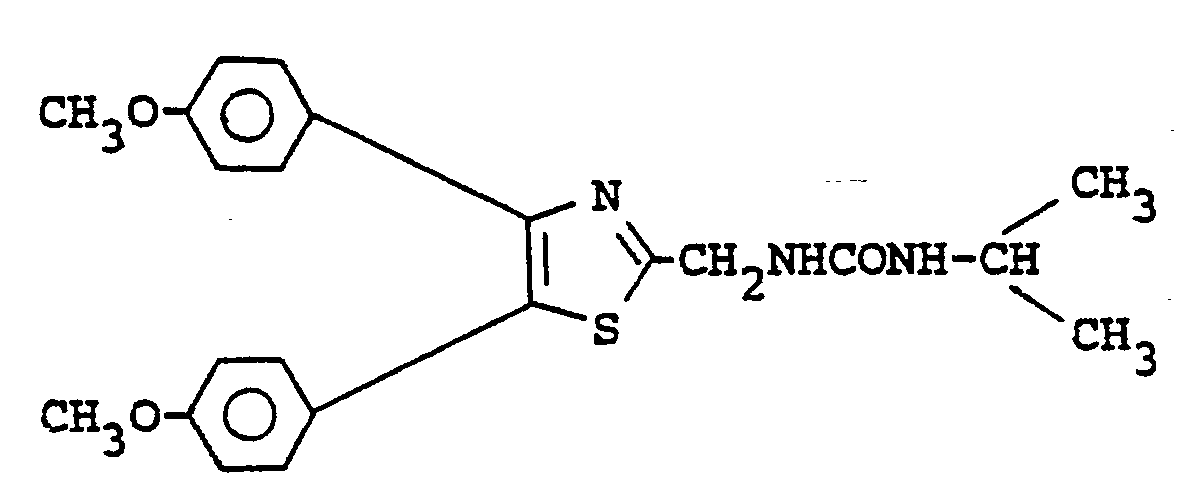
- 2-Aminomethyl-4,5-bis(4-methoxyphenyl)thiazole hydrochloride (1.00 g) was added to a mixture of dichloromethane and saturated aqueous sodium hydrogencarbonate, and 2-aminomethyl-4,5-bis(4-methoxyphenyl)thiazole was extracted with dichloromethane. The separated organic layer was washed with water and brine, and dried over magnesium sulfate. After filtration, the filtrate was evaporated in vacuo and the resulting residue was dissolved with tetrahydrofuran (20 ml) and methanol (7 ml). N-Isopropyl isocyanate (0.38 ml) was added thereto, and the reaction mixture was stirred at ambient temperature for 90 minutes. The reaction mixture was evaporated in vacuo, and the resulting powder was triturated with isopropyl ether, to give 4,5-bis(4-methoxyphenyl)-2-(3-isopropylureidomethyl)thiazole (1.04 g).
mp : 146-149°C
IR (Nujol) : 3335, 1625, 1610, 1570, 1510 cm⁻¹
NMR (DMSO-d₆, δ) : 1.06 (6H, d, J=6.5Hz), 3.74 (3H, s), 3.77 (3H, s), 3.70-3.85 (1H, m), 4.48 (2H, d, J=5.5Hz), 6.07 (1H, m), 6.61 (1H, m), 6.90 (2H, d, J=9Hz), 6.95 (2H, d, J=9Hz), 7.25 (2H, d, J=9Hz), 7.38 (2H, d, J=9Hz)
MASS (M/Z) : 410 (M⁺-1) -

- 2-Aminomethyl-4,5-bis(4-methoxyphenyl)thiazole (0.80 g), which was obtained according to a similar manner to that of Example 14, was dissolved with N,N-dimethylformamide (10 ml). 1-Ethyl-3-(3-dimethylaminopropyl)carbodiimide hydrochloride (0.52 g) and 3-carboxy-6-oxo-1,4,5,6-tetrahydropyridazine (0.39 g) were added thereto, and the reaction mixture was stirred at ambient temperature for 3 hours and stirred at 50°C for 7 hours and 30 minutes. After allowing to cool to room temperature, the mixture was poured into water, and extracted with ethyl acetate. The separated organic layer was washed with water and brine, and dried over magnesium sulfate and treated with activated charcoal. After filtration, the filtrate was evaporated in vacuo, and the resulting residue was triturated with isopropyl ether, ethanol and diethyl ether, to give 4,5-bis(4-methoxyphenyl)-2-{(6-oxo-1,4,5,6-tetrahydropyridazin-3-yl)carbonyiaminomethyl}thiazole (0.49 g).
mp : 174-175°C
IR (Nujol) : 3400, 3350, 3220, 3150, 1690, 1660, 1605, 1515 cm⁻¹
NMR (DMSO-d₆, δ) : 2.42 (2H, t, J=8.2Hz), 2.78 (2H, t, J=8.2Hz), 3.74 (3H, s), 3.77 (3H, s), 4.64 (2H, d, J=6Hz), 6.87 (2H, d, J=8.8Hz), 6.93 (2H, d, J=8.8Hz), 7.23 (2H, d, J=8.8Hz), 7.37 (2H, d, J=8.8Hz), 9.03 (1H, t, J=6Hz), 11.2 (1H, s)
MASS (M/Z) : 450 (M⁺) - The following compounds were obtained by reacting 2-aminomethyl-4,5-bis(4-methoxyphenyl)thiazole hydrochloride with the corresponding carboxylic acid derivatives according to a similar manner to that of Example 15.
-

- 4,5-Bis(4-methoxyphenyl)-2-(phenylthioacethylaminomethyl)thiazole
mp : 132-133°C
IR (Nujol) : 3300, 1650, 1610, 1550, 1520, 1500 cm⁻¹
NMR (DMSO-d₆, δ) : 3.74 (2H, s), 3.78 (6H, z), 4.56 (2H, d, J=6Hz), 6.86 (2H, d, J=8Hz), 6.91 (2H, d, J=8Hz), 7.17-7.40 (9H, m), 9.06 (1H, t, J=6Hz)
MASS (M/Z) : 476 -

- 4,5-Bis(4-methoxyphenyl)-2-(methylthioacetylaminomethyl)thiazole
mp : 74-75°C
IR (Nujol) : 3260, 1640, 1610, 1540, 1510 cm⁻¹
NMR (DMSO-d₆, δ) : 2.15 (3H, s), 3.18 (2H, s), 3.74 (3H, s), 3.77 (3H, s), 4.60 (2H, d, J=6Hz), 6.87 (2H, d, J=8Hz), 6.95 (2H, d, J=8Hz), 7.23 (2H, d, J=8Hz), 7.37 (2H, d, J=8Hz), 8.92 (1H, t, J=6Hz)
MASS (M/Z) : 414 (M⁺) -

- 4,5-Bis(4-methoxyphenyl)-2-{N-[N-(p-toluenesulfonyl)glycyl]aminomethyl}thiazole
mp : 65-71°C
IR (Nujol) : 3250, 1665, 1615, 1580, 1510, 1500 cm⁻¹
NMR (DMSO-d₆, δ) : 2.34 (3H, s), 3.49 (2H, d, J=5Hz), 3.74 (3H, s), 3.77 (3H, s), 4.52 (2H, d, J=6Hz), 6.77 (2H, d, J=9Hz), 6.87 (2H, d, J=9Hz), 7.11 (2H, d, J=9Hz), 7.30-7.50 (4H, m), 7.70 (2H, d, J=8Hz), 8.01 (1H, m), 8.83 (1H, t, J=6Hz)
MASS (M/Z) : 537 (M⁺) -

- A mixture of 2-acetylaminomethyl-4,5-bis(4-methoxyphenyl)thiazole (1.00 g) and concentrated hydrochloric acid (7 ml) was refluxed for 2 hours and 40 minutes. After allowing to cool to ambient temperature, the mixture was poured into water, and the resulting solution was neutralized by addition of 4N sodium hydroxide, and extracted with ethyl acetate. The organic layer was washed with saturated sodium hydrogencarbonate solution, water, and brine, and dried over magnesium sulfate and treated with activated charcoal. After filtration, the filtrate was evaporated in vacuo to give 2-aminomethyl-4,5-bis(4-methoxyphenyl)thiazole hydrochloride. And this compound was dissolved in dichloromethane (10 ml) and triethylamine (0.33 ml). To the above reaction mixture was added a solution of nicotinoyl chloride hydrochloride (0.58 g) and dichloromethane (5 ml) at ambient temperature, and was stirred at ambient temperature for 3 hours and refluxed for one and a half hour. After allowing to cool to ambient temperature, the mixture was poured into water, and the resulting solution was neutralized by addition of 4N sodium hydroxide, and extracted with dichloromethane. The organic layer was washed with saturated aqueous sodium hydrogencarbonate, water, and brine, and dried over lu magnesium sulfate and treated with activated charcoal. After filtration, the filtrate was evaporated in vacuo, and the resulting residue was dissolved in diethyl ether, and added methanol solution of hydrogen chloride. The resulting precipitate was collected by filtration and washed with ethanol and diethyl ether to give 4,5-bis(4-methoxyphenyl)-2-(nicotinoylaminomethyl)thiazole hydrochloride (0.63 g).
mp : 135-144°C
IR (Nujol) : 1675, 1635, 1610, 1570, 1520 cm⁻¹
NMR (DMSO-d₆, δ) : 3.75 (3H, s), 3.77 (3H, s), 4.83 (2H, d, J=5.6Hz), 6.88 (2H, d, J=8.5Hz), 6.94 (2H, d, J=8.5Hz), 7.24 (2H, d, J=8.5Hz), 7.40 (2H, d, J=8.5Hz), 8.15 (1H, dd, J=8.1Hz, 5.6Hz), 9.02 (1H, d, J=8.1Hz), 9.08 (1H, d, J=5.6Hz), 9.43 (1H, s), 10.42 (1H, t, J=5.6Hz)
MASS (M/Z) : 431 (M⁺) - The following compounds were obtained by reacting 2-aminomethyl-4,5-bis(4-methoxyphenyl)thiazole hydrochloride with the corresponding acyl chloride according to a similar manner to that of latter part of Example 19.
-

- 4,5-Bis(4-methoxyphenyl)-2-ethoxycarbonylacetylaminomethylthiazole
IR (Neat) : 3300, 2980, 1735, 1660, 1610, 1535, 1510 cm⁻¹
NMR (DMSO-d₆, δ) : 1.18 (3H, t, J=13Hz), 3.34 (2H, s), 3.74 (3H, s), 3.77 (3H, s), 4.08 (2H, g, J=13Hz), 4.58 (2H, d, J=5.9Hz), 6.87 (2H, d, J=8.8Hz), 6.95 (2H, d, J=8.8Hz), 7.23 (2H, d, J=8.8Hz), 7.36 (2H, d, J=8.8Hz), 9.03 (1H, t, J=5.9Hz)
MASS (M/Z) : 440 (M⁺) -

- 4,5-Bis(4-methoxyphenyl)-2-[{3-(ethoxycarbonyl)propionyl}aminomethyl]thiazole
IR (Neat) : 3300, 1730, 1660, 1605, 1535, 1510 cm⁻¹
NMR (DMSO-d₆, δ) : 1.24 (3H, t, J=7.1Hz), 2.5-2.8 (4H, m), 3.80 (3H, s), 3.81 (3H, s), 4.14 (2H, g, J=7.1Hz), 4.73 (2H, d, J=5.7Hz), 6.63 (1H, m). 6.75-6.95 (4H. m), 7.25 (2H, d, J=8.8Hz), 7.43 (2H, d, J=8.8Hz)
MASS (M/Z) : 454 (M⁺) -

- 4,5-Bis(4-methoxyphenyl)-2-(morpholinocarbonylaminomethyl)thiazole
mp : 127-130°C
IR (Nujol) : 3300, 1630, 1610, 1550, 1540, 1520 cm⁻¹
NMR (DMSO-d₆, δ) : 3.30-3.34 (8H, m), 3.74 (3H, s), 3.77 (3H, s), 4.50 (2H, d, J=6Hz), 6.87 (2H, d, J=8Hz), 6.94 (2H, d, J=8Hz), 7.23 (2H, d, J=8Hz), 7.36 (2H, d, J=8Hz), 7.55 (1H, t, J=6Hz)
MASS (M/Z) : 439 (M⁺) -

- 4,5-Bis(4-methoxyphenyl)-2-{(6-methyl-3-oxo-2,3-dihydropyridazin-4-yl)carbonylaminomethyl}thiazole was obtained according to a similar manner to that of Example 6.
mp : 202-204°C (dec.)
IR (Nujol) : 3220, 1670, 1630, 1605, 1510 cm⁻¹
NMR (DMSO-d₆, δ) : 2.36 (3H, s), 3.75 (3H, s), 3.77 (3H, s), 4.86 (2H, d, J=6Hz), 6.74 (2H, d, J=9Hz), 6.87 (2H, d, J=9Hz), 7.23 (2H, d, J=9Hz), 7.38 (2H, d, J=9Hz), 8.06 (1H, s), 10.32 (1H, t, J=6Hz), 13.57 (1H, m) - The following compounds were obtained by reacting 2-aminomethyl-4,5-bis(4-methoxyphenyl)thiazole hydrochloride with the corresponding isocyanate derivatives according to a similar manner to that of Example 14.
-

- 4,5-Bis(4-methoxyphenyl)-2-(3-methylureidomethyl)thiazole
mp : 115-118°C
IR (Nujol) : 3300, 1620, 1600, 1585, 1530, 1505 cm⁻¹
NMR (DMSO-d₆, δ) : 2.60 (3H, s), 3.74 (3H, s), 3.77 (3H, s), 4.48 (2H, s), 6.87 (2H, d, J=8.8Hz), 6.93 (2H, d, J=8.8Hz), 7.23 (2H, d, J=8.8Hz), 7.36 (2H, d, J=8.8Hz)
MASS (M/Z) : 383 (M⁺) -

- 4,5-Bis(4-methoxyphenyl)-2-{2-(3-isopropylureido)ethyl}thiazole
mp : 129-131°C
IR (Nujol) : 3310, 1620, 1510, 1460, 1300
NMR (DMSO-d₆, δ) : 1.02 (6H, d, J=6Hz), 3.09 (2H, t, J=6Hz), 3.40 (2H, q, J=6Hz), 3.68 (1H, m), 3.75 (3H, s), 3.77 (3H, s), 5.85 (1H, d, J=8Hz), 5.93 (1H, t, J=6Hz), 6.92 (2H, d, J=9Hz), 6.96 (2H, d, J=9Hz), 7.21 (2H, d, J=9Hz), 7.38 (2H, d, J=9Hz)
MASS (M/Z) : 425 (M⁺) -

- 4,5-Bis(4-methoxyphenyl)-2-{2-(3-ethylureido)ethyl}thiazole
mp : 76-77°C
IR (Nujol) : 3300, 1620, 1600, 1560, 1505 cm⁻¹
NMR (DMSO-d₆ δ) : 0.98 (3H, t, J=7Hz), 2.95-3.10 (4H, m), 3.40 (2H, q, J=7Hz), 3.74 (3H, s), 3.77 (3H, s), 5.90-6.10 (2H, m), 6.87 (2H, d, J=9Hz), 6.95 (2H, d, J=9Hz), 7.23 (2H, d, J=9Hz), 7.38 (2H, d, J=9Hz)
MASS (M/Z) : 411 (M⁺) -

- 4,5-Bis(4-methoxyphenyl)-2-{[1-methyl-1-(3-isopropylureido)]ethyl}thiazole
mp : 183-184°C
IR (Nujol) : 3350, 1640, 1610, 1510 cm⁻¹
NMR (DMSO-d₆, δ) : 1.02 (6H, d, J=6Hz), 1.64 [6H, s), 3.56-3.67 (1H, m), 3.74 (3H, s), 3.77 (3H, s), 5.79 (1H, d, J=8Hz), 6.47 (1H, s), 6.87 (2H, d, J=9Hz), 6.94 (2H, d, J=9Hz), 7.22 (2H, d, J=9Hz), 7.37 (2H, d, J=9Hz)
MASS (M/Z) : 439 (M⁺) -

- A mixture of 4,5-bis-(4-methoxyphenyl)-2-ethoxycarbonylacetylaminomethylthiazole (0.43 g) and 4N sodium hydroxide (3 ml), methanol (5 ml) and water (5 ml) was stirred at ambient temperature for 4.5 hours. After allowing to cool to room temperature, the mixture was poured to water, and the aqueous layer was adjusted to pH 1 with 10% hydrochloric acid, and extracted with diethyl ether. The organic layer was washed with water and brine, and dried over magnesium sulfate and treated with activated charcoal. After filtration, the filtrate was evaporated in vacuo. The resulting residue was triturated with isopropyl ether and diethyl ether, to give 4,5-bis(4-methoxyphenyl)-2-(carboxyacetylaminomethyl)thiazole (0.23 g).
mp : 126-130°C
IR (Nujol) : 1735, 1670, 1610, 1570, 1510 cm⁻¹
NMR (DMSO-d₆, δ) : 3.24 (2H, s), 3.74 (3H, s), 3.77 (3H, s), 4.57 (2H, d, J=5.9Hz), 6.87 (2H, d, J=8.8Hz), 6.94 (2H, d, J=8.8Hz), 7.23 (2H, d, J=8.8Hz), 7.36 (2H, d, J=8.8Hz), 8.98 (1H, t, J=5.9Hz)
MASS (M/Z) : 368 (M⁺-CO₂) -

- 4,5-Bis(4-methoxyphenyl)-2-(3-carboxypropionylaminomethyl)thiazole was obtained according to a similar manner to that of Example 28.
mp : 110-116°C
IR (Nujol) : 3310, 1710, 1650, 1615, 1540, 1520 cm⁻¹
NMR (DMSO-d₆, δ) : 2.3-2.6 (4H, m), 3.74 (3H, s), 3.77 (3H, s), 4.53 (2H, d, J=5.9Hz), 6.88 (2H, d, J=8.8Hz), 6.95 (2H, d, J=8.8Hz), 7.23 (2H, d, J=8.8Hz), 7.36 (2H, d, J=8.8Hz), 8.82 (1H, t, J=5.9Hz)
MASS (M/Z) : 426 (M⁺)
Claims (11)

R¹ and R² are each halogen, lower alkyloxy, lower alkylthio or lower alkylsulfinyl,
R³ is amino-protective group, and
R⁴ is hydrogen, lower alkyl which may have heterocyclic group, piperidyl which may have suitable substituent(s), amidino or amino-protective group,
and pharmaceutically acceptable salt thereof.
A is lower alkylene,
R¹ and R² are each lower alkyloxy,
R³ is acyl, and
R⁴ is hydrogen.
R³ is lower alkanoyl;
carboxy(lower)alkanoyl;
protected carboxy(lower)alkanoyl;
lower alkylthio(lower)alkanoyl;
carbamoyl;
lower alkylcarbamoyl;
5 or 6-membered aliphatic heteromonocyclic carbonyl having one nitrogen atom and one additional hetero atom selected from oxygen and sulfur;
5 or 6-membered unsaturated heteromonocyclic carbonyl having one or two nitrogen atom(s) which may be substituted by one or two substituent(s) selected from lower alkyl and oxo;
9 or 10-membered aromatic heterobicyclic carbonyl having three nitrogen atoms; arylthio(lower)alkanoyl;
5 or 6-membered aromatic heteromonocyclic (lower)alkanoyl, in which the heterocyclic moiety has one nitrogen atom or nitrogen atom and one sulfur atom and further is optionally substituted by amino;
5 or 6-membered aliphatic heteromonocyclic (lower)alkanoyl, in which the heterocyclic moiety has one nitrogen atom and one sulfur atom and further is substituted by one to three oxo group(s);
9 or 10-membered aromatic heterobicyclic (lower)alkanoyl in which the heterocyclic moiety has three nitrogen atoms and further is substituted by lower alkyl;
arenesulfonylamino(lower)alkanoyl; and 5 or 6-membered aromatic heteromonocyclic (lower)alkenoyl, in which the heterocyclic moiety has one nitrogen atom.
R³ is lower alkanoyl;
carboxy(lower)alkanoyl;
alkoxycarbonyl(lower)alkanoyl;
lower alkylthio(lower)alkanoyl;
carbamoyl;
lower alkylcarbamoyl;
morpholinylcarbonyl;
thiazolidinylcarbonyl;
pyridylcarbonyl;
di or tetrahydropyridazinylcarbonyl substituted by oxo or oxo and lower alkyl;
imidazopyridylcarbonyl;
C₆-C₁₀arylthio(lower)alkanoyl;
pyridyl(lower)alkanoyl;
aminothiazolyl(lower)alkanoyl;
thiazolidinyl substituted by three oxo group;
lower alkylimidazopyridyl(lower)alkanoyl;
C₆-C₁₀arenesulfonylamino(lower)alkanoyl; and
pyridyl(lower)alkenoyl.

R¹ and R² are each halogen, lower alkyloxy, lower alkylthio or lower alkylsulfinyl,
R³ is amino-protective group, and
R⁴ is hydrogen, lower alkyl which may have heterocyclic group, piperidyl which may have suitable substituent(s), amidino or amino-protective group,
or a salt thereof, which comprises
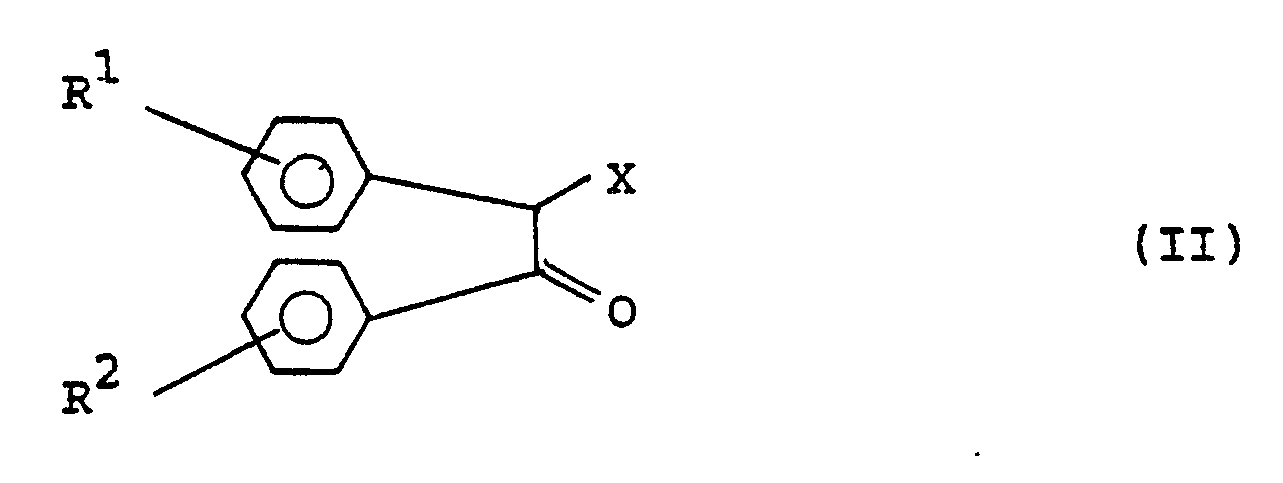
X is an acid residue,
with a compound of the formula :

or a salt thereof,
to give a compound of the formula (I)
or a salt thereof,

or a salt thereof,
to an introduction of an amino-protective group to give a compound of the formula :

or a salt thereof, or

R

or a salt thereof,
to elimination reaction of the carboxy-protective group on R


R

or a salt thereof.
Applications Claiming Priority (6)
| Application Number | Priority Date | Filing Date | Title |
|---|---|---|---|
| GB898906575A GB8906575D0 (en) | 1989-03-22 | 1989-03-22 | Thiazole compounds,processes for the preparation thereof and pharmaceutical compositions comprising the same |
| GB8906575 | 1989-03-22 | ||
| GB8927351 | 1989-12-04 | ||
| GB898927351A GB8927351D0 (en) | 1989-12-04 | 1989-12-04 | Thiazole compounds,processes for the preparation thereof and pharmaceutical composition comprising the same |
| US45193589A | 1989-12-18 | 1989-12-18 | |
| US451935 | 1989-12-18 |
Publications (2)
| Publication Number | Publication Date |
|---|---|
| EP0388909A2 true EP0388909A2 (en) | 1990-09-26 |
| EP0388909A3 EP0388909A3 (en) | 1991-05-08 |
Family
ID=27264381
Family Applications (1)
| Application Number | Title | Priority Date | Filing Date |
|---|---|---|---|
| EP19900105289 Withdrawn EP0388909A3 (en) | 1989-03-22 | 1990-03-21 | Thiazole compounds, processes for the preparation thereof and pharmaceutical composition comprising the same |
Country Status (3)
| Country | Link |
|---|---|
| EP (1) | EP0388909A3 (en) |
| JP (1) | JPH0314569A (en) |
| CA (1) | CA2012716A1 (en) |
Cited By (12)
| Publication number | Priority date | Publication date | Assignee | Title |
|---|---|---|---|---|
| WO1992012141A1 (en) * | 1991-01-09 | 1992-07-23 | Pfizer Inc. | N-hydroxyurea derivatives as antiallergy and antiinflammatory agents |
| EP0582164A1 (en) * | 1992-07-31 | 1994-02-09 | Bristol-Myers Squibb Company | Adenosine re-uptake inhibiting derivatives of diphenyl oxazoles, thiazoles and imidazoles |
| WO1995000501A3 (en) * | 1993-06-24 | 1995-04-13 | Merck Frosst Canada Inc | Phenyl heterocycles as cyclooxygenase-2 inhibitors |
| WO1995018799A1 (en) * | 1994-01-10 | 1995-07-13 | Merck Frosst Canada Inc. | Phenyl heterocycles as cox-2 inhibitors |
| WO1999062908A3 (en) * | 1998-06-04 | 2000-03-30 | Abbott Lab | Cell adhesion-inhibiting antinflammatory compounds |
| WO2000075145A1 (en) * | 1999-06-03 | 2000-12-14 | Abbott Laboratories | Cell adhesion-inhibiting antiinflammatory compounds |
| US6232320B1 (en) | 1998-06-04 | 2001-05-15 | Abbott Laboratories | Cell adhesion-inhibiting antiinflammatory compounds |
| US7323484B2 (en) | 1996-02-16 | 2008-01-29 | Societe De Conseils De Recherches Et D'applications Scientifiques, S.A.S. | Farnesyl transferase inhibitors |
| US7553975B2 (en) | 1996-02-16 | 2009-06-30 | Ipsen Pharma S.A.S. | Farnesyl transferase inhibitors |
| WO2011020822A1 (en) | 2009-08-17 | 2011-02-24 | Aicuris Gmbh & Co. Kg | Substituted (thiazolyl-carbonyl)imidazolidinones and use thereof for treating retroviral diseases |
| US8188291B2 (en) | 2006-12-27 | 2012-05-29 | Sanofi-Aventis | Heteroaryl-substituted carboxamides and their use as pharmaceuticals |
| US10301272B2 (en) | 2012-05-31 | 2019-05-28 | Phenex Pharmaceuticals Ag | Carboxamide or sulfonamide substituted thiazoles and related derivatives as modulators for the orphan nuclear receptor ROR[γ] |
Families Citing this family (4)
| Publication number | Priority date | Publication date | Assignee | Title |
|---|---|---|---|---|
| WO1992015570A1 (en) * | 1991-03-07 | 1992-09-17 | Hisamitsu Pharmaceutical Co., Inc. | Novel diphenylthyazole derivative |
| TWI283577B (en) * | 1999-10-11 | 2007-07-11 | Sod Conseils Rech Applic | Pharmaceutical composition of imidazole derivatives acting as modulators of sodium channels and the use thereof |
| FR2894578B1 (en) * | 2005-12-12 | 2008-02-01 | Sanofi Aventis Sa | HETEROCYCLIC DERIVATIVES, THEIR PREPARATION AND THEIR THERAPEUTIC USE. |
| JP5652159B2 (en) * | 2009-11-30 | 2015-01-14 | 住友化学株式会社 | Process for producing 5- (aminomethyl) -2-chlorothiazole |
Family Cites Families (2)
| Publication number | Priority date | Publication date | Assignee | Title |
|---|---|---|---|---|
| IT1033040B (en) * | 1970-02-21 | 1979-07-10 | Serono Ist Farm | 4 5 DIPHENYLOXZOLES 2 AMINOMETHYL AND 2.2 AMINOETHYL SUBSTITUTED |
| CH587836A5 (en) * | 1974-01-31 | 1977-05-13 | Serono Lab |
-
1990
- 1990-03-21 EP EP19900105289 patent/EP0388909A3/en not_active Withdrawn
- 1990-03-21 CA CA002012716A patent/CA2012716A1/en not_active Abandoned
- 1990-03-22 JP JP2074466A patent/JPH0314569A/en active Pending
Cited By (23)
| Publication number | Priority date | Publication date | Assignee | Title |
|---|---|---|---|---|
| US5464849A (en) * | 1991-01-09 | 1995-11-07 | Pfizer Inc. | N-hydroxyurea derivatives as antiallergy and antiinflammatory agents |
| WO1992012141A1 (en) * | 1991-01-09 | 1992-07-23 | Pfizer Inc. | N-hydroxyurea derivatives as antiallergy and antiinflammatory agents |
| EP0582164A1 (en) * | 1992-07-31 | 1994-02-09 | Bristol-Myers Squibb Company | Adenosine re-uptake inhibiting derivatives of diphenyl oxazoles, thiazoles and imidazoles |
| US5382584A (en) * | 1992-07-31 | 1995-01-17 | Bristol-Myers Squibb Company | Adenosine re-uptake inhibiting derivatives of diphenyl oxazoles, thiazoles and imidazoles |
| US5550142A (en) * | 1993-06-24 | 1996-08-27 | Merck Frosst Canada Inc. | Phenyl heterocycles as cox-2 inhibitors |
| US6239173B1 (en) | 1993-06-24 | 2001-05-29 | Merck Frosst Canada Inc./Merck Frosst Canada & Co. | 3-phenyl-4-(4(methylsulfonyl)phenyl)-2-(5H)-furanone as a cox-2 inhibitor |
| EP0754687A1 (en) * | 1993-06-24 | 1997-01-22 | Merck Frosst Canada Inc. | Phenyl heterocycles as cyclooxygenase-2 inhibitors |
| EP0822190A1 (en) * | 1993-06-24 | 1998-02-04 | Merck Frosst Canada Inc. | Phenyl heterocycles as cyclooxygenase-2 inhibitors |
| EP0980866A3 (en) * | 1993-06-24 | 2000-03-08 | Merck Frosst Canada & Co. | Phenyl heterocycles as cyclooxygenase-2 inhibitors |
| WO1995000501A3 (en) * | 1993-06-24 | 1995-04-13 | Merck Frosst Canada Inc | Phenyl heterocycles as cyclooxygenase-2 inhibitors |
| CN1058008C (en) * | 1993-06-24 | 2000-11-01 | 麦克弗罗斯特(加拿大)公司 | Phenyl heterocyclic compounds as cyclooxygenase-2 inhibitors |
| WO1995018799A1 (en) * | 1994-01-10 | 1995-07-13 | Merck Frosst Canada Inc. | Phenyl heterocycles as cox-2 inhibitors |
| US7553975B2 (en) | 1996-02-16 | 2009-06-30 | Ipsen Pharma S.A.S. | Farnesyl transferase inhibitors |
| US7323484B2 (en) | 1996-02-16 | 2008-01-29 | Societe De Conseils De Recherches Et D'applications Scientifiques, S.A.S. | Farnesyl transferase inhibitors |
| WO1999062908A3 (en) * | 1998-06-04 | 2000-03-30 | Abbott Lab | Cell adhesion-inhibiting antinflammatory compounds |
| US6579882B2 (en) | 1998-06-04 | 2003-06-17 | Abbott Laboratories | Cell adhesion-inhibiting antiinflammatory compounds |
| US6232320B1 (en) | 1998-06-04 | 2001-05-15 | Abbott Laboratories | Cell adhesion-inhibiting antiinflammatory compounds |
| WO2000075145A1 (en) * | 1999-06-03 | 2000-12-14 | Abbott Laboratories | Cell adhesion-inhibiting antiinflammatory compounds |
| US8188291B2 (en) | 2006-12-27 | 2012-05-29 | Sanofi-Aventis | Heteroaryl-substituted carboxamides and their use as pharmaceuticals |
| WO2011020822A1 (en) | 2009-08-17 | 2011-02-24 | Aicuris Gmbh & Co. Kg | Substituted (thiazolyl-carbonyl)imidazolidinones and use thereof for treating retroviral diseases |
| DE102009038123A1 (en) | 2009-08-17 | 2011-02-24 | Aicuris Gmbh & Co. Kg | Substituted (thiazolyl-carbonyl) imidazolidinones and their use |
| US8575357B2 (en) | 2009-08-17 | 2013-11-05 | Aicuris Gmbh & Co. Kg | Substituted (thiazolyl-carbonyl)imidazolidinones and use thereof |
| US10301272B2 (en) | 2012-05-31 | 2019-05-28 | Phenex Pharmaceuticals Ag | Carboxamide or sulfonamide substituted thiazoles and related derivatives as modulators for the orphan nuclear receptor ROR[γ] |
Also Published As
| Publication number | Publication date |
|---|---|
| CA2012716A1 (en) | 1990-09-22 |
| JPH0314569A (en) | 1991-01-23 |
| EP0388909A3 (en) | 1991-05-08 |
Similar Documents
| Publication | Publication Date | Title |
|---|---|---|
| EP0388909A2 (en) | Thiazole compounds, processes for the preparation thereof and pharmaceutical composition comprising the same | |
| CA3019980C (en) | Novel compounds as autotaxin inhibitors and pharmaceutical compositions comprising the same | |
| JP3003148B2 (en) | Thiazole compound, process for producing the same, and pharmaceutical composition containing the same | |
| US4649146A (en) | Thiazole derivatives and pharmaceutical composition comprising the same | |
| ES2323000T3 (en) | DERIVATIVES OF 5-PHENYL-4-METHYL-TIAZOL-2-IL-AMINA AS INHIBITORS OF PHOSPHYTITIDYLINOSITOL 3 KINASE ENZYMES (PI3) FOR THE TREATMENT OF INFLAMMATORY DISEASES OF RESPIRATORY ROADS. | |
| ES2334518T3 (en) | DERIVATIVES OF N- (PIRIDIN-2-IL) -SULFONAMIDE. | |
| ES2352555T3 (en) | DERIVATIVES OF 5- (BENC- (Z) -ILIDEN) TIAZOLIDIN-4-ONA AS IMMUNOSUPPRESSING AGENTS. | |
| AU2008287435B2 (en) | Certain chemical entities, compositions, and methods | |
| US4742057A (en) | Antiallergic thiazole compounds | |
| RU2069662C1 (en) | Derivatives of pyrazolo-[1,5-a]-pyridine or their pharmaceutical acceptable salts and method of their synthesis | |
| US5229386A (en) | Thiazole compounds, processes for the preparation thereof and pharmaceutical composition comprising the same | |
| WO1992002513A1 (en) | Heterocyclic compounds | |
| BRPI0410037B1 (en) | Phosphatidylinositol 3-kinase inhibitors, their pharmaceutical composition, and their use | |
| AU2008237660A1 (en) | 3-amido-pyrrolo [3, 4-C] pyrazole-5 (1H, 4H, 6H) carbaldehyde derivatives as inhibitors of protein kinase C | |
| KR101837759B1 (en) | Substituted fused imidazole derivatives, pharmaceutical compositions, and methods of use thereof | |
| CA2281518A1 (en) | 4,4-difluoro-2,3,4,5-tetrahydro-1h-1-benzazepine derivatives and drug compositions containing them | |
| US5217971A (en) | Thiazole compounds and pharmaceutical composition comprising the same | |
| BRPI0713784A2 (en) | organic compounds | |
| US5145860A (en) | Thiazole compounds and pharmaceutical composition comprising the same | |
| JPH06279413A (en) | New heterocyclic compound | |
| WO1996030350A1 (en) | Amidine derivatives | |
| PT95317A (en) | PROCESS FOR OBTAINING A NEW TIAZOL COMPOUND INTENDED | |
| CN119032089A (en) | Oxadiazole compound, pharmaceutical composition containing the same and use thereof | |
| EP0355612B1 (en) | Furylthiazole derivatives, processes for the preparation thereof and pharmaceutical composition comprising the same | |
| MX2007009387A (en) | Thiazolidinones for use as inhibitors of polo-like kinase (plk). |
Legal Events
| Date | Code | Title | Description |
|---|---|---|---|
| PUAI | Public reference made under article 153(3) epc to a published international application that has entered the european phase |
Free format text: ORIGINAL CODE: 0009012 |
|
| AK | Designated contracting states |
Kind code of ref document: A2 Designated state(s): AT BE CH DE DK ES FR GB GR IT LI LU NL SE |
|
| PUAL | Search report despatched |
Free format text: ORIGINAL CODE: 0009013 |
|
| AK | Designated contracting states |
Kind code of ref document: A3 Designated state(s): AT BE CH DE DK ES FR GB GR IT LI LU NL SE |
|
| 17P | Request for examination filed |
Effective date: 19911029 |
|
| 17Q | First examination report despatched |
Effective date: 19921210 |
|
| STAA | Information on the status of an ep patent application or granted ep patent |
Free format text: STATUS: THE APPLICATION IS DEEMED TO BE WITHDRAWN |
|
| 18D | Application deemed to be withdrawn |
Effective date: 19940630 |