EP0384532B1 - Sulphated vinyl polymers in compositions for treating retroviral infections - Google Patents
Sulphated vinyl polymers in compositions for treating retroviral infections Download PDFInfo
- Publication number
- EP0384532B1 EP0384532B1 EP90200384A EP90200384A EP0384532B1 EP 0384532 B1 EP0384532 B1 EP 0384532B1 EP 90200384 A EP90200384 A EP 90200384A EP 90200384 A EP90200384 A EP 90200384A EP 0384532 B1 EP0384532 B1 EP 0384532B1
- Authority
- EP
- European Patent Office
- Prior art keywords
- sulphated
- cells
- hiv
- aids
- vinyl polymers
- Prior art date
- Legal status (The legal status is an assumption and is not a legal conclusion. Google has not performed a legal analysis and makes no representation as to the accuracy of the status listed.)
- Expired - Lifetime
Links
- 229920002554 vinyl polymer Polymers 0.000 title claims abstract description 22
- 125000000391 vinyl group Chemical group [H]C([*])=C([H])[H] 0.000 title claims abstract description 19
- 239000000203 mixture Substances 0.000 title claims description 6
- 206010038997 Retroviral infections Diseases 0.000 title claims description 5
- 229920001577 copolymer Polymers 0.000 claims abstract description 12
- 208000030507 AIDS Diseases 0.000 claims abstract description 9
- IMROMDMJAWUWLK-UHFFFAOYSA-N Ethenol Chemical compound OC=C IMROMDMJAWUWLK-UHFFFAOYSA-N 0.000 claims abstract description 9
- 229920002451 polyvinyl alcohol Polymers 0.000 claims abstract description 8
- 235000019422 polyvinyl alcohol Nutrition 0.000 claims abstract description 8
- 150000003839 salts Chemical class 0.000 claims abstract description 8
- CERQOIWHTDAKMF-UHFFFAOYSA-N Methacrylic acid Chemical compound CC(=C)C(O)=O CERQOIWHTDAKMF-UHFFFAOYSA-N 0.000 claims abstract description 7
- 208000012124 AIDS-related disease Diseases 0.000 claims abstract description 6
- 239000004372 Polyvinyl alcohol Substances 0.000 claims abstract description 5
- SMZOUWXMTYCWNB-UHFFFAOYSA-N 2-(2-methoxy-5-methylphenyl)ethanamine Chemical compound COC1=CC=C(C)C=C1CCN SMZOUWXMTYCWNB-UHFFFAOYSA-N 0.000 claims description 4
- 230000001225 therapeutic effect Effects 0.000 claims description 4
- NIXOWILDQLNWCW-UHFFFAOYSA-N 2-Propenoic acid Natural products OC(=O)C=C NIXOWILDQLNWCW-UHFFFAOYSA-N 0.000 claims description 3
- 239000000178 monomer Substances 0.000 claims description 3
- 239000008194 pharmaceutical composition Substances 0.000 claims description 3
- 239000006071 cream Substances 0.000 claims description 2
- 239000000839 emulsion Substances 0.000 claims description 2
- 239000002674 ointment Substances 0.000 claims description 2
- 239000000843 powder Substances 0.000 claims description 2
- 239000000243 solution Substances 0.000 claims description 2
- 239000007921 spray Substances 0.000 claims description 2
- 239000000725 suspension Substances 0.000 claims description 2
- 230000015572 biosynthetic process Effects 0.000 abstract description 18
- 230000005764 inhibitory process Effects 0.000 abstract description 18
- 229920002307 Dextran Polymers 0.000 abstract description 16
- 229910021653 sulphate ion Inorganic materials 0.000 abstract description 16
- QAOWNCQODCNURD-UHFFFAOYSA-L Sulfate Chemical compound [O-]S([O-])(=O)=O QAOWNCQODCNURD-UHFFFAOYSA-L 0.000 abstract description 15
- 241000700605 Viruses Species 0.000 abstract description 12
- 241000725303 Human immunodeficiency virus Species 0.000 abstract description 10
- 230000002401 inhibitory effect Effects 0.000 abstract description 9
- 238000001179 sorption measurement Methods 0.000 abstract description 9
- 230000000840 anti-viral effect Effects 0.000 abstract description 4
- 239000003814 drug Substances 0.000 abstract description 2
- 229940124597 therapeutic agent Drugs 0.000 abstract description 2
- 208000005074 Retroviridae Infections Diseases 0.000 abstract 1
- 210000004027 cell Anatomy 0.000 description 82
- 150000001875 compounds Chemical class 0.000 description 33
- 241000713772 Human immunodeficiency virus 1 Species 0.000 description 30
- 208000031886 HIV Infections Diseases 0.000 description 12
- 241000713340 Human immunodeficiency virus 2 Species 0.000 description 12
- 239000000427 antigen Substances 0.000 description 10
- 108091007433 antigens Proteins 0.000 description 10
- 102000036639 antigens Human genes 0.000 description 10
- 230000010076 replication Effects 0.000 description 9
- 238000000034 method Methods 0.000 description 7
- 235000002639 sodium chloride Nutrition 0.000 description 7
- 210000002845 virion Anatomy 0.000 description 7
- 210000001744 T-lymphocyte Anatomy 0.000 description 6
- 238000011534 incubation Methods 0.000 description 6
- HBOMLICNUCNMMY-XLPZGREQSA-N zidovudine Chemical compound O=C1NC(=O)C(C)=CN1[C@@H]1O[C@H](CO)[C@@H](N=[N+]=[N-])C1 HBOMLICNUCNMMY-XLPZGREQSA-N 0.000 description 6
- 230000000694 effects Effects 0.000 description 5
- 150000004676 glycans Chemical class 0.000 description 5
- 229920001282 polysaccharide Polymers 0.000 description 5
- 239000005017 polysaccharide Substances 0.000 description 5
- 230000003612 virological effect Effects 0.000 description 5
- 229960002555 zidovudine Drugs 0.000 description 5
- 231100000433 cytotoxic Toxicity 0.000 description 4
- 230000001472 cytotoxic effect Effects 0.000 description 4
- 125000002887 hydroxy group Chemical group [H]O* 0.000 description 4
- -1 hydroxyl-protected vinylalcohol Chemical class 0.000 description 4
- 229920000642 polymer Polymers 0.000 description 4
- 230000003389 potentiating effect Effects 0.000 description 4
- 229910004727 OSO3H Inorganic materials 0.000 description 3
- 239000004480 active ingredient Substances 0.000 description 3
- 230000008901 benefit Effects 0.000 description 3
- 125000003178 carboxy group Chemical group [H]OC(*)=O 0.000 description 3
- 230000006378 damage Effects 0.000 description 3
- 239000001963 growth medium Substances 0.000 description 3
- 238000010166 immunofluorescence Methods 0.000 description 3
- 238000000338 in vitro Methods 0.000 description 3
- 239000003112 inhibitor Substances 0.000 description 3
- 239000002245 particle Substances 0.000 description 3
- 239000000126 substance Substances 0.000 description 3
- JGSARLDLIJGVTE-MBNYWOFBSA-N Penicillin G Chemical compound N([C@H]1[C@H]2SC([C@@H](N2C1=O)C(O)=O)(C)C)C(=O)CC1=CC=CC=C1 JGSARLDLIJGVTE-MBNYWOFBSA-N 0.000 description 2
- 239000012980 RPMI-1640 medium Substances 0.000 description 2
- 229940124639 Selective inhibitor Drugs 0.000 description 2
- UIIMBOGNXHQVGW-UHFFFAOYSA-M Sodium bicarbonate Chemical compound [Na+].OC([O-])=O UIIMBOGNXHQVGW-UHFFFAOYSA-M 0.000 description 2
- FAPWRFPIFSIZLT-UHFFFAOYSA-M Sodium chloride Chemical compound [Na+].[Cl-] FAPWRFPIFSIZLT-UHFFFAOYSA-M 0.000 description 2
- 230000036436 anti-hiv Effects 0.000 description 2
- 238000007398 colorimetric assay Methods 0.000 description 2
- 239000012228 culture supernatant Substances 0.000 description 2
- 238000010511 deprotection reaction Methods 0.000 description 2
- 238000002474 experimental method Methods 0.000 description 2
- 239000012530 fluid Substances 0.000 description 2
- 125000001183 hydrocarbyl group Chemical group 0.000 description 2
- 208000015181 infectious disease Diseases 0.000 description 2
- 230000007246 mechanism Effects 0.000 description 2
- 241001430294 unidentified retrovirus Species 0.000 description 2
- 230000035899 viability Effects 0.000 description 2
- AZKSAVLVSZKNRD-UHFFFAOYSA-M 3-(4,5-dimethylthiazol-2-yl)-2,5-diphenyltetrazolium bromide Chemical compound [Br-].S1C(C)=C(C)N=C1[N+]1=NC(C=2C=CC=CC=2)=NN1C1=CC=CC=C1 AZKSAVLVSZKNRD-UHFFFAOYSA-M 0.000 description 1
- 108091003079 Bovine Serum Albumin Proteins 0.000 description 1
- 108010041397 CD4 Antigens Proteins 0.000 description 1
- 239000004215 Carbon black (E152) Substances 0.000 description 1
- 102000004190 Enzymes Human genes 0.000 description 1
- 108090000790 Enzymes Proteins 0.000 description 1
- CEAZRRDELHUEMR-URQXQFDESA-N Gentamicin Chemical compound O1[C@H](C(C)NC)CC[C@@H](N)[C@H]1O[C@H]1[C@H](O)[C@@H](O[C@@H]2[C@@H]([C@@H](NC)[C@@](C)(O)CO2)O)[C@H](N)C[C@@H]1N CEAZRRDELHUEMR-URQXQFDESA-N 0.000 description 1
- 229930182566 Gentamicin Natural products 0.000 description 1
- WQZGKKKJIJFFOK-GASJEMHNSA-N Glucose Natural products OC[C@H]1OC(O)[C@H](O)[C@@H](O)[C@@H]1O WQZGKKKJIJFFOK-GASJEMHNSA-N 0.000 description 1
- HTTJABKRGRZYRN-UHFFFAOYSA-N Heparin Chemical compound OC1C(NC(=O)C)C(O)OC(COS(O)(=O)=O)C1OC1C(OS(O)(=O)=O)C(O)C(OC2C(C(OS(O)(=O)=O)C(OC3C(C(O)C(O)C(O3)C(O)=O)OS(O)(=O)=O)C(CO)O2)NS(O)(=O)=O)C(C(O)=O)O1 HTTJABKRGRZYRN-UHFFFAOYSA-N 0.000 description 1
- 102100034343 Integrase Human genes 0.000 description 1
- 206010028980 Neoplasm Diseases 0.000 description 1
- 108010092799 RNA-directed DNA polymerase Proteins 0.000 description 1
- XTXRWKRVRITETP-UHFFFAOYSA-N Vinyl acetate Chemical compound CC(=O)OC=C XTXRWKRVRITETP-UHFFFAOYSA-N 0.000 description 1
- 239000000654 additive Substances 0.000 description 1
- 150000001413 amino acids Chemical class 0.000 description 1
- 239000002259 anti human immunodeficiency virus agent Substances 0.000 description 1
- 229940124411 anti-hiv antiviral agent Drugs 0.000 description 1
- 239000003146 anticoagulant agent Substances 0.000 description 1
- 229940127219 anticoagulant drug Drugs 0.000 description 1
- 239000003125 aqueous solvent Substances 0.000 description 1
- 238000003556 assay Methods 0.000 description 1
- 230000000903 blocking effect Effects 0.000 description 1
- 230000037396 body weight Effects 0.000 description 1
- 201000011510 cancer Diseases 0.000 description 1
- 238000004113 cell culture Methods 0.000 description 1
- 210000000170 cell membrane Anatomy 0.000 description 1
- 239000006285 cell suspension Substances 0.000 description 1
- 238000006243 chemical reaction Methods 0.000 description 1
- 239000003086 colorant Substances 0.000 description 1
- 230000000052 comparative effect Effects 0.000 description 1
- 125000004122 cyclic group Chemical group 0.000 description 1
- 239000003599 detergent Substances 0.000 description 1
- 238000010586 diagram Methods 0.000 description 1
- LOKCTEFSRHRXRJ-UHFFFAOYSA-I dipotassium trisodium dihydrogen phosphate hydrogen phosphate dichloride Chemical compound P(=O)(O)(O)[O-].[K+].P(=O)(O)([O-])[O-].[Na+].[Na+].[Cl-].[K+].[Cl-].[Na+] LOKCTEFSRHRXRJ-UHFFFAOYSA-I 0.000 description 1
- 201000010099 disease Diseases 0.000 description 1
- 231100000676 disease causative agent Toxicity 0.000 description 1
- 208000037265 diseases, disorders, signs and symptoms Diseases 0.000 description 1
- BNIILDVGGAEEIG-UHFFFAOYSA-L disodium hydrogen phosphate Chemical compound [Na+].[Na+].OP([O-])([O-])=O BNIILDVGGAEEIG-UHFFFAOYSA-L 0.000 description 1
- 229910000397 disodium phosphate Inorganic materials 0.000 description 1
- 235000019800 disodium phosphate Nutrition 0.000 description 1
- 239000000975 dye Substances 0.000 description 1
- 239000003995 emulsifying agent Substances 0.000 description 1
- 239000012894 fetal calf serum Substances 0.000 description 1
- 229960002518 gentamicin Drugs 0.000 description 1
- 239000008103 glucose Substances 0.000 description 1
- 210000002443 helper t lymphocyte Anatomy 0.000 description 1
- 229920000669 heparin Polymers 0.000 description 1
- 229960002897 heparin Drugs 0.000 description 1
- 229930195733 hydrocarbon Natural products 0.000 description 1
- 150000002430 hydrocarbons Chemical class 0.000 description 1
- 230000001506 immunosuppresive effect Effects 0.000 description 1
- 230000001524 infective effect Effects 0.000 description 1
- 230000003993 interaction Effects 0.000 description 1
- 238000007918 intramuscular administration Methods 0.000 description 1
- 238000007913 intrathecal administration Methods 0.000 description 1
- 238000001990 intravenous administration Methods 0.000 description 1
- 239000002609 medium Substances 0.000 description 1
- 125000002496 methyl group Chemical group [H]C([H])([H])* 0.000 description 1
- 230000007935 neutral effect Effects 0.000 description 1
- 229940056360 penicillin g Drugs 0.000 description 1
- 239000000546 pharmaceutical excipient Substances 0.000 description 1
- 239000002953 phosphate buffered saline Substances 0.000 description 1
- 230000009467 reduction Effects 0.000 description 1
- BOLDJAUMGUJJKM-LSDHHAIUSA-N renifolin D Natural products CC(=C)[C@@H]1Cc2c(O)c(O)ccc2[C@H]1CC(=O)c3ccc(O)cc3O BOLDJAUMGUJJKM-LSDHHAIUSA-N 0.000 description 1
- 239000000523 sample Substances 0.000 description 1
- 235000017557 sodium bicarbonate Nutrition 0.000 description 1
- 229910000030 sodium bicarbonate Inorganic materials 0.000 description 1
- 239000011780 sodium chloride Substances 0.000 description 1
- 239000003381 stabilizer Substances 0.000 description 1
- 239000006228 supernatant Substances 0.000 description 1
- 208000011580 syndromic disease Diseases 0.000 description 1
- 239000001226 triphosphate Substances 0.000 description 1
- 239000011782 vitamin Substances 0.000 description 1
- 229940088594 vitamin Drugs 0.000 description 1
- 229930003231 vitamin Natural products 0.000 description 1
- 235000013343 vitamin Nutrition 0.000 description 1
Images

Classifications
-
- A—HUMAN NECESSITIES
- A61—MEDICAL OR VETERINARY SCIENCE; HYGIENE
- A61K—PREPARATIONS FOR MEDICAL, DENTAL OR TOILETRY PURPOSES
- A61K31/00—Medicinal preparations containing organic active ingredients
- A61K31/74—Synthetic polymeric materials
- A61K31/795—Polymers containing sulfur
-
- A—HUMAN NECESSITIES
- A61—MEDICAL OR VETERINARY SCIENCE; HYGIENE
- A61P—SPECIFIC THERAPEUTIC ACTIVITY OF CHEMICAL COMPOUNDS OR MEDICINAL PREPARATIONS
- A61P31/00—Antiinfectives, i.e. antibiotics, antiseptics, chemotherapeutics
- A61P31/12—Antivirals
-
- A—HUMAN NECESSITIES
- A61—MEDICAL OR VETERINARY SCIENCE; HYGIENE
- A61P—SPECIFIC THERAPEUTIC ACTIVITY OF CHEMICAL COMPOUNDS OR MEDICINAL PREPARATIONS
- A61P31/00—Antiinfectives, i.e. antibiotics, antiseptics, chemotherapeutics
- A61P31/12—Antivirals
- A61P31/14—Antivirals for RNA viruses
- A61P31/18—Antivirals for RNA viruses for HIV
Definitions
- This invention relates to a therapeutic agent for treating retroviral infections such as AIDS and AIDS-related diseases.
- HIV human immunodeficiency virus
- 3'-azido-2',3'-dideoxythymidine (azidothymidine or AZT) is at the moment the only compound that has proved to be clinically effective in the treatment of AIDS patients, compare Fischl et al, New Engl.J.Med. 317 , 185-191 (1987).
- the activity of AZT (after conversion to its 5'-triphosphate form) is apparently based on inhibition of reverse transcriptase, an enzyme playing a part in the replication of HIV-1 in T-lymphocyte cells.
- sulphated polysaccharides such as dextran sulphate, heparin and pentosan polysulphate, are highly potent and selective inhibitors of HIV-1 replication during tests in vitro. Compare: Ito et al, Antiviral Res. 7 , 361-367 (1987), Baba et al, Proc.Nat.Acad.Sci.USA, 85 , 6132-6136(1988) and Baba et al, Antiviral Res. 9 , 335-343 (1988). The activity of these sulphated polysaccharides is apparently based on inhibition of the adsorption of virus particles onto the cell membranes of T-lymphocyte cells.
- the invention has for its primary object to provide such inhibitors as well as therapeutic compositions containing the same.
- sulphated vinyl polymers such as sulphated polyvinylalcohol and sulphated copolymers of (meth)acrylic acid with vinylalcohol as well as pharmaceutically acceptable salts thereof, are highly potent and selective inhibitors of both HIV-1 and HIV-2 replication in vitro and that they may therefore be used with advantage in pharmaceutical compositions intended for the treatment of retroviral infections such as AIDS and AIDS-related diseases.
- sulphated polyvinylalcohol refers to a group of polymers of varying molecular weight and polymerisation degree, which have a good solubility in aqueous fluids and which are chemically characterized by the presence of a plurality of -OSO3H groups together with some -OH groups pending from a normal hydrocarbon (polyvinyl) backbone. They can be synthesized by polymerising vinyl acetate or any other hydroxyl-protected vinylalcohol derivative followed by deprotection of the hydroxyl groups in the resulting polymer and by sulphation of the free hydroxyl groups. The sulphation degree can have any value between 50% and 100%.
- sulphated copolymers of (meth)acrylic acid with vinylalcohol refers to a group of polymers of varying molecular weight and polymerisation degree, which have a fair solubility in aqueous fluids and which are chemically characterized by the presence of a plurality of -OSO3H groups together with some free -OH groups as well as -COOH groups and optionally methyl groups pending from a normal (polyvinyl) hydrocarbon backbone.
- sulphation degree may have any value between 50% and 100%.
- the -OSO3H groups and -COOH groups may sometimes exist in the form of pharmaceutically acceptable salts; such salts can also be used in the present invention.
- sulphated vinyl polymers is used in this specification to denote the whole group consisting of sulphated of polyvinylalcohols, sulphated copolymers of (meth)acrylic acid and vinylalcohol and pharmaceutically acceptable salts thereof.
- sulphated vinyl polymers differ from sulphated polysaccharides by the fact that they are substantially free of cyclic groups in the hydrocarbon backbones of their molecules.
- the sulphated vinyl polymers are known compounds. Sulphated polyvinylalcohols have been disclosed by Chargaff et al in J.Biol.Chem. 115 , 160 (1936) and are commercially available. Sulphated copolymers of (meth)acrylic acid and vinylalcohol and their salts have been disclosed in EP-A-0093489 where they are intended for use as anticoagulants.
- the sulphated vinyl polymers completely inhibited the cytopathogenicity of HIV-1 in MT-4 cells and the antigen expression of HIV-1 in CEM cells, at a concentration of 0.8 ⁇ g/ml. They were about equally active against HIV-2 replication. This is an important fact because the cytopathogenicity of HIV resulting from its replication in T-cells is normally regarded as the major mechanism for destruction of such cells.
- the sulphated vinyl polymers completely inhibited the HIV-1 induced formation of giant cells (multinucleated syncytium cells) from uninfected T-cells, at a concentration of 4 ⁇ g/ml. This is important because giant cell formation resulting from the interaction between the gpl20 surface antigens of the HIV-infected cells and the CD4 receptor of the uninfected cells is another possible mechanism for the destruction of the T-cells.
- the sulphated vinylpolymers of the present invention have a clear advantage over azidothymidine which does not show such effect.
- the sulphated vinyl polymers of the invention were found to completely inhibit the adsorption of HIV-particles to CD4 positive cells, at a concentration of about 4 ⁇ g/ml. This may account for the strong activity of these polymers against HIV replication.
- the sulphated vinyl polymers of the present invention were capable of completely blocking the giant cell formation at a concentration of 4 ⁇ g/ml, which concentration can be readily achieved.
- the sulphated vinyl polymers have a clear advantage over sulphated polysaccharides like dextran sulphate.
- compositions containing the sulphated vinyl polymers of the invention as an active ingredient for the treatment of retroviral infections such as AIDS or AIDS-related diseases in human practice may take the form of powders, suspensions, solutions, sprays, emulsions, unguents or creams and may be used for local application, for intranasal, rectal, vaginal and also for oral or parenteral (intravenous, intradermal, intramuscular, and intrathecal.) administration.
- Such compositions may be prepared by com bining (e.g.
- the sulphated vinyl polymers with pharmaceutically acceptable excipients of neutral character (such as aqueous or non-aqueous solvents, stabilizers, emulsifiers, detergents, additives) and further, if necessary with dyes and aromatizers.
- concentration of the active ingredient in the therapeutic composition may vary widely between 0.1% and 100%, depending on the mode of administration. Further, the dose of the active ingredient to be administered may vary between 0.1 mg and 100 mg/kg of body weight.
- the anti-HIV properties of the sulphated vinyl polymers are documented by the following examples. Dextran sulphate is used for comparison therein.
- Fig. 1 is a diagrammatic representation of the results of tests on the inhibition of cytopathogenicity of HIV-1 together with test results on the inhibition of virus antigen expression.
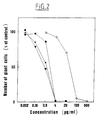
- Fig. 2 is a graphical representation of the results of tests on the inhibition of giant cell formation.
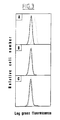
- Fig. 3 is a graphical representation of the results of tests on the inhibition of HIV-adsorption.
- the viruses used in the examples were HIV-1 and HIV-2. They were obtained from the culture supernatant of HUT-78 cells persistently infected with HIV-1 and from the culture supernatant of CEM cells persistently infected with HIV-2, respectively. Titers of HIV-1 and HIV-2 stocks were 2 x 10⁵ and 5 x10⁴ CCID50 (one CCID50 being the 50% cell culture infective dose) per ml, respectively.
- the cells used in the Examples were MT-4, CEM and Molt-4 (clone No. 8) cells.
- the MT-4 cells disclosed by I. Miyoshi et al., Gann Monogr. 28 , 219-228 (1982) were used for tests on the inhibition of the cytopathogenicity of HIV and tests on the inhibition of virus adsorption.
- the CEM cells disclosed by Foley et al., Cancer, 18 , 522-529, (1965), were used for tests about the inhibition of viral antigen expression
- Molt-4 (clone No. 8) cells disclosed by Kikukawa et al., J. Virol. 57 , 1159-1162 (1986) were used in the giant cell formation assay.
- RPMI 1640 medium supplemented with 10% heat-inactivated fetal calf serum, 100 U/ml penicillin G and 20 ⁇ g/ml gentamicin.
- This RPMI 1640 medium is a standard medium comprising inorganic salts like NaCl, NaHCO3, Na2HPO4. as well as glucose, several amino acids and several vitamins.
- test compounds Four different substances were used as test compounds, namely:
- test compounds were evaluated for their inhibitory effect on the cytopathogenicity of HIV-1 in MT-4 cells.
- the method has been described by R. Pauwels et al. in J.Virol.Methods, 16 , 171-185 (1987).
- MT-4 Cells were suspended in culture medium at 3 x 10⁵ cells/ml and infected with HIV-1 at 1,000 CCID50/ml. Immediately after infection, 100 ⁇ l portions of the cell suspension were placed into the wells of a microtiter® tray containing various concentrations of the test compounds. After 5 days incubation at 37°C, the number of viable cells in each well was determined by means of a colorimetric assay (MTT method), using 3-(4,5-dimethylthiazol-2-yl)-2,5-diphenyltetrazolium bromide as a colorant. This colorimetric assay has been described by Pauwels et al in J.Virol.Methods, 20 , 309-321 (1988).
- a control test was effected by incubating mock-infected cells in the absence of any test compound.
- the results of these tests are represented by the bar diagrams of fig. 1, obtained by plotting the number of viable cells after 5 days incubation (in percent of the number in the control test) against the concentration of the test compound in each test. Black bars refer to tests with virus-infected cells and white bars refer to tests with mock-infected cells. Panels A,B and C relate to tests with PAVAS® (MW 10,000), PAVAS® (MW 20,000) and PVAS® (MW 20,000) respectively.
- test compounds were also evaluated for their inhibitory effect on the expression of viral antigens in HIV-infected CEM cells.
- CEM cells were suspended in the culture medium at 1 x 10⁵ cells/ml and infected with HIV-1 at a multiplicity of infection of 0.04. The infected cells were incubated in the presence of various concentrations of the test compound. After 4 days incubation, the viral antigen expression was measured by indirect immunofluorescence and laser cytofluorography, using polyclonal antibody as a probe.
- figs. 1A,1B and 1C relate to tests with PAVAS® (MW 10,000), PAVAS® (MW 20,000) and PVAS® (MW 20,000), respectively.
- the cytotoxic dose (CD50) of the test compounds for CEM cells was higher than 500 ⁇ g/ml.
- Examples 1 and 2 were expanded to cover both HIV-1 and HIV-2 as test viruses and both MT-4 and CEM cells as test cells. Further, PAVAS® (MW 10.000), PAVAS® (MW 20,000), PVAS® (MW 20,000) as well as Dextran sulphate (MW 5,000) were used as test compounds.
- PAVAS® and PVAS® are equally inhibitory to HIV-2 and HIV-1 replication in both MT-4 and CEM cells. PAVAS® and PVAS® are slightly more active than dextran sulphate against HIV-1 and slightly less active than dextran sulphate against HIV-2.
- Molt-4 cells were co-cultured with an equal number (5 x 10⁴) of HIV-1-infected HUT-78 cells in the wells of a microtiter® tray containing various concentrations of the test compounds. After 24 hours of incubation, the cell clusters were broken by gentle pipetting and the number of giant cells (multinucleated syncytial cells) was recorded microscopically. A control test was effected in the absence of any test compound.
- the control test revealed the formation of giant cells. Such giant cells were not observed when the Molt-4 cells had been co-cultured with uninfected HUT-78 cells.
- the curves in fig. 2 can be identified as follows: ⁇ - ⁇ PAVAS® (MW 10,000) ⁇ - ⁇ PAVAS® (MW 20,000) ⁇ - ⁇ PVAS® (MW 20,000) ⁇ - ⁇ Dextran sulphate (MW 5,000)
- dextran sulphate was not inhibitory to giant cell formation at a concentration of 4 ⁇ g/ml.
- This dextran sulphate required a concentration of 100 ⁇ g/ml to completely suppress giant cell formation.
- PAVAS® MW 10,000
- PAVAS® MW 20,000
- PVAS® MW 20,000
- PAVAS and PVAS are potent inhibitors of giant cell formation induced by HIV-1 and HIV-2.
- the inhibitory effect of the test compounds on virus adsorption was measured by an indirect immunofluorescence/laser flow cytographic method which had been established for this purpose.
- MT-4 cells were exposed to HIV-1 virions which had been concentrated from the supernatant of HIV-1-infected HUT-78 cells, in the presence or absence of test compounds. After 30 minutes incubation at 37°C, the cells were thoroughly washed with phosphate-buffered saline (at 4°C) to remove unadsorbed virus particles. Then, the cells were processed for indirect immunofluorescence using polyclonal antibody to HIV-1 and analysed for cell-bound HIV-1 virions by laser flow cytofluorography. A control test was effected with MT-4 cells without exposing them to HIV-1 virions.
- the results are represented in the fluorescence histograms of fig. 3 which have been obtained by plotting the relative cell number belonging to a certain intensity of green fluorescence against the logarithm of that intensity.
- Solid-line histograms represent the fluorescence of MT-4 cells in the control tests, while dotted-line histograms represent the fluorescence of MT-4 cells in the actual tests.
- Panels A,B and C refer to tests without any test compound, to tests with dextran sulphate (MW 5,000) at 20 ⁇ g/ml, and to tests with PAVAS® (MW 20,000) at 4 ⁇ g/ml, respectively.
- Panel B shows that, if the tests are carried out in the presence of 20 ⁇ g/ml dextran sulphate, both histograms will coincide, meaning that there is no difference anymore between the fluorescence properties of MT-4 cells exposed or not exposed to HIV-1 virions. This means that the binding of HIV-1 virions to MT-4 cells is completely blocked by 20 ⁇ g/ml of dextran sulphate.
- panel C shows that virus adsorption onto the MT-4 cells can be suppressed completely by 4 ⁇ g/ml of PAVAS® (MW 20,000).
Landscapes
- Health & Medical Sciences (AREA)
- Life Sciences & Earth Sciences (AREA)
- Veterinary Medicine (AREA)
- Pharmacology & Pharmacy (AREA)
- Public Health (AREA)
- Chemical & Material Sciences (AREA)
- General Health & Medical Sciences (AREA)
- Animal Behavior & Ethology (AREA)
- Medicinal Chemistry (AREA)
- Virology (AREA)
- Organic Chemistry (AREA)
- Nuclear Medicine, Radiotherapy & Molecular Imaging (AREA)
- General Chemical & Material Sciences (AREA)
- Chemical Kinetics & Catalysis (AREA)
- Oncology (AREA)
- Communicable Diseases (AREA)
- Epidemiology (AREA)
- AIDS & HIV (AREA)
- Tropical Medicine & Parasitology (AREA)
- Molecular Biology (AREA)
- Pharmaceuticals Containing Other Organic And Inorganic Compounds (AREA)
Abstract
Description
- This invention relates to a therapeutic agent for treating retroviral infections such as AIDS and AIDS-related diseases.
- AIDS or acquired immune deficiency syndrome is a pandemic immunosuppressive disease resulting from the depletion of helper T-lymphocyte cells in the human body. The causative agent has been identified as a retrovirus called "human immunodeficiency virus" or HIV. At the moment, two different types (HIV-1 and HIV-2) of that retrovirus have been described; both types can induce AIDS or AIDS-related diseases although HIV-1 is more widely spread than HIV-2.
- Many attempts have already been made to find suitable anti-HIV agents and various substances and compounds have been reported to inhibit the replication of HIV (usually type 1) in vitro.
- Among the suggested anti-HIV compounds, 3'-azido-2',3'-dideoxythymidine (azidothymidine or AZT) is at the moment the only compound that has proved to be clinically effective in the treatment of AIDS patients, compare Fischl et al, New Engl.J.Med. 317, 185-191 (1987). The activity of AZT (after conversion to its 5'-triphosphate form) is apparently based on inhibition of reverse transcriptase, an enzyme playing a part in the replication of HIV-1 in T-lymphocyte cells.
- Further, sulphated polysaccharides such as dextran sulphate, heparin and pentosan polysulphate, are highly potent and selective inhibitors of HIV-1 replication during tests in vitro. Compare:
Ito et al, Antiviral Res. 7, 361-367 (1987),
Baba et al, Proc.Nat.Acad.Sci.USA, 85, 6132-6136(1988)
and Baba et al, Antiviral Res. 9, 335-343 (1988).
The activity of these sulphated polysaccharides is apparently based on inhibition of the adsorption of virus particles onto the cell membranes of T-lymphocyte cells. - In addition to this known matter, there is need for other substances and compounds acting as potent HIV-inhibitors. Therefore, the invention has for its primary object to provide such inhibitors as well as therapeutic compositions containing the same.
- In accordance with the invention, it has now been found that sulphated vinyl polymers such as sulphated polyvinylalcohol and sulphated copolymers of (meth)acrylic acid with vinylalcohol as well as pharmaceutically acceptable salts thereof, are highly potent and selective inhibitors of both HIV-1 and HIV-2 replication in vitro and that they may therefore be used with advantage in pharmaceutical compositions intended for the treatment of retroviral infections such as AIDS and AIDS-related diseases.
- The term "sulphated polyvinylalcohol" as used herein refers to a group of polymers of varying molecular weight and polymerisation degree, which have a good solubility in aqueous fluids and which are chemically characterized by the presence of a plurality of -OSO₃H groups together with some -OH groups pending from a normal hydrocarbon (polyvinyl) backbone. They can be synthesized by polymerising vinyl acetate or any other hydroxyl-protected vinylalcohol derivative followed by deprotection of the hydroxyl groups in the resulting polymer and by sulphation of the free hydroxyl groups. The sulphation degree can have any value between 50% and 100%.
- The term "sulphated copolymers of (meth)acrylic acid with vinylalcohol" as used herein refers to a group of polymers of varying molecular weight and polymerisation degree, which have a fair solubility in aqueous fluids and which are chemically characterized by the presence of a plurality of -OSO₃H groups together with some free -OH groups as well as -COOH groups and optionally methyl groups pending from a normal (polyvinyl) hydrocarbon backbone. They can be synthesized by copolymerising acrylic or methacrylic acid or reactive derivatives thereof with a hydroxyl-protected vinylalcohol derivative, followed by deprotection of the hydroxyl groups and, if necessary, the carboxyl groups in the resulting copolymer and by sulphation of the free hydroxyl groups. Again the sulphation degree may have any value between 50% and 100%.
- The -OSO₃H groups and -COOH groups (if present) may sometimes exist in the form of pharmaceutically acceptable salts; such salts can also be used in the present invention.
- The term "sulphated vinyl polymers" is used in this specification to denote the whole group consisting of sulphated of polyvinylalcohols, sulphated copolymers of (meth)acrylic acid and vinylalcohol and pharmaceutically acceptable salts thereof.
- It should be noted that such sulphated vinyl polymers differ from sulphated polysaccharides by the fact that they are substantially free of cyclic groups in the hydrocarbon backbones of their molecules.
- The sulphated vinyl polymers are known compounds. Sulphated polyvinylalcohols have been disclosed by Chargaff et al in J.Biol.Chem. 115, 160 (1936) and are commercially available. Sulphated copolymers of (meth)acrylic acid and vinylalcohol and their salts have been disclosed in EP-A-0093489 where they are intended for use as anticoagulants.
- In tests leading to the invention, it was found that the sulphated vinyl polymers completely inhibited the cytopathogenicity of HIV-1 in MT-4 cells and the antigen expression of HIV-1 in CEM cells, at a concentration of 0.8 µg/ml. They were about equally active against HIV-2 replication. This is an important fact because the cytopathogenicity of HIV resulting from its replication in T-cells is normally regarded as the major mechanism for destruction of such cells.
- Moreover, and in contrast with azidothymidine, the sulphated vinyl polymers completely inhibited the HIV-1 induced formation of giant cells (multinucleated syncytium cells) from uninfected T-cells, at a concentration of 4 µg/ml. This is important because giant cell formation resulting from the interaction between the gpl20 surface antigens of the HIV-infected cells and the CD4 receptor of the uninfected cells is another possible mechanism for the destruction of the T-cells.
- Thanks to the inhibition of giant cell formation, the sulphated vinylpolymers of the present invention have a clear advantage over azidothymidine which does not show such effect.
- Further, the sulphated vinyl polymers of the invention were found to completely inhibit the adsorption of HIV-particles to CD4 positive cells, at a concentration of about 4µg/ml. This may account for the strong activity of these polymers against HIV replication.
- When the sulphated vinyl polymers of the invention are compared with sulphated polysaccharides such as dextran sulphate, it appears that both groups of compounds have the capability of inhibiting HIV replication, inhibiting giant cell formation and inhibiting virus adsorption to T-cells. Nevertheless, there is a clear difference in activity between these two groups of compounds.
- In comparative tests on the inhibition of giant cell formation, it was found that dextran sulphate could completely suppress the giant cell formation only at a concentration of 100µg/ml. Such a concentration is extremely high and hardly achievable in human plasma.
- On the other hand, the sulphated vinyl polymers of the present invention were capable of completely blocking the giant cell formation at a concentration of 4 µg/ml, which concentration can be readily achieved.
- Thus, the sulphated vinyl polymers have a clear advantage over sulphated polysaccharides like dextran sulphate.
- Therapeutic compositions, containing the sulphated vinyl polymers of the invention as an active ingredient for the treatment of retroviral infections such as AIDS or AIDS-related diseases in human practice may take the form of powders, suspensions, solutions, sprays, emulsions, unguents or creams and may be used for local application, for intranasal, rectal, vaginal and also for oral or parenteral (intravenous, intradermal, intramuscular, and intrathecal.) administration. Such compositions may be prepared by com bining (e.g. mixing, and dissolving.) the sulphated vinyl polymers with pharmaceutically acceptable excipients of neutral character (such as aqueous or non-aqueous solvents, stabilizers, emulsifiers, detergents, additives) and further, if necessary with dyes and aromatizers. The concentration of the active ingredient in the therapeutic composition may vary widely between 0.1% and 100%, depending on the mode of administration. Further, the dose of the active ingredient to be administered may vary between 0.1 mg and 100 mg/kg of body weight.
- The anti-HIV properties of the sulphated vinyl polymers are documented by the following examples. Dextran sulphate is used for comparison therein.
- In the Examples, reference is made to figs. 1-3 of the attached drawing, wherein:
- Fig. 1 is a diagrammatic representation of the results of tests on the inhibition of cytopathogenicity of HIV-1 together with test results on the inhibition of virus antigen expression.
- Fig. 2 is a graphical representation of the results of tests on the inhibition of giant cell formation.
- Fig. 3 is a graphical representation of the results of tests on the inhibition of HIV-adsorption.
- The viruses used in the examples were HIV-1 and HIV-2. They were obtained from the culture supernatant of HUT-78 cells persistently infected with HIV-1 and from the culture supernatant of CEM cells persistently infected with HIV-2, respectively. Titers of HIV-1 and HIV-2 stocks were 2 x 10⁵ and 5 x10⁴ CCID₅₀ (one CCID₅₀ being the 50% cell culture infective dose) per ml, respectively.
- The cells used in the Examples were MT-4, CEM and Molt-4 (clone No. 8) cells. The MT-4 cells, disclosed by I. Miyoshi et al., Gann Monogr. 28, 219-228 (1982) were used for tests on the inhibition of the cytopathogenicity of HIV and tests on the inhibition of virus adsorption. The CEM cells, disclosed by Foley et al., Cancer, 18, 522-529, (1965), were used for tests about the inhibition of viral antigen expression, whereas Molt-4 (clone No. 8) cells, disclosed by Kikukawa et al., J. Virol. 57, 1159-1162 (1986) were used in the giant cell formation assay. All cells were mycoplasma-negative. The cells were grown and maintained in a culture medium consisting of RPMI 1640 medium supplemented with 10% heat-inactivated fetal calf serum, 100 U/ml penicillin G and 20 µg/ml gentamicin. This RPMI 1640 medium is a standard medium comprising inorganic salts like NaCl, NaHCO₃, Na₂HPO₄. as well as glucose, several amino acids and several vitamins.
- Four different substances were used as test compounds, namely:
- PAVAS® (MW 10,000), a sulphated copolymer of acrylic acid and vinylalcohol (monomer ratio 1:9) having a molecular weight of 10,000 and a sulphation degree of 60%;
- PAVAS® (MW 20,000), a sulphated copolymer of acrylic acid and vinylalcohol (monomer ratio 1:9) having a molecular weight of 20,000 and a sulphation degree of 50%;
- PVAS® (MW 20,000), a sulphated polyvinylalcohol of molecular weight 20,000 and a sulphation degree of 50%;
- Dextran sulphate (MW 5,000), a sulphated dextran having a molecular weight of 5,000 and a sulphation degree of about 67%.
- The test compounds were evaluated for their inhibitory effect on the cytopathogenicity of HIV-1 in MT-4 cells. The method has been described by R. Pauwels et al. in J.Virol.Methods, 16, 171-185 (1987).
- In a first series of tests, MT-4 Cells were suspended in culture medium at 3 x 10⁵ cells/ml and infected with HIV-1 at 1,000 CCID₅₀/ml. Immediately after infection, 100 µl portions of the cell suspension were placed into the wells of a microtiter® tray containing various concentrations of the test compounds. After 5 days incubation at 37°C, the number of viable cells in each well was determined by means of a colorimetric assay (MTT method), using 3-(4,5-dimethylthiazol-2-yl)-2,5-diphenyltetrazolium bromide as a colorant. This colorimetric assay has been described by Pauwels et al in J.Virol.Methods, 20, 309-321 (1988).
- A second series of tests, parallel to the first, was effected with mock-infected cells, incubated in the presence of various concentrations of the test compounds. A control test was effected by incubating mock-infected cells in the absence of any test compound.
- The results of these tests are represented by the bar diagrams of fig. 1, obtained by plotting the number of viable cells after 5 days incubation (in percent of the number in the control test) against the concentration of the test compound in each test. Black bars refer to tests with virus-infected cells and white bars refer to tests with mock-infected cells. Panels A,B and C relate to tests with PAVAS® (MW 10,000), PAVAS® (MW 20,000) and PVAS® (MW 20,000) respectively.
- It can be deduced from fig. 1 that all three test compounds completely protected the cells against virus-induced cell destruction at a concentration of 0.8 ug/ml.
- None of the three test compounds reduced the viability of mock-infected MT-4 cells at concentrations up to 2500 µg/ml. Thus, the 50% cytotoxic dose (CD₅₀) of the compounds for MT-4 cells was higher than 2500 µg/ml.
- The test compounds were also evaluated for their inhibitory effect on the expression of viral antigens in HIV-infected CEM cells. Here, CEM cells were suspended in the culture medium at 1 x 10⁵ cells/ml and infected with HIV-1 at a multiplicity of infection of 0.04. The infected cells were incubated in the presence of various concentrations of the test compound. After 4 days incubation, the viral antigen expression was measured by indirect immunofluorescence and laser cytofluorography, using polyclonal antibody as a probe.
- The method has been described by Pauwels et al. in J.Virol.Methods, 16, 171-185 (1987).
- A control test was effected in the absence of any test compound.
- The results of these tests have been indicated in figs. 1A,1B and 1C by means of curves (·-·) obtained by plotting the number of antigen positive cells (in percent of the number of untreated virus-infected cells) against the concentration of the test compound in each test. Again, figs. 1A,1B and 1C relate to tests with PAVAS® (MW 10,000), PAVAS® (MW 20,000) and PVAS® (MW 20,000), respectively.
- It appears from the curves in figs. 1A,1B and 1C that the three test compounds almost completely inhibited the viral antigen expression of HIV-1 in CEM cells at a concentration of 0.8 µg/ml and higher.
- During a parallel series of tests, it appeared that none of the test compounds reduced the viability of mock-infected CEM cells at concentrations up to 500 µg/ml. Thus, the cytotoxic dose (CD₅₀) of the test compounds for CEM cells was higher than 500 µg/ml.
- The tests of Examples 1 and 2 were expanded to cover both HIV-1 and HIV-2 as test viruses and both MT-4 and CEM cells as test cells. Further, PAVAS® (MW 10.000), PAVAS® (MW 20,000), PVAS® (MW 20,000) as well as Dextran sulphate (MW 5,000) were used as test compounds.
- The results, expressed in values for ED₅₀ (the 50% antivirally effective dose) and CD₅₀ (the 50% cytotoxic dose) are shown in Table 1 where all data are mean values of two separate experiments.

- It can be deduced from Table 1 that the antivirally effective doses of all four test compounds are far below the cytotoxic doses thereof. Further, it can be seen that PAVAS® and PVAS® are equally inhibitory to HIV-2 and HIV-1 replication in both MT-4 and CEM cells. PAVAS® and PVAS® are slightly more active than dextran sulphate against HIV-1 and slightly less active than dextran sulphate against HIV-2.
- Molt-4 cells were co-cultured with an equal number (5 x 10⁴) of HIV-1-infected HUT-78 cells in the wells of a microtiter® tray containing various concentrations of the test compounds. After 24 hours of incubation, the cell clusters were broken by gentle pipetting and the number of giant cells (multinucleated syncytial cells) was recorded microscopically. A control test was effected in the absence of any test compound.
- The control test revealed the formation of giant cells. Such giant cells were not observed when the Molt-4 cells had been co-cultured with uninfected HUT-78 cells.
- The results of the tests with various concentrations of the test compounds are graphically represented in fig. 2 where the number of giant cells after 24 hours incubation (in percent of the number in the control test) has been plotted against the concentration of the test compound in each test.
- The curves in fig. 2 can be identified as follows:
·-· PAVAS® (MW 10,000)
▲-▲ PAVAS® (MW 20,000)
■-■ PVAS® (MW 20,000)
○-○ Dextran sulphate (MW 5,000) - It appears from fig. 2 that giant cell formation could be completely inhibited by PAVAS and PVAS at concentrations of 4 ug/ml. Even at a lower concentration of 0.8 µg/ml, PAVAS (MW 10,000) and PAVAS (MW 20,000) achieved a reduction of approximately 50% in the number of giant cells.
- On the other hand, and in marked contrast thereto, dextran sulphate was not inhibitory to giant cell formation at a concentration of 4 µg/ml. This dextran sulphate required a concentration of 100 µg/ml to completely suppress giant cell formation.
- In another series of experiments, PAVAS® (MW 10,000) and PAVAS® (MW 20,000) and PVAS® (MW 20,000) also inhibited the giant cell formation induced by HIV-2, at concentrations similar to those required for inhibition of giant cell formation induced by HIV-1.
- Thus, PAVAS and PVAS are potent inhibitors of giant cell formation induced by HIV-1 and HIV-2.
- The inhibitory effect of the test compounds on virus adsorption was measured by an indirect immunofluorescence/laser flow cytographic method which had been established for this purpose.
- In this test, MT-4 cells were exposed to HIV-1 virions which had been concentrated from the supernatant of HIV-1-infected HUT-78 cells, in the presence or absence of test compounds. After 30 minutes incubation at 37°C, the cells were thoroughly washed with phosphate-buffered saline (at 4°C) to remove unadsorbed virus particles. Then, the cells were processed for indirect immunofluorescence using polyclonal antibody to HIV-1 and analysed for cell-bound HIV-1 virions by laser flow cytofluorography. A control test was effected with MT-4 cells without exposing them to HIV-1 virions.
- The results are represented in the fluorescence histograms of fig. 3 which have been obtained by plotting the relative cell number belonging to a certain intensity of green fluorescence against the logarithm of that intensity.
- Solid-line histograms represent the fluorescence of MT-4 cells in the control tests, while dotted-line histograms represent the fluorescence of MT-4 cells in the actual tests. Panels A,B and C refer to tests without any test compound, to tests with dextran sulphate (MW 5,000) at 20 µg/ml, and to tests with PAVAS® (MW 20,000) at 4 µg/ml, respectively.
- It can be noted from panel A that, in the absence of any test compound, there is a clear difference in fluorescence properties between MT-4 cells exposed to HIV-1 virions and MT-4 cells not exposed thereto. In fact, exposure to HIV-1 virions results in a shift of the histogram to higher fluorescence intensities.
- Panel B shows that, if the tests are carried out in the presence of 20 µg/ml dextran sulphate, both histograms will coincide, meaning that there is no difference anymore between the fluorescence properties of MT-4 cells exposed or not exposed to HIV-1 virions. This means that the binding of HIV-1 virions to MT-4 cells is completely blocked by 20 µg/ml of dextran sulphate.
- In the same way, panel C shows that virus adsorption onto the MT-4 cells can be suppressed completely by 4 µg/ml of PAVAS® (MW 20,000).
- The same results could be achieved with PAVAS® (MW 10,000) and with PVAS® (MW 20,000) (data not shown).
Claims (7)
- The use of a sulphated vinyl polymer selected from sulphated polyvinylalcohols, sulphated copolymers of (meth)acrylic acid and vinyl alcohol, and pharmaceutically acceptable salts thereof, for preparing a pharmaceutical composition against retroviral infections, such as AIDS or AIDS-related diseases.
- The use as claimed in claim 1, wherein the sulphated vinyl polymer is a sulphated copolymer of acrylic acid and vinyl alcohol in a monomer ratio of about 1:9.
- The use as claimed in claim 2, wherein said sulphated copolymer has a molecular weight of about 10,000 and a sulphation degree of about 60%.
- The use as claimed in claim 3, wherein said sulphated copolymer has a molecular weight of about 20,000 and a sulphation degree of about 50%.
- The use as claimed in claim 1, wherein the sulphated vinyl polymer is a sulphated polyvinylalcohol having a molecular weight of about 20,000 and a sulphation degree of about 50%.
- The use as claimed in claim 1-5, wherein the sulphated vinyl polymer has a concentration of 0.1 to 100% in the therapeutic composition.
- The use as claimed in claims 1-6, wherein the pharmaceutical composition has the form of a powder, suspension, solution, spray, emulsion, unguent or cream.
Applications Claiming Priority (2)
| Application Number | Priority Date | Filing Date | Title |
|---|---|---|---|
| NL8900442A NL8900442A (en) | 1989-02-22 | 1989-02-22 | SULFATED VINYL POLYMERS IN MEDICINES FOR TREATING RETROVIRUS INFECTIONS. |
| NL8900442 | 1989-02-22 |
Publications (2)
| Publication Number | Publication Date |
|---|---|
| EP0384532A1 EP0384532A1 (en) | 1990-08-29 |
| EP0384532B1 true EP0384532B1 (en) | 1993-09-22 |
Family
ID=19854185
Family Applications (1)
| Application Number | Title | Priority Date | Filing Date |
|---|---|---|---|
| EP90200384A Expired - Lifetime EP0384532B1 (en) | 1989-02-22 | 1990-02-19 | Sulphated vinyl polymers in compositions for treating retroviral infections |
Country Status (9)
| Country | Link |
|---|---|
| US (2) | US5152978A (en) |
| EP (1) | EP0384532B1 (en) |
| JP (1) | JP3120989B2 (en) |
| AT (1) | ATE94760T1 (en) |
| DE (1) | DE69003408T2 (en) |
| DK (1) | DK0384532T3 (en) |
| ES (1) | ES2059985T3 (en) |
| HU (1) | HU206629B (en) |
| NL (1) | NL8900442A (en) |
Families Citing this family (11)
| Publication number | Priority date | Publication date | Assignee | Title |
|---|---|---|---|---|
| US5705178A (en) * | 1991-05-31 | 1998-01-06 | Gliatech, Inc. | Methods and compositions based on inhibition of cell invasion and fibrosis by anionic polymers |
| US5605938A (en) * | 1991-05-31 | 1997-02-25 | Gliatech, Inc. | Methods and compositions for inhibition of cell invasion and fibrosis using dextran sulfate |
| US5614559A (en) * | 1993-11-23 | 1997-03-25 | Procept Inc. | Compound for inhibiting HIV infectivity |
| US5662919A (en) * | 1994-11-21 | 1997-09-02 | Alcon Laboratories, Inc. | Sulfated polyvinyl alcohol polymers to stabilize pharmaceutical drug compounds |
| AUPO104496A0 (en) * | 1996-07-17 | 1996-08-08 | Biomolecular Research Institute Limited | Angiogenic inhibitory compounds |
| AUPO104396A0 (en) * | 1996-07-17 | 1996-08-08 | Biomolecular Research Institute Limited | Antiviral linear polymers |
| US6060235A (en) * | 1997-09-19 | 2000-05-09 | Geltex Pharmaceuticals, Inc. | Antiviral polymers comprising acid functional groups and hydrophobic groups |
| US6884842B2 (en) * | 1997-10-14 | 2005-04-26 | Alnis Biosciences, Inc. | Molecular compounds having complementary surfaces to targets |
| US20090114037A1 (en) * | 2007-10-11 | 2009-05-07 | Mark Forrest Smith | Photo-Acoustic Flow Meter |
| WO2014130432A1 (en) | 2013-02-19 | 2014-08-28 | Johnson & Johnson Consumer Companies, Inc. | Methods and compositions for improving appearance and formation of scar tissue |
| TWI735447B (en) * | 2015-08-06 | 2021-08-11 | 日商日本Exlan工業股份有限公司 | Anti-virus material, and anti-viral material-containing anti-virus product |
Family Cites Families (4)
| Publication number | Priority date | Publication date | Assignee | Title |
|---|---|---|---|---|
| US3466365A (en) * | 1967-07-24 | 1969-09-09 | White Lab Inc | Antiviral compositions and method of use |
| US3702843A (en) * | 1970-05-25 | 1972-11-14 | Schweiger Richard Georg | Nitrite,nitrate and sulfate esters of polyhydroxy polymers |
| GB2080682B (en) * | 1980-07-30 | 1984-03-28 | Ciba Geigy Ag | Antiherpetically active lipstick |
| HU187669B (en) * | 1982-03-31 | 1986-02-28 | Richter Gedeon Vegyeszet | Process for producing new copolymeres and salts |
-
1989
- 1989-02-22 NL NL8900442A patent/NL8900442A/en not_active Application Discontinuation
- 1989-02-23 US US07/315,413 patent/US5152978A/en not_active Expired - Fee Related
-
1990
- 1990-02-19 EP EP90200384A patent/EP0384532B1/en not_active Expired - Lifetime
- 1990-02-19 ES ES90200384T patent/ES2059985T3/en not_active Expired - Lifetime
- 1990-02-19 AT AT90200384T patent/ATE94760T1/en not_active IP Right Cessation
- 1990-02-19 DE DE90200384T patent/DE69003408T2/en not_active Expired - Fee Related
- 1990-02-19 DK DK90200384.7T patent/DK0384532T3/en active
- 1990-02-21 HU HU90886A patent/HU206629B/en not_active IP Right Cessation
- 1990-02-21 JP JP02040895A patent/JP3120989B2/en not_active Expired - Fee Related
-
1992
- 1992-01-15 US US07/821,021 patent/US5292505A/en not_active Expired - Fee Related
Non-Patent Citations (1)
| Title |
|---|
| JOURNAL OF BIOLOGICAL CHEMISTRY, vol. 115, 1936; CHARGATT et al., pp. 155-161# * |
Also Published As
| Publication number | Publication date |
|---|---|
| DE69003408D1 (en) | 1993-10-28 |
| HU206629B (en) | 1992-12-28 |
| ES2059985T3 (en) | 1994-11-16 |
| US5292505A (en) | 1994-03-08 |
| NL8900442A (en) | 1990-09-17 |
| JP3120989B2 (en) | 2000-12-25 |
| JPH02288833A (en) | 1990-11-28 |
| DE69003408T2 (en) | 1994-01-20 |
| DK0384532T3 (en) | 1993-12-06 |
| ATE94760T1 (en) | 1993-10-15 |
| EP0384532A1 (en) | 1990-08-29 |
| US5152978A (en) | 1992-10-06 |
| HU900886D0 (en) | 1990-05-28 |
| HUT53807A (en) | 1990-12-28 |
Similar Documents
| Publication | Publication Date | Title |
|---|---|---|
| Baba et al. | Novel sulfated polymers as highly potent and selective inhibitors of human immunodeficiency virus replication and giant cell formation | |
| Bender et al. | Efficiency of nanoparticles as a carrier system for antiviral agents in human immunodeficiency virus-infected human monocytes/macrophages in vitro | |
| Ito et al. | Inhibitory effect of dextran sulfate and heparin on the replication of human immunodeficiency virus (HIV) in vitro | |
| Baba et al. | Sulfated polysaccharides as potent inhibitors of HIV-induced syncytium formation: a new strategy towards AIDS chemotherapy | |
| Mori et al. | Restricted replication of simian immunodeficiency virus strain 239 in macrophages is determined by env but is not due to restricted entry | |
| Orenstein et al. | Cytoplasmic assembly and accumulation of human immunodeficiency virus types 1 and 2 in recombinant human colony-stimulating factor-1-treated human monocytes: an ultrastructural study | |
| Sawyer et al. | Neutralization sensitivity of human immunodeficiency virus type 1 is determined in part by the cell in which the virus is propagated | |
| Balzarini et al. | Alpha-(1-3)-and alpha-(1-6)-D-mannose-specific plant lectins are markedly inhibitory to human immunodeficiency virus and cytomegalovirus infections in vitro | |
| KR0185683B1 (en) | Sulfonic stilbene derivatives in the treatment of viral diseases | |
| AU606475B2 (en) | Dsrna-based prevention of vial escape | |
| EP0293826A2 (en) | Therapeutic and prophylactic application of sulfated polysaccharides against AIDS | |
| US5152978A (en) | Sulphated vinyl polymers in compositions for treating retroviral infections | |
| EP0286224A2 (en) | Treatment of human viral infection by dsRNA combined with viral inhibitors | |
| AU630220B2 (en) | Antiviral composition | |
| US20050244365A1 (en) | Methods, compositions, formulations, and uses of cellulose and acrylic-based polymers | |
| EP0423240B1 (en) | Modulation of virus-host cell interactions using cyclic oligosaccharides | |
| EP0575432B1 (en) | Modified proteins and their use for controlling viral infections | |
| Baba et al. | Selective inhibition of human immunodeficiency virus type 1 replication by novel fluoroalkylated oligomers in vitro | |
| Chang et al. | Dextran sulfate as an inhibitor against the human immunodeficiency virus | |
| EP0295962B1 (en) | Protein-polysaccharide for treating retroviral infections | |
| GB2213057A (en) | Anti-viral agent | |
| KR0131323B1 (en) | Antiviral Composition Against Human Immunodeficiency Virus Containing BU-3608 | |
| WO1991016907A1 (en) | Improvements in chemical compounds | |
| Dalgleish et al. | AIDS and the new viruses | |
| Nozaki-Renard et al. | Human complement component factor B rescues HIV-1-infected leukemic T cells from cytopathic death |
Legal Events
| Date | Code | Title | Description |
|---|---|---|---|
| PUAI | Public reference made under article 153(3) epc to a published international application that has entered the european phase |
Free format text: ORIGINAL CODE: 0009012 |
|
| AK | Designated contracting states |
Kind code of ref document: A1 Designated state(s): AT BE CH DE DK ES FR GB GR IT LI LU NL SE |
|
| 17P | Request for examination filed |
Effective date: 19910211 |
|
| 17Q | First examination report despatched |
Effective date: 19911204 |
|
| ITF | It: translation for a ep patent filed | ||
| GRAA | (expected) grant |
Free format text: ORIGINAL CODE: 0009210 |
|
| AK | Designated contracting states |
Kind code of ref document: B1 Designated state(s): AT BE CH DE DK ES FR GB GR IT LI LU NL SE |
|
| REF | Corresponds to: |
Ref document number: 94760 Country of ref document: AT Date of ref document: 19931015 Kind code of ref document: T |
|
| REF | Corresponds to: |
Ref document number: 69003408 Country of ref document: DE Date of ref document: 19931028 |
|
| ET | Fr: translation filed | ||
| REG | Reference to a national code |
Ref country code: DK Ref legal event code: T3 |
|
| REG | Reference to a national code |
Ref country code: GR Ref legal event code: FG4A Free format text: 3009830 |
|
| EPTA | Lu: last paid annual fee | ||
| PLBE | No opposition filed within time limit |
Free format text: ORIGINAL CODE: 0009261 |
|
| STAA | Information on the status of an ep patent application or granted ep patent |
Free format text: STATUS: NO OPPOSITION FILED WITHIN TIME LIMIT |
|
| 26N | No opposition filed | ||
| REG | Reference to a national code |
Ref country code: ES Ref legal event code: FG2A Ref document number: 2059985 Country of ref document: ES Kind code of ref document: T3 |
|
| EAL | Se: european patent in force in sweden |
Ref document number: 90200384.7 |
|
| PGFP | Annual fee paid to national office [announced via postgrant information from national office to epo] |
Ref country code: GB Payment date: 19970210 Year of fee payment: 8 |
|
| PGFP | Annual fee paid to national office [announced via postgrant information from national office to epo] |
Ref country code: SE Payment date: 19970225 Year of fee payment: 8 |
|
| PGFP | Annual fee paid to national office [announced via postgrant information from national office to epo] |
Ref country code: GR Payment date: 19970226 Year of fee payment: 8 |
|
| PGFP | Annual fee paid to national office [announced via postgrant information from national office to epo] |
Ref country code: LU Payment date: 19970227 Year of fee payment: 8 Ref country code: AT Payment date: 19970227 Year of fee payment: 8 |
|
| PGFP | Annual fee paid to national office [announced via postgrant information from national office to epo] |
Ref country code: NL Payment date: 19970228 Year of fee payment: 8 Ref country code: FR Payment date: 19970228 Year of fee payment: 8 Ref country code: ES Payment date: 19970228 Year of fee payment: 8 Ref country code: DE Payment date: 19970228 Year of fee payment: 8 |
|
| PGFP | Annual fee paid to national office [announced via postgrant information from national office to epo] |
Ref country code: BE Payment date: 19970324 Year of fee payment: 8 |
|
| PGFP | Annual fee paid to national office [announced via postgrant information from national office to epo] |
Ref country code: DK Payment date: 19970326 Year of fee payment: 8 |
|
| PGFP | Annual fee paid to national office [announced via postgrant information from national office to epo] |
Ref country code: CH Payment date: 19970409 Year of fee payment: 8 |
|
| PG25 | Lapsed in a contracting state [announced via postgrant information from national office to epo] |
Ref country code: LU Free format text: LAPSE BECAUSE OF NON-PAYMENT OF DUE FEES Effective date: 19980219 Ref country code: GB Free format text: LAPSE BECAUSE OF NON-PAYMENT OF DUE FEES Effective date: 19980219 Ref country code: AT Free format text: LAPSE BECAUSE OF NON-PAYMENT OF DUE FEES Effective date: 19980219 |
|
| PG25 | Lapsed in a contracting state [announced via postgrant information from national office to epo] |
Ref country code: SE Free format text: LAPSE BECAUSE OF NON-PAYMENT OF DUE FEES Effective date: 19980220 Ref country code: ES Free format text: LAPSE BECAUSE OF EXPIRATION OF PROTECTION Effective date: 19980220 |
|
| PG25 | Lapsed in a contracting state [announced via postgrant information from national office to epo] |
Ref country code: LI Free format text: LAPSE BECAUSE OF NON-PAYMENT OF DUE FEES Effective date: 19980228 Ref country code: GR Free format text: LAPSE BECAUSE OF NON-PAYMENT OF DUE FEES Effective date: 19980228 Ref country code: FR Free format text: THE PATENT HAS BEEN ANNULLED BY A DECISION OF A NATIONAL AUTHORITY Effective date: 19980228 Ref country code: CH Free format text: LAPSE BECAUSE OF NON-PAYMENT OF DUE FEES Effective date: 19980228 Ref country code: BE Free format text: LAPSE BECAUSE OF NON-PAYMENT OF DUE FEES Effective date: 19980228 |
|
| PG25 | Lapsed in a contracting state [announced via postgrant information from national office to epo] |
Ref country code: DK Free format text: LAPSE BECAUSE OF NON-PAYMENT OF DUE FEES Effective date: 19980302 |
|
| BERE | Be: lapsed |
Owner name: RICHTER GEDEON VEGYESZETI GYAR R.T. Effective date: 19980228 Owner name: STICHTING REGA V.Z.W. Effective date: 19980228 |
|
| PG25 | Lapsed in a contracting state [announced via postgrant information from national office to epo] |
Ref country code: NL Free format text: LAPSE BECAUSE OF NON-PAYMENT OF DUE FEES Effective date: 19980901 |
|
| GBPC | Gb: european patent ceased through non-payment of renewal fee |
Effective date: 19980219 |
|
| REG | Reference to a national code |
Ref country code: CH Ref legal event code: PL |
|
| EUG | Se: european patent has lapsed |
Ref document number: 90200384.7 |
|
| NLV4 | Nl: lapsed or anulled due to non-payment of the annual fee |
Effective date: 19980901 |
|
| PG25 | Lapsed in a contracting state [announced via postgrant information from national office to epo] |
Ref country code: DE Free format text: LAPSE BECAUSE OF NON-PAYMENT OF DUE FEES Effective date: 19981103 |
|
| REG | Reference to a national code |
Ref country code: FR Ref legal event code: ST |
|
| REG | Reference to a national code |
Ref country code: DK Ref legal event code: EBP |
|
| REG | Reference to a national code |
Ref country code: ES Ref legal event code: FD2A Effective date: 20000201 |
|
| PG25 | Lapsed in a contracting state [announced via postgrant information from national office to epo] |
Ref country code: IT Free format text: LAPSE BECAUSE OF NON-PAYMENT OF DUE FEES;WARNING: LAPSES OF ITALIAN PATENTS WITH EFFECTIVE DATE BEFORE 2007 MAY HAVE OCCURRED AT ANY TIME BEFORE 2007. THE CORRECT EFFECTIVE DATE MAY BE DIFFERENT FROM THE ONE RECORDED. Effective date: 20050219 |