EP0378172B1 - Surface-treated sodium bicarbonate particle and molded preparation thereof - Google Patents
Surface-treated sodium bicarbonate particle and molded preparation thereof Download PDFInfo
- Publication number
- EP0378172B1 EP0378172B1 EP90100374A EP90100374A EP0378172B1 EP 0378172 B1 EP0378172 B1 EP 0378172B1 EP 90100374 A EP90100374 A EP 90100374A EP 90100374 A EP90100374 A EP 90100374A EP 0378172 B1 EP0378172 B1 EP 0378172B1
- Authority
- EP
- European Patent Office
- Prior art keywords
- sodium bicarbonate
- treated
- bicarbonate particles
- particles
- sodium
- Prior art date
- Legal status (The legal status is an assumption and is not a legal conclusion. Google has not performed a legal analysis and makes no representation as to the accuracy of the status listed.)
- Expired - Lifetime
Links
- UIIMBOGNXHQVGW-UHFFFAOYSA-M Sodium bicarbonate Chemical compound [Na+].OC([O-])=O UIIMBOGNXHQVGW-UHFFFAOYSA-M 0.000 title claims abstract description 174
- 229910000030 sodium bicarbonate Inorganic materials 0.000 title claims abstract description 87
- 235000017557 sodium bicarbonate Nutrition 0.000 title claims abstract description 87
- 239000002245 particle Substances 0.000 title claims abstract description 65
- 238000002360 preparation method Methods 0.000 title claims abstract description 18
- CDBYLPFSWZWCQE-UHFFFAOYSA-L Sodium Carbonate Chemical compound [Na+].[Na+].[O-]C([O-])=O CDBYLPFSWZWCQE-UHFFFAOYSA-L 0.000 claims abstract description 50
- 229910000029 sodium carbonate Inorganic materials 0.000 claims abstract description 25
- 239000011230 binding agent Substances 0.000 claims abstract description 12
- 150000003839 salts Chemical class 0.000 claims abstract description 7
- 239000002253 acid Substances 0.000 claims description 4
- 238000010438 heat treatment Methods 0.000 abstract description 7
- 238000000465 moulding Methods 0.000 abstract description 7
- 238000003860 storage Methods 0.000 abstract description 4
- 230000002035 prolonged effect Effects 0.000 abstract description 2
- 239000003795 chemical substances by application Substances 0.000 description 23
- 238000003287 bathing Methods 0.000 description 22
- 239000003826 tablet Substances 0.000 description 20
- 238000000034 method Methods 0.000 description 9
- 239000000047 product Substances 0.000 description 8
- 238000001228 spectrum Methods 0.000 description 8
- VZCYOOQTPOCHFL-OWOJBTEDSA-N Fumaric acid Chemical compound OC(=O)\C=C\C(O)=O VZCYOOQTPOCHFL-OWOJBTEDSA-N 0.000 description 6
- 238000005102 attenuated total reflection Methods 0.000 description 6
- 239000000306 component Substances 0.000 description 6
- 239000000203 mixture Substances 0.000 description 5
- KDYFGRWQOYBRFD-UHFFFAOYSA-N Succinic acid Natural products OC(=O)CCC(O)=O KDYFGRWQOYBRFD-UHFFFAOYSA-N 0.000 description 4
- KDYFGRWQOYBRFD-NUQCWPJISA-N butanedioic acid Chemical compound O[14C](=O)CC[14C](O)=O KDYFGRWQOYBRFD-NUQCWPJISA-N 0.000 description 4
- 238000002329 infrared spectrum Methods 0.000 description 4
- 238000004867 photoacoustic spectroscopy Methods 0.000 description 4
- 238000005303 weighing Methods 0.000 description 4
- 229920001353 Dextrin Polymers 0.000 description 3
- 239000004375 Dextrin Substances 0.000 description 3
- 239000002202 Polyethylene glycol Substances 0.000 description 3
- UIIMBOGNXHQVGW-DEQYMQKBSA-M Sodium bicarbonate-14C Chemical compound [Na+].O[14C]([O-])=O UIIMBOGNXHQVGW-DEQYMQKBSA-M 0.000 description 3
- HEMHJVSKTPXQMS-UHFFFAOYSA-M Sodium hydroxide Chemical compound [OH-].[Na+] HEMHJVSKTPXQMS-UHFFFAOYSA-M 0.000 description 3
- 230000002378 acidificating effect Effects 0.000 description 3
- XAGFODPZIPBFFR-UHFFFAOYSA-N aluminium Chemical compound [Al] XAGFODPZIPBFFR-UHFFFAOYSA-N 0.000 description 3
- 229910052782 aluminium Inorganic materials 0.000 description 3
- 239000003086 colorant Substances 0.000 description 3
- 235000019425 dextrin Nutrition 0.000 description 3
- 239000011888 foil Substances 0.000 description 3
- 239000001530 fumaric acid Substances 0.000 description 3
- 239000008187 granular material Substances 0.000 description 3
- 238000004519 manufacturing process Methods 0.000 description 3
- 239000002304 perfume Substances 0.000 description 3
- 229920001223 polyethylene glycol Polymers 0.000 description 3
- 229920005597 polymer membrane Polymers 0.000 description 3
- VZCYOOQTPOCHFL-UHFFFAOYSA-N trans-butenedioic acid Natural products OC(=O)C=CC(O)=O VZCYOOQTPOCHFL-UHFFFAOYSA-N 0.000 description 3
- NBIIXXVUZAFLBC-UHFFFAOYSA-N Phosphoric acid Chemical compound OP(O)(O)=O NBIIXXVUZAFLBC-UHFFFAOYSA-N 0.000 description 2
- 238000000026 X-ray photoelectron spectrum Methods 0.000 description 2
- WNLRTRBMVRJNCN-UHFFFAOYSA-N adipic acid Chemical compound OC(=O)CCCCC(O)=O WNLRTRBMVRJNCN-UHFFFAOYSA-N 0.000 description 2
- 230000000694 effects Effects 0.000 description 2
- 239000007938 effervescent tablet Substances 0.000 description 2
- 230000001747 exhibiting effect Effects 0.000 description 2
- 239000011261 inert gas Substances 0.000 description 2
- 239000000395 magnesium oxide Substances 0.000 description 2
- CPLXHLVBOLITMK-UHFFFAOYSA-N magnesium oxide Inorganic materials [Mg]=O CPLXHLVBOLITMK-UHFFFAOYSA-N 0.000 description 2
- AXZKOIWUVFPNLO-UHFFFAOYSA-N magnesium;oxygen(2-) Chemical compound [O-2].[Mg+2] AXZKOIWUVFPNLO-UHFFFAOYSA-N 0.000 description 2
- 238000002156 mixing Methods 0.000 description 2
- ZAMOUSCENKQFHK-UHFFFAOYSA-N Chlorine atom Chemical compound [Cl] ZAMOUSCENKQFHK-UHFFFAOYSA-N 0.000 description 1
- YKTSYUJCYHOUJP-UHFFFAOYSA-N [O--].[Al+3].[Al+3].[O-][Si]([O-])([O-])[O-] Chemical compound [O--].[Al+3].[Al+3].[O-][Si]([O-])([O-])[O-] YKTSYUJCYHOUJP-UHFFFAOYSA-N 0.000 description 1
- 239000001361 adipic acid Substances 0.000 description 1
- 235000011037 adipic acid Nutrition 0.000 description 1
- RGCKGOZRHPZPFP-UHFFFAOYSA-N alizarin Chemical compound C1=CC=C2C(=O)C3=C(O)C(O)=CC=C3C(=O)C2=C1 RGCKGOZRHPZPFP-UHFFFAOYSA-N 0.000 description 1
- 229910000147 aluminium phosphate Inorganic materials 0.000 description 1
- -1 and the like Substances 0.000 description 1
- 239000006227 byproduct Substances 0.000 description 1
- 238000001354 calcination Methods 0.000 description 1
- 239000000460 chlorine Substances 0.000 description 1
- 229910052801 chlorine Inorganic materials 0.000 description 1
- 239000011248 coating agent Substances 0.000 description 1
- 238000000576 coating method Methods 0.000 description 1
- 239000003814 drug Substances 0.000 description 1
- 229940079593 drug Drugs 0.000 description 1
- 238000005187 foaming Methods 0.000 description 1
- 238000012986 modification Methods 0.000 description 1
- 230000004048 modification Effects 0.000 description 1
- 239000005426 pharmaceutical component Substances 0.000 description 1
- 238000004838 photoelectron emission spectroscopy Methods 0.000 description 1
- 239000011780 sodium chloride Substances 0.000 description 1
- FAPWRFPIFSIZLT-UHFFFAOYSA-M sodium chloride Inorganic materials [Na+].[Cl-] FAPWRFPIFSIZLT-UHFFFAOYSA-M 0.000 description 1
- 235000014214 soft drink Nutrition 0.000 description 1
- 239000011973 solid acid Substances 0.000 description 1
- 238000011282 treatment Methods 0.000 description 1
- XLYOFNOQVPJJNP-UHFFFAOYSA-N water Substances O XLYOFNOQVPJJNP-UHFFFAOYSA-N 0.000 description 1
Images


Classifications
-
- C—CHEMISTRY; METALLURGY
- C01—INORGANIC CHEMISTRY
- C01D—COMPOUNDS OF ALKALI METALS, i.e. LITHIUM, SODIUM, POTASSIUM, RUBIDIUM, CAESIUM, OR FRANCIUM
- C01D7/00—Carbonates of sodium, potassium or alkali metals in general
- C01D7/10—Preparation of bicarbonates from carbonates
-
- A—HUMAN NECESSITIES
- A61—MEDICAL OR VETERINARY SCIENCE; HYGIENE
- A61K—PREPARATIONS FOR MEDICAL, DENTAL OR TOILETRY PURPOSES
- A61K9/00—Medicinal preparations characterised by special physical form
- A61K9/20—Pills, tablets, discs, rods
- A61K9/2004—Excipients; Inactive ingredients
- A61K9/2009—Inorganic compounds
-
- A—HUMAN NECESSITIES
- A61—MEDICAL OR VETERINARY SCIENCE; HYGIENE
- A61K—PREPARATIONS FOR MEDICAL, DENTAL OR TOILETRY PURPOSES
- A61K8/00—Cosmetics or similar toiletry preparations
- A61K8/18—Cosmetics or similar toiletry preparations characterised by the composition
- A61K8/19—Cosmetics or similar toiletry preparations characterised by the composition containing inorganic ingredients
-
- A—HUMAN NECESSITIES
- A61—MEDICAL OR VETERINARY SCIENCE; HYGIENE
- A61P—SPECIFIC THERAPEUTIC ACTIVITY OF CHEMICAL COMPOUNDS OR MEDICINAL PREPARATIONS
- A61P1/00—Drugs for disorders of the alimentary tract or the digestive system
- A61P1/04—Drugs for disorders of the alimentary tract or the digestive system for ulcers, gastritis or reflux esophagitis, e.g. antacids, inhibitors of acid secretion, mucosal protectants
-
- A—HUMAN NECESSITIES
- A61—MEDICAL OR VETERINARY SCIENCE; HYGIENE
- A61Q—SPECIFIC USE OF COSMETICS OR SIMILAR TOILETRY PREPARATIONS
- A61Q19/00—Preparations for care of the skin
- A61Q19/10—Washing or bathing preparations
-
- C—CHEMISTRY; METALLURGY
- C01—INORGANIC CHEMISTRY
- C01D—COMPOUNDS OF ALKALI METALS, i.e. LITHIUM, SODIUM, POTASSIUM, RUBIDIUM, CAESIUM, OR FRANCIUM
- C01D7/00—Carbonates of sodium, potassium or alkali metals in general
-
- C—CHEMISTRY; METALLURGY
- C01—INORGANIC CHEMISTRY
- C01D—COMPOUNDS OF ALKALI METALS, i.e. LITHIUM, SODIUM, POTASSIUM, RUBIDIUM, CAESIUM, OR FRANCIUM
- C01D7/00—Carbonates of sodium, potassium or alkali metals in general
- C01D7/38—Preparation in the form of granules, pieces or other shaped products
-
- A—HUMAN NECESSITIES
- A61—MEDICAL OR VETERINARY SCIENCE; HYGIENE
- A61K—PREPARATIONS FOR MEDICAL, DENTAL OR TOILETRY PURPOSES
- A61K2800/00—Properties of cosmetic compositions or active ingredients thereof or formulation aids used therein and process related aspects
- A61K2800/20—Chemical, physico-chemical or functional or structural properties of the composition as a whole
- A61K2800/22—Gas releasing
- A61K2800/222—Effervescent
-
- A—HUMAN NECESSITIES
- A61—MEDICAL OR VETERINARY SCIENCE; HYGIENE
- A61K—PREPARATIONS FOR MEDICAL, DENTAL OR TOILETRY PURPOSES
- A61K2800/00—Properties of cosmetic compositions or active ingredients thereof or formulation aids used therein and process related aspects
- A61K2800/80—Process related aspects concerning the preparation of the cosmetic composition or the storage or application thereof
- A61K2800/81—Preparation or application process involves irradiation
Definitions
- the present invention relates to surface-treated sodium bicarbonate particles, and, more particularly, to surface-treated sodium bicarbonate particles exhibiting an increased capacity to bind with other sodium bicarbonate particles as well as with other components when they are molded.
- the invention also relates to molded preparations comprising such surface-treated sodium bicarbonate particles.
- Sodium bicarbonate is very frequently molded into tablets, granules, or the like for use as effervescent tablets of bathing agents, digesting agents, gargles, vaginal agents, etc.
- Sodium bicarbonate particles possess only a poor capacity to bind with other sodium bicarbonate particles or with other components, resulting in difficulties in molding operations, especially in high-speed molding operations. For this reason, the use of a considerable amount of binder has been imperative for molding compositions containing sodium bicarbonate particles.
- the use of a large amount of binder however, inevitably results in a decrease in the sodium bicarbonate amount in a molded product. This necessitates the administration of a large amount of a drug to the user, thus producing them a disagreeable feeling. Production costs also increase as a result of the use of such a large amount of binder.
- US-A-3,855,398 discloses a method for producing spherolites of sodium bicarbonate from a by-product sodium hydroxide/sodium chloride cell liquor obtained from the electrolytic production of chlorine.
- Sodium carbonate in the form of hard free-flowing spherules is obtained from the spherolites of sodium bicarbonate by calcination.
- an object of the present invention is to provide surface-treated sodium bicarbonate particles, the surfaces of which are coated with sodium carbonate or its double salt.
- the surface-treated sodium bicarbonate particles have 5 kg or more of binding strength.
- Another object of the present invention is to provide a binder comprising such surface-treated sodium bicarbonate particles.
- Still another object is to provide molded preparations comprising such surface-treated sodium bicarbonate particles.
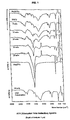
- Figure 1 shows ATR (attenuated total reflection) IR spectra over time when sodium bicarbonate was heated.
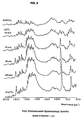
- Figure 2 shows PAS (photoacoustic spectroscopy) IR spectra over time when sodium bicarbonate was heated.
- Figure 3 shows an XPS (x-ray photoemission spectroscopy) spectrum when sodium bicarbonate was heated at 105°C for 10 minutes.
- Figure 4 shows ATR (attenuated total reflection) IR spectra of the sample used in Example 3 hereinafter.
- the average particle size of the sodium bicarbonate particles of the present invention a size greater than 30 ⁇ m is preferable. It is desirable that the whole surface of the sodium bicarbonate particles of the present invention be covered with sodium carbonate or its double salt. A satisfactory result can, however, be obtained when 50 percent or more of the surfaces are covered by sodium carbonate or its double salt. It is imperative that at least a part of the sodium bicarbonate particles be covered by sodium carbonate. The effect of the present invention, however, cannot be obtained by merely mixing sodium bicarbonate and sodium carbonate.
- a preferable thickness of the sodium carbonate layer which covers sodium bicarbonate particle surfaces is from 0.1 ⁇ m to a thickness equivalent to 20% of the particle size of sodium bicarbonate, with a particularly preferable range being 0.1-5 ⁇ m.
- sodium bicarbonate particles have 5 kg or more of binding strength, when measured by a method described in Example 2 hereinafter.
- Sodium bicarbonate particles of the present invention thus produced have a strong binding capacity and can therefore be molded into tablets or granules without using a binder.
- molded preparations which are made from sodium bicarbonate particles of the present invention are foaming preparations molded in conjunction with an acid such as bathing agent tablets, soft drink tablets, and the like, and effervescent tablets of digesting agents, gargles, vaginal agents, and the like which are prepared by using the sodium bicarbonate particles independently or in combination with other pharmaceutical components.
- forming preparations in which the sodium bicarbonate particles of the present invention are used in combination with an acid not only have an improved molding capability but also exhibit a superior stability during storage at a higher temperature.
- a specific example of a molded bathing preparation is a weakly acidic one which is prepared by molding a mixture of the surface-treated sodium bicarbonate particles of the present invention and a water-soluble solid acid such as succinic acid, adipic acid, fumaric acid, phosphoric acid, or the like.
- An amount of an acid to be formulated into such a bathing preparation should be such that the bath water to which the preparation is added, normally at a concentration of about 0.01%, for example, becomes weakly acidic, i.e., pH 4-7, and preferably pH 6.0-6.7.
- the surface-treated sodium bicarbonate particles of the present invention can be used as an excellent binder for molding various preparations because of their superior binding power. They can be molded alone without using a binder or can be used as a binder together with other components for producing tables, granules, and the like.
- the molded preparations using the surface-treated sodium bicarbonate particles of this invention have a superior storage stability.
- Kiya Hardness Meter No. 1600-C: trade name
- Table 1 The results in Table 1 indicate that the surface-treated sodium bicarbonate particles of the present invention had remarkably improved binding strength as compared with untreated sodium bicarbonate particles. Merely mixing sodium bicarbonate and sodium carbonate did not improve the binding strength.
- the binding strengths of the two treated samples were measured in the same way as in Example 2.
- the first sample had a 10.7 kg hardness, while the hardness of the second sample was 3.3 kg, demonstrating a remarkable improvement in the binding strength of the sodium bicarbonate particles treated under reduced pressure over those treated under atmospheric pressure.
- Bathing agents were prepared from 500 kg of succinic acid, 350 kg of sodium bicarbonate (untreated or surface-treated, No. 4 sample product of Example 2), 100 kg of sodium carbonate, 45 kg of polyethylene glycol, 3 kg of dextrin, 1.5 kg of a perfume, and 0.5 kg of a coloring agent (total weight: 1,000 kg). These components were blended, screened through a 16 mesh sieve to remove large particles, and tableted using a tableting machine (DC-WD type, manufactured by Machina Co., Ltd.) to produce bathing agent tablets weighing 50 g each. The tablets were packed with aluminum foils laminated with a polymer membrane. The packages were heat-sealed.
- the bathing agent products were evaluated for their binding power, occurrence of capping, and stability according to the following methods.
- Binding strength 15 g of a sample was placed into a pestle having a 30 mm diameter. A pressure of 200 kg was applied by means of an oil pressure tableting machine to produce tablets. The hardness (kg) of the produced tablets was measured by a Kiya Hardness Meter.
- Capping occurrence Tablets were continuously produced using a tableting machine (DC-WD type, manufactured by Machina Co., Ltd.) with varied tableting speeds to determine the maximum speed at which capping occurred.
- DC-WD type manufactured by Machina Co., Ltd.
- the bathing agent tablet using surface-treated sodium bicarbonate had improved binding power strength did not result in a capping problem, and exhibited excellent stability.
- Bathing agents were prepared from 350 kg of succinic acid, 150 kg of fumaric acid, 350 kg of sodium bicarbonate (untreated or surface-treated; product of Toyo Soda Manufacturing Co., Ltd.; average particle diameter: 100 ⁇ m), 100 kg of sodium carbonate, 45 kg of polyethylene glycol, 3 kg of dextrin, 1.5 kg of a perfume, and 0.5 kg of a coloring agent (total weight: 1,000 kg). These components were blended, screened through a 16 mesh sieve to remove large particles, and tableted using a tableting machine (DC-WD type, manufactured by Machina Co., Ltd.) to produce bathing agent tablets weighing 50 g each. The tablets were packed with aluminum foils laminated with a polymer membrane. The packages were heat-sealed.
- the bathing agent products were evaluated for their binding strength according to the method described in Example 4. The results are shown in Table 3.
- Bathing agents were prepared from 350 kg of succinic acid, 100 kg of fumaric acid, 550 kg of sodium bicarbonate (untreated or surface-treated; product of Toyo Soda Manufacturing Co., Ltd.; average particle diameter: 100 ⁇ m), 45 kg of polyethylene glycol, 3 kg of dextrin, 1.5 kg of a perfume, and 0.5 kg of a coloring agent (total weight: 1,000 kg). These components were blended, screened through a 16 mesh sieve to remove large particles, and tableted using a tableting machine (DC-WD type, manufactured by Machina Co., Ltd.) to produce bathing agent tablets weighing 50 g each. The tablets were packed with aluminum foils laminated with a polymer membrane. The packages were heat-sealed.
- Sodium bicarbonate (average particle diameter: 100 ⁇ m, manufactured by Asahi Glass Co., Ltd.) was heat-treated at 120°C for 10 minutes. Thirty three (33) kg of this surface-treated sodium bicarbonate, 49.4 kg of synthetic aluminum silicate, 16 kg of magnesium oxide, 0.6 kg of turkey red oil extract, and 1 kg of magnesium oxide (total weight: 100 kg) were blended and tableted using an eccentric type tableting machine (manufactured by Kikusui Manufacturing Co., Ltd.) to produce bathing agent tablets weighing 30 g each.
Landscapes
- Chemical & Material Sciences (AREA)
- Health & Medical Sciences (AREA)
- Organic Chemistry (AREA)
- Inorganic Chemistry (AREA)
- Life Sciences & Earth Sciences (AREA)
- Animal Behavior & Ethology (AREA)
- General Health & Medical Sciences (AREA)
- Public Health (AREA)
- Veterinary Medicine (AREA)
- Engineering & Computer Science (AREA)
- Materials Engineering (AREA)
- Epidemiology (AREA)
- Medicinal Chemistry (AREA)
- Pharmacology & Pharmacy (AREA)
- Dermatology (AREA)
- Birds (AREA)
- Nuclear Medicine, Radiotherapy & Molecular Imaging (AREA)
- Chemical Kinetics & Catalysis (AREA)
- General Chemical & Material Sciences (AREA)
- Bioinformatics & Cheminformatics (AREA)
- Medicinal Preparation (AREA)
- Pharmaceuticals Containing Other Organic And Inorganic Compounds (AREA)
- Cosmetics (AREA)
- Detergent Compositions (AREA)
- Glanulating (AREA)
- Medicines That Contain Protein Lipid Enzymes And Other Medicines (AREA)
- Solid-Sorbent Or Filter-Aiding Compositions (AREA)
Abstract
Description
- The present invention relates to surface-treated sodium bicarbonate particles, and, more particularly, to surface-treated sodium bicarbonate particles exhibiting an increased capacity to bind with other sodium bicarbonate particles as well as with other components when they are molded. The invention also relates to molded preparations comprising such surface-treated sodium bicarbonate particles.
- Sodium bicarbonate is very frequently molded into tablets, granules, or the like for use as effervescent tablets of bathing agents, digesting agents, gargles, vaginal agents, etc. Sodium bicarbonate particles, however, possess only a poor capacity to bind with other sodium bicarbonate particles or with other components, resulting in difficulties in molding operations, especially in high-speed molding operations. For this reason, the use of a considerable amount of binder has been imperative for molding compositions containing sodium bicarbonate particles. The use of a large amount of binder, however, inevitably results in a decrease in the sodium bicarbonate amount in a molded product. This necessitates the administration of a large amount of a drug to the user, thus producing them a disagreeable feeling. Production costs also increase as a result of the use of such a large amount of binder.
- Although various studies directed to the development of binders exhibiting a higher binding effect have been undertaken, none of these studies have so far been successful.
- US-A-3,855,398 discloses a method for producing spherolites of sodium bicarbonate from a by-product sodium hydroxide/sodium chloride cell liquor obtained from the electrolytic production of chlorine. Sodium carbonate in the form of hard free-flowing spherules is obtained from the spherolites of sodium bicarbonate by calcination.
- In view of this situation, the present inventors have undertaken extensive studies, and, as a result, have found that the binding capacity of sodium bicarbonate particles could remarkably be improved by coating their surfaces with sodium carbonate or its double salt. Such a finding has led to the completion of the present invention.
- Accordingly, an object of the present invention is to provide surface-treated sodium bicarbonate particles, the surfaces of which are coated with sodium carbonate or its double salt.
- In a preferred embodiment of the present invention, the surface-treated sodium bicarbonate particles have 5 kg or more of binding strength.
- Another object of the present invention is to provide a binder comprising such surface-treated sodium bicarbonate particles.
- Still another object is to provide molded preparations comprising such surface-treated sodium bicarbonate particles.
- Other objects, features and advantages of the invention will hereinafter become more readily apparent from the following description.
- Figure 1 shows ATR (attenuated total reflection) IR spectra over time when sodium bicarbonate was heated.
- Figure 2 shows PAS (photoacoustic spectroscopy) IR spectra over time when sodium bicarbonate was heated.
- Figure 3 shows an XPS (x-ray photoemission spectroscopy) spectrum when sodium bicarbonate was heated at 105°C for 10 minutes.
- Figure 4 shows ATR (attenuated total reflection) IR spectra of the sample used in Example 3 hereinafter.
- Although there are no specific restrictions as to the average particle size of the sodium bicarbonate particles of the present invention, a size greater than 30 µm is preferable. It is desirable that the whole surface of the sodium bicarbonate particles of the present invention be covered with sodium carbonate or its double salt. A satisfactory result can, however, be obtained when 50 percent or more of the surfaces are covered by sodium carbonate or its double salt. It is imperative that at least a part of the sodium bicarbonate particles be covered by sodium carbonate. The effect of the present invention, however, cannot be obtained by merely mixing sodium bicarbonate and sodium carbonate. A preferable thickness of the sodium carbonate layer which covers sodium bicarbonate particle surfaces is from 0.1 µm to a thickness equivalent to 20% of the particle size of sodium bicarbonate, with a particularly preferable range being 0.1-5 µm.
- The following methods (1)-(4) are given as examples of a method for covering surfaces of sodium bicarbonate particles with sodium carbonate.
- (1) Heat sodium bicarbonate particles to a temperature above 70°C. Sodium bicarbonate particles having an average diameter of 200 µm, for example, can be converted into sodium carbonate for a depth of approximately 1 µm from the surface when heated to about 100°C for 30 minutes. The thickness of sodium carbonate on the surface can be controlled by the heating temperature and the heating time.
- (2) Heat sodium bicarbonate particles under reduced pressure at a temperature below 70°C. Sodium bicarbonate particles, for example, are heated at a temperature below 70°C and 13,3 mbar (10 mmHg) for 120 minutes.
- (3) Cause sodium bicarbonate particles to come into contact with an inert gas. Sodium bicarbonate particles are heated in an inert gas at the same temperature and for the same period of time as in (1) above.
- (4) Irradiate sodium bicarbonate particles with micro waves or infrared light.
- In a preferred embodiment of the present invention, sodium bicarbonate particles have 5 kg or more of binding strength, when measured by a method described in Example 2 hereinafter.
- Sodium bicarbonate particles of the present invention thus produced have a strong binding capacity and can therefore be molded into tablets or granules without using a binder. Given as examples of molded preparations which are made from sodium bicarbonate particles of the present invention are foaming preparations molded in conjunction with an acid such as bathing agent tablets, soft drink tablets, and the like, and effervescent tablets of digesting agents, gargles, vaginal agents, and the like which are prepared by using the sodium bicarbonate particles independently or in combination with other pharmaceutical components. In particular, forming preparations in which the sodium bicarbonate particles of the present invention are used in combination with an acid not only have an improved molding capability but also exhibit a superior stability during storage at a higher temperature. Such preparations are thus suitable for products requiring a prolonged storage time. A specific example of a molded bathing preparation is a weakly acidic one which is prepared by molding a mixture of the surface-treated sodium bicarbonate particles of the present invention and a water-soluble solid acid such as succinic acid, adipic acid, fumaric acid, phosphoric acid, or the like. An amount of an acid to be formulated into such a bathing preparation should be such that the bath water to which the preparation is added, normally at a concentration of about 0.01%, for example, becomes weakly acidic, i.e., pH 4-7, and preferably pH 6.0-6.7.
- Besides acidic bathing preparations, the surface-treated sodium bicarbonate particles of the present invention can be used as an excellent binder for molding various preparations because of their superior binding power. They can be molded alone without using a binder or can be used as a binder together with other components for producing tables, granules, and the like. The molded preparations using the surface-treated sodium bicarbonate particles of this invention have a superior storage stability.
- Other features of the invention will become apparent in the course of the following description of the exemplary embodiments which are given for illustration of the invention and are not intended to be limiting thereof.
- Sodium bicarbonate having an average particle diameter of 200 µm (manufactured by Toyo Soda Manufacturing Co., Ltd.) was heated to 105°C. In order to observe the changes in sodium bicarbonate particles over time IR spectra with different analytical depths (ATR method and PAS method) and by the X ray photoelectron spectrum (XPS) method were measured. The results are shown in Figs. 1-3.
- As is evidenced by the ATR spectra of Figure 1, heating for a period of 20-30 minutes converted the sodium bicarbonate particle surface of about 1 µm thickness into sodium carbonate. The spectrum obtained from a pulverized sample which was heated for 30 minutes was almost identical with the spectrum of sodium bicarbonate, showing that the structure of bulk sodium bicarbonate and that of the particle surface are different. As demonstrated by the PAS spectrum of Figure 2, heating for 90-120 minutes converted 10-µm-thick sodium bicarbonate on the particle surface into sodium carbonate. At a 5-10 nm (50-100 Angstrom) polar surface, all of the sodium bicarbonate changed into sodium carbonate by heating for 10 minutes as can be seen from the XPS spectrum of Figure 3. These results confirm that sodium bicarbonate particles with their surfaces covered with sodium carbonate can be produced by heating.
- The binding strengths were measured on sodium bicarbonate samples (average particle diameter: 200 µm; manufactured by Toyo Soda Manufacturing Co., Ltd.) which were subjected to the treatments listed in Table 1. Fifteen (15) g of a sample was placed into a pestle having a 30-mm diameter. A pressure of 200 kg was applied by means of an oil pressure tableting machine (manufactured by Riken Co., Ltd.) to produce tablets (n=3). The hardness (kg) of the tablets produced was measured by a Kiya Hardness Meter (No. 1600-C: trade name) having a sample supporting table with a diameter of 50 mm and at the pressurized area of 5 mm. The resulting value of the hardness was taken as the binding strength of the sample. The results are shown in Table 1.
TABLE 1 Sample No. Treating Conditions Hardness (kg) 1 Untreated sodium bicarbonate 3.6 2 Sodium bicarbonate heated at 105°C for 10 minutes. 7.1 3 Sodium bicarbonate heated at 105°C for 30 minutes. 11.0 4 Sodium bicarbonate heated at 105°C for 90 minutes. 14.3 5 A mixture of sodium bicarbonate/sodium carbonate (9/1) 2.3 6 A mixture of sodium bicarbonate/sodium carbonate (8/2) 3.3 5 A mixture of sodium bicarbonate/sodium carbonate (7/3) 3.7 - The results in Table 1 indicate that the surface-treated sodium bicarbonate particles of the present invention had remarkably improved binding strength as compared with untreated sodium bicarbonate particles. Merely mixing sodium bicarbonate and sodium carbonate did not improve the binding strength.
- Two lots of sample sodium bicarbonate having an average particle diameter of 200 µm (manufactured by Toyo Soda Manufacturing Co., Ltd.) were provided for the test. One was heated at 68°C under reduced pressure 13,3 mbar (10 mmHg) for 1 hour and the other was heated at 70°C under atmospheric pressure for 1 hour. An ATR spectrum was measured on each treated sample. The results are shown in Figure 4, which indicate that the second sample, which was treated under atmospheric pressure, was almost the same as the untreated sample, while the reaction proceeded considerably in the first sample which was heated under reduced pressure. This first sample, was pulverized and the ATR spectrum of the powdered sample was measured. The spectrum was almost the same as that of sodium bicarbonate. This confirms that the surfaces of the sodium bicarbonate particles were covered with sodium carbonate.
- The binding strengths of the two treated samples were measured in the same way as in Example 2. The first sample had a 10.7 kg hardness, while the hardness of the second sample was 3.3 kg, demonstrating a remarkable improvement in the binding strength of the sodium bicarbonate particles treated under reduced pressure over those treated under atmospheric pressure.
- Bathing agents were prepared from 500 kg of succinic acid, 350 kg of sodium bicarbonate (untreated or surface-treated, No. 4 sample product of Example 2), 100 kg of sodium carbonate, 45 kg of polyethylene glycol, 3 kg of dextrin, 1.5 kg of a perfume, and 0.5 kg of a coloring agent (total weight: 1,000 kg). These components were blended, screened through a 16 mesh sieve to remove large particles, and tableted using a tableting machine (DC-WD type, manufactured by Machina Co., Ltd.) to produce bathing agent tablets weighing 50 g each. The tablets were packed with aluminum foils laminated with a polymer membrane. The packages were heat-sealed.
- The bathing agent products were evaluated for their binding power, occurrence of capping, and stability according to the following methods.
- Binding strength: 15 g of a sample was placed into a pestle having a 30 mm diameter. A pressure of 200 kg was applied by means of an oil pressure tableting machine to produce tablets. The hardness (kg) of the produced tablets was measured by a Kiya Hardness Meter.
- Capping occurrence: Tablets were continuously produced using a tableting machine (DC-WD type, manufactured by Machina Co., Ltd.) with varied tableting speeds to determine the maximum speed at which capping occurred.
- Stability: Ten (10) packages were left in a thermostat at a temperature of 50°C for 24 hours. The volume changes before and after the packages were treated were determined. The average values were calculated from the results. The higher the value, the more stable the tablet.
- The results are shown in Table 2.
TABLE 2 Sample Binding strength Capping occurrence Stability (cc) (kg) A: Bathing agent produced from surface-treated sodium bicarbonate 6.9 No problem at 25 tablets/min. 0.2 B: Bathing agent produced from untreated sodium bicarbonate 4.4 Capping occurred at above 22 tablets/min. 3.4 - As can be seen from Table 2, the bathing agent tablet using surface-treated sodium bicarbonate had improved binding power strength did not result in a capping problem, and exhibited excellent stability.
- Bathing agents were prepared from 350 kg of succinic acid, 150 kg of fumaric acid, 350 kg of sodium bicarbonate (untreated or surface-treated; product of Toyo Soda Manufacturing Co., Ltd.; average particle diameter: 100 µm), 100 kg of sodium carbonate, 45 kg of polyethylene glycol, 3 kg of dextrin, 1.5 kg of a perfume, and 0.5 kg of a coloring agent (total weight: 1,000 kg). These components were blended, screened through a 16 mesh sieve to remove large particles, and tableted using a tableting machine (DC-WD type, manufactured by Machina Co., Ltd.) to produce bathing agent tablets weighing 50 g each. The tablets were packed with aluminum foils laminated with a polymer membrane. The packages were heat-sealed.
- The bathing agent products were evaluated for their binding strength according to the method described in Example 4. The results are shown in Table 3.
- Bathing agents were prepared from 350 kg of succinic acid, 100 kg of fumaric acid, 550 kg of sodium bicarbonate (untreated or surface-treated; product of Toyo Soda Manufacturing Co., Ltd.; average particle diameter: 100 µm), 45 kg of polyethylene glycol, 3 kg of dextrin, 1.5 kg of a perfume, and 0.5 kg of a coloring agent (total weight: 1,000 kg). These components were blended, screened through a 16 mesh sieve to remove large particles, and tableted using a tableting machine (DC-WD type, manufactured by Machina Co., Ltd.) to produce bathing agent tablets weighing 50 g each. The tablets were packed with aluminum foils laminated with a polymer membrane. The packages were heat-sealed.
- The bathing agent products were evaluated for their binding strength according to the method described in Example 4. The results are shown in Table 3.
TABLE 3 Sample Binding strength (kg) C: Bathing agent produced from surface-treated sodium bicarbonate (Example 5) 12.9 D: Bathing agent produced from untreated sodium bicarbonate 7.1 E: Bathing agent produced from surface-treated sodium bicarbonate (Example 6) 6.5 F: Bathing agent produced from untreated sodium bicarbonate 3.8 - Sodium bicarbonate (average particle diameter: 100 µm, manufactured by Asahi Glass Co., Ltd.) was heat-treated at 120°C for 10 minutes. Thirty three (33) kg of this surface-treated sodium bicarbonate, 49.4 kg of synthetic aluminum silicate, 16 kg of magnesium oxide, 0.6 kg of turkey red oil extract, and 1 kg of magnesium oxide (total weight: 100 kg) were blended and tableted using an eccentric type tableting machine (manufactured by Kikusui Manufacturing Co., Ltd.) to produce bathing agent tablets weighing 30 g each.
- Obviously, numerous modifications and variations of the present invention are possible in light of the above teachings. It is therefore to be understood that within the scope of the appended claims, the invention may be practiced otherwise than as specifically described herein.
Claims (9)
- Surface-treated sodium bicarbonate particles, at least a part of the surfaces of which is coated with sodium carbonate or its double salt.
- Surface-treated sodium bicarbonate particles according to Claim 1 having 5 kg or more of binding strength
- Surface-treated sodium bicarbonate particles according to Claim 2, wherein the surface is treated with sodium bicarbonate or its double salt.
- A binding agent comprising surface-treated sodium bicarbonate particles as defined in claim 1.
- A binding agent according to Claim 4, wherein said surface-treated sodium bicarbonate particles have 5 kg or more of binding strength.
- A molded preparation comprising surface-treated sodium bicarbonate particles as defined in claim 1.
- A molded preparation according to Claim 6, wherein said surface-treated sodium bicarbonate particles have 5 kg or more of binding strength.
- A molded preparation according to claim 6, which additionally comprises an acid.
- A molded preparation according to Claim 8, wherein said surface-treated sodium bicarbonate particles have 5 kg or more of binding strength.
Applications Claiming Priority (2)
| Application Number | Priority Date | Filing Date | Title |
|---|---|---|---|
| JP2569/89 | 1989-01-09 | ||
| JP256989 | 1989-01-09 |
Publications (2)
| Publication Number | Publication Date |
|---|---|
| EP0378172A1 EP0378172A1 (en) | 1990-07-18 |
| EP0378172B1 true EP0378172B1 (en) | 1994-09-21 |
Family
ID=11533003
Family Applications (1)
| Application Number | Title | Priority Date | Filing Date |
|---|---|---|---|
| EP90100374A Expired - Lifetime EP0378172B1 (en) | 1989-01-09 | 1990-01-09 | Surface-treated sodium bicarbonate particle and molded preparation thereof |
Country Status (10)
| Country | Link |
|---|---|
| US (1) | US5217719A (en) |
| EP (1) | EP0378172B1 (en) |
| JP (1) | JPH02275714A (en) |
| KR (1) | KR0135275B1 (en) |
| AT (1) | ATE111873T1 (en) |
| CA (1) | CA2005850A1 (en) |
| DE (1) | DE69012593T2 (en) |
| DK (1) | DK0378172T3 (en) |
| ES (1) | ES2064492T3 (en) |
| NO (2) | NO302941B1 (en) |
Families Citing this family (15)
| Publication number | Priority date | Publication date | Assignee | Title |
|---|---|---|---|---|
| DK0546124T4 (en) * | 1990-08-29 | 2003-05-19 | Inst Genetics Llc | Multiple-domain hematopoiesis stimulators |
| JPH0625072B2 (en) * | 1990-11-15 | 1994-04-06 | 花王株式会社 | Effervescent molding composition |
| US5338551A (en) * | 1992-07-02 | 1994-08-16 | Lajoie M Stephen | Polyfunctional agrochemical bicarbonate-containing compositions |
| US5422087A (en) * | 1994-02-28 | 1995-06-06 | Church & Dwight Co., Inc. | Free-flowing alkali metal bicarbonate powder |
| JP4413287B2 (en) * | 1997-07-30 | 2010-02-10 | 花王株式会社 | Granular bath agent composition |
| FR2821344B1 (en) * | 2001-02-26 | 2003-04-25 | Solvay | AGGLOMERATED MINERAL SUBSTANCE GRANULE, RESISTANT TO ABRASION, POWDER COMPRISING SUCH GRANULES AND METHOD FOR THE PRODUCTION THEREOF |
| JP5114822B2 (en) * | 2001-09-28 | 2013-01-09 | 東ソー株式会社 | Anti-caking baking soda and method for producing the same |
| EP1770065A4 (en) * | 2004-07-01 | 2011-02-23 | Asahi Glass Co Ltd | CRYSTALLINE SODIUM HYDROGENOCARBONATE GRAINS HAVING LOW LEVEL OF INTEGRITY AND PROCESS FOR PRODUCING THE SAME |
| EP1997780A1 (en) * | 2006-03-15 | 2008-12-03 | Asahi Glass Company, Limited | High-purity sodium hydrogen carbonate crystal grain and process for producing the same |
| US20080132535A1 (en) * | 2006-11-30 | 2008-06-05 | Transcept Pharmaceuticals, Inc. | Stabilized Zolpidem Pharmaceutical Compositions |
| US9999864B2 (en) * | 2011-08-18 | 2018-06-19 | The Additive Advantage, Llc | Method of mixing a liquid in a container |
| JP5877778B2 (en) * | 2012-05-28 | 2016-03-08 | 株式会社ホットアルバム炭酸泉タブレット | Tablet manufacturing method and tablet |
| JP5588490B2 (en) * | 2012-10-10 | 2014-09-10 | 株式会社ホットアルバム炭酸泉タブレット | Tablet manufacturing method and tablet |
| JP2014221818A (en) * | 2014-07-25 | 2014-11-27 | 株式会社ホットアルバム炭酸泉タブレット | Method for producing of tablet, and tablet |
| KR102407700B1 (en) | 2018-12-20 | 2022-06-10 | 스티어라이프 인디아 프라이빗 리미티드 | Method for preparing chemically modified bicarbonate salt particles |
Family Cites Families (7)
| Publication number | Priority date | Publication date | Assignee | Title |
|---|---|---|---|---|
| US287128A (en) * | 1883-10-23 | Chables hemje | ||
| US261228A (en) * | 1882-07-18 | hemje | ||
| US3701737A (en) * | 1970-10-30 | 1972-10-31 | Fmc Corp | Sodium carbonate-sodium bicarbonate agglomerates |
| US3852427A (en) * | 1973-04-12 | 1974-12-03 | Allied Chem | Sodium bicarbonate spherulites from sodium d esquicarbonate |
| US3855398A (en) * | 1973-04-12 | 1974-12-17 | Allied Chem | Sodium carbonate and bicarbonate sperulites from chlorine electrolytic cell liquors |
| AU528310B2 (en) * | 1978-11-16 | 1983-04-21 | Beecham Group Plc | Composition of paracetamol and metoclopramide |
| JPH08957A (en) * | 1994-02-18 | 1996-01-09 | Babcock & Wilcox Co:The | Production of nox reductive precursor for generating plasma from mixture of molecule nitrogen and hydrocarbon |
-
1989
- 1989-12-15 US US07/451,250 patent/US5217719A/en not_active Expired - Fee Related
- 1989-12-15 JP JP1325598A patent/JPH02275714A/en active Granted
- 1989-12-18 CA CA002005850A patent/CA2005850A1/en not_active Abandoned
-
1990
- 1990-01-05 KR KR1019900000065A patent/KR0135275B1/en not_active Expired - Fee Related
- 1990-01-08 NO NO900079A patent/NO302941B1/en unknown
- 1990-01-08 NO NO90900079A patent/NO900079L/en unknown
- 1990-01-09 EP EP90100374A patent/EP0378172B1/en not_active Expired - Lifetime
- 1990-01-09 DK DK90100374.9T patent/DK0378172T3/en active
- 1990-01-09 DE DE69012593T patent/DE69012593T2/en not_active Expired - Fee Related
- 1990-01-09 AT AT90100374T patent/ATE111873T1/en active
- 1990-01-09 ES ES90100374T patent/ES2064492T3/en not_active Expired - Lifetime
Also Published As
| Publication number | Publication date |
|---|---|
| KR0135275B1 (en) | 1998-04-22 |
| NO900079D0 (en) | 1990-01-08 |
| JPH02275714A (en) | 1990-11-09 |
| ATE111873T1 (en) | 1994-10-15 |
| DK0378172T3 (en) | 1995-02-06 |
| CA2005850A1 (en) | 1990-07-09 |
| KR900011665A (en) | 1990-08-01 |
| NO302941B1 (en) | 1998-05-11 |
| ES2064492T3 (en) | 1995-02-01 |
| DE69012593T2 (en) | 1995-04-20 |
| US5217719A (en) | 1993-06-08 |
| NO900079L (en) | 1990-07-10 |
| DE69012593D1 (en) | 1994-10-27 |
| EP0378172A1 (en) | 1990-07-18 |
| JPH0567569B2 (en) | 1993-09-27 |
Similar Documents
| Publication | Publication Date | Title |
|---|---|---|
| EP0378172A1 (en) | Surface-treated sodium bicarbonate particle and molded preparation thereof | |
| EP0387885B1 (en) | Direct compression cholestyramine tablet and solvent-free coating therefor | |
| AU667991B2 (en) | Excipient having high compactability and prccess for preparing the same | |
| EP0436499B1 (en) | A process for producing a calcium phosphate type powder | |
| EP0267788B1 (en) | Complex of pullulan and polyethylene glycol | |
| CA1240925A (en) | Controlled release solid drug dosage forms based on mixtures of water soluble nonionic cellulose ethers and anionic surfactants | |
| EP0644156A1 (en) | Calcium hydrogen phosphate, a method for preparing it, and an excipient utilizing it | |
| US4265847A (en) | Tabletting process | |
| CA2051531A1 (en) | Superior tasting pharmaceutical composition having porous particles and the process of preparing such pharmaceutical composition | |
| DE2233748B2 (en) | DENTAL CLEANING PRODUCTS | |
| KR20000005486A (en) | D-mannitol and its preparation | |
| AU677432B2 (en) | Effervescent granulated material and method for its preparation | |
| US5455047A (en) | Direct compression cholestyramine tablet and solvent-free coating therefor | |
| EP0190689B1 (en) | Method for producing foaming composition | |
| EP0753582A1 (en) | Immunopotentiator and method of manufacturing the same | |
| US4393086A (en) | Dietary product containing glucomannan powder and method for preparing | |
| NZ205620A (en) | Bactericidal effervescing compositions for forming tablets therefrom | |
| EP0236771A2 (en) | Amino sugar carbonating agents and their preparation | |
| CA1036938A (en) | Direct compression diluent | |
| EP0421508A2 (en) | Sulphated glycosaminoglycuronan with antithrombotic activity | |
| JPS63190820A (en) | Foamable bathing agent | |
| EP0255000A2 (en) | Silica aerogels and dentifrice compositions | |
| EP0369715A1 (en) | Boehmite-type aluminium hydroxide, process for preparing same and phosphate ion adsorbent containing same as effective component | |
| FI79945C (en) | FOERFARANDE FOER FRAMSTAELLNING AV NYA MODIFIERADE LEROR. | |
| IE852493L (en) | Fluidized and rehydratable magaldrate compositions |
Legal Events
| Date | Code | Title | Description |
|---|---|---|---|
| PUAI | Public reference made under article 153(3) epc to a published international application that has entered the european phase |
Free format text: ORIGINAL CODE: 0009012 |
|
| AK | Designated contracting states |
Kind code of ref document: A1 Designated state(s): AT CH DE DK ES FR GB IT LI SE |
|
| 17P | Request for examination filed |
Effective date: 19901017 |
|
| 17Q | First examination report despatched |
Effective date: 19921126 |
|
| GRAA | (expected) grant |
Free format text: ORIGINAL CODE: 0009210 |
|
| AK | Designated contracting states |
Kind code of ref document: B1 Designated state(s): AT CH DE DK ES FR GB IT LI SE |
|
| REF | Corresponds to: |
Ref document number: 111873 Country of ref document: AT Date of ref document: 19941015 Kind code of ref document: T |
|
| REF | Corresponds to: |
Ref document number: 69012593 Country of ref document: DE Date of ref document: 19941027 |
|
| ITF | It: translation for a ep patent filed | ||
| ET | Fr: translation filed | ||
| EAL | Se: european patent in force in sweden |
Ref document number: 90100374.9 |
|
| ITTA | It: last paid annual fee | ||
| REG | Reference to a national code |
Ref country code: ES Ref legal event code: FG2A Ref document number: 2064492 Country of ref document: ES Kind code of ref document: T3 |
|
| REG | Reference to a national code |
Ref country code: DK Ref legal event code: T3 |
|
| PLBE | No opposition filed within time limit |
Free format text: ORIGINAL CODE: 0009261 |
|
| STAA | Information on the status of an ep patent application or granted ep patent |
Free format text: STATUS: NO OPPOSITION FILED WITHIN TIME LIMIT |
|
| 26N | No opposition filed | ||
| PGFP | Annual fee paid to national office [announced via postgrant information from national office to epo] |
Ref country code: GB Payment date: 19971231 Year of fee payment: 9 |
|
| PGFP | Annual fee paid to national office [announced via postgrant information from national office to epo] |
Ref country code: FR Payment date: 19980109 Year of fee payment: 9 |
|
| PGFP | Annual fee paid to national office [announced via postgrant information from national office to epo] |
Ref country code: AT Payment date: 19980114 Year of fee payment: 9 |
|
| PGFP | Annual fee paid to national office [announced via postgrant information from national office to epo] |
Ref country code: SE Payment date: 19980116 Year of fee payment: 9 Ref country code: DK Payment date: 19980116 Year of fee payment: 9 Ref country code: DE Payment date: 19980116 Year of fee payment: 9 |
|
| PGFP | Annual fee paid to national office [announced via postgrant information from national office to epo] |
Ref country code: CH Payment date: 19980121 Year of fee payment: 9 |
|
| PGFP | Annual fee paid to national office [announced via postgrant information from national office to epo] |
Ref country code: ES Payment date: 19980129 Year of fee payment: 9 |
|
| PG25 | Lapsed in a contracting state [announced via postgrant information from national office to epo] |
Ref country code: GB Free format text: LAPSE BECAUSE OF NON-PAYMENT OF DUE FEES Effective date: 19990109 Ref country code: AT Free format text: LAPSE BECAUSE OF NON-PAYMENT OF DUE FEES Effective date: 19990109 |
|
| PG25 | Lapsed in a contracting state [announced via postgrant information from national office to epo] |
Ref country code: SE Free format text: LAPSE BECAUSE OF NON-PAYMENT OF DUE FEES Effective date: 19990110 |
|
| PG25 | Lapsed in a contracting state [announced via postgrant information from national office to epo] |
Ref country code: ES Free format text: THE PATENT HAS BEEN ANNULLED BY A DECISION OF A NATIONAL AUTHORITY Effective date: 19990111 |
|
| PG25 | Lapsed in a contracting state [announced via postgrant information from national office to epo] |
Ref country code: LI Free format text: LAPSE BECAUSE OF NON-PAYMENT OF DUE FEES Effective date: 19990131 Ref country code: CH Free format text: LAPSE BECAUSE OF NON-PAYMENT OF DUE FEES Effective date: 19990131 |
|
| PG25 | Lapsed in a contracting state [announced via postgrant information from national office to epo] |
Ref country code: DK Free format text: LAPSE BECAUSE OF NON-PAYMENT OF DUE FEES Effective date: 19990202 |
|
| GBPC | Gb: european patent ceased through non-payment of renewal fee |
Effective date: 19990109 |
|
| REG | Reference to a national code |
Ref country code: CH Ref legal event code: PL |
|
| PG25 | Lapsed in a contracting state [announced via postgrant information from national office to epo] |
Ref country code: FR Free format text: LAPSE BECAUSE OF NON-PAYMENT OF DUE FEES Effective date: 19990930 |
|
| PG25 | Lapsed in a contracting state [announced via postgrant information from national office to epo] |
Ref country code: DE Free format text: LAPSE BECAUSE OF NON-PAYMENT OF DUE FEES Effective date: 19991103 |
|
| REG | Reference to a national code |
Ref country code: FR Ref legal event code: ST |
|
| REG | Reference to a national code |
Ref country code: DK Ref legal event code: EBP |
|
| REG | Reference to a national code |
Ref country code: ES Ref legal event code: FD2A Effective date: 20020204 |
|
| PG25 | Lapsed in a contracting state [announced via postgrant information from national office to epo] |
Ref country code: IT Free format text: LAPSE BECAUSE OF NON-PAYMENT OF DUE FEES Effective date: 20050109 |