EP0373461A2 - Benzazoles - Google Patents
Benzazoles Download PDFInfo
- Publication number
- EP0373461A2 EP0373461A2 EP89122281A EP89122281A EP0373461A2 EP 0373461 A2 EP0373461 A2 EP 0373461A2 EP 89122281 A EP89122281 A EP 89122281A EP 89122281 A EP89122281 A EP 89122281A EP 0373461 A2 EP0373461 A2 EP 0373461A2
- Authority
- EP
- European Patent Office
- Prior art keywords
- group
- substituted
- formula
- alkyl
- alkyl group
- Prior art date
- Legal status (The legal status is an assumption and is not a legal conclusion. Google has not performed a legal analysis and makes no representation as to the accuracy of the status listed.)
- Withdrawn
Links
- 0 N*OC(SC1C=C2F)=CC1C=C2N(C(C1=C2CCCC1)=O)C2=O Chemical compound N*OC(SC1C=C2F)=CC1C=C2N(C(C1=C2CCCC1)=O)C2=O 0.000 description 4
- MQFXMYKTKKEIMK-UHFFFAOYSA-N CC(C(C1=C2CCCC1)=O)=CC2=O Chemical compound CC(C(C1=C2CCCC1)=O)=CC2=O MQFXMYKTKKEIMK-UHFFFAOYSA-N 0.000 description 1
Classifications
-
- C—CHEMISTRY; METALLURGY
- C07—ORGANIC CHEMISTRY
- C07D—HETEROCYCLIC COMPOUNDS
- C07D417/00—Heterocyclic compounds containing two or more hetero rings, at least one ring having nitrogen and sulfur atoms as the only ring hetero atoms, not provided for by group C07D415/00
- C07D417/02—Heterocyclic compounds containing two or more hetero rings, at least one ring having nitrogen and sulfur atoms as the only ring hetero atoms, not provided for by group C07D415/00 containing two hetero rings
- C07D417/04—Heterocyclic compounds containing two or more hetero rings, at least one ring having nitrogen and sulfur atoms as the only ring hetero atoms, not provided for by group C07D415/00 containing two hetero rings directly linked by a ring-member-to-ring-member bond
-
- A—HUMAN NECESSITIES
- A01—AGRICULTURE; FORESTRY; ANIMAL HUSBANDRY; HUNTING; TRAPPING; FISHING
- A01N—PRESERVATION OF BODIES OF HUMANS OR ANIMALS OR PLANTS OR PARTS THEREOF; BIOCIDES, e.g. AS DISINFECTANTS, AS PESTICIDES OR AS HERBICIDES; PEST REPELLANTS OR ATTRACTANTS; PLANT GROWTH REGULATORS
- A01N43/00—Biocides, pest repellants or attractants, or plant growth regulators containing heterocyclic compounds
- A01N43/72—Biocides, pest repellants or attractants, or plant growth regulators containing heterocyclic compounds having rings with nitrogen atoms and oxygen or sulfur atoms as ring hetero atoms
- A01N43/74—Biocides, pest repellants or attractants, or plant growth regulators containing heterocyclic compounds having rings with nitrogen atoms and oxygen or sulfur atoms as ring hetero atoms five-membered rings with one nitrogen atom and either one oxygen atom or one sulfur atom in positions 1,3
-
- A—HUMAN NECESSITIES
- A01—AGRICULTURE; FORESTRY; ANIMAL HUSBANDRY; HUNTING; TRAPPING; FISHING
- A01N—PRESERVATION OF BODIES OF HUMANS OR ANIMALS OR PLANTS OR PARTS THEREOF; BIOCIDES, e.g. AS DISINFECTANTS, AS PESTICIDES OR AS HERBICIDES; PEST REPELLANTS OR ATTRACTANTS; PLANT GROWTH REGULATORS
- A01N43/00—Biocides, pest repellants or attractants, or plant growth regulators containing heterocyclic compounds
- A01N43/90—Biocides, pest repellants or attractants, or plant growth regulators containing heterocyclic compounds having two or more relevant hetero rings, condensed among themselves or with a common carbocyclic ring system
-
- C—CHEMISTRY; METALLURGY
- C07—ORGANIC CHEMISTRY
- C07D—HETEROCYCLIC COMPOUNDS
- C07D277/00—Heterocyclic compounds containing 1,3-thiazole or hydrogenated 1,3-thiazole rings
- C07D277/60—Heterocyclic compounds containing 1,3-thiazole or hydrogenated 1,3-thiazole rings condensed with carbocyclic rings or ring systems
- C07D277/62—Benzothiazoles
- C07D277/68—Benzothiazoles with hetero atoms or with carbon atoms having three bonds to hetero atoms with at the most one bond to halogen, e.g. ester or nitrile radicals, directly attached in position 2
-
- C—CHEMISTRY; METALLURGY
- C07—ORGANIC CHEMISTRY
- C07D—HETEROCYCLIC COMPOUNDS
- C07D277/00—Heterocyclic compounds containing 1,3-thiazole or hydrogenated 1,3-thiazole rings
- C07D277/60—Heterocyclic compounds containing 1,3-thiazole or hydrogenated 1,3-thiazole rings condensed with carbocyclic rings or ring systems
- C07D277/62—Benzothiazoles
- C07D277/68—Benzothiazoles with hetero atoms or with carbon atoms having three bonds to hetero atoms with at the most one bond to halogen, e.g. ester or nitrile radicals, directly attached in position 2
- C07D277/70—Sulfur atoms
- C07D277/74—Sulfur atoms substituted by carbon atoms
-
- C—CHEMISTRY; METALLURGY
- C07—ORGANIC CHEMISTRY
- C07D—HETEROCYCLIC COMPOUNDS
- C07D471/00—Heterocyclic compounds containing nitrogen atoms as the only ring hetero atoms in the condensed system, at least one ring being a six-membered ring with one nitrogen atom, not provided for by groups C07D451/00 - C07D463/00
- C07D471/02—Heterocyclic compounds containing nitrogen atoms as the only ring hetero atoms in the condensed system, at least one ring being a six-membered ring with one nitrogen atom, not provided for by groups C07D451/00 - C07D463/00 in which the condensed system contains two hetero rings
- C07D471/04—Ortho-condensed systems
-
- C—CHEMISTRY; METALLURGY
- C07—ORGANIC CHEMISTRY
- C07D—HETEROCYCLIC COMPOUNDS
- C07D487/00—Heterocyclic compounds containing nitrogen atoms as the only ring hetero atoms in the condensed system, not provided for by groups C07D451/00 - C07D477/00
- C07D487/02—Heterocyclic compounds containing nitrogen atoms as the only ring hetero atoms in the condensed system, not provided for by groups C07D451/00 - C07D477/00 in which the condensed system contains two hetero rings
- C07D487/04—Ortho-condensed systems
Definitions
- the present invention relates to novel benzazoles, to several processes for their preparation, and to their use as herbicides.
- the novel benzazoles exhibit powerful herbicidal properties.
- the benzazoles according to the invention exhibit a substantially greater herbicidal action than those known from the prior art, for instance, aforementioned Japanese Laid-Open Patent Publication No. 14711/1985.
- R may be mentioned, for example, thiazole, isoxazole, 1,2,4-triazole, 1,2,4-oxadiazole, 1,2,5-oxadiazole, 1,2,5-thiadiazole, pyridine, pyrazine and so on.
- R represents methyl, ethyl, in each case straight chain or branched propyl, butyl, pentyl, hexyl or heptyl which are optionally substituted by fluorine.
- the symbols Y 1 , Y2 and R in this formula have the same meanings as stated before. Furthermore, in the formula (II), the symbols Y 1 , Y 2 and R preferably have the same preferred meanings as stated before.
- the compounds represented by the formula (II) include the known compounds disclosed by Japanese Patent Application No. 153466-1988 as well as novel compounds which have not yet been disclosed by any publication.
- the compound (II) mentioned above can be prepared according to the process that was disclosed by the above-mentioned Japanese Patent Application No. 153466-1988.
- the compounds represented by the general formula (III) employed in the above-mentioned process a) are known in themselves and concretely include 2,3-dimethylmaleic anhydride and 3,4,5,6-tetrahydrophthalic anhydride.
- the substituents are those as defined under the afore-mentioned symbols Y 1 , Y 2 , R, T, W and Y3.
- the compounds represented by the general formula (IV) are novel compounds and can be prepared by process c), for example, wherein a compound represented by the general formula wherein Y', Y 2 , R and Y 3 have the same meanings as mentioned before, is reacted with a compound represented by the general formula wherein T and W have the same meanings as mentioned before.
- the compounds represented by the above-mentioned general formula (V) are novel compounds which can be prepared by process d), for example, wherein a compound represented by the afore-mentioned general formula (II) is reacted with one of the compounds selected from the group consisting of phosgene, trichloromethyl chloroformate and thiophosgene.
- an isocyanate derivative of the compound (V) can be synthesized by the process disclosed in Organic Synthesis, Collective, vol. 2, page 453 or J. Am. Chem. Soc. vol. 72, page 1888 and an isothiocyanate derivative of the compound (V) can be synthesized by the process disclosed in J. Org. Chem., 1953, page 1052 or J. Chem. Soc., 1927, page 1186.
- the reaction partner represented by the general formula (VI) includes, as the concrete examples, ethyl pipecolinate, 1-ethoxycarbonylhexahydropyridazine, and 1- ethoxycarbonyl-1,2,3,6-tetrahydropyridazine, all of which are the compounds disclosed by Japanese Patent Application No. 258462-1987.
- any kind of inert organic solvents can be mentioned.
- organic acids such as, for example, acetic acid, propionic acid, etc.
- the respective starting materials are refluxed under heating in acetic acid, for example, according to the above-mentioned process disclosed in Agr. Biol. Chem., vol. 40, page 745.
- alcohols such as, for example, ethanol, isopropanol, tert-butanol, methyl cellosolve, etc., dioxane, N,N-dimethylformamide, dimethylsulfoxide, sulfolane, etc.
- the process b) can be carried out at a temperature from about 50 C to about 1300 C, for example, preferably from about 70 ° C to about 90 C.
- the above-mentioned process b) can be carried out according to the process disclosed in the above- mentioned Agr. Chem. Biol., vol. 40, No. 45, page 745, wherein, in general, about 0.01 to 0.5 equivalents of sodium ethoxide are reacted with one equivalent of the compound represented by the general formula (IV) in the presence of one of the above-mentioned solvents and at a reaction temperature in the range mentioned above for a period from 0.5 to 16 hours.
- the compound represented by the general formula (IV) that has been prepared in the preceding reaction stage designated as the process c) may be used as it is in the process b). Namely, the process c) and process b) may be continuously carried out.
- the active compounds according to the invention can be used as defoliants, desiccants, agents for destroying broad-leaved paints and, especially, as weedkillers.
- weeds in the broadest sense, there are to be understood all plants which grow in locations where they are undesired. Whether the substances according to the invention act as total or selective herbicides depends essentially on the amount used.
- the active compouns according to the invention can be used, for example, in connection with the following plants:
- Echinochloa Setaria, Panicum, Digitaria, Phleum, Poa, Festuca, Eleusine, Brachiaria, Lolium, Bromus, Avena, Cyperus, Sorghum, Agropyron, Cynodon, Monochoria, Fimbristylis, Sagittaria, Eleocharis, Scirpus, Paspalum, Ischaemum, Sphenoclea, Dactyloctenium, Agrostis, Alopecurus and Apera.
- Oryza Zea, Triticum, Hordeum, Avena, Secale, Sorghum, Panicum, Saccharum, Ananas, Asparagus and Allium.
- the compounds are suitable, depending on the concentration, for the total combating of weeds, for example on industrial terrain and rail tracks, and on paths and squares with or without tree plantings. Equally, the compounds can be emplyed for combating weeds in perennial cultures, for example afforestations, decorative tree plantings, orchards, vineyards, citrus groves, nut orchards, banana plantations, coffee plantations, tea plantations, rubber plantations, oil palm plantations, cocoa plantations, soft fruit plantings and hopfields, and for the slective combating of weeds in annual cultures.
- the active compounds can be converted into the customary formulations, such as solutions, emulsions, wettable powders, suspensions, powders, foams, pastes, granules, aerosols, natural and synthetic materials impregnated with active compound, very fine capsules in polymeric substances, coating compositions for use on seed, and formulations used with burning equipment, such as fumigating cartridges, fumigating cans and fumigating coils, as well as ULV cold mist and warm mist formulations.
- customary formulations such as solutions, emulsions, wettable powders, suspensions, powders, foams, pastes, granules, aerosols, natural and synthetic materials impregnated with active compound, very fine capsules in polymeric substances, coating compositions for use on seed, and formulations used with burning equipment, such as fumigating cartridges, fumigating cans and fumigating coils, as well as ULV cold mist and warm mist formulations.
- formulations may be produced in known manner, for example by mixing the active compounds with extenders, that is to say liquid or liquefied gaseous or solid diluents or carriers, optionally with the use of surface-active agents, that is to say emulsifying agents and/or dispersing agents and/or foam-forming agents.
- extenders that is to say liquid or liquefied gaseous or solid diluents or carriers
- surface-active agents that is to say emulsifying agents and/or dispersing agents and/or foam-forming agents.
- organic solvents can, for example, also be used as auxiliary solvents.
- liquid solvents diluents or carriers there are suitable in the main, aromatic hydrocarbons, such as xylene, toluene or alkyl napthalenes, chlorinated aromatic or chlorinated aliphatic hydrocarbons, such as chlorobenzenes, chloroethylenes or methylene chloride, aliphatic hydrocarbons, such as cyclohexane or paraffins, for example mineral oil fractions, alcohols, such as butanol or glycol as well as their ethers and esters, ketones, such as acetone, methyl ethyl ketone, methyl isobutyl ketone or cyclohexanone, or strongly polar solvents, such as dimethylformamide and dimethyl-sulphoxide, as well as water.
- aromatic hydrocarbons such as xylene, toluene or alkyl napthalenes
- chlorinated aromatic or chlorinated aliphatic hydrocarbons such as chlorobenzenes, chloro
- liquefied gaseous diluents or carriers liquids which would be gaseous at normal temperature and under normal pressure, for example aerosol propellants, such as halogenated hydrocarbons as well as butane, propane, nitrogen and carbon dioxide.
- ground natural minerals such as kaolins, clays, talc, chalk, quartz, attapulgite, montmorillonite or diatomaceous earth
- ground synthetic minerals such as highly-dispersed silicic acid, alumina and silicates.
- crushed and fractionated natural rocks such as calcite, marble, pumice, sepiolite and dolomite, as well as synthetic granules of inorganic and organic meals, and granules or organic material such as sawdust, coconut shells, maize cobs and tobacco stalks.
- non-ionic and anionic emulsifiers such as polyoxyethylene-fatty acid esters, polyoxyethylene-fatty alcohol ethers, for example alkylaryl polyglycol ethers, alkyl sulphonates, alkyl sulphates, aryl sulphonates as well as albumin hydrolysis products.
- Dispersing agents include, for example, lignin sulphite waste liquors and methylcellulose.
- Adhesive such as carboxymethylcellulose and natural and synthetic polymers in the form of powders, granules or latices, such as gum arabic, polyvinyl alcohol and polyvinyl acetate, can be used in the formulation.
- colorants such as inorganic pigments, for example iron oxide, titanium oxide and Prussian Blue, and organic dyestuffs, such as alizarin dyestuffs, azo dyestoffs or metal phthalocyanine dyestuffs, and trace nutrients, such as salts of iron, manganese boron, copper, cobalt, molybdenum and zinc.
- inorganic pigments for example iron oxide, titanium oxide and Prussian Blue
- organic dyestuffs such as alizarin dyestuffs, azo dyestoffs or metal phthalocyanine dyestuffs
- trace nutrients such as salts of iron, manganese boron, copper, cobalt, molybdenum and zinc.
- the formulation in general contain from 0.1 to 95 per cent by weight of active compound, preferably from 0.5 to 90 per cent by weight.
- the active compounds according to the invention can also be used, for combating weeds, as mixtures with known herbicides, finished formulations or tank mixes being possible.
- the active compounds can be used as such, in the form of their formulations or in the use forms prepared therefrom by further dilution, such as ready-to-use solutions, suspensions, emulsions, powders, pastes and granules. They are used in the customary manner, for example by watering, spraying, atomising or scattering.
- the active compounds according to the invention can be applied either before or after emergence of the plants.
- the amount of active compound used can vary within a substantial range. It depends essentially on the nature of the desired effect. In general, the amounts used are between 0.0001 and 3 kg of active compound per hectare of soil surface, preferably between 0.001 and 2 kg per ha.
- a solid residue obtained by removing the ethyl acetate from the thus dried reaction mixture under distillation at reduced pressure was dissolved in a minimum amount of n-hexane under refluxing, followed by filtration of crystals forming upon a slow cooling thereof at 15 to 25° C so as to obtain the aimed 5-amino-6-fluoro-2-butoxybenzothiazole (4.5 g) having a melting point in the range of from 101 to 103° C.
- 6-fluoro-2-butoxybenzothiazole (8.9 g) was added to 95% sulfuric acid (100 g) at 0 to 10° C, followed by stirring for 30 minutes. Then, 98% nitric acid (3.1 g) was dropwise added to the mixture at 0 to 5°C followed by one hour stirring while the temperature being kept at 0 to 5 . C.
- reaction mixture was poured onto water (300 g) and the resulting oily substance was extracted with toluene and the extract was washed with water, saturated sodium bicarbonate and water, in that order, followed by drying with anhydrous sodium sulfate. After distilling off the toluene under reduced pressure, oily substance (8.8 g) was obtained.
- the content in the oily substance of the principal component viz., 6-fluoro-2-butoxy-5-nitrobenzothiazole was determined to be in the range from 72 to 77%.
- reaction liquid was added 2-methylthio-6-fluorobenzothiazole (5.0 g) portionwise at 0 to 5° C, followed by two hours stirring at 20 to 35° C. Then reaction liquid was treated in the manner similar to Referential Example 1 to obtain the aimed 6-fluoro-2-propoxybenzothiazole (3.8 g).
- Table 1 relates to the compounds represented by the general formula (I) defined as:
- Table 2 relates to the compounds represented by the general formula (I) defined as:
- Table 3 relates to the compounds represented by the general formula (I) defined as:
- Table 4 relates to the compounds represented by the general formula (I) defined as:
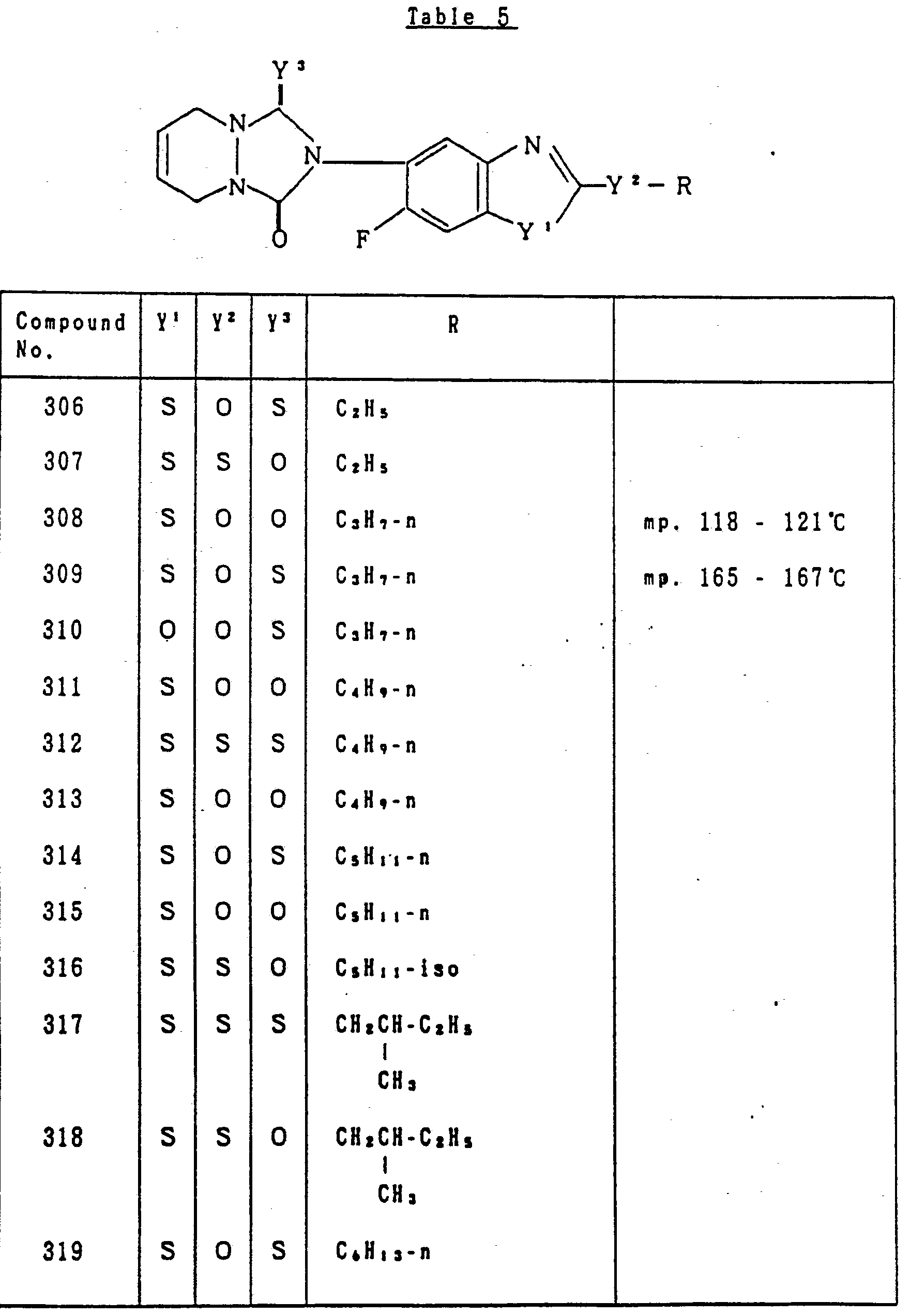
- Table 5 relates to the compounds represented by the general formula (I) defined as:
- Carrier 5 parts by weight of acetone
- Emulsifier 1 part by weight of benzyloxy polyglycol ether
- a suitable preparation of active compound 1 part by weight of active compound was mixed with the stated amount of carrier and with the stated amount of emulsifier, and the resulting emulsifiable concentrate was then diluted with water to the desired concentrations.
- Each of several pots having a size of 25 x 20 x 9 cm and an area of 1/2,000 are, was filled with soil taken out from a paddy field. Young paddy-rice plants (Nihonbare Variety) of the 2.5-leaf stage, with a height of 15 cm, were transplanted into these pots. Each pot has two zones, with the number of the plants grown in each zone being three. Then, seeds of the following weeds were sown in the soil, which was kept under wet conditions:
- a number of pots each having an area of 500 cm2, were charged with soil obtained from a cultivated field. Seeds of soy bean were sown into the soil in the pots. Thereafter the surface of the soil was covered with a soil layer.
- the soil layer contained seeds of fingergrass (Digitaria), wild blite (Amaranthus) and goosefoot (Chenopodium album). The thickness of the soil layer was about 1 cm.
- the soil layer contained seeds of fingergrass (Digitaria), wild blite (Amaranthus) and goosefoot (Chenopodium album).
- the thickness of the soil layer was about 1 cm.
- the wheat plants were grown for 14 days, and then the plants were uniformly sprayed with a predetermined amount of the formulation of the active compound which had been produced in the same manner as in Example 4.
Landscapes
- Chemical & Material Sciences (AREA)
- Organic Chemistry (AREA)
- Life Sciences & Earth Sciences (AREA)
- Dentistry (AREA)
- Wood Science & Technology (AREA)
- Plant Pathology (AREA)
- Health & Medical Sciences (AREA)
- Engineering & Computer Science (AREA)
- Agronomy & Crop Science (AREA)
- General Health & Medical Sciences (AREA)
- Pest Control & Pesticides (AREA)
- Zoology (AREA)
- Environmental Sciences (AREA)
- Agricultural Chemicals And Associated Chemicals (AREA)
- Plural Heterocyclic Compounds (AREA)
- Nitrogen Condensed Heterocyclic Rings (AREA)
- Thiazole And Isothizaole Compounds (AREA)
Abstract
Novel benzazoles of the formula (I) <CHEM> wherein Q represents <CHEM> and the use of the new compounds as herbicides.
Description
- The present invention relates to novel benzazoles, to several processes for their preparation, and to their use as herbicides.
- It has already been disclosed that certain benzazoles are useful as herbicides (see Japanese Laid-Open Patent Publication No. 14711/1988).
- There have now been found novel benzazoles of the formula (I)


- in which T represents -(CH2)4- or -CH2-CH = CH-CH2-,
- W represents CH or N, and
- Y3 represents O or S,
- Y1 and Y2 each represent 0 or S, and
- R represents an optionally by halogen substituted C1 -10 o alkyl group, a cycloalkylmethyl group having C3-6 cycloalkyl, which is optionally substituted by a C1-3 alkyl group, or represents C3-10 alkoxyalkyl,-CH2COOR1 or -CH2CONR2R3, wherein R1 represents a C1-6 alkyl group or a C5-6 cycloalkyl group, R2 and
- R3 each represent a C1 -6 alkyl group or R2 and R3 together may form a five-or six-membered ring that may comprise oxygen or N-CH3, or
- R represents a methyl group substituted by a five- or six-membered heterocyclic group, wherein said heterocyclic group may be substitutable with halogen, C1-3 alkyl and/or C1-3 alkoxy,
Benzazoles of the formula (I) are obtained when- a) in the case Q represents


- b) in the case where Q is


- a) in the case Q represents
- The novel benzazoles exhibit powerful herbicidal properties.
- Surprisingly, the benzazoles according to the invention exhibit a substantially greater herbicidal action than those known from the prior art, for instance, aforementioned Japanese Laid-Open Patent Publication No. 14711/1985.
- Among the benzazoles according to the invention, of the formula (I), preferred compounds are those wherein
Q represents
- in which T represents -(CH2)4-, and
- W represents CH or N,
- Y3 represents O or S,
- Y1 represents S,
- Y2 represents O,
- and R presents an optionally by halogen substituted C1-6 alkyl group, a cycloalkylmethyl group having optionally by methyl substituted C3-6 cycloalkyl, a C1-3 alkoxy-C2-3 alkyl group, -CH2COOR1 or -CH2CONR2 R3,
- wherein R1 represents a C1 -4 alkyl group or cyclopentyl group,
- R2 and R3 each represent a C1 -4 alkyl group or R2 and R3 together may form a five- or six-membered ring that may comprise oxygen or N-CH3, or
- R represents a methyl group substituted by a five-membered heterocyclic group that may be substituted with chlorine, methyl and/or methoxy, wherein said heterocyclic group may comprise one to two nitrogen atoms and further one of oxygen atom, sulfur atom or nitrogen atom, or a six-membered heterocyclic group that may comprise one to two nitrogen atoms and optionally chlorine substituent.
- Very particularly preferred benzazoles of the formula (I) are those wherein Q represents

- in which T represents -(CH2)4-, W represents CH or N and
- Y3 represents S,
- Y1 represents S, Y2 represents 0 and
- R represents methyl, ethyl, in each case straight chain or branched propyl, butyl, pentyl, hexyl or heptyl, which are optionally substituted by fluorine, methoxymethyl, methoxyethyl, ethoxymethyl, ethoxyethyl, methoxycarbonylmethyl, ethoxycarbonylmethyl, dimethylaminocarbonylmethyl, diethylaminocarbonylmethyl or dipropylaminocarbonylmethyl.
- As the concrete examples of the five- and six-membered heterocyclic rings defined under the aforementioned symbol R may be mentioned, for example, thiazole, isoxazole, 1,2,4-triazole, 1,2,4-oxadiazole, 1,2,5-oxadiazole, 1,2,5-thiadiazole, pyridine, pyrazine and so on. In particular R represents methyl, ethyl, in each case straight chain or branched propyl, butyl, pentyl, hexyl or heptyl which are optionally substituted by fluorine.
- Specifically, the compounds of the following formulae may be mentioned:


- If, for example, 5-amino-2-butoxy-6-fluorobenzothiazole and 3,4,5,6-tetrahydrophthalic anhydride are used as starting materials, the course of the reaction can be represented by the following equatiion:

- If, for example, 5-(2-ethoxycarbonyl-hexahydropyridazin-1-yl carbonylamino)-6-fluoro-2-propoxyben- zothiazole and sodium methoxide are used as starting materials, the course of the reaction can be represented by the following equation:

- Referring to the compounds represented by the formula (II) employed as starting materials in the process a), the symbols Y1, Y2 and R in this formula have the same meanings as stated before. Furthermore, in the formula (II), the symbols Y1, Y2 and R preferably have the same preferred meanings as stated before.
- The compounds represented by the formula (II) include the known compounds disclosed by Japanese Patent Application No. 153466-1988 as well as novel compounds which have not yet been disclosed by any publication.
- Further, the compound (II) mentioned above can be prepared according to the process that was disclosed by the above-mentioned Japanese Patent Application No. 153466-1988.
- As the concrete examples of the compounds represented by the general formula (II), may be mentioned:
- 5-amino-6-fluoro-2-propoxybenzothiazole,
- 5-amino-2-butoxy-6-fluorobenzothiazole, and
- 5-amino-6-fluoro-2-pentyloxybenzothiazole, etc.
- The compounds represented by the general formula (III) employed in the above-mentioned process a) are known in themselves and concretely include 2,3-dimethylmaleic anhydride and 3,4,5,6-tetrahydrophthalic anhydride.
- Regarding the starting material represented by the general formula (IV) employed as material in the process b), the substituents are those as defined under the afore-mentioned symbols Y1, Y2, R, T, W and Y3.
- In the general formula (IV), the symbols Y1, Y2, R, T, W and Y3 have the same preferable meanings as mentioned before.
- The compounds represented by the general formula (IV) are novel compounds and can be prepared by process c), for example, wherein a compound represented by the general formula
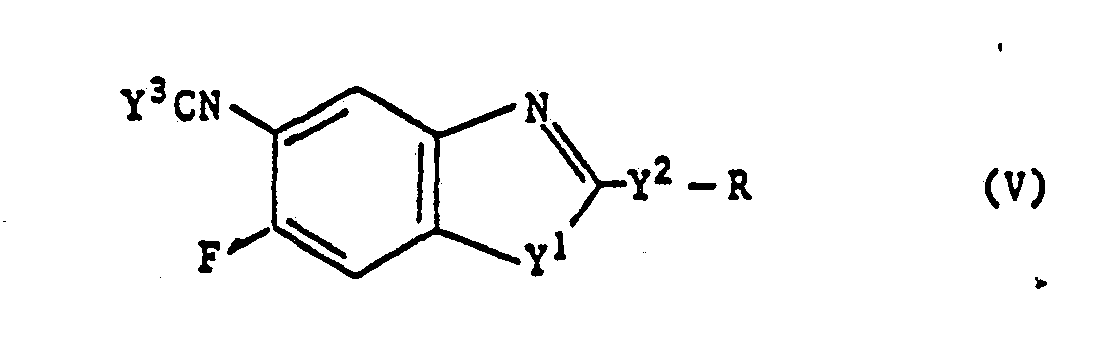

- The compounds represented by the above-mentioned general formula (V) are novel compounds which can be prepared by process d), for example, wherein a compound represented by the afore-mentioned general formula (II) is reacted with one of the compounds selected from the group consisting of phosgene, trichloromethyl chloroformate and thiophosgene.
- In carrying out the above-mentioned process d), an isocyanate derivative of the compound (V) can be synthesized by the process disclosed in Organic Synthesis, Collective, vol. 2, page 453 or J. Am. Chem. Soc. vol. 72, page 1888 and an isothiocyanate derivative of the compound (V) can be synthesized by the process disclosed in J. Org. Chem., 1953, page 1052 or J. Chem. Soc., 1927, page 1186.
- Regarding the above-mentioned process c), the reaction partner represented by the general formula (VI) includes, as the concrete examples, ethyl pipecolinate, 1-ethoxycarbonylhexahydropyridazine, and 1- ethoxycarbonyl-1,2,3,6-tetrahydropyridazine, all of which are the compounds disclosed by Japanese Patent Application No. 258462-1987.
- The above-mentioned process c) can be carried out in accordance with the process disclosed by Agr. Biol. Chem., vol. 40, No. 4, page 745.
- As appropriate diluents for carrying out the process a), any kind of inert organic solvents can be mentioned.
- As the examples of such solvents, use may be made preferably of organic acids such as, for example, acetic acid, propionic acid, etc.
- When carrying out the above-mentioned process a), the respective starting materials are refluxed under heating in acetic acid, for example, according to the above-mentioned process disclosed in Agr. Biol. Chem., vol. 40, page 745.
- In carrying out the above-mentioned process b), use may be made, as appropriate diluents, of alcohols such as, for example, ethanol, isopropanol, tert-butanol, methyl cellosolve, etc., dioxane, N,N-dimethylformamide, dimethylsulfoxide, sulfolane, etc.
- The process b) can be carried out at a temperature from about 50 C to about 1300 C, for example, preferably from about 70 ° C to about 90 C.
- The above-mentioned process b) can be carried out according to the process disclosed in the above- mentioned Agr. Chem. Biol., vol. 40, No. 45, page 745, wherein, in general, about 0.01 to 0.5 equivalents of sodium ethoxide are reacted with one equivalent of the compound represented by the general formula (IV) in the presence of one of the above-mentioned solvents and at a reaction temperature in the range mentioned above for a period from 0.5 to 16 hours.
- In carrying out the process b), use is made, as base, of triethyl amine, sodium hydroxide, potassium hydroxide, or sodium methoxide, etc., in place of sodium ethoxide, in the above.
- Further, in the preparation of compounds of the formula (I) according to process (b), the compound represented by the general formula (IV) that has been prepared in the preceding reaction stage designated as the process c) may be used as it is in the process b). Namely, the process c) and process b) may be continuously carried out.
- The active compounds according to the invention can be used as defoliants, desiccants, agents for destroying broad-leaved paints and, especially, as weedkillers. By weeds, in the broadest sense, there are to be understood all plants which grow in locations where they are undesired. Whether the substances according to the invention act as total or selective herbicides depends essentially on the amount used.
- The active compouns according to the invention can be used, for example, in connection with the following plants:
- Sinapis, Lepidium, Galium, Stellaria, Matricaria, Anthemis, Galinsoga, Chenopodium, Urtica, Senecio, Amaranthus, Portulaca, Xanthium, Convolvulus, lpomoea, Polygonum, Sesbania, Ambrosia, Cirsium, Car- duus, Sonchus, Solanum, Rorippa, Rotala, Lindernia, Lamium, Veronica, Abutilon, Emex, Datura, Viola, Galeopsia, Papaver and Centaurea.
- Gossypium, Glycine, Beta, Daucus, Phaseolus, Pisum, Solanum, Linum, lpomoea, Vicia, Nicotiana, Lycopersicon, Arachis, Brassica, Lactuca, Cucumis and Cucurbita.
- Echinochloa, Setaria, Panicum, Digitaria, Phleum, Poa, Festuca, Eleusine, Brachiaria, Lolium, Bromus, Avena, Cyperus, Sorghum, Agropyron, Cynodon, Monochoria, Fimbristylis, Sagittaria, Eleocharis, Scirpus, Paspalum, Ischaemum, Sphenoclea, Dactyloctenium, Agrostis, Alopecurus and Apera.
- Oryza, Zea, Triticum, Hordeum, Avena, Secale, Sorghum, Panicum, Saccharum, Ananas, Asparagus and Allium.
- However, the use of the active compounds according to the invention is in no way restricted to these genera, but also extends in the same manner to other plants.
- The compounds are suitable, depending on the concentration, for the total combating of weeds, for example on industrial terrain and rail tracks, and on paths and squares with or without tree plantings. Equally, the compounds can be emplyed for combating weeds in perennial cultures, for example afforestations, decorative tree plantings, orchards, vineyards, citrus groves, nut orchards, banana plantations, coffee plantations, tea plantations, rubber plantations, oil palm plantations, cocoa plantations, soft fruit plantings and hopfields, and for the slective combating of weeds in annual cultures.
- The active compounds can be converted into the customary formulations, such as solutions, emulsions, wettable powders, suspensions, powders, foams, pastes, granules, aerosols, natural and synthetic materials impregnated with active compound, very fine capsules in polymeric substances, coating compositions for use on seed, and formulations used with burning equipment, such as fumigating cartridges, fumigating cans and fumigating coils, as well as ULV cold mist and warm mist formulations.
- These formulations may be produced in known manner, for example by mixing the active compounds with extenders, that is to say liquid or liquefied gaseous or solid diluents or carriers, optionally with the use of surface-active agents, that is to say emulsifying agents and/or dispersing agents and/or foam-forming agents. In the case of the use of water as an extender, organic solvents can, for example, also be used as auxiliary solvents.
- As liquid solvents diluents or carriers, there are suitable in the main, aromatic hydrocarbons, such as xylene, toluene or alkyl napthalenes, chlorinated aromatic or chlorinated aliphatic hydrocarbons, such as chlorobenzenes, chloroethylenes or methylene chloride, aliphatic hydrocarbons, such as cyclohexane or paraffins, for example mineral oil fractions, alcohols, such as butanol or glycol as well as their ethers and esters, ketones, such as acetone, methyl ethyl ketone, methyl isobutyl ketone or cyclohexanone, or strongly polar solvents, such as dimethylformamide and dimethyl-sulphoxide, as well as water.
- By liquefied gaseous diluents or carriers are meant liquids which would be gaseous at normal temperature and under normal pressure, for example aerosol propellants, such as halogenated hydrocarbons as well as butane, propane, nitrogen and carbon dioxide.
- As solid carriers there may be used ground natural minerals, such as kaolins, clays, talc, chalk, quartz, attapulgite, montmorillonite or diatomaceous earth, and ground synthetic minerals, such as highly-dispersed silicic acid, alumina and silicates. As solid carriers for granules there may be used crushed and fractionated natural rocks such as calcite, marble, pumice, sepiolite and dolomite, as well as synthetic granules of inorganic and organic meals, and granules or organic material such as sawdust, coconut shells, maize cobs and tobacco stalks.
- As emulsifying and/or foam-forming agents there may be used non-ionic and anionic emulsifiers, such as polyoxyethylene-fatty acid esters, polyoxyethylene-fatty alcohol ethers, for example alkylaryl polyglycol ethers, alkyl sulphonates, alkyl sulphates, aryl sulphonates as well as albumin hydrolysis products. Dispersing agents include, for example, lignin sulphite waste liquors and methylcellulose.
- Adhesive such as carboxymethylcellulose and natural and synthetic polymers in the form of powders, granules or latices, such as gum arabic, polyvinyl alcohol and polyvinyl acetate, can be used in the formulation.
- It is possible to use colorants such as inorganic pigments, for example iron oxide, titanium oxide and Prussian Blue, and organic dyestuffs, such as alizarin dyestuffs, azo dyestoffs or metal phthalocyanine dyestuffs, and trace nutrients, such as salts of iron, manganese boron, copper, cobalt, molybdenum and zinc.
- The formulation in general contain from 0.1 to 95 per cent by weight of active compound, preferably from 0.5 to 90 per cent by weight.
- The active compounds according to the invention, as such or in the form of their formulations, can also be used, for combating weeds, as mixtures with known herbicides, finished formulations or tank mixes being possible.
- Mixtures with other known active compounds, such as herbicides, fungicides, insecticides, acaricides, nematicides, bird repellants, plant nutrients and agents which improve soil structure, are also possible.
- The active compounds can be used as such, in the form of their formulations or in the use forms prepared therefrom by further dilution, such as ready-to-use solutions, suspensions, emulsions, powders, pastes and granules. They are used in the customary manner, for example by watering, spraying, atomising or scattering.
- The active compounds according to the invention can be applied either before or after emergence of the plants.
- They can also be incorporated into the soil before sowing. They are used, in particular, after emergence of the plants.
- The amount of active compound used can vary within a substantial range. It depends essentially on the nature of the desired effect. In general, the amounts used are between 0.0001 and 3 kg of active compound per hectare of soil surface, preferably between 0.001 and 2 kg per ha.
- The preparation and use of the active compounds according to the invention can be seen from the following examples.
-

-


-

- Then tetrahydrofuran was removed from the reaction mixture under distillation and after the addition of ethyl acetate (200 ml) thereto, it was stirred and filtered. The thus obtained ethyl acetate layer was washed with water and dried with anhydrous sodium sulfate. A solid residue obtained by removing the ethyl acetate from the thus dried reaction mixture under distillation at reduced pressure was dissolved in a minimum amount of n-hexane under refluxing, followed by filtration of crystals forming upon a slow cooling thereof at 15 to 25° C so as to obtain the aimed 5-amino-6-fluoro-2-butoxybenzothiazole (4.5 g) having a melting point in the range of from 101 to 103° C.
-

This compound, without any further purification, was used in the subsequent reaction. -
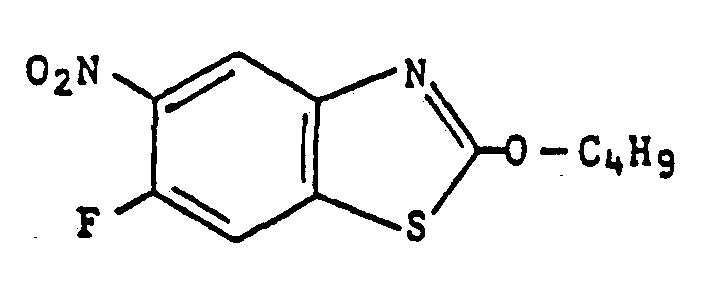
- The reaction mixture was poured onto water (300 g) and the resulting oily substance was extracted with toluene and the extract was washed with water, saturated sodium bicarbonate and water, in that order, followed by drying with anhydrous sodium sulfate. After distilling off the toluene under reduced pressure, oily substance (8.8 g) was obtained.
- By GLC analysis, the content in the oily substance of the principal component, viz., 6-fluoro-2-butoxy-5-nitrobenzothiazole was determined to be in the range from 72 to 77%.
-
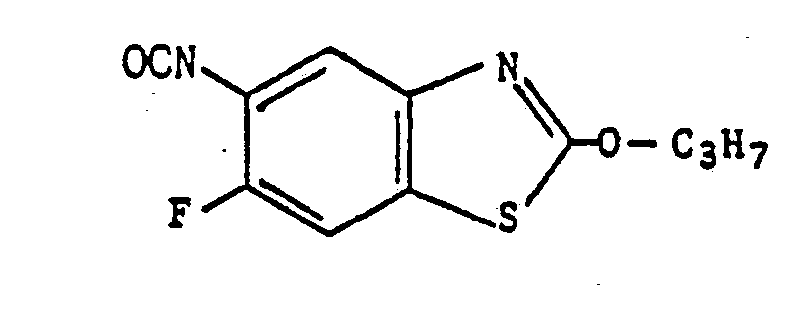
- This compound, without further purification, was used in the subsequent reaction.
-

- To the reaction mixture was added portionwise sodium bicarbonate at 5 to 10° C so as to render it to become weak alkaline. After the weak alkalinity of the mixture was confirmed upon a further 20 minutes stirring, a chloroform layer was separated therefrom, while aqueous layer was further extracted twice therefrom with chloroform (30 ml x 2).
- The thus obtained chloroform layers were combined, washed with water, dried with anhydrous sodium sulfate followed by removal of chloroform therefrom, to obtain the aimed 6-fluoro-5-isothiocyanato-2-propoxy-benzothiazole (6.2 g) having a melting point in the range from 65.5 to 66.5 C.
-

- Then, to the reaction liquid was added 2-methylthio-6-fluorobenzothiazole (5.0 g) portionwise at 0 to 5° C, followed by two hours stirring at 20 to 35° C. Then reaction liquid was treated in the manner similar to Referential Example 1 to obtain the aimed 6-fluoro-2-propoxybenzothiazole (3.8 g).
- This compound, without further purification, was used in the subsequent reaction.
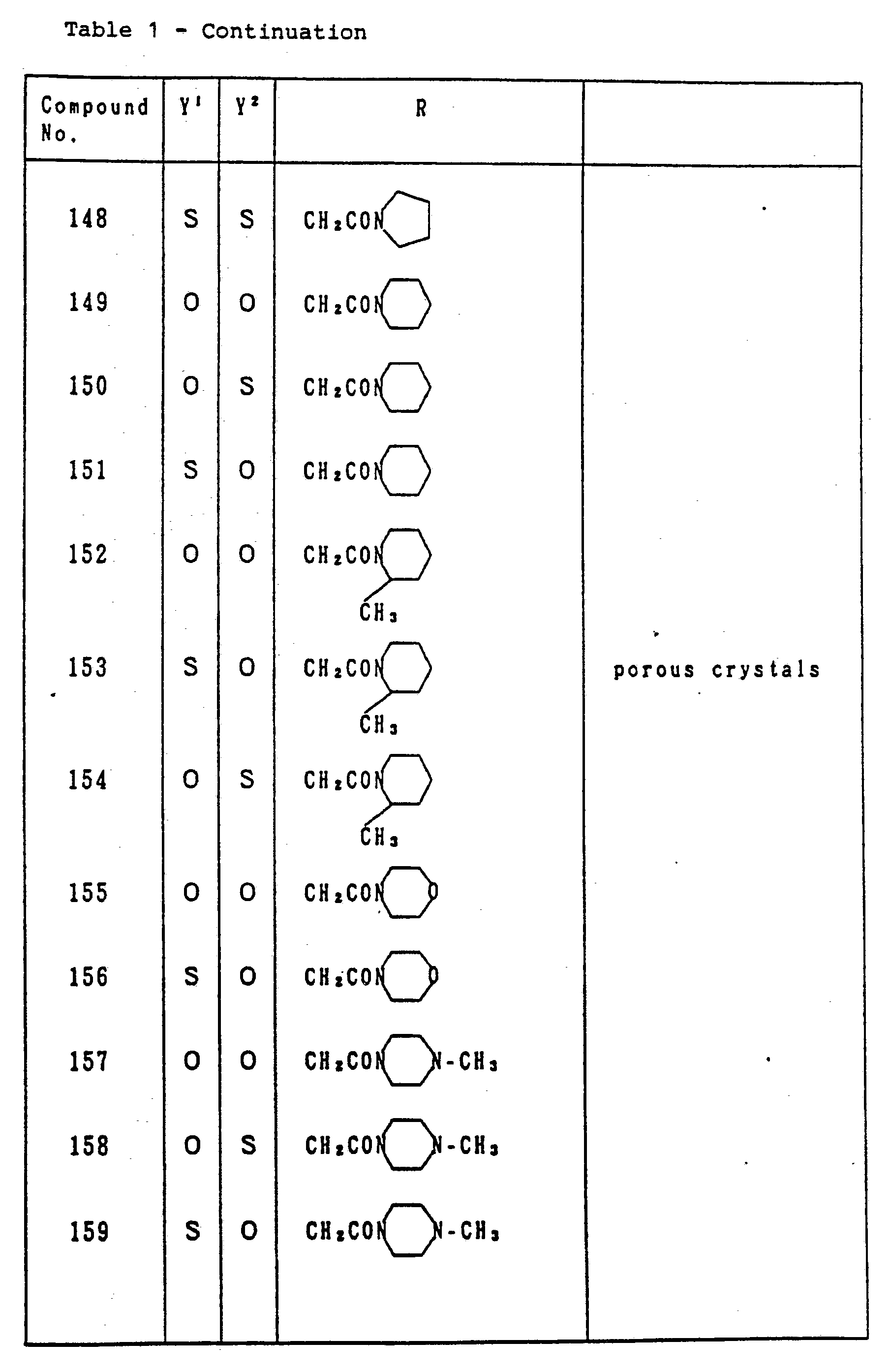
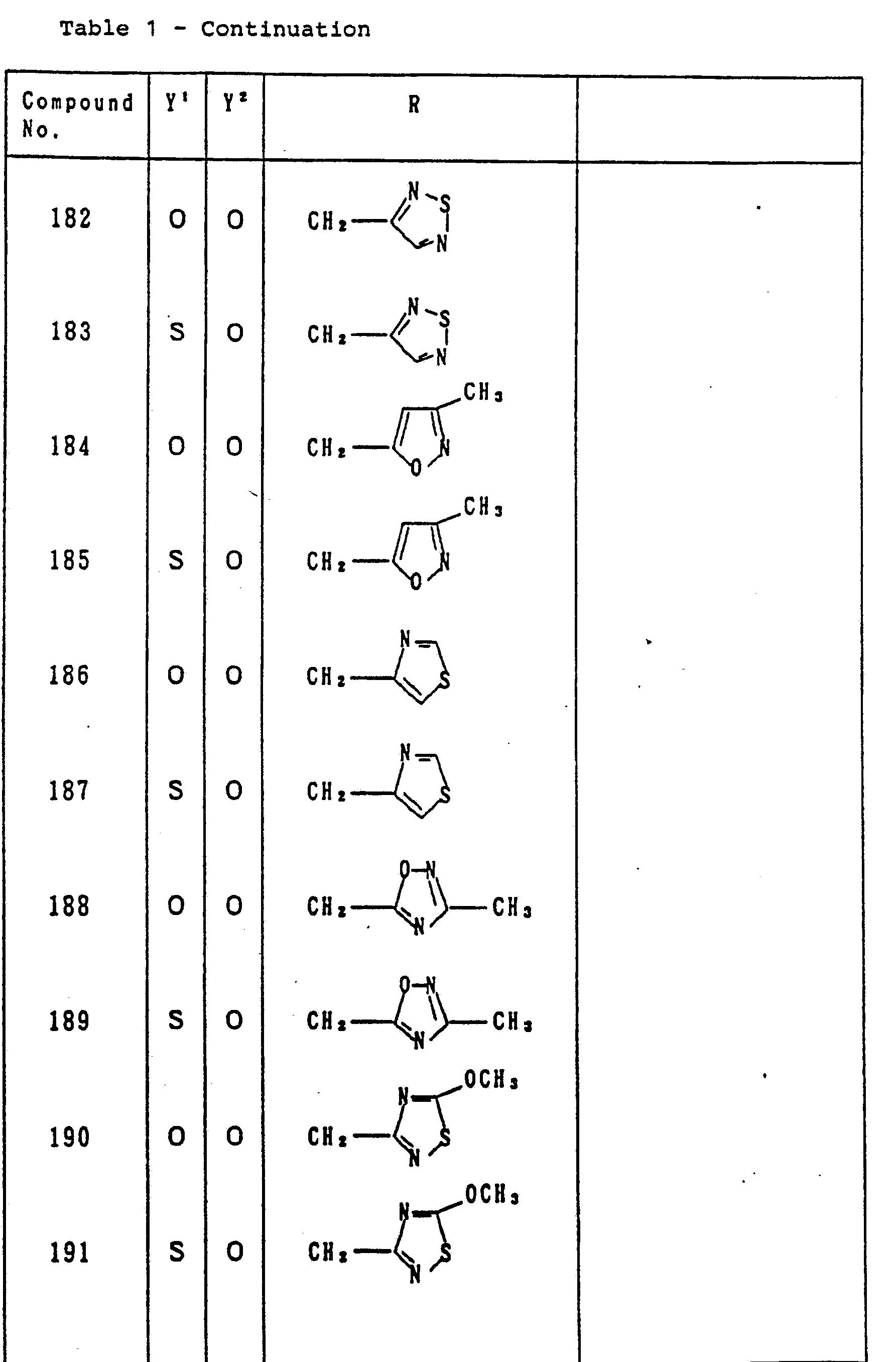
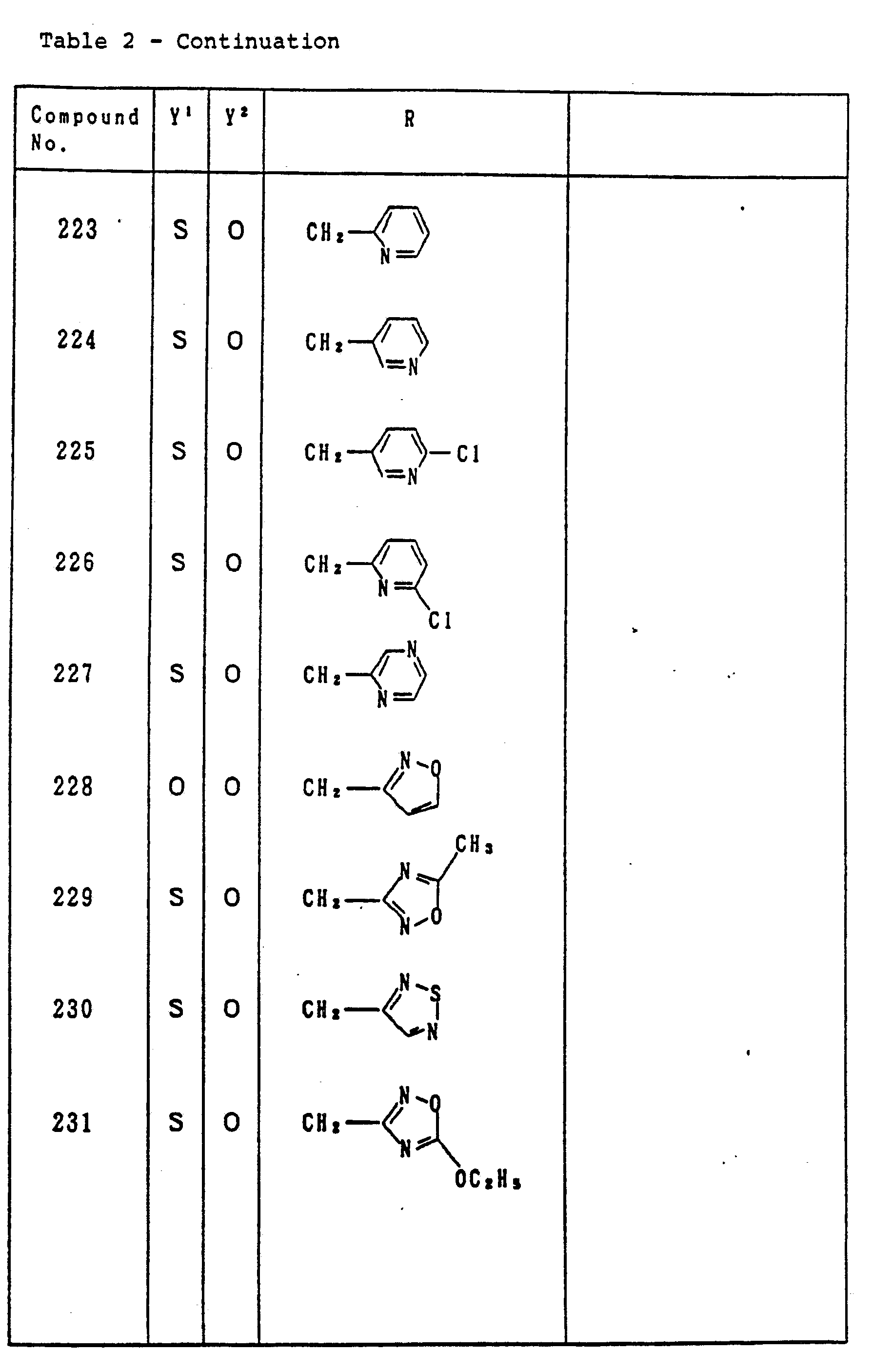
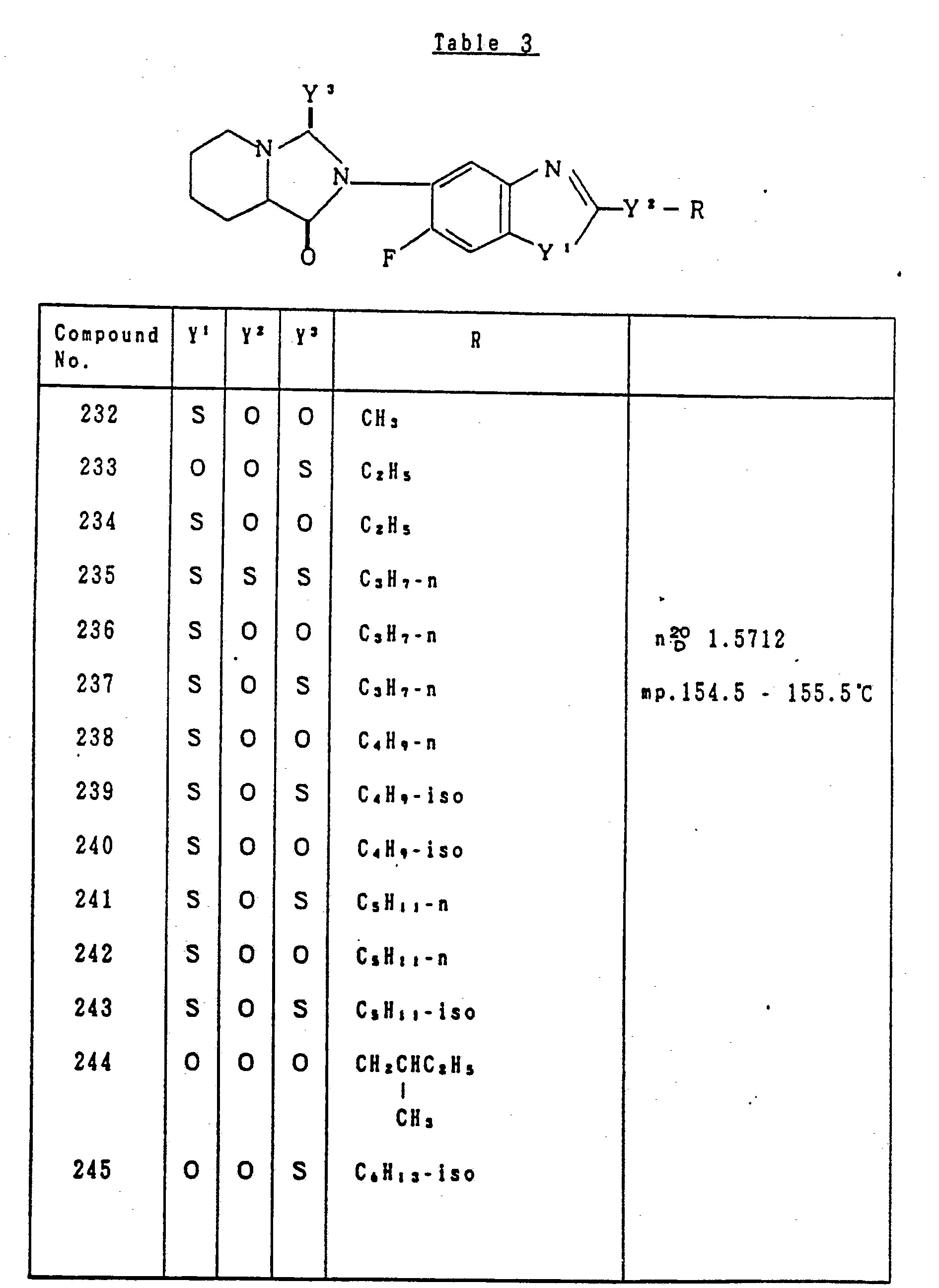
- The compounds according to the present invention which can be obtained by the same processes as those of the afore-mentioned Examples 1 and 2 are demonstrated in the following tables.
- In the tables, those compounds which were obtained in the foregoing Examples 1 and 2 are also included.
- Table 1 relates to the compounds represented by the general formula (I) defined as:
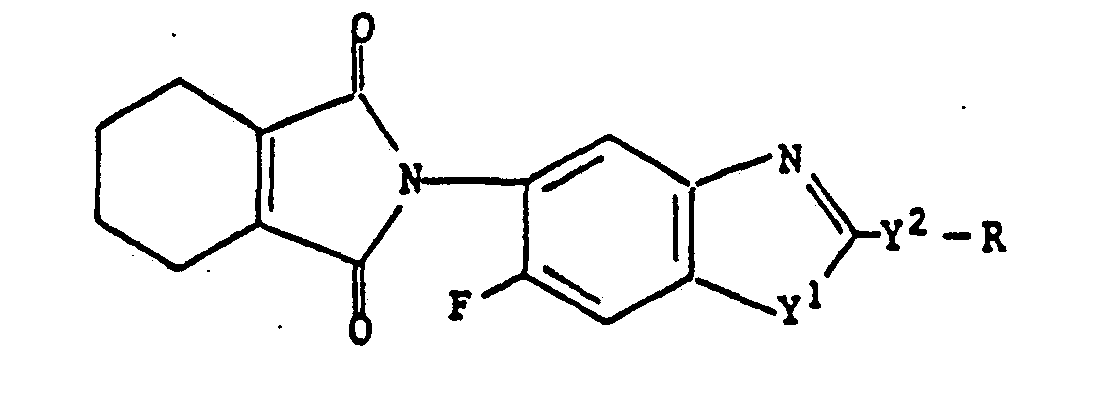
- Table 2 relates to the compounds represented by the general formula (I) defined as:

- Table 3 relates to the compounds represented by the general formula (I) defined as:

- Table 4 relates to the compounds represented by the general formula (I) defined as:
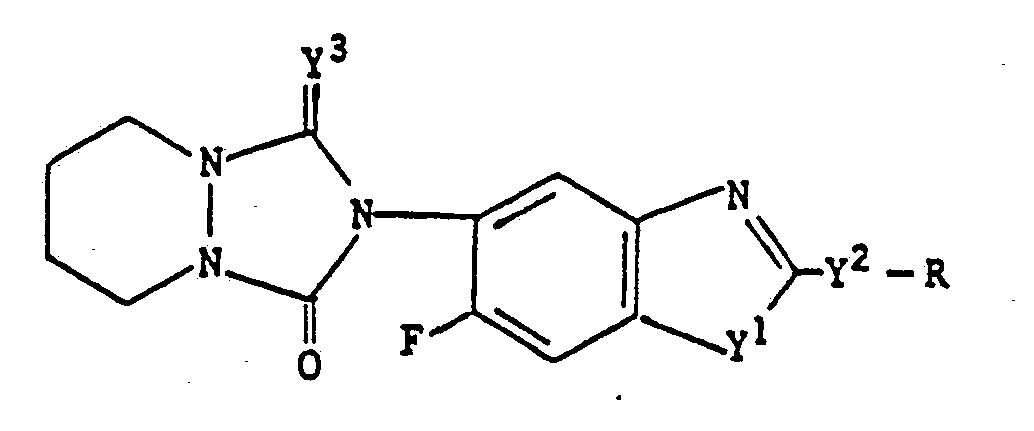
- Table 5 relates to the compounds represented by the general formula (I) defined as:

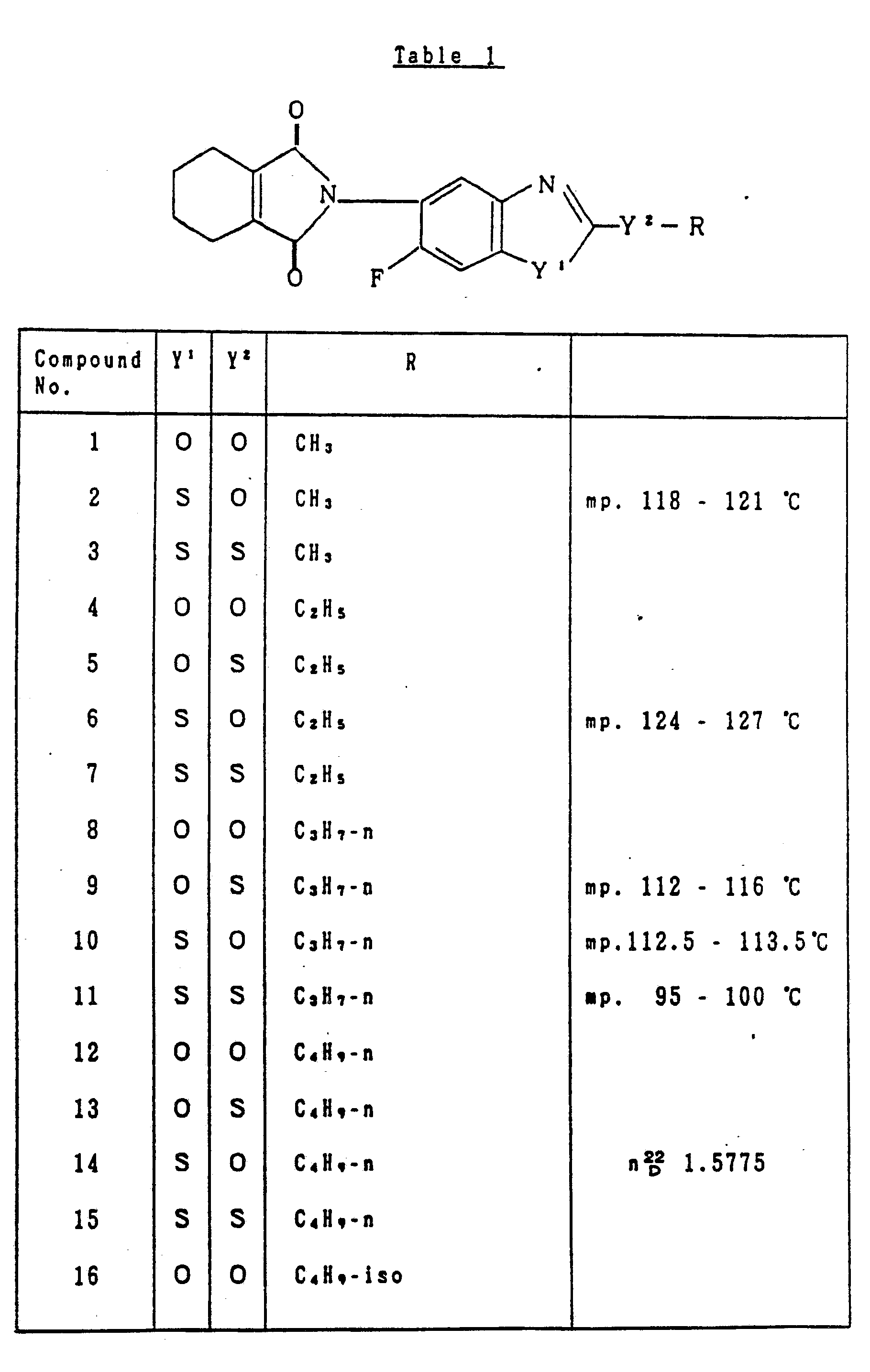

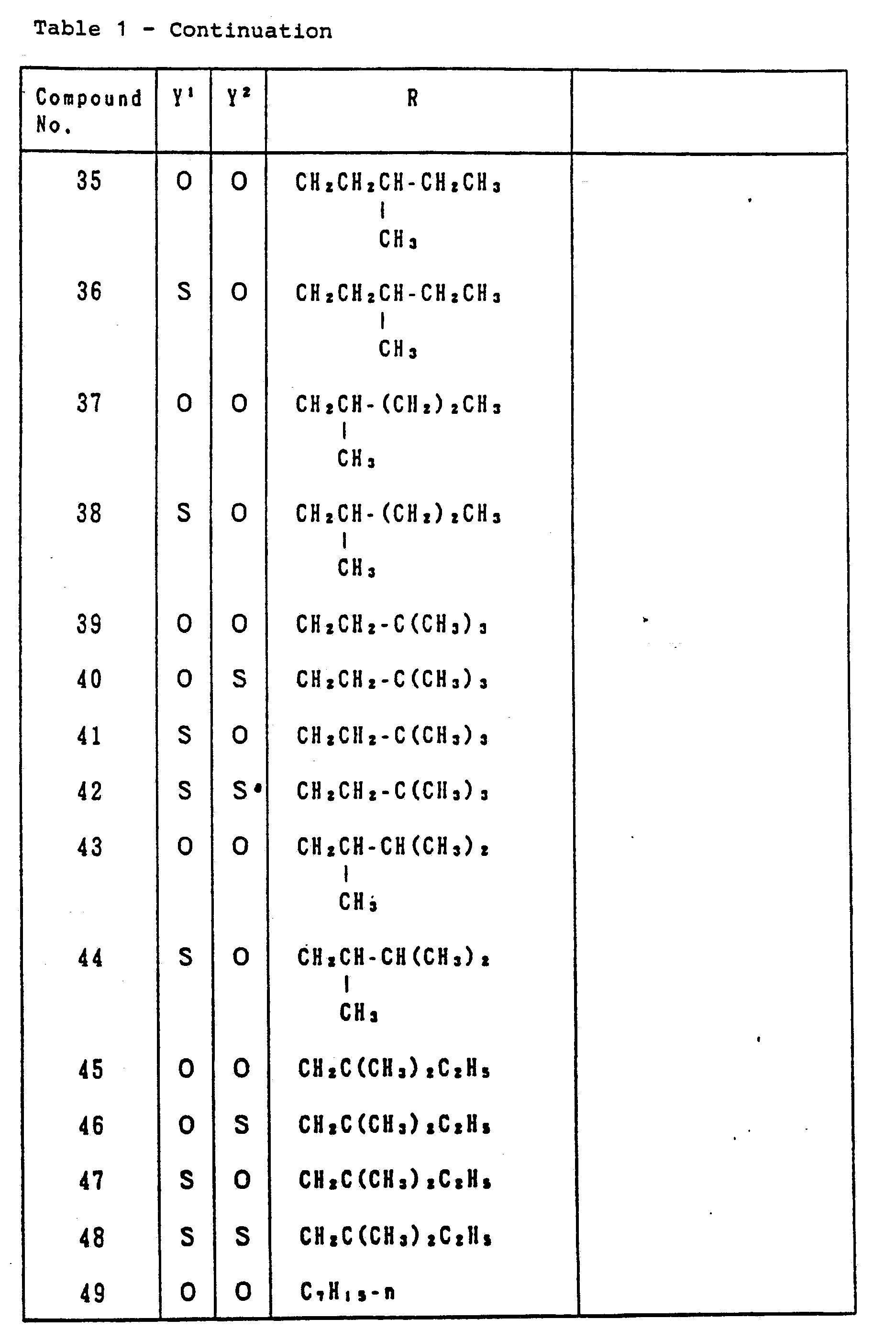


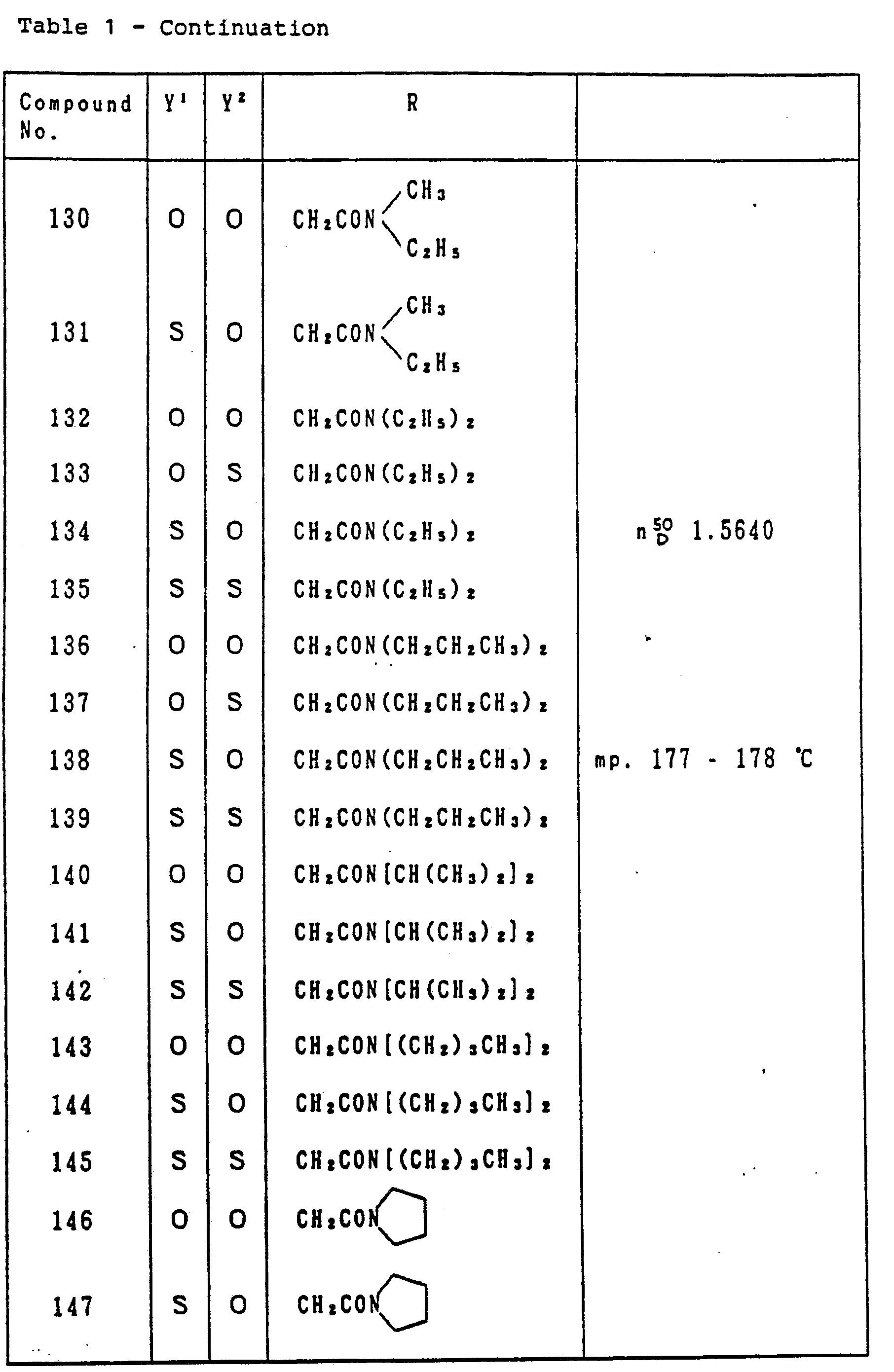








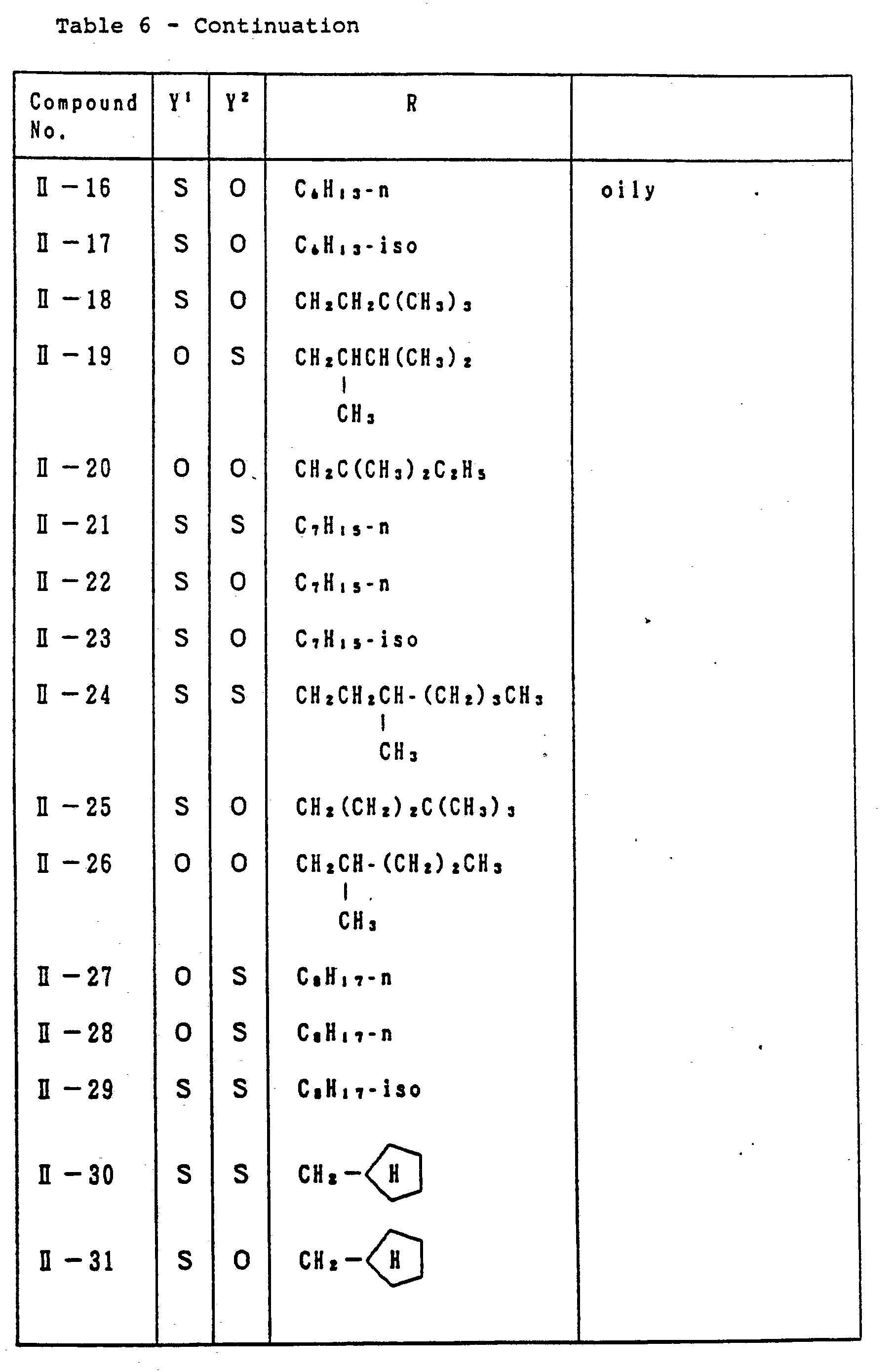
- The compounds represented by the general formula (II) which can be obtained by a process similar to that employed in the afore-mentioned Example 3 are demonstrated in the following Table 6 together with those obtained in Example 3.



-

- Submerged application test against lowland weeds under flooding condition
- Carrier : 5 parts by weight of acetone Emulsifier: 1 part by weight of benzyloxy polyglycol ether
- To produce a suitable preparation of active compound, 1 part by weight of active compound was mixed with the stated amount of carrier and with the stated amount of emulsifier, and the resulting emulsifiable concentrate was then diluted with water to the desired concentrations.
- Each of several pots, having a size of 25 x 20 x 9 cm and an area of 1/2,000 are, was filled with soil taken out from a paddy field. Young paddy-rice plants (Nihonbare Variety) of the 2.5-leaf stage, with a height of 15 cm, were transplanted into these pots. Each pot has two zones, with the number of the plants grown in each zone being three. Then, seeds of the following weeds were sown in the soil, which was kept under wet conditions:
- barnyard grass (Echinochloa crus-galli);
- umbrella plant (Cyperus diformis);
- monchoria (Monochoria vaginalis); and
- annual broad-leaved weeds such as false pimpernel (Lindernia pyxidaria), toothcup (Rotala indica), American waterwort (Elatine triandra), red stem (Ammannia multiflora), and dopatrium (Dopatrium).
- After 2 days, such an amount of water was supplied into each of the pots that a sheet of water with a thickness of 2 - 3 cm, was formed over the soil in each pot. Five days after the transplantation of the rice plants, the emulsion of the active compound, which had been prepared in the manner mentioned above, was applied to the pots in a predetermined amount by means of a pipette. After that, the water sheet was kept in a thickness of about 3 cm.
- Four weeks after the application of the active compound, the degree of damage to the weeds and the degree of phytotoxicity on the paddy-rice plants were determined, and recorded according to the following assessment scale rated from 0 to 5.

- The test results are shown in Table 7.

- In a greenhouse, a number of pots, each having an area of 500 cm2, were charged with soil obtained from a cultivated field. Seeds of soy bean were sown into the soil in the pots. Thereafter the surface of the soil was covered with a soil layer. The soil layer contained seeds of fingergrass (Digitaria), wild blite (Amaranthus) and goosefoot (Chenopodium album). The thickness of the soil layer was about 1 cm.
- One day after the sowing, a predetermined amount of the preparation of the active compound, which had been produced in the same manner as in Example 4, was uniformly applied to the top soil layer in each pot.
- Four weeks after the application of the active compound, the degree of damage to the weeds and the degree of phytotoxicity on the crops were determined in the same manner as in Example 4. The test results are shown in Table 8.

- In a greenhouse, a number of pots, each having an area of 500 cm2. were charged with soil obtained from a cultivated field. Seeds of wheat (Triticum sativium Linuaeus) were sown onto the soil in the pots. Thereafter, the surface of the soil was covered with a soil layer.
- The soil layer contained seeds of fingergrass (Digitaria), wild blite (Amaranthus) and goosefoot (Chenopodium album). The thickness of the soil layer was about 1 cm.
- The wheat plants were grown for 14 days, and then the plants were uniformly sprayed with a predetermined amount of the formulation of the active compound which had been produced in the same manner as in Example 4.
- Four weeks after the application of the active compound, the degree of damage to the weeds and the degree of phytotoxicity on the wheat plants were determined in the same manner as in Example 4. The test results are shown in Table 9.

Claims (10)
1) Benzazoles of the formula (I)

wherein Q represents

wherein
T represents -(CH2)4- or -CH2-CH = CH-CH2-,
W represents CH or N,
Y3 represents 0 or S,
Y1 and Y2 each independently represent 0 or S, and
R represents an optionally halogen substituted C1-10 alkyl group, a cycloalkylmethyl group having C3-6 cycloalkyl which is optionally substituted by C1-3 alkyl, or represents C3-10 alkoxyalkyl, -CH2COOR1 or CH2CONR2R3, wherein R1 represents a C1-6 alkyl group or a C5-6 cycloalkyl group, R2 and R3 each represent a C, -6 alkyl group or R2 and R3 together may form a five- or six-membered ring that may comprise oxygen or N-CH3, or
R represents a methyl group substituted by a five-or six-membered heterocyclic group, wherein said heterocyclic group may be substituted with halogen, C1-3 alkyl and/or C1-3 alkoxy.
2) The compounds of claim 1, wherein Q represents

in which
T represents -(CH2)4-,
W represents CH or N,
y3 represents O or S,
Y1 represents S, Y2 represents 0, and
R represents an optionally halogen substitutable C1-6 alkyl group a cycloalkylmethyl group having optionally by methyl-substituted C3-6 cycloalkyl, a C1-3 alkoxy-C2-3 alkyl group, -CH2COOR' or CH2CONR2R3, wherein R1 represents a C,-4 alkyl group or cyclopentyl group,
R2 and R3 each represent a C1-4 alkyl group or R2 and R3 together may form a five- or six-membered ring that may comprise oxygen or N-CH3, or
R represents a methyl group substituted by a five-membered heterocyclic group that may be substituted with chlorine, methyl or methoxy, wherein said heterocyclic group may comprise one to two nitrogen atoms and further one of oxygen, sulfur or nitrogen, or by a six-membered heterocyclic group that may comprise one to two nitrogen atoms and optionally chlorine substituent.
3) The compounds of claims 1 and 2, wherein Q represents
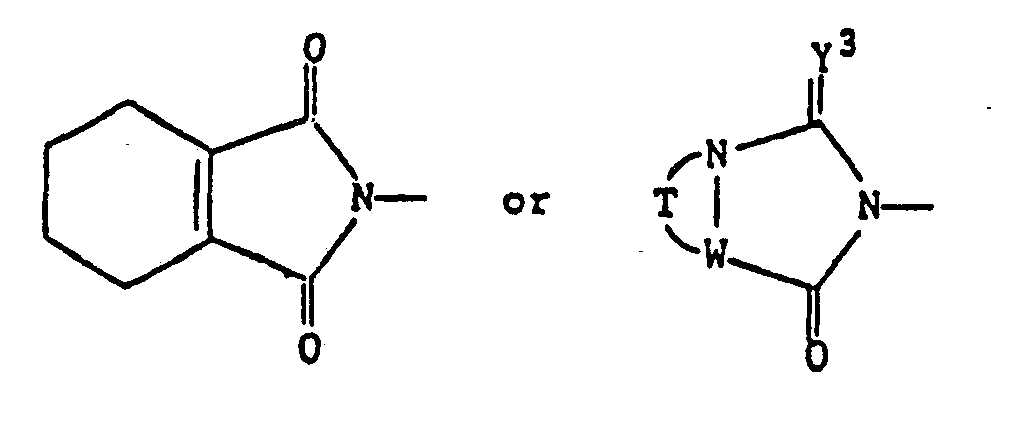
in which T represents -(CH2)4-, W represents CH or N and
Y3 represents O or S,
Y1 represents S, Y2 represents 0 and
R represents methyl, ethyl, in each case straight chain or branched propyl, butyl, pentyl, hexyl or heptyl, which are optionally substituted by fluorine, methoxymethyl, methoxyethyl, ethoxymethyl, ethoxyethyl, methoxycarbonylmethyl, ethoxycarbonylmethyl, dimethylaminocarbonylmethyl, diethylaminocarbonylmethyl or dipropylaminocarbonylmethyl.
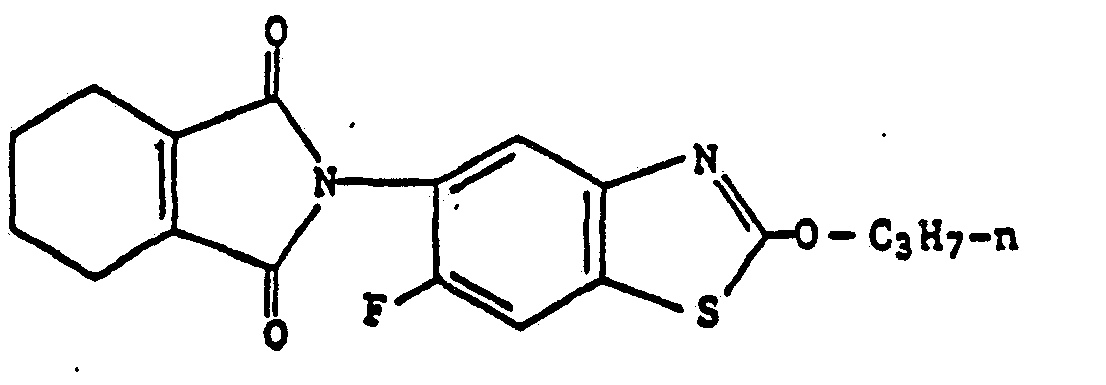
4) A compound according to claim 1, wherein such compound is 6-fluoro-2-propoxy-5-(4,5,6,7-tetrahydro-2H-isoindole-1,3-dion-2-yl)benzothiazole of the formula
2-butoxy-6-fluoro-5-(4,5,6,7-tetrahydro-2H-isoindole-1,3-dion-2-yl)benzothiazole of the formula
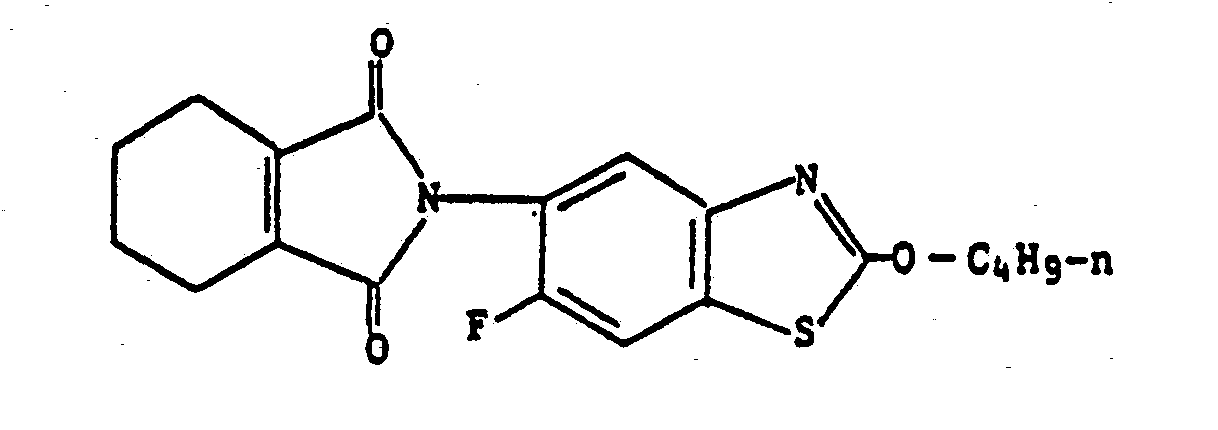
6-fluoro-2-pentoxy-5-(4,5,6,7-tetrahydro-2H-iso-indole-1,3-dion-2-yl)benzothiazole of the formula

and 6-fluoro-2-propoxy-5-(3,4-tetramethylene-imidazoline-2-thion-5-on-1-yl)benzothiazole of the formula

5. Process for the preparation of benzazoles of the formula (I)
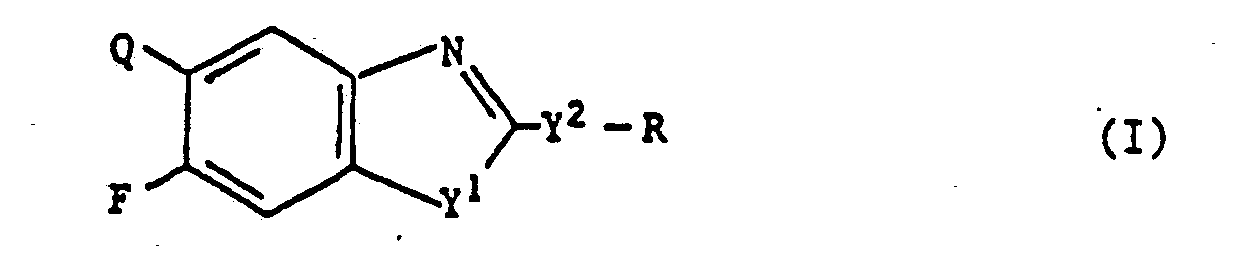
wherein Q represents
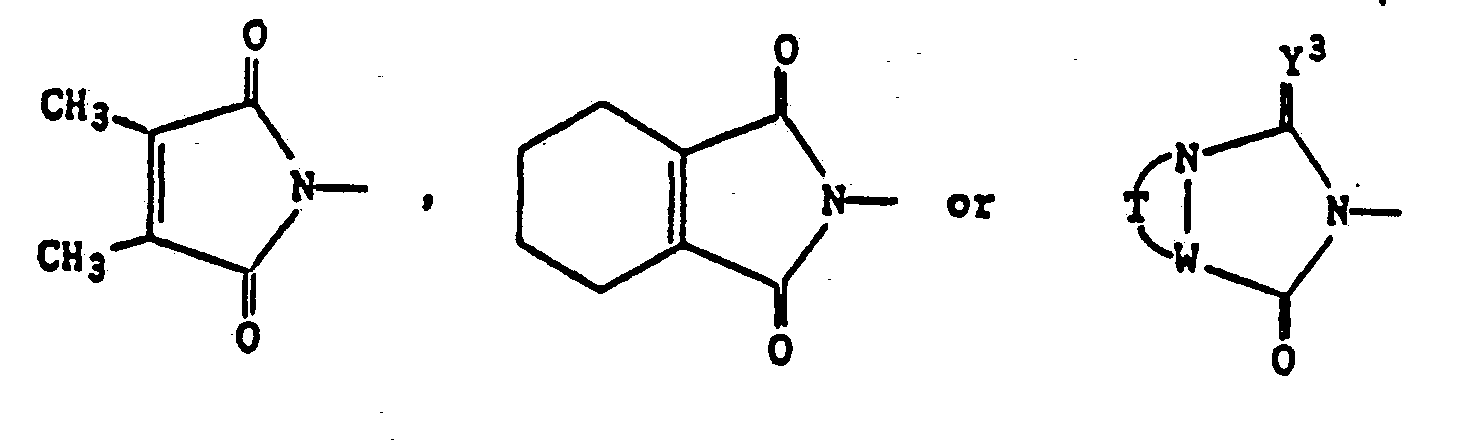
wherein
T represents -(CH2)4- or -CH2-CH = CH-CH2-,
W represents CH or N,
Y3 represents O or S,
Y1 and Y2 each independently represent 0 or S, and
R represents an optionally halogen substituted C1-10 alkyl group, a cycloalkylmethyl group having C3-6 cycloalkyl which is optionally substituted by C1-3 alkyl, or represents C3-10 alkoxyalkyl, -CH2COOR1 or CH2CONR2R3, wherein R1 represents a C1-6 alkyl group or a C5-6 cycloalkyl group, R2 and R3 each represent a C1-6 alkyl group or R2 and R3 together may form a five- or six-membered ring that may comprise oxygen or N-CH3, or a five- or six-membered heterocyclic group, wherein said heterocyclic group may be substituted with halogen, C1-3 alkyl and/or C1-3 alkoxy,
characterized in that
characterized in that
a) in the case where Q represents
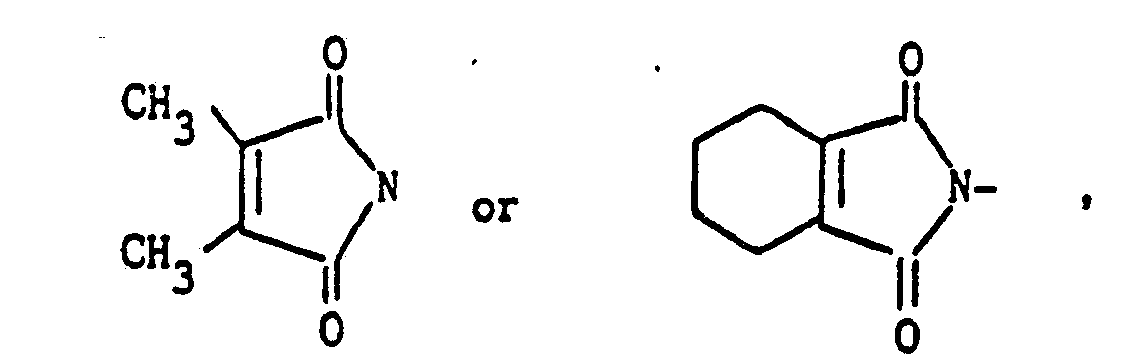
then Q is replaced by

in which R4 is methyl or tetramethylene; compounds of the formula (II)

wherein Y', Y2 and R are abovementioned, are reacted with compound of the formula (III)

wherein R4 is abovementioned, in the presence of inert solvents, or
b) in the case where Q is

compounds of the formula (IV)
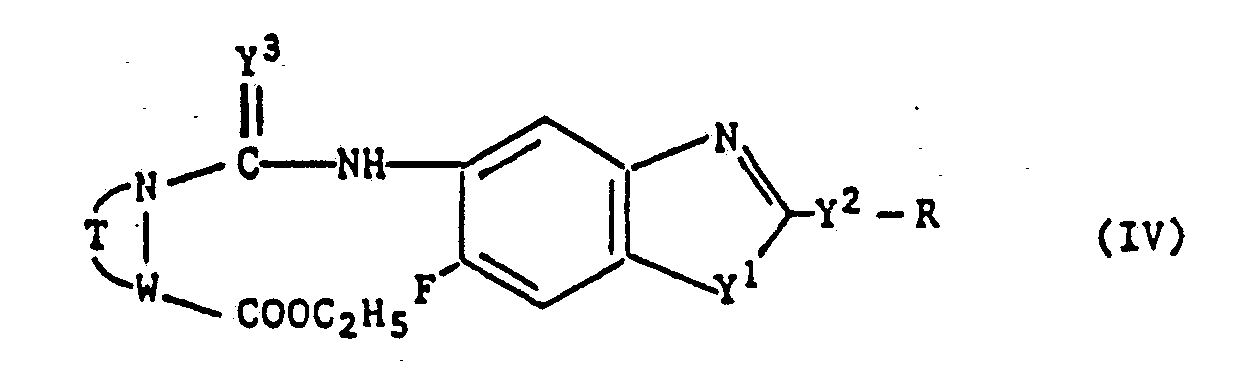
wherein Y1, Y2, R, T, W and Y3 are abovementioned, are condensed in the presence of inert solvents.
5. Herbicidal compositions, characterised in that they contain at least one benzazoles of the formula (I) according to claim 1.
6. Process for combating weeds, characterised in that benzazoles of the formula (I) according to claim 1 are allowed to act on weeds and/or their habitat.
7. Use of benzazoles of the formula (I) according to claim 1 for combating weeds.
8. Process for the preparation of herbicidal compositions, characterized in that benzazoles of the formula (I) according to claim 1 are mixed with extenders and/or surface active agents.
9. Compounds of the formula (IV)

wherein
T represents -(CH2)4- or -CH2-CH = CH-CH2-,
W represents CH or N,
Y3 represents 0 or S,
Y' and Y2 each independently represent 0 or S, and
R represents an optionally halogen substituted C1-10 alkyl group, a cycloalkylmethyl group having C3-6 cycloalkyl which is optionally substituted by C1-3 alkyl, or represents C3-10 alkoxyalkyl, -CH2COOR1 or CH2CONR2R3, wherein R1 represents a C1-6 alkyl group or a C5-6 cycloalkyl group, R2 and R3 each represent a C1-6 alkyl group or R2 and R3 together may form a five-or six-membered ring that may comprise oxygen or N-CH3, or
R represents a methyl group substituted by a five- or six-membered heterocyclic group, wherein said heterocyclic group may be substituted with halogen, C1-3 alkyl and/or C1-3 alkoxy.
10. Compounds of the formula (V)

in which
Y1 and Y2 each independently represent O or S,
Y3 represents O or S and
R represents an optionally halogen substituted C1-10 alkyl group, a cycloalkylmethyl group having C3-6 cycloalkyl which is optionally substituted by C1-3 alkyl, or represents C3-10 alkoxyalkyl, -CH2COOR1 or -CH2CONR2R3 wherein
R1 represents a C1-6 alkyl group or a C5-6 cycloalkyl group or
R2 and R3 each represent a C1 -6 alkyl group or R2 and R3 together may form a five- or six-membered ring that may comprise oxygen or N-CH3; or
R represents a methyl group substituted by a five-or six-membered heterocyclic group, wherein said heterocyclic group may be substituted with halogen, C1-3 alkyl and/or C1-3 alkoxy.
Applications Claiming Priority (2)
| Application Number | Priority Date | Filing Date | Title |
|---|---|---|---|
| JP313956/88 | 1988-12-14 | ||
| JP63313956A JPH02160781A (en) | 1988-12-14 | 1988-12-14 | Benzothiazoles and utilization thereof as herbicide |
Publications (2)
| Publication Number | Publication Date |
|---|---|
| EP0373461A2 true EP0373461A2 (en) | 1990-06-20 |
| EP0373461A3 EP0373461A3 (en) | 1990-10-10 |
Family
ID=18047512
Family Applications (1)
| Application Number | Title | Priority Date | Filing Date |
|---|---|---|---|
| EP19890122281 Withdrawn EP0373461A3 (en) | 1988-12-14 | 1989-12-02 | Benzazoles |
Country Status (2)
| Country | Link |
|---|---|
| EP (1) | EP0373461A3 (en) |
| JP (1) | JPH02160781A (en) |
Cited By (6)
| Publication number | Priority date | Publication date | Assignee | Title |
|---|---|---|---|---|
| EP0444764A1 (en) * | 1990-02-27 | 1991-09-04 | Schering Aktiengesellschaft | Process and intermediates for the preparation of substituted 1-benzothiazolyl-3,4-dimethyl-3-pyrrolin-2,5(1H)-diones |
| WO1992020675A1 (en) * | 1991-05-24 | 1992-11-26 | Schering Aktiengesellschaft | Substituted benzothiazole derivatives, their preparation and use as herbicides |
| ES2072804A1 (en) * | 1992-10-08 | 1995-07-16 | Schering Ag | Substituted benzothiazole derivatives, a process for producing them and herbicide compositions containing them |
| US5494889A (en) * | 1991-06-06 | 1996-02-27 | Ciba-Geigy Corporation | Herbicides |
| WO1998038188A1 (en) * | 1997-02-26 | 1998-09-03 | Fmc Corporation | Cycloimido-substituted benzofused heterocyclic herbicides |
| WO2001079177A1 (en) * | 2000-04-17 | 2001-10-25 | Gpi Nil Holdings, Inc. | Cyclic diaza compounds for treating neurodegenerative disorders |
Family Cites Families (5)
| Publication number | Priority date | Publication date | Assignee | Title |
|---|---|---|---|---|
| JPS56140981A (en) * | 1980-04-07 | 1981-11-04 | Nippon Tokushu Noyaku Seizo Kk | Substituted acetanilide compound, its preparation and herbicide containing the same as active constituent |
| US4640707A (en) * | 1984-07-23 | 1987-02-03 | Sumitomo Chemical Company, Ltd. | Tetrahydrophthalimides and their herbicidal use |
| US4720297A (en) * | 1985-09-27 | 1988-01-19 | Sumitomo Chemical Company, Limited | Benzothiazolones, and their production and use as herbicides |
| ES2037668T3 (en) * | 1986-01-06 | 1993-07-01 | Sumitomo Chemical Company, Limited | A PROCEDURE FOR THE PRODUCTION OF BENZOTIAZOLYLAZOLIDINE COMPOUNDS. |
| US4804394A (en) * | 1986-09-09 | 1989-02-14 | Nihon Tokushu Noyaku Seizo K.K. | Benzoxazines and use as herbicides |
-
1988
- 1988-12-14 JP JP63313956A patent/JPH02160781A/en active Pending
-
1989
- 1989-12-02 EP EP19890122281 patent/EP0373461A3/en not_active Withdrawn
Cited By (9)
| Publication number | Priority date | Publication date | Assignee | Title |
|---|---|---|---|---|
| EP0444764A1 (en) * | 1990-02-27 | 1991-09-04 | Schering Aktiengesellschaft | Process and intermediates for the preparation of substituted 1-benzothiazolyl-3,4-dimethyl-3-pyrrolin-2,5(1H)-diones |
| WO1992020675A1 (en) * | 1991-05-24 | 1992-11-26 | Schering Aktiengesellschaft | Substituted benzothiazole derivatives, their preparation and use as herbicides |
| US5424443A (en) * | 1991-05-24 | 1995-06-13 | Schering Aktiengesellschaft | Substituted benzothiazole derivatives, their preparation and use as herbicides |
| US5494889A (en) * | 1991-06-06 | 1996-02-27 | Ciba-Geigy Corporation | Herbicides |
| ES2072804A1 (en) * | 1992-10-08 | 1995-07-16 | Schering Ag | Substituted benzothiazole derivatives, a process for producing them and herbicide compositions containing them |
| WO1998038188A1 (en) * | 1997-02-26 | 1998-09-03 | Fmc Corporation | Cycloimido-substituted benzofused heterocyclic herbicides |
| US6077812A (en) * | 1997-02-26 | 2000-06-20 | Fmc Corporation | Cycloimido-substituted benzofused heterocyclic herbicides |
| US6352958B1 (en) | 1997-02-26 | 2002-03-05 | Fmc Corporation | Cycloimido-substituted benzofused heterocyclic herbicides |
| WO2001079177A1 (en) * | 2000-04-17 | 2001-10-25 | Gpi Nil Holdings, Inc. | Cyclic diaza compounds for treating neurodegenerative disorders |
Also Published As
| Publication number | Publication date |
|---|---|
| EP0373461A3 (en) | 1990-10-10 |
| JPH02160781A (en) | 1990-06-20 |
Similar Documents
| Publication | Publication Date | Title |
|---|---|---|
| EP0296416B1 (en) | Benzo-anellated cyclic compounds | |
| US5007952A (en) | Herbicidal novel benzothiazolonyl pyrroles | |
| AU660363B2 (en) | 1-(3,4-disubstituted phenyl) tetrazolinone derivatives | |
| JPH0143751B2 (en) | ||
| JPH02164864A (en) | N-aryl substituted nitroten-containing heterocyclic | |
| US4804394A (en) | Benzoxazines and use as herbicides | |
| US5342954A (en) | Herbicidal 1-(3-halo-4-substituted phenyl)tetrazolinones | |
| AU656672B2 (en) | 1-(3-Halo-4-trifluoromethylphenyl) tetrazolinone derivatives | |
| US4729784A (en) | 1-(1,4-benzoxazin-3-on-6-yl)-dialkylmaleimides and use as herbicides | |
| US4909828A (en) | Herbicidally active 2,5-dihydropyrroles | |
| JPH0369906B2 (en) | ||
| US5034051A (en) | Heterocyclic compounds | |
| EP0373461A2 (en) | Benzazoles | |
| US4451282A (en) | Herbicidally active novel hetero-substituted pyrid-4-one derivatives | |
| US4384881A (en) | Herbicidally active novel benzazol-2-yloxyacetanilides | |
| EP0290863A2 (en) | Benzoxazine derivative, process and intermediates for its preparation and its use as herbicide | |
| JPH01305088A (en) | Triazoloazine | |
| US5342938A (en) | Benzoxazine intermediates | |
| US5017213A (en) | 1-phenylpyrroles | |
| US4971619A (en) | Benzothiazolone | |
| EP0521365A1 (en) | Acetanilides | |
| US4836844A (en) | Novel N-benzothiazolyl-2,5-dihydropyrroles | |
| EP0337151A2 (en) | N-substituted phenyl-heterocyclic compounds | |
| US5158600A (en) | Herbicidal 3-hydroxy-2-cyclohexen-1-ones | |
| US4402732A (en) | Herbicidally active dihalogenated imidazolecarboxylic acid amides, compositions and use |
Legal Events
| Date | Code | Title | Description |
|---|---|---|---|
| PUAI | Public reference made under article 153(3) epc to a published international application that has entered the european phase |
Free format text: ORIGINAL CODE: 0009012 |
|
| 17P | Request for examination filed |
Effective date: 19891202 |
|
| AK | Designated contracting states |
Kind code of ref document: A2 Designated state(s): BE CH DE FR GB IT LI NL |
|
| PUAL | Search report despatched |
Free format text: ORIGINAL CODE: 0009013 |
|
| STAA | Information on the status of an ep patent application or granted ep patent |
Free format text: STATUS: THE APPLICATION HAS BEEN WITHDRAWN |
|
| AK | Designated contracting states |
Kind code of ref document: A3 Designated state(s): BE CH DE FR GB IT LI NL |
|
| 18W | Application withdrawn |
Withdrawal date: 19900830 |