EP0371411B1 - A method for producing olefin polymers - Google Patents
A method for producing olefin polymers Download PDFInfo
- Publication number
- EP0371411B1 EP0371411B1 EP19890121758 EP89121758A EP0371411B1 EP 0371411 B1 EP0371411 B1 EP 0371411B1 EP 19890121758 EP19890121758 EP 19890121758 EP 89121758 A EP89121758 A EP 89121758A EP 0371411 B1 EP0371411 B1 EP 0371411B1
- Authority
- EP
- European Patent Office
- Prior art keywords
- catalyst component
- formula
- organic compound
- butyl
- polymerization
- Prior art date
- Legal status (The legal status is an assumption and is not a legal conclusion. Google has not performed a legal analysis and makes no representation as to the accuracy of the status listed.)
- Expired - Lifetime
Links
- SHABMGXKACXPEI-UHFFFAOYSA-N CC(CCC1)(CC(CC(CC2)(C3CCCCC3)O)C1CC2O)C1CCCCC1 Chemical compound CC(CCC1)(CC(CC(CC2)(C3CCCCC3)O)C1CC2O)C1CCCCC1 SHABMGXKACXPEI-UHFFFAOYSA-N 0.000 description 1
- 0 CCCC(C)C1(C)C[C@](*)(CCCO)CC(C)C1 Chemical compound CCCC(C)C1(C)C[C@](*)(CCCO)CC(C)C1 0.000 description 1
Images
Classifications
-
- C—CHEMISTRY; METALLURGY
- C08—ORGANIC MACROMOLECULAR COMPOUNDS; THEIR PREPARATION OR CHEMICAL WORKING-UP; COMPOSITIONS BASED THEREON
- C08F—MACROMOLECULAR COMPOUNDS OBTAINED BY REACTIONS ONLY INVOLVING CARBON-TO-CARBON UNSATURATED BONDS
- C08F10/00—Homopolymers and copolymers of unsaturated aliphatic hydrocarbons having only one carbon-to-carbon double bond
Definitions
- the present invention relates to a method for producing homopolymers of an olefin having two or more carbon atoms or copolymers of two kinds or more of olefins.
- a catalytic system comprising a solid titanium compound consisting mainly of titanium trichloride and an organoaluminum compound, and a catalytic system comprising titanium tetrachloride supported on magnesium chloride, an organoaluminum compound and an electron donor.
- olefin polymers are produced with Ti(OR) n X 4-n , an aluminoxane and at least two kinds of aromatic hydrocarbon compounds having a hydroxyl group as catalytic components (PCT int. Appl. WO 87-2370A1).
- Vanadium compounds represented by VOCl3 are used in industry as a catalyst for producing ethylene/propylene rubbers in combination with, for example, ethylaluminum sesquichloride. This catalyst, however, is very low in catalytic activity for propylene homopolymerization, so that its industrial value as a catalyst for propylene polymerization is not admitted.
- EP-A-0241560 describes a catalyst for olefin polymerization comprising a catalyst component (A) of the formula M(R),(OR') m X n -(1+m) (wherein M represents a transition metal atom), a catalyst component (B) which is an aluminoxane and a catalyst component (C) which is an organic compound having at least 2 hydroxyl groups.
- An object of the present invention is to provide a method for producing olefin polymers by using a novel catalyst system substituting the above catalyst systems containing transition metals.
- the present invention provides a method for producing high-molecular-weight olefin polymers with high efficiency using a catalyst system comprising a vanadyl compound having a particular structure and an aluminoxane or a mixture of said aluminoxane and an organoaluminum compound, and it is characterized by using the following catalyst systems.
- the present invention provides a method for producing olefin polymers which comprises 20 homopolymerizing an olefin or copolymerizing two or more olefins using a catalyst system comprising
- high molecular weight olefin polymers can be produced in high yields by homopolymerizing an olefin or copolymerizing two or more olefins using the novel catalyst system of the present invention comprising a vanadium compound represented by the formula VOX3 or VO(OR)3 and an aluminoxane or a mixture of said aluminoxane and an aluminum compound and an organic compound having at least two hydroxyl groups.
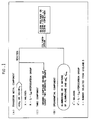
- Figs. 1 is a flow chart for better understanding of the present invention. This flow chart is given as a representative examples of an embodiment of the present invention, and not to be interpreted as limiting the present invention thereto.
- vanadium compound of the formula VOX3 in which X is a halogen atom
- VO(OR)3 in which R is a C1-C20 hydrocarbon group
- vanadium oxytrichloride vanadium oxytribromide
- vanadium compounds of the formula VO(OR)3 wherein R represents methyl, ethyl, n-propyl, isopropyl, n-butyl, isobutyl, tert-butyl, 1-methylbutyl, 2-methylbutyl, neopentyl, 2-ethylbutyl, cyclohexyl, alkylcyclohexyl or phenyl.
- the aluminoxane, catalyst component (B), is a polymer of an aluminum compound, and it exists generally in the form of R a (AlR a O) n AlR a (linear compound) and/or (AlR a O) n+1 (cyclic compound).
- R a represents a C1-C10 alkyl group such as for example methyl, ethyl, propyl, butyl and pentyl. Particularly, methyl and ethyl are preferred.
- n is an integer of 1 or more, and particularly integers of 1 to 40 are preferred.
- the aluminoxane is obtained by the reaction of a trialkylaluminum (represented by the formula AlR a 3 in which R a represents a C1-C10 alkyl group such as for example methyl, ethyl, propyl, butyl or pentyl), normally dissolved in a suitable hydrocarbon solvent, with water.
- a trialkylaluminum represented by the formula AlR a 3 in which R a represents a C1-C10 alkyl group such as for example methyl, ethyl, propyl, butyl or pentyl
- a solution of the aluminum compound is brought into contact with steam and a method in which an organic solvent saturated with water is gradually dropped into, a solution of the aluminum compound.
- the aluminum compound is reacted with copper sulfate hydrate (CuSO4 ⁇ 5H2O) or aluminum sulfate hydrate [Al2(SO4)3 ⁇ 18H2O].
- CuSO4 ⁇ 5H2O copper sulfate hydrate
- Al2(SO4)3 ⁇ 18H2O aluminum sulfate hydrate
- the linear compound and the cyclic compound are obtained at the same time.
- the molar ratio of the aluminum compound to water is selected so that the amount of water is equimolar with 1 mole of the aluminum compound.
- the aluminum compound of the formula AlR′ n X′ 3-n (in which R′ is a C1-C10 alkyl group, X′ is a halogen atom and n is a number selected from 0, 1, 2 and 3) used in a mixture with the aluminoxane, there are mentioned methylaluminum dichloride, ethylaluminum dichloride, n-propylaluminum dichloride, ethylaluminum sesquichloride, dimethylaluminum chloride, diethylaluminum chloride, di-n-propylaluminum chloride, trimethylaluminum, triethylaluminum, triisobutylaluminum, ethyldicyclohexylaluminum, triphenylaluminum, diethylaluminum bromide, diethylaluminum iodide, aluminum trichloride and aluminium tribromide.
- diethylaluminum chloride and ethylaluminum sesquichloride give particularly preferred results.
- n′ is an integer of 0, or 1 or more, and it represents the number of repeats of the unit Y. Particularly, 0 or 1 gives preferred results.
- Each of R1, R, R3 and R4 represents a C1-C20 hydrocarbon, hydroxyl, nitro, nitrile or hydrocarbyloxy group or a halogen atom.
- the C1-C20 hydrocarbon group includes alkyl groups such as methyl, ethyl, n-propyl, isopropyl, n-butyl, isobutyl, tert-butyl, n-amyl, isoamyl, n-hexyl, n-heptyl, n-octyl, n-decyl and n-dodecyl; aryl groups such as phenyl and naphthyl; cycloalkyl groups such as cyclohexyl and cyclopentyl; allyl groups such as propenyl; and aralkyl groups such as benzyl.
- C1-C10 alkyl groups are preferably used.
- Each of y, y′, y ⁇ , y′′′, z, z′, z ⁇ and z′′′ represents the number of substituents bonded to the aromatic ring; each of y, y′, z and z′ represents an integer of 0, or 1 to 4; each of y ⁇ and z ⁇ represents an integer of 0, or 1 to 2; and each of y′′′ and z′′′ represents an integer of 0, or 1 to 3.
- the catalyst component (C) include for example 2,4-dihydroxypentane, 2-(2-hydroxypropyl)phenol, catechol, resorcinol, 4-isopropylcatechol, 3-methoxycatechol, 1,8-dihydroxynaphthalene, 1,2-dihydroxynaphthalene, 2,2′-biphenyldiol, 1,1′-bi-2-naphthol, 2,2′-dihydroxy-6,6′-dimethylbiphenyl, 4,4′,6,6′-tetra-tert butyl-2,2′-methylenediphenol, 4,4′-dimethyl-6,6′-di-tert-butyl-2,2′-methylenediphenol, 4,4′,6,6′-tetramethyl-2,2′-isobutylidenediphenol and 2,2′-dihydroxy-3,3′-di-tert-butyl-5,5′-dimethyldiphenyl sulfide.
- the catalyst system comprising the catalyst components (A) and (B) or the one comprising the catalyst components (A), (B) and (C) may be used.
- the catalyst system comprising the catalyst components (A) and (B) mainly gives non-crystalline polymers having a high molecular weight or crystalline polymers having a low molecular weight.
- crystalline polymers having an isotactic regularity are produced depending upon the kinds of the components (A) and (C).
- the catalyst component (A) can be used in a range of 10 ⁇ 10 to 103 mmol/liter, preferably 10 ⁇ 7 to 10 mmole/liter as a vanadium atom.
- the catalyst component (B) can be used in a rate of 1 to 100,000, preferably 10 to 10,000, as Al:V atomic ratio, based on the catalyst component (A).
- the catalyst component (C) can be used in a rate of 0.01 to 4 (molar ratio) based on the vanadium atom of the catalyst component (A).
- the catalyst component (C) Before the catalyst component (C) is used in the polymerization, it is necessary to react the component (C) with the catalyst component (A) in advance.
- the reaction can be carried out at a temperature of -20° to 200°C in a solvent such as hydrocarbon solvents, halogenated hydrocarbon solvents or polar solvents (e.g. ether).
- the catalyst component (C) may directly be used in the polymerization.
- the catalyst component (A) is a halogen-containing vanadyl compound
- ammonia , pyridine or alkylamine may be added to the reaction system in order to catch a hydrogen halide generated during the reaction. In this case, it is desirable to use the catalyst component (C) after removing the precipitated hydrogen halide-containing compound.
- the catalyst component (C) may previously be converted to metal alcoholates, metal phenolates or metal naphtholates by reacting the catalyst component (C) with an alkali metal (e.g. metallic sodium) or alkali metal hydride (e.g. lithium hydride).
- an alkali metal e.g. metallic sodium
- alkali metal hydride e.g. lithium hydride
- the catalyst component (A) contains a hydrocarbyloxy group
- the catalyst component (C) may previously be converted to an ester compound by reacting it with a carboxylic acid (e.g. acetic acid).
- the olefin usable in the present invention is a C2-C10 olefin, and its specific examples include ethylene, propylene, butene-1, 4-methylpentene-1, hexene-1, octene-1 and vinylcyclohexane.
- the olefin of the present invention is not limited to these compounds. These compounds may be used, alone or in combination, for homopolymerization or copolymerization.
- the polymerization method of the present invention is not critical.
- solvent polymerization and solution polymerization with aliphatic hydrocarbon solvents (e.g. butene, pentane, hexane, heptane, octane), aromatic hydrocarbon solvents (e.g. benzene, toluene) or halogenated hydrocarbon solvents (e.g. methylene chloride); bulk polymerization with the monomer as a solvent and gas-phase polymerization carried out in a gaseous monomer.
- aliphatic hydrocarbon solvents e.g. butene, pentane, hexane, heptane, octane
- aromatic hydrocarbon solvents e.g. benzene, toluene
- halogenated hydrocarbon solvents e.g. methylene chloride
- the polymerization temperature is in the range of -50°C to 200°C, and particularly, a range of -20°C to 100°C is preferred.
- the polymerization pressure is preferably normal pressure to 60 kg/cmG.
- the polymerization time is properly determined depending upon the kind of desired polymers and reaction apparatus, and it is in a range of 5 minutes to 40 hours.
- the polymerization time is preferably 5 minutes to 10 hours for ethylene polymerization, and 30 minutes to 20 hours for propylene polymerization.
- the molecular weight was shown by a weight average molecular weight calculated using gel permeation chromatography (GPC). GPC was carried out with a model 150C produced by Waters Co. The measurement was made at 140°C using o-dichlorobenzene as a solvent. For the measurement, three Shodex 80MS columns were used. As polystyrene for making a calibration curve, fourteen kinds of unidispersed standard polystyrene having a molecular weight in a range of 500 to 6.8 x 10⁶ were used. The molecular weight was shown by a weight average molecular weight obtained from an average molecular weight, converted to a polystyrene basis, according to the Universal method.
- GPC gel permeation chromatography
- the isotactic stereoregularity of polymers obtained in the propylene polymerization was evaluated based on the isotactic triad molar fraction [hereinafter referred to as (mm) fraction] obtained from 13C-NMR spectrum. The measurement was made at 135°C using a spectrometer (FX-100; produced by Nippon Denshi Co.). The polymer was used in solution in o-dichlorobenzene. The (mm) fraction was obtained from the enlarged spectrum of a methyl carbon region.
- the polymer was washed with 1N-HCl/methanol solution and then with methanol and dried.
- the yield of the polymer thus obtained was 0.013 g, which corresponded to an activity of 5,900 g/mole of a vanadium atom.
- This polymer had a molecular weight of 14,900 and a (mm) fraction of 0.47.
- Polymerization was carried out in the same manner as in Example 1 except that 1 ml of ethylaluminum sesquichloride (Al: 1.62 x 10 ⁇ 4 mmole) was added in place of aluminoxane at the time of propylene polymerization. However, the polymer was not obtained.
- ethylaluminum sesquichloride Al: 1.62 x 10 ⁇ 4 mmole
- Example 2 The procedure was carried out in the same manner as in Example 1 except that 1 ml of a n-butoxy vanadate solution (V: 2.74 x 10 ⁇ 5 mmole) was used as the catalyst component (A).
- the yield of the resulting polymer was 0.043 g, which corresponded to an activity of 1570 g/mole of a vanadium atom.
- This polymer had a molecular weight of 1,200,000 and a (mm) fraction of 0.45.
- Example 2 Polymerization was carried out in the same manner as in Example 1 except that 1 mg of the solid obtained in (1) was used as the catalyst component (A). The yield of the resulting polymer was 4.11 g. This polymer had a molecular weight of 1,850,000 and a (mm) fraction of 0.35.
- Example 3 In the reaction of the catalyst component (A) with the catalyst component (C) in Example 3, the procedure was carried out in the same manner as in Example 3 except that 1.3 mmoles of 4,4′-dimethyl-6,6′-di-tert-butyl-2,2′-methylenediphenol was used in place of bis(2-hydroxy-3-methyl-5-tert-butylphenyl)sulfide, and n-butyl ether was used as a solvent in place of n-pentane. Thus, 0.25 g of a blackish brown solid was obtained.
- Example 2 Polymerization was carried out in the same manner as in Example 2 except that 1 x 10 ⁇ 3 g of the solid obtained in (1) was used as the catalyst component (A). The yield of the resulting polymer was 0.53 g. This polymer had a molecular weight of 1,630,000 and a (mm) fraction of 0.43.
- Example 2 Polymerization was carried out in the same manner as in Example 1 except that 1 mg of the solid obtained in (1) was used as the catalyst component (A). The yield of the resulting polymer was 0.79 g. This polymer had a molecular weight of 2,100,000 and a (mm) fraction of 0.68.
- Example 3 The procedure was carried out in the same manner as in Example 3 except that, in place of the methyl aluminoxane solution used as the catalyst component (B), a mixed solution of 0.26 g of methyl aluminoxane synthesized in Example 1 and 0.2 ml of a toluene solution of ethylaluminum sesquichloride (Al: 4.0 x 10 ⁇ 5 mole) was added to the autoclave.
- a mixed solution of 0.26 g of methyl aluminoxane synthesized in Example 1 and 0.2 ml of a toluene solution of ethylaluminum sesquichloride (Al: 4.0 x 10 ⁇ 5 mole) was added to the autoclave.
- the yield of the resulting polymer was 6.63 g. This polymer had a molecular weight of 2,440,000 and a (mm) fraction of 0.32.
- Polymerization was carried out in the same manner as in Example 7 except that 10 ml of a toluene solution of ethylaluminum sesquichloride (Al: 1.2 mmoles) was added in place of methyl aluminoxane at the time of ethylene polymerization.
- the yield of the resulting polyethylene was 0.01 g, and the polyethylene had a molecular weight of 1,670,000.
Landscapes
- Chemical & Material Sciences (AREA)
- Health & Medical Sciences (AREA)
- Chemical Kinetics & Catalysis (AREA)
- Medicinal Chemistry (AREA)
- Polymers & Plastics (AREA)
- Organic Chemistry (AREA)
- Transition And Organic Metals Composition Catalysts For Addition Polymerization (AREA)
- Addition Polymer Or Copolymer, Post-Treatments, Or Chemical Modifications (AREA)
Description
- The present invention relates to a method for producing homopolymers of an olefin having two or more carbon atoms or copolymers of two kinds or more of olefins.
- In the conventional production of olefin polymers, there has generally been used a catalytic system comprising a solid titanium compound consisting mainly of titanium trichloride and an organoaluminum compound, and a catalytic system comprising titanium tetrachloride supported on magnesium chloride, an organoaluminum compound and an electron donor. Further, there is proposed a method in which olefin polymers are produced with Ti(OR) nX4-n, an aluminoxane and at least two kinds of aromatic hydrocarbon compounds having a hydroxyl group as catalytic components (PCT int. Appl. WO 87-2370A1). On the other hand, there are also proposed methods using a polymerization catalyst comprising a titanocene, zirconocene or hafnocene compound and aluminoxane (e.g. JP-A-58-19309, JP-A-60-217209). However, the methods using these catalyst systems have a drawback that the molecular weight of the olefin polymers obtained is small.
- Vanadium compounds represented by VOCl₃ are used in industry as a catalyst for producing ethylene/propylene rubbers in combination with, for example, ethylaluminum sesquichloride. This catalyst, however, is very low in catalytic activity for propylene homopolymerization, so that its industrial value as a catalyst for propylene polymerization is not admitted.
- EP-A-0241560 describes a catalyst for olefin polymerization comprising a catalyst component (A) of the formula M(R),(OR')mXn-(1+m) (wherein M represents a transition metal atom), a catalyst component (B) which is an aluminoxane and a catalyst component (C) which is an organic compound having at least 2 hydroxyl groups.
- An object of the present invention is to provide a method for producing olefin polymers by using a novel catalyst system substituting the above catalyst systems containing transition metals.
- The present invention provides a method for producing high-molecular-weight olefin polymers with high efficiency using a catalyst system comprising a vanadyl compound having a particular structure and an aluminoxane or a mixture of said aluminoxane and an organoaluminum compound, and it is characterized by using the following catalyst systems.
- That is, the present invention provides a method for producing olefin polymers which comprises 20 homopolymerizing an olefin or copolymerizing two or more olefins using a catalyst system comprising
- catalyst component (A): a vanadium compound represented by the formula VOX₃ in which X represents a halogen atom, or VO(OR)₃ in which R represents a C₁-C₂₀ hydrocarbon group, and
- catalyst component (B): an aluminoxane obtained by the reaction of a trialkylaluminum represented by the formula AlRa 3 in which Ra represents a C₁-C₁₀ alkyl group with water, or a mixture of said aluminoxane and an aluminum compound represented by the formula AlR′nX′3-n in which R' represents a C₁-C₁₀ alkyl group, X′ represents a halogen atom and n represents a number selected from 0, 1, 2 and 3, and
- catalyst component (C): an organic compound having at least two hydroxyl groups which is reacted with catalyst component (A) before use. Catalyst component (C) is preferably represented by the formula I, II, III, IV, V or VI:

- According to the present invention, high molecular weight olefin polymers can be produced in high yields by homopolymerizing an olefin or copolymerizing two or more olefins using the novel catalyst system of the present invention comprising a vanadium compound represented by the formula VOX₃ or VO(OR)₃ and an aluminoxane or a mixture of said aluminoxane and an aluminum compound and an organic compound having at least two hydroxyl groups.
- Figs. 1 is a flow chart for better understanding of the present invention. This flow chart is given as a representative examples of an embodiment of the present invention, and not to be interpreted as limiting the present invention thereto.
- The present invention will be explained in detail hereinafter.
- Specific examples of the vanadium compound of the formula VOX₃ (in which X is a halogen atom) or VO(OR)₃ (in which R is a C₁-C₂₀ hydrocarbon group) used as the catalyst component (A) in the present invention include vanadium oxytrichloride, vanadium oxytribromide, and vanadium compounds of the formula VO(OR)₃, wherein R represents methyl, ethyl, n-propyl, isopropyl, n-butyl, isobutyl, tert-butyl, 1-methylbutyl, 2-methylbutyl, neopentyl, 2-ethylbutyl, cyclohexyl, alkylcyclohexyl or phenyl.
- The aluminoxane, catalyst component (B), is a polymer of an aluminum compound, and it exists generally in the form of Ra (AlRaO)nAlRa (linear compound) and/or (AlRaO)n+1 (cyclic compound). In the formula, Ra represents a C₁-C₁₀ alkyl group such as for example methyl, ethyl, propyl, butyl and pentyl. Particularly, methyl and ethyl are preferred. n is an integer of 1 or more, and particularly integers of 1 to 40 are preferred.
- The aluminoxane is obtained by the reaction of a trialkylaluminum (represented by the formula AlRa 3 in which Ra represents a C₁-C₁₀ alkyl group such as for example methyl, ethyl, propyl, butyl or pentyl), normally dissolved in a suitable hydrocarbon solvent, with water. In this case, it is preferred to carry out the contact under mild conditions. For example, there is a method in which a solution of the aluminum compound is brought into contact with steam and a method in which an organic solvent saturated with water is gradually dropped into, a solution of the aluminum compound. Alternatively, there is also a method in which the aluminum compound is reacted with copper sulfate hydrate (CuSO₄·5H₂O) or aluminum sulfate hydrate [Al₂(SO₄)₃·18H₂O]. Usually, when the aluminoxane is synthesized from trimethylaluminum and water, the linear compound and the cyclic compound are obtained at the same time. The molar ratio of the aluminum compound to water is selected so that the amount of water is equimolar with 1 mole of the aluminum compound.
- As specific examples of the aluminum compound of the formula AlR′nX′3-n (in which R′ is a C₁-C₁₀ alkyl group, X′ is a halogen atom and n is a number selected from 0, 1, 2 and 3) used in a mixture with the aluminoxane, there are mentioned methylaluminum dichloride, ethylaluminum dichloride, n-propylaluminum dichloride, ethylaluminum sesquichloride, dimethylaluminum chloride, diethylaluminum chloride, di-n-propylaluminum chloride, trimethylaluminum, triethylaluminum, triisobutylaluminum, ethyldicyclohexylaluminum, triphenylaluminum, diethylaluminum bromide, diethylaluminum iodide, aluminum trichloride and aluminium tribromide.
- Among these, diethylaluminum chloride and ethylaluminum sesquichloride give particularly preferred results.
- In the compounds of the above-mentioned formulae I to VI used as the catalyst component (C) in the present invention,
- each of R˝ and R‴ represents a C₁-C₂₀ hydrocarbon group; Y represents a C₁-C₂₀ hydrocarbon group -O-, -S-, -S-S-,


- In the above formulae, n′ is an integer of 0, or 1 or more, and it represents the number of repeats of the unit Y. Particularly, 0 or 1 gives preferred results.
- Each of R¹, R, R³ and R⁴ represents a C₁-C₂₀ hydrocarbon, hydroxyl, nitro, nitrile or hydrocarbyloxy group or a halogen atom. The C₁-C₂₀ hydrocarbon group includes alkyl groups such as methyl, ethyl, n-propyl, isopropyl, n-butyl, isobutyl, tert-butyl, n-amyl, isoamyl, n-hexyl, n-heptyl, n-octyl, n-decyl and n-dodecyl; aryl groups such as phenyl and naphthyl; cycloalkyl groups such as cyclohexyl and cyclopentyl; allyl groups such as propenyl; and aralkyl groups such as benzyl. Among these, C₁-C₁₀ alkyl groups are preferably used.
- Each of y, y′, y˝, y‴, z, z′, z˝ and z‴ represents the number of substituents bonded to the aromatic ring; each of y, y′, z and z′ represents an integer of 0, or 1 to 4; each of y˝ and z˝ represents an integer of 0, or 1 to 2; and each of y‴ and z‴ represents an integer of 0, or 1 to 3.
- Specific examples of the catalyst component (C) include for example 2,4-dihydroxypentane, 2-(2-hydroxypropyl)phenol, catechol, resorcinol, 4-isopropylcatechol, 3-methoxycatechol, 1,8-dihydroxynaphthalene, 1,2-dihydroxynaphthalene, 2,2′-biphenyldiol, 1,1′-bi-2-naphthol, 2,2′-dihydroxy-6,6′-dimethylbiphenyl, 4,4′,6,6′-tetra-tert butyl-2,2′-methylenediphenol, 4,4′-dimethyl-6,6′-di-tert-butyl-2,2′-methylenediphenol, 4,4′,6,6′-tetramethyl-2,2′-isobutylidenediphenol and 2,2′-dihydroxy-3,3′-di-tert-butyl-5,5′-dimethyldiphenyl sulfide. Among these, 2,4′-dihydroxypentane, catechol, 2,2′-biphenyldiol, 1,1′-bi-2-naphthol, 4,4′,6,6′-tetra-tert-butyl-2,2′-methylenediophenol, 4,4′-dimethyl-6,6′-di-tert-butyl-2,2′-methylenediphenol, 4,4′,6,6′-tetramethyl-2,2′-isobutylidenediphenol and 2,2′-dihydroxy-3,3′-di-tert-butyl-5,5′-dimethyldiphenyl sulfide give preferred results.
- When these catalyst systems are used in olefin polymerization, either of the system comprising the catalyst components (A) and (B) or the one comprising the catalyst components (A), (B) and (C) may be used. For example, in the case of propylene polymerization, the catalyst system comprising the catalyst components (A) and (B) mainly gives non-crystalline polymers having a high molecular weight or crystalline polymers having a low molecular weight. In the polymerization with the catalyst system comprising the catalyst components (A), (B) and (C), crystalline polymers having an isotactic regularity are produced depending upon the kinds of the components (A) and (C).
- As to the amounts of these catalyst components used, for example in the case of solvent polymerization, the catalyst component (A) can be used in a range of 10⁻¹⁰ to 10³ mmol/liter, preferably 10⁻⁷ to 10 mmole/liter as a vanadium atom. The catalyst component (B) can be used in a rate of 1 to 100,000, preferably 10 to 10,000, as Al:V atomic ratio, based on the catalyst component (A). The catalyst component (C) can be used in a rate of 0.01 to 4 (molar ratio) based on the vanadium atom of the catalyst component (A).
- Before the catalyst component (C) is used in the polymerization, it is necessary to react the component (C) with the catalyst component (A) in advance. The reaction can be carried out at a temperature of -20° to 200°C in a solvent such as hydrocarbon solvents, halogenated hydrocarbon solvents or polar solvents (e.g. ether). The catalyst component (C) may directly be used in the polymerization. When the catalyst component (A) is a halogen-containing vanadyl compound, ammonia , pyridine or alkylamine may be added to the reaction system in order to catch a hydrogen halide generated during the reaction. In this case, it is desirable to use the catalyst component (C) after removing the precipitated hydrogen halide-containing compound. Alternatively, prior to the polymerization, the catalyst component (C) may previously be converted to metal alcoholates, metal phenolates or metal naphtholates by reacting the catalyst component (C) with an alkali metal (e.g. metallic sodium) or alkali metal hydride (e.g. lithium hydride). In this case, it is desirable to use these alcoholates, phenolates or naphtholates in the polymerization after removing the precipitated alkali metal salt. Further, when the catalyst component (A) contains a hydrocarbyloxy group, prior to the polymerization, the catalyst component (C) may previously be converted to an ester compound by reacting it with a carboxylic acid (e.g. acetic acid).
- In reacting the vanadyl compound with the organic compound having at least two hydroxyl groups, it is considered that there is produced a compound having a form wherein at least two hydroxyl groups of said organic compound have been bonded to the same vanadium atom.
- The olefin usable in the present invention is a C₂-C₁₀ olefin, and its specific examples include ethylene, propylene, butene-1, 4-methylpentene-1, hexene-1, octene-1 and vinylcyclohexane. The olefin of the present invention, however, is not limited to these compounds. These compounds may be used, alone or in combination, for homopolymerization or copolymerization.
- The polymerization method of the present invention is not critical. For example, there can be used solvent polymerization and solution polymerization with aliphatic hydrocarbon solvents (e.g. butene, pentane, hexane, heptane, octane), aromatic hydrocarbon solvents (e.g. benzene, toluene) or halogenated hydrocarbon solvents (e.g. methylene chloride); bulk polymerization with the monomer as a solvent and gas-phase polymerization carried out in a gaseous monomer. Further, either of continuous polymerization or batch-form polymerization may be used.
- The polymerization temperature is in the range of -50°C to 200°C, and particularly, a range of -20°C to 100°C is preferred. The polymerization pressure is preferably normal pressure to 60 kg/cmG. Generally, the polymerization time is properly determined depending upon the kind of desired polymers and reaction apparatus, and it is in a range of 5 minutes to 40 hours. For example, the polymerization time is preferably 5 minutes to 10 hours for ethylene polymerization, and 30 minutes to 20 hours for propylene polymerization.
- The effect of the present invention will be illustrated specifically with reference to the following examples and comparative examples, but the present invention is not limited to these examples.
- In the examples, the molecular weight was shown by a weight average molecular weight calculated using gel permeation chromatography (GPC). GPC was carried out with a model 150C produced by Waters Co. The measurement was made at 140°C using o-dichlorobenzene as a solvent. For the measurement, three Shodex 80MS columns were used. As polystyrene for making a calibration curve, fourteen kinds of unidispersed standard polystyrene having a molecular weight in a range of 500 to 6.8 x 10⁶ were used. The molecular weight was shown by a weight average molecular weight obtained from an average molecular weight, converted to a polystyrene basis, according to the Universal method.
- The isotactic stereoregularity of polymers obtained in the propylene polymerization was evaluated based on the isotactic triad molar fraction [hereinafter referred to as (mm) fraction] obtained from ¹³C-NMR spectrum. The measurement was made at 135°C using a spectrometer (FX-100; produced by Nippon Denshi Co.). The polymer was used in solution in o-dichlorobenzene. The (mm) fraction was obtained from the enlarged spectrum of a methyl carbon region.
- The air in a 0.5-liter flask equipped with a stirrer, a dropping funnel and a reflux condenser was replaced by argon, and then 38.2 g (0.15 mole) of CuSO₄·5H₂O was suspended in 200 ml of toluene in the flask. A solution comprising 0.58 mole of trimethylaluminum and 100 ml of toluene was added dropwise to the flask in 5 hours while maintaining the inner temperature at 25°C with stirring. After completion of the addition, stirring was continued at room temperature for 20 hours. After removing formed precipitates, the solvent was removed under reduced pressure to obtain 15.8 g of methyl aluminoxane. In the polymerization, methyl aluminoxane used was diluted with toluene (0.05 g/ml). Methyl aluminoxane synthesized here was also used in the following examples.
- The air in a 130-ml stainless steel autoclave in which stirring was carried out with a magnetic stirrer was replaced by argon, and then 0.1 µℓ (V: 2.2 x 10⁻⁶ mole) of a heptane solution of vanadium oxychloride which was the catalyst component (A), 0.15 g of methyl aluminoxane and 3 ml of toluene were added to the autoclave. After cooling the autoclave to -70°C, 30 g of propylene was introduced. The contents of the autoclave were kept at 30°C for 1 hour with stirring. After discharging excess propylene, the polymer was recovered.
- The polymer was washed with 1N-HCl/methanol solution and then with methanol and dried. The yield of the polymer thus obtained was 0.013 g, which corresponded to an activity of 5,900 g/mole of a vanadium atom. This polymer had a molecular weight of 14,900 and a (mm) fraction of 0.47.
- Polymerization was carried out in the same manner as in Example 1 except that 1 ml of ethylaluminum sesquichloride (Al: 1.62 x 10⁻⁴ mmole) was added in place of aluminoxane at the time of propylene polymerization. However, the polymer was not obtained.
- The procedure was carried out in the same manner as in Example 1 except that 1 ml of a n-butoxy vanadate solution (V: 2.74 x 10⁻⁵ mmole) was used as the catalyst component (A). The yield of the resulting polymer was 0.043 g, which corresponded to an activity of 1570 g/mole of a vanadium atom. This polymer had a molecular weight of 1,200,000 and a (mm) fraction of 0.45.
- The air in a 200-ml flask equipped with a stirrer, a dropping funnel and a reflux condenser was replaced by argon, and 70 ml of n-pentane and 2.8 x 10⁻³ mole of bis(2-hydroxy-3-tert-butyl-5-methylphenyl)sulfide were added. The contents of the flask were cooled to 0°C. Subsequently, a solution comprising 30 ml of n-pentane and 2.8 x 10⁻³ mole of vanadium oxychloride was gradually added dropwise from the dropping funnel. After stirring was continued at 0°C for 5 hours, the temperature was raised to room temperature, and then stirring was continued for further 2 days. Blackish brown precipitates were recovered by filtration, washed twice with n-pentane and dried to obtain 0.92 g of a reaction product.
- Polymerization was carried out in the same manner as in Example 1 except that 1 mg of the solid obtained in (1) was used as the catalyst component (A). The yield of the resulting polymer was 4.11 g. This polymer had a molecular weight of 1,850,000 and a (mm) fraction of 0.35.
- In the reaction of the catalyst component (A) with the catalyst component (C) in Example 3, the procedure was carried out in the same manner as in Example 3 except that 1.3 mmoles of 4,4′-dimethyl-6,6′-di-tert-butyl-2,2′-methylenediphenol was used in place of bis(2-hydroxy-3-methyl-5-tert-butylphenyl)sulfide, and n-butyl ether was used as a solvent in place of n-pentane. Thus, 0.25 g of a blackish brown solid was obtained.
- Polymerization was carried out in the same manner as in Example 2 except that 1 x 10⁻³ g of the solid obtained in (1) was used as the catalyst component (A). The yield of the resulting polymer was 0.53 g. This polymer had a molecular weight of 1,630,000 and a (mm) fraction of 0.43.
- In the reaction of the catalyst component (A) with the catalyst component (C) in Example 3, the procedure was carried out similarly except that 3.5 mmoles of n-butoxy vanadate was used in place of vanadium oxychloride, n-heptane was used as a solvent and the reaction was carried out at room temperature for 2 days. Thus, 0.66 g of a black solid was obtained.
- Polymerization was carried out in the same manner as in Example 1 except that 1 mg of the solid obtained in (1) was used as the catalyst component (A). The yield of the resulting polymer was 0.79 g. This polymer had a molecular weight of 2,100,000 and a (mm) fraction of 0.68.
- The procedure was carried out in the same manner as in Example 3 except that, in place of the methyl aluminoxane solution used as the catalyst component (B), a mixed solution of 0.26 g of methyl aluminoxane synthesized in Example 1 and 0.2 ml of a toluene solution of ethylaluminum sesquichloride (Al: 4.0 x 10⁻⁵ mole) was added to the autoclave.
- The yield of the resulting polymer was 6.63 g. This polymer had a molecular weight of 2,440,000 and a (mm) fraction of 0.32.
- To a 130-ml stainless steel autoclave were added 80 ml of toluene, 5 x 10⁻⁶ g of the solid obtained in (1) of Example 3 and 0.35 g of methyl aluminoxane in this order, and the inner temperature of the autoclave was kept at 60°C. Subsequently, ethylene was introduced into the autoclave continuously while maintaining the pressure in the system at 9 kg/cmG. Thus, ethylene was polymerized for 10 minutes. After completion of the reaction, methanol was added to decompose the catalyst, and the resulting polymer was dried to obtain 0.25 g of polyethylene. The molecular weight of the polyethylene was 1,530,000.
- Polymerization was carried out in the same manner as in Example 7 except that 10 ml of a toluene solution of ethylaluminum sesquichloride (Al: 1.2 mmoles) was added in place of methyl aluminoxane at the time of ethylene polymerization. The yield of the resulting polyethylene was 0.01 g, and the polyethylene had a molecular weight of 1,670,000.


Claims (17)
- A method for producing olefin polymers which comprises homopolymerizing an olefin or copolymerizing two or more olefins at a temperature range of -50°C to 200°C using a catalyst system comprising:catalyst component (A): a vanadium compound represented by the formula VOX₃ in which X represents a halogen atom, or VO(OR)₃ in which R represents a C₁-C₂₀ hydrocarbon group, andcatalyst component (B): an aluminoxane obtained by the reaction of a trialkylaluminum represented by the formula AlRa 3 in which Ra represents a C₁-C₁₀ alkyl group with water, or a mixture of said aluminoxane and an aluminum compound represented by the formula AlR'nX'3-n in which R' represents a C₁-C₁₀ alkyl group, X′ represents a halogen atom and n represents a number selected from 0, 1, 2 and 3, andcatalyst component (C): an organic compound having at least two hydroxyl groups which is reacted with catalyst component (A) before use.
- A method according to Claim 1, wherein the catalyst component (C) is an organic compound having at least two hydroxyl groups represented by the formula I, II, III, IV, V or VI:


- A method according to Claim 1, wherein the vanadium compound is vanadium oxytrichloride, vanadium oxytribromide, and vanadium compounds of the formula VO(OR)₃, wherein R represents methyl, ethyl, n-propyl, isopropyl, n-butyl, isobutyl, tert-butyl, 1-methylbutyl, 2-methylbutyl, neopentyl, 2-ethylbutyl, cyclohexyl, alkylcyclohexyl or phenyl.
- A method according to Claim 1, wherein the aluminoxane is represented by the formula Ra(AlRaO)nAlRa and/or (AlRaO)n+1, in which Ra represents C₁-C₁₀ alkyl group and n is 1 to 40.
- A method according to Claim 4, wherein Ra represents a methyl, ethyl, propyl, butyl, or pentyl group.
- A method according to Claim 1, wherein the aluminum compound in the catalyst component (B) is methylaluminum dichloride, ethylaluminum dichloride, n-propylaluminum dichloride, ethylaluminum sesquichloride, dimethylaluminum chloride, diethylaluminum chloride, di-n-propylaluminum chloride, trimethylaluminum, triethylaluminum, triisobutylaluminum, ethyldicyclohexylaluminum, triphenylaluminum, diethylaluminum bromide, diethylaluminum iodide, aluminum trichloride or aluminum tribromide.
- A method according to Claim 2, wherein the catalyst component (C) is an organic compound represented by the formula V.
- A method according to Claim 7, wherein the y, y′, z and z' are 1, respectively, in the formula V of the organic compound.
- A method according to Claim 2, wherein the catalyst compound (C) is an organic compound represented by the formula VI.
- A method according to Claim 9, wherein the y, y", z and z" are 1, respectively, in the formula VI of the organic compound.
- A method according to claim 7, 8, 9 or 10, wherein the catalyst component (C) is an organic compound represented by the formula V or VI in which the n' is 1 and the Y is a hydrocarbon group of 1 to 20 carbon atom.
- A method according to Claim 7, 8, 9 or 10, wherein the catalyst component (C) is an organic compound represented by the formula V or VI in which the n' is 1 and the Y is -O-, -S-, -S-S-,


- A method according to Claim 12, wherein the Y is -S- in the organic compound of the formula V or VI.
- A method according to Claim 1, wherein the catalyst component (C) is 2,4-dihydroxypentane, 2-(2-hydroxypropyl)phenol, catechol, resorcinol, 4-isopropylcatechol, 3-methoxycatechol, 1,8-dihydroxynaphthalene, 1,2-dihydroxynaphthalene, 2,2′-biphenyldiol, 1,1'-bi-2-naphthol, 2,2'-dihydroxy-6,6'-dimethylbiphenyl, 4,4',6,6'-tetra-tert butyl-2,2'-methylenediphenol, 4,4'-dimethyl-6,6'-di-tert-butyl-2,2'-methylenediphenol, 4,4',6,6'-tetramethyl-2,2'-isobutylidenediphenol, or 2,2'-dihydroxy-3,3'-di-tert-butyl-5,5'-dimethyldiphenyl sulfide.
- A method according to Claim 1, wherein the olefin is ethylene, propylene, butene-1, 4-methylpentene-l, hexene-1, octene-1, or vinylcyclohexane.
- A method according to Claim 1, wherein the polymerization of the olefin is carried out under a pressure of normal pressure to 60 kg/cmG.
- A method according to Claim 1, wherein the polymerization of the olefin is carried out for 5 minutes to 40 hours.
Applications Claiming Priority (2)
| Application Number | Priority Date | Filing Date | Title |
|---|---|---|---|
| JP63299060A JP2835369B2 (en) | 1988-11-26 | 1988-11-26 | Method for producing olefin polymer |
| JP299060/88 | 1988-11-26 |
Publications (3)
| Publication Number | Publication Date |
|---|---|
| EP0371411A2 EP0371411A2 (en) | 1990-06-06 |
| EP0371411A3 EP0371411A3 (en) | 1992-03-18 |
| EP0371411B1 true EP0371411B1 (en) | 1996-03-06 |
Family
ID=17867685
Family Applications (1)
| Application Number | Title | Priority Date | Filing Date |
|---|---|---|---|
| EP19890121758 Expired - Lifetime EP0371411B1 (en) | 1988-11-26 | 1989-11-24 | A method for producing olefin polymers |
Country Status (3)
| Country | Link |
|---|---|
| EP (1) | EP0371411B1 (en) |
| JP (1) | JP2835369B2 (en) |
| DE (1) | DE68925867T2 (en) |
Families Citing this family (4)
| Publication number | Priority date | Publication date | Assignee | Title |
|---|---|---|---|---|
| JP4465794B2 (en) | 1999-04-23 | 2010-05-19 | Jsr株式会社 | Olefin polymerization catalyst and process for producing olefin polymer using the same |
| GB0102440D0 (en) | 2001-01-31 | 2001-03-14 | Borealis Tech Oy | Catalyst |
| CN100364395C (en) * | 2006-10-11 | 2008-01-30 | 中国农业大学 | New Application of 2(2-Hydroxypropyl)phenol |
| CN109836524B (en) * | 2017-11-27 | 2022-03-29 | 中国石油天然气股份有限公司 | Catalyst composition, ethylene-alpha-olefin polymer and preparation method thereof |
Family Cites Families (7)
| Publication number | Priority date | Publication date | Assignee | Title |
|---|---|---|---|---|
| US4528339A (en) * | 1983-12-27 | 1985-07-09 | The Dow Chemical Company | Polymerization of olefins employing catalysts prepared from novel titanium compounds |
| JPS6126606A (en) * | 1984-07-16 | 1986-02-05 | Idemitsu Kosan Co Ltd | Preparation of ethylene copolymer |
| US4578374A (en) * | 1984-12-12 | 1986-03-25 | Exxon Research & Engineering Co. | Polymerization catalyst, production and use |
| JPH07643B2 (en) * | 1985-05-24 | 1995-01-11 | 三井石油化学工業株式会社 | Process for producing amorphous cyclic olefin random copolymer |
| EP0241560B1 (en) * | 1985-10-11 | 1991-04-03 | Sumitomo Chemical Company, Limited | Catalyst for olefin polymerization and process for preparing olefin polymer by using the same |
| CA1257863A (en) * | 1985-10-17 | 1989-07-25 | Vaclav G. Zboril | SOLUTION PROCESS FOR THE PREPARATION OF POLYMERS OF .alpha.-OLEFINS |
| JPH0655797B2 (en) * | 1986-04-14 | 1994-07-27 | 三井石油化学工業株式会社 | Preparation of cyclic olefin-based random copolymer |
-
1988
- 1988-11-26 JP JP63299060A patent/JP2835369B2/en not_active Expired - Fee Related
-
1989
- 1989-11-24 EP EP19890121758 patent/EP0371411B1/en not_active Expired - Lifetime
- 1989-11-24 DE DE1989625867 patent/DE68925867T2/en not_active Expired - Fee Related
Also Published As
| Publication number | Publication date |
|---|---|
| JPH02145606A (en) | 1990-06-05 |
| JP2835369B2 (en) | 1998-12-14 |
| EP0371411A3 (en) | 1992-03-18 |
| DE68925867D1 (en) | 1996-04-11 |
| DE68925867T2 (en) | 1996-10-31 |
| EP0371411A2 (en) | 1990-06-06 |
Similar Documents
| Publication | Publication Date | Title |
|---|---|---|
| EP0241560B1 (en) | Catalyst for olefin polymerization and process for preparing olefin polymer by using the same | |
| US6048818A (en) | Components and catalysts for the polymerization of olefins | |
| JP3285370B2 (en) | Method for producing polyolefin | |
| US4223117A (en) | Process for producing olefin polymers | |
| US4243552A (en) | Polymerization catalyst and process | |
| EP0055589A1 (en) | Catalyst for polymerization of olefins and polymerization process using the catalyst | |
| EP0115833B1 (en) | Polyolefin polymerization process and catalyst | |
| EP0104374A2 (en) | Polymerization of olefins | |
| US4478989A (en) | Process for the stereospecific polymerization of an alpha olefin and an alpha olefin polymerization catalyst system | |
| US4189553A (en) | High efficiency catalyst for polymerizing olefins | |
| JPH07649B2 (en) | Method for producing catalyst component for olefin polymerization | |
| EP0166014A1 (en) | Catalyst prepared from organomagnesium compound, organic hydroxyl-containing compound, reducing halide source and a transition metal-organozinc complex | |
| JP3354987B2 (en) | Catalyst system for stereospecific polymerization of α-olefin, its polymerization method and obtained polymer | |
| US4364851A (en) | Process for producing olefin polymers | |
| US5280000A (en) | Catalyst for olefin polymerization and process for producing olefin polymer using the catalyst | |
| US4525556A (en) | Polymerization of olefins | |
| EP0371411A2 (en) | A method for producing olefin polymers | |
| US5990035A (en) | Polymerization catalyst systems, their preparation, and use | |
| US4339351A (en) | Process for producing olefin polymers | |
| EP0139969B1 (en) | Polyolefin polymerization process and catalyst | |
| US4472519A (en) | Polymerization catalyst system | |
| EP0111902A2 (en) | Catalyst and process using same for producing olefin polymer | |
| EP1320558A1 (en) | Supported catalyst systems | |
| EP0072035B1 (en) | Process for producing polyolefins | |
| EP0285640A1 (en) | Ethylene polymerization catalyst. |
Legal Events
| Date | Code | Title | Description |
|---|---|---|---|
| PUAI | Public reference made under article 153(3) epc to a published international application that has entered the european phase |
Free format text: ORIGINAL CODE: 0009012 |
|
| AK | Designated contracting states |
Kind code of ref document: A2 Designated state(s): BE DE FR GB IT NL |
|
| 17P | Request for examination filed |
Effective date: 19910102 |
|
| PUAL | Search report despatched |
Free format text: ORIGINAL CODE: 0009013 |
|
| AK | Designated contracting states |
Kind code of ref document: A3 Designated state(s): BE DE FR GB IT NL |
|
| 17Q | First examination report despatched |
Effective date: 19930510 |
|
| GRAA | (expected) grant |
Free format text: ORIGINAL CODE: 0009210 |
|
| ITF | It: translation for a ep patent filed | ||
| AK | Designated contracting states |
Kind code of ref document: B1 Designated state(s): BE DE FR GB IT NL |
|
| REF | Corresponds to: |
Ref document number: 68925867 Country of ref document: DE Date of ref document: 19960411 |
|
| ET | Fr: translation filed | ||
| GRAH | Despatch of communication of intention to grant a patent |
Free format text: ORIGINAL CODE: EPIDOS IGRA |
|
| NLT2 | Nl: modifications (of names), taken from the european patent patent bulletin |
Owner name: SUMITOMO CHEMICAL COMPANY LIMITED |
|
| PLBE | No opposition filed within time limit |
Free format text: ORIGINAL CODE: 0009261 |
|
| STAA | Information on the status of an ep patent application or granted ep patent |
Free format text: STATUS: NO OPPOSITION FILED WITHIN TIME LIMIT |
|
| 26N | No opposition filed | ||
| PGFP | Annual fee paid to national office [announced via postgrant information from national office to epo] |
Ref country code: GB Payment date: 19971117 Year of fee payment: 9 |
|
| PGFP | Annual fee paid to national office [announced via postgrant information from national office to epo] |
Ref country code: DE Payment date: 19971201 Year of fee payment: 9 |
|
| PGFP | Annual fee paid to national office [announced via postgrant information from national office to epo] |
Ref country code: BE Payment date: 19980115 Year of fee payment: 9 |
|
| PGFP | Annual fee paid to national office [announced via postgrant information from national office to epo] |
Ref country code: FR Payment date: 19981110 Year of fee payment: 10 |
|
| PG25 | Lapsed in a contracting state [announced via postgrant information from national office to epo] |
Ref country code: GB Free format text: LAPSE BECAUSE OF NON-PAYMENT OF DUE FEES Effective date: 19981124 |
|
| PGFP | Annual fee paid to national office [announced via postgrant information from national office to epo] |
Ref country code: NL Payment date: 19981126 Year of fee payment: 10 |
|
| PG25 | Lapsed in a contracting state [announced via postgrant information from national office to epo] |
Ref country code: BE Free format text: LAPSE BECAUSE OF NON-PAYMENT OF DUE FEES Effective date: 19981130 |
|
| BERE | Be: lapsed |
Owner name: SUMITOMO CHEMICAL CY LTD Effective date: 19981130 |
|
| GBPC | Gb: european patent ceased through non-payment of renewal fee |
Effective date: 19981124 |
|
| PG25 | Lapsed in a contracting state [announced via postgrant information from national office to epo] |
Ref country code: DE Free format text: LAPSE BECAUSE OF NON-PAYMENT OF DUE FEES Effective date: 19990901 |
|
| PG25 | Lapsed in a contracting state [announced via postgrant information from national office to epo] |
Ref country code: NL Free format text: LAPSE BECAUSE OF NON-PAYMENT OF DUE FEES Effective date: 20000601 |
|
| PG25 | Lapsed in a contracting state [announced via postgrant information from national office to epo] |
Ref country code: FR Free format text: LAPSE BECAUSE OF NON-PAYMENT OF DUE FEES Effective date: 20000731 |
|
| NLV4 | Nl: lapsed or anulled due to non-payment of the annual fee |
Effective date: 20000601 |
|
| REG | Reference to a national code |
Ref country code: FR Ref legal event code: ST |
|
| PG25 | Lapsed in a contracting state [announced via postgrant information from national office to epo] |
Ref country code: IT Free format text: LAPSE BECAUSE OF NON-PAYMENT OF DUE FEES;WARNING: LAPSES OF ITALIAN PATENTS WITH EFFECTIVE DATE BEFORE 2007 MAY HAVE OCCURRED AT ANY TIME BEFORE 2007. THE CORRECT EFFECTIVE DATE MAY BE DIFFERENT FROM THE ONE RECORDED. Effective date: 20051124 |