EP0362860B1 - Alcohol-modified silicone ester derivative and cosmetic composition containing same - Google Patents
Alcohol-modified silicone ester derivative and cosmetic composition containing same Download PDFInfo
- Publication number
- EP0362860B1 EP0362860B1 EP19890118531 EP89118531A EP0362860B1 EP 0362860 B1 EP0362860 B1 EP 0362860B1 EP 19890118531 EP19890118531 EP 19890118531 EP 89118531 A EP89118531 A EP 89118531A EP 0362860 B1 EP0362860 B1 EP 0362860B1
- Authority
- EP
- European Patent Office
- Prior art keywords
- ester derivative
- silicone
- tetrahydroabietic
- alcohol
- ingredients
- Prior art date
- Legal status (The legal status is an assumption and is not a legal conclusion. Google has not performed a legal analysis and makes no representation as to the accuracy of the status listed.)
- Expired - Lifetime
Links
- 0 C*(*(C)OC)N Chemical compound C*(*(C)OC)N 0.000 description 2
Images



Classifications
-
- A—HUMAN NECESSITIES
- A61—MEDICAL OR VETERINARY SCIENCE; HYGIENE
- A61K—PREPARATIONS FOR MEDICAL, DENTAL OR TOILETRY PURPOSES
- A61K8/00—Cosmetics or similar toiletry preparations
- A61K8/18—Cosmetics or similar toiletry preparations characterised by the composition
- A61K8/72—Cosmetics or similar toiletry preparations characterised by the composition containing organic macromolecular compounds
- A61K8/84—Cosmetics or similar toiletry preparations characterised by the composition containing organic macromolecular compounds obtained by reactions otherwise than those involving only carbon-carbon unsaturated bonds
- A61K8/89—Polysiloxanes
- A61K8/891—Polysiloxanes saturated, e.g. dimethicone, phenyl trimethicone, C24-C28 methicone or stearyl dimethicone
- A61K8/894—Polysiloxanes saturated, e.g. dimethicone, phenyl trimethicone, C24-C28 methicone or stearyl dimethicone modified by a polyoxyalkylene group, e.g. cetyl dimethicone copolyol
-
- A—HUMAN NECESSITIES
- A61—MEDICAL OR VETERINARY SCIENCE; HYGIENE
- A61K—PREPARATIONS FOR MEDICAL, DENTAL OR TOILETRY PURPOSES
- A61K8/00—Cosmetics or similar toiletry preparations
- A61K8/02—Cosmetics or similar toiletry preparations characterised by special physical form
- A61K8/0212—Face masks
-
- A—HUMAN NECESSITIES
- A61—MEDICAL OR VETERINARY SCIENCE; HYGIENE
- A61Q—SPECIFIC USE OF COSMETICS OR SIMILAR TOILETRY PREPARATIONS
- A61Q19/00—Preparations for care of the skin
-
- C—CHEMISTRY; METALLURGY
- C08—ORGANIC MACROMOLECULAR COMPOUNDS; THEIR PREPARATION OR CHEMICAL WORKING-UP; COMPOSITIONS BASED THEREON
- C08G—MACROMOLECULAR COMPOUNDS OBTAINED OTHERWISE THAN BY REACTIONS ONLY INVOLVING UNSATURATED CARBON-TO-CARBON BONDS
- C08G77/00—Macromolecular compounds obtained by reactions forming a linkage containing silicon with or without sulfur, nitrogen, oxygen or carbon in the main chain of the macromolecule
- C08G77/04—Polysiloxanes
- C08G77/38—Polysiloxanes modified by chemical after-treatment
-
- C—CHEMISTRY; METALLURGY
- C08—ORGANIC MACROMOLECULAR COMPOUNDS; THEIR PREPARATION OR CHEMICAL WORKING-UP; COMPOSITIONS BASED THEREON
- C08G—MACROMOLECULAR COMPOUNDS OBTAINED OTHERWISE THAN BY REACTIONS ONLY INVOLVING UNSATURATED CARBON-TO-CARBON BONDS
- C08G77/00—Macromolecular compounds obtained by reactions forming a linkage containing silicon with or without sulfur, nitrogen, oxygen or carbon in the main chain of the macromolecule
- C08G77/42—Block-or graft-polymers containing polysiloxane sequences
- C08G77/46—Block-or graft-polymers containing polysiloxane sequences containing polyether sequences
-
- A—HUMAN NECESSITIES
- A61—MEDICAL OR VETERINARY SCIENCE; HYGIENE
- A61Q—SPECIFIC USE OF COSMETICS OR SIMILAR TOILETRY PREPARATIONS
- A61Q1/00—Make-up preparations; Body powders; Preparations for removing make-up
- A61Q1/02—Preparations containing skin colorants, e.g. pigments
-
- A—HUMAN NECESSITIES
- A61—MEDICAL OR VETERINARY SCIENCE; HYGIENE
- A61Q—SPECIFIC USE OF COSMETICS OR SIMILAR TOILETRY PREPARATIONS
- A61Q1/00—Make-up preparations; Body powders; Preparations for removing make-up
- A61Q1/02—Preparations containing skin colorants, e.g. pigments
- A61Q1/04—Preparations containing skin colorants, e.g. pigments for lips
- A61Q1/06—Lipsticks
-
- A—HUMAN NECESSITIES
- A61—MEDICAL OR VETERINARY SCIENCE; HYGIENE
- A61Q—SPECIFIC USE OF COSMETICS OR SIMILAR TOILETRY PREPARATIONS
- A61Q3/00—Manicure or pedicure preparations
- A61Q3/04—Nail coating removers
Definitions
- This invention relates to a novel alcohol-modified silicone ester derivative (hereinafter referred to simply as silicone ester derivative) and cosmetic compositions containing same.
- Silicone oils are widely used as an oil ingredient for cosmetic compositions due to their excellent lubricity, water repellency, gloss imparting capability, stability, safety, etc.
- a high molecular dimethylpolysiloxane has generally been used in the art.
- the dimethylpolysiloxane raises a problem when incorporated in a cosmetic composition. It gives disagreeable feel to the skin. In detail, it gives creaky feel when that of low viscosity is used and sticky feel when that of high viscosity is used.
- it is accompanied by an another problem in that an emulsion system is difficult to obtain because the high molecular dimethylpolysiloxane has poor compatibility with hydrocarbon oils.
- the present invention was made primarily to overcome the above-mentioned drawbacks of the silicone oils by taking an approach quite different from those disclosed in the mentioned publications, and to develop a novel silicone derivative having excellent properties which were never obtained from the conventional silicone oils, and further to develop cosmetic compositions having agreeable feel on use.
- Another object of this invention is to provide a cosmetic composition containing the same.
- Fig. 1 shows an infrared absorption spectrum of the silicone tetrahydroabietic ester derivative obtained in Example 1.
- Fig. 2 shows a 1H-NMR spectrum of the silicone tetrahydroabietic ester derivative obtained in Example 1.
- Fig. 3 shows a 13C-NMR spectrum of the silicone tetrahydroabietic ester derivative obtained in Example 1.
- Fig. 4 shows a 9Si-NMR spectrum of the silicone tetrahydroabietic ester derivative obtained in Example 1.
- Fig. 5 shows an infrared absorption spectrum of the silicone tetrahydroabietic ester derivative obtained in Example 2.
- Fig. 6 shows a 1H-NMR spectrum of the silicone tetrahydroabietic ester derivative obtained in Example 2.
- Fig. 7 shows a 13C-NMR spectrum of the silicone tetrahydroabietic ester derivative obtained in Example 2.
- Fig. 8 shows a 9Si-NMR spectrum of the silicone tetrahydroabietic ester derivative obtained in Example 2.
- Fig. 9 shows an infrared absorption spectrum of the silicone tetrahydroabietic ester derivative obtained in Example 9.
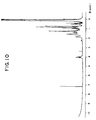
- Fig. 10 shows a 1H-NMR spectrum of the silicone tetrahydroabietic ester derivative obtained in Example 9.
- Fig. 11 shows a 13C-NMR spectrum of the silicone tetrahydroabietic ester derivative obtained in Example 9.
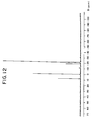
- Fig. 12 shows a 9Si-NMR spectrum of the silicone tetrahydroabietic ester derivative obtained in Example 9.
- the silicone ester derivative of formula (I) can be prepared, for example, by whichever process A or B.
- R, a, b, c, l, m and n have the same meanings as defined before.
- silicone ester derivative (I) of the present invention can be prepared by the reaction of alcohol-modified silicone (II) with carboxylic acid (III) or its reactive derivative.
- the alcohol-modified silicones i.e, alcohol-modified dimethylpolysiloxane
- the starting material of the above process are commercially available and sold, for example, by Shin'etsu Kagaku Kogyo K.K. They may however be readily synthesized by the reaction of a corresponding polysiloxane having Si-H terminals with an ethylene oxide adduct of allyl alcohol.
- the molecular weight of alcohol- or allyl alcohol- modified silicones (II) is preferably 130 to 10,000.
- a and b in formula (II) be zero (0) and d be one (1) in view of the availability, They can be used singly or in combination.
- the carboxylic acids(III) are selected from abietic acid, dehydroabietic acid, dyhydroabietic acid, tetrahydroabiectic acid and cholic acid. These carboxylic acids (III) may be used singly or in combination. An example of such combination is a mixed hydrogenated abietic acid which is a mixture of dihydroabietic acid and tetrahydroabietic acid.
- the mixed hydrogenated abietic acid is a major component of the rosin, and sold, for example, by Harima Kasei Kogyo K.K. This may otherwise be obtained by a catalytic reduction of abetic acid by the use of a metal catalyst such as palladium, platinum and nickel. Moreover, it is readily obtainable from market as a hydrogenated rosin.
- Examples of the reactive derivatives of the carboxylic acids (III) include carboxylic acid halides such as carboxylic acid bromide and carboxylic acid chloride.
- the esterification between alcohol-modified silicone (II) and carboxylic acid (III) is carried out according to a known method.
- (II) and (III) are mixed for dehydrative condensation under moderate heating in the presence of an acidic catalyst such as tin chloride and toluenesulfonic acid, or at a high temperature in the absence of a catalyst.
- the reaction between alcohol-modified silicone (II) and carboxylic halide is carried out according to a known method, and for instance, it proceeds in the presence of a basic catalyst such as pyridine at room temperature or under heat.
- R, a, b, c, d and n have the same meanings as mentioned before.
- polysiloxane (IV) having Si-H bonds and carboxylic acid ester (V) are reacted for hydrosilylation at room temperature or under heat in the presence of a catalytic amount of chloroplatinic acid catalyst.
- the reaction can be carried out either without solvent or using solvent.
- silicone ester derivative (I) of the present invention has features: 1) liquid at room temperature, 2) chemically stable, and 3) very mild to the skin; and is very useful as an oil ingredient for any kind of cosmetic compositions, especially for those which are directly applied to the skin.
- the amount of the silicone ester derivative (I) to be incorporated in a cosmetic composition is not particularly limited and generally from 0.001 to 90 wt% of the total composition, with a preferable amount being 0.1 to 80 wt% and most preferably 1 to 50 wt%.
- a polyol-type moisturizer When a polyol-type moisturizer is used in combination with the silicone ester derivative (I), moisturizing effect as well as thick and moistened feel are obtained with a reduced stickiness compared to when the respective ingredients are used singly.
- the polyol-type moisturizer include propylene glycol, 1,3-butanediol, dipropylene glycol, glycerol, diglycerol, polyglycerol, tritirol propane, erythritol, pentaerythritol, sorbitane, glucose, sorbitol, martitol, saccharose, trehalose, polyoxyethylene methyl glucoside, polyoxypropylene methyl glucoside and polyethylene glycol.
- polyol-type moisturizers are preferably incorporated in a cosmetic composition from 2 to 90 wt% and more preferably from 5 to 50 wt% based on the total amount. If the amount is less than 2 wt%, advantage of the combination use is not notable, while at an amount exceeding 90 wt%, the moisture-retaining effect is saturated and no further effect will be observed.
- the blending proportion between the silicone ester derivative (I) and the polyol-type moisturizer is arbitrary.
- the cosmetic compositions according to the present invention may further contain, so far as the effects of the invention are not impeded, oils, surfactants, moisturizers, UV absorbers, chelating agents, pH adjusters, preservatives, viscosity colorants, and perfumes which are generally used in the art.
- the cosmetic compositions include skin-care compositions such as W/O- and O/W- emulsified cosmetic products, creams, lotions and milky lotions, oil-base cosmetic compositions, lipsticks, foundations, skin detergents, hair tonics, hair setting agents, hair growers, hair nourishing agents and so on.
- skin-care compositions such as W/O- and O/W- emulsified cosmetic products, creams, lotions and milky lotions, oil-base cosmetic compositions, lipsticks, foundations, skin detergents, hair tonics, hair setting agents, hair growers, hair nourishing agents and so on.
- the silicone ester derivative (I) of the present invention is applicable to a variety of blending systems in the art. This may be explained by the fact that there are three different parts in a molecule of the ester derivative (I), which are dimethylpolysiloxisane part, carboxylic hydrophobic part and ester or ethylene dioxy group part, and these three parts are capable of undergoing interaction with silicone oil, hydrocarbon oil and polar solvent or water, respectively.
- the silicone ester derivative (I) of the present invention when incorporated into any compositions such as cosmetic or skin-care compositions which are comprised of a hydrocarbon oil, a polar solvent, water and so on, it is capable of maintaining the compositions stable for a prolonged period. Moreover, due to the presence of the ester derivative (I), the cosmetic compositions according to this invention remarkably reduce creaky feel on use which the conventional silicone oils could't avoid. Especially, it is notable that when silicone ester derivative (I) and a polyol-type moisturizer are used in combination for preparing a cosmetic composition, excellent properties are obtainable which include enhanced moisture-retainability and thick and moistened feel with supressed stickiness.
- the flask was heated at 80°C and subjected to 15 hours consecutive stirring under heat. Thereafter, the flask was allowed to stand for cooling down and 3 ml methanol was added to decompose the remaining tetrahydroabietoyl chloride. The toluene layer was washed four times with 50 ml water.
- Example 1 The process of Example 1 was followed to obtain silicone ester derivatives (I) tabulated in Table 1.
- TABLE 1 Example Nos. RCO- a+b c (mean value) d l m+n Ex. 3 Tetrahydroabietic acid residue 0 50 1 0 3 Ex. 4 Dehydroabietic acid residue 0 12 1 0 2 Ex. 5 Dehydroabietic acid residue 0 21 1 0 2 Ex. 6 Cholic acid residue 0 50 1 0 2 Ex. 7 Abietic acid residue 0 70 1 0 4 Ex.
- Example 9 The process of Example 9 was followed to obtain silicone ester derivatives (I) tabulated in Table 2.
- Emulsified Cosmetic Composition is a composition of Emulsified Cosmetic Composition
- Emulsified cosmetic compositions shown in Table 3 were prepared according to the process below. Evaluation was made by ten(10) expert panelists, which results are also shown in Table 3.
- Moisturizing creams formulated as shown in Table 4 were prepared according to the process below. Evaluation was made by ten(10) expert panelists, which results are also shown in Table 4.
- Ingredients 1) to 8) and 11) to 13) in Table 4 were allowed to dissolve under heat, and the temperature was maintained at 70°C.
- Ingredients 9), 10) and 15) were also mixed at 70°C, to which the mixture of 1) to 8) and 11) to 13) was added.
- the obtained mixture was charged in an emulsifier for emulsification.
- the resultant emulsion was added with ingredient 14) and cooled down to 30°C by a heat exchanger to obtain a moisturizing cream.
- Emulsified Cosmetic Composition is a composition of Emulsified Cosmetic Composition
- Emulsified cosmetic compositions shown in Table 5 were prepared according to the process below. Evaluation was made by ten(10) expert panelists, which results are also shown in Table 5.
- the tetrahydroabietic ester derivative (I) obtained in Example 1 was used for preparing a cold cream.
- Ingredients 1) to 7) and 9) were mixed at 70°C and then added with a 70'C mixture of 8) and 11) under stirring to obtain an emulsion.
- the emulsion was allowed to cool down to about 40°C, to which ingredient 10) was added to obtain a cream.
- This cream has notable extendability and fittability on the skin, and was suitable as a cold cream.
- the tetrahydroabietic ester derivative (I) obtained in Example 1 was used for preparing a creamy foundation having the following composition.
- Tetrahydroabietic ester derivative (Example 1) 1.5 wt% 2) Polyoxyethylene stearate 2.5 3) Isopropyl myristate 6.0 4) Stearic acid 5.0 5) Talc 12.0 6) Titanium oxide 5.0 7) Red ion oxide 0.5 8) Methyl paraben 0.1 9) Propyl paraben 0.1 10) Perfume 0.2 11) Purified water Balance
- the tetrahydroabietic ester derivative (I) obtained in Example 1 was used or preparing a toilet lotion having the following composition.
- the tetrahydroabietic ester derivative (I) obtained in Example 1 was used for preparing a lip cream having the following composition.
- Tetrahydroabietic ester derivative (Example 1) 37.0 wt% 2) Methyl-branched isostearyl glyceryl ether 10.0 3) Jojoba oil 16.0 4) Carnauba wax 13.0 5) Microcrystalline wax 14.0 6) Vaseline 10.0
- a milky lotion having the following composition was prepared by the process below.
- ingredients 1) to 5) were allowed to dissolve at 70°C.
- ingredients 6) to 12) were heated and mixed at 70°C, to which the mixture of 1) to 5) was added.
- the resultant mixture was emulsified by an emulsifier, followed by cooling down to 30°C by a heat exchanger.
- the milky lotion obtained gave moistened and thick feel upon use with reduced stickiness. It was excellent in moisture retainability as well as in sensation.
- a lipstick having the following composition was prepared by the process below.
- Ingredients 1) to 7), 9) and 11) were allowed to dissolve under heat, to which ingredient 10) was dropped while stirring, followed by adding with a dispersion obtained by dispersing ingredients 12) to 17) in 8) and mixed for homogenization. The resultant mixture was placed in a mold and cooled down.
- This lipstick gave a moistened feel with reduced stickiness upon use, and was excellent in moisture retainability and sensation.
- a w/o-type moisturizing cream having the following composition was prepared by the process below.
- ingredients 5) to 8), 10) and 11) were mixed at 70°C.
- ingredients 1) to 4) were mixed at 70°C, to which the mixture of 5) to 8), 10) and 11) was added.
- the resultant mixture was emulsified by an emulsifier, added with 9) and stirred for homogenization.
- the resultant emulsion was cooled down to 30°C by a heat exchanger to obtain a w/o moisturizing cream.
- the cream obtained gave moistened and thick feel upon use with reduced stickiness. It was excellent in moisture-retaining ability as well as feel on use.
- the silicone tetrahydroabietic ester derivative obtained in Example 9 was used to prepare an emulsion having the following composition.
- Ingredients 1) to 4) were mixed at 70'C, to which a 70°C mixture of 5) to 7) and 9) was added under stirring for effecting emulsification.
- the resultant mixture was cooled down to 40°C, to which ingredient 8) was added to obtain a white emulsion.
- This emulsion had good fittability on the skin, and was hard to be removed by hand-washing, revealing excellent properties as a hand cream.
- the silicone tetrahydroabietic ester derivative obtained in Example 9 was used to prepare a mixture having the following composition.
- Ingredient 7) was heated at about 90°C, to which ingredient 2) was added under stirring by small amounts and allowed to dissolve until homogeneous solution was obtained.
- Ingredients 1) and 3) to 5) were further added thereto and stirred for homogenization.
- ingredient 6) was added and mixed. The obtained mixture, when used as a facial pack, gave moderate stimulation to the skin when peeled off from the facial skin and gave a prolonged moisturized feeling.
- the silicone tetrahydroabietic ester derivative obtained in Example 9 was used to prepare a mixture having the following composition.
- the silicone tetrahydroabietic ester derivative obtained in Example 9 was used to prepare a mixture having the following composition.
- a moisturizing lotion having the following composition was prepared by the process below.
- a milky lotion having the following composition was prepared by the process below.
- Ingredients 1) to 5) were allowed to dissolve under heat, and the temperature was maintained at 70°C.
- Ingredients 6) to 10) and 12) were also mixed at 70°C, to which the mixture of 1) to 5) was added.
- the obtained mixture was charged in an emulsifier for emulsification.
- the resultant emulsion was cooled down to 40°C and added with ingredient 11) and mixed.
- a heat exchanger was used to cool down the resultant mixture to 30°C to obtain a milky lotion.
- This milky lotion gave moistened and thick feel upon use with reduced stickiness. It was excellent in moisture-retaining ability and feel on use.
- a moisturizing cream having the following composition was prepared by the process below.
- Ingredients 1) to 9) were allowed to dissolve under heat, and the temperature was maintained at 70°C.
- ingredients 10) to 13) and 15) were heated at 70°C and mixed, to which the mixture of 1) to 9) was added.
- the obtained mixture was charged in an emulsifier for emulsification.
- the resultant emulsion was cooled down to 40°C under stirring, to which ingredient 14) was further added and mixed well.
- a heat exchanger was used to cool down to 30°C to obtain a moisturizing cream.
- This moisturizing cream was excellent in moisture retainability and feel on use, giving moistened feel with reduced stickiness.
- a cold cream having the following composition was prepared by the process below.
- Ingredients 1) to 8) were allowed to dissolve under heat, and temperature was maintained at 70°C.
- ingredients 9) to 12) and 14) were heated at 70°C and mixed, to which the mixture of 1) to 8) was slowly added.
- the obtained mixture was charged in an emulsifier for emulsification.
- the resultant emulsion was cooled down to 40°C under stirring to which ingredient 13) was further added and mixed well.
- a heat exchanger was used to cool down to 30°C to obtain a cold cream.
- This cold cream was excellent in moisture retainability and feel on use giving thick and moistened feel with reduced stickiness.
- a creamy moisturizing foundation having the following composition was prepared by the process below.
- Ingredients 1) to 6) were heated at 70°C and mixed well.
- ingredients 11) to 16) were dispersed, to which a homogeneous mixture of ingredients 7) to 10) and 18) heated at 70°C were added under stirring for effecting emulsification.
- the emulsion was cooled down to 40°C under stirring, when 17) was further added and cooled to room temperature under stirring.
- This creamy foundation gave moistened feel with reduced stickiness, and was excellent in moisture retainability and sensation.
- a moisturizing lipstick having the following composition was prepared by the process below.
- This lipstick gave a moistened feel with reduced stickiness upon use, and was excellent in moisture retainability and sensation.
- a nail enamel remover having the following composition was prepared by the process below.
Landscapes
- Health & Medical Sciences (AREA)
- Life Sciences & Earth Sciences (AREA)
- Chemical & Material Sciences (AREA)
- Veterinary Medicine (AREA)
- Public Health (AREA)
- General Health & Medical Sciences (AREA)
- Animal Behavior & Ethology (AREA)
- Medicinal Chemistry (AREA)
- Birds (AREA)
- Epidemiology (AREA)
- Organic Chemistry (AREA)
- Polymers & Plastics (AREA)
- Chemical Kinetics & Catalysis (AREA)
- General Chemical & Material Sciences (AREA)
- Dermatology (AREA)
- Cosmetics (AREA)
- Compositions Of Macromolecular Compounds (AREA)
Description
- This invention relates to a novel alcohol-modified silicone ester derivative (hereinafter referred to simply as silicone ester derivative) and cosmetic compositions containing same.
- Silicone oils are widely used as an oil ingredient for cosmetic compositions due to their excellent lubricity, water repellency, gloss imparting capability, stability, safety, etc. Among them, a high molecular dimethylpolysiloxane has generally been used in the art. The dimethylpolysiloxane, however, raises a problem when incorporated in a cosmetic composition. It gives disagreeable feel to the skin. In detail, it gives creaky feel when that of low viscosity is used and sticky feel when that of high viscosity is used. Moreover, it is accompanied by an another problem in that an emulsion system is difficult to obtain because the high molecular dimethylpolysiloxane has poor compatibility with hydrocarbon oils.
- With regard to the art focusing on the above problem of the high molecular dimethylpolysiloxane, there are two publications which are Japanese patent applications laid-open to the public, Kokai 61-129187 and Kokai 63-150288. They disclose esterified products between dimethylpolysiloxanediol and a dibasic acid or between dimethyl polysiloxanediol and a long-chain fatty acid, respectively. These compounds, however, still demand improvement of feel on use and blenbability.
- The present invention was made primarily to overcome the above-mentioned drawbacks of the silicone oils by taking an approach quite different from those disclosed in the mentioned publications, and to develop a novel silicone derivative having excellent properties which were never obtained from the conventional silicone oils, and further to develop cosmetic compositions having agreeable feel on use.
- The present inventors carried out an earnest study focusing on the above goals and found that an alcohol-modified silicone ether derivative of formula (I) had a good compatibility with other solvents, gave agreeable feel upon use and was free from the drawbacks accompanied by the conventional silicone oils. Such findings have led to the completion of this invention.
- Accordingly, an object of this invention is to provide an alcohol-modified silicone ester derivative represented by the following formula (I):

- Fig. 1 shows an infrared absorption spectrum of the silicone tetrahydroabietic ester derivative obtained in Example 1.
- Fig. 2 shows a ¹H-NMR spectrum of the silicone tetrahydroabietic ester derivative obtained in Example 1.
- Fig. 3 shows a ¹³C-NMR spectrum of the silicone tetrahydroabietic ester derivative obtained in Example 1.
- Fig. 4 shows a ⁹Si-NMR spectrum of the silicone tetrahydroabietic ester derivative obtained in Example 1.
- Fig. 5 shows an infrared absorption spectrum of the silicone tetrahydroabietic ester derivative obtained in Example 2.
- Fig. 6 shows a ¹H-NMR spectrum of the silicone tetrahydroabietic ester derivative obtained in Example 2.
- Fig. 7 shows a ¹³C-NMR spectrum of the silicone tetrahydroabietic ester derivative obtained in Example 2.
- Fig. 8 shows a ⁹Si-NMR spectrum of the silicone tetrahydroabietic ester derivative obtained in Example 2.
- Fig. 9 shows an infrared absorption spectrum of the silicone tetrahydroabietic ester derivative obtained in Example 9.
- Fig. 10 shows a ¹H-NMR spectrum of the silicone tetrahydroabietic ester derivative obtained in Example 9.
- Fig. 11 shows a ¹³C-NMR spectrum of the silicone tetrahydroabietic ester derivative obtained in Example 9.
- Fig. 12 shows a ⁹Si-NMR spectrum of the silicone tetrahydroabietic ester derivative obtained in Example 9.
- The silicone ester derivative of formula (I) can be prepared, for example, by whichever process A or B.
-

- Here, R, a, b, c, l, m and n have the same meanings as defined before.
- In detail, the silicone ester derivative (I) of the present invention can be prepared by the reaction of alcohol-modified silicone (II) with carboxylic acid (III) or its reactive derivative.
- The alcohol-modified silicones (i.e, alcohol-modified dimethylpolysiloxane), the starting material of the above process, are commercially available and sold, for example, by Shin'etsu Kagaku Kogyo K.K. They may however be readily synthesized by the reaction of a corresponding polysiloxane having Si-H terminals with an ethylene oxide adduct of allyl alcohol. The molecular weight of alcohol- or allyl alcohol- modified silicones (II) is preferably 130 to 10,000. Moreover, it is preferred that a and b in formula (II) be zero (0) and d be one (1) in view of the availability, They can be used singly or in combination.
- The carboxylic acids(III) are selected from abietic acid, dehydroabietic acid, dyhydroabietic acid, tetrahydroabiectic acid and cholic acid. These carboxylic acids (III) may be used singly or in combination. An example of such combination is a mixed hydrogenated abietic acid which is a mixture of dihydroabietic acid and tetrahydroabietic acid.
- The mixed hydrogenated abietic acid is a major component of the rosin, and sold, for example, by Harima Kasei Kogyo K.K. This may otherwise be obtained by a catalytic reduction of abetic acid by the use of a metal catalyst such as palladium, platinum and nickel. Moreover, it is readily obtainable from market as a hydrogenated rosin.
- Examples of the reactive derivatives of the carboxylic acids (III) include carboxylic acid halides such as carboxylic acid bromide and carboxylic acid chloride.
- The esterification between alcohol-modified silicone (II) and carboxylic acid (III) is carried out according to a known method. For instance, (II) and (III) are mixed for dehydrative condensation under moderate heating in the presence of an acidic catalyst such as tin chloride and toluenesulfonic acid, or at a high temperature in the absence of a catalyst. The reaction between alcohol-modified silicone (II) and carboxylic halide is carried out according to a known method, and for instance, it proceeds in the presence of a basic catalyst such as pyridine at room temperature or under heat.
-



- Here, R, a, b, c, d and n have the same meanings as mentioned before.
- In detail, polysiloxane (IV) having Si-H bonds and carboxylic acid ester (V) are reacted for hydrosilylation at room temperature or under heat in the presence of a catalytic amount of chloroplatinic acid catalyst. The reaction can be carried out either without solvent or using solvent.
- The thus obtained silicone ester derivative (I) of the present invention has features: 1) liquid at room temperature, 2) chemically stable, and 3) very mild to the skin; and is very useful as an oil ingredient for any kind of cosmetic compositions, especially for those which are directly applied to the skin.
- The amount of the silicone ester derivative (I) to be incorporated in a cosmetic composition is not particularly limited and generally from 0.001 to 90 wt% of the total composition, with a preferable amount being 0.1 to 80 wt% and most preferably 1 to 50 wt%.
- When a polyol-type moisturizer is used in combination with the silicone ester derivative (I), moisturizing effect as well as thick and moistened feel are obtained with a reduced stickiness compared to when the respective ingredients are used singly. Examples of the polyol-type moisturizer include propylene glycol, 1,3-butanediol, dipropylene glycol, glycerol, diglycerol, polyglycerol, tritirol propane, erythritol, pentaerythritol, sorbitane, glucose, sorbitol, martitol, saccharose, trehalose, polyoxyethylene methyl glucoside, polyoxypropylene methyl glucoside and polyethylene glycol. Among them, especially preferred are 1,3-butanediol, glycerol, sorbitol and polyoxyethylene methyl glucoside. These polyol-type moisturizers are preferably incorporated in a cosmetic composition from 2 to 90 wt% and more preferably from 5 to 50 wt% based on the total amount. If the amount is less than 2 wt%, advantage of the combination use is not notable, while at an amount exceeding 90 wt%, the moisture-retaining effect is saturated and no further effect will be observed. The blending proportion between the silicone ester derivative (I) and the polyol-type moisturizer is arbitrary.
- Aside from the above-indicated ingredients, the cosmetic compositions according to the present invention may further contain, so far as the effects of the invention are not impeded, oils, surfactants, moisturizers, UV absorbers, chelating agents, pH adjusters, preservatives, viscosity colorants, and perfumes which are generally used in the art.
- There is no specific restrictions as to the category of the cosmetic compositions or their forms. Examples of the cosmetic compositions include skin-care compositions such as W/O- and O/W- emulsified cosmetic products, creams, lotions and milky lotions, oil-base cosmetic compositions, lipsticks, foundations, skin detergents, hair tonics, hair setting agents, hair growers, hair nourishing agents and so on.
- The silicone ester derivative (I) of the present invention is applicable to a variety of blending systems in the art. This may be explained by the fact that there are three different parts in a molecule of the ester derivative (I), which are dimethylpolysiloxisane part, carboxylic hydrophobic part and ester or ethylene dioxy group part, and these three parts are capable of undergoing interaction with silicone oil, hydrocarbon oil and polar solvent or water, respectively.
- Thus, when the silicone ester derivative (I) of the present invention is incorporated into any compositions such as cosmetic or skin-care compositions which are comprised of a hydrocarbon oil, a polar solvent, water and so on, it is capable of maintaining the compositions stable for a prolonged period. Moreover, due to the presence of the ester derivative (I), the cosmetic compositions according to this invention remarkably reduce creaky feel on use which the conventional silicone oils couldn't avoid. Especially, it is notable that when silicone ester derivative (I) and a polyol-type moisturizer are used in combination for preparing a cosmetic composition, excellent properties are obtainable which include enhanced moisture-retainability and thick and moistened feel with supressed stickiness.
- This invention will now be explained by way of Examples, which should not be construed as limiting the invention thereto.
- In a 200 ml two-necked flask equipped with a stirrer, dropping funnel and a reflux condenser was placed a 30g(5.35 mmol) of alcohol-modified silicone (product of Shin'etsu Kagaku Kogyo K.K.; a+b=0, c(mean value)=72, d=1, m+n=3 in formula (II)), 0.93g(11.7 mmol) of pyridine and 60g of toluene. The flask was stirred under nitrogen atmosphere at room temperature. 10 ml of toluene containing 3.80g(11.7 mmol) of tetrahydroabietoyl chloride was dropped into the flask over 20 minutes. After the completion of the dropping, the flask was heated at 80°C and subjected to 15 hours consecutive stirring under heat. Thereafter, the flask was allowed to stand for cooling down and 3 ml methanol was added to decompose the remaining tetrahydroabietoyl chloride. The toluene layer was washed four times with 50 ml water. After the solvent was evaporated, the obtained yellow viscous product was subjected to silica gel column chromatography (silica gel: 230-400 mesh, solvents: dichloromethane/hexane = 1 - 4/1, dichloromethane only) to obtain 25.6g of the title compound as a pale-yellow viscous material


Yield:77.5% - IR(liquid film, cm⁻¹): 2964, 1732, 1446, 1416, 1262, 1096, 1024, 868, 802, 662 (Fig. 1)
- ¹H-NMR(C₆D₆, δ) 0.1∼0.3(CH₃-Si about 450H) 0.5∼2.0 (H derived from tetrahydroabietic acid, Si-CH₂-CH₂-CH₂-O, 76H) 3.2∼3.5(Si-CH₂CH₂-CH₂-O-CH₂-CH₂-O-CH₂-,12H) 4.0∼4.3(CO₂-C H ₂-,4H) (Fig. 2)
- ¹³C-NMR(C₆D₆, δ) 0.3∼1.9(CH₃-Si, CH₂-Si) 14.6∼56.2 (CH₃ derived from tetrahydroabietic acid, CH₂, CH, siCH₂-CH₂-CH₂-O) 61.9, 63.7 (SiCH₂CH₂CH₂-O) 69.0 (-CH₂OCH₂CH₂OCH₂-) 72.2, 74.0 (-CH₂OCO-) 178.0 (-COO-) (Fig. 3)

- The process of Example 1 was followed using 30g (30 mmol) of alcohol-modified silicone (product of Shin'etsu Kagaku Kogyo K.K.; a+b=0,


Yield: 69.9% - IR(liquid film, cm⁻¹) 2962, 2872, 1731, 1455, 1416, 1389, 1371, 1260, 1170, 1095, 1038, 801, 702, 687, 666 (Fig. 5) ¹H-NMR(C₆D₆, δ)0.1∼0.3(CH₃-Si about 72H) 0.5∼2.0(H derived from tetrahydroabietic acid, Si-CH₂-CH₂-CH₂O-C, 76H) 3.24, 3.37(SiCH₂CH₂-CH₂-O-CH₂- 4H each) 4.0∼4.2(-CH₂OCO-, 4H) (Fig. 6)
- ¹³C-NMR(C₆D₆, δ) 0.3∼1.5(CH₃-Si, CH₂-Si) 14.6∼56.9 (CH₃ derived from tetrahydroabietic acid, CH₂, CH, Si-CH₂-CH₂-CH₂-O) 63.6(SiCH₂CH₂-CH₂-O) 69.0(SiCH₂CH₂CH₂O-CH₂-CH₂) 73.9(-CH₂OCO-) 178.0(-COO-) (Fig. 7)

- The process of Example 1 was followed to obtain silicone ester derivatives (I) tabulated in Table 1.
TABLE 1 Example Nos. RCO- a+b c (mean value) d l m+n Ex. 3 Tetrahydroabietic acid residue 0 50 1 0 3 Ex. 4 Dehydroabietic acid residue 0 12 1 0 2 Ex. 5 Dehydroabietic acid residue 0 21 1 0 2 Ex. 6 Cholic acid residue 0 50 1 0 2 Ex. 7 Abietic acid residue 0 70 1 0 4 Ex. 8 Dihydroabietic acid residue 0 25 1 0 2
Example 9
Synthesis of Tetrahydroabietic Ester Derivative of Alcohol-modified Silicone (RCO=tetrahydroabietic acid residue, a=b=0,
- In a 30 ml round bottomed flask, 14.04g (12.0 mmol) of siloxane oligomer (product of Toshiba Silicone K.K.; a=b=0, c=14, d=1), 7.00g (20.2 mmol) of allyl tetrahydroabietate and a catalyst amount of chloroplatinic acid·6H₂O were placed and mixed. After stirring over 24 hours at room temperature, 100 ml of hexane was added, and the hexane layer was washed three times with 50 ml water. The hexane layer was dried over sodium sulfate and the solvent was evaporated. A dark brown oily material was obtained. This material was purified through medium-pressure liquid chromatography (
Silica gel 25∼40µm 350g; hexane/ethyl acetate = 29/1) to obtain 14.74g of the title compound as a pale-yellow oily material. Yield: 77.7% - IR(liquid film, cm⁻¹) 2964, 2872, 1730, 1580, 1540, 1450, 1414, 1388, 1262, 1104, 1032, 864, 810, 702, 664 (Fig. 9)
- ¹H-NMR(C₆D₆, δ) 0.1-0.3(CH₃-Si, about 96H) 0.5-2.0(H derived from tetrahydroabietic acid, Si-CH₂-CH₂-CH₂-O, 74H), 4.01(-CH₂-O₂C-, 4H) (Fig. 10)
- ¹³C-NMR(C₆D₆, δ) 0.3-1.5(CH₃-Si, CH₂-Si), 14.5-57.0(CH₃ derived from tetrahydroabietic acid, CH₂, CH, Si-CH₂-CH₂-CH₂), 66.9(-CH₂-O₂C- ), 178.0(-COO-) (Fig. 11)

- The process of Example 9 was followed to obtain silicone ester derivatives (I) tabulated in Table 2.

- Emulsified Cosmetic Composition:
- Emulsified cosmetic compositions shown in Table 3 were prepared according to the process below. Evaluation was made by ten(10) expert panelists, which results are also shown in Table 3.
- Ingredients 1) to 4) in Table 3 were mixed under heat, to which a mixture of 5) and 6) were added and stirred to obtain a substantially homogeneous solution. Comparative products were prepared by the same manner.

- Moisturizing creams formulated as shown in Table 4 were prepared according to the process below. Evaluation was made by ten(10) expert panelists, which results are also shown in Table 4.
- Ingredients 1) to 8) and 11) to 13) in Table 4 were allowed to dissolve under heat, and the temperature was maintained at 70°C. Ingredients 9), 10) and 15) were also mixed at 70°C, to which the mixture of 1) to 8) and 11) to 13) was added. The obtained mixture was charged in an emulsifier for emulsification. The resultant emulsion was added with ingredient 14) and cooled down to 30°C by a heat exchanger to obtain a moisturizing cream.

- Emulsified cosmetic compositions shown in Table 5 were prepared according to the process below. Evaluation was made by ten(10) expert panelists, which results are also shown in Table 5.
- Ingredients 1) to 4) in Table 5 were mixed under heat and added with a mixture of 5) and 6) to obtain a substantially homogeneous solution by stirring. Comparative products were prepared by the same manner.

- Moisturizing creams formulated as shown in Table 6 were prepared according to the process below. Evaluation was made by ten(10) panelists, which results are also shown in Table 6.
- Ingredients 1) to 8) and 11) to 13) in Table 6 were allowed to dissolve under heat, and the temperature was maintained at 70°C. In the same manner, ingredients 9), 10) and 15) were heated and mixed, to which the mixture of 1) to 8) and 11) to 13) was added. The obtained mixture was charged in an emulsifier for emulsification. Ingredient 14) was added to the resultant emulsion and cooled down to 30°C by a heat exchanger to obtain a moisturizing cream.

- The tetrahydroabietic ester derivative (I) obtained in Example 1 was used for preparing a cold cream.
-
1) Tetrahydroabietic ester derivative (Example 1) 5.0 wt% 2) Silicone oil 5.0 3) Liquid paraffin 10.0 4) Bees wax 3.0 5) Lanolin 1.5 6) Polyoxyethylene sorbitan monooleate 3.0 7) Sorbitan monooleate 2.0 8) Methyl paraben 0.1 9) Buthyl paraben 0.1 10) Perfume 0.2 11) Purified water Balance - Ingredients 1) to 7) and 9) were mixed at 70°C and then added with a 70'C mixture of 8) and 11) under stirring to obtain an emulsion. The emulsion was allowed to cool down to about 40°C, to which ingredient 10) was added to obtain a cream. This cream has notable extendability and fittability on the skin, and was suitable as a cold cream.
- The tetrahydroabietic ester derivative (I) obtained in Example 1 was used for preparing a creamy foundation having the following composition.
-
1) Tetrahydroabietic ester derivative (Example 1) 1.5 wt% 2) Polyoxyethylene stearate 2.5 3) Isopropyl myristate 6.0 4) Stearic acid 5.0 5) Talc 12.0 6) Titanium oxide 5.0 7) Red ion oxide 0.5 8) Methyl paraben 0.1 9) Propyl paraben 0.1 10) Perfume 0.2 11) Purified water Balance - Ingredients 1) to 4) and 9) were mixed at 70°C and then added with a 70°C mixture of 8) and 11) under stirring to obtain an emulsion. The emulsion was further blended with ingredients 5) to 7), and stirred and mixed. The mixture was cooled down to 40°C, when ingredient 10) was added thereto. The thus obtained emulsion product was resistant to perspiration and was capable retaining the make-up for a prolonged time, thus revealed excellent properties when used as a make-up foundation.
- The tetrahydroabietic ester derivative (I) obtained in Example 1 was used or preparing a toilet lotion having the following composition.
-
1) Tetrahydroabietic ester derivative (Example 1) 7.0 wt% 2) Glycine 1.0 3) Sodium pyrrolidonecarboxylate 1.0 4) Glycerol 10.0 5) Polyoxyethylene cetyl ether 1.5 6) Ethanol 10.0 7) Perfume 0.2 8) Purified water Balance - Ingredients 1) to 8) were mixed under stirring to obtain a substantially homogeneous solution. This toilet lotion had a good compatibility to the skin and also gave moistened feel upon use.
- The tetrahydroabietic ester derivative (I) obtained in Example 1 was used for preparing a lip cream having the following composition.
-
1) Tetrahydroabietic ester derivative (Example 1) 37.0 wt% 2) Methyl-branched isostearyl glyceryl ether 10.0 3) Jojoba oil 16.0 4) Carnauba wax 13.0 5) Microcrystalline wax 14.0 6) Vaseline 10.0 - Immediately after the ingredients 1) to 6) were mixed at 85°C under stirring for homogenization, the homogenized mixture was placed in a mold and allowed to cool down. The mixture before cooling was glossy milky-white and in a semi-solid state but after shaped into a stick form, it revealed good extendability and fittability on the skin and was not easily removed off from the lip.
- A milky lotion having the following composition was prepared by the process below.
-
1) Silicone ester derivative (I) of Example 6 10.0 wt% 2) Cetanol 0.5 3) Vaseline 1.0 4) Polyoxyethylene oleyl ether (20 E.O.) 2.0 5) Stearic acid 2.0 6) Glycerol 3.0 7) Dipropylene glycol 5.0 8) Triethanolamine 1.0 9) Ethyl paraben 0.1 10) Methyl paraben 0.2 11) Perfume Suitable amount 12) Purified water Balance TOTAL 100 - Ingredients 1) to 5) were allowed to dissolve at 70°C. Similarly, ingredients 6) to 12) were heated and mixed at 70°C, to which the mixture of 1) to 5) was added. The resultant mixture was emulsified by an emulsifier, followed by cooling down to 30°C by a heat exchanger. The milky lotion obtained gave moistened and thick feel upon use with reduced stickiness. It was excellent in moisture retainability as well as in sensation.
- A lipstick having the following composition was prepared by the process below.
-
1) Silicone ester derivative (I) of Ex. 7 25.0 wt% 2) Carnauba wax 2.0 3) Ceresine 4.0 4) Candelilla wax 5.0 5) Microcrystalline wax 2.0 6) Bees wax 5.0 7) Lanolin 4.0 8) Castor oil 20.0 9) Hexadecyl alcohol 20.0 10) Glycerol 3.0 11) Glycerol monostearate 2.0 12) Titanium oxide 2.0 13) Pigment (Red #202) 2.0 14) Pigment (Red #204) 1.0 15) Pigment ( Yellow # 4 A1 lake)3.0 16) Antioxidant Suitable amount 17) Perfume Suitable amount TOTAL 100 - Ingredients 1) to 7), 9) and 11) were allowed to dissolve under heat, to which ingredient 10) was dropped while stirring, followed by adding with a dispersion obtained by dispersing ingredients 12) to 17) in 8) and mixed for homogenization. The resultant mixture was placed in a mold and cooled down.
- This lipstick gave a moistened feel with reduced stickiness upon use, and was excellent in moisture retainability and sensation.
- A w/o-type moisturizing cream having the following composition was prepared by the process below.
-
1) Silicone ester derivative (I) of Ex. 8 45.0 wt% 2) Paraffin 5.0 3) Sorbitan sesquioleate 3.0 4) Aluminum stearate 0.5 5) Magnesium disulfide 1.0 6) Polyethylene glycol 1500 2.0 7) Glycerol 3.0 8) Polyoxyethylene methyl glucoside 3.0 9) Perfume Suitable amount 10) Antioxidant Suitable amount 11) Purified water Balance TOTAL 100 - Ingredients 5) to 8), 10) and 11) were mixed at 70°C. Similarly, ingredients 1) to 4) were mixed at 70°C, to which the mixture of 5) to 8), 10) and 11) was added. The resultant mixture was emulsified by an emulsifier, added with 9) and stirred for homogenization. The resultant emulsion was cooled down to 30°C by a heat exchanger to obtain a w/o moisturizing cream. The cream obtained gave moistened and thick feel upon use with reduced stickiness. It was excellent in moisture-retaining ability as well as feel on use.
- The silicone tetrahydroabietic ester derivative obtained in Example 9 was used to prepare an emulsion having the following composition.
-
1) Silicone tetrahydroabietic ester derivative of Ex. 9 5.0 wt% 2) Stearic acid 10.0 3) Stearic acid monoglyceride 1.5 4) Polyoxyethylene monostearate 1.5 5) Triethanolamine 0.3 6) Methyl paraben 0.1 7) Butyl paraben 0.1 8) Perfume 0.2 9) Purified water Balance - Ingredients 1) to 4) were mixed at 70'C, to which a 70°C mixture of 5) to 7) and 9) was added under stirring for effecting emulsification. The resultant mixture was cooled down to 40°C, to which ingredient 8) was added to obtain a white emulsion. This emulsion had good fittability on the skin, and was hard to be removed by hand-washing, revealing excellent properties as a hand cream.
- The silicone tetrahydroabietic ester derivative obtained in Example 9 was used to prepare a mixture having the following composition.
-
1) Silicone tetrahydroabietic ester derivative of Ex. 9 2.5 wt% 2) Polyvinyl alcohol 15.0 3) Titanium oxide 5.0 4) Ethylene glycol 4.0 5) Methyl paraben 0.1 6) Perfume 0.2 7) Purified water Balance - Ingredient 7) was heated at about 90°C, to which ingredient 2) was added under stirring by small amounts and allowed to dissolve until homogeneous solution was obtained. Ingredients 1) and 3) to 5) were further added thereto and stirred for homogenization. After cooling down to about 40°C, ingredient 6) was added and mixed. The obtained mixture, when used as a facial pack, gave moderate stimulation to the skin when peeled off from the facial skin and gave a prolonged moisturized feeling.
- The silicone tetrahydroabietic ester derivative obtained in Example 9 was used to prepare a mixture having the following composition.
-
1) Siliocone tetrahydroabietic ester derivative of Ex. 9 10.0 wt% 2) Liquid paraffin 37.0 3) Jojoba oil 16.0 4) Carnauba wax 13.0 5) Microcrystalline wax 14.0 6) Vaseline 10.0 - Immediately after the ingredients 1) to 6) were mixed at 85°C under stirring for homogenization, the homogenized mixture was placed in a mold and allowed to cool down. The mixture before cooling was glossy milky-white and in a semi-solid state but after shaped in to a stick form, it revealed good extendability and fittability on the skin and was not easily removed off from the lip.
- The silicone tetrahydroabietic ester derivative obtained in Example 9 was used to prepare a mixture having the following composition.
-
1) Silicone tetrahydroabietic ester derivative of Ex. 9 5.0 wt% 2) Ethanol 15.0 3) L-Serine 1.0 4) Sodium pyrrolidone carboxylate 1.0 5) Polyoxyethylene oleyl ether 1.5 6) Perfume 0.2 7) Purified water Balance - Ingredients 1) to 7) were mixed under stirring for homogenization. The thus obtained lotion revealed a good fittability on the skin and gave moistened feel on use.
- A moisturizing lotion having the following composition was prepared by the process below.


- Ingredients 1), 2), 6) and 8) were mixed well, to which mixture of 3) to 5), 7) and 9) to 11) was added and stirred to obtain a substantially homogeneous solution. This moisturizing lotion was capable of giving moistened and thick feel upon use with reduced stickiness and was excellent in moisturizing effect and sensation.
- A milky lotion having the following composition was prepared by the process below.
-


- Ingredients 1) to 5) were allowed to dissolve under heat, and the temperature was maintained at 70°C. Ingredients 6) to 10) and 12) were also mixed at 70°C, to which the mixture of 1) to 5) was added. The obtained mixture was charged in an emulsifier for emulsification. The resultant emulsion was cooled down to 40°C and added with ingredient 11) and mixed. A heat exchanger was used to cool down the resultant mixture to 30°C to obtain a milky lotion.
- This milky lotion gave moistened and thick feel upon use with reduced stickiness. It was excellent in moisture-retaining ability and feel on use.
- A moisturizing cream having the following composition was prepared by the process below.
-
1) Silicone ester derivative (I) of Ex. 15 8.0 wt% 2) Silicone ester derivative (I) of Ex. 16 2.0 3) Paraffin 2.0 4) Cetyl 2-ethylhexanoate 5.0 5) Lanolin 5.0 6) Bees wax 2.0 7) Stearyl alcohol 4.0 8) Self-emulsified glyceryl monostearate 1.5 9) Polyoxyethylene sorbitan monooleate (20 E.O.) 1.0 10) Glycerol 5.0 11) 70% Sorbitol 10.0 12) Ethyl paraben Suitable amount 13) Methyl paraben Suitable amount 14) Perfume Suitable amount 15) Purified water Balance TOTAL 100.0 - Ingredients 1) to 9) were allowed to dissolve under heat, and the temperature was maintained at 70°C. In the same manner, ingredients 10) to 13) and 15) were heated at 70°C and mixed, to which the mixture of 1) to 9) was added. The obtained mixture was charged in an emulsifier for emulsification. The resultant emulsion was cooled down to 40°C under stirring, to which ingredient 14) was further added and mixed well. A heat exchanger was used to cool down to 30°C to obtain a moisturizing cream.
- This moisturizing cream was excellent in moisture retainability and feel on use, giving moistened feel with reduced stickiness.
- A cold cream having the following composition was prepared by the process below.
-


- Ingredients 1) to 8) were allowed to dissolve under heat, and temperature was maintained at 70°C. In the same manner, ingredients 9) to 12) and 14) were heated at 70°C and mixed, to which the mixture of 1) to 8) was slowly added. The obtained mixture was charged in an emulsifier for emulsification. The resultant emulsion was cooled down to 40°C under stirring to which ingredient 13) was further added and mixed well. A heat exchanger was used to cool down to 30°C to obtain a cold cream.
- This cold cream was excellent in moisture retainability and feel on use giving thick and moistened feel with reduced stickiness.
- A creamy moisturizing foundation having the following composition was prepared by the process below.
-
1) Silicone ester derivative (I) of Ex. 19 10.0 wt% 2) Liquid paraffin 8.0 3) Squalane 8.0 4) Neopentyl glycol dioctanoate 3.0 5) Sorbitan sesqui isostearate 7.0 6) Aluminum distearate 0.2 7) Magnesium sulfate 0.7 8) Martitol 2.0 9) Glycerol 3.0 10) Methyl paraben 0.1 11) Titanium oxide 8.0 12) Talc 5.0 13) Sericite 2.0 14) Red iron oxide 0.4 15) Iron (III) oxide 0.7 16) Iron (II) oxide 0.1 17) Perfume Suitable amount 18) Purified water Balance TOTAL 100.0 - Ingredients 1) to 6) were heated at 70°C and mixed well. In this homogeneous mixture, ingredients 11) to 16) were dispersed, to which a homogeneous mixture of ingredients 7) to 10) and 18) heated at 70°C were added under stirring for effecting emulsification. The emulsion was cooled down to 40°C under stirring, when 17) was further added and cooled to room temperature under stirring.
- This creamy foundation gave moistened feel with reduced stickiness, and was excellent in moisture retainability and sensation.
- A moisturizing lipstick having the following composition was prepared by the process below.
-


- Ingredients 1) to 8), 10) and 12) were allowed to dissolve under heat, to which ingredient 11) was dropped while stirring, followed by adding with a dispersion obtained by dispersing ingredients 13) to 18) in 9) and mixed for homogenization. The resultant mixture was placed in a mold and cooled down.
- This lipstick gave a moistened feel with reduced stickiness upon use, and was excellent in moisture retainability and sensation.
- A nail enamel remover having the following composition was prepared by the process below.
-


- Ingredients 1) to 7) were homogeneously mixed to prepare a nail enamel remover. This remover was excellent in feel on use.
Claims (4)
- An alcohol-modified silicone ester derivative of the following formula (I):

- The alcohol-modified silicone ester derivative according to Claim 1, wherein each of a, b, and c is 0.
- A cosmetic composition comprising an alcohol-modified silicone ester derivative as defined in Claim 1.
- A cosmetic composition according to Claim 3, further comprising a polyol-type moisturizer.
Applications Claiming Priority (6)
| Application Number | Priority Date | Filing Date | Title |
|---|---|---|---|
| JP25294288A JP2610496B2 (en) | 1988-10-07 | 1988-10-07 | Alcohol-modified silicone ester derivatives and cosmetics containing the same |
| JP252942/88 | 1988-10-07 | ||
| JP63307456A JP2511703B2 (en) | 1988-12-05 | 1988-12-05 | Hydrogenated abietic acid ester derivative and cosmetics containing the same |
| JP307456/88 | 1988-12-05 | ||
| JP4579589A JPH02223507A (en) | 1989-02-27 | 1989-02-27 | Cosmetic |
| JP45795/89 | 1989-02-27 |
Publications (3)
| Publication Number | Publication Date |
|---|---|
| EP0362860A2 EP0362860A2 (en) | 1990-04-11 |
| EP0362860A3 EP0362860A3 (en) | 1991-05-08 |
| EP0362860B1 true EP0362860B1 (en) | 1996-02-07 |
Family
ID=27292386
Family Applications (1)
| Application Number | Title | Priority Date | Filing Date |
|---|---|---|---|
| EP19890118531 Expired - Lifetime EP0362860B1 (en) | 1988-10-07 | 1989-10-05 | Alcohol-modified silicone ester derivative and cosmetic composition containing same |
Country Status (3)
| Country | Link |
|---|---|
| EP (1) | EP0362860B1 (en) |
| DE (1) | DE68925609T2 (en) |
| ES (1) | ES2085856T3 (en) |
Families Citing this family (9)
| Publication number | Priority date | Publication date | Assignee | Title |
|---|---|---|---|---|
| JPH03264512A (en) * | 1990-03-15 | 1991-11-25 | Kao Corp | Ester-modified silicone derivative and cosmetic containing the same |
| US5334737A (en) * | 1991-05-24 | 1994-08-02 | General Electric Company | Liquid silicone esters |
| JPH0525280A (en) * | 1991-07-19 | 1993-02-02 | Kao Corp | Novel silicone derivative and cosmetics containing the same |
| CA2107253C (en) * | 1992-12-15 | 1998-04-21 | Anthony Castrogiovanni | Cosmetic compositions with improved transfer resistance |
| US5302737A (en) * | 1992-12-23 | 1994-04-12 | Trinity University | Silycarbonylation of 1-alkynes |
| FR2711662B1 (en) * | 1993-10-29 | 1995-12-08 | Oreal | Biphasic organopolysiloxane composition usable in cosmetics. |
| US5447997A (en) * | 1994-03-11 | 1995-09-05 | General Electric Company | Silicone polyether carboxylic acids |
| FR2754175B1 (en) * | 1996-10-07 | 1999-07-02 | Oreal | USE OF AN ORGANOPOLYSILOXANE OF AN ELASTOMERIC NATURE ASSOCIATED WITH AN ORGANIC PHASE IN A NAIL MAKEUP REMOVAL PRODUCT |
| DE19807908A1 (en) | 1998-02-25 | 1999-08-26 | Basf Ag | Cosmetic agent |
Family Cites Families (4)
| Publication number | Priority date | Publication date | Assignee | Title |
|---|---|---|---|---|
| US4587320A (en) * | 1984-12-21 | 1986-05-06 | Dow Corning Corporation | Method for making carboxyfunctional silicone glycols |
| JPS61148184A (en) * | 1984-12-22 | 1986-07-05 | Chisso Corp | Siloxane compound containing carboxyl group |
| US4724248A (en) * | 1986-07-02 | 1988-02-09 | Ciba-Geigy Corporation | Voltage stabilizing esters and urethanes |
| US4857583A (en) * | 1987-07-02 | 1989-08-15 | Union Carbide Corporation | Process for the preparation of organopolysiloxane surfactants |
-
1989
- 1989-10-05 EP EP19890118531 patent/EP0362860B1/en not_active Expired - Lifetime
- 1989-10-05 ES ES89118531T patent/ES2085856T3/en not_active Expired - Lifetime
- 1989-10-05 DE DE1989625609 patent/DE68925609T2/en not_active Expired - Fee Related
Also Published As
| Publication number | Publication date |
|---|---|
| ES2085856T3 (en) | 1996-06-16 |
| EP0362860A2 (en) | 1990-04-11 |
| DE68925609T2 (en) | 1996-09-05 |
| EP0362860A3 (en) | 1991-05-08 |
| DE68925609D1 (en) | 1996-03-21 |
Similar Documents
| Publication | Publication Date | Title |
|---|---|---|
| US5417967A (en) | Alcohol-modified silicone ester derivative and cosmetic compositions containing same | |
| EP1024783B1 (en) | Emollient compositions based on jojoba oil | |
| EP0655453B1 (en) | A benzophenone derivative, and ultraviolet light absorbent and an endermic liniment | |
| JPH0813733B2 (en) | Cosmetics | |
| EP0362860A2 (en) | Alcohol-modified silicone ester derivative and cosmetic composition containing same | |
| EP0523738B1 (en) | Silicone derivative and cosmetic composition comprising the same | |
| JPH05262616A (en) | Cosmetic | |
| JP3513862B2 (en) | Oily solid cosmetics | |
| JPH0674329B2 (en) | Organosilicon compound | |
| JP2631550B2 (en) | Novel siloxane derivatives, cosmetic oils and cosmetics containing the same | |
| US20050260150A1 (en) | Polyol polyester-containing personal care products that do not contain low viscosity silicone fluids | |
| JPH0822811B2 (en) | Topical skin | |
| JP3519530B2 (en) | Oily cosmetics | |
| JP2720127B2 (en) | Fluorine-modified silicone, process for producing the same, and cosmetic containing the same | |
| JP2692473B2 (en) | Organic silicon compounds and cosmetics | |
| JPH10182500A (en) | Medicine for external use and cosmetic | |
| KR20230040952A (en) | Carboxylic Acid Functional Crosslinked Silicone Compositions | |
| JP2750748B2 (en) | Cosmetics | |
| JPH05194543A (en) | Alkyl-aryl 1,3-propanediol silicone derivative and dermatic agent for external use containing the derivative | |
| JPH06228167A (en) | Organosilicon derivative and external preparation for skin | |
| JP4092000B2 (en) | Cosmetics containing fluorine-modified silicone | |
| JP2610496B2 (en) | Alcohol-modified silicone ester derivatives and cosmetics containing the same | |
| JP3153376B2 (en) | Whitening cosmetics | |
| JP2693659B2 (en) | Organosilicon compound and cosmetics containing the same | |
| JPH04145097A (en) | Sterol derivative of silicone and cosmetic containing said derivative |
Legal Events
| Date | Code | Title | Description |
|---|---|---|---|
| PUAI | Public reference made under article 153(3) epc to a published international application that has entered the european phase |
Free format text: ORIGINAL CODE: 0009012 |
|
| AK | Designated contracting states |
Kind code of ref document: A2 Designated state(s): DE ES FR |
|
| PUAL | Search report despatched |
Free format text: ORIGINAL CODE: 0009013 |
|
| AK | Designated contracting states |
Kind code of ref document: A3 Designated state(s): DE ES FR |
|
| 17P | Request for examination filed |
Effective date: 19910919 |
|
| 17Q | First examination report despatched |
Effective date: 19930429 |
|
| GRAA | (expected) grant |
Free format text: ORIGINAL CODE: 0009210 |
|
| AK | Designated contracting states |
Kind code of ref document: B1 Designated state(s): DE ES FR |
|
| REF | Corresponds to: |
Ref document number: 68925609 Country of ref document: DE Date of ref document: 19960321 |
|
| ET | Fr: translation filed | ||
| REG | Reference to a national code |
Ref country code: ES Ref legal event code: FG2A Ref document number: 2085856 Country of ref document: ES Kind code of ref document: T3 |
|
| PLBE | No opposition filed within time limit |
Free format text: ORIGINAL CODE: 0009261 |
|
| STAA | Information on the status of an ep patent application or granted ep patent |
Free format text: STATUS: NO OPPOSITION FILED WITHIN TIME LIMIT |
|
| 26N | No opposition filed | ||
| PGFP | Annual fee paid to national office [announced via postgrant information from national office to epo] |
Ref country code: DE Payment date: 20000925 Year of fee payment: 12 |
|
| PGFP | Annual fee paid to national office [announced via postgrant information from national office to epo] |
Ref country code: FR Payment date: 20001010 Year of fee payment: 12 |
|
| PGFP | Annual fee paid to national office [announced via postgrant information from national office to epo] |
Ref country code: ES Payment date: 20001025 Year of fee payment: 12 |
|
| PG25 | Lapsed in a contracting state [announced via postgrant information from national office to epo] |
Ref country code: ES Free format text: LAPSE BECAUSE OF NON-PAYMENT OF DUE FEES Effective date: 20011006 |
|
| PG25 | Lapsed in a contracting state [announced via postgrant information from national office to epo] |
Ref country code: FR Free format text: LAPSE BECAUSE OF NON-PAYMENT OF DUE FEES Effective date: 20020628 |
|
| PG25 | Lapsed in a contracting state [announced via postgrant information from national office to epo] |
Ref country code: DE Free format text: LAPSE BECAUSE OF NON-PAYMENT OF DUE FEES Effective date: 20020702 |
|
| REG | Reference to a national code |
Ref country code: FR Ref legal event code: ST |
|
| REG | Reference to a national code |
Ref country code: ES Ref legal event code: FD2A Effective date: 20021113 |