EP0358400A2 - Improvements in or relating to polymeric compounds - Google Patents
Improvements in or relating to polymeric compounds Download PDFInfo
- Publication number
- EP0358400A2 EP0358400A2 EP89308762A EP89308762A EP0358400A2 EP 0358400 A2 EP0358400 A2 EP 0358400A2 EP 89308762 A EP89308762 A EP 89308762A EP 89308762 A EP89308762 A EP 89308762A EP 0358400 A2 EP0358400 A2 EP 0358400A2
- Authority
- EP
- European Patent Office
- Prior art keywords
- weight
- parts
- acid
- plate
- process according
- Prior art date
- Legal status (The legal status is an assumption and is not a legal conclusion. Google has not performed a legal analysis and makes no representation as to the accuracy of the status listed.)
- Granted
Links
Classifications
-
- C—CHEMISTRY; METALLURGY
- C08—ORGANIC MACROMOLECULAR COMPOUNDS; THEIR PREPARATION OR CHEMICAL WORKING-UP; COMPOSITIONS BASED THEREON
- C08F—MACROMOLECULAR COMPOUNDS OBTAINED BY REACTIONS ONLY INVOLVING CARBON-TO-CARBON UNSATURATED BONDS
- C08F8/00—Chemical modification by after-treatment
- C08F8/34—Introducing sulfur atoms or sulfur-containing groups
Definitions
- This invention relates to novel polymeric compounds and more particularly, but not exclusively, is concerned with such compounds for use in radiation-sensitive compositions for coatings in printing plate production or photoresists.
- such radiation sensitive compositions are coated on a suitable substrate and image-wise exposed to radiation so that parts of the composition are struck by the radiation and parts are not.
- the radiation-struck and non-radiation-struck parts have differing solubilities in developer liquids and thus the more soluble parts can be selectively removed by applications of such a liquid to leave an image on the substrate constituted by the less soluble parts.
- developer liquids For environmental and health reasons there has been an increasing tendency for wholly aqueous or substantially aqueous based solutions, rather than organic solvents, to be used as the developer liquids.
- neutral or mildly alkaline developer liquids rather than strongly alkaline developers.
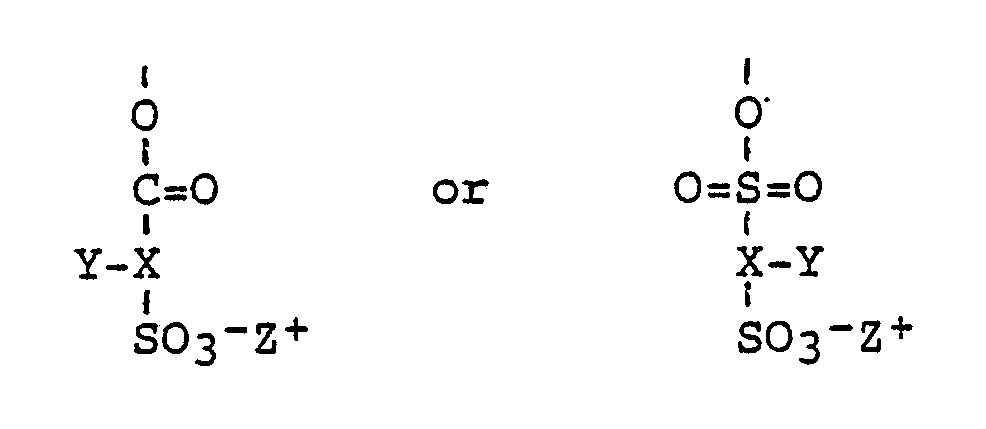
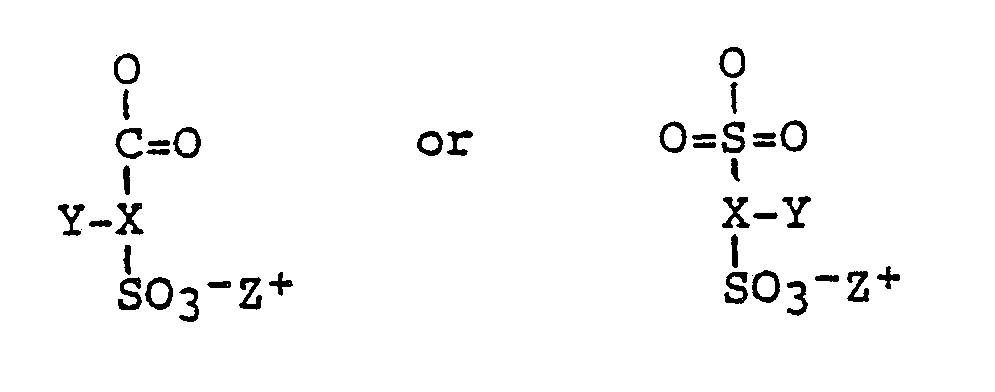
- a polymeric compound comprising a plurality of substituent sulphonate groups characterised in that the polymeric compound is derived from a polyhydric material and in that the sulphonate groups are of the general formula where X is an aliphatic, aromatic, carbocyclic or heterocyclic group; Y is hydrogen, halogen, or an alkyl, aryl, alkoxy, aryloxy or aralkyl group, CO2 ⁇ Z+, CO2R or SO3 ⁇ Z+; Z+ is a cationic counter-ion and R is hydrogen, alkyl, alkylene, aryl or aralkyl group.
- the sulphonate groups may be derived from sulphonato substituted acids of the formula where X, Y, Z+ and R have the meanings specified above.
- the sulphonate groups may be derived from a reactive derivative of a carboxylic or sulphonic acid. Suitable derivatives are, for example, acid chlorides or anhydrides.
- the polymeric compound may comprise two or more different counter-ion species, at least one of which species may be radiation sensitive.
- the polymeric compound may be incorporated into a radiation sensitive composition in combination with a diazo compound, a photo-polymerisable compound or a positive working photo-solubilising compound.
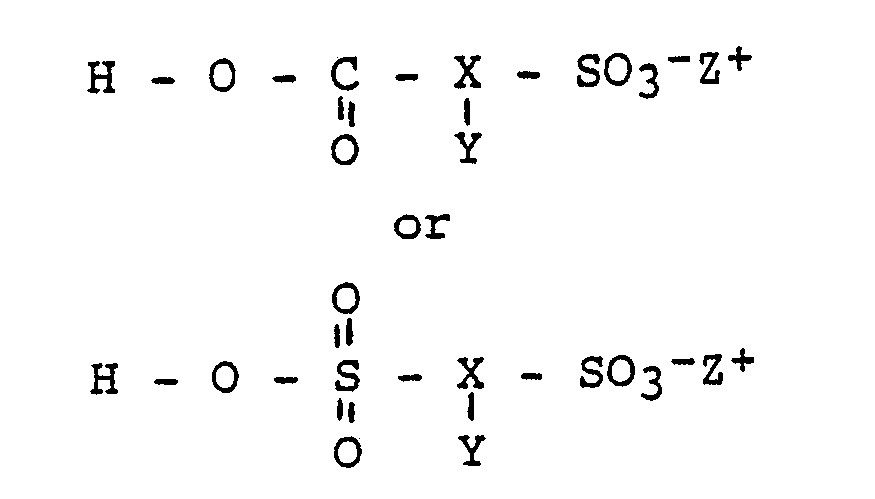
- a process for the production of a polymeric compound characterised in that the process comprises reacting the hydroxy groups of a polyhydric material with a sulphonato substituted acid of the formula or with an ester forming derivative thereof to obtain the desired polymeric compound which comprises substituent sulphonate groups of the general formula where X, Y, Z+ and R have the meanings specified in above.
- the initial counter-ion species may be exchanged for a final desired counter-ion species by means of an ion exchange process.
- Suitable synthetic polymers containing hydroxy groups include, in particular, polymers having vinyl alcohol units, such as partially saponified polyvinyl esters; polyvinyl acetals having free hydroxy groups and corresponding reaction products derived from copolymers having vinyl ester units or vinyl acetal units or vinyl alcohol units. Also usable are epoxy resins and saponified epoxy resins, copolymers of allyl alcohol or higher molecular weight unsaturated alcohols, hydroxy acrylic polymers, for example poly (hydroxyalkyl) (meth) acrylate polymers, phenolic polymers such as phenol formaldehyde resins and vinyl phenol polymers, and other similar polymers.
- the polymeric material may also contain ester groups derived from aliphatic or aromatic carboxylic acids such as octanoic acid, lauric acid or benzoic acid.
- the molecular weights of the polysulphonate compounds of the invention can vary over a wide range. Generally, the polysulphonates have average molecular weights in the approximate range between 900 and 200,000 and preferably between 900 and 100,000.
- the AVs or AVEs of the polysulphonates vary between 5 and 150, preferably between 10 and 90.
- Suitable sulphonato-substituted acids and derivatives are: 2-sulphobenzoic acid cyclic anhydride; 3,4,5,6-tetrabromo-2-sulphobenzoic acid cyclic anhydride; sulphoacetic acid; 2-sulphobenzoic acid; 4-sulphobenzoic acid, 5-sulphoisophthalic acid; 4-sulpho-1,8-naphthalic anhydride; 3-sulpho-2-naphthoic acid; 3-sulphophthalic acid; 4-sulphophthalic acid; 4-sulphobenzoyl chloride; naphthalene-1,5-disulphonyl chloride; naphthalene-2,6-disulphonyl chloride; benzene-1,3-disulphonyl chloride; anthraquinone-1,5-disulphonyl chloride; 2-sulphobenzene sulphonic acid cyclic anhydride; 3-s
- a wide range of cationic species may be employed, either individually or in combination, as the counter-ions of the poly sulphonate compounds of the invention and, as such, this allows flexibility to obtain polysulphonate compounds having the required coating solubility and the required radiation-sensitive composition characteristics of, for example sensitivity, hydrophobicity, oleophilicity, developability, image colour contrast, stability, developer life and press performance.
- Cations may be used individually or in combination to provide the desired radiation sensitive composition characteristics.
- esterification reactions can be carried out in a range of organic solvents for example N-methylpyrrolidone, butanone, tetrahydrofuran, dioxane or other ethers.
- Basic catalysts for example tertiary amines or sodium carbonate are generally employed.
- esterifications undertaken with acid derivatives other than the acid chloride or acid anhydride may be effected with catalysts such as dicyclohexylcarbodiimide.
- Ion-exchange reactions can be carried out by a number of methods known to those skilled in the art. Preferred examples include; i) addition of a reagent which provides cation Z+ in the final polysulphonate to the esterification reaction liquors, optionally followed by drown out of those liquors into water, ii) drown out of the esterification liquors into liquors containing a reagent which provides cation Z+, and iii) dispersion of a reagent which provides cation Z+ in a preferred coating solvent followed by addition of the isolated polysulphonate compound with resultant dissolution of the polysulphonate compound after a period of agitation of the coating liquors.
- the compounds of the invention may be incorporated into a variety of radiation sensitive compositions, well known to those skilled in the art and detailed in 'Chemistry for the Graphic Arts' by Paul J. Hartsuch and in 'Light Sensitive Systems' by Jaromir Kosar.
- the polysulphonate may be used in simple admixture with the components of the radiation-sensitive composition.
- the primary role of the polysulphonate is that, described by those skilled in the art, of a 'binder' resin or a 'support' resin.
- Such resins have two principal functions, one of which is to increase the durability and resilience of the composition, which is particularly desirable in printing applications where extended press runs are required, and the other is to provide suitable development properties in preferred developer compositions.
- Preferred examples of the use of the polysulphonates as binder resins in radiation sensitive compositions are; in combination with diazo compounds; photopolymerisable compounds, for example containing acrylate oligomers; positive-working, photosolubilisable compounds, for example, quinone diazide compounds or quinone diazide polymers said polymers containing both sulphonate groups and quinone diazide groups, the latter linked to the polymer through a sulphonate ester linkage, and such like.
- the composition of the compounds of the invention may be designed and selected to impart additionally desired properties to the radiation-sensitive composition such as hydrophobicity, sensitivity, stability and such like.
- the proportion of polysulphonate compound employed in such radiation sensitive compositions can vary between wide limits depending on the nature of the composition and will generally be from 95 to 5, preferably from 90 to 25, percent by weight of the total coating components.
- radiation sensitive compositions in which radiation sensitive components are introduced, either fully or in part, by using a radiation-sensitive cation, for example, diazo N2+, azido-quaternary ammonium compounds, cationic cyanine sensitiser dyes, cationic photoinitiators and such like as the counter-ion species of the polysulphonate of the invention as indicated previously (cation group A).
- a radiation-sensitive cation for example, diazo N2+, azido-quaternary ammonium compounds, cationic cyanine sensitiser dyes, cationic photoinitiators and such like as the counter-ion species of the polysulphonate of the invention as indicated previously (cation group A).
- the radiation sensitive compositions of the present invention may also contain additional components known to those skilled in the art to further improve performance, for example dyes, pigments, stabilisers, fillers, surfactants, plasticizers, adhesion promoters and also other resins or polymers.
- the resultant white solid polysulphonate compound was collected on a filter, washed with water and dried in vacuo to constant weight.
- the AVE of the product was 46, and the yield was 70 parts by weight.
- Example 1 52.8 Parts by weight of the poly (vinyl butyral) described in Example 1 was mixed with 33.1 parts by weight of 2-sulphobenzoic acid cyclic anhydride, 1.9 parts by weight of sodium carbonate and 600 parts by weight of 1-methyl-2-pyrrolidone and maintained at 25°C for 4 hours. After cooling to 20°C the clear polysulphonate solution was diluted with 6,000 parts by weight of water.
- the Stage 2b produce (1 mole) was added to 6N hydrochloric acid and the mixture cooled to 5°C.
- Sodium nitrite solution (1.05 mole) was introduced dropwise, the temperature being maintained below 10°C until diazotisation was complete.
- the solution from stage 2c was mixed with the solution obtained in Stage 1 and the product isolated by filtration.
- Example 2 60 Parts by weight of the poly (vinyl butyral) described in Example 1 was dissolved in 300 parts by weight of 1-methyl-2-pyrrolidone. 19.3 parts by weight of 2-sulphobenzoic acid cyclic anhydride and 1.2 parts by weight of sodium carbonate were then added and the mixture was stirred at 25°C for 2.5 hours. The clear solution formed was then poured dropwise into 10,000 parts by weight of water to yield a white precipitate which was collected on a filter, washed with water and dried in vacuo to constant weight (yield 54 parts by weight). Analysis: free 2-sulphobenzoic acid 0.3%w/w, AV 28.6.
- Example 3 60 Parts by weight of the polysulphonate of Example 3 was dissolved in 300 parts by weight of (1:9)1-methyl-2-pyrrolidone:ethanol mixture to which 15 parts by weight of benzyldimethyltetradecyl ammonium chloride was added. The resulting clear solution formed was then poured dropwise into 10,000 parts by weight of water and the resultant solid collected on a filter, washed with water and dried in vacuo to constant weight (Yield 61 parts by weight). Analysis showed polymer bound counter-ion to be 18.4%w/w and free counter-ion to be less than 0.1%w/w.
- Example 3 The procedure of Example 3 was repeated using 28 parts by weight of 2-sulphobenzoic acid cyclic anhydride to provide a polysulphonate of free-acid content less than 0.1%w/w and an AV of 38.4. This resin was used to produce a range of samples with alternative counter-ions, as indicated below, using a similar procedure to Example 4.
- cresol novolak resin 60 Parts by weight of cresol novolak resin was dissolved in 600 parts by weight of methyl ethyl ketone at 30°C. 38.6 parts by weight of 2-sulphobenzoic acid cyclic anhydride and 2.3 parts by weight of sodium carbonate were then added, on which the mixture turned dark red. After stirring at 30°C for 2 hours, most of the solvent was removed and the product isolated by pouring into 6,000 parts by weight water. After filtering, washing and drying in vacuo, 50 parts by weight of a fine powder product was obtained which had an AV of 132.
- a poly (vinyl formal) comprising 82wt% vinyl butyral units, 12wt% vinyl acetate units and 6wt% vinyl alcohol units, and having weight average molecular weight of about 10,000 to 15,000 was dissolved in 300 parts by weight of 1-methyl-2-pyrrolidone. 14.34 parts by weight of 2-sulphobenzoic acid cyclic anhydride and 0.09 parts by weight of sodium carbonate were then added, and the mixture was stirred at 35°C. The clear solution formed was poured into 10,000 parts by weight of water and the precipitate formed was washed and dried in vacuo to yield 52 parts by weight of a fine white powder. This on analysis was found to have free monomeric acid content of less than 0.1%w/w and AV 10.1.
- Ion exchange was carried out as described in Example 4 to provide the benzyldimethyltetradecyl ammonium salt of the polysulphonate.
- Example 3 The procedure described in Example 3 was used to modify 60 parts by weight of a poly (vinyl butyral) comprising 71 wt % vinyl butyral units, 26 wt % vinyl alcohol units and 3 wt % vinyl acetate units and having weight average molecular weight of 45,000 to 50,000.
- Ion-exchange using benzyldimethyltetradecyl ammonium chloride was undertaken as in Example 4.
- Example 2 The procedure described in Example 1 was repeated using a polyvinylbutyral comprising 46 mole % vinylbutyral units, 2 mole % vinylacetate units, 42 mole % vinyl alcohol units and 10 mole % vinyl octanoate units.
- the product had an AVE of 32.3.
- Example 2 The procedure described in Example 1 was repeated using Macrynal SM 548, a hydroxy acrylic copolymer of hydroxy value 66, after evaporation of xylene/butyl acetate solvents.
- the product had an AVE of 19.4.
- Example 2 The procedure in Example 1 was repeated using DP 6-3095 hydroxyacrylic polymer (Allied Colloids) of hydroxy value 155. The product had an AVE of 35.2.
- Example No Esterification Agent (EA) Charge of EA/p.b.w. Catalyst Reaction Temp/°C AEV of Product 25 4-Sulpho-1,8-naphthalic anhydride 66.8 Na2CO3 60 51.4 26 4-Sulpho benzoyl chloride 53.0 Pyridine & DMAP 20 38.4 27 3,4,5,6-Tetrabromo-2-sulphobenzoic acid cyclic anhydride 120.1 Na2CO3 25 20.1 28 3-Sulphopropionic acid cyclic anhydride 32.7 Na2CO3 35 41.0 29 Furan-2-chloro carbonyl-5 sulphonic acid 48.6 Pyridine & DMAP 20 34.2 30 Benzene-1,3-disulphonylchloride 73.7 Pyridine & DMAP 5 29.4 DMPA Dimethylaminopyridine
- a solution in ethylene glycol monomethyl ether comprising: 2 parts by weight of the polymer of Example 1, 1 part by weight of the diazo compound (41) described in EP-A 0 030 862, and 0.1 parts by weight of Victoria Blue B was whirler coated onto a sheet of electrochemically grained and anodised aluminium and dried to form a radiation sensitive plate (A).
- the coating weight was 0.8 gm ⁇ 2.
- a second radiation sensitive plate (B) was made in the same way, except that a polymer derived from the same grade of poly (vinyl butyral) as used in Example 1 and modified with phthalic anhydride, as described in Example 5 of US Patent No.4631245, but having an AV of 60, was used instead of the polymer of Example 1.
- the developed image had good ink receptivity and when the plate was placed on a proofing press, the image became fully charged with ink after only 4 passes of the inking rollers.
- Plate (B) was exposed in the same way but failed to develop using the above developer and required an alkaline (pH11) developer containing trisodium phosphate.
- an alkaline (pH11) developer containing trisodium phosphate When placed on a proofing press, 12 passes of the inking rollers were required for the image to become fully charged.
- Example 31 was repeated except that 1 part by weight of the condensation product of 4-diazodiphenylamine and formaldehyde was used as the radiation sensitive compound in place of diazo compound 41 of EP-A 0 030 862. Similar results were obtained.
- a solution in ethylene glycol monomethyl ether comprising: 3 parts by weight of the polymer of Example 2, and 0.1 parts by weight Victoria Blue B was whirler coated onto a sheet of electrochemically grained and anodised aluminium and dried to form a radiation sensitive plate.
- the coating weight was 0.8 gm ⁇ 2.
- the radiation sensitive plate was exposed through a continuous tone Stouffer step wedge to UV light (450 mJcm ⁇ 2 from a Berkey-Ascor printing down frame) and developed with an aqueous neutral pH solution containing 10% anionic surfactant and 5% benzyl alcohol.
- the developed image of the printing plate had excellent ink receiptivity and a step wedge reading of solid 4, tail 11.
- a solution in ethylene glycol monomethyl ether comprising: 2.7 parts by weight of the diazo compound (41) described in EP-A 0 030 862, and 1 part by weight of the polymer of Example 1, and 0.25 parts by weight of Basic Red (CI45160) was whirler coated onto a sheet of electrochemically grained and anodised aluminium and dried to form a radiation sensitive plate.
- the coating weight was 0.6 gm ⁇ 2.
- the plate was exposed as described in Example 31, except that an exposure of 600 mJcm ⁇ 2 was used, and was developed with an aqueous neutral pH solution containing 10% anionic surfactant.
- the developed image of the plate had a step wedge reading of solid 4, tail 10 and a strong red image colour.
- the developed image had good ink receptivity and when the plate was placed on a proofing press, the image became fully charged with ink after only 5 passes of the inking rollers.
- the plate also gave a weak coloured image and evidence of considerable dye leaching during development. When placed on a proofing press this plate required 14 passes of the inking rollers to fully charge the image with ink.
- Example 34 was repeated except that the diazo compound was replaced by the same weight of the condensation product of 4-diazodiphenylamine and formaldehyde.
- a solution in ethylene glycol monomethyl ether comprising: 2 parts by weight of the polymer of Example 1, 1 part by weight of the diazo compound (41) described in EP-A-0 030 862, and 0.3 parts by weight of Microlith Green GT predispersed pigment was whirler coated onto a sheet of electrochemically grained and anodised aluminium and dried to form a radiation sensitive plate.
- the coating weight was 0.85 gm ⁇ 2.
- the plate was exposed and developed as described for Plate A in Example 31.
- the developed image of the plate had a strong colour, excellent ink receptivity, and a stepwedge reading of solid 5, tail 9.
- the development properties of this plate were similar to Plate B of Example 31.
- Example 36 was repeated using the following alternative comments: 2 parts by weight of the polymer of Example 1, 1 part by weight of the diazo compound described in EP 0233072, (Example 4), and 0.3 parts by weight of Microlith Blue 4GK predispersed pigment.
- This formulation also provided a plate of excellent image colour, ink receptivity and developability.
- Example 4 The polysulphonate of Example 4 and a polycarboxylic acid of AV 28.3 (Resin A), derived by phthalic anhydride modification of the same grade of poly (vinyl butyral) were used to prepare radiation-sensitive plates as described in Example 31.
- the development properties of the 2 plates were compared using the following developers: Developer pH Developer Composition Surfactant Type Level % A 7.5 Anionic 10 Non-Ionic 15 B 7.7 Anionic 28 Non-Ionic 4 C 11.0 Anionic 2 Non-Ionic 7.5
- the results were as follows: Plate Resin Developer Mode of Processing Time of Dev. Plate Appearance I Example 4 A Machine 30 Clean II Resin A A Machine 30 V Heavy blue stain III Example 4 B Hand 30 Clean IV Resin A B Hand 90 V heavy blue stain & scumming V Example 4 C Machine 30 Clean VI Resin A C Machine 30 Clean
- Plates I, V and VI were imaged at an exposure of 400mJcm ⁇ 2 and fitted to a web offset litho printing press. Plate VI gave 105,000 impressions before becoming unnacceptable, due to wear. Plates I and V provided over 140,000 copies before showing a similar degree of wear.
- a radiation sensitive coating was prepared as follows: 4 Parts by weight of the polysulphonate of Example 3 were dispersed in 220 parts by weight of ethylene glycol monomethyl ether. 0.008 Parts by weight of benzyldimethyltetradecyl ammonium chloride were added to the dispersion, which after stirring for 30 minutes, formed a clear solution of the polysulphonate. 2 Parts by weight of diazo compound 41 described in EP-A 0 030 862 and 0.2 parts by weight of Victoria Blue B were added to this solution.
- the resultant coating was used to prepare a radiation sensitive plate as described in Example 31.
- a radiation sensitive plate as described in Example 31.
- the performance of this plate was identical in all aspects to a plate corresponding to Plate III of Example 38.
- Example 40 The procedure described in Example 40 was repeated, varying the proportion and type of cation-exchange agent employed. The results were as follows.
- Example 34 was repeated using the polysulphonates of Examples 14 and 15 individually and in each case omitting the Basic Red 1 shading dye from the formulation. After exposure and development these polysulphonates provided plates with intense magneta and greenish-blue coloured images, respectively. Image areas exhibited minimal dye leaching on extended development and excellent hydrophobicity.
- Example 18 The polysulphonate of Example 18, and as reference, the unmodified cresol novolak of Example 18, were each used to prepare a positive working radiation sensitive plate of coating weight 2.0gm ⁇ 2 on grained and anodised aluminium using the following formulation in 95/5 methylethyl ketone/ethylene glycol monomethyl ether. Parts by Weight Phenolic Resin 6 5-Sulpho-1,2-naphthoquinone diazide ester 1.5 Sudan Yellow Dye 0.1
- Example 18 300 pH 13 Clean, 2, 6 Cresol Novolak 300 pH 13 Clean, 2, 6 Example 18 600 pH 10.5 Clean, 2, 7 Cresol Novolak 600 pH 10.5 Scum
- a solution in methyl ethyl ketone comprising: 3 parts by weight of the dimethacrylate ester of diglycidyl ether of bisphenol A., 1 part by weight of the polymer of Example 1 0.15 parts by weight of 2(4′-chlorophenyl)-4,6-bis(trichloromethyl)-S-triazine, and 0.15 parts by weight of ethyl Michler's Ketone was whirler coated onto a sheet of electrochemically grained and anodised aluminium and dried to form a radiation sensitive plate. The coating weight was 1.0 gm ⁇ 2.
- the dried coating was overcoated with poly (vinyl alcohol) to prevent oxygen inhibition.
- the plate was exposed through a continuous tone Stouffer stepwedge to UV light (20 mJcm ⁇ 2 from a Berkey-Ascor printing down frame) and developed with an aqueous solution containing sodium propanoate, sodium benzoate and a surfactant.
- the developed image of the printing plate exhibited excellent ink receptivity. When placed on a proofing press, the image became fully charged with ink after 4 passes of the inking rollers.
- the stepwedge reading was solid 4, tail 10.
- Example 46 was repeated using in place of the polysulphonate of Example 1, the polysulphonate of Example 4 (Plate I), and, as a reference, Resin A of Example 38 (Plate II).
- Developer pH Developer Composition Solvent (%) Surfactant (%) C (described in Example 38)
- D 13 Non-ionic (5)
- Anoinic (5) E 10.5 Benzylalcohol(7)
- Example 47 was repeated using the same polysulphonate and reference resins but at an increased level of 3 parts by weight. The plates were exposed to 50 mJcm ⁇ 2 and processed in Developer D of Example 47. The plate derived from comparison resin A gave no detectable development whilst the polysulphonate derived plate gave a clean plate after a 2 minute development period.
- Example 46 The procedure described in Example 46 was repeated except that 0.10 parts by weight of Sudan Yellow were included in the coating formulations.
- the plate derived from the polysulphonate of Example 1 was bright yellow in appearance.
- the plate derived from the phthalic anhydride derived reference resin was bright orange in colour, indicating premature triggering of the acid-sensitive dye had occurred, and on exposure this plate also exhibited inferior colour contrast to that of the plate derived from the polysulphonate resin.
- a solution in 1:1 methyl ethyl ketone/ethylene glycol monomethyl ether comprising: 4 parts by weight of the urethane acrylate disclosed as Prepolymer A in Example 1 of US patent application 07-96893, 1 part by weight of polysulphonate compound, and 0.15 parts by weight of 2-(4′-trichloromethylphenacylidene)-1,3,3-trimethyl-5-chloroindoline was used with a range of polysulphonates detailed below to prepare plates according to the procedure described in Example 46. After exposure to 25mJcm ⁇ 2 on a Berkey Ascor frame and processing in Developer C of Example 47 the following results were obtained:- Plate Polysulphonate Example No Dev.
- a solution in methyl ethyl ketone comprising: 3 Parts by weight of the urethane acrylate of Example 50, 1 part by weight of the polysulphonate of Example 12 was used to prepare a radiation sensitive plate (Plate A) as described in Example 46.
- a reference plate (Plate B) was also prepared using a phthalic acid modified poly (vinyl butyral) of acid-value 38.9 (Resin B) in place of the polysulphonate.
- the plates were exposed on a Berkey Ascor frame (200mJcm ⁇ 2) and processed through Developer D of Example 47.
- Plate A gave a strong oleophilic image and a wedge of 4,9 illustrating the action of the counter ion of the polymer as a photoinitiator.
- Plate B gave no image. Plate B was also exposed to 1000mJcm ⁇ 2 but failed to give an image.
- Plates were prepared as described in Example 46 using the polysulphonate of Example 13 (Plate A) and, as a reference, using Resin B described in Example 51 (Plate B), except that in each case ethyl Michler's ketone was omitted.
- the plates were exposed with light of wavelength 435nm (filtered Hg Photopolymer light source) (60mJcm ⁇ 2) and processed with Developer D of Example 47.
- Plate A gave a strong, oleophilic image and a stepwedge reading of 3,8.
- Plate B failed to give an image with exposures up to 1000mJcm ⁇ 2.
- a solution in 1-methoxy-2-propanol comprising: 3 Parts by weight of the urethane acrylate of Example 50, 1 part by weight of the polysulphonate of Example 4, 0.15 parts by weight of 2-(4′trichloromethylphenacylidene)-1,3,3-trimethyl-5-chloroindoline, 0.5 parts by weight of the diazo resin described in Example 31, and 0.1 parts by weight of Sudan Yellow was used to prepare radiation sensitive plates as described in Example 46, except that overcoating with poly (vinyl alcohol) was omitted. The plate was exposed on a Berkey Ascor frame to 200mJcm ⁇ 2. On processing in Developer C of Example 38, rapid development occurred to provide a highly oleophilic image and a step wedge reading of 5,9.
- An aqueous coating solution containing: 2 Parts by weight of the zinc chloride salt of 4-diazo diphenylamine-formaldehyde condensate and 1 part by weight of the polysulphonate of Example 16 was applied to grained and anodised aluminium to provide a radiation-sensitive plate of coating weight 0.3gm ⁇ 2. After exposure to 100mJcm ⁇ 2, the plate was processed with the aqueous emulsion developer described in Example 1 of US 4,714,670 to provide a distinct red image and a stepwedge reading of 5,10.
- Example 54 was repeated except that the polysulphonate of Example 3 was used to make two plates as follows: The resin was dispersed in water and
- Diazo R0220 (a novolak resin partly esterified with 2,1-naphthoquinone diazide-5-sulphonic acid and available through Rohner Ltd.) was dissolved in 300 parts by weight of THF at room temperature. To this stirred solution was added 0.5 parts by weight pyridine and 0.1 parts by weight 4-dimethylaminopyridine followed by 13 parts by weight 2-sulphobenzoic acid cyclic anhydride. Gentle cooling was applied as necessary to keep the temperature at 15°C to 25°C and the reaction was left stirring for a total of six hours. The product was isolated as a pale brown solid by drowning out the reaction solution into 3000 parts by weight water containing 1% v/v conc. hydrochloric acid. The product was filtered and washed twice in water before drying at 30°C under vacuum. 35 parts by weight of material was obtained having an AV of 27 and less than 0.2% w/w of free 2-sulphobenzoic acid.
Landscapes
- Chemical & Material Sciences (AREA)
- General Chemical & Material Sciences (AREA)
- Health & Medical Sciences (AREA)
- Chemical Kinetics & Catalysis (AREA)
- Medicinal Chemistry (AREA)
- Polymers & Plastics (AREA)
- Organic Chemistry (AREA)
- Addition Polymer Or Copolymer, Post-Treatments, Or Chemical Modifications (AREA)
- Non-Silver Salt Photosensitive Materials And Non-Silver Salt Photography (AREA)
- Printing Plates And Materials Therefor (AREA)
- Polymerisation Methods In General (AREA)
- Polyesters Or Polycarbonates (AREA)
- Liquid Crystal Substances (AREA)
- Macromolecular Compounds Obtained By Forming Nitrogen-Containing Linkages In General (AREA)
- Heat Treatment Of Strip Materials And Filament Materials (AREA)
- Nitrogen Condensed Heterocyclic Rings (AREA)
- Luminescent Compositions (AREA)
- Indole Compounds (AREA)
- Other Resins Obtained By Reactions Not Involving Carbon-To-Carbon Unsaturated Bonds (AREA)
- Heterocyclic Carbon Compounds Containing A Hetero Ring Having Oxygen Or Sulfur (AREA)
- Materials For Medical Uses (AREA)
- Polyoxymethylene Polymers And Polymers With Carbon-To-Carbon Bonds (AREA)
- Organic Low-Molecular-Weight Compounds And Preparation Thereof (AREA)
- Heterocyclic Carbon Compounds Containing A Hetero Ring Having Nitrogen And Oxygen As The Only Ring Hetero Atoms (AREA)
- Polyamides (AREA)
Abstract
Description
- This invention relates to novel polymeric compounds and more particularly, but not exclusively, is concerned with such compounds for use in radiation-sensitive compositions for coatings in printing plate production or photoresists.
- In use, such radiation sensitive compositions are coated on a suitable substrate and image-wise exposed to radiation so that parts of the composition are struck by the radiation and parts are not. The radiation-struck and non-radiation-struck parts have differing solubilities in developer liquids and thus the more soluble parts can be selectively removed by applications of such a liquid to leave an image on the substrate constituted by the less soluble parts. For environmental and health reasons there has been an increasing tendency for wholly aqueous or substantially aqueous based solutions, rather than organic solvents, to be used as the developer liquids. In addition, for environmental, health, and practical reasons it is also desirable to use neutral or mildly alkaline developer liquids rather than strongly alkaline developers. For example where high developer pH is a pre-requisite for adequate development, reduction in the pH of the developer can occur rapidly in automatic processors due to neutralization by dissolution of acidic radiation sensitive coating components and due, particularly, to absorption of carbon dioxide from the atmosphere hence rendering the developer inactive or 'exhausted'. It is thus desirable to provide radiation sensitive compositions which exhibit excellent developability at low coating acidity and which require neutral or only mildly alkaline developers and hence give significantly extended developer life. For such solutions to be effective, the radiation-sensitive compositions must be soluble, or at least swellable, in such solutions.
- It is an object of the present invention to provide a polymeric compound for use in the preparation of radiation sensitive compositions of this type.
- According to one aspect of the present invention, there is provided a polymeric compound comprising a plurality of substituent sulphonate groups characterised in that the polymeric compound is derived from a polyhydric material and in that the sulphonate groups are of the general formula
- In an embodiment of the invention the sulphonate groups may be derived from sulphonato substituted acids of the formula

- In another embodiment of the invention the sulphonate groups may be derived from a reactive derivative of a carboxylic or sulphonic acid. Suitable derivatives are, for example, acid chlorides or anhydrides.
- In another embodiment of the invention the polymeric compound may comprise two or more different counter-ion species, at least one of which species may be radiation sensitive.
- In a further embodiment of the invention, the polymeric compound may be incorporated into a radiation sensitive composition in combination with a diazo compound, a photo-polymerisable compound or a positive working photo-solubilising compound.
- According to another aspect of the present invention there is provided a process for the production of a polymeric compound characterised in that the process comprises reacting the hydroxy groups of a polyhydric material with a sulphonato substituted acid of the formula

- If required, subsequent ion exchange of the initial counter-ion Z⁺ to alternative preferred cations is facilitated within the process either directly, as part of the polymer isolation procedure, or in a subsequent ion-exchange treatment of the previously isolated sulphonic acid derivative. This is particularly desirable where the initial counter-ion is H⁺.
- In a yet further embodiment of the invention the initial counter-ion species may be exchanged for a final desired counter-ion species by means of an ion exchange process.
- Suitable synthetic polymers containing hydroxy groups include, in particular, polymers having vinyl alcohol units, such as partially saponified polyvinyl esters; polyvinyl acetals having free hydroxy groups and corresponding reaction products derived from copolymers having vinyl ester units or vinyl acetal units or vinyl alcohol units. Also usable are epoxy resins and saponified epoxy resins, copolymers of allyl alcohol or higher molecular weight unsaturated alcohols, hydroxy acrylic polymers, for example poly (hydroxyalkyl) (meth) acrylate polymers, phenolic polymers such as phenol formaldehyde resins and vinyl phenol polymers, and other similar polymers.
- Optionally, the polymeric material may also contain ester groups derived from aliphatic or aromatic carboxylic acids such as octanoic acid, lauric acid or benzoic acid.
- The molecular weights of the polysulphonate compounds of the invention can vary over a wide range. Generally, the polysulphonates have average molecular weights in the approximate range between 900 and 200,000 and preferably between 900 and 100,000. The degree of esterification of the polysulphonate products can be quantified in terms of acid-values (AV) where Z⁺=H⁺, or 'acid-value equivalence' (AVE) where Z⁺ is other than H⁺, where the acid-value equivalence refers to the acid-value of the polysulphonate (Z⁺=H⁺) prior to ion-exchange. The AVs or AVEs of the polysulphonates vary between 5 and 150, preferably between 10 and 90.
- Examples of suitable sulphonato-substituted acids and derivatives are: 2-sulphobenzoic acid cyclic anhydride; 3,4,5,6-tetrabromo-2-sulphobenzoic acid cyclic anhydride; sulphoacetic acid; 2-sulphobenzoic acid; 4-sulphobenzoic acid, 5-sulphoisophthalic acid; 4-sulpho-1,8-naphthalic anhydride; 3-sulpho-2-naphthoic acid; 3-sulphophthalic acid; 4-sulphophthalic acid; 4-sulphobenzoyl chloride; naphthalene-1,5-disulphonyl chloride; naphthalene-2,6-disulphonyl chloride; benzene-1,3-disulphonyl chloride; anthraquinone-1,5-disulphonyl chloride; 2-sulphobenzene sulphonic acid cyclic anhydride; 3-sulphonaphthalene-8-sulphonic acid cyclic anhydride; 3-sulpho-2-naphthoic acid cyclic anhydride; 3-sulphopropionic acid cyclic anhydride; furan-2-chlorocarbonyl-5-sulphonic acid; and 2-sulphohexadecanoic acid, 2-sulpholauric acid, 2-sulphomyristic acid, 2-sulphostearic acid, 2-sulphobehenic acid and their cyclic anhydrides.
- A wide range of cationic species may be employed, either individually or in combination, as the counter-ions of the poly sulphonate compounds of the invention and, as such, this allows flexibility to obtain polysulphonate compounds having the required coating solubility and the required radiation-sensitive composition characteristics of, for example sensitivity, hydrophobicity, oleophilicity, developability, image colour contrast, stability, developer life and press performance.
- For example, such properties can be improved by selecting the cations from:
- A) Cations which have an active role in the essential radiochemical/photochemical reaction on exposure of the composition to radiation, for example as a photosensitiser, photoinitiator, photoactivator, photocrosslinking agent, photoactive acid-release or base-release compound, photooxidant and photo solubilisation agent.
- B) Cations which have an active role in a radiation induced reaction which results in the generation of solubility differentials, for example as a cleavable compound, solubilisable compound, a crosslinkable compound, a polymerisable component, or which results in the production of a colour change, for example as indicators, dyes, dye precursors and colour formers.
- C) Cations which have the role of introducing desired performance characteristics into the radiation-sensitive composition, for example, polymers, colourants, inhibitors, stabilisers, adhesion promoters, activators, catalysts, surfactants, development aids, oleophilicity enhancers and such like.
- Cations may be used individually or in combination to provide the desired radiation sensitive composition characteristics.
- Examples of suitable cations which may be used are:
- i) Hydrogen
- ii) Metals such as sodium, potassium, lithium, magnesium, calcium and silver
- iii) Quaternary ammonium compounds such as ammonium (N⁺H₄), 5-benzylthiuronium, trimethylglycidyl ammonium, vinylbenzyltrimethyl ammonium, dimethyldiallyl ammonium, benzylmethyldiallyl ammonium, trimethyl ammonium ethylmethacrylate, 4-azidophenyldiethyl ammonium, 4-benzoylbenzyl-trimethyl ammonium, 3-(9-oxo-9H-thioxanthen-2,3-γ-4-yloxy)-N,N,N-trimethyl-1-propanaminium, benzyldimethyldodecyl ammonium, benzyldimethylhexadecyl ammonium, benzyldimethyltetradecyl ammonium, benzyltributyl ammonium, benzyltriethyl ammonium, benzyltrimethyl ammonium dodecylethyldimethyl ammonium, ethylhexadecylmethyl ammonium, hexadecyltrimethyl ammonium, methyltrioctyl ammonium, octadecyltrimethyl ammonium, phenyltrimethyl ammonium, tetrabutyl ammonium, tetradecyltrimethyl ammonium, tetradodecyl ammonium, tetraethyl ammonium, tetraheptyl ammonium, trioctyl ammonium, triethyl ammonium, benzyl ammonium, benzyldimethyl ammonium, hydroxymethylisopropyl ammonium, didodecylmethylethylmethacrylate ammonium, tetrahexyl ammonium, tetramethyl ammonium, tetraoctadecyl ammonium, tetraoctyl ammonium, tetrapentyl ammonium, tetrapropyl ammonium, tributylheptyl ammonium and tributylmethyl ammonium.
- iv) Quaternary-N-heterocyclic compounds such as N-methyl-N-vinylpyridinium, N-hexadecylpyridinium, N-methylquinolinium, N-methylbenzothiazolium, N,4,4-trimethyl-2-oxazolinium, N-methylphenazonium, 4-dimethylaminostyryl pyridinium, and 2-azidobenzimidazolium, pyridinium, piperidinium and morpholinium.
- v) Diazo Compounds such as 4-diazodiphenylamine, 4-diazodiphenylamine polycondensates, compounds as disclosed in EP-A 0 233 072, compounds as disclosed in EP-A 0 030 862, and
2,5-diethoxy,4-(4′methylphenyl)benzene diazonium. - vi) Polymeric compounds such as poly co(vinylpyrrolidone/vinylimidazolium), poly (5-vinyl-1,2,-dimethylpyridinium), poly (4-vinyl-1- methylpyridinium), and poly(2[4′methoxystyryl-]methylpyridinium).
- vii) Cationic dyes such as 3,3′-Diethyloxacarbocyanine, Crystal Violet, Malachite Green, Acridine Orange, and Rhodamine 6G.
- viii) Other Compounds such as triphenylcarbenium, 2,4,6-tritolylpyrylium, 2-carboethoxy-4,6-diphenylpyrylium, 2-methyl-3-phenylbenzopyrylium, trimethylsulphonium, trimethylsulphoxonium, triphenylsulphonium, diphenyl iodonium, dithienyl iodonium, 2,4,6-triphenyltriapyrylium, 2,5-dimethylbenzdithylium, triphenyl selenonium, n-hexadecyltri-n-butylphosphonium, allyltriphenyl phosphonium, cinnamyltriphenyl phosphonium, 9-fluorenyl phosphonium, benzyltriphenyl phosphonium and 4-benzoylbenzyldimethyl phosphonium.
- The above examples represent a small proportion of the cations which may be used as counter-ions for the polysulphonate compounds of the invention. Reference may be made to Review of Light-Sensitive Tetraarylborates by Douglas G. Borden from Photographic Science and Engineering, Vol.16, Number 4, July-August 1972 which further illustrates the range of classes of cations suitable for use.
- The reactions between the synthetic polymer containing hydroxy groups and the sulphonato substituted organic carboxylic acid, acid chloride or acid anhydride or the sulphonato substituted organic sulphonic acid, acid chloride or acid anyhydride are readily achieved and provide very efficient and reproducible esterification processes. This enables polysulphonates of required acid values for particular applications to be prepared readily. Mixed carboxy/sulphonate acids or reactive acid derivatives thereof react with synthetic hydroxy containing polymers to form the corresponding carboxy esters. Evidence of this specificity of reaction is provided by V Iyer and N K Mathur; Anal. Chim. Acta., 554, 33, 1965 (2-sulphobenzoic acid cyclic anhydride) and EE Gilbert, 'Sulphonation and Related Compounds', Chapter 5, J Wiley, Interscience, 1965.
- The esterification reactions can be carried out in a range of organic solvents for example N-methylpyrrolidone, butanone, tetrahydrofuran, dioxane or other ethers. Basic catalysts, for example tertiary amines or sodium carbonate are generally employed. Alternatively, esterifications undertaken with acid derivatives other than the acid chloride or acid anhydride may be effected with catalysts such as dicyclohexylcarbodiimide.
- Ion-exchange reactions can be carried out by a number of methods known to those skilled in the art. Preferred examples include; i) addition of a reagent which provides cation Z⁺ in the final polysulphonate to the esterification reaction liquors, optionally followed by drown out of those liquors into water, ii) drown out of the esterification liquors into liquors containing a reagent which provides cation Z⁺, and iii) dispersion of a reagent which provides cation Z⁺ in a preferred coating solvent followed by addition of the isolated polysulphonate compound with resultant dissolution of the polysulphonate compound after a period of agitation of the coating liquors.
- The compounds of the invention may be incorporated into a variety of radiation sensitive compositions, well known to those skilled in the art and detailed in 'Chemistry for the Graphic Arts' by Paul J. Hartsuch and in 'Light Sensitive Systems' by Jaromir Kosar. In this case, the polysulphonate may be used in simple admixture with the components of the radiation-sensitive composition. In such an application, the primary role of the polysulphonate is that, described by those skilled in the art, of a 'binder' resin or a 'support' resin. Such resins have two principal functions, one of which is to increase the durability and resilience of the composition, which is particularly desirable in printing applications where extended press runs are required, and the other is to provide suitable development properties in preferred developer compositions. Preferred examples of the use of the polysulphonates as binder resins in radiation sensitive compositions are; in combination with diazo compounds; photopolymerisable compounds, for example containing acrylate oligomers; positive-working, photosolubilisable compounds, for example, quinone diazide compounds or quinone diazide polymers said polymers containing both sulphonate groups and quinone diazide groups, the latter linked to the polymer through a sulphonate ester linkage, and such like. As indicated previously, the composition of the compounds of the invention may be designed and selected to impart additionally desired properties to the radiation-sensitive composition such as hydrophobicity, sensitivity, stability and such like. The proportion of polysulphonate compound employed in such radiation sensitive compositions can vary between wide limits depending on the nature of the composition and will generally be from 95 to 5, preferably from 90 to 25, percent by weight of the total coating components.
- Alternatively, however, it is also possible to provide radiation sensitive compositions in which radiation sensitive components are introduced, either fully or in part, by using a radiation-sensitive cation, for example, diazo N₂⁺, azido-quaternary ammonium compounds, cationic cyanine sensitiser dyes, cationic photoinitiators and such like as the counter-ion species of the polysulphonate of the invention as indicated previously (cation group A).
- The radiation sensitive compositions of the present invention may also contain additional components known to those skilled in the art to further improve performance, for example dyes, pigments, stabilisers, fillers, surfactants, plasticizers, adhesion promoters and also other resins or polymers.
- The following examples illustrate the invention:
- 52.8 Parts by weight of a poly (vinyl butyral) comprising 71wt% vinyl butyral units, 26wt% vinyl alcohol units and 3wt% vinyl acetate units, and having weight average molecular weight of about 15,000-17,000, was dissolved in 600 parts by weight of 1-methyl-2-pyrrolidone by heating to 40°C. On cooling to 25°C, 44.2 parts by weight of 2-sulphobenzoic acid cyclic anhydride and 2.5 parts by weight of sodium carbonate were then added, and the mixture was maintained for 3 hours at 25°C, while stirring. After cooling to 20°C the clear solution formed was poured into 10,000 parts by weight of a 5% aqueous solution of benzyldimethyltetradecyl ammonium chloride.
- The resultant white solid polysulphonate compound was collected on a filter, washed with water and dried in vacuo to constant weight. The AVE of the product was 46, and the yield was 70 parts by weight.
- 52.8 Parts by weight of the poly (vinyl butyral) described in Example 1 was mixed with 33.1 parts by weight of 2-sulphobenzoic acid cyclic anhydride, 1.9 parts by weight of sodium carbonate and 600 parts by weight of 1-methyl-2-pyrrolidone and maintained at 25°C for 4 hours. After cooling to 20°C the clear polysulphonate solution was diluted with 6,000 parts by weight of water.
- P-(N-ethyl-N-2-hydroxyethyl) amino acetanilide (2 mole) in 1-methyl 2-pyrrolidone was added to a solution of 2,4-toluene diisocyanate (1 mole) in 1-methyl 2-pyrrolidone at room temperature. Dibutyl tin dilaurate was added as catalyst and the mixture was heated to 50°C for five hours, cooled and dripped into water with vigorous stirring. The resulting precipitate was filtered off and washed with water.
- The damp Stage 2a product was mixed with 6N hydrochloric acid and refluxed for 2 hours. The resulting solution was neutralised with sodium hydroxide and the resulting precipitate washed with water and dried.
- The Stage 2b produce (1 mole) was added to 6N hydrochloric acid and the mixture cooled to 5°C. Sodium nitrite solution (1.05 mole) was introduced dropwise, the temperature being maintained below 10°C until diazotisation was complete.
- The solution from stage 2c was mixed with the solution obtained in Stage 1 and the product isolated by filtration.
- 60 Parts by weight of the poly (vinyl butyral) described in Example 1 was dissolved in 300 parts by weight of 1-methyl-2-pyrrolidone. 19.3 parts by weight of 2-sulphobenzoic acid cyclic anhydride and 1.2 parts by weight of sodium carbonate were then added and the mixture was stirred at 25°C for 2.5 hours. The clear solution formed was then poured dropwise into 10,000 parts by weight of water to yield a white precipitate which was collected on a filter, washed with water and dried in vacuo to constant weight (yield 54 parts by weight). Analysis: free 2-sulphobenzoic acid 0.3%w/w, AV 28.6.
- 60 Parts by weight of the polysulphonate of Example 3 was dissolved in 300 parts by weight of (1:9)1-methyl-2-pyrrolidone:ethanol mixture to which 15 parts by weight of benzyldimethyltetradecyl ammonium chloride was added. The resulting clear solution formed was then poured dropwise into 10,000 parts by weight of water and the resultant solid collected on a filter, washed with water and dried in vacuo to constant weight (Yield 61 parts by weight). Analysis showed polymer bound counter-ion to be 18.4%w/w and free counter-ion to be less than 0.1%w/w.
- The procedure of Example 3 was repeated using 28 parts by weight of 2-sulphobenzoic acid cyclic anhydride to provide a polysulphonate of free-acid content less than 0.1%w/w and an AV of 38.4. This resin was used to produce a range of samples with alternative counter-ions, as indicated below, using a similar procedure to Example 4.
EXAMPLE COUNTER-ION 5 Benzyltrimethyl ammonium chloride 6 Benzyltriethyl ammonium chloride 7 Acetonyltriphenyl phosphonium 8 Benzyldimethylhexadecyl ammonium chloride 9 Glycidyltrimethyl ammonium chloride 10 Trimethylammoniumethylmethacrylate 11 3,6-Diamino-10-methylacridinium 12 3-(9-oxo-9H-Thioxanthen-2,3-γ-4-yloxytrimethyl)-propanaminium 13 3,3-Diethyloxacarbocyaninium 14 Basic Violet 11:1 15 Basic Blue 7 16 Sodium - 60 Parts by weight of an epichlorohydrin Bisphenol-A condensate with OH equivalent weight of 8.04g (0.47 mol)/100g was dissolved in 600 parts by weight of 1-methyl-2-pyrrolidone at 25°C. 2.6 Parts by weight of 2-sulphobenzoic acid cyclic anhydride and 0.15 parts by weight of sodium carbonate were then added and the mixture was stirred at 25°C for 2 hours. A water soluble product was formed which was isolated by pouring into 10,000 parts by weight of a 5% aqueous solution of benzyldimethyltetradecyl ammonium chloride. The resultant white solid polysulphonate compound was collected on a filter, washed with water and dried in vacuo to constant weight.
Yield 52.5 parts by weight. - 60 Parts by weight of cresol novolak resin was dissolved in 600 parts by weight of methyl ethyl ketone at 30°C. 38.6 parts by weight of 2-sulphobenzoic acid cyclic anhydride and 2.3 parts by weight of sodium carbonate were then added, on which the mixture turned dark red. After stirring at 30°C for 2 hours, most of the solvent was removed and the product isolated by pouring into 6,000 parts by weight water. After filtering, washing and drying in vacuo, 50 parts by weight of a fine powder product was obtained which had an AV of 132.
- 60 Parts by weight of a poly (vinyl formal) comprising 82wt% vinyl butyral units, 12wt% vinyl acetate units and 6wt% vinyl alcohol units, and having weight average molecular weight of about 10,000 to 15,000 was dissolved in 300 parts by weight of 1-methyl-2-pyrrolidone. 14.34 parts by weight of 2-sulphobenzoic acid cyclic anhydride and 0.09 parts by weight of sodium carbonate were then added, and the mixture was stirred at 35°C. The clear solution formed was poured into 10,000 parts by weight of water and the precipitate formed was washed and dried in vacuo to yield 52 parts by weight of a fine white powder. This on analysis was found to have free monomeric acid content of less than 0.1%w/w and AV 10.1.
- Ion exchange was carried out as described in Example 4 to provide the benzyldimethyltetradecyl ammonium salt of the polysulphonate.
- The procedure described in Example 3 was used to modify 60 parts by weight of a poly (vinyl butyral) comprising 71 wt % vinyl butyral units, 26 wt % vinyl alcohol units and 3 wt % vinyl acetate units and having weight average molecular weight of 45,000 to 50,000. The addition of 16.2 parts by weight 2-sulphobenzoic acid and 0.9 parts by weight sodium carbonate yielded a product with free acid content 0.1%w/w and AV 28.05. Ion-exchange using benzyldimethyltetradecyl ammonium chloride was undertaken as in Example 4.
- The procedures described in Examples 18 and 4 were repeated using a styrene/allyl alcohol co-polymer of molecular weight 2,500 and 5-7% by weight hydroxyl groups as the hydroxy containing synthetic polymer. The product had an AVE of 14.3.
- The procedure described in Example 1 was repeated using a polyvinylbutyral comprising 46 mole % vinylbutyral units, 2 mole % vinylacetate units, 42 mole % vinyl alcohol units and 10 mole % vinyl octanoate units. The product had an AVE of 32.3.
- The procedure described in Example 1 was repeated using Macrynal SM 548, a hydroxy acrylic copolymer of hydroxy value 66, after evaporation of xylene/butyl acetate solvents. The product had an AVE of 19.4.
- The procedure in Example 1 was repeated using DP 6-3095 hydroxyacrylic polymer (Allied Colloids) of hydroxy value 155. The product had an AVE of 35.2.
- The procedure of Example 1 was repeated except in the selection of esterification agent and reaction conditions. Polysulphonates were prepared as indicated in the following table:
Example No Esterification Agent (EA) Charge of EA/p.b.w. Catalyst Reaction Temp/°C AEV of Product 25 4-Sulpho-1,8-naphthalic anhydride 66.8 Na₂CO₃ 60 51.4 26 4-Sulpho benzoyl chloride 53.0 Pyridine & DMAP 20 38.4 27 3,4,5,6-Tetrabromo-2-sulphobenzoic acid cyclic anhydride 120.1 Na₂CO₃ 25 20.1 28 3-Sulphopropionic acid cyclic anhydride 32.7 Na₂CO₃ 35 41.0 29 Furan-2-chloro carbonyl-5 sulphonic acid 48.6 Pyridine & DMAP 20 34.2 30 Benzene-1,3-disulphonylchloride 73.7 Pyridine & DMAP 5 29.4 DMPA = Dimethylaminopyridine - A solution in ethylene glycol monomethyl ether comprising:
2 parts by weight of the polymer of Example 1,
1 part by weight of the diazo compound (41) described in EP-A 0 030 862, and
0.1 parts by weight of Victoria Blue B
was whirler coated onto a sheet of electrochemically grained and anodised aluminium and dried to form a radiation sensitive plate (A). The coating weight was 0.8 gm⁻². - A second radiation sensitive plate (B) was made in the same way, except that a polymer derived from the same grade of poly (vinyl butyral) as used in Example 1 and modified with phthalic anhydride, as described in Example 5 of US Patent No.4631245, but having an AV of 60, was used instead of the polymer of Example 1.
- Plate (A) was exposed through a continuous tone Stouffer stepwedge to UV light (450 mJcm⁻² from a Berkey-Ascor printing down frame) and developed with an aqueous neutral pH solution containing 8% anionic surfactant. The developed image of the printing plate had a stepwedge of solid 4, tail 10.
- The developed image had good ink receptivity and when the plate was placed on a proofing press, the image became fully charged with ink after only 4 passes of the inking rollers.
- Plate (B) was exposed in the same way but failed to develop using the above developer and required an alkaline (pH11) developer containing trisodium phosphate. When placed on a proofing press, 12 passes of the inking rollers were required for the image to become fully charged.
- Example 31 was repeated except that 1 part by weight of the condensation product of 4-diazodiphenylamine and formaldehyde was used as the radiation sensitive compound in place of diazo compound 41 of EP-A 0 030 862. Similar results were obtained.
- A solution in ethylene glycol monomethyl ether comprising:
3 parts by weight of the polymer of Example 2, and
0.1 parts by weight Victoria Blue B
was whirler coated onto a sheet of electrochemically grained and anodised aluminium and dried to form a radiation sensitive plate. The coating weight was 0.8 gm⁻². - The radiation sensitive plate was exposed through a continuous tone Stouffer step wedge to UV light (450 mJcm⁻² from a Berkey-Ascor printing down frame) and developed with an aqueous neutral pH solution containing 10% anionic surfactant and 5% benzyl alcohol.
- The developed image of the printing plate had excellent ink receiptivity and a step wedge reading of solid 4, tail 11.
- A solution in ethylene glycol monomethyl ether comprising:
2.7 parts by weight of the diazo compound (41) described in EP-A 0 030 862,
and 1 part by weight of the polymer of Example 1, and
0.25 parts by weight of Basic Red (CI45160)
was whirler coated onto a sheet of electrochemically grained and anodised aluminium and dried to form a radiation sensitive plate. The coating weight was 0.6 gm⁻². - The plate was exposed as described in Example 31, except that an exposure of 600 mJcm⁻² was used, and was developed with an aqueous neutral pH solution containing 10% anionic surfactant. The developed image of the plate had a step wedge reading of solid 4, tail 10 and a strong red image colour.
- The developed image had good ink receptivity and when the plate was placed on a proofing press, the image became fully charged with ink after only 5 passes of the inking rollers.
- A similar plate containing, as the binder, the polymer derived from poly (vinyl butyral) and phthalic anhydride, as described in Example 31, instead of the polysulphonate of the present invention, required an exposure of 900 mJcm⁻² and also the use of an alkaline developer similar to that described for plate B in Example 31 to give the same step wedge reading. The plate also gave a weak coloured image and evidence of considerable dye leaching during development. When placed on a proofing press this plate required 14 passes of the inking rollers to fully charge the image with ink.
- Example 34 was repeated except that the diazo compound was replaced by the same weight of the condensation product of 4-diazodiphenylamine and formaldehyde.
- Similar results were obtained.
- A solution in ethylene glycol monomethyl ether comprising:
2 parts by weight of the polymer of Example 1,
1 part by weight of the diazo compound (41) described in EP-A-0 030 862, and
0.3 parts by weight of Microlith Green GT predispersed pigment
was whirler coated onto a sheet of electrochemically grained and anodised aluminium and dried to form a radiation sensitive plate. The coating weight was 0.85 gm⁻². - The plate was exposed and developed as described for Plate A in Example 31. The developed image of the plate had a strong colour, excellent ink receptivity, and a stepwedge reading of solid 5, tail 9.
- A similar plate but containing, as the binder, the corresponding polymer derived from poly (vinyl butyral) and phthalic anhydride, as described in Example 31, instead of the polysulphonate of the invention, had a very weak colour strength and poor coating appearance indicating that the binder resin was unable to support adequate pigment dispersion. The development properties of this plate were similar to Plate B of Example 31.
- Example 36 was repeated using the following alternative comments:
2 parts by weight of the polymer of Example 1,
1 part by weight of the diazo compound described in EP 0233072, (Example 4), and
0.3 parts by weight of Microlith Blue 4GK predispersed pigment. - This formulation also provided a plate of excellent image colour, ink receptivity and developability.
- The polysulphonate of Example 4 and a polycarboxylic acid of AV 28.3 (Resin A), derived by phthalic anhydride modification of the same grade of poly (vinyl butyral) were used to prepare radiation-sensitive plates as described in Example 31. The development properties of the 2 plates were compared using the following developers:
Developer pH Developer Composition Surfactant Type Level % A 7.5 Anionic 10 Non-Ionic 15 B 7.7 Anionic 28 Non-Ionic 4 C 11.0 Anionic 2 Non-Ionic 7.5 Plate Resin Developer Mode of Processing Time of Dev. Plate Appearance I Example 4 A Machine 30 Clean II Resin A A Machine 30 V Heavy blue stain III Example 4 B Hand 30 Clean IV Resin A B Hand 90 V heavy blue stain & scumming V Example 4 C Machine 30 Clean VI Resin A C Machine 30 Clean - The results illustrate the significant improvement in compatibility with neutral developers afforded by the polysulphonate resin relative to Resin A.
- Plates I, V and VI were imaged at an exposure of 400mJcm⁻² and fitted to a web offset litho printing press. Plate VI gave 105,000 impressions before becoming unnacceptable, due to wear. Plates I and V provided over 140,000 copies before showing a similar degree of wear.
- An extended machine development trial was undertaken with Plates I and VI of Example 38 with Developers A and C, respectively, using a plate throughput rate of 5m² per day.
- The results were as follows:-
Plate Developer Initial pH After 10 days Developer pH Plate Appearance I A 7.5 7.2 Clean VI C 11.0 9.3 Heavy blue stain/scum - The reduction in pH for Developer C during the trial, which is attributable to absorption of carbon dioxide from the atmosphere, resulted in inadequate development of Plate VI after 10 days. Developer A showed minimal pH change over this period and gave effective development of Plate I throughout the trial.
- A radiation sensitive coating was prepared as follows:
4 Parts by weight of the polysulphonate of Example 3 were dispersed in 220 parts by weight of ethylene glycol monomethyl ether. 0.008 Parts by weight of benzyldimethyltetradecyl ammonium chloride were added to the dispersion, which after stirring for 30 minutes, formed a clear solution of the polysulphonate.
2 Parts by weight of diazo compound 41 described in EP-A 0 030 862 and
0.2 parts by weight of Victoria Blue B were added to this solution. - The resultant coating was used to prepare a radiation sensitive plate as described in Example 31. On Berkey Ascor frame exposure to 400mJcm⁻² and processing in Developer B of Example 38, the performance of this plate was identical in all aspects to a plate corresponding to Plate III of Example 38.
- The procedure described in Example 40 was repeated, varying the proportion and type of cation-exchange agent employed. The results were as follows.


- Radiation sensitive plates were prepared as described in Example 31 using the polysulphonates detailed below. After exposure to 400mJcm⁻² on a Berkey Ascor Frame and processing, the plates were found to give similar excellent development, speed and image oleophilicity to Plate III of Example 38.
-
- Example 5
- Example 6
- Example 7
- Example 8
- Example 9
- Example 10
- Example 11
- Example 19
- Example 20
- Example 22
- Plates were prepared and processed according to the procedure described in Example 31, using the following polysulphonates:
- Example 25
- Example 26
- Example 28
- The resultant plates exhibited very similar characteristics to Plate A of Example 31.
- Example 34 was repeated using the polysulphonates of Examples 14 and 15 individually and in each case omitting the Basic Red 1 shading dye from the formulation. After exposure and development these polysulphonates provided plates with intense magneta and greenish-blue coloured images, respectively. Image areas exhibited minimal dye leaching on extended development and excellent hydrophobicity.
- The polysulphonate of Example 18, and as reference, the unmodified cresol novolak of Example 18, were each used to prepare a positive working radiation sensitive plate of coating weight 2.0gm⁻² on grained and anodised aluminium using the following formulation in 95/5 methylethyl ketone/ethylene glycol monomethyl ether.
Parts by Weight Phenolic Resin 6 5-Sulpho-1,2-naphthoquinone diazide ester 1.5 Sudan Yellow Dye 0.1 - The resultant plates were exposed as in Example 31 and processed in aqueous developers containing non-ionic surfactant as indicated below.
Resin Exposure/mJmcm⁻² Developer Result Example 18 300 pH 13 Clean, 2, 6 Cresol Novolak 300 pH 13 Clean, 2, 6 Example 18 600 pH 10.5 Clean, 2, 7 Cresol Novolak 600 pH 10.5 Scum - The results clearly illustrate the improved developability of the polysulphonate compound over the unmodified cresol novolak in reduced pH developers.
- A solution in methyl ethyl ketone comprising:
3 parts by weight of the dimethacrylate ester of diglycidyl ether of bisphenol A.,
1 part by weight of the polymer of Example 1
0.15 parts by weight of 2(4′-chlorophenyl)-4,6-bis(trichloromethyl)-S-triazine, and
0.15 parts by weight of ethyl Michler's Ketone
was whirler coated onto a sheet of electrochemically grained and anodised aluminium and dried to form a radiation sensitive plate. The coating weight was 1.0 gm⁻². - The dried coating was overcoated with poly (vinyl alcohol) to prevent oxygen inhibition.
- The plate was exposed through a continuous tone Stouffer stepwedge to UV light (20 mJcm⁻² from a Berkey-Ascor printing down frame) and developed with an aqueous solution containing sodium propanoate, sodium benzoate and a surfactant. The developed image of the printing plate exhibited excellent ink receptivity. When placed on a proofing press, the image became fully charged with ink after 4 passes of the inking rollers. The stepwedge reading was solid 4, tail 10.
- A similar plate which contained the aforementioned phthalic anhydride modified binder of Example 31 plate in place of the polysulphonate polymer of Example 1 required 10 passes on the proofing press for the image to become fully charged with ink. Each plate gave greater than 300,000 good copies when run on a web offset press.
- Example 46 was repeated using in place of the polysulphonate of Example 1, the polysulphonate of Example 4 (Plate I), and, as a reference, Resin A of Example 38 (Plate II). The development characteristics of the resultant plates were compared using the following developers.
Developer pH Developer Composition Solvent (%) Surfactant (%) C (described in Example 38) D 13 0 Non-ionic (5) Anoinic (5) E 10.5 Benzylalcohol(7) Anionic (5) - The results were as follows:
Plate Developer Time of Development/min Plate Appearance I C 2 Clean II C 2 Coating almost totally intact I D 0.5 Clean II D 1 Minimal coating removal I E 1 Clean II E 2 Very heavy stain/scum - Example 47 was repeated using the same polysulphonate and reference resins but at an increased level of 3 parts by weight. The plates were exposed to 50 mJcm⁻² and processed in Developer D of Example 47. The plate derived from comparison resin A gave no detectable development whilst the polysulphonate derived plate gave a clean plate after a 2 minute development period.
- The procedure described in Example 46 was repeated except that 0.10 parts by weight of Sudan Yellow were included in the coating formulations. The plate derived from the polysulphonate of Example 1 was bright yellow in appearance. The plate derived from the phthalic anhydride derived reference resin was bright orange in colour, indicating premature triggering of the acid-sensitive dye had occurred, and on exposure this plate also exhibited inferior colour contrast to that of the plate derived from the polysulphonate resin.
- A solution in 1:1 methyl ethyl ketone/ethylene glycol monomethyl ether comprising:
4 parts by weight of the urethane acrylate disclosed as Prepolymer A in Example 1 of US patent application 07-96893,
1 part by weight of polysulphonate compound, and
0.15 parts by weight of 2-(4′-trichloromethylphenacylidene)-1,3,3-trimethyl-5-chloroindoline
was used with a range of polysulphonates detailed below to prepare plates according to the procedure described in Example 46. After exposure to 25mJcm⁻² on a Berkey Ascor frame and processing in Developer C of Example 47 the following results were obtained:-Plate Polysulphonate Example No Dev. Time/seconds Oleophilicity Wedge 1 8 45 Excellent 5,12 2 9 60 Excellent 5,13 3 10 45 Excellent 6,13 4 17 75 Good 4,12 5 21 75 Excellent 5,12 6 23 60 Excellent 5,11 7 24 45 Good 4,11 8 29 45 Good 4,12 9 30 60 Good 5,13 - A solution in methyl ethyl ketone comprising:
3 Parts by weight of the urethane acrylate of Example 50,
1 part by weight of the polysulphonate of Example 12
was used to prepare a radiation sensitive plate (Plate A) as described in Example 46. A reference plate (Plate B) was also prepared using a phthalic acid modified poly (vinyl butyral) of acid-value 38.9 (Resin B) in place of the polysulphonate. - The plates were exposed on a Berkey Ascor frame (200mJcm⁻²) and processed through Developer D of Example 47. Plate A gave a strong oleophilic image and a wedge of 4,9 illustrating the action of the counter ion of the polymer as a photoinitiator. Plate B gave no image. Plate B was also exposed to 1000mJcm⁻² but failed to give an image.
- Plates were prepared as described in Example 46 using the polysulphonate of Example 13 (Plate A) and, as a reference, using Resin B described in Example 51 (Plate B), except that in each case ethyl Michler's ketone was omitted.
- The plates were exposed with light of wavelength 435nm (filtered Hg Photopolymer light source) (60mJcm⁻²) and processed with Developer D of Example 47. Plate A gave a strong, oleophilic image and a stepwedge reading of 3,8. Plate B failed to give an image with exposures up to 1000mJcm⁻².
- Plate A was also exposed to 25mJcm⁻² with an argon-ion laser operating at 488nm using an Eocom 'Laserite' exposure unit. A similar strong image to that described above was produced after processing in Developer D. This example illustrates the photosensitising action of the polysulphonate resin.
- A solution in 1-methoxy-2-propanol comprising:
3 Parts by weight of the urethane acrylate of Example 50,
1 part by weight of the polysulphonate of Example 4,
0.15 parts by weight of 2-(4′trichloromethylphenacylidene)-1,3,3-trimethyl-5-chloroindoline, 0.5 parts by weight of the diazo resin described in Example 31, and 0.1 parts by weight of Sudan Yellow
was used to prepare radiation sensitive plates as described in Example 46, except that overcoating with poly (vinyl alcohol) was omitted. The plate was exposed on a Berkey Ascor frame to 200mJcm⁻². On processing in Developer C of Example 38, rapid development occurred to provide a highly oleophilic image and a step wedge reading of 5,9. - An aqueous coating solution containing:
2 Parts by weight of the zinc chloride salt of 4-diazo diphenylamine-formaldehyde condensate and
1 part by weight of the polysulphonate of Example 16
was applied to grained and anodised aluminium to provide a radiation-sensitive plate of coating weight 0.3gm⁻². After exposure to 100mJcm⁻², the plate was processed with the aqueous emulsion developer described in Example 1 of US 4,714,670 to provide a distinct red image and a stepwedge reading of 5,10. - Example 54 was repeated except that the polysulphonate of Example 3 was used to make two plates as follows: The resin was dispersed in water and
- i) ammonium hydroxide (Plate A) and
- ii) 2-amino-2-methyl-1-propanol (Plate B)
- 32% parts by weight of Diazo R0220, (a novolak resin partly esterified with 2,1-naphthoquinone diazide-5-sulphonic acid and available through Rohner Ltd.) was dissolved in 300 parts by weight of THF at room temperature. To this stirred solution was added 0.5 parts by weight pyridine and 0.1 parts by weight 4-dimethylaminopyridine followed by 13 parts by weight 2-sulphobenzoic acid cyclic anhydride. Gentle cooling was applied as necessary to keep the temperature at 15°C to 25°C and the reaction was left stirring for a total of six hours. The product was isolated as a pale brown solid by drowning out the reaction solution into 3000 parts by weight water containing 1% v/v conc. hydrochloric acid. The product was filtered and washed twice in water before drying at 30°C under vacuum. 35 parts by weight of material was obtained having an AV of 27 and less than 0.2% w/w of free 2-sulphobenzoic acid.
- 20 parts by weight of the polysulphonate obtained above was dissolved in 200 parts by weight of THF, to which solution 5 parts by weight of benzyldimethyltetradecylammonium chloride was added. The resulting solution was then sprayed into 3000 parts by weight of vigorously agitated water and the precipitated solid was filtered off, washed several times in water and dried under vacuum at 30°C to constant weight to yield 23 parts by weight of pale brown solid. Analysis showed polymer bound counterion to be 12.3% w/w and free counterion to be less than 0.1% w/w.
Claims (12)

Priority Applications (1)
| Application Number | Priority Date | Filing Date | Title |
|---|---|---|---|
| AT89308762T ATE97137T1 (en) | 1988-08-31 | 1989-08-30 | POLYMER COMPOUNDS. |
Applications Claiming Priority (2)
| Application Number | Priority Date | Filing Date | Title |
|---|---|---|---|
| GB8820547 | 1988-08-31 | ||
| GB888820547A GB8820547D0 (en) | 1988-08-31 | 1988-08-31 | Improvements in/relating to polymeric compounds |
Publications (3)
| Publication Number | Publication Date |
|---|---|
| EP0358400A2 true EP0358400A2 (en) | 1990-03-14 |
| EP0358400A3 EP0358400A3 (en) | 1991-05-29 |
| EP0358400B1 EP0358400B1 (en) | 1993-11-10 |
Family
ID=10642930
Family Applications (1)
| Application Number | Title | Priority Date | Filing Date |
|---|---|---|---|
| EP89308762A Expired - Lifetime EP0358400B1 (en) | 1988-08-31 | 1989-08-30 | Improvements in or relating to polymeric compounds |
Country Status (16)
| Country | Link |
|---|---|
| US (2) | US5120799A (en) |
| EP (1) | EP0358400B1 (en) |
| JP (1) | JP2952861B2 (en) |
| AT (1) | ATE97137T1 (en) |
| AU (1) | AU629562B2 (en) |
| BR (1) | BR8904383A (en) |
| CA (1) | CA1338947C (en) |
| DE (1) | DE68910623T2 (en) |
| DK (1) | DK427089A (en) |
| ES (1) | ES2059776T3 (en) |
| FI (1) | FI894082A7 (en) |
| GB (1) | GB8820547D0 (en) |
| IE (1) | IE892776L (en) |
| NO (1) | NO893478L (en) |
| NZ (1) | NZ230419A (en) |
| ZA (1) | ZA896456B (en) |
Cited By (1)
| Publication number | Priority date | Publication date | Assignee | Title |
|---|---|---|---|---|
| EP0442638A3 (en) * | 1990-02-13 | 1992-06-03 | Du Pont-Howson Limited | Polymeric compounds |
Families Citing this family (10)
| Publication number | Priority date | Publication date | Assignee | Title |
|---|---|---|---|---|
| US5527655A (en) * | 1994-09-28 | 1996-06-18 | Minnesota Mining And Manufacturing Company | Radiation-sensitive adducts comprising diazonium cations, quaternary cations, and sulfonated polyester anions |
| IT1280182B1 (en) * | 1995-06-05 | 1998-01-05 | Cirs Spa | MONOMER POLYMERIZATION PROCEDURE |
| US5880216A (en) * | 1995-12-22 | 1999-03-09 | Kuraray Co., Ltd. | Polyvinyl alcohol and gel containing the same |
| US5942368A (en) * | 1996-04-23 | 1999-08-24 | Konica Corporation | Pigment dispersion composition |
| US5846685A (en) * | 1997-01-31 | 1998-12-08 | Kodak Polychrome Graphics, Llc | Radiation sensitive diazo sulfo-acrylic adducts and method for producing a printing plate |
| US7488313B2 (en) * | 2001-11-29 | 2009-02-10 | Boston Scientific Scimed, Inc. | Mechanical apparatus and method for dilating and delivering a therapeutic agent to a site of treatment |
| EP1400851A3 (en) * | 2002-09-11 | 2006-09-06 | Fuji Photo Film Co., Ltd. | Polymerizable composition and planographic printing plate precursor using the same |
| TW200506538A (en) * | 2003-08-04 | 2005-02-16 | Fujitsu Ltd | Resist pattern thickening material, process for forming resist pattern using the same, and process for manufacturing semiconductor device using the same |
| US7771913B2 (en) * | 2006-04-04 | 2010-08-10 | Shin-Etsu Chemical Co., Ltd. | Resist composition and patterning process using the same |
| JP4288520B2 (en) * | 2006-10-24 | 2009-07-01 | 信越化学工業株式会社 | Resist material and pattern forming method using the same |
Family Cites Families (20)
| Publication number | Priority date | Publication date | Assignee | Title |
|---|---|---|---|---|
| GB1066188A (en) * | 1965-02-18 | 1967-04-19 | Bexford Ltd | Antistatic agents and their uses |
| US3615628A (en) * | 1967-12-27 | 1971-10-26 | Eastman Kodak Co | Photographic element and composition |
| US3647464A (en) * | 1970-04-22 | 1972-03-07 | Eastman Kodak Co | Sulfonated poly(vinyl alcohol) derivatives as absorbent layers in photographic processing webs |
| DE2041323A1 (en) * | 1970-08-20 | 1972-02-24 | Agfa Gevaert Ag | Gelatin photographic layers with improved physical properties |
| US3854946A (en) * | 1970-11-27 | 1974-12-17 | Upjohn Co | Process for chemically bonding a dyestuff to a polymeric substrate |
| JPS5930184B2 (en) * | 1978-03-22 | 1984-07-25 | 東レ株式会社 | Flame retardant polyester composition |
| JPS5688454A (en) * | 1979-12-21 | 1981-07-17 | Toyobo Co Ltd | Aqueous dispersion |
| JPS5695902A (en) * | 1979-12-29 | 1981-08-03 | Toyobo Co Ltd | Uv-curable resin composition |
| US4323660A (en) * | 1980-01-04 | 1982-04-06 | Ford Motor Company | Composition with latent reactive catalyst - #5 |
| DE3036846A1 (en) * | 1980-09-30 | 1982-05-27 | Agfa-Gevaert Ag, 5090 Leverkusen | METHOD FOR PRODUCING DISPERSIONS OF HYDROPHOBIC SUBSTANCES IN WATER |
| US4375357A (en) * | 1981-06-09 | 1983-03-01 | Dynapol | Water-soluble fast polymeric black colorant, its preparation and use in dyes and inks |
| HU187669B (en) * | 1982-03-31 | 1986-02-28 | Richter Gedeon Vegyeszet | Process for producing new copolymeres and salts |
| EP0103538A3 (en) * | 1982-08-04 | 1985-04-03 | Ciba-Geigy Ag | Copolymers of vinylpyridine, process for their preparation and their use as sulphonate reagents |
| US4600521A (en) * | 1984-10-09 | 1986-07-15 | Nippon Zeon Co., Ltd. | Electron-beam reactive magnetic coating composition for magnetic recording media |
| NZ213819A (en) * | 1984-10-31 | 1988-05-30 | Kanegafuchi Chemical Ind | Lipoprotein adsorbent using hydroxy-containing polymer gel |
| DE3501017A1 (en) * | 1985-01-15 | 1986-07-17 | Hoechst Ag, 6230 Frankfurt | ORIENTED PLASTIC FILM |
| GB8603405D0 (en) * | 1986-02-12 | 1986-03-19 | Vickers Plc | Radiation sensitive material |
| JPS62212469A (en) * | 1986-03-12 | 1987-09-18 | Nippon Paint Co Ltd | Low-temperature curable paint resin composition having excellent resistance to weathering due to transmitted light, production thereof and paint composition |
| US4837115A (en) * | 1986-07-30 | 1989-06-06 | Toyo Seikan Kaisha, Ltd. | Thermoplastic polyester composition having improved flavor-retaining property and vessel formed therefrom |
| DE3708307A1 (en) * | 1987-03-14 | 1988-09-22 | Agfa Gevaert Ag | COLOR PHOTOGRAPHIC RECORDING MATERIAL FOR THE COLOR DIFFUSION TRANSFER METHOD |
-
1988
- 1988-08-31 GB GB888820547A patent/GB8820547D0/en active Pending
-
1989
- 1989-08-18 AU AU40018/89A patent/AU629562B2/en not_active Ceased
- 1989-08-24 ZA ZA896456A patent/ZA896456B/en unknown
- 1989-08-24 NZ NZ230419A patent/NZ230419A/en unknown
- 1989-08-28 CA CA000609635A patent/CA1338947C/en not_active Expired - Fee Related
- 1989-08-30 AT AT89308762T patent/ATE97137T1/en not_active IP Right Cessation
- 1989-08-30 IE IE892776A patent/IE892776L/en unknown
- 1989-08-30 DK DK427089A patent/DK427089A/en not_active Application Discontinuation
- 1989-08-30 US US07/405,875 patent/US5120799A/en not_active Expired - Fee Related
- 1989-08-30 ES ES89308762T patent/ES2059776T3/en not_active Expired - Lifetime
- 1989-08-30 EP EP89308762A patent/EP0358400B1/en not_active Expired - Lifetime
- 1989-08-30 DE DE89308762T patent/DE68910623T2/en not_active Expired - Fee Related
- 1989-08-30 NO NO89893478A patent/NO893478L/en unknown
- 1989-08-31 FI FI894082A patent/FI894082A7/en not_active IP Right Cessation
- 1989-08-31 BR BR898904383A patent/BR8904383A/en not_active Application Discontinuation
- 1989-08-31 JP JP1223342A patent/JP2952861B2/en not_active Expired - Lifetime
-
1992
- 1992-03-18 US US07/853,495 patent/US5278022A/en not_active Expired - Lifetime
Cited By (1)
| Publication number | Priority date | Publication date | Assignee | Title |
|---|---|---|---|---|
| EP0442638A3 (en) * | 1990-02-13 | 1992-06-03 | Du Pont-Howson Limited | Polymeric compounds |
Also Published As
| Publication number | Publication date |
|---|---|
| EP0358400B1 (en) | 1993-11-10 |
| AU4001889A (en) | 1990-03-08 |
| DE68910623D1 (en) | 1993-12-16 |
| IE892776L (en) | 1990-02-28 |
| GB8820547D0 (en) | 1988-09-28 |
| FI894082L (en) | 1990-03-01 |
| DK427089D0 (en) | 1989-08-30 |
| NZ230419A (en) | 1990-12-21 |
| EP0358400A3 (en) | 1991-05-29 |
| DE68910623T2 (en) | 1994-03-03 |
| DK427089A (en) | 1990-03-01 |
| FI894082A0 (en) | 1989-08-31 |
| ES2059776T3 (en) | 1994-11-16 |
| JP2952861B2 (en) | 1999-09-27 |
| ATE97137T1 (en) | 1993-11-15 |
| NO893478D0 (en) | 1989-08-30 |
| US5120799A (en) | 1992-06-09 |
| BR8904383A (en) | 1990-04-17 |
| ZA896456B (en) | 1990-05-30 |
| NO893478L (en) | 1990-03-01 |
| AU629562B2 (en) | 1992-10-08 |
| FI894082A7 (en) | 1990-03-01 |
| CA1338947C (en) | 1997-02-25 |
| JPH02105803A (en) | 1990-04-18 |
| US5278022A (en) | 1994-01-11 |
Similar Documents
| Publication | Publication Date | Title |
|---|---|---|
| EP0358400B1 (en) | Improvements in or relating to polymeric compounds | |
| EP0135348B1 (en) | Improvements in or relating to radiation sensitive compounds | |
| US3993684A (en) | Monomeric compounds | |
| US5187040A (en) | Photocurable mixture and material containing diazonium salt polycondensation product or organic azido compound photosensitizer and polyurethane binder grafted with vinyl alcohol and vinyl acetal units | |
| US5200464A (en) | Water-soluble radical-curing polyvinyl alcohol derivative | |
| US4177122A (en) | Photopolymerizable hydroxy-benzophenone derivative compounds and photocurable compositions | |
| EP0040470B1 (en) | Aqueous developable photosensitive composition and printing plate | |
| US4297470A (en) | Image forming process | |
| JPH0693193A (en) | Improvement in or relating to photopolymerizable component of radiation-sensitive composition | |
| US5162431A (en) | Polymeric compounds having urethane and sulfonate groups | |
| US3923761A (en) | Photopolymers | |
| US5254431A (en) | Radiation-sensitive polymers having sulfonyl urthane side chains and azide containing side chains in a mixture with diazo compounds containing | |
| US5510420A (en) | Matarix resin for high-temperature stable photoimageable compositions | |
| US3909269A (en) | Lithographic plate comprising a light-sensitive polymer | |
| US3852256A (en) | Photopolymers | |
| JPH0352620B2 (en) | ||
| EP0327341B1 (en) | Improvements in or relating to radiation-sensitive compositions | |
| EP0371697B1 (en) | Improvements in or relating to polymeric compounds | |
| US3914261A (en) | Azido photopolymers | |
| EP0412731A1 (en) | Improvements in or relating to bakeable aqueous photopolymers | |
| EP0946604A1 (en) | Functionalised polymer, a method for producing same and curable compositions containing same | |
| JPH04329544A (en) | Composition of electrodeposition coating material for forming photoresist film |
Legal Events
| Date | Code | Title | Description |
|---|---|---|---|
| PUAI | Public reference made under article 153(3) epc to a published international application that has entered the european phase |
Free format text: ORIGINAL CODE: 0009012 |
|
| AK | Designated contracting states |
Kind code of ref document: A2 Designated state(s): AT BE CH DE ES FR GB IT LI LU NL SE |
|
| PUAL | Search report despatched |
Free format text: ORIGINAL CODE: 0009013 |
|
| AK | Designated contracting states |
Kind code of ref document: A3 Designated state(s): AT BE CH DE ES FR GB IT LI LU NL SE |
|
| 17P | Request for examination filed |
Effective date: 19910719 |
|
| 17Q | First examination report despatched |
Effective date: 19930413 |
|
| GRAA | (expected) grant |
Free format text: ORIGINAL CODE: 0009210 |
|
| AK | Designated contracting states |
Kind code of ref document: B1 Designated state(s): AT BE CH DE ES FR GB IT LI LU NL SE |
|
| PG25 | Lapsed in a contracting state [announced via postgrant information from national office to epo] |
Ref country code: SE Effective date: 19931110 Ref country code: LI Effective date: 19931110 Ref country code: CH Effective date: 19931110 Ref country code: BE Effective date: 19931110 Ref country code: AT Effective date: 19931110 |
|
| REF | Corresponds to: |
Ref document number: 97137 Country of ref document: AT Date of ref document: 19931115 Kind code of ref document: T |
|
| REF | Corresponds to: |
Ref document number: 68910623 Country of ref document: DE Date of ref document: 19931216 |
|
| ET | Fr: translation filed | ||
| ITF | It: translation for a ep patent filed | ||
| REG | Reference to a national code |
Ref country code: CH Ref legal event code: PL |
|
| PG25 | Lapsed in a contracting state [announced via postgrant information from national office to epo] |
Ref country code: LU Free format text: LAPSE BECAUSE OF NON-PAYMENT OF DUE FEES Effective date: 19940831 |
|
| PLBE | No opposition filed within time limit |
Free format text: ORIGINAL CODE: 0009261 |
|
| STAA | Information on the status of an ep patent application or granted ep patent |
Free format text: STATUS: NO OPPOSITION FILED WITHIN TIME LIMIT |
|
| 26N | No opposition filed | ||
| REG | Reference to a national code |
Ref country code: ES Ref legal event code: FG2A Ref document number: 2059776 Country of ref document: ES Kind code of ref document: T3 |
|
| PGFP | Annual fee paid to national office [announced via postgrant information from national office to epo] |
Ref country code: ES Payment date: 19980812 Year of fee payment: 10 |
|
| NLS | Nl: assignments of ep-patents |
Owner name: AGFA-GEVAERT NAAMLOZE VENNOOTSCHAP |
|
| REG | Reference to a national code |
Ref country code: GB Ref legal event code: 732E |
|
| REG | Reference to a national code |
Ref country code: FR Ref legal event code: TP |
|
| PGFP | Annual fee paid to national office [announced via postgrant information from national office to epo] |
Ref country code: NL Payment date: 19990630 Year of fee payment: 11 |
|
| PG25 | Lapsed in a contracting state [announced via postgrant information from national office to epo] |
Ref country code: ES Free format text: LAPSE BECAUSE OF NON-PAYMENT OF DUE FEES Effective date: 19990831 |
|
| PG25 | Lapsed in a contracting state [announced via postgrant information from national office to epo] |
Ref country code: NL Free format text: LAPSE BECAUSE OF NON-PAYMENT OF DUE FEES Effective date: 20010301 |
|
| NLV4 | Nl: lapsed or anulled due to non-payment of the annual fee |
Effective date: 20010301 |
|
| PGFP | Annual fee paid to national office [announced via postgrant information from national office to epo] |
Ref country code: FR Payment date: 20010628 Year of fee payment: 13 |
|
| PGFP | Annual fee paid to national office [announced via postgrant information from national office to epo] |
Ref country code: GB Payment date: 20010629 Year of fee payment: 13 Ref country code: DE Payment date: 20010629 Year of fee payment: 13 |
|
| REG | Reference to a national code |
Ref country code: GB Ref legal event code: IF02 |
|
| PG25 | Lapsed in a contracting state [announced via postgrant information from national office to epo] |
Ref country code: GB Free format text: LAPSE BECAUSE OF NON-PAYMENT OF DUE FEES Effective date: 20020830 |
|
| PG25 | Lapsed in a contracting state [announced via postgrant information from national office to epo] |
Ref country code: DE Free format text: LAPSE BECAUSE OF NON-PAYMENT OF DUE FEES Effective date: 20030301 |
|
| GBPC | Gb: european patent ceased through non-payment of renewal fee |
Effective date: 20020830 |
|
| PG25 | Lapsed in a contracting state [announced via postgrant information from national office to epo] |
Ref country code: FR Free format text: LAPSE BECAUSE OF NON-PAYMENT OF DUE FEES Effective date: 20030430 |
|
| REG | Reference to a national code |
Ref country code: FR Ref legal event code: ST |
|
| REG | Reference to a national code |
Ref country code: ES Ref legal event code: FD2A Effective date: 20000911 |
|
| PG25 | Lapsed in a contracting state [announced via postgrant information from national office to epo] |
Ref country code: IT Free format text: LAPSE BECAUSE OF NON-PAYMENT OF DUE FEES;WARNING: LAPSES OF ITALIAN PATENTS WITH EFFECTIVE DATE BEFORE 2007 MAY HAVE OCCURRED AT ANY TIME BEFORE 2007. THE CORRECT EFFECTIVE DATE MAY BE DIFFERENT FROM THE ONE RECORDED. Effective date: 20050830 |