EP0358070B1 - Enzymatic detection of monovalent anions - Google Patents
Enzymatic detection of monovalent anions Download PDFInfo
- Publication number
- EP0358070B1 EP0358070B1 EP89115782A EP89115782A EP0358070B1 EP 0358070 B1 EP0358070 B1 EP 0358070B1 EP 89115782 A EP89115782 A EP 89115782A EP 89115782 A EP89115782 A EP 89115782A EP 0358070 B1 EP0358070 B1 EP 0358070B1
- Authority
- EP
- European Patent Office
- Prior art keywords
- reagent
- enzyme
- mmol
- chloride
- sample
- Prior art date
- Legal status (The legal status is an assumption and is not a legal conclusion. Google has not performed a legal analysis and makes no representation as to the accuracy of the status listed.)
- Expired - Lifetime
Links
- 238000001514 detection method Methods 0.000 title claims description 13
- 150000001450 anions Chemical class 0.000 title description 20
- 230000002255 enzymatic effect Effects 0.000 title description 5
- VEXZGXHMUGYJMC-UHFFFAOYSA-M Chloride anion Chemical compound [Cl-] VEXZGXHMUGYJMC-UHFFFAOYSA-M 0.000 claims description 47
- 102000004190 Enzymes Human genes 0.000 claims description 38
- 108090000790 Enzymes Proteins 0.000 claims description 38
- 239000003153 chemical reaction reagent Substances 0.000 claims description 34
- 108010070996 Salicylate 1-monooxygenase Proteins 0.000 claims description 24
- 229930027945 nicotinamide-adenine dinucleotide Natural products 0.000 claims description 23
- BOPGDPNILDQYTO-NNYOXOHSSA-N nicotinamide-adenine dinucleotide Chemical group C1=CCC(C(=O)N)=CN1[C@H]1[C@H](O)[C@H](O)[C@@H](COP(O)(=O)OP(O)(=O)OC[C@@H]2[C@H]([C@@H](O)[C@@H](O2)N2C3=NC=NC(N)=C3N=C2)O)O1 BOPGDPNILDQYTO-NNYOXOHSSA-N 0.000 claims description 23
- 238000000034 method Methods 0.000 claims description 21
- 239000000758 substrate Substances 0.000 claims description 19
- IJFXRHURBJZNAO-UHFFFAOYSA-N 3-hydroxybenzoic acid Chemical compound OC(=O)C1=CC=CC(O)=C1 IJFXRHURBJZNAO-UHFFFAOYSA-N 0.000 claims description 15
- 239000002253 acid Substances 0.000 claims description 15
- 239000000243 solution Substances 0.000 claims description 12
- 150000003839 salts Chemical class 0.000 claims description 11
- 239000007788 liquid Substances 0.000 claims description 10
- 239000007983 Tris buffer Substances 0.000 claims description 8
- LENZDBCJOHFCAS-UHFFFAOYSA-N tris Chemical compound OCC(N)(CO)CO LENZDBCJOHFCAS-UHFFFAOYSA-N 0.000 claims description 8
- 230000000704 physical effect Effects 0.000 claims description 7
- 239000007836 KH2PO4 Substances 0.000 claims description 6
- 239000006172 buffering agent Substances 0.000 claims description 6
- 229910000402 monopotassium phosphate Inorganic materials 0.000 claims description 6
- 235000019796 monopotassium phosphate Nutrition 0.000 claims description 6
- GNSKLFRGEWLPPA-UHFFFAOYSA-M potassium dihydrogen phosphate Chemical compound [K+].OP(O)([O-])=O GNSKLFRGEWLPPA-UHFFFAOYSA-M 0.000 claims description 6
- 238000005259 measurement Methods 0.000 claims description 5
- 239000011541 reaction mixture Substances 0.000 claims description 5
- YGSDEFSMJLZEOE-UHFFFAOYSA-M salicylate Chemical compound OC1=CC=CC=C1C([O-])=O YGSDEFSMJLZEOE-UHFFFAOYSA-M 0.000 claims description 5
- 229960001860 salicylate Drugs 0.000 claims description 5
- KXDAEFPNCMNJSK-UHFFFAOYSA-N Benzamide Chemical compound NC(=O)C1=CC=CC=C1 KXDAEFPNCMNJSK-UHFFFAOYSA-N 0.000 claims description 4
- WPYMKLBDIGXBTP-UHFFFAOYSA-N benzoic acid Chemical compound OC(=O)C1=CC=CC=C1 WPYMKLBDIGXBTP-UHFFFAOYSA-N 0.000 claims description 3
- 238000002156 mixing Methods 0.000 claims description 3
- 239000007787 solid Substances 0.000 claims description 3
- SKZKKFZAGNVIMN-UHFFFAOYSA-N Salicilamide Chemical compound NC(=O)C1=CC=CC=C1O SKZKKFZAGNVIMN-UHFFFAOYSA-N 0.000 claims description 2
- 229960000581 salicylamide Drugs 0.000 claims description 2
- FJKROLUGYXJWQN-UHFFFAOYSA-M 4-hydroxybenzoate Chemical compound OC1=CC=C(C([O-])=O)C=C1 FJKROLUGYXJWQN-UHFFFAOYSA-M 0.000 claims 1
- 238000006243 chemical reaction Methods 0.000 description 33
- 239000000523 sample Substances 0.000 description 19
- 238000003556 assay Methods 0.000 description 13
- 150000001875 compounds Chemical class 0.000 description 11
- 239000000872 buffer Substances 0.000 description 10
- 239000000203 mixture Substances 0.000 description 10
- 239000002585 base Substances 0.000 description 8
- XLYOFNOQVPJJNP-UHFFFAOYSA-N water Substances O XLYOFNOQVPJJNP-UHFFFAOYSA-N 0.000 description 8
- -1 chloride ions Chemical class 0.000 description 6
- 239000008187 granular material Substances 0.000 description 6
- 150000007513 acids Chemical class 0.000 description 5
- 238000004458 analytical method Methods 0.000 description 5
- 230000005764 inhibitory process Effects 0.000 description 5
- ACFIXJIJDZMPPO-NNYOXOHSSA-N NADPH Chemical compound C1=CCC(C(=O)N)=CN1[C@H]1[C@H](O)[C@H](O)[C@@H](COP(O)(=O)OP(O)(=O)OC[C@@H]2[C@H]([C@@H](OP(O)(O)=O)[C@@H](O2)N2C3=NC=NC(N)=C3N=C2)O)O1 ACFIXJIJDZMPPO-NNYOXOHSSA-N 0.000 description 4
- 230000008859 change Effects 0.000 description 4
- 238000000576 coating method Methods 0.000 description 4
- 239000012530 fluid Substances 0.000 description 4
- 239000003112 inhibitor Substances 0.000 description 4
- 239000001267 polyvinylpyrrolidone Substances 0.000 description 4
- 229920000036 polyvinylpyrrolidone Polymers 0.000 description 4
- 235000013855 polyvinylpyrrolidone Nutrition 0.000 description 4
- 230000035945 sensitivity Effects 0.000 description 4
- 239000004382 Amylase Substances 0.000 description 3
- 102000013142 Amylases Human genes 0.000 description 3
- 108010065511 Amylases Proteins 0.000 description 3
- 238000002835 absorbance Methods 0.000 description 3
- 235000019418 amylase Nutrition 0.000 description 3
- 230000007423 decrease Effects 0.000 description 3
- 235000019162 flavin adenine dinucleotide Nutrition 0.000 description 3
- 239000011714 flavin adenine dinucleotide Substances 0.000 description 3
- VWWQXMAJTJZDQX-UYBVJOGSSA-N flavin adenine dinucleotide Chemical compound C1=NC2=C(N)N=CN=C2N1[C@@H]([C@H](O)[C@@H]1O)O[C@@H]1CO[P@](O)(=O)O[P@@](O)(=O)OC[C@@H](O)[C@@H](O)[C@@H](O)CN1C2=NC(=O)NC(=O)C2=NC2=C1C=C(C)C(C)=C2 VWWQXMAJTJZDQX-UYBVJOGSSA-N 0.000 description 3
- 229940093632 flavin-adenine dinucleotide Drugs 0.000 description 3
- 150000002500 ions Chemical class 0.000 description 3
- 238000012423 maintenance Methods 0.000 description 3
- QSHDDOUJBYECFT-UHFFFAOYSA-N mercury Chemical compound [Hg] QSHDDOUJBYECFT-UHFFFAOYSA-N 0.000 description 3
- 229910052753 mercury Inorganic materials 0.000 description 3
- 229950006238 nadide Drugs 0.000 description 3
- 230000003287 optical effect Effects 0.000 description 3
- 239000000843 powder Substances 0.000 description 3
- 239000000376 reactant Substances 0.000 description 3
- 238000002798 spectrophotometry method Methods 0.000 description 3
- IHPYMWDTONKSCO-UHFFFAOYSA-N 2,2'-piperazine-1,4-diylbisethanesulfonic acid Chemical compound OS(=O)(=O)CCN1CCN(CCS(O)(=O)=O)CC1 IHPYMWDTONKSCO-UHFFFAOYSA-N 0.000 description 2
- DNUYOWCKBJFOGS-UHFFFAOYSA-N 2-[[10-(2,2-dicarboxyethyl)anthracen-9-yl]methyl]propanedioic acid Chemical compound C1=CC=C2C(CC(C(=O)O)C(O)=O)=C(C=CC=C3)C3=C(CC(C(O)=O)C(O)=O)C2=C1 DNUYOWCKBJFOGS-UHFFFAOYSA-N 0.000 description 2
- HRNGDAQBEIFYGL-UHFFFAOYSA-N 3,4-dihydroxy-4-tetradeca-3,6-dienoyloxybutanoic acid Chemical compound CCCCCCCC=CCC=CCC(=O)OC(O)C(O)CC(O)=O HRNGDAQBEIFYGL-UHFFFAOYSA-N 0.000 description 2
- FJKROLUGYXJWQN-UHFFFAOYSA-N 4-hydroxybenzoic acid Chemical compound OC(=O)C1=CC=C(O)C=C1 FJKROLUGYXJWQN-UHFFFAOYSA-N 0.000 description 2
- XTWYTFMLZFPYCI-KQYNXXCUSA-N 5'-adenylphosphoric acid Chemical compound C1=NC=2C(N)=NC=NC=2N1[C@@H]1O[C@H](COP(O)(=O)OP(O)(O)=O)[C@@H](O)[C@H]1O XTWYTFMLZFPYCI-KQYNXXCUSA-N 0.000 description 2
- ZKHQWZAMYRWXGA-KQYNXXCUSA-J ATP(4-) Chemical compound C1=NC=2C(N)=NC=NC=2N1[C@@H]1O[C@H](COP([O-])(=O)OP([O-])(=O)OP([O-])([O-])=O)[C@@H](O)[C@H]1O ZKHQWZAMYRWXGA-KQYNXXCUSA-J 0.000 description 2
- XTWYTFMLZFPYCI-UHFFFAOYSA-N Adenosine diphosphate Natural products C1=NC=2C(N)=NC=NC=2N1C1OC(COP(O)(=O)OP(O)(O)=O)C(O)C1O XTWYTFMLZFPYCI-UHFFFAOYSA-N 0.000 description 2
- ZKHQWZAMYRWXGA-UHFFFAOYSA-N Adenosine triphosphate Natural products C1=NC=2C(N)=NC=NC=2N1C1OC(COP(O)(=O)OP(O)(=O)OP(O)(O)=O)C(O)C1O ZKHQWZAMYRWXGA-UHFFFAOYSA-N 0.000 description 2
- CPELXLSAUQHCOX-UHFFFAOYSA-M Bromide Chemical compound [Br-] CPELXLSAUQHCOX-UHFFFAOYSA-M 0.000 description 2
- FBPFZTCFMRRESA-FSIIMWSLSA-N D-Glucitol Natural products OC[C@H](O)[C@H](O)[C@@H](O)[C@H](O)CO FBPFZTCFMRRESA-FSIIMWSLSA-N 0.000 description 2
- XEEYBQQBJWHFJM-UHFFFAOYSA-N Iron Chemical compound [Fe] XEEYBQQBJWHFJM-UHFFFAOYSA-N 0.000 description 2
- XJLXINKUBYWONI-NNYOXOHSSA-O NADP(+) Chemical compound NC(=O)C1=CC=C[N+]([C@H]2[C@@H]([C@H](O)[C@@H](COP(O)(=O)OP(O)(=O)OC[C@@H]3[C@H]([C@@H](OP(O)(O)=O)[C@@H](O3)N3C4=NC=NC(N)=C4N=C3)O)O2)O)=C1 XJLXINKUBYWONI-NNYOXOHSSA-O 0.000 description 2
- 229910002651 NO3 Inorganic materials 0.000 description 2
- NHNBFGGVMKEFGY-UHFFFAOYSA-N Nitrate Chemical compound [O-][N+]([O-])=O NHNBFGGVMKEFGY-UHFFFAOYSA-N 0.000 description 2
- IOVCWXUNBOPUCH-UHFFFAOYSA-M Nitrite anion Chemical compound [O-]N=O IOVCWXUNBOPUCH-UHFFFAOYSA-M 0.000 description 2
- 229910019142 PO4 Inorganic materials 0.000 description 2
- 239000002202 Polyethylene glycol Substances 0.000 description 2
- ZMZDMBWJUHKJPS-UHFFFAOYSA-M Thiocyanate anion Chemical compound [S-]C#N ZMZDMBWJUHKJPS-UHFFFAOYSA-M 0.000 description 2
- QVGXLLKOCUKJST-UHFFFAOYSA-N atomic oxygen Chemical compound [O] QVGXLLKOCUKJST-UHFFFAOYSA-N 0.000 description 2
- 230000002860 competitive effect Effects 0.000 description 2
- XLJMAIOERFSOGZ-UHFFFAOYSA-M cyanate Chemical compound [O-]C#N XLJMAIOERFSOGZ-UHFFFAOYSA-M 0.000 description 2
- 230000001419 dependent effect Effects 0.000 description 2
- MTHSVFCYNBDYFN-UHFFFAOYSA-N diethylene glycol Chemical compound OCCOCCO MTHSVFCYNBDYFN-UHFFFAOYSA-N 0.000 description 2
- 230000008034 disappearance Effects 0.000 description 2
- 239000000975 dye Substances 0.000 description 2
- 239000011768 flavin mononucleotide Substances 0.000 description 2
- FVTCRASFADXXNN-SCRDCRAPSA-N flavin mononucleotide Chemical compound OP(=O)(O)OC[C@@H](O)[C@@H](O)[C@@H](O)CN1C=2C=C(C)C(C)=CC=2N=C2C1=NC(=O)NC2=O FVTCRASFADXXNN-SCRDCRAPSA-N 0.000 description 2
- 229940013640 flavin mononucleotide Drugs 0.000 description 2
- FVTCRASFADXXNN-UHFFFAOYSA-N flavin mononucleotide Natural products OP(=O)(O)OCC(O)C(O)C(O)CN1C=2C=C(C)C(C)=CC=2N=C2C1=NC(=O)NC2=O FVTCRASFADXXNN-UHFFFAOYSA-N 0.000 description 2
- 238000005469 granulation Methods 0.000 description 2
- 230000003179 granulation Effects 0.000 description 2
- XMBWDFGMSWQBCA-UHFFFAOYSA-N hydrogen iodide Chemical compound I XMBWDFGMSWQBCA-UHFFFAOYSA-N 0.000 description 2
- ZMZDMBWJUHKJPS-UHFFFAOYSA-N hydrogen thiocyanate Natural products SC#N ZMZDMBWJUHKJPS-UHFFFAOYSA-N 0.000 description 2
- 238000011534 incubation Methods 0.000 description 2
- 238000012544 monitoring process Methods 0.000 description 2
- 239000001301 oxygen Substances 0.000 description 2
- 229910052760 oxygen Inorganic materials 0.000 description 2
- NBIIXXVUZAFLBC-UHFFFAOYSA-K phosphate Chemical compound [O-]P([O-])([O-])=O NBIIXXVUZAFLBC-UHFFFAOYSA-K 0.000 description 2
- 239000010452 phosphate Substances 0.000 description 2
- 210000002381 plasma Anatomy 0.000 description 2
- 229920001223 polyethylene glycol Polymers 0.000 description 2
- 230000008569 process Effects 0.000 description 2
- 239000000047 product Substances 0.000 description 2
- 230000002035 prolonged effect Effects 0.000 description 2
- 102000004169 proteins and genes Human genes 0.000 description 2
- 108090000623 proteins and genes Proteins 0.000 description 2
- 230000009467 reduction Effects 0.000 description 2
- 235000019231 riboflavin-5'-phosphate Nutrition 0.000 description 2
- 210000002966 serum Anatomy 0.000 description 2
- 239000000600 sorbitol Substances 0.000 description 2
- 210000004243 sweat Anatomy 0.000 description 2
- 238000004448 titration Methods 0.000 description 2
- 210000002700 urine Anatomy 0.000 description 2
- CCBICDLNWJRFPO-UHFFFAOYSA-N 2,6-dichloroindophenol Chemical compound C1=CC(O)=CC=C1N=C1C=C(Cl)C(=O)C(Cl)=C1 CCBICDLNWJRFPO-UHFFFAOYSA-N 0.000 description 1
- SXGZJKUKBWWHRA-UHFFFAOYSA-N 2-(N-morpholiniumyl)ethanesulfonate Chemical compound [O-]S(=O)(=O)CC[NH+]1CCOCC1 SXGZJKUKBWWHRA-UHFFFAOYSA-N 0.000 description 1
- JKMHFZQWWAIEOD-UHFFFAOYSA-N 2-[4-(2-hydroxyethyl)piperazin-1-yl]ethanesulfonic acid Chemical compound OCC[NH+]1CCN(CCS([O-])(=O)=O)CC1 JKMHFZQWWAIEOD-UHFFFAOYSA-N 0.000 description 1
- 229940090248 4-hydroxybenzoic acid Drugs 0.000 description 1
- 208000010444 Acidosis Diseases 0.000 description 1
- 208000009304 Acute Kidney Injury Diseases 0.000 description 1
- 206010001389 Adrenocortical insufficiency acute Diseases 0.000 description 1
- DJHGAFSJWGLOIV-UHFFFAOYSA-K Arsenate3- Chemical compound [O-][As]([O-])([O-])=O DJHGAFSJWGLOIV-UHFFFAOYSA-K 0.000 description 1
- 108091003079 Bovine Serum Albumin Proteins 0.000 description 1
- 102000018832 Cytochromes Human genes 0.000 description 1
- 108010052832 Cytochromes Proteins 0.000 description 1
- FBPFZTCFMRRESA-KVTDHHQDSA-N D-Mannitol Chemical compound OC[C@@H](O)[C@@H](O)[C@H](O)[C@H](O)CO FBPFZTCFMRRESA-KVTDHHQDSA-N 0.000 description 1
- FBPFZTCFMRRESA-JGWLITMVSA-N D-glucitol Chemical compound OC[C@H](O)[C@@H](O)[C@H](O)[C@H](O)CO FBPFZTCFMRRESA-JGWLITMVSA-N 0.000 description 1
- 208000005156 Dehydration Diseases 0.000 description 1
- 206010012735 Diarrhoea Diseases 0.000 description 1
- 108091006149 Electron carriers Proteins 0.000 description 1
- 239000007995 HEPES buffer Substances 0.000 description 1
- UFHFLCQGNIYNRP-UHFFFAOYSA-N Hydrogen Chemical compound [H][H] UFHFLCQGNIYNRP-UHFFFAOYSA-N 0.000 description 1
- 206010020597 Hyperchloraemia Diseases 0.000 description 1
- 206010020955 Hypochloraemia Diseases 0.000 description 1
- 108010093096 Immobilized Enzymes Proteins 0.000 description 1
- OFOBLEOULBTSOW-UHFFFAOYSA-L Malonate Chemical compound [O-]C(=O)CC([O-])=O OFOBLEOULBTSOW-UHFFFAOYSA-L 0.000 description 1
- 229930195725 Mannitol Natural products 0.000 description 1
- 206010027423 Metabolic alkalosis Diseases 0.000 description 1
- BAVYZALUXZFZLV-UHFFFAOYSA-N Methylamine Chemical compound NC BAVYZALUXZFZLV-UHFFFAOYSA-N 0.000 description 1
- BAWFJGJZGIEFAR-NNYOXOHSSA-N NAD zwitterion Chemical compound NC(=O)C1=CC=C[N+]([C@H]2[C@@H]([C@H](O)[C@@H](COP([O-])(=O)OP(O)(=O)OC[C@@H]3[C@H]([C@@H](O)[C@@H](O3)N3C4=NC=NC(N)=C4N=C3)O)O2)O)=C1 BAWFJGJZGIEFAR-NNYOXOHSSA-N 0.000 description 1
- 108010007843 NADH oxidase Proteins 0.000 description 1
- 239000007990 PIPES buffer Substances 0.000 description 1
- 208000033626 Renal failure acute Diseases 0.000 description 1
- AUNGANRZJHBGPY-SCRDCRAPSA-N Riboflavin Chemical compound OC[C@@H](O)[C@@H](O)[C@@H](O)CN1C=2C=C(C)C(C)=CC=2N=C2C1=NC(=O)NC2=O AUNGANRZJHBGPY-SCRDCRAPSA-N 0.000 description 1
- 206010070863 Toxicity to various agents Diseases 0.000 description 1
- 206010047700 Vomiting Diseases 0.000 description 1
- 239000000370 acceptor Substances 0.000 description 1
- 239000004480 active ingredient Substances 0.000 description 1
- 239000013543 active substance Substances 0.000 description 1
- 208000010981 acute adrenal insufficiency Diseases 0.000 description 1
- 201000011040 acute kidney failure Diseases 0.000 description 1
- 208000012998 acute renal failure Diseases 0.000 description 1
- 239000000654 additive Substances 0.000 description 1
- UDMBCSSLTHHNCD-KQYNXXCUSA-N adenosine 5'-monophosphate Chemical compound C1=NC=2C(N)=NC=NC=2N1[C@@H]1O[C@H](COP(O)(O)=O)[C@@H](O)[C@H]1O UDMBCSSLTHHNCD-KQYNXXCUSA-N 0.000 description 1
- 150000001412 amines Chemical class 0.000 description 1
- 229940000489 arsenate Drugs 0.000 description 1
- 229940050390 benzoate Drugs 0.000 description 1
- 239000011230 binding agent Substances 0.000 description 1
- 238000012742 biochemical analysis Methods 0.000 description 1
- 239000013060 biological fluid Substances 0.000 description 1
- 239000012472 biological sample Substances 0.000 description 1
- 210000004369 blood Anatomy 0.000 description 1
- 239000008280 blood Substances 0.000 description 1
- 229940098773 bovine serum albumin Drugs 0.000 description 1
- 230000003139 buffering effect Effects 0.000 description 1
- 239000004067 bulking agent Substances 0.000 description 1
- 238000006555 catalytic reaction Methods 0.000 description 1
- 238000005119 centrifugation Methods 0.000 description 1
- 239000007795 chemical reaction product Substances 0.000 description 1
- 239000003795 chemical substances by application Substances 0.000 description 1
- 239000011248 coating agent Substances 0.000 description 1
- 230000006957 competitive inhibition Effects 0.000 description 1
- 238000005443 coulometric titration Methods 0.000 description 1
- 238000003869 coulometry Methods 0.000 description 1
- 238000010168 coupling process Methods 0.000 description 1
- 230000003247 decreasing effect Effects 0.000 description 1
- 230000018044 dehydration Effects 0.000 description 1
- 238000006297 dehydration reaction Methods 0.000 description 1
- OGGXGZAMXPVRFZ-UHFFFAOYSA-M dimethylarsinate Chemical compound C[As](C)([O-])=O OGGXGZAMXPVRFZ-UHFFFAOYSA-M 0.000 description 1
- 239000012153 distilled water Substances 0.000 description 1
- 238000009826 distribution Methods 0.000 description 1
- 230000000694 effects Effects 0.000 description 1
- 239000003792 electrolyte Substances 0.000 description 1
- 230000007613 environmental effect Effects 0.000 description 1
- 238000007824 enzymatic assay Methods 0.000 description 1
- 238000006911 enzymatic reaction Methods 0.000 description 1
- 238000001952 enzyme assay Methods 0.000 description 1
- 210000003608 fece Anatomy 0.000 description 1
- 238000001914 filtration Methods 0.000 description 1
- 239000012467 final product Substances 0.000 description 1
- 238000009472 formulation Methods 0.000 description 1
- 230000002496 gastric effect Effects 0.000 description 1
- 239000001257 hydrogen Substances 0.000 description 1
- 229910052739 hydrogen Inorganic materials 0.000 description 1
- 230000000977 initiatory effect Effects 0.000 description 1
- 230000000968 intestinal effect Effects 0.000 description 1
- 229910052742 iron Inorganic materials 0.000 description 1
- 239000000314 lubricant Substances 0.000 description 1
- 229940049920 malate Drugs 0.000 description 1
- BJEPYKJPYRNKOW-UHFFFAOYSA-N malic acid Chemical compound OC(=O)C(O)CC(O)=O BJEPYKJPYRNKOW-UHFFFAOYSA-N 0.000 description 1
- 239000000594 mannitol Substances 0.000 description 1
- 235000010355 mannitol Nutrition 0.000 description 1
- 238000004519 manufacturing process Methods 0.000 description 1
- 239000000463 material Substances 0.000 description 1
- 239000012528 membrane Substances 0.000 description 1
- 230000004060 metabolic process Effects 0.000 description 1
- CXKWCBBOMKCUKX-UHFFFAOYSA-M methylene blue Chemical compound [Cl-].C1=CC(N(C)C)=CC2=[S+]C3=CC(N(C)C)=CC=C3N=C21 CXKWCBBOMKCUKX-UHFFFAOYSA-M 0.000 description 1
- 229960000907 methylthioninium chloride Drugs 0.000 description 1
- 235000019799 monosodium phosphate Nutrition 0.000 description 1
- 229940101270 nicotinamide adenine dinucleotide (nad) Drugs 0.000 description 1
- 239000002773 nucleotide Substances 0.000 description 1
- 125000003729 nucleotide group Chemical group 0.000 description 1
- 238000005457 optimization Methods 0.000 description 1
- 230000003204 osmotic effect Effects 0.000 description 1
- 230000003647 oxidation Effects 0.000 description 1
- 238000007254 oxidation reaction Methods 0.000 description 1
- 238000011533 pre-incubation Methods 0.000 description 1
- 230000001681 protective effect Effects 0.000 description 1
- 201000010384 renal tubular acidosis Diseases 0.000 description 1
- AJPJDKMHJJGVTQ-UHFFFAOYSA-M sodium dihydrogen phosphate Chemical compound [Na+].OP(O)([O-])=O AJPJDKMHJJGVTQ-UHFFFAOYSA-M 0.000 description 1
- 229910000162 sodium phosphate Inorganic materials 0.000 description 1
- 238000005507 spraying Methods 0.000 description 1
- 239000003381 stabilizer Substances 0.000 description 1
- 239000000126 substance Substances 0.000 description 1
- 238000006467 substitution reaction Methods 0.000 description 1
- 229940086735 succinate Drugs 0.000 description 1
- KDYFGRWQOYBRFD-UHFFFAOYSA-L succinate(2-) Chemical compound [O-]C(=O)CCC([O-])=O KDYFGRWQOYBRFD-UHFFFAOYSA-L 0.000 description 1
- 230000009182 swimming Effects 0.000 description 1
- 239000007916 tablet composition Substances 0.000 description 1
- 238000010998 test method Methods 0.000 description 1
- 238000012360 testing method Methods 0.000 description 1
- 230000008673 vomiting Effects 0.000 description 1
- 239000002699 waste material Substances 0.000 description 1
Images
Classifications
-
- C—CHEMISTRY; METALLURGY
- C12—BIOCHEMISTRY; BEER; SPIRITS; WINE; VINEGAR; MICROBIOLOGY; ENZYMOLOGY; MUTATION OR GENETIC ENGINEERING
- C12Q—MEASURING OR TESTING PROCESSES INVOLVING ENZYMES, NUCLEIC ACIDS OR MICROORGANISMS; COMPOSITIONS OR TEST PAPERS THEREFOR; PROCESSES OF PREPARING SUCH COMPOSITIONS; CONDITION-RESPONSIVE CONTROL IN MICROBIOLOGICAL OR ENZYMOLOGICAL PROCESSES
- C12Q1/00—Measuring or testing processes involving enzymes, nucleic acids or microorganisms; Compositions therefor; Processes of preparing such compositions
- C12Q1/26—Measuring or testing processes involving enzymes, nucleic acids or microorganisms; Compositions therefor; Processes of preparing such compositions involving oxidoreductase
- C12Q1/32—Measuring or testing processes involving enzymes, nucleic acids or microorganisms; Compositions therefor; Processes of preparing such compositions involving oxidoreductase involving dehydrogenase
-
- C—CHEMISTRY; METALLURGY
- C12—BIOCHEMISTRY; BEER; SPIRITS; WINE; VINEGAR; MICROBIOLOGY; ENZYMOLOGY; MUTATION OR GENETIC ENGINEERING
- C12Q—MEASURING OR TESTING PROCESSES INVOLVING ENZYMES, NUCLEIC ACIDS OR MICROORGANISMS; COMPOSITIONS OR TEST PAPERS THEREFOR; PROCESSES OF PREPARING SUCH COMPOSITIONS; CONDITION-RESPONSIVE CONTROL IN MICROBIOLOGICAL OR ENZYMOLOGICAL PROCESSES
- C12Q1/00—Measuring or testing processes involving enzymes, nucleic acids or microorganisms; Compositions therefor; Processes of preparing such compositions
- C12Q1/26—Measuring or testing processes involving enzymes, nucleic acids or microorganisms; Compositions therefor; Processes of preparing such compositions involving oxidoreductase
-
- Y—GENERAL TAGGING OF NEW TECHNOLOGICAL DEVELOPMENTS; GENERAL TAGGING OF CROSS-SECTIONAL TECHNOLOGIES SPANNING OVER SEVERAL SECTIONS OF THE IPC; TECHNICAL SUBJECTS COVERED BY FORMER USPC CROSS-REFERENCE ART COLLECTIONS [XRACs] AND DIGESTS
- Y10—TECHNICAL SUBJECTS COVERED BY FORMER USPC
- Y10S—TECHNICAL SUBJECTS COVERED BY FORMER USPC CROSS-REFERENCE ART COLLECTIONS [XRACs] AND DIGESTS
- Y10S435/00—Chemistry: molecular biology and microbiology
- Y10S435/805—Test papers
-
- Y—GENERAL TAGGING OF NEW TECHNOLOGICAL DEVELOPMENTS; GENERAL TAGGING OF CROSS-SECTIONAL TECHNOLOGIES SPANNING OVER SEVERAL SECTIONS OF THE IPC; TECHNICAL SUBJECTS COVERED BY FORMER USPC CROSS-REFERENCE ART COLLECTIONS [XRACs] AND DIGESTS
- Y10—TECHNICAL SUBJECTS COVERED BY FORMER USPC
- Y10S—TECHNICAL SUBJECTS COVERED BY FORMER USPC CROSS-REFERENCE ART COLLECTIONS [XRACs] AND DIGESTS
- Y10S435/00—Chemistry: molecular biology and microbiology
- Y10S435/81—Packaged device or kit
Definitions
- This invention relates to an enzymatic reagent, kit and method for determining the concentration of monovalent anions, especially chloride, particularly in biological fluids, and especially in a single reagent format.
- chloride is the major extracellular anion and is therefore significantly involved in the maintenance of water distribution, extracellular electrolyte balance and osmotic pressure.
- Hypochloremia is observed in Addisonian crisis, certain metabolic acidoses, prolonged vomiting and in metabolic alkalosis. Hyperchloremia is common in dehydration, renal tubular acidosis, acute renal failure, prolonged diarrhea and salicylate intoxication (Tietz, N.W., Textbook of Clinical Chemistry , p. 1183, W.B. Saunders Co., Philadelphia, PA, 1986).
- chloride is commonly measured in urine, serum or plasma, spinal fluid and sometimes in sweat.
- the most common methods for chloride analysis are mercurimetric titration (Schales, O., and Schales, S.S., J. Biol. Chem., 140, 879-884, 1941.), coulometric titration (Cotlove, E., In: Methods of Biochemical Analysis , Vol. 12. D. Glick, Ed. New York, Interscience Publishers, Inc., 1964.), spectrophotometry (Zall, D.M., Fisher, D., and Garner, M.Q., Anal. Chem. 28, 1665-1668, 1956; West, P.W., and Coll, H., Anal. Chem.
- Coulometric methods are widely used but time consuming maintenance procedures have reduced their appeal. Ion selective electrodes are becoming the method of choice in most laboratories but they too require extensive maintenance.
- the mercurimetric titration and most of the spectrophotometric methods contain mercury which creates waste disposal and environmental problems. All of the spectrophotometric methods contain strong acids which necessitate handling precautions and make them unsuitable for tabletting.
- amylase-based enzymatic assay as described, is not suitable for unit dose analyzers due to the requirement for a considerable incubation period before the addition of a second reagent for initiating the reaction.
- An object of another aspect of this invention is to provide an improved reagent suitable for chloride ion detection.
- An object of still another aspect of the invention is to provide a kit suitable for chloride ion detection.
- a reagent for the detection of chloride ions in a sample comprising:
- the test is similar to the amylase-based enzymatic chloride assay in that it contains no strong acids or mercury and therefore presents no difficult handling or disposal problems and also in the fact that it utilizes an enzyme and a kinetic measurement to determine chloride concentration.
- the present invention relies on the ability of chloride to inhibit rather than activate an enzyme. Furthermore, no additional enzymes are required to produce a signal, much less a time-consuming preincubation step such as is required in the amylase enzyme assay. Since it is a one-step analysis, the invention is readily adaptable to any clinical chemistry analyzer that carries out its own reagent constitution before measurement, such as the E.I. DuPont De Nemours aca® Analyzer or the Dade ParamaxTM Analyzer. Thus, the present invention presented here does not require mercury or strong acid, is easily tabletted, relatively inexpensive, results in a comparatively accurate assay and is and readily adapted to most clinical chemistry analyzers.
- the reaction catalyzed by an enzyme useful in this assay preferably has one or more substrates or pseudo-substrates, co-factors, or products which are detectable by a change in a physical property of the reaction mixture, preferably spectrophotometrically or fluorometrically in a manner and time scale compatible with automated devices used in clinical laboratories.
- chloride, and/or other monovalent anions must be a competitive inhibitor of the reaction, such that there is a defined relationship, preferably linear, between monovalent anion concentration and the rate of inhibition in at least a portion of the range of the anion concentration that is expected to be encountered.
- the reaction therefore, will be of the general type: wherein the addition of a monovalent anion inhibitor causes a concentration-dependent decrease in the rate of reaction, and any one of the reactants A-F may be measured, either directly or indirectly, by detecting a physical property; for example, optical density, which can be detected spectrophotometrically or fluorometrically.
- the sample may be any liquid suspected to contain a monovalent anion which competitively inhibits the enzyme reaction measured at appropriate concentrations of reactants and inhibitor. These are preferably samples of biological origin, most preferably clinical samples.
- the monovalent anions to be determined may be any which inhibit the reaction, for example, chloride, nitrate, nitrite, bromide, iodide, cyanate and thiocyanate. Detection of chloride is the preferred embodiment of this invention.
- Biological samples which may be analyzed for chloride concentration by use of this method include blood, serum, plasma, spinal fluid, urine, sweat, feces, and gastric and intestinal fluids. These samples are prepared for analysis by methods known per se to one skilled in the art for other prior art chloride assay methods. Other types of samples for which this assay may be useful are prepared analogously, i.e., cleared of turbid material by filtration or centrifugation, and concentrated or diluted as necessary to a chloride concentration measurable by the reaction of this invention.
- the reagent mixture for the assay of this invention comprises: (a) an enzyme, (b) a substrate, (c) optional cofactors, and usually a buffer, an agent and an acid, base or salt thereof.
- the enzyme suitable for this assay is one which is inhibited by the monovalent anion to be tested in a concentration-dependent manner, and which catalyzes a reaction whose inhibition can be measured by a change in a physical property of the reaction mixture, preferably spectrophotometrically or fluorometrically; for example, salicylate hydroxylase or NADH oxidase.
- Salicylate hydroxylase is preferred for chloride determination.
- substrate for this reaction depends on the enzyme which is employed.
- suitable substrates are of two types; firstly, compounds which can be hydroxylated by the enzyme, which reaction is coupled to the conversion of an electron donor; for example, NADH is oxidized to NAD, or nicotinamide adenine dinucleotide phosphate, reduced (NADPH) can be oxidized to nicotinamide adenine dinucleotide phosphate (NADP), and which reaction is also coupled to the reduction of O2.
- NADH oxidized to NAD
- NADPH nicotinamide adenine dinucleotide phosphate
- NADP nicotinamide adenine dinucleotide phosphate
- a second class of compounds which may be employed are of the type known as pseudosubstrates, which bind to the enzyme and allow the oxidation of the electron donor and the reduction of O2, but which themselves are not altered at all, or at least not stoichiometrically (White-Stevens and Kamin, id.). It is notable that in the reaction utilizing pseudosubstrates, O2 is reduced to H2O2 instead of to H2O. It is preferable that the substrates, pseudosubstrates and reaction products do not interfere in the detection protocol. Examples of suitable substrates or pseudosubstrates for salicylate hydroxylate are meta-hydroxybenzoic acid (m-HBA), para-hydroxybenzoic acid, benzoate, salicylamide, benzamide, and ortho-nitrobenzoate. m-HBA is the preferred pseudosubstrate for the detection of chloride ions using salicylate hydroxylase.
- Cofactors which may be required for a particular reaction vary with respect to the enzyme, the direction of catalysis by a given enzyme under given reaction conditions, the nature of the reaction being catalyzed, etc. They may be nucleotides which provide chemical energy to drive a thermodynamically unfavorable reaction, for example, adenosine triphosphate (ATP), or conversely, those which store energy from energy-favorable reactions, for example, adenosine monophosphate (AMP) or adenosine diphosphate (ADP). They may be electron donors such as NADH or NADPH, or conversely, electron acceptors such as NAD or NADP.
- ATP adenosine triphosphate
- AMP adenosine monophosphate
- ADP adenosine diphosphate
- electron donors such as NADH or NADPH, or conversely, electron acceptors such as NAD or NADP.
- They may be flavin-containing electron carriers such as flavin adenine dinucleotide (FAD) or flavin mononucleotide (FMN), in either the oxidized or reduced form. They may be iron-containing electron-transferring proteins, for example, cytochromes. They may be one or more of the oxidized or reduced forms of hydrogen and oxygen, including H2, H+, OH ⁇ , H2O, H2O2, or O2.
- the cofactors may additionally include a wide variety of other compounds, including proteins, which may change or cause another compound to be changed during the course of the reaction. In addition, there are reactions which do not require cofactors which may also be suitable for the process of this invention.
- the cofactor is an electron donor, which may be any one which is suitable for the reaction; for example; NADH or NADPH. NADH is preferred.
- the buffering agent can be any of a wide variety of known buffering compounds.
- the buffer can be, for example, Tris-(hydroxmethyl)aminomethane (Tris), N-2-hydroxethyl-piperazine-N'-2-ethane sulfonic acid (HEPES), 1,4-piperazinebis-(ethane sulfonic acid) (PIPES), 2-(N-morpholino)-ethane sulfonic acid (MES), or other amine buffers.
- Tris buffer is especially preferred.
- any of a wide variety of known acids, bases or salts thereof, organic or inorganic may be used.
- Suitable acids or salts thereof for adjusting the pH of basic buffers are, for example, phosphate, succinate, malate, arsenate, malonate, and cacodylate. Phosphate is especially preferred.
- both the buffer and acid, base or salt thereof must not contain chloride. A similar caveat applies to measurement of other monovalent anions.
- Various means may be employed for detection of the rate of inhibition by monovalent anions of the reaction. These include measuring the disappearance of substrate or cofactors, or evolution of products of the reaction.
- the preferred method for salicylate hydroxylase is by spectrophotometrically monitoring the disappearance of NADH at 340 nm. Other suitable wavelengths may also be monitored; for example, the shoulder of the NADH absorbance peak at approximately 383 nm.
- any of the known means of H2O2 detection such as the Trinder systems, can alternatively be used to measure salicylate hydroxylate activity and therefrom chloride or other monovalent anion concentration.
- salicylate hydroxylase is a FAD-containing enzyme
- the enzyme can alternatively be coupled to redox dyes, such as, for example, 2,6-dichlorophenolindophenol or methylene blue, for monitoring the reaction.
- redox dye coupling methods are well known; for example, see Methods of Enzymatic Analysis, Vol. I. H.U. Bergmeyer, ed., 3rd edition (1983).
- the reagent mixture may be formulated in various ways. If used in a liquid format, the invention must be configured as at least a two-reagent system. At least two of the active components, e.g., the substrate and the enzyme, cannot be stored together in a liquid form; one of the components must be stored separately. In the case of salicylate hydroxylase, there are three active components, viz., substrate, enzyme, and electron donor, one of which must be stored separately. For example, one reagent may contain buffer, substrate, and NADH, while a second reagent contains buffer and enzyme.
- the preferred formulation is as a dry powder or tablet.
- powders and tablets There are numerous acceptable means of manufacturing powders and tablets; they may be prepared by, for example, mixing appropriate amounts of dry acid salt, buffer, optional cofactor(s) and a bulking agent (for example, mannitol or sorbitol) and then granulating this blend with a binder, for example, polyvinylpyrrolidone (PVP).
- PVP polyvinylpyrrolidone
- the granules after preferably being sized are sprayed with a mixture of substrate and enzyme in a buffer, and optionally with other conventional additives, e.g., antifoam B.
- the granules are then preferably coated with a protective lubricant; for example, polyethylene glycol (PEG).
- PEG polyethylene glycol
- any of a number of alternative combinations of the reagent compounds may be used as the base of the granules, such that at no time is the enzyme, NADH and substrate or pseudosubstrate present in a liquid form at the same time.
- Intermediate coatings may be applied to further separate the active ingredients from coming in contact in a liquid form, e.g., during spraying of a solution containing one or more of the active agents upon granules.
- Many acceptable protocols are known in the art for formulating tablets; the exact nature of the tablet formulation is not critical as long as the following requirements are met:
- immobilized enzyme for example, on a membrane for use on an enzymatic chloride electrode, or a salicylate electrode, or on a strip of, e.g., filter paper or other solid support as part of an optical solid state assay.
- the other elements of the reaction mixture can be kept in a separate dry or liquid format.
- the preferred embodiment of this invention is directed to the detection of chloride, but the nature of the inhibition of salicylate hydroxylase by monovalent anions is relatively non-specific. Therefore, this system may also be used to quantitate other monovalent ions, such as, for example, nitrite, nitrate, bromide, iodide, cyanate, thiocyanate, among others.
- Other suitable enzymes which are inhibited by monovalent anions may exhibit a greater or lesser specificity for one or more of these anions, and may be substituted as requirements of a particular sample to be measured indicate.
- compositions for the preferred compounds of this invention are: Component Generic Range Preferred Range SH 0.05-20 U/ml 0.4-3.0 U/ml m-HBA 0.25-20 mmol/l 1-5 mmol/l NADH 0.25-2 mmol/l 0.3-0.5 mmol/l Tris 5-650 mmol/l 150-310 mmol/l KH2PO4 5-500 mmol/l 125-250 mmol/l
- the preferred pH range for this composition is pH 6.0-10.0, most preferably pH 7.5-8.2.
- the preferred sample to reagent ratio of the final solution is in the range of 1:5 to 1:300.
- the tabletted format contains appropriate amounts of each compound to make a solution, upon adding the predetermined amount of water and sample, which corresponds to the ranges listed above.
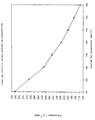
- the figure is a graph which summarizes the results of a concentration study which measures the sensitivity of the chloride assay as a function of chloride concentration.
- Example 1 Liquid Format
- Reagent 1 KH2PO4 180 mmol/l Tris 227 mmol/l m-Hydroxybenzoic Acid 2.3 mmol/l NADH 0.517 mmol/l pH 8.0 at 22°C
- Reagent 2 KH2PO4 180 mmol/l Tris 227 mmol/l Salicylate hydroxylase 16 U/ml pH 8.0 Sample size: 15 ⁇ l
- Sample is added to 435 ⁇ l of Reagent 1 that is at 37°C, followed by addition of 50 ⁇ l of Reagent 2. Sample is then mixed for a short period of time (3 sec.) and then incubated for 20-40 seconds before the first reading at 340 nm. The second reading is taken from 20-35 seconds after the first. Details of determining concentrations of chloride in a unit dose dry format are given in Example 2.
- KH2PO4 148.8 g Tris 167.4 g NADH 3.0 g Sorbitol 644.8 g are mixed and granulated with PEG 20,000 7.2 g PVP 40,000 28.8 g
- the granulation is then sized so that only the 60-80 mesh portion is used in the subsequent coating process.
- the sized granulation is then sprayed with 200 ml of a coating solution containing a mixture of m-Hydroxybenzoic Acid 1.7 g antifoam B 18.5 ml salicylate hydroxylase 12,363 U Bovine serum albumin 2.0 g NaH2PO4 0.17 g Distilled water 200 ml at pH 8.0.
- the granules are dried, and then coated with about 7.2 mg/g of PEG 20,000 and 28.8 mg/g of PVP 40,000.
- the final product is sized once more and only the 40-80 mesh portion is used for tabletting.
- the ratio of sample to the total amount of water used to reconstitute the tablet (or powder) is 1:31.
- the mixture is vortexed in the reaction cuvette for ten seconds. Following a 15-second incubation, an absorbance reading at 340 nm is taken, followed by a second reading 25 seconds later. The entire process takes place at 37°C.
- the change in absorbance when plotted versus the chloride concentration in the sample gives a decreasing hyperbolic standard curve over a 40 to 180 mmol/L sample chloride concentration range. (See Figure 1.) Over the 80 to 120 mmol/L range, the curve is very nearly linear and gives a sensitivity that is almost 2 mA/mmol/L chloride.
- the total analysis time from sample addition to the final reading is less than a minute.
Landscapes
- Chemical & Material Sciences (AREA)
- Organic Chemistry (AREA)
- Life Sciences & Earth Sciences (AREA)
- Zoology (AREA)
- Wood Science & Technology (AREA)
- Proteomics, Peptides & Aminoacids (AREA)
- Health & Medical Sciences (AREA)
- Engineering & Computer Science (AREA)
- Microbiology (AREA)
- Immunology (AREA)
- Physics & Mathematics (AREA)
- Molecular Biology (AREA)
- Biotechnology (AREA)
- Biophysics (AREA)
- Analytical Chemistry (AREA)
- Biochemistry (AREA)
- Bioinformatics & Cheminformatics (AREA)
- General Engineering & Computer Science (AREA)
- General Health & Medical Sciences (AREA)
- Genetics & Genomics (AREA)
- Measuring Or Testing Involving Enzymes Or Micro-Organisms (AREA)
Description
- This invention relates to an enzymatic reagent, kit and method for determining the concentration of monovalent anions, especially chloride, particularly in biological fluids, and especially in a single reagent format.
- The determination of chloride is routinely made in a wide variety of fluids, e.g., industrial solutions, swimming pools, and in clinical chemistry. The last mentioned is of particular importance because chloride is the major extracellular anion and is therefore significantly involved in the maintenance of water distribution, extracellular electrolyte balance and osmotic pressure. Hypochloremia is observed in Addisonian crisis, certain metabolic acidoses, prolonged vomiting and in metabolic alkalosis. Hyperchloremia is common in dehydration, renal tubular acidosis, acute renal failure, prolonged diarrhea and salicylate intoxication (Tietz, N.W., Textbook of Clinical Chemistry, p. 1183, W.B. Saunders Co., Philadelphia, PA, 1986).
- Clinically, chloride is commonly measured in urine, serum or plasma, spinal fluid and sometimes in sweat. The most common methods for chloride analysis are mercurimetric titration (Schales, O., and Schales, S.S., J. Biol. Chem., 140, 879-884, 1941.), coulometric titration (Cotlove, E., In: Methods of Biochemical Analysis, Vol. 12. D. Glick, Ed. New York, Interscience Publishers, Inc., 1964.), spectrophotometry (Zall, D.M., Fisher, D., and Garner, M.Q., Anal. Chem. 28, 1665-1668, 1956; West, P.W., and Coll, H., Anal. Chem. 28, 1834-1838, 1956; Schoenfeld, R.G., and Lewellen, C.J., Clin. Chem. 10, 533-539, 1964; Hamilton, R.H., Clin. Chem. 12, 1-17, 1966; Law, W.T., and Ertingshausen, G., Clin. Chem. 26, 1874-1877, 1980 [U.S. Patent 4,278,440].), ion selective electrode methodology (Dahms, H., Rock, R., and Seligson, D., Clin. Chem. 14, 859-870, 1968; Rockenmacher, M., Am. J. Clin. Path. 33, 349-354, 1960.) and a recently developed enzymatic assay (Ono, T., Taniguchi, J., Mitsumaki, H., Takahata, F., Shibuya, A., Kasahara, Y., and Koshimizu, F., Clin. Chem. 34, 552-553, 1988 [U.S. Patent Pending].), but all of these assays suffer from at least one important disadvantage.
- Coulometric methods are widely used but time consuming maintenance procedures have reduced their appeal. Ion selective electrodes are becoming the method of choice in most laboratories but they too require extensive maintenance. The mercurimetric titration and most of the spectrophotometric methods contain mercury which creates waste disposal and environmental problems. All of the spectrophotometric methods contain strong acids which necessitate handling precautions and make them unsuitable for tabletting.
- The newly developed amylase-based enzymatic assay, as described, is not suitable for unit dose analyzers due to the requirement for a considerable incubation period before the addition of a second reagent for initiating the reaction.
- It is an object of one aspect of this invention to provide an improved test method for measuring monovalent anions, particularly chloride ions, in a sample, particularly of biological origin, which obviate the disadvantages mentioned above.
- An object of another aspect of this invention is to provide an improved reagent suitable for chloride ion detection.
- An object of still another aspect of the invention is to provide a kit suitable for chloride ion detection.
- Upon further study of the specification and appended claims, further objects and advantages of this invention will become apparent to those skilled in the art.
- One aspect of these objects has been achieved by providing a reagent for the detection of chloride ions in a sample comprising:
- (a) salicylate hydroxylase,
- (b) a substrate or pseudosubstrate for the enzyme,
- (c) optionally one or more cofactors for the enzyme,
- (d) optionally a buffering agent, and
- (e) optionally an acid, base or salt thereof,
- Another aspect of these objects has been achieved by providing a method for the detection of chloride ions in a sample comprising the steps of
mixing a sample suspected to contain chloride with a reagent comprising: - (a) salicylate hydroxylase,
- (b) a substrate or pseudosubstrate for the enzyme,
- (c) optionally one or more cofactors for the enzyme,
- (d) optionally a buffering agent, and
- (e) optionally an acid, base or salt thereof,
- Other aspects are achieved in an analogous manner by converting the above-described reagent and method for the determination of the concentration of a different anion.
- It has been discovered that the competitive inhibition by chloride of the enzyme salicylate hydroxylase (E.C.1.14.13.1) can be used as an accurate indicator of chloride concentration in a sample. (The inhibition of the salicylate hydroxylase reaction by chloride is known, per se, in the art of the enzymology of salicylate metabolism (White-Stevens, R.H., and Kamin, H., J. Biol. Chem. 247, 2358-2370, 1972).) It was found that, in the presence of benzoate, m-hydroxybenzoate, or several other substrates or pseudosubstrates, salicylate hydroxylase (SH) will catalyze the conversion of nicotinamide adenine dinucleotide, reduced (NADH) and oxygen to nicotinamide adenine dinucleotide (NAD). Since chloride is a competitive inhibitor of this reaction, as the chloride concentration increases, the rate of NADH conversion to NAD decreases. Consumption of NADH is easily measured as a decrease in optical density at the appropriate wavelength.
- The test is similar to the amylase-based enzymatic chloride assay in that it contains no strong acids or mercury and therefore presents no difficult handling or disposal problems and also in the fact that it utilizes an enzyme and a kinetic measurement to determine chloride concentration. The present invention, however, relies on the ability of chloride to inhibit rather than activate an enzyme. Furthermore, no additional enzymes are required to produce a signal, much less a time-consuming preincubation step such as is required in the amylase enzyme assay. Since it is a one-step analysis, the invention is readily adaptable to any clinical chemistry analyzer that carries out its own reagent constitution before measurement, such as the E.I. DuPont De Nemours aca® Analyzer or the Dade Paramax™ Analyzer. Thus, the present invention presented here does not require mercury or strong acid, is easily tabletted, relatively inexpensive, results in a comparatively accurate assay and is and readily adapted to most clinical chemistry analyzers.
- The reaction catalyzed by an enzyme useful in this assay preferably has one or more substrates or pseudo-substrates, co-factors, or products which are detectable by a change in a physical property of the reaction mixture, preferably spectrophotometrically or fluorometrically in a manner and time scale compatible with automated devices used in clinical laboratories. Furthermore, chloride, and/or other monovalent anions, must be a competitive inhibitor of the reaction, such that there is a defined relationship, preferably linear, between monovalent anion concentration and the rate of inhibition in at least a portion of the range of the anion concentration that is expected to be encountered.
- The reaction, therefore, will be of the general type:

wherein the addition of a monovalent anion inhibitor causes a concentration-dependent decrease in the rate of reaction, and any one of the reactants A-F may be measured, either directly or indirectly, by detecting a physical property; for example, optical density, which can be detected spectrophotometrically or fluorometrically. The sample may be any liquid suspected to contain a monovalent anion which competitively inhibits the enzyme reaction measured at appropriate concentrations of reactants and inhibitor. These are preferably samples of biological origin, most preferably clinical samples. The monovalent anions to be determined may be any which inhibit the reaction, for example, chloride, nitrate, nitrite, bromide, iodide, cyanate and thiocyanate. Detection of chloride is the preferred embodiment of this invention. - Biological samples which may be analyzed for chloride concentration by use of this method include blood, serum, plasma, spinal fluid, urine, sweat, feces, and gastric and intestinal fluids. These samples are prepared for analysis by methods known per se to one skilled in the art for other prior art chloride assay methods. Other types of samples for which this assay may be useful are prepared analogously, i.e., cleared of turbid material by filtration or centrifugation, and concentrated or diluted as necessary to a chloride concentration measurable by the reaction of this invention.
- The reagent mixture for the assay of this invention comprises: (a) an enzyme, (b) a substrate, (c) optional cofactors, and usually a buffer, an agent and an acid, base or salt thereof.
- The enzyme suitable for this assay is one which is inhibited by the monovalent anion to be tested in a concentration-dependent manner, and which catalyzes a reaction whose inhibition can be measured by a change in a physical property of the reaction mixture, preferably spectrophotometrically or fluorometrically; for example, salicylate hydroxylase or NADH oxidase. Salicylate hydroxylase is preferred for chloride determination.
- There are numerous examples in the scientific literature of enzymes which are competitively inhibited to a greater or lesser degree by one or more monovalent anions. The choice of suitable enzyme for use in practicing this invention can be made based on requirements of anion specificity, sensitivity, suitability to available instrumentation, etc., and can be determined by one experienced in the art by routine methods.
- The choice of substrate for this reaction depends on the enzyme which is employed. For salicylate hydroxylase, suitable substrates are of two types; firstly, compounds which can be hydroxylated by the enzyme, which reaction is coupled to the conversion of an electron donor; for example, NADH is oxidized to NAD, or nicotinamide adenine dinucleotide phosphate, reduced (NADPH) can be oxidized to nicotinamide adenine dinucleotide phosphate (NADP), and which reaction is also coupled to the reduction of O₂. A second class of compounds which may be employed are of the type known as pseudosubstrates, which bind to the enzyme and allow the oxidation of the electron donor and the reduction of O₂, but which themselves are not altered at all, or at least not stoichiometrically (White-Stevens and Kamin, id.). It is notable that in the reaction utilizing pseudosubstrates, O₂ is reduced to H₂O₂ instead of to H₂O. It is preferable that the substrates, pseudosubstrates and reaction products do not interfere in the detection protocol. Examples of suitable substrates or pseudosubstrates for salicylate hydroxylate are meta-hydroxybenzoic acid (m-HBA), para-hydroxybenzoic acid, benzoate, salicylamide, benzamide, and ortho-nitrobenzoate. m-HBA is the preferred pseudosubstrate for the detection of chloride ions using salicylate hydroxylase.
- Cofactors which may be required for a particular reaction vary with respect to the enzyme, the direction of catalysis by a given enzyme under given reaction conditions, the nature of the reaction being catalyzed, etc. They may be nucleotides which provide chemical energy to drive a thermodynamically unfavorable reaction, for example, adenosine triphosphate (ATP), or conversely, those which store energy from energy-favorable reactions, for example, adenosine monophosphate (AMP) or adenosine diphosphate (ADP). They may be electron donors such as NADH or NADPH, or conversely, electron acceptors such as NAD or NADP. They may be flavin-containing electron carriers such as flavin adenine dinucleotide (FAD) or flavin mononucleotide (FMN), in either the oxidized or reduced form. They may be iron-containing electron-transferring proteins, for example, cytochromes. They may be one or more of the oxidized or reduced forms of hydrogen and oxygen, including H₂, H⁺, OH⁻, H₂O, H₂O₂, or O₂. The cofactors may additionally include a wide variety of other compounds, including proteins, which may change or cause another compound to be changed during the course of the reaction. In addition, there are reactions which do not require cofactors which may also be suitable for the process of this invention.
- As salicylate hydroxylase is used as the enzyme for this invention, the cofactor is an electron donor, which may be any one which is suitable for the reaction; for example; NADH or NADPH. NADH is preferred.
- Most enzymes have fairly limited pH optima for reactions they catalyze; thus, in most cases, a buffering agent and acid, base, or salt thereof will be required to provide and maintain a specific pH for the final reagent in solution form. The buffering agent can be any of a wide variety of known buffering compounds. For enzymes with pH optima in the range between 6.0 and 10.0, the buffer can be, for example, Tris-(hydroxmethyl)aminomethane (Tris), N-2-hydroxethyl-piperazine-N'-2-ethane sulfonic acid (HEPES), 1,4-piperazinebis-(ethane sulfonic acid) (PIPES), 2-(N-morpholino)-ethane sulfonic acid (MES), or other amine buffers. For salicylate hydroxylase, Tris buffer is especially preferred. For adjusting the pH, any of a wide variety of known acids, bases or salts thereof, organic or inorganic, may be used. Suitable acids or salts thereof for adjusting the pH of basic buffers are, for example, phosphate, succinate, malate, arsenate, malonate, and cacodylate. Phosphate is especially preferred. Of course, when this assay is used to measure chloride, both the buffer and acid, base or salt thereof must not contain chloride. A similar caveat applies to measurement of other monovalent anions.
- Various means may be employed for detection of the rate of inhibition by monovalent anions of the reaction. These include measuring the disappearance of substrate or cofactors, or evolution of products of the reaction. The preferred method for salicylate hydroxylase is by spectrophotometrically monitoring the disappearance of NADH at 340 nm. Other suitable wavelengths may also be monitored; for example, the shoulder of the NADH absorbance peak at approximately 383 nm. In addition, since the reaction using salicylate hydroxylase and pseudosubstrates also generates H₂O₂, any of the known means of H₂O₂ detection, such as the Trinder systems, can alternatively be used to measure salicylate hydroxylate activity and therefrom chloride or other monovalent anion concentration.
- Furthermore, since salicylate hydroxylase is a FAD-containing enzyme, the enzyme can alternatively be coupled to redox dyes, such as, for example, 2,6-dichlorophenolindophenol or methylene blue, for monitoring the reaction. Redox dye coupling methods are well known; for example, see Methods of Enzymatic Analysis, Vol. I. H.U. Bergmeyer, ed., 3rd edition (1983).
- The reagent mixture may be formulated in various ways. If used in a liquid format, the invention must be configured as at least a two-reagent system. At least two of the active components, e.g., the substrate and the enzyme, cannot be stored together in a liquid form; one of the components must be stored separately. In the case of salicylate hydroxylase, there are three active components, viz., substrate, enzyme, and electron donor, one of which must be stored separately. For example, one reagent may contain buffer, substrate, and NADH, while a second reagent contains buffer and enzyme.
- The preferred formulation is as a dry powder or tablet. There are numerous acceptable means of manufacturing powders and tablets; they may be prepared by, for example, mixing appropriate amounts of dry acid salt, buffer, optional cofactor(s) and a bulking agent (for example, mannitol or sorbitol) and then granulating this blend with a binder, for example, polyvinylpyrrolidone (PVP). The granules after preferably being sized are sprayed with a mixture of substrate and enzyme in a buffer, and optionally with other conventional additives, e.g., antifoam B. The granules are then preferably coated with a protective lubricant; for example, polyethylene glycol (PEG). The granules may then be tabletted.
- Of course, any of a number of alternative combinations of the reagent compounds may be used as the base of the granules, such that at no time is the enzyme, NADH and substrate or pseudosubstrate present in a liquid form at the same time. Intermediate coatings may be applied to further separate the active ingredients from coming in contact in a liquid form, e.g., during spraying of a solution containing one or more of the active agents upon granules. Many acceptable protocols are known in the art for formulating tablets; the exact nature of the tablet formulation is not critical as long as the following requirements are met:
- 1) All of the reagents are present in the required quantities in each tablet;
- 2) The tablet dissolves quickly upon exposure to water;
- 3) The compounds are stable within the tablet; and
- 4) None of the stabilizers or coatings interferes with the assay.
- It is also possible to perform the assay using immobilized enzyme, for example, on a membrane for use on an enzymatic chloride electrode, or a salicylate electrode, or on a strip of, e.g., filter paper or other solid support as part of an optical solid state assay. In this case, the other elements of the reaction mixture can be kept in a separate dry or liquid format.
- The preferred embodiment of this invention is directed to the detection of chloride, but the nature of the inhibition of salicylate hydroxylase by monovalent anions is relatively non-specific. Therefore, this system may also be used to quantitate other monovalent ions, such as, for example, nitrite, nitrate, bromide, iodide, cyanate, thiocyanate, among others. Other suitable enzymes which are inhibited by monovalent anions may exhibit a greater or lesser specificity for one or more of these anions, and may be substituted as requirements of a particular sample to be measured indicate.
- Due to the diverse nature of substrates, buffers, acids, bases and salts thereof, enzymes, and sample compositions contemplated by this invention, it is understood by one skilled in this field that variation of the preferred amounts, or substitution of functional equivalents for any of the preferred compounds will result in variations in required concentration, sensitivity and optimal read time for the overall reaction. However, optimization of these parameters for a particular combination of compounds or set of reaction conditions is readily achievable by known routine methods.
- The generic and preferred ranges of composition for the preferred compounds of this invention are:
Component Generic Range Preferred Range SH 0.05-20 U/ml 0.4-3.0 U/ml m-HBA 0.25-20 mmol/l 1-5 mmol/l NADH 0.25-2 mmol/l 0.3-0.5 mmol/l Tris 5-650 mmol/l 150-310 mmol/l KH₂PO₄ 5-500 mmol/l 125-250 mmol/l - The preferred pH range for this composition is pH 6.0-10.0, most preferably pH 7.5-8.2. The preferred sample to reagent ratio of the final solution is in the range of 1:5 to 1:300.
- The tabletted format contains appropriate amounts of each compound to make a solution, upon adding the predetermined amount of water and sample, which corresponds to the ranges listed above.
- The figure is a graph which summarizes the results of a concentration study which measures the sensitivity of the chloride assay as a function of chloride concentration.
- Without further elaboration, it is believed that one skilled in the art can, using the preceding description, utilize the present invention to its fullest extent. The following preferred specific embodiments are, therefore, to be construed as merely illustrative, and not limitative of the remainder of the disclosure in any way whatsoever.
- In the foregoing and in the following examples, all temperatures are set forth uncorrected in degrees Celsius and unless otherwise indicated, all parts and percentages are by weight.
-
Reagent 1: KH₂PO₄ 180 mmol/l Tris 227 mmol/l m-Hydroxybenzoic Acid 2.3 mmol/l NADH 0.517 mmol/l pH 8.0 at 22°C Reagent 2: KH₂PO₄ 180 mmol/l Tris 227 mmol/l Salicylate hydroxylase 16 U/ml pH 8.0 Sample size: 15 µl - Sample is added to 435 µl of Reagent 1 that is at 37°C, followed by addition of 50 µl of Reagent 2. Sample is then mixed for a short period of time (3 sec.) and then incubated for 20-40 seconds before the first reading at 340 nm. The second reading is taken from 20-35 seconds after the first. Details of determining concentrations of chloride in a unit dose dry format are given in Example 2.
-
KH₂PO₄ 148.8 g Tris 167.4 g NADH 3.0 g Sorbitol 644.8 g
are mixed and granulated withPEG 20,000 7.2 g PVP 40,000 28.8 g
The granulation is then sized so that only the 60-80 mesh portion is used in the subsequent coating process. The sized granulation is then sprayed with 200 ml of a coating solution containing a mixture ofm-Hydroxybenzoic Acid 1.7 g antifoam B 18.5 ml salicylate hydroxylase 12,363 U Bovine serum albumin 2.0 g NaH₂PO₄ 0.17 g Distilled water 200 ml
at pH 8.0. The granules are dried, and then coated with about 7.2 mg/g of PEG 20,000 and 28.8 mg/g of PVP 40,000. The final product is sized once more and only the 40-80 mesh portion is used for tabletting. - The ratio of sample to the total amount of water used to reconstitute the tablet (or powder) is 1:31. After the sample is added along with the water, the mixture is vortexed in the reaction cuvette for ten seconds. Following a 15-second incubation, an absorbance reading at 340 nm is taken, followed by a second reading 25 seconds later. The entire process takes place at 37°C. The change in absorbance when plotted versus the chloride concentration in the sample gives a decreasing hyperbolic standard curve over a 40 to 180 mmol/L sample chloride concentration range. (See Figure 1.) Over the 80 to 120 mmol/L range, the curve is very nearly linear and gives a sensitivity that is almost 2 mA/mmol/L chloride. The total analysis time from sample addition to the final reading is less than a minute.
- Various parameters of performance required for the reagent were studied. These results are summarized in Table 1.

- The preceding examples can be repeated with similar success by substituting the generically or specifically described reactants and/or operating conditions of this invention for those used in the preceding examples.
measuring a physical property of the resultant reaction mixture;
measuring said physical property again at a later time; and
determining from the two measurements the concentration of chloride in the sample.
Claims (9)
- A reagent for the detection of chloride ions in a sample consisting essentially of:(a) salicylate hydroxylase,(b) a substrate or pseudosubstrate for the enzyme,(c) optionally at least one cofactor for the enzyme,(d) optionally a buffering agent, and(e) optionally an acid, base or salt thereof,effective to provide a pH range suitable for the enzyme, and which does not contain chloride, said reagent being in a dry form or in a liquid form in two or more separate solutions such that at least one of components (a), (b) or (c) is in a different solution prior to use.
- A reagent of claim 1, wherein the cofactor is an electron donor.
- A reagent of claim 2, wherein the cofactor is NADH.
- A reagent of claim 1, wherein the component (b) is meta-hydroxbenzoic acid, salicylate, parahydroxybenzoate, benzoate, salicylamide, benzamide, or ortho-nitrobenzoate.
- A reagent of claims 1-4, wherein the reagent comprises:(a) 0.05-20 U/ml salicylate hydroxylase,(b) 0.25-20 mmol/l meta-hydroxybenzoic acid,(c) 0.25-2 mmol/l NADH(d) 5-650 mmol/l Tris, and(e) 5-500 mmol/l KH₂PO₄at pH 6.0-10.0.
- A method for the detection of chloride ions in a sample comprising the steps of:
mixing a sample suspected to contain chloride with a reagent comprising(a) salicylate hydroxylase,(b) a substrate or pseudosubstrate for the enzyme, and optionally(c) at least one cofactor for the enzyme;measuring a physical property of the resultant reaction mixture;
measuring said physical property again at a later time; and
determining from the measurements the concentration of chloride in the sample. - A method of claim 6, wherein the reagent further comprises:(d) a buffering agent and optionally(e) an acid, base or salt thereof, effective to provide a pH range suitable for the enzyme, and which does not contain chloride.
- A method of claims 6-7, wherein the reagent comprises(a) 0.05-20 U/ml salicylate hydroxylase,(b) 0.25-20 mmol/l meta-hydroxybenzoic acid,(c) 0.25-2 mmol/l NADH(d) 5-650 mmol/l Tris, and(e) 5-500 mmol/l KH₂PO₄at pH 6.0-10.0.
- A method of claim 6, wherein the enzyme is immobilized on a solid support.
Applications Claiming Priority (2)
| Application Number | Priority Date | Filing Date | Title |
|---|---|---|---|
| US07/242,676 US5013648A (en) | 1988-09-09 | 1988-09-09 | Enzymatic detection of monovalent anions |
| US242676 | 1988-09-09 |
Publications (3)
| Publication Number | Publication Date |
|---|---|
| EP0358070A2 EP0358070A2 (en) | 1990-03-14 |
| EP0358070A3 EP0358070A3 (en) | 1990-05-02 |
| EP0358070B1 true EP0358070B1 (en) | 1993-06-23 |
Family
ID=22915761
Family Applications (1)
| Application Number | Title | Priority Date | Filing Date |
|---|---|---|---|
| EP89115782A Expired - Lifetime EP0358070B1 (en) | 1988-09-09 | 1989-08-26 | Enzymatic detection of monovalent anions |
Country Status (4)
| Country | Link |
|---|---|
| US (1) | US5013648A (en) |
| EP (1) | EP0358070B1 (en) |
| JP (1) | JPH02283297A (en) |
| DE (1) | DE68907296T2 (en) |
Family Cites Families (8)
| Publication number | Priority date | Publication date | Assignee | Title |
|---|---|---|---|---|
| DE3046741A1 (en) * | 1980-12-11 | 1982-07-15 | Boehringer Mannheim Gmbh, 6800 Mannheim | DETECTION OF NAD (P) H OR SALICYLATE |
| US4581336A (en) * | 1982-04-26 | 1986-04-08 | Uop Inc. | Surface-modified electrodes |
| JPS59189842A (en) * | 1983-04-08 | 1984-10-27 | アイシン精機株式会社 | Composite implant material by centrifugal dispersion moldingand production thereof |
| GB8326696D0 (en) * | 1983-10-05 | 1983-11-09 | Health Lab Service Board | Estimation of salicylates |
| JPS60141299A (en) * | 1983-12-28 | 1985-07-26 | Wako Pure Chem Ind Ltd | Determination of activity of dehydrogenase |
| AU6677386A (en) * | 1985-12-23 | 1987-06-25 | F. Hoffmann-La Roche Ag | Method of determining nadh or nadph |
| US4782017A (en) * | 1986-08-25 | 1988-11-01 | Eastman Kodak Company | Analytical element and method for determination of theophylline by enzyme inhibition |
| EP0309525A1 (en) * | 1987-04-10 | 1989-04-05 | The Flinders University Of South Australia | Determination of ions in fluids |
-
1988
- 1988-09-09 US US07/242,676 patent/US5013648A/en not_active Expired - Fee Related
-
1989
- 1989-08-26 EP EP89115782A patent/EP0358070B1/en not_active Expired - Lifetime
- 1989-08-26 DE DE89115782T patent/DE68907296T2/en not_active Expired - Fee Related
- 1989-09-07 JP JP1230548A patent/JPH02283297A/en active Pending
Also Published As
| Publication number | Publication date |
|---|---|
| JPH02283297A (en) | 1990-11-20 |
| US5013648A (en) | 1991-05-07 |
| EP0358070A2 (en) | 1990-03-14 |
| DE68907296D1 (en) | 1993-07-29 |
| EP0358070A3 (en) | 1990-05-02 |
| DE68907296T2 (en) | 1993-09-30 |
Similar Documents
| Publication | Publication Date | Title |
|---|---|---|
| KR920001449B1 (en) | Colorimetric Measurement Method and Reagents of Specimens by Enzymatic Redox | |
| US5126247A (en) | Method, system and devices for the assay and detection of biochemical molecules | |
| US4743561A (en) | Luminescent assay with a reagent to alter transmitive properties of assay solution | |
| Dunigan et al. | Aqueous soluble tetrazolium/formazan MTS as an indicator of NADH-and NADPH-dependent dehydrogenase activity | |
| EP0279988A1 (en) | Digital threshold colour control system | |
| EP0471391B1 (en) | Determination of ions in fluids | |
| IE904317A1 (en) | Use of a sparingly soluble salt of a heteropoly acid for the determination of an analyte, a corresponding method of determination as well as a suitable agent therefor | |
| US4120755A (en) | Kinetic method for determination of glucose concentrations with glucose dehydrogenase | |
| JPH0470000B2 (en) | ||
| JPH0334920B2 (en) | ||
| JPH01206238A (en) | Digital colorimetry determination system measuring system | |
| US4806415A (en) | Method and system for determining the presence of adenosine triphosphate or flavin mononucleotide | |
| EP0133681B1 (en) | Enzymatic urea assay | |
| EP0533183A2 (en) | Composition for the measurement of potassium ion concentration | |
| US5460948A (en) | Assay of salicylates or reduced pyridine nucleotides | |
| US3349006A (en) | Process and composition for the enzymatic determination of uric acid | |
| US3331752A (en) | Determination of dehydrogenase | |
| US5013648A (en) | Enzymatic detection of monovalent anions | |
| Kayamori et al. | Enzymatic method for assaying uric acid in serum with a new tetrazolium salt produces water-soluble formazan dye | |
| IWAI et al. | Electric microassays of glucose, uric acid and cholesterol using peroxidase adsorbed on a carbon electrode | |
| Porstmann et al. | Chromogenic substrates for enzyme immunoassay | |
| US5919644A (en) | Method for assaying sulfate-conjugated bile acid and therefore | |
| US7407774B2 (en) | Method for reducing influence of hemoglobin with albumin in an assay | |
| Boethling et al. | A new assay for diaphorase activity in reagent formulations, based on the reduction of thiazolyl blue. | |
| CA1206077A (en) | Sensitive enzymatic creatinine assay |
Legal Events
| Date | Code | Title | Description |
|---|---|---|---|
| PUAI | Public reference made under article 153(3) epc to a published international application that has entered the european phase |
Free format text: ORIGINAL CODE: 0009012 |
|
| PUAL | Search report despatched |
Free format text: ORIGINAL CODE: 0009013 |
|
| AK | Designated contracting states |
Kind code of ref document: A2 Designated state(s): BE CH DE FR GB IT LI NL |
|
| AK | Designated contracting states |
Kind code of ref document: A3 Designated state(s): BE CH DE FR GB IT LI NL |
|
| RHK1 | Main classification (correction) |
Ipc: G01N 33/84 |
|
| 17P | Request for examination filed |
Effective date: 19901008 |
|
| 17Q | First examination report despatched |
Effective date: 19920415 |
|
| ITF | It: translation for a ep patent filed | ||
| GRAA | (expected) grant |
Free format text: ORIGINAL CODE: 0009210 |
|
| AK | Designated contracting states |
Kind code of ref document: B1 Designated state(s): BE CH DE FR GB IT LI NL |
|
| REF | Corresponds to: |
Ref document number: 68907296 Country of ref document: DE Date of ref document: 19930729 |
|
| PGFP | Annual fee paid to national office [announced via postgrant information from national office to epo] |
Ref country code: FR Payment date: 19930805 Year of fee payment: 5 |
|
| PGFP | Annual fee paid to national office [announced via postgrant information from national office to epo] |
Ref country code: GB Payment date: 19930817 Year of fee payment: 5 |
|
| PGFP | Annual fee paid to national office [announced via postgrant information from national office to epo] |
Ref country code: DE Payment date: 19930823 Year of fee payment: 5 |
|
| PGFP | Annual fee paid to national office [announced via postgrant information from national office to epo] |
Ref country code: CH Payment date: 19930825 Year of fee payment: 5 |
|
| ET | Fr: translation filed | ||
| PGFP | Annual fee paid to national office [announced via postgrant information from national office to epo] |
Ref country code: NL Payment date: 19930831 Year of fee payment: 5 |
|
| PGFP | Annual fee paid to national office [announced via postgrant information from national office to epo] |
Ref country code: BE Payment date: 19931004 Year of fee payment: 5 |
|
| PLBE | No opposition filed within time limit |
Free format text: ORIGINAL CODE: 0009261 |
|
| STAA | Information on the status of an ep patent application or granted ep patent |
Free format text: STATUS: NO OPPOSITION FILED WITHIN TIME LIMIT |
|
| 26N | No opposition filed | ||
| PG25 | Lapsed in a contracting state [announced via postgrant information from national office to epo] |
Ref country code: GB Effective date: 19940826 |
|
| PG25 | Lapsed in a contracting state [announced via postgrant information from national office to epo] |
Ref country code: LI Effective date: 19940831 Ref country code: CH Effective date: 19940831 Ref country code: BE Effective date: 19940831 |
|
| BERE | Be: lapsed |
Owner name: MERCK PATENT G.M.B.H. Effective date: 19940831 |
|
| PG25 | Lapsed in a contracting state [announced via postgrant information from national office to epo] |
Ref country code: NL Effective date: 19950301 |
|
| NLV4 | Nl: lapsed or anulled due to non-payment of the annual fee | ||
| GBPC | Gb: european patent ceased through non-payment of renewal fee |
Effective date: 19940826 |
|
| PG25 | Lapsed in a contracting state [announced via postgrant information from national office to epo] |
Ref country code: FR Effective date: 19950428 |
|
| REG | Reference to a national code |
Ref country code: CH Ref legal event code: PL |
|
| PG25 | Lapsed in a contracting state [announced via postgrant information from national office to epo] |
Ref country code: DE Effective date: 19950503 |
|
| REG | Reference to a national code |
Ref country code: FR Ref legal event code: ST |
|
| PG25 | Lapsed in a contracting state [announced via postgrant information from national office to epo] |
Ref country code: IT Free format text: LAPSE BECAUSE OF NON-PAYMENT OF DUE FEES;WARNING: LAPSES OF ITALIAN PATENTS WITH EFFECTIVE DATE BEFORE 2007 MAY HAVE OCCURRED AT ANY TIME BEFORE 2007. THE CORRECT EFFECTIVE DATE MAY BE DIFFERENT FROM THE ONE RECORDED. Effective date: 20050826 |