EP0356014A1 - Reactive Dyes - Google Patents
Reactive Dyes Download PDFInfo
- Publication number
- EP0356014A1 EP0356014A1 EP89307590A EP89307590A EP0356014A1 EP 0356014 A1 EP0356014 A1 EP 0356014A1 EP 89307590 A EP89307590 A EP 89307590A EP 89307590 A EP89307590 A EP 89307590A EP 0356014 A1 EP0356014 A1 EP 0356014A1
- Authority
- EP
- European Patent Office
- Prior art keywords
- reactive
- optionally substituted
- formula
- fibre
- group
- Prior art date
- Legal status (The legal status is an assumption and is not a legal conclusion. Google has not performed a legal analysis and makes no representation as to the accuracy of the status listed.)
- Granted
Links
- 0 *C(C(C(Cl)=C(C1=O)N(C2=CC=CCC2)S)=O)=C1Cl=C Chemical compound *C(C(C(Cl)=C(C1=O)N(C2=CC=CCC2)S)=O)=C1Cl=C 0.000 description 2
Classifications
-
- C—CHEMISTRY; METALLURGY
- C09—DYES; PAINTS; POLISHES; NATURAL RESINS; ADHESIVES; COMPOSITIONS NOT OTHERWISE PROVIDED FOR; APPLICATIONS OF MATERIALS NOT OTHERWISE PROVIDED FOR
- C09B—ORGANIC DYES OR CLOSELY-RELATED COMPOUNDS FOR PRODUCING DYES, e.g. PIGMENTS; MORDANTS; LAKES
- C09B19/00—Oxazine dyes
-
- C—CHEMISTRY; METALLURGY
- C09—DYES; PAINTS; POLISHES; NATURAL RESINS; ADHESIVES; COMPOSITIONS NOT OTHERWISE PROVIDED FOR; APPLICATIONS OF MATERIALS NOT OTHERWISE PROVIDED FOR
- C09B—ORGANIC DYES OR CLOSELY-RELATED COMPOUNDS FOR PRODUCING DYES, e.g. PIGMENTS; MORDANTS; LAKES
- C09B62/00—Reactive dyes, i.e. dyes which form covalent bonds with the substrates or which polymerise with themselves
- C09B62/002—Reactive dyes, i.e. dyes which form covalent bonds with the substrates or which polymerise with themselves with the linkage of the reactive group being alternatively specified
- C09B62/0025—Specific dyes not provided for in groups C09B62/004 - C09B62/018
-
- C—CHEMISTRY; METALLURGY
- C09—DYES; PAINTS; POLISHES; NATURAL RESINS; ADHESIVES; COMPOSITIONS NOT OTHERWISE PROVIDED FOR; APPLICATIONS OF MATERIALS NOT OTHERWISE PROVIDED FOR
- C09B—ORGANIC DYES OR CLOSELY-RELATED COMPOUNDS FOR PRODUCING DYES, e.g. PIGMENTS; MORDANTS; LAKES
- C09B19/00—Oxazine dyes
- C09B19/02—Bisoxazines prepared from aminoquinones
Definitions
- This invention relates to reactive dyes and more particularly to reactive dyes of the triphenodioxazine series and their application to textile materials.
- Reactive dyes of the triphenodioxazine series are known and have been described in, for example, United Kingdom Patent Specifications 1349513, 1368158, 1450746, 1477071, 1559752 and 2059985 and in European Patent Specifications 212635, 260227 and 299328.
- the present invention provides triphenodioxazine reactive dyes containing at least one fibre-reactive group which, in the free acid form, have the formula: wherein each of T1 and T2, independently, represents H, Cl, Br, F, SO3H or an optionally substituted alkyl or aryl radical; each of A1 and A2 represents alkyl, alkoxy, Cl, Br, COOH, SO3H or optionally substituted sulphamoyl; n has a value of 0, 1 or 2; m has a value of 1 or 2; R1 represents H or a group of the formula: wherein Z represents a fibre-reactive group; each of R2 and R3, independently, represents H or an optionally substituted hydrocarbon radical; B represents an optionally substituted divalent hydrocarbon radical; and D represents or R6(Q) a - wherein R4 represents H, an optionally substituted hydrocarbon radical free from fibre-reactive residues or an acyl radical; R5 represents H or an optionally substituted hydrocarbon radical;
- optionally substituted alkyl radicals which may be represented by T1 and T2 particularly include C1 ⁇ 4-alkyl radicals.
- optionally substituted aryl radicals which may be represented by T1 and T2 include optionally substituted phenyl radicals, for example phenyl, sulphophenyl, methylphenyl, disulphophenyl, dimethylphenyl, methoxyphenyl, dimethoxyphenyl, chlorophenyl, dichlorophenyl, methylchlorophenyl, methoxymethylphenyl, methoxychlorophenyl, aminophenyl and acetylaminophenyl.
- each of T1 and T2 is Cl or Br.
- alkyl and alkoxy radicals which may be represented by A1 and A2 particularly include C1 ⁇ 4-alkyl and alkoxy radicals. In most cases, A1 and A2 will be identical.
- n 0 and that m is 1.
- Fibre-reactive groups have been fully described in the prior art, for example in our GB-A-2063284. Such groups are capable, under suitable conditions, of reacting with the hydroxyl groups present in cellulosic fibres or with the amino groups present in natural and synthetic polyamide fibres to form a covalent linkage between the dye and the fibre.
- fibre-reactive groups which may be represented by Z when R1 is a group of the formula: there may be mentioned aliphatic sulphonyl groups which contain a sulphate ester group in beta-position to the sulphur atom, e.g.
- alpha,beta- unsaturated acyl radicals of aliphatic carboxylic acids for example acrylic acid, alpha-chloro-acrylic acid, alpha-bromoacrylic acid, propiolic acid, maleic acid and mono- and dichloro maleic acids; also the acyl radicals of acids which contain a substituent which reacts with cellulose in the presence of an alkali, e.g.
- halogenated aliphatic acid such as chloroacetic acid, beta-chloro and beta-bromopropionic acids and alpha,beta-dichloro- and dibromopropionic acids or radicals of vinylsulphonyl- or beta-chloroethylsulphonyl- or beta-sulphatoethyl-sulphonyl- endo - methylene cyclohexane carboxylic acids.
- cellulose reactive groups are tetrafluoro cyclo butyl carbonyl, trifluoro- cyclo butenyl carbonyl, tetrafluoro cyclo butylethenyl carbonyl, trifluoro- cyclo butenylethenyl carbonyl; activated halogenated 1,3-dicyanobenzene radicals such as 2,4-dicyano-3,5-difluoro-6-chlorophenyl, 2,4-dicyano-3,5-difluoro-6-nitrophenyl, 2,4-dicyano-3,5,6-trifluorophenyl, 2,4-dicyano-3,5,6-trichlorophenyl, 2,4,6-tricyano-3,5-difluorophenyl, 2,4,6-tricyano-3,5-dichlorophenyl and heterocyclic radicals which contain 1, 2 or 3 nitrogen atoms in the heterocyclic ring and at least one
- reactive groups may be defined as both heterocyclic or acyl groups since they consist of an acyl group carrying a heterocyclic substituent.
- heterocyclic reactive groups For convenience in such cases where the heterocyclic ring carries the cellulose reactive substituent these are usually referred to as heterocyclic reactive groups in this specification.
- heterocyclic radicals there may be mentioned for example:- 2:3-dichloroquinoxaline-5- or -6-sulphonyl, 2:3-dichloroquinoxaline-5- or -6-carbonyl, 2:4-dichloroquinazolin-6- or -7-sulphonyl, 2:4:6-trichloroquinazolin-7- or -8-sulphonyl, 2:4:7- or 2:4:8-trichloroquinazolin-6-sulphonyl, 2:4-dichloroquinazolin-6-carbonyl, 1:4-dichlorophthalazine-6-carbonyl, 4:5-dichloropyridazon-1-yl-ethylcarbonyl, 2:4-dichloropyrimidine-5-carbonyl, 4-(4′:5′-dichloropyridaz-6′-on-1′-yl)benzoy
- pyrimidinyl groups are pyrimidin-2-yl or -4-yl groups having a cellulose reactive atom or group especially Cl, Br or F in at least one of the remaining 2-, 4- and 6-positions.
- the 5-position may carry various substituents such as Cl or CN which are not normally cellulose reactive in themselves but may enhance the reactivity of substituents in other positions of the pyrimidine ring.
- pyrimidinyl groups there may be mentioned:- 2,6-dichloropyrimidin-4-yl, 4,6-dichloropyrimidin-2-yl, 2,5,6-trichloropyrimidin-4-yl, 4,5,6-trichloropyrimidin-2-yl, 5-chloro-2-methylsulphonyl-6-methylpyrimidin-4-yl, 2,6-dichloro-5-cyanopyrimidin-4-yl, 4,6-dichloro-4-cyanopyrimidin-2-yl, 2,6-difluoro-5-chloropyrimidin-4-yl, 4,6-difluoro-5-chloropyrimidin-2-yl, 2,6-difluoro-5-cyanopyrimidin-4-yl, 4,6-difluoro-5-cyanopyrimidin-2-yl.
- triazinyl groups are triazin-2-yl groups having cellulose reactive atoms or groups on one or both of the 4- and 6-positions.
- cellulose reactive atoms or groups are available such as activated aryloxy or various groups linked through a sulphur atom, e.g. SO3H but the preferred reactive atoms or groups are F, Br or especially Cl;
- quaternary ammonium groups such as tri-lower alkyl ammonium, e.g. (CH3)3N+- and pyridinium groups especially those derived from pyridine carboxylic acids in particular from nicotinic acid.
- the triazinyl groups having only one reactive atom or group on the nucleus in the 4- and 6-position may have a substituent not reactive to cellulose in the remaining 4- or 6-position.
- non-reactive substituents there may be mentioned alkyl or aryl thio groups, alkoxy or aryloxy groups and optionally substituted amino groups.
- Preferred forms of these groups include lower, i.e. C1 ⁇ 4-alkoxy, e.g. methoxy, ethoxy, n-propoxy and iso -propoxy, butoxy and lower alkoxy lower alkoxy, e.g. beta-methoxy-ethoxy, beta-ethoxyethoxy, phenoxy and sulphophenoxy; amino; lower alkylamino, e.g. methylamino, ethylamino, butylamino, di(lower alkyl)amino, e.g.
- alkyl groups are substituted, in particular by OH, CN or SO3H, e.g. beta-hydroxyethylamino, di(beta-hydroxyethyl)amino, beta-cyano- ethylamino, di(beta-cyanoethyl)amino, beta-sulphoethylamino, beta-hydroxypropylamino, (beta-hydroxybutyl)ethylamino and (beta-hydroxyethyl)methylamino; cycloalkylamino, eg. cyclohexylamino; cyclic amino, e.g. morpholino or piperazino; naphthylamino substituted by 1,2 or 3 SO3H groups and optionally substituted phenyl amino groups.
- beta-hydroxyethylamino di(beta-hydroxyethyl)amino, beta-cyano- ethylamino, di(beta
- Optionally substituted hydrocarbon radicals which may be represented by R2, R3 and R5 include optionally substituted alkyl (especially C1 ⁇ 4-alkyl), and optionally substituted aryl (especially phenyl) radicals.
- Optionally substituted divalent hydrocarbon radicals which may be represented by B include optionally substituted alkylene, aralkylene and arylene radicals with the above-mentioned proviso that B must be arylene when D is NH2.
- alkylene and aralkylene radicals which may be represented by R2
- alkylene and aralkylene radicals which may be represented by R2
- arylene radicals which may be represented by B, there may be mentioned 1,3- and 1,4-phenylene, 1,4-naphthylene and other divalent radicals containing one or more benzene and/or naphthalene nuclei which may optionally be sulphonated.
- Optionally substituted hydrocarbon radicals free from fibre-reactive residues which may be represented by R4 and R6 include aryl (especially phenyl), aralkyl, cycloalkyl and alkyl radicals, for example C1 ⁇ 4-alkyl radicals.
- groups whch may be represented by R6(Q) a - particularly include aryl, aryloxy, arylthio, benzyl, benzyloxy, benzylthio, alkyl, alkoxy and alkylthio.
- Acyl radicals which may be represented by R4 include alkyl carbonyl radicals such as acetyl, arylcarbonyl radicals such as benzoyl and acyl radicals capable of conferring fibre-reactivity on the dyes of Formula 1.
- fibre-reactive acyl radicals which may be represented by R4
- fibre-reactive acyl radicals described above with reference to Z there may be mentioned the fibre-reactive acyl radicals described above with reference to Z.
- any fibre-reactive groups represented by R4 and/or Z are vinylsulphonyl groups or precursor groups thereof or, especially, halogenotriazinyl groups, for example monochlorotriazinyl, monofluorotriazinyl or dichlorotriazinyl groups. It is also within the scope of the invention for reactive groups to be present in the form of vinylsulphonyl groups or precursors thereof, for example hydroxyethylsulphonyl, sulphatoethylsulphonyl or chloroethylsulphonyl, attached directly to B, for example when B is arylene and R1 is H.
- One valuable class of dyes within the scope of Formula 1 comprises the dyes which, in the free acid form, have the formula: wherein A represents alkyl, alkoxy, Cl, COOH, SO3H or optionally substituted sulphamoyl; R7 represents H or a group of the formula -NHZ; and Z, T1, T2, n, m, B and R4 have the meanings given above with the provisos that when R7 is H, R4 is an acyl group having fibre-reactive properties and when R4 is H, B is an arylene radical.
- R8 is alkyl or aryl
- R9 is a fibre-reactive acyl radical, wherein R9 is as above.
- T1, T2, A, Z, n and m have the meanings given above and the fibre-reactive groups Z and R9 are preferably mono- or dichlorotriazinyl or vinyl sulphonyl groups.
- Another valuable class of dyes within the scope of Formula 1 comprises the dyes which, in the free acid form, have the formula: wherein T1, T2, A1, n, m, R2, R3, Z, B, Q, a and R6 have the meanings given above.
- the fibre-reactive groups represented by Z in the dyes of Formula 8 are vinylsulphonyl groups or, especially, halogenotriazinyl groups, for example monochlorotriazinyl, monofluorotriazinyl or dichlorotriazinyl groups.
- the dyes of the invention may be prepared by reactions conventional to triphenodioxazine chemistry.
- dyes of the invention may be prepared by reacting an acylating agent capable of introducing a fibre-reactive group with an unsymmetrical triphenodioxazine of the formula: wherein T1, T2, A1, A2, n, m, R2 and B have the meanings given above, D1 represents a group of the formula R5NH- or R6(Q) a - and R10 represents H or a group of the formula -NR3H wherein R3, R5, R6, Q and a have the meanings given above with the proviso that when R10 is H, D1 is R5NH-.
- Suitable acylating agents particularly include cyanuric chloride and its primary condensation products with ammonia, primary or secondary amines, alcohols or mercaptans.
- Unsymmetrical triphenodioxazines of Formula (9) may be obtained by methods described in the prior art, for example by ring closure of the corresponding unsymmetrical dianilides using strongly acid condensing agents, for example oleum with a persulphate. Sulphonic acid groups may be introduced into the dianilide during cyclisation, for example into any aryl groups represented by R6.
- the unsymmetrical dianilides may be made in a stepwise manner by known methods, for example those described in United Kingdom Patent Specifications 509891 and 509893.
- the dyes prepared as described above may be isolated by any conventional means, for example by spray drying or precipitation and filtration.
- the dyes contain sulphonic acid groups which confer water-solubility and they may be isolated with such groups in the free acid form. However, it is usually found more convenient to isolate the dyes in the form of salts particularly alkali metal salts, especially sodium but sometimes lithium to improve the water-solubility.
- the dyes of the present invention may be used for colouring a wide range of textile materials containing hydroxyl or amino groups, for example wool, silk, synthetic polyamides and natural or regenerated cellulose, for example cotton or viscose rayon materials, by conventional dyeing, padding or printing methods used for colouring such materials with water-soluble reactive dyes.
- cellulose they are preferably applied in conjunction with a treatment with an acid binding agent, for example caustic soda, sodium carbonate, phosphate, silicate or bicarbonate, which may be applied to the cellulose textile materials before, during or after the application of the dye.
- the dyes of the present invention are valuable reactive dyes for cellulose. They yield bright blue coloured textiles with good resistance to washing, chlorine and light. They are usually characterised by good strength and an ability to build-up to high depths of shade, the shades being somewhat redder than those of the corresponding symmetrical triphenodioxazine reactive dyes.
- Example 26 2.1 parts of the unsymmetrical dianilide prepared in Example 26 were added over 45 minutes to a mixture of 22 parts of conc. sulphuric acid and 9.5 parts of 65% oleum at room temperature. The mixture was stirred for a further 15 minutes to complete the dissolution. 2.1 parts of ammonium persulphate were added and the mixture was heated at 40°C for 51 ⁇ 2 hours. The mixture was drowned out into ice/water and filtered. The solid was washed acid free with 20% brine and dried. 1.6 parts of a dyebase of the Formula VIII wherein V1 is N(2-aminoethyl)amino, V2 is ethylamino were obtained (the solid also contains salt). The dyebase had lambda max 616nm in aqueous medium.
- Example 73 Similar dyestuffs are obtained if the aniline-2,5-disulphonic acid used in Example 73 is replaced by an equivalent amount of the following amines:
- Example Amine 74 2-carboxyaniline-4,5-disulphonic acid 75 metanilic acid 76 aniline-3,5-disulphonic acid 77 N-sulphomethylaniline 78 aniline-2,4-disulphonic acid 79 2-carboxyaniline-4-sulphonic acid 80 3-aminoaniline-4-sulphonic acid 81 4-aminoaniline-3-sulphonic acid 82 3-aminoaniline-4,6-disulphonic acid 83 4-aminoaniline-2,5-disulphonic adid 84 sulphanilic acid 85 orthanilic acid 86 1-aminonaphthalene-6-sulphonic acid 87 1-aminonaphthalene-7-sulphonic acid 88 2-aminonaphthalene-5,7-disulphonic acid 89 2-aminona
- dyebase from Example 41 is used in place of dyebase from Example 40 in Example 73 a dyestuff is obtained which is believed to be of Formula XIII wherein V1 is ethylamino and V2 is a group of Formula XXV: and which dyes cellulose in bright greenish blue shades.
- Example Acylating Agent 155 2,4-dichloro-6-beta-hydroxyethylamino-s-triazine 156 2,4-dichloro-6-di-beta-hydroxyethylamino-s-triazine 157 2,4-dichloro-6-beta-hydroxypropylamino-s-triazine 158 2,4-dichloro-6-methoxy-s-triazine 159 2,4-dichloro-6-amino-s-triazine 160 2,4-dichloro-6-methylamino-s-triazine 161 2,3-dichloroquinoxaline-6-sulphonyl chloride 162 2,4,5,6-tetrachloropyrim
- Example 42 If dyebase in Example 42 is used in place of dyebase in Example 40 in Example 73 a dyestuff is obtained which is believed to be of Formula XIII wherein V1 is sulphophenoxy and V2 is a group of Formula XXV and which dyes cellulose in bright reddish blue shades.
- Example 165 Similar dyestuffs are obtained if the aniline-2,5-disulphonic acid used in Example 165 is replaced by an equivalent amount of each of the following amines.
- Example Acylating Agent 172 2,4-dichloro-6-dimethylamino-s-triazine 173 2,4,6-trichloropyrimidine 174 1,4-dichlorophthalazine-6-carbonyl chloride 175 2,4,6-trichloro-5-cyanopyrimidine 176 2,4-dichloro-6-p-sulphophenoxy-s-triazine 177 2,4,6-trifluoro-5-chloropyrimidine 178 1-(4′-chlorocarbonylphenyl)-4,5-dichloro-6-pyridazone 179 2,4,6-tribromopyrimidine
- dyebase from Example 54 is used in place of dyebase from Example 40 in Example 13 a dyestuff is obtained which is believed to be of Formula XIII wherein V1 is propoxy and V2 is a group of Formula XXVI: and which dyes cellulose in bright reddish blue shades.
- Example 180 Similar dyestuffs are obtained if the aniline-2,5-disulphonic acid used in Example 180 is replaced by an equivalent amount of each of the following amines.
- Example Acylating Agent 187 2,4-dichloro-6-beta-sulphatoethylamino-s-triazine 188 2-(2′,4′-dichloro-s-triazinylamino-5-(2′-chloro-4′-m-sulphoanilino-s-triazinylamino)benzene sulphonic acid 189 2-(2′,4′-dichloro-s-triazinylamino)-5-(2′-chloro-4′-amino-s-triazinylamino)benzene sulphonic acid 190 2-(2′,4′-dichloro-s-triazinylamino)-5-(2′-chloro-4
- dyestuff which is believed to be of Formula XIII wherein V1 is sulphothiophenoxy and V2 is a group of Formula XXVI and which dyes cellulose in bright reddish blue shades.
- Example 191 Similar dyestuffs are obtained if the aniline-2,5-disulphonic acid used in Example 191 is replaced by an equivalent amount of each of the following amines.
- Example Amine 192 2-carboxyaniline-4,5-disulphonic acid 193 metanilic acid 194 aniline-3,5-disulphonic acid 195 N-sulphomethylaniline 196 aniline-2,4-disulphonic acid 197
- 2-carboxyaniline-4-sulphonic acid 198 3-aminoaniline-4-sulphonic acid 199 4-aminoaniline-3-sulphonic acid
- Example Acylating Agent 200 2,4-dichloro-6-beta-hydroxyethylamino-s-triazine 201 2,4-dichloro-6-di-beta-hydroxyethylamino-s-triazine 202 2,4-dichloro-6-beta-hydroxypropylamino-s-triazine 203 2,4-dichloro-6-methoxy-s-triazine 204 2,4-dichloro-6-amino-s-triazine 205 2,4-dichloro-6-methylamino-s-triazine 206 2,3-dichloroquinoxaline-6-sulphonyl chloride 207 2,4,5,6-tetrachloropyrimidine
- dyestuff which is believed to be of Formula XIII wherein V1 is N(benzoyl)amino) and V2 is a group of Formula XXVI and which dyes cellulose in bright reddish blue shades.
- Example Amine 209 3-aminoaniline-4,6-disulphonic acid 210 4-aminoaniline-2,5-disulphonic adid 211 sulphanilic acid 212 orthanilic acid 213 1-aminonaphthalene-6-sulphonic acid 214 1-aminonaphthalene-7-sulphonic acid 215 2-aminonaphthalene-5,7-disulphonic acid
- Example Acylating Agent 216 2,4,6-trichloro-s-triazine 217 2,4-dichloro-6-n-butoxy-s-triazine 218 2,4-dichloro-6-dimethylamino-s-triazine 219 2,4,6-trichloropyrimidine 220 1,4-dichlorophthalazine-6-carbonyl chloride 221 2,4,6-trichloro-5-cyanopyrimidine 222 2,4-dichloro-6-p-sulphophenoxy-s-triazine 223 2,4,6-trifluoro-5-chloropyrimidine
- dyestuff which is believed to be of Formula XIII wherein V1 is amino and V2 is a group of Formula XXVI and which dyes cellulose in bright reddish blue shades.
- Example Amine 225 2-aminonaphthalene-6,8-disulphonic acid 226 2-aminonaphthalene-8-sulphonic acid 227 2-aminonaphthalene-7-sulphonic acid 228 1-aminonaphthalene-3,8-disulphonic acid 229 1-aminonaphthalene-3,6,8-trisulphonic acid 230 2-methylaniline-5-sulphonic acid 231 4-chloroaniline-3-sulphonic acid
- Example Acylating Agent 232 1-(4′-chlorocarbonylphenyl)-4,5-dichloro-6-pyridazone 233 2,4,6-tribromopyrimidine 234 2,4-dichloro-6-beta-sulphatoethylamino-s-triazine 235 2-(2′,4′-dichloro-s-triazinylamino-5-(2′-chloro-4′-m-sulphoanilino-s-triazinylamino)benzene sulphonic acid 236 2-(2′,4′-dichloro-s-triazinylamino)-5-(2′-chloro-4′-amino-s-triazinylazinylazinyla
- Example 238 Similar dyestuffs are obtained if the aniline-2,5-disulphonic acid used in Example 238 is replaced by an equivalent amount of each of the following amines.
- Example Acylating Agent 249 2,4-dichloro-6-methylamino-s-triazine 250 2,3-dichloroquinoxaline-6-sulphonyl chloride 251 2,4,5,6-tetrachloropyrimidine 252 2,4,6-trichloro-s-triazine 253 2,4-dichloro-6-n-butoxy-s-triazine 254 2,4-dichloro-6-dimethylamino-s-triazine 255 2,4,6-trichloropyrimidine 256 1,4-dichlorophthalazine-6-carbonyl chloride 257 2,4,6-trichloro-5-cyanopyrimidine
- Example Amine 259 2-aminonaphthalene-5,7-disulphonic acid 260 2-aminonaphthalene-6,8-disulphonic acid 261 2-aminonaphthalene-8-sulphonic acid 262 2-aminonaphthalene-7-sulphonic acid 263 1-aminonaphthalene-3,8-disulphonic acid 264 1-aminonaphthalene-3,6,8-trisulphonic acid 265 2-methylaniline-5-sulphonic acid 266 4-chloroaniline-3-sulphonic acid
- Example Acylating Agent 267 2,4-dichloro-6-beta-hydroxyethylamino-s-triazine 268 2,4-dichloro-6-di-beta-hydroxyethylamino-s-triazine 269 2,4-dichloro-6-beta-hydroxypropylamino-s-triazine 270 2,4-dichloro-6-methoxy-s-triazine 271 2,4-dichloro-6-amino-s-triazine 272 2,4-dichloro-6-p-sulphophenoxy-s-triazine 273 2,4,6-trifluoro-5-chloropyrimidine 274 1-(4′-chlorocarbonylpheny
- Example 276 Similar dyestuffs are obtained if the aniline-2,5-disulphonic acid used in Example 276 is replaced by an equivalent amount of each of the following amines.
- Example Amine 277 2-carboxyaniline-4,5-disulphonic acid 278 metanilic acid 279 aniline-3,5-disulphonic acid 280 N-sulphomethylaniline 281 aniline-2,4-disulphonic acid 282 2-carboxyaniline-4-sulphonic acid 283 3-aminoaniline-4-sulphonic acid 284 4-aminoaniline-3-sulphonic acid 285 3-aminoaniline-4,6-disulphonic acid 286 4-aminoaniline-2,5-disulphonic acid
- Example Acylating Agent 287 2,4-dichloro-6-amino-s-triazine 288 2,4-dichloro-6-methylamino-s-triazine 289 2,3-dichloroquinoxaline-6-sulphonyl chloride 290 2,4,5,6-tetrachloropyrimidine 291 2,4-dichloro-6-beta-sulphatoethylamino-s-triazine 292 2-(2′,4′-dichloro-s-triazinylamino-5-(2′-chloro-4′-m-sulphoanilino-s-triazinylamino)benzene sulphonic acid 293 2-(2′,4′-d
Landscapes
- Chemical & Material Sciences (AREA)
- Organic Chemistry (AREA)
- Coloring (AREA)
- Luminescent Compositions (AREA)
- Lubricants (AREA)
- Macromonomer-Based Addition Polymer (AREA)
- Liquid Crystal Substances (AREA)
- Heterocyclic Carbon Compounds Containing A Hetero Ring Having Nitrogen And Oxygen As The Only Ring Hetero Atoms (AREA)
Abstract

each of T¹ and T², independently, represents H, Cl, Br, F, SO₃H or an optionally substituted alkyl or aryl radical;
each of A¹ and A² represents alkyl, alkoxy, Cl, Br, COOH, SO₃H or optionally substituted sulphamoyl;
n has a value of 0, 1 or 2;
m has a value of 1 or 2;
R¹ represents H or a group of the formula:
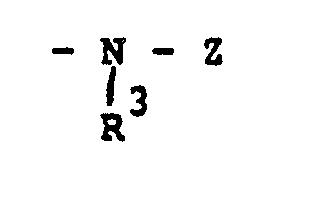
Z represents a fibre-reactive group;
each of R² and R³, independently, represents H or an optionally substituted hydrocarbon radical;
B represents an optionally substituted divalent hydrocarbon radical;
and
D represents a group of the formula
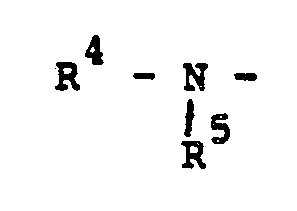
wherein
R⁴ represents H, an optionally substituted hydrocarbon radical free from fibre-reactive residues or an acyl radical;
R⁵ represents H or an optionally substituted hydrocarbon radical;
R⁶ represents H or an optionally substituted hydrocarbon radical free from fibre-reactive residues;
Q represents O or S; and
a has a value of 0 or 1,
with the proviso that when D is NH₂, B is an arylene radical.
Description
- This invention relates to reactive dyes and more particularly to reactive dyes of the triphenodioxazine series and their application to textile materials.
- Reactive dyes of the triphenodioxazine series are known and have been described in, for example, United Kingdom Patent Specifications 1349513, 1368158, 1450746, 1477071, 1559752 and 2059985 and in European Patent Specifications 212635, 260227 and 299328.
- The present invention provides triphenodioxazine reactive dyes containing at least one fibre-reactive group which, in the free acid form, have the formula:
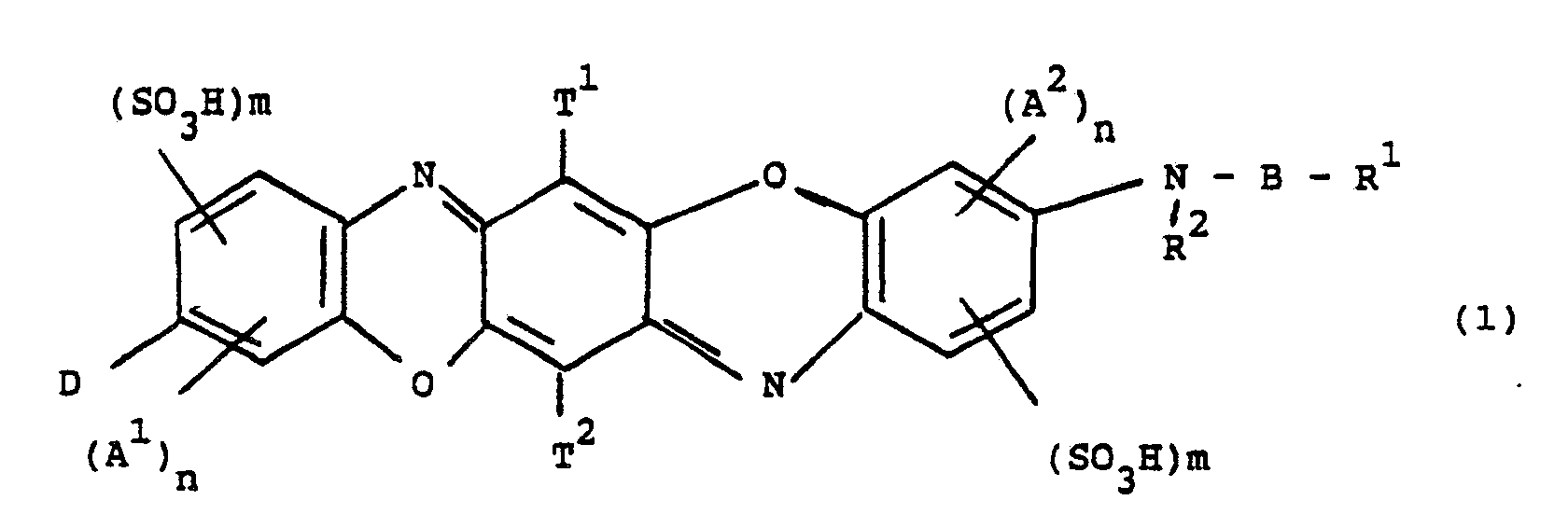
each of T¹ and T², independently, represents H, Cl, Br, F, SO₃H or an optionally substituted alkyl or aryl radical;
each of A¹ and A² represents alkyl, alkoxy, Cl, Br, COOH, SO₃H or optionally substituted sulphamoyl;
n has a value of 0, 1 or 2;
m has a value of 1 or 2;
R¹ represents H or a group of the formula:
Z represents a fibre-reactive group;
each of R² and R³, independently, represents H or an optionally substituted hydrocarbon radical;
B represents an optionally substituted divalent hydrocarbon radical;
and
D represents
wherein
R⁴ represents H, an optionally substituted hydrocarbon radical free from fibre-reactive residues or an acyl radical;
R⁵ represents H or an optionally substituted hydrocarbon radical;
R⁶ represents H or an optionally substituted hydrocarbon radical free from fibre-reactive residues;
Q represents O or S; and
a has a value of 0 or 1,
with the proviso that when D is NH₂, B is an arylene radical. - Examples of optionally substituted alkyl radicals which may be represented by T¹ and T² particularly include C₁₋₄-alkyl radicals. Examples of optionally substituted aryl radicals which may be represented by T¹ and T² include optionally substituted phenyl radicals, for example phenyl, sulphophenyl, methylphenyl, disulphophenyl, dimethylphenyl, methoxyphenyl, dimethoxyphenyl, chlorophenyl, dichlorophenyl, methylchlorophenyl, methoxymethylphenyl, methoxychlorophenyl, aminophenyl and acetylaminophenyl.
- It is preferred that each of T¹ and T² is Cl or Br.
- Examples of alkyl and alkoxy radicals which may be represented by A¹ and A² particularly include C₁₋₄-alkyl and alkoxy radicals. In most cases, A¹ and A² will be identical.
- It is preferred that n is 0 and that m is 1.
- Fibre-reactive groups have been fully described in the prior art, for example in our GB-A-2063284. Such groups are capable, under suitable conditions, of reacting with the hydroxyl groups present in cellulosic fibres or with the amino groups present in natural and synthetic polyamide fibres to form a covalent linkage between the dye and the fibre.
- As examples of fibre-reactive groups which may be represented by Z when R¹ is a group of the formula:

2,4-dicyano-3,5-difluoro-6-chlorophenyl,
2,4-dicyano-3,5-difluoro-6-nitrophenyl,
2,4-dicyano-3,5,6-trifluorophenyl,
2,4-dicyano-3,5,6-trichlorophenyl,
2,4,6-tricyano-3,5-difluorophenyl,
2,4,6-tricyano-3,5-dichlorophenyl and heterocyclic radicals which contain 1, 2 or 3 nitrogen atoms in the heterocyclic ring and at least one cellulose reactive substituent on a carbon atom of the ring. - It may be noted that many reactive groups may be defined as both heterocyclic or acyl groups since they consist of an acyl group carrying a heterocyclic substituent. For convenience in such cases where the heterocyclic ring carries the cellulose reactive substituent these are usually referred to as heterocyclic reactive groups in this specification.
- As examples of such heterocyclic radicals there may be mentioned for example:-
2:3-dichloroquinoxaline-5- or -6-sulphonyl,
2:3-dichloroquinoxaline-5- or -6-carbonyl,
2:4-dichloroquinazolin-6- or -7-sulphonyl,
2:4:6-trichloroquinazolin-7- or -8-sulphonyl,
2:4:7- or 2:4:8-trichloroquinazolin-6-sulphonyl,
2:4-dichloroquinazolin-6-carbonyl,
1:4-dichlorophthalazine-6-carbonyl,
4:5-dichloropyridazon-1-yl-ethylcarbonyl,
2:4-dichloropyrimidine-5-carbonyl,
4-(4′:5′-dichloropyridaz-6′-on-1′-yl)benzoyl,
2-chlorobenzthiazole-6-carbonyl,
3,6-dichloropyrazin-4-carbonyl,
4-(4′:5′-dichloropyridaz-6′-on-1′-yl)phenylsulphonyl;
activated 4,6-dihalopyridin-2-yl and 2,6-dihalopyridin-4-yl groups such as:-
3,4,5,6-tetrafluoropyridin-2-yl,
2,3,5,6-tetrafluoropyridin-4-yl,
2,4,6-trifluoro-3-cyanopyridin-4-yl,
2,5,6-trichloro-3-cyanopyridin-4-yl,
2,6-difluoro-3-cyano-5-chloropyridin-4-yl,
2,6-difluoro-3,5-dichloropyridin-4-yl and more particularly triazinyl or pyrimidinyl groups. - Examples of particular pyrimidinyl groups are pyrimidin-2-yl or -4-yl groups having a cellulose reactive atom or group especially Cl, Br or F in at least one of the remaining 2-, 4- and 6-positions. The 5-position may carry various substituents such as Cl or CN which are not normally cellulose reactive in themselves but may enhance the reactivity of substituents in other positions of the pyrimidine ring. As specific examples of such pyrimidinyl groups there may be mentioned:-
2,6-dichloropyrimidin-4-yl,
4,6-dichloropyrimidin-2-yl,
2,5,6-trichloropyrimidin-4-yl,
4,5,6-trichloropyrimidin-2-yl,
5-chloro-2-methylsulphonyl-6-methylpyrimidin-4-yl,
2,6-dichloro-5-cyanopyrimidin-4-yl,
4,6-dichloro-4-cyanopyrimidin-2-yl,
2,6-difluoro-5-chloropyrimidin-4-yl,
4,6-difluoro-5-chloropyrimidin-2-yl,
2,6-difluoro-5-cyanopyrimidin-4-yl,
4,6-difluoro-5-cyanopyrimidin-2-yl. - Examples of particular triazinyl groups are triazin-2-yl groups having cellulose reactive atoms or groups on one or both of the 4- and 6-positions. In this instance a wide range of cellulose reactive atoms or groups are available such as activated aryloxy or various groups linked through a sulphur atom, e.g. SO₃H but the preferred reactive atoms or groups are F, Br or especially Cl; quaternary ammonium groups such as tri-lower alkyl ammonium, e.g. (CH₃)₃N⁺- and pyridinium groups especially those derived from pyridine carboxylic acids in particular from nicotinic acid.
- The triazinyl groups having only one reactive atom or group on the nucleus in the 4- and 6-position may have a substituent not reactive to cellulose in the remaining 4- or 6-position.
- As examples of such non-reactive substituents there may be mentioned alkyl or aryl thio groups, alkoxy or aryloxy groups and optionally substituted amino groups.
- Preferred forms of these groups include lower, i.e. C₁₋₄-alkoxy, e.g. methoxy, ethoxy, n-propoxy and iso-propoxy, butoxy and lower alkoxy lower alkoxy, e.g. beta-methoxy-ethoxy, beta-ethoxyethoxy, phenoxy and sulphophenoxy; amino; lower alkylamino, e.g. methylamino, ethylamino, butylamino, di(lower alkyl)amino, e.g. dimethylamino, diethylamino, methylethylamino, dibutylamino and groups of the latter two types in which the alkyl groups are substituted, in particular by OH, CN or SO₃H, e.g. beta-hydroxyethylamino, di(beta-hydroxyethyl)amino, beta-cyano- ethylamino, di(beta-cyanoethyl)amino, beta-sulphoethylamino, beta-hydroxypropylamino, (beta-hydroxybutyl)ethylamino and (beta-hydroxyethyl)methylamino; cycloalkylamino, eg. cyclohexylamino; cyclic amino, e.g. morpholino or piperazino; naphthylamino substituted by 1,2 or 3 SO₃H groups and optionally substituted phenyl amino groups.
- As a particularly preferred form of the optionally substituted phenylamino groups there may be mentioned groups of the formula:

- Optionally substituted hydrocarbon radicals which may be represented by R², R³ and R⁵ include optionally substituted alkyl (especially C₁₋₄-alkyl), and optionally substituted aryl (especially phenyl) radicals.
- Optionally substituted divalent hydrocarbon radicals which may be represented by B include optionally substituted alkylene, aralkylene and arylene radicals with the above-mentioned proviso that B must be arylene when D is NH₂.
- As examples of alkylene and aralkylene radicals which may be represented by R², there may be mentioned:
ethylene
1,2- and 1,3-propylene
2-hydroxy-1,3-propylene
1- and 2-phenyl-1,3-propylene
2-(4′-sulphophenyl)-1,3-propylene
1,4-, 2,3- and 2,4-butylene
2-methyl-1,3-propylene
2-methyl-2,4-pentylene
2.2-dimethyl-1,3-propylene
1-phenylethylene
1-chloro-2,3-propylene
1,6- and 2,5-hexylene
2,3-diphenyl-1,4-butylene
1-(methoxycarbonyl)-1,5-pentylene
1-carboxy-1,5-pentylene
2,7-heptylene
3-methyl-1,6-hexylene
-CH₂CH₂OCH₂CH₂-
-CH₂CH₂SCH₂CH₂-
-CH₂CH₂SSCH₂CH₂-

- As examples of arylene radicals which may be represented by B, there may be mentioned 1,3- and 1,4-phenylene, 1,4-naphthylene and other divalent radicals containing one or more benzene and/or naphthalene nuclei which may optionally be sulphonated.
- Optionally substituted hydrocarbon radicals free from fibre-reactive residues which may be represented by R⁴ and R⁶ include aryl (especially phenyl), aralkyl, cycloalkyl and alkyl radicals, for example C₁₋₄-alkyl radicals. Thus, groups whch may be represented by R⁶(Q)a- particularly include aryl, aryloxy, arylthio, benzyl, benzyloxy, benzylthio, alkyl, alkoxy and alkylthio.
- Acyl radicals which may be represented by R⁴ include alkyl carbonyl radicals such as acetyl, arylcarbonyl radicals such as benzoyl and acyl radicals capable of conferring fibre-reactivity on the dyes of Formula 1.
- As examples of fibre-reactive acyl radicals which may be represented by R⁴, there may be mentioned the fibre-reactive acyl radicals described above with reference to Z.
- It is preferred that any fibre-reactive groups represented by R⁴ and/or Z are vinylsulphonyl groups or precursor groups thereof or, especially, halogenotriazinyl groups, for example monochlorotriazinyl, monofluorotriazinyl or dichlorotriazinyl groups. It is also within the scope of the invention for reactive groups to be present in the form of vinylsulphonyl groups or precursors thereof, for example hydroxyethylsulphonyl, sulphatoethylsulphonyl or chloroethylsulphonyl, attached directly to B, for example when B is arylene and R¹ is H.
- One valuable class of dyes within the scope of Formula 1 comprises the dyes which, in the free acid form, have the formula:

A represents alkyl, alkoxy, Cl, COOH, SO₃H or optionally substituted sulphamoyl;
R⁷ represents H or a group of the formula -NHZ;
and Z, T¹, T², n, m, B and R⁴ have the meanings given above with the provisos that when R⁷ is H, R⁴ is an acyl group having fibre-reactive properties and when R⁴ is H, B is an arylene radical. - As examples of useful structures within the scope of Formula 2, there may be mentioned the following:


- In the compounds of formulae (3)-(7), T¹, T², A, Z, n and m have the meanings given above and the fibre-reactive groups Z and R⁹ are preferably mono- or dichlorotriazinyl or vinyl sulphonyl groups.
- Another valuable class of dyes within the scope of Formula 1 comprises the dyes which, in the free acid form, have the formula:

T¹, T², A¹, n, m, R², R³, Z, B, Q, a and R⁶ have the meanings given above. - It is preferred that the fibre-reactive groups represented by Z in the dyes of Formula 8 are vinylsulphonyl groups or, especially, halogenotriazinyl groups, for example monochlorotriazinyl, monofluorotriazinyl or dichlorotriazinyl groups.
- The dyes of the invention may be prepared by reactions conventional to triphenodioxazine chemistry. Thus, for example, dyes of the invention may be prepared by reacting an acylating agent capable of introducing a fibre-reactive group with an unsymmetrical triphenodioxazine of the formula:

- Unsymmetrical triphenodioxazines of Formula (9) may be obtained by methods described in the prior art, for example by ring closure of the corresponding unsymmetrical dianilides using strongly acid condensing agents, for example oleum with a persulphate. Sulphonic acid groups may be introduced into the dianilide during cyclisation, for example into any aryl groups represented by R⁶.
- The unsymmetrical dianilides may be made in a stepwise manner by known methods, for example those described in United Kingdom Patent Specifications 509891 and 509893.
- The dyes prepared as described above may be isolated by any conventional means, for example by spray drying or precipitation and filtration.
- The dyes contain sulphonic acid groups which confer water-solubility and they may be isolated with such groups in the free acid form. However, it is usually found more convenient to isolate the dyes in the form of salts particularly alkali metal salts, especially sodium but sometimes lithium to improve the water-solubility.
- The dyes of the present invention may be used for colouring a wide range of textile materials containing hydroxyl or amino groups, for example wool, silk, synthetic polyamides and natural or regenerated cellulose, for example cotton or viscose rayon materials, by conventional dyeing, padding or printing methods used for colouring such materials with water-soluble reactive dyes. In the case of cellulose, they are preferably applied in conjunction with a treatment with an acid binding agent, for example caustic soda, sodium carbonate, phosphate, silicate or bicarbonate, which may be applied to the cellulose textile materials before, during or after the application of the dye.
- The dyes of the present invention are valuable reactive dyes for cellulose. They yield bright blue coloured textiles with good resistance to washing, chlorine and light. They are usually characterised by good strength and an ability to build-up to high depths of shade, the shades being somewhat redder than those of the corresponding symmetrical triphenodioxazine reactive dyes.
- The invention is illustrated but not limited by the following Examples in which all parts and percentages are by weight unless otherwise indicated.
- A solution of 4.6 parts of 5-amino-2-(2-aminoethylamino)-benzene-sulphonic acid in 20 parts of water at pH 5 was added to a slurry of 4.8 parts of 2-methoxy-3,5,6-trichlorobenzoquinone in 100 parts of methanol at pH 5.6 and 40°C. The mixture was stirred at 40°C for 1 hour whilst maintaining the pH at pH 5. The mixture was cooled in ice, filtered and the solid washed with methanol and dried. 6.9 parts of compound I, 2-(4-(2-aminoethylamino-3-sulphanilino)-3,6-dichloro-5-methoxy-1,4-benzoquinone were obtained.

- 15 parts of 5-amino-2-(2-aminoethylamino)-benzene-sulphonic acid was added portionwise to a slurry of 14 parts of 2-methoxy-3,4,6-trichlorobenzoquinone in 750 parts of methanol at pH 5.6 and room temperature. The mixture was stirred at room temperature for 16 hours whilst maintaining the pH at pH 5.4. The mixture was filtered and the solid washed with methanol, water and dried. 15.5 parts of compound I were obtained.
- 19 parts of 4,4′-diaminodiphenylamine-2,3′-disulphonic acid was added portionwise to a slurry of 14 parts of 2-methoxy-3,5,6-trichlorobenzoquinone in 750 parts of methanol at pH 5.0 and room temperature. The mixture was stirred at room temperature for 16 hours whilst maintaining the pH at pH 5.4. The mixture was filtered and the filtrates were evaporated to dryness. 24.8 parts of compound II were obtained.

- A solution of 1.9 parts of aniline in 20 parts of methanol was added dropwise to a slurry of 4.8 parts of 2-methoxy-3,5,6-trichlorobenzoquinone in 100 parts of methanol at pH 5.5 and 40°C. The mixture was stirred at 40°C for 1 hour whilst maintaining the pH at pH 5. The mixture was cooled in ice, filtered and the solid washed with methanol and dried. 4.9 parts of compound III were obtained.

- Further mono-anilides were prepared using the methods of Examples 2 and 4 to react 2-methoxy-3,4,6-trichlorobenzoquinone with the aromatic amines indicated below.
Example Amine Method 5 5-amino-2-ethylaminobenzene sulphonic acid 2 6 5-amino-2-(2-hydroxyethylamino)benzene sulphonic acid 2 7 4-aminodiphenylamine-2-sulphonic acid 2 8 p-phenylenediamine sulphonic acid 2 9 metanilic acid 2 10 5-amino-2-phenoxybenzene sulphonic acid 2 11 p-anisidine 4 12 p-toluidine 4 13 3,4-dimethylaniline 4 14 4-aminodiphenyl 4 15 4-(ethylthio)aniline 4 16 5-amino-2-phenylthiobenzene sulphonic acid 2 17 4-aminodiphenylmethane 4 18 5-amino-2-benzyloxybenzene sulphonic acid 2 19 4-aminodiphenylamine-2,3′-disulphonic acid 2 20 4-aminobenzanilide 4 21 4-aminoacetanilide 4 - The following examples use monoanilides of Formula I, II or III as above or are from the monoanilide in Example 8 which has the Formula XXX:


- A solution of 2.1 parts of metanilic acid in 60 parts of water at pH 6 was added to a slurry of 5.1 parts of the monoanilide, I, in 175 parts of methanol at pH 6.5 and room temperature. The mixture was stirred at 50°C for 4½ hours whilst maintaining the pH at 6.3±0.2, cooled in ice and filtered. The solid was washed with methanol and dried. 4.8 parts of the unsymmetrical dianilide of Formula IV wherein W is -SO₃H, X is -NHC₂H₄NH₂, Y is -SO₃H and Z is H, were obtained.
- A solution of 2.6 parts of 3-sulpho-4-phenoxyaniline in 40 parts of water at pH 6 was added to a slurry of 5.1 parts of the monoanilide, I, in 120 parts of methanol at pH 6.5 and room temperature. The mixture was stirred at 50°C for 3½ hours whilst maintaining the pH at 6.3±0.2, cooled in ice and filtered. The solid was washed with methanol and dried. 5.5 parts of the unsymmetrical dianilide of Formula IV wherein W is -SO₃H, X is -NHC₂H₄NH₂, Y is -SO₃H and Z is phenoxy were obtained.
- A solution of 3.8 parts of p-phenylene diamine-2-sulphonic acid in 65 parts of water at pH 6.5 was added to a slurry of 6 parts of the monoanilide,III, prepared as in Example 4, in 150 parts of methanol at pH 6.5 and room temperature. The mixture was stirred at 50°C for 3 hours whilst maintaining the pH at 6.3±0.2, cooled in ice and filtered. The solid was washed with methanol and dried. 8.3 parts of the unsymmetrical dianilide of Formula IV wherein W and X are H, Y is -SO₃H and Z is -NH₂ were obtained.
- A solution of 4.8 parts of p-phenylene diamine-2-sulphonic acid in 125 parts of water at pH 7 was added to a slurry of 11 parts of the monoanilide,I, prepared as in Example 1 or 2, in 375 parts of methanol at pH 6.5 and room temperature. The mixture was stirred at 50°C for 3 hours whilst maintaining the pH at 6.3±0.2, cooled in ice and filtered. The solid was washed with methanol and dried. 13.1 parts of the unsymmetrical dianilide of Formula IV wherein W is -SO₃H, X is -NHC₂H₄NH₂, Y is -SO₃H and Z is -NH₂ were obtained.
- The following unsymmetrical dianilides were prepared by these methods using the appropriate amines. In all of the following examples W in the dianilide is -SO₃H.
Example Formula of anilide Dianilide of Formula IV X Y Z 26 I -NHC₂H₄NH₂ -SO₃H -NHC₂H₅ 27 I " " (3-SO₃H-4-NH₂-Ph)NH- 28 I " H Ph 29 I " -SO₃H -SPh 30 I " H -NHCOC₆H₅ 31 I " -CH₃ -CH₃ 32 II (3-SO₃H-4-NH₂-Ph)NH- H -SC₂H₅ 33 II " -SO₃H -NHPh 34 II " " -OPh 35 II " " -NHC₃H₄OH 36 II " H -CH₂Ph 37 II " -SO₃H (3-SO₃HPh)NH- 38 XXX NH₂ -Cl -OCH₃ 39 I -NHC₂H₄NH₂ H (3-SO₂C₂H₄OHPh)NH- - The following examples produce dyebases of the Formula VIII

- In Examples 40-68 inclusive V³ = H; V⁴ = H; V⁵ = SO₃H.
- 4 parts of the unsymmetrical dianilide,IV, were added over 45 minutes to a mixture of 40 parts of conc. sulphuric acid and 32 parts of 65% oleum at room temperature. The mixture was stirred for a further 15 minutes to complete the dissolution. 2.9 parts of ammonium persulphate were added and the mixture was heated at 45-50°C for 2 hours. The mixture was drowned out into ice/water and filtered. The solid was washed acid free with 20% brine and dried. 2.8 parts of a dyebase of Formula VIII wherein V¹ is N-(2-aminoethyl)amino, V² is H were obtained (the solid also contains salt). The dyebase had lambda max 600nm in aqueous medium.
- 2.1 parts of the unsymmetrical dianilide prepared in Example 26 were added over 45 minutes to a mixture of 22 parts of conc. sulphuric acid and 9.5 parts of 65% oleum at room temperature. The mixture was stirred for a further 15 minutes to complete the dissolution. 2.1 parts of ammonium persulphate were added and the mixture was heated at 40°C for 5½ hours. The mixture was drowned out into ice/water and filtered. The solid was washed acid free with 20% brine and dried. 1.6 parts of a dyebase of the Formula VIII wherein V¹ is N(2-aminoethyl)amino, V² is ethylamino were obtained (the solid also contains salt). The dyebase had lambda max 616nm in aqueous medium.
- 2 parts of the unsymmetrical dianilide,V, were added over 1 hour to 12 parts of 20% oleum keeping the temperature below 21°C. The mixture was stirred at 20-22°C for 2½ hours. 2 parts of ammonium persulphate were added over 15 minutes and the mixture was stirred at 30°C for 1½ hours. The mixture was drowned out into ice/water and filtered. The solid was washed acid free with 20% brine and dried. 1.4 parts of a dyebase of Formula VIII wherein V¹ is N-(2-aminoethyl)amino, V² is sulphophenoxy, were obtained (the solid also contains salt). The dyebase had lambda max 580nm in aqueous medium.
- 5.9 parts of the unsymmetrical dianilide,VII, were added over 45 minutes to a mixture of 59 parts of conc. sulphuric acid and 47 parts of 65% oleum at room temperature. The mixture was stirred for a further 15 minutes to complete the dissolution. 4.2 parts of ammonium persulphate were added and the mixture was heated at 45-50°C for 3½ hours. The mixture was drowned out into ice/water and filtered. The solid was washed acid free with 20% brine and dried. 7.4 parts of a dyebase of Formula VIII wherein V¹ is N-(2-aminoethyl)amino, V² is amino, V³ is H, were obtained (the solid also contains salt). The dyebase had lambda max 605nm in aqueous medium.
- The following unsymmetrical dyebases are prepared by these methods using the appropriate dianilides:

-
- (i) To 3.8 parts of aniline 2,5-disulphonic acid stirring in 35 parts water at pH7 was added 0.1 parts of mixed phosphate buffer. After cooling to 0-5°C, 2.4 parts of cyanuric chloride was added and the mixture stirred at 0-5°C and pH 6-7 until dissolved. After screening, this solution was added to a solution of 3.8 parts of the dyebase, VIII from Example 40, dissolved in 210 parts of water at pH9-10. The reaction mixture was heated at 50-55°C at pH 8.5-9.0 for 2 hours, salted to 35% w/v with sodium chloride/potassium chloride and filtered. The product was washed with brine and dried to give 12.6 parts of a reactive dyestuff,XIII, which dyes cellulose textile materials in bright reddish blue shades.
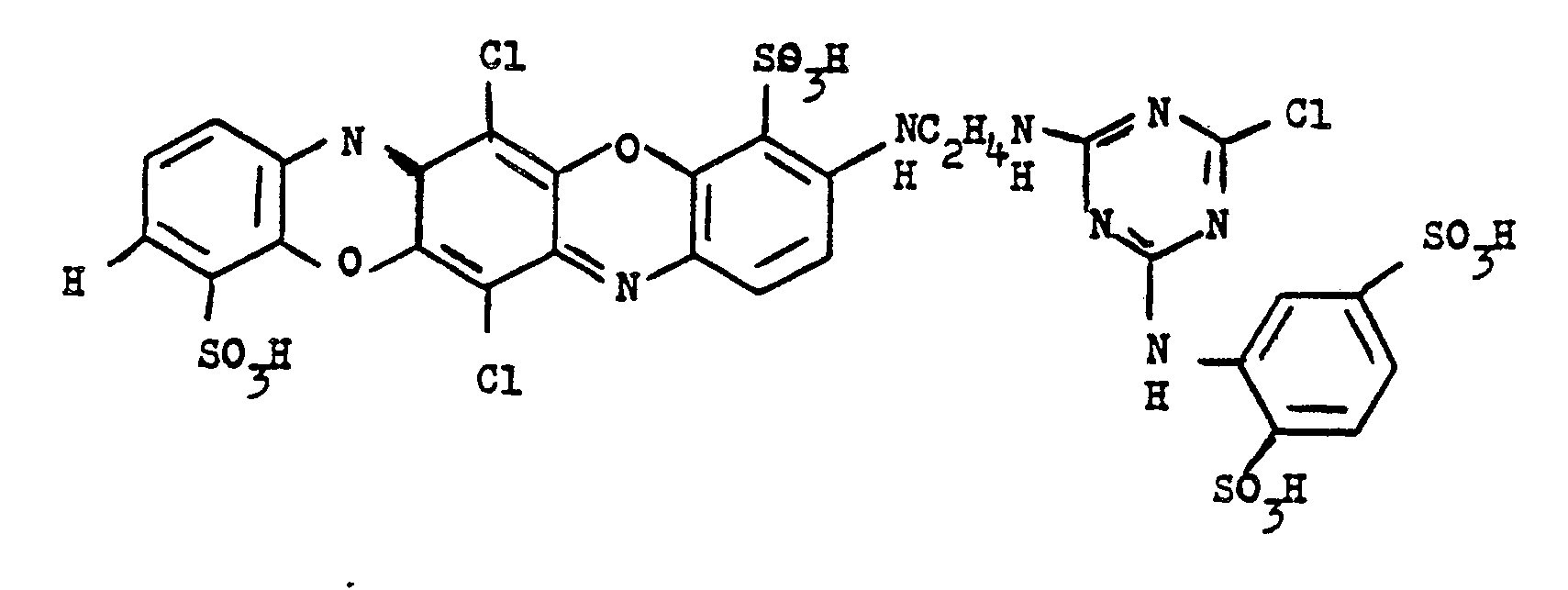
- (ii) 4 parts of cyanuric chloride and a few drops of Calsolene oil were added to 7.3 parts of the dyebase, VIII,dissolved in 600 parts of water at 10-20°C. The mixture was stirred at 10-20°C and pH 6-7 for 2 hours, then warmed to 40°C for 2 hours. 20 parts of aniline-2,5-disulphonic acid dissolved in 100 parts of water were added and the pH adjusted to pH 7-8. The mixture was stirred overnight at 45°C, salted to 30% w/v with sodium chloride and filtered. The product was washed with brine and dried to give 16.6 parts of the same reactive dyestuff described in (i).
- Similar dyestuffs are obtained if the aniline-2,5-disulphonic acid used in Example 73 is replaced by an equivalent amount of the following amines:
Example Amine 74 2-carboxyaniline-4,5-disulphonic acid 75 metanilic acid 76 aniline-3,5-disulphonic acid 77 N-sulphomethylaniline 78 aniline-2,4-disulphonic acid 79 2-carboxyaniline-4-sulphonic acid 80 3-aminoaniline-4-sulphonic acid 81 4-aminoaniline-3-sulphonic acid 82 3-aminoaniline-4,6-disulphonic acid 83 4-aminoaniline-2,5-disulphonic adid 84 sulphanilic acid 85 orthanilic acid 86 1-aminonaphthalene-6-sulphonic acid 87 1-aminonaphthalene-7-sulphonic acid 88 2-aminonaphthalene-5,7-disulphonic acid 89 2-aminonaphthalene-6,8-disulphonic acid 90 2-aminonaphthalene-8-sulphonic acid 91 2-aminonaphthalene-7-sulphonic acid 92 1-aminonaphthalene-3,8-disulphonic acid 93 1-aminonaphthalene-3,6,8-trisulphonic acid 94 2-methylaniline-5-sulphonic acid 95 4-chloroaniline-3-sulphonic acid - Following the procedure in Example 73 similar dyestuffs are obtained if the 2,4-dichloro-6-arylamino-s-triazines used in Examples 74-95 are replaced by equivalent amounts of the following acylating agents.


- The following examples produce dyes of the Formula XIII

- If dyebase from Example 41 is used in place of dyebase from Example 40 in Example 73 a dyestuff is obtained which is believed to be of Formula XIII wherein V¹ is ethylamino and V² is a group of Formula XXV:

- Similar dyestuffs are obtained if the aniline-2,5-disulphonic acid used in Example 144 is replaced by an equivalent amount of each of the following amines.

- Following the procedure in Example 144, similar dyestuffs are obtained if the 2,4-dichloro-6-arylamino-s-triazines used in Examples 145-154 are replaced by equivalent amounts of the following acylating agents.
Example Acylating Agent 155 2,4-dichloro-6-beta-hydroxyethylamino-s-triazine 156 2,4-dichloro-6-di-beta-hydroxyethylamino-s-triazine 157 2,4-dichloro-6-beta-hydroxypropylamino-s-triazine 158 2,4-dichloro-6-methoxy-s-triazine 159 2,4-dichloro-6-amino-s-triazine 160 2,4-dichloro-6-methylamino-s-triazine 161 2,3-dichloroquinoxaline-6-sulphonyl chloride 162 2,4,5,6-tetrachloropyrimidine 163 2,4,6-trichloro-s-triazine 164 2,4-dichloro-6-n-butoxy-s-triazine - If dyebase in Example 42 is used in place of dyebase in Example 40 in Example 73 a dyestuff is obtained which is believed to be of Formula XIII wherein V¹ is sulphophenoxy and V² is a group of Formula XXV and which dyes cellulose in bright reddish blue shades.
- Similar dyestuffs are obtained if the aniline-2,5-disulphonic acid used in Example 165 is replaced by an equivalent amount of each of the following amines.
Example Amine 166 sulphanilic acid 167 orthanilic acid 168 1-aminonaphthalene-6-sulphonic acid 169 1-aminonaphthalene-7-sulphonic acid 170 2-aminonaphthalene-5,7-disulphonic acid 171 2-aminonaphthalene-6,8-disulphonic acid - Following the procedure in Example 165, similar dyestuffs are obtained if the 2,4-dichloro-6-arylamino-s-triazines used in Examples 166-171 are replaced by equivalent amounts of the following acylating agents.
Example Acylating Agent 172 2,4-dichloro-6-dimethylamino-s-triazine 173 2,4,6-trichloropyrimidine 174 1,4-dichlorophthalazine-6-carbonyl chloride 175 2,4,6-trichloro-5-cyanopyrimidine 176 2,4-dichloro-6-p-sulphophenoxy-s-triazine 177 2,4,6-trifluoro-5-chloropyrimidine 178 1-(4′-chlorocarbonylphenyl)-4,5-dichloro-6-pyridazone 179 2,4,6-tribromopyrimidine - If dyebase from Example 54 is used in place of dyebase from Example 40 in Example 13 a dyestuff is obtained which is believed to be of Formula XIII wherein V¹ is propoxy and V² is a group of Formula XXVI:

- Similar dyestuffs are obtained if the aniline-2,5-disulphonic acid used in Example 180 is replaced by an equivalent amount of each of the following amines.
Example Amine 181 2-aminonaphthalene-8-sulphonic acid 182 2-aminonaphthalene-7-sulphonic acid 183 1-aminonaphthalene-3,8-disulphonic acid 184 1-aminonaphthalene-3,6,8-trisulphonic acid 185 2-methylaniline-5-sulphonic acid 186 4-chloroaniline-3-sulphonic acid - Following the procedure in Example 180, similar dyestuffs are obtained if the 2,4-dichloro-6-arylamino-s-triazines used in Examples 181-186 are replaced by equivalent amounts of the following acylating agents.
Example Acylating Agent 187 2,4-dichloro-6-beta-sulphatoethylamino-s-triazine 188 2-(2′,4′-dichloro-s-triazinylamino-5-(2′-chloro-4′-m-sulphoanilino-s-triazinylamino)benzene sulphonic acid 189 2-(2′,4′-dichloro-s-triazinylamino)-5-(2′-chloro-4′-amino-s-triazinylamino)benzene sulphonic acid 190 2-(2′,4′-dichloro-s-triazinylamino)-5-(2′-chloro-4′-(3",5"-disulphoanilino)-s-triazinylamino)benzene sulphonic acid - If dyebase from Example 59 is used in place of dyebase from Example 40 in Example 73 a dyestuff is obtained which is believed to be of Formula XIII wherein V¹ is sulphothiophenoxy and V² is a group of Formula XXVI and which dyes cellulose in bright reddish blue shades.
- Similar dyestuffs are obtained if the aniline-2,5-disulphonic acid used in Example 191 is replaced by an equivalent amount of each of the following amines.
Example Amine 192 2-carboxyaniline-4,5-disulphonic acid 193 metanilic acid 194 aniline-3,5-disulphonic acid 195 N-sulphomethylaniline 196 aniline-2,4-disulphonic acid 197 2-carboxyaniline-4-sulphonic acid 198 3-aminoaniline-4-sulphonic acid 199 4-aminoaniline-3-sulphonic acid - Following the procedure in Example 191, similar dyestuffs are obtained if the 2,4-dichloro-6-arylamino-s-triazines used in Examples 192-199 are replaced by equivalent amounts of the following acylating agents.
Example Acylating Agent 200 2,4-dichloro-6-beta-hydroxyethylamino-s-triazine 201 2,4-dichloro-6-di-beta-hydroxyethylamino-s-triazine 202 2,4-dichloro-6-beta-hydroxypropylamino-s-triazine 203 2,4-dichloro-6-methoxy-s-triazine 204 2,4-dichloro-6-amino-s-triazine 205 2,4-dichloro-6-methylamino-s-triazine 206 2,3-dichloroquinoxaline-6-sulphonyl chloride 207 2,4,5,6-tetrachloropyrimidine - If dyebase from Example 62 is used in place of dyebase from Example 40 in Example 73 a dyestuff is obtained which is believed to be of Formula XIII wherein V¹ is N(benzoyl)amino) and V² is a group of Formula XXVI and which dyes cellulose in bright reddish blue shades.
- Similar dyestuffs are obtained if the aniline-2-5-disulphonic acid used in Example 208 is replaced by an equivalent amount of each of the following amines.
Example Amine 209 3-aminoaniline-4,6-disulphonic acid 210 4-aminoaniline-2,5-disulphonic adid 211 sulphanilic acid 212 orthanilic acid 213 1-aminonaphthalene-6-sulphonic acid 214 1-aminonaphthalene-7-sulphonic acid 215 2-aminonaphthalene-5,7-disulphonic acid - Following the procedure in Example 208, similar dyestuffs are obtained if the 2,4-dichloro-6-arylamino-s-triazines used in Examples 209 to 215 are replaced by equivalent amounts of the following acylating agents.
Example Acylating Agent 216 2,4,6-trichloro-s-triazine 217 2,4-dichloro-6-n-butoxy-s-triazine 218 2,4-dichloro-6-dimethylamino-s-triazine 219 2,4,6-trichloropyrimidine 220 1,4-dichlorophthalazine-6-carbonyl chloride 221 2,4,6-trichloro-5-cyanopyrimidine 222 2,4-dichloro-6-p-sulphophenoxy-s-triazine 223 2,4,6-trifluoro-5-chloropyrimidine - If dyebase from Example 66 is used in place of dyebase from Example 40 in Example 73 a dyestuff is obtained which is believed to be of Formula XIII wherein V¹ is amino and V² is a group of Formula XXVI and which dyes cellulose in bright reddish blue shades.
- Similar dyestuffs are obtained if the aniline-2,5-disulphonic acid used in Example 224 is replaced by an equivalent amount of each of the following amines.
Example Amine 225 2-aminonaphthalene-6,8-disulphonic acid 226 2-aminonaphthalene-8-sulphonic acid 227 2-aminonaphthalene-7-sulphonic acid 228 1-aminonaphthalene-3,8-disulphonic acid 229 1-aminonaphthalene-3,6,8-trisulphonic acid 230 2-methylaniline-5-sulphonic acid 231 4-chloroaniline-3-sulphonic acid - Following the procedure in Example 224, similar dyestuffs are obtained if the 2,4-dichloro-6-arylamino-s-triazines used in Examples 225 to 231 are replaced by equivalent amounts of the following acylating agents.
Example Acylating Agent 232 1-(4′-chlorocarbonylphenyl)-4,5-dichloro-6-pyridazone 233 2,4,6-tribromopyrimidine 234 2,4-dichloro-6-beta-sulphatoethylamino-s-triazine 235 2-(2′,4′-dichloro-s-triazinylamino-5-(2′-chloro-4′-m-sulphoanilino-s-triazinylamino)benzene sulphonic acid 236 2-(2′,4′-dichloro-s-triazinylamino)-5-(2′-chloro-4′-amino-s-triazinylamino)benzene sulphonic acid 237 2-(2′,4′-dichloro-s-triazinylamino)-5-(2′-chloro-4′-(3",5"-disulphoanilino)-s-triazinylamino)benzene sulphonic acid - To 3.8 parts of aniline-2,5-disulphonic acid stirring in 35 parts water at pH7 was added 0.1 parts of mixed phosphate buffer. After cooling to 0-5°C, 2.4 parts of cyanuric chloride was added and the mixture stirred at 0-5°C and pH 6-7 until dissolved. After screening, this solution was added to a solution of 1.5 parts of the dyebase from Example 65, dissolved in 150 parts of water at pH 9. The reaction mixture was stirred at pH 8.5-9.0 and 35°C overnight, salted to 15% w/v with sodium chloride and filtered. The product was washed with brine and dried to give 2.1 parts of a reactive dyestuff of Formula XIII wherein V¹ is N-(ethyl)amino and V² is a group of Formula XXVII:

- Similar dyestuffs are obtained if the aniline-2,5-disulphonic acid used in Example 238 is replaced by an equivalent amount of each of the following amines.
Example Amine 239 aniline-2,4-disulphonic acid 240 2-carboxyaniline-4-sulphonic acid 241 3-aminoaniline-4-sulphonic acid 242 4-aminoaniline-3-sulphonic acid 243 3-aminoaniline-4,6-disulphonic acid 244 4-aminoaniline-2,5-disulphonic adid 245 sulphanilic acid 246 orthanilic acid 247 1-aminonaphthalene-6-sulphonic acid 248 1-aminonaphthalene-7-sulphonic acid - Following the procedure in Example 238, similar dyestuffs are obtained if the 2,4-dichloro-6-arylamino-s-triazines used in Examples 239 to 248 are replaced by equivalent amounts of the following acylating agents.
Example Acylating Agent 249 2,4-dichloro-6-methylamino-s-triazine 250 2,3-dichloroquinoxaline-6-sulphonyl chloride 251 2,4,5,6-tetrachloropyrimidine 252 2,4,6-trichloro-s-triazine 253 2,4-dichloro-6-n-butoxy-s-triazine 254 2,4-dichloro-6-dimethylamino-s-triazine 255 2,4,6-trichloropyrimidine 256 1,4-dichlorophthalazine-6-carbonyl chloride 257 2,4,6-trichloro-5-cyanopyrimidine - To 7.6 parts of aniline-2,5-disulphonic acid stirring in 70 parts water at pH7 was added 0.2 parts of mixed phosphate buffer. After cooling to 0-5°C, 4.8 parts of cyanuric chloride was added and the mixture stirred at 0-5°C and pH 6-7 until dissolved. After screening, this solution was added to a solution of 1.5 parts of the dyebase from Example 68, dissolved in 150 parts of water at pH 9. The reaction mixture was stirred at pH 8.5-9.0 and 35°C overnight, salted to 15% w/v with sodium chloride and filtered. The product was washed with brine and dried to give 2.4 parts of a reactive dyestuff of Formula XIII wherein V¹ is a group of Formula XXVII and V² is a group of Formula XXV which dyes cellulose textile materials in bright mid blue shades.
- Similar dyestuffs are obtained if the aniline-2,5-disulphonic acid used in Example 258 is replaced by an equivalent amount of each of the following amines.
Example Amine 259 2-aminonaphthalene-5,7-disulphonic acid 260 2-aminonaphthalene-6,8-disulphonic acid 261 2-aminonaphthalene-8-sulphonic acid 262 2-aminonaphthalene-7-sulphonic acid 263 1-aminonaphthalene-3,8-disulphonic acid 264 1-aminonaphthalene-3,6,8-trisulphonic acid 265 2-methylaniline-5-sulphonic acid 266 4-chloroaniline-3-sulphonic acid - Following the procedure in Example 258, similar dyestuffs are obtained if the 2,4-dichloro-6-arylamino-s-triazines used in Examples 259 to 266 are replaced by equivalent amounts of the following acylating agents.
Example Acylating Agent 267 2,4-dichloro-6-beta-hydroxyethylamino-s-triazine 268 2,4-dichloro-6-di-beta-hydroxyethylamino-s-triazine 269 2,4-dichloro-6-beta-hydroxypropylamino-s-triazine 270 2,4-dichloro-6-methoxy-s-triazine 271 2,4-dichloro-6-amino-s-triazine 272 2,4-dichloro-6-p-sulphophenoxy-s-triazine 273 2,4,6-trifluoro-5-chloropyrimidine 274 1-(4′-chlorocarbonylphenyl)-4,5-dichloro-6-pyridazone 275 2,4,6-tribromopyrimidine - To 7.6 parts of aniline-2,5-disulphonic acid stirring in 70 parts water at pH7 was added 0.2 parts of mixed phosphate buffer. After cooling to 0-5°C, 4.8 parts of cyanuric chloride was added and the mixture stirred at 0-5°C and pH 6-7 until dissolved. After screening, this solution was added to a solution of 1.8 parts of the dyebase from Example 66, dissolved in 150 parts of water at pH 9. The reaction mixture was stirred at pH 8.5-9.0 and 35°C overnight, salted to 15% w/v with sodium chloride and filtered. The product was washed with brine and dried to give 2.3 parts of a reactive dyestuff of Formula XIII wherein V¹ is a group of Formula XXVII and V² is a group of Formula XXVI which dyes cellulose textile materials in bright mid blue shades.
- Similar dyestuffs are obtained if the aniline-2,5-disulphonic acid used in Example 276 is replaced by an equivalent amount of each of the following amines.
Example Amine 277 2-carboxyaniline-4,5-disulphonic acid 278 metanilic acid 279 aniline-3,5-disulphonic acid 280 N-sulphomethylaniline 281 aniline-2,4-disulphonic acid 282 2-carboxyaniline-4-sulphonic acid 283 3-aminoaniline-4-sulphonic acid 284 4-aminoaniline-3-sulphonic acid 285 3-aminoaniline-4,6-disulphonic acid 286 4-aminoaniline-2,5-disulphonic acid - Following the procedure in Example 176, similar dyestuffs are obtained if the 2,4-dichloro-6-arylamino-s-triazines used in Examples 277 to 286 are replaced by equivalent amounts of the following acylating agents.
Example Acylating Agent 287 2,4-dichloro-6-amino-s-triazine 288 2,4-dichloro-6-methylamino-s-triazine 289 2,3-dichloroquinoxaline-6-sulphonyl chloride 290 2,4,5,6-tetrachloropyrimidine 291 2,4-dichloro-6-beta-sulphatoethylamino-s-triazine 292 2-(2′,4′-dichloro-s-triazinylamino-5-(2′-chloro-4′-m-sulphoanilino-s-triazinylamino)benzene sulphonic acid 293 2-(2′,4′-dichloro-s-triazinylamino)-5-(2′-chloro-4′-amino-s-triazinylamino)benzene sulphonic acid 294 2-(2′,4′-dichloro-s-triazinylamino)-5-(2′-chloro-4′-(3",5"-disulphoanilino)-s-triazinylamino)benzene sulphonic acid - The following dyebases prepared by the methods outlined above function as reactive dyes without further modification, these are of Formula XIII:

Claims (10)

each of T¹ and T², independently, represents H, Cl, Br, F, SO₃H or an optionally substituted alkyl or aryl radical;
each of A¹ and A² represents alkyl, alkoxy, Cl, Br, COOH, SO₃H or optionally substituted sulphamoyl;
n has a value of 0, 1 or 2;
m has a value of 1 or 2;
R¹ represents H or a group of the formula:

Z represents a fibre-reactive group;
each of R² and R³, independently, represents H or an optionally substituted hydrocarbon radical;
B represents an optionally substituted divalent hydrocarbon radical;
and
D represents a group of the formula
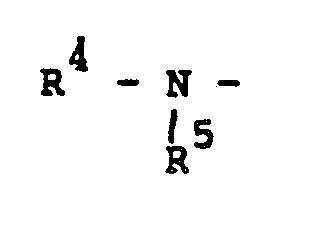
wherein
R⁴ represents H, an optionally substituted hydrocarbon radical free from fibre-reactive residues or an acyl radical;
R⁵ represents H or an optionally substituted hydrocarbon radical;
R⁶ represents H or an optionally substituted hydrocarbon radical free from fibre-reactive residues;
Q represents O or S; and
a has a value of 0 or 1,
with the proviso that when D is NH₂, B is an arylene radical.

A represents alkyl, alkoxy, Cl, COOH, SO₃H or optionally substituted sulphamoyl;
R⁷ represents H or a group of the formula -NHZ;
and Z, T¹, T², n, m, B and R⁴ have the meanings given above with the provisos that when R⁷ is H, R⁴ is an acyl group having fibre-reactive properties and when R⁴ is H, B is an arylene radical.


Applications Claiming Priority (4)
| Application Number | Priority Date | Filing Date | Title |
|---|---|---|---|
| GB8819534 | 1988-08-17 | ||
| GB888819534A GB8819534D0 (en) | 1988-08-17 | 1988-08-17 | Reactive dyes |
| GB888824344A GB8824344D0 (en) | 1988-10-18 | 1988-10-18 | Reactive dyes |
| GB8824344 | 1988-10-18 |
Publications (2)
| Publication Number | Publication Date |
|---|---|
| EP0356014A1 true EP0356014A1 (en) | 1990-02-28 |
| EP0356014B1 EP0356014B1 (en) | 1994-11-30 |
Family
ID=26294292
Family Applications (1)
| Application Number | Title | Priority Date | Filing Date |
|---|---|---|---|
| EP89307590A Expired - Lifetime EP0356014B1 (en) | 1988-08-17 | 1989-07-26 | Reactive Dyes |
Country Status (11)
| Country | Link |
|---|---|
| US (1) | US5019134A (en) |
| EP (1) | EP0356014B1 (en) |
| JP (1) | JP2865724B2 (en) |
| KR (1) | KR970007342B1 (en) |
| AT (1) | ATE114704T1 (en) |
| DE (1) | DE68919585T2 (en) |
| DK (1) | DK402589D0 (en) |
| GB (1) | GB8917071D0 (en) |
| HK (1) | HK17696A (en) |
| ID (1) | ID928B (en) |
| IN (1) | IN176168B (en) |
Cited By (11)
| Publication number | Priority date | Publication date | Assignee | Title |
|---|---|---|---|---|
| GB2245582A (en) * | 1990-06-29 | 1992-01-08 | Ici Plc | Asymmetrically substituted triphenodioxazine dyes with no reactive groups |
| EP0485329A1 (en) * | 1990-10-30 | 1992-05-13 | Ciba-Geigy Ag | Triphenedioxazine compounds, process for their preparation, and their use |
| US5223000A (en) * | 1990-10-30 | 1993-06-29 | Ciba-Geigy Corporation | Mixtures of triphenedioxazine oligomers, their preparation and the use thereof for dyeing cotton or cotton-polyester blends |
| EP0576123A1 (en) * | 1992-05-26 | 1993-12-29 | Zeneca Limited | Watersoluble triphenodioxazine dye |
| US5478936A (en) * | 1990-08-21 | 1995-12-26 | Sumitomo Chemical Company, Limited | Asymmetric dioxazine compounds and method for dyeing or printing fiber materials using the same |
| US6136970A (en) * | 1991-11-05 | 2000-10-24 | Sumitomo Chemical Company, Limited | Asymmetric dioxazine compounds and method for dyeing or printing fiber materials using the same |
| WO2005071025A1 (en) | 2004-01-23 | 2005-08-04 | Fujifilm Imaging Colorants Limited | Process for the fractionation of mixtures of phthalocyanine dyes |
| WO2008047071A1 (en) | 2006-10-19 | 2008-04-24 | Fujifilm Imaging Colorants Limited | Trisazo-dyes with a pyrazolyl end group and their use in ink-jet printing |
| WO2009044094A2 (en) | 2007-09-29 | 2009-04-09 | Fujifilm Imaging Colorants Limited | Magenta dyes and inks for use in ink-jet printing |
| WO2010020802A2 (en) | 2008-08-22 | 2010-02-25 | Fujifilm Imaging Colorants Limited | Phthalocyanines and their use in ink-jet printing |
| WO2011030118A1 (en) | 2009-09-11 | 2011-03-17 | Fujifilm Imaging Colorants Limited | Dyes and their use in ink-jet printing |
Families Citing this family (5)
| Publication number | Priority date | Publication date | Assignee | Title |
|---|---|---|---|---|
| US5272267A (en) * | 1989-02-01 | 1993-12-21 | Sumitomo Chemical Company, Limited | Asymmetric dioxazine compounds having a triazinyl bridging group and a method of production and use thereof |
| GB9022540D0 (en) * | 1989-11-16 | 1990-11-28 | Ici Plc | Compound |
| GB8925900D0 (en) * | 1989-11-16 | 1990-01-04 | Ici Plc | Reactive dyes |
| EP0735107B1 (en) * | 1990-09-25 | 2000-08-30 | Ciba Specialty Chemicals Holding Inc. | Reactive dyes and their use |
| EP0485336B1 (en) * | 1990-11-06 | 1997-03-26 | Ciba SC Holding AG | Mixtures of reactive dyes, process for their preparation and their utilization |
Citations (4)
| Publication number | Priority date | Publication date | Assignee | Title |
|---|---|---|---|---|
| FR2297232A1 (en) * | 1975-01-13 | 1976-08-06 | Ici Ltd | REAGENT COLORANTS, THEIR OBTAINING AND THEIR APPLICATION |
| EP0134083A2 (en) * | 1983-08-05 | 1985-03-13 | Austin Rover Group Limited | Control system for air/fuel ratio adjustment system |
| EP0170838A2 (en) * | 1984-06-27 | 1986-02-12 | Bayer Ag | Reactive dyes of the dioxazine-type, their preparation and use |
| EP0260227A1 (en) * | 1986-09-12 | 1988-03-16 | Ciba-Geigy Ag | Dioxazine reactive dyes, their preparation and their use |
Family Cites Families (15)
| Publication number | Priority date | Publication date | Assignee | Title |
|---|---|---|---|---|
| LU78082A1 (en) * | 1977-09-06 | 1979-05-23 | Ciba Geigy Ag | DYES, THEIR PRODUCTION AND USE |
| GB2059985A (en) * | 1979-10-08 | 1981-04-29 | Ici Ltd | Triphendioxazine dyes |
| US4435181A (en) * | 1982-04-21 | 1984-03-06 | Mobay Chemical Corporation | Concentrated flowable storage stable aqueous formulations of cold dyeing fiber reactive dyestuffs |
| EP0132223B1 (en) * | 1983-06-17 | 1987-09-30 | Ciba-Geigy Ag | Reactive dyes, their preparation and their use |
| DE3330547A1 (en) * | 1983-08-24 | 1985-03-21 | Bayer Ag, 5090 Leverkusen | BENZTHIAZINOPHENOXAZINE DYES |
| DE3477803D1 (en) * | 1983-12-08 | 1989-05-24 | Ciba Geigy Ag | Storage-stable printing pastes and their use |
| DE3412333A1 (en) * | 1984-04-03 | 1985-10-10 | Bayer Ag, 5090 Leverkusen | REACTIVE DYES |
| DE3582986D1 (en) * | 1984-08-30 | 1991-07-04 | Ciba Geigy Ag | METHOD FOR COLORING OR PRINTING TEXTILE FIBER MATERIALS WITH REACTIVE DYES. |
| DE3530830A1 (en) * | 1985-08-29 | 1987-03-05 | Hoechst Ag | HYDRO-SOLUBLE TRIPHENEDIOXAZINE COMPOUNDS, PROCESS FOR THEIR PRODUCTION AND USE AS COLORING MATTER |
| DE3534729A1 (en) * | 1985-09-28 | 1987-04-09 | Bayer Ag | LIQUID, WATER-BASED REACTIVE DYE PREPARATIONS |
| DE3542025A1 (en) * | 1985-11-28 | 1987-06-11 | Hoechst Ag | MIXTURES OF WATER SOLUBLE FIBER REACTIVE DYES AND THEIR USE FOR COLORING |
| JPS62174270A (en) * | 1986-01-28 | 1987-07-31 | Sumitomo Chem Co Ltd | Liquid aqueous composition of reactive dye |
| JPS6248768A (en) * | 1986-06-05 | 1987-03-03 | Sumitomo Chem Co Ltd | Fiber reactive triphenodioxazine compound |
| JPH0788476B2 (en) * | 1987-02-24 | 1995-09-27 | 住友化学工業株式会社 | Dioxazine compound and method for dyeing or printing fiber material using the same |
| DE3723459A1 (en) * | 1987-07-16 | 1989-02-02 | Bayer Ag | REACTIVE DYES |
-
1989
- 1989-07-26 EP EP89307590A patent/EP0356014B1/en not_active Expired - Lifetime
- 1989-07-26 AT AT89307590T patent/ATE114704T1/en not_active IP Right Cessation
- 1989-07-26 DE DE68919585T patent/DE68919585T2/en not_active Expired - Fee Related
- 1989-07-26 GB GB898917071A patent/GB8917071D0/en active Pending
- 1989-08-02 IN IN684DE1989 patent/IN176168B/en unknown
- 1989-08-08 US US07/391,291 patent/US5019134A/en not_active Expired - Fee Related
- 1989-08-14 ID IDP25689A patent/ID928B/en unknown
- 1989-08-16 DK DK402589A patent/DK402589D0/en not_active Application Discontinuation
- 1989-08-17 JP JP1210795A patent/JP2865724B2/en not_active Expired - Lifetime
- 1989-08-17 KR KR1019890011704A patent/KR970007342B1/en not_active Expired - Fee Related
-
1996
- 1996-02-01 HK HK17696A patent/HK17696A/en not_active IP Right Cessation
Patent Citations (4)
| Publication number | Priority date | Publication date | Assignee | Title |
|---|---|---|---|---|
| FR2297232A1 (en) * | 1975-01-13 | 1976-08-06 | Ici Ltd | REAGENT COLORANTS, THEIR OBTAINING AND THEIR APPLICATION |
| EP0134083A2 (en) * | 1983-08-05 | 1985-03-13 | Austin Rover Group Limited | Control system for air/fuel ratio adjustment system |
| EP0170838A2 (en) * | 1984-06-27 | 1986-02-12 | Bayer Ag | Reactive dyes of the dioxazine-type, their preparation and use |
| EP0260227A1 (en) * | 1986-09-12 | 1988-03-16 | Ciba-Geigy Ag | Dioxazine reactive dyes, their preparation and their use |
Cited By (14)
| Publication number | Priority date | Publication date | Assignee | Title |
|---|---|---|---|---|
| GB2245582A (en) * | 1990-06-29 | 1992-01-08 | Ici Plc | Asymmetrically substituted triphenodioxazine dyes with no reactive groups |
| US5478936A (en) * | 1990-08-21 | 1995-12-26 | Sumitomo Chemical Company, Limited | Asymmetric dioxazine compounds and method for dyeing or printing fiber materials using the same |
| US5268475A (en) * | 1990-10-30 | 1993-12-07 | Ciba-Geigy Corporation | Triphene dioxazine dyestuffs |
| US5223000A (en) * | 1990-10-30 | 1993-06-29 | Ciba-Geigy Corporation | Mixtures of triphenedioxazine oligomers, their preparation and the use thereof for dyeing cotton or cotton-polyester blends |
| US5439486A (en) * | 1990-10-30 | 1995-08-08 | Ciba-Geigy Corporation | Triphenedioxazines, their preparation and the use thereof |
| EP0485329A1 (en) * | 1990-10-30 | 1992-05-13 | Ciba-Geigy Ag | Triphenedioxazine compounds, process for their preparation, and their use |
| US6136970A (en) * | 1991-11-05 | 2000-10-24 | Sumitomo Chemical Company, Limited | Asymmetric dioxazine compounds and method for dyeing or printing fiber materials using the same |
| EP0576123A1 (en) * | 1992-05-26 | 1993-12-29 | Zeneca Limited | Watersoluble triphenodioxazine dye |
| US5498712A (en) * | 1992-05-26 | 1996-03-12 | Zeneca Limited | Triphenodioxazine dyes |
| WO2005071025A1 (en) | 2004-01-23 | 2005-08-04 | Fujifilm Imaging Colorants Limited | Process for the fractionation of mixtures of phthalocyanine dyes |
| WO2008047071A1 (en) | 2006-10-19 | 2008-04-24 | Fujifilm Imaging Colorants Limited | Trisazo-dyes with a pyrazolyl end group and their use in ink-jet printing |
| WO2009044094A2 (en) | 2007-09-29 | 2009-04-09 | Fujifilm Imaging Colorants Limited | Magenta dyes and inks for use in ink-jet printing |
| WO2010020802A2 (en) | 2008-08-22 | 2010-02-25 | Fujifilm Imaging Colorants Limited | Phthalocyanines and their use in ink-jet printing |
| WO2011030118A1 (en) | 2009-09-11 | 2011-03-17 | Fujifilm Imaging Colorants Limited | Dyes and their use in ink-jet printing |
Also Published As
| Publication number | Publication date |
|---|---|
| EP0356014B1 (en) | 1994-11-30 |
| KR900003310A (en) | 1990-03-26 |
| ID928B (en) | 1996-09-16 |
| AU611050B2 (en) | 1991-05-30 |
| ATE114704T1 (en) | 1994-12-15 |
| HK17696A (en) | 1996-02-09 |
| US5019134A (en) | 1991-05-28 |
| AU3958789A (en) | 1990-02-22 |
| KR970007342B1 (en) | 1997-05-07 |
| DE68919585D1 (en) | 1995-01-12 |
| IN176168B (en) | 1996-02-17 |
| JPH02102270A (en) | 1990-04-13 |
| GB8917071D0 (en) | 1989-09-13 |
| DE68919585T2 (en) | 1995-04-13 |
| DK402589D0 (en) | 1989-08-16 |
| JP2865724B2 (en) | 1999-03-08 |
Similar Documents
| Publication | Publication Date | Title |
|---|---|---|
| US3996221A (en) | Dyestuffs | |
| EP0356014B1 (en) | Reactive Dyes | |
| US4092478A (en) | Triphendioxazine triazinyl dyes having phosphonic acid groups | |
| US4841049A (en) | Reactive dyes of the dioxazine series | |
| US4591643A (en) | Triphendioxazine reactive dyestuffs | |
| EP0101665A2 (en) | Reactive dyestuffs of the dioxazine series, their preparation and their use | |
| EP0084314A2 (en) | Reactive disazo dyes | |
| EP0158882B1 (en) | Triphenedioxazine dyes | |
| US3989692A (en) | Reactive dyestuffs | |
| US4051134A (en) | Reactive dyestuffs | |
| CA1117938A (en) | Reactive dyes, their preparation and use | |
| US5126450A (en) | Unsymmetrical triphenodioxazine dyes | |
| US5189162A (en) | Unsymmetrical triphenodixoazine reactive dyes | |
| GB2059985A (en) | Triphendioxazine dyes | |
| EP0279122B1 (en) | Reactive dyes | |
| JPH04226569A (en) | Asymmetric dioxazine compound and method for dyeing or printing textile material using the same | |
| EP0299328A2 (en) | Reactive dyes | |
| JP3093001B2 (en) | Reactive dye mixture, method for producing and using the same | |
| CA1312857C (en) | Reactive dyes, their preparation and the use thereof | |
| EP0576123A1 (en) | Watersoluble triphenodioxazine dye | |
| US5268458A (en) | Azo compounds, having a 1-sulfo-6-carboxy-2-naphthyl group as the diazo component and a halogen-substituted heterocyclic fiber-reactive group | |
| US5171852A (en) | Triphenodioxazine reactive dyes having sulphonate ester groups | |
| US5744589A (en) | Disazo reactive dyestuffs containing fiber-reactive radicals | |
| JPS60228571A (en) | Triphendioxazine dye | |
| JPS5946991B2 (en) | Method for producing reactive azine dyes |
Legal Events
| Date | Code | Title | Description |
|---|---|---|---|
| PUAI | Public reference made under article 153(3) epc to a published international application that has entered the european phase |
Free format text: ORIGINAL CODE: 0009012 |
|
| AK | Designated contracting states |
Kind code of ref document: A1 Designated state(s): AT BE CH DE ES FR GB GR IT LI NL SE |
|
| 17P | Request for examination filed |
Effective date: 19900809 |
|
| 17Q | First examination report despatched |
Effective date: 19920729 |
|
| RAP1 | Party data changed (applicant data changed or rights of an application transferred) |
Owner name: ZENECA LIMITED |
|
| GRAA | (expected) grant |
Free format text: ORIGINAL CODE: 0009210 |
|
| AK | Designated contracting states |
Kind code of ref document: B1 Designated state(s): AT BE CH DE ES FR GB GR IT LI NL SE |
|
| PG25 | Lapsed in a contracting state [announced via postgrant information from national office to epo] |
Ref country code: IT Free format text: LAPSE BECAUSE OF FAILURE TO SUBMIT A TRANSLATION OF THE DESCRIPTION OR TO PAY THE FEE WITHIN THE PRESCRIBED TIME-LIMIT;WARNING: LAPSES OF ITALIAN PATENTS WITH EFFECTIVE DATE BEFORE 2007 MAY HAVE OCCURRED AT ANY TIME BEFORE 2007. THE CORRECT EFFECTIVE DATE MAY BE DIFFERENT FROM THE ONE RECORDED. Effective date: 19941130 Ref country code: ES Free format text: THE PATENT HAS BEEN ANNULLED BY A DECISION OF A NATIONAL AUTHORITY Effective date: 19941130 Ref country code: AT Effective date: 19941130 Ref country code: BE Effective date: 19941130 Ref country code: NL Effective date: 19941130 Ref country code: GR Free format text: LAPSE BECAUSE OF FAILURE TO SUBMIT A TRANSLATION OF THE DESCRIPTION OR TO PAY THE FEE WITHIN THE PRESCRIBED TIME-LIMIT Effective date: 19941130 |
|
| REF | Corresponds to: |
Ref document number: 114704 Country of ref document: AT Date of ref document: 19941215 Kind code of ref document: T |
|
| REF | Corresponds to: |
Ref document number: 68919585 Country of ref document: DE Date of ref document: 19950112 |
|
| ET | Fr: translation filed | ||
| PG25 | Lapsed in a contracting state [announced via postgrant information from national office to epo] |
Ref country code: SE Effective date: 19950228 |
|
| NLV1 | Nl: lapsed or annulled due to failure to fulfill the requirements of art. 29p and 29m of the patents act | ||
| PLBE | No opposition filed within time limit |
Free format text: ORIGINAL CODE: 0009261 |
|
| STAA | Information on the status of an ep patent application or granted ep patent |
Free format text: STATUS: NO OPPOSITION FILED WITHIN TIME LIMIT |
|
| 26N | No opposition filed | ||
| PGFP | Annual fee paid to national office [announced via postgrant information from national office to epo] |
Ref country code: FR Payment date: 19971021 Year of fee payment: 9 |
|
| REG | Reference to a national code |
Ref country code: GB Ref legal event code: 732E |
|
| PG25 | Lapsed in a contracting state [announced via postgrant information from national office to epo] |
Ref country code: FR Free format text: LAPSE BECAUSE OF NON-PAYMENT OF DUE FEES Effective date: 19990331 |
|
| REG | Reference to a national code |
Ref country code: FR Ref legal event code: ST |
|
| PGFP | Annual fee paid to national office [announced via postgrant information from national office to epo] |
Ref country code: GB Payment date: 20010716 Year of fee payment: 13 |
|
| PGFP | Annual fee paid to national office [announced via postgrant information from national office to epo] |
Ref country code: DE Payment date: 20010721 Year of fee payment: 13 |
|
| REG | Reference to a national code |
Ref country code: GB Ref legal event code: IF02 |
|
| PG25 | Lapsed in a contracting state [announced via postgrant information from national office to epo] |
Ref country code: GB Free format text: LAPSE BECAUSE OF NON-PAYMENT OF DUE FEES Effective date: 20020726 |
|
| PG25 | Lapsed in a contracting state [announced via postgrant information from national office to epo] |
Ref country code: DE Free format text: LAPSE BECAUSE OF NON-PAYMENT OF DUE FEES Effective date: 20030201 |
|
| GBPC | Gb: european patent ceased through non-payment of renewal fee |
Effective date: 20020726 |
|
| PGFP | Annual fee paid to national office [announced via postgrant information from national office to epo] |
Ref country code: CH Payment date: 20040729 Year of fee payment: 16 |
|
| PG25 | Lapsed in a contracting state [announced via postgrant information from national office to epo] |
Ref country code: CH Free format text: LAPSE BECAUSE OF NON-PAYMENT OF DUE FEES Effective date: 20050731 Ref country code: LI Free format text: LAPSE BECAUSE OF NON-PAYMENT OF DUE FEES Effective date: 20050731 |
|
| REG | Reference to a national code |
Ref country code: CH Ref legal event code: PL |