EP0351960B1 - Measurement and control of exhaust gas recirculation with an oxygen pumping device - Google Patents
Measurement and control of exhaust gas recirculation with an oxygen pumping device Download PDFInfo
- Publication number
- EP0351960B1 EP0351960B1 EP89306329A EP89306329A EP0351960B1 EP 0351960 B1 EP0351960 B1 EP 0351960B1 EP 89306329 A EP89306329 A EP 89306329A EP 89306329 A EP89306329 A EP 89306329A EP 0351960 B1 EP0351960 B1 EP 0351960B1
- Authority
- EP
- European Patent Office
- Prior art keywords
- pump cell
- volume
- exhaust gas
- percentage
- porous
- Prior art date
- Legal status (The legal status is an assumption and is not a legal conclusion. Google has not performed a legal analysis and makes no representation as to the accuracy of the status listed.)
- Expired - Lifetime
Links
- 239000007789 gas Substances 0.000 title claims description 59
- 239000001301 oxygen Substances 0.000 title claims description 58
- 229910052760 oxygen Inorganic materials 0.000 title claims description 58
- QVGXLLKOCUKJST-UHFFFAOYSA-N atomic oxygen Chemical compound [O] QVGXLLKOCUKJST-UHFFFAOYSA-N 0.000 title claims description 52
- 238000005086 pumping Methods 0.000 title description 19
- 238000005259 measurement Methods 0.000 title description 9
- MCMNRKCIXSYSNV-UHFFFAOYSA-N Zirconium dioxide Chemical compound O=[Zr]=O MCMNRKCIXSYSNV-UHFFFAOYSA-N 0.000 claims description 59
- 239000000203 mixture Substances 0.000 claims description 48
- BASFCYQUMIYNBI-UHFFFAOYSA-N platinum Chemical compound [Pt] BASFCYQUMIYNBI-UHFFFAOYSA-N 0.000 claims description 26
- 238000000034 method Methods 0.000 claims description 20
- 229910052697 platinum Inorganic materials 0.000 claims description 13
- 238000002485 combustion reaction Methods 0.000 claims description 10
- 238000004891 communication Methods 0.000 claims description 6
- 239000007787 solid Substances 0.000 claims description 6
- 238000000151 deposition Methods 0.000 claims 1
- -1 e.g. Chemical compound 0.000 description 7
- PNEYBMLMFCGWSK-UHFFFAOYSA-N Alumina Chemical compound [O-2].[O-2].[O-2].[Al+3].[Al+3] PNEYBMLMFCGWSK-UHFFFAOYSA-N 0.000 description 6
- 230000000694 effects Effects 0.000 description 4
- 239000000463 material Substances 0.000 description 4
- 230000035945 sensitivity Effects 0.000 description 4
- 230000004888 barrier function Effects 0.000 description 3
- 238000009792 diffusion process Methods 0.000 description 3
- 230000004907 flux Effects 0.000 description 3
- 238000012937 correction Methods 0.000 description 2
- 238000003487 electrochemical reaction Methods 0.000 description 2
- 239000003792 electrolyte Substances 0.000 description 2
- 229910052596 spinel Inorganic materials 0.000 description 2
- 239000011029 spinel Substances 0.000 description 2
- 239000000126 substance Substances 0.000 description 2
- 238000010276 construction Methods 0.000 description 1
- 238000000354 decomposition reaction Methods 0.000 description 1
- 230000007423 decrease Effects 0.000 description 1
- 238000010790 dilution Methods 0.000 description 1
- 239000012895 dilution Substances 0.000 description 1
- 239000000446 fuel Substances 0.000 description 1
- 238000004519 manufacturing process Methods 0.000 description 1
- 238000012986 modification Methods 0.000 description 1
- 230000004048 modification Effects 0.000 description 1
- 239000007784 solid electrolyte Substances 0.000 description 1
Images


Classifications
-
- G—PHYSICS
- G01—MEASURING; TESTING
- G01N—INVESTIGATING OR ANALYSING MATERIALS BY DETERMINING THEIR CHEMICAL OR PHYSICAL PROPERTIES
- G01N27/00—Investigating or analysing materials by the use of electric, electrochemical, or magnetic means
- G01N27/26—Investigating or analysing materials by the use of electric, electrochemical, or magnetic means by investigating electrochemical variables; by using electrolysis or electrophoresis
- G01N27/416—Systems
- G01N27/417—Systems using cells, i.e. more than one cell and probes with solid electrolytes
-
- G—PHYSICS
- G01—MEASURING; TESTING
- G01N—INVESTIGATING OR ANALYSING MATERIALS BY DETERMINING THEIR CHEMICAL OR PHYSICAL PROPERTIES
- G01N27/00—Investigating or analysing materials by the use of electric, electrochemical, or magnetic means
- G01N27/26—Investigating or analysing materials by the use of electric, electrochemical, or magnetic means by investigating electrochemical variables; by using electrolysis or electrophoresis
- G01N27/403—Cells and electrode assemblies
- G01N27/406—Cells and probes with solid electrolytes
- G01N27/407—Cells and probes with solid electrolytes for investigating or analysing gases
- G01N27/4073—Composition or fabrication of the solid electrolyte
- G01N27/4074—Composition or fabrication of the solid electrolyte for detection of gases other than oxygen
Definitions
- This invention relates to a method and device for exhaust gas that is added to the intake air going to the cylinders of an internal combustion engine.
- Exhaust gas recirculation is commonly used in vehicles with internal combustion engines to reduce the amount of NO x produced in the engine cylinders during combustion.
- EGR exhaust gas recirculation
- a certain amount of exhaust gas is added through an EGR valve to the intake air that goes to the cylinders.
- the dilution of the intake air charge with exhaust gas results in a lower combustion temperature and thus production of smaller amounts of NO x .
- EGR is usually measured as percentage of exhaust gas in the combined air and exhaust intake mixture.
- the amount of EGR is determined by the degree of opening of the EGR valve and the difference in gas pressure across the valve.
- EGR is measured with a position sensor that measures the degree of opening of the EGR valve.
- Still another method which may be used for measuring EGR is based on the measurement of the amount of O2 in the combined (intake air and EGR) mixture.
- the percentage of O2 in the exhaust gas is essentially zero.
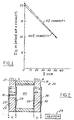
- the percentage of O2 in the (intake air + EGR) mixture depends on the amount of EGR as shown in Figure 1 and can be used as a measure of EGR.
- the effect of humidity in the air is indicated by showing plots for 0% and 100% humidity at a temperature of 21°C As shown, the error due to humidity decreases as the percentage of EGR increases. Correction for the error due to humidity is accomplished by measuring the percentage of O2 at zero EGR (completely closed EGR valve).
- oxygen-pumping is based on the fact that if a current is passed through an oxygen ion-conducting electrolyte (e.g., zirconia), oxygen is transferred (pumped) from one side of the electrolyte to the other.
- Such sensors have the common characteristic that their signal output is linearly proportional to the ambient oxygen partial pressure.
- the sensors may be of the single or double cell type.
- single-cell sensors the same ZrO2 cell is used for both oxygen pumping and sensing.
- double-cell sensors different ZrO2 cells are used for oxygen pumping and sensing.
- U.S. Patent 4,547,281 to Wang is directed to a single cell device capable of sensing the concentration of oxygen in a volume.
- Double cell sensors are disclosed, e.g., in U.S. Patents 4,272,329, 4,272,330, and 4,272,331 to Hetrick and Hetrick et al; 4,498,968 to Yamada et al; 4,645,572 to Nishizawa et al; and 4,487,680 to Logothetis et al.
- the Hetrick, Hetrick et al and Logothetis et al patents are commonly assigned with this invention.
- one cell is used to pump a certain (variable) amount of O2 out of a cavity formed between the cells and the second cell (the sensor cell) is used to measure the reduced partial pressure of O2 inside the cavity.
- the structure of that device has been modified to eliminate the cavity and employs only three electrodes, instead of the common four, but operates analogously to those of the '329, '330 and '331 patents discussed above.
- Embodiments of our device are similar to the two cell devices in that they comprise two ZrO2 cells, which may define a cavity between them or be similar to the Logothetis et al structure discussed above.
- Our device does not use one cell for oxygen-pumping and the second for oxygen-sensing as in the two cell devices described above. Rather, our invention uses both cells as O2-pumping cells.
- Kumargai disclose an electrochemical device for measuring the percentage of exhaust gas recirculation (EGR) in an intake air and exhaust gas mixture of an internal combustion engine, said electrochemical device including: a first solid electrochemical (pump) cell having a first pair of opposed electrodes, a second solid electrochemical cell having a second pair of opposed electrodes, a supporting structure coupled to said first and second cells to form with them a restricted volume, an aperture for providing communication between said restricted volume and an ambient of said intake air and exhaust gas mixture, a first external circuit means coupled to said first (pump) cell for passing a current through said first (pump) cell so that of said first pair of opposed electrodes a first (pump cell) electrode inside said volume is biased negatively causing a portion of the oxygen molecules inside said volume to be pumped out by said current flowing through said first (pump) cell, and a second external circuit means coupled to said second cell for applying a constant voltage across said second cell.
- a first solid electrochemical (pump) cell having a first pair of opposed electrodes
- a constant reference potential is maintained across the sensor cell by feedback control of the pump current applied to the pump cell, so that the pump current is proportional to the concentration of O2 in the input gas and thus provides a measure of this concentration.
- an O2 sensor with higher sensitivity is desirable.
- the present invention describes a method for measuring EGR and an EGR sensor which overcomes this problem.
- This invention provides a method for measuring the percentage of EGR by measuring the percentage of O2 in the intake air exhaust gas mixture (herein taken to mean “the mixture of intake air and exhaust gas”) with an electrochemical device, which O2 concentration is proportional to the percentage of EGR.
- the method comprises restricting communication between an ambient of an intake air and exhaust gas mixture and a restricted volume and passing a constant current through a first electrochemical pump cell so that an electrode, of the first pump cell, inside the restricted volume is biased negatively causing a portion of the oxygen molecules inside the volume to be pumped out by the current flowing through the first pump cell.
- the method further comprises applying a constant voltage across a second electrochemical pump cell so that an electrode, of the second pump cell, inside the restricted volume is biased negatively, the constant voltage across the second pump cell being sufficient to cause substantially all of the remainder of the oxygen molecules inside the restricted volume to be pumped out by a current flowing through the second pump cell but less than that capable of disassociating CO2 or H2O molecules.
- the method also comprises measuring a current flowing through the second pump cell, the second pump cell current being proportional to the percentage of O2 molecules inside the restricted volume and also proportional to the percentage of O2 molecules in the intake air and exhaust gas mixture. This invention is particularly advantageous for use in measuring the O2 concentration in high-O2 mixtures. Correction for variable humidity in air is accomplished by measuring the percentage of O2 when the EGR valve is closed (0% EGR).
- an electrochemical device for measuring EGR includes a first solid electrochemical pump cell having a first pair of opposed electrodes and a second solid electrochemical pump cell having a second pair of opposed electrodes.
- a supporting structure is coupled to the first and second pump cells to form with them a restricted volume. This volume communicates with the ambient atmosphere (the intake air and exhaust gas mixture when used in the method of the invention) through an aperture or collection of apertures.
- a constant current is passed through the first pump cell (by a first external circuit means coupled to the first pump cell) so that a portion (volume %) of the oxygen molecules inside the restricted volume is pumped out.
- a constant voltage is applied across the second pump cell (by a second external circuit means coupled to the second pump cell) of sufficient magnitude to cause substantially all of the remainder of the O2 molecules present inside the restricted volume to be pumped out and achieve a saturation current but less than that which will cause decomposition of any gas molecules containing oxygen, e.g., CO2 or H2O, that may be present in the restricted volume.
- the first external circuit means is adapted to apply an external voltage across the second pump cell which is generally less than about 0.8 volts, more preferably between about 0.2 and 0.8 volts.
- the saturation current of the second pump cell is proportional to the percentage of O2 inside the volume, proportional to the percentage of O2 in the intake air/exhaust gas mixture and to the percentage of EGR therein.
- Other embodiments of the device and method of the invention are set forth in claims 4 and 11 respectively.
- Figure 1 is a graph relating the percentage of O2 in a combined intake air and exhaust mixture to the percentage of EGR.
- Figure 2 is a schematic of an electrochemical device for measuring EGR according to one embodiment of this invention.
- Figure 3A is a schematic of a single-cell oxygen pumping device according to the prior art.
- Figure 3B is a graph relating the current voltage characteristics of the device of Figure 3A.
- Figure 4 is a graph relating the percentage of O2 in the volume of the device of Figure 3A as a function of the percentage of EGR.
- Figure 5 is a schematic of an electrochemical device for measuring the EGR according to a second embodiment of the present invention.
- FIGS 6A and 6B are schematics of electrochemical devices for measuring EGR in accordance with embodiments of the present invention.
- Figure 7 is a schematic of an electrochemical device having a planar configuration for measuring EGR in accordance with an embodiment of the present invention.
- This invention teaches a method for determining EGR based on the measurement of the amount of O2 in the intake air and EGR mixture by employing an electrochemical oxygen pumping device.
- This invention measures EGR by measuring the percentage of O2 in the air plus exhaust gas mixture with a sensor such as that shown in Figure 2.
- This sensor 20 has two electrochemical cells 21 and 31 arranged so that a restricted volume 40 is defined. Volume 40 is linked to the ambient atmosphere (air plus EGR) through an aperture 41 or a collection of apertures.
- Each of the two cells consists of a platelet 22, 32 made from an oxygen conducting solid electrolyte such as ZrO2, and two electrodes 23, 24; 33, 34 applied on the two sides of the platelets. These electrodes are made from platinum or some other material according to procedures well established in the area of oxygen sensors.
- Electrochemical cells 21 and 31 are operated as oxygen pumps by passing currents I1 and I2 through them.
- a heater 29 is positioned adjacent sensor 20 to provide an elevated temperature of about at least 500°C suitable for operation of sensor 20.
- single ZrO2 cell device 60 of Figure 3A which is useful as a lean O2-sensor. It has a single oxygen pumping cell 61 made from a ZrO2 platelet with two platinum electrodes 63 and 64 arranged in a structure so that a volume 65 is defined. Volume 65 communicates with the ambient gas through an aperture 66. When a voltage is applied across cell 61 so that electrode 63 is negative, a current I3 passes through the ZrO2 material as a result of motion of oxygen ions from electrode 63 to electrode 64.
- the single cell device 60 is used to measure the percentage of O2 in an exhaust gas/intake air mixture, for small voltages (O.2-O.8 V) the current increases with voltage as more oxygen is pumped out of volume 65 and reaches a saturation current, I s . This corresponds to the condition that all oxygen inside volume 65 is pumped out by the current.
- the saturation current I s is proportional to the percentage of O2 in the ambient.
- the voltage across the pump cell is maintained below about 0.8 volts so as to not decompose any gas molecules containing O2, such as CO2, present in volume 65.
- the current voltage (I-V) characteristics of single cell prior art device 60 (for various percentages of O2) under these conditions is shown in Figure 3B.
- FIG. 1 The relationship between the percentage of O2 in intake air/exhaust gas mixtures and the percentage of EGR therein is shown in Figure 1.
- Figure 4 shows the same relationship except at lower percentages of O2 inside the volume. It can be seen from these figures that for the same percentage change in O2 at a higher (Fig. 1) and at a lower O2 (Fig. 4) concentration, there is a smaller percentage change in EGR at the lower O2 concentration.
- the prior art single cell device is more sensitive to changes in EGR at low oxygen concentrations than it is at high oxygen concentrations.
- device 61 of Figure 3A can be suitably used for the measurement of EGR in a low-O2 environment, it is not optimally sensitive in high O2 (i.e. low EGR) environments.
- device 20 can be used to measure the percentage of O2 in such a gas mixture.
- the device comprises a first and a second oxygen pump cell.
- the first oxygen pumping cell pumps out a portion (e.g., 1/2) of the oxygen molecules from volume 40 so as to reduce the percentage of O2 molecules in the gas mixture in the volume. This, in effect, modifies the percentage of O2 molecules in the high O2 (20-10%) intake air/exhaust gas mixture of Figure 1 to the lower O2 (10-0%) mixture of that of Figure 4.
- the portion of oxygen molecules is pumped out of volume 40 by passing a constant current through cell 21 so that electrode 24 is negative.
- the current passed through cell 21 is that which is sufficient to cause cell 21 to pump the desired amount (portion) of the O2 molecules out of volume 40.
- the amount of O2 pumped out of volume 40 by the first oxygen pump cell 21 equals the percentage of O2 (by volume) present in the intake air/exhaust gas mixture, of the particular internal combustion engine being measured, at the maximum percentage of EGR employed (by that engine).
- removing 1/2 (50% by volume) of the O2 as in the embodiment above would be optimal for an engine in which the maximum amount of EGR generally employed in the engine gas mixture is 50% by volume since it contains about 50% by volume O2.
- cell 21 of the device would optimally remove 70% by volume of the O2 molecules, leaving about 30% of the O2 molecules in volume 40.
- the current necessary to remove the desired portion of O2 molecules from the volume would depend on such factors as the type and dimensions of aperture 41, and temperature. Selection of the optimum current necessary to pump the desired portion of the O2 molecules out of volume 40 by means of cell 21 will be apparent to those skilled in the art in view of the present disclosure.
- the percentage of O2 in the reduced oxygen mixture inside volume 40 is measured by the second oxygen pump cell 31.
- a constant voltage of less than 0.8 volts, generally between 0.2 and 0.8 volts, is applied across the second oxygen pump cell 31 of the invention device of Figure 2, with electrode 33 being negatively biased, to pump out substantially the remainder of O2 molecules inside volume 40.
- the voltage across the pump cell is maintained below about 0.8 volts so as to not decompose any gas molecules containing O2, such as CO2, present in volume 40.
- a saturation current is achieved in cell 31.
- An external circuit means coupled to pump cell 31 is used to measure the saturation current flowing through the second pump cell 31. This saturation current, I s , is a measure of the percentage of O2 molecules in the volume 40 and also is proportional to the percentage of O2 molecules in the intake air and exhaust gas mixture.
- the reduced-O2 mixture inside volume 40 (effected by the pumping out of a portion of the O2 molecules from volume 40 by cell 21) simulates a low-O2 mixture.
- This allows the device to measure the percentage of O2 in a high-O2 mixture with the sensitivity obtained when measuring low-O2 mixtures.
- the device of this invention provides a more sensitive measurement of EGR in a high-O2 intake air/exhaust gas mixture as compared to that obtained by the single O2 pumping prior art device 3A.
- the device of Figure 2 operates under the assumption that cell 21 can pump the desired portion of oxygen entering volume 40 through aperture 41 so that only the remainder of the O2 reaches cell 31. If this is not the case with the device structure of Figure 2, the desired condition can be accomplished by modifying its structure to that of device 50 as shown in Figure 5.
- a porous layer 38 is deposited on top of the inner electrode of cell 31.
- This porous layer is made from ZrO2 or an inert material (e.g. spinel or aluminium oxide) and acts as a hindrance (barrier) to O2 diffusion so that the desired portion of O2 is pumped out by cell 21
- the two pumping cells are more strongly decoupled, by placing between them barriers to oxygen diffusion.
- the porous layer in the device of Figure 5 may be replaced with a "wall" 42 having an aperture 43 as shown in device 50A of Figure 6A.
- Another type of configuration is shown in device 50B of Figure 6B.
- Device 50B uses a pump cell to remove a portion of the O2 and a pump cell/sensor cell structure 70 (similar to the sensor structure described in U.S. 4.272,329 by Hetrick et al) to remove and measure the remaining O2.
- FIG. 7 shows one embodiment of a planar device 80 according to this invention.
- a dense ZrO2 platelet 82 deposits porous platinum electrodes 83 and 84 on both sides of platelet 82 to form pump cell 81.
- a porous layer 89 made of ZrO2 or an inert material e.g. spinel or aluminium oxide
- a porous platinum electrode 85 is deposited on layer 89 followed by another porous layer 86 of ZrO2.
- a porous platinum electrode 87 is deposited on top of layer 86.
- Porous ZrO2 layer 86 and platinum electrodes 85 and 87 form pump cell 88.
- a constant current is passed through pump cell 88 to pump a portion of the oxygen out of the porous parts of the structure, and a constant voltage of between about 0.2 and 0.8 volts is applied across pump cell 81 to pump out substantially all of the remaining O2 inside the porous layer 89.
- the saturation current of pump cell 81 is proportional to the percentage of EGR in the gas mixture.
Landscapes
- Chemical & Material Sciences (AREA)
- Life Sciences & Earth Sciences (AREA)
- Health & Medical Sciences (AREA)
- Physics & Mathematics (AREA)
- Chemical Kinetics & Catalysis (AREA)
- Electrochemistry (AREA)
- Molecular Biology (AREA)
- Analytical Chemistry (AREA)
- Biochemistry (AREA)
- General Health & Medical Sciences (AREA)
- General Physics & Mathematics (AREA)
- Immunology (AREA)
- Pathology (AREA)
- Exhaust-Gas Circulating Devices (AREA)
- Measuring Oxygen Concentration In Cells (AREA)
Description
- This invention relates to a method and device for exhaust gas that is added to the intake air going to the cylinders of an internal combustion engine.
- Exhaust gas recirculation (EGR) is commonly used in vehicles with internal combustion engines to reduce the amount of NOx produced in the engine cylinders during combustion. Depending on engine operating conditions, a certain amount of exhaust gas is added through an EGR valve to the intake air that goes to the cylinders. The dilution of the intake air charge with exhaust gas results in a lower combustion temperature and thus production of smaller amounts of NOx. EGR is usually measured as percentage of exhaust gas in the combined air and exhaust intake mixture. The amount of EGR is determined by the degree of opening of the EGR valve and the difference in gas pressure across the valve. Usually, EGR is measured with a position sensor that measures the degree of opening of the EGR valve. This type of measurement is not reliable, however, because a) deposits can partially block the valve and b) changes in back pressure result in changes in the amount of EGR. Another method of determining EGR is based on the measurement of the flow of the exhaust gas added to the intake air. This is done by measuring with two pressure sensors the pressure drop across an orifice through which the recirculated exhaust gas is passed. This method of determining EGR also has problems because the orifice can be partially blocked by deposits.
- Still another method which may be used for measuring EGR is based on the measurement of the amount of O₂ in the combined (intake air and EGR) mixture. For an engine controlled at the stoichiometric air-to-fuel ratio, the percentage of O₂ in the exhaust gas is essentially zero. The percentage of O₂ in the (intake air + EGR) mixture depends on the amount of EGR as shown in Figure 1 and can be used as a measure of EGR. The effect of humidity in the air is indicated by showing plots for 0% and 100% humidity at a temperature of 21°C As shown, the error due to humidity decreases as the percentage of EGR increases. Correction for the error due to humidity is accomplished by measuring the percentage of O₂ at zero EGR (completely closed EGR valve).
- In the last 20 years, several different types of oxygen sensors based on O₂-pumping ZrO₂ cells have been developed. Such oxygen-pumping is based on the fact that if a current is passed through an oxygen ion-conducting electrolyte (e.g., zirconia), oxygen is transferred (pumped) from one side of the electrolyte to the other. Such sensors have the common characteristic that their signal output is linearly proportional to the ambient oxygen partial pressure. As discussed, e.g., in "High Temperature Oxygen Sensors Based on Electrochemical Oxygen Pumping", E. M. Logothetis and R. E. Hetrick, Fundamentals and Applications of Chemical Sensors, 1986, American Chemical Society, pages 136-154, the sensors may be of the single or double cell type.
- In single-cell sensors, the same ZrO₂ cell is used for both oxygen pumping and sensing. In double-cell sensors, different ZrO₂ cells are used for oxygen pumping and sensing. U.S. Patent 4,547,281 to Wang is directed to a single cell device capable of sensing the concentration of oxygen in a volume. Double cell sensors are disclosed, e.g., in U.S. Patents 4,272,329, 4,272,330, and 4,272,331 to Hetrick and Hetrick et al; 4,498,968 to Yamada et al; 4,645,572 to Nishizawa et al; and 4,487,680 to Logothetis et al. The Hetrick, Hetrick et al and Logothetis et al patents are commonly assigned with this invention. In general, in these two cell devices, one cell is used to pump a certain (variable) amount of O₂ out of a cavity formed between the cells and the second cell (the sensor cell) is used to measure the reduced partial pressure of O₂ inside the cavity. As described in the patent to Logothetis et al, the structure of that device has been modified to eliminate the cavity and employs only three electrodes, instead of the common four, but operates analogously to those of the '329, '330 and '331 patents discussed above.
- Embodiments of our device are similar to the two cell devices in that they comprise two ZrO₂ cells, which may define a cavity between them or be similar to the Logothetis et al structure discussed above. Our device, however, does not use one cell for oxygen-pumping and the second for oxygen-sensing as in the two cell devices described above. Rather, our invention uses both cells as O₂-pumping cells.
- In general, measuring changes in the O₂ concentration in an intake air/exhaust gas mixture is not trivial because the change in O₂ concentration with changes in %EGR is relatively small. Of the various types of oxygen sensors, the ones based on oxygen pumping are more appropriate because they have high sensitivity to O₂, weak temperature dependence and weak or no dependence on absolute gas pressure. In "Closed Loop Control of the EGR Rate Using the Oxygen Sensor", SAE International Congress and Exposition, February 29-March 4, 1988, Technical Paper No. 880133, M. Nishida, N. Inoue, H. Suzuki, and S. Kumargai disclose an electrochemical device for measuring the percentage of exhaust gas recirculation (EGR) in an intake air and exhaust gas mixture of an internal combustion engine, said electrochemical device including: a first solid electrochemical (pump) cell having a first pair of opposed electrodes, a second solid electrochemical cell having a second pair of opposed electrodes, a supporting structure coupled to said first and second cells to form with them a restricted volume, an aperture for providing communication between said restricted volume and an ambient of said intake air and exhaust gas mixture, a first external circuit means coupled to said first (pump) cell for passing a current through said first (pump) cell so that of said first pair of opposed electrodes a first (pump cell) electrode inside said volume is biased negatively causing a portion of the oxygen molecules inside said volume to be pumped out by said current flowing through said first (pump) cell, and a second external circuit means coupled to said second cell for applying a constant voltage across said second cell. In this device a constant reference potential is maintained across the sensor cell by feedback control of the pump current applied to the pump cell, so that the pump current is proportional to the concentration of O₂ in the input gas and thus provides a measure of this concentration. For measuring small changes in O₂ at high O₂ concentrations, however, an O₂ sensor with higher sensitivity is desirable. The present invention describes a method for measuring EGR and an EGR sensor which overcomes this problem.
- This invention provides a method for measuring the percentage of EGR by measuring the percentage of O₂ in the intake air exhaust gas mixture (herein taken to mean "the mixture of intake air and exhaust gas") with an electrochemical device, which O₂ concentration is proportional to the percentage of EGR. The method comprises restricting communication between an ambient of an intake air and exhaust gas mixture and a restricted volume and passing a constant current through a first electrochemical pump cell so that an electrode, of the first pump cell, inside the restricted volume is biased negatively causing a portion of the oxygen molecules inside the volume to be pumped out by the current flowing through the first pump cell. The method further comprises applying a constant voltage across a second electrochemical pump cell so that an electrode, of the second pump cell, inside the restricted volume is biased negatively, the constant voltage across the second pump cell being sufficient to cause substantially all of the remainder of the oxygen molecules inside the restricted volume to be pumped out by a current flowing through the second pump cell but less than that capable of disassociating CO₂ or H₂O molecules. The method also comprises measuring a current flowing through the second pump cell, the second pump cell current being proportional to the percentage of O₂ molecules inside the restricted volume and also proportional to the percentage of O₂ molecules in the intake air and exhaust gas mixture. This invention is particularly advantageous for use in measuring the O₂ concentration in high-O₂ mixtures. Correction for variable humidity in air is accomplished by measuring the percentage of O₂ when the EGR valve is closed (0% EGR).
- According to another aspect of this invention, an electrochemical device for measuring EGR includes a first solid electrochemical pump cell having a first pair of opposed electrodes and a second solid electrochemical pump cell having a second pair of opposed electrodes. A supporting structure is coupled to the first and second pump cells to form with them a restricted volume. This volume communicates with the ambient atmosphere (the intake air and exhaust gas mixture when used in the method of the invention) through an aperture or collection of apertures. In operation according to the method of the invention, a constant current is passed through the first pump cell (by a first external circuit means coupled to the first pump cell) so that a portion (volume %) of the oxygen molecules inside the restricted volume is pumped out. In operation, a constant voltage is applied across the second pump cell (by a second external circuit means coupled to the second pump cell) of sufficient magnitude to cause substantially all of the remainder of the O₂ molecules present inside the restricted volume to be pumped out and achieve a saturation current but less than that which will cause decomposition of any gas molecules containing oxygen, e.g., CO₂ or H₂O, that may be present in the restricted volume. The first external circuit means is adapted to apply an external voltage across the second pump cell which is generally less than about 0.8 volts, more preferably between about 0.2 and 0.8 volts. The saturation current of the second pump cell is proportional to the percentage of O₂ inside the volume, proportional to the percentage of O₂ in the intake air/exhaust gas mixture and to the percentage of EGR therein. Other embodiments of the device and method of the invention are set forth in claims 4 and 11 respectively.
- The invention will now be described further, by way of example, with reference to the accompanying drawings, in which :
- Figure 1 is a graph relating the percentage of O₂ in a combined intake air and exhaust mixture to the percentage of EGR.
- Figure 2 is a schematic of an electrochemical device for measuring EGR according to one embodiment of this invention.
- Figure 3A is a schematic of a single-cell oxygen pumping device according to the prior art.
- Figure 3B is a graph relating the current voltage characteristics of the device of Figure 3A.
- Figure 4 is a graph relating the percentage of O₂ in the volume of the device of Figure 3A as a function of the percentage of EGR.
- Figure 5 is a schematic of an electrochemical device for measuring the EGR according to a second embodiment of the present invention.
- Figures 6A and 6B are schematics of electrochemical devices for measuring EGR in accordance with embodiments of the present invention.
- Figure 7 is a schematic of an electrochemical device having a planar configuration for measuring EGR in accordance with an embodiment of the present invention.
- This invention teaches a method for determining EGR based on the measurement of the amount of O₂ in the intake air and EGR mixture by employing an electrochemical oxygen pumping device.
- As mentioned above, several types of oxygen sensors based on oxygen pumping with ZrO₂ electrochemical cells exist. These sensors have several characteristics that make them suitable for lean A/F ratios (i.e., high EGR). However for measuring small changes in O₂ at high O₂ concentration, see Figure 1, an O₂ sensor with higher sensitivity is desirable.
- This invention measures EGR by measuring the percentage of O₂ in the air plus exhaust gas mixture with a sensor such as that shown in Figure 2. This
sensor 20 has twoelectrochemical cells volume 40 is defined.Volume 40 is linked to the ambient atmosphere (air plus EGR) through anaperture 41 or a collection of apertures. Each of the two cells consists of aplatelet electrodes Electrochemical cells heater 29 is positionedadjacent sensor 20 to provide an elevated temperature of about at least 500°C suitable for operation ofsensor 20. - In order to understand the operation of
device 20, first consider singleZrO₂ cell device 60 of Figure 3A which is useful as a lean O₂-sensor. It has a singleoxygen pumping cell 61 made from a ZrO₂ platelet with twoplatinum electrodes volume 65 is defined.Volume 65 communicates with the ambient gas through anaperture 66. When a voltage is applied acrosscell 61 so thatelectrode 63 is negative, a current I₃ passes through the ZrO₂ material as a result of motion of oxygen ions fromelectrode 63 toelectrode 64. - As the oxygen ions formed at
electrode 63 travel through the ZrO₂ platelet toelectrode 64, more O₂ molecules from the gas phase dissociate and react with electrons atelectrode 63 to form oxygen ions (O=). By means of this electrochemical reaction, as oxygen ions are depleted at electrode 63 (in travelling to electrode 64) more oxygen ions are formed from O₂ gas molecules involume 65. By means of an inverse electrochemical reaction, oxygen ions atelectrode 64 are released as O₂ molecules into the ambient gas. The net effect of the current through the cell is to pump O₂ out ofvolume 65. Because of the lower concentration of O₂ insidevolume 65, there will be a diffusional flux of O₂ from the ambient (intake air plus exhaust gas mixture) intovolume 65 throughaperture 66. Under steady state conditions, the diffusional flux of O₂ intovolume 65 will be equal to the flux of O₂ pumped out ofvolume 65 by the pumping current. - If the
single cell device 60 is used to measure the percentage of O₂ in an exhaust gas/intake air mixture, for small voltages (O.2-O.8 V) the current increases with voltage as more oxygen is pumped out ofvolume 65 and reaches a saturation current, Is. This corresponds to the condition that all oxygen insidevolume 65 is pumped out by the current. The saturation current Is is proportional to the percentage of O₂ in the ambient. The voltage across the pump cell is maintained below about 0.8 volts so as to not decompose any gas molecules containing O₂, such as CO₂, present involume 65. The current voltage (I-V) characteristics of single cell prior art device 60 (for various percentages of O₂) under these conditions is shown in Figure 3B. - The relationship between the percentage of O₂ in intake air/exhaust gas mixtures and the percentage of EGR therein is shown in Figure 1. Figure 4 shows the same relationship except at lower percentages of O₂ inside the volume. It can be seen from these figures that for the same percentage change in O₂ at a higher (Fig. 1) and at a lower O₂ (Fig. 4) concentration, there is a smaller percentage change in EGR at the lower O₂ concentration. Thus the prior art single cell device is more sensitive to changes in EGR at low oxygen concentrations than it is at high oxygen concentrations. Thus while
device 61 of Figure 3A can be suitably used for the measurement of EGR in a low-O₂ environment, it is not optimally sensitive in high O₂ (i.e. low EGR) environments. - The measurement of EGR in a high-O₂ intake air/exhaust gas mixture can be accomplished, however, with a device according to the present invention. Referring to Figure 2,
device 20 can be used to measure the percentage of O₂ in such a gas mixture. The device comprises a first and a second oxygen pump cell. The first oxygen pumping cell pumps out a portion (e.g., 1/2) of the oxygen molecules fromvolume 40 so as to reduce the percentage of O₂ molecules in the gas mixture in the volume. This, in effect, modifies the percentage of O₂ molecules in the high O₂ (20-10%) intake air/exhaust gas mixture of Figure 1 to the lower O₂ (10-0%) mixture of that of Figure 4. The portion of oxygen molecules is pumped out ofvolume 40 by passing a constant current throughcell 21 so thatelectrode 24 is negative. The current passed throughcell 21 is that which is sufficient to causecell 21 to pump the desired amount (portion) of the O₂ molecules out ofvolume 40. Preferably, the amount of O₂ pumped out ofvolume 40 by the firstoxygen pump cell 21 equals the percentage of O₂ (by volume) present in the intake air/exhaust gas mixture, of the particular internal combustion engine being measured, at the maximum percentage of EGR employed (by that engine). Thus, removing 1/2 (50% by volume) of the O₂ as in the embodiment above would be optimal for an engine in which the maximum amount of EGR generally employed in the engine gas mixture is 50% by volume since it contains about 50% by volume O₂. In an engine in which the maximum amount of EGR generally employed in the engine gas mixture is 30% by volume (containing 70% O₂ by volume),cell 21 of the device would optimally remove 70% by volume of the O₂ molecules, leaving about 30% of the O₂ molecules involume 40. The current necessary to remove the desired portion of O₂ molecules from the volume would depend on such factors as the type and dimensions ofaperture 41, and temperature. Selection of the optimum current necessary to pump the desired portion of the O₂ molecules out ofvolume 40 by means ofcell 21 will be apparent to those skilled in the art in view of the present disclosure. - According to the embodiment of the invention device of Figure 2, the percentage of O₂ in the reduced oxygen mixture inside
volume 40 is measured by the secondoxygen pump cell 31. A constant voltage of less than 0.8 volts, generally between 0.2 and 0.8 volts, is applied across the secondoxygen pump cell 31 of the invention device of Figure 2, withelectrode 33 being negatively biased, to pump out substantially the remainder of O₂ molecules insidevolume 40. The voltage across the pump cell is maintained below about 0.8 volts so as to not decompose any gas molecules containing O₂, such as CO₂, present involume 40. For sufficiently large voltages, about 0.5 to 0.8 volts, a saturation current is achieved incell 31. An external circuit means coupled to pumpcell 31 is used to measure the saturation current flowing through thesecond pump cell 31. This saturation current, Is, is a measure of the percentage of O₂ molecules in thevolume 40 and also is proportional to the percentage of O₂ molecules in the intake air and exhaust gas mixture. - In effect, the reduced-O₂ mixture inside volume 40 (effected by the pumping out of a portion of the O₂ molecules from
volume 40 by cell 21) simulates a low-O₂ mixture. This allows the device to measure the percentage of O₂ in a high-O₂ mixture with the sensitivity obtained when measuring low-O₂ mixtures. Thus the device of this invention provides a more sensitive measurement of EGR in a high-O₂ intake air/exhaust gas mixture as compared to that obtained by the single O₂ pumping prior art device 3A. - The device of Figure 2 operates under the assumption that
cell 21 can pump the desired portion ofoxygen entering volume 40 throughaperture 41 so that only the remainder of the O₂ reachescell 31. If this is not the case with the device structure of Figure 2, the desired condition can be accomplished by modifying its structure to that ofdevice 50 as shown in Figure 5. In this structure, aporous layer 38 is deposited on top of the inner electrode ofcell 31. This porous layer is made from ZrO₂ or an inert material (e.g. spinel or aluminium oxide) and acts as a hindrance (barrier) to O₂ diffusion so that the desired portion of O₂ is pumped out bycell 21 - Several other device configurations are possible. According to other embodiments of this invention, the two pumping cells are more strongly decoupled, by placing between them barriers to oxygen diffusion. For example, the porous layer in the device of Figure 5 may be replaced with a "wall" 42 having an
aperture 43 as shown indevice 50A of Figure 6A. Another type of configuration is shown in device 50B of Figure 6B. Device 50B uses a pump cell to remove a portion of the O₂ and a pump cell/sensor cell structure 70 (similar to the sensor structure described in U.S. 4.272,329 by Hetrick et al) to remove and measure the remaining O₂. - The electrochemical device for the measurement of EGR disclosed here can also be made in a planar configuration. Figure 7 shows one embodiment of a
planar device 80 according to this invention. One starts with adense ZrO₂ platelet 82 and depositsporous platinum electrodes platelet 82 to formpump cell 81. Aporous layer 89 made of ZrO₂ or an inert material (e.g. spinel or aluminium oxide) is deposited on top ofplatinum electrode 83 to form a barrier to diffusion of O₂ molecules. Aporous platinum electrode 85 is deposited onlayer 89 followed by anotherporous layer 86 of ZrO₂. Finally, aporous platinum electrode 87 is deposited on top oflayer 86.Porous ZrO₂ layer 86 andplatinum electrodes form pump cell 88. As in the case of the device of Figure 2, a constant current is passed throughpump cell 88 to pump a portion of the oxygen out of the porous parts of the structure, and a constant voltage of between about 0.2 and 0.8 volts is applied acrosspump cell 81 to pump out substantially all of the remaining O₂ inside theporous layer 89. The saturation current ofpump cell 81 is proportional to the percentage of EGR in the gas mixture. - Various modifications and variations will no doubt occur to those skilled in the art to which this invention pertains. For example, the particular construction of the two cell oxygen pumping device may be varied from that disclosed herein.
Claims (12)
- An electrochemical device for measuring the percentage of exhaust gas recirculation (EGR) in an intake air and exhaust gas mixture of an internal combustion engine, said electrochemical device including: a first solid electrochemical pump cell (21) having a first pair of opposed electrodes (23,24), a second solid electrochemical pump cell (31) having a second pair of opposed electrodes (33,34), a supporting structure coupled to said first and second pump cells to form with them a restricted volume (40), an aperture (41) for providing communication between said restricted volume (40) and an ambient of said intake air and exhaust gas mixture, a first external circuit means coupled to said first pump cell (21) for passing a constant current through said first pump cell so that of said first pair of opposed electrodes (23,24) a first pump cell electrode (24) inside said volume (40) is biased negatively causing a portion of the oxygen molecules inside said volume to be pumped out by said current flowing through said first pump cell (21), a second external circuit means coupled to said second pump cell for applying a constant voltage across said second pump cell (31) so that of said second pair of opposed electrodes (33,34) a second pump cell electrode (33) inside said volume (40) is biased negatively, said constant voltage across said second pump cell (31) being sufficient to cause substantially all of the remainder of the oxygen molecules inside said volume to be pumped out by a current flowing through said second pump cell (31) but less than that capable of disassociating CO₂ or H₂O molecules, and a third external circuit means coupled to said second pump cell (31) for measuring said current flowing through said second pump cell, said second pump cell current being proportional to the percentage of O₂ molecules inside said volume (40) not pumped out by said first pump cell (21) and also proportional to the percentage of O₂ molecules in the intake air and exhaust gas mixture.
- An electrochemical device as claimed in claim 1, further comprising a porous layer (38) deposited on top of said second pump cell electrode (33) located inside said volume (40).
- An electrochemical device as claimed in claim 1 or claim 2, further comprising a wall (42) inside said volume, said wall dividing said volume into two compartments which communicate with each other through an aperture (43) in said wall.
- An electrochemical device for measuring the percentage of exhaust gas-recirculation (EGR) in an intake air and exhaust gas mixture of an internal combustion engine, said electrochemical device including, a generally planar first electrochemical pump cell (81) including a relatively dense ZrO₂ platelet (82) with porous platinum electrodes (83, 84) on two sides of said platelet, a first porous ZrO₂ layer (89) deposited on one electrode (83) of said first pump cell (81), a generally planar second electrochemical pump cell (88) including a first porous platinum electrode (85), a second porous ZrO₂ layer (86) and a second porous platinum electrode (87) deposited successively on said first porous ZrO₂ layer (89), a first external circuit means coupled to said second pump cell (88) for passing a constant current through said second pump cell so that said second electrode (87) is biased positively causing a portion of the oxygen molecules inside said first porous ZrO₂ layer (89) to be pumped out by said current flowing through said second pump cell, a second external circuit means coupled to said first pump cell (81) for applying a constant voltage across said first pump cell so that the exposed electrode (84) is biased positively, said constant voltage across said first pump cell being sufficient to cause substantially all of the remainder of the oxygen molecules inside said first porous ZrO₂ layer (89) to be pumped out by a current flowing through said first porous ZrO₂ layer but less than that capable of disassociating CO₂ or H₂O molecules; and a third external circuit means coupled to said first pump cell (81) for measuring the current flowing through said first pump cell, said current being proportional to the percentage of O₂ inside said first porous ZrO₂ layer (89) not pumped out by said second pump cell (88) and also proportional to the percentage of O₂ in said intake air and exhaust gas mixture.
- An electrochemical device as claimed in any preceding claim, further including a heater (29) to maintain the temperature of the device at least 500°C.
- An electrochemical device as claimed in any preceding claim wherein the percentage of oxygen pumped out of said restricted volume (40) or first porous layer (89) by said first pump cell (31, 81) equals the percentage of oxygen present in said intake air and exhaust gas mixture of said engine at maximum EGR.
- A method for measuring the percentage of EGR in a combined intake air and exhaust gas mixture of an internal combustion engine including the steps of, restricting communication between an ambient of intake air and exhaust gas mixture and a restricted volume (40), passing a constant current through a first electrochemical pump cell (21) so that an electrode (24) of said first pump cell inside said restricted volume is biased negatively causing a portion of the oxygen molecules inside said volume to be pumped out by said current flowing through said first pump cell, applying a constant voltage across a second electrochemical pump cell (31) so that a second pump cell electrode (33) inside said volume is biased negatively, said constant voltage across said second pump cell being sufficient to cause substantially all of the remainder of the oxygen molecules inside said restricted volume to be pumped out by a current flowing through said second pump cell but less than that capable of disassociating CO₂ or H₂O molecules, and measuring a current flowing through said second pump cell, said second pump cell current being proportional to the percentage of O₂ molecules inside said restricted volume and also proportional to the percentage of O₂ molecules in the intake air and exhaust gas mixture.
- A method as claimed in claim 7, wherein said electrode (33) of said second second pump cell (31) inside said restricted volume (40) is separated from the restricted volume by a porous layer (38) so that communication to said restricted volume from said second pump cell is through said porous layer.
- A method as claimed in claim 7 or claim 8, wherein said restricted volume (40) is divided into two compartments which communicate with each other through an aperture (43) in a wall (42) inside said restricted volume so that communication between two electrochemical pump cells on opposing sides of the wall is controlled.
- A method as claimed in claim 7, 8 or 9, wherein the variability of the humidity in the air is corrected by additionally measuring the percentage of O₂ in the intake air and exhaust gas mixture when an EGR valve is closed thereby stopping exhaust gas recirculation.
- A method for measuring the percentage of EGR in an intake air and exhaust gas mixture of an internal combustion engine including the steps of forming a generally planar first electrochemical pump cell (81) including a relatively dense ZrO₂ platelet (82) with porous platinum electrodes (83, 84) on two sides of said platelet, depositing a first porous ZrO₂ layer (89) on top of one of the electrodes (83) of said pump cell, forming a generally planar second electrochemical pump cell (88) including a porous platinum electrode (85), a second porous ZrO₂ layer (86) and a porous platinum electrode (87) deposited successively on top of said first porous ZrO₂ layer (89), passing a constant current through said second pump cell (88) so that the exposed electrode (87) is biased positively causing a portion of oxygen molecules inside said first porous ZrO₂ layer (89) to be pumped out by the current flowing through said second pump cell, applying a constant voltage across said first pump cell (81) so that the exposed electrode (84) is biased positively, said constant voltage across said first pump cell being sufficient to cause substantially all of the remainder of the oxygen molecules inside said first porous ZrO₂ layer (89) to be pumped out by a current flowing through said first porous ZrO₂ layer but less than that capable of disassociating CO₂ or H₂O molecules; and measuring the current flowing through said first pump cell, said current being proportional to the percentage of O₂ inside said first porous ZrO₂ layer not pumped out by second pump cell and also proportional to the percentage of O₂ in said combined intake air and exhaust gas mixture.
- A method as claimed in Claim 11, wherein the variability of the humidity in the air is corrected by additionally measuring the percentage of O₂ in the intake air and exhaust gas mixture when an EGR valve is closed thereby stopping exhaust gas recirculation.
Applications Claiming Priority (2)
| Application Number | Priority Date | Filing Date | Title |
|---|---|---|---|
| US07/222,864 US4909072A (en) | 1988-07-22 | 1988-07-22 | Measurement and control of exhaust gas recirculation with an oxygen pumping device |
| US222864 | 1998-12-30 |
Publications (3)
| Publication Number | Publication Date |
|---|---|
| EP0351960A2 EP0351960A2 (en) | 1990-01-24 |
| EP0351960A3 EP0351960A3 (en) | 1991-04-10 |
| EP0351960B1 true EP0351960B1 (en) | 1994-08-31 |
Family
ID=22834043
Family Applications (1)
| Application Number | Title | Priority Date | Filing Date |
|---|---|---|---|
| EP89306329A Expired - Lifetime EP0351960B1 (en) | 1988-07-22 | 1989-06-22 | Measurement and control of exhaust gas recirculation with an oxygen pumping device |
Country Status (5)
| Country | Link |
|---|---|
| US (1) | US4909072A (en) |
| EP (1) | EP0351960B1 (en) |
| JP (1) | JPH0274857A (en) |
| CA (1) | CA1295366C (en) |
| DE (1) | DE68917821T2 (en) |
Families Citing this family (24)
| Publication number | Priority date | Publication date | Assignee | Title |
|---|---|---|---|---|
| US5049254A (en) * | 1987-05-29 | 1991-09-17 | Ford Motor Company | Exhaust gas recirculation sensor |
| US5221445A (en) * | 1989-04-17 | 1993-06-22 | Gte Laboratories Incorporated | Method for determining identification and concentration of an atmospheric component |
| US5034107A (en) * | 1989-12-12 | 1991-07-23 | Gte Laboratories Incorporated | Method for sensing nitrous oxide |
| US5080765A (en) * | 1989-12-20 | 1992-01-14 | Gte Laboratories Incorporated | Method for determining identification and concentration of an atmospheric component |
| FR2667113B1 (en) * | 1990-09-26 | 1993-06-25 | Semt Pielstick | METHOD FOR MONITORING THE EMISSION OF NITROGEN OXIDES BY AN INTERNAL COMBUSTION ENGINE. |
| DE4039429A1 (en) * | 1990-12-11 | 1992-06-17 | Abb Patent Gmbh | METHOD AND DEVICE FOR CHECKING A CATALYST |
| US5217588A (en) * | 1992-02-27 | 1993-06-08 | Gte Laboratories Incorporated | Method and apparatus for sensing NOx |
| DE4226537C2 (en) * | 1992-08-11 | 2003-03-27 | Bosch Gmbh Robert | Polarographic sensor |
| US5672811A (en) * | 1994-04-21 | 1997-09-30 | Ngk Insulators, Ltd. | Method of measuring a gas component and sensing device for measuring the gas component |
| JP2885336B2 (en) * | 1994-04-21 | 1999-04-19 | 日本碍子株式会社 | Method and apparatus for measuring NOx concentration in gas to be measured |
| DE4447033C2 (en) * | 1994-12-28 | 1998-04-30 | Bosch Gmbh Robert | Sensor for determining the oxygen content in gas mixtures |
| JP3501189B2 (en) * | 1995-06-07 | 2004-03-02 | 株式会社デンソー | Air-fuel ratio sensor element |
| US6051123A (en) * | 1995-06-15 | 2000-04-18 | Gas Research Institute | Multi-functional and NOx sensor for combustion systems |
| JP3647181B2 (en) * | 1996-02-23 | 2005-05-11 | 日本碍子株式会社 | Nitrogen oxide measurement method |
| JP3537628B2 (en) * | 1996-05-16 | 2004-06-14 | 日本碍子株式会社 | Method for measuring nitrogen oxides |
| JP3332761B2 (en) * | 1996-11-08 | 2002-10-07 | 日本特殊陶業株式会社 | Oxygen concentration / nitrogen oxide concentration measurement method and device |
| JP3518203B2 (en) * | 1996-11-14 | 2004-04-12 | トヨタ自動車株式会社 | Internal combustion engine with EGR device |
| EP0845670B1 (en) | 1996-12-02 | 2000-09-06 | Ngk Spark Plug Co., Ltd | Method and apparatus for measuring NOx gas concentration |
| US6695964B1 (en) | 1996-12-02 | 2004-02-24 | Ngk Spark Plug Co., Ltd. | Method and apparatus for measuring NOx gas concentration |
| US6228252B1 (en) * | 1997-02-13 | 2001-05-08 | Ngk Spark Plug Co. Ltd. | Apparatus for detecting concentration of nitrogen oxide |
| EP0878709B1 (en) * | 1997-03-21 | 2004-08-25 | NGK Spark Plug Co. Ltd. | Method and apparatus for measuring NOx gas concentration |
| US6344134B1 (en) | 1998-01-16 | 2002-02-05 | Ngk Spark Plug Co., Ltd. | Method for measuring NOx concentration and NOx concentration sensor |
| DE202013103647U1 (en) | 2013-08-12 | 2013-09-02 | Aspect Imaging Ltd. | A system for online measurement and control of O2 fraction, CO fraction and CO2 fraction |
| JP6141746B2 (en) * | 2013-10-16 | 2017-06-07 | 日立オートモティブシステムズ株式会社 | Control device for internal combustion engine |
Family Cites Families (17)
| Publication number | Priority date | Publication date | Assignee | Title |
|---|---|---|---|---|
| US4272331A (en) * | 1980-03-03 | 1981-06-09 | Ford Motor Company | Oscillatory mode oxygen sensor and method |
| US4272330A (en) * | 1980-03-03 | 1981-06-09 | Ford Motor Company | Transient mode oxygen sensor and method |
| US4272329A (en) * | 1980-03-03 | 1981-06-09 | Ford Motor Company | Steady state mode oxygen sensor and method |
| JPS59178354A (en) * | 1983-03-29 | 1984-10-09 | Ngk Spark Plug Co Ltd | Oxygen sensor |
| US4487680A (en) * | 1983-04-18 | 1984-12-11 | Ford Motor Company | Planar ZrO2 oxygen pumping sensor |
| WO1985000659A1 (en) * | 1983-07-18 | 1985-02-14 | Ford Motor Company | Measuring an extended range of air fuel ratio |
| JPS60259948A (en) * | 1984-06-06 | 1985-12-23 | Ngk Insulators Ltd | Electrochemical apparatus |
| US4547281A (en) * | 1983-11-21 | 1985-10-15 | Gte Laboratories Incorporated | Gas analysis apparatus |
| US4578172A (en) * | 1983-12-15 | 1986-03-25 | Ngk Spark Plug Co. | Air/fuel ratio detector |
| US4614175A (en) * | 1983-12-27 | 1986-09-30 | Mitsubishi Denki Kabushiki Kaisha | Engine exhaust gas recirculation control system |
| JPS60192250A (en) * | 1984-03-13 | 1985-09-30 | Ngk Spark Plug Co Ltd | Oxygen sensor |
| US4658790A (en) * | 1984-05-01 | 1987-04-21 | Nissan Motor Co., Ltd. | Air/fuel ratio detecting device and control system using same |
| US4568443A (en) * | 1984-09-06 | 1986-02-04 | Mitsubishi Denki Kabushiki Kaisha | Air-to-fuel ratio sensor |
| US4645572A (en) * | 1985-02-23 | 1987-02-24 | Ngk Insulators, Ltd. | Method of determining concentration of a component in gases and electrochemical device suitable for practicing the method |
| US4769124A (en) * | 1985-08-10 | 1988-09-06 | Honda Giken Kogyo Kabushiki Kaisha | Oxygen concentration detection device having a pair of oxygen pump units with a simplified construction |
| JPH0680427B2 (en) * | 1985-09-10 | 1994-10-12 | 日本電装株式会社 | Pump type oxygen concentration detector |
| GB2183042B (en) * | 1985-09-27 | 1989-09-20 | Ngk Spark Plug Co | Air/fuel ratio sensor |
-
1988
- 1988-07-22 US US07/222,864 patent/US4909072A/en not_active Expired - Lifetime
-
1989
- 1989-06-14 CA CA000602757A patent/CA1295366C/en not_active Expired - Lifetime
- 1989-06-22 EP EP89306329A patent/EP0351960B1/en not_active Expired - Lifetime
- 1989-06-22 DE DE68917821T patent/DE68917821T2/en not_active Expired - Lifetime
- 1989-07-20 JP JP1188679A patent/JPH0274857A/en active Pending
Also Published As
| Publication number | Publication date |
|---|---|
| EP0351960A2 (en) | 1990-01-24 |
| CA1295366C (en) | 1992-02-04 |
| JPH0274857A (en) | 1990-03-14 |
| US4909072A (en) | 1990-03-20 |
| EP0351960A3 (en) | 1991-04-10 |
| DE68917821D1 (en) | 1994-10-06 |
| DE68917821T2 (en) | 1994-12-22 |
Similar Documents
| Publication | Publication Date | Title |
|---|---|---|
| EP0351960B1 (en) | Measurement and control of exhaust gas recirculation with an oxygen pumping device | |
| US5145566A (en) | Method for determining relative amount of oxygen containing gas in a gas mixture | |
| EP0361692B1 (en) | Sensor for determining relative amount of oxygen containing gas in a gas mixture | |
| US4487680A (en) | Planar ZrO2 oxygen pumping sensor | |
| EP0580206B1 (en) | Wide-range oxygen sensor | |
| US5089113A (en) | Measurement and control of exhaust gas recirculation with an oxygen pumping device | |
| US6196053B1 (en) | Method of measuring a gas component and sensing device for measuring the gas component | |
| US4574627A (en) | Air-fuel ratio detector and method of measuring air-fuel ratio | |
| US5049254A (en) | Exhaust gas recirculation sensor | |
| JP2000321238A (en) | Gas sensor | |
| US4724061A (en) | Automotive, internal reference, solid electrolyte, lean oxygen sensor | |
| US4568443A (en) | Air-to-fuel ratio sensor | |
| EP0709668B1 (en) | Apparatus and method for measuring concentrations of gas components | |
| US5879526A (en) | Electrochemical measuring sensor for determining nitrogen oxides in gas mixtures | |
| EP0227257A2 (en) | Electrochemical device | |
| US20100126883A1 (en) | Sensor element having suppressed rich gas reaction | |
| US5010762A (en) | Measurement and control of exhaust gas recirculation with an oxygen pumping device | |
| US4666566A (en) | Method of detecting oxygen partial pressure | |
| Gibson et al. | Novel sensors for monitoring high oxygen concentrations | |
| US6623617B2 (en) | Method and apparatus for measuring concentration of a component in a gas | |
| Oh | A planar-type sensor for detection of oxidizing and reducing gases | |
| US20030062904A1 (en) | Error minimizing structure of gas sensor | |
| Logothetis | Air‐To‐Fuel Sensors Based on Oxygen Pumping | |
| JP3289353B2 (en) | Thin film limit current type full range air-fuel ratio sensor | |
| EP0320502B1 (en) | Method of detecting oxygen partial pressure |
Legal Events
| Date | Code | Title | Description |
|---|---|---|---|
| PUAI | Public reference made under article 153(3) epc to a published international application that has entered the european phase |
Free format text: ORIGINAL CODE: 0009012 |
|
| AK | Designated contracting states |
Kind code of ref document: A2 Designated state(s): DE FR GB |
|
| PUAL | Search report despatched |
Free format text: ORIGINAL CODE: 0009013 |
|
| AK | Designated contracting states |
Kind code of ref document: A3 Designated state(s): DE FR GB |
|
| 17P | Request for examination filed |
Effective date: 19910928 |
|
| 17Q | First examination report despatched |
Effective date: 19930604 |
|
| GRAA | (expected) grant |
Free format text: ORIGINAL CODE: 0009210 |
|
| AK | Designated contracting states |
Kind code of ref document: B1 Designated state(s): DE FR GB |
|
| ET | Fr: translation filed | ||
| REF | Corresponds to: |
Ref document number: 68917821 Country of ref document: DE Date of ref document: 19941006 |
|
| PLBE | No opposition filed within time limit |
Free format text: ORIGINAL CODE: 0009261 |
|
| STAA | Information on the status of an ep patent application or granted ep patent |
Free format text: STATUS: NO OPPOSITION FILED WITHIN TIME LIMIT |
|
| 26N | No opposition filed | ||
| REG | Reference to a national code |
Ref country code: FR Ref legal event code: TP Ref country code: FR Ref legal event code: CD |
|
| REG | Reference to a national code |
Ref country code: GB Ref legal event code: IF02 |
|
| REG | Reference to a national code |
Ref country code: GB Ref legal event code: 746 Effective date: 20050112 |
|
| REG | Reference to a national code |
Ref country code: FR Ref legal event code: CD Ref country code: FR Ref legal event code: CA |
|
| PGFP | Annual fee paid to national office [announced via postgrant information from national office to epo] |
Ref country code: DE Payment date: 20080630 Year of fee payment: 20 |
|
| PGFP | Annual fee paid to national office [announced via postgrant information from national office to epo] |
Ref country code: GB Payment date: 20080506 Year of fee payment: 20 |
|
| REG | Reference to a national code |
Ref country code: GB Ref legal event code: PE20 Expiry date: 20090621 |
|
| PG25 | Lapsed in a contracting state [announced via postgrant information from national office to epo] |
Ref country code: GB Free format text: LAPSE BECAUSE OF EXPIRATION OF PROTECTION Effective date: 20090621 |
|
| PGFP | Annual fee paid to national office [announced via postgrant information from national office to epo] |
Ref country code: FR Payment date: 20080424 Year of fee payment: 20 |