EP0344166B1 - Diagnostic test for swine dysentery - Google Patents
Diagnostic test for swine dysentery Download PDFInfo
- Publication number
- EP0344166B1 EP0344166B1 EP88900561A EP88900561A EP0344166B1 EP 0344166 B1 EP0344166 B1 EP 0344166B1 EP 88900561 A EP88900561 A EP 88900561A EP 88900561 A EP88900561 A EP 88900561A EP 0344166 B1 EP0344166 B1 EP 0344166B1
- Authority
- EP
- European Patent Office
- Prior art keywords
- hyodysenteriae
- antigen
- sample
- enzyme
- antibody
- Prior art date
- Legal status (The legal status is an assumption and is not a legal conclusion. Google has not performed a legal analysis and makes no representation as to the accuracy of the status listed.)
- Expired - Lifetime
Links
Images
Classifications
-
- E—FIXED CONSTRUCTIONS
- E04—BUILDING
- E04B—GENERAL BUILDING CONSTRUCTIONS; WALLS, e.g. PARTITIONS; ROOFS; FLOORS; CEILINGS; INSULATION OR OTHER PROTECTION OF BUILDINGS
- E04B1/00—Constructions in general; Structures which are not restricted either to walls, e.g. partitions, or floors or ceilings or roofs
- E04B1/18—Structures comprising elongated load-supporting parts, e.g. columns, girders, skeletons
- E04B1/19—Three-dimensional [3D] framework structures
- E04B1/1903—Connecting nodes specially adapted therefor
-
- E—FIXED CONSTRUCTIONS
- E04—BUILDING
- E04B—GENERAL BUILDING CONSTRUCTIONS; WALLS, e.g. PARTITIONS; ROOFS; FLOORS; CEILINGS; INSULATION OR OTHER PROTECTION OF BUILDINGS
- E04B1/00—Constructions in general; Structures which are not restricted either to walls, e.g. partitions, or floors or ceilings or roofs
- E04B1/343—Structures characterised by movable, separable, or collapsible parts, e.g. for transport
- E04B1/34384—Assembling details for foldable, separable, collapsible or retractable structures
-
- E—FIXED CONSTRUCTIONS
- E04—BUILDING
- E04B—GENERAL BUILDING CONSTRUCTIONS; WALLS, e.g. PARTITIONS; ROOFS; FLOORS; CEILINGS; INSULATION OR OTHER PROTECTION OF BUILDINGS
- E04B1/00—Constructions in general; Structures which are not restricted either to walls, e.g. partitions, or floors or ceilings or roofs
- E04B1/38—Connections for building structures in general
- E04B1/58—Connections for building structures in general of bar-shaped building elements
- E04B1/5825—Connections for building structures in general of bar-shaped building elements with a closed cross-section
- E04B1/5837—Connections for building structures in general of bar-shaped building elements with a closed cross-section of substantially circular form
- E04B1/585—Connections for building structures in general of bar-shaped building elements with a closed cross-section of substantially circular form with separate connection devices
-
- F—MECHANICAL ENGINEERING; LIGHTING; HEATING; WEAPONS; BLASTING
- F16—ENGINEERING ELEMENTS AND UNITS; GENERAL MEASURES FOR PRODUCING AND MAINTAINING EFFECTIVE FUNCTIONING OF MACHINES OR INSTALLATIONS; THERMAL INSULATION IN GENERAL
- F16B—DEVICES FOR FASTENING OR SECURING CONSTRUCTIONAL ELEMENTS OR MACHINE PARTS TOGETHER, e.g. NAILS, BOLTS, CIRCLIPS, CLAMPS, CLIPS OR WEDGES; JOINTS OR JOINTING
- F16B2/00—Friction-grip releasable fastenings
- F16B2/20—Clips, i.e. with gripping action effected solely by the inherent resistance to deformation of the material of the fastening
- F16B2/22—Clips, i.e. with gripping action effected solely by the inherent resistance to deformation of the material of the fastening of resilient material, e.g. rubbery material
- F16B2/24—Clips, i.e. with gripping action effected solely by the inherent resistance to deformation of the material of the fastening of resilient material, e.g. rubbery material of metal
- F16B2/241—Clips, i.e. with gripping action effected solely by the inherent resistance to deformation of the material of the fastening of resilient material, e.g. rubbery material of metal of sheet metal
- F16B2/245—Clips, i.e. with gripping action effected solely by the inherent resistance to deformation of the material of the fastening of resilient material, e.g. rubbery material of metal of sheet metal external, i.e. with contracting action
-
- F—MECHANICAL ENGINEERING; LIGHTING; HEATING; WEAPONS; BLASTING
- F16—ENGINEERING ELEMENTS AND UNITS; GENERAL MEASURES FOR PRODUCING AND MAINTAINING EFFECTIVE FUNCTIONING OF MACHINES OR INSTALLATIONS; THERMAL INSULATION IN GENERAL
- F16B—DEVICES FOR FASTENING OR SECURING CONSTRUCTIONAL ELEMENTS OR MACHINE PARTS TOGETHER, e.g. NAILS, BOLTS, CIRCLIPS, CLAMPS, CLIPS OR WEDGES; JOINTS OR JOINTING
- F16B7/00—Connections of rods or tubes, e.g. of non-circular section, mutually, including resilient connections
- F16B7/04—Clamping or clipping connections
- F16B7/0406—Clamping or clipping connections for rods or tubes being coaxial
-
- G—PHYSICS
- G01—MEASURING; TESTING
- G01N—INVESTIGATING OR ANALYSING MATERIALS BY DETERMINING THEIR CHEMICAL OR PHYSICAL PROPERTIES
- G01N33/00—Investigating or analysing materials by specific methods not covered by groups G01N1/00 - G01N31/00
- G01N33/48—Biological material, e.g. blood, urine; Haemocytometers
- G01N33/50—Chemical analysis of biological material, e.g. blood, urine; Testing involving biospecific ligand binding methods; Immunological testing
- G01N33/53—Immunoassay; Biospecific binding assay; Materials therefor
- G01N33/569—Immunoassay; Biospecific binding assay; Materials therefor for microorganisms, e.g. protozoa, bacteria, viruses
- G01N33/56911—Bacteria
-
- E—FIXED CONSTRUCTIONS
- E04—BUILDING
- E04B—GENERAL BUILDING CONSTRUCTIONS; WALLS, e.g. PARTITIONS; ROOFS; FLOORS; CEILINGS; INSULATION OR OTHER PROTECTION OF BUILDINGS
- E04B1/00—Constructions in general; Structures which are not restricted either to walls, e.g. partitions, or floors or ceilings or roofs
- E04B1/18—Structures comprising elongated load-supporting parts, e.g. columns, girders, skeletons
- E04B1/19—Three-dimensional [3D] framework structures
- E04B2001/1924—Struts specially adapted therefor
- E04B2001/1927—Struts specially adapted therefor of essentially circular cross section
-
- E—FIXED CONSTRUCTIONS
- E04—BUILDING
- E04B—GENERAL BUILDING CONSTRUCTIONS; WALLS, e.g. PARTITIONS; ROOFS; FLOORS; CEILINGS; INSULATION OR OTHER PROTECTION OF BUILDINGS
- E04B1/00—Constructions in general; Structures which are not restricted either to walls, e.g. partitions, or floors or ceilings or roofs
- E04B1/18—Structures comprising elongated load-supporting parts, e.g. columns, girders, skeletons
- E04B1/19—Three-dimensional [3D] framework structures
- E04B2001/1924—Struts specially adapted therefor
- E04B2001/1951—Struts specially adapted therefor uninterrupted struts situated in the outer planes of the framework
-
- E—FIXED CONSTRUCTIONS
- E04—BUILDING
- E04B—GENERAL BUILDING CONSTRUCTIONS; WALLS, e.g. PARTITIONS; ROOFS; FLOORS; CEILINGS; INSULATION OR OTHER PROTECTION OF BUILDINGS
- E04B1/00—Constructions in general; Structures which are not restricted either to walls, e.g. partitions, or floors or ceilings or roofs
- E04B1/18—Structures comprising elongated load-supporting parts, e.g. columns, girders, skeletons
- E04B1/19—Three-dimensional [3D] framework structures
- E04B2001/1924—Struts specially adapted therefor
- E04B2001/1954—Struts specially adapted therefor uninterrupted struts connecting alternately with the outer planes of the framework, e.g. zig-zagging struts
-
- E—FIXED CONSTRUCTIONS
- E04—BUILDING
- E04B—GENERAL BUILDING CONSTRUCTIONS; WALLS, e.g. PARTITIONS; ROOFS; FLOORS; CEILINGS; INSULATION OR OTHER PROTECTION OF BUILDINGS
- E04B1/00—Constructions in general; Structures which are not restricted either to walls, e.g. partitions, or floors or ceilings or roofs
- E04B1/18—Structures comprising elongated load-supporting parts, e.g. columns, girders, skeletons
- E04B1/19—Three-dimensional [3D] framework structures
- E04B2001/1957—Details of connections between nodes and struts
- E04B2001/196—Screw connections with axis parallel to the main axis of the strut
-
- E—FIXED CONSTRUCTIONS
- E04—BUILDING
- E04B—GENERAL BUILDING CONSTRUCTIONS; WALLS, e.g. PARTITIONS; ROOFS; FLOORS; CEILINGS; INSULATION OR OTHER PROTECTION OF BUILDINGS
- E04B1/00—Constructions in general; Structures which are not restricted either to walls, e.g. partitions, or floors or ceilings or roofs
- E04B1/18—Structures comprising elongated load-supporting parts, e.g. columns, girders, skeletons
- E04B1/19—Three-dimensional [3D] framework structures
- E04B2001/1981—Three-dimensional [3D] framework structures characterised by the grid type of the outer planes of the framework
- E04B2001/1984—Three-dimensional [3D] framework structures characterised by the grid type of the outer planes of the framework rectangular, e.g. square, grid
-
- E—FIXED CONSTRUCTIONS
- E04—BUILDING
- E04B—GENERAL BUILDING CONSTRUCTIONS; WALLS, e.g. PARTITIONS; ROOFS; FLOORS; CEILINGS; INSULATION OR OTHER PROTECTION OF BUILDINGS
- E04B1/00—Constructions in general; Structures which are not restricted either to walls, e.g. partitions, or floors or ceilings or roofs
- E04B1/38—Connections for building structures in general
- E04B1/58—Connections for building structures in general of bar-shaped building elements
- E04B1/5825—Connections for building structures in general of bar-shaped building elements with a closed cross-section
- E04B2001/5856—Connections for building structures in general of bar-shaped building elements with a closed cross-section using the innerside thereof
-
- E—FIXED CONSTRUCTIONS
- E04—BUILDING
- E04B—GENERAL BUILDING CONSTRUCTIONS; WALLS, e.g. PARTITIONS; ROOFS; FLOORS; CEILINGS; INSULATION OR OTHER PROTECTION OF BUILDINGS
- E04B1/00—Constructions in general; Structures which are not restricted either to walls, e.g. partitions, or floors or ceilings or roofs
- E04B1/38—Connections for building structures in general
- E04B1/58—Connections for building structures in general of bar-shaped building elements
- E04B2001/5875—Connections for building structures in general of bar-shaped building elements using exterior clamping plates or shells
Definitions
- This invention relates to a diagnostic test kit and method which may be used to determine the degree of immunity of pigs to swine dysentery, for example as a result of prior exposure of the pigs to infection or after vaccination.
- Treponema hyodysenteriae has been identified as the primary aetiological agent of swine dysentery. It is accepted within the veterinary profession that pigs which have recovered from swine dysentery develop a degree of immunity to the disease. However, if the animals have been treated with antibiotics during the course of the disease, their resistance to subsequent infection is lessened. This suggests that for adequate resistance to infection to develop, the animals must be subjected to extensive, long term exposure to the causative agent, Treponema hyodysenteriae . Since T.hyodysenteriae manifests its disease effects at the mucosal surface of the large intestine this implies that, for immunity to develop, active clinical infection must occur.
- Enzyme linked immunosorbent assays have been developed for many infectious diseases in man and animals. However, no ELISA or other serological tests have been developed to date for the reliable detection of swine dysentery in pigs.
- An ELISA for detection of antibody to certain lipopolysaccharide (LPS) antigens of T.hyodysenteriae has been reported by Joens et.al. in J. Clin. Microbiol. 15(2), 249-252, 1982 but has the limitation of being serotype specific since the antigens concerned are only a fraction of the total antigens on the whole cells. Fernie et.al.
- the present invention provides an effective, reliable and more generally applicable, serological diagnostic test method for swine dysentery using, for example, the ELISA technique, together with a diagnostic test kit to enable performance of this test.
- a diagnostic test method for the detection of antibodies against Treponema hyodysenteriae in a sample taken from a pig which comprises the steps of bringing said sample into contact with T.hyodysenteriae antigen on a solid support, and detecting binding of antibodies against T.hyodysenteriae in said sample to said antigen, characterised in that said antigen is whole cell antigen, in that the antigen on the solid support has been treated with a solution of casein or other milk protein to prevent non-specific binding prior to said sample being brought into contact with said antigen and in that said antibody binding is detected using labelled anti-porcine antibody.
- this invention provides a diagnostic test kit for the detection of antibodies against T.hyodysenteriae in a sample taken from a pig, which comprises:
- the "blocking" step to prevent non-specific binding is carried out using a solution of non-fat skim milk in phosphate buffer.
- Other solutions used in the test method for example, enzyme/antibody conjugate solutions and wash solutions preferably also contain skim milk in phosphate buffer.
- casein as a blocking agent in immunoassays is discussed generally by Kenna et.al. in J. Immunol. Methods 85, 409-419, 1985 but no mention is made of its utility in a T.hyodysenteriae specific assay.
- the means for the detection of binding of the antibodies to said antigen on the solid support comprises anti-porcine IgG or IgM having an enzyme, such as horseradish peroxidase, conjugated thereto, together with a chromogenic substrate such as ABTS which reacts with the enzyme to provide a detectable signal.
- an enzyme such as horseradish peroxidase
- a chromogenic substrate such as ABTS which reacts with the enzyme to provide a detectable signal.
- the ELISA assay for T.hyodysenteriae in pigs has been used to determine the antibody response in pigs that have been vaccinated with a T.hyodysenteriae vaccine, or have been naturally infected.
- pigs are challenged with a virulent wild-type strain of T.hyodysenteriae , it is found that those that have an absorbance titre of >1.0 at a dilution of 1/800 for IgG are resistant to experimental or natural infection with T.hyodysenteriae , whereas those with an absorbance of less than 1.0 at a serum dilution of 1/800 are susceptible to natural or experimental infection. (It is found that all pigs that have not previously been exposed to T.hyodysenteriae have absorbance levels of less than 0.5 at 1/800).
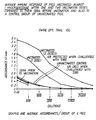
- the assay procedure of the present invention was used to determine the average immune response of pigs vaccinated against T.hyodysenteriae after 1 and 2 vaccination doses compared to their sera before vaccination, and also compared to a control group of unvaccinated pigs. The results are shown in the accompanying figure. All of these pigs (vaccinates and controls) were challenged with a virulent strain of T.hyodysenteriae and all control pigs died of classical swine dysentery whereas none of the vaccinates showed any signs of swine dysentery. From these results, it has been concluded that an absorbance of 1.0 at a 1/800 dilution of serum is the minimum antibody titre required to give protection against T.hyodysenteriae infection.
- the ELISA assay of this invention has been applied to a number of herds of varying status to swine dysentery. In 3 individual herds under the same management but on isolated properties, the swine dysentery status was determined using this T.hyodysenteriae ELISA assay.
Landscapes
- Engineering & Computer Science (AREA)
- Architecture (AREA)
- Health & Medical Sciences (AREA)
- Life Sciences & Earth Sciences (AREA)
- General Engineering & Computer Science (AREA)
- Physics & Mathematics (AREA)
- Immunology (AREA)
- Electromagnetism (AREA)
- Civil Engineering (AREA)
- Structural Engineering (AREA)
- Hematology (AREA)
- Mechanical Engineering (AREA)
- Chemical & Material Sciences (AREA)
- Biomedical Technology (AREA)
- Urology & Nephrology (AREA)
- Molecular Biology (AREA)
- Food Science & Technology (AREA)
- General Health & Medical Sciences (AREA)
- Cell Biology (AREA)
- Biotechnology (AREA)
- Tropical Medicine & Parasitology (AREA)
- Virology (AREA)
- Medicinal Chemistry (AREA)
- Analytical Chemistry (AREA)
- Biochemistry (AREA)
- Microbiology (AREA)
- General Physics & Mathematics (AREA)
- Pathology (AREA)
- Medicines Containing Antibodies Or Antigens For Use As Internal Diagnostic Agents (AREA)
- Peptides Or Proteins (AREA)
- Materials For Medical Uses (AREA)
- Investigating Or Analysing Biological Materials (AREA)
- Compositions Of Oxide Ceramics (AREA)
- Investigating Or Analyzing Materials By The Use Of Ultrasonic Waves (AREA)
Abstract
Description
- This invention relates to a diagnostic test kit and method which may be used to determine the degree of immunity of pigs to swine dysentery, for example as a result of prior exposure of the pigs to infection or after vaccination.
- Treponema hyodysenteriae has been identified as the primary aetiological agent of swine dysentery. It is accepted within the veterinary profession that pigs which have recovered from swine dysentery develop a degree of immunity to the disease. However, if the animals have been treated with antibiotics during the course of the disease, their resistance to subsequent infection is lessened. This suggests that for adequate resistance to infection to develop, the animals must be subjected to extensive, long term exposure to the causative agent, Treponema hyodysenteriae. Since T.hyodysenteriae manifests its disease effects at the mucosal surface of the large intestine this implies that, for immunity to develop, active clinical infection must occur.
- Relatively little is known about the type of immune response of pigs to T.hyodysenteriae infection and no data is available as to the type of antibody response (i.e., IgG, IgM, IgA) elicited by exposure to T.hyodysenteriae.
- Enzyme linked immunosorbent assays (ELISA) have been developed for many infectious diseases in man and animals. However, no ELISA or other serological tests have been developed to date for the reliable detection of swine dysentery in pigs. An ELISA for detection of antibody to certain lipopolysaccharide (LPS) antigens of T.hyodysenteriae has been reported by Joens et.al. in J. Clin. Microbiol. 15(2), 249-252, 1982 but has the limitation of being serotype specific since the antigens concerned are only a fraction of the total antigens on the whole cells. Fernie et.al. Research in Veterinary Science (1983) 35, 217-221, have reported a microagglutination test for determining the antibody response to T.hyodysenteriae infection, but they could not determine any correlation between the magnitude of the titres they determined and a degree of protection to experimental challenge. Glock et.al., U.S. Patent No. 4,100,272 have determined antibody titres against T.hyodysenteriae, using an indirect fluorescent antibody technique, however no commercially acceptable test has resulted from this technique.
- The present invention provides an effective, reliable and more generally applicable, serological diagnostic test method for swine dysentery using, for example, the ELISA technique, together with a diagnostic test kit to enable performance of this test.
- According to a first aspect of this invention, there is provided a diagnostic test method for the detection of antibodies against Treponema hyodysenteriae in a sample taken from a pig, which comprises the steps of bringing said sample into contact with T.hyodysenteriae antigen on a solid support, and detecting binding of antibodies against T.hyodysenteriae in said sample to said antigen, characterised in that said antigen is whole cell antigen, in that the antigen on the solid support has been treated with a solution of casein or other milk protein to prevent non-specific binding prior to said sample being brought into contact with said antigen and in that said antibody binding is detected using labelled anti-porcine antibody.
- In another aspect, this invention provides a diagnostic test kit for the detection of antibodies against T.hyodysenteriae in a sample taken from a pig, which comprises:
- i. T.hyodysenteriae whole cell antigen on a solid support;
- ii. a solution of casein or other milk protein; and
- iii. means including labelled anti-porcine antibody for the detection of binding of antibodies against T.hyodysenteriae in a sample to said antigen.
- Preferably, the "blocking" step to prevent non-specific binding is carried out using a solution of non-fat skim milk in phosphate buffer. Other solutions used in the test method, for example, enzyme/antibody conjugate solutions and wash solutions preferably also contain skim milk in phosphate buffer. The use of casein as a blocking agent in immunoassays is discussed generally by Kenna et.al. in J. Immunol. Methods 85, 409-419, 1985 but no mention is made of its utility in a T.hyodysenteriae specific assay.
- Preferably, the means for the detection of binding of the antibodies to said antigen on the solid support comprises anti-porcine IgG or IgM having an enzyme, such as horseradish peroxidase, conjugated thereto, together with a chromogenic substrate such as ABTS which reacts with the enzyme to provide a detectable signal.
- The following detailed description sets out the steps of the assay method of this invention:
- 1. Cells of Treponema hyodysenteriae, are grown in a fermenter or on agar plates, harvested washed with (PBS) phosphate buffered saline, sonicated and stored at -20°C until required for use as antigen.
- 2. The T.hyodysenteriae antigen is added to a solid support such as a Nunc high-bond polystyrene ELISA microtitre plate and stored overnight at 4°C for the antigen to bind to the surface of the wells of the plastic support.
- 3. Any unbound antigen is removed from the support surface, and a solution of non-fat skim milk (5% in PBS) is added to coat any free receptor sites on the support surface that might otherwise bind serum proteins.
- 4. Pig serum, diluted to the appropriate dilutions (for example from 1/400 to 1/51200) is added to the wells and allowed to react with the T.hyodysenteriae antigen.
- 5. After reaction, the pig serum is washed off and affinity-purified antiporcine IgG, or affinity-purified antiporcine IgM, both of which are conjugated to an indictor enzyme, are added to the wells. (The conjugate solutions are preferably diluted in PBS with 2% non-fat skim milk).
- 6. After reaction, the wells are again washed with PBS-2% non-fat skim milk and then a substrate that reacts with the enzyme-conjugated IgG or IgM is added to the wells.
- 7. The extent of binding of the enzyme-conjugated antiserum is determined using appropriate techniques.
- 8. In each assay, sera from a pig with a known antibody titre to T.hyodysenteriae (positive control) and a serum from a pig with no previous exposure (negative control) are included.
- The ELISA assay for T.hyodysenteriae in pigs provided by the present invention has been used to determine the antibody response in pigs that have been vaccinated with a T.hyodysenteriae vaccine, or have been naturally infected. When pigs are challenged with a virulent wild-type strain of T.hyodysenteriae, it is found that those that have an absorbance titre of >1.0 at a dilution of 1/800 for IgG are resistant to experimental or natural infection with T.hyodysenteriae, whereas those with an absorbance of less than 1.0 at a serum dilution of 1/800 are susceptible to natural or experimental infection. (It is found that all pigs that have not previously been exposed to T.hyodysenteriae have absorbance levels of less than 0.5 at 1/800).
- Further features of the present invention will be apparent from the following Examples.
- The assay procedure of the present invention was used to determine the average immune response of pigs vaccinated against T.hyodysenteriae after 1 and 2 vaccination doses compared to their sera before vaccination, and also compared to a control group of unvaccinated pigs. The results are shown in the accompanying figure. All of these pigs (vaccinates and controls) were challenged with a virulent strain of T.hyodysenteriae and all control pigs died of classical swine dysentery whereas none of the vaccinates showed any signs of swine dysentery. From these results, it has been concluded that an absorbance of 1.0 at a 1/800 dilution of serum is the minimum antibody titre required to give protection against T.hyodysenteriae infection.
- The ELISA assay of this invention has been applied to a number of herds of varying status to swine dysentery. In 3 individual herds under the same management but on isolated properties, the swine dysentery status was determined using this T.hyodysenteriae ELISA assay.
- Herd 1a Status - Transient cases of swine dysentery in recent weeks. 16/20 pigs with T.hyodysenteriae titres.
- b. ELISA results confirmed T.hyodysenteriae infection.
- Herd 2a Status - No evidence of Swine dysentery, but some pigs from
herd 1 had been introduced 2 months earlier. - b ELISA results confirmed T.hyodysenteriae infection present in 20% pigs. The herd subsequently broke with cases of
clinical swine dysentery 2 weeks later. - Herd 3a Status - No evidence of swine dysentery in recent years and no introduction of new pigs in recent months. 0/20 pigs with T.hyodysenteriae titres.
- b ELISA results indicated no evidence of T.hyodysenteriae infection. Herd still free of swine dysentery.
Claims (8)
- A diagnostic test method for the detection of antibodies against Treponema hyodysenteriae in a sample taken from a pig, which comprises the steps of bringing said sample into contact with T.hyodysenteriae antigen on a solid support, and detecting binding of antibodies against T.hyodysenteriae in said sample to said antigen, characterised in that said antigen is whole cell antigen, in that the antigen on the solid support has been treated with a solution of casein or other milk protein to prevent non-specific binding prior to said sample being brought into contact with said antigen and in that said antibody binding is detected using labelled anti-porcine antibody.
- A method according to claim 1, wherein said solution used to prevent non-specific binding comprises a solution of non-fat skim milk in phosphate buffer.
- A method according to claim 1 or claim 2, wherein said detecting step comprises the step of addition of anti-porcine antibody having an enzyme conjugated thereto, followed by a chromogenic substrate for said enzyme to provide a detectable signal.
- A method according to claim 3, wherein said enzyme-conjugated anti-porcine antibody is horseradish peroxidase-conjugated anti-porcine IgG or IgM, and said chromogenic substrate is ABTS.
- A diagnostic test kit for use in the test method of claim 1 which comprises:i. T.hyodysenteriae whole-cell antigen on a solid support;ii. a solution of casein or other milk protein; andiii. means including labelled anti-porcine antibody for the detection of binding of antibodies against T.hyodysenteriae in a sample to said antigen.
- A test kit according to claim 5, wherein said solution of casein or other milk protein comprises a solution of non-fat skim milk in phosphate buffer.
- A test kit according to claim 5 or claim 6, wherein said detection means comprises anti-porcine antibody having an enzyme conjugated thereto, and a chromogenic substrate for said enzyme.
- A test kit according to claim 7, wherein said enzyme-conjugated anti-porcine antibody is horseradish peroxidase-conjugated anti-porcine IgG or IgM, and said chromogenic substrate is ABTS.
Priority Applications (1)
| Application Number | Priority Date | Filing Date | Title |
|---|---|---|---|
| AT88900561T ATE80741T1 (en) | 1986-12-23 | 1987-12-23 | DIAGNOSTIC TEST PROCEDURES FOR SWINE DYSENTERY. |
Applications Claiming Priority (2)
| Application Number | Priority Date | Filing Date | Title |
|---|---|---|---|
| AUPH963186 | 1986-12-23 | ||
| AU9631/86 | 1986-12-23 |
Publications (3)
| Publication Number | Publication Date |
|---|---|
| EP0344166A1 EP0344166A1 (en) | 1989-12-06 |
| EP0344166A4 EP0344166A4 (en) | 1990-04-09 |
| EP0344166B1 true EP0344166B1 (en) | 1992-09-16 |
Family
ID=3771968
Family Applications (1)
| Application Number | Title | Priority Date | Filing Date |
|---|---|---|---|
| EP88900561A Expired - Lifetime EP0344166B1 (en) | 1986-12-23 | 1987-12-23 | Diagnostic test for swine dysentery |
Country Status (7)
| Country | Link |
|---|---|
| EP (1) | EP0344166B1 (en) |
| JP (1) | JPH02501768A (en) |
| AT (1) | ATE80741T1 (en) |
| AU (1) | AU620539B2 (en) |
| CA (1) | CA1304289C (en) |
| DE (1) | DE3781808T2 (en) |
| WO (1) | WO1988004778A1 (en) |
Families Citing this family (3)
| Publication number | Priority date | Publication date | Assignee | Title |
|---|---|---|---|---|
| JPH0361488A (en) * | 1988-06-29 | 1991-03-18 | Ml Technol Ventures Lp | Protective vaccine against comprising composition consisting of expression vehicle, host transformed by said composition, protein produced by said host and protein |
| US5110589A (en) * | 1988-09-14 | 1992-05-05 | Arizona Technology Development Corporation | Swine dysentery subunit vaccine and method |
| US5698394A (en) * | 1994-06-01 | 1997-12-16 | Board Of Regents Of The University Of Nebraska | Nucleotide sequences and methods for detection of Serpulina hyodysenteriae |
Family Cites Families (3)
| Publication number | Priority date | Publication date | Assignee | Title |
|---|---|---|---|---|
| JPS56141559A (en) * | 1980-04-04 | 1981-11-05 | Toray Ind Inc | Reagent for immunological inspection |
| GB8426465D0 (en) * | 1984-10-19 | 1984-11-28 | Technology Licence Co Ltd | Monoclonal antibodies |
| GB2189317B (en) * | 1986-04-16 | 1990-10-24 | London Polytech | Method of detecting and enumerating sulphate-reducing bacteria |
-
1987
- 1987-12-22 CA CA000555115A patent/CA1304289C/en not_active Expired - Lifetime
- 1987-12-23 WO PCT/AU1987/000439 patent/WO1988004778A1/en not_active Ceased
- 1987-12-23 AU AU11025/88A patent/AU620539B2/en not_active Ceased
- 1987-12-23 JP JP88500862A patent/JPH02501768A/en active Pending
- 1987-12-23 DE DE8888900561T patent/DE3781808T2/en not_active Expired - Fee Related
- 1987-12-23 EP EP88900561A patent/EP0344166B1/en not_active Expired - Lifetime
- 1987-12-23 AT AT88900561T patent/ATE80741T1/en not_active IP Right Cessation
Non-Patent Citations (2)
| Title |
|---|
| CHEMICAL ABSTRACTS, vol. 100, no. 11, March 12, 1984, Columbus, OH (US); A.V.GOLIKOV et al., p. 289, no. 82611v< * |
| CHEMICAL ABSTRACTS, vol. 106, no. 5, February 2, 1987, Columbus, OH (US); L.A.JOENS et al., p. 378, no. 31066n< * |
Also Published As
| Publication number | Publication date |
|---|---|
| AU1102588A (en) | 1988-07-15 |
| DE3781808T2 (en) | 1993-02-11 |
| JPH02501768A (en) | 1990-06-14 |
| EP0344166A1 (en) | 1989-12-06 |
| WO1988004778A1 (en) | 1988-06-30 |
| CA1304289C (en) | 1992-06-30 |
| DE3781808D1 (en) | 1992-10-22 |
| ATE80741T1 (en) | 1992-10-15 |
| AU620539B2 (en) | 1992-02-20 |
| EP0344166A4 (en) | 1990-04-09 |
Similar Documents
| Publication | Publication Date | Title |
|---|---|---|
| Nielsen et al. | Improved competitive enzyme immunoassay for the diagnosis of bovine brucellosis | |
| Simoons-Smit et al. | Typing of Helicobacter pylori with monoclonal antibodies against Lewis antigens in lipopolysaccharide | |
| US5262156A (en) | Antigenic compositions and their use for the detection of Helicobacter pylori | |
| Howard et al. | An enzyme-linked immunosorbent assay (ELISA) for the detection of antibodies to bovine viral diarrhoea virus (BVDV) in cattle sera | |
| Waltisbuhl et al. | An enzyme linked immunosorbent assay to diagnose Babesia bovis infection in cattle | |
| Losonsky et al. | Development and evaluation of an enzyme-linked immunosorbent assay for serum Vi antibodies for detection of chronic Salmonella typhi carriers | |
| Riezu-Boj et al. | Comparison of lipopolysaccharide and outer membrane protein-lipopolysaccharide extracts in an enzyme-linked immunosorbent assay for the diagnosis of Brucella ovis infection | |
| Nielsen et al. | Serological discrimination by indirect enzyme immunoassay between the antibody response to Brucella sp. and Yersinia enterocolitica O: 9 in cattle and pigs | |
| EP0363110B1 (en) | High pH extraction composition and its use to determine a chlamydial, gonococcal or herpes antigen | |
| Angeles et al. | Rapid diagnosis of nocardiosis with an enzyme immunoassay | |
| Joens et al. | Enzyme-linked immunosorbent assay for detection of antibody to Treponema hyodysenteriae antigens | |
| Thompson et al. | Simple and reliable enzyme-linked immunosorbent assay with monoclonal antibodies for detection of Escherichia coli heat-stable enterotoxins | |
| Uzal et al. | Evaluation of an indirect ELISA for the diagnosis of bovine brucellosis | |
| LeFebvre et al. | Genetic and antigenic differences of serologically indistinguishable leptospires of serovar hardjo | |
| Jørgensen et al. | Enzyme-Linked Immunosorbent Assay (Elisa) for Detection of Antibodies to Mycobacterium Para-Tuberculosis in Cattle | |
| Cox et al. | A novel format for a rapid sandwich EIA and its application to the identification of snake venoms | |
| Chin | Comparison of different antigenic preparations for the detection of ovine serum antibodies against Brucella ovis by ELISA | |
| Have et al. | An Enzyme-Linked Immunosorbent Assay (ELISA) for the primary diagnosis of foot-and-mouth disease characterization and comparison with complement fixation | |
| Sugar et al. | Antibody response in human nocardiosis: identification of two immunodominant culture-filtrate antigens derived from Nocardia asteroides | |
| Lang | Serosurvey of Coxiella burnetii infection in dairy goat herds in Ontario. A comparison of two methods of enzyme-linked immunosorbent assay | |
| Rylatt et al. | A competitive enzyme immunoassay for the detection of bovine antibodies to Brucella abortus using monoclonal antibodies | |
| Abbas et al. | IgG, IgM and IgA in the serum of cattle naturally infected with Mycobacterium paratuberculosis | |
| CA1304289C (en) | Diagnostic test for swine dysentery | |
| Uzal et al. | An indirect ELISA using a monoclonal anti IgG1 enzyme conjugate for the diagnosis of bovine brucellosis | |
| EP0843820B1 (en) | Elisa serodiagnosis of pig pleuropneumonia serotypes 1, 9 and 11 |
Legal Events
| Date | Code | Title | Description |
|---|---|---|---|
| PUAI | Public reference made under article 153(3) epc to a published international application that has entered the european phase |
Free format text: ORIGINAL CODE: 0009012 |
|
| 17P | Request for examination filed |
Effective date: 19890616 |
|
| AK | Designated contracting states |
Kind code of ref document: A1 Designated state(s): AT BE CH DE FR GB IT LI LU NL SE |
|
| A4 | Supplementary search report drawn up and despatched |
Effective date: 19900409 |
|
| 17Q | First examination report despatched |
Effective date: 19901115 |
|
| GRAA | (expected) grant |
Free format text: ORIGINAL CODE: 0009210 |
|
| AK | Designated contracting states |
Kind code of ref document: B1 Designated state(s): AT BE CH DE FR GB IT LI LU NL SE |
|
| REF | Corresponds to: |
Ref document number: 80741 Country of ref document: AT Date of ref document: 19921015 Kind code of ref document: T |
|
| REF | Corresponds to: |
Ref document number: 3781808 Country of ref document: DE Date of ref document: 19921022 |
|
| ET | Fr: translation filed | ||
| ITF | It: translation for a ep patent filed | ||
| PLBE | No opposition filed within time limit |
Free format text: ORIGINAL CODE: 0009261 |
|
| STAA | Information on the status of an ep patent application or granted ep patent |
Free format text: STATUS: NO OPPOSITION FILED WITHIN TIME LIMIT |
|
| 26N | No opposition filed | ||
| EPTA | Lu: last paid annual fee | ||
| EAL | Se: european patent in force in sweden |
Ref document number: 88900561.7 |
|
| REG | Reference to a national code |
Ref country code: GB Ref legal event code: IF02 |
|
| PGFP | Annual fee paid to national office [announced via postgrant information from national office to epo] |
Ref country code: LU Payment date: 20021024 Year of fee payment: 16 |
|
| PGFP | Annual fee paid to national office [announced via postgrant information from national office to epo] |
Ref country code: GB Payment date: 20021104 Year of fee payment: 16 Ref country code: AT Payment date: 20021104 Year of fee payment: 16 |
|
| PGFP | Annual fee paid to national office [announced via postgrant information from national office to epo] |
Ref country code: NL Payment date: 20021112 Year of fee payment: 16 |
|
| PGFP | Annual fee paid to national office [announced via postgrant information from national office to epo] |
Ref country code: FR Payment date: 20021202 Year of fee payment: 16 |
|
| PGFP | Annual fee paid to national office [announced via postgrant information from national office to epo] |
Ref country code: SE Payment date: 20021203 Year of fee payment: 16 |
|
| PGFP | Annual fee paid to national office [announced via postgrant information from national office to epo] |
Ref country code: CH Payment date: 20021223 Year of fee payment: 16 |
|
| PGFP | Annual fee paid to national office [announced via postgrant information from national office to epo] |
Ref country code: DE Payment date: 20021230 Year of fee payment: 16 |
|
| PGFP | Annual fee paid to national office [announced via postgrant information from national office to epo] |
Ref country code: BE Payment date: 20030116 Year of fee payment: 16 |
|
| PG25 | Lapsed in a contracting state [announced via postgrant information from national office to epo] |
Ref country code: LU Free format text: LAPSE BECAUSE OF NON-PAYMENT OF DUE FEES Effective date: 20031223 Ref country code: GB Free format text: LAPSE BECAUSE OF NON-PAYMENT OF DUE FEES Effective date: 20031223 Ref country code: AT Free format text: LAPSE BECAUSE OF NON-PAYMENT OF DUE FEES Effective date: 20031223 |
|
| PG25 | Lapsed in a contracting state [announced via postgrant information from national office to epo] |
Ref country code: SE Free format text: LAPSE BECAUSE OF NON-PAYMENT OF DUE FEES Effective date: 20031224 |
|
| PG25 | Lapsed in a contracting state [announced via postgrant information from national office to epo] |
Ref country code: LI Free format text: LAPSE BECAUSE OF NON-PAYMENT OF DUE FEES Effective date: 20031231 Ref country code: CH Free format text: LAPSE BECAUSE OF NON-PAYMENT OF DUE FEES Effective date: 20031231 Ref country code: BE Free format text: LAPSE BECAUSE OF NON-PAYMENT OF DUE FEES Effective date: 20031231 |
|
| BERE | Be: lapsed |
Owner name: ROYAL *MELBOURNE INSTITUTE OF TECHNOLOGY LTD Effective date: 20031231 |
|
| PG25 | Lapsed in a contracting state [announced via postgrant information from national office to epo] |
Ref country code: NL Free format text: LAPSE BECAUSE OF NON-PAYMENT OF DUE FEES Effective date: 20040701 Ref country code: DE Free format text: LAPSE BECAUSE OF NON-PAYMENT OF DUE FEES Effective date: 20040701 |
|
| EUG | Se: european patent has lapsed | ||
| GBPC | Gb: european patent ceased through non-payment of renewal fee |
Effective date: 20031223 |
|
| REG | Reference to a national code |
Ref country code: CH Ref legal event code: PL |
|
| PG25 | Lapsed in a contracting state [announced via postgrant information from national office to epo] |
Ref country code: FR Free format text: LAPSE BECAUSE OF NON-PAYMENT OF DUE FEES Effective date: 20040831 |
|
| NLV4 | Nl: lapsed or anulled due to non-payment of the annual fee |
Effective date: 20040701 |
|
| REG | Reference to a national code |
Ref country code: FR Ref legal event code: ST |
|
| PG25 | Lapsed in a contracting state [announced via postgrant information from national office to epo] |
Ref country code: IT Free format text: LAPSE BECAUSE OF NON-PAYMENT OF DUE FEES Effective date: 20051223 |