EP0339695A2 - A process for preparing an antigenic or immunogenic conjugate as well as the use of such conjugates - Google Patents
A process for preparing an antigenic or immunogenic conjugate as well as the use of such conjugates Download PDFInfo
- Publication number
- EP0339695A2 EP0339695A2 EP89200145A EP89200145A EP0339695A2 EP 0339695 A2 EP0339695 A2 EP 0339695A2 EP 89200145 A EP89200145 A EP 89200145A EP 89200145 A EP89200145 A EP 89200145A EP 0339695 A2 EP0339695 A2 EP 0339695A2
- Authority
- EP
- European Patent Office
- Prior art keywords
- group
- peptide
- process according
- groups
- fmoc
- Prior art date
- Legal status (The legal status is an assumption and is not a legal conclusion. Google has not performed a legal analysis and makes no representation as to the accuracy of the status listed.)
- Withdrawn
Links
- 0 CS(C1CCCC1)(SC1NCCCC1*)S(C1C=CC=C1)NI Chemical compound CS(C1CCCC1)(SC1NCCCC1*)S(C1C=CC=C1)NI 0.000 description 2
- AHTFMWCHTGEJHA-UHFFFAOYSA-N CC(SC(CC(O1)=O)C1=O)=O Chemical compound CC(SC(CC(O1)=O)C1=O)=O AHTFMWCHTGEJHA-UHFFFAOYSA-N 0.000 description 1
- HOUCNFUGAUUVHZ-UHFFFAOYSA-N CC(SC1=CCC=C1)=O Chemical compound CC(SC1=CCC=C1)=O HOUCNFUGAUUVHZ-UHFFFAOYSA-N 0.000 description 1
- LKNPLDRVWHXGKZ-UHFFFAOYSA-N [O-][N+](C1=CC=CNC1=S)=O Chemical compound [O-][N+](C1=CC=CNC1=S)=O LKNPLDRVWHXGKZ-UHFFFAOYSA-N 0.000 description 1
Images


Classifications
-
- A—HUMAN NECESSITIES
- A61—MEDICAL OR VETERINARY SCIENCE; HYGIENE
- A61K—PREPARATIONS FOR MEDICAL, DENTAL OR TOILETRY PURPOSES
- A61K39/00—Medicinal preparations containing antigens or antibodies
- A61K39/385—Haptens or antigens, bound to carriers
-
- A—HUMAN NECESSITIES
- A61—MEDICAL OR VETERINARY SCIENCE; HYGIENE
- A61K—PREPARATIONS FOR MEDICAL, DENTAL OR TOILETRY PURPOSES
- A61K47/00—Medicinal preparations characterised by the non-active ingredients used, e.g. carriers or inert additives; Targeting or modifying agents chemically bound to the active ingredient
- A61K47/50—Medicinal preparations characterised by the non-active ingredients used, e.g. carriers or inert additives; Targeting or modifying agents chemically bound to the active ingredient the non-active ingredient being chemically bound to the active ingredient, e.g. polymer-drug conjugates
- A61K47/51—Medicinal preparations characterised by the non-active ingredients used, e.g. carriers or inert additives; Targeting or modifying agents chemically bound to the active ingredient the non-active ingredient being chemically bound to the active ingredient, e.g. polymer-drug conjugates the non-active ingredient being a modifying agent
- A61K47/62—Medicinal preparations characterised by the non-active ingredients used, e.g. carriers or inert additives; Targeting or modifying agents chemically bound to the active ingredient the non-active ingredient being chemically bound to the active ingredient, e.g. polymer-drug conjugates the non-active ingredient being a modifying agent the modifying agent being a protein, peptide or polyamino acid
- A61K47/64—Drug-peptide, drug-protein or drug-polyamino acid conjugates, i.e. the modifying agent being a peptide, protein or polyamino acid which is covalently bonded or complexed to a therapeutically active agent
- A61K47/646—Drug-peptide, drug-protein or drug-polyamino acid conjugates, i.e. the modifying agent being a peptide, protein or polyamino acid which is covalently bonded or complexed to a therapeutically active agent the entire peptide or protein drug conjugate elicits an immune response, e.g. conjugate vaccines
-
- C—CHEMISTRY; METALLURGY
- C07—ORGANIC CHEMISTRY
- C07K—PEPTIDES
- C07K17/00—Carrier-bound or immobilised peptides; Preparation thereof
- C07K17/02—Peptides being immobilised on, or in, an organic carrier
-
- C—CHEMISTRY; METALLURGY
- C07—ORGANIC CHEMISTRY
- C07K—PEPTIDES
- C07K5/00—Peptides containing up to four amino acids in a fully defined sequence; Derivatives thereof
- C07K5/02—Peptides containing up to four amino acids in a fully defined sequence; Derivatives thereof containing at least one abnormal peptide link
- C07K5/0215—Peptides containing up to four amino acids in a fully defined sequence; Derivatives thereof containing at least one abnormal peptide link containing natural amino acids, forming a peptide bond via their side chain functional group, e.g. epsilon-Lys, gamma-Glu
-
- C—CHEMISTRY; METALLURGY
- C07—ORGANIC CHEMISTRY
- C07K—PEPTIDES
- C07K7/00—Peptides having 5 to 20 amino acids in a fully defined sequence; Derivatives thereof
- C07K7/02—Linear peptides containing at least one abnormal peptide link
-
- A—HUMAN NECESSITIES
- A61—MEDICAL OR VETERINARY SCIENCE; HYGIENE
- A61K—PREPARATIONS FOR MEDICAL, DENTAL OR TOILETRY PURPOSES
- A61K39/00—Medicinal preparations containing antigens or antibodies
- A61K2039/64—Medicinal preparations containing antigens or antibodies characterised by the architecture of the carrier-antigen complex, e.g. repetition of carrier-antigen units
- A61K2039/645—Dendrimers; Multiple antigen peptides
Definitions
- the invention relates to a process for preparing an antigenic or immunogenic conjugate such as a multiple antigenic peptide system.
- Boc tert-butyloxycarbonyl
- BSA bovine serum albumin
- DCC N,N′-dicyclohexylcarbodiimide
- DIPEA N,N-diisopropyl ethylamine
- DMA N,N-dimethylacetamide
- Fmoc 9-fluorenylmethyloxycarbonyl
- DMAP 4-(dimethylamino)pyridine
- DTT dithiothreitol
- GPC gel-permeation chromatography
- HBTU O-benzotriazolyl-N,N,N′,N′-tetramethyluronium hexafluorophosphate
- HOAc acetic acid
- HOBt 1-hydroxybenzotriazole
- i-PrOH 2-propanol
- MAP multiple antigenic peptide
- Nle norleucine
- Npys 3-
- MAP multiple antigenic peptide
- said MAP is a conjugate based on a branched lysine structure and, in short, its preparation is as follows. To a resin containing a reference amino acid, Boc-Lys(Boc)-OH was coupled.
- stepwise peptide synthesis referred to in the above undesired side reactions may occur.
- the known synthesis may be troublesome due to steric hindrance on the polymer.
- the branched structure has to be prepared every time a coupling is derived. This method is only suited for the coupling of peptide antigens. E.g. polysaccharide antigens cannot be prepared in this way.
- a favourable preparation of a MAP is provided.
- the branched amino acid structure such as the lysine structure referred to in the above as well as the peptide can be prepared separately and subsequently coupled.
- the invention relates to a process for preparing an antigenic or immunogenic conjugate such as a multiple antigenic peptide system comprising reaction of a branched structure based on amino acids with an antigenic compound such as an immunogenic peptide.
- the branched structure contains preferably a group of the type as depicted in formula 4 or 5, wherein A is a group derived from an amino acid containing at least one COOH group and two NH2 groups such as lysine and/or ornithine, and B is a group derived from an amino compound such as a diamino compound or an amino acid.
- A is a group derived from an amino acid which is non-toxic for mammals, e.g. lysine.
- B may be derived from an amino compound which preferably differs from amino acids in the other parts of the conjugates to be prepared. It appeared that 4-aminobutyric acid is well suited.
- the end groups A are preferably coupled to a solubilizing group C, such as a group derived from polar amino acids.
- a solubilizing group C such as a group derived from polar amino acids.
- Such a structure is depicted in formula 6. It appeared that glutamic acid is well suited.
- Such a group C makes the conjugate well soluble in water.
- a spacer group e.g. by coupling additional amino acid residues
- end groups A or C are functionalized in such a way that they contain thiol groups or temporarily protected thiol groups.
- Such protected thiol groups may be represented by SC-CO-X, X being alkyl, aryl or aralkyl, e.g. S-acetyl.
- the peptide used in the process according to the invention has been coupled to a residue containing the 3-nitro-2-pyridine sulfenyl group, e.g. the S(3-nitro-2-pyridinesulfenyl)cysteinyl group.
- various protein fragments may be coupled to the branched structure, e.g. 9-21 sequence of glycoprotein D of HSV-1 (9-21).
- An average expert in this field will be able to choose all other possible protein fragments.
- the invention also relates to an antigen or an immunogen on the basis of a conjugate prepared according to the above process, e.g. an immunogen which is active against HIV or herpes simplex viruses (HSV).
- an immunogen which is active against HIV or herpes simplex viruses (HSV).
- the present invention also relates to the use of conjugates obtainable according to the process of the invention for the preparation of pharmaceutical products such as vaccins, antigens, immunogens or specific kits.
- a MAP containing the 9-21 sequence of glycoprotein D of HSV-1 (9-21) is prepared.
- the branched lysine structure having the formula 1 is prepared as follows. N-Fmoc-4-aminobutyric acid is coupled to a Wang-resin (see J. Chem. Soc. Perkin Trans. (1986), 125-137). Three synthetic cycles are performed, using Fmoc- Lys(Fmoc)-OPfp as the incoming amino acid derivative. To each of the eight amino groups of the branched octapeptide thus obtained, glutamic acid and S-acetyl mercaptoacetic acid are coupled, respectively.
- branched structure having the formula 1 is obtained. It contains eight acetyl protected thiol functions, and it is water soluble due to the presence of eight Glu-residues.
- branched structure (9-21)-Cys(Npys) (formula 2), which was synthesized independently, is coupled.
- the MAP (formula 3) obtained is purified by GPC. This branched protein, with a molecular weight of over 15,000, contains 78% immunogen by weight.
- the MAP is reduced with DTT and the reaction mixture analyzed by RP-HPLC. Two products can be detected in the reaction mixture. One of the products coeluted with (9-21)-Cys, and the other with the product which is formed when the S-acetyl protected branched structure (formula 1) is treated with hydroxylamine.
- a known method to connect amino groups in a peptide with those in a protein is to make use of glutaric dialdehyde (glutaraldehyde). Unfortunately, this procedure is not reproducible and yields a large number of products, presumably due to the fact that the peptide reacts either via its N-terminus or via a lysine side chain. Also, protein-protein and peptide-peptide coupling products are formed.
- a more selective method of coupling the peptide to the protein is based on the reaction between a thiolated peptide and a protein which has been functionalized with 3-maleimidobenzoic acid N-succinimidyl ester (MBS) or N-succinimidyl 3-(2-pyridyldithio)propionate (SPDP).
- MBS 3-maleimidobenzoic acid N-succinimidyl ester
- SPDP N-succinimidyl 3-(2-pyridyldithio)propionate
- the thiolated peptides are susceptible to (air)oxidation.
- Npys method may be used also for other conjugation methods for coupling of peptides and proteins. It appeared that this method is selective and mild and is easily carried out yielding well-defined conjugates.
- the present invention also relates to a process comprising the following steps:
- step (a) leading to said elongation are performed while the peptide is anchored to a solid support.
- the peptide is synthesized by the method of solid phase peptide synthesis, as described in detail in Science Tools, Vol. 33, No. 1, (1986), pages 9-16 and Chemica Scripta (1985), 25 , pages 121-131.
- step (a) preferably leads to a product containing the S(3-nitro-2-pyridinesulfenyl)cysteinyl group.
- the residue mentioned in step (a) is identical with the S(3-nitro-2-pyridinesulfenyl)cysteinyl group.
- the 3-nitro-2-pyridine sulfenyl compound used for elongation in step (a) is preferably an N-protected-S(Npys)-cysteine derivative, e.g. Boc-Cys(Npys)-OH or Boc-Cys(Npys)-Opfp.
- N-protected-S(Npys)-cysteine derivative e.g. Boc-Cys(Npys)-OH or Boc-Cys(Npys)-Opfp.
- the preparation of Boc-Cys(Npys)-OH and the use of the S(Npys) group for unsymmetrical disulfide bond formation is known from Int. J. Peptide Protein Res. 28 , (1986), pages 107-112. In this reference it is also suggested to crosslink an enzyme to a site-directing antibody via a peptide or other compound that contains the S-Npys moiety.
- the Npys group is suitable in fragment coupling of peptides.
- the Npys group serves as a stable sulphur protecting group during peptide synthesis, cleavage and purification procedures, whereas the same function activates the peptide for disulfide formation in the conjugation stage.
- a protein which has been functionalized in such a way that it contains thiol groups or temporarily protected thiol groups are in particular equal to the group S-CO-X, X being an alkyl, an aryl or an arylalkyl group, e.g. the S-acetyl group.
- step (a) is started with a protected peptide covalently linked to a resin (P).
- Boc-Cys(Npys)-0H is coupled to the peptide chain using e.g. HBTU/DIPEA and the S(Npys)-cysteinyl-peptide is deprotected and cleaved from the resin (preferably with TFA) and purified.
- Identification of Npys-peptide in HPLC-analysis is easy because the Npys group serves as a "chromatophoric handle".
- the carrier-protein e.g. BSA
- BSA carrier-protein
- S-acetylmercaptosuccinic anhydride at a pH of about 8.0, preferively in an N-ethylmorpholine buffer.
- the reaction mixture is separated by gel filtration into a protein fraction, a peptide fraction (in case of the use of an excess Npys-cysteinylpeptide) and a third, yellow fraction containing the 3-nitro-2-thiopyridone.
- the liberated peptide has the same chromatographic behaviour as the peptide obtained on reducing the Npys-peptide, strongly indicating that the peptide was not modified during the conjugation procedures.
- Boc-Cys(Npys) may be coupled to the solid-phase peptide (having a free N-terminal group).
- the peptide may be conjugated with the carrier protein.
- the S-Npys containing peptide is dissolved in a part of B2.
- B1 is dissolved in another part of B2. Both parts are mixed. After adding B3 to this mixture and stirring for some time the conjugation is completed. Then the peptide-protein conjugate may be purified by dialysis and/or gel-filtration chromatography.
- the peptide-protein conjugates prepared according to the method of the invention may be used advantageously for immunization, i.e. vaccination.
- all types of antigenic peptides, i.e. potentially immunogenic peptides may be coupled to a suitable carrier protein according to the method of the invention.
- the invention relates to vaccines on the basis of a peptide-protein conjugate prepared according to the method of the invention.
- the invention may relate to a vaccine being active against herpes simplex viruses (HSV).
- HSV herpes simplex viruses
- HSV-peptides which may be conjugated according to the method of the invention, are depicted in Figure 4. These peptides may be prepared according to the method described in J. Chem. Soc. Perkin Trans. (1986), I, pages 125-137.
- Fmoc-Cys(tBu)-0H was converted to its symmetrical anhydride by treatment with DCC according to standard procedures described by Dryland and Sheppard in J. Chem. Soc. Perkin. Trans I (1986), 125-137.
- DCC symmetrical anhydride
- 800mg Wang resin (85 ⁇ mol/g) and 24 mg (0.2 mmol) DMAP were added. After gentle shaking for 2 h (room temperature) the resin was collected by filtration and washed with DMA. Subsequently HSV-gD-10-24 was synthesized.
- the peptide chain was elongated by coupling with the symmetrical anhydride of Boc-Leu-OH.
- the resin was washed with DMA and treated for 90 min with Npys-Cl (freshly prepared from 93 mg (0.3 mmol) 3,3′-dinitro-2,2′-dipyridyldisulfide.
- the resin was washed with DMA and MeOH, and dried in vacuo over silica drying gel. An aliquot (400 mg) was treated with 5 ml TFA containing 5% thioanisole as a scavenger for 8 h at room temperature.
- the branched oligo-lysine construct having the formula 1 was synthesized as follows. A Wang resin (500 mg, 46 ⁇ mol) was treated with 1). the symmetrical anhydride of Fmoc-4-aminobutyric acid (0.5 mmol) and DMAP (24 mg, 0.2 mmol) in 3 ml DMA for 2 h. After removal of the Fmoc-protection (46 ⁇ mol) with 20% piperi dine in DMA, coupling was performed as follows. 2). Fmoc-Lys(Fmoc)-OPfp 150 mg, 0.2 mmol HOBt 27 mg, 0.2 mmol loading 94 ⁇ mol 3).
- Fig. 2A-E show the results of RP-HPLC analysis of the materials involved in the preparation of the MAP.
- This example describes the preparation of various starting materials.
- DMA was distilled in vacuo under nitrogen from 2,4-dinitrofluorobenzene before use; ether was distilled from P2O5, piperidine from KOH, dioxane and ethylenediamine from CaH2 and N-ethylmorpholine from NaOH. HOBt was dried in vacuo at 50°C over P2O5 for 72 h.
- HPLC grade acetonitrile was purchased from Rathburn, Walkerburn, Scotland. Sephadex 6-25 (superfine) and G-50 (fine) were obtained from Pharmacia Fine Chemicals, Uppsala, Sweden.
- Fmoc-L-amino acid pentafluorophenyl esters were either purchased from Cambridge Research Biochemicals Ltd, Cambridge, England, or previously prepared according to Synthesis (1983), pages 325-327.
- Fmoc-Asn-4-nitrophenyl ester was synthesized according to J. Chem. Soc. Perkin Trans. (1981), I, pages 538-546. S-acetylmercaptosuccinic anhydride was obtained from Aldrich.
- BSA (fraction V, lot 12F-0649) was purchased from Sigma.
- Pepsyn K a physically supported acrylamide polymer was used as a resin (0.1 mequiv./g, lots 1338/131, 11065/402, 1254/549) and purchased from Cambridge Research Biochemicals Ltd, Cambridge, England.
- Boc-Cys(Npys)-OH was synthesized according to Chem. Lett., (1982), pages 921-924, starting from 2-chloro-3-nitropyridine (Janssen) and Boc-Cys(Trt)-OH (Sigma).
- HBTU was synthesized according to Tetrahedron, (1978), pages 1269-1272.
- N-succinimidyl ester was prepared from (4-hydroxymethylphenoxy)acetic acid (see Int. J. Peptide Protein Res. (1982), 20 , pages 451-454), N-hydroxysuccinimide and DCC.
- Peptide synthesis was performed using a semi-automatic flow-reactor, containing the following parts: several three-way valves mod.802-2312-1-0 (Mace, South El Monte, California, USA), a Gilson-302 HPLC pump, a Cecil Instruments CE-212 spectrophotometer equipped with a 1 mm flowcell (2120773), a Kipp & Zonen BD 41 recorder and a glass reaction column (100 x 10 mm, Omnifit Ltd, Cambridge, England), parts connected by way of PTFE tubing (0.7 x 1.6 mm). The pump and the valves were computer controlled.
- HSV-peptides Three HSV-peptides were synthesized, designated as [Nle315]-HSV-1-gD-302/315, HSV-1-gC-402/417 and HSV-1-gH-204/215. Amino acids in peptides are numbered according to the numbering of the published amino acid sequences of mature glycoproteins gD (Science 218 , (1982), pages 381-384), immature glycoprotein gC (J. Virol, 45, (1983), pages 634-647) and immature glycoprotein gH (Nucleic Acids Res. 14 , (1986), pages 4281-4292) of HSV type 1.
- the peptides were deprotected and cleaved from the resin in aqueous TFA (95%, 1.5 h). The resin was removed by filtration and the solution was evaporated to dryness in vacuo yielding an oil.
- the crude S(Npys)-cysteinylpeptides (see Fig. 4) were dissolved in water, analyzed by HPLC and purified by gel filtration on a column (150 x 1.0 cm) of Sephadex G-25 superfine (eluent: 0.05 M HOAc).
- FIG. 5 the analytical HPLC of crude S(Npys)-cysteinylpeptides (I-III) is shown (detection at 214 nm).
- Amino acid analysis I: Asp 1.97 (2), Thr 2.21 (2), Pro 3.62 (4), Ala 2.76 (3), Nle 1.06 (1), Tyr 0.91 (1), His 0.99 (1), Cys n.d.
- II Asp 1.91 (2), Thr 0.98 (1), Ser 1.76 (2), Glu 2.12 (2), Pro 2.05 (2), Gly 0.98 (1), Ala 3.96 (4), Val 1.01 (1), Lys 0.88 (1), Cys n.d.
- III Asp 1.01 (1), Thr 2.82 (3), Glu 1.00 (1), Pro 1.04 (1), Ile 0.91 (1), Leu 2.18 (2), His 2.98 (3), Cys n.d.
- the overall yield of purified S(Npys)-cysteinylpeptides was 40-65% based on the initial loading of the resin.
- Kit for use of the conjugation method according to the invention.
- a suitable kit contains 5 vials A1, A2, B1, B2 and B3:
- Boc-Cys(Npys) may be coupled to the solid-state peptide (having a free N-terminal group).
- the peptide may be conjugated with the carrier protein.
- the S-Npys containing peptide is dissolved in a part of B2.
- B1 is dissolved in another part of B2. Both parts are mixed. After adding B3 to this mixture and stirring for some time the conjugation is completed. Then the peptide-protein conjugate may be purified by dialysis and/or gelfiltration chromatography.
Landscapes
- Chemical & Material Sciences (AREA)
- Health & Medical Sciences (AREA)
- Life Sciences & Earth Sciences (AREA)
- Organic Chemistry (AREA)
- General Health & Medical Sciences (AREA)
- Molecular Biology (AREA)
- Medicinal Chemistry (AREA)
- Proteomics, Peptides & Aminoacids (AREA)
- Bioinformatics & Cheminformatics (AREA)
- Genetics & Genomics (AREA)
- Engineering & Computer Science (AREA)
- Biophysics (AREA)
- Biochemistry (AREA)
- Pharmacology & Pharmacy (AREA)
- Public Health (AREA)
- Veterinary Medicine (AREA)
- Animal Behavior & Ethology (AREA)
- Epidemiology (AREA)
- Immunology (AREA)
- Virology (AREA)
- Microbiology (AREA)
- Mycology (AREA)
- Peptides Or Proteins (AREA)
Abstract
The invention relates to a process for preparing an antigenic or immunogenic conjugate such as a multiple antigenic peptide system. A branched structure based on amino acids such as lysine is reacted with an antigenic or immunogenic compound. Preferably said compound is coupled to a residue containing the 3-nitro-2-pyridine sulfenyl group. The conjugates obtainable according to this process are used for the preparation of pharmaceutical products.
Description
- The invention relates to a process for preparing an antigenic or immunogenic conjugate such as a multiple antigenic peptide system.
- For the description of the present invention the following abbreviations are used: Boc, tert-butyloxycarbonyl; BSA, bovine serum albumin; DCC, N,N′-dicyclohexylcarbodiimide; DIPEA, N,N-diisopropyl ethylamine; DMA, N,N-dimethylacetamide; Fmoc, 9-fluorenylmethyloxycarbonyl; DMAP, 4-(dimethylamino)pyridine; DTT, dithiothreitol; GPC, gel-permeation chromatography; HBTU, O-benzotriazolyl-N,N,N′,N′-tetramethyluronium hexafluorophosphate; HOAc, acetic acid; HOBt, 1-hydroxybenzotriazole; i-PrOH, 2-propanol; MAP, multiple antigenic peptide; Nle, norleucine; Npys, 3-nitro-2-pyridinesulfenyl; Pfp, pentafluorophenyl; RP-HPLC, reversed phase high-performance liquid chromatography; TFA, trifluoroacetic acid.
- A multiple antigenic peptide, a so-called MAP, is known from D.N. Posnett, H. McGrath and J.P. Tam, J. Biol. Chem., 263, 1719 (1988) and J.P. Tam. Proc. Natl. Acad. Sci. USA., 85, 5409 (1988). In fact said MAP is a conjugate based on a branched lysine structure and, in short, its preparation is as follows. To a resin containing a reference amino acid, Boc-Lys(Boc)-OH was coupled. The product obtained was deprotected with TFA, thus affording a dipeptide in which the and α- and ε-amino group of the lysine residue are free. By performing two additional synthetic cycles, in which Boc-Lys(Boc)-OH was used as the incoming amino acid, a branched octapeptide, having eight amino groups, was produced. To this branched structure eight epitope sequences were attached by stepwise peptide synthesis.
- During the stepwise peptide synthesis referred to in the above undesired side reactions may occur. On the other hand the known synthesis may be troublesome due to steric hindrance on the polymer. In addition, according to the known method the branched structure has to be prepared every time a coupling is derived. This method is only suited for the coupling of peptide antigens. E.g. polysaccharide antigens cannot be prepared in this way.
- According to the present invention a favourable preparation of a MAP is provided. Surprisingly, it was found that the branched amino acid structure such as the lysine structure referred to in the above as well as the peptide can be prepared separately and subsequently coupled.
- The invention relates to a process for preparing an antigenic or immunogenic conjugate such as a multiple antigenic peptide system comprising reaction of a branched structure based on amino acids with an antigenic compound such as an immunogenic peptide.
- In the process according to the invention the branched structure contains preferably a group of the type as depicted in
formula - Preferably A is a group derived from an amino acid which is non-toxic for mammals, e.g. lysine.
- B may be derived from an amino compound which preferably differs from amino acids in the other parts of the conjugates to be prepared. It appeared that 4-aminobutyric acid is well suited.
- In the branched structure having the
formula formula 6. It appeared that glutamic acid is well suited. Such a group C makes the conjugate well soluble in water. It is also possible to insert a spacer group (e.g. by coupling additional amino acid residues) between groups A and C in order to modify the "bulkyness" of the conjugate to be prepared. By the use of such known spacers the steric hinderence in the molecule may be controlled. - In the structure according to
formulae - In practice the end groups A or C are functionalized in such a way that they contain thiol groups or temporarily protected thiol groups. Such protected thiol groups may be represented by SC-CO-X, X being alkyl, aryl or aralkyl, e.g. S-acetyl. Preferably, the peptide used in the process according to the invention has been coupled to a residue containing the 3-nitro-2-pyridine sulfenyl group, e.g. the S(3-nitro-2-pyridinesulfenyl)cysteinyl group.
- According to the method of the invention various protein fragments may be coupled to the branched structure, e.g. 9-21 sequence of glycoprotein D of HSV-1 (9-21). An average expert in this field will be able to choose all other possible protein fragments.
- The invention also relates to an antigen or an immunogen on the basis of a conjugate prepared according to the above process, e.g. an immunogen which is active against HIV or herpes simplex viruses (HSV).
- In general, the present invention also relates to the use of conjugates obtainable according to the process of the invention for the preparation of pharmaceutical products such as vaccins, antigens, immunogens or specific kits.
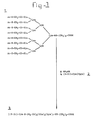
- The invention is illustrated by means of a typical preparation shown in the reaction scheme according to Figure 1.
- According to said reaction scheme a MAP containing the 9-21 sequence of glycoprotein D of HSV-1 (9-21) is prepared. The branched lysine structure having the
formula 1 is prepared as follows. N-Fmoc-4-aminobutyric acid is coupled to a Wang-resin (see J. Chem. Soc. Perkin Trans. (1986), 125-137). Three synthetic cycles are performed, using Fmoc- Lys(Fmoc)-OPfp as the incoming amino acid derivative. To each of the eight amino groups of the branched octapeptide thus obtained, glutamic acid and S-acetyl mercaptoacetic acid are coupled, respectively. After cleavage of the resin and removal of the t-butyl protecting groups of the Glu-residues with aqueous TFA, branched structure having theformula 1 is obtained. It contains eight acetyl protected thiol functions, and it is water soluble due to the presence of eight Glu-residues. To this branched structure (9-21)-Cys(Npys) (formula 2), which was synthesized independently, is coupled. The MAP (formula 3) obtained is purified by GPC. This branched protein, with a molecular weight of over 15,000, contains 78% immunogen by weight. To prove the presence of the peptide in this compound, the MAP is reduced with DTT and the reaction mixture analyzed by RP-HPLC. Two products can be detected in the reaction mixture. One of the products coeluted with (9-21)-Cys, and the other with the product which is formed when the S-acetyl protected branched structure (formula 1) is treated with hydroxylamine. - Of course, generally known methods for coupling peptides to proteins may be used for the coupling of the peptide to the branched amino acid structure. In principle all known methods for preparing a peptide-protein conjugate may be used.
- A known method to connect amino groups in a peptide with those in a protein is to make use of glutaric dialdehyde (glutaraldehyde). Unfortunately, this procedure is not reproducible and yields a large number of products, presumably due to the fact that the peptide reacts either via its N-terminus or via a lysine side chain. Also, protein-protein and peptide-peptide coupling products are formed.
- Other known methods of conjugation include amide-formation using carbodiimide activation or water-soluble active esters of peptides and coupling via bis-diazotized benzidine. However, these methods have the same drawbacks as the method with glutaric dialdehyde.
- A more selective method of coupling the peptide to the protein is based on the reaction between a thiolated peptide and a protein which has been functionalized with 3-maleimidobenzoic acid N-succinimidyl ester (MBS) or N-succinimidyl 3-(2-pyridyldithio)propionate (SPDP). However, the thiolated peptides are susceptible to (air)oxidation.
- The above mentioned Npys method may be used also for other conjugation methods for coupling of peptides and proteins. It appeared that this method is selective and mild and is easily carried out yielding well-defined conjugates.
- Accordingly, the present invention also relates to a process comprising the following steps:
- a) elongation of an antigen, e.g. a peptide or a saccharide with a residue containing the 3-nitro-2-pyridinesulfenyl group;
- b) reaction of the product of step (a) with a functionalized protein to form said peptide-protein conjugate in which the said product is attached to the protein by a disulfide bond.
- Preferably the reaction or reactions in step (a) leading to said elongation are performed while the peptide is anchored to a solid support. In general, the peptide is synthesized by the method of solid phase peptide synthesis, as described in detail in Science Tools, Vol. 33, No. 1, (1986), pages 9-16 and Chemica Scripta (1985), 25, pages 121-131.
- According to the invention the elongation of step (a) preferably leads to a product containing the S(3-nitro-2-pyridinesulfenyl)cysteinyl group. In particular the residue mentioned in step (a) is identical with the S(3-nitro-2-pyridinesulfenyl)cysteinyl group. It may be desirable to insert a spacer between Npys-cysteine and the peptide, e.g. by coupling with Boc-Cys(Npys)-NH-(CH₂)n-COOH. It is also convenient to couple amino acid residues to form a spacer.
- The 3-nitro-2-pyridine sulfenyl compound used for elongation in step (a) is preferably an N-protected-S(Npys)-cysteine derivative, e.g. Boc-Cys(Npys)-OH or Boc-Cys(Npys)-Opfp. The preparation of Boc-Cys(Npys)-OH and the use of the S(Npys) group for unsymmetrical disulfide bond formation is known from Int. J. Peptide Protein Res. 28, (1986), pages 107-112. In this reference it is also suggested to crosslink an enzyme to a site-directing antibody via a peptide or other compound that contains the S-Npys moiety. However, from this reference it can be concluded only that the Npys group is suitable in fragment coupling of peptides. According to the present invention the Npys group serves as a stable sulphur protecting group during peptide synthesis, cleavage and purification procedures, whereas the same function activates the peptide for disulfide formation in the conjugation stage.
- In the process of the invention it is preferred to use a protein which has been functionalized in such a way that it contains thiol groups or temporarily protected thiol groups. Such protected thiol groups are in particular equal to the group S-CO-X, X being an alkyl, an aryl or an arylalkyl group, e.g. the S-acetyl group.
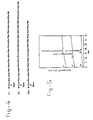
- The method of the invention is further illustrated by means of the reaction scheme according to Fig. 3.
- According to the embodiment of Fig. 3 step (a) is started with a protected peptide covalently linked to a resin (P).
- After N-terminal deprotection Boc-Cys(Npys)-0H is coupled to the peptide chain using e.g. HBTU/DIPEA and the S(Npys)-cysteinyl-peptide is deprotected and cleaved from the resin (preferably with TFA) and purified. Identification of Npys-peptide in HPLC-analysis is easy because the Npys group serves as a "chromatophoric handle".
- The carrier-protein (e.g. BSA) is functionalized with e.g. S-acetylmercaptosuccinic anhydride, at a pH of about 8.0, preferably in an N-ethylmorpholine buffer.
- Although the reaction between a thiol and an S-Npys compound can be performed over a wide pH range, the reaction is slow at low pH. The reaction proceeds smoothly under neutral or slightly basic conditions. The acetyl protection is removed in situ by adding NH₂OH.HCl to a solution of S-acetyl functionalized BSA and Npys- cysteinyl-peptide in a buffer at pH 7-8, upon which the conjugation reaction starts and is completed within a few hours. In this manner the thiol remains protected as long as possible to prevent undesirable (air)oxidation. Due to liberation of 3-nitro-2-thiopyridone, which is the driving force for the conjugation reaction, the colour of the solution changes from light to dark yellow.
- The reaction mixture is separated by gel filtration into a protein fraction, a peptide fraction (in case of the use of an excess Npys-cysteinylpeptide) and a third, yellow fraction containing the 3-nitro-2-thiopyridone. The incorporation of peptide as measured by the amount of 3-nitro-2-thiopyridone liberated, proved to be in the range of 11-15 mol peptide per mol protein. This is confirmed by amino acid analyses of the conjugates.
- If an aliquot of the conjugate is reduced using tri-n-butylphosphine, the liberated peptide has the same chromatographic behaviour as the peptide obtained on reducing the Npys-peptide, strongly indicating that the peptide was not modified during the conjugation procedures.
- The benefits of the conjugation method according to the invention may be summarized as follows:
- a. The S-protected peptide is not susceptible to undesired disulfide formation;
- b. The peptide can be conjugated to the protein in a facile and unambiguous way;
- c. The amount of incorporation can be easily controlled;
- d. The amount of incorporation can be easily determined; and
- e. The Npys chromophore allows flexible detection of the peptide.
- The process according to the invention may be carried out advantageously with the use of a kit comprising e.g. the following components:
- A1 : the 3-nitro-2-pyridine sulphenyl compound, e.g. Boc-Cys(Npys)-Opfp; A2 : a catalyst such as HOBt;
- B1 : functionalized carrier protein, e.g. BSA functionalized by reaction with S-acetylmercaptosuccinic anhydride;
- B2 : buffer in which the conjugation reaction is to be carried out;
- B3 : hydroxylamine.HCl.
- With A1 and A2 e.g. Boc-Cys(Npys) may be coupled to the solid-phase peptide (having a free N-terminal group).
- After deprotection and cleavage from the polymer (and optionally purification) the peptide may be conjugated with the carrier protein. For that purpose the S-Npys containing peptide is dissolved in a part of B2. B1 is dissolved in another part of B2. Both parts are mixed. After adding B3 to this mixture and stirring for some time the conjugation is completed. Then the peptide-protein conjugate may be purified by dialysis and/or gel-filtration chromatography.
- The peptide-protein conjugates prepared according to the method of the invention may be used advantageously for immunization, i.e. vaccination. In principle all types of antigenic peptides, i.e. potentially immunogenic peptides, may be coupled to a suitable carrier protein according to the method of the invention.
- Accordingly, the invention relates to vaccines on the basis of a peptide-protein conjugate prepared according to the method of the invention. For instance, the invention may relate to a vaccine being active against herpes simplex viruses (HSV).
- Examples of HSV-peptides which may be conjugated according to the method of the invention, are depicted in Figure 4. These peptides may be prepared according to the method described in J. Chem. Soc. Perkin Trans. (1986), I, pages 125-137.
- The present invention will now be further illustrated by the following examples.
- Fmoc-Cys(tBu)-0H was converted to its symmetrical anhydride by treatment with DCC according to standard procedures described by Dryland and Sheppard in J. Chem. Soc. Perkin. Trans I (1986), 125-137. To a solution of 0.5 mmol of this symmetrical anhydride in 4 ml of DMA, 800mg Wang resin (85 µmol/g) and 24 mg (0.2 mmol) DMAP were added. After gentle shaking for 2 h (room temperature) the resin was collected by filtration and washed with DMA. Subsequently HSV-gD-10-24 was synthesized. After the last Fmoc-deprotection the peptide chain was elongated by coupling with the symmetrical anhydride of Boc-Leu-OH. The resin was washed with DMA and treated for 90 min with Npys-Cl (freshly prepared from 93 mg (0.3 mmol) 3,3′-dinitro-2,2′-dipyridyldisulfide. The resin was washed with DMA and MeOH, and dried in vacuo over silica drying gel. An aliquot (400 mg) was treated with 5 ml TFA containing 5% thioanisole as a scavenger for 8 h at room temperature. The resin was removed by filtration and washed with 15 ml TFA. The combined filtrates were evaporated to dryness in vacuo and the residue was triturated with ether (3 x 20 ml), affording crude peptide having the
formula 2 as a yellow powder. The peptide was desalted over a Sephadex G-25 column (150 x 1.0 cm; 0.05 M HOAc), lyophilized and analyzed by RP-HPLC (see Fig. 2D).
Amino analysis: Asp 2.92 (3), Gly 0.97 (1), Ala 1.07 (1), Cys 0.63 (1), Leu 0.92 (1), Nle 1.00 (1), Phe 0.86 (1), Lys 1.83 (2), Arg 1.81 (2). This peptide was conjugated to a branched structure as described in Example 2. - The branched oligo-lysine construct having the
formula 1 was synthesized as follows. A Wang resin (500 mg, 46 µmol) was treated with 1). the symmetrical anhydride of Fmoc-4-aminobutyric acid (0.5 mmol) and DMAP (24 mg, 0.2 mmol) in 3 ml DMA for 2 h. After removal of the Fmoc-protection (46 µmol) with 20% piperi dine in DMA, coupling was performed as follows.2). Fmoc-Lys(Fmoc)-OPfp 150 mg, 0.2 mmol HOBt 27 mg, 0.2 mmol loading 94 µmol 3). Fmoc-Lys(Fmoc)-OPfp 225 mg, 0.3 mmol HOBt 40 mg, 0.3 mmol loading 184 µmol 4). Fmoc-Lys(Fmoc)-OPfp 310 mg, 0.4 mmol HOBt 53 mg, 0.4 mmol loading 360 µmol 5). Fmoc-Glu(tBu)-OPfp 591 mg, 1.0 mmol HOBt 130 mg, 1.0 mmol loading 356 µmol 6). Ac-S-CH₂CO-OPfp 300 mg, 1.0 mmol HOBt 130 mg, 1.0 mmol loading n.d. - After washing the resin with DMA and MeOH, it was dried in vacuo; yield 640 mg peptide-resin. A part (350 mg) was treated with 5 ml 95% aqueous TFA for 90 min. After removal of the resin by filtration, the filtrate was evaporated to dryness in vacuo. The residue was triturated with ether (3 x 20 ml) and dried in vacuo over silica drying gel. The S-acetyl protected branched structure having the
formula 1 obtained was used without further purification. - To a solution of 1.0 µmol of branched structure having the formula 1 (8 µmol S-Ac) in 2.0 ml Na-phosphate buffer (0.2 M, pH=6.5) was added hydroxylamine.HCl (7.0 mg, 100 µmol). The solution was stirred for 4 h in a nitrogen atmosphere. A solution of 16 µmol (9-21)-Cys(Npys) having the
formula 2 in 1.6 ml Na-phosphate buffer (0.2 M, pH=6.5) was added and stirred was continued for 4 h. The reaction mixture was applied to a Sephadex G-25 column (150 x 1.0 cm). Elution with 0.05 M HOAc afforded the MAP having theformula 3.
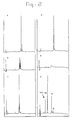
Amino acid analysis: Asp 24.7 (24), Glu 7.1 (8), Pro n.d., Gly 9.8 (8), Ala 8.3 (8), Cys n.d., Leu 7.9 (8), Nle 7.6 (8), Phe 7.9 (8), Lys 22.8 (23), Arg 14.7 (16), 4-aminobutyric acid n.d. - Fig. 2A-E show the results of RP-HPLC analysis of the materials involved in the preparation of the MAP.
- Fig. 2A: structure having the
formula 1. - Fig. 2B: structure having the
formula 1 with NH₂OH after 2 h. - Fig. 2C: structure having the
formula 1 with NA₂0H after 4 h. - Fig. 2D: peptide having the
formula 2. - Fig. 2I: MAP having the
formula 3. - An aliquot of the MAP (about 0.1 µmol), dissolved in a Na-phosphate buffer (0.1 M, pH=7), was treated with an excess dithiothreitol (DTT) for 1 h. RP-HPLC analysis of the reaction mixture (see Fig. 2F) showed two peptide peaks. The peaks α and β represent (9-21)-Cys and (HS-CH₂-CO-Glu)₈(Lys)₇-NH-(CH₂)3-COOH, respectively as indicated by coelution experiments.
- This example describes the preparation of various starting materials.
- To a solution of lysine.HCl (0.91 g, 5 mmol) in 40 ml water, was added NaHCO₃ (1.68 g, 20 mmol) and Na₂CO₃ (1.06 g, 10 mmol). The stirred mixture was cooled in ice and a solution of Fmoc-ONSu (3.37 g, 10 mmol) in 40 ml dioxane was added dropwise (1 h). Stirring was continued for 4 h at room temperature. The clear solution was then poured into 150 ml ice water containing 4 ml of concentrated HCl. The precipitate obtained was collected by filtration, washed with water (50 ml) and dissolved in CH₂Cl₂ (100 ml). The solution was washed with 0.1 M KHSO₄ (2 x 50 ml), dried (MgSO₄), filtered and evaporated to dryness in vacuo. The solid residue was recrystallized from methanol, affording 1.70 g (=57%) Fmoc-Lys(Fmoc)-OH. m.p. = 118-120°C.
¹³C-NMR (DMSO-d6): δ 23.0 (CH₂); 29.0 (CH₂); 30.5 (CH₂); 39.9 (CH₂); 46.7 (CH, Fmoc); 46.9 (CH, Fmoc); 53.9 (Cα); 65.3 (CH₂), Fmoc); 65.7 (CH₂, Fmoc); 120.1 (4 x CH, arom.); 125.2 (4 x CH, arom.); 127.0 (4 x CH; arom.); 127.6 (4 x CH, arom.); 140.7 (4 x C, arom.); 143.8 (2 x C, arom.); 144.0 (2 x C, arom.); 156.1 (C=0, Fmoc); 156.2 (C=0, Fmoc); 174.1 (C=0, acid). - To a stirred solution of Fmoc-Lys(Fmoc)-0H (1.18 g, 2 mmol) and pentafluorophenol (368 mg, 2 mmol) in 40 ml acetonitrile was added N,N′-dicyclohexylcarbodiimide (412 mg, 2 mmol). Stirring was continued for 3 h, 100 ml CH₂Cl₂ was added, the solution was filtered and the filtrate was evaporated to dryness in vacuo. The oil, dissolved in 20 ml methanol/CH₂Cl₂ (1/19), was applied to a silica gel column (15 g). The effluent obtained on elution with CH₂Cl₂ (60 ml) was evaporated to dryness in vacuo. The residue was crystallized from 120 ml CH₂Cl₂/ether (1/5). Yield: 1.17 g (=77%). m.p.= 171-173°C (dec.).
¹³C-NMR (DMSO-d6): δ 22.5 (CH₂); 28.8 (CH₂); 29.9 (CH₂); 39.7 (CH₂); 46.6 (CH, Fmoc); 46.8 (CH, Fmoc); 53.8 (Cα); 65.2 (CH₂, Fmoc); 65.8 (CH₂, Fmoc); 120.1 (4 x CH, arom.); 124.7 (m, C, OPfp-arom.); 125.1 (4 x CH, arom.); 127.0 (4 x CH, arom.); 127.6 (4 x CH, arom.); 134.9-143.7 (m, 5 x C-F); 140.7 (4 x C, arom.); 143.6 (2 x C, arom.); 143.8 (2 x C, arom.); 156.1 (C=0, Fmoc); 156.2 (C=0, Fmoc); 169.1 (C=0, ester). - Acetylchloride (15.8 g, 0.2 mol) was added dropwise to mercaptoacetic acid (18.4 g, 0.2 mol) in 15 min. The reaction mixture was heated for 15 min. at 70°C and subsequently distilled in vacuo yielding 10.0 g (=37%) S-acetyl mercaptoacetic acid as a light yellow oil. b.p.= 101-102°C (1 mm Hg). Lit¹⁰: b.p.=158-159°C (17 mm Hg).
¹H-NMR (CDCl₃): δ 2.42 (s, 3H); 3.75 (s, 2H); 10.78 (br, 1H, OH) - To a solution of S-acetylmercaptoacetic acid (2.68 g, 20 mmol) and pentafluorophenol (3.75 g, 20.4 mmol) in 20 ml CH₂Cl₂ was added dropwise a solution of N,N′-dicyclohexylcarbodiimide (4.50 g, 21,8 mmol) in 40 ml CH₂Cl₂. After stirring for 17 h the reaction mixture was filtered, and evaporated to dryness in vacuo. The residue obtained was dissolved in 25 ml CH₂Cl₂ and applied to a silica gel column (25 g). The effluent obtained on elution with CH₂Cl₂ (100 ml) was evaporated to dryness in vacuo. The residue was crystallized from pentane (80 ml).
Yield: 4.51 g (=75%). m.p.= 40-41°C.
¹H-NMR (CDCl₃): δ 2.45 (s, 3H); 4.02 (s, 2H).
¹³C-NMR (CDCl₃): δ 29.5 (CH₃); 30.3 (CH₂); 124.7 (C-1, m, arom.); 134.9-143.7 (5 x C-F, m); 165.0 (C=0, ester); 192.7 (C=0, acetyl). - To a stirred solution of NaHCO₃ (840 mg, 10 mmol) and Na₂CO₃ (530 mg, 5 mmol) in 40 ml water, was added 4-aminobutyric acid (515 mg, 5 mmol). The mixture was stirred until a clear solution was obtained (15 min.) and a solution of Fmoc-ONsu (1.69 g, 5 mmol) in 40 ml dioxane was added dropwise (1 h). Stirring was continued for 4 h and the reaction mixture was poured into 150 ml ice water containing 3 ml of concentrated HCl. The suspension obtained was extracted with CH₂Cl₂ (3 x 50 ml), the combined organic layers were dried (MgSO₄), filtered and evaporated to dryness in vacuo. The residue was crystallized from methanol (35 ml), affording 1.40 g (=86%) Fmoc-4-aminobutyric acid as white crystals. m.p.= 166-168°C.
¹³C-NMR (CDCl₃): δ 24.9 (CH₂); 30.9 (CH₂); 39.7 (CH₂); 46.9 (CH, Fmoc); 65.3 (CH₂), Fmoc); 120.1 (CH, arom.); 125.1 (CH, arom.); 127.0 (CH, arom.); 127.6 (CH, arom.); 140.8 (C, arom.); 144.0 (C, arom.); 156.2 (C=0, Fmoc); 174.3 (C=0, acid). - Reagents and solvents were used without further purification, except for the following:
- DMA was distilled in vacuo under nitrogen from 2,4-dinitrofluorobenzene before use; ether was distilled from P₂O₅, piperidine from KOH, dioxane and ethylenediamine from CaH₂ and N-ethylmorpholine from NaOH. HOBt was dried in vacuo at 50°C over P₂O₅ for 72 h.
- HPLC grade acetonitrile was purchased from Rathburn, Walkerburn, Scotland. Sephadex 6-25 (superfine) and G-50 (fine) were obtained from Pharmacia Fine Chemicals, Uppsala, Sweden. Fmoc-L-amino acid pentafluorophenyl esters were either purchased from Cambridge Research Biochemicals Ltd, Cambridge, England, or previously prepared according to Synthesis (1983), pages 325-327. Fmoc-Asn-4-nitrophenyl ester was synthesized according to J. Chem. Soc. Perkin Trans. (1981), I, pages 538-546. S-acetylmercaptosuccinic anhydride was obtained from Aldrich. BSA (fraction V, lot 12F-0649) was purchased from Sigma. Pepsyn K, a physically supported acrylamide polymer was used as a resin (0.1 mequiv./g, lots 1338/131, 11065/402, 1254/549) and purchased from Cambridge Research Biochemicals Ltd, Cambridge, England. Boc-Cys(Npys)-OH was synthesized according to Chem. Lett., (1982), pages 921-924, starting from 2-chloro-3-nitropyridine (Janssen) and Boc-Cys(Trt)-OH (Sigma). HBTU was synthesized according to Tetrahedron, (1978), pages 1269-1272. (4-Hydroxymethylphenoxy)acetic acid N-succinimidyl ester was prepared from (4-hydroxymethylphenoxy)acetic acid (see Int. J. Peptide Protein Res. (1982), 20, pages 451-454), N-hydroxysuccinimide and DCC. Peptide synthesis was performed using a semi-automatic flow-reactor, containing the following parts: several three-way valves mod.802-2312-1-0 (Mace, South El Monte, California, USA), a Gilson-302 HPLC pump, a Cecil Instruments CE-212 spectrophotometer equipped with a 1 mm flowcell (2120773), a Kipp & Zonen BD 41 recorder and a glass reaction column (100 x 10 mm, Omnifit Ltd, Cambridge, England), parts connected by way of PTFE tubing (0.7 x 1.6 mm). The pump and the valves were computer controlled. For HPLC a column (250 x 4.0 mm) packed with Lichrocart 5C₁₈ 5µm (E.Merck, Darmstadt, GFR) was used; mobile phase: 0.1% TFA in water (liquid A), 0.1% TFA in water/
acetonitrile 1/2 (v/v) (liquid B); linear gradient: 10-100% B over 30 min; flow rate 1.0 ml/min; detection at 214 or 329 nm. Peptides were hydrolyzed for amino acid analysis with constant boiling (5.7 N) HCl in vacuo at 110°C in sealed glass tubes for 20-24 h. The amino acid content of the hydrolysates was determined with a Kontron Liquimat III analyzer. For optical density measurements a Varian Cary 219 spectrophotometer was used. - All experiments were performed at room temperature unless stated otherwise.
- Three HSV-peptides were synthesized, designated as [Nle³¹⁵]-HSV-1-gD-302/315, HSV-1-gC-402/417 and HSV-1-gH-204/215. Amino acids in peptides are numbered according to the numbering of the published amino acid sequences of mature glycoproteins gD (Science 218, (1982), pages 381-384), immature glycoprotein gC (J. Virol, 45, (1983), pages 634-647) and immature glycoprotein gH (Nucleic Acids Res. 14, (1986), pages 4281-4292) of
HSV type 1. - For peptide synthesis the stepwise semi-automatic solid-phase method according to the general procedures of Atherton & Sheppard was used (J. Chem. Soc. Perkin Trans. (1986), I, pages 125-137; J. Chem. Soc. Chem. Commun. (1985), pages 165-166). Prior to peptide synthesis pepsyn K was functionalized by reaction with ethylenediamine, Fmoc-Nle-OPfp, piperidine and (4-hydroxymethylphenoxy)acetic acid N-succinimidyl ester, respectively. The first residue was attached to the resin using 6 equiv. Fmoc-amino acid active ester and 0.6 equiv. 4-dimethylaminopyridine over a period of 40 min. The following acylation reactions were performed by using equal amounts of Fmoc-amino acid pentafluorophenyl esters and HOBt (4 equiv.), except in the case of Asn, which was coupled through the 4-nitrophenyl ester and HOBt. Coupling times were 1 h. For all reactions and washings DMA was used as a solvent. Deprotection reactions were carried out in 20% piperidine in DMA (8 min). Completeness of couplings was checked with the Kaiser ninhydrin test (Anal. Biochem. 34, (1970), pages 595-598). The course of synthetic cycles was followed by monitoring the column effluent at 312 nm. After coupling and deprotection of the N-terminal residue of the peptide Boc-Cys(Npys)-OH (10 equiv.) was coupled using HBTU (10 equiv.) and DIPEA (10 equiv.) in DMA for 1.5 h (Synthesis, (1984), pages 572-574). The resin was washed successively with DMA, HOAc in DMA, DMA, i-PrOH, MeOH and ether, and dried in vacuo over silica blue.
- The peptides were deprotected and cleaved from the resin in aqueous TFA (95%, 1.5 h). The resin was removed by filtration and the solution was evaporated to dryness in vacuo yielding an oil. The crude S(Npys)-cysteinylpeptides (see Fig. 4) were dissolved in water, analyzed by HPLC and purified by gel filtration on a column (150 x 1.0 cm) of Sephadex G-25 superfine (eluent: 0.05 M HOAc).
- In Fig. 5 the analytical HPLC of crude S(Npys)-cysteinylpeptides (I-III) is shown (detection at 214 nm).
Amino acid analysis: I: Asp 1.97 (2), Thr 2.21 (2), Pro 3.62 (4), Ala 2.76 (3), Nle 1.06 (1), Tyr 0.91 (1), His 0.99 (1), Cys n.d. II: Asp 1.91 (2), Thr 0.98 (1), Ser 1.76 (2), Glu 2.12 (2), Pro 2.05 (2), Gly 0.98 (1), Ala 3.96 (4), Val 1.01 (1), Lys 0.88 (1), Cys n.d. III: Asp 1.01 (1), Thr 2.82 (3), Glu 1.00 (1), Pro 1.04 (1), Ile 0.91 (1), Leu 2.18 (2), His 2.98 (3), Cys n.d. - The overall yield of purified S(Npys)-cysteinylpeptides was 40-65% based on the initial loading of the resin.
- To a stirred solution of 130 mg (2µmol) BSA in 5.0 mL 0.8M N-ethylmorpholine buffer pH 8.0 a solution of 7.0 mg (40µmol) S-acetylmercaptosuccinic anhydride in 1.5 ml 96% EtOH was added dropwise (10 min). Stirring was continued for another 90 min. The solution was dialyzed against water (2 x 4h, 1 x 16h). The crude material obtained after lyophilization was purified by gel filtration on a Sephadex G-50 fine column (90 x 1.6 cm; eluent: 0.05M HOAc).
- To determine the S-acetyl incorporation in the protein 3.75 mg functionalized BSA was dissolved in 4.80 mL 0.1 M sodium phosphate buffer (pH = 8), 0.20 ml of a solution of 100 mg NH₂OH.HCL in 4.00 ml 0.1 M sodium phosphate buffer (pH = 8) was added and the amount of thiol obtained was measured according to Ellman (Arch. Biochem. Biophys. 82, (1959), pages 70-77) using 5,5′-dithio-bis-(2-nitrobenzoic acid). The incorporation turned out to be 14.6 mol S-acetyl groups per mol BSA.
- The S(Npys)-cysteinylpeptides (I-III) were conjugated to the functionalized BSA according to a procedure which is described in detail for peptide I.
- An 0.1 M sodium phosphate buffer, purged with nitrogen for 15 min, was used to prepare: 1. a solution of 4.50 mg lyophilized functionalized BSA (S-acetyl loading 14 mol/mol) in 1.00 ml; 2. a solution of 1.15µmol S(Npys)-cysteinylpeptide (I) (based on amino acid analysis) in 1.00 ml; 3. a solution of 100 mg NH₂OH.HCl in 4.00 ml.
- To a stirred mixture of
solutions solution 3 was added under nitrogen. A strong yellow colour appeared at this stage. After stirring for 3 h the reaction mixture was transferred to a Sephadex G-50 column (90 x 1.6 cm). Elution with 0.05 M HOAc afforded a protein fraction, a peptide fraction and a third, yellow fraction, which contained 3-nitro-2-thiopyridone as the only component detectable at 329 nm (HPLC). Optical density measurements showed that the third fraction contained 0.93µmol 3-nitro-2-thiopyridone ( ε₃₂₉ = 7.3 x 10³; 0.05 M HOAc), corresponding to an incorporation of 13.5 mol peptide per mol of protein, assuming that the liberation of 3-nitro-2-thiopyridone is only due to the conjugation of the S(Npys)-cysteinylpeptide to the protein. - Amino acid analysis of the conjugate showed an Asx-Nle ratio of 5.9. The peptide contains two Asn and one Nle, whereas BSA contains no Nle and 54 Asx residues (Adv. Protein Chem. 37, (1985), pages 161-245). This means an incorporation of 13.8 mol peptide per mol protein, which is in good agreement with the result mentioned above.
- The S(Npys)-cysteinylpeptide as well as the conjugate were treated with an excess of tri-n-butylphosphine in 50% aqueous acetonitrile for 30 min. HPLC analysis (detection at 214 nm) showed that the peptide treatment yielded two main products. One had the same k′-value (k′ = 1.2) as 3-nitro-2-thiopyridone (Chem. Lett., (1978), 951-952) and was also detectable at 329 nm, whereas the other had the same k′-value (k′= 1,7) as the single product detectable in the reaction mixture of the conjugate, evidently the cysteinylpeptide. Amino acid analysis of the peptide produced by treatment of the conjugate with tri-n-butyl-phosphine: Asp 2.12 (2), Thr 1.91 (2), Ala 2.82 (3), Pro 4.00 (4), Nle 1.19 (1), Tyr 0.88 (1), His 1.06 (1), Cys n.d.
- A suitable kit contains 5 vials A1, A2, B1, B2 and B3:
- - A1: Boc-Cys(Npys)-Opfp
- - A2: HOBt (catalyst)
- - B1: functionalized carrier protein (e.g. BSA functionalized by reaction with S-acetylmercaptosuccinic anhydride)
- - B2: buffer in which the conjugation reaction is to be carried out.
- - B3: hydroxylamine.HCl
- With A1 and A2 Boc-Cys(Npys) may be coupled to the solid-state peptide (having a free N-terminal group).
- After deprotection and removal of the polymer (and optionally purification) the peptide may be conjugated with the carrier protein. For that purpose the S-Npys containing peptide is dissolved in a part of B2. B1 is dissolved in another part of B2. Both parts are mixed. After adding B3 to this mixture and stirring for some time the conjugation is completed. Then the peptide-protein conjugate may be purified by dialysis and/or gelfiltration chromatography.
Claims (13)
1. A process for preparing an antigenic or immunogenic conjugate such as a multiple antigenic peptide system comprising reaction of a branched structure based on amino acids with an antigenic compound.
2. The process according to Claim 1, wherein the branched structure contains the groups having the formula 4 wherein A is a group derived from an amino acid containing at least one COOH group and two NH₂ groups such as lysine and/or ornithine, and B is a group derived from an amino compound such as a diamino compound or an amino acid.
3. The process according to Claim 1 or 2, wherein the branched structure contains the group having the formula 5 wherein A and B are as defined in Claim 2.
4. The process according to Claim 2 or 3, wherein the end groups A are coupled to a solubilizing group C, such as a group derived from polar amino acids, e.g. glutamic acid, as depicted in formula 6.
5. The process according to Claim 4, wherein a spacer group is inserted between groups A and C.
6. The process according to any of the Claims 2-5, wherein the end groups A or C are functionalized in such a way that they contain thiol groups or temporarily protected thiol groups.
7. The process according to Claim 6, wherein said protected thiol groups are represented by the group S-CO-X, X being alkyl, aryl, or arylalkyl.
8. The process according to Claim 6, wherein said protected thiol groups are S-acetyl groups.
9. The process according to any of the preceding claims, wherein the antigenic compound is coupled to a residue containing the 3-nitro-2-pyridine sulfenyl group.
10. The process according to Claim 9, wherein said residue is the S(3-nitro-2-pyridine sulfenyl)cysteinyl group.
11. An antigen or an immunogen on the basis of a conjugate prepared according to the method of any of the preceding claims.
12. An immunogen or an antigen according to Claim 11, which is active against the herpes simples viruses.
13. Use of conjugates obtainable according to any of the claims 1-10 for the preparation of pharmaceutical products.
Applications Claiming Priority (2)
| Application Number | Priority Date | Filing Date | Title |
|---|---|---|---|
| US18831088A | 1988-04-29 | 1988-04-29 | |
| US188310 | 1988-04-29 |
Publications (2)
| Publication Number | Publication Date |
|---|---|
| EP0339695A2 true EP0339695A2 (en) | 1989-11-02 |
| EP0339695A3 EP0339695A3 (en) | 1990-05-30 |
Family
ID=22692630
Family Applications (1)
| Application Number | Title | Priority Date | Filing Date |
|---|---|---|---|
| EP89200145A Withdrawn EP0339695A3 (en) | 1988-04-29 | 1989-01-23 | A process for preparing an antigenic or immunogenic conjugate as well as the use of such conjugates |
Country Status (1)
| Country | Link |
|---|---|
| EP (1) | EP0339695A3 (en) |
Cited By (18)
| Publication number | Priority date | Publication date | Assignee | Title |
|---|---|---|---|---|
| WO1992018528A1 (en) * | 1991-04-09 | 1992-10-29 | Medical Research Council | Branched peptides in assays for antibodies |
| WO1993003766A1 (en) * | 1991-08-13 | 1993-03-04 | Repligen Corporation | Multiple antigen peptides for use as hiv vaccines |
| WO1995000540A1 (en) * | 1993-06-18 | 1995-01-05 | Robert Webber | Synthetic carrier and immunogen |
| EP0670728A4 (en) * | 1992-11-12 | 1996-04-17 | Molecular Dynamics Inc | LIPOPHILIC CARRIERS BASED ON PEPTIDES FOR TARGETED ADMINISTRATION OF MEDICINAL PRODUCTS ACCORDING TO A RATIONAL CONCEPT OF FIXING MEDICINAL PRODUCTS. |
| EP0765357A4 (en) * | 1994-06-15 | 1997-07-30 | Biomolecular Res Inst Ltd | ANTIVIRAL DENDRIMERES |
| US5674977A (en) * | 1993-02-05 | 1997-10-07 | The Ontario Cancer Institute | Branched synthetic peptide conjugate |
| US6001364A (en) * | 1993-05-05 | 1999-12-14 | Gryphon Sciences | Hetero-polyoxime compounds and their preparation by parallel assembly |
| US6174530B1 (en) * | 1993-05-05 | 2001-01-16 | Gryphon Sciences | Homogeneous polyoxime compositions and their preparation by parallel assembly |
| EP0650053B1 (en) * | 1993-10-20 | 2001-12-12 | Roche Diagnostics GmbH | Synthetic standard for immunoassays |
| US6475492B1 (en) | 1999-04-28 | 2002-11-05 | The Administrators Of The Tulane Educational Fund | Peptides and assays for the diagnosis of lyme disease |
| US6613530B1 (en) * | 1994-07-25 | 2003-09-02 | Roche Diagnostics Gmbh | Determination of a specific immunoglobulin using multiple antigens |
| US6660274B2 (en) | 1997-06-30 | 2003-12-09 | The Administrators Of The Tulane Educational Fund | Surface antigens and proteins useful in compositions for the diagnosis and prevention of lyme disease |
| WO2005081783A2 (en) | 2004-01-30 | 2005-09-09 | Dana Farber Cancer Institute | Method for determination and quantification of radiation or genotoxin exposure |
| EP1939215A1 (en) | 1998-10-22 | 2008-07-02 | The University of Montana | Omp85 proteins of neisseria gonorrhoeae and neisseria meningitidis, compositions containing same and methods of use thereof |
| US8100264B2 (en) | 2003-05-02 | 2012-01-24 | Almar Packaging (Pty) Ltd. | Intermediate bulk container |
| US8313915B2 (en) | 2009-01-21 | 2012-11-20 | Gundersen Lutheran Medical Foundation, Inc. | Early detection of canine lyme disease by specific peptides and antibodies |
| WO2013152010A1 (en) | 2012-04-02 | 2013-10-10 | Gundersen Lutheran Health System, Inc. | Reagents, methods, and kits for the classification of cancer |
| US10407464B2 (en) | 2014-04-03 | 2019-09-10 | Amgen Inc. | Method for preparing AMG 416 |
-
1989
- 1989-01-23 EP EP89200145A patent/EP0339695A3/en not_active Withdrawn
Non-Patent Citations (4)
| Title |
|---|
| INT. J. PEPTIDE PROTEIN RES., vol. 28, 1986, pages 107-112; M.S. BERNATOWICZ et al.: "Preparation of Boc-ÄS-(3-nitro-2-pyridinesulfenyl)Ü-cysteine and its use for unsymmetrical disulfide bond formation" * |
| INT. J. PEPTIDE PROTEIN RES., vol. 32, 10th October 1988, pages 161-166, J.W. DRIJFHOUT et al.: "Controlled peptide-protein conjugation by means of 3-nitro-2-pyridinesulfenyl protection-activation" * |
| PROCEEDINGS OF THE NATIONAL ACADEMY OF SCIENCE, vol. 85, August 1988, pages 5409-5413; J.P. TAM: "Synthetic peptide vaccine design: Synthesis and properties of a high-density multiple antigenic peptide system" * |
| THE JOURNAL OF BIOLOGICAL CHEMISTRY, vol. 263, no. 4, 8th February 1988, pages 1719-1725, The American Society for Biochemistry and Molecular Biology Inc., US; D.N. POSNETT et al.: "A novel method for producing anti-peptide antibodies" * |
Cited By (23)
| Publication number | Priority date | Publication date | Assignee | Title |
|---|---|---|---|---|
| WO1992018528A1 (en) * | 1991-04-09 | 1992-10-29 | Medical Research Council | Branched peptides in assays for antibodies |
| EP0579661B1 (en) * | 1991-04-09 | 2000-01-05 | Medical Research Council | Branched peptides in assays for antibodies |
| EP0994121A3 (en) * | 1991-04-09 | 2000-04-26 | Medical Research Council | Branched peptides in assays for antibodies |
| WO1993003766A1 (en) * | 1991-08-13 | 1993-03-04 | Repligen Corporation | Multiple antigen peptides for use as hiv vaccines |
| EP0670728A4 (en) * | 1992-11-12 | 1996-04-17 | Molecular Dynamics Inc | LIPOPHILIC CARRIERS BASED ON PEPTIDES FOR TARGETED ADMINISTRATION OF MEDICINAL PRODUCTS ACCORDING TO A RATIONAL CONCEPT OF FIXING MEDICINAL PRODUCTS. |
| US5674977A (en) * | 1993-02-05 | 1997-10-07 | The Ontario Cancer Institute | Branched synthetic peptide conjugate |
| US6001364A (en) * | 1993-05-05 | 1999-12-14 | Gryphon Sciences | Hetero-polyoxime compounds and their preparation by parallel assembly |
| US6174530B1 (en) * | 1993-05-05 | 2001-01-16 | Gryphon Sciences | Homogeneous polyoxime compositions and their preparation by parallel assembly |
| WO1995000540A1 (en) * | 1993-06-18 | 1995-01-05 | Robert Webber | Synthetic carrier and immunogen |
| EP0650053B1 (en) * | 1993-10-20 | 2001-12-12 | Roche Diagnostics GmbH | Synthetic standard for immunoassays |
| US6190650B1 (en) | 1994-06-15 | 2001-02-20 | Biomolecular Research Institute Ltd. | Antiviral dendrimers |
| EP0765357A4 (en) * | 1994-06-15 | 1997-07-30 | Biomolecular Res Inst Ltd | ANTIVIRAL DENDRIMERES |
| US6613530B1 (en) * | 1994-07-25 | 2003-09-02 | Roche Diagnostics Gmbh | Determination of a specific immunoglobulin using multiple antigens |
| US6660274B2 (en) | 1997-06-30 | 2003-12-09 | The Administrators Of The Tulane Educational Fund | Surface antigens and proteins useful in compositions for the diagnosis and prevention of lyme disease |
| EP1939215A1 (en) | 1998-10-22 | 2008-07-02 | The University of Montana | Omp85 proteins of neisseria gonorrhoeae and neisseria meningitidis, compositions containing same and methods of use thereof |
| US6475492B1 (en) | 1999-04-28 | 2002-11-05 | The Administrators Of The Tulane Educational Fund | Peptides and assays for the diagnosis of lyme disease |
| US8100264B2 (en) | 2003-05-02 | 2012-01-24 | Almar Packaging (Pty) Ltd. | Intermediate bulk container |
| WO2005081783A2 (en) | 2004-01-30 | 2005-09-09 | Dana Farber Cancer Institute | Method for determination and quantification of radiation or genotoxin exposure |
| US8313915B2 (en) | 2009-01-21 | 2012-11-20 | Gundersen Lutheran Medical Foundation, Inc. | Early detection of canine lyme disease by specific peptides and antibodies |
| WO2013152010A1 (en) | 2012-04-02 | 2013-10-10 | Gundersen Lutheran Health System, Inc. | Reagents, methods, and kits for the classification of cancer |
| US8999657B2 (en) | 2012-04-02 | 2015-04-07 | Gundersen Lutheran Health System | Reagents, methods, and kits for the classification of cancer |
| US10407464B2 (en) | 2014-04-03 | 2019-09-10 | Amgen Inc. | Method for preparing AMG 416 |
| US11377474B2 (en) | 2014-04-03 | 2022-07-05 | Amgen Inc. | Method for preparing AMG 416 (etelcalcetide) |
Also Published As
| Publication number | Publication date |
|---|---|
| EP0339695A3 (en) | 1990-05-30 |
Similar Documents
| Publication | Publication Date | Title |
|---|---|---|
| CN113330024B (en) | Method for preparing GIP/GLP1 dual agonist | |
| JP4405594B2 (en) | Improved solid phase peptide synthesis and reagents for use in such synthesis | |
| US6174530B1 (en) | Homogeneous polyoxime compositions and their preparation by parallel assembly | |
| US5229490A (en) | Multiple antigen peptide system | |
| US6001364A (en) | Hetero-polyoxime compounds and their preparation by parallel assembly | |
| WO2023089594A1 (en) | Process for the preparation of tirzepatide or pharmaceutically acceptable salt thereof | |
| CN103314010B (en) | Solid phase synthesis of h(gly2)glp-2 | |
| JP2000512633A (en) | Cyclic polypeptides containing thioether bonds and methods for their preparation | |
| US5606030A (en) | Coconjugates of OMPC, HIV related peptides and anionic moieties | |
| Drijfhout et al. | A new synthetic functionalized antigen carrier | |
| US20130172529A1 (en) | Method for synthesizing thymosins | |
| JPH0236197A (en) | Solid phase method for synthesis of thymosin alpha 1 | |
| Zeng et al. | Synthesis of a new template with a built‐in adjuvant and its use in constructing peptide vaccine candidates through polyoxime chemistry | |
| WO1989005305A1 (en) | Polymers and polymer-peptide conjugates | |
| Paravizzini et al. | Backbone Protecting Groups for Enhanced Peptide and Protein Synthesis | |
| US6663869B1 (en) | Polyoxime compounds and their preparation | |
| EP0353565B1 (en) | Immunostimulating peptides, a process for their preparation and pharmaceutical commpositions containing them | |
| JPH05260963A (en) | Peptide-polysaccharide-protein conjugate vaccine | |
| US5041533A (en) | Hinge peptide, a process for its manufacture, and its use for the manufacture of synthetic immunogens | |
| Inman et al. | Synthesis of N. alpha.-(tert-butoxycarbonyl)-N. epsilon.-[N-(bromoacetyl)-. beta.-alanyl]-L-lysine: Its use in peptide synthesis for placing a bromoacetyl cross-linking function at any desired sequence position | |
| Monahan et al. | Luteinizing hormone releasing factor. The total solid-phase synthesis on a benzhydrylamine polymer | |
| GB2282813A (en) | Annular antigen scaffolds comprising thioether linkages | |
| KR100627935B1 (en) | Fragment of viral protein 2 or 3 of polyoma virus used to carry active ingredient | |
| JPH04243897A (en) | Cyclic hiv-based neutralizing determinant peptide | |
| DavidáPallin | Assembly of cyclic peptide dendrimers from unprotected linear building blocks in aqueous solution |
Legal Events
| Date | Code | Title | Description |
|---|---|---|---|
| PUAI | Public reference made under article 153(3) epc to a published international application that has entered the european phase |
Free format text: ORIGINAL CODE: 0009012 |
|
| AK | Designated contracting states |
Kind code of ref document: A2 Designated state(s): AT BE CH DE ES FR GB GR IT LI LU NL SE |
|
| PUAL | Search report despatched |
Free format text: ORIGINAL CODE: 0009013 |
|
| AK | Designated contracting states |
Kind code of ref document: A3 Designated state(s): AT BE CH DE ES FR GB GR IT LI LU NL SE |
|
| STAA | Information on the status of an ep patent application or granted ep patent |
Free format text: STATUS: THE APPLICATION IS DEEMED TO BE WITHDRAWN |
|
| 18D | Application deemed to be withdrawn |
Effective date: 19901201 |