EP0333263B1 - Complexes of tellurium and selenium derivatives - Google Patents
Complexes of tellurium and selenium derivatives Download PDFInfo
- Publication number
- EP0333263B1 EP0333263B1 EP89200601A EP89200601A EP0333263B1 EP 0333263 B1 EP0333263 B1 EP 0333263B1 EP 89200601 A EP89200601 A EP 89200601A EP 89200601 A EP89200601 A EP 89200601A EP 0333263 B1 EP0333263 B1 EP 0333263B1
- Authority
- EP
- European Patent Office
- Prior art keywords
- complex
- carbons
- carbon atoms
- compounds
- compound
- Prior art date
- Legal status (The legal status is an assumption and is not a legal conclusion. Google has not performed a legal analysis and makes no representation as to the accuracy of the status listed.)
- Expired - Lifetime
Links
- XLYQGSBYWNYJBW-UHFFFAOYSA-N C[U]N[Rn]O[U](N)N Chemical compound C[U]N[Rn]O[U](N)N XLYQGSBYWNYJBW-UHFFFAOYSA-N 0.000 description 1
Classifications
-
- C—CHEMISTRY; METALLURGY
- C07—ORGANIC CHEMISTRY
- C07C—ACYCLIC OR CARBOCYCLIC COMPOUNDS
- C07C391/00—Compounds containing selenium
-
- C—CHEMISTRY; METALLURGY
- C07—ORGANIC CHEMISTRY
- C07D—HETEROCYCLIC COMPOUNDS
- C07D329/00—Heterocyclic compounds containing rings having oxygen and selenium or oxygen and tellurium atoms as the only ring hetero atoms
-
- A—HUMAN NECESSITIES
- A61—MEDICAL OR VETERINARY SCIENCE; HYGIENE
- A61K—PREPARATIONS FOR MEDICAL, DENTAL OR TOILETRY PURPOSES
- A61K31/00—Medicinal preparations containing organic active ingredients
- A61K31/045—Hydroxy compounds, e.g. alcohols; Salts thereof, e.g. alcoholates
- A61K31/065—Diphenyl-substituted acyclic alcohols
-
- A—HUMAN NECESSITIES
- A61—MEDICAL OR VETERINARY SCIENCE; HYGIENE
- A61P—SPECIFIC THERAPEUTIC ACTIVITY OF CHEMICAL COMPOUNDS OR MEDICINAL PREPARATIONS
- A61P17/00—Drugs for dermatological disorders
-
- A—HUMAN NECESSITIES
- A61—MEDICAL OR VETERINARY SCIENCE; HYGIENE
- A61P—SPECIFIC THERAPEUTIC ACTIVITY OF CHEMICAL COMPOUNDS OR MEDICINAL PREPARATIONS
- A61P31/00—Antiinfectives, i.e. antibiotics, antiseptics, chemotherapeutics
- A61P31/04—Antibacterial agents
-
- A—HUMAN NECESSITIES
- A61—MEDICAL OR VETERINARY SCIENCE; HYGIENE
- A61P—SPECIFIC THERAPEUTIC ACTIVITY OF CHEMICAL COMPOUNDS OR MEDICINAL PREPARATIONS
- A61P35/00—Antineoplastic agents
-
- A—HUMAN NECESSITIES
- A61—MEDICAL OR VETERINARY SCIENCE; HYGIENE
- A61P—SPECIFIC THERAPEUTIC ACTIVITY OF CHEMICAL COMPOUNDS OR MEDICINAL PREPARATIONS
- A61P37/00—Drugs for immunological or allergic disorders
-
- C—CHEMISTRY; METALLURGY
- C07—ORGANIC CHEMISTRY
- C07C—ACYCLIC OR CARBOCYCLIC COMPOUNDS
- C07C395/00—Compounds containing tellurium
Definitions
- EP-A-0 194 393 discloses organic Te and Se compounds which are active for the production of cytokines, both in vitro and in vivo : these compounds are useful for a number of diseases, as set forth in EP-A-0 194 393.
- the compounds in question are very poorly soluble in aqueous media, whereby to prepare parenterally administerable pharmaceutical compositions becomes difficult.
- Applicants have ascertained that certain polycarboxylic acids form stable complexes with certain organic Te and Se compounds.
- This invention therefore, provides a water soluble lymphokine inducing complex of a compound with the formula:
- alkyl of 1 to 5 carbon atoms includes straight and branched chain alkyl groups such as methyl; ethyl; n-propyl; n-butyl; the term hydroxyalkyl of 1 to 5 carbon atoms includes hydroxymethyl; hydroxyethyl; hydroxy-n-butyl; the term haloalkyl of 1 to 5 carbon atoms includes chloromethyl; 2-iodoethyl; 4-bromo-n-butyl; iodoethyl; 4-bromo-n-pentyl; the term alkanoyloxy of 1 to 5 carbon atoms includes acetyl, propionyl, butanoyl; the term carboxyalkyl includes carboxymethyl, carboxyethyl, ethylenecarboxy; the term alkylcarbonylalkyl includes methanoylmethyl, ethanoylethyl; the term amidoalkyl includes -CH2CONH2; -CH
- tellurium based compounds that is preferred has the formula: and is capable of inducing IL-2 formation as well as the proliferation of IL-2 producer cells and the activation of IL-2 receptor sites.
- Useful dihydroxy compounds for use in the preparation of compounds of structure A or B include those of formula I wherein R, R1, R4 and R5 are as shown in the Table: TABLE R R1 R4 R5 H H H H H Cl H H H H OCH3 H H H COOCH3 H H H H H CN H H CHO H H H H COOH H H CH2COOH H H H H H CHCOOCH3 H H I H H H H H Br H H H CONH2 H H H CH2OH H H COOH H H H
- R, R1, R2, R3, R4 and R5 are as shown in the Table: R R1 R2 R3 R4 R5 H H H H H H H H Cl H H H H CH2OH H H H H H H H H H OH H H H H H H CH3 H H H H H CH2Cl H H H H H H H H COOH H H H H H H CH2COOH H H H H H H CHO H H H H H H H H CH2CHO H H CONH2 H H CH3 H H H CN H H H H H H CH2CONH2 H H H H H COOCH3 H H H H H OCH3 H H H H H H H
- the complexes of the invention may be formed by contacting a compound of Formulas A-E with a non-toxic pharmaceutically acceptable complexing agent which forms a water soluble complex with said tellurium or selenium compound.
- Suitable complexing agents include hydroxy polycarboxylic acids or polyhydroxy polycarboxylic acids.
- equimolar amounts of acids and the corresponding alkali metal salts may be combined in aqueous solutions with a compound of Formulas A-E to form the complex of the invention; 0.05M - 0.5M concentrations of the buffer are preferred but higher or lower amounts may be utilized provided that the concentration is adequate to dissolve the particular compound of Formulas A-E. Higher molarities may be used to provide concentrates that may be diluted prior to lV administration or to prepare other dosage forms. The amount of the compound of Formulas A-E is dependent on the ultimate use of the product.
- the compounds of the invention may be administered to mammals for treatment of cancer, immune deficiencies, autoimmune diseases and infectious diseases using amounts that are effective in each condition.
- the treatment will alleviate the symptoms of these diseases by causing the mammalian body to produce increased amounts of lymphokines.
- the invention also makes the in vitro production possible of increased amounts of cytokines such as lymphokines and or their receptors and the use of these materials as therapeutic agents to be administered to mammals for the alleviation of cancer, immune deficiencies and infectious diseases. It is contemplated that the composition of the invention may be used in combination with other anti-cancer chemotherapeutic agents such as cyclophosphamide.
- cancer is used to include leukemia and solid tumors that arise spontaneously, by contact with a carcinogenic agent, by irradiation or by onco-viruses. These conditions are well known to those who are skilled in the art and include such conditions as adrenal tumors, bone tumors, gastrointestinal tumors, brain tumors, breast tumors, skin tumors, lung tumors, ovarian tumors, genitourinary tumors and the like.
- the Merck Manual 13th Edition, Merck & Co. (1977) describes many of these conditions. Pages 647-650; 828-831; 917-920; 966; 970-974; 1273, 1277; 1371-1376; 1436-1441; 1563; 1612-1615 of the publication are incorporated herein by reference.
- immunodeficiency diseases is used to describe a diverse group of conditions such as Acquired Immunedeficiency Syndrome (AIDS) characterized chiefly by an increased susceptibility to various infections with consequent severe acute, recurrent and chronic disease which result from one or more defects in the specific or nonspecific immune systems. Pages 205-220 of the Merck Manual 13th Edition describe many of these conditions and they are incorporated herein by reference.
- AIDS Acquired Immunedeficiency Syndrome
- autoimmune diseases includes disorders in which the immune system produces autoantibodies to an endogenous antigen, with consequent injury to tissues. Pages 241-243 of the Merck Manual 13th Edition describe these conditions and they are incorporated herein by reference.
- infectious diseases includes those pathologic conditions that arise from bacterial, viral or fungus organisms that invade and disrupt the normal function of the mammalian body. Pages 3-149 of the Merck Manual 13th Edition describe these conditions and they are incorporated herein by reference.
- the compounds may be administered orally, parenterally, transcutaneously, topically or by contacting mucous membranes.
- the compounds may be administered orally in hard or soft gel liquid capsules, in solutions or suspension capsules or tablets that may be prepared using conventional excipients, binders, disintegrating agents and the like.
- the parenteral route may be intramuscular, intravenous, intradermal using a sustained release carrier or subcutaneous.
- concentration of the compounds in combination with a pharmaceutical carrier is not critical and is a matter of choice. Remington's Practice of Pharmacy, 9th, 15th or 16th Ed. describes various pharmaceutical carriers and is incorporated herein by reference.
- the tellurium compounds useful in the practice of the invention will hydrolyze in the presence of water.
- These hydrolyzed compositions are active in vivo and in vitro although the hydrolyzed compositions eventually decompose and lose their ability to induce lymphokine secretion. For this reason, the compositions should be freshly prepared. If the compounds are administered orally in dry form, they are active in inducing the production of lymphokines. Preferably, the compounds should be kept under anhydrous conditions until just prior to being used.
- Topical compositions may be prepared by dispersing the compounds in a hydrophillic or hydrophobic cosmetic base. Topical compositions include liquids, ointments, creams, lotions, gels, and pastes. Petroleum jelly or commercial preparations such as Oil of Olay may be used. The concentration may be from 0.0001 - 10% on a weight/weight basis.
- the dosage of the compounds of the invention used to stimulate lymphokine production or treat the specific disease condition described herein may be varied depending on the particular disease and the stage of the disease. Generally an amount of the compound may be administered which will range from 0.05 x 10 ⁇ 3 to 1 x 10 ⁇ 3 g/Kg of body weight and preferably from 0.1 x 10 ⁇ 3 to 0.5 x 10 ⁇ 3 g/Kg of body weight. For example a dosage of 1-3 mg per day for a 75 Kg mammal is contemplated as a sufficient amount to induce lymphokine production but the dosage may be adjusted according to the individual response and the particular condition that is being treated. For the treatment of AIDS 1.0-9.0 mg/m2 may be given IV three times a week.
- the compound of the invention may be administered concomitantly with agents such as 9-(1,3-dihydroxy-2-propoxymethyl) guanine (DHPG); and/or AZT.
- agents such as 9-(1,3-dihydroxy-2-propoxymethyl) gu
- the compounds may be utilized for veterinary purposes in the treatment of viral and immune diseases that afflict horses, ungulates and fowl. These disorders may be treated using quantities of the compound that may be used in treating the mammalian disorders described hereinabove.
- cells may be stimulated to produce lymphokines by use of 1 x 10 ⁇ 8 to 1 x 10 ⁇ 4, preferably 1 x 10 ⁇ 7 to 1 x 10 ⁇ 5g of compound per 106 cells/ml.
- mice Preliminary toxicity studies in mice have established an LD50 of 300 ⁇ g./25g of body weight in 6 week old mice for the compound of Example 1.
- the compounds may be used as anti-bacterial or anti-viral agents in plants or in animals.
- Virus infections such as West Nile virus infections in mice are susceptible to the compound of the Example 1 at a dose of 10 ⁇ g/day/mouse.
- Plant bacterial infections such as crown gall caused by Agrobacterium tumefaciens may be treated or prevented by the application of a 0.1% solution of compounds of the invention.
- Two citrate buffer solutions are prepared by combining aqueous 0.05M sodium citrate with 0.05M citric acid or 0.1M sodium citrate and 0.1M citric acid.
- the pH is about 4 depending on the amount of Compound A added.
- To these solutions are added up to 5 mg/ml of ammonium trichloro (dioxoethylene-0,0′) tellurate.
- mice spleen assay was performed as follows:
- Spleens were removed from male Balb-c mice 6 to 8 weeks of age.
- the spleen cells were pushed through stainless steel 250 ⁇ m (60 mesh, U.S. standard) nets resting in 5 mm Petri dishes containing PBS in order to seperate the cells.
- the cells were then collected into centrifuge tubes and spun at 1000 rpm for 10 minutes.
- the supernatant was discarded and cells were treated with 5 ml of hypotonic buffer (0.15 MNH4Cl; 0.01 M KHCO3 dissolved in double distilled water, pH 7.2) for exactly two minutes. Thereafter, PBS* was added to the cells and the test tubes were centrifuged for 10 minutes at 1000 rpm.
- the cells were rinsed twice and counted in a heamocytometer using trypan blue to test for viability.
- the cells were brought to a concentration of 107 viable cells/ml.
- the cells were contacted with 25 mg/ml of PMA and with varying amounts of the complex in water. Thereafter, the cells were incubated at 37°C, 7.5% CO2 for 96 h.
- Supernatants were collected and assayed for lL-2 activity using tritiated thymidine (3H-TdR). The results for the assay of 25% and 12.5% supernatants are shown as counts per million (cpm) in a beta scintillator and are set forth in Table I.
- Table I shows the induction of IL-2 activity that is obtained with varying amounts of the complex.
- 0.02M tartrate buffer is prepared from 0.02M tartaric acid and 0.02M potassium tartrate in a 1:4 ratio.
- a 0.04M tartrate buffer in also prepared using the same procedures.
- the complex is formed by adding ammonium trichloro (dioxoethylene-0,0′-) tellurate to the aqueous tartrate buffer. The effectiveness of the complex in stimulating IL-2 production was determined in the mouse spleen assay.
- Citrate and tartrate complexes of ammonium trichloro (dioxoethylene-O,O′) tellurate are tested for the stimulation of human mononuclear cells.
- Venous whole blood (with heparin; Evans 10 IU/ml blood) is diluted with RPMI in a ratio of 1:1.
- the diluted blood is gently placed on Lymphoprep (Nylgard & Co., Oslo, Norway, density 1.077 g/ml) two parts of diluted blood on one part of Lymphoprep.
- Lymphoprep Nylgard & Co., Oslo, Norway, density 1.077 g/ml
- Each tube is provided with 3 ml Lymphoprep and 6 to 7 ml diluted blood.
- the tubes are centrifuged 30 minutes at 1600 rpm at room temperature. After the centrifugation mononuclear cells are collected from the interphase fraction and washed with RPMI three times.
- the cells are resuspended in RPMI, counted on a hemocytometer, using trypan blue to test for viability and then are brought to a concentration of 1 X 10 ⁇ 6 cells per ml in enriched RPMI.
- concentrations set forth in Table 3 were added in a volume of 10% of cell mixture.
- Aliquots of 0.2 ml from each sample were placed in wells of microplates (NUNC) (triplicates).
- NUNC microplates
- the microplates are incubated for 72 hours at 37°C after which 3H-methylthymidine, lU Ci/well (Nuclear Research Center, Israel) are added to the cultures. Cells were further incubated overnight and harvested with a cell harvester.
Landscapes
- Chemical & Material Sciences (AREA)
- Health & Medical Sciences (AREA)
- Organic Chemistry (AREA)
- General Health & Medical Sciences (AREA)
- Veterinary Medicine (AREA)
- Public Health (AREA)
- Medicinal Chemistry (AREA)
- Pharmacology & Pharmacy (AREA)
- Life Sciences & Earth Sciences (AREA)
- Animal Behavior & Ethology (AREA)
- Nuclear Medicine, Radiotherapy & Molecular Imaging (AREA)
- General Chemical & Material Sciences (AREA)
- Chemical Kinetics & Catalysis (AREA)
- Engineering & Computer Science (AREA)
- Bioinformatics & Cheminformatics (AREA)
- Communicable Diseases (AREA)
- Oncology (AREA)
- Immunology (AREA)
- Dermatology (AREA)
- Epidemiology (AREA)
- Pharmaceuticals Containing Other Organic And Inorganic Compounds (AREA)
- Acyclic And Carbocyclic Compounds In Medicinal Compositions (AREA)
- Organic Low-Molecular-Weight Compounds And Preparation Thereof (AREA)
Description
- EP-A-0 194 393 discloses organic Te and Se compounds which are active for the production of cytokines, both in vitro and in vivo: these compounds are useful for a number of diseases, as set forth in EP-A-0 194 393. The compounds in question, however, are very poorly soluble in aqueous media, whereby to prepare parenterally administerable pharmaceutical compositions becomes difficult. Applicants have ascertained that certain polycarboxylic acids form stable complexes with certain organic Te and Se compounds.
- Accordingly, it is a primary objective of this invention to provide complexes, not described heretofore, of certain organic Te and Se compounds with non-toxic complexing agents, an improved water solubility being thereby achieved, so that it becomes possible to prepare pharmaceutical compositions, not described heretofore, and which contain a complex of the kind referred to above.
- This invention, therefore, provides a water soluble lymphokine inducing complex of a compound with the formula:
- (A)

- (A')

- (B)

- (C)
Te0₂
or - (D)
PhTeCl₃
or - (E)
(C₆H₅)₄⁺P (TeCl₃(O₂C₂H₄)⁻ - The term alkyl of 1 to 5 carbon atoms includes straight and branched chain alkyl groups such as methyl; ethyl; n-propyl; n-butyl; the term hydroxyalkyl of 1 to 5 carbon atoms includes hydroxymethyl; hydroxyethyl; hydroxy-n-butyl; the term haloalkyl of 1 to 5 carbon atoms includes chloromethyl; 2-iodoethyl; 4-bromo-n-butyl; iodoethyl; 4-bromo-n-pentyl; the term alkanoyloxy of 1 to 5 carbon atoms includes acetyl, propionyl, butanoyl; the term carboxyalkyl includes carboxymethyl, carboxyethyl, ethylenecarboxy; the term alkylcarbonylalkyl includes methanoylmethyl, ethanoylethyl; the term amidoalkyl includes -CH₂CONH₂; -CH₂CH₂CONH₂; -CH₂CH₂CH₂CONH₂; the term cyanoalkyl includes -CH₂CN; -CH₂CH₂CN; -CH₂CH₂CH₂CN; the term alkoxy of 1 to 5 carbon atoms includes methoxy, ethoxy, n-propoxy, n-pentoxy; the terms halo and halogen are used to signify chloro, bromo, iodo and fluoro; the term acyl includes R₁₆CO wherein R₁₆ is H, or alkyl of 1 to 5 carbons such as methanoyl, ethanoyl and the like; the term aryl includes phenyl, alkylphenyl and naphthyl; the term N-monoalkylamidoalkyl includes -CH₂CH₂CONHCH₃, -CH₂CONHCH₂CH₃; the term N,N-dialkylamidoalkyl includes -CH₂CON(CH₃)₂; CH₂CH₂CON(CH₂CH₃). Compounds which are based on tellurium are the presently preferred compounds of the invention. The tellurium based compounds that is preferred has the formula:

and is capable of inducing IL-2 formation as well as the proliferation of IL-2 producer cells and the activation of IL-2 receptor sites. - Useful dihydroxy compounds for use in the preparation of compounds of structure A or B, include those of formula I wherein R, R₁, R₄ and R₅ are as shown in the Table:

TABLE R R₁ R₄ R₅ H H H H H Cl H H H OCH₃ H H H COOCH₃ H H H H CN H H CHO H H H H COOH H H CH₂COOH H H H H CHCOOCH₃ H H I H H H H Br H H H CONH₂ H H H CH₂OH H H COOH H H - Other dihydroxy compounds for use in the preparation of compounds A and B include those of formula II wherein R, R₁, R₂, R₃, R₄ and R₅ are as shown in the Table:

R R₁ R₂ R₃ R₄ R₅ H H H H H H H H Cl H H H H CH₂OH H H H H H H OH H H H H H H CH₃ H H H H H CH₂Cl H H H H H COOH H H H H H CH₂COOH H H H H H CHO H H H H H H H CH₂CHO H H CONH₂ H H CH₃ H H H CN H H H H H H CH₂CONH₂ H H H H COOCH₃ H H H H OCH₃ H H H - Other dihydroxy compounds for use in making compound of formula A and B include those of formula III wherein R, R₁, R₂, R₃, R₄ and R₅ are as shown in the Table.

R R₁ R₂ R₃ R₄ R₅ R₈ R₉ H H H H H H H H H H Cl H H H H H H H H H Br H H H H H OCH₃ H H H H H H H₂ CONH₂ H H H H H H Br H H Br H H H H H H H CH₂COOH H H H H H Cl Cl H H H H H CH₂COOH H H H H H H H H CH₃ H H H H H H CH₃ H H H H H H H CH₂Cl H H H H H H H H H I H H H H H CH₂CN H H H H H H H H H H CH₂CH₂OH H H H - Additional dihydroxy compounds include those of formula IV wherein R, R₁, R₂, R₃, R₄ and R₅ are as shown in Table.

R R₁ R₂ R₃ R₄ R₅ R₆ R₇ R₈ R₉ H H H H H H H H H H H H Cl H H H Cl H H H H H Cl Cl H H H H H H H H CONCH₃ H H H Br H H H H H Br H H H CON(CH₃)₂ H H H H H H OCH₃ H H H H H H H H H H OCH₃ H H H H H H H H H CH₂COOH H H H H H H H COOH H H H H H H H H CH₃ H H H H H H H H CH₃ H H H H CH₃ H H H H H CH₂CH₃ H H H H H Cl H H H CH₂CN H H CH₂OH H H H H H H H H I H H H H CN H H CH₂CH₂COOH H H H H H H H H H H CHO H H H H H H H H H H F H H H H H H - The complexes of the invention may be formed by contacting a compound of Formulas A-E with a non-toxic pharmaceutically acceptable complexing agent which forms a water soluble complex with said tellurium or selenium compound. Suitable complexing agents include hydroxy polycarboxylic acids or polyhydroxy polycarboxylic acids. Generally, it is preferred to prepare the complexes of the invention by contacting a compound of Formulas A-E with a buffer system containing either citric acid or tartaric acid and a corresponding alkali metal salt thereof, such as sodium or potassium.
- Generally equimolar amounts of acids and the corresponding alkali metal salts may be combined in aqueous solutions with a compound of Formulas A-E to form the complex of the invention; 0.05M - 0.5M concentrations of the buffer are preferred but higher or lower amounts may be utilized provided that the concentration is adequate to dissolve the particular compound of Formulas A-E. Higher molarities may be used to provide concentrates that may be diluted prior to lV administration or to prepare other dosage forms. The amount of the compound of Formulas A-E is dependent on the ultimate use of the product. It has been found that in the case of the citrate, concentrations of 5mg/ml and greater of ammonium trichloro (dioxoethylene-0,0′) tellurate may be solubilized according to the present invention. This is in contrast to the phosphate buffer (PBS) from which only about 200 mcg/ml of ammonium trichloro (dioxoethylene - 0,0′) tellurate can be solubilized. It is preferred to employ the aqueous solution of the complex directly without recovering and redissolving the complex. The complex is stable when frozen, or at refrigerated, room or elevated temperatures. The compounds of the invention may be administered to mammals for treatment of cancer, immune deficiencies, autoimmune diseases and infectious diseases using amounts that are effective in each condition. The treatment will alleviate the symptoms of these diseases by causing the mammalian body to produce increased amounts of lymphokines. The invention also makes the in vitro production possible of increased amounts of cytokines such as lymphokines and or their receptors and the use of these materials as therapeutic agents to be administered to mammals for the alleviation of cancer, immune deficiencies and infectious diseases. It is contemplated that the composition of the invention may be used in combination with other anti-cancer chemotherapeutic agents such as cyclophosphamide.
- The term cancer is used to include leukemia and solid tumors that arise spontaneously, by contact with a carcinogenic agent, by irradiation or by onco-viruses. These conditions are well known to those who are skilled in the art and include such conditions as adrenal tumors, bone tumors, gastrointestinal tumors, brain tumors, breast tumors, skin tumors, lung tumors, ovarian tumors, genitourinary tumors and the like. The Merck Manual 13th Edition, Merck & Co. (1977) describes many of these conditions. Pages 647-650; 828-831; 917-920; 966; 970-974; 1273, 1277; 1371-1376; 1436-1441; 1563; 1612-1615 of the publication are incorporated herein by reference.
- The term immunodeficiency diseases is used to describe a diverse group of conditions such as Acquired Immunedeficiency Syndrome (AIDS) characterized chiefly by an increased susceptibility to various infections with consequent severe acute, recurrent and chronic disease which result from one or more defects in the specific or nonspecific immune systems. Pages 205-220 of the Merck Manual 13th Edition describe many of these conditions and they are incorporated herein by reference.
- The term autoimmune diseases includes disorders in which the immune system produces autoantibodies to an endogenous antigen, with consequent injury to tissues. Pages 241-243 of the Merck Manual 13th Edition describe these conditions and they are incorporated herein by reference.
- The term infectious diseases includes those pathologic conditions that arise from bacterial, viral or fungus organisms that invade and disrupt the normal function of the mammalian body. Pages 3-149 of the Merck Manual 13th Edition describe these conditions and they are incorporated herein by reference.
- The compounds may be administered orally, parenterally, transcutaneously, topically or by contacting mucous membranes. The compounds may be administered orally in hard or soft gel liquid capsules, in solutions or suspension capsules or tablets that may be prepared using conventional excipients, binders, disintegrating agents and the like. The parenteral route may be intramuscular, intravenous, intradermal using a sustained release carrier or subcutaneous. The concentration of the compounds in combination with a pharmaceutical carrier is not critical and is a matter of choice. Remington's Practice of Pharmacy, 9th, 15th or 16th Ed. describes various pharmaceutical carriers and is incorporated herein by reference.
- It has been found that a number of the tellurium compounds useful in the practice of the invention will hydrolyze in the presence of water. These hydrolyzed compositions are active in vivo and in vitro although the hydrolyzed compositions eventually decompose and lose their ability to induce lymphokine secretion. For this reason, the compositions should be freshly prepared. If the compounds are administered orally in dry form, they are active in inducing the production of lymphokines. Preferably, the compounds should be kept under anhydrous conditions until just prior to being used.
- It has been found that certain compounds such as TeO₂ alone will induce lymphokine production in producer T-cell lymphocytes in vitro and in vivo but it will not cause proliferation of lymphokines in producing cells such as IL-2 producer cells or activate the receptor site in responder T-cell lymphocytes.
- Topical compositions may be prepared by dispersing the compounds in a hydrophillic or hydrophobic cosmetic base. Topical compositions include liquids, ointments, creams, lotions, gels, and pastes. Petroleum jelly or commercial preparations such as Oil of Olay may be used. The concentration may be from 0.0001 - 10% on a weight/weight basis.
- The dosage of the compounds of the invention used to stimulate lymphokine production or treat the specific disease condition described herein may be varied depending on the particular disease and the stage of the disease. Generally an amount of the compound may be administered which will range from 0.05 x 10⁻³ to 1 x 10⁻³ g/Kg of body weight and preferably from 0.1 x 10⁻³ to 0.5 x 10⁻³ g/Kg of body weight. For example a dosage of 1-3 mg per day for a 75 Kg mammal is contemplated as a sufficient amount to induce lymphokine production but the dosage may be adjusted according to the individual response and the particular condition that is being treated. For the treatment of AIDS 1.0-9.0 mg/m² may be given IV three times a week. In addition, the compound of the invention may be administered concomitantly with agents such as 9-(1,3-dihydroxy-2-propoxymethyl) guanine (DHPG); and/or AZT.
- In addition to treating the mammalian disorders described hereinabove, the compounds may be utilized for veterinary purposes in the treatment of viral and immune diseases that afflict horses, ungulates and fowl. These disorders may be treated using quantities of the compound that may be used in treating the mammalian disorders described hereinabove.
- For in vitro use, cells may be stimulated to produce lymphokines by use of 1 x 10⁻⁸ to 1 x 10⁻⁴, preferably 1 x 10⁻⁷ to 1 x 10⁻⁵g of compound per 10⁶ cells/ml.
- Preliminary toxicity studies in mice have established an LD₅₀ of 300 µg./25g of body weight in 6 week old mice for the compound of Example 1. The compounds may be used as anti-bacterial or anti-viral agents in plants or in animals. Virus infections such as West Nile virus infections in mice are susceptible to the compound of the Example 1 at a dose of 10 µg/day/mouse. Plant bacterial infections such as crown gall caused by Agrobacterium tumefaciens may be treated or prevented by the application of a 0.1% solution of compounds of the invention.
- Two citrate buffer solutions are prepared by combining aqueous 0.05M sodium citrate with 0.05M citric acid or 0.1M sodium citrate and 0.1M citric acid. The pH is about 4 depending on the amount of Compound A added. To these solutions are added up to 5 mg/ml of ammonium trichloro (dioxoethylene-0,0′) tellurate.
- After storage at various temperatures for about two and a half months, dilutions of these solutions were prepared and a mouse spleen assay was performed as follows:
- Spleens were removed from male Balb-c mice 6 to 8 weeks of age. The spleen cells were pushed through stainless steel 250 µm (60 mesh, U.S. standard) nets resting in 5 mm Petri dishes containing PBS in order to seperate the cells. The cells were then collected into centrifuge tubes and spun at 1000 rpm for 10 minutes. The supernatant was discarded and cells were treated with 5 ml of hypotonic buffer (0.15 MNH₄Cl; 0.01 M KHCO₃ dissolved in double distilled water, pH 7.2) for exactly two minutes. Thereafter, PBS* was added to the cells and the test tubes were centrifuged for 10 minutes at 1000 rpm. The cells were rinsed twice and counted in a heamocytometer using trypan blue to test for viability. The cells were brought to a concentration of 10⁷ viable cells/ml. The cells were contacted with 25 mg/ml of

PMA and with varying amounts of the complex in water. Thereafter, the cells were incubated at 37°C, 7.5% CO₂ for 96 h. Supernatants were collected and assayed for lL-2 activity using tritiated thymidine (³H-TdR). The results for the assay of 25% and 12.5% supernatants are shown as counts per million (cpm) in a beta scintillator and are set forth in Table I. Table I shows the induction of IL-2 activity that is obtained with varying amounts of the complex.TABLE 1 ammonium trichloro (dioxoethylene-0,0) tellurate µg/ml % supernatant 25% 12.5% 0.05M Citrate 0.5 76138 99850 0.1 91022 65518 0.05 5450 1728 0.1 citrate 0.5 65632 50778 0.1 55127 27582 0.05 3432 1597 control with PBS Mg⁺ Ca⁺ 0.5 43833 35270 0.1 44378 28035 0.05 3762 1865 placebo 1:10 -0- 5157 2878 1:40 -0- 4085 4172 1:100 -0- 3320 2192 - These tests show that the citrate complex is as effective as the uncomplexed control.
- Using the same procedures that are employed in Example 1, 0.02M tartrate buffer is prepared from 0.02M tartaric acid and 0.02M potassium tartrate in a 1:4 ratio. A 0.04M tartrate buffer in also prepared using the same procedures. The complex is formed by adding ammonium trichloro (dioxoethylene-0,0′-) tellurate to the aqueous tartrate buffer. The effectiveness of the complex in stimulating IL-2 production was determined in the mouse spleen assay. The results are shown in Table II:
TABLE 2 ammonium trichloro (deoxyethylene-0,0′-) tellurate µg/ml supernatant (cpm) 25% 12.5% 0.02M tartrate buffer 0.5 64563 58015 0.1 11258 5722 0.05 1152 887 0.04M tartrate buffer 0.5 1513 610 0.1 2610 1598 0.05 1423 665 control with PBS Mg⁺⁺ & Ca⁺⁺ 0.5 43833 35270 0.1 44378 28035 0.05 3762 1865 - Citrate and tartrate complexes of ammonium trichloro (dioxoethylene-O,O′) tellurate are tested for the stimulation of human mononuclear cells.
- Venous whole blood (with heparin; Evans 10 IU/ml blood) is diluted with RPMI in a ratio of 1:1. The diluted blood is gently placed on Lymphoprep (Nylgard & Co., Oslo, Norway, density 1.077 g/ml) two parts of diluted blood on one part of Lymphoprep. Each tube is provided with 3 ml Lymphoprep and 6 to 7 ml diluted blood. The tubes are centrifuged 30 minutes at 1600 rpm at room temperature. After the centrifugation mononuclear cells are collected from the interphase fraction and washed with RPMI three times. The cells are resuspended in RPMI, counted on a hemocytometer, using trypan blue to test for viability and then are brought to a concentration of 1 X 10⁻⁶ cells per ml in enriched RPMI. The concentrations set forth in Table 3 were added in a volume of 10% of cell mixture. Aliquots of 0.2 ml from each sample were placed in wells of microplates (NUNC) (triplicates). The microplates are incubated for 72 hours at 37°C after which ³H-methylthymidine, lU Ci/well (Nuclear Research Center, Israel) are added to the cultures. Cells were further incubated overnight and harvested with a cell harvester. Proliferation was measured with a beta scintillation counter and the results are set forth in Table 3:
Table 3 ammonium trichloro (deoxyethylene-0,0′-) tellurate µg/ml PMA 1.5ng/ml cells 0.5ng/ml cells 0.02M tartrate buffer 0.5 1418 1680 0.1 30992 20620 0.05 22883 12800 0.04 tartrate buffer 0.5 2762 527 0.1 20713 12990 0.005 15327 16782 0.05 citrate 0.5 1822 745 0.1 49402 8713 0.05 3937 5298 control PBS Mg⁺ & Ca⁺⁺ 0.5 3287 2945 0.1 42857 19810 0.05 12923 6663
Claims (7)
- A water soluble lymphokine inducing complex of a compound with the formula:(A)
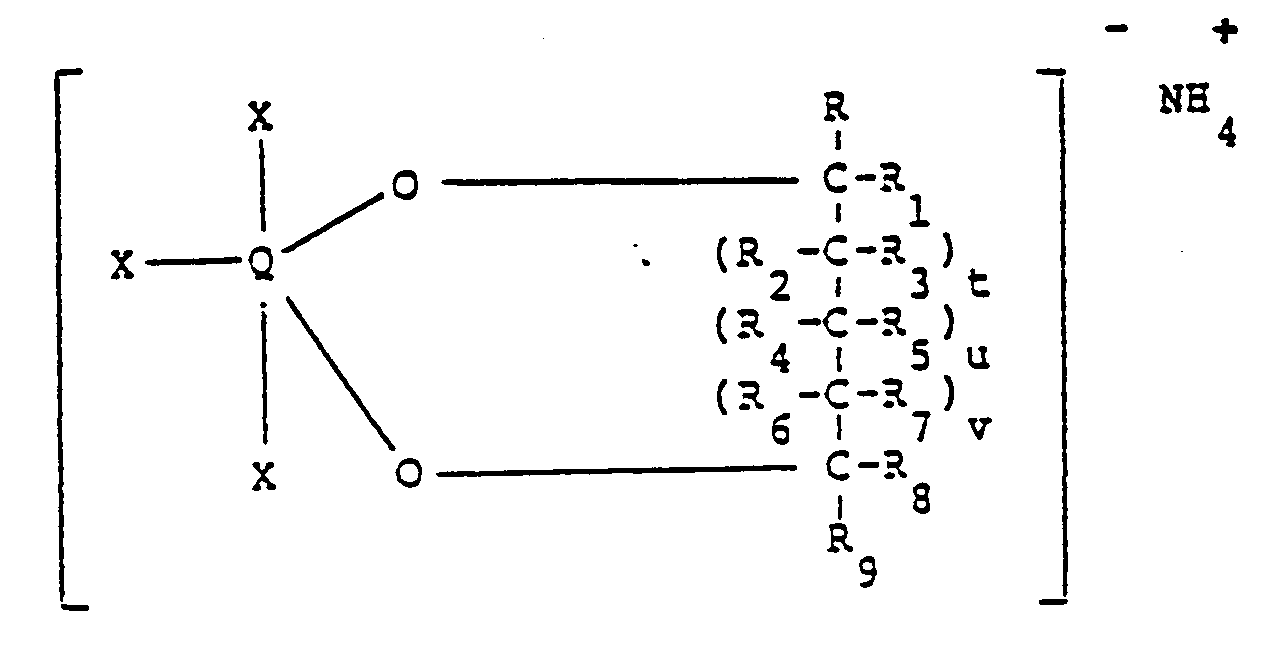 (A')
(A') (B)
(B)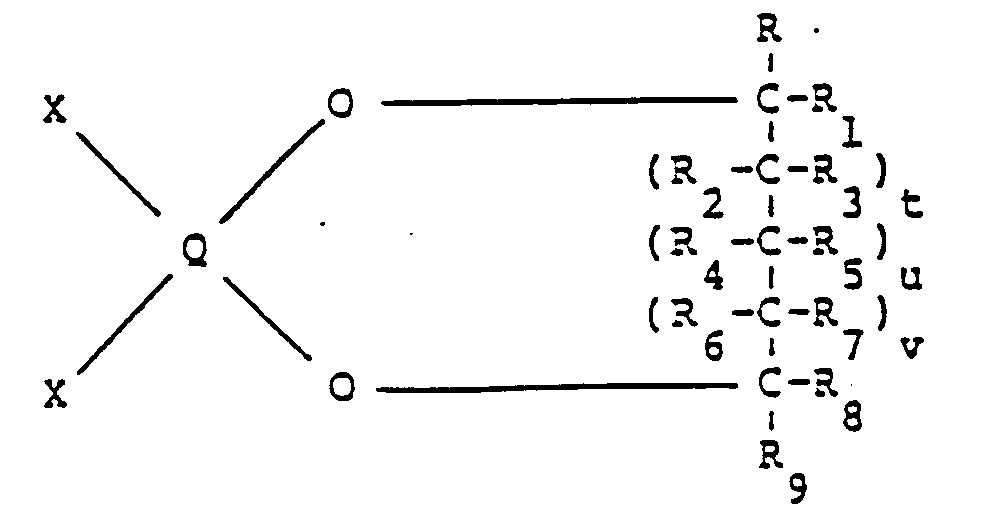 (C)
(C)
TE0₂
or(D)
PhTeCl₃
or(E)wherein Q is Te or Se; t is 1 or O; u is 1 or O; v is 1 or O; R, R₁, R₂, R₃, R₄, R₅, R₆, R₇, R₈ and R₉ are the same or different and are independently selected from the group consisting of hydrogen, hydroxyalkyl of 1 to 5 carbons, hydroxy, alkyl of from 1 to 5 carbon atoms, halogen, haloalkyl of 1 to 5 carbon atoms, carboxy, alkylcarbonylalkyl of 2 to 10 carbons, alkanoyloxy of 1 to 5 carbon atoms, carboxyalkyl of 1 to 5 carbon atoms, acyl, amido, cyano, amidoalkyl of 1 to 5 carbons, N-monoalkylamidoalkyl of 2 to 10 carbons, N,N-dialkylamidoalkyl of 4 to 10 carbons, cyanoalkyl of 1 to 5 carbons, alkoxy of 1 to 5 carbon atoms, alkoxyalkyl of 2 to 10 carbon atoms and -COR₁₀ wherein R₁₀ is alkyl of from 1 to 5 carbons; and X is halogen, with a non-toxic,pharmaceutically acceptable complexing agent selected from the hydroxy polycarboxylic acids, and the polyhydroxy polycarboxylic acids.
(C₆H₅)₄⁺P (TeCl₃(O₂C₂H₄)⁻ - A complex as defined in Claim 1, wherein the compound is of the formula:

- A complex as defined in Claim 2, wherein the complex contains the citrate ion.
- A complex as defined in Claim 2, wherein the complex contains the tartrate ion.
- A pharmaceutical composition which comprises the complex of Claim 1 and a pharmaceutical carrier.
- A pharmaceutical composition which comprises the complex of Claim 3 and a pharmaceutical carrier.
- A pharmaceutical composition which comprises the complex of Claim 4 and a pharmaceutical carrier.
Priority Applications (1)
| Application Number | Priority Date | Filing Date | Title |
|---|---|---|---|
| AT89200601T ATE99684T1 (en) | 1988-03-14 | 1989-03-09 | COMPLEXES OF TELLURIUM AND SELENEDERIVATIVES. |
Applications Claiming Priority (4)
| Application Number | Priority Date | Filing Date | Title |
|---|---|---|---|
| US16758488A | 1988-03-14 | 1988-03-14 | |
| US167584 | 1988-03-14 | ||
| US172643 | 1988-03-24 | ||
| US07/172,643 US4929739A (en) | 1988-03-24 | 1988-03-24 | Complexes of tellurium and selenium derivatives |
Publications (2)
| Publication Number | Publication Date |
|---|---|
| EP0333263A1 EP0333263A1 (en) | 1989-09-20 |
| EP0333263B1 true EP0333263B1 (en) | 1994-01-05 |
Family
ID=26863297
Family Applications (1)
| Application Number | Title | Priority Date | Filing Date |
|---|---|---|---|
| EP89200601A Expired - Lifetime EP0333263B1 (en) | 1988-03-14 | 1989-03-09 | Complexes of tellurium and selenium derivatives |
Country Status (18)
| Country | Link |
|---|---|
| EP (1) | EP0333263B1 (en) |
| JP (1) | JP2659428B2 (en) |
| KR (1) | KR0156543B1 (en) |
| AR (1) | AR247562A1 (en) |
| AT (1) | ATE99684T1 (en) |
| AU (1) | AU608955B2 (en) |
| BR (1) | BR8901161A (en) |
| CA (1) | CA1327047C (en) |
| DE (1) | DE68911959T2 (en) |
| DK (1) | DK167148B1 (en) |
| ES (1) | ES2061932T3 (en) |
| FI (1) | FI91753C (en) |
| HU (1) | HU206122B (en) |
| IE (1) | IE63675B1 (en) |
| IL (1) | IL89462A (en) |
| NZ (1) | NZ228144A (en) |
| PH (1) | PH25740A (en) |
| PT (1) | PT89988B (en) |
Cited By (1)
| Publication number | Priority date | Publication date | Assignee | Title |
|---|---|---|---|---|
| US7276628B2 (en) | 2001-11-22 | 2007-10-02 | Biomas Ltd. | Biologically active complex |
Families Citing this family (3)
| Publication number | Priority date | Publication date | Assignee | Title |
|---|---|---|---|---|
| US4946437A (en) | 1988-12-02 | 1990-08-07 | Bar-Ilan University | Method for the stimulation of bone marrow cells |
| AUPM402094A0 (en) * | 1994-02-18 | 1994-03-17 | University Of Sydney, The | Chemical compounds |
| AT412448B (en) * | 2001-02-13 | 2005-03-25 | Vis Vitalis Lizenz & Handels | USE OF SEXY PREPARATIONS |
Family Cites Families (2)
| Publication number | Priority date | Publication date | Assignee | Title |
|---|---|---|---|---|
| US4525443A (en) * | 1983-10-17 | 1985-06-25 | Eastman Kodak Company | Novel 3-trihalochalcogenpropenone compounds |
| US4761490A (en) * | 1985-03-15 | 1988-08-02 | Bar-Ilan University | Organic derivatives of tellurium and selenium and their use to stimulate cytokine production |
-
1989
- 1989-02-27 NZ NZ228144A patent/NZ228144A/en unknown
- 1989-03-02 IL IL8946289A patent/IL89462A/en not_active IP Right Cessation
- 1989-03-09 ES ES89200601T patent/ES2061932T3/en not_active Expired - Lifetime
- 1989-03-09 AR AR89313386A patent/AR247562A1/en active
- 1989-03-09 AT AT89200601T patent/ATE99684T1/en not_active IP Right Cessation
- 1989-03-09 DE DE68911959T patent/DE68911959T2/en not_active Expired - Fee Related
- 1989-03-09 EP EP89200601A patent/EP0333263B1/en not_active Expired - Lifetime
- 1989-03-13 BR BR898901161A patent/BR8901161A/en not_active Application Discontinuation
- 1989-03-13 CA CA000593561A patent/CA1327047C/en not_active Expired - Fee Related
- 1989-03-13 PT PT89988A patent/PT89988B/en not_active IP Right Cessation
- 1989-03-13 KR KR1019890003041A patent/KR0156543B1/en not_active Expired - Fee Related
- 1989-03-13 IE IE80189A patent/IE63675B1/en not_active IP Right Cessation
- 1989-03-13 PH PH38323A patent/PH25740A/en unknown
- 1989-03-13 DK DK120689A patent/DK167148B1/en not_active IP Right Cessation
- 1989-03-14 FI FI891205A patent/FI91753C/en not_active IP Right Cessation
- 1989-03-14 HU HU891222A patent/HU206122B/en not_active IP Right Cessation
- 1989-03-14 AU AU31279/89A patent/AU608955B2/en not_active Ceased
- 1989-03-14 JP JP1063417A patent/JP2659428B2/en not_active Expired - Fee Related
Cited By (1)
| Publication number | Priority date | Publication date | Assignee | Title |
|---|---|---|---|---|
| US7276628B2 (en) | 2001-11-22 | 2007-10-02 | Biomas Ltd. | Biologically active complex |
Also Published As
| Publication number | Publication date |
|---|---|
| JPH0242056A (en) | 1990-02-13 |
| KR890014468A (en) | 1989-10-23 |
| IE63675B1 (en) | 1995-05-31 |
| DK120689A (en) | 1989-09-15 |
| KR0156543B1 (en) | 1998-12-01 |
| IL89462A0 (en) | 1989-09-10 |
| FI91753C (en) | 1994-08-10 |
| PH25740A (en) | 1991-10-18 |
| HU206122B (en) | 1992-08-28 |
| DK120689D0 (en) | 1989-03-13 |
| CA1327047C (en) | 1994-02-15 |
| FI91753B (en) | 1994-04-29 |
| AU608955B2 (en) | 1991-04-18 |
| IL89462A (en) | 1994-07-31 |
| JP2659428B2 (en) | 1997-09-30 |
| DK167148B1 (en) | 1993-09-06 |
| BR8901161A (en) | 1989-10-31 |
| ATE99684T1 (en) | 1994-01-15 |
| IE890801L (en) | 1989-09-14 |
| FI891205A0 (en) | 1989-03-14 |
| DE68911959T2 (en) | 1994-07-14 |
| DE68911959D1 (en) | 1994-02-17 |
| PT89988A (en) | 1989-11-10 |
| PT89988B (en) | 1994-05-31 |
| AR247562A1 (en) | 1995-01-31 |
| EP0333263A1 (en) | 1989-09-20 |
| FI891205A7 (en) | 1989-09-15 |
| NZ228144A (en) | 1991-03-26 |
| ES2061932T3 (en) | 1994-12-16 |
| AU3127989A (en) | 1989-09-14 |
Similar Documents
| Publication | Publication Date | Title |
|---|---|---|
| US5475030A (en) | Complexes of tellurium and selenium derivatives | |
| US4761490A (en) | Organic derivatives of tellurium and selenium and their use to stimulate cytokine production | |
| US4752614A (en) | Pharmaceutical compositions of tellerium and selenium compounds for the induction of in vivo and in vitro production of cytokines | |
| US6063814A (en) | Phorbol esters as anti-neoplastic and white blood cell elevating agents | |
| EP0311138B1 (en) | Compounds for the induction of in vivo and vitro production of cytokines | |
| US5102908A (en) | Method of treating Acquired Immunedeficiency Syndrome (AIDS) using organic tellurium and selenium derivatives | |
| US4764461A (en) | Tellurium and selenium compounds for the induction of in vivo and in vitro production of cytokines | |
| US5093135A (en) | Compounds for the induction of in vivo and in vitro production of cytokines | |
| JPH04505760A (en) | How to protect from AZT side effects and toxicity | |
| US8048915B2 (en) | Biologically active complex | |
| EP0333263A1 (en) | Complexes of tellurium and selenium derivatives | |
| EP0290817B1 (en) | A use of oxetanocin for inhibiting hiv | |
| EP0384498B1 (en) | Pharmaceutical composition for the induction of the production of cytokines | |
| JPS6121452B2 (en) | ||
| JPH01287026A (en) | Agent for promoting proliferation of marrow cell | |
| HU200930B (en) | Process for producing pharmaceutical compositions for inhibiting growth of tumor celles containing gold, silver and coppercomplexes of phosphino-hydrocarbones |
Legal Events
| Date | Code | Title | Description |
|---|---|---|---|
| PUAI | Public reference made under article 153(3) epc to a published international application that has entered the european phase |
Free format text: ORIGINAL CODE: 0009012 |
|
| AK | Designated contracting states |
Kind code of ref document: A1 Designated state(s): AT BE CH DE ES FR GB GR IT LI LU NL SE |
|
| 17P | Request for examination filed |
Effective date: 19900131 |
|
| 17Q | First examination report despatched |
Effective date: 19910507 |
|
| GRAA | (expected) grant |
Free format text: ORIGINAL CODE: 0009210 |
|
| AK | Designated contracting states |
Kind code of ref document: B1 Designated state(s): AT BE CH DE ES FR GB GR IT LI LU NL SE |
|
| REF | Corresponds to: |
Ref document number: 99684 Country of ref document: AT Date of ref document: 19940115 Kind code of ref document: T |
|
| RAP2 | Party data changed (patent owner data changed or rights of a patent transferred) |
Owner name: ALBECK, MICHAEL Owner name: SREDNI, BENJAMIN |
|
| REF | Corresponds to: |
Ref document number: 68911959 Country of ref document: DE Date of ref document: 19940217 |
|
| ITF | It: translation for a ep patent filed | ||
| ET | Fr: translation filed | ||
| K2C3 | Correction of patent specification (complete document) published |
Effective date: 19940105 |
|
| EPTA | Lu: last paid annual fee | ||
| REG | Reference to a national code |
Ref country code: GR Ref legal event code: FG4A Free format text: 3011108 |
|
| PLBE | No opposition filed within time limit |
Free format text: ORIGINAL CODE: 0009261 |
|
| STAA | Information on the status of an ep patent application or granted ep patent |
Free format text: STATUS: NO OPPOSITION FILED WITHIN TIME LIMIT |
|
| REG | Reference to a national code |
Ref country code: ES Ref legal event code: FG2A Ref document number: 2061932 Country of ref document: ES Kind code of ref document: T3 |
|
| 26N | No opposition filed | ||
| EAL | Se: european patent in force in sweden |
Ref document number: 89200601.6 |
|
| REG | Reference to a national code |
Ref country code: GB Ref legal event code: IF02 |
|
| PGFP | Annual fee paid to national office [announced via postgrant information from national office to epo] |
Ref country code: GB Payment date: 20040303 Year of fee payment: 16 |
|
| PGFP | Annual fee paid to national office [announced via postgrant information from national office to epo] |
Ref country code: SE Payment date: 20040304 Year of fee payment: 16 |
|
| PGFP | Annual fee paid to national office [announced via postgrant information from national office to epo] |
Ref country code: FR Payment date: 20040309 Year of fee payment: 16 |
|
| PGFP | Annual fee paid to national office [announced via postgrant information from national office to epo] |
Ref country code: NL Payment date: 20040310 Year of fee payment: 16 |
|
| PGFP | Annual fee paid to national office [announced via postgrant information from national office to epo] |
Ref country code: AT Payment date: 20040311 Year of fee payment: 16 |
|
| PGFP | Annual fee paid to national office [announced via postgrant information from national office to epo] |
Ref country code: LU Payment date: 20040316 Year of fee payment: 16 |
|
| PGFP | Annual fee paid to national office [announced via postgrant information from national office to epo] |
Ref country code: CH Payment date: 20040317 Year of fee payment: 16 |
|
| PGFP | Annual fee paid to national office [announced via postgrant information from national office to epo] |
Ref country code: ES Payment date: 20040318 Year of fee payment: 16 Ref country code: DE Payment date: 20040318 Year of fee payment: 16 |
|
| PGFP | Annual fee paid to national office [announced via postgrant information from national office to epo] |
Ref country code: GR Payment date: 20040326 Year of fee payment: 16 |
|
| PGFP | Annual fee paid to national office [announced via postgrant information from national office to epo] |
Ref country code: BE Payment date: 20040518 Year of fee payment: 16 |
|
| PG25 | Lapsed in a contracting state [announced via postgrant information from national office to epo] |
Ref country code: LU Free format text: LAPSE BECAUSE OF NON-PAYMENT OF DUE FEES Effective date: 20050309 Ref country code: IT Free format text: LAPSE BECAUSE OF NON-PAYMENT OF DUE FEES;WARNING: LAPSES OF ITALIAN PATENTS WITH EFFECTIVE DATE BEFORE 2007 MAY HAVE OCCURRED AT ANY TIME BEFORE 2007. THE CORRECT EFFECTIVE DATE MAY BE DIFFERENT FROM THE ONE RECORDED. Effective date: 20050309 Ref country code: GB Free format text: LAPSE BECAUSE OF NON-PAYMENT OF DUE FEES Effective date: 20050309 Ref country code: AT Free format text: LAPSE BECAUSE OF NON-PAYMENT OF DUE FEES Effective date: 20050309 |
|
| PG25 | Lapsed in a contracting state [announced via postgrant information from national office to epo] |
Ref country code: SE Free format text: LAPSE BECAUSE OF NON-PAYMENT OF DUE FEES Effective date: 20050310 Ref country code: ES Free format text: LAPSE BECAUSE OF NON-PAYMENT OF DUE FEES Effective date: 20050310 |
|
| PG25 | Lapsed in a contracting state [announced via postgrant information from national office to epo] |
Ref country code: LI Free format text: LAPSE BECAUSE OF NON-PAYMENT OF DUE FEES Effective date: 20050331 Ref country code: CH Free format text: LAPSE BECAUSE OF NON-PAYMENT OF DUE FEES Effective date: 20050331 Ref country code: BE Free format text: LAPSE BECAUSE OF NON-PAYMENT OF DUE FEES Effective date: 20050331 |
|
| BERE | Be: lapsed |
Owner name: *ALBECK MICHAEL Effective date: 20050331 Owner name: *SREDNI BENJAMIN Effective date: 20050331 |
|
| PG25 | Lapsed in a contracting state [announced via postgrant information from national office to epo] |
Ref country code: NL Free format text: LAPSE BECAUSE OF NON-PAYMENT OF DUE FEES Effective date: 20051001 Ref country code: DE Free format text: LAPSE BECAUSE OF NON-PAYMENT OF DUE FEES Effective date: 20051001 |
|
| PG25 | Lapsed in a contracting state [announced via postgrant information from national office to epo] |
Ref country code: GR Free format text: LAPSE BECAUSE OF NON-PAYMENT OF DUE FEES Effective date: 20051004 |
|
| EUG | Se: european patent has lapsed | ||
| REG | Reference to a national code |
Ref country code: CH Ref legal event code: PL |
|
| GBPC | Gb: european patent ceased through non-payment of renewal fee |
Effective date: 20050309 |
|
| PG25 | Lapsed in a contracting state [announced via postgrant information from national office to epo] |
Ref country code: FR Free format text: LAPSE BECAUSE OF NON-PAYMENT OF DUE FEES Effective date: 20051130 |
|
| NLV4 | Nl: lapsed or anulled due to non-payment of the annual fee |
Effective date: 20051001 |
|
| REG | Reference to a national code |
Ref country code: FR Ref legal event code: ST Effective date: 20051130 |
|
| REG | Reference to a national code |
Ref country code: ES Ref legal event code: FD2A Effective date: 20050310 |
|
| BERE | Be: lapsed |
Owner name: *ALBECK MICHAEL Effective date: 20050331 Owner name: *SREDNI BENJAMIN Effective date: 20050331 |