EP0330031A1 - Therapeutic agents for the treatment of peptic ulcer disease - Google Patents
Therapeutic agents for the treatment of peptic ulcer disease Download PDFInfo
- Publication number
- EP0330031A1 EP0330031A1 EP89102391A EP89102391A EP0330031A1 EP 0330031 A1 EP0330031 A1 EP 0330031A1 EP 89102391 A EP89102391 A EP 89102391A EP 89102391 A EP89102391 A EP 89102391A EP 0330031 A1 EP0330031 A1 EP 0330031A1
- Authority
- EP
- European Patent Office
- Prior art keywords
- formula
- dihydroxyhexyl
- compound
- alkyl
- denotes
- Prior art date
- Legal status (The legal status is an assumption and is not a legal conclusion. Google has not performed a legal analysis and makes no representation as to the accuracy of the status listed.)
- Granted
Links
- 0 CCC(Nc1c(*O)[n]cn1)=O Chemical compound CCC(Nc1c(*O)[n]cn1)=O 0.000 description 1
Classifications
-
- A—HUMAN NECESSITIES
- A61—MEDICAL OR VETERINARY SCIENCE; HYGIENE
- A61K—PREPARATIONS FOR MEDICAL, DENTAL OR TOILETRY PURPOSES
- A61K31/00—Medicinal preparations containing organic active ingredients
- A61K31/33—Heterocyclic compounds
- A61K31/395—Heterocyclic compounds having nitrogen as a ring hetero atom, e.g. guanethidine or rifamycins
- A61K31/495—Heterocyclic compounds having nitrogen as a ring hetero atom, e.g. guanethidine or rifamycins having six-membered rings with two or more nitrogen atoms as the only ring heteroatoms, e.g. piperazine or tetrazines
- A61K31/505—Pyrimidines; Hydrogenated pyrimidines, e.g. trimethoprim
- A61K31/519—Pyrimidines; Hydrogenated pyrimidines, e.g. trimethoprim ortho- or peri-condensed with heterocyclic rings
- A61K31/52—Purines, e.g. adenine
-
- A—HUMAN NECESSITIES
- A61—MEDICAL OR VETERINARY SCIENCE; HYGIENE
- A61P—SPECIFIC THERAPEUTIC ACTIVITY OF CHEMICAL COMPOUNDS OR MEDICINAL PREPARATIONS
- A61P1/00—Drugs for disorders of the alimentary tract or the digestive system
- A61P1/04—Drugs for disorders of the alimentary tract or the digestive system for ulcers, gastritis or reflux esophagitis, e.g. antacids, inhibitors of acid secretion, mucosal protectants
-
- C—CHEMISTRY; METALLURGY
- C07—ORGANIC CHEMISTRY
- C07D—HETEROCYCLIC COMPOUNDS
- C07D473/00—Heterocyclic compounds containing purine ring systems
- C07D473/02—Heterocyclic compounds containing purine ring systems with oxygen, sulphur, or nitrogen atoms directly attached in positions 2 and 6
- C07D473/04—Heterocyclic compounds containing purine ring systems with oxygen, sulphur, or nitrogen atoms directly attached in positions 2 and 6 two oxygen atoms
-
- C—CHEMISTRY; METALLURGY
- C07—ORGANIC CHEMISTRY
- C07D—HETEROCYCLIC COMPOUNDS
- C07D473/00—Heterocyclic compounds containing purine ring systems
- C07D473/02—Heterocyclic compounds containing purine ring systems with oxygen, sulphur, or nitrogen atoms directly attached in positions 2 and 6
- C07D473/04—Heterocyclic compounds containing purine ring systems with oxygen, sulphur, or nitrogen atoms directly attached in positions 2 and 6 two oxygen atoms
- C07D473/06—Heterocyclic compounds containing purine ring systems with oxygen, sulphur, or nitrogen atoms directly attached in positions 2 and 6 two oxygen atoms with radicals containing only hydrogen and carbon atoms, attached in position 1 or 3
Definitions
- Peptic ulcer is an ulceration of the mucous membrane of the stomach and/or duodenum; the mucous membrane is damaged by the action of hydrochloric acid and pepsin due to its decreased resistance to the aggressive factors induced by various causes including physical and psychological stress.
- the drugs commonly used now to treat peptic ulcer disease include anticholinergics, gastroprotective agents, drugs improving mucosal blood flow, and H 2 -receptor antagonists.
- Drugs for peptic ulcers are administered for a long period of time and are required to have the fewest adverse effects as well as high efficacy.
- the available drugs are not necessarily satisfactory in safety and efficacy.
- the relapse of ulcer after drug treatment is stopped.
- the H 2 -receptor antagonists are very effective in improving gastric and duodenal ulcers by inhibiting gastric acid secretion but ulcers recur at high incidence after discontinuing treatment with the drugs.
- the present invention provides therapeutic agents for the treatment of peptic ulcer disease containing, as active ingredient, at least one compound of the general formula I wherein
- those therapeutic agents which contain at least one compound of the formula I in which R 1 and R 3 denote a straight-chain or branched alkyl group having up to 6 C atoms, allyl, ( ⁇ , ⁇ -1 )- or (w-1, m-2)-dihydroxyalkyl having 4 to 7 C atoms, ( ⁇ -1)-hydroxy-or ( ⁇ -1)-oxoalkyl having each 3 to 6 C atoms; and R 2 denotes an alkyl group having up to 3 C atoms; with the proviso that one of the groups R 1 and R 3 represents such an aforedefined dihydroxy- or hydroxyalkyl group or that R 3 represents the aforedefined oxoalkyl group.
- a further preferred embodiment of the invention relates to therapeutic agents which contain at least one of those compounds of the formula I in which R 1 denotes straight or branched chain (C 2 -C s )alkyl or allyl; R 2 represents methyl or ethyl; and R 3 is 5,6-dihydroxyhexyl, 6,7-dihydroxyheptyl, 4,5-dihydroxyhexyl, or 5-hydroxyhexyl.
- therapeutic agents those in turn are particularly preferred which contain at least one of those compound of the formula I in which R 1 represents propyl, isopropyl, butyl, isobutyl, or allyl; R 2 is methyl or ethyl; and R 3 denotes the 5,6-dihydroxyhexyl radical.
- the therapeutic agents are prepared by bringing at least one compound of the formula I - advantageously together with at least one usual carrier and/or excipient - into a suitable form for administration.
- the invention also relates to novel trisubstituted xanthine derivatives of the formula I, in which R 2 is (C 1 -C 4 )alkyl and either
- Pentoxifylline the compound of the general formula I wherein R 1 is 5-oxohexyl and R 2 and R 3 are methyl
- R 1 is 5-oxohexyl
- R 2 and R 3 are methyl
- the efficacy is not high enough to be a promising drug for peptic ulcer disease.
- the compounds involved in this invention have been shown, as described below, to be much more effective than pentoxifylline and to have low toxicity, indicating that they are effective antiulcer drugs producing a low incidence of side effects.
- JP-LOP Japanese laid open Patent Publication
- the novel compounds are prepared by routine methods from known compounds in analogy to the methods described, for example in the before-mentioned JP-LOP or also in the international application published under the Patent Cooperation Treaty WO 87/00523.
- a convenient method is the introduction to R 1 or R 3 by alkylation.
- the alkylation is carried out by reacting a compound of the general formula I wherein R 1 or R 3 is hydrogen with an alkylating agent such as R'-halogen or R 3- halogen under alkaline conditions.
- R 1 and/or R 3 is hydroxyalkyl can also be produced by reduction of the corresponding oxoalkyl compounds.
- the reaction of the mono- and disubstituted xanthine derivatives II or III, respectively, with the alkylating agents is usually carried out in a dispersing agent or solvent which is inert towards the participants in the reaction.
- a dispersing agent or solvent which is inert towards the participants in the reaction.
- Possible dispersing agents of solvents are, in particular, dipolar aprotic solvents, for example formamide, dimethylformamide, dimethylacetamide, N-methylpyrrolidone, tetramethylurea, hexamethylphosphoric acid triamide, dimethyl sulfoxide, acetone and butanone; however, it is also possible to use alcohols, such as methanol, ethylene glycol and mono- or dialkyl ethers thereof, in which the alkyl group has 1 to 4 carbon atoms but both together have not more than 5 carbon atoms, ethanol, propanol, isopropanol and the various butanols; hydrocarbons, such as
- the alkylation ractions are advantageously carried out in the presence of a basic condensing agent.
- Agents which are suitable for this are, for example, alkali metal or alkaline earth metal hydroxides, carbonates, hydrides and alcoholates, and organic bases such as trialkylamines (for example triethyl- or tributylamine), quaternary ammonium or phosphonium hydroxides and crosslinked resins with fixed, optionally substituted ammonium or phosphonium groups.
- the xanthine derivatives can also be employed in the alkylation reaction directly in the form of their separately prepared salts, for example the alkali metal, alkaline earth metal or optionally substituted ammonium or phosphonium salts.
- the mono- and disubstituted xanthine compounds can moreover by conveniently alkylated both in the presence of the abovementioned inorganic condensing agents and in the form of their alkali metal or alkaline earth metal salts with the aid of so-called phase transfer catalysts, for example tertiary amines, quaternary ammonium or phosphonium salts or crown ethers, preferably in a two-phase system under the conditions of phase transfer catalysis.
- phase transfer catalysts for example tertiary amines, quaternary ammonium or phosphonium salts or crown ethers, preferably in a two-phase system under the conditions of phase transfer catalysis.
- Suitable phase transfer catalysts which are mostly commercially available, are, inter alia, tetra(C 1 -C 4 )-alkyl- and methyltrioctylammonium and -phosphonium salts, methyl-, myristyl-, phenyl- and benzyl-tri(C 1 -C 4 )alkyl- and cetyltrimethylammonium salts and (C l -C 12 )alkyl- and benzyl-triphenylphosphonium salts, as a rule those compounds which have the cation which is larger and of more symmetric structure proving to be more effective.
- the introduction of the radicals R 1 and R 3 by the procedures described above is in general carried out at a reaction temperature between 0°C and the boiling point of the particular reaction medium used, preferably between 20 °C and 130. C, if appropriate under increased or reduced pressure, but usually under atmospheric pressure, it being possible for the reaction time to be from less than one hour to several hours.
- the reduction of the xanthines of the formula I carrying an oxoalkyl group in the position of R 1 and/or R 3 to the corresponding hydroxyalkyl compounds can in principle be carried out both with base metals and by catalytic hydrogenation, but the method of choice comprises reaction with simple metal hydrides (MH n ), complex metal hydrides (M 1 [M 2 H n ] m ) or organometallic hydrides (Houben-Weyl, volume IV/1 d (1981), pages 267 - 282, and volume VI/1 b (1984), pages 141 - 155), which proceeds under very mild conditions and with high yields.
- simple metal hydrides MH n
- complex metal hydrides M 1 [M 2 H n ] m
- organometallic hydrides Houben-Weyl, volume IV/1 d (1981), pages 267 - 282, and volume VI/1 b (1984), pages 141 - 155
- the reagents most frequently used may be mentioned as examples, that is to say lithium alanate, lithium boranate and, in particular, sodium boranate, which is easier to handle because of its lower reactivity and in particular allows the reaction to be carried out in alcoholic, alcoholic-aqueous or purely aqueous solutions or suspensions.
- Nitriles, such as acetonitrile can also be used as the reaction medium, as well as the otherwise customary inert solvents, such as ethers (for example diethyl ether, tetrahydrofuran or 1,2-dimethoxyethane), hydrocarbons and pyridine.
- the hydrogenation which is advantageously carried out at temperatures between 0°C and the boiling point of the particular solvent, but preferably at room temperature, as a rule proceeds rapidly and ends within some minutes to a few hours.
- Possible administration routes of the compounds involved in this invention are oral, intravenous, subcutaneous, intramuscular, and rectal.
- the clinical dose is 100 - 900 mg/60 kg body weight, preferably 300-600 mg/60 kg body weight.
- Usable dosage forms are tablets, sugar-coated tablets, pills, capsules, powders, granules, suppositories, and injections.
- the tablets, sugar-coated tablets, capsules, and granules are desirable for oral, the injections are parenteral, and the suppositories for rectal administration.
- the compounds involved in this invention can be used each as a monopharmacon or as a combination or in combination with other agents for the treatment of peptic ulcer disease including antacids.
- the powder for injection is usable.
- the compounds involved in this invention are dissolved in water containing one or more adequate water-soluble excipients such as mannitol, sucrose, lactose, maltose, glucose, and fructose. Then the solution is put into the vial or ampoule which is sealed after lyophilization of the contents.
- the tablets, granules, or fine granules are prepared using the following as additives as required: excipients such as mannitol, sucrose, lactose, maltose, starch, silica, and calcium phosphate; lubricants such as talc and magnesium stearate; binders such as sodium carboxymethylcellulose, methylcellulose, gelatin, and gum arabic; and disintegrating aids such as calcium carboxymethylcellulose. Then, the tablets, granules, or fine granules are coated with one or more enteric bases with, if required, a coloring agent such as titanium dioxide.
- excipients such as mannitol, sucrose, lactose, maltose, starch, silica, and calcium phosphate
- lubricants such as talc and magnesium stearate
- binders such as sodium carboxymethylcellulose, methylcellulose, gelatin, and gum arabic
- disintegrating aids such as calcium carboxymethylcellulose.
- the bases for enteric coating include cellulose acetate phthalate, hydroxypropylmethylcellulose phthalate, hydroxypropylmethylcellulose acetylsuccinate, polyvinyl alcohol phthalate, styrene-maleic anhydride copolymers, styrene-maleic acid copolymers, methyl methacrylate-methacrylic acid copolymers, and methyl acrylate-methacrylic acid copolymers.
- the enteric-coated granules or fine granules are preferably filled into capsules.
- Enteric-coated capsules can be obtained by coating capsules manufactured by a conventional method with one or more of the enteric bases listed above or by manufacturing capsules with an enteric base alone or in admixture with gelatin.
- Suppositories can be prepared as follows.
- the compounds involved in this invention are mixed homogenously with (a) lipophilic base such a cacao butter or adeps solidus in various proportions or (b) a hydrophilic base such as polyethylene glycol or glycerol
- a lipophilic base such as cacao butter or adeps solidus in various proportions
- a hydrophilic base such as polyethylene glycol or glycerol
- the weight ratio of the active ingredient(s) of the formula I (known and novel compounds) and the respective carrier or excipient can vary within a very wide range; preferably it is within the range of about 1:100 to about 100:1.
- mice Male Sprague-Dawley rats weighing 250-300 g were used in groups of 5-34. The animals were given the compounds by the oral route after fasting overnight. Immediately, under light ether anesthesia they were placed in a restraint box and immersed in water at 20 C for 6 or 7 hours. Then the animals were sacrificed, and their stomachs were isolated, inflated with 4 ml of 1% formalin for 10 minutes, opened along the greater curvature, and examined for the presence of gastric erosions. The longest axis of each erosion induced on the glandular section of the stomach was measured, and the sum of the lengths was defined as an ulcer index. The results are shown in Table 2.
- LDso values of the compounds of this invention were determined after intravenous injection or intraperitoneal administration to mice for acute toxicity test.
- the test substance was dissolved in double distilled water or suspended in 1% carboxymethyl cellulose sodium for administration, and the animals were observed for 7 days. The results are shown in Table 4.
- This compound was prepared as described in Example 1, starting from 20.2 g of 3-ethyl-7-(5,6-isopropylidenedioxyhexyl)-xanthine and 7.5 g of allyl bromide.
- This compound was prepared starting from 3-ethyl-7-(5,6-isopropylidenedioxyhexyl)-xanthine and chloroacetone according to the procedure described in Example 1.
- This compound was prepared starting from Compound 7 be reduction of the oxopropyl group according to the method described in Example 2, or by alkylation of 3-ethyl-7-(5,6-isopropylidenedioxyhexyl)-xanthine with 1-chloropropan-2-ol according to the procedure as described in Example 1.
- This compound was prepared according to Example 1, starting from 41.5 g of 7-(5,6-isopropylidenedioxyhexyl)-3-propylxanthine and 16.8 g of 1-chlorohexan-5-one.
- This compound was prepared starting from 7-(5-hydroxyhexyl)-3-methylxanthine by alkylation with allyl bromide in dimethylformamide in the presence of potassium carbonate as described in Example 1; however, without the treatment with sulfuric acid.
- This compound was prepared by alkylation of 7-(5-hydroxyhexyl)-3-methylxanthine with chloroacetone according to the method described in Example 1; however, without the sulfuric acid treatment.
- C 15 H 22 N 4 O 4 (MW 322.37)
- This compound was prepared starting from 3-methyl-7-(2-oxopropyl)-xanthine by alkylation with 1-chlorohexan-5-ol as described in Example 1; however, without the sulfuric acid treatment.
- This compound was prepared by alkylation of 3-methyl-7-(5-oxohexyl)-xanthine with chloroacetone in dimethylformamide in the presence of potassium carbonate at 100° C for 1.5 hours.
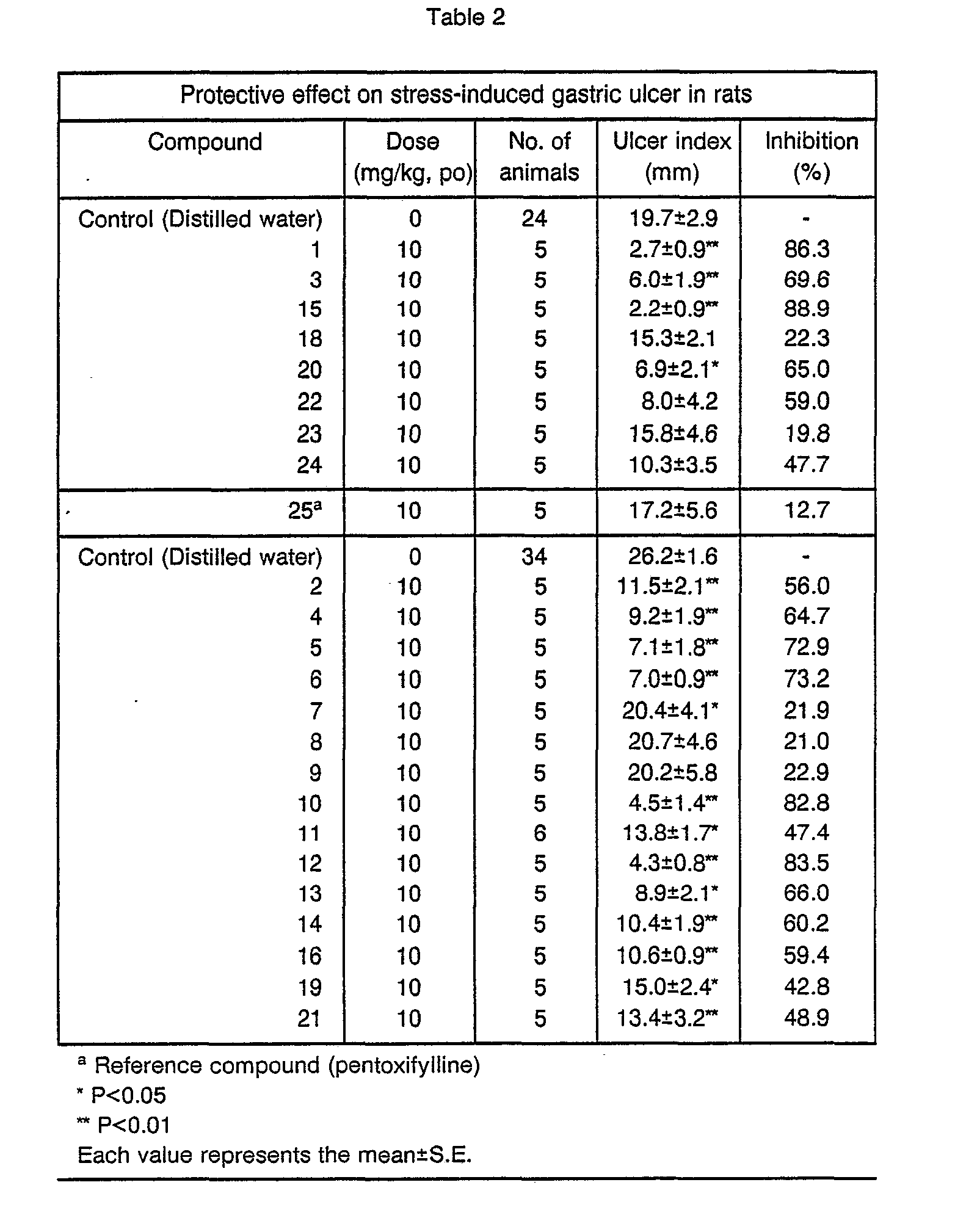
- Compound 1 is (a) 6 to 7 times more effective than Comparison Compound 25 in improving stress-induced gastric ulcers and has (b) low toxicity.
- the compounds involved in this invention other than Compound 1 also have more potent antiulcer effects than Compound 25.
Landscapes
- Chemical & Material Sciences (AREA)
- Organic Chemistry (AREA)
- Health & Medical Sciences (AREA)
- Life Sciences & Earth Sciences (AREA)
- Veterinary Medicine (AREA)
- Public Health (AREA)
- General Health & Medical Sciences (AREA)
- Medicinal Chemistry (AREA)
- Animal Behavior & Ethology (AREA)
- Pharmacology & Pharmacy (AREA)
- Epidemiology (AREA)
- Nuclear Medicine, Radiotherapy & Molecular Imaging (AREA)
- General Chemical & Material Sciences (AREA)
- Chemical Kinetics & Catalysis (AREA)
- Bioinformatics & Cheminformatics (AREA)
- Engineering & Computer Science (AREA)
- Pharmaceuticals Containing Other Organic And Inorganic Compounds (AREA)
- Acyclic And Carbocyclic Compounds In Medicinal Compositions (AREA)
- Medicines Containing Material From Animals Or Micro-Organisms (AREA)
- Organic Low-Molecular-Weight Compounds And Preparation Thereof (AREA)
- Medicinal Preparation (AREA)
- Medicines That Contain Protein Lipid Enzymes And Other Medicines (AREA)
Abstract

- R1 and R3 are the same or different and are each


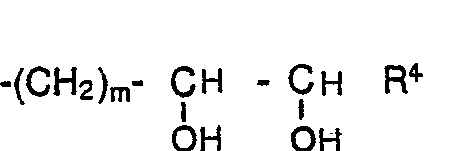
- R4 and R5 are the same or different and are each hydrogen or (C1-C2)alkyl; R6 is (C1-C2)alkyl; and m, n and p are the same or different and are each 1, 2, 3, 4, 5 or 6; with the proviso that one of the groups R1
- and R3 is

Description
- This invention relates to pharmaceuticals suitable for use in the treatment of peptic ulcer disease. Peptic ulcer is an ulceration of the mucous membrane of the stomach and/or duodenum; the mucous membrane is damaged by the action of hydrochloric acid and pepsin due to its decreased resistance to the aggressive factors induced by various causes including physical and psychological stress.
- Until recently, sodium bicarbonate and aluminum compounds had been used to neutralize gastric acid as aggressive factor . The drugs commonly used now to treat peptic ulcer disease include anticholinergics, gastroprotective agents, drugs improving mucosal blood flow, and H2-receptor antagonists.
- Drugs for peptic ulcers are administered for a long period of time and are required to have the fewest adverse effects as well as high efficacy. However, the available drugs are not necessarily satisfactory in safety and efficacy. In addition there is another problem associated with the use of the drugs, namely, the relapse of ulcer after drug treatment is stopped. For example, the H2-receptor antagonists are very effective in improving gastric and duodenal ulcers by inhibiting gastric acid secretion but ulcers recur at high incidence after discontinuing treatment with the drugs.
- As a result of our extensive studies for superior therapeutics for peptic ulcer disease, we have found that specific xanthine derivatives have high efficacy and safety enough to be new drugs suitable for use in the treatment of the disease, inclusive of irritations of the gastro-intestinal mucosa produced by drugs such as non-steroidal antiinflammatory agents.
- Thus, the present invention provides therapeutic agents for the treatment of peptic ulcer disease containing, as active ingredient, at least one compound of the general formula I

- R1 and R3 are the same or different and are each (C1-C8)alkyl, (C3-C6)alkenyl,

- R2 is (Ci-C4)alkyl; R4 and R5 are the same or different and are each hydrogen or (C1.C2)alkyl; R6 is (C1. C2)alkyl; and m, n, and p are the same or different and are each 1, 2, 3, 4, 5, or 6; with the proviso that one of the groups R1 and R3 is

- , or that R3 represents

- In this context, those therapeutic agents are preferred which contain at least one compound of the formula I in which R1 and R3 denote a straight-chain or branched alkyl group having up to 6 C atoms, allyl, (ω, ω-1 )- or (w-1, m-2)-dihydroxyalkyl having 4 to 7 C atoms, (ω-1)-hydroxy-or (ω-1)-oxoalkyl having each 3 to 6 C atoms; and R2 denotes an alkyl group having up to 3 C atoms; with the proviso that one of the groups R1 and R3 represents such an aforedefined dihydroxy- or hydroxyalkyl group or that R3 represents the aforedefined oxoalkyl group. A further preferred embodiment of the invention relates to therapeutic agents which contain at least one of those compounds of the formula I in which R1 denotes straight or branched chain (C2-Cs)alkyl or allyl; R2 represents methyl or ethyl; and R3 is 5,6-dihydroxyhexyl, 6,7-dihydroxyheptyl, 4,5-dihydroxyhexyl, or 5-hydroxyhexyl. Among these therapeutic agents, those in turn are particularly preferred which contain at least one of those compound of the formula I in which R1 represents propyl, isopropyl, butyl, isobutyl, or allyl; R2 is methyl or ethyl; and R3 denotes the 5,6-dihydroxyhexyl radical. The therapeutic agents are prepared by bringing at least one compound of the formula I - advantageously together with at least one usual carrier and/or excipient - into a suitable form for administration.
- The invention also relates to novel trisubstituted xanthine derivatives of the formula I, in which R2 is (C1-C4)alkyl and either
- R3 denotes 5,6-dihydroxyhexyl, 5-hydroxyhexyl, or 5-oxohexyl whilst R1 represents alkenyl, (ω-1)-hydroxyalkyl, or (ω-1)-oxoalkyl having each 3 to 6 C atoms or
- R1 denotes 5-hydroxyhexyl, 5,6-dihydroxyhexyl, or 4,5-dihydroxyhexyl whilst R3 represents allyl, 2-hydroxypropyl, or 2-oxopropyl. In this context, particularly suitable compounds are those in which R1 represents alkenyl, (ω-1)-hydroxyalkyl, or (ω-1)-oxoalkyl having each 3 to 6 C atoms,
- R2 is (C,-C4)alkyl, and R3 denotes 5,6-dihydroxyhexyl. Among the compounds mentioned latterly, the 1- alkenyl-3-alkyl-7-(5,6-dihydroxyhexyl)-xanthines having 3 to 6 C atoms in the alkenyl group R1 and 1 to 4 C atoms in the alkyl group R2, such as, for example, 1-allyl-3-ethyl-7-(5,6-dihydroxyhexyl)-xanthine, in turn represent particularly preferred compounds according to formula I.
- Pentoxifylline, the compound of the general formula I wherein R1 is 5-oxohexyl and R2 and R3 are methyl, has already been reported by Vorobyev and Samsonov to have antiulcer effects (Terr. Arkh. 57, 52-55, 1985). However, the efficacy is not high enough to be a promising drug for peptic ulcer disease.The compounds involved in this invention have been shown, as described below, to be much more effective than pentoxifylline and to have low toxicity, indicating that they are effective antiulcer drugs producing a low incidence of side effects.
- Some of the compounds used as active ingredients in this invention are described in Japanese laid open Patent Publication (JP-LOP) 67687/83 (corresponding to European Patent 75 850 or also to US Patents 4 616 020 and 4 713 455). The novel compounds are prepared by routine methods from known compounds in analogy to the methods described, for example in the before-mentioned JP-LOP or also in the international application published unter the Patent Cooperation Treaty WO 87/00523. A convenient method is the introduction to R1 or R3 by alkylation. The alkylation is carried out by reacting a compound of the general formula I wherein R1 or R3 is hydrogen with an alkylating agent such as R'-halogen or R3- halogen under alkaline conditions. Compounds in which R1 and/or R3 is hydroxyalkyl can also be produced by reduction of the corresponding oxoalkyl compounds.
- Somewhat more detailed, the novel trisubstituted xanthine derivatives of the formula I, in which R2 is (C1-C4)alkyl and either
- R3 denotes 5,6-dihydroxyhexyl, 5-hydroxyhexyl, or 5-oxohexyl whilst R1 represents alkenyl, (ω-1)-hydroxyalkyl, or (ω-1)-oxoalkyl having each 3 to 6 C atoms or
- R1 denotes 5-hydroxyhexyl, 5,6-dihydroxyhexyl, or 4,5-dihydroxyhexyl whilst R3 represents allyl, 2-hydroxypropyl or 2-oxopropyl,
- are conveniently prepared
- a) by reacting a 3-alkylxanthine of the formula II


- b) by reducing a compound of the formula I, in which R1 and/or R3 is an oxoalkyl group, by a conventional reducing agent at the keto group to the corresponding hydroxyalkylated xanthine of the formula I.
- a) by reacting a 3-alkylxanthine of the formula II
- The reaction of the mono- and disubstituted xanthine derivatives II or III, respectively, with the alkylating agents is usually carried out in a dispersing agent or solvent which is inert towards the participants in the reaction. Possible dispersing agents of solvents are, in particular, dipolar aprotic solvents, for example formamide, dimethylformamide, dimethylacetamide, N-methylpyrrolidone, tetramethylurea, hexamethylphosphoric acid triamide, dimethyl sulfoxide, acetone and butanone; however, it is also possible to use alcohols, such as methanol, ethylene glycol and mono- or dialkyl ethers thereof, in which the alkyl group has 1 to 4 carbon atoms but both together have not more than 5 carbon atoms, ethanol, propanol, isopropanol and the various butanols; hydrocarbons, such as benzene, toluene or xylenes; halogenated hydrocarbons, such as methylene chloride or chloroform; pyridine and mixtures of the solvents mentioned or mixtures thereof with water.
- The alkylation ractions are advantageously carried out in the presence of a basic condensing agent. Agents which are suitable for this are, for example, alkali metal or alkaline earth metal hydroxides, carbonates, hydrides and alcoholates, and organic bases such as trialkylamines (for example triethyl- or tributylamine), quaternary ammonium or phosphonium hydroxides and crosslinked resins with fixed, optionally substituted ammonium or phosphonium groups. However, the xanthine derivatives can also be employed in the alkylation reaction directly in the form of their separately prepared salts, for example the alkali metal, alkaline earth metal or optionally substituted ammonium or phosphonium salts. The mono- and disubstituted xanthine compounds can moreover by conveniently alkylated both in the presence of the abovementioned inorganic condensing agents and in the form of their alkali metal or alkaline earth metal salts with the aid of so-called phase transfer catalysts, for example tertiary amines, quaternary ammonium or phosphonium salts or crown ethers, preferably in a two-phase system under the conditions of phase transfer catalysis. Suitable phase transfer catalysts, which are mostly commercially available, are, inter alia, tetra(C1-C4)-alkyl- and methyltrioctylammonium and -phosphonium salts, methyl-, myristyl-, phenyl- and benzyl-tri(C1-C4)alkyl- and cetyltrimethylammonium salts and (Cl-C12)alkyl- and benzyl-triphenylphosphonium salts, as a rule those compounds which have the cation which is larger and of more symmetric structure proving to be more effective.
- The introduction of the radicals R1 and R3 by the procedures described above is in general carried out at a reaction temperature between 0°C and the boiling point of the particular reaction medium used, preferably between 20 °C and 130. C, if appropriate under increased or reduced pressure, but usually under atmospheric pressure, it being possible for the reaction time to be from less than one hour to several hours.
- For the conversion of the 3-alkylxanthines II into the compounds of the formula I with two equal radicals R1 and R3 (= 5-hydroxyhexyl or 5-oxohexyl), it is possible to carry out the alkylation in a one-pot reaction, without isolation of intermediate products.
- The reduction of the xanthines of the formula I carrying an oxoalkyl group in the position of R1 and/or R3 to the corresponding hydroxyalkyl compounds can in principle be carried out both with base metals and by catalytic hydrogenation, but the method of choice comprises reaction with simple metal hydrides (MHn), complex metal hydrides (M1[M2Hn]m) or organometallic hydrides (Houben-Weyl, volume IV/1 d (1981), pages 267 - 282, and volume VI/1 b (1984), pages 141 - 155), which proceeds under very mild conditions and with high yields. Of the numerous complex metal hydrides which can be used for reduction of ketones, the reagents most frequently used may be mentioned as examples, that is to say lithium alanate, lithium boranate and, in particular, sodium boranate, which is easier to handle because of its lower reactivity and in particular allows the reaction to be carried out in alcoholic, alcoholic-aqueous or purely aqueous solutions or suspensions. Nitriles, such as acetonitrile, can also be used as the reaction medium, as well as the otherwise customary inert solvents, such as ethers (for example diethyl ether, tetrahydrofuran or 1,2-dimethoxyethane), hydrocarbons and pyridine. The hydrogenation, which is advantageously carried out at temperatures between 0°C and the boiling point of the particular solvent, but preferably at room temperature, as a rule proceeds rapidly and ends within some minutes to a few hours.
- Possible administration routes of the compounds involved in this invention are oral, intravenous, subcutaneous, intramuscular, and rectal. The clinical dose is 100 - 900 mg/60 kg body weight, preferably 300-600 mg/60 kg body weight. Usable dosage forms are tablets, sugar-coated tablets, pills, capsules, powders, granules, suppositories, and injections. The tablets, sugar-coated tablets, capsules, and granules are desirable for oral, the injections are parenteral, and the suppositories for rectal administration.
- The compounds involved in this invention can be used each as a monopharmacon or as a combination or in combination with other agents for the treatment of peptic ulcer disease including antacids.
- For injection, the powder for injection is usable. In this case, the compounds involved in this invention are dissolved in water containing one or more adequate water-soluble excipients such as mannitol, sucrose, lactose, maltose, glucose, and fructose. Then the solution is put into the vial or ampoule which is sealed after lyophilization of the contents.
- For oral administration, an enteric-coated preparation is possible in addition to the dosage forms listed above. In this case, the tablets, granules, or fine granules are prepared using the following as additives as required: excipients such as mannitol, sucrose, lactose, maltose, starch, silica, and calcium phosphate; lubricants such as talc and magnesium stearate; binders such as sodium carboxymethylcellulose, methylcellulose, gelatin, and gum arabic; and disintegrating aids such as calcium carboxymethylcellulose. Then, the tablets, granules, or fine granules are coated with one or more enteric bases with, if required, a coloring agent such as titanium dioxide. The bases for enteric coating include cellulose acetate phthalate, hydroxypropylmethylcellulose phthalate, hydroxypropylmethylcellulose acetylsuccinate, polyvinyl alcohol phthalate, styrene-maleic anhydride copolymers, styrene-maleic acid copolymers, methyl methacrylate-methacrylic acid copolymers, and methyl acrylate-methacrylic acid copolymers. The enteric-coated granules or fine granules are preferably filled into capsules.
- Enteric-coated capsules can be obtained by coating capsules manufactured by a conventional method with one or more of the enteric bases listed above or by manufacturing capsules with an enteric base alone or in admixture with gelatin.
- Suppositories can be prepared as follows. The compounds involved in this invention are mixed homogenously with (a) lipophilic base such a cacao butter or adeps solidus in various proportions or (b) a hydrophilic base such as polyethylene glycol or glycerol The mixture containing the compounds of this invention is put into molds.
- The weight ratio of the active ingredient(s) of the formula I (known and novel compounds) and the respective carrier or excipient can vary within a very wide range; preferably it is within the range of about 1:100 to about 100:1.
- The antiulcer effects and the toxicological profile of the compounds involved in this invention were as follows. The compounds tested are shown in Table 1. Pentoxifylline, 1,2,3,6-tetrahydro-3,7-dimethyl-1-(5- oxohexyl)-purine-2,6-dione, was used as a reference drug for the pharmacological studies.


- Male Sprague-Dawley rats weighing 250-300 g were used in groups of 5-34. The animals were given the compounds by the oral route after fasting overnight. Immediately, under light ether anesthesia they were placed in a restraint box and immersed in water at 20 C for 6 or 7 hours. Then the animals were sacrificed, and their stomachs were isolated, inflated with 4 ml of 1% formalin for 10 minutes, opened along the greater curvature, and examined for the presence of gastric erosions. The longest axis of each erosion induced on the glandular section of the stomach was measured, and the sum of the lengths was defined as an ulcer index. The results are shown in Table 2.
- Male Sprague-Dawley rats weighing 250-300 g were used in groups of 5-24. After fasting overnight, the animals were given orally the compounds. Thirty minutes later they received absolute ethanol (1 ml/body) orally and were sacrificed after 60 minutes. The stomach was removed and examined for erosions. The ulcer index was obtained in the same was as under 1.1. The results are shown in Table 3.

- LDso values of the compounds of this invention were determined after intravenous injection or intraperitoneal administration to mice for acute toxicity test. The studies were carried out using male and female NMRI mice (n=3/group) having a body weight between 19-21 g. The test substance was dissolved in double distilled water or suspended in 1% carboxymethyl cellulose sodium for administration, and the animals were observed for 7 days. The results are shown in Table 4.

- Examples of the invention will be as follows.
-

- 29.6 g of 7-(5,6-isopropylidenedioxyhexyl)-3-methylxanthine, 13 g of potassium carbonate, and 12.8 g of 1-chlorohexan-5-one in 140 ml of dimethylformamide were stirred for 8 hours at an internal temperature of 120°C. After removal of the solvent under reduced pressure, the residue was taken up with methylene chloride and washed with dilute sodium hydroxide solution and the neutralized and dried methylene chloride phase was evaporated. The residue was heated in 400 ml of sulfuric acid at a pH of 0.5 for 2 hours at 100°C. After cooling down, the mixture was neutralized with dilute sodium hydroxide solution and evaporated under reduced pressure, the residue was taken up with methylene chloride, and the resulting mixture was washed with dilute sodium hydroxide solution and with water, dried and evaporated under reduced pressure. The crude product was purified by column-chromatography on silica gel (mobile phase: methylene chloride/ethanol, volume ratio 8:3) and subsequent recrystallization from methylene chloride/diethylether.
- 19.3 g (55.3% of theory) melting point: 93 - 94° C C18H28N4O5 (MW = 380.45)

-

- To 11.8 g of 7-ally-3-methyl-1-(5-oxyhexyl)-xanthine (prepared by alkylation of 7-ally-3-methylxanthine with 1-chlorohexan-5-one in dimethylformamide in the presence of potassium carbonate at 100°C for 5 hours; melting point: 71 C), dissolved in 200 ml of ethanol, 1.5 g of sodium borohydride was added slowly under stirring at a temperature of max. 30 C. After stirring at room temperature for 6 hours the mixture was evaporated under reduced pressure. The residue was extractively worked up with dilute sodium hydroxide solution and with methylene chloride. The combined methylene chloride phases were washed with water, dried and evaporated under reduced pressure. The residue was purified by means of chromatography on silica gel (mobile phase: methylene chloride/ethanol/ammonia-solution (28%), volume ratio 8:2:0.2) and by recrystallization from methylene chloride/diethylether.
- 7.8 g (65.5% of theory) melting point: 86° C C15H22N4O3 (MW = 306.37)

- In an analogous manner to Example 1 or 2 the following compounds were obtained:
- This compound was prepared as described in Example 1, starting from 20.2 g of 3-ethyl-7-(5,6-isopropylidenedioxyhexyl)-xanthine and 7.5 g of allyl bromide.
- 10.5 g (52% of theory) melting point: 91 °C C16H24N4O4 (MW = 336.39)

- This compound was prepared starting from 3-ethyl-7-(5,6-isopropylidenedioxyhexyl)-xanthine and chloroacetone according to the procedure described in Example 1.
- C16H24N4O5 (MW = 352.39)
- Melting point: 101 - 103°C
- This compound was prepared starting from Compound 7 be reduction of the oxopropyl group according to the method described in Example 2, or by alkylation of 3-ethyl-7-(5,6-isopropylidenedioxyhexyl)-xanthine with 1-chloropropan-2-ol according to the procedure as described in Example 1.
- C16H26N4O5 (MW = 354.41)
- Melting point: 118 - 123° C
- This compound was prepared according to Example 1, starting from 41.5 g of 7-(5,6-isopropylidenedioxyhexyl)-3-propylxanthine and 16.8 g of 1-chlorohexan-5-one.
- 29.5 g (61 % of theory) melting point: 80 - 82. C C20H32N4O5(MW = 408.50)

- This compound was prepared starting from 7-(5-hydroxyhexyl)-3-methylxanthine by alkylation with allyl bromide in dimethylformamide in the presence of potassium carbonate as described in Example 1; however, without the treatment with sulfuric acid.
- C15H22N4O3 (MW = 306.37)
- Melting point: 57 - 580 C
- This compound was prepared by alkylation of 7-(5-hydroxyhexyl)-3-methylxanthine with chloroacetone according to the method described in Example 1; however, without the sulfuric acid treatment. C15H22N4O4 (MW = 322.37)
- Melting point: 97 - 98° C
- This compound was prepared starting from 3-methyl-7-(2-oxopropyl)-xanthine by alkylation with 1-chlorohexan-5-ol as described in Example 1; however, without the sulfuric acid treatment.
- C15H22N4O4 (MW = 322.37)
- Melting point: 139 - 141 . C
- This compound was prepared by alkylation of 3-methyl-7-(5-oxohexyl)-xanthine with chloroacetone in dimethylformamide in the presence of potassium carbonate at 100° C for 1.5 hours.
- C15H20N4O4 (MW = 320.35)
- Melting point: 105 - 106 C
-
- 1) An injectable preparation was prepared as follows. Compound 1 (20 g) and sodium chloride (16 g) were added to distilled water for injection to make 2000 ml. The solution was filtered through a 0.22 µm Millipore filter and divided at 5 ml into 5-ml ampoules, which were sealed and sterilized in an autoclave.
- 2) Tablets each containing 115 mg of Compound 1 were prepared by a conventional method from a mixture of 500 g of compound 1 with 250 g of lactose, 150 g of corn starch, 150 g of calcium carboxymethylcellulose, 42 g of talc, 5 g of magnesium stearate, and 3 g of silica. The tablets were coated with a suspension containing 500 ml of water, 40 g of hydroxpropylmethylcellulose, 2 g of polyethyleneglycol with the average molecular weight of 6000, 3.5 g of titanium dioxide and 3 g of talc.
- As revealed by our studies described above, the compounds involved in this invention were shown to possess potent antiulcer effects and low toxicity. For example, Compound 1 is (a) 6 to 7 times more effective than Comparison Compound 25 in improving stress-induced gastric ulcers and has (b) low toxicity. The compounds involved in this invention other than Compound 1 also have more potent antiulcer effects than Compound 25.
Claims (8)


Priority Applications (1)
| Application Number | Priority Date | Filing Date | Title |
|---|---|---|---|
| AT89102391T ATE70182T1 (en) | 1988-02-19 | 1989-02-11 | THERAPEUTIC MEANS FOR TREATMENT OF STOMACH ULCERS. |
Applications Claiming Priority (2)
| Application Number | Priority Date | Filing Date | Title |
|---|---|---|---|
| JP63035484A JP2661666B2 (en) | 1988-02-19 | 1988-02-19 | Anti-peptic ulcer agent |
| JP35484/88 | 1988-02-19 |
Publications (2)
| Publication Number | Publication Date |
|---|---|
| EP0330031A1 true EP0330031A1 (en) | 1989-08-30 |
| EP0330031B1 EP0330031B1 (en) | 1991-12-11 |
Family
ID=12443024
Family Applications (1)
| Application Number | Title | Priority Date | Filing Date |
|---|---|---|---|
| EP89102391A Expired - Lifetime EP0330031B1 (en) | 1988-02-19 | 1989-02-11 | Therapeutic agents for the treatment of peptic ulcer disease |
Country Status (17)
| Country | Link |
|---|---|
| US (1) | US5082845A (en) |
| EP (1) | EP0330031B1 (en) |
| JP (1) | JP2661666B2 (en) |
| KR (1) | KR0133075B1 (en) |
| AT (1) | ATE70182T1 (en) |
| AU (1) | AU605669B2 (en) |
| DE (1) | DE68900516D1 (en) |
| DK (1) | DK74189A (en) |
| ES (1) | ES2039719T3 (en) |
| GR (1) | GR3003952T3 (en) |
| HU (1) | HU204702B (en) |
| IE (1) | IE61147B1 (en) |
| IL (1) | IL89324A0 (en) |
| NZ (1) | NZ228020A (en) |
| PH (1) | PH27149A (en) |
| PT (1) | PT89757B (en) |
| ZA (1) | ZA891241B (en) |
Cited By (5)
| Publication number | Priority date | Publication date | Assignee | Title |
|---|---|---|---|---|
| US5082845A (en) * | 1988-02-19 | 1992-01-21 | Hoechst Japan Limited | Therapeutic xanthine derivatives for the treatment of peptic ulcer disease |
| EP0413278A3 (en) * | 1989-08-16 | 1992-05-06 | Hoechst Japan Limited | Use of xanthine derivatives against peptic ulcers |
| EP0570831A3 (en) * | 1992-05-20 | 1994-03-16 | Hoechst Ag | |
| EP2963040A1 (en) | 2009-09-02 | 2016-01-06 | Concert Pharmaceuticals Inc. | Substituted xanthine derivatives |
| EP3199203A1 (en) | 2008-02-29 | 2017-08-02 | Concert Pharmaceuticals Inc. | Substitued xanthine derivatives |
Families Citing this family (4)
| Publication number | Priority date | Publication date | Assignee | Title |
|---|---|---|---|---|
| IT1240843B (en) * | 1990-05-24 | 1993-12-17 | Malesci Istituto Farmacobiologico | XANTHINIC DERIVATIVES 1-7 SUBSTITUTED FOR ANTIASMATIC ACTIVITY, THEIR PHYSIOLOGICALLY ACCEPTABLE SALTS, THEIR PHARMACEUTICAL COMPOSITIONS AND PROCEDURE FOR THEIR PREPARATION. |
| JP2549480B2 (en) * | 1991-12-10 | 1996-10-30 | ヘキストジャパン株式会社 | Urinary disorder improving agent |
| US5354756A (en) * | 1993-01-12 | 1994-10-11 | Cell Therapeutics, Inc. | Olefin-substituted long chain xanthine compounds |
| US5620676A (en) * | 1994-03-08 | 1997-04-15 | The United States Of America As Represented By The Department Of Health And Human Services | Biologically active ATP analogs |
Citations (5)
| Publication number | Priority date | Publication date | Assignee | Title |
|---|---|---|---|---|
| EP0042706A2 (en) * | 1980-06-21 | 1981-12-30 | BEECHAM - WUELFING GmbH & Co. KG | Xanthine derivatives, pharmaceutical compositions containing them and a process for their preparation |
| EP0075850A2 (en) * | 1981-09-26 | 1983-04-06 | Hoechst Aktiengesellschaft | Pharmaceutical preparations containing vicinal dihydroxyalkyl xanthines, process for the preparation of the xanthines and the appropriate intermediates therefor |
| WO1987000523A2 (en) * | 1985-07-19 | 1987-01-29 | Hoechst Aktiengesellschaft | Tertiary hydroxyalkylxanthines, their manufacturing process, medicines containing them and use thereof |
| EP0232438A1 (en) * | 1984-04-30 | 1987-08-19 | Hoechst-Roussel Pharmaceuticals Incorporated | Use of xanthine derivatives for host defense mechanism enhancement |
| EP0266559A2 (en) * | 1986-10-06 | 1988-05-11 | Hoechst Japan Limited | Therapeutic agent for the treatment of peptic ulcer disease |
Family Cites Families (7)
| Publication number | Priority date | Publication date | Assignee | Title |
|---|---|---|---|---|
| CH608236A5 (en) * | 1974-01-22 | 1978-12-29 | Wuelfing J A Fa | |
| DE2432702C2 (en) * | 1974-07-08 | 1983-01-20 | Hoechst Ag, 6000 Frankfurt | Process for the preparation of hydroxyalkylxanthines |
| US4207321A (en) * | 1977-04-02 | 1980-06-10 | Hoechst Aktiengesellschaft | Pharmaceutical compositions containing xanthines |
| GB8418430D0 (en) * | 1984-07-19 | 1984-08-22 | Beecham Wuelfing Gmbh & Co Kg | Treatment |
| DE3508097A1 (en) * | 1984-07-21 | 1986-02-06 | Hoechst Ag, 6230 Frankfurt | COMBINATION PRODUCT MADE OF XANTHINE DERIVATIVES AND O-ACETYLSALICYL ACID OR THEIR PHARMACOLOGICALLY COMPATIBLE SALTS AND THE USE THEREOF |
| US4772607A (en) * | 1986-05-20 | 1988-09-20 | Warner-Lambert Company | Dialkenyl derivatives of xanthine, pharmaceutical compositions and methods of use therefor |
| JP2661666B2 (en) * | 1988-02-19 | 1997-10-08 | ヘキスト薬品工業株式会社 | Anti-peptic ulcer agent |
-
1988
- 1988-02-19 JP JP63035484A patent/JP2661666B2/en not_active Expired - Lifetime
-
1989
- 1989-01-17 AU AU28538/89A patent/AU605669B2/en not_active Ceased
- 1989-02-11 AT AT89102391T patent/ATE70182T1/en not_active IP Right Cessation
- 1989-02-11 EP EP89102391A patent/EP0330031B1/en not_active Expired - Lifetime
- 1989-02-11 ES ES198989102391T patent/ES2039719T3/en not_active Expired - Lifetime
- 1989-02-11 DE DE8989102391T patent/DE68900516D1/en not_active Expired - Lifetime
- 1989-02-17 NZ NZ228020A patent/NZ228020A/en unknown
- 1989-02-17 ZA ZA891241A patent/ZA891241B/en unknown
- 1989-02-17 KR KR1019890001831A patent/KR0133075B1/en not_active Expired - Fee Related
- 1989-02-17 IL IL89324A patent/IL89324A0/en not_active IP Right Cessation
- 1989-02-17 DK DK074189A patent/DK74189A/en not_active Application Discontinuation
- 1989-02-17 PH PH38213A patent/PH27149A/en unknown
- 1989-02-17 IE IE51489A patent/IE61147B1/en not_active IP Right Cessation
- 1989-02-17 US US07/311,910 patent/US5082845A/en not_active Expired - Fee Related
- 1989-02-17 HU HU89792A patent/HU204702B/en not_active IP Right Cessation
- 1989-02-17 PT PT89757A patent/PT89757B/en not_active IP Right Cessation
-
1992
- 1992-03-04 GR GR920400270T patent/GR3003952T3/el unknown
Patent Citations (5)
| Publication number | Priority date | Publication date | Assignee | Title |
|---|---|---|---|---|
| EP0042706A2 (en) * | 1980-06-21 | 1981-12-30 | BEECHAM - WUELFING GmbH & Co. KG | Xanthine derivatives, pharmaceutical compositions containing them and a process for their preparation |
| EP0075850A2 (en) * | 1981-09-26 | 1983-04-06 | Hoechst Aktiengesellschaft | Pharmaceutical preparations containing vicinal dihydroxyalkyl xanthines, process for the preparation of the xanthines and the appropriate intermediates therefor |
| EP0232438A1 (en) * | 1984-04-30 | 1987-08-19 | Hoechst-Roussel Pharmaceuticals Incorporated | Use of xanthine derivatives for host defense mechanism enhancement |
| WO1987000523A2 (en) * | 1985-07-19 | 1987-01-29 | Hoechst Aktiengesellschaft | Tertiary hydroxyalkylxanthines, their manufacturing process, medicines containing them and use thereof |
| EP0266559A2 (en) * | 1986-10-06 | 1988-05-11 | Hoechst Japan Limited | Therapeutic agent for the treatment of peptic ulcer disease |
Non-Patent Citations (2)
| Title |
|---|
| CHEMICAL ABSTRACTS * |
| TERAPEVTICESKIJ ARCHIV * |
Cited By (5)
| Publication number | Priority date | Publication date | Assignee | Title |
|---|---|---|---|---|
| US5082845A (en) * | 1988-02-19 | 1992-01-21 | Hoechst Japan Limited | Therapeutic xanthine derivatives for the treatment of peptic ulcer disease |
| EP0413278A3 (en) * | 1989-08-16 | 1992-05-06 | Hoechst Japan Limited | Use of xanthine derivatives against peptic ulcers |
| EP0570831A3 (en) * | 1992-05-20 | 1994-03-16 | Hoechst Ag | |
| EP3199203A1 (en) | 2008-02-29 | 2017-08-02 | Concert Pharmaceuticals Inc. | Substitued xanthine derivatives |
| EP2963040A1 (en) | 2009-09-02 | 2016-01-06 | Concert Pharmaceuticals Inc. | Substituted xanthine derivatives |
Also Published As
| Publication number | Publication date |
|---|---|
| NZ228020A (en) | 1991-07-26 |
| HUT49283A (en) | 1989-09-28 |
| GR3003952T3 (en) | 1993-03-16 |
| AU605669B2 (en) | 1991-01-17 |
| DK74189D0 (en) | 1989-02-17 |
| PT89757A (en) | 1989-10-04 |
| US5082845A (en) | 1992-01-21 |
| AU2853889A (en) | 1989-08-24 |
| DK74189A (en) | 1989-08-20 |
| JPH01211524A (en) | 1989-08-24 |
| ES2039719T3 (en) | 1993-10-01 |
| ZA891241B (en) | 1989-10-25 |
| KR890012652A (en) | 1989-09-18 |
| IE61147B1 (en) | 1994-10-05 |
| HU204702B (en) | 1992-02-28 |
| EP0330031B1 (en) | 1991-12-11 |
| KR0133075B1 (en) | 1998-04-17 |
| DE68900516D1 (en) | 1992-01-23 |
| PH27149A (en) | 1993-04-02 |
| IE890514L (en) | 1989-08-19 |
| IL89324A0 (en) | 1989-09-10 |
| JP2661666B2 (en) | 1997-10-08 |
| ATE70182T1 (en) | 1991-12-15 |
| PT89757B (en) | 1994-03-31 |
Similar Documents
| Publication | Publication Date | Title |
|---|---|---|
| EP1319003B1 (en) | Xanthine phosphodiesterase v inhibitors | |
| JP3003333B2 (en) | Aminoglycoside compositions with substantially reduced aminoglycoside-induced nephrotoxicity | |
| AU2001291022A1 (en) | Xanthine phosphodiesterase v inhibitors | |
| EP0330031B1 (en) | Therapeutic agents for the treatment of peptic ulcer disease | |
| EP0413278B1 (en) | Use of xanthine derivatives against peptic ulcers | |
| EP0266559B1 (en) | Therapeutic agent for the treatment of peptic ulcer disease | |
| EP0102580B1 (en) | Substituted 1,3,4-benzotriazepines, a method of preparing the same and theire use as medicaments | |
| JPH04279586A (en) | Xanthine derivative | |
| EP0463212A1 (en) | Imidazo[2,1-b]thiazole compound anti-ulcer agent containing the same | |
| JPH04128285A (en) | Xanthine derivative | |
| HK1056550B (en) | Xanthine phosphodiesterase v inhibitors | |
| JPH03218378A (en) | Xanthine derivative | |
| LU83849A1 (en) | PROCESS FOR THE PREPARATION OF XANTHINE DERIVATIVES |
Legal Events
| Date | Code | Title | Description |
|---|---|---|---|
| PUAI | Public reference made under article 153(3) epc to a published international application that has entered the european phase |
Free format text: ORIGINAL CODE: 0009012 |
|
| AK | Designated contracting states |
Kind code of ref document: A1 Designated state(s): AT BE CH DE ES FR GB GR IT LI LU NL SE |
|
| 17P | Request for examination filed |
Effective date: 19891027 |
|
| 17Q | First examination report despatched |
Effective date: 19900928 |
|
| GRAA | (expected) grant |
Free format text: ORIGINAL CODE: 0009210 |
|
| AK | Designated contracting states |
Kind code of ref document: B1 Designated state(s): AT BE CH DE ES FR GB GR IT LI LU NL SE |
|
| REF | Corresponds to: |
Ref document number: 70182 Country of ref document: AT Date of ref document: 19911215 Kind code of ref document: T |
|
| REF | Corresponds to: |
Ref document number: 68900516 Country of ref document: DE Date of ref document: 19920123 |
|
| ET | Fr: translation filed | ||
| ITF | It: translation for a ep patent filed | ||
| K2C3 | Correction of patent specification (complete document) published |
Effective date: 19911211 |
|
| PLBE | No opposition filed within time limit |
Free format text: ORIGINAL CODE: 0009261 |
|
| STAA | Information on the status of an ep patent application or granted ep patent |
Free format text: STATUS: NO OPPOSITION FILED WITHIN TIME LIMIT |
|
| REG | Reference to a national code |
Ref country code: GR Ref legal event code: FG4A Free format text: 3003952 |
|
| 26N | No opposition filed | ||
| REG | Reference to a national code |
Ref country code: ES Ref legal event code: FG2A Ref document number: 2039719 Country of ref document: ES Kind code of ref document: T3 |
|
| EPTA | Lu: last paid annual fee | ||
| EAL | Se: european patent in force in sweden |
Ref document number: 89102391.3 |
|
| PGFP | Annual fee paid to national office [announced via postgrant information from national office to epo] |
Ref country code: DE Payment date: 19981204 Year of fee payment: 11 |
|
| PGFP | Annual fee paid to national office [announced via postgrant information from national office to epo] |
Ref country code: NL Payment date: 19981215 Year of fee payment: 11 |
|
| PGFP | Annual fee paid to national office [announced via postgrant information from national office to epo] |
Ref country code: SE Payment date: 19981216 Year of fee payment: 11 |
|
| PGFP | Annual fee paid to national office [announced via postgrant information from national office to epo] |
Ref country code: GB Payment date: 19981217 Year of fee payment: 11 Ref country code: FR Payment date: 19981217 Year of fee payment: 11 Ref country code: AT Payment date: 19981217 Year of fee payment: 11 |
|
| PGFP | Annual fee paid to national office [announced via postgrant information from national office to epo] |
Ref country code: GR Payment date: 19981222 Year of fee payment: 11 |
|
| PGFP | Annual fee paid to national office [announced via postgrant information from national office to epo] |
Ref country code: BE Payment date: 19981228 Year of fee payment: 11 |
|
| PGFP | Annual fee paid to national office [announced via postgrant information from national office to epo] |
Ref country code: LU Payment date: 19990209 Year of fee payment: 11 |
|
| PGFP | Annual fee paid to national office [announced via postgrant information from national office to epo] |
Ref country code: ES Payment date: 19990216 Year of fee payment: 11 |
|
| PGFP | Annual fee paid to national office [announced via postgrant information from national office to epo] |
Ref country code: CH Payment date: 19990415 Year of fee payment: 11 |
|
| PG25 | Lapsed in a contracting state [announced via postgrant information from national office to epo] |
Ref country code: LU Free format text: LAPSE BECAUSE OF NON-PAYMENT OF DUE FEES Effective date: 20000211 Ref country code: GB Free format text: LAPSE BECAUSE OF NON-PAYMENT OF DUE FEES Effective date: 20000211 Ref country code: AT Free format text: LAPSE BECAUSE OF NON-PAYMENT OF DUE FEES Effective date: 20000211 |
|
| PG25 | Lapsed in a contracting state [announced via postgrant information from national office to epo] |
Ref country code: SE Free format text: LAPSE BECAUSE OF NON-PAYMENT OF DUE FEES Effective date: 20000212 Ref country code: ES Free format text: LAPSE BECAUSE OF NON-PAYMENT OF DUE FEES Effective date: 20000212 |
|
| PG25 | Lapsed in a contracting state [announced via postgrant information from national office to epo] |
Ref country code: BE Free format text: LAPSE BECAUSE OF NON-PAYMENT OF DUE FEES Effective date: 20000228 |
|
| PG25 | Lapsed in a contracting state [announced via postgrant information from national office to epo] |
Ref country code: LI Free format text: LAPSE BECAUSE OF NON-PAYMENT OF DUE FEES Effective date: 20000229 Ref country code: GR Free format text: LAPSE BECAUSE OF NON-PAYMENT OF DUE FEES Effective date: 20000229 Ref country code: CH Free format text: LAPSE BECAUSE OF NON-PAYMENT OF DUE FEES Effective date: 20000229 |
|
| BERE | Be: lapsed |
Owner name: HOECHST JAPAN LTD Effective date: 20000228 |
|
| PG25 | Lapsed in a contracting state [announced via postgrant information from national office to epo] |
Ref country code: NL Free format text: LAPSE BECAUSE OF NON-PAYMENT OF DUE FEES Effective date: 20000901 |
|
| GBPC | Gb: european patent ceased through non-payment of renewal fee |
Effective date: 20000211 |
|
| EUG | Se: european patent has lapsed |
Ref document number: 89102391.3 |
|
| REG | Reference to a national code |
Ref country code: CH Ref legal event code: PL |
|
| PG25 | Lapsed in a contracting state [announced via postgrant information from national office to epo] |
Ref country code: FR Free format text: LAPSE BECAUSE OF NON-PAYMENT OF DUE FEES Effective date: 20001031 |
|
| NLV4 | Nl: lapsed or anulled due to non-payment of the annual fee |
Effective date: 20000901 |
|
| PG25 | Lapsed in a contracting state [announced via postgrant information from national office to epo] |
Ref country code: DE Free format text: LAPSE BECAUSE OF NON-PAYMENT OF DUE FEES Effective date: 20001201 |
|
| REG | Reference to a national code |
Ref country code: FR Ref legal event code: ST |
|
| REG | Reference to a national code |
Ref country code: ES Ref legal event code: FD2A Effective date: 20010910 |
|
| PG25 | Lapsed in a contracting state [announced via postgrant information from national office to epo] |
Ref country code: IT Free format text: LAPSE BECAUSE OF NON-PAYMENT OF DUE FEES;WARNING: LAPSES OF ITALIAN PATENTS WITH EFFECTIVE DATE BEFORE 2007 MAY HAVE OCCURRED AT ANY TIME BEFORE 2007. THE CORRECT EFFECTIVE DATE MAY BE DIFFERENT FROM THE ONE RECORDED. Effective date: 20050211 |