EP0329256B1 - Preparation of 3,3-diarylacrylic acid amides - Google Patents
Preparation of 3,3-diarylacrylic acid amides Download PDFInfo
- Publication number
- EP0329256B1 EP0329256B1 EP89200378A EP89200378A EP0329256B1 EP 0329256 B1 EP0329256 B1 EP 0329256B1 EP 89200378 A EP89200378 A EP 89200378A EP 89200378 A EP89200378 A EP 89200378A EP 0329256 B1 EP0329256 B1 EP 0329256B1
- Authority
- EP
- European Patent Office
- Prior art keywords
- alkyl
- hydrogen
- alkoxy
- halogen
- group
- Prior art date
- Legal status (The legal status is an assumption and is not a legal conclusion. Google has not performed a legal analysis and makes no representation as to the accuracy of the status listed.)
- Expired - Lifetime
Links
- 238000002360 preparation method Methods 0.000 title claims description 6
- 150000001408 amides Chemical class 0.000 title abstract description 5
- DLFVBJFMPXGRIB-UHFFFAOYSA-N Acetamide Chemical compound CC(N)=O DLFVBJFMPXGRIB-UHFFFAOYSA-N 0.000 claims abstract description 14
- 238000006243 chemical reaction Methods 0.000 claims abstract description 9
- DGAQECJNVWCQMB-PUAWFVPOSA-M Ilexoside XXIX Chemical compound C[C@@H]1CC[C@@]2(CC[C@@]3(C(=CC[C@H]4[C@]3(CC[C@@H]5[C@@]4(CC[C@@H](C5(C)C)OS(=O)(=O)[O-])C)C)[C@@H]2[C@]1(C)O)C)C(=O)O[C@H]6[C@@H]([C@H]([C@@H]([C@H](O6)CO)O)O)O.[Na+] DGAQECJNVWCQMB-PUAWFVPOSA-M 0.000 claims abstract description 8
- 229910052708 sodium Inorganic materials 0.000 claims abstract description 8
- 239000011734 sodium Substances 0.000 claims abstract description 8
- RWCCWEUUXYIKHB-UHFFFAOYSA-N benzophenone Chemical compound C=1C=CC=CC=1C(=O)C1=CC=CC=C1 RWCCWEUUXYIKHB-UHFFFAOYSA-N 0.000 claims abstract description 4
- 239000012965 benzophenone Substances 0.000 claims abstract description 4
- 125000004178 (C1-C4) alkyl group Chemical group 0.000 claims description 18
- 229910052739 hydrogen Inorganic materials 0.000 claims description 14
- 239000001257 hydrogen Substances 0.000 claims description 14
- 125000004435 hydrogen atom Chemical group [H]* 0.000 claims description 13
- 238000000034 method Methods 0.000 claims description 13
- 125000000229 (C1-C4)alkoxy group Chemical group 0.000 claims description 12
- 150000002367 halogens Chemical group 0.000 claims description 12
- 229910052736 halogen Chemical group 0.000 claims description 10
- 125000001997 phenyl group Chemical group [H]C1=C([H])C([H])=C(*)C([H])=C1[H] 0.000 claims description 7
- 125000006272 (C3-C7) cycloalkyl group Chemical group 0.000 claims description 4
- -1 C3−4-alkynyloxy Chemical group 0.000 claims description 4
- LRHPLDYGYMQRHN-UHFFFAOYSA-N N-Butanol Chemical compound CCCCO LRHPLDYGYMQRHN-UHFFFAOYSA-N 0.000 claims description 4
- 239000012442 inert solvent Substances 0.000 claims description 4
- 125000004400 (C1-C12) alkyl group Chemical group 0.000 claims description 2
- 125000005913 (C3-C6) cycloalkyl group Chemical group 0.000 claims description 2
- 125000000081 (C5-C8) cycloalkenyl group Chemical group 0.000 claims description 2
- 125000000882 C2-C6 alkenyl group Chemical group 0.000 claims description 2
- 125000003601 C2-C6 alkynyl group Chemical group 0.000 claims description 2
- AMQJEAYHLZJPGS-UHFFFAOYSA-N N-Pentanol Chemical compound CCCCCO AMQJEAYHLZJPGS-UHFFFAOYSA-N 0.000 claims description 2
- 125000003302 alkenyloxy group Chemical group 0.000 claims description 2
- 125000000217 alkyl group Chemical group 0.000 claims description 2
- MDFFNEOEWAXZRQ-UHFFFAOYSA-N aminyl Chemical group [NH2] MDFFNEOEWAXZRQ-UHFFFAOYSA-N 0.000 claims description 2
- 125000001797 benzyl group Chemical group [H]C1=C([H])C([H])=C(C([H])=C1[H])C([H])([H])* 0.000 claims description 2
- 125000000319 biphenyl-4-yl group Chemical group [H]C1=C([H])C([H])=C([H])C([H])=C1C1=C([H])C([H])=C([*])C([H])=C1[H] 0.000 claims description 2
- 125000004432 carbon atom Chemical group C* 0.000 claims description 2
- 125000005843 halogen group Chemical group 0.000 claims description 2
- 125000001624 naphthyl group Chemical group 0.000 claims description 2
- 125000001424 substituent group Chemical group 0.000 claims description 2
- LFQSCWFLJHTTHZ-UHFFFAOYSA-N Ethanol Chemical compound CCO LFQSCWFLJHTTHZ-UHFFFAOYSA-N 0.000 claims 1
- YXFVVABEGXRONW-UHFFFAOYSA-N Toluene Chemical compound CC1=CC=CC=C1 YXFVVABEGXRONW-UHFFFAOYSA-N 0.000 description 27
- 150000001875 compounds Chemical class 0.000 description 8
- ZAFNJMIOTHYJRJ-UHFFFAOYSA-N Diisopropyl ether Chemical compound CC(C)OC(C)C ZAFNJMIOTHYJRJ-UHFFFAOYSA-N 0.000 description 5
- 239000002585 base Substances 0.000 description 4
- 238000010992 reflux Methods 0.000 description 4
- KYWXRBNOYGGPIZ-UHFFFAOYSA-N 1-morpholin-4-ylethanone Chemical compound CC(=O)N1CCOCC1 KYWXRBNOYGGPIZ-UHFFFAOYSA-N 0.000 description 3
- UHOVQNZJYSORNB-UHFFFAOYSA-N Benzene Chemical compound C1=CC=CC=C1 UHOVQNZJYSORNB-UHFFFAOYSA-N 0.000 description 3
- 0 CC1(*)OC(C)(*)CCNCC1 Chemical compound CC1(*)OC(C)(*)CCNCC1 0.000 description 3
- RTZKZFJDLAIYFH-UHFFFAOYSA-N Diethyl ether Chemical compound CCOCC RTZKZFJDLAIYFH-UHFFFAOYSA-N 0.000 description 3
- ZMXDDKWLCZADIW-UHFFFAOYSA-N N,N-Dimethylformamide Chemical compound CN(C)C=O ZMXDDKWLCZADIW-UHFFFAOYSA-N 0.000 description 3
- KEAYESYHFKHZAL-UHFFFAOYSA-N Sodium Chemical compound [Na] KEAYESYHFKHZAL-UHFFFAOYSA-N 0.000 description 3
- 238000001816 cooling Methods 0.000 description 3
- 229910000104 sodium hydride Inorganic materials 0.000 description 3
- 239000012312 sodium hydride Substances 0.000 description 3
- 238000006467 substitution reaction Methods 0.000 description 3
- XLYOFNOQVPJJNP-UHFFFAOYSA-N water Substances O XLYOFNOQVPJJNP-UHFFFAOYSA-N 0.000 description 3
- MLLIIHAKTPXMFF-UHFFFAOYSA-N (4-chlorophenyl)-(3,4-dimethoxyphenyl)methanone Chemical compound C1=C(OC)C(OC)=CC=C1C(=O)C1=CC=C(Cl)C=C1 MLLIIHAKTPXMFF-UHFFFAOYSA-N 0.000 description 2
- KFZMGEQAYNKOFK-UHFFFAOYSA-N Isopropanol Chemical compound CC(C)O KFZMGEQAYNKOFK-UHFFFAOYSA-N 0.000 description 2
- 239000005662 Paraffin oil Substances 0.000 description 2
- WYURNTSHIVDZCO-UHFFFAOYSA-N Tetrahydrofuran Chemical compound C1CCOC1 WYURNTSHIVDZCO-UHFFFAOYSA-N 0.000 description 2
- GDTBXPJZTBHREO-UHFFFAOYSA-N bromine Chemical compound BrBr GDTBXPJZTBHREO-UHFFFAOYSA-N 0.000 description 2
- 229910052801 chlorine Inorganic materials 0.000 description 2
- 239000000460 chlorine Substances 0.000 description 2
- QNBTYORWCCMPQP-UHFFFAOYSA-N dimethomorph Chemical compound C1=C(OC)C(OC)=CC=C1C(C=1C=CC(Cl)=CC=1)=CC(=O)N1CCOCC1 QNBTYORWCCMPQP-UHFFFAOYSA-N 0.000 description 2
- 125000002496 methyl group Chemical group [H]C([H])([H])* 0.000 description 2
- 239000000203 mixture Substances 0.000 description 2
- 239000000047 product Substances 0.000 description 2
- XYKIUTSFQGXHOW-UHFFFAOYSA-N propan-2-one;toluene Chemical compound CC(C)=O.CC1=CC=CC=C1 XYKIUTSFQGXHOW-UHFFFAOYSA-N 0.000 description 2
- 239000011541 reaction mixture Substances 0.000 description 2
- 238000003756 stirring Methods 0.000 description 2
- 239000000126 substance Substances 0.000 description 2
- 150000003509 tertiary alcohols Chemical class 0.000 description 2
- MSXVEPNJUHWQHW-UHFFFAOYSA-N 2-methylbutan-2-ol Chemical compound CCC(C)(C)O MSXVEPNJUHWQHW-UHFFFAOYSA-N 0.000 description 1
- ORHRDOHKVUQBCG-UHFFFAOYSA-N 3-[4-(4-chlorophenoxy)phenyl]-3-(3,4-dimethoxyphenyl)-1-morpholin-4-ylprop-2-en-1-one Chemical compound C1=C(OC)C(OC)=CC=C1C(C=1C=CC(OC=2C=CC(Cl)=CC=2)=CC=1)=CC(=O)N1CCOCC1 ORHRDOHKVUQBCG-UHFFFAOYSA-N 0.000 description 1
- ZCYVEMRRCGMTRW-UHFFFAOYSA-N 7553-56-2 Chemical group [I] ZCYVEMRRCGMTRW-UHFFFAOYSA-N 0.000 description 1
- WKBOTKDWSSQWDR-UHFFFAOYSA-N Bromine atom Chemical group [Br] WKBOTKDWSSQWDR-UHFFFAOYSA-N 0.000 description 1
- BVKZGUZCCUSVTD-UHFFFAOYSA-L Carbonate Chemical compound [O-]C([O-])=O BVKZGUZCCUSVTD-UHFFFAOYSA-L 0.000 description 1
- KZBUYRJDOAKODT-UHFFFAOYSA-N Chlorine Chemical compound ClCl KZBUYRJDOAKODT-UHFFFAOYSA-N 0.000 description 1
- PXGOKWXKJXAPGV-UHFFFAOYSA-N Fluorine Chemical compound FF PXGOKWXKJXAPGV-UHFFFAOYSA-N 0.000 description 1
- 241000233866 Fungi Species 0.000 description 1
- UFHFLCQGNIYNRP-UHFFFAOYSA-N Hydrogen Chemical compound [H][H] UFHFLCQGNIYNRP-UHFFFAOYSA-N 0.000 description 1
- YNAVUWVOSKDBBP-UHFFFAOYSA-N Morpholine Chemical group C1COCCN1 YNAVUWVOSKDBBP-UHFFFAOYSA-N 0.000 description 1
- VYPSYNLAJGMNEJ-UHFFFAOYSA-N Silicium dioxide Chemical compound O=[Si]=O VYPSYNLAJGMNEJ-UHFFFAOYSA-N 0.000 description 1
- DKGAVHZHDRPRBM-UHFFFAOYSA-N Tert-Butanol Chemical compound CC(C)(C)O DKGAVHZHDRPRBM-UHFFFAOYSA-N 0.000 description 1
- RREXIHKZIPTXMJ-UHFFFAOYSA-N [4-(4-chlorophenoxy)phenyl]-(3,4-dimethoxyphenyl)methanone Chemical compound C1=C(OC)C(OC)=CC=C1C(=O)C(C=C1)=CC=C1OC1=CC=C(Cl)C=C1 RREXIHKZIPTXMJ-UHFFFAOYSA-N 0.000 description 1
- 150000008044 alkali metal hydroxides Chemical class 0.000 description 1
- 229910052794 bromium Inorganic materials 0.000 description 1
- 125000000484 butyl group Chemical group [H]C([*])([H])C([H])([H])C([H])([H])C([H])([H])[H] 0.000 description 1
- 125000001309 chloro group Chemical group Cl* 0.000 description 1
- 239000012043 crude product Substances 0.000 description 1
- SBZXBUIDTXKZTM-UHFFFAOYSA-N diglyme Chemical compound COCCOCCOC SBZXBUIDTXKZTM-UHFFFAOYSA-N 0.000 description 1
- 125000001495 ethyl group Chemical group [H]C([H])([H])C([H])([H])* 0.000 description 1
- 229910052731 fluorine Inorganic materials 0.000 description 1
- 239000011737 fluorine Substances 0.000 description 1
- 230000000855 fungicidal effect Effects 0.000 description 1
- 125000005059 halophenyl group Chemical group 0.000 description 1
- 238000011065 in-situ storage Methods 0.000 description 1
- 229910052740 iodine Inorganic materials 0.000 description 1
- UBJFKNSINUCEAL-UHFFFAOYSA-N lithium;2-methylpropane Chemical compound [Li+].C[C-](C)C UBJFKNSINUCEAL-UHFFFAOYSA-N 0.000 description 1
- 230000003032 phytopathogenic effect Effects 0.000 description 1
- LPNYRYFBWFDTMA-UHFFFAOYSA-N potassium tert-butoxide Chemical compound [K+].CC(C)(C)[O-] LPNYRYFBWFDTMA-UHFFFAOYSA-N 0.000 description 1
- 125000002924 primary amino group Chemical group [H]N([H])* 0.000 description 1
- 125000001436 propyl group Chemical group [H]C([*])([H])C([H])([H])C([H])([H])[H] 0.000 description 1
- 230000009257 reactivity Effects 0.000 description 1
- 238000001953 recrystallisation Methods 0.000 description 1
- 239000000741 silica gel Substances 0.000 description 1
- 229910002027 silica gel Inorganic materials 0.000 description 1
- 239000002904 solvent Substances 0.000 description 1
- YLQBMQCUIZJEEH-UHFFFAOYSA-N tetrahydrofuran Natural products C=1C=COC=1 YLQBMQCUIZJEEH-UHFFFAOYSA-N 0.000 description 1
Classifications
-
- C—CHEMISTRY; METALLURGY
- C07—ORGANIC CHEMISTRY
- C07D—HETEROCYCLIC COMPOUNDS
- C07D295/00—Heterocyclic compounds containing polymethylene-imine rings with at least five ring members, 3-azabicyclo [3.2.2] nonane, piperazine, morpholine or thiomorpholine rings, having only hydrogen atoms directly attached to the ring carbon atoms
- C07D295/16—Heterocyclic compounds containing polymethylene-imine rings with at least five ring members, 3-azabicyclo [3.2.2] nonane, piperazine, morpholine or thiomorpholine rings, having only hydrogen atoms directly attached to the ring carbon atoms acylated on ring nitrogen atoms
- C07D295/18—Heterocyclic compounds containing polymethylene-imine rings with at least five ring members, 3-azabicyclo [3.2.2] nonane, piperazine, morpholine or thiomorpholine rings, having only hydrogen atoms directly attached to the ring carbon atoms acylated on ring nitrogen atoms by radicals derived from carboxylic acids, or sulfur or nitrogen analogues thereof
-
- C—CHEMISTRY; METALLURGY
- C07—ORGANIC CHEMISTRY
- C07D—HETEROCYCLIC COMPOUNDS
- C07D295/00—Heterocyclic compounds containing polymethylene-imine rings with at least five ring members, 3-azabicyclo [3.2.2] nonane, piperazine, morpholine or thiomorpholine rings, having only hydrogen atoms directly attached to the ring carbon atoms
- C07D295/16—Heterocyclic compounds containing polymethylene-imine rings with at least five ring members, 3-azabicyclo [3.2.2] nonane, piperazine, morpholine or thiomorpholine rings, having only hydrogen atoms directly attached to the ring carbon atoms acylated on ring nitrogen atoms
- C07D295/18—Heterocyclic compounds containing polymethylene-imine rings with at least five ring members, 3-azabicyclo [3.2.2] nonane, piperazine, morpholine or thiomorpholine rings, having only hydrogen atoms directly attached to the ring carbon atoms acylated on ring nitrogen atoms by radicals derived from carboxylic acids, or sulfur or nitrogen analogues thereof
- C07D295/182—Radicals derived from carboxylic acids
-
- C—CHEMISTRY; METALLURGY
- C07—ORGANIC CHEMISTRY
- C07C—ACYCLIC OR CARBOCYCLIC COMPOUNDS
- C07C231/00—Preparation of carboxylic acid amides
- C07C231/12—Preparation of carboxylic acid amides by reactions not involving the formation of carboxamide groups
-
- C—CHEMISTRY; METALLURGY
- C07—ORGANIC CHEMISTRY
- C07D—HETEROCYCLIC COMPOUNDS
- C07D265/00—Heterocyclic compounds containing six-membered rings having one nitrogen atom and one oxygen atom as the only ring hetero atoms
- C07D265/28—1,4-Oxazines; Hydrogenated 1,4-oxazines
- C07D265/30—1,4-Oxazines; Hydrogenated 1,4-oxazines not condensed with other rings
-
- C—CHEMISTRY; METALLURGY
- C07—ORGANIC CHEMISTRY
- C07D—HETEROCYCLIC COMPOUNDS
- C07D295/00—Heterocyclic compounds containing polymethylene-imine rings with at least five ring members, 3-azabicyclo [3.2.2] nonane, piperazine, morpholine or thiomorpholine rings, having only hydrogen atoms directly attached to the ring carbon atoms
- C07D295/04—Heterocyclic compounds containing polymethylene-imine rings with at least five ring members, 3-azabicyclo [3.2.2] nonane, piperazine, morpholine or thiomorpholine rings, having only hydrogen atoms directly attached to the ring carbon atoms with substituted hydrocarbon radicals attached to ring nitrogen atoms
- C07D295/10—Heterocyclic compounds containing polymethylene-imine rings with at least five ring members, 3-azabicyclo [3.2.2] nonane, piperazine, morpholine or thiomorpholine rings, having only hydrogen atoms directly attached to the ring carbon atoms with substituted hydrocarbon radicals attached to ring nitrogen atoms substituted by doubly bound oxygen or sulphur atoms
Definitions
- the present invention relates to a process for the preparation of 3,3-diarylacrylic acid amides.
- EP 0 120 321 A1, EP 0 208 999 A1 and EP 0 219 756 A1 disclose certain 3,3-diarylacrylic acid amides and various methods for the preparation of such compounds. These compounds exhibit fungicidal activity and are particularly suitable for the control of phytopathogenic fungi.
- EP 0 294 907 discloses a different method for the preparation of such compounds which involves the reaction of a benzophenone with an appropriate acetamide, preferably in the presence of a strong base such as potassium tert-butylate, an alkali metal hydroxide or carbonate, or tert-butyl lithium. However, the latter method generally gives yields of less than 50%.
- the alcoholate may be derived from any tertiary alcohol but good results have been obtained with a compound of formula IV (R)3C-OH (IV) wherein each R is independently an alkyl group of 1 to 4 carbon atoms. Preferably two of the groups R are methyl groups and the remaining R is a methyl, ethyl, propyl or butyl group. Excellent results in terms of yield of compounds of formula I have been obtained with alcoholates derived from amyl alcohol and butyl alcohol.
- the alcoholate may be prepared in situ or added as such and may be prepared by known methods e.g. by the reaction of sodium hydride with the tertiary alcohol in the presence of an inert solvent such as toluene.
- the process according to the invention is carried out in the presence of inert solvents such as toluene, benzene, diethyl ether, diglyme, tetrahydrofuran, N,N-dimethyl formamide.
- inert solvents such as toluene, benzene, diethyl ether, diglyme, tetrahydrofuran, N,N-dimethyl formamide.
- an excess of one reaction component may serve as solvent.
- the reaction may be carried out with cooling, at room temperature, or at elevated temperature up to the reflux temperature of the reaction mixture. Generally, the reaction takes place at a temperature in the range from 10° to 150°C.
- the process according to the invention may be used to prepare all the compounds of general formula I but it is particularly useful for compounds of formula I wherein in group A: R1 is C1 ⁇ 4-alkoxy, C1 ⁇ 4-alkyl, or amino R2 is C1 ⁇ 4-alkoxy, C1 ⁇ 4-alkyl or halogen R3 is hydrogen or halogen in group B: R4 is hydrogen or halogen R5 is hydrogen, phenyl or halophenyl X is a single bond or -O- and Q represents a morpholine group wherein R8 and R9 are both hydrogen.
- the halogen or halo-substituent may be a fluorine, chlorine, bromine or iodine atom but is preferably a chlorine or bromine atom.
- the substitution in the phenyl ring is preferably in the 3 and 4 positions or in the 3, 4 and 5 positions, particularly preferred examples of such substitution being 3,4-dimethoxy, 3-ethoxy-4-methoxy, 3-chloro-4-methoxy, 3-bromo-4-methoxy, 3-methyl-4-methoxy, 3-ethyl-4-methoxy, 3-propyl-4-methoxy, 3,4-dimethyl, 3-amino-4-methoxy, 3,5-dichloro-4-amino and 3-methoxy-4-methyl.
- 3,4-dimethoxy substitution of the phenyl ring is especially preferred.
Landscapes
- Chemical & Material Sciences (AREA)
- Organic Chemistry (AREA)
- Chemical Kinetics & Catalysis (AREA)
- Organic Low-Molecular-Weight Compounds And Preparation Thereof (AREA)
- Acyclic And Carbocyclic Compounds In Medicinal Compositions (AREA)
- Catalysts (AREA)
- Low-Molecular Organic Synthesis Reactions Using Catalysts (AREA)
- Polysaccharides And Polysaccharide Derivatives (AREA)
Abstract
Description
- The present invention relates to a process for the preparation of 3,3-diarylacrylic acid amides.
- EP 0 120 321 A1, EP 0 208 999 A1 and EP 0 219 756 A1 disclose certain 3,3-diarylacrylic acid amides and various methods for the preparation of such compounds. These compounds exhibit fungicidal activity and are particularly suitable for the control of phytopathogenic fungi. EP 0 294 907 discloses a different method for the preparation of such compounds which involves the reaction of a benzophenone with an appropriate acetamide, preferably in the presence of a strong base such as potassium tert-butylate, an alkali metal hydroxide or carbonate, or tert-butyl lithium. However, the latter method generally gives yields of less than 50%.
- It has now been found that a surprising yield increase to levels in excess of 90% can be obtained if a sodium tertiary alcoholate is used as the base in the method of EP 0 294 907. According to the present invention there is therefore provided a process for the preparation of a 3,3-diarylacrylic acid amide of general formula I

wherein
A represents
B represents
Q represents
or
in which
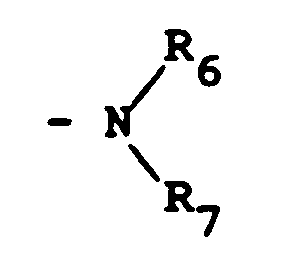
R₁ is C₁₋₄-alkyl, C₁₋₄-alkoxy, NH₂, NHC₁₋₄-alkyl, N(C₁₋₄-alkyl)₂, C₃₋₄-alkenyl, C₃₋₄-alkynyl, C₃₋₄ alkenyloxy, C₃₋₄-alkynyloxy, or C₃₋₆-cycloalkyl;
R₂ is C₁₋₄-alkyl, C₁₋₄-alkoxy or halogen;
R₃ is hydrogen or halogen;
R₄ is hydrogen, halogen, C₁₋₄-alkyl or C₁₋₄-alkoxy;
R₅ is hydrogen, a phenyl group optionally substituted by one or more substituents selected from C₁₋₄-alkyl, C₁₋₄-alkoxy and halogen moieties, a C₁₋₁₂ alkyl group optionally substituted by one or more halogen atoms, a C₃₋₇-cycloalkyl, phenylphenyl, or phenoxyphenyl group, a C₂₋₆-alkenyl or C₂₋₆-alkynyl group each optionally substituted by a phenyl group, or a naphthyl or C₅₋₈-cycloalkenyl group;
X is a single bond, -O-, -S(O)p-, -N=N-, -CHR₉O-, -OCHR₉-, CHR₉S(O)p-, -S(O)pCHR₉- -(CH₂)n-, -HC=CH-, or -C≡C-;
R₆ is C₁₋₄-alkyl, C₃₋₇-cycloalkyl, benzyl, C₃₋₄-alkenyl or C₃₋₄-alkynyl;
R₇ is C₁₋₄ alkyl;
R₈ is hydrogen, C₁₋₄-alkyl or C₁₋₄-alkoxy;
R₉ is hydrogen or C₁₋₄-alkyl;
p is 0, 1 or 2; and
n is an integer from 1 to 10
by reacting a benzophenone of formula II
in which A and B have the meanings given above, with an acetamide of formula III
CH₃COQ (III)
in which Q has the meaning given above, in the presence of a base characterised in that the base employed is a sodium tertiary alcoholate which is present in excess, the acetamide of formula III is present in excess, an inert solvent is employed and the reaction temperature is in the range from 10° to 150°C. - The alcoholate may be derived from any tertiary alcohol but good results have been obtained with a compound of formula IV
(R)₃C-OH (IV)
wherein each R is independently an alkyl group of 1 to 4 carbon atoms. Preferably two of the groups R are methyl groups and the remaining R is a methyl, ethyl, propyl or butyl group. Excellent results in terms of yield of compounds of formula I have been obtained with alcoholates derived from amyl alcohol and butyl alcohol. The alcoholate may be prepared in situ or added as such and may be prepared by known methods e.g. by the reaction of sodium hydride with the tertiary alcohol in the presence of an inert solvent such as toluene. - The process according to the invention is carried out in the presence of inert solvents such as toluene, benzene, diethyl ether, diglyme, tetrahydrofuran, N,N-dimethyl formamide. Also an excess of one reaction component may serve as solvent. According to the reactivity of the components, the reaction may be carried out with cooling, at room temperature, or at elevated temperature up to the reflux temperature of the reaction mixture. Generally, the reaction takes place at a temperature in the range from 10° to 150°C.
- A 1.5-2-fold excess of the sodium tertiary alcoholate is preferred. Excess acetamide can be recovered and fed into the reaction again.
- The process according to the invention may be used to prepare all the compounds of general formula I but it is particularly useful for compounds of formula I wherein
in group A:
R₁ is C₁₋₄-alkoxy, C₁₋₄-alkyl, or amino
R₂ is C₁₋₄-alkoxy, C₁₋₄-alkyl or halogen
R₃ is hydrogen or halogen
in group B:
R₄ is hydrogen or halogen
R₅ is hydrogen, phenyl or halophenyl
X is a single bond or -O-
and Q represents a morpholine group wherein R₈ and R₉ are both hydrogen. The halogen or halo-substituent may be a fluorine, chlorine, bromine or iodine atom but is preferably a chlorine or bromine atom. - In the group A the substitution in the phenyl ring is preferably in the 3 and 4 positions or in the 3, 4 and 5 positions, particularly preferred examples of such substitution being 3,4-dimethoxy, 3-ethoxy-4-methoxy, 3-chloro-4-methoxy, 3-bromo-4-methoxy, 3-methyl-4-methoxy, 3-ethyl-4-methoxy, 3-propyl-4-methoxy, 3,4-dimethyl, 3-amino-4-methoxy, 3,5-dichloro-4-amino and 3-methoxy-4-methyl. Of these, 3,4-dimethoxy substitution of the phenyl ring is especially preferred.
- The process according to the invention is further illustrated by the following Examples.
- 4-Chloro-3',4'-dimethoxy benzophenone (6.92 g, 25 mmol), sodium tert.-amylate (5.50 g, 50 mmol), acetyl morpholine (23.90 g, 185 mmol), and anhydrous toluene (50 ml) were stirred under reflux for 8 hours. After cooling, the solution was washed twice with water, dried, and the toluene distilled off on a rotary evaporator. The viscous residue was stirred at 50°C with diisopropyl ether (40 ml), whereupon the substance solidified. After it had cooled to room temperature, the crude product was crushed, filtered by suction, washed with diisopropyl ether (2 x 5 ml) and dried.
Yield: 8.1 g = 83.5% of theoretical Tlc-pure product. - Sodium hydride (with 20% of paraffin oil; 2.25 g, 75 mmol) was stirred under reflux with absolute toluene (50 ml) and tert.-amyl alcohol (7.25 g, 82.5 mmol) was added dropwise within 30 minutes. When the solution had cooled to 100°C, 4-(4-chlorophenoxy)-3′, 4′-dimethoxy benzophenone (9.22 g 25 mmol) and acetyl morpholine (16.17 g, 125 mmol) were added and the mixture was stirred under reflux for 8 hours.
- After cooling to room temperature the solution was washed with water (2 x 100 ml), dried and applied onto a column packed with silica gel (50 g). The products were eluted with toluene (200 ml) and toluene-acetone mixtures (200 ml each; 90:10, 80:20, 70:30). The fractions containing the substance with an Rf-value of 0.47 (toluene-acetone 70:30) were combined and concentrated on a rotary evaporator. Crude yield: 11 g of viscous oil which contains toluene. This oil was stirred with diisopropyl ether (30 ml), whereupon the desired compound slowly crystallised.
Yield: 8.7 g = 72.5% of theoretical
mp.: 115 - 127°C
Isomer ratio E/Z: 45/55. - Sodium hydride (with 20% of paraffin oil; 3.0 g, 100 mol) was stirred with absolute toluene (70 ml) and a solution of tert.-butanol (8.15 g, 110 mmol) in absolute toluene (30 ml) was added dropwise. After the solution had cleared, 4-chloro-3′,4′-dimethoxy benzophenone (13.84 g, 50 mmol) and acetyl morpholine (19.37 g, 150 mmol) were added and the reaction mixture was refluxed for 8 hours with stirring. When the solution had cooled to room temperature, it was washed twice with water, dried and concentrated on a rotary evaporator. Thereby 24.9 g of viscous oil were obtained which crystallised slowly upon stirring in diisopropyl ether (50 ml). Recrystallisation from isopropanol/diisopropyl ether.
Yield: 18.0 g = 92.8% of theoretical
mp. : 123 - 145°C.
Claims (3)
- A process for the preparation of a 3,3-diaryl acrylic acid amide of general formula I

A represents


R₁ is C₁₋₄-alkyl, C₁₋₄-alkoxy, NH₂, NHC₁₋₄-alkyl, N(C₁₋₄-alkyl)₂, C₃₋₄-alkenyl, C₃₋₄-alkynyl, C₃₋₄ alkenyloxy, C₃₋₄-alkynyloxy, or C₃₋₆-cycloalkyl;
R₂ is C₁₋₄-alkyl, C₁₋₄-alkoxy or halogen;
R₃ is hydrogen or halogen;
R₄ is hydrogen, halogen, C₁₋₄-alkyl or C₁₋₄-alkoxy;
R₅ is hydrogen, a phenyl group optionally substituted by one or more substituents selected from C₁₋₄-alkyl, C₁₋₄-alkoxy and halogen moieties, a C₁₋₁₂ alkyl group optionally substituted by one or more halogen atoms, a C₃₋₇-cycloalkyl, phenylphenyl, or phenoxyphenyl group, a C₂₋₆-alkenyl or C₂₋₆-alkynyl group each optionally-substituted by a phenyl group, or a naphthyl or C₅₋₈-cycloalkenyl group;
X is a single bond, -O-, -S(O)p-, -N=N-, -CHR₉O-, -OCHR₉-, -CHR₉S(O)p-, -S(O)pCHR₉--(CH₂)n-, -HC=CH-, or -C≡C-;
R₆ is C₁₋₄-alkyl, C₃₋₇-cycloalkyl, benzyl, c₃₋₄-alkenyl or C₃₋₄-alkynyl;
R₇ is C₁₋₄ alkyl;
R₈ is hydrogen, C₁₋₄-alkyl or C₁₋₄-alkoxy;
R₉ is hydrogen or C₁₋₄-alkyl;
p is 0, 1 or 2; and
n is an integer from 1 to 10
by reacting a benzophenone of formula II
CH₃COQ (III)
in which Q has the meaning given above, in the presence of a base characterised in that the base employed is a sodium tertiary alcoholate which is present in excess, the acetamide of formula III is present in excess, an inert solvent is employed and the reaction temperature is in the range from 10° to 150°C. - A process according to claim 1 characterised in that the sodium tertiary alcoholate is derived from an alcohol of general formula IV
(R)₃C-OH (IV)
wherein each R is independently an alkyl group of 1 to 4 carbon atoms. - A process according to claim 1 or 2 characterised in that the sodium tertiary alcoholate is derived from amyl alcohol or butyl alcohol.
Priority Applications (1)
| Application Number | Priority Date | Filing Date | Title |
|---|---|---|---|
| AT8989200378T ATE105286T1 (en) | 1988-02-19 | 1989-02-16 | PRODUCTION OF 3,3-DIARYLACRYLIC ACID AMIDES. |
Applications Claiming Priority (2)
| Application Number | Priority Date | Filing Date | Title |
|---|---|---|---|
| DE3805235A DE3805235A1 (en) | 1988-02-19 | 1988-02-19 | METHOD FOR PRODUCING 3,3-DIARYLACRYLIC ACID AMIDES |
| DE3805235 | 1988-02-19 |
Publications (2)
| Publication Number | Publication Date |
|---|---|
| EP0329256A1 EP0329256A1 (en) | 1989-08-23 |
| EP0329256B1 true EP0329256B1 (en) | 1994-05-04 |
Family
ID=6347757
Family Applications (1)
| Application Number | Title | Priority Date | Filing Date |
|---|---|---|---|
| EP89200378A Expired - Lifetime EP0329256B1 (en) | 1988-02-19 | 1989-02-16 | Preparation of 3,3-diarylacrylic acid amides |
Country Status (11)
| Country | Link |
|---|---|
| US (1) | US4920222A (en) |
| EP (1) | EP0329256B1 (en) |
| JP (1) | JP2573872B2 (en) |
| KR (1) | KR970011285B1 (en) |
| CN (1) | CN1019971C (en) |
| AT (1) | ATE105286T1 (en) |
| BR (1) | BR8900689A (en) |
| DE (2) | DE3805235A1 (en) |
| ES (1) | ES2056188T3 (en) |
| HK (1) | HK1000116A1 (en) |
| IL (1) | IL89331A (en) |
Cited By (1)
| Publication number | Priority date | Publication date | Assignee | Title |
|---|---|---|---|---|
| RU2105762C1 (en) * | 1992-07-10 | 1998-02-27 | Шелл Интернэшнл Рисерч Маатсхаппий Б.В. | Method of preparing 3,3-diarylacrylic acid amides |
Families Citing this family (5)
| Publication number | Priority date | Publication date | Assignee | Title |
|---|---|---|---|---|
| JPS5421067A (en) * | 1977-07-15 | 1979-02-16 | Keigo Kishimoto | Ash receiving chute with damper for refuse incinerator |
| DE3817711A1 (en) * | 1988-05-25 | 1989-11-30 | Shell Int Research | METHOD FOR PRODUCING 3,3-DIPHENYLACRYLIC ACID AMIDES |
| US5071166A (en) * | 1990-01-12 | 1991-12-10 | Thomas Marino | Environmentally designed transportable holding tank |
| AU660205B2 (en) | 1991-12-23 | 1995-06-15 | Virbac, Inc | Systemic control of parasites |
| CN101637176B (en) * | 2009-08-27 | 2013-09-18 | 深圳诺普信农化股份有限公司 | Pesticide suspension |
Citations (1)
| Publication number | Priority date | Publication date | Assignee | Title |
|---|---|---|---|---|
| EP0343743A2 (en) * | 1988-05-25 | 1989-11-29 | Shell Internationale Researchmaatschappij B.V. | Improved preparation of 3,3-diphenylacrylic acid amides |
Family Cites Families (5)
| Publication number | Priority date | Publication date | Assignee | Title |
|---|---|---|---|---|
| DE3128574C2 (en) * | 1981-07-20 | 1984-03-29 | Deutsche Texaco Ag, 2000 Hamburg | Process for the production of N-substituted acrylic and methacrylamides |
| CS244440B2 (en) * | 1983-02-28 | 1986-07-17 | Celamerck Gmbh & Co Kg | Method of acrylic acids' new amides production |
| DE3689506D1 (en) * | 1985-10-09 | 1994-02-17 | Shell Int Research | New acrylic acid amides. |
| DE3536029A1 (en) * | 1985-10-09 | 1987-04-09 | Celamerck Gmbh & Co Kg | Novel acrylamides |
| DE3719488A1 (en) * | 1987-06-11 | 1988-12-29 | Shell Agrar Gmbh & Co Kg | METHOD FOR PRODUCING 3,3-DIARYLACRYLIC ACID AMIDES |
-
1988
- 1988-02-19 DE DE3805235A patent/DE3805235A1/en not_active Withdrawn
-
1989
- 1989-01-30 US US07/302,938 patent/US4920222A/en not_active Expired - Lifetime
- 1989-02-16 EP EP89200378A patent/EP0329256B1/en not_active Expired - Lifetime
- 1989-02-16 AT AT8989200378T patent/ATE105286T1/en not_active IP Right Cessation
- 1989-02-16 DE DE68915025T patent/DE68915025T2/en not_active Expired - Lifetime
- 1989-02-16 KR KR1019890001790A patent/KR970011285B1/en not_active Expired - Fee Related
- 1989-02-16 ES ES89200378T patent/ES2056188T3/en not_active Expired - Lifetime
- 1989-02-17 JP JP1036464A patent/JP2573872B2/en not_active Expired - Lifetime
- 1989-02-17 BR BR898900689A patent/BR8900689A/en not_active IP Right Cessation
- 1989-02-17 CN CN89100850A patent/CN1019971C/en not_active Expired - Lifetime
- 1989-02-17 IL IL89331A patent/IL89331A/en not_active IP Right Cessation
-
1997
- 1997-07-18 HK HK97101581A patent/HK1000116A1/en not_active IP Right Cessation
Patent Citations (1)
| Publication number | Priority date | Publication date | Assignee | Title |
|---|---|---|---|---|
| EP0343743A2 (en) * | 1988-05-25 | 1989-11-29 | Shell Internationale Researchmaatschappij B.V. | Improved preparation of 3,3-diphenylacrylic acid amides |
Non-Patent Citations (4)
| Title |
|---|
| Arzneimittel Forsch./drug research (1964) 14, p. 1151-1156 * |
| CHEMICAL ABSTRACTS, vol. 53, no. 15, August 10, 1959, Columbus, Ohio, USA ; W. CHODKIEWICZ et al. :"Preparation of diaryl beta-hydroxyamides and nitriles : dehydration to the corresponding alpha-ethylenic dreivatives", column 14066, abstract no. 14066i-14067f * |
| March J., Advanced Organic Chemistry (1984) McGraw-Hill, 2nd edition, p. 849-853 * |
| Organikum (1981) VEB Deutscher Verlag der Wissenschaften, Berlin, 2nd reprint of 15th edition, p. 569-570 * |
Cited By (1)
| Publication number | Priority date | Publication date | Assignee | Title |
|---|---|---|---|---|
| RU2105762C1 (en) * | 1992-07-10 | 1998-02-27 | Шелл Интернэшнл Рисерч Маатсхаппий Б.В. | Method of preparing 3,3-diarylacrylic acid amides |
Also Published As
| Publication number | Publication date |
|---|---|
| BR8900689A (en) | 1989-10-10 |
| KR970011285B1 (en) | 1997-07-09 |
| IL89331A (en) | 1993-06-10 |
| ATE105286T1 (en) | 1994-05-15 |
| ES2056188T3 (en) | 1994-10-01 |
| CN1019971C (en) | 1993-03-03 |
| IL89331A0 (en) | 1989-09-10 |
| JPH023639A (en) | 1990-01-09 |
| DE68915025T2 (en) | 1994-08-25 |
| JP2573872B2 (en) | 1997-01-22 |
| US4920222A (en) | 1990-04-24 |
| DE3805235A1 (en) | 1989-08-31 |
| CN1035659A (en) | 1989-09-20 |
| KR890012988A (en) | 1989-09-20 |
| EP0329256A1 (en) | 1989-08-23 |
| DE68915025D1 (en) | 1994-06-09 |
| HK1000116A1 (en) | 1997-12-05 |
Similar Documents
| Publication | Publication Date | Title |
|---|---|---|
| US4920222A (en) | Preparation of 3,3-diarylacrylic acid amides | |
| HK1000116B (en) | Preparation of 3,3-diarylacrylic acid amides | |
| EP0343743B1 (en) | Improved preparation of 3,3-diphenylacrylic acid amides | |
| EP0294907B1 (en) | Process for the preparation of 3,3-diaryl acrylic acid amides | |
| HU197881B (en) | Process for producing new carbamoyl-oxy-alkyl-carboxy-lic acid derivatives | |
| US4632999A (en) | Process for the preparation of oxiranes | |
| HK1000115B (en) | Improved preparation of 3,3-diphenylacrylic acid amides | |
| HK1000109B (en) | Process for the preparation of 3,3-diaryl acrylic acid amides | |
| HU196748B (en) | Process for producing 2-/azetidin-2-on-1-yl/-3-/carboxyphenoxy/-3-acylthiopropenoic acid derivatives | |
| US5164503A (en) | Preparation of aminocyclopentane acids | |
| US4739059A (en) | Fluorine-containing amine amides | |
| US4959391A (en) | Phenol derivatives, pharmaceutical compositions containing these compounds and processes for the preparation of these compounds and compositions | |
| JPS60136571A (en) | Manufacture of beta-hydroxyethyl-(1,2,4-triazole) derivative | |
| JPH01117851A (en) | Novel acrylamide compound | |
| JP2678758B2 (en) | Novel propane derivative | |
| US4346099A (en) | Carboxy-imidazole derivatives, compositions and use | |
| US4876353A (en) | Process for the preparation of optically active 2-hydroxyethyl-azole derivatives | |
| GB2146023A (en) | Aminocyclopentanes and their preparation and pharmaceutical formulation | |
| US4822400A (en) | 1,3-dioxan-5-ylalkyltriazoles, their use for regulating plant growth, and agents for this purpose | |
| IE58359B1 (en) | New phenol derivatives, pharmaceutical compositions containing these compounds and processes for the preparation of these compounds and compositions | |
| US4728659A (en) | Aminomethyl derivatives and preparation process thereof as well as platelet aggregation inhibitors containing same | |
| JPH04316531A (en) | Cyclohexanone derivative | |
| JPS5883686A (en) | Production method of aminocyclopentane alkenoic acid | |
| GB2084150A (en) | Imidazole derivatives | |
| US5132457A (en) | Stereospecific synthesis of 2(R)-2-methyl-3-dimethylamino-propiophenone (d-DAMP) |
Legal Events
| Date | Code | Title | Description |
|---|---|---|---|
| PUAI | Public reference made under article 153(3) epc to a published international application that has entered the european phase |
Free format text: ORIGINAL CODE: 0009012 |
|
| AK | Designated contracting states |
Kind code of ref document: A1 Designated state(s): AT BE CH DE ES FR GB GR IT LI LU NL SE |
|
| 17P | Request for examination filed |
Effective date: 19900116 |
|
| 17Q | First examination report despatched |
Effective date: 19920421 |
|
| GRAA | (expected) grant |
Free format text: ORIGINAL CODE: 0009210 |
|
| AK | Designated contracting states |
Kind code of ref document: B1 Designated state(s): AT BE CH DE ES FR GB GR IT LI LU NL SE |
|
| PG25 | Lapsed in a contracting state [announced via postgrant information from national office to epo] |
Ref country code: GR Free format text: LAPSE BECAUSE OF FAILURE TO SUBMIT A TRANSLATION OF THE DESCRIPTION OR TO PAY THE FEE WITHIN THE PRESCRIBED TIME-LIMIT Effective date: 19940504 |
|
| REF | Corresponds to: |
Ref document number: 105286 Country of ref document: AT Date of ref document: 19940515 Kind code of ref document: T |
|
| ITF | It: translation for a ep patent filed | ||
| REF | Corresponds to: |
Ref document number: 68915025 Country of ref document: DE Date of ref document: 19940609 |
|
| ET | Fr: translation filed | ||
| REG | Reference to a national code |
Ref country code: ES Ref legal event code: FG2A Ref document number: 2056188 Country of ref document: ES Kind code of ref document: T3 |
|
| EAL | Se: european patent in force in sweden |
Ref document number: 89200378.1 |
|
| PLBE | No opposition filed within time limit |
Free format text: ORIGINAL CODE: 0009261 |
|
| STAA | Information on the status of an ep patent application or granted ep patent |
Free format text: STATUS: NO OPPOSITION FILED WITHIN TIME LIMIT |
|
| 26N | No opposition filed | ||
| PGFP | Annual fee paid to national office [announced via postgrant information from national office to epo] |
Ref country code: LU Payment date: 20011221 Year of fee payment: 14 |
|
| REG | Reference to a national code |
Ref country code: GB Ref legal event code: IF02 |
|
| PG25 | Lapsed in a contracting state [announced via postgrant information from national office to epo] |
Ref country code: LU Free format text: LAPSE BECAUSE OF NON-PAYMENT OF DUE FEES Effective date: 20030216 |
|
| PGFP | Annual fee paid to national office [announced via postgrant information from national office to epo] |
Ref country code: SE Payment date: 20060207 Year of fee payment: 18 |
|
| PG25 | Lapsed in a contracting state [announced via postgrant information from national office to epo] |
Ref country code: SE Free format text: LAPSE BECAUSE OF NON-PAYMENT OF DUE FEES Effective date: 20070217 |
|
| EUG | Se: european patent has lapsed | ||
| PGFP | Annual fee paid to national office [announced via postgrant information from national office to epo] |
Ref country code: CH Payment date: 20080214 Year of fee payment: 20 Ref country code: ES Payment date: 20080324 Year of fee payment: 20 |
|
| PGFP | Annual fee paid to national office [announced via postgrant information from national office to epo] |
Ref country code: NL Payment date: 20080103 Year of fee payment: 20 Ref country code: IT Payment date: 20080226 Year of fee payment: 20 Ref country code: GB Payment date: 20080213 Year of fee payment: 20 Ref country code: DE Payment date: 20080214 Year of fee payment: 20 |
|
| PGFP | Annual fee paid to national office [announced via postgrant information from national office to epo] |
Ref country code: AT Payment date: 20080213 Year of fee payment: 20 |
|
| PGFP | Annual fee paid to national office [announced via postgrant information from national office to epo] |
Ref country code: FR Payment date: 20080208 Year of fee payment: 20 |
|
| PGFP | Annual fee paid to national office [announced via postgrant information from national office to epo] |
Ref country code: BE Payment date: 20080417 Year of fee payment: 20 |
|
| REG | Reference to a national code |
Ref country code: CH Ref legal event code: PL |
|
| REG | Reference to a national code |
Ref country code: GB Ref legal event code: PE20 Expiry date: 20090215 |
|
| NLV7 | Nl: ceased due to reaching the maximum lifetime of a patent |
Effective date: 20090216 |
|
| REG | Reference to a national code |
Ref country code: ES Ref legal event code: FD2A Effective date: 20090217 |
|
| PG25 | Lapsed in a contracting state [announced via postgrant information from national office to epo] |
Ref country code: NL Free format text: LAPSE BECAUSE OF EXPIRATION OF PROTECTION Effective date: 20090216 |
|
| PG25 | Lapsed in a contracting state [announced via postgrant information from national office to epo] |
Ref country code: GB Free format text: LAPSE BECAUSE OF EXPIRATION OF PROTECTION Effective date: 20090215 |
|
| PG25 | Lapsed in a contracting state [announced via postgrant information from national office to epo] |
Ref country code: ES Free format text: LAPSE BECAUSE OF EXPIRATION OF PROTECTION Effective date: 20090217 |