EP0303434A1 - Thiazolidine compounds - Google Patents
Thiazolidine compounds Download PDFInfo
- Publication number
- EP0303434A1 EP0303434A1 EP88307334A EP88307334A EP0303434A1 EP 0303434 A1 EP0303434 A1 EP 0303434A1 EP 88307334 A EP88307334 A EP 88307334A EP 88307334 A EP88307334 A EP 88307334A EP 0303434 A1 EP0303434 A1 EP 0303434A1
- Authority
- EP
- European Patent Office
- Prior art keywords
- thiazolidine
- group
- compound
- compounds
- carbonyl
- Prior art date
- Legal status (The legal status is an assumption and is not a legal conclusion. Google has not performed a legal analysis and makes no representation as to the accuracy of the status listed.)
- Withdrawn
Links
- 150000003548 thiazolidines Chemical class 0.000 title claims abstract description 21
- 229910052757 nitrogen Inorganic materials 0.000 claims abstract description 31
- 150000003839 salts Chemical class 0.000 claims abstract description 13
- 206010012289 Dementia Diseases 0.000 claims abstract description 11
- 208000000044 Amnesia Diseases 0.000 claims abstract description 10
- 208000031091 Amnestic disease Diseases 0.000 claims abstract description 10
- 230000006986 amnesia Effects 0.000 claims abstract description 10
- 125000004432 carbon atom Chemical group C* 0.000 claims abstract description 9
- 125000004453 alkoxycarbonyl group Chemical group 0.000 claims abstract description 6
- 125000002947 alkylene group Chemical group 0.000 claims abstract description 4
- 125000005842 heteroatom Chemical group 0.000 claims abstract description 4
- 125000000623 heterocyclic group Chemical group 0.000 claims abstract description 4
- 125000004435 hydrogen atom Chemical group [H]* 0.000 claims abstract description 4
- 125000001624 naphthyl group Chemical group 0.000 claims abstract description 4
- 125000004433 nitrogen atom Chemical group N* 0.000 claims abstract description 4
- 125000004430 oxygen atom Chemical group O* 0.000 claims abstract description 4
- 125000001997 phenyl group Chemical group [H]C1=C([H])C([H])=C(*)C([H])=C1[H] 0.000 claims abstract description 4
- 125000004076 pyridyl group Chemical group 0.000 claims abstract description 4
- 229920006395 saturated elastomer Polymers 0.000 claims abstract description 4
- -1 thiazolidine compound Chemical class 0.000 claims description 10
- 238000002360 preparation method Methods 0.000 claims description 6
- 239000008194 pharmaceutical composition Substances 0.000 claims description 5
- 239000003814 drug Substances 0.000 claims description 2
- 102000056251 Prolyl Oligopeptidases Human genes 0.000 abstract description 18
- 101710178372 Prolyl endopeptidase Proteins 0.000 abstract description 18
- 239000003795 chemical substances by application Substances 0.000 abstract description 13
- 230000002401 inhibitory effect Effects 0.000 abstract description 13
- 230000001225 therapeutic effect Effects 0.000 abstract description 7
- XEKOWRVHYACXOJ-UHFFFAOYSA-N Ethyl acetate Chemical compound CCOC(C)=O XEKOWRVHYACXOJ-UHFFFAOYSA-N 0.000 description 48
- 150000001875 compounds Chemical class 0.000 description 43
- 238000000921 elemental analysis Methods 0.000 description 27
- 229910052739 hydrogen Inorganic materials 0.000 description 27
- 238000002844 melting Methods 0.000 description 25
- 230000008018 melting Effects 0.000 description 25
- 229910052717 sulfur Inorganic materials 0.000 description 25
- 239000000203 mixture Substances 0.000 description 17
- 239000000243 solution Substances 0.000 description 17
- OKKJLVBELUTLKV-UHFFFAOYSA-N Methanol Chemical compound OC OKKJLVBELUTLKV-UHFFFAOYSA-N 0.000 description 15
- HEMHJVSKTPXQMS-UHFFFAOYSA-M Sodium hydroxide Chemical compound [OH-].[Na+] HEMHJVSKTPXQMS-UHFFFAOYSA-M 0.000 description 14
- 238000001816 cooling Methods 0.000 description 12
- RTZKZFJDLAIYFH-UHFFFAOYSA-N Diethyl ether Chemical compound CCOCC RTZKZFJDLAIYFH-UHFFFAOYSA-N 0.000 description 11
- LFQSCWFLJHTTHZ-UHFFFAOYSA-N Ethanol Chemical compound CCO LFQSCWFLJHTTHZ-UHFFFAOYSA-N 0.000 description 11
- YMWUJEATGCHHMB-UHFFFAOYSA-N Dichloromethane Chemical compound ClCCl YMWUJEATGCHHMB-UHFFFAOYSA-N 0.000 description 9
- VEXZGXHMUGYJMC-UHFFFAOYSA-N Hydrochloric acid Chemical class Cl VEXZGXHMUGYJMC-UHFFFAOYSA-N 0.000 description 8
- 239000011541 reaction mixture Substances 0.000 description 7
- 239000007858 starting material Substances 0.000 description 7
- 238000003756 stirring Methods 0.000 description 7
- QOSSAOTZNIDXMA-UHFFFAOYSA-N Dicylcohexylcarbodiimide Chemical compound C1CCCCC1N=C=NC1CCCCC1 QOSSAOTZNIDXMA-UHFFFAOYSA-N 0.000 description 6
- FAPWRFPIFSIZLT-UHFFFAOYSA-M Sodium chloride Chemical compound [Na+].[Cl-] FAPWRFPIFSIZLT-UHFFFAOYSA-M 0.000 description 6
- 239000007864 aqueous solution Substances 0.000 description 6
- PMZURENOXWZQFD-UHFFFAOYSA-L Sodium Sulfate Chemical compound [Na+].[Na+].[O-]S([O-])(=O)=O PMZURENOXWZQFD-UHFFFAOYSA-L 0.000 description 5
- 239000003826 tablet Substances 0.000 description 5
- 238000012360 testing method Methods 0.000 description 5
- XLYOFNOQVPJJNP-UHFFFAOYSA-N water Substances O XLYOFNOQVPJJNP-UHFFFAOYSA-N 0.000 description 5
- UHOVQNZJYSORNB-UHFFFAOYSA-N Benzene Chemical compound C1=CC=CC=C1 UHOVQNZJYSORNB-UHFFFAOYSA-N 0.000 description 4
- 102000004190 Enzymes Human genes 0.000 description 4
- 108090000790 Enzymes Proteins 0.000 description 4
- UIIMBOGNXHQVGW-UHFFFAOYSA-M Sodium bicarbonate Chemical compound [Na+].OC([O-])=O UIIMBOGNXHQVGW-UHFFFAOYSA-M 0.000 description 4
- HEDRZPFGACZZDS-MICDWDOJSA-N Trichloro(2H)methane Chemical compound [2H]C(Cl)(Cl)Cl HEDRZPFGACZZDS-MICDWDOJSA-N 0.000 description 4
- ARKABCLDYHVJMU-ZDUSSCGKSA-N benzyl (4r)-4-(1,3-thiazolidine-3-carbonyl)-1,3-thiazolidine-3-carboxylate Chemical compound N1([C@@H](CSC1)C(=O)N1CSCC1)C(=O)OCC1=CC=CC=C1 ARKABCLDYHVJMU-ZDUSSCGKSA-N 0.000 description 4
- 235000019441 ethanol Nutrition 0.000 description 4
- 238000000034 method Methods 0.000 description 4
- 239000012044 organic layer Substances 0.000 description 4
- 239000000126 substance Substances 0.000 description 4
- PWXLRUHQPRKPIW-NSHDSACASA-N (4r)-3-(3-phenylpropanoyl)-1,3-thiazolidine-4-carboxylic acid Chemical compound OC(=O)[C@@H]1CSCN1C(=O)CCC1=CC=CC=C1 PWXLRUHQPRKPIW-NSHDSACASA-N 0.000 description 3
- RPYBYBARYRKSIF-JTQLQIEISA-N (4r)-3-phenylmethoxycarbonyl-1,3-thiazolidine-4-carboxylic acid Chemical compound OC(=O)[C@@H]1CSCN1C(=O)OCC1=CC=CC=C1 RPYBYBARYRKSIF-JTQLQIEISA-N 0.000 description 3
- OGYGFUAIIOPWQD-UHFFFAOYSA-N 1,3-thiazolidine Chemical compound C1CSCN1 OGYGFUAIIOPWQD-UHFFFAOYSA-N 0.000 description 3
- RYHBNJHYFVUHQT-UHFFFAOYSA-N 1,4-Dioxane Chemical compound C1COCCO1 RYHBNJHYFVUHQT-UHFFFAOYSA-N 0.000 description 3
- QTBSBXVTEAMEQO-UHFFFAOYSA-N Acetic acid Chemical compound CC(O)=O QTBSBXVTEAMEQO-UHFFFAOYSA-N 0.000 description 3
- WEVYAHXRMPXWCK-UHFFFAOYSA-N Acetonitrile Chemical compound CC#N WEVYAHXRMPXWCK-UHFFFAOYSA-N 0.000 description 3
- PEDCQBHIVMGVHV-UHFFFAOYSA-N Glycerine Chemical compound OCC(O)CO PEDCQBHIVMGVHV-UHFFFAOYSA-N 0.000 description 3
- DNIAPMSPPWPWGF-UHFFFAOYSA-N Propylene glycol Chemical compound CC(O)CO DNIAPMSPPWPWGF-UHFFFAOYSA-N 0.000 description 3
- ZMANZCXQSJIPKH-UHFFFAOYSA-N Triethylamine Chemical compound CCN(CC)CC ZMANZCXQSJIPKH-UHFFFAOYSA-N 0.000 description 3
- 201000010099 disease Diseases 0.000 description 3
- 208000037265 diseases, disorders, signs and symptoms Diseases 0.000 description 3
- 230000000694 effects Effects 0.000 description 3
- 230000005764 inhibitory process Effects 0.000 description 3
- 239000000843 powder Substances 0.000 description 3
- 238000010898 silica gel chromatography Methods 0.000 description 3
- 239000000725 suspension Substances 0.000 description 3
- NZPRVHUHJAWDPY-RGMNGODLSA-N 1,3-thiazolidin-3-yl-[(4r)-1,3-thiazolidin-4-yl]methanone;hydrochloride Chemical compound Cl.C1CSCN1C(=O)[C@@H]1CSCN1 NZPRVHUHJAWDPY-RGMNGODLSA-N 0.000 description 2
- 241000283690 Bos taurus Species 0.000 description 2
- HEDRZPFGACZZDS-UHFFFAOYSA-N Chloroform Chemical compound ClC(Cl)Cl HEDRZPFGACZZDS-UHFFFAOYSA-N 0.000 description 2
- XTHFKEDIFFGKHM-UHFFFAOYSA-N Dimethoxyethane Chemical compound COCCOC XTHFKEDIFFGKHM-UHFFFAOYSA-N 0.000 description 2
- IAZDPXIOMUYVGZ-UHFFFAOYSA-N Dimethylsulphoxide Chemical compound CS(C)=O IAZDPXIOMUYVGZ-UHFFFAOYSA-N 0.000 description 2
- WQZGKKKJIJFFOK-GASJEMHNSA-N Glucose Natural products OC[C@H]1OC(O)[C@H](O)[C@@H](O)[C@@H]1O WQZGKKKJIJFFOK-GASJEMHNSA-N 0.000 description 2
- DZLNHFMRPBPULJ-VKHMYHEASA-N L-thioproline Chemical compound OC(=O)[C@@H]1CSCN1 DZLNHFMRPBPULJ-VKHMYHEASA-N 0.000 description 2
- YNAVUWVOSKDBBP-UHFFFAOYSA-N Morpholine Chemical compound C1COCCN1 YNAVUWVOSKDBBP-UHFFFAOYSA-N 0.000 description 2
- NQTADLQHYWFPDB-UHFFFAOYSA-N N-Hydroxysuccinimide Chemical compound ON1C(=O)CCC1=O NQTADLQHYWFPDB-UHFFFAOYSA-N 0.000 description 2
- NQRYJNQNLNOLGT-UHFFFAOYSA-N Piperidine Chemical compound C1CCNCC1 NQRYJNQNLNOLGT-UHFFFAOYSA-N 0.000 description 2
- 150000008065 acid anhydrides Chemical class 0.000 description 2
- YNQLUTRBYVCPMQ-UHFFFAOYSA-N alpha-methyl toluene Natural products CCC1=CC=CC=C1 YNQLUTRBYVCPMQ-UHFFFAOYSA-N 0.000 description 2
- WQZGKKKJIJFFOK-VFUOTHLCSA-N beta-D-glucose Chemical compound OC[C@H]1O[C@@H](O)[C@H](O)[C@@H](O)[C@@H]1O WQZGKKKJIJFFOK-VFUOTHLCSA-N 0.000 description 2
- 210000004556 brain Anatomy 0.000 description 2
- 239000000872 buffer Substances 0.000 description 2
- 239000007853 buffer solution Substances 0.000 description 2
- 229910052799 carbon Inorganic materials 0.000 description 2
- 230000002490 cerebral effect Effects 0.000 description 2
- 208000026106 cerebrovascular disease Diseases 0.000 description 2
- 239000003085 diluting agent Substances 0.000 description 2
- 239000002552 dosage form Substances 0.000 description 2
- 238000002330 electrospray ionisation mass spectrometry Methods 0.000 description 2
- 239000003480 eluent Substances 0.000 description 2
- 239000000706 filtrate Substances 0.000 description 2
- 239000008103 glucose Substances 0.000 description 2
- 239000003112 inhibitor Substances 0.000 description 2
- 239000010410 layer Substances 0.000 description 2
- 239000007788 liquid Substances 0.000 description 2
- 239000003921 oil Substances 0.000 description 2
- 235000019198 oils Nutrition 0.000 description 2
- 238000010647 peptide synthesis reaction Methods 0.000 description 2
- 239000000546 pharmaceutical excipient Substances 0.000 description 2
- 239000002244 precipitate Substances 0.000 description 2
- 235000017557 sodium bicarbonate Nutrition 0.000 description 2
- 229910000030 sodium bicarbonate Inorganic materials 0.000 description 2
- LPXPTNMVRIOKMN-UHFFFAOYSA-M sodium nitrite Chemical compound [Na+].[O-]N=O LPXPTNMVRIOKMN-UHFFFAOYSA-M 0.000 description 2
- 239000007787 solid Substances 0.000 description 2
- 239000000758 substrate Substances 0.000 description 2
- DGVVWUTYPXICAM-UHFFFAOYSA-N β‐Mercaptoethanol Chemical compound OCCS DGVVWUTYPXICAM-UHFFFAOYSA-N 0.000 description 2
- JNYAEWCLZODPBN-JGWLITMVSA-N (2r,3r,4s)-2-[(1r)-1,2-dihydroxyethyl]oxolane-3,4-diol Chemical class OC[C@@H](O)[C@H]1OC[C@H](O)[C@H]1O JNYAEWCLZODPBN-JGWLITMVSA-N 0.000 description 1
- FJVHVFVICHZIDG-NSHDSACASA-N (4R)-3-(3-phenylprop-2-enoyl)-1,3-thiazolidine-4-carboxylic acid Chemical compound C(C=CC1=CC=CC=C1)(=O)N1CSC[C@H]1C(=O)O FJVHVFVICHZIDG-NSHDSACASA-N 0.000 description 1
- OOYDSBMCUJXHJG-AWEZNQCLSA-N (4r)-3-(2-naphthalen-1-ylacetyl)-1,3-thiazolidine-4-carboxylic acid Chemical compound OC(=O)[C@@H]1CSCN1C(=O)CC1=CC=CC2=CC=CC=C12 OOYDSBMCUJXHJG-AWEZNQCLSA-N 0.000 description 1
- CAOTWOMBOQGVAP-JTQLQIEISA-N (4r)-3-(2-phenylacetyl)-1,3-thiazolidine-4-carboxylic acid Chemical compound OC(=O)[C@@H]1CSCN1C(=O)CC1=CC=CC=C1 CAOTWOMBOQGVAP-JTQLQIEISA-N 0.000 description 1
- NLKSPDZPJKTOEB-LBPRGKRZSA-N (4r)-3-(4-phenylbutanoyl)-1,3-thiazolidine-4-carboxylic acid Chemical compound OC(=O)[C@@H]1CSCN1C(=O)CCCC1=CC=CC=C1 NLKSPDZPJKTOEB-LBPRGKRZSA-N 0.000 description 1
- QKNYBSVHEMOAJP-UHFFFAOYSA-N 2-amino-2-(hydroxymethyl)propane-1,3-diol;hydron;chloride Chemical compound Cl.OCC(N)(CO)CO QKNYBSVHEMOAJP-UHFFFAOYSA-N 0.000 description 1
- MLHPNKTYYOKKLR-KRWDZBQOSA-N 2-naphthalen-1-yl-1-[(4r)-4-(1,3-thiazolidine-3-carbonyl)-1,3-thiazolidin-3-yl]ethanone Chemical compound O=C([C@@H]1CSCN1C(CC=1C2=CC=CC=C2C=CC=1)=O)N1CCSC1 MLHPNKTYYOKKLR-KRWDZBQOSA-N 0.000 description 1
- TWANWKNPIPHXQP-SFHVURJKSA-N 2-naphthalen-1-yl-1-[(4r)-4-(pyrrolidine-1-carbonyl)-1,3-thiazolidin-3-yl]ethanone Chemical compound O=C([C@@H]1CSCN1C(CC=1C2=CC=CC=C2C=CC=1)=O)N1CCCC1 TWANWKNPIPHXQP-SFHVURJKSA-N 0.000 description 1
- RLUJAUUUSIAUHE-ZDUSSCGKSA-N 2-phenyl-1-[(4r)-4-(1,3-thiazolidine-3-carbonyl)-1,3-thiazolidin-3-yl]ethanone Chemical compound N1([C@@H](CSC1)C(=O)N1CSCC1)C(=O)CC1=CC=CC=C1 RLUJAUUUSIAUHE-ZDUSSCGKSA-N 0.000 description 1
- PVNWXTOGRMIZKU-AWEZNQCLSA-N 2-phenyl-1-[(4r)-4-(pyrrolidine-1-carbonyl)-1,3-thiazolidin-3-yl]ethanone Chemical compound N1([C@@H](CSC1)C(=O)N1CCCC1)C(=O)CC1=CC=CC=C1 PVNWXTOGRMIZKU-AWEZNQCLSA-N 0.000 description 1
- BMYNFMYTOJXKLE-UHFFFAOYSA-N 3-azaniumyl-2-hydroxypropanoate Chemical compound NCC(O)C(O)=O BMYNFMYTOJXKLE-UHFFFAOYSA-N 0.000 description 1
- ZHLZKJDUFMYKMC-AWKYBWMHSA-N 3-phenyl-1-[(2r)-4-(1,3-thiazolidine-3-carbonyl)-1,3-thiazolidin-2-yl]propan-1-one Chemical compound O=C([C@H]1SCC(N1)C(=O)N1CSCC1)CCC1=CC=CC=C1 ZHLZKJDUFMYKMC-AWKYBWMHSA-N 0.000 description 1
- JNQSAZADRBIKSX-AWEZNQCLSA-N 3-phenyl-1-[(4r)-4-(1,3-thiazolidine-3-carbonyl)-1,3-thiazolidin-3-yl]prop-2-en-1-one Chemical compound N1([C@@H](CSC1)C(=O)N1CSCC1)C(=O)C=CC1=CC=CC=C1 JNQSAZADRBIKSX-AWEZNQCLSA-N 0.000 description 1
- GCIQMILEQGIIDL-AWEZNQCLSA-N 3-phenyl-1-[(4r)-4-(1,3-thiazolidine-3-carbonyl)-1,3-thiazolidin-3-yl]propan-1-one Chemical compound N1([C@@H](CSC1)C(=O)N1CSCC1)C(=O)CCC1=CC=CC=C1 GCIQMILEQGIIDL-AWEZNQCLSA-N 0.000 description 1
- MASKDQJPUYSFQX-HNNXBMFYSA-N 3-phenyl-1-[(4r)-4-(pyrrolidine-1-carbonyl)-1,3-thiazolidin-3-yl]prop-2-en-1-one Chemical compound N1([C@@H](CSC1)C(=O)N1CCCC1)C(=O)C=CC1=CC=CC=C1 MASKDQJPUYSFQX-HNNXBMFYSA-N 0.000 description 1
- XIONXCPBEYUCPO-HNNXBMFYSA-N 3-phenyl-1-[(4r)-4-(thiomorpholine-4-carbonyl)-1,3-thiazolidin-3-yl]prop-2-en-1-one Chemical compound N1([C@@H](CSC1)C(=O)N1CCSCC1)C(=O)C=CC1=CC=CC=C1 XIONXCPBEYUCPO-HNNXBMFYSA-N 0.000 description 1
- MFEILWXBDBCWKF-UHFFFAOYSA-N 3-phenylpropanoyl chloride Chemical compound ClC(=O)CCC1=CC=CC=C1 MFEILWXBDBCWKF-UHFFFAOYSA-N 0.000 description 1
- DFGMSTJIQPZDCK-HNNXBMFYSA-N 4-phenyl-1-[(4r)-4-(1,3-thiazolidine-3-carbonyl)-1,3-thiazolidin-3-yl]butan-1-one Chemical compound N1([C@@H](CSC1)C(=O)N1CSCC1)C(=O)CCCC1=CC=CC=C1 DFGMSTJIQPZDCK-HNNXBMFYSA-N 0.000 description 1
- FRZBZMLGMSIYIV-INIZCTEOSA-N 4-phenyl-1-[(4r)-4-(pyrrolidine-1-carbonyl)-1,3-thiazolidin-3-yl]butan-1-one Chemical compound N1([C@@H](CSC1)C(=O)N1CCCC1)C(=O)CCCC1=CC=CC=C1 FRZBZMLGMSIYIV-INIZCTEOSA-N 0.000 description 1
- 244000215068 Acacia senegal Species 0.000 description 1
- 229920001817 Agar Polymers 0.000 description 1
- GUBGYTABKSRVRQ-XLOQQCSPSA-N Alpha-Lactose Chemical compound O[C@@H]1[C@@H](O)[C@@H](O)[C@@H](CO)O[C@H]1O[C@@H]1[C@@H](CO)O[C@H](O)[C@H](O)[C@H]1O GUBGYTABKSRVRQ-XLOQQCSPSA-N 0.000 description 1
- 239000005995 Aluminium silicate Substances 0.000 description 1
- GEHMBYLTCISYNY-UHFFFAOYSA-N Ammonium sulfamate Chemical compound [NH4+].NS([O-])(=O)=O GEHMBYLTCISYNY-UHFFFAOYSA-N 0.000 description 1
- 241000416162 Astragalus gummifer Species 0.000 description 1
- 229940126062 Compound A Drugs 0.000 description 1
- FBPFZTCFMRRESA-FSIIMWSLSA-N D-Glucitol Natural products OC[C@H](O)[C@H](O)[C@@H](O)[C@H](O)CO FBPFZTCFMRRESA-FSIIMWSLSA-N 0.000 description 1
- FBPFZTCFMRRESA-JGWLITMVSA-N D-glucitol Chemical compound OC[C@H](O)[C@@H](O)[C@H](O)[C@H](O)CO FBPFZTCFMRRESA-JGWLITMVSA-N 0.000 description 1
- KCXVZYZYPLLWCC-UHFFFAOYSA-N EDTA Chemical compound OC(=O)CN(CC(O)=O)CCN(CC(O)=O)CC(O)=O KCXVZYZYPLLWCC-UHFFFAOYSA-N 0.000 description 1
- VZCYOOQTPOCHFL-OWOJBTEDSA-N Fumaric acid Chemical class OC(=O)\C=C\C(O)=O VZCYOOQTPOCHFL-OWOJBTEDSA-N 0.000 description 1
- 108010010803 Gelatin Proteins 0.000 description 1
- 229920000084 Gum arabic Polymers 0.000 description 1
- NLDMNSXOCDLTTB-UHFFFAOYSA-N Heterophylliin A Natural products O1C2COC(=O)C3=CC(O)=C(O)C(O)=C3C3=C(O)C(O)=C(O)C=C3C(=O)OC2C(OC(=O)C=2C=C(O)C(O)=C(O)C=2)C(O)C1OC(=O)C1=CC(O)=C(O)C(O)=C1 NLDMNSXOCDLTTB-UHFFFAOYSA-N 0.000 description 1
- 241000282412 Homo Species 0.000 description 1
- 238000012404 In vitro experiment Methods 0.000 description 1
- XNSAINXGIQZQOO-UHFFFAOYSA-N L-pyroglutamyl-L-histidyl-L-proline amide Natural products NC(=O)C1CCCN1C(=O)C(NC(=O)C1NC(=O)CC1)CC1=CN=CN1 XNSAINXGIQZQOO-UHFFFAOYSA-N 0.000 description 1
- GUBGYTABKSRVRQ-QKKXKWKRSA-N Lactose Natural products OC[C@H]1O[C@@H](O[C@H]2[C@H](O)[C@@H](O)C(O)O[C@@H]2CO)[C@H](O)[C@@H](O)[C@H]1O GUBGYTABKSRVRQ-QKKXKWKRSA-N 0.000 description 1
- 241001466453 Laminaria Species 0.000 description 1
- CSNNHWWHGAXBCP-UHFFFAOYSA-L Magnesium sulfate Chemical compound [Mg+2].[O-][S+2]([O-])([O-])[O-] CSNNHWWHGAXBCP-UHFFFAOYSA-L 0.000 description 1
- 241000124008 Mammalia Species 0.000 description 1
- MZNYWPRCVDMOJG-UHFFFAOYSA-N N-(1-naphthyl)ethylenediamine dihydrochloride Chemical compound [Cl-].[Cl-].C1=CC=C2C([NH2+]CC[NH3+])=CC=CC2=C1 MZNYWPRCVDMOJG-UHFFFAOYSA-N 0.000 description 1
- 101710129873 Prolyl endopeptidase FAP Proteins 0.000 description 1
- 229920002472 Starch Polymers 0.000 description 1
- QAOWNCQODCNURD-UHFFFAOYSA-N Sulfuric acid Chemical class OS(O)(=O)=O QAOWNCQODCNURD-UHFFFAOYSA-N 0.000 description 1
- 244000299461 Theobroma cacao Species 0.000 description 1
- 235000005764 Theobroma cacao ssp. cacao Nutrition 0.000 description 1
- 235000005767 Theobroma cacao ssp. sphaerocarpum Nutrition 0.000 description 1
- 239000000627 Thyrotropin-Releasing Hormone Substances 0.000 description 1
- 102400000336 Thyrotropin-releasing hormone Human genes 0.000 description 1
- 101800004623 Thyrotropin-releasing hormone Proteins 0.000 description 1
- 229920001615 Tragacanth Polymers 0.000 description 1
- 108010021119 Trichosanthin Proteins 0.000 description 1
- GXBMIBRIOWHPDT-UHFFFAOYSA-N Vasopressin Natural products N1C(=O)C(CC=2C=C(O)C=CC=2)NC(=O)C(N)CSSCC(C(=O)N2C(CCC2)C(=O)NC(CCCN=C(N)N)C(=O)NCC(N)=O)NC(=O)C(CC(N)=O)NC(=O)C(CCC(N)=O)NC(=O)C1CC1=CC=CC=C1 GXBMIBRIOWHPDT-UHFFFAOYSA-N 0.000 description 1
- 108010004977 Vasopressins Proteins 0.000 description 1
- 102000002852 Vasopressins Human genes 0.000 description 1
- NLDWWSOACQBNDP-NSHDSACASA-N [(4r)-3-(pyridine-4-carbonyl)-1,3-thiazolidin-4-yl]-(1,3-thiazolidin-3-yl)methanone Chemical compound C([C@H]1C(=O)N2CSCC2)SCN1C(=O)C1=CC=NC=C1 NLDWWSOACQBNDP-NSHDSACASA-N 0.000 description 1
- 238000002835 absorbance Methods 0.000 description 1
- 239000000205 acacia gum Substances 0.000 description 1
- 235000010489 acacia gum Nutrition 0.000 description 1
- 150000001242 acetic acid derivatives Chemical class 0.000 description 1
- 239000002253 acid Substances 0.000 description 1
- 230000002378 acidificating effect Effects 0.000 description 1
- 239000013543 active substance Substances 0.000 description 1
- 239000008272 agar Substances 0.000 description 1
- 125000003545 alkoxy group Chemical group 0.000 description 1
- 235000012211 aluminium silicate Nutrition 0.000 description 1
- 150000003862 amino acid derivatives Chemical class 0.000 description 1
- 125000003277 amino group Chemical group 0.000 description 1
- KBZOIRJILGZLEJ-LGYYRGKSSA-N argipressin Chemical compound C([C@H]1C(=O)N[C@@H](CCC(N)=O)C(=O)N[C@@H](CC(N)=O)C(=O)N[C@@H](CSSC[C@@H](C(N[C@@H](CC=2C=CC(O)=CC=2)C(=O)N1)=O)N)C(=O)N1[C@@H](CCC1)C(=O)N[C@@H](CCCN=C(N)N)C(=O)NCC(N)=O)C1=CC=CC=C1 KBZOIRJILGZLEJ-LGYYRGKSSA-N 0.000 description 1
- UWACKUSRNCFECL-AWEZNQCLSA-N benzyl (4r)-4-(morpholine-4-carbonyl)-1,3-thiazolidine-3-carboxylate Chemical compound N1([C@@H](CSC1)C(=O)N1CCOCC1)C(=O)OCC1=CC=CC=C1 UWACKUSRNCFECL-AWEZNQCLSA-N 0.000 description 1
- JWZITSKEPFLZJT-HNNXBMFYSA-N benzyl (4r)-4-(piperidine-1-carbonyl)-1,3-thiazolidine-3-carboxylate Chemical compound N1([C@@H](CSC1)C(=O)N1CCCCC1)C(=O)OCC1=CC=CC=C1 JWZITSKEPFLZJT-HNNXBMFYSA-N 0.000 description 1
- BQQJJGXKZCZHNP-AWEZNQCLSA-N benzyl (4r)-4-(thiomorpholine-4-carbonyl)-1,3-thiazolidine-3-carboxylate Chemical compound N1([C@@H](CSC1)C(=O)N1CCSCC1)C(=O)OCC1=CC=CC=C1 BQQJJGXKZCZHNP-AWEZNQCLSA-N 0.000 description 1
- IIFXRURCKBJZJC-GJZGRUSLSA-N benzyl (4r)-4-[(2s)-2-methoxycarbonylpyrrolidine-1-carbonyl]-1,3-thiazolidine-3-carboxylate Chemical compound COC(=O)[C@@H]1CCCN1C(=O)[C@H]1N(C(=O)OCC=2C=CC=CC=2)CSC1 IIFXRURCKBJZJC-GJZGRUSLSA-N 0.000 description 1
- WBFVJIPFKZRWKY-KBPBESRZSA-N benzyl (4r)-4-[(4r)-4-methoxycarbonyl-1,3-thiazolidine-3-carbonyl]-1,3-thiazolidine-3-carboxylate Chemical compound COC(=O)[C@@H]1CSCN1C(=O)[C@H]1N(C(=O)OCC=2C=CC=CC=2)CSC1 WBFVJIPFKZRWKY-KBPBESRZSA-N 0.000 description 1
- HSDAJNMJOMSNEV-UHFFFAOYSA-N benzyl chloroformate Chemical compound ClC(=O)OCC1=CC=CC=C1 HSDAJNMJOMSNEV-UHFFFAOYSA-N 0.000 description 1
- 239000011230 binding agent Substances 0.000 description 1
- 239000008280 blood Substances 0.000 description 1
- 210000004369 blood Anatomy 0.000 description 1
- 235000014121 butter Nutrition 0.000 description 1
- 235000001046 cacaotero Nutrition 0.000 description 1
- 239000002775 capsule Substances 0.000 description 1
- 125000003178 carboxy group Chemical group [H]OC(*)=O 0.000 description 1
- 239000000969 carrier Substances 0.000 description 1
- KRKNYBCHXYNGOX-UHFFFAOYSA-N citric acid Chemical class OC(=O)CC(O)(C(O)=O)CC(O)=O KRKNYBCHXYNGOX-UHFFFAOYSA-N 0.000 description 1
- 239000003086 colorant Substances 0.000 description 1
- JNGZXGGOCLZBFB-IVCQMTBJSA-N compound E Chemical compound N([C@@H](C)C(=O)N[C@@H]1C(N(C)C2=CC=CC=C2C(C=2C=CC=CC=2)=N1)=O)C(=O)CC1=CC(F)=CC(F)=C1 JNGZXGGOCLZBFB-IVCQMTBJSA-N 0.000 description 1
- 239000012050 conventional carrier Substances 0.000 description 1
- 238000007796 conventional method Methods 0.000 description 1
- 125000004177 diethyl group Chemical group [H]C([H])([H])C([H])([H])* 0.000 description 1
- 238000010790 dilution Methods 0.000 description 1
- 239000012895 dilution Substances 0.000 description 1
- 239000007884 disintegrant Substances 0.000 description 1
- 239000008298 dragée Substances 0.000 description 1
- 239000003937 drug carrier Substances 0.000 description 1
- 239000000839 emulsion Substances 0.000 description 1
- 238000006911 enzymatic reaction Methods 0.000 description 1
- 150000002148 esters Chemical class 0.000 description 1
- UREBWPXBXRYXRJ-UHFFFAOYSA-N ethyl acetate;methanol Chemical compound OC.CCOC(C)=O UREBWPXBXRYXRJ-UHFFFAOYSA-N 0.000 description 1
- 239000007941 film coated tablet Substances 0.000 description 1
- 239000000796 flavoring agent Substances 0.000 description 1
- 235000019634 flavors Nutrition 0.000 description 1
- 235000003599 food sweetener Nutrition 0.000 description 1
- 239000012634 fragment Substances 0.000 description 1
- 239000003205 fragrance Substances 0.000 description 1
- 239000008273 gelatin Substances 0.000 description 1
- 229920000159 gelatin Polymers 0.000 description 1
- 235000019322 gelatine Nutrition 0.000 description 1
- 235000011852 gelatine desserts Nutrition 0.000 description 1
- FVIZARNDLVOMSU-UHFFFAOYSA-N ginsenoside K Natural products C1CC(C2(CCC3C(C)(C)C(O)CCC3(C)C2CC2O)C)(C)C2C1C(C)(CCC=C(C)C)OC1OC(CO)C(O)C(O)C1O FVIZARNDLVOMSU-UHFFFAOYSA-N 0.000 description 1
- ZTQSADJAYQOCDD-UHFFFAOYSA-N ginsenoside-Rd2 Natural products C1CC(C2(CCC3C(C)(C)C(OC4C(C(O)C(O)C(CO)O4)O)CCC3(C)C2CC2O)C)(C)C2C1C(C)(CCC=C(C)C)OC(C(C(O)C1O)O)OC1COC1OCC(O)C(O)C1O ZTQSADJAYQOCDD-UHFFFAOYSA-N 0.000 description 1
- 239000008187 granular material Substances 0.000 description 1
- 150000004820 halides Chemical class 0.000 description 1
- FUKUFMFMCZIRNT-UHFFFAOYSA-N hydron;methanol;chloride Chemical compound Cl.OC FUKUFMFMCZIRNT-UHFFFAOYSA-N 0.000 description 1
- BNTRVUUJBGBGLZ-UHFFFAOYSA-N hydron;pyridine-4-carbonyl chloride;chloride Chemical compound Cl.ClC(=O)C1=CC=NC=C1 BNTRVUUJBGBGLZ-UHFFFAOYSA-N 0.000 description 1
- 230000001077 hypotensive effect Effects 0.000 description 1
- 229940102223 injectable solution Drugs 0.000 description 1
- 229940102213 injectable suspension Drugs 0.000 description 1
- 238000007918 intramuscular administration Methods 0.000 description 1
- 238000001990 intravenous administration Methods 0.000 description 1
- 239000000644 isotonic solution Substances 0.000 description 1
- NLYAJNPCOHFWQQ-UHFFFAOYSA-N kaolin Chemical compound O.O.O=[Al]O[Si](=O)O[Si](=O)O[Al]=O NLYAJNPCOHFWQQ-UHFFFAOYSA-N 0.000 description 1
- 239000008101 lactose Substances 0.000 description 1
- 208000019423 liver disease Diseases 0.000 description 1
- 238000004519 manufacturing process Methods 0.000 description 1
- 238000001819 mass spectrum Methods 0.000 description 1
- 238000005259 measurement Methods 0.000 description 1
- AFQHDJURXYWCAI-GJZGRUSLSA-N methyl (4r)-3-[(4r)-3-(3-phenylpropanoyl)-1,3-thiazolidine-4-carbonyl]-1,3-thiazolidine-4-carboxylate Chemical compound COC(=O)[C@@H]1CSCN1C(=O)[C@H]1N(C(=O)CCC=2C=CC=CC=2)CSC1 AFQHDJURXYWCAI-GJZGRUSLSA-N 0.000 description 1
- CDMSRDOURRVUIX-HOTGVXAUSA-N methyl (4r)-3-[(4r)-3-(4-phenylbutanoyl)-1,3-thiazolidine-4-carbonyl]-1,3-thiazolidine-4-carboxylate Chemical compound COC(=O)[C@@H]1CSCN1C(=O)[C@H]1N(C(=O)CCCC=2C=CC=CC=2)CSC1 CDMSRDOURRVUIX-HOTGVXAUSA-N 0.000 description 1
- 125000000325 methylidene group Chemical group [H]C([H])=* 0.000 description 1
- 150000007522 mineralic acids Chemical class 0.000 description 1
- 238000000465 moulding Methods 0.000 description 1
- 238000007911 parenteral administration Methods 0.000 description 1
- 239000003208 petroleum Substances 0.000 description 1
- 239000006187 pill Substances 0.000 description 1
- 239000003755 preservative agent Substances 0.000 description 1
- 102000004196 processed proteins & peptides Human genes 0.000 description 1
- 108090000765 processed proteins & peptides Proteins 0.000 description 1
- 125000001500 prolyl group Chemical group [H]N1C([H])(C(=O)[*])C([H])([H])C([H])([H])C1([H])[H] 0.000 description 1
- XNSAINXGIQZQOO-SRVKXCTJSA-N protirelin Chemical compound NC(=O)[C@@H]1CCCN1C(=O)[C@@H](NC(=O)[C@H]1NC(=O)CC1)CC1=CN=CN1 XNSAINXGIQZQOO-SRVKXCTJSA-N 0.000 description 1
- LVTJOONKWUXEFR-FZRMHRINSA-N protoneodioscin Natural products O(C[C@@H](CC[C@]1(O)[C@H](C)[C@@H]2[C@]3(C)[C@H]([C@H]4[C@@H]([C@]5(C)C(=CC4)C[C@@H](O[C@@H]4[C@H](O[C@H]6[C@@H](O)[C@@H](O)[C@@H](O)[C@H](C)O6)[C@@H](O)[C@H](O[C@H]6[C@@H](O)[C@@H](O)[C@@H](O)[C@H](C)O6)[C@H](CO)O4)CC5)CC3)C[C@@H]2O1)C)[C@H]1[C@H](O)[C@H](O)[C@H](O)[C@@H](CO)O1 LVTJOONKWUXEFR-FZRMHRINSA-N 0.000 description 1
- WMBBDTKWKVKSEO-UHFFFAOYSA-N pyrrolidine;1,3-thiazolidine Chemical compound C1CCNC1.C1CSCN1 WMBBDTKWKVKSEO-UHFFFAOYSA-N 0.000 description 1
- 239000011780 sodium chloride Substances 0.000 description 1
- 235000010288 sodium nitrite Nutrition 0.000 description 1
- 239000002904 solvent Substances 0.000 description 1
- 239000000600 sorbitol Substances 0.000 description 1
- 239000008107 starch Substances 0.000 description 1
- 235000019698 starch Nutrition 0.000 description 1
- 125000001424 substituent group Chemical group 0.000 description 1
- KDYFGRWQOYBRFD-UHFFFAOYSA-N succinic acid Chemical class OC(=O)CCC(O)=O KDYFGRWQOYBRFD-UHFFFAOYSA-N 0.000 description 1
- 239000007940 sugar coated tablet Substances 0.000 description 1
- 239000006228 supernatant Substances 0.000 description 1
- 239000000829 suppository Substances 0.000 description 1
- 239000003765 sweetening agent Substances 0.000 description 1
- 239000000454 talc Substances 0.000 description 1
- 229910052623 talc Inorganic materials 0.000 description 1
- 235000012222 talc Nutrition 0.000 description 1
- 150000003892 tartrate salts Chemical class 0.000 description 1
- 229940124597 therapeutic agent Drugs 0.000 description 1
- 238000002560 therapeutic procedure Methods 0.000 description 1
- BRNULMACUQOKMR-UHFFFAOYSA-N thiomorpholine Chemical compound C1CSCCN1 BRNULMACUQOKMR-UHFFFAOYSA-N 0.000 description 1
- DZLNHFMRPBPULJ-UHFFFAOYSA-N thioproline Chemical group OC(=O)C1CSCN1 DZLNHFMRPBPULJ-UHFFFAOYSA-N 0.000 description 1
- 229940034199 thyrotropin-releasing hormone Drugs 0.000 description 1
- JOXIMZWYDAKGHI-UHFFFAOYSA-N toluene-4-sulfonic acid Chemical class CC1=CC=C(S(O)(=O)=O)C=C1 JOXIMZWYDAKGHI-UHFFFAOYSA-N 0.000 description 1
- 239000000196 tragacanth Substances 0.000 description 1
- 235000010487 tragacanth Nutrition 0.000 description 1
- 229940116362 tragacanth Drugs 0.000 description 1
- YNJBWRMUSHSURL-UHFFFAOYSA-N trichloroacetic acid Chemical compound OC(=O)C(Cl)(Cl)Cl YNJBWRMUSHSURL-UHFFFAOYSA-N 0.000 description 1
- 229940124549 vasodilator Drugs 0.000 description 1
- 239000003071 vasodilator agent Substances 0.000 description 1
- 229960003726 vasopressin Drugs 0.000 description 1
- 235000015112 vegetable and seed oil Nutrition 0.000 description 1
- 239000008158 vegetable oil Substances 0.000 description 1
Classifications
-
- C—CHEMISTRY; METALLURGY
- C07—ORGANIC CHEMISTRY
- C07D—HETEROCYCLIC COMPOUNDS
- C07D277/00—Heterocyclic compounds containing 1,3-thiazole or hydrogenated 1,3-thiazole rings
- C07D277/02—Heterocyclic compounds containing 1,3-thiazole or hydrogenated 1,3-thiazole rings not condensed with other rings
- C07D277/04—Heterocyclic compounds containing 1,3-thiazole or hydrogenated 1,3-thiazole rings not condensed with other rings having no double bonds between ring members or between ring members and non-ring members
- C07D277/06—Heterocyclic compounds containing 1,3-thiazole or hydrogenated 1,3-thiazole rings not condensed with other rings having no double bonds between ring members or between ring members and non-ring members with carbon atoms having three bonds to hetero atoms with at the most one bond to halogen, e.g. ester or nitrile radicals, directly attached to ring carbon atoms
-
- C—CHEMISTRY; METALLURGY
- C07—ORGANIC CHEMISTRY
- C07K—PEPTIDES
- C07K5/00—Peptides containing up to four amino acids in a fully defined sequence; Derivatives thereof
- C07K5/04—Peptides containing up to four amino acids in a fully defined sequence; Derivatives thereof containing only normal peptide links
- C07K5/06—Dipeptides
- C07K5/06139—Dipeptides with the first amino acid being heterocyclic
Definitions
- the present invention relates to novel thiazolidine compounds being useful as therapeutical agents.
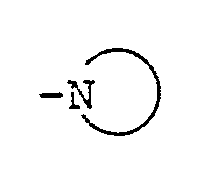
- the present invention relates to thiazolidine compounds represented by the general formula: wherein Ar represents a phenyl group, a naphthyl group or a pyridyl group, Y represents a saturated or unsaturated alkylene group having 1 to 5 carbon atoms, n represents zero or 1, represents a 5- or 6-membered saturated heterocyclic group which may contain a hetero atom other than the nitrogen atom, X represents an oxygen atom, m represents zero or 1, R represents a hydrogen atom or an alkoxycarbonyl group; and pharmaceutically acceptable salts thereof, which possess an inhibitory activity for a prolyl endopeptidase (Post-proline cleaving enzyme), and thus which are useful for the treatment of diseases such as dementia and amnesia.
- Ar represents a phenyl group, a naphthyl group or a pyridyl group
- Y represents a saturated or unsaturated alkylene group having 1 to 5 carbon atoms
- n represents zero
- cerebral vasodilators and cerebral excitometabolic agents have been employed as therapeutical agents for the treatment of diseases such as dementia and amnesia. It has been reported that these agents are effective for the treatment of dementia caused by cerebrovascular disorders, however, there are problems that these agents do not show a sufficient effect for the treatment of dementia due to causes other than cerebrovascular disorders.
- Prolyl endopeptidase is well known as an enzyme which acts on biologically active peptides and substrates to specifically cleave the carboxyl site in proline moiety.
- prolyl endopeptidase decomposes vasopressin and thyrotropin releasing hormone which are closely related to a memory mechanism, and therefore, a relationship of the inhibitory effect of the prolyl endopeptidase and amnesia has been studied for a long time. As a result, it is suggested that inhibitors for the prolyl endopeptidase are useful for the treatment of dementia and amnesia (Seikagaku Vol. 55, No. 8, page 831, 1983).
- any thiazolidine compound such as the compounds of the present invention has not been yet reported to have an inhibitory effect for the prolyl endopeptidase.
- the present invention provides novel thiazolidine compounds and pharmaceutically acceptable salts thereof which exhibit an inhibitory effect for the prolyl endopeptidase.
- novel thiazolidine compounds and pharmaceutically acceptable salts thereof of the present invention are useful as therapeutical agents for the treatment of dementia and amnesia.
- the present invention provides novel thiazolidine compounds of the general formula (I): wherein Ar represents a phenyl group, a naphthyl group or a pyridyl group, Y represents a saturated or unsaturated alkylene group having 1 to 5 carbon atoms, n represents zero or 1, represents a 5- or 6-membered saturated heterocyclic group which may contain a hetero atom other than the nitrogen atom, X represents an oxygen atom, m represents zero or 1, R represents a hydrogen atom or an alkoxycarbonyl group; and pharmaceutically acceptable salts thereof.
- Ar represents a phenyl group, a naphthyl group or a pyridyl group
- Y represents a saturated or unsaturated alkylene group having 1 to 5 carbon atoms
- n represents zero or 1
- X represents an oxygen atom
- m represents zero or
- alkoxycarbonyl as used herein means alkoxycarbonyl group having 2 to 6 carbon atoms.
- the moiety as used herein means pyrrolidine thiazolidine, piperidine, morpholine and thiomorpholine.
- alkoxy as used herein means a straight- or branched-alkoxy group having 1 to 5 carbon atoms.
- thiazolidine compounds of the present invention and pharmaceutically acceptable salts thereof exhibit an inhibitory effect for the prolyl endopeptidase, and thus are useful as therapeutical agents for the treatment of dementia and amnesia.
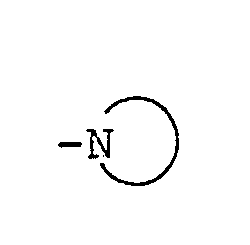
- the thiazolidine compounds (I) of the present invention are novel compounds, and can be, for example, prepared by reacting a compound represented by the general formula (II): wherein Ar, Y, n, X and m have the same meanings as defined above, or a reactive functional derivative thereof with a compound represented by the general formula (III): wherein and R have the same meanings as defined above.
- the compounds (II) and (III) used as starting materials are known compounds and commercially available. They can be also prepared by a method disclosed in literature.
- the production of the compounds of the general formula (I) of the present invention can be carried out by usual manner used in peptide synthesis, and for example, when the carboxylic acid compound of the general formula (II) is used as a starting material to prepare the compounds of the general formula (I) of the present invention, the process can be carried out in the presence of a condensing agent used in peptide synthesis, such as N,N′-dicyclohexylcarbodiimide.
- a condensing agent used in peptide synthesis such as N,N′-dicyclohexylcarbodiimide.
- the thiazolidine compounds of the present invention contain one or two asymmetric carbon atoms including one in the thiazolidine-4-carboxylic acid moiety, and therefore, various stereoisomers of the thiazolidine compounds of the present invention exist depending upon the configuration of each asymmetric carbon atom.
- configurations of substituents on each asymmetric carbon atom may be of R- or S-configuration, and a mixture of S- and R-configurations can be employed in the present invention.
- Optically active compound of the general formula (I) of the present invention can be prepared by using optically active starting materials.
- thiazolidine compounds represented by the general formula (I) of the present invention compounds wherein Y is a methylene, m and n are 1 are preferable, and the most prefered compound is 3-[R-(-)-3-benzyloxycarbonylthiazoline-4-carbonyl]thiazolidine.
- the thiazolidine compounds represented by the general formula (I) of the present invention can be converted according to conventional methods into pharmaceutically acceptable salts thereof.
- pharmaceutically acceptable salts include pharmaceutically acceptable inorganic or organic acid salts such as a hydrochloric acid salt, a sulfuric acid salt, a p-toluenesulfonic acid salt, an acetic acid salt, a citric acid salt, tartaric acid salt, a succinic acid salt, a fumaric acid salt and the like. These salts have an inhibitory effect as high as the corresponding compound having a free amino group.
- the thiazolidine compounds represented by the general formula (I) of the present invention possess an inhibitory effect on prolyl endopeptidase, for example, the thiazolidine compounds of the general formula (I) produce a 50% inhibition in vitro experiment using prolyl endopeptidase from bovine brain at 7 x 10 ⁇ 5 to 3 x 10 ⁇ 10 molar concentrations.
- 3-[(R)-(-)-3-benzyloxycarbonylthiazolidine-4-carbonyl]thiazolidine produces a 50% inhibition at 2.6 x 10 ⁇ 10 molar concentration.
- the thiazolidine compounds of the present invention possess an inhibitory effect for prolylendopeptidase, and are useful as therapeutical agents with a low toxity for the treatment of dementia and amnesia.
- thiazolidine compounds represented by the general formula (I) and the pharmaceutically acceptable salts thereof of this invention can be administered to mammalia, including humans, by oral, intravenous, intramuscular, or intrarectal administration, and for administration they can be formulated into pharmaceutical compositions together with conventional pharmaceutically acceptable carriers or excipients.
- thiazolidine compounds and the pharmaceutically acceptable salts of the general formula (I) of the present invention can be administered in various dosage forms depending upon the intended therapy.
- Typical dosage forms which can be used are tablets, pills, powders, liquid preparations, suspensions, emulsions, granules, capsules, suppositories, and injectable preparations.
- a wide variety of conventional carriers known in the art can be used.
- suitable carriers are excipients such as glucose, lactose, starch, cacao butter, hardened vegetable oils, kaolin and talc, binders such as gum arabic powder, tragacanth powder, and ethanol, and disintegrants such as laminaria and agar.
- the tablets if desired, can be coated into sugar-coated tablets, gelatin-coated tablets, film-coated tablets, or tablets coated with two or more layers.
- any diluents customarily used in the art can be employed.
- suitable diluents include water, ethyl alcohol, propylene glycol, polyoxyethylene sorbitol, and sorbitan esters.
- Sodium chloride, glucose or glycerol may be incorporated into such a liquid preparation in an amount sufficient to prepare an isotonic solution.
- the therapeutic agent may further contain ordinary dissolving aids, buffers, pain-alleviating agents, and preservatives, and optionally, coloring agents fragrances, flavors, sweeteners, and other pharmacologically active agents which are known in the art.
- the dosage of the amino acid derivatives of this invention may be in the range from about 50 mg to 1000 mg for adult human by oral administration per day, or from about 1 mg to 500 mg for adult human by parenteral administration per day in multiple doses depending upon the type of disease, the severity of condition to be treated, and the like.
- the reaction mixture was evaporated under reduced pressure, and to the residue was added 5 ml of water. The mixture was stirred for 30 minutes, and then extracted with ethyl acetate. The organic layer was washed successively with a 1N-hydrochloric acid, a 5% aqueous sodium bicarbonate solution and a saturated sodium chloride aqueous solution, dried over anhydrous magnesium sulfate, and evaporated under reduced pressure. The residue was purified by silica gel column chromatography to obtain 3-[(R)-(-)-3-benzyloxycarbonylthiazolidine-4-carbonyl]thiazolidine as colorless needles.
- test compounds for the prolyl endopeptidase was measured by using the enzyme purified from bovine brain according to the method of Yoshimoto et al. [J. Biochem., Vol. 94, pages 1179-1190, (1983)].
- the enzyme reaction was stopped by adding 1 ml of 25% trichloroacetic acid, and after 5 minutes, the reaction mixture was centrifuged for 10 minutes at 3000 rpm. To 0.5 ml of the supernatant was added 0.5 ml of 0.1% sodium nitrite aqueous solution, and after 3 minutes, 0.5 ml of 0.5% ammonium sulfamate and 1 ml of 0.05% N-(1-naphthyl)ethylenediamine dihydrochloride in ethanol were further added . The mixture was left for 25 minutes at 37°C, and the absorbance was measured at 570 nm.
- the enzyme activity at each concentration of the test compounds was calculated by the following equation, and the inhibitory activity of each test compound was expressed as the concentration which gave a 50% inhibition under the conditions (IC50 value).
Landscapes
- Chemical & Material Sciences (AREA)
- Organic Chemistry (AREA)
- Genetics & Genomics (AREA)
- Biochemistry (AREA)
- Biophysics (AREA)
- General Health & Medical Sciences (AREA)
- Health & Medical Sciences (AREA)
- Medicinal Chemistry (AREA)
- Molecular Biology (AREA)
- Proteomics, Peptides & Aminoacids (AREA)
- Life Sciences & Earth Sciences (AREA)
- Pharmaceuticals Containing Other Organic And Inorganic Compounds (AREA)
- Plural Heterocyclic Compounds (AREA)
Abstract
Thiazolidine compounds of the general formula:

wherein Ar represents a phenyl group, a naphthyl group or a pyridyl group, Y represents a saturated or unsaturated alkylene group having 1 to 5 carbon atoms, n represents zero or 1,
represents a 5- or 6-membered saturated heterocyclic group which may contain a hetero atom other than the nitrogen atom, X represents an oxygen atom, m represents zero or 1, R represents a hydrogen atom or an alkoxycarbonyl group; and pharmaceutically acceptable salts thereof, possess an inhibitory effect for prolyl endopeptidase, and are useful as therapeutical agents for the treatment of dementia and amnesia.
Description
- The present invention relates to novel thiazolidine compounds being useful as therapeutical agents.
- More particularly, the present invention relates to thiazolidine compounds represented by the general formula:
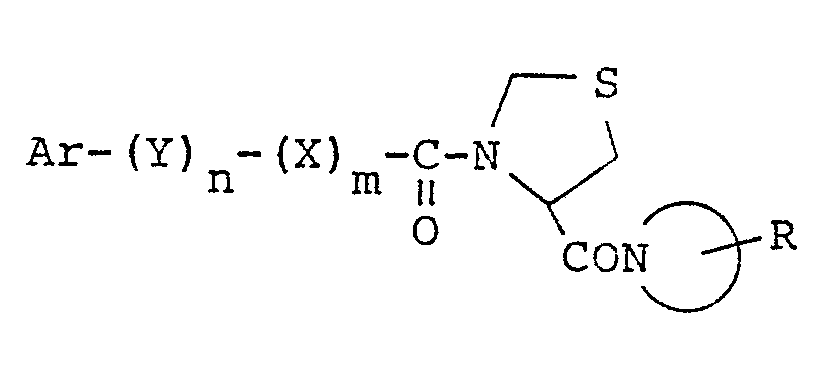

- Up to now, cerebral vasodilators and cerebral excitometabolic agents have been employed as therapeutical agents for the treatment of diseases such as dementia and amnesia. It has been reported that these agents are effective for the treatment of dementia caused by cerebrovascular disorders, however, there are problems that these agents do not show a sufficient effect for the treatment of dementia due to causes other than cerebrovascular disorders.
- Prolyl endopeptidase is well known as an enzyme which acts on biologically active peptides and substrates to specifically cleave the carboxyl site in proline moiety.
- The prolyl endopeptidase decomposes vasopressin and thyrotropin releasing hormone which are closely related to a memory mechanism, and therefore, a relationship of the inhibitory effect of the prolyl endopeptidase and amnesia has been studied for a long time. As a result, it is suggested that inhibitors for the prolyl endopeptidase are useful for the treatment of dementia and amnesia (Seikagaku Vol. 55, No. 8, page 831, 1983).
- With regard to inhibitors of the prolyl endopeptidase, the Japanese patent application (OPI) No. 188317/85 (The term "OPI" as used herein refers to an unexamined Japanese patent application) discloses the compound represented by the formula:

- On the other hand, as thiazolidine compounds related to the compounds of the present invention, several compounds have been published. For example, the compound represented by the formula:

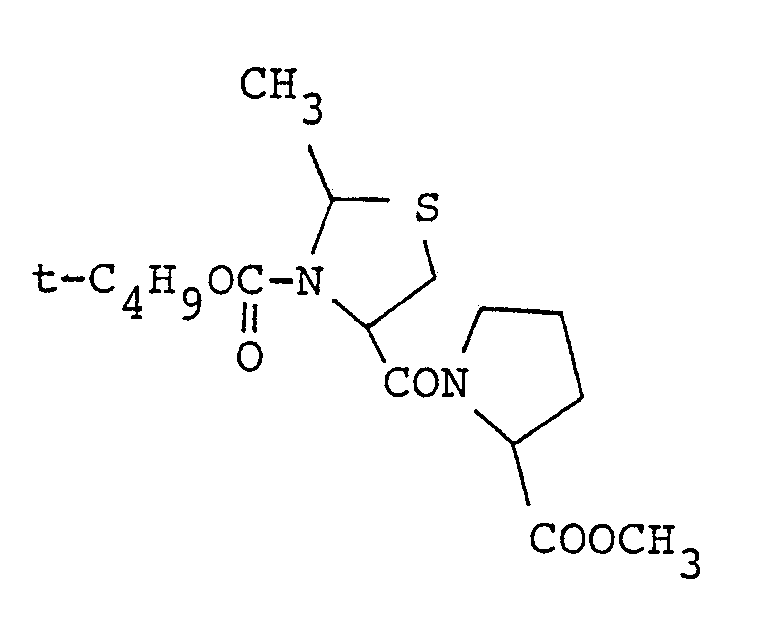
- Furthermore, in Chemical Abstracts, Vol. 95, No. 19, 169173f (1981), Vol. 96, No. 15, 123303r (1982), the following thiazolidine compounds having hypotensive activities are disclosed.


- However, it is not disclosed that these compounds have an inhibitory effect for the prolyl endopeptidase and that they are useful as therapeutical agents for the treatment of dementia and amnesia. Furthermore, any thiazolidine compound such as the compounds of the present invention has not been yet reported to have an inhibitory effect for the prolyl endopeptidase.
- The present invention provides novel thiazolidine compounds and pharmaceutically acceptable salts thereof which exhibit an inhibitory effect for the prolyl endopeptidase.
- The novel thiazolidine compounds and pharmaceutically acceptable salts thereof of the present invention are useful as therapeutical agents for the treatment of dementia and amnesia.
- Other features and advantages of the present invention will be apparent from the following description of the invention.
- The present invention provides novel thiazolidine compounds of the general formula (I):

- The term "alkoxycarbonyl" as used herein means alkoxycarbonyl group having 2 to 6 carbon atoms.
- The moiety

- The term "alkoxy" as used herein means a straight- or branched-alkoxy group having 1 to 5 carbon atoms.
- The thiazolidine compounds of the present invention and pharmaceutically acceptable salts thereof exhibit an inhibitory effect for the prolyl endopeptidase, and thus are useful as therapeutical agents for the treatment of dementia and amnesia.
- The thiazolidine compounds (I) of the present invention are novel compounds, and can be, for example, prepared by reacting a compound represented by the general formula (II):


- The compounds (II) and (III) used as starting materials are known compounds and commercially available. They can be also prepared by a method disclosed in literature.
- The production of the compounds of the general formula (I) of the present invention can be carried out by usual manner used in peptide synthesis, and for example, when the carboxylic acid compound of the general formula (II) is used as a starting material to prepare the compounds of the general formula (I) of the present invention, the process can be carried out in the presence of a condensing agent used in peptide synthesis, such as N,N′-dicyclohexylcarbodiimide.
- As examples of a reactive functional derivative of the compounds (II) used in starting materials, acid halides, acid anhydrides, mixed acid anhydrides and active esters can be employed.
- The thiazolidine compounds of the present invention contain one or two asymmetric carbon atoms including one in the thiazolidine-4-carboxylic acid moiety, and therefore, various stereoisomers of the thiazolidine compounds of the present invention exist depending upon the configuration of each asymmetric carbon atom. However, in the present invention, configurations of substituents on each asymmetric carbon atom may be of R- or S-configuration, and a mixture of S- and R-configurations can be employed in the present invention. Optically active compound of the general formula (I) of the present invention can be prepared by using optically active starting materials.
- Of the thiazolidine compounds represented by the general formula (I) of the present invention, compounds wherein Y is a methylene, m and n are 1 are preferable, and the most prefered compound is 3-[R-(-)-3-benzyloxycarbonylthiazoline-4-carbonyl]thiazolidine.
- The thiazolidine compounds represented by the general formula (I) of the present invention can be converted according to conventional methods into pharmaceutically acceptable salts thereof. Examples of such pharmaceutically acceptable salts include pharmaceutically acceptable inorganic or organic acid salts such as a hydrochloric acid salt, a sulfuric acid salt, a p-toluenesulfonic acid salt, an acetic acid salt, a citric acid salt, tartaric acid salt, a succinic acid salt, a fumaric acid salt and the like. These salts have an inhibitory effect as high as the corresponding compound having a free amino group.
- The thiazolidine compounds represented by the general formula (I) of the present invention possess an inhibitory effect on prolyl endopeptidase, for example, the thiazolidine compounds of the general formula (I) produce a 50% inhibition in vitro experiment using prolyl endopeptidase from bovine brain at 7 x 10⁻⁵ to 3 x 10⁻¹⁰ molar concentrations.
- Specifically, 3-[(R)-(-)-3-benzyloxycarbonylthiazolidine-4-carbonyl]thiazolidine produces a 50% inhibition at 2.6 x 10⁻¹⁰ molar concentration. Thus, the thiazolidine compounds of the present invention possess an inhibitory effect for prolylendopeptidase, and are useful as therapeutical agents with a low toxity for the treatment of dementia and amnesia.
- The thiazolidine compounds represented by the general formula (I) and the pharmaceutically acceptable salts thereof of this invention can be administered to mammalia, including humans, by oral, intravenous, intramuscular, or intrarectal administration, and for administration they can be formulated into pharmaceutical compositions together with conventional pharmaceutically acceptable carriers or excipients.
- The thiazolidine compounds and the pharmaceutically acceptable salts of the general formula (I) of the present invention can be administered in various dosage forms depending upon the intended therapy. Typical dosage forms which can be used are tablets, pills, powders, liquid preparations, suspensions, emulsions, granules, capsules, suppositories, and injectable preparations.
- In molding the pharmaceutical compositions into a tablet form, a wide variety of conventional carriers known in the art can be used. Examples of suitable carriers are excipients such as glucose, lactose, starch, cacao butter, hardened vegetable oils, kaolin and talc, binders such as gum arabic powder, tragacanth powder, and ethanol, and disintegrants such as laminaria and agar. The tablets, if desired, can be coated into sugar-coated tablets, gelatin-coated tablets, film-coated tablets, or tablets coated with two or more layers.
- When the pharmaceutical composition is formulated into an injectable preparation, it is preferred that the resulting injectable solution and suspension are sterilized and rendered isotonic with respect to blood. In making the pharmaceutical composition in a form of solution or suspension, any diluents customarily used in the art can be employed. Examples of suitable diluents include water, ethyl alcohol, propylene glycol, polyoxyethylene sorbitol, and sorbitan esters. Sodium chloride, glucose or glycerol may be incorporated into such a liquid preparation in an amount sufficient to prepare an isotonic solution. The therapeutic agent may further contain ordinary dissolving aids, buffers, pain-alleviating agents, and preservatives, and optionally, coloring agents fragrances, flavors, sweeteners, and other pharmacologically active agents which are known in the art.
- The dosage of the amino acid derivatives of this invention may be in the range from about 50 mg to 1000 mg for adult human by oral administration per day, or from about 1 mg to 500 mg for adult human by parenteral administration per day in multiple doses depending upon the type of disease, the severity of condition to be treated, and the like.
- To a solution of 2.66 g of (R)-(-)-thiazolidine-4-carboxylic acid in 10 ml of a 2N-aqueous sodium hydroxide solution were added 4.1 g of benzyloxycarbonyl chloride and 15 ml of a 2N-aqueous sodium hydroxide solution with stirring under ice-cooling at the same time, and then the mixture was stirred for 2 hours at room temperature. The reaction mixture was washed with then acidified by adding hydrochloric acid under ice-cooling. The mixture was allowed to stand for 30 minutes, and then the mixture was extracted with ethyl acetate. The organic layer was washed with a saturated sodium chloride aqueous solution, dried over anhydrous sodium sulfate, and evaporated under reduced pressure to obtain 4.14 g of (R)-(-)-3-benzyloxycarbonylthiazolidine-4-carboxylic acid as a colorless clear viscous oil. The oily substance was allowed to stand under cooling to form a solid, and the solid was recrystallized from diethyl ether-petroleum ether to obtain a pure (R)-(-)-3-benzyloxycarbonylthiazolidine-4-carboxylic acid.
melting point: 58-63°C

MS: m/z = 267 (M⁺)
IR (KBr): νco 1742, 1664 cm⁻¹
NMR (CDCl₃)
δ: 3.30(d, 2H), 4.58(AB-q, 2H), 4.90(br-s, 1H), 5.18(s, 2H), 7.34(s, 5H), 8.50(s, 1H)
elemental analysis as C₁₂H₁₃NO₄SC% H% N% Calcd. 53.93 4.90 5.24 Found 53.86 4.87 5.19 - To a solution of 2.66 g of (R)-(-)-thiazolidine-4-carboxylic acid in 10 ml of a 2N sodium hydroxide aqueous solution were added 5.5 g of 3-phenylpropionyl chloride and 15 ml of a 2N-sodium hydroxide aqueous soluiton with stirring under cooling at the same time. After adding, the mixture was stirred for 2 hours at room temperature, and then the reaction mixture was washed with diethyl ether. The mixture was acidified by adding hydrochloric acid. The acidic mixture was allowed to stand for 30 minutes, and extracted with ethyl acetate. The organic layer was washed with a saturated sodium chloride aqueous solution, dried over anhydrous sodium sulfate, and evaporated under reduced pressure. The residue was recrystallized from ethyl acetate to obtain 4.06 g of (R)-(-)-3-(3-phenylpropionyl)thiazolidine-4-carboxylic acid. (yield: 76.5%)
melting point: 93-95°C
IR (KBr): νco 1730, 1596 cm⁻¹
MS (EI): C₁₃H₁₅O₃NS = 265.28
m/z 265(M⁺), 248, 220, 174, 160, 150, 91

elemental analysis as C₁₃H₁₅O₃NSC% H% N% S% Calcd. 58.86 5.70 5.28 12.06 Found 58.71 5.71 5.33 12.05 - The following compounds were prepared in a similar manner to that described in Reference Example 1 by using a proper starting material.
- melting point: 87-90°C
IR (KBr): νco 1715, 1610 cm⁻¹
MS (EI): C₁₄H₁₇O₃NS = 279.30
m/z 279 (M⁺), 235, 188, 175, 133, 91

elemental analysis as C₁₄H₁₇O₃NSC% H% N% S% Calcd. 60.20 6.14 5.02 11.45 Found 59.99 6.13 4.97 11.37 - melting point: 136-138°C
IR (KBr): νco 1710, 1590 cm⁻¹
[α]23@D = -115.4° (c=1.0, methanol)
elemental analysis as C₁₂H₁₃O₃NSC% H% N% S% Calcd. 57.37 5.22 5.58 12.74 Found 57.51 5.27 5.45 12.68 - melting point: 184-186°C
IR (KBr): νco 1740, 1650 cm⁻¹

elemental analysis as C₁₃H₁₃O₃NSC% H% N% S% Calcd. 59.31 4.98 5.32 12.16 Found 59.21 5.26 5.00 11.74 - melting point: 146-148°C
IR (KBr): νco 1735, 1610 cm⁻¹
MS(EI): C₁₆H₁₅O₃NS = 301.30
m/z 301(M⁺), 229, 168, 141, 132, 88

elemental analysis as C₁₆H₁₅O₃NSC% H% N% S% Calcd. 63.78 5.02 4.65 10.62 Found 53.89 5.28 4.65 10.58 - To a solution of 2.67 g of (R)-(-)-3-benzyloxycarbonylthiazoline-4-carboxylic acid and 1.15 g of N-hydroxysuccinimide in 20 ml of dioxane was added 5 ml of dioxane containing 2.06 g of N,N′-dicyclohexylcarbodiimide with stirring under cooling. The mixture was allowed to stand overnight under cooling, and precipitates were filtrated off. The filtrate was evaporated under reduced pressure, and the residue was dissolved in 15 ml of dimethoxyethane. To the solution was added 0.89 g of thiazolidine with stirring under cooling, and the mixture was allowed to stand overnight. The reaction mixture was evaporated under reduced pressure, and to the residue was added 5 ml of water. The mixture was stirred for 30 minutes, and then extracted with ethyl acetate. The organic layer was washed successively with a 1N-hydrochloric acid, a 5% aqueous sodium bicarbonate solution and a saturated sodium chloride aqueous solution, dried over anhydrous magnesium sulfate, and evaporated under reduced pressure. The residue was purified by silica gel column chromatography to obtain 3-[(R)-(-)-3-benzyloxycarbonylthiazolidine-4-carbonyl]thiazolidine as colorless needles. (developing solvent:ethyl acetate/benzene = 6/4)
melting point: 73-75°C

MS: m/z = 338 (M⁺)
IR (KBr): νco 1701, 1640 cm⁻¹
NMR (CDCl₃)
δ: 2.8-3.2(br-m, 2H), 3.25(m, 2H), 3.4-4.0(br-m, 2H), 4.5-5.0(m, 5H), 5.13(s, 2H), 7.34(s, 5H)
elemental analysis as C₁₅H₁₈N₂O₃S₂C% H% N% Calcd. 53.25 5.36 8.28 Found 53.61 5.55 8.01 - The following compounds were prepared in a similar manner to that described in Example 1 by using a corresponding starting material.
- oil
MS(EI): C₁₈H₂₂N₂O₅S = 378.447
m/z 378(M⁺), 184, 146, 91
- melting point: 88-90°C
MS(EI): = C₁₆H₂₀N₂O₃S = 320.411
m/z 320(M⁺), 185, 126, 91

elemental analysis as C₁₆H₂₀N₂O₃SC% H% N% S% Calcd. 59.99 6.29 8.75 9.99 Found 60.08 6.35 8.70 10.11 - melting point: 90-92°C
MS(EI): C₁₇H₂₂N₂O₃S = 334.438
m/z 334(M⁺), 199, 140, 91
elemental analysis as C₁₇H₂₂N₂O₃SC% H% N% S% Calcd. 61.06 6.63 8.38 9.57 Found 60.99 6.63 8.33 9.60 - melting point: 114-115°C
MS(EI): C₁₆H₂₀N₂O₄S = 336.410
m/z 336(M⁺), 201, 142, 91
elemental analysis as C₁₆H₂₀N₂O₄SC% H% N% S% Calcd. 57.13 5.99 8.33 9.51 Found 57.31 5.98 8.30 9.48 - melting point: 120-123°C
MS(EI): C₁₆H₂₀N₂O₃S₂ = 352.475
m/z 352(M⁺), 279, 217, 157, 91

elemental analysis as C₁₆H₂₀N₂O₃S₂C% H% N% S% Calcd. 54.54 5.72 7.95 18.16 Found 54.38 5.64 7.87 18.34 - melting point: 102-104°C
MS(EI): C₁₇H₂₀N₂O₅S₂ = 396.484
m/z 396(M⁺), 261, 201, 146, 91

elemental analysis as C₁₇H₂₀N₂O₅S₂C% H% N% S% Calcd. 51.51 5.09 7.07 16.15 Found 51.45 5.12 7.04 16.28 - To a solution of 2.65 g of (R)-(-)-3-(3-phenylpropionyl)thiazolidine-4-carboxylic acid and 1.15 g of N-hydroxysuccinimide was added a solution of 2.06 g of N,N′-dicyclohexylcarbodiimide with stirring under cooling, and the mixture was allowed to stand overnight under cooling. The precipitates were filtered off, and the filtrate was evaporated under reduced pressure. The residue was dissolved in 15 ml of dimethoxyethane, and to the solution was added 0.89 g of thiazolidine with stirring under ice-cooling. The mixture was allowed to stand overnight, and then evaporated under reduced pressure. To the residue was added 5 ml of water, and the mixture was stirred for 30 minutes. The reaction mixture was extracted with ethyl acetate, and the organic layer was washed successively with a 1N hydrochloric acid, a 5% aqueous sodium bicarbonate solution and a saturated sodium chloride aqueous solution, dried over anhydrous sodium sulfate, and evaporated under reduced pressure. The residue was purified by silica gel column chromatography (eluent:ethyl acetate/benzene = 6/4) to obtain 3-[(R)-(-)-(3-phenylpropionyl)thiazolidine-4-carbonyl]thiazolidine.
melting point: 65-67°C
IR (KBr): νco 1660, 1640 cm⁻¹
MS(EI): C₁₆H₂₀O₂N₂S₂ = 336.38
m/z 336(M⁺), 247, 203, 143, 105, 88

elemental analysis as C₁₆H₂₀N₂O₂S₂C% H% N% S% Calcd. 57.13 5.99 8.33 19.02 Found 57.39 6.18 8.23 18.56 - The following compounds were prepared in a similar manner to that described in Example 3 by using suitable starting materials.
- melting point: 82-83°C
IR (KBr): νco 1680, 1640 cm⁻¹
MS(EI): C₁₇H₂₂O₂N₂S = 318.38
m/z 318(M⁺), 247, 185, 126, 105, 88

elemental analysis as C₁₇H₂₂N₂O₂SC% H% N% S% Calcd. 64.13 6.97 8.80 10.05 Found 64.19 6.97 8.54 9.78 - melting point: 93-94°C
IR (KBr): νco 1740, 1660 cm⁻¹
MS(EI): C₁₈H₂₂O₄N₂S₂ = 394.39
m/z 394(M⁺), 363, 308, 201, 146, 115, 88

elemental analysis as C₁₈H₂₂O₄N₂S₂C% H% N% S% Calcd. 54.82 5.62 7.10 16.23 Found 54.98 5.64 7.03 16.10 - melting point: 84-86°C
IR (KBr): νco 1640 cm⁻¹
MS(EI): C₁₇H₂₂O₂N₂S₂ = 350.40
m/z 350(M⁺), 261, 234, 203, 174, 157, 147, 91
elemental analysis as C₁₇H₂₂O₂N₂SC% H% N% S% Calcd. 58.27 6.33 8.00 18.27 Found 58.36 6.30 8.04 18.14 - melting point: 63-64°C
IR (KBr): νco 1660, 1638 cm⁻¹
MS(EI): C₁₈H₂₄O₂N₂S = 332.41
m/z 332(M⁺), 207, 185, 147, 126, 91, 70
elemental analysis as C₁₈H₂₄O₂N₂SC% H% N% S% Calcd. 65.04 7.28 8.43 9.63 Found 65.17 7.24 8.44 9.44 - melting point: 84-85°C
IR (KBr): νco 1735, 1660, 1650 cm⁻¹
MS(EI): C₁₉H₂₄O₄N₂S₂ = 408.40
m/z 408(M⁺), 377, 361, 201, 147, 115, 91
elemental analysis as C₁₉H₂₄O₄N₂S₂C% H% N% S% Calcd. 55.87 5.92 6.86 15.67 Found 56.27 6.00 6.98 15.42 - melting point: 127-129°C
IR (KBr): νco 1660, 1650 cm⁻¹
MS(EI): C₁₅H₁₈O₂N₂S₂ = 322.31
m/z 332(M⁺), 239, 179

elemental analysis as C₁₅H₁₈O₂N₂S₂C% H% N% S% Calcd. 55.89 5.63 8.69 18.85 Found 55.91 5.63 8.72 19.80 - melting point: 122-124°C
IR (KBr): νco 1650 cm⁻¹
MS(EI): C₁₆H₂₀O₂N₂S = 304.32
m/z 304(M⁺), 206
elemental analysis as C₁₆H₂₀O₂N₂SC% H% N% S% Calcd. 63.14 6.62 9.21 10.52 Found 62.80 6.55 9.12 10.27 - melting point: 170°C
IR (KBr): νco 1652, 1640 cm⁻¹
MS(EI): C₁₆H₁₈O₂N₂S₂ = 334.32
m/z 334(M⁺), 203, 131, 103

elemental analysis as C₁₆H₁₈O₂N₂S₂C% H% N% S% Calcd. 58.61 5.79 8.04 18.40 Found 58.56 5.77 7.89 18.41 - melting point: 154-155°C
IR (KBr): νco 1650, 1640 cm⁻¹
MS(EI): C₁₇H₂₀O₂N₂S = 316.35
m/z 317(M⁺+1), 227, 255
elemental analysis as C₁₇H₂₀O₂N₂SC% H% N% S% Calcd. 64.54 6.37 8.86 10.12 Found 64.61 6.56 8.87 9.74 - melting point: 144-146°C
IR (KBr): νco 1650 cm⁻¹
MS(EI): C₁₇H₂₀O₂N₂S₂ = 348.35
m/z 348(M⁺), 245, 217, 131, 103

elemental analysis as C₁₇H₂₀O₂N₂S₂C% H% N% S% Calcd. 58.61 5.79 8.04 18.40 Found 58.56 5.77 7.89 18.41 - IR (neat): νco 1740, 1660 cm⁻¹
MS(EI): C₂₀H₂₂O₂N₂S = 354.40
m/z 354(M⁺), 283, 168, 141, 126, 115, 88

elemental analysis as C₂₀H₂₂O₂N₂S·1/3H₂O
C% H% N% S% Calcd. 66.65 6.19 7.77 8.88 Found 66.62 6.43 7.42 8.48 - IR (neat): νco 1658 cm⁻¹
MS(EI): C₁₉H₂₀O₂N₂S₂ = 372.39
m/z 372(M⁺), 283, 256, 224, 168, 141, 115, 88

elemental analysis as C₁₉H₂₀O₂N₂S₂C% H% N% S% Calcd. 61.28 5.41 7.52 17.19 Found 60.74 5.71 7.15 15.82 - To a solution of a 25% hydrobromic acid in acetic acid was added 1.55 g of 3-[(R)-(-)-3-benzyloxycarbonylthiazolidine-4-carbonyl]tthiazolidine, and the mixture was stirred for 2 hours under cooling. The reaction mixture was evaporated under reduced pressure, and the residue was dissolved in 5 ml of water. The solution was washed with diethyl ether, and neutrallized with a 4N-aqueous sodium hydroxide solution. The mixture was extracted with dichloromethane. The oragnic layer was washed with a 2% hydrochloric acid methanol solution, dried over anhydrous sodium sulfate, and evaporated under reduced pressure to dryness. The residue was recrystallized from ethyl acetate-methanol to obtain 0.68 g of 3-[(R)-(-)-thiazolidine-4-carbonyl]thiazolidine hydrochloride (yield: 61.4%).
melting point: 174-180°C
IR (KBr): νco 1660 cm⁻¹

elemental analysis as C₁₇H₁₃ON₂ClSC% H% N% S% Calcd. 34.91 5.44 11.64 26.63 Found 34.95 5.28 11.44 26.51 - To a solution of 0.48 g of 3-[(R)-(-)-thiazolidine-4-carbonyl]thiazolidine hydrochloride and 0.36 g of isonicotinoylchloride hydrochloride in 10 ml of dichloromethane was added 1.6 ml of triethylamine with stirring under cooling. The reaction mixture was stirred for 24 hours at room temperature, and then washed with water, dried over anhydrous sodium sulfate, and evaporated under reduced pressure. The residue was purified by silica gel column chromatography (eluent: chloroform/acetonitrile = 1/1) to obtain 0.46 g of 3-[(R)-(-)-3-isonicotynoylthiazolodine-4-carbonyl]thiazolidine (yield: 42%).
melting point: 120-123°C
IR (neat): νco 1640 cm⁻¹
MS(EI): C₁₃H₁₅O₂N₃S₂ = 309.40
m/z 310(M⁺)
elemental analysis as C₁₃H₁₅O₂N₃S₂C% H% N% S% Calcd. 50.46 4.89 13.58 20.73 Found 50.30 4.89 13.30 20.29 - The inhibitory effect of test compounds for the prolyl endopeptidase was measured by using the enzyme purified from bovine brain according to the method of Yoshimoto et al. [J. Biochem., Vol. 94, pages 1179-1190, (1983)].
- To 0.7 ml of 20 mM of Tris-Hcl buffer solution (pH=7.O) containing 10 mM of EDTA and 10 mM of 2-mercaptoethanol were added 100 µl of prolyl endopeptidase (about 0.14 u/ml) and 100 µl of buffer solution containing 10⁻⁹ to 10⁻⁴ M test compound or 100 µl of the buffer without test compound, as a control group. The mixture was preincubated for 5 minutes at 37°C, and then further incubated for 15 minutes at 37°C with 100 µl of 5 mM substrate dissolved in 40% dioxane. The enzyme reaction was stopped by adding 1 ml of 25% trichloroacetic acid, and after 5 minutes, the reaction mixture was centrifuged for 10 minutes at 3000 rpm. To 0.5 ml of the supernatant was added 0.5 ml of 0.1% sodium nitrite aqueous solution, and after 3 minutes, 0.5 ml of 0.5% ammonium sulfamate and 1 ml of 0.05% N-(1-naphthyl)ethylenediamine dihydrochloride in ethanol were further added . The mixture was left for 25 minutes at 37°C, and the absorbance was measured at 570 nm.
- The enzyme activity at each concentration of the test compounds was calculated by the following equation, and the inhibitory activity of each test compound was expressed as the concentration which gave a 50% inhibition under the conditions (IC₅₀ value).
- The unit of the enzyme activity (µmol/min/ml) = Δ OD x 0.42 x a dilution factor Result
Compound IC₅₀ value A 0.26 nM B 72 µM C 160 µM F 0.23 µM G 0.21 µM H 0.4 µM N 63.1 µM O 0.66 µM P 3.24 µM Q 4.6 µM U 1.3 µM
Claims (6)
1. A thiazolidine compound represented by the general formula:

wherein Ar represents a phenyl group, a naphthyl group or a pyridyl group, Y represents a saturated or unsaturated alkylene group having 1 to 5 carbon atoms, n represents zero or 1,

represents a 5- or 6-membered saturated heterocyclic group which may contain a hetero atom other than the nitrogen atom, X represents an oxygen atom, m represents zero or 1, R represents a hydrogen atom or an alkoxycarbonyl group; and pharmaceutically acceptable salts thereof.
2. A thiazolidine compound as claimed in claim 1, represented by the general formula:

wherein R has the same meaning as given above; and pharmaceutically acceptable salts thereof.
3. A thiazolidine compound as claimed in claim 1, represented by the formula:
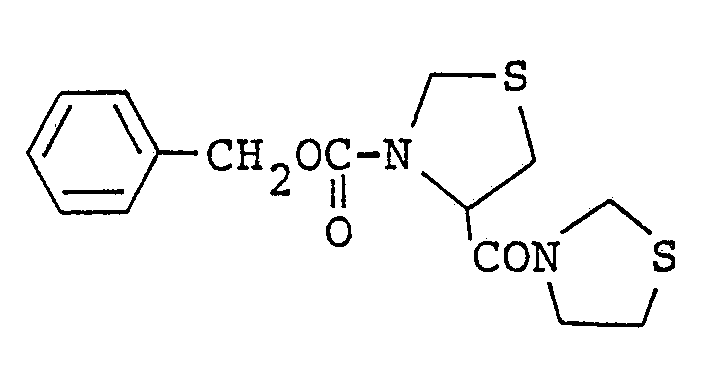
4. A pharmaceutical composition comprising a thiazolidine compound and claimed in any one of Claims 1 to 3.
5. A thiazolidine compound as claimed in any one of Claims 1 to 3 for use in the preparation of a medicament for the treatment of dementia or amnesia.
6. Any one of the thiazolidine compounds prepared in Examples 1 to 5.
Applications Claiming Priority (4)
| Application Number | Priority Date | Filing Date | Title |
|---|---|---|---|
| JP198380/87 | 1987-08-08 | ||
| JP19838087A JPH0670023B2 (en) | 1987-08-08 | 1987-08-08 | Thiazolidine derivative |
| JP63053224A JP2649237B2 (en) | 1988-03-07 | 1988-03-07 | Thiazolidine derivative |
| JP53224/88 | 1988-03-07 |
Publications (1)
| Publication Number | Publication Date |
|---|---|
| EP0303434A1 true EP0303434A1 (en) | 1989-02-15 |
Family
ID=26393941
Family Applications (1)
| Application Number | Title | Priority Date | Filing Date |
|---|---|---|---|
| EP88307334A Withdrawn EP0303434A1 (en) | 1987-08-08 | 1988-08-08 | Thiazolidine compounds |
Country Status (2)
| Country | Link |
|---|---|
| US (1) | US4857524A (en) |
| EP (1) | EP0303434A1 (en) |
Cited By (19)
| Publication number | Priority date | Publication date | Assignee | Title |
|---|---|---|---|---|
| EP0322765A3 (en) * | 1987-12-25 | 1989-12-20 | Kabushiki Kaisha Yakult Honsha | New thiazolidine derivatives, process for preparing same and anti-amnestic composition containing same |
| EP0419683A4 (en) * | 1989-04-13 | 1992-03-11 | Japan Tobacco Inc. | New amino acid derivatives having prolylendopeptidase inhibitor activity |
| EP0321956B1 (en) * | 1987-12-23 | 1992-12-02 | Zeria Pharmaceutical Co., Ltd. | Amino acid imide derivatives, usage thereof, and medicinal compositions containing the same |
| US5198450A (en) * | 1988-05-09 | 1993-03-30 | Zeria Pharmaceutical Co., Ltd. | Phenylalkanoylamine derivatives, process for preparing the same, and usage of the same |
| EP0536399A4 (en) * | 1990-06-07 | 1993-04-21 | Zeria Pharmaceutical Co., Ltd. | Novel arylalkanoylamine derivative and drug containing the same |
| EP0754454A4 (en) * | 1994-02-17 | 1998-08-05 | Zeria Pharm Co Ltd | CHOLINESTERASE ACTIVATOR |
| WO2004098591A2 (en) | 2003-05-05 | 2004-11-18 | Probiodrug Ag | Inhibitors of glutaminyl cyclase and their use in the treatment of neurological diseases |
| WO2005049027A2 (en) | 2003-11-03 | 2005-06-02 | Probiodrug Ag | Combinations useful for the treatment of neuronal disorders |
| WO2005075436A2 (en) | 2004-02-05 | 2005-08-18 | Probiodrug Ag | Novel inhibitors of glutaminyl cyclase |
| WO2008055945A1 (en) | 2006-11-09 | 2008-05-15 | Probiodrug Ag | 3-hydr0xy-1,5-dihydr0-pyrr0l-2-one derivatives as inhibitors of glutaminyl cyclase for the treatment of ulcer, cancer and other diseases |
| WO2008065141A1 (en) | 2006-11-30 | 2008-06-05 | Probiodrug Ag | Novel inhibitors of glutaminyl cyclase |
| WO2008104580A1 (en) | 2007-03-01 | 2008-09-04 | Probiodrug Ag | New use of glutaminyl cyclase inhibitors |
| WO2011029920A1 (en) | 2009-09-11 | 2011-03-17 | Probiodrug Ag | Heterocylcic derivatives as inhibitors of glutaminyl cyclase |
| WO2011107530A2 (en) | 2010-03-03 | 2011-09-09 | Probiodrug Ag | Novel inhibitors |
| WO2011110613A1 (en) | 2010-03-10 | 2011-09-15 | Probiodrug Ag | Heterocyclic inhibitors of glutaminyl cyclase (qc, ec 2.3.2.5) |
| WO2011131748A2 (en) | 2010-04-21 | 2011-10-27 | Probiodrug Ag | Novel inhibitors |
| WO2012123563A1 (en) | 2011-03-16 | 2012-09-20 | Probiodrug Ag | Benz imidazole derivatives as inhibitors of glutaminyl cyclase |
| EP2865670A1 (en) | 2007-04-18 | 2015-04-29 | Probiodrug AG | Thiourea derivatives as glutaminyl cyclase inhibitors |
| EP3461819A1 (en) | 2017-09-29 | 2019-04-03 | Probiodrug AG | Inhibitors of glutaminyl cyclase |
Families Citing this family (7)
| Publication number | Priority date | Publication date | Assignee | Title |
|---|---|---|---|---|
| US5073549A (en) * | 1990-03-22 | 1991-12-17 | Bristol-Myers Squibb Company | BU-4164E - A and B, prolyl endopeptidase inhibitors and their methods of use |
| US4999349A (en) * | 1990-03-22 | 1991-03-12 | Bristol-Myers Squibb Co. | BU-4164E - A and B, prolyl endopeptidase inhibitors |
| US5506256A (en) * | 1990-07-27 | 1996-04-09 | Yoshitomi Pharmaceutical Industries, Ltd. | Proline derivatives possessing prolyl endopeptidase-inhibitory activity |
| DE4206353A1 (en) * | 1992-02-29 | 1993-09-02 | Basf Ag | CYANOOXIMETHER, METHOD FOR THE PRODUCTION THEREOF, MEANS CONTAINING IT AND THE USE THEREOF |
| JP3810097B2 (en) * | 1993-01-15 | 2006-08-16 | 明治製菓株式会社 | Pyrrolidin-2-ylcarbonyl heterocyclic compound derivative |
| US6218424B1 (en) * | 1996-09-25 | 2001-04-17 | Gpi Nil Holdings, Inc. | Heterocyclic ketone and thioester compounds and uses |
| US6121311A (en) * | 1999-04-28 | 2000-09-19 | Japan Tobacco Inc. | Method for treating cocainism |
Citations (2)
| Publication number | Priority date | Publication date | Assignee | Title |
|---|---|---|---|---|
| DE2508934A1 (en) * | 1974-03-04 | 1975-09-11 | Byk Gulden Lomberg Chem Fab | Xanthinoxidase-inhibiotory 5-amino-4-formylcarbamoyl pyrrazoles - prepd. from N'-(2-cyano-3-formylamino-hydroxy-allylidene)nicotinic hydrazide |
| EP0053029A1 (en) * | 1980-11-24 | 1982-06-02 | Peninsula Laboratories Incorporated | Non enkephalin-like peptides, their production, compositions containing them, and their medical and veterinary use |
Family Cites Families (1)
| Publication number | Priority date | Publication date | Assignee | Title |
|---|---|---|---|---|
| AR241501A1 (en) * | 1982-09-01 | 1992-07-31 | Montedison Spa | Compounds having an antidote activity for the protection of cultivations of agrarian interest from the action of nonselective herbicides |
-
1988
- 1988-08-03 US US07/227,864 patent/US4857524A/en not_active Expired - Fee Related
- 1988-08-08 EP EP88307334A patent/EP0303434A1/en not_active Withdrawn
Patent Citations (2)
| Publication number | Priority date | Publication date | Assignee | Title |
|---|---|---|---|---|
| DE2508934A1 (en) * | 1974-03-04 | 1975-09-11 | Byk Gulden Lomberg Chem Fab | Xanthinoxidase-inhibiotory 5-amino-4-formylcarbamoyl pyrrazoles - prepd. from N'-(2-cyano-3-formylamino-hydroxy-allylidene)nicotinic hydrazide |
| EP0053029A1 (en) * | 1980-11-24 | 1982-06-02 | Peninsula Laboratories Incorporated | Non enkephalin-like peptides, their production, compositions containing them, and their medical and veterinary use |
Non-Patent Citations (3)
| Title |
|---|
| CHEMICAL ABSTRACTS, Vol. 86, No. 17, April 25, 1977, Columbus, Ohio, USA IWASE, HIROSHI et al.: "On the Derivatives for the Ultramicrodetermination of Amino Acids by Mass Fragmentography." page 208, column 2, Abstract No. 117 082v & Anal. Biochem. 1977, 78(2), 340-50 * |
| CHEMICAL ABSTRACTS, Vol. 95, No. 19, November 9, 1981, Columbus, Ohio, USA Dainippon Pharmaceutical Co., Ltd. "N-(4-Thiazolidinyl) Carbonyl Amino Acid Derivatives." page 741, column 2, Abstract No. 169 173f & Jpn. Kokai Tokkyo Koho 81 49, 373 * |
| CHEMICAL ABSTRACTS, Vol. 97, No. 23, December 6, 1982, Columbus, Ohio, USA SANKYO CO., LTD. "Aminoquinazoline Derivatives" page 581, column 1, Abstract No. 198 218w & Jpn. Kokai Tokkyo Koho JP 82 91, 987 * |
Cited By (24)
| Publication number | Priority date | Publication date | Assignee | Title |
|---|---|---|---|---|
| EP0321956B1 (en) * | 1987-12-23 | 1992-12-02 | Zeria Pharmaceutical Co., Ltd. | Amino acid imide derivatives, usage thereof, and medicinal compositions containing the same |
| US5411976A (en) * | 1987-12-25 | 1995-05-02 | Kabushiki Kaisha Yakult Nonsha | New thiazolidine derivatives, process for preparing same and anti-amnestic composition containing same |
| EP0322765A3 (en) * | 1987-12-25 | 1989-12-20 | Kabushiki Kaisha Yakult Honsha | New thiazolidine derivatives, process for preparing same and anti-amnestic composition containing same |
| US5198450A (en) * | 1988-05-09 | 1993-03-30 | Zeria Pharmaceutical Co., Ltd. | Phenylalkanoylamine derivatives, process for preparing the same, and usage of the same |
| EP0419683A4 (en) * | 1989-04-13 | 1992-03-11 | Japan Tobacco Inc. | New amino acid derivatives having prolylendopeptidase inhibitor activity |
| US5118811A (en) * | 1989-04-13 | 1992-06-02 | Japan Tobacco Inc. | Amino acid derivatives possessing prolyl endopeptidase-inhibitory activities |
| US5407950A (en) * | 1990-06-07 | 1995-04-18 | Zeria Pharmaceutical Co., Ltd. | Arylalkanoylamine derivative and drug containing the same |
| EP0536399A4 (en) * | 1990-06-07 | 1993-04-21 | Zeria Pharmaceutical Co., Ltd. | Novel arylalkanoylamine derivative and drug containing the same |
| EP0754454A4 (en) * | 1994-02-17 | 1998-08-05 | Zeria Pharm Co Ltd | CHOLINESTERASE ACTIVATOR |
| WO2004098591A2 (en) | 2003-05-05 | 2004-11-18 | Probiodrug Ag | Inhibitors of glutaminyl cyclase and their use in the treatment of neurological diseases |
| EP2338490A2 (en) | 2003-11-03 | 2011-06-29 | Probiodrug AG | Combinations Useful for the Treatment of Neuronal Disorders |
| WO2005049027A2 (en) | 2003-11-03 | 2005-06-02 | Probiodrug Ag | Combinations useful for the treatment of neuronal disorders |
| WO2005075436A2 (en) | 2004-02-05 | 2005-08-18 | Probiodrug Ag | Novel inhibitors of glutaminyl cyclase |
| WO2008055945A1 (en) | 2006-11-09 | 2008-05-15 | Probiodrug Ag | 3-hydr0xy-1,5-dihydr0-pyrr0l-2-one derivatives as inhibitors of glutaminyl cyclase for the treatment of ulcer, cancer and other diseases |
| WO2008065141A1 (en) | 2006-11-30 | 2008-06-05 | Probiodrug Ag | Novel inhibitors of glutaminyl cyclase |
| WO2008104580A1 (en) | 2007-03-01 | 2008-09-04 | Probiodrug Ag | New use of glutaminyl cyclase inhibitors |
| EP2481408A2 (en) | 2007-03-01 | 2012-08-01 | Probiodrug AG | New use of glutaminyl cyclase inhibitors |
| EP2865670A1 (en) | 2007-04-18 | 2015-04-29 | Probiodrug AG | Thiourea derivatives as glutaminyl cyclase inhibitors |
| WO2011029920A1 (en) | 2009-09-11 | 2011-03-17 | Probiodrug Ag | Heterocylcic derivatives as inhibitors of glutaminyl cyclase |
| WO2011107530A2 (en) | 2010-03-03 | 2011-09-09 | Probiodrug Ag | Novel inhibitors |
| WO2011110613A1 (en) | 2010-03-10 | 2011-09-15 | Probiodrug Ag | Heterocyclic inhibitors of glutaminyl cyclase (qc, ec 2.3.2.5) |
| WO2011131748A2 (en) | 2010-04-21 | 2011-10-27 | Probiodrug Ag | Novel inhibitors |
| WO2012123563A1 (en) | 2011-03-16 | 2012-09-20 | Probiodrug Ag | Benz imidazole derivatives as inhibitors of glutaminyl cyclase |
| EP3461819A1 (en) | 2017-09-29 | 2019-04-03 | Probiodrug AG | Inhibitors of glutaminyl cyclase |
Also Published As
| Publication number | Publication date |
|---|---|
| US4857524A (en) | 1989-08-15 |
Similar Documents
| Publication | Publication Date | Title |
|---|---|---|
| US4857524A (en) | Thiazolidine compounds and therapeutic method | |
| AU616824B2 (en) | Condensed benzene derivatives for use in treatment of cerebral disorders | |
| USH725H (en) | Ureido amino and imino acids, compositions and methods for use | |
| US4636567A (en) | 4-substituted-2-azetidinone compound | |
| US4845079A (en) | Peptidylaminodiols | |
| US4350704A (en) | Substituted acyl derivatives of octahydro-1H-indole-2-carboxylic acids | |
| US4711958A (en) | Morpholine containing amino acid derivatives | |
| IE52663B1 (en) | Substituted acyl derivatives of octahydro-1h-indole-2-carboxylic acids | |
| US4681886A (en) | Substituted 4-phenoxy or 4-phenylthio prolines | |
| US4656269A (en) | Histidine derivatives | |
| US4841067A (en) | Novel amino acid derivatives | |
| US5442044A (en) | Orally active renin inhibitors | |
| US4820691A (en) | Amino acid 1,2-diketo derivatives as renin inhibitors | |
| US4857650A (en) | Novel renin inhibitory amino acid derivatives | |
| KR930007431B1 (en) | Oral Active Lenin Inhibitor | |
| US4711884A (en) | Thiazine and thiazepine containing compounds | |
| US4870183A (en) | Novel amino acid derivatives | |
| US5140011A (en) | Amino acid derivatives which have renin inhibiting activity | |
| US4512988A (en) | Acylamino oxo or hydroxy substituted alkylamino thiazines and thiazepines | |
| US5643879A (en) | Amino-substituted heterocycles as renin inhibitors | |
| US4568489A (en) | N-Acyl-γ-glutamyl imino and amino acids and esters | |
| CH659475A5 (en) | SUBSTITUTED PEPTIDE COMPOUNDS AND PHARMACEUTICAL COMPOSITIONS CONTAINING THE SAME. | |
| US5219851A (en) | Tetrahydroisoquinoline-type renin inhibiting peptides | |
| US4692455A (en) | Certain acyclic, alicyclic, aromatic or heterocyclic derivatives of 3-benzoylamino-2-oxo- butyl-amino-carbonyl-oxy-3-propanoic acids, esters thereof, pharmaceutical compositions containing same and their enkephalinase inhibiting properties | |
| US4678800A (en) | Gamma-r-glutamoyl derivatives |
Legal Events
| Date | Code | Title | Description |
|---|---|---|---|
| PUAI | Public reference made under article 153(3) epc to a published international application that has entered the european phase |
Free format text: ORIGINAL CODE: 0009012 |
|
| AK | Designated contracting states |
Kind code of ref document: A1 Designated state(s): CH DE FR GB IT LI NL SE |
|
| 17P | Request for examination filed |
Effective date: 19890630 |
|
| 17Q | First examination report despatched |
Effective date: 19910403 |
|
| STAA | Information on the status of an ep patent application or granted ep patent |
Free format text: STATUS: THE APPLICATION IS DEEMED TO BE WITHDRAWN |
|
| 18D | Application deemed to be withdrawn |
Effective date: 19920128 |