EP0302416A1 - 2-nitroimidazole derivatives useful as radiosensitizers for hypoxic tumor cells - Google Patents
2-nitroimidazole derivatives useful as radiosensitizers for hypoxic tumor cells Download PDFInfo
- Publication number
- EP0302416A1 EP0302416A1 EP88112377A EP88112377A EP0302416A1 EP 0302416 A1 EP0302416 A1 EP 0302416A1 EP 88112377 A EP88112377 A EP 88112377A EP 88112377 A EP88112377 A EP 88112377A EP 0302416 A1 EP0302416 A1 EP 0302416A1
- Authority
- EP
- European Patent Office
- Prior art keywords
- nitro
- methyl
- ethanol
- imidazol
- carbon atoms
- Prior art date
- Legal status (The legal status is an assumption and is not a legal conclusion. Google has not performed a legal analysis and makes no representation as to the accuracy of the status listed.)
- Granted
Links
- 0 C*(C)NC=CN Chemical compound C*(C)NC=CN 0.000 description 5
Classifications
-
- C—CHEMISTRY; METALLURGY
- C07—ORGANIC CHEMISTRY
- C07D—HETEROCYCLIC COMPOUNDS
- C07D403/00—Heterocyclic compounds containing two or more hetero rings, having nitrogen atoms as the only ring hetero atoms, not provided for by group C07D401/00
- C07D403/02—Heterocyclic compounds containing two or more hetero rings, having nitrogen atoms as the only ring hetero atoms, not provided for by group C07D401/00 containing two hetero rings
- C07D403/06—Heterocyclic compounds containing two or more hetero rings, having nitrogen atoms as the only ring hetero atoms, not provided for by group C07D401/00 containing two hetero rings linked by a carbon chain containing only aliphatic carbon atoms
-
- A—HUMAN NECESSITIES
- A61—MEDICAL OR VETERINARY SCIENCE; HYGIENE
- A61P—SPECIFIC THERAPEUTIC ACTIVITY OF CHEMICAL COMPOUNDS OR MEDICINAL PREPARATIONS
- A61P35/00—Antineoplastic agents
-
- A—HUMAN NECESSITIES
- A61—MEDICAL OR VETERINARY SCIENCE; HYGIENE
- A61P—SPECIFIC THERAPEUTIC ACTIVITY OF CHEMICAL COMPOUNDS OR MEDICINAL PREPARATIONS
- A61P43/00—Drugs for specific purposes, not provided for in groups A61P1/00-A61P41/00
-
- C—CHEMISTRY; METALLURGY
- C07—ORGANIC CHEMISTRY
- C07D—HETEROCYCLIC COMPOUNDS
- C07D233/00—Heterocyclic compounds containing 1,3-diazole or hydrogenated 1,3-diazole rings, not condensed with other rings
- C07D233/54—Heterocyclic compounds containing 1,3-diazole or hydrogenated 1,3-diazole rings, not condensed with other rings having two double bonds between ring members or between ring members and non-ring members
- C07D233/66—Heterocyclic compounds containing 1,3-diazole or hydrogenated 1,3-diazole rings, not condensed with other rings having two double bonds between ring members or between ring members and non-ring members with hetero atoms or with carbon atoms having three bonds to hetero atoms with at the most one bond to halogen, e.g. ester or nitrile radicals, directly attached to ring carbon atoms
- C07D233/91—Nitro radicals
-
- C—CHEMISTRY; METALLURGY
- C07—ORGANIC CHEMISTRY
- C07D—HETEROCYCLIC COMPOUNDS
- C07D471/00—Heterocyclic compounds containing nitrogen atoms as the only ring hetero atoms in the condensed system, at least one ring being a six-membered ring with one nitrogen atom, not provided for by groups C07D451/00 - C07D463/00
- C07D471/02—Heterocyclic compounds containing nitrogen atoms as the only ring hetero atoms in the condensed system, at least one ring being a six-membered ring with one nitrogen atom, not provided for by groups C07D451/00 - C07D463/00 in which the condensed system contains two hetero rings
- C07D471/04—Ortho-condensed systems
-
- C—CHEMISTRY; METALLURGY
- C07—ORGANIC CHEMISTRY
- C07D—HETEROCYCLIC COMPOUNDS
- C07D487/00—Heterocyclic compounds containing nitrogen atoms as the only ring hetero atoms in the condensed system, not provided for by groups C07D451/00 - C07D477/00
- C07D487/02—Heterocyclic compounds containing nitrogen atoms as the only ring hetero atoms in the condensed system, not provided for by groups C07D451/00 - C07D477/00 in which the condensed system contains two hetero rings
- C07D487/04—Ortho-condensed systems
-
- C—CHEMISTRY; METALLURGY
- C07—ORGANIC CHEMISTRY
- C07D—HETEROCYCLIC COMPOUNDS
- C07D491/00—Heterocyclic compounds containing in the condensed ring system both one or more rings having oxygen atoms as the only ring hetero atoms and one or more rings having nitrogen atoms as the only ring hetero atoms, not provided for by groups C07D451/00 - C07D459/00, C07D463/00, C07D477/00 or C07D489/00
- C07D491/02—Heterocyclic compounds containing in the condensed ring system both one or more rings having oxygen atoms as the only ring hetero atoms and one or more rings having nitrogen atoms as the only ring hetero atoms, not provided for by groups C07D451/00 - C07D459/00, C07D463/00, C07D477/00 or C07D489/00 in which the condensed system contains two hetero rings
- C07D491/04—Ortho-condensed systems
Definitions
- the present invention relates to chemical compounds having pharmacological activity. More particularly, this invention concerns certain ⁇ -[(2-nitro-1H-imidazol-1-yl)methyl]-aziridinylethanols and the corresponding aziridine ring opened analogs and their use as radiation sensitizers for radiation therapy of tumors.
- hypoxic cells in tumor tissue has been demonstrated repeatedly in animal tumors and their presence results in resistance to radiation, which makes cures with a single dose of X-rays difficult or impossible.
- the resistance of hypoxic cells to destruction by X-rays is also a serious limitation to attempts to increase the therapeutic ratio between tumor and normal tissue damage in radiation therapy. Tumors containing hypoxic cells which are able to reoxygenate are more susceptible to fractionated radiotherapy, and this probably accounts for the reason cures are achieved at the present time.
- a third solution is the use of chemical substances which simulate oxygen in their ability to radiosen- sitize hypoxic tumor cells. Because these compounds distribute throughout the body, it is important that they concentrate more heavily in hypoxic tumor cells in order for them to be effective and prevent unwanted radiation damage to healthy tissue.
- misonidazole ⁇ -(methoxymethyl)-2-nitro-1H-imidazole-1--ethanol
- misonidazole ⁇ -(methoxymethyl)-2-nitro-1H-imidazole-1--ethanol
- metronidazole and misonidazole are effective in vivo.
- both compounds exhibit serious adverse CNS side effects when administered orally to mice. They exhibit peripheral neuropathy effects and convulsions in mice and their CNS toxicity is a limiting factor for their use in humans.
- the activity of these compounds as radiosensitizers has led to interest in the class of substituted 2-nitro-1 H-imidazole-1-ethanol compounds and spurred the search for compounds of this class having enhanced activity and diminished undesirable CNS side effects.
- United States Patent 4,282,232 to Agrawal discloses certain N-oxides of nitrogen-heterocyclically substituted 2-nitro-1-ethyl-1_H-imidazoles useful as radiosensitizing agents.
- United States Patent 4,581,368 disclose certain 2-nitro-1 H-imidazolyl-l-[ ⁇ -(1-aziridinyl)-alkanols] useful as radiosensitizing agents.
- the present invention provides compounds having the formula I: where R, is hydrogen, alkanoyl of from two to five carbon atoms, or benzoyl.
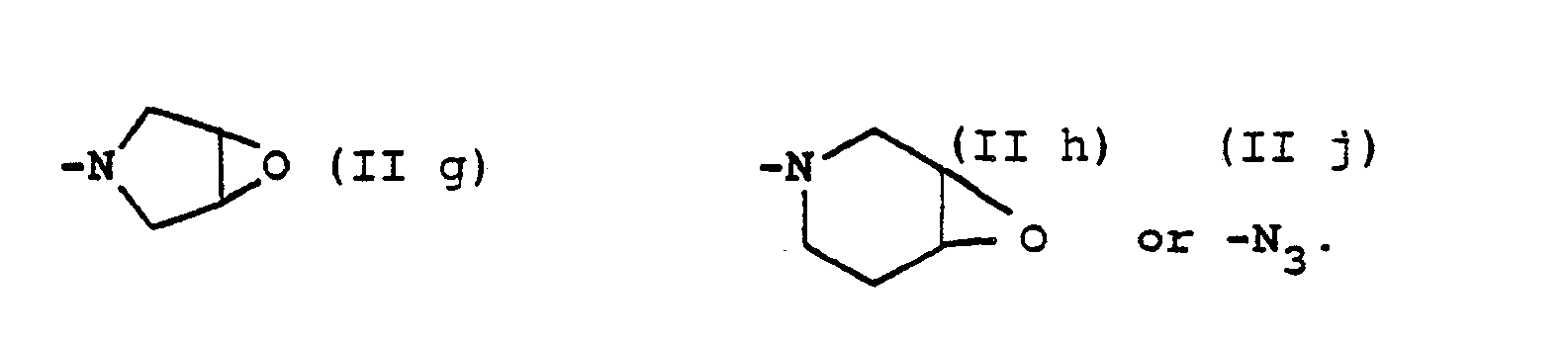
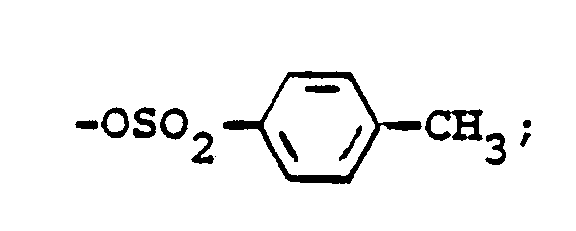
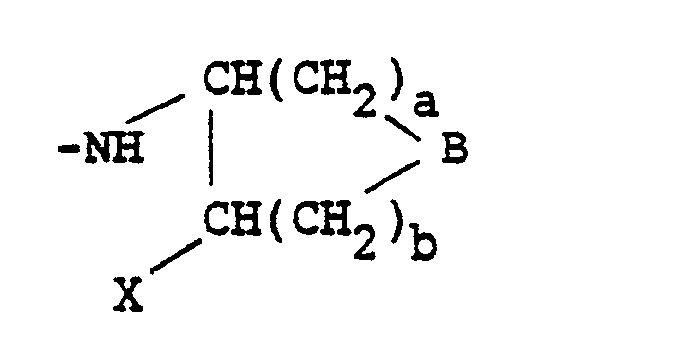
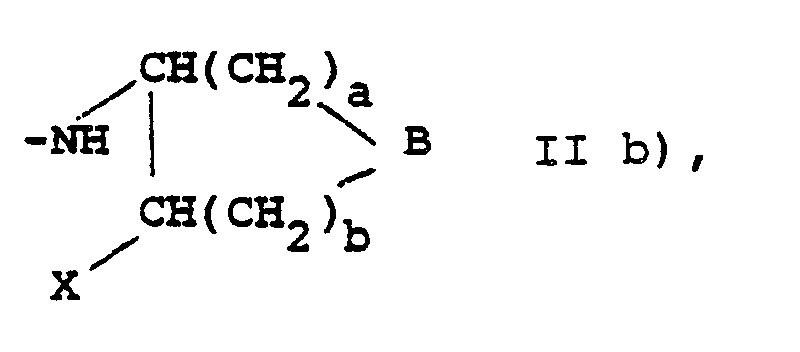
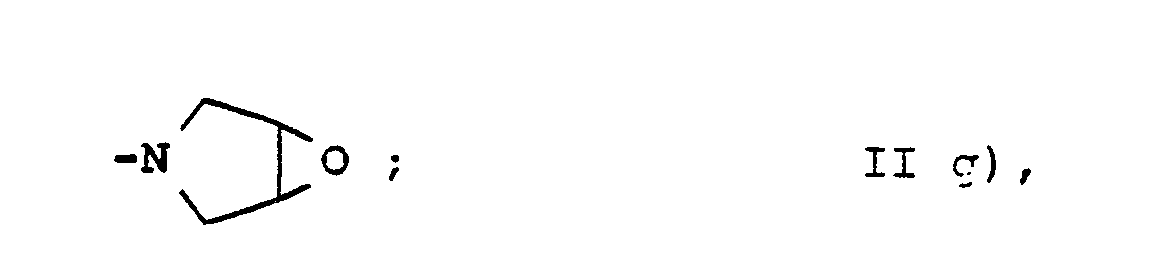
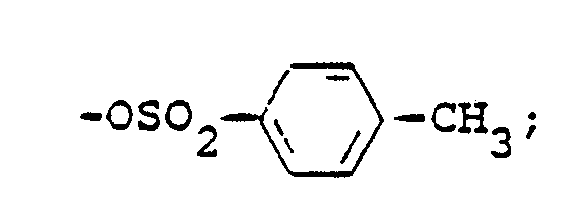
- the substituent group A is selected from a group of the formula II a or a corresponding ariridine-ring opened compound of the formula II b or of the formulae II c to II j; where a is zero, one, or two and b is one, two, three, or four and B is >CHR 2 , >NR 2 , or >0, and X is OH, Cl, Br, -OSO 2 CH 3 , or -OSO 2 - ⁇ -CH 3 .
- the compounds I of this invention vary in the nature of the substituent group attached to the pendant ethanol group of the parent molecular moiety, and include certain aziridine groups, the corresponding aziridine-ring opened groups, as well as other nitrogen-containing ring groups as defined above.
- the compounds of this invention possess at least one asymmetric center at the carbon atom in the (-(substituted)methyl)ethanol side-chain bearing the hydroxyl function, and may contain one or more additional asymmetric centers in other portions of the molecule.
- the present invention contemplates all stereoisomers of the compounds described herein.
- alkyl means a saturated hydrocarbon group derived from an alkane by removal of a single hydrogen atom.
- alkoxyl denotes an alkyl group attached to the remainder of the molecule through an oxygen atom.
- alkanoyl means an alkyl group, as previously defined, attached to the remainder of the molecule through a carbonyl group.
- Carboxyalkyl is meant an alkyl group, as previously defined, attached to an oxygen atom, and thence through a carbonyl group to the remainder of the molecule.
- carboxyphenyl denotes a phenyl or substituted phenyl group attached through an oxygen atom and thence through a carbonyl group to the remainder of the molecule.
- the compounds of the present invention generally may be synthesized by the sequence of chemical steps outlined in Reaction Sequence 1 or Reaction Sequence 2.
- Reaction Sequence 1 the compounds of this invention where R, is hydroxy, 5, are made by reacting 2-nitro-1-oxarinylmethyl-1H-imidazole, 3, with the desired aziridine compound, 4. This reaction is run in an alcohol as solvent, typically methanol, ethanol, isopropanol, and the like at reflux temperatures.
- the starting 2-nitro-1-oxarinylmethyl-1H-imidazole 3 is prepared by reacting the known and commercially available 2-nitroimidazole, 1, with 3-chloro-1,2-epoxypropane to produce a-(chloromethyl)-2-nitro-1 H-imidazole-1-ethanol, 2. This reaction is typically carried out neat, employing the 3-chloro-1,2-epoxypropane as solvent.
- the chloromethyl(ethanol) compound 2 is then converted to 2-nitro-1-oxarinylmethyl-1H-imidazole, 3 by the action of sodium hydroxide. This two-step conversion is reported by A. G. Beaman et al. in Antimicrobial Agents and Chemotherapy, (1967) 520 ff.
- the 2-nitro-1-oxarinylmethyl-1H-imidazole, 3, is then reacted with the desired aziridine compound, 4, to produce the compounds of this invention where R, is hydroxy, 5.
- this reaction is generally carried out under reflux in an alcohol such as methanol, ethanol, propanol, isopropanol, and the like.
- the aziridine compounds, 5, may be converted, if desired, into the corresponding aziridine-ring opened compounds, 6, by solvolysis, or reaction with the appropriate acid, such as hydrochloric, hydrobromic, sulfuric, methanesulfonic, p-toluenesulfonic, and the like.
- the compounds of the present invention where R 1 is hydroxy, 5, may be made by an alternative route in which the starting aziridines, 4, are first reacted with 3-chloro-1,2-epoxypropane to produce the ⁇ -(aziridinyl)-2-chloroethanol compounds, 7.
- This reaction is typically carried out by heating the reaction mixture under reflux in an alcoholic solvent such as methanol, ethanol, isopropyl alcohol and the like.
- the a-(aziridinyl)-2-chloroethanol compounds, 7, are ring-closed to the corresponding aziridinyloxirane compounds, 8, by the action of sodium hydroxide.
- 2-nitro-1H-imidazole is first converted to the anion (at position 1) by reaction with sodium hydride in a polar aprotic solvent such as tetrahydrofuran or dimethylformamide.
- a polar aprotic solvent such as tetrahydrofuran or dimethylformamide.
- the aziridinyloxirane, 8 is added and the reaction carried out at a temperature of between about room temperature and 120 C to produce the product, 5.
- the aziridinyl compounds where R 1 is hydroxy, 5, are converted to compounds of this invention where R 1 is alkylcarbonyl or benzoyl by reaction with the appropriate acid anhydride.
- This conversion is typically effected by reacting the aziridine, 5, with the desired anhydride in pyridine or with the anhydride in a mixture of chloroform and dimethylformamide, containing an acid scavenger such as triethylamine.
- Reaction temperatures may ranged between about 0°C and 50 C. The reaction is carried out for a period sufficient to effect essentially complete conversion, as indicated, for example, by thin layer chromatography.
- the starting aziridine compounds are known or commercially available. If not previously known, the compounds are prepared by methods well known to practitioners of organic synthetic chemistry.
- 1-azabicyclo[3.1.0]hexane is reported by P. Fanta in J. Org. Chem., 22: 1441 (1957).
- 1-Azabicyclo[4.1.0]heptane is reported. by G. Swift et al. in J. Org. Chem., 32: 511 (1967).
- 1-Azabicyclo[5.1.0]octane is reported by P. Talukdar, et al., J. Org. Chem., 24: 555 (1959).
- 1-Azabicyclo[6.1.0]nonane is reported by D. Kushq'Kar et al. in J. Org. Chem., 82: 4927 (1960).
- the compounds of the present invention form acid addition salts, and either the free base form of the compounds or a corresponding salt of a pharmaceutically acceptable acid may be used in the therapeutic method of this invention.
- Suitable acids useful for this purposes form a class well recognized by the art and include by way of example such acids as hydrochloric, hydrobromic, hydroiodic, sulfuric, nitric, phosphoric, acetic, benzoic, citric, maleic, tartaric, succinic, gluconic, glucuronic, ascorbic, sulfamic, oxalic, pamoic, methanesulfonic, ethanesulfonic, hydroxymethanesulfonic, 1-, and 2-hydroxyethane-sulfonic, benzenesulfonic, and the like, or any mixtures thereof.
- the salts are produced by contacting the free base form of the compounds of this invention with an equivalent amount of the desired acid in a suitable solvent such as water, an alcohol, or aqueous alcohol. The solvent is removed to yield the salt which may be used as such or further purified by recrystallization.
- a suitable solvent such as water, an alcohol, or aqueous alcohol.
- the salt forms of the compounds of this invention may differ from the free base forms in such physical properties as melting point and solubility in polar solvents. However, the compounds and the salts are otherwise considered equivalent for the purposes of this invention.
- the ring-opened compounds are produced by contacting the free base form of the compounds of this invention with a two to threefold excess of the desired acid in a suitable solvent such as alcohol. The solvent is removed to yield the desired ring-opened compound which is further purified by recrystallization.
- the pharmacological activity of the compounds of the present invention as radiosensitizers was evaluated by measuring the sensitizer enhancement ratio (SER) of the compounds.
- the SER value for a test compound is the ratio of cell kill under X-irradiation in the presence of the drug to the cell kill due to X-irradiation alone.
- An SER value of 1.6 or greater is considered indicative of significant activity of the compound as a radiosensitizer.
- test compounds are first subjected to a cytotoxicity test to determine the maximum dose at which no cell kill is observed.
- This cytotoxicity test is carried out under both hypoxic (i.e. 95% nitrogen, 5% carbon dioxide) and normal oxic conditions.
- hypoxic i.e. 95% nitrogen, 5% carbon dioxide
- normal oxic normal oxic conditions.
- the maximum nontoxic dose thus determined is used in further tests and indicates that any enhanced cytotoxicity over radiation alone results from the radiosensitizing activity of the compound.
- SER sensitizer enhancement ratio
- the SER values for several representative compounds of the present invention were determined and are presented in Table 1.
- the SER for the known radiosensitizer, misonidazole also appears in Table 1 for comparative purposes.
- the compounds of the present invention may be administered to a patient either orally or intravenously.
- the preferred route of administration is intravenous administration.
- the compounds are administered prior to the ' radiation therapy treatment, generally in doses ranging between 10 mg/m 2 and 3000 mg/m 2 .
- inert, pharmaceutically acceptable carriers can be either solid or liquid.
- Solid form preparations include powders, tablets, dispersible granules, capsules, and cachets.
- a solid carrier can be one or more substances which may also act as diluents, flavoring agents, solubilizers, lubricants, suspending agents, binders, or tablet disintegrating agents; it can also be an encapsulating material.
- the carrier is a finely divided solid which is in a mixture with the finely divided active component.
- the active compound is mixed with the carrier having the necessary binding properties in suitable proportions and compacted in the shape and size desired.
- Powders and tablets preferably contain between about 5 to about 70% by weight of the active ingredient.
- Suitable carriers are magnesium carbonate, magnesium stearate, talc, lactose, sugar, pectin, dextrin, starch, tragacanth, methyl cellulose, sodium carboxymethyl cellulose, a low-melting wax, cocoa butter, and the like.
- preparation is intended to include the formulation of the active compound with encapsulating material as a carrier providing a capsule in which the active component (with or without other carriers) is surrounded by a carrier, which is thus in association with it.
- cachets are also included.
- Tablets, powders, cachets, and capsules can be used as solid dosage forms suitable for oral administration.
- Liquid form preparations include solutions suitable for oral or parenteral administration, or suspensions, and emulsions suitable for oral administration.
- Sterile water solutions of the active component or sterile solutions of the active component in solvents comprising water, ethanol, or propylene glycol may be mentioned as examples of liquid preparations suitable for parenteral administration.
- Sterile solutions may be prepared by dissolving the active component in the desired solvent system, and then passing the resulting solution through a membrane filter to sterilize it or, alternatively, by dissolving the sterile compound in a previously sterilized solvent under sterile conditions.
- Aqueous solutions for oral administration can be prepared by dissolving the active compound in water and adding suitable flavorants, coloring agents, stabilizers, and thickening agents as desired.
- Aqueous suspensions for oral use can be made by dispersing the finely divided active component in water together with a viscous material such as natural or synthetic gums, resins, methyl cellulose, sodium carboxymethyl cellulose, and other suspending agents known to the pharmaceutical formulation art.
- the pharmaceutical preparation is in unit dosage form.
- the preparation is divided into unit doses containing appropriate quantities of the active component.
- the unit dosage form can be a packaged preparation, the package containing discrete quantities of the preparation, for example, packeted tablets, capsules, and powders in vials or ampoules.
- the unit dosage form can also be a capsule, cachet, or tablet itself, or it can be the appropriate number of any of these packaged forms.
Landscapes
- Chemical & Material Sciences (AREA)
- Organic Chemistry (AREA)
- Health & Medical Sciences (AREA)
- Chemical Kinetics & Catalysis (AREA)
- Life Sciences & Earth Sciences (AREA)
- General Chemical & Material Sciences (AREA)
- Medicinal Chemistry (AREA)
- Nuclear Medicine, Radiotherapy & Molecular Imaging (AREA)
- Veterinary Medicine (AREA)
- Pharmacology & Pharmacy (AREA)
- Public Health (AREA)
- Animal Behavior & Ethology (AREA)
- General Health & Medical Sciences (AREA)
- Engineering & Computer Science (AREA)
- Bioinformatics & Cheminformatics (AREA)
- Pharmaceuticals Containing Other Organic And Inorganic Compounds (AREA)
- Nitrogen Condensed Heterocyclic Rings (AREA)
- Plural Heterocyclic Compounds (AREA)
Abstract
Description
- The present invention relates to chemical compounds having pharmacological activity. More particularly, this invention concerns certain α-[(2-nitro-1H-imidazol-1-yl)methyl]-aziridinylethanols and the corresponding aziridine ring opened analogs and their use as radiation sensitizers for radiation therapy of tumors.
- One of the most serious problems encountered during X-ray radiotherapy of tumors is the relative resistance of hypoxic tumor cells to destruction. This resistance to radiotherapy is directly related to the lack of oxygen in these cells, and doses of X-ray have to be about three times higher to kill a given proportion of hypoxic cells than of well-oxygenated cells. Oxygen is the main radiosensitizer during X-ray radiation therapy.
- The presence of hypoxic cells in tumor tissue has been demonstrated repeatedly in animal tumors and their presence results in resistance to radiation, which makes cures with a single dose of X-rays difficult or impossible. (See G. E. Adams et al., Chemotherapy, Vol. 7, PP 187-206, Plenum Press, New York, 1976). The resistance of hypoxic cells to destruction by X-rays is also a serious limitation to attempts to increase the therapeutic ratio between tumor and normal tissue damage in radiation therapy. Tumors containing hypoxic cells which are able to reoxygenate are more susceptible to fractionated radiotherapy, and this probably accounts for the reason cures are achieved at the present time.
- To overcome the problem of the resistance of hypoxic cells to radiation therapy, patients have been irradiated in hyperbaric oxygen chambers. Although much experience has been gathered with this method, it is cumbersome and slow to use. The shut down of blood vessels is also a serious problem associated with this method.
- Another solution to the problem has been the use of fast neutron or negative π meson radiation, rather than X-rays. Although neutron radiation therapy is quite effective in treating some types of tumors, the method is very expensive and beyond the technical capability of most hospitals.
- A third solution is the use of chemical substances which simulate oxygen in their ability to radiosen- sitize hypoxic tumor cells. Because these compounds distribute throughout the body, it is important that they concentrate more heavily in hypoxic tumor cells in order for them to be effective and prevent unwanted radiation damage to healthy tissue.
- In 1963, Adams et al. (Biophysic. Res. Comm., 12: 473 (1963)) proposed that the ability of compounds to sensitize hypoxic bacterial cells is directly related to their electron affinity. This idea has been generally verified and has aided the search for more active compounds.
- In 1973, J. L. Foster and R. L. Wilson (Brit. J. Radiol., 46: 234 (1973)) discovered the radiosensitizing action of the antiprotozoal drug metronidazole (2-methyl-5-nitro-1_H-imidazole-1-ethanol). Metronidazole is active both in vitro and in vivo in animals as a radiosensitizer.
- Another antiprotozoal agent, misonidazole (α-(methoxymethyl)-2-nitro-1H-imidazole-1--ethanol), has also recently proven to be of value as a radiosensitizer for hypoxic tumor cells (J. D. Asquith, et al., Rad. Res., 60: 108 (1974)).
- Both metronidazole and misonidazole are effective in vivo. However, both compounds exhibit serious adverse CNS side effects when administered orally to mice. They exhibit peripheral neuropathy effects and convulsions in mice and their CNS toxicity is a limiting factor for their use in humans. Nevertheless, the activity of these compounds as radiosensitizers has led to interest in the class of substituted 2-nitro-1 H-imidazole-1-ethanol compounds and spurred the search for compounds of this class having enhanced activity and diminished undesirable CNS side effects.
- United States Patent 4,282,232 to Agrawal discloses certain N-oxides of nitrogen-heterocyclically substituted 2-nitro-1-ethyl-1_H-imidazoles useful as radiosensitizing agents.
- United States Patent 4,581,368 (and its division, United States Patent 4,596,817) disclose certain 2-nitro-1 H-imidazolyl-l-[Ω-(1-aziridinyl)-alkanols] useful as radiosensitizing agents.
- In its broadest chemical compound aspect, the present invention provides compounds having the formula I:


- R2 is selected from hydrogen; alkyl of from one to four carbon atoms; phenyl; phenyl substituted with halogen, hydroxy, alkyl of from one to four carbon atoms, or alkoxyl of from one to four carbon atoms; alkanoyl of from two to five carbon atoms; carboxyalkyl, in which the alkyl group contains from one to four carbon atoms; carboxybenzyl; or carboxyphenyl, in which the phenyl group is unsubstituted or is substituted with halogen, hydroxy, alkyl of from one to four carbon atoms, or alkoxy of from one to four carbon atoms, and
- R3 is hydrogen; halogen; alkyl of from one to four carbon atoms; alkoxyl of from one to four carbon atoms; or trifluoromethyl.
- The compounds I of this invention vary in the nature of the substituent group attached to the pendant ethanol group of the parent molecular moiety, and include certain aziridine groups, the corresponding aziridine-ring opened groups, as well as other nitrogen-containing ring groups as defined above.
- The compounds of this invention possess at least one asymmetric center at the carbon atom in the (-(substituted)methyl)ethanol side-chain bearing the hydroxyl function, and may contain one or more additional asymmetric centers in other portions of the molecule. The present invention contemplates all stereoisomers of the compounds described herein.
- Throughout this specification and the appended claims, the term "alkyl" means a saturated hydrocarbon group derived from an alkane by removal of a single hydrogen atom.
- The term appended "alkoxyl" denotes an alkyl group attached to the remainder of the molecule through an oxygen atom.
- The term "alkanoyl" means an alkyl group, as previously defined, attached to the remainder of the molecule through a carbonyl group.
- By "carboxyalkyl" is meant an alkyl group, as previously defined, attached to an oxygen atom, and thence through a carbonyl group to the remainder of the molecule.
- Similarly, "carboxyphenyl" denotes a phenyl or substituted phenyl group attached through an oxygen atom and thence through a carbonyl group to the remainder of the molecule.
- Examples of compounds contemplated within the scope of the present invention include, but are not necessarily limited to the following:
- α-[(2-Nitro-1 H-imidazol-1-yl)methyl]-6-azabicyclo[3.1.0]hexane-6-ethanol.
- α-[(2-Nitro-1H-imidazol-1-yl)methyl]-7-aza-bicyclo[4.1.0]heptane-7-ethanol.
- α-[(2-Nitro-1H-imidazol-1-yl)methyl]-7-azabicyclo[4.1.0]heptane-7-ethanol acetate.
- 2-Methyl-α-[(2-nitro-1H-imidazol-1-yl)methyl]-7-azabicyclo[4.1.0]heptane-7-ethanol.
- α-[(2-nitro-1H-imidazol-1-yl)methyi]-8-azabicyclo[5.1.-0]octane-8-ethanol.
- α-[(2-Nitro-1H-imidazol-1-yl)methyl]-9-azabicyclo[6.1.0]nonane-9-ethanol.
- α-[(2-Nitro-1H-imidazol-1-yl)methyl]-6-oxa-3-azabicyclo[3.1.0]hexane-3-ethanol.
- «-[(2-Nitro-1 H-imidazol-1-yl)methyl]-3-oxa-7-azabicyclo[4.1.0]heptane-7-ethanol.
- 1 a,2,3,7b-Tetrahydro-α-[(2-nitro-1H-imidazol-1-yl)methyl]-1H-naphth[1,2-b]azirine-1-ethanol.
- 3-Hydroxy-4-[[2-hydroxy-3-(2-nitro-1_H-imidazol-1-yl)-propyl]amino]-1-piperidine-carboxylic acid, phenylmethyl ester.
- α-[(2-Nitro-1 H-imidazol-1-yl)methyl]-3-azatricyclo[3.2.1.02.4]octane-3-ethanol.
- 1 a,6a-Dihydro-a-[(2-nitro-1 H-imidazol-1-yl)methyl]indeno[1,2-b]azirine-1 (6H)-ethanol.
- 7-[2-Hydroxy-3-(2-nitro-1_H-imidazol-1-yl)propyl]-7-azabicyclo[4.1.0]heptane-3-carboxylic acid, ethyl ester.
- 3-Methyl-a-[(2-nitro-1 H-imidazol-1-yl)methyl]-3,7-diazabicyclo[4.1.0]heptane-7-ethanol.
- 3-Methyl-a-[(2-nitro-imidazol-1-yl)methyl]-3,6- diazabicyclo[3.1.0]hexane-6-ethanol.
- trans-α-[[(2-Bromocyclohexyl)amino]methyl]-2-nitro-1H-imidazole-1-ethanol.
- trans-α-[[(2-Bromocyclopentyl)amino]methyl]2-nitro-1H-imidazole-1-ethanol.
- trans-α-[[(4-Bromotetrahydro-2H-pyran-3-yl)-amino]methyl]-2-nitro-1H-imidazole-1-ethanol.
- The compounds of the present invention generally may be synthesized by the sequence of chemical steps outlined in Reaction Sequence 1 or Reaction Sequence 2. Referring to Reaction Sequence 1, the compounds of this invention where R, is hydroxy, 5, are made by reacting 2-nitro-1-oxarinylmethyl-1H-imidazole, 3, with the desired aziridine compound, 4. This reaction is run in an alcohol as solvent, typically methanol, ethanol, isopropanol, and the like at reflux temperatures.
- The starting 2-nitro-1-oxarinylmethyl-1H-imidazole 3, is prepared by reacting the known and commercially available 2-nitroimidazole, 1, with 3-chloro-1,2-epoxypropane to produce a-(chloromethyl)-2-nitro-1 H-imidazole-1-ethanol, 2. This reaction is typically carried out neat, employing the 3-chloro-1,2-epoxypropane as solvent. The

- The 2-nitro-1-oxarinylmethyl-1H-imidazole, 3, is then reacted with the desired aziridine compound, 4, to produce the compounds of this invention where R, is hydroxy, 5. As stated above, this reaction is generally carried out under reflux in an alcohol such as methanol, ethanol, propanol, isopropanol, and the like.
- The aziridine compounds, 5, may be converted, if desired, into the corresponding aziridine-ring opened compounds, 6, by solvolysis, or reaction with the appropriate acid, such as hydrochloric, hydrobromic, sulfuric, methanesulfonic, p-toluenesulfonic, and the like.
- Referring to Reaction Sequence 2, the compounds of the present invention where R1 is hydroxy, 5, may be made by an alternative route in which the starting aziridines, 4, are first reacted with 3-chloro-1,2-epoxypropane to produce the α-(aziridinyl)-2-chloroethanol compounds, 7. This reaction is typically carried out by heating the reaction mixture under reflux in an alcoholic solvent such as methanol, ethanol, isopropyl alcohol and the like. The a-(aziridinyl)-2-chloroethanol compounds, 7, are ring-closed to the corresponding aziridinyloxirane compounds, 8, by the action of sodium hydroxide.
- In the next step, 2-nitro-1H-imidazole is first converted to the anion (at position 1) by reaction with sodium hydride in a polar aprotic solvent such as tetrahydrofuran or dimethylformamide. To the mixture containing this anion, the aziridinyloxirane, 8, is added and the reaction carried out at a temperature of between

- If desired, the aziridinyl compounds where R1 is hydroxy, 5, are converted to compounds of this invention where R1 is alkylcarbonyl or benzoyl by reaction with the appropriate acid anhydride. This conversion is typically effected by reacting the aziridine, 5, with the desired anhydride in pyridine or with the anhydride in a mixture of chloroform and dimethylformamide, containing an acid scavenger such as triethylamine. Reaction temperatures may ranged between about 0°C and 50 C. The reaction is carried out for a period sufficient to effect essentially complete conversion, as indicated, for example, by thin layer chromatography.
- In all of the reactions depicted in Reaction Sequence 1 or Reaction Sequence 2, the bracket on the aziridine portion of the compounds is meant to indicate the remainder of the azabicyclo ring structure as, for example, the saturated carbocyclic ring in 1-azabicyclo[4.1.0]heptane.
- The starting aziridine compounds are known or commercially available. If not previously known, the compounds are prepared by methods well known to practitioners of organic synthetic chemistry.
- For example, 1-azabicyclo[3.1.0]hexane is reported by P. Fanta in J. Org. Chem., 22: 1441 (1957). 1-Azabicyclo[4.1.0]heptane is reported. by G. Swift et al. in J. Org. Chem., 32: 511 (1967). 1-Azabicyclo[5.1.0]octane is reported by P. Talukdar, et al., J. Org. Chem., 24: 555 (1959). 1-Azabicyclo[6.1.0]nonane is reported by D. Kushq'Kar et al. in J. Org. Chem., 82: 4927 (1960).
- 3-Azatricyclo[3.2.1.02,4]octane is reported by M. Hermes et al. in J. Org. Chem., 37: 2969 (1972).
- 1,1 a,6,6a-Tetrahydroindeno[1,2-b]azirine and 1 a,2,3,7b-tetrahydro-1 H-naphth[1,2-b]azirine are reported by A. Hassner et al. in J. Am. Chem. Soc., 91: 5046 (1969).
- 3-Methyl-3,6-diazabicyclo[3.1.0]hexane is reported by S. Oida et al. in Chem. Pharm. Bull., 18: 2478 (1970).
- The compounds of the present invention form acid addition salts, and either the free base form of the compounds or a corresponding salt of a pharmaceutically acceptable acid may be used in the therapeutic method of this invention.
- The free base form of the compounds of this invention are converted, if desired, by known methods to the corresponding acid addition salts. Suitable acids useful for this purposes form a class well recognized by the art and include by way of example such acids as hydrochloric, hydrobromic, hydroiodic, sulfuric, nitric, phosphoric, acetic, benzoic, citric, maleic, tartaric, succinic, gluconic, glucuronic, ascorbic, sulfamic, oxalic, pamoic, methanesulfonic, ethanesulfonic, hydroxymethanesulfonic, 1-, and 2-hydroxyethane-sulfonic, benzenesulfonic, and the like, or any mixtures thereof.
- The salts are produced by contacting the free base form of the compounds of this invention with an equivalent amount of the desired acid in a suitable solvent such as water, an alcohol, or aqueous alcohol. The solvent is removed to yield the salt which may be used as such or further purified by recrystallization.
- The salt forms of the compounds of this invention may differ from the free base forms in such physical properties as melting point and solubility in polar solvents. However, the compounds and the salts are otherwise considered equivalent for the purposes of this invention.
- The ring-opened compounds are produced by contacting the free base form of the compounds of this invention with a two to threefold excess of the desired acid in a suitable solvent such as alcohol. The solvent is removed to yield the desired ring-opened compound which is further purified by recrystallization.
- The pharmacological activity of the compounds of the present invention as radiosensitizers was evaluated by measuring the sensitizer enhancement ratio (SER) of the compounds. The SER value for a test compound is the ratio of cell kill under X-irradiation in the presence of the drug to the cell kill due to X-irradiation alone. An SER value of 1.6 or greater is considered indicative of significant activity of the compound as a radiosensitizer.
- The test compounds are first subjected to a cytotoxicity test to determine the maximum dose at which no cell kill is observed. This cytotoxicity test is carried out under both hypoxic (i.e. 95% nitrogen, 5% carbon dioxide) and normal oxic conditions. The maximum nontoxic dose thus determined is used in further tests and indicates that any enhanced cytotoxicity over radiation alone results from the radiosensitizing activity of the compound.
- After administration of the maximum, nontoxic dose of the test compound, cells are subjected to various doses of X-irradiation under both hypoxic and oxic conditions. Control tests are also conducted, administering the same doses of X-irradiation, but without co-administration of the test compound. As stated above, the ratio of cell kill (under hypoxic conditions) in the presence of the test compound to that in the absence of the test compound is determined, and referred to as the sensitizer enhancement ratio (SER) of the compound.
- The SER values for several representative compounds of the present invention were determined and are presented in Table 1. The SER for the


- In therapeutic use as radiosensitizers for radiation therapy of tumors, the compounds of the present invention may be administered to a patient either orally or intravenously. The preferred route of administration is intravenous administration.
- The compounds are administered prior to the' radiation therapy treatment, generally in doses ranging between 10 mg/m2 and 3000 mg/m2.
- For preparing pharmaceutical compositions from the compounds of this invention, inert, pharmaceutically acceptable carriers can be either solid or liquid. Solid form preparations include powders, tablets, dispersible granules, capsules, and cachets.
- A solid carrier can be one or more substances which may also act as diluents, flavoring agents, solubilizers, lubricants, suspending agents, binders, or tablet disintegrating agents; it can also be an encapsulating material.
- In powders, the carrier is a finely divided solid which is in a mixture with the finely divided active component. In tablets, the active compound is mixed with the carrier having the necessary binding properties in suitable proportions and compacted in the shape and size desired.
- Powders and tablets preferably contain between about 5 to about 70% by weight of the active ingredient. Suitable carriers are magnesium carbonate, magnesium stearate, talc, lactose, sugar, pectin, dextrin, starch, tragacanth, methyl cellulose, sodium carboxymethyl cellulose, a low-melting wax, cocoa butter, and the like.
- The term "preparation" is intended to include the formulation of the active compound with encapsulating material as a carrier providing a capsule in which the active component (with or without other carriers) is surrounded by a carrier, which is thus in association with it. In a similar manner, cachets are also included.
- Tablets, powders, cachets, and capsules can be used as solid dosage forms suitable for oral administration.
- Liquid form preparations include solutions suitable for oral or parenteral administration, or suspensions, and emulsions suitable for oral administration. Sterile water solutions of the active component or sterile solutions of the active component in solvents comprising water, ethanol, or propylene glycol may be mentioned as examples of liquid preparations suitable for parenteral administration.
- Sterile solutions may be prepared by dissolving the active component in the desired solvent system, and then passing the resulting solution through a membrane filter to sterilize it or, alternatively, by dissolving the sterile compound in a previously sterilized solvent under sterile conditions.
- Aqueous solutions for oral administration can be prepared by dissolving the active compound in water and adding suitable flavorants, coloring agents, stabilizers, and thickening agents as desired. Aqueous suspensions for oral use can be made by dispersing the finely divided active component in water together with a viscous material such as natural or synthetic gums, resins, methyl cellulose, sodium carboxymethyl cellulose, and other suspending agents known to the pharmaceutical formulation art.
- Preferably, the pharmaceutical preparation is in unit dosage form. In such form, the preparation is divided into unit doses containing appropriate quantities of the active component. The unit dosage form can be a packaged preparation, the package containing discrete quantities of the preparation, for example, packeted tablets, capsules, and powders in vials or ampoules. The unit dosage form can also be a capsule, cachet, or tablet itself, or it can be the appropriate number of any of these packaged forms.
- The following preparative examples are provided to enable one skilled in the art to practice the invention. They are illustrative of the present invention and are not to be read as limiting the scope of the invention as it is defined by the appended claims.
- To 9.6 g (56.8 mmol) of 2-nitro-1-oxarinylmethyl-1_H-imidazole in 240 ml of methanol was added 5.6 g (57.7 mmol) of 7-azabicyclo[4.1.0]heptane. The solution was heated under reflux until thin-layer chromatography of the reaction mixture indicated essential completion, and then cooled and concentrated. The residue was chromatographed over silica and the purified product recrystallized from ethyl acetate/hexane to yield 8.5 g of «-[(2-nitro-1 H-imidazol-1-yl)methyl]-7-azabicyclo[4.1.0]heptane-7-ethanol, mp 88-89° C.
- To 0.72 g (2.6 mmol) of α-[(2-nitro-1H-imidazol-1-yl)methyl]-7-azabicyclo[4.1.0]-heptane-7-ethanol from Example 1 in 20 ml of pyridine was added 0.27 ml of acetic anhydride. The resulting solution was stirred at room temperature for 18 hours and then poured into water. This mixture was extracted with ethyl acetate and the organic layer was separated, dried and evaporated to yield 0.8 g of an oily product. Distillation of the crude product yielded α-[(2-nitro-1H-imidazol-1-yl)methyl]-7-azabicyclo[4.1.0]heptane-7-ethanol acetate, bp 80-90 C at 0.1-0.2 mm Hg.
- To a solution of 0.93 g (10.9 mmol) of 6-oxa-3-azabicyclo[3.1.0]hexane in 110 ml of dioxane was added 1.52 g (8.9 mmol) of 2-nitro-1-oxarinylmethyl-1H-imidazole. The resulting solution was heated under reflux for 30 hours, cooled and concentrated to give 2.2 g of a crude product which was purified by chromatography over silica, eluting with ethyl acetate/chloroform. The purified (0.8 g) α-[(2-nitro-1H-imidazol-1-yl)-methy-1 ]-6-oxa-3-azabicyclo[3.1.0]hexane-3-ethanol melted at 118-121°C.
- Using the method of Example 1 but starting with 6-azabicyclo[3.1.0]hexane, the title compound was prepared, mp 81-81.5°C.
- Using the method of Example 1 but starting with 2-methyl-7-azabicyclo[4.1.0]heptane, the title compound was prepared, mp 124-124.5°C.
- Using the method of Example 1 but starting with 8-azabicyclo[5.1.0]octane, the title compound was prepared, mp 91-91.5°C.
- Using the method of Example 1 but starting with 9-azabicyclo[6.1.0]nonane, the title compound was prepared, mp 120-122 C.
- Using the method of Example 1 but starting with 3-oxa-7-azabicyclo[4.1.0]heptane, the title compound was prepared, mp 102.5-105 C.
- Using the method of Example 1 but starting with 1H-naphth[1,2-b] azirine, the title compound was prepared, mp 144.5-146 C.
- Using the general method of Example 1 but starting with 4-amino-1-piperidinecarboxylic acid, phenylmethyl ester, the title compound was prepared, mp 140-142 C.
- Using the method of Example 1 but starting with azatricyclo[3.2.12.4] octane, the title compound was prepared, mp 98.5-100.5°C.
- Using the general method of Example 1 but starting with 7-azabicyclo[4.1.0]heptanecarboxylic acid, ethyl ester, the title compound was prepared, mp 90.5-92 °C.
- α-[(Nitro-1H-imidazol-1-yl)methyl]azabicyclo[3.1.0]hexane-6-ethanol from Example 4 was ring-opened by the action of 2-3 equivalents of hydrogen bromide in ethanol to produce the title compound as the hydrobromide salt, mp 204-205' C.
- α-[(2-Nitro-1H-imidazol-1-yl)methyl]-7-azabicyclo[4.1.0]heptane-7-ethanol from Example 1 was ring-opened by the action of 2-3 equivalents of hydrogen bromide in ethanol to produce the title compound as the hydrobromide salt, mp 155-160 (dec).
- α-[(2-Nitro-1H-imidazol-1-yl)-methyl]-3-oxa-7-azabicyclo[4.1.0]heptane-7-ethanol from Example 9 was ring-opened by the action of 2-3 equivalents of hydrogen bromide in ethanol to produce the title compound as the hydrobromide salt, mp 169-170°C (dec).
- To a warm solution of 0.2 g of α-[(2-Nitro-1H-imidazol-1-yl)methyl)-6-oxa-3-azabicyclo[3.1.0]hexane-3-ethanol in 3 ml of ethanol was added excess hydrogen bromide in ethanol. The solution was cooled and the resulting crystals collected to provide the title compound as the hydrobromide salt, mp 152-153 (dec).
Claims (19)














Priority Applications (1)
| Application Number | Priority Date | Filing Date | Title |
|---|---|---|---|
| AT88112377T ATE71094T1 (en) | 1987-07-31 | 1988-07-29 | 2-NITROIMIDAZOLE DERIVATIVES, USABLE AS ''RADIOSENSIZERS'' FOR HYPOXIC TUMOR CELLS. |
Applications Claiming Priority (2)
| Application Number | Priority Date | Filing Date | Title |
|---|---|---|---|
| US80280 | 1987-07-31 | ||
| US07/080,280 US4797397A (en) | 1987-07-31 | 1987-07-31 | 2-nitroimidazole derivatives useful as radiosensitizers for hypoxic tumor cells |
Publications (2)
| Publication Number | Publication Date |
|---|---|
| EP0302416A1 true EP0302416A1 (en) | 1989-02-08 |
| EP0302416B1 EP0302416B1 (en) | 1992-01-02 |
Family
ID=22156378
Family Applications (1)
| Application Number | Title | Priority Date | Filing Date |
|---|---|---|---|
| EP88112377A Expired - Lifetime EP0302416B1 (en) | 1987-07-31 | 1988-07-29 | 2-nitroimidazole derivatives useful as radiosensitizers for hypoxic tumor cells |
Country Status (7)
| Country | Link |
|---|---|
| US (1) | US4797397A (en) |
| EP (1) | EP0302416B1 (en) |
| JP (1) | JPS6463576A (en) |
| AT (1) | ATE71094T1 (en) |
| DE (1) | DE3867368D1 (en) |
| ES (1) | ES2038724T3 (en) |
| GR (1) | GR3003503T3 (en) |
Cited By (6)
| Publication number | Priority date | Publication date | Assignee | Title |
|---|---|---|---|---|
| EP0375951A1 (en) * | 1988-11-25 | 1990-07-04 | Warner-Lambert Company | A new process for the synthesis of novel and known nitroimidazoles which are useful as sensitizing agents |
| US5387692A (en) * | 1991-06-21 | 1995-02-07 | Amersham International Plc | Metal chelating ligands for hypoxic cells |
| WO2006078903A1 (en) * | 2005-01-21 | 2006-07-27 | Matthews Richard H | Radiosensitizer formulations comprising nitrohistidine derivatives |
| EP2101825A4 (en) * | 2006-10-27 | 2009-12-23 | Natural Pharmacia Internationa | LOW BASIC 2-NITROIMIDAZOLE ADMINISTRATION AGENTS, SELECTIVE HYPOXIA, AND METHODS OF USE THEREOF |
| EP2086592A4 (en) * | 2006-10-06 | 2012-12-12 | Natural Pharmacia International Inc | 2-LOW BASIC NITROIMIDAZOLES FOR NON-INVASIVE DETECTION OF TISSUE HYPOXIA |
| US20140141084A1 (en) * | 2012-11-12 | 2014-05-22 | Research & Business Foundation Sungkyunkwan University | Hypoxia-responsive nanoparticle for therapy and imaging of hypoxia-involving diseases |
Families Citing this family (19)
| Publication number | Priority date | Publication date | Assignee | Title |
|---|---|---|---|---|
| GB8728418D0 (en) * | 1987-12-04 | 1988-01-13 | Jenkins T C | Nitro-substituted aromatic/hetero-aromatic compounds for use in cancer treatment |
| US5036096A (en) * | 1988-11-25 | 1991-07-30 | Warner-Lambert Company | Aziridino derivatives of nitroimidazoles and pharmaceutical compositions of selected derivatives |
| US5073639A (en) * | 1988-11-25 | 1991-12-17 | Warner-Lambert Company | Process for the synthesis of novel and known nitroimidazoles which are useful as sensitizing agents |
| US5036089A (en) * | 1988-11-25 | 1991-07-30 | Warner-Lambert Company | 2-oxazolidinone derivatives of nitroimidazoles and pharmaceutical compositions useful as sensitizing agents |
| US5432088A (en) * | 1992-03-24 | 1995-07-11 | The Toro Company | Method and apparatus for aerobic composting |
| USD338756S (en) | 1992-03-24 | 1993-08-24 | The Toro Company | Compost bin |
| US6855828B1 (en) | 1992-11-19 | 2005-02-15 | The Trustees Of The University Of Pennsylvania | Detection of hypoxia |
| EP0669913B1 (en) * | 1992-11-19 | 2003-03-05 | The Trustees Of The University Of Pennsylvania | Detection of hypoxia |
| US6252087B1 (en) | 1992-11-19 | 2001-06-26 | The Trustees Of The University Of Pennsylvania | Nitroaromatic compounds for the detection of hypoxia |
| US5674693A (en) * | 1994-03-18 | 1997-10-07 | Natural Pharmacia International Inc. | Derivatives of 2-nitro-imidazoles as hypoxic cell markers |
| US6060604A (en) * | 1995-03-31 | 2000-05-09 | Florida State University | Pharmaceutical compounds comprising polyamines substituted with electron-affinic groups |
| US20050026974A1 (en) * | 1996-02-08 | 2005-02-03 | Trustees Of The University Of Pennsylvania | Detection of hypoxia |
| RU2136628C1 (en) * | 1997-10-28 | 1999-09-10 | Государственный научный центр Российской Федерации Всероссийский научно-исследовательский институт неорганических материалов им.акад.А.А.Бочвара | METHOD OF PREPARING SUPERCONDUCTING CERAMIC POWDERS Bi(Pb)-Sr-Ca-Cu-O |
| AU2003300076C1 (en) | 2002-12-30 | 2010-03-04 | Angiotech International Ag | Drug delivery from rapid gelling polymer composition |
| EP1590440A4 (en) * | 2003-02-03 | 2009-03-18 | Palo Alto Inst Of Molecular Me | CELL ELIMINATION MOLECULES AND METHODS OF USE THEREOF |
| US20040202694A1 (en) * | 2003-04-11 | 2004-10-14 | Vascular Control Systems, Inc. | Embolic occlusion of uterine arteries |
| US7875602B2 (en) * | 2005-10-21 | 2011-01-25 | Sutter West Bay Hospitals | Camptothecin derivatives as chemoradiosensitizing agents |
| JP5297815B2 (en) | 2007-01-26 | 2013-09-25 | 株式会社ポーラファルマ | Pharmaceutical composition |
| US9393439B2 (en) * | 2010-03-01 | 2016-07-19 | Intraop Medical Corporation | Radiotherapy combined with hypoxic cell sensitizers |
Citations (4)
| Publication number | Priority date | Publication date | Assignee | Title |
|---|---|---|---|---|
| DE2738477A1 (en) * | 1976-09-01 | 1978-03-02 | Ciba Geigy Ag | NEW DERIVATIVES OF PERHYDRO AZA HETEROCYCLES AND METHOD FOR THE PRODUCTION THEREOF |
| EP0000928A1 (en) * | 1977-08-19 | 1979-03-07 | F. HOFFMANN-LA ROCHE & CO. Aktiengesellschaft | Nitroimidazoles and pharmaceutical compositions containing them as well as their preparation |
| US4282232A (en) * | 1979-04-26 | 1981-08-04 | Research Corporation | Nitroimidazole radiosensitizers for hypoxic tumor cells and compositions thereof |
| EP0095906A1 (en) * | 1982-05-27 | 1983-12-07 | National Research Development Corporation | Improvements relating to compounds useful in radiotherapy or chemotherapy |
-
1987
- 1987-07-31 US US07/080,280 patent/US4797397A/en not_active Expired - Fee Related
-
1988
- 1988-07-29 DE DE8888112377T patent/DE3867368D1/en not_active Expired - Fee Related
- 1988-07-29 JP JP63188587A patent/JPS6463576A/en active Pending
- 1988-07-29 AT AT88112377T patent/ATE71094T1/en not_active IP Right Cessation
- 1988-07-29 EP EP88112377A patent/EP0302416B1/en not_active Expired - Lifetime
- 1988-07-29 ES ES198888112377T patent/ES2038724T3/en not_active Expired - Lifetime
-
1992
- 1992-01-03 GR GR910402052T patent/GR3003503T3/el unknown
Patent Citations (4)
| Publication number | Priority date | Publication date | Assignee | Title |
|---|---|---|---|---|
| DE2738477A1 (en) * | 1976-09-01 | 1978-03-02 | Ciba Geigy Ag | NEW DERIVATIVES OF PERHYDRO AZA HETEROCYCLES AND METHOD FOR THE PRODUCTION THEREOF |
| EP0000928A1 (en) * | 1977-08-19 | 1979-03-07 | F. HOFFMANN-LA ROCHE & CO. Aktiengesellschaft | Nitroimidazoles and pharmaceutical compositions containing them as well as their preparation |
| US4282232A (en) * | 1979-04-26 | 1981-08-04 | Research Corporation | Nitroimidazole radiosensitizers for hypoxic tumor cells and compositions thereof |
| EP0095906A1 (en) * | 1982-05-27 | 1983-12-07 | National Research Development Corporation | Improvements relating to compounds useful in radiotherapy or chemotherapy |
Cited By (13)
| Publication number | Priority date | Publication date | Assignee | Title |
|---|---|---|---|---|
| EP0375951A1 (en) * | 1988-11-25 | 1990-07-04 | Warner-Lambert Company | A new process for the synthesis of novel and known nitroimidazoles which are useful as sensitizing agents |
| US5387692A (en) * | 1991-06-21 | 1995-02-07 | Amersham International Plc | Metal chelating ligands for hypoxic cells |
| US5506345A (en) * | 1991-06-21 | 1996-04-09 | Amersham International Plc | Metal complexes for hypoxic cells |
| WO2006078903A1 (en) * | 2005-01-21 | 2006-07-27 | Matthews Richard H | Radiosensitizer formulations comprising nitrohistidine derivatives |
| US7608612B2 (en) | 2005-01-21 | 2009-10-27 | Richard H. Matthews | Radiosensitizer formulations and methods for use |
| EP2086592A4 (en) * | 2006-10-06 | 2012-12-12 | Natural Pharmacia International Inc | 2-LOW BASIC NITROIMIDAZOLES FOR NON-INVASIVE DETECTION OF TISSUE HYPOXIA |
| US9056136B2 (en) | 2006-10-06 | 2015-06-16 | Natural Pharmacia International, Inc. | Weakly basic 2-nitroimidazoles for the non-invasive detection of tissue hypoxia |
| US7842278B2 (en) | 2006-10-27 | 2010-11-30 | Natural Pharmacia International, Inc. | Hypoxia-selective, weakly basic 2-nitroimidazole delivery agents and methods of use thereof |
| US8518371B2 (en) | 2006-10-27 | 2013-08-27 | Natural Pharmacia International, Inc. | Hypoxia-selective, weakly basic 2-nitroimidazole delivery agents and methods of use thereof |
| CN101668547B (en) * | 2006-10-27 | 2014-08-20 | 天然制药国际有限公司 | Hypoxia-selective, weakly basic 2-nitroimidazole delivery agents and methods of use thereof |
| EP2101825A4 (en) * | 2006-10-27 | 2009-12-23 | Natural Pharmacia Internationa | LOW BASIC 2-NITROIMIDAZOLE ADMINISTRATION AGENTS, SELECTIVE HYPOXIA, AND METHODS OF USE THEREOF |
| US20140141084A1 (en) * | 2012-11-12 | 2014-05-22 | Research & Business Foundation Sungkyunkwan University | Hypoxia-responsive nanoparticle for therapy and imaging of hypoxia-involving diseases |
| US9084806B2 (en) * | 2012-11-12 | 2015-07-21 | Research & Business Foundation Sungkyunkwan University | Hypoxia-responsive nanoparticle for therapy and imaging of hypoxia-involving diseases |
Also Published As
| Publication number | Publication date |
|---|---|
| EP0302416B1 (en) | 1992-01-02 |
| ATE71094T1 (en) | 1992-01-15 |
| DE3867368D1 (en) | 1992-02-13 |
| ES2038724T3 (en) | 1993-08-01 |
| US4797397A (en) | 1989-01-10 |
| GR3003503T3 (en) | 1993-03-16 |
| JPS6463576A (en) | 1989-03-09 |
Similar Documents
| Publication | Publication Date | Title |
|---|---|---|
| EP0302416B1 (en) | 2-nitroimidazole derivatives useful as radiosensitizers for hypoxic tumor cells | |
| US4282232A (en) | Nitroimidazole radiosensitizers for hypoxic tumor cells and compositions thereof | |
| JPH08509223A (en) | 10,11-methanodibenzosuberane derivatives used as chemical sensitizers | |
| JPH06506467A (en) | Polycyclic tertiary amine polyaromatic squalene synthetase inhibitor | |
| JPS6220187B2 (en) | ||
| NZ235306A (en) | Thienylacetic acid esters and pharmaceutical compositions | |
| JP2651043B2 (en) | Diphenylmethylpiperazine derivative | |
| US3987177A (en) | Vincaminic acid esters | |
| HU193996B (en) | Process for producing new compounds of sceletal muscules relaxing activity and pharmaceutical compositions containing them as active agents | |
| US4631289A (en) | Useful in radiotherapy of chemotherapy 4-aziridino-1-nitroimidazol-1-yl-2,3-butanediols | |
| JP2001505576A (en) | Tropane derivatives and methods for their synthesis | |
| AU621431B2 (en) | Castanospermine esters in the inhibition of tumor metastasis | |
| US4460605A (en) | 2-[2'-Hydroxy-3'-(1,1-dimethylpropylamino)-propoxy]-β-phenylpropiophenone, its physiologically acceptable acid addition salts, and pharmaceutical compositions | |
| CN114456163A (en) | Tetrahydropyridopyrimidine diketone derivative, preparation method and medical application thereof | |
| US8394824B2 (en) | Quinuclidine compounds having quaternary ammonium group, its preparation method and use as blocking agents of acetylcholine | |
| US5470852A (en) | Tetrahydroprotoberberine quaternary ammonium compounds useful in for treating arrhythmia | |
| US4395559A (en) | 2,3-Indoledione derivatives | |
| US4644003A (en) | 3-quinuclidinol esters, useful as antagonists of muscarinic acetylcholine receptors | |
| US4001271A (en) | 3-(isopropyl amino alkoxy)-2-phenyl-isoindolin-1-ones | |
| US4554274A (en) | Nb Quaternary derivatives of ajmaline and isoajmaline, methods and intermediate products in the manufacture of their derivatives and method of using same and pharmaceutical compositions thereof | |
| US4945114A (en) | Therapeutic agents containing enantiomers of propafenone | |
| US4456552A (en) | 1,4-Bis(substituted-amino)-5,8-dihydroxyanthraquinones and leuco bases thereof | |
| US4000306A (en) | Anti-arrhythmic compositions containing isoindoline derivatives | |
| JPS60136557A (en) | Aminopropanol derivative of substituted 2-hydroxy-propiophenone, manufacture and use | |
| JPH02258749A (en) | Polyhydroxybenzyloxypropanolamine |
Legal Events
| Date | Code | Title | Description |
|---|---|---|---|
| PUAI | Public reference made under article 153(3) epc to a published international application that has entered the european phase |
Free format text: ORIGINAL CODE: 0009012 |
|
| 17P | Request for examination filed |
Effective date: 19880729 |
|
| AK | Designated contracting states |
Kind code of ref document: A1 Designated state(s): AT BE CH DE ES FR GB GR IT LI LU NL SE |
|
| 17Q | First examination report despatched |
Effective date: 19900905 |
|
| GRAA | (expected) grant |
Free format text: ORIGINAL CODE: 0009210 |
|
| AK | Designated contracting states |
Kind code of ref document: B1 Designated state(s): AT BE CH DE ES FR GB GR IT LI LU NL SE |
|
| REF | Corresponds to: |
Ref document number: 71094 Country of ref document: AT Date of ref document: 19920115 Kind code of ref document: T |
|
| ET | Fr: translation filed | ||
| REF | Corresponds to: |
Ref document number: 3867368 Country of ref document: DE Date of ref document: 19920213 |
|
| ITF | It: translation for a ep patent filed | ||
| PLBE | No opposition filed within time limit |
Free format text: ORIGINAL CODE: 0009261 |
|
| STAA | Information on the status of an ep patent application or granted ep patent |
Free format text: STATUS: NO OPPOSITION FILED WITHIN TIME LIMIT |
|
| REG | Reference to a national code |
Ref country code: GR Ref legal event code: FG4A Free format text: 3003503 |
|
| 26N | No opposition filed | ||
| PGFP | Annual fee paid to national office [announced via postgrant information from national office to epo] |
Ref country code: GB Payment date: 19930611 Year of fee payment: 6 |
|
| PGFP | Annual fee paid to national office [announced via postgrant information from national office to epo] |
Ref country code: AT Payment date: 19930614 Year of fee payment: 6 |
|
| PGFP | Annual fee paid to national office [announced via postgrant information from national office to epo] |
Ref country code: SE Payment date: 19930616 Year of fee payment: 6 |
|
| PGFP | Annual fee paid to national office [announced via postgrant information from national office to epo] |
Ref country code: GR Payment date: 19930630 Year of fee payment: 6 |
|
| PGFP | Annual fee paid to national office [announced via postgrant information from national office to epo] |
Ref country code: FR Payment date: 19930706 Year of fee payment: 6 |
|
| PGFP | Annual fee paid to national office [announced via postgrant information from national office to epo] |
Ref country code: ES Payment date: 19930709 Year of fee payment: 6 Ref country code: BE Payment date: 19930709 Year of fee payment: 6 |
|
| PGFP | Annual fee paid to national office [announced via postgrant information from national office to epo] |
Ref country code: LU Payment date: 19930723 Year of fee payment: 6 |
|
| PGFP | Annual fee paid to national office [announced via postgrant information from national office to epo] |
Ref country code: DE Payment date: 19930728 Year of fee payment: 6 |
|
| PGFP | Annual fee paid to national office [announced via postgrant information from national office to epo] |
Ref country code: NL Payment date: 19930731 Year of fee payment: 6 |
|
| REG | Reference to a national code |
Ref country code: ES Ref legal event code: FG2A Ref document number: 2038724 Country of ref document: ES Kind code of ref document: T3 |
|
| PGFP | Annual fee paid to national office [announced via postgrant information from national office to epo] |
Ref country code: CH Payment date: 19931005 Year of fee payment: 6 |
|
| EPTA | Lu: last paid annual fee | ||
| PG25 | Lapsed in a contracting state [announced via postgrant information from national office to epo] |
Ref country code: LU Free format text: LAPSE BECAUSE OF NON-PAYMENT OF DUE FEES Effective date: 19940729 Ref country code: GB Effective date: 19940729 Ref country code: AT Effective date: 19940729 |
|
| PG25 | Lapsed in a contracting state [announced via postgrant information from national office to epo] |
Ref country code: SE Effective date: 19940730 Ref country code: ES Free format text: LAPSE BECAUSE OF THE APPLICANT RENOUNCES Effective date: 19940730 |
|
| PG25 | Lapsed in a contracting state [announced via postgrant information from national office to epo] |
Ref country code: LI Effective date: 19940731 Ref country code: CH Effective date: 19940731 Ref country code: BE Effective date: 19940731 |
|
| BERE | Be: lapsed |
Owner name: WARNER-LAMBERT CY Effective date: 19940731 |
|
| EUG | Se: european patent has lapsed |
Ref document number: 88112377.2 Effective date: 19950210 |
|
| PG25 | Lapsed in a contracting state [announced via postgrant information from national office to epo] |
Ref country code: GR Free format text: THE PATENT HAS BEEN ANNULLED BY A DECISION OF A NATIONAL AUTHORITY Effective date: 19950131 |
|
| PG25 | Lapsed in a contracting state [announced via postgrant information from national office to epo] |
Ref country code: NL Effective date: 19950201 |
|
| NLV4 | Nl: lapsed or anulled due to non-payment of the annual fee | ||
| GBPC | Gb: european patent ceased through non-payment of renewal fee |
Effective date: 19940729 |
|
| PG25 | Lapsed in a contracting state [announced via postgrant information from national office to epo] |
Ref country code: FR Effective date: 19950331 |
|
| REG | Reference to a national code |
Ref country code: CH Ref legal event code: PL |
|
| PG25 | Lapsed in a contracting state [announced via postgrant information from national office to epo] |
Ref country code: DE Effective date: 19950401 |
|
| EUG | Se: european patent has lapsed |
Ref document number: 88112377.2 |
|
| REG | Reference to a national code |
Ref country code: GR Ref legal event code: MM2A Free format text: 3003503 |
|
| REG | Reference to a national code |
Ref country code: FR Ref legal event code: ST |
|
| REG | Reference to a national code |
Ref country code: ES Ref legal event code: FD2A Effective date: 19991007 |
|
| PG25 | Lapsed in a contracting state [announced via postgrant information from national office to epo] |
Ref country code: IT Free format text: LAPSE BECAUSE OF NON-PAYMENT OF DUE FEES;WARNING: LAPSES OF ITALIAN PATENTS WITH EFFECTIVE DATE BEFORE 2007 MAY HAVE OCCURRED AT ANY TIME BEFORE 2007. THE CORRECT EFFECTIVE DATE MAY BE DIFFERENT FROM THE ONE RECORDED. Effective date: 20050729 |