EP0299362B1 - Process for preparing pyridine-2,3- dicarboxylic acid compounds - Google Patents
Process for preparing pyridine-2,3- dicarboxylic acid compounds Download PDFInfo
- Publication number
- EP0299362B1 EP0299362B1 EP88110866A EP88110866A EP0299362B1 EP 0299362 B1 EP0299362 B1 EP 0299362B1 EP 88110866 A EP88110866 A EP 88110866A EP 88110866 A EP88110866 A EP 88110866A EP 0299362 B1 EP0299362 B1 EP 0299362B1
- Authority
- EP
- European Patent Office
- Prior art keywords
- reaction
- carbon atoms
- substituted
- iii
- aminodiester
- Prior art date
- Legal status (The legal status is an assumption and is not a legal conclusion. Google has not performed a legal analysis and makes no representation as to the accuracy of the status listed.)
- Expired
Links
- GJAWHXHKYYXBSV-UHFFFAOYSA-N quinolinic acid Chemical class OC(=O)C1=CC=CN=C1C(O)=O GJAWHXHKYYXBSV-UHFFFAOYSA-N 0.000 title claims description 15
- 238000004519 manufacturing process Methods 0.000 title claims description 8
- -1 trimethylene, tetramethylene Chemical group 0.000 claims description 44
- 238000006243 chemical reaction Methods 0.000 claims description 41
- 125000004432 carbon atom Chemical group C* 0.000 claims description 28
- 125000001997 phenyl group Chemical group [H]C1=C([H])C([H])=C(*)C([H])=C1[H] 0.000 claims description 23
- 238000000034 method Methods 0.000 claims description 18
- 239000002904 solvent Substances 0.000 claims description 18
- 125000000217 alkyl group Chemical group 0.000 claims description 17
- 125000003545 alkoxy group Chemical group 0.000 claims description 14
- 125000004435 hydrogen atom Chemical group [H]* 0.000 claims description 14
- 125000004414 alkyl thio group Chemical group 0.000 claims description 9
- 125000000951 phenoxy group Chemical group [H]C1=C([H])C([H])=C(O*)C([H])=C1[H] 0.000 claims description 8
- 125000001424 substituent group Chemical group 0.000 claims description 7
- 125000004453 alkoxycarbonyl group Chemical group 0.000 claims description 6
- 125000004093 cyano group Chemical group *C#N 0.000 claims description 6
- 239000003960 organic solvent Substances 0.000 claims description 6
- 125000003356 phenylsulfanyl group Chemical group [*]SC1=C([H])C([H])=C([H])C([H])=C1[H] 0.000 claims description 6
- 125000003917 carbamoyl group Chemical group [H]N([H])C(*)=O 0.000 claims description 5
- 125000005843 halogen group Chemical group 0.000 claims description 5
- 125000002947 alkylene group Chemical group 0.000 claims description 4
- RGSFGYAAUTVSQA-UHFFFAOYSA-N pentamethylene Natural products C1CCCC1 RGSFGYAAUTVSQA-UHFFFAOYSA-N 0.000 claims description 4
- 125000004817 pentamethylene group Chemical group [H]C([H])([*:2])C([H])([H])C([H])([H])C([H])([H])C([H])([H])[*:1] 0.000 claims description 4
- 150000001735 carboxylic acids Chemical class 0.000 claims description 3
- 230000007935 neutral effect Effects 0.000 claims description 3
- 239000003377 acid catalyst Substances 0.000 claims description 2
- HGINCPLSRVDWNT-UHFFFAOYSA-N Acrolein Chemical class C=CC=O HGINCPLSRVDWNT-UHFFFAOYSA-N 0.000 description 15
- QTBSBXVTEAMEQO-UHFFFAOYSA-N Acetic acid Chemical compound CC(O)=O QTBSBXVTEAMEQO-UHFFFAOYSA-N 0.000 description 9
- OKKJLVBELUTLKV-UHFFFAOYSA-N Methanol Chemical compound OC OKKJLVBELUTLKV-UHFFFAOYSA-N 0.000 description 9
- 125000002496 methyl group Chemical group [H]C([H])([H])* 0.000 description 9
- LRHPLDYGYMQRHN-UHFFFAOYSA-N N-Butanol Chemical compound CCCCO LRHPLDYGYMQRHN-UHFFFAOYSA-N 0.000 description 8
- 229910052739 hydrogen Inorganic materials 0.000 description 8
- 239000001257 hydrogen Substances 0.000 description 8
- JOXIMZWYDAKGHI-UHFFFAOYSA-N toluene-4-sulfonic acid Chemical compound CC1=CC=C(S(O)(=O)=O)C=C1 JOXIMZWYDAKGHI-UHFFFAOYSA-N 0.000 description 8
- YNGDWRXWKFWCJY-UHFFFAOYSA-N 1,4-Dihydropyridine Chemical class C1C=CNC=C1 YNGDWRXWKFWCJY-UHFFFAOYSA-N 0.000 description 7
- 239000000543 intermediate Substances 0.000 description 7
- ZMXDDKWLCZADIW-UHFFFAOYSA-N N,N-Dimethylformamide Chemical compound CN(C)C=O ZMXDDKWLCZADIW-UHFFFAOYSA-N 0.000 description 6
- 238000004587 chromatography analysis Methods 0.000 description 6
- 229910052736 halogen Inorganic materials 0.000 description 6
- 150000002367 halogens Chemical group 0.000 description 6
- 239000000203 mixture Substances 0.000 description 6
- 150000001875 compounds Chemical class 0.000 description 5
- 239000000047 product Substances 0.000 description 5
- 239000000126 substance Substances 0.000 description 5
- 125000004178 (C1-C4) alkyl group Chemical group 0.000 description 4
- 125000004169 (C1-C6) alkyl group Chemical group 0.000 description 4
- JLIDVCMBCGBIEY-UHFFFAOYSA-N 1-penten-3-one Chemical compound CCC(=O)C=C JLIDVCMBCGBIEY-UHFFFAOYSA-N 0.000 description 4
- QGZKDVFQNNGYKY-UHFFFAOYSA-N Ammonia Chemical compound N QGZKDVFQNNGYKY-UHFFFAOYSA-N 0.000 description 4
- IAZDPXIOMUYVGZ-UHFFFAOYSA-N Dimethylsulphoxide Chemical compound CS(C)=O IAZDPXIOMUYVGZ-UHFFFAOYSA-N 0.000 description 4
- 239000002253 acid Substances 0.000 description 4
- 150000001732 carboxylic acid derivatives Chemical class 0.000 description 4
- HMNXRLQSCJJMBT-UHFFFAOYSA-N diethyl 2-aminobutanedioate Chemical compound CCOC(=O)CC(N)C(=O)OCC HMNXRLQSCJJMBT-UHFFFAOYSA-N 0.000 description 4
- 150000002081 enamines Chemical class 0.000 description 4
- 238000010992 reflux Methods 0.000 description 4
- WEVYAHXRMPXWCK-UHFFFAOYSA-N Acetonitrile Chemical compound CC#N WEVYAHXRMPXWCK-UHFFFAOYSA-N 0.000 description 3
- UHOVQNZJYSORNB-UHFFFAOYSA-N Benzene Chemical compound C1=CC=CC=C1 UHOVQNZJYSORNB-UHFFFAOYSA-N 0.000 description 3
- 0 CC=C(C*)N(*)* Chemical compound CC=C(C*)N(*)* 0.000 description 3
- YMWUJEATGCHHMB-UHFFFAOYSA-N Dichloromethane Chemical compound ClCCl YMWUJEATGCHHMB-UHFFFAOYSA-N 0.000 description 3
- RTZKZFJDLAIYFH-UHFFFAOYSA-N Diethyl ether Chemical compound CCOCC RTZKZFJDLAIYFH-UHFFFAOYSA-N 0.000 description 3
- LFQSCWFLJHTTHZ-UHFFFAOYSA-N Ethanol Chemical compound CCO LFQSCWFLJHTTHZ-UHFFFAOYSA-N 0.000 description 3
- XEKOWRVHYACXOJ-UHFFFAOYSA-N Ethyl acetate Chemical compound CCOC(C)=O XEKOWRVHYACXOJ-UHFFFAOYSA-N 0.000 description 3
- LYCAIKOWRPUZTN-UHFFFAOYSA-N Ethylene glycol Chemical compound OCCO LYCAIKOWRPUZTN-UHFFFAOYSA-N 0.000 description 3
- YXFVVABEGXRONW-UHFFFAOYSA-N Toluene Chemical compound CC1=CC=CC=C1 YXFVVABEGXRONW-UHFFFAOYSA-N 0.000 description 3
- ZMANZCXQSJIPKH-UHFFFAOYSA-N Triethylamine Chemical compound CCN(CC)CC ZMANZCXQSJIPKH-UHFFFAOYSA-N 0.000 description 3
- 238000009835 boiling Methods 0.000 description 3
- 239000000460 chlorine Substances 0.000 description 3
- 125000001495 ethyl group Chemical group [H]C([H])([H])C([H])([H])* 0.000 description 3
- 239000007789 gas Substances 0.000 description 3
- 238000010438 heat treatment Methods 0.000 description 3
- 239000004009 herbicide Substances 0.000 description 3
- 125000001449 isopropyl group Chemical group [H]C([H])([H])C([H])(*)C([H])([H])[H] 0.000 description 3
- 239000007788 liquid Substances 0.000 description 3
- 125000000449 nitro group Chemical group [O-][N+](*)=O 0.000 description 3
- 125000002924 primary amino group Chemical group [H]N([H])* 0.000 description 3
- 230000035484 reaction time Effects 0.000 description 3
- 238000007086 side reaction Methods 0.000 description 3
- 239000007858 starting material Substances 0.000 description 3
- 125000000229 (C1-C4)alkoxy group Chemical group 0.000 description 2
- 125000005913 (C3-C6) cycloalkyl group Chemical group 0.000 description 2
- WPWHSFAFEBZWBB-UHFFFAOYSA-N 1-butyl radical Chemical compound [CH2]CCC WPWHSFAFEBZWBB-UHFFFAOYSA-N 0.000 description 2
- CKLJMWTZIZZHCS-UHFFFAOYSA-N Aspartic acid Chemical class OC(=O)C(N)CC(O)=O CKLJMWTZIZZHCS-UHFFFAOYSA-N 0.000 description 2
- WKBOTKDWSSQWDR-UHFFFAOYSA-N Bromine atom Chemical compound [Br] WKBOTKDWSSQWDR-UHFFFAOYSA-N 0.000 description 2
- ZAMOUSCENKQFHK-UHFFFAOYSA-N Chlorine atom Chemical compound [Cl] ZAMOUSCENKQFHK-UHFFFAOYSA-N 0.000 description 2
- HEDRZPFGACZZDS-UHFFFAOYSA-N Chloroform Chemical compound ClC(Cl)Cl HEDRZPFGACZZDS-UHFFFAOYSA-N 0.000 description 2
- XTHFKEDIFFGKHM-UHFFFAOYSA-N Dimethoxyethane Chemical compound COCCOC XTHFKEDIFFGKHM-UHFFFAOYSA-N 0.000 description 2
- PXGOKWXKJXAPGV-UHFFFAOYSA-N Fluorine Chemical compound FF PXGOKWXKJXAPGV-UHFFFAOYSA-N 0.000 description 2
- OAKJQQAXSVQMHS-UHFFFAOYSA-N Hydrazine Chemical compound NN OAKJQQAXSVQMHS-UHFFFAOYSA-N 0.000 description 2
- VEXZGXHMUGYJMC-UHFFFAOYSA-N Hydrochloric acid Chemical compound Cl VEXZGXHMUGYJMC-UHFFFAOYSA-N 0.000 description 2
- KFZMGEQAYNKOFK-UHFFFAOYSA-N Isopropanol Chemical compound CC(C)O KFZMGEQAYNKOFK-UHFFFAOYSA-N 0.000 description 2
- AFVFQIVMOAPDHO-UHFFFAOYSA-N Methanesulfonic acid Chemical compound CS(O)(=O)=O AFVFQIVMOAPDHO-UHFFFAOYSA-N 0.000 description 2
- QAOWNCQODCNURD-UHFFFAOYSA-N Sulfuric acid Chemical compound OS(O)(=O)=O QAOWNCQODCNURD-UHFFFAOYSA-N 0.000 description 2
- WYURNTSHIVDZCO-UHFFFAOYSA-N Tetrahydrofuran Chemical compound C1CCOC1 WYURNTSHIVDZCO-UHFFFAOYSA-N 0.000 description 2
- 150000001298 alcohols Chemical class 0.000 description 2
- 125000003342 alkenyl group Chemical group 0.000 description 2
- 150000001412 amines Chemical class 0.000 description 2
- 229910021529 ammonia Inorganic materials 0.000 description 2
- GDTBXPJZTBHREO-UHFFFAOYSA-N bromine Substances BrBr GDTBXPJZTBHREO-UHFFFAOYSA-N 0.000 description 2
- 229910052794 bromium Inorganic materials 0.000 description 2
- BTANRVKWQNVYAZ-UHFFFAOYSA-N butan-2-ol Chemical compound CCC(C)O BTANRVKWQNVYAZ-UHFFFAOYSA-N 0.000 description 2
- FUSUHKVFWTUUBE-UHFFFAOYSA-N buten-2-one Chemical compound CC(=O)C=C FUSUHKVFWTUUBE-UHFFFAOYSA-N 0.000 description 2
- 229910052801 chlorine Inorganic materials 0.000 description 2
- VSPXTWXXNZJEHM-UHFFFAOYSA-N diethyl 5-ethylpyridine-2,3-dicarboxylate Chemical compound CCOC(=O)C1=CC(CC)=CN=C1C(=O)OCC VSPXTWXXNZJEHM-UHFFFAOYSA-N 0.000 description 2
- XBDQKXXYIPTUBI-UHFFFAOYSA-N dimethylselenoniopropionate Natural products CCC(O)=O XBDQKXXYIPTUBI-UHFFFAOYSA-N 0.000 description 2
- 229910052731 fluorine Inorganic materials 0.000 description 2
- 239000011737 fluorine Substances 0.000 description 2
- 125000002887 hydroxy group Chemical group [H]O* 0.000 description 2
- 125000000959 isobutyl group Chemical group [H]C([H])([H])C([H])(C([H])([H])[H])C([H])([H])* 0.000 description 2
- 150000002576 ketones Chemical class 0.000 description 2
- 125000004108 n-butyl group Chemical group [H]C([H])([H])C([H])([H])C([H])([H])C([H])([H])* 0.000 description 2
- 125000004123 n-propyl group Chemical group [H]C([H])([H])C([H])([H])C([H])([H])* 0.000 description 2
- 150000003222 pyridines Chemical class 0.000 description 2
- 239000011541 reaction mixture Substances 0.000 description 2
- 125000002914 sec-butyl group Chemical group [H]C([H])([H])C([H])([H])C([H])(*)C([H])([H])[H] 0.000 description 2
- 150000003460 sulfonic acids Chemical class 0.000 description 2
- 150000003462 sulfoxides Chemical class 0.000 description 2
- 125000000999 tert-butyl group Chemical group [H]C([H])([H])C(*)(C([H])([H])[H])C([H])([H])[H] 0.000 description 2
- 125000002023 trifluoromethyl group Chemical group FC(F)(F)* 0.000 description 2
- BNJMRELGMDUDDB-UHFFFAOYSA-N $l^{1}-sulfanylbenzene Chemical compound [S]C1=CC=CC=C1 BNJMRELGMDUDDB-UHFFFAOYSA-N 0.000 description 1
- KJPRLNWUNMBNBZ-QPJJXVBHSA-N (E)-cinnamaldehyde Chemical compound O=C\C=C\C1=CC=CC=C1 KJPRLNWUNMBNBZ-QPJJXVBHSA-N 0.000 description 1
- UOCLXMDMGBRAIB-UHFFFAOYSA-N 1,1,1-trichloroethane Chemical compound CC(Cl)(Cl)Cl UOCLXMDMGBRAIB-UHFFFAOYSA-N 0.000 description 1
- WSLDOOZREJYCGB-UHFFFAOYSA-N 1,2-Dichloroethane Chemical compound ClCCCl WSLDOOZREJYCGB-UHFFFAOYSA-N 0.000 description 1
- RYHBNJHYFVUHQT-UHFFFAOYSA-N 1,4-Dioxane Chemical compound C1COCCO1 RYHBNJHYFVUHQT-UHFFFAOYSA-N 0.000 description 1
- FMQNAMWEBWQKQN-UHFFFAOYSA-N 1-(4-chlorophenyl)prop-2-en-1-one Chemical compound ClC1=CC=C(C(=O)C=C)C=C1 FMQNAMWEBWQKQN-UHFFFAOYSA-N 0.000 description 1
- OYLCUJRJCUXQBQ-UHFFFAOYSA-N 1-hepten-3-one Chemical compound CCCCC(=O)C=C OYLCUJRJCUXQBQ-UHFFFAOYSA-N 0.000 description 1
- ZFYKDNCOQBBOST-UHFFFAOYSA-N 1-phenylbut-3-en-1-one Chemical compound C=CCC(=O)C1=CC=CC=C1 ZFYKDNCOQBBOST-UHFFFAOYSA-N 0.000 description 1
- BPPSPXOWNGOEGL-UHFFFAOYSA-N 2-(4,5-dihydro-1h-imidazol-2-yl)pyridine Chemical class N1CCN=C1C1=CC=CC=N1 BPPSPXOWNGOEGL-UHFFFAOYSA-N 0.000 description 1
- XBHMAHLKKYITCH-UHFFFAOYSA-N 2-(dimethylamino)-1-phenylprop-2-en-1-one Chemical compound CN(C)C(=C)C(=O)C1=CC=CC=C1 XBHMAHLKKYITCH-UHFFFAOYSA-N 0.000 description 1
- 125000001731 2-cyanoethyl group Chemical group [H]C([H])(*)C([H])([H])C#N 0.000 description 1
- 125000000954 2-hydroxyethyl group Chemical group [H]C([*])([H])C([H])([H])O[H] 0.000 description 1
- NGUGWHFIVAQVMN-UHFFFAOYSA-N 4-aminobut-3-en-2-one Chemical compound CC(=O)C=CN NGUGWHFIVAQVMN-UHFFFAOYSA-N 0.000 description 1
- 125000006283 4-chlorobenzyl group Chemical group [H]C1=C([H])C(=C([H])C([H])=C1Cl)C([H])([H])* 0.000 description 1
- PKOVRWKTLYBDGH-UHFFFAOYSA-N 4-methylhex-2-enal Chemical compound CCC(C)C=CC=O PKOVRWKTLYBDGH-UHFFFAOYSA-N 0.000 description 1
- ZIHAABARXYNXOK-UHFFFAOYSA-N 5-phenylpyridine-2,3-dicarboxylic acid Chemical class N1=C(C(O)=O)C(C(=O)O)=CC(C=2C=CC=CC=2)=C1 ZIHAABARXYNXOK-UHFFFAOYSA-N 0.000 description 1
- FCHQIOHHFCACSB-UHFFFAOYSA-N C1(=CC=CC=C1)C(C)C(=S)C=C Chemical compound C1(=CC=CC=C1)C(C)C(=S)C=C FCHQIOHHFCACSB-UHFFFAOYSA-N 0.000 description 1
- JIGUQPWFLRLWPJ-UHFFFAOYSA-N Ethyl acrylate Chemical compound CCOC(=O)C=C JIGUQPWFLRLWPJ-UHFFFAOYSA-N 0.000 description 1
- STNJBCKSHOAVAJ-UHFFFAOYSA-N Methacrolein Chemical compound CC(=C)C=O STNJBCKSHOAVAJ-UHFFFAOYSA-N 0.000 description 1
- RJUFJBKOKNCXHH-UHFFFAOYSA-N Methyl propionate Chemical compound CCC(=O)OC RJUFJBKOKNCXHH-UHFFFAOYSA-N 0.000 description 1
- SECXISVLQFMRJM-UHFFFAOYSA-N N-Methylpyrrolidone Chemical compound CN1CCCC1=O SECXISVLQFMRJM-UHFFFAOYSA-N 0.000 description 1
- 150000007513 acids Chemical class 0.000 description 1
- 125000004423 acyloxy group Chemical group 0.000 description 1
- 150000001299 aldehydes Chemical class 0.000 description 1
- 125000005236 alkanoylamino group Chemical group 0.000 description 1
- 125000004390 alkyl sulfonyl group Chemical group 0.000 description 1
- 150000003863 ammonium salts Chemical class 0.000 description 1
- 150000004945 aromatic hydrocarbons Chemical class 0.000 description 1
- 238000005899 aromatization reaction Methods 0.000 description 1
- 125000003710 aryl alkyl group Chemical group 0.000 description 1
- 125000003118 aryl group Chemical group 0.000 description 1
- 125000001797 benzyl group Chemical group [H]C1=C([H])C([H])=C(C([H])=C1[H])C([H])([H])* 0.000 description 1
- 230000015572 biosynthetic process Effects 0.000 description 1
- 125000001589 carboacyl group Chemical group 0.000 description 1
- 239000003054 catalyst Substances 0.000 description 1
- 230000003197 catalytic effect Effects 0.000 description 1
- 239000007795 chemical reaction product Substances 0.000 description 1
- 229940117916 cinnamic aldehyde Drugs 0.000 description 1
- KJPRLNWUNMBNBZ-UHFFFAOYSA-N cinnamic aldehyde Natural products O=CC=CC1=CC=CC=C1 KJPRLNWUNMBNBZ-UHFFFAOYSA-N 0.000 description 1
- MLUCVPSAIODCQM-NSCUHMNNSA-N crotonaldehyde Chemical compound C\C=C\C=O MLUCVPSAIODCQM-NSCUHMNNSA-N 0.000 description 1
- MLUCVPSAIODCQM-UHFFFAOYSA-N crotonaldehyde Natural products CC=CC=O MLUCVPSAIODCQM-UHFFFAOYSA-N 0.000 description 1
- 125000000753 cycloalkyl group Chemical group 0.000 description 1
- RALDHUZFXJKFQB-UHFFFAOYSA-N cyclopentene-1-carbaldehyde Chemical compound O=CC1=CCCC1 RALDHUZFXJKFQB-UHFFFAOYSA-N 0.000 description 1
- 238000000354 decomposition reaction Methods 0.000 description 1
- 238000006356 dehydrogenation reaction Methods 0.000 description 1
- MMJGQHYROJTOHX-UHFFFAOYSA-N dibutyl 2-aminobutanedioate Chemical compound CCCCOC(=O)CC(N)C(=O)OCCCC MMJGQHYROJTOHX-UHFFFAOYSA-N 0.000 description 1
- VWWMOACCGFHMEV-UHFFFAOYSA-N dicarbide(2-) Chemical compound [C-]#[C-] VWWMOACCGFHMEV-UHFFFAOYSA-N 0.000 description 1
- LIVYVINPLCASPD-UHFFFAOYSA-N diethyl pyridine-2,3-dicarboxylate Chemical compound CCOC(=O)C1=CC=CN=C1C(=O)OCC LIVYVINPLCASPD-UHFFFAOYSA-N 0.000 description 1
- BYHXBBOSJKPUJL-UHFFFAOYSA-N dimethyl 2-aminobutanedioate Chemical compound COC(=O)CC(N)C(=O)OC BYHXBBOSJKPUJL-UHFFFAOYSA-N 0.000 description 1
- 238000004821 distillation Methods 0.000 description 1
- 150000002148 esters Chemical class 0.000 description 1
- 150000002170 ethers Chemical class 0.000 description 1
- 238000000605 extraction Methods 0.000 description 1
- 125000001188 haloalkyl group Chemical group 0.000 description 1
- 150000008282 halocarbons Chemical class 0.000 description 1
- 230000007062 hydrolysis Effects 0.000 description 1
- 238000006460 hydrolysis reaction Methods 0.000 description 1
- 238000009776 industrial production Methods 0.000 description 1
- 125000005929 isobutyloxycarbonyl group Chemical group [H]C([H])([H])C([H])(C([H])([H])[H])C([H])([H])OC(*)=O 0.000 description 1
- 229940098779 methanesulfonic acid Drugs 0.000 description 1
- HRDXJKGNWSUIBT-UHFFFAOYSA-N methoxybenzene Chemical group [CH2]OC1=CC=CC=C1 HRDXJKGNWSUIBT-UHFFFAOYSA-N 0.000 description 1
- 125000001160 methoxycarbonyl group Chemical group [H]C([H])([H])OC(*)=O 0.000 description 1
- 125000004184 methoxymethyl group Chemical group [H]C([H])([H])OC([H])([H])* 0.000 description 1
- 229940017219 methyl propionate Drugs 0.000 description 1
- 238000002156 mixing Methods 0.000 description 1
- 150000002825 nitriles Chemical class 0.000 description 1
- 125000000018 nitroso group Chemical group N(=O)* 0.000 description 1
- 125000001209 o-nitrophenyl group Chemical group [H]C1=C([H])C(*)=C(C([H])=C1[H])[N+]([O-])=O 0.000 description 1
- 238000005580 one pot reaction Methods 0.000 description 1
- KHPXUQMNIQBQEV-UHFFFAOYSA-N oxaloacetic acid Chemical class OC(=O)CC(=O)C(O)=O KHPXUQMNIQBQEV-UHFFFAOYSA-N 0.000 description 1
- 229910052760 oxygen Inorganic materials 0.000 description 1
- 125000003854 p-chlorophenyl group Chemical group [H]C1=C([H])C(*)=C([H])C([H])=C1Cl 0.000 description 1
- 235000019260 propionic acid Nutrition 0.000 description 1
- 125000001436 propyl group Chemical group [H]C([*])([H])C([H])([H])C([H])([H])[H] 0.000 description 1
- 238000000746 purification Methods 0.000 description 1
- IUVKMZGDUIUOCP-BTNSXGMBSA-N quinbolone Chemical compound O([C@H]1CC[C@H]2[C@H]3[C@@H]([C@]4(C=CC(=O)C=C4CC3)C)CC[C@@]21C)C1=CCCC1 IUVKMZGDUIUOCP-BTNSXGMBSA-N 0.000 description 1
- 238000001953 recrystallisation Methods 0.000 description 1
- 238000010898 silica gel chromatography Methods 0.000 description 1
- 125000000547 substituted alkyl group Chemical group 0.000 description 1
- HXJUTPCZVOIRIF-UHFFFAOYSA-N sulfolane Chemical compound O=S1(=O)CCCC1 HXJUTPCZVOIRIF-UHFFFAOYSA-N 0.000 description 1
- 150000003457 sulfones Chemical class 0.000 description 1
- 229910052717 sulfur Inorganic materials 0.000 description 1
- 238000003786 synthesis reaction Methods 0.000 description 1
- YLQBMQCUIZJEEH-UHFFFAOYSA-N tetrahydrofuran Natural products C=1C=COC=1 YLQBMQCUIZJEEH-UHFFFAOYSA-N 0.000 description 1
- 125000003944 tolyl group Chemical group 0.000 description 1
- 125000003258 trimethylene group Chemical group [H]C([H])([*:2])C([H])([H])C([H])([H])[*:1] 0.000 description 1
- CWMFRHBXRUITQE-UHFFFAOYSA-N trimethylsilylacetylene Chemical group C[Si](C)(C)C#C CWMFRHBXRUITQE-UHFFFAOYSA-N 0.000 description 1
- 238000010626 work up procedure Methods 0.000 description 1
Classifications
-
- C—CHEMISTRY; METALLURGY
- C07—ORGANIC CHEMISTRY
- C07D—HETEROCYCLIC COMPOUNDS
- C07D213/00—Heterocyclic compounds containing six-membered rings, not condensed with other rings, with one nitrogen atom as the only ring hetero atom and three or more double bonds between ring members or between ring members and non-ring members
- C07D213/02—Heterocyclic compounds containing six-membered rings, not condensed with other rings, with one nitrogen atom as the only ring hetero atom and three or more double bonds between ring members or between ring members and non-ring members having three double bonds between ring members or between ring members and non-ring members
- C07D213/04—Heterocyclic compounds containing six-membered rings, not condensed with other rings, with one nitrogen atom as the only ring hetero atom and three or more double bonds between ring members or between ring members and non-ring members having three double bonds between ring members or between ring members and non-ring members having no bond between the ring nitrogen atom and a non-ring member or having only hydrogen or carbon atoms directly attached to the ring nitrogen atom
- C07D213/60—Heterocyclic compounds containing six-membered rings, not condensed with other rings, with one nitrogen atom as the only ring hetero atom and three or more double bonds between ring members or between ring members and non-ring members having three double bonds between ring members or between ring members and non-ring members having no bond between the ring nitrogen atom and a non-ring member or having only hydrogen or carbon atoms directly attached to the ring nitrogen atom with hetero atoms or with carbon atoms having three bonds to hetero atoms with at the most one bond to halogen, e.g. ester or nitrile radicals, directly attached to ring carbon atoms
- C07D213/78—Carbon atoms having three bonds to hetero atoms, with at the most one bond to halogen, e.g. ester or nitrile radicals
- C07D213/79—Acids; Esters
- C07D213/80—Acids; Esters in position 3
-
- C—CHEMISTRY; METALLURGY
- C07—ORGANIC CHEMISTRY
- C07D—HETEROCYCLIC COMPOUNDS
- C07D221/00—Heterocyclic compounds containing six-membered rings having one nitrogen atom as the only ring hetero atom, not provided for by groups C07D211/00 - C07D219/00
- C07D221/02—Heterocyclic compounds containing six-membered rings having one nitrogen atom as the only ring hetero atom, not provided for by groups C07D211/00 - C07D219/00 condensed with carbocyclic rings or ring systems
- C07D221/04—Ortho- or peri-condensed ring systems
Definitions
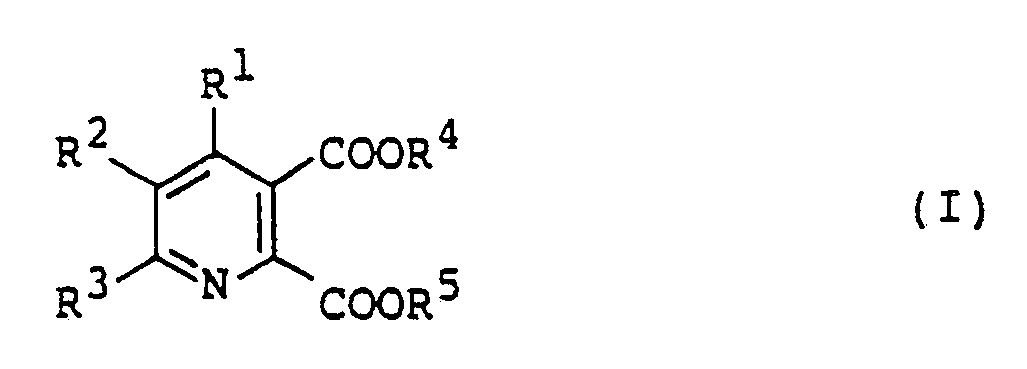
- This invention relates to a process for preparing pyridine-2,3-dicarboxylic acid compounds which are useful as intermediates for preparing compounds useful as herbicides. More particularly, it relates to an improved process for preparing pyridine-2,3-dicarboxylic acid compounds of the formula: wherein R1 and R3 are the same or different and are each a hydrogen atom, a substituted or unsubstituted straight chain or branched chain alkyl having 1 to 4 carbon atoms, or a substituted or unsubstituted phenyl; R2 is hydrogen atom, a substituted or unsubstituted straight chain or branched chain alkyl having 1 to 4 carbon atoms, a substituted or unsubstituted phenyl, a straight chain or branched chain alkylthio having 1 to 4 carbon atoms, a straight chain or branched chain alkoxy having 1 to 4 carbon atoms, a substituted or unsubstituted phenylthio
- pyridine-2,3-dicarboxylic acid compounds are useful as intermediates for preparing compounds which are used as herbicides.
- pyridine-2,3-dicarboxylic acid compounds are useful as intermediates in the manufacturing of the herbicidally effective 2-(2-imidazolin-2-yl)pyridine compounds of the formula: wherein R1 is C1-C4 alkyl, R2 is C1-C4 alkyl or C3-C6 cycloalkyl or R1 and R2 may form together C3-C6 cycloalkyl optionally substituted with methyl; W is O or S; X is hydrogen, halogen or methyl, with the proviso that when Y and Z form together a ring and YZ is -(CH2) n - (n 3 or 4), then X is hydrogen; Y and Z are each hydrogen, halogen, C1-C6 alkyl, alkoxy
- pyridine-2,3-dicarboxylic acid compounds can be prepared by various processes.
- 6-substituted-pyridine-2,3-dicarboxylic acids can be prepared by condensing 1-amino-1,2-ethylenedicarboxylic acid esters with acetylenic ketones as shown in the following reaction scheme: wherein Z is hydrogen, C1-C6 alkyl, or phenyl optionally substituted with C1-C4 alkyl, halogen, C1-C4 alkoxy, nitro or C1-C4 alkylthio and Q is C1-C4 alkoxy.
- Z is hydrogen, C1-C6 alkyl, or phenyl optionally substituted with C1-C4 alkyl, halogen, C1-C4 alkoxy, nitro or C1-C4 alkylthio
- Q is C1-C4 alkoxy.
- 5-phenyl-pyridine-2,3-dicarboxylic acid compounds are prepared by reacting 1-amino-1,2-ethylenedicarboxylic acid esters with 1-phenyl-2-dimethylaminoacrolein as shown in the following reaction scheme: wherein R1 and R2 are each alkyl and Ph is phenyl or a substituted phenyl.
- removable groups e.g. halogen, substituted amino, etc.
- halogen, substituted amino, etc. are contained in the starting materials in order to facilitate aromatization of the intermediate 1,4-dihydropyridines to the pyridine nucleus, but introduction of these removable groups inevitably complicates the synthesis of the starting material and pushes cost higher.
- the pyridine nucleus can also be formed by reacting an acrolein derivative and 1-amino-1-buten-3-one as shown in the following reaction scheme [cf. E.L. Esmans, F.C. Alderweireldt, Bull. Soc. Chim. Belg., 82 , 435 (1973)], while it has no direct relationship with the process for preparing pyridine-2,3-dicarboxylic acid compounds, wherein R is methyl, ethyl, propyl, or isopropyl.
- the problem underlying the invention is to provide an improved process for preparing pyridine-2,3-dicarboxylic acid compounds useful as intermediates for preparing herbicides.
- Another object of the invention is to provide a process for preparing said compounds in higher yield by using less expensive starting materials in a single step.
- the desired pyridine-2,3-dicarboxylic acid compounds of the formula (I) can be prepared by reacting enones of the formula (II) with aminodiesters of the formula (III). wherein R1, R2, R3, R4, and R5 are as defined above.
- R1, R2, R3, R4, and R5 in the formulae (I), (II) and (III) of this invention denote more specifically the following groups.
- R1 and R3 are the same or different and are each a hydrogen atom; an unsubstituted straight chain or branched chain alkyl having 1 to 4 carbon atoms, such as methyl, ethyl, n-propyl, isopropyl, n-butyl, isobutyl, sec-butyl, tert-butyl; a substituted alkyl having 1 to 4 carbon atoms, wherein the substituent is selected from one to three members of hydroxy, an alkoxy having 1 to 4 carbon atoms, an alkylthio having 1 to 4 carbon atoms, a halogen atom (e.g.
- phenyl phenoxy, phenylthio (said phenyl, phenoxy and phenylthio having optionally a substituent which is the same as mentioned hereinafter), cyano, an alkoxycarbonyl having 1 to 4 carbon atoms in the alkoxy moiety, and an aminocarbonyl being optionally substituted by one or two alkyls having 1 to 4 carbon atoms, for example, 3-hydroxybutyl, methoxymethyl, 4-methylthiopropyl, 3-chloropropyl, 4-bromobutyl, trifluoromethyl, benzyl, p-chlorobenzyl, phenoxymethyl, 3-phenylthiopropyl, 2-cyanoethyl, 3-butoxycarbonylpropyl, 2-(N,N-dimethylaminocarbonyl)ethyl, etc.; phenyl; a phenyl substituted by a member selected from the group consisting of
- R2 includes the same groups as R1 as mentioned above, and further includes a straight chain or branched chain alkylthio having 1 to 4 carbon atoms, a straight chain or branched chain alkoxy having 1 to 4 carbon atoms, a substituted or unsubstituted phenylthio, a substituted or unsubstituted phenoxy, a halogen atom (e.g.
- alkyl and phenyl are the same as mentioned above for R1 and R3, and the alkylthio and alkoxy include, for example, methylthio, methoxy, tert-butoxy, etc.
- substituted phenylthio and phenoxy the substituents on the phenyl ring are the same as the substituents for phenyl in R1 and R3 as mentioned hereinabove.
- the substituted phenylthio and phenoxy include, for example, p-hydroxyphenylthio, p-methoxyphenoxy, p-chlorophenoxy, o-methythiophenoxy, p-dimethylaminophenoxy, p-acetamidophenylthio, p-butyryloxyphenoxy, p-ethoxycarbonylphenoxy, N,N-dimethylaminocarbonylphenoxy, o-cyanophenoxy, o-nitrophenoxy, p-nitrosophenoxy, etc.
- Suitable examples of alkoxycarbonyl are methoxycarbonyl, isobutyloxycarbonyl, etc. and suitable examples of aminocarbonyl are N-methyl-N-benzylaminocarbonyl
- Both of R1 and R2 or both R2 and R3 may together form a divalent alkylene, such as trimethylene, tetramethylene and pentamethylene.
- R4 and R5 are the same or different and are each a straight chain or branched chain alkyl having 1 to 4 carbon atoms, such as methyl, ethyl, n-propyl, isopropyl, n-butyl, isobutyl, sec-butyl, and tert-butyl.
- the process of this invention is characteristic in that the enones of the formula (II) can easily be condensed with the aminodiesters of the formula (III) and that the resulting 1,4-dihydropyridines of the formula (IV) readily loses the hydrogen atom under these reaction conditions to give the desired pyridine-2,3-dicarboxylic acid compounds of the formula (I) in a single step and in high yield.
- the starting enones (II) and aminodiesters (III) used in this invention can easily be prepared from cheap and readily available compounds by a known process.
- Examples of the enones (II) are acrolein, methacrolein, crotonaldehyde, methyl vinyl ketone, ⁇ -ethylacrolein, ⁇ -n-butylacrolein, 4-methyl-2-hexenal, ⁇ -methoxymethylacrolein, ⁇ -trifluoromethylacrolein, ⁇ -(p-methoxybenzyl)acrolein, ⁇ -(p-chlorophenyl)acrolein, cinnamaldehyde, 2-propenyl phenyl ketone, p-chlorophenyl vinyl ketone, ⁇ -chloro- ⁇ -phenylacrolein, ⁇ -ethoxyacrolein, ⁇ -phenylethylthioacrolein, methyl ⁇ -formylacrylate, ⁇ -(2-cyanoethyl)acrolein, ⁇ -(p-acetamidophenyl)
- aminodiesters (III) are dimethyl 1-amino-1,2-ethylenedicarboxylate, diethyl 1-amino-1,2-ethylenedicarboxylate, dibutyl 1-amino-1,2-ethylenedicarboxylate, etc.
- enones (II) and aminodiesters (III) are usually used in an equimolar amount but a slightly excess amount of enones (II) may be used.
- the process of this invention can be carried out by mixing the enones (II) and the aminodiesters (III) without using any solvent or in an appropriate organic solvent.
- the organic solvent is preferably a neutral solvent in view of less side reaction and easier work-up of the reaction, but organic carboxylic acid solvents may also be used.
- amine solvents such as triethylamine are not suitable because these solvents interfer with the dehydrogenation of 1,4-dihydropyridines (IV) and thereby induce undesirable side reactions.
- Suitable examples of the neutral solvent are alcohols (e.g. methanol, ethanol, butanol, ethylene glycol, etc.), nitriles (e.g. acetonitrile, etc.), esters (e.g. ethyl acetate, methyl propionate, etc.), ethers (e.g. diethyl ether, tetrahydrofuran, dioxane, ethylene glycol dimethyl ether, etc.), halogenated hydrocarbons (e.g. methylene chloride, 1,2-dichloroethane, 1,1,1-trichloroethane, etc.), carboxylic acid amides (e.g.
- alcohols e.g. methanol, ethanol, butanol, ethylene glycol, etc.
- nitriles e.g. acetonitrile, etc.
- esters e.g. ethyl acetate, methyl propionate, etc.
- N,N-dimethylformamide, N-methylpyrrolidone, etc. sulfoxides (e.g. dimethylsulfoxide, etc.), sulfones (e.g. tetramethylenesulfone, etc.), aromatic hydrocarbons (e.g. benzene, toluene, etc.).
- solvents may be used alone or in combination of two or more thereof.
- organic carboxylic acid solvent are acetic acid, propionic acid, etc.
- particularly preferred ones are alcohols, carboxylic acid amides, sulfoxides and carboxylic acids which have high polarity.
- the reaction of this invention may be carried out merely by heating the mixture of the starting enone (II) and aminodiester (III) in an appropriate organic solvent or without using any solvent as mentioned above, but in order to shorten the reaction time and to suppress the undesirable side reactions, it is preferable to add acid to the reaction system in a catalytic amount, e.g. 0.01 to 10 parts by weight to 100 parts by weight of the starting enones (II).
- the acid includes inorganic strong acids (e.g. hydrochloric acid, sulfuric acid, etc.), organic sulfonic acids (e.g. methanesulfonic acid, p-toluenesulfonic acid, etc.), organic carboxylic acids (e.g. acetic acid, etc.), among which organic sulfonic acids are particularly preferable.
- the reaction temperature may vary depending on the kinds of solvent and catalyst used therein, but is preferably in the range of 50° to 150°C.
- the reaction is carried out below 50°C, the intermediate 1,4-dihydropyridines (IV) is too slowly dehydrogenated.
- the reaction is carried out above 150°C, decomposition of pyridine-2,3-dicarboxylic acid compounds (I) is unfavorably observed.
- the desired pyridine-2,3-dicarboxylic acid compounds (I) can be isolated and purified from the reaction mixture by any conventional purification methods, such as extraction with solvent, distillation, recrystallization, chromatography, and the like to give a highly pure product which is useful as an intermediate for preparing herbicidally effective compounds.
- the desired pyridine-2,3-dicarboxylic acid compounds can be prepared in high yield and high purity by a one step reaction within a very short reaction time from cheap and easily available enones and aminodiesters, and hence, this invention is valuable for the industrial production of the desired pyridine-2,3-dicarboxylic acid compounds.
- Diethyl 1-amino-1,2-ethylenedicarboxylate (1.0 g) and acrolein monomer (0.39 g) are dissolved in n-butanol (10 ml), and thereto is added p-toluenesulfonic acid (20 mg). The mixture is refluxed for 10 hours, and thereto is added additional acrolein monomer (0.1 g), and the mixture is refluxed for 5 hours (the degree of conversion of the aminodiester is 91 %). After distilling off the solvent, the residue is distilled under reduced pressure to give diethyl pyridine-2,3-dicarboxylate (0.86 g, 72.3 %). The product has a boiling point of 135 - 145°C (400Pa, 3 Torr) and a purity of 96.4 % by gas chromatographic analysis.
Landscapes
- Chemical & Material Sciences (AREA)
- Organic Chemistry (AREA)
- Pyridine Compounds (AREA)
- Other In-Based Heterocyclic Compounds (AREA)
- Quinoline Compounds (AREA)
Description
- This invention relates to a process for preparing pyridine-2,3-dicarboxylic acid compounds which are useful as intermediates for preparing compounds useful as herbicides. More particularly, it relates to an improved process for preparing pyridine-2,3-dicarboxylic acid compounds of the formula:

wherein R¹ and R³ are the same or different and are each a hydrogen atom, a substituted or unsubstituted straight chain or branched chain alkyl having 1 to 4 carbon atoms, or a substituted or unsubstituted phenyl; R² is hydrogen atom, a substituted or unsubstituted straight chain or branched chain alkyl having 1 to 4 carbon atoms, a substituted or unsubstituted phenyl, a straight chain or branched chain alkylthio having 1 to 4 carbon atoms, a straight chain or branched chain alkoxy having 1 to 4 carbon atoms, a substituted or unsubstituted phenylthio, a substituted or unsubstituted phenoxy, a halogen atom, a straight chain or branched chain alkoxycarbonyl having 1 to 4 carbon atoms in the alkoxy moiety, an aminocarbonyl which may optionally have a substituent, or cyano; or both of R¹ and R² or both R² and R³ may together form a divalent alkylene selected from trimethylene, tetramethylene and pentamethylene; and R⁴ and R⁵ are the same or different and are each a straight chain or branched chain alkyl having 1 to 4 carbon atoms. - It has been known that some pyridine-2,3-dicarboxylic acid compounds are useful as intermediates for preparing compounds which are used as herbicides. For example, it is disclosed in U.S. Patent 4,439,607 that pyridine-2,3-dicarboxylic acid compounds are useful as intermediates in the manufacturing of the herbicidally effective 2-(2-imidazolin-2-yl)pyridine compounds of the formula:
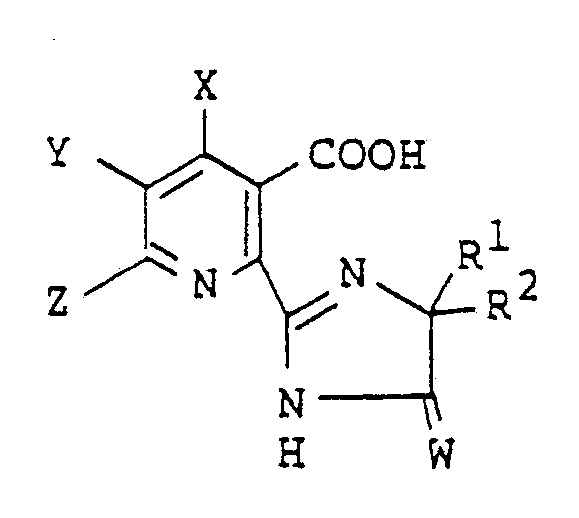
wherein R¹ is C₁-C₄ alkyl, R² is C₁-C₄ alkyl or C₃-C₆ cycloalkyl or R¹ and R² may form together C₃-C₆ cycloalkyl optionally substituted with methyl; W is O or S; X is hydrogen, halogen or methyl, with the proviso that when Y and Z form together a ring and YZ is -(CH₂)n- (n 3 or 4), then X is hydrogen; Y and Z are each hydrogen, halogen, C₁-C₆ alkyl, alkoxy, alkylthio, phenoxy, haloalkyl, nitro, cyano, alkylsulfonyl, substituted or unsubstituted phenyl, etc. Similar reports are known from other publications, for example, U.S. Patent 4,460,776, European Patent Publication No. 0041623 (cf. Chemical Abstracts, 96, 199687q). - It is also known that the pyridine-2,3-dicarboxylic acid compounds can be prepared by various processes. For example, it is disclosed in U.S. Patent 4,460,776 that 6-substituted-pyridine-2,3-dicarboxylic acids can be prepared by condensing 1-amino-1,2-ethylenedicarboxylic acid esters with acetylenic ketones as shown in the following reaction scheme:

wherein Z is hydrogen, C₁-C₆ alkyl, or phenyl optionally substituted with C₁-C₄ alkyl, halogen, C₁-C₄ alkoxy, nitro or C₁-C₄ alkylthio and Q is C₁-C₄ alkoxy. According to this process, however, a large amount of acetylide, trimethylsilylacetylene etc. is required for preparing the starting acetylenic ketones, and hence, the process is costly. - It is disclosed in European Patent Publication No. 161,221 (= Japanese Patent First Publication (Kokai) No. 246369/1985, cf. Chemical Abstracts, 104, 207246w) that 4,5-disubstituted-pyridine-2,3-dicarboxylic acid compounds are prepared by condensing α-halo-maleic imide compounds with an α,β-unsaturated aldehyde N,N-dialkylhydrazone, followed by treating the reaction product with an acid or under heating as shown in the following reaction scheme:

wherein R¹ is hydrogen, substituted or unsubstituted alkyl, alkylthio, alkoxy, phenyl or phenoxy, R² is the same as R¹, or halogen, R³ and R⁴ are each hydroxy, amino, mono- or disubstituted amino, alkoxy, etc., and R⁹ and R¹⁰ are each alkyl, cycloalkyl, aralkyl or aryl, or R⁹ and R¹⁰ are combined to form alkylene or oxaalkylene. However, this process is disadvantageous in that (1) the starting α-halomaleic imide compounds are prepared through several steps with low overall yield and (2) the process requires the use of an expensive asymmetric hydrazine which can not be recovered after the reaction. - It is disclosed in Brazilian Patent Publication No. 85/2364 (= U.S. Appln. 612,531, cf. Chemical Abstracts, 105, 208767z) that 5,6-disubstituted-pyridine-2,3-dicarboxylic acid esters are prepared by reacting enamines and alkoxymethylene oxalacetates with heating in the presence of ammonia as shown in the following reaction scheme:

wherein R¹ and R² are each hydrogen, alkyl, phenyl, tolyl, or are combined to form a fused ring, and R³ and R⁴ are each hyrogen or alkyl. This process is, however, disadvantageous in that (1) the enamines must be prepared separately, and the enamines are prepared in comparatively lower yield in the case of lower aliphatic aldehyde derivatives, (2) the amines used for preparing enamines must be separated and recovered after the reaction, and (3) the reaction must be carried out in the presence of ammonia which requires careful attention during the reaction procedure. - It is also disclosed in U.S. Patent 4,723,011 (= Japanese Patent First Publication (Kokai) No. 106081/1987, German Patent Offenlegungsschrift 3,634,975, cf. Chemical Abstracts, 107, 134206h) that 4,5,6-trisubstituted-pyridine-2,3-dicarboxylic acid compounds are prepared by reacting alkenylketones with halo-oxalacetic acid compounds in the presence of an ammonium salt as shown in the following reaction scheme:

wherein R³ is hydrogen, halogen, C₁-C₆ alkyl, alkenyl, phenyl, or substituted phenyl, R⁴ and R⁷ are each hydrogen, C₁-C₆ alkyl, alkenyl, phenyl, or substituted phenyl, R⁵ and R⁶ are each C₁-C₄ alkyl. - It is disclosed in European Patent Publication 67511 (cf. Chemical Abstracts, 98 198028e) that 5-phenyl-pyridine-2,3-dicarboxylic acid compounds are prepared by reacting 1-amino-1,2-ethylenedicarboxylic acid esters with 1-phenyl-2-dimethylaminoacrolein as shown in the following reaction scheme:

wherein R¹ and R² are each alkyl and Ph is phenyl or a substituted phenyl. - In the known processes as mentioned above, removable groups (e.g. halogen, substituted amino, etc.) are contained in the starting materials in order to facilitate aromatization of the intermediate 1,4-dihydropyridines to the pyridine nucleus, but introduction of these removable groups inevitably complicates the synthesis of the starting material and pushes cost higher.
- Besides, it is known that the pyridine nucleus can also be formed by reacting an acrolein derivative and 1-amino-1-buten-3-one as shown in the following reaction scheme [cf. E.L. Esmans, F.C. Alderweireldt, Bull. Soc. Chim. Belg., 82, 435 (1973)], while it has no direct relationship with the process for preparing pyridine-2,3-dicarboxylic acid compounds,

wherein R is methyl, ethyl, propyl, or isopropyl. - The problem underlying the invention is to provide an improved process for preparing pyridine-2,3-dicarboxylic acid compounds useful as intermediates for preparing herbicides. Another object of the invention is to provide a process for preparing said compounds in higher yield by using less expensive starting materials in a single step. These and other objects and advantages of the invention will be apparent to those skilled in the art from the following description.
- According to this invention, the desired pyridine-2,3-dicarboxylic acid compounds of the formula (I) can be prepared by reacting enones of the formula (II) with aminodiesters of the formula (III).

wherein R¹, R², R³, R⁴, and R⁵ are as defined above. - The groups of R¹, R², R³, R⁴, and R⁵ in the formulae (I), (II) and (III) of this invention denote more specifically the following groups.
- R¹ and R³ are the same or different and are each a hydrogen atom; an unsubstituted straight chain or branched chain alkyl having 1 to 4 carbon atoms, such as methyl, ethyl, n-propyl, isopropyl, n-butyl, isobutyl, sec-butyl, tert-butyl; a substituted alkyl having 1 to 4 carbon atoms, wherein the substituent is selected from one to three members of hydroxy, an alkoxy having 1 to 4 carbon atoms, an alkylthio having 1 to 4 carbon atoms, a halogen atom (e.g. fluorine, chlorine, bromine), phenyl, phenoxy, phenylthio (said phenyl, phenoxy and phenylthio having optionally a substituent which is the same as mentioned hereinafter), cyano, an alkoxycarbonyl having 1 to 4 carbon atoms in the alkoxy moiety, and an aminocarbonyl being optionally substituted by one or two alkyls having 1 to 4 carbon atoms, for example, 3-hydroxybutyl, methoxymethyl, 4-methylthiopropyl, 3-chloropropyl, 4-bromobutyl, trifluoromethyl, benzyl, p-chlorobenzyl, phenoxymethyl, 3-phenylthiopropyl, 2-cyanoethyl, 3-butoxycarbonylpropyl, 2-(N,N-dimethylaminocarbonyl)ethyl, etc.; phenyl; a phenyl substituted by a member selected from the group consisting of hydroxy, a halogen atom, an alkoxy having 1 to 4 carbon atoms, an alkylthio having 1 to 4 carbon atoms, an amino being optionally substituted by one or two alkyls having 1 to 4 carbon atoms, an alkanoylamino or alkanoyloxy having 1 to 4 carbon atoms in the alkanoyl moiety, an alkoxycarbonyl having 1 to 4 carbon atoms in the alkoxy moiety, an aminoalkanoyl being optionally substituted by one or two alkyls having 1 to 4 carbon atoms, cyano, nitro, and nitroso, for example, p-hydroxyphenyl, p-butoxyphenyl, p-chlorophenyl, o-methylthiophenyl, p-dimethylaminophenyl, p-acetamidophenyl, m-isobutyryloxyphenyl, m-ethoxycarbonylphenyl, N,N-dimethylaminocarbonylphenyl, m-cyanophenyl, o-nitrophenyl, p-nitrosophenyl, etc.
- R² includes the same groups as R¹ as mentioned above, and further includes a straight chain or branched chain alkylthio having 1 to 4 carbon atoms, a straight chain or branched chain alkoxy having 1 to 4 carbon atoms, a substituted or unsubstituted phenylthio, a substituted or unsubstituted phenoxy, a halogen atom (e.g. fluorine, chlorine, bromine), a straight chain or branched chain alkoxycarbonyl having 1 to 4 carbon atoms in the alkoxy moiety, an aminocarbonyl which may optionally have a substituent, or cyano, wherein the alkyl and phenyl are the same as mentioned above for R¹ and R³, and the alkylthio and alkoxy include, for example, methylthio, methoxy, tert-butoxy, etc.
- In the substituted phenylthio and phenoxy, the substituents on the phenyl ring are the same as the substituents for phenyl in R¹ and R³ as mentioned hereinabove. The substituted phenylthio and phenoxy include, for example, p-hydroxyphenylthio, p-methoxyphenoxy, p-chlorophenoxy, o-methythiophenoxy, p-dimethylaminophenoxy, p-acetamidophenylthio, p-butyryloxyphenoxy, p-ethoxycarbonylphenoxy, N,N-dimethylaminocarbonylphenoxy, o-cyanophenoxy, o-nitrophenoxy, p-nitrosophenoxy, etc. Suitable examples of alkoxycarbonyl are methoxycarbonyl, isobutyloxycarbonyl, etc. and suitable examples of aminocarbonyl are N-methyl-N-benzylaminocarbonyl, etc.
- Both of R¹ and R² or both R² and R³ may together form a divalent alkylene, such as trimethylene, tetramethylene and pentamethylene.
- R⁴ and R⁵ are the same or different and are each a straight chain or branched chain alkyl having 1 to 4 carbon atoms, such as methyl, ethyl, n-propyl, isopropyl, n-butyl, isobutyl, sec-butyl, and tert-butyl.
- The process of this invention is shown by the following reaction scheme [A]:

wherein R¹, R², R³, R⁴, and R⁵ are as defined above. - The process of this invention is characteristic in that the enones of the formula (II) can easily be condensed with the aminodiesters of the formula (III) and that the resulting 1,4-dihydropyridines of the formula (IV) readily loses the hydrogen atom under these reaction conditions to give the desired pyridine-2,3-dicarboxylic acid compounds of the formula (I) in a single step and in high yield.
- The starting enones (II) and aminodiesters (III) used in this invention can easily be prepared from cheap and readily available compounds by a known process.
- Examples of the enones (II) are acrolein, methacrolein, crotonaldehyde, methyl vinyl ketone, α-ethylacrolein, α-n-butylacrolein, 4-methyl-2-hexenal, α-methoxymethylacrolein, α-trifluoromethylacrolein, α-(p-methoxybenzyl)acrolein, α-(p-chlorophenyl)acrolein, cinnamaldehyde, 2-propenyl phenyl ketone, p-chlorophenyl vinyl ketone, α-chloro-β-phenylacrolein, α-ethoxyacrolein, α-phenylethylthioacrolein, methyl α-formylacrylate, α-(2-cyanoethyl)acrolein, α-(p-acetamidophenyl)acrolein, β-(o-nitrophenyl)acrolein, α-methylenecyclopentanone, 1-formylcyclopentene, etc.
- Examples of the aminodiesters (III) are dimethyl 1-amino-1,2-ethylenedicarboxylate, diethyl 1-amino-1,2-ethylenedicarboxylate, dibutyl 1-amino-1,2-ethylenedicarboxylate, etc.
- These enones (II) and aminodiesters (III) are usually used in an equimolar amount but a slightly excess amount of enones (II) may be used.
- The process of this invention can be carried out by mixing the enones (II) and the aminodiesters (III) without using any solvent or in an appropriate organic solvent.
- The organic solvent is preferably a neutral solvent in view of less side reaction and easier work-up of the reaction, but organic carboxylic acid solvents may also be used. However, amine solvents such as triethylamine are not suitable because these solvents interfer with the dehydrogenation of 1,4-dihydropyridines (IV) and thereby induce undesirable side reactions.
- Suitable examples of the neutral solvent are alcohols (e.g. methanol, ethanol, butanol, ethylene glycol, etc.), nitriles (e.g. acetonitrile, etc.), esters (e.g. ethyl acetate, methyl propionate, etc.), ethers (e.g. diethyl ether, tetrahydrofuran, dioxane, ethylene glycol dimethyl ether, etc.), halogenated hydrocarbons (e.g. methylene chloride, 1,2-dichloroethane, 1,1,1-trichloroethane, etc.), carboxylic acid amides (e.g. N,N-dimethylformamide, N-methylpyrrolidone, etc.), sulfoxides (e.g. dimethylsulfoxide, etc.), sulfones (e.g. tetramethylenesulfone, etc.), aromatic hydrocarbons (e.g. benzene, toluene, etc.). These solvents may be used alone or in combination of two or more thereof. Suitable examples of organic carboxylic acid solvent are acetic acid, propionic acid, etc. Among the organic solvents, particularly preferred ones are alcohols, carboxylic acid amides, sulfoxides and carboxylic acids which have high polarity.
- The reaction of this invention may be carried out merely by heating the mixture of the starting enone (II) and aminodiester (III) in an appropriate organic solvent or without using any solvent as mentioned above, but in order to shorten the reaction time and to suppress the undesirable side reactions, it is preferable to add acid to the reaction system in a catalytic amount, e.g. 0.01 to 10 parts by weight to 100 parts by weight of the starting enones (II). The acid includes inorganic strong acids (e.g. hydrochloric acid, sulfuric acid, etc.), organic sulfonic acids (e.g. methanesulfonic acid, p-toluenesulfonic acid, etc.), organic carboxylic acids (e.g. acetic acid, etc.), among which organic sulfonic acids are particularly preferable.
- When the reaction of this invention is carried out in the presence of the above acid catalyst, it is preferable to remove the moisture within the reaction system in order to prevent hydrolysis of the aminodiesters (III).
- The reaction temperature may vary depending on the kinds of solvent and catalyst used therein, but is preferably in the range of 50° to 150°C. When the reaction is carried out below 50°C, the intermediate 1,4-dihydropyridines (IV) is too slowly dehydrogenated. On the other hand, when the reaction is carried out above 150°C, decomposition of pyridine-2,3-dicarboxylic acid compounds (I) is unfavorably observed.
- When the reaction is carried out by using an organic solvent having a boiling point of 50° to 150°C, it is most preferable to carry out the reaction under reflux temperature unless the reaction is affected by raising the temperature to the boiling point of the solvent.
- After the completion of the reaction, the desired pyridine-2,3-dicarboxylic acid compounds (I) can be isolated and purified from the reaction mixture by any conventional purification methods, such as extraction with solvent, distillation, recrystallization, chromatography, and the like to give a highly pure product which is useful as an intermediate for preparing herbicidally effective compounds.
- According to this invention, the desired pyridine-2,3-dicarboxylic acid compounds can be prepared in high yield and high purity by a one step reaction within a very short reaction time from cheap and easily available enones and aminodiesters, and hence, this invention is valuable for the industrial production of the desired pyridine-2,3-dicarboxylic acid compounds.
- This invention is illustrated by the following Examples but should not be construed to be limited thereto. In Examples, the degree of reaction (conversion) is shown by the degree of consumption of aminodiesters (III) by gas chromatographic analysis, and the purity of the product is determined by gas or liquid chromatographic analysis.
- Diethyl 1-amino-1,2-ethylenedicarboxylate (1.0 g) and acrolein monomer (0.39 g) are dissolved in n-butanol (10 ml), and thereto is added p-toluenesulfonic acid (20 mg). The mixture is refluxed for 10 hours, and thereto is added additional acrolein monomer (0.1 g), and the mixture is refluxed for 5 hours (the degree of conversion of the aminodiester is 91 %). After distilling off the solvent, the residue is distilled under reduced pressure to give diethyl pyridine-2,3-dicarboxylate (0.86 g, 72.3 %). The product has a boiling point of 135 - 145°C (400Pa, 3 Torr) and a purity of 96.4 % by gas chromatographic analysis.
- Diethyl 1-amino-1,2-ethylenedicarboxylate (1.7 g) and α-ethylacrolein (0.84 g) are dissolved in n-butanol (10 ml), and thereto is added p-toluenesulfonic acid (35 mg). The mixture is refluxed for 15 hours (the degree of conversion of the aminodiester is 97 %). After distilling off the solvent, the residue is subjected to silica gel column chromatography, eluting with chloroform/methanol (1 : 0 - 1 : 0.01), to give diethyl 5-ethylpyridine-2,3-dicarboxylate (1.93 g, 84.6 %). The product has a purity of 92.2 % by liquid chromatographic analysis.
- Diethyl 1-amino-1,2-ethylenedicarboxylate (5.0 g), α-ethylacrolein (2.82 g) and p-toluenesulfonic acid (0.1 g) are mixed. The mixture is heated at 100°C for 18 hours. After adding thereto additional α-ethylacrolein (0.2 g), the mixture is heated at 100°C for 3 hours to complete the reaction (the degree of conversion of the aminodiester is 99.5 %). The reaction mixture is treated in the same manner as described in Example 2 to give diethyl 5-ethylpyridine-2,3-dicarboxylate (4.3 g, 63.5 %). The product has a purity of 87.7 % by liquid chromatographic analysis.
- Under the molar ratio and reaction conditions as described in Example 2, various enones (II) and aminodiesters (III) are reacted, wherein R¹ to R⁵ are varied as shown in Table 1, in Example 17, R¹ and R² in the enone (II) together form trimethylene, and in Example 18, R² and R³ in the enone (II) together form pentamethylene. The results are shown in Table 1.
- In the same manner as described in Example 2 except that the solvent shown in Table 2 is used instead of n-butanol and the reaction temperature is varied as shown in Table 2, the reaction is carried out. The results are shown in Table 2.
Table 1 Ex. No. R¹ R² R³ R⁴ R⁵ Conversion Yield (%) Purity (%) 4 H H CH₃ C₂H₅ C₂H₅ 96.3 77.1 89.1 5 CH₃ H C₆H₅ C₂H₅ C₂H₅ 76.8 66.3 74.7 6 H n-C₄H₉ H C₂H₅ C₂H₅ 95.2 85.7 91.6 7 H p-ClC₆H₄ H C₂H₅ C₂H₅ 95.5 79.5 90.7 8 H CH₃OCH₂ H C₂H₅ C₂H₅ 92.7 80.9 77.5 9 H CF₃ H C₂H₅ C₂H₅ 98.1 81.8 93.8 10 H C₆H₅CH₂ H C₂H₅ C₂H₅ 97.4 74.8 88.6 11 H p-CH₃CONHC₆H₄ H C₂H₅ C₂H₅ 93.1 85.9 84.4 12 H H p-ClC₆H₄ n-C₄H₉ C₂H₅ 88.0 79.8 93.9 13 C₆H₅ Cl H CH₃ C₂H₅ 70.6 66.7 90.8 14 H C₂H₅O H CH₃ C₂H₅ 72.6 62.5 72.2 15 H C₆H₅S H C₂H₅ C₂H₅ 75.4 60.8 69.7 16 H CO₂CH₃ H C₂H₅ C₂H₅ 98.8 68.5 78.5 17 -(CH₂)₃- H C₂H₅ C₂H₅ 89.2 69.7 80.8 18 H -(CH₂)₅- C₂H₅ C₂H₅ 93.5 88.5 90.4 Table 2 Ex. No. Solvent Reaction temp. (°C) Reaction time (hr) Conversion Yield (%) Purity (%) 19 Methanol Reflux temp. 40 78.2 57.8 88.3 20 Isopropanol Reflux temp. 40 97.4 88.3 90.1 21 sec-Butanol Reflux temp. 27 96.4 85.2 90.6 22 Acetic acid 50 10 100 68.4 98.2 23 N,N-Dimethylformamide. 120 13 98.8 63.7 90.8 24 Dimethylsulfoxide 100 15 97.4 58.4 92.4
Claims (6)
- A process for preparing pyridine-2,3-dicarboxylic acid compounds of the formula:

- The process according to claim 1, wherein the reaction of the enone (II) and the aminodiester (III) is carried out without using any solvent.
- The process according to claim 1, wherein the reaction of the enone (II) and the aminodiester (III) is carried out in a neutral organic solvent.
- The process according to claim 1, wherein the reaction of the enone (II) and the aminodiester (III) is carried out in an organic carboxylic acid solvent.
- The process according to claim 1, wherein the reaction of the enone (II) and the aminodiester (III) is carried out at a temperature of 50° to 150°C.
- The process according to claim 1, wherein the reaction of the enone (II) and the aminodiester (III) is carried out in the presence of an acid catalyst.
Applications Claiming Priority (2)
| Application Number | Priority Date | Filing Date | Title |
|---|---|---|---|
| JP62171730A JPH0625116B2 (en) | 1987-07-08 | 1987-07-08 | Process for producing pyridine-2,3-dicarboxylic acid derivative |
| JP171730/87 | 1987-07-08 |
Publications (2)
| Publication Number | Publication Date |
|---|---|
| EP0299362A1 EP0299362A1 (en) | 1989-01-18 |
| EP0299362B1 true EP0299362B1 (en) | 1991-12-04 |
Family
ID=15928613
Family Applications (1)
| Application Number | Title | Priority Date | Filing Date |
|---|---|---|---|
| EP88110866A Expired EP0299362B1 (en) | 1987-07-08 | 1988-07-07 | Process for preparing pyridine-2,3- dicarboxylic acid compounds |
Country Status (6)
| Country | Link |
|---|---|
| US (1) | US4948896A (en) |
| EP (1) | EP0299362B1 (en) |
| JP (1) | JPH0625116B2 (en) |
| BR (1) | BR8803454A (en) |
| CA (1) | CA1334417C (en) |
| DE (1) | DE3866617D1 (en) |
Families Citing this family (30)
| Publication number | Priority date | Publication date | Assignee | Title |
|---|---|---|---|---|
| DE3840554A1 (en) * | 1988-12-01 | 1990-06-13 | Wacker Chemie Gmbh | METHOD FOR PRODUCING PYRIDINE-2,3-DICARBONIC ACID ESTERS |
| US5322948A (en) * | 1989-08-31 | 1994-06-21 | Hoechst Celanese Corporation | Process for preparing pyridinecarboxylic acid derivatives |
| CA2022408A1 (en) * | 1989-08-31 | 1991-03-01 | Michael P. Bodman | Process for preparing pyridine carboxylic acid derivatives |
| US5405987A (en) * | 1989-08-31 | 1995-04-11 | Hoechst Celanese Corporation | Process for preparing pyridine and quinoline derivatives |
| US5118809A (en) * | 1990-06-15 | 1992-06-02 | American Cyanamid Company | Process for the preparation of substituted and unsubstituted-2,3-pyridinedicarboxylates from chloromaleate or chlorofumarate or mixtures thereof |
| US5225560A (en) * | 1990-06-15 | 1993-07-06 | American Cyanamid Company | Process for the preparation of dialkyl pyridine-2,3-dicarboxylate and derivatives thereof from dialkyl dichlorosuccinate |
| US5124458A (en) * | 1990-06-15 | 1992-06-23 | American Cyanamid Company | Process for the preparation of dialkyl pyridine-2,3-dicarboxylate and derivatives thereof from dialkyl dichlorosuccinate |
| US5122608A (en) * | 1990-12-19 | 1992-06-16 | American Cyanamid Company | Method for the preparation of substituted and unsubstituted 2,3-pyridine and quinolinedicarboxylic acids |
| US5177266A (en) * | 1991-12-20 | 1993-01-05 | American Cyanamid Company | Proccess for the manufacture of 2-alkoxymethylacrolein |
| US5281713A (en) * | 1991-12-20 | 1994-01-25 | American Cyanamid Company | Process for the manufacture of 2-alkoxymethylacrolein |
| US5276157A (en) * | 1991-12-20 | 1994-01-04 | American Cyanamid Company | Process for the purification of 2,3-pyridine and quinolinedicarboxylic acid diester compounds |
| US5288866A (en) * | 1991-12-20 | 1994-02-22 | American Cyanamid Company | 5,6-disubstituted-3-pyridylmethyl ammonium halide compounds useful for the preparation of 5- (substituted methyl)-2,3-pyridinedicarboxylic acids |
| US5227491A (en) * | 1992-03-10 | 1993-07-13 | American Cyanamid Company | Process for the preparation of dialkyl 2,3-pyridinedicarboxylate and derivatives thereof from an α,β-unsaturated oxime and an aminobutenedioate |
| CN1042333C (en) * | 1992-10-14 | 1999-03-03 | 美国氰胺公司 | 5,6-disubstituted-3-pyridylmethyl ammonium halide compound and preparation method thereof |
| DE4343923A1 (en) * | 1993-12-22 | 1995-06-29 | Basf Ag | Pyridine-2,3-dicarboximides, process for their preparation and their use in combating undesirable plant growth |
| DE4343922A1 (en) * | 1993-12-22 | 1995-06-29 | Basf Ag | Pyridine-2,3-dicarboximides, process for their preparation and their use in combating undesirable plant growth |
| US5925764A (en) * | 1998-06-15 | 1999-07-20 | Wu; Wen-Xue | Process and intermediated for the manufacture of pyridine-2, 3-dicarboxylate compounds |
| US6080867A (en) * | 1998-06-15 | 2000-06-27 | American Cyanamid Company | Process and intermediates for the manufacture of pyridine-2,3-dicarboxylate compounds |
| DE60322920D1 (en) | 2002-08-13 | 2008-09-25 | Shionogi & Co | HETEROCYCLIC COMPOUNDS WITH HIV INTEGRATE-INHIBITOR EFFECT |
| ES2611018T3 (en) * | 2004-04-08 | 2017-05-04 | Dow Agrosciences Llc | N-substituted sulfoximins insecticides |
| TW201309635A (en) * | 2006-02-10 | 2013-03-01 | Dow Agrosciences Llc | Insecticidal N-substituted (6-haloalkylpyridin-3-yl)alkyl sulfoximines |
| TWI381811B (en) * | 2006-06-23 | 2013-01-11 | Dow Agrosciences Llc | A method to control insects resistant to common insecticides |
| TWI387585B (en) * | 2006-09-01 | 2013-03-01 | Dow Agrosciences Llc | Insecticidal n-substituted (heteroaryl)alkyl sulfilimines |
| MX2009002302A (en) * | 2006-09-01 | 2009-03-13 | Dow Agrosciences Llc | Insecticidal n-substituted (2- sudstituted-1,3-thiazol) alkyl sulfoximines. |
| TWI395737B (en) * | 2006-11-08 | 2013-05-11 | Dow Agrosciences Llc | Heteroaryl (substituted)alkyl n-substituted sulfoximines as insecticides |
| US7709648B2 (en) * | 2007-02-09 | 2010-05-04 | Dow Agrosciences Llc | Process for the preparation of 2-substituted-5-(1-alkylthio)alkylpyridines |
| AR066366A1 (en) * | 2007-05-01 | 2009-08-12 | Dow Agrosciences Llc | PESTICIDED SYNERGIC BLENDS |
| US20090023782A1 (en) * | 2007-07-20 | 2009-01-22 | Dow Agrosciences Llc | Increasing plant vigor |
| KR20100127255A (en) | 2008-03-03 | 2010-12-03 | 다우 아그로사이언시즈 엘엘씨 | Pesticide |
| CN104447528B (en) * | 2014-11-15 | 2016-08-24 | 浙江大学 | The preparation method of pyridine-2,3-diethyl dicarboxylate |
Family Cites Families (7)
| Publication number | Priority date | Publication date | Assignee | Title |
|---|---|---|---|---|
| JPS5422870Y2 (en) * | 1975-05-14 | 1979-08-08 | ||
| JPS5918183Y2 (en) * | 1979-07-30 | 1984-05-26 | 日産デイ−ゼル工業株式会社 | Noise prevention wall material for structures |
| EP0067511A3 (en) * | 1981-05-19 | 1983-04-06 | Imperial Chemical Industries Plc | Method of inducing tillering using pyridine derivatives, and some of the pyridines themselves, process for preparing them and agricultural compositions containing them |
| US4439607A (en) * | 1982-05-25 | 1984-03-27 | American Cyanamid Company | Method for the preparation of certain pyridine and quinoline 2,3-dicarboxylic anhydrides |
| US4460776A (en) * | 1982-05-25 | 1984-07-17 | American Cyanamid Company | Process for the preparation of 6-substituted-2,3-pyridinedicarboxylic acid diesters |
| US4723011A (en) * | 1985-10-28 | 1988-02-02 | American Cyanamid Company | Preparation of substituted and disubstituted-pyridine-2,3-dicarboxylate esters |
| JP2727733B2 (en) * | 1990-04-23 | 1998-03-18 | 三菱電機株式会社 | Air conditioner |
-
1987
- 1987-07-08 JP JP62171730A patent/JPH0625116B2/en not_active Expired - Lifetime
-
1988
- 1988-07-06 US US07/215,761 patent/US4948896A/en not_active Expired - Fee Related
- 1988-07-06 CA CA000571216A patent/CA1334417C/en not_active Expired - Fee Related
- 1988-07-07 EP EP88110866A patent/EP0299362B1/en not_active Expired
- 1988-07-07 DE DE8888110866T patent/DE3866617D1/en not_active Expired - Fee Related
- 1988-07-08 BR BR8803454A patent/BR8803454A/en not_active IP Right Cessation
Also Published As
| Publication number | Publication date |
|---|---|
| BR8803454A (en) | 1989-01-31 |
| US4948896A (en) | 1990-08-14 |
| EP0299362A1 (en) | 1989-01-18 |
| JPH0625116B2 (en) | 1994-04-06 |
| JPS6416764A (en) | 1989-01-20 |
| CA1334417C (en) | 1995-02-14 |
| DE3866617D1 (en) | 1992-01-16 |
Similar Documents
| Publication | Publication Date | Title |
|---|---|---|
| US4948896A (en) | Process for preparing pyridine-2,3-dicarboxylic acid compounds | |
| KR940001774B1 (en) | Method for preparing substituted and disubstituted pyridine-2,3-dicarboxylate and method for preparing substituted nicotinate | |
| EP0770615B1 (en) | Process for the preparation of dihaloazolopyrimidines | |
| CN1882592A (en) | Manufacture of vitamin B6 | |
| EP0933362B1 (en) | A process for the preparation of pyridine dicarboxylate derivatives | |
| KR100262250B1 (en) | 3-alkoxymethylquinolines and a process for the manufacture thereof from 2-alkoxymethylacrolein | |
| EP0448543B1 (en) | Process for preparation of fluoromethyl-substituted pyridine carbodithioates | |
| EP0448541B1 (en) | Process for preparation of fluoromethyl-substituted pyridine carbodithioates | |
| JPH02289563A (en) | Improved process for producing ortho-carboxypyridyl- and ortho-carboxyquinolylimidazolinones | |
| EP1186597B1 (en) | Process for the production of 2-pyridylpyridine derivatives | |
| JPH07215975A (en) | Preparation of imidazopyridine derivative | |
| JPS60208963A (en) | Manufacture of diaminopyridine derivative | |
| US5629441A (en) | 2-(arylimino-methyl)-3-dialkylaminoacrylonitriles, a process for their preparation and their use | |
| JP4123770B2 (en) | Preparation of quinazolin-4-one derivatives | |
| US5498725A (en) | Process for preparing 5-aminodihydropyrrole intermediate thereof and process for preparing said intermediate | |
| SU1728241A1 (en) | Method of 3,6-dichloro-2-cyanopyridine synthesis | |
| JPH0681744B2 (en) | Method for producing 2,4-dioxyquinoline derivative | |
| CN116867789A (en) | Preparation method of ixotecan derivatives and intermediates thereof | |
| JPH0586944B2 (en) | ||
| JPS62164676A (en) | Production of 4-hydroxy-2(5h)-furanone derivative | |
| JPH05202053A (en) | Pyrimidopteridine derivative and its production | |
| JPH0725849A (en) | 2-trifluoromethylpyprole derivative and its production | |
| JPH03161471A (en) | Production of indole-3-carbonitriles | |
| JPH068287B2 (en) | Process for producing pyrone-3-carboxamide compound | |
| JPH07242634A (en) | Chloropyridinium chloride and its production |
Legal Events
| Date | Code | Title | Description |
|---|---|---|---|
| PUAI | Public reference made under article 153(3) epc to a published international application that has entered the european phase |
Free format text: ORIGINAL CODE: 0009012 |
|
| AK | Designated contracting states |
Kind code of ref document: A1 Designated state(s): CH DE FR GB LI |
|
| 17P | Request for examination filed |
Effective date: 19890622 |
|
| RAP1 | Party data changed (applicant data changed or rights of an application transferred) |
Owner name: DAISO CO., LTD. |
|
| 17Q | First examination report despatched |
Effective date: 19910306 |
|
| GRAA | (expected) grant |
Free format text: ORIGINAL CODE: 0009210 |
|
| AK | Designated contracting states |
Kind code of ref document: B1 Designated state(s): CH DE FR GB LI |
|
| REF | Corresponds to: |
Ref document number: 3866617 Country of ref document: DE Date of ref document: 19920116 |
|
| ET | Fr: translation filed | ||
| PLBE | No opposition filed within time limit |
Free format text: ORIGINAL CODE: 0009261 |
|
| STAA | Information on the status of an ep patent application or granted ep patent |
Free format text: STATUS: NO OPPOSITION FILED WITHIN TIME LIMIT |
|
| 26N | No opposition filed | ||
| PGFP | Annual fee paid to national office [announced via postgrant information from national office to epo] |
Ref country code: CH Payment date: 19940624 Year of fee payment: 7 |
|
| PGFP | Annual fee paid to national office [announced via postgrant information from national office to epo] |
Ref country code: GB Payment date: 19940627 Year of fee payment: 7 |
|
| PGFP | Annual fee paid to national office [announced via postgrant information from national office to epo] |
Ref country code: FR Payment date: 19940728 Year of fee payment: 7 |
|
| PGFP | Annual fee paid to national office [announced via postgrant information from national office to epo] |
Ref country code: DE Payment date: 19940929 Year of fee payment: 7 |
|
| PG25 | Lapsed in a contracting state [announced via postgrant information from national office to epo] |
Ref country code: GB Effective date: 19950707 |
|
| PG25 | Lapsed in a contracting state [announced via postgrant information from national office to epo] |
Ref country code: LI Effective date: 19950731 Ref country code: CH Effective date: 19950731 |
|
| GBPC | Gb: european patent ceased through non-payment of renewal fee |
Effective date: 19950707 |
|
| REG | Reference to a national code |
Ref country code: CH Ref legal event code: PL |
|
| PG25 | Lapsed in a contracting state [announced via postgrant information from national office to epo] |
Ref country code: FR Effective date: 19960430 |
|
| PG25 | Lapsed in a contracting state [announced via postgrant information from national office to epo] |
Ref country code: DE Effective date: 19960501 |
|
| REG | Reference to a national code |
Ref country code: FR Ref legal event code: ST |
|
| REG | Reference to a national code |
Ref country code: FR Ref legal event code: ST |
|
| REG | Reference to a national code |
Ref country code: FR Ref legal event code: ST |