EP0293900B1 - Phenolic thioethers, sulfoxides, and disulfides as inhibitors of 5-lipoxygenase - Google Patents
Phenolic thioethers, sulfoxides, and disulfides as inhibitors of 5-lipoxygenase Download PDFInfo
- Publication number
- EP0293900B1 EP0293900B1 EP88108874A EP88108874A EP0293900B1 EP 0293900 B1 EP0293900 B1 EP 0293900B1 EP 88108874 A EP88108874 A EP 88108874A EP 88108874 A EP88108874 A EP 88108874A EP 0293900 B1 EP0293900 B1 EP 0293900B1
- Authority
- EP
- European Patent Office
- Prior art keywords
- dimethylethyl
- bis
- hydroxyphenyl
- thio
- compound
- Prior art date
- Legal status (The legal status is an assumption and is not a legal conclusion. Google has not performed a legal analysis and makes no representation as to the accuracy of the status listed.)
- Expired - Lifetime
Links
- -1 Phenolic thioethers Chemical class 0.000 title abstract description 24
- 102000001381 Arachidonate 5-Lipoxygenase Human genes 0.000 title abstract description 17
- 108010093579 Arachidonate 5-lipoxygenase Proteins 0.000 title abstract description 17
- 150000003462 sulfoxides Chemical class 0.000 title abstract description 9
- 150000002019 disulfides Chemical class 0.000 title abstract description 5
- 239000003112 inhibitor Substances 0.000 title abstract description 5
- 150000001875 compounds Chemical class 0.000 claims abstract description 62
- 238000000034 method Methods 0.000 claims description 22
- 125000004450 alkenylene group Chemical group 0.000 claims description 13
- 150000003839 salts Chemical class 0.000 claims description 13
- 229910052739 hydrogen Inorganic materials 0.000 claims description 10
- 239000001257 hydrogen Substances 0.000 claims description 10
- 125000004169 (C1-C6) alkyl group Chemical group 0.000 claims description 9
- 125000003161 (C1-C6) alkylene group Chemical group 0.000 claims description 9
- 229910052799 carbon Inorganic materials 0.000 claims description 7
- 239000003814 drug Substances 0.000 claims description 7
- OKTJSMMVPCPJKN-UHFFFAOYSA-N Carbon Chemical compound [C] OKTJSMMVPCPJKN-UHFFFAOYSA-N 0.000 claims description 6
- 125000004435 hydrogen atom Chemical group [H]* 0.000 claims description 6
- 125000000446 sulfanediyl group Chemical group *S* 0.000 claims description 6
- RQZYZAKUXKMEEN-UHFFFAOYSA-N ethyl 2-(3,5-ditert-butyl-4-hydroxyphenyl)sulfanylpropanoate Chemical compound CCOC(=O)C(C)SC1=CC(C(C)(C)C)=C(O)C(C(C)(C)C)=C1 RQZYZAKUXKMEEN-UHFFFAOYSA-N 0.000 claims description 5
- VAMJHFQJLUSMBN-UHFFFAOYSA-N methyl 3-(3,5-ditert-butyl-4-hydroxyphenyl)sulfanylpropanoate Chemical compound COC(=O)CCSC1=CC(C(C)(C)C)=C(O)C(C(C)(C)C)=C1 VAMJHFQJLUSMBN-UHFFFAOYSA-N 0.000 claims description 5
- 231100000252 nontoxic Toxicity 0.000 claims description 5
- 230000003000 nontoxic effect Effects 0.000 claims description 5
- 230000008569 process Effects 0.000 claims description 5
- RHQSQPMTWAHLAS-UHFFFAOYSA-N 3-(3,5-ditert-butyl-4-hydroxyphenyl)sulfanylpropanoic acid Chemical compound CC(C)(C)C1=CC(SCCC(O)=O)=CC(C(C)(C)C)=C1O RHQSQPMTWAHLAS-UHFFFAOYSA-N 0.000 claims description 4
- UFHFLCQGNIYNRP-UHFFFAOYSA-N Hydrogen Chemical compound [H][H] UFHFLCQGNIYNRP-UHFFFAOYSA-N 0.000 claims description 4
- 102000003820 Lipoxygenases Human genes 0.000 claims description 4
- 108090000128 Lipoxygenases Proteins 0.000 claims description 4
- PTLDTEKRPFLEPH-UHFFFAOYSA-N ethyl 2-(3,5-ditert-butyl-4-hydroxyphenyl)sulfanylpentanoate Chemical compound CCOC(=O)C(CCC)SC1=CC(C(C)(C)C)=C(O)C(C(C)(C)C)=C1 PTLDTEKRPFLEPH-UHFFFAOYSA-N 0.000 claims description 4
- XIJCTWXVWUNDCE-UHFFFAOYSA-N methyl 3-(3,5-ditert-butyl-4-hydroxyphenyl)sulfinylpropanoate Chemical compound COC(=O)CCS(=O)C1=CC(C(C)(C)C)=C(O)C(C(C)(C)C)=C1 XIJCTWXVWUNDCE-UHFFFAOYSA-N 0.000 claims description 4
- QBATUWSZPKIFEO-UHFFFAOYSA-N 2-(3,5-ditert-butyl-4-hydroxyphenyl)sulfanylpropanoic acid Chemical compound OC(=O)C(C)SC1=CC(C(C)(C)C)=C(O)C(C(C)(C)C)=C1 QBATUWSZPKIFEO-UHFFFAOYSA-N 0.000 claims description 3
- JUSRUVRTADTCIS-UHFFFAOYSA-N 5-(3,5-ditert-butyl-4-hydroxyphenyl)sulfanylpentanoic acid Chemical compound CC(C)(C)C1=CC(SCCCCC(O)=O)=CC(C(C)(C)C)=C1O JUSRUVRTADTCIS-UHFFFAOYSA-N 0.000 claims description 3
- 241000124008 Mammalia Species 0.000 claims description 3
- 125000002947 alkylene group Chemical group 0.000 claims description 3
- OSJFDJWFPBNRFC-UHFFFAOYSA-N ethyl 5-(3,5-ditert-butyl-4-hydroxyphenyl)sulfanylpent-2-enoate Chemical compound CCOC(=O)C=CCCSC1=CC(C(C)(C)C)=C(O)C(C(C)(C)C)=C1 OSJFDJWFPBNRFC-UHFFFAOYSA-N 0.000 claims description 3
- 238000004519 manufacturing process Methods 0.000 claims description 3
- UFPNLVZSURWYIW-UHFFFAOYSA-N methyl 2-[(3,5-ditert-butyl-4-hydroxyphenyl)disulfanyl]acetate Chemical compound COC(=O)CSSC1=CC(C(C)(C)C)=C(O)C(C(C)(C)C)=C1 UFPNLVZSURWYIW-UHFFFAOYSA-N 0.000 claims description 3
- 239000008194 pharmaceutical composition Substances 0.000 claims description 3
- JSGBATMAAQLVPD-UHFFFAOYSA-N 4-(3,5-ditert-butyl-4-hydroxyphenyl)sulfanylbutanoic acid Chemical compound CC(C)(C)C1=CC(SCCCC(O)=O)=CC(C(C)(C)C)=C1O JSGBATMAAQLVPD-UHFFFAOYSA-N 0.000 claims description 2
- 239000003937 drug carrier Substances 0.000 claims description 2
- SHDMBRVUFHSAHT-UHFFFAOYSA-N 2-(3,5-ditert-butyl-4-hydroxyphenyl)sulfanylpentanoic acid Chemical compound CCCC(C(O)=O)SC1=CC(C(C)(C)C)=C(O)C(C(C)(C)C)=C1 SHDMBRVUFHSAHT-UHFFFAOYSA-N 0.000 claims 2
- FERIUCNNQQJTOY-UHFFFAOYSA-N Butyric acid Chemical compound CCCC(O)=O FERIUCNNQQJTOY-UHFFFAOYSA-N 0.000 claims 2
- 230000001404 mediated effect Effects 0.000 claims 2
- 206010020751 Hypersensitivity Diseases 0.000 abstract description 14
- 206010061218 Inflammation Diseases 0.000 abstract description 14
- 230000004054 inflammatory process Effects 0.000 abstract description 14
- 208000026935 allergic disease Diseases 0.000 abstract description 5
- 230000007815 allergy Effects 0.000 abstract description 4
- 239000003795 chemical substances by application Substances 0.000 abstract description 3
- 208000037265 diseases, disorders, signs and symptoms Diseases 0.000 abstract description 3
- 230000037353 metabolic pathway Effects 0.000 abstract description 3
- 208000035475 disorder Diseases 0.000 abstract description 2
- 230000009885 systemic effect Effects 0.000 abstract 1
- OKKJLVBELUTLKV-UHFFFAOYSA-N Methanol Chemical compound OC OKKJLVBELUTLKV-UHFFFAOYSA-N 0.000 description 21
- 239000000203 mixture Substances 0.000 description 21
- YMWUJEATGCHHMB-UHFFFAOYSA-N Dichloromethane Chemical compound ClCCl YMWUJEATGCHHMB-UHFFFAOYSA-N 0.000 description 18
- RTZKZFJDLAIYFH-UHFFFAOYSA-N Diethyl ether Chemical compound CCOCC RTZKZFJDLAIYFH-UHFFFAOYSA-N 0.000 description 17
- LFQSCWFLJHTTHZ-UHFFFAOYSA-N Ethanol Chemical compound CCO LFQSCWFLJHTTHZ-UHFFFAOYSA-N 0.000 description 17
- XLYOFNOQVPJJNP-UHFFFAOYSA-N water Chemical compound O XLYOFNOQVPJJNP-UHFFFAOYSA-N 0.000 description 16
- CSCPPACGZOOCGX-UHFFFAOYSA-N Acetone Chemical compound CC(C)=O CSCPPACGZOOCGX-UHFFFAOYSA-N 0.000 description 15
- XEKOWRVHYACXOJ-UHFFFAOYSA-N Ethyl acetate Chemical compound CCOC(C)=O XEKOWRVHYACXOJ-UHFFFAOYSA-N 0.000 description 15
- ZMANZCXQSJIPKH-UHFFFAOYSA-N Triethylamine Chemical compound CCN(CC)CC ZMANZCXQSJIPKH-UHFFFAOYSA-N 0.000 description 15
- 239000003960 organic solvent Substances 0.000 description 15
- VEXZGXHMUGYJMC-UHFFFAOYSA-N Hydrochloric acid Chemical compound Cl VEXZGXHMUGYJMC-UHFFFAOYSA-N 0.000 description 14
- 238000004458 analytical method Methods 0.000 description 13
- 150000002617 leukotrienes Chemical class 0.000 description 13
- 238000004587 chromatography analysis Methods 0.000 description 12
- VYPSYNLAJGMNEJ-UHFFFAOYSA-N Silicium dioxide Chemical compound O=[Si]=O VYPSYNLAJGMNEJ-UHFFFAOYSA-N 0.000 description 11
- 238000006243 chemical reaction Methods 0.000 description 10
- NFVMNXZFSKGLDR-UHFFFAOYSA-N 2,6-ditert-butyl-4-sulfanylphenol Chemical compound CC(C)(C)C1=CC(S)=CC(C(C)(C)C)=C1O NFVMNXZFSKGLDR-UHFFFAOYSA-N 0.000 description 9
- UHOVQNZJYSORNB-UHFFFAOYSA-N Benzene Chemical compound C1=CC=CC=C1 UHOVQNZJYSORNB-UHFFFAOYSA-N 0.000 description 9
- 239000002585 base Substances 0.000 description 9
- 238000001953 recrystallisation Methods 0.000 description 9
- CSNNHWWHGAXBCP-UHFFFAOYSA-L Magnesium sulfate Chemical compound [Mg+2].[O-][S+2]([O-])([O-])[O-] CSNNHWWHGAXBCP-UHFFFAOYSA-L 0.000 description 8
- YZXBAPSDXZZRGB-DOFZRALJSA-N arachidonic acid Chemical compound CCCCC\C=C/C\C=C/C\C=C/C\C=C/CCCC(O)=O YZXBAPSDXZZRGB-DOFZRALJSA-N 0.000 description 8
- 235000019441 ethanol Nutrition 0.000 description 8
- 239000000041 non-steroidal anti-inflammatory agent Substances 0.000 description 8
- 229940021182 non-steroidal anti-inflammatory drug Drugs 0.000 description 8
- 235000002639 sodium chloride Nutrition 0.000 description 8
- 239000002253 acid Substances 0.000 description 7
- 230000015572 biosynthetic process Effects 0.000 description 7
- VNYSSYRCGWBHLG-AMOLWHMGSA-N leukotriene B4 Chemical compound CCCCC\C=C/C[C@@H](O)\C=C\C=C\C=C/[C@@H](O)CCCC(O)=O VNYSSYRCGWBHLG-AMOLWHMGSA-N 0.000 description 7
- 238000007254 oxidation reaction Methods 0.000 description 7
- 239000000741 silica gel Substances 0.000 description 7
- 229910002027 silica gel Inorganic materials 0.000 description 7
- QTBSBXVTEAMEQO-UHFFFAOYSA-N Acetic acid Chemical compound CC(O)=O QTBSBXVTEAMEQO-UHFFFAOYSA-N 0.000 description 6
- XKRFYHLGVUSROY-UHFFFAOYSA-N Argon Chemical compound [Ar] XKRFYHLGVUSROY-UHFFFAOYSA-N 0.000 description 6
- DGAQECJNVWCQMB-PUAWFVPOSA-M Ilexoside XXIX Chemical compound C[C@@H]1CC[C@@]2(CC[C@@]3(C(=CC[C@H]4[C@]3(CC[C@@H]5[C@@]4(CC[C@@H](C5(C)C)OS(=O)(=O)[O-])C)C)[C@@H]2[C@]1(C)O)C)C(=O)O[C@H]6[C@@H]([C@H]([C@@H]([C@H](O6)CO)O)O)O.[Na+] DGAQECJNVWCQMB-PUAWFVPOSA-M 0.000 description 6
- 239000000867 Lipoxygenase Inhibitor Substances 0.000 description 6
- WYURNTSHIVDZCO-UHFFFAOYSA-N Tetrahydrofuran Chemical compound C1CCOC1 WYURNTSHIVDZCO-UHFFFAOYSA-N 0.000 description 6
- YXFVVABEGXRONW-UHFFFAOYSA-N Toluene Chemical compound CC1=CC=CC=C1 YXFVVABEGXRONW-UHFFFAOYSA-N 0.000 description 6
- 239000003153 chemical reaction reagent Substances 0.000 description 6
- GLXDVVHUTZTUQK-UHFFFAOYSA-M lithium;hydroxide;hydrate Chemical compound [Li+].O.[OH-] GLXDVVHUTZTUQK-UHFFFAOYSA-M 0.000 description 6
- VLKZOEOYAKHREP-UHFFFAOYSA-N n-Hexane Chemical compound CCCCCC VLKZOEOYAKHREP-UHFFFAOYSA-N 0.000 description 6
- 239000000047 product Substances 0.000 description 6
- 239000002904 solvent Substances 0.000 description 6
- WHXSMMKQMYFTQS-UHFFFAOYSA-N Lithium Chemical compound [Li] WHXSMMKQMYFTQS-UHFFFAOYSA-N 0.000 description 5
- KWYUFKZDYYNOTN-UHFFFAOYSA-M Potassium hydroxide Chemical compound [OH-].[K+] KWYUFKZDYYNOTN-UHFFFAOYSA-M 0.000 description 5
- 150000007513 acids Chemical class 0.000 description 5
- 125000000217 alkyl group Chemical group 0.000 description 5
- 230000000172 allergic effect Effects 0.000 description 5
- 230000003110 anti-inflammatory effect Effects 0.000 description 5
- 239000002552 dosage form Substances 0.000 description 5
- 230000003647 oxidation Effects 0.000 description 5
- 230000037361 pathway Effects 0.000 description 5
- 150000003457 sulfones Chemical class 0.000 description 5
- 150000003568 thioethers Chemical class 0.000 description 5
- KGIJOOYOSFUGPC-MSFIICATSA-N 5-Hydroxyeicosatetraenoic acid Chemical compound CCCCCC=CCC=CCC=C\C=C\[C@@H](O)CCCC(O)=O KGIJOOYOSFUGPC-MSFIICATSA-N 0.000 description 4
- KGIJOOYOSFUGPC-XRXZHELTSA-N 5-hydroxyeicosatetraenoic acid Natural products CCCCCC=CCC=CCC=C\C=C\C(O)CCCC(O)=O KGIJOOYOSFUGPC-XRXZHELTSA-N 0.000 description 4
- HEDRZPFGACZZDS-UHFFFAOYSA-N Chloroform Chemical compound ClC(Cl)Cl HEDRZPFGACZZDS-UHFFFAOYSA-N 0.000 description 4
- PMZURENOXWZQFD-UHFFFAOYSA-L Sodium Sulfate Chemical compound [Na+].[Na+].[O-]S([O-])(=O)=O PMZURENOXWZQFD-UHFFFAOYSA-L 0.000 description 4
- DTQVDTLACAAQTR-UHFFFAOYSA-N Trifluoroacetic acid Chemical compound OC(=O)C(F)(F)F DTQVDTLACAAQTR-UHFFFAOYSA-N 0.000 description 4
- 150000001299 aldehydes Chemical class 0.000 description 4
- 230000029936 alkylation Effects 0.000 description 4
- 238000005804 alkylation reaction Methods 0.000 description 4
- 208000006673 asthma Diseases 0.000 description 4
- 125000004432 carbon atom Chemical group C* 0.000 description 4
- 230000000694 effects Effects 0.000 description 4
- 150000002148 esters Chemical class 0.000 description 4
- 230000005764 inhibitory process Effects 0.000 description 4
- 239000007788 liquid Substances 0.000 description 4
- 229910052943 magnesium sulfate Inorganic materials 0.000 description 4
- 235000019341 magnesium sulphate Nutrition 0.000 description 4
- 210000000440 neutrophil Anatomy 0.000 description 4
- 239000002599 prostaglandin synthase inhibitor Substances 0.000 description 4
- 239000011541 reaction mixture Substances 0.000 description 4
- 229910052938 sodium sulfate Inorganic materials 0.000 description 4
- 235000011152 sodium sulphate Nutrition 0.000 description 4
- 239000007787 solid Substances 0.000 description 4
- 238000003756 stirring Methods 0.000 description 4
- 239000000126 substance Substances 0.000 description 4
- 238000003786 synthesis reaction Methods 0.000 description 4
- ZWEHNKRNPOVVGH-UHFFFAOYSA-N 2-Butanone Chemical compound CCC(C)=O ZWEHNKRNPOVVGH-UHFFFAOYSA-N 0.000 description 3
- NHQDETIJWKXCTC-UHFFFAOYSA-N 3-chloroperbenzoic acid Chemical compound OOC(=O)C1=CC=CC(Cl)=C1 NHQDETIJWKXCTC-UHFFFAOYSA-N 0.000 description 3
- BXAVKNRWVKUTLY-UHFFFAOYSA-N 4-sulfanylphenol Chemical class OC1=CC=C(S)C=C1 BXAVKNRWVKUTLY-UHFFFAOYSA-N 0.000 description 3
- HGINCPLSRVDWNT-UHFFFAOYSA-N Acrolein Chemical class C=CC=O HGINCPLSRVDWNT-UHFFFAOYSA-N 0.000 description 3
- BSYNRYMUTXBXSQ-UHFFFAOYSA-N Aspirin Chemical compound CC(=O)OC1=CC=CC=C1C(O)=O BSYNRYMUTXBXSQ-UHFFFAOYSA-N 0.000 description 3
- QMMFVYPAHWMCMS-UHFFFAOYSA-N Dimethyl sulfide Chemical compound CSC QMMFVYPAHWMCMS-UHFFFAOYSA-N 0.000 description 3
- SJRJJKPEHAURKC-UHFFFAOYSA-N N-Methylmorpholine Chemical compound CN1CCOCC1 SJRJJKPEHAURKC-UHFFFAOYSA-N 0.000 description 3
- 201000004681 Psoriasis Diseases 0.000 description 3
- 229920002472 Starch Polymers 0.000 description 3
- 206010045240 Type I hypersensitivity Diseases 0.000 description 3
- 229960001138 acetylsalicylic acid Drugs 0.000 description 3
- 150000001335 aliphatic alkanes Chemical class 0.000 description 3
- 229940114079 arachidonic acid Drugs 0.000 description 3
- 235000021342 arachidonic acid Nutrition 0.000 description 3
- 229910052786 argon Inorganic materials 0.000 description 3
- 150000004945 aromatic hydrocarbons Chemical class 0.000 description 3
- 208000010668 atopic eczema Diseases 0.000 description 3
- 239000002775 capsule Substances 0.000 description 3
- 238000005859 coupling reaction Methods 0.000 description 3
- 150000004292 cyclic ethers Chemical class 0.000 description 3
- 150000001924 cycloalkanes Chemical class 0.000 description 3
- 229940079593 drug Drugs 0.000 description 3
- 150000002170 ethers Chemical class 0.000 description 3
- 230000000055 hyoplipidemic effect Effects 0.000 description 3
- 230000002757 inflammatory effect Effects 0.000 description 3
- 230000002401 inhibitory effect Effects 0.000 description 3
- 239000012044 organic layer Substances 0.000 description 3
- 239000007800 oxidant agent Substances 0.000 description 3
- 125000001997 phenyl group Chemical group [H]C1=C([H])C([H])=C(*)C([H])=C1[H] 0.000 description 3
- 239000000843 powder Substances 0.000 description 3
- 239000011734 sodium Substances 0.000 description 3
- 229910052708 sodium Inorganic materials 0.000 description 3
- QDRKDTQENPPHOJ-UHFFFAOYSA-N sodium ethoxide Chemical compound [Na+].CC[O-] QDRKDTQENPPHOJ-UHFFFAOYSA-N 0.000 description 3
- 239000008107 starch Substances 0.000 description 3
- 235000019698 starch Nutrition 0.000 description 3
- YLQBMQCUIZJEEH-UHFFFAOYSA-N tetrahydrofuran Natural products C=1C=COC=1 YLQBMQCUIZJEEH-UHFFFAOYSA-N 0.000 description 3
- WSLDOOZREJYCGB-UHFFFAOYSA-N 1,2-Dichloroethane Chemical compound ClCCCl WSLDOOZREJYCGB-UHFFFAOYSA-N 0.000 description 2
- 206010001052 Acute respiratory distress syndrome Diseases 0.000 description 2
- QGZKDVFQNNGYKY-UHFFFAOYSA-N Ammonia Chemical compound N QGZKDVFQNNGYKY-UHFFFAOYSA-N 0.000 description 2
- 206010002198 Anaphylactic reaction Diseases 0.000 description 2
- 0 C*C(CC(S**)=CC1C)C1=* Chemical compound C*C(CC(S**)=CC1C)C1=* 0.000 description 2
- VTYYLEPIZMXCLO-UHFFFAOYSA-L Calcium carbonate Chemical compound [Ca+2].[O-]C([O-])=O VTYYLEPIZMXCLO-UHFFFAOYSA-L 0.000 description 2
- RWSOTUBLDIXVET-UHFFFAOYSA-N Dihydrogen sulfide Chemical compound S RWSOTUBLDIXVET-UHFFFAOYSA-N 0.000 description 2
- NTYJJOPFIAHURM-UHFFFAOYSA-N Histamine Chemical compound NCCC1=CN=CN1 NTYJJOPFIAHURM-UHFFFAOYSA-N 0.000 description 2
- MHAJPDPJQMAIIY-UHFFFAOYSA-N Hydrogen peroxide Chemical compound OO MHAJPDPJQMAIIY-UHFFFAOYSA-N 0.000 description 2
- 208000022559 Inflammatory bowel disease Diseases 0.000 description 2
- BAPJBEWLBFYGME-UHFFFAOYSA-N Methyl acrylate Chemical compound COC(=O)C=C BAPJBEWLBFYGME-UHFFFAOYSA-N 0.000 description 2
- OFBQJSOFQDEBGM-UHFFFAOYSA-N Pentane Chemical compound CCCCC OFBQJSOFQDEBGM-UHFFFAOYSA-N 0.000 description 2
- 108091005804 Peptidases Proteins 0.000 description 2
- ISWSIDIOOBJBQZ-UHFFFAOYSA-N Phenol Chemical compound OC1=CC=CC=C1 ISWSIDIOOBJBQZ-UHFFFAOYSA-N 0.000 description 2
- 102000004005 Prostaglandin-endoperoxide synthases Human genes 0.000 description 2
- 108090000459 Prostaglandin-endoperoxide synthases Proteins 0.000 description 2
- 239000004365 Protease Substances 0.000 description 2
- 208000013616 Respiratory Distress Syndrome Diseases 0.000 description 2
- FAPWRFPIFSIZLT-UHFFFAOYSA-M Sodium chloride Chemical compound [Na+].[Cl-] FAPWRFPIFSIZLT-UHFFFAOYSA-M 0.000 description 2
- 230000002378 acidificating effect Effects 0.000 description 2
- 150000001252 acrylic acid derivatives Chemical class 0.000 description 2
- 239000013543 active substance Substances 0.000 description 2
- 208000011341 adult acute respiratory distress syndrome Diseases 0.000 description 2
- 201000000028 adult respiratory distress syndrome Diseases 0.000 description 2
- 150000001298 alcohols Chemical class 0.000 description 2
- 229910052783 alkali metal Inorganic materials 0.000 description 2
- 125000003545 alkoxy group Chemical group 0.000 description 2
- 230000002152 alkylating effect Effects 0.000 description 2
- 230000036783 anaphylactic response Effects 0.000 description 2
- 208000003455 anaphylaxis Diseases 0.000 description 2
- 230000003266 anti-allergic effect Effects 0.000 description 2
- 230000002917 arthritic effect Effects 0.000 description 2
- AYJRCSIUFZENHW-UHFFFAOYSA-L barium carbonate Chemical compound [Ba+2].[O-]C([O-])=O AYJRCSIUFZENHW-UHFFFAOYSA-L 0.000 description 2
- 239000011230 binding agent Substances 0.000 description 2
- OSGAYBCDTDRGGQ-UHFFFAOYSA-L calcium sulfate Chemical compound [Ca+2].[O-]S([O-])(=O)=O OSGAYBCDTDRGGQ-UHFFFAOYSA-L 0.000 description 2
- 150000001768 cations Chemical class 0.000 description 2
- 210000004027 cell Anatomy 0.000 description 2
- 238000001816 cooling Methods 0.000 description 2
- 230000008878 coupling Effects 0.000 description 2
- 238000010168 coupling process Methods 0.000 description 2
- 238000001035 drying Methods 0.000 description 2
- 238000001914 filtration Methods 0.000 description 2
- 150000008282 halocarbons Chemical class 0.000 description 2
- 229910052736 halogen Inorganic materials 0.000 description 2
- 125000005843 halogen group Chemical group 0.000 description 2
- 150000002367 halogens Chemical group 0.000 description 2
- 125000004356 hydroxy functional group Chemical group O* 0.000 description 2
- 238000000338 in vitro Methods 0.000 description 2
- CGIGDMFJXJATDK-UHFFFAOYSA-N indomethacin Chemical compound CC1=C(CC(O)=O)C2=CC(OC)=CC=C2N1C(=O)C1=CC=C(Cl)C=C1 CGIGDMFJXJATDK-UHFFFAOYSA-N 0.000 description 2
- 239000010410 layer Substances 0.000 description 2
- 229910052744 lithium Inorganic materials 0.000 description 2
- 229910052808 lithium carbonate Inorganic materials 0.000 description 2
- WMFOQBRAJBCJND-UHFFFAOYSA-M lithium hydroxide Inorganic materials [Li+].[OH-] WMFOQBRAJBCJND-UHFFFAOYSA-M 0.000 description 2
- 239000000314 lubricant Substances 0.000 description 2
- HQKMJHAJHXVSDF-UHFFFAOYSA-L magnesium stearate Chemical compound [Mg+2].CCCCCCCCCCCCCCCCCC([O-])=O.CCCCCCCCCCCCCCCCCC([O-])=O HQKMJHAJHXVSDF-UHFFFAOYSA-L 0.000 description 2
- NUJOXMJBOLGQSY-UHFFFAOYSA-N manganese dioxide Chemical compound O=[Mn]=O NUJOXMJBOLGQSY-UHFFFAOYSA-N 0.000 description 2
- 238000002844 melting Methods 0.000 description 2
- 230000008018 melting Effects 0.000 description 2
- 125000002496 methyl group Chemical group [H]C([H])([H])* 0.000 description 2
- 230000001590 oxidative effect Effects 0.000 description 2
- 229940094443 oxytocics prostaglandins Drugs 0.000 description 2
- 150000002978 peroxides Chemical class 0.000 description 2
- DJEHXEMURTVAOE-UHFFFAOYSA-M potassium bisulfite Chemical compound [K+].OS([O-])=O DJEHXEMURTVAOE-UHFFFAOYSA-M 0.000 description 2
- 229940099427 potassium bisulfite Drugs 0.000 description 2
- BWHMMNNQKKPAPP-UHFFFAOYSA-L potassium carbonate Chemical compound [K+].[K+].[O-]C([O-])=O BWHMMNNQKKPAPP-UHFFFAOYSA-L 0.000 description 2
- 235000010259 potassium hydrogen sulphite Nutrition 0.000 description 2
- 230000003389 potentiating effect Effects 0.000 description 2
- 238000002360 preparation method Methods 0.000 description 2
- 230000000770 proinflammatory effect Effects 0.000 description 2
- 150000003180 prostaglandins Chemical class 0.000 description 2
- 125000006239 protecting group Chemical group 0.000 description 2
- 239000000376 reactant Substances 0.000 description 2
- JPJALAQPGMAKDF-UHFFFAOYSA-N selenium dioxide Chemical compound O=[Se]=O JPJALAQPGMAKDF-UHFFFAOYSA-N 0.000 description 2
- 239000000377 silicon dioxide Substances 0.000 description 2
- HEMHJVSKTPXQMS-UHFFFAOYSA-M sodium hydroxide Inorganic materials [OH-].[Na+] HEMHJVSKTPXQMS-UHFFFAOYSA-M 0.000 description 2
- JQWHASGSAFIOCM-UHFFFAOYSA-M sodium periodate Chemical compound [Na+].[O-]I(=O)(=O)=O JQWHASGSAFIOCM-UHFFFAOYSA-M 0.000 description 2
- 208000024891 symptom Diseases 0.000 description 2
- 239000006188 syrup Substances 0.000 description 2
- 235000020357 syrup Nutrition 0.000 description 2
- 239000003826 tablet Substances 0.000 description 2
- 125000000999 tert-butyl group Chemical group [H]C([H])([H])C(*)(C([H])([H])[H])C([H])([H])[H] 0.000 description 2
- 229940124597 therapeutic agent Drugs 0.000 description 2
- 150000003573 thiols Chemical class 0.000 description 2
- IIHPVYJPDKJYOU-UHFFFAOYSA-N triphenylcarbethoxymethylenephosphorane Chemical compound C=1C=CC=CC=1P(C=1C=CC=CC=1)(=CC(=O)OCC)C1=CC=CC=C1 IIHPVYJPDKJYOU-UHFFFAOYSA-N 0.000 description 2
- RIOQSEWOXXDEQQ-UHFFFAOYSA-N triphenylphosphine Chemical compound C1=CC=CC=C1P(C=1C=CC=CC=1)C1=CC=CC=C1 RIOQSEWOXXDEQQ-UHFFFAOYSA-N 0.000 description 2
- NQPDZGIKBAWPEJ-UHFFFAOYSA-N valeric acid Chemical compound CCCCC(O)=O NQPDZGIKBAWPEJ-UHFFFAOYSA-N 0.000 description 2
- RDJGLLICXDHJDY-NSHDSACASA-N (2s)-2-(3-phenoxyphenyl)propanoic acid Chemical compound OC(=O)[C@@H](C)C1=CC=CC(OC=2C=CC=CC=2)=C1 RDJGLLICXDHJDY-NSHDSACASA-N 0.000 description 1
- DTXYORKWCOQPMN-UHFFFAOYSA-N (3,5-ditert-butyl-4-hydroxyphenyl) thiocyanate Chemical compound CC(C)(C)C1=CC(SC#N)=CC(C(C)(C)C)=C1O DTXYORKWCOQPMN-UHFFFAOYSA-N 0.000 description 1
- IXPNQXFRVYWDDI-UHFFFAOYSA-N 1-methyl-2,4-dioxo-1,3-diazinane-5-carboximidamide Chemical compound CN1CC(C(N)=N)C(=O)NC1=O IXPNQXFRVYWDDI-UHFFFAOYSA-N 0.000 description 1
- 150000000236 11-HETE derivatives Chemical class 0.000 description 1
- 150000000249 12-HETE derivatives Chemical class 0.000 description 1
- 150000000280 15-HETE derivatives Chemical class 0.000 description 1
- GELKGHVAFRCJNA-UHFFFAOYSA-N 2,2-Dimethyloxirane Chemical compound CC1(C)CO1 GELKGHVAFRCJNA-UHFFFAOYSA-N 0.000 description 1
- JFGVTUJBHHZRAB-UHFFFAOYSA-N 2,6-Di-tert-butyl-1,4-benzenediol Chemical compound CC(C)(C)C1=CC(O)=CC(C(C)(C)C)=C1O JFGVTUJBHHZRAB-UHFFFAOYSA-N 0.000 description 1
- DKCPKDPYUFEZCP-UHFFFAOYSA-N 2,6-di-tert-butylphenol Chemical compound CC(C)(C)C1=CC=CC(C(C)(C)C)=C1O DKCPKDPYUFEZCP-UHFFFAOYSA-N 0.000 description 1
- PECUBPXZIQZXLZ-UHFFFAOYSA-N 2,6-ditert-butyl-4-(2-hydroxy-2-methylpropyl)sulfanylphenol Chemical compound CC(C)(O)CSC1=CC(C(C)(C)C)=C(O)C(C(C)(C)C)=C1 PECUBPXZIQZXLZ-UHFFFAOYSA-N 0.000 description 1
- YLGBARNBVNWFFB-UHFFFAOYSA-N 2,6-ditert-butyl-4-(3-hydroxypropylsulfanyl)phenol Chemical compound CC(C)(C)C1=CC(SCCCO)=CC(C(C)(C)C)=C1O YLGBARNBVNWFFB-UHFFFAOYSA-N 0.000 description 1
- JQTKPQMBPABUJG-UHFFFAOYSA-N 2-(3,5-ditert-butyl-4-hydroxyphenyl)sulfanylacetic acid Chemical class CC(C)(C)C1=CC(SCC(O)=O)=CC(C(C)(C)C)=C1O JQTKPQMBPABUJG-UHFFFAOYSA-N 0.000 description 1
- CWJSCIWGSUCULS-UHFFFAOYSA-N 2-hydroperoxyicosa-2,4,6,8-tetraenoic acid Chemical class CCCCCCCCCCCC=CC=CC=CC=C(OO)C(O)=O CWJSCIWGSUCULS-UHFFFAOYSA-N 0.000 description 1
- LKDMKWNDBAVNQZ-UHFFFAOYSA-N 4-[[1-[[1-[2-[[1-(4-nitroanilino)-1-oxo-3-phenylpropan-2-yl]carbamoyl]pyrrolidin-1-yl]-1-oxopropan-2-yl]amino]-1-oxopropan-2-yl]amino]-4-oxobutanoic acid Chemical compound OC(=O)CCC(=O)NC(C)C(=O)NC(C)C(=O)N1CCCC1C(=O)NC(C(=O)NC=1C=CC(=CC=1)[N+]([O-])=O)CC1=CC=CC=C1 LKDMKWNDBAVNQZ-UHFFFAOYSA-N 0.000 description 1
- 150000000556 5-HETE derivatives Chemical class 0.000 description 1
- WNXNUPJZWYOKMW-UHFFFAOYSA-N 5-bromopentanoic acid Chemical compound OC(=O)CCCCBr WNXNUPJZWYOKMW-UHFFFAOYSA-N 0.000 description 1
- HBAQYPYDRFILMT-UHFFFAOYSA-N 8-[3-(1-cyclopropylpyrazol-4-yl)-1H-pyrazolo[4,3-d]pyrimidin-5-yl]-3-methyl-3,8-diazabicyclo[3.2.1]octan-2-one Chemical class C1(CC1)N1N=CC(=C1)C1=NNC2=C1N=C(N=C2)N1C2C(N(CC1CC2)C)=O HBAQYPYDRFILMT-UHFFFAOYSA-N 0.000 description 1
- 208000004998 Abdominal Pain Diseases 0.000 description 1
- 208000016557 Acute basophilic leukemia Diseases 0.000 description 1
- 229920001817 Agar Polymers 0.000 description 1
- QGZKDVFQNNGYKY-UHFFFAOYSA-O Ammonium Chemical compound [NH4+] QGZKDVFQNNGYKY-UHFFFAOYSA-O 0.000 description 1
- 206010002556 Ankylosing Spondylitis Diseases 0.000 description 1
- YZXBAPSDXZZRGB-DOFZRALJSA-M Arachidonate Chemical compound CCCCC\C=C/C\C=C/C\C=C/C\C=C/CCCC([O-])=O YZXBAPSDXZZRGB-DOFZRALJSA-M 0.000 description 1
- 102000011730 Arachidonate 12-Lipoxygenase Human genes 0.000 description 1
- 108010076676 Arachidonate 12-lipoxygenase Proteins 0.000 description 1
- 102000009515 Arachidonate 15-Lipoxygenase Human genes 0.000 description 1
- 108010048907 Arachidonate 15-lipoxygenase Proteins 0.000 description 1
- WKBOTKDWSSQWDR-UHFFFAOYSA-N Bromine atom Chemical compound [Br] WKBOTKDWSSQWDR-UHFFFAOYSA-N 0.000 description 1
- OYPRJOBELJOOCE-UHFFFAOYSA-N Calcium Chemical compound [Ca] OYPRJOBELJOOCE-UHFFFAOYSA-N 0.000 description 1
- 229920002134 Carboxymethyl cellulose Polymers 0.000 description 1
- 102000004173 Cathepsin G Human genes 0.000 description 1
- 108090000617 Cathepsin G Proteins 0.000 description 1
- KZBUYRJDOAKODT-UHFFFAOYSA-N Chlorine Chemical compound ClCl KZBUYRJDOAKODT-UHFFFAOYSA-N 0.000 description 1
- 102000029816 Collagenase Human genes 0.000 description 1
- 108060005980 Collagenase Proteins 0.000 description 1
- 241000557626 Corvus corax Species 0.000 description 1
- XDTMQSROBMDMFD-UHFFFAOYSA-N Cyclohexane Chemical compound C1CCCCC1 XDTMQSROBMDMFD-UHFFFAOYSA-N 0.000 description 1
- FBPFZTCFMRRESA-KVTDHHQDSA-N D-Mannitol Chemical compound OC[C@@H](O)[C@@H](O)[C@H](O)[C@H](O)CO FBPFZTCFMRRESA-KVTDHHQDSA-N 0.000 description 1
- 235000019739 Dicalciumphosphate Nutrition 0.000 description 1
- 206010063045 Effusion Diseases 0.000 description 1
- 102000004190 Enzymes Human genes 0.000 description 1
- 108090000790 Enzymes Proteins 0.000 description 1
- 239000005977 Ethylene Substances 0.000 description 1
- 208000010201 Exanthema Diseases 0.000 description 1
- 108010010803 Gelatin Proteins 0.000 description 1
- ZRALSGWEFCBTJO-UHFFFAOYSA-N Guanidine Chemical class NC(N)=N ZRALSGWEFCBTJO-UHFFFAOYSA-N 0.000 description 1
- 229920002907 Guar gum Polymers 0.000 description 1
- HEFNNWSXXWATRW-UHFFFAOYSA-N Ibuprofen Chemical compound CC(C)CC1=CC=C(C(C)C(O)=O)C=C1 HEFNNWSXXWATRW-UHFFFAOYSA-N 0.000 description 1
- 206010023203 Joint destruction Diseases 0.000 description 1
- KDXKERNSBIXSRK-YFKPBYRVSA-N L-lysine Chemical compound NCCCC[C@H](N)C(O)=O KDXKERNSBIXSRK-YFKPBYRVSA-N 0.000 description 1
- GUBGYTABKSRVRQ-QKKXKWKRSA-N Lactose Natural products OC[C@H]1O[C@@H](O[C@H]2[C@H](O)[C@@H](O)C(O)O[C@@H]2CO)[C@H](O)[C@@H](O)[C@H]1O GUBGYTABKSRVRQ-QKKXKWKRSA-N 0.000 description 1
- 240000007472 Leucaena leucocephala Species 0.000 description 1
- 235000010643 Leucaena leucocephala Nutrition 0.000 description 1
- KDXKERNSBIXSRK-UHFFFAOYSA-N Lysine Natural products NCCCCC(N)C(O)=O KDXKERNSBIXSRK-UHFFFAOYSA-N 0.000 description 1
- 239000004472 Lysine Substances 0.000 description 1
- FYYHWMGAXLPEAU-UHFFFAOYSA-N Magnesium Chemical compound [Mg] FYYHWMGAXLPEAU-UHFFFAOYSA-N 0.000 description 1
- 229930195725 Mannitol Natural products 0.000 description 1
- 206010027476 Metastases Diseases 0.000 description 1
- LSDPWZHWYPCBBB-UHFFFAOYSA-N Methanethiol Chemical compound SC LSDPWZHWYPCBBB-UHFFFAOYSA-N 0.000 description 1
- 238000006845 Michael addition reaction Methods 0.000 description 1
- MUBZPKHOEPUJKR-UHFFFAOYSA-N Oxalic acid Chemical compound OC(=O)C(O)=O MUBZPKHOEPUJKR-UHFFFAOYSA-N 0.000 description 1
- 102000016387 Pancreatic elastase Human genes 0.000 description 1
- 108010067372 Pancreatic elastase Proteins 0.000 description 1
- 102000035195 Peptidases Human genes 0.000 description 1
- OAICVXFJPJFONN-UHFFFAOYSA-N Phosphorus Chemical compound [P] OAICVXFJPJFONN-UHFFFAOYSA-N 0.000 description 1
- 239000002202 Polyethylene glycol Substances 0.000 description 1
- ZLMJMSJWJFRBEC-UHFFFAOYSA-N Potassium Chemical compound [K] ZLMJMSJWJFRBEC-UHFFFAOYSA-N 0.000 description 1
- XBDQKXXYIPTUBI-UHFFFAOYSA-M Propionate Chemical compound CCC([O-])=O XBDQKXXYIPTUBI-UHFFFAOYSA-M 0.000 description 1
- 206010037660 Pyrexia Diseases 0.000 description 1
- 102100037486 Reverse transcriptase/ribonuclease H Human genes 0.000 description 1
- 101100545004 Saccharomyces cerevisiae (strain ATCC 204508 / S288c) YSP2 gene Proteins 0.000 description 1
- VMHLLURERBWHNL-UHFFFAOYSA-M Sodium acetate Chemical compound [Na+].CC([O-])=O VMHLLURERBWHNL-UHFFFAOYSA-M 0.000 description 1
- CZMRCDWAGMRECN-UGDNZRGBSA-N Sucrose Chemical compound O[C@H]1[C@H](O)[C@@H](CO)O[C@@]1(CO)O[C@@H]1[C@H](O)[C@@H](O)[C@H](O)[C@@H](CO)O1 CZMRCDWAGMRECN-UGDNZRGBSA-N 0.000 description 1
- 229930006000 Sucrose Natural products 0.000 description 1
- NINIDFKCEFEMDL-UHFFFAOYSA-N Sulfur Chemical group [S] NINIDFKCEFEMDL-UHFFFAOYSA-N 0.000 description 1
- RTAQQCXQSZGOHL-UHFFFAOYSA-N Titanium Chemical compound [Ti] RTAQQCXQSZGOHL-UHFFFAOYSA-N 0.000 description 1
- GSEJCLTVZPLZKY-UHFFFAOYSA-N Triethanolamine Chemical compound OCCN(CCO)CCO GSEJCLTVZPLZKY-UHFFFAOYSA-N 0.000 description 1
- LEHOTFFKMJEONL-UHFFFAOYSA-N Uric Acid Chemical compound N1C(=O)NC(=O)C2=C1NC(=O)N2 LEHOTFFKMJEONL-UHFFFAOYSA-N 0.000 description 1
- 206010047700 Vomiting Diseases 0.000 description 1
- 240000008042 Zea mays Species 0.000 description 1
- 235000005824 Zea mays ssp. parviglumis Nutrition 0.000 description 1
- 235000002017 Zea mays subsp mays Nutrition 0.000 description 1
- 230000009471 action Effects 0.000 description 1
- 230000004913 activation Effects 0.000 description 1
- 230000001154 acute effect Effects 0.000 description 1
- 208000038016 acute inflammation Diseases 0.000 description 1
- 230000006022 acute inflammation Effects 0.000 description 1
- 239000000443 aerosol Substances 0.000 description 1
- 239000008272 agar Substances 0.000 description 1
- 235000010419 agar Nutrition 0.000 description 1
- 230000002776 aggregation Effects 0.000 description 1
- 238000004220 aggregation Methods 0.000 description 1
- 229910000288 alkali metal carbonate Inorganic materials 0.000 description 1
- 150000008041 alkali metal carbonates Chemical class 0.000 description 1
- 150000008044 alkali metal hydroxides Chemical class 0.000 description 1
- 125000005210 alkyl ammonium group Chemical group 0.000 description 1
- 230000001668 ameliorated effect Effects 0.000 description 1
- 125000003368 amide group Chemical group 0.000 description 1
- 150000001408 amides Chemical group 0.000 description 1
- 150000001412 amines Chemical class 0.000 description 1
- 229910021529 ammonia Inorganic materials 0.000 description 1
- SOIFLUNRINLCBN-UHFFFAOYSA-N ammonium thiocyanate Chemical compound [NH4+].[S-]C#N SOIFLUNRINLCBN-UHFFFAOYSA-N 0.000 description 1
- 230000001760 anti-analgesic effect Effects 0.000 description 1
- 239000002260 anti-inflammatory agent Substances 0.000 description 1
- 230000001754 anti-pyretic effect Effects 0.000 description 1
- 239000000043 antiallergic agent Substances 0.000 description 1
- 239000003963 antioxidant agent Substances 0.000 description 1
- 239000002221 antipyretic Substances 0.000 description 1
- 239000008346 aqueous phase Substances 0.000 description 1
- 229940114078 arachidonate Drugs 0.000 description 1
- 239000012300 argon atmosphere Substances 0.000 description 1
- 206010003246 arthritis Diseases 0.000 description 1
- 238000003556 assay Methods 0.000 description 1
- 239000012298 atmosphere Substances 0.000 description 1
- QVGXLLKOCUKJST-UHFFFAOYSA-N atomic oxygen Chemical compound [O] QVGXLLKOCUKJST-UHFFFAOYSA-N 0.000 description 1
- 230000008901 benefit Effects 0.000 description 1
- 239000000440 bentonite Substances 0.000 description 1
- 229910000278 bentonite Inorganic materials 0.000 description 1
- 235000012216 bentonite Nutrition 0.000 description 1
- SVPXDRXYRYOSEX-UHFFFAOYSA-N bentoquatam Chemical compound O.O=[Si]=O.O=[Al]O[Al]=O SVPXDRXYRYOSEX-UHFFFAOYSA-N 0.000 description 1
- 125000001797 benzyl group Chemical group [H]C1=C([H])C([H])=C(C([H])=C1[H])C([H])([H])* 0.000 description 1
- 238000012925 biological evaluation Methods 0.000 description 1
- 210000004369 blood Anatomy 0.000 description 1
- 239000008280 blood Substances 0.000 description 1
- KGBXLFKZBHKPEV-UHFFFAOYSA-N boric acid Chemical compound OB(O)O KGBXLFKZBHKPEV-UHFFFAOYSA-N 0.000 description 1
- 239000004327 boric acid Substances 0.000 description 1
- 235000010338 boric acid Nutrition 0.000 description 1
- GDTBXPJZTBHREO-UHFFFAOYSA-N bromine Substances BrBr GDTBXPJZTBHREO-UHFFFAOYSA-N 0.000 description 1
- 229910052794 bromium Inorganic materials 0.000 description 1
- 239000004044 bronchoconstricting agent Substances 0.000 description 1
- 230000003435 bronchoconstrictive effect Effects 0.000 description 1
- 230000002741 bronchospastic effect Effects 0.000 description 1
- 244000309464 bull Species 0.000 description 1
- 125000000484 butyl group Chemical group [H]C([*])([H])C([H])([H])C([H])([H])C([H])([H])[H] 0.000 description 1
- 239000006227 byproduct Substances 0.000 description 1
- 239000011575 calcium Substances 0.000 description 1
- 229910052791 calcium Inorganic materials 0.000 description 1
- 229910000019 calcium carbonate Inorganic materials 0.000 description 1
- 230000009460 calcium influx Effects 0.000 description 1
- 239000001506 calcium phosphate Substances 0.000 description 1
- 235000011132 calcium sulphate Nutrition 0.000 description 1
- 150000001721 carbon Chemical group 0.000 description 1
- 239000011203 carbon fibre reinforced carbon Substances 0.000 description 1
- 150000004649 carbonic acid derivatives Chemical class 0.000 description 1
- 239000001768 carboxy methyl cellulose Substances 0.000 description 1
- 235000010948 carboxy methyl cellulose Nutrition 0.000 description 1
- 239000008112 carboxymethyl-cellulose Substances 0.000 description 1
- 230000000747 cardiac effect Effects 0.000 description 1
- 230000001413 cellular effect Effects 0.000 description 1
- 239000001913 cellulose Substances 0.000 description 1
- 229920002678 cellulose Polymers 0.000 description 1
- 235000010980 cellulose Nutrition 0.000 description 1
- 150000005829 chemical entities Chemical class 0.000 description 1
- 239000007795 chemical reaction product Substances 0.000 description 1
- 230000003399 chemotactic effect Effects 0.000 description 1
- 239000005482 chemotactic factor Substances 0.000 description 1
- 230000035605 chemotaxis Effects 0.000 description 1
- WBLIXGSTEMXDSM-UHFFFAOYSA-N chloromethane Chemical compound Cl[CH2] WBLIXGSTEMXDSM-UHFFFAOYSA-N 0.000 description 1
- HVYWMOMLDIMFJA-DPAQBDIFSA-N cholesterol Chemical compound C1C=C2C[C@@H](O)CC[C@]2(C)[C@@H]2[C@@H]1[C@@H]1CC[C@H]([C@H](C)CCCC(C)C)[C@@]1(C)CC2 HVYWMOMLDIMFJA-DPAQBDIFSA-N 0.000 description 1
- 208000037976 chronic inflammation Diseases 0.000 description 1
- 230000006020 chronic inflammation Effects 0.000 description 1
- 238000011260 co-administration Methods 0.000 description 1
- 229960002424 collagenase Drugs 0.000 description 1
- 239000003086 colorant Substances 0.000 description 1
- 230000008602 contraction Effects 0.000 description 1
- 235000005822 corn Nutrition 0.000 description 1
- 239000013078 crystal Substances 0.000 description 1
- 125000000000 cycloalkoxy group Chemical group 0.000 description 1
- 125000000753 cycloalkyl group Chemical group 0.000 description 1
- 230000003247 decreasing effect Effects 0.000 description 1
- 125000005131 dialkylammonium group Chemical group 0.000 description 1
- NEFBYIFKOOEVPA-UHFFFAOYSA-K dicalcium phosphate Chemical compound [Ca+2].[Ca+2].[O-]P([O-])([O-])=O NEFBYIFKOOEVPA-UHFFFAOYSA-K 0.000 description 1
- 229940038472 dicalcium phosphate Drugs 0.000 description 1
- 229910000390 dicalcium phosphate Inorganic materials 0.000 description 1
- YWEUIGNSBFLMFL-UHFFFAOYSA-N diphosphonate Chemical compound O=P(=O)OP(=O)=O YWEUIGNSBFLMFL-UHFFFAOYSA-N 0.000 description 1
- 229940042399 direct acting antivirals protease inhibitors Drugs 0.000 description 1
- 201000010099 disease Diseases 0.000 description 1
- 239000012153 distilled water Substances 0.000 description 1
- 229940088598 enzyme Drugs 0.000 description 1
- 210000003979 eosinophil Anatomy 0.000 description 1
- 125000004185 ester group Chemical group 0.000 description 1
- 125000005678 ethenylene group Chemical group [H]C([*:1])=C([H])[*:2] 0.000 description 1
- 239000012259 ether extract Substances 0.000 description 1
- HHFAWKCIHAUFRX-UHFFFAOYSA-N ethoxide Chemical compound CC[O-] HHFAWKCIHAUFRX-UHFFFAOYSA-N 0.000 description 1
- ZKQFHRVKCYFVCN-UHFFFAOYSA-N ethoxyethane;hexane Chemical compound CCOCC.CCCCCC ZKQFHRVKCYFVCN-UHFFFAOYSA-N 0.000 description 1
- ORSIRXYHFPHWTN-UHFFFAOYSA-N ethyl 2-bromopentanoate Chemical compound CCCC(Br)C(=O)OCC ORSIRXYHFPHWTN-UHFFFAOYSA-N 0.000 description 1
- ARFLASKVLJTEJD-UHFFFAOYSA-N ethyl 2-bromopropanoate Chemical compound CCOC(=O)C(C)Br ARFLASKVLJTEJD-UHFFFAOYSA-N 0.000 description 1
- XBPOBCXHALHJFP-UHFFFAOYSA-N ethyl 4-bromobutanoate Chemical compound CCOC(=O)CCCBr XBPOBCXHALHJFP-UHFFFAOYSA-N 0.000 description 1
- 125000001495 ethyl group Chemical group [H]C([H])([H])C([H])([H])* 0.000 description 1
- 201000005884 exanthem Diseases 0.000 description 1
- 239000000284 extract Substances 0.000 description 1
- 210000000416 exudates and transudate Anatomy 0.000 description 1
- 229960001419 fenoprofen Drugs 0.000 description 1
- 239000000706 filtrate Substances 0.000 description 1
- 235000003599 food sweetener Nutrition 0.000 description 1
- 239000008273 gelatin Substances 0.000 description 1
- 229920000159 gelatin Polymers 0.000 description 1
- 235000019322 gelatine Nutrition 0.000 description 1
- 235000011852 gelatine desserts Nutrition 0.000 description 1
- 238000007429 general method Methods 0.000 description 1
- 210000000224 granular leucocyte Anatomy 0.000 description 1
- 239000008187 granular material Substances 0.000 description 1
- 239000000665 guar gum Substances 0.000 description 1
- 235000010417 guar gum Nutrition 0.000 description 1
- 229960002154 guar gum Drugs 0.000 description 1
- 125000000592 heterocycloalkyl group Chemical group 0.000 description 1
- 125000004051 hexyl group Chemical group [H]C([H])([H])C([H])([H])C([H])([H])C([H])([H])C([H])([H])C([H])([H])* 0.000 description 1
- 229960001340 histamine Drugs 0.000 description 1
- 229910000037 hydrogen sulfide Inorganic materials 0.000 description 1
- 230000009610 hypersensitivity Effects 0.000 description 1
- 229960001680 ibuprofen Drugs 0.000 description 1
- 230000001771 impaired effect Effects 0.000 description 1
- 238000011065 in-situ storage Methods 0.000 description 1
- 229960000905 indomethacin Drugs 0.000 description 1
- 239000012678 infectious agent Substances 0.000 description 1
- 230000004968 inflammatory condition Effects 0.000 description 1
- 230000009545 invasion Effects 0.000 description 1
- JYJVVHFRSFVEJM-UHFFFAOYSA-N iodosobenzene Chemical compound O=IC1=CC=CC=C1 JYJVVHFRSFVEJM-UHFFFAOYSA-N 0.000 description 1
- 238000002955 isolation Methods 0.000 description 1
- 210000001503 joint Anatomy 0.000 description 1
- 150000002576 ketones Chemical class 0.000 description 1
- 150000002596 lactones Chemical class 0.000 description 1
- 239000008101 lactose Substances 0.000 description 1
- 210000000265 leukocyte Anatomy 0.000 description 1
- GWNVDXQDILPJIG-NXOLIXFESA-N leukotriene C4 Chemical compound CCCCC\C=C/C\C=C/C=C/C=C/[C@H]([C@@H](O)CCCC(O)=O)SC[C@@H](C(=O)NCC(O)=O)NC(=O)CC[C@H](N)C(O)=O GWNVDXQDILPJIG-NXOLIXFESA-N 0.000 description 1
- 229940008015 lithium carbonate Drugs 0.000 description 1
- 230000033001 locomotion Effects 0.000 description 1
- 230000005923 long-lasting effect Effects 0.000 description 1
- 239000011777 magnesium Substances 0.000 description 1
- 229910052749 magnesium Inorganic materials 0.000 description 1
- 235000019359 magnesium stearate Nutrition 0.000 description 1
- 239000000594 mannitol Substances 0.000 description 1
- 235000010355 mannitol Nutrition 0.000 description 1
- 239000000463 material Substances 0.000 description 1
- 230000004060 metabolic process Effects 0.000 description 1
- 230000009401 metastasis Effects 0.000 description 1
- MKIJJIMOAABWGF-UHFFFAOYSA-N methyl 2-sulfanylacetate Chemical compound COC(=O)CS MKIJJIMOAABWGF-UHFFFAOYSA-N 0.000 description 1
- HRIXXEKPIAMAMH-UHFFFAOYSA-N methyl 3-(3,5-ditert-butyl-4-hydroxyphenyl)sulfonylpropanoate Chemical compound COC(=O)CCS(=O)(=O)C1=CC(C(C)(C)C)=C(O)C(C(C)(C)C)=C1 HRIXXEKPIAMAMH-UHFFFAOYSA-N 0.000 description 1
- 229920000609 methyl cellulose Polymers 0.000 description 1
- 239000001923 methylcellulose Substances 0.000 description 1
- 235000010981 methylcellulose Nutrition 0.000 description 1
- 230000005012 migration Effects 0.000 description 1
- 238000013508 migration Methods 0.000 description 1
- 230000000116 mitigating effect Effects 0.000 description 1
- 210000001616 monocyte Anatomy 0.000 description 1
- 201000008383 nephritis Diseases 0.000 description 1
- 239000002547 new drug Substances 0.000 description 1
- 238000000655 nuclear magnetic resonance spectrum Methods 0.000 description 1
- 238000005935 nucleophilic addition reaction Methods 0.000 description 1
- 239000006186 oral dosage form Substances 0.000 description 1
- 239000007935 oral tablet Substances 0.000 description 1
- 229910052760 oxygen Inorganic materials 0.000 description 1
- 239000001301 oxygen Substances 0.000 description 1
- 238000007911 parenteral administration Methods 0.000 description 1
- 230000008506 pathogenesis Effects 0.000 description 1
- 125000001147 pentyl group Chemical group C(CCCC)* 0.000 description 1
- 239000000137 peptide hydrolase inhibitor Substances 0.000 description 1
- 150000002976 peresters Chemical class 0.000 description 1
- 150000004965 peroxy acids Chemical class 0.000 description 1
- 239000008024 pharmaceutical diluent Substances 0.000 description 1
- 239000000546 pharmaceutical excipient Substances 0.000 description 1
- 239000012071 phase Substances 0.000 description 1
- 229910052698 phosphorus Inorganic materials 0.000 description 1
- 239000011574 phosphorus Substances 0.000 description 1
- DLYUQMMRRRQYAE-UHFFFAOYSA-N phosphorus pentoxide Inorganic materials O1P(O2)(=O)OP3(=O)OP1(=O)OP2(=O)O3 DLYUQMMRRRQYAE-UHFFFAOYSA-N 0.000 description 1
- 230000001766 physiological effect Effects 0.000 description 1
- 239000006187 pill Substances 0.000 description 1
- 229920001223 polyethylene glycol Polymers 0.000 description 1
- 229920000642 polymer Polymers 0.000 description 1
- 239000011591 potassium Substances 0.000 description 1
- 229910052700 potassium Inorganic materials 0.000 description 1
- 229910000028 potassium bicarbonate Inorganic materials 0.000 description 1
- 235000015497 potassium bicarbonate Nutrition 0.000 description 1
- 239000011736 potassium bicarbonate Substances 0.000 description 1
- 229940094025 potassium bicarbonate Drugs 0.000 description 1
- 229910000027 potassium carbonate Inorganic materials 0.000 description 1
- 235000011181 potassium carbonates Nutrition 0.000 description 1
- TYJJADVDDVDEDZ-UHFFFAOYSA-M potassium hydrogencarbonate Chemical compound [K+].OC([O-])=O TYJJADVDDVDEDZ-UHFFFAOYSA-M 0.000 description 1
- BDAWXSQJJCIFIK-UHFFFAOYSA-N potassium methoxide Chemical compound [K+].[O-]C BDAWXSQJJCIFIK-UHFFFAOYSA-N 0.000 description 1
- 239000002244 precipitate Substances 0.000 description 1
- 230000002062 proliferating effect Effects 0.000 description 1
- 230000001737 promoting effect Effects 0.000 description 1
- BDERNNFJNOPAEC-UHFFFAOYSA-N propan-1-ol Chemical compound CCCO BDERNNFJNOPAEC-UHFFFAOYSA-N 0.000 description 1
- 125000001436 propyl group Chemical group [H]C([*])([H])C([H])([H])C([H])([H])[H] 0.000 description 1
- 238000000746 purification Methods 0.000 description 1
- 125000004076 pyridyl group Chemical group 0.000 description 1
- 206010037844 rash Diseases 0.000 description 1
- 239000012429 reaction media Substances 0.000 description 1
- 230000009257 reactivity Effects 0.000 description 1
- 238000010992 reflux Methods 0.000 description 1
- 238000011160 research Methods 0.000 description 1
- 238000012552 review Methods 0.000 description 1
- 206010039073 rheumatoid arthritis Diseases 0.000 description 1
- 229920006395 saturated elastomer Polymers 0.000 description 1
- 238000012216 screening Methods 0.000 description 1
- 230000035945 sensitivity Effects 0.000 description 1
- 208000017520 skin disease Diseases 0.000 description 1
- 231100000046 skin rash Toxicity 0.000 description 1
- 239000001632 sodium acetate Substances 0.000 description 1
- 235000017281 sodium acetate Nutrition 0.000 description 1
- 239000000661 sodium alginate Substances 0.000 description 1
- 235000010413 sodium alginate Nutrition 0.000 description 1
- 229940005550 sodium alginate Drugs 0.000 description 1
- WXMKPNITSTVMEF-UHFFFAOYSA-M sodium benzoate Chemical compound [Na+].[O-]C(=O)C1=CC=CC=C1 WXMKPNITSTVMEF-UHFFFAOYSA-M 0.000 description 1
- 239000004299 sodium benzoate Substances 0.000 description 1
- 235000010234 sodium benzoate Nutrition 0.000 description 1
- 229910000030 sodium bicarbonate Inorganic materials 0.000 description 1
- 235000017557 sodium bicarbonate Nutrition 0.000 description 1
- UIIMBOGNXHQVGW-UHFFFAOYSA-M sodium bicarbonate Substances [Na+].OC([O-])=O UIIMBOGNXHQVGW-UHFFFAOYSA-M 0.000 description 1
- CDBYLPFSWZWCQE-UHFFFAOYSA-L sodium carbonate Substances [Na+].[Na+].[O-]C([O-])=O CDBYLPFSWZWCQE-UHFFFAOYSA-L 0.000 description 1
- 229910000029 sodium carbonate Inorganic materials 0.000 description 1
- 239000011780 sodium chloride Substances 0.000 description 1
- 230000004936 stimulating effect Effects 0.000 description 1
- 125000003011 styrenyl group Chemical group [H]\C(*)=C(/[H])C1=C([H])C([H])=C([H])C([H])=C1[H] 0.000 description 1
- 125000001424 substituent group Chemical group 0.000 description 1
- 239000005720 sucrose Substances 0.000 description 1
- 235000000346 sugar Nutrition 0.000 description 1
- 150000008163 sugars Chemical class 0.000 description 1
- 125000000472 sulfonyl group Chemical group *S(*)(=O)=O 0.000 description 1
- 229910052717 sulfur Inorganic materials 0.000 description 1
- 239000011593 sulfur Substances 0.000 description 1
- 239000012134 supernatant fraction Substances 0.000 description 1
- 239000003765 sweetening agent Substances 0.000 description 1
- 208000011580 syndromic disease Diseases 0.000 description 1
- 125000001973 tert-pentyl group Chemical group [H]C([H])([H])C([H])([H])C(*)(C([H])([H])[H])C([H])([H])[H] 0.000 description 1
- 150000003512 tertiary amines Chemical class 0.000 description 1
- 238000012360 testing method Methods 0.000 description 1
- 125000005207 tetraalkylammonium group Chemical group 0.000 description 1
- 238000002560 therapeutic procedure Methods 0.000 description 1
- 238000004809 thin layer chromatography Methods 0.000 description 1
- 150000003595 thromboxanes Chemical class 0.000 description 1
- 239000010936 titanium Substances 0.000 description 1
- 229910052719 titanium Inorganic materials 0.000 description 1
- 125000005208 trialkylammonium group Chemical group 0.000 description 1
- IMFACGCPASFAPR-UHFFFAOYSA-N tributylamine Chemical compound CCCCN(CCCC)CCCC IMFACGCPASFAPR-UHFFFAOYSA-N 0.000 description 1
- RXJKFRMDXUJTEX-UHFFFAOYSA-N triethylphosphine Chemical compound CCP(CC)CC RXJKFRMDXUJTEX-UHFFFAOYSA-N 0.000 description 1
- UFTFJSFQGQCHQW-UHFFFAOYSA-N triformin Chemical compound O=COCC(OC=O)COC=O UFTFJSFQGQCHQW-UHFFFAOYSA-N 0.000 description 1
- 210000004881 tumor cell Anatomy 0.000 description 1
- 235000021122 unsaturated fatty acids Nutrition 0.000 description 1
- 150000004670 unsaturated fatty acids Chemical class 0.000 description 1
- 230000008728 vascular permeability Effects 0.000 description 1
- 230000002861 ventricular Effects 0.000 description 1
- 239000003039 volatile agent Substances 0.000 description 1
- 239000001993 wax Substances 0.000 description 1
Classifications
-
- A—HUMAN NECESSITIES
- A61—MEDICAL OR VETERINARY SCIENCE; HYGIENE
- A61K—PREPARATIONS FOR MEDICAL, DENTAL OR TOILETRY PURPOSES
- A61K31/00—Medicinal preparations containing organic active ingredients
- A61K31/33—Heterocyclic compounds
- A61K31/335—Heterocyclic compounds having oxygen as the only ring hetero atom, e.g. fungichromin
- A61K31/34—Heterocyclic compounds having oxygen as the only ring hetero atom, e.g. fungichromin having five-membered rings with one oxygen as the only ring hetero atom, e.g. isosorbide
-
- A—HUMAN NECESSITIES
- A61—MEDICAL OR VETERINARY SCIENCE; HYGIENE
- A61K—PREPARATIONS FOR MEDICAL, DENTAL OR TOILETRY PURPOSES
- A61K31/00—Medicinal preparations containing organic active ingredients
- A61K31/185—Acids; Anhydrides, halides or salts thereof, e.g. sulfur acids, imidic, hydrazonic or hydroximic acids
- A61K31/19—Carboxylic acids, e.g. valproic acid
-
- A—HUMAN NECESSITIES
- A61—MEDICAL OR VETERINARY SCIENCE; HYGIENE
- A61K—PREPARATIONS FOR MEDICAL, DENTAL OR TOILETRY PURPOSES
- A61K31/00—Medicinal preparations containing organic active ingredients
- A61K31/21—Esters, e.g. nitroglycerine, selenocyanates
- A61K31/215—Esters, e.g. nitroglycerine, selenocyanates of carboxylic acids
-
- A—HUMAN NECESSITIES
- A61—MEDICAL OR VETERINARY SCIENCE; HYGIENE
- A61K—PREPARATIONS FOR MEDICAL, DENTAL OR TOILETRY PURPOSES
- A61K31/00—Medicinal preparations containing organic active ingredients
- A61K31/33—Heterocyclic compounds
- A61K31/335—Heterocyclic compounds having oxygen as the only ring hetero atom, e.g. fungichromin
- A61K31/365—Lactones
-
- A—HUMAN NECESSITIES
- A61—MEDICAL OR VETERINARY SCIENCE; HYGIENE
- A61P—SPECIFIC THERAPEUTIC ACTIVITY OF CHEMICAL COMPOUNDS OR MEDICINAL PREPARATIONS
- A61P11/00—Drugs for disorders of the respiratory system
-
- A—HUMAN NECESSITIES
- A61—MEDICAL OR VETERINARY SCIENCE; HYGIENE
- A61P—SPECIFIC THERAPEUTIC ACTIVITY OF CHEMICAL COMPOUNDS OR MEDICINAL PREPARATIONS
- A61P29/00—Non-central analgesic, antipyretic or antiinflammatory agents, e.g. antirheumatic agents; Non-steroidal antiinflammatory drugs [NSAID]
-
- A—HUMAN NECESSITIES
- A61—MEDICAL OR VETERINARY SCIENCE; HYGIENE
- A61P—SPECIFIC THERAPEUTIC ACTIVITY OF CHEMICAL COMPOUNDS OR MEDICINAL PREPARATIONS
- A61P37/00—Drugs for immunological or allergic disorders
- A61P37/08—Antiallergic agents
-
- A—HUMAN NECESSITIES
- A61—MEDICAL OR VETERINARY SCIENCE; HYGIENE
- A61P—SPECIFIC THERAPEUTIC ACTIVITY OF CHEMICAL COMPOUNDS OR MEDICINAL PREPARATIONS
- A61P43/00—Drugs for specific purposes, not provided for in groups A61P1/00-A61P41/00
Definitions
- the present invention relates to substituted phenolic thioethers, sulfoxides, and disulfides and more particularly relates to the novel compounds of formula I which are specific 5-lipoxygenase inhibitors and are useful, for example, as anti-inflammatory and anti-allergy agents.
- arachidonic acid an essential unsaturated fatty acid
- arachidonic acid is enzymatically oxygenated to various products, including, prostaglandins, thromboxanes, the 5-, 11-, 12- and 15-hydroxyeicosatetraenoic acids (HETEs, DIHETEs) and hydroperoxyeicosatetraenoic acids (HPETEs) and the leukotrienes, all of which have potent physiological effects.
- the leukotrienes which are produced via the 5-lipoxygenase pathway, are the major contributors to the onset of the symptoms of asthma, and mediators for immediate hypersensitivity reactions, inflammation and other allergic responses.
- Leukotrienes are found in inflammatory exudates and are involved in the process of cellular invasion during inflammation.
- the term "leukotrienes” is used as a generic term to describe a class of substances, such as slow-reacting substance (SRS) which is an important mediator in asthma and other hypersensitivity reactions.
- Immunologically generated SRS is usually referred to as slow-reacting substance of anaphylaxis (SRS-A).
- SRS-A consists of leukotrienes (LT) known as A4, B4, C4, D4, and E4.
- LTC4 is at least 100 times more potent than histamine in causing long lasting bronchoconstricting effects.
- the leukotrienes also increase vascular permeability and cause decreased cardiac output and impaired ventricular contraction.
- LTB4 may be an important mediator of inflammation in, for example, inflammatory bowel disease.
- Chemotaxis is a reaction by which the direction of migration of cells is determined by substances in their environment. It is one of the major processes bringing leukocytes from the blood to an inflammatory site, whether the inflammation is caused by an infectious agent, allergic challenge, or other pro-inflammatory stimuli.
- LTB4 is not only chemotactic for neutrophils and monocytes, but is also highly active in stimulating eosinophil locomotion and possibly that of tumor cells (metastasis). LTB4 also stimulates calcium influx and aggregation of polymorphonuclear leukocytes and LTB4 may, thus, play an important role in mediating both acute and chronic inflammation.
- Rheumatoid spondylitis is characterized by an acute neutrophil flareup in the joint which is associated with elevated levels of LTB4.
- LTB4 is also present in gouty effusions; and exposure to urate crystals is known in stimulate LTB4 production by neutrophils.
- the 5-lipoxygenase inhibitors of the present invention through inhibition of neutrophil attraction and activation in arthritic joints should reduce the protease and oxidative burden believed responsible for joint destruction in arthritic diseases.
- proteases include elastase, cathepsin G, collagenase and the like.
- Aspirin and the other non-steroidal anti-inflammatory agents such as indomethacin, ibuprofen, fenoprofen, and the like, inhibit the synthesis of prostaglandins via the cyclooxygenase pathway of arachidonic acid metabolism.
- These prostaglandin synthetase inhibitors generally exhibit anti-inflammatory, anti-pyretic and analgesic activity, and are widely used in the treatment of arthritis.
- the non-steroidal anti-inflammatory agents can lead to the formation of additional pro-inflammatory derivatives of arachidonic acid produced through the 5-lipoxygenase pathway which play a role in immediate hypersensitivity reactions and also have pronounced inflammatory effects.
- NSAIDs non-steroidal anti-inflammatory agents
- Co-administration of the 5-lipoxygenase inhibitors of this invention with protease inhibitors and/or cyclooxygenase inhibitors may mitigate the untoward side effects of the latter and allow the increased advantageous use of such cyclooxygenase inhibitors.
- the present invention provides compounds which block the 5-lipoxygenase metabolic pathway and, therefore, block the formation of the leukotrienes responsible for allergy and inflammation, and represent therapeutic agents which are useful in the treatment of allergic and hypersensitivity reactions and inflammation, alone, or also may be utilized in combination with other lipoxygenase inhibitors or with cyclooxygenase inhibitors such as the non-steroidal anti-inflammatory agents.
- CA 82 (7):43065k discloses (3,5-di-tert-butyl-4-hydroxyphenylthio) acetic acid esters.
- CA 96 (20):173323t,CA 94 (5):30290c, and CA 86 (1):5066m disclose [[(3,5-bis(1,1-dimethylethyl)-4-hydroxyphenyl]thio] acetic acid.
- CA 87 (14):102880a discloses 3-[[3,5-bis(1,1-dimethylethyl)-4-hydroxyphenyl]thio]propanoic acid.
- U.S. Patent No. 4,012,523 discloses hypolipidemic 2-[3,5-di- tert -butyl-4-hydroxyphenyl(thio or sulfonyl)] alkanoic acids and derivatives.
- U.S. Patent Nos. 4,029,812, 4,076,841 and 4,078,084 disclose compounds of the formula comprising 2-(3,5-di- tert -butyl-4-hydroxyphenyl) thio carboxamides. The compounds are indicated to be useful in lowering serum cholesterol and triglyceride levels.
- thioethers useful as, for example, polyfunctional antioxidants for polymers, and biologically active substances, obtained by the nucleophilic addition of thiols, including 3,5-di- tert -butyl-4-hydroxythiophenol, and hydrogen sulfide to acrylate derivatives have been described. See Medvedev et al., Izv. Vyssh. Uchebn. Zaved., Khim. Khim. Tekhnol ., 20 , 568-574 (1977).
- the compounds resulting from the foregoing process have the general formulas RS(CH2) n X and S(CH2CH2X)2 in which R is 3,5-di- tert -butyl-4-hydroxyphenyl and X represents, for example, -C ⁇ N, NH2, CH(OH)CH2Cl, OH, COCl, and various carboxy, carboxylate and amide functions.
- R 3,5-di- tert -butyl-4-hydroxyphenyl
- X represents, for example, -C ⁇ N, NH2, CH(OH)CH2Cl, OH, COCl, and various carboxy, carboxylate and amide functions.
- Compounds of formula I according to the present invention or 5-lipoxygenase activity for structurally related compounds are not disclosed.
- U.S. Patent No. 4,153,803 discloses cholesterol-lowering phenoxyalkanoic acid esters of the formula wherein, when Y is sulfur, X is hydrogen, benzyl, benzyloxy, benzylthio, or substituted derivatives thereof; R is hydrogen, halogen, hydroxy, alkyl, or alkoxy; A1 and A2 are hydrogen or alkyl; and Z is amine, azacyclohydrocarbyloxy, alkoxy of 1-4 carbons, hydroxy, 0-M+ where M is a cation, cycloalkoxy of 3-6 ring carbons, tertiaryaminoalkoxy, pivaloyloxyalkoxy, or pyridyl-C-alkoxy.
- the Chem.Pharm.Bull. (1086), 1619-27 discloses several 3,5-di-tert.-butyl-4-hydroxystyrenes which might bear amide-acid-keto- or ester groups and which are useful as prostaglandine synthetase- and/or lipoxygenase-inhibitors. It is said that the double bond of the styrene group is the decisive structural element and that replacement thereof with a bioisosteric group results in the loss of activity.
- EP-A 0 218 782 and EP-A 0 190 682 disclose several hydroxyphenol-thio-hydroxyalkyl compounds and -amides which are useful as lipoxygenase inhibitors.
- EP-A 0 190 683, 0 190 684 and 0 190 685 also disclose hydroxyphenol-thioamides whereby the amide group may further be substituted by pyridyl, phenyl, substituted phenyl or cyclo- and heterocycloalkyl. These compounds also exhibit lipoxygenase-inhibiting activity.
- the Japanese Patent Application 62-81343 discloses di-low alkylphenol-thio- or alkaline lactones which exhibit an antiinflammatory and a hypolipemic activity.
- Another object of the present invention is to provide unit dosage forms adapted for, e.g., oral or parenteral administration. Such dosage forms would be useful in the treatment, management, and mitigation of allergies, inflammation, hypersensitivity reactions, and related disorders and conditions in which physiologically active agents formed in the 5-lipoxygenase metabolic pathway are involved.
- compositions and methods of the invention comprised of compounds of the formula or a pharmaceutically acceptable base addition salt thereof; wherein R1 and R2 are independently C4-C10 tert -alkyl;
- C1-C6 alkyl refers to straight or branched chain alkyl groups having from 1 to 6 carbon atoms, also referred to as lower alkyl.
- Examples of C1-C6 alkyl are methyl; ethyl, propyl, butyl, pentyl, hexyl, and the isomeric forms thereof.
- C4-C10 tert -alkyl refers to branched chain alkyl moieties of from about 4 to 10 carbon atoms having a tertiary carbon atom attached to the phenyl ring substituted by R1 and R2.
- Examples of such groups are tert -butyl (i.e., 1,1-dimethylethyl), 1,1-dimethylpropyl, 1-methyl-1-(ethyl)pentyl, 1,1-diethylpropyl and 1-ethyl-1-(propyl)butyl.
- C1-C6 alkylene refers to straight or branched chain alkylene chains having from 1 to 6 carbon atoms.
- Examples of C1-C6 alkylene are methylene, ethylene, trimethylene, tetramethylene, pentamethylene, hexamethylene, and the isomeric forms thereof.
- C2-C6 alkenylene refers to straight or branched chain alkenylene chains having from 2 to 6 carbon atoms. Examples of C2-C6 alkenylene are ethenylene, propenylene, butenylene, pentenylene, hexenylene, and the isomeric forms thereof.
- pharmaceutically acceptable base addition salt refers to a salt prepared by contacting a compound of Formula I with a base whose cation is generally considered suitable for human consumption.
- pharmaceutically acceptable addition salts include lithium, sodium, potassium, magnesium, calcium, titanium, ammonium, alkylammonium, dialkylammonium, trialkylammonium, tetraalkylammonium, triethanolamine, lysine, and guanidinium salts.
- the preferred embodiments of this invention include compounds of the following general structure: or a pharmaceutically acceptable base addition salt thereof; wherein X is -S-, -(SO)-, or -S-S-; Y is C1-C6 alkylene or C2-C6 alkenylene, with the proviso that the double bond is not on a carbon adjacent to X; and R3 is hydrogen or C1-C6 alkyl; or wherein X is -S-, -(SO)-, or -S-S-.
- the most preferred embodiments of this invention include compounds of the following general structure: wherein Y is C1-C6 alkylene; and R3 is hydrogen or C1-C6 alkyl.
- the compounds of the present invention can be administered in such oral dosage forms as tablets, capsules, pills, powders, granules, elixirs, or syrups as well as aerosols for inhalation.
- administration may be effected intravascularly, subcutaneously, or intramuscularly using dosage forms known to those of ordinary skill in the pharmaceutical arts.
- the preferred form of administration is oral.
- An effective but non-toxic amount of the compound is employed in treatment.
- the dosage regimen utilizing the present compounds is selected in accordance with a variety of factors including the type, age, weight, sex, and medical condition of the patient; the severity of the condition to be ameliorated; and the route of administration.
- Dosages of the compounds of the present invention will range generally between about 0.1 mg/kg/day to about 100 mg/kg/day and preferably between about 0.5 mg/kg/day to about 50 mg/kg/day when administered to patients suffering from allergic or hypersensitivity reactions or inflammation.
- the compounds may also be administered transdermally or topically to treat proliferative skin conditions such as psoriasis.
- the daily dosage may be administered in a single dose or in equal divided doses two to four times daily.
- compositions and methods of the present invention at least one of the active compounds of the invention or a pharmaceutically acceptable salt thereof will typically be administered in admixture with suitable pharmaceutical diluents, excipients, or carriers (collectively referred to herein as "carrier” materials) suitably selected with respect to the intended form of administration, that is, oral tablets, capsules, elixirs, and syrups, and consistent with conventional pharmaceutical practices.
- carrier suitable pharmaceutical diluents, excipients, or carriers
- the active drug component may be combined with any oral non-toxic pharmaceutically acceptable inert carrier such as lactose, starch, sucrose, cellulose, magnesium stearate, dicalcium phosphate, calcium sulfate and mannitol; for oral administration in liquid form, the active drug component may be combined with any oral non-toxic pharmaceutically acceptable inert carrier such as ethanol.
- suitable binders, lubricants, disintegrating agents and coloring agents can also be incorporated in the mixture.
- Suitable binders include starch, gelatin, natural sugars, corn sweeteners, natural and synthetic gums such as acacia, sodium alginate, carboxymethylcellulose, polyethylene glycol, and waxes.
- Lubricants for use in these dosage forms include boric acid, sodium benzoate, sodium acetate, and sodium chloride.
- Disintegrators include, without limitation, starch, methylcellulose, agar, bentonite, and guar gum.
- Scheme A illustrates a general method for preparing substituted phenolic thioethers of this invention.
- Alkylation of disubstituted 4-mercaptophenols of Formula IV with suitable alkylating reagents using methods known to those skilled in the art yields thioethers of Formula V.
- Preferred alkylation conditions involve stirring a compound of Formula IV with a suitable alkylating reagent in a suitable organic solvent containing a suitable base.
- Suitable alkyating reagents include halo compounds of the formula halogen-Y-CO2R3, where the halogen is preferably bromine, with the proviso that where Y is alkenylene, the halogen atom of halogen-Y-CO2R3 may not be attached directly to a carbon-carbon double bond.
- Suitable organic solvents are organic liquids in which reactants may be dissolved or suspended but which are otherwise chemically inert.
- Suitable organic solvents include lower alcohols, such as methanol, ethanol, or propanol; ketones, such as acetone or methyl ethyl ketone; esters, such as ethyl acetate; ethers and cyclic ethers, such as tetrahydrofuran; and other solvents known in the art.
- Preferred organic solvents include alcohols, acetone, and tetrahydrofuran.
- Suitable bases for the reaction are chemical compounds that are sufficiently basic to prevent the reaction medium from becoming acidic but which do not themselves form significant quantities of by-products by reaction with other chemical reagents or with reaction products.
- suitable bases include alkali metal bicarbonates, such as lithium, sodium, or potassium bicarbonate; alkali metal carbonates, such as lithium, sodium, or potassium carbonate; alkali metal hydroxides such as lithium, sodium or potassium hydroxide; alkali metal alkoxides, such as lithium, sodium, or potassium methoxide or ethoxide; alkaline earth carbonates, such as calcium carbonate or barium carbonate; and tertiary amines, such as triethylamine, tributylamine, and N-methylmorpholine.
- Preferred bases include sodium ethoxide or triethylamine.
- Compounds of Formula V in which R3 is C1-C6 alkyl may be converted to free acids of Formula V (in which R3 is hydrogen) using any of several methods known in the art.
- Scheme B illustrates a method for preparing certain alkenylene compounds, Formula VIII, of this invention.
- Preferred reaction conditions involve the reaction in a suitable organic solvent under an inert atmosphere of a compound of Formula VII with (carbethoxymethylene)triphenylphosphorane.
- Suitable organic solvents are organic liquids in which reactants may be dissolved or suspended but which are otherwise chemically inert.
- organic solvents examples include alkanes and cycloalkanes; ethers and cyclic ethers; aromatic hydrocarbons, such as benzene or toluene; and other solvents known in the art.
- Preferred organic solvents include benzene and toluene.
- the aldehydes (VII) in Scheme B can be prepared by Michael Addition to an acrolein derivative in the manner presented for the acrylatic esters in Scheme A.
- Other aldehydes can be prepared from the corresponding halo-aldehyde or protected halo aldehyde by alkylation in the presence of a base as is discussed for Scheme A.
- Suitable protecting groups are well known in the art and include ethylene acetals, and dimethylacetals. The protecting groups can be removed with acids such as hydrochloric acid, acetic acid, and trifluoroacetic acid.
- Scheme C illustrates a method for preparing disulfide compounds, Formula IX, of this invention.
- Coupling disubstituted 4-mercaptophenols of Formula IV with suitable mercaptans of the formula HS-Y-CO2R3 using methods known to those skilled in the art yields disulfides of Formula IX.
- Preferred coupling conditions involve stirring the 4-mercaptophenol and the mercaptan in a suitable organic solvent in the presence of atmospheric oxygen.
- Suitable organic solvents for the coupling reaction are organic liquids in which reagents may be dissolved or suspended but which are otherwise chemically inert.
- organic solvents examples include alkanes and cycloalkanes; ethers and cyclic ethers; aromatic hydrocarbons; halocarbons, such as chloroform, dichloromethane and ethylene dichloride; and other solvents known in the art.
- a preferred organic solvent is dichloromethane.
- Scheme D illustrates a method for preparing sulfoxides, Formula X, of this invention and sulfones, Formula XI.
- the sulfoxide compounds of this invention, Formula X may be prepared by oxidation of the thioethers of Formula V using methods known to those skilled in the art.
- Commonly used oxidising agents include, for example, peracids, such as m -chloroperoxybenzoic acid; percamphoric acid; peresters; peroxides, such as hydrogen peroxide; sodium metaperiodate; selenium dioxide; manganese dioxide and iodosobenzene.
- Optically active oxidants can provide optically active sulfoxides.
- Preferred conditions for preparing sulfoxides of Formula X include oxidising thioethers V with an approximately equimolar quantity of m -chloroperoxybenzoic acid in a suitable organic solvent.
- suitable organic solvents for the oxidation include alkanes and cycloalkanes; aromatic hydrocarbons; halocarbons, such as chloroform, dichloromethane and ethylene dichloride; and other solvents known in the art.
- a preferred organic solvent is dichloromethane.
- Oxidation may then be quenched by adding dimethylsulfide or potassium bisulfite.
- the sulfoxides of Formula X may then be isolated and purified by methods known in the art, including recrystallisation and chromatography.
- sulfones of Formula XI Further oxidation of the sulfoxide compounds of Formula X yields corresponding sulfones of Formula XI.
- the sulfones may form in situ during the initial oxidation reaction of thioethers of Formula V, especially if two equivalents of oxidant are used, or may be prepared by a separate oxidation of isolated sulfoxides of Formula X.
- the sulfones of Formula XI may then be isolated and purified by methods known in the art, including recrystallisation and chromatography. Where the sulfones of Formula XI are prepared along with sulfoxides of Formula X during the initial oxidation reaction, the preferred method of isolation is chromatography.
- Triethylamine (1.1 ml, 7.6 mmole) was added to a solution of 2,6-bis(1,1-dimethylethyl)-4-mercaptophenol (18.2 g, 76 mmole) in methanol (200 ml) and stirred for 30 minutes. Freshly distilled acrolein (12.8 g, 0.23 mole) was added and the solution stirred at room temperature. Chromatography on silica gave 3-[[3,5-bis(1,1-dimethylethyl)-4-hydroxyphenyl]thio]propanol.
- the compounds of the invention are evaluated with respect to 5-lipoxygenase inhibition according to the following assay procedure.
- the 100,000 x g supernatant fraction of Rat Basophilic Leukemia Cell Homogenate (RBL-1) serves as a 5-lipoxygenase enzyme source.
- the enzyme is incubated with [1-14C)-arachidonic acid and Ca++ in the presence and absence of test compound.
- the product of 5-lipoxygenase, 5-hydroxyeicosatetraenoic acid (5-HETE) is separated by thin-layer chromatography and measured by radioactivity.
- a compound inhibiting 5-HETE synthesis by 30% or more is considered active at that concentration.
- Initial screening doses are 1 x 10 ⁇ 4M. When the compound inhibits more than 50% of 5-HETE synthesis at 10 ⁇ 4M, that compound is tested at multiple dose levels to determine the IC50 value (inhibitory concentration to inhibit 50%).
- the compounds of the present invention have not been found to be effective inhibitors of either 12- or 15-lipoxygenases or of cyclooxygenase at concentrations which inhibit 5-lipoxygenase further confirming the specificity of the present compounds for 5-lipoxygenase.
Landscapes
- Health & Medical Sciences (AREA)
- General Health & Medical Sciences (AREA)
- Pharmacology & Pharmacy (AREA)
- Chemical & Material Sciences (AREA)
- Public Health (AREA)
- Veterinary Medicine (AREA)
- Medicinal Chemistry (AREA)
- Animal Behavior & Ethology (AREA)
- Life Sciences & Earth Sciences (AREA)
- General Chemical & Material Sciences (AREA)
- Organic Chemistry (AREA)
- Nuclear Medicine, Radiotherapy & Molecular Imaging (AREA)
- Epidemiology (AREA)
- Chemical Kinetics & Catalysis (AREA)
- Engineering & Computer Science (AREA)
- Bioinformatics & Cheminformatics (AREA)
- Pulmonology (AREA)
- Emergency Medicine (AREA)
- Rheumatology (AREA)
- Pain & Pain Management (AREA)
- Immunology (AREA)
- Acyclic And Carbocyclic Compounds In Medicinal Compositions (AREA)
- Organic Low-Molecular-Weight Compounds And Preparation Thereof (AREA)
- Pharmaceuticals Containing Other Organic And Inorganic Compounds (AREA)
- Preparation Of Compounds By Using Micro-Organisms (AREA)
- Steroid Compounds (AREA)
- Pyrane Compounds (AREA)
Abstract
Description
- The present invention relates to substituted phenolic thioethers, sulfoxides, and disulfides and more particularly relates to the novel compounds of formula I which are specific 5-lipoxygenase inhibitors and are useful, for example, as anti-inflammatory and anti-allergy agents.
- It is well recognized that arachidonic acid, an essential unsaturated fatty acid, is enzymatically oxygenated to various products, including, prostaglandins, thromboxanes, the 5-, 11-, 12- and 15-hydroxyeicosatetraenoic acids (HETEs, DIHETEs) and hydroperoxyeicosatetraenoic acids (HPETEs) and the leukotrienes, all of which have potent physiological effects. The leukotrienes, which are produced via the 5-lipoxygenase pathway, are the major contributors to the onset of the symptoms of asthma, and mediators for immediate hypersensitivity reactions, inflammation and other allergic responses.
- Leukotrienes are found in inflammatory exudates and are involved in the process of cellular invasion during inflammation. The term "leukotrienes" is used as a generic term to describe a class of substances, such as slow-reacting substance (SRS) which is an important mediator in asthma and other hypersensitivity reactions. Immunologically generated SRS is usually referred to as slow-reacting substance of anaphylaxis (SRS-A). SRS-A consists of leukotrienes (LT) known as A₄, B₄, C₄, D₄, and E₄. LTC₄ is at least 100 times more potent than histamine in causing long lasting bronchoconstricting effects. The leukotrienes also increase vascular permeability and cause decreased cardiac output and impaired ventricular contraction. LTB₄ may be an important mediator of inflammation in, for example, inflammatory bowel disease.
- Chemotaxis is a reaction by which the direction of migration of cells is determined by substances in their environment. It is one of the major processes bringing leukocytes from the blood to an inflammatory site, whether the inflammation is caused by an infectious agent, allergic challenge, or other pro-inflammatory stimuli. LTB₄ is not only chemotactic for neutrophils and monocytes, but is also highly active in stimulating eosinophil locomotion and possibly that of tumor cells (metastasis). LTB₄ also stimulates calcium influx and aggregation of polymorphonuclear leukocytes and LTB₄ may, thus, play an important role in mediating both acute and chronic inflammation.
- Rheumatoid spondylitis is characterized by an acute neutrophil flareup in the joint which is associated with elevated levels of LTB₄. LTB₄ is also present in gouty effusions; and exposure to urate crystals is known in stimulate LTB₄ production by neutrophils. Accordingly, the 5-lipoxygenase inhibitors of the present invention through inhibition of neutrophil attraction and activation in arthritic joints should reduce the protease and oxidative burden believed responsible for joint destruction in arthritic diseases. Examples of such proteases include elastase, cathepsin G, collagenase and the like.
- Aspirin and the other non-steroidal anti-inflammatory agents (NSAIDs) such as indomethacin, ibuprofen, fenoprofen, and the like, inhibit the synthesis of prostaglandins via the cyclooxygenase pathway of arachidonic acid metabolism. These prostaglandin synthetase inhibitors generally exhibit anti-inflammatory, anti-pyretic and analgesic activity, and are widely used in the treatment of arthritis. The non-steroidal anti-inflammatory agents can lead to the formation of additional pro-inflammatory derivatives of arachidonic acid produced through the 5-lipoxygenase pathway which play a role in immediate hypersensitivity reactions and also have pronounced inflammatory effects. Administration of the NSAIDs alone can produce allergic reactions including bronchospastic reactivity; skin rashes; syndrome of abdominal pain, fever, chills, nausea and vomiting; and anaphylaxis. For this reason, aspirin and the other non-steroidal anti-inflammatory agents (NSAIDs) are generally contraindicated for patients suffering from asthma or who have previously exhibited allergic sensitivity to aspirin or other NSAIDs. Co-administration of the 5-lipoxygenase inhibitors of this invention with protease inhibitors and/or cyclooxygenase inhibitors may mitigate the untoward side effects of the latter and allow the increased advantageous use of such cyclooxygenase inhibitors.
- Prior to the recognition of the significance of the 5-lipoxygenase pathway of arachidonic acid methbolism in allergic reactions and inflammation, the search for effective therapeutic agents was based primarily on those agents which treated the symptoms of allergy and inflammation. There has since been effort to develop new drugs which selectively block the formation of the mediators of these conditions, and the present invention provides new chemical entities which are inhibitors of the 5-lipoxygenase pathway and are useful in the treatment of asthma, rheumatoid arthritis, psoriasis, inflammatory bowel disease, nephritis, vanculitis, adult respiratory distress syndrome (ARDS) and other allergic, hypersensitivity, and inflammatory conditions.
- See Bengt Samuelsson, "Leukotrienes: Mediators of Immediate Hypersensitivity Reactions and Inflammation", Science, 220, 568-575 (1983); Michael K. Bach, "Inhibitors of Leukotriene Synthesis and Action", The Leukotrienes, Chemistry and Biology, pp 163-194 (Academic Press, Inc., 1984); C. W. Lee et al., "Human Biology and Immunoreactivity of Leukotrienes", Advances in Inflammation Research, Volume 6, pp 219-225 (Raven Press, New York 1984); Editorial, "Leukotrienes and other Lipoxygenase Products in the Pathogenesis and Therapy of Psoriasis and Dermatoses", Arch. Dermatol, 119, 541-547 (1983); Robert A. Lewis et al., "A Review of Recent Contributions on Biologically active Products of Arachidonate Conversion", Int. J. Immunopharmac., 4, 85-90 (1982); Michael K. Bach, Biochemical Pharmacology, 23 , 515-521 (1984); and E. L. Becker, Chemotactic Factors of Inflammation, pp 223-225 (Elsevier Science Publishers V.B., Amsterdam, 1983); P. Sharon, and W.F. Stenson, Gastroenterology, 84, 454 (1984); and M.W. Musch, et al., Science, 217, 1255 (1982).
- The present invention provides compounds which block the 5-lipoxygenase metabolic pathway and, therefore, block the formation of the leukotrienes responsible for allergy and inflammation, and represent therapeutic agents which are useful in the treatment of allergic and hypersensitivity reactions and inflammation, alone, or also may be utilized in combination with other lipoxygenase inhibitors or with cyclooxygenase inhibitors such as the non-steroidal anti-inflammatory agents.
- Hypolipidemic 2-(3,5-di-tert-butyl-4-hydroxyphenyl) thioalkanoic acids and esters are disclosed in Wagner, et al., J. MED CHEM., 1977, Vol. 20, No. 8, p 1007-1013.
- CA 82(7):43065k discloses (3,5-di-tert-butyl-4-hydroxyphenylthio) acetic acid esters.
- CA 96(20):173323t,CA 94(5):30290c, and CA 86(1):5066m disclose [[(3,5-bis(1,1-dimethylethyl)-4-hydroxyphenyl]thio] acetic acid.
- CA 87(14):102880a discloses 3-[[3,5-bis(1,1-dimethylethyl)-4-hydroxyphenyl]thio]propanoic acid.
- U.S. Patent No. 4,012,523 discloses hypolipidemic 2-[3,5-di-tert-butyl-4-hydroxyphenyl(thio or sulfonyl)] alkanoic acids and derivatives.
- [(Di-tert-butylhydroxyphenyl)thio] alkanoic acids are also disclosed in CA 85(19):12854k, CA 85(3):14147v, and CA 81(23):151815t.
- U.S. Patent Nos. 4,029,812, 4,076,841 and 4,078,084 disclose compounds of the formula

comprising 2-(3,5-di-tert-butyl-4-hydroxyphenyl) thio carboxamides. The compounds are indicated to be useful in lowering serum cholesterol and triglyceride levels. - A series of thioethers, useful as, for example, polyfunctional antioxidants for polymers, and biologically active substances, obtained by the nucleophilic addition of thiols, including 3,5-di-tert-butyl-4-hydroxythiophenol, and hydrogen sulfide to acrylate derivatives have been described. See Medvedev et al., Izv. Vyssh. Uchebn. Zaved., Khim. Khim. Tekhnol., 20, 568-574 (1977). The compounds resulting from the foregoing process have the general formulas RS(CH₂)nX and S(CH₂CH₂X)₂ in which R is 3,5-di-tert-butyl-4-hydroxyphenyl and X represents, for example, -C≡N, NH₂, CH(OH)CH₂Cl, OH, COCl, and various carboxy, carboxylate and amide functions. Compounds of formula I according to the present invention or 5-lipoxygenase activity for structurally related compounds are not disclosed.
- U.S. Patent No. 4,153,803 discloses cholesterol-lowering phenoxyalkanoic acid esters of the formula

wherein, when Y is sulfur, X is hydrogen, benzyl, benzyloxy, benzylthio, or substituted derivatives thereof; R is hydrogen, halogen, hydroxy, alkyl, or alkoxy; A¹ and A² are hydrogen or alkyl; and Z is amine, azacyclohydrocarbyloxy, alkoxy of 1-4 carbons, hydroxy, 0-M⁺ where M is a cation, cycloalkoxy of 3-6 ring carbons, tertiaryaminoalkoxy, pivaloyloxyalkoxy, or pyridyl-C-alkoxy. - The Chem.Pharm.Bull. (1086), 1619-27 discloses several 3,5-di-tert.-butyl-4-hydroxystyrenes which might bear amide-acid-keto- or ester groups and which are useful as prostaglandine synthetase- and/or lipoxygenase-inhibitors. It is said that the double bond of the styrene group is the decisive structural element and that replacement thereof with a bioisosteric group results in the loss of activity.
- The EP-A 0 218 782 and EP-A 0 190 682 disclose several hydroxyphenol-thio-hydroxyalkyl compounds and -amides which are useful as lipoxygenase inhibitors.
- The EP-A 0 190 683, 0 190 684 and 0 190 685 also disclose hydroxyphenol-thioamides whereby the amide group may further be substituted by pyridyl, phenyl, substituted phenyl or cyclo- and heterocycloalkyl. These compounds also exhibit lipoxygenase-inhibiting activity.
- The Japanese Patent Application 62-81343 discloses di-low alkylphenol-thio- or alkaline lactones which exhibit an antiinflammatory and a hypolipemic activity.
- It is, therefore, a primary object of the present invention to provide novel substituted phenolic thioethers.
- It is a further object of the present invention to use the present compounds for preparing a medicament for promoting anti-allergic and anti-inflammatory effects in mammals in need thereof by the administration of preselected dosages of the compounds of the present invention or pharmaceutically acceptable salts thereof in appropriate non-toxic pharmaceutical dosage forms or compositions.
- Another object of the present invention is to provide unit dosage forms adapted for, e.g., oral or parenteral administration. Such dosage forms would be useful in the treatment, management, and mitigation of allergies, inflammation, hypersensitivity reactions, and related disorders and conditions in which physiologically active agents formed in the 5-lipoxygenase metabolic pathway are involved.
- These and other similar objects, advantages and features are accomplished according to the compositions and methods of the invention comprised of compounds of the formula

or a pharmaceutically acceptable base addition salt thereof; wherein R¹ and R² are independently C₄-C₁₀ tert-alkyl; - X is:
-
- a) -S- ;
- b) -(SO)- ; or
- c) -S-S- ;
- Y is:
-
- a) C₁-C₆ alkylene; or
- b) C₂-C₆ alkenylene, with the proviso that the double bond is not on a carbon adjacent to X; and
- R³ is
-
- a) hydrogen; or
- b) C₁-C₆ alkyl.
- The term "C₁-C₆ alkyl" refers to straight or branched chain alkyl groups having from 1 to 6 carbon atoms, also referred to as lower alkyl. Examples of C₁-C₆ alkyl are methyl; ethyl, propyl, butyl, pentyl, hexyl, and the isomeric forms thereof.
- The term "C₄-C₁₀ tert-alkyl" as used herein in reference to R¹ and R² refers to branched chain alkyl moieties of from about 4 to 10 carbon atoms having a tertiary carbon atom attached to the phenyl ring substituted by R¹ and R². Examples of such groups are tert-butyl (i.e., 1,1-dimethylethyl), 1,1-dimethylpropyl, 1-methyl-1-(ethyl)pentyl, 1,1-diethylpropyl and 1-ethyl-1-(propyl)butyl.
- The term "C₁-C₆ alkylene" refers to straight or branched chain alkylene chains having from 1 to 6 carbon atoms. Examples of C₁-C₆ alkylene are methylene, ethylene, trimethylene, tetramethylene, pentamethylene, hexamethylene, and the isomeric forms thereof.
- The term "C₂-C₆ alkenylene" refers to straight or branched chain alkenylene chains having from 2 to 6 carbon atoms. Examples of C₂-C₆ alkenylene are ethenylene, propenylene, butenylene, pentenylene, hexenylene, and the isomeric forms thereof.
- The term "pharmaceutically acceptable base addition salt" refers to a salt prepared by contacting a compound of Formula I with a base whose cation is generally considered suitable for human consumption. Examples of pharmaceutically acceptable addition salts include lithium, sodium, potassium, magnesium, calcium, titanium, ammonium, alkylammonium, dialkylammonium, trialkylammonium, tetraalkylammonium, triethanolamine, lysine, and guanidinium salts.
- It will be appreciated by those skilled in the art that when Y in Formula I represents branched chain alkylene or alkenylene or X is -(SO)-, an asymmetric center may exist and accordingly enantiomers or diastereomers and mixtures may be obtained. The present invention includes such mixtures as well as the separate isomers.
- The preferred embodiments of this invention include compounds of the following general structure:

or a pharmaceutically acceptable base addition salt thereof; wherein X is -S-, -(SO)-, or -S-S-; Y is C₁-C₆ alkylene or C₂-C₆ alkenylene, with the proviso that the double bond is not on a carbon adjacent to X; and R³ is hydrogen or C₁-C₆ alkyl; or wherein X is -S-, -(SO)-, or -S-S-. - The most preferred embodiments of this invention include compounds of the following general structure:

wherein Y is C₁-C₆ alkylene; and R³ is hydrogen or C₁-C₆ alkyl. - The compounds of the present invention can be administered in such oral dosage forms as tablets, capsules, pills, powders, granules, elixirs, or syrups as well as aerosols for inhalation. Likewise, administration may be effected intravascularly, subcutaneously, or intramuscularly using dosage forms known to those of ordinary skill in the pharmaceutical arts. In general, the preferred form of administration is oral. An effective but non-toxic amount of the compound is employed in treatment. The dosage regimen utilizing the present compounds is selected in accordance with a variety of factors including the type, age, weight, sex, and medical condition of the patient; the severity of the condition to be ameliorated; and the route of administration. A physician of ordinary skill can readily determine and prescribe the effective amount of the drug required to prevent, treat or arrest the progress of the condition. Dosages of the compounds of the present invention, will range generally between about 0.1 mg/kg/day to about 100 mg/kg/day and preferably between about 0.5 mg/kg/day to about 50 mg/kg/day when administered to patients suffering from allergic or hypersensitivity reactions or inflammation. The compounds may also be administered transdermally or topically to treat proliferative skin conditions such as psoriasis. The daily dosage may be administered in a single dose or in equal divided doses two to four times daily.
- In the pharmaceutical compositions and methods of the present invention, at least one of the active compounds of the invention or a pharmaceutically acceptable salt thereof will typically be administered in admixture with suitable pharmaceutical diluents, excipients, or carriers (collectively referred to herein as "carrier" materials) suitably selected with respect to the intended form of administration, that is, oral tablets, capsules, elixirs, and syrups, and consistent with conventional pharmaceutical practices. For instance, for oral administration in the form of tablets or capsules, the active drug component may be combined with any oral non-toxic pharmaceutically acceptable inert carrier such as lactose, starch, sucrose, cellulose, magnesium stearate, dicalcium phosphate, calcium sulfate and mannitol; for oral administration in liquid form, the active drug component may be combined with any oral non-toxic pharmaceutically acceptable inert carrier such as ethanol.
Moreover, when desired or necessary, suitable binders, lubricants, disintegrating agents and coloring agents can also be incorporated in the mixture. Suitable binders include starch, gelatin, natural sugars, corn sweeteners, natural and synthetic gums such as acacia, sodium alginate, carboxymethylcellulose, polyethylene glycol, and waxes. Lubricants for use in these dosage forms include boric acid, sodium benzoate, sodium acetate, and sodium chloride. Disintegrators include, without limitation, starch, methylcellulose, agar, bentonite, and guar gum. - The compounds of this invention may be prepared by the methods illustrated in the following Schemes. Unless otherwise specified, the various substituents are defined as for Formula I, above. Scheme A illustrates a general method for preparing substituted phenolic thioethers of this invention.

Alkylation of disubstituted 4-mercaptophenols of Formula IV with suitable alkylating reagents using methods known to those skilled in the art yields thioethers of Formula V. Preferred alkylation conditions involve stirring a compound of Formula IV with a suitable alkylating reagent in a suitable organic solvent containing a suitable base. Suitable alkyating reagents include halo compounds of the formula halogen-Y-CO₂R³, where the halogen is preferably bromine, with the proviso that where Y is alkenylene, the halogen atom of halogen-Y-CO₂R³ may not be attached directly to a carbon-carbon double bond. For compounds of Formula V in which Y is -C(R³)₂-C(R³)₂-, alkylation may also be effected using acrylates of the formula C(R³)₂=C(R³)₂-CO₂R³. Suitable organic solvents are organic liquids in which reactants may be dissolved or suspended but which are otherwise chemically inert. Examples of suitable organic solvents include lower alcohols, such as methanol, ethanol, or propanol; ketones, such as acetone or methyl ethyl ketone; esters, such as ethyl acetate; ethers and cyclic ethers, such as tetrahydrofuran; and other solvents known in the art. Preferred organic solvents include alcohols, acetone, and tetrahydrofuran. Suitable bases for the reaction are chemical compounds that are sufficiently basic to prevent the reaction medium from becoming acidic but which do not themselves form significant quantities of by-products by reaction with other chemical reagents or with reaction products. Examples of suitable bases include alkali metal bicarbonates, such as lithium, sodium, or potassium bicarbonate; alkali metal carbonates, such as lithium, sodium, or potassium carbonate; alkali metal hydroxides such as lithium, sodium or potassium hydroxide; alkali metal alkoxides, such as lithium, sodium, or potassium methoxide or ethoxide; alkaline earth carbonates, such as calcium carbonate or barium carbonate; and tertiary amines, such as triethylamine, tributylamine, and N-methylmorpholine. Preferred bases include sodium ethoxide or triethylamine. Compounds of Formula V in which R³ is C₁-C₆ alkyl may be converted to free acids of Formula V (in which R³ is hydrogen) using any of several methods known in the art. - Scheme B illustrates a method for preparing certain alkenylene compounds, Formula VIII, of this invention.

An aldehyde of Formula VII, where Y is defined as above, may be extended to form an alkenylene compound of Formula VIII by reaction with a (carboalkoxymethylene)triphenylphosphorane of the formula Ph₃P=CR³CO₂R³ where R³ is defined as above or other similar phosphorus-containing reagents. Preferred reaction conditions involve the reaction in a suitable organic solvent under an inert atmosphere of a compound of Formula VII with (carbethoxymethylene)triphenylphosphorane. Suitable organic solvents are organic liquids in which reactants may be dissolved or suspended but which are otherwise chemically inert. Examples of suitable organic solvents include alkanes and cycloalkanes; ethers and cyclic ethers; aromatic hydrocarbons, such as benzene or toluene; and other solvents known in the art. Preferred organic solvents include benzene and toluene. - The aldehydes (VII) in Scheme B can be prepared by Michael Addition to an acrolein derivative in the manner presented for the acrylatic esters in Scheme A. Other aldehydes can be prepared from the corresponding halo-aldehyde or protected halo aldehyde by alkylation in the presence of a base as is discussed for Scheme A. Suitable protecting groups are well known in the art and include ethylene acetals, and dimethylacetals. The protecting groups can be removed with acids such as hydrochloric acid, acetic acid, and trifluoroacetic acid.
- Scheme C illustrates a method for preparing disulfide compounds, Formula IX, of this invention.

Coupling disubstituted 4-mercaptophenols of Formula IV with suitable mercaptans of the formula HS-Y-CO₂R³ using methods known to those skilled in the art yields disulfides of Formula IX. Preferred coupling conditions involve stirring the 4-mercaptophenol and the mercaptan in a suitable organic solvent in the presence of atmospheric oxygen. Suitable organic solvents for the coupling reaction are organic liquids in which reagents may be dissolved or suspended but which are otherwise chemically inert. Examples of suitable organic solvents include alkanes and cycloalkanes; ethers and cyclic ethers; aromatic hydrocarbons; halocarbons, such as chloroform, dichloromethane and ethylene dichloride; and other solvents known in the art. A preferred organic solvent is dichloromethane. - Scheme D illustrates a method for preparing sulfoxides, Formula X, of this invention and sulfones, Formula XI.

The sulfoxide compounds of this invention, Formula X, may be prepared by oxidation of the thioethers of Formula V using methods known to those skilled in the art. Commonly used oxidising agents include, for example, peracids, such as m-chloroperoxybenzoic acid; percamphoric acid; peresters; peroxides, such as hydrogen peroxide; sodium metaperiodate; selenium dioxide; manganese dioxide and iodosobenzene. Optically active oxidants can provide optically active sulfoxides. Preferred conditions for preparing sulfoxides of Formula X include oxidising thioethers V with an approximately equimolar quantity of m-chloroperoxybenzoic acid in a suitable organic solvent. Suitable organic solvents for the oxidation include alkanes and cycloalkanes; aromatic hydrocarbons; halocarbons, such as chloroform, dichloromethane and ethylene dichloride; and other solvents known in the art. A preferred organic solvent is dichloromethane. Oxidation may then be quenched by adding dimethylsulfide or potassium bisulfite. The sulfoxides of Formula X may then be isolated and purified by methods known in the art, including recrystallisation and chromatography. - Further oxidation of the sulfoxide compounds of Formula X yields corresponding sulfones of Formula XI. The sulfones may form in situ during the initial oxidation reaction of thioethers of Formula V, especially if two equivalents of oxidant are used, or may be prepared by a separate oxidation of isolated sulfoxides of Formula X. The sulfones of Formula XI may then be isolated and purified by methods known in the art, including recrystallisation and chromatography. Where the sulfones of Formula XI are prepared along with sulfoxides of Formula X during the initial oxidation reaction, the preferred method of isolation is chromatography.
- The following non-limiting examples further illustrate details for the preparation of the compounds of the present invention. Those skilled in the art will readily understand and appreciate that known variations of the conditions and procedures in the following preparative methods can be utilized. All temperatures are degrees Celsius unless otherwise noted. Melting points were determined on a Thomas-Hoover melting point apparatus and are uncorrected.
-

A mixture of 2,6-di-tert-butylphenol (474g, 2.30 mole) and ammonium thiocyanate (76.12g, 4.83 mole) in methanol (1200ml) was stirred with cooling at 0°C. While the temperature was maintained at 0 to 10°C, chlorine gas was slowly bubbled through the mixture for about 1 hour, during which time the reaction mixture became a heterogeneous yellow color. Ammonia was then bubbled through the mixture for about 1.5 hours, during which time the reaction mixture was maintained at a temperature of between 0 to 10°C. The reaction was stirred for an additional hour at 0°C, poured into 2 liters of cold distilled water and refrigerated overnight. The aqueous phase was decanted, and the solid was taken up in methanol, precipitated by addition of water, filtered, and dried for 2 days over phosphorus pentoxide. The resulting gummy yellow solid was recrystallized from pentane and dried in vacuo to yield the product as a white powder, m.p. 61.5-63°C.Analysis Calcd. for C₁₅H₂₁NSO: Theory: C, 68.40; H, 8.03; N, 5.32; S, 12.17. Found: C, 68.85; H, 8.05; N, 5.29; S, 12.12. -

3,5-Bis(1,1-dimethylethyl)-4-hydroxyphenylthiocyanate (55 g, 0.209 mole) was dissolved in acetone (200 ml) under an argon atmosphere. Water (7.6 g, 0.42 mole) was added and the reaction cooled to 0°C. Triethylphosphine (24.7 g, 0.209 mole) was added dropwise over a period of 1 hour and the reaction was then allowed to warm to room temperature with stirring. The solution was concentrated, solvents removed, and the resulting oil purified by chromatography on silica. The fractions containing the thiol were combined and the solvents removed to yield a white powder. Recrystallization from methanol/water yielded, upon drying, 43.3 g of the title compound. The NMR spectrum confirmed the identity of the product. -

To a solution of 2,6-bis(1,1-dimethylethyl)-4-mercaptophenol (3.57 g, 15 mmole) and ethyl 4-bromobutyrate (3.23 g, 16.5 mmole) in 10 ml of acetone was added potassium hydroxide flakes (2.52 g, 45 mmole). Water (20 ml) was added and the solution was stirred for 1.5 hours, then concentrated in vacuo to dryness. Water (50 ml) was added to the residue and the aqueous mixture was washed with three portions (75 ml each) of ethyl acetate. The aqueous layer was separated and acidified with concentrated hydrochloric acid and extracted with two portions (50 ml each) of ethyl acetate. The organic layers were combined and washed with water, dried over sodium sulfate, filtered and concentrated in vacuo to an oil. Purification by chromatography on silica gel and recrystallization from diethyl ether-hexane yielded, after collection and drying in vacuo, the title compound, m.p. 112-113.5°.Analysis Calcd. for C₁₈H₂₈SO₃: C, 66.63; H, 8.70; S, 9.88. Found: C, 66.71; H, 8.74; S, 9.57. -

To a solution of freshly prepared sodium ethoxide (ca. 24 mmole) in ethanol (30 ml) was added 2,6-bis(1,1-dimethylethyl)-4-mercaptophenol (2.9 g, 12 mmole), followed by 5-bromovaleric acid (2.0 g, 11 mmole). The reaction mixture was stirred at room temperature for 20 hours and poured into water (50 ml) containing 1N hydrochloric acid (40 ml). The acidic mixture was extracted with diethyl ether (100 ml) and the ether layer was dried over magnesium sulfate, filtered, and concentrated in vacuo to an oil. Chromatography on silica gel and recrystallization from aqueous ethanol gave the title compound, m.p. 104-105°.Analysis Calcd. for C₁₉H₃₀SO₃: C, 67.40; H, 8.95; S, 9.47. Found: C, 67.80; H, 9.03; S, 9.69. -
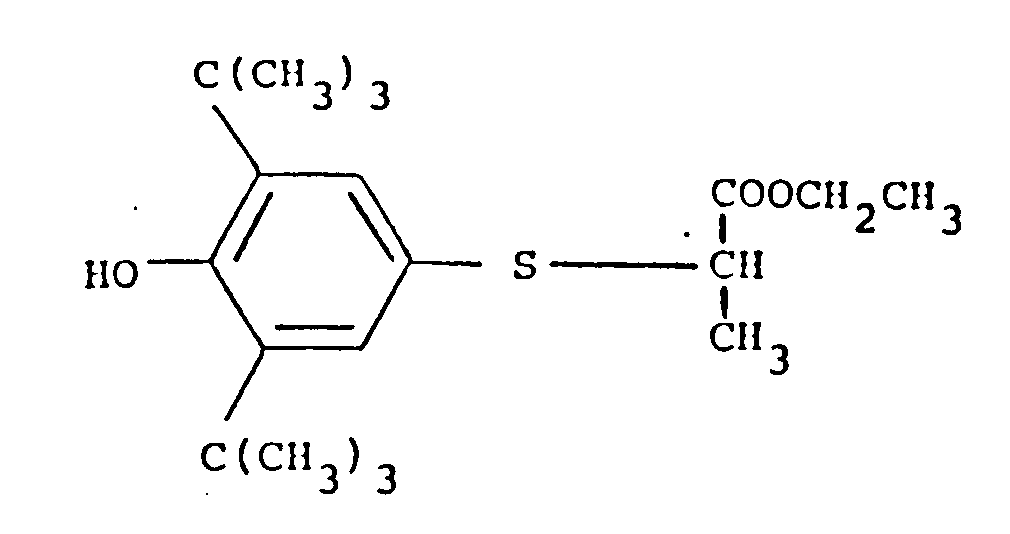
To a solution of 2,6-bis(1,1-dimethylethyl)-4-mercaptophenol (2.0 g, 8.4 mmole) and ethyl 2-bromopropanoate (1.52 g, 8.4 mmole) in tetrahydrofuran (50 ml) was added triethylamine (0.85 g, 8.4 mmole). The mixture was stirred at room temperature for 20 hours. Solids were removed by filtration and the filtrate was added to diethyl ether (75 ml) and then washed with 1 N hydrochloric acid (50 ml), dried over magnesium sulfate, filtered, and concentrated in vacuo to an oil. Chromatography on silica gel gave the title compound.Analysis Calcd. for C₁₉H₃₀SO₃: C, 67.40; H, 8.95; S, 9.47. Found: C, 67.76; H, 8.93; S, 9.44. -

To a solution of ethyl 2-[[3,5-bis(1,1-dimethylethyl)-4-hydroxyphenyl]thio]propanoate (1.16 g, 3.4 mmole) from Example 5 in absolute ethanol (20ml) was added lithium hydroxide hydrate (0.2 g, 4.8 mmole). Water was added until the solution became cloudy and the mixture was then stirred for 20 hours. Additional lithium hydroxide hydrate (0.75 g, 17.9 mmole) was added and the mixture was stirred for another two hours. The mixture was poured into 0.5 N hydrochloric acid (75 ml) and extracted with diethyl ether (100 ml in two portions). The ether extract was dried over magnesium sulfate, filtered, and concentrated in vacuo to a solid. Recrystallization from hexane gave the title compound, m.p. 110-113°.Analysis. Calcd. for C₁₇H₂₆SO₃: C, 65.77; H, 8.44; S, 10.33. Found: C, 65.64; H, 8.41; S, 10.37. -

To a solution of 2,6-bis(1,1-dimethylethyl)-4-mercaptophenol (2.38 g, 0.01 mole) and ethyl 2-bromopentanoate (2.09 g, 0.01 mole) in acetone (100 ml) was added potassium hydroxide flakes (1.68 g, 0.03 mole). The mixture was stirred at room temperature for one hour and then concentrated in vacuo to an oil. The oil was added to water (50 ml) and extracted with diethyl ether, dried over sodium sulfate, filtered, and concentrated in vacuo to an oil. Chromatography on silica gel gave the title compound.Analysis Calcd. for C₂₁H₃₄SO₃: C, 68.81; H, 9.35; S, 8.75. Found: C, 69.05; H, 9.34; S, 8.70. -

The title compound was prepared by the method of Example 6 using ethyl 2-[[3,5-bis(1,1-dimethylethyl)-4-hydroxyphenyl]thio]pentanoate instead of ethyl 2-[[3,5-bis(1,1-dimethylethyl)-4-hydroxyphenyl]thio]propanoate.Analysis Calcd. for C₁₉H₃₀SO₃: C, 67.42; H, 8.93; S, 9.47. Found: C, 67.39; H, 9.13; S, 9.69. -

To a solution of 2,6-bis(1,1-dimethylethyl)-4-mercaptophenol (5.00 g, 0.021 mole) and triethylamine (0.5 ml) in methanol (50 ml) was added methyl acrylate (5.40 g, 0.063 mole). The mixture was stirred under argon at room temperature for about 20 hours. Volatiles were removed in vacuo to give an oil. Chromatography on silica gel and recrystallization from hexane gave the title compound, m.p. 63.5-65.5°.Analysis Calcd. for C₁₈H₂₈SO₃: C, 66.62; H, 8.70; S, 9.88. Found: C, 66.93; H, 8.62; S, 9.87. -

A mixture of methyl 3-[[3,5-bis(1,1-dimethylethyl)-4-hydroxyphenyl]thio]propanoate (0,5 g, 1.5 mmole) and meta-chloroperoxybenzoic acid (0.32 g, 1.5 mmole) in dichloromethane (25 ml) was stirred under argon for 12 hours. Excess peroxide was destroyed with saturated aqueous potassium bisulfite and the phases was separated. The organic layer was washed with water, dried over magnesium sulfate, filtered, and concentrated in vacuo to dryness. Recrystallization from diethyl ether and dichloromethane gave the title compound, m.p. 106-108°.Analysis Calcd. for C₁₈H₂₈SO₄: C, 63.50; H, 8.29; S, 9.42. Found: C, 63.60; H, 8.28; S, 9.45. -

The title compound, m.p. 109-111°, was prepared by the method of Example 10 using methyl 3-[[3,5-bis(1,1 dimethylethyl)-4-hydroxyphenyl]sulfinyl]propanoate (0.4 g, 1.23 mmole) instead of methyl 3-[[3,5-bis(1,1-dimethylethyl)-4-hydroxyphenyl]thio]propanoate.Analysis Calcd. for C₁₈H₂₈SO₅: C, 60.65; H, 7.92; S, 8.99. Found: C, 60.65; H, 8.12; S, 9.01. -

Methyl 3-[[3,5-bis(1,1-dimethylethyl)-4-hydroxyphenyl]thio]propanoate (1.0 g, 3 mmole) was added to a clear solution of lithium hydroxide hydrate (0.64 g, 15 mmole) in methanol (15 ml). Water was added until the solution became cloudy and the mixture was then stirred overnight. The mixture was concentrated to about 10 ml and acidified with cold (5°) 10% hydrochloric acid. The resultant precipitate was collected by filtration, washed with water, and air dried. Recrystallization from cyclohexane gave the title compound, m.p. 108-110°.Analysis Calcd. for C₁₇H₂₆SO₃: C, 65.77; H, 8.44; S, 10.33. Found: C, 65.80; H, 8.61; S, 10.45. -

Triethylamine (1.1 ml, 7.6 mmole) was added to a solution of 2,6-bis(1,1-dimethylethyl)-4-mercaptophenol (18.2 g, 76 mmole) in methanol (200 ml) and stirred for 30 minutes. Freshly distilled acrolein (12.8 g, 0.23 mole) was added and the solution stirred at room temperature. Chromatography on silica gave 3-[[3,5-bis(1,1-dimethylethyl)-4-hydroxyphenyl]thio]propanol. To a solution of the aldehyde (2.0 g, 6.8 mmole) in benzene (20 ml) under argon was added in one portion (carbethoxymethylene)triphenylphosphorane (2.36 g, 6.8 mmole). The mixture was heated at reflux for 20 hours, allowed to stand at room temperature for three days, and then concentrated in vacuo to an oil. Chromatography on silica gel gave the title compound.Analysis Calcd. for C₂₁H₃₂SO₃: C, 69.19; H, 8.85; S, 8.79. Found: C, 69.06; H, 8.96; S, 8.75. -

To a solution of sodium ethoxide, freshly prepared from sodium (1.31 g, 57.2 mmole) in ethyl alcohol (200 ml), was added 2,6-bis(1,1-dimethylethyl)-4-mercaptophenol (6.8 g, 28.6 mmole) and the mixture was stirred for one hour. After cooling to 5°C with an ice bath, 1,1-dimethylethylene oxide (2.06 g, 28.6 mmole) was added and the ice bath removed. After stirring for 5.5 hours the reaction mixture was poured into 10% hydrochloric acid. The ethyl alcohol was removed in vacuo and the aqueous residue was extracted with ethyl acetate. The extracts were combined, dried over sodium sulfate, filtered, and concentrated to give 2,6-bis(1,1-dimethylethyl)-4-[(2-hydroxy-2-methylpropyl) thio]phenol. Trifluoroacetic acid (3 ml) was added to a solution of the phenol intermediate (2.2 g, 7 mmole), followed by addition by syringe of methyl thioglycolate (0.7 g, 6.7 mmole). After three hours the mixture was poured into water (100 ml) and extracted with ethyl acetate. The organic layer was dried over sodium sulfate, filtered, and concentrated in vacuo to an oil. Chromatography on silica gel gave the title dithio compound, m p. 64-68°.Analysis Calcd. for C₁₇H₂₆S₂O₃: C, 59.61; H, 7.65; S, 18.72. Found: C, 59.91; H, 7.59; S, 18.79. - The compounds of the invention are evaluated with respect to 5-lipoxygenase inhibition according to the following assay procedure.
- The 100,000 x g supernatant fraction of Rat Basophilic Leukemia Cell Homogenate (RBL-1) serves as a 5-lipoxygenase enzyme source. The enzyme is incubated with [1-¹⁴C)-arachidonic acid and Ca⁺⁺ in the presence and absence of test compound. The product of 5-lipoxygenase, 5-hydroxyeicosatetraenoic acid (5-HETE), is separated by thin-layer chromatography and measured by radioactivity. A compound inhibiting 5-HETE synthesis by 30% or more is considered active at that concentration. Initial screening doses are 1 x 10⁻⁴M. When the compound inhibits more than 50% of 5-HETE synthesis at 10⁻⁴M, that compound is tested at multiple dose levels to determine the IC₅₀ value (inhibitory concentration to inhibit 50%). The results with respect to certain of the preferred compounds of the present invention are set forth in Table I.
TABLE I Compound Example No. 5-Lipoxygenase Inhibition, in vitro. IC₅₀(µM) 3 1.00 4 1.10 5 0.39 7 1.30 8 6.60 9 0.38 10 16.50 11 Inactive 12 3.40 13 0.26 14 0.40 - It is further noted that the compounds of the present invention have not been found to be effective inhibitors of either 12- or 15-lipoxygenases or of cyclooxygenase at concentrations which inhibit 5-lipoxygenase further confirming the specificity of the present compounds for 5-lipoxygenase.
Claims (17)
- Use of a compound of the formula

wherein R¹ and R² are independently C₄-C₁₀ tert-alkyl;X is:a) -S- ;b) -(SO)- ; orc) -S-S- ;Y is:a) C₁-C₆ alkylene; orb) C₂-C₆ alkenylene, with the proviso that the double bond is not on a carbon adjacent to X; andR³ is:for the manufacture of a medicament for treating lipoxygenase mediated conditions in mammals,a) hydrogen; orb) C₁-C₆ alkyl - Use according to Claim 1 wherein said compound has the formula:

- Use according to Claim 2 wherein said compound has the formula:

whereinY is:whereina) C₁-C₆ alkylene; orb) C₂-C₆ alkenylene, with the proviso that the double bond is not on a carbon adjacent to S; andR³ is defined as in claim 1. - Use according to Claim 3 wherein Y is alkylene.
- Use according to Claim 4 wherein R³ is hydrogen.
- Use according to Claim 5 wherein said compound is selected from the group consisting of:
4-[[3,5-bis(1,1-dimethylethyl)-4-hydroxyphenyl]thio] butanoic acid,
5-[[3,5-bis(1,1-dimethylethyl)-4-hydroxyphenyl]thio] pentanoic acid,
2-[[3,5-bis(1,1-dimethylethyl)-4-hydroxyphenyl]thio] propanoic acid,
2-[[3,5-bis(1,1-dimethylethyl)-4-hydroxyphenyl]thio] pentanoic acid, and
3-[[3,5-bis(1,1-dimethylethyl)-4-hydroxyphenyl]thio] propanoic acid. - Use according to Claim 4 wherein R³ is C₁-C₆ alkyl.
- Use according to Claim 7 wherein said compound is selected from the group consisting of:
ethyl 2-[[3,5-bis(1,1-dimethylethyl)-4-hydroxyphenyl] thio]propanoate,
ethyl 2-[[3,5-bis(1,1-dimethylethyl)-4-hydroxyphenyl] thio]pentanoate, and
methyl 3-[[3,5-bis(1,1-dimethylethyl)-4-hydroxyphenyl] thio]propanoate. - Use according to Claim 3 wherein Y is alkenylene.
- Use according to Claim 9 wherein said compound is ethyl 5-[[3,5-bis(1,1-dimethylethyl)-4-hydroxyphenyl] thio]-2-pentenoate.
- Use according to Claim 2 wherein said compound has the formula:

whereinY is:whereina) C₁-C₆ alkylene; orb) C₂-C₆ alkenylene, with the proviso that the double bond is not on a carbon adjacent to (SO); andR³ is defined as in claim 1. - Use according to Claim 11, wherein said compound is methyl 3-[[3,5-bis(1,1-dimethylethyl)-4-hydroxyphenyl] sulfinyl]propanoate.
- Use according to Claim 2 wherein said compound has the formula:
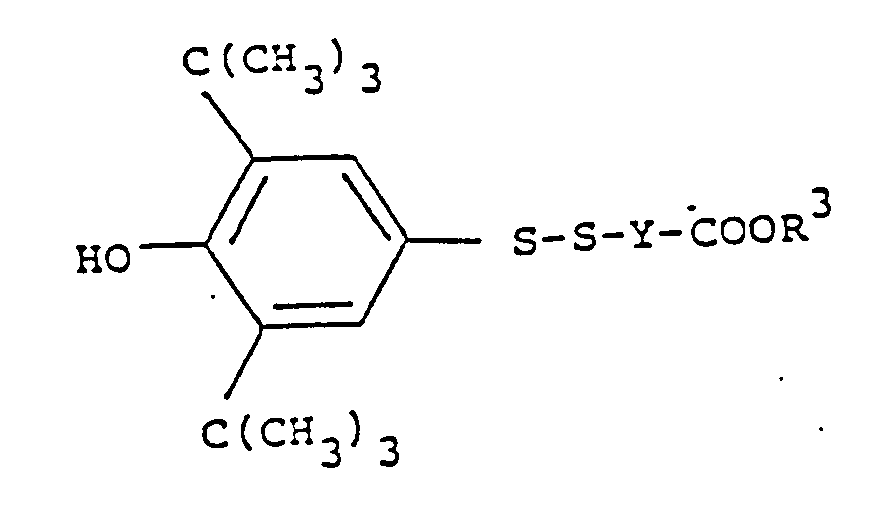
whereinY is:a) C₁-C₆ alkylene; orb) C₂-C₆ alkenylene, with the proviso that the double bond is not on a carbon adjacent to S; andR³ is:a) hydrogen; orb) C₁-C₆ alkyl. - Use according to Claim 13 wherein said compound is methyl [[3,5-bis(1,1-dimethylethyl)-4-hydroxyphenyl] dithio]acetate.
- A process for preparing a pharmaceutical composition useful in the treatment of lipoxygenase mediated conditions in mammals characterized in that a compound according to Claim 1 is admixed with one or more non-toxic pharmaceutically-acceptable carriers.
- A process according to Claim 15, wherein the compound has the formula

wherein X, Y and R³ are defined as in claim 1. - A process according to Claim 16 wherein the compound is selected from the group consisting of:
4-[[3,5-bis(1-1-dimethylethyl)-4-hydroxyphenyl]thio] butanoic acid,
5-[[3,5-bis(1,1-dimethylethyl)-4-hydroxyphenyl]thio] pentanoic acid,
2-[[3,5-bis(1,1-dimethylethyl)-4-hydroxyphenyl]thio] propanoic acid,
2-[[3,5-bis(1,1-dimethylethyl)-4-hydroxyphenyl]thio] pentanoic acid,
3-[[3,5-bis(1,1-dimethylethyl)-4-hydroxyphenyl]thio] propanoic acid,
ethyl 2-[[3,5-bis(1,1-dimethylethyl)-4-hydroxyphenyl] thio]propanoate,
ethyl 2-[[3,5-bis(1,1-dimethylethyl)-4-hydroxyphenyl] thio]pentanoate,
methyl 3-[[3,5-bis(1,1-dimethylethyl)-4-hydroxyphenyl] thio]propanoate,
ethyl 5-[[3,5-bis(1,1-dimethylethyl)-4-hydroxyphenyl] thio]-2-pentenoate,
methyl 3-[[3,5-bis(1,1-dimethylethyl)-4-hydroxyphenyl] sulfinyl]propanoate, and
methyl [[3,5-bis(1,1-dimethylethyl)-4-hydroxyphenyl] dithio]acetate.
Priority Applications (1)
| Application Number | Priority Date | Filing Date | Title |
|---|---|---|---|
| AT88108874T ATE102827T1 (en) | 1987-06-05 | 1988-06-03 | PHENOLIC THIOAETHERS, SULFOXIDES AND DISULPHIDES AS 5-LIPOXIGENASE INHIBITORS. |
Applications Claiming Priority (2)
| Application Number | Priority Date | Filing Date | Title |
|---|---|---|---|
| US5845787A | 1987-06-05 | 1987-06-05 | |
| US58457 | 1987-06-05 |
Publications (3)
| Publication Number | Publication Date |
|---|---|
| EP0293900A2 EP0293900A2 (en) | 1988-12-07 |
| EP0293900A3 EP0293900A3 (en) | 1991-01-30 |
| EP0293900B1 true EP0293900B1 (en) | 1994-03-16 |
Family
ID=22016921
Family Applications (1)
| Application Number | Title | Priority Date | Filing Date |
|---|---|---|---|
| EP88108874A Expired - Lifetime EP0293900B1 (en) | 1987-06-05 | 1988-06-03 | Phenolic thioethers, sulfoxides, and disulfides as inhibitors of 5-lipoxygenase |
Country Status (6)
| Country | Link |
|---|---|
| EP (1) | EP0293900B1 (en) |
| JP (1) | JPS63310821A (en) |
| AT (1) | ATE102827T1 (en) |
| CA (1) | CA1327050C (en) |
| DE (1) | DE3888394T2 (en) |
| ES (1) | ES2061561T3 (en) |
Families Citing this family (7)
| Publication number | Priority date | Publication date | Assignee | Title |
|---|---|---|---|---|
| JP2754039B2 (en) * | 1988-06-24 | 1998-05-20 | 塩野義製薬株式会社 | Di-tert-butylhydroxyphenylthio derivative |
| US5147893A (en) * | 1991-05-09 | 1992-09-15 | G. D. Searle & Co. | Cyclic phenolic thioethers |
| US5250567A (en) * | 1991-05-09 | 1993-10-05 | G. D. Searle & Co. | Cyclic phenolic thioethers |
| US5272178A (en) * | 1991-11-18 | 1993-12-21 | G. D. Searle & Co. | Compounds of cyclic phenolic thioethers which are useful in stimulating and inhibiting superoxide generation |
| US5420343A (en) * | 1994-08-31 | 1995-05-30 | G. D. Searle & Co. | Derivatives of aromatic cyclic alkylethers |
| CN106939075B (en) * | 2015-12-31 | 2019-09-17 | 银谷制药有限责任公司 | A kind of hydrophilic polyester and its block copolymer |
| CN108299263B (en) * | 2018-01-30 | 2020-12-01 | 北京德默高科医药技术有限公司 | Probucol derivative and preparation method and application thereof |
Family Cites Families (6)
| Publication number | Priority date | Publication date | Assignee | Title |
|---|---|---|---|---|
| CA1277663C (en) * | 1985-02-04 | 1990-12-11 | Richard A. Mueller | Heterocyclic amides |
| CA1332057C (en) * | 1985-02-04 | 1994-09-20 | Richard August Mueller | Bicycloalkyl, tricycloalkyl, azabicycloalkyl and azatricycloalkyl amides |
| US4663333A (en) * | 1985-02-04 | 1987-05-05 | G. D. Searle & Co. | Acylaminoalkylpyridines ad use in treatment of inflammation and allergy reactions |
| AU584669B2 (en) * | 1985-02-04 | 1989-06-01 | G.D. Searle & Co. | Novel disubstituted 4-hydroxyphenylthio anilides |
| DE3687990T2 (en) * | 1985-05-20 | 1993-07-15 | Searle & Co | HYDROXYPHENYLTHIOALKYLKETONE. |
| US4755524A (en) * | 1986-01-31 | 1988-07-05 | G. D. Searle & Co. | Novel phenolic thioethers as inhibitors of 5-lipoxygenase |
-
1988
- 1988-06-02 JP JP63134563A patent/JPS63310821A/en active Pending
- 1988-06-02 CA CA000568445A patent/CA1327050C/en not_active Expired - Fee Related
- 1988-06-03 AT AT88108874T patent/ATE102827T1/en not_active IP Right Cessation
- 1988-06-03 EP EP88108874A patent/EP0293900B1/en not_active Expired - Lifetime
- 1988-06-03 ES ES88108874T patent/ES2061561T3/en not_active Expired - Lifetime
- 1988-06-03 DE DE3888394T patent/DE3888394T2/en not_active Expired - Fee Related
Also Published As
| Publication number | Publication date |
|---|---|
| EP0293900A3 (en) | 1991-01-30 |
| CA1327050C (en) | 1994-02-15 |
| DE3888394D1 (en) | 1994-04-21 |
| ATE102827T1 (en) | 1994-04-15 |
| DE3888394T2 (en) | 1994-07-28 |
| EP0293900A2 (en) | 1988-12-07 |
| JPS63310821A (en) | 1988-12-19 |
| ES2061561T3 (en) | 1994-12-16 |
Similar Documents
| Publication | Publication Date | Title |
|---|---|---|
| US4755524A (en) | Novel phenolic thioethers as inhibitors of 5-lipoxygenase | |
| US4711903A (en) | Phenolic thioethers as inhibitors of 5-lipoxygenase | |
| US4857558A (en) | Methods and compositions for inhibiting lipoxygenase | |
| EP0190685B1 (en) | Heterocyclic amides | |
| JPS61197554A (en) | Novel anilide | |
| US4694018A (en) | Substituted 1,5-diphenyl-2-pyrrolepropionic acids and derivatives | |
| EP0293899B1 (en) | Phenolic thioalkylamides as inhibitors of 5-lipoxygenase | |
| US4959364A (en) | Method of treating inflammation, allergy, asthma and proliferative skin disease using heterocyclic amides | |
| CA1327050C (en) | Phenolic thioethers, sulfoxides, and disulfides as inhibitors of 5-lipoxygenase | |
| US5002967A (en) | Phenolic thioethers, sulfoxides, and disulfides as inhibitors of 5-lipoxygenase | |
| US4663333A (en) | Acylaminoalkylpyridines ad use in treatment of inflammation and allergy reactions | |
| US4835190A (en) | Phenolic thioethers as inhbitors of 5-lipoxygenase | |
| US4801611A (en) | 5-lipoxygenase inhibitors | |
| US4847305A (en) | Phenolic thioethers as inhibitors of 5-lipoxygenase | |
| US5162365A (en) | 5-lipoxygenase inhibitors | |
| US5272178A (en) | Compounds of cyclic phenolic thioethers which are useful in stimulating and inhibiting superoxide generation | |
| US5066679A (en) | Phenolic thioalkylamides as inhibitors of 5-lipoxygenase | |
| US5036105A (en) | 5-lipoxygenase inhibitors | |
| US5326907A (en) | 2-aminoethanesulfonic acid derivatives of 3,5-disubstituted-4-hydroxyphenolic thioethers | |
| US5229421A (en) | Methods and compositions for inhibiting lipoxygenase | |
| JPH06500328A (en) | Phenolic thioetheramides as 5-lipoxygenase inhibitors | |
| WO1993010087A1 (en) | Derivatives of cyclic phenolic thioethers as inhibitors or stimulators of superoxide generation |
Legal Events
| Date | Code | Title | Description |
|---|---|---|---|
| PUAI | Public reference made under article 153(3) epc to a published international application that has entered the european phase |
Free format text: ORIGINAL CODE: 0009012 |
|
| AK | Designated contracting states |
Kind code of ref document: A2 Designated state(s): AT BE CH DE ES FR GB GR IT LI NL SE |
|
| PUAL | Search report despatched |
Free format text: ORIGINAL CODE: 0009013 |
|
| AK | Designated contracting states |
Kind code of ref document: A3 Designated state(s): AT BE CH DE ES FR GB GR IT LI NL SE |
|
| 17P | Request for examination filed |
Effective date: 19910518 |
|
| 17Q | First examination report despatched |
Effective date: 19911031 |
|
| ITF | It: translation for a ep patent filed | ||
| GRAA | (expected) grant |
Free format text: ORIGINAL CODE: 0009210 |
|
| AK | Designated contracting states |
Kind code of ref document: B1 Designated state(s): AT BE CH DE ES FR GB GR IT LI NL SE |
|
| REF | Corresponds to: |
Ref document number: 102827 Country of ref document: AT Date of ref document: 19940415 Kind code of ref document: T |
|
| REF | Corresponds to: |
Ref document number: 3888394 Country of ref document: DE Date of ref document: 19940421 |
|
| PGFP | Annual fee paid to national office [announced via postgrant information from national office to epo] |
Ref country code: FR Payment date: 19940513 Year of fee payment: 7 Ref country code: CH Payment date: 19940513 Year of fee payment: 7 |
|
| PGFP | Annual fee paid to national office [announced via postgrant information from national office to epo] |
Ref country code: SE Payment date: 19940518 Year of fee payment: 7 Ref country code: AT Payment date: 19940518 Year of fee payment: 7 |
|
| PGFP | Annual fee paid to national office [announced via postgrant information from national office to epo] |
Ref country code: BE Payment date: 19940519 Year of fee payment: 7 |
|
| PGFP | Annual fee paid to national office [announced via postgrant information from national office to epo] |
Ref country code: GR Payment date: 19940524 Year of fee payment: 7 |
|
| PGFP | Annual fee paid to national office [announced via postgrant information from national office to epo] |
Ref country code: DE Payment date: 19940525 Year of fee payment: 7 |
|
| PGFP | Annual fee paid to national office [announced via postgrant information from national office to epo] |
Ref country code: GB Payment date: 19940531 Year of fee payment: 7 |
|
| PGFP | Annual fee paid to national office [announced via postgrant information from national office to epo] |
Ref country code: ES Payment date: 19940610 Year of fee payment: 7 |
|
| PGFP | Annual fee paid to national office [announced via postgrant information from national office to epo] |
Ref country code: NL Payment date: 19940630 Year of fee payment: 7 |
|
| REG | Reference to a national code |
Ref country code: GR Ref legal event code: FG4A Free format text: 3011508 |
|
| ET | Fr: translation filed | ||
| REG | Reference to a national code |
Ref country code: ES Ref legal event code: FG2A Ref document number: 2061561 Country of ref document: ES Kind code of ref document: T3 |
|
| PLBE | No opposition filed within time limit |
Free format text: ORIGINAL CODE: 0009261 |
|
| STAA | Information on the status of an ep patent application or granted ep patent |
Free format text: STATUS: NO OPPOSITION FILED WITHIN TIME LIMIT |
|
| EAL | Se: european patent in force in sweden |
Ref document number: 88108874.4 |
|
| 26N | No opposition filed | ||
| PG25 | Lapsed in a contracting state [announced via postgrant information from national office to epo] |
Ref country code: GB Effective date: 19950603 Ref country code: AT Effective date: 19950603 |
|
| PG25 | Lapsed in a contracting state [announced via postgrant information from national office to epo] |
Ref country code: SE Effective date: 19950604 |
|
| PG25 | Lapsed in a contracting state [announced via postgrant information from national office to epo] |
Ref country code: ES Free format text: LAPSE BECAUSE OF THE APPLICANT RENOUNCES Effective date: 19950605 |
|
| PG25 | Lapsed in a contracting state [announced via postgrant information from national office to epo] |
Ref country code: LI Effective date: 19950630 Ref country code: CH Effective date: 19950630 Ref country code: BE Effective date: 19950630 |
|
| BERE | Be: lapsed |
Owner name: G.D. SEARLE & CO. Effective date: 19950630 |
|
| PG25 | Lapsed in a contracting state [announced via postgrant information from national office to epo] |
Ref country code: GR Free format text: THE PATENT HAS BEEN ANNULLED BY A DECISION OF A NATIONAL AUTHORITY Effective date: 19951231 |
|
| PG25 | Lapsed in a contracting state [announced via postgrant information from national office to epo] |
Ref country code: NL Effective date: 19960101 |
|
| GBPC | Gb: european patent ceased through non-payment of renewal fee |
Effective date: 19950603 |
|
| PG25 | Lapsed in a contracting state [announced via postgrant information from national office to epo] |
Ref country code: FR Effective date: 19960229 |
|
| REG | Reference to a national code |
Ref country code: CH Ref legal event code: PL Ref country code: GR Ref legal event code: MM2A Free format text: 3011508 |
|
| NLV4 | Nl: lapsed or anulled due to non-payment of the annual fee |
Effective date: 19960101 |
|
| PG25 | Lapsed in a contracting state [announced via postgrant information from national office to epo] |
Ref country code: DE Effective date: 19960301 |
|
| EUG | Se: european patent has lapsed |
Ref document number: 88108874.4 |
|
| REG | Reference to a national code |
Ref country code: FR Ref legal event code: ST |
|
| REG | Reference to a national code |
Ref country code: ES Ref legal event code: FD2A Effective date: 19991007 |
|
| PG25 | Lapsed in a contracting state [announced via postgrant information from national office to epo] |
Ref country code: IT Free format text: LAPSE BECAUSE OF NON-PAYMENT OF DUE FEES;WARNING: LAPSES OF ITALIAN PATENTS WITH EFFECTIVE DATE BEFORE 2007 MAY HAVE OCCURRED AT ANY TIME BEFORE 2007. THE CORRECT EFFECTIVE DATE MAY BE DIFFERENT FROM THE ONE RECORDED. Effective date: 20050603 |