EP0277688B1 - Method for preparing thiol compounds - Google Patents
Method for preparing thiol compounds Download PDFInfo
- Publication number
- EP0277688B1 EP0277688B1 EP88200141A EP88200141A EP0277688B1 EP 0277688 B1 EP0277688 B1 EP 0277688B1 EP 88200141 A EP88200141 A EP 88200141A EP 88200141 A EP88200141 A EP 88200141A EP 0277688 B1 EP0277688 B1 EP 0277688B1
- Authority
- EP
- European Patent Office
- Prior art keywords
- lyase
- cysteine
- thiol compounds
- formula
- carbon atoms
- Prior art date
- Legal status (The legal status is an assumption and is not a legal conclusion. Google has not performed a legal analysis and makes no representation as to the accuracy of the status listed.)
- Expired - Lifetime
Links
- 238000000034 method Methods 0.000 title claims abstract description 21
- -1 thiol compounds Chemical class 0.000 title claims abstract description 16
- XUJNEKJLAYXESH-UHFFFAOYSA-N cysteine Natural products SCC(N)C(O)=O XUJNEKJLAYXESH-UHFFFAOYSA-N 0.000 claims abstract description 20
- 235000018417 cysteine Nutrition 0.000 claims abstract description 20
- RVOKNSFEAOYULQ-UHFFFAOYSA-N 8-Mercapto-p-menthan-3-one Chemical compound CC1CCC(C(C)(C)S)C(=O)C1 RVOKNSFEAOYULQ-UHFFFAOYSA-N 0.000 claims abstract description 12
- NZGWDASTMWDZIW-MRVPVSSYSA-N (+)-pulegone Chemical compound C[C@@H]1CCC(=C(C)C)C(=O)C1 NZGWDASTMWDZIW-MRVPVSSYSA-N 0.000 claims abstract description 6
- NZGWDASTMWDZIW-UHFFFAOYSA-N Pulegone Natural products CC1CCC(=C(C)C)C(=O)C1 NZGWDASTMWDZIW-UHFFFAOYSA-N 0.000 claims abstract description 6
- USMNOWBWPHYOEA-UHFFFAOYSA-N alpha-thujone Natural products CC1C(=O)CC2(C(C)C)C1C2 USMNOWBWPHYOEA-UHFFFAOYSA-N 0.000 claims abstract description 6
- 229930007459 p-menth-8-en-3-one Natural products 0.000 claims abstract description 6
- 239000000796 flavoring agent Substances 0.000 claims abstract description 4
- 235000019634 flavors Nutrition 0.000 claims abstract description 3
- 125000004432 carbon atom Chemical group C* 0.000 claims description 10
- 241000186398 Eubacterium limosum Species 0.000 claims description 9
- 150000001875 compounds Chemical class 0.000 claims description 9
- 125000004435 hydrogen atom Chemical group [H]* 0.000 claims description 7
- SHZGCJCMOBCMKK-UHFFFAOYSA-N D-mannomethylose Natural products CC1OC(O)C(O)C(O)C1O SHZGCJCMOBCMKK-UHFFFAOYSA-N 0.000 claims description 6
- SRBFZHDQGSBBOR-IOVATXLUSA-N D-xylopyranose Chemical compound O[C@@H]1COC(O)[C@H](O)[C@H]1O SRBFZHDQGSBBOR-IOVATXLUSA-N 0.000 claims description 6
- 125000000217 alkyl group Chemical group 0.000 claims description 6
- PYMYPHUHKUWMLA-UHFFFAOYSA-N arabinose Natural products OCC(O)C(O)C(O)C=O PYMYPHUHKUWMLA-UHFFFAOYSA-N 0.000 claims description 6
- SRBFZHDQGSBBOR-UHFFFAOYSA-N beta-D-Pyranose-Lyxose Natural products OC1COC(O)C(O)C1O SRBFZHDQGSBBOR-UHFFFAOYSA-N 0.000 claims description 6
- 125000001183 hydrocarbyl group Chemical group 0.000 claims description 5
- 239000000203 mixture Substances 0.000 claims description 5
- WQZGKKKJIJFFOK-GASJEMHNSA-N Glucose Natural products OC[C@H]1OC(O)[C@H](O)[C@@H](O)[C@@H]1O WQZGKKKJIJFFOK-GASJEMHNSA-N 0.000 claims description 4
- 230000001580 bacterial effect Effects 0.000 claims description 4
- 239000008103 glucose Substances 0.000 claims description 4
- 229920006395 saturated elastomer Polymers 0.000 claims description 4
- WQZGKKKJIJFFOK-QTVWNMPRSA-N D-mannopyranose Chemical compound OC[C@H]1OC(O)[C@@H](O)[C@@H](O)[C@@H]1O WQZGKKKJIJFFOK-QTVWNMPRSA-N 0.000 claims description 3
- PNNNRSAQSRJVSB-SLPGGIOYSA-N Fucose Natural products C[C@H](O)[C@@H](O)[C@H](O)[C@H](O)C=O PNNNRSAQSRJVSB-SLPGGIOYSA-N 0.000 claims description 3
- SHZGCJCMOBCMKK-DHVFOXMCSA-N L-fucopyranose Chemical compound C[C@@H]1OC(O)[C@@H](O)[C@H](O)[C@@H]1O SHZGCJCMOBCMKK-DHVFOXMCSA-N 0.000 claims description 3
- SHZGCJCMOBCMKK-JFNONXLTSA-N L-rhamnopyranose Chemical compound C[C@@H]1OC(O)[C@H](O)[C@H](O)[C@H]1O SHZGCJCMOBCMKK-JFNONXLTSA-N 0.000 claims description 3
- PNNNRSAQSRJVSB-UHFFFAOYSA-N L-rhamnose Natural products CC(O)C(O)C(O)C(O)C=O PNNNRSAQSRJVSB-UHFFFAOYSA-N 0.000 claims description 3
- 150000001242 acetic acid derivatives Chemical class 0.000 claims description 3
- 239000002253 acid Substances 0.000 claims description 3
- 150000007513 acids Chemical class 0.000 claims description 3
- WQZGKKKJIJFFOK-PHYPRBDBSA-N alpha-D-galactose Chemical compound OC[C@H]1O[C@H](O)[C@H](O)[C@@H](O)[C@H]1O WQZGKKKJIJFFOK-PHYPRBDBSA-N 0.000 claims description 3
- 150000001412 amines Chemical class 0.000 claims description 3
- PYMYPHUHKUWMLA-WDCZJNDASA-N arabinose Chemical compound OC[C@@H](O)[C@@H](O)[C@H](O)C=O PYMYPHUHKUWMLA-WDCZJNDASA-N 0.000 claims description 3
- WQZGKKKJIJFFOK-VFUOTHLCSA-N beta-D-glucose Chemical compound OC[C@H]1O[C@@H](O)[C@H](O)[C@@H](O)[C@@H]1O WQZGKKKJIJFFOK-VFUOTHLCSA-N 0.000 claims description 3
- 229930182830 galactose Natural products 0.000 claims description 3
- 150000002772 monosaccharides Chemical class 0.000 claims description 3
- 150000004728 pyruvic acid derivatives Chemical class 0.000 claims description 3
- 150000003467 sulfuric acid derivatives Chemical class 0.000 claims description 3
- TXPDNFKXWDSRHT-WMSSUOLPSA-N (8s,9s,10r,13s,14s,17s)-17-acetyl-10,13-dimethyl-16-sulfanyl-1,2,6,7,8,9,11,12,14,15,16,17-dodecahydrocyclopenta[a]phenanthren-3-one Chemical compound C1CC2=CC(=O)CC[C@]2(C)[C@@H]2[C@@H]1[C@@H]1CC(S)[C@H](C(=O)C)[C@@]1(C)CC2 TXPDNFKXWDSRHT-WMSSUOLPSA-N 0.000 claims description 2
- VRRHHTISESGZFN-RKFFNLMFSA-N 16,17-didehydroprogesterone Chemical compound C1CC2=CC(=O)CC[C@]2(C)[C@@H]2[C@@H]1[C@@H]1CC=C(C(=O)C)[C@@]1(C)CC2 VRRHHTISESGZFN-RKFFNLMFSA-N 0.000 claims description 2
- 229910052739 hydrogen Inorganic materials 0.000 claims description 2
- UFHFLCQGNIYNRP-UHFFFAOYSA-N Hydrogen Chemical compound [H][H] UFHFLCQGNIYNRP-UHFFFAOYSA-N 0.000 claims 1
- 239000001257 hydrogen Substances 0.000 claims 1
- 239000004615 ingredient Substances 0.000 claims 1
- 238000010586 diagram Methods 0.000 abstract description 3
- 230000008878 coupling Effects 0.000 abstract 1
- 238000010168 coupling process Methods 0.000 abstract 1
- 238000005859 coupling reaction Methods 0.000 abstract 1
- 150000002430 hydrocarbons Chemical class 0.000 abstract 1
- 125000000896 monocarboxylic acid group Chemical group 0.000 abstract 1
- XUJNEKJLAYXESH-REOHCLBHSA-N L-Cysteine Chemical compound SC[C@H](N)C(O)=O XUJNEKJLAYXESH-REOHCLBHSA-N 0.000 description 17
- 229960002433 cysteine Drugs 0.000 description 15
- 108090000790 Enzymes Proteins 0.000 description 12
- 102000004190 Enzymes Human genes 0.000 description 12
- 230000000694 effects Effects 0.000 description 10
- 210000004027 cell Anatomy 0.000 description 9
- 239000007789 gas Substances 0.000 description 7
- 239000000047 product Substances 0.000 description 6
- 241000894006 Bacteria Species 0.000 description 5
- YMWUJEATGCHHMB-UHFFFAOYSA-N Dichloromethane Chemical compound ClCCl YMWUJEATGCHHMB-UHFFFAOYSA-N 0.000 description 5
- LLMLGZUZTFMXSA-UHFFFAOYSA-N 2,3,4,5,6-pentachlorobenzenethiol Chemical compound SC1=C(Cl)C(Cl)=C(Cl)C(Cl)=C1Cl LLMLGZUZTFMXSA-UHFFFAOYSA-N 0.000 description 4
- 235000013361 beverage Nutrition 0.000 description 4
- 229910052760 oxygen Inorganic materials 0.000 description 4
- 238000002360 preparation method Methods 0.000 description 4
- 238000001228 spectrum Methods 0.000 description 4
- 239000000758 substrate Substances 0.000 description 4
- CSCPPACGZOOCGX-UHFFFAOYSA-N Acetone Chemical compound CC(C)=O CSCPPACGZOOCGX-UHFFFAOYSA-N 0.000 description 3
- HEDRZPFGACZZDS-UHFFFAOYSA-N Chloroform Chemical compound ClC(Cl)Cl HEDRZPFGACZZDS-UHFFFAOYSA-N 0.000 description 3
- 239000004201 L-cysteine Substances 0.000 description 3
- 235000013878 L-cysteine Nutrition 0.000 description 3
- 238000004458 analytical method Methods 0.000 description 3
- QVGXLLKOCUKJST-UHFFFAOYSA-N atomic oxygen Chemical compound [O] QVGXLLKOCUKJST-UHFFFAOYSA-N 0.000 description 3
- 239000000872 buffer Substances 0.000 description 3
- 229910052799 carbon Inorganic materials 0.000 description 3
- 239000000284 extract Substances 0.000 description 3
- 230000000968 intestinal effect Effects 0.000 description 3
- 239000001301 oxygen Substances 0.000 description 3
- LKPLKUMXSAEKID-UHFFFAOYSA-N pentachloronitrobenzene Chemical compound [O-][N+](=O)C1=C(Cl)C(Cl)=C(Cl)C(Cl)=C1Cl LKPLKUMXSAEKID-UHFFFAOYSA-N 0.000 description 3
- 239000011541 reaction mixture Substances 0.000 description 3
- 244000291564 Allium cepa Species 0.000 description 2
- 235000002732 Allium cepa var. cepa Nutrition 0.000 description 2
- IJGRMHOSHXDMSA-UHFFFAOYSA-N Atomic nitrogen Chemical compound N#N IJGRMHOSHXDMSA-UHFFFAOYSA-N 0.000 description 2
- UXVMQQNJUSDDNG-UHFFFAOYSA-L Calcium chloride Chemical compound [Cl-].[Cl-].[Ca+2] UXVMQQNJUSDDNG-UHFFFAOYSA-L 0.000 description 2
- 241000605952 Fusobacterium necrophorum Species 0.000 description 2
- 241000605975 Fusobacterium varium Species 0.000 description 2
- 108010071884 S-alkylcysteine lyase Proteins 0.000 description 2
- 125000000066 S-methyl group Chemical group [H]C([H])([H])S* 0.000 description 2
- UIIMBOGNXHQVGW-UHFFFAOYSA-M Sodium bicarbonate Chemical compound [Na+].OC([O-])=O UIIMBOGNXHQVGW-UHFFFAOYSA-M 0.000 description 2
- FAPWRFPIFSIZLT-UHFFFAOYSA-M Sodium chloride Chemical compound [Na+].[Cl-] FAPWRFPIFSIZLT-UHFFFAOYSA-M 0.000 description 2
- NINIDFKCEFEMDL-UHFFFAOYSA-N Sulfur Chemical compound [S] NINIDFKCEFEMDL-UHFFFAOYSA-N 0.000 description 2
- 244000299461 Theobroma cacao Species 0.000 description 2
- 235000009470 Theobroma cacao Nutrition 0.000 description 2
- 102000004357 Transferases Human genes 0.000 description 2
- 108090000992 Transferases Proteins 0.000 description 2
- QGMWDUUHVVLHNP-AEGPPILISA-N Warburganal Chemical compound C[C@@]1([C@@](C(C=O)=CC2)(O)C=O)[C@@H]2C(C)(C)CCC1 QGMWDUUHVVLHNP-AEGPPILISA-N 0.000 description 2
- 238000007259 addition reaction Methods 0.000 description 2
- 230000015572 biosynthetic process Effects 0.000 description 2
- 239000001110 calcium chloride Substances 0.000 description 2
- 235000011148 calcium chloride Nutrition 0.000 description 2
- 229910001628 calcium chloride Inorganic materials 0.000 description 2
- 108010076637 carbon-sulfur lyase Proteins 0.000 description 2
- 102000028406 carbon-sulfur lyase Human genes 0.000 description 2
- 238000006243 chemical reaction Methods 0.000 description 2
- 238000004587 chromatography analysis Methods 0.000 description 2
- 230000002496 gastric effect Effects 0.000 description 2
- RWSXRVCMGQZWBV-WDSKDSINSA-N glutathione Chemical compound OC(=O)[C@@H](N)CCC(=O)N[C@@H](CS)C(=O)NCC(O)=O RWSXRVCMGQZWBV-WDSKDSINSA-N 0.000 description 2
- 125000005843 halogen group Chemical group 0.000 description 2
- 238000000338 in vitro Methods 0.000 description 2
- 238000011534 incubation Methods 0.000 description 2
- 238000002347 injection Methods 0.000 description 2
- 239000007924 injection Substances 0.000 description 2
- 238000002955 isolation Methods 0.000 description 2
- 210000004185 liver Anatomy 0.000 description 2
- 230000004060 metabolic process Effects 0.000 description 2
- 229910052757 nitrogen Inorganic materials 0.000 description 2
- 230000000144 pharmacologic effect Effects 0.000 description 2
- 235000007682 pyridoxal 5'-phosphate Nutrition 0.000 description 2
- 239000011589 pyridoxal 5'-phosphate Substances 0.000 description 2
- NGVDGCNFYWLIFO-UHFFFAOYSA-N pyridoxal 5'-phosphate Chemical compound CC1=NC=C(COP(O)(O)=O)C(C=O)=C1O NGVDGCNFYWLIFO-UHFFFAOYSA-N 0.000 description 2
- 229960001327 pyridoxal phosphate Drugs 0.000 description 2
- LXNHXLLTXMVWPM-UHFFFAOYSA-N pyridoxine Chemical compound CC1=NC=C(CO)C(CO)=C1O LXNHXLLTXMVWPM-UHFFFAOYSA-N 0.000 description 2
- 239000012266 salt solution Substances 0.000 description 2
- 239000000126 substance Substances 0.000 description 2
- 229910052717 sulfur Inorganic materials 0.000 description 2
- 150000003573 thiols Chemical class 0.000 description 2
- 235000013311 vegetables Nutrition 0.000 description 2
- KRBPTLCTECPKGY-LURJTMIESA-N (2r)-2-amino-3-(1,3-benzothiazol-2-ylsulfanyl)propanoic acid Chemical compound C1=CC=C2SC(SC[C@H](N)C(O)=O)=NC2=C1 KRBPTLCTECPKGY-LURJTMIESA-N 0.000 description 1
- IMTQLFZHDUEHTB-REOHCLBHSA-N (2r)-2-amino-3-(2,3,4,5,6-pentachlorophenyl)sulfanylpropanoic acid Chemical compound OC(=O)[C@@H](N)CSC1=C(Cl)C(Cl)=C(Cl)C(Cl)=C1Cl IMTQLFZHDUEHTB-REOHCLBHSA-N 0.000 description 1
- LGZZJTIUEJNNKV-UHFFFAOYSA-N 1,2,3,4,5-pentachloro-6-methylsulfanylbenzene Chemical compound CSC1=C(Cl)C(Cl)=C(Cl)C(Cl)=C1Cl LGZZJTIUEJNNKV-UHFFFAOYSA-N 0.000 description 1
- 238000005160 1H NMR spectroscopy Methods 0.000 description 1
- BGTBFNDXYDYBEY-FNORWQNLSA-N 4-(2,6,6-Trimethylcyclohex-1-enyl)but-2-en-4-one Chemical class C\C=C\C(=O)C1=C(C)CCCC1(C)C BGTBFNDXYDYBEY-FNORWQNLSA-N 0.000 description 1
- 0 CCC(*)(C1O)OC(*)=CC1O Chemical compound CCC(*)(C1O)OC(*)=CC1O 0.000 description 1
- NKKIKSVUOQQLHL-DMTHEBMLSA-N C[C@H](O)[C@H](O)[C@@H](O)[C@@H](O)C=O.OC[C@@H](O)[C@@H](O)[C@H](O)[C@@H](O)C=O.OC[C@@H](O)[C@@H](O)[C@H](O)[C@@H](O)C=O Chemical group C[C@H](O)[C@H](O)[C@@H](O)[C@@H](O)C=O.OC[C@@H](O)[C@@H](O)[C@H](O)[C@@H](O)C=O.OC[C@@H](O)[C@@H](O)[C@H](O)[C@@H](O)C=O NKKIKSVUOQQLHL-DMTHEBMLSA-N 0.000 description 1
- OKTJSMMVPCPJKN-UHFFFAOYSA-N Carbon Chemical compound [C] OKTJSMMVPCPJKN-UHFFFAOYSA-N 0.000 description 1
- XUJNEKJLAYXESH-UWTATZPHSA-N D-Cysteine Chemical compound SC[C@@H](N)C(O)=O XUJNEKJLAYXESH-UWTATZPHSA-N 0.000 description 1
- 229930195710 D‐cysteine Natural products 0.000 description 1
- 241000605909 Fusobacterium Species 0.000 description 1
- 108010024636 Glutathione Proteins 0.000 description 1
- 102000005720 Glutathione transferase Human genes 0.000 description 1
- 108010070675 Glutathione transferase Proteins 0.000 description 1
- 239000007836 KH2PO4 Substances 0.000 description 1
- IFQSXNOEEPCSLW-DKWTVANSSA-N L-cysteine hydrochloride Chemical compound Cl.SC[C@H](N)C(O)=O IFQSXNOEEPCSLW-DKWTVANSSA-N 0.000 description 1
- 241001465754 Metazoa Species 0.000 description 1
- 229910019142 PO4 Inorganic materials 0.000 description 1
- 102000035195 Peptidases Human genes 0.000 description 1
- 108091005804 Peptidases Proteins 0.000 description 1
- PLXBWHJQWKZRKG-UHFFFAOYSA-N Resazurin Chemical compound C1=CC(=O)C=C2OC3=CC(O)=CC=C3[N+]([O-])=C21 PLXBWHJQWKZRKG-UHFFFAOYSA-N 0.000 description 1
- MEFKEPWMEQBLKI-AIRLBKTGSA-N S-adenosyl-L-methioninate Chemical compound O[C@@H]1[C@H](O)[C@@H](C[S+](CC[C@H](N)C([O-])=O)C)O[C@H]1N1C2=NC=NC(N)=C2N=C1 MEFKEPWMEQBLKI-AIRLBKTGSA-N 0.000 description 1
- 239000005864 Sulphur Substances 0.000 description 1
- QGMWDUUHVVLHNP-UHFFFAOYSA-N Warburganal Natural products C1C=C(C=O)C(C=O)(O)C2(C)C1C(C)(C)CCC2 QGMWDUUHVVLHNP-UHFFFAOYSA-N 0.000 description 1
- 229960001570 ademetionine Drugs 0.000 description 1
- 125000004450 alkenylene group Chemical group 0.000 description 1
- BFNBIHQBYMNNAN-UHFFFAOYSA-N ammonium sulfate Chemical compound N.N.OS(O)(=O)=O BFNBIHQBYMNNAN-UHFFFAOYSA-N 0.000 description 1
- 229910052921 ammonium sulfate Inorganic materials 0.000 description 1
- 239000001166 ammonium sulphate Substances 0.000 description 1
- 235000011130 ammonium sulphate Nutrition 0.000 description 1
- 210000004102 animal cell Anatomy 0.000 description 1
- 125000003118 aryl group Chemical group 0.000 description 1
- 238000003556 assay Methods 0.000 description 1
- 235000015278 beef Nutrition 0.000 description 1
- 230000036983 biotransformation Effects 0.000 description 1
- 229940041514 candida albicans extract Drugs 0.000 description 1
- 150000001720 carbohydrates Chemical class 0.000 description 1
- 235000014633 carbohydrates Nutrition 0.000 description 1
- 150000001721 carbon Chemical group 0.000 description 1
- 125000003178 carboxy group Chemical group [H]OC(*)=O 0.000 description 1
- 239000006285 cell suspension Substances 0.000 description 1
- 239000007795 chemical reaction product Substances 0.000 description 1
- 239000003795 chemical substances by application Substances 0.000 description 1
- 238000003776 cleavage reaction Methods 0.000 description 1
- 238000012258 culturing Methods 0.000 description 1
- 125000004122 cyclic group Chemical group 0.000 description 1
- 125000000392 cycloalkenyl group Chemical group 0.000 description 1
- 125000000753 cycloalkyl group Chemical group 0.000 description 1
- 210000000172 cytosol Anatomy 0.000 description 1
- 230000001419 dependent effect Effects 0.000 description 1
- 238000001085 differential centrifugation Methods 0.000 description 1
- ZPWVASYFFYYZEW-UHFFFAOYSA-L dipotassium hydrogen phosphate Chemical compound [K+].[K+].OP([O-])([O-])=O ZPWVASYFFYYZEW-UHFFFAOYSA-L 0.000 description 1
- 235000019797 dipotassium phosphate Nutrition 0.000 description 1
- 229910000396 dipotassium phosphate Inorganic materials 0.000 description 1
- VHJLVAABSRFDPM-QWWZWVQMSA-N dithiothreitol Chemical compound SC[C@@H](O)[C@H](O)CS VHJLVAABSRFDPM-QWWZWVQMSA-N 0.000 description 1
- 238000001035 drying Methods 0.000 description 1
- 230000007613 environmental effect Effects 0.000 description 1
- 238000000605 extraction Methods 0.000 description 1
- 238000011049 filling Methods 0.000 description 1
- 235000013305 food Nutrition 0.000 description 1
- 238000005194 fractionation Methods 0.000 description 1
- 238000004817 gas chromatography Methods 0.000 description 1
- 229960003180 glutathione Drugs 0.000 description 1
- 238000011081 inoculation Methods 0.000 description 1
- 150000002500 ions Chemical class 0.000 description 1
- WRUGWIBCXHJTDG-UHFFFAOYSA-L magnesium sulfate heptahydrate Chemical compound O.O.O.O.O.O.O.[Mg+2].[O-]S([O-])(=O)=O WRUGWIBCXHJTDG-UHFFFAOYSA-L 0.000 description 1
- 230000014759 maintenance of location Effects 0.000 description 1
- 239000000463 material Substances 0.000 description 1
- 125000002816 methylsulfanyl group Chemical group [H]C([H])([H])S[*] 0.000 description 1
- 125000006216 methylsulfinyl group Chemical group [H]C([H])([H])S(*)=O 0.000 description 1
- 125000004170 methylsulfonyl group Chemical group [H]C([H])([H])S(*)(=O)=O 0.000 description 1
- 229910000402 monopotassium phosphate Inorganic materials 0.000 description 1
- 235000019796 monopotassium phosphate Nutrition 0.000 description 1
- 230000037361 pathway Effects 0.000 description 1
- 239000008188 pellet Substances 0.000 description 1
- 239000002304 perfume Substances 0.000 description 1
- 239000000575 pesticide Substances 0.000 description 1
- NBIIXXVUZAFLBC-UHFFFAOYSA-K phosphate Chemical compound [O-]P([O-])([O-])=O NBIIXXVUZAFLBC-UHFFFAOYSA-K 0.000 description 1
- 239000010452 phosphate Substances 0.000 description 1
- 230000035479 physiological effects, processes and functions Effects 0.000 description 1
- 229920001223 polyethylene glycol Polymers 0.000 description 1
- 235000010482 polyoxyethylene sorbitan monooleate Nutrition 0.000 description 1
- 229920000053 polysorbate 80 Polymers 0.000 description 1
- 229920006295 polythiol Polymers 0.000 description 1
- 239000011736 potassium bicarbonate Substances 0.000 description 1
- 235000015497 potassium bicarbonate Nutrition 0.000 description 1
- 229910000028 potassium bicarbonate Inorganic materials 0.000 description 1
- GNSKLFRGEWLPPA-UHFFFAOYSA-M potassium dihydrogen phosphate Chemical compound [K+].OP(O)([O-])=O GNSKLFRGEWLPPA-UHFFFAOYSA-M 0.000 description 1
- TYJJADVDDVDEDZ-UHFFFAOYSA-M potassium hydrogencarbonate Chemical compound [K+].OC([O-])=O TYJJADVDDVDEDZ-UHFFFAOYSA-M 0.000 description 1
- 229960003387 progesterone Drugs 0.000 description 1
- 239000000186 progesterone Substances 0.000 description 1
- 235000019833 protease Nutrition 0.000 description 1
- 108010009004 proteose-peptone Proteins 0.000 description 1
- FCHXJFJNDJXENQ-UHFFFAOYSA-N pyridoxal hydrochloride Chemical compound Cl.CC1=NC=C(CO)C(C=O)=C1O FCHXJFJNDJXENQ-UHFFFAOYSA-N 0.000 description 1
- RADKZDMFGJYCBB-UHFFFAOYSA-N pyridoxal hydrochloride Natural products CC1=NC=C(CO)C(C=O)=C1O RADKZDMFGJYCBB-UHFFFAOYSA-N 0.000 description 1
- 230000007017 scission Effects 0.000 description 1
- 210000002966 serum Anatomy 0.000 description 1
- 235000017557 sodium bicarbonate Nutrition 0.000 description 1
- 229910000030 sodium bicarbonate Inorganic materials 0.000 description 1
- 239000011780 sodium chloride Substances 0.000 description 1
- 238000004611 spectroscopical analysis Methods 0.000 description 1
- 239000007858 starting material Substances 0.000 description 1
- 230000001954 sterilising effect Effects 0.000 description 1
- 238000004659 sterilization and disinfection Methods 0.000 description 1
- 235000000346 sugar Nutrition 0.000 description 1
- 150000008163 sugars Chemical class 0.000 description 1
- 239000011593 sulfur Substances 0.000 description 1
- 238000003786 synthesis reaction Methods 0.000 description 1
- 238000002560 therapeutic procedure Methods 0.000 description 1
- 238000004809 thin layer chromatography Methods 0.000 description 1
- 150000003568 thioethers Chemical class 0.000 description 1
- 125000003396 thiol group Chemical group [H]S* 0.000 description 1
- 230000002588 toxic effect Effects 0.000 description 1
- 231100000563 toxic property Toxicity 0.000 description 1
- 239000011726 vitamin B6 Substances 0.000 description 1
- 235000019158 vitamin B6 Nutrition 0.000 description 1
- 229940011671 vitamin b6 Drugs 0.000 description 1
- 239000002676 xenobiotic agent Substances 0.000 description 1
- 239000012138 yeast extract Substances 0.000 description 1
Images


Classifications
-
- C—CHEMISTRY; METALLURGY
- C07—ORGANIC CHEMISTRY
- C07C—ACYCLIC OR CARBOCYCLIC COMPOUNDS
- C07C323/00—Thiols, sulfides, hydropolysulfides or polysulfides substituted by halogen, oxygen or nitrogen atoms, or by sulfur atoms not being part of thio groups
- C07C323/50—Thiols, sulfides, hydropolysulfides or polysulfides substituted by halogen, oxygen or nitrogen atoms, or by sulfur atoms not being part of thio groups containing thio groups and carboxyl groups bound to the same carbon skeleton
- C07C323/51—Thiols, sulfides, hydropolysulfides or polysulfides substituted by halogen, oxygen or nitrogen atoms, or by sulfur atoms not being part of thio groups containing thio groups and carboxyl groups bound to the same carbon skeleton having the sulfur atoms of the thio groups bound to acyclic carbon atoms of the carbon skeleton
- C07C323/57—Thiols, sulfides, hydropolysulfides or polysulfides substituted by halogen, oxygen or nitrogen atoms, or by sulfur atoms not being part of thio groups containing thio groups and carboxyl groups bound to the same carbon skeleton having the sulfur atoms of the thio groups bound to acyclic carbon atoms of the carbon skeleton the carbon skeleton being further substituted by nitrogen atoms, not being part of nitro or nitroso groups
- C07C323/58—Thiols, sulfides, hydropolysulfides or polysulfides substituted by halogen, oxygen or nitrogen atoms, or by sulfur atoms not being part of thio groups containing thio groups and carboxyl groups bound to the same carbon skeleton having the sulfur atoms of the thio groups bound to acyclic carbon atoms of the carbon skeleton the carbon skeleton being further substituted by nitrogen atoms, not being part of nitro or nitroso groups with amino groups bound to the carbon skeleton
-
- A—HUMAN NECESSITIES
- A23—FOODS OR FOODSTUFFS; TREATMENT THEREOF, NOT COVERED BY OTHER CLASSES
- A23L—FOODS, FOODSTUFFS OR NON-ALCOHOLIC BEVERAGES, NOT OTHERWISE PROVIDED FOR; PREPARATION OR TREATMENT THEREOF
- A23L27/00—Spices; Flavouring agents or condiments; Artificial sweetening agents; Table salts; Dietetic salt substitutes; Preparation or treatment thereof
- A23L27/20—Synthetic spices, flavouring agents or condiments
- A23L27/203—Alicyclic compounds
-
- A—HUMAN NECESSITIES
- A23—FOODS OR FOODSTUFFS; TREATMENT THEREOF, NOT COVERED BY OTHER CLASSES
- A23L—FOODS, FOODSTUFFS OR NON-ALCOHOLIC BEVERAGES, NOT OTHERWISE PROVIDED FOR; PREPARATION OR TREATMENT THEREOF
- A23L27/00—Spices; Flavouring agents or condiments; Artificial sweetening agents; Table salts; Dietetic salt substitutes; Preparation or treatment thereof
- A23L27/20—Synthetic spices, flavouring agents or condiments
- A23L27/205—Heterocyclic compounds
- A23L27/2052—Heterocyclic compounds having oxygen or sulfur as the only hetero atoms
-
- C—CHEMISTRY; METALLURGY
- C12—BIOCHEMISTRY; BEER; SPIRITS; WINE; VINEGAR; MICROBIOLOGY; ENZYMOLOGY; MUTATION OR GENETIC ENGINEERING
- C12P—FERMENTATION OR ENZYME-USING PROCESSES TO SYNTHESISE A DESIRED CHEMICAL COMPOUND OR COMPOSITION OR TO SEPARATE OPTICAL ISOMERS FROM A RACEMIC MIXTURE
- C12P11/00—Preparation of sulfur-containing organic compounds
-
- C—CHEMISTRY; METALLURGY
- C12—BIOCHEMISTRY; BEER; SPIRITS; WINE; VINEGAR; MICROBIOLOGY; ENZYMOLOGY; MUTATION OR GENETIC ENGINEERING
- C12P—FERMENTATION OR ENZYME-USING PROCESSES TO SYNTHESISE A DESIRED CHEMICAL COMPOUND OR COMPOSITION OR TO SEPARATE OPTICAL ISOMERS FROM A RACEMIC MIXTURE
- C12P33/00—Preparation of steroids
Definitions
- the invention relates to a method for preparing thiol compounds.
- PCNB pentachloronitrobenzene
- PCTA pentachloromethylthiobenzene
- this reference relates to the in vitro preparation of PCTA from PCNB at a pH of 7.9 by means of an enzyme system which contains dithiothreitol, glutathione and S-adenosylmethionine.
- Said enzyme system was prepared from onion roots by ammonium sulphate fractionation and differential centrifugation.
- the enzyme system contained glutathione-S transferase activity with PCNB, C-S-lyase activity (also termed ⁇ -lyase activity) with S-(pentachlorophenyl)cysteine, S-adenosylmethionine-methyl transferase activity with pentachlorothiophenol (PCTP) and probably a few other peptidase activities.
- the yield of the thiol compound concerned, namely pentachlorothiophenol (PCTP) is, however, negligible in this known method compared with the yield of PCTA (see page 55, right-hand column, lines 10-13 from bottom) so that this method is considered unsuitable for preparing thiol compounds.
- Microecology and Therapy, vol. 15, 1985, pp. 261-266 discloses a pathway for the introduction of sulfur in the form of thiol-, methylthio-, methylsulfinyl- or methylsulfonyl-groups into xenobiotics.
- the ⁇ -lyase in the gastrointestinal bacteria is a key enzyme in this biotransformation as it converts S-cysteine conjugates into thiol containing metabilites which will usually - on account of the toxic properties of thiols - undergo further metabolism.
- R1-R4 represent a hydrogen atom, an alkyl group containing 1-5 carbon atoms, an alkenylene group containing 2-5 carbon atoms, a cycloalkyl or cycloalkenyl group containing 5-10 carbon atoms or an aryl group containing 6-10 carbon atoms, which abovementioned groups may be substituted by halogen atoms and/or one or more groups containing carbon, nitrogen, sulphur, oxygen and/or halogen atoms.
- the symbols R2 and R3 represent a hydrogen atom or an alkyl group containing 1-3 carbon atoms and R4 an optionally heterogeneous hydrocarbon group bonded via an -O- bridge.
- unsaturated sugars having the formula in which the symbol R5 represents a hydrogen atom, an alkyl group containing 1-24 carbon atoms or an alkaline ion and R6 represents a group consisting of 1-7 monosaccharides selected from the group consisting of glucose, mannose, galactose, arabinose, fucose, xylose, rhamnose, uronic acids and derivatives thereof like the acetates, pyruvates, amines and sulphates are also suitable as starting material for the addition reaction of cysteine.
- R6 represents a glucose-rhamnose-glucose group.
- the obtained cysteine-conjugates are simply convertable to compounds with the formula having flavouring properties.
- cysteine conjugates are known as such from the prior art.
- the preparation of such a cysteine conjugate is known from Applied and Environmental Microbiology, May 1985. pp. 1146-1153.
- 16-dehydroprogesterone in particular, is converted with L-cysteine in a non-enzymatical manner into 16-S-cysteinyl-progesterone.
- Said cysteinyl compound can be converted in the presence of ⁇ -lyase into 16-mercaptoprogesterone by means of the second stage of the method according to the invention.
- the diagram below illustrates the synthesis route described above: The thiol steroid shown above has specific pharmacological properties.
- cysteine conjugates of 3-(3,4-dihydroxyphenyl)analine is reported in Biochimica et Biophysica Acta 672 (1981), pp. 151-157.
- polyconjugates can also be obtained in addition to some monoconjugates.
- singly or multiply conjugated compounds can also be converted by means of the ⁇ -lyase to be used according to the invention into the corresponding mono- or polythiol derivatives.
- the cysteine used in the method according to the invention has the formula HS-CH2-CH(NH2)-COOH.
- L-cysteine is used.
- the ⁇ -lyase (also termed C-S-lyase or cysteine conjugate ⁇ -lyase) to be used in the method according to the invention is an enzyme dependent on a pyridoxal 5-phosphate (vitamin B6).
- vitamin B6 pyridoxal 5-phosphate
- the ⁇ -lyase is also present in some vegetable and animal cells (Larsen G.L., "Distribution of cysteine conjugate B-lyase in gastro-intestinal bacteria and the environment, Xenobiotica 15, 199-209 (1985)).
- the bacterial ⁇ -lyases are able to convert a wide spectrum of substrates, in particular both S-alkyl- and S-arylcysteine conjugates, whereas the spectrum of activity of ⁇ -lyases of vegetable or animal origin is limited.
- cysteinepropachlor conjugate an S-alkylcysteine conjugate
- the ⁇ -lyase originating from the anaerobic intestinal bacterium Eubacterium limosum is the most active enzyme and has the lowest substrate specificity (Larsen, loc. cit.).
- ⁇ -lyases from E.limosum and F.varium exhibit no activity with D-cysteine conjugates and have, in general, a lower activity for S-alkylcysteine conjugates than for S-arylcysteine conjugates.
- the isolation of ⁇ -lyase from both E.limosum and F.varium does not have to be carried out under anaerobic conditions. This indicates that the enzyme is not sensitive to oxygen. It also emerges from the isolation method that the enzyme is located in the cell.
- the second step described above of the method according to the invention can therefore be carried out with purified/extracted ⁇ -lyase or, if the substrates are absorbed by the bacterial cells and are converted therein, with the respective bacteria themselves.
- the method according to the invention results in many types of thiol compounds with divergent applications.
- substances to be prepared pertain to the field of perfumes and flavourings (p-mentha-8-thiol-3-one, damascone derivative), pharmacological steroid compounds and repellants (Warburganal).
- the starting point is pulegone, which is converted via S-cysteinyl-pulegone into p-mentha-8-thiol-3-one. This preparation is illustrated in the diagram below.
- the organism used in this stage was Eubacterium limosum having the ATCC no. 10825. Said organism was cultured under anaerobic conditions at 37°C on a P-medium which had the composition below: Composition of P-medium: Casein peptone (Difco) 10 g/l Beef extract (Difco) 3 g/l Yeast extract (Difco) 3 g/l Glucose (Merck) 2 g/l Tween 80 (Serva) 1 g/l Cysteine-HCl (Fluka) 0.5 g/l Resazurin (Serva) 0.25 g/l Salt solution (analytical grade) 40 ml/l Final pH: 7.2 The salt solution consisted of: CaCl2 0.2 g/l MgSO4.7H2O 0.2 g/l K2HPO4 1.0 g/l KH2PO4 1.0 g/l NaHCO3 10.0 g/l NaCl 2.0 g/l
- the cell material for producing ⁇ -lyase was obtained by culturing E.limosum (3% inoculation) on the abovementioned P-medium in serum bottles having a capacity of 300 ml. By filling the bottle with P-medium to a few centimetres below the rim, the medium became sufficiently low in oxygen as a result of sterilization to make growth of E.limosum possible. After an incubation time of 1 day at 37°C, the cells were harvested by centrifuging them at 50,000 x g for 20 minutes. The cells were subsequently washed twice with a buffer having a pH of 7 which contained 50 mM of phosphate and 50 mM of pyridoxal-HCl. The pellet (approx. 1 g wet weight from 300 ml) was taken up in 10 ml of buffer.
- Example II The method according to Example I was repeated, but with the difference that, instead of being carried out on a 1 ml scale, the test was carried out on a 10 ml scale. In this test, the cells were used in a double concentration, viz. 3.2 mg dry weight/ml and the incubation was carried out for 3 hours at 37°C. For a gas chromatographic analysis, a sample (sample B) was taken from this in the following manner.
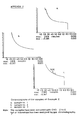
- the chromatogram of chemically synthesized p-mentha-8-thiol-3-one (Fig. 3a) reveals an isomer ratio of approximately 2:1.
- the biologically prepared p-mentha-8-thiol-3-one (Fig. 3e) has a completely different ratio of the two isomers which is approximately 9:1.
- a commercial cocoa mix was used to prepare two different batches of beverage.
- the first batch is evaluated without any further addition while p-mentha-8-thiol-3-one prepared according to Example II was added to the second batch in the ratio of 20 ⁇ g of said p-mentha-8-thiol-3-one to each kilo of cocoa beverage.
- the beverage containing p-mentha-8-thiol-3-one has a fuller and richer flavour comparing to the beverage without p-mentha-8-thiol-3-one.
Landscapes
- Chemical & Material Sciences (AREA)
- Organic Chemistry (AREA)
- Life Sciences & Earth Sciences (AREA)
- Engineering & Computer Science (AREA)
- Health & Medical Sciences (AREA)
- Zoology (AREA)
- Wood Science & Technology (AREA)
- Microbiology (AREA)
- Biochemistry (AREA)
- General Chemical & Material Sciences (AREA)
- Biotechnology (AREA)
- Polymers & Plastics (AREA)
- Food Science & Technology (AREA)
- Nutrition Science (AREA)
- Chemical Kinetics & Catalysis (AREA)
- Bioinformatics & Cheminformatics (AREA)
- General Engineering & Computer Science (AREA)
- General Health & Medical Sciences (AREA)
- Genetics & Genomics (AREA)
- Organic Low-Molecular-Weight Compounds And Preparation Thereof (AREA)
- Steroid Compounds (AREA)
- Preparation Of Compounds By Using Micro-Organisms (AREA)
- Seasonings (AREA)
Abstract
Description
- The invention relates to a method for preparing thiol compounds.
- In Pesticide Biochemistry and Physiology 14, pp. 50-61 (1980) the in vitro metabolism of pentachloronitrobenzene (PCNB) into pentachloromethylthiobenzene (PCTA) by means of an enzyme system obtained from onions is described. More particularly, this reference relates to the in vitro preparation of PCTA from PCNB at a pH of 7.9 by means of an enzyme system which contains dithiothreitol, glutathione and S-adenosylmethionine. Said enzyme system was prepared from onion roots by ammonium sulphate fractionation and differential centrifugation. The enzyme system contained glutathione-S transferase activity with PCNB, C-S-lyase activity (also termed β-lyase activity) with S-(pentachlorophenyl)cysteine, S-adenosylmethionine-methyl transferase activity with pentachlorothiophenol (PCTP) and probably a few other peptidase activities. The yield of the thiol compound concerned, namely pentachlorothiophenol (PCTP) is, however, negligible in this known method compared with the yield of PCTA (see page 55, right-hand column, lines 10-13 from bottom) so that this method is considered unsuitable for preparing thiol compounds.
- In Journal of Biological Chemistry, vol.253, 24, pp.8854-8859 (1978), the cysteine conjugate β-lyase in rat liver is described. This enzyme catalysing cleavage of the thioether linkage in cysteine conjugates has been purified about 500-fold from rat liver cytosol. However, according to the chapter "Assay Methods" (page 8855) the obtained thiol compounds were directly methylated whereafter the methylated derivatives were identified by spectroscopy methods.
- Microecology and Therapy, vol. 15, 1985, pp. 261-266 discloses a pathway for the introduction of sulfur in the form of thiol-, methylthio-, methylsulfinyl- or methylsulfonyl-groups into xenobiotics. The β-lyase in the gastrointestinal bacteria is a key enzyme in this biotransformation as it converts S-cysteine conjugates into thiol containing metabilites which will usually - on account of the toxic properties of thiols - undergo further metabolism.
- A method defined in the introduction has now been found which is characterized in that cysteine is coupled by an addition reaction of cysteine to a compound having the formula (R₁)(R₂)C=C(R₃)-CO-R₄ in which the symbols R₁-R₄ represent a hydrogen atom or an optionally saturated and/or heterogeneous hydrocarbon group or, together with the carbon atom to which the symbols are bonded, form one or two, optionally saturated and/or heterogeneous ring systems and subsequently the cysteine conjugate obtained is reacted with a β-lyase to form the relevant thiol compound.
- For example, in the compound having the formula (R₁)(R₂)C=C(R₃)-CO-R₄ the symbols R₁-R₄ represent a hydrogen atom, an alkyl group containing 1-5 carbon atoms, an alkenylene group containing 2-5 carbon atoms, a cycloalkyl or cycloalkenyl group containing 5-10 carbon atoms or an aryl group containing 6-10 carbon atoms, which abovementioned groups may be substituted by halogen atoms and/or one or more groups containing carbon, nitrogen, sulphur, oxygen and/or halogen atoms. Preferably, the symbols R₂ and R₃ represent a hydrogen atom or an alkyl group containing 1-3 carbon atoms and R₄ an optionally heterogeneous hydrocarbon group bonded via an -O- bridge.
- For example, unsaturated sugars having the formula

in which the symbol R₅ represents a hydrogen atom, an alkyl group containing 1-24 carbon atoms or an alkaline ion and R₆ represents a group consisting of 1-7 monosaccharides selected from the group consisting of glucose, mannose, galactose, arabinose, fucose, xylose, rhamnose, uronic acids and derivatives thereof like the acetates, pyruvates, amines and sulphates are also suitable as starting material for the addition reaction of cysteine. Preferably R₆ represents a glucose-rhamnose-glucose group. The obtained cysteine-conjugates are simply convertable to compounds with the formula
having flavouring properties. - Many types of cysteine conjugates are known as such from the prior art. For example, the preparation of such a cysteine conjugate is known from Applied and Environmental Microbiology, May 1985. pp. 1146-1153. In this reference, 16-dehydroprogesterone, in particular, is converted with L-cysteine in a non-enzymatical manner into 16-S-cysteinyl-progesterone. Said cysteinyl compound can be converted in the presence of β-lyase into 16-mercaptoprogesterone by means of the second stage of the method according to the invention. The diagram below illustrates the synthesis route described above:

The thiol steroid shown above has specific pharmacological properties. - The formation of cysteine conjugates of 3-(3,4-dihydroxyphenyl)analine is reported in Biochimica et Biophysica Acta 672 (1981), pp. 151-157. As indicated on page 155 of this reference, polyconjugates can also be obtained in addition to some monoconjugates. These singly or multiply conjugated compounds can also be converted by means of the β-lyase to be used according to the invention into the corresponding mono- or polythiol derivatives.
- Reference may be made to the following additional references relating to specific cysteine conjugates or derivatives derived therefrom:
- 1) J.Chem.Soc.Chem.Commun. 1986, pp. 1331-1333;
- 2) Journal of Food Science, vol. 51, no. 5, 1986, pp. 1191-1194;
- 3) Planta (1986) 169: 208-215; and
- 4) Carbohydrate Research 142 (1985), pp. 93-105.
- The cysteine used in the method according to the invention has the formula HS-CH₂-CH(NH₂)-COOH. In view of the spectrum of activity of the β-lyase to be used in the method according to the invention, L-cysteine is used.
- The β-lyase (also termed C-S-lyase or cysteine conjugate β-lyase) to be used in the method according to the invention is an enzyme dependent on a pyridoxal 5-phosphate (vitamin B6). In addition to being present in a large number of intestinal bacteria (in 24 out of the 43 intestinal bacteria investigated), the β-lyase is also present in some vegetable and animal cells (Larsen G.L., "Distribution of cysteine conjugate B-lyase in gastro-intestinal bacteria and the environment, Xenobiotica 15, 199-209 (1985)). The bacterial β-lyases are able to convert a wide spectrum of substrates, in particular both S-alkyl- and S-arylcysteine conjugates, whereas the spectrum of activity of β-lyases of vegetable or animal origin is limited. Measured with the cysteinepropachlor conjugate (an S-alkylcysteine conjugate), the β-lyase originating from the anaerobic intestinal bacterium Eubacterium limosum is the most active enzyme and has the lowest substrate specificity (Larsen, loc. cit.). If, however, the conversion of S-(2-benzothiazolyl)cysteine (an S-arylcysteine conjugate) is examined, it emerges that the β-lyase from an anaerobic Fusobacterium species has virtually an identical activity. β-lyase from F.necrophorum and E.limosum differ not only in substrate specificity, but also in size, namely 228 kd and 75 kd (2x38 kd) and also in stability. The enzyme from F.necrophorum requires pyridoxal 5-phosphate for stability but is then also more stable to heat. β-lyases from E.limosum and F.varium exhibit no activity with D-cysteine conjugates and have, in general, a lower activity for S-alkylcysteine conjugates than for S-arylcysteine conjugates.
- The isolation of β-lyase from both E.limosum and F.varium does not have to be carried out under anaerobic conditions. This indicates that the enzyme is not sensitive to oxygen. It also emerges from the isolation method that the enzyme is located in the cell. The second step described above of the method according to the invention can therefore be carried out with purified/extracted β-lyase or, if the substrates are absorbed by the bacterial cells and are converted therein, with the respective bacteria themselves.
- The method according to the invention results in many types of thiol compounds with divergent applications. Examples of substances to be prepared pertain to the field of perfumes and flavourings (p-mentha-8-thiol-3-one, damascone derivative), pharmacological steroid compounds and repellants (Warburganal).
- The invention is explained on the basis of the examples below.
- In this example, the starting point is pulegone, which is converted via S-cysteinyl-pulegone into p-mentha-8-thiol-3-one. This preparation is illustrated in the diagram below.

- 12.2 g of L-cysteine (0.1 mol) (high purity analytical grade supplied by Fluka A.G.), 16.3 ml of pulegone (0.1 mol) and 2.0 g of KHCO₃ (0.02 mol) were stirred for 22 hours in 100 ml of H₂O at room temperature. The yoghurt-like mixture, which was no longer stirrable, was then allowed to stand for 3 days. The product obtained was then filtered off by suction and washed respectively with 100 and 2 x 50 ml of H₂O. After drying over CaCl₂ in vacuo, the product was washed with acetone. The yield was 17.9 g.
Appendix 1 shows the 90 MHz H-NMR spectrum of the product obtained. - More particularly, an elementary analysis of the product purified by thin-layer chromatography clearly indicates a 1:1 reaction product.
Elementary analysis (carried out in duplicate). Found: Calculated (substance + 1/2 mol of H₂O): %C: 54.76 55.29 %H: 8.36 8.57 %N: 5.01 4.96 %O: 19.60 19.83 %S: 11.13 11.35 - The organism used in this stage was Eubacterium limosum having the ATCC no. 10825. Said organism was cultured under anaerobic conditions at 37°C on a P-medium which had the composition below:
Composition of P-medium: Casein peptone (Difco) 10 g/l Beef extract (Difco) 3 g/l Yeast extract (Difco) 3 g/l Glucose (Merck) 2 g/l Tween 80 (Serva) 1 g/l Cysteine-HCl (Fluka) 0.5 g/l Resazurin (Serva) 0.25 g/l Salt solution (analytical grade) 40 ml/l Final pH: 7.2 The salt solution consisted of: CaCl₂ 0.2 g/l MgSO₄.7H₂O 0.2 g/l K₂HPO₄ 1.0 g/l KH₂PO₄ 1.0 g/l NaHCO₃ 10.0 g/l NaCl 2.0 g/l - The cell material for producing β-lyase was obtained by culturing E.limosum (3% inoculation) on the abovementioned P-medium in serum bottles having a capacity of 300 ml. By filling the bottle with P-medium to a few centimetres below the rim, the medium became sufficiently low in oxygen as a result of sterilization to make growth of E.limosum possible. After an incubation time of 1 day at 37°C, the cells were harvested by centrifuging them at 50,000 x g for 20 minutes. The cells were subsequently washed twice with a buffer having a pH of 7 which contained 50 mM of phosphate and 50 mM of pyridoxal-HCl. The pellet (approx. 1 g wet weight from 300 ml) was taken up in 10 ml of buffer.
- S-cysteinyl-pulegone (0.3 g/l = 1.1 mM) was converted in the buffer with the concentrated cell Suspension of E.limosum described above (final concentration: 1.6 mg dry weight/ml). The reaction was carried out for 1 hour at 30°C and was terminated by centrifuging the reaction mixture for 5 minutes at 11,000 x g.
- As a control, two tests were carried out:
- a) As a control, boiled cells (denatured enzymes) were used in the test described above.
- b) In order to be able to assess whether the SH product (p-mentha8-thiol-3-one) had been converted by the S-methyl transferase into the S-methyl product (p-mentha-8-thiomethyl-3-one), the cells were also incubated with p-mentha-8-thio-3-one.
- The results of gas chromatography analysis of this example (sample no. 1) and the two control tests (
samples 2 and 3) are shown inAppendix 2. - To carry out the abovementioned gas chromatographic analysis, 1 part of chloroform (CHCl₃) was mixed with 1 part of the reaction mixture obtained. 1 µl of this extract was injected into a gas chromatograph having a 20 M carbowax column, (1.3 m RVS, column temperature: 145°C, injection port and TCD temperature: 160°C).
- The method according to Example I was repeated, but with the difference that, instead of being carried out on a 1 ml scale, the test was carried out on a 10 ml scale. In this test, the cells were used in a double concentration, viz. 3.2 mg dry weight/ml and the incubation was carried out for 3 hours at 37°C. For a gas chromatographic analysis, a sample (sample B) was taken from this in the following manner.
- One part of dichloromethane (CH₂Cl₂) was mixed with 4 parts of the reaction mixture. 0.4 µl of this extract was injected into a Varian gas chromatograph in which a 10 % FFAP-chromosorb was provided in a WAW column (2m RVS, i.d. 1/8") (column temperature: 160°C; injection port and FID temperature: 180°C).
- As a comparison, in addition to the gas chromatogram of sample B shown in
Appendix 3 as a control, the gas chromatograms of a) p-mentha-8-thiol-3-one, b) p-mentha-8-thiomethyl-3-one, c) pulegone, and d) S-cysteinyl-pulegone were recorded without cells being used at the same time. - It follows from the chromatograms shown in
Appendix 3, inter alia, that no detectable p-mentha-8-thiomethyl-3-one is formed (compare 3b with 3e). The pulegone peak in Figures 3d and 3e (retention time 2.7 min.) may be explained by the fact that some of the S-cysteinyl-pulegone dissolves in the extraction agent and is decomposed in the gas chromatograph (160°C). - The chromatogram of chemically synthesized p-mentha-8-thiol-3-one (Fig. 3a) reveals an isomer ratio of approximately 2:1. The biologically prepared p-mentha-8-thiol-3-one (Fig. 3e) has a completely different ratio of the two isomers which is approximately 9:1.
- A commercial cocoa mix was used to prepare two different batches of beverage. The first batch is evaluated without any further addition while p-mentha-8-thiol-3-one prepared according to Example II was added to the second batch in the ratio of 20 µg of said p-mentha-8-thiol-3-one to each kilo of cocoa beverage. The beverage containing p-mentha-8-thiol-3-one has a fuller and richer flavour comparing to the beverage without p-mentha-8-thiol-3-one.
Claims (9)
- Method for preparing thiol compounds, characterized in that cysteine is coupled by means of addition to a compound having the formula (R₁)(R₂)C=C(R₃)-Co-R₄ in which the symbols R₁-R₄ represent a hydrogen or an optionally saturated and/or heterogeneous hydrocarbon group or, together with the carbon atoms to which the symbols are bonded, form one or two, optionally saturated and/or heterogeneous hydrocarbon ring systems and that subsequently the cysteine conjugate obtained is reacted with β-lyase to form the relevant thiol compounds.
- The method according to Claim 1, characterized in that cysteine is coupled by means of addition to a compound having formula (R₁)(R₂)C=C(R₃)-CO-R₄ in which R₁ has the meaning stated in Claim 1, R₂ and R₃ represent a hydrogen atom or an alkyl group containing 1-3 carbon atoms and R₄ represents an optionally heterogeneous hydrocarbon group bonded via an -O- bridge and that subsequently the cysteine conjugate obtained is reacted with β-lyase to form the relevant thiol compounds.
- The method according to Claim 1, characterized in that cysteine is coupled by means of addition to a compound having the formula:

- Method according to one or more of the Claims 1-3, characterized in that the cysteine conjugate is split by means of bacterial β-lyase.
- Method according to Claim 4, characterized in that β-lyase from Eubacterium limosum is used.
- Method according to Claims 1, 4, or 5, characterized in that β-lyase is used in the form of bacterial cells.
- Method according to one or more of the Claims 1-6, characterized in that the flavouring p-mentha-8-thiol-3 one is prepared starting from pulegone.
- Method according to one or more of the Claims 1-6, characterized in that the compound 16-mercapto-progesterone is prepared starting from 16-dehydroprogesterone.
- Flavour composition comprising an effective flavouring amount of one or more flavouring compounds of the formula

Priority Applications (1)
| Application Number | Priority Date | Filing Date | Title |
|---|---|---|---|
| AT88200141T ATE96464T1 (en) | 1987-01-30 | 1988-01-27 | PROCESS FOR THE PRODUCTION OF THIOLS. |
Applications Claiming Priority (2)
| Application Number | Priority Date | Filing Date | Title |
|---|---|---|---|
| NL8700240A NL8700240A (en) | 1987-01-30 | 1987-01-30 | METHOD FOR PREPARING THIOL COMPOUNDS. |
| NL8700240 | 1987-01-30 |
Publications (3)
| Publication Number | Publication Date |
|---|---|
| EP0277688A2 EP0277688A2 (en) | 1988-08-10 |
| EP0277688A3 EP0277688A3 (en) | 1988-11-02 |
| EP0277688B1 true EP0277688B1 (en) | 1993-10-27 |
Family
ID=19849500
Family Applications (1)
| Application Number | Title | Priority Date | Filing Date |
|---|---|---|---|
| EP88200141A Expired - Lifetime EP0277688B1 (en) | 1987-01-30 | 1988-01-27 | Method for preparing thiol compounds |
Country Status (7)
| Country | Link |
|---|---|
| US (1) | US5182194A (en) |
| EP (1) | EP0277688B1 (en) |
| JP (1) | JPS63240793A (en) |
| AT (1) | ATE96464T1 (en) |
| DE (1) | DE3885115T2 (en) |
| ES (1) | ES2061622T3 (en) |
| NL (1) | NL8700240A (en) |
Cited By (2)
| Publication number | Priority date | Publication date | Assignee | Title |
|---|---|---|---|---|
| US6841536B2 (en) | 1997-08-07 | 2005-01-11 | University Of Utah Research Foundation | Prodrugs and conjugates of thiol- and selenol-containing compounds and methods of use thereof |
| US7425635B2 (en) | 1997-08-07 | 2008-09-16 | University Of Utah Research Foundation | Prodrugs and conjugates of thiol- and selenol-containing compounds and methods of use thereof |
Families Citing this family (9)
| Publication number | Priority date | Publication date | Assignee | Title |
|---|---|---|---|---|
| EP0770686A1 (en) | 1995-10-25 | 1997-05-02 | Societe Des Produits Nestle S.A. | Process for the production of thiols |
| DE69825288D1 (en) * | 1997-08-07 | 2004-09-02 | Univ Utah | PRODRUGS AND CONJUGATES OF SELENOL-CONTAINING COMPOUNDS AND THEIR USE |
| WO2002076239A2 (en) * | 2001-03-23 | 2002-10-03 | Societe Des Produits Nestle S.A. | Stabilization of aroma-providing components |
| US7060315B2 (en) | 2001-03-23 | 2006-06-13 | Nestec S.A. | Aroma-containing components |
| US7597922B2 (en) * | 1999-05-18 | 2009-10-06 | Nestec S.A. | System for dispensing a liquid beverage concentrate |
| AU4250501A (en) * | 2000-04-06 | 2001-10-23 | Societe Des Produits Nestle S.A. | Preparation of thiols and derivatives by bio-conversion |
| DE10064085A1 (en) | 2000-12-21 | 2002-07-04 | Consortium Elektrochem Ind | Process for the removal of free aldehydes |
| WO2010066661A1 (en) * | 2008-12-10 | 2010-06-17 | Unilever Nv | Process to prepare a meat flavouring agent |
| CN104109109B (en) * | 2014-05-21 | 2016-09-14 | 陕西科技大学 | A kind of method utilizing pulegone and sodium sulfide to prepare edible essence 8-sulfydryl Malaysia ketone |
Family Cites Families (7)
| Publication number | Priority date | Publication date | Assignee | Title |
|---|---|---|---|---|
| CH543584A (en) * | 1969-02-27 | 1973-10-31 | Firmenich & Cie | Use of cyclic ketone thiols as fragrance agents |
| US4034044A (en) * | 1969-02-27 | 1977-07-05 | Firmenich S.A. | Menthone-8-thiol, carvomenthone-8-thiol and process for preparing same |
| US4032478A (en) * | 1969-09-10 | 1977-06-28 | Givaudan Corporation | Perfume compositions containing p-menthane-8-thiol-3-one |
| CH525198A (en) * | 1969-09-10 | 1972-07-15 | Givaudan & Cie Sa | Process for the production of new mercapto- or alkylthio-substituted terpenoids |
| CH540235A (en) * | 1970-11-20 | 1973-08-15 | Givaudan & Cie Sa | Process for the production of a new p-menthane derivative |
| US4328311A (en) * | 1978-02-10 | 1982-05-04 | Syva Company | Enzyme-aminoglycoside conjugates |
| JPS60105661A (en) * | 1983-11-15 | 1985-06-11 | Tokawa Tetsuo | Cyanoguanidine derivative and production thereof |
-
1987
- 1987-01-30 NL NL8700240A patent/NL8700240A/en not_active Application Discontinuation
-
1988
- 1988-01-26 US US07/148,418 patent/US5182194A/en not_active Expired - Fee Related
- 1988-01-27 ES ES88200141T patent/ES2061622T3/en not_active Expired - Lifetime
- 1988-01-27 EP EP88200141A patent/EP0277688B1/en not_active Expired - Lifetime
- 1988-01-27 AT AT88200141T patent/ATE96464T1/en not_active IP Right Cessation
- 1988-01-27 DE DE88200141T patent/DE3885115T2/en not_active Expired - Fee Related
- 1988-01-30 JP JP63018582A patent/JPS63240793A/en active Pending
Cited By (2)
| Publication number | Priority date | Publication date | Assignee | Title |
|---|---|---|---|---|
| US6841536B2 (en) | 1997-08-07 | 2005-01-11 | University Of Utah Research Foundation | Prodrugs and conjugates of thiol- and selenol-containing compounds and methods of use thereof |
| US7425635B2 (en) | 1997-08-07 | 2008-09-16 | University Of Utah Research Foundation | Prodrugs and conjugates of thiol- and selenol-containing compounds and methods of use thereof |
Also Published As
| Publication number | Publication date |
|---|---|
| EP0277688A2 (en) | 1988-08-10 |
| ES2061622T3 (en) | 1994-12-16 |
| US5182194A (en) | 1993-01-26 |
| ATE96464T1 (en) | 1993-11-15 |
| JPS63240793A (en) | 1988-10-06 |
| DE3885115D1 (en) | 1993-12-02 |
| EP0277688A3 (en) | 1988-11-02 |
| NL8700240A (en) | 1988-08-16 |
| DE3885115T2 (en) | 1994-03-10 |
Similar Documents
| Publication | Publication Date | Title |
|---|---|---|
| Horowitz | Methionine synthesis in Neurospora. The isolation of cystathionine | |
| Kameda et al. | Antitumor activity of Bacillus natto. V. Isolation and characterization of surfactin in the culture medium of Bacillus natto KMD 2311 | |
| ENDO et al. | Specific inhibition of glyceraldehyde-3-phosphate dehydrogenase by koningic acid (heptelidic acid) | |
| Buckel et al. | Two pathways of glutamate fermentation by anaerobic bacteria | |
| Clinkenbeard et al. | Molecular and catalytic properties of cytosolic acetoacetyl coenzyme A thiolase from avian liver | |
| Eirich et al. | Proposed structure for coenzyme F420 from Methanobacterium | |
| Asada et al. | Stereochemistry of meso-. alpha.,. epsilon.-diaminopimelate decarboxylase reaction: the first evidence for pyridoxal 5'-phosphate dependent decarboxylation with inversion of configuration | |
| EP0164943B1 (en) | Process for production of pyrrolo-quinoline quinone | |
| US5182194A (en) | Method for preparing p-mentha-8-thiol-3-one | |
| Stadtman et al. | Tracer studies on ornithine, lysine, and formate metabolism in an amino acid fermenting Clostridium | |
| Singer et al. | [142] Flavin peptides | |
| Trincone et al. | Enzyme-catalyzed synthesis of alkyl β-D-glycosides with crude homogenate of Sulfolobus solfataricus | |
| Clejan et al. | Uptake, transbilayer distribution, and movement of cholesterol in growing Mycoplasma capricolum cells | |
| Polito et al. | Stereochemistry of the hydroxylation in 4-hydroxysphinganine formation and the steric course of hydrogen elimination in sphing-4-enine biosynthesis | |
| US5578470A (en) | Method for preparing thiol compounds with bacterial β-lyase | |
| Snell et al. | BULGARICUS FACTOR (LBF) | |
| Komossa et al. | Plant metabolic studies of the growth regulator maleic hydrazide | |
| OH‐HAMA et al. | 13C NMR evidence for bacteriochlorophyll c formation by the C5 pathway in green sulfur bacterium, Prosthecochloris | |
| Ikeda et al. | Bacterial degradation of taurine | |
| Gabriel et al. | Pyranosone dehydratase from the basidiomycete Phanerochaete chrysosporium: improved purification, and identification of 6-deoxy-D-glucosone and D-xylosone reaction products | |
| Yu et al. | Genome mining for natural products made by multinuclear iron-dependent oxidation enzymes (MNIOs) | |
| Møller | Lysine catabolism in barley (Hordeum vulgare L.) | |
| DE69211340T2 (en) | METHOD FOR THE ENZYMATIC PRODUCTION OF MACROLAKTON | |
| EP1118617B1 (en) | Compounds with an antioxidant acitivity, compositions useful as food integrators containing them and process for their preparation | |
| Yi et al. | A new metabolic pathway from n-dodecane to α, ω-dodecanedioic acid in a mutant of Candida tropicalis |
Legal Events
| Date | Code | Title | Description |
|---|---|---|---|
| PUAI | Public reference made under article 153(3) epc to a published international application that has entered the european phase |
Free format text: ORIGINAL CODE: 0009012 |
|
| AK | Designated contracting states |
Kind code of ref document: A2 Designated state(s): AT BE CH DE ES FR GB GR IT LI LU NL SE |
|
| PUAL | Search report despatched |
Free format text: ORIGINAL CODE: 0009013 |
|
| AK | Designated contracting states |
Kind code of ref document: A3 Designated state(s): AT BE CH DE ES FR GB GR IT LI LU NL SE |
|
| 17P | Request for examination filed |
Effective date: 19890123 |
|
| 17Q | First examination report despatched |
Effective date: 19920319 |
|
| GRAA | (expected) grant |
Free format text: ORIGINAL CODE: 0009210 |
|
| AK | Designated contracting states |
Kind code of ref document: B1 Designated state(s): AT BE CH DE ES FR GB GR IT LI LU NL SE |
|
| PG25 | Lapsed in a contracting state [announced via postgrant information from national office to epo] |
Ref country code: SE Effective date: 19931027 Ref country code: AT Effective date: 19931027 |
|
| REF | Corresponds to: |
Ref document number: 96464 Country of ref document: AT Date of ref document: 19931115 Kind code of ref document: T |
|
| REF | Corresponds to: |
Ref document number: 3885115 Country of ref document: DE Date of ref document: 19931202 |
|
| ITF | It: translation for a ep patent filed | ||
| ET | Fr: translation filed | ||
| REG | Reference to a national code |
Ref country code: GR Ref legal event code: FG4A Free format text: 3009546 |
|
| PG25 | Lapsed in a contracting state [announced via postgrant information from national office to epo] |
Ref country code: LU Free format text: LAPSE BECAUSE OF NON-PAYMENT OF DUE FEES Effective date: 19940131 |
|
| PLBE | No opposition filed within time limit |
Free format text: ORIGINAL CODE: 0009261 |
|
| STAA | Information on the status of an ep patent application or granted ep patent |
Free format text: STATUS: NO OPPOSITION FILED WITHIN TIME LIMIT |
|
| 26N | No opposition filed | ||
| REG | Reference to a national code |
Ref country code: ES Ref legal event code: FG2A Ref document number: 2061622 Country of ref document: ES Kind code of ref document: T3 |
|
| PGFP | Annual fee paid to national office [announced via postgrant information from national office to epo] |
Ref country code: ES Payment date: 19970731 Year of fee payment: 10 |
|
| PG25 | Lapsed in a contracting state [announced via postgrant information from national office to epo] |
Ref country code: ES Free format text: THE PATENT HAS BEEN ANNULLED BY A DECISION OF A NATIONAL AUTHORITY Effective date: 19980128 |
|
| REG | Reference to a national code |
Ref country code: GB Ref legal event code: IF02 |
|
| PGFP | Annual fee paid to national office [announced via postgrant information from national office to epo] |
Ref country code: GB Payment date: 20020115 Year of fee payment: 15 |
|
| PGFP | Annual fee paid to national office [announced via postgrant information from national office to epo] |
Ref country code: DE Payment date: 20020117 Year of fee payment: 15 Ref country code: CH Payment date: 20020117 Year of fee payment: 15 |
|
| PGFP | Annual fee paid to national office [announced via postgrant information from national office to epo] |
Ref country code: FR Payment date: 20020118 Year of fee payment: 15 |
|
| PGFP | Annual fee paid to national office [announced via postgrant information from national office to epo] |
Ref country code: NL Payment date: 20020121 Year of fee payment: 15 |
|
| PGFP | Annual fee paid to national office [announced via postgrant information from national office to epo] |
Ref country code: GR Payment date: 20020131 Year of fee payment: 15 |
|
| PGFP | Annual fee paid to national office [announced via postgrant information from national office to epo] |
Ref country code: BE Payment date: 20020227 Year of fee payment: 15 |
|
| REG | Reference to a national code |
Ref country code: ES Ref legal event code: FD2A Effective date: 20020204 |
|
| PG25 | Lapsed in a contracting state [announced via postgrant information from national office to epo] |
Ref country code: GB Free format text: LAPSE BECAUSE OF NON-PAYMENT OF DUE FEES Effective date: 20030127 |
|
| PG25 | Lapsed in a contracting state [announced via postgrant information from national office to epo] |
Ref country code: LI Free format text: LAPSE BECAUSE OF NON-PAYMENT OF DUE FEES Effective date: 20030131 Ref country code: CH Free format text: LAPSE BECAUSE OF NON-PAYMENT OF DUE FEES Effective date: 20030131 Ref country code: BE Free format text: LAPSE BECAUSE OF NON-PAYMENT OF DUE FEES Effective date: 20030131 |
|
| PG25 | Lapsed in a contracting state [announced via postgrant information from national office to epo] |
Ref country code: NL Free format text: LAPSE BECAUSE OF NON-PAYMENT OF DUE FEES Effective date: 20030801 Ref country code: DE Free format text: LAPSE BECAUSE OF NON-PAYMENT OF DUE FEES Effective date: 20030801 |
|
| PG25 | Lapsed in a contracting state [announced via postgrant information from national office to epo] |
Ref country code: GR Free format text: LAPSE BECAUSE OF NON-PAYMENT OF DUE FEES Effective date: 20030804 |
|
| REG | Reference to a national code |
Ref country code: CH Ref legal event code: PL |
|
| GBPC | Gb: european patent ceased through non-payment of renewal fee | ||
| PG25 | Lapsed in a contracting state [announced via postgrant information from national office to epo] |
Ref country code: FR Free format text: LAPSE BECAUSE OF NON-PAYMENT OF DUE FEES Effective date: 20030930 |
|
| NLV4 | Nl: lapsed or anulled due to non-payment of the annual fee |
Effective date: 20030801 |
|
| REG | Reference to a national code |
Ref country code: FR Ref legal event code: ST |
|
| PG25 | Lapsed in a contracting state [announced via postgrant information from national office to epo] |
Ref country code: IT Free format text: LAPSE BECAUSE OF NON-PAYMENT OF DUE FEES;WARNING: LAPSES OF ITALIAN PATENTS WITH EFFECTIVE DATE BEFORE 2007 MAY HAVE OCCURRED AT ANY TIME BEFORE 2007. THE CORRECT EFFECTIVE DATE MAY BE DIFFERENT FROM THE ONE RECORDED. Effective date: 20050127 |