EP0277674B1 - A process for producing compounds containing a terminal hydroxyl or epoxy group; and microorganisms suitable therefor - Google Patents
A process for producing compounds containing a terminal hydroxyl or epoxy group; and microorganisms suitable therefor Download PDFInfo
- Publication number
- EP0277674B1 EP0277674B1 EP88200052A EP88200052A EP0277674B1 EP 0277674 B1 EP0277674 B1 EP 0277674B1 EP 88200052 A EP88200052 A EP 88200052A EP 88200052 A EP88200052 A EP 88200052A EP 0277674 B1 EP0277674 B1 EP 0277674B1
- Authority
- EP
- European Patent Office
- Prior art keywords
- microorganisms
- plasmid
- substrate
- alkanol
- oxidation
- Prior art date
- Legal status (The legal status is an assumption and is not a legal conclusion. Google has not performed a legal analysis and makes no representation as to the accuracy of the status listed.)
- Expired - Lifetime
Links
- 238000000034 method Methods 0.000 title claims description 26
- 244000005700 microbiome Species 0.000 title claims description 24
- 150000001875 compounds Chemical class 0.000 title claims description 8
- 125000003700 epoxy group Chemical group 0.000 title claims description 6
- 125000002887 hydroxy group Chemical group [H]O* 0.000 title claims description 6
- 239000013612 plasmid Substances 0.000 claims description 30
- 241000589781 Pseudomonas oleovorans Species 0.000 claims description 26
- 239000000758 substrate Substances 0.000 claims description 25
- 238000007254 oxidation reaction Methods 0.000 claims description 23
- 108090000623 proteins and genes Proteins 0.000 claims description 23
- 230000003647 oxidation Effects 0.000 claims description 21
- 102000005297 Cytochrome P-450 CYP4A Human genes 0.000 claims description 13
- 108010081498 Cytochrome P-450 CYP4A Proteins 0.000 claims description 13
- 239000012074 organic phase Substances 0.000 claims description 13
- 238000012217 deletion Methods 0.000 claims description 9
- 230000037430 deletion Effects 0.000 claims description 9
- 241000589776 Pseudomonas putida Species 0.000 claims description 7
- 239000012071 phase Substances 0.000 claims description 7
- 125000001931 aliphatic group Chemical group 0.000 claims description 6
- 125000004432 carbon atom Chemical group C* 0.000 claims description 6
- LCTONWCANYUPML-UHFFFAOYSA-M Pyruvate Chemical compound CC(=O)C([O-])=O LCTONWCANYUPML-UHFFFAOYSA-M 0.000 claims description 5
- 229910052799 carbon Inorganic materials 0.000 claims description 5
- 238000003756 stirring Methods 0.000 claims description 5
- OKTJSMMVPCPJKN-UHFFFAOYSA-N Carbon Chemical compound [C] OKTJSMMVPCPJKN-UHFFFAOYSA-N 0.000 claims description 4
- 101710088194 Dehydrogenase Proteins 0.000 claims description 4
- 102000004190 Enzymes Human genes 0.000 claims description 4
- 108090000790 Enzymes Proteins 0.000 claims description 4
- WQZGKKKJIJFFOK-GASJEMHNSA-N Glucose Natural products OC[C@H]1OC(O)[C@H](O)[C@@H](O)[C@@H]1O WQZGKKKJIJFFOK-GASJEMHNSA-N 0.000 claims description 4
- 239000008103 glucose Substances 0.000 claims description 4
- 108700026215 vpr Genes Proteins 0.000 claims description 4
- 238000012258 culturing Methods 0.000 claims description 3
- HPXRVTGHNJAIIH-UHFFFAOYSA-N cyclohexanol Chemical compound OC1CCCCC1 HPXRVTGHNJAIIH-UHFFFAOYSA-N 0.000 claims description 3
- 239000007791 liquid phase Substances 0.000 claims description 3
- 235000015097 nutrients Nutrition 0.000 claims description 3
- KRKNYBCHXYNGOX-UHFFFAOYSA-K Citrate Chemical compound [O-]C(=O)CC(O)(CC([O-])=O)C([O-])=O KRKNYBCHXYNGOX-UHFFFAOYSA-K 0.000 claims description 2
- 241000589516 Pseudomonas Species 0.000 claims 2
- ZRAQRJHEIQBUNS-UHFFFAOYSA-N cyclohexane;dibutyl benzene-1,2-dicarboxylate Chemical compound C1CCCCC1.CCCCOC(=O)C1=CC=CC=C1C(=O)OCCCC ZRAQRJHEIQBUNS-UHFFFAOYSA-N 0.000 claims 1
- KBPLFHHGFOOTCA-UHFFFAOYSA-N 1-Octanol Chemical compound CCCCCCCCO KBPLFHHGFOOTCA-UHFFFAOYSA-N 0.000 description 18
- 239000000047 product Substances 0.000 description 18
- TVMXDCGIABBOFY-UHFFFAOYSA-N octane Chemical compound CCCCCCCC TVMXDCGIABBOFY-UHFFFAOYSA-N 0.000 description 15
- 210000004027 cell Anatomy 0.000 description 11
- 241000894006 Bacteria Species 0.000 description 10
- 101100323010 Acinetobacter baylyi (strain ATCC 33305 / BD413 / ADP1) alkR gene Proteins 0.000 description 9
- 239000008346 aqueous phase Substances 0.000 description 9
- 238000004519 manufacturing process Methods 0.000 description 9
- 241000588724 Escherichia coli Species 0.000 description 8
- 230000000694 effects Effects 0.000 description 7
- 239000012634 fragment Substances 0.000 description 7
- KWKAKUADMBZCLK-UHFFFAOYSA-N 1-octene Chemical compound CCCCCCC=C KWKAKUADMBZCLK-UHFFFAOYSA-N 0.000 description 6
- 239000004098 Tetracycline Substances 0.000 description 6
- 150000001335 aliphatic alkanes Chemical class 0.000 description 6
- 150000001336 alkenes Chemical class 0.000 description 6
- DOIRQSBPFJWKBE-UHFFFAOYSA-N dibutyl phthalate Chemical compound CCCCOC(=O)C1=CC=CC=C1C(=O)OCCCC DOIRQSBPFJWKBE-UHFFFAOYSA-N 0.000 description 6
- 229960002180 tetracycline Drugs 0.000 description 6
- 229930101283 tetracycline Natural products 0.000 description 6
- 235000019364 tetracycline Nutrition 0.000 description 6
- 150000003522 tetracyclines Chemical class 0.000 description 6
- NJWSNNWLBMSXQR-UHFFFAOYSA-N 2-hexyloxirane Chemical compound CCCCCCC1CO1 NJWSNNWLBMSXQR-UHFFFAOYSA-N 0.000 description 5
- 239000000203 mixture Substances 0.000 description 5
- CSNNHWWHGAXBCP-UHFFFAOYSA-L Magnesium sulfate Chemical compound [Mg+2].[O-][S+2]([O-])([O-])[O-] CSNNHWWHGAXBCP-UHFFFAOYSA-L 0.000 description 4
- 238000006243 chemical reaction Methods 0.000 description 4
- 230000035772 mutation Effects 0.000 description 4
- 230000005526 G1 to G0 transition Effects 0.000 description 3
- 150000001299 aldehydes Chemical class 0.000 description 3
- 230000033228 biological regulation Effects 0.000 description 3
- 230000007423 decrease Effects 0.000 description 3
- 235000014113 dietary fatty acids Nutrition 0.000 description 3
- 239000000194 fatty acid Substances 0.000 description 3
- 229930195729 fatty acid Natural products 0.000 description 3
- 150000004665 fatty acids Chemical class 0.000 description 3
- 238000010353 genetic engineering Methods 0.000 description 3
- 230000033444 hydroxylation Effects 0.000 description 3
- 238000005805 hydroxylation reaction Methods 0.000 description 3
- 238000000338 in vitro Methods 0.000 description 3
- 239000013598 vector Substances 0.000 description 3
- GQEZCXVZFLOKMC-UHFFFAOYSA-N 1-hexadecene Chemical compound CCCCCCCCCCCCCCC=C GQEZCXVZFLOKMC-UHFFFAOYSA-N 0.000 description 2
- HFDVRLIODXPAHB-UHFFFAOYSA-N 1-tetradecene Chemical compound CCCCCCCCCCCCC=C HFDVRLIODXPAHB-UHFFFAOYSA-N 0.000 description 2
- WTLKTXIHIHFSGU-UHFFFAOYSA-N 2-nitrosoguanidine Chemical compound NC(N)=NN=O WTLKTXIHIHFSGU-UHFFFAOYSA-N 0.000 description 2
- 102000007698 Alcohol dehydrogenase Human genes 0.000 description 2
- 108010021809 Alcohol dehydrogenase Proteins 0.000 description 2
- IJGRMHOSHXDMSA-UHFFFAOYSA-N Atomic nitrogen Chemical compound N#N IJGRMHOSHXDMSA-UHFFFAOYSA-N 0.000 description 2
- XDTMQSROBMDMFD-UHFFFAOYSA-N Cyclohexane Chemical compound C1CCCCC1 XDTMQSROBMDMFD-UHFFFAOYSA-N 0.000 description 2
- 241001131785 Escherichia coli HB101 Species 0.000 description 2
- 241000701959 Escherichia virus Lambda Species 0.000 description 2
- XEEYBQQBJWHFJM-UHFFFAOYSA-N Iron Chemical compound [Fe] XEEYBQQBJWHFJM-UHFFFAOYSA-N 0.000 description 2
- 102000008109 Mixed Function Oxygenases Human genes 0.000 description 2
- 108010074633 Mixed Function Oxygenases Proteins 0.000 description 2
- QQONPFPTGQHPMA-UHFFFAOYSA-N Propene Chemical compound CC=C QQONPFPTGQHPMA-UHFFFAOYSA-N 0.000 description 2
- FAPWRFPIFSIZLT-UHFFFAOYSA-M Sodium chloride Chemical compound [Na+].[Cl-] FAPWRFPIFSIZLT-UHFFFAOYSA-M 0.000 description 2
- 239000002253 acid Substances 0.000 description 2
- 150000007513 acids Chemical class 0.000 description 2
- -1 alkanes Chemical class 0.000 description 2
- 150000001413 amino acids Chemical class 0.000 description 2
- WQZGKKKJIJFFOK-VFUOTHLCSA-N beta-D-glucose Chemical compound OC[C@H]1O[C@@H](O)[C@H](O)[C@@H](O)[C@@H]1O WQZGKKKJIJFFOK-VFUOTHLCSA-N 0.000 description 2
- 238000004113 cell culture Methods 0.000 description 2
- 210000000170 cell membrane Anatomy 0.000 description 2
- 239000007795 chemical reaction product Substances 0.000 description 2
- 230000001086 cytosolic effect Effects 0.000 description 2
- 150000005690 diesters Chemical class 0.000 description 2
- 229940088598 enzyme Drugs 0.000 description 2
- 238000006735 epoxidation reaction Methods 0.000 description 2
- 230000002068 genetic effect Effects 0.000 description 2
- XLYOFNOQVPJJNP-ZSJDYOACSA-N heavy water Substances [2H]O[2H] XLYOFNOQVPJJNP-ZSJDYOACSA-N 0.000 description 2
- 229930195733 hydrocarbon Natural products 0.000 description 2
- 150000002430 hydrocarbons Chemical group 0.000 description 2
- 230000005764 inhibitory process Effects 0.000 description 2
- 229910052943 magnesium sulfate Inorganic materials 0.000 description 2
- 235000019341 magnesium sulphate Nutrition 0.000 description 2
- 125000002496 methyl group Chemical group [H]C([H])([H])* 0.000 description 2
- AFFLGGQVNFXPEV-UHFFFAOYSA-N n-decene Natural products CCCCCCCCC=C AFFLGGQVNFXPEV-UHFFFAOYSA-N 0.000 description 2
- 238000012856 packing Methods 0.000 description 2
- BGHCVCJVXZWKCC-UHFFFAOYSA-N tetradecane Chemical compound CCCCCCCCCCCCCC BGHCVCJVXZWKCC-UHFFFAOYSA-N 0.000 description 2
- XLYOFNOQVPJJNP-UHFFFAOYSA-N water Substances O XLYOFNOQVPJJNP-UHFFFAOYSA-N 0.000 description 2
- VXNZUUAINFGPBY-UHFFFAOYSA-N 1-Butene Chemical compound CCC=C VXNZUUAINFGPBY-UHFFFAOYSA-N 0.000 description 1
- AAMHBRRZYSORSH-UHFFFAOYSA-N 2-octyloxirane Chemical compound CCCCCCCCC1CO1 AAMHBRRZYSORSH-UHFFFAOYSA-N 0.000 description 1
- QCVGEOXPDFCNHA-UHFFFAOYSA-N 5,5-dimethyl-2,4-dioxo-1,3-oxazolidine-3-carboxamide Chemical compound CC1(C)OC(=O)N(C(N)=O)C1=O QCVGEOXPDFCNHA-UHFFFAOYSA-N 0.000 description 1
- 229920000936 Agarose Polymers 0.000 description 1
- 241000293679 Boraria media Species 0.000 description 1
- UXVMQQNJUSDDNG-UHFFFAOYSA-L Calcium chloride Chemical compound [Cl-].[Cl-].[Ca+2] UXVMQQNJUSDDNG-UHFFFAOYSA-L 0.000 description 1
- 239000004215 Carbon black (E152) Substances 0.000 description 1
- 229910021592 Copper(II) chloride Inorganic materials 0.000 description 1
- 102000012410 DNA Ligases Human genes 0.000 description 1
- 108010061982 DNA Ligases Proteins 0.000 description 1
- 238000007399 DNA isolation Methods 0.000 description 1
- 102000002322 Egg Proteins Human genes 0.000 description 1
- 108010000912 Egg Proteins Proteins 0.000 description 1
- 241001452028 Escherichia coli DH1 Species 0.000 description 1
- 102000003983 Flavoproteins Human genes 0.000 description 1
- 108010057573 Flavoproteins Proteins 0.000 description 1
- 239000007836 KH2PO4 Substances 0.000 description 1
- 229910021380 Manganese Chloride Inorganic materials 0.000 description 1
- GLFNIEUTAYBVOC-UHFFFAOYSA-L Manganese chloride Chemical compound Cl[Mn]Cl GLFNIEUTAYBVOC-UHFFFAOYSA-L 0.000 description 1
- 102000016943 Muramidase Human genes 0.000 description 1
- 108010014251 Muramidase Proteins 0.000 description 1
- 108010062010 N-Acetylmuramoyl-L-alanine Amidase Proteins 0.000 description 1
- NINIDFKCEFEMDL-UHFFFAOYSA-N Sulfur Chemical compound [S] NINIDFKCEFEMDL-UHFFFAOYSA-N 0.000 description 1
- QAOWNCQODCNURD-UHFFFAOYSA-N Sulfuric acid Chemical compound OS(O)(=O)=O QAOWNCQODCNURD-UHFFFAOYSA-N 0.000 description 1
- 239000005864 Sulphur Substances 0.000 description 1
- 101150115889 al gene Proteins 0.000 description 1
- 238000013459 approach Methods 0.000 description 1
- 150000004945 aromatic hydrocarbons Chemical class 0.000 description 1
- QVGXLLKOCUKJST-UHFFFAOYSA-N atomic oxygen Chemical compound [O] QVGXLLKOCUKJST-UHFFFAOYSA-N 0.000 description 1
- 230000001580 bacterial effect Effects 0.000 description 1
- 230000002210 biocatalytic effect Effects 0.000 description 1
- 230000015572 biosynthetic process Effects 0.000 description 1
- IAQRGUVFOMOMEM-UHFFFAOYSA-N butene Natural products CC=CC IAQRGUVFOMOMEM-UHFFFAOYSA-N 0.000 description 1
- 239000006227 byproduct Substances 0.000 description 1
- 239000001110 calcium chloride Substances 0.000 description 1
- 235000011148 calcium chloride Nutrition 0.000 description 1
- 229910001628 calcium chloride Inorganic materials 0.000 description 1
- 229940041514 candida albicans extract Drugs 0.000 description 1
- 230000015556 catabolic process Effects 0.000 description 1
- 239000006285 cell suspension Substances 0.000 description 1
- 210000000349 chromosome Anatomy 0.000 description 1
- KTVIXTQDYHMGHF-UHFFFAOYSA-L cobalt(2+) sulfate Chemical compound [Co+2].[O-]S([O-])(=O)=O KTVIXTQDYHMGHF-UHFFFAOYSA-L 0.000 description 1
- 230000021615 conjugation Effects 0.000 description 1
- 238000010276 construction Methods 0.000 description 1
- ORTQZVOHEJQUHG-UHFFFAOYSA-L copper(II) chloride Chemical compound Cl[Cu]Cl ORTQZVOHEJQUHG-UHFFFAOYSA-L 0.000 description 1
- 230000009849 deactivation Effects 0.000 description 1
- 238000000354 decomposition reaction Methods 0.000 description 1
- 230000006866 deterioration Effects 0.000 description 1
- 230000029087 digestion Effects 0.000 description 1
- 210000000969 egg white Anatomy 0.000 description 1
- 235000014103 egg white Nutrition 0.000 description 1
- 238000002474 experimental method Methods 0.000 description 1
- 239000000284 extract Substances 0.000 description 1
- 230000002349 favourable effect Effects 0.000 description 1
- 238000011534 incubation Methods 0.000 description 1
- 229910052742 iron Inorganic materials 0.000 description 1
- BAUYGSIQEAFULO-UHFFFAOYSA-L iron(2+) sulfate (anhydrous) Chemical compound [Fe+2].[O-]S([O-])(=O)=O BAUYGSIQEAFULO-UHFFFAOYSA-L 0.000 description 1
- 229910000359 iron(II) sulfate Inorganic materials 0.000 description 1
- 229960000274 lysozyme Drugs 0.000 description 1
- 235000010335 lysozyme Nutrition 0.000 description 1
- 239000004325 lysozyme Substances 0.000 description 1
- 239000011565 manganese chloride Substances 0.000 description 1
- 235000002867 manganese chloride Nutrition 0.000 description 1
- 239000000463 material Substances 0.000 description 1
- 230000013011 mating Effects 0.000 description 1
- 230000002906 microbiologic effect Effects 0.000 description 1
- 238000002156 mixing Methods 0.000 description 1
- 229910000402 monopotassium phosphate Inorganic materials 0.000 description 1
- 235000019796 monopotassium phosphate Nutrition 0.000 description 1
- 238000002703 mutagenesis Methods 0.000 description 1
- 231100000350 mutagenesis Toxicity 0.000 description 1
- 229910052757 nitrogen Inorganic materials 0.000 description 1
- JRZJOMJEPLMPRA-UHFFFAOYSA-N olefin Natural products CCCCCCCC=C JRZJOMJEPLMPRA-UHFFFAOYSA-N 0.000 description 1
- 150000002924 oxiranes Chemical class 0.000 description 1
- 229910052760 oxygen Inorganic materials 0.000 description 1
- 239000001301 oxygen Substances 0.000 description 1
- 125000005498 phthalate group Chemical class 0.000 description 1
- 150000003021 phthalic acid derivatives Chemical class 0.000 description 1
- 238000007747 plating Methods 0.000 description 1
- GNSKLFRGEWLPPA-UHFFFAOYSA-M potassium dihydrogen phosphate Chemical compound [K+].OP(O)([O-])=O GNSKLFRGEWLPPA-UHFFFAOYSA-M 0.000 description 1
- 102000004169 proteins and genes Human genes 0.000 description 1
- 230000001105 regulatory effect Effects 0.000 description 1
- 238000011160 research Methods 0.000 description 1
- 108091008146 restriction endonucleases Proteins 0.000 description 1
- 108060007223 rubredoxin Proteins 0.000 description 1
- 108010060589 rubredoxin-NAD+ reductase Proteins 0.000 description 1
- 239000011780 sodium chloride Substances 0.000 description 1
- 230000002269 spontaneous effect Effects 0.000 description 1
- 230000001954 sterilising effect Effects 0.000 description 1
- 238000004659 sterilization and disinfection Methods 0.000 description 1
- 239000000126 substance Substances 0.000 description 1
- 235000011149 sulphuric acid Nutrition 0.000 description 1
- 238000003786 synthesis reaction Methods 0.000 description 1
- 229940095068 tetradecene Drugs 0.000 description 1
- 239000011573 trace mineral Substances 0.000 description 1
- 235000013619 trace mineral Nutrition 0.000 description 1
- 238000010361 transduction Methods 0.000 description 1
- 230000026683 transduction Effects 0.000 description 1
- 230000009466 transformation Effects 0.000 description 1
- 230000007704 transition Effects 0.000 description 1
- 239000012138 yeast extract Substances 0.000 description 1
- NWONKYPBYAMBJT-UHFFFAOYSA-L zinc sulfate Chemical compound [Zn+2].[O-]S([O-])(=O)=O NWONKYPBYAMBJT-UHFFFAOYSA-L 0.000 description 1
- 229910000368 zinc sulfate Inorganic materials 0.000 description 1
- 239000011686 zinc sulphate Substances 0.000 description 1
- 235000009529 zinc sulphate Nutrition 0.000 description 1
Images



Classifications
-
- C—CHEMISTRY; METALLURGY
- C12—BIOCHEMISTRY; BEER; SPIRITS; WINE; VINEGAR; MICROBIOLOGY; ENZYMOLOGY; MUTATION OR GENETIC ENGINEERING
- C12P—FERMENTATION OR ENZYME-USING PROCESSES TO SYNTHESISE A DESIRED CHEMICAL COMPOUND OR COMPOSITION OR TO SEPARATE OPTICAL ISOMERS FROM A RACEMIC MIXTURE
- C12P7/00—Preparation of oxygen-containing organic compounds
- C12P7/02—Preparation of oxygen-containing organic compounds containing a hydroxy group
- C12P7/04—Preparation of oxygen-containing organic compounds containing a hydroxy group acyclic
-
- C—CHEMISTRY; METALLURGY
- C12—BIOCHEMISTRY; BEER; SPIRITS; WINE; VINEGAR; MICROBIOLOGY; ENZYMOLOGY; MUTATION OR GENETIC ENGINEERING
- C12N—MICROORGANISMS OR ENZYMES; COMPOSITIONS THEREOF; PROPAGATING, PRESERVING, OR MAINTAINING MICROORGANISMS; MUTATION OR GENETIC ENGINEERING; CULTURE MEDIA
- C12N15/00—Mutation or genetic engineering; DNA or RNA concerning genetic engineering, vectors, e.g. plasmids, or their isolation, preparation or purification; Use of hosts therefor
-
- C—CHEMISTRY; METALLURGY
- C12—BIOCHEMISTRY; BEER; SPIRITS; WINE; VINEGAR; MICROBIOLOGY; ENZYMOLOGY; MUTATION OR GENETIC ENGINEERING
- C12N—MICROORGANISMS OR ENZYMES; COMPOSITIONS THEREOF; PROPAGATING, PRESERVING, OR MAINTAINING MICROORGANISMS; MUTATION OR GENETIC ENGINEERING; CULTURE MEDIA
- C12N15/00—Mutation or genetic engineering; DNA or RNA concerning genetic engineering, vectors, e.g. plasmids, or their isolation, preparation or purification; Use of hosts therefor
- C12N15/09—Recombinant DNA-technology
- C12N15/11—DNA or RNA fragments; Modified forms thereof; Non-coding nucleic acids having a biological activity
- C12N15/52—Genes encoding for enzymes or proenzymes
-
- C—CHEMISTRY; METALLURGY
- C12—BIOCHEMISTRY; BEER; SPIRITS; WINE; VINEGAR; MICROBIOLOGY; ENZYMOLOGY; MUTATION OR GENETIC ENGINEERING
- C12P—FERMENTATION OR ENZYME-USING PROCESSES TO SYNTHESISE A DESIRED CHEMICAL COMPOUND OR COMPOSITION OR TO SEPARATE OPTICAL ISOMERS FROM A RACEMIC MIXTURE
- C12P17/00—Preparation of heterocyclic carbon compounds with only O, N, S, Se or Te as ring hetero atoms
- C12P17/02—Oxygen as only ring hetero atoms
Definitions
- This invention relates to a process for producing compounds containing a terminal hydroxyl or epoxy group by culturing microorganisms resistant to the presence of bulk apolar phases and having an alkane-hydroxylase enzyme system enabling them to perform a terminal oxidation of an aliphatic substrate or of an aliphatic side chain of a substrate, under aerobic conditions and in the presence of such a substrate, and recovering the oxidation product formed.
- Pseudomonas oleovorans are capable of growing under aerobic conditions on different non-aromatic hydrocarbons, such as octane, octene, octanol, etc. Pseudomonas oleovorans can do this owing to a plasmid-coded mono-oxygenase system which catalyzes the first oxidation step in the decomposition of the hydrocarbon substrate.
- This mono-oxygenase or rather in particular the alkane-hydroxylase system, which catalyzes hydroxylation of a terminal methyl group of n-alkanes and the conversion of terminal n-alkenes into the corresponding 1,1 oxides, consists of an ⁇ -hydroxylase localized in the cytoplasmic membrane and having a molar weight of 41 kDa, an iron and sulphur containing cytoplasmic protein having a molar weight of 19 kDa (called rubredoxin) and a cytoplasmic flavoprotein with a molar weight of 55 kDa (called rubredoxin-reductase).
- rubredoxin iron and sulphur containing cytoplasmic protein having a molar weight of 19 kDa
- rubredoxin-reductase a cytoplasmic flavoprotein with a molar weight of 55 kDa
- oleovorans contains, inter alia , genes coding for the alkane-hydroxylase system ( alk BA genes), for an alcohol dehydrogenase ( alk C gene), localized in the cytoplasmic membrane, and the regulation genes ( alk R genes) necessary for their expression.
- alk BA genes genes coding for the alkane-hydroxylase system
- alk C gene for an alcohol dehydrogenase
- alk R genes the regulation genes necessary for their expression.
- the genes responsible for the further oxidation of the aldehyde to fatty acid and for the ⁇ -oxidation of the fatty acid, however, are located on the chromosome.
- Bacteria such as P . oleovorans can be cultured in systems comprising two liquid phases, in which the bacteria themselves are contained in the aqueous phase and the substrate forms the apolar phase, to produce the first reaction product consisting of n-alkanols and/or n-epoxyalkanes, according to the nature of the substrate.
- This possibility of a biocatalytic process was studied in the thesis by M.J. de Smet, referred to hereinbefore, including the possibility of producing compounds such as 1,2-epoxyoctane and 1,2-epoxydecane by culturing P . oleovorans in two-phase systems under aerobic conditions, using olefins such as n-octene and n-decene as a carbon source.
- the present invention provides a process which eliminates this drawback and is characterized by using microorganisms that have been genetically engineered so that they are still capable of performing the terminal oxidation of the substrate to a compound having a terminal hydroxyl or epoxy group, but are no longer able to convert the oxidation product further to any significant extent.
- the nature of the substrate is closely related to the nature of the desired oxidation product.
- the substrate to be chosen will be n-octane. If it is desired to produce 1,2-epoxyoctane, the substrate to be taken will be n-octene.
- the oxidation product will sometimes be a mixture of different compounds, for example, a mixture consisting of an 1,2-epoxyalkane and an alkenol when an olefin is used as the substrate.
- the nature of the microorganisms used and the alkane-hydroxylase enzyme system thereof is also determinative of the nature of the substrates that can be used.
- microorganisms of the species Pseudomonas oleovorans or of the species Pseudomonas putida are used, most preferably a microorganism of the species Pseudomonas oleovorans .
- Such microorganisms are by nature able to grow on n-alkanes and n-alkenes containing 6-12 carbon atoms, but the alkane-hydroxylase enzyme system thereof is also effective with other substrates, such as propene, butene, tetradecene, hexadecene, tetradecane, n-alkadienes containing 6-12 carbon atoms, n-alkanoic acids containing 6-12 carbon atoms, phenylalkanes, phenyl-alkenes, etc.
- substrates such as propene, butene, tetradecene, hexadecene, tetradecane, n-alkadienes containing 6-12 carbon atoms, n-alkanoic acids containing 6-12 carbon atoms, phenylalkanes, phenyl-alkenes, etc.
- a preferred embodiment of the invention is characterized by using as the substrate one or more n-alkanes, n-alkenes and/or n-alkadienes containing 6-12 carbon atoms.
- microorganisms such as P . oleovorans contain several genes coding for alkanol-dehydrogenase
- the deactivation or removal of the plasmidic alkanol-dehydrogenase gene results in a considerable deterioration of the bacterium′s capacity to convert the first oxidation product further.
- microorganisms with mutations in this plasmidic alkanol-dehydrogenase gene which mutations may be site-directed and are sufficient to prevent the expression of this active alkanol-dehydrogenase enzyme, are examples of microorganisms suitable for use in the process according to this invention.
- Microorganisms suitable for use in the process according to the invention can be obtained by using a host stripped of its natural plasmid, and providing it with a recombinant plasmid containing the alk BA/R genes coding for the alkane-hydroxylase system and not containing a gene coding for an active alkanol-dehydrogenase enzyme.
- the natural OCT plasmid contains the required genes in the alk BAC operon positively regulated by the products of the alk R regulation genes.
- the alk BA genes coding for the alkane-hydroxylase enzyme system and the alk R, regulation genes can be cloned in a suitable host, using a suitable vector system, e.g., pLAFRI vectors (Friedman et al Gene 18 (1982), 289-296).
- pLAFRI vectors Frriedman et al Gene 18 (1982), 289-296.
- a suitable recombinant plasmid containing these alk BA and alk R genes and lacking the plasmidic alkanol-dehydrogenase gene alk C is the plasmid pGEc 41 based on pLAFRI.
- Pseudomonas oleovorans whose natural plasmid has been replaced by the plasmid pGEc 41 or a similar plasmid containing alk BA/R genes are no longer capable of growing on alkanes, alkenes and alkanols containing 6-12 carbon atoms, at least they grow significantly less well on such substrates than the wild-type bacteria.
- a nutrient medium with a suitable carbon source, such as pyruvate, citrate or glucose
- a suitable carbon source such as pyruvate, citrate or glucose
- two liquid phases namely, an aqueous phase containing the bacteria and an organic phase, which may amount to as much as 99 % by volume without appreciable damage to the bacteria.
- a suitable carbon source such as pyruvate, citrate or glucose
- the pH of the system to be controlled at a value of between 5 and 9, preferably 6.8-7.0, and for the temperature to be controlled at a value below 37°C, preferably 20-34°C, and most preferably 28-32°C.
- the reactor contents are preferably continuously stirred at a stirring rate of 500-1000 rpm, or agitated otherwise to a comparable extent.
- a further preferred feature of the invention is that a second organic phase is used which removes the oxidation product formed from the aqueous phase more efficiently by virtue of a distribution coefficient for the product that is quite favourable relative to water.
- a second organic phase is used which removes the oxidation product formed from the aqueous phase more efficiently by virtue of a distribution coefficient for the product that is quite favourable relative to water.
- cyclohexane, cyclohexanol, phthalic acid esters and diesters such as dibutyl phthalate.
- Bacterial starting strains The starting strains used for genetic engineering are listed in Table A.
- Media E . coli and P . putida were cultured on L medium or E* medium with a nutrient source (0.2% w/v) and required amino acids (0.01% w/v).
- L medium contains: 5 g/l yeast extract 10 g/l bacto-trypton 10 g/l NaCl pH adjusted to 7.5
- E* medium contains: 3.5 g/l NaNH4HPO4.4 H2O 7.5 g/l K2HPO4.3 H2O 3.7 g/l KH2PO4
- 10 ml of a sterile 100 mM MgSO4 solution and 1 ml of a trace elements solution, called 1000 x MT were added.
- 1000 x MT contains, per liter: 2.78 g FeSO4 . 7H2O 1.98 g MnCl2 . 4H2O 2.81 g CoSO4 . 7H2O 1.47 g CaCl2 .
- P . oleovorans was pre-cultured overnight on E* medium with octane.
- the main cultures were inocculated to a cell density of 0.1 mg cell dry weight/ml aqueous phase at 450 nm, as described by B. Witholt (Witholt B, J.Bacteriol 109 (1972), 350-364). From the resulting growth curves, the growth rate was determined. The total volume of aqueous phase and organic phase was always 700 ml.
- the product concentrations in the organic phase were measured.
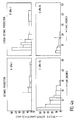
- the production is given as the specific activity of the cell culture in Figure 4 in »mol product formed/minute/g dry cell mass. This specific activity is high for the strains tested but decreases rapidly during the exponential-growth phase and the stationary phase. It is found that this marked decrease in production can be partly accounted for by product inhibition, which can be largely prevented by adding a second organic phase which collects the product formed (1-octanol) from the aqueous phase more efficiently.
- Cyclohexane, cyclohexanol and diesters of phthalates are found to be suitable for this purpose.
- Dibutyl phthalate in particular, gives a twice higher end product concentration. The epoxidation of octene by these strains, however, remains low, probably as a result of a reduced resistance of the engineered strain to the organic phase.
- Figure 4 shows the production of octanol and 1,2-epoxyoctane of the strains tested as the specific activity of the cell culture in »mol product per minute per gram dry cell mass.
- the dotted lines indicate the transition to the stationary phase.
Landscapes
- Engineering & Computer Science (AREA)
- Life Sciences & Earth Sciences (AREA)
- Genetics & Genomics (AREA)
- Chemical & Material Sciences (AREA)
- Health & Medical Sciences (AREA)
- Organic Chemistry (AREA)
- Wood Science & Technology (AREA)
- Zoology (AREA)
- General Engineering & Computer Science (AREA)
- Bioinformatics & Cheminformatics (AREA)
- Biotechnology (AREA)
- Biomedical Technology (AREA)
- Biochemistry (AREA)
- General Health & Medical Sciences (AREA)
- Microbiology (AREA)
- Molecular Biology (AREA)
- Chemical Kinetics & Catalysis (AREA)
- Physics & Mathematics (AREA)
- Biophysics (AREA)
- General Chemical & Material Sciences (AREA)
- Plant Pathology (AREA)
- Micro-Organisms Or Cultivation Processes Thereof (AREA)
- Preparation Of Compounds By Using Micro-Organisms (AREA)
Description
- This invention relates to a process for producing compounds containing a terminal hydroxyl or epoxy group by culturing microorganisms resistant to the presence of bulk apolar phases and having an alkane-hydroxylase enzyme system enabling them to perform a terminal oxidation of an aliphatic substrate or of an aliphatic side chain of a substrate, under aerobic conditions and in the presence of such a substrate, and recovering the oxidation product formed.
- A similar process is described in the thesis "A Biotechnological Approach to the Synthesis of Epoxides" by M.J. de Smet (Groningen, 1982). As set out therein, some bacteria, such as Pseudomonas oleovorans, are capable of growing under aerobic conditions on different non-aromatic hydrocarbons, such as octane, octene, octanol, etc. Pseudomonas oleovorans can do this owing to a plasmid-coded mono-oxygenase system which catalyzes the first oxidation step in the decomposition of the hydrocarbon substrate. This mono-oxygenase, or rather in particular the alkane-hydroxylase system, which catalyzes hydroxylation of a terminal methyl group of n-alkanes and the conversion of terminal n-alkenes into the corresponding 1,1 oxides, consists of an ω-hydroxylase localized in the cytoplasmic membrane and having a molar weight of 41 kDa, an iron and sulphur containing cytoplasmic protein having a molar weight of 19 kDa (called rubredoxin) and a cytoplasmic flavoprotein with a molar weight of 55 kDa (called rubredoxin-reductase).
- For bacteria to be able to grow on hydrocarbons, such as alkanes, they must be capable of converting the first oxidation product further. In Pseudomonas oleovorans, the n-alkanol is oxidized further, for this purpose, to an aldehyde which, in turn, is oxidized to a corresponding fatty acid, which subsequently is broken down further by β-oxidation. The conversion of alkanol into aldehyde is catalyzed, in Pseudomonas oleovorans, by alcohol dehydrogenase enzymes. The OCT plasmid of P. oleovorans contains, inter alia, genes coding for the alkane-hydroxylase system (alkBA genes), for an alcohol dehydrogenase (alkC gene), localized in the cytoplasmic membrane, and the regulation genes (alkR genes) necessary for their expression. The genes responsible for the further oxidation of the aldehyde to fatty acid and for the β-oxidation of the fatty acid, however, are located on the chromosome.
- Bacteria such as P. oleovorans can be cultured in systems comprising two liquid phases, in which the bacteria themselves are contained in the aqueous phase and the substrate forms the apolar phase, to produce the first reaction product consisting of n-alkanols and/or n-epoxyalkanes, according to the nature of the substrate. This possibility of a biocatalytic process was studied in the thesis by M.J. de Smet, referred to hereinbefore, including the possibility of producing compounds such as 1,2-epoxyoctane and 1,2-epoxydecane by culturing P. oleovorans in two-phase systems under aerobic conditions, using olefins such as n-octene and n-decene as a carbon source.
- An important disadvantage of the production of alkanols carried out in this manner, however, is that the microorganism used converts the alkanol formed further, so that production is hampered. In the case of 1,2-epoxyalkanes formed from olefins, further breakdown is also possible, probably via a hydroxylation of the free methyl group.
- The present invention provides a process which eliminates this drawback and is characterized by using microorganisms that have been genetically engineered so that they are still capable of performing the terminal oxidation of the substrate to a compound having a terminal hydroxyl or epoxy group, but are no longer able to convert the oxidation product further to any significant extent.
- The nature of the substrate is closely related to the nature of the desired oxidation product. When, for example, n-octanol is the desired oxidation product, the substrate to be chosen will be n-octane. If it is desired to produce 1,2-epoxyoctane, the substrate to be taken will be n-octene. Depending on the nature of the substrate and the nature of the microorganisms used, in particular the specificity of the alkane-hydroxylase enzyme system thereof, the oxidation product will sometimes be a mixture of different compounds, for example, a mixture consisting of an 1,2-epoxyalkane and an alkenol when an olefin is used as the substrate. The nature of the microorganisms used and the alkane-hydroxylase enzyme system thereof is also determinative of the nature of the substrates that can be used.
- Preferably, according to the invention, microorganisms of the species Pseudomonas oleovorans or of the species Pseudomonas putida are used, most preferably a microorganism of the species Pseudomonas oleovorans. Such microorganisms are by nature able to grow on n-alkanes and n-alkenes containing 6-12 carbon atoms, but the alkane-hydroxylase enzyme system thereof is also effective with other substrates, such as propene, butene, tetradecene, hexadecene, tetradecane, n-alkadienes containing 6-12 carbon atoms, n-alkanoic acids containing 6-12 carbon atoms, phenylalkanes, phenyl-alkenes, etc.
- A preferred embodiment of the invention is characterized by using as the substrate one or more n-alkanes, n-alkenes and/or n-alkadienes containing 6-12 carbon atoms.
- In principle, various kinds of genetic engineering can be used to reduce the capacity of the microorganisms to convert the first oxidation product further. Although microorganisms such as P. oleovorans contain several genes coding for alkanol-dehydrogenase, it has surprisingly been found that the deactivation or removal of the plasmidic alkanol-dehydrogenase gene (i.e., that located on a plasmid) results in a considerable deterioration of the bacterium′s capacity to convert the first oxidation product further. Indeed, microorganisms with mutations in this plasmidic alkanol-dehydrogenase gene, which mutations may be site-directed and are sufficient to prevent the expression of this active alkanol-dehydrogenase enzyme, are examples of microorganisms suitable for use in the process according to this invention.
- Microorganisms suitable for use in the process according to the invention can be obtained by using a host stripped of its natural plasmid, and providing it with a recombinant plasmid containing the alkBA/R genes coding for the alkane-hydroxylase system and not containing a gene coding for an active alkanol-dehydrogenase enzyme.
- The natural OCT plasmid contains the required genes in the alk BAC operon positively regulated by the products of the alkR regulation genes. The alk BA genes coding for the alkane-hydroxylase enzyme system and the alkR, regulation genes can be cloned in a suitable host, using a suitable vector system, e.g., pLAFRI vectors (Friedman et al Gene 18 (1982), 289-296). A suitable recombinant plasmid containing these alkBA and alkR genes and lacking the plasmidic alkanol-dehydrogenase gene alkC is the
plasmid pGEc 41 based on pLAFRI. - An E. coli strain containing this
plasmid pGEc 41 was deposited with the Centraalbureau voor Schimmelcultures at Baarn, The Netherlands, on January 15, 1987 (E. coli DH1 (pGEc 41), CBS 102-87). - Pseudomonas oleovorans whose natural plasmid has been replaced by the
plasmid pGEc 41 or a similar plasmid containing alkBA/R genes are no longer capable of growing on alkanes, alkenes and alkanols containing 6-12 carbon atoms, at least they grow significantly less well on such substrates than the wild-type bacteria. However, they are still resistant to the presence of bulk apolar phases and as a consequence can be cultured in the presence of a nutrient medium with a suitable carbon source, such as pyruvate, citrate or glucose, in systems with two liquid phases, namely, an aqueous phase containing the bacteria and an organic phase, which may amount to as much as 99 % by volume without appreciable damage to the bacteria. For a good growth, it is recommendable for the pH of the system to be controlled at a value of between 5 and 9, preferably 6.8-7.0, and for the temperature to be controlled at a value below 37°C, preferably 20-34°C, and most preferably 28-32°C. To effect a good contact between the organic phase and the aqueous phase with bacteria and to effect good mixing and also decrease the risk of product inhibition without at the same time causing damage to the bacteria, the reactor contents are preferably continuously stirred at a stirring rate of 500-1000 rpm, or agitated otherwise to a comparable extent. - To minimize a negative effect of the product formed on the conversion of substrate as much as possible, a further preferred feature of the invention is that a second organic phase is used which removes the oxidation product formed from the aqueous phase more efficiently by virtue of a distribution coefficient for the product that is quite favourable relative to water. For this purpose, for example, cyclohexane, cyclohexanol, phthalic acid esters and diesters, such as dibutyl phthalate, have been found to be suitable. By adding, for example, dibutyl phthalate as a second organic phase in the microbiological production of octanol from octane by the process according to the invention, the ultimate product concentration can be doubled.
- The invention is illustrated in and by the following experimental section.
-
a. Bacterial starting strains:
The starting strains used for genetic engineering are listed in Table A.
b. Media
E. coli and P. putida were cultured on L medium or E* medium with a nutrient source (0.2% w/v) and required amino acids (0.01% w/v).L medium contains: 5 g/l yeast extract 10 g/l bacto-trypton 10 g/l NaCl pH adjusted to 7.5 E* medium contains: 3.5 g/l NaNH₄HPO₄.4 H₂O 7.5 g/l K₂HPO₄.3 H₂O 3.7 g/l KH₂PO₄
After sterilization, 10 ml of a sterile 100 mM MgSO₄ solution and 1 ml of a trace elements solution, called 1000 x MT were added. 1000 x MT contains, per liter:
2.78 g FeSO₄ . 7H₂O
1.98 g MnCl₂ . 4H₂O
2.81 g CoSO₄ . 7H₂O
1.47 g CaCl₂ . 2H₂O
0.17 g CuCl₂ . 2H₂O
0.29 g ZnSO₄ . 7H₂O
For growth on octane, the strains were cultured on plates with E* medium with 1.5%(w/v) agarose at 32°C in closed canisters with octane vapour. For selection for tetracycline resistance, this substance was added up to a concentration of 15 »g/ml. - c. DNA isolation
Plasmid DNA of E. coli and P. putida was isolated by the method of H.C. Birnboim and J. Doly (Nucl.Acids Res. 7 (1979); 1513-1523). - d. Enzymes
Restriction endonucleases, T4 DNA ligase and hen egg-white lysozyme were obtained from Boehringer Mannheim GmbH (Mannheim, Federal Republic of Germany) and Bethesda Research Labs GmbH (Neu Isenburg, Federal Republic of Germany).They were used in accordance with supplier's directions. - e. Mutagenesis of GPo-12
GPo-1 was cultured on L medium to a cell density of 0.1 mg/ml in a shaking water bath at 32°C. Nitrosoguanidine (NTG) was added to a final concentration of 50 »g/ml, and incubation was continued for another 30 minutes. The cells were subsequently centrifuged (5000 g, 5 minutes) and re-suspended in fresh L medium to a cell density of 0.05 »g/ml. Subsequently, the culture was incubated overnight at 32°C and then diluted and plated on L-medium plates to produce isolated colonies. These were tested on E* medium with glucose, E* medium with octane vapour and on E* medium with octanol vapour. - Of the 3500 colonies found, 7 were no longer able to grow on octane but did grow on octanol, and these were studied further for the type of mutation. This showed that they had all lost the OCT plasmid. One of these 7 mutants was called GPo-12. When the OCT plasmid is re-introduced into this strain, the strain behaves as a normal GPo-1.
- f. Genetic procedures
The mobilization of pLAFRI of E. coli to P. putida was carried out by the "triparental mating" method described by Friedmann et al., Gene 16 (1982), 289-296. When the donor strain, the recipient and the helper strain had been cultured overnight on an L plate, the exconjugants were selected by replica plating on plates with E* medium which also contained tetracycline, glucose and the required amino acids.
The transformation of E. coli with plasmid DNA was carried out by the method of Cohen et al. (Cohen SN, Chang AC and HSU L, Proc.Natl.Acad.Sci. 69 (1972), 2110-2114). In-vitro phage-Lambda packing extract was made and pLAFRI DNA was packed by the method of Hohn (Hohn, B in: R. Wu (ed), Methods in Enzymology 68 (1979), pp 299-309, Academic Press Inc., New York).
For transductions, E. coli HB 101 was used (Boyer et al.). It was cultured overnight in 5 ml L medium. The cells were next centrifuged and resuspended in 5ml 10 mM MgSO₄ and so kept overnight. The next day these famished E. coli cells were mixed with the correct amount of in-vitro packing cosmids and incubated at room temperature for 15 minutes. Thereafter 0.2 ml L medium was added and the cell suspension was incubated at 37°C for 1 hour. Transductants of E. coli were then plated on an L plate with tetracycline. - g. Construction of strains
pGEc29 (pLAFRI with 16.9 kb insert containing the alkBAC operon) and pGEc40 (pLAFRI with 18 kb insert containing the alkR locus) were ligated together in a 1 : 1 ratio after digestion with EcoRI. The ligation mix was packed in-vitro in phage lambda heads and HB101 (E. coli) was transduced with this mix. To identify transductants, the material was selected for tetracycline resistance.
In this way, a plasmid (pGEc47) was obtained in E. coli HB 101 containing in pLAFRI both the 18 kb and the 16.9 kb inserts. In addition, a plasmid was obtained (pGEc41) containing the complete alkR locus and, from a spontaneous deletion, only a portion of the alkBAC operon, i.e., alkBA (see Figure 3b). This plasmid accordingly lacks the plasmid-coded alkanol-dehydrogenase (alkC). See for genetic determinants of pGEc41 and pGEc47 Table C. Both plasmids pGEc41 and pGEc47 were introduced into P. putida and the plasmid-stripped P. oleovorans strain GPo-12 by conjugation (see under f). For growth characteristics, see Table B.
The employed vector pLAFRI (Tc, Tra, Mob, RK2 replicon) was described by Friedman et al., Gene 18 (1982), 289-296. All of the DNA fragments referred to were isolated from a gene library of the total P. oleovorans genome. This gene library was constructed by Eggink and described in: Innovations in Biotechnology (1984), Vol. 22, E. Houwink and R.R. van der Meer (eds.), pp 373-380.
Selection was effected by complementation, as set forth in Table C.
The plasmids pGEc 29,pGEc 40 andpGEc 47 were obtained by ligation with EcoRI digested pLAFRI.- Figure 1 illustrates the restriction chart of the EcoRI fragment B inserted into
pGEc 40, which fragment contains the alkR locus. - Figure 2 shows the restriction chart of the EcoRI fragment A, containing the alkBAC operon, inserted into pGEc29.
- Figure 3a shows the restriction chart of the insert in pGEc47, which insert contains the alkBAC operon and the alkR locus.
- Figure 3b shows the restriction chart of the insert in pGEc41, which insert consists of the EcoRI fragments A and B with a deletion of 5kb in the alkBAC operon. The restriction sites lost with this deletion are shown in the figure. To this effect the EcoRI site belongs between the two fragments. The deletion extends to the downstream area of the alkBAC operon, where it terminates between the SstI and PstI sites in the 12.0 and 12.2 positions. The deletion only comprises a small portion (from 0.1 to 0.5 kb) of fragment B, so that the alkR locus has remained outside the deletion. By growth experiments, inter alia with the PpS81 strain, which has a mutation in the chromosomally encoded alkanol dehydrogenase, it was shown that the deletion concerned the plasmidic alkanol dehydrogenase gene: whereas the GPp-10 (PpS-81 . pGEc47) strain grew as quickly on octane as did GPp-9 (PpG-1 . pGEc41), it was found that the GPp-11 (PpS-81 . pGEc41) strain grew very poorly on octane.

- Figure 1 illustrates the restriction chart of the EcoRI fragment B inserted into
- To determine optimum process conditions for alkane hydroxylation and alkene epoxidation, optima for the growth of P. oleovorans were determined in mixtures of E* medium and alkanes or alkenes in stirred tank reactors with a working volume of 1 l.
- P. oleovorans was pre-cultured overnight on E* medium with octane. The main cultures were inocculated to a cell density of 0.1 mg cell dry weight/ml aqueous phase at 450 nm, as described by B. Witholt (Witholt B, J.Bacteriol 109 (1972), 350-364). From the resulting growth curves, the growth rate was determined. The total volume of aqueous phase and organic phase was always 700 ml.
- The following optima were determined:
- pH:
- The growth of P. oleovorans on n-alkanes is possible between values of 5 and 9. The pH optimum ranges between pH 6.8 and 7.0.
Temperature: P. oleovorans can grow on n-alkanes at temperatures below 37°C, with a clear optimum at about 30°C.
Stirring rates: stirring rates in small fermentors turn out to be optimal for growth between 500 and 1000 rpm.
Fraction organic phase: when varying the % (v/v) alkane relative to the total reaction volume, it was found that P. oleovorans can grow on 0.5-99% organic phase without the culture being appreciably damaged. - For the production of 1-octanol from n-octane and 1,2-epoxyoctane from octene by the engineered strains, these were cultured on E* medium with pyruvate as the source of carbon and energy. The strains were inocculated from E* plates on 5 ml L medium and pre-cultured on it at 30°C for 8 hours in the presence of tetracycline.
Subsequently they were transferred to 50 ml E* medium containing 1% (w/v) pyruvate and tetracycline in 250 ml Erlenmeyers and cultured overnight on a shaking plate at 200 rpm and 30°C. The next day they were transferred to E* medium and 20% (v/v) organic phase in fermentors to a cell density of 0.1-0.2 mg cell dry weight/ml aqueous phase. The total end volume was 700 ml, of which 140 ml was organic phase (octane or octene) and 560 ml aqueous phase.
Under conditions found to be optimal for the growth on alkanes, i.e. pH 7.0 (controlled with 2N KOH and 2N H₂SO₄) and a temperature of 30°C, stirring rate 700 rpm and oxygen pressure above 50% air saturation, the production by genetically engineered strains was determined both during growth on pyruvate and during the following stationary phase as a result of nitrogen limitation. The product concentrations in the organic phase were measured. The production is given as the specific activity of the cell culture in Figure 4 in »mol product formed/minute/g dry cell mass. This specific activity is high for the strains tested but decreases rapidly during the exponential-growth phase and the stationary phase.
It is found that this marked decrease in production can be partly accounted for by product inhibition, which can be largely prevented by adding a second organic phase which collects the product formed (1-octanol) from the aqueous phase more efficiently. Cyclohexane, cyclohexanol and diesters of phthalates are found to be suitable for this purpose. Dibutyl phthalate, in particular, gives a twice higher end product concentration.
The epoxidation of octene by these strains, however, remains low, probably as a result of a reduced resistance of the engineered strain to the organic phase. - Figure 4 shows the production of octanol and 1,2-epoxyoctane of the strains tested as the specific activity of the cell culture in »mol product per minute per gram dry cell mass. The dotted lines indicate the transition to the stationary phase.


Claims (15)
- A process for producing compounds containing a terminal hydroxyl or epoxy group by culturing microorganisms resistant to the presence of bulk apolar phases and having an alkane-hydroxylase enzyme system enabling them to perform a terminal oxidation of an aliphatic substrate or of an aliphatic side chain of a substrate, under aerobic conditions and in the presence of such a substrate, and recovering the oxidation product formed, characterized by using microorganisms of the genus Pseudomonas which have been genetically engineered by deletion of part of the plasmidic alkanol dehydrogenase gene alkC whose location on the OCT plasmid is shown in figures 2, 3a and 3b, such that they are still capable of performing the terminal oxidation of the substrate to a compound with a terminal hydroxyl or epoxy group, but are no longer able to convert the oxidation product further to any significant extent.
- A process as claimed in claim 1, characterized by using as the substrate one or more n-alkanes, n-alkenes and/or n-alkadienes containing 6-12 carbon atoms.
- A process as claimed in claim 1 or 2, characterized by using microorganisms of the species Pseudomonas oleovorans or the species Pseudomonas putida.
- A process as claimed in claim 3, characterized by using a Pseudomonas oleovorans strain in which at least the plasmidic alkanol-dehydrogenase gene has been removed or inactivated.
- A process as claimed in claim 3, characterized by using a Pseudomonas oleovorans strain whose natural plasmid has been replaced by a plasmid containing the alkBA/R genes coding for the alkane-hydroxylase system and not containing a gene coding for an active alkanol-dehydrogenase enzyme.
- A process as claimed in claim 5, characterized by using a Pseudomonas oleovorans strain whose natural plasmid has been replaced by the plasmid pGEc41. (CBS 102.87)
- A process as claimed in any of claims 1-6, characterized in that the microorganisms are cultured at a temperature of 20-34°C, preferably 28-32°C, in a system comprising two liquid phases, whose pH is controlled to be at a value of 5-9, preferably 6.8-7.0.
- A process as claimed in any of claims 1-7, characterized in that the reactor contents are stirred at a stirring rate of 500-1000 rpm.
- A process as claimed in any of claims 1-8, characterized by using a nutrient medium containing a suitable carbon source, such as pyruvate, citrate and/or glucose.
- A process as claimed in any of claims 1-9, characterized by adding a second organic phase, such as dibutyl phthalate cyclohexane and/or cyclohexanol, in which the oxidation product is soluble.
- Microorganisms resistant to the presence of bulk apolar phases and having an alkane-hydroxylase enzyme system enabling them to perform a terminal oxidation of an aliphatic substrate or of an aliphatic side chain of a substrate, said microorganisms being of the genus Pseudomonas and being genetically engineered by deletion of part of the plasmidic alkanol dehydrogenase gene alkC whose location on the OCT plasmid is shown in figures 2, 3a and 3b, such that they are still capable of performing the terminal oxidation of the substrate to a compound with a terminal hydroxyl or epoxy group, but are no longer able to convert the oxidation product further to any significant extent.
- Microorganisms as claimed in claim 11 of the species Pseudomonas oleovorans or the species Pseudomonas putida.
- Microorganisms as claimed in claim 12 of the species Pseudomonas oleovorans, in which at least the plasmidic alkanol-dehydrogenase gene has been removed or inactivated.
- Microorganisms as claimed in claim 12 of the species Pseudomonas oleovorans, in which the natural plasmid has been replaced by a plasmid containing the alkBA/R genes coding for the alkane-hydroxylase system, and not containing a gene coding for an active alkanol-dehydrogenase enzyme.
- Microorganisms as claimed in claim 14 of the species Pseudomonas oleovorans, in which the natural plasmid has been replaced by the plasmid pGEc 41.(CBS 102.87)
Applications Claiming Priority (2)
| Application Number | Priority Date | Filing Date | Title |
|---|---|---|---|
| NL8700085 | 1987-01-15 | ||
| NL8700085A NL8700085A (en) | 1987-01-15 | 1987-01-15 | METHOD FOR PREPARING COMPOUNDS WITH TERMINAL HYDROXYL OR EPOXY GROUP; USEFUL MICROORGANISMS FOR THAT. |
Publications (2)
| Publication Number | Publication Date |
|---|---|
| EP0277674A1 EP0277674A1 (en) | 1988-08-10 |
| EP0277674B1 true EP0277674B1 (en) | 1995-04-12 |
Family
ID=19849416
Family Applications (1)
| Application Number | Title | Priority Date | Filing Date |
|---|---|---|---|
| EP88200052A Expired - Lifetime EP0277674B1 (en) | 1987-01-15 | 1988-01-14 | A process for producing compounds containing a terminal hydroxyl or epoxy group; and microorganisms suitable therefor |
Country Status (6)
| Country | Link |
|---|---|
| US (1) | US5032512A (en) |
| EP (1) | EP0277674B1 (en) |
| JP (1) | JP2790630B2 (en) |
| CA (1) | CA1297439C (en) |
| DE (1) | DE3853548T2 (en) |
| NL (1) | NL8700085A (en) |
Cited By (1)
| Publication number | Priority date | Publication date | Assignee | Title |
|---|---|---|---|---|
| CN103987727A (en) * | 2011-08-15 | 2014-08-13 | 赢创德固赛有限公司 | Biotechnological approach to the synthesis of organic compounds using the alkL gene product |
Families Citing this family (19)
| Publication number | Priority date | Publication date | Assignee | Title |
|---|---|---|---|---|
| US5518907A (en) * | 1989-06-07 | 1996-05-21 | Center For Innovative Technology | Cloning and expression in Escherichia coli of the Alcaligenes eutrophus H16 poly-beta-hydroxybutyrate biosynthetic pathway |
| US5334520A (en) * | 1990-05-25 | 1994-08-02 | Center For Innovative Technology | Production of poly-beta-hydroxybutyrate in transformed escherichia coli |
| CZ279464B6 (en) * | 1990-09-24 | 1995-05-17 | Lonza A.G. | HYDROXYLATION PROCESS OF METHYL GROUPS IN AROMATIC HETERO CYCLES, HYBRID PLASMIDS pLO5 AND pLO4 AND MICRO-ORGANISMS PSEUDOMONA PUTIDA AND ESCHERICHIA COLI |
| IE75349B1 (en) * | 1991-03-07 | 1997-08-27 | Lonza Ag | A process for the terminal hydroxylation of ethyl groups on aromatic 5- or 6-membered heterocyclic compounds |
| US6524812B1 (en) | 1993-10-07 | 2003-02-25 | Regents Of The University Of Minnesota | Genes encoding resistance to DNA alkylating agents |
| US6495348B1 (en) * | 1993-10-07 | 2002-12-17 | Regents Of The University Of Minnesota | Mitomycin biosynthetic gene cluster |
| US20030201227A1 (en) * | 1996-12-17 | 2003-10-30 | Perriello Felix Anthony | Remediation of odorous media |
| US7182871B2 (en) * | 1996-12-17 | 2007-02-27 | Global Biosciences, Inc. | Wastewater treatment with alkanes |
| EP1149918A1 (en) * | 2000-04-27 | 2001-10-31 | Creavis Gesellschaft für Technologie und Innovation mbH | Process for the oxidation of hydrocarbons by use of microorganisms |
| DE102010015807A1 (en) | 2010-04-20 | 2011-10-20 | Evonik Degussa Gmbh | Biocatalytic oxidation process with alkL gene product |
| EP2620504A1 (en) * | 2012-01-25 | 2013-07-31 | Evonik Industries AG | Process for oxidizing alkenes employing the Pseudomonas putida GPo1 AlkB monooxygenase |
| CA2947478C (en) | 2014-05-16 | 2022-09-13 | Carbios | Process of recycling mixed pet plastic articles |
| TN2017000085A1 (en) | 2014-10-21 | 2018-07-04 | Carbios | Polypeptide having a polyester degrading activity and uses thereof |
| WO2016097325A1 (en) * | 2014-12-19 | 2016-06-23 | Carbios | Plastic compound and preparation process |
| CN107532153A (en) | 2015-03-13 | 2018-01-02 | 卡比奥斯公司 | Novel polypeptide with polyester degrading activity and application thereof |
| EP3307812B1 (en) | 2015-06-12 | 2024-05-08 | Carbios | Biodegradable polyester composition and uses thereof |
| US10717996B2 (en) | 2015-12-21 | 2020-07-21 | Carbios | Recombinant yeast cells producing polylactic acid and uses thereof |
| CA3024287C (en) | 2016-05-19 | 2024-06-11 | Carbios | A process for degrading plastic products |
| ES2972907T3 (en) * | 2017-02-15 | 2024-06-17 | Medical College Wisconsin Inc | Modified bacterial strain that reduces colonization of antibiotic-resistant enterococci in the GI tract |
Family Cites Families (4)
| Publication number | Priority date | Publication date | Assignee | Title |
|---|---|---|---|---|
| US3813316A (en) * | 1972-06-07 | 1974-05-28 | Gen Electric | Microorganisms having multiple compatible degradative energy-generating plasmids and preparation thereof |
| EP0062492B1 (en) * | 1981-04-02 | 1986-07-02 | Imperial Chemical Industries Plc | Microbiological oxidation process |
| CA1189807A (en) * | 1982-06-28 | 1985-07-02 | Ching-Tsang Hou | Microbiological process for oxidation of alkanes, vinyl compounds and secondary alcohols |
| JPS59501732A (en) * | 1982-09-20 | 1984-10-18 | アムジエン | Methods and materials for microbiological oxidation of aromatic hydrocarbons |
-
1987
- 1987-01-15 NL NL8700085A patent/NL8700085A/en not_active Application Discontinuation
-
1988
- 1988-01-14 EP EP88200052A patent/EP0277674B1/en not_active Expired - Lifetime
- 1988-01-14 DE DE3853548T patent/DE3853548T2/en not_active Expired - Fee Related
- 1988-01-14 CA CA000556478A patent/CA1297439C/en not_active Expired - Lifetime
- 1988-01-14 JP JP63006747A patent/JP2790630B2/en not_active Expired - Lifetime
- 1988-01-14 US US07/143,826 patent/US5032512A/en not_active Expired - Fee Related
Cited By (1)
| Publication number | Priority date | Publication date | Assignee | Title |
|---|---|---|---|---|
| CN103987727A (en) * | 2011-08-15 | 2014-08-13 | 赢创德固赛有限公司 | Biotechnological approach to the synthesis of organic compounds using the alkL gene product |
Also Published As
| Publication number | Publication date |
|---|---|
| JP2790630B2 (en) | 1998-08-27 |
| US5032512A (en) | 1991-07-16 |
| EP0277674A1 (en) | 1988-08-10 |
| JPS63273483A (en) | 1988-11-10 |
| NL8700085A (en) | 1988-08-01 |
| DE3853548D1 (en) | 1995-05-18 |
| CA1297439C (en) | 1992-03-17 |
| DE3853548T2 (en) | 1995-09-21 |
Similar Documents
| Publication | Publication Date | Title |
|---|---|---|
| US5032512A (en) | Process for producing compounds containing a terminal hydroxyl or epoxy group and microorganisms suitable therefor | |
| EP1012323B1 (en) | A method for the production of dicarboxylic acids | |
| US4278765A (en) | Method for preparing strains which produce aminoacids | |
| JP2000500333A (en) | Mutant E. coli with high succinic acid production Coli strain | |
| US20180371510A1 (en) | Yeast strains with reduced fatty alcohol oxidase activity and method for the production of omega-hydroxy fatty acids and dicarboxylic acids | |
| CN101228282A (en) | Using Yarrowia lipolytica to Improve Mutant Production of Dicarboxylic Acids | |
| de Smet et al. | Synthesis of 1, 2-epoxyoctane by Pseudomonas oleovorans during growth in a two-phase system containing high concentrations of 1-octene | |
| Kuhlemeier et al. | Cloning of nitrate reductase genes from the cyanobacterium Anacystis nidulans | |
| KR20130101556A (en) | Use of monascus in organic acid production | |
| US5688683A (en) | Plasmid pBUL1 derived from a lactobacillus and derivatives thereof | |
| CN108587934A (en) | A kind of Yarrowia lipolytica of production limonene and its construction method and application | |
| EP0373181A1 (en) | Novel enzyme. | |
| US5173428A (en) | Microorganisms suitable for producing compounds containing a terminal hydroxyl or epoxy group | |
| KR20150121789A (en) | Recombinant microorganism having enhanced butanediol producing ability and method for producing butanediol using the same | |
| CA2083407C (en) | Microorganisms for the stabilization of plasmids | |
| CA2385132A1 (en) | Process for producing ubiquinone-10 | |
| Horn et al. | Effect of high density cultivation on plasmid copy number in recombinant Escherichia coli cells | |
| EP0182636A2 (en) | Vectors for high-level gene expression | |
| US4824781A (en) | Microbiologically produced d(-)-mandelate-dehydrogenase process for obtaining it and its use | |
| EP0500188B1 (en) | Process for the preparation of alpha-acetolactic acid | |
| CN100390287C (en) | Acetic acid tolerance-related gene, acetic acid bacterium bred using the gene, and method for producing vinegar using the acetic acid bacterium | |
| CN114277049A (en) | A kind of genetic engineering bacteria heterologous expressing sucrose isomerase and its application | |
| JPWO2001096573A1 (en) | Ethanol production method using recombinant coryneform bacteria | |
| HUP0104772A2 (en) | Construction of production strains for producing substituted phenols by specifically inactivating genes of the eugenol and ferulic acid catabolism | |
| Croes et al. | Regulation of methanol oxidation and carbon dioxide fixation in Xanthobacter strain 25a grown in continuous culture |
Legal Events
| Date | Code | Title | Description |
|---|---|---|---|
| PUAI | Public reference made under article 153(3) epc to a published international application that has entered the european phase |
Free format text: ORIGINAL CODE: 0009012 |
|
| AK | Designated contracting states |
Kind code of ref document: A1 Designated state(s): BE CH DE FR GB IT LI NL |
|
| 17P | Request for examination filed |
Effective date: 19890202 |
|
| 17Q | First examination report despatched |
Effective date: 19911121 |
|
| GRAA | (expected) grant |
Free format text: ORIGINAL CODE: 0009210 |
|
| AK | Designated contracting states |
Kind code of ref document: B1 Designated state(s): BE CH DE FR GB IT LI NL |
|
| REF | Corresponds to: |
Ref document number: 3853548 Country of ref document: DE Date of ref document: 19950518 |
|
| ET | Fr: translation filed | ||
| ITF | It: translation for a ep patent filed | ||
| PLBE | No opposition filed within time limit |
Free format text: ORIGINAL CODE: 0009261 |
|
| STAA | Information on the status of an ep patent application or granted ep patent |
Free format text: STATUS: NO OPPOSITION FILED WITHIN TIME LIMIT |
|
| 26N | No opposition filed | ||
| PGFP | Annual fee paid to national office [announced via postgrant information from national office to epo] |
Ref country code: GB Payment date: 19990106 Year of fee payment: 12 |
|
| PGFP | Annual fee paid to national office [announced via postgrant information from national office to epo] |
Ref country code: CH Payment date: 19990108 Year of fee payment: 12 |
|
| PGFP | Annual fee paid to national office [announced via postgrant information from national office to epo] |
Ref country code: FR Payment date: 19990129 Year of fee payment: 12 |
|
| PGFP | Annual fee paid to national office [announced via postgrant information from national office to epo] |
Ref country code: BE Payment date: 19990224 Year of fee payment: 12 |
|
| PGFP | Annual fee paid to national office [announced via postgrant information from national office to epo] |
Ref country code: DE Payment date: 19990315 Year of fee payment: 12 |
|
| PG25 | Lapsed in a contracting state [announced via postgrant information from national office to epo] |
Ref country code: GB Free format text: LAPSE BECAUSE OF NON-PAYMENT OF DUE FEES Effective date: 20000114 |
|
| PG25 | Lapsed in a contracting state [announced via postgrant information from national office to epo] |
Ref country code: LI Free format text: LAPSE BECAUSE OF NON-PAYMENT OF DUE FEES Effective date: 20000131 Ref country code: CH Free format text: LAPSE BECAUSE OF NON-PAYMENT OF DUE FEES Effective date: 20000131 Ref country code: BE Free format text: LAPSE BECAUSE OF NON-PAYMENT OF DUE FEES Effective date: 20000131 |
|
| PGFP | Annual fee paid to national office [announced via postgrant information from national office to epo] |
Ref country code: NL Payment date: 20000131 Year of fee payment: 13 |
|
| BERE | Be: lapsed |
Owner name: RIJKSUNIVERSITEIT TE GRONINGEN Effective date: 20000131 |
|
| GBPC | Gb: european patent ceased through non-payment of renewal fee |
Effective date: 20000114 |
|
| REG | Reference to a national code |
Ref country code: CH Ref legal event code: PL |
|
| PG25 | Lapsed in a contracting state [announced via postgrant information from national office to epo] |
Ref country code: FR Free format text: LAPSE BECAUSE OF NON-PAYMENT OF DUE FEES Effective date: 20000929 |
|
| PG25 | Lapsed in a contracting state [announced via postgrant information from national office to epo] |
Ref country code: DE Free format text: LAPSE BECAUSE OF NON-PAYMENT OF DUE FEES Effective date: 20001101 |
|
| REG | Reference to a national code |
Ref country code: FR Ref legal event code: ST |
|
| PG25 | Lapsed in a contracting state [announced via postgrant information from national office to epo] |
Ref country code: NL Free format text: LAPSE BECAUSE OF NON-PAYMENT OF DUE FEES Effective date: 20010801 |
|
| NLV4 | Nl: lapsed or anulled due to non-payment of the annual fee |
Effective date: 20010801 |
|
| PG25 | Lapsed in a contracting state [announced via postgrant information from national office to epo] |
Ref country code: IT Free format text: LAPSE BECAUSE OF NON-PAYMENT OF DUE FEES;WARNING: LAPSES OF ITALIAN PATENTS WITH EFFECTIVE DATE BEFORE 2007 MAY HAVE OCCURRED AT ANY TIME BEFORE 2007. THE CORRECT EFFECTIVE DATE MAY BE DIFFERENT FROM THE ONE RECORDED. Effective date: 20050114 |