EP0275528B1 - Process for preparing 1,1-disubstituted ethylene derivative - Google Patents
Process for preparing 1,1-disubstituted ethylene derivative Download PDFInfo
- Publication number
- EP0275528B1 EP0275528B1 EP87118965A EP87118965A EP0275528B1 EP 0275528 B1 EP0275528 B1 EP 0275528B1 EP 87118965 A EP87118965 A EP 87118965A EP 87118965 A EP87118965 A EP 87118965A EP 0275528 B1 EP0275528 B1 EP 0275528B1
- Authority
- EP
- European Patent Office
- Prior art keywords
- group
- lead
- chain
- formula
- acid
- Prior art date
- Legal status (The legal status is an assumption and is not a legal conclusion. Google has not performed a legal analysis and makes no representation as to the accuracy of the status listed.)
- Expired - Lifetime
Links
- -1 1,1-disubstituted ethylene Chemical class 0.000 title claims description 49
- 238000004519 manufacturing process Methods 0.000 title claims description 4
- OKKJLVBELUTLKV-UHFFFAOYSA-N Methanol Chemical class OC OKKJLVBELUTLKV-UHFFFAOYSA-N 0.000 claims description 29
- 229910052751 metal Inorganic materials 0.000 claims description 22
- 239000002184 metal Substances 0.000 claims description 22
- 238000000034 method Methods 0.000 claims description 19
- 125000000217 alkyl group Chemical group 0.000 claims description 18
- 125000003178 carboxy group Chemical group [H]OC(*)=O 0.000 claims description 15
- 125000003710 aryl alkyl group Chemical group 0.000 claims description 13
- 125000003118 aryl group Chemical group 0.000 claims description 12
- 125000001424 substituent group Chemical group 0.000 claims description 12
- 125000003277 amino group Chemical group 0.000 claims description 11
- 125000004429 atom Chemical group 0.000 claims description 10
- 125000002485 formyl group Chemical group [H]C(*)=O 0.000 claims description 10
- 125000004435 hydrogen atom Chemical group [H]* 0.000 claims description 10
- 150000002611 lead compounds Chemical class 0.000 claims description 10
- 239000000203 mixture Substances 0.000 claims description 10
- 125000002252 acyl group Chemical group 0.000 claims description 9
- 125000002723 alicyclic group Chemical group 0.000 claims description 8
- XAGFODPZIPBFFR-UHFFFAOYSA-N aluminium Chemical compound [Al] XAGFODPZIPBFFR-UHFFFAOYSA-N 0.000 claims description 8
- GDTBXPJZTBHREO-UHFFFAOYSA-N bromine Chemical compound BrBr GDTBXPJZTBHREO-UHFFFAOYSA-N 0.000 claims description 8
- 125000001183 hydrocarbyl group Chemical group 0.000 claims description 8
- 125000002887 hydroxy group Chemical group [H]O* 0.000 claims description 8
- 229930195735 unsaturated hydrocarbon Natural products 0.000 claims description 8
- 125000000542 sulfonic acid group Chemical group 0.000 claims description 7
- 229910052782 aluminium Inorganic materials 0.000 claims description 6
- 125000004093 cyano group Chemical group *C#N 0.000 claims description 6
- 125000005843 halogen group Chemical group 0.000 claims description 5
- 125000005842 heteroatom Chemical group 0.000 claims description 5
- ZCYVEMRRCGMTRW-UHFFFAOYSA-N 7553-56-2 Chemical group [I] ZCYVEMRRCGMTRW-UHFFFAOYSA-N 0.000 claims description 4
- OKTJSMMVPCPJKN-UHFFFAOYSA-N Carbon Chemical group [C] OKTJSMMVPCPJKN-UHFFFAOYSA-N 0.000 claims description 4
- KZBUYRJDOAKODT-UHFFFAOYSA-N Chlorine Chemical compound ClCl KZBUYRJDOAKODT-UHFFFAOYSA-N 0.000 claims description 4
- PXGOKWXKJXAPGV-UHFFFAOYSA-N Fluorine Chemical compound FF PXGOKWXKJXAPGV-UHFFFAOYSA-N 0.000 claims description 4
- XEEYBQQBJWHFJM-UHFFFAOYSA-N Iron Chemical compound [Fe] XEEYBQQBJWHFJM-UHFFFAOYSA-N 0.000 claims description 4
- PXHVJJICTQNCMI-UHFFFAOYSA-N Nickel Chemical compound [Ni] PXHVJJICTQNCMI-UHFFFAOYSA-N 0.000 claims description 4
- 125000004423 acyloxy group Chemical group 0.000 claims description 4
- 125000004104 aryloxy group Chemical group 0.000 claims description 4
- 229910052794 bromium Inorganic materials 0.000 claims description 4
- 125000004432 carbon atom Chemical group C* 0.000 claims description 4
- 239000000460 chlorine Substances 0.000 claims description 4
- 229910052801 chlorine Inorganic materials 0.000 claims description 4
- 229910052731 fluorine Inorganic materials 0.000 claims description 4
- 239000011737 fluorine Substances 0.000 claims description 4
- 125000000623 heterocyclic group Chemical group 0.000 claims description 4
- 229910052740 iodine Inorganic materials 0.000 claims description 4
- 125000003396 thiol group Chemical group [H]S* 0.000 claims description 4
- 125000003368 amide group Chemical group 0.000 claims description 3
- 125000000449 nitro group Chemical group [O-][N+](*)=O 0.000 claims description 3
- 125000002023 trifluoromethyl group Chemical group FC(F)(F)* 0.000 claims description 3
- FYYHWMGAXLPEAU-UHFFFAOYSA-N Magnesium Chemical compound [Mg] FYYHWMGAXLPEAU-UHFFFAOYSA-N 0.000 claims description 2
- ATJFFYVFTNAWJD-UHFFFAOYSA-N Tin Chemical compound [Sn] ATJFFYVFTNAWJD-UHFFFAOYSA-N 0.000 claims description 2
- 239000010941 cobalt Substances 0.000 claims description 2
- 229910017052 cobalt Inorganic materials 0.000 claims description 2
- GUTLYIVDDKVIGB-UHFFFAOYSA-N cobalt atom Chemical compound [Co] GUTLYIVDDKVIGB-UHFFFAOYSA-N 0.000 claims description 2
- 229910052742 iron Inorganic materials 0.000 claims description 2
- 239000011777 magnesium Substances 0.000 claims description 2
- 229910052749 magnesium Inorganic materials 0.000 claims description 2
- 229910052759 nickel Inorganic materials 0.000 claims description 2
- 239000011135 tin Substances 0.000 claims description 2
- 229910052718 tin Inorganic materials 0.000 claims description 2
- 238000006243 chemical reaction Methods 0.000 description 27
- 150000001875 compounds Chemical class 0.000 description 25
- XEKOWRVHYACXOJ-UHFFFAOYSA-N Ethyl acetate Chemical compound CCOC(C)=O XEKOWRVHYACXOJ-UHFFFAOYSA-N 0.000 description 12
- ZMXDDKWLCZADIW-UHFFFAOYSA-N N,N-Dimethylformamide Chemical compound CN(C)C=O ZMXDDKWLCZADIW-UHFFFAOYSA-N 0.000 description 12
- 125000006239 protecting group Chemical group 0.000 description 10
- 239000002253 acid Substances 0.000 description 9
- HEDRZPFGACZZDS-MICDWDOJSA-N Trichloro(2H)methane Chemical compound [2H]C(Cl)(Cl)Cl HEDRZPFGACZZDS-MICDWDOJSA-N 0.000 description 8
- 125000002496 methyl group Chemical group [H]C([H])([H])* 0.000 description 8
- 238000000746 purification Methods 0.000 description 8
- 239000007864 aqueous solution Substances 0.000 description 7
- 125000000484 butyl group Chemical group [H]C([*])([H])C([H])([H])C([H])([H])C([H])([H])[H] 0.000 description 7
- 125000001495 ethyl group Chemical group [H]C([H])([H])C([H])([H])* 0.000 description 7
- 238000004817 gas chromatography Methods 0.000 description 7
- 125000001449 isopropyl group Chemical group [H]C([H])([H])C([H])(*)C([H])([H])[H] 0.000 description 7
- 125000001436 propyl group Chemical group [H]C([*])([H])C([H])([H])C([H])([H])[H] 0.000 description 7
- 239000011541 reaction mixture Substances 0.000 description 7
- 229920006395 saturated elastomer Polymers 0.000 description 7
- QTBSBXVTEAMEQO-UHFFFAOYSA-N Acetic acid Chemical compound CC(O)=O QTBSBXVTEAMEQO-UHFFFAOYSA-N 0.000 description 6
- VEXZGXHMUGYJMC-UHFFFAOYSA-N Hydrochloric acid Chemical compound Cl VEXZGXHMUGYJMC-UHFFFAOYSA-N 0.000 description 6
- VYPSYNLAJGMNEJ-UHFFFAOYSA-N Silicium dioxide Chemical compound O=[Si]=O VYPSYNLAJGMNEJ-UHFFFAOYSA-N 0.000 description 6
- UIIMBOGNXHQVGW-UHFFFAOYSA-M Sodium bicarbonate Chemical compound [Na+].OC([O-])=O UIIMBOGNXHQVGW-UHFFFAOYSA-M 0.000 description 6
- FAPWRFPIFSIZLT-UHFFFAOYSA-M Sodium chloride Chemical compound [Na+].[Cl-] FAPWRFPIFSIZLT-UHFFFAOYSA-M 0.000 description 6
- QAOWNCQODCNURD-UHFFFAOYSA-N Sulfuric acid Chemical compound OS(O)(=O)=O QAOWNCQODCNURD-UHFFFAOYSA-N 0.000 description 6
- 239000006227 byproduct Substances 0.000 description 6
- 125000001972 isopentyl group Chemical group [H]C([H])([H])C([H])(C([H])([H])[H])C([H])([H])C([H])([H])* 0.000 description 6
- 125000000740 n-pentyl group Chemical group [H]C([H])([H])C([H])([H])C([H])([H])C([H])([H])C([H])([H])* 0.000 description 6
- 238000000655 nuclear magnetic resonance spectrum Methods 0.000 description 6
- 229910002027 silica gel Inorganic materials 0.000 description 6
- 239000000741 silica gel Substances 0.000 description 6
- 229960001866 silicon dioxide Drugs 0.000 description 6
- 239000007858 starting material Substances 0.000 description 6
- 125000000999 tert-butyl group Chemical group [H]C([H])([H])C(*)(C([H])([H])[H])C([H])([H])[H] 0.000 description 6
- 0 *C(c(cc1)ccc1O)O Chemical compound *C(c(cc1)ccc1O)O 0.000 description 5
- 125000000094 2-phenylethyl group Chemical group [H]C1=C([H])C([H])=C(C([H])=C1[H])C([H])([H])C([H])([H])* 0.000 description 5
- CSNNHWWHGAXBCP-UHFFFAOYSA-L Magnesium sulfate Chemical compound [Mg+2].[O-][S+2]([O-])([O-])[O-] CSNNHWWHGAXBCP-UHFFFAOYSA-L 0.000 description 5
- 125000001797 benzyl group Chemical group [H]C1=C([H])C([H])=C(C([H])=C1[H])C([H])([H])* 0.000 description 5
- 239000013078 crystal Substances 0.000 description 5
- 239000003960 organic solvent Substances 0.000 description 5
- 238000006722 reduction reaction Methods 0.000 description 5
- XLYOFNOQVPJJNP-UHFFFAOYSA-N water Substances O XLYOFNOQVPJJNP-UHFFFAOYSA-N 0.000 description 5
- IJGRMHOSHXDMSA-UHFFFAOYSA-N Atomic nitrogen Chemical compound N#N IJGRMHOSHXDMSA-UHFFFAOYSA-N 0.000 description 4
- LFQSCWFLJHTTHZ-UHFFFAOYSA-N Ethanol Chemical compound CCO LFQSCWFLJHTTHZ-UHFFFAOYSA-N 0.000 description 4
- OFOBLEOULBTSOW-UHFFFAOYSA-N Malonic acid Chemical compound OC(=O)CC(O)=O OFOBLEOULBTSOW-UHFFFAOYSA-N 0.000 description 4
- 238000005481 NMR spectroscopy Methods 0.000 description 4
- MUBZPKHOEPUJKR-UHFFFAOYSA-N Oxalic acid Chemical compound OC(=O)C(O)=O MUBZPKHOEPUJKR-UHFFFAOYSA-N 0.000 description 4
- 125000002777 acetyl group Chemical group [H]C([H])([H])C(*)=O 0.000 description 4
- ZASWJUOMEGBQCQ-UHFFFAOYSA-L dibromolead Chemical compound Br[Pb]Br ZASWJUOMEGBQCQ-UHFFFAOYSA-L 0.000 description 4
- XBDQKXXYIPTUBI-UHFFFAOYSA-N dimethylselenoniopropionate Natural products CCC(O)=O XBDQKXXYIPTUBI-UHFFFAOYSA-N 0.000 description 4
- 239000011888 foil Substances 0.000 description 4
- WABPQHHGFIMREM-UHFFFAOYSA-N lead(0) Chemical compound [Pb] WABPQHHGFIMREM-UHFFFAOYSA-N 0.000 description 4
- 239000007788 liquid Substances 0.000 description 4
- 150000002739 metals Chemical class 0.000 description 4
- BDAGIHXWWSANSR-UHFFFAOYSA-N methanoic acid Natural products OC=O BDAGIHXWWSANSR-UHFFFAOYSA-N 0.000 description 4
- 125000001997 phenyl group Chemical group [H]C1=C([H])C([H])=C(*)C([H])=C1[H] 0.000 description 4
- 239000002904 solvent Substances 0.000 description 4
- WEVYAHXRMPXWCK-UHFFFAOYSA-N Acetonitrile Chemical compound CC#N WEVYAHXRMPXWCK-UHFFFAOYSA-N 0.000 description 3
- 238000004458 analytical method Methods 0.000 description 3
- QVGXLLKOCUKJST-UHFFFAOYSA-N atomic oxygen Chemical compound [O] QVGXLLKOCUKJST-UHFFFAOYSA-N 0.000 description 3
- 125000003236 benzoyl group Chemical group [H]C1=C([H])C([H])=C(C([H])=C1[H])C(*)=O 0.000 description 3
- 150000001732 carboxylic acid derivatives Chemical class 0.000 description 3
- 239000003638 chemical reducing agent Substances 0.000 description 3
- 125000005982 diphenylmethyl group Chemical group [H]C1=C([H])C([H])=C(C([H])=C1[H])C([H])(*)C1=C([H])C([H])=C([H])C([H])=C1[H] 0.000 description 3
- 229910052760 oxygen Inorganic materials 0.000 description 3
- 239000001301 oxygen Substances 0.000 description 3
- 125000001501 propionyl group Chemical group O=C([*])C([H])([H])C([H])([H])[H] 0.000 description 3
- 150000003839 salts Chemical class 0.000 description 3
- 235000017557 sodium bicarbonate Nutrition 0.000 description 3
- 229910000030 sodium bicarbonate Inorganic materials 0.000 description 3
- 239000011780 sodium chloride Substances 0.000 description 3
- 125000005425 toluyl group Chemical group 0.000 description 3
- 238000005160 1H NMR spectroscopy Methods 0.000 description 2
- UTQNKKSJPHTPBS-UHFFFAOYSA-N 2,2,2-trichloroethanone Chemical group ClC(Cl)(Cl)[C]=O UTQNKKSJPHTPBS-UHFFFAOYSA-N 0.000 description 2
- VEYIMQVTPXPUHA-UHFFFAOYSA-N 3-hydroxypyran-4-one Chemical compound OC1=COC=CC1=O VEYIMQVTPXPUHA-UHFFFAOYSA-N 0.000 description 2
- OSWFIVFLDKOXQC-UHFFFAOYSA-N 4-(3-methoxyphenyl)aniline Chemical compound COC1=CC=CC(C=2C=CC(N)=CC=2)=C1 OSWFIVFLDKOXQC-UHFFFAOYSA-N 0.000 description 2
- QGZKDVFQNNGYKY-UHFFFAOYSA-N Ammonia Chemical compound N QGZKDVFQNNGYKY-UHFFFAOYSA-N 0.000 description 2
- CIWBSHSKHKDKBQ-JLAZNSOCSA-N Ascorbic acid Chemical compound OC[C@H](O)[C@H]1OC(=O)C(O)=C1O CIWBSHSKHKDKBQ-JLAZNSOCSA-N 0.000 description 2
- RTZKZFJDLAIYFH-UHFFFAOYSA-N Diethyl ether Chemical compound CCOCC RTZKZFJDLAIYFH-UHFFFAOYSA-N 0.000 description 2
- KRHYYFGTRYWZRS-UHFFFAOYSA-N Fluorane Chemical compound F KRHYYFGTRYWZRS-UHFFFAOYSA-N 0.000 description 2
- KFZMGEQAYNKOFK-UHFFFAOYSA-N Isopropanol Chemical compound CC(C)O KFZMGEQAYNKOFK-UHFFFAOYSA-N 0.000 description 2
- AFVFQIVMOAPDHO-UHFFFAOYSA-N Methanesulfonic acid Chemical compound CS(O)(=O)=O AFVFQIVMOAPDHO-UHFFFAOYSA-N 0.000 description 2
- LRHPLDYGYMQRHN-UHFFFAOYSA-N N-Butanol Chemical compound CCCCO LRHPLDYGYMQRHN-UHFFFAOYSA-N 0.000 description 2
- ISWSIDIOOBJBQZ-UHFFFAOYSA-N Phenol Chemical compound OC1=CC=CC=C1 ISWSIDIOOBJBQZ-UHFFFAOYSA-N 0.000 description 2
- XYFCBTPGUUZFHI-UHFFFAOYSA-N Phosphine Chemical compound P XYFCBTPGUUZFHI-UHFFFAOYSA-N 0.000 description 2
- NBIIXXVUZAFLBC-UHFFFAOYSA-N Phosphoric acid Chemical compound OP(O)(O)=O NBIIXXVUZAFLBC-UHFFFAOYSA-N 0.000 description 2
- DKGAVHZHDRPRBM-UHFFFAOYSA-N Tert-Butanol Chemical compound CC(C)(C)O DKGAVHZHDRPRBM-UHFFFAOYSA-N 0.000 description 2
- WYURNTSHIVDZCO-UHFFFAOYSA-N Tetrahydrofuran Chemical compound C1CCOC1 WYURNTSHIVDZCO-UHFFFAOYSA-N 0.000 description 2
- DTQVDTLACAAQTR-UHFFFAOYSA-N Trifluoroacetic acid Chemical compound OC(=O)C(F)(F)F DTQVDTLACAAQTR-UHFFFAOYSA-N 0.000 description 2
- 235000011054 acetic acid Nutrition 0.000 description 2
- 150000007513 acids Chemical class 0.000 description 2
- 125000005907 alkyl ester group Chemical group 0.000 description 2
- HSFWRNGVRCDJHI-UHFFFAOYSA-N alpha-acetylene Natural products C#C HSFWRNGVRCDJHI-UHFFFAOYSA-N 0.000 description 2
- 125000005427 anthranyl group Chemical group 0.000 description 2
- JEHKKBHWRAXMCH-UHFFFAOYSA-N benzenesulfinic acid Chemical compound O[S@@](=O)C1=CC=CC=C1 JEHKKBHWRAXMCH-UHFFFAOYSA-N 0.000 description 2
- WPYMKLBDIGXBTP-UHFFFAOYSA-N benzoic acid Chemical compound OC(=O)C1=CC=CC=C1 WPYMKLBDIGXBTP-UHFFFAOYSA-N 0.000 description 2
- 239000003153 chemical reaction reagent Substances 0.000 description 2
- JXTHNDFMNIQAHM-UHFFFAOYSA-N dichloroacetic acid Chemical compound OC(=O)C(Cl)Cl JXTHNDFMNIQAHM-UHFFFAOYSA-N 0.000 description 2
- 125000002534 ethynyl group Chemical group [H]C#C* 0.000 description 2
- 235000019253 formic acid Nutrition 0.000 description 2
- 229910001385 heavy metal Inorganic materials 0.000 description 2
- 125000006038 hexenyl group Chemical group 0.000 description 2
- XMBWDFGMSWQBCA-UHFFFAOYSA-N hydrogen iodide Chemical compound I XMBWDFGMSWQBCA-UHFFFAOYSA-N 0.000 description 2
- 150000007522 mineralic acids Chemical class 0.000 description 2
- 229910052757 nitrogen Inorganic materials 0.000 description 2
- 239000002245 particle Substances 0.000 description 2
- VLTRZXGMWDSKGL-UHFFFAOYSA-N perchloric acid Chemical compound OCl(=O)(=O)=O VLTRZXGMWDSKGL-UHFFFAOYSA-N 0.000 description 2
- 125000004344 phenylpropyl group Chemical group 0.000 description 2
- 239000000843 powder Substances 0.000 description 2
- 239000000047 product Substances 0.000 description 2
- 235000019260 propionic acid Nutrition 0.000 description 2
- IUVKMZGDUIUOCP-BTNSXGMBSA-N quinbolone Chemical compound O([C@H]1CC[C@H]2[C@H]3[C@@H]([C@]4(C=CC(=O)C=C4CC3)C)CC[C@@]21C)C1=CCCC1 IUVKMZGDUIUOCP-BTNSXGMBSA-N 0.000 description 2
- 230000002829 reductive effect Effects 0.000 description 2
- 229910052717 sulfur Inorganic materials 0.000 description 2
- 238000003786 synthesis reaction Methods 0.000 description 2
- 125000003774 valeryl group Chemical group O=C([*])C([H])([H])C([H])([H])C([H])([H])C([H])([H])[H] 0.000 description 2
- 125000000391 vinyl group Chemical group [H]C([*])=C([H])[H] 0.000 description 2
- 229920002554 vinyl polymer Polymers 0.000 description 2
- 239000002699 waste material Substances 0.000 description 2
- 125000006527 (C1-C5) alkyl group Chemical group 0.000 description 1
- BJEPYKJPYRNKOW-REOHCLBHSA-N (S)-malic acid Chemical compound OC(=O)[C@@H](O)CC(O)=O BJEPYKJPYRNKOW-REOHCLBHSA-N 0.000 description 1
- MFEVGQHCNVXMER-UHFFFAOYSA-L 1,3,2$l^{2}-dioxaplumbetan-4-one Chemical compound [Pb+2].[O-]C([O-])=O MFEVGQHCNVXMER-UHFFFAOYSA-L 0.000 description 1
- KEQGZUUPPQEDPF-UHFFFAOYSA-N 1,3-dichloro-5,5-dimethylimidazolidine-2,4-dione Chemical compound CC1(C)N(Cl)C(=O)N(Cl)C1=O KEQGZUUPPQEDPF-UHFFFAOYSA-N 0.000 description 1
- RYHBNJHYFVUHQT-UHFFFAOYSA-N 1,4-Dioxane Chemical compound C1COCCO1 RYHBNJHYFVUHQT-UHFFFAOYSA-N 0.000 description 1
- MPPPKRYCTPRNTB-UHFFFAOYSA-N 1-bromobutane Chemical compound CCCCBr MPPPKRYCTPRNTB-UHFFFAOYSA-N 0.000 description 1
- 125000006432 1-methyl cyclopropyl group Chemical group [H]C([H])([H])C1(*)C([H])([H])C1([H])[H] 0.000 description 1
- 125000006017 1-propenyl group Chemical group 0.000 description 1
- MEKOFIRRDATTAG-UHFFFAOYSA-N 2,2,5,8-tetramethyl-3,4-dihydrochromen-6-ol Chemical compound C1CC(C)(C)OC2=C1C(C)=C(O)C=C2C MEKOFIRRDATTAG-UHFFFAOYSA-N 0.000 description 1
- XNWFRZJHXBZDAG-UHFFFAOYSA-N 2-METHOXYETHANOL Chemical compound COCCO XNWFRZJHXBZDAG-UHFFFAOYSA-N 0.000 description 1
- LBLYYCQCTBFVLH-UHFFFAOYSA-N 2-Methylbenzenesulfonic acid Chemical compound CC1=CC=CC=C1S(O)(=O)=O LBLYYCQCTBFVLH-UHFFFAOYSA-N 0.000 description 1
- 125000006020 2-methyl-1-propenyl group Chemical group 0.000 description 1
- 125000006022 2-methyl-2-propenyl group Chemical group 0.000 description 1
- VLUWLNIMIAFOSY-UHFFFAOYSA-N 2-methylbenzenesulfinic acid Chemical compound CC1=CC=CC=C1S(O)=O VLUWLNIMIAFOSY-UHFFFAOYSA-N 0.000 description 1
- QTWJRLJHJPIABL-UHFFFAOYSA-N 2-methylphenol;3-methylphenol;4-methylphenol Chemical compound CC1=CC=C(O)C=C1.CC1=CC=CC(O)=C1.CC1=CC=CC=C1O QTWJRLJHJPIABL-UHFFFAOYSA-N 0.000 description 1
- 125000003903 2-propenyl group Chemical group [H]C([*])([H])C([H])=C([H])[H] 0.000 description 1
- BMYNFMYTOJXKLE-UHFFFAOYSA-N 3-azaniumyl-2-hydroxypropanoate Chemical compound NCC(O)C(O)=O BMYNFMYTOJXKLE-UHFFFAOYSA-N 0.000 description 1
- 125000004975 3-butenyl group Chemical group C(CC=C)* 0.000 description 1
- 239000005711 Benzoic acid Substances 0.000 description 1
- LSNNMFCWUKXFEE-UHFFFAOYSA-M Bisulfite Chemical compound OS([O-])=O LSNNMFCWUKXFEE-UHFFFAOYSA-M 0.000 description 1
- 229910014585 C2-Ce Inorganic materials 0.000 description 1
- FEWJPZIEWOKRBE-JCYAYHJZSA-N Dextrotartaric acid Chemical compound OC(=O)[C@H](O)[C@@H](O)C(O)=O FEWJPZIEWOKRBE-JCYAYHJZSA-N 0.000 description 1
- XTHFKEDIFFGKHM-UHFFFAOYSA-N Dimethoxyethane Chemical compound COCCOC XTHFKEDIFFGKHM-UHFFFAOYSA-N 0.000 description 1
- KCXVZYZYPLLWCC-UHFFFAOYSA-N EDTA Chemical compound OC(=O)CN(CC(O)=O)CCN(CC(O)=O)CC(O)=O KCXVZYZYPLLWCC-UHFFFAOYSA-N 0.000 description 1
- 229910000003 Lead carbonate Inorganic materials 0.000 description 1
- FXHOOIRPVKKKFG-UHFFFAOYSA-N N,N-Dimethylacetamide Chemical compound CN(C)C(C)=O FXHOOIRPVKKKFG-UHFFFAOYSA-N 0.000 description 1
- GRYLNZFGIOXLOG-UHFFFAOYSA-N Nitric acid Chemical compound O[N+]([O-])=O GRYLNZFGIOXLOG-UHFFFAOYSA-N 0.000 description 1
- UIIMBOGNXHQVGW-DEQYMQKBSA-M Sodium bicarbonate-14C Chemical compound [Na+].O[14C]([O-])=O UIIMBOGNXHQVGW-DEQYMQKBSA-M 0.000 description 1
- NINIDFKCEFEMDL-UHFFFAOYSA-N Sulfur Chemical compound [S] NINIDFKCEFEMDL-UHFFFAOYSA-N 0.000 description 1
- FEWJPZIEWOKRBE-UHFFFAOYSA-N Tartaric acid Natural products [H+].[H+].[O-]C(=O)C(O)C(O)C([O-])=O FEWJPZIEWOKRBE-UHFFFAOYSA-N 0.000 description 1
- HCHKCACWOHOZIP-UHFFFAOYSA-N Zinc Chemical compound [Zn] HCHKCACWOHOZIP-UHFFFAOYSA-N 0.000 description 1
- WDJHALXBUFZDSR-UHFFFAOYSA-N acetoacetic acid Chemical compound CC(=O)CC(O)=O WDJHALXBUFZDSR-UHFFFAOYSA-N 0.000 description 1
- 125000001539 acetonyl group Chemical group [H]C([H])([H])C(=O)C([H])([H])* 0.000 description 1
- 230000002411 adverse Effects 0.000 description 1
- 239000003905 agrochemical Substances 0.000 description 1
- 125000001931 aliphatic group Chemical group 0.000 description 1
- BJEPYKJPYRNKOW-UHFFFAOYSA-N alpha-hydroxysuccinic acid Natural products OC(=O)C(O)CC(O)=O BJEPYKJPYRNKOW-UHFFFAOYSA-N 0.000 description 1
- 229910000147 aluminium phosphate Inorganic materials 0.000 description 1
- 150000001412 amines Chemical class 0.000 description 1
- 229910021529 ammonia Inorganic materials 0.000 description 1
- QGZKDVFQNNGYKY-UHFFFAOYSA-O ammonium group Chemical group [NH4+] QGZKDVFQNNGYKY-UHFFFAOYSA-O 0.000 description 1
- 239000003242 anti bacterial agent Substances 0.000 description 1
- 239000002260 anti-inflammatory agent Substances 0.000 description 1
- 229940121363 anti-inflammatory agent Drugs 0.000 description 1
- 229940088710 antibiotic agent Drugs 0.000 description 1
- 235000010323 ascorbic acid Nutrition 0.000 description 1
- 229960005070 ascorbic acid Drugs 0.000 description 1
- 239000011668 ascorbic acid Substances 0.000 description 1
- HNYOPLTXPVRDBG-UHFFFAOYSA-N barbituric acid Chemical compound O=C1CC(=O)NC(=O)N1 HNYOPLTXPVRDBG-UHFFFAOYSA-N 0.000 description 1
- SRSXLGNVWSONIS-UHFFFAOYSA-N benzenesulfonic acid Chemical compound OS(=O)(=O)C1=CC=CC=C1 SRSXLGNVWSONIS-UHFFFAOYSA-N 0.000 description 1
- 229940092714 benzenesulfonic acid Drugs 0.000 description 1
- 235000010233 benzoic acid Nutrition 0.000 description 1
- PASDCCFISLVPSO-UHFFFAOYSA-N benzoyl chloride Chemical compound ClC(=O)C1=CC=CC=C1 PASDCCFISLVPSO-UHFFFAOYSA-N 0.000 description 1
- KCXMKQUNVWSEMD-UHFFFAOYSA-N benzyl chloride Chemical compound ClCC1=CC=CC=C1 KCXMKQUNVWSEMD-UHFFFAOYSA-N 0.000 description 1
- 229940073608 benzyl chloride Drugs 0.000 description 1
- HUTDDBSSHVOYJR-UHFFFAOYSA-H bis[(2-oxo-1,3,2$l^{5},4$l^{2}-dioxaphosphaplumbetan-2-yl)oxy]lead Chemical compound [Pb+2].[Pb+2].[Pb+2].[O-]P([O-])([O-])=O.[O-]P([O-])([O-])=O HUTDDBSSHVOYJR-UHFFFAOYSA-H 0.000 description 1
- KGBXLFKZBHKPEV-UHFFFAOYSA-N boric acid Chemical compound OB(O)O KGBXLFKZBHKPEV-UHFFFAOYSA-N 0.000 description 1
- 239000004327 boric acid Substances 0.000 description 1
- SXDBWCPKPHAZSM-UHFFFAOYSA-N bromic acid Chemical compound OBr(=O)=O SXDBWCPKPHAZSM-UHFFFAOYSA-N 0.000 description 1
- DKSMCEUSSQTGBK-UHFFFAOYSA-N bromous acid Chemical compound OBr=O DKSMCEUSSQTGBK-UHFFFAOYSA-N 0.000 description 1
- 125000004369 butenyl group Chemical group C(=CCC)* 0.000 description 1
- 125000000480 butynyl group Chemical group [*]C#CC([H])([H])C([H])([H])[H] 0.000 description 1
- 150000001728 carbonyl compounds Chemical class 0.000 description 1
- 230000003197 catalytic effect Effects 0.000 description 1
- 239000010406 cathode material Substances 0.000 description 1
- 239000013522 chelant Substances 0.000 description 1
- 239000002738 chelating agent Substances 0.000 description 1
- FOCAUTSVDIKZOP-UHFFFAOYSA-N chloroacetic acid Chemical compound OC(=O)CCl FOCAUTSVDIKZOP-UHFFFAOYSA-N 0.000 description 1
- XTHPWXDJESJLNJ-UHFFFAOYSA-N chlorosulfonic acid Substances OS(Cl)(=O)=O XTHPWXDJESJLNJ-UHFFFAOYSA-N 0.000 description 1
- XLOPRKKSAJMMEW-UHFFFAOYSA-N chrysanthemic acid Chemical class CC(C)=CC1C(C(O)=O)C1(C)C XLOPRKKSAJMMEW-UHFFFAOYSA-N 0.000 description 1
- 238000004440 column chromatography Methods 0.000 description 1
- 229930003836 cresol Natural products 0.000 description 1
- 125000004122 cyclic group Chemical group 0.000 description 1
- 125000001047 cyclobutenyl group Chemical group C1(=CCC1)* 0.000 description 1
- 125000001995 cyclobutyl group Chemical group [H]C1([H])C([H])([H])C([H])(*)C1([H])[H] 0.000 description 1
- 125000001162 cycloheptenyl group Chemical group C1(=CCCCCC1)* 0.000 description 1
- 125000000596 cyclohexenyl group Chemical group C1(=CCCCC1)* 0.000 description 1
- 125000000113 cyclohexyl group Chemical group [H]C1([H])C([H])([H])C([H])([H])C([H])(*)C([H])([H])C1([H])[H] 0.000 description 1
- 125000000522 cyclooctenyl group Chemical group C1(=CCCCCCC1)* 0.000 description 1
- 125000000640 cyclooctyl group Chemical group [H]C1([H])C([H])([H])C([H])([H])C([H])([H])C([H])(*)C([H])([H])C([H])([H])C1([H])[H] 0.000 description 1
- 125000002433 cyclopentenyl group Chemical group C1(=CCCC1)* 0.000 description 1
- 125000001511 cyclopentyl group Chemical group [H]C1([H])C([H])([H])C([H])([H])C([H])(*)C1([H])[H] 0.000 description 1
- 125000001559 cyclopropyl group Chemical group [H]C1([H])C([H])([H])C1([H])* 0.000 description 1
- 125000002704 decyl group Chemical group [H]C([H])([H])C([H])([H])C([H])([H])C([H])([H])C([H])([H])C([H])([H])C([H])([H])C([H])([H])C([H])([H])C([H])([H])* 0.000 description 1
- 230000007547 defect Effects 0.000 description 1
- UQLDLKMNUJERMK-UHFFFAOYSA-L di(octadecanoyloxy)lead Chemical compound [Pb+2].CCCCCCCCCCCCCCCCCC([O-])=O.CCCCCCCCCCCCCCCCCC([O-])=O UQLDLKMNUJERMK-UHFFFAOYSA-L 0.000 description 1
- 229960005215 dichloroacetic acid Drugs 0.000 description 1
- XOYUVEPYBYHIFZ-UHFFFAOYSA-L diperchloryloxylead Chemical compound [Pb+2].[O-]Cl(=O)(=O)=O.[O-]Cl(=O)(=O)=O XOYUVEPYBYHIFZ-UHFFFAOYSA-L 0.000 description 1
- 238000004821 distillation Methods 0.000 description 1
- 239000003814 drug Substances 0.000 description 1
- 230000000694 effects Effects 0.000 description 1
- 238000005868 electrolysis reaction Methods 0.000 description 1
- 235000019441 ethanol Nutrition 0.000 description 1
- 125000002541 furyl group Chemical group 0.000 description 1
- 125000002350 geranyl group Chemical group [H]C([*])([H])/C([H])=C(C([H])([H])[H])/C([H])([H])C([H])([H])C([H])=C(C([H])([H])[H])C([H])([H])[H] 0.000 description 1
- 229940093915 gynecological organic acid Drugs 0.000 description 1
- 150000004820 halides Chemical class 0.000 description 1
- 125000004051 hexyl group Chemical group [H]C([H])([H])C([H])([H])C([H])([H])C([H])([H])C([H])([H])C([H])([H])* 0.000 description 1
- 125000005980 hexynyl group Chemical group 0.000 description 1
- 229940071870 hydroiodic acid Drugs 0.000 description 1
- 230000007062 hydrolysis Effects 0.000 description 1
- 238000006460 hydrolysis reaction Methods 0.000 description 1
- CUILPNURFADTPE-UHFFFAOYSA-N hypobromous acid Chemical compound BrO CUILPNURFADTPE-UHFFFAOYSA-N 0.000 description 1
- QWPPOHNGKGFGJK-UHFFFAOYSA-N hypochlorous acid Chemical compound ClO QWPPOHNGKGFGJK-UHFFFAOYSA-N 0.000 description 1
- 229910052500 inorganic mineral Inorganic materials 0.000 description 1
- 239000002917 insecticide Substances 0.000 description 1
- 125000000959 isobutyl group Chemical group [H]C([H])([H])C([H])(C([H])([H])[H])C([H])([H])* 0.000 description 1
- 229940046892 lead acetate Drugs 0.000 description 1
- RLJMLMKIBZAXJO-UHFFFAOYSA-N lead nitrate Chemical compound [O-][N+](=O)O[Pb]O[N+]([O-])=O RLJMLMKIBZAXJO-UHFFFAOYSA-N 0.000 description 1
- 229910000464 lead oxide Inorganic materials 0.000 description 1
- PIJPYDMVFNTHIP-UHFFFAOYSA-L lead sulfate Chemical compound [PbH4+2].[O-]S([O-])(=O)=O PIJPYDMVFNTHIP-UHFFFAOYSA-L 0.000 description 1
- YAFKGUAJYKXPDI-UHFFFAOYSA-J lead tetrafluoride Chemical compound F[Pb](F)(F)F YAFKGUAJYKXPDI-UHFFFAOYSA-J 0.000 description 1
- ZPPSOOVFTBGHBI-UHFFFAOYSA-N lead(2+);oxido(oxo)borane Chemical compound [Pb+2].[O-]B=O.[O-]B=O ZPPSOOVFTBGHBI-UHFFFAOYSA-N 0.000 description 1
- HWSZZLVAJGOAAY-UHFFFAOYSA-L lead(II) chloride Chemical compound Cl[Pb]Cl HWSZZLVAJGOAAY-UHFFFAOYSA-L 0.000 description 1
- 229910021514 lead(II) hydroxide Inorganic materials 0.000 description 1
- 239000003446 ligand Substances 0.000 description 1
- 229910052943 magnesium sulfate Inorganic materials 0.000 description 1
- 235000019341 magnesium sulphate Nutrition 0.000 description 1
- 238000012423 maintenance Methods 0.000 description 1
- 239000001630 malic acid Substances 0.000 description 1
- 235000011090 malic acid Nutrition 0.000 description 1
- GXHFUVWIGNLZSC-UHFFFAOYSA-N meldrum's acid Chemical compound CC1(C)OC(=O)CC(=O)O1 GXHFUVWIGNLZSC-UHFFFAOYSA-N 0.000 description 1
- 229940098779 methanesulfonic acid Drugs 0.000 description 1
- 235000010755 mineral Nutrition 0.000 description 1
- 239000011707 mineral Substances 0.000 description 1
- 125000002757 morpholinyl group Chemical group 0.000 description 1
- PSZYNBSKGUBXEH-UHFFFAOYSA-N naphthalene-1-sulfonic acid Chemical compound C1=CC=C2C(S(=O)(=O)O)=CC=CC2=C1 PSZYNBSKGUBXEH-UHFFFAOYSA-N 0.000 description 1
- 125000004998 naphthylethyl group Chemical group C1(=CC=CC2=CC=CC=C12)CC* 0.000 description 1
- 125000004923 naphthylmethyl group Chemical group C1(=CC=CC2=CC=CC=C12)C* 0.000 description 1
- 229910017604 nitric acid Inorganic materials 0.000 description 1
- 150000002825 nitriles Chemical class 0.000 description 1
- MGFYIUFZLHCRTH-UHFFFAOYSA-N nitrilotriacetic acid Chemical compound OC(=O)CN(CC(O)=O)CC(O)=O MGFYIUFZLHCRTH-UHFFFAOYSA-N 0.000 description 1
- 229910017464 nitrogen compound Inorganic materials 0.000 description 1
- 150000002830 nitrogen compounds Chemical class 0.000 description 1
- 125000004365 octenyl group Chemical group C(=CCCCCCC)* 0.000 description 1
- 125000002347 octyl group Chemical group [H]C([*])([H])C([H])([H])C([H])([H])C([H])([H])C([H])([H])C([H])([H])C([H])([H])C([H])([H])[H] 0.000 description 1
- 125000005069 octynyl group Chemical group [H]C([H])([H])C([H])([H])C([H])([H])C([H])([H])C([H])([H])C([H])([H])C#C* 0.000 description 1
- 150000007524 organic acids Chemical class 0.000 description 1
- 235000005985 organic acids Nutrition 0.000 description 1
- 150000002894 organic compounds Chemical class 0.000 description 1
- 235000006408 oxalic acid Nutrition 0.000 description 1
- 125000002971 oxazolyl group Chemical group 0.000 description 1
- 150000002923 oximes Chemical class 0.000 description 1
- YEXPOXQUZXUXJW-UHFFFAOYSA-N oxolead Chemical compound [Pb]=O YEXPOXQUZXUXJW-UHFFFAOYSA-N 0.000 description 1
- 125000002255 pentenyl group Chemical group C(=CCCC)* 0.000 description 1
- 125000005981 pentynyl group Chemical group 0.000 description 1
- 125000000951 phenoxy group Chemical group [H]C1=C([H])C([H])=C(O*)C([H])=C1[H] 0.000 description 1
- 229910052698 phosphorus Inorganic materials 0.000 description 1
- 239000011574 phosphorus Substances 0.000 description 1
- 229910000073 phosphorus hydride Inorganic materials 0.000 description 1
- 125000003386 piperidinyl group Chemical group 0.000 description 1
- 125000005575 polycyclic aromatic hydrocarbon group Chemical group 0.000 description 1
- 125000001844 prenyl group Chemical group [H]C([*])([H])C([H])=C(C([H])([H])[H])C([H])([H])[H] 0.000 description 1
- BDERNNFJNOPAEC-UHFFFAOYSA-N propan-1-ol Chemical compound CCCO BDERNNFJNOPAEC-UHFFFAOYSA-N 0.000 description 1
- 125000004368 propenyl group Chemical group C(=CC)* 0.000 description 1
- 125000002568 propynyl group Chemical group [*]C#CC([H])([H])[H] 0.000 description 1
- 125000004309 pyranyl group Chemical group O1C(C=CC=C1)* 0.000 description 1
- 125000001725 pyrenyl group Chemical group 0.000 description 1
- 239000002728 pyrethroid Substances 0.000 description 1
- 125000004076 pyridyl group Chemical group 0.000 description 1
- 125000000168 pyrrolyl group Chemical group 0.000 description 1
- 238000001953 recrystallisation Methods 0.000 description 1
- 238000006456 reductive dimerization reaction Methods 0.000 description 1
- 238000010992 reflux Methods 0.000 description 1
- 230000027756 respiratory electron transport chain Effects 0.000 description 1
- RMAQACBXLXPBSY-UHFFFAOYSA-N silicic acid Chemical compound O[Si](O)(O)O RMAQACBXLXPBSY-UHFFFAOYSA-N 0.000 description 1
- 235000012239 silicon dioxide Nutrition 0.000 description 1
- PWEBUXCTKOWPCW-UHFFFAOYSA-N squaric acid Chemical compound OC1=C(O)C(=O)C1=O PWEBUXCTKOWPCW-UHFFFAOYSA-N 0.000 description 1
- 239000000758 substrate Substances 0.000 description 1
- BUUPQKDIAURBJP-UHFFFAOYSA-N sulfinic acid Chemical compound OS=O BUUPQKDIAURBJP-UHFFFAOYSA-N 0.000 description 1
- 239000011593 sulfur Substances 0.000 description 1
- 125000004434 sulfur atom Chemical group 0.000 description 1
- 239000011975 tartaric acid Substances 0.000 description 1
- 235000002906 tartaric acid Nutrition 0.000 description 1
- ISIJQEHRDSCQIU-UHFFFAOYSA-N tert-butyl 2,7-diazaspiro[4.5]decane-7-carboxylate Chemical compound C1N(C(=O)OC(C)(C)C)CCCC11CNCC1 ISIJQEHRDSCQIU-UHFFFAOYSA-N 0.000 description 1
- CBXCPBUEXACCNR-UHFFFAOYSA-N tetraethylammonium Chemical compound CC[N+](CC)(CC)CC CBXCPBUEXACCNR-UHFFFAOYSA-N 0.000 description 1
- YLQBMQCUIZJEEH-UHFFFAOYSA-N tetrahydrofuran Natural products C=1C=COC=1 YLQBMQCUIZJEEH-UHFFFAOYSA-N 0.000 description 1
- 125000003718 tetrahydrofuranyl group Chemical group 0.000 description 1
- 125000001412 tetrahydropyranyl group Chemical group 0.000 description 1
- 125000005958 tetrahydrothienyl group Chemical group 0.000 description 1
- QEMXHQIAXOOASZ-UHFFFAOYSA-N tetramethylammonium Chemical compound C[N+](C)(C)C QEMXHQIAXOOASZ-UHFFFAOYSA-N 0.000 description 1
- 125000003831 tetrazolyl group Chemical group 0.000 description 1
- 125000001113 thiadiazolyl group Chemical group 0.000 description 1
- 125000000335 thiazolyl group Chemical group 0.000 description 1
- 125000001544 thienyl group Chemical group 0.000 description 1
- 125000001425 triazolyl group Chemical group 0.000 description 1
- YNJBWRMUSHSURL-UHFFFAOYSA-N trichloroacetic acid Chemical compound OC(=O)C(Cl)(Cl)Cl YNJBWRMUSHSURL-UHFFFAOYSA-N 0.000 description 1
- ITMCEJHCFYSIIV-UHFFFAOYSA-N triflic acid Chemical compound OS(=O)(=O)C(F)(F)F ITMCEJHCFYSIIV-UHFFFAOYSA-N 0.000 description 1
- 125000002221 trityl group Chemical group [H]C1=C([H])C([H])=C([H])C([H])=C1C([*])(C1=C(C(=C(C(=C1[H])[H])[H])[H])[H])C1=C([H])C([H])=C([H])C([H])=C1[H] 0.000 description 1
- 229910052725 zinc Inorganic materials 0.000 description 1
- 239000011701 zinc Substances 0.000 description 1
Classifications
-
- C—CHEMISTRY; METALLURGY
- C07—ORGANIC CHEMISTRY
- C07C—ACYCLIC OR CARBOCYCLIC COMPOUNDS
- C07C255/00—Carboxylic acid nitriles
-
- C—CHEMISTRY; METALLURGY
- C07—ORGANIC CHEMISTRY
- C07C—ACYCLIC OR CARBOCYCLIC COMPOUNDS
- C07C17/00—Preparation of halogenated hydrocarbons
-
- C—CHEMISTRY; METALLURGY
- C07—ORGANIC CHEMISTRY
- C07C—ACYCLIC OR CARBOCYCLIC COMPOUNDS
- C07C17/00—Preparation of halogenated hydrocarbons
- C07C17/361—Preparation of halogenated hydrocarbons by reactions involving a decrease in the number of carbon atoms
- C07C17/363—Preparation of halogenated hydrocarbons by reactions involving a decrease in the number of carbon atoms by elimination of carboxyl groups
-
- C—CHEMISTRY; METALLURGY
- C07—ORGANIC CHEMISTRY
- C07C—ACYCLIC OR CARBOCYCLIC COMPOUNDS
- C07C29/00—Preparation of compounds having hydroxy or O-metal groups bound to a carbon atom not belonging to a six-membered aromatic ring
- C07C29/58—Preparation of compounds having hydroxy or O-metal groups bound to a carbon atom not belonging to a six-membered aromatic ring by elimination of halogen, e.g. by hydrogenolysis, splitting-off
-
- C—CHEMISTRY; METALLURGY
- C07—ORGANIC CHEMISTRY
- C07C—ACYCLIC OR CARBOCYCLIC COMPOUNDS
- C07C37/00—Preparation of compounds having hydroxy or O-metal groups bound to a carbon atom of a six-membered aromatic ring
- C07C37/001—Preparation of compounds having hydroxy or O-metal groups bound to a carbon atom of a six-membered aromatic ring by modification in a side chain
-
- C—CHEMISTRY; METALLURGY
- C07—ORGANIC CHEMISTRY
- C07C—ACYCLIC OR CARBOCYCLIC COMPOUNDS
- C07C37/00—Preparation of compounds having hydroxy or O-metal groups bound to a carbon atom of a six-membered aromatic ring
- C07C37/001—Preparation of compounds having hydroxy or O-metal groups bound to a carbon atom of a six-membered aromatic ring by modification in a side chain
- C07C37/002—Preparation of compounds having hydroxy or O-metal groups bound to a carbon atom of a six-membered aromatic ring by modification in a side chain by transformation of a functional group, e.g. oxo, carboxyl
-
- C—CHEMISTRY; METALLURGY
- C07—ORGANIC CHEMISTRY
- C07C—ACYCLIC OR CARBOCYCLIC COMPOUNDS
- C07C41/00—Preparation of ethers; Preparation of compounds having groups, groups or groups
- C07C41/01—Preparation of ethers
- C07C41/18—Preparation of ethers by reactions not forming ether-oxygen bonds
- C07C41/24—Preparation of ethers by reactions not forming ether-oxygen bonds by elimination of halogens, e.g. elimination of HCl
-
- C—CHEMISTRY; METALLURGY
- C07—ORGANIC CHEMISTRY
- C07C—ACYCLIC OR CARBOCYCLIC COMPOUNDS
- C07C45/00—Preparation of compounds having >C = O groups bound only to carbon or hydrogen atoms; Preparation of chelates of such compounds
- C07C45/61—Preparation of compounds having >C = O groups bound only to carbon or hydrogen atoms; Preparation of chelates of such compounds by reactions not involving the formation of >C = O groups
- C07C45/65—Preparation of compounds having >C = O groups bound only to carbon or hydrogen atoms; Preparation of chelates of such compounds by reactions not involving the formation of >C = O groups by splitting-off hydrogen atoms or functional groups; by hydrogenolysis of functional groups
-
- C—CHEMISTRY; METALLURGY
- C07—ORGANIC CHEMISTRY
- C07C—ACYCLIC OR CARBOCYCLIC COMPOUNDS
- C07C49/00—Ketones; Ketenes; Dimeric ketenes; Ketonic chelates
- C07C49/587—Unsaturated compounds containing a keto groups being part of a ring
- C07C49/687—Unsaturated compounds containing a keto groups being part of a ring containing halogen
-
- C—CHEMISTRY; METALLURGY
- C07—ORGANIC CHEMISTRY
- C07C—ACYCLIC OR CARBOCYCLIC COMPOUNDS
- C07C49/00—Ketones; Ketenes; Dimeric ketenes; Ketonic chelates
- C07C49/76—Ketones containing a keto group bound to a six-membered aromatic ring
- C07C49/80—Ketones containing a keto group bound to a six-membered aromatic ring containing halogen
-
- C—CHEMISTRY; METALLURGY
- C07—ORGANIC CHEMISTRY
- C07C—ACYCLIC OR CARBOCYCLIC COMPOUNDS
- C07C51/00—Preparation of carboxylic acids or their salts, halides or anhydrides
- C07C51/09—Preparation of carboxylic acids or their salts, halides or anhydrides from carboxylic acid esters or lactones
-
- C—CHEMISTRY; METALLURGY
- C07—ORGANIC CHEMISTRY
- C07C—ACYCLIC OR CARBOCYCLIC COMPOUNDS
- C07C67/00—Preparation of carboxylic acid esters
- C07C67/30—Preparation of carboxylic acid esters by modifying the acid moiety of the ester, such modification not being an introduction of an ester group
- C07C67/317—Preparation of carboxylic acid esters by modifying the acid moiety of the ester, such modification not being an introduction of an ester group by splitting-off hydrogen or functional groups; by hydrogenolysis of functional groups
- C07C67/327—Preparation of carboxylic acid esters by modifying the acid moiety of the ester, such modification not being an introduction of an ester group by splitting-off hydrogen or functional groups; by hydrogenolysis of functional groups by elimination of functional groups containing oxygen only in singly bound form
-
- C—CHEMISTRY; METALLURGY
- C07—ORGANIC CHEMISTRY
- C07D—HETEROCYCLIC COMPOUNDS
- C07D317/00—Heterocyclic compounds containing five-membered rings having two oxygen atoms as the only ring hetero atoms
- C07D317/08—Heterocyclic compounds containing five-membered rings having two oxygen atoms as the only ring hetero atoms having the hetero atoms in positions 1 and 3
- C07D317/44—Heterocyclic compounds containing five-membered rings having two oxygen atoms as the only ring hetero atoms having the hetero atoms in positions 1 and 3 ortho- or peri-condensed with carbocyclic rings or ring systems
- C07D317/46—Heterocyclic compounds containing five-membered rings having two oxygen atoms as the only ring hetero atoms having the hetero atoms in positions 1 and 3 ortho- or peri-condensed with carbocyclic rings or ring systems condensed with one six-membered ring
- C07D317/48—Methylenedioxybenzenes or hydrogenated methylenedioxybenzenes, unsubstituted on the hetero ring
- C07D317/50—Methylenedioxybenzenes or hydrogenated methylenedioxybenzenes, unsubstituted on the hetero ring with only hydrogen atoms, hydrocarbon or substituted hydrocarbon radicals, directly attached to atoms of the carbocyclic ring
- C07D317/52—Radicals substituted by halogen atoms or nitro radicals
-
- C—CHEMISTRY; METALLURGY
- C07—ORGANIC CHEMISTRY
- C07C—ACYCLIC OR CARBOCYCLIC COMPOUNDS
- C07C2601/00—Systems containing only non-condensed rings
- C07C2601/12—Systems containing only non-condensed rings with a six-membered ring
- C07C2601/16—Systems containing only non-condensed rings with a six-membered ring the ring being unsaturated
-
- C—CHEMISTRY; METALLURGY
- C07—ORGANIC CHEMISTRY
- C07C—ACYCLIC OR CARBOCYCLIC COMPOUNDS
- C07C2601/00—Systems containing only non-condensed rings
- C07C2601/18—Systems containing only non-condensed rings with a ring being at least seven-membered
Definitions
- the present invention relates to novel processes for preparing a 1,1-disubstituted ethylene derivative.
- R1 and R 2 are same or different and are each hydrogen atom, C 1 -C 10 straight-chain or branched-chain alkyl group, C 3 -C 10 alicyclic group, C 3 -C 10 alicyclic group having at least one side chain having 1 to 5 carbon atoms, C 2 -C 10 straight-chain or branched-chain unsaturated hydrocarbon group, aryl group, heterocyclic group, aralkyl group or aryloxy group, R i and/or R 2 may form a ring together with a carbon chain with or without containing a heteroatom(s).
- R 1 and R 2 may have a substituent(s) selected from the group consisting of hydroxyl group, protected hydroxyl group, acyl group, acyloxy group, halogen atom, C 1 -C 5 straight-chain or branched-chain alkyl group, C 2 -C 6 straight-chain or branched-chain unsaturated hydrocarbon group, aralkyl group, amino group, amino group substituted by Cl-C5 straight-chain or branched-chain alkyl group, protected amino group, nitro group, protected thiol group, carboxyl group, protected carboxyl group, formyl group, protected formyl group, sulfonic acid group, protected sulfonic acid group and cyano group.
- An object of the invention is to provide processes for preparing a 1,1-disubstituted ethylene derivative of the above formula (II) which are free from the above conventional drawbacks and are conducted with safe and simple procedure with industrial advantages.
- the present invention provides a process for preparing a 1,1-disubstituted ethylene derivative of the formula which comprises reacting lead with a carbinol derivative of the formula wherein Ri, R2, R3, X, Y, m and n are same as above.
- the 1,1-disubstituted ethylene derivative of the formula (II) obtained in the present invention is an important compound as an intermediate for pharmaceuticals, agricultural chemicals, etc.
- chrysanthemumic acid derivatives which are a starting material of pyre- throid insecticides.
- R 1 is aryl group and X and Y are halogen atoms
- the compound (II) can easily be subjected to hydrolysis to obtain aryl acetic acid derivatives which are useful as a starting material of antibiotics, p-blockers, anti-inflammatory agents, etc.
- the present inventors have found and paid their attention to the fact that 1,1-disubstituted ethylene derivative can be obtained in excellent selectivity only when using lead as a cathode material in the above conventional electrolytic reduction method. It is presumed that the reaction does not proceed only with direct electron transfer on the cathode and that a reaction occurs between the lead cathode and the substrate to produce 1,1-disubstituted ethylene derivative in good selectivity when the lead cathode is used.
- 1,1-disubstituted ethylene derivative of the formula (II) is prepared in a high yield without accompanying side-products and with a simple procedure, by reacting the carbinol derivative of the formula (I) with lead or a catalytic amount of lead or lead compound in the presence of a metal having higher ionization tendency than lead in an organic solvent or aqueous organic solvent, as required with addition of an acid.
- R i and R 2 are same or different and are each hydrogen atom, C 1 -C 10 straight-chain or branched-chain alkyl group, C 3 -C 10 alicyclic group, C 3 -C 10 alicyclic group having at least one side chain having 1 to 5 carbon atoms, C 2 -C 10 straight-chain or branched-chain unsaturated hydrocarbon group, aryl group, heterocyclic group, aralkyl group or aryloxy group, Ri and/or R 2 may form a ring together with a carbon chain with or without containing a heteroatom(s).
- R 1 and R 2 may have a substituent(s).
- Examples of C 1 -C 10 straight-chain or branched-chain alkyl groups are methyl, ethyl, propyl, isopropyl, butyl, isobutyl, tert-butyl, amyl, isoamyl, hexyl, octyl or decyl
- examples of C 3 -C 10 alicyclic groups are cyclopropyl, cyclobutyl, cyclopentyl, cyclohexyl, cyclooctyl, cyclodecyl, cyclobutenyl, cyclopentenyl, cyclohexenyl, cycloheptenyl, cyclooctenyl or cyclooctadienyl
- examples of C3-Go alicyclic groups having at least one side chain having 1 to 5 carbon atoms are 1-methylcyclopropyl, 2-methylcyclopropyl, 2,2-dimethylcyclopropy
- Aryl groups include phenyl group or polycyclic aromatic hydrocarbon groups. The latter groups include a-naphthyl, p-naphthyl, anthranyl or pyrenyl. Heterocyclic groups include cyclic groups containing oxygen, nitrogen, sulfur atom, etc. Typical examples thereof are tetrahydrofuryl, furyl, tetrahydropyranyl, pyranyl, pyrrolyl, piperidinyl, pyridyl, oxazolyl, morpholinyl, tetrahydrothienyl, thienyl, thiadiazolyl, triazolyl, thiazolyl or tetrazolyl.
- aralkyl groups are benzyl, phenethyl, phenylbutyl, diphenylmethyl, triphenylmethyl, naphthylmethyl or naphthylethyl
- examples of aryloxy groups are phenoxy, a-naphthyloxy, p-naphthyloxy, anthranyloxy or pyrenyloxy.
- the ring formed with a carbon chain with or without containing a heteroatom(s) is represented by [-(CH 2 )k-] in which k is 2 to 13 and oxygen, nitrogen, sulfur or like heteroatom may be introduced in place of -CH 2 -.
- substituents for the above R 1 and R 2 include hydroxyl group, protected hydroxyl group, acyl group, acyloxy group, halogen atom, C l -C 5 straight-chain or branched-chain alkyl group, C 2 -Ce straight-chain or branched-chain unsaturated hydrocarbon group, aralkyl group, amino group, amino group substituted by C 1 -C 5 straight-chain or branched-chain alkyl group, protected amino group, nitro group, protected thiol group, carboxyl group, protected carboxyl group, formyl group, protected formyl group, sulfonic acid group, protected sulfonic acid group and cyano group.
- the substituents are one to five in number and are same or different each other.
- protective groups for hydroxyl group are methyl, ethyl, propyl, isopropyl, butyl and like lower alkyl groups, or protective groups for hydroxyl group described on Chapter 2 of "Protective Groups in Organic Synthesis” (A Weiley-Interscience Publication, 1981) by Theodora W. Greene.
- acyl groups are formyl, acetyl, propionyl, valeryl, group represented by the formula benzoyl, toluoyl or furoyl.
- acyloxy groups are formyloxy, acetyloxy, propionyloxy, valeryl- oxy, benzoyloxy, toluoyloxy or furoyloxy
- examples of halogen atoms are fluorine, chlorine, bromine or iodine atom.
- C i -Cs straight-chain or branched-chain alkyl groups are methyl, ethyl, propyl, isopropyl, butyl, tert-butyl, amyl or isoamyl.
- C 2 -C 6 straight-chain or branched-chain unsaturated hydrocarbon groups are vinyl, ethynyl, propenyl, butenyl or hexenyl
- examples of aralkyl groups are benzyl, phenethyl, phenylpropyl, phenylbutyl or diphenylmethyl.
- Examples of C l -C 5 straight-chain or branched-chain alkyl groups which are substituents for amino group are methyl, ethyl, propyl, isopropyl, butyl, tert-butyl, amyl or isoamyl.
- Protective groups for amino group include those described on Chapter 7 of the above-mentioned publication.
- Protective groups for thiol group include methyl, ethyl, propyl, isopropyl, butyl, tert-butyl, amyl, isoamyl or like C 1 -C 5 alkyl group, phenyl, benzyl, phenethyl, and formyl, acetyl, trichloroacetyl, propionyl, benzoyl, toluoyl, furoyl or like acyl group.
- Protective groups for carboxyl group include those described on Chapter 5 of the above-mentioned publication.
- Protective groups for formyl group include those described on Chapter 4 of the above-mentioned publication.
- Protective groups for sulfonic acid group include methyl, ethyl, propyl, isopropyl, butyl, tert-butyl, amyl, isoamyl or like alkyl group, phenyl, benzyl, phenethyl or like aralkyl group, tetramethylammonium, tetraethylammonium, trimethylbenzylammmonium or like quarternary ammonium group.
- one to three of -CH 2 - groups in R 1 or R 2 may be replaced by -CO- group.
- Typical examples thereof are acetyl, acetonyl, 1-methyl-2-oxopropyl, diacetylmethyl, 3-methyl-2-oxo-3-butenyl or 2-oxo- cyclohexyl.
- An example of these groups having the above-mentioned substituent is a group of the formula wherein R4 is hydrogen atom or protective group for carboxyl group.
- Examples of Ci-C 5 straight-chain or branched-chain alkyl groups are methyl, ethyl, propyl, isopropyl, butyl, tert-butyl, amyl or isoamyl.
- aryl groups are phenyl, a-naphthyl, ⁇ -naphthyl or anthranyl
- examples of aralkyl groups are benzyl, phenethyl, phenylpropyl, phenylbutyl or diphenylmethyl.
- examples of acyl groups are formyl, acetyl, trichloroacetyl, propionyl, valeryl, benzoyl, toluoyl or furoyl. These groups may have a substituent. As the substituent are shown those exemplified for R 1 and R 2. The substituents are one to five in number and are same or different each other.
- protective groups for carboxyl group are those described on Chapter 5 of the above-mentioned publication.
- the carbinol derivative of the formula (I), the starting material of the present invention can be prepared by the methods disclosed in Japan Kokai No. 126980/1982, Tetrahedron Letters, 22, 871 (1981), Tetrahedron Letters 1521 (1978), etc.
- the carbinol derivative of the above formula (I) is reacted with a metal lead.
- the metal lead is not limited in shape and may be selected from a wide forms such as powder, plate, bulk or needle. Powdery metal lead is preferably used in order to complete the reaction at lower temperature in shorter period. The particle size of powdery metal lead is selected from a wide range but is preferably about 10 to 500 mesh.
- the amount of the metal lead to be used is usually about 1.0 to 10 moles atom, preferably about 1.0 to 4.0 moles atom per mole atom of the carbinol derivative of the formula (I).
- the metal lead it is possible to extremely reduce the amount of the metal lead, render the waste treatment easy and conduct the reduction at lower temperature and in shorter period, by the conjoint use of a metal or metals having higher ionization tendency than lead in the reaction system.
- these metals are aluminum, iron, nickel, tin, cobalt or magnesium. These metals can be used singly or in mixture of at least two of them.
- the metals to be used are not limited in shape and may be selected from a wide forms such as powder, plate, foil, bulk or needle. Powdery metal is preferably used in order to proceed the reaction smoothly.
- the particle size of powdery metal is selected from a wide range but is preferably about 10 to 300 mesh.
- the amount of the metal to be used having higher ionization tendency than lead is usually about 1.0 to 50 moles atom, preferably about 1.0 to 5 moles atom per mole atom of the carbinol derivative of the formula (I).
- the above lead compound may be one containing lead having a valency of zero, two or four. Further, these compounds may be in the form of a hydrate.
- the lead compound conventionally known compounds are widely used. Examples thereof are lead fluoride, lead chloride, lead bromide, lead iodide or like lead halide, lead nitrate, lead sulfate, lead perchlorate, lead borate, lead carbonate, lead phosphate or like lead salt of inorganic acid, lead acetate, lead oxalate, lead stearate or like lead salt of aliphatic acid, lead oxide, lead hydroxide, or chelates of lead having a valency of zero, 2 or 4.
- ligands for the chelate are ethylenediamine tetraacetic acid, nitrilotriacetic acid or like chelating agent, carbonyl compound, carboxylic acid or like oxygen-containing compound, amine, oxime, ammonia, nitrile or like nitrogen compound, organic phosphine or like phosphorus compound, etc.
- These lead compounds can be used singly or in mixture of at least two of them. Although only one molecule of lead or lead compound is theoretically required, the amount thereof to be used is usually about 0.00001 to 0.5 mole, preferably about 0.0001 to 0.2 mole per mole of the starting carbinol derivative of the formula (I).
- Organic solvents are selected from a wide range of compounds which dissolve the compound of the formula (I) are not reduced in the reaction condition. Examples thereof are methanol, ethanol, propanol, isopropanol, butanol, tert-butanol or like alcohol, formic acid, acetic acid, propionic acid or like lower carboxylic acid, tetrahydrofuran, dioxane, methyl cellosolve, dimethoxyethane or like ether, acetonitrile, dimethylformamide or dimethylacetamide. These solvent can be used singly or in mixture of at least two of them, and may contain water as required.
- the amount of the solvent is usually about 0.5 to 150f, preferably about 1 to 202 per kg of the compound of the formula (I).
- an acid used as required in the invention are used inorganic acids and organic acids ranging from strong acid to weak acid.
- examples thereof are hydrochloric acid, sulfuric acid, nitric acid, perchloric acid, hydrobromic acid, hydroiodic acid, hydrofluoric acid, bromous acid, bromic acid, hypochlorous acid, hypobromous acid, phosphoric acid, phosphorous acid, boric acid, silicic acid or like mineral acid, formic acid, acetic acid, propionic acid, oxalic acid, tartaric acid, benzoic acid, malic acid, malonic acid, monochloroacetic acid, dichloroacetic acid, trichloroacetic acid, trifluoroacetic acid or like carboxylic acid, benzenesulfonic acid, toluene-sulfonic acid, naphthalenesulfonic acid, methanesulfonic acid, trifluoromethanesulfonic acid, chlorosulfonic acid or
- the reaction temperature depends on the kinds of the starting material, solvent, etc., but is usually about 0 to 150°C, preferably about 20 to 100°C.
- the reaction mixture is for example concentrated and extracted to obtain the desired 1,1-disubstituted ethylene derivative of the formula (II) in almost pure form. Further, the derivative can be purified as required by distillation, recrystallization, column chromatography or-like usual means.
- the present invention has the following advantages by finding lead is an excellent reducing agent.
- the present invention provides an extremely advantageous method in industrial scale of preparing 1,1-disubstituted ethylene derivative.
Landscapes
- Chemical & Material Sciences (AREA)
- Organic Chemistry (AREA)
- Chemical Kinetics & Catalysis (AREA)
- Engineering & Computer Science (AREA)
- Oil, Petroleum & Natural Gas (AREA)
- Organic Low-Molecular-Weight Compounds And Preparation Thereof (AREA)
Description
- The present invention relates to novel processes for preparing a 1,1-disubstituted ethylene derivative.
- Conventionally, the following methods have been known to prepare a 1,1-disubstituted ethylene derivative of the formula (11) from a carbinol derivative of the formula (I).
- A method of using zinc with an excess amount than the stoichiometric amount (Japan Kokai No. 93089/1984, Japan Kokoku No. 30301/1985, Tetrahedron Letters, 27, 2139 (1986), Tetrahedron Letters, 27. 3655 (1986).
- An electrolysis method [Angew. Chem. Int. Ed. Engl., 16, 57 (1977), Japan Kokai Nos. 52236/1983 and 144487/1983].

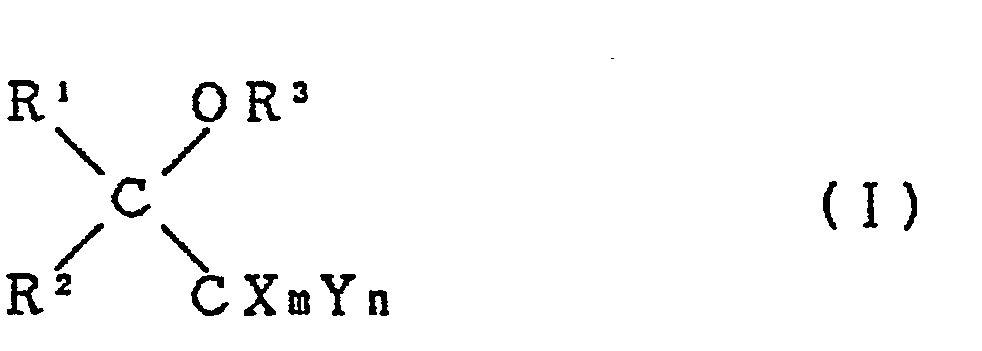
- However, these methods inevitably produce by-products which cause lower reaction selectivity and give adverse effect on the purification of the desired 1,1-disubstituted ethylene derivative. Further, the former methods require heavy metals in an amount more than the stoichiometric amount which bring a lot of problems in public pollution and cause a problem in industrial application. The latter electrolytic method has defects of using a special apparatus which renders the method less popular and of being not easy in maintenance of the equipment.
- An object of the invention is to provide processes for preparing a 1,1-disubstituted ethylene derivative of the above formula (II) which are free from the above conventional drawbacks and are conducted with safe and simple procedure with industrial advantages.
- The above and other objects of the invention will become apparent from the following description.
- The present invention provides a process for preparing a 1,1-disubstituted ethylene derivative of the formula


- The 1,1-disubstituted ethylene derivative of the formula (II) obtained in the present invention is an important compound as an intermediate for pharmaceuticals, agricultural chemicals, etc. For example, from the compound (II) are obtained chrysanthemumic acid derivatives which are a starting material of pyre- throid insecticides. Further in case R1 is aryl group and X and Y are halogen atoms, the compound (II) can easily be subjected to hydrolysis to obtain aryl acetic acid derivatives which are useful as a starting material of antibiotics, p-blockers, anti-inflammatory agents, etc.
- The present inventors have found and paid their attention to the fact that 1,1-disubstituted ethylene derivative can be obtained in excellent selectivity only when using lead as a cathode material in the above conventional electrolytic reduction method. It is presumed that the reaction does not proceed only with direct electron transfer on the cathode and that a reaction occurs between the lead cathode and the substrate to produce 1,1-disubstituted ethylene derivative in good selectivity when the lead cathode is used.
- On the other hand, conventionally, reactions of reducing organic compounds with lead are hardly known. As a few examples are reported reductive dimerization of butyl bromide, benzoyl chloride or benzyl chloride in a low yield of about 50% in Tetrahedron Letters, 4951 (1967) and reduction of aromatic nitro compounds in J. Chem. Soc., (C) 2403 (1968). For example, Fieser's Reagents for Organic Synthesis, Vol. 1-12 (A Weiley -Interscience Publication) does not disclose other examples of reactions in which lead is used as a reducing agent.
- Based on the afore-mentioned consideration, the present inventors have investigated the reduction of the carbinol derivative of the formula (I), found that lead is an excellent reducing agent for the reaction and achieved the present invention. In the present invention, 1,1-disubstituted ethylene derivative of the formula (II) is prepared in a high yield without accompanying side-products and with a simple procedure, by reacting the carbinol derivative of the formula (I) with lead or a catalytic amount of lead or lead compound in the presence of a metal having higher ionization tendency than lead in an organic solvent or aqueous organic solvent, as required with addition of an acid.
- In the invention, Ri and R2 are same or different and are each hydrogen atom, C1-C10 straight-chain or branched-chain alkyl group, C3-C10 alicyclic group, C3-C10 alicyclic group having at least one side chain having 1 to 5 carbon atoms, C2-C10 straight-chain or branched-chain unsaturated hydrocarbon group, aryl group, heterocyclic group, aralkyl group or aryloxy group, Ri and/or R2 may form a ring together with a carbon chain with or without containing a heteroatom(s). R1 and R2 may have a substituent(s). Examples of C1-C10 straight-chain or branched-chain alkyl groups are methyl, ethyl, propyl, isopropyl, butyl, isobutyl, tert-butyl, amyl, isoamyl, hexyl, octyl or decyl, examples of C3-C10 alicyclic groups are cyclopropyl, cyclobutyl, cyclopentyl, cyclohexyl, cyclooctyl, cyclodecyl, cyclobutenyl, cyclopentenyl, cyclohexenyl, cycloheptenyl, cyclooctenyl or cyclooctadienyl, examples of C3-Go alicyclic groups having at least one side chain having 1 to 5 carbon atoms are 1-methylcyclopropyl, 2-methylcyclopropyl, 2,2-dimethylcyclopropyl, 3-methylcyclobutyl, 1-methylcyclopentyl, 2-methylcyclopentyl, 3-methylcyclopentyl, 3-ethylcyclopentyl, 3-tert-butylcyclopentyl, 4-isopropylcyclohexyl or 4-tert-butylcyclohexyl, examples of C2-Cio straight-chain or branched-chain unsaturated hydrocarbon groups are vinyl, ethynyl, 1-propenyl, 2-propenyl, 2-methyl-1-propenyl, 2-methyl-2-propenyl, propynyl, 3-butenyl, butynyl, pentenyl, pentadienyl, pentynyl, hexenyl, hexynyl, heptenyl, heptynyl, octenyl, octynyl, 9-decenyl, prenyl or geranyl. Aryl groups include phenyl group or polycyclic aromatic hydrocarbon groups. The latter groups include a-naphthyl, p-naphthyl, anthranyl or pyrenyl. Heterocyclic groups include cyclic groups containing oxygen, nitrogen, sulfur atom, etc. Typical examples thereof are tetrahydrofuryl, furyl, tetrahydropyranyl, pyranyl, pyrrolyl, piperidinyl, pyridyl, oxazolyl, morpholinyl, tetrahydrothienyl, thienyl, thiadiazolyl, triazolyl, thiazolyl or tetrazolyl. Examples of aralkyl groups are benzyl, phenethyl, phenylbutyl, diphenylmethyl, triphenylmethyl, naphthylmethyl or naphthylethyl, examples of aryloxy groups are phenoxy, a-naphthyloxy, p-naphthyloxy, anthranyloxy or pyrenyloxy. Further, the ring formed with a carbon chain with or without containing a heteroatom(s) is represented by [-(CH2)k-] in which k is 2 to 13 and oxygen, nitrogen, sulfur or like heteroatom may be introduced in place of -CH2-.
- Further, substituents for the above R1 and R2 include hydroxyl group, protected hydroxyl group, acyl group, acyloxy group, halogen atom, Cl-C5 straight-chain or branched-chain alkyl group, C2-Ce straight-chain or branched-chain unsaturated hydrocarbon group, aralkyl group, amino group, amino group substituted by C1-C5 straight-chain or branched-chain alkyl group, protected amino group, nitro group, protected thiol group, carboxyl group, protected carboxyl group, formyl group, protected formyl group, sulfonic acid group, protected sulfonic acid group and cyano group. The substituents are one to five in number and are same or different each other. Examples of protective groups for hydroxyl group are methyl, ethyl, propyl, isopropyl, butyl and like lower alkyl groups, or protective groups for hydroxyl group described on Chapter 2 of "Protective Groups in Organic Synthesis" (A Weiley-Interscience Publication, 1981) by Theodora W. Greene. Examples of acyl groups are formyl, acetyl, propionyl, valeryl, group represented by the formula

- Further, one to three of -CH2- groups in R1 or R2 may be replaced by -CO- group. Typical examples thereof are acetyl, acetonyl, 1-methyl-2-oxopropyl, diacetylmethyl, 3-methyl-2-oxo-3-butenyl or 2-oxo- cyclohexyl. An example of these groups having the above-mentioned substituent is a group of the formula

- R3 is hydrogen atom, C1-C5 straight-chain or branched-chain alkyl group, substituted or unsubstituted aryl group, aralkyl group having a substituted or unsubstituted aryl group, acyl group or -(CH2)j-group bonded to Ri in one terminal, j=0-5, a part of -(CH2)j- group may be -CO- group. Examples of Ci-C5 straight-chain or branched-chain alkyl groups are methyl, ethyl, propyl, isopropyl, butyl, tert-butyl, amyl or isoamyl. Examples of aryl groups are phenyl, a-naphthyl, β-naphthyl or anthranyl, examples of aralkyl groups are benzyl, phenethyl, phenylpropyl, phenylbutyl or diphenylmethyl. Examples of acyl groups are formyl, acetyl, trichloroacetyl, propionyl, valeryl, benzoyl, toluoyl or furoyl. These groups may have a substituent. As the substituent are shown those exemplified for R1 and R2. The substituents are one to five in number and are same or different each other.
- X and Y are same or different and are fluorine, chlorine, bromine or iodine atom, m and n are an integer of 1 to 2, m+n=3, when m is 2, Y may be further hydrogen atom, carboxyl group, protected carboxyl group, amido group, cyano group or trifluoromethyl group. Examples of protective groups for carboxyl group are those described on Chapter 5 of the above-mentioned publication.
- The carbinol derivative of the formula (I), the starting material of the present invention, can be prepared by the methods disclosed in Japan Kokai No. 126980/1982, Tetrahedron Letters, 22, 871 (1981), Tetrahedron Letters 1521 (1978), etc.
- In the present invention, the carbinol derivative of the above formula (I) is reacted with a metal lead. The metal lead is not limited in shape and may be selected from a wide forms such as powder, plate, bulk or needle. Powdery metal lead is preferably used in order to complete the reaction at lower temperature in shorter period. The particle size of powdery metal lead is selected from a wide range but is preferably about 10 to 500 mesh. The amount of the metal lead to be used is usually about 1.0 to 10 moles atom, preferably about 1.0 to 4.0 moles atom per mole atom of the carbinol derivative of the formula (I).
- In the invention, it is possible to extremely reduce the amount of the metal lead, render the waste treatment easy and conduct the reduction at lower temperature and in shorter period, by the conjoint use of a metal or metals having higher ionization tendency than lead in the reaction system. Examples of these metals are aluminum, iron, nickel, tin, cobalt or magnesium. These metals can be used singly or in mixture of at least two of them. The metals to be used are not limited in shape and may be selected from a wide forms such as powder, plate, foil, bulk or needle. Powdery metal is preferably used in order to proceed the reaction smoothly. The particle size of powdery metal is selected from a wide range but is preferably about 10 to 300 mesh. The amount of the metal to be used having higher ionization tendency than lead is usually about 1.0 to 50 moles atom, preferably about 1.0 to 5 moles atom per mole atom of the carbinol derivative of the formula (I).
- In case of using the metal having higher ionization tendency than lead, it is possible to use a lead compound in place of metal lead.
- The above lead compound may be one containing lead having a valency of zero, two or four. Further, these compounds may be in the form of a hydrate. As the lead compound, conventionally known compounds are widely used. Examples thereof are lead fluoride, lead chloride, lead bromide, lead iodide or like lead halide, lead nitrate, lead sulfate, lead perchlorate, lead borate, lead carbonate, lead phosphate or like lead salt of inorganic acid, lead acetate, lead oxalate, lead stearate or like lead salt of aliphatic acid, lead oxide, lead hydroxide, or chelates of lead having a valency of zero, 2 or 4. Examples of ligands for the chelate are ethylenediamine tetraacetic acid, nitrilotriacetic acid or like chelating agent, carbonyl compound, carboxylic acid or like oxygen-containing compound, amine, oxime, ammonia, nitrile or like nitrogen compound, organic phosphine or like phosphorus compound, etc. These lead compounds can be used singly or in mixture of at least two of them. Although only one molecule of lead or lead compound is theoretically required, the amount thereof to be used is usually about 0.00001 to 0.5 mole, preferably about 0.0001 to 0.2 mole per mole of the starting carbinol derivative of the formula (I).
- The present reduction reaction is conducted in an organic solvent or aqueous organic solvent, when required with addition of an acid. Organic solvents are selected from a wide range of compounds which dissolve the compound of the formula (I) are not reduced in the reaction condition. Examples thereof are methanol, ethanol, propanol, isopropanol, butanol, tert-butanol or like alcohol, formic acid, acetic acid, propionic acid or like lower carboxylic acid, tetrahydrofuran, dioxane, methyl cellosolve, dimethoxyethane or like ether, acetonitrile, dimethylformamide or dimethylacetamide. These solvent can be used singly or in mixture of at least two of them, and may contain water as required. The amount of the solvent is usually about 0.5 to 150f, preferably about 1 to 202 per kg of the compound of the formula (I).
- As an acid used as required in the invention are used inorganic acids and organic acids ranging from strong acid to weak acid. Examples thereof are hydrochloric acid, sulfuric acid, nitric acid, perchloric acid, hydrobromic acid, hydroiodic acid, hydrofluoric acid, bromous acid, bromic acid, hypochlorous acid, hypobromous acid, phosphoric acid, phosphorous acid, boric acid, silicic acid or like mineral acid, formic acid, acetic acid, propionic acid, oxalic acid, tartaric acid, benzoic acid, malic acid, malonic acid, monochloroacetic acid, dichloroacetic acid, trichloroacetic acid, trifluoroacetic acid or like carboxylic acid, benzenesulfonic acid, toluene-sulfonic acid, naphthalenesulfonic acid, methanesulfonic acid, trifluoromethanesulfonic acid, chlorosulfonic acid or like sulfonic acid, benzenesulfinic acid, toluenesulfinic acid or like sulfinic acid, ascorbic acid, Meldrum's acid, Squaric acid, pyromeconic acid, lower alkyl ester of malonic acid, lower alkyl ester of acetylacetic acid, phenol, cresol, barbituric acid or like acidic compound, etc., or a salt of the acid and a base which is weaker in basicity than a conjugated base thereof.
- The reaction temperature depends on the kinds of the starting material, solvent, etc., but is usually about 0 to 150°C, preferably about 20 to 100°C. After completion of the reaction, the reaction mixture is for example concentrated and extracted to obtain the desired 1,1-disubstituted ethylene derivative of the formula (II) in almost pure form. Further, the derivative can be purified as required by distillation, recrystallization, column chromatography or-like usual means.
- The present invention has the following advantages by finding lead is an excellent reducing agent.
- 1. 1,1-Disubstituted ethylene derivative can be prepared in extremely high selectivity and yield without requiring a further purification.
- 2. The present desired compound can be prepared with use of an easily available equipment and with a simple procedure without a special apparatus.
- 3. Generally, strict limitations are demanded in view of public pollution for coducting a reaction which uses a heavy metal as a reagent in industrial scale. In the present invention, it is possible to reduce the amount of lead or lead compound to an extremely small amount by conjoint use of a metal which has no pollution problem, and to make easy the treatment of the reaction waste.
- As stated above, the present invention provides an extremely advantageous method in industrial scale of preparing 1,1-disubstituted ethylene derivative.
- The present invention will be described in greater detail with reference to examples.
-

- To a round bottom flask equipped with a condenser were added 1.21 g (5 mmole) of Compound (1),8 ml of methanol, 5 g of 50% sulfuric acid and 4.14g (20 mmole) of lead powder (280mesh) and the mixture was stirred under reflux condition for 5 hours. After completion of the reaction, the reaction mixture was concentrated at a reduced pressure and the resulting residue was extracted with ethyl acetate after addition of 10mi of water. The extract was washed with saturated aqueous solution of sodium bicarbonate, dried on anhydrous magnesium sulfate and concentrated to give 1.05g of white crystal. By gas chromatography (GC) analysis, by-product, Compound (3) was produced less than 0.1%. Purification with use of silicagel column gives 902mg (yield 96%) of Compound (2) as a white crystal. The NMR spectrum was consistent with the structure.
- NMR(CDCl3)
- δ 5.02(s,1H,OH), 6.73(s,1H,-CH=), 6.73(m,2H,Ph), 7.40(m,2H,Ph)
- The reactions were conducted in the same manner as in Example 1 with the exception of using the reaction conditions listed in Table 1 and various solvents were used in place of methanol. Table 1 also shows yields of the obtained para-hydroxy-β,β-dichlorostyrenes.

- The reactions were conducted in the same manner as in Example 1 with the exception of using the reaction conditions listed in Table 2 and various acids were used in place of 50% of sulfuric acid. Table 2 also shows yields of the obtained para-hydroxy-β,β-dichlorostyrenes.

-

- NMR(CDCl3)
- 8 6.82(s, 1H,-CH=), 7.09-7.59(m,5H,Ph)
- The reactions were conducted in the same manner as in Example 14 with the exception of using the reaction conditions listed in Table 3 and various lead compounds were used in place of lead powder. Table 3 also shows yields of the obtained p,p-dichlorostyrenes.

-

- To a round bottom flask equipped with a condenser were added 3.11 g (10 mmole) of Compound (7), 6 ml of methanol, 3.4g of 35% hydrochloric acid, 15mg (0.072 matom) of lead powder and 460mg (17 mmole) of aluminum powder and the mixture was stirred at 65°C for 5 hours. The reaction mixture was treated in the same manner as in Example 1 to give 2.66g of pale yellow crystal. By gas chromatography (GC) analysis, by-product, Compound (9) was produced less than 0.1%. Purification with use of silicagel column gives 2.36g (yield 92%) of Compound (8). The NMR spectrum was consistent with the structure.
- NMR(CDCl3)
- δ 5.90(s,1H,OH), 6.64(s,1H,-CH=), 7.44(s,2H,Ph)
-

- The reactions were conducted in the same manner as in Example 21 with use of the starting materials lised in Table 4. Products lised in Table 4 were obtained in high yields and selectivities.


-

- To a round bottom flask were added 184mg (0.5 mmole) of lead bromide and 150mg (5.5 mmole) of finely cut aluminum foil. Thereto were added 1 Oml of dimethylformamide and 1.51 g (5 mmole) of Compound (10) and the mixture was stirred at room temperature for 3.5 hours. After completion of the reaction, the reaction mixture was extracted with ethyl acetate after addition of 10ml of water. The extract was washed with saturated aqueous solution of sodium bicarbonate and saturated aqueous solution of sodium chloride, dried on anhydrous magnesium sulfate and concentrated to give 1.0g of pale yellow crystal. By GC analysis, by-product, Compound (12) was produced less than 0.1%. Purification with use of silicagel column gives 880mg (yield 84%) of Compound (11) as a white crystal. The NMR spectrum was consistent with the structure.
- NMR(CDCI3)
- 8 6.68(s,1H-CH=), 7.1-7.5(m,4H,Ph)
-

- The reactions were conducted in the same manner as in Example 44 with use of the starting materials listed in Table 5. Products listed in Table 5 were obtained in high yields and selectivities.


-

- To a round bottom flask were added 184mg (0.5 mmole) of lead bromide and 162mg (6.0 mmole) of finely cut aluminum foil. Thereto were added 10ml of dimethylformamide and 1.83g (5 mmole) of Compound (13) and the mixture was stirred at room temperature for 10 hours. After completion of the reaction, the reaction mixture was extracted with ethyl acetate after addition of 10ml of water. The extract was washed with saturated aqueous solution of sodium bicarbonate and saturated aqueous solution of sodium chloride, dried on anhydrous magnesium sulfate and concentrated to give 1.4g of pale yellow liquid. Purification with use of silicagel column gives 1.25g (yield 92%) of Compound (14) as a colorless liquid. The NMR spectrum was consistent with the structure.
- 1H-NMR(CDCI3)
- δ 1.14-1.44(m,9H,CH3-C), 1.75(d,1H,H-C-CO), 2.23-2.55(m,1H,HC-C=C), 4.18(q,2H,CH3-0), 6.12(d,1H,H-C=C)
-

- To a round bottom flask were added 184mg (0.5 mmole) of lead bromide and 162mg (6.0 mmole) of finely cut aluminum foil. Thereto were added 10ml of dimethylformamide and 1.55g (5 mmole) of Compound (15) and the mixture was stirred at room temperature for 10 hours. After completion of the reaction, the reaction mixture was extracted with ethyl acetate after addition of 10mi of water. The extract was washed with saturated aqueous solution of sodium bicarbonate and saturated aqueous solution of sodium chloride, dried on anyhdrous magnesium sulfate and concentrated to give 900mg of pale yellow liquid. Purification with use of silicagel column gives 773mg (yield 72%) of Compound (16) as a colorless liquid. The NMR spectrum was consistent with the structure.
- 1H-NMR(CDCl3)
- 80.87(t,3H,CH3), 1.10-1.75(m,8H,CH2), 2.00-2.55(m,2H,CH2-C=C), 6.37(t,1H,-CH=C)
Claims (7)


Applications Claiming Priority (4)
| Application Number | Priority Date | Filing Date | Title |
|---|---|---|---|
| JP304810/86 | 1986-12-20 | ||
| JP30481086 | 1986-12-20 | ||
| JP62052625A JPH07110816B2 (en) | 1986-12-20 | 1987-03-06 | Process for producing 1,1-disubstituted ethylene derivative |
| JP52625/87 | 1987-03-06 |
Publications (2)
| Publication Number | Publication Date |
|---|---|
| EP0275528A1 EP0275528A1 (en) | 1988-07-27 |
| EP0275528B1 true EP0275528B1 (en) | 1990-07-25 |
Family
ID=26393244
Family Applications (1)
| Application Number | Title | Priority Date | Filing Date |
|---|---|---|---|
| EP87118965A Expired - Lifetime EP0275528B1 (en) | 1986-12-20 | 1987-12-21 | Process for preparing 1,1-disubstituted ethylene derivative |
Country Status (4)
| Country | Link |
|---|---|
| US (1) | US4886891A (en) |
| EP (1) | EP0275528B1 (en) |
| JP (1) | JPH07110816B2 (en) |
| DE (1) | DE3763970D1 (en) |
Families Citing this family (3)
| Publication number | Priority date | Publication date | Assignee | Title |
|---|---|---|---|---|
| US7395999B2 (en) * | 2004-05-04 | 2008-07-08 | Polycrete Systems, Ltd | Reinforced polymer panel and method for building construction |
| US9091089B2 (en) | 2013-03-12 | 2015-07-28 | Icf Mform Llc | Insulating concrete form (ICF) system with tie member modularity |
| EP4434970A4 (en) * | 2021-11-19 | 2026-03-11 | Nippon Soda Co | METHOD FOR PREPARING A HALOVINYLIMIDAZOLE COMPOUND |
Family Cites Families (5)
| Publication number | Priority date | Publication date | Assignee | Title |
|---|---|---|---|---|
| FR594199A (en) * | 1924-02-29 | 1925-09-08 | Basf Ag | Catalytic production of high value organic compounds |
| DE486598C (en) * | 1926-06-22 | 1929-11-19 | Degussa | Process for the production of reduction products from reducible organic compounds |
| GB1201050A (en) * | 1967-11-24 | 1970-08-05 | Ici Ltd | Reduction process |
| EP0205317B1 (en) * | 1985-06-07 | 1988-12-14 | Mitsui Petrochemical Industries, Ltd. | Process for production of alkenyl substituted aromatic compound |
| JP2516617B2 (en) * | 1987-03-05 | 1996-07-24 | 関東電化工業株式会社 | Process for producing 1,1-difluoroethylene derivative |
-
1987
- 1987-03-06 JP JP62052625A patent/JPH07110816B2/en not_active Expired - Fee Related
- 1987-12-18 US US07/134,852 patent/US4886891A/en not_active Expired - Lifetime
- 1987-12-21 EP EP87118965A patent/EP0275528B1/en not_active Expired - Lifetime
- 1987-12-21 DE DE8787118965T patent/DE3763970D1/en not_active Expired - Lifetime
Also Published As
| Publication number | Publication date |
|---|---|
| JPH07110816B2 (en) | 1995-11-29 |
| JPS63264429A (en) | 1988-11-01 |
| US4886891A (en) | 1989-12-12 |
| EP0275528A1 (en) | 1988-07-27 |
| DE3763970D1 (en) | 1990-08-30 |
Similar Documents
| Publication | Publication Date | Title |
|---|---|---|
| Araki et al. | Indium in organic synthesis: indium-mediated allylation of carbonyl compounds | |
| Araki et al. | A convenient method for the preparation of ketones by the reaction of Grignard reagents with carboxylic acid derivatives | |
| US4575558A (en) | Preparation of optically active 1,3-dioxolane-4-methanol compounds | |
| Li et al. | Highly efficient carbonyl allylation of 1, 3-dicarbonyl compounds in aqueous medium | |
| EP0306924B1 (en) | Process for preparing penicillanic acid derivatives | |
| Crimmins et al. | Homoenolates and other functionalized organometallics. A review | |
| EP0043479A1 (en) | Novel cyclopentenone derivatives and methods for the preparation of the novel compounds | |
| US4886891A (en) | Process for preparing 1,1-disubstituted ethylene derivative by reaction of lead with a carbinol derivative | |
| JPH01106835A (en) | Method for synthesizing p-tertiary-butoxystyrene | |
| US2996521A (en) | Alpha-amino-beta-hydroxycarboxylic acid derivatives | |
| JP2830210B2 (en) | Synthesis of α, β-unsaturated ketones | |
| JP2521695B2 (en) | Method for producing carbinol derivative | |
| JP2516617B2 (en) | Process for producing 1,1-difluoroethylene derivative | |
| JP2516618B2 (en) | Process for producing 1,1-difluoroethylene derivative | |
| Crombie et al. | Unsymmetrical connective olefination by kornblum nitro-synthesis: applications in phytuberin chemistry | |
| DE69803186T2 (en) | CATALYZED FLUORINATION OF CARBONYL COMPOUNDS | |
| CN116640072B (en) | A method for synthesizing oxime compounds by catalyzing carbon-hydrogen bond oxidation with tetradentate nitrogen-containing coordinated manganese | |
| US3641057A (en) | 4 5-dichloro- 13-dioxacyclopentenone | |
| US3565928A (en) | Process for preparing gamma-substituted beta-keto esters | |
| JP2579547B2 (en) | Preparation of alkoxycarbonyl compounds | |
| RU2021265C1 (en) | Method of synthesis of acetylene ketoepoxides | |
| US2432438A (en) | Amides and their manufacture | |
| JPH0819018B2 (en) | Process for producing 1,1-disubstituted ethylene derivative | |
| JP2602639B2 (en) | Method for producing acyl fluoride derivative | |
| RU2026857C1 (en) | Method of synthesis of 2-methoxyisobutylisocyanide |
Legal Events
| Date | Code | Title | Description |
|---|---|---|---|
| PUAI | Public reference made under article 153(3) epc to a published international application that has entered the european phase |
Free format text: ORIGINAL CODE: 0009012 |
|
| AK | Designated contracting states |
Kind code of ref document: A1 Designated state(s): CH DE FR GB LI NL |
|
| 17P | Request for examination filed |
Effective date: 19880920 |
|
| 17Q | First examination report despatched |
Effective date: 19891031 |
|
| GRAA | (expected) grant |
Free format text: ORIGINAL CODE: 0009210 |
|
| AK | Designated contracting states |
Kind code of ref document: B1 Designated state(s): CH DE FR GB LI NL |
|
| REF | Corresponds to: |
Ref document number: 3763970 Country of ref document: DE Date of ref document: 19900830 |
|
| ET | Fr: translation filed | ||
| PLBE | No opposition filed within time limit |
Free format text: ORIGINAL CODE: 0009261 |
|
| STAA | Information on the status of an ep patent application or granted ep patent |
Free format text: STATUS: NO OPPOSITION FILED WITHIN TIME LIMIT |
|
| 26N | No opposition filed | ||
| REG | Reference to a national code |
Ref country code: GB Ref legal event code: IF02 |
|
| PGFP | Annual fee paid to national office [announced via postgrant information from national office to epo] |
Ref country code: GB Payment date: 20061122 Year of fee payment: 20 |
|
| PGFP | Annual fee paid to national office [announced via postgrant information from national office to epo] |
Ref country code: NL Payment date: 20061215 Year of fee payment: 20 |
|
| PGFP | Annual fee paid to national office [announced via postgrant information from national office to epo] |
Ref country code: DE Payment date: 20070222 Year of fee payment: 20 |
|
| PGFP | Annual fee paid to national office [announced via postgrant information from national office to epo] |
Ref country code: CH Payment date: 20070315 Year of fee payment: 20 |
|
| REG | Reference to a national code |
Ref country code: GB Ref legal event code: PE20 |
|
| PG25 | Lapsed in a contracting state [announced via postgrant information from national office to epo] |
Ref country code: NL Free format text: LAPSE BECAUSE OF EXPIRATION OF PROTECTION Effective date: 20071221 |
|
| REG | Reference to a national code |
Ref country code: CH Ref legal event code: PL |
|
| NLV7 | Nl: ceased due to reaching the maximum lifetime of a patent |
Effective date: 20071221 |
|
| PG25 | Lapsed in a contracting state [announced via postgrant information from national office to epo] |
Ref country code: GB Free format text: LAPSE BECAUSE OF EXPIRATION OF PROTECTION Effective date: 20071220 |
|
| PGFP | Annual fee paid to national office [announced via postgrant information from national office to epo] |
Ref country code: FR Payment date: 20061229 Year of fee payment: 20 |