EP0272609B1 - Amino acid sequence of human alpha2-plasmin inhibitor and cdna and genomic dna encoding said amino acid sequence - Google Patents
Amino acid sequence of human alpha2-plasmin inhibitor and cdna and genomic dna encoding said amino acid sequence Download PDFInfo
- Publication number
- EP0272609B1 EP0272609B1 EP19870118686 EP87118686A EP0272609B1 EP 0272609 B1 EP0272609 B1 EP 0272609B1 EP 19870118686 EP19870118686 EP 19870118686 EP 87118686 A EP87118686 A EP 87118686A EP 0272609 B1 EP0272609 B1 EP 0272609B1
- Authority
- EP
- European Patent Office
- Prior art keywords
- human
- plasmin inhibitor
- amino acid
- cdna
- acid sequence
- Prior art date
- Legal status (The legal status is an assumption and is not a legal conclusion. Google has not performed a legal analysis and makes no representation as to the accuracy of the status listed.)
- Expired
Links
- 101000783712 Homo sapiens Alpha-2-antiplasmin Proteins 0.000 title claims description 70
- 125000003275 alpha amino acid group Chemical group 0.000 title claims 5
- 108020004414 DNA Proteins 0.000 claims description 58
- 239000002299 complementary DNA Substances 0.000 claims description 39
- 108090000623 proteins and genes Proteins 0.000 claims description 9
- 108700024394 Exon Proteins 0.000 claims description 8
- 238000011144 upstream manufacturing Methods 0.000 claims description 5
- 239000002243 precursor Substances 0.000 claims description 4
- 108091092195 Intron Proteins 0.000 claims description 3
- 102000004169 proteins and genes Human genes 0.000 claims description 2
- 150000001413 amino acids Chemical group 0.000 description 41
- 229940024606 amino acid Drugs 0.000 description 25
- 235000001014 amino acid Nutrition 0.000 description 25
- 108091008146 restriction endonucleases Proteins 0.000 description 23
- 239000012634 fragment Substances 0.000 description 18
- 230000029087 digestion Effects 0.000 description 13
- 108090000183 alpha-2-Antiplasmin Proteins 0.000 description 11
- 102000003801 alpha-2-Antiplasmin Human genes 0.000 description 11
- 238000000034 method Methods 0.000 description 11
- 239000000243 solution Substances 0.000 description 10
- 238000001962 electrophoresis Methods 0.000 description 8
- 210000005229 liver cell Anatomy 0.000 description 8
- 108020004999 messenger RNA Proteins 0.000 description 7
- 241000588724 Escherichia coli Species 0.000 description 6
- LFQSCWFLJHTTHZ-UHFFFAOYSA-N Ethanol Chemical compound CCO LFQSCWFLJHTTHZ-UHFFFAOYSA-N 0.000 description 6
- PEDCQBHIVMGVHV-UHFFFAOYSA-N Glycerine Chemical compound OCC(O)CO PEDCQBHIVMGVHV-UHFFFAOYSA-N 0.000 description 6
- TWRXJAOTZQYOKJ-UHFFFAOYSA-L Magnesium chloride Chemical compound [Mg+2].[Cl-].[Cl-] TWRXJAOTZQYOKJ-UHFFFAOYSA-L 0.000 description 6
- FAPWRFPIFSIZLT-UHFFFAOYSA-M Sodium chloride Chemical compound [Na+].[Cl-] FAPWRFPIFSIZLT-UHFFFAOYSA-M 0.000 description 6
- 239000007864 aqueous solution Substances 0.000 description 6
- 238000006243 chemical reaction Methods 0.000 description 6
- 239000000499 gel Substances 0.000 description 6
- 239000000203 mixture Substances 0.000 description 6
- 150000003839 salts Chemical class 0.000 description 6
- QKNYBSVHEMOAJP-UHFFFAOYSA-N 2-amino-2-(hydroxymethyl)propane-1,3-diol;hydron;chloride Chemical compound Cl.OCC(N)(CO)CO QKNYBSVHEMOAJP-UHFFFAOYSA-N 0.000 description 5
- 108010088842 Fibrinolysin Proteins 0.000 description 5
- KDXKERNSBIXSRK-YFKPBYRVSA-N L-lysine Chemical compound NCCCC[C@H](N)C(O)=O KDXKERNSBIXSRK-YFKPBYRVSA-N 0.000 description 5
- 229940012957 plasmin Drugs 0.000 description 5
- 239000013598 vector Substances 0.000 description 5
- DCXYFEDJOCDNAF-REOHCLBHSA-N L-asparagine Chemical compound OC(=O)[C@@H](N)CC(N)=O DCXYFEDJOCDNAF-REOHCLBHSA-N 0.000 description 4
- KDXKERNSBIXSRK-UHFFFAOYSA-N Lysine Natural products NCCCCC(N)C(O)=O KDXKERNSBIXSRK-UHFFFAOYSA-N 0.000 description 4
- 108091092724 Noncoding DNA Proteins 0.000 description 4
- XSQUKJJJFZCRTK-UHFFFAOYSA-N Urea Chemical compound NC(N)=O XSQUKJJJFZCRTK-UHFFFAOYSA-N 0.000 description 4
- 238000002360 preparation method Methods 0.000 description 4
- 239000000523 sample Substances 0.000 description 4
- 238000012216 screening Methods 0.000 description 4
- MTCFGRXMJLQNBG-REOHCLBHSA-N (2S)-2-Amino-3-hydroxypropansäure Chemical compound OC[C@H](N)C(O)=O MTCFGRXMJLQNBG-REOHCLBHSA-N 0.000 description 3
- 108020004774 Alkaline Phosphatase Proteins 0.000 description 3
- 102000002260 Alkaline Phosphatase Human genes 0.000 description 3
- KCXVZYZYPLLWCC-UHFFFAOYSA-N EDTA Chemical compound OC(=O)CN(CC(O)=O)CCN(CC(O)=O)CC(O)=O KCXVZYZYPLLWCC-UHFFFAOYSA-N 0.000 description 3
- 108090000790 Enzymes Proteins 0.000 description 3
- 102000004190 Enzymes Human genes 0.000 description 3
- 241000701959 Escherichia virus Lambda Species 0.000 description 3
- DHMQDGOQFOQNFH-UHFFFAOYSA-N Glycine Chemical compound NCC(O)=O DHMQDGOQFOQNFH-UHFFFAOYSA-N 0.000 description 3
- XUJNEKJLAYXESH-REOHCLBHSA-N L-Cysteine Chemical compound SC[C@H](N)C(O)=O XUJNEKJLAYXESH-REOHCLBHSA-N 0.000 description 3
- WHUUTDBJXJRKMK-VKHMYHEASA-N L-glutamic acid Chemical compound OC(=O)[C@@H](N)CCC(O)=O WHUUTDBJXJRKMK-VKHMYHEASA-N 0.000 description 3
- ROHFNLRQFUQHCH-YFKPBYRVSA-N L-leucine Chemical compound CC(C)C[C@H](N)C(O)=O ROHFNLRQFUQHCH-YFKPBYRVSA-N 0.000 description 3
- OUYCCCASQSFEME-QMMMGPOBSA-N L-tyrosine Chemical compound OC(=O)[C@@H](N)CC1=CC=C(O)C=C1 OUYCCCASQSFEME-QMMMGPOBSA-N 0.000 description 3
- 208000007536 Thrombosis Diseases 0.000 description 3
- 238000000246 agarose gel electrophoresis Methods 0.000 description 3
- 210000004899 c-terminal region Anatomy 0.000 description 3
- 238000010367 cloning Methods 0.000 description 3
- VHJLVAABSRFDPM-QWWZWVQMSA-N dithiothreitol Chemical compound SC[C@@H](O)[C@H](O)CS VHJLVAABSRFDPM-QWWZWVQMSA-N 0.000 description 3
- 229940088598 enzyme Drugs 0.000 description 3
- 229910001629 magnesium chloride Inorganic materials 0.000 description 3
- 239000000047 product Substances 0.000 description 3
- 239000011780 sodium chloride Substances 0.000 description 3
- 229920000936 Agarose Polymers 0.000 description 2
- 108091026890 Coding region Proteins 0.000 description 2
- 108020004635 Complementary DNA Proteins 0.000 description 2
- 102000053602 DNA Human genes 0.000 description 2
- 102000009123 Fibrin Human genes 0.000 description 2
- 108010073385 Fibrin Proteins 0.000 description 2
- BWGVNKXGVNDBDI-UHFFFAOYSA-N Fibrin monomer Chemical compound CNC(=O)CNC(=O)CN BWGVNKXGVNDBDI-UHFFFAOYSA-N 0.000 description 2
- ODKSFYDXXFIFQN-BYPYZUCNSA-N L-arginine Chemical compound OC(=O)[C@@H](N)CCCN=C(N)N ODKSFYDXXFIFQN-BYPYZUCNSA-N 0.000 description 2
- CKLJMWTZIZZHCS-REOHCLBHSA-N L-aspartic acid Chemical compound OC(=O)[C@@H](N)CC(O)=O CKLJMWTZIZZHCS-REOHCLBHSA-N 0.000 description 2
- ZDXPYRJPNDTMRX-VKHMYHEASA-N L-glutamine Chemical compound OC(=O)[C@@H](N)CCC(N)=O ZDXPYRJPNDTMRX-VKHMYHEASA-N 0.000 description 2
- HNDVDQJCIGZPNO-YFKPBYRVSA-N L-histidine Chemical compound OC(=O)[C@@H](N)CC1=CN=CN1 HNDVDQJCIGZPNO-YFKPBYRVSA-N 0.000 description 2
- AGPKZVBTJJNPAG-WHFBIAKZSA-N L-isoleucine Chemical compound CC[C@H](C)[C@H](N)C(O)=O AGPKZVBTJJNPAG-WHFBIAKZSA-N 0.000 description 2
- COLNVLDHVKWLRT-QMMMGPOBSA-N L-phenylalanine Chemical compound OC(=O)[C@@H](N)CC1=CC=CC=C1 COLNVLDHVKWLRT-QMMMGPOBSA-N 0.000 description 2
- AYFVYJQAPQTCCC-GBXIJSLDSA-N L-threonine Chemical compound C[C@@H](O)[C@H](N)C(O)=O AYFVYJQAPQTCCC-GBXIJSLDSA-N 0.000 description 2
- QIVBCDIJIAJPQS-VIFPVBQESA-N L-tryptophane Chemical compound C1=CC=C2C(C[C@H](N)C(O)=O)=CNC2=C1 QIVBCDIJIAJPQS-VIFPVBQESA-N 0.000 description 2
- KZSNJWFQEVHDMF-BYPYZUCNSA-N L-valine Chemical compound CC(C)[C@H](N)C(O)=O KZSNJWFQEVHDMF-BYPYZUCNSA-N 0.000 description 2
- 108091028043 Nucleic acid sequence Proteins 0.000 description 2
- 102000007079 Peptide Fragments Human genes 0.000 description 2
- 108010033276 Peptide Fragments Proteins 0.000 description 2
- ISWSIDIOOBJBQZ-UHFFFAOYSA-N Phenol Chemical compound OC1=CC=CC=C1 ISWSIDIOOBJBQZ-UHFFFAOYSA-N 0.000 description 2
- 108020004682 Single-Stranded DNA Proteins 0.000 description 2
- UDSAIICHUKSCKT-UHFFFAOYSA-N bromophenol blue Chemical compound C1=C(Br)C(O)=C(Br)C=C1C1(C=2C=C(Br)C(O)=C(Br)C=2)C2=CC=CC=C2S(=O)(=O)O1 UDSAIICHUKSCKT-UHFFFAOYSA-N 0.000 description 2
- AIYUHDOJVYHVIT-UHFFFAOYSA-M caesium chloride Chemical compound [Cl-].[Cs+] AIYUHDOJVYHVIT-UHFFFAOYSA-M 0.000 description 2
- 239000004202 carbamide Substances 0.000 description 2
- 238000003776 cleavage reaction Methods 0.000 description 2
- 238000010276 construction Methods 0.000 description 2
- OPTASPLRGRRNAP-UHFFFAOYSA-N cytosine Chemical compound NC=1C=CNC(=O)N=1 OPTASPLRGRRNAP-UHFFFAOYSA-N 0.000 description 2
- ZMMJGEGLRURXTF-UHFFFAOYSA-N ethidium bromide Chemical compound [Br-].C12=CC(N)=CC=C2C2=CC=C(N)C=C2[N+](CC)=C1C1=CC=CC=C1 ZMMJGEGLRURXTF-UHFFFAOYSA-N 0.000 description 2
- 229960005542 ethidium bromide Drugs 0.000 description 2
- 229950003499 fibrin Drugs 0.000 description 2
- UYTPUPDQBNUYGX-UHFFFAOYSA-N guanine Chemical compound O=C1NC(N)=NC2=C1N=CN2 UYTPUPDQBNUYGX-UHFFFAOYSA-N 0.000 description 2
- 230000002401 inhibitory effect Effects 0.000 description 2
- 238000002955 isolation Methods 0.000 description 2
- 239000003550 marker Substances 0.000 description 2
- 210000002826 placenta Anatomy 0.000 description 2
- 229920002401 polyacrylamide Polymers 0.000 description 2
- 239000002244 precipitate Substances 0.000 description 2
- 125000002924 primary amino group Chemical group [H]N([H])* 0.000 description 2
- 239000011541 reaction mixture Substances 0.000 description 2
- 238000011160 research Methods 0.000 description 2
- 230000007017 scission Effects 0.000 description 2
- 238000000926 separation method Methods 0.000 description 2
- RWQNBRDOKXIBIV-UHFFFAOYSA-N thymine Chemical compound CC1=CNC(=O)NC1=O RWQNBRDOKXIBIV-UHFFFAOYSA-N 0.000 description 2
- 238000005406 washing Methods 0.000 description 2
- KHWCHTKSEGGWEX-RRKCRQDMSA-N 2'-deoxyadenosine 5'-monophosphate Chemical compound C1=NC=2C(N)=NC=NC=2N1[C@H]1C[C@H](O)[C@@H](COP(O)(O)=O)O1 KHWCHTKSEGGWEX-RRKCRQDMSA-N 0.000 description 1
- NCMVOABPESMRCP-SHYZEUOFSA-N 2'-deoxycytosine 5'-monophosphate Chemical compound O=C1N=C(N)C=CN1[C@@H]1O[C@H](COP(O)(O)=O)[C@@H](O)C1 NCMVOABPESMRCP-SHYZEUOFSA-N 0.000 description 1
- LTFMZDNNPPEQNG-KVQBGUIXSA-N 2'-deoxyguanosine 5'-monophosphate Chemical compound C1=2NC(N)=NC(=O)C=2N=CN1[C@H]1C[C@H](O)[C@@H](COP(O)(O)=O)O1 LTFMZDNNPPEQNG-KVQBGUIXSA-N 0.000 description 1
- 229930024421 Adenine Natural products 0.000 description 1
- GFFGJBXGBJISGV-UHFFFAOYSA-N Adenine Chemical compound NC1=NC=NC2=C1N=CN2 GFFGJBXGBJISGV-UHFFFAOYSA-N 0.000 description 1
- ROWCTNFEMKOIFQ-YUMQZZPRSA-N Arg-Met Chemical group CSCC[C@@H](C(O)=O)NC(=O)[C@@H](N)CCCNC(N)=N ROWCTNFEMKOIFQ-YUMQZZPRSA-N 0.000 description 1
- UXVMQQNJUSDDNG-UHFFFAOYSA-L Calcium chloride Chemical compound [Cl-].[Cl-].[Ca+2] UXVMQQNJUSDDNG-UHFFFAOYSA-L 0.000 description 1
- CKLJMWTZIZZHCS-UHFFFAOYSA-N D-OH-Asp Natural products OC(=O)C(N)CC(O)=O CKLJMWTZIZZHCS-UHFFFAOYSA-N 0.000 description 1
- QNAYBMKLOCPYGJ-UHFFFAOYSA-N D-alpha-Ala Natural products CC([NH3+])C([O-])=O QNAYBMKLOCPYGJ-UHFFFAOYSA-N 0.000 description 1
- 102000012410 DNA Ligases Human genes 0.000 description 1
- 108010061982 DNA Ligases Proteins 0.000 description 1
- 102000004594 DNA Polymerase I Human genes 0.000 description 1
- 108010017826 DNA Polymerase I Proteins 0.000 description 1
- 108010066072 DNA modification methylase EcoRI Proteins 0.000 description 1
- 102000004163 DNA-directed RNA polymerases Human genes 0.000 description 1
- 108090000626 DNA-directed RNA polymerases Proteins 0.000 description 1
- 108010042407 Endonucleases Proteins 0.000 description 1
- 102000004533 Endonucleases Human genes 0.000 description 1
- 241000644323 Escherichia coli C Species 0.000 description 1
- 108090000371 Esterases Proteins 0.000 description 1
- 208000034454 F12-related hereditary angioedema with normal C1Inh Diseases 0.000 description 1
- 101710196208 Fibrinolytic enzyme Proteins 0.000 description 1
- WHUUTDBJXJRKMK-UHFFFAOYSA-N Glutamic acid Natural products OC(=O)C(N)CCC(O)=O WHUUTDBJXJRKMK-UHFFFAOYSA-N 0.000 description 1
- 239000004471 Glycine Substances 0.000 description 1
- 102000003886 Glycoproteins Human genes 0.000 description 1
- 108090000288 Glycoproteins Proteins 0.000 description 1
- 102100034343 Integrase Human genes 0.000 description 1
- 101710203526 Integrase Proteins 0.000 description 1
- QNAYBMKLOCPYGJ-UWTATZPHSA-N L-Alanine Natural products C[C@@H](N)C(O)=O QNAYBMKLOCPYGJ-UWTATZPHSA-N 0.000 description 1
- CKLJMWTZIZZHCS-UWTATZPHSA-N L-Aspartic acid Natural products OC(=O)[C@H](N)CC(O)=O CKLJMWTZIZZHCS-UWTATZPHSA-N 0.000 description 1
- 235000019766 L-Lysine Nutrition 0.000 description 1
- FFEARJCKVFRZRR-UHFFFAOYSA-N L-Methionine Natural products CSCCC(N)C(O)=O FFEARJCKVFRZRR-UHFFFAOYSA-N 0.000 description 1
- ONIBWKKTOPOVIA-BYPYZUCNSA-N L-Proline Chemical compound OC(=O)[C@@H]1CCCN1 ONIBWKKTOPOVIA-BYPYZUCNSA-N 0.000 description 1
- QNAYBMKLOCPYGJ-REOHCLBHSA-N L-alanine Chemical compound C[C@H](N)C(O)=O QNAYBMKLOCPYGJ-REOHCLBHSA-N 0.000 description 1
- 229930064664 L-arginine Natural products 0.000 description 1
- 235000014852 L-arginine Nutrition 0.000 description 1
- 239000004201 L-cysteine Substances 0.000 description 1
- 235000013878 L-cysteine Nutrition 0.000 description 1
- 229930182816 L-glutamine Natural products 0.000 description 1
- 229930182844 L-isoleucine Natural products 0.000 description 1
- 239000004395 L-leucine Substances 0.000 description 1
- 235000019454 L-leucine Nutrition 0.000 description 1
- FFEARJCKVFRZRR-BYPYZUCNSA-N L-methionine Chemical compound CSCC[C@H](N)C(O)=O FFEARJCKVFRZRR-BYPYZUCNSA-N 0.000 description 1
- 229930195722 L-methionine Natural products 0.000 description 1
- 229930182821 L-proline Natural products 0.000 description 1
- NTISAKGPIGTIJJ-IUCAKERBSA-N Leu-Met Chemical group CSCC[C@@H](C(O)=O)NC(=O)[C@@H](N)CC(C)C NTISAKGPIGTIJJ-IUCAKERBSA-N 0.000 description 1
- 239000004472 Lysine Substances 0.000 description 1
- 229940122791 Plasmin inhibitor Drugs 0.000 description 1
- 108010021757 Polynucleotide 5'-Hydroxyl-Kinase Proteins 0.000 description 1
- 102000008422 Polynucleotide 5'-hydroxyl-kinase Human genes 0.000 description 1
- 108010083644 Ribonucleases Proteins 0.000 description 1
- 102000006382 Ribonucleases Human genes 0.000 description 1
- 229920002684 Sepharose Polymers 0.000 description 1
- 108700026226 TATA Box Proteins 0.000 description 1
- 239000004473 Threonine Substances 0.000 description 1
- KZSNJWFQEVHDMF-UHFFFAOYSA-N Valine Chemical compound CC(C)C(N)C(O)=O KZSNJWFQEVHDMF-UHFFFAOYSA-N 0.000 description 1
- 229960000643 adenine Drugs 0.000 description 1
- 229960003767 alanine Drugs 0.000 description 1
- 201000000667 alpha-2-plasmin inhibitor deficiency Diseases 0.000 description 1
- AVKUERGKIZMTKX-NJBDSQKTSA-N ampicillin Chemical compound C1([C@@H](N)C(=O)N[C@H]2[C@H]3SC([C@@H](N3C2=O)C(O)=O)(C)C)=CC=CC=C1 AVKUERGKIZMTKX-NJBDSQKTSA-N 0.000 description 1
- 229960000723 ampicillin Drugs 0.000 description 1
- 238000004458 analytical method Methods 0.000 description 1
- 229960001230 asparagine Drugs 0.000 description 1
- 229960005261 aspartic acid Drugs 0.000 description 1
- 239000013602 bacteriophage vector Substances 0.000 description 1
- 230000009286 beneficial effect Effects 0.000 description 1
- 238000010804 cDNA synthesis Methods 0.000 description 1
- 238000010805 cDNA synthesis kit Methods 0.000 description 1
- 239000001110 calcium chloride Substances 0.000 description 1
- 229910001628 calcium chloride Inorganic materials 0.000 description 1
- 235000011148 calcium chloride Nutrition 0.000 description 1
- 125000003178 carboxy group Chemical group [H]OC(*)=O 0.000 description 1
- 239000001913 cellulose Substances 0.000 description 1
- 229920002678 cellulose Polymers 0.000 description 1
- 239000007795 chemical reaction product Substances 0.000 description 1
- 239000000470 constituent Substances 0.000 description 1
- 229940104302 cytosine Drugs 0.000 description 1
- GYOZYWVXFNDGLU-XLPZGREQSA-N dTMP Chemical compound O=C1NC(=O)C(C)=CN1[C@@H]1O[C@H](COP(O)(O)=O)[C@@H](O)C1 GYOZYWVXFNDGLU-XLPZGREQSA-N 0.000 description 1
- KHWCHTKSEGGWEX-UHFFFAOYSA-N deoxyadenylic acid Natural products C1=NC=2C(N)=NC=NC=2N1C1CC(O)C(COP(O)(O)=O)O1 KHWCHTKSEGGWEX-UHFFFAOYSA-N 0.000 description 1
- LTFMZDNNPPEQNG-UHFFFAOYSA-N deoxyguanylic acid Natural products C1=2NC(N)=NC(=O)C=2N=CN1C1CC(O)C(COP(O)(O)=O)O1 LTFMZDNNPPEQNG-UHFFFAOYSA-N 0.000 description 1
- 239000005547 deoxyribonucleotide Substances 0.000 description 1
- 125000002637 deoxyribonucleotide group Chemical group 0.000 description 1
- 238000011161 development Methods 0.000 description 1
- 230000018109 developmental process Effects 0.000 description 1
- 238000003745 diagnosis Methods 0.000 description 1
- 230000000694 effects Effects 0.000 description 1
- 239000003480 eluent Substances 0.000 description 1
- 230000003480 fibrinolytic effect Effects 0.000 description 1
- 229960002989 glutamic acid Drugs 0.000 description 1
- YQOKLYTXVFAUCW-UHFFFAOYSA-N guanidine;isothiocyanic acid Chemical compound N=C=S.NC(N)=N YQOKLYTXVFAUCW-UHFFFAOYSA-N 0.000 description 1
- ZJYYHGLJYGJLLN-UHFFFAOYSA-N guanidinium thiocyanate Chemical compound SC#N.NC(N)=N ZJYYHGLJYGJLLN-UHFFFAOYSA-N 0.000 description 1
- 230000012447 hatching Effects 0.000 description 1
- 230000023597 hemostasis Effects 0.000 description 1
- 208000016861 hereditary angioedema type 3 Diseases 0.000 description 1
- 229960002885 histidine Drugs 0.000 description 1
- 238000009396 hybridization Methods 0.000 description 1
- 238000000338 in vitro Methods 0.000 description 1
- 229960000310 isoleucine Drugs 0.000 description 1
- 229960003136 leucine Drugs 0.000 description 1
- 108010091871 leucylmethionine Proteins 0.000 description 1
- 229960004452 methionine Drugs 0.000 description 1
- 239000002773 nucleotide Substances 0.000 description 1
- 125000003729 nucleotide group Chemical group 0.000 description 1
- 229960005190 phenylalanine Drugs 0.000 description 1
- 239000013612 plasmid Substances 0.000 description 1
- 239000002806 plasmin inhibitor Substances 0.000 description 1
- 230000008488 polyadenylation Effects 0.000 description 1
- 229920001184 polypeptide Polymers 0.000 description 1
- 108090000765 processed proteins & peptides Proteins 0.000 description 1
- 102000004196 processed proteins & peptides Human genes 0.000 description 1
- 229960002429 proline Drugs 0.000 description 1
- 235000018102 proteins Nutrition 0.000 description 1
- 108700004121 sarkosyl Proteins 0.000 description 1
- 229960001153 serine Drugs 0.000 description 1
- 239000001509 sodium citrate Substances 0.000 description 1
- NLJMYIDDQXHKNR-UHFFFAOYSA-K sodium citrate Chemical compound O.O.[Na+].[Na+].[Na+].[O-]C(=O)CC(O)(CC([O-])=O)C([O-])=O NLJMYIDDQXHKNR-UHFFFAOYSA-K 0.000 description 1
- KSAVQLQVUXSOCR-UHFFFAOYSA-M sodium lauroyl sarcosinate Chemical compound [Na+].CCCCCCCCCCCC(=O)N(C)CC([O-])=O KSAVQLQVUXSOCR-UHFFFAOYSA-M 0.000 description 1
- 229960002898 threonine Drugs 0.000 description 1
- 229940113082 thymine Drugs 0.000 description 1
- 230000002103 transcriptional effect Effects 0.000 description 1
- 238000013519 translation Methods 0.000 description 1
- 229960004799 tryptophan Drugs 0.000 description 1
- 229960004441 tyrosine Drugs 0.000 description 1
- 238000005199 ultracentrifugation Methods 0.000 description 1
- 229960004295 valine Drugs 0.000 description 1
- XLYOFNOQVPJJNP-UHFFFAOYSA-N water Substances O XLYOFNOQVPJJNP-UHFFFAOYSA-N 0.000 description 1
Images



Classifications
-
- C—CHEMISTRY; METALLURGY
- C07—ORGANIC CHEMISTRY
- C07K—PEPTIDES
- C07K14/00—Peptides having more than 20 amino acids; Gastrins; Somatostatins; Melanotropins; Derivatives thereof
- C07K14/81—Protease inhibitors
- C07K14/8107—Endopeptidase (E.C. 3.4.21-99) inhibitors
- C07K14/811—Serine protease (E.C. 3.4.21) inhibitors
- C07K14/8121—Serpins
Definitions
- This invention relats to the amino acid sequence of a human ⁇ 2-plasmin inhibitor (or ⁇ 2-antiplasmin), and cDNA and genomic DNA encoding this sequence.
- the human ⁇ 2-plasmin inhibitor was first isolated and purified by Aoki and Moroi. It is known to be a strong plasmin inhibitor which instantaneously inhibits the esterase activity of plasmin, a fibrinolytic enzyme, and is a single-chain glycoprotein having a molecular weight of about 67,000 and containing 11.7% of sugar chains [M. Moroi & N. Aoki: The Journal of Biological Chemistry, 251 , 5956-5965 (1976)].
- the human ⁇ 2-plasmin inhibitor has three types of active sites.
- One is a site of inhibiting the fibrinolytic action of plasmin (to be referred to sometimes as the "reactive site") [B. Wiman & D. Collen: The Journal of Biological Chemistry, 254 , 9291-9297 (1979)].
- a second is a site of binding to plasmin at the carboxyl terminal portion [B. Wiman & D. Collen: European Journal of Biochemistry, 84 , 573-578 (1978)].
- a third is a site of binding to fibrin at the amino terminal portion [Y. Sakata et al.: Thrombosis Research, 16 , 279-282 (1979)].
- the fibrin binding site is Gln which is the second amino acid from the amino terminus of the human ⁇ 2-plasmin inhibitor [T. Tamaki & N. Aoki: The Journal of Biological Chemistry, 257 , 14767-14772 (1982)].
- a peptide fragment composed of 26 amino acids including the plasmin binding site is also known. It has been reported that this peptide fragment exists near the carboxy-terminus of the human ⁇ 2-plasmin inhibitor [see T. Sasaki et al.: The Journal of Biochemistry, 99 , 1699-1705 (1986)], but its position is not clear.
- the present inventors isolated complementary DNA (to be referred to as cDNA) of human ⁇ 2-plasmin inhibitor containing 1209 nucleotides coding for the sequence of 403 amino acids from the carboxy-terminus of the human ⁇ 2-plasmin inhibitor, and elucidated the detailed structure of the human ⁇ 2-plasmin inhibitor on the carboxy-terminus side by analyzing the base sequence of the cDNA of human ⁇ 2-plasmin inhibitor. This has led to the present invention.
- cDNA complementary DNA
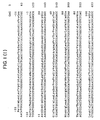
- cDNA encoding a human ⁇ 2-plasmin inhibitor precursor represented by the sequence of amino acids from the -39th Met to the 452nd Lys in Figure 1 of the accompanying drawings, preferably cDNA represented by the base sequence from the 7th A to the 1479th G in Figure 1.
- the invention also provides an amino acid sequence of a human ⁇ 2-plasmin inhibitor precursor represented by the sequence of 491 amino acids from the -39th Met to the 452nd Lys in Figure 1.
- the amino acid sequence from the 1st Asn to the 452nd Lys shows the protein of the human ⁇ 2-plasmin inhibitor itself
- the amino acid sequence from the -39th Met to the -1st Pro shows the leader sequence.
- the present inventors furthered their studies on the elucidation of the structure of a genomic DNA coding for the human ⁇ 2-plasmin inhibitor, and isolated human genomic DNAs coding for an amino acid sequence composed of 39 amino acids and corresponding to the propeptide of human ⁇ 2-plasmin inhibitor and an amino acid sequence composed of 452 amino acids and constituting the human ⁇ 2-plasmin inhibitor.
- genomic DNA is a DNA composed of exons II, III, IV, V, VI, VII, VIII, IX and X, as shown in Figure 4, bonded to each other via introns and encoding human ⁇ 2-plasmin inhibitor protein, and that exon I shown in Figure 4 is further bonded to the upstream end of exon II via an intron.
- a genomic DNA composed of 9 exons from exon II to X and 8 introns interposed between the adjoining exons, or a genomic gene consisting of the above genomic gene and an exon I bonded to the upstream end of the exon II via an intron.
- exon II, exon III and part of exon IV in the genomic DNA of the invention encode a propeptide of 39 amino acids.
- the remaining part of exon IV, exon V, exon VI, exon VII, exon VIII, exon IX and part of exon X encode human ⁇ 2-plasmin inhibitor.
- the restriction endonuclease map of the genomic DNA of the human ⁇ 2-plasmin inhibitor with regard to six restriction endonucleases is shown in Figure 3 (2). This genomic gene was obtained as clones of three lambda phages shown in Figure 3 (3).
- the base sequence and amino acid sequence of the genomic DNA of human ⁇ 2-plasmin inhibitor are shown in Figure 4.
- the exons are the underlined portions of the base sequence.
- Exon I does not encode the amino acid sequence.
- Exon II consists of 67 bases in total, four bases (GAAC) in the non-coding region and 63 bases encoding 21 amino acids in part of the propeptide.
- Exon III consists of 39 bases encoding 13 amino acids in part of the propeptide.
- Exon IV consists of 63 bases in total, 15 bases encoding 5 amino acids in part of the propeptide and 48 based encoding 16 amino acids in the N-terminus portion of the ⁇ 2-plasmin inhibitor.
- Exon V consists of 202 bases encoding 67 1/3 amino acids of ⁇ 2-plasmin inhibitor.
- Exon VI consists of 144 bases encoding 48 amino acids of ⁇ 2-plasmin inhibitor.
- Exon VII consists of 204 bases encoding 68 amino acids of ⁇ 2-plasmin inhibitor.
- Exon VIII consists of 143 bases encoding 47 2/3 amino acids. of ⁇ 2-plasmin inhibitor.
- Exon IX consists of 205 bases encoding 68 1/3 amino acids of ⁇ 2-plasmin inhibitor.
- Exon X consists of 1160 bases in total, 410 bases encoding 136 2/3 amino acids on the C-terminus of ⁇ 2-plasmin inhibitor and 759 bases in the non-coding region. The DNA base sequences of these exons are underlined.
- RNA messenger RNA
- mRNA messenger RNA
- human liver cells construction of a cDNA library, screening of human ⁇ 2-plasmin inhibitor, recloning of human ⁇ 2-plasmin inhibitor cDNA, preparation of a restriction endonuclease cleavage map of human ⁇ 2-plasmin inhibitor, determination of the base sequence of human ⁇ 2-plasmin inhibitor cDNA, cloning of human ⁇ 2-plasmin inhibitor genomic DNA, preparation of a restriction endonuclease map of the human ⁇ 2-plasmin inhibitor genomic DNA, and determination of the base sequence of the human ⁇ 2-plasmin inhibitor genomic DNA in detail.
- mRNA messenger RNA
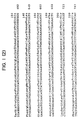
- Figure 1 shows the amino acid sequence of human ⁇ 2-plasmin inhibitor in this invention and a cDNA thereof.
- Figure 2 is a restriction endonuclease map of the cDNA of human ⁇ 2-plasmin inhibitor.
- the white portion is a coding region of the amino acid sequence of the invention and the black portion is a non-coding region.
- Figure 3 (1) shows introns-exons of the genomic DNA of human ⁇ 2-plasmin inhibitor. The ten exons are shown by rectangles. Exon I, part of exon II and part of exon X are non-coding regions which do not encode amino acids. The non-coding region of exon X is shown by hatchings.
- Figure 3 (2) is a restriction endonuclease map of the genomic DNA of human ⁇ 2-plasmin inhibitor in accordance with this invntion. The symbols show the following endonucleases.
- Figures 3 (1) to (3) correspond to each other vertically.
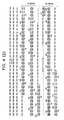
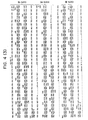
- Figure 4 shows the DNA base sequence and amino acid sequence of the genomic DNA of human ⁇ 2-plasmin inhibitor in accordance with this invention.
- the exon portions are underlined, and the corresponding amino acids are indicated beneath.
- a sequence presuumably corresponding to the TATA box upstream of exon I and the transcriptional site are surrounded by lines.
- the polyadenylation recognition site downstream of 3 ⁇ -terminus is surrounded by a line.
- mRNA was isolated from human liver cells in accordance with the guanidine thiocyanate method [see J. M. Chirgwin et al.: Biochemistry, 18, 5294-5299 (1979)].
- GTC solution 6M guanidine isothiocyanate, 5mM sodium citrate, 0.1M 20-mercaptoethanol, 0.5% sodium N-lauroylsarcosinate
- the homogenate was superimposed on 3.8 ml of an aqueous solution containing 5.7M CsCl and 0.1M EDTA.
- the column was washed with the above washing solution, and eluted with an eluent composed of 10mM Tris-HCl (pH 7.5), 1mM EDTA and 0.05% SDS to give about 31 micrograms of polyA+ mRNA.
- cDNA was synthesized from the polyA+ mRNA derived from human liver cells by the method of Gubler and Hoffman [see U.Gubler & B. J. Hoffman: Gene, 25 , 263-269 (1983)] using a cDNA synthesis kit made by Amersham Co.
- a single-stranded cDNA was synthesized in a yield of about 30% by adding 5 micrograms of Oligo(dT) 12-18 to 5 micrograms of polyA+ mRNA in the presence of 50 units of RNase inhibiting enzyme (HPRI) derived from human placenta and causing transcriptase to act at 42°C for 1.5 hours.
- HPRI RNase inhibiting enzyme
- Four units of E. coli ribonuclease H and 115 units of E. coli DNA polymerase I were added to the resulting reaction solution, and reacted at 12°C for 1 hour and then at 22°C for 1 hour. The reaction mixture was left to stand at 70°C for 10 minutes to deactivate the enzymes.
- This cDNA (0.4 microgram) and 1.0 microgram of ⁇ gt10 arm were ligated to obtain a hybrid DNA having the cDNA derived from human liver cells inserted into it.
- the resulting hybrid DNA was packaged in vitro [see A. Becker & M. Gold: P Natl. Acad. Sci. USA, 72 , 581 (1975)] to obtain a cDNA library derived from human liver cells.
- the library of cDNA derived from human liver cells obtained in Example 2 was transfected into E. coli C 600 hfl ⁇ strain to form plaques.
- Clones containing human ⁇ 2-plasmin inhibitor DNA were selected in accordance with the Benton and Davis plaque hybridization method using synthetic DNAs P-1 and P-2 labelled with [32P] [see W. D. Benton & R. W. Davis: Science, 196 , 180 (1977)].
- the synthetic DNAs used as probes were synthesized by using a DNA sequence corresponding to the partial amino acid sequence of human ⁇ 2-plasmin inhibitor reported by Collen et al. [see D. Collen et al.: Thrombosis and Haemostasis, 48 , 311-314 (1982)] as a DNA synthesizer (made by Applied Biosystems).
- Plasmid pUC8 (2 micrograms) was digested with restriction endonuclease EcoRI in accordance with Example 2, and 1.9 units of alkaline phosphatase (E. coli C75; a product of Takara Shuzo) was added. The mixture was reacted at 58°C for 2 hours. After the reaction, the reaction solution was extracted with phenol three times to deactivate and remove the alkaline phosphatase in the reaction solution.
- the EcoRI-digested cDNA fragment of human ⁇ 2-plasmin inhibitor obtained in Example 3 was added to the resulting EcoRI/alkaline phosphatase treated solution of pUC8, and 2 units of T4-DNA ligase was reacted with the mixture at 12°C for 16 hours to perform ligation.
- E. coli LE 392 was transformed. with hybrid DNA prepared by ligating the EcoRI-digested cDNA fragment of human ⁇ 2-plasmin inhibitor in accordance with an ordinary CaCl2 method [see. M. V. Norgard et al.: Gene, 3 , 297 (1978)].
- the transformants were inoculated in L-broth plates containing ampicillin in a concentration of 50 micrograms/ml. The plates were cultivated overnight at 37°C to grow the transformants.
- DNAs were prepared from the resulting colonies by a known method, and by agarose gel electrophoresis, the desired hybrid DNAs were determined. They were named pPI 41, pPI 39 and pPI 142.
- Lambda gt10DNA containing the human ⁇ 2-plasmin inhibitor cDNA obtained in Example 3 was digested with EcoRI to cut out the inserted human ⁇ 2-plasmin inhibitor cDNA and isolated by 0.8% agarose gel electrophoresis.
- This human ⁇ 2-plasmin inhibitor cDNA fragment (0.1 microgram) was dissolved in 10 microliters of a buffer for restriction endonucleases [an aqueous solution containing 100mM NaCl, 50mM Tris-HCl (pH 7.5), 10mM MgCl2 and 1mM dithiothreitol for digestion with EcoRI; an aqueous solution containing 50mM NaCl, 10mM Tris-HCl (pH 7.5), 10mM MgCl2 and 1mM dithiothreitol for digestion with BamHI, PstI and HindIII; and an aqueous solution containing 20mM KCl, 10mM Tris-HCl (pH 8.0), 10
- the cDNA fragment was first treated with one restriction endonuclease which acted at a low salt concentration. Then, the salt concentration was raised to a predetermined concentration, and the DNA fragment was treated with the other enzyme which acted at a high salt concentration.
- the base sequence of the human ⁇ 2-plasmin inhibitor cDNA was determined by the Sanger's dideoxy sequence method [see F. Sanger et al.: Proc. Natl. Acad. Sci. USA, 74, 5463-5467 (1977)].
- the EcoRI fragment of the human ⁇ 2-plasmin inhibitor cDNA was inserted into the EcoRI site of M13 mp18 or M13 mp19 vector, and E. coli JM105 strain was transformed with the vector.
- a single-stranded hybrid DNA was prepared by a known method using the transformed JM105.
- the single-stranded DNA was subjected to sequence reaction using an M13 sequence kit (made by Amersham), and then subjected to electrophoresis using 6% polyacrylamide gel containing 7M urea. The gel was radioautographed overnight at -80°C. The separation pattern was analyzed to obtain data for determination of the base sequence of human ⁇ 2-plasmin inhibitor.
- DNA extracted from human placenta was digested with restriction endonucleases AluI and HaeIII, and inserted into Charon 4A bacteriophage vector arm via an EcoRi linker to construct a library.
- the plaques (1.2 ⁇ 106) of the library were screened using cDNA fragments corresponding to an amino acid sequence from the 31st to the 130th amino acids from the N-terminus of the amino acid sequence of ⁇ 2-plasmin inhibitor and a cDNA fragment corresponding to the 179th to the 429th amino acids from the N-terminus of the amino acid sequence of ⁇ 2-plasmin inhibitor as probes [see W. D. Benton & R. W. Davis: Science, 196 , 180-182 (1977)].
- a synthetic DNA (5 ⁇ ACTCCCCTGCCAGCC3 ⁇ ) composed of 15 bases was used as a probe.
- the cDNA fragments were labelled with 32P by nick translation.
- the synthetic DNA was labelled on the 5 ⁇ side with T4 polynucleotidekinase.
- the phage DNA containing human ⁇ 2-plasmin inhibitor genomic DNA obtained in Example 7 was digested with EcoRI, and the inserted human ⁇ 2-plasmin inhibitor genomic DNA was cut out and isolated by 0.9-1.5% agarose gel electrophoresis.
- This human ⁇ 2-plasmin inhibitor DNA fragment (0.1 to 0.5 microgram) was dissolved in 10 microliters of a buffer for restriction endonucleases and digested with 2 units of various restriction endonucleases at 37°C for 1 hour.
- the DNA fragment was first treated with one restriction endonuclease which acted at a low salt concentration. Then, the salt concentration was raised to a predetermined concentration, and the DNA fragment was treated with the other restriction endonuclease which acted at a high salt concentration.
- the base sequence of the human ⁇ 2-plasmin inhibitor genomic DNA was determined by the Sanger's dideoxy sequence method [see F. Sanger et al.: Proc. Natl. Acad. Sci. USA, 74, 5463-5467 (1977)].
- the EcoRI fragment of the human ⁇ 2-plasmin inhibitor genomic DNA was inserted into the EcoRI site of M13 mp18 or M13 mp19 vector, and E. coli JM105 strain was transformed with the vector.
- a single-stranded hybrid DNA was prepared by a known method using the transformed JM105.
- the single-stranded DNA was subjected to sequence reaction using an M13 sequence kit (made by Amersham), and then subjected to electrophoresis using 6% polyacrylamide gel containing 7M urea. The gel was radioautographed overnight at -80°C. The separation pattern was analyzed to obtain data for determination of the base sequence of human ⁇ 2-plasmin inhibitor.
Landscapes
- Chemical & Material Sciences (AREA)
- Organic Chemistry (AREA)
- Health & Medical Sciences (AREA)
- General Health & Medical Sciences (AREA)
- Biochemistry (AREA)
- Biophysics (AREA)
- Life Sciences & Earth Sciences (AREA)
- Genetics & Genomics (AREA)
- Medicinal Chemistry (AREA)
- Molecular Biology (AREA)
- Proteomics, Peptides & Aminoacids (AREA)
- Gastroenterology & Hepatology (AREA)
- Peptides Or Proteins (AREA)
- Enzymes And Modification Thereof (AREA)
- Preparation Of Compounds By Using Micro-Organisms (AREA)
Description
- This invention relats to the amino acid sequence of a human α₂-plasmin inhibitor (or α₂-antiplasmin), and cDNA and genomic DNA encoding this sequence.
- The human α₂-plasmin inhibitor was first isolated and purified by Aoki and Moroi. It is known to be a strong plasmin inhibitor which instantaneously inhibits the esterase activity of plasmin, a fibrinolytic enzyme, and is a single-chain glycoprotein having a molecular weight of about 67,000 and containing 11.7% of sugar chains [M. Moroi & N. Aoki: The Journal of Biological Chemistry, 251, 5956-5965 (1976)].
- On the other hand, it is known that the human α₂-plasmin inhibitor has three types of active sites. One is a site of inhibiting the fibrinolytic action of plasmin (to be referred to sometimes as the "reactive site") [B. Wiman & D. Collen: The Journal of Biological Chemistry, 254, 9291-9297 (1979)]. A second is a site of binding to plasmin at the carboxyl terminal portion [B. Wiman & D. Collen: European Journal of Biochemistry, 84, 573-578 (1978)]. A third is a site of binding to fibrin at the amino terminal portion [Y. Sakata et al.: Thrombosis Research, 16, 279-282 (1979)].
- It has already been determined that among the three acive sites of the human α₂-plasmin inhibitor, the fibrin binding site is Gln which is the second amino acid from the amino terminus of the human α₂-plasmin inhibitor [T. Tamaki & N. Aoki: The Journal of Biological Chemistry, 257, 14767-14772 (1982)]. A peptide fragment composed of 26 amino acids including the plasmin binding site is also known. It has been reported that this peptide fragment exists near the carboxy-terminus of the human α₂-plasmin inhibitor [see T. Sasaki et al.: The Journal of Biochemistry, 99, 1699-1705 (1986)], but its position is not clear. It has been reported that the reactive site of the human α₂-plasmin inhibitor is Leu-Met [see B. Wiman Chemistry, 254, 9291-9297 (1979)], or it is described that this reactive site is Arg-Met [see H. R. Lijnen et al.: Thrombosis Research, 39, 625-630 (1985)]. But its position has not yet been determined clearly. If the structures and positions of these plasmin binding sites and the reactive site and their vicinities are determined, it will be very beneficial and interesting to the utilization and development of human α₂-plasmin inhibitor.
- On the other hand, if a DNA of human α₂-plasmin inhibitor or its fragment is obtained, it will become possible to produce part or the whole of the human α₂-plasmin inhibitor by a gene manipulation technique. The utilization of such a gene or its fragment will permit diagnosis of human α₂-plasmin inhibitor deficiency.
- As a result of studies on human α₂-plasmin inhibitor gene, the present inventors isolated complementary DNA (to be referred to as cDNA) of human α₂-plasmin inhibitor containing 1209 nucleotides coding for the sequence of 403 amino acids from the carboxy-terminus of the human α₂-plasmin inhibitor, and elucidated the detailed structure of the human α₂-plasmin inhibitor on the carboxy-terminus side by analyzing the base sequence of the cDNA of human α₂-plasmin inhibitor. This has led to the present invention.
- Specifically, according to one aspect of this invention, there is provided cDNA encoding a human α₂-plasmin inhibitor precursor represented by the sequence of amino acids from the -39th Met to the 452nd Lys in Figure 1 of the accompanying drawings, preferably cDNA represented by the base sequence from the 7th A to the 1479th G in Figure 1. The invention also provides an amino acid sequence of a human α₂-plasmin inhibitor precursor represented by the sequence of 491 amino acids from the -39th Met to the 452nd Lys in Figure 1.
- In the amino acid sequence composed of 491 amino acids shown in Figure 1, the amino acid sequence from the 1st Asn to the 452nd Lys shows the protein of the human α ₂-plasmin inhibitor itself, and the amino acid sequence from the -39th Met to the -1st Pro shows the leader sequence.
- The present inventors furthered their studies on the elucidation of the structure of a genomic DNA coding for the human α ₂-plasmin inhibitor, and isolated human genomic DNAs coding for an amino acid sequence composed of 39 amino acids and corresponding to the propeptide of human α ₂-plasmin inhibitor and an amino acid sequence composed of 452 amino acids and constituting the human α ₂-plasmin inhibitor. Analysis of the base sequences of these amino acids has led to the discovery that the genomic DNA is a DNA composed of exons II, III, IV, V, VI, VII, VIII, IX and X, as shown in Figure 4, bonded to each other via introns and encoding human α ₂-plasmin inhibitor protein, and that exon I shown in Figure 4 is further bonded to the upstream end of exon II via an intron.
- Thus, according to another aspect of this invention, there is provided a genomic DNA composed of 9 exons from exon II to X and 8 introns interposed between the adjoining exons, or a genomic gene consisting of the above genomic gene and an exon I bonded to the upstream end of the exon II via an intron.
- Part of exon II, exon III and part of exon IV in the genomic DNA of the invention encode a propeptide of 39 amino acids. The remaining part of exon IV, exon V, exon VI, exon VII, exon VIII, exon IX and part of exon X encode human α ₂-plasmin inhibitor. The restriction endonuclease map of the genomic DNA of the human α ₂-plasmin inhibitor with regard to six restriction endonucleases is shown in Figure 3 (2). This genomic gene was obtained as clones of three lambda phages shown in Figure 3 (3).
- The base sequence and amino acid sequence of the genomic DNA of human α₂-plasmin inhibitor are shown in Figure 4. In Figure 4, the exons are the underlined portions of the base sequence. Exon I does not encode the amino acid sequence. Exon II consists of 67 bases in total, four bases (GAAC) in the non-coding region and 63 bases encoding 21 amino acids in part of the propeptide. Exon III consists of 39 bases encoding 13 amino acids in part of the propeptide. Exon IV consists of 63 bases in total, 15 bases encoding 5 amino acids in part of the propeptide and 48 based encoding 16 amino acids in the N-terminus portion of the α₂-plasmin inhibitor. Exon V consists of 202 bases encoding 67 1/3 amino acids of α₂-plasmin inhibitor. Exon VI consists of 144 bases encoding 48 amino acids of α₂-plasmin inhibitor. Exon VII consists of 204 bases encoding 68 amino acids of α₂-plasmin inhibitor. Exon VIII consists of 143 bases encoding 47 2/3 amino acids. of α₂-plasmin inhibitor. Exon IX consists of 205 bases encoding 68 1/3 amino acids of α₂-plasmin inhibitor. Exon X consists of 1160 bases in total, 410 bases encoding 136 2/3 amino acids on the C-terminus of α₂-plasmin inhibitor and 759 bases in the non-coding region. The DNA base sequences of these exons are underlined.
- The following Examples illustrate isolation of messenger RNA ("mRNA" for short) from human liver cells, construction of a cDNA library, screening of human α₂-plasmin inhibitor, recloning of human α₂-plasmin inhibitor cDNA, preparation of a restriction endonuclease cleavage map of human α₂-plasmin inhibitor, determination of the base sequence of human α₂-plasmin inhibitor cDNA, cloning of human α₂-plasmin inhibitor genomic DNA, preparation of a restriction endonuclease map of the human α₂-plasmin inhibitor genomic DNA, and determination of the base sequence of the human α₂-plasmin inhibitor genomic DNA in detail.
- It should be understood that in the present specification and the accompanying drawings, amino acids and polypeptides are abbreviated by the method of IUPACIUB, Commission on Biological Nomenclature (CBN). For example, the following abbreviations are used.
- Ala:
- L-alanine
- Arg:
- L-arginine
- Asn:
- L-asparagine
- Asp:
- L-aspartic acid
- Cys:
- L-cysteine
- Gln:
- L-glutamine
- Glu:
- L-glutamic acid
- Gly:
- glycine
- His:
- L-histidine
- Ile:
- L-isoleucine
- Leu:
- L-leucine
- Lys:
- L-lysine
- Met:
- L-methionine
- Phe:
- L-phenylalanine
- Pro:
- L-proline
- Ser:
- L-serine
- Thr:
- L-threonine
- Trp:
- L-tryptophan
- Tyr:
- L-tyrosine
- Val:
- L-valine
- A:
- adenine (representing deoxyadenylic acid)
- C:
- cytosine (representing deoxycytidylic acid)
- G:
- guanine (representing deoxyguanylic acid)
- T:
- thymine (representing deoxythymidylic acid)
- Figure 1 shows the amino acid sequence of human α ₂-plasmin inhibitor in this invention and a cDNA thereof.
- Figure 2 is a restriction endonuclease map of the cDNA of human α₂-plasmin inhibitor. The white portion is a coding region of the amino acid sequence of the invention and the black portion is a non-coding region.
- Figure 3 (1) shows introns-exons of the genomic DNA of human α₂-plasmin inhibitor. The ten exons are shown by rectangles. Exon I, part of exon II and part of exon X are non-coding regions which do not encode amino acids. The non-coding region of exon X is shown by hatchings.
- Figure 3 (2) is a restriction endonuclease map of the genomic DNA of human α₂-plasmin inhibitor in accordance with this invntion. The symbols show the following endonucleases.
- B:
- BamHI
- E:
- EcoRI
- H:
- HindIII
- P:
- PstI
- S:
- SacI
- Sm:
- SmaI
- Figures 3 (1) to (3) correspond to each other vertically.
- Figure 4 shows the DNA base sequence and amino acid sequence of the genomic DNA of human α₂-plasmin inhibitor in accordance with this invention. The exon portions are underlined, and the corresponding amino acids are indicated beneath. A sequence presuumably corresponding to the TATA box upstream of exon I and the transcriptional site are surrounded by lines. The polyadenylation recognition site downstream of 3ʹ-terminus is surrounded by a line.
- mRNA was isolated from human liver cells in accordance with the guanidine thiocyanate method [see J. M. Chirgwin et al.: Biochemistry, 18, 5294-5299 (1979)]. To 2 × 10⁸ human liver cells was added 5 ml of GTC solution (6M guanidine isothiocyanate, 5mM sodium citrate, 0.1M 20-mercaptoethanol, 0.5% sodium N-lauroylsarcosinate), and the mixture was homogenized. The homogenate was superimposed on 3.8 ml of an aqueous solution containing 5.7M CsCl and 0.1M EDTA. They were ultracentrifuged using an RPS-50T rotor (Hitachi) at 35,000 rpm for 15 hours. After ultracentrifugation, the solution was carefully removed, and the residue was rinsed three times with about 1 ml of ethanol, and dissolved in 1.4 ml of water. The solution was treated with ethanol to form a precipitate. The precipitate was dissolved in 0.5 ml of a washing solution composed of 0.5M NaCl, 18mM of Tris-HCl (pH 7.5), 1mM EDTA and 0.05% of SDS, and the solution was passed through 0.5 ml of Oligo(dT) cellulose column. The column was washed with the above washing solution, and eluted with an eluent composed of 10mM Tris-HCl (pH 7.5), 1mM EDTA and 0.05% SDS to give about 31 micrograms of polyA+ mRNA.
- cDNA was synthesized from the polyA+ mRNA derived from human liver cells by the method of Gubler and Hoffman [see U.Gubler & B. J. Hoffman: Gene, 25, 263-269 (1983)] using a cDNA synthesis kit made by Amersham Co.
- A single-stranded cDNA was synthesized in a yield of about 30% by adding 5 micrograms of Oligo(dT) 12-18 to 5 micrograms of polyA+ mRNA in the presence of 50 units of RNase inhibiting enzyme (HPRI) derived from human placenta and causing transcriptase to act at 42°C for 1.5 hours. Four units of E. coli ribonuclease H and 115 units of E. coli DNA polymerase I were added to the resulting reaction solution, and reacted at 12°C for 1 hour and then at 22°C for 1 hour. The reaction mixture was left to stand at 70°C for 10 minutes to deactivate the enzymes. Then, 10 units of T4-DNA polymerase was added and reacted at 47°C for 10 minuts to obtain a double-stranded cDNA in a yield of about 95%. The double-stranded cDNA was reacted with 20 units of EcoRI methylase at 37°C for 1 hour. To the reaction product was bonded 16 units of EcoRI linker (made by Takara Shuzo). Then, 16 units of EcoRI (made by Takara Shuzo) was added and the mixture was reacted at 37°C for 2 hours. The reaction mixture was passed through a column of Sepharose CL-4B to purify it and 0.34 microgram of cDNA was obtained. This cDNA (0.4 microgram) and 1.0 microgram of λgt10 arm (made by Vector Cloning Systems) were ligated to obtain a hybrid DNA having the cDNA derived from human liver cells inserted into it. The resulting hybrid DNA was packaged in vitro [see A. Becker & M. Gold: P Natl. Acad. Sci. USA, 72, 581 (1975)] to obtain a cDNA library derived from human liver cells.
- The library of cDNA derived from human liver cells obtained in Example 2 was transfected into E. coli C 600 hfl⁻ strain to form plaques. Clones containing human α ₂-plasmin inhibitor DNA were selected in accordance with the Benton and Davis plaque hybridization method using synthetic DNAs P-1 and P-2 labelled with [³²P] [see W. D. Benton & R. W. Davis: Science, 196, 180 (1977)]. The synthetic DNAs used as probes were synthesized by using a DNA sequence corresponding to the partial amino acid sequence of human α ₂-plasmin inhibitor reported by Collen et al. [see D. Collen et al.: Thrombosis and Haemostasis, 48, 311-314 (1982)] as a DNA synthesizer (made by Applied Biosystems).


- Plasmid pUC8 (2 micrograms) was digested with restriction endonuclease EcoRI in accordance with Example 2, and 1.9 units of alkaline phosphatase (E. coli C75; a product of Takara Shuzo) was added. The mixture was reacted at 58°C for 2 hours. After the reaction, the reaction solution was extracted with phenol three times to deactivate and remove the alkaline phosphatase in the reaction solution. The EcoRI-digested cDNA fragment of human α₂-plasmin inhibitor obtained in Example 3 was added to the resulting EcoRI/alkaline phosphatase treated solution of pUC8, and 2 units of T4-DNA ligase was reacted with the mixture at 12°C for 16 hours to perform ligation.
- E. coli LE 392 was transformed. with hybrid DNA prepared by ligating the EcoRI-digested cDNA fragment of human α₂-plasmin inhibitor in accordance with an ordinary CaCl₂ method [see. M. V. Norgard et al.: Gene, 3, 297 (1978)]. The transformants were inoculated in L-broth plates containing ampicillin in a concentration of 50 micrograms/ml. The plates were cultivated overnight at 37°C to grow the transformants. DNAs were prepared from the resulting colonies by a known method, and by agarose gel electrophoresis, the desired hybrid DNAs were determined. They were named pPI 41,
pPI 39 and pPI 142. - Lambda gt10DNA containing the human α₂-plasmin inhibitor cDNA obtained in Example 3 was digested with EcoRI to cut out the inserted human α₂-plasmin inhibitor cDNA and isolated by 0.8% agarose gel electrophoresis. This human α₂-plasmin inhibitor cDNA fragment (0.1 microgram) was dissolved in 10 microliters of a buffer for restriction endonucleases [an aqueous solution containing 100mM NaCl, 50mM Tris-HCl (pH 7.5), 10mM MgCl₂ and 1mM dithiothreitol for digestion with EcoRI; an aqueous solution containing 50mM NaCl, 10mM Tris-HCl (pH 7.5), 10mM MgCl₂ and 1mM dithiothreitol for digestion with BamHI, PstI and HindIII; and an aqueous solution containing 20mM KCl, 10mM Tris-HCl (pH 8.0), 10mM MgCl₂ and 1mM dithiothreitol for digestion with SmaI, respectively], and digested at 37°C for 1 hour. When the digestion was carried out using two restriction endonucleases, the cDNA fragment was first treated with one restriction endonuclease which acted at a low salt concentration. Then, the salt concentration was raised to a predetermined concentration, and the DNA fragment was treated with the other enzyme which acted at a high salt concentration.
- After digestion, 1 microliter of 0.25% bromophenol blue and a 50% aqueous solution of glycerol were added, and the mixture was subjected to electrophoresis using 0.8%-1.2% agarose containing 1 microgram/ml of ethidium bromide. At the time of electrophoresis, a digestion product of the DNA of lambda phage with HindIII was used as a molecular size marker for the DNA fragment. After the electrophoresis, ultraviolet light was irradiated on the gel, and the digestion pattern was observed. The patterns of digestions with various restriction endonucleases alone or combinations of two restriction endonucleases were analyzed. The restriction endonuclease map thus obtained of the human α₂-plasmin inhibitor cDNA having a molecular size of about 2.2 Kb is shown in Figure 2.
-
- The base sequence of the human α₂-plasmin inhibitor cDNA was determined by the Sanger's dideoxy sequence method [see F. Sanger et al.: Proc. Natl. Acad. Sci. USA, 74, 5463-5467 (1977)].
- For example, The EcoRI fragment of the human α₂-plasmin inhibitor cDNA was inserted into the EcoRI site of M13 mp18 or M13 mp19 vector, and E. coli JM105 strain was transformed with the vector. A single-stranded hybrid DNA was prepared by a known method using the transformed JM105. The single-stranded DNA was subjected to sequence reaction using an M13 sequence kit (made by Amersham), and then subjected to electrophoresis using 6% polyacrylamide gel containing 7M urea. The gel was radioautographed overnight at -80°C. The separation pattern was analyzed to obtain data for determination of the base sequence of human α₂-plasmin inhibitor.
- As a result, the base sequence encoding the human α₂-plasmin inhibitor was determined, and is shown in Figure 1.
- DNA extracted from human placenta was digested with restriction endonucleases AluI and HaeIII, and inserted into Charon 4A bacteriophage vector arm via an EcoRi linker to construct a library. The plaques (1.2 × 10⁶) of the library were screened using cDNA fragments corresponding to an amino acid sequence from the 31st to the 130th amino acids from the N-terminus of the amino acid sequence of α₂-plasmin inhibitor and a cDNA fragment corresponding to the 179th to the 429th amino acids from the N-terminus of the amino acid sequence of α₂-plasmin inhibitor as probes [see W. D. Benton & R. W. Davis: Science, 196, 180-182 (1977)]. For the screening of clones upstream of 3ʹ, a synthetic DNA (5ʹACTCCCCTGCCAGCC3ʹ) composed of 15 bases was used as a probe. When cDNAs were used as probes, the cDNA fragments were labelled with ³²P by nick translation. The synthetic DNA was labelled on the 5ʹ side with T4 polynucleotidekinase.
- As a result of screening, three clones, λPI1, λPI2 and λPI6, encoding the entire region of the genomic DNA of α₂-plasmin inhibitor were obtained. The correspondence of the clones to the genomic DNA is shown in Figures 3 (1), (2) and (3).
- The phage DNA containing human α₂-plasmin inhibitor genomic DNA obtained in Example 7 was digested with EcoRI, and the inserted human α₂-plasmin inhibitor genomic DNA was cut out and isolated by 0.9-1.5% agarose gel electrophoresis. This human α₂-plasmin inhibitor DNA fragment (0.1 to 0.5 microgram) was dissolved in 10 microliters of a buffer for restriction endonucleases and digested with 2 units of various restriction endonucleases at 37°C for 1 hour.
- When digestion was carried out using two restriction endonucleases, the DNA fragment was first treated with one restriction endonuclease which acted at a low salt concentration. Then, the salt concentration was raised to a predetermined concentration, and the DNA fragment was treated with the other restriction endonuclease which acted at a high salt concentration.
- After digestion, 1 microliter of 0.25% bromophenol blue and a 50% aqueous solution of glycerol were added, and the mixture was subjected to electrophoresis using 0.8%-1.2% agarose containing 1 microgram/ml of ethidium bromide. At the time of electrophoresis, a digestion product of the DNA of lambda phage with HindIII was used as a molecular size marker for the DNA fragment. After the electrophoresis, ultraviolet light was irradiated on the gel, and the digestion pattern was observed. The patterns of digestions with various restriction endonucleases alone or combinations of two restriction were analyzed. The resulting restriction endonuclease map of human α₂-plasmin inhibitor genomic DNA so obtained is shown in Figure 3 (2).
- The base sequence of the human α₂-plasmin inhibitor genomic DNA was determined by the Sanger's dideoxy sequence method [see F. Sanger et al.: Proc. Natl. Acad. Sci. USA, 74, 5463-5467 (1977)].
- For example, The EcoRI fragment of the human α₂-plasmin inhibitor genomic DNA was inserted into the EcoRI site of M13 mp18 or M13 mp19 vector, and E. coli JM105 strain was transformed with the vector. A single-stranded hybrid DNA was prepared by a known method using the transformed JM105. The single-stranded DNA was subjected to sequence reaction using an M13 sequence kit (made by Amersham), and then subjected to electrophoresis using 6% polyacrylamide gel containing 7M urea. The gel was radioautographed overnight at -80°C. The separation pattern was analyzed to obtain data for determination of the base sequence of human α₂-plasmin inhibitor.
- As a result, the base sequence of the genomic DNA encoding the human α₂-plasmin inhibitor was determined, and is shown in Figure 4.
Claims (5)
- cDNA encoding a human α₂-plasmin inhibitor precursor protein represented by an amino acid sequence from the -39th Met to the 452nd Lys in Figure 1 of the accompanying drawings.
- The cDNA of claim 1 which is represented by a base sequence from the 7th A to the 1479th G in Figure 1 of the accompanying drawings.
- An amino acid sequence of a human α₂-plasmin inhibitor precursor represented by an amino acid sequence from the -39th Met to the 452nd Lys in Figure 1 of the accompanying drawings.
- Genomic DNA encoding a human α₂-plasmin inhibitor protein which is composed of exons II, III, IV, V, VI, VII, VIII, IX and X in Figure 4 of the accompanying drawings, said exons being bonded to one another via introns.
- The genomic DNA wherein exon I in Figure 4 is further bonded to exon II at its upstream end via an intron.
Applications Claiming Priority (4)
| Application Number | Priority Date | Filing Date | Title |
|---|---|---|---|
| JP301753/86 | 1986-12-19 | ||
| JP30175386A JPS63157984A (en) | 1986-12-19 | 1986-12-19 | Amino acid sequence and gene fragment of human alpha2-plasmin inhibitor |
| JP62-154495A JPH012577A (en) | 1987-06-23 | Amino acid sequence and gene fragment of human α2-plasmin inhibitor | |
| JP154495/87 | 1987-06-23 |
Publications (3)
| Publication Number | Publication Date |
|---|---|
| EP0272609A2 EP0272609A2 (en) | 1988-06-29 |
| EP0272609A3 EP0272609A3 (en) | 1988-08-03 |
| EP0272609B1 true EP0272609B1 (en) | 1992-03-11 |
Family
ID=26482759
Family Applications (1)
| Application Number | Title | Priority Date | Filing Date |
|---|---|---|---|
| EP19870118686 Expired EP0272609B1 (en) | 1986-12-19 | 1987-12-16 | Amino acid sequence of human alpha2-plasmin inhibitor and cdna and genomic dna encoding said amino acid sequence |
Country Status (2)
| Country | Link |
|---|---|
| EP (1) | EP0272609B1 (en) |
| DE (1) | DE3777359D1 (en) |
Families Citing this family (4)
| Publication number | Priority date | Publication date | Assignee | Title |
|---|---|---|---|---|
| JP2730978B2 (en) * | 1988-09-05 | 1998-03-25 | 帝人株式会社 | Novel plasmin inhibitory protein |
| WO2008134577A1 (en) * | 2007-04-25 | 2008-11-06 | Reed Guy L | Method of increasing plasmin activity through antiplasmin conversion |
| WO2013036596A2 (en) | 2011-09-06 | 2013-03-14 | Reed Guy L | Serpinf2-binding molecules and methods of use |
| EP3237007A4 (en) | 2014-12-22 | 2018-05-30 | Translational Sciences Inc. | Prophylaxis of thrombosis |
-
1987
- 1987-12-16 DE DE8787118686T patent/DE3777359D1/en not_active Expired - Lifetime
- 1987-12-16 EP EP19870118686 patent/EP0272609B1/en not_active Expired
Also Published As
| Publication number | Publication date |
|---|---|
| DE3777359D1 (en) | 1992-04-16 |
| EP0272609A3 (en) | 1988-08-03 |
| EP0272609A2 (en) | 1988-06-29 |
Similar Documents
| Publication | Publication Date | Title |
|---|---|---|
| Kimura et al. | Structure of the human thyroid peroxidase gene: comparison and relationship to the human myeloperoxidase gene | |
| Abrahamson et al. | Structure and expression of the human cystatin C gene | |
| Hanauer et al. | The glyceraldehyde 3 phosphate dehydrogenase gene family: structure of a human cDNA and of an X chromosome linked pseudogene; amazing complexity of the gene family in mouse. | |
| Takeya et al. | DNA sequence of the viral and cellular src gene of chickens. II. Comparison of the src genes of two strains of avian sarcoma virus and of the cellular homolog | |
| Adelman et al. | Isolation of the gene and hypothalamic cDNA for the common precursor of gonadotropin-releasing hormone and prolactin release-inhibiting factor in human and rat. | |
| Bock et al. | Cloning and expression of the cDNA for human antithrom, bin III | |
| Johnson et al. | Characterization of cDNA clones for human myeloperoxidase: predicted amino acid sequence and evidence for multiple mRNA species | |
| MAURER‐FOGY et al. | Cloning and expression of cDNA for human vascular anticoagulant, a Ca2+‐dependent phospholipid‐binding protein | |
| Durnam et al. | Isolation and characterization of the mouse metallothionein-I gene. | |
| Ueyama et al. | Structure of a human smooth muscle actin gene (aortic type) with a unique intron site | |
| Choo et al. | Molecular cloning of the gene for human anti-haemophilic factor IX | |
| McNeil et al. | Molecular cloning of the mouse mast cell protease-5 gene. A novel secretory granule protease expressed early in the differentiation of serosal mast cells. | |
| Saheki et al. | Primary structure of the human elafin precursor preproelafin deduced from the nucleotide sequence of its gene and the presence of unique repetitive sequences in the prosegment | |
| Lersch et al. | Sequence and expression of a type II keratin, K5, in human epidermal cells | |
| Makoto et al. | Cloning and structural analysis of the calf prochymosin gene | |
| Clarke et al. | A collagen-binding protein in the endoplasmic reticulum of myoblasts exhibits relationship with serine protease inhibitors. | |
| Selby et al. | Analysis of a major human chorionic somatomammotropin gene. Evidence for two functional promoter elements. | |
| Khani et al. | Organization and differential expression of two highly similar genes in the rabbit alcohol-inducible cytochrome P-450 subfamily. | |
| US5480793A (en) | Nucleic acid coding for the human angiotensin converting enzyme (ACE), and its uses, especially for the in vitro diagnosis of arterial hypertension | |
| Dobner et al. | Alternative 5′ exons either provide or deny an initiator methionine codon to the same α-tubulin coding region | |
| Curtis et al. | The nucleotide sequence and derived amino acid sequence of cDNA coding for mouse carbonic anhydrase II | |
| Meijers et al. | Organization of the gene coding for human protein C inhibitor (plasminogen activator inhibitor-3). Assignment of the gene to chromosome 14 | |
| Matsuo et al. | The genes for human alcohol dehydrogenases β1 and β2 differ by only one nucleotide | |
| Chang et al. | Isolation and characterization of mouse Thy-1 genomic clones. | |
| EP0272609A2 (en) | Amino acid sequence of human alpha2-plasmin inhibitor and cDNA and genomic DNA encoding said amino acid sequence |
Legal Events
| Date | Code | Title | Description |
|---|---|---|---|
| PUAI | Public reference made under article 153(3) epc to a published international application that has entered the european phase |
Free format text: ORIGINAL CODE: 0009012 |
|
| PUAL | Search report despatched |
Free format text: ORIGINAL CODE: 0009013 |
|
| AK | Designated contracting states |
Kind code of ref document: A2 Designated state(s): CH DE FR GB LI |
|
| AK | Designated contracting states |
Kind code of ref document: A3 Designated state(s): CH DE FR GB LI |
|
| RIN1 | Information on inventor provided before grant (corrected) |
Inventor name: AOKI, NOBUO Inventor name: MURAMATSU, MASAMI Inventor name: ICHIKAWA, YATARO Inventor name: SUMI, YOSHIHIKO |
|
| 17P | Request for examination filed |
Effective date: 19890103 |
|
| 17Q | First examination report despatched |
Effective date: 19910425 |
|
| GRAA | (expected) grant |
Free format text: ORIGINAL CODE: 0009210 |
|
| AK | Designated contracting states |
Kind code of ref document: B1 Designated state(s): CH DE FR GB LI |
|
| REF | Corresponds to: |
Ref document number: 3777359 Country of ref document: DE Date of ref document: 19920416 |
|
| ET | Fr: translation filed | ||
| PLBE | No opposition filed within time limit |
Free format text: ORIGINAL CODE: 0009261 |
|
| STAA | Information on the status of an ep patent application or granted ep patent |
Free format text: STATUS: NO OPPOSITION FILED WITHIN TIME LIMIT |
|
| 26N | No opposition filed | ||
| PGFP | Annual fee paid to national office [announced via postgrant information from national office to epo] |
Ref country code: CH Payment date: 20000925 Year of fee payment: 14 |
|
| PGFP | Annual fee paid to national office [announced via postgrant information from national office to epo] |
Ref country code: FR Payment date: 20001128 Year of fee payment: 14 |
|
| PGFP | Annual fee paid to national office [announced via postgrant information from national office to epo] |
Ref country code: GB Payment date: 20001201 Year of fee payment: 14 |
|
| PGFP | Annual fee paid to national office [announced via postgrant information from national office to epo] |
Ref country code: DE Payment date: 20001229 Year of fee payment: 14 |
|
| PG25 | Lapsed in a contracting state [announced via postgrant information from national office to epo] |
Ref country code: GB Free format text: LAPSE BECAUSE OF NON-PAYMENT OF DUE FEES Effective date: 20011216 |
|
| PG25 | Lapsed in a contracting state [announced via postgrant information from national office to epo] |
Ref country code: LI Free format text: LAPSE BECAUSE OF NON-PAYMENT OF DUE FEES Effective date: 20011231 Ref country code: CH Free format text: LAPSE BECAUSE OF NON-PAYMENT OF DUE FEES Effective date: 20011231 |
|
| REG | Reference to a national code |
Ref country code: GB Ref legal event code: IF02 |
|
| PG25 | Lapsed in a contracting state [announced via postgrant information from national office to epo] |
Ref country code: DE Free format text: LAPSE BECAUSE OF NON-PAYMENT OF DUE FEES Effective date: 20020702 |
|
| GBPC | Gb: european patent ceased through non-payment of renewal fee |
Effective date: 20011216 |
|
| REG | Reference to a national code |
Ref country code: CH Ref legal event code: PL |
|
| PG25 | Lapsed in a contracting state [announced via postgrant information from national office to epo] |
Ref country code: FR Free format text: LAPSE BECAUSE OF NON-PAYMENT OF DUE FEES Effective date: 20020830 |
|
| REG | Reference to a national code |
Ref country code: FR Ref legal event code: ST |