EP0269646B1 - Photographic system - Google Patents
Photographic system Download PDFInfo
- Publication number
- EP0269646B1 EP0269646B1 EP87902243A EP87902243A EP0269646B1 EP 0269646 B1 EP0269646 B1 EP 0269646B1 EP 87902243 A EP87902243 A EP 87902243A EP 87902243 A EP87902243 A EP 87902243A EP 0269646 B1 EP0269646 B1 EP 0269646B1
- Authority
- EP
- European Patent Office
- Prior art keywords
- hydrogen
- group
- alkyl
- compound
- image
- Prior art date
- Legal status (The legal status is an assumption and is not a legal conclusion. Google has not performed a legal analysis and makes no representation as to the accuracy of the status listed.)
- Expired - Lifetime
Links
- 150000001875 compounds Chemical class 0.000 claims abstract description 107
- 239000000203 mixture Substances 0.000 claims abstract description 55
- 238000012545 processing Methods 0.000 claims abstract description 46
- 125000004435 hydrogen atom Chemical group [H]* 0.000 claims abstract description 20
- 229910052739 hydrogen Inorganic materials 0.000 claims abstract description 17
- 239000001257 hydrogen Substances 0.000 claims abstract description 17
- 229910052757 nitrogen Inorganic materials 0.000 claims abstract description 17
- 125000000217 alkyl group Chemical group 0.000 claims abstract description 14
- 239000002585 base Substances 0.000 claims abstract description 14
- 125000004433 nitrogen atom Chemical group N* 0.000 claims abstract description 10
- 125000003118 aryl group Chemical group 0.000 claims abstract description 9
- 239000003513 alkali Substances 0.000 claims abstract description 8
- 125000003710 aryl alkyl group Chemical group 0.000 claims abstract description 7
- 125000006575 electron-withdrawing group Chemical group 0.000 claims abstract description 5
- 230000002378 acidificating effect Effects 0.000 claims abstract description 4
- 230000003213 activating effect Effects 0.000 claims abstract description 4
- 230000000087 stabilizing effect Effects 0.000 claims abstract description 4
- 125000000547 substituted alkyl group Chemical group 0.000 claims abstract description 3
- 125000003107 substituted aryl group Chemical group 0.000 claims abstract description 3
- 239000004332 silver Substances 0.000 claims description 54
- 229910052709 silver Inorganic materials 0.000 claims description 54
- -1 silver halide Chemical class 0.000 claims description 45
- 239000000839 emulsion Substances 0.000 claims description 39
- 239000000463 material Substances 0.000 claims description 30
- 238000012546 transfer Methods 0.000 claims description 19
- 125000001997 phenyl group Chemical group [H]C1=C([H])C([H])=C(*)C([H])=C1[H] 0.000 claims description 18
- 238000009792 diffusion process Methods 0.000 claims description 17
- 125000000623 heterocyclic group Chemical group 0.000 claims description 11
- 238000003776 cleavage reaction Methods 0.000 claims description 9
- 239000002243 precursor Substances 0.000 claims description 9
- 230000007017 scission Effects 0.000 claims description 8
- 125000001797 benzyl group Chemical group [H]C1=C([H])C([H])=C(C([H])=C1[H])C([H])([H])* 0.000 claims description 7
- 125000004432 carbon atom Chemical group C* 0.000 claims description 6
- 150000003536 tetrazoles Chemical group 0.000 claims description 6
- BUGBHKTXTAQXES-UHFFFAOYSA-N Selenium Chemical compound [Se] BUGBHKTXTAQXES-UHFFFAOYSA-N 0.000 claims description 5
- NINIDFKCEFEMDL-UHFFFAOYSA-N Sulfur Chemical compound [S] NINIDFKCEFEMDL-UHFFFAOYSA-N 0.000 claims description 5
- 150000001450 anions Chemical class 0.000 claims description 5
- 229910052711 selenium Inorganic materials 0.000 claims description 5
- 229910052717 sulfur Inorganic materials 0.000 claims description 5
- 239000011593 sulfur Substances 0.000 claims description 5
- 125000001624 naphthyl group Chemical group 0.000 claims description 4
- 239000011669 selenium Substances 0.000 claims description 4
- 125000004429 atom Chemical group 0.000 claims description 3
- GGCZERPQGJTIQP-UHFFFAOYSA-N sodium;9,10-dioxoanthracene-2-sulfonic acid Chemical compound [Na+].C1=CC=C2C(=O)C3=CC(S(=O)(=O)O)=CC=C3C(=O)C2=C1 GGCZERPQGJTIQP-UHFFFAOYSA-N 0.000 claims description 3
- 125000000094 2-phenylethyl group Chemical group [H]C1=C([H])C([H])=C(C([H])=C1[H])C([H])([H])C([H])([H])* 0.000 claims description 2
- 229910006074 SO2NH2 Inorganic materials 0.000 claims description 2
- 125000000113 cyclohexyl group Chemical group [H]C1([H])C([H])([H])C([H])([H])C([H])(*)C([H])([H])C1([H])[H] 0.000 claims description 2
- 238000009877 rendering Methods 0.000 claims description 2
- 125000003944 tolyl group Chemical group 0.000 claims description 2
- UFHFLCQGNIYNRP-UHFFFAOYSA-N Hydrogen Chemical compound [H][H] UFHFLCQGNIYNRP-UHFFFAOYSA-N 0.000 claims 1
- 238000011161 development Methods 0.000 abstract description 49
- 238000013270 controlled release Methods 0.000 abstract description 6
- 125000006239 protecting group Chemical group 0.000 abstract description 3
- 230000008030 elimination Effects 0.000 abstract 1
- 238000003379 elimination reaction Methods 0.000 abstract 1
- 239000010410 layer Substances 0.000 description 103
- OKKJLVBELUTLKV-UHFFFAOYSA-N Methanol Chemical compound OC OKKJLVBELUTLKV-UHFFFAOYSA-N 0.000 description 63
- 239000000975 dye Substances 0.000 description 61
- 238000000034 method Methods 0.000 description 36
- XLYOFNOQVPJJNP-UHFFFAOYSA-N water Substances O XLYOFNOQVPJJNP-UHFFFAOYSA-N 0.000 description 36
- 108010010803 Gelatin Proteins 0.000 description 35
- 229920000159 gelatin Polymers 0.000 description 35
- 239000008273 gelatin Substances 0.000 description 35
- 235000019322 gelatine Nutrition 0.000 description 35
- 235000011852 gelatine desserts Nutrition 0.000 description 35
- 239000007787 solid Substances 0.000 description 31
- WEVYAHXRMPXWCK-UHFFFAOYSA-N Acetonitrile Chemical compound CC#N WEVYAHXRMPXWCK-UHFFFAOYSA-N 0.000 description 27
- 230000008569 process Effects 0.000 description 22
- 239000000837 restrainer Substances 0.000 description 21
- HEDRZPFGACZZDS-UHFFFAOYSA-N Chloroform Chemical compound ClC(Cl)Cl HEDRZPFGACZZDS-UHFFFAOYSA-N 0.000 description 20
- BQCADISMDOOEFD-UHFFFAOYSA-N Silver Chemical compound [Ag] BQCADISMDOOEFD-UHFFFAOYSA-N 0.000 description 20
- 239000000243 solution Substances 0.000 description 20
- 238000001914 filtration Methods 0.000 description 19
- WTDHULULXKLSOZ-UHFFFAOYSA-N Hydroxylamine hydrochloride Chemical compound Cl.ON WTDHULULXKLSOZ-UHFFFAOYSA-N 0.000 description 18
- UIIMBOGNXHQVGW-UHFFFAOYSA-M Sodium bicarbonate Chemical compound [Na+].OC([O-])=O UIIMBOGNXHQVGW-UHFFFAOYSA-M 0.000 description 18
- 239000011541 reaction mixture Substances 0.000 description 18
- KWYUFKZDYYNOTN-UHFFFAOYSA-M Potassium hydroxide Chemical compound [OH-].[K+] KWYUFKZDYYNOTN-UHFFFAOYSA-M 0.000 description 17
- 239000003153 chemical reaction reagent Substances 0.000 description 17
- 230000006870 function Effects 0.000 description 17
- 239000002904 solvent Substances 0.000 description 16
- 238000001228 spectrum Methods 0.000 description 15
- 238000003756 stirring Methods 0.000 description 15
- IJGRMHOSHXDMSA-UHFFFAOYSA-N Atomic nitrogen Chemical compound N#N IJGRMHOSHXDMSA-UHFFFAOYSA-N 0.000 description 14
- RTZKZFJDLAIYFH-UHFFFAOYSA-N Diethyl ether Chemical compound CCOCC RTZKZFJDLAIYFH-UHFFFAOYSA-N 0.000 description 14
- 239000000047 product Substances 0.000 description 13
- ZMXDDKWLCZADIW-UHFFFAOYSA-N N,N-Dimethylformamide Chemical compound CN(C)C=O ZMXDDKWLCZADIW-UHFFFAOYSA-N 0.000 description 12
- PPBRXRYQALVLMV-UHFFFAOYSA-N Styrene Chemical compound C=CC1=CC=CC=C1 PPBRXRYQALVLMV-UHFFFAOYSA-N 0.000 description 12
- GWEVSGVZZGPLCZ-UHFFFAOYSA-N Titan oxide Chemical compound O=[Ti]=O GWEVSGVZZGPLCZ-UHFFFAOYSA-N 0.000 description 12
- XEKOWRVHYACXOJ-UHFFFAOYSA-N Ethyl acetate Chemical compound CCOC(C)=O XEKOWRVHYACXOJ-UHFFFAOYSA-N 0.000 description 11
- VYPSYNLAJGMNEJ-UHFFFAOYSA-N Silicium dioxide Chemical compound O=[Si]=O VYPSYNLAJGMNEJ-UHFFFAOYSA-N 0.000 description 10
- 230000001419 dependent effect Effects 0.000 description 10
- LFQSCWFLJHTTHZ-UHFFFAOYSA-N Ethanol Chemical compound CCO LFQSCWFLJHTTHZ-UHFFFAOYSA-N 0.000 description 9
- 239000000543 intermediate Substances 0.000 description 9
- 229910000030 sodium bicarbonate Inorganic materials 0.000 description 9
- 235000017557 sodium bicarbonate Nutrition 0.000 description 9
- 125000001424 substituent group Chemical group 0.000 description 9
- SUNMBRGCANLOEG-UHFFFAOYSA-N 1,3-dichloroacetone Chemical compound ClCC(=O)CCl SUNMBRGCANLOEG-UHFFFAOYSA-N 0.000 description 8
- 230000000903 blocking effect Effects 0.000 description 8
- CQEYYJKEWSMYFG-UHFFFAOYSA-N butyl acrylate Chemical compound CCCCOC(=O)C=C CQEYYJKEWSMYFG-UHFFFAOYSA-N 0.000 description 8
- 238000006243 chemical reaction Methods 0.000 description 8
- 239000000706 filtrate Substances 0.000 description 8
- OMNKZBIFPJNNIO-UHFFFAOYSA-N n-(2-methyl-4-oxopentan-2-yl)prop-2-enamide Chemical compound CC(=O)CC(C)(C)NC(=O)C=C OMNKZBIFPJNNIO-UHFFFAOYSA-N 0.000 description 8
- 238000010992 reflux Methods 0.000 description 8
- 0 **1NCCC1 Chemical compound **1NCCC1 0.000 description 7
- KFDVPJUYSDEJTH-UHFFFAOYSA-N 4-ethenylpyridine Chemical compound C=CC1=CC=NC=C1 KFDVPJUYSDEJTH-UHFFFAOYSA-N 0.000 description 6
- CSCPPACGZOOCGX-UHFFFAOYSA-N Acetone Chemical compound CC(C)=O CSCPPACGZOOCGX-UHFFFAOYSA-N 0.000 description 6
- CERQOIWHTDAKMF-UHFFFAOYSA-N Methacrylic acid Chemical compound CC(=C)C(O)=O CERQOIWHTDAKMF-UHFFFAOYSA-N 0.000 description 6
- HEMHJVSKTPXQMS-UHFFFAOYSA-M Sodium hydroxide Chemical compound [OH-].[Na+] HEMHJVSKTPXQMS-UHFFFAOYSA-M 0.000 description 6
- 230000004913 activation Effects 0.000 description 6
- 239000013078 crystal Substances 0.000 description 6
- 239000011229 interlayer Substances 0.000 description 6
- 229920002401 polyacrylamide Polymers 0.000 description 6
- SCVFZCLFOSHCOH-UHFFFAOYSA-M potassium acetate Chemical compound [K+].CC([O-])=O SCVFZCLFOSHCOH-UHFFFAOYSA-M 0.000 description 6
- 239000000741 silica gel Substances 0.000 description 6
- 229910002027 silica gel Inorganic materials 0.000 description 6
- 235000017281 sodium acetate Nutrition 0.000 description 6
- 229920006029 tetra-polymer Polymers 0.000 description 6
- 239000004408 titanium dioxide Substances 0.000 description 6
- SMZOUWXMTYCWNB-UHFFFAOYSA-N 2-(2-methoxy-5-methylphenyl)ethanamine Chemical compound COC1=CC=C(C)C=C1CCN SMZOUWXMTYCWNB-UHFFFAOYSA-N 0.000 description 5
- NIXOWILDQLNWCW-UHFFFAOYSA-N 2-Propenoic acid Natural products OC(=O)C=C NIXOWILDQLNWCW-UHFFFAOYSA-N 0.000 description 5
- 239000004354 Hydroxyethyl cellulose Substances 0.000 description 5
- 229920000663 Hydroxyethyl cellulose Polymers 0.000 description 5
- VMHLLURERBWHNL-UHFFFAOYSA-M Sodium acetate Chemical compound [Na+].CC([O-])=O VMHLLURERBWHNL-UHFFFAOYSA-M 0.000 description 5
- 150000002391 heterocyclic compounds Chemical class 0.000 description 5
- 125000002887 hydroxy group Chemical group [H]O* 0.000 description 5
- 235000019447 hydroxyethyl cellulose Nutrition 0.000 description 5
- 238000002329 infrared spectrum Methods 0.000 description 5
- 150000002576 ketones Chemical class 0.000 description 5
- 229920006267 polyester film Polymers 0.000 description 5
- 150000003839 salts Chemical class 0.000 description 5
- ZUNKMNLKJXRCDM-UHFFFAOYSA-N silver bromoiodide Chemical compound [Ag].IBr ZUNKMNLKJXRCDM-UHFFFAOYSA-N 0.000 description 5
- 239000001632 sodium acetate Substances 0.000 description 5
- AZQWKYJCGOJGHM-UHFFFAOYSA-N 1,4-benzoquinone Chemical compound O=C1C=CC(=O)C=C1 AZQWKYJCGOJGHM-UHFFFAOYSA-N 0.000 description 4
- PMZURENOXWZQFD-UHFFFAOYSA-L Sodium Sulfate Chemical compound [Na+].[Na+].[O-]S([O-])(=O)=O PMZURENOXWZQFD-UHFFFAOYSA-L 0.000 description 4
- 239000011358 absorbing material Substances 0.000 description 4
- 239000002253 acid Substances 0.000 description 4
- 230000015572 biosynthetic process Effects 0.000 description 4
- MTAZNLWOLGHBHU-UHFFFAOYSA-N butadiene-styrene rubber Chemical compound C=CC=C.C=CC1=CC=CC=C1 MTAZNLWOLGHBHU-UHFFFAOYSA-N 0.000 description 4
- 229910052799 carbon Inorganic materials 0.000 description 4
- 239000003795 chemical substances by application Substances 0.000 description 4
- 238000005859 coupling reaction Methods 0.000 description 4
- 235000019439 ethyl acetate Nutrition 0.000 description 4
- 239000004816 latex Substances 0.000 description 4
- 229920000126 latex Polymers 0.000 description 4
- 125000003544 oxime group Chemical group 0.000 description 4
- 150000002923 oximes Chemical class 0.000 description 4
- 239000003208 petroleum Substances 0.000 description 4
- XCZKKZXWDBOGPA-UHFFFAOYSA-N phenyl-hydroquinone Natural products OC1=CC=C(O)C(C=2C=CC=CC=2)=C1 XCZKKZXWDBOGPA-UHFFFAOYSA-N 0.000 description 4
- 159000000000 sodium salts Chemical class 0.000 description 4
- 239000001043 yellow dye Substances 0.000 description 4
- MOXZSKYLLSPATM-UHFFFAOYSA-N 1-(4-hydroxyphenyl)-2h-tetrazole-5-thione Chemical compound C1=CC(O)=CC=C1N1C(=S)N=NN1 MOXZSKYLLSPATM-UHFFFAOYSA-N 0.000 description 3
- KJUGUADJHNHALS-UHFFFAOYSA-N 1H-tetrazole Substances C=1N=NNN=1 KJUGUADJHNHALS-UHFFFAOYSA-N 0.000 description 3
- DWYHDSLIWMUSOO-UHFFFAOYSA-N 2-phenyl-1h-benzimidazole Chemical compound C1=CC=CC=C1C1=NC2=CC=CC=C2N1 DWYHDSLIWMUSOO-UHFFFAOYSA-N 0.000 description 3
- KLSJWNVTNUYHDU-UHFFFAOYSA-N Amitrole Chemical group NC1=NC=NN1 KLSJWNVTNUYHDU-UHFFFAOYSA-N 0.000 description 3
- OKTJSMMVPCPJKN-UHFFFAOYSA-N Carbon Chemical compound [C] OKTJSMMVPCPJKN-UHFFFAOYSA-N 0.000 description 3
- YMWUJEATGCHHMB-UHFFFAOYSA-N Dichloromethane Chemical compound ClCCl YMWUJEATGCHHMB-UHFFFAOYSA-N 0.000 description 3
- 239000005909 Kieselgur Substances 0.000 description 3
- YXFVVABEGXRONW-UHFFFAOYSA-N Toluene Chemical compound CC1=CC=CC=C1 YXFVVABEGXRONW-UHFFFAOYSA-N 0.000 description 3
- 125000002777 acetyl group Chemical group [H]C([H])([H])C(*)=O 0.000 description 3
- BULLHNJGPPOUOX-UHFFFAOYSA-N chloroacetone Chemical compound CC(=O)CCl BULLHNJGPPOUOX-UHFFFAOYSA-N 0.000 description 3
- 230000008878 coupling Effects 0.000 description 3
- 238000010168 coupling process Methods 0.000 description 3
- 238000010790 dilution Methods 0.000 description 3
- 239000012895 dilution Substances 0.000 description 3
- 238000001035 drying Methods 0.000 description 3
- PPWUVXSIILSHKU-UHFFFAOYSA-N ethanol;2-nonyl-2-phenoxyoxirane Chemical compound CCO.C=1C=CC=CC=1OC1(CCCCCCCCC)CO1 PPWUVXSIILSHKU-UHFFFAOYSA-N 0.000 description 3
- RAXXELZNTBOGNW-UHFFFAOYSA-N imidazole Natural products C1=CNC=N1 RAXXELZNTBOGNW-UHFFFAOYSA-N 0.000 description 3
- VLKZOEOYAKHREP-UHFFFAOYSA-N n-Hexane Chemical compound CCCCCC VLKZOEOYAKHREP-UHFFFAOYSA-N 0.000 description 3
- 230000003647 oxidation Effects 0.000 description 3
- 238000007254 oxidation reaction Methods 0.000 description 3
- 229920002037 poly(vinyl butyral) polymer Polymers 0.000 description 3
- 229920000036 polyvinylpyrrolidone Polymers 0.000 description 3
- 239000001267 polyvinylpyrrolidone Substances 0.000 description 3
- 235000013855 polyvinylpyrrolidone Nutrition 0.000 description 3
- 235000011056 potassium acetate Nutrition 0.000 description 3
- NLKNQRATVPKPDG-UHFFFAOYSA-M potassium iodide Chemical compound [K+].[I-] NLKNQRATVPKPDG-UHFFFAOYSA-M 0.000 description 3
- 238000012360 testing method Methods 0.000 description 3
- AAXGLZUUHYACNA-UHFFFAOYSA-N (2-methoxy-2-oxoethyl) prop-2-enoate Chemical compound COC(=O)COC(=O)C=C AAXGLZUUHYACNA-UHFFFAOYSA-N 0.000 description 2
- OGYGFUAIIOPWQD-UHFFFAOYSA-N 1,3-thiazolidine Chemical compound C1CSCN1 OGYGFUAIIOPWQD-UHFFFAOYSA-N 0.000 description 2
- SIQZJFKTROUNPI-UHFFFAOYSA-N 1-(hydroxymethyl)-5,5-dimethylhydantoin Chemical compound CC1(C)N(CO)C(=O)NC1=O SIQZJFKTROUNPI-UHFFFAOYSA-N 0.000 description 2
- GGZHVNZHFYCSEV-UHFFFAOYSA-N 1-Phenyl-5-mercaptotetrazole Chemical compound SC1=NN=NN1C1=CC=CC=C1 GGZHVNZHFYCSEV-UHFFFAOYSA-N 0.000 description 2
- PPXPYMBLZCFXBJ-UHFFFAOYSA-N 1-[4-(5-sulfanylidene-2h-tetrazol-1-yl)phenyl]ethanone Chemical compound C1=CC(C(=O)C)=CC=C1N1C(S)=NN=N1 PPXPYMBLZCFXBJ-UHFFFAOYSA-N 0.000 description 2
- OSNILPMOSNGHLC-UHFFFAOYSA-N 1-[4-methoxy-3-(piperidin-1-ylmethyl)phenyl]ethanone Chemical compound COC1=CC=C(C(C)=O)C=C1CN1CCCCC1 OSNILPMOSNGHLC-UHFFFAOYSA-N 0.000 description 2
- SHKUUQIDMUMQQK-UHFFFAOYSA-N 2-[4-(oxiran-2-ylmethoxy)butoxymethyl]oxirane Chemical compound C1OC1COCCCCOCC1CO1 SHKUUQIDMUMQQK-UHFFFAOYSA-N 0.000 description 2
- LMTFPVZLTNOKRP-UHFFFAOYSA-N 2-tert-butyl-3-phenylbenzene-1,4-diol Chemical compound CC(C)(C)C1=C(O)C=CC(O)=C1C1=CC=CC=C1 LMTFPVZLTNOKRP-UHFFFAOYSA-N 0.000 description 2
- PYSRRFNXTXNWCD-UHFFFAOYSA-N 3-(2-phenylethenyl)furan-2,5-dione Chemical compound O=C1OC(=O)C(C=CC=2C=CC=CC=2)=C1 PYSRRFNXTXNWCD-UHFFFAOYSA-N 0.000 description 2
- ZNBNBTIDJSKEAM-UHFFFAOYSA-N 4-[7-hydroxy-2-[5-[5-[6-hydroxy-6-(hydroxymethyl)-3,5-dimethyloxan-2-yl]-3-methyloxolan-2-yl]-5-methyloxolan-2-yl]-2,8-dimethyl-1,10-dioxaspiro[4.5]decan-9-yl]-2-methyl-3-propanoyloxypentanoic acid Chemical compound C1C(O)C(C)C(C(C)C(OC(=O)CC)C(C)C(O)=O)OC11OC(C)(C2OC(C)(CC2)C2C(CC(O2)C2C(CC(C)C(O)(CO)O2)C)C)CC1 ZNBNBTIDJSKEAM-UHFFFAOYSA-N 0.000 description 2
- ICGLPKIVTVWCFT-UHFFFAOYSA-N 4-methylbenzenesulfonohydrazide Chemical compound CC1=CC=C(S(=O)(=O)NN)C=C1 ICGLPKIVTVWCFT-UHFFFAOYSA-N 0.000 description 2
- QTBSBXVTEAMEQO-UHFFFAOYSA-N Acetic acid Chemical compound CC(O)=O QTBSBXVTEAMEQO-UHFFFAOYSA-N 0.000 description 2
- 239000004372 Polyvinyl alcohol Substances 0.000 description 2
- KAESVJOAVNADME-UHFFFAOYSA-N Pyrrole Chemical class C=1C=CNC=1 KAESVJOAVNADME-UHFFFAOYSA-N 0.000 description 2
- UIIMBOGNXHQVGW-DEQYMQKBSA-M Sodium bicarbonate-14C Chemical compound [Na+].O[14C]([O-])=O UIIMBOGNXHQVGW-DEQYMQKBSA-M 0.000 description 2
- 229920000147 Styrene maleic anhydride Polymers 0.000 description 2
- PCSMJKASWLYICJ-UHFFFAOYSA-N Succinic aldehyde Chemical compound O=CCCC=O PCSMJKASWLYICJ-UHFFFAOYSA-N 0.000 description 2
- WYURNTSHIVDZCO-UHFFFAOYSA-N Tetrahydrofuran Chemical compound C1CCOC1 WYURNTSHIVDZCO-UHFFFAOYSA-N 0.000 description 2
- XFOZBWSTIQRFQW-UHFFFAOYSA-M benzyl-dimethyl-prop-2-enylazanium;chloride Chemical compound [Cl-].C=CC[N+](C)(C)CC1=CC=CC=C1 XFOZBWSTIQRFQW-UHFFFAOYSA-M 0.000 description 2
- 239000012267 brine Substances 0.000 description 2
- 150000001721 carbon Chemical group 0.000 description 2
- 239000011248 coating agent Substances 0.000 description 2
- 238000000576 coating method Methods 0.000 description 2
- 238000001816 cooling Methods 0.000 description 2
- YYXLGGIKSIZHSF-UHFFFAOYSA-N ethene;furan-2,5-dione Chemical compound C=C.O=C1OC(=O)C=C1 YYXLGGIKSIZHSF-UHFFFAOYSA-N 0.000 description 2
- 229920000578 graft copolymer Polymers 0.000 description 2
- 150000004820 halides Chemical class 0.000 description 2
- 238000010438 heat treatment Methods 0.000 description 2
- XLYOFNOQVPJJNP-UHFFFAOYSA-M hydroxide Chemical compound [OH-] XLYOFNOQVPJJNP-UHFFFAOYSA-M 0.000 description 2
- 229910000378 hydroxylammonium sulfate Inorganic materials 0.000 description 2
- 239000005457 ice water Substances 0.000 description 2
- 238000005213 imbibition Methods 0.000 description 2
- 238000011065 in-situ storage Methods 0.000 description 2
- 230000007246 mechanism Effects 0.000 description 2
- AJDUTMFFZHIJEM-UHFFFAOYSA-N n-(9,10-dioxoanthracen-1-yl)-4-[4-[[4-[4-[(9,10-dioxoanthracen-1-yl)carbamoyl]phenyl]phenyl]diazenyl]phenyl]benzamide Chemical compound O=C1C2=CC=CC=C2C(=O)C2=C1C=CC=C2NC(=O)C(C=C1)=CC=C1C(C=C1)=CC=C1N=NC(C=C1)=CC=C1C(C=C1)=CC=C1C(=O)NC1=CC=CC2=C1C(=O)C1=CC=CC=C1C2=O AJDUTMFFZHIJEM-UHFFFAOYSA-N 0.000 description 2
- 230000007935 neutral effect Effects 0.000 description 2
- 239000012074 organic phase Substances 0.000 description 2
- LIGACIXOYTUXAW-UHFFFAOYSA-N phenacyl bromide Chemical compound BrCC(=O)C1=CC=CC=C1 LIGACIXOYTUXAW-UHFFFAOYSA-N 0.000 description 2
- 229920003229 poly(methyl methacrylate) Polymers 0.000 description 2
- 229920000139 polyethylene terephthalate Polymers 0.000 description 2
- 239000005020 polyethylene terephthalate Substances 0.000 description 2
- 239000004926 polymethyl methacrylate Substances 0.000 description 2
- 229920002451 polyvinyl alcohol Polymers 0.000 description 2
- 239000002516 radical scavenger Substances 0.000 description 2
- 238000001953 recrystallisation Methods 0.000 description 2
- DCKVNWZUADLDEH-UHFFFAOYSA-N sec-butyl acetate Chemical compound CCC(C)OC(C)=O DCKVNWZUADLDEH-UHFFFAOYSA-N 0.000 description 2
- 238000000926 separation method Methods 0.000 description 2
- CDBYLPFSWZWCQE-UHFFFAOYSA-L sodium carbonate Substances [Na+].[Na+].[O-]C([O-])=O CDBYLPFSWZWCQE-UHFFFAOYSA-L 0.000 description 2
- 229910052938 sodium sulfate Inorganic materials 0.000 description 2
- 235000011152 sodium sulphate Nutrition 0.000 description 2
- HPALAKNZSZLMCH-UHFFFAOYSA-M sodium;chloride;hydrate Chemical compound O.[Na+].[Cl-] HPALAKNZSZLMCH-UHFFFAOYSA-M 0.000 description 2
- 230000003595 spectral effect Effects 0.000 description 2
- 229920003048 styrene butadiene rubber Polymers 0.000 description 2
- 239000000126 substance Substances 0.000 description 2
- 238000002211 ultraviolet spectrum Methods 0.000 description 2
- FMCAFXHLMUOIGG-IWFBPKFRSA-N (2s)-2-[[(2s)-2-[[(2s)-2-[[(2r)-2-formamido-3-sulfanylpropanoyl]amino]-3-methylbutanoyl]amino]-3-(4-hydroxy-2,5-dimethylphenyl)propanoyl]amino]-4-methylsulfanylbutanoic acid Chemical compound O=CN[C@@H](CS)C(=O)N[C@@H](C(C)C)C(=O)N[C@H](C(=O)N[C@@H](CCSC)C(O)=O)CC1=CC(C)=C(O)C=C1C FMCAFXHLMUOIGG-IWFBPKFRSA-N 0.000 description 1
- DHKHKXVYLBGOIT-UHFFFAOYSA-N 1,1-Diethoxyethane Chemical compound CCOC(C)OCC DHKHKXVYLBGOIT-UHFFFAOYSA-N 0.000 description 1
- 150000000178 1,2,4-triazoles Chemical class 0.000 description 1
- YXIWHUQXZSMYRE-UHFFFAOYSA-N 1,3-benzothiazole-2-thiol Chemical class C1=CC=C2SC(S)=NC2=C1 YXIWHUQXZSMYRE-UHFFFAOYSA-N 0.000 description 1
- 150000000183 1,3-benzoxazoles Chemical class 0.000 description 1
- OXFSTTJBVAAALW-UHFFFAOYSA-N 1,3-dihydroimidazole-2-thione Chemical class SC1=NC=CN1 OXFSTTJBVAAALW-UHFFFAOYSA-N 0.000 description 1
- HTSGKJQDMSTCGS-UHFFFAOYSA-N 1,4-bis(4-chlorophenyl)-2-(4-methylphenyl)sulfonylbutane-1,4-dione Chemical compound C1=CC(C)=CC=C1S(=O)(=O)C(C(=O)C=1C=CC(Cl)=CC=1)CC(=O)C1=CC=C(Cl)C=C1 HTSGKJQDMSTCGS-UHFFFAOYSA-N 0.000 description 1
- PWFHWLAJOYCJOZ-UHFFFAOYSA-N 1-(2-hydroxyphenyl)-2h-tetrazole-5-thione Chemical compound OC1=CC=CC=C1N1C(=S)N=NN1 PWFHWLAJOYCJOZ-UHFFFAOYSA-N 0.000 description 1
- AFBBKYQYNPNMAT-UHFFFAOYSA-N 1h-1,2,4-triazol-1-ium-3-thiolate Chemical class SC=1N=CNN=1 AFBBKYQYNPNMAT-UHFFFAOYSA-N 0.000 description 1
- CARFETJZUQORNQ-UHFFFAOYSA-N 1h-pyrrole-2-thiol Chemical class SC1=CC=CN1 CARFETJZUQORNQ-UHFFFAOYSA-N 0.000 description 1
- BDKLKNJTMLIAFE-UHFFFAOYSA-N 2-(3-fluorophenyl)-1,3-oxazole-4-carbaldehyde Chemical compound FC1=CC=CC(C=2OC=C(C=O)N=2)=C1 BDKLKNJTMLIAFE-UHFFFAOYSA-N 0.000 description 1
- OBTZDIRUQWFRFZ-UHFFFAOYSA-N 2-(5-methylfuran-2-yl)-n-(4-methylphenyl)quinoline-4-carboxamide Chemical compound O1C(C)=CC=C1C1=CC(C(=O)NC=2C=CC(C)=CC=2)=C(C=CC=C2)C2=N1 OBTZDIRUQWFRFZ-UHFFFAOYSA-N 0.000 description 1
- FECNOIODIVNEKI-UHFFFAOYSA-N 2-[(2-aminobenzoyl)amino]benzoic acid Chemical class NC1=CC=CC=C1C(=O)NC1=CC=CC=C1C(O)=O FECNOIODIVNEKI-UHFFFAOYSA-N 0.000 description 1
- CDAWCLOXVUBKRW-UHFFFAOYSA-N 2-aminophenol Chemical class NC1=CC=CC=C1O CDAWCLOXVUBKRW-UHFFFAOYSA-N 0.000 description 1
- LILXDMFJXYAKMK-UHFFFAOYSA-N 2-bromo-1,1-diethoxyethane Chemical compound CCOC(CBr)OCC LILXDMFJXYAKMK-UHFFFAOYSA-N 0.000 description 1
- XQJAHBHCLXUGEP-UHFFFAOYSA-N 2-bromo-1-(4-methoxyphenyl)ethanone Chemical compound COC1=CC=C(C(=O)CBr)C=C1 XQJAHBHCLXUGEP-UHFFFAOYSA-N 0.000 description 1
- 125000001731 2-cyanoethyl group Chemical group [H]C([H])(*)C([H])([H])C#N 0.000 description 1
- FLFWJIBUZQARMD-UHFFFAOYSA-N 2-mercapto-1,3-benzoxazole Chemical class C1=CC=C2OC(S)=NC2=C1 FLFWJIBUZQARMD-UHFFFAOYSA-N 0.000 description 1
- RUBRCWOFANAOTP-UHFFFAOYSA-N 3h-1,3,4-oxadiazole-2-thione Chemical class S=C1NN=CO1 RUBRCWOFANAOTP-UHFFFAOYSA-N 0.000 description 1
- JLAMDELLBBZOOX-UHFFFAOYSA-N 3h-1,3,4-thiadiazole-2-thione Chemical class SC1=NN=CS1 JLAMDELLBBZOOX-UHFFFAOYSA-N 0.000 description 1
- OCVLSHAVSIYKLI-UHFFFAOYSA-N 3h-1,3-thiazole-2-thione Chemical class SC1=NC=CS1 OCVLSHAVSIYKLI-UHFFFAOYSA-N 0.000 description 1
- HRPVXLWXLXDGHG-UHFFFAOYSA-N Acrylamide Chemical compound NC(=O)C=C HRPVXLWXLXDGHG-UHFFFAOYSA-N 0.000 description 1
- 229910000906 Bronze Inorganic materials 0.000 description 1
- GPRYKVSEZCQIHD-UHFFFAOYSA-N CC(c(cc1)ccc1N)=O Chemical compound CC(c(cc1)ccc1N)=O GPRYKVSEZCQIHD-UHFFFAOYSA-N 0.000 description 1
- QIGBRXMKCJKVMJ-UHFFFAOYSA-N Hydroquinone Chemical compound OC1=CC=C(O)C=C1 QIGBRXMKCJKVMJ-UHFFFAOYSA-N 0.000 description 1
- DGAQECJNVWCQMB-PUAWFVPOSA-M Ilexoside XXIX Chemical compound C[C@@H]1CC[C@@]2(CC[C@@]3(C(=CC[C@H]4[C@]3(CC[C@@H]5[C@@]4(CC[C@@H](C5(C)C)OS(=O)(=O)[O-])C)C)[C@@H]2[C@]1(C)O)C)C(=O)O[C@H]6[C@@H]([C@H]([C@@H]([C@H](O6)CO)O)O)O.[Na+] DGAQECJNVWCQMB-PUAWFVPOSA-M 0.000 description 1
- FIWILGQIZHDAQG-UHFFFAOYSA-N NC1=C(C(=O)NCC2=CC=C(C=C2)OCC(F)(F)F)C=C(C(=N1)N)N1N=C(N=C1)C1(CC1)C(F)(F)F Chemical compound NC1=C(C(=O)NCC2=CC=C(C=C2)OCC(F)(F)F)C=C(C(=N1)N)N1N=C(N=C1)C1(CC1)C(F)(F)F FIWILGQIZHDAQG-UHFFFAOYSA-N 0.000 description 1
- DTIYPFOXKXUYLD-UHFFFAOYSA-N NC1C=CC=CC1 Chemical compound NC1C=CC=CC1 DTIYPFOXKXUYLD-UHFFFAOYSA-N 0.000 description 1
- MIAQYFPRVWFWPK-UHFFFAOYSA-N OC1C=CC(O)=CC1 Chemical compound OC1C=CC(O)=CC1 MIAQYFPRVWFWPK-UHFFFAOYSA-N 0.000 description 1
- 239000004698 Polyethylene Substances 0.000 description 1
- FZWLAAWBMGSTSO-UHFFFAOYSA-N Thiazole Chemical compound C1=CSC=N1 FZWLAAWBMGSTSO-UHFFFAOYSA-N 0.000 description 1
- 238000010521 absorption reaction Methods 0.000 description 1
- 229960000583 acetic acid Drugs 0.000 description 1
- 230000009471 action Effects 0.000 description 1
- 125000002877 alkyl aryl group Chemical group 0.000 description 1
- 125000004397 aminosulfonyl group Chemical group NS(=O)(=O)* 0.000 description 1
- 239000007864 aqueous solution Substances 0.000 description 1
- 230000009286 beneficial effect Effects 0.000 description 1
- 230000008901 benefit Effects 0.000 description 1
- 150000001556 benzimidazoles Chemical class 0.000 description 1
- IOJUPLGTWVMSFF-UHFFFAOYSA-N benzothiazole Chemical class C1=CC=C2SC=NC2=C1 IOJUPLGTWVMSFF-UHFFFAOYSA-N 0.000 description 1
- 150000001565 benzotriazoles Chemical class 0.000 description 1
- 239000011230 binding agent Substances 0.000 description 1
- 230000005540 biological transmission Effects 0.000 description 1
- 239000010974 bronze Substances 0.000 description 1
- 229920002678 cellulose Polymers 0.000 description 1
- 239000001913 cellulose Substances 0.000 description 1
- 230000008859 change Effects 0.000 description 1
- 239000003610 charcoal Substances 0.000 description 1
- 239000003086 colorant Substances 0.000 description 1
- 229920001577 copolymer Polymers 0.000 description 1
- KUNSUQLRTQLHQQ-UHFFFAOYSA-N copper tin Chemical compound [Cu].[Sn] KUNSUQLRTQLHQQ-UHFFFAOYSA-N 0.000 description 1
- 239000012043 crude product Substances 0.000 description 1
- 238000002425 crystallisation Methods 0.000 description 1
- 230000008025 crystallization Effects 0.000 description 1
- 238000000354 decomposition reaction Methods 0.000 description 1
- 230000009977 dual effect Effects 0.000 description 1
- 230000000694 effects Effects 0.000 description 1
- 125000004185 ester group Chemical group 0.000 description 1
- NLFBCYMMUAKCPC-KQQUZDAGSA-N ethyl (e)-3-[3-amino-2-cyano-1-[(e)-3-ethoxy-3-oxoprop-1-enyl]sulfanyl-3-oxoprop-1-enyl]sulfanylprop-2-enoate Chemical compound CCOC(=O)\C=C\SC(=C(C#N)C(N)=O)S\C=C\C(=O)OCC NLFBCYMMUAKCPC-KQQUZDAGSA-N 0.000 description 1
- 238000002474 experimental method Methods 0.000 description 1
- 239000012362 glacial acetic acid Substances 0.000 description 1
- 229940042795 hydrazides for tuberculosis treatment Drugs 0.000 description 1
- 125000000687 hydroquinonyl group Chemical group C1(O)=C(C=C(O)C=C1)* 0.000 description 1
- 150000002460 imidazoles Chemical class 0.000 description 1
- 238000007654 immersion Methods 0.000 description 1
- 230000006872 improvement Effects 0.000 description 1
- 239000004615 ingredient Substances 0.000 description 1
- 239000003112 inhibitor Substances 0.000 description 1
- 238000003402 intramolecular cyclocondensation reaction Methods 0.000 description 1
- CBEQRNSPHCCXSH-UHFFFAOYSA-N iodine monobromide Chemical compound IBr CBEQRNSPHCCXSH-UHFFFAOYSA-N 0.000 description 1
- 230000001617 migratory effect Effects 0.000 description 1
- 239000002808 molecular sieve Substances 0.000 description 1
- IOXQOFCRSXSIQZ-UHFFFAOYSA-N n-[4-(2-bromoacetyl)phenyl]methanesulfonamide Chemical compound CS(=O)(=O)NC1=CC=C(C(=O)CBr)C=C1 IOXQOFCRSXSIQZ-UHFFFAOYSA-N 0.000 description 1
- 230000003472 neutralizing effect Effects 0.000 description 1
- 239000004533 oil dispersion Substances 0.000 description 1
- 230000003287 optical effect Effects 0.000 description 1
- 239000003960 organic solvent Substances 0.000 description 1
- 230000020477 pH reduction Effects 0.000 description 1
- 239000002245 particle Substances 0.000 description 1
- 239000012466 permeate Substances 0.000 description 1
- XNGIFLGASWRNHJ-UHFFFAOYSA-M phthalate(1-) Chemical compound OC(=O)C1=CC=CC=C1C([O-])=O XNGIFLGASWRNHJ-UHFFFAOYSA-M 0.000 description 1
- 229920000573 polyethylene Polymers 0.000 description 1
- 229920000642 polymer Polymers 0.000 description 1
- XAEFZNCEHLXOMS-UHFFFAOYSA-M potassium benzoate Chemical compound [K+].[O-]C(=O)C1=CC=CC=C1 XAEFZNCEHLXOMS-UHFFFAOYSA-M 0.000 description 1
- ZNNZYHKDIALBAK-UHFFFAOYSA-M potassium thiocyanate Chemical class [K+].[S-]C#N ZNNZYHKDIALBAK-UHFFFAOYSA-M 0.000 description 1
- 238000001556 precipitation Methods 0.000 description 1
- 230000001737 promoting effect Effects 0.000 description 1
- 150000003230 pyrimidines Chemical class 0.000 description 1
- 238000006479 redox reaction Methods 0.000 description 1
- 125000002914 sec-butyl group Chemical group [H]C([H])([H])C([H])([H])C([H])(*)C([H])([H])[H] 0.000 description 1
- 150000003378 silver Chemical class 0.000 description 1
- 239000011734 sodium Substances 0.000 description 1
- 229910052708 sodium Inorganic materials 0.000 description 1
- 229940087562 sodium acetate trihydrate Drugs 0.000 description 1
- URGAHOPLAPQHLN-UHFFFAOYSA-N sodium aluminosilicate Chemical compound [Na+].[Al+3].[O-][Si]([O-])=O.[O-][Si]([O-])=O URGAHOPLAPQHLN-UHFFFAOYSA-N 0.000 description 1
- 229910000029 sodium carbonate Inorganic materials 0.000 description 1
- 235000017550 sodium carbonate Nutrition 0.000 description 1
- 235000011121 sodium hydroxide Nutrition 0.000 description 1
- 238000005507 spraying Methods 0.000 description 1
- 239000007858 starting material Substances 0.000 description 1
- 239000000758 substrate Substances 0.000 description 1
- 125000000472 sulfonyl group Chemical group *S(*)(=O)=O 0.000 description 1
- 239000000725 suspension Substances 0.000 description 1
- 239000006188 syrup Substances 0.000 description 1
- 235000020357 syrup Nutrition 0.000 description 1
- YLQBMQCUIZJEEH-UHFFFAOYSA-N tetrahydrofuran Natural products C=1C=COC=1 YLQBMQCUIZJEEH-UHFFFAOYSA-N 0.000 description 1
- 239000002562 thickening agent Substances 0.000 description 1
- 150000003852 triazoles Chemical class 0.000 description 1
- 238000001665 trituration Methods 0.000 description 1
- 229920002554 vinyl polymer Polymers 0.000 description 1
- 238000005406 washing Methods 0.000 description 1
- 239000012463 white pigment Substances 0.000 description 1
Classifications
-
- C—CHEMISTRY; METALLURGY
- C07—ORGANIC CHEMISTRY
- C07D—HETEROCYCLIC COMPOUNDS
- C07D257/00—Heterocyclic compounds containing rings having four nitrogen atoms as the only ring hetero atoms
- C07D257/02—Heterocyclic compounds containing rings having four nitrogen atoms as the only ring hetero atoms not condensed with other rings
- C07D257/04—Five-membered rings
-
- G—PHYSICS
- G03—PHOTOGRAPHY; CINEMATOGRAPHY; ANALOGOUS TECHNIQUES USING WAVES OTHER THAN OPTICAL WAVES; ELECTROGRAPHY; HOLOGRAPHY
- G03C—PHOTOSENSITIVE MATERIALS FOR PHOTOGRAPHIC PURPOSES; PHOTOGRAPHIC PROCESSES, e.g. CINE, X-RAY, COLOUR, STEREO-PHOTOGRAPHIC PROCESSES; AUXILIARY PROCESSES IN PHOTOGRAPHY
- G03C7/00—Multicolour photographic processes or agents therefor; Regeneration of such processing agents; Photosensitive materials for multicolour processes
- G03C7/30—Colour processes using colour-coupling substances; Materials therefor; Preparing or processing such materials
- G03C7/305—Substances liberating photographically active agents, e.g. development-inhibiting releasing couplers
- G03C7/30511—Substances liberating photographically active agents, e.g. development-inhibiting releasing couplers characterised by the releasing group
-
- G—PHYSICS
- G03—PHOTOGRAPHY; CINEMATOGRAPHY; ANALOGOUS TECHNIQUES USING WAVES OTHER THAN OPTICAL WAVES; ELECTROGRAPHY; HOLOGRAPHY
- G03C—PHOTOSENSITIVE MATERIALS FOR PHOTOGRAPHIC PURPOSES; PHOTOGRAPHIC PROCESSES, e.g. CINE, X-RAY, COLOUR, STEREO-PHOTOGRAPHIC PROCESSES; AUXILIARY PROCESSES IN PHOTOGRAPHY
- G03C8/00—Diffusion transfer processes or agents therefor; Photosensitive materials for such processes
-
- Y—GENERAL TAGGING OF NEW TECHNOLOGICAL DEVELOPMENTS; GENERAL TAGGING OF CROSS-SECTIONAL TECHNOLOGIES SPANNING OVER SEVERAL SECTIONS OF THE IPC; TECHNICAL SUBJECTS COVERED BY FORMER USPC CROSS-REFERENCE ART COLLECTIONS [XRACs] AND DIGESTS
- Y02—TECHNOLOGIES OR APPLICATIONS FOR MITIGATION OR ADAPTATION AGAINST CLIMATE CHANGE
- Y02P—CLIMATE CHANGE MITIGATION TECHNOLOGIES IN THE PRODUCTION OR PROCESSING OF GOODS
- Y02P20/00—Technologies relating to chemical industry
- Y02P20/50—Improvements relating to the production of bulk chemicals
- Y02P20/55—Design of synthesis routes, e.g. reducing the use of auxiliary or protecting groups
-
- Y—GENERAL TAGGING OF NEW TECHNOLOGICAL DEVELOPMENTS; GENERAL TAGGING OF CROSS-SECTIONAL TECHNOLOGIES SPANNING OVER SEVERAL SECTIONS OF THE IPC; TECHNICAL SUBJECTS COVERED BY FORMER USPC CROSS-REFERENCE ART COLLECTIONS [XRACs] AND DIGESTS
- Y10—TECHNICAL SUBJECTS COVERED BY FORMER USPC
- Y10S—TECHNICAL SUBJECTS COVERED BY FORMER USPC CROSS-REFERENCE ART COLLECTIONS [XRACs] AND DIGESTS
- Y10S430/00—Radiation imagery chemistry: process, composition, or product thereof
- Y10S430/156—Precursor compound
-
- Y—GENERAL TAGGING OF NEW TECHNOLOGICAL DEVELOPMENTS; GENERAL TAGGING OF CROSS-SECTIONAL TECHNOLOGIES SPANNING OVER SEVERAL SECTIONS OF THE IPC; TECHNICAL SUBJECTS COVERED BY FORMER USPC CROSS-REFERENCE ART COLLECTIONS [XRACs] AND DIGESTS
- Y10—TECHNICAL SUBJECTS COVERED BY FORMER USPC
- Y10S—TECHNICAL SUBJECTS COVERED BY FORMER USPC CROSS-REFERENCE ART COLLECTIONS [XRACs] AND DIGESTS
- Y10S430/00—Radiation imagery chemistry: process, composition, or product thereof
- Y10S430/156—Precursor compound
- Y10S430/158—Development inhibitor releaser, DIR
Definitions
- the application relates to a photographic system, including photographic products and processes, which utilize compounds capable of releasing a photographically useful material when contacted with an aqueous alkaline processing composition.
- the photographic film unit In various photographic systems for forming images, whether in black and white or in color, it is often desirable to include in the photographic film unit one or more of the various photographic reagents required for development and/or to enhance image quality. This practice extends to both conventional systems for forming negative images and also to various systems such as diffusion transfer wherein a positive image in silver or in color is obtained.
- the photographic reagent may be contained initially in either the processing composition applied for development and image formation or in the film unit itself. The latter embodiment is typically preferred so as to reduce the number of ingredients required in the processing composition.
- the particular photographic reagent is not sufficiently stable in alkali to provide the requisite shelf life for the processing composition or the reagent is not compatible and/or reacts with another reagent in the processing composition and therefore must be contained initially in the film unit.
- the reagent must be provided at some particular time in the development process which requires that it be present in a specified layer or in specified proximity to another layer in the film unit.
- the reagent be contained in the desired layer or layers in a form that is stable and non-migratory or non-diffusible and yet available when required at a particular time in the development process.
- a blocking moiety which prevents the reagent from reacting with the other photographic materials present in the film unit or migrating or diffusing prior to the time when photographic development is effected but which will release the photographic reagent at the desired time such as by reaction with the aqueous alkaline processing composition.
- a further object is to provide a system which utilizes a compound capable of providing controlled release of a development restrainer during the development process.
- Still another object to provide novel photographic products and processes.
- Yet another object is to provide novel compounds.
- R is -OH, -OR4, -NH2 -NHR5 or -NR4R6
- R1 is hydrogen, -NH2, alkyl, preferably having from 1 to 6 carbon atoms, substituted alkyl, aryl such as phenyl or naphthyl, or substituted aryl
- R2 and R3 each independently is hydrogen, alkyl, preferably having from 1 to 6 carbon atoms, aralkyl such as benzyl or aryl such as phenyl;
- R4 is a protective group which is removable in the presence of a base
- R5 is an activating group which will render the neighboring hydrogen atom acidic
- R6 is an electron with drawing group which is capable of stabilizing the negative charge on the nitrogen atom which is produced upon removal of R4 upon contact with alkali
- PHOTO represents a photographically useful group such as a photographic reagent residue or a photographically acceptable addition salt thereof, or a dye.
- Suitable blocking groups include -CONHR7, -COR7, -COOR7 and -SO2R7, wherein R7 is alkyl, preferably having from 1 to 6 carbon atoms, aryl such as phenyl or naphthyl, alkaryl such as tolyl, aralkyl such as benzyl, or a carbocyclic radical such as cyclohexyl.
- activating group R5 can vary provided that the group is capable of rendering a neighboring hydrogen atom acidic.
- Suitable blocking groups include-COR7,-COOR7 and-SO2R7 where R7 is as previously defined.
- the nature of the electron withdrawing group R6 can vary provide that the group is capable of stabilizing the negative charge on the nitrogen atom which is produced upon removal of R4 upon contact with alkali.
- Typical suitable electron withdrawing groups include -COR7, -COOR7 and -SO2R7, where R7 is as previosuly defined.
- PHOTO may be any photographically useful group such as the residue of any of many photographic reagents such as development restrainers, e.g., mercaptoazoles; silver halide solvents, e.g., sodium and potassium thiocyanates; antifoggants; and organic silver halide developing agents, e.g., those of the dihydroxybenzene or aminophenol series. Many of each of these types of photographic reagents are well known to those skilled in the art and therefore extensive discussion of specific suitable reagents is not required here. PHOTO may also be the residue of a dye, e.g., an image dye, a filter dye, etc.
- a dye e.g., an image dye, a filter dye, etc.
- R1 is wherein R8 is the same as R2 and R3 is hydrogen.
- R8 is the same as R2 and R3 is hydrogen.
- R2 and R8 are the same and may be any of the groups defined above with respect to R2.
- the compounds within Formula B possess only one isomeric form because of their symmetrical structure which is beneficial from the point of view of kinetic release.
- the PHOTO moiety which has anti-conformation with respect to the hydroxy group of the oxime function or the nitrogen atom of the tosyl hydrazone function will be released in the time period typically required for that moiety to perform its function in the photographic process.
- the other PHOTO moiety which is syn to the hydroxy group of the oxime function or the nitrogen atom of the tosyl hydrazone function is typically not released within the time period for photographic development.
- the compounds within Formulas A and B provide a controlled release of the photographically useful group in the presence of alkali.
- the blocking group provides a timed releases of the PHOTO moiety in the alkaline environment typically encountered in the processing of photographic elements and particularly where the alkaline medium has a relatively high pH, e.g., in the range of from about 12 to about 14.
- the rate of release of the PHOTO moiety is dependent upon a number of factors. As described above, the release rate varies significantly for the syn and anti isomeric forms of compounds which have one PHOTO group. The release rate is also dependent upon the hydroxyl ion concentration of the alkaline medium.
- the release of the PHOTO moiety requires ionization of the R group attached to the nitrogen atom and the amount of ionization that occurs is a function of the alkali concentration and the pKa of R. Accordingly, the pH-rate profile is sigmoidal pH(9-14) with a dependency on the pKa of R. The rate of release is dependent upon the hydroxyl concentration provided the pH is at or below the pKa of R.
- the rate of release is constant.
- the rate of release is also temperature dependent, that is, the rate increases as the temperature at which processing of the film unit is effected increases.
- PHOTO is a photographic reagent residue for example
- the compounds which are utilized according to the invention can provide more uniform sensitometry for the film units of the invention over a wide temperature range of processing. In other words, the sensitometry of such film units can be less temperature dependent than would otherwise be the case.
- the compounds within Formulas A and B are utilized to release a development restrainer during development of an exposed photosensitive element.
- PHOTO is a development restrainer residue
- PHOTO can be represented as wherein A is sulfur or selenium and X represents the nonmetallic atoms necessary to form a nucleus which completes a five or six member heterocyclic moiety including substituted rings and fused rings.
- heterocyclic moiety where the heterocyclic moiety is substituted the substituent(s) may be attached to either a nitrogen atom or a carbon atom of the azole moiety.
- the preferred heterocyclic rings within Formulas C and D include groups wherein the heterocyclic atoms, i.e., atoms other than carbon, are members of a single heterocyclic ring rather than fused or condensed heterocyclic rings wherein the heterocyclic atoms are members of more than one heterocyclic ring.
- the development restrainer moieties within Formulas C and D include monoazoles such as benzoxazoles and benzothiazoles; imidazoles such as benzimidazoles; triazoles such as 1,2,4-triazoles and benzotriazoles; tetrazoles and pyrimidines.
- monoazoles such as benzoxazoles and benzothiazoles
- imidazoles such as benzimidazoles
- triazoles such as 1,2,4-triazoles and benzotriazoles
- tetrazoles and pyrimidines include monoazoles such as benzoxazoles and benzothiazoles; imidazoles such as benzimidazoles; triazoles such as 1,2,4-triazoles and benzotriazoles; tetrazoles and pyrimidines.
- the most preferred heterocyclic moieties are tetrazoles and a particularly preferred heterocyclic moiety is a tetrazole substituted with a phen
- the heterocyclic moiety Upon cleavage of the molecule which occurs between a PHOTO moiety and the adjacent carbon atom, the heterocyclic moiety, together with the sulfur or selenium atom, provides a development restrainer residue. When incorporated into a photographic element these compounds permit initial development to occur normally during processing of the element with an aqueous alkaline processing composition and then undergo cleavage to restrain or control further development.
- PHOTO is represented by the formulas wherein R9 is either a group which has a pKa of from about 7 to about 14, preferably at least about 8.5 or higher, which is ionizable to an anion wherein the silver salt of the moiety resulting from cleavage of the blocking group is more soluble in the pH range within which R9 is ionized to an anion than it is below that pH range, or a precursor of such a group.
- Typical substituents which are suitable as R9 include -OH, -COCH3, -OCOCH3, SO2NH2, -SO2NHCH3, having from 1 to 10 carbon atoms, phenyl, substituted phenyl or aralkyl such as benzyl or phenethyl.
- R9 may also be a precursor of a substituent having the requisite properties and the desired substituent may be formed in situ.
- R9 it is possible to incorporate in the film unit as a precursor a compound having an azole moiety within Formulas E and F which has a hydrolyzable ester group on the phenyl ring and generate the desired hydroxy group in situ during photographic processing.
- the acetyl group which can be substituted on the phenyl ring does not ionize to any appreciable extent to form an anion in an aqueous alkaline processing composition.
- the Arrhenius activation energy (Ea) necessary to cause these preferred compounds to undergo release of the PHOTO moiety is advantageously high, i.e., in the range of from about 20 to about 25 kcal/mole.
- the rate at which the release reaction increases with temperature is a function of the activation energy. For example, for an increase in temperature from 20°C 30°C, it has been calculated that the reaction rate will increase by a factor of 2 when Ea is 12.2, by a factor of about 3 when Ea is 19.3, by a factor of about 4 when Ea is 24.4 and by a factor of about 5 when Ea is 28.3.
- these preferred compounds have a high activation energy independent of their release rate at room temperature and that the room temperature release rates of the respective compounds vary over a considerable range. Typically, for such release reactions with other compounds, when the room temperature release rate is relatively fast, the activation energy tends to be about 10. Accordingly, it is possible to select, according to the invention, for a particular photographic system a compound which has a desired release rate at room temperature, a much slower release rate at lower temperatures and a much higher release rate at higher temperatures.
- the rate of release of the PHOTO moiety from the compounds of the invention is dependent upon factors such as temperature, the hydroxyl ion concentration relative to the pKa of the R group and the conformation of the R group with respect to the PHOTO moiety.
- the compounds wherein PHOTO is a moiety within Formulas C-F release the PHOTO moiety at varying rates dependent upon where it is attached to the other part of of the molecule, i.e., whether it is attached through the sulfur or selenium on the one hand or through a nitrogen atom on the other.
- Such variables provide further latitude in the selection of a compound having release rates desired for a particular application.
- Preferred compounds according to the invention include those represented by the formulas
- the release kinetics of the compounds of the invention vary over a wide range.
- the t 1/ 2 times in solution i.e., the time required for one-half of the material to undergo cleavage with release of the PHOTO moiety, for some of the compounds illustrated above are shown in Table I.
- the values were obtained using 1 ⁇ 10 ⁇ 4 molar concentrations in 30% acetonitrile/0.25N aqueous potassium hydroxide solution at a temperature of 22 °+ 0,1°C.
- the Arrhenius activation energies (Ea) for compounds I, IX and X were found to be 21.8 kcal/mole, 26.5 kcal/mole and 21.9 kcal/mole, respectively.
- the Arrhenius activation energy (Ea) was calculated by plotting the log of the observed rate constant vs l/T (°K) for each compound.
- the compounds of the invention may be prepared by various synthetic reaction sequences which are within the skill of those in the art. According to one such method the compound from which the photographically useful group is derived, for example,
- 1-(4-hydroxyphenyl)-1H-tetrazole-5-thiol can be reacted with an ⁇ , ⁇ ′-dihaloketone in a solution of an organic solvent such a acetone in the presence of the suitable base such as sodium bicarbonate, sodium hydroxide or potassium hydroxide to provide an intermediate which can then be oximated using known methods such as reacting with hydroxylamine hydrochloride in a suitable solvent or mixture of solvents in the presence of a base such as sodium bicarbonate, sodium acetate, sodium hydroxide or sodium carbonate at temperatures ranging from ambient to refluxing temperature of the solvent to give the desired symmetrical bis compound.
- the suitable base such as sodium bicarbonate, sodium hydroxide or potassium hydroxide
- the intermediate can be reacted with sulfonyl hydrazides to obtain the desired tosyl hydrazones.
- the ⁇ , ⁇ ′-dihaloketones can be utilized to derivatize other photographically useful groups and the intermediates thus obtained can be converted to the oximes or tosyl hydrazones to provide the desired final products.
- 2-mercaptoimidazoles can be prepared by the reactions disclosed in the Chemistry of Heterocyclic Compounds Vol. 6: Imidazole and Its Derivatives, Part I, Hoffman Interscience Publishers, Inc., New York, 1953, pages 77-85; hydroxyalkylimidazoles, ibid, pages 99-104;
- chloroalkylimidazoles, ibid, page 121; mercaptothiazoles and mercaptobenzothiazoles can be prepared according to the methods disclosed in The Chemistry of Heterocyclic Compounds Vol. 34: Thiazole and Its Derivatives, Part I, Metzger, John Wiley and Sons, 1979, pages 260-269; Part 2, pages 370-377; benzoxazolethiones can be prepared according to the methods disclosed in Heterocyclic Compounds, Vol. 5, Elderfield, John Wiley and Sons, 1957, pages 489-444; 5-mercapto-1,3,4-oxadiazoles can be prepared according to the methods disclosed in Heterocyclic Compounds, Vol.
- Mercapto-1,2,4-triazoles can be prepared by known literature techniques as described, for example, in J. Chem. Soc. E. Hoggarth 1163 (1949). The selenazoles may be prepared by similar techniques.
- the compounds of the invention may be present in photographic elements in any appropriate location and in any amount which is required to accomplish their intended purpose. The amount necessary in any particular instance is dependent upon a number of factors such as, for example, the compound utilized, the type of photographic element, the location of the compound in the photographic element and the result desired. Routine scoping tests may be used to ascertain the concentration appropriate for any given photographic element.
- the compounds are incorporated in diffusion transfer photographic fim units as will be discussed in more detail below herein. In such film units the compounds may be incorporated in the photosensitive element and/or the image-receiving element or in a cover sheet.
- the compounds of the invention may be utilized in any photographic system wherein the release of a photographically useful group during development of an exposed photosensitive element is desired, including photographic systems for forming images in black and white or in color and those wherein the final image is a silver image or one formed by other image-forming materials. Further, where appropriate, the compounds may be utilized in various layers of a multilayer photographic system in varying concentrations to ensure the desired distribution of the photographically useful group during processing.
- the processing composition employed in the process has a very high pH, e.g., from about 13-14 and during the development process each layer of a multilayer film unit goes through a broad pH range which includes very high pH levels and relatively low pH levels.
- the pH is substantially equal to or above the pKa of the substituent R9 on the phenyl ring, the dianion is formed, for example, and acts as a weak silver solvent to form relatively soluble silver salts, thus promoting development.
- the pH falls below the pKa of the substituent R9, the monoanion is formed, for example, and the silver salt of the monoanion of the compound is very low in solubility resulting in a development restrainer action.
- the compounds utilized according to the invention may be used in conjunction with any photographic emulsion.
- the compounds are utilized in diffusion transfer photographic systems, particularly those which include a negative working silver halide emulsion, i.e., one which develops in the areas of exposure. Further, these compounds may be used in association with any image dye-providing materials.
- the diffusion transfer photographic film elements of the invention include one or more image dye-providing materials which may be initially diffusible or nondiffusible.
- the image dye-providing materials which can be utilized generally may be characterized as either (1) initially soluble or diffusible in the processing composition but which are selectively rendered nondiffusible imagewise as a function of development; or (2) initially insoluble or nondiffusible in the processing composition but which selectively provide a diffusible product imagewise as a function of development.
- the image dye-providing materials may be complete dyes or dye intermediates, e.g., color couplers.
- the requisite differential in mobility or solubility may be obtained, for example, by a chemical reaction such as a redox reaction, a coupling reaction or a cleavage reaction.
- the image dye-providing materials are dye developers which are initially diffusible materials.
- the dye developers contain, in the same molecule, both the chromophoric system of a dye and a silver halide developing function as is described in U.S. Pat. No. 2,983,606.
- Other image dye-providing materials which may be used include, for example, initially diffusible coupling dyes such as are useful in the diffusion transfer process described in U.S. Pat. No.
- the compounds may be incorporated into the photographic elements by any suitable technique.
- the compounds can be incorporated in the photographic element typically by being coated from a water or oil dispersion and the layer(s) in which they reside typically include a binder material such as gelatin or the like.
- the compounds are utilized in diffusion transfer photographic film units in conjunction with initially diffusible dye developers as the image dye-providing materials.
- a photosensitive element containing a dye developer and silver halide emulsion is photoexposed and a processing composition applied thereto, for example, by immersion, coating spraying, flowing, etc., in the dark.
- the exposed photosensitive element is superposed prior to, during, or after the processing composition is applied, on a sheet-like support element which may be utilized as an image-receiving element.
- the processing composition is applied to the exposed photosensitive element in a substantially uniform layer as the photosensitive element is brought into superposed relationship with the image-receiving layer.
- the processing composition positioned intermediate the photosensitive element and the image-receiving layer, permeates the emulsion to initiate development.
- the dye developer is immobilized or precipitated in exposed areas as a consequence of the development.
- unexposed and partially exposed areas of the emulsion the dye developer is unreacted and diffusible and thus provides an imagewise distribution of unoxidized dye developer, diffusible in the processing composition, as a function of the point-to-point degree of exposure of the silver halide emulsion.
- At least part of this imagewise distribution of unoxidized dye developer is transferred, by imbibition, to a superposed image-receiving layer or element, said transfer substantially excluding oxidized dye developer.
- the image-receiving layer receives a depthwise diffusion, from the developed emulsion, of unoxidized dye developer without appreciably disturbing the imagewise distribution thereof to provide a reversed or positive color image of the developed image.
- the image-receiving element may contain agents adapted to mordant or otherwise fix the diffused, unoxidized dye developer.
- the desired positive image is revealed by separating the image-receiving layer from the photosensitive element at the end of a suitable imbibition period.
- the image-receiving layer need not be separated from its superposed contact with the photosensitive element, subsequent to transfer image formation, if the support for the image-receiving layer, as well as any other layers intermediate said support and image-receiving layer, is transparent and a processing composition containing a substance, e.g., a white pigment, effective to mask the developed silver halide emulsion or emulsions is applied between the image-receivingq layer and said halide emulsion or emulsions.
- a substance e.g., a white pigment
- Dye developers are compounds which contain, in the same molecule, both the chromophoric system of a dye and also a silver halide developing function.
- a silver halide developing function is meant a grouping adapted to develop exposed silver halide.
- a preferred silver halide development function is a hydroquinonyl group.
- the development function includes a benzenoid developing function, that is, an aromatic developing group which forms quinonoid or quinone substances when oxidized.
- Multicolor images may be obtained using dye developers in diffusion transfer processes by several techniques.
- One such technique contemplates obtaining multicolor transfer image utilizing dye developers by employment of an integral multilayer photosensitive element, such as is disclosed in the aforementioned U.S. Pat. No. 2,983,606 and in U.S. Pat. No. 3,345,163, wherein at least two selectively sensitized photosensitive strata, superposed on a single support, are processed, simultaneously and without separation, with a single common image-receiving layer.
- a suitable arrangement of this type comprises a support carrying a red-sensitive silver halide emulsion stratum, a green-sensitive silver halide emulsion stratum and a blue-sensitive silver halide emulsion stratum, said emulsions having associated therewith, respectively for example, a cyan dye developer, a magenta dye developer and a yellow dye developer.
- the dye developer may be utilized in the silver halide emulsion stratum, for example, in the form of particles, or it may be disposed in a stratum behind the appropriate silver halide emulsion strata.
- Each set of silver halide emulsion and associated dye developer strata may be separated from other sets by suitable interlayers, for example, by a layer or stratum of gelatin or polyvinyl alcohol.
- suitable interlayers for example, by a layer or stratum of gelatin or polyvinyl alcohol.
- a yellow dye developer of the appropriate spectral characteristics and present in a state capable of functioning as a yellow filter may be so employed and a separate yellow filter omitted.
- the light-reflecting material (referred to in said patent as an "opacifying agent”) is preferably titanium dioxide, and it also performs an opacifying function, i.e., it is effective to mask the developed silver halide emulsions so that the transfer image may be viewed without interference therefrom, and it also acts to protect the photoexposed silver halide emulsions from post-exposure fogging by light passing through said transparent layer if the photoexposed film unit is removed from the camera before image formation is completed.
- an opacifying agent is preferably titanium dioxide, and it also performs an opacifying function, i.e., it is effective to mask the developed silver halide emulsions so that the transfer image may be viewed without interference therefrom, and it also acts to protect the photoexposed silver halide emulsions from post-exposure fogging by light passing through said transparent layer if the photoexposed film unit is removed from the camera before image formation is completed.
- U.S. Pat. No. 3,647,437 is concerned with improvements in products and processes disclosed in said U.S. Pat. No. 3,415,644, and discloses the provision of light-absorbing materials to permit such processes to be preformed, outside of the camera in which photoexposure is effected, under much more intense ambient light conditions.
- a light-absorbing material or reagent preferably a pH-sensitive phthalein dye, is provided so positioned and/or constituted as not to interfere with photoexposure but so positioned between the photoexposed silver halide emulsions and the transparent support during processing after photoexposure as to absorb light which otherwise might fog the photoexposed emulsions.
- the light-absorbing material is so positioned and/or constitued after processing as not to interfere with viewing the desired image shortly after said image has been formed.
- the light-absorbing material also sometimes referred to as an optical filter agent, is initially contained in the processing composition together with a light-reflecting material, e.g., titanium dioxide.
- the concentration of the light-absorbing dye is selected to provide the light transmission opacity required to perform the particular process under the selected light conditions.
- the light-absorbing dye is highly colored at the pH of the processing composition, e.g., 13-14, but is substantially non-absorbing of visible light at a lower pH, e.g., less than 10-12.
- This pH reduction may be effected by an acid-reacting reagent appropriately positioned in the film unit, e.g., in a layer between the transparent support and the image-receiving layer.
- the dye developers are preferably selected for their ability to provide colors that are useful in carrying out subtractive color photography, that is, the previously mentioned cyan, magenta and yellow.
- the dye developers employed may be incorporated in the respective silver halide emulsion or, in the preferred embodiment, in a separate layer behind the respective silver halide emulsion, and such a layer of dye developer may be applied by use of a coating solution containing the respective dye developer distributed, in a concentration calculated to give the desired coverage of dye developer per unit area, in a film-forming natural, or synthetic, polymer, for example, gelatin, polyvinyl alcohol, and the like, adapted to be permeated by the processing composition.
- the photosensitive element includes a light reflecting layer between the silver halide layer and the image dye-providing material layer (as described in Canadian Patent no. 668,592), the substrate of the photosensitive element carries the polymeric acid neutralizing layer which in turn carries the timing layer (as described in U.S. Patent no. 3,573,043) and the processing composition includes an oximated polydiacetone acrylamide thickening agent (as described in U.S. Patent no. 4,202,694).
- a diffusion transfer film unit includes a compound within Formula A wherein PHOTO is a moiety within Formulas C-F
- the compound is incorporated in the photosensitive element in a layer between the support of the element and the silver halide emulsion closest to that support.
- This structure combines a delay in the cleavage of the compound with a delay in the diffusion of the released restrainer moiety through the film unit.
- a development restrainer precursor according to the invention is incorporated in the photosensitive element and the film unit is processed with a processing composition which includes 1-(4-hydroxyphenyl)-1H-tetrazole-5-thiol.
- a solution of potassium hydroxide [26.13 g of 45% w/w aqueous potassium hydroxide (SO-P-236 from Fisher Scientific Co.) diluted with 70 ml of methanol] was added to a solution of 1-(4-hydroxyphenyl)-1H-tetrazole-5-thiol (40.8 g; 0,21 mole) in 200 ml of methanol with stirring under nitrogen.
- The-solution was stirred for 20 minutes and 1,3-dichloro-2-propanone (12.7 g; 0.1 mole) was added in three portions with stirring over 15 minutes and the stirring continued for 4 hours.
- a solution of sodium bicarbonate (4.2 g) in 200 ml of water was added to the reaction mixture and stirring continued for an additional 15 minutes.
- the compound gave a single spot on TLC (10% methanol/90% chloroform; Whatman K5F silica gel). The structure of the compound was confirmed by PMR, CMR, IR and UV spectra.
- the solid was dissolved in 120 ml of hot methanol and decolorizing carbon (Norit A, 4 g) and diatomaceous earth (Celite, 4 g) were added. The mixture was heated on a steam bath for 20 minutes, filtered through a diatomaceous earth pad and washed with 50 ml of methanol. The combined filtrate was concentrated to about 120 ml, cooled in an ice bath and diluted gradually with water (three 20 ml volumes) with vigorous stirring. The precipitated solid was collected by filtration and dried to a constant weight in a vacuum oven at ambient temperature to give 37,8 g of compound I m.p. 183-5°C.
- Compound I was also made by the following procedure: the tetrazole (40.8 g, 0.21 mole) was dissolved in 200 ml of methanol and a potassium hydroxide solution [26.13 g of 45% w/w aqueous potassium hydroxide (SO-P-236 from Fisher Scientific Co.) diluted with 70 ml of methanol] was added with stirring under nitrogen. The solution was stirred for 20 minutes. 1,3-Dichloro-2-propanone (12.7 g; 0.1 mole) was added in three portions with stirring over 15 minutes and the stirring continued for 4 hours.
- a potassium hydroxide solution [26.13 g of 45% w/w aqueous potassium hydroxide (SO-P-236 from Fisher Scientific Co.) diluted with 70 ml of methanol] was added with stirring under nitrogen. The solution was stirred for 20 minutes. 1,3-Dichloro-2-propanone (12.7 g; 0.1 mole) was added in three portions with stirring over 15 minutes and the stirring
- Tosyl hydrazide (8.8 g, 0.047 mole) was added to a solution of phenacyl bromide (10 g, 0.050 mole) in 120 ml of ether and the resulting suspension was stirred for 20 hours. The resulting solid was collected by filtration, washed with fresh ether and dried to give 13.4 g (78% yield) of a white solid represented by the formula m.p. 137°-8°C. The structure of the compound was confirmed by PMR and CMR spectra.
- the photosensitive element comprised an opaque subcoated polyester film base upon which there were coated the following layers in succession:
- the image receiving element comprised a 0.064 mm thick transparent subcoated polyester film base on which the following layers were coated in succession:
- the film unit was processed with a processing composition made up as follows:
- the photosensitive element was exposed (0.5 lxs) on a sensitometer to a test scale with green light through the topcoat layer and then brought together with the image-receiving element and processed by passing the film unit through a pair of rollers set at a gap spacing of about 0.06 mm.
- the film unit was kept in the dark for 10 minutes and then read on a densitometer.
- Film Unit A according to the invention was prepared. It was the same as the Control with the exception that the silver halide emulsion layer included about 140 mg/m2 of compound V.
- the film units were processed as described above at 7°C, 24°C and 41°C.
- Example XIX The experiment of Example XIX was repeated with the exception that compound V was incorporated in the dye layer at the same coverage and was not present in the silver halide emulsion layer.
- the photosensitive element comprised an opaque subcoated polyester film base uon which there were coated the following layers in succession:
- the image receiving element comprised a 0.064 mm thick transparent subcoated polyester film base on which the following layers were coated in succession:
- Film Unit B according to the invention was prepared. This was the same as the Control with the exception that the magenta dye developer layer further included about 161 mg/m2 of compound VI.
- the film unit was processed with a processing composition made up as follows:
- Control experienced a significant loss in D max at 41°C with a corresponding speed with the same D min .
- Film Unit B exhibited an increase in D max at 41°C along with an increase in speed with the same D min .
- the photosensitive element comprised an approximately 0.127 mm thick opaque subcoated polyethylene terephthalate photographic film base on which the following layers were coated in succession:
- the image-receiving sheet comprised an approximately 0.069 mm thick polyester film base, including a small amount of an anti-light piping dye, upon which there were coated in succession:
- the film unit was processed with a processing composition made up as follows:
- the film unit was exposed (0.5 lxs) through the transparent base of the image-receiving element on a sensitometer to a test exposure scale with white light and processed by passing the film unit through a pair of rollers at a gap spacing of about 0.06 mm. Identical film units were processed at 13°C, 24°C and 35°C.
- the neutral density columns of the images were read on a densitometer to obtain the D max and D min values for red, green and blue respectively.
- the speeds of the red, green and blue curves respectively (defined as the negative log of the relative exposure required give red, green and blue absorption, respectively, in the neutral column a reflection density of 0.75) were measured.
- Film units (C) according to the invention were prepared. These were identical with the Control with the exception that layers 4 and 8 each included about 60 mg/m2 of compound I; and layer 4 had about 1063 mg/m2 of silver (1.5 ⁇ m) and about 145 mg/m2 of silver (1.1 ⁇ m).
- the photosensitive element comprised an approximately 0.127 mm thick opaque subcoated polyethylene terephthalate photograph film base on which the following layers were coated in succession:
- the image-receiving sheet was the same as that described in Example XIX.
- the film unit was processed with a processing composition made up as follows:
- composition further included 0.44% and 1.50%, respectively, of the phthalein indicator dyes illustrated in Example XXII.
- the film unit was processed as described in Example XXII. Identical film units were processed at 13°C, 24°C, 35°C, 41°C and 46°C.
- Film Units (D) according to the invention were made. These were identical to the Control with the exception that layer 4 included about 120 mg/m2 of compound I and had about 367 mg/m 2 of gelatin; and layer 8 had 286 mg/m2 of gelatin and 500 mg/m2 of 2-phenylbenzimidazole.
Landscapes
- Chemical & Material Sciences (AREA)
- Organic Chemistry (AREA)
- Physics & Mathematics (AREA)
- General Physics & Mathematics (AREA)
- Silver Salt Photography Or Processing Solution Therefor (AREA)
Abstract
Description
- The application relates to a photographic system, including photographic products and processes, which utilize compounds capable of releasing a photographically useful material when contacted with an aqueous alkaline processing composition.
- In various photographic systems for forming images, whether in black and white or in color, it is often desirable to include in the photographic film unit one or more of the various photographic reagents required for development and/or to enhance image quality. This practice extends to both conventional systems for forming negative images and also to various systems such as diffusion transfer wherein a positive image in silver or in color is obtained. In many instances the photographic reagent may be contained initially in either the processing composition applied for development and image formation or in the film unit itself. The latter embodiment is typically preferred so as to reduce the number of ingredients required in the processing composition. In other instances the particular photographic reagent is not sufficiently stable in alkali to provide the requisite shelf life for the processing composition or the reagent is not compatible and/or reacts with another reagent in the processing composition and therefore must be contained initially in the film unit. In still other instances the reagent must be provided at some particular time in the development process which requires that it be present in a specified layer or in specified proximity to another layer in the film unit.
- In all the foregoing instances it is desirable that the reagent be contained in the desired layer or layers in a form that is stable and non-migratory or non-diffusible and yet available when required at a particular time in the development process. To accomplish this result it is known in the art to attach a blocking moiety which prevents the reagent from reacting with the other photographic materials present in the film unit or migrating or diffusing prior to the time when photographic development is effected but which will release the photographic reagent at the desired time such as by reaction with the aqueous alkaline processing composition.
- It is known in the art to utilize development restrainers and development restrainer precursors in photographic applications. A predetermined level of development usually will take place before the development restrainers or development restrainer precursors function to inhibit or control further development. The blocked development restrainers are designed to provide a controlled release of the development restrainer during the development process. Such blocked development restrainers are disclosed, for example, in U.S. Patents 3,260,597 and J,265,498 which disclose hydrolyzable blocked restrainers; U.S. Patent 3,698,898 which discloses the use of quinone _ or naphthoquinonemethide precursors which release a photographic reagent such as 1-phenyl-5-mercaptotetrazole in the presence of alkali; U.S. 3,938,996 which discloses the use of a carbocylic blocking group which includes an oxime group (e.g. _ C = N - OH);
- U.S. Patent 4,009,029 which discloses a class of cyanoethyl _ containing blocked development restrainers; and German Offenlegungsschrift No. 2,427,813 which discloses various blocked development restrainers.
- It is an object of this invention to provide a novel photographic system.
- It is another object of the invention to provide a photographic system which utilizes a compound capable of providing controlled release of a photographically useful group when contacted by an aqueous alkaline processing composition.
- It is still another object of the invention to provide a system which utilizes a compound capable of providing controlled release of a photographically useful group during the development process.
- A further object is to provide a system which utilizes a compound capable of providing controlled release of a development restrainer during the development process.
- Still another object to provide novel photographic products and processes.
- Yet another object is to provide novel compounds.
- These and other objects and advantages are accomplished in accordance with the invention by providing a photographic system wherein development of an exposed photosensitive element is carried out in the presence of a compound represented by the formula

- R₄ is a protective group which is removable in the presence of a base;
- R₅ is an activating group which will render the neighboring hydrogen atom acidic; R₆ is an electron with drawing group which is capable of stabilizing the negative charge on the nitrogen atom which is produced upon removal of R₄ upon contact with alkali; and
- PHOTO represents a photographically useful group such as a photographic reagent residue or a photographically acceptable addition salt thereof, or a dye.
- The nature of the protecting group R₄ can vary provided that the group will be removed upon contact with base. Suitable blocking groups include -CONHR₇, -COR₇, -COOR₇ and -SO₂R₇, wherein R₇ is alkyl, preferably having from 1 to 6 carbon atoms, aryl such as phenyl or naphthyl, alkaryl such as tolyl, aralkyl such as benzyl, or a carbocyclic radical such as cyclohexyl.
- The nature of the activating group R₅ can vary provided that the group is capable of rendering a neighboring hydrogen atom acidic. Suitable blocking groups include-COR₇,-COOR₇ and-SO₂R₇ where R₇ is as previously defined.
- The nature of the electron withdrawing group R₆ can vary provide that the group is capable of stabilizing the negative charge on the nitrogen atom which is produced upon removal of R₄ upon contact with alkali. Typical suitable electron withdrawing groups include -COR₇, -COOR₇ and -SO₂R₇, where R₇ is as previosuly defined.
- PHOTO may be any photographically useful group such as the residue of any of many photographic reagents such as development restrainers, e.g., mercaptoazoles; silver halide solvents, e.g., sodium and potassium thiocyanates; antifoggants; and organic silver halide developing agents, e.g., those of the dihydroxybenzene or aminophenol series. Many of each of these types of photographic reagents are well known to those skilled in the art and therefore extensive discussion of specific suitable reagents is not required here. PHOTO may also be the residue of a dye, e.g., an image dye, a filter dye, etc.
- In a preferred embodiment of the invention R₁ is

wherein R₈ is the same as R₂ and R₃ is hydrogen. These compounds according to the invention can be represented by the formula
wherein R₂ and R₈ are the same and may be any of the groups defined above with respect to R₂. The compounds within Formula B possess only one isomeric form because of their symmetrical structure which is beneficial from the point of view of kinetic release. - It has been found that the compounds within Formula A which have one PHOTO group exist in the syn-(zusammen) and anti-(entgegen) isomeric forms and that there are significant kinetic differences in the photographic performance of the isomers. In general, the anti isomer is much faster releasing than the syn isomer. Because of the symmetrical structure of the compounds within Formula B there is always a PHOTO group moiety anti to the hydroxy group of the oxime function or the nitrogen atom of the tosyl hydrazone function and therefore the release of the PHOTO moiety from these compounds is more efficient. Thus, the PHOTO moiety which has anti-conformation with respect to the hydroxy group of the oxime function or the nitrogen atom of the tosyl hydrazone function will be released in the time period typically required for that moiety to perform its function in the photographic process. The other PHOTO moiety which is syn to the hydroxy group of the oxime function or the nitrogen atom of the tosyl hydrazone function is typically not released within the time period for photographic development.
- The compounds within Formulas A and B provide a controlled release of the photographically useful group in the presence of alkali. The blocking group provides a timed releases of the PHOTO moiety in the alkaline environment typically encountered in the processing of photographic elements and particularly where the alkaline medium has a relatively high pH, e.g., in the range of from about 12 to about 14.
- The rate of release of the PHOTO moiety is dependent upon a number of factors. As described above, the release rate varies significantly for the syn and anti isomeric forms of compounds which have one PHOTO group. The release rate is also dependent upon the hydroxyl ion concentration of the alkaline medium. The release of the PHOTO moiety requires ionization of the R group attached to the nitrogen atom and the amount of ionization that occurs is a function of the alkali concentration and the pKa of R. Accordingly, the pH-rate profile is sigmoidal pH(9-14) with a dependency on the pKa of R. The rate of release is dependent upon the hydroxyl concentration provided the pH is at or below the pKa of R. Significantly above the pKa of R, the rate of release is constant. The rate of release is also temperature dependent, that is, the rate increases as the temperature at which processing of the film unit is effected increases. Thus, where PHOTO is a photographic reagent residue for example, the compounds which are utilized according to the invention can provide more uniform sensitometry for the film units of the invention over a wide temperature range of processing. In other words, the sensitometry of such film units can be less temperature dependent than would otherwise be the case.
- In a preferred embodiment of the invention the compounds within Formulas A and B are utilized to release a development restrainer during development of an exposed photosensitive element. In a particularly preferred embodiment where PHOTO is a development restrainer residue, PHOTO can be represented as

wherein A is sulfur or selenium and X represents the nonmetallic atoms necessary to form a nucleus which completes a five or six member heterocyclic moiety including substituted rings and fused rings. These compounds cleave in alkaline compositions to provide mercapto- or selenoazoles which are diffusible in aqueous alkaline photographic processing compositions. As stated previously the heterocyclic moiety includes substituted rings and fused rings. Where the heterocyclic moiety is substituted the substituent(s) may be attached to either a nitrogen atom or a carbon atom of the azole moiety. The preferred heterocyclic rings within Formulas C and D include groups wherein the heterocyclic atoms, i.e., atoms other than carbon, are members of a single heterocyclic ring rather than fused or condensed heterocyclic rings wherein the heterocyclic atoms are members of more than one heterocyclic ring. The development restrainer moieties within Formulas C and D include monoazoles such as benzoxazoles and benzothiazoles; imidazoles such as benzimidazoles; triazoles such as 1,2,4-triazoles and benzotriazoles; tetrazoles and pyrimidines. The most preferred heterocyclic moieties are tetrazoles and a particularly preferred heterocyclic moiety is a tetrazole substituted with a phenyl group which may itself be substituted as will be described more in detail below. Upon cleavage of the molecule which occurs between a PHOTO moiety and the adjacent carbon atom, the heterocyclic moiety, together with the sulfur or selenium atom, provides a development restrainer residue. When incorporated into a photographic element these compounds permit initial development to occur normally during processing of the element with an aqueous alkaline processing composition and then undergo cleavage to restrain or control further development. - In a preferred group of compounds which are utilized according to the invention, PHOTO is represented by the formulas

wherein R₉ is either a group which has a pKa of from about 7 to about 14, preferably at least about 8.5 or higher, which is ionizable to an anion wherein the silver salt of the moiety resulting from cleavage of the blocking group is more soluble in the pH range within which R₉ is ionized to an anion than it is below that pH range, or a precursor of such a group. Typical substituents which are suitable as R₉ include -OH, -COCH₃, -OCOCH₃, SO₂NH₂, -SO₂NHCH₃,
having from 1 to 10 carbon atoms, phenyl, substituted phenyl or aralkyl such as benzyl or phenethyl. - As stated above, R₉ may also be a precursor of a substituent having the requisite properties and the desired substituent may be formed in situ. For example, it is possible to incorporate in the film unit as a precursor a compound having an azole moiety within Formulas E and F which has a hydrolyzable ester group on the phenyl ring and generate the desired hydroxy group in situ during photographic processing. It should also be noted here that the acetyl group which can be substituted on the phenyl ring does not ionize to any appreciable extent to form an anion in an aqueous alkaline processing composition. However, the presence in a film unit of a compound having an azole moiety within Formulas E and F having an acetyl group substituted on the phenyl ring can provide advantageous results. It would appear that the compound would undergo a change in the aqueous alkaline processing composition and that the acetyl group is a precursor of a group which has the requisite properties described above.
- It has been found that the Arrhenius activation energy (Ea) necessary to cause these preferred compounds to undergo release of the PHOTO moiety is advantageously high, i.e., in the range of from about 20 to about 25 kcal/mole. The rate at which the release reaction increases with temperature is a function of the activation energy. For example, for an increase in temperature from 20°C 30°C, it has been calculated that the reaction rate will increase by a factor of 2 when Ea is 12.2, by a factor of about 3 when Ea is 19.3, by a factor of about 4 when Ea is 24.4 and by a factor of about 5 when Ea is 28.3. Further, it has also been found that these preferred compounds have a high activation energy independent of their release rate at room temperature and that the room temperature release rates of the respective compounds vary over a considerable range. Typically, for such release reactions with other compounds, when the room temperature release rate is relatively fast, the activation energy tends to be about 10. Accordingly, it is possible to select, according to the invention, for a particular photographic system a compound which has a desired release rate at room temperature, a much slower release rate at lower temperatures and a much higher release rate at higher temperatures.
- As discussed previously the rate of release of the PHOTO moiety from the compounds of the invention is dependent upon factors such as temperature, the hydroxyl ion concentration relative to the pKa of the R group and the conformation of the R group with respect to the PHOTO moiety. In addition the compounds wherein PHOTO is a moiety within Formulas C-F release the PHOTO moiety at varying rates dependent upon where it is attached to the other part of of the molecule, i.e., whether it is attached through the sulfur or selenium on the one hand or through a nitrogen atom on the other. Such variables provide further latitude in the selection of a compound having release rates desired for a particular application.
- Preferred compounds according to the invention include those represented by the formulas


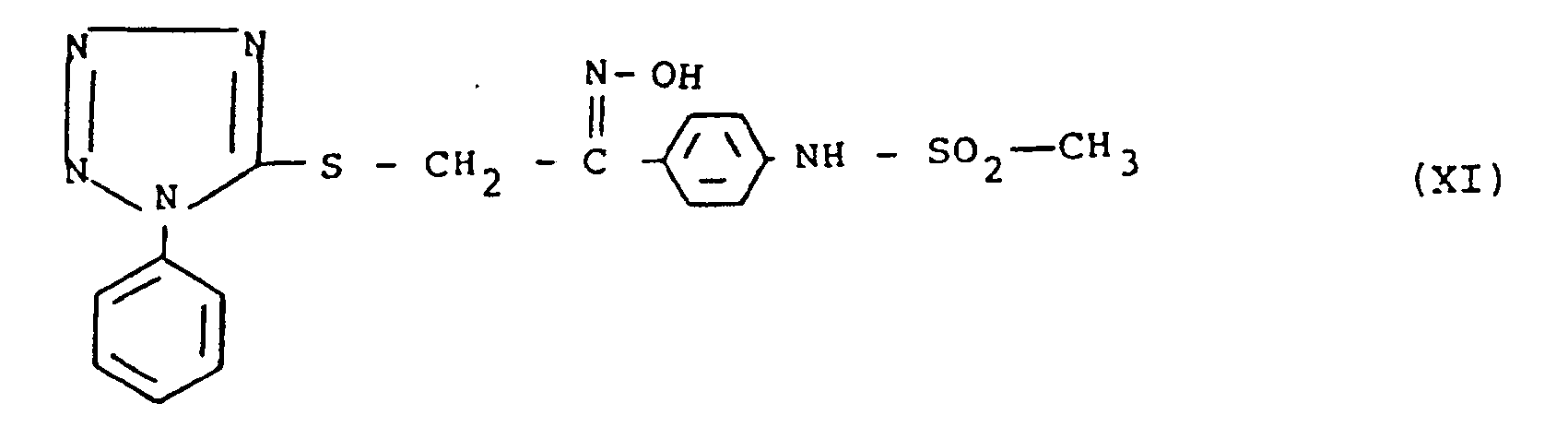


- The release kinetics of the compounds of the invention vary over a wide range. The t1/ ₂ times in solution, i.e., the time required for one-half of the material to undergo cleavage with release of the PHOTO moiety, for some of the compounds illustrated above are shown in Table I. The values were obtained using 1 × 10⁻⁴ molar concentrations in 30% acetonitrile/0.25N aqueous potassium hydroxide solution at a temperature of 22 °+ 0,1°C.

- The Arrhenius activation energies (Ea) for compounds I, IX and X were found to be 21.8 kcal/mole, 26.5 kcal/mole and 21.9 kcal/mole, respectively. The Arrhenius activation energy (Ea) was calculated by plotting the log of the observed rate constant vs l/T (°K) for each compound.
- The compounds of the invention may be prepared by various synthetic reaction sequences which are within the skill of those in the art. According to one such method the compound from which the photographically useful group is derived, for example,
- 1-(4-hydroxyphenyl)-1H-tetrazole-5-thiol, can be reacted with an α, α′-dihaloketone in a solution of an organic solvent such a acetone in the presence of the suitable base such as sodium bicarbonate, sodium hydroxide or potassium hydroxide to provide an intermediate which can then be oximated using known methods such as reacting with hydroxylamine hydrochloride in a suitable solvent or mixture of solvents in the presence of a base such as sodium bicarbonate, sodium acetate, sodium hydroxide or sodium carbonate at temperatures ranging from ambient to refluxing temperature of the solvent to give the desired symmetrical bis compound. In a similar fashion the intermediate can be reacted with sulfonyl hydrazides to obtain the desired tosyl hydrazones. Following the same methodology the α, α′-dihaloketones can be utilized to derivatize other photographically useful groups and the intermediates thus obtained can be converted to the oximes or tosyl hydrazones to provide the desired final products.
- The starting materials are commercially available in many cases and generally can be made by reactions which are known to those skilled in the art. For example, 2-mercaptoimidazoles can be prepared by the reactions disclosed in the Chemistry of Heterocyclic Compounds Vol. 6: Imidazole and Its Derivatives, Part I, Hoffman Interscience Publishers, Inc., New York, 1953, pages 77-85; hydroxyalkylimidazoles, ibid, pages 99-104;
- chloroalkylimidazoles, ibid, page 121; mercaptothiazoles and mercaptobenzothiazoles can be prepared according to the methods disclosed in The Chemistry of Heterocyclic Compounds Vol. 34: Thiazole and Its Derivatives, Part I, Metzger, John Wiley and Sons, 1979, pages 260-269; Part 2, pages 370-377; benzoxazolethiones can be prepared according to the methods disclosed in Heterocyclic Compounds, Vol. 5, Elderfield, John Wiley and Sons, 1957, pages 489-444; 5-mercapto-1,3,4-oxadiazoles can be prepared according to the methods disclosed in Heterocyclic Compounds, Vol. 7, Elderfield, John Wiley and Sons, 1961, page 352; mercapto-1,3,4 thiadiazoles, ibid, pages 587-612; and tetrazoles by the techniques disclosed in Heterocyclic Compounds, Vol. 8, Elderfield, John Wiley and Sons, 1967, pages 1-107. Mercapto-1,2,4-triazoles can be prepared by known literature techniques as described, for example, in J. Chem. Soc. E. Hoggarth 1163 (1949). The selenazoles may be prepared by similar techniques.
- The compounds of the invention may be present in photographic elements in any appropriate location and in any amount which is required to accomplish their intended purpose. The amount necessary in any particular instance is dependent upon a number of factors such as, for example, the compound utilized, the type of photographic element, the location of the compound in the photographic element and the result desired. Routine scoping tests may be used to ascertain the concentration appropriate for any given photographic element. In a preferred embodiment of the invention the compounds are incorporated in diffusion transfer photographic fim units as will be discussed in more detail below herein. In such film units the compounds may be incorporated in the photosensitive element and/or the image-receiving element or in a cover sheet.
- The compounds of the invention may be utilized in any photographic system wherein the release of a photographically useful group during development of an exposed photosensitive element is desired, including photographic systems for forming images in black and white or in color and those wherein the final image is a silver image or one formed by other image-forming materials. Further, where appropriate, the compounds may be utilized in various layers of a multilayer photographic system in varying concentrations to ensure the desired distribution of the photographically useful group during processing.
- The advantageous results which can be obtained through the use of a preferred species of the compounds according to the invention, i.e., those wherein the PHOTO moiety is an azole compound having a substituted phenyl substituent as shown in Formulas E and F are not completely understood. However, to further aid those skilled in the art to understand and practice that species of the invention, the proposed theoretical mechanism by which the advantageous results are thought to be effected will be discussed here. It should be understood, however, that the diffusion transfer photographic system has been proved to be operative and highly effective through extensive experimentation and the proposed theoretical mechanism is not to be construed as being limiting of the invention.
- It is theorized that such advantageous results are obtainable because the compounds which are released as a result of the cleavage of the blocking moiety during processing perform different functions at different stages of the development process, that is, as weak silver solvents and promoters of development at one stage of the development process and as development restrainers, or inhibitors, at another stage of the process, and that the dual functions of these compounds within the diffusion transfer photographic system are pH dependent.
- It is well known that in the diffusion transfer development process the pH of any particular location within the film unit varies with time. Typically, the processing composition employed in the process has a very high pH, e.g., from about 13-14 and during the development process each layer of a multilayer film unit goes through a broad pH range which includes very high pH levels and relatively low pH levels. When the pH is substantially equal to or above the pKa of the substituent R₉ on the phenyl ring, the dianion is formed, for example,

and acts as a weak silver solvent to form relatively soluble silver salts, thus promoting development. When the pH falls below the pKa of the substituent R₉, the monoanion is formed, for example,
and the silver salt of the monoanion of the compound is very low in solubility resulting in a development restrainer action. - In view of the foregoing, it will be understood that when it is desired to utilize both functions, development of the exposed photosensitive element in the presence of such compounds is carried out with a processing composition having a pH substantially equal to or above the pKa of the particular substituent, at least for some period of time, when the processing composition comes into contact with the compound so as to enable the blocking moiety to cleave and the substituent (R₉) to ionize to form the dianion. In addition, at some point during the development process, the pH of the environment where the compound is located will go below the pKa of the substituent so as to enable the monoanion to be formed again.
- The compounds utilized according to the invention may be used in conjunction with any photographic emulsion. In a preferred embodiment the compounds are utilized in diffusion transfer photographic systems, particularly those which include a negative working silver halide emulsion, i.e., one which develops in the areas of exposure. Further, these compounds may be used in association with any image dye-providing materials. In a particularly preferred embodiment the diffusion transfer photographic film elements of the invention include one or more image dye-providing materials which may be initially diffusible or nondiffusible. In diffusion transfer photographic systems the image dye-providing materials which can be utilized generally may be characterized as either (1) initially soluble or diffusible in the processing composition but which are selectively rendered nondiffusible imagewise as a function of development; or (2) initially insoluble or nondiffusible in the processing composition but which selectively provide a diffusible product imagewise as a function of development. The image dye-providing materials may be complete dyes or dye intermediates, e.g., color couplers. The requisite differential in mobility or solubility may be obtained, for example, by a chemical reaction such as a redox reaction, a coupling reaction or a cleavage reaction. In a particularly preferred embodiment of the invention the image dye-providing materials are dye developers which are initially diffusible materials. The dye developers contain, in the same molecule, both the chromophoric system of a dye and a silver halide developing function as is described in U.S. Pat. No. 2,983,606. Other image dye-providing materials which may be used include, for example, initially diffusible coupling dyes such as are useful in the diffusion transfer process described in U.S. Pat. No. 3,087,817 which are rendered nondiffusible by coupling with the oxidation product of a color developer; initially nondiffusible dyes which release a diffusible dye following oxidation, sometimes referred to as "redox dye releaser" dies, described in U.S. Pat. Nos. 3,725,062 and 4,076,529; initially nondiffusible image dye-providing materials which release a diffusible dye following oxidation and intramolecular ring closure as are described in U.S. Pat. No. 3,433,939 or those which undergo silver assisted cleavage to release a diffusible dye in accordance with the disclosure of U.S. Pat. No. 3,719,489; and initially nondiffusible image dye-providing materials which release a diffusible dye following coupling with an oxidized color developer as described in U.S. Pat. No. 3,227,550. The effect obtained upon any individual image dye-providing material will be dependent at least in part, upon the distance between the compound and the image dye-providing material in the film unit.
- The compounds may be incorporated into the photographic elements by any suitable technique. The compounds can be incorporated in the photographic element typically by being coated from a water or oil dispersion and the layer(s) in which they reside typically include a binder material such as gelatin or the like.
- In a preferred embodiment of the invention, the compounds are utilized in diffusion transfer photographic film units in conjunction with initially diffusible dye developers as the image dye-providing materials. As described in U.S. Pat. No. 2,983,606 a photosensitive element containing a dye developer and silver halide emulsion is photoexposed and a processing composition applied thereto, for example, by immersion, coating spraying, flowing, etc., in the dark. The exposed photosensitive element is superposed prior to, during, or after the processing composition is applied, on a sheet-like support element which may be utilized as an image-receiving element. In a preferred embodiment, the processing composition is applied to the exposed photosensitive element in a substantially uniform layer as the photosensitive element is brought into superposed relationship with the image-receiving layer. The processing composition, positioned intermediate the photosensitive element and the image-receiving layer, permeates the emulsion to initiate development. The dye developer is immobilized or precipitated in exposed areas as a consequence of the development. In unexposed and partially exposed areas of the emulsion, the dye developer is unreacted and diffusible and thus provides an imagewise distribution of unoxidized dye developer, diffusible in the processing composition, as a function of the point-to-point degree of exposure of the silver halide emulsion. At least part of this imagewise distribution of unoxidized dye developer is transferred, by imbibition, to a superposed image-receiving layer or element, said transfer substantially excluding oxidized dye developer. The image-receiving layer receives a depthwise diffusion, from the developed emulsion, of unoxidized dye developer without appreciably disturbing the imagewise distribution thereof to provide a reversed or positive color image of the developed image. The image-receiving element may contain agents adapted to mordant or otherwise fix the diffused, unoxidized dye developer. In a preferred embodiment of said U.S. Pat. No. 2,983,606 and in certain commercial applications thereof, the desired positive image is revealed by separating the image-receiving layer from the photosensitive element at the end of a suitable imbibition period. Alternatively, as also disclosed in said U.S. Pat. No. 2,983,606, the image-receiving layer need not be separated from its superposed contact with the photosensitive element, subsequent to transfer image formation, if the support for the image-receiving layer, as well as any other layers intermediate said support and image-receiving layer, is transparent and a processing composition containing a substance, e.g., a white pigment, effective to mask the developed silver halide emulsion or emulsions is applied between the image-receivingq layer and said halide emulsion or emulsions.
- Dye developers, as noted in said U.S. Pat. No. 2,983,606, are compounds which contain, in the same molecule, both the chromophoric system of a dye and also a silver halide developing function. By "a silver halide developing function" is meant a grouping adapted to develop exposed silver halide. A preferred silver halide development function is a hydroquinonyl group. In general, the development function includes a benzenoid developing function, that is, an aromatic developing group which forms quinonoid or quinone substances when oxidized.
- Multicolor images may be obtained using dye developers in diffusion transfer processes by several techniques. One such technique contemplates obtaining multicolor transfer image utilizing dye developers by employment of an integral multilayer photosensitive element, such as is disclosed in the aforementioned U.S. Pat. No. 2,983,606 and in U.S. Pat. No. 3,345,163, wherein at least two selectively sensitized photosensitive strata, superposed on a single support, are processed, simultaneously and without separation, with a single common image-receiving layer. A suitable arrangement of this type comprises a support carrying a red-sensitive silver halide emulsion stratum, a green-sensitive silver halide emulsion stratum and a blue-sensitive silver halide emulsion stratum, said emulsions having associated therewith, respectively for example, a cyan dye developer, a magenta dye developer and a yellow dye developer. The dye developer may be utilized in the silver halide emulsion stratum, for example, in the form of particles, or it may be disposed in a stratum behind the appropriate silver halide emulsion strata. Each set of silver halide emulsion and associated dye developer strata may be separated from other sets by suitable interlayers, for example, by a layer or stratum of gelatin or polyvinyl alcohol. In certain instances, it may be desirable to incorporate a yellow filter in front of the green-sensitive emulsion and such yellow filter may be incorporated in an interlayer. However, where desirable, a yellow dye developer of the appropriate spectral characteristics and present in a state capable of functioning as a yellow filter may be so employed and a separate yellow filter omitted.
- Particularly useful products for obtaining multicolor dye developer images are disclosed in U.S. Pat. No. 3,415,644. This patent discloses photographic products wherein a photosensitive element and an image-receiving layer are maintained in fixed relationship prior to exposure, and this relationship is maintained as a laminate after processing and image formation. In these products, the final image is viewed through a transparent (support) element against a light-reflecting, i.e., white background. Photoexposure is made through said transparent element and application of the processing composition provides a layer of light-reflecting material to provide a white background. The light-reflecting material (referred to in said patent as an "opacifying agent") is preferably titanium dioxide, and it also performs an opacifying function, i.e., it is effective to mask the developed silver halide emulsions so that the transfer image may be viewed without interference therefrom, and it also acts to protect the photoexposed silver halide emulsions from post-exposure fogging by light passing through said transparent layer if the photoexposed film unit is removed from the camera before image formation is completed.
- U.S. Pat. No. 3,647,437 is concerned with improvements in products and processes disclosed in said U.S. Pat. No. 3,415,644, and discloses the provision of light-absorbing materials to permit such processes to be preformed, outside of the camera in which photoexposure is effected, under much more intense ambient light conditions. A light-absorbing material or reagent, preferably a pH-sensitive phthalein dye, is provided so positioned and/or constituted as not to interfere with photoexposure but so positioned between the photoexposed silver halide emulsions and the transparent support during processing after photoexposure as to absorb light which otherwise might fog the photoexposed emulsions. Furthermore, the light-absorbing material is so positioned and/or constitued after processing as not to interfere with viewing the desired image shortly after said image has been formed. In the preferred embodiments, the light-absorbing material, also sometimes referred to as an optical filter agent, is initially contained in the processing composition together with a light-reflecting material, e.g., titanium dioxide. The concentration of the light-absorbing dye is selected to provide the light transmission opacity required to perform the particular process under the selected light conditions.
- In a particularly useful embodiment, the light-absorbing dye is highly colored at the pH of the processing composition, e.g., 13-14, but is substantially non-absorbing of visible light at a lower pH, e.g., less than 10-12. This pH reduction may be effected by an acid-reacting reagent appropriately positioned in the film unit, e.g., in a layer between the transparent support and the image-receiving layer.
- The dye developers are preferably selected for their ability to provide colors that are useful in carrying out subtractive color photography, that is, the previously mentioned cyan, magenta and yellow. The dye developers employed may be incorporated in the respective silver halide emulsion or, in the preferred embodiment, in a separate layer behind the respective silver halide emulsion, and such a layer of dye developer may be applied by use of a coating solution containing the respective dye developer distributed, in a concentration calculated to give the desired coverage of dye developer per unit area, in a film-forming natural, or synthetic, polymer, for example, gelatin, polyvinyl alcohol, and the like, adapted to be permeated by the processing composition.
- Other diffusion transfer products and processes in which the dye developers of the present invention may be utilized are described in U.S. Pat. Nos. 3,573,043 and 3,594,165. For convenience, the entire disclosure of each of the six patents referred to immediately above is hereby incorporated by reference herein.
- In one embodiment of a film unit according to the invention the photosensitive element includes a light reflecting layer between the silver halide layer and the image dye-providing material layer (as described in Canadian Patent no. 668,592), the substrate of the photosensitive element carries the polymeric acid neutralizing layer which in turn carries the timing layer (as described in U.S. Patent no. 3,573,043) and the processing composition includes an oximated polydiacetone acrylamide thickening agent (as described in U.S. Patent no. 4,202,694).
- In another embodiment wherein a diffusion transfer film unit includes a compound within Formula A wherein PHOTO is a moiety within Formulas C-F, the compound is incorporated in the photosensitive element in a layer between the support of the element and the silver halide emulsion closest to that support. This structure combines a delay in the cleavage of the compound with a delay in the diffusion of the released restrainer moiety through the film unit. In another embodiment a development restrainer precursor according to the invention is incorporated in the photosensitive element and the film unit is processed with a processing composition which includes 1-(4-hydroxyphenyl)-1H-tetrazole-5-thiol.
- The invention will now be described further in detail with respect to specific preferred embodiments by way of examples, it being understood that these are illustrative only and the invention is not intended to be limited to the materials, conditions, process parameters, etc. which are recited therein.
- A solution of 1-phenyl-5-mercaptotetrazole (37.42 g; 0.21 mole) in 250 ml of dry acetone (kept over molecular sieves 4A) was stirred with sodium bicarbonate (17.64 g; 0.21 mole) under nitrogen for 15 minutes. 1,3-Dichloro-2-propanone (12.7 g; 0.1 mole) was added and the reaction mixture heated under reflux with stirring for 5 hours. The cooled reaction mixture was filtered and the solid (A) collected. The filtrate was stripped of solvent on the rotary evaporator and the residual solid (B) combined with solid (A). The combined solids were stirred with an aqueous solution of sodium bicarbonate (8 g) in 300 ml of water for 20 minutes, collected again by filtration, washed well with water and dried in a vacuum oven, first at ambient temperature and then at 50°C to give 39.0 g (95% yield) of a compound represented by the formula

m.p. 152°-154°C, which gave a single spot on TLC (chloroform; Whatman K5F Silica Gel). - The structure was confirmed by PMR and IR spectra.
- The Ketone from Example 1 (12.3 g; 0.03 mole) was dissolved in a mixture of tetrahydrofuran (200 ml) and methanol (50 ml) with heating. Hydroxylamine hydrochloride (2.3 g; 0.033 mole), potassium acetate (3.24 g; 0,033 mole) and water (20 ml) were added and the reaction mixture heated under reflux for 20 hours. The solvent was removed on a rotary evaporator and the syrupy residue diluted with methanol until a white crystalline solid formed. The mixture was diluted with ice water, stirred for 15 minutes and the solid collected by filtration, washed well with water and dried in vacuum oven first at ambient temperature and then at 50°C to give 12.35 g of compound III, m.p. 145°-47°C which gave a single spot on TLC (5% ethyl acetate/95% chloroform; Whatman K5F silica gel).
- The structure of the compound was confirmed by PMR and IR spectra.
- A solution of potassium hydroxide [26.13 g of 45% w/w aqueous potassium hydroxide (SO-P-236 from Fisher Scientific Co.) diluted with 70 ml of methanol] was added to a solution of 1-(4-hydroxyphenyl)-1H-tetrazole-5-thiol (40.8 g; 0,21 mole) in 200 ml of methanol with stirring under nitrogen. The-solution was stirred for 20 minutes and 1,3-dichloro-2-propanone (12.7 g; 0.1 mole) was added in three portions with stirring over 15 minutes and the stirring continued for 4 hours. A solution of sodium bicarbonate (4.2 g) in 200 ml of water was added to the reaction mixture and stirring continued for an additional 15 minutes. Further dilution with water (two 400 ml volumes) with stirring and cooling in an ice bath resulted in the separation of a solid which was collected by filtration, washed with water and dried in a vacuum oven at ambient temperature to a constant weight (44.0 g; quantitative yield). The solid was recrystallized from a methanol/water solution to give 40 g of a beige colored solid, m.p. 124°-5°C (dec), represented by the formula

- The compound gave a single spot on TLC (10% methanol/90% chloroform; Whatman K5F silica gel). The structure of the compound was confirmed by PMR, CMR, IR and UV spectra.
- Hydroxylamine hydrochloride (7,64 g; 0,11 mole); potassium acetate (10,8 g; 0.11 mole) and water (44 ml) were added to a solution of the ketone shown in Example III (44.2 g; 0.1 mole) in 220 ml of methanol and the reaction mixture heated under reflux with stirring for 2 hours. The reaction mixture was cooled in an ice bath and then diluted five times with 200 ml volumes of water with stirring. The resulting solid was collected by filtration, washed with water and dried, first in air and then in a vacuum oven at ambient temperature, to a constant weight (42.81 g, 94% yield).
- The solid was dissolved in 120 ml of hot methanol and decolorizing carbon (Norit A, 4 g) and diatomaceous earth (Celite, 4 g) were added. The mixture was heated on a steam bath for 20 minutes, filtered through a diatomaceous earth pad and washed with 50 ml of methanol. The combined filtrate was concentrated to about 120 ml, cooled in an ice bath and diluted gradually with water (three 20 ml volumes) with vigorous stirring. The precipitated solid was collected by filtration and dried to a constant weight in a vacuum oven at ambient temperature to give 37,8 g of compound I m.p. 183-5°C.
- The compound gave a single spot on TLC (10% methanol/90% chloroform; Whatman K5F silica gel). The structure was confirmed by PMR, CMR, IR and UV spectra.
- Compound I was also made by the following procedure: the tetrazole (40.8 g, 0.21 mole) was dissolved in 200 ml of methanol and a potassium hydroxide solution [26.13 g of 45% w/w aqueous potassium hydroxide (SO-P-236 from Fisher Scientific Co.) diluted with 70 ml of methanol] was added with stirring under nitrogen. The solution was stirred for 20 minutes. 1,3-Dichloro-2-propanone (12.7 g; 0.1 mole) was added in three portions with stirring over 15 minutes and the stirring continued for 4 hours. Hydroxylamine hydrochloride (7.64 g, 0.11 mole) and potassium acetate (10.8 g; 0.11 mole) were added to the reaction mixture which was then heated under reflux for 2 hours. The reaction mixture was cooled to room temperature and the pH adjusted to approximately 8 with 10.8 g of 45% (w/w) aqueous potassium hydroxide diluted with 40 ml of water and 18 g of solid sodium bicarbonate. Gradual dilution with water (six 200 ml volumes) with stirring resulted in the precipitation of a solid which was collected by filtration, washed with water and dried in air to yield 40.35 g of product. Recrystallization from methanol/water as described above in this Example gave 34 g of compound I, m.p. 183°-5°C (dec). The compound gave a single spot on TLC and its spectral properties were identical in all respects with the sample of compound I obtained above.
- P-toluenesulfonhydrazide (1.86 g, 0.01 mole) was added to a solution of 1,3-bis[1-(4-hydroxyphenyl) tetrazolyl-(5)-mercapto-2-propanone] (2.21 g; 0.005 mole) in 60 ml of glacial acetic acid in portions with stirring over 10 minutes and stirring continued at ambient temperature overnight. The reaction mixture was poured into 400 ml of water and stirred for 30 minutes. The resulting white solid was collected by filtration, washed with water and dried, first in air and then in a vacuum oven at 60°C, to a constant weight, 2.77 g, 91% yield, of compound II.
- The compound fused and shrank at 98°-100°C and melted with decomposition at 160°- 63°C. It gave a single spot on TLC (10% methanol/ 90% chloroform; K5F Whatman silica gel). The structure of the compound was confirmed by a PMR spectrum.
- 1-(4-Acetylphenyl)-5-mercaptotetrazole (23.13 g; 0.105 mole) and 1,3-dichloro-2-propanone (6.35 g; 0.05 mole) were condensed in accordance with the procedure described in Example III to give 18.94 g (77% yield) of the triketone compound, m.p. 155°-6°C which gave a single spot on TLC. The structure was confirmed with an IR spectrum.
- The triketone was oximated with hydroxylamine hydrochloride and sodium acetate in methanol to give compound IV, m.p. 170°-71°C. The structure of the compound was confirmed by IR and PMR spectra.
- A mixture of 1-(hydroxyphenyl)-1H-tetrazole-5-thiol (9.71 g, 0.05 mole), chloroacetone [4,63 g (about 90% pure), 0.045 mole] and sodium bicarbonate (4,20 g, 0.05 mole) in 100 ml of dry acetonitrile was stirred under nitrogen at ambient temperature for 20 hours. The reaction mixture was filtered and the salts washed with fresh acetonitrile. The filtrate was stripped of solvent on a rotary evaporator and the resulting light tan crystals were recrystallized from methanol followed by drying in a vacuum oven at ambient temperature to give 4,43 g (35% yield) of off-white crystals represented by the formula

m.p. 145°-46°C. - The structure of the compound was confirmed by IR, UV and PMR spectra. TLC (5% EtOAc/95% CHCl₃, Whatman K5F silica gel) gave a single spot.
- A mixture of the ketone intermediate of Example VII (4,0 g; 0,016 mole), hydroxylamine hydrochloride (1.22 g; 0.0175 mole) and sodium acetate (1.36 g; 0.0175 mole) in 100 ml of absolute ethanol was stirred at ambient temperature for 20 hours. After 125 ml of water was added the mixture was stirred for 15 minutes and then stored overnight in a refrigerator. The resultant white solid was recovered by filtration, washed with water and dried in a vacuum oven at ambient temperature to give 3.48 g (82% yield) of compound V, m.p. 191°-2°C.
- TLC as described above gave a single spot. The structure of the compound was confirmed by IR, UV and PMR spectra.
- A mixture of 1-(4-acetylphenyl)-1H-tetrazole-5-thiol (11.01 g, 0.05 mole), chloroacetone [4,63 g (about 90% pure), 0.045 mole) and sodium bicarbonate (4.20 g, 0.05 mole) in 100 ml of dry acetonitrile was stirred under nitrogen at ambient temperature for 20 hours. The reaction mixture was filtered and the salts washed with fresh acetonitrile. The solvent was stripped from the filtrate on a rotary evaporator and the solid was recrystallized from methanol followed by drying in a vacuum oven at ambient temperature to give 7.09 g (51% yield) of bronze colored crystals represented by the formula

m.p. 126°-7°C. - TLC as described above gave a single spot. The structure of the compound was confirmed by IR, UV and PMR spectra.
- A mixture of the ketone intermediate from Example IX (5.53 g, 0,02 mole), hydroxylamine hydrochloride (3.042 g, 0.042 mole) and sodium acetate (3.40 g, 0.042 mole) in 100 ml of absolute ethanol was stirred at ambient temperature for 20 hours. After water (125 ml) was added the mixture was stored overnight in a refrigerator. The resulting tan colored solid was collected by filtration, washed with water and dried in a vacuum oven at ambient temperature to give 5.43 g (89% yield) of compound VI, m.p. 165°-7°C.
- TLC as described above gave a single spot. The structure of the compound was confirmed by IR, UV and PMR spectra.
- A solution of phenacyl bromide (10 g, 0.005 mole) in 50 ml of methanol was mixed with a solution of hydroxylamine sulfate (4.1 g, 0.025 mole) in 50 ml of water. After 1 day the methanol was removed under vacuum and the residue extracted with toluene. The water was separated and the organic phase was dried over sodium sulfate. The solvent was removed under vacuum and the residue was crystallized from a mixture of chloroform and petroleum ether and dried to give 4.9 of a fluffy white solid represented by the formula

m.p. 96°-97°C. The structure of the compound was confirmed by PMR and CMR spectra. - The sodium salt of 1-(4-phenyl)-1H-tetrazole-5-thiol and the previous product (2.14 g, 0.010 mole) were stirred in 10 ml of dry dimethylformamide for 1 day. The reaction mixture was poured into 400 ml of water and the resulting white gumming material collected and dissolved in chloroform. The solution was washed with water and dried over sodium sulfate. The chloroform solution was slowly diluted with petroleum ether and the white solid which crystallized was collected by filtration, washed with petroleum either and dried to give compound VII, m.p. 159°-161°C.
- The structure of the compound was confirmed by PMR and CMR spectra.
- A mixture of 1-(4-phenyl)-1H-tetrazole-5-thiol (9.0 g, 0.0505 mole), bromoacetaldehyde diethyl acetal (9.85 g, 0.05 mole), sodium bicarbonate (4.3 g, 0.051 mole) and potassium iodide (0.88 g, 0.005 mole) in 100 ml of acetonitrile was heated at reflux under nitrogen for 6 hours. The reaction mixture was cooled to room temperature and the salts removed by filtration using fresh acetonitrile for the washings. The solvent was stripped from the filtrate to give a dark colored residue which was stirred in a mixture of 100 ml of methylene chloride and aqueous sodium bicarbonate for 15 minutes. The organic phase was separated, treated with charcoal and filtered through a diatomaceous earth pad. The filtrate was washed with water and brine and dried over anhydrous sodium sulfate. The solvent was removed on a rotary evaporator to give 10,83 g of a syrupy residue. Dilution with hexane and cooling induced crystallization. The solid was removed by filtration and dried in a vacuum oven to give 8.15 g of a compound represented by the formula

m.p. 42°-44°C. - TLC as described above gave a single spot. The structure of the compound was confirmed by a PMR spectrum.
- The diethyl acetal from Example XII (2.94 g, 0.01 mole) and hydroxylamine hydrochloride (0.72 g, 0.0103 mole) were heated under reflux in a mixture of ethanol (30 ml) and water (10 ml) for one hour. The reaction mixture was cooled and sodium acetate trihydrate (1.36 g, 0.01 mole) added followed by heating under reflux for an additional hour. The solvent was removed on a rotary evaporator and the residue diluted with water and then extracted with ethyl acetate. The extract was washed with brine and dried over anhydrous sodium sulfate. Removal of the solvent gave a syrup which on trituration with ether turned to a crystalline solid. The solid was recovered by filtration, washed with ether and dried in a vacuum oven to give 1.23 g of compound VIII, m.p. 85°-86°C which gave a single spot on TLC. The structure of the compound was confirmed by IR and PMR spectra.
- A mixture of 1-(4-phenyl)-1H-tetrazole-5-thiol (8.91 g, 0.05 mole), chloroacetone [4.63 g (about 90% pure), 0,045 mole] and sodium bicarbonate (4.2 g, 0.05 mole) in 100 ml of dry acetonitrile was stirred under nitrogen at ambient temperature for 66 hours. The reaction mixture was filtered and the salts washed with fresh acetonitrile. The combined filtrate was stripped off solvent on a rotary evaporator and the residual off-white solid was recrystallized from methanol followed by drying in a vacuum oven at ambient temperature to give 8.92 g (76% yield) of white crystals, m.p. 77°-78°C which gave a single spot on TLC.
- The structure of the compound was confirmed by IR, UV and PMR spectra.
- A mixture of the ketone intermediate from Example XIV (4.69 g, 0.02 mole), hydroxylamine hydrochloride [1.52 g (about 96% pure), 0.021 mole] and sodium acetate (1.72 g, 0.021 mole) in 100 ml of absolute ethanol was stirred at ambient temperature for one week. The resulting colorless crystals were recovered by filtration, washed with ethanol and dried in a vacuum oven at ambient temperature to give 4.34 g of compound IX. Recrystallization of 4 g from aqueous methanol gave 2.30 g (52% yield) of colorless needless, m.p. 141°-2°C which gave a single spot on TLC.
- The structure of the compound was confirmed by IR, UV and PMR spectra.
- The oxime of p-methoxy-α-bromo acetophenone (2.5 g, (0.0102 mole) and the sodium salt of 1-(4-phenyl)-1H-tetrazole-5-thiol (2.1 g, 0.0105 mole) were stirred in 10 ml of dry dimethylformamide for 18 hours. The reaction mixture was poured into 200 ml of water and the resulting solid collected by filtration and recrystallized from a mixture of chloroform and petroleum ether to give compound X.
- P-(methyl sulfonamido)-α- bromo acetophenone (39 g, 0.133 mole) and hydroxylamine sulfate (21.8 g, 0.133 mole) were slurried in 600 ml of ethanol and 20 ml of water at 45°C for 1 day. The reaction mixture was cooled to room temperature and the solid removed by filtration. The filtrate was poured slowly into 1500 ml of warm water and the resulting white solid collected by filtration, washed well with water and dried to give 25 g (61% yield) of the oxime intermediate.
- The structure was confirmed by PMR and CMR spectra.
- The oxime of p-(methylsulfonamido)-α-bromo acetophenone (24 g, 0.078 mole) and the sodium salt of 1-(4-phenyl)-1H-tetrazole-5-thiol (15.7 g, 0.0785 mole) were stirred in 120 ml of dimethylformamide for 18 hours. The solution was poured into 1000 ml of water and the resulting solid, collected, washed with water and dried. The crude product was crystallized from aqueous acetone to give 10 g of white crystals, compound XI, which were assigned as the anti isomer based on CMR and PMR.
- Tosyl hydrazide (8.8 g, 0.047 mole) was added to a solution of phenacyl bromide (10 g, 0.050 mole) in 120 ml of ether and the resulting suspension was stirred for 20 hours. The resulting solid was collected by filtration, washed with fresh ether and dried to give 13.4 g (78% yield) of a white solid represented by the formula

m.p. 137°-8°C. The structure of the compound was confirmed by PMR and CMR spectra. - The sodium salt of 1-(4-phenyl)-1H-tetrazole-5-thiol was added to a solution of the previous product (0.77 g, 0.0021 mole) in 5 ml of dry dimethylformamide and the solution stirred overnight. The reaction mixture was poured into 200 ml of ice water and the resulting white solid was collected by filtration, washed and dried to give 0.8 g of compound XII.
- The structure of the compound was confirmed by PMR and CMR spectra.
- As a control, a film unit was prepared as follows: the photosensitive element comprised an opaque subcoated polyester film base upon which there were coated the following layers in succession:
- 1. as a polymeric acid layer approximately 9 parts of a 1/2 butyl ester of polyethylene/maleic anhydride copolymer and 1 part polyvinyl butyral coated at a coverage of about 26372 mg/m²;
- 2. a timing layer coated at a coverage of about 6000 mg/m² comprising a 40/40/18/1.85 tetrapolymer of butyl acrylate/diacetone acrylamide/carbomethoxymethyl acrylate/acrylic acid;
- 3. a gelatin layer coated at a coverage of about 1200 mg/m²;
- 4. an interlayer comprising about 3420 mg/m² of a 60/29/6/4/0.4 pentapolymer of butyl acrylate/diacetone acrylamide/methacrylic acid/styrene/acrylic acid, about 180 mg/m² of polyacrylamide and about 132 mg/m²of monomethylol dimethyl hydantoin;
- 5. a gelatin layer coated at a coverage of about 300 mg/m²;
- 6. a magenta dye developer layer comprising about 420 mg/m² of a magenta dye developer represented by the formula

- 7. a green sensitive silver iodobromide emulsion layer comprising about 1130 mg/m² of silver, about 756 mg/m² of gelatin and about 258 mg/m² of 4′-methyl phenyl hydroquinone;
- 8. a topcoat layer comprising about 323 mg/m² of gelatin and about 27 mg/m² of succindialdehyde.
- The image receiving element comprised a 0.064 mm thick transparent subcoated polyester film base on which the following layers were coated in succession:
- 1. an image receiving layer coated at a coverage of about 3229 mg/m² (300 mg/ft²) of a graft copolymer comprised of 4-vinylpyridine (4VP) and vinyl benzyl trimethylammonium chloride (TMQ) grafted onto hydroxyethyl cellulose (HEC) at a ratio HEC/4VP/TMQ of 2.2/2.2/1 and 43 mg/m² (4 mg/ft²) of 1,4-butanediol diglycidyl ether; and
- 2. an overcoat layer coated at a coverage of about 1292 mg/m² (120 mg/ft²) comprising 1 part of polyvinyl hydrogen phthalate, potassium salt and 1 part of a 1/1/0,35 mixture of Igepal CO-997 (nonylphenoxyethylene oxide ethanol), a 1/1/0.1/0.1 tetrapolymer of diacetone acrylamide/methacrylic acid/butyl acrylate/styrene, and 0.35 part of polyvinylpyrrolidone.
- The film unit was processed with a processing composition made up as follows:


- The photosensitive element was exposed (0.5 lxs) on a sensitometer to a test scale with green light through the topcoat layer and then brought together with the image-receiving element and processed by passing the film unit through a pair of rollers set at a gap spacing of about 0.06 mm. The film unit was kept in the dark for 10 minutes and then read on a densitometer.
- In addition, Film Unit A according to the invention was prepared. It was the same as the Control with the exception that the silver halide emulsion layer included about 140 mg/m² of compound V. The film units were processed as described above at 7°C, 24°C and 41°C.

- It can be seen that the Control suffered a large loss in Dmax at 41°C with a concomitant large speed increase and the same Dmin, thus indicating that the restrainer release material provided more uniform sensitometry over the temperature processing range.
- The experiment of Example XIX was repeated with the exception that compound V was incorporated in the dye layer at the same coverage and was not present in the silver halide emulsion layer.

- It can be seen that for this particular film unit, more uniform sensitometry was obtained when compound V was incorporated in the silver halide emulsion layer.
- As a control a film unit was prepared as follows: the photosensitive element comprised an opaque subcoated polyester film base uon which there were coated the following layers in succession:
- Layers 1-5 were the same as layers 1-5 of the photosensitive element of Example XIX;
- 6. a magenta dye developer layer comprising about 420 mg/m² of the magenta dye developer illustrated in Example XIX and about 538 mg/m² of gelatin;
- 7. a layer comprising about 258 mg/m² of 4′-methyl phenyl hydroquinone and about 538 mg/m² of gelatin.
- 8. a green sensitive silver halide iodobromide emulsion layer comprising about 1130 mg/m² of silver and about 497 mg/m² of gelatin;
- 9. A topcoat layer comprising about 323 mg/m² of gelatin and about 27 mg/m² of succindialdehyde.
- The image receiving element comprised a 0.064 mm thick transparent subcoated polyester film base on which the following layers were coated in succession:
- 1. an image receiving layer as described in Example XIX; and
- 2. a topcoat layer coated at a coverage of 915 mg/m² (85 mg/ft²) of 1 part Igepal CO-997 (nonylphenoxylethylene oxide ethanol), 1 part of a 1/1/0.1/0.1 tetrapolymer of diacetone acrylamide/methacrylic acid/butyl acrylate/styrene, and 0.35 part of polyvinylpyrrolidone.
- Film Unit B, according to the invention was prepared. This was the same as the Control with the exception that the magenta dye developer layer further included about 161 mg/m² of compound VI.
- The film unit was processed with a processing composition made up as follows:


- It can be seen that the Control experienced a significant loss in Dmaxat 41°C with a corresponding speed with the same Dmin. Film Unit B exhibited an increase in Dmax at 41°C along with an increase in speed with the same Dmin.
- As a control, a film unit was prepared as follows: the photosensitive element comprised an approximately 0.127 mm thick opaque subcoated polyethylene terephthalate photographic film base on which the following layers were coated in succession:
- 1. a polymeric acid layer comprising about 24,400 mg/m² of a half butyl ester of ethylene maleic anhydride, about 4310 mg/m² of polyvinyl butyral and about 89 mg/m² of titanium dioxide;
- 2. a layer of styrene maleic anhydride copolymer coated at a coverage of about 400 mg/m²;
- 3. a timing layer comprising a 40/40/18/2 tetrapolymer of butyl acrylate/diacetone acrylamide/carbomethoxymethyl acrylate/acrylic acid coated at a coverage of about 2000 mg/m²;
- 4. a cyan dye developer layer comprising about 612 mg/m² of a cyan dye developer represented by the formula

- 5. a layer comprising about 1000 mg/m² of titanium dioxide, about 375 mg/m² of a 61/29/6/4/0.4 pentapolymer of butyl acrylate/diacetone acrylamide/methacrylic acid/styrene/acrylic acid, about 125 mg/m² of gelatin and about 37.5 mg/m² of polymethylmethacrylate;
- 6. a red sensitive silver iodobromide layer comprising about 967 mg/m² of silver (1.5 µm), about 242 mg/m² of silver (1.1 µm), about 725 mg/m² of gelatin and about 60 mg/m² of MPHQ;
- 7. an interlayer comprising about 3547 mg/m² of the pentapolymer described in layer 5 and about 187 mg/m² of polyacrylamide;
- 8. a magenta dye developer layer comprising about 420 mg/m² of a magenta dye developer represented by the formula

- 9. a layer comprising about 450 mg/m² of Dow 620 (styrene-butadiene copolymer) latex and about 150 mg /m² of gelatin;
- 10. a green sensitive silver halide emulsion layer comprising about 749 mg/m²of silver (1.8 µm), about 615 mg/m² of silver (1.1 µm), about 617 mg/m² of gelatin and about 260 mg/m² of MPHQ;
- 11. a layer comprising about 2459 mg/m2 of the pentapolymer described in layer 5, about 129 mg/m² of polyacrylamide and about 700 mg/m² of a scavenger represented by the formula

- 12. a layer comprising about 550 mg/m² of benzidine yellow dye and about 165 mg/m² of gelatin;
- 13. a yellow image dye-providing layer comprising about 1210 mg /m² of a yellow image dye-providing material represented by the formula

- 14. a layer comprising about 490 mg/m² of phenyl tertiarybutyl hydroquinon and about 245 mg/m² of gelatin;
- 15. a blue sensitive silver iodobromide layer comprising about 174 mg/m² of silver (1.6 µm), about 116 mg/m²of silver (1.3 µm) and about 145 mg/m² of gelatin; and
- 16. a gelatin layer coated at a coverage of about 800 mg/m².
- The image-receiving sheet comprised an approximately 0.069 mm thick polyester film base, including a small amount of an anti-light piping dye, upon which there were coated in succession:
- 1. an image receiving layer coated at a coverage of about 3229 mg/m² (300 mg/ft²) of a graft copolymer comprised of 4-vinylpyridine (4VP) and vinyl benzyl trimethylammonium chloride (TMQ) grafted onto hydroxyethul cellulose (HEC) at ratio HEC/4VP/TMQ of 2.2/2.2/1 and about 43 mg/m² (4 mg/ft²) of 1,4-butanediol-diglycidyl ether; and
- 2. an overcoat layer coated at a coverage of about 915 mg/m² (85 mg/ft²) comprising 1 part Igepal CO-997 (nonylphenoxyethylene oxide ethanol), 1 part of a 1.0/1.0/0.1/0.1 tetrapolymer of methacrylic acid/diacetone acrylamide/butyl acrylate/styrene and 0.1 part of polyvinylpyrrolidone.
- The film unit described above having both a dye developer and a thiazolidine image-dye providing material is described and claimed in a copending European patent application of the same applicant, filed on even date herewith and based on WO 87/06025 published on October 8, 1987.
- The film unit was processed with a processing composition made up as follows:


- The film unit was exposed (0.5 lxs) through the transparent base of the image-receiving element on a sensitometer to a test exposure scale with white light and processed by passing the film unit through a pair of rollers at a gap spacing of about 0.06 mm. Identical film units were processed at 13°C, 24°C and 35°C. The neutral density columns of the images were read on a densitometer to obtain the Dmax and Dmin values for red, green and blue respectively. In addition the speeds of the red, green and blue curves respectively (defined as the negative log of the relative exposure required give red, green and blue absorption, respectively, in the neutral column a reflection density of 0.75) were measured.
- Film units (C) according to the invention were prepared. These were identical with the Control with the exception that layers 4 and 8 each included about 60 mg/m² of compound I; and layer 4 had about 1063 mg/m² of silver (1.5 µm) and about 145 mg/m² of silver (1.1 µm).

- It can be seen that the red Dmax loss at 35°C was smaller for Film Unit C than that of the Control.
- As a control a film unit was prepared as follows: the photosensitive element comprised an approximately 0.127 mm thick opaque subcoated polyethylene terephthalate photograph film base on which the following layers were coated in succession:
- 1. a polymeric acid layer comprising about 24, 795 mg/m² of a half butyl ester of ethylene maleic anhydride, about 4375 mg/m² of polyvinyl butyral and about 99 mg/m2 of titanium dioxide;
- 2. a layer of styrene maleic anhydride (including about 2% ethyl acetate) coated at a coverage of about 350 mg/m²;
- 3. a timing layer comprising the tetrapolymer described in layer 3 of the photosensitive element of Example XXII coated at a coverage of about 2500 mg/m²;
- 4. a cyan dye developer layer comprising about 612 mg/m² of the cyan dye developer illustrated in Example XXII, about 359 mg/m² of gelatin and about 61 mg/m² of MPHQ;
- 5. a layer comprising about 1000 mg/m² of titanium dioxide, about 375 mg/m² of a 61/29/6/4/0.4 pentapolymer of butyl acrylate/diacetone acrylamide/methacrylic acid/styrene/acrylic acid, about 125 mg/m² of gelatin, about 375 mg/m² of polymethylmethacrylate and about 100 mg/m² of polyacrylamide;
- 6. a red sensitive silver iodobromide layer comprising about 967 mg/m2 of silver (1.5 µm), about 242 mg/m2 of silver (1.1 µm), about 786 mg/m² of gelatin and about 61 mg/m² of MPHQ;
- 7. an interlayer comprising about 3420 mg/m² of the pentapolymer described in layer 5, about 180 mg0/m² of polyacrylamide and about 132 mg /m² of monomethylol dimethyl hydantoin;
- 8. a magenta dye developer layer comprising about 420 mg /m² of the magenta dye developer illustrated in Example XXII, about 315 mg/m² of gelatin and about 700 mg /m² of 2-phenylbenzimidazole;
- 9. a layer comprising about 400 mg/m² of Dow 620 (styrene-butadiene copolymer) latex, about 133 mg/m² of gelatin and about 160 mg /m² of MPHQ;
- 11. an interlayer comprising about 2460 mg/m² of the pentapolymer described in layer 5, about 130 mg/m² of polyacrylamide, about 25 mg/m² of succindialehyde and about 700 mg/m² of the scavenger illustrated in layer 11 of Exampla XII;
- 12. a yellow filter dye layer comprising about 550 mg/m² of benzidine yellow dye and about 275 mg/m² of gelatin;
- 13. a yellow image dye-providing layer comprising about 1210 mg /m² of the yellow thiazolidine image dye-providing material illustrated in layer 13 of Example XXII, about 484 mg/m² of gelatin and about 200 mg/m² of Dow 620 latex;
- 14. a layer comprising abut 490 mg/m² of phenyl tertiarybutyl hydroquinone and about 245 mg/m² of gelatin;
- 15. a blue sensitive silver iodobromide emulsion layer comprising about 174 mg/m² of silver (1.6 µm), about 116 mg/m² of silver (1.25 µm) and about 145 mg/m² of gelatin; and
- 16. a gelatin layer coated at a coverage of about 800 mg/m²;
- The image-receiving sheet was the same as that described in Example XIX.
- The film unit was processed with a processing composition made up as follows:

- The composition further included 0.44% and 1.50%, respectively, of the phthalein indicator dyes illustrated in Example XXII.
- The film unit was processed as described in Example XXII. Identical film units were processed at 13°C, 24°C, 35°C, 41°C and 46°C.
- Film Units (D) according to the invention were made. These were identical to the Control with the exception that layer 4 included about 120 mg/m² of compound I and had about 367 mg/m2 of gelatin; and layer 8 had 286 mg/m² of gelatin and 500 mg/m² of 2-phenylbenzimidazole.

- It can be seen that at the higher processing temperatures the Control suffered a large loss in red Dmax together with a sizable increase in red speed. Film Unit D, in comparison, exhibited a much smaller loss in red Dmax together with a much smaller red speed increase.
Claims (8)
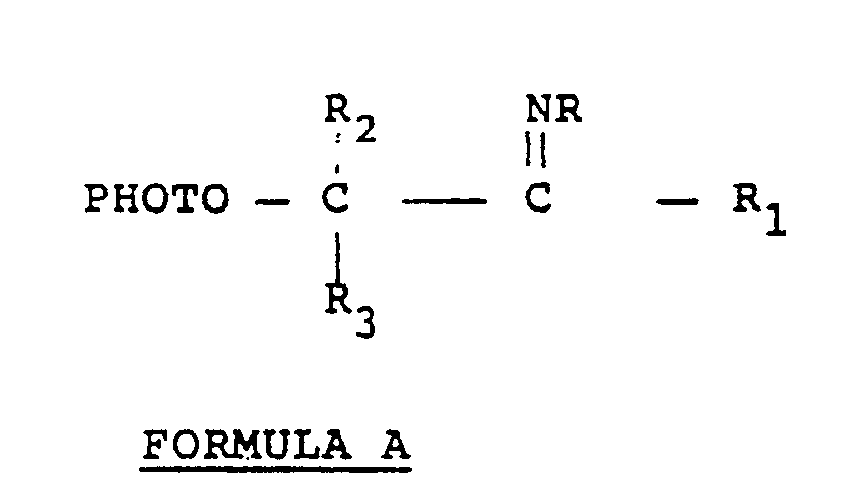


PHOTO is


and wherein R₁ can also be

R₃ is hydrogen and R₂ and R₈ are the same; and A and R₉ are as defined above.
Applications Claiming Priority (2)
| Application Number | Priority Date | Filing Date | Title |
|---|---|---|---|
| US06/846,584 US4743533A (en) | 1986-03-31 | 1986-03-31 | Photographic system utilizing a compound capable of providing controlled release of photographically useful group |
| US846584 | 1986-03-31 |
Publications (2)
| Publication Number | Publication Date |
|---|---|
| EP0269646A1 EP0269646A1 (en) | 1988-06-08 |
| EP0269646B1 true EP0269646B1 (en) | 1991-05-02 |
Family
ID=25298348
Family Applications (1)
| Application Number | Title | Priority Date | Filing Date |
|---|---|---|---|
| EP87902243A Expired - Lifetime EP0269646B1 (en) | 1986-03-31 | 1987-03-05 | Photographic system |
Country Status (5)
| Country | Link |
|---|---|
| US (1) | US4743533A (en) |
| EP (1) | EP0269646B1 (en) |
| JP (1) | JPS63502378A (en) |
| CA (1) | CA1325428C (en) |
| WO (1) | WO1987006024A2 (en) |
Families Citing this family (1)
| Publication number | Priority date | Publication date | Assignee | Title |
|---|---|---|---|---|
| US5985514A (en) * | 1998-09-18 | 1999-11-16 | Eastman Kodak Company | Imaging member containing heat sensitive thiosulfate polymer and methods of use |
Family Cites Families (14)
| Publication number | Priority date | Publication date | Assignee | Title |
|---|---|---|---|---|
| US3260597A (en) * | 1960-12-02 | 1966-07-12 | Eastman Kodak Co | Photographic multicolor diffusion transfer process using dye developers and development arrestors |
| NL126854C (en) * | 1960-08-22 | |||
| US3698898A (en) * | 1970-12-17 | 1972-10-17 | Polaroid Corp | Photographic products and processes employing a compound which in the presence of alkali releases a diffusible photographic reagent |
| US4009029A (en) * | 1973-06-05 | 1977-02-22 | Eastman Kodak Company | Cyanoethyl-containing blocked development restrainers |
| JPS5130466B2 (en) * | 1973-06-22 | 1976-09-01 | ||
| JPS5933901B2 (en) * | 1978-04-03 | 1984-08-18 | 富士写真フイルム株式会社 | photo elements |
| JPS6029709B2 (en) * | 1979-04-17 | 1985-07-12 | コニカ株式会社 | Nitrogen-containing heterocyclic compound |
| US4355092A (en) * | 1981-01-05 | 1982-10-19 | Polaroid Corporation | Novel phenylmercaptoazole compounds |
| US4390613A (en) * | 1981-01-05 | 1983-06-28 | Polaroid Corporation | Diffusion transfer photographic system utilizing substituted phenylmercaptoazoles |
| JPS59165049A (en) * | 1983-03-11 | 1984-09-18 | Fuji Photo Film Co Ltd | Silver halide photosensitive material |
| US4503139A (en) * | 1983-05-09 | 1985-03-05 | Polaroid Corporation | Photographic products and processes and novel compounds |
| DE3319428A1 (en) * | 1983-05-28 | 1984-11-29 | Agfa-Gevaert Ag, 5090 Leverkusen | PHOTOGRAPHIC RECORDING MATERIAL WITH A PRECURSOR CONNECTION OF A PHOTOGRAPHICALLY EFFECTIVE CONNECTION |
| JPS6035729A (en) * | 1983-08-08 | 1985-02-23 | Fuji Photo Film Co Ltd | Method for processing photosensitive silver halide material |
| US4609610A (en) * | 1985-08-01 | 1986-09-02 | Eastman Kodak Company | Photographic products employing novel nondiffusible compounds which release photographically useful groups |
-
1986
- 1986-03-31 US US06/846,584 patent/US4743533A/en not_active Expired - Lifetime
-
1987
- 1987-03-05 WO PCT/US1987/000529 patent/WO1987006024A2/en not_active Ceased
- 1987-03-05 EP EP87902243A patent/EP0269646B1/en not_active Expired - Lifetime
- 1987-03-05 JP JP62501962A patent/JPS63502378A/en active Granted
- 1987-03-11 CA CA000531693A patent/CA1325428C/en not_active Expired - Fee Related
Also Published As
| Publication number | Publication date |
|---|---|
| WO1987006024A2 (en) | 1987-10-08 |
| JPS63502378A (en) | 1988-09-08 |
| JPH0555063B2 (en) | 1993-08-16 |
| EP0269646A1 (en) | 1988-06-08 |
| WO1987006024A3 (en) | 1988-04-07 |
| CA1325428C (en) | 1993-12-21 |
| US4743533A (en) | 1988-05-10 |
Similar Documents
| Publication | Publication Date | Title |
|---|---|---|
| US4256881A (en) | Blocked benzotriazole compounds as development restrainer precursors | |
| US4410618A (en) | Blocked photographic reagents | |
| US4390613A (en) | Diffusion transfer photographic system utilizing substituted phenylmercaptoazoles | |
| US4511644A (en) | Photographic elements with development inhibitor precursor | |
| EP0129033B1 (en) | Photographic products and novel compounds | |
| US4355101A (en) | Phenylmercaptoazole compounds | |
| US4350754A (en) | Blocked development restrainers | |
| US4442290A (en) | Development restrainer release compounds | |
| CA1222762A (en) | Photographic products and processes | |
| US3993661A (en) | Quinone methide photograhpic reagent precursors | |
| US4387155A (en) | Spectrally sensitized photosensitive silver halide emulsion | |
| US4543317A (en) | Photographic system with salt of phenylmercaptoazole and quaternary radical | |
| US4609610A (en) | Photographic products employing novel nondiffusible compounds which release photographically useful groups | |
| US4355092A (en) | Novel phenylmercaptoazole compounds | |
| US4743533A (en) | Photographic system utilizing a compound capable of providing controlled release of photographically useful group | |
| US4267251A (en) | Novel image dye-providing materials, photographic products and processes | |
| US4946964A (en) | Photographic compounds | |
| US4593108A (en) | 1-phenyl-5-mercapto tetrazoles | |
| EP0055858B1 (en) | Photographic products, diffusion transfer photographic process, and compounds used therefor | |
| CA1178837A (en) | Diffusion transfer photographic system using substituted phenylmercaptoazoles | |
| EP0124915B1 (en) | Photographic silver halide material containing a ballasted electron-donor precursor compound | |
| US4619784A (en) | Image dye-providing materials | |
| US4847383A (en) | Photographic reagent tetrazoles | |
| CA1177082A (en) | Sulfone compounds and photographic products and processes | |
| EP0127897B1 (en) | Photographic products and processes |
Legal Events
| Date | Code | Title | Description |
|---|---|---|---|
| PUAI | Public reference made under article 153(3) epc to a published international application that has entered the european phase |
Free format text: ORIGINAL CODE: 0009012 |
|
| 17P | Request for examination filed |
Effective date: 19880304 |
|
| AK | Designated contracting states |
Kind code of ref document: A1 Designated state(s): DE FR GB NL |
|
| D17D | Deferred search report published (deleted) | ||
| 17Q | First examination report despatched |
Effective date: 19890724 |
|
| GRAA | (expected) grant |
Free format text: ORIGINAL CODE: 0009210 |
|
| AK | Designated contracting states |
Kind code of ref document: B1 Designated state(s): DE FR GB NL |
|
| ET | Fr: translation filed | ||
| REF | Corresponds to: |
Ref document number: 3769761 Country of ref document: DE Date of ref document: 19910606 |
|
| PLBE | No opposition filed within time limit |
Free format text: ORIGINAL CODE: 0009261 |
|
| STAA | Information on the status of an ep patent application or granted ep patent |
Free format text: STATUS: NO OPPOSITION FILED WITHIN TIME LIMIT |
|
| 26N | No opposition filed | ||
| PGFP | Annual fee paid to national office [announced via postgrant information from national office to epo] |
Ref country code: FR Payment date: 19970210 Year of fee payment: 11 |
|
| PGFP | Annual fee paid to national office [announced via postgrant information from national office to epo] |
Ref country code: NL Payment date: 19970225 Year of fee payment: 11 |
|
| PG25 | Lapsed in a contracting state [announced via postgrant information from national office to epo] |
Ref country code: FR Free format text: THE PATENT HAS BEEN ANNULLED BY A DECISION OF A NATIONAL AUTHORITY Effective date: 19980331 |
|
| PG25 | Lapsed in a contracting state [announced via postgrant information from national office to epo] |
Ref country code: NL Free format text: LAPSE BECAUSE OF NON-PAYMENT OF DUE FEES Effective date: 19981001 |
|
| NLV4 | Nl: lapsed or anulled due to non-payment of the annual fee |
Effective date: 19981001 |
|
| REG | Reference to a national code |
Ref country code: FR Ref legal event code: ST |
|
| PGFP | Annual fee paid to national office [announced via postgrant information from national office to epo] |
Ref country code: GB Payment date: 20010219 Year of fee payment: 15 |
|
| PGFP | Annual fee paid to national office [announced via postgrant information from national office to epo] |
Ref country code: DE Payment date: 20010222 Year of fee payment: 15 |
|
| REG | Reference to a national code |
Ref country code: GB Ref legal event code: IF02 |
|
| PG25 | Lapsed in a contracting state [announced via postgrant information from national office to epo] |
Ref country code: GB Free format text: LAPSE BECAUSE OF NON-PAYMENT OF DUE FEES Effective date: 20020305 |
|
| PG25 | Lapsed in a contracting state [announced via postgrant information from national office to epo] |
Ref country code: DE Free format text: LAPSE BECAUSE OF NON-PAYMENT OF DUE FEES Effective date: 20021001 |
|
| GBPC | Gb: european patent ceased through non-payment of renewal fee |
Effective date: 20020305 |