EP0267158B1 - Substantially non-swellable contact lens containing block copolymer polysiloxane-polyoxyalkylene backbone units - Google Patents
Substantially non-swellable contact lens containing block copolymer polysiloxane-polyoxyalkylene backbone units Download PDFInfo
- Publication number
- EP0267158B1 EP0267158B1 EP87810626A EP87810626A EP0267158B1 EP 0267158 B1 EP0267158 B1 EP 0267158B1 EP 87810626 A EP87810626 A EP 87810626A EP 87810626 A EP87810626 A EP 87810626A EP 0267158 B1 EP0267158 B1 EP 0267158B1
- Authority
- EP
- European Patent Office
- Prior art keywords
- carbon atoms
- formula
- independently
- alkyl
- group
- Prior art date
- Legal status (The legal status is an assumption and is not a legal conclusion. Google has not performed a legal analysis and makes no representation as to the accuracy of the status listed.)
- Expired
Links
- 229920001400 block copolymer Polymers 0.000 title abstract description 4
- -1 polysiloxane Polymers 0.000 claims abstract description 61
- QVGXLLKOCUKJST-UHFFFAOYSA-N atomic oxygen Chemical compound [O] QVGXLLKOCUKJST-UHFFFAOYSA-N 0.000 claims abstract description 36
- 239000001301 oxygen Substances 0.000 claims abstract description 36
- 229910052760 oxygen Inorganic materials 0.000 claims abstract description 36
- 239000012530 fluid Substances 0.000 claims abstract description 8
- 238000000034 method Methods 0.000 claims abstract description 7
- 230000007547 defect Effects 0.000 claims abstract description 3
- 125000004432 carbon atom Chemical group C* 0.000 claims description 115
- 239000000178 monomer Substances 0.000 claims description 53
- 229920000642 polymer Polymers 0.000 claims description 45
- 125000000217 alkyl group Chemical group 0.000 claims description 41
- 239000001257 hydrogen Substances 0.000 claims description 39
- 229910052739 hydrogen Inorganic materials 0.000 claims description 39
- 125000003118 aryl group Chemical group 0.000 claims description 27
- 125000002496 methyl group Chemical group [H]C([H])([H])* 0.000 claims description 27
- 125000001153 fluoro group Chemical group F* 0.000 claims description 20
- 125000001424 substituent group Chemical group 0.000 claims description 20
- UFHFLCQGNIYNRP-UHFFFAOYSA-N Hydrogen Chemical compound [H][H] UFHFLCQGNIYNRP-UHFFFAOYSA-N 0.000 claims description 19
- 150000002431 hydrogen Chemical class 0.000 claims description 19
- 125000003545 alkoxy group Chemical group 0.000 claims description 16
- XLYOFNOQVPJJNP-UHFFFAOYSA-N water Substances O XLYOFNOQVPJJNP-UHFFFAOYSA-N 0.000 claims description 12
- 125000001997 phenyl group Chemical group [H]C1=C([H])C([H])=C(*)C([H])=C1[H] 0.000 claims description 11
- 229910052757 nitrogen Inorganic materials 0.000 claims description 10
- 125000004430 oxygen atom Chemical group O* 0.000 claims description 10
- 125000001931 aliphatic group Chemical group 0.000 claims description 9
- 125000004104 aryloxy group Chemical group 0.000 claims description 9
- 125000000000 cycloalkoxy group Chemical group 0.000 claims description 9
- 229910052736 halogen Inorganic materials 0.000 claims description 9
- 150000002367 halogens Chemical class 0.000 claims description 9
- 125000004178 (C1-C4) alkyl group Chemical group 0.000 claims description 8
- 229910052799 carbon Inorganic materials 0.000 claims description 8
- 125000004423 acyloxy group Chemical group 0.000 claims description 7
- 125000003342 alkenyl group Chemical group 0.000 claims description 7
- 239000003431 cross linking reagent Substances 0.000 claims description 7
- 125000000753 cycloalkyl group Chemical group 0.000 claims description 7
- 125000004191 (C1-C6) alkoxy group Chemical group 0.000 claims description 6
- 125000004169 (C1-C6) alkyl group Chemical group 0.000 claims description 6
- 125000006552 (C3-C8) cycloalkyl group Chemical group 0.000 claims description 6
- 125000005092 alkenyloxycarbonyl group Chemical group 0.000 claims description 6
- 125000004453 alkoxycarbonyl group Chemical group 0.000 claims description 6
- 125000005333 aroyloxy group Chemical group 0.000 claims description 6
- 229920006037 cross link polymer Polymers 0.000 claims description 5
- 125000000623 heterocyclic group Chemical group 0.000 claims description 5
- 230000005855 radiation Effects 0.000 claims description 5
- 125000000732 arylene group Chemical group 0.000 claims description 4
- 150000001602 bicycloalkyls Chemical group 0.000 claims description 4
- 125000002915 carbonyl group Chemical group [*:2]C([*:1])=O 0.000 claims description 4
- 125000002877 alkyl aryl group Chemical group 0.000 claims description 3
- 125000003435 aroyl group Chemical group 0.000 claims description 3
- 125000003710 aryl alkyl group Chemical group 0.000 claims description 3
- 125000004429 atom Chemical group 0.000 claims description 3
- 125000006297 carbonyl amino group Chemical group [H]N([*:2])C([*:1])=O 0.000 claims description 3
- 125000005201 cycloalkylcarbonyloxy group Chemical group 0.000 claims description 3
- 125000005647 linker group Chemical group 0.000 claims description 3
- 125000005740 oxycarbonyl group Chemical group [*:1]OC([*:2])=O 0.000 claims description 3
- 238000004519 manufacturing process Methods 0.000 claims description 2
- 230000000007 visual effect Effects 0.000 claims description 2
- 125000004433 nitrogen atom Chemical group N* 0.000 claims 6
- 239000000543 intermediate Substances 0.000 claims 1
- 229920001296 polysiloxane Polymers 0.000 abstract description 4
- 238000002360 preparation method Methods 0.000 abstract description 4
- YMWUJEATGCHHMB-UHFFFAOYSA-N Dichloromethane Chemical compound ClCCl YMWUJEATGCHHMB-UHFFFAOYSA-N 0.000 description 21
- 125000002348 vinylic group Chemical group 0.000 description 20
- 150000002009 diols Chemical class 0.000 description 16
- 238000006243 chemical reaction Methods 0.000 description 15
- 230000035699 permeability Effects 0.000 description 14
- 229920001983 poloxamer Polymers 0.000 description 11
- 125000002887 hydroxy group Chemical group [H]O* 0.000 description 10
- 150000001875 compounds Chemical class 0.000 description 9
- 150000002118 epoxides Chemical class 0.000 description 9
- 239000000203 mixture Substances 0.000 description 9
- 125000000391 vinyl group Chemical group [H]C([*])=C([H])[H] 0.000 description 9
- IJGRMHOSHXDMSA-UHFFFAOYSA-N Atomic nitrogen Chemical compound N#N IJGRMHOSHXDMSA-UHFFFAOYSA-N 0.000 description 8
- 238000006116 polymerization reaction Methods 0.000 description 8
- RVGRUAULSDPKGF-UHFFFAOYSA-N Poloxamer Chemical compound C1CO1.CC1CO1 RVGRUAULSDPKGF-UHFFFAOYSA-N 0.000 description 7
- 239000003054 catalyst Substances 0.000 description 7
- 229920001577 copolymer Polymers 0.000 description 7
- 239000012948 isocyanate Substances 0.000 description 7
- 150000002513 isocyanates Chemical group 0.000 description 7
- 229920002554 vinyl polymer Polymers 0.000 description 7
- LYCAIKOWRPUZTN-UHFFFAOYSA-N ethylene glycol Natural products OCCO LYCAIKOWRPUZTN-UHFFFAOYSA-N 0.000 description 6
- 230000002209 hydrophobic effect Effects 0.000 description 6
- 239000000463 material Substances 0.000 description 6
- 229960000502 poloxamer Drugs 0.000 description 6
- 238000002390 rotary evaporation Methods 0.000 description 6
- 238000007792 addition Methods 0.000 description 5
- KPUWHANPEXNPJT-UHFFFAOYSA-N disiloxane Chemical class [SiH3]O[SiH3] KPUWHANPEXNPJT-UHFFFAOYSA-N 0.000 description 5
- 239000004342 Benzoyl peroxide Substances 0.000 description 4
- OMPJBNCRMGITSC-UHFFFAOYSA-N Benzoylperoxide Chemical compound C=1C=CC=CC=1C(=O)OOC(=O)C1=CC=CC=C1 OMPJBNCRMGITSC-UHFFFAOYSA-N 0.000 description 4
- IAYPIBMASNFSPL-UHFFFAOYSA-N Ethylene oxide Chemical compound C1CO1 IAYPIBMASNFSPL-UHFFFAOYSA-N 0.000 description 4
- MHAJPDPJQMAIIY-UHFFFAOYSA-N Hydrogen peroxide Chemical compound OO MHAJPDPJQMAIIY-UHFFFAOYSA-N 0.000 description 4
- WOBHKFSMXKNTIM-UHFFFAOYSA-N Hydroxyethyl methacrylate Chemical compound CC(=C)C(=O)OCCO WOBHKFSMXKNTIM-UHFFFAOYSA-N 0.000 description 4
- 229920003171 Poly (ethylene oxide) Polymers 0.000 description 4
- GOOHAUXETOMSMM-UHFFFAOYSA-N Propylene oxide Chemical compound CC1CO1 GOOHAUXETOMSMM-UHFFFAOYSA-N 0.000 description 4
- 239000002253 acid Substances 0.000 description 4
- 235000019400 benzoyl peroxide Nutrition 0.000 description 4
- 238000009833 condensation Methods 0.000 description 4
- 230000005494 condensation Effects 0.000 description 4
- 238000004132 cross linking Methods 0.000 description 4
- 125000000524 functional group Chemical group 0.000 description 4
- 150000004820 halides Chemical class 0.000 description 4
- 239000000047 product Substances 0.000 description 4
- 238000010992 reflux Methods 0.000 description 4
- 125000000999 tert-butyl group Chemical group [H]C([H])([H])C(*)(C([H])([H])[H])C([H])([H])[H] 0.000 description 4
- RIWRBSMFKVOJMN-UHFFFAOYSA-N 2-methyl-1-phenylpropan-2-ol Chemical compound CC(C)(O)CC1=CC=CC=C1 RIWRBSMFKVOJMN-UHFFFAOYSA-N 0.000 description 3
- 102100026735 Coagulation factor VIII Human genes 0.000 description 3
- 101000911390 Homo sapiens Coagulation factor VIII Proteins 0.000 description 3
- 239000002202 Polyethylene glycol Substances 0.000 description 3
- DNIAPMSPPWPWGF-UHFFFAOYSA-N Propylene glycol Chemical compound CC(O)CO DNIAPMSPPWPWGF-UHFFFAOYSA-N 0.000 description 3
- ZMANZCXQSJIPKH-UHFFFAOYSA-N Triethylamine Chemical compound CCN(CC)CC ZMANZCXQSJIPKH-UHFFFAOYSA-N 0.000 description 3
- 125000002252 acyl group Chemical group 0.000 description 3
- 150000001721 carbon Chemical group 0.000 description 3
- 125000003178 carboxy group Chemical group [H]OC(*)=O 0.000 description 3
- 239000004205 dimethyl polysiloxane Substances 0.000 description 3
- 239000000017 hydrogel Substances 0.000 description 3
- 238000002329 infrared spectrum Methods 0.000 description 3
- 239000003607 modifier Substances 0.000 description 3
- 229920000435 poly(dimethylsiloxane) Polymers 0.000 description 3
- 229920001223 polyethylene glycol Polymers 0.000 description 3
- 229920005862 polyol Polymers 0.000 description 3
- 150000003077 polyols Chemical class 0.000 description 3
- 239000011541 reaction mixture Substances 0.000 description 3
- 150000003839 salts Chemical class 0.000 description 3
- 238000012719 thermal polymerization Methods 0.000 description 3
- 239000003039 volatile agent Substances 0.000 description 3
- MYRTYDVEIRVNKP-UHFFFAOYSA-N 1,2-Divinylbenzene Chemical compound C=CC1=CC=CC=C1C=C MYRTYDVEIRVNKP-UHFFFAOYSA-N 0.000 description 2
- RBACIKXCRWGCBB-UHFFFAOYSA-N 1,2-Epoxybutane Chemical compound CCC1CO1 RBACIKXCRWGCBB-UHFFFAOYSA-N 0.000 description 2
- LIKMAJRDDDTEIG-UHFFFAOYSA-N 1-hexene Chemical compound CCCCC=C LIKMAJRDDDTEIG-UHFFFAOYSA-N 0.000 description 2
- OZAIFHULBGXAKX-UHFFFAOYSA-N 2-(2-cyanopropan-2-yldiazenyl)-2-methylpropanenitrile Chemical compound N#CC(C)(C)N=NC(C)(C)C#N OZAIFHULBGXAKX-UHFFFAOYSA-N 0.000 description 2
- RYPKRALMXUUNKS-UHFFFAOYSA-N 2-Hexene Natural products CCCC=CC RYPKRALMXUUNKS-UHFFFAOYSA-N 0.000 description 2
- XFCMNSHQOZQILR-UHFFFAOYSA-N 2-[2-(2-methylprop-2-enoyloxy)ethoxy]ethyl 2-methylprop-2-enoate Chemical compound CC(=C)C(=O)OCCOCCOC(=O)C(C)=C XFCMNSHQOZQILR-UHFFFAOYSA-N 0.000 description 2
- SXIFAEWFOJETOA-UHFFFAOYSA-N 4-hydroxy-butyl Chemical group [CH2]CCCO SXIFAEWFOJETOA-UHFFFAOYSA-N 0.000 description 2
- NIXOWILDQLNWCW-UHFFFAOYSA-M Acrylate Chemical compound [O-]C(=O)C=C NIXOWILDQLNWCW-UHFFFAOYSA-M 0.000 description 2
- LFQSCWFLJHTTHZ-UHFFFAOYSA-N Ethanol Chemical compound CCO LFQSCWFLJHTTHZ-UHFFFAOYSA-N 0.000 description 2
- CERQOIWHTDAKMF-UHFFFAOYSA-M Methacrylate Chemical compound CC(=C)C([O-])=O CERQOIWHTDAKMF-UHFFFAOYSA-M 0.000 description 2
- JUJWROOIHBZHMG-UHFFFAOYSA-N Pyridine Chemical compound C1=CC=NC=C1 JUJWROOIHBZHMG-UHFFFAOYSA-N 0.000 description 2
- VYPSYNLAJGMNEJ-UHFFFAOYSA-N Silicium dioxide Chemical compound O=[Si]=O VYPSYNLAJGMNEJ-UHFFFAOYSA-N 0.000 description 2
- PPBRXRYQALVLMV-UHFFFAOYSA-N Styrene Chemical compound C=CC1=CC=CC=C1 PPBRXRYQALVLMV-UHFFFAOYSA-N 0.000 description 2
- WYURNTSHIVDZCO-UHFFFAOYSA-N Tetrahydrofuran Chemical compound C1CCOC1 WYURNTSHIVDZCO-UHFFFAOYSA-N 0.000 description 2
- QYKIQEUNHZKYBP-UHFFFAOYSA-N Vinyl ether Chemical class C=COC=C QYKIQEUNHZKYBP-UHFFFAOYSA-N 0.000 description 2
- UKLDJPRMSDWDSL-UHFFFAOYSA-L [dibutyl(dodecanoyloxy)stannyl] dodecanoate Chemical compound CCCCCCCCCCCC(=O)O[Sn](CCCC)(CCCC)OC(=O)CCCCCCCCCCC UKLDJPRMSDWDSL-UHFFFAOYSA-L 0.000 description 2
- 150000003926 acrylamides Chemical class 0.000 description 2
- 238000007259 addition reaction Methods 0.000 description 2
- 125000002947 alkylene group Chemical group 0.000 description 2
- 150000001412 amines Chemical class 0.000 description 2
- 150000008064 anhydrides Chemical class 0.000 description 2
- 125000001797 benzyl group Chemical group [H]C1=C([H])C([H])=C(C([H])=C1[H])C([H])([H])* 0.000 description 2
- 125000002837 carbocyclic group Chemical group 0.000 description 2
- 230000003197 catalytic effect Effects 0.000 description 2
- 150000004292 cyclic ethers Chemical class 0.000 description 2
- 125000000113 cyclohexyl group Chemical group [H]C1([H])C([H])([H])C([H])([H])C([H])(*)C([H])([H])C1([H])[H] 0.000 description 2
- 239000012975 dibutyltin dilaurate Substances 0.000 description 2
- 239000000945 filler Substances 0.000 description 2
- 239000012467 final product Substances 0.000 description 2
- 239000011953 free-radical catalyst Substances 0.000 description 2
- 125000005843 halogen group Chemical group 0.000 description 2
- WGCNASOHLSPBMP-UHFFFAOYSA-N hydroxyacetaldehyde Natural products OCC=O WGCNASOHLSPBMP-UHFFFAOYSA-N 0.000 description 2
- 239000007943 implant Substances 0.000 description 2
- 239000003701 inert diluent Substances 0.000 description 2
- FQPSGWSUVKBHSU-UHFFFAOYSA-N methacrylamide Chemical class CC(=C)C(N)=O FQPSGWSUVKBHSU-UHFFFAOYSA-N 0.000 description 2
- 230000004048 modification Effects 0.000 description 2
- 238000012986 modification Methods 0.000 description 2
- 239000012299 nitrogen atmosphere Substances 0.000 description 2
- 150000002978 peroxides Chemical class 0.000 description 2
- 229920000233 poly(alkylene oxides) Polymers 0.000 description 2
- 229920002959 polymer blend Polymers 0.000 description 2
- 229920001451 polypropylene glycol Polymers 0.000 description 2
- GHMLBKRAJCXXBS-UHFFFAOYSA-N resorcinol Chemical compound OC1=CC=CC(O)=C1 GHMLBKRAJCXXBS-UHFFFAOYSA-N 0.000 description 2
- 239000002904 solvent Substances 0.000 description 2
- 125000006656 (C2-C4) alkenyl group Chemical group 0.000 description 1
- 229920002818 (Hydroxyethyl)methacrylate Polymers 0.000 description 1
- MYWOJODOMFBVCB-UHFFFAOYSA-N 1,2,6-trimethylphenanthrene Chemical compound CC1=CC=C2C3=CC(C)=CC=C3C=CC2=C1C MYWOJODOMFBVCB-UHFFFAOYSA-N 0.000 description 1
- HWCLMKDWXUGDKL-UHFFFAOYSA-N 1-ethenoxy-2-ethoxyethane Chemical compound CCOCCOC=C HWCLMKDWXUGDKL-UHFFFAOYSA-N 0.000 description 1
- VOZKAJLKRJDJLL-UHFFFAOYSA-N 2,4-diaminotoluene Chemical compound CC1=CC=C(N)C=C1N VOZKAJLKRJDJLL-UHFFFAOYSA-N 0.000 description 1
- CUYXXRMGJIMOMK-UHFFFAOYSA-N 2-(1-phenylmethoxypropan-2-yloxy)propoxymethylbenzene Chemical compound C=1C=CC=CC=1COCC(C)OC(C)COCC1=CC=CC=C1 CUYXXRMGJIMOMK-UHFFFAOYSA-N 0.000 description 1
- JJBFVQSGPLGDNX-UHFFFAOYSA-N 2-(2-methylprop-2-enoyloxy)propyl 2-methylprop-2-enoate Chemical compound CC(=C)C(=O)OC(C)COC(=O)C(C)=C JJBFVQSGPLGDNX-UHFFFAOYSA-N 0.000 description 1
- XNJDQHLXEBQMDE-UHFFFAOYSA-N 2-(cyclohexyloxymethyl)oxirane Chemical compound C1OC1COC1CCCCC1 XNJDQHLXEBQMDE-UHFFFAOYSA-N 0.000 description 1
- HQCSZRIVJVOYSU-UHFFFAOYSA-N 2-(ethoxymethyl)oxirane Chemical compound CCOCC1CO1 HQCSZRIVJVOYSU-UHFFFAOYSA-N 0.000 description 1
- SPMYYWZTCLZLQV-UHFFFAOYSA-N 2-[[5-methoxy-2-[4-methoxy-2-(oxiran-2-ylmethyl)phenoxy]phenyl]methyl]oxirane Chemical compound C1OC1CC1=CC(OC)=CC=C1OC1=CC=C(OC)C=C1CC1CO1 SPMYYWZTCLZLQV-UHFFFAOYSA-N 0.000 description 1
- MUUOUUYKIVSIAR-UHFFFAOYSA-N 2-but-3-enyloxirane Chemical compound C=CCCC1CO1 MUUOUUYKIVSIAR-UHFFFAOYSA-N 0.000 description 1
- MPGABYXKKCLIRW-UHFFFAOYSA-N 2-decyloxirane Chemical compound CCCCCCCCCCC1CO1 MPGABYXKKCLIRW-UHFFFAOYSA-N 0.000 description 1
- WDQMWEYDKDCEHT-UHFFFAOYSA-N 2-ethylhexyl 2-methylprop-2-enoate Chemical compound CCCCC(CC)COC(=O)C(C)=C WDQMWEYDKDCEHT-UHFFFAOYSA-N 0.000 description 1
- HSCNXBSIUFOGEB-UHFFFAOYSA-N 2-fluoro-3-(1,1,2,2,2-pentafluoroethoxy)-3-(1,1,2,2,3,3,4,4,5,5,6,6,6-tridecafluorohexyl)-2-(trifluoromethyl)oxirane Chemical compound FC(F)(F)C(F)(F)C(F)(F)C(F)(F)C(F)(F)C(F)(F)C1(OC(F)(F)C(F)(F)F)OC1(F)C(F)(F)F HSCNXBSIUFOGEB-UHFFFAOYSA-N 0.000 description 1
- NJWSNNWLBMSXQR-UHFFFAOYSA-N 2-hexyloxirane Chemical compound CCCCCCC1CO1 NJWSNNWLBMSXQR-UHFFFAOYSA-N 0.000 description 1
- JWUJQDFVADABEY-UHFFFAOYSA-N 2-methyltetrahydrofuran Chemical compound CC1CCCO1 JWUJQDFVADABEY-UHFFFAOYSA-N 0.000 description 1
- AAMHBRRZYSORSH-UHFFFAOYSA-N 2-octyloxirane Chemical compound CCCCCCCCC1CO1 AAMHBRRZYSORSH-UHFFFAOYSA-N 0.000 description 1
- FPKWGRVMLLIFSY-UHFFFAOYSA-N 3-methoxy-2,2-dimethyloxirane Chemical compound COC1OC1(C)C FPKWGRVMLLIFSY-UHFFFAOYSA-N 0.000 description 1
- LJPCNSSTRWGCMZ-UHFFFAOYSA-N 3-methyloxolane Chemical compound CC1CCOC1 LJPCNSSTRWGCMZ-UHFFFAOYSA-N 0.000 description 1
- DBCAQXHNJOFNGC-UHFFFAOYSA-N 4-bromo-1,1,1-trifluorobutane Chemical compound FC(F)(F)CCCBr DBCAQXHNJOFNGC-UHFFFAOYSA-N 0.000 description 1
- FIHBHSQYSYVZQE-UHFFFAOYSA-N 6-prop-2-enoyloxyhexyl prop-2-enoate Chemical compound C=CC(=O)OCCCCCCOC(=O)C=C FIHBHSQYSYVZQE-UHFFFAOYSA-N 0.000 description 1
- QTBSBXVTEAMEQO-UHFFFAOYSA-M Acetate Chemical compound CC([O-])=O QTBSBXVTEAMEQO-UHFFFAOYSA-M 0.000 description 1
- NLHHRLWOUZZQLW-UHFFFAOYSA-N Acrylonitrile Chemical compound C=CC#N NLHHRLWOUZZQLW-UHFFFAOYSA-N 0.000 description 1
- CPELXLSAUQHCOX-UHFFFAOYSA-M Bromide Chemical compound [Br-] CPELXLSAUQHCOX-UHFFFAOYSA-M 0.000 description 1
- KAKZBPTYRLMSJV-UHFFFAOYSA-N Butadiene Chemical group C=CC=C KAKZBPTYRLMSJV-UHFFFAOYSA-N 0.000 description 1
- OKTJSMMVPCPJKN-UHFFFAOYSA-N Carbon Chemical compound [C] OKTJSMMVPCPJKN-UHFFFAOYSA-N 0.000 description 1
- ZAMOUSCENKQFHK-UHFFFAOYSA-N Chlorine atom Chemical compound [Cl] ZAMOUSCENKQFHK-UHFFFAOYSA-N 0.000 description 1
- 239000004641 Diallyl-phthalate Substances 0.000 description 1
- PIICEJLVQHRZGT-UHFFFAOYSA-N Ethylenediamine Chemical compound NCCN PIICEJLVQHRZGT-UHFFFAOYSA-N 0.000 description 1
- 239000004606 Fillers/Extenders Substances 0.000 description 1
- PXGOKWXKJXAPGV-UHFFFAOYSA-N Fluorine Chemical compound FF PXGOKWXKJXAPGV-UHFFFAOYSA-N 0.000 description 1
- 229910021578 Iron(III) chloride Inorganic materials 0.000 description 1
- 229920000877 Melamine resin Polymers 0.000 description 1
- FQYUMYWMJTYZTK-UHFFFAOYSA-N Phenyl glycidyl ether Chemical compound C1OC1COC1=CC=CC=C1 FQYUMYWMJTYZTK-UHFFFAOYSA-N 0.000 description 1
- 229920002508 Poloxamer 181 Polymers 0.000 description 1
- 229920002516 Poloxamer 331 Polymers 0.000 description 1
- 239000004743 Polypropylene Substances 0.000 description 1
- LFMFPKKYRXFHHZ-UHFFFAOYSA-N R24 Chemical compound C1=C(Cl)C(C)=CC=C1NC1=NC(N)=C(C=CC=C2)C2=N1 LFMFPKKYRXFHHZ-UHFFFAOYSA-N 0.000 description 1
- AWMVMTVKBNGEAK-UHFFFAOYSA-N Styrene oxide Chemical compound C1OC1C1=CC=CC=C1 AWMVMTVKBNGEAK-UHFFFAOYSA-N 0.000 description 1
- CZMRCDWAGMRECN-UGDNZRGBSA-N Sucrose Chemical compound O[C@H]1[C@H](O)[C@@H](CO)O[C@@]1(CO)O[C@@H]1[C@H](O)[C@@H](O)[C@H](O)[C@@H](CO)O1 CZMRCDWAGMRECN-UGDNZRGBSA-N 0.000 description 1
- 229930006000 Sucrose Natural products 0.000 description 1
- DAKWPKUUDNSNPN-UHFFFAOYSA-N Trimethylolpropane triacrylate Chemical compound C=CC(=O)OCC(CC)(COC(=O)C=C)COC(=O)C=C DAKWPKUUDNSNPN-UHFFFAOYSA-N 0.000 description 1
- XTXRWKRVRITETP-UHFFFAOYSA-N Vinyl acetate Chemical compound CC(=O)OC=C XTXRWKRVRITETP-UHFFFAOYSA-N 0.000 description 1
- BZHJMEDXRYGGRV-UHFFFAOYSA-N Vinyl chloride Chemical compound ClC=C BZHJMEDXRYGGRV-UHFFFAOYSA-N 0.000 description 1
- FHLPGTXWCFQMIU-UHFFFAOYSA-N [4-[2-(4-prop-2-enoyloxyphenyl)propan-2-yl]phenyl] prop-2-enoate Chemical compound C=1C=C(OC(=O)C=C)C=CC=1C(C)(C)C1=CC=C(OC(=O)C=C)C=C1 FHLPGTXWCFQMIU-UHFFFAOYSA-N 0.000 description 1
- 150000001252 acrylic acid derivatives Chemical class 0.000 description 1
- 229910000287 alkaline earth metal oxide Inorganic materials 0.000 description 1
- 125000005250 alkyl acrylate group Chemical group 0.000 description 1
- 230000029936 alkylation Effects 0.000 description 1
- 238000005804 alkylation reaction Methods 0.000 description 1
- XYLMUPLGERFSHI-UHFFFAOYSA-N alpha-Methylstyrene Chemical compound CC(=C)C1=CC=CC=C1 XYLMUPLGERFSHI-UHFFFAOYSA-N 0.000 description 1
- 229910052782 aluminium Inorganic materials 0.000 description 1
- 125000003277 amino group Chemical group 0.000 description 1
- 239000012736 aqueous medium Substances 0.000 description 1
- 230000015572 biosynthetic process Effects 0.000 description 1
- QUDWYFHPNIMBFC-UHFFFAOYSA-N bis(prop-2-enyl) benzene-1,2-dicarboxylate Chemical compound C=CCOC(=O)C1=CC=CC=C1C(=O)OCC=C QUDWYFHPNIMBFC-UHFFFAOYSA-N 0.000 description 1
- QUZSUMLPWDHKCJ-UHFFFAOYSA-N bisphenol A dimethacrylate Chemical compound C1=CC(OC(=O)C(=C)C)=CC=C1C(C)(C)C1=CC=C(OC(=O)C(C)=C)C=C1 QUZSUMLPWDHKCJ-UHFFFAOYSA-N 0.000 description 1
- 125000004369 butenyl group Chemical group C(=CCC)* 0.000 description 1
- 125000000484 butyl group Chemical group [H]C([*])([H])C([H])([H])C([H])([H])C([H])([H])[H] 0.000 description 1
- 150000004649 carbonic acid derivatives Chemical class 0.000 description 1
- 239000000460 chlorine Substances 0.000 description 1
- 229910052801 chlorine Inorganic materials 0.000 description 1
- 125000001309 chloro group Chemical group Cl* 0.000 description 1
- 238000006482 condensation reaction Methods 0.000 description 1
- 239000000470 constituent Substances 0.000 description 1
- 125000004122 cyclic group Chemical group 0.000 description 1
- 125000001559 cyclopropyl group Chemical group [H]C1([H])C([H])([H])C1([H])* 0.000 description 1
- 125000004386 diacrylate group Chemical group 0.000 description 1
- IEPRKVQEAMIZSS-AATRIKPKSA-N diethyl fumarate Chemical compound CCOC(=O)\C=C\C(=O)OCC IEPRKVQEAMIZSS-AATRIKPKSA-N 0.000 description 1
- LDCRTTXIJACKKU-ONEGZZNKSA-N dimethyl fumarate Chemical compound COC(=O)\C=C\C(=O)OC LDCRTTXIJACKKU-ONEGZZNKSA-N 0.000 description 1
- 229960004419 dimethyl fumarate Drugs 0.000 description 1
- LDCRTTXIJACKKU-ARJAWSKDSA-N dimethyl maleate Chemical compound COC(=O)\C=C/C(=O)OC LDCRTTXIJACKKU-ARJAWSKDSA-N 0.000 description 1
- 239000012153 distilled water Substances 0.000 description 1
- AFOSIXZFDONLBT-UHFFFAOYSA-N divinyl sulfone Chemical compound C=CS(=O)(=O)C=C AFOSIXZFDONLBT-UHFFFAOYSA-N 0.000 description 1
- 239000000975 dye Substances 0.000 description 1
- AFSIMBWBBOJPJG-UHFFFAOYSA-N ethenyl octadecanoate Chemical compound CCCCCCCCCCCCCCCCCC(=O)OC=C AFSIMBWBBOJPJG-UHFFFAOYSA-N 0.000 description 1
- UIWXSTHGICQLQT-UHFFFAOYSA-N ethenyl propanoate Chemical compound CCC(=O)OC=C UIWXSTHGICQLQT-UHFFFAOYSA-N 0.000 description 1
- RTZKZFJDLAIYFH-UHFFFAOYSA-N ether Substances CCOCC RTZKZFJDLAIYFH-UHFFFAOYSA-N 0.000 description 1
- 125000001495 ethyl group Chemical group [H]C([H])([H])C([H])([H])* 0.000 description 1
- 229940093476 ethylene glycol Drugs 0.000 description 1
- STVZJERGLQHEKB-UHFFFAOYSA-N ethylene glycol dimethacrylate Substances CC(=C)C(=O)OCCOC(=O)C(C)=C STVZJERGLQHEKB-UHFFFAOYSA-N 0.000 description 1
- OHNNZOOGWXZCPZ-UHFFFAOYSA-N exo-norbornene oxide Chemical compound C1CC2C3OC3C1C2 OHNNZOOGWXZCPZ-UHFFFAOYSA-N 0.000 description 1
- 239000011737 fluorine Substances 0.000 description 1
- 229910052731 fluorine Inorganic materials 0.000 description 1
- VZCYOOQTPOCHFL-OWOJBTEDSA-L fumarate(2-) Chemical class [O-]C(=O)\C=C\C([O-])=O VZCYOOQTPOCHFL-OWOJBTEDSA-L 0.000 description 1
- PBZROIMXDZTJDF-UHFFFAOYSA-N hepta-1,6-dien-4-one Chemical compound C=CCC(=O)CC=C PBZROIMXDZTJDF-UHFFFAOYSA-N 0.000 description 1
- 150000004677 hydrates Chemical class 0.000 description 1
- 229930195733 hydrocarbon Natural products 0.000 description 1
- 150000002430 hydrocarbons Chemical class 0.000 description 1
- 125000004435 hydrogen atom Chemical group [H]* 0.000 description 1
- 239000003999 initiator Substances 0.000 description 1
- RBTARNINKXHZNM-UHFFFAOYSA-K iron trichloride Chemical compound Cl[Fe](Cl)Cl RBTARNINKXHZNM-UHFFFAOYSA-K 0.000 description 1
- 125000001261 isocyanato group Chemical group *N=C=O 0.000 description 1
- 150000002688 maleic acid derivatives Chemical class 0.000 description 1
- 239000011159 matrix material Substances 0.000 description 1
- 238000005259 measurement Methods 0.000 description 1
- JDSHMPZPIAZGSV-UHFFFAOYSA-N melamine Chemical compound NC1=NC(N)=NC(N)=N1 JDSHMPZPIAZGSV-UHFFFAOYSA-N 0.000 description 1
- 150000002734 metacrylic acid derivatives Chemical class 0.000 description 1
- XJRBAMWJDBPFIM-UHFFFAOYSA-N methyl vinyl ether Chemical compound COC=C XJRBAMWJDBPFIM-UHFFFAOYSA-N 0.000 description 1
- ZIUHHBKFKCYYJD-UHFFFAOYSA-N n,n'-methylenebisacrylamide Chemical compound C=CC(=O)NCNC(=O)C=C ZIUHHBKFKCYYJD-UHFFFAOYSA-N 0.000 description 1
- 125000001624 naphthyl group Chemical group 0.000 description 1
- ANISOHQJBAQUQP-UHFFFAOYSA-N octyl prop-2-enoate Chemical class CCCCCCCCOC(=O)C=C ANISOHQJBAQUQP-UHFFFAOYSA-N 0.000 description 1
- 230000003287 optical effect Effects 0.000 description 1
- 125000005375 organosiloxane group Chemical group 0.000 description 1
- AHHWIHXENZJRFG-UHFFFAOYSA-N oxetane Chemical compound C1COC1 AHHWIHXENZJRFG-UHFFFAOYSA-N 0.000 description 1
- XLYOFNOQVPJJNP-UHFFFAOYSA-O oxonium Chemical compound [OH3+] XLYOFNOQVPJJNP-UHFFFAOYSA-O 0.000 description 1
- 125000005702 oxyalkylene group Chemical group 0.000 description 1
- 125000006353 oxyethylene group Chemical group 0.000 description 1
- 229940085692 poloxamer 181 Drugs 0.000 description 1
- 229920001515 polyalkylene glycol Polymers 0.000 description 1
- 229920002338 polyhydroxyethylmethacrylate Polymers 0.000 description 1
- 239000002685 polymerization catalyst Substances 0.000 description 1
- 229920001155 polypropylene Polymers 0.000 description 1
- 229920000909 polytetrahydrofuran Polymers 0.000 description 1
- QTECDUFMBMSHKR-UHFFFAOYSA-N prop-2-enyl prop-2-enoate Chemical compound C=CCOC(=O)C=C QTECDUFMBMSHKR-UHFFFAOYSA-N 0.000 description 1
- 125000004368 propenyl group Chemical group C(=CC)* 0.000 description 1
- 125000001436 propyl group Chemical group [H]C([*])([H])C([H])([H])C([H])([H])[H] 0.000 description 1
- UMJSCPRVCHMLSP-UHFFFAOYSA-N pyridine Natural products COC1=CC=CN=C1 UMJSCPRVCHMLSP-UHFFFAOYSA-N 0.000 description 1
- HNJBEVLQSNELDL-UHFFFAOYSA-N pyrrolidin-2-one Chemical compound O=C1CCCN1 HNJBEVLQSNELDL-UHFFFAOYSA-N 0.000 description 1
- 150000003254 radicals Chemical class 0.000 description 1
- 229920005604 random copolymer Polymers 0.000 description 1
- 230000035484 reaction time Effects 0.000 description 1
- 239000000985 reactive dye Substances 0.000 description 1
- 230000009257 reactivity Effects 0.000 description 1
- 208000014733 refractive error Diseases 0.000 description 1
- 238000007142 ring opening reaction Methods 0.000 description 1
- 239000000377 silicon dioxide Substances 0.000 description 1
- 229920002379 silicone rubber Polymers 0.000 description 1
- 239000004945 silicone rubber Substances 0.000 description 1
- 239000005720 sucrose Substances 0.000 description 1
- 230000008961 swelling Effects 0.000 description 1
- 229920001897 terpolymer Polymers 0.000 description 1
- BWSZXUOMATYHHI-UHFFFAOYSA-N tert-butyl octaneperoxoate Chemical compound CCCCCCCC(=O)OOC(C)(C)C BWSZXUOMATYHHI-UHFFFAOYSA-N 0.000 description 1
- YLQBMQCUIZJEEH-UHFFFAOYSA-N tetrahydrofuran Natural products C=1C=COC=1 YLQBMQCUIZJEEH-UHFFFAOYSA-N 0.000 description 1
- KSBAEPSJVUENNK-UHFFFAOYSA-L tin(ii) 2-ethylhexanoate Chemical compound [Sn+2].CCCCC(CC)C([O-])=O.CCCCC(CC)C([O-])=O KSBAEPSJVUENNK-UHFFFAOYSA-L 0.000 description 1
- 229940096522 trimethylolpropane triacrylate Drugs 0.000 description 1
- KOZCZZVUFDCZGG-UHFFFAOYSA-N vinyl benzoate Chemical compound C=COC(=O)C1=CC=CC=C1 KOZCZZVUFDCZGG-UHFFFAOYSA-N 0.000 description 1
- 229920001567 vinyl ester resin Polymers 0.000 description 1
- 229960000834 vinyl ether Drugs 0.000 description 1
- FUSUHKVFWTUUBE-UHFFFAOYSA-N vinyl methyl ketone Natural products CC(=O)C=C FUSUHKVFWTUUBE-UHFFFAOYSA-N 0.000 description 1
- 238000009736 wetting Methods 0.000 description 1
Classifications
-
- G—PHYSICS
- G02—OPTICS
- G02B—OPTICAL ELEMENTS, SYSTEMS OR APPARATUS
- G02B1/00—Optical elements characterised by the material of which they are made; Optical coatings for optical elements
- G02B1/04—Optical elements characterised by the material of which they are made; Optical coatings for optical elements made of organic materials, e.g. plastics
- G02B1/041—Lenses
- G02B1/043—Contact lenses
-
- C—CHEMISTRY; METALLURGY
- C08—ORGANIC MACROMOLECULAR COMPOUNDS; THEIR PREPARATION OR CHEMICAL WORKING-UP; COMPOSITIONS BASED THEREON
- C08F—MACROMOLECULAR COMPOUNDS OBTAINED BY REACTIONS ONLY INVOLVING CARBON-TO-CARBON UNSATURATED BONDS
- C08F299/00—Macromolecular compounds obtained by interreacting polymers involving only carbon-to-carbon unsaturated bond reactions, in the absence of non-macromolecular monomers
- C08F299/02—Macromolecular compounds obtained by interreacting polymers involving only carbon-to-carbon unsaturated bond reactions, in the absence of non-macromolecular monomers from unsaturated polycondensates
- C08F299/08—Macromolecular compounds obtained by interreacting polymers involving only carbon-to-carbon unsaturated bond reactions, in the absence of non-macromolecular monomers from unsaturated polycondensates from polysiloxanes
-
- C—CHEMISTRY; METALLURGY
- C08—ORGANIC MACROMOLECULAR COMPOUNDS; THEIR PREPARATION OR CHEMICAL WORKING-UP; COMPOSITIONS BASED THEREON
- C08G—MACROMOLECULAR COMPOUNDS OBTAINED OTHERWISE THAN BY REACTIONS ONLY INVOLVING UNSATURATED CARBON-TO-CARBON BONDS
- C08G77/00—Macromolecular compounds obtained by reactions forming a linkage containing silicon with or without sulfur, nitrogen, oxygen or carbon in the main chain of the macromolecule
- C08G77/42—Block-or graft-polymers containing polysiloxane sequences
- C08G77/46—Block-or graft-polymers containing polysiloxane sequences containing polyether sequences
-
- C—CHEMISTRY; METALLURGY
- C08—ORGANIC MACROMOLECULAR COMPOUNDS; THEIR PREPARATION OR CHEMICAL WORKING-UP; COMPOSITIONS BASED THEREON
- C08L—COMPOSITIONS OF MACROMOLECULAR COMPOUNDS
- C08L83/00—Compositions of macromolecular compounds obtained by reactions forming in the main chain of the macromolecule a linkage containing silicon with or without sulfur, nitrogen, oxygen or carbon only; Compositions of derivatives of such polymers
- C08L83/10—Block- or graft-copolymers containing polysiloxane sequences
-
- C—CHEMISTRY; METALLURGY
- C08—ORGANIC MACROMOLECULAR COMPOUNDS; THEIR PREPARATION OR CHEMICAL WORKING-UP; COMPOSITIONS BASED THEREON
- C08L—COMPOSITIONS OF MACROMOLECULAR COMPOUNDS
- C08L83/00—Compositions of macromolecular compounds obtained by reactions forming in the main chain of the macromolecule a linkage containing silicon with or without sulfur, nitrogen, oxygen or carbon only; Compositions of derivatives of such polymers
- C08L83/10—Block- or graft-copolymers containing polysiloxane sequences
- C08L83/12—Block- or graft-copolymers containing polysiloxane sequences containing polyether sequences
Definitions
- Each B and B' is selected from with the carbonyl group being bound to A, S', D or P'; each R is independently a divalent linking group preferably selected from
- alkyl groups whether mentioned alone or as part of another group are preferably C 1 -C 4 alkyl, such as methyl, ethyl, propyl and butyl, especially t-butyl, with the exception that adjacent groups on aryl rings cannot each be t-butyl.
- alkyl groups may be straight chain or branched chain.
- alkenyl groups are C 2 -C 4 alkenyl, such as ethenyl, propenyl and butenyl.
- the vinylic comonomer is used in an amount of about 2 % to about 10 % by weight of the resultant polymer.
- no more than 5 % of vinylic comonomer is used when the compound of formula V has a molecular weight in excess of 8000.
- the compound of formula V has a molecular weight of under about 4000, up to 10 % by weight of vinylic comonomer can be used.
- the maximum amount of vinylic comonomer is between 5 % and 10 % by weight.
- R a is most preferably methyl; R is most preferably -phenylene-, -CH 2 CH 2 0CONH-phenylene- or -CH 2 CH 2 0CONH-tolylene-; R 7 is methyl, x is most preferably 60 to 66; v is most preferably 15 to 20; a is most preferably 1 to 3; k is most preferably zero; and e is most preferably one.
- the polymers obtained from such polymerizations may be post cured, e.g. at a somewhat elevated temperature such as between about 60 C and about 150°C.
- Suitable vinyl monomers include:
- the resulting endcapped siloxane derivative can then be reacted with a polyoxyalkylene diol of the formula HO-(A)-H, wherein -A- is a group of the formula III above to form the corresponding polyoxyalkylene-siloxane-polyoxyalkylene diol.
- reaction temperature between about -10°C and about 100°C, depending upon the relative reactivity of the species involved, in the presence or absence of an inert diluent and in the optional presence of an addition or condensation catalyst if desired or appropriate.
- suitable optional catalysts include pyridine and triethylamine.
- polyoxyalkylene diols of the formula HO-A-H are known or can be prepared by known methods.
- the reaction may also be initiated by the presence of a glycol, such as ethylene glycol or propylene glycol or by a polyol of higher functionality such as sucrose, or by an amine, such as ethylene diamine, toluenediamine, and so forth.
- a glycol such as ethylene glycol or propylene glycol or by a polyol of higher functionality such as sucrose
- an amine such as ethylene diamine, toluenediamine, and so forth.
- ethylene oxide generally is about three times as active as propylene oxide, which in turn reacts more rapidly than 1,2-butylene oxide.
- the preparation of polyoxetanes and polytetrahydrofurans is generally initiated via ring opening oxonium formation using trialkyloxonium salts, carboxonium salts, acylium salts and the like.
- the polymers for use in the instant invention are those which exhibit a receding contact angle at 20 C of less than 60°, preferably less than 40°, more preferably less than 25°, more preferably less than 15° and most preferably less than 10°.
- the measurement of such contact angle is conveniently performed using a modified "Wilhelmy Plate” technique, as described, for example, for J.D. Androde, et al. Surface and Interfacial Aspects of Biomedical Polymers, Vol. 1, Surface Chemistry and Physics, Plenum Press, 1985, wherein a specimen sample in the form of a plate of known dimensions is immersed into the wetting solution, pure water, at a slow controlled rate, e.g. at 2 - 20 mm per minute.
- the instant polymers for use in the present invention possess a high degree of oxygen permeability.
- the oxygen permeability, Dk(x10 -10 ) is measured using a modification of ASTM standard D3985-81 in that (a) there is used 21 % oxygen, i.e. air, instead of 99 - 100 % oxygen, (b) the surface area of sample employed is 0.50 square meters versus 100 square meters and the humidity is controlled to be at 95 - 100 % relative humidity instead of 0 % relative humidity.
- the unit of DK is (mm' ml O 2 /cm 2 ⁇ sec ⁇ mmHg).
- the instant polymers for use as an ophthalmic device such as a contact lens, possess a Dk(x10 -10 ) value generally greater than 7, preferably greater than about 15, more preferably greater than about 20 and most preferably greater than about 40.
- One percent Darocur 1173 is added to the prepolymer and the mixture degassed and mixed via vacuum rotary evaporation.
- the prepolymer is transferred to the appropriate molds and cured under UV light of 3 to 5 milliwatt intensity.
- the clear films produced in this manner have oxygen permeabilities of 148.8 x 10- 10.
Landscapes
- Chemical & Material Sciences (AREA)
- Health & Medical Sciences (AREA)
- Chemical Kinetics & Catalysis (AREA)
- Medicinal Chemistry (AREA)
- Polymers & Plastics (AREA)
- Organic Chemistry (AREA)
- Physics & Mathematics (AREA)
- Optics & Photonics (AREA)
- General Physics & Mathematics (AREA)
- Eyeglasses (AREA)
- Materials For Medical Uses (AREA)
- Silicon Polymers (AREA)
- Lenses (AREA)
- Addition Polymer Or Copolymer, Post-Treatments, Or Chemical Modifications (AREA)
- Medicinal Preparation (AREA)
- Polyethers (AREA)
Abstract
Description
- This invention relates to ophthalmic devices, such as contact lenses and intraocular implants, and particularly contact lenses of a block copolymer containing polysiloxane and polyoxyalkylene oxide units possessing an advantageous blend of desirable properties including a) high oxygen permeability, b) good wettability, c) flexibility, d) optical clarity, and e) a substantial lack of aqueous swellability in the ocular environment of use.
- The use of siloxane containing materials of various types in the fabrication of ophthalmic devices is well known.
- Thus, in U.S. 3,996,187; 3,996,189; 3,341,490 and 3,228,741 there are described contact lenses fabricated from poly (organosiloxanes) containing fillers. While such lenses are generally soft and of high oxygen permeability, the use of fillers such as silica, is indicated in order to increase the otherwise generally poor tear strength and tensile strength. Also, such silicone rubber lenses are characteristically both hydrophobic and lipophilic.
- U.S. 3,808,178 discloses hard contact lenses fabricated from copolymers of a polysiloxanylalkyl acrylate or methacrylate ester and an alkyl acrylate or methacrylate ester. The monomers and polymers of the patent are hydrophobic and are incompatible with hydrophilic materials such as hydroxyethyl methacrylate. While the disclosed lenses have increased oxygen permeability, they are rigid.
- U.S. 4,136,250 discloses hydrogels of a copolymer of about 20 to about 90 % of a hydrophilic (or mixture of hydrophilic and hydrophobic) monomer and about 10 to about 80 % of a polyolefinic siloxane macromer which can be used to fabricate a contact lens. Typically, such hydrogels are recited to possess a degree of swelling of about 10 to about 12 %. It has been found, however, that the presence of substantial amounts of water in such hydrogels limits the oxygen permeability of such materials.
- U.S. 4,153,641 relates, in relevant part, to contact lenses fabricated from a polymer of a polyorganosiloxane terminated with vinylic groups, or copolymers thereof with other monomers. The exemplified products therein are hydrophobic in nature.
- U.S. 4,486,577 relates to copolymers of about 8 to 70 % of a polysiloxane macromer containing at least two vinyl groups and 30-92 % of a monomer which is at least predominantly water insoluble to make polymers useful, for example, as contact lenses.
- Generally, such prior art contact lenses compositions are either insufficiently hydrophilic in terms of surface wettability to be acceptable to the contact lens profession, even though they may possess high oxygen permeability, or such contact lenses are of acceptable wettability but the hydrophilicity is coupled with water swellability, which tends to limit optimum oxygen permeability.
- It is an object of the present invention to overcome these and other disadvantages of the art by providing ophthalmic devices, such as contact lenses and corneal implants as claimed in Claim 1, possessing a high degree of surface wettability but which are substantially non-swellable in the aqueous environment of use, and possessing a high degree of oxygen permeability by employing a crosslinked block polymer containing polysiloxane and polyalkylene oxide units.
- A further object of the invention is the use of the claimed device for correcting visual defects in the form of refractive errors as claimed in Claim 47 by fitting to the patient's eye in need of the same a corrective contact lens of such polymer. A further object of the invention is a polymer as claimed in Claim 53. These and other objects of the invention are apparent from the following detailed description of the invention.
- One embodiment of the present invention relates to an optically clear, hydrolytically stable, biologically inert, wettable, flexible, substantially non-swellable in aqueous ocular tear fluid, oxygen permeable ophthalmic device, such as a contact lens, which comprises a crosslinked polymer of a crosslinkable monomer having a segment S" of the formula I,

- each D is independently oxygen or -N(R21)-;
- each S' is independently a segment of formula II,
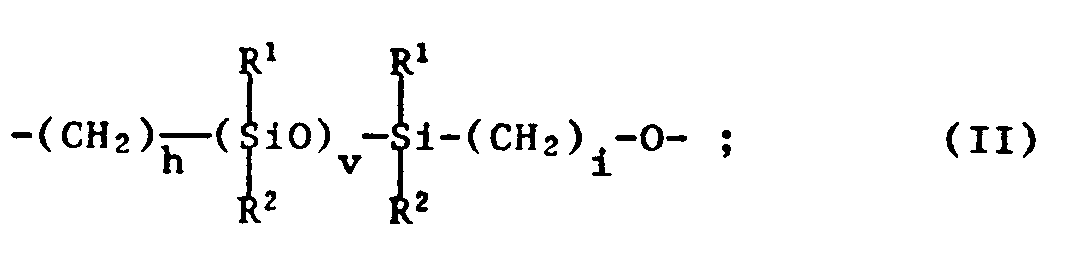

- each L is independently -BRB'-, the terminal L group within any one monomer of formula I also being capable of being -BR-;
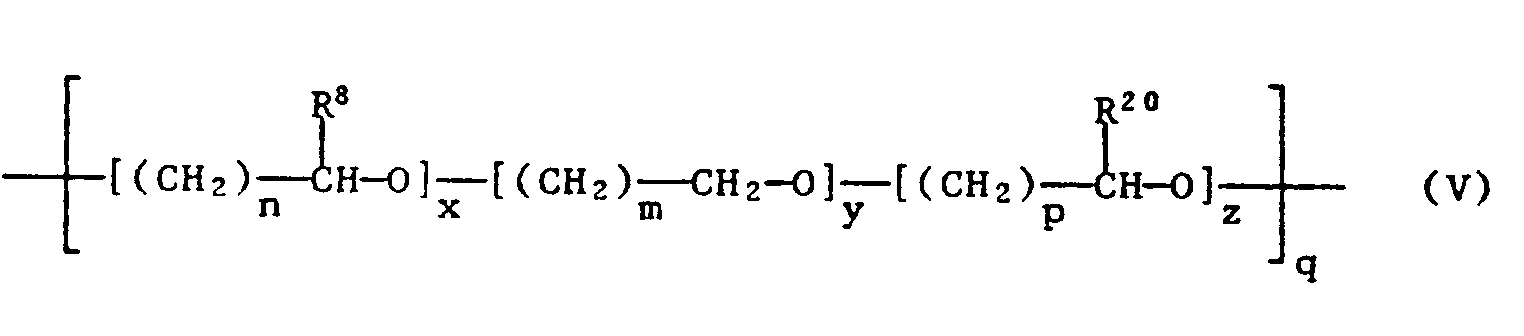
- wherein each b, d and f is independently 0 - 4; q is a number from 1 to 1000; each x, y and z is independently 0 to 100 provided at least one of x, y and z is at least 1; such that (x+y+z) multiplied by q is 4 to 1000, preferably 25 to 75;
- each h and i is an integer from 1 to 6, v is an integer from 2 to 75, preferably 2 to 50, more preferably 10 to 50, most preferably 15 to 50;
- R1 and R2 are independently alkyl of up to 18 carbon atoms, or aryl of up to 12 carbon atoms, preferably lower alkyl or phenyl, most preferably methyl;
- each of R3, R4, R7-R10, R13-R16, R19 and R20 is independently selected from the group consisting of hydrogen, halogen, an aliphatic, aromatic or heterocyclic containing radical such as: unsubstituted C1-C16 alkyl; substituted C1-C16 alkyl; unsubstituted C2-C16 alkenyl; and substituted C2-C16 alkenyl; wherein the alkyl and alkenyl substituents are independently selected from C1-C16 alkoxycarbonyl, C2-C16 alkenyloxycarbonyl, fluoro, aryl of up to 10 carbon atoms, C1-C16 alkoxy, C1-C16 alkanoyloxy, aryloxy of up to 10 carbon atoms, C3-C6 alkenoyloxy, aroyl of up to 10 carbon atoms, aroyloxy of up to 11 carbon atoms, C3-C8 cycloalkyl, C3-C8 cycloalkoxy, C3-C8 cycloalkyl-carbonyloxy, C3-C8 cycloalkoxy-carbonyl, oxacycloalkyl of up to 7 carbon atoms, oxacycloalkoxy of up to 7 carbon atoms, oxacycloalkoxy (up to 7 carbon atoms)-carbonyl, oxacycloalkyl (up to 7 carbon atoms)-carbonyloxy, and aryl (of up to 10 carbon atoms)-oxycarbonyl, each of said alkyl and alkenyl substituents being, in turn, optionally substituted by C1-C6 alkyl, fluoro or a C1-C6 alkoxy provided said last mentioned alkoxy is not bound to a carbon atom already singly bound to another oxygen atom;
- R 3, R 4, R7-R10, R13-R16, R19 and R20 being further independently selected from aryl of up to 10 carbon atoms, C3-C8 cycloalkyl, and oxacycloalkyl of up to 7 carbon atoms, each of which may be unsubstituted or further substituted with a substituent selected from the group of substituents for said R3 alkyl set forth above;
- R5, R6, R11, R12, R17 and R18 are selected from the same group set forth above for R3; and R5, R6, R11, R12, R17 and R18 are further independently selected from C1-C16 alkoxycarbonyl, C3-C16 alkenoyloxy, C2-C16 alkenyloxycarbonyl, and C1-C16 alkanoyloxy, each of which may be further substituted by fluoro, aryl of up to 10 carbon atoms, or C1-C16 alkoxy, and R 5, R6, R11, R12, R17 and R18 are still further independently selected from aryloxy of up to 10 carbon atoms, cycloalkoxy of up to 8 carbon atoms, cycloalkyl (of up to 8 carbon atoms)-carbonyloxy, cycloalkoxy (of up to 8 carbon atoms)-carbonyl, aroyloxy of up to 11 carbon atoms, oxacycloalkoxy of up to 7 carbon atoms, oxacycloalkenyloxy of up to 7 carbon atoms, oxacycloalkoxy (of up to 7 carbon atoms)-carbonyl, oxacycloalkyl (of up to 7 carbon atoms)-carbonyloxy, and aryloxy (of up to 10 carbon atoms)-carbonyl, each of which may be further substituted by fluoro, C1-C6 alkyl or C1-C6 alkoxy, provided that any substituent having a singly bound oxygen atom as its link to the rest of the molecule may not be a substituent on the same carbon atom which is singly bonded to another oxygen atom; or 2 adjacent groups, selected from R3-R20, together with the atoms to which they are attached may form a 5 - 8 membered cycloalkyl, oxacycloalkyl or bicycloalkyl ring.
- The monomer of formula I preferably is of formula la,


- R21 is independently selected from hydrogen, C1-C4 alkyl and phenyl, and is preferably hydrogen.
- Each B and B' is selected from

each R is independently a divalent linking group preferably selected from - a) a divalent aliphatic group of up to 25 carbon atoms which may be interrupted by oxy, carbonyloxy, amino, aminocarbonyl, oxycarbonyl, ureido, oxycarbonylamino, or carbonylamino;
- b) a divalent 5 - 7 membered cycloaliphatic group having 5 - 25 carbon atoms;
- c) a divalent arylene group having 6 - 25, preferably 7 - 15 carbon atoms; and
- d) a divalent aralkyl or alkaryl group having 7 to 25, preferably 8 - 16 carbon atoms;
wherein groups b) and d) can be optionally interrupted by the same groups as in group a) and wherein the aryl rings in groups c) and d) may be further substituted with one or more substituents selected from halogen, preferably fluorine or chlorine, C1-C4 alkyl, preferably methyl, and C1-C12 perhalo alkyl, especially C1-C12 perfluoro alkyl;
and P' is hydrogen, amino, hydroxy, or a moiety containing a crosslinkable group which may be crosslinked when coreacted with a suitable crosslinking agent or when irradiated by actinic radiation. - In the foregoing, all alkyl groups whether mentioned alone or as part of another group are preferably C1-C4 alkyl, such as methyl, ethyl, propyl and butyl, especially t-butyl, with the exception that adjacent groups on aryl rings cannot each be t-butyl. These alkyl groups may be straight chain or branched chain. When the alkyl is a substituent on a phenyl ring, it is preferably attached at the para position. Preferably alkenyl groups, whether alone or as part of another group, are C2-C4 alkenyl, such as ethenyl, propenyl and butenyl. Preferred aryl groups (whether alone or as part of another group) are phenyl and naphthyl, more preferably phenyl. Preferably the aryl groups are still further substituted by C1-C4 alkyl, more preferably t-butyl, most preferably in the para position. Halogen may be chloro, bromo, iodo or fluoro.
- Preferably b, d and f are independently 0 - 3, more preferably 0 - 2, most preferably 0 or 1. While the group identified by formula I may be highly halogenated, it is preferably at least 25 % halogen free, more preferably 30 %, still more preferably 40 %, and most preferably substantially halogen free. Wherever cyclo groups are indicated, whether carbocyclic or heterocyclic they preferably have 5 - 6 ring members and the heterocyclics preferably have only carbon atoms and an oxygen atom as ring members.
- Bicycloalkyl is understood to cover those groups when two adjacent R groups in a segment of formula III together form a ring and one of them already is a cycloalkyl group. In other words a fused ring system made up of two geminal R groups and the carbon atom to which they are attached results. For example if R3 is cyclopropyl and R4 is methyl then R3 and R4 together with the carbon to which it is attached could be (2,1,0) cyclopent-2,2-diyl.
- In formula I, when b is greater than one, each of the multiple R5 and R6 groups may be the same or different; however preferably all of the R5 groups are the same and all of the R6 groups are the same. The same is true with respect to d, R11, and R12; and f, R17, and R18.
- Preferably, each of b, d and f is independently an integer of 0 to 2, and most preferably zero or one.
- In one aspect of the invention, each of R3-R7, R9-R'3 and R15-R19 is hydrogen. Preferably the substituents R8, R14 and R20 are alkyl of up to 16 carbon atoms; alkyl of up to 16 carbon atoms substituted by alkoxy of up to 8 carbon atoms, or fluoro; phenyl which is unsubstituted or substituted by fluoro, alkoxy of up to 6 carbon atoms or alkyl of up to 6 carbon atoms; benzyl wherein the phenyl ring thereof is unsubstituted or substituted by fluoro, alkoxy of up to 6 carbon atoms or alkyl of up to 6 carbon atoms; cyclohexyl; or oxacycloalkyl of 4 or 5 ring carbon atoms.
- A highly advantageous subembodiment relates to wettable, non-swellable ophthalmic devices, preferably contact lenses, fabricated from a polymer of formula I wherein A is of the formula IV,



- In the foregoing it is to be understood that the units of x, y and z may be positioned randomly, in block segments, or alternately.
- Another preferred embodiment corresponds to formulae IV, V and VI wherein z is zero.
- Desirably, the polymer segments of formula III or IV in the completed polymer are predominantly and preferably substantially devoid of free hydroxyl groups in the interior of the polymer as such groups tend to reduce oxygen permeability.
- Free hydroxy groups on the outer surfaces of the formed polymer are acceptable as they increase wettability without drawing water into the polymer matrix. However, it is still preferable to have as few free hydroxy groups in the finished polymer as practical if a contact lens having high oxygen permeability is to be prepared. A suitable means of tying up the free hydroxy groups present would be to interact them with a color group.
- Typical color groups useful in these embodiments include, but are not limited to, the hydroxy-reactive dyes known in the art under the tradename Remazol, manufactured by American Hoechst. Examples of the Remazol dyes which are especially useful are:

- -S02-CH2CH20-SO3
which reacts with the polymer or monomer hydroxy group to yield a dye-S02-CH2-CH2-0-polymer or
- A vinylic comonomer is frequently utilized to increase the hydrophilicity of the final product without substantially altering the other properties mentioned above. Typically, when the vinylic comonomer is a polyethylene glycol of the formula


- Usually, when present, the vinylic comonomer is used in an amount of about 2 % to about 10 % by weight of the resultant polymer. Advantageously, no more than 5 % of vinylic comonomer is used when the compound of formula V has a molecular weight in excess of 8000. Generally, when the compound of formula V has a molecular weight of under about 4000, up to 10 % by weight of vinylic comonomer can be used. When the compound of formula V has a molecular weight between 4000 and 8000, the maximum amount of vinylic comonomer is between 5 % and 10 % by weight.
- When P' is a vinyl containing group, for example a group containing the moiety
-

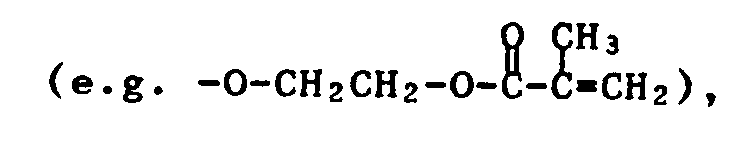
- When P' does not have a vinylic group, but takes part in crosslinking, P' contains e.g. an active hydrogen. Preferably P' terminates in an OH, NHRc, (R° being hydrogen or lower alkyl), a leaving group bound directly to the B or B' carbonyl, a conventional acyl leaving group when not so bound, SCN- or OCN- . Crosslinking is then typically carried out by condensation or addition with a bi- or polyfunctional coreactive monomer. For example, when P' is OH, then the coreactive monomer functional group can be - NHR°,-COOH, OCN-, SCN-, etc.; when P' is NHR°,the reactive comonomer functional group can be a conventional acyl, or acyl bound to a conventional leaving group; and when P' has OCN- or SCN-, then the reactive comonomer functional group can be OH. Similarly, the other coreactive functional groups mentioned in terms of either P' or the coreactive monomer can be interchanged (Those mentioned as part of P' being on the coreactive monomer and those mentioned as part of the coreactive monomer being part of P').
- Suitable vinylic comonomers and coreactive monomers for condensation are set forth below. However, the list is not exhaustive and those of ordinary skill will appreciate the modifications, additions, and alternatives which may also be employed.
- When either or both L' and L" are hydrogen, or terminate in P' with P' being hydrogen, at least one additional crosslinkable moiety must be present as one of, or as substituent on one of, the groups R3-R2°. Such crosslinkable groups may also be present as a substituent on or in place of one or more of R3-R2° even when one or both of L' and L" have crosslinkable groups therein. However, the degree of crosslinking in the finished crosslinked polymer should not exceed 10 %, preferably not more than 5 %, and should be more preferably in the range of 1 - 4 %, most preferably in the range of 2 - 3 %.
- Within the polymer fabricated from monomers of formula I, not more than 20-70 %, preferably not more than 50 % of the A groups are polyethylene glycol.
- The number of A units and the chain length and nature of the substituents on the polyoxyethylene segment is determined by the degree of wettability desired in the polymer of the compound of formula I. In general, the polymer should be sufficiently hydrophilic in its surface properties such that the polymer exhibits a contact angle with distilled water at 20 C of less than 60°, preferably less than 40°, more preferably less than 25°, still more preferably less than 15°, most preferably less than 10°.
- The greater the number of siloxane units, the greater the number of oxyalkylene units is generally required to reduce the contact angle to within the above limits.
- Further, a large excess of unsubstituted oxyethylene units is to be avoided as such excess units tend to cause the polymer to be swellable. As water is taken up, the oxygen permeability of such polymers tends to be drastically reduced. Advantageously, the instant polymers absorb less than about 10 % by weight water, preferably less than about 5 % by weight, most preferably less than 3 % by weight water.
- Highly preferred are those polymers which exhibit a contact angle of less than 25°, more preferably less than 15° and most preferably less than 10°.
- Preferred crosslinked polymers are those consisting essentially of a polymer of a divinylic monomer according to formula I wherein R1 and R2 are methyl, h and i are 2 to 4, v is 2-20; b, d and f are zero; R3, R4 are hydrogen; R8, R14 and R20 are independently alkyl of up to 8 carbon atoms, (x+y+z) multiplied by q is 4-40 and P' is:

- Very highly advantageous are those polymers of reactive vinylic monomers of the formula VII,

- each R is a divalent arylene group of 6 to 15 carbon atoms, a divalent C6-Cio-arylene-amino carbonyloxy-C2-C6 alkylene;
- or divalent C3-C15 cycloaliphatic;
- B and B' are each

- each x is 4-75, preferably 6-70, more preferably 8-66; v is 2-66, preferably 2-25, more preferably 2-20; i and h are independently 2, 3 or 4; and a is an integer of 1-10, preferably 1-8, more preferably 1-6, still more preferably 1-4, most preferably 1-2.
- Within this very highly advantageous embodiment, Ra is most preferably methyl; R is most preferably -phenylene-, -CH2CH20CONH-phenylene- or -CH2CH20CONH-tolylene-; R7 is methyl, x is most preferably 60 to 66; v is most preferably 15 to 20; a is most preferably 1 to 3; k is most preferably zero; and e is most preferably one.
- A very highly preferred embodiment are those polymers from monomers of formula VII wherein each


- Also highly preferred are those polymers of monomers of formula VII wherein each


- The reactive vinylic monomers of formula I can characteristically be polymerized to form crosslinked polymers under conventional polymerization conditions.
- If desired, the monomer reaction mixture may contain a catalytic amount of a conventional polymerization catalyst, preferably a free radical catalyst. Of particular interest are conventional peroxide and azo catalysts, such as hydrogen peroxide, benzoyl peroxide, tert-butyl peroctoate, benzoyl peroxide or azobis-(isobutyronitrile).
- The polymerization can generally be carried out at temperatures between about 20 and about 150°C, for a period between about 1 and about 24 hours. It is understood that the time and temperature in such a reaction are inversely related. Thus, temperatures employed in the upper end of the temperature range will generally provide reaction times near the lower end of the time range. Preferably, the polymerization is conducted in the presence of actinic radiation, such as UV light.
- Depending upon the nature of the polymer mixture, it may be desirable for the polymers obtained from such polymerizations to be post cured, e.g. at a somewhat elevated temperature such as between about 60 C and about 150°C.
- For the preparation of contact lenses, the polymer mixture may be cast directly in the shape of the lens, or the polymerization may be carried out in a mold having a shape convenient for further processing, such as in the shape of small cyclinders or "buttons", which can then be machined.
- Minor amounts i.e. less than 50 %, preferably up to 30 %, and most preferably up to no more than about 10 % by weight, of conventional copolymerizible vinyl monomers, can be employed as extenders or hydrophilic modifiers, or the like, in the preparation of the instant polymer, as copolymer constituents. Suitable vinyl monomers include:
- acrylates and methacrylates of the general formula

- acrylamides and methacrylamides of the general formula

- vinyl ethers of the formula

- vinyl esters of the formula

- maleates and fumarates of the formula

- and vinylic substituted hydrocarbons of the formula

- Useful monomers include, for example:
- methyl-, ethyl-, propyl-, isopropyl-, butyl-, ethoxyethyl-, methoxyethyl-, ethoxypropyl-, phenyl-, benzyl-, cyclohexyl-, hexafluoroisopropyl-, or n-octyl-acrylates and -methacrylates as well as the corresponding acrylamides and methacrylamides:
- dimethylfumarate, dimethylmaleate, diethylfumarate, methyl vinyl ether, ethoxyethyl vinyl ether, vinyl acetate, vinyl propionate, vinyl benzoate, acrylonitrile, styrene, alphamethyl styrene, 1-hexene, vinyl chloride, vinyl methyl ketone, vinyl stearate, 2-hexene and 2-ethylhexyl methacrylate.
- As hydrophilic modifiers, to increase hydrophilicity without substantial loss of DK, the vinyl comonomer can be a N-(vinyl containing group)-pyrrolidone or a polyoxyethylene (of 1-25 repeating units) acrylate or methacrylate. Such a hydrophilic modifier should not be present in excess of about 10% by weight of the compound of formula I.
- Most preferably, the instant polymers are free from copolymer units of such conventional vinyl monomers.
- The vinylic monomers of formula I can be prepared by methods known, per se.
- For example, the siloxane/polyalkylene oxide containing divinylic monomers of formula I may be prepared by reacting a siloxane diol of the formula HO-(S')-H, wherein -S'- is a group of the formula II as defined hereinbefore with a sufficient amount of a difunctional reactive group containing compound having the group -Q- or -Q-Y-, wherein the difunctional reactive groups are isocyanate; activated carboxy, such as an anhydride, an acid halide or a carboxy ester; or is a leaving group, such as a halide, sulfato or the like, to form the corresponding reactive group containing endcapped derivative.
- The resulting endcapped siloxane derivative can then be reacted with a polyoxyalkylene diol of the formula HO-(A)-H, wherein -A- is a group of the formula III above to form the corresponding polyoxyalkylene-siloxane-polyoxyalkylene diol. This diol can then be reacted with a reactive group containing vinylic monomer having the terminal H2C = C(Ra)-BR- moiety, wherein the reactive group is an isocyanate; activated carboxy, such as an anhydride, an acid halide or carboxy ester, or is a leaving group such as halo, sulfato or the like to form the corresponding divinyl derivative where a is 1, and A is other than a direct bond. Alternatively, the aforementioned polyoxyalkylene - siloxane - polyoxyalkylene diols can be further sequentially reacted with a further difunctional reactive group containing compound having the group -BR-or -BRB'-D- to form the corresponding di-functional reactive endcapped derivative which is then reacted with a siloxane diol of the formula HO-(S')-H. One may continue building up alternative polyoxylalkylene/siloxane unit containing diols in this manner, corresponding to the value of either "c(a plus e)" or c(a plus k)". Then this diol may be endcapped with a reactive group containing vinylic monomer having a terminal H2C = C(Ra)-BR- moiety or the diol reacted with a sufficient amount of difunctional reactive group containing compound to endcap the diol with a reactive group, such as eg. an isocyanate, etc. group which is then reacted with the appropriate vinylic containing compound, such as an vinylic amine or alcohol, or other copolymerizable monomer having a crosslinkable group to obtain the corresponding product of formula I.
- Of course, instead of starting with a siloxane diol of the formula HO-(S')-H and building up the alternating sequence to the desired value of "a", one may instead begin with a polyoxyalkylene diol of the formula HO-(A)-H and, after endcapping the same with difunctional reactive groups, condense the same with the siloxane diol until the desired value of "a" is attained, and terminate the diol with vinylic groups as described above.
- The above reactive vinylic monomers are characteristically polymerized under conventional polymerization conditions. In those vinylic monomers containing but one vinyl group, a minor amount e.g. from about 0.01 to about 5 weight percent, based on the monomer of formula I, of a conventional crosslinking agent, may be employed. Suitable crosslinking agents include diolefinic monomers such as:
- Allyl acrylate and methacrylate, alkylene glycol and polyalkylene glycol diacrylates and dimethacrylates, such as ethyleneglycol dimethacrylate, diethylene glycol dimethacrylate, and propylene glycol dimethacrylate; trimethylol propane triacrylate; pentaerythritol tetraacrylate, divinylbenzene; divinyl ether; divinyl sulfone; bisphenol A diacrylate or dimethacrylate; methylene bisacrylamide; diallyl phthalate; triallyl melamine and hexamethylene diacrylate and dimethacrylate. Also, such minor amounts of a crosslinking agent may be employed, if desired, in the polymerization of the di-vinyl monomer of formula I and VII.
- When the monomers of formula I have free hydroxy, isocyanato, carboxylic or amine groups, suitable crosslinking agents contain di-or polyfunctional co-reactive groups to form addition or condensation reactions linking 2 or more chains.
- If desired, the monomer reaction mixture may contain a catalytic amount of a conventional catalyst, preferably a free radical catalyst. Of particular interest are conventional peroxide and azo catalysts, such as hydrogen peroxide, benzoyl peroxide, tert-butyl, peroctoate, benzoyl peroxide or azobis (isobutyronitrile).
- The aforementioned reactions are generally straight forward additions or condensations and are typically conducted at a reaction temperature between about -10°C and about 100°C, depending upon the relative reactivity of the species involved, in the presence or absence of an inert diluent and in the optional presence of an addition or condensation catalyst if desired or appropriate. For reactions involving an isocyanate or acid halide, with a diol, for example, suitable optional catalysts include pyridine and triethylamine.
- The siloxane diols of the formula HO-(S')-H are known in the art and many are commercially readily available.
- Also, the polyoxyalkylene diols of the formula HO-A-H are known or can be prepared by known methods.
- Thus, the polyols of the formula HO-A-H are generally prepared by the addition reaction of xq moles of an epoxide of the formula IX,


- The reaction between the epoxides, when mixtures of different epoxides are employed to obtain the polyol of the formula HO-A-H, can be conducted by admixing the epoxides to obtain random copolymers or terpolymers, etc., or the addition can be conducted sequentially to form block copolymers having terminal hydroxy groups. Suitable catalysts include alkaline earth oxides, alkaline earth carbonates, alkyl zinc compounds, aluminum alkoxides, hydrates of ferric chloride, bromide and acetate, and gamma radiation. The reaction may also be initiated by the presence of a glycol, such as ethylene glycol or propylene glycol or by a polyol of higher functionality such as sucrose, or by an amine, such as ethylene diamine, toluenediamine, and so forth. Generally the length of time of the reaction will depend in part on the alkylene oxide employed, but can generally be from less than one to several score hours. Thus, ethylene oxide generally is about three times as active as propylene oxide, which in turn reacts more rapidly than 1,2-butylene oxide. The preparation of polyoxetanes and polytetrahydrofurans is generally initiated via ring opening oxonium formation using trialkyloxonium salts, carboxonium salts, acylium salts and the like.
- Suitable diols of the formula HO-A-H include those prepared from epoxides such as:
- 1,2-propylene oxide; 1,2-butylene oxide; 1,2-epoxydecane; 1,2-epoxydodecane; 1,2-epoxyoctane; 2,3-epox- ynorbornane; 1,2-epoxy-3-ethoxypropane; 1,2-epoxy-3-phenoxypropane; 2,3-epoxypropyl 4-methoxyphenyl ether; tetrahydrofuran; 1,2-epoxy-3-cyclohexyloxypropane; oxetane; 1,2-epoxy-5-hexene; 1,2-epoxyethylben- zene; 1,2-epoxy-1-methoxy-2-methylpropane; perfluorohexylethoxypropylene oxide; benzyloxypropylene oxide, and the like. Also, the aforementioned epoxides may be employed as mixtures thereof. Further, certain cyclic ethers of formula IX, X or XI where b or d or f, respectively is 3 and the carbocyclic portion of the ring is substituted are resistant to polymerization alone, but copolymerize quite readily with more reactive cyclic ethers. Suitable co-monomers include, for example, 2-methyl-tetrahydrofuran an 3-methyl-tetrahydrofuran. Also, while ethylene oxide may be employed as a co-monomer, ethylene oxide polymers, in the absence of more hydrophobic units, is characteristically too hydrophilic and absorbs too much aqueous fluid to be of use in accordance with the instant invention. However, ethylene oxide/propylene oxide copolymeric diols wherein there is 30-80 %, preferably greater than 50 %, more preferably greater than 66 % propylene oxide, on a mole basis, is sufficiently hydrophobic so as to be substantially non- swellable in aqueous media, and yet sufficiently hydrophilic so as to exhibit a contact angle with water of less than 60°; preferably less than 40°, more preferably less than 25°, more preferably less than 15°, most preferably less than 10°.
- Many polymer diols of the formula HO-A-H are commercially available. Thus, suitable diol products include poloxamers having the general formula

- Such poloxamers are available, e.g. from BASF Wyandotte under their Pluronic@ brand name. Also suitable are the "reverse poloxamers", having polyethylene glycol bounded on each side by polypropylene glycol.
- Polypropylene ether glycols include commercially available products having a molecular weight range between 400 and about 4,000.
- As stated above, the polymers for use in the instant invention are those which exhibit a receding contact angle at 20 C of less than 60°, preferably less than 40°, more preferably less than 25°, more preferably less than 15° and most preferably less than 10°. The measurement of such contact angle is conveniently performed using a modified "Wilhelmy Plate" technique, as described, for example, for J.D. Androde, et al. Surface and Interfacial Aspects of Biomedical Polymers, Vol. 1, Surface Chemistry and Physics, Plenum Press, 1985, wherein a specimen sample in the form of a plate of known dimensions is immersed into the wetting solution, pure water, at a slow controlled rate, e.g. at 2 - 20 mm per minute.
- As mentioned above, the instant polymers for use in the present invention possess a high degree of oxygen permeability. The oxygen permeability, Dk(x10-10), is measured using a modification of ASTM standard D3985-81 in that (a) there is used 21 % oxygen, i.e. air, instead of 99 - 100 % oxygen, (b) the surface area of sample employed is 0.50 square meters versus 100 square meters and the humidity is controlled to be at 95 - 100 % relative humidity instead of 0 % relative humidity. The unit of DK is (mm' ml O2/cm2·sec·mmHg).
- Typically, conventional fully swollen polyhydroxyethyl methacrylate lenses which are sparingly crosslinked possess a Dk(x10-10), (mm·ml 02/cm2'sec'mmHg) value of about 5 - 7.
- The instant polymers for use as an ophthalmic device, such as a contact lens, possess a Dk(x10-10) value generally greater than 7, preferably greater than about 15, more preferably greater than about 20 and most preferably greater than about 40.
- The following examples are for illustrative purposes and are not to be construed as limiting the invention. All parts are by weight unless otherwise specified.

- To a dry, 0.25-liter, three-neck flask equipped with a thermometer, constant pressure dropping funnel, nitrogen inlet and condenser under a dry, nitrogen atmosphere is added 1.74 g (0.010 moles) TDI, 10 ml dry dichloromethane and 0.05 g tin octoate. 10.00 g (0.005 moles) poly(propylene oxide) in 40 ml of dry dichloromethane are added to the flask dropwise over a 40 minute period, maintaining a temperature less than 30 C. The reaction is continued for 2 hours. After 2 hours, 14.65 g (0.010 moles) hydroxybutyl terminated polydimethylsiloxane in 30 ml of dry dichloromethane are added rapidly to the system and the reaction is allowed to continue 17 hours. Then 1.74 g (0.010 moles) TDI are added; after 3 hours, 1.30 g (0.010 moles) HEMA are added and the reaction is stirred 18 hours. After 18 hours, the isocyanate band is not apparent in the infrared spectrum. The volatiles are then removed from the reaction system via vacuum rotary evaporation. The clear, viscous, reactive fluid is stored protected from light and thermal polymerization.
- To the clear, viscous fluid is added one percent Darocur 1173 (UV initiator) and the mixture degassed and mixed via vacuum rotary evaporation. The material is then UV cured in the appropriate molds under UV light with an intensity of 2 to 3 milliwatts. The resulting film has an advancing contact angle of 65.5 and a receding angle of 16.2.
- Similar rections are conducted as described in example 1 but with reactive components of different molecular weights and other variations as outlined in Table 1. The solvents are adjusted proportionally based on the weight of the materials used.

- To a dry, 100 ml, three-neck flask equipped with a thermometer, constant pressure dropping funnel, nitrogen inlet and condenser under a dry, nitrogen amosphere are added 3.48 g (0.020 moles) TDI, 150 ml dry dichloromethane and dibutyl tin dilaurate and heat to reflux. 4-Hydroxybutyl polydimethylsiloxane 14.65 g (0.010 moles) in 30 ml of dry dichloromethane are added dropwise to the flask. After 3 hours, 10.00 g (0.005 moles) poly(ethylene oxide) are added to the flask dropwise. The reaction is stirred at reflux for four hours and 1.30 g (0.010 moles) of HEMA are charged to the flask. After 17 hours the isocyanate band is no longer observed in the infrared spectrum. The volatiles are removed via vacuum rotary evaporation. The clear, viscous, reactive fluid is protected from light and thermal polymerization until it is ready for use.
- One percent Darocur 1173 is added to the prepolymer and the mixture degassed and mixed via vacuum rotary evaporation. The prepolymer is transferred to the appropriate molds and cured under UV light of 3 to 5 milliwatt intensity. The clear films produced in this manner have oxygen permeabilities of 148.8 x 10⁻¹⁰.
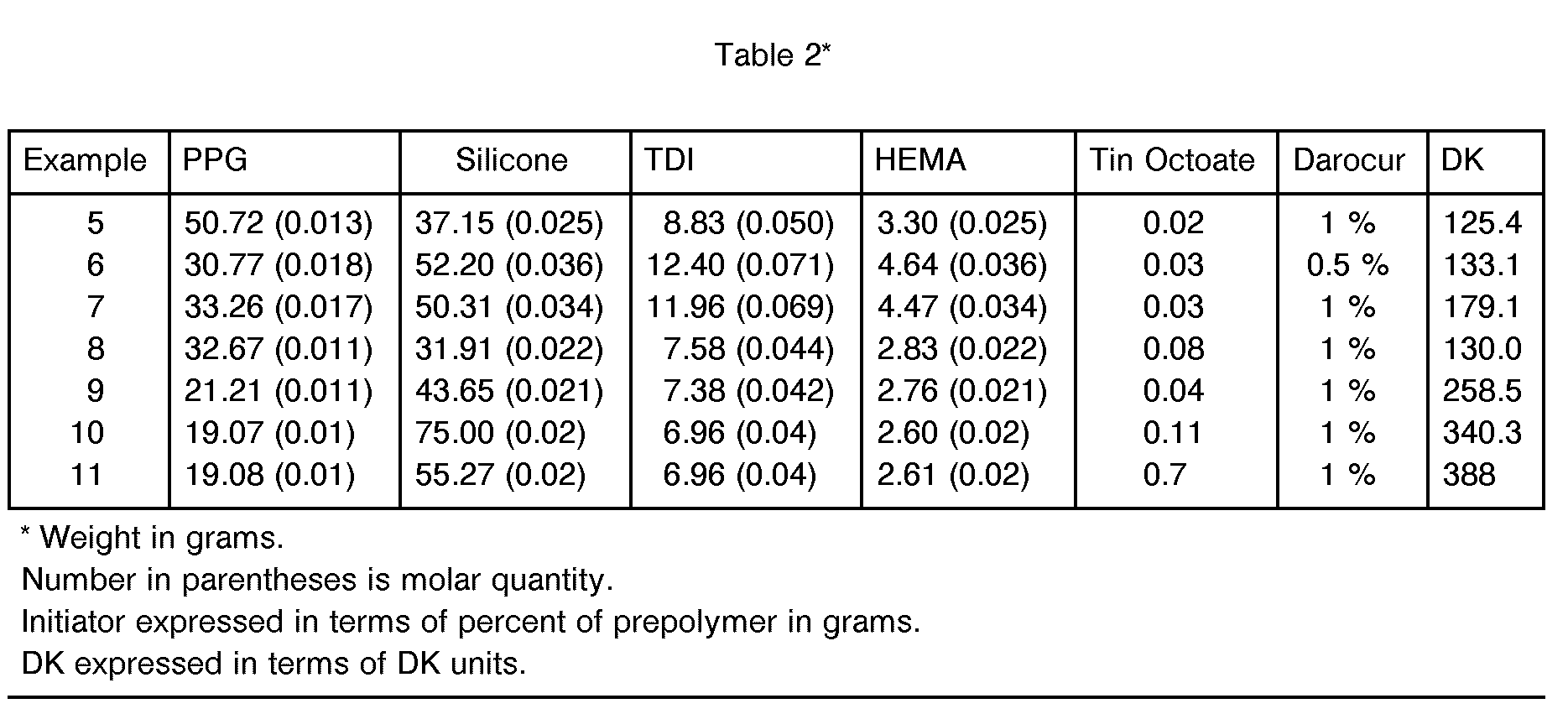
- Examples 5 to 11:
- Similar reactions are conducted as described in example 4 but with reactive components of different molecular weights and other variations as outlined in Table 2. The solvents are adjusted proportionally based on the weight of the materials used.
- To a dry, 100 ml, three-neck flask equipped with a thermometer, constant pressure dropping funnel, nitrogen inlet and condenser under a dry, nitrogen atmosphere are added 3.48 g (0.020 moles) TDI, 150 ml dry dichloromethane and dibutyl tin dilaurate and heat to reflux. 4-Hydroxybutyl polydimethylsiloxane 14.65 g (0.010 moles) in 30 ml of dry dichloromethane are added dropwise to the flask. After 3 hours, 10.00 g (0.005 moles) poly(ethylene oxide) are added to the flask dropwise. The reaction is stirred at reflux for four hours and 1.30 g (0.010 moles) of HEMA are charged to the flask. After 17 hours the isocyanate band is no longer observed in the infrared spectrum. The volatiles are removed via vacuum rotary evaporation. The clear, viscous, reactive fluid is protected from light and thermal polymerization until it is ready for use.
- 20 % by weight of PPGMM (Alcolac) and 1 % Darocur 1173 are added to the prepolymer and the mixture is degassed and mixed via vacuum rotary evaporation. The prepolymer is transferred to the appropriate molds and cured under UV light of 3 to 5 milliwatt per square centimeter intensity. The clear films produced in this matter have oxygen permeabilities of 208.2 x 10⁻¹⁰.
Claims (59)


wherein groups b) and d) can be optionally interrupted by the same groups as in group a) and wherein the aryl rings in groups c) and d) may be further substituted with one or more substituents selected from halogen, C1-C4 alkyl, and C1-C12 perhalo alkyl; said device having a receding contact angle of less than 60° ; having absorbed less than about 10 % water in its swollen state; and having a Dk x10-10 (mm . ml 02/cm2 . sec . mmHg) of at least about 7.


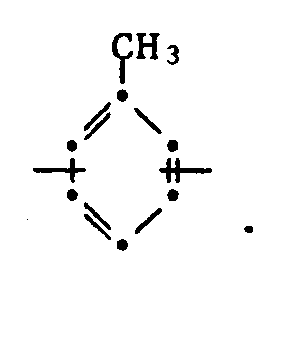

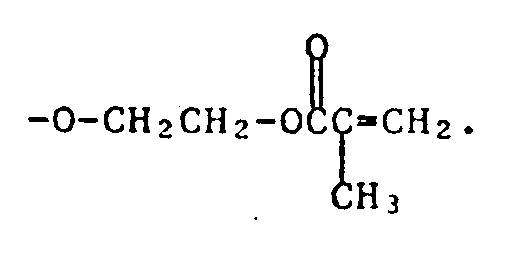

L' is P'-BRB'-; and P' is



wherein groups b) and d) can be optionally interrupted by the same groups as in group a) and wherein the aryl rings in groups c) and d) may be further substituted with one or more substituents selected from halogen, C1-C4 alkyl, and C1-C12 perhalo alkyl; said polymer having a receding contact angle of less than 60°; having absorbed less than about 10 % water in its swollen state; and having a Dk x10-10 (mm · ml O2/cm2 · sec · mmHg) of at least about 7, by reacting the required intermediates in a manner known per se.


Priority Applications (1)
| Application Number | Priority Date | Filing Date | Title |
|---|---|---|---|
| AT87810626T ATE71227T1 (en) | 1986-11-06 | 1987-11-02 | ESSENTIALLY NON-SWELLING CONTACT LENS CONTAINING BLOCK COPOLYMERS WITH POLYSILOXANE-POLYOXYALKYLENE UNITS IN THE MAIN CHAIN. |
Applications Claiming Priority (4)
| Application Number | Priority Date | Filing Date | Title |
|---|---|---|---|
| US92824086A | 1986-11-06 | 1986-11-06 | |
| US928240 | 1986-11-06 | ||
| US78346 | 1987-07-28 | ||
| US07/078,346 US4740533A (en) | 1987-07-28 | 1987-07-28 | Wettable, flexible, oxygen permeable, substantially non-swellable contact lens containing block copolymer polysiloxane-polyoxyalkylene backbone units, and use thereof |
Publications (2)
| Publication Number | Publication Date |
|---|---|
| EP0267158A1 EP0267158A1 (en) | 1988-05-11 |
| EP0267158B1 true EP0267158B1 (en) | 1992-01-02 |
Family
ID=26760435
Family Applications (1)
| Application Number | Title | Priority Date | Filing Date |
|---|---|---|---|
| EP87810626A Expired EP0267158B1 (en) | 1986-11-06 | 1987-11-02 | Substantially non-swellable contact lens containing block copolymer polysiloxane-polyoxyalkylene backbone units |
Country Status (12)
| Country | Link |
|---|---|
| EP (1) | EP0267158B1 (en) |
| JP (1) | JP2527447B2 (en) |
| AT (1) | ATE71227T1 (en) |
| AU (1) | AU603149B2 (en) |
| DE (1) | DE3775709D1 (en) |
| DK (1) | DK581187A (en) |
| ES (1) | ES2040761T3 (en) |
| GR (1) | GR3004247T3 (en) |
| HK (1) | HK62294A (en) |
| IE (1) | IE60224B1 (en) |
| PT (1) | PT86063B (en) |
| SG (1) | SG49094G (en) |
Cited By (1)
| Publication number | Priority date | Publication date | Assignee | Title |
|---|---|---|---|---|
| US7390863B2 (en) | 2005-08-30 | 2008-06-24 | Bausch & Lomb Incorporated | Polymeric materials having enhanced ion and water transport property and medical devices comprising same |
Families Citing this family (7)
| Publication number | Priority date | Publication date | Assignee | Title |
|---|---|---|---|---|
| JPH0678415B2 (en) * | 1986-11-21 | 1994-10-05 | 三井東圧化学株式会社 | Resin for high refractive index plastic lenses |
| ES2064480T3 (en) * | 1988-02-26 | 1995-02-01 | Ciba Geigy Ag | A HUMECTABLE CONTACT LENS, RIGID, PERMEABLE TO GASES AND PRACTICALLY NOT INFLATABLE. |
| AU637361B2 (en) * | 1989-04-24 | 1993-05-27 | Novartis Ag | Polysiloxane-polyoxyalkylene block copolymers and ophthalmic devices containing them |
| US5397848A (en) * | 1991-04-25 | 1995-03-14 | Allergan, Inc. | Enhancing the hydrophilicity of silicone polymers |
| US5807944A (en) * | 1996-06-27 | 1998-09-15 | Ciba Vision Corporation | Amphiphilic, segmented copolymer of controlled morphology and ophthalmic devices including contact lenses made therefrom |
| JP5148794B2 (en) * | 1999-12-16 | 2013-02-20 | クーパーヴィジョン インターナショナル ホウルディング カンパニー リミテッド パートナーシップ | Soft contact lens that can be worn for a long time |
| JP7740923B2 (en) * | 2021-07-15 | 2025-09-17 | 関西ペイント株式会社 | Coating composition and coated article |
Family Cites Families (5)
| Publication number | Priority date | Publication date | Assignee | Title |
|---|---|---|---|---|
| US4153641A (en) * | 1977-07-25 | 1979-05-08 | Bausch & Lomb Incorporated | Polysiloxane composition and contact lens |
| US4260725A (en) * | 1979-12-10 | 1981-04-07 | Bausch & Lomb Incorporated | Hydrophilic contact lens made from polysiloxanes which are thermally bonded to polymerizable groups and which contain hydrophilic sidechains |
| US4440918A (en) * | 1982-01-18 | 1984-04-03 | Minnesota Mining And Manufacturing Company | Contact lens containing a fluorinated telechelic polyether |
| US4486577A (en) * | 1982-10-12 | 1984-12-04 | Ciba-Geigy Corporation | Strong, silicone containing polymers with high oxygen permeability |
| US4780488A (en) * | 1986-08-29 | 1988-10-25 | Ciba-Geigy Corporation | Wettable, flexible, oxygen permeable, substantially non-swellable contact lens containing polyoxyalkylene backbone units, and use thereof |
-
1987
- 1987-11-02 ES ES87810626T patent/ES2040761T3/en not_active Expired - Lifetime
- 1987-11-02 DE DE8787810626T patent/DE3775709D1/en not_active Expired - Lifetime
- 1987-11-02 AT AT87810626T patent/ATE71227T1/en not_active IP Right Cessation
- 1987-11-02 EP EP87810626A patent/EP0267158B1/en not_active Expired
- 1987-11-03 PT PT86063A patent/PT86063B/en not_active IP Right Cessation
- 1987-11-05 AU AU80809/87A patent/AU603149B2/en not_active Ceased
- 1987-11-05 DK DK581187A patent/DK581187A/en not_active Application Discontinuation
- 1987-11-05 IE IE298587A patent/IE60224B1/en not_active IP Right Cessation
- 1987-11-06 JP JP62279480A patent/JP2527447B2/en not_active Expired - Lifetime
-
1992
- 1992-04-02 GR GR910402102T patent/GR3004247T3/el unknown
-
1994
- 1994-04-09 SG SG49094A patent/SG49094G/en unknown
- 1994-06-30 HK HK62294A patent/HK62294A/en not_active IP Right Cessation
Cited By (1)
| Publication number | Priority date | Publication date | Assignee | Title |
|---|---|---|---|---|
| US7390863B2 (en) | 2005-08-30 | 2008-06-24 | Bausch & Lomb Incorporated | Polymeric materials having enhanced ion and water transport property and medical devices comprising same |
Also Published As
| Publication number | Publication date |
|---|---|
| ATE71227T1 (en) | 1992-01-15 |
| IE60224B1 (en) | 1994-06-15 |
| DE3775709D1 (en) | 1992-02-13 |
| PT86063B (en) | 1990-11-07 |
| IE872985L (en) | 1988-05-06 |
| JP2527447B2 (en) | 1996-08-21 |
| SG49094G (en) | 1994-10-28 |
| AU8080987A (en) | 1988-05-12 |
| JPS63130639A (en) | 1988-06-02 |
| HK62294A (en) | 1994-07-01 |
| GR3004247T3 (en) | 1993-03-31 |
| AU603149B2 (en) | 1990-11-08 |
| ES2040761T3 (en) | 1995-04-01 |
| PT86063A (en) | 1987-12-01 |
| DK581187A (en) | 1988-05-07 |
| EP0267158A1 (en) | 1988-05-11 |
| DK581187D0 (en) | 1987-11-05 |
Similar Documents
| Publication | Publication Date | Title |
|---|---|---|
| US4740533A (en) | Wettable, flexible, oxygen permeable, substantially non-swellable contact lens containing block copolymer polysiloxane-polyoxyalkylene backbone units, and use thereof | |
| EP0330616B1 (en) | Wettable, flexible, oxygen permeable contact lens containing block copolymer polysiloxane-polyoxyalkylene backbone units, and use thereof | |
| EP0395583B1 (en) | Wettable, flexible, oxygen permeable contact lens containing block copolymer polysiloxane-polyoxyalkylene backbone units | |
| US5070169A (en) | Wettable, flexible, oxygen permeable contact lens containing block copolymer polysiloxane-polyoxyalkylene backbone units and use thereof | |
| JP2518859B2 (en) | Contact lens made from a substantially non-swelling polymer containing a polyoxyalkylene backbone unit | |
| CA1258935A (en) | Strong, silicone containing polymers with high oxygen permeability | |
| EP0330617B1 (en) | Wettable, flexible, oxygen permeable contact lens containing block copolymer polysiloxane-polyoxyalkylene backbone units | |
| JP3059183B2 (en) | Vinyl-based polymer, polymer, copolymer containing perfluoropolyalkyl ether and polyalkyl ether segment, and ophthalmic device produced therefrom | |
| US5070166A (en) | Wettable, flexible, oxygen permeable, contact lens containing polyoxyalkylene backbone units, and use thereof | |
| EP0330614B1 (en) | Wettable, flexible, oxygen permeable, swellable contact lens containing polyoxyalkylene backbone units, and use thereof | |
| AU603149B2 (en) | Substantially non-swellable contact lens containing block copolymer polysiloxane-polyoxyalkylene backbone units | |
| EP0330615B1 (en) | Wettable, flexible, oxygen permeable, contact lens containing polyoxyalkylene backbone units, and use thereof | |
| EP0330618B1 (en) | Wettable, rigid gas permeable, substantially non-swellable contact lens | |
| CA1293082C (en) | Substantially non-swellable contact lens containing block copolymer polysiloxane-polyoxyalkylene backbone units |
Legal Events
| Date | Code | Title | Description |
|---|---|---|---|
| PUAI | Public reference made under article 153(3) epc to a published international application that has entered the european phase |
Free format text: ORIGINAL CODE: 0009012 |
|
| 17P | Request for examination filed |
Effective date: 19871104 |
|
| AK | Designated contracting states |
Kind code of ref document: A1 Designated state(s): AT BE CH DE ES FR GB GR IT LI LU NL SE |
|
| 17Q | First examination report despatched |
Effective date: 19901025 |
|
| GRAA | (expected) grant |
Free format text: ORIGINAL CODE: 0009210 |
|
| AK | Designated contracting states |
Kind code of ref document: B1 Designated state(s): AT BE CH DE ES FR GB GR IT LI LU NL SE |
|
| REF | Corresponds to: |
Ref document number: 71227 Country of ref document: AT Date of ref document: 19920115 Kind code of ref document: T |
|
| REF | Corresponds to: |
Ref document number: 3775709 Country of ref document: DE Date of ref document: 19920213 |
|
| ET | Fr: translation filed | ||
| ITF | It: translation for a ep patent filed | ||
| PLBE | No opposition filed within time limit |
Free format text: ORIGINAL CODE: 0009261 |
|
| STAA | Information on the status of an ep patent application or granted ep patent |
Free format text: STATUS: NO OPPOSITION FILED WITHIN TIME LIMIT |
|
| ITTA | It: last paid annual fee | ||
| 26N | No opposition filed | ||
| REG | Reference to a national code |
Ref country code: GR Ref legal event code: FG4A Free format text: 3004247 |
|
| EPTA | Lu: last paid annual fee | ||
| EAL | Se: european patent in force in sweden |
Ref document number: 87810626.9 |
|
| REG | Reference to a national code |
Ref country code: ES Ref legal event code: FG2A Ref document number: 2040761 Country of ref document: ES Kind code of ref document: T3 |
|
| REG | Reference to a national code |
Ref country code: CH Ref legal event code: PFA Free format text: CIBA-GEIGY AG TRANSFER- NOVARTIS AG |
|
| REG | Reference to a national code |
Ref country code: GB Ref legal event code: 732E |
|
| NLS | Nl: assignments of ep-patents |
Owner name: NOVARTIS AG |
|
| REG | Reference to a national code |
Ref country code: ES Ref legal event code: PC2A |
|
| PGFP | Annual fee paid to national office [announced via postgrant information from national office to epo] |
Ref country code: BE Payment date: 19970925 Year of fee payment: 11 |
|
| PGFP | Annual fee paid to national office [announced via postgrant information from national office to epo] |
Ref country code: NL Payment date: 19970929 Year of fee payment: 11 |
|
| PGFP | Annual fee paid to national office [announced via postgrant information from national office to epo] |
Ref country code: SE Payment date: 19971002 Year of fee payment: 11 |
|
| PGFP | Annual fee paid to national office [announced via postgrant information from national office to epo] |
Ref country code: GR Payment date: 19971003 Year of fee payment: 11 |
|
| PGFP | Annual fee paid to national office [announced via postgrant information from national office to epo] |
Ref country code: AT Payment date: 19971007 Year of fee payment: 11 |
|
| PGFP | Annual fee paid to national office [announced via postgrant information from national office to epo] |
Ref country code: CH Payment date: 19971021 Year of fee payment: 11 |
|
| PGFP | Annual fee paid to national office [announced via postgrant information from national office to epo] |
Ref country code: LU Payment date: 19971103 Year of fee payment: 11 |
|
| PGFP | Annual fee paid to national office [announced via postgrant information from national office to epo] |
Ref country code: ES Payment date: 19971110 Year of fee payment: 11 |
|
| REG | Reference to a national code |
Ref country code: FR Ref legal event code: TP |
|
| PG25 | Lapsed in a contracting state [announced via postgrant information from national office to epo] |
Ref country code: LU Free format text: LAPSE BECAUSE OF NON-PAYMENT OF DUE FEES Effective date: 19981102 Ref country code: AT Free format text: LAPSE BECAUSE OF NON-PAYMENT OF DUE FEES Effective date: 19981102 |
|
| PG25 | Lapsed in a contracting state [announced via postgrant information from national office to epo] |
Ref country code: SE Free format text: LAPSE BECAUSE OF NON-PAYMENT OF DUE FEES Effective date: 19981103 Ref country code: ES Free format text: LAPSE BECAUSE OF NON-PAYMENT OF DUE FEES Effective date: 19981103 |
|
| PG25 | Lapsed in a contracting state [announced via postgrant information from national office to epo] |
Ref country code: LI Free format text: LAPSE BECAUSE OF NON-PAYMENT OF DUE FEES Effective date: 19981130 Ref country code: GR Free format text: LAPSE BECAUSE OF NON-PAYMENT OF DUE FEES Effective date: 19981130 Ref country code: CH Free format text: LAPSE BECAUSE OF NON-PAYMENT OF DUE FEES Effective date: 19981130 Ref country code: BE Free format text: LAPSE BECAUSE OF NON-PAYMENT OF DUE FEES Effective date: 19981130 |
|
| BERE | Be: lapsed |
Owner name: NOVARTIS A.G. Effective date: 19981130 |
|
| PG25 | Lapsed in a contracting state [announced via postgrant information from national office to epo] |
Ref country code: NL Free format text: LAPSE BECAUSE OF NON-PAYMENT OF DUE FEES Effective date: 19990601 |
|
| REG | Reference to a national code |
Ref country code: CH Ref legal event code: PL |
|
| EUG | Se: european patent has lapsed |
Ref document number: 87810626.9 |
|
| NLV4 | Nl: lapsed or anulled due to non-payment of the annual fee |
Effective date: 19990601 |
|
| PGFP | Annual fee paid to national office [announced via postgrant information from national office to epo] |
Ref country code: FR Payment date: 20000920 Year of fee payment: 14 |
|
| PGFP | Annual fee paid to national office [announced via postgrant information from national office to epo] |
Ref country code: DE Payment date: 20000925 Year of fee payment: 14 |
|
| PGFP | Annual fee paid to national office [announced via postgrant information from national office to epo] |
Ref country code: GB Payment date: 20001024 Year of fee payment: 14 |
|
| PG25 | Lapsed in a contracting state [announced via postgrant information from national office to epo] |
Ref country code: GB Free format text: LAPSE BECAUSE OF NON-PAYMENT OF DUE FEES Effective date: 20011102 |
|
| REG | Reference to a national code |
Ref country code: ES Ref legal event code: FD2A Effective date: 20011010 |
|
| REG | Reference to a national code |
Ref country code: GB Ref legal event code: IF02 |
|
| GBPC | Gb: european patent ceased through non-payment of renewal fee |
Effective date: 20011102 |
|
| PG25 | Lapsed in a contracting state [announced via postgrant information from national office to epo] |
Ref country code: DE Free format text: LAPSE BECAUSE OF NON-PAYMENT OF DUE FEES Effective date: 20020702 |
|
| PG25 | Lapsed in a contracting state [announced via postgrant information from national office to epo] |
Ref country code: FR Free format text: LAPSE BECAUSE OF NON-PAYMENT OF DUE FEES Effective date: 20020730 |
|
| REG | Reference to a national code |
Ref country code: FR Ref legal event code: ST |
|
| REG | Reference to a national code |
Ref country code: FR Ref legal event code: ST |
|
| PG25 | Lapsed in a contracting state [announced via postgrant information from national office to epo] |
Ref country code: IT Free format text: LAPSE BECAUSE OF NON-PAYMENT OF DUE FEES;WARNING: LAPSES OF ITALIAN PATENTS WITH EFFECTIVE DATE BEFORE 2007 MAY HAVE OCCURRED AT ANY TIME BEFORE 2007. THE CORRECT EFFECTIVE DATE MAY BE DIFFERENT FROM THE ONE RECORDED. Effective date: 20051102 |