EP0259087B1 - Prodrugs of antihypercholesterolemic compounds - Google Patents
Prodrugs of antihypercholesterolemic compounds Download PDFInfo
- Publication number
- EP0259087B1 EP0259087B1 EP87307501A EP87307501A EP0259087B1 EP 0259087 B1 EP0259087 B1 EP 0259087B1 EP 87307501 A EP87307501 A EP 87307501A EP 87307501 A EP87307501 A EP 87307501A EP 0259087 B1 EP0259087 B1 EP 0259087B1
- Authority
- EP
- European Patent Office
- Prior art keywords
- fluoro
- dimethyl
- biphenyl
- trimethyl
- dioxane
- Prior art date
- Legal status (The legal status is an assumption and is not a legal conclusion. Google has not performed a legal analysis and makes no representation as to the accuracy of the status listed.)
- Expired - Lifetime
Links
- 0 C1[C@@]2[C@]1CC*2 Chemical compound C1[C@@]2[C@]1CC*2 0.000 description 2
Classifications
-
- C—CHEMISTRY; METALLURGY
- C07—ORGANIC CHEMISTRY
- C07H—SUGARS; DERIVATIVES THEREOF; NUCLEOSIDES; NUCLEOTIDES; NUCLEIC ACIDS
- C07H15/00—Compounds containing hydrocarbon or substituted hydrocarbon radicals directly attached to hetero atoms of saccharide radicals
- C07H15/26—Acyclic or carbocyclic radicals, substituted by hetero rings
-
- A—HUMAN NECESSITIES
- A61—MEDICAL OR VETERINARY SCIENCE; HYGIENE
- A61P—SPECIFIC THERAPEUTIC ACTIVITY OF CHEMICAL COMPOUNDS OR MEDICINAL PREPARATIONS
- A61P3/00—Drugs for disorders of the metabolism
- A61P3/06—Antihyperlipidemics
-
- C—CHEMISTRY; METALLURGY
- C07—ORGANIC CHEMISTRY
- C07D—HETEROCYCLIC COMPOUNDS
- C07D319/00—Heterocyclic compounds containing six-membered rings having two oxygen atoms as the only ring hetero atoms
- C07D319/04—1,3-Dioxanes; Hydrogenated 1,3-dioxanes
- C07D319/06—1,3-Dioxanes; Hydrogenated 1,3-dioxanes not condensed with other rings
Definitions
- Hypercholesterolemia is known to be one of the prime risk factors for ischemic cardiovascular disease, such as arteriosclerosis. To date, there is still no effective antihypercholesterolemic agent commercially available that has found wide patient acceptance.
- the bile acid sequestrants seem to be moderately effective but they must be consumed in large quantities, i.e. several grams at a time and they are not very palatable.
- agents known that are very active antihypercholesterolemic agents that function by limiting cholesterol biosynthesis by inhibiting the enzyme, HMG-CoA reductase. These agents include the natural fermentation products compactin and mevinolin and a variety of semi-synthetic and totally synthetic analogs thereof.
- This invention relates to novel compounds which are prodrugs of known HMG-CoA reductase inhibitors and which are bioconverted following systemic administration to useful antihypercholesterolemic agents.
- the compounds of this invention include acetal and ketal derivatives of the dihydroxy acid form of compactin, mevinolin, CS514, the dihydro and tetrahydro analogs thereof and the totally synthetic HMG-CoA reductase inhibitors.
- pharmaceutical compositions of these prodrugs, as the sole therapeutic agent, and in combination with bile acid sequestrants are disclosed.
- R is the group (b).
- group (b) is:
- Exemplifying this embodiment are the class of compounds wherein R9 is C1 ⁇ 6alkyl and specifically, ethyl 6(S)-E-[2-[(4 ⁇ -fluoro-3,3 ⁇ ,5-trimethyl)[1,1 ⁇ -biphenyl]-2-yl)ethenyl]-2,2-dimethyl- 1,3-dioxane-4(R)-acetate.
- a second class of compounds exemplifying this embodiment contain those compounds wherein R9 is C1 ⁇ 6acyloxy-C1 ⁇ 6alkyl and specifically (2,2-dimethyl-1-oxopropoxy)methyl 6-(S)-E-[2-[(4 ⁇ -fluoro-3,3 ⁇ ,5-trimethyl)[1,1 ⁇ -biphenyl]-2-yl]ethenyl]-2,2-dimethyl-1,3-dioxane-4(R)-acetate.
- a third class of compounds exemplifying this embodiment contain those compounds wherein R9 is C1 ⁇ 6alkoxyacyloxy-C1 ⁇ 6alkyl, such as [[(1,1-dimethylethoxy)carbonyl]oxy]methyl 6(S)-E-[2-[(4 ⁇ -fluoro-3,3 ⁇ ,5-trimethyl)[1,1 ⁇ -biphenyl]-2-yl]ethenyl]-2,2-dimethyl-1,3-dioxane-4(R)-acetate.
- R9 is C1 ⁇ 6alkoxyacyloxy-C1 ⁇ 6alkyl, such as [[(1,1-dimethylethoxy)carbonyl]oxy]methyl 6(S)-E-[2-[(4 ⁇ -fluoro-3,3 ⁇ ,5-trimethyl)[1,1 ⁇ -biphenyl]-2-yl]ethenyl]-2,2-dimethyl-1,3-dioxane-4(R)-acetate.
- a fourth class of compounds exemplifying this embodiment contain those compounds wherein R9 is [5-(1,1-dimethylethyl)-2-oxo-1,3-dioxol-4-yl]methyl, such as [5-[(1,1-dimethylethyl)-2-oxo-1,3-dioxol-4-yl]]-methyl 6(S)-E-[2-[(4 ⁇ -fluoro-3,3 ⁇ ,5-trimethyl[1,1 ⁇ -biphenyl]-2-yl)ethenyl]-2,2-dimethyl-1,3-dioxane-4(R)-acetate.
- R9 is 2-( ⁇ -D-galactosidyl)ethyl, such as 2-( ⁇ -D-galactosidyl)ethyl 6-(S)-E-[2-[(4 ⁇ -fluoro-3,3 ⁇ ,5-trimethyl)[1,1 ⁇ -biphenyl]-2-yl]ethenyl]-2,2-dimethyl-1,3-dioxane-4(R)-acetate.
- 2-( ⁇ -D-galactosidyl)ethyl such as 2-( ⁇ -D-galactosidyl)ethyl 6-(S)-E-[2-[(4 ⁇ -fluoro-3,3 ⁇ ,5-trimethyl)[1,1 ⁇ -biphenyl]-2-yl]ethenyl]-2,2-dimethyl-1,3-dioxane-4(R)-acetate.
- a second embodiment of this invention are the compounds of the formula (I) wherein R is the group (a).
- the compounds of this invention are conveniently prepared by either (1) an acetalization or ketalization of the ring opened dihydroxy ester form of known HMG-CoA reductase inhibitors; or (2) the acetalization or ketalization of the ring opened dihydroxy acid form of known HMG-CoA reductase inhibitors followed by esterification according to the following synthetic pathway:
- the compounds of the formula (1) are known in the art.
- R is the group (a)
- the compounds of the formula (1) are the ring opened dihydroxy acid form of compactin, mevinolin, CS514 and their dihydro and tetrahydro analogs which are readily available or may be prepared according to the fermentation procedures disclosed in U.S.
- R is the group (b)
- the compounds of the formula (1) are readily available by utilizing the procedures described in U.S. Patent 4,375,475.
- the compounds of the formula (1) are neutralized with a primary amine, such as ⁇ -methylbenzylamine, to form the ammonium salt which is then treated with the appropriate organohalide, R9hal, wherein hal is bromo or chloro, to afford the compounds of the formula (2).
- the compounds of the formula (2) are then treated with the appropriate aldehyde, ketone or enol ether thereof in the presence of a catalytic amount of an acid, such as p-toluenesulfonic acid, to give the compounds of the formula (I).
- the sequence of the reactions may be reversed so that the acetal or ketal of the formula (3) is prepared and then esterified to obtain the compounds of the formula (I).
- the compounds of this invention are useful as prodrugs of antihypercholesterolemic agents for the treatment of arteriosclerosis, hyperlipidemia, familial hypercholesterolemia and the like diseases in humans. They may be administered orally in the form of a capsule, a tablet, or the like. Doses may be varied, depending on the age, severity, body weight and other conditions of human patients but daily dosage for adults is within a range of from about 20 mg to 2000 mg (preferably 20 to 100 mg) which may be given in two to four divided doses. Higher doses may be favorably employed as required.
- the compounds of this invention may also be coadministered with pharmaceutically acceptable non-toxic cationic polymers capable of binding bile acids in a non-reabsorbable form in the gastrointestinal tract.
- pharmaceutically acceptable non-toxic cationic polymers capable of binding bile acids in a non-reabsorbable form in the gastrointestinal tract.
- examples of such polymers include cholestyramine, colestipol and poly[methyl-(3-trimethylaminopropyl)imino-trimethylene dihalide].
- the relative amounts of the compounds of this invention and these polymers is between 1:100 and 1:15,000.
- reaction mixture was diluted with 400 ml diethyl ether and this was washed with 3 x 200 ml portions H2O, 75 ml saturated NaHCO3 solution, brine and dried. Solvent removal in vacuo gave an oil that was purified by flash chromatography on silica gel eluting with 5% isopropanol/hexane to give an oil. This was triturated with hexane to give pure desired product as a white solid, m.p. 97-98°.
- composition of this invention 20 mg of the compound of Example 1 is formulated with sufficient finely divided lactose to provide a total amount of 580 to 590 mg to fill a size 0 hard gelatin capsule.
Landscapes
- Chemical & Material Sciences (AREA)
- Organic Chemistry (AREA)
- Health & Medical Sciences (AREA)
- Life Sciences & Earth Sciences (AREA)
- Engineering & Computer Science (AREA)
- General Health & Medical Sciences (AREA)
- Biochemistry (AREA)
- Biotechnology (AREA)
- Genetics & Genomics (AREA)
- Molecular Biology (AREA)
- Hematology (AREA)
- Animal Behavior & Ethology (AREA)
- Bioinformatics & Cheminformatics (AREA)
- Obesity (AREA)
- Chemical Kinetics & Catalysis (AREA)
- General Chemical & Material Sciences (AREA)
- Medicinal Chemistry (AREA)
- Nuclear Medicine, Radiotherapy & Molecular Imaging (AREA)
- Pharmacology & Pharmacy (AREA)
- Diabetes (AREA)
- Public Health (AREA)
- Veterinary Medicine (AREA)
- Pharmaceuticals Containing Other Organic And Inorganic Compounds (AREA)
- Acyclic And Carbocyclic Compounds In Medicinal Compositions (AREA)
- Heterocyclic Compounds That Contain Two Or More Ring Oxygen Atoms (AREA)
- Saccharide Compounds (AREA)
- Organic Low-Molecular-Weight Compounds And Preparation Thereof (AREA)
Description
- Hypercholesterolemia is known to be one of the prime risk factors for ischemic cardiovascular disease, such as arteriosclerosis. To date, there is still no effective antihypercholesterolemic agent commercially available that has found wide patient acceptance. The bile acid sequestrants seem to be moderately effective but they must be consumed in large quantities, i.e. several grams at a time and they are not very palatable.
- There are agents known, however, that are very active antihypercholesterolemic agents that function by limiting cholesterol biosynthesis by inhibiting the enzyme, HMG-CoA reductase. These agents include the natural fermentation products compactin and mevinolin and a variety of semi-synthetic and totally synthetic analogs thereof.
- The naturally occurring compounds and their semi-synthetic analogs have the following general structural formulae:

wherein - X is
- hydrogen, C₁₋₅ alkyl or C₁₋₅alkyl substituted with a member of the group consisting of phenyl, dimethylamino or acetylamino;
- Rʹ is
-

- Q is
-

- R₁ is
- hydrogen or methyl; and
- a, b, c and d are
- single bonds, one of a, b, c and d is a double bond or a and c or b and d are double bonds provided that when a is a double bond, Q is

- The totally synthetic antihypercholesterolemic compounds are disclosed in U.S. Patent 4,375,475 and have the following general structural formulae:

wherein R'' is:
wherein: - E is
- -CH₂-, -CH₂CH₂- or -CH=CH-;
- R₃ and R₄ are
- independently C₁₋₃alkyl, fluoro, bromo or chloro; and
- R₅ is
- phenyl, benzyloxy, substituted phenyl or substituted benzyloxy in which the phenyl group in each case is substituted with one or more substituents selected from C₁₋₃alkyl, fluoro, bromo or chloro.
- Chemical Abstracts, Vol. 100, 1984, page 525, abstract No. 156496k abstracts Japanese Kokai 58,188,827 which describes cyclization of 4 to 5.

- This invention relates to novel compounds which are prodrugs of known HMG-CoA reductase inhibitors and which are bioconverted following systemic administration to useful antihypercholesterolemic agents. Specifically, the compounds of this invention include acetal and ketal derivatives of the dihydroxy acid form of compactin, mevinolin, CS514, the dihydro and tetrahydro analogs thereof and the totally synthetic HMG-CoA reductase inhibitors. Additionally, pharmaceutical compositions of these prodrugs, as the sole therapeutic agent, and in combination with bile acid sequestrants are disclosed.
- The specific prodrugs of this invention are the compounds represented by the following general structural formula (I):

wherein: - R is
- selected from a group consisting of:
- (a)

n is 1 to 5;
R¹ is hydrogen or methyl;
A is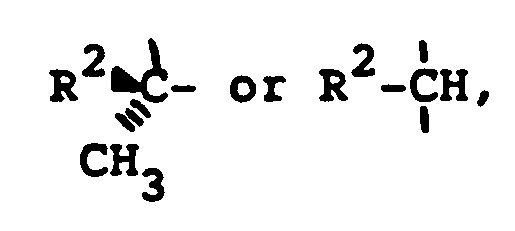
B is
a, b, c and d represent single bonds, one of a, b, c and d represents a double bond or both a and c or both b and d represent double bonds, provided that when a is a double bond, A is

- (b)

E is -CH₂-, -CH₂CH₂- or -CH=CH-;
R⁴ and R⁵ are independently C₁₋₃ alkyl, fluoro, bromo or chloro; and
R⁶ is phenyl, benzyloxy, substituted phenyl or substituted benzyloxy in which the phenyl group in each case is substituted with one or more substituents selected from C₁₋₃alkyl, fluoro, bromo or chloro;
- (a)
- R⁷ is
- hydrogen or C₁₋₆ alkyl;
- R⁸ is
- C₁₋₆alkyl; and
- R⁹ is
- C₁₋₆alkyl, C₁₋₆acyloxy-C₁₋₆alkyl, C₁₋₆alkoxyacyloxy-C₁₋₆alkyl or a group selected from
- (1) (5-(1,1-dimethylethyl)-2-oxo-1,3-dioxol-4-yl)methyl; or
- (2) 2-(β-D-galactosidyl)ethyl.
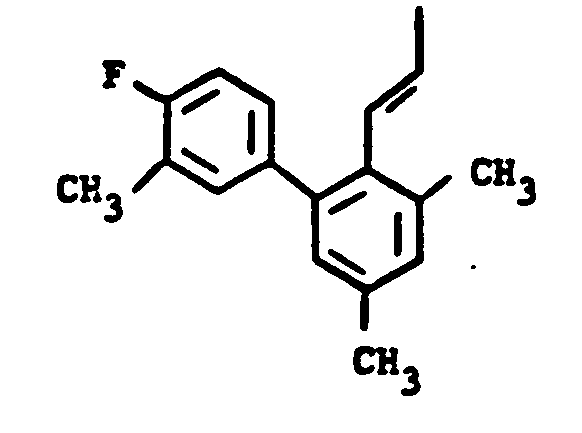
- One embodiment of this invention are the compounds of the formula (I) wherein R is the group (b). Illustrative of this embodiment are compounds wherein E is -CH=CH-; R⁴ and R⁵ are independently C₁₋₃ and R⁶ is substituted phenyl. More specifically, group (b) is:

Exemplifying this embodiment are the class of compounds wherein R⁹ is C₁₋₆alkyl and specifically, ethyl 6(S)-E-[2-[(4ʹ-fluoro-3,3ʹ,5-trimethyl)[1,1ʹ-biphenyl]-2-yl)ethenyl]-2,2-dimethyl- 1,3-dioxane-4(R)-acetate. - A second class of compounds exemplifying this embodiment contain those compounds wherein R⁹ is C₁₋₆acyloxy-C₁₋₆alkyl and specifically (2,2-dimethyl-1-oxopropoxy)methyl 6-(S)-E-[2-[(4ʹ-fluoro-3,3ʹ,5-trimethyl)[1,1ʹ-biphenyl]-2-yl]ethenyl]-2,2-dimethyl-1,3-dioxane-4(R)-acetate.
- A third class of compounds exemplifying this embodiment contain those compounds wherein R⁹ is C₁₋₆alkoxyacyloxy-C₁₋₆alkyl, such as [[(1,1-dimethylethoxy)carbonyl]oxy]methyl 6(S)-E-[2-[(4ʹ-fluoro-3,3ʹ,5-trimethyl)[1,1ʹ-biphenyl]-2-yl]ethenyl]-2,2-dimethyl-1,3-dioxane-4(R)-acetate.
- A fourth class of compounds exemplifying this embodiment contain those compounds wherein R⁹ is [5-(1,1-dimethylethyl)-2-oxo-1,3-dioxol-4-yl]methyl, such as [5-[(1,1-dimethylethyl)-2-oxo-1,3-dioxol-4-yl]]-methyl 6(S)-E-[2-[(4ʹ-fluoro-3,3ʹ,5-trimethyl[1,1ʹ-biphenyl]-2-yl)ethenyl]-2,2-dimethyl-1,3-dioxane-4(R)-acetate.
- Another class of compounds exemplifying this embodiment contain those compounds wherein R⁹ is 2-(β-D-galactosidyl)ethyl, such as 2-(β-D-galactosidyl)ethyl 6-(S)-E-[2-[(4ʹ-fluoro-3,3ʹ,5-trimethyl)[1,1ʹ-biphenyl]-2-yl]ethenyl]-2,2-dimethyl-1,3-dioxane-4(R)-acetate.
- A second embodiment of this invention are the compounds of the formula (I) wherein R is the group (a).
- The compounds of this invention are conveniently prepared by either (1) an acetalization or ketalization of the ring opened dihydroxy ester form of known HMG-CoA reductase inhibitors; or (2) the acetalization or ketalization of the ring opened dihydroxy acid form of known HMG-CoA reductase inhibitors followed by esterification according to the following synthetic pathway:

The compounds of the formula (1) are known in the art. When R is the group (a), the compounds of the formula (1) are the ring opened dihydroxy acid form of compactin, mevinolin, CS514 and their dihydro and tetrahydro analogs which are readily available or may be prepared according to the fermentation procedures disclosed in U.S. Patents 3,983,140; 4,049,495; 4,231,938; 4,294,846 and 4,517,373 and the hydrogenation procedures disclosed in U.S. Patent 4,351,844. When R is the group (b), the compounds of the formula (1) are readily available by utilizing the procedures described in U.S. Patent 4,375,475. - According to the first reaction sequence, the compounds of the formula (1) are neutralized with a primary amine, such as α-methylbenzylamine, to form the ammonium salt which is then treated with the appropriate organohalide, R⁹hal, wherein hal is bromo or chloro, to afford the compounds of the formula (2). The compounds of the formula (2) are then treated with the appropriate aldehyde, ketone or enol ether thereof in the presence of a catalytic amount of an acid, such as p-toluenesulfonic acid, to give the compounds of the formula (I). The sequence of the reactions may be reversed so that the acetal or ketal of the formula (3) is prepared and then esterified to obtain the compounds of the formula (I).
- The compounds of this invention are useful as prodrugs of antihypercholesterolemic agents for the treatment of arteriosclerosis, hyperlipidemia, familial hypercholesterolemia and the like diseases in humans. They may be administered orally in the form of a capsule, a tablet, or the like. Doses may be varied, depending on the age, severity, body weight and other conditions of human patients but daily dosage for adults is within a range of from about 20 mg to 2000 mg (preferably 20 to 100 mg) which may be given in two to four divided doses. Higher doses may be favorably employed as required.
- The compounds of this invention may also be coadministered with pharmaceutically acceptable non-toxic cationic polymers capable of binding bile acids in a non-reabsorbable form in the gastrointestinal tract. Examples of such polymers include cholestyramine, colestipol and poly[methyl-(3-trimethylaminopropyl)imino-trimethylene dihalide]. The relative amounts of the compounds of this invention and these polymers is between 1:100 and 1:15,000.
- The ability of the compounds of this invention to act as prodrugs of antihypercholesterolemic agents is demonstrated in a standard in vivo pharmacological assay in dogs.
- Eight male beagle dogs weighing from 7.2-12.9 kilograms approximately 4-5 years old were fed a low cholesterol, semi-synthetic diet once a day in the morning in sufficient quantity to maintain a constant body weight. The animals were trained to consume their entire ration each day. Cholestyramine, 12 g, was administered daily in the diet. This amount routinely resulted in an average reduction in plasma total cholesterol of approximately 35%. Dogs were bled twice a week from the jugular vein and plasma cholesterol was determined after extraction and saponification by a colorimetric procedure (Liebermann Burchard). After the establishment of pretreatment plasma cholesterol levels, one or more dogs were treated with daily doses of test compound mixed directly into the diet for 14 days.
- Representative of the pharmacological activity of the compounds of this invention tabulated below are a number of compounds and the percentage decrease in cholesterol levels in dogs at specified dosages after 14 days of treatment.

- The following examples illustrate the preparation of the compounds of the formula (I) and their incorporation into pharmaceutical compositions and as such are not to be considered as limiting the invention set forth in the claims appended hereto.
- To 2.0 g (5 mmol) ethyl 7-[(4ʹ-fluoro-3,3ʹ,5-trimethyl)[1,1ʹ-biphenyl]-2-yl]-3(R),5(S)-dihydroxy-6(E)-heptenoate and 0.72 g (10 mmol) 2-methoxypropene dissolved in 25 ml DMF was added 10 mg of p-toluenesulfonic acid monohydrate at room temperature. After stirring for 16 hours, the reaction mixture was taken up in 125 ml diethyl ether and washed with 3 x 25 ml portions of water, 25 ml saturated sodium bicarbonate solution, 25 ml H₂O, brine and dried. The solvent was removed in vacuo to give an oil that was purified by flash chromatography on silica gel eluting with hexane:Et₂O (4:1). Solvent removal left an oil which was triturated to give the above titled compound as a white solid, m.p. 76-78°.
Anal. Calc'd for C₂₇H₃₃FO₄: C, 73.61; H, 7.55 Found: C, 73.67; H, 7.87 - To 29.62 g (60 mmol) of the α-methylbenzylammonium salt of 7-[(4ʹ-fluoro-3,3ʹ,5-trimethyl)[1,1-biphenyl]-2-yl]-3(R),5(S)-dihydroxy-6(E)-heptenoic acid in 165 ml DMF was added 18.07 g (120 mmol) chloromethyl pivalate, 0.8 g potassium carbonate and 4.8 ml of 10% aqueous potassium iodide and the resulting mixture stirred at room temperature for 18 hours. The reaction mixture was diluted with 400 ml diethyl ether and this was washed with 3 x 200 ml portions H₂O, 75 ml saturated NaHCO₃ solution, brine and dried. Solvent removal in vacuo gave an oil that was purified by flash chromatography on silica gel eluting with 5% isopropanol/hexane to give an oil. This was triturated with hexane to give pure desired product as a white solid, m.p. 97-98°.
- To 1.46 g (3.0 mmol) compound 2a in 15 ml DMF was added 0.43 g (6.0 mmol) 2-methoxypropene and 10 mg p-toluenesulfonic acid monohydrate with stirring. After 18 hours at room temperature the reaction mixture was taken up in 75 ml Et₂O and washed successively with 3 x 15 ml H₂O, 15 ml saturated NaHCO₃ solution, 15 ml H₂O, brine and dried. Solvent removal in vacuo gave an oil which was purified by flash chromatography on silica gel eluting with 25% isopropanol/hexane to give a solid. This was recrystallized from hexane to afford the above titled compound, m.p. 120-121°.
Anal. Calc'd for C₃₁H₃₉FO₆: C, 70.70; H, 7.46 Found: C, 70.62; H, 7.53 - To 0.79 g (2 mmol) of the α-methylbenzylammonium salt of 7-[(4ʹ-fluoro-3,3ʹ,5-trimethyl)[1,1-biphenyl]-2-yl]-3(R),5(S)-dihydroxy-6(E)-heptenoic acid in 6 ml DMF at room temperature was added 0.67 g (4 mmol), chloromethyl t-butylcarbonate, 60 mg sodium iodide and 20 mg potassium carbonate with stirring. After 24 hours at room temperature the reaction mixture was poured into 25 ml H₂O and this was extracted with 5 x 30 ml portions of diethyl ether. The combined organic extracts were washed with 2 x 25 ml portions of H₂O, brine and dried. Solvent removal in vacuo gave a yellow oil that was purified by flash chromatography on silica gel eluting with 5% isopropanol/hexane to give a white residue. This was triturated with 5% isopropanol/hexane to give the desired product as a white solid, m.p. 103-104°.
- To 1.02 g (2 mmol) compound 3a in 5 ml DMF at room temperature was added 0.288 g (4 mmol) 2-methoxypropene and 20 mg p-toluenesulfonic acid monohydrate and the resulting solution was stirred overnight. This was poured into 75 ml cold H₂O and extracted with 4 x 75 ml portions of diethyl ether. The combined organic extracts were washed with 3 x 50 ml H₂O, 2 x 25 ml portions of saturated NaHCO₃ solution, brine, and dried. The solvent was removed in vacuo to give a yellow oil that was purified by flash chromatography on silica gel eluting with hexane:diethyl ether (5:1) to give an oil. This was triturated with hexane to provide the above titled compound as a white solid, m.p. 98-100°.
Anal. Calc'd for C₃₁H₃₉FO₇: C, 68.61; H, 7.24 Found: C, 68.72; H, 7.45 - To 4.94 g (10 mmol) α-methylbenzylammonium salt of 7-[(4ʹ-fluoro-3,3ʹ,5-trimethyl)[1,1-biphenyl]-2-yl]-3(R),5(S)-dihydroxy-6(E)-heptenoic acid in 35 ml DMF at room temperature was added 2.59 g (11 mmol) 4-bromomethyl-5-tert-butyl-2-oxo-1,3-dioxolene dropwise followed by 100 mg of potassium carbonate. This suspension was stirred at room temperature for 16 hours. The solvent was removed in vacuo (<50°C) and the residue was taken up in 350 ml diethyl ether. This was washed with 4 x 75 ml portions of H₂O, brine and dried. The solvent was removed in vacuo to give an oil which was purified by flash chromatography on silica gel eluting with 8% isopropyl/hexane to give the desired product as a clear oil.
- To 1.6 g (3 mmol) compound 4a in 5 ml DMF at room temperature was added 0.433 g (6 mmol) 2-methoxypropene and 20 mg p-toluenesulfonic acid monohydrate with stirring. After 24 hours the reaction mixture was poured into 75 ml cold H₂O and extracted with 4 x 75 ml portions of diethyl ether. The combined organic extracts were washed with 3 x 50 ml portions of H₂O, 2 x 25 ml portions of saturated NaHCO₃ solution, 50 ml H₂O, brine and dried. Solvent removal in vacuo gave a yellow oil that was purified by flash chromatography on silica gel eluting with hexane:diethyl ether (3:1) to give a clear oil. This was triturated with hexane to give the above titled compound as a white solid, m.p. 88-90°.
Anal. Calc'd for C₃₃H₃₉FO₇: C, 69.94; H, 6.94 Found: C, 70.06; H, 7.15. - To 0.2 g (0.5 mmol) α-methylbenzylammonium salt of 7-[(4ʹ-fluoro-3,3ʹ,5-trimethyl)[1,1-biphenyl]-2-yl]-3(R),5(S)-dihydroxy-6(E)-heptenoic acid in 5 ml DMF was added 0.072 g (1.0 mmol) 2-methoxypropene and 2 mg p-toluenesulfonic acid monohydrate at room temperature and the resulting solution stirred overnight at room temperature. After 18 hours the reaction mixture was diluted with 15 ml diethyl ether and washed successively with 3 x 3 ml portions of H₂O, 1 ml saturated NaHCO₃ solution, 3 ml H₂O, brine and dried. Solvent removal gave a gum that was recrystallized from hexane to give the desired product as a solid.
- To 1.03 g (2.5 mmol) 2-bromoethyl-β-D-galactopyranoside [prepared by the method of G. Magmusson et al., Carbohydr. Res., 125, 237 (1984)] dissolved in 10 ml DMF was added 2.5 ml of a 1N NaOH solution (slight exother:n) and this was stirred for 1 hour. Then, 0.035 g (0.25 mmol) K₂CO₃ was added followed by 0.2 ml of a 10% NaI solution and a solution of 0.86 g (3.0 mmol) compound 5a in 5 ml DMF. The resulting mixture was stirred at room temperature for 3 days.
- The solvent was removed in vacuo and the residue purified by flash chromatography on silica gel eluting with 10% MeOH/CHCl₃ to give the above titled compound as a white solid, m.p. 71-73°.
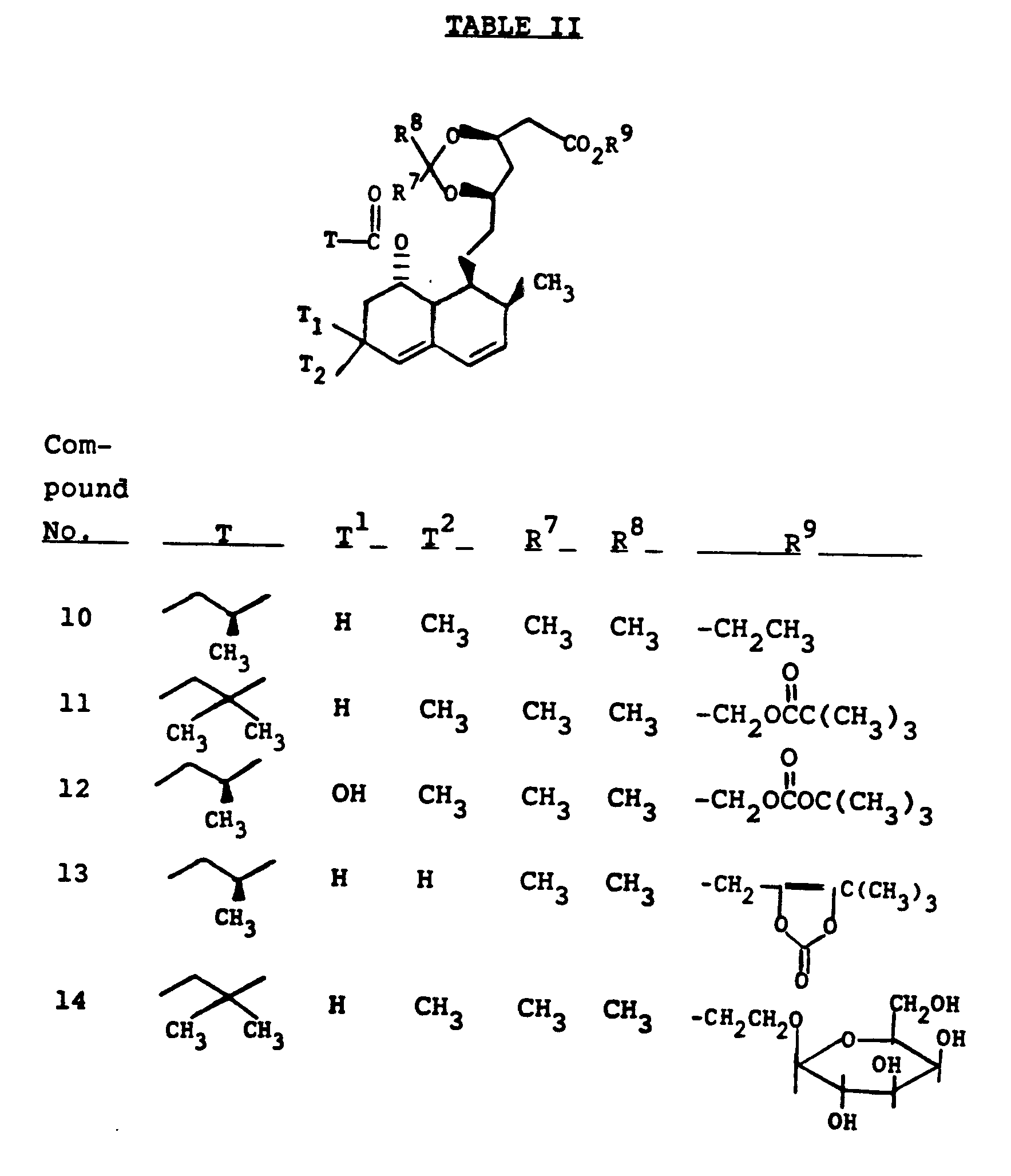
Anal. Calc'd for C₃₃H₄₃FO₁₀·2H₂O: C, 60.54; H, 7.24 Found: C, 60.61; H, 7.02. - The following compounds in Tables I and II are prepared according to the general procedures of Examples 1 and 2 utilizing the appropriate starting materials.

- As a specific embodiment of a composition of this invention, 20 mg of the compound of Example 1 is formulated with sufficient finely divided lactose to provide a total amount of 580 to 590 mg to fill a size 0 hard gelatin capsule.
Claims (10)
- A compound represented by the general structural formula (I):
 R is selected from a group consisting of:(a)
n is 1 to 5;
R¹ is hydrogen or methyl;
A is
B is
a, b, c and d represent single bonds, one of a, b, c and d represent a double bond or both a and c or both b and d represents double bonds, provided that when a is a double bond, A is
 (b)
(b)
E is -CH₂-, -CH₂CH₂- or -CH=CH-;
R⁴ and R⁵ are independently C₁₋₃ alkyl, fluoro, bromo or chloro; and
R⁶ is phenyl, benzyloxy, substituted phenyl or substituted benzyloxy in which the phenyl group in each case is substituted with one or more substituents selected from C₁₋₃alkyl, fluoro, bromo or chloro;R⁷ is hydrogen or C₁₋₆ alkyl;R⁸ is C₁₋₆ alkyl; andR⁹ is C₁₋₆alkyl, C₁₋₆acyloxy-C₁₋₆alkyl, C₁₋₆alkoxyacyloxy-C₁₋₆alkyl or a group selected from(1) (5-(1,1-dimethylethyl)-2-oxo-1,3-dioxol-4-yl)methyl; or(2) 2-(β-D-galactosidyl)ethyl. - A compound of Claim 1 wherein R is the group (b).
- A compound of Claim 2 wherein E is -CH=CH-.
- A compound of Claim 3 wherein:
R⁴ and R⁵ independently are C₁₋₃alkyl; and
R⁶ is a substituted phenyl. - A compound of Claim 4 wherein R is:
- A compound of Claim 5 wherein R⁹ is C₁₋₆alkyl, C₁₋₆acyloxy-C₁₋₆alkyl, orC₁₋₆alkoxyacyloxy-C₁₋₆alkyl.
- A compound of Claim 6 which is(1) ethyl 6(S)-E-[2-[(4ʹ-fluoro-3,3ʹ,5-trimethyl)-[1,1ʹ-biphenyl]-2-yl]ethenyl]-2,2-dimethyl-1,3-dioxane-4(R)-acetate;(2) (2,2-dimethyl-1-oxopropoxy)methyl 6-(S)-E-[2-[(4ʹ-fluoro-3,3ʹ,5-trimethyl)[1,1ʹ-biphenyl] -2-yl]ethenyl]-2,2-dimethyl-1,3-dioxane-4(R)-acetate;(3) [5-(1,1-dimethylethyl)-2-oxo-1,3-dioxol-4-yl]-methyl 6(S)-E-[2-[(4ʹ-fluoro-3,3ʹ,5-trimethyl)[1,1ʹ-biphenyl]-2-yl]ethenyl]-2,2-dimethyl-1,3-dioxane-4(R)acetate; or(4) 2-(β-D-galactosidyl)ethyl 6(S)-E-[2-[(4ʹ-fluoro-3,3ʹ,5-trimethyl)[1,1ʹ-biphenyl]-2-yl]ethenyl]-2,2-dimethyl-1,3-dioxane-4(R)acetate.
- A compound of Claim 1 wherein R is the group (a).
- A hypocholesterolemic, hypolipidemic pharmaceutical composition comprising a nontoxic therapeutically effective amount of a compound of Claim 1 and a pharmaceutically acceptable carrier.
- A composition of Claim 9 wherein the active ingredient is selected from:(1) ethyl 6(S)-E-[2-[(4ʹ-fluoro-3,3ʹ,5-trimethyl)-[1,1ʹ-biphenyl]-2-yl]ethenyl]-2,2-dimethyl-1,3-dioxane-4(R)-acetate;(2) (2,2-dimethyl-1-oxopropoxy)methyl 6-(S)-E-[2-[(4ʹ-fluoro-3,3ʹ,5-trimethyl)[1,1ʹ-biphenyl] -2-yl]ethenyl]-2,2-dimethyl-1,3-dioxane-4(R)-acetate;(3) [5-(1,1-dimethylethyl)-2-oxo-1,3-dioxol-4-yl]-methyl 6(S)-E-[2-[(4ʹ-fluoro-3,3ʹ,5-trimethyl)[1,1ʹ-biphenyl]-2-yl]ethenyl]-2,2-dimethyl-1,3-dioxane-4(R)acetate; or(4) 2-(β-D-galactosidyl)ethyl 6(S)-E-[2-[(4ʹ-fluoro-3,3',5-trimethyl)[1,1ʹ-biphenyl]-2-yl]ethenyl]-2,2-dimethyl-1,3-dioxane-4(R)acetate.
Applications Claiming Priority (2)
| Application Number | Priority Date | Filing Date | Title |
|---|---|---|---|
| US902894 | 1986-09-02 | ||
| US06/902,894 US4837205A (en) | 1986-09-02 | 1986-09-02 | Prodrugs of antihypercholesterolemic compounds |
Publications (3)
| Publication Number | Publication Date |
|---|---|
| EP0259087A2 EP0259087A2 (en) | 1988-03-09 |
| EP0259087A3 EP0259087A3 (en) | 1989-11-29 |
| EP0259087B1 true EP0259087B1 (en) | 1993-04-07 |
Family
ID=25416576
Family Applications (1)
| Application Number | Title | Priority Date | Filing Date |
|---|---|---|---|
| EP87307501A Expired - Lifetime EP0259087B1 (en) | 1986-09-02 | 1987-08-25 | Prodrugs of antihypercholesterolemic compounds |
Country Status (5)
| Country | Link |
|---|---|
| US (1) | US4837205A (en) |
| EP (1) | EP0259087B1 (en) |
| JP (1) | JPS6368584A (en) |
| CA (1) | CA1284497C (en) |
| DE (1) | DE3785275D1 (en) |
Families Citing this family (10)
| Publication number | Priority date | Publication date | Assignee | Title |
|---|---|---|---|---|
| US4824959A (en) * | 1988-02-18 | 1989-04-25 | Bristol-Myers Company | Intermediates for antihypercholesterolemic tetrazole compounds |
| GB9100431D0 (en) * | 1991-01-09 | 1991-02-20 | Glaxo Group Ltd | Chemical compounds |
| EP0497091A1 (en) * | 1991-01-09 | 1992-08-05 | Glaxo Group Limited | Bridged cyclic ketal derivatives |
| GB9100437D0 (en) * | 1991-01-09 | 1991-02-20 | Glaxo Group Ltd | Chemical compounds |
| EP0494622A1 (en) * | 1991-01-09 | 1992-07-15 | Glaxo Group Limited | Bridged cyclic ketal derivatives |
| GB9105152D0 (en) * | 1991-03-12 | 1991-04-24 | Glaxo Group Ltd | Chemical compounds |
| CA2109523A1 (en) * | 1991-05-10 | 1992-11-26 | Robert M. Burk | Novel cholesterol lowering compounds |
| MX9202156A (en) * | 1991-05-10 | 1993-08-01 | Merck & Co Inc | NOVELTY COMPOUNDS TO REDUCE CHOLESTEROL. |
| KR100672269B1 (en) * | 1998-12-10 | 2007-01-23 | 카네카 코포레이션 | How to prepare simvastatin |
| JP4446172B2 (en) | 2004-12-15 | 2010-04-07 | トヨタ自動車株式会社 | Pressure regulating valve |
Family Cites Families (2)
| Publication number | Priority date | Publication date | Assignee | Title |
|---|---|---|---|---|
| US4375475A (en) * | 1979-08-17 | 1983-03-01 | Merck & Co., Inc. | Substituted pyranone inhibitors of cholesterol synthesis |
| JPS58188873A (en) * | 1982-04-26 | 1983-11-04 | Suntory Ltd | 2,2-dimethyl-4r-(3-oxo)propyl-6s-(2-alkyloxy) ethyl-1,3-dioxane |
-
1986
- 1986-09-02 US US06/902,894 patent/US4837205A/en not_active Expired - Fee Related
-
1987
- 1987-08-25 DE DE8787307501T patent/DE3785275D1/en not_active Expired - Lifetime
- 1987-08-25 EP EP87307501A patent/EP0259087B1/en not_active Expired - Lifetime
- 1987-09-01 CA CA000545875A patent/CA1284497C/en not_active Expired - Lifetime
- 1987-09-02 JP JP62218083A patent/JPS6368584A/en active Pending
Also Published As
| Publication number | Publication date |
|---|---|
| EP0259087A2 (en) | 1988-03-09 |
| EP0259087A3 (en) | 1989-11-29 |
| JPS6368584A (en) | 1988-03-28 |
| DE3785275D1 (en) | 1993-05-13 |
| US4837205A (en) | 1989-06-06 |
| CA1284497C (en) | 1991-05-28 |
Similar Documents
| Publication | Publication Date | Title |
|---|---|---|
| EP0593478B1 (en) | Leukotriene b 4 antagonists | |
| US5045543A (en) | 5-amino or substituted amino 1,2,3-triazoles useful as antimetastatic agents | |
| JPS607997B2 (en) | Hydantoin derivative therapeutic agent | |
| US4837205A (en) | Prodrugs of antihypercholesterolemic compounds | |
| EP1142885B1 (en) | 2-(n-cyanoimino)thiazolidin-4-one derivatives | |
| WO1995027714A1 (en) | Active compounds | |
| US4766145A (en) | Antihypercholesterolemic compounds | |
| EP0019440B1 (en) | Benzimidazolone derivatives, process for their preparation and pharmaceutical compositions containing them | |
| US5089524A (en) | Tetraenyl prostanoic acid derivatives as prodrugs for the treatment of peptic ulcer disease | |
| JPH03130277A (en) | Trans-2, 3-disubstituted-2, 3-dihydro-5- hydroxybenzofuran as leucotriene biosynthsis inhibitor | |
| EP0259086B1 (en) | Prodrugs of antihypercholesterolemic compounds | |
| EP0429464B1 (en) | Bivalent ligands effective for blocking acat enzyme | |
| US4943588A (en) | Prodrugs of antihypercholesterolemic compounds | |
| EP0528935B1 (en) | Alkoxy-substituted dihydrobenzopyran-2-carboxylic acids and derivatives thereof | |
| EP0718290B1 (en) | Carboxyalkyl heterocyclic derivatives | |
| US3853854A (en) | Novel 5{40 ,6{40 -dihydro-2h-pyran-4{40 -yl prostaglandin ethers | |
| JPS6026094B2 (en) | Tetrahydro ML↓-236B and its derivatives, and a therapeutic agent for hyperlipidemia containing the same as an active ingredient | |
| US5595976A (en) | Tetrahydropyran compounds | |
| EP0262852B1 (en) | Prodrugs of antihypercholoesterolemic compounds | |
| US5210097A (en) | Xanthocillin x monomethyl ether derivative and antitumor agent containing the same | |
| KR950005198B1 (en) | Quinone derivatives | |
| US4876279A (en) | Antihypercholesterolemic compounds | |
| US4916162A (en) | Antihypercholesterolemic compounds | |
| US5432194A (en) | (4-alkoxypyran-4-yl) substituted arylalkylaryl-, aryalkenylaryl-, and aryalkynylarylurea inhibitors of 5-lipoxygenase | |
| EP0103361B1 (en) | Quinone compounds, their production and use |
Legal Events
| Date | Code | Title | Description |
|---|---|---|---|
| PUAI | Public reference made under article 153(3) epc to a published international application that has entered the european phase |
Free format text: ORIGINAL CODE: 0009012 |
|
| AK | Designated contracting states |
Kind code of ref document: A2 Designated state(s): CH DE FR GB IT LI NL |
|
| ITCL | It: translation for ep claims filed |
Representative=s name: SOCIETA' ITALIANA BREVETTI S.P.A. |
|
| PUAL | Search report despatched |
Free format text: ORIGINAL CODE: 0009013 |
|
| AK | Designated contracting states |
Kind code of ref document: A3 Designated state(s): CH DE FR GB IT LI NL |
|
| 17P | Request for examination filed |
Effective date: 19900411 |
|
| 17Q | First examination report despatched |
Effective date: 19911004 |
|
| GRAA | (expected) grant |
Free format text: ORIGINAL CODE: 0009210 |
|
| AK | Designated contracting states |
Kind code of ref document: B1 Designated state(s): CH DE FR GB IT LI NL |
|
| PG25 | Lapsed in a contracting state [announced via postgrant information from national office to epo] |
Ref country code: IT Free format text: LAPSE BECAUSE OF FAILURE TO SUBMIT A TRANSLATION OF THE DESCRIPTION OR TO PAY THE FEE WITHIN THE PRE;WARNING: LAPSES OF ITALIAN PATENTS WITH EFFECTIVE DATE BEFORE 2007 MAY HAVE OCCURRED AT ANY TIME BEFORE 2007. THE CORRECT EFFECTIVE DATE MAY BE DIFFERENT FROM THE ONE RECORDED.SCRIBED TIME-LIMIT Effective date: 19930407 Ref country code: NL Effective date: 19930407 Ref country code: FR Effective date: 19930407 Ref country code: DE Effective date: 19930407 |
|
| REF | Corresponds to: |
Ref document number: 3785275 Country of ref document: DE Date of ref document: 19930513 |
|
| PG25 | Lapsed in a contracting state [announced via postgrant information from national office to epo] |
Ref country code: GB Effective date: 19930825 |
|
| EN | Fr: translation not filed | ||
| PG25 | Lapsed in a contracting state [announced via postgrant information from national office to epo] |
Ref country code: CH Effective date: 19930831 Ref country code: LI Effective date: 19930831 |
|
| NLV1 | Nl: lapsed or annulled due to failure to fulfill the requirements of art. 29p and 29m of the patents act | ||
| PLBE | No opposition filed within time limit |
Free format text: ORIGINAL CODE: 0009261 |
|
| STAA | Information on the status of an ep patent application or granted ep patent |
Free format text: STATUS: NO OPPOSITION FILED WITHIN TIME LIMIT |
|
| 26N | No opposition filed | ||
| GBPC | Gb: european patent ceased through non-payment of renewal fee |
Effective date: 19930825 |
|
| REG | Reference to a national code |
Ref country code: CH Ref legal event code: PL |