EP0258598A2 - N-(substituted-1-piperazinealkyl)-alpha-(3,5-di-alkyl-4-hydroxyphenyl)-alpha,alpha-dialkyl acetamides - Google Patents
N-(substituted-1-piperazinealkyl)-alpha-(3,5-di-alkyl-4-hydroxyphenyl)-alpha,alpha-dialkyl acetamides Download PDFInfo
- Publication number
- EP0258598A2 EP0258598A2 EP87110434A EP87110434A EP0258598A2 EP 0258598 A2 EP0258598 A2 EP 0258598A2 EP 87110434 A EP87110434 A EP 87110434A EP 87110434 A EP87110434 A EP 87110434A EP 0258598 A2 EP0258598 A2 EP 0258598A2
- Authority
- EP
- European Patent Office
- Prior art keywords
- carbon atoms
- alkyl
- hydrogen
- groups
- phenyl
- Prior art date
- Legal status (The legal status is an assumption and is not a legal conclusion. Google has not performed a legal analysis and makes no representation as to the accuracy of the status listed.)
- Granted
Links
- 150000003869 acetamides Chemical class 0.000 title claims abstract description 13
- 125000004122 cyclic group Chemical group 0.000 claims abstract description 11
- 238000000034 method Methods 0.000 claims abstract description 6
- 239000011368 organic material Substances 0.000 claims abstract description 6
- QVGXLLKOCUKJST-UHFFFAOYSA-N atomic oxygen Chemical compound [O] QVGXLLKOCUKJST-UHFFFAOYSA-N 0.000 claims abstract description 5
- 230000015556 catabolic process Effects 0.000 claims abstract description 5
- 238000006731 degradation reaction Methods 0.000 claims abstract description 5
- 239000001301 oxygen Substances 0.000 claims abstract description 5
- 229910052760 oxygen Inorganic materials 0.000 claims abstract description 5
- 125000004432 carbon atom Chemical group C* 0.000 claims description 105
- 125000000217 alkyl group Chemical group 0.000 claims description 84
- 239000001257 hydrogen Substances 0.000 claims description 44
- 229910052739 hydrogen Inorganic materials 0.000 claims description 44
- 125000001624 naphthyl group Chemical group 0.000 claims description 38
- -1 alkyl radicals Chemical group 0.000 claims description 32
- HEDRZPFGACZZDS-UHFFFAOYSA-N Chloroform Chemical compound ClC(Cl)Cl HEDRZPFGACZZDS-UHFFFAOYSA-N 0.000 claims description 30
- 150000002431 hydrogen Chemical class 0.000 claims description 23
- 125000001997 phenyl group Chemical group [H]C1=C([H])C([H])=C(*)C([H])=C1[H] 0.000 claims description 21
- 125000000753 cycloalkyl group Chemical group 0.000 claims description 19
- 150000002576 ketones Chemical class 0.000 claims description 16
- PNZXMIKHJXIPEK-UHFFFAOYSA-N cyclohexanecarboxamide Chemical compound NC(=O)C1CCCCC1 PNZXMIKHJXIPEK-UHFFFAOYSA-N 0.000 claims description 15
- JHIVVAPYMSGYDF-UHFFFAOYSA-N cyclohexanone Chemical compound O=C1CCCCC1 JHIVVAPYMSGYDF-UHFFFAOYSA-N 0.000 claims description 14
- 239000000203 mixture Substances 0.000 claims description 13
- UFHFLCQGNIYNRP-UHFFFAOYSA-N Hydrogen Chemical compound [H][H] UFHFLCQGNIYNRP-UHFFFAOYSA-N 0.000 claims description 12
- 125000001118 alkylidene group Chemical group 0.000 claims description 10
- 125000004435 hydrogen atom Chemical group [H]* 0.000 claims description 9
- 229920000642 polymer Polymers 0.000 claims description 8
- 125000002252 acyl group Chemical group 0.000 claims description 6
- 150000008044 alkali metal hydroxides Chemical class 0.000 claims description 6
- 125000003342 alkenyl group Chemical group 0.000 claims description 6
- 125000001495 ethyl group Chemical group [H]C([H])([H])C([H])([H])* 0.000 claims description 6
- 239000007787 solid Substances 0.000 claims description 6
- 125000005119 alkyl cycloalkyl group Chemical group 0.000 claims description 5
- 150000001875 compounds Chemical class 0.000 claims description 5
- DIKBFYAXUHHXCS-UHFFFAOYSA-N bromoform Chemical compound BrC(Br)Br DIKBFYAXUHHXCS-UHFFFAOYSA-N 0.000 claims description 4
- BGTOWKSIORTVQH-UHFFFAOYSA-N cyclopentanone Chemical compound O=C1CCCC1 BGTOWKSIORTVQH-UHFFFAOYSA-N 0.000 claims description 4
- 125000002496 methyl group Chemical group [H]C([H])([H])* 0.000 claims description 4
- 229920000098 polyolefin Polymers 0.000 claims description 4
- 150000004885 piperazines Chemical class 0.000 claims description 3
- 229950005228 bromoform Drugs 0.000 claims description 2
- UOCJDOLVGGIYIQ-PBFPGSCMSA-N cefatrizine Chemical group S([C@@H]1[C@@H](C(N1C=1C(O)=O)=O)NC(=O)[C@H](N)C=2C=CC(O)=CC=2)CC=1CSC=1C=NNN=1 UOCJDOLVGGIYIQ-PBFPGSCMSA-N 0.000 claims description 2
- CGZZMOTZOONQIA-UHFFFAOYSA-N cycloheptanone Chemical compound O=C1CCCCCC1 CGZZMOTZOONQIA-UHFFFAOYSA-N 0.000 claims description 2
- 230000000087 stabilizing effect Effects 0.000 claims description 2
- 125000000999 tert-butyl group Chemical group [H]C([H])([H])C(*)(C([H])([H])[H])C([H])([H])[H] 0.000 claims description 2
- 125000001436 propyl group Chemical group [H]C([*])([H])C([H])([H])C([H])([H])[H] 0.000 claims 6
- 125000000582 cycloheptyl group Chemical group [H]C1([H])C([H])([H])C([H])([H])C([H])([H])C([H])(*)C([H])([H])C1([H])[H] 0.000 claims 2
- 125000000113 cyclohexyl group Chemical group [H]C1([H])C([H])([H])C([H])([H])C([H])(*)C([H])([H])C1([H])[H] 0.000 claims 2
- 238000004519 manufacturing process Methods 0.000 claims 1
- 239000003381 stabilizer Substances 0.000 abstract description 10
- 239000002861 polymer material Substances 0.000 abstract 1
- HEMHJVSKTPXQMS-UHFFFAOYSA-M Sodium hydroxide Chemical compound [OH-].[Na+] HEMHJVSKTPXQMS-UHFFFAOYSA-M 0.000 description 39
- 150000001408 amides Chemical class 0.000 description 13
- 238000006243 chemical reaction Methods 0.000 description 13
- 239000011324 bead Substances 0.000 description 11
- CSCPPACGZOOCGX-UHFFFAOYSA-N Acetone Chemical compound CC(C)=O CSCPPACGZOOCGX-UHFFFAOYSA-N 0.000 description 9
- 238000002844 melting Methods 0.000 description 9
- 230000008018 melting Effects 0.000 description 9
- 239000002904 solvent Substances 0.000 description 9
- VLKZOEOYAKHREP-UHFFFAOYSA-N n-Hexane Chemical compound CCCCCC VLKZOEOYAKHREP-UHFFFAOYSA-N 0.000 description 8
- 239000004743 Polypropylene Substances 0.000 description 7
- 239000007983 Tris buffer Substances 0.000 description 7
- 229920001577 copolymer Polymers 0.000 description 7
- 229920001155 polypropylene Polymers 0.000 description 7
- 239000000047 product Substances 0.000 description 7
- ZWEHNKRNPOVVGH-UHFFFAOYSA-N 2-Butanone Chemical compound CCC(C)=O ZWEHNKRNPOVVGH-UHFFFAOYSA-N 0.000 description 6
- YMWUJEATGCHHMB-UHFFFAOYSA-N Dichloromethane Chemical compound ClCCl YMWUJEATGCHHMB-UHFFFAOYSA-N 0.000 description 6
- 239000011541 reaction mixture Substances 0.000 description 5
- IJGRMHOSHXDMSA-UHFFFAOYSA-N Atomic nitrogen Chemical compound N#N IJGRMHOSHXDMSA-UHFFFAOYSA-N 0.000 description 4
- KAKZBPTYRLMSJV-UHFFFAOYSA-N Butadiene Chemical compound C=CC=C KAKZBPTYRLMSJV-UHFFFAOYSA-N 0.000 description 4
- VEXZGXHMUGYJMC-UHFFFAOYSA-N Hydrochloric acid Chemical compound Cl VEXZGXHMUGYJMC-UHFFFAOYSA-N 0.000 description 4
- PPBRXRYQALVLMV-UHFFFAOYSA-N Styrene Chemical compound C=CC1=CC=CC=C1 PPBRXRYQALVLMV-UHFFFAOYSA-N 0.000 description 4
- 230000032683 aging Effects 0.000 description 4
- 239000000706 filtrate Substances 0.000 description 4
- 150000002989 phenols Chemical class 0.000 description 4
- 239000000376 reactant Substances 0.000 description 4
- XLYOFNOQVPJJNP-UHFFFAOYSA-N water Substances O XLYOFNOQVPJJNP-UHFFFAOYSA-N 0.000 description 4
- DKCPKDPYUFEZCP-UHFFFAOYSA-N 2,6-di-tert-butylphenol Chemical compound CC(C)(C)C1=CC=CC(C(C)(C)C)=C1O DKCPKDPYUFEZCP-UHFFFAOYSA-N 0.000 description 3
- QQZOPKMRPOGIEB-UHFFFAOYSA-N 2-Oxohexane Chemical compound CCCCC(C)=O QQZOPKMRPOGIEB-UHFFFAOYSA-N 0.000 description 3
- UHOVQNZJYSORNB-UHFFFAOYSA-N Benzene Chemical compound C1=CC=CC=C1 UHOVQNZJYSORNB-UHFFFAOYSA-N 0.000 description 3
- RTZKZFJDLAIYFH-UHFFFAOYSA-N Diethyl ether Chemical compound CCOCC RTZKZFJDLAIYFH-UHFFFAOYSA-N 0.000 description 3
- KWYUFKZDYYNOTN-UHFFFAOYSA-M Potassium hydroxide Chemical compound [OH-].[K+] KWYUFKZDYYNOTN-UHFFFAOYSA-M 0.000 description 3
- YXFVVABEGXRONW-UHFFFAOYSA-N Toluene Chemical compound CC1=CC=CC=C1 YXFVVABEGXRONW-UHFFFAOYSA-N 0.000 description 3
- 238000001816 cooling Methods 0.000 description 3
- GLUUGHFHXGJENI-UHFFFAOYSA-N diethylenediamine Natural products C1CNCCN1 GLUUGHFHXGJENI-UHFFFAOYSA-N 0.000 description 3
- 239000000463 material Substances 0.000 description 3
- 238000002156 mixing Methods 0.000 description 3
- 239000001294 propane Substances 0.000 description 3
- 238000012360 testing method Methods 0.000 description 3
- NIXOWILDQLNWCW-UHFFFAOYSA-N 2-Propenoic acid Natural products OC(=O)C=C NIXOWILDQLNWCW-UHFFFAOYSA-N 0.000 description 2
- ZIXLDMFVRPABBX-UHFFFAOYSA-N 2-methylcyclopentan-1-one Chemical compound CC1CCCC1=O ZIXLDMFVRPABBX-UHFFFAOYSA-N 0.000 description 2
- ZPVFWPFBNIEHGJ-UHFFFAOYSA-N 2-octanone Chemical compound CCCCCCC(C)=O ZPVFWPFBNIEHGJ-UHFFFAOYSA-N 0.000 description 2
- SYBYTAAJFKOIEJ-UHFFFAOYSA-N 3-Methylbutan-2-one Chemical compound CC(C)C(C)=O SYBYTAAJFKOIEJ-UHFFFAOYSA-N 0.000 description 2
- HCFAJYNVAYBARA-UHFFFAOYSA-N 4-heptanone Chemical compound CCCC(=O)CCC HCFAJYNVAYBARA-UHFFFAOYSA-N 0.000 description 2
- DLFVBJFMPXGRIB-UHFFFAOYSA-N Acetamide Chemical compound CC(N)=O DLFVBJFMPXGRIB-UHFFFAOYSA-N 0.000 description 2
- KWOLFJPFCHCOCG-UHFFFAOYSA-N Acetophenone Chemical compound CC(=O)C1=CC=CC=C1 KWOLFJPFCHCOCG-UHFFFAOYSA-N 0.000 description 2
- NLHHRLWOUZZQLW-UHFFFAOYSA-N Acrylonitrile Chemical compound C=CC#N NLHHRLWOUZZQLW-UHFFFAOYSA-N 0.000 description 2
- OKTJSMMVPCPJKN-UHFFFAOYSA-N Carbon Chemical compound [C] OKTJSMMVPCPJKN-UHFFFAOYSA-N 0.000 description 2
- IAZDPXIOMUYVGZ-UHFFFAOYSA-N Dimethylsulphoxide Chemical compound CS(C)=O IAZDPXIOMUYVGZ-UHFFFAOYSA-N 0.000 description 2
- LFQSCWFLJHTTHZ-UHFFFAOYSA-N Ethanol Chemical compound CCO LFQSCWFLJHTTHZ-UHFFFAOYSA-N 0.000 description 2
- OAKJQQAXSVQMHS-UHFFFAOYSA-N Hydrazine Chemical compound NN OAKJQQAXSVQMHS-UHFFFAOYSA-N 0.000 description 2
- BAPJBEWLBFYGME-UHFFFAOYSA-N Methyl acrylate Chemical compound COC(=O)C=C BAPJBEWLBFYGME-UHFFFAOYSA-N 0.000 description 2
- NQRYJNQNLNOLGT-UHFFFAOYSA-N Piperidine Chemical compound C1CCNCC1 NQRYJNQNLNOLGT-UHFFFAOYSA-N 0.000 description 2
- XBDQKXXYIPTUBI-UHFFFAOYSA-N Propionic acid Chemical compound CCC(O)=O XBDQKXXYIPTUBI-UHFFFAOYSA-N 0.000 description 2
- CDBYLPFSWZWCQE-UHFFFAOYSA-L Sodium Carbonate Chemical compound [Na+].[Na+].[O-]C([O-])=O CDBYLPFSWZWCQE-UHFFFAOYSA-L 0.000 description 2
- PMZURENOXWZQFD-UHFFFAOYSA-L Sodium Sulfate Chemical compound [Na+].[Na+].[O-]S([O-])(=O)=O PMZURENOXWZQFD-UHFFFAOYSA-L 0.000 description 2
- QAOWNCQODCNURD-UHFFFAOYSA-N Sulfuric acid Chemical compound OS(O)(=O)=O QAOWNCQODCNURD-UHFFFAOYSA-N 0.000 description 2
- WYURNTSHIVDZCO-UHFFFAOYSA-N Tetrahydrofuran Chemical compound C1CCOC1 WYURNTSHIVDZCO-UHFFFAOYSA-N 0.000 description 2
- WNLRTRBMVRJNCN-UHFFFAOYSA-N adipic acid Chemical compound OC(=O)CCCCC(O)=O WNLRTRBMVRJNCN-UHFFFAOYSA-N 0.000 description 2
- 150000004983 alkyl aryl ketones Chemical class 0.000 description 2
- 150000001412 amines Chemical class 0.000 description 2
- FUSUHKVFWTUUBE-UHFFFAOYSA-N buten-2-one Chemical compound CC(=O)C=C FUSUHKVFWTUUBE-UHFFFAOYSA-N 0.000 description 2
- 229910052799 carbon Inorganic materials 0.000 description 2
- 238000000921 elemental analysis Methods 0.000 description 2
- 239000000835 fiber Substances 0.000 description 2
- NAQMVNRVTILPCV-UHFFFAOYSA-N hexane-1,6-diamine Chemical compound NCCCCCCN NAQMVNRVTILPCV-UHFFFAOYSA-N 0.000 description 2
- 229920001519 homopolymer Polymers 0.000 description 2
- ZFSLODLOARCGLH-UHFFFAOYSA-N isocyanuric acid Chemical compound OC1=NC(O)=NC(O)=N1 ZFSLODLOARCGLH-UHFFFAOYSA-N 0.000 description 2
- 125000000325 methylidene group Chemical group [H]C([H])=* 0.000 description 2
- 229910052757 nitrogen Inorganic materials 0.000 description 2
- 239000012044 organic layer Substances 0.000 description 2
- XNLICIUVMPYHGG-UHFFFAOYSA-N pentan-2-one Chemical compound CCCC(C)=O XNLICIUVMPYHGG-UHFFFAOYSA-N 0.000 description 2
- FDPIMTJIUBPUKL-UHFFFAOYSA-N pentan-3-one Chemical compound CCC(=O)CC FDPIMTJIUBPUKL-UHFFFAOYSA-N 0.000 description 2
- 229920002959 polymer blend Polymers 0.000 description 2
- 239000000843 powder Substances 0.000 description 2
- QLNJFJADRCOGBJ-UHFFFAOYSA-N propionamide Chemical compound CCC(N)=O QLNJFJADRCOGBJ-UHFFFAOYSA-N 0.000 description 2
- CXMXRPHRNRROMY-UHFFFAOYSA-N sebacic acid Chemical compound OC(=O)CCCCCCCCC(O)=O CXMXRPHRNRROMY-UHFFFAOYSA-N 0.000 description 2
- 230000006641 stabilisation Effects 0.000 description 2
- 238000011105 stabilization Methods 0.000 description 2
- VZGDMQKNWNREIO-UHFFFAOYSA-N tetrachloromethane Chemical compound ClC(Cl)(Cl)Cl VZGDMQKNWNREIO-UHFFFAOYSA-N 0.000 description 2
- 229920002554 vinyl polymer Polymers 0.000 description 2
- 229910052724 xenon Inorganic materials 0.000 description 2
- FHNFHKCVQCLJFQ-UHFFFAOYSA-N xenon atom Chemical compound [Xe] FHNFHKCVQCLJFQ-UHFFFAOYSA-N 0.000 description 2
- HJIAMFHSAAEUKR-UHFFFAOYSA-N (2-hydroxyphenyl)-phenylmethanone Chemical class OC1=CC=CC=C1C(=O)C1=CC=CC=C1 HJIAMFHSAAEUKR-UHFFFAOYSA-N 0.000 description 1
- RYHBNJHYFVUHQT-UHFFFAOYSA-N 1,4-Dioxane Chemical compound C1COCCO1 RYHBNJHYFVUHQT-UHFFFAOYSA-N 0.000 description 1
- DWPLEOPKBWNPQV-UHFFFAOYSA-N 1-(2-methoxyphenyl)ethanone Chemical compound COC1=CC=CC=C1C(C)=O DWPLEOPKBWNPQV-UHFFFAOYSA-N 0.000 description 1
- BUZYGTVTZYSBCU-UHFFFAOYSA-N 1-(4-chlorophenyl)ethanone Chemical compound CC(=O)C1=CC=C(Cl)C=C1 BUZYGTVTZYSBCU-UHFFFAOYSA-N 0.000 description 1
- DURPTKYDGMDSBL-UHFFFAOYSA-N 1-butoxybutane Chemical compound CCCCOCCCC DURPTKYDGMDSBL-UHFFFAOYSA-N 0.000 description 1
- KGRVJHAUYBGFFP-UHFFFAOYSA-N 2,2'-Methylenebis(4-methyl-6-tert-butylphenol) Chemical compound CC(C)(C)C1=CC(C)=CC(CC=2C(=C(C=C(C)C=2)C(C)(C)C)O)=C1O KGRVJHAUYBGFFP-UHFFFAOYSA-N 0.000 description 1
- LXWZXEJDKYWBOW-UHFFFAOYSA-N 2,4-ditert-butyl-6-[(3,5-ditert-butyl-2-hydroxyphenyl)methyl]phenol Chemical compound CC(C)(C)C1=CC(C(C)(C)C)=CC(CC=2C(=C(C=C(C=2)C(C)(C)C)C(C)(C)C)O)=C1O LXWZXEJDKYWBOW-UHFFFAOYSA-N 0.000 description 1
- DXCHWXWXYPEZKM-UHFFFAOYSA-N 2,4-ditert-butyl-6-[1-(3,5-ditert-butyl-2-hydroxyphenyl)ethyl]phenol Chemical compound C=1C(C(C)(C)C)=CC(C(C)(C)C)=C(O)C=1C(C)C1=CC(C(C)(C)C)=CC(C(C)(C)C)=C1O DXCHWXWXYPEZKM-UHFFFAOYSA-N 0.000 description 1
- SMZOUWXMTYCWNB-UHFFFAOYSA-N 2-(2-methoxy-5-methylphenyl)ethanamine Chemical compound COC1=CC=C(C)C=C1CCN SMZOUWXMTYCWNB-UHFFFAOYSA-N 0.000 description 1
- OEPOKWHJYJXUGD-UHFFFAOYSA-N 2-(3-phenylmethoxyphenyl)-1,3-thiazole-4-carbaldehyde Chemical compound O=CC1=CSC(C=2C=C(OCC=3C=CC=CC=3)C=CC=2)=N1 OEPOKWHJYJXUGD-UHFFFAOYSA-N 0.000 description 1
- DGCPLMLOIQFQLB-UHFFFAOYSA-N 2-(6-methylheptyl)-6-propylphenol Chemical compound CCCC1=CC=CC(CCCCCC(C)C)=C1O DGCPLMLOIQFQLB-UHFFFAOYSA-N 0.000 description 1
- QXVWWADASQRJAU-UHFFFAOYSA-N 2-butyl-6-propan-2-ylphenol Chemical compound CCCCC1=CC=CC(C(C)C)=C1O QXVWWADASQRJAU-UHFFFAOYSA-N 0.000 description 1
- JLBMJOPTDAAHQS-UHFFFAOYSA-N 2-butyl-6-tert-butylphenol Chemical compound CCCCC1=CC=CC(C(C)(C)C)=C1O JLBMJOPTDAAHQS-UHFFFAOYSA-N 0.000 description 1
- AGSLYHNSDFFPIR-UHFFFAOYSA-N 2-ethyl-6-(3-methylbutyl)phenol Chemical compound CCC1=CC=CC(CCC(C)C)=C1O AGSLYHNSDFFPIR-UHFFFAOYSA-N 0.000 description 1
- FSABPVPCYLHYCR-UHFFFAOYSA-N 2-ethyl-6-(6-methylheptyl)phenol Chemical compound CCC1=CC=CC(CCCCCC(C)C)=C1O FSABPVPCYLHYCR-UHFFFAOYSA-N 0.000 description 1
- RKNVIICVTNLHAL-UHFFFAOYSA-N 2-hexyl-6-(6-methylheptyl)phenol Chemical compound CCCCCCC1=CC=CC(CCCCCC(C)C)=C1O RKNVIICVTNLHAL-UHFFFAOYSA-N 0.000 description 1
- UMUHNARDMPGHQG-UHFFFAOYSA-N 2-methyl-6-(3-methylbutyl)phenol Chemical compound CC(C)CCC1=CC=CC(C)=C1O UMUHNARDMPGHQG-UHFFFAOYSA-N 0.000 description 1
- DEZLYVURCOVZKW-UHFFFAOYSA-N 2-methyl-6-(6-methylheptyl)phenol Chemical compound CC(C)CCCCCC1=CC=CC(C)=C1O DEZLYVURCOVZKW-UHFFFAOYSA-N 0.000 description 1
- KFETUQFRWIVAMU-UHFFFAOYSA-N 2-methyl-6-propan-2-ylphenol Chemical compound CC(C)C1=CC=CC(C)=C1O KFETUQFRWIVAMU-UHFFFAOYSA-N 0.000 description 1
- XUXJHBAJZQREDB-UHFFFAOYSA-N 2-methylbutanamide Chemical compound CCC(C)C(N)=O XUXJHBAJZQREDB-UHFFFAOYSA-N 0.000 description 1
- KNVKLRDTRFDYDC-UHFFFAOYSA-N 2-tert-butyl-6-(3-methylbutyl)phenol Chemical compound CC(C)CCC1=CC=CC(C(C)(C)C)=C1O KNVKLRDTRFDYDC-UHFFFAOYSA-N 0.000 description 1
- VOMUSTMGPRVDJJ-UHFFFAOYSA-N 2-tert-butyl-6-(6-methylheptyl)phenol Chemical compound CC(C)CCCCCC1=CC=CC(C(C)(C)C)=C1O VOMUSTMGPRVDJJ-UHFFFAOYSA-N 0.000 description 1
- APIQWHVRWQYLFW-UHFFFAOYSA-N 2-tert-butyl-6-ethylphenol Chemical compound CCC1=CC=CC(C(C)(C)C)=C1O APIQWHVRWQYLFW-UHFFFAOYSA-N 0.000 description 1
- BMZMUQCIMKIRSR-UHFFFAOYSA-N 2-tert-butyl-6-heptylphenol Chemical compound CCCCCCCC1=CC=CC(C(C)(C)C)=C1O BMZMUQCIMKIRSR-UHFFFAOYSA-N 0.000 description 1
- BFOINYSBGXVKCK-UHFFFAOYSA-N 2-tert-butyl-6-hexylphenol Chemical compound CCCCCCC1=CC=CC(C(C)(C)C)=C1O BFOINYSBGXVKCK-UHFFFAOYSA-N 0.000 description 1
- BKZXZGWHTRCFPX-UHFFFAOYSA-N 2-tert-butyl-6-methylphenol Chemical compound CC1=CC=CC(C(C)(C)C)=C1O BKZXZGWHTRCFPX-UHFFFAOYSA-N 0.000 description 1
- LBLLGKZRDSWOJS-UHFFFAOYSA-N 2-tert-butyl-6-propan-2-ylphenol Chemical compound CC(C)C1=CC=CC(C(C)(C)C)=C1O LBLLGKZRDSWOJS-UHFFFAOYSA-N 0.000 description 1
- LAGXUTVLYNKEAR-UHFFFAOYSA-N 2-tert-butyl-6-propylphenol Chemical compound CCCC1=CC=CC(C(C)(C)C)=C1O LAGXUTVLYNKEAR-UHFFFAOYSA-N 0.000 description 1
- KGIGUEBEKRSTEW-UHFFFAOYSA-N 2-vinylpyridine Chemical compound C=CC1=CC=CC=N1 KGIGUEBEKRSTEW-UHFFFAOYSA-N 0.000 description 1
- HNTWDNMNGNBFEA-UHFFFAOYSA-N 3,3,5,5-tetramethylpiperazin-2-one Chemical compound CC1(C)CNC(=O)C(C)(C)N1 HNTWDNMNGNBFEA-UHFFFAOYSA-N 0.000 description 1
- MIJWAJNCEPXJFX-UHFFFAOYSA-N 3-ethylhexyl prop-2-enoate Chemical compound CCCC(CC)CCOC(=O)C=C MIJWAJNCEPXJFX-UHFFFAOYSA-N 0.000 description 1
- WEHZNZTWKUYVIY-UHFFFAOYSA-N 3-oxabicyclo[3.2.2]nona-1(7),5,8-triene-2,4-dione Chemical class O=C1OC(=O)C2=CC=C1C=C2 WEHZNZTWKUYVIY-UHFFFAOYSA-N 0.000 description 1
- VPWNQTHUCYMVMZ-UHFFFAOYSA-N 4,4'-sulfonyldiphenol Chemical class C1=CC(O)=CC=C1S(=O)(=O)C1=CC=C(O)C=C1 VPWNQTHUCYMVMZ-UHFFFAOYSA-N 0.000 description 1
- VGVHNLRUAMRIEW-UHFFFAOYSA-N 4-methylcyclohexan-1-one Chemical compound CC1CCC(=O)CC1 VGVHNLRUAMRIEW-UHFFFAOYSA-N 0.000 description 1
- 241001133760 Acoelorraphe Species 0.000 description 1
- HRPVXLWXLXDGHG-UHFFFAOYSA-N Acrylamide Chemical compound NC(=O)C=C HRPVXLWXLXDGHG-UHFFFAOYSA-N 0.000 description 1
- 235000017060 Arachis glabrata Nutrition 0.000 description 1
- 244000105624 Arachis hypogaea Species 0.000 description 1
- 235000010777 Arachis hypogaea Nutrition 0.000 description 1
- 235000018262 Arachis monticola Nutrition 0.000 description 1
- 229930185605 Bisphenol Natural products 0.000 description 1
- 101100008044 Caenorhabditis elegans cut-1 gene Proteins 0.000 description 1
- 229920000742 Cotton Polymers 0.000 description 1
- BRLQWZUYTZBJKN-UHFFFAOYSA-N Epichlorohydrin Chemical compound ClCC1CO1 BRLQWZUYTZBJKN-UHFFFAOYSA-N 0.000 description 1
- JIGUQPWFLRLWPJ-UHFFFAOYSA-N Ethyl acrylate Chemical compound CCOC(=O)C=C JIGUQPWFLRLWPJ-UHFFFAOYSA-N 0.000 description 1
- 241000219146 Gossypium Species 0.000 description 1
- 244000043261 Hevea brasiliensis Species 0.000 description 1
- 240000006240 Linum usitatissimum Species 0.000 description 1
- 235000004431 Linum usitatissimum Nutrition 0.000 description 1
- VVQNEPGJFQJSBK-UHFFFAOYSA-N Methyl methacrylate Chemical compound COC(=O)C(C)=C VVQNEPGJFQJSBK-UHFFFAOYSA-N 0.000 description 1
- GYCMBHHDWRMZGG-UHFFFAOYSA-N Methylacrylonitrile Chemical compound CC(=C)C#N GYCMBHHDWRMZGG-UHFFFAOYSA-N 0.000 description 1
- CNCOEDDPFOAUMB-UHFFFAOYSA-N N-Methylolacrylamide Chemical compound OCNC(=O)C=C CNCOEDDPFOAUMB-UHFFFAOYSA-N 0.000 description 1
- CTQNGGLPUBDAKN-UHFFFAOYSA-N O-Xylene Chemical compound CC1=CC=CC=C1C CTQNGGLPUBDAKN-UHFFFAOYSA-N 0.000 description 1
- ISWSIDIOOBJBQZ-UHFFFAOYSA-N Phenol Chemical compound OC1=CC=CC=C1 ISWSIDIOOBJBQZ-UHFFFAOYSA-N 0.000 description 1
- 239000004952 Polyamide Substances 0.000 description 1
- 239000005062 Polybutadiene Substances 0.000 description 1
- 229920002367 Polyisobutene Polymers 0.000 description 1
- 229920001328 Polyvinylidene chloride Polymers 0.000 description 1
- 235000004443 Ricinus communis Nutrition 0.000 description 1
- BZHJMEDXRYGGRV-UHFFFAOYSA-N Vinyl chloride Chemical compound ClC=C BZHJMEDXRYGGRV-UHFFFAOYSA-N 0.000 description 1
- DHKHKXVYLBGOIT-UHFFFAOYSA-N acetaldehyde Diethyl Acetal Natural products CCOC(C)OCC DHKHKXVYLBGOIT-UHFFFAOYSA-N 0.000 description 1
- 235000011054 acetic acid Nutrition 0.000 description 1
- 125000000218 acetic acid group Chemical class C(C)(=O)* 0.000 description 1
- 125000002777 acetyl group Chemical class [H]C([H])([H])C(*)=O 0.000 description 1
- 239000002253 acid Substances 0.000 description 1
- 150000001299 aldehydes Chemical class 0.000 description 1
- 125000001931 aliphatic group Chemical group 0.000 description 1
- 125000005250 alkyl acrylate group Chemical group 0.000 description 1
- 125000002877 alkyl aryl group Chemical group 0.000 description 1
- 239000010775 animal oil Substances 0.000 description 1
- DNSISZSEWVHGLH-UHFFFAOYSA-N butanamide Chemical compound CCCC(N)=O DNSISZSEWVHGLH-UHFFFAOYSA-N 0.000 description 1
- CJZGTCYPCWQAJB-UHFFFAOYSA-L calcium stearate Chemical compound [Ca+2].CCCCCCCCCCCCCCCCCC([O-])=O.CCCCCCCCCCCCCCCCCC([O-])=O CJZGTCYPCWQAJB-UHFFFAOYSA-L 0.000 description 1
- 235000013539 calcium stearate Nutrition 0.000 description 1
- 239000008116 calcium stearate Substances 0.000 description 1
- 239000007795 chemical reaction product Substances 0.000 description 1
- 239000003026 cod liver oil Substances 0.000 description 1
- 235000012716 cod liver oil Nutrition 0.000 description 1
- 238000009833 condensation Methods 0.000 description 1
- 230000005494 condensation Effects 0.000 description 1
- 239000013078 crystal Substances 0.000 description 1
- SHQSVMDWKBRBGB-UHFFFAOYSA-N cyclobutanone Chemical compound O=C1CCC1 SHQSVMDWKBRBGB-UHFFFAOYSA-N 0.000 description 1
- SXOZDDAFVJANJP-UHFFFAOYSA-N cyclodecanone Chemical compound O=C1CCCCCCCCC1 SXOZDDAFVJANJP-UHFFFAOYSA-N 0.000 description 1
- IIRFCWANHMSDCG-UHFFFAOYSA-N cyclooctanone Chemical compound O=C1CCCCCCC1 IIRFCWANHMSDCG-UHFFFAOYSA-N 0.000 description 1
- 239000002274 desiccant Substances 0.000 description 1
- 238000003795 desorption Methods 0.000 description 1
- 150000001993 dienes Chemical class 0.000 description 1
- 239000002283 diesel fuel Substances 0.000 description 1
- 238000001035 drying Methods 0.000 description 1
- 229920001971 elastomer Polymers 0.000 description 1
- 239000003822 epoxy resin Substances 0.000 description 1
- HQQADJVZYDDRJT-UHFFFAOYSA-N ethene;prop-1-ene Chemical group C=C.CC=C HQQADJVZYDDRJT-UHFFFAOYSA-N 0.000 description 1
- 238000001914 filtration Methods 0.000 description 1
- 235000004426 flaxseed Nutrition 0.000 description 1
- 239000000295 fuel oil Substances 0.000 description 1
- 239000007789 gas Substances 0.000 description 1
- 239000003502 gasoline Substances 0.000 description 1
- LNEPOXFFQSENCJ-UHFFFAOYSA-N haloperidol Chemical compound C1CC(O)(C=2C=CC(Cl)=CC=2)CCN1CCCC(=O)C1=CC=C(F)C=C1 LNEPOXFFQSENCJ-UHFFFAOYSA-N 0.000 description 1
- 229920001903 high density polyethylene Polymers 0.000 description 1
- 239000004700 high-density polyethylene Substances 0.000 description 1
- XLYOFNOQVPJJNP-UHFFFAOYSA-M hydroxide Chemical compound [OH-] XLYOFNOQVPJJNP-UHFFFAOYSA-M 0.000 description 1
- 125000002887 hydroxy group Chemical group [H]O* 0.000 description 1
- 238000002329 infrared spectrum Methods 0.000 description 1
- 239000010410 layer Substances 0.000 description 1
- 239000004611 light stabiliser Substances 0.000 description 1
- 229920001684 low density polyethylene Polymers 0.000 description 1
- 239000004702 low-density polyethylene Substances 0.000 description 1
- 239000010687 lubricating oil Substances 0.000 description 1
- 238000001819 mass spectrum Methods 0.000 description 1
- 150000002734 metacrylic acid derivatives Chemical class 0.000 description 1
- FQPSGWSUVKBHSU-UHFFFAOYSA-N methacrylamide Chemical compound CC(=C)C(N)=O FQPSGWSUVKBHSU-UHFFFAOYSA-N 0.000 description 1
- VNWKTOKETHGBQD-UHFFFAOYSA-N methane Chemical class C VNWKTOKETHGBQD-UHFFFAOYSA-N 0.000 description 1
- 150000007522 mineralic acids Chemical class 0.000 description 1
- 239000000178 monomer Substances 0.000 description 1
- 229920003052 natural elastomer Polymers 0.000 description 1
- 229920005615 natural polymer Polymers 0.000 description 1
- 229920001194 natural rubber Polymers 0.000 description 1
- 238000000655 nuclear magnetic resonance spectrum Methods 0.000 description 1
- SSDSCDGVMJFTEQ-UHFFFAOYSA-N octadecyl 3-(3,5-ditert-butyl-4-hydroxyphenyl)propanoate Chemical compound CCCCCCCCCCCCCCCCCCOC(=O)CCC1=CC(C(C)(C)C)=C(O)C(C(C)(C)C)=C1 SSDSCDGVMJFTEQ-UHFFFAOYSA-N 0.000 description 1
- 239000003921 oil Substances 0.000 description 1
- 235000019198 oils Nutrition 0.000 description 1
- 239000003960 organic solvent Substances 0.000 description 1
- 230000001590 oxidative effect Effects 0.000 description 1
- NFHFRUOZVGFOOS-UHFFFAOYSA-N palladium;triphenylphosphane Chemical compound [Pd].C1=CC=CC=C1P(C=1C=CC=CC=1)C1=CC=CC=C1.C1=CC=CC=C1P(C=1C=CC=CC=1)C1=CC=CC=C1.C1=CC=CC=C1P(C=1C=CC=CC=1)C1=CC=CC=C1.C1=CC=CC=C1P(C=1C=CC=CC=1)C1=CC=CC=C1 NFHFRUOZVGFOOS-UHFFFAOYSA-N 0.000 description 1
- 235000020232 peanut Nutrition 0.000 description 1
- PNJWIWWMYCMZRO-UHFFFAOYSA-N pent‐4‐en‐2‐one Natural products CC(=O)CC=C PNJWIWWMYCMZRO-UHFFFAOYSA-N 0.000 description 1
- 239000003208 petroleum Substances 0.000 description 1
- AQSJGOWTSHOLKH-UHFFFAOYSA-N phosphite(3-) Chemical class [O-]P([O-])[O-] AQSJGOWTSHOLKH-UHFFFAOYSA-N 0.000 description 1
- 150000003053 piperidines Chemical class 0.000 description 1
- 239000003495 polar organic solvent Substances 0.000 description 1
- 229920001084 poly(chloroprene) Polymers 0.000 description 1
- 229920002647 polyamide Polymers 0.000 description 1
- 229920002857 polybutadiene Polymers 0.000 description 1
- 229920000515 polycarbonate Polymers 0.000 description 1
- 239000004417 polycarbonate Substances 0.000 description 1
- 229920000647 polyepoxide Polymers 0.000 description 1
- 229920000728 polyester Polymers 0.000 description 1
- 229920000139 polyethylene terephthalate Polymers 0.000 description 1
- 239000005020 polyethylene terephthalate Substances 0.000 description 1
- 229920001195 polyisoprene Polymers 0.000 description 1
- 229920005862 polyol Polymers 0.000 description 1
- 150000003077 polyols Chemical class 0.000 description 1
- 229920002635 polyurethane Polymers 0.000 description 1
- 239000004814 polyurethane Substances 0.000 description 1
- 229920002689 polyvinyl acetate Polymers 0.000 description 1
- 239000011118 polyvinyl acetate Substances 0.000 description 1
- 229920000915 polyvinyl chloride Polymers 0.000 description 1
- 239000004800 polyvinyl chloride Substances 0.000 description 1
- 239000005033 polyvinylidene chloride Substances 0.000 description 1
- 229940080818 propionamide Drugs 0.000 description 1
- 230000005855 radiation Effects 0.000 description 1
- 230000035484 reaction time Effects 0.000 description 1
- 239000005060 rubber Substances 0.000 description 1
- 229910000029 sodium carbonate Inorganic materials 0.000 description 1
- 229910052938 sodium sulfate Inorganic materials 0.000 description 1
- 235000011152 sodium sulphate Nutrition 0.000 description 1
- 239000000243 solution Substances 0.000 description 1
- 238000013112 stability test Methods 0.000 description 1
- 238000003756 stirring Methods 0.000 description 1
- 229920001059 synthetic polymer Polymers 0.000 description 1
- 239000003760 tallow Substances 0.000 description 1
- 229920001897 terpolymer Polymers 0.000 description 1
- YLQBMQCUIZJEEH-UHFFFAOYSA-N tetrahydrofuran Natural products C=1C=COC=1 YLQBMQCUIZJEEH-UHFFFAOYSA-N 0.000 description 1
- 235000015112 vegetable and seed oil Nutrition 0.000 description 1
- 239000008158 vegetable oil Substances 0.000 description 1
- 229920001567 vinyl ester resin Polymers 0.000 description 1
- 125000000391 vinyl group Chemical group [H]C([*])=C([H])[H] 0.000 description 1
- 238000005406 washing Methods 0.000 description 1
- 239000001993 wax Substances 0.000 description 1
- 239000008096 xylene Substances 0.000 description 1
Classifications
-
- C—CHEMISTRY; METALLURGY
- C07—ORGANIC CHEMISTRY
- C07D—HETEROCYCLIC COMPOUNDS
- C07D241/00—Heterocyclic compounds containing 1,4-diazine or hydrogenated 1,4-diazine rings
- C07D241/02—Heterocyclic compounds containing 1,4-diazine or hydrogenated 1,4-diazine rings not condensed with other rings
- C07D241/06—Heterocyclic compounds containing 1,4-diazine or hydrogenated 1,4-diazine rings not condensed with other rings having one or two double bonds between ring members or between ring members and non-ring members
- C07D241/08—Heterocyclic compounds containing 1,4-diazine or hydrogenated 1,4-diazine rings not condensed with other rings having one or two double bonds between ring members or between ring members and non-ring members with oxygen atoms directly attached to ring carbon atoms
-
- C—CHEMISTRY; METALLURGY
- C07—ORGANIC CHEMISTRY
- C07D—HETEROCYCLIC COMPOUNDS
- C07D241/00—Heterocyclic compounds containing 1,4-diazine or hydrogenated 1,4-diazine rings
- C07D241/36—Heterocyclic compounds containing 1,4-diazine or hydrogenated 1,4-diazine rings condensed with carbocyclic rings or ring systems
- C07D241/38—Heterocyclic compounds containing 1,4-diazine or hydrogenated 1,4-diazine rings condensed with carbocyclic rings or ring systems with only hydrogen or carbon atoms directly attached to the ring nitrogen atoms
-
- C—CHEMISTRY; METALLURGY
- C08—ORGANIC MACROMOLECULAR COMPOUNDS; THEIR PREPARATION OR CHEMICAL WORKING-UP; COMPOSITIONS BASED THEREON
- C08K—Use of inorganic or non-macromolecular organic substances as compounding ingredients
- C08K5/00—Use of organic ingredients
- C08K5/16—Nitrogen-containing compounds
- C08K5/34—Heterocyclic compounds having nitrogen in the ring
- C08K5/3442—Heterocyclic compounds having nitrogen in the ring having two nitrogen atoms in the ring
- C08K5/3462—Six-membered rings
Definitions
- Novel N-(substituted cyclic alkyleneimine)- ⁇ -(3,5-di-alkyl-4-hydroxyphenyl)- ⁇ 'a''-dialkyl acetamides prepared by a new process are novel stabilizers for organic materials subject to attack and degradation by heat, oxygen and light, and form useful combinations for this purpose with other hindered phenol stabilizers.
- novel N-(substituted cyclic alkyleneimi- ne)- ⁇ (3,5-di-alkyl-4-hydroxyphenyl)- ⁇ ' , ⁇ ''-dialkyl acetamides of this invention have the general formula wherein R l , R 2 and R 5 are hydrogen, alkyl groups containing 1 to 12 carbon atoms, phenyl and naphthyl groups, cycloalkyl groups containing 1 to 12 carbon atoms, and alkylcloalkyl and alkyl derivatives of phenyl and naphthyl groups wherein the alkyl groups contain 1 to 8 carbon atoms; R 6, R 7, R 8 and R 9 are hydrogen, alkyl groups containing 1 to 12 carbon atoms, phenyl and naphthyl groups, cycloalkyl groups containing 4 to 12 carbon atoms and alkylcyloalkyl and alkyl derivatives of phenyl and naphthyl groups wherein the alkyl groups
- R 1 is alkyl containing 1 to 8 carbon atoms
- R 2 is alkyl containing 1 to 6 carbon atoms, and more preferably at least one of R 1 and R 2 is a t-alkyl group, including t-butyl and t-amyl
- R 3 and R 4 are alkyl groups containing 1 to 8 carbon atoms, more preferably 1 to 4 carbon atoms, cycloalkyl containing 5 to 8 carbon atoms, naphthyl and phenyl
- R 5 is hydrogen, alkyl containing 1 to 6 carbon atoms
- R 6 and R 7 and R 8 and R 9 are alkyl containing 1 to 6 carbon atoms or rings containing 5 to 7 carbon atoms
- R 10 is hydrogen
- in B n is 1 to 3 and R ll and R 12 are hydrogen or methyl.
- N-(substituted cyclic alkyleneimines)- ⁇ -(3,5-di-alkyl-4-hydroxyphenyl)- ⁇ ', ⁇ '-dialkyl acetamides are prepared by a new process by reacting a 2,6-di-alkylphenol with an aliphatic, cycloaliphatic or alkaryl ketone, a haloform and a piperidine or piperazine compound in the presence of alkali metal hydroxide.
- An organic solvent may be used, or large amounts of the ketone reactant may be employed.
- the amide is isolated in excellent yields by crystallizing the filtered reaction product.
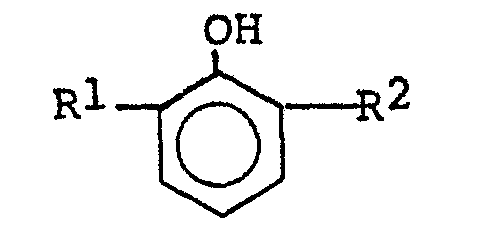
- Typical 2,6-dialkyl phenols used have the formula wherein R 1 and R 2 have the meanings set forth above, including 2-methyl-6-t-butylphenol, 2-ethyl-6-t-butylphenol, 2-propyl-6-t-butylphenol, 2-isopropyl-6-t-butylphenol, 2-n-butyl-6-t-butylphenol, 2,6-di-t-butylphenol, 2-n-amyl-6-t-butylphenol, 2-isoamyl-6-t-butylphenol, 2-hexyl-6-t-butylphenol, 2-heptyl-6-t-butylphenol, 2-isooctyl-6-t-butylphenol, 2-isopropyl-6-methylphenol, 2-n-butyl-6-isopropylphenol, 2-isoamyl-6-ethylphenol, 2-isoamyl-6-methylphenol, 2-isooctyl-6-methylphenol, 2-iso
- ketones used include dialkyl ketones, cycloalkanones, alkylcycloalkanones, and alkyl aryl ketones.
- Typical ketones that may be used in the novel process to make the new 3,5-dialkyl-4-hydroxyphenyl- substituted acetic acids of the invention are alkyl ketones of the formula wherein R 3 and R 4 are alkyl radicals containing 1 to 18 carbon atoms, preferably 1 to 8 carbon atoms, C l -C 8 , including for example acetone, methyl ethyl ketone, methyl n-propyl ketone, diethyl ketone, 2-hexanone, 3,hexanone, di-n-propyl ketone, 2-octanone, methyl isopropyl ketone, and the like.
- cycloalkane ketones containing 4 to 12 carbon atoms in the cyclic ring such as cyclobutanone, cyclopentanone, cyclohexanone, cycloheptanone, cyclo- octanone, cyclodecanone, methylcyclopentanone, methylcyclohexanone, alkyl aryl ketones when the alkyl group contains 1 to 4 carbon atoms such as acetophenone, o-methoxyacetophenone, p-chloroacetophenone, and the like; in amounts from at least about 1 mole of ketone per mole of 2,6-dialkylphenol, up to amounts sufficient for the ketones to be the solvent of the reaction, 10 moles or more. No more than about two moles is preferred when the ketone is a reactant only. Use of less than 1 mole reduces the product yield, and more than about 2 moles is unnecessary unless the ketone is the solvent.
- the haloform such as chloroform
- the haloform is also used in a molar ratio of at least about one mole per mole of 2,6-dialkylphenol used, but preferably a slight molar excess is used up to about a 50 percent molar excess, i.e., 1.5 mole per mole of 2,6-dialkylphenol. While larger amounts may be used, there is no advantage realized, and lesser amounts will decrease the ultimate yield of the desired product. Bromoform may be substituted for the chloroform and excellent results will be obtained.
- the alkali metal hydroxide is used in powder form, or in solution, and includes sodium hydroxide and potassium hydroxide. Preferably, a molar excess of the alkali metal hydroxide is used in relation to the amount of 2,6-dialkylphenol present. Normally from about 4 moles of alkali metal hydroxide per mole of 2,6-dialkylphenol up to 10 or more moles may be used, but the amount used preferably is about 4 to about 8 moles of hydroxide per mole of 2,6-di- alkylphenol. Use of less than about 4 moles will reduce the yield of desired product.
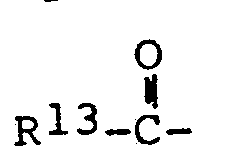
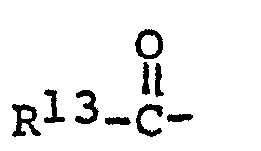
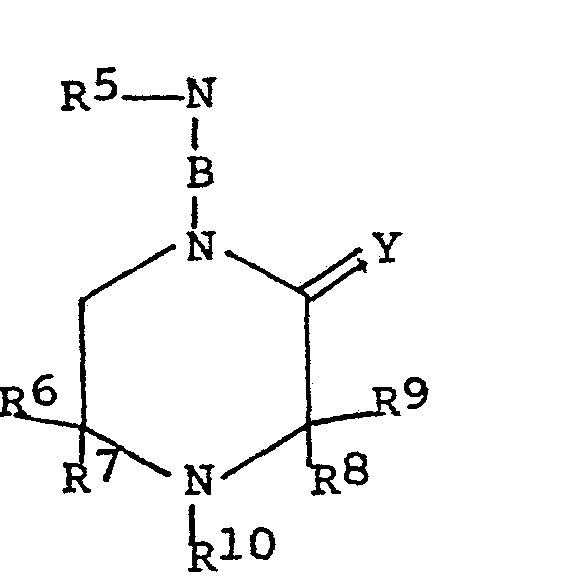
- N-substituted cyclic alkyleneimines used in the process of this invention to make the novel acetamides, the piperidines and the piperazines have the aeneral formula wherein R 5, R 6, R 7 , R 8 and R 9 are hydrogen, alkyl, cycloalkyl or alkaryl radicals containing 1 to 18 carbon atoms, more preferably wherein the alkyl groups contain 1 to 8 carbon atoms, R 10 is hydrogen, alkyl or alkaryl as defined above, acyl, wherein R 13 is H, alkyl or alkenyl of 1 to 18 carbon atoms, or phenyl or naphthyl, oxygen or hydroxyl; Y is H 2 or O .
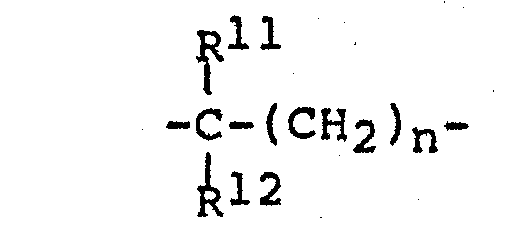
- B is a bond or an alkylidene group of the formula wherein n is 1 to 8, preferably 1 to 3, R 11 and R 1 2 are H alkyl groups of 1 to 8 carbon atoms, preferably H and methyl.
- Typical compounds are substituted piperizine derivatives such as N l- (2-isopropylaminoethyl)-3,3',5,5'-tetramethyl-2-piperazinone, N'-(2-cyclohexylaminoethyl)-3,3',5,5'- tetramethyl-2- piperazinone, N' -(2-isobutylaminoethyl)-3,5,5 1- trimethyl-3-isobutyl-2-piperazinone, and the like.
- the amount of substituted piperazine used in the reaction is based on one mole of the 2,6-dialkylphenol. While the amount may vary from less than a stoichiometric amount, resulting in low product yield, to larger excesses that are not required and have to be separated from the reaction mixture, normally about 1 to 4 moles to about 1 mole is used.
- the solvent used may be any polar organic solvent, including an excess of the ketone used in place of an added solvent.
- Typical solvents that may be used include methylene chloride, tetrahydrofuran, diethyl ether, dibutyl ether, dimethyl sulfoxide, 1,4-dioxane, carbon tetrachloride, toluene, xylene, and the like.
- the amounts of solvent used will vary from about 5 moles to 100 moles per mole of 2,6-dialkylphenol used.
- the solvent may be eliminated if an excess of the reactant ketone is used.
- the amount of ketone used, based on the moles of 2,6-dialkylphenol used may be from about 5 to about 20, preferably about 7.5 to 15 moles per mole of 2,6-dialkylphenol.
- the reactants may be added in any order, it is preferred that the alkali metal hydroxide be added last, over a period of time to control the exothermic reaction and preferably maintain the reaction below 30°C, preferably below about 10°C.
- the reaction temperature may be varied from about 0°C to about 30°C, but preferably is conducted from about 0°C to 10°C.
- the reaction time normally will vary from about 5 to about 15 hours.
- the amides are readily isolated from the reaction mixture by filtration, washing the filtrate with aqueous inorganic acid, including hydrochloric or sulfuric acid, to the reaction mixture to isolate the amide, most of which is in the organic layer that forms.
- aqueous inorganic acid including hydrochloric or sulfuric acid
- the aqueous layer may be extracted with solvent to remove all traces of the amide, and this is added to the other organic layer and this mixture is dried with a desiccant such as anhydrous sodium sulfate, and heated to dryness. This product may be recrystallized if desired.
- the filtrate was washed with 50 ml of 4N hydrochloric acid, 50 ml of 5% sodium carbonate and was then dried over sodium sulfate. The filtrate was evaporated to dryness and the dried product was washed with hexane.
- the resulting amide was a white solid that had a melting point of 165-169°C and a molecular weight of 515. By elemental analysis it was determined that the amide contained 72.43% carbon (72.19% calculated), 10.26% hydrogen (calculated 10.36%) and 8.02% nitrogen (calculated 8.15%).
- the mixture was stirred at 10°C overnight.
- the mass was concentrated in a rotary evaporator to remove solvents and low boilers and stirred in a hexanes-water mixture.
- the solid was collected and washed with hexanes and water.
- the yield was about 70% after drying.
- the propanamide was recrystallized from 70% ethanol with a few drops of 85% hydrazine to yield white crystals.
- the melting point was 145-8°C.
- typical test samples of the amide in polypropylene were prepared by mixing the stabilizer compounds with polypropylene in a Brabender Plasticorder fitted with a Cam-Head (mixing chamber). The polypropylene is first masticated for 1 1/2 minutes at 190°C. Then the stabilizer is added, followed by 3 minutes additional mixing. The mass is removed and pressed into 20 mil thick sheets. From these sheets are cut 1" x 1" plaques for oven aging. Type C (3" x 1/8") tensil bars are cut for UV stability tests.
- Thermal/oxidative stability (oven aging) testing consisted of aging the samples in triplicate in an air-circulating oven at 125°C. The time to catastrophic crumbling (failure) of the plaque was measured and reported as days to failure. This is to be compared with a control not containing stabilizer. Each sample contained 0.1 weight part of the named amide per 100 weight parts of polypropylene (phr). The following results, in days to failure, were obtained:
- Samples containing 0.1 weight part of the amide listed below was tested for ultraviolet light stability, i.e., resistance to degradation by UV radiation.
- the samples were tested in an Atlas Xenon Weatherometer, Model No. 65-WR, equipped with a 6500 watt Xenon burner tube in accordance with ASTM #D2565-79-A.
- the black panel temperature was 60°C.
- the samples were subjected to an 18-minute water cycle every 2 hours. The time in hours to a 50% loss in tensile strength was determined. For comparison purposes a samples with no amide was tested. The following results, in hours, were obtained:
- Organic materials which can be stabilized in accordance with the present invention include both natural and synthetic polymers.
- the stabilizers are useful for the stabilization of cellulosic materials; natural rubber, halogenated rubber, conjugated diene polymers, as for instance, polybutadiene, copolymers of butadiene with styrene, acrylonitrile, acrylic acid, alkyl acrylates or methacrylates, methyl vinyl ketone, vinyl pyridine, etc.; polyisoprene, polychloroprene, and the like; vinyl polymers such as polyvinyl chloride, polyvinylidene chloride, copolymers of vinyl chloride with vinylidene chloride, polyvinyl acetate, copolymers or vinyl halide with butadiene, styrene, vinyl esters, a,B-unsaturated ketones and aldehydes, and the like; homopolymers and copolymers of acrylic moonomers such a methyl
- the present compounds may stabilize a wide variety of other organic materials.
- Such compounds include: waxes, synthetic and petroleum-derived lubricating oils and greases; animal oils such as, for example, fat, tallow, lard, cod-liver oil, sperm oil; vegetable oils such as castor, linseed, peanut, palm, cotton seed, and the like; fuel oil; diesel oil, gasoline, and the like.
- N-(substituted cyclic alkyleneimine)-cT--(3,5-di-alkyl-4-hydroxyphenyl) ⁇ ', ⁇ ''dialkyl acetamides as defined herein provide exceptional heat stabiity and resistance to ultraviolet degradation to polyolefin polymers. They are especially useful for the stabilization of ⁇ -monoolefin homopolymers and copolymers, wherein the ⁇ -onoolefin contains 2 to about 8 carbon atoms. High and low-density polyethylene, isotactic and atactic polypropylene, polyisobutylene, and poly(4-methyl-l-pen- tene) have excellent resistance to heat and oxygen when stabilized with the combinations of the present invention.
- Ethylene-propylene copolymers and ethylene-propylene terpolymers generally containing less than about 10 percent by weight of one or more monomers containing multiple unsaturatation provided, phenols; ring opened olefin polymers and the like.
- Polymer blends that is, physical admixture of two or more polymers may also be stabilized in accordance with the present invention.
- the (3,5-dialkyl-4-hydroxyphenyl)-substituted amides may be used with other stabilizers including hindered or partially hindered phenols, hindered amine light stabilizers, phosphites, o-hydroxybenzophenones, and the like.
- Typical hindered phenols are the hydrox- yphenylalkyleneyl isocyanurates such as the symmetrical tris(3,5-di-t-alkyl-4-hydroxybenzyl) isocyanurates; te- trakis[methylene 3-(3',5'-dialkyl-4'-hydroxyphenyl)propanoate] methanes wherein the alkyl groups contain 1 to 8 carbon atoms, such as tetrakis[methylene 3-(3',5'-dit-butyl-4'-hydroxyphenyl)propanoatelmethane; alkyl (3-3',5'-di-t-butyl-4'-hydroxyphenyl) propionates wherein the alkyl groups contain 1 to 18 carbon atoms, such as octadecyl 3-(3',5'-di-t-butyl-4-hydroxyphenyl)propionate; 1,3,5-trimethyl-2,4,6-tri
- Additional test samples of the defined acetamides in polypropylene were prepared by combining 0.2 weight factort of the hereinafter described acetamide, 0.1 weight part of calcium stearate processing acid and 0.1 weight part of a commercial stabilizer, tris (3, 5-di-t-butyl-4-hyroxy-benzyl)isocyanurate, with 100 weight parts of polypropyleneand. The resulting mixtures were pelletized and fibers spun therefrom. The fibers were tested in the Weatherometer as described herein above and the hours to failure determined. For a sample with the tris (3, 5-di-t-butyl-4-hyroxy-benzyl)isocyanurate, the hours to failure were 260.
Landscapes
- Chemical & Material Sciences (AREA)
- Organic Chemistry (AREA)
- Chemical Kinetics & Catalysis (AREA)
- Medicinal Chemistry (AREA)
- Polymers & Plastics (AREA)
- Health & Medical Sciences (AREA)
- Hydrogenated Pyridines (AREA)
- Pharmaceuticals Containing Other Organic And Inorganic Compounds (AREA)
- Organic Low-Molecular-Weight Compounds And Preparation Thereof (AREA)
- Agricultural Chemicals And Associated Chemicals (AREA)
- Compositions Of Macromolecular Compounds (AREA)
- Luminescent Compositions (AREA)
- Medicinal Preparation (AREA)
Abstract
Description
- Novel N-(substituted cyclic alkyleneimine)-α -(3,5-di-alkyl-4-hydroxyphenyl)-α'a''-dialkyl acetamides prepared by a new process are novel stabilizers for organic materials subject to attack and degradation by heat, oxygen and light, and form useful combinations for this purpose with other hindered phenol stabilizers.
- The novel N-(substituted cyclic alkyleneimi- ne)-α(3,5-di-alkyl-4-hydroxyphenyl)-α' ,α''-dialkyl acetamides of this invention have the general formula


- Preferably, R1 is alkyl containing 1 to 8 carbon atoms, R2 is alkyl containing 1 to 6 carbon atoms, and more preferably at least one of R1 and R2 is a t-alkyl group, including t-butyl and t-amyl; R 3 and R 4 are alkyl groups containing 1 to 8 carbon atoms, more preferably 1 to 4 carbon atoms, cycloalkyl containing 5 to 8 carbon atoms, naphthyl and phenyl; R5 is hydrogen, alkyl containing 1 to 6 carbon atoms, R6 and R7 and R8 and R9 are alkyl containing 1 to 6 carbon atoms or rings containing 5 to 7 carbon atoms; R10 is hydrogen; in B, n is 1 to 3 and Rll and R12 are hydrogen or methyl.
- These N-(substituted cyclic alkyleneimines)-α -(3,5-di-alkyl-4-hydroxyphenyl)-α',α''-dialkyl acetamides, more specifically N-alkyl-N'-(3,3,5,5-tetraalkyl -2-keto-1-piperazinealkyl)-α-(3,5-di-alkyl-4-hydroxyphenyl)-α',α''-dialkylacetamides, are prepared by a new process by reacting a 2,6-di-alkylphenol with an aliphatic, cycloaliphatic or alkaryl ketone, a haloform and a piperidine or piperazine compound in the presence of alkali metal hydroxide. An organic solvent may be used, or large amounts of the ketone reactant may be employed. The amide is isolated in excellent yields by crystallizing the filtered reaction product.
- . Typical 2,6-dialkyl phenols used have the formula

- The ketones used include dialkyl ketones, cycloalkanones, alkylcycloalkanones, and alkyl aryl ketones. Typical ketones that may be used in the novel process to make the new 3,5-dialkyl-4-hydroxyphenyl- substituted acetic acids of the invention are alkyl ketones of the formula

- The haloform, such as chloroform, is also used in a molar ratio of at least about one mole per mole of 2,6-dialkylphenol used, but preferably a slight molar excess is used up to about a 50 percent molar excess, i.e., 1.5 mole per mole of 2,6-dialkylphenol. While larger amounts may be used, there is no advantage realized, and lesser amounts will decrease the ultimate yield of the desired product. Bromoform may be substituted for the chloroform and excellent results will be obtained.
- The alkali metal hydroxide is used in powder form, or in solution, and includes sodium hydroxide and potassium hydroxide. Preferably, a molar excess of the alkali metal hydroxide is used in relation to the amount of 2,6-dialkylphenol present. Normally from about 4 moles of alkali metal hydroxide per mole of 2,6-dialkylphenol up to 10 or more moles may be used, but the amount used preferably is about 4 to about 8 moles of hydroxide per mole of 2,6-di- alkylphenol. Use of less than about 4 moles will reduce the yield of desired product.
- The N-substituted cyclic alkyleneimines used in the process of this invention to make the novel acetamides, the piperidines and the piperazines, have the aeneral formula


- The amount of substituted piperazine used in the reaction is based on one mole of the 2,6-dialkylphenol. While the amount may vary from less than a stoichiometric amount, resulting in low product yield, to larger excesses that are not required and have to be separated from the reaction mixture, normally about 1 to 4 moles to about 1 mole is used.
- The solvent used may be any polar organic solvent, including an excess of the ketone used in place of an added solvent. Typical solvents that may be used include methylene chloride, tetrahydrofuran, diethyl ether, dibutyl ether, dimethyl sulfoxide, 1,4-dioxane, carbon tetrachloride, toluene, xylene, and the like. The amounts of solvent used will vary from about 5 moles to 100 moles per mole of 2,6-dialkylphenol used. As has been stated, the solvent may be eliminated if an excess of the reactant ketone is used. In this case, the amount of ketone used, based on the moles of 2,6-dialkylphenol used may be from about 5 to about 20, preferably about 7.5 to 15 moles per mole of 2,6-dialkylphenol.
- While the reactants may be added in any order, it is preferred that the alkali metal hydroxide be added last, over a period of time to control the exothermic reaction and preferably maintain the reaction below 30°C, preferably below about 10°C. The reaction temperature may be varied from about 0°C to about 30°C, but preferably is conducted from about 0°C to 10°C. The reaction time normally will vary from about 5 to about 15 hours.
- The amides are readily isolated from the reaction mixture by filtration, washing the filtrate with aqueous inorganic acid, including hydrochloric or sulfuric acid, to the reaction mixture to isolate the amide, most of which is in the organic layer that forms. The aqueous layer may be extracted with solvent to remove all traces of the amide, and this is added to the other organic layer and this mixture is dried with a desiccant such as anhydrous sodium sulfate, and heated to dryness. This product may be recrystallized if desired.
- The practice of the invention is demonstrated in the following Examples. The structures of the amides of the following Examples were confirmed by infrared and nuclear magnetic resonance spectra. Molecular weights were determined and confirmed by field desorption mass spectra (FD/MS). Elemental analysis of carbon and hydrogen was done and the amounts found were consistent with the formulas of the materials.
- 0.1 Mole of 2,6-di-t-butylphenol, 1.0 mole of acetone, 0.15 mole of chloroform, 0.1 mole of N'-(2-isopropylaminoethyl -3,3,5,5-tetramethyl-2-piperizinone were added to a reactor and mixed by stirring while being cooled by a circulating cold bath. 0.5 mole of powdered sodium hydroxide was slowly added over a period of 1 hour. The reaction mixture was stirred at 10°C overnight. The reaction mix from the reactor was filtered. The solid residue was washed with methylene chloride and the wash added to the filtrate. The filtrate was washed with 50 ml of 4N hydrochloric acid, 50 ml of 5% sodium carbonate and was then dried over sodium sulfate. The filtrate was evaporated to dryness and the dried product was washed with hexane. The resulting amide was a white solid that had a melting point of 165-169°C and a molecular weight of 515. By elemental analysis it was determined that the amide contained 72.43% carbon (72.19% calculated), 10.26% hydrogen (calculated 10.36%) and 8.02% nitrogen (calculated 8.15%).
- 0.1 mole of Imino-bis-(2-amino-2-methyl-l-propane) 0.15 mole, chloroform and 2.0 moles of acetone were placed in a 3-neck flask equipped with a thermometer, a mechanical stirrer, cooling means and an addition funnel. The mixture was kept cool with a circulating bath, while 0.5 mole of sodium hydroxide beads were added in small portions to keep the reaction temperature below 10°C. After the addition, the reaction was stirred under nitrogen until gas chromatograph showed the reaction of the amine was substantially complete. 0.14 moles of Chloroform and 0.1 mole of 2.6-di-t-butylphenol were added, followed by 0.5 mole of sodium hydroxide beads in portions to keep the temperature below 10°c. The mixture was stirred at 10°C overnight. The mass was concentrated in a rotary evaporator to remove solvents and low boilers and stirred in a hexanes-water mixture. The solid was collected and washed with hexanes and water. The yield was about 70% after drying. The propanamide was recrystallized from 70% ethanol with a few drops of 85% hydrazine to yield white crystals. The melting point was 145-8°C.
- 0.1 mole of Imino-bis-(2-amino-2-methyl-l-propane) 0.15 mole of chloroform and 2.0 moles of 2-butanone were placed in a 3-neck flask equipped with a thermometer, a mechanical stirrer, and an addition funnel. While cooling with a circulating bath, 0.5 mole of sodium hydroxide beads were added in small portions to keep the reaction temperature below 10°C. After the reaction was complete, 0.14 mole of Chloroform and 0.1 mole of 2.6-di-t-butylphenol was added, followed by 0.5 mole of sodium hydroxide beads. The recrystallized butaneamide had a melting point of 126-8°c.
- 0.1 mole of Imino-bis-(2-amino-2-methyl-l-propane) 0.15 mole of chloroform and 2.0 moles of cyclohexanone were placed in a 3-neck flask and while cooling with a circulating bath, 0.5 moles sodium hydroxide beads were added in small portions to keep the reaction temperature below 10°C. After the reaction was complete, 0.14 mole of Chloroform and 0.1 mole of 2.6-di-t-butylphenol were added, followed by sodium hydroxide beads. The recrystallized cyclohexanecarboxamide had a melting point of 179-182°C.
- N-[1-(2-keto-3, 3',5, 5'-tetramethyl-l-piperazinyl)-2-methyl-2-propyl]- α-(3,5-di-t-butyl-4-hydroxyphenyl) cyclohexanecarboxamide
- 0.1 mole of Nl-(2-amino-2-methyl-l-propyl)-3, 3', 5, 5'-tetramethyl-2-piperazinone, 0.2 mole of chloroform, 2.0 mole of cyclohexanone and 0.2 mole 2.6-di-t-butylphenol were mixed and cooled at about 5°C while 0.5 mole of sodium hydroxide beads were added in small portions to keep the temperature below 10°C. The mixture was stirred at 10°C overnight and the mixture was concentrated to remove most cyclohexanone and 2.6-di-t butylphenol. This product was stirred in water or water-hexanes mixture to obtain a solid. This solid was recrystallized from hexanes to yield an off-white colored powder. The melting point was 125-130°C.
- 0.1 mole of N1-(2 cyclohexylaminoethyl)-3, 3', 5, 5'-tetramethyl-2-piperazinone, 0.2 mole of chloroform, 2.0 mole of cyclohexanone and 0.2 mole 2.6-di-t-butylphenol were mixed and cooled at about 5°C while 0.5 mole of sodium hydroxide beads were added in small portions to keep the temperature below 10°C. The cyclohexane carboxamide had a melting point of about 60"C.
- N-Cyclohexyl-Nl-[3-(2-keto-3, 3',5, 5'-tetramethyl-l-pi- piperazinyl propyl]-α-(3,5-di-t-butyl-4-hydroxyphenyl) cyclohexanecarboxamide
- 0.1 mole of N1-(3-cyclohexylamino-1-propyl)-3, 3', 5, 5'-tetramethyl-2-piperazinone, 0.2 mole of chloroform, 2.0 mole of cyclohexanone and 0.2 mole of 2.6-di-t-butylphenol were mixed and cooled at about 5°C while 0.5 mole of sodium hydroxide beads were added in small portions to keep the temperature below 10°C. The cyclohexanecarboxamide had a melting point of about 60°C.
- 0.1 mole of Nl-(2-amino-2-methyl-l-propyl)-3, 3', 5, 5'-tetramethyl-2-piperazinone, 0.2 mole of chloroform, 2.0 mole of acetone and 0.2 mole 2.6di-t--butylphenol were mixed and cooled at about 5°C while 0.5 mole of sodium hydroxide beads were added in small portions to keep the temperature below 10°C. The recrystallized propionamide had a melting point of 172-4° C.
- 0.1 mole of Nl-(2-amino-2-methyl-l-propyl)-3, 3', 5, 5'-tetramethyl-2-piperazinone, 0.2 mole of chloroform, 2.0 mole of butanone and 0.2 mole 2,6di-t--butylphenol were mixed and cooled at about 5°C while 0.5 mole of sodium hydroxide beads were added in small portions to keep the temperature below 10°C. The recrystallized methylbutanamide had a melting point of 118-121° C.
- To demonstrate the stabilizing activity of the amides of this invention, typical test samples of the amide in polypropylene were prepared by mixing the stabilizer compounds with polypropylene in a Brabender Plasticorder fitted with a Cam-Head (mixing chamber). The polypropylene is first masticated for 1 1/2 minutes at 190°C. Then the stabilizer is added, followed by 3 minutes additional mixing. The mass is removed and pressed into 20 mil thick sheets. From these sheets are cut 1" x 1" plaques for oven aging. Type C (3" x 1/8") tensil bars are cut for UV stability tests.
- Thermal/oxidative stability (oven aging) testing consisted of aging the samples in triplicate in an air-circulating oven at 125°C. The time to catastrophic crumbling (failure) of the plaque was measured and reported as days to failure. This is to be compared with a control not containing stabilizer. Each sample contained 0.1 weight part of the named amide per 100 weight parts of polypropylene (phr). The following results, in days to failure, were obtained:
- 1250C Control 2 N-Isopropyl-N'-[2-(3,3',5,5'-tetramethyl-l-piperazinyl)]ethyl-2-(3,5-di-t-butyl-4-hydroxyphenyl)-2-methylpropionamide 9
- Samples containing 0.1 weight part of the amide listed below was tested for ultraviolet light stability, i.e., resistance to degradation by UV radiation. The samples were tested in an Atlas Xenon Weatherometer, Model No. 65-WR, equipped with a 6500 watt Xenon burner tube in accordance with ASTM #D2565-79-A. The black panel temperature was 60°C. The samples were subjected to an 18-minute water cycle every 2 hours. The time in hours to a 50% loss in tensile strength was determined. For comparison purposes a samples with no amide was tested. The following results, in hours, were obtained:
- Hours Blank (Control) 220 N-Isopropyl-N'-[2-(3,3',5,5'-tetramethyl-l-piper- azin-2-onyl)ethyl]-2-(3,5-di-t-butyl-4-hydroxyphenyl)-2-methylpropionamide (0.1 phr) 1280
- Organic materials which can be stabilized in accordance with the present invention include both natural and synthetic polymers. For example, the stabilizers are useful for the stabilization of cellulosic materials; natural rubber, halogenated rubber, conjugated diene polymers, as for instance, polybutadiene, copolymers of butadiene with styrene, acrylonitrile, acrylic acid, alkyl acrylates or methacrylates, methyl vinyl ketone, vinyl pyridine, etc.; polyisoprene, polychloroprene, and the like; vinyl polymers such as polyvinyl chloride, polyvinylidene chloride, copolymers of vinyl chloride with vinylidene chloride, polyvinyl acetate, copolymers or vinyl halide with butadiene, styrene, vinyl esters, a,B-unsaturated ketones and aldehydes, and the like; homopolymers and copolymers of acrylic moonomers such a methyl acrylate, methyl methacrylate, ethyl acrylate, 3-ethylhexyl acrylate, acrylamide, methacrylamide, N-methylol-acrylamide, acrylonitrile, methacrylonitrile, and the like; ephihalohydrin polymers; polyether- or polyol-derived polyurethanes; acetal homo-polymers and copolymers; polycarbonates; polyesters such as those derived from maleic, fumaric, itaconic, or terephthalic anhydrides, or the like, for example, polyethylene terephthalate; polyamides such as those derived from the reaction of hexa-methylenediamine with adipic or sebacic acid; epoxy resins such as those obtained from the condensation of epichlorohydrin with bisphenols; ring opened olefin polymers and the like. Polymer blends, that is, physical admixture of two or more polymers may also be stabilized in accordance with the present invention.
- In addition to polymeric materials, the present compounds may stabilize a wide variety of other organic materials. Such compounds include: waxes, synthetic and petroleum-derived lubricating oils and greases; animal oils such as, for example, fat, tallow, lard, cod-liver oil, sperm oil; vegetable oils such as castor, linseed, peanut, palm, cotton seed, and the like; fuel oil; diesel oil, gasoline, and the like.
- The N-(substituted cyclic alkyleneimine)-cT--(3,5-di-alkyl-4-hydroxyphenyl)α',α''dialkyl acetamides as defined herein provide exceptional heat stabiity and resistance to ultraviolet degradation to polyolefin polymers. They are especially useful for the stabilization of α-monoolefin homopolymers and copolymers, wherein the α-onoolefin contains 2 to about 8 carbon atoms. High and low-density polyethylene, isotactic and atactic polypropylene, polyisobutylene, and poly(4-methyl-l-pen- tene) have excellent resistance to heat and oxygen when stabilized with the combinations of the present invention. Ethylene-propylene copolymers and ethylene-propylene terpolymers, generally containing less than about 10 percent by weight of one or more monomers containing multiple unsaturatation provided, phenols; ring opened olefin polymers and the like. Polymer blends, that is, physical admixture of two or more polymers may also be stabilized in accordance with the present invention.
- The (3,5-dialkyl-4-hydroxyphenyl)-substituted amides may be used with other stabilizers including hindered or partially hindered phenols, hindered amine light stabilizers, phosphites, o-hydroxybenzophenones, and the like. Typical hindered phenols are the hydrox- yphenylalkyleneyl isocyanurates such as the symmetrical tris(3,5-di-t-alkyl-4-hydroxybenzyl) isocyanurates; te- trakis[methylene 3-(3',5'-dialkyl-4'-hydroxyphenyl)propanoate] methanes wherein the alkyl groups contain 1 to 8 carbon atoms, such as tetrakis[methylene 3-(3',5'-dit-butyl-4'-hydroxyphenyl)propanoatelmethane; alkyl (3-3',5'-di-t-butyl-4'-hydroxyphenyl) propionates wherein the alkyl groups contain 1 to 18 carbon atoms, such as octadecyl 3-(3',5'-di-t-butyl-4-hydroxyphenyl)propionate; 1,3,5-trimethyl-2,4,6-tris[3,5-dialkyl-4-hydroxybenzyl)benzene; 1,3,5-tris(3,5-di-t-butyl-4-hydroxy- hydrocinnamoylethyl)-s-triazine-2,4,6-(lH,3H,5H)-trione; 2,2'-alkylidene bis (4,6-dialkylphenol)-s wherein the alkyl group contains 1 to 8 carbon atoms, such as 2,2'-methylene bis(4,6-di-t-butylphenol), 2,2'-ethylidene bis(4,6-di-t-butylphenol), and 2,2'-methylene bis(4-methyl-6-t-butylphenol), and the like.
- The following combinations provided excellent ageing in polypropylene as shown in the Weatherometer: 0.05 phr of N-isopropyl-N'-[2-(3,3, 5,5-tetramethyl-l-piperazin-2-onyl)ethyl]-2-(3,5-di-t-butyl-4-hydroxyphenyl)-2-methylpropionamide, 0.05 phr of 1,1'-(1,2-ethanediyl)bis(3,3,5,5-tetramethyl piperazinone, and 0.05 phr of 2,2',2''-tris[3(3,5-di-t-butyl-4-hydroxyphenyl)propionyloxy]ethyl isocyanurate - more than 2,000 hours; 0.125 phr of N-isopropyl-N'-[2-(3,3, 5,5-tetramethyl-l-piperazin-2-onyl)ethyl]-2-(3,5-di-t-butyl-4-hydroxyphenyl)-2-methyl propionamide, 0.05 phr of 2,2',2''-tris [3(3,5-di-t-butyl-4-hydroxyphenyl) propionyloxy] ethyl isocyanurate, and 0.125 phr of 3,9-bis (octadecyloxy)-2, 4, 8,10-tetraoxa-3,9-diphosphaspiro[5, 5]-undecane- more than 2,000 hours.
- Additional test samples of the defined acetamides in polypropylene were prepared by combining 0.2 weight paart of the hereinafter described acetamide, 0.1 weight part of calcium stearate processing acid and 0.1 weight part of a commercial stabilizer, tris (3, 5-di-t-butyl-4-hyroxy-benzyl)isocyanurate, with 100 weight parts of polypropyleneand. The resulting mixtures were pelletized and fibers spun therefrom. The fibers were tested in the Weatherometer as described herein above and the hours to failure determined. For a sample with the tris (3, 5-di-t-butyl-4-hyroxy-benzyl)isocyanurate, the hours to failure were 260.
- With N-[1-(2-keto-3,3',5,5'-tetramethyl-1-piperazinyl) -2-methyl-2-propyl] -2-(3,5-di-t-butyl-4-hydroxyphenyl)-2-methyl-propanamide, 1,080 hours.
- With N-[l-(2-keto-3,3'-pentamethylene-5,5'-dimethyl-l-piperazinyl) -2-methyl-2-propyl]- α-(3,5-di-t-butyl-4-hydroxyphenyl) cyclohexanecarboxamide, 980 hours, and
- With N-cyclohexyl-N-[3-(2-keto-3,3',5,5'-tetramethyl-l-piperazinyl)-2- methyl-2-propyl]-2-(3, 5-di-t-butyl-4-hydroxyphenyl)-2-methyl propioamide, 530 hours to failure.
Claims (12)







Applications Claiming Priority (2)
| Application Number | Priority Date | Filing Date | Title |
|---|---|---|---|
| US88745886A | 1986-07-21 | 1986-07-21 | |
| US887458 | 1986-07-21 |
Publications (3)
| Publication Number | Publication Date |
|---|---|
| EP0258598A2 true EP0258598A2 (en) | 1988-03-09 |
| EP0258598A3 EP0258598A3 (en) | 1990-06-13 |
| EP0258598B1 EP0258598B1 (en) | 1994-09-07 |
Family
ID=25391180
Family Applications (1)
| Application Number | Title | Priority Date | Filing Date |
|---|---|---|---|
| EP87110434A Expired - Lifetime EP0258598B1 (en) | 1986-07-21 | 1987-07-18 | N-(substituted-1-piperazinealkyl)-alpha-(3,5-di-alkyl-4-hydroxyphenyl)-alpha,alpha-dialkyl acetamides |
Country Status (7)
| Country | Link |
|---|---|
| EP (1) | EP0258598B1 (en) |
| JP (1) | JPH07107057B2 (en) |
| CN (1) | CN1024008C (en) |
| AT (1) | ATE111086T1 (en) |
| BR (1) | BR8703798A (en) |
| CA (1) | CA1278575C (en) |
| DE (1) | DE3750496T2 (en) |
Cited By (1)
| Publication number | Priority date | Publication date | Assignee | Title |
|---|---|---|---|---|
| EP0398235A3 (en) * | 1989-05-16 | 1992-01-02 | The B.F. Goodrich Company | Stabilized polypropylene fibers pigmented with red 144 |
Families Citing this family (5)
| Publication number | Priority date | Publication date | Assignee | Title |
|---|---|---|---|---|
| JPS60112737A (en) * | 1983-11-07 | 1985-06-19 | ザ ビー.エフ.グツドリツチ カンパニー | 3,5-dialkyl-4-hydroxyphenyl substituted derivative |
| US5906136A (en) * | 1993-06-21 | 1999-05-25 | Nsk Ltd. | Ball screw lubricated with oil-containing polymer |
| US6023991A (en) * | 1993-06-21 | 2000-02-15 | Nsk Ltd. | Ball screw lubricated with oil-containing polymer |
| US6019513A (en) | 1995-07-11 | 2000-02-01 | Nsk Ltd. | Sealing device for linear guide apparatus |
| US5856486A (en) * | 1997-08-27 | 1999-01-05 | General Electric Company | Polycarbonate compositions comprising hindered amine light stabilizers |
Family Cites Families (6)
| Publication number | Priority date | Publication date | Assignee | Title |
|---|---|---|---|---|
| US4190571A (en) * | 1977-09-21 | 1980-02-26 | The B. F. Goodrich Company | Substituted 2-keto-1,4-diazacycloalkanes and UV-light-stabilized compositions containing them |
| US4477665A (en) * | 1981-05-04 | 1984-10-16 | The B. F. Goodrich Company | Substituted 2-keto-1,4-diazacycloalkanes |
| US4466915A (en) * | 1982-09-29 | 1984-08-21 | The B. F. Goodrich Company | Non-catalytic ketoform syntheses |
| DE3375231D1 (en) * | 1982-12-16 | 1988-02-11 | Ciba Geigy Ag | Colour-photographic recording material |
| CA1325217C (en) * | 1983-11-07 | 1993-12-14 | John T. Lai | 3,5-dialkyl-4-hydroxyphenyl-substituted derivatives |
| ATE82962T1 (en) * | 1986-07-16 | 1992-12-15 | Goodrich Co B F | N-(SUBSTITUTED-CYCLIC-ALKYLENIMINE)-ALPHA (3,5-DIALKYL-4-HYDROXYPHENYL)-ALPHA, ALPHADIALKYLACETAMIDES. |
-
1987
- 1987-07-18 AT AT87110434T patent/ATE111086T1/en not_active IP Right Cessation
- 1987-07-18 DE DE3750496T patent/DE3750496T2/en not_active Expired - Fee Related
- 1987-07-18 EP EP87110434A patent/EP0258598B1/en not_active Expired - Lifetime
- 1987-07-20 CA CA000542493A patent/CA1278575C/en not_active Expired - Fee Related
- 1987-07-21 JP JP62180166A patent/JPH07107057B2/en not_active Expired - Lifetime
- 1987-07-21 CN CN87106127.9A patent/CN1024008C/en not_active Expired - Fee Related
- 1987-07-21 BR BR8703798A patent/BR8703798A/en unknown
Cited By (1)
| Publication number | Priority date | Publication date | Assignee | Title |
|---|---|---|---|---|
| EP0398235A3 (en) * | 1989-05-16 | 1992-01-02 | The B.F. Goodrich Company | Stabilized polypropylene fibers pigmented with red 144 |
Also Published As
| Publication number | Publication date |
|---|---|
| EP0258598B1 (en) | 1994-09-07 |
| EP0258598A3 (en) | 1990-06-13 |
| CN1024008C (en) | 1994-03-16 |
| DE3750496D1 (en) | 1994-10-13 |
| JPH07107057B2 (en) | 1995-11-15 |
| DE3750496T2 (en) | 1995-02-23 |
| JPS6399062A (en) | 1988-04-30 |
| BR8703798A (en) | 1988-03-29 |
| CN87106127A (en) | 1988-05-04 |
| ATE111086T1 (en) | 1994-09-15 |
| CA1278575C (en) | 1991-01-02 |
Similar Documents
| Publication | Publication Date | Title |
|---|---|---|
| US4480092A (en) | Alkylated polyalkylenepolyamines, substituted oxo-piperazinyl-triazines | |
| EP0001284B1 (en) | Uv-light stabilized compositions containing substituted 2-keto-1,4-diazacycloalkanes | |
| US4191683A (en) | Derivatives of 4-aminopiperidine as stabilizers for polymers | |
| EP0024337B1 (en) | Synthesis of 2-keto-1,4-diazacycloalkanes | |
| US4547538A (en) | Alkylated polyalkylenepolyamines, substituted oxo-piperazinyl-triazines and UV light stabilized compositions | |
| CA1136626A (en) | Piperidine compounds, the process for their preparation, and their use as stabilisers for synthetic polymers | |
| EP0389427A2 (en) | Compounds containing both uv-absorber and 1-hydrocarbyloxy hindered amine moieties and stabilized compositions | |
| EP0354179A1 (en) | Thiouracils as stabilizers for polymers containing chlorine | |
| US4780495A (en) | N-(substituted)-α-(3,5-dialkyl-4-hydroxyphenyl)-α,α-disubstituted acetamides, and composition stabilized therewith | |
| EP0258598A2 (en) | N-(substituted-1-piperazinealkyl)-alpha-(3,5-di-alkyl-4-hydroxyphenyl)-alpha,alpha-dialkyl acetamides | |
| EP0314472B1 (en) | Novel piperidyl-triazine derivatives and their use as polymer stabilizers | |
| US4711957A (en) | Synthesis of 2-keto-1,4-diazacycloalkanes | |
| AU701742B2 (en) | Bisphenol ester derivatives | |
| EP0141419B1 (en) | 3,5-dialkyl-4-hydroxyphenyl-substituted derivatives | |
| EP0284800A1 (en) | N-(substituted piperidinyl)-alpha-(3,5-dialkyl-4-hydroxyphenyl)-alpha', alpha''-dialkyl acetamides | |
| US4785107A (en) | 3-tert-butyl-4-hydroxyphenylpropionic acid amino-alkylamide derivatives | |
| US4326061A (en) | Substituted decahydroquinolines | |
| US4455401A (en) | 2-Keto-diazacycloalkane-urethane oligomers and U-V light stabilized compositions | |
| US4239891A (en) | Substituted piperidine hydroxamides, their preparation, and their use as light stabilizers | |
| US4528370A (en) | Polysubstituted 2-morpholones | |
| US4920228A (en) | N,N-disubstituted, α-(3,5-dialkyl-4-hydroxyphenyl)-α,α-disubstituted acetamides and composition stabilized therewith | |
| US4466916A (en) | Substituted 2-keto-1,4-diazacycloalkanes | |
| US4762872A (en) | Oligomeric light stabilizers with substituted piperidine ends | |
| EP0253010B1 (en) | N-(substituted cyclic alkyleneimine)-alpha-(3,5-di-alkyl-4-hydroxy-phenyl)-alpha, alpha-dialkyl acetamides | |
| US5096949A (en) | N,N-disubstituted, α-(3,5-dialkyl-4-hydroxyphenyl)-α,α-disubstituted acetamides and composition stabilized therewith |
Legal Events
| Date | Code | Title | Description |
|---|---|---|---|
| PUAI | Public reference made under article 153(3) epc to a published international application that has entered the european phase |
Free format text: ORIGINAL CODE: 0009012 |
|
| AK | Designated contracting states |
Kind code of ref document: A2 Designated state(s): AT BE CH DE ES FR GB GR IT LI LU NL SE |
|
| PUAL | Search report despatched |
Free format text: ORIGINAL CODE: 0009013 |
|
| AK | Designated contracting states |
Kind code of ref document: A3 Designated state(s): AT BE CH DE ES FR GB GR IT LI LU NL SE |
|
| 17P | Request for examination filed |
Effective date: 19900928 |
|
| 17Q | First examination report despatched |
Effective date: 19910725 |
|
| GRAA | (expected) grant |
Free format text: ORIGINAL CODE: 0009210 |
|
| AK | Designated contracting states |
Kind code of ref document: B1 Designated state(s): AT BE CH DE ES FR GB GR IT LI LU NL SE |
|
| PG25 | Lapsed in a contracting state [announced via postgrant information from national office to epo] |
Ref country code: NL Effective date: 19940907 Ref country code: GR Free format text: LAPSE BECAUSE OF FAILURE TO SUBMIT A TRANSLATION OF THE DESCRIPTION OR TO PAY THE FEE WITHIN THE PRESCRIBED TIME-LIMIT Effective date: 19940907 Ref country code: BE Effective date: 19940907 Ref country code: AT Effective date: 19940907 |
|
| REF | Corresponds to: |
Ref document number: 111086 Country of ref document: AT Date of ref document: 19940915 Kind code of ref document: T |
|
| REF | Corresponds to: |
Ref document number: 3750496 Country of ref document: DE Date of ref document: 19941013 |
|
| ITF | It: translation for a ep patent filed | ||
| ET | Fr: translation filed | ||
| PG25 | Lapsed in a contracting state [announced via postgrant information from national office to epo] |
Ref country code: SE Effective date: 19941207 |
|
| PG25 | Lapsed in a contracting state [announced via postgrant information from national office to epo] |
Ref country code: ES Free format text: LAPSE BECAUSE OF FAILURE TO SUBMIT A TRANSLATION OF THE DESCRIPTION OR TO PAY THE FEE WITHIN THE PRESCRIBED TIME-LIMIT Effective date: 19941218 |
|
| NLV1 | Nl: lapsed or annulled due to failure to fulfill the requirements of art. 29p and 29m of the patents act | ||
| PGFP | Annual fee paid to national office [announced via postgrant information from national office to epo] |
Ref country code: CH Payment date: 19950623 Year of fee payment: 9 |
|
| PLBE | No opposition filed within time limit |
Free format text: ORIGINAL CODE: 0009261 |
|
| STAA | Information on the status of an ep patent application or granted ep patent |
Free format text: STATUS: NO OPPOSITION FILED WITHIN TIME LIMIT |
|
| PG25 | Lapsed in a contracting state [announced via postgrant information from national office to epo] |
Ref country code: GB Effective date: 19950718 |
|
| PG25 | Lapsed in a contracting state [announced via postgrant information from national office to epo] |
Ref country code: LU Free format text: LAPSE BECAUSE OF NON-PAYMENT OF DUE FEES Effective date: 19950731 |
|
| 26N | No opposition filed | ||
| GBPC | Gb: european patent ceased through non-payment of renewal fee |
Effective date: 19950718 |
|
| PG25 | Lapsed in a contracting state [announced via postgrant information from national office to epo] |
Ref country code: DE Effective date: 19960402 |
|
| PG25 | Lapsed in a contracting state [announced via postgrant information from national office to epo] |
Ref country code: FR Effective date: 19960430 |
|
| REG | Reference to a national code |
Ref country code: FR Ref legal event code: ST |
|
| REG | Reference to a national code |
Ref country code: FR Ref legal event code: ST |
|
| REG | Reference to a national code |
Ref country code: FR Ref legal event code: ST |
|
| PG25 | Lapsed in a contracting state [announced via postgrant information from national office to epo] |
Ref country code: LI Effective date: 19960731 Ref country code: CH Effective date: 19960731 |
|
| REG | Reference to a national code |
Ref country code: CH Ref legal event code: PL |
|
| PG25 | Lapsed in a contracting state [announced via postgrant information from national office to epo] |
Ref country code: IT Free format text: LAPSE BECAUSE OF NON-PAYMENT OF DUE FEES Effective date: 20050718 |