EP0232884B1 - Diafiltration apparatus - Google Patents
Diafiltration apparatus Download PDFInfo
- Publication number
- EP0232884B1 EP0232884B1 EP87101754A EP87101754A EP0232884B1 EP 0232884 B1 EP0232884 B1 EP 0232884B1 EP 87101754 A EP87101754 A EP 87101754A EP 87101754 A EP87101754 A EP 87101754A EP 0232884 B1 EP0232884 B1 EP 0232884B1
- Authority
- EP
- European Patent Office
- Prior art keywords
- plasma
- molecular weight
- flow rate
- patient
- component
- Prior art date
- Legal status (The legal status is an assumption and is not a legal conclusion. Google has not performed a legal analysis and makes no representation as to the accuracy of the status listed.)
- Expired
Links
- 238000011026 diafiltration Methods 0.000 title description 7
- 239000003085 diluting agent Substances 0.000 claims description 42
- 210000004369 blood Anatomy 0.000 claims description 38
- 239000012528 membrane Substances 0.000 claims description 37
- 239000008280 blood Substances 0.000 claims description 36
- 108010088751 Albumins Proteins 0.000 claims description 26
- 102000009027 Albumins Human genes 0.000 claims description 26
- 238000000034 method Methods 0.000 claims description 25
- 238000000926 separation method Methods 0.000 claims description 25
- 230000001413 cellular effect Effects 0.000 claims description 24
- 239000003146 anticoagulant agent Substances 0.000 claims description 18
- 229940127219 anticoagulant drug Drugs 0.000 claims description 18
- 239000000203 mixture Substances 0.000 claims description 13
- 238000000108 ultra-filtration Methods 0.000 claims description 11
- 239000007788 liquid Substances 0.000 claims description 9
- 239000012466 permeate Substances 0.000 claims description 7
- 238000004064 recycling Methods 0.000 claims description 6
- 238000007873 sieving Methods 0.000 claims description 5
- 238000005534 hematocrit Methods 0.000 claims description 3
- 239000000701 coagulant Substances 0.000 claims 2
- 210000002381 plasma Anatomy 0.000 description 81
- 239000000306 component Substances 0.000 description 46
- 102000004169 proteins and genes Human genes 0.000 description 12
- 108090000623 proteins and genes Proteins 0.000 description 12
- 241000894007 species Species 0.000 description 10
- 201000010099 disease Diseases 0.000 description 7
- 208000037265 diseases, disorders, signs and symptoms Diseases 0.000 description 7
- 230000000694 effects Effects 0.000 description 7
- 230000004907 flux Effects 0.000 description 7
- 238000002616 plasmapheresis Methods 0.000 description 6
- 230000002572 peristaltic effect Effects 0.000 description 5
- 239000011148 porous material Substances 0.000 description 5
- 239000012465 retentate Substances 0.000 description 5
- 238000010790 dilution Methods 0.000 description 4
- 239000012895 dilution Substances 0.000 description 4
- 238000001914 filtration Methods 0.000 description 4
- 210000004027 cell Anatomy 0.000 description 3
- 239000013628 high molecular weight specie Substances 0.000 description 3
- 239000002699 waste material Substances 0.000 description 3
- IJRKANNOPXMZSG-SSPAHAAFSA-N 2-hydroxypropane-1,2,3-tricarboxylic acid;(2r,3s,4r,5r)-2,3,4,5,6-pentahydroxyhexanal Chemical compound OC[C@@H](O)[C@@H](O)[C@H](O)[C@@H](O)C=O.OC(=O)CC(O)(C(O)=O)CC(O)=O IJRKANNOPXMZSG-SSPAHAAFSA-N 0.000 description 2
- FAPWRFPIFSIZLT-UHFFFAOYSA-M Sodium chloride Chemical compound [Na+].[Cl-] FAPWRFPIFSIZLT-UHFFFAOYSA-M 0.000 description 2
- 230000007423 decrease Effects 0.000 description 2
- 230000003247 decreasing effect Effects 0.000 description 2
- 229920002521 macromolecule Polymers 0.000 description 2
- 238000011084 recovery Methods 0.000 description 2
- 230000001105 regulatory effect Effects 0.000 description 2
- 230000000717 retained effect Effects 0.000 description 2
- 239000011780 sodium chloride Substances 0.000 description 2
- 102000004506 Blood Proteins Human genes 0.000 description 1
- 108010017384 Blood Proteins Proteins 0.000 description 1
- KRKNYBCHXYNGOX-UHFFFAOYSA-K Citrate Chemical compound [O-]C(=O)CC(O)(CC([O-])=O)C([O-])=O KRKNYBCHXYNGOX-UHFFFAOYSA-K 0.000 description 1
- 102000001690 Factor VIII Human genes 0.000 description 1
- 108010054218 Factor VIII Proteins 0.000 description 1
- HTTJABKRGRZYRN-UHFFFAOYSA-N Heparin Chemical compound OC1C(NC(=O)C)C(O)OC(COS(O)(=O)=O)C1OC1C(OS(O)(=O)=O)C(O)C(OC2C(C(OS(O)(=O)=O)C(OC3C(C(O)C(O)C(O3)C(O)=O)OS(O)(=O)=O)C(CO)O2)NS(O)(=O)=O)C(C(O)=O)O1 HTTJABKRGRZYRN-UHFFFAOYSA-N 0.000 description 1
- 239000002033 PVDF binder Substances 0.000 description 1
- 230000002411 adverse Effects 0.000 description 1
- 239000000427 antigen Substances 0.000 description 1
- 102000036639 antigens Human genes 0.000 description 1
- 108091007433 antigens Proteins 0.000 description 1
- 239000007864 aqueous solution Substances 0.000 description 1
- 230000015572 biosynthetic process Effects 0.000 description 1
- 230000017531 blood circulation Effects 0.000 description 1
- 239000012503 blood component Substances 0.000 description 1
- 210000000170 cell membrane Anatomy 0.000 description 1
- 239000012141 concentrate Substances 0.000 description 1
- 239000000470 constituent Substances 0.000 description 1
- 230000001276 controlling effect Effects 0.000 description 1
- 229960000301 factor viii Drugs 0.000 description 1
- 239000000706 filtrate Substances 0.000 description 1
- 239000012530 fluid Substances 0.000 description 1
- 238000005194 fractionation Methods 0.000 description 1
- 229960002897 heparin Drugs 0.000 description 1
- 229920000669 heparin Polymers 0.000 description 1
- 230000008105 immune reaction Effects 0.000 description 1
- 238000005374 membrane filtration Methods 0.000 description 1
- 238000001471 micro-filtration Methods 0.000 description 1
- 239000012982 microporous membrane Substances 0.000 description 1
- 230000001717 pathogenic effect Effects 0.000 description 1
- 229920002981 polyvinylidene fluoride Polymers 0.000 description 1
- 230000001225 therapeutic effect Effects 0.000 description 1
- XLYOFNOQVPJJNP-UHFFFAOYSA-N water Substances O XLYOFNOQVPJJNP-UHFFFAOYSA-N 0.000 description 1
Images




Classifications
-
- A—HUMAN NECESSITIES
- A61—MEDICAL OR VETERINARY SCIENCE; HYGIENE
- A61M—DEVICES FOR INTRODUCING MEDIA INTO, OR ONTO, THE BODY; DEVICES FOR TRANSDUCING BODY MEDIA OR FOR TAKING MEDIA FROM THE BODY; DEVICES FOR PRODUCING OR ENDING SLEEP OR STUPOR
- A61M1/00—Suction or pumping devices for medical purposes; Devices for carrying-off, for treatment of, or for carrying-over, body-liquids; Drainage systems
- A61M1/34—Filtering material out of the blood by passing it through a membrane, i.e. hemofiltration or diafiltration
- A61M1/3472—Filtering material out of the blood by passing it through a membrane, i.e. hemofiltration or diafiltration with treatment of the filtrate
- A61M1/3482—Filtering material out of the blood by passing it through a membrane, i.e. hemofiltration or diafiltration with treatment of the filtrate by filtrating the filtrate using another cross-flow filter, e.g. a membrane filter
-
- A—HUMAN NECESSITIES
- A61—MEDICAL OR VETERINARY SCIENCE; HYGIENE
- A61M—DEVICES FOR INTRODUCING MEDIA INTO, OR ONTO, THE BODY; DEVICES FOR TRANSDUCING BODY MEDIA OR FOR TAKING MEDIA FROM THE BODY; DEVICES FOR PRODUCING OR ENDING SLEEP OR STUPOR
- A61M2205/00—General characteristics of the apparatus
- A61M2205/75—General characteristics of the apparatus with filters
- A61M2205/7563—General characteristics of the apparatus with filters with means preventing clogging of filters
Definitions
- This invention relates to a diafiltration method and apparatus for separating a whole blood into its cellular component and its plasma component and further separating the plasma component to isolate plasma components such as those components that cause disease.
- Diafiltration comprises an ultrafiltration process wherein a liquid composition is separated utilizing a membrane into a stream containing solute retained by the membrane (retentate stream) and a second stream containing solutes which pass the membrane (permeate stream).
- the retentate stream is recycled to the separation membrane after a diluent has been added.
- the rate of diluent addition is equal to the flow rate of the permeate stream and the retentate volume remains constant.
- Membrane plasmapheresis can be employed to remove large molecular species of proteins in the plasma that cause disease such as immunologically based diseases or other disease states resulting from excessive concentrations of pathogenic plasma proteins.
- Presently available processes include a first step wherein blood removed from a patient is separated into its cellular component and its plasma component. The cellular component is recirculated to the patient while the plasma component is treated further to separate a large molecular fraction having a molecular weight above about 70,000 daltons which fraction contains the disease causing protein fraction. The relatively low molecular weight fraction containing proteins required by the patient such as albumin also is recirculated to the patient. The separation of the high molecular weight plasma fraction from the low molecular weight plasma fraction is accomplished with an ultrafiltration membrane having a pore size that allows passage of the low molecular weight fraction while retaining the high molecular weight fraction.
- the passage of protein and albumin through the membrane is significantly reduced as the concentration of the rejected high molecular weight fraction increases.
- This occurs since the general mode of operation is to recirculate the high molecular weight fraction to a reservoir wherein it is admixed with incoming fresh plasma and a diluent such as saline.
- the resulting composition then is recirculated to the ultrafiltration membrane.
- the diluent is added to reduce the concentration of the high molecular weight fraction in the recirculation loop and thereby reduce plugging of the mermbrane pores. If too little diluent is employed undesired pore plugging results.
- ultrafiltration modules operate at low separation efficiencies and at high recirculation rates (high tangential shear rates). Also, presently available systems operate at fluxes sufficiently low to accommodate the concentration build up in the recirculation loop and therefore require a large excess of ultrafiltration membrane area.
- An additional third filter which is completely retentive of all proteins is included in the apparatus to (a) concentrate the albumin recovered at low concentration (resulting from excess membrane area) and (b) return the water removed by the filter to the recirculation reservoir thereby to dilute the accumulated protein and thereby recover flux.
- the system is undesirable since it requires excessive membrane area and controls flux by reducing volumetric flow rates rather than by utilizing a mode of operation which permits maintaining higher flux.
- U.S. Patent 4 350 156 to Malchesky et al discloses a process for treating plasma to remove macromolecules having a molecular weight greater than about 70,000 daltons in order to provide therapeutic treatment of various disease states.
- Whole blood is first separated into its cellular components and its plasma component.
- the plasma component is cooled, and then filtered to retain the macromolecules while permitting passage of the smaller molecular component such as albumin through the filter.
- the cellular components and the plasma components passed through the filter then are recycled to the patient.
- the plasma Prior to being filtered, the plasma is cooled to a temperature of about 10 ° C.
- the primary problem with this mode of operation is that the membrane filter quickly becomes clogged which results in a low percentage of albumin being passed through the filter for recycling to the patient. This requires that make up albumin be supplied to the patient during the plasmapheresis treatment.
- U.S. Patent 4 350 594 discloses a two step blood treatment process wherein whole blood is separated into its plasma component and its cellular component in a first step. In the second step, the plasma component is separated into a high molecular weight fraction and a low molecular weight fraction. The low molecular weight fraction and the cellular component are recirculated to the patient.
- This patent discloses that substitute fluids such as saline, anticoagulant or the like are introduced into the system at a rate equal to the rate of removal of the high molecular weight plasma fraction. There is no disclosure of the use of a recirculation loop to recirculate the high molecular weight fraction to the second separation step in order to improve the efficiency of the plasma separation.
- albumin must be supplied independently from a source other than the patient which increases the risk of the introduction of disease and possible adverse immunological reaction.
- U.S. Patent 4 191 182 to Popovich et al discloses a process for treating whole blood wherein the cellular components are separated from the plasma utilizing an ultrafiltration membrane. A portion of the cellular components are recycled for admixture with incoming whole blood in order to improve the separation efficiency of the membrane. This patent does not disclose any particular means for further fractionating the plasma component.
- U.S. Patent 4 215 688 and 4 223 672 to Terman et al discloses a method and apparatus for treating whole blood which includes separating whole blood into its cellular component and its plasma component and subsequently treating the plasma component by contacting it with an immunoadsorbent in order to remove a particular antigen, antibody or antigen-antibody complex from the blood. Neither of these patents discloses separating the plasma component into a high molecular weight fraction and a low molecular weight fraction.
- the present invention provides an apparatus and a process according to claim 1 and 5, respectively, by which the desired effects are obtained.
- This invention is based upon the discovery that by controlling the rate of dilution of a blood plasma component being fractionated so that the concentration of at least one high molecular weight species retained by the membrane is essentially constant, unexpected advantages are obtained. As a result of operating in this manner the membrane surface area can be minimized, plasma dilution can be controlled at low levels so that the patient is not overloaded with excess liquids. and efficient separation of high molecular weight plasma components from low molecular weight plasma components can be effected. This result is achieved by adding the diluent to the plasma component at a flow rate which diminishes exponentially with time.
- the whole blood to which anticoagulant has been added is first separated into its cellular component and its plasma component.
- the plasma component subsequently is separated into a high molecular weight fraction and a low molecular weight fraction and at least a portion of the low molecular weight fraction is admixed with the cellular component from a first separation step and returned to the patient.
- the plasma component is separated into a high molecular weight fraction and a low molecular weight fraction in a second separation step which is comprised of a membrane separation device and a recirculation circuit.
- the recirculation circuit comprises a portion of the separated high molecular weight plasma fraction which is recirculated to an expandable reservoir and then from the reservoir back to the second separation step.
- the diluent stream is added to this expandable recirculation circuit at a flow rate which diminishes exponentially with time.
- the volumetric flow rates from the patient, from the separation steps, and in the recirculation circuit as well as the rates of anticoagulant flow and diluent flow into the system are controlled to produce the desired advantages set forth above.
- the shear rate across the membrane in the second separation step is sufficiently high to prevent the formation of a molecular boundary layer at the membrane surface.
- the present invention will be described in detail hereinafter with reference to a plasmapheresis method and apparatus wherein an albumin-rich stream and the cellular component of blood are recycled to a patient.
- the present invention is also applicable to separating whole blood into a cellular component, a high molecular weight plasma component and a low molecular weight plasma component and wherein a desired constituent of blood, such as Factor VIII is recovered either simultaneously or at some later time by an appropriate recovery process such as by immunoadsorption.
- the volumetric flow rates of the diluent liquid streams created in the system of this invention are regulated in order to maintain the concentration of a desired (or selected) species at an essentially constant level in the recirculation circuit.
- the equation set forth below represents the ideal approximation of the diluent flow rate which minimizes membrane surface area, avoids the use of excess diluent and maintains high separation efficiency.
- the diluent flow rate, Q o will vary plus or minus 10 percent the Qo calculated from Equation 1. This is due to the normal variable flow rates obtained with available apparatus such as the pumps, the conduits which may become partially blocked during use and like effects.
- the phrase «diluent flow rate» as used in the claims and specification herein is meant the Q D calculated from Equation 1, plus or minus 10%.
- sieving coefficient is a term of the field of art in question and it defines the ratio of the concentration of a solute in the filtrate to that concentration in the retentate.
- R and R The relationship between R and R" is given by
- Where filtration efficiency of the primary filter comprising the ratio of flow rate of liquid filtered (stream 28) to flow rate of liquid fed (stream 18).
- K ratio of the concentration in the recirculation reservoir of the species selected to be maintained constant (who's sieving coefficient is «) to the concentration of this species in the patient at the start of the procedure.
- a catheter 11 which communicates with conduit 12 is inserted into the patient 10 in order to pump the blood from the patient 10 by means peristaltic pump 14.
- An anticoagulant is introduced into the system through conduit 16 into conduit 18.
- the whole blood containing anticoagulant is introduced into a cell separator 20 such as a centrifuge adapted to separate whole blood into its plasma component and into its cellular component.
- a cell separator 20 such as a centrifuge adapted to separate whole blood into its plasma component and into its cellular component.
- plasma separation can be effected by passing the whole blood into contact with a microporous membrane 22 generally having a pore size of about between 0.05 and 1.0 ⁇ m, particularly membranes having a pore size of about 0.6 J.lm.
- typical pressures across the microfiltration membrane in separator 20 are usually between about 10 to about 100 mm Hg.
- the cellular blood component is directed through conduits 24 and 26 and reinjected into the patient 10.
- the plasma component is removed from cell separator 20 through conduit 28 by means of a (e.g. peristaltic) pump 30 and passed through conduit 32 and to reservoir 34.
- a physiologically acceptable diluent is added to the reservoir 34 through conduit 38 at a flow rate that diminishes exponentially with time as set forth above.
- the mixture of diluent and plasma is removed from reservoir 34 by means of a (e.g. peristaltic) pump 36 and directed to a second separation step 40 wherein a low molecular weight plasma fraction is separated from a high molecular weight plasma fraction by means of membrane 42.
- the high molecular weight plasma fraction is recycled to reservoir 34 by means of conduit 44.
- the low molecular weight plasma fraction containing albumin is removed from separation step 40 through conduit 46 by means of peristaltic pump 48 and is recycled to the patient 10 by means of conduit 50 and conduit 26.
- the rate of addition of diluent to reservoir 34 as regulated in accordance with the equations set forth above, and the control of pump 30 and 48 regulate the flow rates of the various plasma strength containing streams.
- a bleed stream 52 can be utilized in order to remove a portion of the high molecular weight plasma fraction from the system.
- the peristaltic pump 14 is operated in order to effect whole blood removal from the patient at a flow rate between about 20 and about 180 ml/min.
- the anticoagulant such as heparin, ACD (anticoagulant citrate dextrose), triisodium citrate or a combination thereof typically is added in aqueous solution at a flow rate through conduit 16 usually between about 8% and about 14% of the whole blood flow rate.
- the pump 30 which effects removal of the plasma fraction from separator 20 generally is operated to effect a flow rate in conduit 28 of about 5 and about 60 ml/min.
- the pump 48 which effects removal of the low molecular weight plasma fraction generally is operated to effect a flow rate in conduit 50 between about 10 and about 40 ml/min.
- the addition of the diluent through conduit 38 to reservoir 34 is then added at a rate determined by equations 1-4 and by the amount of albumin return which is desired.
- typical flow rates are whole blood in conduit 12 of about 100 ml/min. anticoagulant in conduit 16 of about 10 ml/min., plasma flow rate in conduit 28 of about 30 ml/min., recirculated plasma in conduit 44 of about 1,000 ml/min., low molecular weight plasma fraction in conduit 50 of about 30 ml/min. and flow rate of diluent initially of about 30 ml/min. and gradually to 0 over a time period of about 1.5 hours.
- Figs. 3 and 4 Theoretical results of the operation of the system shown in Fig. 2 are shown in Figs. 3 and 4.
- the system was designed to recover 50 percent of the patient's albumin in accordance with Equation 1 set forth above.
- the albumin in the recirculation loop ranged between 42 percent and 53 percent of the patient's total albumin when 9 liters of blood were treated over a time period of about 5 hours.
- the corresponding albumin, IgG and IgM concentrations in the patient relative to initial values as shown in Fig. 4.
- patient's albumin concentration exactly matches that obtained with Total Plasma Exchange (TPE) and 50 percent exogenous albumin return.
- TPE Total Plasma Exchange
- the amount of IgM removed from the patient is a maximum which could be removed given a specified albumin recovery for the particular filtration membrane used.
- the filtration membrane used in the secondary plasma fractionation step was a polyvinylidene fluoride ultrafiltration membrane. The following example illustrates the present invention and is not intended to limit the same.
- Fig. 2 The system shown in Fig. 2 was utilized except that fresh anticoagulated human plasma (150 mls) in a blood bag which replaced the patient and apparatus enclosed by the segmented line of Fig. 2 was used rather than a human patient as the whole plasme source. No cell separator was used and no additional anticoagulant was added.
- the ultrafiltration module used had a total membrane area of 60 cm 2.
- the rejection coefficient of albumin in the plasme source (R alb ) was 0.15. That if IgG (Rig G ), and (RigM) were 0.30 and 0.93 respectively.
- the flow rate returned to the plasma bag was 1.5ml/min.
- the experimental diafiltration flow rate was selected per equation 1 such that albumin was held constant in the reservoir. As shown in Fig. 5, the albumin concentration was held constant and the IgG concentration was also held constant. The concentration of IgM inreased slightly over time. The volume filtered over time was two volumes of the plasma bag. As shown in Fig. 6, the protein concentrations of the original plasma feed decreased as a function of plasma volume filtered (time).
Landscapes
- Health & Medical Sciences (AREA)
- Heart & Thoracic Surgery (AREA)
- Vascular Medicine (AREA)
- Engineering & Computer Science (AREA)
- Anesthesiology (AREA)
- Biomedical Technology (AREA)
- Hematology (AREA)
- Life Sciences & Earth Sciences (AREA)
- Animal Behavior & Ethology (AREA)
- General Health & Medical Sciences (AREA)
- Public Health (AREA)
- Veterinary Medicine (AREA)
- External Artificial Organs (AREA)
Description
- This invention relates to a diafiltration method and apparatus for separating a whole blood into its cellular component and its plasma component and further separating the plasma component to isolate plasma components such as those components that cause disease.
- Diafiltration comprises an ultrafiltration process wherein a liquid composition is separated utilizing a membrane into a stream containing solute retained by the membrane (retentate stream) and a second stream containing solutes which pass the membrane (permeate stream). In the diafiltration process, the retentate stream is recycled to the separation membrane after a diluent has been added. In constant volume batch diafiltration the rate of diluent addition is equal to the flow rate of the permeate stream and the retentate volume remains constant.
- Membrane plasmapheresis can be employed to remove large molecular species of proteins in the plasma that cause disease such as immunologically based diseases or other disease states resulting from excessive concentrations of pathogenic plasma proteins. Presently available processes include a first step wherein blood removed from a patient is separated into its cellular component and its plasma component. The cellular component is recirculated to the patient while the plasma component is treated further to separate a large molecular fraction having a molecular weight above about 70,000 daltons which fraction contains the disease causing protein fraction. The relatively low molecular weight fraction containing proteins required by the patient such as albumin also is recirculated to the patient. The separation of the high molecular weight plasma fraction from the low molecular weight plasma fraction is accomplished with an ultrafiltration membrane having a pore size that allows passage of the low molecular weight fraction while retaining the high molecular weight fraction.
- During the extracorporeal treatment of the plasma, the passage of protein and albumin through the membrane is significantly reduced as the concentration of the rejected high molecular weight fraction increases. This occurs since the general mode of operation is to recirculate the high molecular weight fraction to a reservoir wherein it is admixed with incoming fresh plasma and a diluent such as saline. The resulting composition then is recirculated to the ultrafiltration membrane. The diluent is added to reduce the concentration of the high molecular weight fraction in the recirculation loop and thereby reduce plugging of the mermbrane pores. If too little diluent is employed undesired pore plugging results. If excessive diluent is employed a larger ultrafiltration membrane area is required and the stream recirculated in the patient will contain undesirably high concentrations of the diluent Consequently, presently available ultrafiltration modules operate at low separation efficiencies and at high recirculation rates (high tangential shear rates). Also, presently available systems operate at fluxes sufficiently low to accommodate the concentration build up in the recirculation loop and therefore require a large excess of ultrafiltration membrane area.
- Smeby et al in PCT international application number PCT/NO 83/00025 disclose a process for separating a plasma fraction into a high molecular weight fraction and a low molecular weight fraction. The process utilizes an extracorporeal cascade filtration device having a recycle loop which includes a variable volume reservoir and utilizes a large dilution in the recycle loop. The process is designed and operated to respond dynamically to the lowering flux associated with accumulated protein in this reservoir by lowering the permeate volumetric flow rate from the primary filter (which separates blood cellular components from blood plasma components) to match the maximum flow rate achievable from the secondary plasma filter (which separates the high molecular weight plasma fraction from the low molecular weight plasma fraction) which flow rate is reduced as flux decreases. An additional third filter which is completely retentive of all proteins is included in the apparatus to (a) concentrate the albumin recovered at low concentration (resulting from excess membrane area) and (b) return the water removed by the filter to the recirculation reservoir thereby to dilute the accumulated protein and thereby recover flux. The system is undesirable since it requires excessive membrane area and controls flux by reducing volumetric flow rates rather than by utilizing a mode of operation which permits maintaining higher flux.
- U.S.
Patent 4 350 156 to Malchesky et al discloses a process for treating plasma to remove macromolecules having a molecular weight greater than about 70,000 daltons in order to provide therapeutic treatment of various disease states. Whole blood is first separated into its cellular components and its plasma component. The plasma component is cooled, and then filtered to retain the macromolecules while permitting passage of the smaller molecular component such as albumin through the filter. The cellular components and the plasma components passed through the filter then are recycled to the patient. Prior to being filtered, the plasma is cooled to a temperature of about 10°C. The primary problem with this mode of operation is that the membrane filter quickly becomes clogged which results in a low percentage of albumin being passed through the filter for recycling to the patient. This requires that make up albumin be supplied to the patient during the plasmapheresis treatment. - U.S.
Patent 4 350 594 (EP-A 0 038 203) discloses a two step blood treatment process wherein whole blood is separated into its plasma component and its cellular component in a first step. In the second step, the plasma component is separated into a high molecular weight fraction and a low molecular weight fraction. The low molecular weight fraction and the cellular component are recirculated to the patient. This patent discloses that substitute fluids such as saline, anticoagulant or the like are introduced into the system at a rate equal to the rate of removal of the high molecular weight plasma fraction. There is no disclosure of the use of a recirculation loop to recirculate the high molecular weight fraction to the second separation step in order to improve the efficiency of the plasma separation. As a result, large amounts of albumin are lost with the discarded high molecular weight fraction particularly after the apparatus has been in use and-the membrane utilized to-separate the plasma fraction gradually has become plugged. Accordingly, albumin must be supplied independently from a source other than the patient which increases the risk of the introduction of disease and possible adverse immunological reaction. - U.S.
Patent 4 191 182 to Popovich et al discloses a process for treating whole blood wherein the cellular components are separated from the plasma utilizing an ultrafiltration membrane. A portion of the cellular components are recycled for admixture with incoming whole blood in order to improve the separation efficiency of the membrane. This patent does not disclose any particular means for further fractionating the plasma component. - U.S.
Patent 4 215 688 and 4 223 672 to Terman et al discloses a method and apparatus for treating whole blood which includes separating whole blood into its cellular component and its plasma component and subsequently treating the plasma component by contacting it with an immunoadsorbent in order to remove a particular antigen, antibody or antigen-antibody complex from the blood. Neither of these patents discloses separating the plasma component into a high molecular weight fraction and a low molecular weight fraction. - It would be desirable to provide a diafiltration system wherein the means for adding diluent to the high molecular weight fraction in the recirculation loop promotes efficient separation without the need for excessive separation membrane area or excessive dilution. Furthermore, it would be highly desirable to provide a method for effecting plasmapheresis which includes a step of fractionating the plasma fraction into a high molecular weight fraction and a low molecular weight fraction whereby the plasma membrane filtration surface area can be minimized. Also, it would be desirable to provide such a process and apparatus whereby the flux across the plasma separation membrane as well as the albumin permeation through the membrane could be accurately predicted and controlled so that the high molecular weight protein removal can be accurately estimated and the albumin make up, if any, can be accurately estimated. Correspondingly the present invention provides an apparatus and a process according to
claim 1 and 5, respectively, by which the desired effects are obtained. -
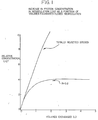
- Fig. 1 shows a typical prior art protein concentration increase in the recirculation loop of a plasmapheresis process as a function of plasma volumes exchanged.
- Fig. 2 is a schematic view of a plasmapheresis and plasma separation system utilized in the present invention.
- Fig. 3 shows the calculated relative concentration of albumin, totally rejected protein species, IgM and IgG as a function of the volume of the plasma stream treated in the recirculation loop. These results are calculated using Equation 1.
- Fig. 4 shows the calculated concentration ratio of the plasma in the patient as a function of plasma volume treated for various protein species.
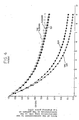
- Fig. 5 shows the results of Example 1 where the ratio of retentate concentration vs original concentration of plasma species as a function of plasma volume filtered is experimentally measured.
- Fig. 6 shows the results of Example 1 where the ratio of permeate concentration vs original concentration of plasma species as a function of plasma volume filtered is experimentally measured.
- This invention is based upon the discovery that by controlling the rate of dilution of a blood plasma component being fractionated so that the concentration of at least one high molecular weight species retained by the membrane is essentially constant, unexpected advantages are obtained. As a result of operating in this manner the membrane surface area can be minimized, plasma dilution can be controlled at low levels so that the patient is not overloaded with excess liquids. and efficient separation of high molecular weight plasma components from low molecular weight plasma components can be effected. This result is achieved by adding the diluent to the plasma component at a flow rate which diminishes exponentially with time.
- The whole blood to which anticoagulant has been added is first separated into its cellular component and its plasma component. The plasma component subsequently is separated into a high molecular weight fraction and a low molecular weight fraction and at least a portion of the low molecular weight fraction is admixed with the cellular component from a first separation step and returned to the patient. The plasma component is separated into a high molecular weight fraction and a low molecular weight fraction in a second separation step which is comprised of a membrane separation device and a recirculation circuit. The recirculation circuit comprises a portion of the separated high molecular weight plasma fraction which is recirculated to an expandable reservoir and then from the reservoir back to the second separation step. The diluent stream is added to this expandable recirculation circuit at a flow rate which diminishes exponentially with time. The volumetric flow rates from the patient, from the separation steps, and in the recirculation circuit as well as the rates of anticoagulant flow and diluent flow into the system are controlled to produce the desired advantages set forth above. The shear rate across the membrane in the second separation step is sufficiently high to prevent the formation of a molecular boundary layer at the membrane surface.
- The present invention will be described in detail hereinafter with reference to a plasmapheresis method and apparatus wherein an albumin-rich stream and the cellular component of blood are recycled to a patient. The present invention is also applicable to separating whole blood into a cellular component, a high molecular weight plasma component and a low molecular weight plasma component and wherein a desired constituent of blood, such as Factor VIII is recovered either simultaneously or at some later time by an appropriate recovery process such as by immunoadsorption.
- In accordance with this invention the volumetric flow rates of the diluent liquid streams created in the system of this invention are regulated in order to maintain the concentration of a desired (or selected) species at an essentially constant level in the recirculation circuit. The equation set forth below represents the ideal approximation of the diluent flow rate which minimizes membrane surface area, avoids the use of excess diluent and maintains high separation efficiency. It is to be understood that in accordance with this invention, the diluent flow rate, Qo will vary plus or minus 10 percent the Qo calculated from Equation 1. This is due to the normal variable flow rates obtained with available apparatus such as the pumps, the conduits which may become partially blocked during use and like effects. By the phrase «diluent flow rate» as used in the claims and specification herein is meant the QD calculated from Equation 1, plus or minus 10%.
- When operating so that the rejection coefficients of all species remains constant through the procedure, the flow rate of the diluent liquid stream is defined by the following relationships:

- QD = flow rate of diluent (stream 38)
- QPI = plasma flow rate (stream 28) withdrawn from the first
separation device separator 20 - a = "anti-coagulant ratio": ratio of the flow rate of whole blood withdrawn from the patient (stream 12) to the anticoagulant flow rate (stream 16)
- ho = patient hematocrit (fractional)
- R = "patient replacement ratio": the ratio of total flow rate returned to the patient (stream 26) to total flow rate withdrawn (stream 12)
- For isovolemic operation R=1 R" = secondary system "replacement ratio": the ratio of permeate flow rate from secondary (stream 46) to plasma flow rate being processed, which is equal to

- T = number of plasma volumes processed

- t = procedure time (i.e. elapsed time)
- Vo = initial patient plasma volume (at zero time)
- a = the sieving coefficient in the second separation device (separator 40) of the species to be held constant.
- The term "sieving coefficient" is a term of the field of art in question and it defines the ratio of the concentration of a solute in the filtrate to that concentration in the retentate.
- The relationship between R and R" is given by

- An exponentially decreasing diluent flow rate is required to maintain essentially constant concentration in the recirculation loop to match the decrease in concentration which occurs in the patient with time. Diluent addition at a rate much less than that described in equation 1 would result in the build-up in the concentration of high molecular weight species in a manner similar to that shown in Figure 1. This results in loss of membrane performance. Diluent added at a rate greater than that described in Equation 1 results in overdilution and excess volume being returned to the patent.
- All these equations equally apply to the case in which a waste (or bleed) stream is being withdrawn from the recirculation stream as long as the waste stream is small enough to keep the recirculation reservoir from getting empty or where no waste or bleed stream is being withdrawn.
- If the process shown in Figure 2 is operated in accordance with Equation 1 then, as shown in Figure 3, the concentration of the selected high molecular weight species remains constant as the total volume of plasma processed in the secondary plasma separation step increases.
- Referring to Figure 2, a
catheter 11 which communicates withconduit 12 is inserted into the patient 10 in order to pump the blood from the patient 10 by meansperistaltic pump 14. An anticoagulant is introduced into the system throughconduit 16 intoconduit 18. The whole blood containing anticoagulant is introduced into acell separator 20 such as a centrifuge adapted to separate whole blood into its plasma component and into its cellular component. Any suitable means for separating the whole blood into its plasma component and cellular component can be utilized in the present invention. Typically, plasma separation can be effected by passing the whole blood into contact with amicroporous membrane 22 generally having a pore size of about between 0.05 and 1.0 µm, particularly membranes having a pore size of about 0.6 J.lm. When utilizing the volumetric flow rates defined above, typical pressures across the microfiltration membrane inseparator 20 are usually between about 10 to about 100 mm Hg. - The cellular blood component is directed through
conduits patient 10. The plasma component is removed fromcell separator 20 throughconduit 28 by means of a (e.g. peristaltic)pump 30 and passed throughconduit 32 and to reservoir 34. A physiologically acceptable diluent is added to the reservoir 34 throughconduit 38 at a flow rate that diminishes exponentially with time as set forth above. The mixture of diluent and plasma is removed from reservoir 34 by means of a (e.g. peristaltic)pump 36 and directed to asecond separation step 40 wherein a low molecular weight plasma fraction is separated from a high molecular weight plasma fraction by means ofmembrane 42. The high molecular weight plasma fraction is recycled to reservoir 34 by means ofconduit 44. The low molecular weight plasma fraction containing albumin is removed fromseparation step 40 throughconduit 46 by means ofperistaltic pump 48 and is recycled to thepatient 10 by means ofconduit 50 andconduit 26. The rate of addition of diluent to reservoir 34 as regulated in accordance with the equations set forth above, and the control ofpump bleed stream 52 can be utilized in order to remove a portion of the high molecular weight plasma fraction from the system. - Typical operating conditions for the system shown schematically in Figure 2 are as follows:
- The
peristaltic pump 14 is operated in order to effect whole blood removal from the patient at a flow rate between about 20 and about 180 ml/min. The anticoagulant such as heparin, ACD (anticoagulant citrate dextrose), triisodium citrate or a combination thereof typically is added in aqueous solution at a flow rate throughconduit 16 usually between about 8% and about 14% of the whole blood flow rate. Thepump 30 which effects removal of the plasma fraction fromseparator 20 generally is operated to effect a flow rate inconduit 28 of about 5 and about 60 ml/min. Thepump 48 which effects removal of the low molecular weight plasma fraction generally is operated to effect a flow rate inconduit 50 between about 10 and about 40 ml/min. The addition of the diluent throughconduit 38 to reservoir 34 is then added at a rate determined by equations 1-4 and by the amount of albumin return which is desired. For example, when the albumin concentration returned is 50 percent of that initially in the patient, typical flow rates are whole blood inconduit 12 of about 100 ml/min. anticoagulant inconduit 16 of about 10 ml/min., plasma flow rate inconduit 28 of about 30 ml/min., recirculated plasma inconduit 44 of about 1,000 ml/min., low molecular weight plasma fraction inconduit 50 of about 30 ml/min. and flow rate of diluent initially of about 30 ml/min. and gradually to 0 over a time period of about 1.5 hours. - Theoretical results of the operation of the system shown in Fig. 2 are shown in Figs. 3 and 4. The system was designed to recover 50 percent of the patient's albumin in accordance with Equation 1 set forth above. As shown in Fig. 3, the albumin in the recirculation loop ranged between 42 percent and 53 percent of the patient's total albumin when 9 liters of blood were treated over a time period of about 5 hours. The corresponding albumin, IgG and IgM concentrations in the patient relative to initial values as shown in Fig. 4. As can be seen, patient's albumin concentration exactly matches that obtained with Total Plasma Exchange (TPE) and 50 percent exogenous albumin return. In addition, the amount of IgM removed from the patient is a maximum which could be removed given a specified albumin recovery for the particular filtration membrane used. The filtration membrane used in the secondary plasma fractionation step was a polyvinylidene fluoride ultrafiltration membrane. The following example illustrates the present invention and is not intended to limit the same.
- The system shown in Fig. 2 was utilized except that fresh anticoagulated human plasma (150 mls) in a blood bag which replaced the patient and apparatus enclosed by the segmented line of Fig. 2 was used rather than a human patient as the whole plasme source. No cell separator was used and no additional anticoagulant was added. The ultrafiltration module used had a total membrane area of 60 cm 2. The flow rate of the diluent stream Qo, is given by equation 1 and QD = 1.35-0.01t. The rejection coefficient of albumin in the plasme source (Ralb) was 0.15. That if IgG (RigG), and (RigM) were 0.30 and 0.93 respectively. The flow rate returned to the plasma bag ("patient") was 1.5ml/min. The experimental diafiltration flow rate was selected per equation 1 such that albumin was held constant in the reservoir. As shown in Fig. 5, the albumin concentration was held constant and the IgG concentration was also held constant. The concentration of IgM inreased slightly over time. The volume filtered over time was two volumes of the plasma bag. As shown in Fig. 6, the protein concentrations of the original plasma feed decreased as a function of plasma volume filtered (time).
Claims (8)

where


where


Applications Claiming Priority (2)
| Application Number | Priority Date | Filing Date | Title |
|---|---|---|---|
| US06/828,105 US4728430A (en) | 1986-02-10 | 1986-02-10 | Diafiltration method |
| US828105 | 1986-02-10 |
Publications (3)
| Publication Number | Publication Date |
|---|---|
| EP0232884A2 EP0232884A2 (en) | 1987-08-19 |
| EP0232884A3 EP0232884A3 (en) | 1987-10-07 |
| EP0232884B1 true EP0232884B1 (en) | 1990-04-18 |
Family
ID=25250933
Family Applications (1)
| Application Number | Title | Priority Date | Filing Date |
|---|---|---|---|
| EP87101754A Expired EP0232884B1 (en) | 1986-02-10 | 1987-02-09 | Diafiltration apparatus |
Country Status (4)
| Country | Link |
|---|---|
| US (1) | US4728430A (en) |
| EP (1) | EP0232884B1 (en) |
| JP (1) | JPS62258672A (en) |
| DE (1) | DE3762312D1 (en) |
Cited By (2)
| Publication number | Priority date | Publication date | Assignee | Title |
|---|---|---|---|---|
| US7758533B2 (en) | 2000-03-24 | 2010-07-20 | Immunocept, L.L.C. | Hemofiltration systems, methods and devices for treatment of chronic and acute diseases |
| DE102018211281A1 (en) * | 2018-07-09 | 2020-01-09 | Robert Bosch Gmbh | Microfluidic device and method for diluting and separating particles of a sample |
Families Citing this family (16)
| Publication number | Priority date | Publication date | Assignee | Title |
|---|---|---|---|---|
| US4935002A (en) * | 1988-06-29 | 1990-06-19 | Biodynamics, Inc. | Apparatus and method for the autotransfusion of blood |
| US4897185A (en) * | 1988-10-06 | 1990-01-30 | Cobe Laboratories, Inc. | Cell processing apparatus and method |
| DE3927633C1 (en) * | 1989-08-22 | 1990-10-04 | Fresenius Ag, 6380 Bad Homburg, De | |
| US5194157A (en) * | 1990-03-09 | 1993-03-16 | Sorin Biomedica Emodialisi Srl | Blood purifying equipment particularly for the treatment of patients suffering from renal insufficiency, and a method of producing a reinfusion liquid for haemodiafiltration (HDF) |
| DE4230513C1 (en) * | 1992-09-11 | 1994-03-31 | Fresenius Ag | Device for removing aluminum ions from blood and solution for use in the device |
| US5491259A (en) * | 1994-09-13 | 1996-02-13 | The Dow Chemical Company | Process to produce aminocarboxylic acids containing low residual salt |
| AU2069695A (en) * | 1995-03-13 | 1996-10-02 | Ao Forschungsinstitut Davos | An extracorporeal blood treatment apparatus and method for removal of free circulating infectious agents |
| US5597486A (en) * | 1995-05-01 | 1997-01-28 | Millipore Investment Holdings Limited | Membrane filtration with optimized addition of second liquid to maximize flux |
| US6139878A (en) * | 1998-04-27 | 2000-10-31 | Aventis Behring, Llc | Method for preparing a diafiltered stabilized blood product |
| US8152999B2 (en) * | 2004-05-21 | 2012-04-10 | Wisconsin Alumni Research Foundation | Membrane cascade-based separation |
| GB0513852D0 (en) * | 2005-07-06 | 2005-08-10 | Celltech R&D Ltd | Biological products |
| EP2076297A2 (en) * | 2006-10-23 | 2009-07-08 | Arbios Systems, Inc. | Fluid-conserving cascade hemofiltration |
| AU2009209515A1 (en) * | 2008-01-28 | 2009-08-06 | Milux Holding Sa | Blood clot removal device, system, and method |
| US8202240B2 (en) * | 2008-08-12 | 2012-06-19 | Caridianbct, Inc. | System and method for collecting plasma protein fractions from separated blood components |
| US8123713B2 (en) * | 2008-08-12 | 2012-02-28 | Caridian Bct, Inc. | System and method for collecting plasma protein fractions from separated blood components |
| US10329323B2 (en) | 2014-07-25 | 2019-06-25 | The United States Of America, As Represented By The Secretary, Department Of Health & Human Services | Method for purifying antibodies using PBS |
Family Cites Families (7)
| Publication number | Priority date | Publication date | Assignee | Title |
|---|---|---|---|---|
| US4191182A (en) * | 1977-09-23 | 1980-03-04 | Hemotherapy Inc. | Method and apparatus for continuous plasmaphersis |
| US4223672A (en) * | 1979-02-08 | 1980-09-23 | Baxter Travenol Laboratories, Inc. | Variable volume plasma treatment chamber for an apparatus for the extracorporeal treatment of disease |
| US4215688A (en) * | 1979-02-09 | 1980-08-05 | Baxter Travenol Laboratories, Inc. | Apparatus for the extracorporeal treatment of disease |
| US4350594A (en) * | 1980-04-16 | 1982-09-21 | Kuraray Co., Ltd. | Blood purification using plural ultrafiltration stages |
| US4350156A (en) * | 1980-05-29 | 1982-09-21 | Japan Foundation For Artificial Organs | Method and apparatus for on-line filtration removal of macromolecules from a physiological fluid |
| JPS583705B2 (en) * | 1980-07-18 | 1983-01-22 | 川澄化学工業株式会社 | Double filtration plasma exchange device |
| NO152484C (en) * | 1982-06-23 | 1985-10-09 | Nor Tron As | DEVICE FOR AA Separate from a biological fluid, special blood, a fraction of molecular weight between an upper and a lower limit value |
-
1986
- 1986-02-10 US US06/828,105 patent/US4728430A/en not_active Expired - Lifetime
-
1987
- 1987-02-09 DE DE8787101754T patent/DE3762312D1/en not_active Expired - Lifetime
- 1987-02-09 EP EP87101754A patent/EP0232884B1/en not_active Expired
- 1987-02-09 JP JP62026517A patent/JPS62258672A/en active Pending
Cited By (2)
| Publication number | Priority date | Publication date | Assignee | Title |
|---|---|---|---|---|
| US7758533B2 (en) | 2000-03-24 | 2010-07-20 | Immunocept, L.L.C. | Hemofiltration systems, methods and devices for treatment of chronic and acute diseases |
| DE102018211281A1 (en) * | 2018-07-09 | 2020-01-09 | Robert Bosch Gmbh | Microfluidic device and method for diluting and separating particles of a sample |
Also Published As
| Publication number | Publication date |
|---|---|
| EP0232884A2 (en) | 1987-08-19 |
| JPS62258672A (en) | 1987-11-11 |
| DE3762312D1 (en) | 1990-05-23 |
| EP0232884A3 (en) | 1987-10-07 |
| US4728430A (en) | 1988-03-01 |
Similar Documents
| Publication | Publication Date | Title |
|---|---|---|
| US4728430A (en) | Diafiltration method | |
| EP0232885B1 (en) | Method and apparatus for separating liquid compositions on the basis of molecular weight | |
| EP0038203B1 (en) | Blood treatment apparatus | |
| US5234608A (en) | Systems and methods for processing cellular rich suspensions | |
| US4276140A (en) | Electrodialysis apparatus and process for fractionating protein mixtures | |
| EP0168801B1 (en) | Apparatus for separating proteins from blood plasma | |
| EP0111620A2 (en) | Method and apparatus for treating whole blood | |
| JPS61276561A (en) | Blood treatment apparatus | |
| EP0076665B1 (en) | Method and apparatus for plasmapheresis | |
| US4863609A (en) | Process for the fractional separation of protein mixtures by means of membranes | |
| US4968432A (en) | Treatment of liquid including blood components | |
| US5217618A (en) | Plasma purification treatment | |
| US7592134B2 (en) | Viral reduction method for plasma using a leukocyte-reduction filter and two virus-reduction filters of decreasing pore diameters | |
| Samtleben et al. | Membrane plasma exchange: principles and application techniques | |
| US4753733A (en) | Plasmapheresis method and apparatus for overcoming membrane fouling | |
| EP0076320A1 (en) | Method and apparatus for treating blood and the like | |
| Busnach et al. | Performance evaluation of cascade filtration with high flow rate recirculating plasma on the secondary filter | |
| JPS6362B2 (en) | ||
| Philp et al. | Hemolysis reduction in plasmapheresis by module design: operating with pulsed flow filtration enhancement | |
| CA1170138A (en) | Method and apparatus for on-line filtration removal of macromolecules from a physiological fluid | |
| Busnach et al. | operating modalities in | |
| Takeyama et al. | Removal and recovery of cholesterol in thermofiltration | |
| Rubin et al. | Reduced protein loss during hemofiltration using cuprophan membranes | |
| Brando et al. | high flow rate recirculating plasma on the secondary filter | |
| JPH023622B2 (en) |
Legal Events
| Date | Code | Title | Description |
|---|---|---|---|
| PUAI | Public reference made under article 153(3) epc to a published international application that has entered the european phase |
Free format text: ORIGINAL CODE: 0009012 |
|
| PUAL | Search report despatched |
Free format text: ORIGINAL CODE: 0009013 |
|
| AK | Designated contracting states |
Kind code of ref document: A2 Designated state(s): DE FR GB IT NL SE |
|
| AK | Designated contracting states |
Kind code of ref document: A3 Designated state(s): DE FR GB IT NL SE |
|
| 17P | Request for examination filed |
Effective date: 19871110 |
|
| 17Q | First examination report despatched |
Effective date: 19880909 |
|
| GRAA | (expected) grant |
Free format text: ORIGINAL CODE: 0009210 |
|
| AK | Designated contracting states |
Kind code of ref document: B1 Designated state(s): DE FR GB IT NL SE |
|
| ITF | It: translation for a ep patent filed | ||
| ET | Fr: translation filed | ||
| REF | Corresponds to: |
Ref document number: 3762312 Country of ref document: DE Date of ref document: 19900523 |
|
| PLBI | Opposition filed |
Free format text: ORIGINAL CODE: 0009260 |
|
| PGFP | Annual fee paid to national office [announced via postgrant information from national office to epo] |
Ref country code: SE Payment date: 19910122 Year of fee payment: 5 |
|
| PGFP | Annual fee paid to national office [announced via postgrant information from national office to epo] |
Ref country code: FR Payment date: 19910124 Year of fee payment: 5 |
|
| PGFP | Annual fee paid to national office [announced via postgrant information from national office to epo] |
Ref country code: GB Payment date: 19910131 Year of fee payment: 5 |
|
| PGFP | Annual fee paid to national office [announced via postgrant information from national office to epo] |
Ref country code: DE Payment date: 19910227 Year of fee payment: 5 |
|
| PGFP | Annual fee paid to national office [announced via postgrant information from national office to epo] |
Ref country code: NL Payment date: 19910228 Year of fee payment: 5 |
|
| 26 | Opposition filed |
Opponent name: ENKA AG Effective date: 19901228 |
|
| NLR1 | Nl: opposition has been filed with the epo |
Opponent name: ENKA AG. |
|
| PLAB | Opposition data, opponent's data or that of the opponent's representative modified |
Free format text: ORIGINAL CODE: 0009299OPPO |
|
| R26 | Opposition filed (corrected) |
Opponent name: AKZO FASER AKTIENGESELLSCHAFT Effective date: 19901228 |
|
| NLXE | Nl: other communications concerning ep-patents (part 3 heading xe) |
Free format text: IN PAT.BUL.08/91,CORR.:AKZO FASER AKTIENGESELLSCHAFT |
|
| PG25 | Lapsed in a contracting state [announced via postgrant information from national office to epo] |
Ref country code: GB Effective date: 19920209 |
|
| PG25 | Lapsed in a contracting state [announced via postgrant information from national office to epo] |
Ref country code: SE Effective date: 19920210 |
|
| PG25 | Lapsed in a contracting state [announced via postgrant information from national office to epo] |
Ref country code: NL Effective date: 19920901 |
|
| GBPC | Gb: european patent ceased through non-payment of renewal fee | ||
| NLV4 | Nl: lapsed or anulled due to non-payment of the annual fee | ||
| PG25 | Lapsed in a contracting state [announced via postgrant information from national office to epo] |
Ref country code: FR Effective date: 19921030 |
|
| PG25 | Lapsed in a contracting state [announced via postgrant information from national office to epo] |
Ref country code: DE Effective date: 19921103 |
|
| REG | Reference to a national code |
Ref country code: FR Ref legal event code: ST |
|
| RDAG | Patent revoked |
Free format text: ORIGINAL CODE: 0009271 |
|
| STAA | Information on the status of an ep patent application or granted ep patent |
Free format text: STATUS: PATENT REVOKED |
|
| 27W | Patent revoked |
Effective date: 19930122 |
|
| EUG | Se: european patent has lapsed |
Ref document number: 87101754.7 Effective date: 19920904 |