EP0226381B1 - Novel glucopyranose derivatives - Google Patents
Novel glucopyranose derivatives Download PDFInfo
- Publication number
- EP0226381B1 EP0226381B1 EP86309377A EP86309377A EP0226381B1 EP 0226381 B1 EP0226381 B1 EP 0226381B1 EP 86309377 A EP86309377 A EP 86309377A EP 86309377 A EP86309377 A EP 86309377A EP 0226381 B1 EP0226381 B1 EP 0226381B1
- Authority
- EP
- European Patent Office
- Prior art keywords
- group
- amino
- deoxy
- sulfo
- tetradecanoyl
- Prior art date
- Legal status (The legal status is an assumption and is not a legal conclusion. Google has not performed a legal analysis and makes no representation as to the accuracy of the status listed.)
- Expired
Links
- 0 CCC1O[C@@](*)C(C2N*2O)C(*C(N)=O)C1*I* Chemical compound CCC1O[C@@](*)C(C2N*2O)C(*C(N)=O)C1*I* 0.000 description 17
- GDOPTJXRTPNYNR-UHFFFAOYSA-N CC1CCCC1 Chemical compound CC1CCCC1 GDOPTJXRTPNYNR-UHFFFAOYSA-N 0.000 description 1
Classifications
-
- C—CHEMISTRY; METALLURGY
- C07—ORGANIC CHEMISTRY
- C07H—SUGARS; DERIVATIVES THEREOF; NUCLEOSIDES; NUCLEOTIDES; NUCLEIC ACIDS
- C07H13/00—Compounds containing saccharide radicals esterified by carbonic acid or derivatives thereof, or by organic acids, e.g. phosphonic acids
- C07H13/02—Compounds containing saccharide radicals esterified by carbonic acid or derivatives thereof, or by organic acids, e.g. phosphonic acids by carboxylic acids
- C07H13/04—Compounds containing saccharide radicals esterified by carbonic acid or derivatives thereof, or by organic acids, e.g. phosphonic acids by carboxylic acids having the esterifying carboxyl radicals attached to acyclic carbon atoms
-
- C—CHEMISTRY; METALLURGY
- C07—ORGANIC CHEMISTRY
- C07D—HETEROCYCLIC COMPOUNDS
- C07D309/00—Heterocyclic compounds containing six-membered rings having one oxygen atom as the only ring hetero atom, not condensed with other rings
- C07D309/02—Heterocyclic compounds containing six-membered rings having one oxygen atom as the only ring hetero atom, not condensed with other rings having no double bonds between ring members or between ring members and non-ring members
- C07D309/08—Heterocyclic compounds containing six-membered rings having one oxygen atom as the only ring hetero atom, not condensed with other rings having no double bonds between ring members or between ring members and non-ring members with hetero atoms or with carbon atoms having three bonds to hetero atoms with at the most one bond to halogen, e.g. ester or nitrile radicals, directly attached to ring carbon atoms
- C07D309/14—Nitrogen atoms not forming part of a nitro radical
-
- C—CHEMISTRY; METALLURGY
- C07—ORGANIC CHEMISTRY
- C07H—SUGARS; DERIVATIVES THEREOF; NUCLEOSIDES; NUCLEOTIDES; NUCLEIC ACIDS
- C07H13/00—Compounds containing saccharide radicals esterified by carbonic acid or derivatives thereof, or by organic acids, e.g. phosphonic acids
- C07H13/02—Compounds containing saccharide radicals esterified by carbonic acid or derivatives thereof, or by organic acids, e.g. phosphonic acids by carboxylic acids
- C07H13/04—Compounds containing saccharide radicals esterified by carbonic acid or derivatives thereof, or by organic acids, e.g. phosphonic acids by carboxylic acids having the esterifying carboxyl radicals attached to acyclic carbon atoms
- C07H13/06—Fatty acids
-
- C—CHEMISTRY; METALLURGY
- C07—ORGANIC CHEMISTRY
- C07H—SUGARS; DERIVATIVES THEREOF; NUCLEOSIDES; NUCLEOTIDES; NUCLEIC ACIDS
- C07H15/00—Compounds containing hydrocarbon or substituted hydrocarbon radicals directly attached to hetero atoms of saccharide radicals
- C07H15/02—Acyclic radicals, not substituted by cyclic structures
- C07H15/04—Acyclic radicals, not substituted by cyclic structures attached to an oxygen atom of the saccharide radical
-
- C—CHEMISTRY; METALLURGY
- C07—ORGANIC CHEMISTRY
- C07H—SUGARS; DERIVATIVES THEREOF; NUCLEOSIDES; NUCLEOTIDES; NUCLEIC ACIDS
- C07H15/00—Compounds containing hydrocarbon or substituted hydrocarbon radicals directly attached to hetero atoms of saccharide radicals
- C07H15/18—Acyclic radicals, substituted by carbocyclic rings
Definitions
- This invention is related to novel glucopyranose derivatives.
- this invention is related to
- Gram-negative germ e.g. cholera germ, salmonella germs, colon bacillus
- LPS lipopolysuccharide
- LPS have various bioactivities included fetal toxicity this is why it is so named endotoxin.
- endotoxin LPS have a pyrogenetic action, a hemorrhage action, induce encephalomyelitis, arthritis, and have a blastogenic action (macrophage activating action, B cell mitogenic activity, producing action of non-specific antibody, enhancing activity of cellular immunity etc.) and anti-tumor action (INF (interferon) inducing action, TNF (tumor necrosis factor) inducing action etc.).
- INF interferon
- TNF tumor necrosis factor
- LPS is effective as non-specific immunity agent, and have an action inducing hemorrhage necrosis of tumor cell specifically by its TNF inducing activity, and therefore be useful for anti-tumor agent.
- LPS also useful for its inducing activity of IL-1 (interleukin-1) or interferon, not only their enhancing activity of cellular immunity but also stimulating of NK (natural killer) activity.
- IL-1 interleukin-1
- NK natural killer
- LPS is constituted from three kinds of materials i.e. acidic protein, macromolecular polysuccharides and phospholipid, and phospholipid have been found as its active site by Westphal, Ludertz et al.
- lipid A The phospholipid shown above is called lipid A, and it was known that the compound alone possess various activities like LPS.
- Non-reducing subunits were not found in natural, and some of them were synthesized chemically, i.e. compounds of general formula:
- Patent applications related to the above compounds were published [See Japanese Patent Publication No. 61-126093 and 61-126094].
- That is the present invention is related to the novel glucopyranose derivatives of general formula: [wherein, R represents a hydrogen atom, a hydroxy group or an alkoxy group of from 1 to 4 carbon atom(s),
- examples of the alkoxy group of from 1 to 4 carbon atom(s) as R are methoxy, ethoxy, propoxy and butoxy groups and isomeric groups thereof, and preferable groups as R are a hydrogen atom, a hydroxy group and a methoxy group.
- the oxycarbonylalkyl group of from 2 to 20 carbon atoms as R 1 and R 5 is a group of general formula: and alkylene chain side is bonded to R 2 group.
- Alkylene group of 1 to 19 carbon atom(s) said foregoing are methylene, ethylene, trimethylene, tetramethylene, pentamethylene, hexamethylene, heptamethylene, octamethylene, nonamethylene, decamethylene, undecamethylene, dodecamethylene, tridecamethylene, tetradecamethylene, pentadecamethylene, hexadecamethylene, heptadecamethylene, octadecamethylene and nonadecamethylene groups and isomeric groups thereof, and preferable groups as R 1 are a single bond (a hydrogen atom as R 2 is preferable, in this case.), oxycarbonyltrimethylene, oxycarbonyltetramethylene, oxycarbonylhex- amethylene, oxycarbonylheptamethylene, oxycarbonyloctamethylene, oxycarbonylnonamethylene, oxycar- bonyldecamethylene and oxycarbonyldodecamethylene groups.
- examples of the alkyl or alkoxy group of from 1 to 7 carbon atom(s) as R 10 in the group represented by R 2 and R 6 , and as R 11 in the group represented by R 4 are methyl, ethyl, propyl, butyl, pentyl, hexyl, heptyl, methoxy, ethoxy, propoxy, butoxy, pentyloxy, hexyloxy and heptyloxy groups and isomeric groups thereof.
- Halogen atoms represented by R 10 and R 11 are fluorine, chlorine, bromine and iodine atoms, and preferable groups as R 10 and R 11 are a hydrogen atom, chlorine atom, methoxy group and pentyl group.
- examples of the alkylene group of from 1 to 20 carbon atom(s) are methylene, ethylene, trimethylene, tetramethylene, pentamethylene, hexamethylene, heptamethylene, octamethylene, nonamethylene, decamethylene, undecamethylene, dodecamethylene, tridecamethylene, tetradecamethylene, pentadecamethylene, hexadecamethylene, heptadecamethylene, octadecamethylene and nonadecamethylene and eicosamethylene groups and isomeric groups thereof, and preferable groups as R 3 especially are hexamethylene and undecamethylene groups.
- alkyl, alkylene and alkenylene groups foregoing described mean straight ones and branched ones, and preferable group especially are straight ones.
- the compounds of the present invention of the general formula (I) possess activities like lipid A, and therefore be useful for enhancing agent and anti-tumor agent.
- the compounds of the present invention possess action of activating macrophages, B cell mitogenic activity, producing action of non-specific antibody, enhancing activity of cellular immunity, as blastogenic action, and possess INF (interferon) inducing action, TNF (tumor necrosis factor) inducing action etc. as anti-tumor action.
- INF interferon
- TNF tumor necrosis factor
- the present invention is not only chemical compounds per se and non-toxic salts thereof but also processes for the preparation.
- compounds wherein R 7 is a hydroxy group of the general formula: [wherein, all of the symbols are the same meaning as hereinbefore defined.] may be prepared by hydrolizing a compound of general formula: [wherein, R 2 ° represents a trialkylsilyl group, and the other symbols are the same meaning as hereinbefore defined.] in an acidic condition.
- Hydrolysis is well known, for example, with using an acid (acetic acid, oxalic acid, trifluoroacetic acid, hydrochloric acid etc.), in a water-miscible organic solvent (THF, methanol, ethanol, dioxane etc.), with or without water, at a temperature of from 0 C to 70 C.
- an acid acetic acid, oxalic acid, trifluoroacetic acid, hydrochloric acid etc.
- THF water-miscible organic solvent
- compounds wherein R 7 is a hydrogen atom of general formula: [wherein, all of the symbols are the same meaning as hereinbefore defined.] may be prepared by introducing a sulfo group into the hydroxy group of the 4th-position of a compound of general formula: [wherein, all of the symbols are the same meaning as hereinbefore defined.].
- the reaction is well known, it may be carried out, for example, in the presence of a tertiary amine (pyridine, triethylamine etc.), in an inert organic solvent (THF, methylene chloride, ethyl acetate etc.) or without solvent used, using with sulfur trioxide-pyridine complex, at a temperature of from -10 C to 60°C.
- a tertiary amine pyridine, triethylamine etc.
- THF methylene chloride, ethyl acetate etc.
- Step (a) is an introducing reaction of an acyl group into the amino group, i.e. N-acylation, and it may be carried out, for example, using with a mixed acid anhydride which was prepared from a carboxylic acid of general formula: or by reacting with pivaloyl chloride, in the presence of a suitable base (triethylamine, pyridine etc.), in an inert organic solvent (methylene chloride, toluene, benzene, hexane, THP, THF, etc.), at a temperature of from -30 C to 30° C, in the same condition without purification.
- a suitable base triethylamine, pyridine etc.
- an inert organic solvent methylene chloride, toluene, benzene, hexane, THP, THF, etc.
- N-acylation described above may also be carried out by reacting a compound of the general formula (IV) and a carboxylic acid of the general formula (XIII) or (XIV), in the presence of a suitable base (triethylamine, pyridine, 4-(N,N-dimethylamino) pyridine etc.) in an inert organic solvent (methylene chloride, acetonitrile etc.), using with 2-chloro-N-methylpyridinium iodide, at a temperature of from -30 C to 30° C.
- a suitable base triethylamine, pyridine, 4-(N,N-dimethylamino) pyridine etc.
- an inert organic solvent methylene chloride, acetonitrile etc.
- N-acylation also may be carried out by reacting a carboxylic acid of the general formula (XIII) and (XIV) in the presence of triphenylphosphine, in an inert organic solvent (methylene chloride, THF, ethyl acetate etc.), using with 2,2'-pyridyldisulfide, at a temperature of from -10 C to 50° C.
- an inert organic solvent methylene chloride, THF, ethyl acetate etc.
- N-acylation may be carried out by other activating method of carboxylic acid, for example, using with dicyclohexylcarbodiimide.
- Step (b) is an introducing reaction of acyl group into the hydroxy group, i.e. O-acylation, and it may be carried out, for example, in the presence of a suitable base (triethylamine, 4-(N,N-dimethylamino)pyridine, pyridine etc.), in an inert organic solvent (methylene chloride, toluene, benzene, ethyl acetate, hexane, THF, THP etc.) or without solvent used, using with a corresponding acyl halide, at a temperature of from -10° C to 60 C.
- a suitable base triethylamine, 4-(N,N-dimethylamino)pyridine, pyridine etc.
- an inert organic solvent methylene chloride, toluene, benzene, ethyl acetate, hexane, THF, THP etc.
- O-acylation may be carried out by reacting a corresponding acid, in the presence of a suitable amine (triethylamine, 4-(N,N-dimethylamino)pyridine, pyridine etc.) in an inert organic solvent (methylene chloride, acetonitrile etc.), using with 2-chloro-N-methylpyridinium iodide as a condencing agent, at a temperature of from -30° C to 30° C.
- a suitable amine triethylamine, 4-(N,N-dimethylamino)pyridine, pyridine etc.
- an inert organic solvent methylene chloride, acetonitrile etc.
- O-acylation may also be carried out by other activating method of carboxylic acid, for example, using with dicyclohexylcarbodiimide.
- Step (c) is a removing reaction of isopropylidene group on the 4th and 6th positions of the sugar as protecting group, and it may be carried out, for example in water or a water miscible organic solvent (THF, methanol, ethanol etc.) and water, using an acid (acetic acid, p-toluenesulfonic acid, camphorsulfonic acid, trichloroacetic acid, oxalic acid etc.), at a temperature of from 0 C to 80° C.
- THF water miscible organic solvent
- methanol methanol
- ethanol etc. water miscible organic solvent
- an acid acetic acid, p-toluenesulfonic acid, camphorsulfonic acid, trichloroacetic acid, oxalic acid etc.
- Step (d) is an introducing reaction of a protecting group into the hydroxy group on the 6th position selectively, and it may be carried out, for example, in the presence of a suitable base (4-(N,N-dimethylamino)pyridine, pyridine, triethylamine etc.), in an inert organic solvent (methylene chloride, toluene, benzene, ethyl acetate, hexane, THF, THP etc.) or without solvent used, using with a corresponding trialkylsilyl halide (t-butyldimethylsilyl chloride, trimethylsilyl chloride etc.), at a temperature of from -10°C to 60 C.
- a suitable base 4-(N,N-dimethylamino)pyridine, pyridine, triethylamine etc.
- an inert organic solvent methylene chloride, toluene, benzene, ethyl acetate, hexane
- Step (a) is a removing reaction of benzyl group, and it may be carried out, for example, in an atmosphere of hydrogen, in an organic solvent (methanol, ethanol, THF, THP etc.), using with a hydrogenating catalyst (palladium-carbon, platinum black, nickel etc.), at a temperature of from -10 C to 80° C.
- an organic solvent methanol, ethanol, THF, THP etc.
- a hydrogenating catalyst palladium-carbon, platinum black, nickel etc.
- Step (f) is an introducing reaction of sulfo group into the hydroxy group on the 4th position, and it may be carried out, for example, in the presence of a tertiary wine (pyridine, triethylamine etc.), in an inert organic solvent (THF, methylene chloride, ethyl acetate etc.) or without solvent used, using sulfur trioxide-pyridine complex, at a temperature of from -10 C to 60° C.
- Step (g) is acylation of the amino group on the 2nd position and the hydroxy group on the 3rd position at the same time, and it may be carried by the same procedure as described in the step (b).
- Step (h) is tosylation (an introducing reaction of p-toluenesulfonyl group) or mesylation (an introducing reaction of methanesulfonyl group), and it may be carried out, for example, in an inert organic solvent (methylene chloride etc.) or without solvent used, in the presence of tertiary amine (triethylamine, pyridine, 4(N,N-dimethylamino)pyridine etc.), using with tosyl halide or mesyl halide, at a temperature of from -40 C to 40°C.
- an inert organic solvent methylene chloride etc.
- tertiary amine triethylamine, pyridine, 4(N,N-dimethylamino)pyridine etc.
- Step (i) is a replacing reaction of tosyloxy or mesyloxy group into an iodine atom, it may be carried out, for example, in an inert organic solvent (acetone etc.), using an iodide (sodium iodide, potassium iodide etc.), at a temperature of from 0° C to 60° C.
- an inert organic solvent acetone etc.
- an iodide sodium iodide, potassium iodide etc.
- Step (j) is a removing reaction of the iodine atom, and it may be carried out, for example, in an inert organic solvent (toluene, benzene, xylene etc.), in the presence of tributylstannane and ⁇ , ⁇ '- azobisisobutyronitrile, by irradiation of light.
- an inert organic solvent toluene, benzene, xylene etc.
- Step (k) is a removing reaction of benzyl group, and it may be carried out by the same procedure as described in the step (e).
- reaction step (e) or (k) should be omitted, and substituents with prime (R1', R and R°) should be read each substituents without prime.
- products may be purified by conventional methods, for example, distillation at atmospheric or reduced pressure, high performance liquid chromatography, thin layer chromatography using silica gel or magnesium silicate or washing or recrystallization. Purification may be carried after each reactions or a series of reactions.
- the compounds of the present invention of the general formula (I) may be formed salts at the sulfo group.
- solubility of the compounds of the present invention against water can be increased, and therefore useful at the administration as pharmaceuticals.
- the compounds of the present invention may easily be converted into corresponding salts by the methods known per se, e.g. methods described hereafter.
- the salts in the present invention are preferably non-toxic ones.
- the non-toxic salts herein referred mean salts of cations such that it is relatively innoxious to living body (animals including human beings) tissues and that the effective pharmacological properties of the compounds of the general formula (I) are not impaired by side effect(s) resulting from the cations when used in an amount required for the prevention and/or treatment.
- water-soluble salts are preferable.
- Suitable salts include, for example, a salt of an alkali metal such as sodium, potassium, a salt of an alkaline earth metal such as calcium, magnesium, an ammonium salt and a pharmaceutically acceptable (non-toxic) amine salt.
- Amines suitable for forming such salts with sulfo group are well known and include, for example, those amines which are theoretically obtained by substituting one or more of hydrogen atom(s) of ammonia by other group(s). These groups, which may be the same or different when one or more hydrogen atom(s) are substituted, are selected from, for example, alkyl group(s) of from 1 to 6 carbon atom(s) and hydroxyalkyl group(s) of from 1 to 3 carbon atom(s).
- Suitable non-toxic amine salts include salts of a tetraalkylammonium group, such as tetramethylammonium salt and salts of an organic amine, such as methylamine, dimethylamine, cyclopentylamine, benzylamine, phenetylamine, piperidine, monoethanolamine, diethanolamine, lysine and alginine.
- a tetraalkylammonium group such as tetramethylammonium salt
- an organic amine such as methylamine, dimethylamine, cyclopentylamine, benzylamine, phenetylamine, piperidine, monoethanolamine, diethanolamine, lysine and alginine.
- Salts can be obtained from the compounds of the present invention of the general formula (I), by methods known per se, for example, by reacting the compound of the general formula (I) and a suitable base such as a hydroxide or carbonate of an alkali metal or alkaline earth metal, ammonium hydroxide, ammonia or an organic amine in theoretical amounts in an appropriate solvent.
- a suitable base such as a hydroxide or carbonate of an alkali metal or alkaline earth metal, ammonium hydroxide, ammonia or an organic amine in theoretical amounts in an appropriate solvent.
- the salts can be isolated by freeze-drying the solution, or by filtration if the salts are sufficiently insoluble to the reaction solution, or if necessary, by removing part of the solvent followed by filtration.
- the compound of the present invention showed activities as in the following Table I, with the test system described hereafter.
- Mitogenic activity means activity of activating mitogenic cell division, and in this test system, taking amount of tymidine into lympha cells was measured and ratio to the one of blank control cell (Blastgenic index) was calculated.
- the amounts were measured by dencity of radiolable.
- mice of 6 weeks old were killed by bloodletting, and spleens were isolated and homoginised. Homoginising liquids were filtered with gauze, and suspending cells were prepared with PBS solution. After washing, lymphacytes fractions were gathered with lympholight M. Lymphacytes were suspended in RPMI 1640 cultivation solution (10% FEBS), and the solution was divided into 5 x 10 5 cells/180 ⁇ l/wells. Ten times concentration of the terminal concentration (1 ⁇ g/ml) of the compounds of the present invention were added with 20 ⁇ l portions to the each wells.
- the compounds of the present invention showed activities as in the following Table II, with the test system described hereafter.
- Corye parvum (manufactured by Ribi Immuno Chem. Research Inc.) was administered to ICR male mice of 6-week old from tail vein as priming agent. Ten days' after, the compounds of the present invention (10 ⁇ g) were administered from tail vein as eliciting agent. 90 mins' after of the administration, bloods were collected from heart, and blood serums were separated.
- mice L-M cells (10 4 /100 ⁇ l/well) suspended in a mixture of the diluted serum solution (100 ⁇ l/well) and RPMI 1640 cultivating solution (10% FEBS and 0.2% glucose; manufactured by Nissui Pharmaceutical Co.) were cultivated in an atmosphere of a mixed gas of 5% C0 2 - 95% 0 2 , for 48 hrs at 37 C, after adding 3 H-tymidine (0.5 ⁇ Ci/20 ⁇ l/well). Taking amounts of 3 H-tymidine into cells during the cultivation were measured.
- the acute toxicity (LD 50 ) of the compounds of the present invention were more than 100 mg/kg animal body weight by intravenous administration. Therefore, the compounds of the present invention may be considered to be sufficiently safe and suitable for pharmaceutical use.
- the values of LD 50 of the compound prepared in example 1(c) was more than 300 mg/kg animal body weight by intravenous administration in mice.
- the compounds of the present invention of the general formula (I) possess enhancing activity of cellular immunity (e.g. mitogenic activity) to living tissue as shown in the experiment hereinbefore, and therefore be useful for enhancing agent of immunity.
- cellular immunity e.g. mitogenic activity
- the compounds of the present invention of the general formula (I) possess and inducing activity of TNF, an inducing activity of IL-1 and an inducing activity of IFN, and therefore be useful for anti-tumor agent.
- the compounds of the present invention of the general formula (I) or non-toxic salts thereof may normally be administered systemically or partially; usually by oral or parenteral administration.
- the doses to be administered are determined depending upon age, body weight, symptom, the desired therapeutic effect, the route of administration, and the duration of the treatment etc.
- the doses per person per dose are generally between 0.1 mg and 100 mg, by oral administration, up to several times per day, and between 10 I1.g and 10 mg, by parenteral administration up to several times per day.
- the doses to be used depend upon various conditions. Therefore, there are cases in which doses lower than or greater than the ranges specified above may be used.
- Solid compositions according to the present invention for oral administration include compressed tablets, dispersible powders and granules.
- one or more of the active compound-(s) is or are, admixed with at least one inert diluent such as lactose, mannitol, glucose, hydroxypropylcellulose, microcrystalline cellulose, starch, polyvinylpyrrolidone or magnesium metasilicate aluminate.
- the compositions may also comprise, as is normal practice, additional substances other than inert diluents e.g. lubricating agents such as magnesium stearate, disintegrating agents such as cellulose calcium gluconate, and assistant for dissolving e.g.
- compositions for oral administration also include capsules of absorbable material such as gelatin.
- Liquid compositions for oral administration include pharmaceutically-acceptable emulsions, solutions, suspensions, syrups and elixirs containing inert diluents commonly used in the art such as distilled water or ethanol. Besides inert diluents such compositions may also comprise adjuvants such as wetting and suspending agents, and sweetening, flavouring, perfuming and preserving agents.
- compositions for oral administration include spray compositions which may be prepared by known methods and which comprise one or are of the active compound(s).
- Preparations for injection according to the present invention for parenteral administration include sterile aqueous or non-aqueous solutions, suspensions or emulsions.
- aqueous solvents or suspending media are distilled water for injection and physiological salt solution.
- non-aqueous solvents or suspending media are propylene glycol, polyethylene glycol, vegetable oils such as olive oil, alcohols such as ethanol, POLYSORBATE 80 (registered Trade Mark).
- These compositions may also include adjuvants such as preserving, wetting, emulsifying, dispersing agents and assistant agent for dissolving (e.g. arginine, glutamic acid or amino-acid such as aspartic acid).
- They may be sterilized, for example, by filtration through a bacteria-retaining filter, by incorporation of sterilizing agents in the compositions or by irradiation. They may also be manufactured in the form of sterile solid compositions which can be dissolved in sterile water or some other sterile injectable medium immediately before use.
- compositions for parenteral administration include liquids for external use, and endermic liniments such as ointments, suppositories and pessaries which comprise one or more of the active compound(s) and may be prepared by known methods.
- the dotted line (---), the thickened line ( ) and the wavy line ( ) indicate that the respective group attached thereto is in the backside of the plane, i.e. in a-configulation, in the front of the plane, i.e. in ⁇ -configulation, and in a- or ⁇ -configulation or a mixture thereof, respectively, according to the generally accepted nomenclatural rule.
- TLC Thin layer chromatography
- IR Infrared absorption spectrum
- the solvents in the parentheses show the developing or eluting solvents and the ratios of the solvents used are by volume in chromatographic separations.
- Pivaloyl chloride (1.37 mt) was added to an ice-cooled solution of ⁇ -hydroxymiristic acid (2.60 g) in methylene chloride (20 mt), and the mixture was stirred for 30 mins. The solution was added slowly to an ice-cooled solution of benzyl 2-deoxy-2-amino-4,6-0-isopropylidene- ⁇ -D-glucopyranoside (Agric. Biol. Chem., 48(1), 251 (1984); 2.6 g) and triethylamine (1.67 ml) in methylene chloride (20 mt).
- Phenylbutanoic acid (361 mg) and then 2-chloro-1-methylpyridinium iodide (767 mg) and triethylamine (0.84 ml) were added to a solution of the compound (535 mg) prepared in reference example 1 dissolved into methylene chloride (10 mt). The mixture was stirred for 30 mins with ice-cooling. 4-(N,N-dimethylamino) pyridine (61 mg) was added to the reaction solution at room temperature and the mixture was stirred for 18 hrs.
- reaction solution was washed with water, dil. hydrochloric acid and an aqueous saturated solution of sodium bicarbonate, dried and evaporated.
- sulfur trioxide-pyridine complex 230 mg was added to a solution of the compound (653 mg) prepared in reference example 5 dissolved into dry pyridine. The mixture was stirred for 4 hrs at room temperature, and concentrated. To the residue, toluene was added and the solution was evaporated to give the title compounds.
Landscapes
- Chemical & Material Sciences (AREA)
- Organic Chemistry (AREA)
- Engineering & Computer Science (AREA)
- Health & Medical Sciences (AREA)
- Biochemistry (AREA)
- Biotechnology (AREA)
- General Health & Medical Sciences (AREA)
- Genetics & Genomics (AREA)
- Molecular Biology (AREA)
- Life Sciences & Earth Sciences (AREA)
- Crystallography & Structural Chemistry (AREA)
- Pharmaceuticals Containing Other Organic And Inorganic Compounds (AREA)
- Saccharide Compounds (AREA)
- Preparation Of Compounds By Using Micro-Organisms (AREA)
Abstract
Description
- This invention is related to novel glucopyranose derivatives.
- More particularly, this invention is related to
- (1) novel glucopyranose derivatives;
- (2) processes for the preparation of them; and
- (3) enhancing agent of immunity and/or anti-tumor agent containing them as active ingredient.
- Gram-negative germ (e.g. cholera germ, salmonella germs, colon bacillus) have compounds so called as lipopolysuccharide (abbreviated as LPS) on the outer cell membrane, and it was thought that the compounds induced endotoxin shock.
- It was known that LPS have various bioactivities included fetal toxicity this is why it is so named endotoxin. For example, LPS have a pyrogenetic action, a hemorrhage action, induce encephalomyelitis, arthritis, and have a blastogenic action (macrophage activating action, B cell mitogenic activity, producing action of non-specific antibody, enhancing activity of cellular immunity etc.) and anti-tumor action (INF (interferon) inducing action, TNF (tumor necrosis factor) inducing action etc.).
- Especially, LPS is effective as non-specific immunity agent, and have an action inducing hemorrhage necrosis of tumor cell specifically by its TNF inducing activity, and therefore be useful for anti-tumor agent.
- And LPS also useful for its inducing activity of IL-1 (interleukin-1) or interferon, not only their enhancing activity of cellular immunity but also stimulating of NK (natural killer) activity.
- On the other hand, LPS is constituted from three kinds of materials i.e. acidic protein, macromolecular polysuccharides and phospholipid, and phospholipid have been found as its active site by Westphal, Ludertz et al.

- The phospholipid shown above is called lipid A, and it was known that the compound alone possess various activities like LPS.
- The absolute structure of lipid A was unknown for long years, but recent studies cleared that its structure is disuccharideamine combined with fatty acids and phosphoric acids as the following [See Nippon Saikin-gaku Zasshi 40(1 57 (1985) and Proc. Natl. Acad. Sci. U.S.A. 80, 4624 (1983)].
-

- Result of the recent studies discovered that each subunits above possess activities like Lipid A. And especially, reducing subunit was isolated as a biosynthesis precursor and was named to lipid X [See Biol. Chem. 256, 10690 (1981) and Proc. Natl. Acad. Sci. 80, 4624 (1983)].
- And compound combined with hexadecanoyl group on the hydroxy group of β-hydroxytetradecanoyl group on the 2nd position of lipid X as ester is named lipid Y.
- About the above lipid A, lipid X and lipid Y, Wisconsin Alumni Research Foundation was patent applicated [See WO-8404526 or EP-143840].
- Non-reducing subunits were not found in natural, and some of them were synthesized chemically, i.e. compounds of general formula:

- Compound 1:
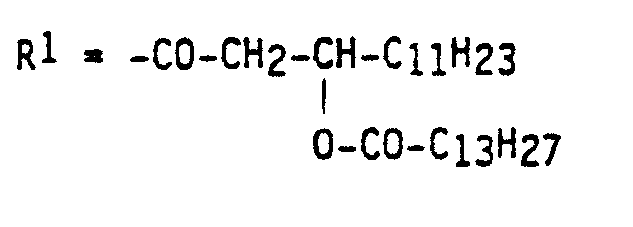
- Compound 2: R1 = -CO-C13H27
- R 2 = -PO(OH)2
- Compound 3:

- Patent applications related to the above compounds were published [See Japanese Patent Publication No. 61-126093 and 61-126094].
- Further, compounds replaced the hydroxy group on the 1 st position into a hydrogen atom were published, i.e. compounds of general formula:

C14 represents tetradecanoyl group, C14-O-C14 represents -(3-tetradecanoyl)-tetradecanoyl group, and P represents phosphoryl group, respectively. Stereo configulation of AR2' on the 3rd position is a-configulation or β-configulation.]
(See Japanese Patent Publication No. 61-172867). - We, the present inventors, were successed to synthesize novel compounds which are ones introduced the following chemical modifications into non-reducing subunit:
- (1) conversion of the phosphoric acid residue on the 4th position into a sulfuric acid residue,
- (2) introduction an aryl group (benzene ring or naphthalene ring) into the terminal of the acyl chain on the 2nd and 3rd positions, and
- (3) conversion of the hydroxy groups on the 1 st and/or 6th position(s) into hydrogen atom(s) in some compounds, and we confirmed that they possess pharmacological activities like Lipid-A, and then achieved the present invention.
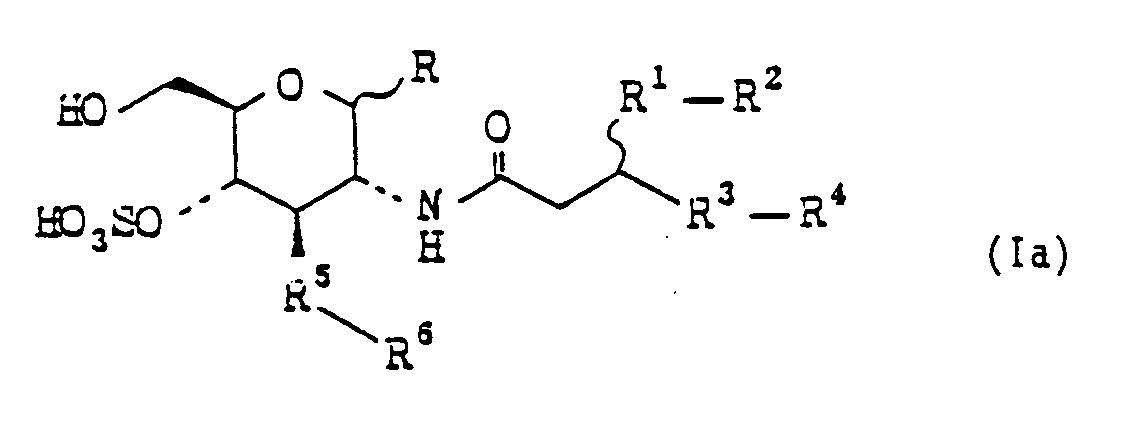
- That is the present invention is related to the novel glucopyranose derivatives of general formula:

- R1 represents a single bond or an oxycarbonylalkyl group of from 2 to 20 carbon atoms,
- R2 and R6, independently, represent a hydrogen atom or a general formula:


- R3 represents an alkylene group of from 1 to 20 carbon atom(s),
- R4 represents a hydrogen atom or a general formula:


- R5 represents an oxycarbonyl group of from 2 to 20 carbon atoms,
- R7 represents a hydrogen atom or a hydroxy group.
- In the general formula (I), examples of the alkoxy group of from 1 to 4 carbon atom(s) as R are methoxy, ethoxy, propoxy and butoxy groups and isomeric groups thereof, and preferable groups as R are a hydrogen atom, a hydroxy group and a methoxy group.
- In the general formula (I), the oxycarbonylalkyl group of from 2 to 20 carbon atoms as R1 and R5 is a group of general formula:

- Alkylene group of 1 to 19 carbon atom(s) said foregoing are methylene, ethylene, trimethylene, tetramethylene, pentamethylene, hexamethylene, heptamethylene, octamethylene, nonamethylene, decamethylene, undecamethylene, dodecamethylene, tridecamethylene, tetradecamethylene, pentadecamethylene, hexadecamethylene, heptadecamethylene, octadecamethylene and nonadecamethylene groups and isomeric groups thereof, and preferable groups as R1 are a single bond (a hydrogen atom as R2 is preferable, in this case.), oxycarbonyltrimethylene, oxycarbonyltetramethylene, oxycarbonylhex- amethylene, oxycarbonylheptamethylene, oxycarbonyloctamethylene, oxycarbonylnonamethylene, oxycar- bonyldecamethylene and oxycarbonyldodecamethylene groups.
- In the general formula (I), examples of the alkyl or alkoxy group of from 1 to 7 carbon atom(s) as R10 in the group represented by R2 and R6, and as R11 in the group represented by R4 are methyl, ethyl, propyl, butyl, pentyl, hexyl, heptyl, methoxy, ethoxy, propoxy, butoxy, pentyloxy, hexyloxy and heptyloxy groups and isomeric groups thereof. Halogen atoms represented by R10 and R11 are fluorine, chlorine, bromine and iodine atoms, and preferable groups as R10 and R11 are a hydrogen atom, chlorine atom, methoxy group and pentyl group.
- In the general formula (I), examples of the alkylene group of from 1 to 20 carbon atom(s) are methylene, ethylene, trimethylene, tetramethylene, pentamethylene, hexamethylene, heptamethylene, octamethylene, nonamethylene, decamethylene, undecamethylene, dodecamethylene, tridecamethylene, tetradecamethylene, pentadecamethylene, hexadecamethylene, heptadecamethylene, octadecamethylene and nonadecamethylene and eicosamethylene groups and isomeric groups thereof, and preferable groups as R3 especially are hexamethylene and undecamethylene groups.
- In the general formula (I), all of the groups as R4 are preferable.
- The alkyl, alkylene and alkenylene groups foregoing described mean straight ones and branched ones, and preferable group especially are straight ones.
- The compounds of the present invention of the general formula (I) possess activities like lipid A, and therefore be useful for enhancing agent and anti-tumor agent. Concretely, the compounds of the present invention possess action of activating macrophages, B cell mitogenic activity, producing action of non-specific antibody, enhancing activity of cellular immunity, as blastogenic action, and possess INF (interferon) inducing action, TNF (tumor necrosis factor) inducing action etc. as anti-tumor action. And it is expected that the compounds also possess producing action of interleukin and stimulating action of NK (natural killer) activity.
- The present invention is not only chemical compounds per se and non-toxic salts thereof but also processes for the preparation.
- According to the present invention, among the compounds of the present invention of the general formula (I), compounds wherein R7 is a hydroxy group, of the general formula:

may be prepared by hydrolizing a compound of general formula:
in an acidic condition. - Hydrolysis is well known, for example, with using an acid (acetic acid, oxalic acid, trifluoroacetic acid, hydrochloric acid etc.), in a water-miscible organic solvent (THF, methanol, ethanol, dioxane etc.), with or without water, at a temperature of from 0 C to 70 C.
- On the other hand, among the compounds of the general formula (I), compounds wherein R7 is a hydrogen atom, of general formula:

may be prepared by introducing a sulfo group into the hydroxy group of the 4th-position of a compound of general formula:
- The reaction is well known, it may be carried out, for example, in the presence of a tertiary amine (pyridine, triethylamine etc.), in an inert organic solvent (THF, methylene chloride, ethyl acetate etc.) or without solvent used, using with sulfur trioxide-pyridine complex, at a temperature of from -10 C to 60°C.
- Among the compounds of the general formula (II) and (III), compounds wherein R is a hydroxy group, of general formula (Ila) and (IIIa) may be prepared by the series of reaction steps described in the following scheme [A].

- Each symbols in the scheme [A] represent the following meanings or as defined hereinbefore respectively.
- R1' - a single bond or an oxycarbonylalkyl or oxycarbonylalkenyl group of from 2 to 20 carbon atoms,
- R3' - an alkylene or alkenylene group of from 1 to 20 carbon atom(s),
- R5' - an oxycarbonylalkyl or oxycarbonylalkenyl group of from 2 to 20 carbon atoms,
- R31 - a group of general formula:

- T - methanesulfonyl group or p-toluenesulfonyl group,
- I - iodine atom.
- In the scheme [A], each reaction steps are known per se, and summarized descriptions are the followings.
- Step (a) is an introducing reaction of an acyl group into the amino group, i.e. N-acylation, and it may be carried out, for example, using with a mixed acid anhydride which was prepared from a carboxylic acid of general formula:


- And, N-acylation described above may also be carried out by reacting a compound of the general formula (IV) and a carboxylic acid of the general formula (XIII) or (XIV), in the presence of a suitable base (triethylamine, pyridine, 4-(N,N-dimethylamino) pyridine etc.) in an inert organic solvent (methylene chloride, acetonitrile etc.), using with 2-chloro-N-methylpyridinium iodide, at a temperature of from -30 C to 30° C.
- And, further, N-acylation also may be carried out by reacting a carboxylic acid of the general formula (XIII) and (XIV) in the presence of triphenylphosphine, in an inert organic solvent (methylene chloride, THF, ethyl acetate etc.), using with 2,2'-pyridyldisulfide, at a temperature of from -10 C to 50° C.
- And, N-acylation may be carried out by other activating method of carboxylic acid, for example, using with dicyclohexylcarbodiimide.
- In this N-acylation, to use the compound of the general formula (XIII) produce a compound of the general formula (Ila) wherein the substituents -R'-R2 and the substituents -R5-R6 are the same groups.
- Step (b) is an introducing reaction of acyl group into the hydroxy group, i.e. O-acylation, and it may be carried out, for example, in the presence of a suitable base (triethylamine, 4-(N,N-dimethylamino)pyridine, pyridine etc.), in an inert organic solvent (methylene chloride, toluene, benzene, ethyl acetate, hexane, THF, THP etc.) or without solvent used, using with a corresponding acyl halide, at a temperature of from -10° C to 60 C.
- And O-acylation may be carried out by reacting a corresponding acid, in the presence of a suitable amine (triethylamine, 4-(N,N-dimethylamino)pyridine, pyridine etc.) in an inert organic solvent (methylene chloride, acetonitrile etc.), using with 2-chloro-N-methylpyridinium iodide as a condencing agent, at a temperature of from -30° C to 30° C.
- And further, O-acylation may also be carried out by other activating method of carboxylic acid, for example, using with dicyclohexylcarbodiimide.
- Step (c) is a removing reaction of isopropylidene group on the 4th and 6th positions of the sugar as protecting group, and it may be carried out, for example in water or a water miscible organic solvent (THF, methanol, ethanol etc.) and water, using an acid (acetic acid, p-toluenesulfonic acid, camphorsulfonic acid, trichloroacetic acid, oxalic acid etc.), at a temperature of from 0 C to 80° C.
- Step (d) is an introducing reaction of a protecting group into the hydroxy group on the 6th position selectively, and it may be carried out, for example, in the presence of a suitable base (4-(N,N-dimethylamino)pyridine, pyridine, triethylamine etc.), in an inert organic solvent (methylene chloride, toluene, benzene, ethyl acetate, hexane, THF, THP etc.) or without solvent used, using with a corresponding trialkylsilyl halide (t-butyldimethylsilyl chloride, trimethylsilyl chloride etc.), at a temperature of from -10°C to 60 C.
- Step (a) is a removing reaction of benzyl group, and it may be carried out, for example, in an atmosphere of hydrogen, in an organic solvent (methanol, ethanol, THF, THP etc.), using with a hydrogenating catalyst (palladium-carbon, platinum black, nickel etc.), at a temperature of from -10 C to 80° C.
- Step (f) is an introducing reaction of sulfo group into the hydroxy group on the 4th position, and it may be carried out, for example, in the presence of a tertiary wine (pyridine, triethylamine etc.), in an inert organic solvent (THF, methylene chloride, ethyl acetate etc.) or without solvent used, using sulfur trioxide-pyridine complex, at a temperature of from -10 C to 60° C.
- Step (g) is acylation of the amino group on the 2nd position and the hydroxy group on the 3rd position at the same time, and it may be carried by the same procedure as described in the step (b).
- Step (h) is tosylation (an introducing reaction of p-toluenesulfonyl group) or mesylation (an introducing reaction of methanesulfonyl group), and it may be carried out, for example, in an inert organic solvent (methylene chloride etc.) or without solvent used, in the presence of tertiary amine (triethylamine, pyridine, 4(N,N-dimethylamino)pyridine etc.), using with tosyl halide or mesyl halide, at a temperature of from -40 C to 40°C.
- Step (i) is a replacing reaction of tosyloxy or mesyloxy group into an iodine atom, it may be carried out, for example, in an inert organic solvent (acetone etc.), using an iodide (sodium iodide, potassium iodide etc.), at a temperature of from 0° C to 60° C.
- Step (j) is a removing reaction of the iodine atom, and it may be carried out, for example, in an inert organic solvent (toluene, benzene, xylene etc.), in the presence of tributylstannane and α,α'- azobisisobutyronitrile, by irradiation of light.
- Step (k) is a removing reaction of benzyl group, and it may be carried out by the same procedure as described in the step (e).
- Compounds of general formula (II) or (III) wherein R is a hydrogen atom or an alkoxy group of from 1 to 4 carbon atom(s) could be prepared by using compounds of general formula:


- In this case, reaction step (e) or (k) should be omitted, and substituents with prime (R1', R and R°) should be read each substituents without prime.
- Throughout the specification, in each reactions, products may be purified by conventional methods, for example, distillation at atmospheric or reduced pressure, high performance liquid chromatography, thin layer chromatography using silica gel or magnesium silicate or washing or recrystallization. Purification may be carried after each reactions or a series of reactions.
- Starting materials and reagents using in the present invention are known compounds per se or may be prepared by known methods per se.
- For example, the compounds of the general formula (IV) were described in Agric. Biol. Chem., 48(1), 251 (1984).
- The compounds of the present invention of the general formula (I) may be formed salts at the sulfo group.
- By converting into salts, solubility of the compounds of the present invention against water can be increased, and therefore useful at the administration as pharmaceuticals.
- The compounds of the present invention may easily be converted into corresponding salts by the methods known per se, e.g. methods described hereafter.
- The salts in the present invention are preferably non-toxic ones. The non-toxic salts herein referred mean salts of cations such that it is relatively innoxious to living body (animals including human beings) tissues and that the effective pharmacological properties of the compounds of the general formula (I) are not impaired by side effect(s) resulting from the cations when used in an amount required for the prevention and/or treatment. And water-soluble salts are preferable.
- Suitable salts include, for example, a salt of an alkali metal such as sodium, potassium, a salt of an alkaline earth metal such as calcium, magnesium, an ammonium salt and a pharmaceutically acceptable (non-toxic) amine salt.
- Amines suitable for forming such salts with sulfo group are well known and include, for example, those amines which are theoretically obtained by substituting one or more of hydrogen atom(s) of ammonia by other group(s). These groups, which may be the same or different when one or more hydrogen atom(s) are substituted, are selected from, for example, alkyl group(s) of from 1 to 6 carbon atom(s) and hydroxyalkyl group(s) of from 1 to 3 carbon atom(s). Suitable non-toxic amine salts include salts of a tetraalkylammonium group, such as tetramethylammonium salt and salts of an organic amine, such as methylamine, dimethylamine, cyclopentylamine, benzylamine, phenetylamine, piperidine, monoethanolamine, diethanolamine, lysine and alginine.
- Salts can be obtained from the compounds of the present invention of the general formula (I), by methods known per se, for example, by reacting the compound of the general formula (I) and a suitable base such as a hydroxide or carbonate of an alkali metal or alkaline earth metal, ammonium hydroxide, ammonia or an organic amine in theoretical amounts in an appropriate solvent.
- The salts can be isolated by freeze-drying the solution, or by filtration if the salts are sufficiently insoluble to the reaction solution, or if necessary, by removing part of the solvent followed by filtration.
- The compounds of the present invention of the general formula (I) possess lipid A like activities described hereinbefore, for example, in a standard laboratory test, results in the followings are given.
- The compound of the present invention showed activities as in the following Table I, with the test system described hereafter.

- Mitogenic activity means activity of activating mitogenic cell division, and in this test system, taking amount of tymidine into lympha cells was measured and ratio to the one of blank control cell (Blastgenic index) was calculated.
- For example, adding the compound prepared in example 1 (c) to the test system induce 30 times amount of tymidine was taken into the lympha cells.
- The amounts were measured by dencity of radiolable.
- Mytogenic activity in vitro was measured by the following method (See Procedure Method of Im- munoexperiment pp 315 published by Japan Immonology Society).
- C3H/He male mice of 6 weeks old were killed by bloodletting, and spleens were isolated and homoginised. Homoginising liquids were filtered with gauze, and suspending cells were prepared with PBS solution. After washing, lymphacytes fractions were gathered with lympholight M. Lymphacytes were suspended in RPMI 1640 cultivation solution (10% FEBS), and the solution was divided into 5 x 10⁵ cells/180 µℓ/wells. Ten times concentration of the terminal concentration (1 µg/mℓ) of the compounds of the present invention were added with 20 µℓ portions to the each wells.
- In an atmosphere of a mixed gas of 5% C02- 95% 02, the cells were cultivated for 24 hrs at 37° C. After cultivation, 3H-tymidine 0.5 µCi/20 µℓ was added to the each wells. And more 24 hrs cultivation was continued at 37° C, and taking amounts of 3H-tymidine into the cells were measured. Mitogenic activities were showed by Blastogenic index in the followings.

- The compounds of the present invention showed activities as in the following Table II, with the test system described hereafter.

- Inducing activity of TNF in vitro was measured by the following test system.
- Corye parvum (manufactured by Ribi Immuno Chem. Research Inc.) was administered to ICR male mice of 6-week old from tail vein as priming agent. Ten days' after, the compounds of the present invention (10 µg) were administered from tail vein as eliciting agent. 90 mins' after of the administration, bloods were collected from heart, and blood serums were separated.
- Mice L-M cells (104/100 µℓ/well) suspended in a mixture of the diluted serum solution (100 µℓ/well) and RPMI 1640 cultivating solution (10% FEBS and 0.2% glucose; manufactured by Nissui Pharmaceutical Co.) were cultivated in an atmosphere of a mixed gas of 5% C02 - 95% 02, for 48 hrs at 37 C, after adding 3H-tymidine (0.5 µCi/20 µℓ/well). Taking amounts of 3H-tymidine into cells during the cultivation were measured.
- Inducing activities of TNF were showed by cytotoxicity in the followings.

- On the other hand, it was confirmed that the acute toxicity (LD50) of the compounds of the present invention were more than 100 mg/kg animal body weight by intravenous administration. Therefore, the compounds of the present invention may be considered to be sufficiently safe and suitable for pharmaceutical use.
- For example, the values of LD50 of the compound prepared in example 1(c) was more than 300 mg/kg animal body weight by intravenous administration in mice.
- In mammals including human beings, especially human beings, decrease of immunity by ageing, disorders including immuno deficiency induce fatal infections e.g. opportunistic infection.
- The compounds of the present invention of the general formula (I) possess enhancing activity of cellular immunity (e.g. mitogenic activity) to living tissue as shown in the experiment hereinbefore, and therefore be useful for enhancing agent of immunity.
- And, the compounds of the present invention of the general formula (I) possess and inducing activity of TNF, an inducing activity of IL-1 and an inducing activity of IFN, and therefore be useful for anti-tumor agent.
- For the purpose hereinbefore described, the compounds of the present invention of the general formula (I) or non-toxic salts thereof may normally be administered systemically or partially; usually by oral or parenteral administration.
- The doses to be administered are determined depending upon age, body weight, symptom, the desired therapeutic effect, the route of administration, and the duration of the treatment etc. In the human adult, the doses per person per dose are generally between 0.1 mg and 100 mg, by oral administration, up to several times per day, and between 10 I1.g and 10 mg, by parenteral administration up to several times per day.
- As mentioned above, the doses to be used depend upon various conditions. Therefore, there are cases in which doses lower than or greater than the ranges specified above may be used.
- Solid compositions according to the present invention for oral administration include compressed tablets, dispersible powders and granules. In such solid compositions, one or more of the active compound-(s) is or are, admixed with at least one inert diluent such as lactose, mannitol, glucose, hydroxypropylcellulose, microcrystalline cellulose, starch, polyvinylpyrrolidone or magnesium metasilicate aluminate. The compositions may also comprise, as is normal practice, additional substances other than inert diluents e.g. lubricating agents such as magnesium stearate, disintegrating agents such as cellulose calcium gluconate, and assistant for dissolving e.g. arginine, glutamic acid or amino-acid such as aspartic acid. The tablets or pills may, if desired, be made into gastric film-coated or enteric film-coated tablets or pills, such as sugar- coated, gelatin-coated, hydroxypropyl cellulose-coated or hydroxypropylmethyl cellulose phthalate-coated tablets or pills and, two or more of layers may be used. The compositions for oral administration also include capsules of absorbable material such as gelatin.
- Liquid compositions for oral administration include pharmaceutically-acceptable emulsions, solutions, suspensions, syrups and elixirs containing inert diluents commonly used in the art such as distilled water or ethanol. Besides inert diluents such compositions may also comprise adjuvants such as wetting and suspending agents, and sweetening, flavouring, perfuming and preserving agents.
- Other compositions for oral administration include spray compositions which may be prepared by known methods and which comprise one or are of the active compound(s).
- Preparations for injection according to the present invention for parenteral administration include sterile aqueous or non-aqueous solutions, suspensions or emulsions. Example of aqueous solvents or suspending media are distilled water for injection and physiological salt solution. Examples of non-aqueous solvents or suspending media are propylene glycol, polyethylene glycol, vegetable oils such as olive oil, alcohols such as ethanol, POLYSORBATE 80 (registered Trade Mark). These compositions may also include adjuvants such as preserving, wetting, emulsifying, dispersing agents and assistant agent for dissolving (e.g. arginine, glutamic acid or amino-acid such as aspartic acid). They may be sterilized, for example, by filtration through a bacteria-retaining filter, by incorporation of sterilizing agents in the compositions or by irradiation. They may also be manufactured in the form of sterile solid compositions which can be dissolved in sterile water or some other sterile injectable medium immediately before use.
- Other compositions for parenteral administration include liquids for external use, and endermic liniments such as ointments, suppositories and pessaries which comprise one or more of the active compound(s) and may be prepared by known methods.
- Throughout the specification including claims, the compounds of the present invention and named as derivatives of glucopyranose or 1,5-anhydro-glucitol having the following structure.

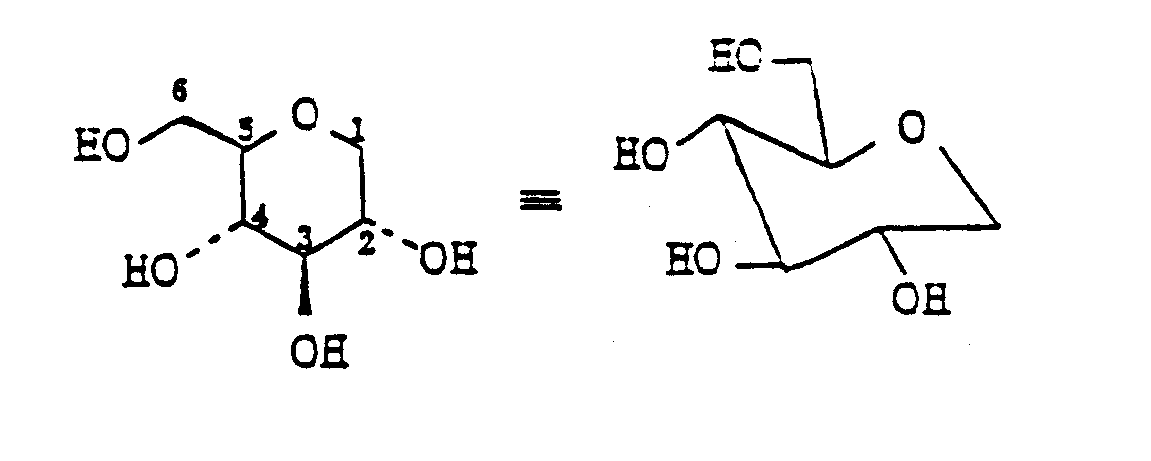
- In the structural formula of the specification including claims, the dotted line (---), the thickened line () and the wavy line (
 ) indicate that the respective group attached thereto is in the backside of the plane, i.e. in a-configulation, in the front of the plane, i.e. in β-configulation, and in a- or β-configulation or a mixture thereof, respectively, according to the generally accepted nomenclatural rule.
- The following reference examples and examples are illustrate the present invention, but not limit the present invention.
- In the reference examples and examples, "TLC" and "IR" represent "Thin layer chromatography" and "Infrared absorption spectrum", respectively.
- The solvents in the parentheses show the developing or eluting solvents and the ratios of the solvents used are by volume in chromatographic separations.
- Unless otherwise specified, "IR" was measured by KBr tablet method.
- Synthesis of benzyl 2-deoxy-2-(3R-hydroxytetradecanoyl)amino-4,6-0-isopropylidene-β-D-glucopyranoside (reference example 1) and benzyl 2-deoxy-2-(3S-hydroxytetradecanoyl)amino-4,6-0-isopropylidene-β-D-glucopyranoside (reference example 1 (a)).

- Pivaloyl chloride (1.37 mt) was added to an ice-cooled solution of β-hydroxymiristic acid (2.60 g) in methylene chloride (20 mt), and the mixture was stirred for 30 mins. The solution was added slowly to an ice-cooled solution of benzyl 2-deoxy-2-amino-4,6-0-isopropylidene-β-D-glucopyranoside (Agric. Biol. Chem., 48(1), 251 (1984); 2.6 g) and triethylamine (1.67 mℓ) in methylene chloride (20 mt).
- The reaction mixture was stirred for 30 mins with ice-cooling and further for 2 hrs at room temperature and then diluted with a mixture of hexane and ethyl acetate (n-C6H14 : EtOAc = 1:2; 200 mℓ). The solution was washed with 1 N hydrochloric acid, water and brine, successively dried and evaporated. The residue was purified by column chromatography on silica gel (EtOAc:CH2Cℓ2 = 3:2) to give the title compounds (3R-compound: 1.71 g; 3S-compound: 2.69 g) having the following physical data.
-
- TLC: Rf 0.31 (EtOAc:CH2Cℓ2 = 3:2);
- IR : ν 3500, 3300, 1645, 1630, 1540, 1460, 1450, 1380, 1370, 1260, 1200, 1170, 1080, 1035, 935, 855, 735, 694 cm-1
-
- TLC: Rf 0.22 (EtOAc:CH2Cℓ2 = 3:2);
- IR : same as 3R-compound
- By the same procedure as reference example 1, following compounds having the physical data shown in the Table III were given.


- Synthesis of benzyl 2-deoxy-2-[3R-(4-phenylbutoxy)tetradecanoyl] amino-3-0-(4-phenylbutyryl)-4,6-0-isopropylidene-β-D-glucopyranoside

- Phenylbutanoic acid (361 mg) and then 2-chloro-1-methylpyridinium iodide (767 mg) and triethylamine (0.84 mℓ) were added to a solution of the compound (535 mg) prepared in reference example 1 dissolved into methylene chloride (10 mt). The mixture was stirred for 30 mins with ice-cooling. 4-(N,N-dimethylamino) pyridine (61 mg) was added to the reaction solution at room temperature and the mixture was stirred for 18 hrs.
- The reaction solution was washed with water, dil. hydrochloric acid and an aqueous saturated solution of sodium bicarbonate, dried and evaporated. The residue was purified by column chromatography on silica gel (EtOAc:CH2Cℓ2 = 1:9) to give the title compound having the following physical data.
- TLC: Rf 0.55 (EtOAc:CH2Cℓ2 = 1:9);
- IR : ν 3320, 2900, 2840, 1720, 1645, 1515, 1445, 1370, 1190, 1165, 1080, 1020, 850, 725, 690 cm-1
- By the same procedure as reference example 2, using with each starting materials, following compounds having the physical data shown in the Table IV were given.


- Synthesis of benzyl 2-deoxy-2-[3R-(4-phenylbutyryloxy) tetradecanoyl]amino-3-0-(4-phenylbutyryl)-β-D-glucopyranoside

- Water (3 mℓ) and acetic acid (9 mℓ) were added to a solution of the compound (764 mg) prepared in reference example 2 dissolved into THF (9 mℓ). The mixture was refluxed for 5.5 hrs. The solution was concentrated and toluene was added to the residue. The solution was concentrated to give the title compound having the following physical data.
- TLC: Rf 0.2 (CH2Cℓ2:CH3OH = 98:2);
- IR : ν 3300, 2940, 2860, 1725, 1660, 1540, 1450, 1370, 1250, 1170, 1080, 1040, 730, 690 cm-1
- By the same procedure as reference example 3, using with each starting materials, following compounds having the physical data shown in the Table V were given.


- Synthesis of benzyl 2-deoxy-2-[3R-(4-phenylbutyryloxy) tetradecanoyl]amino-3-0-(4-phenylbutyryl)-6-0-t-butyldimethylsilylglucopyranoside

- t-Butyldimethylsilyl chloride (338 mg) and 4-(N,N-dimethylamino)pyridine (11 mg) were added to a solution of the compound (691 mg) prepared in reference example 3 dissolved into dry pyridine (15 mℓ). The mixture was stirred for 7.5 hrs in an atmosphere of nitrogen at room temperature. The reaction solution was evaporated. The residue was purified by column chromatography on silica gel (CH2ℓC2:CH3OH = 98:2) to give the title compound (936 mg) having the following physical data.
- TLC: Rf 0.85 (CH2Cℓ2:CH3OH = 97:3);
- IR : ν 3350, 2940, 2860, 1720, 1680, 1490, 1450, 1360, 1250, 1130, 1070, 830, 690 cm-1
- By the same procedure as reference example 4, using with each starting materials, following compounds having the physical data shown in the Table VI were given.


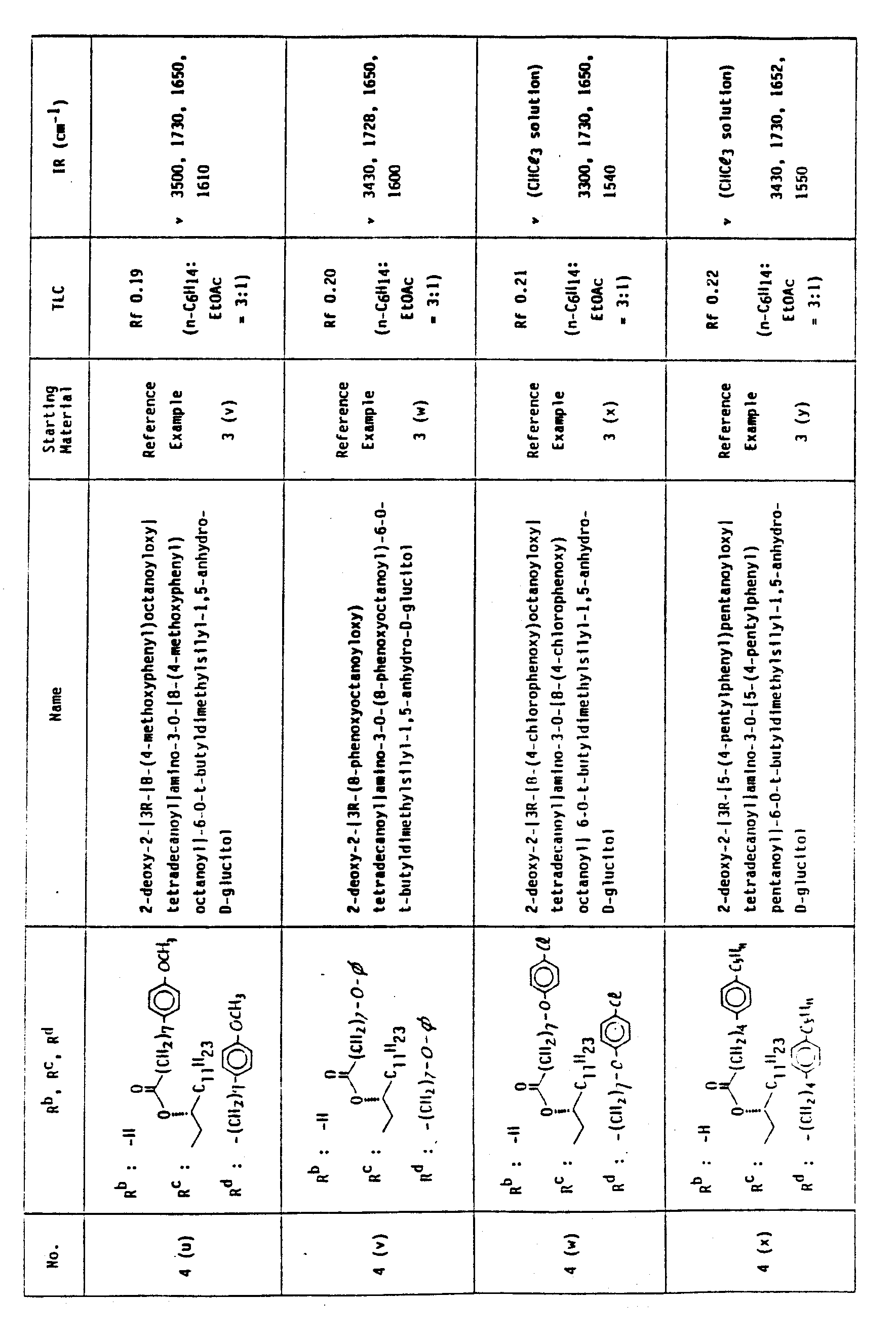
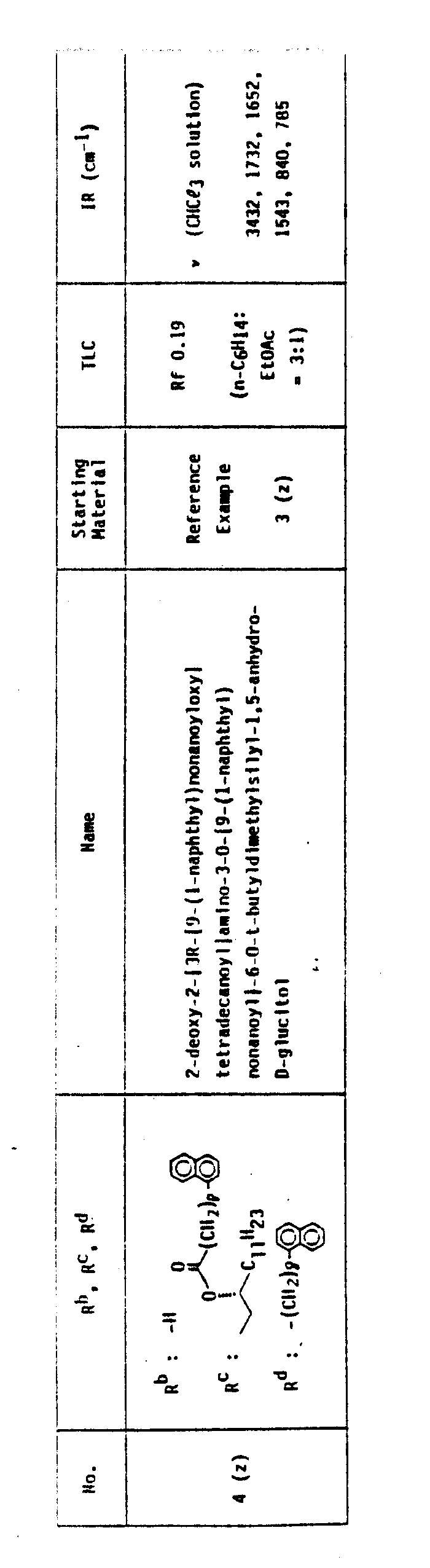
- Synthesis of 2-deoxy-2-[3R-(4-phenylbutyryloxy)tetradecanoyl] amino-3-0-(4-phenylbutyryl)-6-0-t-butyldimethylsilyl-D-glucopyranose

- To a stirring solution of the compound (736 mg) prepared in reference example 4 dissolved into THF, palladium-carbon (content 10%; 368 mg) was added with small portions. In an atmosphere of hydrogen, the mixture was stirred vigorously for 24 hrs at 50°C. After reaction, the reaction mixture was filtered. And the filtrate was evaporated to give the title compound (653 mg) having the following physical data.
- TLC: Rf 0.64 (CH2Cℓ2:CH3OH = 9:1);
- IR : ν 3350, 2920, 2840, 1720, 1640, 1540, 1440, 1250, 1130, 1070, 1050, 800, 740, 690 cm-1
- By the same procedure as reference example 5, using with each starting materials, following compounds having the physical data shown in the Table VII were given.


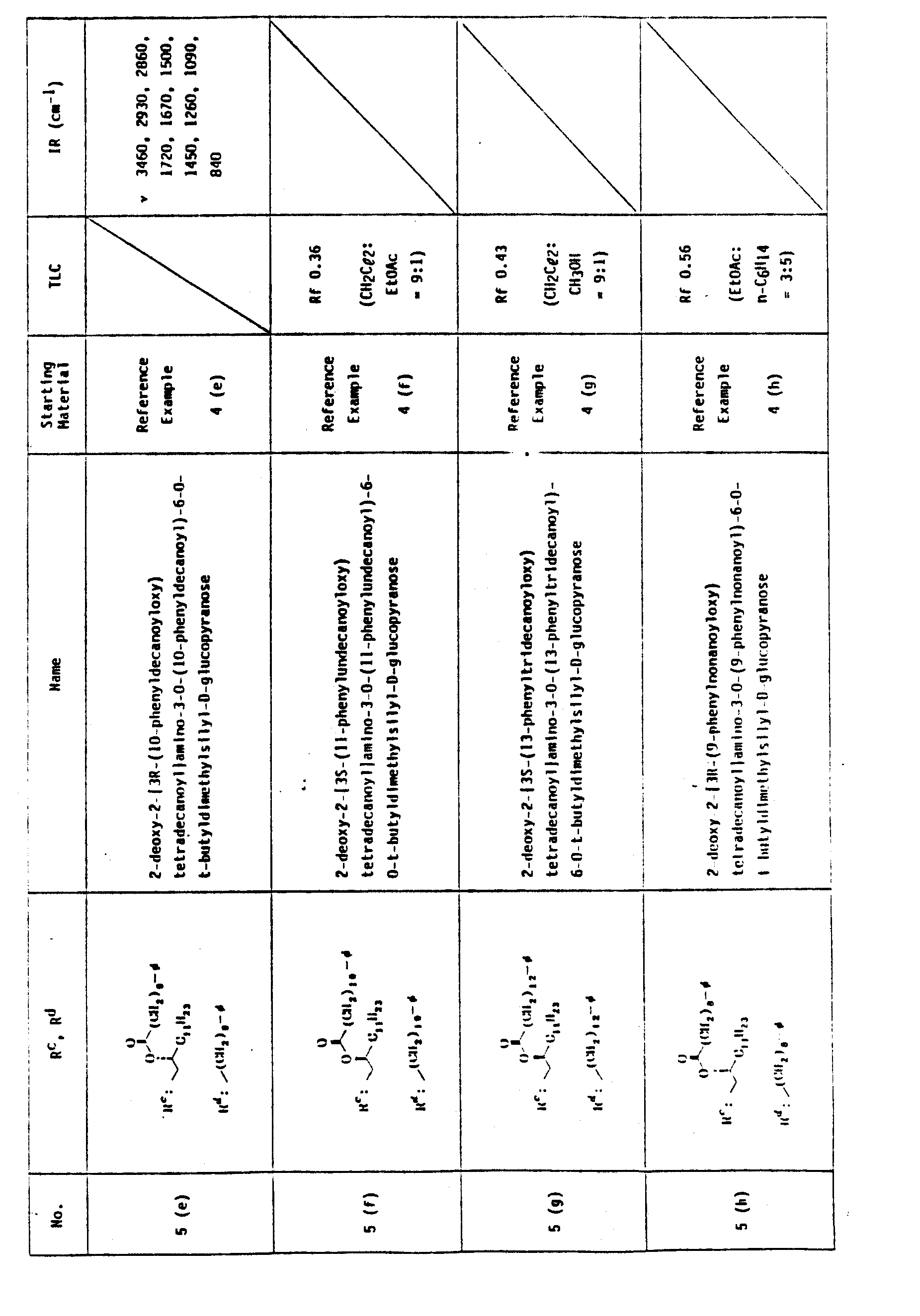


- Synthesis of 2-deoxy-2-[3R-(4-phenylbutyryloxy)tetradecanoyl] amino-3-0-(4-phenylbutyryl)-4-0-sulfo-6-0-t-butyldimethylsilyl-D-glucopyranose

- In an atmosphere of nitrogen, sulfur trioxide-pyridine complex (230 mg) was added to a solution of the compound (653 mg) prepared in reference example 5 dissolved into dry pyridine. The mixture was stirred for 4 hrs at room temperature, and concentrated. To the residue, toluene was added and the solution was evaporated to give the title compounds.
- By the same procedure as reference example 6, using with each starting materials, following compounds having the physical data shown in the Table VIII were given.


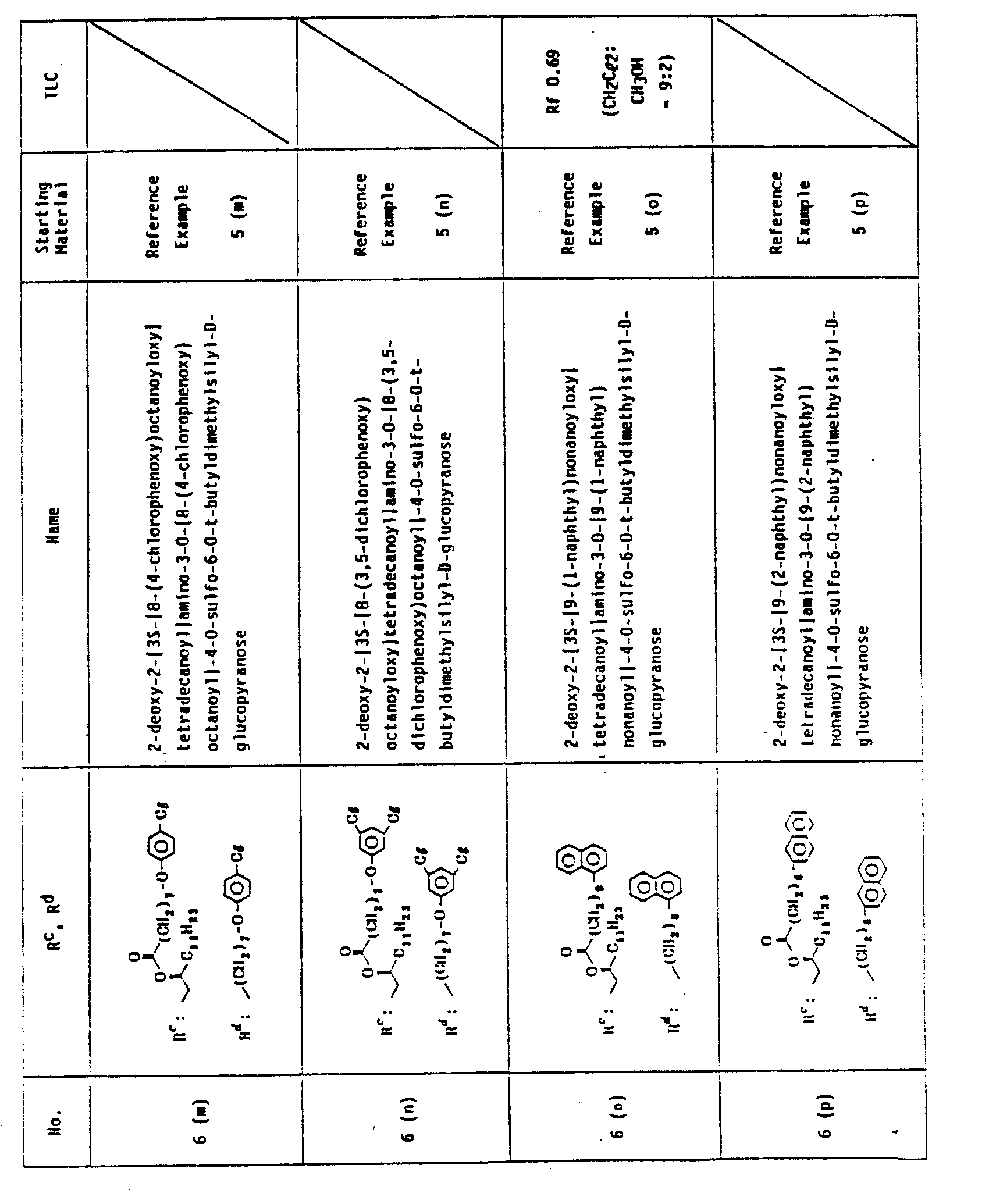

- By the same procedure as reference example 6, using with each starting materials, following compounds having the physical data shown in the Table IX were given.

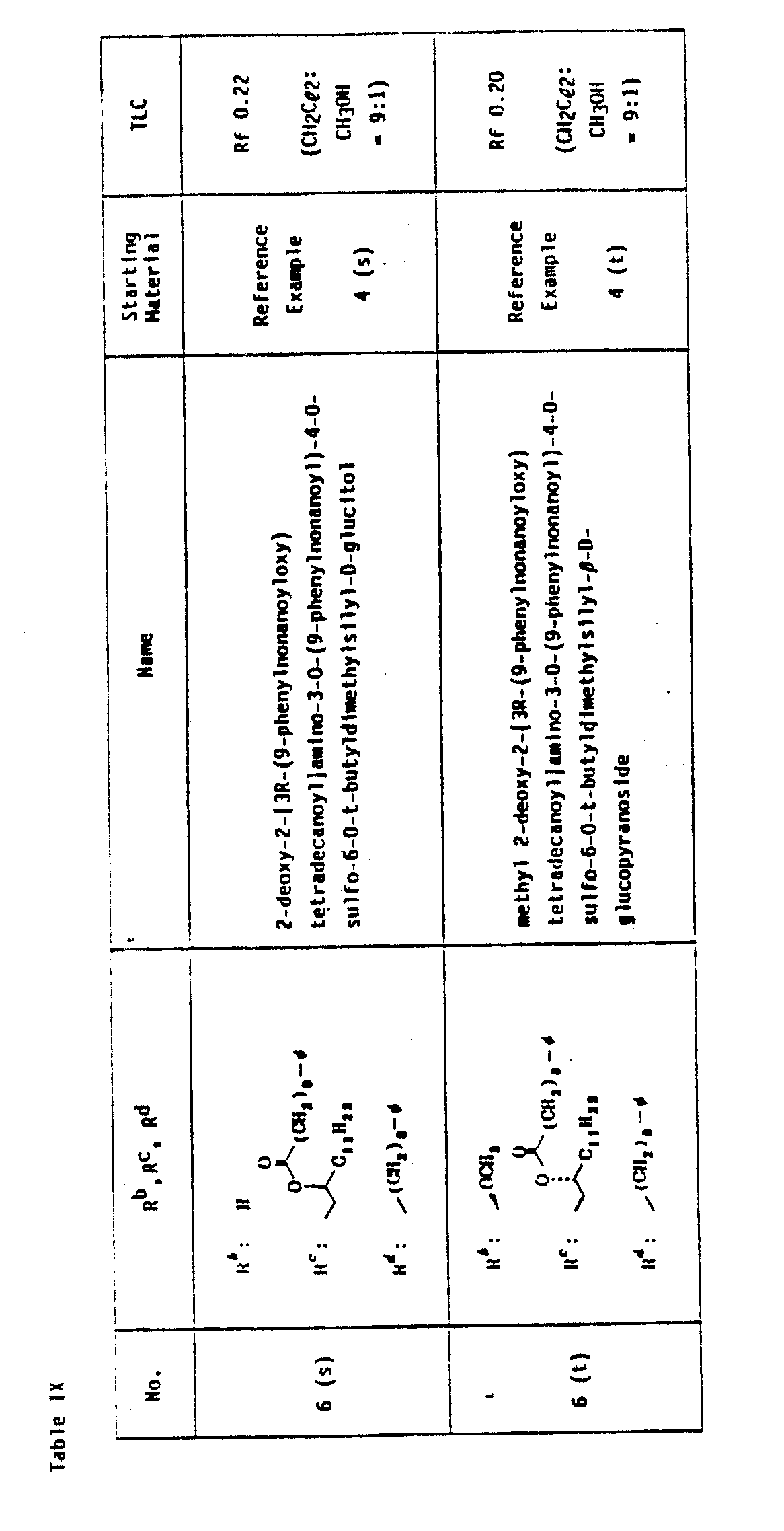


-

- A mixture of the compound (597 mg) prepared in reference example 3(t), tosyl chloride (146 mg) and pyridine (3 mℓ) was stirred overnight at room temperature. After reaction, toluene was added to the reaction mixture, and the mixture was azeotropically evaporated. To the residue, water and methylene chloride were added. The organic layer separated was washed with an aqueous saturated solution of copper sulfate, water and brine, successively, dried and evaporated. The residue was purified by column chromatography on silica gel (n-C6 H14 : EtOAc = 2:1) to give the title compound (461 mg) having the following physical data.
- TLC: Rf 0.49 (n-C6H14:EtOAc = 1:1)
-

- A mixture of the compound (461 mg) prepared in reference example 7, sodium iodide (1.42 g) and acetone (7 mℓ) was refluxed for 4 hrs. After reaction, to the reaction mixture, water and methylene chloride were added. The organic layer separated was washed, dried and evaporated. The residue was purified by column chromatography on silica gel (n-C6H14 : EtOAc = 4:1) to give the title compound (232 mg) having the following physical data.
- TLC: Rf 0.35 (n-C6H14:EtOAc = 2:1);
- IR (liquid film): v 3600-3150, 2920, 2850, 1730, 1650, 1530, 1450, 1370 cm-1
-
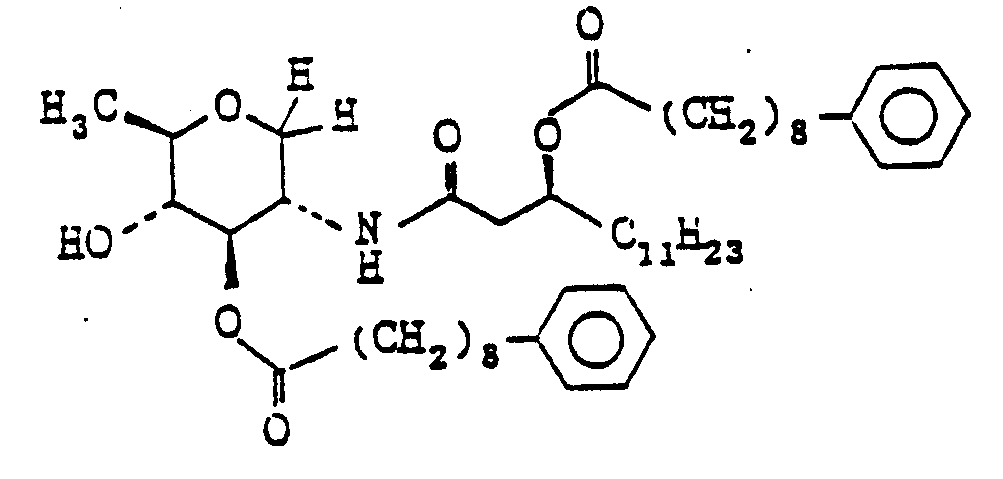
- A mixture of the compound (230 mg) prepared in reference example 8, tri-n-butylstanane (133 µℓ), a,a'-arobisisobutyronitrile (AIBN; a small amount) and toluene (4 mt) was irradiated by high-voltage mercury light for 1.5 hrs with ice-cooling. The reaction mixture was purified by column chromatography on silica gel (n-C6 H14 : EtOAc = 2:1) to give the title compound (215 mg) having the following physical data.
- TLC: Rf 0.39 (n-C6H14 : EtOAc = 6:4)
-

- A mixture of benzyl 2-deoxy-2-amino-4,6-0-isopropylidene-β-D-glucopyranoside (248 mg), 9-(1-naphthyl)nonanoic acid (550 mg), 2-chloro-1-methylpyridinium iodide (450 mg), triethylamine (0.34 mℓ), 4-(N,N-dimethylamino)pyridine (98 mg) and methylene chloride (20 mℓ) was stirred for 2 hrs at room temperature. To the reaction mixture, brine and ethyl acetate were added. The organic layer separated was dried and purified by column chromatography on silica gel (n-C6H14:EtOAc = 4:1) to give the title compound (611 mg) having the following physical data.
- TLC: Rf 0.59 (EtOAc:n-C6 H14 = 3:5);
- IR (liquid film): v 3480, 3380, 2920, 2850, 1730, 1650, 1590 cm-1
-

- By the same procedure as reference example 10, using with 9-(2-naphthyl)nonanoic acid instead of 9-(1-naphthyl)nonanoic acid, the title compound having the following physical data was given.
- TLC: Rf 0.80 (EtOAc:n-C6 H14 = 3:5);
- IR : ν 3350, 2920, 2840, 1730, 1650, 1520 cm-1
-

- By the same procedure as reference example 3, using with the compound (611 mg) prepared in reference example 10, the title compound having the following physical data was given.
- TLC: Rf 0.05 (EtOAc:n-C6 H14 = 3:5)
-

- By the same procedure as reference example 11, using with the compound prepared in reference example 10(a), the title compound was given.
-

- By the same procedure as reference example 4, using the compound prepared in the reference example 11, the title compound (493 mg) having the following physical data was given.
- TLC: Rf 0.55 (EtOAc:n-C6 H14 = 3:5);
- IR : v 3430, 3250, 3050, 2920, 2850, 1730, 1710, 1640, 1540 cm-1
-

- By the same procedure as reference example 12, using the compound prepared in reference example 11 (a), the title compound having the following physical data was given.
- IR : ν 3450, 2920, 2850, 1730, 1710, 1640, 1540 cm-1
-
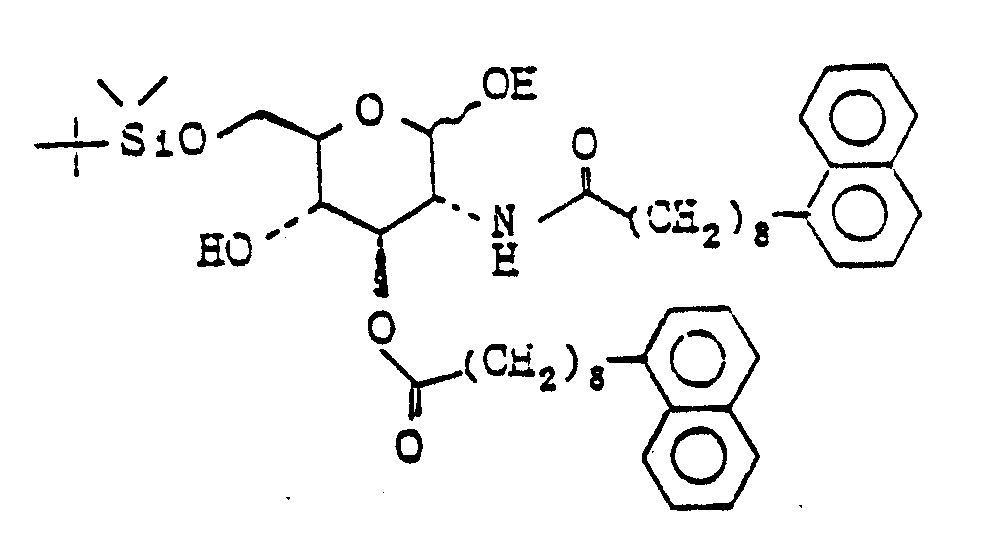
- By the same procedure as reference example 5, using with the compound (493 mg) prepared in reference example 12, the title compound having the following physical data was given.
- TLC: Rf 0.33 (EtOAc:n-C6 H14 = 3:5)
-

- By the same procedure as reference example 13, using with the compound prepared in reference example 12(a), the title compound having the following physical data.
- TLC: Rf 0.59 (EtOAc:n-C6 H14 = 3:5)
-

- By the same procedure as reference example 6, using with the compound prepared in reference example 13, the title compound having the following physical data was given.
-
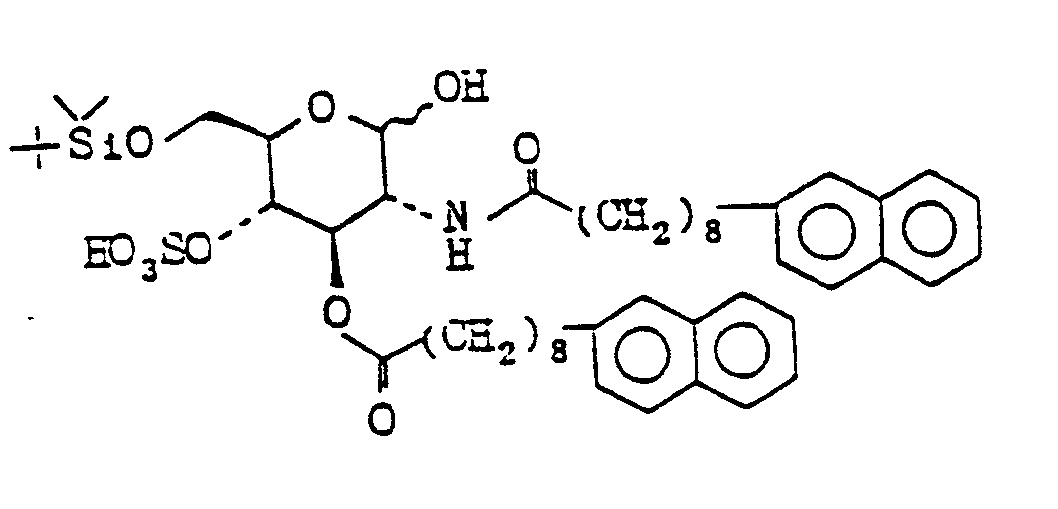
- By the same procedure as reference example 14, using with the compound prepared in reference example 13(a), the title compound having the following physical data.
- TLC: Rf 0.73 (CH3OH:CH2Cℓ2 = 2:9)
-

- A solution of the compound (550 mg) prepared in reference example 6 dissolved in a mixed solvent of methanol (4 mℓ) and acetic acid (3 mℓ) was stirred for 9 hrs at room temperature. The reaction solution was evaporated, and toluene was added to the residue. The solution was evaporated. The residue was purified by column chromatography on silica gel (CH2Cℓ2:CH3OH = 88:12). To the compound obtained, dry dioxan was added, and the solution was freeze-dried to give the title compound (514 mg) having the following physical data.
- TLC: Rf 0.37 (CH2Cℓ2:CH3OH = 9:1);
- IR : v 3350, 2920, 2840, 1720, 1640, 1530, 1450, 1240, 1130, 1080, 1000, 820, 740, 700, 580 cm-1
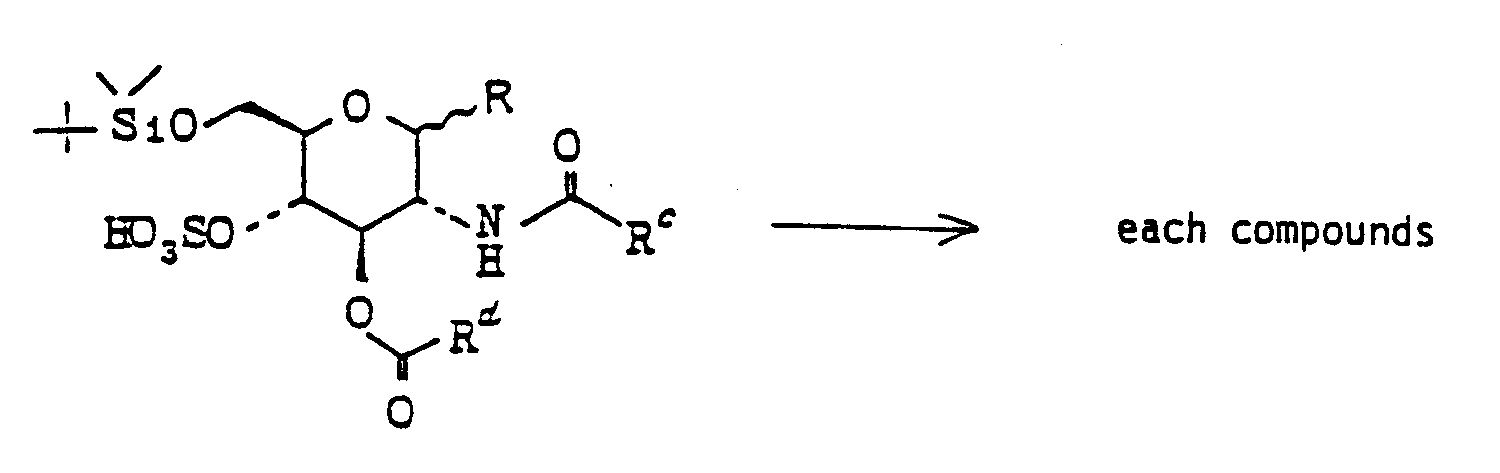
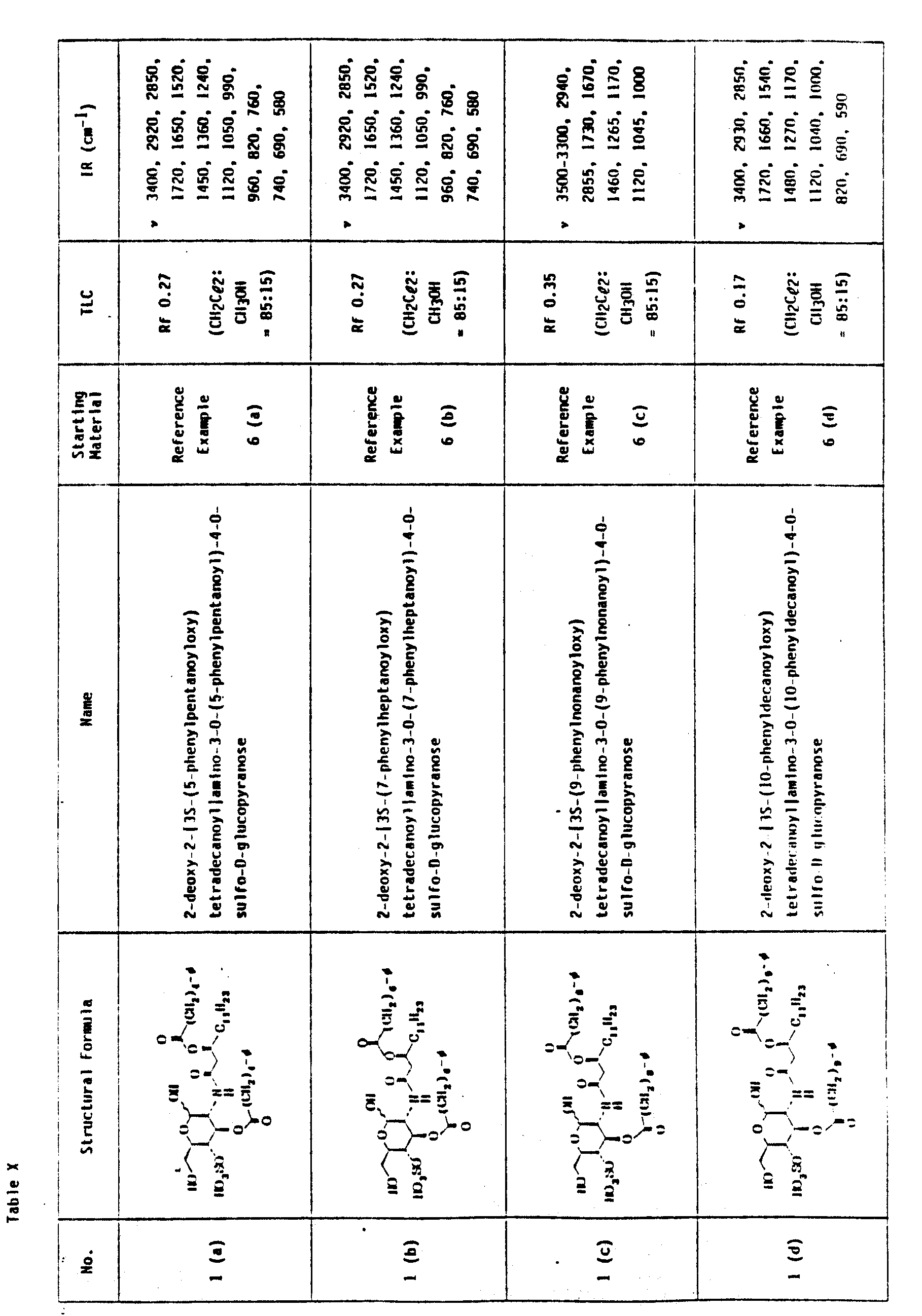
- By the same procedure as example 1, using each starting materials, following compounds having the physical data shown in the Table X were given.


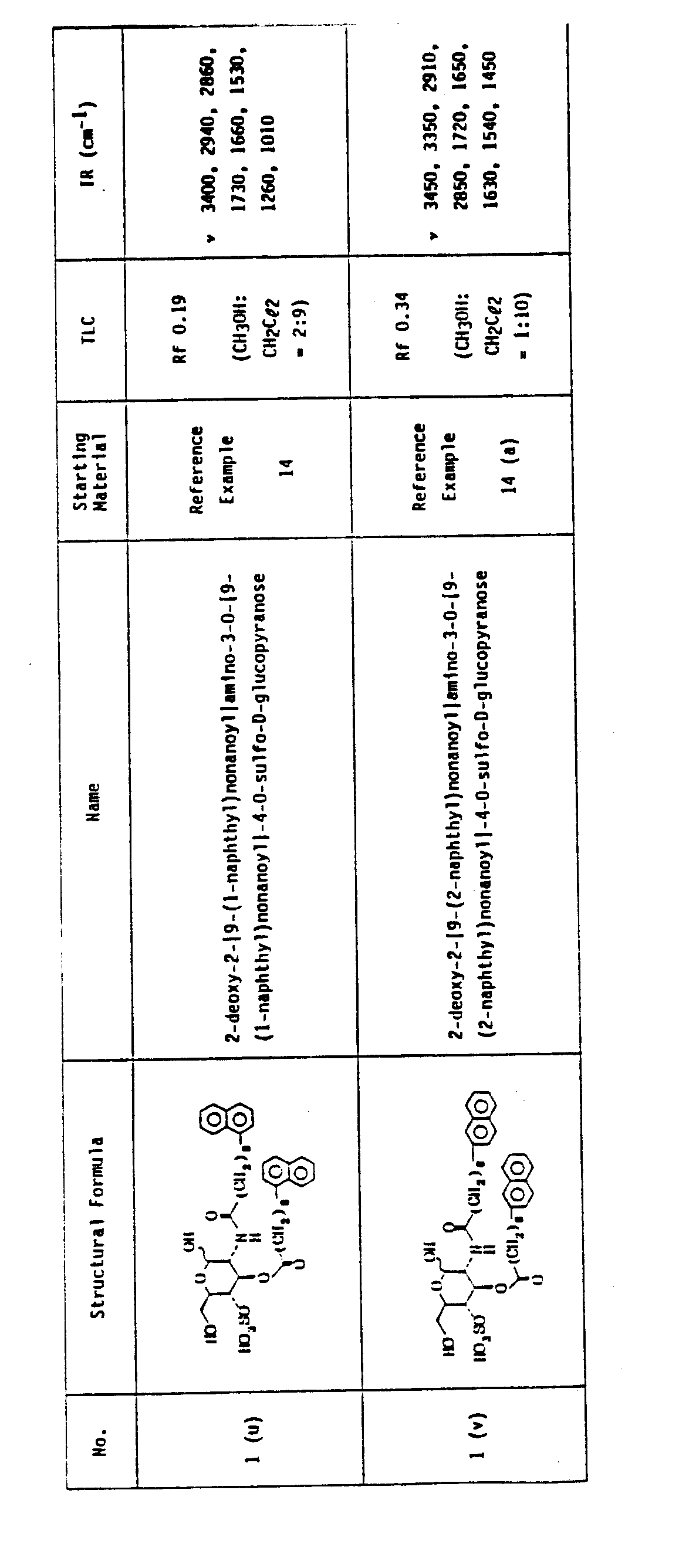


-

- A mixture of the compound (213 mg) prepared in reference example 9, sulfur trioxide-pyridine complex (126 mg) and pyridine (2 mℓ) was stirred for 2.5 hrs at room temperature. After reaction, toluene and ethanol were added to the reaction mixture and the mixture was evaporated azeotropically. The solution was evaporated. The residue was purified by column chromatography on silica gel (CH2Cℓ2:CH3OH = 15:1). To the compound obtained, dry dioxan was added, and the solution was freeze-dried to give the title compound (180 mg) having the following physical data.
- TLC: Rf 0.25 (CH2Cℓ2:CH3OH = 7:1);
- IR : v 3430, 2930, 2850, 1710, 1650, 1565, 1450, 1265-1225, 1065, 995 cm-1
[See Agric. Biol. Chem., 48(1), 251 (1984) and FEBS LETT., 167, 226 (1984)].
With the proviso that, R2, R4 and R6 do not represent hydrogen atoms at the same time.]
or non-toxic salts thereof, processes for the preparation of them and enhancing agent of immunity and/or anti-tumor agent containing them as active ingredient.
Claims (30)




Priority Applications (1)
| Application Number | Priority Date | Filing Date | Title |
|---|---|---|---|
| AT86309377T ATE72443T1 (en) | 1985-12-06 | 1986-12-02 | GLUCOPYRANOSE DERIVATIVES. |
Applications Claiming Priority (4)
| Application Number | Priority Date | Filing Date | Title |
|---|---|---|---|
| JP273440/85 | 1985-12-06 | ||
| JP27344085 | 1985-12-06 | ||
| JP21037986 | 1986-09-06 | ||
| JP210379/86 | 1986-09-06 |
Publications (3)
| Publication Number | Publication Date |
|---|---|
| EP0226381A2 EP0226381A2 (en) | 1987-06-24 |
| EP0226381A3 EP0226381A3 (en) | 1988-12-14 |
| EP0226381B1 true EP0226381B1 (en) | 1992-02-05 |
Family
ID=26518018
Family Applications (1)
| Application Number | Title | Priority Date | Filing Date |
|---|---|---|---|
| EP86309377A Expired EP0226381B1 (en) | 1985-12-06 | 1986-12-02 | Novel glucopyranose derivatives |
Country Status (5)
| Country | Link |
|---|---|
| EP (1) | EP0226381B1 (en) |
| AT (1) | ATE72443T1 (en) |
| DE (1) | DE3683836D1 (en) |
| ES (1) | ES2032386T3 (en) |
| GR (1) | GR3004421T3 (en) |
Families Citing this family (4)
| Publication number | Priority date | Publication date | Assignee | Title |
|---|---|---|---|---|
| ES2061544T3 (en) * | 1987-05-01 | 1994-12-16 | Ono Pharmaceutical Co | NEW DERIVATIVES OF GLUCOPYRANOSE. |
| CA2088128C (en) * | 1992-01-31 | 2002-10-29 | Katsuhiro Imaki | Salts of glucopyranose derivatives and its intermediate |
| JP3057226B2 (en) | 1997-10-09 | 2000-06-26 | 琉球大学長 | A therapeutic agent for leishmaniasis containing a glucopyranose derivative as an active ingredient |
| CN116332765B (en) * | 2023-05-12 | 2023-08-04 | 江西省药品检验检测研究院 | Alkanoate compound and preparation method and application thereof |
Family Cites Families (2)
| Publication number | Priority date | Publication date | Assignee | Title |
|---|---|---|---|---|
| US4374831A (en) * | 1981-12-28 | 1983-02-22 | American Cyanamid Company | Modulators of the complement system comprising bis-glucopyranosyl arylene sulfate derivatives |
| JPS60501259A (en) * | 1983-05-06 | 1985-08-08 | ウイスコンシン・アルムニ・リサ−チ・フアンデ−シヨン | Monosaccharide compounds with immunostimulatory activity |
-
1986
- 1986-12-02 EP EP86309377A patent/EP0226381B1/en not_active Expired
- 1986-12-02 ES ES198686309377T patent/ES2032386T3/en not_active Expired - Lifetime
- 1986-12-02 DE DE8686309377T patent/DE3683836D1/en not_active Expired - Lifetime
- 1986-12-02 AT AT86309377T patent/ATE72443T1/en not_active IP Right Cessation
-
1992
- 1992-04-20 GR GR920400784T patent/GR3004421T3/el unknown
Also Published As
| Publication number | Publication date |
|---|---|
| EP0226381A3 (en) | 1988-12-14 |
| DE3683836D1 (en) | 1992-03-19 |
| GR3004421T3 (en) | 1993-03-31 |
| ES2032386T3 (en) | 1993-02-16 |
| ATE72443T1 (en) | 1992-02-15 |
| EP0226381A2 (en) | 1987-06-24 |
Similar Documents
| Publication | Publication Date | Title |
|---|---|---|
| KR100281264B1 (en) | New Spinosaccharide Lipids and Their Uses | |
| US5763413A (en) | Lewis-associated compound, process for producing the same, and anti-inflammatory | |
| JP2774194B2 (en) | Novel glycosphingolipids and their use | |
| CA2344652C (en) | Carboxymethylgalactose derivatives | |
| Byramova et al. | Synthesis of sialic acid pseudopolysaccharides by coupling of spacer-connected Neu5Ac with activated polymer | |
| JPWO2000017216A1 (en) | Carboxymethyl galactose derivatives | |
| Priebe et al. | The acid-catalysed reaction of thiols with alkyl 2, 3-dideoxy-glyc-2-enopyranosides or glycals | |
| EP0041896B1 (en) | Immunologically active dipeptidyl 2-amino-1,2-dideoxy-d-glucose derivatives and methods of preparation | |
| CA2365359C (en) | Medicaments containing a sulfopyranosylglycerol derivative | |
| KR910003641B1 (en) | Process for preparing muramyl peptides | |
| EP0728763B1 (en) | Ganglioside gm3 analog having sialic acid residue fluorinated at the 9-position and intermediate therefor | |
| FI101796B (en) | New-glucosidase inhibitors | |
| EP0226381A2 (en) | Novel glucopyranose derivatives | |
| US4751290A (en) | Sialosylcerebrosides | |
| EP0288888B1 (en) | Novel glucopyranose derivatives | |
| GB2179945A (en) | New saccharides, their preparation and pharmacetical compositions containing them | |
| DK170170B1 (en) | Alpha-D-Glucopyranose Derivatives, Method of Preparation and Pharmaceutical Composition Containing | |
| EP0584200A1 (en) | Trifluoromethyl analogs of fucose and uses thereof | |
| JP2823358B2 (en) | Immunosuppressive and Tolerogenic Modified Lewis <1> c and LacNAc Compounds | |
| JP4555466B2 (en) | Substituted tetrahydropyran derivatives, processes for their preparation, their use as medicaments or diagnostics and medicaments containing them | |
| US7217696B2 (en) | Glycuronamides, glycosides and orthoester glycosides of fluoxetine, analogs and uses thereof | |
| JPS63179885A (en) | Novel glucopyranose derivative, production thereof and medicine containing said derivative as active ingredient | |
| Bajza et al. | Chemical synthesis of the pyruvic acetal-containing trisaccharide unit of the species-specific glycopeptidolipid from Mycobacterium avium serovariant 8 | |
| CA1329591C (en) | Pharmaceutical products and new lactosyl compounds and the preparation thereof | |
| US5352811A (en) | Method of preparing alkanoyloxytetrodecanoic acid by assymmetric allylboratron |
Legal Events
| Date | Code | Title | Description |
|---|---|---|---|
| PUAI | Public reference made under article 153(3) epc to a published international application that has entered the european phase |
Free format text: ORIGINAL CODE: 0009012 |
|
| AK | Designated contracting states |
Kind code of ref document: A2 Designated state(s): AT BE CH DE ES FR GB GR IT LI LU NL SE |
|
| PUAL | Search report despatched |
Free format text: ORIGINAL CODE: 0009013 |
|
| AK | Designated contracting states |
Kind code of ref document: A3 Designated state(s): AT BE CH DE ES FR GB GR IT LI LU NL SE |
|
| 17P | Request for examination filed |
Effective date: 19890531 |
|
| 17Q | First examination report despatched |
Effective date: 19900918 |
|
| GRAA | (expected) grant |
Free format text: ORIGINAL CODE: 0009210 |
|
| AK | Designated contracting states |
Kind code of ref document: B1 Designated state(s): AT BE CH DE ES FR GB GR IT LI LU NL SE |
|
| REF | Corresponds to: |
Ref document number: 72443 Country of ref document: AT Date of ref document: 19920215 Kind code of ref document: T |
|
| REF | Corresponds to: |
Ref document number: 3683836 Country of ref document: DE Date of ref document: 19920319 |
|
| ITF | It: translation for a ep patent filed | ||
| ET | Fr: translation filed | ||
| NLR4 | Nl: receipt of corrected translation in the netherlands language at the initiative of the proprietor of the patent | ||
| K2C3 | Correction of patent specification (complete document) published |
Effective date: 19920205 |
|
| PLBE | No opposition filed within time limit |
Free format text: ORIGINAL CODE: 0009261 |
|
| STAA | Information on the status of an ep patent application or granted ep patent |
Free format text: STATUS: NO OPPOSITION FILED WITHIN TIME LIMIT |
|
| REG | Reference to a national code |
Ref country code: GR Ref legal event code: FG4A Free format text: 3004421 |
|
| REG | Reference to a national code |
Ref country code: GB Ref legal event code: 817A |
|
| 26N | No opposition filed | ||
| REG | Reference to a national code |
Ref country code: ES Ref legal event code: FG2A Ref document number: 2032386 Country of ref document: ES Kind code of ref document: T3 |
|
| REG | Reference to a national code |
Ref country code: GB Ref legal event code: 711H |
|
| ET1 | Fr: translation filed ** revision of the translation of the patent or the claims | ||
| EPTA | Lu: last paid annual fee | ||
| EAL | Se: european patent in force in sweden |
Ref document number: 86309377.9 |
|
| REG | Reference to a national code |
Ref country code: GB Ref legal event code: IF02 |
|
| PGFP | Annual fee paid to national office [announced via postgrant information from national office to epo] |
Ref country code: GB Payment date: 20021127 Year of fee payment: 17 |
|
| PGFP | Annual fee paid to national office [announced via postgrant information from national office to epo] |
Ref country code: SE Payment date: 20021204 Year of fee payment: 17 |
|
| PGFP | Annual fee paid to national office [announced via postgrant information from national office to epo] |
Ref country code: DE Payment date: 20021205 Year of fee payment: 17 |
|
| PGFP | Annual fee paid to national office [announced via postgrant information from national office to epo] |
Ref country code: FR Payment date: 20021210 Year of fee payment: 17 |
|
| PGFP | Annual fee paid to national office [announced via postgrant information from national office to epo] |
Ref country code: AT Payment date: 20021211 Year of fee payment: 17 |
|
| PGFP | Annual fee paid to national office [announced via postgrant information from national office to epo] |
Ref country code: LU Payment date: 20021216 Year of fee payment: 17 |
|
| PGFP | Annual fee paid to national office [announced via postgrant information from national office to epo] |
Ref country code: CH Payment date: 20021217 Year of fee payment: 17 |
|
| PGFP | Annual fee paid to national office [announced via postgrant information from national office to epo] |
Ref country code: GR Payment date: 20021220 Year of fee payment: 17 |
|
| PGFP | Annual fee paid to national office [announced via postgrant information from national office to epo] |
Ref country code: NL Payment date: 20021227 Year of fee payment: 17 |
|
| PGFP | Annual fee paid to national office [announced via postgrant information from national office to epo] |
Ref country code: ES Payment date: 20030121 Year of fee payment: 17 |
|
| PGFP | Annual fee paid to national office [announced via postgrant information from national office to epo] |
Ref country code: BE Payment date: 20030218 Year of fee payment: 17 |
|
| PG25 | Lapsed in a contracting state [announced via postgrant information from national office to epo] |
Ref country code: LU Free format text: LAPSE BECAUSE OF NON-PAYMENT OF DUE FEES Effective date: 20031202 Ref country code: GB Free format text: LAPSE BECAUSE OF NON-PAYMENT OF DUE FEES Effective date: 20031202 Ref country code: AT Free format text: LAPSE BECAUSE OF NON-PAYMENT OF DUE FEES Effective date: 20031202 |
|
| PG25 | Lapsed in a contracting state [announced via postgrant information from national office to epo] |
Ref country code: SE Free format text: LAPSE BECAUSE OF NON-PAYMENT OF DUE FEES Effective date: 20031203 Ref country code: ES Free format text: LAPSE BECAUSE OF NON-PAYMENT OF DUE FEES Effective date: 20031203 |
|
| PG25 | Lapsed in a contracting state [announced via postgrant information from national office to epo] |
Ref country code: LI Free format text: LAPSE BECAUSE OF NON-PAYMENT OF DUE FEES Effective date: 20031231 Ref country code: CH Free format text: LAPSE BECAUSE OF NON-PAYMENT OF DUE FEES Effective date: 20031231 Ref country code: BE Free format text: LAPSE BECAUSE OF NON-PAYMENT OF DUE FEES Effective date: 20031231 |
|
| BERE | Be: lapsed |
Owner name: *ONO PHARMACEUTICAL CO. LTD Effective date: 20031231 |
|
| PG25 | Lapsed in a contracting state [announced via postgrant information from national office to epo] |
Ref country code: NL Free format text: LAPSE BECAUSE OF NON-PAYMENT OF DUE FEES Effective date: 20040701 Ref country code: DE Free format text: LAPSE BECAUSE OF NON-PAYMENT OF DUE FEES Effective date: 20040701 |
|
| PG25 | Lapsed in a contracting state [announced via postgrant information from national office to epo] |
Ref country code: GR Free format text: LAPSE BECAUSE OF NON-PAYMENT OF DUE FEES Effective date: 20040705 |
|
| GBPC | Gb: european patent ceased through non-payment of renewal fee |
Effective date: 20031202 |
|
| EUG | Se: european patent has lapsed | ||
| REG | Reference to a national code |
Ref country code: CH Ref legal event code: PL |
|
| PG25 | Lapsed in a contracting state [announced via postgrant information from national office to epo] |
Ref country code: FR Free format text: LAPSE BECAUSE OF NON-PAYMENT OF DUE FEES Effective date: 20040831 |
|
| NLV4 | Nl: lapsed or anulled due to non-payment of the annual fee |
Effective date: 20040701 |
|
| REG | Reference to a national code |
Ref country code: FR Ref legal event code: ST |
|
| REG | Reference to a national code |
Ref country code: ES Ref legal event code: FD2A Effective date: 20031203 |
|
| PG25 | Lapsed in a contracting state [announced via postgrant information from national office to epo] |
Ref country code: IT Free format text: LAPSE BECAUSE OF NON-PAYMENT OF DUE FEES;WARNING: LAPSES OF ITALIAN PATENTS WITH EFFECTIVE DATE BEFORE 2007 MAY HAVE OCCURRED AT ANY TIME BEFORE 2007. THE CORRECT EFFECTIVE DATE MAY BE DIFFERENT FROM THE ONE RECORDED. Effective date: 20051202 |