EP0217258B1 - The use of choline or choline releasing compounds for reducing the perception of fatigue - Google Patents
The use of choline or choline releasing compounds for reducing the perception of fatigue Download PDFInfo
- Publication number
- EP0217258B1 EP0217258B1 EP86113026A EP86113026A EP0217258B1 EP 0217258 B1 EP0217258 B1 EP 0217258B1 EP 86113026 A EP86113026 A EP 86113026A EP 86113026 A EP86113026 A EP 86113026A EP 0217258 B1 EP0217258 B1 EP 0217258B1
- Authority
- EP
- European Patent Office
- Prior art keywords
- choline
- fatigue
- compound
- perception
- reducing
- Prior art date
- Legal status (The legal status is an assumption and is not a legal conclusion. Google has not performed a legal analysis and makes no representation as to the accuracy of the status listed.)
- Expired - Lifetime
Links
- 229960001231 choline Drugs 0.000 title claims abstract description 47
- OEYIOHPDSNJKLS-UHFFFAOYSA-N choline Chemical compound C[N+](C)(C)CCO OEYIOHPDSNJKLS-UHFFFAOYSA-N 0.000 title claims abstract description 47
- 150000001875 compounds Chemical class 0.000 title claims abstract description 17
- 230000008447 perception Effects 0.000 title claims description 5
- OIPILFWXSMYKGL-UHFFFAOYSA-N acetylcholine Chemical compound CC(=O)OCC[N+](C)(C)C OIPILFWXSMYKGL-UHFFFAOYSA-N 0.000 claims abstract description 10
- 229960004373 acetylcholine Drugs 0.000 claims abstract description 10
- 210000004556 brain Anatomy 0.000 claims abstract description 10
- IIZPXYDJLKNOIY-JXPKJXOSSA-N 1-palmitoyl-2-arachidonoyl-sn-glycero-3-phosphocholine Chemical compound CCCCCCCCCCCCCCCC(=O)OC[C@H](COP([O-])(=O)OCC[N+](C)(C)C)OC(=O)CCC\C=C/C\C=C/C\C=C/C\C=C/CCCCC IIZPXYDJLKNOIY-JXPKJXOSSA-N 0.000 claims description 10
- 229940067606 lecithin Drugs 0.000 claims description 10
- 235000010445 lecithin Nutrition 0.000 claims description 10
- 239000000787 lecithin Substances 0.000 claims description 10
- 239000002775 capsule Substances 0.000 claims description 4
- 239000001763 2-hydroxyethyl(trimethyl)azanium Substances 0.000 claims description 3
- 235000019743 Choline chloride Nutrition 0.000 claims description 3
- 125000004432 carbon atom Chemical group C* 0.000 claims description 3
- SUHOQUVVVLNYQR-MRVPVSSYSA-N choline alfoscerate Chemical compound C[N+](C)(C)CCOP([O-])(=O)OC[C@H](O)CO SUHOQUVVVLNYQR-MRVPVSSYSA-N 0.000 claims description 3
- 229960003178 choline chloride Drugs 0.000 claims description 3
- SGMZJAMFUVOLNK-UHFFFAOYSA-M choline chloride Chemical compound [Cl-].C[N+](C)(C)CCO SGMZJAMFUVOLNK-UHFFFAOYSA-M 0.000 claims description 3
- 229960004956 glycerylphosphorylcholine Drugs 0.000 claims description 2
- 239000003937 drug carrier Substances 0.000 claims 1
- 125000005313 fatty acid group Chemical group 0.000 claims 1
- -1 lysolecythin Chemical compound 0.000 claims 1
- 150000003839 salts Chemical class 0.000 claims 1
- 210000003205 muscle Anatomy 0.000 abstract description 6
- 210000001519 tissue Anatomy 0.000 abstract description 4
- 230000007423 decrease Effects 0.000 abstract description 3
- 206010016256 fatigue Diseases 0.000 abstract 3
- 239000008196 pharmacological composition Substances 0.000 abstract 1
- 208000016255 tiredness Diseases 0.000 abstract 1
- 230000003867 tiredness Effects 0.000 abstract 1
- 239000008280 blood Substances 0.000 description 9
- 210000004369 blood Anatomy 0.000 description 9
- 150000004665 fatty acids Chemical group 0.000 description 5
- 201000010099 disease Diseases 0.000 description 4
- 208000037265 diseases, disorders, signs and symptoms Diseases 0.000 description 4
- 239000003814 drug Substances 0.000 description 4
- 229940079593 drug Drugs 0.000 description 4
- 239000007788 liquid Substances 0.000 description 4
- 230000015572 biosynthetic process Effects 0.000 description 3
- 230000036765 blood level Effects 0.000 description 3
- 235000014113 dietary fatty acids Nutrition 0.000 description 3
- 229930195729 fatty acid Natural products 0.000 description 3
- 239000000194 fatty acid Substances 0.000 description 3
- 239000000203 mixture Substances 0.000 description 3
- 238000003786 synthesis reaction Methods 0.000 description 3
- ASWBNKHCZGQVJV-UHFFFAOYSA-N (3-hexadecanoyloxy-2-hydroxypropyl) 2-(trimethylazaniumyl)ethyl phosphate Chemical compound CCCCCCCCCCCCCCCC(=O)OCC(O)COP([O-])(=O)OCC[N+](C)(C)C ASWBNKHCZGQVJV-UHFFFAOYSA-N 0.000 description 2
- 108010058699 Choline O-acetyltransferase Proteins 0.000 description 2
- 102100023460 Choline O-acetyltransferase Human genes 0.000 description 2
- 102100037883 Phospholipase B1, membrane-associated Human genes 0.000 description 2
- 241000700159 Rattus Species 0.000 description 2
- ZSLZBFCDCINBPY-ZSJPKINUSA-N acetyl-CoA Chemical compound O[C@@H]1[C@H](OP(O)(O)=O)[C@@H](COP(O)(=O)OP(O)(=O)OCC(C)(C)[C@@H](O)C(=O)NCCC(=O)NCCSC(=O)C)O[C@H]1N1C2=NC=NC(N)=C2N=C1 ZSLZBFCDCINBPY-ZSJPKINUSA-N 0.000 description 2
- MBMBGCFOFBJSGT-KUBAVDMBSA-N all-cis-docosa-4,7,10,13,16,19-hexaenoic acid Chemical compound CC\C=C/C\C=C/C\C=C/C\C=C/C\C=C/C\C=C/CCC(O)=O MBMBGCFOFBJSGT-KUBAVDMBSA-N 0.000 description 2
- 150000001413 amino acids Chemical class 0.000 description 2
- YZXBAPSDXZZRGB-DOFZRALJSA-N arachidonic acid Chemical compound CCCCC\C=C/C\C=C/C\C=C/C\C=C/CCCC(O)=O YZXBAPSDXZZRGB-DOFZRALJSA-N 0.000 description 2
- VYFYYTLLBUKUHU-UHFFFAOYSA-N dopamine Chemical compound NCCC1=CC=C(O)C(O)=C1 VYFYYTLLBUKUHU-UHFFFAOYSA-N 0.000 description 2
- 230000000694 effects Effects 0.000 description 2
- 230000001037 epileptic effect Effects 0.000 description 2
- 235000012631 food intake Nutrition 0.000 description 2
- IPCSVZSSVZVIGE-UHFFFAOYSA-N hexadecanoic acid Chemical compound CCCCCCCCCCCCCCCC(O)=O IPCSVZSSVZVIGE-UHFFFAOYSA-N 0.000 description 2
- 210000004185 liver Anatomy 0.000 description 2
- SECPZKHBENQXJG-FPLPWBNLSA-N palmitoleic acid Chemical compound CCCCCC\C=C/CCCCCCCC(O)=O SECPZKHBENQXJG-FPLPWBNLSA-N 0.000 description 2
- OYHQOLUKZRVURQ-NTGFUMLPSA-N (9Z,12Z)-9,10,12,13-tetratritiooctadeca-9,12-dienoic acid Chemical compound C(CCCCCCC\C(=C(/C\C(=C(/CCCCC)\[3H])\[3H])\[3H])\[3H])(=O)O OYHQOLUKZRVURQ-NTGFUMLPSA-N 0.000 description 1
- WRIDQFICGBMAFQ-UHFFFAOYSA-N (E)-8-Octadecenoic acid Natural products CCCCCCCCCC=CCCCCCCC(O)=O WRIDQFICGBMAFQ-UHFFFAOYSA-N 0.000 description 1
- LQJBNNIYVWPHFW-UHFFFAOYSA-N 20:1omega9c fatty acid Natural products CCCCCCCCCCC=CCCCCCCCC(O)=O LQJBNNIYVWPHFW-UHFFFAOYSA-N 0.000 description 1
- FEWJPZIEWOKRBE-UHFFFAOYSA-M 3-carboxy-2,3-dihydroxypropanoate Chemical compound OC(=O)C(O)C(O)C([O-])=O FEWJPZIEWOKRBE-UHFFFAOYSA-M 0.000 description 1
- QSBYPNXLFMSGKH-UHFFFAOYSA-N 9-Heptadecensaeure Natural products CCCCCCCC=CCCCCCCCC(O)=O QSBYPNXLFMSGKH-UHFFFAOYSA-N 0.000 description 1
- VEXZGXHMUGYJMC-UHFFFAOYSA-M Chloride anion Chemical compound [Cl-] VEXZGXHMUGYJMC-UHFFFAOYSA-M 0.000 description 1
- 239000004381 Choline salt Substances 0.000 description 1
- 208000030453 Drug-Related Side Effects and Adverse reaction Diseases 0.000 description 1
- 102100031415 Hepatic triacylglycerol lipase Human genes 0.000 description 1
- 241000282414 Homo sapiens Species 0.000 description 1
- FFEARJCKVFRZRR-BYPYZUCNSA-N L-methionine Chemical compound CSCC[C@H](N)C(O)=O FFEARJCKVFRZRR-BYPYZUCNSA-N 0.000 description 1
- 108010013563 Lipoprotein Lipase Proteins 0.000 description 1
- 108020002496 Lysophospholipase Proteins 0.000 description 1
- 208000016285 Movement disease Diseases 0.000 description 1
- 208000029578 Muscle disease Diseases 0.000 description 1
- 239000005642 Oleic acid Substances 0.000 description 1
- ZQPPMHVWECSIRJ-UHFFFAOYSA-N Oleic acid Natural products CCCCCCCCC=CCCCCCCCC(O)=O ZQPPMHVWECSIRJ-UHFFFAOYSA-N 0.000 description 1
- 235000021314 Palmitic acid Nutrition 0.000 description 1
- 235000021319 Palmitoleic acid Nutrition 0.000 description 1
- 108010058864 Phospholipases A2 Proteins 0.000 description 1
- 235000021355 Stearic acid Nutrition 0.000 description 1
- 239000002253 acid Substances 0.000 description 1
- JAZBEHYOTPTENJ-JLNKQSITSA-N all-cis-5,8,11,14,17-icosapentaenoic acid Chemical compound CC\C=C/C\C=C/C\C=C/C\C=C/C\C=C/CCCC(O)=O JAZBEHYOTPTENJ-JLNKQSITSA-N 0.000 description 1
- DTOSIQBPPRVQHS-PDBXOOCHSA-N alpha-linolenic acid Chemical compound CC\C=C/C\C=C/C\C=C/CCCCCCCC(O)=O DTOSIQBPPRVQHS-PDBXOOCHSA-N 0.000 description 1
- 235000020661 alpha-linolenic acid Nutrition 0.000 description 1
- 239000000164 antipsychotic agent Substances 0.000 description 1
- 229940114079 arachidonic acid Drugs 0.000 description 1
- 235000021342 arachidonic acid Nutrition 0.000 description 1
- 238000003556 assay Methods 0.000 description 1
- 150000003943 catecholamines Chemical class 0.000 description 1
- 210000001175 cerebrospinal fluid Anatomy 0.000 description 1
- 238000006243 chemical reaction Methods 0.000 description 1
- 235000019417 choline salt Nutrition 0.000 description 1
- 210000002932 cholinergic neuron Anatomy 0.000 description 1
- SECPZKHBENQXJG-UHFFFAOYSA-N cis-palmitoleic acid Natural products CCCCCCC=CCCCCCCCC(O)=O SECPZKHBENQXJG-UHFFFAOYSA-N 0.000 description 1
- 230000007585 cortical function Effects 0.000 description 1
- 238000000502 dialysis Methods 0.000 description 1
- 235000015872 dietary supplement Nutrition 0.000 description 1
- 230000003292 diminished effect Effects 0.000 description 1
- 230000003467 diminishing effect Effects 0.000 description 1
- 235000020669 docosahexaenoic acid Nutrition 0.000 description 1
- 229940090949 docosahexaenoic acid Drugs 0.000 description 1
- 229960003638 dopamine Drugs 0.000 description 1
- 238000002651 drug therapy Methods 0.000 description 1
- 235000020673 eicosapentaenoic acid Nutrition 0.000 description 1
- 229960005135 eicosapentaenoic acid Drugs 0.000 description 1
- JAZBEHYOTPTENJ-UHFFFAOYSA-N eicosapentaenoic acid Natural products CCC=CCC=CCC=CCC=CCC=CCCCC(O)=O JAZBEHYOTPTENJ-UHFFFAOYSA-N 0.000 description 1
- 239000000835 fiber Substances 0.000 description 1
- HIPLEPXPNLWKCQ-UHFFFAOYSA-N fosfocreatinine Chemical compound CN1CC(=O)N=C1NP(O)(O)=O HIPLEPXPNLWKCQ-UHFFFAOYSA-N 0.000 description 1
- 230000002496 gastric effect Effects 0.000 description 1
- 238000002347 injection Methods 0.000 description 1
- 239000007924 injection Substances 0.000 description 1
- 230000002109 interictal effect Effects 0.000 description 1
- 238000010255 intramuscular injection Methods 0.000 description 1
- 239000007927 intramuscular injection Substances 0.000 description 1
- 238000010253 intravenous injection Methods 0.000 description 1
- QXJSBBXBKPUZAA-UHFFFAOYSA-N isooleic acid Natural products CCCCCCCC=CCCCCCCCCC(O)=O QXJSBBXBKPUZAA-UHFFFAOYSA-N 0.000 description 1
- 229960004488 linolenic acid Drugs 0.000 description 1
- KQQKGWQCNNTQJW-UHFFFAOYSA-N linolenic acid Natural products CC=CCCC=CCC=CCCCCCCCC(O)=O KQQKGWQCNNTQJW-UHFFFAOYSA-N 0.000 description 1
- 229930182817 methionine Natural products 0.000 description 1
- 125000002496 methyl group Chemical group [H]C([H])([H])* 0.000 description 1
- WQEPLUUGTLDZJY-UHFFFAOYSA-N n-Pentadecanoic acid Natural products CCCCCCCCCCCCCCC(O)=O WQEPLUUGTLDZJY-UHFFFAOYSA-N 0.000 description 1
- 208000018360 neuromuscular disease Diseases 0.000 description 1
- 210000002569 neuron Anatomy 0.000 description 1
- QIQXTHQIDYTFRH-UHFFFAOYSA-N octadecanoic acid Chemical compound CCCCCCCCCCCCCCCCCC(O)=O QIQXTHQIDYTFRH-UHFFFAOYSA-N 0.000 description 1
- OQCDKBAXFALNLD-UHFFFAOYSA-N octadecanoic acid Natural products CCCCCCCC(C)CCCCCCCCC(O)=O OQCDKBAXFALNLD-UHFFFAOYSA-N 0.000 description 1
- ZQPPMHVWECSIRJ-KTKRTIGZSA-N oleic acid Chemical compound CCCCCCCC\C=C/CCCCCCCC(O)=O ZQPPMHVWECSIRJ-KTKRTIGZSA-N 0.000 description 1
- 235000021313 oleic acid Nutrition 0.000 description 1
- 210000001428 peripheral nervous system Anatomy 0.000 description 1
- 150000003904 phospholipids Chemical class 0.000 description 1
- 230000000069 prophylactic effect Effects 0.000 description 1
- 208000020016 psychiatric disease Diseases 0.000 description 1
- 150000003248 quinolines Chemical class 0.000 description 1
- 229920006395 saturated elastomer Polymers 0.000 description 1
- 238000012421 spiking Methods 0.000 description 1
- 230000002269 spontaneous effect Effects 0.000 description 1
- 239000008117 stearic acid Substances 0.000 description 1
- 230000004936 stimulating effect Effects 0.000 description 1
- 238000010254 subcutaneous injection Methods 0.000 description 1
- 239000007929 subcutaneous injection Substances 0.000 description 1
- 208000024891 symptom Diseases 0.000 description 1
- 210000000225 synapse Anatomy 0.000 description 1
- 239000003826 tablet Substances 0.000 description 1
Classifications
-
- A—HUMAN NECESSITIES
- A61—MEDICAL OR VETERINARY SCIENCE; HYGIENE
- A61K—PREPARATIONS FOR MEDICAL, DENTAL OR TOILETRY PURPOSES
- A61K31/00—Medicinal preparations containing organic active ingredients
- A61K31/66—Phosphorus compounds
- A61K31/683—Diesters of a phosphorus acid with two hydroxy compounds, e.g. phosphatidylinositols
- A61K31/685—Diesters of a phosphorus acid with two hydroxy compounds, e.g. phosphatidylinositols one of the hydroxy compounds having nitrogen atoms, e.g. phosphatidylserine, lecithin
-
- A—HUMAN NECESSITIES
- A61—MEDICAL OR VETERINARY SCIENCE; HYGIENE
- A61P—SPECIFIC THERAPEUTIC ACTIVITY OF CHEMICAL COMPOUNDS OR MEDICINAL PREPARATIONS
- A61P25/00—Drugs for disorders of the nervous system
- A61P25/02—Drugs for disorders of the nervous system for peripheral neuropathies
-
- A—HUMAN NECESSITIES
- A61—MEDICAL OR VETERINARY SCIENCE; HYGIENE
- A61P—SPECIFIC THERAPEUTIC ACTIVITY OF CHEMICAL COMPOUNDS OR MEDICINAL PREPARATIONS
- A61P25/00—Drugs for disorders of the nervous system
- A61P25/28—Drugs for disorders of the nervous system for treating neurodegenerative disorders of the central nervous system, e.g. nootropic agents, cognition enhancers, drugs for treating Alzheimer's disease or other forms of dementia
-
- A—HUMAN NECESSITIES
- A61—MEDICAL OR VETERINARY SCIENCE; HYGIENE
- A61P—SPECIFIC THERAPEUTIC ACTIVITY OF CHEMICAL COMPOUNDS OR MEDICINAL PREPARATIONS
- A61P3/00—Drugs for disorders of the metabolism
Definitions
- This invention relates to the new use of choline, or natural or synthetic compounds that dissociate to form choline for reducing the perception of fatigue in a person who has or is about to participate in major exercise by increasing the choline and acetylcholine levels in brain and other tissues.
- diseases which affect acetylcholine-containing neurons in the brain or other tissues, and which are treated by drugs that cause undesired side effects by diminishing acetylcholine's release; there also exist diseases now treated by other drugs in which the potency and/or efficacy of the drugs could be improved by combining them with choline or natural or synthetic compounds that dissociate to form choline in order thereby to enhance the release of acetylcholine.
- diseases include both those primarily involving the brain (e.g., diseases of higher cortical functions; psychiatric illnesses; movement disorders) and those involving the peripheral nervous system (e.g., neuro-muscular disorders).
- Neurologie, 1980, 1334-1336 describes the use of choline in epileptic attacs, suppressing the spontaneous interictal spiking and the duration of the epileptic attacs. Because of the shortened attacs, the post seizure fatigue is diminished. To prevent the attacs, logically the drug must be applied in advance.
- choline administered by injection or by dietary supplementation increases blood choline levels in the rat; this, in turn, increases choline levels in cholinergic neurons within the brain and elsewhere in the body, thereby accelerating the synthesis of acetylcholine, increasing tissue acetylcholine levels, and increasing the amounts of actylcholine released into brain synapses.
- oral doses of choline or of lecithin, a naturally-occuring compound that dissociates to choline were found to cause dose related increases in blood choline levels of sufficient magnitude (based on the studies on rats) to enhance brain acetylcholine synthesis and release; choline levels in the cerebrospinal fluid also rose in parallel.
- choline or a physiologically-acceptable natural or synthetic compound that dissociates to form choline is administered to a patient about to participate in major exercise to provide a prophylactic effect against the perception of fatigue or is administered after major exercise to reduce the perception of fatigue.
- the choline may be administered orally such as in tablet, capsule or liquid form or parenterally by intravenous, intramuscular or subcutaneous injection.
- choline or a compound that dissociates to form choline is used for increasing blood levels of choline to between 10 and 50 nmoles/ml, thereby increasing the level of acetycholine in the brain and in muscle tissue in a person prior to or subsequent to major exercise.
- the acetylcholine is synthesized from choline and acetyl CoA in a reaction catalyzed by choline acetyltransferase (CAT).
- the choline can be administered as choline salts, such as the chloride/bitartrate or the like or as a compound that dissociates to choline, such as acylglycerophosphocholine, e.g., lecithin, lysolecithin, glycerophosphocholine, mixtures thereof or the like,
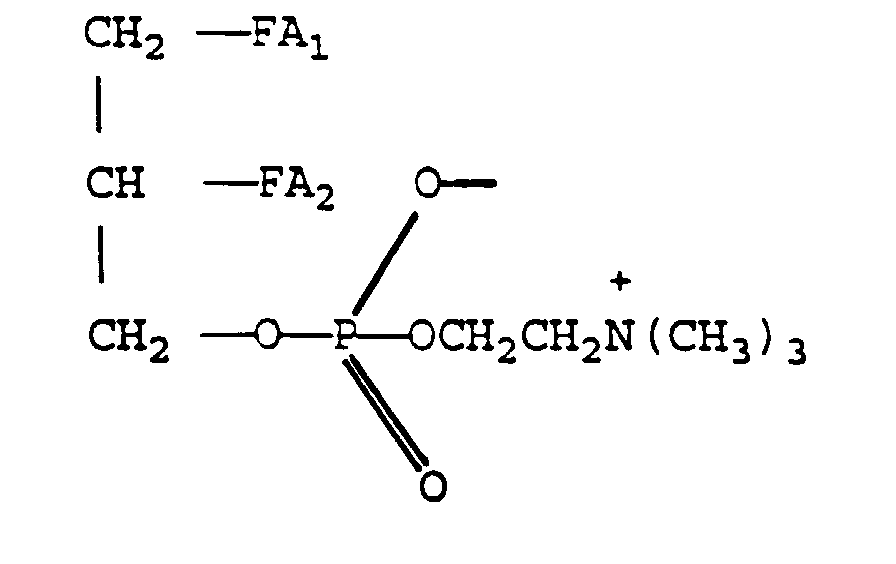
- acylglycerophosphocholine as used herein is meant a compound of the formula wherein FA 1 and FA 2 can be the same or different and are fatty acid residues having from 6-26 carbon atoms, usually 16-24 carbon atoms and can be saturated or unsaturated such as palmitic acid, palmitoleic acid, stearic acid, oleic acid, linoleic acid, eicosanic acid, arachidonic acid, docosahexaenoic acid, eicosapentaenoic acid, linolenic acid, mixtures thereof or the like.
- the fatty acid residues of the acylglycerophosphocholine can be varied by treatment of the acylglycerophosphocholine, e.g., a lecithin with phospholipase A1 or A2 (to cleave one fatty acid residue) or then phospholipase B (when desired to cleave both fatty acid residues) and then contacting the cleaved compound with the fatty acid of choice.
- choline producing compounds can also be administered to patients having lower to normal plasma choline levels, such as patients experiencing renal dialysis.
- acylglycerophosphocholine e.g., lecithin
- the choline or compound that dissociates to choline is administered so that a choline level between 10 and 50 nmoles/ml is attained in the person's bloodstream.
- suitable dosages are from 1 to 30 g/day, preferably 3-20 g/day taken in divided doses 500 to 1000 mg/cap or tab.
- choline chloride When choline chloride is administered in liquid form admixed with a conventional liquid carrier such as a sweetened elixir or the like, from about 1 to 10 grams/15 ml, preferably from about 2 to 5 grams/15 ml can be utilized.
- a conventional liquid carrier such as a sweetened elixir or the like
- lecithin When utilizing lecithin in a liquid carrier, it is administered in amounts of between about 0.1 and 50 grams/day.
- lecithin When lecithin is administered in granular form, as a tablet or in a capsule, it is employed in amounts of between 0.1 and 100 g/day, usually between about 30 and 50 g/day.
- lecithin is not available as a pure compound and is available in admixture with other phospholipids wherein the lecithin comprises about 20-30 weight percent of the mixture.
Landscapes
- Health & Medical Sciences (AREA)
- Chemical & Material Sciences (AREA)
- Medicinal Chemistry (AREA)
- Pharmacology & Pharmacy (AREA)
- Life Sciences & Earth Sciences (AREA)
- Animal Behavior & Ethology (AREA)
- General Health & Medical Sciences (AREA)
- Public Health (AREA)
- Veterinary Medicine (AREA)
- Bioinformatics & Cheminformatics (AREA)
- Engineering & Computer Science (AREA)
- Neurosurgery (AREA)
- Biomedical Technology (AREA)
- Neurology (AREA)
- Chemical Kinetics & Catalysis (AREA)
- General Chemical & Material Sciences (AREA)
- Nuclear Medicine, Radiotherapy & Molecular Imaging (AREA)
- Organic Chemistry (AREA)
- Epidemiology (AREA)
- Psychiatry (AREA)
- Hospice & Palliative Care (AREA)
- Diabetes (AREA)
- Hematology (AREA)
- Obesity (AREA)
- Pharmaceuticals Containing Other Organic And Inorganic Compounds (AREA)
- Acyclic And Carbocyclic Compounds In Medicinal Compositions (AREA)
- Saccharide Compounds (AREA)
- Organic Low-Molecular-Weight Compounds And Preparation Thereof (AREA)
- Medicinal Preparation (AREA)
Abstract
Description
- This invention relates to the new use of choline, or natural or synthetic compounds that dissociate to form choline for reducing the perception of fatigue in a person who has or is about to participate in major exercise by increasing the choline and acetylcholine levels in brain and other tissues.
- There are a number of diseases which affect acetylcholine-containing neurons in the brain or other tissues, and which are treated by drugs that cause undesired side effects by diminishing acetylcholine's release; there also exist diseases now treated by other drugs in which the potency and/or efficacy of the drugs could be improved by combining them with choline or natural or synthetic compounds that dissociate to form choline in order thereby to enhance the release of acetylcholine. Such diseases include both those primarily involving the brain (e.g., diseases of higher cortical functions; psychiatric illnesses; movement disorders) and those involving the peripheral nervous system (e.g., neuro-muscular disorders).
- From EP-A 0 018 550 it is known that certain muscle diseases, i.e. muscle fibre rupture, muscle pulling or muscle hardness, which may be due to prior fatigue or other reasons, may be cured by the use of methyl donators, as methionine or choline, by stimulating the phospho creatinine level in the blood. An increase in acethylcholine which stimulates brain and muscle action and thereby prevents fatigue itself or reduces already manifest fatigue is not described.
- Neurologie, 1980, 1334-1336, describes the use of choline in epileptic attacs, suppressing the spontaneous interictal spiking and the duration of the epileptic attacs. Because of the shortened attacs, the post seizure fatigue is diminished. To prevent the attacs, logically the drug must be applied in advance.
- From EP-A 0 001 924 it is known that lecithin, lysolecithin or glycerophosphatidyl choline are dissociated into choline and are likewise capable to compensate certain side effects of drugs which block catecholamine synthesis, antagonise dopamine or other anti-psychotic drugs.
- We have shown that choline administered by injection or by dietary supplementation increases blood choline levels in the rat; this, in turn, increases choline levels in cholinergic neurons within the brain and elsewhere in the body, thereby accelerating the synthesis of acetylcholine, increasing tissue acetylcholine levels, and increasing the amounts of actylcholine released into brain synapses. In human beings, oral doses of choline or of lecithin, a naturally-occuring compound that dissociates to choline were found to cause dose related increases in blood choline levels of sufficient magnitude (based on the studies on rats) to enhance brain acetylcholine synthesis and release; choline levels in the cerebrospinal fluid also rose in parallel. Prior to our invention, it had not been known that major exercise has an effect on the blood levels of choline in a patient.
- This invention is based upon the discovery that major exercise produces a significant reduction of choline blood levels in a patient. Accordingly, choline or a physiologically-acceptable natural or synthetic compound that dissociates to form choline is administered to a patient about to participate in major exercise to provide a prophylactic effect against the perception of fatigue or is administered after major exercise to reduce the perception of fatigue. The choline may be administered orally such as in tablet, capsule or liquid form or parenterally by intravenous, intramuscular or subcutaneous injection.
- In accordance with this invention choline or a compound that dissociates to form choline is used for increasing blood levels of choline to between 10 and 50 nmoles/ml, thereby increasing the level of acetycholine in the brain and in muscle tissue in a person prior to or subsequent to major exercise. The acetylcholine is synthesized from choline and acetyl CoA in a reaction catalyzed by choline acetyltransferase (CAT).
- The discovery that blood choline levels fall markedly after major exercise is surprising, One would expect choline levels, like plasma amino acid levels, to rise since choline and the amino acids are destroyed by the liver and exercise decreases the amount of blood sent to the liver.
- The choline can be administered as choline salts, such as the chloride/bitartrate or the like or as a compound that dissociates to choline, such as acylglycerophosphocholine, e.g., lecithin, lysolecithin, glycerophosphocholine, mixtures thereof or the like, By the term "acylglycerophosphocholine" as used herein is meant a compound of the formulawherein FA1 and FA2 can be the same or different and are fatty acid residues having from 6-26 carbon atoms, usually 16-24 carbon atoms and can be saturated or unsaturated such as palmitic acid, palmitoleic acid, stearic acid, oleic acid, linoleic acid, eicosanic acid, arachidonic acid, docosahexaenoic acid, eicosapentaenoic acid, linolenic acid, mixtures thereof or the like. The fatty acid residues of the acylglycerophosphocholine can be varied by treatment of the acylglycerophosphocholine, e.g., a lecithin with phospholipase A1 or A2 (to cleave one fatty acid residue) or then phospholipase B (when desired to cleave both fatty acid residues) and then contacting the cleaved compound with the fatty acid of choice. These choline producing compounds can also be administered to patients having lower to normal plasma choline levels, such as patients experiencing renal dialysis. It is preferred to employ an acylglycerophosphocholine, e.g., lecithin as the choline source since it is not degraded in the gut in contrast to choline. The choline or compound that dissociates to choline is administered so that a choline level between 10 and 50 nmoles/ml is attained in the person's bloodstream. For example, when administering choline chloride in the form of capsules or tablets, suitable dosages are from 1 to 30 g/day, preferably 3-20 g/day taken in divided doses 500 to 1000 mg/cap or tab. When choline chloride is administered in liquid form admixed with a conventional liquid carrier such as a sweetened elixir or the like, from about 1 to 10 grams/15 ml, preferably from about 2 to 5 grams/15 ml can be utilized. When utilizing lecithin in a liquid carrier, it is administered in amounts of between about 0.1 and 50 grams/day. When lecithin is administered in granular form, as a tablet or in a capsule, it is employed in amounts of between 0.1 and 100 g/day, usually between about 30 and 50 g/day. Normally, lecithin is not available as a pure compound and is available in admixture with other phospholipids wherein the lecithin comprises about 20-30 weight percent of the mixture.
- The following example illustrates the present invention and is not intended to limit the same.
- Men and women, planning to run the Boston Marathon, were used in this study. No restrictions were made concerning age, sex, medical history/drug therapy or food consumption. Just prior to the start of the race, the 23 subjects completed a questionaire and a blood sample was taken. Blood was immediately spun to separate the plasma, and the plasma was frozen and stored at - 70 °C. 21 of the 23 subjects finished the race. They were immediately examined, and blood was again removed for choline assay (and treated as above). Again, they completed a questionaire concerning food consumption during the race, finish time, gastrointestinal symptoms, etc. The blood was assayed for choline radioenzymatically.
- As shown in table 1, choline declined in all subjects completing the Marathon. The decline was approximately 35% on average, and the probability that the change was due to chance alone was less than 0.001%. Data from individual subjects are shown in the Table below.
Plasma Choline Levels (nM/ml) of 23 Marathon Runners Subject Before After 1 16.18 6.30 2 9.70 5.27 3 7.55 4 11.77 5.48 5 8.35 6.33 6 7.69 6.15 7 7.79 6.26 8 9.85 6.59 9 9.41 6.40 10 12.85 11 8.57 12 10.54 5.76 13 12.16 7.03 14 15 16 11.41 8.12 17 9.57 2.98 18 10.58 5.61 19 9.50 5.74 20 7.55 6.75 21 9.73 5.85 22 9.51 23 11.14 7.04 24 10.14 6.24 25 2.05 1.15
Claims (3)
- The use of a compound of the group of choline or a salt of choline, lysolecythin, glycerophosphocholine or an acylglycerophosphocholine having the formulawherein FA1 and FA2 can be the same or different and are fatty acid residues having from 6-26 carbon atoms in an amount effective to raise the bloodstream choline level of a person to between 10 and 50 nmoles/ml, for increasing the acetylcholine level in the brain and the tissue and thereby reducing the perception of fatigue in a person about to participate in major exercise or in a person having completed major exercise.

- The use according to claim 1, wherein the compound is in the form of a capsule or tablet containing 500 to 1000 mg of the compound together with a pharmaceutically acceptable carrier.
- The use according to one of the preceding claims, wherein the compound is choline chloride or lecithin.
Applications Claiming Priority (2)
| Application Number | Priority Date | Filing Date | Title |
|---|---|---|---|
| US780053 | 1985-09-28 | ||
| US06/780,053 US4626527A (en) | 1985-09-28 | 1985-09-28 | Process for utilizing choline to sustain muscular performance |
Publications (3)
| Publication Number | Publication Date |
|---|---|
| EP0217258A2 EP0217258A2 (en) | 1987-04-08 |
| EP0217258A3 EP0217258A3 (en) | 1989-12-13 |
| EP0217258B1 true EP0217258B1 (en) | 1999-12-01 |
Family
ID=25118425
Family Applications (1)
| Application Number | Title | Priority Date | Filing Date |
|---|---|---|---|
| EP86113026A Expired - Lifetime EP0217258B1 (en) | 1985-09-28 | 1986-09-22 | The use of choline or choline releasing compounds for reducing the perception of fatigue |
Country Status (5)
| Country | Link |
|---|---|
| US (1) | US4626527A (en) |
| EP (1) | EP0217258B1 (en) |
| JP (1) | JPH0657654B2 (en) |
| AT (1) | ATE187066T1 (en) |
| DE (1) | DE3650735T2 (en) |
Families Citing this family (8)
| Publication number | Priority date | Publication date | Assignee | Title |
|---|---|---|---|---|
| US5001117A (en) * | 1989-03-07 | 1991-03-19 | Pharmacaps, Inc. | Use of lecithin to restore olfaction and taste |
| FR2673512B1 (en) * | 1991-03-05 | 1993-08-20 | Inst Rech Biolog Sa | NOVEL DIETETIC COMPOSITIONS BASED ON PHOSPHORUS COMPLEX LIPIDS AND THEIR USE IN SLEEP DISORDERS. |
| WO1994009769A1 (en) * | 1992-11-02 | 1994-05-11 | Buchman Alan L | Use of choline in total parenteral nutrition |
| US5397786A (en) * | 1993-01-08 | 1995-03-14 | Simone; Charles B. | Rehydration drink |
| US6013273A (en) * | 1997-01-27 | 2000-01-11 | Novartis Nutrition Ag | Treatment of endotoxic shock |
| US20040086564A1 (en) * | 2002-10-31 | 2004-05-06 | Richardson Paul H. | Dosage forms containing stabilized choline and method for preparing same |
| US20070043115A1 (en) * | 2005-08-16 | 2007-02-22 | Buchman Alan L | Use of choline to prevent thrombosis associated with total parenteral nutrition |
| US20210212936A1 (en) * | 2018-06-01 | 2021-07-15 | Baxter International Inc. | Parenteral nutrition formulation |
Family Cites Families (5)
| Publication number | Priority date | Publication date | Assignee | Title |
|---|---|---|---|---|
| GB879259A (en) * | 1956-11-20 | 1961-10-11 | Riker Laboratories Inc | Acid addition salts of 2-dimethylaminoethanol and central nervous system stimulant compositions containing them |
| CA1114295A (en) * | 1977-11-02 | 1981-12-15 | John H. Growdon | Process and composition for treating disorders by administering choline or a compound that dissociates to choline |
| US4456598A (en) * | 1977-11-02 | 1984-06-26 | Massachusetts Institute Of Technology | Process and composition for treating disorders by administering a butyrophenone and a choline |
| DE2915433A1 (en) * | 1979-04-17 | 1980-10-30 | Christensen Plantorgan Werk | USE OF PHYSIOLOGICALLY COMPATIBLE METHYLDONATORS |
| DE3346525C2 (en) * | 1983-12-22 | 1987-03-19 | A. Nattermann & Cie GmbH, 5000 Köln | Pharmaceutical preparation with special 1,2-diacyl-glycero-3-phosphocholines for the treatment of gastrointestinal diseases |
-
1985
- 1985-09-28 US US06/780,053 patent/US4626527A/en not_active Expired - Lifetime
-
1986
- 1986-09-22 DE DE3650735T patent/DE3650735T2/en not_active Expired - Fee Related
- 1986-09-22 AT AT86113026T patent/ATE187066T1/en not_active IP Right Cessation
- 1986-09-22 EP EP86113026A patent/EP0217258B1/en not_active Expired - Lifetime
- 1986-09-29 JP JP61231075A patent/JPH0657654B2/en not_active Expired - Fee Related
Also Published As
| Publication number | Publication date |
|---|---|
| US4626527A (en) | 1986-12-02 |
| EP0217258A2 (en) | 1987-04-08 |
| DE3650735T2 (en) | 2000-05-11 |
| EP0217258A3 (en) | 1989-12-13 |
| ATE187066T1 (en) | 1999-12-15 |
| JPS62111920A (en) | 1987-05-22 |
| DE3650735D1 (en) | 2000-01-05 |
| JPH0657654B2 (en) | 1994-08-03 |
Similar Documents
| Publication | Publication Date | Title |
|---|---|---|
| Secades et al. | Citicoline: pharmacological and clinical review, 2022 update | |
| US4351831A (en) | Process and composition for treating disorders by administering isoxsurpine and choline | |
| US6359005B1 (en) | Method for the treatment of mania and bipolar disorder | |
| EP1885379B1 (en) | Compounds and methods for treating seizure and paroxysmal disorders | |
| JPS623127B2 (en) | ||
| US4636494A (en) | Process and composition for treating disorders by administering amphetamine and choline | |
| US5510381A (en) | Method of treatment of mania and bipolar disorder | |
| KR100481188B1 (en) | Use of Alkanoyl-L-Carnitine for the Treatment of Glutamate-Related Diseases | |
| US4626527A (en) | Process for utilizing choline to sustain muscular performance | |
| KR20050109990A (en) | Method for treating mild cognitive impairment and for preventing or delaying alzheimer's disease | |
| US4346085A (en) | Process and composition for treating disorders by administering amphetamine and choline | |
| ES2250749T3 (en) | USE OF A COMBINED COMPOSITION THAT INCLUDES PROPIONIL L-CARNITINE AND OTHER PHARMACOS FOR THE TREATMENT OF ERECTILE DYSFUNCTION. | |
| EP0305181B1 (en) | Ethyl-(+)-apovincaminate for treating demyelinization clinical patterns of autoimmune origin | |
| US4346084A (en) | Process and composition for treating disorders by administering lithium and choline | |
| US4355027A (en) | Process and composition for treating disorders by administering piracetam and choline | |
| MXPA05004752A (en) | Acetyl-l-carnitine for the prevention and/or treatment of peripheral neuropathies induced by anticancer agents. | |
| JP2002524417A (en) | Methods and compositions for increasing intestinal absorption of fat | |
| EP0147185A2 (en) | Therapeutic use of cytidyl disphosphocholine to increase neuronal acetylcholine | |
| EP0171227A1 (en) | Use of propiophenone compound | |
| US4775665A (en) | Method and composition for treating neurological disorders and aging | |
| US4624852A (en) | Process and composition for treating neurological disorders and aging | |
| US4430330A (en) | Process and composition for treating disorders by administering a phenothiazine and choline | |
| US4456598A (en) | Process and composition for treating disorders by administering a butyrophenone and a choline | |
| US4405629A (en) | Process for increasing glycine levels in the brain and spinal cord | |
| US4737489A (en) | Method and composition for treating neurological disorders and aging |
Legal Events
| Date | Code | Title | Description |
|---|---|---|---|
| PUAI | Public reference made under article 153(3) epc to a published international application that has entered the european phase |
Free format text: ORIGINAL CODE: 0009012 |
|
| AK | Designated contracting states |
Kind code of ref document: A2 Designated state(s): AT BE CH DE FR GB IT LI LU NL SE |
|
| PUAL | Search report despatched |
Free format text: ORIGINAL CODE: 0009013 |
|
| AK | Designated contracting states |
Kind code of ref document: A3 Designated state(s): AT BE CH DE FR GB IT LI LU NL SE |
|
| 17P | Request for examination filed |
Effective date: 19900613 |
|
| 17Q | First examination report despatched |
Effective date: 19910404 |
|
| APCB | Communication from the board of appeal sent |
Free format text: ORIGINAL CODE: EPIDOS OBAPE |
|
| APAB | Appeal dossier modified |
Free format text: ORIGINAL CODE: EPIDOS NOAPE |
|
| GRAG | Despatch of communication of intention to grant |
Free format text: ORIGINAL CODE: EPIDOS AGRA |
|
| GRAG | Despatch of communication of intention to grant |
Free format text: ORIGINAL CODE: EPIDOS AGRA |
|
| GRAG | Despatch of communication of intention to grant |
Free format text: ORIGINAL CODE: EPIDOS AGRA |
|
| GRAH | Despatch of communication of intention to grant a patent |
Free format text: ORIGINAL CODE: EPIDOS IGRA |
|
| GRAH | Despatch of communication of intention to grant a patent |
Free format text: ORIGINAL CODE: EPIDOS IGRA |
|
| GRAA | (expected) grant |
Free format text: ORIGINAL CODE: 0009210 |
|
| AK | Designated contracting states |
Kind code of ref document: B1 Designated state(s): AT BE CH DE FR GB IT LI LU NL SE |
|
| REF | Corresponds to: |
Ref document number: 187066 Country of ref document: AT Date of ref document: 19991215 Kind code of ref document: T |
|
| REG | Reference to a national code |
Ref country code: CH Ref legal event code: EP |
|
| ITF | It: translation for a ep patent filed | ||
| REF | Corresponds to: |
Ref document number: 3650735 Country of ref document: DE Date of ref document: 20000105 |
|
| REG | Reference to a national code |
Ref country code: CH Ref legal event code: NV Representative=s name: R. A. EGLI & CO. PATENTANWAELTE |
|
| ET | Fr: translation filed | ||
| PLBE | No opposition filed within time limit |
Free format text: ORIGINAL CODE: 0009261 |
|
| STAA | Information on the status of an ep patent application or granted ep patent |
Free format text: STATUS: NO OPPOSITION FILED WITHIN TIME LIMIT |
|
| 26N | No opposition filed | ||
| REG | Reference to a national code |
Ref country code: GB Ref legal event code: IF02 |
|
| PGFP | Annual fee paid to national office [announced via postgrant information from national office to epo] |
Ref country code: NL Payment date: 20040829 Year of fee payment: 19 |
|
| PGFP | Annual fee paid to national office [announced via postgrant information from national office to epo] |
Ref country code: AT Payment date: 20040901 Year of fee payment: 19 |
|
| PGFP | Annual fee paid to national office [announced via postgrant information from national office to epo] |
Ref country code: GB Payment date: 20040915 Year of fee payment: 19 |
|
| PGFP | Annual fee paid to national office [announced via postgrant information from national office to epo] |
Ref country code: FR Payment date: 20040920 Year of fee payment: 19 |
|
| PGFP | Annual fee paid to national office [announced via postgrant information from national office to epo] |
Ref country code: SE Payment date: 20040921 Year of fee payment: 19 |
|
| PGFP | Annual fee paid to national office [announced via postgrant information from national office to epo] |
Ref country code: CH Payment date: 20040924 Year of fee payment: 19 |
|
| PGFP | Annual fee paid to national office [announced via postgrant information from national office to epo] |
Ref country code: LU Payment date: 20041004 Year of fee payment: 19 |
|
| PGFP | Annual fee paid to national office [announced via postgrant information from national office to epo] |
Ref country code: BE Payment date: 20041021 Year of fee payment: 19 |
|
| PGFP | Annual fee paid to national office [announced via postgrant information from national office to epo] |
Ref country code: DE Payment date: 20041102 Year of fee payment: 19 |
|
| PG25 | Lapsed in a contracting state [announced via postgrant information from national office to epo] |
Ref country code: IT Free format text: LAPSE BECAUSE OF NON-PAYMENT OF DUE FEES;WARNING: LAPSES OF ITALIAN PATENTS WITH EFFECTIVE DATE BEFORE 2007 MAY HAVE OCCURRED AT ANY TIME BEFORE 2007. THE CORRECT EFFECTIVE DATE MAY BE DIFFERENT FROM THE ONE RECORDED. Effective date: 20050922 Ref country code: GB Free format text: LAPSE BECAUSE OF NON-PAYMENT OF DUE FEES Effective date: 20050922 Ref country code: AT Free format text: LAPSE BECAUSE OF NON-PAYMENT OF DUE FEES Effective date: 20050922 |
|
| PG25 | Lapsed in a contracting state [announced via postgrant information from national office to epo] |
Ref country code: SE Free format text: LAPSE BECAUSE OF NON-PAYMENT OF DUE FEES Effective date: 20050923 |
|
| PG25 | Lapsed in a contracting state [announced via postgrant information from national office to epo] |
Ref country code: LU Free format text: LAPSE BECAUSE OF NON-PAYMENT OF DUE FEES Effective date: 20050930 Ref country code: LI Free format text: LAPSE BECAUSE OF NON-PAYMENT OF DUE FEES Effective date: 20050930 Ref country code: CH Free format text: LAPSE BECAUSE OF NON-PAYMENT OF DUE FEES Effective date: 20050930 Ref country code: BE Free format text: LAPSE BECAUSE OF NON-PAYMENT OF DUE FEES Effective date: 20050930 |
|
| APAH | Appeal reference modified |
Free format text: ORIGINAL CODE: EPIDOSCREFNO |
|
| PG25 | Lapsed in a contracting state [announced via postgrant information from national office to epo] |
Ref country code: NL Free format text: LAPSE BECAUSE OF NON-PAYMENT OF DUE FEES Effective date: 20060401 Ref country code: DE Free format text: LAPSE BECAUSE OF NON-PAYMENT OF DUE FEES Effective date: 20060401 |
|
| REG | Reference to a national code |
Ref country code: CH Ref legal event code: PL |
|
| EUG | Se: european patent has lapsed | ||
| GBPC | Gb: european patent ceased through non-payment of renewal fee |
Effective date: 20050922 |
|
| PG25 | Lapsed in a contracting state [announced via postgrant information from national office to epo] |
Ref country code: FR Free format text: LAPSE BECAUSE OF NON-PAYMENT OF DUE FEES Effective date: 20060531 |
|
| NLV4 | Nl: lapsed or anulled due to non-payment of the annual fee |
Effective date: 20060401 |
|
| REG | Reference to a national code |
Ref country code: FR Ref legal event code: ST Effective date: 20060531 |
|
| BERE | Be: lapsed |
Owner name: MASSACHUSETTS *INSTITUTE OF TECHNOLOGY Effective date: 20050930 |