EP0210279B1 - Stabilized human prourokinase - Google Patents
Stabilized human prourokinase Download PDFInfo
- Publication number
- EP0210279B1 EP0210279B1 EP19860900852 EP86900852A EP0210279B1 EP 0210279 B1 EP0210279 B1 EP 0210279B1 EP 19860900852 EP19860900852 EP 19860900852 EP 86900852 A EP86900852 A EP 86900852A EP 0210279 B1 EP0210279 B1 EP 0210279B1
- Authority
- EP
- European Patent Office
- Prior art keywords
- plasmid
- prourokinase
- polypeptide
- amino acid
- coli
- Prior art date
- Legal status (The legal status is an assumption and is not a legal conclusion. Google has not performed a legal analysis and makes no representation as to the accuracy of the status listed.)
- Expired
Links
Images







Classifications
-
- C—CHEMISTRY; METALLURGY
- C12—BIOCHEMISTRY; BEER; SPIRITS; WINE; VINEGAR; MICROBIOLOGY; ENZYMOLOGY; MUTATION OR GENETIC ENGINEERING
- C12N—MICROORGANISMS OR ENZYMES; COMPOSITIONS THEREOF; PROPAGATING, PRESERVING, OR MAINTAINING MICROORGANISMS; MUTATION OR GENETIC ENGINEERING; CULTURE MEDIA
- C12N9/00—Enzymes; Proenzymes; Compositions thereof; Processes for preparing, activating, inhibiting, separating or purifying enzymes
- C12N9/14—Hydrolases (3)
- C12N9/48—Hydrolases (3) acting on peptide bonds (3.4)
- C12N9/50—Proteinases, e.g. Endopeptidases (3.4.21-3.4.25)
- C12N9/64—Proteinases, e.g. Endopeptidases (3.4.21-3.4.25) derived from animal tissue
- C12N9/6421—Proteinases, e.g. Endopeptidases (3.4.21-3.4.25) derived from animal tissue from mammals
- C12N9/6424—Serine endopeptidases (3.4.21)
- C12N9/6456—Plasminogen activators
- C12N9/6462—Plasminogen activators u-Plasminogen activator (3.4.21.73), i.e. urokinase
-
- C—CHEMISTRY; METALLURGY
- C12—BIOCHEMISTRY; BEER; SPIRITS; WINE; VINEGAR; MICROBIOLOGY; ENZYMOLOGY; MUTATION OR GENETIC ENGINEERING
- C12N—MICROORGANISMS OR ENZYMES; COMPOSITIONS THEREOF; PROPAGATING, PRESERVING, OR MAINTAINING MICROORGANISMS; MUTATION OR GENETIC ENGINEERING; CULTURE MEDIA
- C12N15/00—Mutation or genetic engineering; DNA or RNA concerning genetic engineering, vectors, e.g. plasmids, or their isolation, preparation or purification; Use of hosts therefor
- C12N15/09—Recombinant DNA-technology
- C12N15/63—Introduction of foreign genetic material using vectors; Vectors; Use of hosts therefor; Regulation of expression
- C12N15/70—Vectors or expression systems specially adapted for E. coli
- C12N15/73—Expression systems using phage (lambda) regulatory sequences
-
- C—CHEMISTRY; METALLURGY
- C12—BIOCHEMISTRY; BEER; SPIRITS; WINE; VINEGAR; MICROBIOLOGY; ENZYMOLOGY; MUTATION OR GENETIC ENGINEERING
- C12Y—ENZYMES
- C12Y304/00—Hydrolases acting on peptide bonds, i.e. peptidases (3.4)
- C12Y304/21—Serine endopeptidases (3.4.21)
- C12Y304/21073—Serine endopeptidases (3.4.21) u-Plasminogen activator (3.4.21.73), i.e. urokinase
Definitions
- This invention relates to DNA segments coding for a stabilized human prourokinase-like polypeptide, plasmids containing the DNA segments, Escherichia coli containing the plasmid, and a process for preparing a human prourokinase-like polypeptide using the Escherichia coli .
- human urokinase is used as a thrombolytic agent.
- the use of human urokinase for intravenous administration requires a highly refined product, but urokinase in general is said to be an unstable enzyme being susceptible to hydrolysis during the purification process.
- the urokinase prepared from human urine consists of a high molecular weight urokinase having a molecular weight of about 54,000 and a low molecular weight urokinase having a molecular weight of about 33,000, and the low molecular weight urokinase is formed by cleaving the high molecular weight urokinase with protease.
- this cleavage site is a peptide bond between the two lysine residues positioned l35th and l36th respectively from the serine at the N-terminus of the high molecular weight matured urokinase.
- Such cleavage is caused not only during the purification process of prourokinase from human urine but also during the purification process of prourokinase produced by the recombinant DNA technology.
- a similar cleavage is expected to be caused by a trypsin-like protease contained in plasma upon intravenous administration of prourokinase.
- the high molecular weight urokinase is considered to be more effective than the low molecular weight urokinase in dissolving fibrin in vivo (literature l). Consequently, there is a strong demand for a stabilized prourokinase yielding a stabilized urokinase, which possesses the activity similar to that of naturally occurring high molecular weight human urokinase and is not susceptible to hydrolysis by proteases, and for a process for preparing the same. Such a stabilized prourokinase resulting from the conversion of amino acids as well as a process for preparing the same are unknown.
- prourokinase administered is achieved by a small amount of plasmin adsorbed by blood clots at the limited site where they are present, in other words, because prourokinase is clot-specifically activated, the prourokinase is considered not to be susceptible to inhibitors in the blood stream and to provide less side effects.
- urokinase has been prepared by extraction and purification from human urine. This process, however, is far from being industrially superior because of the problem of a stable supply of human urine.
- a process for preparing urokinase by separating human kidney tissue cells and subjecting them to passage culture has been developed of late (literature 29). It has been reported, however, that in this tissue culture the production of therapeutically effectual high molecular weight urokinase declines during the passage while the production of low molecular weight urokinase increases (literature 6). As a practical process for preparing urokinase, it is far from ideal.
- Japanese Unexamined Patent Publication 59-5l300 discloses a process for preparing urokinase using genetic engineering techniques.
- the method in which the expression of urokinase has been actually verified is one that comprises expressing a fused protein of trpE and urokinase by joining together the gene coding for urokinase and the trpE gene and then cutting the fused protein to obtain the low molecular weight urokinase.
- the direct expression of prourokinase has not been verified. Further, the amount of expression of said fused protein has not been shown.
- this invention provides a stabilized human prourokinase-like polypeptide, which is not only not susceptible to hydrolysis by various enzymes both in vitro and in vivo, but also is capable of being readily prepared as a high purity product and has a high thrombolytic specificity upon administration to the organism and an improved sustainability on the thrombolysis, a gene system for the preparation of said polypeptide, and a process for preparing said polypeptide using this gene system.
- the present invention therefore provides a stabilized human prourokinase-like polypeptide having the amino acid sequence, or one functionally equivalent to that, of the formula: wherein Met is methionine optionally present; Ser is the first-positioned N-terminal serine; X is either the l35th-positioned lysine or amino acid other than basic amino acid; Y is either the l57th-positioned phenylalanine or acidic amino acid; and the solid line represents the amino acid sequence identical to the corresponding parts of the amino acid sequence of naturally occurring human prourokinase, with the proviso that where X is lysine, Y is not phenylalanine.
- the present invention also provides the DNA which codes for said stabilized human prourokinase-like polypeptide and is capable of efficient expression in E. coli .
- the present invention further provides plasmids containing said DNA, a control region necessary for the expression of said prourokinase-like polypeptide, and the DNA sequence necessary for replication in E. coli .
- the present invention further provides E. coli transformed by said plasmid.
- the present invention further provides a process for preparing said human prourokinase-like polypeptide using said E. coli .
- the stabilized human prourokinase-like polypeptide of the present invention has the amino acid sequence, or one functionally equivalent to that, of the formula: wherein Met is methionine optionally present; Ser is the first-positioned N-terminal serine; X is either the l35th-positioned lysine or amino acid other than basic amino acid; Y is either the l57th-positioned phenylalanine or acidic amino acid, and the solid line represents the amino acid sequence identical to corresponding parts of the amino acid sequence of naturally occurring human prourokinase, with the proviso that where X is lysine, Y is not phenylalanine.
- Urokinase is a protein consisting of 4l0 amino acids whose sequence is well-known (literatures 8 and 9). Although the plasminogen activator-activity of urokinase is known to come from its peptide segment consisting of 275 C-terminal amino acids, it may be noted that peptides consisting solely of such segments have a low affinity for plasminogen (literature 7). The peptide consisting solely of said active segment is designated as the low molecular weight urokinase, and the urokinase consisting of 4l0 amino acids is designated as the high molecular weight urokinase.
- the low molecular weight urokinase is thought to have a low affinity for plasminogen, and for this reason, urokinase preparations with a high content of high molecular weight urokinase are in great demand.
- prourokinase which is a precursor of urokinase.
- the present inventors have found the striking fact that replacing the lysine positioned l35th from the first N-terminal serine of prourokinase with amino acids other than basic amino acid makes the cleavage between the l35th-positioned lysine and the l36th-positioned lysine (this corresponds to the change from the high molecular weight urokinase to the low molecular weight one in urokinase) difficult to occur and that such a modified polypeptide with the substituted amino acid has physiological properties similar to that of naturally occurring prourokinase (the property of activated urokinase to exhibit activity).
- X is either lysine or an amino acid other than basic amino acid, but when X is lysine, Y is not phenylalanine, as will be discussed in detail later.
- amino acid sequences represented by the solid lines in the preceding general formula are identical to the corresponding parts of the amino acid sequence of naturally occurring human prourokinase.
- an amino acid sequence of naturally occurring human prourokinase a sequence consisting of 4ll amino acids coded by cDNA corresponding to mRNA derived from a human kidney may be cited.
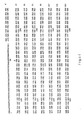
- This amino acid sequence is represented by the abbreviation for amino acid consisting of three capital letters of the alphabet, in Figures 4-l to 4-3.
- the stabilized human prourokinase-like polypeptides of the present invention includes not only the polypeptide containing the amino acid described in detail above but also any polypeptide containing the amino acid sequence functionally equivalent to that sequence.
- the term "funtionally equivalent amino sequence” as used herein means any amino acid sequence in which several amino acids other than X and Y in the amino acid sequence described above have either been replaced with other amino acids or removed, or in which several amino acids are added to the amino acid sequence described above but the physiological property of prourokinase and the stability which characterizes the present invention are still retained.
- This invention further relates to a gene system which is useful for preparing stabilized human prourokinase.
- the gene system referred to herein includes DNA segments coding for the desired human prourokinase-like polypeptide, plasmids containing said DNA, and hosts into which such a plasmid has been introduced.
- Typical DNA segments of the present invention include those in which codons coding for a plurality of N-terminal amino acids are those which are used in E. coli at high frequency and codons other than said codons coding for a plurality of amino acids, and other than codons coding for said X and Y, are identical to the codons of the corresponding amino acids in cDNA that corresponds to mRNA derived from human kidney.
- genes coding for a protein consisting of a large number of amino acids such as human prourokinase it is of advantage to use a DNA segment derived from cells of an organism that produces such a protein in nature, that is, human cells, such as cDNA obtained by using mRNA coding for prourokinase as a template; and even so it is not impossible to synthesize DNA coding for such high molecular weight protein, but this calls for great efforts.
- genes consisting of codons used in E. coli at a high frequency in order to effectively express the protein in E. coli but these conditions are not necessarily fully satisfied in human-derived cDNA, leaving no alternative but to rely on chemical synthesis to obtain DNA that satisfy such conditions.
- codons of said synthetic DNA segment it is preferable to prevent the fold-back of the mRNA by eliminating the inverted repetitive sequence of l6 bases of the urokinase gene of the natural type (cDNA), and to further prevent at the mRNA level the complementary association of the nucleotide sequence in the vicinity of the SD (Shine-Dalgarno) sequence of the metapyrocatechase gene (C230) used in the preferred embodiments of expression plasmids of this invention and the nucleotide sequence at the 5′ end of the human prourokinase gene by eliminating their complementary structures. It is also preferable to select the codon for serine which is the first amino acid so that the base next to the translation initiation codon ATG will be A.
- the direct expression of prourokinase is made possible by placing the translation initiation codon ATG coding for methionine adjacent to and upstream of the codon for serine, the N-terminal amino acid, in the coding region designed in the manner described above.
- the following recognition sequence for the restriction endonuclease Aat II is placed adjacent to and upstream of said ATG so that on insertion of DNA of said coding region into an expression vector, the distance and structure between the SD sequence of the metapyrocatechase gene used in the preferred expression vector of the present invention and the ATG of the inserted high molecular weight urokinase gene will be identical to those in the natural metapyrocatechase gene.
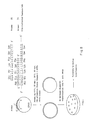
- Fig. 5 An example a of modified nucleotide sequence of the present invention is shown in Fig. 5.
- codons used at high frequency in E. coli are used for asparagine, glutamic acid, leucine, histidine, glutamine, and proline.
- the leader sequence present in natural cDNA is eliminated to enable the direct expression of human prourokinase, and instead, the translation initiation codon coding for methionine is placed adjacent to and upstream of the codon for serine which is the first amino acid of human prourokinase.
- the Aat II site is provided to permit insertion into the expression plasmid.
- X in the general formula is the amino acid other than basic
- the codon coding for a desired amino acid other than the basic amino acid must be used instead of the cDNA codon coding for lysine as X.
- Any codons may be used in place of the one for l35th lysine as long as they code for the corresponding amino acid and are readily expressible in E. coli .
- glutamine is used as the l35th amino acid, however, it is preferable to use the codon consisting of CAA, whereas the ACA is preferred when threonine is used.
- the following codons may be used for respective amino acids:
- Y in the general formula is acidic amimo acid
- the codon coding for acidic amino acid must be used in place of the cDNA codon coding for phenylalanine as Y.
- Any codons may be used other than the one for the l57th phenylalanine as long as they code for the corresponding amino acids and are readily expressible in E. coli .
- the use of the codon consisting of GAT is preferred, and when glutamic acid is used, the GAA is preferred.
- vectors that function in animal cells may be used for expression of the human prourokinase-like polypeptide of the present invention
- the use of a plasmid containing along with said region the expression control region necessary for expressing said genes in microorganisms, particularly in E. coli and the region necessary for replication in E. coli is preferred.
- the expression control region any system useful for expressing the foreign gene in E. coli may be use arbitrarily.
- the promoter/operator systems tac, P L , lacUV5, P R , trp, and lpp are used.
- the tac promoter/operator, the P L promoter/operator, and the trp promoter operator are preferred .
- SD sequences the SD sequence of the metapyrocatechase gene (C230SD) (literature l0) and lacSD may be used.
- bacteria animal cells and such micro-organisms as bacteria and yeast may be used as hosts for introducing said plasmids, the use of bacteria, particularly E. coli , is preferred.
- such strains of nonenterositic, nontoxic E. coli as those derived from E. coli K-l2 may be used, e.g., JM83, JMl03, JMl05, RB79l, SM32, N99, RRl, W3ll0, and ⁇ l776.
- An example of the process for constructing genes involved in the present invention comprises the following steps:
- step (l) is critical, but steps (2) and (3) may be carried out electively according to the type of the desired human prourokinase-like polypeptide.
- step (5) In order to obtain genes showing efficient expression it is preferable to carry out step (5) and the priority :n carrying out this step may be decided on an arbitrary basis.
- DNA segment of the gene system of the present invention can be totally synthesized. In this instance it is possible to use codons that are readily expressible in E. coli , instead of natural codons.
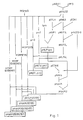
- FIG. l A diagram for constructing various plasmids involved in the present invention is shown in Fig. l and the definite methods of construction are described in the examples and reference examples of the present invention.
- Plasmid constructed in the manner described above is transformed to an appropriate host such as E. coli JMl03 or W3ll0, and the transformant incubated in a suitable medium such as L-medium which contains 50 ⁇ g/ml of ampicillin, as the case may be, and gene expression induced when the growth of E. coli has reached a given level, e.g., absorbance of 0.3 to 0.5 at 550 nm.
- a suitable medium such as L-medium which contains 50 ⁇ g/ml of ampicillin, as the case may be
- gene expression induced when the growth of E. coli has reached a given level, e.g., absorbance of 0.3 to 0.5 at 550 nm.
- the induction procedure varies with the type of promoter of the plasmid used. For example, where the plasmid pMUPlpm is used, E. coli cells transformed with said plasmid are incubated at 30°C and the gene expression is induced by increasing the incubation
- the induction is carried out with isopropyl- ⁇ -D-thiogalactopyranoside.
- the induction can be carried out by adding indoleacetic acid when the cell concentration has reach a given level, e.g., absorbance of 0.3 to 0.5 at 550 nm.
- Ten ⁇ l of a sample is spotted on a fibrin plate prepared by the addition of thrombin to 67 mM phosphate buffer containing l% bovine fibrinogen (95% clottable, made by Miles Inc.) and 0.25% agarose, to make the final concentration l unit/ml. After incubation for l6 hours at 37°C, the activity is assayed by measuring the area of the dissolved ring and comparing the same with the standard urokinase (made by Nippon Soda Co.).
- a sampled extract is separated by SDS polyacryl amide gel electrophoresis under the condition free of 2-mercaptoethanol using the method of Laemmli et al (literature 30) and compared with the standard sample after being made visible by fibrin autography.
- the molecular weight of the enzymatically active product in the sample is measured by the method described in Paragraph (2) above.
- the stability of the urokinase obtained from the substitution of the l35th amino acid is confirmed by this testing.
- the enzyme activity of a sample is measured by the fibrin plate method and the sample is diluted with a solution containing 50 mM veronal buffer, 0.l M NaCl, and 0.00l% Tween® 80, to make the final concentration 500 IU/ml.
- a solution containing 50 mM veronal buffer, 0.l M NaCl, and 0.00l% Tween® 80 to make the final concentration 500 IU/ml.
- One ⁇ g, 2 ⁇ g, and 5 ⁇ g portions of plasmin are added respectively to l00 ⁇ l aliquots of the solution and incubated at 37°C.
- Ten ⁇ l each of the samples are withdrawn with the passage of time, and after the addition of 5 ⁇ g of soybean trypsin inhibitor, the reaction is stopped and the activity is measured by the synthetic substrate method using S-2444.
- the nonsusceptibility of prourokinase to plasmin treatment by virtue of its activation on cleavage between the l58th lysine and the l59th isoleucine by plasmin serves as an indication of the stability of the prourokinase-like polypeptide obtained through substitution of the l57th amino acid.
- the residual activity after thrombin treatment is assayed using as a control the sample obtained after carrying out the same manipulation without thrombin.
- the activity of prourokinase decreases when a bond between the l56th arginine and the l57th phenylalanine is severed by thrombin. Accordingly, the absence of decline in the residual activity after thrombin treatment is an indication of the stability of the prourokinase-like polypeptide obtained through substitution of the l57th amino acid.
- the samples prepared from E. coli transformed with any of the plasmid such as plasmid pMUPl coding for prourokinase-like polypeptide in which neither the l35th amino acid nor the l57th amino acid has been substituted; plasmids pMUPlpm, pMUT4Lpm2, ptrpUK2(Il35), and ptrpUK2(El35) containing the genes coding for the prourokinase-like polypeptide in which only the l35th amino acid has been substituted; plasmids ptrpUK2-(Ql35Dl57) and ptrpUK2(El35Dl57) containing the genes coding for the prourokinase-like polypeptide in which both the l35th amino acid and the l57th amino acid have been substituted, exhibited resistance to trypsin treatment except for the samples derived from plasmid pMUPl.
- E. coli W3ll0 was transformed by each of plasmids pMUPl and pMUPlpm, the transformants cultured in L-broth at 30°C, and the gene expressed by increasing the incubation temperature to 42°C when the O.D. level at 600 nm has reached 0.3.
- the cells were collected, from which cell-free extracts were obtained.
- the extracts were assayed for the molecular weight by SDS polyacrylamide gel-fibrin autography with each of the extracts assaying approximately 50,000 (Lanes 2 and 4 in Fig, l3).
- After trypsin treatment the extracts were assayed for the molecular weight by the same method with the result that a product having a molecular weight of about 30,000 was found to be present in the extract derived from plasmid pMUPl while very little of such product was present in the extract derived from plasmid pMUPlpm (Lanes 3 and 5 in Fig. l3).
- E. coli JMl03 was likewise transformed by plasmid pMUT4Lpm2 and the transformant was incubated in L-broth until the absorbance at 550 nm reached approximately 0.5. After the addition of an IPTG inducer (isopropyl- ⁇ -D-thiogalactopyranoside) to make the final concentration l mM, the incubation was further carried out at 37°C for gene expression. The cells were treated in the same manner as described above and the product was analyzed also in the same manner as described above.
- IPTG inducer isopropyl- ⁇ -D-thiogalactopyranoside
- the results are shown in Fig. l4.
- the lane l in the figure represents the standard urokinase with the lane 2 representing the result of trypsin treatment of the crude extract derived from E. coli cells transformed by plasmid pMUPl, the lane 3 representing the result of trypsin treatment of the crude extract derived from E. coli cells transformed by plasmid pMUT4Lpm2, and the lane 4 representing the result of trypsin treatment of the crude extract of E. coli cells transformed by plasmid pMUPlpm.
- the gene product derived from plasmid pMUT4Lpm2 is also not liable to conversion to low molecular weight species by trypsin.
- the aforesaid products having molecular weight of about 50,000 and about 30,000 are thought to correspond respectively to the high molecular weight urokinase and the low molecular weight urokinase.
- the molecular weight of these products being slightly lower than that the standard urokinase derived from human urine is presumably attributable to the failure of the addition of glycoside chains within the E. coli cells.
- urokinase activity is generated whether the N-terminal amino acid l35 is lysine as in naturally occurring human urokinase or the above-mentioned amino acid as in the human urokinase-like polypeptide of the present invention shows that urokinase activity is irrelevant to what amino acid l35 is used.
- the residual enzyme activities after thrombin treatment were as follows:
- the stabilized human prourokinase-like polypeptide of the present invention may be a promising active ingredient for pharmaceuticals such as a thrombolytic agent and the like.
- kidney tissue cells frozen at -80°C were crushed with a Waring blender in liquid nitrogen and suspended in 80 ml of a 5 M guanidine thiocyanate solution (5 M guanidine thiocyanate, 0.5% sodium N-lauroylsarcosine, 25 mM sodium tartrate, 0.l M melcaptoethanol, and 0.l% antifoam A).
- the suspension was homogenized with a Teflon homogenizer and nucleic acid was shared with a 20G l/2 injection needle.
- RNA was dissolved in 2% potassium acetate solution and twice its volume of ethanol was added. The mixture was allowed to stand overnight at -20°C and centrifuged to recover precipitate.
- poly(A)+ RNA was isolated and purified by oligo (dT) cellulose column chromatography. Ten g of the kidney tissue cells yielded about 3 mg of the total RNA, of which 2 to 3% was poly(A)+ RNA.
- cDNA synthesis was carried out using 40 ⁇ g of the poly(A)+ RNA obtained in Reference Example l.
- 40 ⁇ g of oligo (dT) l2-l8 as a primer reaction was carried out with 40 units of reverse transcriptase for 2 hours at 42°C to synthesize the first chain and after removal of the template mRNA by alkali treatment the synthesis of the second chain was carried out with l00 units of E. coli DNA polymerase I Klenow fragment.
- the following 8 different DNA oligomers consisting of l4 nucleotides which are complementary to the mRNA corresponding to Met283, Try, Asn, Asp, Pro287 were synthesized in the same manner.
- nitrocellulose filter (0.45 ⁇ m, Type-TM-2 made by Toyo Roshi Co.) was placed on an LB agar medium containing l5 ⁇ g/ml of tetracycline and the medium was inoculated with the transformants prepared in Example 2 so as to allow about 2,000 transformant colonies to grow. After 8 hours of incubation at 37°C the colonies were replicated on two nitrocellulose filters, which were incubated further for 3 hours at 37°C.
- the original nitrocellulose filter was used as a master filter, while two second filters were transferred to LB agar media containing l5 ⁇ g/ml of tetracycline and l00 ⁇ g/ml of chloramphenicol and were subjected to overnight incubation at 37°C.
- the filters were then placed over 0.5 M NaOH and l.5 M NaCl for 3 minutes to effect colony lysis and DNA denaturation, and after neutralization over 0.5 M Tris-HCl (pH 7.6) and l.5 M NaCl, were air-dried and baked for 2 hours at 80°C.
- the 2l candidate clones obtained were treated in the same manner as described above and clones hybridizing with the UK probe II were obtained.
- the plasmids in these clones are hereinafter referred to as plasmid pKYU2 (Fig. 3).
- DNA oligomer 5′ CTGAAGAGCATCAGA 3′ consisting of l5 nucleotides which are complementary to the mRNA sequence corresponding to 89Ser, Asp, Ala, Leu, Glu93 was synthesized by the phosphotriester method.
- the first cDNA chain was synthesized using l00 units of reverse transcriptase together with l ⁇ g of 5′ 32P-labeled primer followed by the synthesis of the second chain with l00 units of E. coli DNA polymerase I Klenow fragment. Then the single-stranded DNA was digested with Sl nuclease and (dC)n chain was added at the 3′-end using terminal deoxynucleotidyl transferase.
- E. coli Xl776 was transformed to obtain a cDNA library (II) consisting of about 5 x l04 transformants.
- the transformants obtained in Reference Example 5 were subjected to hybridization in the same manner as that described in Paragraph (l) of Reference Example 4.
- a l50 bp Pst I- Bql II 5′ digestion fragment from pKYU2l radioactively labeled by the nick translation method (Literature l3) using ⁇ 32PdCTP (3000 Ci/mmole) was used as a probe.
- the hybridization was carried out at 60°C.
- Plasmids pPEl to pPE8 The plasmids in these clones are hereinafter referred to as Plasmids pPEl to pPE8. On digestion of these plasmid DNAs with restriction enzyme Pst I it was confirmed that Plasmid pPE3 (Fig. 2) contains an approximately 420 bp long cDNA insert.
- the fragments obtained through digestion of DNA of plasmid pPE3 with restriction endonuclease Pst I were subcloned into Ml3pm8, and determination of the base sequence was carried out by the dideoxy chain termination method (literature l7).
- the cDNA contains not only a sufficiently long coding region on the 5′-end side of the prourokinase gene but also a 66 bp long 5′-nontranslation region upstream of the translation initiation codon ATG (Fig. 2).
- DNA of plasmid pKYU2l containing an entire coding region of the low molecular weight urokinase was digested twice with l0 units each of restriction endonucleases Bgl II and Hind III and then electrically eluted to give about 5.7 Kbp DNA fragment, while DNA of said plasmid pKYU2l was digested twice with l0 units each of Bgl II and Nco I and then eluted to give a 66 bp DNA fragment.
- E. coli ⁇ l776/pKYU22 was deposited on January ll, l985 with Fermentation Research Institute, Agency of Industrial Science and Technology.(l-3, Higashi l-chome, Yatabe-cho, Tsukuba-gun, Ibaraki-ken, Japan) as FERM P-804l and on January 22, l986 was placed under international deposition as FERM BP-968 pursuant to the provisions of the Budapest Treaty.
- nucleotide sequence at the insertion site of plasmid pKYU22 was determined by the Maxam-Gilbert method, and the dideoxy chain termination method preceded by subcloning to Ml3mp8. The result is presented in Figures 4-l to 4-3. Comparison of this result with the nucleotide sequence described in literature 20 revealed the following discrepancies: codon AAT of 254th amino acid Asn as against AAC in the literature; codon CTG of 360th amino acid (the number of amino acid in Fig. 4-2) Leu as against CTA in the literature; codon CCA of 365th amino acid Pro as against CCC in the literature; and codon CAG of 366th amino acid Gln as against CAA.
- each of the synthetic DNA oligomers was heated for 2 minutes at 95°C, phosphorylated at the 5′ end with T4 polynucleotide kinase and purified using a Sep Pak (Cl8) column (made by Waters). After drying, the purified material was dissolved in 50 ⁇ l of 20 mM Tris-HCl (pH 7.6) and l0 mM LgCl2, and annealed by heating for 2 minutes at 95°C, cooling slowly to room temperature, and then maintaining the solution overnight at l2°C to give the following double-stranded DNA:
- DNA of plasmid pKYU22 was digested twice with restriction endonuclease Bgl II and Aat II, and about 5.7 Kb DNA fragment was recovered by electric elution.
- 5 ⁇ g of DNA of the same plasmid pKYU22 was twice digested with restriction endonucleases Pst I and Bgl II and about 400 bp DNA fragment was obtained by electric elution method. This fragment was again digested with restriction endonucleases Taq I and about 260 bp DNA fragment was recovered by electric elution. These two different DNA fragments were recovered and purified by phenol/chloroform extraction, and precipitation with 2 volumes of ethanol.
- plasmid pKMUl Five ⁇ g of plasmid pKMUl from Reference Example 9 was digested with l0 units of restriction endonuclease Aat II and the digest was isolated after treatment with calf intestinal phosphatase (CIP).
- CIP calf intestinal phosphatase
- 5 ⁇ g of plasmid pTCMl was digested with l0 units of restriction endonuclease Aat II and about 500 bp DNA fragment was isolated by the electric elution method. These two different DNA fragments were purified by repeated phenol/chloroform extraction and ethanol precipitation.
- Both of these DNA fragments were joined together using T4DNA ligase and were transformed into E. coli JMl03.
- the transformants were screened by the rapid isolation method by the alkali lysis procedure, and a clone carrying plasmid pMUTlL in which tac promoter/operator and C230SD sequence having the normal orientation with reference to the prourokinase gene was obtained.
- Said plasmid pTCMl which is a novel plasmid constructed by the present inventors contains an expression controlling region comprising tac promoter/operator, lac SD, C230SD sequences as well as the C230 structural gene, E. coli JMl03/pTCMl carrying said plasmid has been deposited with Fermentation Research Institute, Agency of Science and Technology as FERM P-7779).
- the modified prourokinase gene of the present invention is inserted at an appropriate site downstream of the expression controlling region comprising tac promoter/operator, lac SD and C230SD sequences.
- plasmid pKK223-3 (Literatures 22, 23 and 24) was digested with l0 units of restriction endonuclease Hind III, and the digest was treated with calf intestinal phosphatase (P.L. Biochemicals).
- l ⁇ g of the resulting plasmid pMUTlL was digested with 4 units of restriction endonuclease Dra I and the digestion fragment and l ⁇ g of 5′-phosphorylated Hind III linker (dCAAGCTTG) were ligated with T4DNA ligase.
- Digestion was carried out using l2 units of restriction endonuclease Hind III, and the digest was dissolved in 0.l5 M NaCl.
- the solution was extracted with an equal volume of phenol/chloroform and the DNA was precipitated by the addition of 2 volumes of ethanol. The precipitate was collected at l6,000 rpm and at 4°C and was dried.
- the resultant pMUTlL digestion fragment and the Hind III digestion fragment of aforesaid pKK223-3 were ligated using T4 DNA ligase and were transformed into E. coli JMl03.
- the transformants were screened by the alkali lysis procedure and a clone, E. coli JMl03/pMUT2L containing plasmid pMUT2L was obtained.
- This plasmid not only has said expression control region upstream from the prourokinase gene but also has a transcription terminator (rrnB, T l T2) of the E. coli ribosomal gene derived from pKK223-3 downstream therefrom.
- Plasmid pKK223-3 is readily obtainable as it is marketed by Pharmacia P-L Biochemicals.
- plasmid pMUT2L Five ⁇ g of plasmid pMUT2L was digested with l0 units each of restriction endonucleases Sph I and Tth lll I, and after extraction with phenol/chloroform DNA was precipitated with ethanol. The DNA thus recovered was blunt-ended using T4 polymerase in the presence of 0.l mM dGTP, dCTP, dATP and TTP, and was recycled by T4 DNA ligase. The DNA was transformed into E. coli JMl03 and colonies were allowed to form on an LB agar medium containing 50 ⁇ g/ml of ampicillin. The transformants were screened by the alkali lysis procedure (literature l4) and a clone, E. coli JMl03/pMUT4L was obtained.
- a mixture of the two different DNA fragments were subjected to ligation reaction in 20 ⁇ l of a solution containing 66 mM Tris-HCl (pH 7.5), 5 mM MgCl2 , 5 mM DTT, and l mM ATP for l6 hours at l2°C using l00 units of T4DNA ligase. Transformation of E. coli JMl03 was carried out using the reaction mixture in accordance with the method of Messing et al (literature 25) and the transformants were plated on soft agar containing 0.02%X-gal and l mM IPTG. The plates were cultured overnight at 37°C. Single-stranded DNA was prepared from white plaques formed by the recombinant.
- the white plaque was lifted on the tip of a toothpick, suspended in l.5 ml of 2X YT liquid medium (l.6% Bactotryptone, l% yeast extract, and 0.5% NaCl) in which E.coli JMl03 was growing, and incubated for 5 hours at 37°C.
- 2X YT liquid medium l.6% Bactotryptone, l% yeast extract, and 0.5% NaCl
- Single-stranded recombinat phage DNA was recovered from the supernatant of the liquid medium via precipitation with polyethylene glycol, treatment with phenol, and precipitation with ethanol.
- repair reaction was carried out with a DNA polymerase Klenow fragment. That is, 2 pmole of 5′-phosporylated primer was added to 0.5 pmole of the template single-stranded DNA and the mixture was incubated in l0 ⁇ l of a solution containing 7 mM Tris-HCl (pH 7.5), 0.l mM EDTA, 20 mM NaCl, and 7 mM MgCl2 for 20 minutes at 60°C followed by further incubation for 20 minutes at 23°C.
- Digestion with Sl nuclease was carried out to eliminate from the resultant double-stranded DNA the nonreacted single-stranded DNA serving as a background. That is, 2 ⁇ l of aforesaid reaction mixture was dissolved in 25 ⁇ l of a solution containing 280 mM NaCl, 4.5 mM ZnCl2 , and 30 mM NaOAc (pH 4 to 4.5) and after the addition of 2.3 units of Sl nuclease the mixture was reacted for 30 minutes at 26°C. On addition of l0 ⁇ l of 0.25M Tris-HCl (pH 8.0) the reaction was terminated.
- the oligonucleotide (labeled with 32P) used previously as a primer
- the resulting phage plaques were screened for mutant phage by plaque hybridization. That is, in accordance with the method of Benton and Davis et al (literature 26) the plaque was transferred from a soft agar medium to a nitrocellulose filter and baked in vacuo for 2 hours at 80°C.
- the nitrocellulose filter was hybridized overnight in a solution containing 6 x SSC and l0 x Denhardt at 23°C. The filter was then washed in 6 x SSC at 46°C and mutant phage plaques giving positive signals were autoradio-graphically isolated. This mutant phage resulted in mutant phage DNA of the double-stranded type (pml).
- Example l Using the same recombinant Ml3 phage single-stranded DNA (the anticoding chain of the urokinase gene has been cloned in this DNA) as that used in Example l as a template, the introduction of site specific mutation was carried out with a new oligonucleatide mutagen.
- the synthetic oligonucleotide 5′ GGA ACA ⁇ AAGCCCTCCTCT 3′ was used as a primer (2). While this l8-base oligonucleotide is complementary to the urokinase gene in the single-stranded template DNA only one base is changed as can be seen from the change of codon AAA for lysine to codon A C A for threonine.
- mutation can be induced by synthesizing DNA fragment that contains codon specifying such other amino acids as glutamine or threonine in place of the codon specifying Lys-l35 while the other codons remain unchanged, and by recombining the synthetic fragment with the corresponding segment of cDNA derived from naturally occurring mRNA, instead of the above-mentioned the point mutation introduction procedure in which the aforesaid oligonucleotide primer is used.
- l0 ⁇ g of plasmid pYTUl was digested in l00 ⁇ l of a solution containing l0 mM Tris-HCl (pH 7.4), 7 mM MgCl2 , and l50 mM NaCl for 2 hours at 37°C using l0 units each of Sal I and Aat II and about 4.5 Kb Sal I- Aat II DNA fragment was isolated.
- l0 ⁇ g of plasmid pKMUl was digested in l00 ⁇ l of a solution containing l0 mM Tris-HCl (pH 7.4), 7 mM MgCl2 , and 60 mM NaCl using l0 units of Dra I for 2 hours at 37°C, and ATP was added to the digest to make the concentration 0.66 mM.
- ATP was added to the digest to make the concentration 0.66 mM.
- l ⁇ g of Sal I linker DNA (5′ GGTCGACC 3′) and l00 units of T4 DNA ligase
- E. coli HBlOl was transformed using said reaction mixture and the transformants were screened by the alkali lysis procedure. There was obtained a clone carrying plasmid pMUPl from which plasmid DNA was prepared.
- Each of the aforementioned two different fragments were recovered by treating with phenol and precipitating with ethanol, and the precipitates were mixed.
- the mixture was subjected to overnight ligation reaction at l2°C using T4 DNA ligase and the reaction mixture was used to transform E. coli HBl0l.
- the transformants were screened by the alkali lysis procedure and a clone containing plasmid pMUPlpm was obtained.
- Escherichia coli ⁇ l776/pMUPlpm which carried plasmid pMUPlpm was deposited with Fermentation Research Institute, Agency of Science and Technology on January ll, l985 as FERM P-8042 and was placed under International Deposition on January 22, l986 as FERM BP-969 pursuant to the provisions of the Budapest Treaty.
- Each of these two fragments was recovered by treating with phenol and precipitating with ethanol, and the precipitates were mixed.
- the mixture was subjected to overnight ligation reaction at l2°C using T4 DNA ligase and the reaction mixture was used to transform E. coli HBlOl.
- the transformants were then screened by the alkali lysis procedure and a clone containing plasmid pMUT4Lpm2 was obtained.
- Escherichia coli ⁇ l776/pmuT4Lpm2 carrying plasmid pmuT4Lpm2 was deposited on April l8, l985 with Fermentation Research Institute, Agency of Science and Technology as FERM P-8l88 and was placed under international deposition pursuant to the provisions of the Budapest Treaty on January 22, l986 as FERM BP-970.
- Plasmid pMUT4Lpm2 which is also one of the typical plasmids of the present invention, contains a region coding for the human prourokinase-like polypeptide at an appropriate site downstream from tac promoter. In this coding region, codons specifying the six N-terminal amino acids of said polypeptide have been replaced with codons which can be readily expressed in E. coli , and in addition codon AAA specifying Lys at l35 position has been changed to codon ACA which specifies threonine.
- a mixture of these two different DNA fragments was subjected to ligation reaction in 20 ⁇ l of a solution containing 66 mM Tris-HCl (pH 7.5), 5 mM MgCl2 , 5 mM DTT, and l mM ATP for l6 hours at l2°C using T4 DNA ligase. Transformation of E. coli JMl03 was carried out using the reaction mixture in accordance with the method of Messing et all (literature 25) and the transformants were plated with soft agar containing 0.02% X-gal and l mM IPTG. The plates were incubated overnight at 37°C. Single-stranded DNA was prepared from white plagues formed by the recombinant.
- double-stranded DNA was synthesized in vitro. That is, 2 pmole of 5′-phosphorylated primer was added to 0.5 pmole of the template single-stranded DNA and the mixture was incubated in l0 ⁇ l of a solution containing 7 mM Tris-HCl (pH 7.5), 0.l mM EDTA, 20 mM NaCl, and 7mM MgCl2 for 20 minutes at 60°C followed by further incubation for 20 minutes at 23°C.
- the filter was baked in vacuo for 2 hours at 80°C.
- the nitrocellulose filter was hybrilized with the primer oligonucleotide labeled with 32P as a probe in a mixture of 6 x SSC and l0 x Denhardt overnight at 37°C.
- the filter was then washed in 6 x SSC at 52°C and mutant phage plaques giving positive signals were autoradiographically isolated. From the mutant phage, mutant phage DNA of the double-stranded type (pm3) was obtained.
- the mutant phage DNA was determined, and the occurrence of the desired single base substitution mutation was confirmed.
- Expression plasmid pMUT4Lpm3 wherein the human urokinase structural gene having the aforementioned point mutation had been inserted downstream of E. coli tac promoter was constructed in the following manner:
- Each of the above two fragments was recovered by treating with phenol and precipitating with ethanol and the precipitates were mixed.
- the mixture was subjected to ligation reaction overnight at l2°C using T4 DNA ligase and the reaction mixture was used to transform E. coli HBl0l.
- the transformants were then screened by the alkali lysis procedure and a clone containing plasmid pMUT4Lpm3 was obtained.
- Escherichia coli ⁇ l776/pMUT4Lpm3 carrying plasmid pMUT4Lpm3 was deposited on July ll, l985 with Fermentation Research Institute, Agency of Science and Technology as FERM P-834l and was placed under international deposition on January 22, l986 as FERM BP-97l pursuant to the provisions of the Budapest Treaty.
- Plasmid pMUT4Lpm3 which is one of the typical plasmids of the present invention, contains a region coding for the human prourokinase-like polypeptide at an appropriate site downstream from tac promoter. In this coding region, codons specifying the six N-terminal amino acids of said polypeptide have been replaced with codons which can be readily expressed in E. coli and, in addition, codon TTT which specifies phenylalanine at l57 position has been changed to codon GAT which specifies aspartic acid.
- plasmid pKK223-3 Five ⁇ g of plasmid pKK223-3 was reacted with 30 units of Eco RI and 20 units of Pvu II in l00 ⁇ l of buffer (l0 mM Tris-Cl, pH 7.5, l0 mM MgCl2 , 50 mM NaCl, and l mM DTT) for one hour at 37°C.
- the reaction mixture was subjected to 0.7% agarose electrophoresis and a DNA fragment about 2,600 bp in length containing the ampicillin resistant gene, the replication initiation region and rrnBT l T2 transcription termination region was conventionally recovered.
- the above fragment was reacted with one unit of Klenow fragment in 25 ⁇ l of buffer (50 mM Tris-Cl, pH 7.2, l0 mM MgS04 , 0.l mM DTT, and 80 ⁇ M dNTPs) for one hour at 25°C and after the addition of one unit of alkaliphosphatase the mixture was allowed to undergo reaction for half an hour at 68°C.
- the reaction product was precipitated with ethanol after phenol treatment and the precipitate was dissolved in 20 ⁇ l of TE buffer (l0 mM Tris-HCl, pH 8.0 and l mM EDTA).
- the resulting DNA fragment was designated as [A].
- l0 ⁇ g of plasmid pSTNl6 and 20 units each of CIa I and Pvu II were reacted in l00 ⁇ l of a buffer (l0 mM Tris-Cl, pH 7,5, l0 mM MgCl2 , 50 mM NaCl, and l mM DTT) for one hour at 37°C, and the reaction mixture was then subjected to 0.7% agarose electrophoresis. There was conventionally recovered a fragment about 300 bp in length containing a promoter, an operator, and a ribosome binding site of tryptophan operon.
- the above fragment and one unit of Klenow fragment were reacted in 25 ⁇ l of buffer (50 mM Tris-HCl, pH 7.2, l0 mM MgSO4 , 0.l mM DTT, and 80 ⁇ M dNTPs) for one hour at 25°C, and after phenol treatment and ethanol precipitation of the reaction mixture, the precipitate was dissolved in 20 ⁇ l of TE buffer.
- the DNA fragment thus obtained was designated as [B].
- each of DNA fragments [A] and [B] were reacted with 2.5 units of T4DNA ligase in 20 ⁇ l of buffer (66 mM Tris-HCl, pH 7.6, 6.6 mM MgCl2 , l0 mM DTT, and l mM ATP) for l5 hours at l5°C, and the reaction product was used to transform E. coli HBl0l.
- the ampicillin resistant transformants were screened for colonies carrying plasmid pKKtrp and the desired plasmid was conventionally isolated.
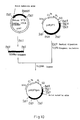
- plasmid ptrpUK2 in which the human prourokinase gene had been inserted downstream from tryptophan promoter was constructed.
- l ⁇ g of plasmid pKKtrp and 5 units of EcoR I were reacted in 50 ⁇ l of buffer (l0 mM Tris-HCl,pH 7.5, l0 mM MgCl2 , 50 mM NaCl, and l mM DTT) for 2 hours at 37°C. Then, after the addition of 2 units of alkaliphosphatase, a further reaction was carried out for 30 minutes at 65°C, and following phenol treatment and ethanol precipitation the desired DNA fragment (C) was recovered.
- buffer l0 mM Tris-HCl,pH 7.5, l0 mM MgCl2 , 50 mM NaCl, and l mM DTT
- DNA fragments [C] and [D] were reacted with 2.5 units of T4 DNA ligase in l0 ⁇ l of buffer (66 mM Tris-HCl, pH 7.6, 6.6 mM MgCl2 , l0 mM DTT, and l mM ATP) for l5 hours at l2°C and the reaction product was used to transform E. coli HBl0l.
- the ampicillin resistant transformants were screened for colonies carrying plasmid ptrpUKl and the desired plasmid was conventionally isolated.
- l ⁇ g of plasmid ptrpUKl and 5 units of Pst I were reacted in 50 ⁇ l of buffer (l0 mM Tris-HCl, pH 7.5, l0 mM MgCl2 , 50 mM NaCl, and l mM DTT) for 2 hours at 37°C. Then, after the addition of 2 units of alkaliphosphatase, a further reaction was carried out for 30 minutes at 65°C, and following phenol treatment and ethanol precipitation, the desired DNA fragment [E] was recovered.
- buffer l0 mM Tris-HCl, pH 7.5, l0 mM MgCl2 , 50 mM NaCl, and l mM DTT
- DNA fragments [E] and [F] were reacted with 2.5 units of T4 DNA ligase in l0 ⁇ l of buffer (66 mM Tris-HCl, pH 7.6, 6.6 mM MgCl2 , l0 mM DTT, and l mM ATP) for l5 hours at l2°C, and the reaction mixture was used to transform E. coli HBl0l.
- the ampicillin resistant transformants were screened for colonies carrying plasmid ptrpUK2 and the desired plasmid was conventionally isolated.
- plasmid ptrpUK2 (El35) was obtained from phage Ml3RF (l35) and plasmid strpUK2 by the same method as that described in Example l0.
- Escherichia coli W3ll0/ptrpUK2 (El35) containing this plasmid was deposited on December 28, l985 with Deutsche Sammelung von Mikroorganismen as DSM-362l.
- a double-stranded mutant phage in which a DNA Fragment whose codon AAA specifying lysine at l35 position having been mutationally changed to codon CAA specifying glutamine had been inserted was obtained by the same method as that of Example l except that the following synthetic nucleotide: 5′ GATGGA CAA ⁇ AAGCCC 3′ was used as a primer.
- single-stranded phage DNA was obtained from the above phage by the same method as that described in Example l, and double-stranded mutant phage Ml3RF (Ql35Dl57), into which a DNA fragment whose codon AAA specifying lysine at l35 position having been mutationally changed to codon CAA specifying glutamine and codon TTT specifying phenylalanine at l57 position likewise changed to codon GAT specifying aspartic acid had been inserted, was obtained in a similar manner as the above except that the following synthetic oligonucleotide: 5′ GGCCCCGC GAT ⁇ AAGATTA 3′ was used as a primer thereby changing codon TTT specifying phenylalanine at the l57 position to codon GAT specifying aspartic acid.
- Plasmid trpUK2 (Ql35Dl57) was obtained from the Ml3RF (Ql35Dl57) and plasmid ptrpUK2 by the same method as that described in Example l0.
- Double-stranded mutant phage Ml3RF (El35Dl57), into which a DNA fragment whose codon AA specifying lysine at the l35 position having been mutationally changed to codon GAA specifying glutamic acid and codon TTT specifying phenylalanine at the l57 position changed to codon GAT specifying aspartic acid had been inserted, was obtained by the same method as that of Example l2 except that the following synthetic nucleotide: 5′ GATGGA GAA ⁇ AAGCCCT 3′ was used to mutationally change codon AAA specifying lysine at the l35 position to codon GAA specifying glutamic acid.
- plasmid trpUK2 (El35Dl57) was obtained from Ml3RF (El35Dl57) and trpUK2 by the same method as that described in Example l0.
- Escherichia coli W3ll0/ptrpUK2 (El35Dl57) containing this plasmid was deposited on December 28, 1985 with Deutsche Sammelung von Mikroorganismen as DSM-3624.
- Plasmids pMUPl and pMUPlpm obtained respectively in Examples 3 and 4 were conventionally transformed into E. coli W3ll0 and the resulting transformants were cultured in 50 ml of L-broth at 30°C. The temperature of the culture broth was increased to 42°C when the absorbance at 600 nm had reached about 0.3 and further incubation was carried out for 3 hours to express the urokinase gene.
- the cells of E. coli W3ll0 were harvested from 5 ml of the liquid medium described above and after suspending the cells in 0.5 ml of a solution containing 7.5 M guanidine hydrochloride and 0.05 M Tris-HCl (pH 7.5), the suspension was allowed to stand for 90 minutes at room temperature. The suspension was then centrifuged for l0 minutes at l,000 rpm, and after diluting the supernatant in 5 ml of a solution containing l M guanidine hydrochloride, 0.05 M Tris-HCl (pH 7.5), 2 mM reductive glutathione, and 0.2 mM oxidative glutathione, the mixture was incubated overnight at room temperature.
- the mixture was then dialyzed for 4 hours at 4°C against l00 times the volume of a solution containing l0 mM Tris-HCl (pH 7.4) and 0.4 M NaCl and further dialysis was carried out for 2 hours against l00 times the volume of a solution containing l0 mM Tris-HCl (pH 7.4) and 0,l M NaCl.
- Trypsin was added to part of the resultant crude extract to a final concentration of 30 ⁇ g/ml and the mixture was incubated for one hour at 37°C. A mixture containing water in place of trypsin was likewise incubated as a control.
- the above mixtures were subjected to electrophoresis in a gel containing l2.5% polyacrylamide and 0.l% SDS in accordance with the method of Laemmli et al (literatire 30), and the gel was immersed in 2.5% Triton X-l00 and was incubated for one hour at room temperature. The gel was then layered over a fibrin agar plate and was incubated for one or two hours at 37°C. The molecular weight was subsequently estimated on the basis of the location of the dissolved zone on the fibrin agar plate. A standard sample of human urine-derived urokinase was electrophoretically migrated for comparison.
- Lane l is an electrophoresis pattern of the standard urokinase (l unit)
- Lane 2 is that of the crude extract from E. coli transformed by plasmid pMUPl
- Lane 3 is that of the trypsin-treated crude extract from E. coli transformed by plasmid pMUPl
- Lane 4 is that of the crude extract from E. coli transformed by plasmic pMUPlpm
- Lane 5 is that of the trypsin-treated extract from E. coli transformed by plasmid pMUPlpm.
- the gene product derived from plasmid pMUPl has a molecular weight of about 50,000, a part of the product converted to a lower molecular weight species having a molecular weight of about 30,000 on trypsin treatment.
- the gene product derived from plasmid pMUPlpm also had a molecular weight of about 50,000, but did not convert to a lower molecular weight material on trypsin treatment.
- Plasmid pMUT4Lpm2 obtained in Example 5 was conventionally transformed into E. coli JMl03 and the resulting transformant was cultured in 5 ml of L-broth at 37°C. Expression was induced by adding IPTG (isopropyl- ⁇ -D-thiogalactopyranoside) to a final concentration of l mM when the absorbance at 550 nm reached about 0.5, and further culturing was carried out for 3 hours at 37°C to express the urokinase gene.
- IPTG isopropyl- ⁇ -D-thiogalactopyranoside
- the crude extract was prepared after treating 5 ml of aforesaid liquid medium by the same method as that described in Example l5, and part of the crude extract was treated with trypsin.
- Lane l is an electrophoresis pattern of the standard urokinase (l unit)
- Lane 2 is that of the trypsintreated crude extract from E. coli transformed by plasmid pMUPl
- Lane 3 is that of the trypsin-treated crude extract from E. coli transformed by plasmid pMUT4Lpm2
- Lane 4 is that of the trypsin-treated crude extract from E. coli transformed by plasmid pMUPlpm.
- Plasmid pMUT4Lpm3 obtained in Example 7 was conventionally transformed into E. coli JMl03, and the resulting transformant was incubated in 5 ml of L-broth at 37°C. Expression was induced by adding IPTG (isopropyl- ⁇ -D-thiogalactopyranoside) to a final concentration of l mM when the absorbance at 550 nm reached about 0.5, and further culturing was carried out for 3 hours at 37°C to express the urokinase gene.
- IPTG isopropyl- ⁇ -D-thiogalactopyranoside
- the mixture was then dialyzed for 4 hours at 4°C against l00 times the volume of a solution containing l0 mM Tris-HCl (pH 7.4) and 0.4 M NaCl, and further dialysis was carried out against l00 times the volume of a solution containing l0 mM Tris-HCl (pH 7.4) and 0.l M NaCl for two hours.
- the mutant (pm3) urokinase was purified by subjecting the resulting crude extract to affinity chromatography using a Sepharose® column to which the antiurokinase monoclonal antibody has been bonded.
- Plasmides ptrpUK2 (Ql35Dl57) and ptrpUK2 (El35Dl57) obtained respectively in Examples l2 and l3 were conventionally transformed into E. coli W3ll0, and the resulting transformants were incubated in 5 ml of L-broth at 37°C. Expression was induced by adding IAA (indoleacetic acid) to a final concentration of 50 ⁇ g/ml. when the absorbancy at 550 nm reached about 0.5, and further culturing was carried out for 3 hours at 37°C to express the urokinase gene.
- IAA indoleacetic acid
- samples were diluted with a solution containing 50 mM Tris-HCl buffer (pH 7.4), 0.l5 M sodium chloride, and 0.l% Triton® X-l00 to a final concentration of l00 IU/ml.
- aqueous trypsin solution were added 3 ⁇ l aliquots of aqueous trypsin solution respectively made up to final concentrations of l mg/ml, 2 mg/ml, and 3 mg/ml, and the mixtures were incubated for 60 minutes at 37°C. The reaction was then terminated on addition of 5 ⁇ l of soybean trypsin inhibitor. Samples containing water instead of trypsin were likewise treated as controls.
- the samples were then subjected to electrophoresis in a l0% - 26% polyacrylamide continuous concentration gradient gel containing 0.l% SDS in accordance with the method of Laemmli et al (literature 30), and the gell was immersed in 2.5% Triton® X-l00, and was incubated for about one hour at room temperature.
- the gel was layered over a fibrin agar plate and was incubated for 2 hours at 37°C.
- the molecular weight was estimated on the basis of the location of the dissolved zones on the fibrin agar plate.
- the natural-type prourokinase-like polypeptide and the mutant prourokinase-like polypeptide (Ql35) obtained by extraction and purification of the liquid medium obtained in Example l4 according to the same procedure as that described in Example l9 were also treated in the same manner.
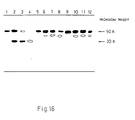
- the result is shown in Fig. l6.
- Lanes l, 2, 3, and 4 are electrophoresis patterns of the pMUPl-derived natural- type prourokinase-like polypeptide treated after the addition of aqueous trypsin solutions respectively made up to final concentrations of 0, l, 2, and 3 mg/ml.
- Lanes 5, 6, 7, and 8 are those of the pMUPlpm-derived mutant prourokinase-like polypeptides (Ql35) likewise treated with trypsin.
- Lanes 9, l0, ll, and l2 are those of the ptrpUK2 derived mutant prourokinase-like polypeptide (Ql35Dl57) likewise treated with trypsin.
- the molecular weight of the pMUPl-derived natural-type prourokinase was about 50,000, dissociation by trypsin reduced it to 30,000.
- no conversion to lower molecular weight species took place on trypsin treatment in the case of the polypeptides derived respectively from plasmids pMUPlpm and ptrpUK2 (Ql35Dl57).
- Plasmid pHT3 was conventionally obtained from Escherichia coli HBl0l/pHT3 deposited with Fermentaticn Research Institute, Agency of Science and Technology as FERMP-7776).
- the precipitate was reacted with 20 units of Pvu II in 20 ⁇ l of buffer (l0 mM Tris-HCl, pH 7.5, 7 mM MgCl2 , 60 mM NaCl, and 7 mM ⁇ -mercaptoethanol) for 3 hours at 37°C. Then, after ethanol precipitation, the precipitate was reacted with 2.8 units of ligase in 20 ⁇ l of buffer (66 mM Tris-HCl, pH 7.6, 6.6 mM MgCl2 , l0 mM DTT, and l mM ATP) for 20 hours at l5°C. The reaction product was used to transform E. coli HBl0l.
- a strain carrying plasmid pHT3l was isolated from among the transformants and then plasmid pHT3l was conventionally obtained.
- l0 ⁇ g of plasmid pHT3l was reacted with 20 units of Aat II in 20 ⁇ l of buffer (l0 mM Tris-HCl, pH 7.5, 7 mM MgCl2 , 60 mM NaCl, and 7 mM ⁇ -mercaptoethanol) for 3 hours at 37°C, and after ethanol precipitation the precipitate was reacted with 2.8 units of T4 DNA polymerase in 20 ⁇ l of buffer (67 mM Tris-HCl, pH 8.8, 6.7 mM MgCl2 , l0 mM ⁇ -mercaptoethanol, 6.7 mM EDTA, l6.6 mM (NH4)2SO4 , and 330 ⁇ M dCTP) for l5 minutes at 37°C.
- buffer l0 mM Tris-HCl, pH 7.5, 7 mM MgCl2 , 60 mM NaCl, and 7 mM ⁇ -mercaptoethanol
- each of DNA fragments [A] and [B] was reacted with 2.5 units of T4 DNA ligase in 20 ⁇ l of buffer (66 mM Tris-HCl, pH 7.6, 6.6 mM MgCl2 , l0 mM DTT, and l mM ATP) for l5 hours at l5°C, and the reaction product was used to transform E. coli HBl0l.
- the ampicillin resistant transformants were screened for colonies carrying plasmid pYTUl shown in Fig.ll and the plasmid was conventionally isolated.
Landscapes
- Health & Medical Sciences (AREA)
- Life Sciences & Earth Sciences (AREA)
- Genetics & Genomics (AREA)
- Chemical & Material Sciences (AREA)
- Engineering & Computer Science (AREA)
- Organic Chemistry (AREA)
- Bioinformatics & Cheminformatics (AREA)
- Wood Science & Technology (AREA)
- Zoology (AREA)
- Biomedical Technology (AREA)
- General Engineering & Computer Science (AREA)
- General Health & Medical Sciences (AREA)
- Biotechnology (AREA)
- Biochemistry (AREA)
- Microbiology (AREA)
- Molecular Biology (AREA)
- Medicinal Chemistry (AREA)
- Virology (AREA)
- Physics & Mathematics (AREA)
- Biophysics (AREA)
- Plant Pathology (AREA)
- Enzymes And Modification Thereof (AREA)
- Medicines That Contain Protein Lipid Enzymes And Other Medicines (AREA)
Abstract
Description
- This invention relates to DNA segments coding for a stabilized human prourokinase-like polypeptide, plasmids containing the DNA segments, Escherichia coli containing the plasmid, and a process for preparing a human prourokinase-like polypeptide using the Escherichia coli.
- The stabilized human prourokinases of the present invention are stable to various proteolytic enzymes, permitting them to be prepared at high yields and high purity. Furthermore, when administered to humans and animals, a long lasting efficacy may be anticipated from this substance due to its nonsusceptibility to enzymatic hydrolysis in vivo.
- On the other hand, when a gene system involving a DNA segment coding for the human prourokinase-like polypeptide of the present invention is used, the polypeptide can be expressed at a high efficiency, permitting the polypeptide to be prepared with an economic advantage.
- Human urokinase is an enzyme found as a trace in human urine capable of activating inactive plasminogen into plasmin, and the plasmin thus formed is capable of dissolving fibrin. This urokinase consists of two polypeptide chains linked together by a disulfide bond. On the contrary, human prourokinase is a single chain polypeptide in which the aforesaid two polypeptide chains are joined together through an amide bond. Although this prourokinase itself does not possess the aforementioned activity, it can be converted to the preceding active urokinase by cutting one amide bond. The urokinase is also referred to as mature urokinase.
- Because of the aforesaid action, human urokinase is used as a thrombolytic agent. The use of human urokinase for intravenous administration requires a highly refined product, but urokinase in general is said to be an unstable enzyme being susceptible to hydrolysis during the purification process. For example, the urokinase prepared from human urine consists of a high molecular weight urokinase having a molecular weight of about 54,000 and a low molecular weight urokinase having a molecular weight of about 33,000, and the low molecular weight urokinase is formed by cleaving the high molecular weight urokinase with protease. It has been suggested that this cleavage site is a peptide bond between the two lysine residues positioned l35th and l36th respectively from the serine at the N-terminus of the high molecular weight matured urokinase. Such cleavage is caused not only during the purification process of prourokinase from human urine but also during the purification process of prourokinase produced by the recombinant DNA technology. Moreover, a similar cleavage is expected to be caused by a trypsin-like protease contained in plasma upon intravenous administration of prourokinase.
- However, the high molecular weight urokinase is considered to be more effective than the low molecular weight urokinase in dissolving fibrin in vivo (literature l). Consequently, there is a strong demand for a stabilized prourokinase yielding a stabilized urokinase, which possesses the activity similar to that of naturally occurring high molecular weight human urokinase and is not susceptible to hydrolysis by proteases, and for a process for preparing the same. Such a stabilized prourokinase resulting from the conversion of amino acids as well as a process for preparing the same are unknown.
- Human prourokinase has been isolated as a single chain polypeptide having a molecular weight of about 54,000 (
literatures 2 and 3). Grewich et al have reported (literature 4) that when the prourokinase is converted to urokinase in vivo upon administration, its thrombolytic activity is stronger than that of a direct administration of urokinase and its ability to cause fibrinogenolysis, i.e., side effects, is reduced, suggesting its potential as a new thrombolytic agent. Since this activation of prourokinase administered is achieved by a small amount of plasmin adsorbed by blood clots at the limited site where they are present, in other words, because prourokinase is clot-specifically activated, the prourokinase is considered not to be susceptible to inhibitors in the blood stream and to provide less side effects. - However, this activation is very liable to occur, and once the prourokinase has been activated into urokinase, its degradation is rapidly increased by its own enzymatic activity. As the result the thrombolytic activity in vivo can not be sustained for a lengthy period of time. Furthermore, when the aforesaid activation has occurred during the preparation process of prourokinase, the prourokinase is broken down to a high molecular weight urokinase, which is further broken down to a low molecular weight urokinase, resulting in an increase in the amount of low molecular weight urokinase contained in the product (literature 5).
- A new type of human prourokinase which is relatively nonsusceptible to activation, and thereby free from the aforesaid defect of the naturally occurring human prourokinase is therefore in demand. Such an improved human prourokinase is nevertheless unknown.
- Note, urokinase has been prepared by extraction and purification from human urine. This process, however, is far from being industrially superior because of the problem of a stable supply of human urine. On the other hand, a process for preparing urokinase by separating human kidney tissue cells and subjecting them to passage culture has been developed of late (literature 29). It has been reported, however, that in this tissue culture the production of therapeutically effectual high molecular weight urokinase declines during the passage while the production of low molecular weight urokinase increases (literature 6). As a practical process for preparing urokinase, it is far from ideal.
- Japanese Unexamined Patent Publication 59-5l300 discloses a process for preparing urokinase using genetic engineering techniques. However, the method in which the expression of urokinase has been actually verified is one that comprises expressing a fused protein of trpE and urokinase by joining together the gene coding for urokinase and the trpE gene and then cutting the fused protein to obtain the low molecular weight urokinase. As such, the direct expression of prourokinase has not been verified. Further, the amount of expression of said fused protein has not been shown.
- As mentioned above, a process for economically preparing prourokinase through its expression at a high efficiency is unknown.
- Therefore, this invention provides a stabilized human prourokinase-like polypeptide, which is not only not susceptible to hydrolysis by various enzymes both in vitro and in vivo, but also is capable of being readily prepared as a high purity product and has a high thrombolytic specificity upon administration to the organism and an improved sustainability on the thrombolysis, a gene system for the preparation of said polypeptide, and a process for preparing said polypeptide using this gene system.
- The present invention therefore provides a stabilized human prourokinase-like polypeptide having the amino acid sequence, or one functionally equivalent to that, of the formula:
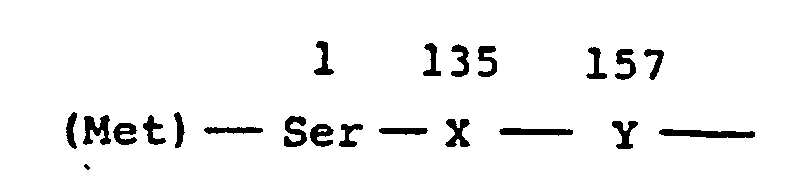
wherein Met is methionine optionally present; Ser is the first-positioned N-terminal serine; X is either the l35th-positioned lysine or amino acid other than basic amino acid; Y is either the l57th-positioned phenylalanine or acidic amino acid; and the solid line represents the amino acid sequence identical to the corresponding parts of the amino acid sequence of naturally occurring human prourokinase, with the proviso that where X is lysine, Y is not phenylalanine. - The present invention also provides the DNA which codes for said stabilized human prourokinase-like polypeptide and is capable of efficient expression in E. coli.
- The present invention further provides plasmids containing said DNA, a control region necessary for the expression of said prourokinase-like polypeptide, and the DNA sequence necessary for replication in E. coli.
- The present invention further provides E. coli transformed by said plasmid.
- The present invention further provides a process for preparing said human prourokinase-like polypeptide using said E. coli.
-
- Figure l is a diagram of the plasmids of the invention;
- Fig. 2 is a restriction enzyme map for plasmid pPE3;
- Fig. 3 shows the construction of plasmid pKYU22 from plasmid pPE3 and plasmid pKYU2l;
- Figures 4-l to 4-3 show the nucleotide sequence of cDNA from naturally occurring mRNA containing the entire coding region for human prourokinase;
- Fig. 5 shows the construction of plasmid pKMUl from plasmid pKYU22 and synthetic DNA oligomer;
- Fig. 6 shows the process of construction of plasmid pMUT4L from plasmid pKMUl and plasmid pTCMl;
- Fig. 7 shows the construction of single-stranded phage DNA with a l200 bp insert from plasmid pKYU22 and DNA of phage Ml3pm8RF;
- Fig. 8 schematically shows the method of site-directed mutagenesis of a codon for amino acid l35;
- Fig. 9 shows the construction of plasmid pMUPl from plasmids pYTUl and pKMUl;
- Fig. l0 shows the construction of plasmid pMUPlpm from the mutant phage Ml3 double-stranded DNA(pml) and plasmid pMUPl;
- Fig. ll shows the construction of plasmid pKKtrp from plasmids pSTNl6 and pKK223-3;
- Fig. l2 shows the construction of plasmid ptrpUK2 from plasmids pKKtrp and pMUT4Lpml;
- Figures l3, l4 and l6 are the fibrin autographs of urokinase expressed in E. coli;
- Fig. l5 is a diagram comparing naturally occurring prourokinase and mutant (pm3) prourokinase of the present invention for activation by plasmin;
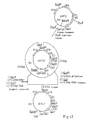
- Fig. l7 shows the construction of plasmid pYTUl from plasmid pHT3.
- The stabilized human prourokinase-like polypeptide of the present invention has the amino acid sequence, or one functionally equivalent to that, of the formula:

wherein Met is methionine optionally present; Ser is the first-positioned N-terminal serine; X is either the l35th-positioned lysine or amino acid other than basic amino acid; Y is either the l57th-positioned phenylalanine or acidic amino acid, and the solid line represents the amino acid sequence identical to corresponding parts of the amino acid sequence of naturally occurring human prourokinase, with the proviso that where X is lysine, Y is not phenylalanine. - Urokinase is a protein consisting of 4l0 amino acids whose sequence is well-known (
literatures 8 and 9). Although the plasminogen activator-activity of urokinase is known to come from its peptide segment consisting of 275 C-terminal amino acids, it may be noted that peptides consisting solely of such segments have a low affinity for plasminogen (literature 7). The peptide consisting solely of said active segment is designated as the low molecular weight urokinase, and the urokinase consisting of 4l0 amino acids is designated as the high molecular weight urokinase. As mentioned above, the low molecular weight urokinase is thought to have a low affinity for plasminogen, and for this reason, urokinase preparations with a high content of high molecular weight urokinase are in great demand. - Consequently, nonsusceptibility to dissociation to a low molecular material is preferred for prourokinase which is a precursor of urokinase. The present inventors have found the striking fact that replacing the lysine positioned l35th from the first N-terminal serine of prourokinase with amino acids other than basic amino acid makes the cleavage between the l35th-positioned lysine and the l36th-positioned lysine (this corresponds to the change from the high molecular weight urokinase to the low molecular weight one in urokinase) difficult to occur and that such a modified polypeptide with the substituted amino acid has physiological properties similar to that of naturally occurring prourokinase (the property of activated urokinase to exhibit activity).
- In the foregoing general formula for the stabilized prourokinase-like polypeptide of the present invention, X is either lysine or an amino acid other than basic amino acid, but when X is lysine, Y is not phenylalanine, as will be discussed in detail later. As the amino acid other than basic amino acid for X, any neutral amino acid or acidic amino acid which does not adversely affect the physiological property of the desired polypeptide may be used and, for example, alanine, asparagine, aspartic acid, glutamine, glutamic acid, phenylalanine, glycine, isoleucine, leucine, methionine, serine, threonine, valine, tryptophan, tyrosine, and proline may be cited. As a definite example, these may be classified to: asparagine or glutamine which is an amide of acidic amino acid; serine or threonine which is hydroxyamino acid; glutamic acid or aspartic acid which is acidic amino acid; and isoleucine, leucine or valine which is neutral branched-chain amino acid. The present inventors actually prepared peptides in which the l35th-positioned lysine of human prourokinase has been replaced with glutamine, threonine, glutamic acid, or isoleucine and investigated their resistance to cleavage between the l35th and l36th lysines and physiological activities. It was verified in the investigation that all of the polypeptides not only have a high resistance to cleavage between the l35th and l36th lysines but also have the physiological property of naturally occurring prourokinase. Thus it may be reasonably concluded that the prourokinase in which the l35th lysine has been replaced by the amino acid other than basic amino acid was stabilized to various proteases which recognize the two basic amino acid and cut the bond between these two basic amino acids, and that the l35th amino acids need not necessarily be lysine for the sake of urokinase activity.
- The cleavage of the peptide bond between the lysine positioned l58th and the isoleucine positioned l59th from the first N-terminal serine of urokinase by such proteases as plasmin and trypsin activates it into urokinase. Once activated, urokinase loses its activity after having been broken down by its own proteolytic activity and dissociated to a low molecular weight species. It is therefore preferable to inhibit the aforesaid cleavage in order to obtain long-lasting urokinase activity in vivo. On the other hand, the peptide bond between the l56th arginine and the l57th phenylalanine is cleaved by thrombin and the like, causing a decline in urokinase activity.
- The present inventors have found the striking fact that the aforesaid cleavage by thrombin and the like is inhibited by replacing the l57th phenylalanine with aspartic acid or glutamic acid, which is acidic amino acid, and that no loss of the physiological property of naturally occurring prourokinase results from such substitution. This may be reasonably explained by theorizing that the proteases such as plasmin and trypsin which are involved in the cleavage recognize a positive charge of the l58th lysine residue side chain and that the cleavage rate may be slowed down by introducing an acidic amino acid with a negative charge in its side chain in place of amino acid in that vicinity, e.g., the l57th phenylalanine, to inhibit the protease recognition.
- In the present invention the following polypeptides were prepared as examples of combinations of the aforesaid X and Y:

- As will be described in detail later, the above different polypeptides were studied on the basis of their sensitivity to trypsin for the effect of substitution at X, and on the basis of their sensitivity to both plasmin and thrombin for the effect of substitution at Y. As a result, it was confirmed that in each case the aforesaid substitution had brought about the desired stabitizing effect and that the inherent physiological property of naturally occurring prourokinase had not been lost by these substitutions. Thus it may be reasonably assumed, coupled with the aforesaid assumed stabilization mechanism, that the polypeptides consisting of all of the combinations of previously defined X and Y do exert the stabilizing effect of the present invention. Accordingly, the prourokinase-like polypeptides consisting of the combinations of X and Y previously defined fall within the purview of the present invention.
- The amino acid sequences represented by the solid lines in the preceding general formula are identical to the corresponding parts of the amino acid sequence of naturally occurring human prourokinase. As an example of an amino acid sequence of naturally occurring human prourokinase, a sequence consisting of 4ll amino acids coded by cDNA corresponding to mRNA derived from a human kidney may be cited. This amino acid sequence is represented by the abbreviation for amino acid consisting of three capital letters of the alphabet, in Figures 4-l to 4-3.
- In the foregoing general formula (Met)-represents methionine which would exist adjacent to the first N-terminal Ser and on its N-terminal side. According to the preparation process of the present invention, which will be explained in detail later, a polypeptide containing methionine derived from the translation initiation codon is expressed at the N-terminus, but a polypeptide without any methionine attached to the N-terminus would be obtained by the removal of methionine by enzymes within E. coli cells. Accordingly, the present invention includes both polypeptides with and without the methionine.
- The stabilized human prourokinase-like polypeptides of the present invention includes not only the polypeptide containing the amino acid described in detail above but also any polypeptide containing the amino acid sequence functionally equivalent to that sequence. The term "funtionally equivalent amino sequence" as used herein means any amino acid sequence in which several amino acids other than X and Y in the amino acid sequence described above have either been replaced with other amino acids or removed, or in which several amino acids are added to the amino acid sequence described above but the physiological property of prourokinase and the stability which characterizes the present invention are still retained. The fact that there may be cases where alterations to the amino acid sequence of a polypeptide having a specific physiological activity, made in the region not concerned in said physiological activity, do not affect said physiological activity is well-known to those skilled in the art. Therefore, polypeptides that embrace such alterations do fall within the purview of the present invention as long as they retain the characteristics of the present invention.
- This invention further relates to a gene system which is useful for preparing stabilized human prourokinase. The gene system referred to herein includes DNA segments coding for the desired human prourokinase-like polypeptide, plasmids containing said DNA, and hosts into which such a plasmid has been introduced.
- Typical DNA segments of the present invention include those in which codons coding for a plurality of N-terminal amino acids are those which are used in E. coli at high frequency and codons other than said codons coding for a plurality of amino acids, and other than codons coding for said X and Y, are identical to the codons of the corresponding amino acids in cDNA that corresponds to mRNA derived from human kidney.
- As genes coding for a protein consisting of a large number of amino acids such as human prourokinase, it is of advantage to use a DNA segment derived from cells of an organism that produces such a protein in nature, that is, human cells, such as cDNA obtained by using mRNA coding for prourokinase as a template; and even so it is not impossible to synthesize DNA coding for such high molecular weight protein, but this calls for great efforts. On the other hand, it seems preferable to use genes consisting of codons used in E. coli at a high frequency in order to effectively express the protein in E. coli, but these conditions are not necessarily fully satisfied in human-derived cDNA, leaving no alternative but to rely on chemical synthesis to obtain DNA that satisfy such conditions.
- Mainly using human-derived cDNA as genes coding for human prourokinase, the present inventors obtained genes that are effectively expressed in E. coli by replacing only the codons coding for a few amino acid at the N-terminus of prourokinase in said cDNA with synthesized DNA consisting of codons used at high frequency in E. coli.
- In selecting codons of said synthetic DNA segment, it is preferable to prevent the fold-back of the mRNA by eliminating the inverted repetitive sequence of l6 bases of the urokinase gene of the natural type (cDNA), and to further prevent at the mRNA level the complementary association of the nucleotide sequence in the vicinity of the SD (Shine-Dalgarno) sequence of the metapyrocatechase gene (C230) used in the preferred embodiments of expression plasmids of this invention and the nucleotide sequence at the 5′ end of the human prourokinase gene by eliminating their complementary structures. It is also preferable to select the codon for serine which is the first amino acid so that the base next to the translation initiation codon ATG will be A.
- In the preferred embodiments of this invention, the direct expression of prourokinase is made possible by placing the translation initiation codon ATG coding for methionine adjacent to and upstream of the codon for serine, the N-terminal amino acid, in the coding region designed in the manner described above. In the preferred embodiments of this invention, furthermore, the following recognition sequence for the restriction endonuclease AatII:

is placed adjacent to and upstream of said ATG so that on insertion of DNA of said coding region into an expression vector, the distance and structure between the SD sequence of the metapyrocatechase gene used in the preferred expression vector of the present invention and the ATG of the inserted high molecular weight urokinase gene will be identical to those in the natural metapyrocatechase gene. - In the preferred embodiments of the present invention, therefore, the DNA sequence coding for 6 N-terminal amino acids of the human prourokinase and its upstream portion of the cDNA coding for human prourokinase are altered as shown in Fig. l, and in other coding region, the DNA sequence of cDNA (mutations designed to code for amino acids X and Y are included where applicable) is used. Furthermore, the restriction endonuclease site SstI is provided in this region to enable screening of recombinants and the replacement with other DNA sequences.
- An example a of modified nucleotide sequence of the present invention is shown in Fig. 5. In this nucleotide sequence, codons used at high frequency in E. coli are used for asparagine, glutamic acid, leucine, histidine, glutamine, and proline. Further in this nucleotide sequence the leader sequence present in natural cDNA is eliminated to enable the direct expression of human prourokinase, and instead, the translation initiation codon coding for methionine is placed adjacent to and upstream of the codon for serine which is the first amino acid of human prourokinase. In addition, the AatII site is provided to permit insertion into the expression plasmid.
- Where X in the general formula is the amino acid other than basic, the codon coding for a desired amino acid other than the basic amino acid must be used instead of the cDNA codon coding for lysine as X. Any codons may be used in place of the one for l35th lysine as long as they code for the corresponding amino acid and are readily expressible in E. coli. Where glutamine is used as the l35th amino acid, however, it is preferable to use the codon consisting of CAA, whereas the ACA is preferred when threonine is used. For example, the following codons may be used for respective amino acids:

- Where Y in the general formula is acidic amimo acid, the codon coding for acidic amino acid must be used in place of the cDNA codon coding for phenylalanine as Y. Any codons may be used other than the one for the l57th phenylalanine as long as they code for the corresponding amino acids and are readily expressible in E. coli. When aspartic acid is used as l57th amino acid, the use of the codon consisting of GAT is preferred, and when glutamic acid is used, the GAA is preferred.
- Although vectors that function in animal cells may be used for expression of the human prourokinase-like polypeptide of the present invention, the use of a plasmid containing along with said region the expression control region necessary for expressing said genes in microorganisms, particularly in E. coli and the region necessary for replication in E. coli is preferred. As the expression control region any system useful for expressing the foreign gene in E. coli may be use arbitrarily. For example, the promoter/operator systems tac, PL , lacUV5, PR, trp, and lpp are used. In particular, the tac promoter/operator, the PL promoter/operator, and the trp promoter operator are preferred . As an example of SD sequences, the SD sequence of the metapyrocatechase gene (C230SD) (literature l0) and lacSD may be used.
- The following may be cited as plasmids capable of expressing the polypeptide of the present invention:

- Although animal cells and such micro-organisms as bacteria and yeast may be used as hosts for introducing said plasmids, the use of bacteria, particularly E. coli, is preferred.
- As host E. coli of the present invention, such strains of nonenterositic, nontoxic E. coli as those derived from E. coli K-l2 may be used, e.g., JM83, JMl03, JMl05, RB79l, SM32, N99, RRl, W3ll0, and χl776.
- An example of the process for constructing genes involved in the present invention comprises the following steps:
- (l) Preparing DNA fragments completely coding for human prourokinase;
- (2) Causing changes in the codon coding for the l35th aspartic acid of the polypeptide of said human prourokinase to convert it to the codon coding for an amino acid other than basic amino acid;
- (3) Causing changes in the codon coding for the l57th amino acid of the polypeptide of said human prourokinase to convert it to the codon coding for acidic amino acid;
- (4) Joining together any two kinds of DNA fragments prepared in said steps (l), (2) and (3) to prepare DNA fragments coding for the desired stabilized human prourokinase-like polypeptide;
- (5) Replacing a part of said DNA segment coding for a few amino acids at the N-terminus of said polypeptide with a DNA fragment consisting of codons that code for the same amino acid and consist of codons readily expressible in E. coli.
- Of said steps (l) ∼ (5), step (l) is critical, but steps (2) and (3) may be carried out electively according to the type of the desired human prourokinase-like polypeptide.
- These steps can be carried out in any order. In order to obtain genes showing efficient expression it is preferable to carry out step (5) and the priority :n carrying out this step may be decided on an arbitrary basis.
- Of course the DNA segment of the gene system of the present invention can be totally synthesized. In this instance it is possible to use codons that are readily expressible in E. coli, instead of natural codons.
- A diagram for constructing various plasmids involved in the present invention is shown in Fig. l and the definite methods of construction are described in the examples and reference examples of the present invention.
- Plasmid constructed in the manner described above is transformed to an appropriate host such as E. coli JMl03 or W3ll0, and the transformant incubated in a suitable medium such as L-medium which contains 50 µg/ml of ampicillin, as the case may be, and gene expression induced when the growth of E. coli has reached a given level, e.g., absorbance of 0.3 to 0.5 at 550 nm. The induction procedure varies with the type of promoter of the plasmid used. For example, where the plasmid pMUPlpm is used, E. coli cells transformed with said plasmid are incubated at 30°C and the gene expression is induced by increasing the incubation temperature to 42°C. Where the plasmid pMUT4Lpm2 or the plasmid pMUT4Lpm3 is used, the induction is carried out with isopropyl-β-D-thiogalactopyranoside. Where the plasmid ptrpUK2(Il35), the plasmid ptrpUK2(El35), the plasmid ptrpUK2(Ql35Dl57)or the plasmid ptrpUK2(El35Dl57) is used, the induction can be carried out by adding indoleacetic acid when the cell concentration has reach a given level, e.g., absorbance of 0.3 to 0.5 at 550 nm.
- After gene expression has been thus induced the incubation is carried out further for 3 to l0 hours to produce the desired polypeptide. Then the cells are collected and a cell-free extract containing the desired polypeptide is obtained by the conventional method, e.g., the method described in detail later in Examples of the present invention. If desired, the extract is purified to yield a prourokinase-like polypeptide by affinity chromatography using a Sepharose® column in which antiurokinase monoclonal antibodies are held.
- In the present invention the extract obtained as described above was tested for enzyme activity, molecular weight, trypsin sensitivity, plasmin sensitivity, and thrombin sensitivity.
- Seven hundred µl of 0.2 mM S-2444 (L- pyroglutamyl-glycyl-L-arginine P-nitroanilide, Kabi & Co., Sweden), 0.l M Tris-HCl (pH 7.5), and 0.0l% Triton® X-l00 is added to l00 µl of a sample and the mixture is incubated for 30 minutes at 37°C. The reaction is stopped by addition of l00 µl of acetic acid and then the absorbance is measured at 405 nm.
- Ten µl of a sample is spotted on a fibrin plate prepared by the addition of thrombin to 67 mM phosphate buffer containing l% bovine fibrinogen (95% clottable, made by Miles Inc.) and 0.25% agarose, to make the final concentration l unit/ml. After incubation for l6 hours at 37°C, the activity is assayed by measuring the area of the dissolved ring and comparing the same with the standard urokinase (made by Nippon Soda Co.).
- A sampled extract is separated by SDS polyacryl amide gel electrophoresis under the condition free of 2-mercaptoethanol using the method of Laemmli et al (literature 30) and compared with the standard sample after being made visible by fibrin autography.
- After treating a sample with trypsin, the molecular weight of the enzymatically active product in the sample is measured by the method described in Paragraph (2) above. The stability of the urokinase obtained from the substitution of the l35th amino acid is confirmed by this testing.
- The enzyme activity of a sample is measured by the fibrin plate method and the sample is diluted with a solution containing 50 mM veronal buffer, 0.l M NaCl, and 0.00l% Tween® 80, to make the
final concentration 500 IU/ml. One µg, 2 µg, and 5 µg portions of plasmin are added respectively to l00 µl aliquots of the solution and incubated at 37°C. Ten µl each of the samples are withdrawn with the passage of time, and after the addition of 5 µg of soybean trypsin inhibitor, the reaction is stopped and the activity is measured by the synthetic substrate method using S-2444. The nonsusceptibility of prourokinase to plasmin treatment by virtue of its activation on cleavage between the l58th lysine and the l59th isoleucine by plasmin serves as an indication of the stability of the prourokinase-like polypeptide obtained through substitution of the l57th amino acid. - The enzyme activity of a sample is measured by the fibrin plate method and the sample is diluted with a solution containing a 50mM veronal buffer, 0.l M NaCl, and 0.00l% Tween® 80, to make the
final concentration 50 IU/ml. One ml of the solution is added with l unit of thrombin and incubated for 30 minutes at 37°C. One hundred µl of a sample is withdrawn and the activities are assayed by the synthetic substrate method using S-2444 after treatments with l µg of plasmin for 30 minutes at 37°C for the enzyme of the natural type and with 5 µg of plasmin for 60 minutes at 37°C for the mutant enzyme. The residual activity after thrombin treatment is assayed using as a control the sample obtained after carrying out the same manipulation without thrombin. The activity of prourokinase decreases when a bond between the l56th arginine and the l57th phenylalanine is severed by thrombin. Accordingly, the absence of decline in the residual activity after thrombin treatment is an indication of the stability of the prourokinase-like polypeptide obtained through substitution of the l57th amino acid. - Each sample obtained from E. coli transformed with the plasmid of the present invention exhibited the desired activity on measurement of enzyme activity carried out in the manner described in the preceding Paragraph (l).
- The samples prepared from E. coli transformed with any of the plasmid such as plasmid pMUPl coding for prourokinase-like polypeptide in which neither the l35th amino acid nor the l57th amino acid has been substituted; plasmids pMUPlpm, pMUT4Lpm2, ptrpUK2(Il35), and ptrpUK2(El35) containing the genes coding for the prourokinase-like polypeptide in which only the l35th amino acid has been substituted; plasmids ptrpUK2-(Ql35Dl57) and ptrpUK2(El35Dl57) containing the genes coding for the prourokinase-like polypeptide in which both the l35th amino acid and the l57th amino acid have been substituted, exhibited resistance to trypsin treatment except for the samples derived from plasmid pMUPl.
- For example, E. coli W3ll0 was transformed by each of plasmids pMUPl and pMUPlpm, the transformants cultured in L-broth at 30°C, and the gene expressed by increasing the incubation temperature to 42°C when the O.D. level at 600 nm has reached 0.3.
- The cells were collected, from which cell-free extracts were obtained. The extracts were assayed for the molecular weight by SDS polyacrylamide gel-fibrin autography with each of the extracts assaying approximately 50,000 (
Lanes Lanes - It is evident from the above result that the product derived from plasmid pMUPl is readily converted to low molecular weight species by trypsin while such conversion to low molecular weight species does not take place with the product of the present invention.
- E. coli JMl03 was likewise transformed by plasmid pMUT4Lpm2 and the transformant was incubated in L-broth until the absorbance at 550 nm reached approximately 0.5. After the addition of an IPTG inducer (isopropyl-β-D-thiogalactopyranoside) to make the final concentration l mM, the incubation was further carried out at 37°C for gene expression. The cells were treated in the same manner as described above and the product was analyzed also in the same manner as described above.
- The results are shown in Fig. l4. The lane l in the figure represents the standard urokinase with the
lane 2 representing the result of trypsin treatment of the crude extract derived from E. coli cells transformed by plasmid pMUPl, thelane 3 representing the result of trypsin treatment of the crude extract derived from E. coli cells transformed by plasmid pMUT4Lpm2, and thelane 4 representing the result of trypsin treatment of the crude extract of E. coli cells transformed by plasmid pMUPlpm. As is evident from these results, the gene product derived from plasmid pMUT4Lpm2 is also not liable to conversion to low molecular weight species by trypsin. - The aforesaid products having molecular weight of about 50,000 and about 30,000 are thought to correspond respectively to the high molecular weight urokinase and the low molecular weight urokinase. The molecular weight of these products being slightly lower than that the standard urokinase derived from human urine is presumably attributable to the failure of the addition of glycoside chains within the E. coli cells.
- The above results clearly show that the human prourokinase-like polypeptides which have virtually the same amino acid sequence wherein the l35th lysine calculated from the N-terminal serine has been replaced with glutamine, threonine, glutamic acid, or isoleucine exhibit the fibrinolytic activity, i.e., urokinase activity, similar to that of naturally occurring human prourokinase and that, unlike the naturally occurring human urokinase, they are not susceptible to degradation by trypsin.
- This justifies the assumption that the formation of low molecular weight urokinase results from the cleavage of the peptide bond between the l35th and l36th basic amino acids (lysine) calculated from the N-terminal serine of high molecular weight urokinase by trypsin-like protease. Furthermore, the fact that said cleavage is less liable to occur when N-terminal amino acid l35 is the above-mentioned amino acid means that when the amino acid l35 is any amino acid other than a basic amino acid the peptide bond between amino acids l35 and l36 is not susceptible to cleavage.
- Moreover, the fact that urokinase activity is generated whether the N-terminal amino acid l35 is lysine as in naturally occurring human urokinase or the above-mentioned amino acid as in the human urokinase-like polypeptide of the present invention shows that urokinase activity is irrelevant to what amino acid l35 is used.
- Since numbers of protease are said to recognize basic amino acids, if the l35th amino acid calculated from N-terminal amino acid is an amino acid other than a basic amino acid, the same result as that of the polypeptide disclosed definitely in this specification is likely to be obtained.
- The samples prepared from E. coli transformed by any of the three plasmids, e.g., plasmid pMUT4Lpm3 containing the gene coding for the prourokinase-like polypeptide in which only the amino acid l57 has been replaced, and plasmids ptrpUK2 (Ql35Dl57) and ptrpUK2 (El35Dl57) both containing the gene coding for the prourokinase-like polypeptide in which both the amino acids l35 and l57 have been replaced showed the activation by plasmin slower than prourokinase of the natural type. One example of this is graphically shown in Fig. l5.
- As is evident from this graph the prourokinase-like polypeptide of the present invention in which the amino acid l57 has been replaced is not susceptible to plasmin degradation (activation).
- The residual enzyme activities after thrombin treatment were as follows:

- The above result shows that the prourokinase-like polypeptides in which the amino acid l57 has been replaced are not susceptible to thrombin inactivation.
- It is thus evident that the human prourokinase-like polypeptide in which the lysine l35 has been replaced with an amino acid other than a basic amino acid, the human prourokinase-like polypeptide in which the phenylalanine l57 has been replaced with an acidic amino acid, and the human prourokinase-like polypeptide in which both amino acids have been replaced as described above are all physiologically active as is human prourokinase of the natural type within the purview of the amino acids defined in the present invention, and in addition, are quite stable to such proteases as trypsin, plasmin, and thrombin.
- This suggests that the stabilized human prourokinase-like polypeptide of the present invention may be a promising active ingredient for pharmaceuticals such as a thrombolytic agent and the like.
- The following reference examples and examples are illustrative of the invention but are not to be construed as limiting.
- mRNA was prepared by the method of J.M. Chirgwin et al (literature ll) using guanidine thiocyanate.
- Twenty g of kidney tissue cells frozen at -80°C was crushed with a Waring blender in liquid nitrogen and suspended in 80 ml of a 5 M guanidine thiocyanate solution (5 M guanidine thiocyanate, 0.5% sodium N-lauroylsarcosine, 25 mM sodium tartrate, 0.l M melcaptoethanol, and 0.l% antifoam A). The suspension was homogenized with a Teflon homogenizer and nucleic acid was shared with a 20G l/2 injection needle. Twenty-four ml of said solution was layered over l2 ml of 5.7 M CsCl and after centrifugation with a Beckman centrifuge in SW28 rotor for 24 hours at l5°C and at 25,000 rpm the whole crude RNA was recovered.
- The total crude RNA was dissolved in 2% potassium acetate solution and twice its volume of ethanol was added. The mixture was allowed to stand overnight at -20°C and centrifuged to recover precipitate.
- In accordance with the method of H. Aviv et al (literature l2), poly(A)⁺ RNA was isolated and purified by oligo (dT) cellulose column chromatography. Ten g of the kidney tissue cells yielded about 3 mg of the total RNA, of which 2 to 3% was poly(A)⁺ RNA.
- cDNA synthesis was carried out using 40 µg of the poly(A)⁺ RNA obtained in Reference Example l. Using 40 µg of oligo (dT)l2-l8 as a primer, reaction was carried out with 40 units of reverse transcriptase for 2 hours at 42°C to synthesize the first chain and after removal of the template mRNA by alkali treatment the synthesis of the second chain was carried out with l00 units of E. coli DNA polymerase I Klenow fragment.
- After elimination of the hairpin loop with Sl nuclease the (dC)l0-20 chain was bonded to the 3′ end of the double-stranded cDNA with terminal deoxynucleotidyl transferase and about 400 ng of (dC) tailed cDNA was obtained.
- This material was annealed together with 800 ng of a commercially available (dG) tailed pBR322 (PstI site) (made by New England Nuclear Inc.) and E. coli Xl776 was transformed by the Hanahan method (literature l3). A cDNA library (l) consisting of about 2 x l0⁵ tetra-cycline-resistant and ampicillin-sensitive transformants was thus obtained.
- The size of cDNA insertion fragments was determined by the rapid isolation method (literature l4) using the alkali lytic procedure on these transformants.
- The following l6 different DNA oligomers consisting of l4 nucleotides which are complementary to the mRNA corresponding to the amino acid sequence of the human urokinase Asnl69, Gln, Pro, Trp, Phel73 which has been reported by G.J. Sfeffens et al (literature 8) and Gunzler et al (literature 9) were synthesized by the phosphotriester method:

- These l6 different DNA oligomers are referred to hereinafter as UK probe I.
- For use as confirmatory probes, the following 8 different DNA oligomers consisting of l4 nucleotides which are complementary to the mRNA corresponding to Met²⁸³, Try, Asn, Asp, Pro²⁸⁷ were synthesized in the same manner.

- These 8 different DNA oligomers are referred to hereinafter as UK probe II.
- By use of T4 polynucleotidekinase, 200 ng each of the UK probes I and II was radioactively labeled at the 5′end with 3000 Ci/mmole ³²PγATP to prepare probes for colony hybridization.
- An autoclaved nitrocellulose filter (0.45 µm, Type-TM-2 made by Toyo Roshi Co.) was placed on an LB agar medium containing l5 µg/ml of tetracycline and the medium was inoculated with the transformants prepared in Example 2 so as to allow about 2,000 transformant colonies to grow. After 8 hours of incubation at 37°C the colonies were replicated on two nitrocellulose filters, which were incubated further for 3 hours at 37°C. The original nitrocellulose filter was used as a master filter, while two second filters were transferred to LB agar media containing l5 µg/ml of tetracycline and l00 µg/ml of chloramphenicol and were subjected to overnight incubation at 37°C. In accordance with the modified method of Grunstein and Hogness (literature l5) the filters were then placed over 0.5 M NaOH and l.5 M NaCl for 3 minutes to effect colony lysis and DNA denaturation, and after neutralization over 0.5 M Tris-HCl (pH 7.6) and l.5 M NaCl, were air-dried and baked for 2 hours at 80°C.
- After washing the filters in 4 x SSC for 30 minutes each at 60°C, prehybridization was carried out in 4 x SSC, l0 x Denhardt, and 50 µg/ml denatured E. coli-DNA for one hour at 60°C, and after addition of 0.l mM ATP and the radioactively labeled UK probe I (about l0⁷ cpm/filter), hybridization was carried out for l6 hours at 37°C. After washing 6 to 8 times in 4 x SSC at 39°C, the filters were air-dried and screened for transformants hybridizing with the UK probe I to obtain 2l candidate clones from 8 x l0⁴ colonies.
Plasmids of these clones are hereinafter referred to as plasmids pKYUl to pKYU2l. - The 2l candidate clones obtained were treated in the same manner as described above and clones hybridizing with the UK probe II were obtained. The plasmids in these clones are hereinafter referred to as plasmid pKYU2 (Fig. 3).
- After digesting the pKYU2l plasmid DNA with various restriction endonucleases and subcloning them to Ml3mp8 by the Maxam-Gilbert method (literature l6), determination of the nucleotide sequence was carried out by the dideoxy chain termination method (literature l7). On contrasting this sequence with the well-known amino acid sequence of urokinase it was confirmed that although the cDNA contains the entire code region of low molecular weight urokinase, about l00 bp long DNA in the 5′-end region of the coding region of high molecular weight urokinase is lacking.
- Based on the nucleotide sequence determined in Paragraph (2) of Reference Example 4, the following DNA oligomer:

- Employing l00 µg of poly(A)⁺ RNA as a template and complying with the method of Agarwall et al (literature l8) or the method of Stewart et al (literature l9), the first cDNA chain was synthesized using l00 units of reverse transcriptase together with l µg of 5′ ³²P-labeled primer followed by the synthesis of the second chain with l00 units of E. coli DNA polymerase I Klenow fragment. Then the single-stranded DNA was digested with Sl nuclease and (dC)n chain was added at the 3′-end using terminal deoxynucleotidyl transferase. After annealing this dC tailed insert (cDNA) and a dG tailed vector (pBR322) together, E. coli Xl776 was transformed to obtain a cDNA library (II) consisting of about 5 x l0⁴ transformants.
- The transformants obtained in Reference Example 5 were subjected to hybridization in the same manner as that described in Paragraph (l) of Reference Example 4. In this case, a l50 bp PstI-
Bql II 5′ digestion fragment from pKYU2l radioactively labeled by the nick translation method (Literature l3) using α³²PdCTP (3000 Ci/mmole) was used as a probe. The hybridization was carried out at 60°C. - The filter was air-dried after washing two or three times with 2 x SSC at 60°C, and clones hybridizing with said probe were retrieved by autoradiography. Eight positive clones were obtained out of about 3 x l0⁴ clones. The plasmids in these clones are hereinafter referred to as Plasmids pPEl to pPE8. On digestion of these plasmid DNAs with restriction enzyme PstI it was confirmed that Plasmid pPE3 (Fig. 2) contains an approximately 420 bp long cDNA insert.
- The fragments obtained through digestion of DNA of plasmid pPE3 with restriction endonuclease PstI were subcloned into Ml3pm8, and determination of the base sequence was carried out by the dideoxy chain termination method (literature l7). As the result, it was confirmed that the cDNA contains not only a sufficiently long coding region on the 5′-end side of the prourokinase gene but also a 66 bp long 5′-nontranslation region upstream of the translation initiation codon ATG (Fig. 2).
- Five µg of DNA of plasmid pKYU2l containing an entire coding region of the low molecular weight urokinase was digested twice with l0 units each of restriction endonucleases BglII and HindIII and then electrically eluted to give about 5.7 Kbp DNA fragment, while DNA of said plasmid pKYU2l was digested twice with l0 units each of BglII and NcoI and then eluted to give a 66 bp DNA fragment. Then again 5 µg of DNA of plasmid pPEP3 obtained in Reference Example 6 was digested twice with l0 units each of NcoI and HindIII to give about l.l Kbp DNA fragment. These three different DNA fragments were repeatedly extracted with phenol/chloroform, precipitated with 2 volumes of ethanol and the precipitate recovered and purified. These three different DNA fragments were ligated together with T4DNA ligase for transformation into E. coli χl776. The resultant transformants were screened by the rapid isolation method using the alkali lysis procedure and a clone carrying plasmid pKYU22 that contains the entire gene for prourokinase was obtained.
- The clone, E. coli χl776/pKYU22 was deposited on January ll, l985 with Fermentation Research Institute, Agency of Industrial Science and Technology.(l-3, Higashi l-chome, Yatabe-cho, Tsukuba-gun, Ibaraki-ken, Japan) as FERM P-804l and on January 22, l986 was placed under international deposition as FERM BP-968 pursuant to the provisions of the Budapest Treaty.
- The nucleotide sequence at the insertion site of plasmid pKYU22 was determined by the Maxam-Gilbert method, and the dideoxy chain termination method preceded by subcloning to Ml3mp8. The result is presented in Figures 4-l to 4-3. Comparison of this result with the nucleotide sequence described in
literature 20 revealed the following discrepancies: codon AAT of 254th amino acid Asn as against AAC in the literature; codon CTG of 360th amino acid (the number of amino acid in Fig. 4-2) Leu as against CTA in the literature; codon CCA of 365th amino acid Pro as against CCC in the literature; and codon CAG of 366th amino acid Gln as against CAA. While codon AAT is said to be difficult to translat in E. coli, both CTG and CAG are said to be readily translatable (high frequency of use) having the advantage for expression in E. coli. CCC is also thought to have a slight edge over CCA. - The structure of a 30 bp of the 5′-end portion of the naturally occurring cDNA coding for prourokinase constructed in Reference Example 7 was altered so as to permit the prourokinase gene to be efficiently expressed in E. coli under the SD sequence of the Pseudomonas putide-derived C230 gene.
- The following three single-chain DNA oligomers comprising 29, l5, and 20 nucleotides respectively were synthesized by the phosphotriester method:

- Next, l µg each of the synthetic DNA oligomers was heated for 2 minutes at 95°C, phosphorylated at the 5′ end with T4 polynucleotide kinase and purified using a Sep Pak (Cl8) column (made by Waters). After drying, the purified material was dissolved in 50 µl of 20 mM Tris-HCl (pH 7.6) and l0 mM LgCl₂, and annealed by heating for 2 minutes at 95°C, cooling slowly to room temperature, and then maintaining the solution overnight at l2°C to give the following double-stranded DNA:

- On the one hand, 5 µg of DNA of plasmid pKYU22 was digested twice with restriction endonuclease BglII and AatII, and about 5.7 Kb DNA fragment was recovered by electric elution. On the other hand, 5 µg of DNA of the same plasmid pKYU22 was twice digested with restriction endonucleases PstI and BglII and about 400 bp DNA fragment was obtained by electric elution method. This fragment was again digested with restriction endonucleases TaqI and about 260 bp DNA fragment was recovered by electric elution. These two different DNA fragments were recovered and purified by phenol/chloroform extraction, and precipitation with 2 volumes of ethanol.
- These two different DNA fragments and the aforesaid double-stranded synthetic DNA oligomer were ligated together using T4DNA ligase and were transformed into E. coli χl776. Then the transformants were screened by the rapid isolation method by the alkali lysis procedure, and a clone Escherichia coli χl776/pKMUl carrying plasmid pKMUl that contains a modified prourokinase gene was obtained. The clone E. coli χl776/pKMUl has been deposited with Fermentation Research Institute, Agency of Science and Technology as FERM P-8040.
- Five µg of plasmid pKMUl from Reference Example 9 was digested with l0 units of restriction endonuclease AatII and the digest was isolated after treatment with calf intestinal phosphatase (CIP). On the other hand, 5 µg of plasmid pTCMl was digested with l0 units of restriction endonuclease AatII and about 500 bp DNA fragment was isolated by the electric elution method. These two different DNA fragments were purified by repeated phenol/chloroform extraction and ethanol precipitation.
- Both of these DNA fragments were joined together using T4DNA ligase and were transformed into E. coli JMl03. The transformants were screened by the rapid isolation method by the alkali lysis procedure, and a clone carrying plasmid pMUTlL in which tac promoter/operator and C230SD sequence having the normal orientation with reference to the prourokinase gene was obtained.
- Said plasmid pTCMl which is a novel plasmid constructed by the present inventors contains an expression controlling region comprising tac promoter/operator, lac SD, C230SD sequences as well as the C230 structural gene, E. coli JMl03/pTCMl carrying said plasmid has been deposited with Fermentation Research Institute, Agency of Science and Technology as FERM P-7779).
- In plasmid pMUTlL the modified prourokinase gene of the present invention is inserted at an appropriate site downstream of the expression controlling region comprising tac promoter/operator, lac SD and C230SD sequences.
- Next, 5 µg of plasmid pKK223-3 (
Literatures 22, 23 and 24) was digested with l0 units of restriction endonuclease HindIII, and the digest was treated with calf intestinal phosphatase (P.L. Biochemicals). - On the other hand, l µg of the resulting plasmid pMUTlL was digested with 4 units of restriction endonuclease DraI and the digestion fragment and l µg of 5′-phosphorylated HindIII linker (dCAAGCTTG) were ligated with T4DNA ligase. Digestion was carried out using l2 units of restriction endonuclease HindIII, and the digest was dissolved in 0.l5 M NaCl. The solution was extracted with an equal volume of phenol/chloroform and the DNA was precipitated by the addition of 2 volumes of ethanol. The precipitate was collected at l6,000 rpm and at 4°C and was dried.
- The resultant pMUTlL digestion fragment and the HindIII digestion fragment of aforesaid pKK223-3 were ligated using T4 DNA ligase and were transformed into E. coli JMl03. The transformants were screened by the alkali lysis procedure and a clone, E. coli JMl03/pMUT2L containing plasmid pMUT2L was obtained.
- This plasmid not only has said expression control region upstream from the prourokinase gene but also has a transcription terminator (rrnB, Tl T₂) of the E. coli ribosomal gene derived from pKK223-3 downstream therefrom. Plasmid pKK223-3 is readily obtainable as it is marketed by Pharmacia P-L Biochemicals.
- Five µg of plasmid pMUT2L was digested with l0 units each of restriction endonucleases SphI and Tthlll I, and after extraction with phenol/chloroform DNA was precipitated with ethanol. The DNA thus recovered was blunt-ended using T4 polymerase in the presence of 0.l mM dGTP, dCTP, dATP and TTP, and was recycled by T4 DNA ligase. The DNA was transformed into E. coli JMl03 and colonies were allowed to form on an LB agar medium containing 50 µg/ml of ampicillin. The transformants were screened by the alkali lysis procedure (literature l4) and a clone, E. coli JMl03/pMUT4L was obtained.
- One µg each of plasmid pKYU22 and phage Ml3pm8 double-stranded DNA were digested in 20 µl of a solution containing l0 mM Tris-HCl (pH 7.5), 7 mM MgCl₂ , 7 mM β-mercaptoethanol, and 50 mM NaCl for one hour at 37°C using 5 units of PstI. The respective DNA fragments were recovered after treatment with phenol and precipitation with ethanol. A mixture of the two different DNA fragments were subjected to ligation reaction in 20 µl of a solution containing 66 mM Tris-HCl (pH 7.5), 5 mM MgCl₂ , 5 mM DTT, and l mM ATP for l6 hours at l2°C using l00 units of T4DNA ligase. Transformation of E. coli JMl03 was carried out using the reaction mixture in accordance with the method of Messing et al (literature 25) and the transformants were plated on soft agar containing 0.02%X-gal and l mM IPTG. The plates were cultured overnight at 37°C. Single-stranded DNA was prepared from white plaques formed by the recombinant. That is, the white plaque was lifted on the tip of a toothpick, suspended in l.5 ml of 2X YT liquid medium (l.6% Bactotryptone, l% yeast extract, and 0.5% NaCl) in which E.coli JMl03 was growing, and incubated for 5 hours at 37°C. Single-stranded recombinat phage DNA was recovered from the supernatant of the liquid medium via precipitation with polyethylene glycol, treatment with phenol, and precipitation with ethanol.
- Using the resultant single-stranded DNA as a template and by the dideoxy procedure in accordance with the method of Messing et al (literature 25) the base sequence was determined, and the sequence of the cloned single-stranded DNA was confirmed. As shown in Fig. 7, the coding chain and the anticoding chain were obtained.
- Using the cloned anticoding chain of the resultant single-stranded DNA as a template and
synthetic oligonucleatide 
whole volume 20 µl to which was added 2 units of DNA polymerase Klenow fragment. The mixture was incubated for 20 minutes at 23°C and after the addition of l µl of l0 mM ATP and l unit of T4 DNA ligase the mixture was reincubated overnight at l2°C. - Digestion with Sl nuclease was carried out to eliminate from the resultant double-stranded DNA the nonreacted single-stranded DNA serving as a background. That is, 2 µl of aforesaid reaction mixture was dissolved in 25 µl of a solution containing 280 mM NaCl, 4.5 mM ZnCl₂ , and 30 mM NaOAc (
pH 4 to 4.5) and after the addition of 2.3 units of Sl nuclease the mixture was reacted for 30 minutes at 26°C. On addition of l0 µl of 0.25M Tris-HCl (pH 8.0) the reaction was terminated. - Using l0 µl of aforesaid reaction mixture, the transformation of E. coli JMl03 was carried out in accordance with the method of Messing et al (literature 25).
- Using as a probe the oligonucleotide (labeled with ³²P) used previously as a primer, the resulting phage plaques were screened for mutant phage by plaque hybridization. That is, in accordance with the method of Benton and Davis et al (literature 26) the plaque was transferred from a soft agar medium to a nitrocellulose filter and baked in vacuo for 2 hours at 80°C. Using the ³²P-labeled primer oligonucleotide as a probe, the nitrocellulose filter was hybridized overnight in a solution containing 6 x SSC and l0 x Denhardt at 23°C. The filter was then washed in 6 x SSC at 46°C and mutant phage plaques giving positive signals were autoradio-graphically isolated. This mutant phage resulted in mutant phage DNA of the double-stranded type (pml).
- Using the mutant phage DNA as a template, the base seguence was determined via the dideoxy procedure and the occurrence of single-base substitution mutation was confirmed.
- Using the same recombinant Ml3 phage single-stranded DNA (the anticoding chain of the urokinase gene has been cloned in this DNA) as that used in Example l as a template, the introduction of site specific mutation was carried out with a new oligonucleatide mutagen. In this case, the synthetic oligonucleotide,

- Using this oligonucleotide as a primer, double-stranded DNA was synthesized in vitro. That is, 2 pmole of 5′-phosphorylated primer was added to 0.5 pmole of template single-stranded DNA and the mixture was incubated in l0 µl of a solution containing 7 mM Tris-HCl (pH 7.5), 0.l mM EDTA, 20 mM NaCl, and 7 mM MgCl₂ for 20 minutes at 60°C. Further incubation was carried out for 20 minutes at 23°C. Next, to the reaction mixture were added respectively dATP, dGTP, dTTP, and dCTP to a final concentration of 0.5 mM to make the combined
volume 20 µl to which was added 2 units of DNA polymerase Klenow fragment. The mixture was incubated for 20 minutes at 23°C, and after the addition of l µl of l0 mM ATP and l unit of T4 DNA ligase the mixture was incubated overnight at l2°C. In accordance with the method of Messin et al (literature 25), the aforesaid reaction mixture was directly transformed into E. coli JMl03. In this manner about l0,000 phage plaques per microliter of said reaction mixture were obtained. - After the transfer of the resultant plaques from a soft agar medium to a nitrocellulose filter in accordance with the method of Benton et al (literature 26), and the filter was baked in vacuo for 2 hours at 80°C. The nitrocellulose filter was hybridized with the primer oligonucleotide labeled with ³²P as a probe in a solution containing 6 x SSC and l0 x Denhardt overnight at 37°C. The filter was then washed in 6 x SSC at 52°C and mutant phage plaques giving positive signals were autoradiographically isolated. From the mutant phage a double-stranded mutant phage DNA (pm2) was obtained. Using the mutant phage DNA as a template according to the dideoxy method the nucleotide sequence of the mutant DNA was determined, and the occurrence of the desired single base substitution mutation was confirmed.
- Likewise, it is possible to introduce codons coding for the amino acids listed in the left-hand column below substituting for amino acid l35 which is lysine by using oligonucleotide mutagens such as those listed in the right-hand column below.

- Note, mutation can be induced by synthesizing DNA fragment that contains codon specifying such other amino acids as glutamine or threonine in place of the codon specifying Lys-l35 while the other codons remain unchanged, and by recombining the synthetic fragment with the corresponding segment of cDNA derived from naturally occurring mRNA, instead of the above-mentioned the point mutation introduction procedure in which the aforesaid oligonucleotide primer is used.
- Expression of the polypeptide of the present invention is made possible by cleaving the resultant mutant phage DNA with PstI to give a mutated insert segment, replacing this segment with the corresponding segment of the entire coding region, inserting this coding region into an expression vector suitable for E. coli, and transforming the insert into E. coli for subsequent culturing of the transformant.
- Using plasmid pYTUl (literature 27) containing PL promoter and C230-derived SD sequence as a vector, expression plasmids containing urokinase cDNA (the codon specifying a plurality of N-terminal amino acids of urokinase has been replaced as described earlier) derived from human kidney tissue were constructed. That is, l0 µg of plasmid pYTUl was digested in l00 µl of a solution containing l0 mM Tris-HCl (pH 7.4), 7 mM MgCl₂ , and l50 mM NaCl for 2 hours at 37°C using l0 units each of SalI and AatII and about 4.5 Kb SalI-AatII DNA fragment was isolated.
- On the other hand, l0 µg of plasmid pKMUl was digested in l00 µl of a solution containing l0 mM Tris-HCl (pH 7.4), 7 mM MgCl₂ , and 60 mM NaCl using l0 units of Dra I for 2 hours at 37°C, and ATP was added to the digest to make the concentration 0.66 mM. After adding l µg of SalI linker DNA (5′
GGTCGACC 3′) and l00 units of T4 DNA ligase to the mixture the reaction was carried out overnight at l2°C. Then, DNA fragments were recovered via phenol treatment and ethanol precipitation and were digested in l00 µl of a solution containing l0 mM Tris-HCl (pH 7.4), 7 mM MgCl₂ , and l50 mM NaCl for 2 hours at 37°C using l0 units each of AatII and SalI, and about 2.2 Kb human urokinase DNA fragment was isolated by agarose electrophoresis. One µg each of the these two different DNA fragments were mixed and the ligation reaction was carried out overnight in 20 µl of a solution containing 66 mM Tris-HCl (pH 7.4), 7 mM MgCl₂ , 0.66 mM ATP, and l0 mM dithiothreitol at l2°C using l00 units of T4 DNA ligase. - E. coli HBlOl was transformed using said reaction mixture and the transformants were screened by the alkali lysis procedure. There was obtained a clone carrying plasmid pMUPl from which plasmid DNA was prepared.
- Using mutant Ml3 phage double-stranded DNA containing the cDNA fragment in which codon AAA specifying lysine at position l35 from the N-terminal of urokinase is mutated to codon CAA specifying glutamine, and plasmid pMUPl having the prourokinase gene downstream of PL promoter and C230 SD sequence, E. coli expression plasmid containing the mutated gene was constructed. That is, l0 µg of mutant Ml3 double-stranded DNA was completely digested with PstI and a fragment about l.2 Kb in length was isolated.
- On the other hand l0 µg of plasmid pMUPl was partially digested with PstI and a fragment about 5.4 Kb in length was isolated from which only a fragment about l.2 Kb in length had been eliminated.
- Each of the aforementioned two different fragments were recovered by treating with phenol and precipitating with ethanol, and the precipitates were mixed. The mixture was subjected to overnight ligation reaction at l2°C using T4 DNA ligase and the reaction mixture was used to transform E. coli HBl0l. The transformants were screened by the alkali lysis procedure and a clone containing plasmid pMUPlpm was obtained. Escherichia coli χl776/pMUPlpm which carried plasmid pMUPlpm was deposited with Fermentation Research Institute, Agency of Science and Technology on January ll, l985 as FERM P-8042 and was placed under International Deposition on January 22, l986 as FERM BP-969 pursuant to the provisions of the Budapest Treaty.
- Plasmid pMUPlpm, which is one of the typical plasmids of the present invention, contains a region coding for the human prourokinase-like polypeptide at an appropriate site downstream from PL promoter and C230 SD sequence. In this coding region codons specifying the six N-terminal amino acids of said polypeptide have been replaced with codons which can be readily expressed in E. coli and in addition codon AAA specifying Lys at l35 position has been changed to codon CAA which specifies glutamine.
- Expression plasmid pMUT4Lpm2 wherein the human prourokinase structural gene having the aforementioned point mutation had been inserted downstream of the E. coli tac promoter was constructed in the following manner:
- After complete digestion of l0 µg of Mutant Ml3 double-stranded DNA(pm2) with PstI, a fragment about l.2 Kb in length was isolated. On the other hand l0 µg of plasmid pMUT4L was partially digested with PstI and a fragment about 4.6 Kb in length was isolated from which only a fragment about l.2 Kb in length had been eliminated.
- Each of these two fragments was recovered by treating with phenol and precipitating with ethanol, and the precipitates were mixed. The mixture was subjected to overnight ligation reaction at l2°C using T4 DNA ligase and the reaction mixture was used to transform E. coli HBlOl. The transformants were then screened by the alkali lysis procedure and a clone containing plasmid pMUT4Lpm2 was obtained. Escherichia coli χl776/pmuT4Lpm2 carrying plasmid pmuT4Lpm2 was deposited on April l8, l985 with Fermentation Research Institute, Agency of Science and Technology as FERM P-8l88 and was placed under international deposition pursuant to the provisions of the Budapest Treaty on January 22, l986 as FERM BP-970.
- Plasmid pMUT4Lpm2, which is also one of the typical plasmids of the present invention, contains a region coding for the human prourokinase-like polypeptide at an appropriate site downstream from tac promoter. In this coding region, codons specifying the six N-terminal amino acids of said polypeptide have been replaced with codons which can be readily expressed in E. coli, and in addition codon AAA specifying Lys at l35 position has been changed to codon ACA which specifies threonine.
- One µg each of plasmid pKYU22 and phage Ml3mp8 double-stranded DNA was digested in 20 µl of a solution containing l0 mM Tris-HCl (pH 7.5), 7 mM MgCl₂ , 7 mM β-melcaptoethanol, and 50 mM NaCl for one hour at 37°C using 5 units of PstI. The respective DNA fragments were recovered after treatment with phenol and precipitation with ethanol. A mixture of these two different DNA fragments was subjected to ligation reaction in 20 µl of a solution containing 66 mM Tris-HCl (pH 7.5), 5 mM MgCl₂ , 5 mM DTT, and l mM ATP for l6 hours at l2°C using T4 DNA ligase. Transformation of E. coli JMl03 was carried out using the reaction mixture in accordance with the method of Messing et all (literature 25) and the transformants were plated with soft agar containing 0.02% X-gal and l mM IPTG. The plates were incubated overnight at 37°C. Single-stranded DNA was prepared from white plagues formed by the recombinant.
- Using some of the resultant single-stranded DNA as a template the base sequence was determined using the dideoxy procedure in accordance with the method of Messing et al and sequence of the cloned single-stranded DNA was confirmed.
- Using the resulting recombinant Ml3 phage single-stranded DNA (an anticoding chain of the urokinase gene has been cloned) as a template, introduction of site-specific mutations was carried with a another oligonucleotide mutagen. In this case, the following synthetic oligonucleotide:

- Using the aforesaid oligonucleotide as a primer, double-stranded DNA was synthesized in vitro. That is, 2 pmole of 5′-phosphorylated primer was added to 0.5 pmole of the template single-stranded DNA and the mixture was incubated in l0 µl of a solution containing 7 mM Tris-HCl (pH 7.5), 0.l mM EDTA, 20 mM NaCl, and 7mM MgCl₂ for 20 minutes at 60°C followed by further incubation for 20 minutes at 23°C. Next, to the reaction mixture was added 0.5 mM each of dATP, dGTP, dTTP and dCTP to a combined volume of 20 µl to which was added 2 units of DNA polymerase Klenow fragment. The mixture was incubated for 20 minutes at 23°C, and after the addition of l µl of l0 mM ATP and l unit of T4 DNA ligase the mixture was incubated overnight at l2°C. In accordance with the method of Messing et al the aforesaid reaction mixture was directly transformed into E. coli JMl03. About l0,000 phage plaques per microliter of said reaction mixture were thus obtained.
- After the transfer of the resulting plaques from a soft agar medium to a nitrocellulose filter in accordance with the method of Benton and Davis et al (Literature 26), the filter was baked in vacuo for 2 hours at 80°C. The nitrocellulose filter was hybrilized with the primer oligonucleotide labeled with ³²P as a probe in a mixture of 6 x SSC and l0 x Denhardt overnight at 37°C. The filter was then washed in 6 x SSC at 52°C and mutant phage plaques giving positive signals were autoradiographically isolated. From the mutant phage, mutant phage DNA of the double-stranded type (pm3) was obtained. Using the mutant phage DNA as a template according to the dideoxy method, the nucleotide sequence of the mutant DNA was determined, and the occurrence of the desired single base substitution mutation was confirmed.
- In addition, it is possible to replace codon TTT specifying phenylalanine at l57 position with the Glu-specifying codon GAA using the following oligonucleotide:

- Expression plasmid pMUT4Lpm3 wherein the human urokinase structural gene having the aforementioned point mutation had been inserted downstream of E. coli tac promoter was constructed in the following manner:
- After complete digestion of l0 µg of mutant Ml3 double-stranded DNA (pm3) with PstI, a fragment about l.2 Kb in length was isolated. On the other hand, l0 µg of plasmid pMUT4L was partially digested with PstI and a fragment about 4.6 Kb in length was isolated from which a fragment about l.2 Kb in length had been eliminated.
- Each of the above two fragments was recovered by treating with phenol and precipitating with ethanol and the precipitates were mixed. The mixture was subjected to ligation reaction overnight at l2°C using T4 DNA ligase and the reaction mixture was used to transform E. coli HBl0l. The transformants were then screened by the alkali lysis procedure and a clone containing plasmid pMUT4Lpm3 was obtained. Escherichia coli χl776/pMUT4Lpm3 carrying plasmid pMUT4Lpm3 was deposited on July ll, l985 with Fermentation Research Institute, Agency of Science and Technology as FERM P-834l and was placed under international deposition on January 22, l986 as FERM BP-97l pursuant to the provisions of the Budapest Treaty.
- Plasmid pMUT4Lpm3, which is one of the typical plasmids of the present invention, contains a region coding for the human prourokinase-like polypeptide at an appropriate site downstream from tac promoter. In this coding region, codons specifying the six N-terminal amino acids of said polypeptide have been replaced with codons which can be readily expressed in E. coli and, in addition, codon TTT which specifies phenylalanine at l57 position has been changed to codon GAT which specifies aspartic acid.
- Five µg of plasmid pKK223-3 was reacted with 30 units of EcoRI and 20 units of PvuII in l00 µl of buffer (l0 mM Tris-Cl, pH 7.5, l0 mM MgCl₂ , 50 mM NaCl, and l mM DTT) for one hour at 37°C. The reaction mixture was subjected to 0.7% agarose electrophoresis and a DNA fragment about 2,600 bp in length containing the ampicillin resistant gene, the replication initiation region and rrnBTlT₂ transcription termination region was conventionally recovered.
- The above fragment was reacted with one unit of Klenow fragment in 25 µl of buffer (50 mM Tris-Cl, pH 7.2, l0 mM MgS0₄ , 0.l mM DTT, and 80 µM dNTPs) for one hour at 25°C and after the addition of one unit of alkaliphosphatase the mixture was allowed to undergo reaction for half an hour at 68°C. The reaction product was precipitated with ethanol after phenol treatment and the precipitate was dissolved in 20 µl of TE buffer (l0 mM Tris-HCl, pH 8.0 and l mM EDTA). The resulting DNA fragment was designated as [A].
- On the other hand, l0 µg of plasmid pSTNl6 and 20 units each of CIaI and PvuII were reacted in l00 µl of a buffer (l0 mM Tris-Cl,
pH - The above fragment and one unit of Klenow fragment were reacted in 25 µl of buffer (50 mM Tris-HCl, pH 7.2, l0 mM MgSO₄ , 0.l mM DTT, and 80 µM dNTPs) for one hour at 25°C, and after phenol treatment and ethanol precipitation of the reaction mixture, the precipitate was dissolved in 20 µl of TE buffer. The DNA fragment thus obtained was designated as [B].
- Next, 0,5 µg each of DNA fragments [A] and [B] were reacted with 2.5 units of T4DNA ligase in 20 µl of buffer (66 mM Tris-HCl, pH 7.6, 6.6 mM MgCl₂ , l0 mM DTT, and l mM ATP) for l5 hours at l5°C, and the reaction product was used to transform E. coli HBl0l. The ampicillin resistant transformants were screened for colonies carrying plasmid pKKtrp and the desired plasmid was conventionally isolated.
- By using plasmids pKKtrp and pMUT4L as the starting materials, plasmid ptrpUK2 in which the human prourokinase gene had been inserted downstream from tryptophan promoter was constructed.
- That is, l µg of plasmid pKKtrp and 5 units of EcoRI were reacted in 50 µl of buffer (l0 mM Tris-HCl,pH 7.5, l0 mM MgCl₂ , 50 mM NaCl, and l mM DTT) for 2 hours at 37°C. Then, after the addition of 2 units of alkaliphosphatase, a further reaction was carried out for 30 minutes at 65°C, and following phenol treatment and ethanol precipitation the desired DNA fragment (C) was recovered.
- On the other hand, l0 µg of plasmid pMUT4L and 20 units of EcoRI were reacted in l00 µl of the same buffer as above for 2 hours at 37°C. After the termination of the reaction, a 640 bp DNA fragment containing a N-terminal region of the human urokinase gene was isolated by l.2% agarose electrophoresis. This DNA fragment was designated as [D].
- DNA fragments [C] and [D] were reacted with 2.5 units of T4 DNA ligase in l0 µl of buffer (66 mM Tris-HCl, pH 7.6, 6.6 mM MgCl₂ , l0 mM DTT, and l mM ATP) for l5 hours at l2°C and the reaction product was used to transform E. coli HBl0l. The ampicillin resistant transformants were screened for colonies carrying plasmid ptrpUKl and the desired plasmid was conventionally isolated.
- Next, l µg of plasmid ptrpUKl and 5 units of PstI were reacted in 50 µl of buffer (l0 mM Tris-HCl, pH 7.5, l0 mM MgCl₂ , 50 mM NaCl, and l mM DTT) for 2 hours at 37°C. Then, after the addition of 2 units of alkaliphosphatase, a further reaction was carried out for 30 minutes at 65°C, and following phenol treatment and ethanol precipitation, the desired DNA fragment [E] was recovered.
- On the other hand, l0 µg of plasmid pMUT4L and 20 units of PstI were reacted in l00 µl of the same buffer as above for 2 hours at 37°C. After the termination of the reaction, a l.2 Kb DNA fragment [F] containing a C-terminal region of the human urokinase gene was isolated by 0.7% agarose electrophoresis.
- DNA fragments [E] and [F] were reacted with 2.5 units of T4 DNA ligase in l0 µl of buffer (66 mM Tris-HCl, pH 7.6, 6.6 mM MgCl₂ , l0 mM DTT, and l mM ATP) for l5 hours at l2°C, and the reaction mixture was used to transform E. coli HBl0l. The ampicillin resistant transformants were screened for colonies carrying plasmid ptrpUK2 and the desired plasmid was conventionally isolated.
- Double-stranded mutant phage Ml3RF (Il35), into which a DNA fragment whose codon AAA specifying lysine at l35 position having been mutationally changed to codon ATA specifying isoleucine had been inserted, was obtained by the same method as that of Example 1 except that the following synthetic oligonucleotide:

- Ten µg of phage Ml3RF (Il35) was completely digested with PstI and a DNA fragment about l.2 Kb in length was isolated. On the other hand, l µg of plasmid ptrpUK2 was completely digested with PstI and a DNA fragment about 3.4 Kb in length intended as a vector was isolated. These two DNA fragments were recovered by treating with phenol and precipitating with ethanol, and the precipitates were mixed. The mixture was reacted overnight using T4 DNA ligase and the reaction mixture was used to transform E. coli HBl0l. The ampicillin resistant colonies were screened and a clone containing plasmid ptrpUK2 (Il35) was obtained. All the conditions used in this procedure were the same as those described in Example 4.
- Escherichia coli W3ll0/ptrpUK2 (Il35) containing this plasmid was deposited on December 28, l985 with Deutsche Sammelung von Mikroorganismen (Grisebachstrasse 8 D-3400 Goetingen) as DSM-3622 pursuant to the provisions of the Budapest Treaty.
- A double-stranded mutant phage Ml3RF (El35), into which a DNA fragment whose codon AAA specifying lysine at l35 position having been mutationally changed to codon GAA specifying glutamic acid had been inserted, was obtained by the same method as that of Example l except that the following synthetic nucleotide:

- Next, plasmid ptrpUK2 (El35) was obtained from phage Ml3RF (l35) and plasmid strpUK2 by the same method as that described in Example l0.
- Escherichia coli W3ll0/ptrpUK2 (El35) containing this plasmid was deposited on December 28, l985 with Deutsche Sammelung von Mikroorganismen as DSM-362l.
- A double-stranded mutant phage in which a DNA Fragment whose codon AAA specifying lysine at l35 position having been mutationally changed to codon CAA specifying glutamine had been inserted was obtained by the same method as that of Example l except that the following synthetic nucleotide:

- Next, single-stranded phage DNA was obtained from the above phage by the same method as that described in Example l, and double-stranded mutant phage Ml3RF (Ql35Dl57), into which a DNA fragment whose codon AAA specifying lysine at l35 position having been mutationally changed to codon CAA specifying glutamine and codon TTT specifying phenylalanine at l57 position likewise changed to codon GAT specifying aspartic acid had been inserted, was obtained in a similar manner as the above except that the following synthetic oligonucleotide:

- Plasmid trpUK2 (Ql35Dl57) was obtained from the Ml3RF (Ql35Dl57) and plasmid ptrpUK2 by the same method as that described in Example l0.
- Escherichia coli containing W3ll0/p trpUK2 (Ql35Dl57) containing the above plasmid was deposited on December 28, l985 with Deutsche Sammelung von Mikro-organismen as DSM-3623.
- Double-stranded mutant phage Ml3RF (El35Dl57), into which a DNA fragment whose codon AA specifying lysine at the l35 position having been mutationally changed to codon GAA specifying glutamic acid and codon TTT specifying phenylalanine at the l57 position changed to codon GAT specifying aspartic acid had been inserted, was obtained by the same method as that of Example l2 except that the following synthetic nucleotide:

- Next, plasmid trpUK2 (El35Dl57) was obtained from Ml3RF (El35Dl57) and trpUK2 by the same method as that described in Example l0.
- Escherichia coli W3ll0/ptrpUK2 (El35Dl57) containing this plasmid was deposited on December 28, 1985 with Deutsche Sammelung von Mikroorganismen as DSM-3624.
- Plasmids pMUPl and pMUPlpm obtained respectively in Examples 3 and 4 were conventionally transformed into E. coli W3ll0 and the resulting transformants were cultured in 50 ml of L-broth at 30°C. The temperature of the culture broth was increased to 42°C when the absorbance at 600 nm had reached about 0.3 and further incubation was carried out for 3 hours to express the urokinase gene.
- The cells of E. coli W3ll0 were harvested from 5 ml of the liquid medium described above and after suspending the cells in 0.5 ml of a solution containing 7.5 M guanidine hydrochloride and 0.05 M Tris-HCl (pH 7.5), the suspension was allowed to stand for 90 minutes at room temperature. The suspension was then centrifuged for l0 minutes at l,000 rpm, and after diluting the supernatant in 5 ml of a solution containing l M guanidine hydrochloride, 0.05 M Tris-HCl (pH 7.5), 2 mM reductive glutathione, and 0.2 mM oxidative glutathione, the mixture was incubated overnight at room temperature. The mixture was then dialyzed for 4 hours at 4°C against l00 times the volume of a solution containing l0 mM Tris-HCl (pH 7.4) and 0.4 M NaCl and further dialysis was carried out for 2 hours against l00 times the volume of a solution containing l0 mM Tris-HCl (pH 7.4) and 0,l M NaCl.
- Trypsin was added to part of the resultant crude extract to a final concentration of 30 µg/ml and the mixture was incubated for one hour at 37°C. A mixture containing water in place of trypsin was likewise incubated as a control.
- The above mixtures were subjected to electrophoresis in a gel containing l2.5% polyacrylamide and 0.l% SDS in accordance with the method of Laemmli et al (literatire 30), and the gel was immersed in 2.5% Triton X-l00 and was incubated for one hour at room temperature. The gel was then layered over a fibrin agar plate and was incubated for one or two hours at 37°C. The molecular weight was subsequently estimated on the basis of the location of the dissolved zone on the fibrin agar plate. A standard sample of human urine-derived urokinase was electrophoretically migrated for comparison.
- In Fig. l3, Lane l is an electrophoresis pattern of the standard urokinase (l unit),
Lane 2 is that of the crude extract from E. coli transformed by plasmid pMUPl,Lane 3 is that of the trypsin-treated crude extract from E. coli transformed by plasmid pMUPl,Lane 4 is that of the crude extract from E. coli transformed by plasmic pMUPlpm, andLane 5 is that of the trypsin-treated extract from E. coli transformed by plasmid pMUPlpm. - As is evident from the figure, although the gene product derived from plasmid pMUPl has a molecular weight of about 50,000, a part of the product converted to a lower molecular weight species having a molecular weight of about 30,000 on trypsin treatment. On the other hand, the gene product derived from plasmid pMUPlpm also had a molecular weight of about 50,000, but did not convert to a lower molecular weight material on trypsin treatment. The molecular weights of these products being slightly less than those of high and low molecular urokinases derived from human urine, e.g., 50,000 and 30,000 vs 54,000 and 33,000, is presumably due to a failure of the addition of glycoside chains within E. coli cells.
- Plasmid pMUT4Lpm2 obtained in Example 5 was conventionally transformed into E. coli JMl03 and the resulting transformant was cultured in 5 ml of L-broth at 37°C. Expression was induced by adding IPTG (isopropyl-β-D-thiogalactopyranoside) to a final concentration of l mM when the absorbance at 550 nm reached about 0.5, and further culturing was carried out for 3 hours at 37°C to express the urokinase gene.
- The crude extract was prepared after treating 5 ml of aforesaid liquid medium by the same method as that described in Example l5, and part of the crude extract was treated with trypsin.
- These preparations were subjected to electrophoresis in a gel containing l0% polyacrylamide and 0.l% SDS in accordance with the method of Laemmli et al (literature 30), and the gel was immersed in 2.5% Triton® X-l00, and was incubated for one hour at room temperature. The gel was layered over a fibrin agar plate, and was incubated for about 2 hours at 37°C. The molecular weight was subsequently estimated on the basis of the location of the dissolved zone on the fibrin agar plate. A standard sample of human urine-derived urokinase and the trypsin-treated preparation obtained in.Example l5 were also electrophoretically migrated for comparison.
- The result is shown in Fig. l4. In this figure Lane l is an electrophoresis pattern of the standard urokinase (l unit),
Lane 2 is that of the trypsintreated crude extract from E. coli transformed by plasmid pMUPl,Lane 3 is that of the trypsin-treated crude extract from E. coli transformed by plasmid pMUT4Lpm2, andLane 4 is that of the trypsin-treated crude extract from E. coli transformed by plasmid pMUPlpm. - As is evident from the figure, the gene product derived from plasmid pMUT4Lpm2 is converted with difficulty to a low-molecular weight component as in the case of the gene product derived from plasmid pMUPlpm. The molecular weights of these product being slightly less than those of high and low molecular urokinases derived from human urine, e.g., 50,000 and 30,000 vs 54,000 and 33,000, is presumably due to failure of the addition of glycoside chains within the E. coli cells.
- Plasmid pMUT4Lpm3 obtained in Example 7 was conventionally transformed into E. coli JMl03, and the resulting transformant was incubated in 5 ml of L-broth at 37°C. Expression was induced by adding IPTG (isopropyl-β-D-thiogalactopyranoside) to a final concentration of l mM when the absorbance at 550 nm reached about 0.5, and further culturing was carried out for 3 hours at 37°C to express the urokinase gene.
- The cells of E. coli JMl03 were harvested from 5 ml of aforesaid liquid medium, and after suspending the cells in 0.5 ml of a solution containing 7.5 M guanadine hydrochloride and 0.05 M Tris-HCl (pH 7.5) the suspension was allowed to stand for 90 minutes at room temperature. The suspension was then centrifuged for l0 minutes at l,000 rpm, and after diluting the supernatant in 5 ml of a solution containing l M guanadine hydrochloride, 0.05 M Tris-HCl (pH 7.5), 2 mM reductive glutathione, and 0.2 mM oxidative glutathione, the mixture was incubated overnight at room temperature. The mixture was then dialyzed for 4 hours at 4°C against l00 times the volume of a solution containing l0 mM Tris-HCl (pH 7.4) and 0.4 M NaCl, and further dialysis was carried out against l00 times the volume of a solution containing l0 mM Tris-HCl (pH 7.4) and 0.l M NaCl for two hours.
- The mutant (pm3) urokinase was purified by subjecting the resulting crude extract to affinity chromatography using a Sepharose® column to which the antiurokinase monoclonal antibody has been bonded.
- Plasmides ptrpUK2 (Ql35Dl57) and ptrpUK2 (El35Dl57) obtained respectively in Examples l2 and l3 were conventionally transformed into E. coli W3ll0, and the resulting transformants were incubated in 5 ml of L-broth at 37°C. Expression was induced by adding IAA (indoleacetic acid) to a final concentration of 50 µg/ml. when the absorbancy at 550 nm reached about 0.5, and further culturing was carried out for 3 hours at 37°C to express the urokinase gene.
- Of the aforesaid liquid media, 5 ml of the medium derived from plasmid ptrpUK2 (Ql35Dl57) was extracted and purified by the same method as that of Example l9 to give the mutant prourokinase-like polypeptide (Ql35Dl57). A part of the polypeptide was treated with trypsin in the following manner.
- After the determination of the enzyme activities following the synthetic substrate procedure, samples were diluted with a solution containing 50 mM Tris-HCl buffer (pH 7.4), 0.l5 M sodium chloride, and 0.l% Triton® X-l00 to a final concentration of l00 IU/ml. To 50 µl of this solutions were added 3 µl aliquots of aqueous trypsin solution respectively made up to final concentrations of l mg/ml, 2 mg/ml, and 3 mg/ml, and the mixtures were incubated for 60 minutes at 37°C. The reaction was then terminated on addition of 5 µl of soybean trypsin inhibitor. Samples containing water instead of trypsin were likewise treated as controls.
- The samples were then subjected to electrophoresis in a l0% - 26% polyacrylamide continuous concentration gradient gel containing 0.l% SDS in accordance with the method of Laemmli et al (literature 30), and the gell was immersed in 2.5% Triton® X-l00, and was incubated for about one hour at room temperature. The gel was layered over a fibrin agar plate and was incubated for 2 hours at 37°C. The molecular weight was estimated on the basis of the location of the dissolved zones on the fibrin agar plate. The natural-type prourokinase-like polypeptide and the mutant prourokinase-like polypeptide (Ql35) obtained by extraction and purification of the liquid medium obtained in Example l4 according to the same procedure as that described in Example l9 were also treated in the same manner. The result is shown in Fig. l6. In this figure, Lanes l, 2, 3, and 4 are electrophoresis patterns of the pMUPl-derived natural- type prourokinase-like polypeptide treated after the addition of aqueous trypsin solutions respectively made up to final concentrations of 0, l, 2, and 3 mg/ml.
Lanes Lanes 9, l0, ll, and l2 are those of the ptrpUK2 derived mutant prourokinase-like polypeptide (Ql35Dl57) likewise treated with trypsin. As is evident from the figure, although the molecular weight of the pMUPl-derived natural-type prourokinase was about 50,000, dissociation by trypsin reduced it to 30,000. On the other hand, no conversion to lower molecular weight species took place on trypsin treatment in the case of the polypeptides derived respectively from plasmids pMUPlpm and ptrpUK2 (Ql35Dl57). - Plasmid pHT3 was conventionally obtained from Escherichia coli HBl0l/pHT3 deposited with Fermentaticn Research Institute, Agency of Science and Technology as FERMP-7776).
- Five mg of plasmid pHT3 and l5 units of BamHI were reacted in 20 µl of buffer (l0 mM Tris-HCl, pH 8.0, 7 mM MgCl₂, l00 mM NaCl, and 2 mM β-mercaptoethanol) for 3 hours, and after ethanol precipitation, the precipitate was reacted with l unit of Klenow fragment in 20 µl of buffer (50 mM Tris-HCl, pH 7.2, l0 mM MgCl₂, 0.l mM DTT, and 80 µM dNTP) for half an hour at 22°C. After phenol treatment and ethanol precipitation, the precipitate was reacted with 20 units of PvuII in 20 µl of buffer (l0 mM Tris-HCl, pH 7.5, 7 mM MgCl₂ , 60 mM NaCl, and 7 mM β-mercaptoethanol) for 3 hours at 37°C. Then, after ethanol precipitation, the precipitate was reacted with 2.8 units of ligase in 20 µl of buffer (66 mM Tris-HCl, pH 7.6, 6.6 mM MgCl₂ , l0 mM DTT, and l mM ATP) for 20 hours at l5°C. The reaction product was used to transform E. coli HBl0l.
- A strain carrying plasmid pHT3l was isolated from among the transformants and then plasmid pHT3l was conventionally obtained.
- Next, l0 µg of plasmid pHT3l was reacted with 20 units of AatII in 20 µl of buffer (l0 mM Tris-HCl, pH 7.5, 7 mM MgCl₂ , 60 mM NaCl, and 7 mM β-mercaptoethanol) for 3 hours at 37°C, and after ethanol precipitation the precipitate was reacted with 2.8 units of T4 DNA polymerase in 20 µl of buffer (67 mM Tris-HCl, pH 8.8, 6.7 mM MgCl₂ , l0 mM β-mercaptoethanol, 6.7 mM EDTA, l6.6 mM (NH₄)₂SO₄ , and 330 µM dCTP) for l5 minutes at 37°C. After phenol treatment and ethanol precipitation the precipitate was then reacted with 20 units of SalI in 20 µl of buffer (l0 mM Tris-HCl, pH 7.5, 7 mM MgCl₂ , l50 mM NaCl, 0.2 mM EDTA, and 7 mM β-mercaptoethanol) for 3 hours at 37°C. The DNA reaction mixture was subject to l.2% agarose gel electrophoresis and the DNA fragment about 3,000 bp in length containing the ampicillin resistant gene and the replication initiation region was conventionally recovered. This DNA fragment was designated as DNA fragment [A].
- On the other hand, l0 µg of plasmid pHT3l was reacted with 30 units of EcoRI in 20 µl of buffer (l00 mM Tris-HCl, pH 7.5, 7 mM MgCl₂ , and M β-mercaptoethanol) for 3 hours at 37°C, and after ethanol precipitation the precipitate was reacted with 2.8 units of T4 DNA polymerase in 20 µl of buffer (67 mM Tris-HCl, pH 8.8, 6.7 mM MgCl₂ , l0 mM β-mercaptoethanol, 6.7 mM EDTA, l6.6 mM (NH₄)₂SO₄ , and 330 µM dCTP) for l5 minutes at 37°C. After phenol treatment and ethanol precipitation the precipitate was then reacted with 20 units of SalI in 20 µl of buffer (l0/mM Tris-HCl, pH 7.5, 7 mM MgCl₂ , l50 mM NaCl, 0.2 mM EDTA, and 7 mM β-mercaptoethanol) for 3 hours at 37°C. The DNA reaction mixture was subjected to l.2% agarose gel electrophoresis and the DNA fragment about 2,l00 bp in length containing the cIts and PL promoter-operator was recovered. This DNA fragment was designated as DNA fragment [B]. 0.5 µg each of DNA fragments [A] and [B] was reacted with 2.5 units of T4 DNA ligase in 20 µl of buffer (66 mM Tris-HCl, pH 7.6, 6.6 mM MgCl₂ , l0 mM DTT, and l mM ATP) for l5 hours at l5°C, and the reaction product was used to transform E. coli HBl0l. The ampicillin resistant transformants were screened for colonies carrying plasmid pYTUl shown in Fig.ll and the plasmid was conventionally isolated.
-
- (l)
- Samama, M,, Castel, M,, Matsuo, O., Hoylaert's, M. and Lijnen, H.R. (l982) Thromb. Haemostas. 47, 36-40.
- (2)
- Wun T., Ossowski L. and Reich E. (l982) J. Biol. Chem., 257, 7262-7268.
- (3)
- Husain S.S,, Gurewich V. and Lipinski B. (l98l) Thromb. Haemostas 46, ll.
- (4)
- Gurewich, V., Pannell, R., Louie, S., Kelley, P., Suddith, R.L. and Greenlee, R. (l984) J. Clin. Invest. 73 l73l- l739.
- (5)
- Nolan C., Hall L.S., Ballow G.H. and Tribby I.I.E. (l977) Biochim. Biophys. Acta 496 384-400.
- (6)
- Barlow G.H., Eur. Urokinase Symp. (l98l) pl to 5.
- (7)
- Suyama T. (l977) Medical Postgraduate l5, 547-55l.
- (8)
- Steffens, G.J., Günzler, W.A. Ötting, F., Frankus, E. and Flohé, L. (l982) Hoppe-Seyler's Z. Physiol. Chem. 363, l043-l058.
- (9)
- Günzler, W.A., Steffens, G.J., Ötting, F., Kim, S.A., Frankus, E. and Flohé, L. (l982) Hoppe-Seyler's Physiol. Chem. 363, ll55-ll65.
- (l0)
- Japanese Patent Application No. 59-97l06.
- (ll)
- Chirgwin, J.M., Przybyla, A.E., MacDonald, R.J. and Rutter, W.J. (l979) Biochemistry l8, 5294-5299.
- (l2)
- Aviv, H. and Leder, P. (l972) Proc. Natl, Acad. Sci. USA 69, l408-l4l2.
- (l3)
- Maniatis, T., Fritsch, E.F. and Sambrook, J. (l982) In: Molecular Cloning, Cold Spring Harbor Laboratory, Cold Spring Harbor, N.Y., pp.254.
- (l4)
- Birnboim, H.C. and Doly, J. (l979) Nucl. Acids Res. 7, l5l3-l523.
- (l5)
- Grunstein M. and Hogness D.S., (l975) Proc. Natl, Acad, Sci., USA, 72, 396l-3965.
- (l6)
- A.M. Maxam, and W. Gilbert (l980) Methods Enzymol. 65, 499-560.
- (l7)
- Messing, J., Grec, R. and Seeburg, P.H. (l98l) Nucl. Acids Res. 9, 309-32l.
- (l8)
- Agarwall, K.L., Brunstedt, J. and Noyes, B.E. (l98l) J, Biol. Chem. 256, l023-l028.
- (l9)
- Stewart A.G., Richards H., Roberts S., Marwick J., Edwards K., I. Bell, J. Smith and R. Derbyshire (l983) Nuc. Acids Res. ll, 6597-6609.
- (20)
- Japanese Unexamined Patent Publication No. 59-5l300.
- (2l)
- Ikemura, T. and Ozeki, H. (l983) Cold Spring Harbor Symp. Quart. Biol. 47, l087.
- (22)
- Brosius J., Ullrich A., Raker M.A., Gray A., Dull T.J., Gutell R.R. and Noller H.F., (l98l)
plasmid 6, ll2- ll8. - (23)
- Brousius, J. (l984) Gene 27, l5l-l60.
- (24)
- Brosius J., (l984), Gene, 27 l6l-l72.
- (25)
- Messing J., (l983) Methods in Enzymology, l0l, 20-78.
- (26)
- Benton W.D. and Davis R.W. (l977), Science l96, l80-l82.
- (27)
- Japanese Patent Application No. 59-274478.
(28) Mizusawa S, and Gottesman S. (l983), Proc. Natl. Acad. Sci. USA 80, 358-362. - (29)
- Hung P.P., Japanese Unexamined Patent Publication No. 56-l58799 (EP-A-37687).
- (30)
- Laemmli, U.K. (l970) Nature 227, 680-685.
Claims (24)

wherein Met is a methionine optionally present; Ser is a serine at position 1 of N terminal, X is either a lysine or an amino acid other than basic amino acid at position 135, and Y is either phenylalanine or an acidic amino acid at position 157 with the proviso that where X is lysine, Y is not phenylalanine, and the horizontal lines are the amino acid sequences identical with corresponding parts of the amino acid sequence of naturally occurring human prourokinase or the derivatives thereof, which are generated by replacing or removing amino acids other than X and Y or by adding amino acids and retaining the physiological property and stability of the prourokinaselike polypeptide carrying the above-mentioned amino acids at positions X and Y.

21. A plasmid according to Claim 20 which contains, as the controlling regions for expression, the tac promoter/operator, the trp promoter/operator or the PL promoter/ operator and the Shine-Dalgarno (SD) sequence of the metapyrocatechase gene derived from Pseudomonas putida and which is capable of expressing the prourokinase-like polypeptide within the E. coli cell.
22. A plasmid according to Claim 21, wherein a plurality of N-terminal amino acids of said prourokinase-like polypeptides are coded by the codons used within E. coli cells at high frequency, said codons having been selected in such a way as to prevent the fold-back of the corresponding mRNA and to prevent, at the mRNA level, the complementary association of the nucleotide sequence in the vicinity of the Shine-Dalgarno (SD)-sequence of the metapyrocatechase gene and 5′ end of the human prourokinase gene.
Applications Claiming Priority (6)
| Application Number | Priority Date | Filing Date | Title |
|---|---|---|---|
| JP1103385 | 1985-01-25 | ||
| JP11033/85 | 1985-01-25 | ||
| JP83611/85 | 1985-04-20 | ||
| JP8361185 | 1985-04-20 | ||
| JP15929485 | 1985-07-20 | ||
| JP159294/85 | 1985-07-20 |
Publications (3)
| Publication Number | Publication Date |
|---|---|
| EP0210279A1 EP0210279A1 (en) | 1987-02-04 |
| EP0210279A4 EP0210279A4 (en) | 1987-06-19 |
| EP0210279B1 true EP0210279B1 (en) | 1991-08-14 |
Family
ID=27279225
Family Applications (1)
| Application Number | Title | Priority Date | Filing Date |
|---|---|---|---|
| EP19860900852 Expired EP0210279B1 (en) | 1985-01-25 | 1986-01-24 | Stabilized human prourokinase |
Country Status (5)
| Country | Link |
|---|---|
| EP (1) | EP0210279B1 (en) |
| AU (1) | AU5390286A (en) |
| DE (1) | DE3680838D1 (en) |
| DK (1) | DK456686D0 (en) |
| WO (1) | WO1986004351A1 (en) |
Families Citing this family (14)
| Publication number | Priority date | Publication date | Assignee | Title |
|---|---|---|---|---|
| US5219569A (en) * | 1985-04-22 | 1993-06-15 | Genentech, Inc. | Protease resistant urokinase |
| US5204255A (en) * | 1986-01-31 | 1993-04-20 | Sagami Chemical Research Center | Hybrid tissue plasminogen activator/urokinase polypeptides |
| EP0236040A3 (en) * | 1986-02-26 | 1989-05-03 | Collaborative Research Inc. | Amino acid modified prourokinase and method of preparation |
| JPH0761266B2 (en) * | 1986-07-03 | 1995-07-05 | 株式会社ミドリ十字 | Mutant human prourokinase |
| WO1988005081A2 (en) * | 1986-12-30 | 1988-07-14 | Cetus Corporation | Novel plasminogen activator |
| MY103358A (en) * | 1987-04-15 | 1993-06-30 | Novartis Ag | Process for the production of protiens. |
| EP0330700B1 (en) * | 1987-08-19 | 1993-12-22 | Sagami Chemical Research Center | Human prourokinase-like polypeptide |
| DE3735916A1 (en) * | 1987-10-23 | 1989-05-03 | Basf Ag | NEW POLYPEPTIDES, THEIR PRODUCTION AND USE |
| GB8823833D0 (en) * | 1988-10-11 | 1988-11-16 | Erba Carlo Spa | Production of human prourokinase |
| JPH0322979A (en) * | 1989-06-19 | 1991-01-31 | Kyowa Hakko Kogyo Co Ltd | Novel plasminogen-activation factor |
| US5240845A (en) * | 1989-07-11 | 1993-08-31 | Otsuka Pharmaceutical Factory, Ltd. | Mutated streptokinase proteins |
| IE901849A1 (en) * | 1989-07-19 | 1991-06-19 | Gruenenthal Gmbh | Plasmids, their preparation and their use in the manufacture¹of a plasminogen activator |
| US5087572A (en) * | 1989-12-01 | 1992-02-11 | Genentech, Inc. | Dna encoding human plasminogen modified at the cleavage site |
| AU2021246398A1 (en) | 2020-03-31 | 2022-11-03 | National Cancer Center | Fusion protein suitable for dissolving fibrin clot, and pharmaceutical composition containing said fusion protein |
Family Cites Families (4)
| Publication number | Priority date | Publication date | Assignee | Title |
|---|---|---|---|---|
| US4370417A (en) * | 1980-04-03 | 1983-01-25 | Abbott Laboratories | Recombinant deoxyribonucleic acid which codes for plasminogen activator |
| JPS58148899A (en) * | 1982-02-27 | 1983-09-05 | Green Cross Corp:The | Mrna coding urokinase-like protein and its preparation |
| GR78180B (en) * | 1982-04-15 | 1984-09-26 | Genentech Inc | |
| JPS60180519A (en) * | 1984-02-25 | 1985-09-14 | 千葉 光律 | Method and apparatus for producing silage |
-
1986
- 1986-01-24 EP EP19860900852 patent/EP0210279B1/en not_active Expired
- 1986-01-24 AU AU53902/86A patent/AU5390286A/en not_active Abandoned
- 1986-01-24 DE DE8686900852T patent/DE3680838D1/en not_active Expired - Lifetime
- 1986-01-24 WO PCT/JP1986/000031 patent/WO1986004351A1/en not_active Ceased
- 1986-09-24 DK DK456686A patent/DK456686D0/en not_active Application Discontinuation
Also Published As
| Publication number | Publication date |
|---|---|
| DE3680838D1 (en) | 1991-09-19 |
| AU5390286A (en) | 1986-08-13 |
| DK456686A (en) | 1986-09-24 |
| EP0210279A1 (en) | 1987-02-04 |
| WO1986004351A1 (en) | 1986-07-31 |
| EP0210279A4 (en) | 1987-06-19 |
| DK456686D0 (en) | 1986-09-24 |
Similar Documents
| Publication | Publication Date | Title |
|---|---|---|
| EP0199574B1 (en) | Human tissue plasminogen activator mutants, methods and intermediates therefor, and compositions using such mutants | |
| EP0092182B1 (en) | Preparation of functional human urokinase polypeptides | |
| EP0405285A1 (en) | Novel plasminogen activator | |
| EP0213794A1 (en) | Poly-kringle plasminogen activator | |
| EP0200451B1 (en) | Protease resistant urokinase composition, its production and use | |
| EP0210279A1 (en) | Stabilized human prourokinase | |
| NZ302874A (en) | Production of enzymatically active recombinant carboxypeptidase b | |
| EP0231883B1 (en) | Hybrid plasminogen activator-like polypeptide | |
| US5073494A (en) | Human tissue plasminogen activator substituted at position 275 or at positions 275 and 277 | |
| IE873299L (en) | Hybrid proteins | |
| EP0330700B1 (en) | Human prourokinase-like polypeptide | |
| EP0440709B1 (en) | Thrombolytic agents with modified kringle domains | |
| EP0387380A1 (en) | Mutants of urinary plasminogen activator, their production and use | |
| US5204255A (en) | Hybrid tissue plasminogen activator/urokinase polypeptides | |
| WO1989007146A1 (en) | Rearranged tissue plasminogen activators and method for producing same | |
| GB2246133A (en) | Amidated human pro-urokinase enzymes and their precursors | |
| JPH0552189B2 (en) | ||
| AU637781B2 (en) | New tissue plasminogen activator | |
| JP2736795B2 (en) | Fast acting pro-urokinase | |
| EP0381331A2 (en) | Gene sequences encoding modified residues situated in the protease domain of tpa | |
| AU619803B2 (en) | Rearranged tissue plasminogen activators and method for producing same | |
| EP0277751A2 (en) | Modified fibrinolytic enzyme | |
| JPH01160481A (en) | Novel polypeptide, method for its preparation and its use | |
| HK1014986B (en) | Production of enzymatically active recombinant carboxypeptidase b |
Legal Events
| Date | Code | Title | Description |
|---|---|---|---|
| PUAI | Public reference made under article 153(3) epc to a published international application that has entered the european phase |
Free format text: ORIGINAL CODE: 0009012 |
|
| AK | Designated contracting states |
Kind code of ref document: A1 Designated state(s): BE CH DE FR GB IT LI NL SE |
|
| 17P | Request for examination filed |
Effective date: 19861217 |
|
| A4 | Supplementary search report drawn up and despatched |
Effective date: 19870619 |
|
| RAP1 | Party data changed (applicant data changed or rights of an application transferred) |
Owner name: TOSOH CORPORATION Owner name: NISSAN CHEMICAL INDUSTRIES LTD. Owner name: NIPPON SODA CO., LTD. Owner name: HODOGAYA CHEMICAL COMPANY, LIMITED Owner name: CENTRAL GLASS COMPANY, LIMITED Owner name: SAGAMI CHEMICAL RESEARCH CENTER |
|
| 17Q | First examination report despatched |
Effective date: 19900313 |
|
| GRAA | (expected) grant |
Free format text: ORIGINAL CODE: 0009210 |
|
| AK | Designated contracting states |
Kind code of ref document: B1 Designated state(s): BE CH DE FR GB IT LI NL SE |
|
| ET | Fr: translation filed | ||
| REF | Corresponds to: |
Ref document number: 3680838 Country of ref document: DE Date of ref document: 19910919 |
|
| ITF | It: translation for a ep patent filed | ||
| PLBE | No opposition filed within time limit |
Free format text: ORIGINAL CODE: 0009261 |
|
| STAA | Information on the status of an ep patent application or granted ep patent |
Free format text: STATUS: NO OPPOSITION FILED WITHIN TIME LIMIT |
|
| 26N | No opposition filed | ||
| EAL | Se: european patent in force in sweden |
Ref document number: 86900852.4 |
|
| PGFP | Annual fee paid to national office [announced via postgrant information from national office to epo] |
Ref country code: SE Payment date: 19951211 Year of fee payment: 11 |
|
| PGFP | Annual fee paid to national office [announced via postgrant information from national office to epo] |
Ref country code: FR Payment date: 19951215 Year of fee payment: 11 |
|
| PGFP | Annual fee paid to national office [announced via postgrant information from national office to epo] |
Ref country code: BE Payment date: 19951220 Year of fee payment: 11 |
|
| PGFP | Annual fee paid to national office [announced via postgrant information from national office to epo] |
Ref country code: CH Payment date: 19951221 Year of fee payment: 11 |
|
| PGFP | Annual fee paid to national office [announced via postgrant information from national office to epo] |
Ref country code: GB Payment date: 19960112 Year of fee payment: 11 |
|
| PGFP | Annual fee paid to national office [announced via postgrant information from national office to epo] |
Ref country code: NL Payment date: 19960125 Year of fee payment: 11 |
|
| PGFP | Annual fee paid to national office [announced via postgrant information from national office to epo] |
Ref country code: DE Payment date: 19960229 Year of fee payment: 11 |
|
| PG25 | Lapsed in a contracting state [announced via postgrant information from national office to epo] |
Ref country code: GB Effective date: 19970124 |
|
| PG25 | Lapsed in a contracting state [announced via postgrant information from national office to epo] |
Ref country code: SE Effective date: 19970125 |
|
| PG25 | Lapsed in a contracting state [announced via postgrant information from national office to epo] |
Ref country code: LI Effective date: 19970131 Ref country code: CH Effective date: 19970131 Ref country code: BE Effective date: 19970131 |
|
| BERE | Be: lapsed |
Owner name: TOSOH CORP. Effective date: 19970131 Owner name: NISSAN CHEMICAL INDUSTRIES LTD Effective date: 19970131 Owner name: NIPPON SODA CO. LTD Effective date: 19970131 Owner name: HODOGAYA CHEMICAL CY LTD Effective date: 19970131 Owner name: CENTRAL GLASS CY LTD Effective date: 19970131 Owner name: SAGAMI CHEMICAL RESEARCH CENTER Effective date: 19970131 |
|
| PG25 | Lapsed in a contracting state [announced via postgrant information from national office to epo] |
Ref country code: NL Effective date: 19970801 |
|
| GBPC | Gb: european patent ceased through non-payment of renewal fee |
Effective date: 19970124 |
|
| REG | Reference to a national code |
Ref country code: CH Ref legal event code: PL |
|
| PG25 | Lapsed in a contracting state [announced via postgrant information from national office to epo] |
Ref country code: FR Effective date: 19970930 |
|
| NLV4 | Nl: lapsed or anulled due to non-payment of the annual fee |
Effective date: 19970801 |
|
| PG25 | Lapsed in a contracting state [announced via postgrant information from national office to epo] |
Ref country code: DE Effective date: 19971001 |
|
| EUG | Se: european patent has lapsed |
Ref document number: 86900852.4 |
|
| REG | Reference to a national code |
Ref country code: FR Ref legal event code: ST |
|
| PG25 | Lapsed in a contracting state [announced via postgrant information from national office to epo] |
Ref country code: IT Free format text: LAPSE BECAUSE OF NON-PAYMENT OF DUE FEES;WARNING: LAPSES OF ITALIAN PATENTS WITH EFFECTIVE DATE BEFORE 2007 MAY HAVE OCCURRED AT ANY TIME BEFORE 2007. THE CORRECT EFFECTIVE DATE MAY BE DIFFERENT FROM THE ONE RECORDED. Effective date: 20050124 |