EP0207557B1 - Diphosphonate-derivatized macromolecules - Google Patents
Diphosphonate-derivatized macromolecules Download PDFInfo
- Publication number
- EP0207557B1 EP0207557B1 EP86201074A EP86201074A EP0207557B1 EP 0207557 B1 EP0207557 B1 EP 0207557B1 EP 86201074 A EP86201074 A EP 86201074A EP 86201074 A EP86201074 A EP 86201074A EP 0207557 B1 EP0207557 B1 EP 0207557B1
- Authority
- EP
- European Patent Office
- Prior art keywords
- diphosphonate
- derivatized
- protein
- macromolecule
- pharmaceutical composition
- Prior art date
- Legal status (The legal status is an assumption and is not a legal conclusion. Google has not performed a legal analysis and makes no representation as to the accuracy of the status listed.)
- Expired - Lifetime
Links
- 0 C*C(CCCC1)C1C1*CCCC1 Chemical compound C*C(CCCC1)C1C1*CCCC1 0.000 description 4
- SRMHHEPXZLWKOK-UHFFFAOYSA-N CCCCC(CC)N Chemical compound CCCCC(CC)N SRMHHEPXZLWKOK-UHFFFAOYSA-N 0.000 description 1
Classifications
-
- C—CHEMISTRY; METALLURGY
- C08—ORGANIC MACROMOLECULAR COMPOUNDS; THEIR PREPARATION OR CHEMICAL WORKING-UP; COMPOSITIONS BASED THEREON
- C08H—DERIVATIVES OF NATURAL MACROMOLECULAR COMPOUNDS
- C08H1/00—Macromolecular products derived from proteins
-
- A—HUMAN NECESSITIES
- A61—MEDICAL OR VETERINARY SCIENCE; HYGIENE
- A61K—PREPARATIONS FOR MEDICAL, DENTAL OR TOILETRY PURPOSES
- A61K41/00—Medicinal preparations obtained by treating materials with wave energy or particle radiation ; Therapies using these preparations
-
- A—HUMAN NECESSITIES
- A61—MEDICAL OR VETERINARY SCIENCE; HYGIENE
- A61K—PREPARATIONS FOR MEDICAL, DENTAL OR TOILETRY PURPOSES
- A61K47/00—Medicinal preparations characterised by the non-active ingredients used, e.g. carriers or inert additives; Targeting or modifying agents chemically bound to the active ingredient
- A61K47/50—Medicinal preparations characterised by the non-active ingredients used, e.g. carriers or inert additives; Targeting or modifying agents chemically bound to the active ingredient the non-active ingredient being chemically bound to the active ingredient, e.g. polymer-drug conjugates
- A61K47/51—Medicinal preparations characterised by the non-active ingredients used, e.g. carriers or inert additives; Targeting or modifying agents chemically bound to the active ingredient the non-active ingredient being chemically bound to the active ingredient, e.g. polymer-drug conjugates the non-active ingredient being a modifying agent
- A61K47/56—Medicinal preparations characterised by the non-active ingredients used, e.g. carriers or inert additives; Targeting or modifying agents chemically bound to the active ingredient the non-active ingredient being chemically bound to the active ingredient, e.g. polymer-drug conjugates the non-active ingredient being a modifying agent the modifying agent being an organic macromolecular compound, e.g. an oligomeric, polymeric or dendrimeric molecule
- A61K47/58—Medicinal preparations characterised by the non-active ingredients used, e.g. carriers or inert additives; Targeting or modifying agents chemically bound to the active ingredient the non-active ingredient being chemically bound to the active ingredient, e.g. polymer-drug conjugates the non-active ingredient being a modifying agent the modifying agent being an organic macromolecular compound, e.g. an oligomeric, polymeric or dendrimeric molecule obtained by reactions only involving carbon-to-carbon unsaturated bonds, e.g. poly[meth]acrylate, polyacrylamide, polystyrene, polyvinylpyrrolidone, polyvinylalcohol or polystyrene sulfonic acid resin
-
- A—HUMAN NECESSITIES
- A61—MEDICAL OR VETERINARY SCIENCE; HYGIENE
- A61K—PREPARATIONS FOR MEDICAL, DENTAL OR TOILETRY PURPOSES
- A61K47/00—Medicinal preparations characterised by the non-active ingredients used, e.g. carriers or inert additives; Targeting or modifying agents chemically bound to the active ingredient
- A61K47/50—Medicinal preparations characterised by the non-active ingredients used, e.g. carriers or inert additives; Targeting or modifying agents chemically bound to the active ingredient the non-active ingredient being chemically bound to the active ingredient, e.g. polymer-drug conjugates
- A61K47/51—Medicinal preparations characterised by the non-active ingredients used, e.g. carriers or inert additives; Targeting or modifying agents chemically bound to the active ingredient the non-active ingredient being chemically bound to the active ingredient, e.g. polymer-drug conjugates the non-active ingredient being a modifying agent
- A61K47/56—Medicinal preparations characterised by the non-active ingredients used, e.g. carriers or inert additives; Targeting or modifying agents chemically bound to the active ingredient the non-active ingredient being chemically bound to the active ingredient, e.g. polymer-drug conjugates the non-active ingredient being a modifying agent the modifying agent being an organic macromolecular compound, e.g. an oligomeric, polymeric or dendrimeric molecule
- A61K47/61—Medicinal preparations characterised by the non-active ingredients used, e.g. carriers or inert additives; Targeting or modifying agents chemically bound to the active ingredient the non-active ingredient being chemically bound to the active ingredient, e.g. polymer-drug conjugates the non-active ingredient being a modifying agent the modifying agent being an organic macromolecular compound, e.g. an oligomeric, polymeric or dendrimeric molecule the organic macromolecular compound being a polysaccharide or a derivative thereof
-
- A—HUMAN NECESSITIES
- A61—MEDICAL OR VETERINARY SCIENCE; HYGIENE
- A61K—PREPARATIONS FOR MEDICAL, DENTAL OR TOILETRY PURPOSES
- A61K47/00—Medicinal preparations characterised by the non-active ingredients used, e.g. carriers or inert additives; Targeting or modifying agents chemically bound to the active ingredient
- A61K47/50—Medicinal preparations characterised by the non-active ingredients used, e.g. carriers or inert additives; Targeting or modifying agents chemically bound to the active ingredient the non-active ingredient being chemically bound to the active ingredient, e.g. polymer-drug conjugates
- A61K47/51—Medicinal preparations characterised by the non-active ingredients used, e.g. carriers or inert additives; Targeting or modifying agents chemically bound to the active ingredient the non-active ingredient being chemically bound to the active ingredient, e.g. polymer-drug conjugates the non-active ingredient being a modifying agent
- A61K47/62—Medicinal preparations characterised by the non-active ingredients used, e.g. carriers or inert additives; Targeting or modifying agents chemically bound to the active ingredient the non-active ingredient being chemically bound to the active ingredient, e.g. polymer-drug conjugates the non-active ingredient being a modifying agent the modifying agent being a protein, peptide or polyamino acid
-
- A—HUMAN NECESSITIES
- A61—MEDICAL OR VETERINARY SCIENCE; HYGIENE
- A61K—PREPARATIONS FOR MEDICAL, DENTAL OR TOILETRY PURPOSES
- A61K47/00—Medicinal preparations characterised by the non-active ingredients used, e.g. carriers or inert additives; Targeting or modifying agents chemically bound to the active ingredient
- A61K47/50—Medicinal preparations characterised by the non-active ingredients used, e.g. carriers or inert additives; Targeting or modifying agents chemically bound to the active ingredient the non-active ingredient being chemically bound to the active ingredient, e.g. polymer-drug conjugates
- A61K47/51—Medicinal preparations characterised by the non-active ingredients used, e.g. carriers or inert additives; Targeting or modifying agents chemically bound to the active ingredient the non-active ingredient being chemically bound to the active ingredient, e.g. polymer-drug conjugates the non-active ingredient being a modifying agent
- A61K47/68—Medicinal preparations characterised by the non-active ingredients used, e.g. carriers or inert additives; Targeting or modifying agents chemically bound to the active ingredient the non-active ingredient being chemically bound to the active ingredient, e.g. polymer-drug conjugates the non-active ingredient being a modifying agent the modifying agent being an antibody, an immunoglobulin or a fragment thereof, e.g. an Fc-fragment
- A61K47/6835—Medicinal preparations characterised by the non-active ingredients used, e.g. carriers or inert additives; Targeting or modifying agents chemically bound to the active ingredient the non-active ingredient being chemically bound to the active ingredient, e.g. polymer-drug conjugates the non-active ingredient being a modifying agent the modifying agent being an antibody, an immunoglobulin or a fragment thereof, e.g. an Fc-fragment the modifying agent being an antibody or an immunoglobulin bearing at least one antigen-binding site
- A61K47/6883—Polymer-drug antibody conjugates, e.g. mitomycin-dextran-Ab; DNA-polylysine-antibody complex or conjugate used for therapy
-
- A—HUMAN NECESSITIES
- A61—MEDICAL OR VETERINARY SCIENCE; HYGIENE
- A61K—PREPARATIONS FOR MEDICAL, DENTAL OR TOILETRY PURPOSES
- A61K51/00—Preparations containing radioactive substances for use in therapy or testing in vivo
- A61K51/02—Preparations containing radioactive substances for use in therapy or testing in vivo characterised by the carrier, i.e. characterised by the agent or material covalently linked or complexing the radioactive nucleus
- A61K51/04—Organic compounds
- A61K51/0497—Organic compounds conjugates with a carrier being an organic compounds
-
- A—HUMAN NECESSITIES
- A61—MEDICAL OR VETERINARY SCIENCE; HYGIENE
- A61K—PREPARATIONS FOR MEDICAL, DENTAL OR TOILETRY PURPOSES
- A61K51/00—Preparations containing radioactive substances for use in therapy or testing in vivo
- A61K51/02—Preparations containing radioactive substances for use in therapy or testing in vivo characterised by the carrier, i.e. characterised by the agent or material covalently linked or complexing the radioactive nucleus
- A61K51/04—Organic compounds
- A61K51/06—Macromolecular compounds, carriers being organic macromolecular compounds, i.e. organic oligomeric, polymeric, dendrimeric molecules
- A61K51/065—Macromolecular compounds, carriers being organic macromolecular compounds, i.e. organic oligomeric, polymeric, dendrimeric molecules conjugates with carriers being macromolecules
-
- A—HUMAN NECESSITIES
- A61—MEDICAL OR VETERINARY SCIENCE; HYGIENE
- A61K—PREPARATIONS FOR MEDICAL, DENTAL OR TOILETRY PURPOSES
- A61K51/00—Preparations containing radioactive substances for use in therapy or testing in vivo
- A61K51/02—Preparations containing radioactive substances for use in therapy or testing in vivo characterised by the carrier, i.e. characterised by the agent or material covalently linked or complexing the radioactive nucleus
- A61K51/04—Organic compounds
- A61K51/08—Peptides, e.g. proteins, carriers being peptides, polyamino acids, proteins
- A61K51/10—Antibodies or immunoglobulins; Fragments thereof, the carrier being an antibody, an immunoglobulin or a fragment thereof, e.g. a camelised human single domain antibody or the Fc fragment of an antibody
- A61K51/1093—Antibodies or immunoglobulins; Fragments thereof, the carrier being an antibody, an immunoglobulin or a fragment thereof, e.g. a camelised human single domain antibody or the Fc fragment of an antibody conjugates with carriers being antibodies
-
- C—CHEMISTRY; METALLURGY
- C08—ORGANIC MACROMOLECULAR COMPOUNDS; THEIR PREPARATION OR CHEMICAL WORKING-UP; COMPOSITIONS BASED THEREON
- C08B—POLYSACCHARIDES; DERIVATIVES THEREOF
- C08B37/00—Preparation of polysaccharides not provided for in groups C08B1/00 - C08B35/00; Derivatives thereof
- C08B37/0006—Homoglycans, i.e. polysaccharides having a main chain consisting of one single sugar, e.g. colominic acid
- C08B37/0036—Galactans; Derivatives thereof
- C08B37/0039—Agar; Agarose, i.e. D-galactose, 3,6-anhydro-D-galactose, methylated, sulfated, e.g. from the red algae Gelidium and Gracilaria; Agaropectin; Derivatives thereof, e.g. Sepharose, i.e. crosslinked agarose
-
- C—CHEMISTRY; METALLURGY
- C08—ORGANIC MACROMOLECULAR COMPOUNDS; THEIR PREPARATION OR CHEMICAL WORKING-UP; COMPOSITIONS BASED THEREON
- C08F—MACROMOLECULAR COMPOUNDS OBTAINED BY REACTIONS ONLY INVOLVING CARBON-TO-CARBON UNSATURATED BONDS
- C08F8/00—Chemical modification by after-treatment
- C08F8/40—Introducing phosphorus atoms or phosphorus-containing groups
-
- A—HUMAN NECESSITIES
- A61—MEDICAL OR VETERINARY SCIENCE; HYGIENE
- A61K—PREPARATIONS FOR MEDICAL, DENTAL OR TOILETRY PURPOSES
- A61K2123/00—Preparations for testing in vivo
Definitions
- This invention relates to diphosphonate-derivatized macromolecules. Specifically, it relates to diphosphonate-derivatized macromolecules which may be radiolabeled with technetium-99m.
- the detection and medical/diagnostic assessment of soft-tissue tumors currently requires a battery of relatively sophisticated diagnostic tests. Generally a physician will utilize every appropriate diagnostic test available when cancer is suspected. These tests utilize imaging equipment for a visual, internal examination and laboratory tests on potential tumor cells and secretions to determine the tumor burden. If a tumor is detected and appears to be malignant, a biopsy is performed to arrive at a diagnosis. Only the biopsy is taken as unequivocal evidence of malignancy.
- the tests involving imaging equipment can be divided into two basic types: those involving an external energy source, such as X-rays or sound waves, and those involving an internal energy source, such as radioisotopes.
- X-ray studies are the most useful tools in staging breast cancer. The method is also responsible for detecting the vast majority of lung cancer cases. Once a suspected site has been identified, precise radiographs can offer valuable information to the physician on the exact location and extent of tumors of the breast or lung. Unfortunately, by the time the tumor is large enough to be detected by X-rays (1-2 cubic centimeters), the patient's prognosis may be relatively poor. In addition to the relatively low sensitivity of X-rays for soft-tissue tumors, serious concerns continue to be raised about the risks associated with this method's level of radiation exposure.
- the approximate location and size of the tumor can be obtained by ultrasound techniques.
- Ultrasound provides an image of the tumor from the pattern of echoes arising from high frequency sound waves impinging on the breast. Since ultrasonic examination of large sections of the body would be difficult to interpret and therefore of little value, this procedure is usually employed for breast examinations after a palpatable lump has been detected.
- Gallium (Ga-67) citrate is the only radiodiagnostic agent indicated for determining the presence and extent of certain soft-tissue tumors.
- Gallium has been shown to be of diagnostic utility in tumors of the lung and liver. In this procedure gallium is dosed intravenously; the gallium is then scanned by a gamma camera seeking an enhanced uptake of gallium in tumor tissue.
- Gallium scanning suffers from several important drawbacks.
- the agent is neither tumor nor disease specific. Gallium will not only concentrate in many types of tumors (both benign and malignant) to some extent, but it also will seek out any localized infection. Because of these characteristics, the interpretation of scans obtained with galliun citrate is extremely difficult. The scans usually exhibit low contrast and diffuse areas of radioisotope concentration.
- proteins labeled with a radioisotope are useful as radiotracers or radioscanners in humans.
- examples include radiolabeled exogenous or autologous plasma protein for diagnostics of, e.g., pulmonary embolism; human serum albumin for blood pool imaging; radiolabeled tumor-specific antibodies for soft tumor imaging; radiolabeled enzyme proteins and hormone proteins for diagnosing metabolic and endocrinological disorders.
- the most widely used radionuclides are iodine-123, iodine-125, iodine-131, indium-111, gallium-67 and technetium-99m.
- the iodine isotopes being a halogen, can irreversibly be incorporated in protein molecules by relatively simple substitution chemistry.
- the iodine isotopes are less attractive for other reasons, especially the beta radiation emitted by these isotopes and the long half life (8 days) of iodine-131.
- Technetium-99m is generally recognized to be the most desirable radioisotope for radioscanning and radiotracing. Attempts to label proteins with technetium involve either chelating of the technetium ion by chelating groups inherently present in the protein molecule or derivatizing the protein molecules with a chelating group prior to labeling with the technetium. A chelate formed by technetium with chelating groups inherently present in the protein is by its nature not stable enough to prevent exchange of technetium with other protein ligands. Technetium-labeled proteins of this type, therefore, often lack the required biospecificity.
- Chelator-derivatized proteins generally involve amino acetic acid compounds as chelators (e.g. ethylenediaminetetraacetic acid (EDTA) or DTPA). Proteins of this kind have been found to form strong chelates with indium-111.
- chelators e.g. ethylenediaminetetraacetic acid (EDTA) or DTPA. Proteins of this kind have been found to form strong chelates with indium-111.
- Polyphosphonates in particular diphosphonates, are generally recognized to be highly desirable ligands for chelating technetium.
- proteins derivatized with diphosphonates have not been available. It is therefore an object of this invention to provide diphosphonate-derivatized proteins suitable for chelating technetium-99m.
- AU-B-5 10 124 issued June 12, 1980, discloses organ-specific carriers for technetium-99m, specifically claiming anionic starch derivative bearing carriers.
- GB-A-2,109,407 published June 2, 1983, discloses tumor imaging with radiolabeled monoclonal antibodies, with a variety of suitable chelating agents and labels described.
- This invention comprises a diphosphonate-derivatized macromolecules of the formula wherein P is a macromolecule, selected from proteins and polypeptides, and further contains one or more reactive end groups selected from the group Consisting of -NH2, -COOH, -SH, CHO, -S-S, -OH, phenol, guanidino, imidazole or indole and mixtures thereof, X is selected from H, OH and NH2; and the pharmaceutically-acceptable salts of these derivatized macromolecules.
- derivatized macromolecules are suitable for use as anticalcification agents which inhibits biological mineralization of bioprosthetic devices and soft contact lenses, and also as radiographic imaging agents useful for tumor imaging, radioassays, immunoassays, receptor binding assays or any other scintigraphic procedure where radiolabeled macromolecules would be used.
- the derivatized macromolecules are suitable for chelating heavy metal ions, in particular, technetium-99m.
- Examples of derivatized proteins are derivatized blood proteins, derivatized enzymes, derivatized proteinaceous hormones, derivatized antibodies and antibody fragments, connective tissue and cytoskeletal proteins such as collagen, and myosin.
- this invention is directed to derivatized tumor-specific antibodies or antibody fragments chelated to technetium-99m.
- This invention further provides a method of labeling the derivatized protein with technetium by in situ reduction of a pertechnetate solution without destroying the diphosphonate-protein bond or denaturing the protein leading to significant loss of biological activity.
- Technetium-protein chelates according to this invention are stable in the presence of plasma proteins; antibody technetium chelates retain their ability to bind their antigens; and the derivatized protein does not have an excessive affinity to bone tissue.
- This invention further provides a method for scintigraphic imaging using diphosphonate-derivatized molecules chelated with technetium-99m.
- salts as used herein is meant salts of the diphosphonate-derivatized compounds which have the same general pharmacological properties as the acid form from which they are derived, and which are acceptable from a toxicity viewpoint.
- Pharmaceutically-acceptable salts include alkali metal (sodium and potassium), alkaline earth metal (calcium and magnesium), non-toxic heavy metal (stannous and indium), and ammonium and low molecular weight substituted ammonium (mono-, di- and triethanolamine) salts.
- Preferred compounds are the sodium, potassium, and ammonium salts.
- the geminal diphosphonate moieties of the present invention are linked to the macromolecule via the reactive groups which are part of the macromolecule.
- the reactive groups on macromolecules needed to link the diphosphonate to the macromolecule are carboxyl (COOH), thiol (SH), amino(NH2) phenol, aldehyde (CHO), alcohol (CH2OH), guanidino, imidazole, indole and disulfide (-S-S) groups.
- the number of diphosphonates which link to the macromolecule depends upon the number of these reactive groups on the macromolecule.
- the optimal degree of derivatization will range from 1% to 90%. Those macromolecules which must retain their intrinsic biological activity will have a lower degree of derivatization (1% to 50%) due to the need to retain their optimal functional biological activity.
- Suitable derivatizable macromolecules for use in this invention include proteins, such as antibodies, antibody fragments, human serum albumin, enzymes, proteinaceous hormones;
- radiolabeled proteins for diagnosis of, e.g., pulmonary embolism; human serum albumin for blood pool imaging; radiolabeled enzyme protein and hormone proteins for diagnosing metabolic and endocrinological disorders; and radiolabeled antibodies or antibody fragments for soft tumor imaging.
- the labeled antibodies and antibody fragments useful in the present invention are specific to a variety of tumor-associated antigens or markers. These markers are substances which accumulate in, on, or around tumor cells. They may be intracellular, cell surface or cytoplasmic markers. Tumor-specific markers and methods of raising antibodies to these markers are well known in the art. Such tumor specific markers are disclosed in Herberman, "Immunodiagnosis of Cancer", in Fleisher (ed.) "The Clinical Biochemistry of Cancer," p. 347 (Am. Assn. Clin. Chem. 1979) and in U.S. Patent 4,331,647 to Goldenberg, issued May 25, 1982, and U.S. Patent 4,361,544 to Goldenberg issued November 30, 1982. Methods of raising antibodies in vitro are disclosed in Nezlin, "Biochemistry of Antibodies” pp. 255-286 (1970).
- the diphosphonate moieties utilized in the present invention cannot form covalent bonds with the above-mentioned macromolecules since diphosphonates have no chemical affinity towards the protein.
- the linking moiety is an atom, group of atoms or a chemical bond which attaches the geminal diphosphonate moiety separated via a spacer group, if appropriate, to the macromolecule.
- the linking moiety is composed of a chemically-reactive moiety which can couple to a macromolecule by reaction with the specific reactive end group in the macromolecule.
- the linking moiety is the result of a reactive species on the diphosphonate forming a covalent bond with macromolecules.
- the determination of the appropriate linking moiety is dependent upon the availability of reactive groups on the macromolecule, i.e., carboxyl, sulfhydryl, disulfide, hydroxy, guandino, imidazole, indole, sulfhydryl, amino, phenol, aldehyde or alcohol groups.
- Another consideration, in the case of proteins, is whether or not modification of one or more of these reactive groups has a significant effect upon the biological activity of the protein. Significant loss occurs when the derivatized antibody will no longer localize sufficiently well on the target tissue.
- Also within the scope of this invention is a procedure whereby the macromolecule is first pre-activated toward reacting with the diphosphonate. This is accomplished by derivatizing the macromolecule with a reagent bearing a substituent that would further react with the diphosphonate described in this invention.
- the optimum linking moiety to be utilized depends upon the reactive end group on the macromolecule to which the diphosphonate moiety is to be attached.
- This linkage can readily be formed as follows:
- an appropriate linking group would be, for example, an amide
- Other appropriate linking moieties where the reactive side chain contains a primary amine include a thiourea generated from a phenylisothiocyanate diphosphonate, which reacts with a protein to form: a sulfonamide linkage occurs by the reaction of an aryl sulfonyl halide containing diphosphonate, which reacts with the protein to form: an N-carboxyanhydride-containing geminal diphosphonate, reacts with an amine containing protein to form an amide linkage an imidate-containing geminal diphosphonate,
- the reactive side chain of the protein contains a carboxylic acid, as in aspartic or glutamic acid residues or "C" terminus
- the appropriate diphosphonate contains an amino group which reacts with the protein to form an amide.
- This linkage can be formed by preactivating the protein carboxy group with a water-soluble carbodiimide, then coupling the reactive intermediate with an omega-aminoalkyldiphosphonate, such as: forming an amide linkage when reacted with a protein:
- This diphosphonate reacts with the thiol on the protein to form a thioether linkage (-CH2-S-CH2-): iodoacetyl diphosphonates such as reacts with the thiol group on the protein to form a thioether linkage (-CH2-S-CH2-): maleimide diphosphonates, such as react with, sulfhydryl-containing proteins to form a thioether linkage:
- diphosphonate moieties utilized in the present invention have the formula: where X is H, OH, NH2, substituted amino, halogen or C1-C4 alkyl, preferred is H, OH or substituted or unsubstituted amino.
- diphosphonates are useful as anticalcification agents for bioprosthetic devices and soft contact lenses.
- Bioprosthetic devices are known to undergo biological mineralization, generally this mineral component is composed of calcium phosphate. When this calcium builds up, the function of the device is impaired.
- the diphosphonate-derivatized macromolecules of the present invention when linked to such devices inhibit mineralization.
- Diphosphonates can be attached to proteins, such as collagen, in heart valve and vascular graft implants.
- proteins such as collagen
- a water soluble carbodiimide is added to collagen for activation, this activated intermediate, is then reacted with collagen to form: a diphosphonate-derivatized insoluble protein which will resist biological mineralization.
- the diphosphonate-dervatized macromolecules are useful as scintigraphic imaging agents when chelated with technetium-99m.
- Methods of labeling the phosphonate moiety with Tc-99m are disclosed in Castronovo et al., "The Phosphonate Moiety: Labeling with 99m-Tc(Sn) After Synthetic Attachment to Diverse Biological Compounds", Radiopharm. [International Symposium], Chapter 7, pp. 63-70 (1975).
- the diphosphonate-derivatized macromolecule is treated with a solution containing stannous ion.
- a solution containing stannous ion To this mixture is added a solution of Tc-99m as pertechnetate.
- the Tc-99m is reduced by the stannous ion forming a coordinate covalent linkage with the diphosphonate.
- pertechnetate reducing agent includes compounds, complexes or the like, comprising a reducing ion capable of reducing heptavalent technetium (TcO4 ⁇ ) to trivalent, tetravalent and/or pentavalent technetium.
- Free metals such as tin, are also known for use as pertechnetate reducing agents, although undissolved metal must be removed from the scanning solution prior to injection into the patient.
- Suitable pertechnetate reducing agents include sodium hydrosulfite, as well as metalic salts of sulfuric acid and hydrochloric acid, such as stannous chloride.
- compositions herein optionally, and preferably, contain a stabilizing amount of a stabilizer material to prevent or inhibit the oxidation of the pertechnetate reducing agent (e.g., oxidation of Sn+2 to Sn+4) during storage and/or to inhibit or diminish the reoxidation of reduced technetium-99m and/or to diminish the formation of technetium-labeled impurities which may form during use of the compositions.
- a stabilizing amount of a stabilizer material to prevent or inhibit the oxidation of the pertechnetate reducing agent (e.g., oxidation of Sn+2 to Sn+4) during storage and/or to inhibit or diminish the reoxidation of reduced technetium-99m and/or to diminish the formation of technetium-labeled impurities which may form during use of the compositions.
- the stabilizers used herein are characterized by their toxicological acceptability under the conditions of use, their ability to stabilize the product for a reasonable period of storage and/or under usage conditions, and by their substantial non-interference with the delivery of the technetium radionuclide to, for example, soft tumors.
- Stabilizers which meet the foregoing requirements and which are suitable for intravenous injection include gentisic acid and its water-soluble salts and esters, ascorbic acid and its water-soluble salts and esters, and erythorbic acid and its water-soluble salts and esters.
- Gentisic acid, ascorbic acid and erythorbic acid are all known, commercially-available materials.
- the sodium salts of these acids are also all commercially-available, quite water-soluble, and preferred for use herein.
- stabilizer materials such as ascorbic acid can chelate or complex with technetium and cause it to be deposited in uncalcified soft tissue. Since the practitioner of the present invention will wish to avoid all unnecessary deposition in soft tissue, it will be appreciated that the amount of stabilizer materials optionally used in the present compositions should not be so great as to overshadow the tumor directing effect of the derivatized macromolecule, thereby interfering with the imaging.
- the scintigraphic imaging agents of the present invention are intended for systemic or oral administration into humans or lower animals. Accordingly, appropriate manufacturing and operating conditions are employed to provide suitably sterile compositions.
- oral administration would be the appropriate method of administration.
- soft tissue tumor imaging the appropriate route of administration would be intravascular or intralymphatic.
- intravenous administration would be the appropriate method.
- compositions of the present invention can be prepared by simply dry mixing the technetium reducing agent and the derivatized macromolecule.
- the optional stabilizer can also be dry blended into such mixtures, as can additional, non-interferring agents, such as sodium chloride.
- compositions herein can be provided in lyophilized form.
- Such compositions are prepared by co-dissolving the diphosphonate-derivatized macromolecule and the technetium reducing agent in an aqueous solution, together with any desired optional stabilizers, and lypholizing the composition using standard equipment.
- sterile, deoxygenated water is used in processing and the product is stored under nitrogen.
- the lypholized product offers the advantage that water-insoluble particulate matter which might be present in the raw materials can be removed by filtration prior to the freeze drying step.
- compositions herein can be provided as aqueous solutions in pharmaceutically-acceptable liquid carriers.
- These carriers can be, for example, saline solution or sterile, pyrogen-free water.
- the water is deoxygenated and the composition is stored under nitrogen, thereby minimizing undesirable oxidation of the pertechnetate reducing agent on storage. Since the reducing agent is more prone to oxidize in solution than in the dry powder and freeze-dried composition forms, it is preferred that aqueous compositions contain a stabilizer.
- compositions of the present invention are prepared such that the weight ratio of the derivatized macromolecule: technetium reducing agent is from about 2:1 to about 100,000:1, preferably from about 2:1 to about 10,000:1.
- Stabilized compositions are generally formulated such that the weight ratio of derivatized macromolecule: stabilizer is from about 1:1 to about 10,000:1, preferably from about 1:1 to about 1,000:1.
- Preferred stabilized compositions in unit dosage form contain from about 0.05 mg. to about 3 mg. of the stannous reducing agent; from about 0.25 mg. to about 1.0 mg. of the gentisate or ascorbate stabilizer; and from about 0.01 to about 50 mg. of the diphosphonate-derivatized macromolecule.
- compositions of the foregoing type are characterized by a physiologically-acceptable in-use solution pH in the range from about 3.5 to about 8.5, and, preferably, fall within a pH range of about 4.5 to about 7.4.
- a liquid pharmaceutical composition suitable for scintigraphic imaging would be composed of from about 0.01% to about 20% of the diphosphonate-derivatized protein with the remainder being pertechnetate reducing agent, stabilizer, and a pharmaceutically-acceptable carrier.
- a pharmaceutically-acceptable carrier In the case of other macromolecules, from about 1% to about 20% of the total composition would be comprised of the diphosphonate-dervatized macromolecule.
- a lyophilized pharmaceutical composition would be composed of from about 1% to about 50% of the diphosphonate-derivatized protein.
- a lyophilized pharmaceutical composition would be composed of from about 1% to about 50% of the diphosphonate-derivatized protein.
- from about 5% to about 99% of the composition would be comprised of the diphosphonate-derivatized macromolecule.
- compositions are mixed with a pertechnetate-99m isotonic solution from a commercial technetium source to yield a Tc-99m labeled diphosphonate-derivatized macromolecule suitable for systemic or oral administration.
- the stability of such scanning agents is ample under ordinary hospital conditions.
- Administration is preferably done within about eight hours after addition of the pertechnetate solution.
- concentration of reagents and technetium radionuclide is sufficient such that about 1 ml. of the solution is administered to an adult of about 50-100 kg. body weight.
- One ml. of solution is preferably injected intravenously over a period of about 30 seconds.
- the concentration of reagents and technetium radionuclide is sufficient such that from about 10 ml to about 150 ml of the solution or suspension is administered to an adult of about 50-100 kg body weight.
- follow up scans would consist of the same levels of administration.
- diphosphonate-derivatized macromolecules are useful for any bio-analytical technique where radiolabeled proteins would be used.
- Such applications include tumor imaging, radioimmunoassays, myrocardiol infarction assays, thrombosis imaging, receptor binding assays and blood pool imaging, and gastrointestinal imaging.
- a safe and effective amount of the radiolabeled macromolecule is administerd systemically or orally for the scintigraphic imaging procedures of the present invention.
- safe and effective amount as used herein is meant an amount of the composition high enough to provide a clinically useful scintigraphic image, but low enough to avoid serious side effects (at a reasonable benefit/risk ratio), within the scope of sound medical judgment.
- the safe and effective amount of the composition will vary with the particular scintigraph technique and particular clinical condition being evaluated, the age and physical condition of the patient being treated, the severity of the condition, the duration of treatment, the nature of concurrent therapy and the specific diphosphonate-derivatized macromolecule employed.
- Systemic administration would be appropriate for tumor imaging, myrocardial infarction assays, thrombosis imaging, receptor binding assays, and blood pool imaging.
- Sodium [2-(4-aminophenyl) ethane-1,1-diphosphonate] was synthesized by the following method: Specifically, to a slurry of 10.0 g (0.25 mole) of potassium hydride in 200 ml dry toluene, cooled to 5°C, was added dropwise 72.5 g (0.25 mole) of tetraethyl methanediphosphonate. This reaction was carried out under a nitrogen atmosphere allowing the hydrogen gas generated to be swept away. The diphosphonate anion solution was brought to room temperature after all the ester had been added.
- the mixture was warmed to approximately 60°C for 1 hour and then cooled to room temperature. A substantial amount of insoluble precipitate remained. This is the desired product. It was filtered off and slurried in 150 ml of water. The pH was adjusted to 4.2 with 50% sodium hydroxyide solution. The solution was heated to boiling and filtered hot. Two hundred ml of ethanol was added slowly to the warm solution causing a precipitate to develop. This solution was cooled in a refrigerator overnight. The precipitate, the sodium salt of the desired product, was filtered off, washed with methanol and air dried. The result was 6.2 grams of sodium [2-(4-amino phenyl)-ethane-1,1-diphosphonate].
- the sodium [2-(4-aminophenyl)-ethane-1, 1-diphosphonate] (0.3 mg, 0.1 mmol) was dissolved in 0.5 ml of H2O, chilled in an ice-bath, and then acidified with 0.5 ml of concentrated HCl. To this clear solution was added dropwise 0.25 ml of chilled 0.5 M (0.125 mmole) NaNO2 solution. The pale yellow solution was stirred for 1.5 hour at 0°C, then treated with 3 mg of urea to destroy excess nitrate. The reaction mixture was then diluted to 10 ml.
- the desired amount of diazonium salt reagent was removed from this stock solution, neutralized with solid NaHCO3, and added dropwise to a 0°C solution of rabbit IgG (obtained from Sigma Chemical Corporation) (60 mg) in 3 ml of 0.05 M pH8 phosphate buffer. The reaction mixture was stirred overnight at 4°C, then dialyzed exhaustively against 0.1 M NaCl solution at 4°C. The solution of derivatized protein was stored in the refrigerator.
- the resultant solution of derivatized protein was analyzed according to the standard Biyret analysis for determining protein concentration as disclosed in Bulletin #690, Sigma Chemical Co., St. Louis, Missouri.
- the ratio of azo concentration to the corrected protein concentration then gives the average number of azo linkages per protein molecule.
- the number of azo groups per protein molecule was calculated as follows: For the derivatization of rabbit IgG using a molar ratio of 25:1 diazonium salt to protein, the following procedure was used to determine the average number of diphosphonate groups bound to each protein molecule.
- the following example illustrates the binding of technetium -99m to diphosphonate-dervatized IgG and F(ab')2 fragments.
- Rabbit IgG (obtained from Sigma Corporation) was derivatized amd labeled with 99m-Tc as described in Example III except without gentisic acid. Between 2 and 3 mg of IgG or derivatized IgG were labeled with 500 ⁇ Ci 99m-TC. The reaction mixture was gel filtered over a column of BioGel P6 (Bio Rad) and 1.0 mg of the peak protein fractions were taken for the following plasma exchange experiments.
- the diphosphonate-derivatization procedure of the present invention does not significantly alter the activity of the antibody as estimated by these competitive binding studies.
- the addition of the diphosphonate did increase the affinity of antibodies for binding with 99m-Tc.
- This example illustrates in vivo imaging of soft tissue tumor using DP-IgG and DP-F(ab')2 IgG and F(ab')2 fragments were prepared from commercially available rabbit antisera to human ⁇ 2M and human CEA.
- CEA the IgG fraction as prepared by the supplier was used, while rabbit anti ⁇ 2M was further purified using an affinity column of immobilized human ⁇ 2M.
- IgG and F(ab')2 fragments were derivatized as described above in Example I.
- 1.0 mg each of IgG and F(ab')2 fragment were freeze-dried.
- the freeze-dried proteins wre dissolved in 700 ⁇ l sterile H2O.
- One hundred twenty-five micrograms of gentisic acid, 4 mCi Tc-99m as TcO4 ⁇ , and 250 ⁇ g SnC12 were then added to each vial.
- Injections of 220-250 ⁇ l were made into the tail vein of athymic mice bearing either a human colonic carcinoma tumor which expresses CEA, or a human prostatic carcinoma tumor which express ⁇ 2M. Scintigraphs were obtained on a Technicare Sigma 400 gamma camera at 1, 4 and 24 hours post-injection using a pinhole columnator.
- mice receiving anti ⁇ 2M IgG and F(ab')2 fragments were sacrificed, tumors excised and half of each tumor was fixed in 10% neutral buffered formalin. The other half of each tumor was embedded and frozen for indirect immunofluorescence.
- This example demonstrates formation of a diphosphonate-derivatized albumin containing a thiourea linkage suitable for use in a lung imaging formulation.
- the 2-(4-aminophenyl)ethane-1,1-diphosphonate described in Example I is converted to 2-(4-isothiocyanatophenyl)ethane-1,-1-diphosphonate by treatment with a 10 fold molar excess of thiophosgene in 0.4M. NaHCO3 aqueous buffer at room temperature.
- the reaction solution is extracted with dichloromethane to remove unreacted thiphosgene.
- the product formed is:
- the example demonstrates photo-induced coupling of a diphosphonate to an antibody fragment.
- the product is recovered by precipitation from the reaction solution with ethanol.
- One mg of F(ab')2 fragment of anti- ⁇ 2M macroglobulin described in Example I is mixed with 10 mg of the above azidophenyl diphosphonate dissolved in 5 ml of phosphate buffered saline at 4°C. Irradiation is carried out using a Rayonet Minireactor at 240-350 nm.
- the nitrene intermediate formed upon photolysis couples to the protein molecules. Following reaction the excess diphosphonate is removed by gel permeation chromatography on a Sephadex G-25 column.
Landscapes
- Health & Medical Sciences (AREA)
- Life Sciences & Earth Sciences (AREA)
- Chemical & Material Sciences (AREA)
- Medicinal Chemistry (AREA)
- General Health & Medical Sciences (AREA)
- Animal Behavior & Ethology (AREA)
- Epidemiology (AREA)
- Pharmacology & Pharmacy (AREA)
- Public Health (AREA)
- Veterinary Medicine (AREA)
- Engineering & Computer Science (AREA)
- Proteomics, Peptides & Aminoacids (AREA)
- Bioinformatics & Cheminformatics (AREA)
- Organic Chemistry (AREA)
- Polymers & Plastics (AREA)
- Physics & Mathematics (AREA)
- Optics & Photonics (AREA)
- Chemical Kinetics & Catalysis (AREA)
- Materials Engineering (AREA)
- Biochemistry (AREA)
- Immunology (AREA)
- Molecular Biology (AREA)
- General Chemical & Material Sciences (AREA)
- Biotechnology (AREA)
- Medicines Containing Antibodies Or Antigens For Use As Internal Diagnostic Agents (AREA)
- Peptides Or Proteins (AREA)
- Addition Polymer Or Copolymer, Post-Treatments, Or Chemical Modifications (AREA)
- Other Resins Obtained By Reactions Not Involving Carbon-To-Carbon Unsaturated Bonds (AREA)
- Polysaccharides And Polysaccharide Derivatives (AREA)
- Investigating Or Analysing Biological Materials (AREA)
- Polyethers (AREA)
- Macromolecular Compounds Obtained By Forming Nitrogen-Containing Linkages In General (AREA)
- Polyamides (AREA)
- Medicinal Preparation (AREA)
Description
- This invention relates to diphosphonate-derivatized macromolecules. Specifically, it relates to diphosphonate-derivatized macromolecules which may be radiolabeled with technetium-99m.
- The detection and medical/diagnostic assessment of soft-tissue tumors currently requires a battery of relatively sophisticated diagnostic tests. Generally a physician will utilize every appropriate diagnostic test available when cancer is suspected. These tests utilize imaging equipment for a visual, internal examination and laboratory tests on potential tumor cells and secretions to determine the tumor burden. If a tumor is detected and appears to be malignant, a biopsy is performed to arrive at a diagnosis. Only the biopsy is taken as unequivocal evidence of malignancy.
- The tests involving imaging equipment can be divided into two basic types: those involving an external energy source, such as X-rays or sound waves, and those involving an internal energy source, such as radioisotopes.
- X-ray studies are the most useful tools in staging breast cancer. The method is also responsible for detecting the vast majority of lung cancer cases. Once a suspected site has been identified, precise radiographs can offer valuable information to the physician on the exact location and extent of tumors of the breast or lung. Unfortunately, by the time the tumor is large enough to be detected by X-rays (1-2 cubic centimeters), the patient's prognosis may be relatively poor. In addition to the relatively low sensitivity of X-rays for soft-tissue tumors, serious concerns continue to be raised about the risks associated with this method's level of radiation exposure.
- For breast cancer, the approximate location and size of the tumor can be obtained by ultrasound techniques. Ultrasound provides an image of the tumor from the pattern of echoes arising from high frequency sound waves impinging on the breast. Since ultrasonic examination of large sections of the body would be difficult to interpret and therefore of little value, this procedure is usually employed for breast examinations after a palpatable lump has been detected.
- Gallium (Ga-67) citrate is the only radiodiagnostic agent indicated for determining the presence and extent of certain soft-tissue tumors. Gallium has been shown to be of diagnostic utility in tumors of the lung and liver. In this procedure gallium is dosed intravenously; the gallium is then scanned by a gamma camera seeking an enhanced uptake of gallium in tumor tissue.
- Gallium scanning suffers from several important drawbacks. The agent is neither tumor nor disease specific. Gallium will not only concentrate in many types of tumors (both benign and malignant) to some extent, but it also will seek out any localized infection. Because of these characteristics, the interpretation of scans obtained with galliun citrate is extremely difficult. The scans usually exhibit low contrast and diffuse areas of radioisotope concentration.
- It has been discovered that proteins labeled with a radioisotope are useful as radiotracers or radioscanners in humans. Examples include radiolabeled exogenous or autologous plasma protein for diagnostics of, e.g., pulmonary embolism; human serum albumin for blood pool imaging; radiolabeled tumor-specific antibodies for soft tumor imaging; radiolabeled enzyme proteins and hormone proteins for diagnosing metabolic and endocrinological disorders. The most widely used radionuclides are iodine-123, iodine-125, iodine-131, indium-111, gallium-67 and technetium-99m. The iodine isotopes, being a halogen, can irreversibly be incorporated in protein molecules by relatively simple substitution chemistry. The iodine isotopes are less attractive for other reasons, especially the beta radiation emitted by these isotopes and the long half life (8 days) of iodine-131.
- Technetium-99m is generally recognized to be the most desirable radioisotope for radioscanning and radiotracing. Attempts to label proteins with technetium involve either chelating of the technetium ion by chelating groups inherently present in the protein molecule or derivatizing the protein molecules with a chelating group prior to labeling with the technetium. A chelate formed by technetium with chelating groups inherently present in the protein is by its nature not stable enough to prevent exchange of technetium with other protein ligands. Technetium-labeled proteins of this type, therefore, often lack the required biospecificity.
- Chelator-derivatized proteins generally involve amino acetic acid compounds as chelators (e.g. ethylenediaminetetraacetic acid (EDTA) or DTPA). Proteins of this kind have been found to form strong chelates with indium-111.
- Polyphosphonates, in particular diphosphonates, are generally recognized to be highly desirable ligands for chelating technetium. Prior to this invention proteins derivatized with diphosphonates have not been available. It is therefore an object of this invention to provide diphosphonate-derivatized proteins suitable for chelating technetium-99m.
- It is a further object of this invention to provide a method of labeling the diphosphonate-derivatized proteins utilizing technetium-99m without denaturization or loss of biological activity of the protein.
- It is still a further object of this invention to provide a protein-diphosphonate-technetium chelate, and to provide a method for scintigraphic imaging such as soft tumor imaging, in humans utilizing such chelates.
- The use of radiolabeled proteins for soft tumor imaging is well known. Early attempts generally involved derivatization of proteins with iodine-123, iodine-125 or iodine-131. It is well-recognized, however, that of the conveniently available radionuclides, technetium has by far the best nuclear properties for diagnostic imaging (Eckelman et al., Int. J. Appl. Radiation and Isotopes, 28 (1977), pp. 67-82; Eckelman et al., Cancer Research 40 (1980), pp. 3036-3042).
- Attempts have been made to label proteins with technetium. Several patents deal with "ligand exchange" and "direct labeling" techniques (U.S. Patent 4,305,922, issued to Rhodes, December 15, 1981; U.S. Patent 4,311,688, issued to Burchiel et al., January 19, 1982; U.S. Patent 4,323,546, issued to Crockford et al., April 6, 1982). Both methods are based on the inherent chelating properties of proteins. These complexes can be expected to be unstable in the presence of other proteins, and are therefore not suitable for soft tumor imaging.
- Another approach has been the derivatization of proteins using bifunctional analogs of EDTA (Leung et al., Int. J. Appl. Radiation and Isotopes, 29 (1978), pp. 687-692; Sundberg et al., J. Med. Chem, 17 (1974), pp. 1364-1367). The chelating agents are linked to the protein by a diazo phenyl group. The compounds have been shown to chelate indium-111. This may be due to the fact that EDTA and similar chelators probably do not form very strong complexes with technetium (Deutsch et al., J. Nucl. Med., 21 (1980), pp. 859-866).
- U. S. Patent 4,287,362, issued September 1, 1981 to Yokoyama et al., discloses a bifunctional chelating agent specifically developed for labeling proteins with technetium. An albumin labeling efficiency of nearly 100% is reported and the compound provides "a much higher blood level for a longer period of time than conventional technetium-99m labeled human serum albumin".
- AU-B-5 10 124, issued June 12, 1980, discloses organ-specific carriers for technetium-99m, specifically claiming anionic starch derivative bearing carriers.
- GB-A-2,109,407, published June 2, 1983, discloses tumor imaging with radiolabeled monoclonal antibodies, with a variety of suitable chelating agents and labels described.
- This invention comprises a diphosphonate-derivatized macromolecules of the formula


wherein P is a macromolecule, selected from proteins and polypeptides, and further contains one or more reactive end groups selected from the group Consisting of -NH₂, -COOH, -SH, CHO, -S-S, -OH, phenol, guanidino, imidazole or indole and mixtures thereof, X is selected from H, OH and NH₂;
and the pharmaceutically-acceptable salts of these derivatized macromolecules. These derivatized macromolecules are suitable for use as anticalcification agents which inhibits biological mineralization of bioprosthetic devices and soft contact lenses, and also as radiographic imaging agents useful for tumor imaging, radioassays, immunoassays, receptor binding assays or any other scintigraphic procedure where radiolabeled macromolecules would be used. The derivatized macromolecules are suitable for chelating heavy metal ions, in particular, technetium-99m. Examples of derivatized proteins are derivatized blood proteins, derivatized enzymes, derivatized proteinaceous hormones, derivatized antibodies and antibody fragments, connective tissue and cytoskeletal proteins such as collagen, and myosin. - In its narrower aspect, this invention is directed to derivatized tumor-specific antibodies or antibody fragments chelated to technetium-99m. This invention further provides a method of labeling the derivatized protein with technetium by in situ reduction of a pertechnetate solution without destroying the diphosphonate-protein bond or denaturing the protein leading to significant loss of biological activity. Technetium-protein chelates according to this invention are stable in the presence of plasma proteins; antibody technetium chelates retain their ability to bind their antigens; and the derivatized protein does not have an excessive affinity to bone tissue.
- This invention further provides a method for scintigraphic imaging using diphosphonate-derivatized molecules chelated with technetium-99m.
-
- By "pharmaceutically-acceptable salts" as used herein is meant salts of the diphosphonate-derivatized compounds which have the same general pharmacological properties as the acid form from which they are derived, and which are acceptable from a toxicity viewpoint. Pharmaceutically-acceptable salts include alkali metal (sodium and potassium), alkaline earth metal (calcium and magnesium), non-toxic heavy metal (stannous and indium), and ammonium and low molecular weight substituted ammonium (mono-, di- and triethanolamine) salts. Preferred compounds are the sodium, potassium, and ammonium salts.
- The geminal diphosphonate moieties of the present invention are linked to the macromolecule via the reactive groups which are part of the macromolecule. The reactive groups on macromolecules needed to link the diphosphonate to the macromolecule are carboxyl (COOH), thiol (SH), amino(NH₂) phenol, aldehyde (CHO), alcohol (CH₂OH), guanidino, imidazole, indole and disulfide (-S-S) groups. The number of diphosphonates which link to the macromolecule depends upon the number of these reactive groups on the macromolecule. For scintigraphic imaging it is preferable to link at least one diphosphonate per macromolecule, and it is more preferable to link as many diphosphonates on the macromolecule as there are reactive groups, without causing significant loss of biological activity. For inhibition of biological mineralization, depending upon properties of the macromolecule, the optimal degree of derivatization will range from 1% to 90%. Those macromolecules which must retain their intrinsic biological activity will have a lower degree of derivatization (1% to 50%) due to the need to retain their optimal functional biological activity.
- Suitable derivatizable macromolecules for use in this invention include proteins, such as antibodies, antibody fragments, human serum albumin, enzymes, proteinaceous hormones;
- For scintigraphic imagings virtually any protein is suitable for use in this invention. However, certain proteins are particularly well-suited for specific utilities. For example, radiolabeled proteins for diagnosis of, e.g., pulmonary embolism; human serum albumin for blood pool imaging; radiolabeled enzyme protein and hormone proteins for diagnosing metabolic and endocrinological disorders; and radiolabeled antibodies or antibody fragments for soft tumor imaging.
- The labeled antibodies and antibody fragments useful in the present invention are specific to a variety of tumor-associated antigens or markers. These markers are substances which accumulate in, on, or around tumor cells. They may be intracellular, cell surface or cytoplasmic markers. Tumor-specific markers and methods of raising antibodies to these markers are well known in the art. Such tumor specific markers are disclosed in Herberman, "Immunodiagnosis of Cancer", in Fleisher (ed.) "The Clinical Biochemistry of Cancer," p. 347 (Am. Assn. Clin. Chem. 1979) and in U.S. Patent 4,331,647 to Goldenberg, issued May 25, 1982, and U.S. Patent 4,361,544 to Goldenberg issued November 30, 1982. Methods of raising antibodies in vitro are disclosed in Nezlin, "Biochemistry of Antibodies" pp. 255-286 (1970).
- The diphosphonate moieties utilized in the present invention, absent a linking moeity, cannot form covalent bonds with the above-mentioned macromolecules since diphosphonates have no chemical affinity towards the protein. The linking moiety is an atom, group of atoms or a chemical bond which attaches the geminal diphosphonate moiety separated via a spacer group, if appropriate, to the macromolecule. The linking moiety is composed of a chemically-reactive moiety which can couple to a macromolecule by reaction with the specific reactive end group in the macromolecule.
- The linking moiety, therefore, is the result of a reactive species on the diphosphonate forming a covalent bond with macromolecules. The determination of the appropriate linking moiety is dependent upon the availability of reactive groups on the macromolecule, i.e., carboxyl, sulfhydryl, disulfide, hydroxy, guandino, imidazole, indole, sulfhydryl, amino, phenol, aldehyde or alcohol groups. Another consideration, in the case of proteins, is whether or not modification of one or more of these reactive groups has a significant effect upon the biological activity of the protein. Significant loss occurs when the derivatized antibody will no longer localize sufficiently well on the target tissue.
- Also within the scope of this invention is a procedure whereby the macromolecule is first pre-activated toward reacting with the diphosphonate. This is accomplished by derivatizing the macromolecule with a reagent bearing a substituent that would further react with the diphosphonate described in this invention.
- The optimum linking moiety to be utilized, therefore, depends upon the reactive end group on the macromolecule to which the diphosphonate moiety is to be attached.
- For example, utilizing proteins for illustration, when the reactive group is phenolic group on tyrosine

then an appropriate linking moiety is a diazo group (-N=N-). This linkage can readily be formed as follows:
When the reactive end group contains a primary amine, such as the amino terminus or the epsilon amino group of lysine, an appropriate linking group would be, for example, an amide
This linkage can readily be formed as follows:
Other appropriate linking moieties where the reactive side chain contains a primary amine include a thiourea
generated from a phenylisothiocyanate diphosphonate,
which reacts with a protein to form:
a sulfonamide linkage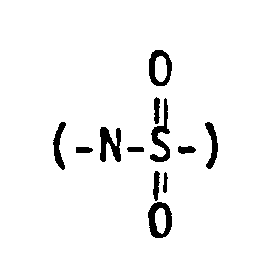
occurs by the reaction of an aryl sulfonyl halide containing diphosphonate,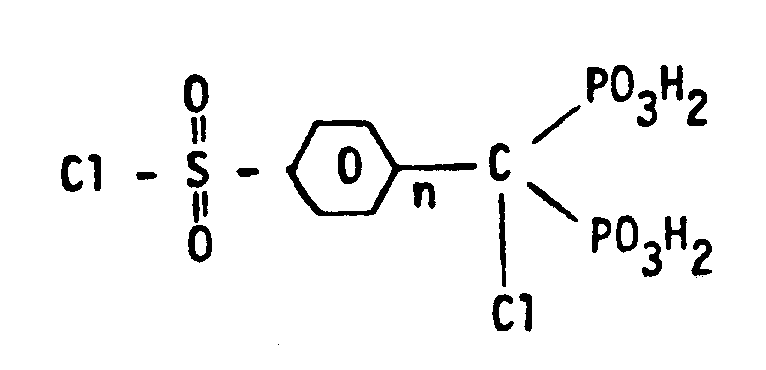
which reacts with the protein to form:
an N-carboxyanhydride-containing geminal diphosphonate,
reacts with an amine containing protein to form an amide linkage
an imidate-containing geminal diphosphonate,
reacts with a protein to form an amidine
link:
a quinone-diphosphonate can form a disubstituted hydroquinone link as follows:
Schiff base chemistry via an aldehyde-diphosphonate,
reacts with a protein to form an imine (-N=CH-) link. Reduction of the imine linkage yields:
which contains an alkylamine linkage. - When the reactive side chain of the protein contains a carboxylic acid, as in aspartic or glutamic acid residues or "C" terminus, the appropriate diphosphonate contains an amino group which reacts with the protein to form an amide. This linkage can be formed by preactivating the protein carboxy group with a water-soluble carbodiimide, then coupling the reactive intermediate with an omega-aminoalkyldiphosphonate, such as:

forming an amide
linkage when reacted with a protein:
When the reactive group on the protein is a thiol (SH), as in cystene, then an appropriate diphosphonate contains an alkyl halide, for example,
wherein X = Br or I.
This diphosphonate reacts with the thiol on the protein to form a thioether linkage (-CH₂-S-CH₂-):
iodoacetyl diphosphonates such as
reacts with the thiol group on the protein to form a thioether linkage (-CH₂-S-CH₂-):
maleimide diphosphonates, such as
react with, sulfhydryl-containing proteins to form a thioether linkage:
- The diphosphonate moieties utilized in the present invention (hereinafter diphosphonates) have the formula:

where X is H, OH, NH₂, substituted amino, halogen or C₁-C₄ alkyl, preferred is H, OH or substituted or unsubstituted amino. - These diphosphonates are useful as anticalcification agents for bioprosthetic devices and soft contact lenses. Bioprosthetic devices are known to undergo biological mineralization, generally this mineral component is composed of calcium phosphate. When this calcium builds up, the function of the device is impaired. The diphosphonate-derivatized macromolecules of the present invention when linked to such devices inhibit mineralization.
- Diphosphonates can be attached to proteins, such as collagen, in heart valve and vascular graft implants. For example a water soluble carbodiimide is added to collagen for activation, this activated intermediate,

is then reacted with collagen to form: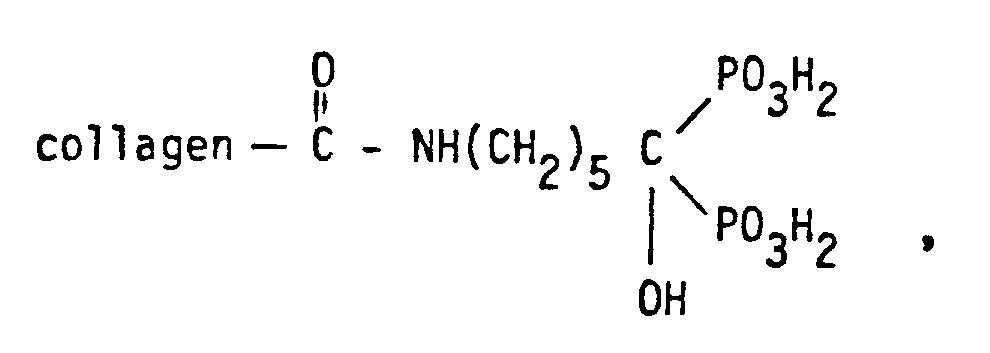
a diphosphonate-derivatized insoluble protein which will resist biological mineralization. - The diphosphonate-dervatized macromolecules are useful as scintigraphic imaging agents when chelated with technetium-99m. Methods of labeling the phosphonate moiety with Tc-99m are disclosed in Castronovo et al., "The Phosphonate Moiety: Labeling with 99m-Tc(Sn) After Synthetic Attachment to Diverse Biological Compounds", Radiopharm. [International Symposium], Chapter 7, pp. 63-70 (1975).
- Generally, the diphosphonate-derivatized macromolecule is treated with a solution containing stannous ion. To this mixture is added a solution of Tc-99m as pertechnetate. The Tc-99m is reduced by the stannous ion forming a coordinate covalent linkage with the diphosphonate.
- As used herein the term "pertechnetate reducing agent" includes compounds, complexes or the like, comprising a reducing ion capable of reducing heptavalent technetium (TcO₄⁻) to trivalent, tetravalent and/or pentavalent technetium. Free metals, such as tin, are also known for use as pertechnetate reducing agents, although undissolved metal must be removed from the scanning solution prior to injection into the patient. Suitable pertechnetate reducing agents include sodium hydrosulfite, as well as metalic salts of sulfuric acid and hydrochloric acid, such as stannous chloride.
- The compositions herein optionally, and preferably, contain a stabilizing amount of a stabilizer material to prevent or inhibit the oxidation of the pertechnetate reducing agent (e.g., oxidation of Sn⁺² to Sn⁺⁴) during storage and/or to inhibit or diminish the reoxidation of reduced technetium-99m and/or to diminish the formation of technetium-labeled impurities which may form during use of the compositions.
- The stabilizers used herein are characterized by their toxicological acceptability under the conditions of use, their ability to stabilize the product for a reasonable period of storage and/or under usage conditions, and by their substantial non-interference with the delivery of the technetium radionuclide to, for example, soft tumors.
- Stabilizers which meet the foregoing requirements and which are suitable for intravenous injection include gentisic acid and its water-soluble salts and esters, ascorbic acid and its water-soluble salts and esters, and erythorbic acid and its water-soluble salts and esters. Gentisic acid, ascorbic acid and erythorbic acid are all known, commercially-available materials. The sodium salts of these acids are also all commercially-available, quite water-soluble, and preferred for use herein.
- As is known in the literature, stabilizer materials such as ascorbic acid can chelate or complex with technetium and cause it to be deposited in uncalcified soft tissue. Since the practitioner of the present invention will wish to avoid all unnecessary deposition in soft tissue, it will be appreciated that the amount of stabilizer materials optionally used in the present compositions should not be so great as to overshadow the tumor directing effect of the derivatized macromolecule, thereby interfering with the imaging.
- The scintigraphic imaging agents of the present invention are intended for systemic or oral administration into humans or lower animals. Accordingly, appropriate manufacturing and operating conditions are employed to provide suitably sterile compositions.
- For gastrointestinal imaging, oral administration would be the appropriate method of administration. For soft tissue tumor imaging, the appropriate route of administration would be intravascular or intralymphatic. For blood pool imaging, intravenous administration would be the appropriate method.
- The compositions of the present invention can be prepared by simply dry mixing the technetium reducing agent and the derivatized macromolecule. The optional stabilizer can also be dry blended into such mixtures, as can additional, non-interferring agents, such as sodium chloride.
- In an alternate mode, the compositions herein can be provided in lyophilized form. Such compositions are prepared by co-dissolving the diphosphonate-derivatized macromolecule and the technetium reducing agent in an aqueous solution, together with any desired optional stabilizers, and lypholizing the composition using standard equipment. Preferably, sterile, deoxygenated water is used in processing and the product is stored under nitrogen. Although somewhat more complicated to manufacture than the dry mixed product, the lypholized product offers the advantage that water-insoluble particulate matter which might be present in the raw materials can be removed by filtration prior to the freeze drying step.
- In another mode, the compositions herein can be provided as aqueous solutions in pharmaceutically-acceptable liquid carriers. These carriers can be, for example, saline solution or sterile, pyrogen-free water. Preferably, the water is deoxygenated and the composition is stored under nitrogen, thereby minimizing undesirable oxidation of the pertechnetate reducing agent on storage. Since the reducing agent is more prone to oxidize in solution than in the dry powder and freeze-dried composition forms, it is preferred that aqueous compositions contain a stabilizer.
- The compositions of the present invention are prepared such that the weight ratio of the derivatized macromolecule: technetium reducing agent is from about 2:1 to about 100,000:1, preferably from about 2:1 to about 10,000:1.
- Stabilized compositions are generally formulated such that the weight ratio of derivatized macromolecule: stabilizer is from about 1:1 to about 10,000:1, preferably from about 1:1 to about 1,000:1.
- Preferred stabilized compositions in unit dosage form contain from about 0.05 mg. to about 3 mg. of the stannous reducing agent; from about 0.25 mg. to about 1.0 mg. of the gentisate or ascorbate stabilizer; and from about 0.01 to about 50 mg. of the diphosphonate-derivatized macromolecule.
- Compositions of the foregoing type are characterized by a physiologically-acceptable in-use solution pH in the range from about 3.5 to about 8.5, and, preferably, fall within a pH range of about 4.5 to about 7.4.
- In the case of proteins, a liquid pharmaceutical composition suitable for scintigraphic imaging would be composed of from about 0.01% to about 20% of the diphosphonate-derivatized protein with the remainder being pertechnetate reducing agent, stabilizer, and a pharmaceutically-acceptable carrier. In the case of other macromolecules, from about 1% to about 20% of the total composition would be comprised of the diphosphonate-dervatized macromolecule.
- In the case of proteins, a lyophilized pharmaceutical composition would be composed of from about 1% to about 50% of the diphosphonate-derivatized protein. For other macromolecules, from about 5% to about 99% of the composition would be comprised of the diphosphonate-derivatized macromolecule.
- In use, the compositions are mixed with a pertechnetate-99m isotonic solution from a commercial technetium source to yield a Tc-99m labeled diphosphonate-derivatized macromolecule suitable for systemic or oral administration. The stability of such scanning agents is ample under ordinary hospital conditions. Administration is preferably done within about eight hours after addition of the pertechnetate solution. For intravenous administration, the concentration of reagents and technetium radionuclide is sufficient such that about 1 ml. of the solution is administered to an adult of about 50-100 kg. body weight. One ml. of solution is preferably injected intravenously over a period of about 30 seconds. For oral administration, the concentration of reagents and technetium radionuclide is sufficient such that from about 10 ml to about 150 ml of the solution or suspension is administered to an adult of about 50-100 kg body weight. Follow up scans would consist of the same levels of administration.
- The actual structure of the reaction product formed by the 99m Tc/diphosphonate-derivatized macromolecule reducing agent mixture and introduced into the body is not known with certainty.
- These diphosphonate-derivatized macromolecules are useful for any bio-analytical technique where radiolabeled proteins would be used. Such applications include tumor imaging, radioimmunoassays, myrocardiol infarction assays, thrombosis imaging, receptor binding assays and blood pool imaging, and gastrointestinal imaging.
- Generally, a safe and effective amount of the radiolabeled macromolecule is administerd systemically or orally for the scintigraphic imaging procedures of the present invention.
- By "safe and effective amount" as used herein is meant an amount of the composition high enough to provide a clinically useful scintigraphic image, but low enough to avoid serious side effects (at a reasonable benefit/risk ratio), within the scope of sound medical judgment. The safe and effective amount of the composition will vary with the particular scintigraph technique and particular clinical condition being evaluated, the age and physical condition of the patient being treated, the severity of the condition, the duration of treatment, the nature of concurrent therapy and the specific diphosphonate-derivatized macromolecule employed.
- Systemic administration would be appropriate for tumor imaging, myrocardial infarction assays, thrombosis imaging, receptor binding assays, and blood pool imaging.
- The following nonlimiting examples illustrate the compounds, chelates, compositions, methods and uses of the present invention.
- This example demonstrates, protein derivatization of sodium [2-(4 aminophenyl)-ethane 1,1-diphosphonate].
- Sodium [2-(4-aminophenyl) ethane-1,1-diphosphonate] was synthesized by the following method:

Specifically, to a slurry of 10.0 g (0.25 mole) of potassium hydride in 200 ml dry toluene, cooled to 5°C, was added dropwise 72.5 g (0.25 mole) of tetraethyl methanediphosphonate. This reaction was carried out under a nitrogen atmosphere allowing the hydrogen gas generated to be swept away. The diphosphonate anion solution was brought to room temperature after all the ester had been added. 54 grams (0.25 mole) of p-nitrobenzylbromide was dissolved in 200 ml warm, dry toluene. The toluene solution of the halide was added rapidly to the diphosphonate anion solution. The reaction was somewhat exothermic causing a temperature rise to 85°C. The mixture was stirred at room temperature for 2 hours. The KBr that formed was filtered off and the toluene evaporated on a rotary evaporator. Then 250 ml of water was added to the remaining oil and the mixture extracted 2 times with 250 ml diethyl ether. The ether phase was dried with anhydrous magnesium sulfate, filtered and evaporated. The resulting oil was dissolved in 250 ml of ether and the solution was extracted 2 times with 100 ml water to remove the unreacted tetraethylmethane diphosphonate which is quite water soluble. The ether layer was dried with magnesium sulfate and evaporated yielding 76 grams of the crude ester: tetraethyl 2-(p-nitrophenyl)-ethane-1, 1-diphosphonate. - Twenty-two grams of this crude ester was added to 250 ml ethanol in a 500 ml Parr hydrogenation bottle. A 10% Pd/charcoal catalyst (1.5 g) was added and the mixture was shaken under a 50 psig hydrogen atmosphere repressurizing as necessary. After 4.5 hours, the reaction was complete. The solid was filtered off and the ethanol evaporated. Two hundred fifty ml of 6N HCl was added to this crude product that contained a mixture of mono- and dialkylated methanediphosphonate. The mixture was refluxed overnight. The reaction mixture was cooled and evaporated to dryness on a rotary evaporator. Two hundred ml distilled water was added to the residue. The mixture was warmed to approximately 60°C for 1 hour and then cooled to room temperature. A substantial amount of insoluble precipitate remained. This is the desired product. It was filtered off and slurried in 150 ml of water. The pH was adjusted to 4.2 with 50% sodium hydroxyide solution. The solution was heated to boiling and filtered hot. Two hundred ml of ethanol was added slowly to the warm solution causing a precipitate to develop. This solution was cooled in a refrigerator overnight. The precipitate, the sodium salt of the desired product, was filtered off, washed with methanol and air dried. The result was 6.2 grams of sodium [2-(4-amino phenyl)-ethane-1,1-diphosphonate].
- The sodium [2-(4-aminophenyl)-ethane-1, 1-diphosphonate] (0.3 mg, 0.1 mmol) was dissolved in 0.5 ml of H₂O, chilled in an ice-bath, and then acidified with 0.5 ml of concentrated HCl. To this clear solution was added dropwise 0.25 ml of chilled 0.5M (0.125 mmole) NaNO₂ solution. The pale yellow solution was stirred for 1.5 hour at 0°C, then treated with 3 mg of urea to destroy excess nitrate. The reaction mixture was then diluted to 10 ml. The desired amount of diazonium salt reagent was removed from this stock solution, neutralized with solid NaHCO₃, and added dropwise to a 0°C solution of rabbit IgG (obtained from Sigma Chemical Corporation) (60 mg) in 3 ml of 0.05 M pH8 phosphate buffer. The reaction mixture was stirred overnight at 4°C, then dialyzed exhaustively against 0.1M NaCl solution at 4°C. The solution of derivatized protein was stored in the refrigerator.
- The resultant solution of derivatized protein was analyzed according to the standard Biyret analysis for determining protein concentration as disclosed in Bulletin #690, Sigma Chemical Co., St. Louis, Missouri.
- The degree of derivatization, in terms of average number of azo groups in the derivatized protein solution, was calculated from the solution's absorbance at 350 nm (E=20,000). The protein concentration was determined from its characteristic absorbance at 280 nm. It was necessary to make a slight correction for the protein concentration due to small degree of absorbance of the azo phenyl group at 280 nm (E=19,800). The ratio of azo concentration to the corrected protein concentration then gives the average number of azo linkages per protein molecule.
- The number of azo groups per protein molecule was calculated as follows:
For the derivatization of rabbit IgG using a molar ratio of 25:1 diazonium salt to protein, the following procedure was used to determine the average number of diphosphonate groups bound to each protein molecule.
Measured absorbances: A₃₅₀ = 0.262, A₂₈₀ = 1.546
Calculation of azo concentration: (Em for azo = 22,000) at 350 nm: A = 0.262 = 22,000 x Cazo
Cazo = 1.19 x ]0⁻⁵M
Calculation of azo phenyl absorbance at 280 nm:
(Em for azo phenyl = 19,800)
A = 19,800 X 1.19 X 10⁻⁵M = 0.236
Calculation of protein concentration (A₂₈₀ for rabbit IgG = 219,000):
A = 1.546-0.236 = 1.31 = 219,000 x Cprotein
Cprotein = 5.98 x 10⁻⁶M
Calculation of azo group per protein molecule
- The following example illustrates the binding of technetium -99m to diphosphonate-dervatized IgG and F(ab')₂ fragments.
- Rabbit IgG (obtained from Sigma Corporation) was derivatized amd labeled with 99m-Tc as described in Example III except without gentisic acid. Between 2 and 3 mg of IgG or derivatized IgG were labeled with 500 µCi 99m-TC. The reaction mixture was gel filtered over a column of BioGel P6 (Bio Rad) and 1.0 mg of the peak protein fractions were taken for the following plasma exchange experiments.
- An aliquot of 99m-Tc labeled DP derivatized IgG was added to 1.0 ml of freshly prepared heparinized human plasma. Underivatized, 99m-Tc labeled IgG was treated identically and used as a control. The combined IgG-plasma was heated at 37° with continuous agitation. After 30 minutes, an excess of goat anti-rabbit γ -globulin (GARGG) was added to precipitate the rabbit IgG. Following centrifugation, the rabbit IgG precipitate and the plasma supernatant were subjected to γ -counting. Any 99m-Tc which remained associated with the rabbit IgG was found in the precipitate. The results are summarized in the following Table:
mole DP per mole IgG 99m-Tc bound per mg IgG (counts/100 sec) % 99mTc which does not exchange with plasma components 0 1.13 X 10⁵ 37% 0.3 3.47 X 10⁵ 84% 1.9 3.82 X 10⁵ 87% 8.0 4.81 X 10⁵ 91% - The diphosphonate-derivatization procedure of the present invention does not significantly alter the activity of the antibody as estimated by these competitive binding studies. The addition of the diphosphonate did increase the affinity of antibodies for binding with 99m-Tc.
- These data demonstrate that DP-IgG not only binds more 99m-Tc than does underivatized IgG, but the 99m-Tc is bound more tightly to DP-IgG as judged by the high percentage of 99m-Tc which does not dissociate from DP-IgG. Substantially similar results are obtained when F(ab)₂ fragments rather than IgG fragments were characterized.
- This example illustrates in vivo imaging of soft tissue tumor using DP-IgG and DP-F(ab')₂
IgG and F(ab')₂ fragments were prepared from commercially available rabbit antisera to human β₂M and human CEA. For CEA, the IgG fraction as prepared by the supplier was used, while rabbit anti β₂M was further purified using an affinity column of immobilized human β₂M. - IgG and F(ab')₂ fragments were derivatized as described above in Example I. The stoichiometric ratio of the reactants, diphosphonate: protein, was 10:1. After exhaustive dialysis against phosphate buffered saline at pH 7.4, 1.0 mg each of IgG and F(ab')₂ fragment were freeze-dried.
- In preparation for labeling with 99m-Tc and injection, the freeze-dried proteins wre dissolved in 700 µl sterile H₂O. One hundred twenty-five micrograms of gentisic acid, 4 mCi Tc-99m as TcO₄⁻, and 250 µg SnC1₂ were then added to each vial. Injections of 220-250 µl were made into the tail vein of athymic mice bearing either a human colonic carcinoma tumor which expresses CEA, or a human prostatic carcinoma tumor which express β₂M. Scintigraphs were obtained on a Technicare Sigma 400 gamma camera at 1, 4 and 24 hours post-injection using a pinhole columnator. At 24 hours after dosing, animals receiving anti β₂M IgG and F(ab')₂ fragments were sacrificed, tumors excised and half of each tumor was fixed in 10% neutral buffered formalin. The other half of each tumor was embedded and frozen for indirect immunofluorescence.
- At 4 hours post-injection the anti β₂M IgG and its F(ab')₂ fragments showed good tumor localization.
- Immunohistochemical evaluation of the tumors, excised 24 hours after injection of the IgG or F(ab')₂ fragments, demonstrated that the IgG and F(ab')₂ fragments did reach the tumor.
- This example demonstrates formation of a diphosphonate-derivatized albumin containing a thiourea linkage suitable for use in a lung imaging formulation.
- The 2-(4-aminophenyl)ethane-1,1-diphosphonate described in Example I is converted to 2-(4-isothiocyanatophenyl)ethane-1,-1-diphosphonate by treatment with a 10 fold molar excess of thiophosgene in 0.4M. NaHCO₃ aqueous buffer at room temperature. The reaction solution is extracted with dichloromethane to remove unreacted thiphosgene. This isothiocyanate diphosphonate-containing solution is reacted with a suspension of aggregated albumin particles, 15 mg of albumin (10µ - 100µ diameter) in 25 ml 0.4M NaHCO₃ buffer, pH=8.5, for 60 minutes at 37°C. Following reaction the diphosphonate-derivatized albumin aggregates are collected and washed by centrifugation to remove untreated diphosphonate.
- The product formed is:

- The example demonstrates photo-induced coupling of a diphosphonate to an antibody fragment.
- The diazophenylethane-1,1-diphosphonate described in Example I is converted to 2-(4-azophenyl)-ethane-1,1-diphosphonate by treatment with an aqueous solution of sodium azide at pH=9 and 4°C. The product is recovered by precipitation from the reaction solution with ethanol. One mg of F(ab')₂ fragment of anti-β₂M macroglobulin described in Example I is mixed with 10 mg of the above azidophenyl diphosphonate dissolved in 5 ml of phosphate buffered saline at 4°C. Irradiation is carried out using a Rayonet Minireactor at 240-350 nm. The nitrene intermediate formed upon photolysis couples to the protein molecules. Following reaction the excess diphosphonate is removed by gel permeation chromatography on a Sephadex G-25 column.
Claims (14)
- Diphosphonate-derivatized macromolecules of the formula

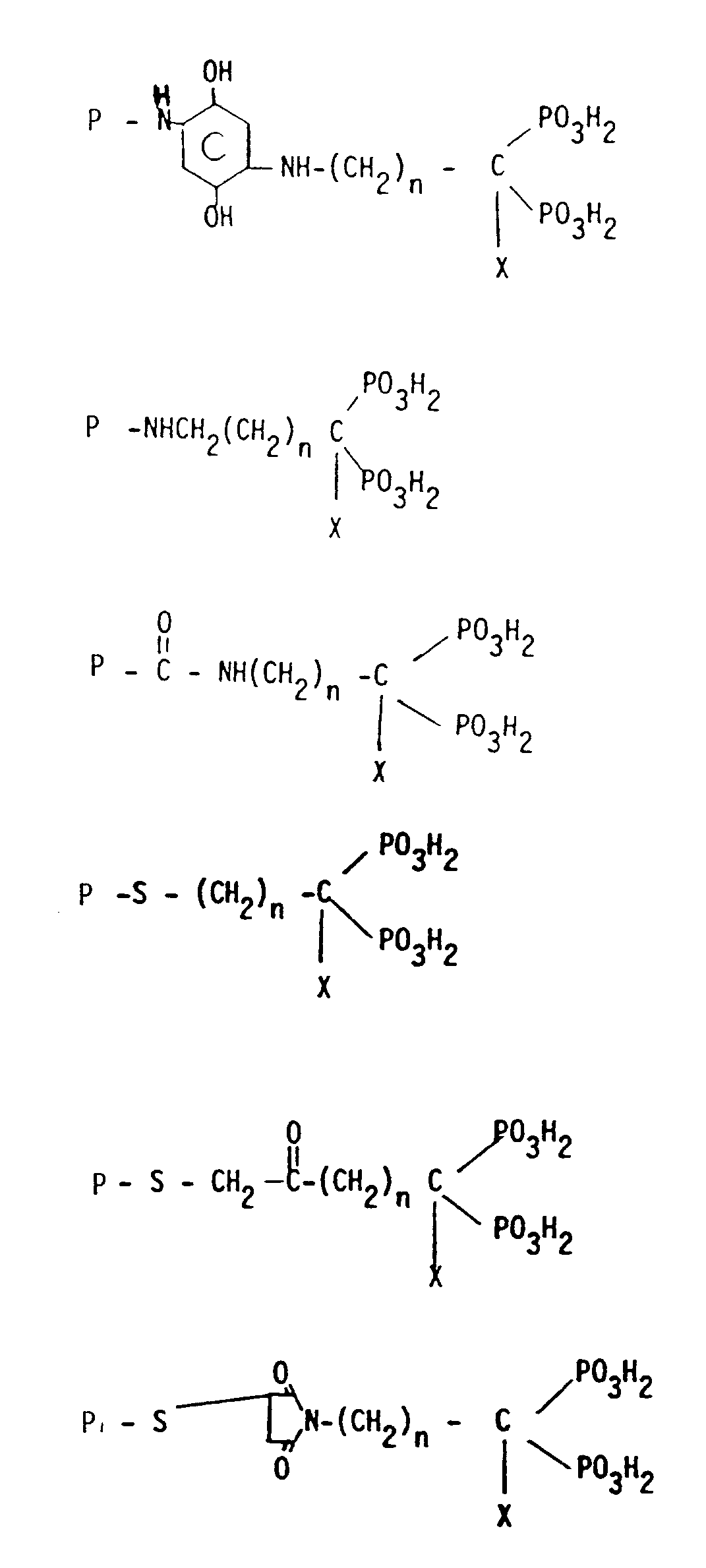
- The diphosphonate-derivatized macromolecules according to Claim 1 wherein P is a protein.
- The diphosphonate-derivatized macromolecules according to Claim 2 wherein said protein is an antibody or antibody fragment.
- The diphosphonate-derivatized macromolecules selected from


- A radiolabeled chelate characterized in that it comprises a derivatized macromolecule according to any of Claims 1-4, complexed with technetium 99-m.
- A pharmaceutical composition for scintigraphic imaging in humans or animals which comprisesa) a safe and effective amount of a diphosphonate derivatized macromolecule according to any of claims 1-4,b) a pertechnetate reducing agent;c) a stabilizer compound;d) a pharmaceutically-acceptable carrier.
- A pharmaceutical composition according to Claim 6 in liquid form comprising from about 1% to about 20% of the diphosphonate derivatized macromolecule, from 0.0001% to about 10% of a pertechnetate reducing agent, from about 0.001% to about 20% of a stabilizer and from about 50% to about 98% of a pharmaceutically-acceptable carrier.
- A pharmaceutical composition according to Claim 6 wherein the macromolecule is a protein.
- A pharmaceutical composition according to Claim 8 in liquid form comprising from about 0.01% to about 20% of the diphosphonate derivatized protein, from about 1 x 10⁻⁶% to about 10% of a pertechnetate reducing agent, from about 1 x l0⁻⁵% to about 20% of a stabilizer compound and from about 50% to about 99.9% of a pharmaceutically-acceptable carrier.
- A pharmaceutical composition according to Claim 6 in lyophilized form.
- A lyophilized pharmaceutical composition according to Claim 10 comprising from about 5% to about 99% of the diphosphonate-derivatized macromolecule, from about 0.0005% to about 10% of a pertechnetate reducing agent, from about 0.005% to about 20% of a stabilizer and from about 0.01% to about 60% of a pharmaceutically acceptable carrier.
- A lyophilized pharmaceutical composition according to Claim 10 wherein the macromolecule is a protein.
- A lyophilized pharmaceutical composition according to Claim 12 comprising from about 1% to about 50% of the diphosphonate-derivatized protein, from about 0.0001% to about 10% of a pertechnetate reducing agent, from about 0.001% to about 20% of a stabilizer and from about 20% to about 98% of a pharmaceutically acceptable carrier.
- A scintigraphic imaging composition for scintigraphic imaging of tissues in humans or animals, characterized in that it comprises a pharmaceutical composition according to any of claims 6-13 and a pertechnetate-99m solution.
Applications Claiming Priority (2)
| Application Number | Priority Date | Filing Date | Title |
|---|---|---|---|
| US750103 | 1985-06-28 | ||
| US06/750,103 US4830847A (en) | 1985-06-28 | 1985-06-28 | Diphosphonate-derivatized macromolecules |
Publications (3)
| Publication Number | Publication Date |
|---|---|
| EP0207557A2 EP0207557A2 (en) | 1987-01-07 |
| EP0207557A3 EP0207557A3 (en) | 1987-09-09 |
| EP0207557B1 true EP0207557B1 (en) | 1994-12-21 |
Family
ID=25016514
Family Applications (1)
| Application Number | Title | Priority Date | Filing Date |
|---|---|---|---|
| EP86201074A Expired - Lifetime EP0207557B1 (en) | 1985-06-28 | 1986-06-20 | Diphosphonate-derivatized macromolecules |
Country Status (5)
| Country | Link |
|---|---|
| US (1) | US4830847A (en) |
| EP (1) | EP0207557B1 (en) |
| JP (2) | JP2752355B2 (en) |
| CA (1) | CA1336739C (en) |
| DE (1) | DE3650172T2 (en) |
Families Citing this family (25)
| Publication number | Priority date | Publication date | Assignee | Title |
|---|---|---|---|---|
| US5089249A (en) * | 1988-06-10 | 1992-02-18 | Neorx Corporation | Conjugates for bone imaging and bone cancer therapy |
| US5202109A (en) * | 1988-06-10 | 1993-04-13 | Neorx Corporation | Conjugates for bone imaging and bone cancer therapy |
| US4839467A (en) * | 1988-06-15 | 1989-06-13 | University Of Cincinnati | Radioactive rhenium complexed to 2-hydroxy isobutyric acid |
| DE4017439C2 (en) * | 1990-05-30 | 1994-06-23 | Deutsches Krebsforsch | Polyether-substituted tumor agents |
| JP2640293B2 (en) * | 1990-05-30 | 1997-08-13 | ドイチエス クレープスフオルシユングスツエントルム ステイフツング デス アフエントリヒエン レヒトス | Polyether-substituted antitumor agent |
| US5561220A (en) * | 1991-02-08 | 1996-10-01 | Diatech, Inc. | Technetium-99m labeled peptides for imaging inflammation |
| US5306482A (en) * | 1991-04-09 | 1994-04-26 | Merck Frosst Canada, Inc. | Radiopharmaceutical bacteriostats |
| WO1992020371A1 (en) | 1991-05-10 | 1992-11-26 | Celtrix Pharmaceuticals, Inc. | Targeted delivery of bone growth factors |
| US5336482A (en) * | 1991-12-05 | 1994-08-09 | The Du Pont Merck Pharmaceutical Company | Technetium-99m complexes with N-substituted 3-hydroxy-4-pyridinones |
| US6541454B1 (en) * | 1995-04-04 | 2003-04-01 | Yissum Research Development Company Of The Hebrew University Jerusalem | Phosphonates, biphosphonates and pharmaceutical compositions containing them |
| US5782931A (en) * | 1996-07-30 | 1998-07-21 | Baxter International Inc. | Methods for mitigating calcification and improving durability in glutaraldehyde-fixed bioprostheses and articles manufactured by such methods |
| CA2267984A1 (en) * | 1996-10-09 | 1998-04-16 | Elizanor Biopharmaceuticals, Inc. | Diphosphonate therapeutic compounds |
| US5862806A (en) * | 1997-10-30 | 1999-01-26 | Mitroflow International, Inc. | Borohydride reduction of biological tissues |
| US6548042B2 (en) | 2000-08-07 | 2003-04-15 | Arstad Erik | Bis-phosphonate compounds |
| US7193113B2 (en) * | 2000-12-15 | 2007-03-20 | Japan Science And Technology Corporation | Arylbis(perfluoroalkylsulfonyl) methane and metallic salt thereof, and methods for producing the same |
| JP3773824B2 (en) * | 2001-03-12 | 2006-05-10 | 独立行政法人科学技術振興機構 | Polymer-supported arylbis (perfluoroalkylsulfonyl) methane |
| FR2862651B1 (en) * | 2003-11-24 | 2006-03-31 | Rhodia Cons Spec Ltd | NOVEL DENDRIMERS WITH BISPHOSPHONIC AND DERIVED TERMINATIONS, PROCESS FOR PREPARING SAME AND USE THEREOF |
| TWI299257B (en) * | 2005-05-16 | 2008-08-01 | Tung Hai Biotechnology Corp | γ-POLYGLUTAMIC ACID (γ-PGA, H FORM), γ-POLYGLUTAMATES AND γ-POLYGLUTAMATE HYDROGEL FOR USE AS NUTRITION SUPPLEMENTS IN DIETARY PRODUCTS |
| WO2007101415A2 (en) * | 2006-02-03 | 2007-09-13 | Universität Stuttgart - Institut für Chemische Verfahrenstechnik | Phosphonic acid-containing blends and phosphonic acid-containing polymers |
| FR2973378B1 (en) * | 2011-03-28 | 2013-10-04 | Atlanthera | BIFUNCTIONAL HYDROXYBISPHOSPHONIC ACID DERIVATIVES |
| FR2974090B1 (en) * | 2011-04-15 | 2013-05-31 | Chryso | COPOLYMERS WITH GEM-BISPHOSPHONE GROUPS |
| EP2572736A1 (en) * | 2011-09-23 | 2013-03-27 | Spago Imaging AB | Nanostructures comprising manganese |
| TWI609875B (en) * | 2015-04-20 | 2018-01-01 | 聚和國際股份有限公司 | Compound for bone scanning and use thereof |
| CN109562352B (en) | 2016-08-01 | 2021-12-28 | 株式会社钟化 | Absorbent for calpain particles, system for adsorption and removal, and method for use thereof |
| AU2020312862A1 (en) * | 2019-07-15 | 2022-02-03 | Security Matters Ltd. | Traceable composite polymers and preparation methods thereof |
Family Cites Families (15)
| Publication number | Priority date | Publication date | Assignee | Title |
|---|---|---|---|---|
| US3983227A (en) * | 1973-05-23 | 1976-09-28 | The Procter & Gamble Company | Dry mixture containing diphosphonates and a stannous salt useful in the preparation of Tc99M containing bone scanning agents |
| DE2543349C2 (en) * | 1975-09-29 | 1984-05-10 | Henkel KGaA, 4000 Düsseldorf | Preparations for the production of 99m technetium-radiagnostica |
| AU510124B2 (en) * | 1976-07-01 | 1980-06-12 | The Procter & Gamble Company | Radionuclide carries |
| US4234562A (en) * | 1978-03-20 | 1980-11-18 | The Procter & Gamble Company | Radiographic scanning |
| US4323546A (en) * | 1978-05-22 | 1982-04-06 | Nuc Med Inc. | Method and composition for cancer detection in humans |
| US4305922A (en) * | 1978-10-04 | 1981-12-15 | University Patents, Inc. | Labeling proteins with 99m-Tc by ligand exchange |
| DE3060377D1 (en) * | 1979-08-29 | 1982-07-01 | Nihon Mediphysics Co Ltd | 2-oxopropionaldehyde bis(thiosemicarbazone)derivatives and their production and use |
| US4311688A (en) * | 1979-10-29 | 1982-01-19 | Serono Laboratories Inc. | Composition and method for cancer detection in humans |
| US4421735A (en) * | 1980-04-17 | 1983-12-20 | The Massachusetts General Hospital | Radiolabeled diagnostic compositions and method for making the same |
| DE3129906C3 (en) * | 1981-07-24 | 1996-12-19 | Schering Ag | Paramagnetic complex salts, their preparation and agents for use in NMR diagnostics |
| AT392004B (en) * | 1981-10-27 | 1991-01-10 | Hybritech Inc | METHOD FOR PRODUCING A MONOCLONAL ANTIBODY AGAINST TUMOR-ASSOCIATED ANTIQUE AND THE USE THEREOF |
| US4707353A (en) * | 1982-12-08 | 1987-11-17 | Mallinckrodt, Inc. | Radiographic imaging agents |
| US4510125A (en) * | 1982-12-08 | 1985-04-09 | Mallinckrodt, Inc. | Process for making lyophilized radiographic imaging kit |
| DE3512536A1 (en) * | 1985-04-06 | 1986-10-16 | Boehringer Mannheim Gmbh, 6800 Mannheim | NEW DIPHOSPHONIC ACID DERIVATIVES, METHOD FOR THE PRODUCTION THEREOF AND MEDICINAL PRODUCTS CONTAINING THESE COMPOUNDS |
| US4732974A (en) * | 1986-03-05 | 1988-03-22 | Mallinckrodt, Inc. | Metal ion labeling of carrier molecules |
-
1985
- 1985-06-28 US US06/750,103 patent/US4830847A/en not_active Expired - Lifetime
-
1986
- 1986-06-20 DE DE3650172T patent/DE3650172T2/en not_active Expired - Fee Related
- 1986-06-20 EP EP86201074A patent/EP0207557B1/en not_active Expired - Lifetime
- 1986-06-26 CA CA000512560A patent/CA1336739C/en not_active Expired - Fee Related
- 1986-06-27 JP JP61151357A patent/JP2752355B2/en not_active Expired - Lifetime
-
1996
- 1996-01-17 JP JP8005568A patent/JP2857095B2/en not_active Expired - Lifetime
Also Published As
| Publication number | Publication date |
|---|---|
| DE3650172D1 (en) | 1995-02-02 |
| CA1336739C (en) | 1995-08-15 |
| JPH08319312A (en) | 1996-12-03 |
| EP0207557A3 (en) | 1987-09-09 |
| US4830847A (en) | 1989-05-16 |
| EP0207557A2 (en) | 1987-01-07 |
| DE3650172T2 (en) | 1995-08-17 |
| JPS62104801A (en) | 1987-05-15 |
| JP2857095B2 (en) | 1999-02-10 |
| JP2752355B2 (en) | 1998-05-18 |
Similar Documents
| Publication | Publication Date | Title |
|---|---|---|
| US5011913A (en) | Diphosphonate-derivatized macromolecules | |
| US4830847A (en) | Diphosphonate-derivatized macromolecules | |
| EP0627939B1 (en) | Conjugates of biotin and deferoxamine for radioimmunoimaging and radioimmunotherapy | |
| EP0455268B1 (en) | Biologically useful conjugates | |
| EP0137457B1 (en) | Trace-labeled conjugates of metallothionein and target-seeking biologically active molecules | |
| EP0247866B1 (en) | Coupling agents for radiolabeling proteins | |
| EP0174853B1 (en) | Radiolabeled antibody fragments | |
| EP0173629A1 (en) | Antibody-metal ion complexes | |
| US5310536A (en) | Ligands for improving metal chelate formation kinetics | |
| KR860000843B1 (en) | Radiopharmaceuticals and method for preparing non-radioactive carrier therefor | |
| US6022522A (en) | Rigid bifunctional chelating agents | |
| JPH07100667B2 (en) | Method for producing organ-specific substance labeled with technetium-99m | |
| US5217704A (en) | Methods and materials for the preparation of metal labelled antibody solutions | |
| EP0345723A2 (en) | Diethylenetriamine pentaacetic acid derivatives | |
| JP3074160B2 (en) | Imaging agents for malignant tumors | |
| US5846537A (en) | Modified avidin and streptavidin and methods of use thereof | |
| CA2066031C (en) | Methods for reducing non-target retention of immunoconjugates and metabolites thereof | |
| AU730388B2 (en) | Antibodies with reduced net positive charge | |
| US5250702A (en) | Diethylenetriamine pentaacetic acid derivatives | |
| WO1987004164A1 (en) | Technetium-antibody conjugate | |
| EP0710244A1 (en) | Immunoreactive reagents employing monoamine oxidase | |
| Gasparini et al. | Tumor imaging of colo‐rectal carcinoma with an anti‐CEA monoclonal antibody | |
| AU6843287A (en) | Technetium-antibody conjugate |
Legal Events
| Date | Code | Title | Description |
|---|---|---|---|
| PUAI | Public reference made under article 153(3) epc to a published international application that has entered the european phase |
Free format text: ORIGINAL CODE: 0009012 |
|
| AK | Designated contracting states |
Kind code of ref document: A2 Designated state(s): BE CH DE FR GB IT LI LU NL SE |
|
| PUAL | Search report despatched |
Free format text: ORIGINAL CODE: 0009013 |
|
| AK | Designated contracting states |
Kind code of ref document: A3 Designated state(s): BE CH DE FR GB IT LI LU NL SE |
|
| 17P | Request for examination filed |
Effective date: 19880416 |
|
| 17Q | First examination report despatched |
Effective date: 19900613 |
|
| GRAA | (expected) grant |
Free format text: ORIGINAL CODE: 0009210 |
|
| AK | Designated contracting states |
Kind code of ref document: B1 Designated state(s): BE CH DE FR GB IT LI LU NL SE |
|
| EAL | Se: european patent in force in sweden |
Ref document number: 86201074.1 |
|
| REF | Corresponds to: |
Ref document number: 3650172 Country of ref document: DE Date of ref document: 19950202 |
|
| ITF | It: translation for a ep patent filed | ||
| ET | Fr: translation filed | ||
| PLBE | No opposition filed within time limit |
Free format text: ORIGINAL CODE: 0009261 |
|
| STAA | Information on the status of an ep patent application or granted ep patent |
Free format text: STATUS: NO OPPOSITION FILED WITHIN TIME LIMIT |
|
| 26N | No opposition filed | ||
| PGFP | Annual fee paid to national office [announced via postgrant information from national office to epo] |
Ref country code: NL Payment date: 20000320 Year of fee payment: 15 |
|
| PGFP | Annual fee paid to national office [announced via postgrant information from national office to epo] |
Ref country code: LU Payment date: 20000324 Year of fee payment: 15 |
|
| PGFP | Annual fee paid to national office [announced via postgrant information from national office to epo] |
Ref country code: GB Payment date: 20000502 Year of fee payment: 15 |
|
| PGFP | Annual fee paid to national office [announced via postgrant information from national office to epo] |
Ref country code: SE Payment date: 20000602 Year of fee payment: 15 Ref country code: FR Payment date: 20000602 Year of fee payment: 15 |
|
| PGFP | Annual fee paid to national office [announced via postgrant information from national office to epo] |
Ref country code: CH Payment date: 20000621 Year of fee payment: 15 |
|
| PGFP | Annual fee paid to national office [announced via postgrant information from national office to epo] |
Ref country code: DE Payment date: 20000630 Year of fee payment: 15 |
|
| PGFP | Annual fee paid to national office [announced via postgrant information from national office to epo] |
Ref country code: BE Payment date: 20000714 Year of fee payment: 15 |
|
| PG25 | Lapsed in a contracting state [announced via postgrant information from national office to epo] |
Ref country code: LU Free format text: LAPSE BECAUSE OF NON-PAYMENT OF DUE FEES Effective date: 20010620 Ref country code: GB Free format text: LAPSE BECAUSE OF NON-PAYMENT OF DUE FEES Effective date: 20010620 |
|
| PG25 | Lapsed in a contracting state [announced via postgrant information from national office to epo] |
Ref country code: SE Free format text: LAPSE BECAUSE OF NON-PAYMENT OF DUE FEES Effective date: 20010621 |
|
| PG25 | Lapsed in a contracting state [announced via postgrant information from national office to epo] |
Ref country code: LI Free format text: LAPSE BECAUSE OF NON-PAYMENT OF DUE FEES Effective date: 20010630 Ref country code: CH Free format text: LAPSE BECAUSE OF NON-PAYMENT OF DUE FEES Effective date: 20010630 Ref country code: BE Free format text: LAPSE BECAUSE OF NON-PAYMENT OF DUE FEES Effective date: 20010630 |
|
| BERE | Be: lapsed |
Owner name: THE PROCTER & GAMBLE CY Effective date: 20010630 |
|
| PG25 | Lapsed in a contracting state [announced via postgrant information from national office to epo] |
Ref country code: NL Free format text: LAPSE BECAUSE OF NON-PAYMENT OF DUE FEES Effective date: 20020101 |
|
| EUG | Se: european patent has lapsed |
Ref document number: 86201074.1 |
|
| GBPC | Gb: european patent ceased through non-payment of renewal fee |
Effective date: 20010620 |
|
| REG | Reference to a national code |
Ref country code: CH Ref legal event code: PL |
|
| PG25 | Lapsed in a contracting state [announced via postgrant information from national office to epo] |
Ref country code: FR Free format text: LAPSE BECAUSE OF NON-PAYMENT OF DUE FEES Effective date: 20020228 |
|
| NLV4 | Nl: lapsed or anulled due to non-payment of the annual fee |
Effective date: 20020101 |
|
| PG25 | Lapsed in a contracting state [announced via postgrant information from national office to epo] |
Ref country code: DE Free format text: LAPSE BECAUSE OF NON-PAYMENT OF DUE FEES Effective date: 20020403 |
|
| PG25 | Lapsed in a contracting state [announced via postgrant information from national office to epo] |
Ref country code: IT Free format text: LAPSE BECAUSE OF NON-PAYMENT OF DUE FEES;WARNING: LAPSES OF ITALIAN PATENTS WITH EFFECTIVE DATE BEFORE 2007 MAY HAVE OCCURRED AT ANY TIME BEFORE 2007. THE CORRECT EFFECTIVE DATE MAY BE DIFFERENT FROM THE ONE RECORDED. Effective date: 20050620 |