EP0200942B1 - New derivatives of an aminoketone - Google Patents
New derivatives of an aminoketone Download PDFInfo
- Publication number
- EP0200942B1 EP0200942B1 EP86104875A EP86104875A EP0200942B1 EP 0200942 B1 EP0200942 B1 EP 0200942B1 EP 86104875 A EP86104875 A EP 86104875A EP 86104875 A EP86104875 A EP 86104875A EP 0200942 B1 EP0200942 B1 EP 0200942B1
- Authority
- EP
- European Patent Office
- Prior art keywords
- pharmaceutically acceptable
- compounds
- acceptable salt
- compound
- propanone
- Prior art date
- Legal status (The legal status is an assumption and is not a legal conclusion. Google has not performed a legal analysis and makes no representation as to the accuracy of the status listed.)
- Expired - Lifetime
Links
- XSQUKJJJFZCRTK-UHFFFAOYSA-N Urea Chemical compound NC(N)=O XSQUKJJJFZCRTK-UHFFFAOYSA-N 0.000 title claims description 13
- 150000001875 compounds Chemical class 0.000 claims description 69
- 150000003839 salts Chemical class 0.000 claims description 18
- 125000004435 hydrogen atom Chemical group [H]* 0.000 claims description 5
- 125000004178 (C1-C4) alkyl group Chemical group 0.000 claims description 4
- 125000001495 ethyl group Chemical group [H]C([H])([H])C([H])([H])* 0.000 claims description 4
- GCPDOMUOJMJEEP-UHFFFAOYSA-N 1-(4-methoxy-5,6,7,8-tetrahydronaphthalen-1-yl)-2-(pyrrolidin-1-ylmethyl)butan-1-one Chemical compound C=1C=C(OC)C=2CCCCC=2C=1C(=O)C(CC)CN1CCCC1 GCPDOMUOJMJEEP-UHFFFAOYSA-N 0.000 claims description 3
- YCHHDMRLOZJVEW-UHFFFAOYSA-N 1-(4-methoxy-5,6,7,8-tetrahydronaphthalen-1-yl)-2-methyl-3-pyrrolidin-1-ylpropan-1-one Chemical compound C1=2CCCCC=2C(OC)=CC=C1C(=O)C(C)CN1CCCC1 YCHHDMRLOZJVEW-UHFFFAOYSA-N 0.000 claims description 3
- RYZCWZZJFAKYHX-UHFFFAOYSA-N 2-methyl-3-(pyrrolidin-1-yl)-1-[4-(trifluoromethyl)phenyl]propan-1-one Chemical compound C=1C=C(C(F)(F)F)C=CC=1C(=O)C(C)CN1CCCC1 RYZCWZZJFAKYHX-UHFFFAOYSA-N 0.000 claims description 3
- 206010020852 Hypertonia Diseases 0.000 claims description 3
- 125000002496 methyl group Chemical group [H]C([H])([H])* 0.000 claims description 3
- 125000001997 phenyl group Chemical group [H]C1=C([H])C([H])=C(*)C([H])=C1[H] 0.000 claims description 3
- 206010041415 Spastic paralysis Diseases 0.000 claims description 2
- 210000003205 muscle Anatomy 0.000 claims description 2
- 239000004480 active ingredient Substances 0.000 claims 1
- 239000003814 drug Substances 0.000 claims 1
- 229910052739 hydrogen Inorganic materials 0.000 claims 1
- 239000001257 hydrogen Substances 0.000 claims 1
- 231100000252 nontoxic Toxicity 0.000 claims 1
- 230000003000 nontoxic effect Effects 0.000 claims 1
- 239000008194 pharmaceutical composition Substances 0.000 claims 1
- 239000000546 pharmaceutical excipient Substances 0.000 claims 1
- YMWUJEATGCHHMB-UHFFFAOYSA-N Dichloromethane Chemical compound ClCCl YMWUJEATGCHHMB-UHFFFAOYSA-N 0.000 description 31
- RTZKZFJDLAIYFH-UHFFFAOYSA-N Diethyl ether Chemical compound CCOCC RTZKZFJDLAIYFH-UHFFFAOYSA-N 0.000 description 30
- VEXZGXHMUGYJMC-UHFFFAOYSA-N Hydrochloric acid Chemical compound Cl VEXZGXHMUGYJMC-UHFFFAOYSA-N 0.000 description 24
- 238000006243 chemical reaction Methods 0.000 description 19
- XEKOWRVHYACXOJ-UHFFFAOYSA-N Ethyl acetate Chemical compound CCOC(C)=O XEKOWRVHYACXOJ-UHFFFAOYSA-N 0.000 description 18
- RWRDLPDLKQPQOW-UHFFFAOYSA-N Pyrrolidine Chemical compound C1CCNC1 RWRDLPDLKQPQOW-UHFFFAOYSA-N 0.000 description 18
- WSFSSNUMVMOOMR-UHFFFAOYSA-N Formaldehyde Chemical compound O=C WSFSSNUMVMOOMR-UHFFFAOYSA-N 0.000 description 17
- CSCPPACGZOOCGX-UHFFFAOYSA-N Acetone Chemical class CC(C)=O CSCPPACGZOOCGX-UHFFFAOYSA-N 0.000 description 16
- 239000000243 solution Substances 0.000 description 15
- 238000000034 method Methods 0.000 description 14
- 230000000694 effects Effects 0.000 description 10
- 239000002904 solvent Substances 0.000 description 10
- 239000000706 filtrate Substances 0.000 description 9
- 239000010410 layer Substances 0.000 description 9
- 239000000203 mixture Substances 0.000 description 9
- LFQSCWFLJHTTHZ-UHFFFAOYSA-N Ethanol Chemical compound CCO LFQSCWFLJHTTHZ-UHFFFAOYSA-N 0.000 description 8
- KFZMGEQAYNKOFK-UHFFFAOYSA-N Isopropanol Chemical compound CC(C)O KFZMGEQAYNKOFK-UHFFFAOYSA-N 0.000 description 8
- HEDRZPFGACZZDS-MICDWDOJSA-N Trichloro(2H)methane Chemical compound [2H]C(Cl)(Cl)Cl HEDRZPFGACZZDS-MICDWDOJSA-N 0.000 description 8
- 150000001412 amines Chemical class 0.000 description 8
- 239000003158 myorelaxant agent Substances 0.000 description 8
- CSNNHWWHGAXBCP-UHFFFAOYSA-L Magnesium sulfate Chemical compound [Mg+2].[O-][S+2]([O-])([O-])[O-] CSNNHWWHGAXBCP-UHFFFAOYSA-L 0.000 description 7
- XLYOFNOQVPJJNP-UHFFFAOYSA-N water Substances O XLYOFNOQVPJJNP-UHFFFAOYSA-N 0.000 description 7
- 239000002253 acid Chemical class 0.000 description 6
- 230000008569 process Effects 0.000 description 6
- 239000007858 starting material Substances 0.000 description 6
- 239000012458 free base Substances 0.000 description 5
- -1 methoxy, ethoxy, n-propoxy, isopropoxy, n-butoxy Chemical group 0.000 description 5
- 230000011514 reflex Effects 0.000 description 5
- FSKFPVLPFLJRQB-UHFFFAOYSA-N 2-methyl-1-(4-methylphenyl)-3-(1-piperidinyl)-1-propanone Chemical compound C=1C=C(C)C=CC=1C(=O)C(C)CN1CCCCC1 FSKFPVLPFLJRQB-UHFFFAOYSA-N 0.000 description 4
- VHUUQVKOLVNVRT-UHFFFAOYSA-N Ammonium hydroxide Chemical compound [NH4+].[OH-] VHUUQVKOLVNVRT-UHFFFAOYSA-N 0.000 description 4
- 229930040373 Paraformaldehyde Natural products 0.000 description 4
- 206010033799 Paralysis Diseases 0.000 description 4
- WGLPBDUCMAPZCE-UHFFFAOYSA-N Trioxochromium Chemical compound O=[Cr](=O)=O WGLPBDUCMAPZCE-UHFFFAOYSA-N 0.000 description 4
- VSCWAEJMTAWNJL-UHFFFAOYSA-K aluminium trichloride Chemical compound Cl[Al](Cl)Cl VSCWAEJMTAWNJL-UHFFFAOYSA-K 0.000 description 4
- 235000011114 ammonium hydroxide Nutrition 0.000 description 4
- 239000013078 crystal Substances 0.000 description 4
- 239000007789 gas Substances 0.000 description 4
- 125000005843 halogen group Chemical group 0.000 description 4
- 239000012044 organic layer Substances 0.000 description 4
- 229920002866 paraformaldehyde Polymers 0.000 description 4
- ZWEHNKRNPOVVGH-UHFFFAOYSA-N 2-Butanone Chemical compound CCC(C)=O ZWEHNKRNPOVVGH-UHFFFAOYSA-N 0.000 description 3
- UHOVQNZJYSORNB-UHFFFAOYSA-N Benzene Chemical compound C1=CC=CC=C1 UHOVQNZJYSORNB-UHFFFAOYSA-N 0.000 description 3
- 208000009881 Decerebrate State Diseases 0.000 description 3
- OKKJLVBELUTLKV-UHFFFAOYSA-N Methanol Chemical compound OC OKKJLVBELUTLKV-UHFFFAOYSA-N 0.000 description 3
- ZMXDDKWLCZADIW-UHFFFAOYSA-N N,N-Dimethylformamide Chemical compound CN(C)C=O ZMXDDKWLCZADIW-UHFFFAOYSA-N 0.000 description 3
- FCLZCOCSZQNREK-UHFFFAOYSA-N Pyrrolidine, hydrochloride Chemical compound Cl.C1CCNC1 FCLZCOCSZQNREK-UHFFFAOYSA-N 0.000 description 3
- 241000700159 Rattus Species 0.000 description 3
- QAOWNCQODCNURD-UHFFFAOYSA-L Sulfate Chemical compound [O-]S([O-])(=O)=O QAOWNCQODCNURD-UHFFFAOYSA-L 0.000 description 3
- 150000001298 alcohols Chemical class 0.000 description 3
- 125000003545 alkoxy group Chemical group 0.000 description 3
- 239000002585 base Substances 0.000 description 3
- 238000009835 boiling Methods 0.000 description 3
- 238000001816 cooling Methods 0.000 description 3
- 239000002274 desiccant Substances 0.000 description 3
- DQYBDCGIPTYXML-UHFFFAOYSA-N ethoxyethane;hydrate Chemical compound O.CCOCC DQYBDCGIPTYXML-UHFFFAOYSA-N 0.000 description 3
- 230000002401 inhibitory effect Effects 0.000 description 3
- 230000005764 inhibitory process Effects 0.000 description 3
- 230000003287 optical effect Effects 0.000 description 3
- 208000021090 palsy Diseases 0.000 description 3
- NLKNQRATVPKPDG-UHFFFAOYSA-M potassium iodide Chemical compound [K+].[I-] NLKNQRATVPKPDG-UHFFFAOYSA-M 0.000 description 3
- 239000011541 reaction mixture Substances 0.000 description 3
- 229960005334 tolperisone Drugs 0.000 description 3
- KVPHXYCINFVBIR-UHFFFAOYSA-N 1-(4-methoxy-5,6,7,8-tetrahydronaphthalen-1-yl)-3-pyrrolidin-1-ylbutan-1-one Chemical compound C1=2CCCCC=2C(OC)=CC=C1C(=O)CC(C)N1CCCC1 KVPHXYCINFVBIR-UHFFFAOYSA-N 0.000 description 2
- JVQVWCKOQVSZGE-UHFFFAOYSA-N 1-(4-methoxy-5,6,7,8-tetrahydronaphthalen-1-yl)but-2-en-1-one Chemical compound C1CCCC2=C1C(C(=O)C=CC)=CC=C2OC JVQVWCKOQVSZGE-UHFFFAOYSA-N 0.000 description 2
- GHHKIYATZAGODA-UHFFFAOYSA-N 1-(5,6,7,8-tetrahydronaphthalen-1-yl)propan-1-one Chemical compound C1CCCC2=C1C=CC=C2C(=O)CC GHHKIYATZAGODA-UHFFFAOYSA-N 0.000 description 2
- NLXLAEXVIDQMFP-UHFFFAOYSA-N Ammonia chloride Chemical compound [NH4+].[Cl-] NLXLAEXVIDQMFP-UHFFFAOYSA-N 0.000 description 2
- 229920002160 Celluloid Polymers 0.000 description 2
- WHXSMMKQMYFTQS-UHFFFAOYSA-N Lithium Chemical compound [Li] WHXSMMKQMYFTQS-UHFFFAOYSA-N 0.000 description 2
- 241001465754 Metazoa Species 0.000 description 2
- 241000699670 Mus sp. Species 0.000 description 2
- 208000008238 Muscle Spasticity Diseases 0.000 description 2
- LRHPLDYGYMQRHN-UHFFFAOYSA-N N-Butanol Chemical compound CCCCO LRHPLDYGYMQRHN-UHFFFAOYSA-N 0.000 description 2
- NBBJYMSMWIIQGU-UHFFFAOYSA-N Propionic aldehyde Chemical class CCC=O NBBJYMSMWIIQGU-UHFFFAOYSA-N 0.000 description 2
- 125000000217 alkyl group Chemical group 0.000 description 2
- 125000003118 aryl group Chemical group 0.000 description 2
- GDTBXPJZTBHREO-UHFFFAOYSA-N bromine Chemical compound BrBr GDTBXPJZTBHREO-UHFFFAOYSA-N 0.000 description 2
- 230000002490 cerebral effect Effects 0.000 description 2
- 239000003153 chemical reaction reagent Substances 0.000 description 2
- 229910052801 chlorine Inorganic materials 0.000 description 2
- 230000000763 evoking effect Effects 0.000 description 2
- 210000004744 fore-foot Anatomy 0.000 description 2
- 150000003840 hydrochlorides Chemical class 0.000 description 2
- 239000005457 ice water Substances 0.000 description 2
- 239000012442 inert solvent Substances 0.000 description 2
- 238000001990 intravenous administration Methods 0.000 description 2
- 230000000302 ischemic effect Effects 0.000 description 2
- ZXEKIIBDNHEJCQ-UHFFFAOYSA-N isobutanol Chemical compound CC(C)CO ZXEKIIBDNHEJCQ-UHFFFAOYSA-N 0.000 description 2
- 150000002576 ketones Chemical class 0.000 description 2
- 229910052744 lithium Inorganic materials 0.000 description 2
- 238000002844 melting Methods 0.000 description 2
- 230000008018 melting Effects 0.000 description 2
- 230000003387 muscular Effects 0.000 description 2
- 239000000825 pharmaceutical preparation Substances 0.000 description 2
- BWHMMNNQKKPAPP-UHFFFAOYSA-L potassium carbonate Chemical compound [K+].[K+].[O-]C([O-])=O BWHMMNNQKKPAPP-UHFFFAOYSA-L 0.000 description 2
- 239000000047 product Substances 0.000 description 2
- 230000009153 reflex inhibition Effects 0.000 description 2
- 230000001148 spastic effect Effects 0.000 description 2
- 208000018198 spasticity Diseases 0.000 description 2
- 238000003756 stirring Methods 0.000 description 2
- 239000000126 substance Substances 0.000 description 2
- 230000001988 toxicity Effects 0.000 description 2
- 231100000419 toxicity Toxicity 0.000 description 2
- VZCYOOQTPOCHFL-UHFFFAOYSA-N trans-butenedioic acid Natural products OC(=O)C=CC(O)=O VZCYOOQTPOCHFL-UHFFFAOYSA-N 0.000 description 2
- 125000006273 (C1-C3) alkyl group Chemical group 0.000 description 1
- RJUIDDKTATZJFE-NSCUHMNNSA-N (e)-but-2-enoyl chloride Chemical compound C\C=C\C(Cl)=O RJUIDDKTATZJFE-NSCUHMNNSA-N 0.000 description 1
- KYDMUTSSAVRYJJ-UHFFFAOYSA-N 1-(4-methoxy-5,6,7,8-tetrahydronaphthalen-1-yl)butan-1-one Chemical compound C1CCCC2=C1C(OC)=CC=C2C(=O)CCC KYDMUTSSAVRYJJ-UHFFFAOYSA-N 0.000 description 1
- MKTRSDDAOHAYMT-UHFFFAOYSA-N 1-(4-methoxy-5,6,7,8-tetrahydronaphthalen-1-yl)propan-1-one Chemical compound C1CCCC2=C1C(OC)=CC=C2C(=O)CC MKTRSDDAOHAYMT-UHFFFAOYSA-N 0.000 description 1
- RRWUTJXRXYJZKO-UHFFFAOYSA-N 1-(4-methoxynaphthalen-1-yl)propan-1-one Chemical compound C1=CC=C2C(C(=O)CC)=CC=C(OC)C2=C1 RRWUTJXRXYJZKO-UHFFFAOYSA-N 0.000 description 1
- FUTJQNOZRRMXLP-UHFFFAOYSA-N 1-(5,6,7,8-tetrahydronaphthalen-1-yl)propan-1-ol Chemical compound C1CCCC2=C1C=CC=C2C(O)CC FUTJQNOZRRMXLP-UHFFFAOYSA-N 0.000 description 1
- HGZXQCCQZLSOPP-UHFFFAOYSA-N 3-amino-1-phenylpropan-1-one Chemical class NCCC(=O)C1=CC=CC=C1 HGZXQCCQZLSOPP-UHFFFAOYSA-N 0.000 description 1
- WDNLCUAIHSXPBR-UHFFFAOYSA-N 5-bromo-1,2,3,4-tetrahydronaphthalene Chemical compound C1CCCC2=C1C=CC=C2Br WDNLCUAIHSXPBR-UHFFFAOYSA-N 0.000 description 1
- OXXFHUMKHSSUNG-UHFFFAOYSA-N 5-methoxy-1,2,3,4-tetrahydronaphthalene Chemical compound C1CCCC2=C1C=CC=C2OC OXXFHUMKHSSUNG-UHFFFAOYSA-N 0.000 description 1
- QTBSBXVTEAMEQO-UHFFFAOYSA-M Acetate Chemical compound CC([O-])=O QTBSBXVTEAMEQO-UHFFFAOYSA-M 0.000 description 1
- 206010002091 Anaesthesia Diseases 0.000 description 1
- GGXCUCDPYFDZDZ-UHFFFAOYSA-N Cc(c(N)c1)c(CCCC2)c2c1O Chemical compound Cc(c(N)c1)c(CCCC2)c2c1O GGXCUCDPYFDZDZ-UHFFFAOYSA-N 0.000 description 1
- KZBUYRJDOAKODT-UHFFFAOYSA-N Chlorine Chemical compound ClCl KZBUYRJDOAKODT-UHFFFAOYSA-N 0.000 description 1
- KRKNYBCHXYNGOX-UHFFFAOYSA-K Citrate Chemical compound [O-]C(=O)CC(O)(CC([O-])=O)C([O-])=O KRKNYBCHXYNGOX-UHFFFAOYSA-K 0.000 description 1
- JOYRKODLDBILNP-UHFFFAOYSA-N Ethyl urethane Chemical compound CCOC(N)=O JOYRKODLDBILNP-UHFFFAOYSA-N 0.000 description 1
- BDAGIHXWWSANSR-UHFFFAOYSA-M Formate Chemical compound [O-]C=O BDAGIHXWWSANSR-UHFFFAOYSA-M 0.000 description 1
- 239000007818 Grignard reagent Substances 0.000 description 1
- CPELXLSAUQHCOX-UHFFFAOYSA-N Hydrogen bromide Chemical compound Br CPELXLSAUQHCOX-UHFFFAOYSA-N 0.000 description 1
- FEWJPZIEWOKRBE-JCYAYHJZSA-L L-tartrate(2-) Chemical compound [O-]C(=O)[C@H](O)[C@@H](O)C([O-])=O FEWJPZIEWOKRBE-JCYAYHJZSA-L 0.000 description 1
- JVTAAEKCZFNVCJ-UHFFFAOYSA-M Lactate Chemical compound CC(O)C([O-])=O JVTAAEKCZFNVCJ-UHFFFAOYSA-M 0.000 description 1
- FYYHWMGAXLPEAU-UHFFFAOYSA-N Magnesium Chemical compound [Mg] FYYHWMGAXLPEAU-UHFFFAOYSA-N 0.000 description 1
- 241000124008 Mammalia Species 0.000 description 1
- 238000006683 Mannich reaction Methods 0.000 description 1
- AFVFQIVMOAPDHO-UHFFFAOYSA-N Methanesulfonic acid Chemical compound CS(O)(=O)=O AFVFQIVMOAPDHO-UHFFFAOYSA-N 0.000 description 1
- 238000006957 Michael reaction Methods 0.000 description 1
- 229910019142 PO4 Inorganic materials 0.000 description 1
- 241000700157 Rattus norvegicus Species 0.000 description 1
- 238000000297 Sandmeyer reaction Methods 0.000 description 1
- 238000006350 Schiemann fluorination reaction Methods 0.000 description 1
- 206010041591 Spinal osteoarthritis Diseases 0.000 description 1
- 230000002378 acidificating effect Effects 0.000 description 1
- 150000007513 acids Chemical class 0.000 description 1
- 230000009471 action Effects 0.000 description 1
- 230000007059 acute toxicity Effects 0.000 description 1
- 231100000403 acute toxicity Toxicity 0.000 description 1
- 150000001299 aldehydes Chemical class 0.000 description 1
- 235000019270 ammonium chloride Nutrition 0.000 description 1
- 230000037005 anaesthesia Effects 0.000 description 1
- 230000001773 anti-convulsant effect Effects 0.000 description 1
- 230000002082 anti-convulsion Effects 0.000 description 1
- 239000001961 anticonvulsive agent Substances 0.000 description 1
- 229960003965 antiepileptics Drugs 0.000 description 1
- 239000007864 aqueous solution Substances 0.000 description 1
- 210000001841 basilar artery Anatomy 0.000 description 1
- 150000001555 benzenes Chemical class 0.000 description 1
- 230000017531 blood circulation Effects 0.000 description 1
- 229910052794 bromium Inorganic materials 0.000 description 1
- 239000001273 butane Substances 0.000 description 1
- 239000002775 capsule Substances 0.000 description 1
- 229910052799 carbon Inorganic materials 0.000 description 1
- 125000004432 carbon atom Chemical group C* 0.000 description 1
- 210000001168 carotid artery common Anatomy 0.000 description 1
- 239000003054 catalyst Substances 0.000 description 1
- 230000003197 catalytic effect Effects 0.000 description 1
- 230000008859 change Effects 0.000 description 1
- OJYGBLRPYBAHRT-IPQSZEQASA-N chloralose Chemical compound O1[C@H](C(Cl)(Cl)Cl)O[C@@H]2[C@@H](O)[C@@H]([C@H](O)CO)O[C@@H]21 OJYGBLRPYBAHRT-IPQSZEQASA-N 0.000 description 1
- 239000000460 chlorine Substances 0.000 description 1
- 125000001309 chloro group Chemical group Cl* 0.000 description 1
- 229940125904 compound 1 Drugs 0.000 description 1
- 229940125782 compound 2 Drugs 0.000 description 1
- 229940126214 compound 3 Drugs 0.000 description 1
- 238000006482 condensation reaction Methods 0.000 description 1
- 238000007796 conventional method Methods 0.000 description 1
- 238000000354 decomposition reaction Methods 0.000 description 1
- WBKFWQBXFREOFH-UHFFFAOYSA-N dichloromethane;ethyl acetate Chemical compound ClCCl.CCOC(C)=O WBKFWQBXFREOFH-UHFFFAOYSA-N 0.000 description 1
- 201000010099 disease Diseases 0.000 description 1
- 208000037265 diseases, disorders, signs and symptoms Diseases 0.000 description 1
- 239000003937 drug carrier Substances 0.000 description 1
- 150000002170 ethers Chemical class 0.000 description 1
- JBTWLSYIZRCDFO-UHFFFAOYSA-N ethyl methyl carbonate Chemical compound CCOC(=O)OC JBTWLSYIZRCDFO-UHFFFAOYSA-N 0.000 description 1
- 229910052731 fluorine Inorganic materials 0.000 description 1
- 125000001153 fluoro group Chemical group F* 0.000 description 1
- VZCYOOQTPOCHFL-OWOJBTEDSA-L fumarate(2-) Chemical compound [O-]C(=O)\C=C\C([O-])=O VZCYOOQTPOCHFL-OWOJBTEDSA-L 0.000 description 1
- 239000008187 granular material Substances 0.000 description 1
- 150000004795 grignard reagents Chemical class 0.000 description 1
- 150000002366 halogen compounds Chemical class 0.000 description 1
- 208000013403 hyperactivity Diseases 0.000 description 1
- 239000007924 injection Substances 0.000 description 1
- 238000002347 injection Methods 0.000 description 1
- 230000003447 ipsilateral effect Effects 0.000 description 1
- 125000000959 isobutyl group Chemical group [H]C([H])([H])C([H])(C([H])([H])[H])C([H])([H])* 0.000 description 1
- 125000001449 isopropyl group Chemical group [H]C([H])([H])C([H])(*)C([H])([H])[H] 0.000 description 1
- 239000011777 magnesium Substances 0.000 description 1
- 229910052749 magnesium Inorganic materials 0.000 description 1
- VZCYOOQTPOCHFL-UPHRSURJSA-N maleic acid Chemical compound OC(=O)\C=C/C(O)=O VZCYOOQTPOCHFL-UPHRSURJSA-N 0.000 description 1
- 238000004519 manufacturing process Methods 0.000 description 1
- 125000000956 methoxy group Chemical group [H]C([H])([H])O* 0.000 description 1
- 238000002156 mixing Methods 0.000 description 1
- 125000004108 n-butyl group Chemical group [H]C([H])([H])C([H])([H])C([H])([H])C([H])([H])* 0.000 description 1
- 125000004123 n-propyl group Chemical group [H]C([H])([H])C([H])([H])C([H])([H])* 0.000 description 1
- NBIIXXVUZAFLBC-UHFFFAOYSA-K phosphate Chemical compound [O-]P([O-])([O-])=O NBIIXXVUZAFLBC-UHFFFAOYSA-K 0.000 description 1
- 239000010452 phosphate Substances 0.000 description 1
- 239000002504 physiological saline solution Substances 0.000 description 1
- 229910000027 potassium carbonate Inorganic materials 0.000 description 1
- 239000000843 powder Substances 0.000 description 1
- BDERNNFJNOPAEC-UHFFFAOYSA-N propan-1-ol Chemical compound CCCO BDERNNFJNOPAEC-UHFFFAOYSA-N 0.000 description 1
- RZWZRACFZGVKFM-UHFFFAOYSA-N propanoyl chloride Chemical compound CCC(Cl)=O RZWZRACFZGVKFM-UHFFFAOYSA-N 0.000 description 1
- KRIOVPPHQSLHCZ-UHFFFAOYSA-N propiophenone Chemical class CCC(=O)C1=CC=CC=C1 KRIOVPPHQSLHCZ-UHFFFAOYSA-N 0.000 description 1
- 238000001953 recrystallisation Methods 0.000 description 1
- 229920006395 saturated elastomer Polymers 0.000 description 1
- 208000005801 spondylosis Diseases 0.000 description 1
- 230000000638 stimulation Effects 0.000 description 1
- 125000001424 substituent group Chemical group 0.000 description 1
- 239000000829 suppository Substances 0.000 description 1
- 229940095064 tartrate Drugs 0.000 description 1
- 125000004213 tert-butoxy group Chemical group [H]C([H])([H])C(O*)(C([H])([H])[H])C([H])([H])[H] 0.000 description 1
- 125000001712 tetrahydronaphthyl group Chemical group C1(CCCC2=CC=CC=C12)* 0.000 description 1
- CXWXQJXEFPUFDZ-UHFFFAOYSA-N tetralin Chemical class C1=CC=C2CCCCC2=C1 CXWXQJXEFPUFDZ-UHFFFAOYSA-N 0.000 description 1
- 230000001225 therapeutic effect Effects 0.000 description 1
- 210000002972 tibial nerve Anatomy 0.000 description 1
- 125000003866 trichloromethyl group Chemical group ClC(Cl)(Cl)* 0.000 description 1
- 125000002023 trifluoromethyl group Chemical group FC(F)(F)* 0.000 description 1
- 230000002792 vascular Effects 0.000 description 1
Classifications
-
- C—CHEMISTRY; METALLURGY
- C07—ORGANIC CHEMISTRY
- C07D—HETEROCYCLIC COMPOUNDS
- C07D295/00—Heterocyclic compounds containing polymethylene-imine rings with at least five ring members, 3-azabicyclo [3.2.2] nonane, piperazine, morpholine or thiomorpholine rings, having only hydrogen atoms directly attached to the ring carbon atoms
- C07D295/04—Heterocyclic compounds containing polymethylene-imine rings with at least five ring members, 3-azabicyclo [3.2.2] nonane, piperazine, morpholine or thiomorpholine rings, having only hydrogen atoms directly attached to the ring carbon atoms with substituted hydrocarbon radicals attached to ring nitrogen atoms
- C07D295/10—Heterocyclic compounds containing polymethylene-imine rings with at least five ring members, 3-azabicyclo [3.2.2] nonane, piperazine, morpholine or thiomorpholine rings, having only hydrogen atoms directly attached to the ring carbon atoms with substituted hydrocarbon radicals attached to ring nitrogen atoms substituted by doubly bound oxygen or sulphur atoms
- C07D295/112—Heterocyclic compounds containing polymethylene-imine rings with at least five ring members, 3-azabicyclo [3.2.2] nonane, piperazine, morpholine or thiomorpholine rings, having only hydrogen atoms directly attached to the ring carbon atoms with substituted hydrocarbon radicals attached to ring nitrogen atoms substituted by doubly bound oxygen or sulphur atoms with the ring nitrogen atoms and the doubly bound oxygen or sulfur atoms separated by carbocyclic rings or by carbon chains interrupted by carbocyclic rings
-
- C—CHEMISTRY; METALLURGY
- C07—ORGANIC CHEMISTRY
- C07D—HETEROCYCLIC COMPOUNDS
- C07D207/00—Heterocyclic compounds containing five-membered rings not condensed with other rings, with one nitrogen atom as the only ring hetero atom
- C07D207/02—Heterocyclic compounds containing five-membered rings not condensed with other rings, with one nitrogen atom as the only ring hetero atom with only hydrogen or carbon atoms directly attached to the ring nitrogen atom
- C07D207/04—Heterocyclic compounds containing five-membered rings not condensed with other rings, with one nitrogen atom as the only ring hetero atom with only hydrogen or carbon atoms directly attached to the ring nitrogen atom having no double bonds between ring members or between ring members and non-ring members
- C07D207/06—Heterocyclic compounds containing five-membered rings not condensed with other rings, with one nitrogen atom as the only ring hetero atom with only hydrogen or carbon atoms directly attached to the ring nitrogen atom having no double bonds between ring members or between ring members and non-ring members with radicals, containing only hydrogen and carbon atoms, attached to ring carbon atoms
-
- A—HUMAN NECESSITIES
- A61—MEDICAL OR VETERINARY SCIENCE; HYGIENE
- A61P—SPECIFIC THERAPEUTIC ACTIVITY OF CHEMICAL COMPOUNDS OR MEDICINAL PREPARATIONS
- A61P21/00—Drugs for disorders of the muscular or neuromuscular system
- A61P21/02—Muscle relaxants, e.g. for tetanus or cramps
-
- A—HUMAN NECESSITIES
- A61—MEDICAL OR VETERINARY SCIENCE; HYGIENE
- A61P—SPECIFIC THERAPEUTIC ACTIVITY OF CHEMICAL COMPOUNDS OR MEDICINAL PREPARATIONS
- A61P25/00—Drugs for disorders of the nervous system
-
- C—CHEMISTRY; METALLURGY
- C07—ORGANIC CHEMISTRY
- C07C—ACYCLIC OR CARBOCYCLIC COMPOUNDS
- C07C45/00—Preparation of compounds having >C = O groups bound only to carbon or hydrogen atoms; Preparation of chelates of such compounds
- C07C45/27—Preparation of compounds having >C = O groups bound only to carbon or hydrogen atoms; Preparation of chelates of such compounds by oxidation
- C07C45/29—Preparation of compounds having >C = O groups bound only to carbon or hydrogen atoms; Preparation of chelates of such compounds by oxidation of hydroxy groups
- C07C45/292—Preparation of compounds having >C = O groups bound only to carbon or hydrogen atoms; Preparation of chelates of such compounds by oxidation of hydroxy groups with chromium derivatives
-
- C—CHEMISTRY; METALLURGY
- C07—ORGANIC CHEMISTRY
- C07C—ACYCLIC OR CARBOCYCLIC COMPOUNDS
- C07C45/00—Preparation of compounds having >C = O groups bound only to carbon or hydrogen atoms; Preparation of chelates of such compounds
- C07C45/45—Preparation of compounds having >C = O groups bound only to carbon or hydrogen atoms; Preparation of chelates of such compounds by condensation
- C07C45/46—Friedel-Crafts reactions
-
- C—CHEMISTRY; METALLURGY
- C07—ORGANIC CHEMISTRY
- C07C—ACYCLIC OR CARBOCYCLIC COMPOUNDS
- C07C49/00—Ketones; Ketenes; Dimeric ketenes; Ketonic chelates
- C07C49/76—Ketones containing a keto group bound to a six-membered aromatic ring
-
- C—CHEMISTRY; METALLURGY
- C07—ORGANIC CHEMISTRY
- C07C—ACYCLIC OR CARBOCYCLIC COMPOUNDS
- C07C49/00—Ketones; Ketenes; Dimeric ketenes; Ketonic chelates
- C07C49/76—Ketones containing a keto group bound to a six-membered aromatic ring
- C07C49/782—Ketones containing a keto group bound to a six-membered aromatic ring polycyclic
-
- C—CHEMISTRY; METALLURGY
- C07—ORGANIC CHEMISTRY
- C07C—ACYCLIC OR CARBOCYCLIC COMPOUNDS
- C07C49/00—Ketones; Ketenes; Dimeric ketenes; Ketonic chelates
- C07C49/76—Ketones containing a keto group bound to a six-membered aromatic ring
- C07C49/794—Ketones containing a keto group bound to a six-membered aromatic ring having unsaturation outside an aromatic ring
-
- C—CHEMISTRY; METALLURGY
- C07—ORGANIC CHEMISTRY
- C07C—ACYCLIC OR CARBOCYCLIC COMPOUNDS
- C07C49/00—Ketones; Ketenes; Dimeric ketenes; Ketonic chelates
- C07C49/76—Ketones containing a keto group bound to a six-membered aromatic ring
- C07C49/794—Ketones containing a keto group bound to a six-membered aromatic ring having unsaturation outside an aromatic ring
- C07C49/798—Ketones containing a keto group bound to a six-membered aromatic ring having unsaturation outside an aromatic ring containing rings other than six-membered aromatic rings
-
- C—CHEMISTRY; METALLURGY
- C07—ORGANIC CHEMISTRY
- C07C—ACYCLIC OR CARBOCYCLIC COMPOUNDS
- C07C49/00—Ketones; Ketenes; Dimeric ketenes; Ketonic chelates
- C07C49/76—Ketones containing a keto group bound to a six-membered aromatic ring
- C07C49/80—Ketones containing a keto group bound to a six-membered aromatic ring containing halogen
-
- C—CHEMISTRY; METALLURGY
- C07—ORGANIC CHEMISTRY
- C07C—ACYCLIC OR CARBOCYCLIC COMPOUNDS
- C07C49/00—Ketones; Ketenes; Dimeric ketenes; Ketonic chelates
- C07C49/76—Ketones containing a keto group bound to a six-membered aromatic ring
- C07C49/80—Ketones containing a keto group bound to a six-membered aromatic ring containing halogen
- C07C49/807—Ketones containing a keto group bound to a six-membered aromatic ring containing halogen all halogen atoms bound to the ring
-
- C—CHEMISTRY; METALLURGY
- C07—ORGANIC CHEMISTRY
- C07C—ACYCLIC OR CARBOCYCLIC COMPOUNDS
- C07C49/00—Ketones; Ketenes; Dimeric ketenes; Ketonic chelates
- C07C49/76—Ketones containing a keto group bound to a six-membered aromatic ring
- C07C49/82—Ketones containing a keto group bound to a six-membered aromatic ring containing hydroxy groups
- C07C49/825—Ketones containing a keto group bound to a six-membered aromatic ring containing hydroxy groups all hydroxy groups bound to the ring
-
- C—CHEMISTRY; METALLURGY
- C07—ORGANIC CHEMISTRY
- C07C—ACYCLIC OR CARBOCYCLIC COMPOUNDS
- C07C49/00—Ketones; Ketenes; Dimeric ketenes; Ketonic chelates
- C07C49/76—Ketones containing a keto group bound to a six-membered aromatic ring
- C07C49/82—Ketones containing a keto group bound to a six-membered aromatic ring containing hydroxy groups
- C07C49/83—Ketones containing a keto group bound to a six-membered aromatic ring containing hydroxy groups polycyclic
-
- C—CHEMISTRY; METALLURGY
- C07—ORGANIC CHEMISTRY
- C07C—ACYCLIC OR CARBOCYCLIC COMPOUNDS
- C07C49/00—Ketones; Ketenes; Dimeric ketenes; Ketonic chelates
- C07C49/76—Ketones containing a keto group bound to a six-membered aromatic ring
- C07C49/84—Ketones containing a keto group bound to a six-membered aromatic ring containing ether groups, groups, groups, or groups
-
- C—CHEMISTRY; METALLURGY
- C07—ORGANIC CHEMISTRY
- C07D—HETEROCYCLIC COMPOUNDS
- C07D295/00—Heterocyclic compounds containing polymethylene-imine rings with at least five ring members, 3-azabicyclo [3.2.2] nonane, piperazine, morpholine or thiomorpholine rings, having only hydrogen atoms directly attached to the ring carbon atoms
- C07D295/04—Heterocyclic compounds containing polymethylene-imine rings with at least five ring members, 3-azabicyclo [3.2.2] nonane, piperazine, morpholine or thiomorpholine rings, having only hydrogen atoms directly attached to the ring carbon atoms with substituted hydrocarbon radicals attached to ring nitrogen atoms
- C07D295/10—Heterocyclic compounds containing polymethylene-imine rings with at least five ring members, 3-azabicyclo [3.2.2] nonane, piperazine, morpholine or thiomorpholine rings, having only hydrogen atoms directly attached to the ring carbon atoms with substituted hydrocarbon radicals attached to ring nitrogen atoms substituted by doubly bound oxygen or sulphur atoms
- C07D295/104—Heterocyclic compounds containing polymethylene-imine rings with at least five ring members, 3-azabicyclo [3.2.2] nonane, piperazine, morpholine or thiomorpholine rings, having only hydrogen atoms directly attached to the ring carbon atoms with substituted hydrocarbon radicals attached to ring nitrogen atoms substituted by doubly bound oxygen or sulphur atoms with the ring nitrogen atoms and the doubly bound oxygen or sulfur atoms attached to the same carbon chain, which is not interrupted by carbocyclic rings
- C07D295/108—Heterocyclic compounds containing polymethylene-imine rings with at least five ring members, 3-azabicyclo [3.2.2] nonane, piperazine, morpholine or thiomorpholine rings, having only hydrogen atoms directly attached to the ring carbon atoms with substituted hydrocarbon radicals attached to ring nitrogen atoms substituted by doubly bound oxygen or sulphur atoms with the ring nitrogen atoms and the doubly bound oxygen or sulfur atoms attached to the same carbon chain, which is not interrupted by carbocyclic rings to an acyclic saturated chain
-
- Y—GENERAL TAGGING OF NEW TECHNOLOGICAL DEVELOPMENTS; GENERAL TAGGING OF CROSS-SECTIONAL TECHNOLOGIES SPANNING OVER SEVERAL SECTIONS OF THE IPC; TECHNICAL SUBJECTS COVERED BY FORMER USPC CROSS-REFERENCE ART COLLECTIONS [XRACs] AND DIGESTS
- Y02—TECHNOLOGIES OR APPLICATIONS FOR MITIGATION OR ADAPTATION AGAINST CLIMATE CHANGE
- Y02P—CLIMATE CHANGE MITIGATION TECHNOLOGIES IN THE PRODUCTION OR PROCESSING OF GOODS
- Y02P20/00—Technologies relating to chemical industry
- Y02P20/50—Improvements relating to the production of bulk chemicals
- Y02P20/55—Design of synthesis routes, e.g. reducing the use of auxiliary or protecting groups
Definitions
- 2-Methyl-1-(4-methylphenyl)-3-piperidino-1-propanone (generic name: tolperisone) is known as one of ⁇ -aminopropiophenone derivatives having a central muscle relaxant activity (G.B. 1,213,639). Tolperisone is widely used in Japan for the clinical treatment of spastic paralysis or motor palsy resulting from muscular hypertonia.
- JP-A-59-190982 a 4'-fluoromethyl-3-amino-2-methyl substituted propiophenone derivative and its acid addition salt is described which has muscle-relaxing, spinal reflex inhibiting and anticonvulsant activities.
- EP-A-105 632 describes also a propanone derivative which is useful as centrally acting muscle relaxant in the treatment of spasticity in mammals.
- EP-A-163 537 describes 1-propanone derivatives and its physiologically acceptable acid addition salts which are useful as central muscle relaxants.
- the object of this invention is to provide new aminoketone derivatives having a central muscle relaxant activity.
- the compounds of this invention have a strong muscle relaxant activity, keep their effect for a long time and are also low in toxicity, so that their use as an excellent muscle relaxant is expected.
- the new aminoketone derivatives according to this invention are represented by the following general formula (I): or a pharmaceutically acceptable salt thereof, wherein R1 is phenyl substituted by trihalogenmethyl or 4-(C1-C4)alkoxy-5,6,7,8-tetrahydro-1-naphthyl, and one of R2 and R3 is a hydrogen atom and the other is (C1-C4)alkyl.
- the lower alkyl group which is defined to be C1-C4 alkyl groups, may be selected from preferably C1-C3 alkyl groups, such as methyl, ethyl, n-propyl, isopropyl, n-butyl and isobutyl.
- the lower alkoxy group which are defined to be C1-C4 groups, may be selected from preferably C1-C3 alkoxyl groups such as methoxy, ethoxy, n-propoxy, isopropoxy, n-butoxy and tert-butoxy.
- the halogen atom may be a chlorine, bromine or fluorine atom.
- the trihalogenomethyl group may be trichloromethyl or trifluoromethyl.
- the preferred compounds are those of R1 is a group selected from the groups of the formulae in which R20 is a lower alkoxy group, and R4 is the same as the definition described above), R2 is a lower alkyl group, and R3 is a hydrogen atom.
- the preferred compounds when indicated by the numbers (Compound No.) shown in the above tables, are as follows: 2-1, 2-3, 2-11, and 4-1, Especially preferred compounds are, for example, 2-1, 2-11 and 4-1, etc.
- the compounds of this invention can be obtained by reacting an amine represented by the formula: with 1 a compound represented by the general formula: (wherein X1 is halogen atom, and R1, R2 and R3 are as defined above), 2 formaldehyde and a compound represented by the general formula: (wherein R1 and R2 are as defined above), or 3 a compound represented by the general formula: (wherein R1, R2 and R3 are as defined above).
- the reaction is preferably carried out at a temperature of 0-200°C for a period of about 0.5-48 hours.
- the compounds of the formulae (a), (c) and (d) used as starting compound in this reaction can be obtained usually by reacting a compound represented by the general formula: R1-H (e) (wherein R1 is as defined above) and a compound represented by the general formula: (wherein R2 and R3 are as defined above).
- the compounds of the formula (c) can be obtained by the following method: that is, the Grignard reagent or the lithium reagent is prepared by reacting magnesium or lithium with a halogenated benzene derivative or a halogenated tetrahydronaphthalene derivative. These reagents are reacted with the corresponding aldehydes to give alcohols. The alcohols are oxidized with for example chromic anhydride.
- the desired compound can be obtained by the Sandmeyer or Schiemann reaction of the amine derivatives such as
- the compounds of this invention represented by the general formula (I) are purified and isolated from the reaction solution in the usual way. Such compounds can be obtained in the form of free bases or these salts by properly selecting the reaction conditions or the treating process.
- Free bases can be transformed into acid addition salts by a conventional method.
- acid addition salts include inorganic acid salts such as hydrochloride, hydrobromide, sulfate and phosphate and organic acid salts such as formate, acetate, citrate, maleate, fumarate, tartrate, lactate and methanesulfonate.
- Optically active compounds can be obtained from the racemates by a known method. For example, a diastereomer salt of the desired free base was prepared with the optically active acids, and then the optical isomer was isolated.
- the compounds can be administered either orally or parenterally.
- the effective dose varies depending on the condition and age of the patient being treated and the method of administration, but it is usually 0.1-20mg/kg/day.
- the compounds of this invention are administered in the form of pharmaceutical preparations composed by mixing the compounds with an appropriate pharmaceutical carrier.
- Such pharmaceutical preparations include tablets, granules, fine grains, powders, capsules, injections and suppositories.
- Animals Male rats; Wistar strain were anesthetized with urethane and ⁇ -chloralose, and their tibial nerve was dissected, and stimulated (0.1 msec, 0.1 Hz, ultra-maximum stimulation) by the stimulator (Model MSE-3; Nippon Koden).
- the evoked electromyogram recorded through a needle electrode inserted into the ipsilateral muscle tibialis was amplified and displayed on a cathode-ray oscilloscope.
- the amplitude of this evoked electromyogram was recorded on a pen recorder through a peak holder.
- the activity of the compounds was expressed by flexor reflex inhibition rate.
- the flexor reflex inhibition rate was calculated from the following equation (A): wherein A is the average amplitude of the electromyogram in the period of 10 minuts before the administration of the test compound, and B is the average amplitude of the electromyogram in the period of 30 minutes after the intravenous (i.v.) administration of 5 mg/kg of the test compound dissolved in a physiological saline solution.
- Table III Compound No. Inhibition rate (%) 4-1 40.3 2-1 53.6 2-11 50.0
- the effects on the ischemic decerebrate rigidity were investigated by using Fukuda et al method (H. Fukuda, T. Ito, S. Hashimoto and Y. Kudo: Japan. J. Pharmacol., 24 , 810 (1974)).
- the rigidity is due to hyperactivity of ⁇ -motorneurones.
- the rigid animals provide a good experimental model for some type of spasticity in man.
- a tracheal cannula was inserted in each of male Wistar rat under ether anesthesia. Both of common carotid arteries were ligated and the basilar artery was cauterized with a bipolar coagulator to block the blood circulation and to prepare a rigidity sample. The rigidity was recorded as described below.
- a rat was fixed on its back on a fixing stand and its forepaws were allowed to grisp an end of a celluloid plate provided with strain gauges on both sides thereof.
- a change of the resistance observed when the celluloid plate was forced up by the rigidity of the forepaws was recorded as a tension through a bridge circuit on a self-balancing recorder.
- a rigidity inhibition rate was calculated according to the following equation: when C represents an average tension (g) for 10 minutes at peak period before the administration of a test compound and D represents an average tension (g) for 10 minutes at peak period recorded after the intravenous administration 3.5 mg/kg of a test compound.
- Table IV Compound No. Inhibition rate (%) 2-1 46.1 2-11 53.9 4-1 23.6
- LD50 (mg/kg) of the each test compound given to mice intravenously was determined.
- the compounds of this invention have an excellent inhibitory action on spinal reflex (flexor reflex) and are also low in toxicity. Further, the compounds of this invention show a depression activity on the decerebrate rigidity which is regarded as one of the good experimental models of spastic palsy, and are long-acting. They also have an anticonvulsive action. Thus, it is expected that the compounds of this invention would be of use as a central muscle relaxant having an excellent therapeutical effect on spastic palsy resulting from for example cerebral vascular trouble, cerebral paralysis and spondylosis and on muscular hypertonia accompanied with various diseases.
- the free base was dissolved in ethyl ether, reacted by introducing dry hydrochloride gas, and then filtered off.
- the crude crystals were recrystallized from CH2Cl2-AcOEt to give 2.14 g of the HCl salts as colorless prisms having a melting point of 164 - 165°C.
- the free base was dissolved in ethyl ether, reacted by introducing dry hydrochloride gas, and then filtered off.
- the crude crystals were recrystallized from CH2Cl2 - AcOEt to give the HCl salts as colorless prisms, m.p. 149 - 150°C.
Landscapes
- Chemical & Material Sciences (AREA)
- Organic Chemistry (AREA)
- Health & Medical Sciences (AREA)
- Chemical Kinetics & Catalysis (AREA)
- Pharmacology & Pharmacy (AREA)
- General Health & Medical Sciences (AREA)
- Neurology (AREA)
- Veterinary Medicine (AREA)
- General Chemical & Material Sciences (AREA)
- Medicinal Chemistry (AREA)
- Nuclear Medicine, Radiotherapy & Molecular Imaging (AREA)
- Bioinformatics & Cheminformatics (AREA)
- Engineering & Computer Science (AREA)
- Life Sciences & Earth Sciences (AREA)
- Animal Behavior & Ethology (AREA)
- Public Health (AREA)
- Neurosurgery (AREA)
- Biomedical Technology (AREA)
- Pain & Pain Management (AREA)
- Orthopedic Medicine & Surgery (AREA)
- Physical Education & Sports Medicine (AREA)
- Pharmaceuticals Containing Other Organic And Inorganic Compounds (AREA)
- Organic Low-Molecular-Weight Compounds And Preparation Thereof (AREA)
- Acyclic And Carbocyclic Compounds In Medicinal Compositions (AREA)
- Pyrrole Compounds (AREA)
Description
- 2-Methyl-1-(4-methylphenyl)-3-piperidino-1-propanone (generic name: tolperisone) is known as one of β-aminopropiophenone derivatives having a central muscle relaxant activity (G.B. 1,213,639). Tolperisone is widely used in Japan for the clinical treatment of spastic paralysis or motor palsy resulting from muscular hypertonia.
- The potency and duration of tolperisone in its clinical use, however, are not always satisfactory, and the improvements thereof have been desired.
- In JP-A-59-190982 a 4'-fluoromethyl-3-amino-2-methyl substituted propiophenone derivative and its acid addition salt is described which has muscle-relaxing, spinal reflex inhibiting and anticonvulsant activities.
- EP-A-105 632 describes also a propanone derivative which is useful as centrally acting muscle relaxant in the treatment of spasticity in mammals.
- Furthermore, EP-A-163 537 describes 1-propanone derivatives and its physiologically acceptable acid addition salts which are useful as central muscle relaxants.
- The object of this invention is to provide new aminoketone derivatives having a central muscle relaxant activity. The compounds of this invention have a strong muscle relaxant activity, keep their effect for a long time and are also low in toxicity, so that their use as an excellent muscle relaxant is expected.
- The new aminoketone derivatives according to this invention are represented by the following general formula (I):

or a pharmaceutically acceptable salt thereof,
wherein R¹ is phenyl substituted by trihalogenmethyl or 4-(C₁-C₄)alkoxy-5,6,7,8-tetrahydro-1-naphthyl, and one of R² and R³ is a hydrogen atom and the other is (C₁-C₄)alkyl. - In the compounds of this invention represented by the above-shown formula, the lower alkyl group, which is defined to be C₁-C₄ alkyl groups, may be selected from preferably C₁-C₃ alkyl groups, such as methyl, ethyl, n-propyl, isopropyl, n-butyl and isobutyl.
- The lower alkoxy group, which are defined to be C₁-C₄ groups, may be selected from preferably C₁-C₃ alkoxyl groups such as methoxy, ethoxy, n-propoxy, isopropoxy, n-butoxy and tert-butoxy.
- The halogen atom may be a chlorine, bromine or fluorine atom.
- The trihalogenomethyl group may be trichloromethyl or trifluoromethyl.
- Typical examples of the compounds of this invention are shown in Table I and Table II.


- Among the compounds of this invention of which the typical examples were shown above, the preferred compounds are those of R¹ is a group selected from the groups of the formulae

in which R²⁰ is a lower alkoxy group, and R⁴ is the same as the definition described above),
R² is a lower alkyl group, and R³ is a hydrogen atom. - The preferred compounds, when indicated by the numbers (Compound No.) shown in the above tables, are as follows: 2-1, 2-3, 2-11, and 4-1, Especially preferred compounds are, for example, 2-1, 2-11 and 4-1, etc.
- The compounds of this invention can be obtained by reacting an amine represented by the formula:

with ① a compound represented by the general formula:
(wherein X¹ is halogen atom, and R¹, R² and R³ are as defined above),
② formaldehyde and a compound represented by the general formula:
(wherein R¹ and R² are as defined above), or
③ a compound represented by the general formula:
(wherein R¹, R² and R³ are as defined above). - The reaction is preferably carried out at a temperature of 0-200°C for a period of about 0.5-48 hours.
- The process for preparing the compounds of this invention is illustrated more particularly below.
- (1) In case of using the compound ①, the process comprises condensing, in an inert solvent, a compound represented by the general formula:

This condensation reaction is preferably carried out in an inert solvent, for example, dimethylformamide, a ketone such as acetone or an alcohol such as ethanol, by adding a base catalyst such as anhydrous potassium carbonate and potassium iodide, at a temperature of from 0° to 200°C, preferably from 10°C to near the boiling point of the solvent, for a period of about 0.5 to 48 hours. In the reaction, pyrrolidine or its salt is used in an amount of 0.5 equivalent or more, preferably 1 to 10 equivalents, to one equivalent of the halogen compound of the formula (a).
A typical example of the compounds of the formula (a) is 1-(4-methoxy-5,6,7,8-tetrahydro-1-naphthyl)-4-chloro-1-butane. - (2) The process using the compound ② is suited for obtaining the compounds of the formula (I) in which R³ is a hydrogen atom, that is, new aminoketone derivatives represented by the general formula:

As for the ratio of the compound of the formula (c), formaldehyde and the amine pyrrolidine used in the reaction, formaldehyde is used in a ratio of usually 0.5 equivalent or more, preferably 1 to 10 equivalents, more preferably 1.5 to 6 equivalents, to one equivalent of the compound of the formula (c), and the amine or its salt is used in a ratio of usually 0.5 to 10 equivalents, preferably 1 to 3 eqivalents to one equivalent of the compound of the formula (c). Formaldehyde can be used as in the form of formalin or paraformaldehyde. The reaction can be carried out under the Mannich reaction conditions, preferably in the presence of a catalytic amount of an acid, especially hydrochloric acid. Although the reaction can be accomplished without using solvent, it is preferred to use an alcohol solvent such as propanol, isopropanol, butanol or isobutanol, a ketone solvent such as acetone or methyl ethyl ketone or an ester solvent such as ethyl acetate.
The reaction is preferably carried out at a temperature from 0° to 200°C, preferably from 10°C to near the boiling point of the solvent used, for a period of about 0.5 to 48 hours.
Listed below are the examples of the compounds of the formula (c) used in the reaction: 1-(2-α,α,α-trifluoromethylphenyl)-1-propanone, 1-(3-α,α,α-trifluoromethylphenyl)-1-propanone, 1-(4-α,α,α-trifluoromethylphenyl)-1-propanone,
1-(4-methoxy-1-naphthyl)-1-propanone, - (3) The process using the compound ③ is suited for obtaining the componds of the formula (I)
that is, the compounds represented by the following general formula:

The ratio of the compound of the formula (d) and an amine used in the reaction is usually 0.5 equivalent or more, preferably 1 to 10 equivalents of amine to one equivalent of the compound of the formula (d).
Although the reaction can be accomplished without solvent, it is better to use a solvent. Alcohols such as methanol and ethanol can be used as solvent. For obtaining a desirable result, the reaction is carried out at a temperature from 0° to 200°C, preferably from 0°C to near the boiling point of the solvent used, for a period of 0.5 to 48 hours. - Listed below is an example of the compounds of the formula (d) used in the reaction: 1-(4-methoxy-5,6,7,8-tetrahydro-1-naphthyl)-2-butene-1-one.
- The compounds of the formulae (a), (c) and (d) used as starting compound in this reaction can be obtained usually by reacting a compound represented by the general formula:
R¹-H (e)
(wherein R¹ is as defined above)
and a compound represented by the general formula:
(wherein R² and R³ are as defined above). - The compounds of the formula (c) can be obtained by the following method: that is, the Grignard reagent or the lithium reagent is prepared by reacting magnesium or lithium with a halogenated benzene derivative or a halogenated tetrahydronaphthalene derivative. These reagents are reacted with the corresponding aldehydes to give alcohols. The alcohols are oxidized with for example chromic anhydride.
- In addition, when the substituent on the benzene or tetrahydronaphthyl group in the general formula (I) is a halogen atom such as chlorine atom, the desired compound can be obtained by the Sandmeyer or Schiemann reaction of the amine derivatives such as

- The compounds of this invention represented by the general formula (I) are purified and isolated from the reaction solution in the usual way. Such compounds can be obtained in the form of free bases or these salts by properly selecting the reaction conditions or the treating process.
- Free bases, if desired, can be transformed into acid addition salts by a conventional method. Such acid addition salts include inorganic acid salts such as hydrochloride, hydrobromide, sulfate and phosphate and organic acid salts such as formate, acetate, citrate, maleate, fumarate, tartrate, lactate and methanesulfonate.
- It is to be noted that some of the compounds of this invention have one asymmetric carbon atom in the molecule and therefore there exist theoretically, two optical isomers, so that the present invention comprehends the racemates and optical isomers of these compounds. Optically active compounds can be obtained from the racemates by a known method. For example,a diastereomer salt of the desired free base was prepared with the optically active acids, and then the optical isomer was isolated.
- In use of the obtained compounds of this invention as a central muscle relaxant, the compounds can be administered either orally or parenterally. The effective dose varies depending on the condition and age of the patient being treated and the method of administration, but it is usually 0.1-20mg/kg/day.
- The compounds of this invention are administered in the form of pharmaceutical preparations composed by mixing the compounds with an appropriate pharmaceutical carrier. Such pharmaceutical preparations include tablets, granules, fine grains, powders, capsules, injections and suppositories.
- The pharmaceutical activity of the compounds of this invention is described below.
- Animals (male rats; Wistar strain) were anesthetized with urethane and α-chloralose, and their tibial nerve was dissected, and stimulated (0.1 msec, 0.1 Hz, ultra-maximum stimulation) by the stimulator (Model MSE-3; Nippon Koden). The evoked electromyogram recorded through a needle electrode inserted into the ipsilateral muscle tibialis was amplified and displayed on a cathode-ray oscilloscope. The amplitude of this evoked electromyogram was recorded on a pen recorder through a peak holder.The activity of the compounds was expressed by flexor reflex inhibition rate. That is, the flexor reflex inhibition rate was calculated from the following equation (A):

wherein A is the average amplitude of the electromyogram in the period of 10 minuts before the administration of the test compound, and B is the average amplitude of the electromyogram in the period of 30 minutes after the intravenous (i.v.) administration of 5 mg/kg of the test compound dissolved in a physiological saline solution. - The results are shown in Table III below.
Table III Compound No. Inhibition rate (%) 4-1 40.3 2-1 53.6 2-11 50.0 - The effects on the ischemic decerebrate rigidity were investigated by using Fukuda et al method (H. Fukuda, T. Ito, S. Hashimoto and Y. Kudo: Japan. J. Pharmacol., 24, 810 (1974)). The rigidity is due to hyperactivity of α-motorneurones. The rigid animals provide a good experimental model for some type of spasticity in man.
- A tracheal cannula was inserted in each of male Wistar rat under ether anesthesia. Both of common carotid arteries were ligated and the basilar artery was cauterized with a bipolar coagulator to block the blood circulation and to prepare a rigidity sample. The rigidity was recorded as described below. A rat was fixed on its back on a fixing stand and its forepaws were allowed to grisp an end of a celluloid plate provided with strain gauges on both sides thereof. A change of the resistance observed when the celluloid plate was forced up by the rigidity of the forepaws was recorded as a tension through a bridge circuit on a self-balancing recorder. A rigidity inhibition rate was calculated according to the following equation:

when C represents an average tension (g) for 10 minutes at peak period before the administration of a test compound and D represents an average tension (g) for 10 minutes at peak period recorded after the intravenous administration 3.5 mg/kg of a test compound. - The results are shown in Table IV.
Table IV Compound No. Inhibition rate (%) 2-1 46.1 2-11 53.9 4-1 23.6 - LD₅₀ (mg/kg) of the each test compound given to mice intravenously was determined.
- The results are shown below.
Table V Compound No. LD₅₀ (Mice; i.v.) mg/kg 4-1 61.1 2-1 38.1 2-11 35.4 - As viewed above, the compounds of this invention have an excellent inhibitory action on spinal reflex (flexor reflex) and are also low in toxicity. Further, the compounds of this invention show a depression activity on the decerebrate rigidity which is regarded as one of the good experimental models of spastic palsy, and are long-acting. They also have an anticonvulsive action. Thus, it is expected that the compounds of this invention would be of use as a central muscle relaxant having an excellent therapeutical effect on spastic palsy resulting from for example cerebral vascular trouble, cerebral paralysis and spondylosis and on muscular hypertonia accompanied with various diseases.
- The process for producing the compounds of this invention will now be described with reference to Examples.
- A mixture of 1-(4-methoxy-5,6,7,8-tetrahydro-1-naphthyl)-1-butanone (2.50g), paraformaldehyde (0.42g), pyrrolidine hydrochloride (1.51g), and hydrochloric acid (0.2 mℓ) in isopropyl alcohol (7 mℓ) was refluxed for 15 hrs. The reaction mixture was evaporated in vacuo to give the residue. The residue was partitioned into water and ethyl ether. The aqueous layer, was extracted, neutralized with ammonia water, and then extracted with ethyl ether. The organic layer was dried over anhydrous magnesium sulfate. The mixture was filtered and the filtrate was evaporated in vacuo to give 1-(4-methoxy-5,6,7,8-tetrahydro-1-naphthyl)-2-ethyl-3-pyrrolidino-1-propanone (2.13 g, Yield: 62.8 %) as an oil.

1625 cm⁻¹
NMR δ (CDCℓ₃, TMS): 0.90 (t, 3H, J=7.0 Hz; CH₂CH₃), 1.2 - 2.1 (m, 10H,
-CH₂CH₃, and
2.2 - 3.1 (m, 10H;

3.1 - 3.7 (m, 1H,
6.70 (d, 1H, J = 8.0 Hz;
7.56 (d, 1H, J=8.0 Hz;
Mass m/z (relative intensity): 315 (M⁺, 3.7), 244 (48.0), 229 (74.2), 215 (35.8), 189 (47.2), 84 (100). - The free base was dissolved in ethyl ether, reacted by introducing dry hydrochloride gas, and then filtered off. The crude crystals were recrystallized from CH₂Cℓ₂-AcOEt to give 2.14 g of the HCℓ salts as colorless prisms having a melting point of 164 - 165°C.
- In the same way, there can be obtained, for example, the compounds of Table VII by using inter alia the starting compounds of Table VI. (Compound Nos. in Table VI indicate Nos. of the compounds of this invention obtained by using the starting compounds shown in the table below).


- A mixture of 1-(4-α,α,α-trifluoromethylphenyl)-1-propanone (2.50g), paraformaldehyde (1.10g), pyrrolidine hydrochloride (1.60g), and hydrochloric acid (0.1 mℓ) was refluxed for 16 hours. The mixture was evaporated in vacuo to give the residue. The residue was partitioned into water and ethyl acetate. The aqueous layer was neutralized with ammonia water and then extracted with ethyl acetate. The organic layer was dried over anhydrous magnesium sulfate and then filtered. The filtrate was evaporated in vaccuo to give 1-(4-trifluoromethylphenyl)-2-methyl-3-pyrrolidino-1-propanone (1.58g; yield: 44.8%) as an oil.

1690 cm⁻¹
NMR δ (CDCℓ₃, TMS): 1.25 (d, 3H, J=7.0 Hz; -COCH(CH₃)CH₂-), 1.4 - 2.1 (m, 4H,
2.3 - 3.2 (m, 6H,
3.65 (1H, m;
7.70 (2H, d, J=8.0 Hz, aromatic H), 8.05 (2H, d, J=8.0 Hz, aromatic H).
Mass m/z (relative intensity): 285 (2.21, M⁺), 214 (100); 173 (100), 145 (100), 95 (29.7), 84 (100). - The free base was dissolved in ethyl ether, reacted by introducing dry hydrochloride gas, and then filtered off. The crude crystals were recrystallized to give the HCℓ salts as colorless prisms (1.43g),
- A mixture of 1-(4-methoxy-5,6,7,8-tetrahydro-1-naphthyl)-1-propanone (4.37g), paraformaldehyde (1.80g), pyrrolidine hydrochloride (3.23g), and hydrochloric acid (0.2 mℓ) in isopropyl alcohol (50 mℓ) was refluxed for 8 hours. The reaction mixture was evaporated in vacuo to give the residue. The residue was partitioned into water and ethyl ether. The aqueous layer was extracted, neutralized with ammonia water, and then extracted with ethyl ether. The organic layer was dried over anhydrous magnesium sulfate and then filtered. The filtrate was evaporated in vacuo to give 1-(4-methoxy-5,6,7,8-tetrahydro-1-naphthyl)-2-methyl-3-pyrrolidino-1-propanone. (5.06g; yield: 83.9%).

1690 cm⁻¹
NMR δ (CDCℓ₃, TMS): 1.20 (d, 3H, J=7.0 Hz; -COCH(CH₃)CH₂-), 1.4 - 2.1 (m, 8H,
and
2.1 - 3.2 (m, 10H,
and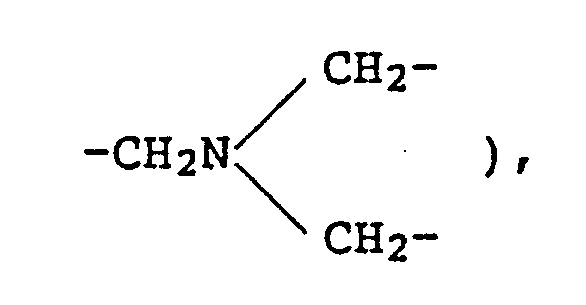
3.86 (s,3H,
6.70 (d, 1H, J=8.0 Hz;
7.53 (d, 1H, J=8.0 Hz;
Mass m/z (relative intensity): 301 (M⁺, 4.87), 230 (35.3), 215 (24.3), 189 (19.3), 187 (10.3), 84 (100). - The free base was dissolved in ethyl ether, reacted by introducing dry hydrochloride gas, and then filtered off. The crude crystals were recrystallized from CH₂Cℓ₂ - AcOEt to give the HCℓ salts (3.60g) as colorless prisms, m.p. 150 - 151°C.
- By using the compounds of the formulae

as starting materials (the combinations of R¹, R², R³, being the same as in Tables I and II) and by following the procedures of the above examples, there can be obtained all of the compounds of this invention represented by the general formula (I). Examples of the combinations of R¹, R², and R³ in said two starting compounds are shown in Table VIII. (Compound Nos. in the table correspond to those in Table VI).

- A solution of 1-(4-methoxy-5,6,7,8-tetrahydro-1-naphthyl)-2-butene-1-one (3.0g) and pyrrolidine (1.85g) in ethanol (100 mℓ) was stirred for 3 hours at room temperature. The mixture was evaporated in vacuo to give the residue. The residue was partitioned into water and ethyl ether. The ethyl ether was washed with water. The organic layer was extracted with 2N hydrochloric acid. The aqueous layer was neutralized with ammonia water and then extracted with ethyl ether. The ethyl ether was dried over anhydrous magnesium sulfate and then filtered. The filtrate was evaporated in vacuo to give 1-(4-methoxy-5,6,7,8-tetrahydro-1-naphthyl)-3-methyl-3-pyrrolidino-1-propanone (2.31g, Yield: 53.6%) as an oil.

1680 cm⁻¹
NMR δ (CDCℓ₃, TMS): 1.11 (d, 3H, J=7.0 Hz; -CH₃), 1.5-2.1 (m, 8H,
and
2.3 - 2.8 (m, 8H,
and
2.8 - 3.2 (m, 3H, -COCH₂CH-), 3.86 (s, 3H, -OCH₃), 6.70 (d, 1H, J=8.0 Hz,
7.60 (d, 1H, J=8.0 Hz,
Mass m/z (relative intensity): 301 (M⁺, 5.6), 230 (21.5), 215 (33.0), 189 (21.4), 187 (14.7), 98 (100), 97 (30.7). - The free base was dissolved in ethyl ether, reacted by introducing dry hydrochloride gas, and then filtered off. The crude crystals were recrystallized from CH₂Cℓ₂ - AcOEt to give the HCℓ salts as colorless prisms, m.p. 149 - 150°C.
- By using the compounds of the formulae

and pyrrolidine as starting materials (the combinations of R¹, R², and R³ being the same as in Tables I and II) and by following the procedures of the above example, there can be obtained the compounds of this invention represented by the general formula (I) - Hydrochlorides of these compounds can be obtained by making the reaction solution acidic with dilute hydrochloric acid and then the reaction mixture was evaporated in vacuo to give the residue. The residue was dissolved in water and then washed with ethyl acetate. The aqueous layer was extracted with dichloromethane and the extract was then dried over anhydrous magnesium sulfate. The mixture was filtered and then the filtrate was evaporated in vacuo to give the residue. Examples of the compounds obtained by this method are shown in Table IX.
Table IX Compound No. Yield % Melting Point of HCl Salt Solvent for Recrystallization 4-18 92.2 123-125 (Acetone) - A solution prepared by adding dropwise 4.27 g of propionic acid chloride to a soltion of 6.16 g of anhydrous aluminum chloride in 70 mℓ of dichloromethane under ice cooling and stirring the mixture for 30 minutes was added dropwise to a solution of 6.24 g of 1-methoxy -5,6,7 8-tetrahydronaphthalene in 20 mℓ of dichloromethane and further stirred at room temperture for 3 hours. The reaction solution was poured into ice water and extracted with dichloromethane. The dichloromethane layer was dried over anhydrous magnesium sulfate. The drying agent was filtered out and the filtrate was concentrated under reduced pressure to obtain 4-methoxy -5,6,7,8-tetrahydro-1-propionaphthone in a yield of 7.94 g (94.5%).

1670 cm⁻¹ - A solution prepared by adding dropwise 3.87 g of crotonoyl chloride to a solution of 4.94 g of anhydrous aluminum chloride in 50 mℓ of dichloromethane under ice cooling and stirring the mixture for 30 minutes was added dropwise to a solution of 5 g of 1-methoxy-5,6,7,8-tetrahydronaphthalene in 20 mℓ of dichloromethane and further stirred at room temperature for 3 hours. The resulting reaction solution was poured into ice water and extracted with dichloromethane. The dichloromethane layer was dried over anhydrous magnesiuum sulfate. The drying agent was filtered out and the filtrate was concentrated under reduced pressure to obtain 6:95 g (98.0% yield) of 1-(4-methoxy-5,6,7,8-tetrahydro-1-naphthyl)-2-butenyl-1-one as an oily substance.

1660 cm⁻¹ - 0.963 g of propionealdehyde was added dropwise at room temperature to a Grignard solution prepared by adding 1-bromo-5,6,7,8-tetrahydronaphthalene in an amount of 1.75 g to 242 mg of magnesim in 20 mℓ of anhydrous ether, and the resulting solution was stirred at room temperature for one hour. The reaction solution was added with a saturated aqueous solution of ammonium chloride for decomposition and then extracted with ether. This ether layer was dried over anhydrous magnesim sulfate and filtered, and the filtrate was concentrated under reduced pressure to obtain 1.40 g of 1-(5,6,7,8-tetrahydro-1-naphthyl)-1-propanol as a crude oily product.
- This product was dissolved in 20 mℓ of acetone, then added with a solution consisting of 72.5 mℓ of water and 4.72 g of chromic anhydride under ice cooling and stirred at room temperature for one hour. The reaction solution was concentrated under reduced pressure and, after distilling off acetone, extracted with ethyl acetate. The ethyl acetate layer was dried over anhydrous magnesium sulfate and filtered to remove the drying agent, and the filtrate was concentrated under reduced pressure to obtain 640 mg of 1-(5,6,7,8-tetrahydro-1-naphthyl)-1-propanone as an oily substance.

1690 cm⁻¹
Claims (9)
- An aminoketone derivative represented by the following general formula:

wherein R¹ is phenyl substituted by trihalogenmethyl or 4-(C₁-C₄)alkoxy-5,6,7,8-tetrahydro-1-naphthyl, and one of R² and R³ is a hydrogen atom and the other is (C₁-C₄)alkyl. - An aminoketone derivative according to claim 1 or a pharmaceutical acceptable salt thereof wherein R¹ is a phenyl substituted in para-position by trihalogenmethyl, R² is (C₁-C₄) alkyl and R³ is hydrogen.
- An aminoketone derivative or a pharmaceutically acceptable salt thereof according to claim 1, wherein the compound of the general formula (I) is 1-(4-methoxy-5,6,7,8-tetrahydro-1-naphthyl)-2-ethyl-3-pyrrolidino-1-propanone.
- An aminoketone derivative or a pharmaceutically acceptable salt thereof according to claim 1, wherein the compound of the general formula (I) is 1-(4-methoxy-5,6,7,8-tetrahydro-1-naphthyl)-2-methyl-3-pyrrolidino-1-propanone.
- An aminoketone derivative or a pharmaceutically acceptable salt thereof according to claim 2, wherein R² is methyl or ethyl.
- An aminoketone derivative or a pharmaceutically acceptable salt thereof according to claim 2, wherein the compound is 1-(4-trifluoromethylphenyl)-2-methyl-3-pyrrolidino-1-propanone.
- An aminoketone derivative or a pharmaceutically acceptable salt of any of claims 1 - 6 for use as a medicament.
- An aminoketone derivative or a pharmaceutically acceptable salt of any of claims 1 - 6 for use in the treatment of spastic paralysis or the improvement of hypertonia of muscles.
- A pharmaceutical composition containing aminoketone derivatives or pharmaceutically acceptable salts thereof according to any of claims 1 - 6 as active ingredient in association with a pharmaceutically acceptable, substantially non-toxic carrier or excipient.
Applications Claiming Priority (8)
| Application Number | Priority Date | Filing Date | Title |
|---|---|---|---|
| JP75379/85 | 1985-04-11 | ||
| JP7537985 | 1985-04-11 | ||
| JP11310385 | 1985-05-28 | ||
| JP113103/85 | 1985-05-28 | ||
| JP131629/85 | 1985-06-19 | ||
| JP13162985 | 1985-06-19 | ||
| JP27138185 | 1985-12-04 | ||
| JP271381/85 | 1985-12-04 |
Publications (3)
| Publication Number | Publication Date |
|---|---|
| EP0200942A2 EP0200942A2 (en) | 1986-11-12 |
| EP0200942A3 EP0200942A3 (en) | 1988-12-14 |
| EP0200942B1 true EP0200942B1 (en) | 1993-08-25 |
Family
ID=27465801
Family Applications (1)
| Application Number | Title | Priority Date | Filing Date |
|---|---|---|---|
| EP86104875A Expired - Lifetime EP0200942B1 (en) | 1985-04-11 | 1986-04-09 | New derivatives of an aminoketone |
Country Status (11)
| Country | Link |
|---|---|
| EP (1) | EP0200942B1 (en) |
| JP (1) | JPH0623140B2 (en) |
| KR (2) | KR930010702B1 (en) |
| CN (1) | CN1015892B (en) |
| AU (1) | AU587814B2 (en) |
| CA (1) | CA1276155C (en) |
| CS (1) | CS277560B6 (en) |
| DE (1) | DE3688917T2 (en) |
| DK (1) | DK172009B1 (en) |
| ES (1) | ES8706598A1 (en) |
| HU (1) | HU196739B (en) |
Families Citing this family (9)
| Publication number | Priority date | Publication date | Assignee | Title |
|---|---|---|---|---|
| US5057535A (en) * | 1985-04-11 | 1991-10-15 | Nippon Kayaku Kabushiki Kaisha | Derivatives of an aminoketone |
| US5103022A (en) * | 1985-04-11 | 1992-04-07 | Nippon Kayaku Kabushiki Kaisha | Process for producing an optically active aminoketone derivative |
| KR940003292B1 (en) * | 1986-10-09 | 1994-04-20 | 닛뽕 가야꾸 가부시기가이샤 | Optically active 2-methyl-1-(4-trifluoromethyl phenyl-3-pyrrolidino-1-propanone and process for producing thereof |
| JPH03115267A (en) * | 1989-09-28 | 1991-05-16 | Maruho Kk | Propiophenone derivative, its production and central muscle relaxant and antispasmodic agent containing the same |
| US5194606A (en) * | 1990-02-08 | 1993-03-16 | Mitsui Toatsu Chemicals, Incorporated | Preparation process of aminoketones |
| US5055585A (en) * | 1990-02-08 | 1991-10-08 | Mitsui Toatsu Chemicals, Incorporated | Preparation process of aminoketones |
| IT1241515B (en) * | 1990-07-30 | 1994-01-17 | Bromley Limited | SALTS OF NICOTINIC ACID WITH AMINOBENZYL COMPOUNDS AND THEIR PHARMACEUTICAL USE ". |
| WO1996010567A1 (en) * | 1994-09-30 | 1996-04-11 | Maruho Co., Ltd. | Aminoketone derivative, physiologically acceptable salt thereof, and use of the same |
| US5843478A (en) * | 1995-10-06 | 1998-12-01 | Nippon Kayaku Kabushiki Kaisha | Lanperisone formulation |
Family Cites Families (6)
| Publication number | Priority date | Publication date | Assignee | Title |
|---|---|---|---|---|
| FR2404003A1 (en) * | 1977-09-26 | 1979-04-20 | Lafon Labor | NEW DERIVATIVES OF PHLOROGLUCINOL, THEIR PROCESS FOR PREPARATION AND THEIR APPLICATION IN THERAPEUTICS |
| JPS54125630A (en) * | 1978-02-22 | 1979-09-29 | Nippon Zoki Pharmaceutical Co | Novel propanone derivative*its manufacture and medical composition containing it as active component |
| DE3019497A1 (en) * | 1980-05-22 | 1981-11-26 | Bayer Ag, 5090 Leverkusen | AMINOPROPIOPHENONE DERIVATIVES, METHOD FOR THE PRODUCTION THEREOF AND THEIR USE AS FUNGICIDES |
| JPS5944371A (en) * | 1982-09-07 | 1984-03-12 | Dainippon Pharmaceut Co Ltd | 1-phenyl-2-methyl-3-(1-pyrrolidinyl)-1-propanone derivative and central muscle relaxant containing said derivative as active component |
| AU4261285A (en) * | 1984-06-01 | 1985-12-05 | Tokyo Tanabe Company Limited | 1-propanone derivatives |
| DE3508398A1 (en) * | 1985-03-08 | 1986-11-06 | Hoechst Ag, 6230 Frankfurt | FUNGICIDES BASED ON 3- (HETERO) -ARYLPROPYLAMINES AND NEW (HETERO) -ARYL-PROPYLAMINS AND METHOD FOR THE PRODUCTION THEREOF |
-
1986
- 1986-04-09 ES ES553814A patent/ES8706598A1/en not_active Expired
- 1986-04-09 KR KR1019860002686A patent/KR930010702B1/en not_active Expired - Fee Related
- 1986-04-09 DE DE86104875T patent/DE3688917T2/en not_active Expired - Fee Related
- 1986-04-09 EP EP86104875A patent/EP0200942B1/en not_active Expired - Lifetime
- 1986-04-10 CN CN86102329A patent/CN1015892B/en not_active Expired
- 1986-04-10 CA CA000506340A patent/CA1276155C/en not_active Expired - Lifetime
- 1986-04-10 DK DK162186A patent/DK172009B1/en not_active IP Right Cessation
- 1986-04-10 AU AU55913/86A patent/AU587814B2/en not_active Ceased
- 1986-04-10 CS CS862646A patent/CS277560B6/en not_active IP Right Cessation
- 1986-04-10 HU HU861517A patent/HU196739B/en not_active IP Right Cessation
-
1987
- 1987-09-18 JP JP62232081A patent/JPH0623140B2/en not_active Expired - Lifetime
-
1993
- 1993-09-02 KR KR1019930017478A patent/KR930010703B1/en not_active Expired - Fee Related
Also Published As
| Publication number | Publication date |
|---|---|
| DK172009B1 (en) | 1997-09-15 |
| ES553814A0 (en) | 1987-07-01 |
| EP0200942A2 (en) | 1986-11-12 |
| HU196739B (en) | 1989-01-30 |
| KR930010702B1 (en) | 1993-11-08 |
| EP0200942A3 (en) | 1988-12-14 |
| DK162186D0 (en) | 1986-04-10 |
| DK162186A (en) | 1986-10-12 |
| CS277560B6 (en) | 1993-03-17 |
| DE3688917T2 (en) | 1994-02-10 |
| CN1015892B (en) | 1992-03-18 |
| AU587814B2 (en) | 1989-08-31 |
| HUT42430A (en) | 1987-07-28 |
| DE3688917D1 (en) | 1993-09-30 |
| CA1276155C (en) | 1990-11-13 |
| CS264686A3 (en) | 1992-11-18 |
| AU5591386A (en) | 1986-10-16 |
| ES8706598A1 (en) | 1987-07-01 |
| CN86102329A (en) | 1986-11-19 |
| JPH0623140B2 (en) | 1994-03-30 |
| KR930010703B1 (en) | 1993-11-08 |
| JPS63119444A (en) | 1988-05-24 |
| KR860008135A (en) | 1986-11-12 |
Similar Documents
| Publication | Publication Date | Title |
|---|---|---|
| EP0159566B1 (en) | Novel piperazine derivatives, processes for production thereof, and pharmaceutical compositions comprising said compounds as active ingredient | |
| AU569477B2 (en) | Aryl substituted aminomethyl benzene derivatives useful as antiarrhythmic agents | |
| HUT58045A (en) | Process for producing new butinylamine derivatives and pharmaceutical compositions comprising such compounds | |
| JPH0567150B2 (en) | ||
| EP0200942A2 (en) | New derivatives of an aminoketone | |
| US3989704A (en) | 3-Substituted-4-aryl isoquinolines | |
| EP0113587B1 (en) | Pyridine derivatives, process for their preparation and pharmaceutical compositions containing them | |
| HU181147B (en) | Process for preparing substituted heterocyclin phenoxamines | |
| Borne et al. | Conformational analogs of antihypertensive agents related to guanethidine | |
| PL137716B1 (en) | Process for preparing derivatives of imidazoline | |
| US4208420A (en) | New benzo [d] thiazole derivatives, process for their preparation and their therapeutic applications | |
| US4528299A (en) | 1-(2,3-Dimethyl-4-methoxyphenyl)-2-methyl-3-(1-pyrrolidinyl)-1-propanone and anti-spastic use thereof | |
| JPH1072415A (en) | 3-anilino-2-cycloalkenone derivatives | |
| JPS63255258A (en) | N-phenetylaminoalkyl-benzamide antiarrythmic agent | |
| Finkelstein et al. | Synthesis of cis-and trans-2-phenoxycyclopropylamines and related compounds | |
| JPS63264445A (en) | Novel indane derivative, manufacture, novel intermediate for manufacture, use as drug and composition | |
| US4727074A (en) | 2-(phenylmethylene)-1-(diaminoalkoxy) cycloalkanes and their pharmaceutical uses | |
| US3180867A (en) | Piperazine derivatives | |
| WO1995018092A1 (en) | Amino ketone derivative | |
| US3957788A (en) | 1-substituted-4-(1,2-diphenylethyl)piperazine derivatives and their salts and the preparation thereof | |
| US4349557A (en) | Thiazole derivatives and pharmaceutical compositions containing them | |
| US4175191A (en) | 4-Phenyl isoquinolines | |
| US3941833A (en) | Amino derivatives of 2,2-diaryl-cyclopropane | |
| JP2598309B2 (en) | 3-Cyclic aminopropanol derivative and salt thereof | |
| US3944570A (en) | 3,3-Disubstituted phthalides |
Legal Events
| Date | Code | Title | Description |
|---|---|---|---|
| PUAI | Public reference made under article 153(3) epc to a published international application that has entered the european phase |
Free format text: ORIGINAL CODE: 0009012 |
|
| AK | Designated contracting states |
Kind code of ref document: A2 Designated state(s): DE FR GB IT NL SE |
|
| PUAL | Search report despatched |
Free format text: ORIGINAL CODE: 0009013 |
|
| AK | Designated contracting states |
Kind code of ref document: A3 Designated state(s): DE FR GB IT NL SE |
|
| 17P | Request for examination filed |
Effective date: 19890210 |
|
| 17Q | First examination report despatched |
Effective date: 19910808 |
|
| GRAA | (expected) grant |
Free format text: ORIGINAL CODE: 0009210 |
|
| AK | Designated contracting states |
Kind code of ref document: B1 Designated state(s): DE FR GB IT NL SE |
|
| ITF | It: translation for a ep patent filed | ||
| REF | Corresponds to: |
Ref document number: 3688917 Country of ref document: DE Date of ref document: 19930930 |
|
| ET | Fr: translation filed | ||
| ITTA | It: last paid annual fee | ||
| PLBE | No opposition filed within time limit |
Free format text: ORIGINAL CODE: 0009261 |
|
| STAA | Information on the status of an ep patent application or granted ep patent |
Free format text: STATUS: NO OPPOSITION FILED WITHIN TIME LIMIT |
|
| 26N | No opposition filed | ||
| EAL | Se: european patent in force in sweden |
Ref document number: 86104875.9 |
|
| PGFP | Annual fee paid to national office [announced via postgrant information from national office to epo] |
Ref country code: SE Payment date: 20010212 Year of fee payment: 16 |
|
| PGFP | Annual fee paid to national office [announced via postgrant information from national office to epo] |
Ref country code: NL Payment date: 20010430 Year of fee payment: 16 |
|
| REG | Reference to a national code |
Ref country code: GB Ref legal event code: IF02 |
|
| PG25 | Lapsed in a contracting state [announced via postgrant information from national office to epo] |
Ref country code: SE Free format text: LAPSE BECAUSE OF NON-PAYMENT OF DUE FEES Effective date: 20020410 |
|
| PG25 | Lapsed in a contracting state [announced via postgrant information from national office to epo] |
Ref country code: NL Free format text: LAPSE BECAUSE OF NON-PAYMENT OF DUE FEES Effective date: 20021101 |
|
| EUG | Se: european patent has lapsed |
Ref document number: 86104875.9 |
|
| NLV4 | Nl: lapsed or anulled due to non-payment of the annual fee |
Effective date: 20021101 |
|
| PGFP | Annual fee paid to national office [announced via postgrant information from national office to epo] |
Ref country code: GB Payment date: 20030409 Year of fee payment: 18 |
|
| PGFP | Annual fee paid to national office [announced via postgrant information from national office to epo] |
Ref country code: FR Payment date: 20030415 Year of fee payment: 18 |
|
| PGFP | Annual fee paid to national office [announced via postgrant information from national office to epo] |
Ref country code: DE Payment date: 20030617 Year of fee payment: 18 |
|
| PG25 | Lapsed in a contracting state [announced via postgrant information from national office to epo] |
Ref country code: GB Free format text: LAPSE BECAUSE OF NON-PAYMENT OF DUE FEES Effective date: 20040409 |
|
| PG25 | Lapsed in a contracting state [announced via postgrant information from national office to epo] |
Ref country code: DE Free format text: LAPSE BECAUSE OF NON-PAYMENT OF DUE FEES Effective date: 20041103 |
|
| GBPC | Gb: european patent ceased through non-payment of renewal fee |
Effective date: 20040409 |
|
| PG25 | Lapsed in a contracting state [announced via postgrant information from national office to epo] |
Ref country code: FR Free format text: LAPSE BECAUSE OF NON-PAYMENT OF DUE FEES Effective date: 20041231 |
|
| REG | Reference to a national code |
Ref country code: FR Ref legal event code: ST |
|
| PG25 | Lapsed in a contracting state [announced via postgrant information from national office to epo] |
Ref country code: IT Free format text: LAPSE BECAUSE OF NON-PAYMENT OF DUE FEES;WARNING: LAPSES OF ITALIAN PATENTS WITH EFFECTIVE DATE BEFORE 2007 MAY HAVE OCCURRED AT ANY TIME BEFORE 2007. THE CORRECT EFFECTIVE DATE MAY BE DIFFERENT FROM THE ONE RECORDED. Effective date: 20050409 |