EP0200766B1 - Method of growing crystalline layers by vapour phase epitaxy - Google Patents
Method of growing crystalline layers by vapour phase epitaxy Download PDFInfo
- Publication number
- EP0200766B1 EP0200766B1 EP85905525A EP85905525A EP0200766B1 EP 0200766 B1 EP0200766 B1 EP 0200766B1 EP 85905525 A EP85905525 A EP 85905525A EP 85905525 A EP85905525 A EP 85905525A EP 0200766 B1 EP0200766 B1 EP 0200766B1
- Authority
- EP
- European Patent Office
- Prior art keywords
- substrate
- alkyl
- gas
- layer
- gas stream
- Prior art date
- Legal status (The legal status is an assumption and is not a legal conclusion. Google has not performed a legal analysis and makes no representation as to the accuracy of the status listed.)
- Expired
Links
Images
Classifications
-
- C—CHEMISTRY; METALLURGY
- C30—CRYSTAL GROWTH
- C30B—SINGLE-CRYSTAL GROWTH; UNIDIRECTIONAL SOLIDIFICATION OF EUTECTIC MATERIAL OR UNIDIRECTIONAL DEMIXING OF EUTECTOID MATERIAL; REFINING BY ZONE-MELTING OF MATERIAL; PRODUCTION OF A HOMOGENEOUS POLYCRYSTALLINE MATERIAL WITH DEFINED STRUCTURE; SINGLE CRYSTALS OR HOMOGENEOUS POLYCRYSTALLINE MATERIAL WITH DEFINED STRUCTURE; AFTER-TREATMENT OF SINGLE CRYSTALS OR A HOMOGENEOUS POLYCRYSTALLINE MATERIAL WITH DEFINED STRUCTURE; APPARATUS THEREFOR
- C30B25/00—Single-crystal growth by chemical reaction of reactive gases, e.g. chemical vapour-deposition growth
- C30B25/02—Epitaxial-layer growth
-
- C—CHEMISTRY; METALLURGY
- C30—CRYSTAL GROWTH
- C30B—SINGLE-CRYSTAL GROWTH; UNIDIRECTIONAL SOLIDIFICATION OF EUTECTIC MATERIAL OR UNIDIRECTIONAL DEMIXING OF EUTECTOID MATERIAL; REFINING BY ZONE-MELTING OF MATERIAL; PRODUCTION OF A HOMOGENEOUS POLYCRYSTALLINE MATERIAL WITH DEFINED STRUCTURE; SINGLE CRYSTALS OR HOMOGENEOUS POLYCRYSTALLINE MATERIAL WITH DEFINED STRUCTURE; AFTER-TREATMENT OF SINGLE CRYSTALS OR A HOMOGENEOUS POLYCRYSTALLINE MATERIAL WITH DEFINED STRUCTURE; APPARATUS THEREFOR
- C30B25/00—Single-crystal growth by chemical reaction of reactive gases, e.g. chemical vapour-deposition growth
- C30B25/02—Epitaxial-layer growth
- C30B25/10—Heating of the reaction chamber or the substrate
- C30B25/105—Heating of the reaction chamber or the substrate by irradiation or electric discharge
-
- C—CHEMISTRY; METALLURGY
- C30—CRYSTAL GROWTH
- C30B—SINGLE-CRYSTAL GROWTH; UNIDIRECTIONAL SOLIDIFICATION OF EUTECTIC MATERIAL OR UNIDIRECTIONAL DEMIXING OF EUTECTOID MATERIAL; REFINING BY ZONE-MELTING OF MATERIAL; PRODUCTION OF A HOMOGENEOUS POLYCRYSTALLINE MATERIAL WITH DEFINED STRUCTURE; SINGLE CRYSTALS OR HOMOGENEOUS POLYCRYSTALLINE MATERIAL WITH DEFINED STRUCTURE; AFTER-TREATMENT OF SINGLE CRYSTALS OR A HOMOGENEOUS POLYCRYSTALLINE MATERIAL WITH DEFINED STRUCTURE; APPARATUS THEREFOR
- C30B29/00—Single crystals or homogeneous polycrystalline material with defined structure characterised by the material or by their shape
- C30B29/10—Inorganic compounds or compositions
- C30B29/40—AIIIBV compounds wherein A is B, Al, Ga, In or Tl and B is N, P, As, Sb or Bi
-
- C—CHEMISTRY; METALLURGY
- C30—CRYSTAL GROWTH
- C30B—SINGLE-CRYSTAL GROWTH; UNIDIRECTIONAL SOLIDIFICATION OF EUTECTIC MATERIAL OR UNIDIRECTIONAL DEMIXING OF EUTECTOID MATERIAL; REFINING BY ZONE-MELTING OF MATERIAL; PRODUCTION OF A HOMOGENEOUS POLYCRYSTALLINE MATERIAL WITH DEFINED STRUCTURE; SINGLE CRYSTALS OR HOMOGENEOUS POLYCRYSTALLINE MATERIAL WITH DEFINED STRUCTURE; AFTER-TREATMENT OF SINGLE CRYSTALS OR A HOMOGENEOUS POLYCRYSTALLINE MATERIAL WITH DEFINED STRUCTURE; APPARATUS THEREFOR
- C30B29/00—Single crystals or homogeneous polycrystalline material with defined structure characterised by the material or by their shape
- C30B29/10—Inorganic compounds or compositions
- C30B29/46—Sulfur-, selenium- or tellurium-containing compounds
- C30B29/48—AIIBVI compounds wherein A is Zn, Cd or Hg, and B is S, Se or Te
-
- H—ELECTRICITY
- H10—SEMICONDUCTOR DEVICES; ELECTRIC SOLID-STATE DEVICES NOT OTHERWISE PROVIDED FOR
- H10P—GENERIC PROCESSES OR APPARATUS FOR THE MANUFACTURE OR TREATMENT OF DEVICES COVERED BY CLASS H10
- H10P14/00—Formation of materials, e.g. in the shape of layers or pillars
- H10P14/20—Formation of materials, e.g. in the shape of layers or pillars of semiconductor materials
- H10P14/24—Formation of materials, e.g. in the shape of layers or pillars of semiconductor materials using chemical vapour deposition [CVD]
-
- H—ELECTRICITY
- H10—SEMICONDUCTOR DEVICES; ELECTRIC SOLID-STATE DEVICES NOT OTHERWISE PROVIDED FOR
- H10P—GENERIC PROCESSES OR APPARATUS FOR THE MANUFACTURE OR TREATMENT OF DEVICES COVERED BY CLASS H10
- H10P14/00—Formation of materials, e.g. in the shape of layers or pillars
- H10P14/20—Formation of materials, e.g. in the shape of layers or pillars of semiconductor materials
- H10P14/29—Formation of materials, e.g. in the shape of layers or pillars of semiconductor materials characterised by the substrates
- H10P14/2901—Materials
- H10P14/2913—Materials being Group IIB-VIA materials
- H10P14/2917—Tellurides
-
- H—ELECTRICITY
- H10—SEMICONDUCTOR DEVICES; ELECTRIC SOLID-STATE DEVICES NOT OTHERWISE PROVIDED FOR
- H10P—GENERIC PROCESSES OR APPARATUS FOR THE MANUFACTURE OR TREATMENT OF DEVICES COVERED BY CLASS H10
- H10P14/00—Formation of materials, e.g. in the shape of layers or pillars
- H10P14/20—Formation of materials, e.g. in the shape of layers or pillars of semiconductor materials
- H10P14/34—Deposited materials, e.g. layers
- H10P14/3402—Deposited materials, e.g. layers characterised by the chemical composition
- H10P14/3424—Deposited materials, e.g. layers characterised by the chemical composition being Group IIB-VIA materials
- H10P14/3432—Tellurides
-
- H—ELECTRICITY
- H10—SEMICONDUCTOR DEVICES; ELECTRIC SOLID-STATE DEVICES NOT OTHERWISE PROVIDED FOR
- H10P—GENERIC PROCESSES OR APPARATUS FOR THE MANUFACTURE OR TREATMENT OF DEVICES COVERED BY CLASS H10
- H10P14/00—Formation of materials, e.g. in the shape of layers or pillars
- H10P14/20—Formation of materials, e.g. in the shape of layers or pillars of semiconductor materials
- H10P14/34—Deposited materials, e.g. layers
- H10P14/3438—Doping during depositing
- H10P14/3441—Conductivity type
-
- Y—GENERAL TAGGING OF NEW TECHNOLOGICAL DEVELOPMENTS; GENERAL TAGGING OF CROSS-SECTIONAL TECHNOLOGIES SPANNING OVER SEVERAL SECTIONS OF THE IPC; TECHNICAL SUBJECTS COVERED BY FORMER USPC CROSS-REFERENCE ART COLLECTIONS [XRACs] AND DIGESTS
- Y10—TECHNICAL SUBJECTS COVERED BY FORMER USPC
- Y10S—TECHNICAL SUBJECTS COVERED BY FORMER USPC CROSS-REFERENCE ART COLLECTIONS [XRACs] AND DIGESTS
- Y10S148/00—Metal treatment
- Y10S148/048—Energy beam assisted EPI growth
-
- Y—GENERAL TAGGING OF NEW TECHNOLOGICAL DEVELOPMENTS; GENERAL TAGGING OF CROSS-SECTIONAL TECHNOLOGIES SPANNING OVER SEVERAL SECTIONS OF THE IPC; TECHNICAL SUBJECTS COVERED BY FORMER USPC CROSS-REFERENCE ART COLLECTIONS [XRACs] AND DIGESTS
- Y10—TECHNICAL SUBJECTS COVERED BY FORMER USPC
- Y10S—TECHNICAL SUBJECTS COVERED BY FORMER USPC CROSS-REFERENCE ART COLLECTIONS [XRACs] AND DIGESTS
- Y10S148/00—Metal treatment
- Y10S148/064—Gp II-VI compounds
-
- Y—GENERAL TAGGING OF NEW TECHNOLOGICAL DEVELOPMENTS; GENERAL TAGGING OF CROSS-SECTIONAL TECHNOLOGIES SPANNING OVER SEVERAL SECTIONS OF THE IPC; TECHNICAL SUBJECTS COVERED BY FORMER USPC CROSS-REFERENCE ART COLLECTIONS [XRACs] AND DIGESTS
- Y10—TECHNICAL SUBJECTS COVERED BY FORMER USPC
- Y10S—TECHNICAL SUBJECTS COVERED BY FORMER USPC CROSS-REFERENCE ART COLLECTIONS [XRACs] AND DIGESTS
- Y10S148/00—Metal treatment
- Y10S148/094—Laser beam treatment of compound devices
Definitions
- This invention relates to a method of growing crystalline layers by vapour phase epitaxy.
- the invention in particular relates to the growth of epitaxial layers of cadmium mercury telluride.
- the growth of metal and semiconductor layers on a substrate by the method of vapour phase epitaxy is well known in the crystal growing art.
- the method offerts the possibility of producing high purity monocrystalline layers at temperatures considerably lower than those used in other methods, eg growth by pulling from the melt.
- vapour phase epitaxy appears to be the only practical method of producing crystalline layers of this material having the required composition and purity for advanced devices.
- a further reduction in epitaxial growth temperature may be obtained by the technique of photosen- sitisation or photodecomposition (photolytic decomposition).
- electromagnetic radiation is used to assist the applied heat in providing decomposition of the vapour transported phase chemicals.
- epitaxial mercury telluride layers by the photodecomposition of diethyl telluride in the presence of mercury vapour using ultra violet radiation.
- carrier gas used to transport the vapours by this technique can have a significant effect on the product.
- hydrogen As the carrier gas. This is basically because hydrocarbons are usually formed as waste products from the organic radicals present and hydrogen assists the formation of hydrocarbons avoiding carbon deposition. Hydrogen also has other desirable properties, eg a relatively high thermal conductivity. Indeed, hydrogen has most often been employed as a carrier gas in previously published methods of epitaxial deposition involving the decomposition of metal-organic compounds, eg alkyls, particularly in the decomposition of alkyls to form cadmium mercury telluride.
- a method of growing an epitaxial crystalline layer on a substrate which comprises the steps of
- the reaction on the surface of the substrate may be controlled in a known way, for example by careful control of substrate temperature and of the flowrate and concentration of the gas stream through the reaction zone.
- radiation reaches the substrate surface through the gas stream.
- Ultra-violet (uv) light for example from a low, medium, or high pressure mercury lamp, is a generally suitable form of radiation, especially relatively long- wave uv radiation in the wavelength range 240 to 270 nm since shorter wavelength uv radiation (eg 200 nm or below) may tend to promote too great a degree of vapour phase decomposition of the at least one alkyl and so promote vapour phase nucleation of particles.
- the inert gas is conveniently selected from the group consisting of N 2 , CH 4 , C 2 H s , He, Ne, Ar and mixtures thereof.
- the purpose of the inert gas is to suppress homogenous nucleation of particles in the vapour phase.
- the carrier gas preferably comprises more than 80%, most preferably more than 95%, by volume of inert gas.
- the carrier gas may contain small amounts, preferably less than 5% by volume, most preferably less than 1 % by volume, of a reactive gas such as hydrogen.
- the inert gas consists of helium.
- a carrier gas comprising mainly or wholly an inert gas such as helium
- the problems caused by using a gas consisting entirely of hydrogen may be avoided.
- the decomposition reaction may surprisingly proceed without carbon deposition.
- Helium is also much preferred as the inert gas because heavier inert gases such as N 2 and Ar will tend to produce strong convection currents in the reaction zone as the gas stream passes the heated substrate, which can upset the even growth of an expitaxial layer.
- the gas stream is passed over the substrate, the substrate being irradiated through the gas stream from above.
- a further flow of gas, free of organic reagents, may be provided through the reaction zone co-directionally with the gas stream between the source of radiation, preferably uv radiation, and the gas stream in order to prevent opaque products of photolytic decomposition from depositing between radiation source and the substrate. A build-up of opaque deposits would rapidly bring the growth of an epitaxial layer to a halt.
- the composition of this further flow is conveniently the same as that of the carrier gas.
- the average velocity of this further flow of gas is between 50% and 200% that of the gas stream as the two streams pass the substrate, and most preferably the average velocities of these two streams are substantially the same.
- the present inventors have found that by employing gas streams having similar velocities, mixing between the streams is kept to a minimum and epitaxial growth can continue for several hours if required without undue impairment of radiation intensity which might otherwise result from a buildup of opaque decomposition products over the radiation source.
- the total pressure of the gases passing through the reaction zone is above 10133 N/m 2 in order to suppress premature alkane formation from the decomposition of the at least one alkyl. Such formation of alkanes is favoured by low pressures in the presence of electromagnetic, especially uv, radiation, and will enhance the concentration of free atoms in the reaction zone thus enhancing unwanted vapour phase homogenous nucleation of particles.
- a pressure in excess of 10133 N/m 2 also facilitates the use of relatively high partial pressures of reactants in the reaction zone which are often desirable to promote epitaxial growth.
- the pressure is most preferably between 50665 N/m 2 and 101330 N/m 2 . Pressure above 101330 N/m 2 (1 atmosphere) are undesirable because of potential leakage of toxic gases from the crystal growth equipment.
- the epitaxial layer grown by the method of the present invention is preferably a IIb-VIb binary compound such as CdTe, a Ilb-Ilb-Vlb ternary alloy such as CdHgTe, a IIlb-Vb binary compound such as GaAs, or a lllb-Illb-Vb ternary alloy such as GaAIAs.
- the gas stream therefore preferably contains, in the vapour phase, either
- the Group llb, IIlb, Vb and Vlb elements are preferably selected from Cd, Zn, Hg, In, Ga, Al, P, As, Sb, S, Se and Te.
- the alkyls of these elements preferably contain simple alkyl or substitututed alkyl groups having from 1 to 5 carbon atoms, and most preferably contain ethyl or methyl groups. Where an alkyl contains a plurality of alkyl radicals these radicals are preferably the same.
- the present method is particularly advantageous when employing a Group Vb or Group Vlb alkyl having a thermal decomposition temperature of more than 350°C since it isthe use of this category of alkyl that necessitates the undesirable use of high substrate temperatures in previous, known vapour phase epitaxy methods.
- the substrate may be any suitable material and is preferably a semi-conductor material.
- the temperature to which the substrate is heated is not critical since the decomposition of the alkyl or alkyls in the reaction zone is achieved mainly photolytically and not thermally. However, some heating is desirable in order to assist alkyl decomposition and epitaxial growth, and in order to drive off from the surface of the substrate any organic or organo-metallic by-products which might otherwise contaminate the epitaxial layer.
- the optimim temperature of the substrate may be 100-200°C below the temperature which would otherwise be required in the absence of applied radiation to provide thermal decomposition. The advantages of being able to use a lower temperature are considerable.
- a method of growing an epitaxial crystalline layer of a tellurium compound of formula Cd x Hg i - x Te where x is from 0 to 1 onto a substrate comprising the steps of
- Ultra-violet (uv) radiation is generally preferred as the electromagnetic radiation, especially relatively long-ware uv radiation, in the wavelength range 240 to 270 nm since shorter wavelength uv radiation (eg 200 nm or below) may tend to promote too great a degree of vapour phase decomposition of the tellurium and (when x is greater than 0) cadmium alkyls and so promote vapour phase nucleation of telluride compound particles.
- a mercury arc lamp located outside the vessel is a convenient source of uv radiation.
- a reflector is located behind the lamp in order to focus radiation into the vessel.
- Hg low pressure Hg lamp emitting uv light at a single 253.7nm wavelength
- a broad band source eg a high pressure Hg lamp, or a line source emitting uv radiation at a wavelength other than 253.7nm, used instead.
- the atmosphere of Hg, which is required when x is less than 1 is preferably provided in part or whole by a supply of mercury vapour introduced into the reaction zone.
- the supply of mercury vapour may be provided in a known way, by for example passing the gas stream over liquid mercury heated to a required temperature.
- the atmosphere of Hg may additionally or alternatively be provided by a photolytically unstable mercury compound such as dimethyl mercury which will readily decompose in the presence of electromagnetic, especially uv, radiation.
- the partial pressure of the mercury atmosphere in the reaction zone is preferably greater than 1014 N/m 2 , most preferably greater than 2028 N/m 2 since if a lower partial pressure is used little or no mercury is found to be incorporated into growing epitaxial layer, and, when x is O, virtually no growth occurs.
- the atmosphere of mercury is preferably provided in part or whole by a supply of mercury vapour because a photolytically decomposed mercury compound is unlikely on its own to be able to provide the required concentration of mercury.
- an equilibrium partial pressure of 1014 N/m 2 may be obtained by heating the mercury source to at least 180°C, though in practice a temperature of above 200°C is preferred.
- An excess of mercury vapour is not detrimental to the growth of the layer since its rate of growth is determined to a far greater extent by concentration of cadmium or tellurium in the gas stream.
- the substrate is ideally maintained at a temperature above that of the mercury source in order to prevent the possibility of mercury vapour condensing on the substrate.
- the reaction on the surface of the substrate may be controlled in a known way, by for example careful control of the flowrate of and reactant concentrations in the gas stream passing through the reaction zone.
- concentration of cadmium alkyl in the gas stream is critical and must surprisingly be maintained at very low levels otherwise the reactants produce only a dust and no epitaxial layer is formed.
- the volumetric ratio of carrier gas to cadmium alkyl is preferably greater than 10 4 : 1, and is most preferably greater than 1 Qs: 1.
- the value of x when depositing a layer of cadmium mercury telluride is controlled by the ratio of cadmium alkyl to tellurium aklyl concentrations in the gas stream.
- the additional alkyl compound may be a mercury alkyl, especially dimethyl mercury.
- a mercury alkyl may still be used provided its concentration in the gas stream is sufficiently low to prevent the Hg it liberates during photolysis from reacting with tellurium.
- the additional alkyl compound may be an azoalkane, especially azomethane (CH 3 N 2 CH 3 ) or azoethane (C 2 H s N 2 C 2 Hs), since they are known to decompose photolytically to yield alkyl radicals and N 2 , and N 2 is of course entirely compatible with the inert nature of the gas stream.
- the total pressure of the gases passing through the reaction zone is above 10133 N/m 2 in order to suppress premature alkane formation from the decomposition of the tellurium and (when x is greater than 0) cadmium alkyls.
- Such formation of alkanes is favoured by low pressures in the presence of electromagnetic, especially uv, radiation, and will enhance the concentration of free tellurium and (when x is greater than 0) cadmium atoms in the reaction zone thus enhancing unwanted vapour phase homogeneous nucleation of telluride particles.
- a pressure in excess of 10133 N/m 2 also facilitates the use of relatively high partial pressure of reactants in the reaction zone which are often desirable to promote epitaxial growth.
- the pressure is preferably between 50665 N/m2 and 101330 N/m 2 . Pressures above 101330 N/m 2 (1 atmosphere) are undesirable because of potential leakage of toxic gases.
- the method of the present invention is preferably carried out as follows.
- Mercury is provided in the form of mercury vapour from a heated mercury source inside the reaction vessel.
- Cadmium is obtained from a suitable cadmium alkyl and tellurium from a suitable tellurium alkyl.
- a flow of evaporated cadmium and telluride alkyls in the carrier gas comprising preferably pure helium is passed over the mercury source carrying mercury vapour in the stream to the reaction zone.
- the substrate may be of cadmium telluride, other Ilb Vlb material including mixed semiconductors, indium antimonide, silicon, germanium, gallium arsenide, spinel, alumina, sapphire or any other known substrate material.
- the substrate is preferably prepared and orientated, in a known way, eg in (100) orientation for CdHgTe deposition.
- the epitaxial deposition of cadmium mercury telluride in the way described is an improved form of the general process described in UK published Patent Specification No GB 2078695A.
- cadmium mercury telluride is grown by the method of the present invention in a horizontal reaction vessel with the main gas stream passed horizontally over a mercury source, preferably an inert gas is passed horizontally over the inner surface of the upper vessel wall to keep the wall beneath the ultra violet lamp free from deposits.
- this inert gas is helium. It may be introduced via an inlet port which extends over the mercury source.
- the substrate is preferably heated by conduction from a susceptor, eg of graphite, which can be heated by an infrared lamp located outside the reaction vessel.
- the substrate surface on which the epitaxial growth occurs is preferably maintained at a temperature in the range 200-350°C, most preferably 220°C-270°C.
- the radiation used to irradiate the gas stream in the reaction zone adjacent to the substrate is obtained from a broad band high pressure mercury arc lamp.
- the grown layer may be a single epitaxial layer or multiple layers. Such a layer or layers may be graded in composition.
- Cd x Hg 1-x Te layers may be grown with two different values of x so that a detector, sensitive to both the 3 to 5 and 8 to 14 ⁇ m wavebands may be made.
- a passivating layer of CdTe may be grown on the Cd x Hg i . x Te layer.
- Suitable Ilb Vlb compounds or mixed alloys may be grown on the layer eg CdTe, ZnS, CdTe x Se i . x which may be used to make heterojunctions or form anti-reflection coatings, etc.
- the volatile cadmium alkyl may be dimethyl cadmium, diethyl cadmium, or dipropyl cadmium, etc, but is preferably dimethyl cadmium.
- the volatile tellurium alkyl may be an alkyl such as diethyl telluride, dimethyl telluride, dipropyl telluride, or dibutyl telluride, etc, or equivalent hydrogen substituted tellurium alkyls, such as hydrogen ethyltellu- ride [H(C 2 H 5 )T e ].
- the alkyl is preferably diethyl telluride.
- the layer or layers produced may be suitably doped by employing a volatile dopant in the gas stream which is photodecomposed together with the cadmium and tellurium alkyl.
- the partial pressure of the dopant in the gas stream will generally not exceed (10-itorr) 0.013 N/m 2 .
- Example of dopants are (CH 3 ) 3 Al, (CH 3 ) 3 Ga and (CH 3 ) 3 As.
- the folow rate (speed) of the stream in the reaction zone is preferably in the range 0.5 cm sec -1 to 100 cm sec -1 .
- a typical flow rate using a 6 cm diameter reaction vessel is 10 cm sec- 1 .
- the mercury vapour in the stream is preferably at a pressure of 1014 N/m 2 typically 4056 N/m 2 , as determined by the temperature of the mercury source, eg preferably a temperature in the range 200°C-350°C, most preferably 220°C-270°C.
- the mercury may be heated by a resistance heater outside the reaction vessel.
- the relative proportions of dimethyl cadmium: diethyl telluride in the stream determine the composition of the grown expitaxial layer and may be adjusted accordingly.
- the concentration of dimethyl cadmium in the gas stream is preferably much less than that of diethyl telluride.
- the relative proportions by volume are y parts of dimethyl cadmium to (1-y) parts of diethyl telluride, where y is in the range 0.001 to 0.1, especially 0.005 to 0.05, eg typically 0.01.
- the gas stream may be formed by passing purified helium through two bubblers arranged in parallel containing the appropriate organic reagents, eg dimethyl cadmium and diethyl telluride suitably purified.
- the content of dimethyl cadmium in the stream may be varied by the method described in published UK patent application GB-214 6663A, to provide alternate layers of CdTe and HgTe which readily diffuse into one another to provide a mixed IIb-Vlb epitaxial structure. This is made possible because layers of both HgTe and CdTe may be grown by the present method.
- the composition of the mixed structure may be determined by the relative size of the layers as described in GB-2146663A.
- a method of growing an epitaxial layer of the ternary alloy Cd x Hg 1-x Te onto a substrate comprises the steps of providing an atmosphere of mercury vapour at a required temperature and pressure inside a vessel; controlling the temparature of the substrate independently of the vessel temperature; providing separate supplies of a cadmium alkyl, a tellurium alkyl, and a dilutant gas into the vessel to grow a layer of HgTe t i thick and a layer of CdTe t 2 thick in either order; switching the supply of cadmium alkyl to the substrate on and off to grow a layer of CdTe and of HgTe, the combined thickness t i +t 2 of the two layers being not greater than 0.5 ⁇ m thick, wherein the Cd alkyl decomposes preferentially with the Te alkyl in the region of the substrate to form CdTe as a layer on the substrate, the Te alkyl
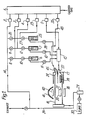
- Figure 1 is a schematic flow diagram of apparatus for providing epitaxial growth on a substrate by chemical vapour photodeposition.
- high purity helium is supplied to a manifold 1 which maintains a supply for six mass flow controllers 2, 3, 4, 5, 23 and 35.
- Mass flow controller 2 supplies helium to a bypass line 14 connected to an exhaust line 39.
- Mass flow controllers 3 and 4 supply helium to alkyl bubblers 6 and 7, which respectively contain an alkyl of cadmium such as dimethyl cadmium and an alkyl tellurium such as diethyl telluride.
- Helium flow from the controllers 3 and 4 can be diverted via bypass valves 8 and 9 to the bypass line 14 or through isolation valves 10, 11 and 12, 13 thus enabling the alkyl flows to be turned on and off.
- the mixture of helium plus alkyls leaving the mixer 15 is passed into a lower inlet port 37 of a silica glass reactor vessel 16.
- the part of the vessel 16 nearer the inlet port 37 is heated by an electrical resistance furnace 17.
- a mercury bath 19 inside the vessel 16 is heated by the furnace 17.
- a carbon susceptor 21 In a reaction zone further along the vessel 16 away from the inlet port 37 a carbon susceptor 21 carries a substrate 20 to be coated with an epitaxial layer of Cd x Hg i . x Te.
- An infrared lamp 18 is located outside the vessel 16 and radiantly heats the susceptor 21 to heat the substrate 20.
- a mercury lamp 40 located above the substrate 20 provides broad band ultra violet radiation which is focussed by a reflector 41 into the reaction zone adjacent to the upper surface of the substrate 20.
- the exhaust vapour stream is extracted via the line 39.
- a vacuum pump 30 is connected to the vessel 16 via a cold trap 29 for initial purging of the vessel 16.
- the layer of Cd x Hg i - x Te grown on the substrate may include one or more dopants.
- a dopant is provided by passing helium from the manifod 1 through a mass flow controller 23 to a bubbler 25 containing an alkyl of the dopant. From the bubbler 25 the alkyl passes to the mixer 15 and thence to the vessel 16. Isolation valves 27 and 28 and bypass valve 26 control the flow of helium and the dopant alkyl.
- dopants and their alkyls are as follows:
- a supply of helium via a line 43 controlled by the controller 35 is provided to a second inlet port 45 to the vessel 16, the inlet port 45 extending over the mercury bath 19.
- the lower part of the inlet port 45 over the mercury bath 19 is provided by a horizontal separator extending across the furnace 16. This supply of helium keeps the upper wall of the vessel above the substrate 20 free from deposits during the photodeposition process.
- Mercury vapour from the bath 19 is carried by the stream of gases introduced at the inlet port 37, ie helium plus alkyls of cadmium and tellurium, over the substrate 20 which is heated preferably to a temperature of about 240-250°C. (The temperature of the substrate 20 and of the mercury bath 19 may be monitored by a thermocouple not shown).
- pho- tosensitisation of the surface of the substrate 20 occurs, which together with the heating of the substrate 20 and absorption in the metal-organics of the applied radiation, provides decomposition of the alkyls.
- Deposition of cadmium mercury telluride plus any dopants included occurs as a monocrystalline epitaxial layer on the upper surface of the substrate 20.
- Typical conditions for growth of a layer of Cd x Hg 1-x Te on a CdTe substrate are:
- the internal diameter of the furnace 16 used was 6 cm, with the horizontal separator forming the lower part of the inlet port 45 above the mercury bath 19 being situated 4.5 cm from the bottom of the inside of the furnace.
- cadmium telluride CdTe was used as the substrate 20, and the content of the bubblers 6, 7 and 25 were dimethyl cadmium, diethyl telluride, and dimethyl mercury respectively.
- the temperature of each bubbler was maintained at 25°C unless otherwise stated.
- the bubblers were designed such that the helium gas leaving each bubbler was substantially saturated with the alkyl atthe bubblertemperature.
- the mercury lamp 40 used was an Illumiantion Industries 3KW High Pressure Mercury Arc Lamp.
- the shutdown sequence employed was the reverse of the above sequence.
- the above described sequence was used to grow an epitaxial CdTe layer employing bubblers 6 and 7 only.
- the apparatus of Figure 1 was used, except that the mercury bath 19 was removed from the vessel 16 and the furnace 17 remained switched off.
- the CdTe substrate was oriented on (110).
- the helium gas flowrates through controllers 3, 4, 23, 5 and 35 were adjusted to 4.5, 1500, 0, 1500 and 2000 cc per minute respectively.
- the CdTe substrate was heated to 250°C.
- the above described sequence was used to grow an epitaxial layer of CMT employing bubblers 6 and 7 only.
- the CdTe substrate was oriented on (110).
- the helium gas flowrates through controllers 3, 4, 23, 5 and 35 were adjusted to 1.4, 1500, 0, 1500 and 2000 cc per minute respectively.
- the mercury bath 19 was heated to 210°C and the substrate 20 to 252°C.
- an epitaxial layer of CMT of formula Cd 0.24 Hg 0.76 Cd was formed on the surface of the substrate.
- the layer had a thickness of 1.3 ⁇ m and an epitaxial of 0.6 cm 2.
- the above described sequence was used to grow an epitaxial layer of CMT employing bubblers 6, 7 and 25.
- the CdTe substrate was oriented at 2° off (100)-(110).
- Helium gas flowrates through controllers 3, 4, 23, 5 and 35 were adjusted to 3.7, 1500, 375, 1125 and 2000 cc per minute respectively.
- Bubbler 6 was cooled to 0°C during use.
- the CdTe substrate 20 was heated to 228°C, and the mercury bath 19 to 215°C.
- the above described sequence was first used to grow an epitaxial buffer layer of CdTe employing bubblers 6 and 7 only, with the CdTe substrate oriented on (110).
- Helium gas flowrates through controllers 3, 4, 23, 5 and 35 were adjusted to 4.5, 1500, 0, 1500 and 2000 cc per minute.
- the CdTe substrate 20 was heated to 252°C and the mercury bath 19 maintained at a temperature below 100°C. Growth conditions were maintained for 10 minutes. Without removing the substrate, the conditions were then altered to grow an epitaxial layer of CMT on top of the CdTe buffer layer.
- the helium flowrate through controller 3 was reduced to 1.4 cc per minute, and the temperature of the mercury bath 19 increased to 210°C. These further growth conditions were maintained for 1 hour, and the resulting epitaxial growth on the substrate 20 was removed for inspection.
- the epitaxial growth on the substrate 20 was found to consist of a 1.3 ⁇ m thick layer of CMT of formula Cd 0.24 Hg 0.76 Te which had grown on a 0.25 1 1m thick buffer layer of CdTe.
- the epitaxial area of the growth was 0.6 cm 2 .
- the CdTe buffer layer was found to be of good crystalline quality as indicated by measuring the ratio of its helium ion channeling backscatter count to a random direction backscatter count, which was found to be just 8%.
- the width of the graded composition region at the interface between the CMT and CdTe layers was measured at 30 nm (300 Angstroms), indicating a sharp transition between the two.
- This Example also demonstrates that a good quality CdTe layer may be grown even when a small amount of Hg vapour is also present in the furnace atmosphere.
Landscapes
- Chemical & Material Sciences (AREA)
- Engineering & Computer Science (AREA)
- Crystallography & Structural Chemistry (AREA)
- Materials Engineering (AREA)
- Metallurgy (AREA)
- Organic Chemistry (AREA)
- Chemical Kinetics & Catalysis (AREA)
- General Chemical & Material Sciences (AREA)
- Inorganic Chemistry (AREA)
- Crystals, And After-Treatments Of Crystals (AREA)
Abstract
Description
- 1. This invention relates to a method of growing crystalline layers by vapour phase epitaxy. The invention in particular relates to the growth of epitaxial layers of cadmium mercury telluride.
- The growth of metal and semiconductor layers on a substrate by the method of vapour phase epitaxy is well known in the crystal growing art. The method offerts the possibility of producing high purity monocrystalline layers at temperatures considerably lower than those used in other methods, eg growth by pulling from the melt.
- The use of lower temperature is in many cases de- siderable as it allows growth problems causing lack of homogeneity and purity of the product to be reduced or eliminated. For instance, in the case of the semi- conductor material cadmium mercury telluride, the most promising narrow band gap material for infrared photon detection, problems such as the high volatility of mercury, the high interdiffusion coefficient of Hg and Cd and the fast dopant diffusion and large segregation coefficients from the melt are present.
- In view of these problems vapour phase epitaxy appears to be the only practical method of producing crystalline layers of this material having the required composition and purity for advanced devices.
- It is known to deposit epitaxial crystalline layers on substrates by the pyrolytic decomposition of organic compounds containing the elements required to form the layers. Such methods are described in, for example, UK Patent Application No GB-2078695A and US Patent No 4439267. Although the growth temperatures, in the decomposition temperatures of the organic compounds used, are lower than in growth from the melt techniques they could preferably be further reduced. For instance the typical temperature of 410°C used in the expitaxial growth of cadmium mercury telluride in the method described in the above mentioned specification could usefully be reduced to 300 ° C or less to provide even better controlled epitaxial layers. Unfortunately, the pyrolytic decomposition of the organic compounds used cannot be effected at temperatures significantly below 400°C.
- A further reduction in epitaxial growth temperature may be obtained by the technique of photosen- sitisation or photodecomposition (photolytic decomposition). Essentially, electromagnetic radiation is used to assist the applied heat in providing decomposition of the vapour transported phase chemicals. For instance we have recently reported the growth of epitaxial mercury telluride layers by the photodecomposition of diethyl telluride in the presence of mercury vapour using ultra violet radiation (Journal of Crystal Growth, 68 (1984) 188-193). However, we have found that the carrier gas used to transport the vapours by this technique can have a significant effect on the product.
- Where organic compounds are to be decomposed by the action of applied energy it appears at first sight desirable to use hydrogen as the carrier gas. This is basically because hydrocarbons are usually formed as waste products from the organic radicals present and hydrogen assists the formation of hydrocarbons avoiding carbon deposition. Hydrogen also has other desirable properties, eg a relatively high thermal conductivity. Indeed, hydrogen has most often been employed as a carrier gas in previously published methods of epitaxial deposition involving the decomposition of metal-organic compounds, eg alkyls, particularly in the decomposition of alkyls to form cadmium mercury telluride.
- However, we have found that when the decomposition of metal-organic compounds is carried out photolytically the use of a carrier gas composed entirely of hydrogen can unexpectedly be detrimental to the photodeposition process. For instance, when we attempted to grow cadmium telluride epitaxially by the photodecomposition of dimethyl cadmium and diethyl telluride using a wide range of dimethyl cadmium concentrations, the product was a dust having no practical use. The probable cause of this is a strong vapour phase photolytic reaction assisted by hydrogen which results in the homogeneous nucleation of CdTe particles.
- It is an object of the present invention to provide a method whereby the above disadvantage of epitaxial growth employing electromagnetic radiation is overcome or at least mitigated in part.
- According to the present invention there is provided a method of growing an epitaxial crystalline layer on a substrate which comprises the steps of
- a) providing in the reaction zone of a reaction vessel a heated substrate
- b) establishing a gas stream, provided by a carrier gas which comprises at lest 50% by volume of an inert gas, which contains, in the vapour phase, at least one alkyl of an element selected from Group Vb and Group Vlb of the Periodic Table,
- c) passing the gas stream through the reaction zone into contact with the heated substrate wherein the total pressure of the gases passing through the reaction zone is in excess of 10133 N/m2 and,
- d) irradiating at least a major part of the surface of the substrate with electromagnetic radiation to provide photolytic decomposition of the at least one alkyl and consequential epitaxial deposition of the layer containing the said element across at least a major part of the surface of the substrate.
- The reaction on the surface of the substrate may be controlled in a known way, for example by careful control of substrate temperature and of the flowrate and concentration of the gas stream through the reaction zone. However, in order to promote surface reaction it is also important that radiation reaches the substrate surface through the gas stream. Ultra-violet (uv) light, for example from a low, medium, or high pressure mercury lamp, is a generally suitable form of radiation, especially relatively long- wave uv radiation in the wavelength range 240 to 270 nm since shorter wavelength uv radiation (eg 200 nm or below) may tend to promote too great a degree of vapour phase decomposition of the at least one alkyl and so promote vapour phase nucleation of particles. Care must be taken to ensure that the wavelength of the uv radiation is not entirely resonant with the components in the gas stream, otherwise the stream may be entirely opaque to the radiation and none may reach the substrate. This problem is generally overcome by employing broad band uv radiation from, for example, a medium or high pressure Hg lamp.
- The inert gas is conveniently selected from the group consisting of N2, CH4, C2 Hs, He, Ne, Ar and mixtures thereof. The purpose of the inert gas is to suppress homogenous nucleation of particles in the vapour phase. The carrier gas preferably comprises more than 80%, most preferably more than 95%, by volume of inert gas. The carrier gas may contain small amounts, preferably less than 5% by volume, most preferably less than 1 % by volume, of a reactive gas such as hydrogen. Preferably, the inert gas consists of helium.
- By using a carrier gas comprising mainly or wholly an inert gas such as helium the problems caused by using a gas consisting entirely of hydrogen may be avoided. Furthermore, the decomposition reaction may surprisingly proceed without carbon deposition. It is to be noted that by replacing hydrogen wholly or almost wholly by helium, no significant loss of thermal conductivity is caused since the thermal conductivities of these two gases are very similar, Helium is also much preferred as the inert gas because heavier inert gases such as N2 and Ar will tend to produce strong convection currents in the reaction zone as the gas stream passes the heated substrate, which can upset the even growth of an expitaxial layer.
- Preferably, the gas stream is passed over the substrate, the substrate being irradiated through the gas stream from above. A further flow of gas, free of organic reagents, may be provided through the reaction zone co-directionally with the gas stream between the source of radiation, preferably uv radiation, and the gas stream in order to prevent opaque products of photolytic decomposition from depositing between radiation source and the substrate. A build-up of opaque deposits would rapidly bring the growth of an epitaxial layer to a halt. The composition of this further flow is conveniently the same as that of the carrier gas. Preferably, the average velocity of this further flow of gas is between 50% and 200% that of the gas stream as the two streams pass the substrate, and most preferably the average velocities of these two streams are substantially the same. The present inventors have found that by employing gas streams having similar velocities, mixing between the streams is kept to a minimum and epitaxial growth can continue for several hours if required without undue impairment of radiation intensity which might otherwise result from a buildup of opaque decomposition products over the radiation source.
- The total pressure of the gases passing through the reaction zone is above 10133 N/m2 in order to suppress premature alkane formation from the decomposition of the at least one alkyl. Such formation of alkanes is favoured by low pressures in the presence of electromagnetic, especially uv, radiation, and will enhance the concentration of free atoms in the reaction zone thus enhancing unwanted vapour phase homogenous nucleation of particles. A pressure in excess of 10133 N/m2 also facilitates the use of relatively high partial pressures of reactants in the reaction zone which are often desirable to promote epitaxial growth. The pressure is most preferably between 50665 N/m2 and 101330 N/m2. Pressure above 101330 N/m2 (1 atmosphere) are undesirable because of potential leakage of toxic gases from the crystal growth equipment.
- The epitaxial layer grown by the method of the present invention is preferably a IIb-VIb binary compound such as CdTe, a Ilb-Ilb-Vlb ternary alloy such as CdHgTe, a IIlb-Vb binary compound such as GaAs, or a lllb-Illb-Vb ternary alloy such as GaAIAs. The gas stream therefore preferably contains, in the vapour phase, either
- a) at least one alkyl of a Group Vb element and at least one alkyl of a Group lllb element, or
- b) at least one alkyl of a Group Vlb element and at least one alkyl of a Group Ilb element
- The Group llb, IIlb, Vb and Vlb elements are preferably selected from Cd, Zn, Hg, In, Ga, Al, P, As, Sb, S, Se and Te. The alkyls of these elements preferably contain simple alkyl or substitututed alkyl groups having from 1 to 5 carbon atoms, and most preferably contain ethyl or methyl groups. Where an alkyl contains a plurality of alkyl radicals these radicals are preferably the same.
- The present method is particularly advantageous when employing a Group Vb or Group Vlb alkyl having a thermal decomposition temperature of more than 350°C since it isthe use of this category of alkyl that necessitates the undesirable use of high substrate temperatures in previous, known vapour phase epitaxy methods.
- The substrate may be any suitable material and is preferably a semi-conductor material. The temperature to which the substrate is heated is not critical since the decomposition of the alkyl or alkyls in the reaction zone is achieved mainly photolytically and not thermally. However, some heating is desirable in order to assist alkyl decomposition and epitaxial growth, and in order to drive off from the surface of the substrate any organic or organo-metallic by-products which might otherwise contaminate the epitaxial layer. The optimim temperature of the substrate may be 100-200°C below the temperature which would otherwise be required in the absence of applied radiation to provide thermal decomposition. The advantages of being able to use a lower temperature are considerable. Firstly, it further reduces the risk of epitaxial layer contamination, and so can result in a product of higher purity. Secondly, a lower temperature of growth will result in a lower level of undesirable interdiffusion between two or more dis- imilar layers where a multi-layered product is required. Thirdly, where a layer of graded composition is required between two dissimilar layers a closer control of graded layer composition can be achieved because interdiffusion is reduced.
- According to an important aspect of the present invention there is provided a method of growing an epitaxial crystalline layer of a tellurium compound of formula CdxHgi-xTe where x is from 0 to 1 onto a substrate comprising the steps of
- a) providing in the reaction zone of a reaction vessel a heated substrate
- b) establishing a gas stream, provided by a carrier gas which comprises at least 50% volume of an inert gas, which contains in the vapour phase a volatile tellurium alkyl and, when x is greater than 0, a volatile cadmium alkyl,
- c) passing the gas stream through the reaction zone into contact with the heated substrate,
- d) when x is less than 1, providing an atmosphere of mercury at a required temperature and pressure in the reaction zone, and
- e) irradiating at least a major part of the surface of the substrate with electromagnetic radiation to provide photolytic decomposition of the alkyl compound or compounds in the region of the substrate and consequential epitaxial deposition of the tellurim compound across at least a major part of the surface of the substrate.
- Ultra-violet (uv) radiation is generally preferred as the electromagnetic radiation, especially relatively long-ware uv radiation, in the wavelength range 240 to 270 nm since shorter wavelength uv radiation (eg 200 nm or below) may tend to promote too great a degree of vapour phase decomposition of the tellurium and (when x is greater than 0) cadmium alkyls and so promote vapour phase nucleation of telluride compound particles. A mercury arc lamp located outside the vessel is a convenient source of uv radiation. Preferably, a reflector is located behind the lamp in order to focus radiation into the vessel. Care must be taken to ensure that the wavelength of the radiation is not entirely resonant with the components in the gas stream, otherwise the stream may be entirely opaque to uv radiation and none may reach the substrate. Where mercury vapour is present in the stream, the use of a low pressure Hg lamp emitting uv light at a single 253.7nm wavelength should be avoided, and a broad band source, eg a high pressure Hg lamp, or a line source emitting uv radiation at a wavelength other than 253.7nm, used instead. The atmosphere of Hg, which is required when x is less than 1 is preferably provided in part or whole by a supply of mercury vapour introduced into the reaction zone. The supply of mercury vapour may be provided in a known way, by for example passing the gas stream over liquid mercury heated to a required temperature. The atmosphere of Hg may additionally or alternatively be provided by a photolytically unstable mercury compound such as dimethyl mercury which will readily decompose in the presence of electromagnetic, especially uv, radiation. The partial pressure of the mercury atmosphere in the reaction zone is preferably greater than 1014 N/m2, most preferably greater than 2028 N/m2 since if a lower partial pressure is used little or no mercury is found to be incorporated into growing epitaxial layer, and, when x is O, virtually no growth occurs. For this reason the atmosphere of mercury is preferably provided in part or whole by a supply of mercury vapour because a photolytically decomposed mercury compound is unlikely on its own to be able to provide the required concentration of mercury.
- Where the mercury atmosphere is provided by a source of liquid mercury, an equilibrium partial pressure of 1014 N/m2 may be obtained by heating the mercury source to at least 180°C, though in practice a temperature of above 200°C is preferred. An excess of mercury vapour is not detrimental to the growth of the layer since its rate of growth is determined to a far greater extent by concentration of cadmium or tellurium in the gas stream. The substrate is ideally maintained at a temperature above that of the mercury source in order to prevent the possibility of mercury vapour condensing on the substrate.
- The reaction on the surface of the substrate may be controlled in a known way, by for example careful control of the flowrate of and reactant concentrations in the gas stream passing through the reaction zone. Unlike previous known methods of vapour phase epitaxy, however, it has been found that when x is grater than 0 the concentration of cadmium alkyl in the gas stream is critical and must surprisingly be maintained at very low levels otherwise the reactants produce only a dust and no epitaxial layer is formed. For this reasons the volumetric ratio of carrier gas to cadmium alkyl is preferably greater than 104: 1, and is most preferably greater than 1 Qs: 1. The value of x when depositing a layer of cadmium mercury telluride is controlled by the ratio of cadmium alkyl to tellurium aklyl concentrations in the gas stream.
- Ithas been found particularly advantageous to provide in the gas stream an additional photolytically unstable alkyl compound, in the vapour phase, whose products of decomposition do not contaminate the growing epitaxial layer. This additional alkyl compound provides an additional source of free alkyl radicals in the presence of the radiation in the reaction zone which tend to recombine with the tellurium and cadmium atoms (when present) liberated by photolytic decomposition from their respective alkyl molecules. The inventors have found that this effect tends not only to further suppress vapour phase homogenous nucleation of particles, but also to increase the area of epitaxial growth. As an example, where x is < 1 and the atmosphere of Hg is provided by a supply of Hg vapour, the additional alkyl compound may be a mercury alkyl, especially dimethyl mercury. Where x = 1, a mercury alkyl may still be used provided its concentration in the gas stream is sufficiently low to prevent the Hg it liberates during photolysis from reacting with tellurium. As a further example, the additional alkyl compound may be an azoalkane, especially azomethane (CH3N2CH3) or azoethane (C2HsN2C2Hs), since they are known to decompose photolytically to yield alkyl radicals and N2, and N2 is of course entirely compatible with the inert nature of the gas stream.
- The total pressure of the gases passing through the reaction zone is above 10133 N/m2 in order to suppress premature alkane formation from the decomposition of the tellurium and (when x is greater than 0) cadmium alkyls. Such formation of alkanes is favoured by low pressures in the presence of electromagnetic, especially uv, radiation, and will enhance the concentration of free tellurium and (when x is greater than 0) cadmium atoms in the reaction zone thus enhancing unwanted vapour phase homogeneous nucleation of telluride particles. A pressure in excess of 10133 N/m2 also facilitates the use of relatively high partial pressure of reactants in the reaction zone which are often desirable to promote epitaxial growth. The pressure is preferably between 50665 N/m2 and 101330 N/m2. Pressures above 101330 N/m2 (1 atmosphere) are undesirable because of potential leakage of toxic gases.
- For the growth of epitaxial cadmium mercury telluride the method of the present invention is preferably carried out as follows. Mercury is provided in the form of mercury vapour from a heated mercury source inside the reaction vessel. Cadmium is obtained from a suitable cadmium alkyl and tellurium from a suitable tellurium alkyl. Thus a flow of evaporated cadmium and telluride alkyls in the carrier gas comprising preferably pure helium is passed over the mercury source carrying mercury vapour in the stream to the reaction zone. The substrate may be of cadmium telluride, other Ilb Vlb material including mixed semiconductors, indium antimonide, silicon, germanium, gallium arsenide, spinel, alumina, sapphire or any other known substrate material. The substrate is preferably prepared and orientated, in a known way, eg in (100) orientation for CdHgTe deposition. The epitaxial deposition of cadmium mercury telluride in the way described is an improved form of the general process described in UK published Patent Specification No GB 2078695A.
- Where cadmium mercury telluride is grown by the method of the present invention in a horizontal reaction vessel with the main gas stream passed horizontally over a mercury source, preferably an inert gas is passed horizontally over the inner surface of the upper vessel wall to keep the wall beneath the ultra violet lamp free from deposits. Preferably this inert gas is helium. It may be introduced via an inlet port which extends over the mercury source. For the growth of cadmium mercury telluride by the method of the present invention the substrate is preferably heated by conduction from a susceptor, eg of graphite, which can be heated by an infrared lamp located outside the reaction vessel. The substrate surface on which the epitaxial growth occurs is preferably maintained at a temperature in the range 200-350°C, most preferably 220°C-270°C. Preferably, the radiation used to irradiate the gas stream in the reaction zone adjacent to the substrate is obtained from a broad band high pressure mercury arc lamp.
- The grown layer may be a single epitaxial layer or multiple layers. Such a layer or layers may be graded in composition.
- For example two CdxHg1-xTe layers may be grown with two different values of x so that a detector, sensitive to both the 3 to 5 and 8 to 14 µm wavebands may be made. Also a passivating layer of CdTe may be grown on the CdxHgi.xTe layer. Suitable Ilb Vlb compounds or mixed alloys may be grown on the layer eg CdTe, ZnS, CdTexSei.x which may be used to make heterojunctions or form anti-reflection coatings, etc.
- The volatile cadmium alkyl may be dimethyl cadmium, diethyl cadmium, or dipropyl cadmium, etc, but is preferably dimethyl cadmium.
- The volatile tellurium alkyl may be an alkyl such as diethyl telluride, dimethyl telluride, dipropyl telluride, or dibutyl telluride, etc, or equivalent hydrogen substituted tellurium alkyls, such as hydrogen ethyltellu- ride [H(C2H5)Te]. The alkyl is preferably diethyl telluride.
- The layer or layers produced may be suitably doped by employing a volatile dopant in the gas stream which is photodecomposed together with the cadmium and tellurium alkyl. The partial pressure of the dopant in the gas stream will generally not exceed (10-itorr) 0.013 N/m2.
- Example of dopants are (CH3)3Al, (CH3)3Ga and (CH3)3As.
- For the preparation by the method of the invention of an expitaxial layer of cadmium mercury telluride using a stream of dimethyl cadmium, diethyl telluride and mercury vapour in a carrier gas of helium the folow rate (speed) of the stream in the reaction zone is preferably in the range 0.5 cm sec-1 to 100 cm sec-1. A typical flow rate using a 6 cm diameter reaction vessel is 10 cm sec-1.
- The mercury vapour in the stream is preferably at a pressure of 1014 N/m2 typically 4056 N/m2, as determined by the temperature of the mercury source, eg preferably a temperature in the range 200°C-350°C, most preferably 220°C-270°C. The mercury may be heated by a resistance heater outside the reaction vessel. The relative proportions of dimethyl cadmium: diethyl telluride in the stream determine the composition of the grown expitaxial layer and may be adjusted accordingly.
- As the photodecomposition of dimethyl cadmium is much more efficient than that of diethyl telluride, the concentration of dimethyl cadmium in the gas stream is preferably much less than that of diethyl telluride. Preferably, the relative proportions by volume are y parts of dimethyl cadmium to (1-y) parts of diethyl telluride, where y is in the range 0.001 to 0.1, especially 0.005 to 0.05, eg typically 0.01.
- The gas stream may be formed by passing purified helium through two bubblers arranged in parallel containing the appropriate organic reagents, eg dimethyl cadmium and diethyl telluride suitably purified.
- The content of dimethyl cadmium in the stream may be varied by the method described in published UK patent application GB-214 6663A, to provide alternate layers of CdTe and HgTe which readily diffuse into one another to provide a mixed IIb-Vlb epitaxial structure. This is made possible because layers of both HgTe and CdTe may be grown by the present method. The composition of the mixed structure may be determined by the relative size of the layers as described in GB-2146663A. According to a further aspect of the present invention, therefore, there is provided a method of growing an epitaxial layer of the ternary alloy CdxHg1-xTe onto a substrate comprises the steps of providing an atmosphere of mercury vapour at a required temperature and pressure inside a vessel; controlling the temparature of the substrate independently of the vessel temperature; providing separate supplies of a cadmium alkyl, a tellurium alkyl, and a dilutant gas into the vessel to grow a layer of HgTe ti thick and a layer of CdTe t2 thick in either order; switching the supply of cadmium alkyl to the substrate on and off to grow a layer of CdTe and of HgTe, the combined thickness ti +t2 of the two layers being not greater than 0.5 µm thick, wherein the Cd alkyl decomposes preferentially with the Te alkyl in the region of the substrate to form CdTe as a layer on the substrate, the Te alkyl combines with the Hg vapour to form a HgTe layer on the substrate, the tickness of both layers allowing diffusion during growth to give an epitaxial layer of CdxHgl-xTe where 0<x < 1, wherein the cadmium and tellurium alkyls are each supplied to the vessel in the vapour phase within a carrier gas comprising at least 50% by volume of an inert gas, and further wherein at least a major part of the surface of the substrate is irradiated with electromagnetic radiation during the growth of the CdTe and HgTe layers. The radiation is preferably uv radiation.
- An embodiment of the present invention will now be described by way of example with reference to the accompaying drawing, Figure 1, which is a schematic flow diagram of apparatus for providing epitaxial growth on a substrate by chemical vapour photodeposition.
- As shown in Figure 1 high purity helium is supplied to a manifold 1 which maintains a supply for six
mass flow controllers bypass line 14 connected to anexhaust line 39. Mass flow controllers 3 and 4 supply helium to alkyl bubblers 6 and 7, which respectively contain an alkyl of cadmium such as dimethyl cadmium and an alkyl tellurium such as diethyl telluride. Helium flow from the controllers 3 and 4 can be diverted viabypass valves 8 and 9 to thebypass line 14 or throughisolation valves mixer 15 with a further dilution flow of helium supplied by the mass flow controller 5. By control of flows through controllers 3,4 and 5 the concentrations of cadmium and tellurium alkyls in the mixed stream can be indpen- dently determined, over a wide range of values. - The mixture of helium plus alkyls leaving the
mixer 15 is passed into alower inlet port 37 of a silica glass reactor vessel 16. The part of the vessel 16 nearer theinlet port 37 is heated by anelectrical resistance furnace 17. Amercury bath 19 inside the vessel 16 is heated by thefurnace 17. - In a reaction zone further along the vessel 16 away from the inlet port 37 a
carbon susceptor 21 carries asubstrate 20 to be coated with an epitaxial layer of CdxHgi.xTe. Aninfrared lamp 18 is located outside the vessel 16 and radiantly heats thesusceptor 21 to heat thesubstrate 20. - A
mercury lamp 40 located above thesubstrate 20 provides broad band ultra violet radiation which is focussed by a reflector 41 into the reaction zone adjacent to the upper surface of thesubstrate 20. - The exhaust vapour stream is extracted via the
line 39. - A
vacuum pump 30 is connected to the vessel 16 via acold trap 29 for initial purging of the vessel 16. - The layer of CdxHgi-xTe grown on the substrate may include one or more dopants. Such a dopant is provided by passing helium from the manifod 1 through a
mass flow controller 23 to abubbler 25 containing an alkyl of the dopant. From thebubbler 25 the alkyl passes to themixer 15 and thence to the vessel 16.Isolation valves - Examples of dopants and their alkyls are as follows:
- AI, Ga, As, and P from the respective alkyls: (CH3)3Al, (CH3I3Ga; (CH3)3As; (CH3)3P. The
bubbler 25 may contain a mercury alkyl such as dimethyl mercury instead. In this case, the mercury alkyl is introduced into the vessel 16 in the same manner as the dopant. - A supply of helium via a
line 43 controlled by thecontroller 35 is provided to asecond inlet port 45 to the vessel 16, theinlet port 45 extending over themercury bath 19. The lower part of theinlet port 45 over themercury bath 19 is provided by a horizontal separator extending across the furnace 16. This supply of helium keeps the upper wall of the vessel above thesubstrate 20 free from deposits during the photodeposition process. - Mercury vapour from the
bath 19 is carried by the stream of gases introduced at theinlet port 37, ie helium plus alkyls of cadmium and tellurium, over thesubstrate 20 which is heated preferably to a temperature of about 240-250°C. (The temperature of thesubstrate 20 and of themercury bath 19 may be monitored by a thermocouple not shown). Here, pho- tosensitisation of the surface of thesubstrate 20 occurs, which together with the heating of thesubstrate 20 and absorption in the metal-organics of the applied radiation, provides decomposition of the alkyls. Deposition of cadmium mercury telluride plus any dopants included occurs as a monocrystalline epitaxial layer on the upper surface of thesubstrate 20. - Typical conditions for growth of a layer of CdxHg1-xTe on a CdTe substrate are:
-
alkyl bubbler temperature 25°C; mercury bath temperature 230°C; substrate temperature 240-250°C;gas flow speed 10 cm sec-1 where the vessel 16 has a diameter of 6 cm; concentration of dimethyl cadmium (by volume) = 1% of the concentration of diethyl telluride in the gas flow. - High purity layers of cadmium mercury telluride having various cadmium mole fractions x have been grown by the above described process example.
- Specific examples of methods of growing epitaxial layers in accordance with the present invention using the apparatus illustrated in Figure 1 will now be described with reference to the Figure and the above description. The internal diameter of the furnace 16 used was 6 cm, with the horizontal separator forming the lower part of the
inlet port 45 above themercury bath 19 being situated 4.5 cm from the bottom of the inside of the furnace. In all Examples, cadmium telluride CdTe was used as thesubstrate 20, and the content of thebubblers 6, 7 and 25 were dimethyl cadmium, diethyl telluride, and dimethyl mercury respectively. The temperature of each bubbler was maintained at 25°C unless otherwise stated. The bubblers were designed such that the helium gas leaving each bubbler was substantially saturated with the alkyl atthe bubblertemperature. Themercury lamp 40 used was an Illumiantion Industries 3KW High Pressure Mercury Arc Lamp. - In all examples, the startup sequence of events employed for operating the apparatus illustrate in Figure 1 was as follows:
- 1.
Orient substrate 20; - 2. Close
bubbler isolation valves - 3.
Open bypass valves 8, 9, 26; - 4. Adjust helium flowrate through one or more of the
flow controllers - 5. Switch on
pump 30 and shut exhaust valve; - 6.
Heat substrate 20 and mercury bath 19 (when used) to the desired temperature; - 7. Open the appropriate bubbler isolation valves, and close the corresponding bypass valve or valves;
- 8. Switch on
lamp 40. - The shutdown sequence employed was the reverse of the above sequence.
- In this example, only bubbler 7 was used. Using the above described sequence, the CdTe substrate was first oriented at 2° off (100)-(110). Helium flowrates through
flowrate controllers mercury bath 19 was heated to 192°C, and thesubstrate 20 to 232 °C. The results of growing an epitaxial HgTe layer for 1 hour under these conditions are given below: - HgTe layer thickness - 1.1 µm
- Hall measurements at 77k:
- Carrier concentration - 9 x 1016 cm-3
- mobility - 55,000 cm2V-ls-1
- Typical impurity levels in HgTe layer as measured by Secondary Ion Mass Spectrometry (SIMS):
- Lithium - 4 x 10⁻² ppma
- Sodium - 0.4 ppma
- Aluminium - 0.1 ppma
- Potassium - 0.2 ppma
- Iron - 5 x 10⁻² ppma
- (ppma - parts per million atoms)
- The above described sequence was used to grow an epitaxial CdTe layer employing bubblers 6 and 7 only. The apparatus of Figure 1 was used, except that the
mercury bath 19 was removed from the vessel 16 and thefurnace 17 remained switched off. The CdTe substrate was oriented on (110). The helium gas flowrates throughcontrollers - After 1 hour of growth, a 0.2 µm thick epitaxial layer of CdTe was found to have grown on the surface of the
substrate 20. - The above described sequence was used to grow an epitaxial layer of CMT employing bubblers 6 and 7 only. The CdTe substrate was oriented on (110). The helium gas flowrates through
controllers mercury bath 19 was heated to 210°C and thesubstrate 20 to 252°C. - After 1 hour of growth, an epitaxial layer of CMT of formula Cd0.24Hg0.76Cd was formed on the surface of the substrate. The layer had a thickness of 1.3 µm and an epitaxial of 0.6 cm2.
- The above described sequence was used to grow an epitaxial layer of
CMT employing bubblers 6, 7 and 25. The CdTe substrate was oriented at 2° off (100)-(110). Helium gas flowrates throughcontrollers CdTe substrate 20 was heated to 228°C, and themercury bath 19 to 215°C. - After 45 minutes of growth, an epitaxial CMT layer of 0.4 µm tickness and 1.8 cm2 epitaxial surface area was found to have formed. The presence of dimethyl mercury in the vessel 16 was therefore shown to produce a significant increase in yield (ie epitaxial surface area).
- The above described sequence was first used to grow an epitaxial buffer layer of CdTe employing bubblers 6 and 7 only, with the CdTe substrate oriented on (110). Helium gas flowrates through
controllers CdTe substrate 20 was heated to 252°C and themercury bath 19 maintained at a temperature below 100°C. Growth conditions were maintained for 10 minutes. Without removing the substrate, the conditions were then altered to grow an epitaxial layer of CMT on top of the CdTe buffer layer. The helium flowrate through controller 3 was reduced to 1.4 cc per minute, and the temperature of themercury bath 19 increased to 210°C. These further growth conditions were maintained for 1 hour, and the resulting epitaxial growth on thesubstrate 20 was removed for inspection. - The epitaxial growth on the
substrate 20 was found to consist of a 1.3 µm thick layer of CMT of formula Cd0.24Hg0.76Te which had grown on a 0.25 11m thick buffer layer of CdTe. The epitaxial area of the growth was 0.6 cm2. The CdTe buffer layer was found to be of good crystalline quality as indicated by measuring the ratio of its helium ion channeling backscatter count to a random direction backscatter count, which was found to be just 8%. The width of the graded composition region at the interface between the CMT and CdTe layers was measured at 30 nm (300 Angstroms), indicating a sharp transition between the two. This Example also demonstrates that a good quality CdTe layer may be grown even when a small amount of Hg vapour is also present in the furnace atmosphere.
Claims (21)
Applications Claiming Priority (2)
| Application Number | Priority Date | Filing Date | Title |
|---|---|---|---|
| GB8428032 | 1984-11-06 | ||
| GB848428032A GB8428032D0 (en) | 1984-11-06 | 1984-11-06 | Growth of crystalline layers |
Publications (2)
| Publication Number | Publication Date |
|---|---|
| EP0200766A1 EP0200766A1 (en) | 1986-11-12 |
| EP0200766B1 true EP0200766B1 (en) | 1989-03-01 |
Family
ID=10569309
Family Applications (1)
| Application Number | Title | Priority Date | Filing Date |
|---|---|---|---|
| EP85905525A Expired EP0200766B1 (en) | 1984-11-06 | 1985-11-06 | Method of growing crystalline layers by vapour phase epitaxy |
Country Status (7)
| Country | Link |
|---|---|
| US (1) | US4950621A (en) |
| EP (1) | EP0200766B1 (en) |
| JP (1) | JPS62500716A (en) |
| DE (1) | DE3568460D1 (en) |
| GB (1) | GB8428032D0 (en) |
| IL (1) | IL76963A0 (en) |
| WO (1) | WO1986002951A1 (en) |
Families Citing this family (22)
| Publication number | Priority date | Publication date | Assignee | Title |
|---|---|---|---|---|
| JPH0691020B2 (en) * | 1986-02-14 | 1994-11-14 | 日本電信電話株式会社 | Vapor growth method and apparatus |
| GB2203757B (en) * | 1987-04-16 | 1991-05-22 | Philips Electronic Associated | Electronic device manufacture |
| GB2211209A (en) * | 1987-10-16 | 1989-06-28 | Philips Electronic Associated | A method of forming a defect mixed oxide |
| EP0365199A3 (en) * | 1988-10-19 | 1990-10-31 | AT&T Corp. | Vapor phase growth process using organo-group v compounds |
| US5160542A (en) * | 1989-09-12 | 1992-11-03 | Stec Inc. | Apparatus for vaporizing and supplying organometal compounds |
| US5079192A (en) * | 1990-08-24 | 1992-01-07 | Texas Instruments Incorporated | Method of preventing dislocation multiplication of bulk HgCdTe and LPE films during low temperature anneal in Hg vapor |
| US5123995A (en) * | 1990-10-04 | 1992-06-23 | Aerodyne Research, Inc. | Low-temperature, photo-induced epitaxy |
| US5306660A (en) * | 1991-02-19 | 1994-04-26 | Rockwell International Corporation | Technique for doping mercury cadmium telluride MOCVD grown crystalline materials using free radical transport of elemental indium and apparatus therefor |
| US5254210A (en) * | 1992-04-27 | 1993-10-19 | The United States Of America As Represented By The Secretary Of The Army | Method and apparatus for growing semiconductor heterostructures |
| US5354708A (en) * | 1992-06-04 | 1994-10-11 | Taskar Nikhil R | Method of nitrogen doping of II-VI semiconductor compounds during epitaxial growth using an amine |
| JPH06295862A (en) * | 1992-11-20 | 1994-10-21 | Mitsubishi Electric Corp | Compound semiconductor fabrication system and organic metal material vessel |
| US5547897A (en) * | 1993-07-14 | 1996-08-20 | Philips Electronics North America Corporation | Photo-assisted nitrogen doping of II-VI semiconductor compounds during epitaxial growth using an amine |
| JP2771472B2 (en) * | 1994-05-16 | 1998-07-02 | 松下電器産業株式会社 | Method for manufacturing semiconductor device |
| JP3271225B2 (en) * | 1994-05-31 | 2002-04-02 | ソニー株式会社 | Method of growing II-VI compound semiconductor |
| US5531183A (en) * | 1994-07-13 | 1996-07-02 | Applied Materials, Inc. | Vaporization sequence for multiple liquid precursors used in semiconductor thin film applications |
| US6217937B1 (en) | 1998-07-15 | 2001-04-17 | Cornell Research Foundation, Inc. | High throughput OMVPE apparatus |
| JP4757370B2 (en) * | 2000-05-30 | 2011-08-24 | 住友化学株式会社 | Epitaxial substrate manufacturing method |
| US6443435B1 (en) | 2000-10-23 | 2002-09-03 | Applied Materials, Inc. | Vaporization of precursors at point of use |
| US6955211B2 (en) | 2002-07-17 | 2005-10-18 | Applied Materials, Inc. | Method and apparatus for gas temperature control in a semiconductor processing system |
| GB0407804D0 (en) * | 2004-04-06 | 2004-05-12 | Qinetiq Ltd | Manufacture of cadmium mercury telluride |
| EP1784529B1 (en) * | 2004-08-02 | 2011-03-30 | Qinetiq Limited | Manufacture of cadmium mercury telluride on patterned silicon |
| US20060156980A1 (en) | 2005-01-19 | 2006-07-20 | Samsung Electronics Co., Ltd. | Apparatus including 4-way valve for fabricating semiconductor device, method of controlling valve, and method of fabricating semiconductor device using the apparatus |
Citations (1)
| Publication number | Priority date | Publication date | Assignee | Title |
|---|---|---|---|---|
| WO1984000178A1 (en) * | 1982-06-22 | 1984-01-19 | Hughes Aircraft Co | Low temperature process for depositing epitaxial layers |
Family Cites Families (14)
| Publication number | Priority date | Publication date | Assignee | Title |
|---|---|---|---|---|
| US3200018A (en) * | 1962-01-29 | 1965-08-10 | Hughes Aircraft Co | Controlled epitaxial crystal growth by focusing electromagnetic radiation |
| US4115163A (en) * | 1976-01-08 | 1978-09-19 | Yulia Ivanovna Gorina | Method of growing epitaxial semiconductor films utilizing radiant heating |
| US4062706A (en) * | 1976-04-12 | 1977-12-13 | Robert Arthur Ruehrwein | Process for III-V compound epitaxial crystals utilizing inert carrier gas |
| US4447469A (en) * | 1982-06-10 | 1984-05-08 | Hughes Aircraft Company | Process for forming sulfide layers by photochemical vapor deposition |
| US4454835A (en) * | 1982-09-13 | 1984-06-19 | The United States Of America As Represented By The Secretary Of The Navy | Internal photolysis reactor |
| US4439267A (en) * | 1982-09-29 | 1984-03-27 | The United States Of America As Represented By The Secretary Of The Army | Vapor-phase method for growing mercury cadmium telluride |
| DE3379059D1 (en) * | 1982-10-19 | 1989-03-02 | Secr Defence Brit | Organometallic chemical vapour deposition of films |
| JPS59164697A (en) * | 1983-03-08 | 1984-09-17 | Sumitomo Electric Ind Ltd | Vapor growth method |
| GB8324531D0 (en) * | 1983-09-13 | 1983-10-12 | Secr Defence | Cadmium mercury telluride |
| US4645687A (en) * | 1983-11-10 | 1987-02-24 | At&T Laboratories | Deposition of III-V semiconductor materials |
| US4645689A (en) * | 1984-02-17 | 1987-02-24 | At&T Bell Laboratories | Deposition technique |
| US4524090A (en) * | 1984-04-30 | 1985-06-18 | The United States Of America As Represented By The Secretary Of The Navy | Deposition of compounds from multi-component organo-metals |
| US4568397A (en) * | 1984-09-12 | 1986-02-04 | Raytheon Company | Metalorganic vapor phase epitaxial growth of group II-VI semiconductor materials |
| JP3736864B2 (en) * | 1994-06-16 | 2006-01-18 | 株式会社パイオラックス | Insertion tool for tubular organ |
-
1984
- 1984-11-06 GB GB848428032A patent/GB8428032D0/en active Pending
-
1985
- 1985-11-06 IL IL76963A patent/IL76963A0/en not_active IP Right Cessation
- 1985-11-06 EP EP85905525A patent/EP0200766B1/en not_active Expired
- 1985-11-06 JP JP60504941A patent/JPS62500716A/en active Pending
- 1985-11-06 US US06/795,447 patent/US4950621A/en not_active Expired - Fee Related
- 1985-11-06 WO PCT/GB1985/000504 patent/WO1986002951A1/en not_active Ceased
- 1985-11-06 DE DE8585905525T patent/DE3568460D1/en not_active Expired
Patent Citations (1)
| Publication number | Priority date | Publication date | Assignee | Title |
|---|---|---|---|---|
| WO1984000178A1 (en) * | 1982-06-22 | 1984-01-19 | Hughes Aircraft Co | Low temperature process for depositing epitaxial layers |
Also Published As
| Publication number | Publication date |
|---|---|
| JPS62500716A (en) | 1987-03-26 |
| DE3568460D1 (en) | 1989-04-06 |
| WO1986002951A1 (en) | 1986-05-22 |
| US4950621A (en) | 1990-08-21 |
| IL76963A0 (en) | 1986-04-29 |
| EP0200766A1 (en) | 1986-11-12 |
| GB8428032D0 (en) | 1984-12-12 |
Similar Documents
| Publication | Publication Date | Title |
|---|---|---|
| US4950621A (en) | Method of growing crystalline layers by vapor phase epitaxy | |
| US4147571A (en) | Method for vapor epitaxial deposition of III/V materials utilizing organometallic compounds and a halogen or halide in a hot wall system | |
| US4404265A (en) | Epitaxial composite and method of making | |
| US4650539A (en) | Manufacture of cadmium mercury telluride | |
| US4368098A (en) | Epitaxial composite and method of making | |
| US4566918A (en) | Utilizing interdiffusion of sequentially deposited links of HgTe and CdTe | |
| US4808551A (en) | Method for halide VPE of III-V compound semiconductors | |
| Tsang | Chemical beam epitaxy of InGaAs | |
| US4904337A (en) | Photo-enhanced pyrolytic MOCVD growth of group II-VI materials | |
| US4886683A (en) | Low temperature metalorganic chemical vapor depostion growth of group II-VI semiconductor materials | |
| Piotrowski et al. | MOCVD growth of Hg~ 1~-~ xCd~ xTe heterostructures for uncooled infrared photodetectors | |
| US5202283A (en) | Technique for doping MOCVD grown crystalline materials using free radical transport of the dopant species | |
| Karam et al. | Laser direct writing of single‐crystal III‐V compounds on GaAs | |
| Irvine | Metal-organic vapour phase epitaxy | |
| US4920068A (en) | Metalorganic vapor phase epitaxial growth of group II-VI semiconductor materials | |
| US4487640A (en) | Method for the preparation of epitaxial films of mercury cadmium telluride | |
| Colter et al. | Atomic layer epitaxy of device quality GaAs with a 0.6 μm/h growth rate | |
| CA1278272C (en) | Method of growing crystalline layers by vapour phase epitaxy | |
| GB2078695A (en) | Cadmium Mercury Telluride Deposition | |
| EP0285834B1 (en) | Allyltellurides and their use in the mocvd growth of group ii-vi epitaxial films | |
| US5306660A (en) | Technique for doping mercury cadmium telluride MOCVD grown crystalline materials using free radical transport of elemental indium and apparatus therefor | |
| JPH0527598B2 (en) | ||
| JP2650635B2 (en) | Method for producing II-VI compound semiconductor thin film | |
| Vincenzini | High Performance Ceramic Films and Coatings | |
| Mullin | Single crystal growth II: epitaxial growth |
Legal Events
| Date | Code | Title | Description |
|---|---|---|---|
| PUAI | Public reference made under article 153(3) epc to a published international application that has entered the european phase |
Free format text: ORIGINAL CODE: 0009012 |
|
| 17P | Request for examination filed |
Effective date: 19860708 |
|
| AK | Designated contracting states |
Kind code of ref document: A1 Designated state(s): DE FR GB IT NL |
|
| 17Q | First examination report despatched |
Effective date: 19871012 |
|
| ITF | It: translation for a ep patent filed | ||
| GRAA | (expected) grant |
Free format text: ORIGINAL CODE: 0009210 |
|
| AK | Designated contracting states |
Kind code of ref document: B1 Designated state(s): DE FR GB IT NL |
|
| REF | Corresponds to: |
Ref document number: 3568460 Country of ref document: DE Date of ref document: 19890406 |
|
| ET | Fr: translation filed | ||
| PLBE | No opposition filed within time limit |
Free format text: ORIGINAL CODE: 0009261 |
|
| STAA | Information on the status of an ep patent application or granted ep patent |
Free format text: STATUS: NO OPPOSITION FILED WITHIN TIME LIMIT |
|
| 26N | No opposition filed | ||
| PGFP | Annual fee paid to national office [announced via postgrant information from national office to epo] |
Ref country code: FR Payment date: 19921010 Year of fee payment: 8 |
|
| PGFP | Annual fee paid to national office [announced via postgrant information from national office to epo] |
Ref country code: GB Payment date: 19921016 Year of fee payment: 8 |
|
| PGFP | Annual fee paid to national office [announced via postgrant information from national office to epo] |
Ref country code: DE Payment date: 19921019 Year of fee payment: 8 |
|
| ITTA | It: last paid annual fee | ||
| PGFP | Annual fee paid to national office [announced via postgrant information from national office to epo] |
Ref country code: NL Payment date: 19921130 Year of fee payment: 8 |
|
| PG25 | Lapsed in a contracting state [announced via postgrant information from national office to epo] |
Ref country code: GB Effective date: 19931106 |
|
| PG25 | Lapsed in a contracting state [announced via postgrant information from national office to epo] |
Ref country code: NL Effective date: 19940601 |
|
| GBPC | Gb: european patent ceased through non-payment of renewal fee |
Effective date: 19931106 |
|
| NLV4 | Nl: lapsed or anulled due to non-payment of the annual fee | ||
| PG25 | Lapsed in a contracting state [announced via postgrant information from national office to epo] |
Ref country code: FR Effective date: 19940729 |
|
| PG25 | Lapsed in a contracting state [announced via postgrant information from national office to epo] |
Ref country code: DE Effective date: 19940802 |
|
| REG | Reference to a national code |
Ref country code: FR Ref legal event code: ST |