EP0197299A1 - Method and apparatus for carrying out cell culture - Google Patents
Method and apparatus for carrying out cell culture Download PDFInfo
- Publication number
- EP0197299A1 EP0197299A1 EP86102850A EP86102850A EP0197299A1 EP 0197299 A1 EP0197299 A1 EP 0197299A1 EP 86102850 A EP86102850 A EP 86102850A EP 86102850 A EP86102850 A EP 86102850A EP 0197299 A1 EP0197299 A1 EP 0197299A1
- Authority
- EP
- European Patent Office
- Prior art keywords
- cells
- medium
- cell
- growth
- gas
- Prior art date
- Legal status (The legal status is an assumption and is not a legal conclusion. Google has not performed a legal analysis and makes no representation as to the accuracy of the status listed.)
- Granted
Links
Images


Classifications
-
- B—PERFORMING OPERATIONS; TRANSPORTING
- B01—PHYSICAL OR CHEMICAL PROCESSES OR APPARATUS IN GENERAL
- B01F—MIXING, e.g. DISSOLVING, EMULSIFYING OR DISPERSING
- B01F33/00—Other mixers; Mixing plants; Combinations of mixers
- B01F33/40—Mixers using gas or liquid agitation, e.g. with air supply tubes
- B01F33/406—Mixers using gas or liquid agitation, e.g. with air supply tubes in receptacles with gas supply only at the bottom
-
- C—CHEMISTRY; METALLURGY
- C12—BIOCHEMISTRY; BEER; SPIRITS; WINE; VINEGAR; MICROBIOLOGY; ENZYMOLOGY; MUTATION OR GENETIC ENGINEERING
- C12M—APPARATUS FOR ENZYMOLOGY OR MICROBIOLOGY; APPARATUS FOR CULTURING MICROORGANISMS FOR PRODUCING BIOMASS, FOR GROWING CELLS OR FOR OBTAINING FERMENTATION OR METABOLIC PRODUCTS, i.e. BIOREACTORS OR FERMENTERS
- C12M23/00—Constructional details, e.g. recesses, hinges
- C12M23/02—Form or structure of the vessel
-
- C—CHEMISTRY; METALLURGY
- C12—BIOCHEMISTRY; BEER; SPIRITS; WINE; VINEGAR; MICROBIOLOGY; ENZYMOLOGY; MUTATION OR GENETIC ENGINEERING
- C12M—APPARATUS FOR ENZYMOLOGY OR MICROBIOLOGY; APPARATUS FOR CULTURING MICROORGANISMS FOR PRODUCING BIOMASS, FOR GROWING CELLS OR FOR OBTAINING FERMENTATION OR METABOLIC PRODUCTS, i.e. BIOREACTORS OR FERMENTERS
- C12M29/00—Means for introduction, extraction or recirculation of materials, e.g. pumps
- C12M29/06—Nozzles; Sprayers; Spargers; Diffusers
- C12M29/08—Air lift
-
- C—CHEMISTRY; METALLURGY
- C12—BIOCHEMISTRY; BEER; SPIRITS; WINE; VINEGAR; MICROBIOLOGY; ENZYMOLOGY; MUTATION OR GENETIC ENGINEERING
- C12M—APPARATUS FOR ENZYMOLOGY OR MICROBIOLOGY; APPARATUS FOR CULTURING MICROORGANISMS FOR PRODUCING BIOMASS, FOR GROWING CELLS OR FOR OBTAINING FERMENTATION OR METABOLIC PRODUCTS, i.e. BIOREACTORS OR FERMENTERS
- C12M41/00—Means for regulation, monitoring, measurement or control, e.g. flow regulation
- C12M41/12—Means for regulation, monitoring, measurement or control, e.g. flow regulation of temperature
- C12M41/18—Heat exchange systems, e.g. heat jackets or outer envelopes
- C12M41/22—Heat exchange systems, e.g. heat jackets or outer envelopes in contact with the bioreactor walls
Definitions
- the present invention relates to a method and an apparatus for carrying out cell culture arid fermentation.
- the apparatus of the present invention utilizes design features which afford optimum agitation of the cells with a minimum mechanical shear force. This is accomplished by utilizing a gas stream to provide gentle aeration.
- the design provides gentle agitation without the need to employ any mechanical parts which might damage cells or cell carriers.
- the object of the present invention is to provide an improved bioreactor method and apparatus.
- this is achieved by maintaining a cell or immobilized cell population in a growth medium at a desired incubation temperature;
- an apparatus for performing this method has
- the reactor may be constructed within a fluid temperature bath to provide constant temperature during the entire cell culture procedure.
- the reactor in either suspension or cell carrier culture.
- the unit may be employed either as a reactor or as a fermentor and thus can be employed to grow eukaryotic or prokaryotic cells.
- the reactor is composed of two chambers: an upper chamber numeral 10 of relatively larger dimension and a lower chamber 11 of relatively smaller dimension.
- the upper chamber functions as a growth chamber while the lower chamber is designated the mixing chamber.
- a gas inlet line 12 communicates through valve means 13 to the bottom of mixing chamber 11.
- air, CO2 or other appropriate gas or gas mixture is gently bubbled through the lower port provided by inlet means 12.
- the gas rises through the fermentation or cell culture medium 14 contained within the chambers it displaces liquid in the lower portion of chamber 11 and carries cells, designated by the small circles 15, upward as indicated by the upward pointing arrows.
- Suitable gas flow rates to achieve the desired cell suspension are in the range of about 10 to 300 cc/min preferably from about 25 to 50 cc/min.
- Size dimensions provided are for illustrative purposes only and are not narrowly critical.
- the diameter of the upper and lower chambers can be increased proportionally.
- the overall height of the reactor may be increased without a change in diameter.
- the dimensions of the reactor can be scaled down proportionally.
- the reactor may be fabricated from glass, stainless steel, or other suitable material that is not toxic to cell viability and can desirably withstand sterilization.
- the reactor lid 17 is fabricated from a dense plastic which preferably can withstand sterilization conditions, e.g. autoclaving. Since it is a separate piece, it can be modified to provide versatility in the use of the reactor as will be seen in further embodiments of the present invention.
- Sterility is maintained by a gasket 18 which is made of a flexible material such as rubber and is fitted at the base of the lid. This material forms a seal with the upper portion of the reactor and may be held or clamped in place by any suitable means such as by the weight of the lid.
- the reactor shown in Figure I is kept at constant incubation temperature by means well known in the art such as, for example by perfusing a heated fluid, e.g. water, into the external reactor chamber 19 which surrounds the reactor via inlet 20. Circulation of the heating fluid can be achieved by means of a circulating heat pump not shown. The heating fluid is circulated out of the jacket chamber 19 by means of outlet 21 and can be recycled through the external pump and heating means for return to the system at the desired temperature. For most cell culture and fermentation applications the preferred temperature of operation is 37°C. 'It should be noted that this use of an external heating jacket is optional. Heating can also be achieved in the absence of the jacket by placing the entire reactor in an incubated chamber or hot room at 37°C.
- a heated fluid e.g. water
- the reactor and lid Prior to use, are preferably steam sterilized separately and asceptically assembled or steam sterilized in place, or sterilized assembled by filling the inner chambers and tubing with an appropriate sterilization media, such as 70% ethanol or a 1% sodium hypochlorite solution.
- an appropriate sterilization media such as 70% ethanol or a 1% sodium hypochlorite solution.
- the lid may also be adapted to contain inlet and outlet lines for the addition of media.
- inlet means 12 it is possible to utilize a multi-port tube as part of inlet means 12 to allow not only the introduction of the gas stream from the bottom of the reactor vessel but also the media and any needed solutions required to buffer or maintain pH at desired levels. Such embodiments are shown in Figure 1.
- the bioreactor of Figure 1 is particularly useful in carrying out suspension cell fermentation.
- cells are seeded in growth medium at a concentration of proximately 1 x 10 5 cells / ml.
- At optimum cell density a portion of the medium containing cells is removed and fresh growth medium devoid of cells is added.
- This procedure maintains the cells in log phase.
- Cells or cell product are continuously harvested.
- the bioreactor was able to maintain growth and viability of hybridoma cell lines (monoclonal antibody producing cells such as LI-8 providing monoclonal antibody against leukocyte interferon) and cells which produce bioactive proteins such as the KG-1 cells producing interferon. Each cell line maintained viability over an extended time period and was able to elicit the product which can be harvested from the cell media.
- Such other cells include Jurkat, a human T cell derived cell line which upon induction produces human interleukin 2; Hela cells, which are a human carcinoma cell line which are transfected with the gene for human interleukin 2; and C 1271, a murine mammary tumor which is transfected with the gene for human interleukin 2.
- Other cell systems employable in conjunction with the present invention include transformed microorganisms which contain genes for human proteins and which are capable of secreting the gene products into the media. Such cells include yeast, B. subtilis and the , like.
- FIG. 1A there is provided a fermentor / bioreactor which provides a suitable device for the growth of anchorage dependent cells, which cannot be adapted to grow in suspension.
- the upper chamber and lower chamber of the reactor 30 and 31 respectively may be of the same dimensions and configuration as in the reactor vessel described in Figure 1.
- the two chambers are joined by slanted walls 36. This facilitates the circulation of cells or cell carriers, within the media with low air flow so as to provide requisite agitation without any substantial shear force.
- a multi-port tube 32 provides inputs for the air stream, inflow of media and any buffer for moderation of pH.
- the inflow passes through valve 33 into the bottom of mxing chamber 31.
- the reactor is provided with an optional temperature control jacket 29 which contains fluid inlet means 40 and fluid outlet means 41.
- Media can be continuously removed from the reactor by means of media outlet line 45 which extends down to the upper surface of the reactor media 34.
- a mesh screen 35 is provided at the outlet head in order to prevent clogging of the outflow of the suspension cell particles.
- Anchorage dependent cells which cannot be adapted to grow in suspension may be grown in the reactor of this embodiment by seeding these cells at approximately 1 x 10 5 cells / ml in the upper chamber 30.
- This chamber may be modified to contain means to increase the surface area for attachment.
- Such means may include any of the commercially available microcarrierrs, e.g., honeycombed ceramic blocks, bundles of thin fibers or hollow fibers, or other devices which provide a suitable substrate for cells to attach and grow.
- the reactor configuration is particularly suitable for microcarriers because of the low shear force and excellent agitation provided by the airlift. Devices which increase surface area need an increased concentration of dissolved oxygen and constant profusion of fresh medium to maintain viability of the dense cell culture. This embodiment of the reactor provides both these parameters.
- the attachment cells are adapted to grow in a semi-solid substrate such as sodium alginate; agarose; agar; carrageenan; gelatin or others.
- a semi-solid substrate such as sodium alginate; agarose; agar; carrageenan; gelatin or others.
- a 1.5% alginate solution 1% final.
- the mixture is then dripped through the reactor vessel lid 37 via inlet 43 and capillaries 46 into the reactor which contains a solution of aqueous CaCI2 (50mM).
- the calcium solution serves to polymerize the alginate trapping the cells in small balls as indicated by 46.
- These gel balls containing the cells are rinsed free of the CaC1 2 and resuspended in growth medium.
- the entire procedure as indicated can be performed in a reactor equipped as indicated with the modified lid design.
- the lid is maintained in air tight relation with the reactor vessel by means of rubber gasket 38. Excess gas pressure can be vented through vent line 42. If desired a suitable filter can be employed to maintain sterility of the reactor.
- Examples of a sutiable cell line which are attachment dependent are Hela cells which have been transfected with a gene for human interleukin 2.
- the Hela cells were cultured in the reactor for 12 days before the run was terminated. These cells in this demonstration run reached a concentration 7- fold higher than can be obtained by conventional cell culture.
- the interleukin 2 produced by the cells was measured and the results of the experiment are shown in Figure 2. As can be seen, interleukin 2 as continuously released into the medium as shown by the bars.
- C1271 cells a murine mammary tumor which had been transfected with a gene for human interleukin 2 were employed. These cells constitutively produce human interleukin 2.
- C1271 cells were immobilized at a concentration of 4 x 10 5 cells / ml in 1% alginate as described above.
- the alginate gel balls and the bioreactor were aerated with 5% CO2 and 95% air mixture (v/v) and perfused with growth medium at a constant rate.
- the immobilized cells were maintained in culture for 14 days.
- a concentration of 5,000 units / ml of interleukin 2 was continuously collected for 7 days from the profusion culture medium ( Figure 3). This is a 10-fold increase in yield of IL-2 obtained from the same cells when grown by conventional monolayer culture.
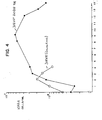
- Jurkat cells were prepared in alginate balls identical to the methods employed above. Growth medium was perfused at a rate of 0.5m/min: through the multi-port tube 32. Results of the experiment are summarized in Figure 4. The viability of the Jurkat subculture was maintained for 15 days before termination of the run. These cells reached a density of approximately 8 x 10 6 cell / ml. Similar cells seeded in a conventional 1-liter spinner culture reached a density of 2 x 10 6 cell / ml. Cells in this conventional culture maintained viability for only 4 days.
Landscapes
- Chemical & Material Sciences (AREA)
- Health & Medical Sciences (AREA)
- Wood Science & Technology (AREA)
- Zoology (AREA)
- Organic Chemistry (AREA)
- Life Sciences & Earth Sciences (AREA)
- Engineering & Computer Science (AREA)
- Bioinformatics & Cheminformatics (AREA)
- Biomedical Technology (AREA)
- Genetics & Genomics (AREA)
- Biochemistry (AREA)
- Sustainable Development (AREA)
- General Health & Medical Sciences (AREA)
- Microbiology (AREA)
- Biotechnology (AREA)
- General Engineering & Computer Science (AREA)
- Analytical Chemistry (AREA)
- Physics & Mathematics (AREA)
- Thermal Sciences (AREA)
- Chemical Kinetics & Catalysis (AREA)
- Clinical Laboratory Science (AREA)
- Apparatus Associated With Microorganisms And Enzymes (AREA)
- Micro-Organisms Or Cultivation Processes Thereof (AREA)
- Immobilizing And Processing Of Enzymes And Microorganisms (AREA)
- Preparation Of Compounds By Using Micro-Organisms (AREA)
Abstract
Description
- The present invention relates to a method and an apparatus for carrying out cell culture arid fermentation. The apparatus of the present invention utilizes design features which afford optimum agitation of the cells with a minimum mechanical shear force. This is accomplished by utilizing a gas stream to provide gentle aeration. The design provides gentle agitation without the need to employ any mechanical parts which might damage cells or cell carriers.
- From US Patents Nos. 4, 173, 516; 4, 259, 449 and 4, 311, 798 a method and an apparatus for cultivating cells of animal and human tissues is known. A container is provided for accommodating a nutrient solution in which the cells are contained. By introducing a stream of oxygen-containing gas a circular movement of the solution is obtained.
- But this known arrangement does not provide optimum agitation with a minimum mechanical shear force. The object of the present invention is to provide an improved bioreactor method and apparatus.
- According to the invention this is achieved by maintaining a cell or immobilized cell population in a growth medium at a desired incubation temperature;
- providing a gentle stream of oxygen containing gas moving upwardly and centrally through said growth medium so as to carry said cells or immobilized cells upward and whereby medium from the upper portion of the growth media moves downward to replace the displaced medium thereby obtaining good mixing with gentle aeration which maintains the cells or immobilized cells in suspension; and maintains dissolved oxygen concentration in the medium to support cell growth
harvesting the cells or medium as desired. - Further, according to the invention an apparatus for performing this method has
- a reactor vessel arranged and constructed to maintain living cells in culture within a volume of culture . medium, said reactor vessel comprising an upper chamber and a lower chamber, said upper chamber being of larger dimension than said lower chamber, said upper and lower chambers being operatively connected by inwardly sloping side walls;
- gas inlet means centrally disposed within said lower chamber whereby oxygen containing gas is provided to said lower chamber and carries cells upward to said upper chamber and medium from the upper chamber moves downward over said sloping walls and replaces the displaced medium thereby providing a mixing action to said cells with gentle aeration with a minimum of shear force and providing dissolved oxygen in the medium to support cell growth; and
- lid means providing an air tight seal on said upper chamber, said lid means containing gas outlet means.
- In a preferred embodiment, the reactor may be constructed within a fluid temperature bath to provide constant temperature during the entire cell culture procedure.
- Further embodiments
provide for use of the reactor in either suspension or cell carrier culture. Moreover, the unit may be employed either as a reactor or as a fermentor and thus can be employed to grow eukaryotic or prokaryotic cells. - Figure 1 shows a frontal, schematic representation of a bioreactor of the present invention with arrows and small circles designating the typical flow pattern of cells within the media partially filling the reactor.
Figure 1A is a frontal, schematic representation of an alternate embodiment of the reactor of the present invention wherein the cover of the reactor is adapted to provide a multi-head gel ball maker for immobilizing cells to be cultured. Similarly, the reactor of this embodiment is provided with a multi-port inlet at the bottom of the reactor vessel to allow input or output of various gas or liquid streams during the course of the reaction. - Figure 2 is a graphic representation of a eukaryotic cell culture in a bioreactor of the instant invention. The graph provides an indication of viable cells found at the appropriate phase of the culture and an indication of the total units of product (human IL-2) produced by the cells.
- Figure 3 provides a graph showing the results of a cell culture with a murine mammary tumor cell line transfected with the gene for human IL-2. This culture employed alginate gel balls to immobilize the cells during culture. Acitivity values for human IL-2 found in the culture medium on the indicated culture days is presented in the graph.
- Figure 4 is a comparison of a Jurkat cell culture utilizing either conventional cell culture techniques or using alginate immobilized cells grown in cell culture in a bioreactor embodiment of the present invention. The graph provides the total number of viable cells which were found during the course of the culture.
- The novel reactor / fermentor apparatus of the present invention can be more readily understood by reference to Figure 1 of the Drawings. As seen in such figure, the reactor is composed of two chambers: an
upper chamber numeral 10 of relatively larger dimension and alower chamber 11 of relatively smaller dimension. The upper chamber functions as a growth chamber while the lower chamber is designated the mixing chamber. Agas inlet line 12 communicates through valve means 13 to the bottom ofmixing chamber 11. In operation, air, CO2 or other appropriate gas or gas mixture is gently bubbled through the lower port provided by inlet means 12. As the gas rises through the fermentation orcell culture medium 14 contained within the chambers it displaces liquid in the lower portion ofchamber 11 and carries cells, designated by thesmall circles 15, upward as indicated by the upward pointing arrows. Media from the upper portion of the reactor moves downward and sweeps over theslanted floor 16 to replace the displaced medium at the bottom .ofchamber 11, This is indicated by the downwardly moving arrows in Figure I. Suitable gas flow rates to achieve the desired cell suspension are in the range of about 10 to 300 cc/min preferably from about 25 to 50 cc/min. - In this manner there is set up a cyclic movement in the
upper reactor chamber 10 keeping the cells or cell carriers in suspension. This also keeps the dissolved oxygen concentration in the medium high enough for optimum cell growth. In a preferred embodiment a gas comprising air with about 5% CO2 is used. The addition of this minor amount of carbon dioxide to the input gas helps to maintain a proper pH for the culture medium. Only a very gentle bubbling is needed to create the lift necessary to keep cells in suspension. Such gentle bubbling action minimizes shear forces and foaming of the medium at the medium surface. - Size dimensions provided are for illustrative purposes only and are not narrowly critical. For larger volumes, the diameter of the upper and lower chambers can be increased proportionally. The overall height of the reactor may be increased without a change in diameter. For small volumes of cell cultures, the dimensions of the reactor can be scaled down proportionally.
- The reactor may be fabricated from glass, stainless steel, or other suitable material that is not toxic to cell viability and can desirably withstand sterilization. In similar fashion the
reactor lid 17 is fabricated from a dense plastic which preferably can withstand sterilization conditions, e.g. autoclaving. Since it is a separate piece, it can be modified to provide versatility in the use of the reactor as will be seen in further embodiments of the present invention. Sterility is maintained by agasket 18 which is made of a flexible material such as rubber and is fitted at the base of the lid. This material forms a seal with the upper portion of the reactor and may be held or clamped in place by any suitable means such as by the weight of the lid. The reactor shown in Figure I is kept at constant incubation temperature by means well known in the art such as, for example by perfusing a heated fluid, e.g. water, into theexternal reactor chamber 19 which surrounds the reactor viainlet 20. Circulation of the heating fluid can be achieved by means of a circulating heat pump not shown. The heating fluid is circulated out of thejacket chamber 19 by means ofoutlet 21 and can be recycled through the external pump and heating means for return to the system at the desired temperature. For most cell culture and fermentation applications the preferred temperature of operation is 37°C. 'It should be noted that this use of an external heating jacket is optional. Heating can also be achieved in the absence of the jacket by placing the entire reactor in an incubated chamber or hot room at 37°C. - Prior to use, the reactor and lid are preferably steam sterilized separately and asceptically assembled or steam sterilized in place, or sterilized assembled by filling the inner chambers and tubing with an appropriate sterilization media, such as 70% ethanol or a 1% sodium hypochlorite solution.
- Build up of excess gas pressure is avoided by using appropriate filtered -(0.22a)
vent lines 22 in thelid 17. The lid may also be adapted to contain inlet and outlet lines for the addition of media. Alternatively it is possible to utilize a multi-port tube as part of inlet means 12 to allow not only the introduction of the gas stream from the bottom of the reactor vessel but also the media and any needed solutions required to buffer or maintain pH at desired levels. Such embodiments are shown in Figure 1. - The bioreactor of Figure 1 is particularly useful in carrying out suspension cell fermentation. In such procedure, cells are seeded in growth medium at a concentration of proximately 1 x 10⁵ cells / ml. A mixture of 5% C02 and 95% air gently bubbled through the medium. At optimum cell density a portion of the medium containing cells is removed and fresh growth medium devoid of cells is added. This procedure maintains the cells in log phase. Cells or cell product are continuously harvested. The bioreactor was able to maintain growth and viability of hybridoma cell lines (monoclonal antibody producing cells such as LI-8 providing monoclonal antibody against leukocyte interferon) and cells which produce bioactive proteins such as the KG-1 cells producing interferon. Each cell line maintained viability over an extended time period and was able to elicit the product which can be harvested from the cell media.
- In similar fashion it is possible to utilize other cell systems in conjunction with the reactor of the present invention. Such other cells include Jurkat, a human T cell derived cell line which upon induction produces
human interleukin 2; Hela cells, which are a human carcinoma cell line which are transfected with the gene forhuman interleukin 2; and C 1271, a murine mammary tumor which is transfected with the gene forhuman interleukin 2. Other cell systems employable in conjunction with the present invention include transformed microorganisms which contain genes for human proteins and which are capable of secreting the gene products into the media. Such cells include yeast, B. subtilis and the , like. - Other cell systems require solid supports in order to grow. These anchorage dependent cells can be conveniently grown in culture by utilizing a modification of the present cell reactor. Thus in Figure 1A there is provided a fermentor / bioreactor which provides a suitable device for the growth of anchorage dependent cells, which cannot be adapted to grow in suspension. In such embodiment the upper chamber and lower chamber of the
reactor 30 and 31 respectively may be of the same dimensions and configuration as in the reactor vessel described in Figure 1. As in the previous design the two chambers are joined by slantedwalls 36. This facilitates the circulation of cells or cell carriers, within the media with low air flow so as to provide requisite agitation without any substantial shear force. - A multi-port tube 32 provides inputs for the air stream, inflow of media and any buffer for moderation of pH. The inflow passes through
valve 33 into the bottom of mxing chamber 31. The reactor is provided with an optionaltemperature control jacket 29 which contains fluid inlet means 40 and fluid outlet means 41. Media can be continuously removed from the reactor by means ofmedia outlet line 45 which extends down to the upper surface of thereactor media 34. Amesh screen 35 is provided at the outlet head in order to prevent clogging of the outflow of the suspension cell particles. - Anchorage dependent cells which cannot be adapted to grow in suspension may be grown in the reactor of this embodiment by seeding these cells at approximately 1 x 10⁵ cells / ml in the
upper chamber 30. This chamber may be modified to contain means to increase the surface area for attachment. Such means may include any of the commercially available microcarrierrs, e.g., honeycombed ceramic blocks, bundles of thin fibers or hollow fibers, or other devices which provide a suitable substrate for cells to attach and grow. The reactor configuration is particularly suitable for microcarriers because of the low shear force and excellent agitation provided by the airlift. Devices which increase surface area need an increased concentration of dissolved oxygen and constant profusion of fresh medium to maintain viability of the dense cell culture. This embodiment of the reactor provides both these parameters. - In the embodiment depicted the attachment cells are adapted to grow in a semi-solid substrate such as sodium alginate; agarose; agar; carrageenan; gelatin or others. In operation one part of the cell suspension of the cell line which requires attachment is mixed with two parts of a 1.5% alginate solution (1% final). The mixture is then dripped through the
reactor vessel lid 37 viainlet 43 andcapillaries 46 into the reactor which contains a solution of aqueous CaCI2 (50mM). The calcium solution serves to polymerize the alginate trapping the cells in small balls as indicated by 46. These gel balls containing the cells are rinsed free of the CaC12 and resuspended in growth medium. The entire procedure as indicated can be performed in a reactor equipped as indicated with the modified lid design. As in the prior embodiments the lid is maintained in air tight relation with the reactor vessel by means ofrubber gasket 38. Excess gas pressure can be vented throughvent line 42. If desired a suitable filter can be employed to maintain sterility of the reactor. - Examples of a sutiable cell line which are attachment dependent are Hela cells which have been transfected with a gene for
human interleukin 2. The Hela cells were cultured in the reactor for 12 days before the run was terminated. These cells in this demonstration run reached a concentration 7- fold higher than can be obtained by conventional cell culture. Theinterleukin 2 produced by the cells was measured and the results of the experiment are shown in Figure 2. As can be seen,interleukin 2 as continuously released into the medium as shown by the bars. - In a further demonstration of the advantages derived by employing the modified bioreactor of the present invention, C1271 cells, a murine mammary tumor which had been transfected with a gene for
human interleukin 2 were employed. These cells constitutively producehuman interleukin 2. C1271 cells were immobilized at a concentration of 4 x 10⁵ cells / ml in 1% alginate as described above. The alginate gel balls and the bioreactor were aerated with 5% CO2 and 95% air mixture (v/v) and perfused with growth medium at a constant rate. The immobilized cells were maintained in culture for 14 days. A concentration of 5,000 units / ml ofinterleukin 2 was continuously collected for 7 days from the profusion culture medium (Figure 3). This is a 10-fold increase in yield of IL-2 obtained from the same cells when grown by conventional monolayer culture. - In yet another embodiment of the present invention, Jurkat cells were prepared in alginate balls identical to the methods employed above. Growth medium was perfused at a rate of 0.5m/min: through the multi-port tube 32. Results of the experiment are summarized in Figure 4. The viability of the Jurkat subculture was maintained for 15 days before termination of the run. These cells reached a density of approximately 8 x 10⁶ cell / ml. Similar cells seeded in a conventional 1-liter spinner culture reached a density of 2 x 10⁶ cell / ml. Cells in this conventional culture maintained viability for only 4 days.
Claims (12)
Priority Applications (1)
| Application Number | Priority Date | Filing Date | Title |
|---|---|---|---|
| AT86102850T ATE38855T1 (en) | 1985-03-15 | 1986-03-05 | METHODS AND EQUIPMENT FOR CELL CULTURE. |
Applications Claiming Priority (2)
| Application Number | Priority Date | Filing Date | Title |
|---|---|---|---|
| US06/711,932 US4649117A (en) | 1985-03-15 | 1985-03-15 | Air lift bioreactor |
| US711932 | 1985-03-15 |
Publications (2)
| Publication Number | Publication Date |
|---|---|
| EP0197299A1 true EP0197299A1 (en) | 1986-10-15 |
| EP0197299B1 EP0197299B1 (en) | 1988-11-23 |
Family
ID=24860098
Family Applications (1)
| Application Number | Title | Priority Date | Filing Date |
|---|---|---|---|
| EP86102850A Expired EP0197299B1 (en) | 1985-03-15 | 1986-03-05 | Method and apparatus for carrying out cell culture |
Country Status (7)
| Country | Link |
|---|---|
| US (1) | US4649117A (en) |
| EP (1) | EP0197299B1 (en) |
| JP (1) | JPS61212283A (en) |
| AT (1) | ATE38855T1 (en) |
| DE (1) | DE3661273D1 (en) |
| DK (1) | DK112686A (en) |
| NO (1) | NO860991L (en) |
Cited By (8)
| Publication number | Priority date | Publication date | Assignee | Title |
|---|---|---|---|---|
| JPS63267265A (en) * | 1987-01-23 | 1988-11-04 | ベルコ・グラス・インコーポレイテッド | Cell culture method and apparatus |
| EP0269086A3 (en) * | 1986-11-26 | 1989-09-20 | Rikagaku Kenkyusho | Cell culture apparatus |
| US5185255A (en) * | 1986-05-09 | 1993-02-09 | Rikagaku Kenkyusho | Cell culture method |
| WO1993006953A1 (en) * | 1991-10-07 | 1993-04-15 | Radian Corporation | Bio-slurry reaction system and process for hazardous waste treatment |
| US6938810B2 (en) | 2003-04-15 | 2005-09-06 | Illinois Tool Works Inc. | Fuel cell adapter system for combustion tools |
| EP2290049A1 (en) * | 1999-09-08 | 2011-03-02 | Levitronix LLC | Bioreactor |
| US8980623B2 (en) | 2005-12-16 | 2015-03-17 | Cellexus Limited | Cell culture and mixing vessel |
| EP3231859A1 (en) * | 2016-04-11 | 2017-10-18 | MIAL GmbH | Reaction system for the cultivation of photosynthetically active cells and its use |
Families Citing this family (40)
| Publication number | Priority date | Publication date | Assignee | Title |
|---|---|---|---|---|
| GB8515636D0 (en) * | 1985-06-20 | 1985-07-24 | Celltech Ltd | Fermenter |
| US5081036A (en) * | 1987-01-23 | 1992-01-14 | Hoffmann-La Roche Inc. | Method and apparatus for cell culture |
| US4904600A (en) * | 1987-02-05 | 1990-02-27 | Floyd Ramp | Bioreactor for continuous processing of a reactant fluid |
| US5089385A (en) * | 1987-06-01 | 1992-02-18 | The United States Of America As Represented By The Secretary Of The Air Force | Method of culturing cells in a flow-through cell cultivation system |
| US5028541A (en) * | 1987-06-01 | 1991-07-02 | The United States Of America As Represented By The Secretary Of The Air Force | Flow-through cell cultivation system |
| US5372943A (en) * | 1987-07-24 | 1994-12-13 | Cetus Corporation | Lipid microemulsions for culture media |
| US4847203A (en) * | 1987-08-31 | 1989-07-11 | Allelix, Inc. | Fermentation vessels |
| US5605835A (en) * | 1988-05-23 | 1997-02-25 | Regents Of The University Of Minnesota | Bioreactor device with application as a bioartificial liver |
| US5026650A (en) * | 1988-06-30 | 1991-06-25 | The United States Of Amercia As Represented By The Administrator Of The National Aeronautics And Space Administration | Horizontally rotated cell culture system with a coaxial tubular oxygenator |
| US5153131A (en) * | 1990-12-11 | 1992-10-06 | The United States Of America As Represented By The Administrator Of The National Aeronautics And Space Administration | High aspect reactor vessel and method of use |
| US4988623A (en) * | 1988-06-30 | 1991-01-29 | The United States Of America As Represented By The Administrator Of The National Aeronautics And Space Administration | Rotating bio-reactor cell culture apparatus |
| US5002890A (en) * | 1988-11-29 | 1991-03-26 | The United States Of America As Represented By The Administrator Of The National Aeronautics And Space Administration | Spiral vane bioreactor |
| US5073491A (en) * | 1988-12-23 | 1991-12-17 | Hoffman-La Roche Inc. | Immobilization of cells in alginate beads containing cavities for growth of cells in airlift bioreactors |
| US4960706A (en) * | 1989-03-27 | 1990-10-02 | Baxter International, Inc. | Static oxygenator for suspension culture of animal cells |
| US5260211A (en) * | 1989-12-07 | 1993-11-09 | Snow Brand Milk Products Co., Ltd. | Process for cultivating adhesive cells in a packed bed of solid cell matrix |
| US5443985A (en) * | 1993-07-22 | 1995-08-22 | Alberta Research Council | Cell culture bioreactor |
| NZ272544A (en) * | 1994-08-24 | 1996-03-26 | Mitsubishi Heavy Ind Ltd | Removal of sulphur from hydrogen sulphide-containing gas at geothermal power plants using a cell breeding culture tank independent of the biochemical treatment tank |
| US6146891A (en) * | 1997-01-31 | 2000-11-14 | Schering Corporation | Methods for cultivating cells and propagating viruses |
| GB2342054A (en) * | 1998-10-01 | 2000-04-05 | Roy Mason | Mixing apparatus comprising two chambers with bubble lift and siphon return flow therebetween |
| US7879593B2 (en) * | 1999-12-16 | 2011-02-01 | Whiteman G Robert | Fermentation systems, methods and apparatus |
| GB2378709B (en) * | 1999-12-16 | 2004-11-03 | Robert G Whiteman | Fermentation system methods and apparatus |
| US9969633B2 (en) * | 1999-12-16 | 2018-05-15 | Robert Whiteman | Systems and methods for treating oil, fat and grease in collection systems |
| US7198940B2 (en) | 2000-10-25 | 2007-04-03 | Shot Hardware Optimization Technology, Inc. | Bioreactor apparatus and cell culturing system |
| KR100698549B1 (en) * | 2001-06-04 | 2007-03-21 | 에스케이케미칼주식회사 | Microbial incubator for wastewater treatment |
| EA008157B1 (en) * | 2003-11-18 | 2007-04-27 | Нестек С.А. | Cell culture system |
| US9057044B2 (en) | 2006-08-30 | 2015-06-16 | Meir Israelowitz | Laminar flow reactor |
| US20100075405A1 (en) * | 2007-02-15 | 2010-03-25 | Broadley-James Corporation | Bioreactor jacket |
| GB2450337B (en) * | 2007-06-19 | 2009-06-17 | Cellexus Biosystems Plc | Cell culture and mixing vessel |
| WO2009151514A1 (en) | 2008-06-11 | 2009-12-17 | Millipore Corporation | Stirred tank bioreactor |
| PT104278B (en) | 2008-12-04 | 2019-03-20 | A4Tec Association For The Advancement Of Tissue Engineering And Cell Based Tech & Therapies | BI-DIRECTIONAL CONTINUOUS FLOW BIOREATOR, FOR CULTURE, IN THREE-DIMENSIONAL SUPPORT OF MAMMALIAN TISSUE REPLACEMENTS |
| US8569050B1 (en) | 2009-05-04 | 2013-10-29 | John D. Ericsson | Enclosed bioreactor system and methods associated therewith |
| SI2751255T1 (en) * | 2011-09-01 | 2021-04-30 | Gicon Grossmann Ingenieur Consult Gmbh | Method and device for feeding gases or gas mixtures into a liquid, suspension, or emulsion in a photobioreactor in a specific manner |
| DE102016119391B3 (en) | 2016-10-12 | 2018-01-18 | Yoen Ok Roth | Microbioreactor module |
| RU203688U1 (en) * | 2019-07-16 | 2021-04-15 | Мария Алексеевна Затолокина | Portable chamber for the cultivation of animal cells, as exemplified by GCT - cells |
| US11254477B2 (en) * | 2019-10-16 | 2022-02-22 | Morgan Specialty Services, Inc. | Extraction pressure vessel, method of manufacture, method of use |
| US12553018B2 (en) | 2020-12-04 | 2026-02-17 | Sciperio, Inc | Continuously expanding volume bioreactor |
| CN112877210B (en) * | 2021-02-25 | 2022-07-26 | 上海揽微赛尔生物科技有限公司 | Stem cell culture perfusion device with controllable pH value |
| EP4253515B1 (en) * | 2022-04-01 | 2026-07-22 | Samabriva | Optimized hairy roots bioreactor |
| JP2026510008A (en) * | 2023-03-13 | 2026-03-27 | ホンブレヒティコン システムズ エンジニアリング アクチェンゲゼルシャフト | Mixing apparatus and method for providing a mixture |
| CN116120100A (en) * | 2023-03-30 | 2023-05-16 | 广西大学 | Method and device for harmless processing of fertilizer for livestock and poultry dying of illness |
Citations (5)
| Publication number | Priority date | Publication date | Assignee | Title |
|---|---|---|---|---|
| FR1426975A (en) * | 1963-10-30 | 1966-02-04 | Wellcome Found | Multiplication of animal cells in suspension cultures |
| US3649465A (en) * | 1969-06-24 | 1972-03-14 | Virtis Co Inc | Spinner flask |
| FR2133355A5 (en) * | 1971-04-09 | 1972-11-24 | Progil | |
| US4173516A (en) * | 1976-07-15 | 1979-11-06 | Chemap Ag | Device for cultivating cells of animal and human tissues |
| US4259449A (en) * | 1976-07-15 | 1981-03-31 | Chemap Ag | Method of cultivating cells of animal and human tissues |
Family Cites Families (7)
| Publication number | Priority date | Publication date | Assignee | Title |
|---|---|---|---|---|
| US3985622A (en) * | 1975-01-30 | 1976-10-12 | Phillips Petroleum Company | Method and apparatus for conducting fermentation |
| US4036693A (en) * | 1976-02-02 | 1977-07-19 | Massachusetts Institute Of Technology | Treatment of cell culture microcarries |
| FR2381824A1 (en) * | 1977-02-23 | 1978-09-22 | Setric | FERMENTATION PROCESS AND DEVICE |
| US4208483A (en) * | 1978-09-21 | 1980-06-17 | The University Of Toledo | Tissue culture system |
| GB2073243B (en) * | 1980-03-04 | 1984-12-05 | Tokyo Rikakikai Kk | Continuous fermentor or reactor |
| DE3047101A1 (en) * | 1980-12-13 | 1982-07-22 | Hoechst Ag, 6000 Frankfurt | METHOD FOR IMPROVING GAS DISTRIBUTION IN MAMMOTH LOOP REACTORS |
| JPS58179495A (en) * | 1982-04-12 | 1983-10-20 | Ajinomoto Co Inc | Preparation of human lymphokine |
-
1985
- 1985-03-15 US US06/711,932 patent/US4649117A/en not_active Expired - Fee Related
-
1986
- 1986-03-05 AT AT86102850T patent/ATE38855T1/en not_active IP Right Cessation
- 1986-03-05 EP EP86102850A patent/EP0197299B1/en not_active Expired
- 1986-03-05 DE DE8686102850T patent/DE3661273D1/en not_active Expired
- 1986-03-11 DK DK112686A patent/DK112686A/en not_active Application Discontinuation
- 1986-03-14 NO NO860991A patent/NO860991L/en unknown
- 1986-03-14 JP JP61056772A patent/JPS61212283A/en active Pending
Patent Citations (6)
| Publication number | Priority date | Publication date | Assignee | Title |
|---|---|---|---|---|
| FR1426975A (en) * | 1963-10-30 | 1966-02-04 | Wellcome Found | Multiplication of animal cells in suspension cultures |
| US3649465A (en) * | 1969-06-24 | 1972-03-14 | Virtis Co Inc | Spinner flask |
| FR2133355A5 (en) * | 1971-04-09 | 1972-11-24 | Progil | |
| US4173516A (en) * | 1976-07-15 | 1979-11-06 | Chemap Ag | Device for cultivating cells of animal and human tissues |
| US4259449A (en) * | 1976-07-15 | 1981-03-31 | Chemap Ag | Method of cultivating cells of animal and human tissues |
| US4311798A (en) * | 1976-07-15 | 1982-01-19 | Chemap Ag | Method of and an arrangement for cultivating cells of animal and human tissues |
Cited By (14)
| Publication number | Priority date | Publication date | Assignee | Title |
|---|---|---|---|---|
| US5185255A (en) * | 1986-05-09 | 1993-02-09 | Rikagaku Kenkyusho | Cell culture method |
| EP0269086A3 (en) * | 1986-11-26 | 1989-09-20 | Rikagaku Kenkyusho | Cell culture apparatus |
| US5043283A (en) * | 1986-11-26 | 1991-08-27 | Rikagaku Kenkyusho | Fluidized bed cell culture apparatus with a drain valve for the removal of support material |
| JPS63267265A (en) * | 1987-01-23 | 1988-11-04 | ベルコ・グラス・インコーポレイテッド | Cell culture method and apparatus |
| EP0276154A3 (en) * | 1987-01-23 | 1988-12-28 | Bellco Glass, Inc. | Method and apparatus for cell culture |
| US5232596A (en) * | 1991-10-07 | 1993-08-03 | Radian Corporation | Bio-slurry reaction system and process for hazardous waste treatment |
| WO1993006953A1 (en) * | 1991-10-07 | 1993-04-15 | Radian Corporation | Bio-slurry reaction system and process for hazardous waste treatment |
| EP2290049A1 (en) * | 1999-09-08 | 2011-03-02 | Levitronix LLC | Bioreactor |
| US6938810B2 (en) | 2003-04-15 | 2005-09-06 | Illinois Tool Works Inc. | Fuel cell adapter system for combustion tools |
| US8980623B2 (en) | 2005-12-16 | 2015-03-17 | Cellexus Limited | Cell culture and mixing vessel |
| US9012210B2 (en) | 2005-12-16 | 2015-04-21 | Cellexus Limited | Cell culture and mixing vessel |
| EP1965895B1 (en) * | 2005-12-16 | 2017-03-29 | Cellexus Limited | Cell culture and mixing vessel with gas circulation |
| EP2025391B1 (en) * | 2005-12-16 | 2019-12-04 | Cellexus International Ltd | Cell culture and mixing vessel with gaz circulation |
| EP3231859A1 (en) * | 2016-04-11 | 2017-10-18 | MIAL GmbH | Reaction system for the cultivation of photosynthetically active cells and its use |
Also Published As
| Publication number | Publication date |
|---|---|
| DK112686D0 (en) | 1986-03-11 |
| DE3661273D1 (en) | 1988-12-29 |
| US4649117A (en) | 1987-03-10 |
| NO860991L (en) | 1986-09-16 |
| ATE38855T1 (en) | 1988-12-15 |
| JPS61212283A (en) | 1986-09-20 |
| EP0197299B1 (en) | 1988-11-23 |
| DK112686A (en) | 1986-09-16 |
Similar Documents
| Publication | Publication Date | Title |
|---|---|---|
| EP0197299B1 (en) | Method and apparatus for carrying out cell culture | |
| US4668632A (en) | Sparger and apparatus for and method of growing cells | |
| US20050186669A1 (en) | Apparatus and method for preparing and culturing cells | |
| US5501971A (en) | Method and apparatus for anchorage and suspension cell culture | |
| US7033823B2 (en) | Cell-cultivating device | |
| US5081035A (en) | Bioreactor system | |
| US4649114A (en) | Oxygen permeable membrane in fermenter for oxygen enrichment of broth | |
| US5443985A (en) | Cell culture bioreactor | |
| Margaritis et al. | Novel bioreactor systems and their applications | |
| JP4866736B2 (en) | System for cell culture | |
| CN100523167C (en) | Cell culture system | |
| US5008197A (en) | Process and a device for improved oxygenation of biological cultures | |
| KR20210022162A (en) | Continuously controlled hollow fiber bioreactor | |
| US5246855A (en) | Reactor for carrying out biological reactions by means of biocatalysts | |
| Su et al. | A review on bioreactor technology assisted plant suspension culture | |
| US4656138A (en) | Fermenter | |
| Singhal et al. | Fermentation technology prospecting on bioreactors/fermenters: design and types | |
| Taya et al. | 2.27 Bioreactors for Animal Cell Cultures | |
| Lazar | Immobilization of animal cells in fixed bed bioreactors | |
| Wang et al. | High cell density perfusion culture of hybridoma cells for production of monoclonal antibodies in the celligen packed bed reactor | |
| CN101130745A (en) | Bioreactor system for in vitro culture of hematopoietic cells | |
| CA1210719A (en) | Method of immobilizing enzymes | |
| JP7152762B2 (en) | Culture device and culture method | |
| Feder | [34] Flat bed hollow fiber reactors for large-scale cultivation of animal cells | |
| Nilsson | [33] Mammalian cell culture |
Legal Events
| Date | Code | Title | Description |
|---|---|---|---|
| PUAI | Public reference made under article 153(3) epc to a published international application that has entered the european phase |
Free format text: ORIGINAL CODE: 0009012 |
|
| 17P | Request for examination filed |
Effective date: 19860305 |
|
| AK | Designated contracting states |
Kind code of ref document: A1 Designated state(s): AT BE CH DE FR GB IT LI NL SE |
|
| 17Q | First examination report despatched |
Effective date: 19880210 |
|
| GRAA | (expected) grant |
Free format text: ORIGINAL CODE: 0009210 |
|
| AK | Designated contracting states |
Kind code of ref document: B1 Designated state(s): AT BE CH DE FR GB IT LI NL SE |
|
| REF | Corresponds to: |
Ref document number: 38855 Country of ref document: AT Date of ref document: 19881215 Kind code of ref document: T |
|
| REF | Corresponds to: |
Ref document number: 3661273 Country of ref document: DE Date of ref document: 19881229 |
|
| RAP2 | Party data changed (patent owner data changed or rights of a patent transferred) |
Owner name: BELLCO GLASS, INC. |
|
| ITF | It: translation for a ep patent filed | ||
| ET | Fr: translation filed | ||
| NLT2 | Nl: modifications (of names), taken from the european patent patent bulletin |
Owner name: BELLCO GLASS, INC. TE VINELAND, NEW JERSEY, VER. S |
|
| REG | Reference to a national code |
Ref country code: CH Ref legal event code: PUE Owner name: BELLCO GLASS, INC. |
|
| NLS | Nl: assignments of ep-patents |
Owner name: BELLCO GLASS, INC. TE VINELAND, NEW JERSEY, VER. S |
|
| PLBE | No opposition filed within time limit |
Free format text: ORIGINAL CODE: 0009261 |
|
| STAA | Information on the status of an ep patent application or granted ep patent |
Free format text: STATUS: NO OPPOSITION FILED WITHIN TIME LIMIT |
|
| 26N | No opposition filed | ||
| BECN | Be: change of holder's name |
Effective date: 19881123 |
|
| PGFP | Annual fee paid to national office [announced via postgrant information from national office to epo] |
Ref country code: BE Payment date: 19900216 Year of fee payment: 5 |
|
| PGFP | Annual fee paid to national office [announced via postgrant information from national office to epo] |
Ref country code: CH Payment date: 19900309 Year of fee payment: 5 |
|
| PGFP | Annual fee paid to national office [announced via postgrant information from national office to epo] |
Ref country code: AT Payment date: 19900330 Year of fee payment: 5 |
|
| ITTA | It: last paid annual fee | ||
| PGFP | Annual fee paid to national office [announced via postgrant information from national office to epo] |
Ref country code: NL Payment date: 19900331 Year of fee payment: 5 Ref country code: GB Payment date: 19900331 Year of fee payment: 5 |
|
| PGFP | Annual fee paid to national office [announced via postgrant information from national office to epo] |
Ref country code: DE Payment date: 19900531 Year of fee payment: 5 |
|
| PGFP | Annual fee paid to national office [announced via postgrant information from national office to epo] |
Ref country code: SE Payment date: 19900727 Year of fee payment: 5 |
|
| PG25 | Lapsed in a contracting state [announced via postgrant information from national office to epo] |
Ref country code: GB Effective date: 19910305 Ref country code: AT Effective date: 19910305 |
|
| PG25 | Lapsed in a contracting state [announced via postgrant information from national office to epo] |
Ref country code: SE Effective date: 19910306 |
|
| PG25 | Lapsed in a contracting state [announced via postgrant information from national office to epo] |
Ref country code: LI Effective date: 19910331 Ref country code: CH Effective date: 19910331 Ref country code: BE Effective date: 19910331 |
|
| BERE | Be: lapsed |
Owner name: BELLCO GLASS INC. Effective date: 19910331 |
|
| PG25 | Lapsed in a contracting state [announced via postgrant information from national office to epo] |
Ref country code: NL Effective date: 19911001 |
|
| GBPC | Gb: european patent ceased through non-payment of renewal fee | ||
| NLV4 | Nl: lapsed or anulled due to non-payment of the annual fee | ||
| REG | Reference to a national code |
Ref country code: CH Ref legal event code: PL |
|
| PG25 | Lapsed in a contracting state [announced via postgrant information from national office to epo] |
Ref country code: DE Effective date: 19920101 |
|
| PGFP | Annual fee paid to national office [announced via postgrant information from national office to epo] |
Ref country code: FR Payment date: 19920327 Year of fee payment: 7 |
|
| PG25 | Lapsed in a contracting state [announced via postgrant information from national office to epo] |
Ref country code: FR Effective date: 19931130 |
|
| REG | Reference to a national code |
Ref country code: FR Ref legal event code: ST |
|
| EUG | Se: european patent has lapsed |
Ref document number: 86102850.4 Effective date: 19911009 |
|
| PG25 | Lapsed in a contracting state [announced via postgrant information from national office to epo] |
Ref country code: IT Free format text: LAPSE BECAUSE OF NON-PAYMENT OF DUE FEES;WARNING: LAPSES OF ITALIAN PATENTS WITH EFFECTIVE DATE BEFORE 2007 MAY HAVE OCCURRED AT ANY TIME BEFORE 2007. THE CORRECT EFFECTIVE DATE MAY BE DIFFERENT FROM THE ONE RECORDED. Effective date: 20050305 |