EP0195951B1 - Process for preparing polyalkylene oxide having narrow distribution of molecular weight - Google Patents
Process for preparing polyalkylene oxide having narrow distribution of molecular weight Download PDFInfo
- Publication number
- EP0195951B1 EP0195951B1 EP86102676A EP86102676A EP0195951B1 EP 0195951 B1 EP0195951 B1 EP 0195951B1 EP 86102676 A EP86102676 A EP 86102676A EP 86102676 A EP86102676 A EP 86102676A EP 0195951 B1 EP0195951 B1 EP 0195951B1
- Authority
- EP
- European Patent Office
- Prior art keywords
- complex
- active hydrogen
- compound
- oxide
- molecular weight
- Prior art date
- Legal status (The legal status is an assumption and is not a legal conclusion. Google has not performed a legal analysis and makes no representation as to the accuracy of the status listed.)
- Expired - Lifetime
Links
Classifications
-
- C—CHEMISTRY; METALLURGY
- C08—ORGANIC MACROMOLECULAR COMPOUNDS; THEIR PREPARATION OR CHEMICAL WORKING-UP; COMPOSITIONS BASED THEREON
- C08G—MACROMOLECULAR COMPOUNDS OBTAINED OTHERWISE THAN BY REACTIONS ONLY INVOLVING UNSATURATED CARBON-TO-CARBON BONDS
- C08G65/00—Macromolecular compounds obtained by reactions forming an ether link in the main chain of the macromolecule
- C08G65/02—Macromolecular compounds obtained by reactions forming an ether link in the main chain of the macromolecule from cyclic ethers by opening of the heterocyclic ring
- C08G65/04—Macromolecular compounds obtained by reactions forming an ether link in the main chain of the macromolecule from cyclic ethers by opening of the heterocyclic ring from cyclic ethers only
- C08G65/06—Cyclic ethers having no atoms other than carbon and hydrogen outside the ring
- C08G65/08—Saturated oxiranes
- C08G65/10—Saturated oxiranes characterised by the catalysts used
- C08G65/12—Saturated oxiranes characterised by the catalysts used containing organo-metallic compounds or metal hydrides
Definitions
- the present invention relates to a process for preparing polyalkylene oxide having narrow distribution of molecular weight. More particularly, it relates to a process for preparing polyalkylene oxide having narrow distribution of molecular weight comprising polymerizing alkylene oxide in the presence of an aluminum porphyrin complex as a catalyst.
- alkylene oxide can be living polymerized by the use of the complex (I) according to the following reaction formula to give polyalkylene oxide having narrow distribution of molecular weight: wherein represents the complex (I), and n is a positive integer.
- One object of the present invention is to provide a process for economically preparing polyalkylene oxide having narrow distribution of molecular weight.
- Another object of the present invention is to provide an improved process for preparing polyalkylene oxide having narrow distribution of molecular weight in the presence of the complex (I) in a smaller amount than in the conventional process.
- the organoaluminum compound to be reacted with the porphyrin compound (II) are dialkylaluminum halide having 1 to 4 carbon atoms in each alkyl group (e.g. diethylaluminum chloride and diethylaluminum bromide), trialkylaluminum having 1 to 4 carbon atoms in each alkyl group (e.g. trimethylaluminum, triethylaluminum, tripropylaluminum and tirisobutylaluminum) and alkylaluminum hydride having 1 to 4 carbon atoms in each alkyl group (e.g. diethylaluminum hydride and diisobutylaluminum hydride).
- dialkylaluminum halide and trialkylaluminum particularly, diethylaluminum chloride and triethylaluminum are preferable.
- the alkyl group may be a linear one or a branched one.
- the hydrocarbon group includes a linear or branched alkyl group, a cycloalkyl group, an aromatic group and an aralkyl group.
- the porphyrin compound (II) includes tetramethyltetraethylporphyrin, octaethylporphyrin and tetraphenylporphyrin. Particularly, the porphyrin compound (II) wherein R 1 is a hydrogen atom and R 2 is a phenyl group, namely tetraphenylporphyrin is most preferable.
- the aluminum porphyrin complex (I) is prepared by reacting the organoaluminum compound and the porphyrin compound (II). For example, the reaction is carried out in an atmosphere of inert gas such as nitrogen, helium and argon in the presence of a solvent.
- the organoaluminum compound and the porphyrin compound (II) are used in nearly equimolar amounts.
- the solvent are hydrocarbons (e.g. benzene, toluene and xylene), halogenated hdyrocarbons (e.g. methylene chloride, chloroform and dichloroethane) and so on.
- X in the formula (I) may be a chlorine atom
- X when the organoaluminum compound is triethylaluminum, X may be an ethyl group.
- the complex (I) wherein X is a hydrogen atom or an alkyl group can be reacted with the active hydrogen-containing compound to give the complex (1) having a residue derived from the active hydrogen-containing compound.
- X is a hydrogen atom or an alkyl group
- the above described complex of the aluminum porphyrin complex (I) and the active hydrogen-containing compound may be used as a complex catalyst in the process according to the present invention.
- alkylene oxide to be polymerized by the process according to the present invention are aliphatic alkylene oxide having a three member ring epoxy terminal group (e.g. ethylene oxide, propylene oxide, 1-butylene oxide and epichlorhydrin) and aromatic alkylene oxide having a three member ring epoxy group (e.g. styrene oxide) and mixtures thereof.
- aliphatic alkylene oxide, particularly propylene oxide and a mixture of propylene oxide and ethylene oxide are preferable.
- the active hydrogen-containing compound includes mono-, di- or tri-hydric alcohols, and phenols and mono-, di- or tri-basic carboxylic acids.
- alcohols are saturated aliphatic alcohols (e.g. methanol, ethanol and butanol), unsaturated alcohols (e.g. allyl alcohol, ethyleneglycol monoallyl ether, 3-butenyl alcohol, 2-hydroxyethyl acrylate and methacrylate and vinylbenzyl alcohol) and polyhydric alcohols (e.g. triethylene glycol, tripropylene glycol, ethylene glycol, trimethylolpropane and glycerol).
- phenols are monohydric phenols (e.g.
- carboxylic acid is saturated carboxylic acids (e.g. acetic acid, propionic acid, octanoic acid and stearic acid), unsaturated carboxylic acids (e.g. acrylic acid methacrylic acid, benzoic acid and vinylbenzoic acid) and polyhydric carboxylic acids (e.g.
- adipic acid sebacic acid, maleic acid, fumaric acid, 1,2,3-propane tricarboxylic acid, a-hydroxysuccinic acid, terephthalic acid and 1,2,4-benzene tricarboxylic acid).
- unsaturated alcohols unsaturated carboxylic acids, polyhydric alcohols and polybasic carboxylic acids are preferable.
- the complex (I) wherein X is an hydrogen or an alkyl group can react with the active hydrogen-containing compound.
- the hydrogen-containing compound should be used in such amount that the unreacted active hydrogen- contianing compound still remains in the polymerization system.
- the polymerization reaction is assumed to proceed according to, for example, the following reaction formula: wherein is the same as defined above, n and m are positive integers, and QH represents the active hydrogen-containing compound.
- polyalkylene oxide is produced in an equimolar amount with the total amount of the complex (I) and the active hydrogen-containing compound. Therefore, when the molar ratio of the active hydrogen-containing compound to the complex (1) is larger, polyalkylene oxide having a lower molecular weight is obtained, while when said ratio is smaller, polyalkylene oxide having a larger molecular weight is obtained.
- the molar ratio of the complex (I) to the active hydrogen-containing compound is usually 1:1 to 1:50. However, the molar ratio of 1:100 or less or even 1:500 may be used.
- the amount of the complex (1) is 0.001 to 10% by mole, preferably 0.01 to 1 % by mole based on the amount of alkylene oxide.
- the amount of the active hydrogen-containing compound is 0.1 to 10% by mole, preferably 0.1 to 5% by mole based on the amount of alkylene oxide.
- Polymerization of alkylene oxide is carried out in the presence of the complex (I) and the active hydrogen-containing compound in an atmosphere of an inert gas such as nitrogen in the presence or absence of a solvent.
- the solvent used for the polymerization are hydrocarbons (e.g. benzene, toluene and xyiene) and halogenated hydrocarbons (e.g. methylene choride, chloroform and dichloroethane).
- the polymerization temperature is a room temperature or higher.
- Polyalkylene oxide prepared by the process of the invention has a narrow distribution of molecular weight (Mw/Mn) of 1.5 or less, particularly 1.3 or less.
- the polymer may be a homopolymer of a single kind of alkylene oxide or a random or block copolymer of two or more kind of alkylene oxide.
- liquid polyalkylene oxide having a terminal hydroxyl or unsaturated group and a molecular weight of 500 to 20,000 is advantageously prepared.
- polyalkylene oxide When polyalkylene oxide has a terminal hydroxyl group, it may be used as a raw material of polyurethane to be used as adhesives, rubbers and foams. When the molecule of polyalkylene oxide has an unsaturated group at one end, polyalkylene oxide may be used as a macromonomer.
- Catalyst A may have the formula (I) wherein R 1 is a hydrogen atom, R 2 is a phenyl group and X is a chlorine atom.
Landscapes
- Chemical & Material Sciences (AREA)
- Health & Medical Sciences (AREA)
- Chemical Kinetics & Catalysis (AREA)
- Medicinal Chemistry (AREA)
- Polymers & Plastics (AREA)
- Organic Chemistry (AREA)
- Polyethers (AREA)
Description
- The present invention relates to a process for preparing polyalkylene oxide having narrow distribution of molecular weight. More particularly, it relates to a process for preparing polyalkylene oxide having narrow distribution of molecular weight comprising polymerizing alkylene oxide in the presence of an aluminum porphyrin complex as a catalyst.
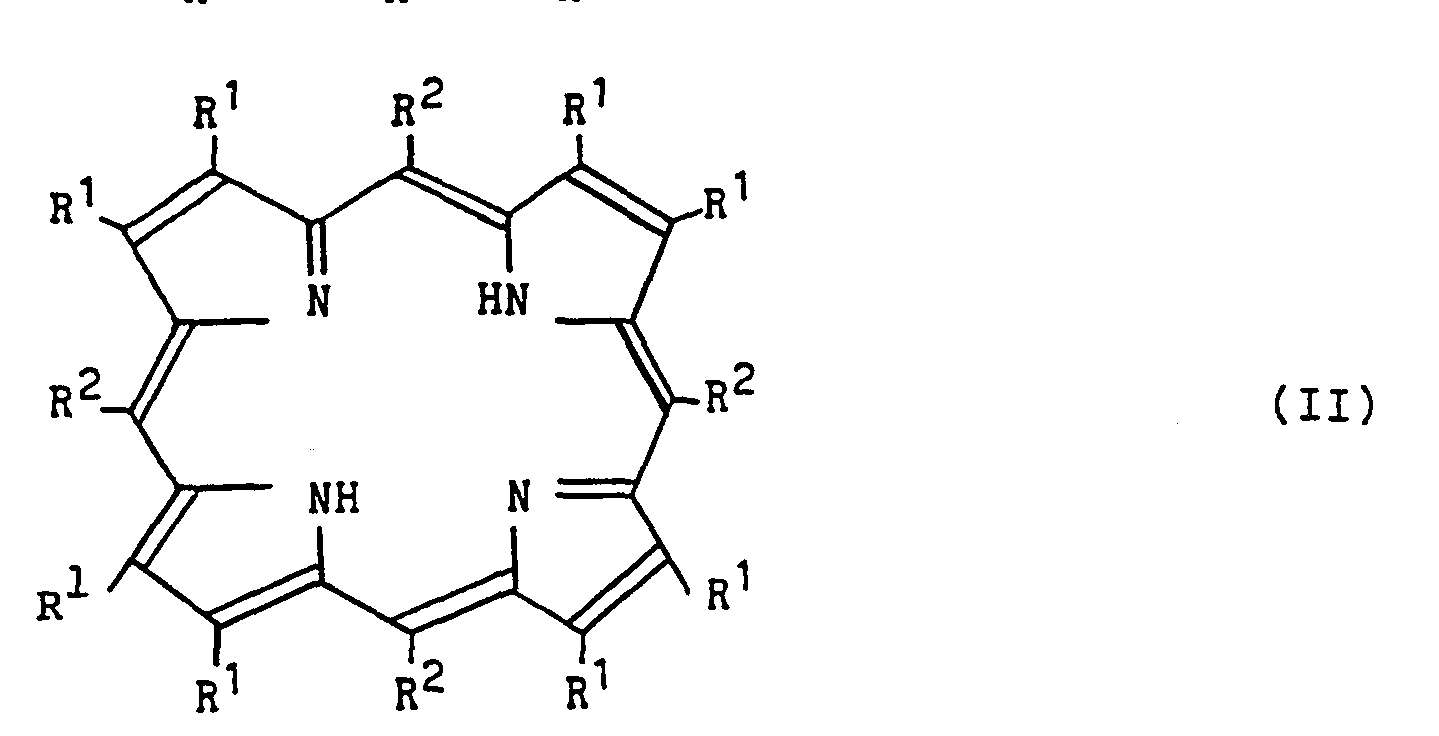
- Polymerization of alkylene oxide in the presence of a complex catalyst (I) prepared by reacting an organoaluminum compound with a porphyrin compound of the formula (II) has been proposed (cf. Makromol. Chem., 182,1073-1079 (1981)).

- In this method, alkylene oxide can be living polymerized by the use of the complex (I) according to the following reaction formula to give polyalkylene oxide having narrow distribution of molecular weight:

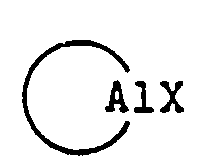
- Since one mole of polyalkylene oxide is produced per mole of the complex (I) which is expensive, the produced polymer is fairly expensive.
- One object of the present invention is to provide a process for economically preparing polyalkylene oxide having narrow distribution of molecular weight.
- Another object of the present invention is to provide an improved process for preparing polyalkylene oxide having narrow distribution of molecular weight in the presence of the complex (I) in a smaller amount than in the conventional process.
- These and other objects are accomplished by a process according to the present invention, which comprises polymerizing alkylene oxide in the presence of the complex (I) and an active hydrogen-containing compound.
- Specific examples of the organoaluminum compound to be reacted with the porphyrin compound (II) are dialkylaluminum halide having 1 to 4 carbon atoms in each alkyl group (e.g. diethylaluminum chloride and diethylaluminum bromide), trialkylaluminum having 1 to 4 carbon atoms in each alkyl group (e.g. trimethylaluminum, triethylaluminum, tripropylaluminum and tirisobutylaluminum) and alkylaluminum hydride having 1 to 4 carbon atoms in each alkyl group (e.g. diethylaluminum hydride and diisobutylaluminum hydride). Among them, dialkylaluminum halide and trialkylaluminum, particularly, diethylaluminum chloride and triethylaluminum are preferable.
- In the formulas (I) and (II), the alkyl group may be a linear one or a branched one. The hydrocarbon group includes a linear or branched alkyl group, a cycloalkyl group, an aromatic group and an aralkyl group.
- The porphyrin compound (II) includes tetramethyltetraethylporphyrin, octaethylporphyrin and tetraphenylporphyrin. Particularly, the porphyrin compound (II) wherein R1 is a hydrogen atom and R2 is a phenyl group, namely tetraphenylporphyrin is most preferable.
- The aluminum porphyrin complex (I) is prepared by reacting the organoaluminum compound and the porphyrin compound (II). For example, the reaction is carried out in an atmosphere of inert gas such as nitrogen, helium and argon in the presence of a solvent. The organoaluminum compound and the porphyrin compound (II) are used in nearly equimolar amounts. Specific examples of the solvent are hydrocarbons (e.g. benzene, toluene and xylene), halogenated hdyrocarbons (e.g. methylene chloride, chloroform and dichloroethane) and so on. When the organoaluminum compound is diethylaluminum chloride, X in the formula (I) may be a chlorine atom, and when the organoaluminum compound is triethylaluminum, X may be an ethyl group.
- The complex (I) wherein X is a hydrogen atom or an alkyl group can be reacted with the active hydrogen-containing compound to give the complex (1) having a residue derived from the active hydrogen-containing compound. For example,
- (a) when the active hydrogen-containing compound is an organic compound having a hydroxyl group or water, there is obtained a complex (I) wherein X is an alkoxide group, a phenoxide group or a hydroxyl group, and
- (b) when the active hydrogen-containing compound is an organic compound having a carboxyl group, there is obtained a complex (I) wherein X is an acyloxy group.
- The above described complex of the aluminum porphyrin complex (I) and the active hydrogen-containing compound may be used as a complex catalyst in the process according to the present invention.
- Specific examples of alkylene oxide to be polymerized by the process according to the present invention are aliphatic alkylene oxide having a three member ring epoxy terminal group (e.g. ethylene oxide, propylene oxide, 1-butylene oxide and epichlorhydrin) and aromatic alkylene oxide having a three member ring epoxy group (e.g. styrene oxide) and mixtures thereof. Among them, aliphatic alkylene oxide, particularly propylene oxide and a mixture of propylene oxide and ethylene oxide are preferable.
- The active hydrogen-containing compound includes mono-, di- or tri-hydric alcohols, and phenols and mono-, di- or tri-basic carboxylic acids. Specific examples of alcohols are saturated aliphatic alcohols (e.g. methanol, ethanol and butanol), unsaturated alcohols (e.g. allyl alcohol, ethyleneglycol monoallyl ether, 3-butenyl alcohol, 2-hydroxyethyl acrylate and methacrylate and vinylbenzyl alcohol) and polyhydric alcohols (e.g. triethylene glycol, tripropylene glycol, ethylene glycol, trimethylolpropane and glycerol). Specific examples of phenols are monohydric phenols (e.g. cresol, xylenol and phenol), unsaturated phenols (vinylphenol, allylphenol and allyloxyphenol) and polyhydric phenols (e.g. resorcin, p-dihydroxybenzene, 2,4-toluenediol, 1,3,5-benzenetriol and 2,2'-bis(4-hydroxyphenyl)propane). Specific examples of carboxylic acid are saturated carboxylic acids (e.g. acetic acid, propionic acid, octanoic acid and stearic acid), unsaturated carboxylic acids (e.g. acrylic acid methacrylic acid, benzoic acid and vinylbenzoic acid) and polyhydric carboxylic acids (e.g. adipic acid, sebacic acid, maleic acid, fumaric acid, 1,2,3-propane tricarboxylic acid, a-hydroxysuccinic acid, terephthalic acid and 1,2,4-benzene tricarboxylic acid). In order to introduce a functional group at the terminal of polyalkylene oxide molecule, unsaturated alcohols, unsaturated carboxylic acids, polyhydric alcohols and polybasic carboxylic acids are preferable.
- As described in the above, the complex (I) wherein X is an hydrogen or an alkyl group can react with the active hydrogen-containing compound. Thus, when such complex (I) is used as the catalyst, the hydrogen-containing compound should be used in such amount that the unreacted active hydrogen- contianing compound still remains in the polymerization system.
- The polymerization reaction is assumed to proceed according to, for example, the following reaction formula:

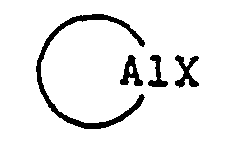
- According to the process of the invention, polyalkylene oxide is produced in an equimolar amount with the total amount of the complex (I) and the active hydrogen-containing compound. Therefore, when the molar ratio of the active hydrogen-containing compound to the complex (1) is larger, polyalkylene oxide having a lower molecular weight is obtained, while when said ratio is smaller, polyalkylene oxide having a larger molecular weight is obtained. The molar ratio of the complex (I) to the active hydrogen-containing compound is usually 1:1 to 1:50. However, the molar ratio of 1:100 or less or even 1:500 may be used.
- When the molar ratio of the complex (I) to alkylene oxide to be polymerized is larger, the polymerization rate is higher. The amount of the complex (1) is 0.001 to 10% by mole, preferably 0.01 to 1 % by mole based on the amount of alkylene oxide. The amount of the active hydrogen-containing compound is 0.1 to 10% by mole, preferably 0.1 to 5% by mole based on the amount of alkylene oxide.
- Polymerization of alkylene oxide is carried out in the presence of the complex (I) and the active hydrogen-containing compound in an atmosphere of an inert gas such as nitrogen in the presence or absence of a solvent.
- Specific examples of the solvent used for the polymerization are hydrocarbons (e.g. benzene, toluene and xyiene) and halogenated hydrocarbons (e.g. methylene choride, chloroform and dichloroethane). The polymerization temperature is a room temperature or higher.
- Polyalkylene oxide prepared by the process of the invention has a narrow distribution of molecular weight (Mw/Mn) of 1.5 or less, particularly 1.3 or less. The polymer may be a homopolymer of a single kind of alkylene oxide or a random or block copolymer of two or more kind of alkylene oxide. According to the present invention, liquid polyalkylene oxide having a terminal hydroxyl or unsaturated group and a molecular weight of 500 to 20,000 is advantageously prepared.
- When polyalkylene oxide has a terminal hydroxyl group, it may be used as a raw material of polyurethane to be used as adhesives, rubbers and foams. When the molecule of polyalkylene oxide has an unsaturated group at one end, polyalkylene oxide may be used as a macromonomer.
- The present invention will be hereinafter explained further in detail by following examples.
- In methylene chloride (20 ml), diethylaluminum chloride (0.15 ml) and a,p,v,5-tetraphenytporphyrin (0.61 g) were reacted in a nitrogen atmosphere at a room temperature for 2 hours. Then, the reaction mixture was heated under reduced pressure to remove the volatile components to obtain a complex (hereinafter referred to as "Catalyst A"). Catalyst A may have the formula (I) wherein R1 is a hydrogen atom, R2 is a phenyl group and X is a chlorine atom.
- In a 50 ml glass flask, Catalyst A (0.31 g, 0.5 mmol) was charged. In a nitrogen atmosphere, propylene oxide and an active hydrogen-containing compound as shown in Table were added in amounts as shown in Table and reacted with stirring at a room temperature for a reaction time shown in Table. After polymerization, unreacted propylene oxide was removed under reduced pressure to obtain polypropylene oxide. A molecular weight and its distribution were determined by GPC. The results are also shown in Table. GPC analysis was performed at an oven temperature of 40°C by the use of a column filled with polystyrene gel (manufactured by Toyo Soda Co. Ltd., Japan) and tetrahydrofuran as an eluent.

Claims (6)
Applications Claiming Priority (2)
| Application Number | Priority Date | Filing Date | Title |
|---|---|---|---|
| JP60039663A JPS61197631A (en) | 1985-02-28 | 1985-02-28 | Production of polyalkylene oxide of narrow mw distribution |
| JP39663/85 | 1985-02-28 |
Publications (3)
| Publication Number | Publication Date |
|---|---|
| EP0195951A2 EP0195951A2 (en) | 1986-10-01 |
| EP0195951A3 EP0195951A3 (en) | 1986-12-10 |
| EP0195951B1 true EP0195951B1 (en) | 1991-01-02 |
Family
ID=12559321
Family Applications (1)
| Application Number | Title | Priority Date | Filing Date |
|---|---|---|---|
| EP86102676A Expired - Lifetime EP0195951B1 (en) | 1985-02-28 | 1986-02-28 | Process for preparing polyalkylene oxide having narrow distribution of molecular weight |
Country Status (6)
| Country | Link |
|---|---|
| US (1) | US4654417A (en) |
| EP (1) | EP0195951B1 (en) |
| JP (1) | JPS61197631A (en) |
| AU (1) | AU574309B2 (en) |
| CA (1) | CA1239246A (en) |
| DE (1) | DE3676326D1 (en) |
Families Citing this family (86)
| Publication number | Priority date | Publication date | Assignee | Title |
|---|---|---|---|---|
| JPH0613604B2 (en) * | 1985-03-22 | 1994-02-23 | 鐘淵化学工業株式会社 | Process for producing polyalkylene oxide containing unsaturated group at molecular end |
| CA1255050A (en) * | 1985-03-22 | 1989-05-30 | Shohei Inoue | Polyalkylene oxide having unsaturated end group and narrow molecular weight distribution |
| US6369159B1 (en) | 1987-05-13 | 2002-04-09 | Pdm Holdings Corp. | Antistatic plastic materials containing epihalohydrin polymers |
| US4943626A (en) * | 1988-07-29 | 1990-07-24 | The Dow Chemical Company | Primary polyether active hydrogen compounds which are prepared from linked, protectively initiated polyalkyleneoxides |
| US5053461A (en) * | 1988-08-31 | 1991-10-01 | Mitsubishi Rayon Co., Ltd. | Preparation method of comb copolymer, acrylic comb copolymer, and impact resistant resin composition |
| US5112789A (en) * | 1988-09-30 | 1992-05-12 | Union Carbide Chemicals & Plastics Technology Corporation | Alkoxylation catalysis |
| US5118650A (en) * | 1988-09-30 | 1992-06-02 | Union Carbide Chemicals & Plastics Technology Corporation | Alkoxylation using modified group iiib metal-containing bimetallic or polymetallic catalysts |
| US5112788A (en) * | 1988-09-30 | 1992-05-12 | Union Carbide Chemicals & Plastics Technology Corporation | Alkoxylation using modified group iia metal-containing bimetallic or polymetallic catalysts |
| US4946984A (en) * | 1988-09-30 | 1990-08-07 | Union Carbide Chemicals And Plastics Company Inc. | Alkoxylation using a calcium sulfate catalyst |
| US5120697A (en) * | 1988-09-30 | 1992-06-09 | Union Carbide Chemicals & Plastics Technology Corporation | Alkoxylation using modified calcium-containing catalysts |
| US5114900A (en) * | 1988-09-30 | 1992-05-19 | Union Carbide Chemicals & Plastics Technology Corporation | Alkoxylation using modified calcium-containing bimetallic or polymetallic catalysts |
| JP2704966B2 (en) * | 1988-12-28 | 1998-01-26 | 株式会社トクヤマ | Anionic polymerization catalyst and method for producing the same |
| JP2691002B2 (en) * | 1989-03-09 | 1997-12-17 | 株式会社トクヤマ | Method for producing polymer |
| ES2089199T3 (en) * | 1990-03-09 | 1996-10-01 | Kanegafuchi Chemical Ind | CURABLE COMPOSITION. |
| US6576733B1 (en) | 1990-03-09 | 2003-06-10 | Kanegafuchi Chemical Industry Co., Ltd. | Curable oxypropylene polymer composition |
| JPH072828B2 (en) * | 1990-04-03 | 1995-01-18 | 鐘淵化学工業株式会社 | Curable resin composition |
| CA2056360C (en) * | 1990-04-03 | 2000-07-25 | Masayuki Fujita | Curable blends of hydrolysable polyoxypropylenes and epoxy resins |
| US6369187B1 (en) | 1990-04-09 | 2002-04-09 | Kanegafuchi Chemical Industry Co., Ltd. | Reactive silicon group-containing oxypropylene polymer and method of producing same |
| AU650872B2 (en) * | 1990-04-09 | 1994-07-07 | Kanegafuchi Chemical Industry Co. Ltd. | Oxypropylene polymer containing reactive silicon group and production thereof |
| US5191104A (en) * | 1990-09-20 | 1993-03-02 | Union Carbide Chemicals & Plastics Technology Corporation | Alkoxylation of carboxylated compounds |
| US5104987A (en) * | 1990-09-20 | 1992-04-14 | Union Carbide Chemicals & Plastics Technology Corporation | Alkoxylation of active hydrogen-containing compounds |
| JP2522485Y2 (en) * | 1992-05-21 | 1997-01-16 | 株式会社共立 | cock |
| DE69617439T2 (en) | 1995-08-10 | 2002-08-08 | Kanegafuchi Chemical Industry Co., Ltd. | CURABLE POLYMER COMPOSITION |
| US5777177A (en) * | 1996-02-07 | 1998-07-07 | Arco Chemical Technology, L.P. | Preparation of double metal cyanide-catalyzed polyols by continuous addition of starter |
| US5910555A (en) * | 1996-05-16 | 1999-06-08 | Kaneka Corporation | Curable resin composition with improved adhesion of coatings |
| DE10218583A1 (en) * | 2002-04-26 | 2003-11-06 | Bayer Ag | Catalysts for the polymerization of alkylene oxides |
| JP4101632B2 (en) | 2002-11-01 | 2008-06-18 | 株式会社カネカ | CURABLE COMPOSITION AND METHOD OF IMPROVING RESTORE AND CREEP |
| DE602004025022D1 (en) | 2003-10-06 | 2010-02-25 | Kaneka Corp | ADHESIVE AGENTS |
| WO2005097909A1 (en) | 2004-04-05 | 2005-10-20 | Kaneka Corporation | Curable compositions |
| JP4655509B2 (en) * | 2004-05-13 | 2011-03-23 | 住友化学株式会社 | Contact treated product, catalyst component for addition polymerization, catalyst for addition polymerization, and method for producing addition polymer |
| US7807756B2 (en) | 2004-11-10 | 2010-10-05 | Kaneka Corporation | Curable composition |
| US20090234072A1 (en) | 2005-09-08 | 2009-09-17 | Kaneka Corporation | Curable composition |
| EP1939257B1 (en) | 2005-09-30 | 2017-06-21 | Kaneka Corporation | Curable composition |
| DE602006018346D1 (en) | 2005-09-30 | 2010-12-30 | Kaneka Corp | HARDENING COMPOSITION WITH IMPROVED CURING AND STORAGE STABILITY |
| JP5587538B2 (en) | 2005-09-30 | 2014-09-10 | 株式会社カネカ | Method for producing organic polymer having terminal end of trimethoxysilyl group |
| JP5378684B2 (en) | 2005-09-30 | 2013-12-25 | 株式会社カネカ | Curable composition |
| JP5420896B2 (en) | 2006-02-16 | 2014-02-19 | 株式会社カネカ | Curable composition |
| WO2007119867A1 (en) | 2006-04-19 | 2007-10-25 | Kaneka Corporation | Curable resin composition |
| EP2011834B1 (en) | 2006-04-20 | 2012-07-25 | Kaneka Corporation | Curable composition |
| EP2025715B1 (en) | 2006-06-02 | 2017-10-25 | Kaneka Corporation | Curable composition |
| JP5500824B2 (en) | 2006-09-13 | 2014-05-21 | 株式会社カネカ | Moisture curable polymer having SiF group and curable composition containing the same |
| US7977399B2 (en) | 2006-10-05 | 2011-07-12 | Kaneka Corporation | Curable composition |
| CN102443162B (en) | 2006-11-01 | 2015-05-13 | 株式会社钟化 | Hardening organic polymer, process for producing same, and hardening composition containing polymer |
| EP2088173B1 (en) | 2006-11-22 | 2012-02-22 | Kaneka Corporation | Curable composition and catalyst composition |
| JP5284796B2 (en) | 2006-12-25 | 2013-09-11 | 株式会社カネカ | Curable composition |
| EP2123720B1 (en) | 2007-01-12 | 2017-06-14 | Kaneka Corporation | Curable composition |
| EP2177571A4 (en) | 2007-07-19 | 2014-01-08 | Kaneka Corp | Curable composition |
| JP5624324B2 (en) | 2008-01-25 | 2014-11-12 | 株式会社カネカ | Process for producing polyalkylene oxide |
| JP5485902B2 (en) | 2008-09-29 | 2014-05-07 | 株式会社カネカ | Curable composition and cured product thereof |
| JP5592273B2 (en) | 2009-01-16 | 2014-09-17 | 株式会社カネカ | Curable composition and cured product thereof |
| JP5388121B2 (en) * | 2009-10-27 | 2014-01-15 | セメダイン株式会社 | Speaker assembly method |
| CN102712814B (en) | 2010-01-19 | 2015-08-26 | 株式会社钟化 | Solidification compound |
| CN102812092B (en) * | 2010-03-02 | 2015-03-11 | 新时代技研株式会社 | Curable composition |
| US8846822B2 (en) | 2010-10-27 | 2014-09-30 | Kaneka Corporation | Curable composition |
| WO2012117902A1 (en) | 2011-03-02 | 2012-09-07 | 株式会社カネカ | Curable composition |
| EP2684690B1 (en) | 2011-03-09 | 2018-02-21 | Kaneka Corporation | Adhesive-bonded structure comprising both adhesive composition and wood material |
| US20140093679A1 (en) | 2011-04-15 | 2014-04-03 | Kaneka Corporation | Cladding material for construction |
| CN103814101B9 (en) | 2011-09-22 | 2017-03-01 | 株式会社钟化 | Curable composition and cured product thereof |
| CN104685022B (en) | 2012-09-28 | 2017-07-21 | 株式会社钟化 | Structure |
| WO2014121007A2 (en) | 2013-02-01 | 2014-08-07 | 3M Innovative Properties Company | Coating compositions and articles made therefrom |
| KR102175447B1 (en) | 2013-07-11 | 2020-11-06 | 세메다인 가부시키 가이샤 | Production method for electrically conductive cured article and curing method for pulsed light curing composition |
| WO2015008709A1 (en) | 2013-07-18 | 2015-01-22 | セメダイン株式会社 | Photocurable composition |
| CN104513160A (en) * | 2013-09-26 | 2015-04-15 | 宜兴市志博新材料科技有限公司 | Synthesis method of monoethyl methacrylate polyoxypropylene ether alcohol |
| CN105829485B (en) | 2013-12-13 | 2018-10-12 | 思美定株式会社 | Photocurable composition with adhesiveness |
| JPWO2015098998A1 (en) | 2013-12-26 | 2017-03-23 | 株式会社カネカ | Curable composition and cured product thereof |
| KR20160124168A (en) | 2014-02-18 | 2016-10-26 | 쓰리엠 이노베이티브 프로퍼티즈 캄파니 | Self sealing articles |
| CA2939923C (en) | 2014-02-18 | 2022-07-05 | 3M Innovative Properties Company | Easy to apply air and water barrier articles |
| KR20170040273A (en) | 2014-08-01 | 2017-04-12 | 쓰리엠 이노베이티브 프로퍼티즈 컴파니 | Self sealing permeable air barrier compositions |
| KR20170098269A (en) | 2014-12-22 | 2017-08-29 | 쓰리엠 이노베이티브 프로퍼티즈 컴파니 | Air and water barrier goods |
| JP6403325B2 (en) * | 2014-12-26 | 2018-10-10 | ライオン株式会社 | Process for producing fatty acid alkyl ester alkoxylate |
| DE112016000869T5 (en) | 2015-02-23 | 2018-01-18 | King Industries, Inc. | Curable coating compositions of silane-functional polymers |
| CN105111427A (en) * | 2015-07-30 | 2015-12-02 | 浙江绿科安化学有限公司 | Preparation method for polyether alkyl hydroxyl acrylate |
| US11105089B2 (en) | 2015-08-18 | 2021-08-31 | 3M Innovative Properties Company | Self-sealing articles including elastic porous layer |
| KR102008636B1 (en) | 2015-12-22 | 2019-08-07 | 쓰리엠 이노베이티브 프로퍼티즈 컴파니 | Rolls comprising air and water barrier articles and methods of use thereof |
| JP6527599B2 (en) | 2015-12-24 | 2019-06-05 | 株式会社カネカ | Method of manufacturing laminate, and laminate |
| US11365328B2 (en) | 2017-02-23 | 2022-06-21 | 3M Innovative Properties Company | Air and water barrier article including inelastic porous layer |
| WO2019159972A1 (en) | 2018-02-13 | 2019-08-22 | 株式会社カネカ | Single-component curable composition for working joint |
| WO2019235034A1 (en) | 2018-06-07 | 2019-12-12 | 株式会社カネカ | Resin composition for foamed object, foamed object, and method for producing foamed object |
| CN114127156B (en) | 2019-02-28 | 2025-01-21 | 钟化美洲控股公司 | Moisture-curable adhesive composition |
| US12227936B2 (en) | 2019-08-07 | 2025-02-18 | 3M Innovative Properties Company | Tape, article including tape and composite layer, and related methods |
| WO2022191084A1 (en) | 2021-03-12 | 2022-09-15 | Agc株式会社 | Curable composition, and cured product |
| JPWO2023282048A1 (en) | 2021-07-05 | 2023-01-12 | ||
| EP4407005A4 (en) | 2021-09-24 | 2025-10-15 | Kaneka Corp | Curable composition |
| EP4567075A1 (en) | 2022-08-04 | 2025-06-11 | Kaneka Corporation | Curable composition |
| WO2024157860A1 (en) | 2023-01-23 | 2024-08-02 | 株式会社カネカ | Method for producing curable composition |
| CN120858143A (en) | 2023-03-30 | 2025-10-28 | 株式会社钟化 | Curable composition |
Citations (1)
| Publication number | Priority date | Publication date | Assignee | Title |
|---|---|---|---|---|
| FR2232562A1 (en) * | 1973-06-07 | 1975-01-03 | Kanegafuchi Chemical Ind |
Family Cites Families (4)
| Publication number | Priority date | Publication date | Assignee | Title |
|---|---|---|---|---|
| US3480567A (en) * | 1962-05-23 | 1969-11-25 | Takeda Chemical Industries Ltd | Polymerization of a vicinal alkylene oxide using a novel organometallic compound-polyol cocatalyst |
| JPS578223A (en) * | 1980-06-19 | 1982-01-16 | Mitsui Petrochem Ind Ltd | Production of alkylene oxide block copolymer |
| US4376723A (en) * | 1981-06-16 | 1983-03-15 | The Dow Chemical Company | Vicinal alkylene oxide polymerization and catalysts thereof |
| US4565845A (en) * | 1984-09-05 | 1986-01-21 | Hitachi Chemical Company, Ltd. | Process for producing polyester and block copolymer thereof |
-
1985
- 1985-02-28 JP JP60039663A patent/JPS61197631A/en active Granted
-
1986
- 1986-02-25 AU AU54020/86A patent/AU574309B2/en not_active Ceased
- 1986-02-26 CA CA000502761A patent/CA1239246A/en not_active Expired
- 1986-02-28 US US06/834,422 patent/US4654417A/en not_active Expired - Fee Related
- 1986-02-28 DE DE8686102676T patent/DE3676326D1/en not_active Expired - Lifetime
- 1986-02-28 EP EP86102676A patent/EP0195951B1/en not_active Expired - Lifetime
Patent Citations (1)
| Publication number | Priority date | Publication date | Assignee | Title |
|---|---|---|---|---|
| FR2232562A1 (en) * | 1973-06-07 | 1975-01-03 | Kanegafuchi Chemical Ind |
Non-Patent Citations (1)
| Title |
|---|
| J. MACROMOL. SCI.-CHEM., A21(8&9), pages 1035-1047 (1984) * |
Also Published As
| Publication number | Publication date |
|---|---|
| CA1239246A (en) | 1988-07-12 |
| US4654417A (en) | 1987-03-31 |
| JPS61197631A (en) | 1986-09-01 |
| AU574309B2 (en) | 1988-06-30 |
| AU5402086A (en) | 1986-09-04 |
| JPH0514734B2 (en) | 1993-02-25 |
| EP0195951A2 (en) | 1986-10-01 |
| DE3676326D1 (en) | 1991-02-07 |
| EP0195951A3 (en) | 1986-12-10 |
Similar Documents
| Publication | Publication Date | Title |
|---|---|---|
| US4654417A (en) | Process for preparing polyalkylene oxide having narrow distribution of molecular weight | |
| US4774356A (en) | Process for preparing polyalkylene oxide having unsaturated end groups | |
| JPH072838B2 (en) | Process for producing polyalkylene oxide containing unsaturated group at molecular end | |
| EP0196565B1 (en) | Polyalkylene oxide having unsaturated end group and narrow molecular weight distribution | |
| JPH0613605B2 (en) | Polyalkylene oxides containing unsaturated groups at the ends of the molecule and having a narrow molecular weight distribution | |
| Shen et al. | New catalytic systems for the fixation of carbon dioxide, 2. Synthesis of high molecular weight epichlorohydrin/carbon dioxide copolymer with rare earth phosphonates/triisobutyl‐aluminium systems | |
| JP4159106B2 (en) | Process for alkoxylation of fluorinated alcohols | |
| US4395574A (en) | Phosphonium phenoxide catalysts for promoting reaction of epoxides with phenols and/or carboxylic acids | |
| EP0019852A1 (en) | Phosphonium phenoxide catalysts, epoxy resin containing same and process for promoting reaction of epoxides with phenols and/or carboxylic acids | |
| EP1340780B1 (en) | Use of selected metal catalysts for ring-opening polymerization of epoxides | |
| EP0415404A2 (en) | Process for producing unsaturated group-terminated high-molecular weight polyalkylene oxide | |
| US5071812A (en) | Polymerization of cyclic olefins | |
| AU750750B2 (en) | Process for preparing hydroxy-functionalized polyesters | |
| US5369195A (en) | Polymerization of cyclic olefins | |
| CA2180362C (en) | Polyether glycols and alcohols derived from 3,4-epoxy-1-butene | |
| US4965342A (en) | High molecular weight polymers and copolymers of 3-hydroxyoxetane and derivatives thereof | |
| US3134745A (en) | Polymeric polyols and method of making the same | |
| US3542750A (en) | Catalyst for the polymerization of cyclic alkylene oxides | |
| JP2001011170A (en) | Polycarbonate manufacturing method | |
| US4460703A (en) | Catalyst for epoxide polymerization | |
| EP0116658B1 (en) | Process for polymerization of vicinal alkylene oxide | |
| US3679723A (en) | Condensation products of aluminum hydroxide and an aluminum alcoholate | |
| Dunjic et al. | Synthesis and rheological study of some maleic acid and fumaric acid stereoregular polyesters, 10. Synthesis and characterization of α, ω‐dihydroxyoligo (alkylene maleate) s | |
| US3925317A (en) | Alkene oxide or acrylate polymerization or copolymerization catalyzed by organoaluminum-organophosphine-metal salt of a beta-diketone | |
| US4092339A (en) | Process for making polyglycidyl esters |
Legal Events
| Date | Code | Title | Description |
|---|---|---|---|
| PUAI | Public reference made under article 153(3) epc to a published international application that has entered the european phase |
Free format text: ORIGINAL CODE: 0009012 |
|
| AK | Designated contracting states |
Kind code of ref document: A2 Designated state(s): BE CH DE FR GB IT LI NL SE |
|
| PUAL | Search report despatched |
Free format text: ORIGINAL CODE: 0009013 |
|
| AK | Designated contracting states |
Kind code of ref document: A3 Designated state(s): BE CH DE FR GB IT LI NL SE |
|
| 17P | Request for examination filed |
Effective date: 19870424 |
|
| 17Q | First examination report despatched |
Effective date: 19881027 |
|
| GRAA | (expected) grant |
Free format text: ORIGINAL CODE: 0009210 |
|
| AK | Designated contracting states |
Kind code of ref document: B1 Designated state(s): BE CH DE FR GB IT LI NL SE |
|
| ITF | It: translation for a ep patent filed | ||
| REF | Corresponds to: |
Ref document number: 3676326 Country of ref document: DE Date of ref document: 19910207 |
|
| ET | Fr: translation filed | ||
| PLBE | No opposition filed within time limit |
Free format text: ORIGINAL CODE: 0009261 |
|
| STAA | Information on the status of an ep patent application or granted ep patent |
Free format text: STATUS: NO OPPOSITION FILED WITHIN TIME LIMIT |
|
| 26N | No opposition filed | ||
| EAL | Se: european patent in force in sweden |
Ref document number: 86102676.3 |
|
| PGFP | Annual fee paid to national office [announced via postgrant information from national office to epo] |
Ref country code: FR Payment date: 19950210 Year of fee payment: 10 |
|
| PGFP | Annual fee paid to national office [announced via postgrant information from national office to epo] |
Ref country code: SE Payment date: 19950215 Year of fee payment: 10 |
|
| PGFP | Annual fee paid to national office [announced via postgrant information from national office to epo] |
Ref country code: GB Payment date: 19950220 Year of fee payment: 10 |
|
| PGFP | Annual fee paid to national office [announced via postgrant information from national office to epo] |
Ref country code: DE Payment date: 19950222 Year of fee payment: 10 |
|
| PGFP | Annual fee paid to national office [announced via postgrant information from national office to epo] |
Ref country code: CH Payment date: 19950223 Year of fee payment: 10 |
|
| PGFP | Annual fee paid to national office [announced via postgrant information from national office to epo] |
Ref country code: NL Payment date: 19950228 Year of fee payment: 10 |
|
| PGFP | Annual fee paid to national office [announced via postgrant information from national office to epo] |
Ref country code: BE Payment date: 19950410 Year of fee payment: 10 |
|
| PG25 | Lapsed in a contracting state [announced via postgrant information from national office to epo] |
Ref country code: LI Free format text: LAPSE BECAUSE OF NON-PAYMENT OF DUE FEES Effective date: 19960228 Ref country code: GB Effective date: 19960228 Ref country code: CH Free format text: LAPSE BECAUSE OF NON-PAYMENT OF DUE FEES Effective date: 19960228 Ref country code: BE Effective date: 19960228 |
|
| PG25 | Lapsed in a contracting state [announced via postgrant information from national office to epo] |
Ref country code: SE Effective date: 19960301 |
|
| BERE | Be: lapsed |
Owner name: KANEGAFUCHI CHEMICAL INDUSTRY CO. LTD Effective date: 19960228 |
|
| PG25 | Lapsed in a contracting state [announced via postgrant information from national office to epo] |
Ref country code: NL Effective date: 19960901 |
|
| REG | Reference to a national code |
Ref country code: CH Ref legal event code: PL |
|
| GBPC | Gb: european patent ceased through non-payment of renewal fee |
Effective date: 19960228 |
|
| PG25 | Lapsed in a contracting state [announced via postgrant information from national office to epo] |
Ref country code: FR Effective date: 19961031 |
|
| NLV4 | Nl: lapsed or anulled due to non-payment of the annual fee |
Effective date: 19960901 |
|
| PG25 | Lapsed in a contracting state [announced via postgrant information from national office to epo] |
Ref country code: DE Effective date: 19961101 |
|
| EUG | Se: european patent has lapsed |
Ref document number: 86102676.3 |
|
| REG | Reference to a national code |
Ref country code: FR Ref legal event code: ST |
|
| PG25 | Lapsed in a contracting state [announced via postgrant information from national office to epo] |
Ref country code: IT Free format text: LAPSE BECAUSE OF NON-PAYMENT OF DUE FEES;WARNING: LAPSES OF ITALIAN PATENTS WITH EFFECTIVE DATE BEFORE 2007 MAY HAVE OCCURRED AT ANY TIME BEFORE 2007. THE CORRECT EFFECTIVE DATE MAY BE DIFFERENT FROM THE ONE RECORDED. Effective date: 20050228 |