EP0195414B1 - 2-azolylpropionate derivatives and fungicides containing the same - Google Patents
2-azolylpropionate derivatives and fungicides containing the same Download PDFInfo
- Publication number
- EP0195414B1 EP0195414B1 EP86103665A EP86103665A EP0195414B1 EP 0195414 B1 EP0195414 B1 EP 0195414B1 EP 86103665 A EP86103665 A EP 86103665A EP 86103665 A EP86103665 A EP 86103665A EP 0195414 B1 EP0195414 B1 EP 0195414B1
- Authority
- EP
- European Patent Office
- Prior art keywords
- general formula
- group
- carbon atoms
- acid
- methyl
- Prior art date
- Legal status (The legal status is an assumption and is not a legal conclusion. Google has not performed a legal analysis and makes no representation as to the accuracy of the status listed.)
- Expired
Links
Classifications
-
- C—CHEMISTRY; METALLURGY
- C07—ORGANIC CHEMISTRY
- C07D—HETEROCYCLIC COMPOUNDS
- C07D231/00—Heterocyclic compounds containing 1,2-diazole or hydrogenated 1,2-diazole rings
- C07D231/02—Heterocyclic compounds containing 1,2-diazole or hydrogenated 1,2-diazole rings not condensed with other rings
- C07D231/10—Heterocyclic compounds containing 1,2-diazole or hydrogenated 1,2-diazole rings not condensed with other rings having two or three double bonds between ring members or between ring members and non-ring members
- C07D231/12—Heterocyclic compounds containing 1,2-diazole or hydrogenated 1,2-diazole rings not condensed with other rings having two or three double bonds between ring members or between ring members and non-ring members with only hydrogen atoms, hydrocarbon or substituted hydrocarbon radicals, directly attached to ring carbon atoms
-
- A—HUMAN NECESSITIES
- A01—AGRICULTURE; FORESTRY; ANIMAL HUSBANDRY; HUNTING; TRAPPING; FISHING
- A01N—PRESERVATION OF BODIES OF HUMANS OR ANIMALS OR PLANTS OR PARTS THEREOF; BIOCIDES, e.g. AS DISINFECTANTS, AS PESTICIDES OR AS HERBICIDES; PEST REPELLANTS OR ATTRACTANTS; PLANT GROWTH REGULATORS
- A01N43/00—Biocides, pest repellants or attractants, or plant growth regulators containing heterocyclic compounds
- A01N43/48—Biocides, pest repellants or attractants, or plant growth regulators containing heterocyclic compounds having rings with two nitrogen atoms as the only ring hetero atoms
- A01N43/50—1,3-Diazoles; Hydrogenated 1,3-diazoles
-
- A—HUMAN NECESSITIES
- A01—AGRICULTURE; FORESTRY; ANIMAL HUSBANDRY; HUNTING; TRAPPING; FISHING
- A01N—PRESERVATION OF BODIES OF HUMANS OR ANIMALS OR PLANTS OR PARTS THEREOF; BIOCIDES, e.g. AS DISINFECTANTS, AS PESTICIDES OR AS HERBICIDES; PEST REPELLANTS OR ATTRACTANTS; PLANT GROWTH REGULATORS
- A01N43/00—Biocides, pest repellants or attractants, or plant growth regulators containing heterocyclic compounds
- A01N43/64—Biocides, pest repellants or attractants, or plant growth regulators containing heterocyclic compounds having rings with three nitrogen atoms as the only ring hetero atoms
- A01N43/647—Triazoles; Hydrogenated triazoles
- A01N43/653—1,2,4-Triazoles; Hydrogenated 1,2,4-triazoles
-
- C—CHEMISTRY; METALLURGY
- C07—ORGANIC CHEMISTRY
- C07D—HETEROCYCLIC COMPOUNDS
- C07D233/00—Heterocyclic compounds containing 1,3-diazole or hydrogenated 1,3-diazole rings, not condensed with other rings
- C07D233/54—Heterocyclic compounds containing 1,3-diazole or hydrogenated 1,3-diazole rings, not condensed with other rings having two double bonds between ring members or between ring members and non-ring members
- C07D233/56—Heterocyclic compounds containing 1,3-diazole or hydrogenated 1,3-diazole rings, not condensed with other rings having two double bonds between ring members or between ring members and non-ring members with only hydrogen atoms or radicals containing only hydrogen and carbon atoms, attached to ring carbon atoms
-
- C—CHEMISTRY; METALLURGY
- C07—ORGANIC CHEMISTRY
- C07D—HETEROCYCLIC COMPOUNDS
- C07D249/00—Heterocyclic compounds containing five-membered rings having three nitrogen atoms as the only ring hetero atoms
- C07D249/02—Heterocyclic compounds containing five-membered rings having three nitrogen atoms as the only ring hetero atoms not condensed with other rings
- C07D249/08—1,2,4-Triazoles; Hydrogenated 1,2,4-triazoles
Definitions
- the present invention relates to a novel propionate derivative suitable for use as a nonmedical fungicide or germicide, especially for use as an agricultural fungicide.
- the present invention also relates to a nonmedical fungicide.
- EP 104691 A that pyridine derivatives such as 3-alkylthio-3-(2,4-dichlorophenyl)-2-(3-pyridyl)propionic acid esters are useful as fungicides against powdery mildews, blights and leaf-spot.
- these triazole and pyridine derivatives are not sufficient to fulfill the desired effects, especially referring to the fungicidal spectra.
- the objects of the present invention are to provide novel compounds having the desired fungicidal or antibacterial activities.
- Another object of the present invention is to provide effective nonmedical, especially agricultural fungicides.
- a propionate derivative having the general formula (I): wherein R 1 is phenyl which may be substituted with one or more of the same or different substituents selected from the group consisting of halogen, methyl, methoxy, and nitro, R 2 is linear or branched C l -C 6 -alkyl, C 3 -C 7 -cycloalkyl, or C 3 -C 6 -alkenyl, R 3 is C 1 -C 6 alkylthio, C 3 -C 7 -cyclo alkylthio , C 3 -C s -alkenylthio, phenylthio, or benzylthio group which may be substituted with halogen or methyl, and R 4 is imidazol-1-yl or 1,2,4-triazol-1-yl, or an acid addition salt thereof or a metal complex thereof.
- nonmedical fungicide comprising, as an effective ingredient, the propionate derivative having the above-mentioned general formula (I) or the agriculturally acceptable salt thereof, or the metal complex thereof having the above-mentioned general formula (II).
- novel propionate derivatives having the above-mentioned general formula (I).
- R 1 represents substituted phenyl
- the R 1 groups are those substituted with 1 to 3 substituents, preferably 1 or 2 substituents, which may be the same or different and which are selected from Cl, F, OCH s , and CH 3 .
- substituents are 4-fluorophenyl, 4-chlorophenyl, 3,4-dichlorophenyl, 2,4-dichlorophenyl, and 2-chloro-6-fluorophenyl.
- the most preferable substituent R 1 is 2,4-dichlorophenyl.
- the substituents R 2 in the general formula (I) are linear or branched alkyl groups having 1 to 6 carbon atoms, preferably 1 to 3 carbon atoms; cycloalkyl groups having 3 to 7 carbon atoms, and alkenyl groups having 3 to 6 carbon atoms.
- the substituents R 3 in the general formula (I) are alkyithio groups having 1 to 6 carbon atoms, cycloalkylthio groups having 3 to 7 carbon atoms, alkenylthio groups having 3 to 6 carbon atoms, or a phenylthio group or a benzylthio group which may be substituted with halogen or methyl.
- the preferable substituents R 3 are alkylthio groups having a linear or branched alkyl group with 1 to 4 carbon atoms.
- the acid addition salts of the propionate derivatives (I) are those which are formed from the propionate derivatives (I) and strong acids.
- strong acids are hydrochloric acid, hydrobromic acid, sulfuric acid, oxalic acid, and sulfonic acid.
- the metal complexes of the propionate derivatives (I) are those which are composed of the propionate derivatives (I) and the inorganic acid salts of metals such as copper, cobalt, zinc, nickel, iron, and silver.
- the metal complexes can be represented by, for example, the following general formula (I'): wherein R 1 , R 2 , R 3 , and R 4 are as defined above and Z is a metal salt, and n is an integer of 1 to 4.
- the typical examples of the metal salts Z are copper (II) chloride, copper (II) bromide, copper (II) sulfate, cobalt (II) bromide, zinc chloride, nickel (II) chloride, iron (II) chloride, cobalt (II) chloride, and silver nitrate.
- novel propionate derivatives having the general formula (I) according to the present invention can be prepared as follows:
- olefins having the general formula (II) are allowed to react with a thiol R 3- H in the presence of a catalytic amount of a base such as piperidine.
- the reaction is generally carried out in an alcohol upon heating at an approximate boiling point of the solvent for, for example, 24 hours.
- an alcoholate R 2- ONa is suspended in diethyl ether and thiol R 3- H is then added thereto, followed by gradually adding the olefin (II).
- the mixture is stirred at room temperature for 24 hours.
- the reactions are preferably carried out under a nitrogen atmosphere.
- the desired product (I) can be isolated and purified in any conventional manner.
- the olefin (II) can be conventionally prepared in accordance with the following reaction scheme:
- the aldehyde (III) and the compound (IV) are heated in the presence of anhydrous potassium carbonate at a temperature of 50 C to 90 C in acetic anhydride.
- the olefin (II) can be prepared as follows:
- the compound (V) can be prepared from the aldehyde (III) and the compound (IV) by using a suitable base (e.g., a catalytic amount of sodium methoxide, sodium ethoxide, or potassium t-butoxide).
- a suitable base e.g., a catalytic amount of sodium methoxide, sodium ethoxide, or potassium t-butoxide.
- the resultant compound (V) is reacted with trifluoroacetic anhydride in anhydrous tetrahydrofuran at room temperature to the boiling point of the solvent.
- the resultant compound (II) can be isolated and purified in any conventional manner.
- the compounds represented by the general formula (I) have two asymmetric centers and are present as two pairs of diastereomers.
- the acids capable of forming the agriculturally acceptable nontoxic salts (i.e., acid addition salts) of the compounds according to the present invention are strong acids such as hydrochloric acid, hydrobromic acid, sulfuric acid, oxalic acid, and sulfonic acid.
- the desired salts can be formed in any conventional manner. For example, an equimolar amounts of the free base and the desired acid in the solution thereof can be mixed. When the resultant salt is insoluble, it can be separated by filtration or evaporation of the solvent.
- the metal complexes of the propionate derivative having the above-mentioned general formula (I') can be prepared by reacting the compound (I) with a metal salt in an inert solvent such as ethanol, methanol, propanol, chloroform, acetone, acetonitrile, and diethyl ether.
- an inert solvent such as ethanol, methanol, propanol, chloroform, acetone, acetonitrile, and diethyl ether.
- the compound (I) is dissolved in the inert organic solvent and the desired metal salt is then added, followed by stirring at room temperature.
- the desired metal complex can be obtained.
- the cationic ions are aluminum, manganese, cobalt, iron, nickel, copper, zinc, silver, and cadmium ions.
- the counter anions are chlorine, bromine, iodine, sulfate, phosphate, nitrate, and carbonate, acetate ions.
- the compounds (I) have two asymmetric carbon atoms and, therefore, four stereo isomers are present. These isomers and the complex salts thereof are within the scope of the present invention.
- the preferred metal complexes of the propionate derivatives are those having the above-mentioned formula (I') wherein R 1 is phenyl substituted with one or two chlorine atoms, R 2 is alkyl having 1 to 6 carbon atoms, cycloalkyl having 3 to 7 carbon atoms, or alkenyl having 3 to 6 carbon atoms, R 3 is alkylthio having 1 to 6 carbon atoms, cycloalkylthio having 3 to 7 carbon atoms, or alkenylthio having 3 to 6 carbon atoms, Z is copper (II) chloride, copper (II) bromide, copper (II) sulfate, cobalt (II) bromide, zinc chloride, nickel (II) chloride, iron (II) chloride, cobalt (
- the propionate derivatives having the general formula (I) and the agriculturally acceptable salts thereof as well as the metal complexes of the propionate derivatives having the general formula (II) can be formulated, together with any additives including agriculturally acceptable diluents and carriers conventionally used in agricultural fungicides,to give agricultural fungicides.
- These fungicides can be advantageously used for treating plants or seeds, which have been infected by fungi.
- the propionate derivatives having the general formula (1) exhibit preventive, therapeutic, or systemic fungicidal activities against various phytopathogens.
- phytopathogenes are powdery mildew of wheats (Erysiphe graminis f. sp.
- the propionate derivatives having the general formula (I) When used as agricultural or horticultural fungicides, the compounds may be directly used. However, the present compounds can be formulated with solid carriers, liquid carriers, surfactants, and other conventional additives to form various forms of preparations such as emulsions, wettable powder, suspensions, and tablets. The present propionate derivatives can be formulated as an effective ingredient into the preparations in an amount of 0.1% to 99.9% by weight, preferably 0.2% to 80% by weight.
- solid carriers usable in the formulation are finely divided powder or particles of kaolin clay, attapulgite clay,; bentonite, acid clay, pyrophyllite, talc, diatomaceous earth, calcite, and white carbon.
- liquid carriers are aromatic hydrocarbons such as xylene and naphthalene; alcohols such as isopropanol, ethylene glycol, and cellosolve; ketones such as acetone, cyclohexanone, and isophorone; vegetable oil such as bean oil and cotton seed oil; dimethyl sulfoxide; and acetonitrile.
- surfactants usable as an emulsifier, dispersing agent and/or wetting and spreading agent are anionic surfactants such as alkyl sulfate salts, alkyl (aryl) sulfonate salts, dialkylsulfo succinate salts, polyoxyethylene alkyl aryl ether phosphate salts, and napthalene sulfonic acid formaldehyde condensates; and nonionic surfactants such as polyoxyethylene polyoxypropylene block copolymers, and sorbitan fatty acid esters.
- anionic surfactants such as alkyl sulfate salts, alkyl (aryl) sulfonate salts, dialkylsulfo succinate salts, polyoxyethylene alkyl aryl ether phosphate salts, and napthalene sulfonic acid formaldehyde condensates
- nonionic surfactants such as polyoxyethylene polyoxypropylene block copolymers, and
- formulation acids are lignin sulfonate, alginates, polyvinyl alcohol, gum arabic, carboxymethyl cellulose, and acidic isopropyl phosphate.
- active component of the present fungicide can be also formulated into the preparations together with one or more agents such as various conventional insecticides, bactericides, fungicides, herbicides, plant growth regulators, miticides, nematocides, attractants, repellents, nutrients, fertilizers, and soil structure conditioning agents.
- agents such as various conventional insecticides, bactericides, fungicides, herbicides, plant growth regulators, miticides, nematocides, attractants, repellents, nutrients, fertilizers, and soil structure conditioning agents.
- a 6.8 g amount of sodium ethylate was dissolved in 100 ml of anhydrous diethyl ether and 6.2 g of ethanethiol was dropwise added thereto at room temperature. After the dropwise addition, the mixture was stirred at room temperature for 2 hours and, thereafter, 2.96 g of ethyl 3-(2,4-dichlorophenyl)-2-(1-imidazolyl)cinnamate was gradually added. After stirring the mixture at room temperature for 24 hours, 50 ml of water was added thereto and the mixture was stirred for 10 minutes, followed by extracting with ether. After washing the extract with water, the extract was dried over anhydrous sodium sulfate and the ether was distilled off. The resultant residue was subjected to silica-gel chromatography and was then eluted with a 95:5 mixture of chloroform and methanol.
- the desired product was obtained in the form of a pale oil at a yield of 2.0 g (54%).
- the analytical results are as follows.
- a 17.6 g amount of 2,4-dichlorobenzaldehyde and 14 g of anhydrous potassium carbonate were added to 250 ml of acetic anhydride. Then, 18.2 g of tert-butyl 2-imidazolyl acetate was added, in a limited amount, to the mixture, while stirring at room temperature. The resultant mixture was stirred at a temperature of 60 C for 3 hours. After the reaction, the reaction mixture was gradually added to warm water having a temperature of 50° C and the mixture was stirred at the same temperature for a further 30 minutes. The reaction mixture was cooled to room temperature and the resultant mixture was neutralized with anhydrous potassium carbonate.
- a 6.8 9 (0.1 mol) amount of sodium ethylate was suspended in 200 ml of diethyl ether and, then, 5.28 g (0.11 mol) of methanethiol was bubbled into the mixture. The mixture was stirred at room temeprature for one hour. After 31.1 g (0.1 mol) of ethyl 3-(2,4-dichlorophenyl)-2-(1-imidazolyl)cinnamate was added, in a limited amount, at room temperature for 18 hours. After the reaction, 100 ml of water was added to the reaction mixture and, then, the mixture was thoroughly mixed. The mixture was allowed to separate into the two phases.
- the aqueous phase was extracted, twice, with 50 ml of diethyl ether and the combined ether phases were washed with water.
- the resultant ether extract was dried over anhydrous magnesium sulfate and the solvent was distilled off in vacuo.
- the resultant residue was subjected to silica-gel column chromatography and eluted with a 1:1 mixture of ethyl acetate and n-hexane.
- the desired product was obtained in the form of a pale yellow oil.
- the yield was 18.3 g (50.9%).
- the typical metal complexes of the propionate derivatives are as shown in Table 2, wherein n represents the member of the molecule having the general formula (I).
- the elemental analysis data of the metal complexes 5 listed in Table 2 are shown in Table 3.
- the analytical data are as follows:
- the analytical data are as follows:
- the analytical data are as follows:
- the propionate derivatives (I) and the metal complexes thereof (I') are effective for controlling a wide variety of diseases of various agricultural and garden crops. Examples of such diseases and microorganisms are as follows.
- Powder fungicides having the following compositions were prepared by mixing the ingredients listed below at room temperature.
- Wettable powder fungicides having the following compositions were prepared by mixing the ingredients listed below at room temperature.
- Emulsion fungicides having the following compositions were prepared by mixing the ingredients listed below at room temperature.
- a sample solution containing a predetermined concentration of the active compound was sprayed on cotyledons of a kidney bean (variety: Masterpiece), which were dried in a room.
- a sample liquid agent containing a predetermined amount of the active solution was sprayed on rice seedlings (variety: Jyukkoku) at 3 leaf stage in a pot with the volume of 200 liter/10 a and the treated rice seedlings were air-dried.
- a spore suspension previously prepared in such a way that 40 conidia of rice blast fungus were present in a visual area of a 100 magnification microscope was inoculated by spraying.
- the sprayed rice seedlings were allowed to stand under a dark condition of a temperature of 23 C and an R.H. of 100%.
- the rice seedlings were transferred to a green house and, after 10 days from the inocuration, the degree of the infection was measured.
- the protection value was calculated as follows. Three tests were carried out in each run.
- the sprayed wheat seedlings were allowed to stand under a dark condition at a temperature of 23 C in an R.H. of 100% for 28 hours. After 28 hours, the wheat seedlings were transferred to a green house and, after 3 days from the inocuration, a sample fungicide solution containing a predetermined amount of the active compound was sprayed on the wheat seedlings with the volume of 200 liter/10 a. After 10 days from the inoculation, the degree of the infection was calculated as follows. Five tests were carried out in each run. wherein n: Number of leaves in each infection degree
- a sample solution containing a predetermined amount of the active compound was sprayed on cucumber seedlings (variety: Sagami Hanjiro) at 2 leaf stage in a pot with the volume of 200 liter/10 a and the treated cucumber seedlings were air-dried in a room.
- the treated cucumber seedlings was allowed to stand in a green house to naturally infect with the spores of Sphaerotheca fuliginea.
- n Number of leaves in each infection degree
- a sample solution containing a predetermined amount of the active compound was sprayed on cucumber seedlings (variety: Suhyoo) at 3 leaf stage in a pot at a volume of 200 liter/10 a and the treated cucumber seedlings were air-dried for 24 hours in a room.
- a spore suspension was prepared in such a way that 100 conidia of Botrytis cinerea were present in a visual area of a 100 magnification microscope and a commercially available yeast extract (1% amount) and a commercially available glucose (10% amount) were added thereto.
- the resultant suspension was inoculated by spraying. Immediately, the sprayed cucumber were allowed to stand under a dark condition at a temperature of 22 C and an R.H. of 100%. After 3 days, the degree of the infection was measured. The protection value was calculated as follows. Eight tests were carried out in each run. wherein n: Number of leaves in each infection degree
- a sample solution containing a predetermined amount of the active compound was sprayed on rice seedlings (variety: Jyukkoku) at 5 leaf stage in a pot at a volume of 200 liter/10 a and the treated rice seedlings were air-dried in a room.
- a spore suspension previously prepared in such a way that 10 conidia of Helminthosporium oryzae were present in a visual area of a 100 magnification microscope was inoculated by spraying.
- n Number of leaves in each infection degree
- a 10 ml amount of a potato-agar medium containing a predetermined concentration of each active ingredient was poured into a petri dish. After solidifying, the tip portion of the flora of each test microorganism previously incubated on a plate culture medium, which was punched with a 8 cm 0 cork borer, was inoculated on the culture medium containing the active ingredient. The culture medium thus obtained was allowed to stand in a constant temperature room for predetermined days. Thereafter, the growth of mycelium of the microorganism was measured and the MIC was determined. Four tests were carried out in each run.
- microorganisms used are as follows.
- microorganisms A to G were carried out at a temperature of 25°C for 5 days, and the test for microorganism H was carried out at a temperature of 20 C for 20 days.
- a 10 ml amount of a potato-agar medium containing a predetermined concentration of each active ingredient was poured into a petri dish. After solidifying, the tip portion of the flora of each test microorganism previously incubated on a plate culture medium, which was punched with a 8 cm0 cork borer, was inoculated on the culture medium containing the active ingredient. The culture medium thus obtained was allowed to stand in a constant temperature room for predetermined days. Thereafter, the growth of mycelium of the microorganism was measured and the MIC was determined. Four tests were carried out in each run.
- microorganisms used are as follows.
- microorganisms A to G were carried out at a temperature of 25°C for 5 days, and the test for microorganism H was carried out at a temperature of 20°C for 20 days.
- a sample solution diluted to a predetermined concentration was uniformly sprayed on the developed leaves of pear trees (variety: Nijyusseiki) with a volume of 20 ml per 5 leaves, which were dried in a room.
- a sample solution containing a predetermined concentration of the active compound was sprayed on cotyledons of a kidney bean (variety: Masterpiece), which were dried in a room.
- the mycelia of Rhizoctonia solani IA grown on a PDA culture medium were inoculated after punching with a 8 mm0 cork borer.
- the incubation was carried out at a temperature of 28° C and an R.H. of 100% for 3 days under a dark condition.
- the infected area was measured. Five leaves were used in each treatment and four tests were carried out in each run.
- a sample solution containing a predetermined amount of the active compound was sprayed on wheat seedlings (variety: Nohrin #61) at 2 leaf stage in a pot with the volume of 200 liter/10 a and the treated wheat seedlings were air-dried.
- the sprayed wheat seedlings were allowed to stand under a dark condition at a temperature of 23 C and an R.H. of 100% for 28 hours. After 28 hours, the wheat seedlings were transferred to a green house and, after 10 days from the inoculation, the degree of the infection was calculated as follows.
- n Number of leaves in each infection degree f: Index of infection degree N: Number of leaves examined.
- a sample solution agent containing a predetermined amount of the active compound was sprayed on cucumber seedlings (variety: Sagami Hanjiro) at 2 leaf stage in a pot at a volume of 200 liter/10 a and the treated cucumber seedlings were air-dried in a room.
- the treated cucumber seedlings were allowed to stand in a green house to naturally infect with the conidia of Sphaerotheca fuliginea.
- n Number of leaves in each infection degree
- a sample solution containing a predetermined amount of the active compound was sprayed on cucumber seedlings (variety: Suhyo) at 3 leaf stage in a pot at a volume of 200 liter/10 a and the treated cucumber seedlings were air-dried for 24 hours in a room.
- a spore suspension was prepared in such a way that 100 conidia of Botrytis cinerea were present in a visual area of a 100 magnification microscope and a commercially available yeast extract (1% amount) and a commercially available glucose (10% amount) were added thereto.
- the resultant suspension was sprayed for inoculation.
- the sprayed cucumber seedlings were allowed to stand under a dark condition at a temperature of 22 C and an R.H. of 100%.
- the protection value was calculated as follows. Eight tests were carried out in each run. wherein n: Number of leaves in each infection degree
- a sample solution diluted to a predetermined concentration was uniformly sprayed on the four developed leaves of eggplant seedlings (variety: Senryo #2) in a pot with an amount of 10 ml per 4 leaves and the treated eggplant seedlings were dried for 24 hours in a room.
- a sample solution diluted to a predetermined concentration was uniformly sprayed on tomato seedlings (variety: Oogata Fukuju) at 5 leaf stage in a pot with an amount of 200 liter/10 a and the treated tomato seedlings were dried for 24 hours in a room.
- a zoospore suspension of Phytophthora infestans previously prepared in such a way that 5 zoospores were present in a visual area of a 100 magnification microscope was inoculated by spraying.
- the sprayed tomato seedlings were allowed to stand under a dark condition at a temperature of 20°C and an R.H. of 100%.
- the degree of the infection was measured. The protection value was calculated as follows. Six tests were carried out in each run: wherein n: Number of leaves in each infection degree
Landscapes
- Chemical & Material Sciences (AREA)
- Organic Chemistry (AREA)
- Life Sciences & Earth Sciences (AREA)
- Agronomy & Crop Science (AREA)
- Pest Control & Pesticides (AREA)
- Plant Pathology (AREA)
- Health & Medical Sciences (AREA)
- Engineering & Computer Science (AREA)
- Dentistry (AREA)
- General Health & Medical Sciences (AREA)
- Wood Science & Technology (AREA)
- Zoology (AREA)
- Environmental Sciences (AREA)
- Agricultural Chemicals And Associated Chemicals (AREA)
- Plural Heterocyclic Compounds (AREA)
Description
- The present invention relates to a novel propionate derivative suitable for use as a nonmedical fungicide or germicide, especially for use as an agricultural fungicide. The present invention also relates to a nonmedical fungicide.
- It is disclosed, for example, in German Unexamined Patent Publication (i.e., DOS) Nos. 2908323.6 and 2908324.7 that triazole derivatives such as 2-phenyl-3,3-bis-triazolyl-propionic acid esters and 2-phenyl-3-triazolylpropenoic acid derivatives are fungicides with a curative effect against true mildews on fruit, vegetables and cereals and also in European Unexamined Patent Publication No. EP 104691 A that pyridine derivatives such as 3-alkylthio-3-(2,4-dichlorophenyl)-2-(3-pyridyl)propionic acid esters are useful as fungicides against powdery mildews, blights and leaf-spot. However, these triazole and pyridine derivatives are not sufficient to fulfill the desired effects, especially referring to the fungicidal spectra.
- Accordingly, the objects of the present invention are to provide novel compounds having the desired fungicidal or antibacterial activities.
- Another object of the present invention is to provide effective nonmedical, especially agricultural fungicides.
- Other objects and advantages of the present invention will be apparent from the following description.
- In accordance with the present invention, there is provided a propionate derivative having the general formula (I):

- In accordance with the present invention, there is also provided a nonmedical fungicide comprising, as an effective ingredient, the propionate derivative having the above-mentioned general formula (I) or the agriculturally acceptable salt thereof, or the metal complex thereof having the above-mentioned general formula (II).
- According to the present invention, there are provided novel propionate derivatives having the above-mentioned general formula (I). In the general formula (I), when R1 represents substituted phenyl, the R1 groups are those substituted with 1 to 3 substituents, preferably 1 or 2 substituents, which may be the same or different and which are selected from Cl, F, OCHs , and CH3. Typical examples of such substituents are 4-fluorophenyl, 4-chlorophenyl, 3,4-dichlorophenyl, 2,4-dichlorophenyl, and 2-chloro-6-fluorophenyl. The most preferable substituent R1 is 2,4-dichlorophenyl.
- The substituents R2 in the general formula (I) are linear or branched alkyl groups having 1 to 6 carbon atoms, preferably 1 to 3 carbon atoms; cycloalkyl groups having 3 to 7 carbon atoms, and alkenyl groups having 3 to 6 carbon atoms.
- The substituents R3 in the general formula (I) are alkyithio groups having 1 to 6 carbon atoms, cycloalkylthio groups having 3 to 7 carbon atoms, alkenylthio groups having 3 to 6 carbon atoms, or a phenylthio group or a benzylthio group which may be substituted with halogen or methyl. The preferable substituents R3 are alkylthio groups having a linear or branched alkyl group with 1 to 4 carbon atoms.
- The acid addition salts of the propionate derivatives (I) are those which are formed from the propionate derivatives (I) and strong acids. Examples of such strong acids are hydrochloric acid, hydrobromic acid, sulfuric acid, oxalic acid, and sulfonic acid.
- The metal complexes of the propionate derivatives (I) are those which are composed of the propionate derivatives (I) and the inorganic acid salts of metals such as copper, cobalt, zinc, nickel, iron, and silver. The metal complexes can be represented by, for example, the following general formula (I'):

- The novel propionate derivatives having the general formula (I) according to the present invention can be prepared as follows:

- Thus, typically, olefins having the general formula (II) are allowed to react with a thiol R3-H in the presence of a catalytic amount of a base such as piperidine. The reaction is generally carried out in an alcohol upon heating at an approximate boiling point of the solvent for, for example, 24 hours. Alternatively, an alcoholate R2-ONa is suspended in diethyl ether and thiol R3-H is then added thereto, followed by gradually adding the olefin (II). The mixture is stirred at room temperature for 24 hours. The reactions are preferably carried out under a nitrogen atmosphere. The desired product (I) can be isolated and purified in any conventional manner.
- The olefin (II) can be conventionally prepared in accordance with the following reaction scheme:

- In the typical reaction, the aldehyde (III) and the compound (IV) are heated in the presence of anhydrous potassium carbonate at a temperature of 50 C to 90 C in acetic anhydride. Alternatively, the olefin (II) can be prepared as follows:

- Thus, the compound (V) can be prepared from the aldehyde (III) and the compound (IV) by using a suitable base (e.g., a catalytic amount of sodium methoxide, sodium ethoxide, or potassium t-butoxide). The resultant compound (V) is reacted with trifluoroacetic anhydride in anhydrous tetrahydrofuran at room temperature to the boiling point of the solvent. The resultant compound (II) can be isolated and purified in any conventional manner.
- The compounds represented by the general formula (I) have two asymmetric centers and are present as two pairs of diastereomers.
- The acids capable of forming the agriculturally acceptable nontoxic salts (i.e., acid addition salts) of the compounds according to the present invention are strong acids such as hydrochloric acid, hydrobromic acid, sulfuric acid, oxalic acid, and sulfonic acid. The desired salts can be formed in any conventional manner. For example, an equimolar amounts of the free base and the desired acid in the solution thereof can be mixed. When the resultant salt is insoluble, it can be separated by filtration or evaporation of the solvent.
- The metal complexes of the propionate derivative having the above-mentioned general formula (I') can be prepared by reacting the compound (I) with a metal salt in an inert solvent such as ethanol, methanol, propanol, chloroform, acetone, acetonitrile, and diethyl ether. Thus, the compound (I) is dissolved in the inert organic solvent and the desired metal salt is then added, followed by stirring at room temperature. As a result, the desired metal complex can be obtained. Examples of the cationic ions are aluminum, manganese, cobalt, iron, nickel, copper, zinc, silver, and cadmium ions. Examples of the counter anions are chlorine, bromine, iodine, sulfate, phosphate, nitrate, and carbonate, acetate ions. The formation of the complex salt is determined by an elemental analysis and atomic absorption method.
- The compounds (I) have two asymmetric carbon atoms and, therefore, four stereo isomers are present. These isomers and the complex salts thereof are within the scope of the present invention. The preferred metal complexes of the propionate derivatives are those having the above-mentioned formula (I') wherein R1 is phenyl substituted with one or two chlorine atoms, R2 is alkyl having 1 to 6 carbon atoms, cycloalkyl having 3 to 7 carbon atoms, or alkenyl having 3 to 6 carbon atoms, R3 is alkylthio having 1 to 6 carbon atoms, cycloalkylthio having 3 to 7 carbon atoms, or alkenylthio having 3 to 6 carbon atoms, Z is copper (II) chloride, copper (II) bromide, copper (II) sulfate, cobalt (II) bromide, zinc chloride, nickel (II) chloride, iron (II) chloride, cobalt (II) chloride, and silver nitrate.
- According to the present invention, the propionate derivatives having the general formula (I) and the agriculturally acceptable salts thereof as well as the metal complexes of the propionate derivatives having the general formula (II) can be formulated, together with any additives including agriculturally acceptable diluents and carriers conventionally used in agricultural fungicides,to give agricultural fungicides. These fungicides can be advantageously used for treating plants or seeds, which have been infected by fungi.
- The propionate derivatives having the general formula (1) exhibit preventive, therapeutic, or systemic fungicidal activities against various phytopathogens. Examples of such phytopathogenes are powdery mildew of wheats (Erysiphe graminis f. sp. tritici), rust of wheats (Puccinia gramimis Puccinia recondita), loose smut of wheat (Usfilago tritici), ice spot of wheat (Pseudocercosporella herpotrichoides), brown rot of apple (Sclerotinia mali), scab of pear (Venturia nashicola), black spot of pear (Alternaria kikuchiana), powdery mildew of cucurbit (Sphaerotheca fuliginea), rust of stone-leek (Puccinia allii), powdery mildew of pea (Erysiphe pisi), powdery mildew of rose (Sphaerotheca pannosa), gray mold of various crops (Botrytis cinerea), stem rot of various crops (Solerotinia sclerotiorum ).
- When the propionate derivatives having the general formula (I) are used as agricultural or horticultural fungicides, the compounds may be directly used. However, the present compounds can be formulated with solid carriers, liquid carriers, surfactants, and other conventional additives to form various forms of preparations such as emulsions, wettable powder, suspensions, and tablets. The present propionate derivatives can be formulated as an effective ingredient into the preparations in an amount of 0.1% to 99.9% by weight, preferably 0.2% to 80% by weight.
- Examples of solid carriers usable in the formulation are finely divided powder or particles of kaolin clay, attapulgite clay,; bentonite, acid clay, pyrophyllite, talc, diatomaceous earth, calcite, and white carbon. Examples of liquid carriers are aromatic hydrocarbons such as xylene and naphthalene; alcohols such as isopropanol, ethylene glycol, and cellosolve; ketones such as acetone, cyclohexanone, and isophorone; vegetable oil such as bean oil and cotton seed oil; dimethyl sulfoxide; and acetonitrile.
- Examples of the surfactants usable as an emulsifier, dispersing agent and/or wetting and spreading agent are anionic surfactants such as alkyl sulfate salts, alkyl (aryl) sulfonate salts, dialkylsulfo succinate salts, polyoxyethylene alkyl aryl ether phosphate salts, and napthalene sulfonic acid formaldehyde condensates; and nonionic surfactants such as polyoxyethylene polyoxypropylene block copolymers, and sorbitan fatty acid esters.
- Examples of the formulation acids are lignin sulfonate, alginates, polyvinyl alcohol, gum arabic, carboxymethyl cellulose, and acidic isopropyl phosphate. It should be also noted that the active component of the present fungicide can be also formulated into the preparations together with one or more agents such as various conventional insecticides, bactericides, fungicides, herbicides, plant growth regulators, miticides, nematocides, attractants, repellents, nutrients, fertilizers, and soil structure conditioning agents. Thus, these preparations are expected to exhibit various wide effects.
- The present invention will be further explained by, but is by no means limited to, the following Synthetic Examples, Formulation Examples, and Test Examples. In Synthetic Examples, m, q, t, d, and s, in the NMR data represent multiplet, quartet, triplet, doublet, and singlet, respectively and the IR represents the specific absorption bands (cm-1) of the infrared absorption spectra.
- Synthesis of ethyl 3-(2,4-dichlorophenyl)-2-(1-imidazolyl) cinnamate (i.e., Starting Compound of Synthetic Example 2)
- A 45 g amount of 2,4-dichlorobenzaldehyde and 39.8 g of ethyl 2-imidazolyl acetate were added to 300 ml of toluene, followed by the addition of 2 g of potassium tert-butoxide. The mixture was stirred under reflux for 18 hours. Thereafter, the solvent was distilled off in vacuo and n-hexane was added to the residue. The oily residue was gradually solidified and the n-hexane was removed by decantation. Acetone was added to the residue to obtain white crystals. The resultant crystals were separated by suction filtration. The yield of white crystals was 44.7 g.
- The product obtained above was suspended in anhydrous tetrahydrofuran and 35 g of trifluoroacetic anhydride was dropwise added thereto. The mixture was heated under reflux for 5 hours. The mixture was cooled to room temperature and the insoluble matter was separated by filtration. The resultant filtrate was poured into a large amount of water and was neutralized with a saturated aqueous sodium carbonate solution. The soluton was extracted with dichloromethane and was dried over anhydrous sodium sulfate, followed by distilling off the solvent. The residue was then subjected to silica gel chromatography and was eluted with a 9:1 mixture of chloromethane and acetone. The desired product was obtained in the form of a pale yellow oil, which was gradually solidified (Yield 34.2 g).
- The analytical results are as follows:
- NMR: 7.95 ppm (s, imidazole 1 H), 7.35-6.80 ppm (m, aromatic proton 3H and imidazol 2H), 6.40 ppm (d, J = 10 Hz, methin proton 1 H), 4.50-4.05 ppm (m, methylene proton 2H), 1.35 ppm (t, J = 7 Hz, methyl proton 3H)
- Synthesis of ethyl 3-(2,4-dichiorophenyi)-3-ethyithio-2-(1-imidazoiyi)propionate (i.e., Compound No. 8)
- A 6.8 g amount of sodium ethylate was dissolved in 100 ml of anhydrous diethyl ether and 6.2 g of ethanethiol was dropwise added thereto at room temperature. After the dropwise addition, the mixture was stirred at room temperature for 2 hours and, thereafter, 2.96 g of ethyl 3-(2,4-dichlorophenyl)-2-(1-imidazolyl)cinnamate was gradually added. After stirring the mixture at room temperature for 24 hours, 50 ml of water was added thereto and the mixture was stirred for 10 minutes, followed by extracting with ether. After washing the extract with water, the extract was dried over anhydrous sodium sulfate and the ether was distilled off. The resultant residue was subjected to silica-gel chromatography and was then eluted with a 95:5 mixture of chloroform and methanol.
- The desired product was obtained in the form of a pale oil at a yield of 2.0 g (54%). The analytical results are as follows.
- NMR: 7.45-6.80 ppm (m, imidazole proton 3H and aromatic proton 3H), 5.05-4.95 ppm (m, methine proton 2H), 4.40-3.95 ppm [q, methylene proton 2H (ester)] , 2.70-2.05 ppm (m, methylene proton 2H), 1.45-1.00 - ppm (m, terminal methyl proton 3H and 3H)
- Synthesis of tert-butyl 3-(2,4-dichlorophenyl)-2-(1-imidazolyl)cinnamate (i.e., Starting Compound of Synthetic Example 4)
- A 17.6 g amount of 2,4-dichlorobenzaldehyde and 14 g of anhydrous potassium carbonate were added to 250 ml of acetic anhydride. Then, 18.2 g of tert-butyl 2-imidazolyl acetate was added, in a limited amount, to the mixture, while stirring at room temperature. The resultant mixture was stirred at a temperature of 60 C for 3 hours. After the reaction, the reaction mixture was gradually added to warm water having a temperature of 50° C and the mixture was stirred at the same temperature for a further 30 minutes. The reaction mixture was cooled to room temperature and the resultant mixture was neutralized with anhydrous potassium carbonate. Thereafter, the mixture was extracted with dichloromethane and, after washing with water, the mixture was dried over anhydrous sodium sulfate. The solvent was distilled off in vacuo and the residue was purified by silica-gel column chromatography. The desired product was eluted with a 9:1 mixture of dichloromethane and acetone. Thus, the desired product was obtained in the form of a yellow oil, which was gradually solidified. The yield was 18.6 g and the analytical results are as follows:
- NMR: 7.85 ppm (s, imidazole proton 1 H), 7.45-6.80 ppm (m, aromatic proton 3H and imidazole proton 2H), 6.30 ppm (d, J = 9 Hz, methin proton 1 H), 1.55 ppm (s, tert-butyl proton 9H)
- Synthesis of tert-butyl 3-(2,4-dichlorophenyl)-3-isopropylthio-2-(1-imidazolyl)propionate (i.e., Compound No. 25)
- A 3.39 g amount of tert-butyl 3-(2,4-dichlorophenyl)-2-(1-imidazolyl)cinnamate was dissolved in 50 ml of ethanol and, after 1 g of piperidine was dropwise added, 0.76 g of isopropyl mercaptan was added thereto. The mixture was stirred at a temperature of 60 C to 70 C for 24 hours. After the reaction, the reaction mixture was poured into a large amount of water and was extracted with methylene chloride. After washing with water, the extract was dried over anhydrous sodium sulfate. The solvent was distilled off in vacuo. The residue was purified by silica-gel column chromatography. The desired product in the form of a yellow oil was obtained by eluting with a 3:2 mixture of n-hexane and ethyl acetate.
- The yield was 2.85 g (69%). The analytical results are as follows:
- NMR: 7.40-6.90 ppm (m, aromatic proton 3H and imidazol proton 3H), 5.00-4.85 ppm (m, methin proton 2H), 2.70-2.15 ppm (m, methin proton 1H), 1.55-1.05 ppm (m, terminal methyl 3H + 3H + 3H + 3H + 3H).
- Synthesis of ethyl 3-(2,4-dichlorophenyl)-3-methylthio-2-(1-imidazolyl)propionate (i.e., Compound No. 73)
- A 6.8 9 (0.1 mol) amount of sodium ethylate was suspended in 200 ml of diethyl ether and, then, 5.28 g (0.11 mol) of methanethiol was bubbled into the mixture. The mixture was stirred at room temeprature for one hour. After 31.1 g (0.1 mol) of ethyl 3-(2,4-dichlorophenyl)-2-(1-imidazolyl)cinnamate was added, in a limited amount, at room temperature for 18 hours. After the reaction, 100 ml of water was added to the reaction mixture and, then, the mixture was thoroughly mixed. The mixture was allowed to separate into the two phases. The aqueous phase was extracted, twice, with 50 ml of diethyl ether and the combined ether phases were washed with water. The resultant ether extract was dried over anhydrous magnesium sulfate and the solvent was distilled off in vacuo.
- The resultant residue was subjected to silica-gel column chromatography and eluted with a 1:1 mixture of ethyl acetate and n-hexane. The desired product was obtained in the form of a pale yellow oil. The yield was 18.3 g (50.9%).
- The analytical results are as follows:
- NMR (CDCI3 , tetramethyl silane inner standard)
- 7.50-6.82 ppm (m, aromatic proton 3H and
- imidazole proton 3H), 5.20-5.05 ppm (m,

- 2H), 4.40-3.92 (m, -C02 CH 2-'
- 2H), 2.05 ppm (s, SCH3 of one diastereomer
- 3H), 1.85 ppm (s, SCH3 of the other
- diastereomer 3H), 1.45-1.05 ppm (m,

- Synthesis of n-propyl 3-(2,4-dichlorophenyl)-3-methylthio-2-(1-imidazolyl)propionate (i.e., Compound No. 74)
- A 4.8 g (0.1 mol) amount of methanethiol was bubbled into 100 ml of propanol at room temperature and, then, 8.5 g (0.1 mol) of piperidine was added thereto. Thereafter, 32.5 g (0.1 mol) of n-propyl 3-(2,4-dichlorophenyl)-2-(1-imidazolyl)cinnamate was added thereto and the mixture was heated at a boiling point of the solvent for 24 hours. After cooling to room temperature, the reaction mixture was added to a large amount of water and the mixture was extracted, three times, with 100 ml of diethyl ether. The extract was dried over anhydrous magnesium sulfate. The solvent was distilled off in vacuo. The residue was subjected to silica-gel column chromatography and eluted with a 1:1 mixture of n-hexane and ethyl acetate. Thus, the desired product was obtained at a yield of 17.9 g (48%).
- NMR ( CDCI3 , tetramethyl silane inner standard) 7.50-6.85 ppm (m, aromatic proton 3H and imidazole proton 3H), 5.10-4.95 ppm

- Various propionate derivatives were prepared in the same manner as mentioned above. The results are shown in the following Table 1, wherein, in the column R4, A represents imidazole-1-yl and B represents triazole-1-y

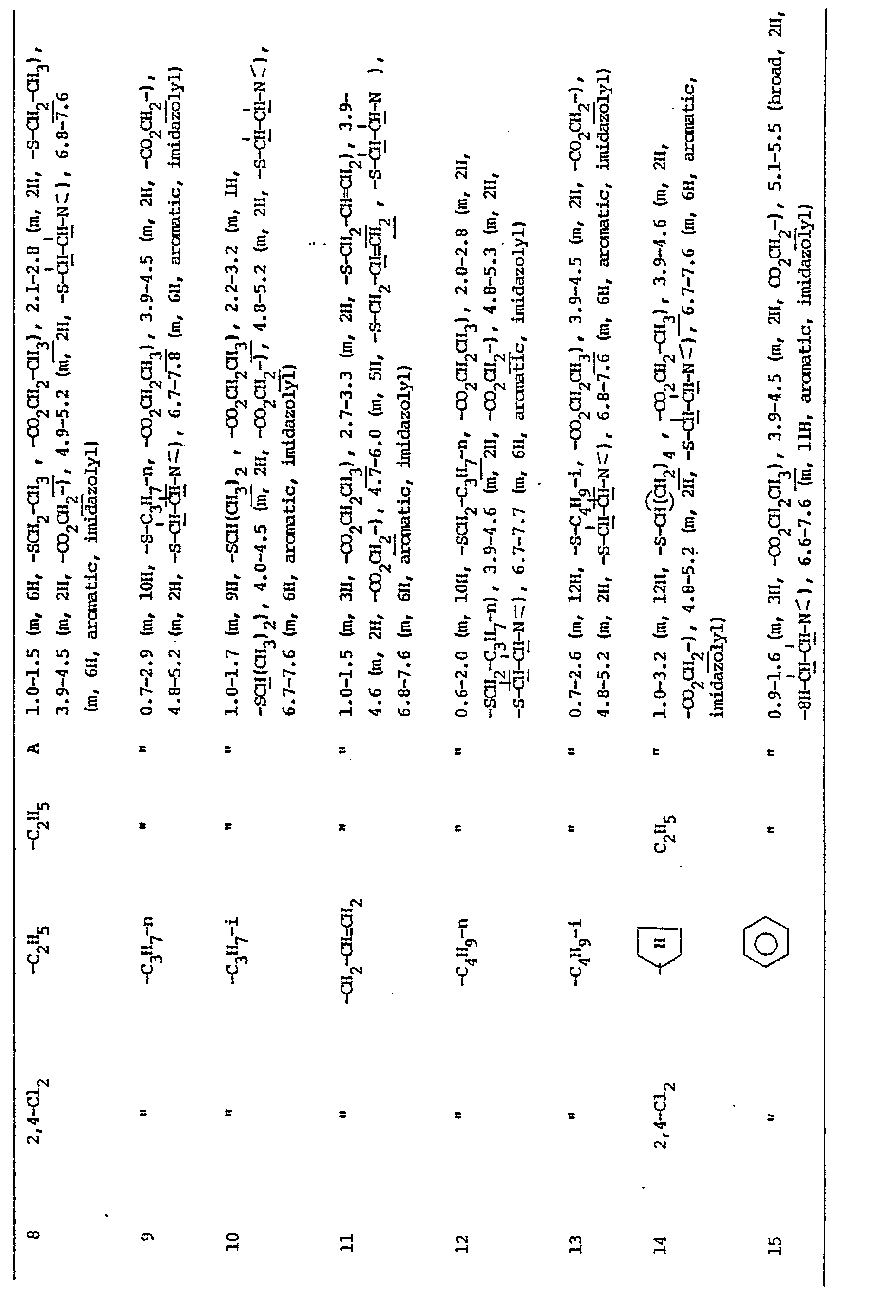


- The typical metal complexes of the propionate derivatives are as shown in Table 2, wherein n represents the member of the molecule having the general formula (I). The elemental analysis data of the metal complexes 5 listed in Table 2 are shown in Table 3.
- The typical synthesis of these compounds are shown below.


- Synthesis of Compound No. 75
- A 3.3 g amount of methyl 3-(2,4-dichlorophenyl)-2-(1-imidazolyl)-3-methylthiopropionate obtained above (i.e., Compound No. 72) was dissolved in 20 ml of ethanol and a solution of 0.9 g of CuCl.2H2O dissolved in 10 ml of ethanol was added thereto. The mixture was stirred at room temperature for 5 hours. The precipitated crystals were separated by filtration, followed by vacuum drying. Thus, 3.4 g of the desired methyl 3-(2,4-dichlorophenyl)-2-(1-imidazolyl)-3-methylthiopropionate copper chloride salt was obtained.
- The analytical results are as follows:
- m.p.: 82-84 C Cu content (atomic absorption spectrometry)
- Found: 7.1%
- Calc: 7.38%
- IR: (KBr tablet): 3150,3000,2950,1750,1590,1520,1480,1100
- Synthesis of Compound No. 76
- A 3.5 g amount of ethyl 3-(2,4-dichlorophenyl)-2-(1-imidazolyl)-3-methylthiopropionate obtained above (i.e., Compound No. 73) was dissolved in 10 ml of ethanol and a solution of 1.4 g of CuS04.5H20 dissolved in 10 ml of ethanol was added thereto. The mixture was stirred at room temperature for 5 hours. The precipitated crystals were separated by filtration, followed by vacuum drying. Thus, 3.9 of the desired ethyl -3-(2,4-dichlorophenyl)-2-(1-imidazolyl)-3-methylthiopropionate copper sulfate salt was obtained.
- The analytical data are as follows:
- m.p.: 163-165 C Copper content
- Found. 7.5%
- Calc. 7.32%
- Synthesis of Compound No. 77
- A 3.5 g amount of ethyl 3-(2,4-dichlorophenyl)-2-(1-imidazolyl)-3-methylthiopropionate was obtained above (i.e., Compound No. 73) was dissolved in 20 ml of ethanol and a solution of 1 g of CoBr2.5H20 dissolved in 10 ml of ethanol was dropwise added thereto. The mixture was stirred at room temperature for 5 hours and the mixture was, then, poured into cool water to precipitate the crystals. The resultant crystals were separated by suction filtration, followed by vacuum drying. Thus, the desired ethyl 3-(2,4-dichlorophenyl)-2-(1-imidazolyl)-3-methylthiopropionate cobalt bromide salt was obtained at a yield of 3.9 g.
- The analytical data are as follows:
- m.p.: 66-68 °C
- Cobalt content:
- Found. 3.3%
- Calc. 3.56%
- IR: 3150, 3000, 2950, 1745, 1590, 1520, 1480, 1240, 1110, 1095
- Synthesis of Compound No. 82
- A 1.7 g amount of ethyl 3-(2,4-dichlorophenyl)-2-(1-imidazolyl)-3-methylthiopropionate obtained above (i.e., Compound No. 73) was dissolved in 10 ml of ethanol and a solution of 0.4 g of zinc chloride in 10 ml of ethanol was dropwise added at room temperature while stirring. After the dropwise addition, the mixture was stirred at room temperature for 3 hours. After the reaction, 10 ml of cooled water was added thereto. The resultant crystals were recovered by suction filtration, followed by vacuum drying. Thus, the desired ethyl 3-(2,4-dichlorophenyl)-2-(1-imidazolyl)-3-methylthio propionate at a yield of 1.8 g.
- The analytical data are as follows:
- m.p.: 76-78 C
- Zn content:
- Found.: 7.1%
- Calc.: 7.65%
- IR: 3150,2980,1755,1590,1520,1480,1240,1100
- The propionate derivatives (I) and the metal complexes thereof (I') are effective for controlling a wide variety of diseases of various agricultural and garden crops. Examples of such diseases and microorganisms are as follows.
- Rice: Blast, Helminthosporium leaf spot, Sheath blight, "Bakanae" disease, Seedling blight
- wheat: Leaf rust, Stripe rust, Loose smut, Speckled leaf blotch, Spot blotch, Browning root rot, Powdery mildew, Typhula snow blight
- Potato: Late blight, Early blight, Black scurf, Scab, Fusarium wilt
- Maize, Corn: Leaf spot, Eyespot, Smut, Rust
- Soybean: Downy mildew, Cercospora leaf spot, Leaf spot, Septoria brown spot, Sclerotinia rot, Rust, Purple stain
- Adzuki bean: Leaf spot, Rust, Leaf spot, Powdery mildew
- Peanut: Brown leaf spot, Leaf spot, Sclerotinia rot
- Tobacco: Brown spot, Black shank, Sclerotinia stem-rot Sore shin, Damping-off, Bed rot, Frog-eye, Powdery mildew Sugar beet: Downy mildew, Leaf blight, Cercospora leaf spot, Damping-off Tomato: Gray mold, Leaf mold, Late blight, Stem rot, Early blight, Cercospora leaf mold, Fusarium wilt, Damping-off
- Eggplant: Gray mold, Verticillium wilt, Brown rot, Black rot, Powdery mildew, Leaf mold, Stem rot
- Cucurbit: Downy mildew, Phytophthora rot, Gray mold, Sclerotinia rot, Scab, Anthracnose, Gummy stem blight, Fusarium wilt, Powdery mildew, Damping-off
- Japanese radish: Downy mildew, Yellows, Alternaria leaf spot, Clubroot
- Chinese cabbage: Downy mildew, Leaf spot, Alternaria leaf spot, Sclerotinia rot, Clubroot
- Cabbage: Downy mildew, Yellows, Sclerotinia rot, Alternaria leaf spot, Damping-off, Clubroot Onion: Downy mildew, Gray-mold neck rot, Gray mold, Fusarium basal rot, Watery soft rot, Alternaria leaf spot, Black spotted leaf blight, Rust, Phytophthora rot
- Lettuce: Downy mildew, Gray mold, Leaf spot, Stem rot, Root rot, Bottom rot
- Spinach: Downy mildew, Leaf spot, Foot rot, Leaf spot, Root rot, Damping-off
- Strawberry: Gnomonia leaf spot, Gray mold, Fusarium wilt, Powdery mildew, Leaf blight, Leaf spot
- Chrysanthemum: Rust, Powdery mildew, Leaf blight
- Cyclamen: Gray mold, Leaf spot
- Rose: Black spot, Powdery mildew, Botrytis blight
- Citrus: Pink disease, Blue mold, Penicillium rot, Gray mold, Melanose, Scab, Anthracnose Apple: Rust, Blight, Crown rot, Silver leaf, Brown rot, Alternaria leaf spot, Canker, Blotch, Scab, Ring rot, Sooty blotch, Fly speck, Bitter rot, Powdery mildew
- Pear: Rust, Canker, Black spot, Scab, Physalospora canker
- Peach: Canker, Brown rot, Gray mold, Blister canker, Scab, Phomopsis rot, Leaf curl, Anthracnose
- Grape: Downy mildew, Gray mold, Black rot, Leaf spot, Brown spot, Anthracnose, Ripe rot, Pestalotia disease, Rust, Dead arm, Powdery mildew
- Persimmon: Canker, Leaf spot, Anthracnose, Cercospora leaf spot, Angular leaf spot, Phoma spot, Black spot, Circular leaf spot,
- Banana: Leaf spot
- Pineapple: Heart rot
- Tea: Brown blight, Net blister blight, Brown round spot, Blister blight, Gray blight, White scab, Anthracnose
- Powder fungicides having the following compositions were prepared by mixing the ingredients listed below at room temperature.

- The powder fungicides thus obtained were evaluated in the Test Examples below.
- Wettable powder fungicides having the following compositions were prepared by mixing the ingredients listed below at room temperature.

- Emulsion fungicides having the following compositions were prepared by mixing the ingredients listed below at room temperature.


- A sample solution containing a predetermined concentration of the active compound was sprayed on cotyledons of a kidney bean (variety: Masterpiece), which were dried in a room.
- After air drying the mycelia of Rhizoctonia solani IA grown on a PDA culture was inoculated after punching with a 8 mm cork borer. The incubation was carried out at a temperature of 28°C and an R.H. of 100% for 3 days under dark conditions. The infected area was measured. Five tests were carried out in each run.
- The results are shown in Table 5.

- A sample liquid agent containing a predetermined amount of the active solution was sprayed on rice seedlings (variety: Jyukkoku) at 3 leaf stage in a pot with the volume of 200 liter/10 a and the treated rice seedlings were air-dried.
- After air drying, a spore suspension previously prepared in such a way that 40 conidia of rice blast fungus were present in a visual area of a 100 magnification microscope was inoculated by spraying. Immediately, the sprayed rice seedlings were allowed to stand under a dark condition of a temperature of 23 C and an R.H. of 100%. After 48 hour inoculation, the rice seedlings were transferred to a green house and, after 10 days from the inocuration, the degree of the infection was measured. The protection value was calculated as follows. Three tests were carried out in each run.

- wherein n: Number of leaves in each infection degree
- f: Index of infection degree
- N: Number of leaves examined

- The results are shown in Table 6.

- A spore suspension previously prepared in such a way that 20 spores of Puccinia recondita f . sp. tritici were present in a visual area of 100 magnification microscope was sprayed on wheat seedlings (variety: Norin #61) at 2 leaf stage in a pot.
- Immediately after inoculation, the sprayed wheat seedlings were allowed to stand under a dark condition at a temperature of 23 C in an R.H. of 100% for 28 hours. After 28 hours, the wheat seedlings were transferred to a green house and, after 3 days from the inocuration, a sample fungicide solution containing a predetermined amount of the active compound was sprayed on the wheat seedlings with the volume of 200 liter/10 a. After 10 days from the inoculation, the degree of the infection was calculated as follows. Five tests were carried out in each run.

- f: Index of infection degree.
- N: Number of leaves examined.The results are shown in Table 7.


- A sample solution containing a predetermined amount of the active compound was sprayed on cucumber seedlings (variety: Sagami Hanjiro) at 2 leaf stage in a pot with the volume of 200 liter/10 a and the treated cucumber seedlings were air-dried in a room.
- After air drying, the treated cucumber seedlings was allowed to stand in a green house to naturally infect with the spores of Sphaerotheca fuliginea.
- After 14 days, the degree of the infection was calculated according to the following criteria. Five tests were carried out in each run and ten leaves were evaluated.

- f: Index of infection degree
- N: Number of leaves examined.

- The results are shown in Table 8.


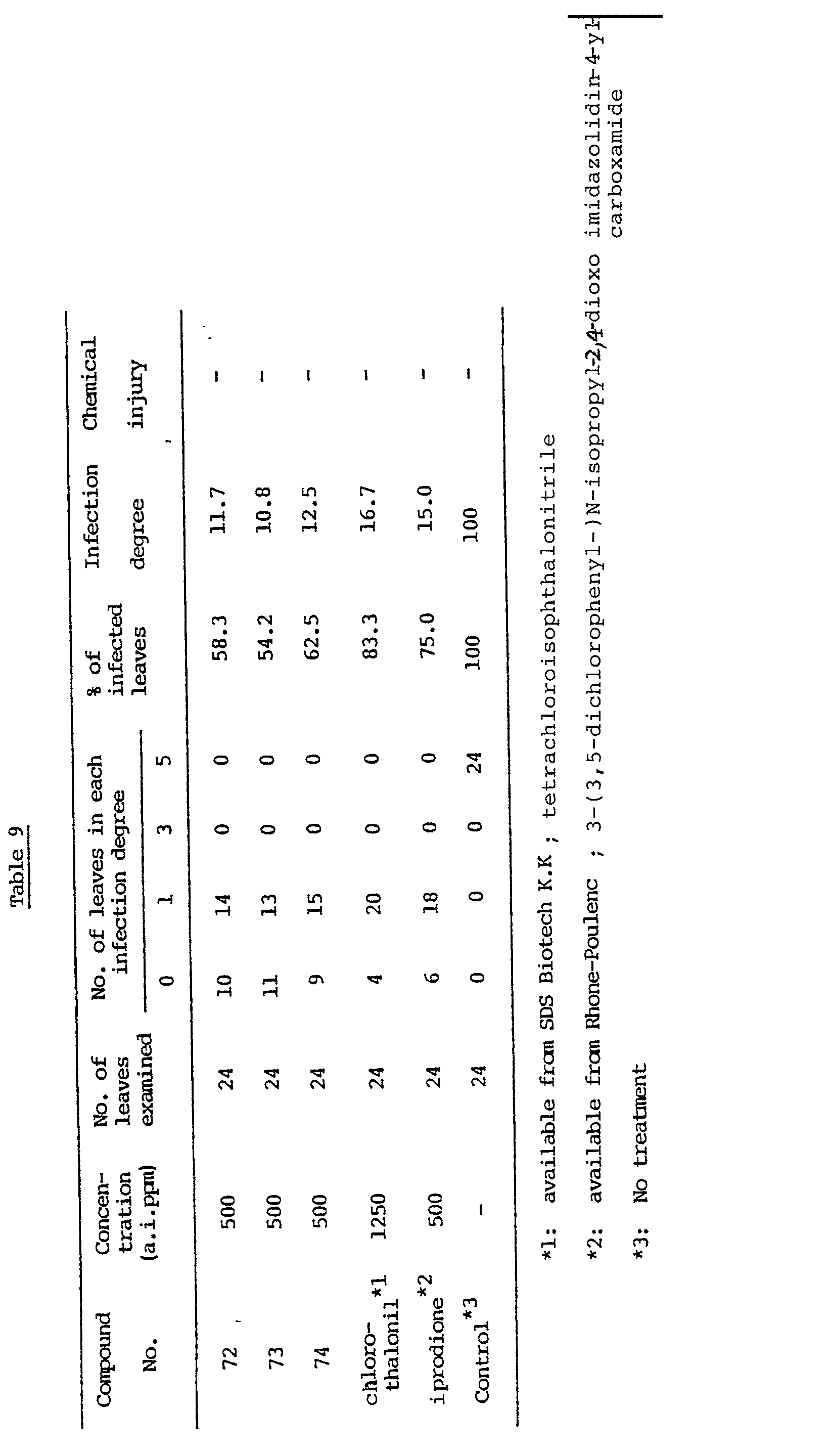
- A sample solution containing a predetermined amount of the active compound was sprayed on cucumber seedlings (variety: Suhyoo) at 3 leaf stage in a pot at a volume of 200 liter/10 a and the treated cucumber seedlings were air-dried for 24 hours in a room.
- After air drying, a spore suspension was prepared in such a way that 100 conidia of Botrytis cinerea were present in a visual area of a 100 magnification microscope and a commercially available yeast extract (1% amount) and a commercially available glucose (10% amount) were added thereto. The resultant suspension was inoculated by spraying. Immediately, the sprayed cucumber were allowed to stand under a dark condition at a temperature of 22 C and an R.H. of 100%. After 3 days, the degree of the infection was measured. The protection value was calculated as follows. Eight tests were carried out in each run.

- f: Index of infection degree
- N: Number of leaves examined

- The results are shown in Table 9.
- A sample solution containing a predetermined amount of the active compound was sprayed on rice seedlings (variety: Jyukkoku) at 5 leaf stage in a pot at a volume of 200 liter/10 a and the treated rice seedlings were air-dried in a room.
- After air-drying, a spore suspension previously prepared in such a way that 10 conidia of Helminthosporium oryzae were present in a visual area of a 100 magnification microscope was inoculated by spraying.
- Immediately, the sprayed rice seedlings were allowed to stand under a dark condition at a temperature of 28° C and an R.H. of 100%. After 24 hours, the rice seedlings were transferred to a green house and, after 7 days from the inoculation, the degree of the infection was measured. The protection value was calculated as follows. Five tests were carried out in each run.

- f: Index of infection degree
- N: Number of leaves examined

- The results are shown in Table 10.

- A 10 ml amount of a potato-agar medium containing a predetermined concentration of each active ingredient was poured into a petri dish. After solidifying, the tip portion of the flora of each test microorganism previously incubated on a plate culture medium, which was punched with a 8 cm 0 cork borer, was inoculated on the culture medium containing the active ingredient. The culture medium thus obtained was allowed to stand in a constant temperature room for predetermined days. Thereafter, the growth of mycelium of the microorganism was measured and the MIC was determined. Four tests were carried out in each run.
- The microorganisms used are as follows.
- A: Alternaria kikuchiana
- B: Rhizoctonia solani IA
- C: Heiminthosporium oryzae
- D: Botrytis cinerea
- E: Sclerotinia sclerotiorum
- F: Phytophthora infestans
- G: Cercospora kikuchii
- H: Venturia nashicola
- The tests for microorganisms A to G were carried out at a temperature of 25°C for 5 days, and the test for microorganism H was carried out at a temperature of 20 C for 20 days.
- The results are shown in Table 11.

- A 10 ml amount of a potato-agar medium containing a predetermined concentration of each active ingredient was poured into a petri dish. After solidifying, the tip portion of the flora of each test microorganism previously incubated on a plate culture medium, which was punched with a 8 cm0 cork borer, was inoculated on the culture medium containing the active ingredient. The culture medium thus obtained was allowed to stand in a constant temperature room for predetermined days. Thereafter, the growth of mycelium of the microorganism was measured and the MIC was determined. Four tests were carried out in each run.
- The microorganisms used are as follows.
- A: Alternaria kikuchiana
- B: Rhizoctonia solani IA
- C: Helminthosporium oryzae
- D: Botrytis cinerea
- E: Scierotinia scierotiorum
- F: Phytophthora infestans
- G: Cercospora kikuchii
- H: Venturia nashicola
- The tests for microorganisms A to G were carried out at a temperature of 25°C for 5 days, and the test for microorganism H was carried out at a temperature of 20°C for 20 days.
- The results are shown in Table 12.

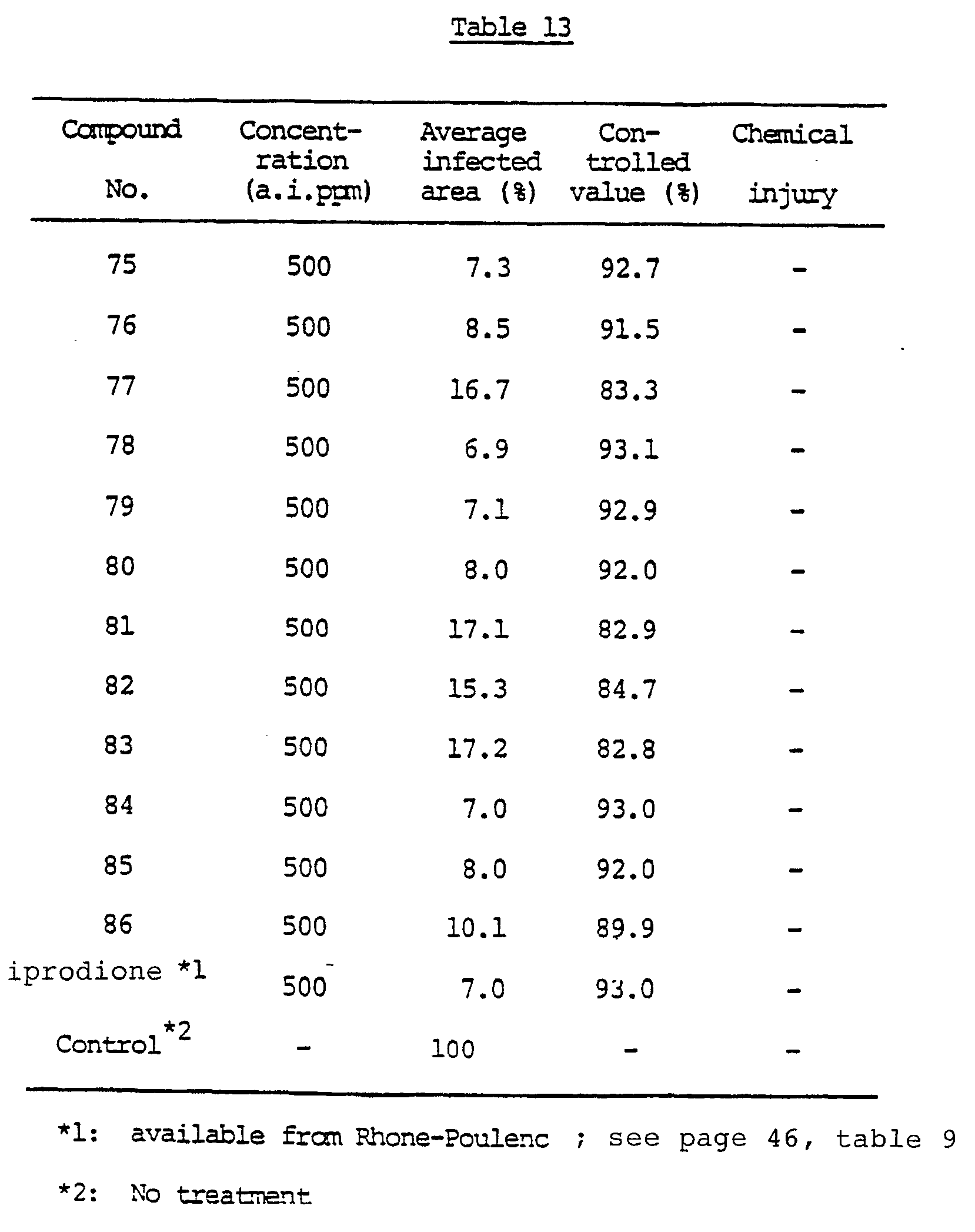
- A sample solution diluted to a predetermined concentration was uniformly sprayed on the developed leaves of pear trees (variety: Nijyusseiki) with a volume of 20 ml per 5 leaves, which were dried in a room.
- After air drying, conidia of Alternaria kikuchiana formed on an apricot culture medium were inoculated on the leaves by spraying. The incubation was carried out at a temperature of 25. C and an R.H. of 100% for 3 days. After 3 days, the infected area was measured. Five tests were carried out in each run.
- The results are shown in Table 13.
- A sample solution containing a predetermined concentration of the active compound was sprayed on cotyledons of a kidney bean (variety: Masterpiece), which were dried in a room.
- After air-drying, the mycelia of Rhizoctonia solani IA grown on a PDA culture medium were inoculated after punching with a 8 mm0 cork borer. The incubation was carried out at a temperature of 28° C and an R.H. of 100% for 3 days under a dark condition. The infected area was measured. Five leaves were used in each treatment and four tests were carried out in each run.
- The results are shown in Table 14.

- A sample solution containing a predetermined amount of the active compound was sprayed on wheat seedlings (variety: Nohrin #61) at 2 leaf stage in a pot with the volume of 200 liter/10 a and the treated wheat seedlings were air-dried.
- After air-drying, a spore suspension previously prepared in such a way that 20 spores of Puccinia recondita f. sp. tritici were present in a visual area of a 100 magnification microscope was inoculated by spraying.
- Immediately after inoculation, the sprayed wheat seedlings were allowed to stand under a dark condition at a temperature of 23 C and an R.H. of 100% for 28 hours. After 28 hours, the wheat seedlings were transferred to a green house and, after 10 days from the inoculation, the degree of the infection was calculated as follows.
- Five tests were carried out in each run.


- The results are shown in Table 15.

- A sample solution agent containing a predetermined amount of the active compound was sprayed on cucumber seedlings (variety: Sagami Hanjiro) at 2 leaf stage in a pot at a volume of 200 liter/10 a and the treated cucumber seedlings were air-dried in a room.
- After air drying, the treated cucumber seedlings were allowed to stand in a green house to naturally infect with the conidia of Sphaerotheca fuliginea.
- After 14 days, the degree of the infection was calculated according to the following criteria. Five tests were carried out in each run and ten leaves were evaluated.

- f: Index of infection degree
- N: Number of leaves examined.

- The results are shown in Table 16.

- A sample solution containing a predetermined amount of the active compound was sprayed on cucumber seedlings (variety: Suhyo) at 3 leaf stage in a pot at a volume of 200 liter/10 a and the treated cucumber seedlings were air-dried for 24 hours in a room.
- After air drying, a spore suspension was prepared in such a way that 100 conidia of Botrytis cinerea were present in a visual area of a 100 magnification microscope and a commercially available yeast extract (1% amount) and a commercially available glucose (10% amount) were added thereto. The resultant suspension was sprayed for inoculation. Immediately, the sprayed cucumber seedlings were allowed to stand under a dark condition at a temperature of 22 C and an R.H. of 100%. After 3 days, the degree of the infection was measured. The protection value was calculated as follows. Eight tests were carried out in each run.

- f: Index of infection degree
- N: Number of leaves examined.

- The results are shown in Table 17.

- A sample solution diluted to a predetermined concentration was uniformly sprayed on the four developed leaves of eggplant seedlings (variety: Senryo #2) in a pot with an amount of 10 ml per 4 leaves and the treated eggplant seedlings were dried for 24 hours in a room.
- After the 24 hour air drying, a suspension of zoospore of Phytophthora capsici previously prepared in such a way that 30 zoospores were present in a visual area of a 100 magnification microscope. Immediately, the sprayed eggplant seedlings were allowed to stand under a dark condition at a temperature of 25° C and an R.H. of 100%. After 2 days, the infected area was measured. Four tests were carried out in each run.
- The results are shown in Table 18.

- Evaluation test of antifungal activity against late blight of tomato
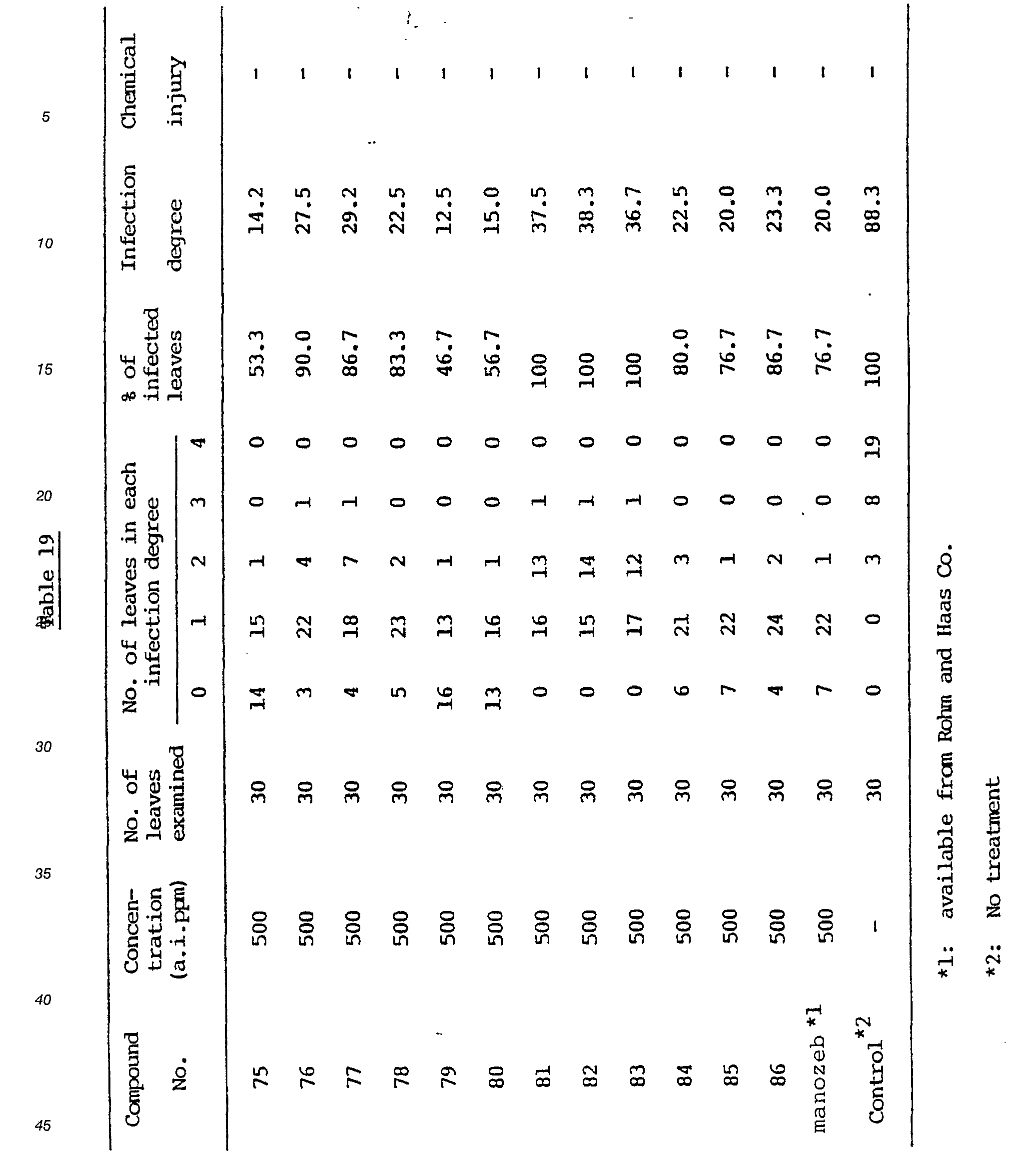
- A sample solution diluted to a predetermined concentration was uniformly sprayed on tomato seedlings (variety: Oogata Fukuju) at 5 leaf stage in a pot with an amount of 200 liter/10 a and the treated tomato seedlings were dried for 24 hours in a room.
- After the 24 hour air drying, a zoospore suspension of Phytophthora infestans previously prepared in such a way that 5 zoospores were present in a visual area of a 100 magnification microscope was inoculated by spraying. Immediately after the inoculation, the sprayed tomato seedlings were allowed to stand under a dark condition at a temperature of 20°C and an R.H. of 100%. After 7 days, the degree of the infection was measured. The protection value was calculated as follows. Six tests were carried out in each run:

- f: Index of infection degree
- N: Number of leaves examined

- The results are shown in Table 19.
Claims (10)


Applications Claiming Priority (4)
| Application Number | Priority Date | Filing Date | Title |
|---|---|---|---|
| JP25694/85 | 1985-02-13 | ||
| JP52533/85 | 1985-03-18 | ||
| JP60052533A JPS61212566A (en) | 1985-03-18 | 1985-03-18 | 2-azolylpropionic acid ester derivative and fungicide |
| JP61025694A JPS62185077A (en) | 1986-02-10 | 1986-02-10 | Imidazolylpropionic acid ester metal complex and fungicide |
Publications (3)
| Publication Number | Publication Date |
|---|---|
| EP0195414A2 EP0195414A2 (en) | 1986-09-24 |
| EP0195414A3 EP0195414A3 (en) | 1986-11-26 |
| EP0195414B1 true EP0195414B1 (en) | 1991-02-27 |
Family
ID=26363355
Family Applications (1)
| Application Number | Title | Priority Date | Filing Date |
|---|---|---|---|
| EP86103665A Expired EP0195414B1 (en) | 1985-03-18 | 1986-03-18 | 2-azolylpropionate derivatives and fungicides containing the same |
Country Status (5)
| Country | Link |
|---|---|
| US (1) | US4767752A (en) |
| EP (1) | EP0195414B1 (en) |
| AU (1) | AU589408B2 (en) |
| DE (1) | DE3677616D1 (en) |
| PH (1) | PH23251A (en) |
Families Citing this family (2)
| Publication number | Priority date | Publication date | Assignee | Title |
|---|---|---|---|---|
| DE3682711D1 (en) * | 1985-06-18 | 1992-01-16 | Ici Plc | HETEROCYCLIC COMPOUNDS TO BE USED AS FUNGICIDES. |
| NZ239161A (en) * | 1990-07-31 | 1994-01-26 | Smithkline Beecham Corp | Substituted [1h-imidazol-5-yl] alkanoic acid derivatives; medicaments, |
Family Cites Families (7)
| Publication number | Priority date | Publication date | Assignee | Title |
|---|---|---|---|---|
| CH531516A (en) * | 1969-05-21 | 1972-12-15 | Bayer Ag | Process for the production of new phenylimidazolyl fatty acid derivatives |
| DE2735314A1 (en) * | 1977-08-05 | 1979-02-22 | Basf Ag | ALPHA-AZOLYL SULPHIDES AND THEIR DERIVATIVES |
| DE2908323A1 (en) * | 1979-03-03 | 1980-09-18 | Hoechst Ag | AZOLE-SUBSTITUTED ATROPASAE DERIVATIVES, METHOD FOR THE PRODUCTION THEREOF AND THEIR USE AS A PLANT PROTECTANT |
| DE2908324A1 (en) * | 1979-03-03 | 1980-09-18 | Hoechst Ag | TRIAZOLE-SUBSTITUTED HYDRATOPASAE DERIVATIVES, METHOD FOR THE PRODUCTION THEREOF AND THEIR USE AS A PLANT PROTECTANT |
| DE3108770A1 (en) * | 1981-03-07 | 1982-09-16 | Bayer Ag, 5090 Leverkusen | TRIAZOLYLALKYL THIOETHER, METHOD FOR THE PRODUCTION THEREOF AND THEIR USE AS PLANT GROWTH REGULATORS AND FUNGICIDES |
| US4584008A (en) * | 1982-07-14 | 1986-04-22 | Chevron Research Company | Aldol adducts containing triazole groups |
| IE56045B1 (en) * | 1982-09-27 | 1991-03-27 | Shell Int Research | Fungicidally active compounds |
-
1986
- 1986-03-14 PH PH33533A patent/PH23251A/en unknown
- 1986-03-17 US US06/840,183 patent/US4767752A/en not_active Expired - Fee Related
- 1986-03-17 AU AU54781/86A patent/AU589408B2/en not_active Ceased
- 1986-03-18 EP EP86103665A patent/EP0195414B1/en not_active Expired
- 1986-03-18 DE DE8686103665T patent/DE3677616D1/en not_active Expired - Lifetime
Also Published As
| Publication number | Publication date |
|---|---|
| AU589408B2 (en) | 1989-10-12 |
| DE3677616D1 (en) | 1991-04-04 |
| EP0195414A2 (en) | 1986-09-24 |
| AU5478186A (en) | 1986-09-25 |
| US4767752A (en) | 1988-08-30 |
| EP0195414A3 (en) | 1986-11-26 |
| PH23251A (en) | 1989-06-16 |
Similar Documents
| Publication | Publication Date | Title |
|---|---|---|
| US4203995A (en) | 1-Phenyl-2-azolyl-4,4-dimethyl-1-penten-3-ols and the fungicidal use thereof | |
| EP0152031B1 (en) | Azolyl cycloalkanol derivatives and agricultural fungicides | |
| CA1170263A (en) | Fungicidal triazoles and imidazoles | |
| US5346913A (en) | N-iodopropargyl hydantoin compounds, compositions, preparation, and use as antimicrobial agents | |
| JPH0625140B2 (en) | Novel azole derivative, method for producing the same and agricultural / horticultural drug of the derivative | |
| EP0105548B1 (en) | Propynylaminoisoxazole derivatives | |
| JP2000509052A (en) | Triazolyl mercaptides and their use as microbicides | |
| JP2723554B2 (en) | Novel acylated triazole derivative, process for producing the same and agricultural / horticultural fungicide containing the derivative as an active ingredient | |
| US4147793A (en) | Fungicidal azolyl-substituted aryl aralkylketone compounds | |
| WO1995029901A1 (en) | Fungicidal azole derivatives | |
| GB2208860A (en) | Pyrimidine derivatives | |
| EP0046337A2 (en) | Triazole compounds, a process for preparing them, their use as plant and pharmaceutical fungicides and as plant growth regulators and compositions containing them | |
| EP0097426A2 (en) | Triazole compounds | |
| JP2680319B2 (en) | Novel azole derivative, production method thereof, and agricultural / horticultural fungicide containing the derivative as an active ingredient | |
| US5021442A (en) | Fungicide azolyl-derivatives | |
| EP0548285B1 (en) | Fungicidal 3,3-bis[alkylthio]-2-pyridylacrylic acid derivatives | |
| JPH0819108B2 (en) | Novel azole derivative, production method thereof, and agricultural / horticultural fungicide containing the derivative as an active ingredient | |
| EP0061910A2 (en) | Novel substituted imidazoles and triazoles, fungicidal compositions containing them, the use thereof for combating fungi and processes for the preparation of intermediates for making the imidazoles and triazoles | |
| US4767752A (en) | Imidazolyl or triazolyl substituted propionate derivative and nonmedical fungicide containing the same | |
| EP0241232A1 (en) | Isoxazolylethanol derivatives | |
| CA1200246A (en) | Aldol adducts | |
| EP0347044A2 (en) | Pyrimidine derivatives | |
| JPS6337102B2 (en) | ||
| JPH0533949B2 (en) | ||
| NZ226774A (en) | Fungicidal compositions comprising imidazole or triazole derivatives having halogenated substituents: treatment of crops |
Legal Events
| Date | Code | Title | Description |
|---|---|---|---|
| PUAI | Public reference made under article 153(3) epc to a published international application that has entered the european phase |
Free format text: ORIGINAL CODE: 0009012 |
|
| AK | Designated contracting states |
Kind code of ref document: A2 Designated state(s): CH DE FR GB IT LI |
|
| PUAL | Search report despatched |
Free format text: ORIGINAL CODE: 0009013 |
|
| AK | Designated contracting states |
Kind code of ref document: A3 Designated state(s): CH DE FR GB IT LI |
|
| 17P | Request for examination filed |
Effective date: 19870512 |
|
| 17Q | First examination report despatched |
Effective date: 19870908 |
|
| GRAA | (expected) grant |
Free format text: ORIGINAL CODE: 0009210 |
|
| AK | Designated contracting states |
Kind code of ref document: B1 Designated state(s): CH DE FR GB IT LI |
|
| ITF | It: translation for a ep patent filed | ||
| ET | Fr: translation filed | ||
| REF | Corresponds to: |
Ref document number: 3677616 Country of ref document: DE Date of ref document: 19910404 |
|
| PLBE | No opposition filed within time limit |
Free format text: ORIGINAL CODE: 0009261 |
|
| STAA | Information on the status of an ep patent application or granted ep patent |
Free format text: STATUS: NO OPPOSITION FILED WITHIN TIME LIMIT |
|
| 26N | No opposition filed | ||
| PGFP | Annual fee paid to national office [announced via postgrant information from national office to epo] |
Ref country code: GB Payment date: 19980205 Year of fee payment: 13 |
|
| PGFP | Annual fee paid to national office [announced via postgrant information from national office to epo] |
Ref country code: FR Payment date: 19980325 Year of fee payment: 13 |
|
| PGFP | Annual fee paid to national office [announced via postgrant information from national office to epo] |
Ref country code: CH Payment date: 19980401 Year of fee payment: 13 |
|
| PGFP | Annual fee paid to national office [announced via postgrant information from national office to epo] |
Ref country code: DE Payment date: 19980519 Year of fee payment: 13 |
|
| PG25 | Lapsed in a contracting state [announced via postgrant information from national office to epo] |
Ref country code: GB Free format text: LAPSE BECAUSE OF NON-PAYMENT OF DUE FEES Effective date: 19990318 |
|
| PG25 | Lapsed in a contracting state [announced via postgrant information from national office to epo] |
Ref country code: LI Free format text: LAPSE BECAUSE OF NON-PAYMENT OF DUE FEES Effective date: 19990331 Ref country code: CH Free format text: LAPSE BECAUSE OF NON-PAYMENT OF DUE FEES Effective date: 19990331 |
|
| GBPC | Gb: european patent ceased through non-payment of renewal fee |
Effective date: 19990318 |
|
| REG | Reference to a national code |
Ref country code: CH Ref legal event code: PL |
|
| PG25 | Lapsed in a contracting state [announced via postgrant information from national office to epo] |
Ref country code: FR Free format text: LAPSE BECAUSE OF NON-PAYMENT OF DUE FEES Effective date: 19991130 |
|
| REG | Reference to a national code |
Ref country code: FR Ref legal event code: ST |
|
| PG25 | Lapsed in a contracting state [announced via postgrant information from national office to epo] |
Ref country code: DE Free format text: LAPSE BECAUSE OF NON-PAYMENT OF DUE FEES Effective date: 20000101 |
|
| PG25 | Lapsed in a contracting state [announced via postgrant information from national office to epo] |
Ref country code: IT Free format text: LAPSE BECAUSE OF NON-PAYMENT OF DUE FEES;WARNING: LAPSES OF ITALIAN PATENTS WITH EFFECTIVE DATE BEFORE 2007 MAY HAVE OCCURRED AT ANY TIME BEFORE 2007. THE CORRECT EFFECTIVE DATE MAY BE DIFFERENT FROM THE ONE RECORDED. Effective date: 20050318 |