EP0191585B1 - Electrorheological fluids - Google Patents
Electrorheological fluids Download PDFInfo
- Publication number
- EP0191585B1 EP0191585B1 EP86300711A EP86300711A EP0191585B1 EP 0191585 B1 EP0191585 B1 EP 0191585B1 EP 86300711 A EP86300711 A EP 86300711A EP 86300711 A EP86300711 A EP 86300711A EP 0191585 B1 EP0191585 B1 EP 0191585B1
- Authority
- EP
- European Patent Office
- Prior art keywords
- electrorheological fluid
- fluid according
- electrorheological
- semiconductor
- mho
- Prior art date
- Legal status (The legal status is an assumption and is not a legal conclusion. Google has not performed a legal analysis and makes no representation as to the accuracy of the status listed.)
- Expired - Lifetime
Links
- 239000012530 fluid Substances 0.000 title claims abstract description 65
- 239000004065 semiconductor Substances 0.000 claims abstract description 19
- 229920000642 polymer Polymers 0.000 claims abstract description 17
- 239000007788 liquid Substances 0.000 claims abstract description 13
- XLYOFNOQVPJJNP-UHFFFAOYSA-N water Substances O XLYOFNOQVPJJNP-UHFFFAOYSA-N 0.000 claims description 8
- 238000001035 drying Methods 0.000 claims description 7
- 125000003367 polycyclic group Chemical group 0.000 claims description 7
- MWPLVEDNUUSJAV-UHFFFAOYSA-N anthracene Chemical class C1=CC=CC2=CC3=CC=CC=C3C=C21 MWPLVEDNUUSJAV-UHFFFAOYSA-N 0.000 claims description 5
- 229920003026 Acene Polymers 0.000 claims description 3
- PNEYBMLMFCGWSK-UHFFFAOYSA-N aluminium oxide Inorganic materials [O-2].[O-2].[O-2].[Al+3].[Al+3] PNEYBMLMFCGWSK-UHFFFAOYSA-N 0.000 claims description 3
- 238000011068 loading method Methods 0.000 claims description 3
- 150000001491 aromatic compounds Chemical class 0.000 claims description 2
- 238000005863 Friedel-Crafts acylation reaction Methods 0.000 claims 1
- 239000011532 electronic conductor Substances 0.000 abstract description 3
- 230000005684 electric field Effects 0.000 description 17
- -1 ferrocene Chemical class 0.000 description 14
- 230000003068 static effect Effects 0.000 description 14
- 239000000725 suspension Substances 0.000 description 13
- 230000000694 effects Effects 0.000 description 9
- 239000000463 material Substances 0.000 description 7
- JIAARYAFYJHUJI-UHFFFAOYSA-L zinc dichloride Chemical compound [Cl-].[Cl-].[Zn+2] JIAARYAFYJHUJI-UHFFFAOYSA-L 0.000 description 6
- RBTKNAXYKSUFRK-UHFFFAOYSA-N heliogen blue Chemical compound [Cu].[N-]1C2=C(C=CC=C3)C3=C1N=C([N-]1)C3=CC=CC=C3C1=NC([N-]1)=C(C=CC=C3)C3=C1N=C([N-]1)C3=CC=CC=C3C1=N2 RBTKNAXYKSUFRK-UHFFFAOYSA-N 0.000 description 5
- 239000000203 mixture Substances 0.000 description 5
- 239000012188 paraffin wax Substances 0.000 description 5
- UFWIBTONFRDIAS-UHFFFAOYSA-N Naphthalene Chemical compound C1=CC=CC2=CC=CC=C21 UFWIBTONFRDIAS-UHFFFAOYSA-N 0.000 description 4
- 125000003118 aryl group Chemical group 0.000 description 4
- 239000006185 dispersion Substances 0.000 description 4
- GVEPBJHOBDJJJI-UHFFFAOYSA-N fluoranthrene Natural products C1=CC(C2=CC=CC=C22)=C3C2=CC=CC3=C1 GVEPBJHOBDJJJI-UHFFFAOYSA-N 0.000 description 4
- 229930195733 hydrocarbon Natural products 0.000 description 4
- 150000002430 hydrocarbons Chemical class 0.000 description 4
- IEQIEDJGQAUEQZ-UHFFFAOYSA-N phthalocyanine Chemical compound N1C(N=C2C3=CC=CC=C3C(N=C3C4=CC=CC=C4C(=N4)N3)=N2)=C(C=CC=C2)C2=C1N=C1C2=CC=CC=C2C4=N1 IEQIEDJGQAUEQZ-UHFFFAOYSA-N 0.000 description 4
- BBEAQIROQSPTKN-UHFFFAOYSA-N pyrene Chemical compound C1=CC=C2C=CC3=CC=CC4=CC=C1C2=C43 BBEAQIROQSPTKN-UHFFFAOYSA-N 0.000 description 4
- 238000012360 testing method Methods 0.000 description 4
- RZVAJINKPMORJF-UHFFFAOYSA-N Acetaminophen Chemical compound CC(=O)NC1=CC=C(O)C=C1 RZVAJINKPMORJF-UHFFFAOYSA-N 0.000 description 3
- UHOVQNZJYSORNB-UHFFFAOYSA-N Benzene Chemical compound C1=CC=CC=C1 UHOVQNZJYSORNB-UHFFFAOYSA-N 0.000 description 3
- 239000004215 Carbon black (E152) Substances 0.000 description 3
- ANSXAPJVJOKRDJ-UHFFFAOYSA-N furo[3,4-f][2]benzofuran-1,3,5,7-tetrone Chemical compound C1=C2C(=O)OC(=O)C2=CC2=C1C(=O)OC2=O ANSXAPJVJOKRDJ-UHFFFAOYSA-N 0.000 description 3
- 239000004519 grease Substances 0.000 description 3
- 239000000843 powder Substances 0.000 description 3
- 238000002360 preparation method Methods 0.000 description 3
- 239000005297 pyrex Substances 0.000 description 3
- 239000007787 solid Substances 0.000 description 3
- 239000000126 substance Substances 0.000 description 3
- 239000011592 zinc chloride Substances 0.000 description 3
- 235000005074 zinc chloride Nutrition 0.000 description 3
- IJGRMHOSHXDMSA-UHFFFAOYSA-N Atomic nitrogen Chemical compound N#N IJGRMHOSHXDMSA-UHFFFAOYSA-N 0.000 description 2
- LFQSCWFLJHTTHZ-UHFFFAOYSA-N Ethanol Chemical compound CCO LFQSCWFLJHTTHZ-UHFFFAOYSA-N 0.000 description 2
- 238000005727 Friedel-Crafts reaction Methods 0.000 description 2
- VEXZGXHMUGYJMC-UHFFFAOYSA-N Hydrochloric acid Chemical compound Cl VEXZGXHMUGYJMC-UHFFFAOYSA-N 0.000 description 2
- 239000005662 Paraffin oil Substances 0.000 description 2
- VSCWAEJMTAWNJL-UHFFFAOYSA-K aluminium trichloride Chemical compound Cl[Al](Cl)Cl VSCWAEJMTAWNJL-UHFFFAOYSA-K 0.000 description 2
- 230000015556 catabolic process Effects 0.000 description 2
- WDECIBYCCFPHNR-UHFFFAOYSA-N chrysene Chemical compound C1=CC=CC2=CC=C3C4=CC=CC=C4C=CC3=C21 WDECIBYCCFPHNR-UHFFFAOYSA-N 0.000 description 2
- 150000001875 compounds Chemical class 0.000 description 2
- ZUOUZKKEUPVFJK-UHFFFAOYSA-N diphenyl Chemical compound C1=CC=CC=C1C1=CC=CC=C1 ZUOUZKKEUPVFJK-UHFFFAOYSA-N 0.000 description 2
- 230000001747 exhibiting effect Effects 0.000 description 2
- 238000002474 experimental method Methods 0.000 description 2
- 238000009472 formulation Methods 0.000 description 2
- 229910052751 metal Inorganic materials 0.000 description 2
- 239000002184 metal Substances 0.000 description 2
- 239000002245 particle Substances 0.000 description 2
- YNPNZTXNASCQKK-UHFFFAOYSA-N phenanthrene Chemical compound C1=CC=C2C3=CC=CC=C3C=CC2=C1 YNPNZTXNASCQKK-UHFFFAOYSA-N 0.000 description 2
- GBROPGWFBFCKAG-UHFFFAOYSA-N picene Chemical compound C1=CC2=C3C=CC=CC3=CC=C2C2=C1C1=CC=CC=C1C=C2 GBROPGWFBFCKAG-UHFFFAOYSA-N 0.000 description 2
- 239000002243 precursor Substances 0.000 description 2
- 229920002545 silicone oil Polymers 0.000 description 2
- 229910052723 transition metal Inorganic materials 0.000 description 2
- 150000003624 transition metals Chemical class 0.000 description 2
- YJTKZCDBKVTVBY-UHFFFAOYSA-N 1,3-Diphenylbenzene Chemical group C1=CC=CC=C1C1=CC=CC(C=2C=CC=CC=2)=C1 YJTKZCDBKVTVBY-UHFFFAOYSA-N 0.000 description 1
- NGNBDVOYPDDBFK-UHFFFAOYSA-N 2-[2,4-di(pentan-2-yl)phenoxy]acetyl chloride Chemical compound CCCC(C)C1=CC=C(OCC(Cl)=O)C(C(C)CCC)=C1 NGNBDVOYPDDBFK-UHFFFAOYSA-N 0.000 description 1
- BZSXEZOLBIJVQK-UHFFFAOYSA-N 2-methylsulfonylbenzoic acid Chemical compound CS(=O)(=O)C1=CC=CC=C1C(O)=O BZSXEZOLBIJVQK-UHFFFAOYSA-N 0.000 description 1
- QKUNKVYPGIOQNP-UHFFFAOYSA-N 4,8,11,14,17,21-hexachlorotetracosane Chemical compound CCCC(Cl)CCCC(Cl)CCC(Cl)CCC(Cl)CCC(Cl)CCCC(Cl)CCC QKUNKVYPGIOQNP-UHFFFAOYSA-N 0.000 description 1
- OKTJSMMVPCPJKN-UHFFFAOYSA-N Carbon Chemical compound [C] OKTJSMMVPCPJKN-UHFFFAOYSA-N 0.000 description 1
- RYGMFSIKBFXOCR-UHFFFAOYSA-N Copper Chemical compound [Cu] RYGMFSIKBFXOCR-UHFFFAOYSA-N 0.000 description 1
- 108010010803 Gelatin Proteins 0.000 description 1
- 239000002841 Lewis acid Substances 0.000 description 1
- 235000019738 Limestone Nutrition 0.000 description 1
- LGRFSURHDFAFJT-UHFFFAOYSA-N Phthalic anhydride Natural products C1=CC=C2C(=O)OC(=O)C2=C1 LGRFSURHDFAFJT-UHFFFAOYSA-N 0.000 description 1
- 229920002472 Starch Polymers 0.000 description 1
- GTDPSWPPOUPBNX-UHFFFAOYSA-N ac1mqpva Chemical compound CC12C(=O)OC(=O)C1(C)C1(C)C2(C)C(=O)OC1=O GTDPSWPPOUPBNX-UHFFFAOYSA-N 0.000 description 1
- 239000002253 acid Substances 0.000 description 1
- 150000008065 acid anhydrides Chemical class 0.000 description 1
- 125000002252 acyl group Chemical group 0.000 description 1
- MMCPOSDMTGQNKG-UHFFFAOYSA-N anilinium chloride Chemical compound Cl.NC1=CC=CC=C1 MMCPOSDMTGQNKG-UHFFFAOYSA-N 0.000 description 1
- 230000015572 biosynthetic process Effects 0.000 description 1
- 235000010290 biphenyl Nutrition 0.000 description 1
- 239000004305 biphenyl Substances 0.000 description 1
- 238000009835 boiling Methods 0.000 description 1
- JHIWVOJDXOSYLW-UHFFFAOYSA-N butyl 2,2-difluorocyclopropane-1-carboxylate Chemical compound CCCCOC(=O)C1CC1(F)F JHIWVOJDXOSYLW-UHFFFAOYSA-N 0.000 description 1
- 229910052799 carbon Inorganic materials 0.000 description 1
- 125000004432 carbon atom Chemical group C* 0.000 description 1
- 239000003054 catalyst Substances 0.000 description 1
- 230000003197 catalytic effect Effects 0.000 description 1
- 238000006243 chemical reaction Methods 0.000 description 1
- 150000008280 chlorinated hydrocarbons Chemical class 0.000 description 1
- 229910052802 copper Inorganic materials 0.000 description 1
- 239000010949 copper Substances 0.000 description 1
- 230000007797 corrosion Effects 0.000 description 1
- 238000005260 corrosion Methods 0.000 description 1
- 238000006731 degradation reaction Methods 0.000 description 1
- 239000008367 deionised water Substances 0.000 description 1
- 230000002939 deleterious effect Effects 0.000 description 1
- 230000001419 dependent effect Effects 0.000 description 1
- 238000011161 development Methods 0.000 description 1
- 230000002708 enhancing effect Effects 0.000 description 1
- KTWOOEGAPBSYNW-UHFFFAOYSA-N ferrocene Chemical compound [Fe+2].C=1C=C[CH-]C=1.C=1C=C[CH-]C=1 KTWOOEGAPBSYNW-UHFFFAOYSA-N 0.000 description 1
- 235000013312 flour Nutrition 0.000 description 1
- 238000007710 freezing Methods 0.000 description 1
- 230000008014 freezing Effects 0.000 description 1
- 229920000159 gelatin Polymers 0.000 description 1
- 239000008273 gelatin Substances 0.000 description 1
- 235000019322 gelatine Nutrition 0.000 description 1
- 235000011852 gelatine desserts Nutrition 0.000 description 1
- 239000005337 ground glass Substances 0.000 description 1
- 239000010440 gypsum Substances 0.000 description 1
- 229910052602 gypsum Inorganic materials 0.000 description 1
- 125000005842 heteroatom Chemical group 0.000 description 1
- 239000000976 ink Substances 0.000 description 1
- 238000011835 investigation Methods 0.000 description 1
- 150000007517 lewis acids Chemical class 0.000 description 1
- 239000006028 limestone Substances 0.000 description 1
- 230000007246 mechanism Effects 0.000 description 1
- 229920003240 metallophthalocyanine polymer Polymers 0.000 description 1
- 239000002480 mineral oil Substances 0.000 description 1
- 235000010446 mineral oil Nutrition 0.000 description 1
- 238000002156 mixing Methods 0.000 description 1
- 239000004570 mortar (masonry) Substances 0.000 description 1
- 229910052757 nitrogen Inorganic materials 0.000 description 1
- 239000003921 oil Substances 0.000 description 1
- 235000019198 oils Nutrition 0.000 description 1
- 239000004006 olive oil Substances 0.000 description 1
- 235000008390 olive oil Nutrition 0.000 description 1
- 125000004430 oxygen atom Chemical group O* 0.000 description 1
- 230000000737 periodic effect Effects 0.000 description 1
- 125000002080 perylenyl group Chemical group C1(=CC=C2C=CC=C3C4=CC=CC5=CC=CC(C1=C23)=C45)* 0.000 description 1
- CSHWQDPOILHKBI-UHFFFAOYSA-N peryrene Natural products C1=CC(C2=CC=CC=3C2=C2C=CC=3)=C3C2=CC=CC3=C1 CSHWQDPOILHKBI-UHFFFAOYSA-N 0.000 description 1
- 229920001228 polyisocyanate Polymers 0.000 description 1
- 239000005056 polyisocyanate Substances 0.000 description 1
- 229920001296 polysiloxane Polymers 0.000 description 1
- RKCAIXNGYQCCAL-UHFFFAOYSA-N porphin Chemical class N1C(C=C2N=C(C=C3NC(=C4)C=C3)C=C2)=CC=C1C=C1C=CC4=N1 RKCAIXNGYQCCAL-UHFFFAOYSA-N 0.000 description 1
- 150000004053 quinones Chemical class 0.000 description 1
- 238000011160 research Methods 0.000 description 1
- 238000007363 ring formation reaction Methods 0.000 description 1
- 239000008107 starch Substances 0.000 description 1
- 235000019698 starch Nutrition 0.000 description 1
- 238000003786 synthesis reaction Methods 0.000 description 1
- AAAQKTZKLRYKHR-UHFFFAOYSA-N triphenylmethane Chemical compound C1=CC=CC=C1C(C=1C=CC=CC=1)C1=CC=CC=C1 AAAQKTZKLRYKHR-UHFFFAOYSA-N 0.000 description 1
- JBWKIWSBJXDJDT-UHFFFAOYSA-N triphenylmethyl chloride Chemical compound C=1C=CC=CC=1C(C=1C=CC=CC=1)(Cl)C1=CC=CC=C1 JBWKIWSBJXDJDT-UHFFFAOYSA-N 0.000 description 1
- 238000001665 trituration Methods 0.000 description 1
Images





Classifications
-
- H—ELECTRICITY
- H01—ELECTRIC ELEMENTS
- H01B—CABLES; CONDUCTORS; INSULATORS; SELECTION OF MATERIALS FOR THEIR CONDUCTIVE, INSULATING OR DIELECTRIC PROPERTIES
- H01B1/00—Conductors or conductive bodies characterised by the conductive materials; Selection of materials as conductors
- H01B1/06—Conductors or conductive bodies characterised by the conductive materials; Selection of materials as conductors mainly consisting of other non-metallic substances
- H01B1/12—Conductors or conductive bodies characterised by the conductive materials; Selection of materials as conductors mainly consisting of other non-metallic substances organic substances
- H01B1/124—Intrinsically conductive polymers
- H01B1/128—Intrinsically conductive polymers comprising six-membered aromatic rings in the main chain, e.g. polyanilines, polyphenylenes
-
- C—CHEMISTRY; METALLURGY
- C08—ORGANIC MACROMOLECULAR COMPOUNDS; THEIR PREPARATION OR CHEMICAL WORKING-UP; COMPOSITIONS BASED THEREON
- C08G—MACROMOLECULAR COMPOUNDS OBTAINED OTHERWISE THAN BY REACTIONS ONLY INVOLVING UNSATURATED CARBON-TO-CARBON BONDS
- C08G61/00—Macromolecular compounds obtained by reactions forming a carbon-to-carbon link in the main chain of the macromolecule
- C08G61/12—Macromolecular compounds containing atoms other than carbon in the main chain of the macromolecule
-
- C—CHEMISTRY; METALLURGY
- C10—PETROLEUM, GAS OR COKE INDUSTRIES; TECHNICAL GASES CONTAINING CARBON MONOXIDE; FUELS; LUBRICANTS; PEAT
- C10M—LUBRICATING COMPOSITIONS; USE OF CHEMICAL SUBSTANCES EITHER ALONE OR AS LUBRICATING INGREDIENTS IN A LUBRICATING COMPOSITION
- C10M171/00—Lubricating compositions characterised by purely physical criteria, e.g. containing as base-material, thickener or additive, ingredients which are characterised exclusively by their numerically specified physical properties, i.e. containing ingredients which are physically well-defined but for which the chemical nature is either unspecified or only very vaguely indicated
- C10M171/001—Electrorheological fluids; smart fluids
Definitions
- Winslow discloses that certain suspensions, composed of a finely divided solid such as starch, limestone or its derivatives, gypsum, flour, gelatin or carbon, dispersed in a non-conducting liquid, for example lightweight transformer oil, transformer insulating fluids, olive oil or mineral oil, will manifest an increase in flow resistance as long as an electrical potential difference is applied thereto. This effect is sometimes termed the Winslow Effect.
- the increase in flow resistance resulting from the application of an electric field was originally interpreted as an increase in viscosity, and the materials showing this effect were termed 'Electroviscous Fluids'.
- US patent 3,553,708 describes electrorheological fluids which exhibit an electrorheological effect in response to a light modulated signal. Such fluids, which are referred to as photoelectroviscous fluids, are not intended to undergo a change of viscosity under the influence of an applied electrical field alone, but to do so only after they are photostimulated. The effects described in US 3,553,708 are utilised for the control of flow of photoelectroviscous recording inks.
- an electrorheological fluid comprises a liquid continuous phase and a dispersed phase characterised in that the dispersed phase is a semiconductor having an electrical conductivity at ambient temperature of from 10 ⁇ to 10 ⁇ 11 mho cm ⁇ 1 and a positive temperature conductivity coefficient, the electrorheological properties of the fluid not being photo-induced, the fluid being anhydrous or containing water up to 5% v/v of the fluid.
- the properties of the fluid are not dependent upon any photo-induced conductivity of the dispersed phase or upon the presence of water either in the disperse phase or the continuous phase, the properties being maintained even if the fluid is rendered anhydrous by drying the disperse phase under vacuum at 70°C for 3 days to constant weight and by drying the continuous phase by passage through an activated alumina column at 70°C.
- the electrorheological fluids of the invention are anhydrous to the extent obtainable with the drying conditions indicated above.
- small amounts of water in the fluid may be tolerated, preferably no more than 1% v/v.
- the dispersed phase has an electrical conductivity, at ambient temperature, from 10 ⁇ 10 mho cm ⁇ 1 to 10 ⁇ mho cm ⁇ 1, typically from 10 ⁇ 9 or 10 ⁇ 10 to 10 ⁇ 4 mho cm ⁇ 1.
- Particularly preferred semiconductors are the organic semiconductors examples of which include materials which comprise an unsaturated fused polycyclic system, preferably an electron rich one.
- the unsaturation comprises conjugated ⁇ -bonds, especially an aromatic fused polycyclic system which may comprise at least one heteroatom, for example, a nitrogen or an oxygen atom.
- One class of such electronic conductor which has been found to be suitable for use in the present invention comprises those organic semiconductors wherein the fused polycyclic system comprises a substituted or unsubstituted porphin or azaporphin system; for example wherein the fused polycyclic system comprises a phthalocyanine system, such as a metallophthalocyanine system.
- the metal is suitably a transition metal.
- transition metal is meant herein any metal from Groups VIA to VIII, inclusive and also Group IB of the Periodic Table, for example copper.
- the electrical conductivity at ambient temperature is ca. 10 ⁇ 7 mho cm ⁇ 1.
- the organic semiconductor may be a monomeric, usually a crystalline monomeric, material; alternatively, it may be a polymeric material.
- Polymeric organic semiconductors useful in the present invention comprising phthalocyanine moieties may be prepared by replacing the phthalic anhydride used in the conventional synthesis by 1,2,4,5-benzenetetracarboxylic dianhydride.
- Another class of such electronic conductors which has been found to be promising for use in the present invention comprises organic semiconductors wherein the fused polycyclic system is contained in a poly(acene-quinone) polymer.
- Such polymers may be prepared by condensing, utilising a Friedel-Crafts reaction, at least one substituted or unsubstituted acene, such as biphenyl, terphenyl, naphthalene, anthracene, phenanthrene, pyrene, chrysene, triphenylchloromethane, triphenylmethane, fluoranthene, perylene, dibenzypyrene and picene or a sandwich compound, such as ferrocene, with at least one substituted or unsubstituted polyacylated aromatic compound, for example a substituted or unsubstituted aromatic polycarboxylic acid, or a precursor thereof, for example the corresponding acid anhydride or acid chloride such as
- the polyacylated compound preferably comprises pairs, especially two pairs, of acyl groups, or their precursors, attached to vicinal carbon atoms commensurate with each pair partaking in ring formation during the Friedel-Crafts reaction.
- Poly(acene-quinone) polymers have an electrical conductivity of ambient temperature from ca. 10 ⁇ 8 to 10 ⁇ 9 mho cm ⁇ 1.
- a further class of organic semiconductor suitable for use in the present invention comprises polymeric Schiff's Bases. These may be prepared by reacting polyisocyanates with quinones. They may also be prepared by analogy with the preparation of certain thermotropic polymers. See, for example, UK Patent No. 1545106. Aniline Black is such a polymer and may be prepared in known manner: for example by oxidising aqueous aniline hydrochloride with sodium chlorate.
- the continuous phase of the electrorheological fluid of this invention may be any of the liquids previously indicated in this role.
- Desirable properties of such liquids are:
- continuous phase material examples include fluid hydrocarbons or those disclosed in our UK Patents Nos. 1501635; 1570234 or UK Patent Application No. 2100740A and 2153372A.
- Halogenated aromatic liquids are particularly preferred continuous phase materials.
- the electrorheological fluids of this invention are prepared by simply comminuting the dispersed phase to the requisite particle size; and then mixing the comminuted dispersed phase with the selected continuous phase. Loadings of as little as 5% v /v, or even 1% v /v, of dispersed phase may give an effect, although loadings of at least 15% v /v to 45% v /v, especially from 25 v /v to 35 v /v, are preferred for commercial electrorheological fluids.
- an electrorheological fluid as aforesaid which is capable of developing a static yield stress of at least 0.5 kPa, for example from 1 to 3 kPa, preferably up to 5 kPa or more, under an applied electric field of no more than 3MVm ⁇ 1 when the fluid is dried as hereinbefore described.
- an electrorheological fluid as aforesaid which is capable of passing a current density of no more than 40 Am ⁇ , under an applied electric field of no more than 1MVm ⁇ 1 when the fluid is dried as hereinbefore described.
- the yield point meter 1 comprises a conductive receptacle 2 for the electrorheological fluid 3 under test which receptacle also acts as a first electrode. Above the receptacle are positioned two horizontal parallel ground glass rods 4, polished With silicone grease, on which a second electrode 5 is slidably mounted. The gap between the two electrodes is 0.5 mm. A micrometer screw 6 is mounted to transmit effort to a third order lever 7 a portion of which is arranged as a beam 8 which is deflectable between the second electrode and pivot 9. This beam carries a strain gauge bridge 10 and its flexure is capable of being monitored by related recording instrumentation (not shown).
- the electrorheological fluid 3 to be determined is placed in receptacle 2 and the second electrode 5 is stationed on rods 4 over, and in contact with, the electrorheological fluid with a gap as aforesaid.
- the micrometer screw 6 is then rotated urging beam 8 to force the second electrode along the rods and thus through the fluid.
- the frictional resistance causes the beam 8 to deflect prior to slip. This maximum deflection is recorded graphically, the peak ⁇ o being proportional to the frictional resistance of the apparatus.
- the two electrodes 2, 5 are next connected in series to a variable 2 kV unidirectional power supply and ammeter (not shown).
- Absolute numerical values may be obtained by calibrating the yield point meter. This is effected by leaving the micrometer screw unaltered and instead applying effort to the second electrode 5 by adding a succession of differing loads, for example weights W.
- the area of the second electrode is 4 x 10 ⁇ 4m and thus the yield stresses, represented by ⁇ , can be quantified from the quotient of applied load/area.
- a series of electrorheological fluids in accordance with the invention was prepared by incorporating different amounts of copper phthalocyanine (ex Eastman Kodak, dried at 72 hours at 50°C); or metal-free phthalocyanine ( ex ICI plc) in a 3:1 paraffin oil: paraffin grease ( ex BDH Chemicals Ltd.), dried by passage through an alumina column ( ex Woelm Pharma) at 70°C, the viscosity of which was approximately 50 cS at ambient temperature. They were then tested in the yield point meter hereinbefore described; the test results are depicted graphically in Figures 2 to 6 inclusive.
- This Example illustrates the preparation of a series of poly(acene-quinone)s; and their formulation and testing as electrorheological fluids in accordance with the invention.
- the resulting polymer was filtered off and ground to a fine powder.
- the powder was then leached with dilute (2N) hydrochloric acid for 24 hours to assist in removing zinc chloride.
- the leached powder was subsequently extracted with distilled, deionised water for 24 hours; ethanol ( ex May and Baker Ltd.) for 24 hours; and benzene ( ex May and Baker Ltd.) for 72 hours, all in a Soxhlet apparatus.
- the poly(acene-quinone)s were then dried at 50°C for 72 hours in a vacuum oven. After drying, the polymers (which were black in colour) were finely ground in a micronising mill and stored in a dessicator.
- the density of the poly(pyrene-quinone) was found to be 1.51 g cm ⁇ 3; that of the poly(naphthalene-quinone) was 1.50 g cm ⁇ 3.
- Different volume fractions, detailed below, of each polymer were dispersed in the 3:1 paraffin oil:paraffin grease mixture described above, the viscosity of which permitted a stable dispersion of the polymer to be formulated.
- Different volume fractions, again detailed below, of each polymer were dispersed in a polychlorinated hydrocarbon (CERECLOR 50 LV ex ICI plc) to formulate a stable dispersion of the polymer.
- the dispersions were electrorheological fluids of the invention: they were then tested in the yield point meter hereinbefore described; the test results are depicted graphically in Figures 7 to 16 inclusive.
Landscapes
- Chemical & Material Sciences (AREA)
- Chemical Kinetics & Catalysis (AREA)
- Organic Chemistry (AREA)
- General Chemical & Material Sciences (AREA)
- Oil, Petroleum & Natural Gas (AREA)
- Physics & Mathematics (AREA)
- Spectroscopy & Molecular Physics (AREA)
- Health & Medical Sciences (AREA)
- Medicinal Chemistry (AREA)
- Polymers & Plastics (AREA)
- Lubricants (AREA)
- Organic Low-Molecular-Weight Compounds And Preparation Thereof (AREA)
Abstract
Description
- This invention relates to electrorheological fluids;
US Patent No. 2417850 (Winslow) discloses that certain suspensions, composed of a finely divided solid such as starch, limestone or its derivatives, gypsum, flour, gelatin or carbon, dispersed in a non-conducting liquid, for example lightweight transformer oil, transformer insulating fluids, olive oil or mineral oil, will manifest an increase in flow resistance as long as an electrical potential difference is applied thereto. This effect is sometimes termed the Winslow Effect. The increase in flow resistance resulting from the application of an electric field was originally interpreted as an increase in viscosity, and the materials showing this effect were termed 'Electroviscous Fluids'. However, subsequent investigations have shown that the increase in flow resistance may be due not only to an increase in viscosity, in the Newtonian sense, but also to an applied electric field induced Bingham plasticity; suspensions exhibiting the Winslow Effect are now referred to as 'Electrorheological Fluids'. - Research has been effected, and is being intensified, with a view to improving both the dispersed and the continuous phases of electrorheological fluids: see, for example, UK Patents Nos. 1501635; 1570234; and UK Patent Applications Nos. 2100740A; 2119392A and 2153372A. However, the mechanisms by which electrorheological phenomena occur are still not well understood; this lack of understanding and, in particular, the absence of a quantitative theory by which to determine the phenomena hamper the development of improved electrorheological fluids.
- All electrorheological fluids for which practical application has been put in prospect have hitherto comprised small quantities of water, believed to be principally associated with the dispersed phase. Rigorous drying prevents electrorheological fluids from exhibiting significant electrorheological phenomena. From an application standpoint, however, the presence of water is undesirable: it may result in device corrosion; operating temperature limitations; and significant electrical power consumption which may itself lead to thermal instability in the device.
- US patent 3,553,708 describes electrorheological fluids which exhibit an electrorheological effect in response to a light modulated signal. Such fluids, which are referred to as photoelectroviscous fluids, are not intended to undergo a change of viscosity under the influence of an applied electrical field alone, but to do so only after they are photostimulated. The effects described in US 3,553,708 are utilised for the control of flow of photoelectroviscous recording inks.
- According to the present invention an electrorheological fluid comprises a liquid continuous phase and a dispersed phase characterised in that the dispersed phase is a semiconductor having an electrical conductivity at ambient temperature of from 10⁻ to 10⁻¹¹ mho cm⁻¹ and a positive temperature conductivity coefficient, the electrorheological properties of the fluid not being photo-induced, the fluid being anhydrous or containing water up to 5% v/v of the fluid. It will be understood that the properties of the fluid are not dependent upon any photo-induced conductivity of the dispersed phase or upon the presence of water either in the disperse phase or the continuous phase, the properties being maintained even if the fluid is rendered anhydrous by drying the disperse phase under vacuum at 70°C for 3 days to constant weight and by drying the continuous phase by passage through an activated alumina column at 70°C.
- Preferably the electrorheological fluids of the invention are anhydrous to the extent obtainable with the drying conditions indicated above. However small amounts of water in the fluid may be tolerated, preferably no more than 1% v/v.
- Preferably the dispersed phase has an electrical conductivity, at ambient temperature, from 10⁻¹⁰ mho cm⁻¹ to 10⁻ mho cm⁻¹, typically from 10⁻⁹ or 10⁻¹⁰ to 10⁻⁴ mho cm⁻¹.
- Particularly preferred semiconductors are the organic semiconductors examples of which include materials which comprise an unsaturated fused polycyclic system, preferably an electron rich one. Preferably the unsaturation comprises conjugated π-bonds, especially an aromatic fused polycyclic system which may comprise at least one heteroatom, for example, a nitrogen or an oxygen atom.
- One class of such electronic conductor which has been found to be suitable for use in the present invention comprises those organic semiconductors wherein the fused polycyclic system comprises a substituted or unsubstituted porphin or azaporphin system; for example wherein the fused polycyclic system comprises a phthalocyanine system, such as a metallophthalocyanine system. In such systems the metal is suitably a transition metal. By "transition metal" is meant herein any metal from Groups VIA to VIII, inclusive and also Group IB of the Periodic Table, for example copper. For copper phthalocyanine the electrical conductivity at ambient temperature is ca. 10⁻⁷ mho cm⁻¹.
- The organic semiconductor may be a monomeric, usually a crystalline monomeric, material; alternatively, it may be a polymeric material.
- Polymeric organic semiconductors useful in the present invention comprising phthalocyanine moieties may be prepared by replacing the phthalic anhydride used in the conventional synthesis by 1,2,4,5-benzenetetracarboxylic dianhydride.
- Another class of such electronic conductors which has been found to be promising for use in the present invention comprises organic semiconductors wherein the fused polycyclic system is contained in a poly(acene-quinone) polymer. Such polymers may be prepared by condensing, utilising a Friedel-Crafts reaction, at least one substituted or unsubstituted acene, such as biphenyl, terphenyl, naphthalene, anthracene, phenanthrene, pyrene, chrysene, triphenylchloromethane, triphenylmethane, fluoranthene, perylene, dibenzypyrene and picene or a sandwich compound, such as ferrocene, with at least one substituted or unsubstituted polyacylated aromatic compound, for example a substituted or unsubstituted aromatic polycarboxylic acid, or a precursor thereof, for example the corresponding acid anhydride or acid chloride such as 1,2,4,5-benzenetetracarboxylic dianhydride, in the presence of excess Lewis acid, such as zinc chloride or aluminium chloride. The polyacylated compound preferably comprises pairs, especially two pairs, of acyl groups, or their precursors, attached to vicinal carbon atoms commensurate with each pair partaking in ring formation during the Friedel-Crafts reaction. Poly(acene-quinone) polymers have an electrical conductivity of ambient temperature from ca. 10⁻⁸ to 10⁻⁹ mho cm⁻¹.
- A further class of organic semiconductor suitable for use in the present invention comprises polymeric Schiff's Bases. These may be prepared by reacting polyisocyanates with quinones. They may also be prepared by analogy with the preparation of certain thermotropic polymers. See, for example, UK Patent No. 1545106. Aniline Black is such a polymer and may be prepared in known manner: for example by oxidising aqueous aniline hydrochloride with sodium chlorate.
- These and other classes of suitable organic semiconductor are disclosed in J. Phys. Chem., 66 (1962) pp. 2085-2095 H.A. Pohl et al. All such materials may have their electrical properties modified by doping.
- The continuous phase of the electrorheological fluid of this invention may be any of the liquids previously indicated in this role.
- Desirable properties of such liquids are:
- 1. High boiling point and low freezing point, giving the electrorheological fluid a wide temperature range (ideally from below -40°C to above at least 150°C), and low vapour pressure at normal working temperatures;
- 2. Low viscosity, so that either the electrorheological fluid has a low no-field viscosity or, alternatively, so that a greater proportion of solid can be included in the electrorheological fluid without the no-field viscosity becoming excessive, thus enhancing the Winslow Effect;
- 3. High electrical resistance and high dielectric strength, so that the electrorheological fluid draws little current and may be used over a wide range of applied electric field strengths;
- 4. High density (generally greater than 1.2 g cm⁻³ and typically in the range 1.3-1.6 g cm⁻³) since it is preferable for the solid and liquid components of an electrorheological fluid to have the same density to reduce settling on standing; and
- 5. Chemical stability, to prevent degradation in storage and service, even in the presence of the many potentially catalytic surfaces provided by the particles in an ER fluid, which could give rise to deleterious breakdown products;
- It will be clear that not all of these properties will, in general, be found in a given liquid. These need not, however, prevent the liquid from being used as the continuous phase of an electrorheological fluid; thus, a liquid of significantly different density from the dispersed phase may still be in use in the formulation of a viable electrorheological fluid provided that when not in service the fluid is circulated to maintain the dispersed phase in suspension.
- Examples of very suitable continuous phase material include fluid hydrocarbons or those disclosed in our UK Patents Nos. 1501635; 1570234 or UK Patent Application No. 2100740A and 2153372A. Halogenated aromatic liquids are particularly preferred continuous phase materials.
- The electrorheological fluids of this invention are prepared by simply comminuting the dispersed phase to the requisite particle size; and then mixing the comminuted dispersed phase with the selected continuous phase. Loadings of as little as 5% v/v, or even 1% v/v, of dispersed phase may give an effect, although loadings of at least 15% v/v to 45% v/v, especially from 25 v/v to 35 v/v, are preferred for commercial electrorheological fluids.
- In accordance with the present invention, there is provided an electrorheological fluid as aforesaid which is capable of developing a static yield stress of at least 0.5 kPa, for example from 1 to 3 kPa, preferably up to 5 kPa or more, under an applied electric field of no more than 3MVm⁻¹ when the fluid is dried as hereinbefore described. There is also provided an electrorheological fluid as aforesaid which is capable of passing a current density of no more than 40 Am⁻, under an applied electric field of no more than 1MVm⁻¹ when the fluid is dried as hereinbefore described.
- The invention will now be described, by way of example, with reference to the accompanying drawings, in which:-
- Figure 1 represents a lateral section of a yield point meter used to determine the variation of developed static yield stress with applied electrical field strength for electrorheological fluids of the invention; and
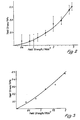
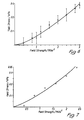
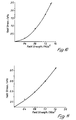
- Figures 2 to 16 represent graphically the results obtained for exemplified such fluids.
- In Figure 1, the
yield point meter 1 comprises aconductive receptacle 2 for theelectrorheological fluid 3 under test which receptacle also acts as a first electrode. Above the receptacle are positioned two horizontal parallelground glass rods 4, polished With silicone grease, on which asecond electrode 5 is slidably mounted. The gap between the two electrodes is 0.5 mm. Amicrometer screw 6 is mounted to transmit effort to a third order lever 7 a portion of which is arranged as abeam 8 which is deflectable between the second electrode andpivot 9. This beam carries astrain gauge bridge 10 and its flexure is capable of being monitored by related recording instrumentation (not shown). - In use, the
electrorheological fluid 3 to be determined is placed inreceptacle 2 and thesecond electrode 5 is stationed onrods 4 over, and in contact with, the electrorheological fluid with a gap as aforesaid. Themicrometer screw 6 is then rotated urgingbeam 8 to force the second electrode along the rods and thus through the fluid. The frictional resistance causes thebeam 8 to deflect prior to slip. This maximum deflection is recorded graphically, the peak χo being proportional to the frictional resistance of the apparatus. The twoelectrodes - Absolute numerical values may be obtained by calibrating the yield point meter. This is effected by leaving the micrometer screw unaltered and instead applying effort to the
second electrode 5 by adding a succession of differing loads, for example weights W. The area of the second electrode is 4 x 10⁻⁴m and thus the yield stresses, represented by χ, can be quantified from the quotient of applied load/area. - The following Examples illustrate the invention.
- A series of electrorheological fluids in accordance with the invention was prepared by incorporating different amounts of copper phthalocyanine (ex Eastman Kodak, dried at 72 hours at 50°C); or metal-free phthalocyanine (ex ICI plc) in a 3:1 paraffin oil: paraffin grease (ex BDH Chemicals Ltd.), dried by passage through an alumina column (ex Woelm Pharma) at 70°C, the viscosity of which was approximately 50 cS at ambient temperature. They were then tested in the yield point meter hereinbefore described; the test results are depicted graphically in Figures 2 to 6 inclusive.
- In these Figures:
- Figure 2 depicts, for a 15% v/v copper phthalocyanine suspension, the variation of developed static yield strength (kPa) as ordinate with the applied electric field strength (MVm⁻¹) as abscissa;
- Figure 3 depicts, for a 22% v/v copper phthalocyanine suspension, the variation of developed static yield strength (kPa) as ordinate with the applied electric field strength (MVm⁻¹) as abscissa;
- Figure 4 depicts, for a 25% v/v (Δ); 15 v/v (0); and 8% v/v (●), respectively, copper phthalocyanine suspension, the variation of developed static yield strength (kPa) as ordinate with the square of the applied electric field strength (MVm⁻¹) as abscissa;
- Figure 5 depicts, for the liquid of Figure 2, the current density passed (Am⁻) as ordinate with the applied electric field strength (MVm⁻¹) as abscissa;
- Figure 6 depicts, for a 7% v/v metal-free phthalocyanine suspension, the variation of developed static yield strength (kPa) as ordinate with the applied electric field strength (MVm⁻¹) as abscissa.
- This Example illustrates the preparation of a series of poly(acene-quinone)s; and their formulation and testing as electrorheological fluids in accordance with the invention.
- Equimolar quantities of 1,2,4,5-benzenetetracarboxylic dianhydride (ex Aldrich Chemicals Co. Ltd.) and an aromatic acene (either naphthalene ex Hopkin and Williams Ltd. or pyrene ex Aldrich Chemicals Co. Ltd.) were mixed by trituration in a mortar. Two moles of zinc chloride (ex BDH Chemicals Ltd.) per mole of the dianhydride were then added, as catalyst, to the mixture; this mixture was next placed in a pyrex tube ("PYREX" is a registered Trade Mark) and heated to 300°C in a constant temperature bath for 24 hours. (It had been found, in experiments of Pohl et al (ubi supra), that the presence or otherwise of air in the reaction vessel had but little effect on the conductivity of the resulting polymer; accordingly, in this series of preparations the pyrex tube was simply stoppered.)
- At the end of that time, the resulting polymer was filtered off and ground to a fine powder. The powder was then leached with dilute (2N) hydrochloric acid for 24 hours to assist in removing zinc chloride. The leached powder was subsequently extracted with distilled, deionised water for 24 hours; ethanol (ex May and Baker Ltd.) for 24 hours; and benzene (ex May and Baker Ltd.) for 72 hours, all in a Soxhlet apparatus.
- The poly(acene-quinone)s were then dried at 50°C for 72 hours in a vacuum oven. After drying, the polymers (which were black in colour) were finely ground in a micronising mill and stored in a dessicator.
- The density of the poly(pyrene-quinone) was found to be 1.51 g cm⁻³; that of the poly(naphthalene-quinone) was 1.50 g cm⁻³. Different volume fractions, detailed below, of each polymer were dispersed in the 3:1 paraffin oil:paraffin grease mixture described above, the viscosity of which permitted a stable dispersion of the polymer to be formulated. Different volume fractions, again detailed below, of each polymer were dispersed in a polychlorinated hydrocarbon (CERECLOR 50 LV ex ICI plc) to formulate a stable dispersion of the polymer. A further volume fraction of each such polymer dispersed in a silicone oil (DC550 ex Hopkin & Williams) to formulate a stable dispersion of the polymer.
- The dispersions were electrorheological fluids of the invention: they were then tested in the yield point meter hereinbefore described; the test results are depicted graphically in Figures 7 to 16 inclusive.
- In these Figures:
- Figure 7 depicts, for a 17% v/v poly(pyrene-quinone) suspension in paraffin, the variation of developed static yield strength (kPa) as ordinate with the applied electric field strength (MVm⁻¹) as abscissa;
- Figures 8, 9 and 10 depict, for 21, 33 and 40% v/v, respectively, poly(pyrene-quinone) suspensions in paraffin, the variation of developed static yield strength (kPa) as ordinate with the applied electric field strength (MVm⁻¹) as abscissa;
- Figure 11 depicts, for a 30% v/v poly(pyrene-quinone) suspension in silicone oil, the variation of developed static yield strength (kPa) as ordinate with the applied field strength (MVm⁻¹) as abscissa;
- Figure 12 depicts, for a 40% v/v poly(pyrene-quinone) suspension in polychlorinated hydrocarbon, the variation of developed static yield strength (kPa) as ordinate with the applied field strength (MVm⁻¹) as abscissa;
- Figures 13 and 14 depict, for 30 and 38% v/v, respectively, poly(naphthalene-quinone) suspensions in paraffin, the variation of developed static yield strength (kPa) as ordinate with the applied field strength (MVm⁻¹) as abscissa;
- Figure 15 depicts, for a 40% v/v poly(naphthalene-quinone) suspension in polychlorinated hydrocarbon, the variation of developed static yield strength (kPa) as ordinate with the applied field strength (MVm⁻¹) as abscissa; and
- Figure 16 depicts, for the liquid of Figure 15, the current density passed (Am⁻) as ordinate with the applied field strength (MVm⁻¹) as abscissa.
- In each case, even in the absence of water, a yield stress was developed; that developed from poly(acene-quninone)s dispersed in chlorinated hydrocarbon being particularly noteworthy.
Claims (13)
- An electrorheological fluid comprising a liquid continuous phase and a dispersed phase characterised in that the dispersed phase is a semiconductor having an electrical conductivity at ambient temperature of from 10⁻ to 10⁻¹¹ mho cm⁻¹ and a positive temperature conductivity coefficient, the electrorheological properties of the fluid not being photo-induced, the fluid being anhydrous or containing water up to 5% v/v of the fluid.
- An electrorheological fluid according to Claim 1, which contains no more than 1% v/v of water.
- An electrorheological fluid according to Claim 1, in which the fluid is anhydrous to the extent obtainable by drying the disperse phase under vacuum at 70°C for 3 days to constant weight and by drying the continuous phase by passage through an activated alumina column at 70°C.
- An electrorheological fluid according to Claim 1, 2 or 3, in which the semiconductor has an electrical conductivity of from 10⁻¹⁰ to 10⁻ mho cm⁻¹.
- An electrorheological fluid according to Claim 4, in which the semiconductor has an electrical conductivity of from 10⁻¹⁰ to 10⁻⁴ mho cm⁻¹.
- An electrorheological fluid according to Claim 4, in which the semiconductor has an electrical conductivity of from 10⁻⁹ to 10⁻⁴ mho cm⁻¹.
- An electrorheological fluid according to any of claims 1 to 6, wherein the semiconductor is organic.
- An electrorheological fluid according to any of Claims 1 to 7, wherein the semiconductor comprises an unsaturated fused polycyclic system.
- An electrorheological fluid according to Claim 8 wherein the unsaturated fused polycyclic system comprises conjugated π bonds.
- An electrorheological fluid according to Claim 8 or 9 wherein the semiconductor is polymeric.
- An electrorheological fluid according to Claim 10 wherein the semiconductor comprises a poly(acene-quinone) polymer.
- An electrorheological fluid according to Claim 11 wherein the poly(acene-quinone) polymer is derivable by reacting, under Friedel-Crafts acylation conditions, at least one substituted or unsubstituted acene with at least one substituted or unsubstituted polyacylated aromatic compound.
- An electrorheological fluid according to any preceding claim wherein the loading of the dispersed phase in the continuous phase is from 15% v/v to 40% v/v.
Applications Claiming Priority (4)
| Application Number | Priority Date | Filing Date | Title |
|---|---|---|---|
| GB8503010 | 1985-02-06 | ||
| GB858503010A GB8503010D0 (en) | 1985-02-06 | 1985-02-06 | Electrorheological fluids |
| GB8503581 | 1985-02-12 | ||
| GB858503581A GB8503581D0 (en) | 1985-02-12 | 1985-02-12 | Electrorheological fluids |
Publications (2)
| Publication Number | Publication Date |
|---|---|
| EP0191585A1 EP0191585A1 (en) | 1986-08-20 |
| EP0191585B1 true EP0191585B1 (en) | 1996-05-22 |
Family
ID=26288777
Family Applications (1)
| Application Number | Title | Priority Date | Filing Date |
|---|---|---|---|
| EP86300711A Expired - Lifetime EP0191585B1 (en) | 1985-02-06 | 1986-02-03 | Electrorheological fluids |
Country Status (7)
| Country | Link |
|---|---|
| US (1) | US4687589A (en) |
| EP (1) | EP0191585B1 (en) |
| CN (1) | CN1009939B (en) |
| AT (1) | ATE138492T1 (en) |
| CA (1) | CA1275798C (en) |
| DE (1) | DE3650523T2 (en) |
| GB (1) | GB2170510B (en) |
Families Citing this family (61)
| Publication number | Priority date | Publication date | Assignee | Title |
|---|---|---|---|---|
| US5603983A (en) * | 1986-03-24 | 1997-02-18 | Ensci Inc | Process for the production of conductive and magnetic transitin metal oxide coated three dimensional substrates |
| US5271858A (en) * | 1986-03-24 | 1993-12-21 | Ensci Inc. | Field dependent fluids containing electrically conductive tin oxide coated materials |
| US4879056A (en) * | 1986-10-22 | 1989-11-07 | Board Of Regents Acting For And On Behalf Of University Of Michigan | Electric field dependent fluids |
| US5607617A (en) * | 1987-06-29 | 1997-03-04 | Asahi Chemical Industry Co., Ltd. | Electroviscous fluids |
| GB2210893A (en) * | 1987-10-12 | 1989-06-21 | American Cyanamid Co | Electrorheological fluids |
| US4772407A (en) * | 1987-12-02 | 1988-09-20 | Lord Corporation | Electrorheological fluids |
| US5266229A (en) * | 1988-05-12 | 1993-11-30 | Tonen Corporation | Stable electro-rheological fluid having a high viscosity-increasing effect |
| US5296155A (en) * | 1988-07-15 | 1994-03-22 | The United States Of America As Represented By The Secretary Of The Navy | Stratified carrier electroviscous fluids and apparatus |
| US5945036A (en) * | 1988-07-15 | 1999-08-31 | The United States Of America As Represented By The Secretary Of The Navy | Dual energy dependent fluids |
| US4941782A (en) * | 1988-12-30 | 1990-07-17 | Gte Valenite Corporation | Adjustable boring bar |
| JPH02240197A (en) * | 1989-03-14 | 1990-09-25 | Mitsubishi Kasei Corp | Electroviscous fluid |
| GB8929065D0 (en) * | 1989-12-22 | 1990-02-28 | Ici Plc | Apparatus |
| GB8908825D0 (en) * | 1989-04-19 | 1989-06-07 | Block Hermann | Electrorheological fluid |
| US5266230A (en) * | 1989-04-26 | 1993-11-30 | Tonen Corporation | Electroviscous fluid containing antioxidant and/or corrosion inhibitor |
| GB2236761B (en) * | 1989-10-09 | 1993-09-15 | Bridgestone Corp | An electrorheological fluid |
| JP2799605B2 (en) * | 1989-10-25 | 1998-09-21 | 株式会社ブリヂストン | Electrorheological fluid |
| US5032308A (en) * | 1989-11-07 | 1991-07-16 | The Dow Chemical Company | Layered mixed metal hydroxides in electrorheological fluids |
| US4994198A (en) * | 1990-01-29 | 1991-02-19 | Dow Corning Corporation | Electrorheological fluids based on silicone ionomer particles |
| US5071581A (en) * | 1990-03-01 | 1991-12-10 | The Dow Chemical Company | Electrorheological fluids based on crown ethers and quaternary amines |
| US5252249A (en) * | 1990-04-26 | 1993-10-12 | Bridgestone Corporation | Powder and electrorheological fluid |
| EP0460808A3 (en) * | 1990-05-17 | 1992-09-23 | Imperial Chemical Industries Plc | Apparatus capable of containing an electro-rheological fluid |
| US5122292A (en) * | 1991-04-15 | 1992-06-16 | General Motors Corporation | Methods of varying the frequency to produce predetermined electrorheological responses |
| EP0509573B1 (en) * | 1991-04-15 | 1994-05-18 | General Motors Corporation | Electro-rheological fluids and methods of making and using the same |
| DE69200135T2 (en) * | 1991-04-15 | 1994-09-01 | Gen Motors Corp | Electrorheological fluids and processes for their manufacture and use. |
| US5122293A (en) * | 1991-04-15 | 1992-06-16 | General Motors Corporation | Method of activating and deactivating an electrorheological response at constant alternating current |
| US5252239A (en) * | 1991-04-15 | 1993-10-12 | General Motors Corporation | ER fluids having chemically defoliated vermiculite treated with an alkyl ammonium halide and methods of making and using the same |
| US5130038A (en) * | 1991-05-20 | 1992-07-14 | General Motors Corporation | Anhydrous electrorheological compositions including A5 MSi4 O.sub. |
| US5130039A (en) * | 1991-05-20 | 1992-07-14 | General Motors Corporation | Anhydrous electrorheological compositions including Liy Si1-x Ax O4 |
| US5149454A (en) * | 1991-05-20 | 1992-09-22 | General Motors Corporation | Electrorheological compositions including am5-11 O8-17 |
| US5139691A (en) * | 1991-05-20 | 1992-08-18 | General Motors Corporation | Anhydrous electrorheological compositions including Na3 PO4 |
| US5139690A (en) * | 1991-05-20 | 1992-08-18 | General Motors Corporation | Electrorheological compositions including Ax (Lx/2 Sn1-(x/2))O2 |
| US5139692A (en) * | 1991-05-20 | 1992-08-18 | General Motors Corporation | Electrorheological compositions including an amine-terminated polyester steric stabilizer |
| US5316687A (en) * | 1991-05-20 | 1994-05-31 | General Motors Corporation | Electrorheological compositions including A1+x Zr2 Six P-x O12 |
| US5130040A (en) * | 1991-05-20 | 1992-07-14 | General Motors Corporation | Anhydrous electrorheological compositions including Zr(HPO4)2 |
| US5180145A (en) * | 1991-05-30 | 1993-01-19 | Bridgestone Corporation | Vibration damping device |
| DE4119670A1 (en) * | 1991-06-14 | 1992-12-17 | Bayer Ag | ELECTROVISCOSE LIQUID BASED ON POLYETHER ACRYLATE AS A DISPERSE PHASE |
| US5322634A (en) * | 1991-09-16 | 1994-06-21 | Ford Motor Company | Electrorheological fluids comprising phenoxy organometallic salt particulate |
| ATE160581T1 (en) * | 1991-10-10 | 1997-12-15 | Lubrizol Corp | ELECTRONICALLY CONDUCTIVE ELECTRORHEOLOGICAL LIQUIDS |
| DE69218915D1 (en) * | 1991-10-10 | 1997-05-15 | Lubrizol Corp | Electrorheological fluids containing polyanilines |
| US5595680A (en) * | 1991-10-10 | 1997-01-21 | The Lubrizol Corporation | Electrorheological fluids containing polyanilines |
| US5306438A (en) * | 1991-12-13 | 1994-04-26 | Lord Corporation | Ionic dye-based electrorheological materials |
| JPH05168908A (en) * | 1991-12-17 | 1993-07-02 | Mitsubishi Kasei Corp | Electrorheological fluid |
| US5336423A (en) * | 1992-05-05 | 1994-08-09 | The Lubrizol Corporation | Polymeric salts as dispersed particles in electrorheological fluids |
| JP3353926B2 (en) * | 1992-12-25 | 2002-12-09 | 株式会社豊田中央研究所 | Anti-vibration device |
| JPH06299186A (en) * | 1993-03-12 | 1994-10-25 | Lubrizol Corp:The | Hydrocarbyl electrorheological fluids containing aromatic hydroxy compounds |
| DE4327219C2 (en) * | 1993-08-13 | 1997-05-15 | Aesculap Ag | Medical instrument |
| US6048050A (en) * | 1993-10-21 | 2000-04-11 | Xerox Corporation | Electrorheological based droplet ejecting printer |
| US5449150A (en) * | 1993-11-29 | 1995-09-12 | Bridgestone Corporation | Vibration damping device with an electrode and having rolling lobes of different radii |
| EP0661379B1 (en) * | 1993-12-15 | 1999-06-16 | Nippon Shokubai Co., Ltd. | Electrorheological fluid composition |
| US5552076A (en) * | 1994-06-08 | 1996-09-03 | The Regents Of The University Of Michigan | Anhydrous amorphous ceramics as the particulate phase in electrorheological fluids |
| JPH0867893A (en) * | 1994-08-19 | 1996-03-12 | Lubrizol Corp:The | Electrorheological fluids of polar solids and organic semiconductors |
| CN1073739C (en) * | 1995-07-06 | 2001-10-24 | 中国科学院物理研究所 | Doped strontium titanate electrorheological fluid and preparation method thereof |
| CN1063264C (en) * | 1998-10-29 | 2001-03-14 | 哈尔滨理工大学 | Underground pressure and temp sensors for electric pump immersible in oil |
| CN1089025C (en) * | 1999-09-30 | 2002-08-14 | 陶德华 | Process for preparing electric rheopectic liquid |
| CN1098342C (en) * | 2000-03-06 | 2003-01-08 | 西北工业大学 | Electric titania rheological liquid with coated non-ionic surfactant and its prepn |
| CN1098343C (en) * | 2000-03-21 | 2003-01-08 | 西北工业大学 | Polysaccharide and inorganic oxide hybridized material as electric vheological liquid and its preparing method |
| GB0028867D0 (en) | 2000-11-28 | 2001-01-10 | Avecia Ltd | Field effect translators,methods for the manufacture thereof and materials therefor |
| US20030227014A1 (en) * | 2002-06-11 | 2003-12-11 | Xerox Corporation. | Process for forming semiconductor layer of micro-and nano-electronic devices |
| US20050255360A1 (en) * | 2003-11-25 | 2005-11-17 | Arizona State University | Electrorheological design and manufacturing method for proton transport membranes and bipolar plates |
| US7981221B2 (en) * | 2008-02-21 | 2011-07-19 | Micron Technology, Inc. | Rheological fluids for particle removal |
| WO2016204979A1 (en) * | 2015-06-18 | 2016-12-22 | Dow Global Technologies Llc | Method for making electrorheological fluids |
Family Cites Families (11)
| Publication number | Priority date | Publication date | Assignee | Title |
|---|---|---|---|---|
| US2417850A (en) * | 1942-04-14 | 1947-03-25 | Willis M Winslow | Method and means for translating electrical impulses into mechanical force |
| US3047507A (en) * | 1960-04-04 | 1962-07-31 | Wefco Inc | Field responsive force transmitting compositions |
| US3385793A (en) * | 1965-03-19 | 1968-05-28 | Union Oil Co | Electroviscous fluid and method of using same |
| US3397147A (en) * | 1968-01-10 | 1968-08-13 | Union Oil Co | Electroviscous fluid composition |
| GB1501635A (en) * | 1974-07-09 | 1978-02-22 | Secr Defence | Electric field responsive fluids |
| GB1570234A (en) * | 1974-07-09 | 1980-06-25 | Secr Defence | Electric field responsive fluids |
| US3970573A (en) * | 1975-08-25 | 1976-07-20 | Westhaver James W | Electroviscous fluids |
| JPS5450509A (en) * | 1977-09-29 | 1979-04-20 | Agency Of Ind Science & Technol | Prevention of sedimentation of finely pulverized coal in colloidal fuel |
| GB2100740B (en) * | 1981-06-19 | 1985-03-06 | James Edward Stangroom | Electric field responsive (electroviscous) fluids |
| US4483788A (en) * | 1982-03-25 | 1984-11-20 | The National Research Development Corp. | Electric field responsive fluids |
| GB8402068D0 (en) * | 1984-01-26 | 1984-02-29 | Stangroom J E | Fluid compositions |
-
1986
- 1986-01-27 US US06/822,320 patent/US4687589A/en not_active Expired - Lifetime
- 1986-02-03 GB GB08602592A patent/GB2170510B/en not_active Expired
- 1986-02-03 EP EP86300711A patent/EP0191585B1/en not_active Expired - Lifetime
- 1986-02-03 DE DE3650523T patent/DE3650523T2/en not_active Expired - Fee Related
- 1986-02-03 CA CA000500935A patent/CA1275798C/en not_active Expired - Lifetime
- 1986-02-03 AT AT86300711T patent/ATE138492T1/en not_active IP Right Cessation
- 1986-02-06 CN CN86101157A patent/CN1009939B/en not_active Expired
Also Published As
| Publication number | Publication date |
|---|---|
| GB8602592D0 (en) | 1986-03-12 |
| GB2170510A (en) | 1986-08-06 |
| GB2170510B (en) | 1988-10-19 |
| DE3650523D1 (en) | 1996-06-27 |
| US4687589A (en) | 1987-08-18 |
| DE3650523T2 (en) | 1996-10-31 |
| ATE138492T1 (en) | 1996-06-15 |
| CN86101157A (en) | 1986-08-06 |
| CA1275798C (en) | 1990-11-06 |
| CN1009939B (en) | 1990-10-10 |
| EP0191585A1 (en) | 1986-08-20 |
Similar Documents
| Publication | Publication Date | Title |
|---|---|---|
| US4687589A (en) | Electronheological fluids | |
| EP0394005B1 (en) | Electrorheological fluid | |
| Quadrat et al. | Electrical properties of polyaniline suspensions | |
| JPS61216202A (en) | Electrorheology fluid | |
| Umar et al. | Synthesis and characterization of a potential bio-based dielectric fluid from neem oil seed | |
| Sakurai et al. | The effect of blending particles with different conductivity on electrorheological properties | |
| Choi et al. | Electrorheological properties of poly (acene quinone) radical suspensions | |
| Dürrschmidt et al. | Electrorheological effects in suspensions of hydrophobically modified saponite | |
| Dai et al. | Synthesis, properties of pentaalkylguanidinium-based magnetic room temperature ionic liquids (MRTILs) and the mutual solubility of (MRTILs+ cyclohexane) and (MRTILs+ n-octane) binary systems | |
| US5445759A (en) | Preparation of electrorheological fluids using fullerenes and other crystals having fullerene-like anisotropic electrical properties | |
| Plocharski et al. | Electrorheological effect in suspensions of conductive polymers | |
| Sung et al. | Novel synthesis and electrorheological properties of monodispersed submicron-sized hollow polyaniline dicarboxylate salt form suspensions | |
| Davis et al. | Electrostatic forces in electrorheological fluids | |
| Puvanatvattana et al. | Electric field induced stress moduli of polythiophene/polyisoprene suspensions: Effects of particle conductivity and concentration | |
| Hao et al. | The conductivity confined temperature dependence of water-free electrorheological fluids | |
| Wu et al. | Electrorheological suspensions | |
| Sohn et al. | The effect of particle concentration of poly (p‐phenylene) on electrorheological response | |
| Choi et al. | Electrorheological behavior of chitosan succinate suspension as an anhydrous ER fluid | |
| Wu et al. | The electrorheological properties of polypyrrole suspensions | |
| EP0067691B1 (en) | Octahydrotetracyanoquinodimethane and derivatives thereof | |
| Misono et al. | Electrorheological effects in carbon, barium titanate, and nickel coated with barium titanate suspensions | |
| Qiu et al. | Temperature effects of dielectric properties of ER fluids | |
| Yu et al. | Design of anhydrous electrorheological (ER) suspensions based on I2‐doped poly (pyridinium salt) | |
| EP0516394A1 (en) | Electrorheological fluid | |
| Pavlinek et al. | Electrorheological properties of hydrolyzed poly (glycidyl methacrylate) suspensions |
Legal Events
| Date | Code | Title | Description |
|---|---|---|---|
| PUAI | Public reference made under article 153(3) epc to a published international application that has entered the european phase |
Free format text: ORIGINAL CODE: 0009012 |
|
| AK | Designated contracting states |
Kind code of ref document: A1 Designated state(s): AT BE CH DE FR GB IT LI NL SE |
|
| 17P | Request for examination filed |
Effective date: 19870119 |
|
| 17Q | First examination report despatched |
Effective date: 19900212 |
|
| RAP1 | Party data changed (applicant data changed or rights of an application transferred) |
Owner name: BRITISH TECHNOLOGY GROUP LTD |
|
| GRAH | Despatch of communication of intention to grant a patent |
Free format text: ORIGINAL CODE: EPIDOS IGRA |
|
| GRAA | (expected) grant |
Free format text: ORIGINAL CODE: 0009210 |
|
| AK | Designated contracting states |
Kind code of ref document: B1 Designated state(s): AT BE CH DE FR GB IT LI NL SE |
|
| REF | Corresponds to: |
Ref document number: 138492 Country of ref document: AT Date of ref document: 19960615 Kind code of ref document: T |
|
| ITF | It: translation for a ep patent filed | ||
| REF | Corresponds to: |
Ref document number: 3650523 Country of ref document: DE Date of ref document: 19960627 |
|
| ET | Fr: translation filed | ||
| PLBE | No opposition filed within time limit |
Free format text: ORIGINAL CODE: 0009261 |
|
| STAA | Information on the status of an ep patent application or granted ep patent |
Free format text: STATUS: NO OPPOSITION FILED WITHIN TIME LIMIT |
|
| 26N | No opposition filed | ||
| REG | Reference to a national code |
Ref country code: GB Ref legal event code: IF02 |
|
| PGFP | Annual fee paid to national office [announced via postgrant information from national office to epo] |
Ref country code: GB Payment date: 20040128 Year of fee payment: 19 |
|
| PGFP | Annual fee paid to national office [announced via postgrant information from national office to epo] |
Ref country code: SE Payment date: 20040204 Year of fee payment: 19 |
|
| PGFP | Annual fee paid to national office [announced via postgrant information from national office to epo] |
Ref country code: NL Payment date: 20040205 Year of fee payment: 19 |
|
| PGFP | Annual fee paid to national office [announced via postgrant information from national office to epo] |
Ref country code: FR Payment date: 20040210 Year of fee payment: 19 |
|
| PGFP | Annual fee paid to national office [announced via postgrant information from national office to epo] |
Ref country code: AT Payment date: 20040211 Year of fee payment: 19 |
|
| PGFP | Annual fee paid to national office [announced via postgrant information from national office to epo] |
Ref country code: DE Payment date: 20040212 Year of fee payment: 19 |
|
| PGFP | Annual fee paid to national office [announced via postgrant information from national office to epo] |
Ref country code: CH Payment date: 20040218 Year of fee payment: 19 |
|
| PGFP | Annual fee paid to national office [announced via postgrant information from national office to epo] |
Ref country code: BE Payment date: 20040506 Year of fee payment: 19 |
|
| PG25 | Lapsed in a contracting state [announced via postgrant information from national office to epo] |
Ref country code: IT Free format text: LAPSE BECAUSE OF NON-PAYMENT OF DUE FEES;WARNING: LAPSES OF ITALIAN PATENTS WITH EFFECTIVE DATE BEFORE 2007 MAY HAVE OCCURRED AT ANY TIME BEFORE 2007. THE CORRECT EFFECTIVE DATE MAY BE DIFFERENT FROM THE ONE RECORDED. Effective date: 20050203 Ref country code: GB Free format text: LAPSE BECAUSE OF NON-PAYMENT OF DUE FEES Effective date: 20050203 Ref country code: AT Free format text: LAPSE BECAUSE OF NON-PAYMENT OF DUE FEES Effective date: 20050203 |
|
| PG25 | Lapsed in a contracting state [announced via postgrant information from national office to epo] |
Ref country code: SE Free format text: LAPSE BECAUSE OF NON-PAYMENT OF DUE FEES Effective date: 20050204 |
|
| PG25 | Lapsed in a contracting state [announced via postgrant information from national office to epo] |
Ref country code: LI Free format text: LAPSE BECAUSE OF NON-PAYMENT OF DUE FEES Effective date: 20050228 Ref country code: CH Free format text: LAPSE BECAUSE OF NON-PAYMENT OF DUE FEES Effective date: 20050228 Ref country code: BE Free format text: LAPSE BECAUSE OF NON-PAYMENT OF DUE FEES Effective date: 20050228 |
|
| BERE | Be: lapsed |
Owner name: BRITISH *TECHNOLOGY GROUP LTD Effective date: 20050228 |
|
| PG25 | Lapsed in a contracting state [announced via postgrant information from national office to epo] |
Ref country code: NL Free format text: LAPSE BECAUSE OF NON-PAYMENT OF DUE FEES Effective date: 20050901 Ref country code: DE Free format text: LAPSE BECAUSE OF NON-PAYMENT OF DUE FEES Effective date: 20050901 |
|
| GBPC | Gb: european patent ceased through non-payment of renewal fee |
Effective date: 20050203 |
|
| EUG | Se: european patent has lapsed | ||
| APAH | Appeal reference modified |
Free format text: ORIGINAL CODE: EPIDOSCREFNO |
|
| REG | Reference to a national code |
Ref country code: CH Ref legal event code: PL |
|
| PG25 | Lapsed in a contracting state [announced via postgrant information from national office to epo] |
Ref country code: FR Free format text: LAPSE BECAUSE OF NON-PAYMENT OF DUE FEES Effective date: 20051031 |
|
| NLV4 | Nl: lapsed or anulled due to non-payment of the annual fee |
Effective date: 20050901 |
|
| REG | Reference to a national code |
Ref country code: FR Ref legal event code: ST Effective date: 20051031 |
|
| BERE | Be: lapsed |
Owner name: BRITISH *TECHNOLOGY GROUP LTD Effective date: 20050228 |