EP0190709A1 - Benzoxazinorifamycin derivative, process for preparing the same and anti-bacterial agent containing the same - Google Patents
Benzoxazinorifamycin derivative, process for preparing the same and anti-bacterial agent containing the same Download PDFInfo
- Publication number
- EP0190709A1 EP0190709A1 EP86101392A EP86101392A EP0190709A1 EP 0190709 A1 EP0190709 A1 EP 0190709A1 EP 86101392 A EP86101392 A EP 86101392A EP 86101392 A EP86101392 A EP 86101392A EP 0190709 A1 EP0190709 A1 EP 0190709A1
- Authority
- EP
- European Patent Office
- Prior art keywords
- group
- formula
- carbon atoms
- hydrogen atom
- group represented
- Prior art date
- Legal status (The legal status is an assumption and is not a legal conclusion. Google has not performed a legal analysis and makes no representation as to the accuracy of the status listed.)
- Granted
Links
- 0 CC1(*)[C@@](C)(*)CCNCC1 Chemical compound CC1(*)[C@@](C)(*)CCNCC1 0.000 description 7
Classifications
-
- C—CHEMISTRY; METALLURGY
- C07—ORGANIC CHEMISTRY
- C07D—HETEROCYCLIC COMPOUNDS
- C07D519/00—Heterocyclic compounds containing more than one system of two or more relevant hetero rings condensed among themselves or condensed with a common carbocyclic ring system not provided for in groups C07D453/00 or C07D455/00
-
- A—HUMAN NECESSITIES
- A61—MEDICAL OR VETERINARY SCIENCE; HYGIENE
- A61P—SPECIFIC THERAPEUTIC ACTIVITY OF CHEMICAL COMPOUNDS OR MEDICINAL PREPARATIONS
- A61P31/00—Antiinfectives, i.e. antibiotics, antiseptics, chemotherapeutics
- A61P31/04—Antibacterial agents
-
- C—CHEMISTRY; METALLURGY
- C07—ORGANIC CHEMISTRY
- C07D—HETEROCYCLIC COMPOUNDS
- C07D498/00—Heterocyclic compounds containing in the condensed system at least one hetero ring having nitrogen and oxygen atoms as the only ring hetero atoms
- C07D498/12—Heterocyclic compounds containing in the condensed system at least one hetero ring having nitrogen and oxygen atoms as the only ring hetero atoms in which the condensed system contains three hetero rings
- C07D498/18—Bridged systems
Definitions
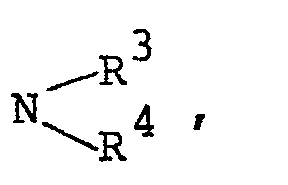
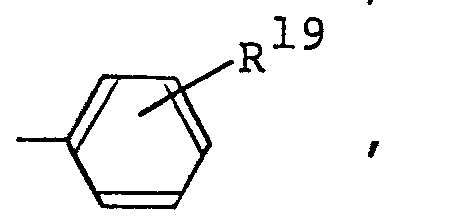
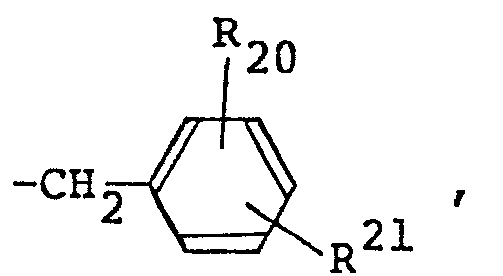
- the present invention relates to a novel rifamycin derivative or salts thereof, a process for preparing the same and antibacterial agents containing the same as an effective component. More particularly, the present invention relates to a novel rifamycin derivative having the general formula (I): wherein R 1 is hydrogen atom or acetyl group; R 2 is hydrogen atom or hydroxyl group; A is a group represented by the formula: wherein R 3 is an alkyl group with 1 to 5 carbon atoms or an alkoxyalkyl group with 2 to 6 carbon atoms and R 4 is an alkyl group with 1 to 5 carbon atoms, a group represented by the formula: -(CH 2 ) a x 1 , wherein a is 1 to 4 and X 1 is ethynyl group, cyano group, a group having the formula: wherein R 5 and R 6 are the same or different from each other and are hydrogen atom or an alkyl group with 1 to 3 carbon atoms, a group represented by
- the rifamycin derivative of the present invention is a novel compound which has not yet been reported in the literature.
- a rifamycin derivative having the general formula (I): wherein R 1 is hydrogen atom or acetyl group; R 2 is hydrogen atom or hydroxyl group; A is a group represented by the formula: wherein R 3 is an alkyl group with 1 to 5 carbon atoms or an alkoxyalkyl group with 2 to 6 carbon atoms and R 4 is an alkyl group with 1 to 5 carbon atoms, a group represented by the formula: ⁇ (CH 2 ) a X 1 , wherein a is 1 to 4 and X 1 is ethynyl group, cyano group, a group having the formula: , wherein R 5 and R 6 are the same or different from each other and are hydrogen atom or an alkyl group with 1 to 3 carbon atoms, a group represented by the formula: OR 7 , wherein R 7 is hydrogen atom or an alkyl group having 1 to 4 carbon atoms, a group represented by the formula: wherein R
- a rifamycin derivative having the general formula (I): wherein R 1 , R 2 and A are as defined above could be prepared by reacting a rifamycin derivative having the general formula (II): wherein R 1 and R 2 are as defined above, with an amine having the general formula: AH, wherein A is as defined above and the obtained rifamycin derivative having the general formula (I) possesses a high degree of activity against a large number of microorganisms.
- the rifamycin derivative having the general formula (I) is soluble in various kinds of organic solvents, e.g. halogenated hydrocarbons such as chloroform, alcohols such as ethanol, esters such as ethyl acetate, aromatic hydrocarbons such as benzene and ethers such as tetrahydrofuran.
- organic solvents e.g. halogenated hydrocarbons such as chloroform, alcohols such as ethanol, esters such as ethyl acetate, aromatic hydrocarbons such as benzene and ethers such as tetrahydrofuran.
- the rifamycin derivative of the present invention having the general formula (I) can form a salt with both base and acid. Any base or acid which can form a salt with the rifamycin derivative having the general formula (I) may be employed.
- the salt with base are metallic salt, especially alkali metal salt or alkaline earth metal salt, ammonium salt and amine salt, especially a salt with methylamine, ethylamine, diethylamine, triethylamine, pyrrolidine, morpholine or hexamethyleneimine.
- the salt with acid examples include a salt with mineral acid such as sulfuric acid or hydrochloric acid and a salt with organic acid such as p-toluenesulfonic acid, trifluoroacetic acid or acetic acid.
- the rifamycin derivative of the present invention having the general formula (I) can be prepared by reacting the rifamycin derivative having the general formula (II) dissolved in an organic solvent such as methanol, ethanol, tetrahydrofuran, N,N-dimethylformamide or dimethylsulfoxide with the amine having the general formula: AH, wherein A is as defined above, in the presence or absence of acid such as hydrochloric acid at a temperature of from -20°C to a boiling point of the solvent for 1 hour to 1 month and in the presence or absence of oxidizing agents.
- an organic solvent such as methanol, ethanol, tetrahydrofuran, N,N-dimethylformamide or dimethylsulfoxide
- amine having the general formula: AH wherein A is as defined above, in the presence or absence of acid such as hydrochloric acid at a temperature of from -20°C to a boiling point of the solvent for 1 hour to 1 month and in the presence or absence of oxid
- reaction solvent employed in the present invention are, for instance, methanol, ethanol, isopropyl alcohol, tetrahydrofuran, pyridine, acetone, ethyl acetate, chloroform, N,N-dimethylformamide, dimethylsulfoxide, and the like.
- pyridine, N,N-dimethylformamide or dimethylsulfoxide is preferably employed in the present invention with an excellent result.
- the reaction is carried out at a temperature ranging from -20°C to a boiling point of the solvent, preferably from -5° to 50°C.
- the reaction may be carried out for around 1 hour to around 1 month, the optimum reaction time should be determined by following the proceeding of the reaction by thin layer chromatography and the like since it varies depending on a kind and an amount of the amine employed in the present invention, the presence or absence of oxidizing agent, a kind and an amount thereof, when present,the reaction temperature and the like.
- the reaction is carried out in the presence of the oxidizing agent, air, oxygen, manganese dioxide, lead dioxide, silver oxide, potassium ferricyan e, hydrogen peroxide and the like are employed as the oxidizing agent.
- air, oxygen, manganese dioxide, lead dioxide, silver oxide, potassium ferricyan e, hydrogen peroxide and the like are employed as the oxidizing agent.
- manganese dioxide, silver oxide or potassium ferricyanide is preferably employed in the present invention with an excellent result.
- the rifamycin derivative having the general formula (I), wherein R I is hydrogen atom and R 2 and A are as defined above, can also be prepared by hydrolyzing the rifamycin derivative having the general formula (I), wherein R l is acetyl group and R 2 and A are as defined - above, with acid or base.
- Examles of acid employed for hydrolysis are, for instance, a mineral acid such as sulfuric acid or hydrochloric acid and an organic acid such as p-toluenesulfonic acid or trifluoroacetic acid.
- Examples of base employed for hydrolysis are, for instance, alkali metal hydroxide such as sodium hydroxide or potassium hydroxide, alkaline earth metal hydroxide such as calcium hydroxide or barium hydroxide, and an organic base such as 1,5-diazabicyclo[4.3.0]non-5-ene or 1,8-diazabicyclo[5.4.0]undec-7-ene.
- alkali metal hydroxide such as sodium hydroxide or potassium hydroxide
- alkaline earth metal hydroxide such as calcium hydroxide or barium hydroxide
- organic base such as 1,5-diazabicyclo[4.3.0]non-5-ene or 1,8-diazabicyclo[5.4.0]undec-7-ene.
- the hydrolysis reaction is carried out at room temperature employing alkali metal hydroxide such as sodium hydroxide or potassium hydroxide and a solvent such as water-containing methanol or water-containing pyridine.
- alkali metal hydroxide such as sodium hydroxide or potassium hydroxide
- a solvent such as water-containing methanol or water-containing pyridine.
- the rifamycin derivative of the present invention having the general formula (I), which is a dark purple solid, can be separated and purified from the reaction products in a relatively easy manner, i.e. an excess amount of the amine having the formula: AH and the reaction solvent are removed from the reaction system to give a crude product, which is then purified by crystallization, column-chromatography and the like.
- the rifamycin derivative of the present invention having the general formula (I) can also be converted to the rifamycin derivative having the general formula (III): wherein R l , R 2 and A are as defined above, by reducing the rifamycin derivative having the general formula (I) with reducing agent such as ascorbic acid, sodium hydrosulfite or the like.
- reducing agent such as ascorbic acid, sodium hydrosulfite or the like.
- Typical examples of the rifamycin derivative of the present invention having the general formula (I) are shown in Table 1.
- the rifamycin derivative of the present invention having the general formula (I) shows a strong antibacterial activity against the Gram-positive bacteria and the acid-fast bacteria.
- the antibacterial activity of the rifamycin derivative of the present invention having the general formula (I) is tested by the method according to the standard method of Japan Society of Chemotherapy [Chemotherapy (Tokyo), 29, P76, (1981)].
- the results obtained from the typical compounds are shown in Table 2 as the minimum inhibitory concentration (MIC, ug/ml).
- MIC minimum inhibitory concentration
- Test compound No. corresponds to derivative No. in Table 1.
- the rifamycin derivative of the present invention having the general formula (I) had a low toxicity since toxicity was never exhibited by oral administration of 1000 mg/kg weight of the rifamycin derivative of the present invention having the general formula (I) to mice.
- the rifamycin derivative having the general formula (II), which is a starting material for preparing the rifamycin derivative of the present invention having the general formula (I), can scarcely be absorped after oral administration, while the rifamycin derivative of the present invention having the general formula (I) is absorbed to show a high blood level.
- Typical compounds were tested employing Wister Strain male rats weighing 270 to 300 g and the results obtained are shown in Table 3.
- Antibacterial agents containing the rifamycin derivative of the present invention as an effective component can be in any dosage form of an oral, rectal, topical or parenteral administration.
- Examples of the dosage form are, for instance, tablets, capsules, granules, syrups, suppositories, ointments and the like.
- Carrier used in the dosage form of the antibacterial agents of the present invention is usually inactive pharmaceutical carrier of an organic or an inorganic solid or liquid suitable for an oral, rectal, topical or parenteral administration such as, for instance, crystalline cellulose, gelatin, lactose, starch, magnesium sterate, talc, plant or animal fat or oil, gum or polyalkylene glycol.
- a ratio of the antibacterial agent of the present invention to the carrier in the dosage form can vary from 0.2 to 100 % by weight.
- the antibacterial agent of the present invention can contain another pharmaceutical component such as another antibacterial agent compatible with the antibacterial agent of the present invention. In this case, however, the antibacterial agent of the present invention is not necessarily the chief ingredient of the dosage form.
- the antibacterial agent of the present invention is administered with such a dose that the ' desired activity is achieved without any side-effect. Though the actual dose should be determined according to the judgment of the doctor, around 10-mg to around 10 g, preferably around 20 mg to around 5 g per day of the antibacterial agent of the present invention is usually administered for adults.
- the antibacterial agent of the present invention can be administered in a pharmaceutical dosage unit containing 1 mg to 5 g, preferably 3 mg to 1 g of an effective component.
- infrared absorption spectrum was measured according to the potassium bromide tablet method. Thin layer chromatography was carried out using Silica gel 60 F 254 (E. Merck Co.) and the thin layer chromatography plate (20 cm x 20 cm). Nuclear magnetic resonance spectrum was measured using tetramethylsilane as an internal standard and deuterated chloroform solution. Measurement of the visible absorption spectrum was conducted in a solvent of methanol.
- the residue was subjected to silica-gel column-chromatography (filler: Wakogel® C-200, developer: ethyl acetate) to give a fraction containing the desired derivative.
- a solvent of the fraction was distilled away under reduced pressure and the obtained residue was dissolved in ethyl acetate, to which n-hexane was added to crystallize 0.73 g of the desired derivative No. 2.
- Example 46 A solution of 0.8 g of the derivative represented by the formula (IV) prepared in Example 46 in 10 ml of DMSO was mixed with 0.15 g of pyrrolidine and 0.8 g of manganese dioxide and the mixture was stirred over night at room temperature. After completion of the reaction, the procedure of Example 2 was repeated to give 0.10 g of the desired derivative No. 46.
- Example 46 A solution of 0.8 g of the derivative represented by the formula (IV) prepared in Example 46 in 10 ml of DMSO was mixed with 0.17 g of piperidine and 0.8 g of manganese dioxide and the mixture was stirred over night at room temperature. After completion of the reaction, the procedure of Example 2 was repeated to give 0.37 g of the desired derivative No. 47.
- Example 46 A solution of 0.8 g of the derivative represented by the formula (IV) prepared in Example 46 in 10 ml of DMSO was mixed with 0.2 g of N-methylpiperazine and 0.8 g of manganese dioxide and the mixture was stirred at room temperature for two days. After completion of the reaction, the procedure of Example 2 was repeated to give 0.44 g of the desired derivative No. 48.
- Example 18 One gram of the derivative No. 18 prepared in Example 18 was added to a mixture of water and ethanol (1 : 1) containing 0.96 g of sodium hydroxide and the mixture was stirred at room temperature for 1.5 hours. After completion of the reaction, the reaction mixture was diluted with cold water, which was then neutralized with 1N hydrochloric acid solution and extracted with chloroform. The extract was evaporated to driness under reduced pressure and the procedure of Example 2 was repeated to give 0.63 g of the desired derivative No. 49. Infrared absorption spectrum ( ⁇ cm -1 ):
- Example 50 The procedure of Example 50 was repeated except that 1.0 g of the derivative No. 19 was employed in place of the derivative No. 18 to give 0.59 g of the desired derivative No. 50.
- Example 50 The procedure of Example 50 was repeated except that 0.22 g of the derivative No. 39 was employed in place of the derivative No. 18 to give 0.13 g of the desired derivative No. 51.
Landscapes
- Chemical & Material Sciences (AREA)
- Organic Chemistry (AREA)
- Health & Medical Sciences (AREA)
- Communicable Diseases (AREA)
- Oncology (AREA)
- Chemical Kinetics & Catalysis (AREA)
- General Chemical & Material Sciences (AREA)
- Medicinal Chemistry (AREA)
- Nuclear Medicine, Radiotherapy & Molecular Imaging (AREA)
- Pharmacology & Pharmacy (AREA)
- Life Sciences & Earth Sciences (AREA)
- Animal Behavior & Ethology (AREA)
- General Health & Medical Sciences (AREA)
- Public Health (AREA)
- Veterinary Medicine (AREA)
- Nitrogen And Oxygen Or Sulfur-Condensed Heterocyclic Ring Systems (AREA)
- Pharmaceuticals Containing Other Organic And Inorganic Compounds (AREA)
Abstract

Description
- The present invention relates to a novel rifamycin derivative or salts thereof, a process for preparing the same and antibacterial agents containing the same as an effective component. More particularly, the present invention relates to a novel rifamycin derivative having the general formula (I):


- The rifamycin derivative of the present invention is a novel compound which has not yet been reported in the literature.
- According to the present invention, there are provided a rifamycin derivative having the general formula (I):


- As the result of the present inventors study, it was found that a rifamycin derivative having the general formula (I):


- The rifamycin derivative having the general formula (I) is soluble in various kinds of organic solvents, e.g. halogenated hydrocarbons such as chloroform, alcohols such as ethanol, esters such as ethyl acetate, aromatic hydrocarbons such as benzene and ethers such as tetrahydrofuran.
- The rifamycin derivative of the present invention having the general formula (I) can form a salt with both base and acid. Any base or acid which can form a salt with the rifamycin derivative having the general formula (I) may be employed. Examples of the salt with base are metallic salt, especially alkali metal salt or alkaline earth metal salt, ammonium salt and amine salt, especially a salt with methylamine, ethylamine, diethylamine, triethylamine, pyrrolidine, morpholine or hexamethyleneimine.
- Examples of the salt with acid are a salt with mineral acid such as sulfuric acid or hydrochloric acid and a salt with organic acid such as p-toluenesulfonic acid, trifluoroacetic acid or acetic acid.
- The rifamycin derivative of the present invention having the general formula (I) can be prepared by reacting the rifamycin derivative having the general formula (II) dissolved in an organic solvent such as methanol, ethanol, tetrahydrofuran, N,N-dimethylformamide or dimethylsulfoxide with the amine having the general formula: AH, wherein A is as defined above, in the presence or absence of acid such as hydrochloric acid at a temperature of from -20°C to a boiling point of the solvent for 1 hour to 1 month and in the presence or absence of oxidizing agents.
- Examples of the reaction solvent employed in the present invention are, for instance, methanol, ethanol, isopropyl alcohol, tetrahydrofuran, pyridine, acetone, ethyl acetate, chloroform, N,N-dimethylformamide, dimethylsulfoxide, and the like. Among them, pyridine, N,N-dimethylformamide or dimethylsulfoxide is preferably employed in the present invention with an excellent result.
- The reaction is carried out at a temperature ranging from -20°C to a boiling point of the solvent, preferably from -5° to 50°C.
- Though the reaction may be carried out for around 1 hour to around 1 month, the optimum reaction time should be determined by following the proceeding of the reaction by thin layer chromatography and the like since it varies depending on a kind and an amount of the amine employed in the present invention, the presence or absence of oxidizing agent, a kind and an amount thereof, when present,the reaction temperature and the like.
- When the reaction is carried out in the presence of the oxidizing agent, air, oxygen, manganese dioxide, lead dioxide, silver oxide, potassium ferricyan e, hydrogen peroxide and the like are employed as the oxidizing agent. Among them, manganese dioxide, silver oxide or potassium ferricyanide is preferably employed in the present invention with an excellent result.
- The rifamycin derivative having the general formula (I), wherein RI is hydrogen atom and R 2 and A are as defined above, can also be prepared by hydrolyzing the rifamycin derivative having the general formula (I), wherein Rl is acetyl group and R2 and A are as defined - above, with acid or base. Examles of acid employed for hydrolysis are, for instance, a mineral acid such as sulfuric acid or hydrochloric acid and an organic acid such as p-toluenesulfonic acid or trifluoroacetic acid. Examples of base employed for hydrolysis are, for instance, alkali metal hydroxide such as sodium hydroxide or potassium hydroxide, alkaline earth metal hydroxide such as calcium hydroxide or barium hydroxide, and an organic base such as 1,5-diazabicyclo[4.3.0]non-5-ene or 1,8-diazabicyclo[5.4.0]undec-7-ene.
- Preferably the hydrolysis reaction is carried out at room temperature employing alkali metal hydroxide such as sodium hydroxide or potassium hydroxide and a solvent such as water-containing methanol or water-containing pyridine.
- The rifamycin derivative of the present invention having the general formula (I), which is a dark purple solid, can be separated and purified from the reaction products in a relatively easy manner, i.e. an excess amount of the amine having the formula: AH and the reaction solvent are removed from the reaction system to give a crude product, which is then purified by crystallization, column-chromatography and the like.
- The rifamycin derivative of the present invention having the general formula (I) can also be converted to the rifamycin derivative having the general formula (III):

- Typical examples of the rifamycin derivative of the present invention having the general formula (I) are shown in Table 1.


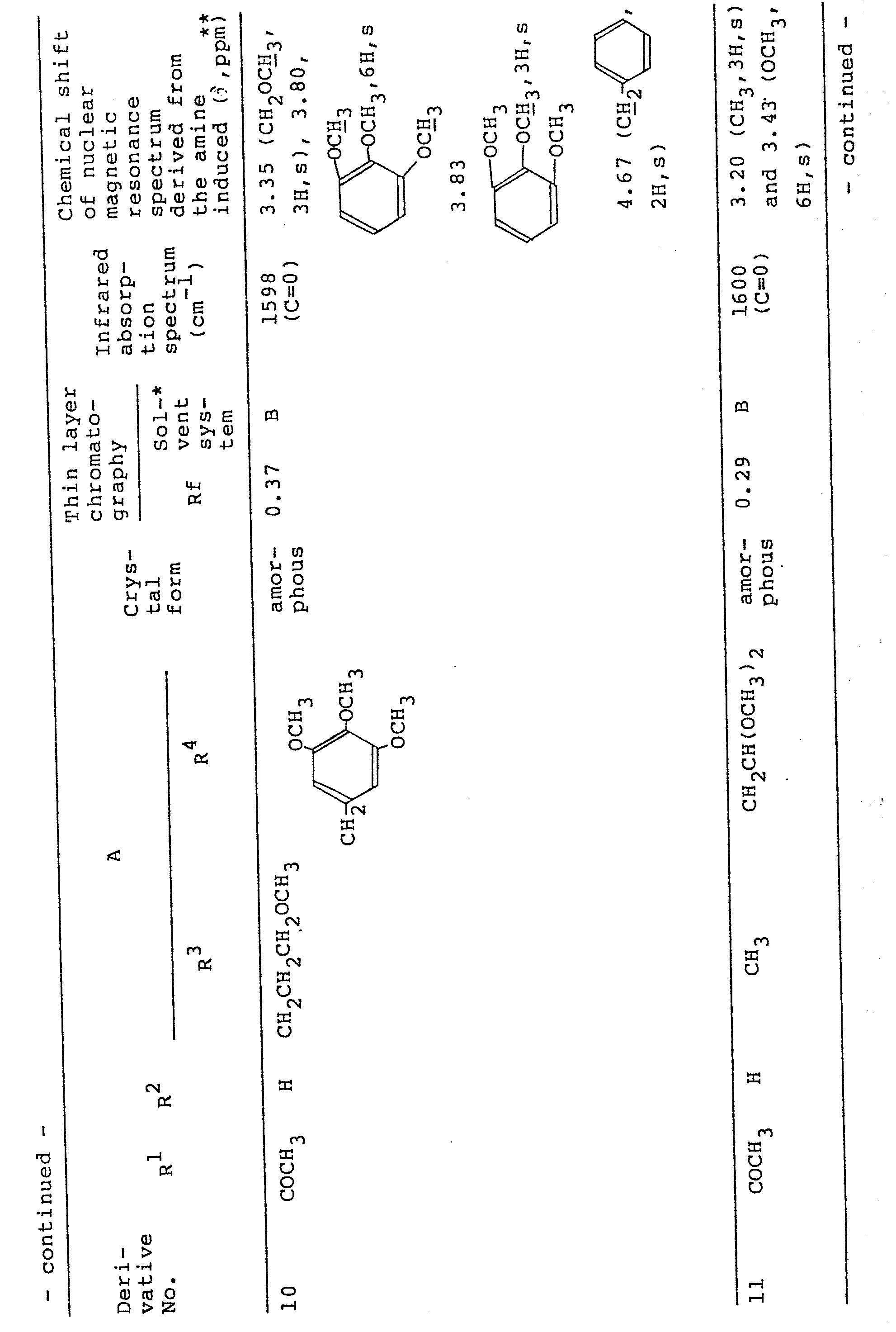
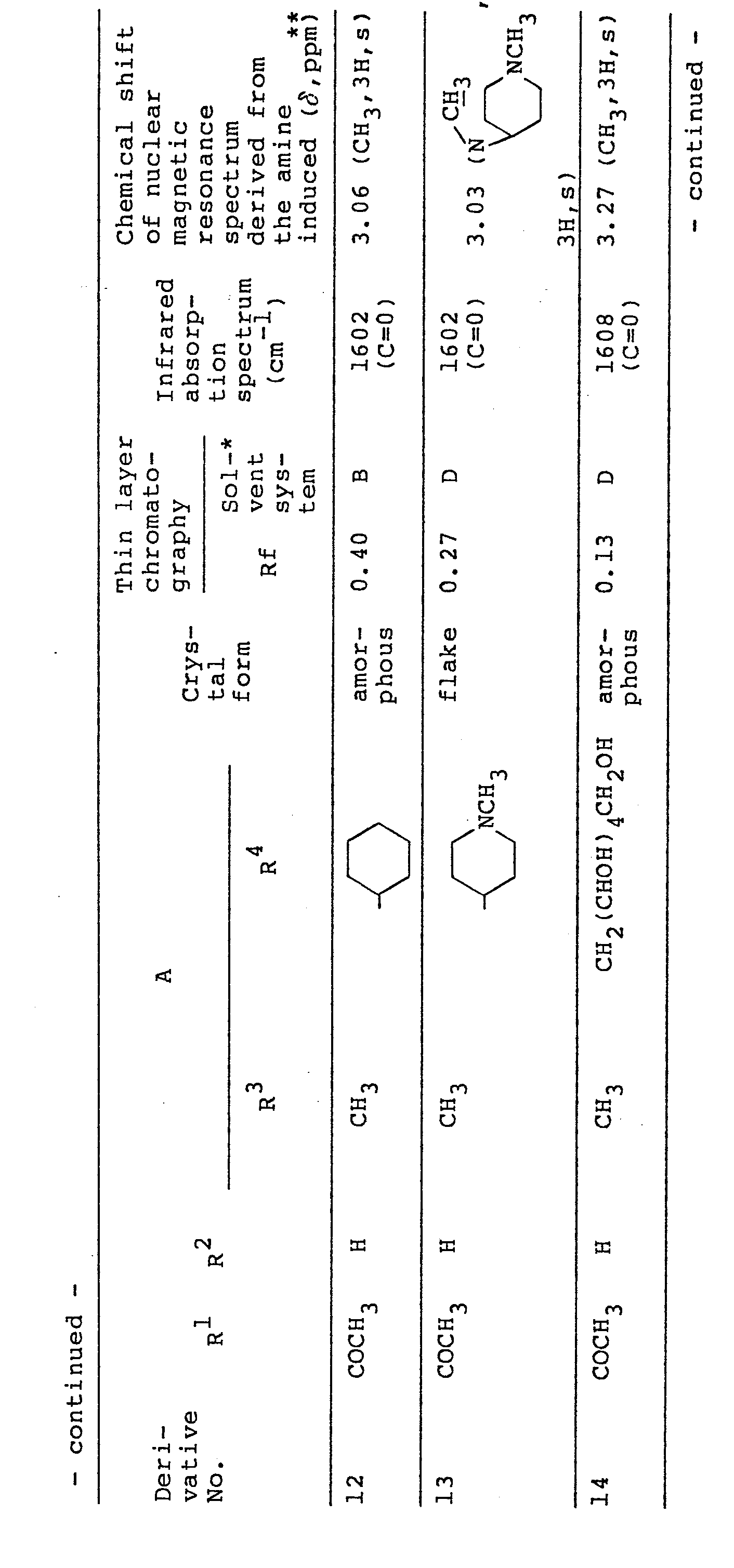

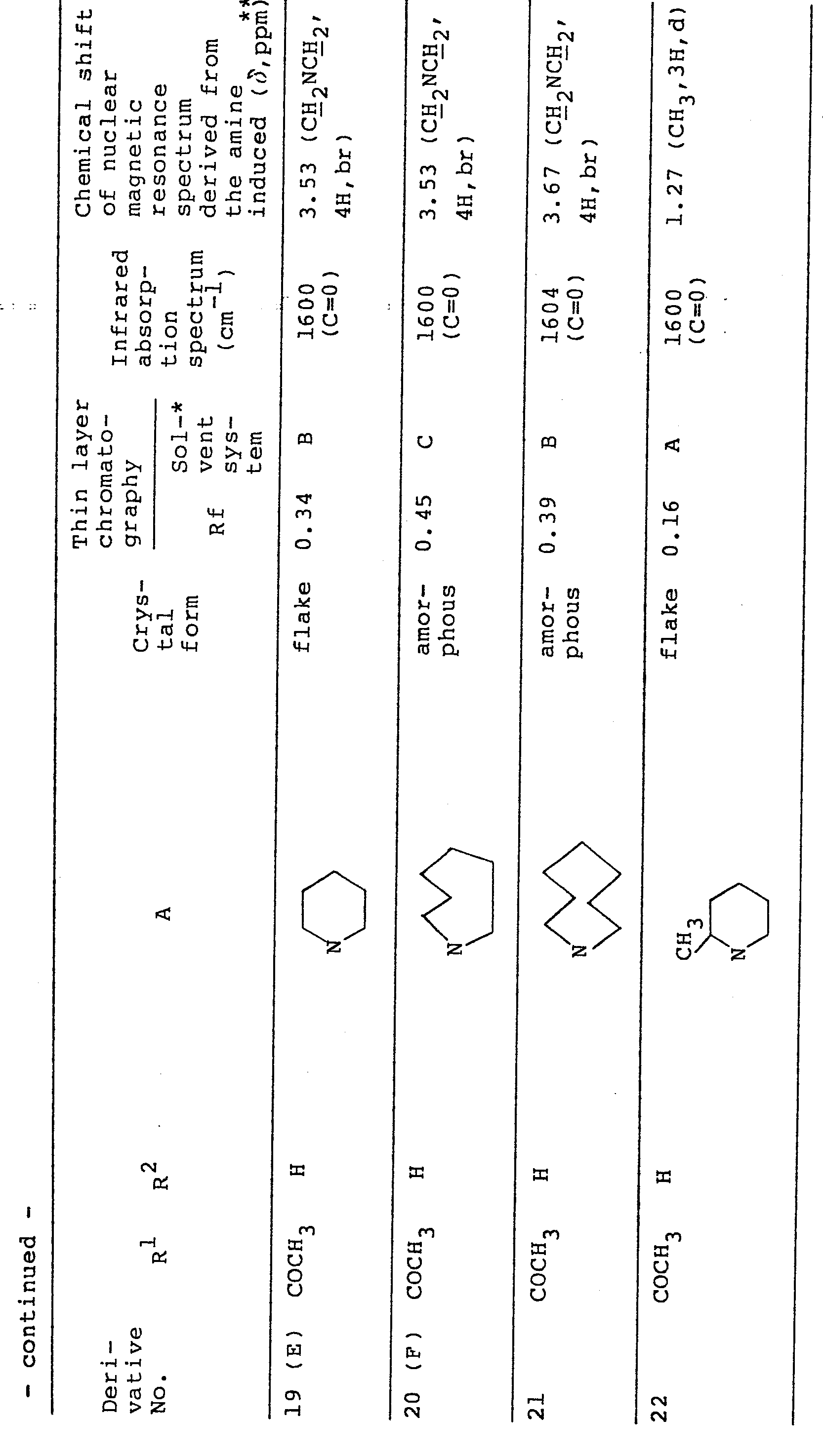


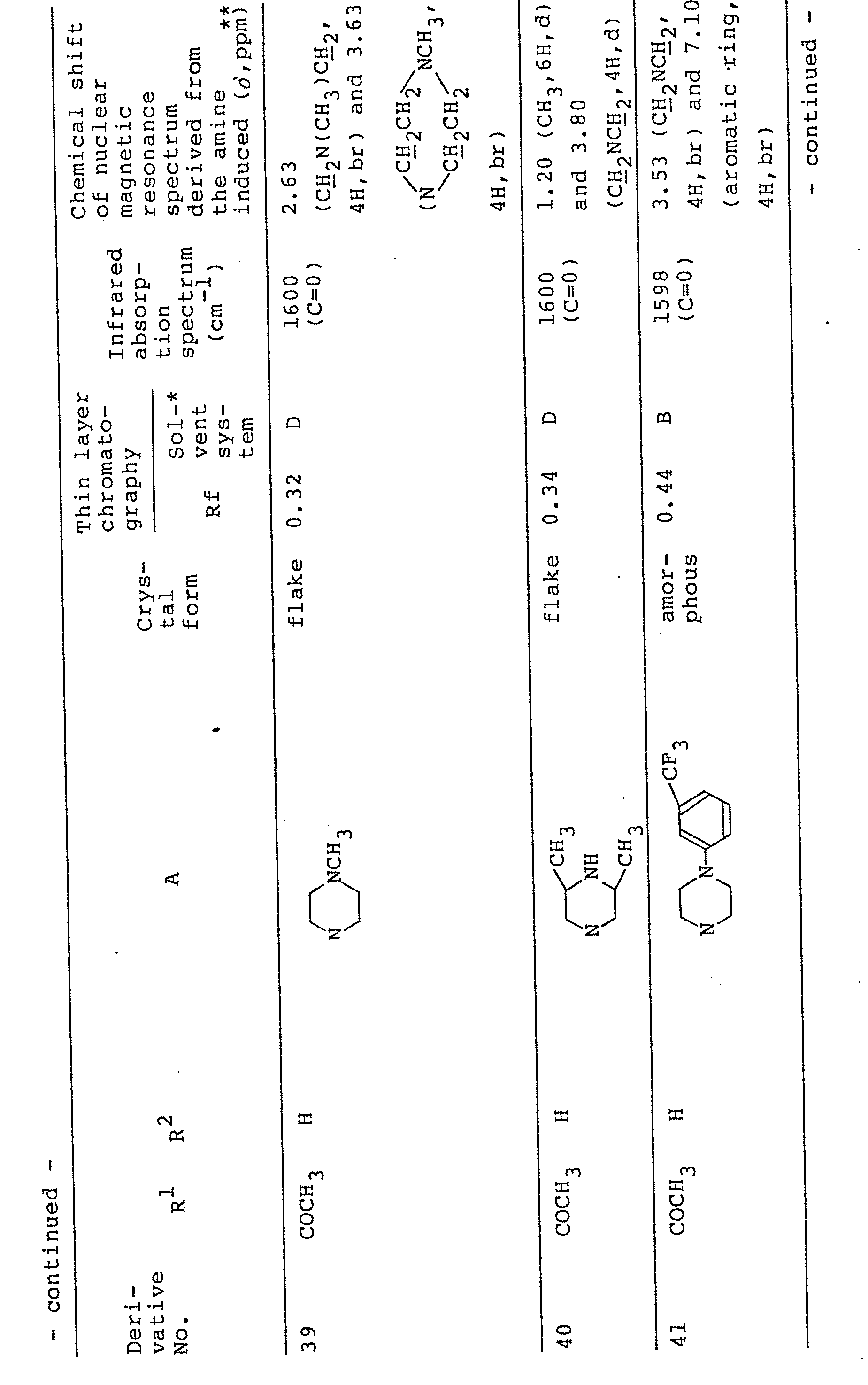


- The rifamycin derivative of the present invention having the general formula (I) shows a strong antibacterial activity against the Gram-positive bacteria and the acid-fast bacteria. The antibacterial activity of the rifamycin derivative of the present invention having the general formula (I) is tested by the method according to the standard method of Japan Society of Chemotherapy [Chemotherapy (Tokyo), 29, P76, (1981)]. The results obtained from the typical compounds are shown in Table 2 as the minimum inhibitory concentration (MIC, ug/ml). As shown in Table 2, it is clear that the rifamycin derivative of the present invention shows a strong antibacterial activity against the Gram-positive bacteria and the acid-fast bacteria. In Table 2, Test compound No. corresponds to derivative No. in Table 1.
- It was also found that the rifamycin derivative of the present invention having the general formula (I) had a low toxicity since toxicity was never exhibited by oral administration of 1000 mg/kg weight of the rifamycin derivative of the present invention having the general formula (I) to mice.


- The rifamycin derivative having the general formula (II), which is a starting material for preparing the rifamycin derivative of the present invention having the general formula (I), can scarcely be absorped after oral administration, while the rifamycin derivative of the present invention having the general formula (I) is absorbed to show a high blood level. Typical compounds were tested employing Wister Strain male rats weighing 270 to 300 g and the results obtained are shown in Table 3.

- Antibacterial agents containing the rifamycin derivative of the present invention as an effective component can be in any dosage form of an oral, rectal, topical or parenteral administration. Examples of the dosage form are, for instance, tablets, capsules, granules, syrups, suppositories, ointments and the like. Carrier used in the dosage form of the antibacterial agents of the present invention is usually inactive pharmaceutical carrier of an organic or an inorganic solid or liquid suitable for an oral, rectal, topical or parenteral administration such as, for instance, crystalline cellulose, gelatin, lactose, starch, magnesium sterate, talc, plant or animal fat or oil, gum or polyalkylene glycol. A ratio of the antibacterial agent of the present invention to the carrier in the dosage form can vary from 0.2 to 100 % by weight. The antibacterial agent of the present invention can contain another pharmaceutical component such as another antibacterial agent compatible with the antibacterial agent of the present invention. In this case, however, the antibacterial agent of the present invention is not necessarily the chief ingredient of the dosage form.
- The antibacterial agent of the present invention is administered with such a dose that the ' desired activity is achieved without any side-effect. Though the actual dose should be determined according to the judgment of the doctor, around 10-mg to around 10 g, preferably around 20 mg to around 5 g per day of the antibacterial agent of the present invention is usually administered for adults. The antibacterial agent of the present invention can be administered in a pharmaceutical dosage unit containing 1 mg to 5 g, preferably 3 mg to 1 g of an effective component.
- The present invention is more particularly described and explained by the following Examples. However, it should be understood that the present invention is not limited to such Examples and various changes and modifications can be made without departing from the scope and spirit of the present invention.
- In the following Examples, infrared absorption spectrum was measured according to the potassium bromide tablet method. Thin layer chromatography was carried out using Silica gel 60 F254 (E. Merck Co.) and the thin layer
chromatography plate (20 cm x 20 cm). Nuclear magnetic resonance spectrum was measured using tetramethylsilane as an internal standard and deuterated chloroform solution. Measurement of the visible absorption spectrum was conducted in a solvent of methanol. - A solution of 0.2 g of benzoxazinorifamycin, which was prepared according to the method described in Helv. Chim. Acta, 56, p 2369 (1973), .in 7.0 ml of methanol was mixed with a solution of 0.2 g of dimethylamine hydrochloride and 0.28 ml of triethylamine. The mixture was stirred for 18 hours at room temperature. Ethyl acetate was added to the reaction mixture and the resultant was washed twice with a saturated NaCt solution, followed by distillation of a solvent under reduced pressure. The residue was subjected to silca-gel column-chromatography [adsorbent: Wakogel® C-200, eluent: chloroform-acetone (90 : 10)] to give a fraction containing the desired derivative. A solvent of the fraction was distilled away under reduced pressure and the residue was subjected to silica-gel column-chromatography as above, followed by work-up of the resultant to give 53 mg of a pure derivative No. 1. Infrared absorption spectrum (v cm-1):
- 3450, 2960, 2930, 1720, 1660, 1600, 1560, 1490, 1460, 1410, 1360, 1310, 1260, 1200, 1170, 1120, 1060, 1040, 980, 950, 910, 820, 770 and 700
- Nuclear magnetic resonance spectrum δ(ppm) (CDCℓ3):
- 0.55, 0.80, 0.95 (CHCH3), 2.05, 2.10, 2.15, 2.20, 3.05, 3.16 (CH3), around 4.80 to 5.20 (protons at 25-postion and 28-position), around 5.90 to 6.20, 6.55, 6.75, 6.85, 7.80 (protons at 17-position, 19-position and 29-position and proton of benzoxazine ring), 7.75 (amide proton) and 15.1 (phenolic proton)
- Visible absorption spectrum [) max. nm (E 1 % 1 cm)]:
- 361 (154), 481 (51) and 633 (436)
- Elementary analysis for C45H53N3O12 Calcd.(%): C 65.28, H 6.45, N 5.08 Found (%): C 65.35, H 6.51, N 5.01
- A solution of 1.0 g of benzoxazinorifamycin in 5 ml of dimethylsulfoxide (hereinafter referred to as "DMSO") was mixed with 0.22 ml of ethylmethylamine and 1.0 g of manganese dioxide. The mixture was stirred at room temperature for 5 hours. After completion of the reaction, the reaction mixture was diluted by addition of 50 ml of ethyl acetate and then maganese dioxide was filtered. A filtrate was washed successively with water (twice), diluted hydrochloric acid (twice) and water (twice) and a solvent was distilled away under reduced pressure. The residue was subjected to silica-gel column-chromatography (filler: Wakogel® C-200, developer: ethyl acetate) to give a fraction containing the desired derivative. A solvent of the fraction was distilled away under reduced pressure and the obtained residue was dissolved in ethyl acetate, to which n-hexane was added to crystallize 0.73 g of the desired derivative No. 2.
- Infrared absorption spectrum (v cm ):
- 3460, 2960, 2930, 1715, 1655, 1600, 1560, 1490, 1460, 1415, 1390, 1375, 1350, 1305, 1255, 1170, 1125, 1080, 1060, 1035, 970, 940, 910, 895, 815, 762, 695 and 440
- Nuclear magnetic resonance spectrum δ (ppm) (CDCℓ3):
- 0.55, 0.78, 0.93 (CHCH3), 1.27 (-NCH2CH3), 1.80, 2.01, 2.11, 2.14, 3.04 (CH3), 3.13 (N-CH3), 3.56 (-NCH2CH3), around 4.85 to 5.20 (protons at 25-position and 28-position), around 5.85 to 6.15, 6.53, 6.76, 6.86, 7.78 (protons at 17-position, 19-position and 29-position and protons of benzoxazine ring), 7.68 (amide proton) and 15.07 (phenolic proton)
- Visible absorption spectrum [λ max. nm (E 1 % cm)]:
- 363 (176), 480 (53) and 637 (504)
- Elementary analysis for C 46 H 55 N 3 0 12 Calcd.(%): C 65.62, H 6.59, N 4.99 Found (%): C 65.42, H 6.71, N 5.15
- A solution of 2.0 g of benzoxazinorifamycin in 10 ml of DMSO was mixed with 0.53 ml of diethylamine and 2.0 g of manganese dioxide. The mixture was stirred at room temperature for two days. After completion of the reaction, the procedure of Example 2 was repeated to give 0.79 g of the desired derivative No. 3.
- Infrared absorption spectrum ( cm-1):
- 3450, 2970, 2940, 1715, 1663, 1650, 1600, 1560, 1520, 1490, 1470, 1403, 1380, 1355, 1308, 1260, 1185, 1175, 1122, 1078, 1040, 975, 945, 920, 900, 820, 765, 695 and 445
- Nuclear magnetic resonance spectrum δ (ppm) (CDCℓ3):
- 0.55, 0.76, 0.91 (CHCH3), 1.28 (N-CH2-CH3), 1.79, 2.ob,2.10, 2.14, 3.03 (CH3), 3.54 (N-CH2-CH3), around 4.80 to 5.15 (protons at 25-position and 28-position), around 5.85 to 6.15, 6.48, 6.75, 6.85, 7.71, 7.81 (protons at 17-position, 19-position and 29-position and protons of benzoxazine ring), 7.71 (amide proton) and 15.13 (phenolic proton)
- Visible absorption spectrum [ λ max. nm (E 1 % cm)]:
- 363 (183), 480 (49) and 642 (546)
- Elementary analysis for C47H57N3O12 Calcd.(%): C 65.95, H 6.71, N 4.91 Found (%): C 65.74, H 6.87, N 4.76
- A solution of 2.0 g of benzoxazinorifamycin in 10 ml of DMSO was mixed with a 0.70 ml of dipropylamine and 2.0 g of manganese dioxide. The mixture was stirred at room temperature for two days. After completion of the reaction, the procedure of Example 2 was repeated to give 0.72 g of the desired derivative No. 4.
- Infrared absorption spectrum (ν cm-1):
- 3460, 2960, 2930, 2870, 1718, 1645, 1601, 1562, 1520, 1488, 1465, 1405, 1365, 1310, 1280, 1240, 1170, 1125, 1100, 1060, 1035, 975, 945, 925, 910, 845, 820, 770 and 450
- Nuclear magnetic resonance spectrum a (ppm) (CDCℓ3): 0.56, 0.75, 0.92 (CHCH3), 1.00 (NCH2CH2CH3), around 1.45 to 2.25 (N-CH2CH2CH3), 1.79, 2.00, 2.09, 2.17, 3.03 (CH3), 3.37 (N-CH2CH2CH3), around 4.75 to 5.15, (protons at 25-position and 28-position), around 5.75 to 6.15, 6.44, 6.72, 6.83, 7.35, 7.44 (protons at 17-position, 19-position and 29-position and protons of benzoxazine ring), 7.30 (amide proton) and 15.06 (phenolic proton)
- Visible absorption spectrum [λ max. nm (E 1 % 1 cm)]:
- 364 (170), 482 (49) and 644 (519)
- Elementary analysis for C49H61N3O12 Calcd.(%): C 66.57, H 6.96, N 4.75 Found (%): C 66.73, H 6.79, N 4.93
- A solution of 1.0 g of benzoxazinorifamycin in 5 ml of DMSO was mixed with 0.22 ml of N-methylpropagyl- amine and 1.0 g of manganese dioxide. The mixture was stirred at room temperature for 6 hours. After completion of the reaction, the procedure of Example 2 was repeated to give 0.09 g of the desired derivative No. 5.
- A solution of 1.0 g of benzoxazinorifamycin in 5 ml of DMSO was mixed with 0.24 ml of 3-methylamino- propionitrile and 1.0 g of manganese dioxide. The mixture was stirred at room temperature for 3 days. After completion of the reaction, the procedure of Example 2 was repeated to give 0.61 g of the desired derivative No. 6.
- A solution of 1.0 g of benzoxazinorfamycin in 10 ml of methanol was mixed with 1.65 ml of N,N,N-tri- methylethylenediamine and 2.2 ml of a solution of 1.2 N hydrochloric acid in methanol. The mixture was stirred at room temperature for 17 hours. To the reaction mixture was added 0.5 g of manganese dioxide and the mixture was stirred at room temperature for 5 minutes. The resultant was filtered and chloroform was added to the filtrate, which was then wahsed twice with a saturated NaC£ solution. A solvent was distilled away under reduced pressure and the residue was purified by repeating the procedure of silica-gel column-chromatography [eluent: chloroform-methanol (90 : 10)] to give 0.32 g of a pure derivative No. 7. Infrared absorption spectrum (v cm-1):
- 3450, 2980, 2950, 1720, 1660, 1600, 1560, 1500, 1460, 1420, 1390, 1370, 1310, 1250, 1200, 1170, 1130, 1110, 1060, 1040, 980, 950, 920, 820, 780 and 700
- Nuclear magnetic resonance spectrum δ (ppm) (CDCℓ3):
- 0.50, 0.75, 0.90 (CHCH3), 1.83, 1.86, 2.01, 2.15, 2.20, 2.33, 2.60, 3.02 (CH or proton of ethylenediamino group), around 4.85 to 5.20 (protons at 25-position and 28-position), around 5.90 to 6.90 (protons at 17-position, 19-position and 29-position and protons of benzoxazine ring), 7.75 (proton of benzoxazine ring), 8.06 (amide proton) and 15.2 (phenolic proton)
- Visible absorption spectrum [λ max. nm (E 1 % 1 cm)]:
- 361 (150), 481 (56) and 630 (437)
- Elementary analysis for C48H60N4O12 Calcd.(%): C 65.14, H 6.83, N 6.33 Found (%): C 65.07, H 6.71, N 6.42
- A solution of 1.0 g of benzoxazinorifamycin in 5 ml of DMSO was mixed with 0.21 ml of 2-(methylamino)-ethanol and the mixture was stirred at room temperature for 8 hours. After completion of the reaction, the procedure of Example 2 was repeated to give 0.62 g of the desired derivative compound No. 8.
- A solution of 1.0 g of benzoxazinorifamiycin in 5 ml of DMSO was mixed with 0.41 g of bis(ethoxyethyl)-amine and the mixture was stirred at room temperature for two days hours. After completion of the reaction, the procedure of Example 2 was repeated to give 0.13 g of the desired derivative No. 9.
- Infrared absorption spectrum (v cm ):
- 3470, 2980, 2940, 2880, 1718, 1662, 1601, 1560, 1520, 1485, 1460, 1400, 1380, 1355, 1320, 1260, 1230, 1170, 1120, 1060, 1040, 980, 950, 915, 900, 810, 765, 695 and 445
- Nuclear magnetic resonance spectrum δ (ppm) (CDCℓ3):
- 0.57 , 0.75 , 0 . 92 (CHCH 3), 1.20 (-OCH=CH ), 1.78, 2.00, 2.10, 2.16, 3.05 (CH3), around 3.30 to 3.85 (-NCH2CH2OCH2CH3), around 4.80 to 5.15 (protons at 25-position and 28-position), around 5.85 to 6.15, 6.57, 6.85, 6.96, 7.71, 7.81 (protons at 17-position, 19-position and 29-position and protons of benzoxazine ring), 7.55 (amide proton) and 15.00 (phenolic proton)
- Visible absorption spectrum [λ max. nm (E 1 %)]:
- 362 (156), 482 (54) and 635 (460)
- Elementary analysis for C 51 H 65 N 3 0 14 Calcd.(%): C 64.88, H 6.94, N 4.45 Found (%): C 64.70, H 6.84, N 4.68
- A solution of 1.0 g of benzoxazinorifamiycin in 5 ml of DMSO was mixed with 0.64 ml of N-(3-methoxypropyl)-3,4,5-trimethoxybenzylamine and 1.0 g of . manganese dioxide and the mixture was stirred at room temperature for two days. After completion of the reaction, the procedure of Example 2 was repeated to give 0.11 g of the desired derivative No. 10.
- A solution of 1.0 g of benzoxazinorifamycin in 5 ml of DMSO was mixed with 0.33 ml of methylamino- acetaldehyde dimethyl acetal and 1.0 g of manganese dioxide and the mixture was stirred at room temperature for 24 hours. After completion of the reaction, the procedure of Example 2 was repeated to give 0.55 g of the desired derivative No. 11.
- Infrared absorption spectrum (v cm-1):
- 3450, 2970, 2930, 2830, 1715, 1645, 1600, 1560, 1520, 1490, 1465, 1410, 1380, 1370, 1305, 1255, 1200, 1170, 1130, 1110, 1060, 1035, 975, 910, 855, 820, 765, 710 and 445
- Nuclear magnetic resonance spectrum δ (ppm) (CDCℓ3):
- 0.53, 0.77, 0.93 (CHCH3), 1.82; 2.01, 2.13, 2.14, 3.06 (CH3), 3.20 (N-CH3), 3.43 (OCH3), 3.60 (-CH-(OMe)2), 4.56 (-NCH2-), around 4.85 to 5.20 (protons at 25-position and 28-position), around 5.95 to 6.10, 6.60, 6.85, 6.96, 7.75, 7.85 (protons at 17-position, 19-position and 27-position and protons of benzoxazine ring), 7.58 (amide proton) and 14.9 (phenolic proton)
- Visible absorption spectrum [λ max. nm (E 1 1 % cm)] 361 (154), 480 (58) and 630 (431)
- Elementary analysis for C 48 H 59 N 3 0 14 Calcd.(%): C 63.92, H 6.59, N 4.66 Found (%): C 64.10, H 6.73, N 4.54
- A solution of 1.0 g of benzoxazinorifamycin in 5 ml of DMSO was mixed with 0.33 ml of N-methylcyclohexylamine and 1.0 g of manganese dioxide and the mixture was stirred at room temperature for two days. After completion of the reaction, the procedure of Example 2 was repeated to give 0.27 g of the desired derivative No. 12.
- A solution of 1.0 g benzoxazinorifamycin in 5 ml of DMSO was mixed with 0.37 ml of l-methyl-4-(methyl- ami-no)piperidine and 1.0 g of manganese dioxide and the mixture was stirred at room temperature for two days. After completion of the reaction, the procedure of Example 2 was repeated to give 0.17 g of the desired derivative No. 13.
- A solution of 1.0 g of benzoxazinorifamycin in 5 ml of DMSO was mixed with 0.5 g of N-methyl-D-glucamine and 1.0 g of manganese dioxide and the mixture was stirred at room temperature for 4 hours. After completion of the reaction, the procedure of Example 2 was repeated to give 0.63 g of the desired derivative No. 14.
- A solution of 1.0 g of benzoxazinorifamycin in 5 ml of DMSO was mixed with 0.13 ml of ethylenimine and 1.0 g of manganese dioxide and the mixture was stirred at room temperature for one day. After completion of the reaction, the procedure of Example 2 was repeated to give 0.28 g of the desired derivative No. 15.
- A solution of 1.0 g of benzoxazinorifamycin in 5 ml of DMSO was mixed with 0.18 ml of propyleneimine and 1.0 g of manganese dioxide and the mixture was stirred over night at room temperature. After completion of the reaction, the procedure of Example 2 was repeated to give 0.1 g of the desired derivative No. 16.
- A solution of 1.0 g of benzoxazinorifamycin in 5 ml of DMSO was mixed with 0.17 ml of trimethyleneimine and 1.0 g of manganese dioxide and the mixture was stirred at room temperature for 6 hours. After completion of the reaction, the procedure of Example 2 was repeated to give 0.35 g of the desired derivative No. 17.
- Infrared absorption spectrum (ν cm-1):
- 3450, 2970, 2940, 2870, 1720, 1650, 1610, 1565, 1498, 1470, 1400, 1380, 1312, 1260, 1175, 1135, 1115, 1065, 1040, 975, 950, 920, 825, 818, 765, 670 and 435
- Nuclear magnetic resonance spectrum δ (ppm) (CDCQ3):
- 0.52, 0.77, 0.94 (CHCH3), 1.25 (proton of azetidine ring), 1.80, 2.02, 2.08, 2.84, 3.05 (CH3), 4.20 (-CH2NCH2-), around 4.75 to 5.15 (protons at 25-position and 28-position), around 5.85 to 6.15, 6.20, 6.38, 6.48, 7.68, 7.77 (protons at 17-position, 19-position and 29-position and protons of benzoxazine ring), 7.72 (amide proton) and 15.07 (phenolic proton)
- Visible absorption spectrum [À max. nm (E 1 % 1 cm)] 362 (178), 476 (58) and 640 (522)
- Elementary analysis for C46H53N3O12 Calcd.(%): C 65.78, H 6.36, N 5.00 Found (%): C 65.89, H 6.50, N 4.86
- A solution of 0.8 g of benzoxazinorifamycin in 10 ml of DMSO was mixed with 0.83 ml of pyrrolidine and 1.7 ml of a solution of 1.2 N hydrochloric acid in methanol and the mixture was stirred at room temperature for 17 hours. After completion of the reaction, the procedure of Example 1 was repeated to give 0.07 g of the desired derivative No. 18.
- Infrared absorption spectrum (v cm-1):
- 3450, 2970, 2920, 2850, 1720, 1660, 1600, 1550, ,1480, 1460, 1390, 1370, 1340, 1320, 1260, 1220, 1160, 1130, 1060, 1040, 980, 940, 920, 910, 860, 820, 770 and 600
- Rf = 0.38, blue spot [chloroform-acetone (70 : 30)]
- Nuclear magnetic resonance spectrum δ (ppm) (CDCℓ3):
- 0.52, 0.80, 0.90 (CHCH3), 1.80, 2.00, 2.10, 2.18, 3.02, 3.55 (CH3 and proton of pyrrolidine ring), around 4.80 to 5.10 (protons at 25-position and 28-position), 5.95, 6.06, 6.50, 6.66, 6.75, 7.70 (protons at 17-position, 19-position and 29-position and protons of benzoxazine ring), 8.25 (amide proton) and 15.2 (phenolic proton)
- Visible absorption spectrum [λ max. nm (E 1 1 % cm)]:
- 363 (138), 480 (43) and 642 (409)
- Elementary analysis for C 47 H 55 N 3 0 12 Calcd.(%): C 66.11, H 6.49, N 4.92 Found (%): C 66.03, H 6.56, N 4.84
- A solution of 5.5 g of benzoxazinorifamycin in 70 ml of methanol was mixed with 6.0 g of piperidine and 11.7 ml of a solution of 1.2 N hydrochloric acid in methanol and the mixture was stirred at room temperature for 7 hours. After completion of the reaction, 2.8 g of manganese dioxide was added to the reaction mixture and the mixture was stirred at room temperature for 5 minutes. The resultant was and chloroform was added to the filtrate, which was then washed twice with a saturated NaCℓ solution. A solvent was distilled away under reduced pressure and the residue was treated as in Example 2 to give 0.5 g of the desired derivative No. 19. Infrared absorption spectrum (v cm-1):
- 3450, 2950, 2930, 2870, 1720, 1650, 1600, 1560, 1485, 1460, 1395, 1370, 1305, 1240, 1210, 1170, 1115, 1060, 1020, 980, 950, 920, 900, 850, 820, 770, 690, 640 and 580
- Rf = 0.45, blue spot [chloroform-aceton (70 : 30)]
- Nuclear magnetic resonance spectrum δ (ppm) (CDCℓ3):
- 0.53, 0.86, 0.93 (CHCH3), 1.73, 1.80, 2.00, 2.10, 2.48, 3.03, 3.53 (CH3 and proton of piperidine ring), around 4.85 to 5.06 (protons at 25-position and 28-position), 5.90, 6.03, 6.67, 6.69, 6.90, 7.00, 7.76 (protons at 17-position, 19-position and 29-position and protons of benzoxazine ring), 7.70 (amide proton) and 15.02 (phenolic proton)
- Visible absorption spectrum [À max, nm (E 1 % 1 cm)]:
- 363 (160), 481 (55) and 643 (488)
- Elementary analysis for C 48 H 57 N 3 0 12 Calcd.(%): C 66.42, H 6.62, N 4.84 Found (%): C 66.30, H 6.73, N 4.95
- A solution of 5.5 g of benzoxazinorifamycin in 70 ml of methanol was mixed with 7.0 g of hexamethyleneimine and 11.7 ml of a solution of 1.2 N hydrochloric acid in methanol and the mixture was stirred at room temperature for 6 hours. After completion of the reaction, the procedure of Example 19 was repeated to give 0.4 g of the desired derivative No. 20.
- Infrared absorption spectrum (ν cm-1):
- 3460, 2960, 2930, 1720, 1660, 1650, 1600, 1560, 1520, 1490, 1460, 1400, 1360, 1305, 1250, 1205, 1160, 1125, 1100, 1060, 1040, 1000, 975, 945, 900, 860, 820, 770, 690, 640 and 580
- Rf = 0.45, blue spot [chloroform-acetone (70 : 30)]
- Nuclear magnetic resonance spectrum o(ppm) (CDCℓ3):
- 0.53, 0.75, 0.92 (CHCH3), 1.65, 1.83, 2.02, 2.13, 3.06, 3.53 (CH3 and proton of hexamethyleneimine ring), around 4.85 to 5.10 (protons at 25-position and 28-position), 5.90, 6.05, 6.56, 6.59, 6.85, 6.92, 7.73, 7.85 (protons at 17-position, 19-position and 29-position and proton of benzoxazine ring), 7.67 (amide proton) and 15.13 (phenolic proton)
- Visible absorption spectrum [A max. nm (E 1 % 1 cm)]
- 363 (178), 484 (55) and 644 (539)
- Elementary analysis for C49H59N3O12 Calcd.(%): C 66.73, H 6.74, N 4.76 Found (%): C 66.86, H 6.67, N 4.84
- A solution of 5.5 g of benzoxazinorifamycin in 70 ml of methanol was mixed with 7.9 ml of heptamethyleneimino and 11.7 ml of a solution of 1.2 N hydrochloric acid in methanol and the mixture was stirred at room temperature for 6.5 hours. After completion of the reaction, the procedure of Example 19 was repeated to give 0.96 g of the desired derivative No. 21.
- A solution of 1.0 g of benzoxazinorifamycin in 5 ml of DMSO was mixed with 0.3 ml of 2-methylpiperizine and 1.0 g of manganese dioxide and the mixture was stirred at room temperature for two days. After completion of the reaction, the procedure of Example 2 was repeated to give 0.34 g of the desired derivative No. 22.
- A solution of 1.0 g of benzoxazinorifamycin in 5 ml of DMSO was mixed with 0.3 ml of 3-methylpiperidine and 1.0 g of manganese dioxide and the mixture was stirred at room temperature for 4 hours. After completion of the reaction, the procedure of Example 2 was repeated to give 0.46 g of the desired derivative No. 23.
- Infrared absorption spectrum (ν cm-1):
- 3450, 2970, 2940, 2880, 1720, 1650, 1602, 1560, 1490, 1460, 1400, 1380, 1310, 1245, 1220, 1175, 1125, 1090, 1065, 1040, 970, 905, 860, 820, 770, 645 and 590
- Nuclear magnetic resonance spectrum δ (ppm) (CDCℓ3): 0.47, 0.77, 0.92 (CHCH3), 1.00 (CH3 of piperidine), around 1.45 to 2.25, around 2.55 to 3.25, around 3.75 to 4.10 (proton of piperidine ring), 1.80, 2.00, 2.10 2.14, 3.03 (CH3), around 4.85 to 5.15 (protons at 25-position and 28-position), around 5.85 to 6.15, 6.67, 6.90, 7.01 7.72, 7.82 (protons at 17-position, 19-position and 29-position and protons of benzoxazine ring), 7.82 (amide proton) and 15.01 (phenolic proton)
- Visible absorption spectrum [A max. nm (E 1 % 1 cm)] 363 (163), 481 (52) and 646 (498)
- Elementary analysis for C 49 H 59 N 3 0 12 Calcd.(%): C 66.73, H 6.74, N 4.76 Found (%): C 66.61, H 6.96, N 4.87
- A solution of 1.0 g of benzoxazinorifamycin in 5 ml of DMSO was mixed with 0.3 ml of 4-methylpiperidine and 1.0 g of manganese dioxide and the mixture was stirred at room temperature for 4 hours. After completion of the reaction, the procedure of Example 2 was repeated to give 0.74 g of the desired derivative No. 24.
- A solution of 1.0 g of benzoxazinorifamycin in 5 ml of DMSO was mixed with 0.34 ml of 2-ethylpiperidine and 1.0 g of manganese dioxide and the mixture was stirred at room temperature for 5 days. After completion of the reaction, the procedure of Example 2 was repeated to give 0.22 g of the desired derivative No. 25.
- A solution of 1.0 g of benzoxazinorifamycin in 5 ml of DMSO was mixed with 0.34 ml of 3,5-dimethylpiperidine and 1.0 g of manganese dioxide and the mixture was stirred at room temperature for 4 hours. After completion of the reaction, the procedure of Example 2 was repeated to give 0.77 g of the desired derivative No. 26.
- A solution of 1.0 g of benzoxazinorifamycin in 5 ml of DMSO was mixed with 0.32 ml of 3,3-dimethylpiperidine and 1.0 g of manganese dioxide and the mixture was stirred at room temperature for 2 hours. After completion of the reaction, the procedure of Example 2 was repeated to give 0.73 g of the desired derivative No. 27.
- Infrared absorption spectrum (v cm-1):
- 3460, 2940, 2870, 1720, 1660, 1600, 1560, 1485, 1460, 1398, 1375, 1305, 1245, 1205, 1160, 1130, 108.0, 1055, 1025, 980, 945, 898, 860, 815, 765, 710, 640 and 590
- Nuclear magnetic resonance spectrum δ (ppm) (CDCℓ3): 0.52, 0.77, 0.93 (CHCH3), 1.00 (CH-(CH3)2), around 1.40 to 1.80 (protons of piperidine ring), 1.79, 2.00, 2.10, 2.15, 4.03 (CH3), around 4.15 to 4.60 (protons of piperidine ring), around 4.80 to 5.15 (protons at 25-position and 28-position), around 5.85 to 6.15, 1.63, 6.86, 6.97, 7.78 (protons at 17-position, 19-position and 29-position and protons of benzoxazine ring), 7.68 (amide proton) and 15.08 (phenolic proton)
- Visible absorption spectrum [λ max. nm (E 1 1 % cm)] 365 (164), 482 (50) and 648 (515)
- Elementary analysis for C50H61N3O12 Calcd.(%): C 67.02, H 6.86, N 4.69 Found (%): C 67.12, H 6.74, N 4.55
- A solution of 1.0 g of benzoxazinorifamycin in 5 ml of DMSO was mixed with 0.26 g of 3-hydroxypiperidine and 1.0 g of manganese dioxide and the mixture was stirred at room temperature for 4 hours. After completion of the reaction, the procedure of Example 2 was repeated to give 0.65 g of the desired derivative No. 28.
- A solution of 2.0 g of benzoxazinorifamycin in 25 ml of methanol was mixed with 2.58 g of 4-hydroxypiperidine and 4.25 ml of a solution of 1.2 N hydrochloric acid in methanol and the mixture was stirred at room temperature for 6.5 hours. After completion of the reaction, the procedure of Example 1 was repeated to give 0.92 g of the desired derivative No. 29.
- A solution of 2.0 g of benzoxazinorifamycin in 25 ml of methanol was mixed with 3.27 g of nipecotamide and 4.25 ml of a solution of 1.2 N hydrochloric acid in methanol and the mixture was stirred at room temperature for 6.5 hours. After completion of the reaction, the procedure of Example 1 was repeated to give 0.86 g of the desired derivative No. 30.
- A solution of 1.0 g of benzoxazinorifamycin in 5 ml of DMSO was mixed with 4.7 g of N,N-diethylnipecot- amide and 1.0 g of manganese dioxide and the mixture was stirred at room temperature for 7 hours. After completion of the reaction, the procedure of Example 2 was repeated to give 0.33 g of the desired derivative No. 31.
- A solution of 1.0 g of benzoxazinorifamycin in 5 m:. of DMSO was mixed with 0.45 ml of 4-benzylpiperidine and 1.0 g of manganese dioxide and the mixture was stirred at room temperature for 2 hours. After completion of the reaction, the procedure of Example 2 was repeated to give 0.72 g of the desired derivative No. 32.
- A solution of 1.0 g of benzoxazinorifamycin in 5 ml of DMSO was mixed with 0.29 g of 2-piperidine- methanol and 1.0 g of manganese dioxide and the mixture was stirred at room temperature for 11 days. After completion of the reaction, the procedure of Example 2 was repeated to give 0.25 g of the desired derivative No. 33.
- A solution of 1.0 g of benzoxazinorifamycin in 5 ml of DMSO was mixed with 0.43 g of 4-piperidino- piperidine and 1.0 g of manganese dioxide and the mixture was stirred at room temperature for 4 hours. After completion of the reaction, the procedure of Example 2 was repeated to give 0.48 g of the desired derivative No. 34.
- A solution of 1.0 g of benzoxazinorifamycin in 5 ml of DMSO was mixed with 0.33 ml of 1,4-dioxa-8- azaspiro[4.5]decane and 1.0 g of manganese dioxide and the mixture was stirred at room temperature for 2.5 hours. After completion of the reaction, the procedure of Example 2 was repeated to give 0.17 g of the desired derivative No. 35.
- A solution of 5.11 g of benzoxazinorifamycin in 65 ml of methanol was mixed with 10 g of 4-piperidon monohydrate hydrochloride and 7.26 ml of triethylamine and the mixture was stirred at room temperature for 6.5 hours. After completion of the reaction, the procedure of Example 1 was repeated to give 0.33 g of the desired derivative No. 36.
- A solution of 2.0 g of benzoxazinorifamycin in 25 ml of methanol was mixed with 2.33 ml of 1,2,3,6-tetrahydropyridine and 4.25 ml of a solution 1.2 N hydrochloric -acid in methanol and the mixture was stirred at room temperature for 6.5 hours. After completion of the reaction, the procedure of Example 1 was repeated to give 0.38 g of the desired derivative No. 37.
- A solution of 1.0 g of benzoxazinorifamycin in 5 ml of DMSO was mixed with 0.32 ml of 1,2,3,4-tetrahydroisoquinoline and 1.0 g of manganese dioxide and the mixture was stirred over night at room temperature. After completion of the reaction, the procedure of Example 2 was repeated to give 0.59 g of the desired derivative No. 38.
- A solution of 2.0 g of benzoxazinorifamycin in 20 ml of methanol was mixed with 2.5 g of N-methylpiperazine and 4.2 ml of a solution of 1.2 N hydrochloric acid in methanol and the mixture was stirred at room temperature for 17 hours. After completion of the reaction, the procedure of Example 19 was repeated to give 0.98 g of the desired derivative No. 39.
- Infrared absorption spectrum (v cm-1):
- 3450, 2970, 2940, 1720, 1660, 1600, 1560, 1480, 1460, 1420, 1400, 1370, 1300, 1250, 1220, 1170, 1130, 1080, 1040, 1020, 1000, 980, 950, 920, 900, 820, 770, 740, 700, 640, 610 and 510
- Rf = 0.32, dark blue spot [chloroform-methanol (90 : 10)] Nuclear magnetic resonance spectrum ¿(ppm) (CDCℓ3):
- 0.50, 0.72, 0.91 (CHCH3), 1.80, 2.03, 2.11, 2.20, 2.23, 2.34, 2.63 and 3.03 (CH3 or protons of piperazine ring), around 4.8 to 5.1 (protons at 25-position and 28-position), around 5.9 to 7.0 (protons at 17-position, 19-position and 29-position and protons of benzoxazine ring), 7.8 (proton of benzoxazine ring) and 14.95 (phenolic proton)
- Visible absorption spectrum [λ max. nm (E 1 1 % cm)] 357 (140), 482 (76) and 620 (378)
- Elementary analysis for C48H58N4O12 Calcd.(%): C 65.29, H 6.62, N 6.35 Found (%): C 65.19, H 6.49, N 6.48
- A solution of 1.0 g of benzoxazinorifamycin in 5 ml of DMSO was mixed with 0.29 g of 2,6-dimethylpiperazine and 1.0 g of manganese dioxide and the mixture was stirred at room temperature for 4 hours. After completion of the reaction, the procedure of Example 2 was repeated to give 0.55 g of the desired derivative No. 40.
- A solution of 1.0 g of benzoxazinorifamycin in 5 ml of DMSO was mixed with 0.48 ml of 1-[3-(trifluoromethyl)phenyl]piperazine and 1.0 g of manganese dioxide and the mixture was stirred at room temperature for 2 hours. After completion of the reaction, the procedure of Example 2 was repeated to give 0.49 g of the desired derivative No. 41.
- A solution of 1.0 g of benzoxazinorifamycin in 5 ml of DMSO was mixed with 0.56 g of 1-piperonyl- piperazine and 1.0 g of manganese dioxide and the mixture was stirred at room temperature for 4.5 hours. After completion of the reaction, the procedure of Example 2 was repeated to give 0.74 g of the desired derivative No. 42.
- A solution of 1.57 g of benzoxazinorifamycin in 20 ml of methanol was mixed with 1.74 ml of morpholine and 3.3 ml of a solution of 1.2 N hydrochloic acid in methanol and the mixture was stirred at room temperature for 6.5 hours. After completion of the reaction, the procedure of Example 1 was repeated to give 0.39 g of the desired derivative No. 43.
- A solution of 1.0 g of benzoxazinorifamycin in 5 ml of DMSO was mixed with 0.32 ml of 2,6-dimethyl- morpholine and 1.0 g of manganese dioxide and the mixture was stirred at room temperature for 4.5 hours. After completion of the reaction, the procedure of Example 2 was repeated to give 0.20 g of the desired derivative No. 44.
- A solution of 1.0 g of benzoxazinorifamycin in 5 ml of DMSO was mixed with 0.26 ml of thiomorpholine and 1.0 g of manganese dioxide and the mixture was stirred at room temperature for 5 hours. After completion of the reaction, the procedure of Example 2 was repeated to give 0.88 g of the desired derivative No. 45.
- [Synthesis of benzoxazinorifamycin derivative represented by the formula (IV)]

- A mixture of 2.42 g of 2-aminoresorcinol hydrochloride, 2.24 ml of triethylamine and 5 ml of chloroform was added 11 times at a thirty to fourty minutes' interval into a solution of 34.79 g of rifamycin S in 200 ml of chloroform while stirring the mixture. Both thirty minutes after the eighth addition of 2-aminoresorcinol and thirty minutes after the last addition of 2-aminoresorcinol, 30 g of manganese dioxide was added to the mixture. After completion of the reaction, the procedure of Example 2 was repeated to give 3.17 g of benzoxazinorifamycin derivtaive having the formula (IV).
- Infrared absorption spectrum (v cm-1):
- 3450, 3260, 2970, 2930, 2880, 1700, 1660, 1615, 1598, 1565, 1525, 1495, 1455, 1420, 1370, 1340, 1310 1285, 1250, 1210, 1180, 1143, 1063, 1050, 1008, 975, 945, 908, 895, 810, 790, 770, 755, 660, 630 and 440
- Nuclear magnetic resonance spectrum δ (ppm) (CDCℓ3): 0.40, 0.77, 0.93 (CHCH3), 1.83, 2.02, 2.12, 2.27, 3.05 (CH3), around 4.80 to 5.10 (protons at 25-position and 28-position), around 5.5 to 6.5 (protons at 17-position, 19-position and 29-position), 6.77, 6.90, 7.43 (protons of benzoxazine ring), 7.93 (amide proton), 9.92 and 14.33 (phenolic protons)
- A solution of 0.8 g of the derivative represented by the formula (IV) prepared in Example 46 in 10 ml of DMSO was mixed with 0.15 g of pyrrolidine and 0.8 g of manganese dioxide and the mixture was stirred over night at room temperature. After completion of the reaction, the procedure of Example 2 was repeated to give 0.10 g of the desired derivative No. 46.
- A solution of 0.8 g of the derivative represented by the formula (IV) prepared in Example 46 in 10 ml of DMSO was mixed with 0.17 g of piperidine and 0.8 g of manganese dioxide and the mixture was stirred over night at room temperature. After completion of the reaction, the procedure of Example 2 was repeated to give 0.37 g of the desired derivative No. 47.
- A solution of 0.8 g of the derivative represented by the formula (IV) prepared in Example 46 in 10 ml of DMSO was mixed with 0.2 g of N-methylpiperazine and 0.8 g of manganese dioxide and the mixture was stirred at room temperature for two days. After completion of the reaction, the procedure of Example 2 was repeated to give 0.44 g of the desired derivative No. 48.
- One gram of the derivative No. 18 prepared in Example 18 was added to a mixture of water and ethanol (1 : 1) containing 0.96 g of sodium hydroxide and the mixture was stirred at room temperature for 1.5 hours. After completion of the reaction, the reaction mixture was diluted with cold water, which was then neutralized with 1N hydrochloric acid solution and extracted with chloroform. The extract was evaporated to driness under reduced pressure and the procedure of Example 2 was repeated to give 0.63 g of the desired derivative No. 49. Infrared absorption spectrum (ν cm-1):
- 3430, 2960, 2930, 2880, 1710, 1672, 1601, 1485, 1465, 1398, 1378, 1350, 1320, 1285, 1265, 1235, 1175, 1150, 1135, 1120, 1060, 1040, 980, 950, 910, 860, 825, 775, 660, 600 and 435
- Nuclear magnetic resonance spectrumn δ (ppm) (CDCℓ3): 0.82, 0.88, 0.93 (CHCH3), 1.83, 2.04, 2.18, 3.02 (CH3), 2.85 to 3.85 (protons of pyrrolidine ring), around 4.90 to 5.30 (protons at 25-position and 28-position), 5.64, 5.77, around 6.00 to 6.50, 6.85 (protons at 17-position, 19-position and 29-position and protons of benzoxazine ring), 7.15 (amide proton) and 15.62 (phenolic proton)
- Visible absorption spectrum [, max. nm (E 1 % 1 cm)]: 363 (167), 478 (46) and 642 (516)
- Elementary analysis for C45H53N3O11 Calcd.(%): C 66.57, H 6.58, N 5.17 Found (%): C 66.70, H 6.78, N 4.99
- The procedure of Example 50 was repeated except that 1.0 g of the derivative No. 19 was employed in place of the derivative No. 18 to give 0.59 g of the desired derivative No. 50.
- The procedure of Example 50 was repeated except that 0.22 g of the derivative No. 39 was employed in place of the derivative No. 18 to give 0.13 g of the desired derivative No. 51.
Rf = 0.26, blue spot [chloroform-acetaone (80 : 20)]
Rf = 0.34, blue spot [chloroform-methanol (90 : 10)]
Claims (31)





Applications Claiming Priority (2)
| Application Number | Priority Date | Filing Date | Title |
|---|---|---|---|
| JP20384/85 | 1985-02-05 | ||
| JP2038485 | 1985-02-05 |
Publications (2)
| Publication Number | Publication Date |
|---|---|
| EP0190709A1 true EP0190709A1 (en) | 1986-08-13 |
| EP0190709B1 EP0190709B1 (en) | 1989-12-06 |
Family
ID=12025537
Family Applications (1)
| Application Number | Title | Priority Date | Filing Date |
|---|---|---|---|
| EP86101392A Expired EP0190709B1 (en) | 1985-02-05 | 1986-02-04 | Benzoxazinorifamycin derivative, process for preparing the same and anti-bacterial agent containing the same |
Country Status (4)
| Country | Link |
|---|---|
| EP (1) | EP0190709B1 (en) |
| JP (1) | JPS63183587A (en) |
| CA (1) | CA1256430A (en) |
| DE (1) | DE3667286D1 (en) |
Cited By (10)
| Publication number | Priority date | Publication date | Assignee | Title |
|---|---|---|---|---|
| EP0253340A1 (en) * | 1986-07-14 | 1988-01-20 | Kanegafuchi Kagaku Kogyo Kabushiki Kaisha | Alkyl-substituted benzoxazinorifamycin derivative, process for preparing the same and antibacterial agent containing the same |
| US4983602A (en) * | 1988-11-01 | 1991-01-08 | Kanegafuchi Kagaku Kogyo Kabushiki Kaisha | 3'-hydroxybenzoxazinorifamycin derivative, process for preparing the same and antibacterial agent containing the same |
| EP0333176A3 (en) * | 1988-03-18 | 1991-03-20 | Kanegafuchi Kagaku Kogyo Kabushiki Kaisha | Substituted benzoxazinorifamycin derivative, process for preparing the same and antibacterial agent containing the same |
| EP0861660A1 (en) * | 1997-02-28 | 1998-09-02 | Kaneka Corporation | Curative medicine for disease caused by infection of Helicobacter |
| WO1999006047A1 (en) * | 1997-07-29 | 1999-02-11 | Kaneka Corporation | Use of rifamycin derivative for treating mastitis in a domestic animal |
| US5981522A (en) * | 1995-09-01 | 1999-11-09 | Kaneka Corporation | Treatment of disease caused by infection of Helicobacter |
| EP0787494A4 (en) * | 1995-09-01 | 2000-04-26 | Kaneka Corp | Remedy for diseases caused by infection with helicobacter |
| US6486161B1 (en) | 1998-07-29 | 2002-11-26 | Kaneka Corporation | Use of rifamycin derivative for treating mastitis in a domestic animal |
| EP1663107A4 (en) * | 2003-08-22 | 2010-06-23 | Activbiotics Pharma Llc | Rifamycin analogs and uses thereof |
| WO2017152083A1 (en) | 2016-03-04 | 2017-09-08 | Genentech, Inc. | Process for the preparation of an antibody-rifamycin conjugate |
Families Citing this family (4)
| Publication number | Priority date | Publication date | Assignee | Title |
|---|---|---|---|---|
| JP2620399B2 (en) * | 1990-08-20 | 1997-06-11 | 鐘淵化学工業株式会社 | 3'-alkyl or arylsilyloxybenzoxazinolifamycin derivatives |
| JP3963976B2 (en) | 1995-12-08 | 2007-08-22 | 株式会社カネカ | Chlamydia infection treatment |
| US7265107B2 (en) | 2004-03-10 | 2007-09-04 | Cumbre Pharmaceuticals Inc. | Rifamycin C-11 oxime cyclo derivatives effective against drug-resistant microbes |
| US7256187B2 (en) | 2004-03-10 | 2007-08-14 | Cumbre Pharmaceuticals Inc. | Rifamycin C-11 oxime derivatives effective against drug-resistant microbes |
Citations (1)
| Publication number | Priority date | Publication date | Assignee | Title |
|---|---|---|---|---|
| GB1081757A (en) * | 1963-10-11 | 1967-08-31 | Ciba Ltd | Derivatives of rifamycin o and s |
-
1986
- 1986-01-20 JP JP61009432A patent/JPS63183587A/en active Granted
- 1986-02-03 CA CA000500970A patent/CA1256430A/en not_active Expired
- 1986-02-04 EP EP86101392A patent/EP0190709B1/en not_active Expired
- 1986-02-04 DE DE8686101392T patent/DE3667286D1/en not_active Expired - Lifetime
Patent Citations (1)
| Publication number | Priority date | Publication date | Assignee | Title |
|---|---|---|---|---|
| GB1081757A (en) * | 1963-10-11 | 1967-08-31 | Ciba Ltd | Derivatives of rifamycin o and s |
Cited By (12)
| Publication number | Priority date | Publication date | Assignee | Title |
|---|---|---|---|---|
| EP0253340A1 (en) * | 1986-07-14 | 1988-01-20 | Kanegafuchi Kagaku Kogyo Kabushiki Kaisha | Alkyl-substituted benzoxazinorifamycin derivative, process for preparing the same and antibacterial agent containing the same |
| US4859661A (en) * | 1986-07-14 | 1989-08-22 | Kanegafuchi Kagaku Kogyo Kabushiki Kaisha | Alkyl-substituted benzoxazinorifamycin derivative, process for preparing the same and antibacterial agent containing the same |
| EP0333176A3 (en) * | 1988-03-18 | 1991-03-20 | Kanegafuchi Kagaku Kogyo Kabushiki Kaisha | Substituted benzoxazinorifamycin derivative, process for preparing the same and antibacterial agent containing the same |
| US4983602A (en) * | 1988-11-01 | 1991-01-08 | Kanegafuchi Kagaku Kogyo Kabushiki Kaisha | 3'-hydroxybenzoxazinorifamycin derivative, process for preparing the same and antibacterial agent containing the same |
| EP0366914A3 (en) * | 1988-11-01 | 1991-07-17 | Kanegafuchi Kagaku Kogyo Kabushiki Kaisha | 3'-hydroxybenzoxazinorifamycin derivative, process for preparing the same and antibacterial agent containing the same |
| US5981522A (en) * | 1995-09-01 | 1999-11-09 | Kaneka Corporation | Treatment of disease caused by infection of Helicobacter |
| EP0787494A4 (en) * | 1995-09-01 | 2000-04-26 | Kaneka Corp | Remedy for diseases caused by infection with helicobacter |
| EP0861660A1 (en) * | 1997-02-28 | 1998-09-02 | Kaneka Corporation | Curative medicine for disease caused by infection of Helicobacter |
| WO1999006047A1 (en) * | 1997-07-29 | 1999-02-11 | Kaneka Corporation | Use of rifamycin derivative for treating mastitis in a domestic animal |
| US6486161B1 (en) | 1998-07-29 | 2002-11-26 | Kaneka Corporation | Use of rifamycin derivative for treating mastitis in a domestic animal |
| EP1663107A4 (en) * | 2003-08-22 | 2010-06-23 | Activbiotics Pharma Llc | Rifamycin analogs and uses thereof |
| WO2017152083A1 (en) | 2016-03-04 | 2017-09-08 | Genentech, Inc. | Process for the preparation of an antibody-rifamycin conjugate |
Also Published As
| Publication number | Publication date |
|---|---|
| EP0190709B1 (en) | 1989-12-06 |
| DE3667286D1 (en) | 1990-01-11 |
| JPH0557275B2 (en) | 1993-08-23 |
| CA1256430A (en) | 1989-06-27 |
| JPS63183587A (en) | 1988-07-28 |
Similar Documents
| Publication | Publication Date | Title |
|---|---|---|
| EP0253340B1 (en) | Alkyl-substituted benzoxazinorifamycin derivative, process for preparing the same and antibacterial agent containing the same | |
| US4690919A (en) | Benzoxazinorifamycin derivative, process for preparing the same and antibacterial agent containing the same | |
| EP0366914B1 (en) | 3'-Hydroxybenzoxazinorifamycin derivative, process for preparing the same and antibacterial agent containing the same | |
| EP0190709B1 (en) | Benzoxazinorifamycin derivative, process for preparing the same and anti-bacterial agent containing the same | |
| Hochstein et al. | Magnamycin B, a second antibiotic from Streptomyces halstedii | |
| Arisawa et al. | Plant anticancer agents. XXIV. Alkaloid constituents of Simaba multiflora | |
| NO137440B (en) | ANALOGICAL PROCEDURE FOR THE PREPARATION OF THERAPEUTICALLY ACTIVE PLEUROMUTILINES | |
| Naid et al. | Carbazomycins C, D, E and F, minor components of the carbazomycin complex | |
| Yang-Chang et al. | Cytotoxic aporphines from Artabotrys uncinatus and the structure and stereochemistry of artacinatine | |
| CA1293503C (en) | Substituted benzoxazinorifamycin derivative, process for preparing the same and antibacterial agent containing the same | |
| Ohmoto et al. | Studies on the alkaloids from Picrasma quassioides Bennet. V. Structures of picrasidines L, M, and P | |
| KOBAYASHI et al. | Alkaloids of the amaryllidaceae. A new alkaloid, sanguinine, from Lycoris sanguinea Maxim. var. Kiushiana Makino, and pretazettine from Lycoris radiata Herb. | |
| BANDO et al. | Studies on the constituents of aconitum species. IV. On the components of Aconitum japonicum THUNB. | |
| EP0687673A1 (en) | Oxazole derivatives as antitumoral agents | |
| Grieco et al. | Structure, absolute configuration, and synthesis of Stramonin-B, a new cytotoxic pseudoguaianolide | |
| US4188321A (en) | 25-Desacetyl rifamycins | |
| FI73436B (en) | FOERFARANDE FOER FRAMSTAELLNING AV SOM LAEKEMEDEL ANVAENDBARA RIFAMYCINER. | |
| Ghisalba et al. | EARLY INTERMEDIATES IN THE BIOSYNTHESIS OF ANSAMYCINS II. ISOLATION AND IDENTIFICATION OF PROANSAMYCIN B-M1 AND PROTORIFAMYCIN I-M1 | |
| US4562203A (en) | Rifamycins derivatives and preparation and pharmaceutical compositions thereof | |
| Grabley et al. | New albrassitriols from Aspergillus sp.(FH-A 6357) | |
| KOIKE et al. | Studies on the Alkaloids of Picrasma quassioides BENNET. VIII.: X-Ray Crystal Structure Analysis of Picrasidine-F | |
| US4895854A (en) | Antitumor alkaloids | |
| Rother et al. | Desmethoxyabresoline and 10-epi-desmethoxyabresoline, new ester alkaloids in Heimia salicifolia | |
| US4064173A (en) | 9,10-Seco-steroids | |
| US3932620A (en) | Ketones and ketoximes derived from acid S, an antibiotic produced by polyangium cellulosum var. fulvum |
Legal Events
| Date | Code | Title | Description |
|---|---|---|---|
| PUAI | Public reference made under article 153(3) epc to a published international application that has entered the european phase |
Free format text: ORIGINAL CODE: 0009012 |
|
| AK | Designated contracting states |
Kind code of ref document: A1 Designated state(s): BE CH DE FR GB IT LI NL SE |
|
| 17P | Request for examination filed |
Effective date: 19870204 |
|
| 17Q | First examination report despatched |
Effective date: 19880318 |
|
| GRAA | (expected) grant |
Free format text: ORIGINAL CODE: 0009210 |
|
| AK | Designated contracting states |
Kind code of ref document: B1 Designated state(s): BE CH DE FR GB IT LI NL SE |
|
| REF | Corresponds to: |
Ref document number: 3667286 Country of ref document: DE Date of ref document: 19900111 |
|
| ET | Fr: translation filed | ||
| ITF | It: translation for a ep patent filed | ||
| PLBE | No opposition filed within time limit |
Free format text: ORIGINAL CODE: 0009261 |
|
| STAA | Information on the status of an ep patent application or granted ep patent |
Free format text: STATUS: NO OPPOSITION FILED WITHIN TIME LIMIT |
|
| 26N | No opposition filed | ||
| ITTA | It: last paid annual fee | ||
| EAL | Se: european patent in force in sweden |
Ref document number: 86101392.8 |
|
| REG | Reference to a national code |
Ref country code: GB Ref legal event code: IF02 |
|
| PGFP | Annual fee paid to national office [announced via postgrant information from national office to epo] |
Ref country code: DE Payment date: 20050127 Year of fee payment: 20 |
|
| PGFP | Annual fee paid to national office [announced via postgrant information from national office to epo] |
Ref country code: GB Payment date: 20050202 Year of fee payment: 20 |
|
| PGFP | Annual fee paid to national office [announced via postgrant information from national office to epo] |
Ref country code: NL Payment date: 20050203 Year of fee payment: 20 |
|
| PGFP | Annual fee paid to national office [announced via postgrant information from national office to epo] |
Ref country code: SE Payment date: 20050204 Year of fee payment: 20 |
|
| PGFP | Annual fee paid to national office [announced via postgrant information from national office to epo] |
Ref country code: FR Payment date: 20050208 Year of fee payment: 20 |
|
| PGFP | Annual fee paid to national office [announced via postgrant information from national office to epo] |
Ref country code: CH Payment date: 20050216 Year of fee payment: 20 |
|
| PGFP | Annual fee paid to national office [announced via postgrant information from national office to epo] |
Ref country code: IT Payment date: 20050225 Year of fee payment: 20 |
|
| PGFP | Annual fee paid to national office [announced via postgrant information from national office to epo] |
Ref country code: BE Payment date: 20050420 Year of fee payment: 20 |
|
| PG25 | Lapsed in a contracting state [announced via postgrant information from national office to epo] |
Ref country code: GB Free format text: LAPSE BECAUSE OF EXPIRATION OF PROTECTION Effective date: 20060203 |
|
| PG25 | Lapsed in a contracting state [announced via postgrant information from national office to epo] |
Ref country code: NL Free format text: LAPSE BECAUSE OF EXPIRATION OF PROTECTION Effective date: 20060204 |
|
| REG | Reference to a national code |
Ref country code: CH Ref legal event code: PL |
|
| REG | Reference to a national code |
Ref country code: GB Ref legal event code: PE20 |
|
| NLV7 | Nl: ceased due to reaching the maximum lifetime of a patent |
Effective date: 20060204 |
|
| EUG | Se: european patent has lapsed | ||
| BE20 | Be: patent expired |
Owner name: *KANEGAFUCHI KAGAKU KOGYO K.K. Effective date: 20060204 |