EP0179808B1 - Pharmaceutical composition suitable for treatment or prophylaxis of cardiac disorders - Google Patents
Pharmaceutical composition suitable for treatment or prophylaxis of cardiac disorders Download PDFInfo
- Publication number
- EP0179808B1 EP0179808B1 EP85901817A EP85901817A EP0179808B1 EP 0179808 B1 EP0179808 B1 EP 0179808B1 EP 85901817 A EP85901817 A EP 85901817A EP 85901817 A EP85901817 A EP 85901817A EP 0179808 B1 EP0179808 B1 EP 0179808B1
- Authority
- EP
- European Patent Office
- Prior art keywords
- carbon atoms
- compound
- alkyl
- composition
- adrenergic
- Prior art date
- Legal status (The legal status is an assumption and is not a legal conclusion. Google has not performed a legal analysis and makes no representation as to the accuracy of the status listed.)
- Expired - Lifetime
Links
- 0 **C1CCC(*)CC1 Chemical compound **C1CCC(*)CC1 0.000 description 2
- XDTMQSROBMDMFD-UHFFFAOYSA-N C1CCCCC1 Chemical compound C1CCCCC1 XDTMQSROBMDMFD-UHFFFAOYSA-N 0.000 description 1
Images


Classifications
-
- A—HUMAN NECESSITIES
- A61—MEDICAL OR VETERINARY SCIENCE; HYGIENE
- A61K—PREPARATIONS FOR MEDICAL, DENTAL OR TOILETRY PURPOSES
- A61K47/00—Medicinal preparations characterised by the non-active ingredients used, e.g. carriers or inert additives; Targeting or modifying agents chemically bound to the active ingredient
- A61K47/06—Organic compounds, e.g. natural or synthetic hydrocarbons, polyolefins, mineral oil, petrolatum or ozokerite
- A61K47/08—Organic compounds, e.g. natural or synthetic hydrocarbons, polyolefins, mineral oil, petrolatum or ozokerite containing oxygen, e.g. ethers, acetals, ketones, quinones, aldehydes, peroxides
- A61K47/12—Carboxylic acids; Salts or anhydrides thereof
-
- A—HUMAN NECESSITIES
- A61—MEDICAL OR VETERINARY SCIENCE; HYGIENE
- A61K—PREPARATIONS FOR MEDICAL, DENTAL OR TOILETRY PURPOSES
- A61K31/00—Medicinal preparations containing organic active ingredients
- A61K31/13—Amines
- A61K31/135—Amines having aromatic rings, e.g. ketamine, nortriptyline
-
- A—HUMAN NECESSITIES
- A61—MEDICAL OR VETERINARY SCIENCE; HYGIENE
- A61K—PREPARATIONS FOR MEDICAL, DENTAL OR TOILETRY PURPOSES
- A61K47/00—Medicinal preparations characterised by the non-active ingredients used, e.g. carriers or inert additives; Targeting or modifying agents chemically bound to the active ingredient
- A61K47/06—Organic compounds, e.g. natural or synthetic hydrocarbons, polyolefins, mineral oil, petrolatum or ozokerite
- A61K47/08—Organic compounds, e.g. natural or synthetic hydrocarbons, polyolefins, mineral oil, petrolatum or ozokerite containing oxygen, e.g. ethers, acetals, ketones, quinones, aldehydes, peroxides
- A61K47/10—Alcohols; Phenols; Salts thereof, e.g. glycerol; Polyethylene glycols [PEG]; Poloxamers; PEG/POE alkyl ethers
-
- A—HUMAN NECESSITIES
- A61—MEDICAL OR VETERINARY SCIENCE; HYGIENE
- A61K—PREPARATIONS FOR MEDICAL, DENTAL OR TOILETRY PURPOSES
- A61K9/00—Medicinal preparations characterised by special physical form
- A61K9/0012—Galenical forms characterised by the site of application
- A61K9/0019—Injectable compositions; Intramuscular, intravenous, arterial, subcutaneous administration; Compositions to be administered through the skin in an invasive manner
-
- A—HUMAN NECESSITIES
- A61—MEDICAL OR VETERINARY SCIENCE; HYGIENE
- A61P—SPECIFIC THERAPEUTIC ACTIVITY OF CHEMICAL COMPOUNDS OR MEDICINAL PREPARATIONS
- A61P25/00—Drugs for disorders of the nervous system
- A61P25/02—Drugs for disorders of the nervous system for peripheral neuropathies
-
- A—HUMAN NECESSITIES
- A61—MEDICAL OR VETERINARY SCIENCE; HYGIENE
- A61P—SPECIFIC THERAPEUTIC ACTIVITY OF CHEMICAL COMPOUNDS OR MEDICINAL PREPARATIONS
- A61P9/00—Drugs for disorders of the cardiovascular system
-
- H—ELECTRICITY
- H04—ELECTRIC COMMUNICATION TECHNIQUE
- H04L—TRANSMISSION OF DIGITAL INFORMATION, e.g. TELEGRAPHIC COMMUNICATION
- H04L65/00—Network arrangements, protocols or services for supporting real-time applications in data packet communication
- H04L65/1066—Session management
- H04L65/1083—In-session procedures
- H04L65/1095—Inter-network session transfer or sharing
Definitions
- the present invention relates to pharmaceutical compositions which contain short-acting ⁇ -adrenergic blocking agents. More particularly, the invention concerns novel compositions in which ester-containing ⁇ -blocking agents are stabilized against hydrolysis during shipping and storage.
- a pharmaceutical composition for parenteral administration comprising from 0.1 to 30% by weight of a ⁇ -adrenergic blocking compound having the formula where R1 is an alkyl having from 1 to 6 carbons atoms, cycloalkyl of from 3 to 5 carbon atoms, alkenyl of from 2 to 5 carbon atoms, alkynyl of from 3 to 5 carbon atoms, alkyl carboxymethyl where the alkyl is from 1 to 5 carbon atoms, aryl carboxymethyl in which the aryl portion contains from 6 to 10 carbon atoms, aryl of from 6 to 10 carbon atoms, or aralkyl wherein the alkyl portion contains from 1 to 6 carbon atoms and the aryl portion represents a substituted or unsubstituted monocyclic or polycyclic aromatic ring system of from 6 to 10 carbon atoms;
- A is an alkylene from 1 to 5 carbon atoms, or alkenylene of from 2 to 5 carbon atoms
- the invention also provides a pharmaceutical composition for parenteral administration comprising in an aqueous solution: from 10 to 25% by weight of a ⁇ -adrenergic compound having the formula wherein R1 is ethyl or methyl and R is alkyl having from 1 to 6 carbon atoms or a pharmaceutically acceptable salt thereof; the aqueous solution further comprising sodium acetate buffer in a molar ratio of about 3 parts ⁇ -adrenergic compound to 1 part acetate buffer and from 10 to 90% by volume of a stabilizing component comprising about 1 part ethanol and about 1 part propylene glycol, the aqueous solution having a pH from 4.6 to 5.4.
- a ⁇ -adrenergic compound having the formula wherein R1 is ethyl or methyl and R is alkyl having from 1 to 6 carbon atoms or a pharmaceutically acceptable salt thereof
- the aqueous solution further comprising sodium acetate buffer in a molar ratio of about 3 parts ⁇ -adren
- a pharmaceutical composition for parenteral administration comprising in an aqueous solution: from 1 to 30% by weight of a ⁇ -adrenergic compound having the formula wherein R1 is ethyl or methyl; W is alkylene containing from 1 to 10 carbon atoms; and B is -NR2-COR3, -NR2CONR3R4, -NR2SO2R3, -NR2SO2NR3R4, NR2COOR5 or -NHR6, wherein R2, R3, R4 and R5 may each be hydrogen, alkyl, alkoxyalkyl, alkoxyaryl, cycloalkyl, alkenyl, alkynyl, aryl, heteroaryl, or aralkyl, except that R3 and R5 are not hydrogen when B is -NR2SO2R3 or -NR2COOR5, or R3 and R4 may together with N form a 5- to 7-membered heterocyclic group, and R6 is unsubstituted or substituted pyri
- R1 is an alkyl having from 1 to 6 carbon atoms such as methyl, ethyl, propyl, t-butyl and isopentyl; cycloalkyl of from 3 to 5 carbon atoms such as cyclopropyl, cyclopentyl and methyl cyclopropyl; alkenyl of from 2 to 5 carbon atoms such as ethenyl, propenyl and 2-methyl-2-butenyl; alkynyl of from 3 to 5 carbon atoms such as ethynyl, propynyl and 3-methyl-1-butynyl; alkyl carboxymethyl where the alkyl is from 1 to 5 carbon atoms such as methyl carboxymethyl, ethyl carboxymethyl and propyl carboxymethyl; ary
- A may be an alkylene from 1 to 5 carbon atoms such as methylene, ethylne and propylene; or alkenylene of from 2 to 5 carbon atoms such as ethenylene, propenylene and isobutylenylene.
- X is independently amino, hydrogen, halogen, hydroxy, alkoxy such as methoxy and ethoxy, aryloxy such as phenyloxy, aralkyl such as phenylmethyl and p-methylbenzylmethyl, cyano, amido, or trifluoromethyl, and n is an integer from 1 to 4.
- R may be an alkyl having from 1 to 5 carbon atoms such as methyl, ethyl, propyl, t-butyl and isopentyl; propargyl; dimethylpropargyl; or hydroxyalkyl having from 1 to 6 carbon atoms such as hydroxymethyl, hydroxyethyl and 2-hydroxypentyl.
- R1 is ethyl or methyl
- A is ethylene
- X is hydrogen
- the group is in the para position with respect to the side chain containing the -R group
- -R is represented by -W-B where -W- is an alkylene containing from 1 to about 10 carbon atoms, and -B is -NR2COR3, -NR2CONR3R4, -NR2SO2R3, -NR2SO2NR3R4, -NR2COOR5 or -NHR6, where R2, R3, R4 and R5 may each be hydrogen, alkyl, alkoxyalkyl, alkoxyaryl, cycloalkyl, alkenyl, alkynyl, aryl, heteroaryl or aralkyl, except that R3 and R5 are not hydrogen when B is -NR2SO2R3 or -NR2COOR5, or R3 and R4 may together with N form a 5-to 7-membered heterocyclic group, and R3 and
- ⁇ -blocking compounds may be separated into optically active enantiomers using conventional methods. While both configurations are active ⁇ -blockers, the l-isomers have been found to be more active than their dextrorotary counterparts.
- the composition contains a pharmaceutically acceptable acid addition salt of an above described ⁇ -blocking compound, e.g., a hydrochloride, sulfate, phosphate, gluconate, tartrate, salt.
- a pharmaceutically acceptable acid addition salt of an above described ⁇ -blocking compound e.g., a hydrochloride, sulfate, phosphate, gluconate, tartrate, salt.
- composition of the present invention consists of a hydroalcoholic solution containing an above described ⁇ -blocking compound (or its pharmaceutically acceptable salt) at a concentration of from 0.1 to 30% by weight.
- Concentrations of less than 0.1% (weight) of the ⁇ -blocking compounds in solutions generally do not provide effective ⁇ -blocking activity at practical infusion rates, while there is generally no added benefit to having concentrations greater than 30% (weight) of the ⁇ -blocker in solution.
- the concentration of ⁇ -blocking compound in solution is from 1 to 30% by weight.
- One component of the hydroalcoholic solution is ethanol, at a concentration of from 5 to 60% by volume. Ethanol has been found to be important in the stabilization of the ⁇ -blocking compound according to the present invention.
- the hydroalcoholic solution also contains a physiologically acceptable liquid polyhydric compound, at a concentration of from 5 to 60% by volume.
- Physiologically acceptable liquid polyhydric compounds include alkyls of from 1 to 10 carbon atoms having two or more adjacent hydroxyl groups such as ethylene glycol, propylene glycol and glycerin (glycerol) polyethyleneglycols having a molecular weight of from about 200 to about 600 daltons, include alkyls of from 1 to 10 carbon atoms having two or more adjacent hydroxyl groups, and polyethyleneglycols having a molecular weight of from 200 to 600 daltons. Glycerin is less preferred, because solutions containing it have been observed to discolor on storage at 55°C.
- a particularly preferred liquid polyhydric compound is propylene glycol.
- Liquid polyhydric compounds, in conjunction with ethanol are useful stabilizing components of the ⁇ -blocking compounds in the hydroalcoholic solution according to the present invention.
- the volume ratio of ethanol to the liquid polyhydric compound is 1:1.
- Stability of the ⁇ -blocking compound in solution is affected by the pH of the solution.
- the pH of the hydroalcoholic solution ranges from 4.0 to 6.0. When the pH of the solution is less than 4.0 or greater than 6.0, degradation of the ⁇ -blocking compound was observed.
- the pH ranges from 4.6 to 5.4, and in most preferred compositions, the pH ranges from 4.9 to 5.1.
- the pH is maintained by a physiologically acceptable buffering agent at a concentration of from 0.05 to 2 molar.
- Preferred buffering agents include acetate buffers, such as sodium acetate and acetic acid; trishydroxymethylaminomethane; sodium phosphate (mono and dibasic); phosphoric acid; sodium citrate; citric acid; and amphoteric compounds such as glycine and cystine.
- Acetate buffers are particularly preferred.
- the molar ratio of the ⁇ -blocking compound to buffering agent advantageously is 3:1.
- ⁇ -blocking compounds used in the pharmaceutical compositions of the present invention are surprisingly rendered quite stable by the hydroalcoholic solution of the present invention.
- Typical compositions exhibit shelf lives from 20 to 36 months, compared to 2 to 3 months for the same compounds in conventional preparations. These compositions thus facilitate commercial distribution and storage of the above described short-acting ester-containing ⁇ -blockers.
- compositions of the present invention are preferably added to a physiologically acceptable infusion medium to a final concentration of ⁇ -adrenergic compound of from about 50 ⁇ g/ml/min to about 600 ⁇ g/ml/min percent by weight, and thereby parenterally administered to the patient.
- compositions generally depend upon the patient's needs and the particular ⁇ -blocking compound employed. These dosages and rates of administration are described in the above-mentioned U.S. Patent No. 4,387,103.
- the kinetic data obtained was plotted as a log of drug concentration versus time.
- the pH rate profile at 55°C for the drug is presented in Figure 2.
- the line joining the data points is only drawn to show the trend and does not represent actual data.
- the degradation rate increases both at low and high pH values in the range studied (pH 2.05 - 7.14). This may be due to acid or base catalysed hydrolysis at the two extremes.
- the lowest rate observed in this study at pH 5.37 is almost 64 times slower than the highest observed at pH 2.05.
- Table IV also presents stability of the drug in a vehicle containing 50% (V/V) PG in water. When this is compared to the drug stability in a vehicle containing 50% V/V PG in citrate-phosphate buffer, it can be seen that the half-life in the buffered formulation is almost twice as long.
- Methyl 3-(p-Phenoxypropanolamine) propionate the drug
- Vehicles Containing Citrate-Phosphate Buffer (0.16 M, pH 5.4) and either PEG200 or Propylene Glycol (PG)
- Table V presents stability data of the drug in 50% (V/V) PEG 200 in buffer, id 50% (V/V) Propylene Glycol in buffer. The greatest stability observed was in the case of the formulation containing propylene glycol (PG).
- Methyl 3-(p-Phenoxypropanolamine) propionate the drug
- One, Two or Three component Vehicles Containing Ethanol, Propylene Glycol (PG) and Citrate-Phosphate Buffer (0.16 M, pH 5.4) or Water
- the stability of the drug was studied first in two systems, the first vehicle consisted of 70% (V/V) PG and 30% (V/V) ethanol whereas the second was 50:50 mixture of the two.
- the results are given in Table VI. It can be seen that the stability of the drug in the 50:50 mixture was greater.
- An amount of the above compound sufficient to give a final concentration of 100 mg/ml is dissolved in a vehicle containing acetate buffer, ethanol and propylene glycol such that the molar ratio of the compound to the acetate buffer is 3:1, the volume ratio of the ethanol to the propylene glycol is 1:1, and the pH is 5.0.
- the solution is filled into 5 ml flint ampuls (3 ml solution per ampul). The ampuls are sealed and placed in a 40°C oven for 6 months. The compound is stable in this composition.
- An amount of the above compound sufficient to give a final concentration of 100 mg/ml is dissolved in a vehicle containing acetate buffer, ethanol and propylene glycol such that the molar ratio of the substance to the acetate buffer is 3:1, the volume ratio of the ethanol to the propylene glycol is 1:1, and the pH is 5.0.
- the solution is filled into 5 ml flint glass ampuls (3 ml per ampul). The ampuls are sealed and placed in a 40°C oven for 6 months. The compound is stable in this composition.
Landscapes
- Health & Medical Sciences (AREA)
- Chemical & Material Sciences (AREA)
- Medicinal Chemistry (AREA)
- Veterinary Medicine (AREA)
- Public Health (AREA)
- General Health & Medical Sciences (AREA)
- Animal Behavior & Ethology (AREA)
- Life Sciences & Earth Sciences (AREA)
- Pharmacology & Pharmacy (AREA)
- Engineering & Computer Science (AREA)
- Epidemiology (AREA)
- General Chemical & Material Sciences (AREA)
- Chemical Kinetics & Catalysis (AREA)
- Oil, Petroleum & Natural Gas (AREA)
- Dermatology (AREA)
- Organic Chemistry (AREA)
- Nuclear Medicine, Radiotherapy & Molecular Imaging (AREA)
- Bioinformatics & Cheminformatics (AREA)
- Heart & Thoracic Surgery (AREA)
- Biomedical Technology (AREA)
- Multimedia (AREA)
- Cardiology (AREA)
- Computer Networks & Wireless Communication (AREA)
- Signal Processing (AREA)
- Business, Economics & Management (AREA)
- General Business, Economics & Management (AREA)
- Neurology (AREA)
- Neurosurgery (AREA)
- Pharmaceuticals Containing Other Organic And Inorganic Compounds (AREA)
- Medicinal Preparation (AREA)
- Acyclic And Carbocyclic Compounds In Medicinal Compositions (AREA)
- Steroid Compounds (AREA)
Abstract
Description
- The present invention relates to pharmaceutical compositions which contain short-acting β-adrenergic blocking agents. More particularly, the invention concerns novel compositions in which ester-containing β-blocking agents are stabilized against hydrolysis during shipping and storage.
- In the past, the emphasis in β-blocker research has been to develop stable drugs which could be administered to cardiac patients over relatively long periods of time. However, often it is desirable in the critical care setting to quickly reduce heart work or improve rhythmicity during a cardiac crisis, e.g., during or shortly after a myocardial infarction. Conventional β-blocking agents can be employed for such treatment, but their long durations of action can cause undesirable side effects.
- Recently, certain compounds containing ester functions have been found to possess β-adrenergic blocking activity. (See U.S. Patent No. 4,387,103 to Erhardt, et al., June 7, 1983.) These compounds generally have a short duration of action in vivo, and do not possess the disadvantages of the conventional β-blockers described above. The ester groups in these compounds have, however, been found to be somewhat unstable in aqueous environments, such as intravenous infusion solutions. The practical effect of this instability is that conventional compositions containing the compounds have relatively short shelf lives, thus making commercial distribution and storage difficult. Therefore, there remains a need for pharmaceutical preparations of short-acting β-blockers which are stable in vitro and have a relatively long storage life.
- In accordance with the present invention, disclosed herein is a pharmaceutical composition for parenteral administration comprising from 0.1 to 30% by weight of a β-adrenergic blocking compound having the formula

where R₁ is an alkyl having from 1 to 6 carbons atoms, cycloalkyl of from 3 to 5 carbon atoms, alkenyl of from 2 to 5 carbon atoms, alkynyl of from 3 to 5 carbon atoms, alkyl carboxymethyl where the alkyl is from 1 to 5 carbon atoms, aryl carboxymethyl in which the aryl portion contains from 6 to 10 carbon atoms, aryl of from 6 to 10 carbon atoms, or aralkyl wherein the alkyl portion contains from 1 to 6 carbon atoms and the aryl portion represents a substituted or unsubstituted monocyclic or polycyclic aromatic ring system of from 6 to 10 carbon atoms; A is an alkylene from 1 to 5 carbon atoms, or alkenylene of from 2 to 5 carbon atoms; X is independently amino, hydrogen, halogen, hydroxy, alkoxy, aryloxy, aralkyl, cyano, amido, or trifluoromethyl; n is an integer from 1 to 4; R is alkyl having from 1 to 6 carbon atoms, propargyl, dimethylpropargyl, or hydroxyalkyl having from 1 to 6 carbon atoms; and W is alkylene containing from 1 to 10 carbon atoms; and B is -NR₂COR₃, -NR₂CONR₃R₄, -NR₂SO₂R₃, -NR₂SO₂NR₃R₄, NR₂COOR₅ or -NHR₆₁, wherein R₂, R₃, R₄ and R₅ may each be hydrogen, alkyl, alkoxyalkyl, alkoxyaryl, cycloalkyl, alkenyl, alkynyl, aryl, heteroaryl, or aralkyl, except that R₃ and R₅ are not hydrogen when B is -NR₂SO₂R₃ or -NR₂COOR₅, or R₃ and R₄ may together with N form a 5- to 7-membered heterocyclic group, and R₆ is unsubstituted or substituted pyridinyl, phenyl, naphthyl, or indoyl; and its pharmaceutically acceptable salts in a hydroalcoholic solution further comprising from 0.05 to 2 molar physiologically acceptable buffering agent; from 5 to 60% by volume ethanol; from 5 to 60% by volume of a physiologically acceptable liquid polyhydric compound; and said hydroalcoholic solution having a pH of from 4.0 to 6.0. - The invention also provides
a pharmaceutical composition for parenteral administration comprising in an aqueous solution: from 10 to 25% by weight of a β-adrenergic compound having the formula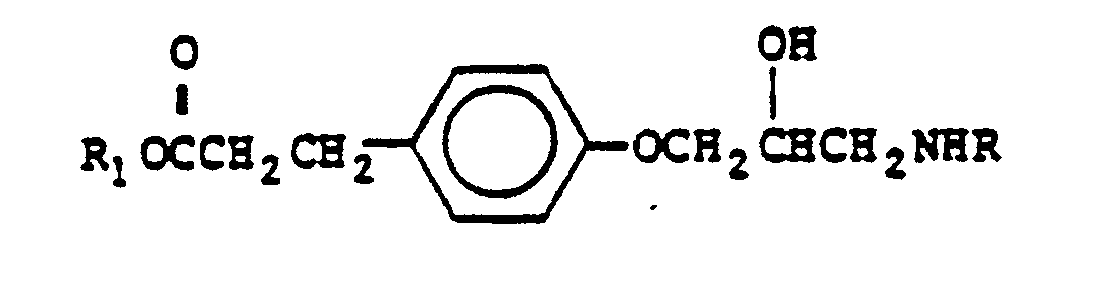
wherein R₁ is ethyl or methyl and R is alkyl having from 1 to 6 carbon atoms or a pharmaceutically acceptable salt thereof;
the aqueous solution further comprising sodium acetate buffer in a molar ratio of about 3 parts β-adrenergic compound to 1 part acetate buffer and from 10 to 90% by volume of a stabilizing component comprising about 1 part ethanol and about 1 part propylene glycol, the aqueous solution having a pH from 4.6 to 5.4. - A pharmaceutical composition for parenteral administration, comprising in an aqueous solution: from 1 to 30% by weight of a β-adrenergic compound having the formula

wherein R₁ is ethyl or methyl; W is alkylene containing from 1 to 10 carbon atoms; and B is -NR₂-COR₃, -NR₂CONR₃R₄, -NR₂SO₂R₃, -NR₂SO₂NR₃R₄, NR₂COOR₅ or -NHR₆, wherein R₂, R₃, R₄ and R₅ may each be hydrogen, alkyl, alkoxyalkyl, alkoxyaryl, cycloalkyl, alkenyl, alkynyl, aryl, heteroaryl, or aralkyl, except that R₃ and R₅ are not hydrogen when B is -NR₂SO₂R₃ or -NR₂COOR₅, or R₃ and R₄ may together with N form a 5- to 7-membered heterocyclic group, and R₆ is unsubstituted or substituted pyridinyl, phenyl, naphthyl or indoyl or a pharmaceutically acceptable salt of said compound,
the aqueous solution further comprising sodium acetate buffer in a molar ratio of about 3 parts β-adrenergic compound to 1 part acetate buffer and from 10 to 90% by volume of a stabilizing component comprising about 1 part ethanol and about 1 part propylene glycol, the aqueous solution having a pH from 4.6 to 5.4; and
a pharmaceutical composition for parenteral administration comprising in an aqueous solution: from 1 to 30% by weight of a β-adrenergic compound having the formula:
or a pharmaceutically acceptable salt of said compound, the aqueous solution further comprising sodium acetate buffer in a molar ratio of about 3 parts β-adrenergic compound to 1 part acetate buffer, and from 10 to 90% by volume of a stabilizing component comprising about 1 part ethanol and about 1 part propylene glycol, the aqueous solution having a pH from 4.6 to 5.4. -
- Figure 1:
- A graphic depiction of the effect of various pH levels on the potency of methyl 3-(p-phenooxypropanolamine) propionate over time.
- Figure 2:
- A graphic depiction of rate of degradation of methyl 3-(p-phenoxypropanolamine) propionate at 55°-C and at various pH levels.
- In accordance with the present invention, it has been discovered that a stable pharmaceutical composition possessing a relatively long shelf life can be prepared using short-acting, ester-containing β-blockers of the formula:

where R1 is an alkyl having from 1 to 6 carbon atoms such as methyl, ethyl, propyl, t-butyl and isopentyl; cycloalkyl of from 3 to 5 carbon atoms such as cyclopropyl, cyclopentyl and methyl cyclopropyl; alkenyl of from 2 to 5 carbon atoms such as ethenyl, propenyl and 2-methyl-2-butenyl; alkynyl of from 3 to 5 carbon atoms such as ethynyl, propynyl and 3-methyl-1-butynyl; alkyl carboxymethyl where the alkyl is from 1 to 5 carbon atoms such as methyl carboxymethyl, ethyl carboxymethyl and propyl carboxymethyl; aryl carboxymethyl in which the aryl portion contains from 6 to 10 carbon atoms such as phenyl caroxymetyl and naphthyl carboxymethyl; aryl of from 6 to 10 carbon atoms such as phenyl, 2-tolyl, 2-methoxyphenyl and naphthyl; or aralkyl in which the alkyl portion contains from 1 to 6 carbon atoms and the aryl portion represents a substituted or unsubstituted monocyclic or polycyclic aromatic ring system of from 6 to 10 carbon atoms such as benzyl, phenethyl, 1-naphthylpropyl, 3,4-dimethoxyphenethyl and naphthylethyl; and W is alkylene containing from 1 to 10 carbon atoms; and B is -NR₂COR₃, -NR₂CONR₃R₄, -NR₂SO₂R₃, -NR₂SO₂NR₃R₄, NR₂COOR₅ or -NHR₆, wherein R₂ R₃, R₄ and R₅ may each be hydrogen, alkyl, alkoxyalkyl, alkoxyaryl, cycloalkyl, alkenyl, alkynyl, aryl, heteroaryl, or aralkyl, except that R₃ and R₅ are not hydrogen when B is NR₂SO₂R₃ or -NR₂COOR₅, or R₃ and R₄ may together with N for a 5- to 7-membered heterocyclic group, and R₆ is unsubstituted or substituted pyridinyl, phenyl, naphthyl, or indoyl. - A may be an alkylene from 1 to 5 carbon atoms such as methylene, ethylne and propylene; or alkenylene of from 2 to 5 carbon atoms such as ethenylene, propenylene and isobutylenylene.
- X is independently amino, hydrogen, halogen, hydroxy, alkoxy such as methoxy and ethoxy, aryloxy such as phenyloxy, aralkyl such as phenylmethyl and p-methylbenzylmethyl, cyano, amido, or trifluoromethyl, and n is an integer from 1 to 4.
- R may be an alkyl having from 1 to 5 carbon atoms such as methyl, ethyl, propyl, t-butyl and isopentyl; propargyl; dimethylpropargyl; or hydroxyalkyl having from 1 to 6 carbon atoms such as hydroxymethyl, hydroxyethyl and 2-hydroxypentyl.
- In preferred compounds, R₁ is ethyl or methyl, A is ethylene, X is hydrogen, the

group is in the para position with respect to the side chain containing the -R group, and/or -R is represented by -W-B where -W- is an alkylene containing from 1 to about 10 carbon atoms, and -B is -NR₂COR₃, -NR₂CONR₃R₄, -NR₂SO₂R₃, -NR₂SO₂NR₃R₄, -NR₂COOR₅ or -NHR₆, where R₂, R₃, R₄ and R₅ may each be hydrogen, alkyl, alkoxyalkyl, alkoxyaryl, cycloalkyl, alkenyl, alkynyl, aryl, heteroaryl or aralkyl, except that R₃ and R₅ are not hydrogen when B is -NR₂SO₂R₃ or -NR₂COOR₅, or R₃ and R₄ may together with N form a 5-to 7-membered heterocyclic group, and R₆ is unsubstituted or substituted pyridinyl, phenyl, naphthyl or indoyl. - The above-described β-blocking compounds may be separated into optically active enantiomers using conventional methods. While both configurations are active β-blockers, the l-isomers have been found to be more active than their dextrorotary counterparts.
- In one embodiment of the present invention, the composition contains a pharmaceutically acceptable acid addition salt of an above described β-blocking compound, e.g., a hydrochloride, sulfate, phosphate, gluconate, tartrate, salt.
- The composition of the present invention consists of a hydroalcoholic solution containing an above described β-blocking compound (or its pharmaceutically acceptable salt) at a concentration of from 0.1 to 30% by weight. Concentrations of less than 0.1% (weight) of the β-blocking compounds in solutions generally do not provide effective β-blocking activity at practical infusion rates, while there is generally no added benefit to having concentrations greater than 30% (weight) of the β-blocker in solution. In particularly preferred compositions, the concentration of β-blocking compound in solution is from 1 to 30% by weight.
- One component of the hydroalcoholic solution is ethanol, at a concentration of from 5 to 60% by volume. Ethanol has been found to be important in the stabilization of the β-blocking compound according to the present invention.
- The hydroalcoholic solution also contains a physiologically acceptable liquid polyhydric compound, at a concentration of from 5 to 60% by volume. Physiologically acceptable liquid polyhydric compounds include alkyls of from 1 to 10 carbon atoms having two or more adjacent hydroxyl groups such as ethylene glycol, propylene glycol and glycerin (glycerol) polyethyleneglycols having a molecular weight of from about 200 to about 600 daltons, include alkyls of from 1 to 10 carbon atoms having two or more adjacent hydroxyl groups, and polyethyleneglycols having a molecular weight of from 200 to 600 daltons. Glycerin is less preferred, because solutions containing it have been observed to discolor on storage at 55°C. A particularly preferred liquid polyhydric compound is propylene glycol. Liquid polyhydric compounds, in conjunction with ethanol are useful stabilizing components of the β-blocking compounds in the hydroalcoholic solution according to the present invention. In particularly preferred compositions, the volume ratio of ethanol to the liquid polyhydric compound is 1:1.
- Stability of the β-blocking compound in solution is affected by the pH of the solution. The pH of the hydroalcoholic solution ranges from 4.0 to 6.0. When the pH of the solution is less than 4.0 or greater than 6.0, degradation of the β-blocking compound was observed. In particularly preferred compositions, the pH ranges from 4.6 to 5.4, and in most preferred compositions, the pH ranges from 4.9 to 5.1. The pH is maintained by a physiologically acceptable buffering agent at a concentration of from 0.05 to 2 molar. Preferred buffering agents include acetate buffers, such as sodium acetate and acetic acid; trishydroxymethylaminomethane; sodium phosphate (mono and dibasic); phosphoric acid; sodium citrate; citric acid; and amphoteric compounds such as glycine and cystine. Acetate buffers are particularly preferred. The molar ratio of the β-blocking compound to buffering agent advantageously is 3:1.
- The β-blocking compounds used in the pharmaceutical compositions of the present invention are surprisingly rendered quite stable by the hydroalcoholic solution of the present invention. Typical compositions exhibit shelf lives from 20 to 36 months, compared to 2 to 3 months for the same compounds in conventional preparations. These compositions thus facilitate commercial distribution and storage of the above described short-acting ester-containing β-blockers.
- The pharmaceutical compositions of the present invention are preferably added to a physiologically acceptable infusion medium to a final concentration of β-adrenergic compound of from about 50 µg/ml/min to about 600 µg/ml/min percent by weight, and thereby parenterally administered to the patient.
- The dosages and rates of administration of these compositions generally depend upon the patient's needs and the particular β -blocking compound employed. These dosages and rates of administration are described in the above-mentioned U.S. Patent No. 4,387,103.
- The invention is further illustrated by the following examples.
- The kinetics of degradation of methyl-3-(p-Phenoxypropanolamine) propionate (sometimes referred to as "the drug") in five aqueous buffers at 55C was studied. All buffer solutions were prepared in Water for Injection, USP (deionized and distilled water). Five buffer solutions, pH 2.16, 3.05, 4.08, 5.63 and 7.44 were prepared by combining various amounts of 0.1M citric acid and 0.2M disodium hydrogen phosphate solutions (Table I).
- In each case an appropriate amount of methyl-3-(p-phenoxypropanolamine) propionate to give a final concentration of 100 mg/ml was accurately weighed and transferred to a calibrated flask. The buffer solution was then added to the flask and the contents stirred until the drug had completely dissolved. The pH of each solution was determined, this data is given in Table I. Each buffered drug solution was filled into 5 ml flint ampuls. The ampuls were partially filled into 3 ml of solution and then sealed. Sufficient ampuls were prepared so that there was at least one for each stability time. Samples of all five solutions were placed in a 55°C oven. At each stability time one ampul of each solultion was removed. The pH, potency and the physical appearance of the solutions was determined. The concentration of the drug was determined by a high performance liquid chromatographic (HPLC) method. The physical appearance of the solutions remained unchanged at all stability times.
- The kinetic data obtained was plotted as a log of drug concentration versus time. The apparent first-order rate constants were calculated from the slopes of the linear regression lines fitted to log (C) = log (Co) - 2.303 kt where C is drug concentration at time t, Co is the initial drug concentration and k is the apparent first-order rate constant. This method was also used for Examples II through V.
- The kinetics of degradation of the drug at 55°C and at various pH values was followed by monitoring the potency of the drug at different stability times. The logarithm of the potency versus time in all cases produced linear plots. These data are shown in Figure 1. The apparent first-order rate constants were calculated from the slopes of the linear regression lines and are presented in Table II. The maximum change in the pH, which in all cases occurred when the sample for the last data point was obtained, is also given in Table II.
- The pH rate profile at 55°C for the drug is presented in Figure 2. The line joining the data points is only drawn to show the trend and does not represent actual data. The degradation rate increases both at low and high pH values in the range studied (pH 2.05 - 7.14). This may be due to acid or base catalysed hydrolysis at the two extremes. The lowest rate observed in this study at pH 5.37 is almost 64 times slower than the highest observed at pH 2.05.


- Stability of the drug in 10% (V/V) alcohol in buffer, 30% (V/V) alcohol in buffer and ethanol, USP is given in Table III. It can be seen from the data in Table III, that incorporation of 10% ethanol in the buffer increases the stability of the drug. The stabilizing effect is quite dramatic when ethanol content is increased to 30% V/V, in this case the degradation rate is almost one third of the rate in buffered solution without ethanol. When the drug was formulated in just ethanol, USP, the stability was marginally worse than 30% ethanol in buffer vehicle. This suggests that the stabilization effect is maximized at certain ethanol concentrations in the vehicle and beyond that no benefit is to be gained by adding more ethanol in the formulation. In addition, in the all ethanol formulation the HPLC tracing revealed evidence of transesterification of the drug to an ethyl ester.

- Stability of the drug was investigated in vehicles containing varying amounts of citrate-phosphate buffer and propylene glycol (PG) (Table IV). The proportion of PG in these mixtures varied from 10% to 70%. Increasing the PG concentration increases the stability of the drug. Within the range studied there is a linear relationship between stability of the drug and PG content in the vehicle.
- Table IV also presents stability of the drug in a vehicle containing 50% (V/V) PG in water. When this is compared to the drug stability in a vehicle containing 50% V/V PG in citrate-phosphate buffer, it can be seen that the half-life in the buffered formulation is almost twice as long.
- The data presented in this section shows that PG has a significant stabilizing effect on the drug.

- Table V presents stability data of the drug in 50% (V/V) PEG 200 in buffer, id 50% (V/V) Propylene Glycol in buffer. The greatest stability observed was in the case of the formulation containing propylene glycol (PG).

- The stability of the drug was studied first in two systems, the first vehicle consisted of 70% (V/V) PG and 30% (V/V) ethanol whereas the second was 50:50 mixture of the two. The results are given in Table VI. It can be seen that the stability of the drug in the 50:50 mixture was greater.

- Stability of the drug (100 mg/ml) was tested in vehicles containing 0.1 M sodium acetate buffer, 10% Ethanol, and 10% Propylene glycol under various storage conditions for different time periods.
- Stability results are given in Tables VII and VIII. The data indicates that the rate of degradation is temperature dependent. No change in physical appearance was observed during the experiment.


- Stability of the drug (100 mg/ml) was tested in vehicles containing 0.1 M sodium acetate buffer, 10% Ethanol and 10% Propylene glycol under various storage conditions for different time periods.
- Stability results are given in Tables IX and X. The data indicates that the rate of degradation is temperature dependent. No change in physical appearance was observed during the experiment.


-

- An amount of the above compound sufficient to give a final concentration of 100 mg/ml is dissolved in a vehicle containing acetate buffer, ethanol and propylene glycol such that the molar ratio of the compound to the acetate buffer is 3:1, the volume ratio of the ethanol to the propylene glycol is 1:1, and the pH is 5.0. The solution is filled into 5 ml flint ampuls (3 ml solution per ampul). The ampuls are sealed and placed in a 40°C oven for 6 months. The compound is stable in this composition.
-

- An amount of the above compound sufficient to give a final concentration of 100 mg/ml is dissolved in a vehicle containing acetate buffer, ethanol and propylene glycol such that the molar ratio of the substance to the acetate buffer is 3:1, the volume ratio of the ethanol to the propylene glycol is 1:1, and the pH is 5.0. The solution is filled into 5 ml flint glass ampuls (3 ml per ampul). The ampuls are sealed and placed in a 40°C oven for 6 months. The compound is stable in this composition.
Claims (21)
- A pharmaceutical composition for parenteral administration, comprising: in a hydroalcoholic solution from 0.1 to 30% by weight of a β-adrenergic blocking compound having the formula

the hydroalcoholic solution further comprising from 0.05 to 2 molar physiologically acceptable buffering agent; and from 5 to 60% by volume ethanol; from 5 to 60% by volume of a physiologically acceptable liquid polyhydric compound, said hydroalcoholic solution having a pH of from 4.0 to 6.0. - The composition of claim 1 wherein said buffering agent is an acetate buffer, phosphate buffer, citrate buffer, trishydroxymethylaminomethane, or an amphoteric compound.
- The composition of claim 1 or 2 where R₁ is an alkyl having from 1 to 5 carbon atoms and A is ethylene or methylene and the volume ratio of ethanol to the liquid polyhydric compound is 1:1.
- A pharmaceutical composition for parenteral administration, comprising in a hydroalcoholic solution from 0.1 to 30% by weight of a β-adrenergic blocking compound having the formula

the hydroalcoholic solution further comprising from 0.05 to 2 molar physiologically acceptable buffering agent; from 5 to 50% by volume ethanol; and from 5 to 70% by volume of a physiologically acceptable liquid polyhydric compound; said hydroalcoholic solution having a pH of from 4.0 to 6.0. - The composition of claim 4 wherein the β-adrenergic blocking compound has the formula

- The composition of claim 4 or 5 wherein said buffering agent is acetate, trishydroxymethylaminomethane, or an amphoteric compound.
- The composition of any preceding claim wherein said liquid polyhydric compound is an alkyl from 1 to 10 carbon atoms having two or more adjacent hydroxyl groups, or a polyethyleneglycol having a molecular weight of from 200 to 600 daltons.
- The composition of claim 7 wherein the amount of β-adrenergic compound is from 1 to 30%.
- The composition of claim 7 or 8 wherein the volume ration of ethanol to the liquid polyhydric compound is about 1:1.
- The composition of any of claims 8 or 9 wherein the molar ratio of the β-adrenergic compound to buffering agent is about 3:1.
- The composition of any of claim 8 to 10 wherein the pH is from 4.6 to 5.4.
- The composition of any of claims 7 to 11 wherein the buffering agent is acetate.
- The composition of any of claims 6 to 12 wherein the polyhydric compound is propylene glycol, glycerol, or a polyethylene glycol having a molecular weight from 200 to 600 daltons.
- The composition of any of claims 7 to 13 wherein the polyhydric compound is propylene glycol.
- The composition of claim 13 or 14 wherein the buffering agent is acetate and the pH is from 4.6 to 5.4.
- The composition of any preceding claim wherein the amount of β-adrenergic compound is from 10 to 30% by weight; the buffering agent is acetate and is present in a molar ratio of 3 parts β-adrenergic compound to 1 part acetate buffer; the liquid polyhydric compound is propylene glycol; and the pH is from 4.9 to 5.1.
- A pharmaceutical composition for parenteral administration comprising in an aqueous solution: from 10 to 25% by weight of a β-adrenergic compound having the formula
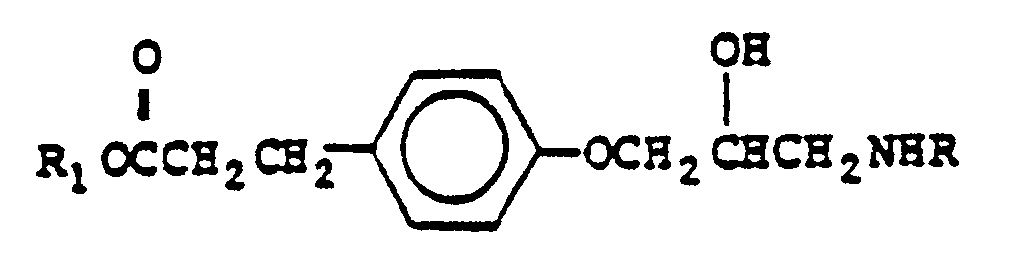
the aqueous solution further comprising sodium acetate buffer in a molar ratio of about 3 parts -adrenergic compound to 1 part acptate buffer and from 10 to 90% by volume of a stabilizing component comprising about 1 part ethanol about and 1 part propylene glycol, the aqueous solution having a pH from 4.6 to 5.4. - A pharmaceutical composition for parenteral administration, comprising in an aqueous solution: from 1 to 30% by weight of a β-adrenergic compound having the formula

the aqueous solution further comprising sodium acetate buffer in a molar ratio of about 3 parts β-adrenergic compound to 1 part acetate buffer and from 10 to 90% by volume of a stabilizing component comprising about 1 part ethanol and about 1 part propylene glycol, the aqueous solution having a pH from 4.6 to 5.4. - A pharmaceutical composition for parenteral administration comprising in an aqueous solution from 1 to 30% by weight of a β-adrenergic compound having the formula:

- The composition of any preceding claims,
wherein said β-adrenergic blocking compound is an 1-isomer. - A composition according to any preceding claim, being for treatment or prophylaxis of cardiac disorder.
Applications Claiming Priority (2)
| Application Number | Priority Date | Filing Date | Title |
|---|---|---|---|
| US59806184A | 1984-04-09 | 1984-04-09 | |
| US598061 | 1984-04-09 |
Publications (3)
| Publication Number | Publication Date |
|---|---|
| EP0179808A1 EP0179808A1 (en) | 1986-05-07 |
| EP0179808A4 EP0179808A4 (en) | 1987-10-27 |
| EP0179808B1 true EP0179808B1 (en) | 1991-10-30 |
Family
ID=24394068
Family Applications (1)
| Application Number | Title | Priority Date | Filing Date |
|---|---|---|---|
| EP85901817A Expired - Lifetime EP0179808B1 (en) | 1984-04-09 | 1985-03-25 | Pharmaceutical composition suitable for treatment or prophylaxis of cardiac disorders |
Country Status (9)
| Country | Link |
|---|---|
| US (1) | US5017609A (en) |
| EP (1) | EP0179808B1 (en) |
| JP (1) | JPH0720861B2 (en) |
| AU (1) | AU575153B2 (en) |
| CA (1) | CA1242395A (en) |
| DE (1) | DE3584560D1 (en) |
| IT (1) | IT1184271B (en) |
| WO (1) | WO1985004580A1 (en) |
| ZA (1) | ZA852316B (en) |
Families Citing this family (20)
| Publication number | Priority date | Publication date | Assignee | Title |
|---|---|---|---|---|
| US4857552A (en) * | 1988-06-08 | 1989-08-15 | E. I. Du Pont De Nemours And Co. | Stable pharmaceutical composition |
| GR1000509B (en) * | 1988-06-08 | 1992-07-30 | Du Pont | A method of making a stable injectable aqueous composition of methyl3-[4-(2-hydroxy-3-isopropylamino) propoxy] phenylproprionate hydrochloride |
| TWI277414B (en) * | 2001-01-12 | 2007-04-01 | Baxter Int | Esmolol formulation |
| US6310094B1 (en) * | 2001-01-12 | 2001-10-30 | Baxter International Inc. | Ready-to-use esmolol solution |
| AU2002337692B2 (en) * | 2001-09-26 | 2007-09-13 | Baxter International Inc. | Preparation of submicron sized nanoparticles via dispersion and solvent or liquid phase removal |
| US7112340B2 (en) * | 2001-10-19 | 2006-09-26 | Baxter International Inc. | Compositions of and method for preparing stable particles in a frozen aqueous matrix |
| UA89781C2 (en) * | 2004-04-07 | 2010-03-10 | Арес Трейдінг С.А. | Liquid growth hormone formulation |
| PT1773307E (en) * | 2004-07-30 | 2015-01-14 | Novartis Ag | Compound formulations of 2-amino-1,3-propanediol compounds |
| MX2007015183A (en) * | 2005-06-14 | 2008-02-19 | Baxter Int | Pharmaceutical formulations for minimizing drug-drug interactions. |
| WO2007059515A2 (en) * | 2005-11-15 | 2007-05-24 | Baxter International, Inc. | Compositions of lipoxygenase inhibitors |
| US20090152176A1 (en) * | 2006-12-23 | 2009-06-18 | Baxter International Inc. | Magnetic separation of fine particles from compositions |
| US8426467B2 (en) * | 2007-05-22 | 2013-04-23 | Baxter International Inc. | Colored esmolol concentrate |
| US20080293814A1 (en) | 2007-05-22 | 2008-11-27 | Deepak Tiwari | Concentrate esmolol |
| US8722736B2 (en) * | 2007-05-22 | 2014-05-13 | Baxter International Inc. | Multi-dose concentrate esmolol with benzyl alcohol |
| AU2014203121B2 (en) * | 2007-05-22 | 2016-04-21 | Baxter Healthcare Sa | Concentrate esmolol |
| PL2234614T3 (en) | 2007-12-21 | 2013-03-29 | Aop Orphan Pharmaceuticals Ag | Pharmaceutical composition for parenteral administration of an ultrashort acting beta-adrenoreceptor antagonist |
| CA2775317C (en) | 2009-09-22 | 2014-10-28 | Vlife Sciences Technologies Pvt. Ltd. | Topical formulation for diabetic foot ulcers |
| CN103347513A (en) | 2011-01-27 | 2013-10-09 | 巴克斯特国际公司 | Use of (s) - esmolol for controlling venous irritation associated with the treatment of a cardiac disorder |
| AU2012211318C1 (en) | 2011-01-27 | 2016-08-04 | Baxter Healthcare S.A. | Methods of treating tachycardia and/or controlling heart rate while minimizing and/or controlling hypotension |
| CN104473869A (en) * | 2014-11-20 | 2015-04-01 | 北京京科泰来科技有限公司 | Esmolol fat emulsion and preparation method thereof |
Family Cites Families (9)
| Publication number | Priority date | Publication date | Assignee | Title |
|---|---|---|---|---|
| US3637852A (en) * | 1963-08-26 | 1972-01-25 | Boehringer Sohn Ingelheim | 1-phenoxy-2-hydroxy-3-isopropylamino-propanes and salts thereof |
| DE1643262C3 (en) * | 1967-12-13 | 1975-06-26 | C.H. Boehringer Sohn, 6507 Ingelheim | i-Phenoxy ^ -hydroxy-S-alklyaminopropane, process for their preparation and medicaments containing these compounds |
| US4191765A (en) * | 1976-05-25 | 1980-03-04 | Hoechst Aktiengesellschaft | 1-Aryloxy-2-hydroxy-3-aminopropanes |
| US4146630A (en) * | 1976-11-12 | 1979-03-27 | Boehringer Mannheim Gmbh | Blood pressure lowering and adrenergic β-receptor inhibiting 3-(4-phenoxymethylpiperidino)-propyl-phenyl ethers |
| DE2905877A1 (en) * | 1979-02-16 | 1980-08-28 | Boehringer Mannheim Gmbh | NEW AMINOPROPANOL DERIVATIVES, METHOD FOR THE PRODUCTION THEREOF AND MEDICINAL PRODUCTS CONTAINING THESE COMPOUNDS |
| DE3015991A1 (en) * | 1980-04-25 | 1981-11-05 | C.H. Boehringer Sohn, 6507 Ingelheim | NEW 1-ARYLOXY-3-ALKYLAMINO-2-PROPANOLS AND METHOD FOR THE PRODUCTION THEREOF |
| SE8004087L (en) * | 1980-06-02 | 1981-12-03 | Haessle Ab | NEW PARA-SUBSTITUTED 3-PHENOXY-1-ALKYLAMINOPROPANOL-2 WITH BETARETTY RECEPTOR BLOCKING PROPERTIES, AND PROCEDURES FOR THEIR PREPARATION, PHARMACEUTICAL PREPARATIONS CONTAINING THE SAME, AND METHOD OF ACCOUNTING ... |
| US4387103A (en) * | 1980-11-28 | 1983-06-07 | American Hospital Supply Corporation | Method for treatment or prophylaxis of cardiac disorders |
| US4829086A (en) * | 1984-03-14 | 1989-05-09 | Bodor Nicholas S | Soft β-adrenergic blocking agents |
-
1985
- 1985-03-25 WO PCT/US1985/000492 patent/WO1985004580A1/en not_active Ceased
- 1985-03-25 EP EP85901817A patent/EP0179808B1/en not_active Expired - Lifetime
- 1985-03-25 DE DE8585901817T patent/DE3584560D1/en not_active Expired - Lifetime
- 1985-03-25 AU AU41507/85A patent/AU575153B2/en not_active Ceased
- 1985-03-25 JP JP60501518A patent/JPH0720861B2/en not_active Expired - Fee Related
- 1985-03-27 ZA ZA852316A patent/ZA852316B/en unknown
- 1985-03-29 CA CA000477920A patent/CA1242395A/en not_active Expired
- 1985-04-05 IT IT47927/85A patent/IT1184271B/en active
-
1989
- 1989-11-16 US US07/437,293 patent/US5017609A/en not_active Expired - Lifetime
Non-Patent Citations (2)
| Title |
|---|
| Garrera et al, 'Influencia Dela Constante Dielectrica Sobre La Velocidad de Reaccion:I) Hidrolisis de los Acetatos de Etilo y N-Propilo en Modios Etilenglicol-Agua', Rev. Latinoamer, Quim., Volume 5 (1974) pages 201-205 * |
| Garrera et al. 'The Dielectric Constand Influence on the Reaction Rate - Part II) Alkyl Hydrolysis of N-Butyl and N-amyl Acetate in Ethylene-Glycol Water Mixtures', Rev. Latinoamer. Quim. Volume 7. (1976), pages 4-8 * |
Also Published As
| Publication number | Publication date |
|---|---|
| EP0179808A4 (en) | 1987-10-27 |
| ZA852316B (en) | 1985-11-27 |
| AU4150785A (en) | 1985-11-01 |
| WO1985004580A1 (en) | 1985-10-24 |
| JPS61501775A (en) | 1986-08-21 |
| CA1242395A (en) | 1988-09-27 |
| DE3584560D1 (en) | 1991-12-05 |
| US5017609A (en) | 1991-05-21 |
| EP0179808A1 (en) | 1986-05-07 |
| AU575153B2 (en) | 1988-07-21 |
| IT1184271B (en) | 1987-10-22 |
| IT8547927A0 (en) | 1985-04-05 |
| JPH0720861B2 (en) | 1995-03-08 |
Similar Documents
| Publication | Publication Date | Title |
|---|---|---|
| US5017609A (en) | Pharmaceutical composition and method of treatment or prophylaxis of cardiac disorders | |
| US4358603A (en) | Acetal stabilized prostaglandin compositions | |
| US4746675A (en) | External pharmaceutical composition | |
| EP0572014B1 (en) | Hair-growing composition containing prostaglandin I 2 derivatives | |
| EP0188821B1 (en) | Stabilized spergualin-containing pharmaceutical compositions having cancer controlling and immunomodulating activity | |
| EP0403578A1 (en) | STABLE PHARMACEUTICAL COMPOSITION. | |
| EP0179807B1 (en) | Stable pharmaceutical compositions of short-acting beta-adrenergic receptor blocking agents | |
| US3230143A (en) | Antihypertensive injection methods using acid addition salts of alkyl esters of alpha-methyl-3, 4-dihy-droxyphenylalanine | |
| IE50016B1 (en) | Oxytetracycline compositions | |
| US5276044A (en) | Leukotriene receptor antagonist and antihistamine complex pharmaceutical compositions | |
| US3755604A (en) | Sebum inhibitors | |
| KR910018348A (en) | Sulfonylamino substituted bicyclo cyclic hydroxamic acid derivative | |
| US5561154A (en) | Treatment of acute urinary retention | |
| US4389414A (en) | Prostaglandin compositions | |
| US4032645A (en) | Injectable metronidazole composition | |
| US4344950A (en) | Parenteral solvent and a process for the preparation of stable solutions containing same | |
| US5879711A (en) | Stable antiandrogenic gel composition | |
| US4882356A (en) | Stable injectable antiemetic compositions | |
| JPH0236123A (en) | Long-acting morphine rectal preparation | |
| JPS632926A (en) | Stable injectable antiemetic composition | |
| AU597955B2 (en) | Stable injectable antiemetic compositions | |
| Barton et al. | Flestolol: An Ultra‐short‐Acting Beta‐Adrenergic Blocking Agent | |
| JPWO2000053184A1 (en) | Transdermal pharmaceutical composition |
Legal Events
| Date | Code | Title | Description |
|---|---|---|---|
| PUAI | Public reference made under article 153(3) epc to a published international application that has entered the european phase |
Free format text: ORIGINAL CODE: 0009012 |
|
| 17P | Request for examination filed |
Effective date: 19860221 |
|
| AK | Designated contracting states |
Kind code of ref document: A1 Designated state(s): CH DE FR GB LI SE |
|
| A4 | Supplementary search report drawn up and despatched |
Effective date: 19871027 |
|
| RAP1 | Party data changed (applicant data changed or rights of an application transferred) |
Owner name: E.I. DU PONT DE NEMOURS AND COMPANY |
|
| 17Q | First examination report despatched |
Effective date: 19890413 |
|
| GRAA | (expected) grant |
Free format text: ORIGINAL CODE: 0009210 |
|
| AK | Designated contracting states |
Kind code of ref document: B1 Designated state(s): CH DE FR GB LI SE |
|
| REF | Corresponds to: |
Ref document number: 3584560 Country of ref document: DE Date of ref document: 19911205 |
|
| ET | Fr: translation filed | ||
| RAP2 | Party data changed (patent owner data changed or rights of a patent transferred) |
Owner name: THE DU PONT MERCK PHARMACEUTICAL COMPANY |
|
| REG | Reference to a national code |
Ref country code: CH Ref legal event code: PFA Free format text: THE DU PONT MERCK PHARMACEUTICAL COMPANY |
|
| PLBE | No opposition filed within time limit |
Free format text: ORIGINAL CODE: 0009261 |
|
| STAA | Information on the status of an ep patent application or granted ep patent |
Free format text: STATUS: NO OPPOSITION FILED WITHIN TIME LIMIT |
|
| 26N | No opposition filed | ||
| REG | Reference to a national code |
Ref country code: FR Ref legal event code: TP |
|
| REG | Reference to a national code |
Ref country code: CH Ref legal event code: PUE Owner name: OHMEDA (FORMERLY KNOWN AS BOC HEALTH CARE) |
|
| EAL | Se: european patent in force in sweden |
Ref document number: 85901817.8 |
|
| REG | Reference to a national code |
Ref country code: CH Ref legal event code: PUE Owner name: BECTON DICKINSON INFUSION THERAPY UK TRANSFER- BAX Ref country code: CH Ref legal event code: PFA Free format text: OHMEDA (FORMERLY KNOWN AS BOC HEALTH CARE) TRANSFER- BECTON DICKINSON INFUSION THERAPY UK Ref country code: CH Ref legal event code: NV Representative=s name: ISLER & PEDRAZZINI AG |
|
| REG | Reference to a national code |
Ref country code: GB Ref legal event code: IF02 |
|
| PGFP | Annual fee paid to national office [announced via postgrant information from national office to epo] |
Ref country code: GB Payment date: 20040317 Year of fee payment: 20 |
|
| PGFP | Annual fee paid to national office [announced via postgrant information from national office to epo] |
Ref country code: FR Payment date: 20040318 Year of fee payment: 20 |
|
| PGFP | Annual fee paid to national office [announced via postgrant information from national office to epo] |
Ref country code: SE Payment date: 20040319 Year of fee payment: 20 |
|
| PGFP | Annual fee paid to national office [announced via postgrant information from national office to epo] |
Ref country code: CH Payment date: 20040322 Year of fee payment: 20 |
|
| PGFP | Annual fee paid to national office [announced via postgrant information from national office to epo] |
Ref country code: DE Payment date: 20040430 Year of fee payment: 20 |
|
| PG25 | Lapsed in a contracting state [announced via postgrant information from national office to epo] |
Ref country code: LI Free format text: LAPSE BECAUSE OF EXPIRATION OF PROTECTION Effective date: 20050324 Ref country code: GB Free format text: LAPSE BECAUSE OF EXPIRATION OF PROTECTION Effective date: 20050324 Ref country code: CH Free format text: LAPSE BECAUSE OF EXPIRATION OF PROTECTION Effective date: 20050324 |
|
| REG | Reference to a national code |
Ref country code: GB Ref legal event code: PE20 |
|
| REG | Reference to a national code |
Ref country code: CH Ref legal event code: PL |
|
| EUG | Se: european patent has lapsed |