EP0174136B1 - Derivatives of dihydro-1h-pyrrolo(1,2-c)imidazol-3,5-dione as cognition activators - Google Patents
Derivatives of dihydro-1h-pyrrolo(1,2-c)imidazol-3,5-dione as cognition activators Download PDFInfo
- Publication number
- EP0174136B1 EP0174136B1 EP85305959A EP85305959A EP0174136B1 EP 0174136 B1 EP0174136 B1 EP 0174136B1 EP 85305959 A EP85305959 A EP 85305959A EP 85305959 A EP85305959 A EP 85305959A EP 0174136 B1 EP0174136 B1 EP 0174136B1
- Authority
- EP
- European Patent Office
- Prior art keywords
- pyrrolo
- dioxo
- imidazole
- tetrahydro
- carbon atoms
- Prior art date
- Legal status (The legal status is an assumption and is not a legal conclusion. Google has not performed a legal analysis and makes no representation as to the accuracy of the status listed.)
- Expired
Links
- 230000019771 cognition Effects 0.000 title description 3
- 239000012190 activator Substances 0.000 title description 2
- 150000001875 compounds Chemical class 0.000 claims abstract description 51
- 208000000044 Amnesia Diseases 0.000 claims abstract description 11
- 208000031091 Amnestic disease Diseases 0.000 claims abstract description 11
- 230000006986 amnesia Effects 0.000 claims abstract description 11
- 230000000694 effects Effects 0.000 claims abstract description 10
- 230000035939 shock Effects 0.000 claims abstract description 8
- 239000008194 pharmaceutical composition Substances 0.000 claims abstract description 7
- 238000000034 method Methods 0.000 claims abstract description 5
- 125000004432 carbon atom Chemical group C* 0.000 claims description 32
- 150000003839 salts Chemical class 0.000 claims description 24
- 125000000217 alkyl group Chemical group 0.000 claims description 17
- -1 phenylmethoxy Chemical group 0.000 claims description 17
- 239000002253 acid Substances 0.000 claims description 15
- UZHDJDDRWIZMHX-UHFFFAOYSA-N 2-(3,5-dioxo-1,6,7,7a-tetrahydropyrrolo[1,2-c]imidazol-2-yl)acetamide Chemical compound C1CC(=O)N2C(=O)N(CC(=O)N)CC21 UZHDJDDRWIZMHX-UHFFFAOYSA-N 0.000 claims description 11
- 239000001257 hydrogen Substances 0.000 claims description 11
- 229910052739 hydrogen Inorganic materials 0.000 claims description 11
- ZEWCNTTXFVLCDD-UHFFFAOYSA-N 2-(3,5-dioxo-1,6,7,7a-tetrahydropyrrolo[1,2-c]imidazol-2-yl)acetic acid Chemical compound C1CC(=O)N2C(=O)N(CC(=O)O)CC21 ZEWCNTTXFVLCDD-UHFFFAOYSA-N 0.000 claims description 8
- 125000004435 hydrogen atom Chemical group [H]* 0.000 claims description 8
- 125000003342 alkenyl group Chemical group 0.000 claims description 7
- 125000003545 alkoxy group Chemical group 0.000 claims description 7
- 238000006243 chemical reaction Methods 0.000 claims description 7
- DLFVBJFMPXGRIB-UHFFFAOYSA-N Acetamide Chemical compound CC(N)=O DLFVBJFMPXGRIB-UHFFFAOYSA-N 0.000 claims description 6
- 150000001412 amines Chemical class 0.000 claims description 6
- 125000001797 benzyl group Chemical group [H]C1=C([H])C([H])=C(C([H])=C1[H])C([H])([H])* 0.000 claims description 6
- MSQSZRBUUKCPEK-UHFFFAOYSA-N ethyl 2-(3,5-dioxo-1,6,7,7a-tetrahydropyrrolo[1,2-c]imidazol-2-yl)acetate Chemical compound C1CC(=O)N2C(=O)N(CC(=O)OCC)CC21 MSQSZRBUUKCPEK-UHFFFAOYSA-N 0.000 claims description 5
- NNHVCWXXLJJMTB-UHFFFAOYSA-N methyl 2-(3,5-dioxo-1,6,7,7a-tetrahydropyrrolo[1,2-c]imidazol-2-yl)acetate Chemical compound C1CC(=O)N2C(=O)N(CC(=O)OC)CC21 NNHVCWXXLJJMTB-UHFFFAOYSA-N 0.000 claims description 5
- JSTWAEYFAHORKF-UHFFFAOYSA-N benzyl 2-(3,5-dioxo-1,6,7,7a-tetrahydropyrrolo[1,2-c]imidazol-2-yl)acetate Chemical compound C1C2CCC(=O)N2C(=O)N1CC(=O)OCC1=CC=CC=C1 JSTWAEYFAHORKF-UHFFFAOYSA-N 0.000 claims description 4
- 125000001495 ethyl group Chemical group [H]C([H])([H])C([H])([H])* 0.000 claims description 4
- UFHFLCQGNIYNRP-UHFFFAOYSA-N Hydrogen Chemical compound [H][H] UFHFLCQGNIYNRP-UHFFFAOYSA-N 0.000 claims description 3
- 239000003937 drug carrier Substances 0.000 claims description 3
- BHLZZRVFILUFEJ-UHFFFAOYSA-N 2-(3,5-dioxo-1,6,7,7a-tetrahydropyrrolo[1,2-c]imidazol-2-yl)-n,n-dimethylacetamide Chemical compound C1CC(=O)N2C(=O)N(CC(=O)N(C)C)CC21 BHLZZRVFILUFEJ-UHFFFAOYSA-N 0.000 claims description 2
- IGKOVHBNRNUPGQ-UHFFFAOYSA-N 2-(3,5-dioxo-1,6,7,7a-tetrahydropyrrolo[1,2-c]imidazol-2-yl)-n-methylacetamide Chemical compound C1CC(=O)N2C(=O)N(CC(=O)NC)CC21 IGKOVHBNRNUPGQ-UHFFFAOYSA-N 0.000 claims description 2
- GNZAMZDJGAEWEY-UHFFFAOYSA-N 2-(3,5-dioxo-1,6,7,7a-tetrahydropyrrolo[1,2-c]imidazol-2-yl)-n-pyridin-4-ylacetamide Chemical compound C1C2CCC(=O)N2C(=O)N1CC(=O)NC1=CC=NC=C1 GNZAMZDJGAEWEY-UHFFFAOYSA-N 0.000 claims description 2
- 238000007327 hydrogenolysis reaction Methods 0.000 claims description 2
- 125000002924 primary amino group Chemical group [H]N([H])* 0.000 claims description 2
- 150000002431 hydrogen Chemical class 0.000 claims 2
- ZCYVEMRRCGMTRW-UHFFFAOYSA-N 7553-56-2 Chemical group [I] ZCYVEMRRCGMTRW-UHFFFAOYSA-N 0.000 claims 1
- WKBOTKDWSSQWDR-UHFFFAOYSA-N Bromine atom Chemical group [Br] WKBOTKDWSSQWDR-UHFFFAOYSA-N 0.000 claims 1
- 229910000102 alkali metal hydride Inorganic materials 0.000 claims 1
- 150000008046 alkali metal hydrides Chemical class 0.000 claims 1
- GDTBXPJZTBHREO-UHFFFAOYSA-N bromine Chemical group BrBr GDTBXPJZTBHREO-UHFFFAOYSA-N 0.000 claims 1
- 229910052794 bromium Inorganic materials 0.000 claims 1
- 239000003153 chemical reaction reagent Substances 0.000 claims 1
- 229910052801 chlorine Inorganic materials 0.000 claims 1
- 239000000460 chlorine Substances 0.000 claims 1
- 125000001309 chloro group Chemical group Cl* 0.000 claims 1
- 238000010438 heat treatment Methods 0.000 claims 1
- 239000011630 iodine Chemical group 0.000 claims 1
- 229910052740 iodine Chemical group 0.000 claims 1
- FRMRNMNZFFILAK-UHFFFAOYSA-N n-(2,6-dimethylphenyl)-2-(3,5-dioxo-1,6,7,7a-tetrahydropyrrolo[1,2-c]imidazol-2-yl)acetamide Chemical compound CC1=CC=CC(C)=C1NC(=O)CN1C(=O)N2C(=O)CCC2C1 FRMRNMNZFFILAK-UHFFFAOYSA-N 0.000 claims 1
- 230000000144 pharmacologic effect Effects 0.000 abstract description 2
- YMWUJEATGCHHMB-UHFFFAOYSA-N Dichloromethane Chemical compound ClCCl YMWUJEATGCHHMB-UHFFFAOYSA-N 0.000 description 42
- OKKJLVBELUTLKV-UHFFFAOYSA-N Methanol Chemical compound OC OKKJLVBELUTLKV-UHFFFAOYSA-N 0.000 description 36
- 239000000203 mixture Substances 0.000 description 27
- RTZKZFJDLAIYFH-UHFFFAOYSA-N Diethyl ether Chemical compound CCOCC RTZKZFJDLAIYFH-UHFFFAOYSA-N 0.000 description 21
- 238000002360 preparation method Methods 0.000 description 17
- WYURNTSHIVDZCO-UHFFFAOYSA-N Tetrahydrofuran Chemical compound C1CCOC1 WYURNTSHIVDZCO-UHFFFAOYSA-N 0.000 description 16
- 239000007788 liquid Substances 0.000 description 16
- 239000000243 solution Substances 0.000 description 15
- QGZKDVFQNNGYKY-UHFFFAOYSA-N Ammonia Chemical compound N QGZKDVFQNNGYKY-UHFFFAOYSA-N 0.000 description 11
- 238000000746 purification Methods 0.000 description 11
- LFQSCWFLJHTTHZ-UHFFFAOYSA-N Ethanol Chemical compound CCO LFQSCWFLJHTTHZ-UHFFFAOYSA-N 0.000 description 10
- VYPSYNLAJGMNEJ-UHFFFAOYSA-N Silicium dioxide Chemical compound O=[Si]=O VYPSYNLAJGMNEJ-UHFFFAOYSA-N 0.000 description 10
- 238000010828 elution Methods 0.000 description 10
- KEAYESYHFKHZAL-UHFFFAOYSA-N Sodium Chemical compound [Na] KEAYESYHFKHZAL-UHFFFAOYSA-N 0.000 description 9
- 239000000741 silica gel Substances 0.000 description 9
- 229910002027 silica gel Inorganic materials 0.000 description 9
- 239000012312 sodium hydride Substances 0.000 description 9
- 229910000104 sodium hydride Inorganic materials 0.000 description 9
- 239000007787 solid Substances 0.000 description 9
- 239000000725 suspension Substances 0.000 description 9
- YLQBMQCUIZJEEH-UHFFFAOYSA-N tetrahydrofuran Natural products C=1C=COC=1 YLQBMQCUIZJEEH-UHFFFAOYSA-N 0.000 description 8
- XLYOFNOQVPJJNP-UHFFFAOYSA-N water Substances O XLYOFNOQVPJJNP-UHFFFAOYSA-N 0.000 description 8
- ZMANZCXQSJIPKH-UHFFFAOYSA-N Triethylamine Chemical compound CCN(CC)CC ZMANZCXQSJIPKH-UHFFFAOYSA-N 0.000 description 7
- 238000003818 flash chromatography Methods 0.000 description 7
- 239000002480 mineral oil Substances 0.000 description 7
- 235000010446 mineral oil Nutrition 0.000 description 7
- 239000002002 slurry Substances 0.000 description 7
- 239000002904 solvent Substances 0.000 description 7
- 239000003826 tablet Substances 0.000 description 7
- HEMHJVSKTPXQMS-UHFFFAOYSA-M Sodium hydroxide Chemical compound [OH-].[Na+] HEMHJVSKTPXQMS-UHFFFAOYSA-M 0.000 description 6
- YXFVVABEGXRONW-UHFFFAOYSA-N Toluene Chemical compound CC1=CC=CC=C1 YXFVVABEGXRONW-UHFFFAOYSA-N 0.000 description 6
- 239000002585 base Substances 0.000 description 6
- 206010039966 Senile dementia Diseases 0.000 description 5
- QTBSBXVTEAMEQO-UHFFFAOYSA-N acetic acid Substances CC(O)=O QTBSBXVTEAMEQO-UHFFFAOYSA-N 0.000 description 5
- 229910021529 ammonia Inorganic materials 0.000 description 5
- 239000002775 capsule Substances 0.000 description 5
- DNIAPMSPPWPWGF-UHFFFAOYSA-N monopropylene glycol Natural products CC(O)CO DNIAPMSPPWPWGF-UHFFFAOYSA-N 0.000 description 5
- 239000000843 powder Substances 0.000 description 5
- UIIMBOGNXHQVGW-UHFFFAOYSA-M Sodium bicarbonate Chemical compound [Na+].OC([O-])=O UIIMBOGNXHQVGW-UHFFFAOYSA-M 0.000 description 4
- QOSSAOTZNIDXMA-UHFFFAOYSA-N Dicylcohexylcarbodiimide Chemical compound C1CCCCC1N=C=NC1CCCCC1 QOSSAOTZNIDXMA-UHFFFAOYSA-N 0.000 description 3
- KWYUFKZDYYNOTN-UHFFFAOYSA-M Potassium hydroxide Chemical compound [OH-].[K+] KWYUFKZDYYNOTN-UHFFFAOYSA-M 0.000 description 3
- 239000004480 active ingredient Substances 0.000 description 3
- 239000007864 aqueous solution Substances 0.000 description 3
- 238000004587 chromatography analysis Methods 0.000 description 3
- 239000002552 dosage form Substances 0.000 description 3
- 239000000796 flavoring agent Substances 0.000 description 3
- 239000012458 free base Substances 0.000 description 3
- 230000008018 melting Effects 0.000 description 3
- 238000002844 melting Methods 0.000 description 3
- 229910052751 metal Inorganic materials 0.000 description 3
- 239000002184 metal Substances 0.000 description 3
- 229920006395 saturated elastomer Polymers 0.000 description 3
- 0 **(N(CC(CC1)N2C1=O)C2=O)=O Chemical compound **(N(CC(CC1)N2C1=O)C2=O)=O 0.000 description 2
- UFFBMTHBGFGIHF-UHFFFAOYSA-N 2,6-dimethylaniline Chemical compound CC1=CC=CC(C)=C1N UFFBMTHBGFGIHF-UHFFFAOYSA-N 0.000 description 2
- LRKCFWRBMYJRIK-UHFFFAOYSA-N 2-(5-oxopyrrolidin-2-yl)acetic acid Chemical compound OC(=O)CC1CCC(=O)N1 LRKCFWRBMYJRIK-UHFFFAOYSA-N 0.000 description 2
- PZXXUPQHQJMEGQ-UHFFFAOYSA-N 5-(isocyanatomethyl)pyrrolidin-2-one Chemical compound O=C=NCC1CCC(=O)N1 PZXXUPQHQJMEGQ-UHFFFAOYSA-N 0.000 description 2
- QGZKDVFQNNGYKY-UHFFFAOYSA-O Ammonium Chemical compound [NH4+] QGZKDVFQNNGYKY-UHFFFAOYSA-O 0.000 description 2
- VTYYLEPIZMXCLO-UHFFFAOYSA-L Calcium carbonate Chemical compound [Ca+2].[O-]C([O-])=O VTYYLEPIZMXCLO-UHFFFAOYSA-L 0.000 description 2
- FKLJPTJMIBLJAV-UHFFFAOYSA-N Compound IV Chemical compound O1N=C(C)C=C1CCCCCCCOC1=CC=C(C=2OCCN=2)C=C1 FKLJPTJMIBLJAV-UHFFFAOYSA-N 0.000 description 2
- PEDCQBHIVMGVHV-UHFFFAOYSA-N Glycerine Chemical compound OCC(O)CO PEDCQBHIVMGVHV-UHFFFAOYSA-N 0.000 description 2
- XEEYBQQBJWHFJM-UHFFFAOYSA-N Iron Chemical compound [Fe] XEEYBQQBJWHFJM-UHFFFAOYSA-N 0.000 description 2
- 241000124008 Mammalia Species 0.000 description 2
- KDLHZDBZIXYQEI-UHFFFAOYSA-N Palladium Chemical compound [Pd] KDLHZDBZIXYQEI-UHFFFAOYSA-N 0.000 description 2
- CDBYLPFSWZWCQE-UHFFFAOYSA-L Sodium Carbonate Chemical compound [Na+].[Na+].[O-]C([O-])=O CDBYLPFSWZWCQE-UHFFFAOYSA-L 0.000 description 2
- DPXJVFZANSGRMM-UHFFFAOYSA-N acetic acid;2,3,4,5,6-pentahydroxyhexanal;sodium Chemical compound [Na].CC(O)=O.OCC(O)C(O)C(O)C(O)C=O DPXJVFZANSGRMM-UHFFFAOYSA-N 0.000 description 2
- 230000003213 activating effect Effects 0.000 description 2
- 230000037396 body weight Effects 0.000 description 2
- PFKFTWBEEFSNDU-UHFFFAOYSA-N carbonyldiimidazole Chemical compound C1=CN=CN1C(=O)N1C=CN=C1 PFKFTWBEEFSNDU-UHFFFAOYSA-N 0.000 description 2
- 239000001768 carboxy methyl cellulose Substances 0.000 description 2
- 239000000969 carrier Substances 0.000 description 2
- 239000003795 chemical substances by application Substances 0.000 description 2
- 229940110456 cocoa butter Drugs 0.000 description 2
- 235000019868 cocoa butter Nutrition 0.000 description 2
- 239000003086 colorant Substances 0.000 description 2
- XBDQKXXYIPTUBI-UHFFFAOYSA-N dimethylselenoniopropionate Natural products CCC(O)=O XBDQKXXYIPTUBI-UHFFFAOYSA-N 0.000 description 2
- MKRTXPORKIRPDG-UHFFFAOYSA-N diphenylphosphoryl azide Chemical compound C=1C=CC=CC=1P(=O)(N=[N+]=[N-])C1=CC=CC=C1 MKRTXPORKIRPDG-UHFFFAOYSA-N 0.000 description 2
- 239000000839 emulsion Substances 0.000 description 2
- 150000002148 esters Chemical class 0.000 description 2
- 239000000706 filtrate Substances 0.000 description 2
- 238000001914 filtration Methods 0.000 description 2
- 235000019634 flavors Nutrition 0.000 description 2
- 229930195733 hydrocarbon Natural products 0.000 description 2
- 150000002430 hydrocarbons Chemical class 0.000 description 2
- HQKMJHAJHXVSDF-UHFFFAOYSA-L magnesium stearate Chemical compound [Mg+2].CCCCCCCCCCCCCCCCCC([O-])=O.CCCCCCCCCCCCCCCCCC([O-])=O HQKMJHAJHXVSDF-UHFFFAOYSA-L 0.000 description 2
- 239000000463 material Substances 0.000 description 2
- VNWKTOKETHGBQD-UHFFFAOYSA-N methane Chemical compound C VNWKTOKETHGBQD-UHFFFAOYSA-N 0.000 description 2
- 229920000609 methyl cellulose Polymers 0.000 description 2
- 239000001923 methylcellulose Substances 0.000 description 2
- 235000010981 methylcellulose Nutrition 0.000 description 2
- 229910052757 nitrogen Inorganic materials 0.000 description 2
- 125000004433 nitrogen atom Chemical group N* 0.000 description 2
- BWHMMNNQKKPAPP-UHFFFAOYSA-L potassium carbonate Chemical compound [K+].[K+].[O-]C([O-])=O BWHMMNNQKKPAPP-UHFFFAOYSA-L 0.000 description 2
- 229910000030 sodium bicarbonate Inorganic materials 0.000 description 2
- 235000017557 sodium bicarbonate Nutrition 0.000 description 2
- 235000019812 sodium carboxymethyl cellulose Nutrition 0.000 description 2
- 229920001027 sodium carboxymethylcellulose Polymers 0.000 description 2
- 239000003381 stabilizer Substances 0.000 description 2
- 239000007858 starting material Substances 0.000 description 2
- 238000003756 stirring Methods 0.000 description 2
- 239000000126 substance Substances 0.000 description 2
- 239000000829 suppository Substances 0.000 description 2
- 239000000375 suspending agent Substances 0.000 description 2
- 239000002562 thickening agent Substances 0.000 description 2
- 230000002936 tranquilizing effect Effects 0.000 description 2
- ADFXKUOMJKEIND-UHFFFAOYSA-N 1,3-dicyclohexylurea Chemical compound C1CCCCC1NC(=O)NC1CCCCC1 ADFXKUOMJKEIND-UHFFFAOYSA-N 0.000 description 1
- KZEVSDGEBAJOTK-UHFFFAOYSA-N 1-(2,4,6,7-tetrahydrotriazolo[4,5-c]pyridin-5-yl)-2-[5-[2-[[3-(trifluoromethoxy)phenyl]methylamino]pyrimidin-5-yl]-1,3,4-oxadiazol-2-yl]ethanone Chemical compound N1N=NC=2CN(CCC=21)C(CC=1OC(=NN=1)C=1C=NC(=NC=1)NCC1=CC(=CC=C1)OC(F)(F)F)=O KZEVSDGEBAJOTK-UHFFFAOYSA-N 0.000 description 1
- AXWLKJWVMMAXBD-UHFFFAOYSA-N 1-butylpiperidine Chemical compound CCCCN1CCCCC1 AXWLKJWVMMAXBD-UHFFFAOYSA-N 0.000 description 1
- LPCWDBCEHWHJGX-UHFFFAOYSA-N 1-ethyl-2-methylpiperidine Chemical compound CCN1CCCCC1C LPCWDBCEHWHJGX-UHFFFAOYSA-N 0.000 description 1
- RAXXELZNTBOGNW-UHFFFAOYSA-N 1H-imidazole Chemical compound C1=CNC=N1 RAXXELZNTBOGNW-UHFFFAOYSA-N 0.000 description 1
- BYPZMCUQTKOUOT-UHFFFAOYSA-N 2,3,5,6-tetrahydro-1h-pyrrolo[1,2-c]imidazole Chemical class C1NCC2=CCCN21 BYPZMCUQTKOUOT-UHFFFAOYSA-N 0.000 description 1
- QSTXMZUAMCBUQU-UHFFFAOYSA-N 2-(1-methyl-5-oxopyrrolidin-2-yl)acetic acid Chemical compound CN1C(CC(O)=O)CCC1=O QSTXMZUAMCBUQU-UHFFFAOYSA-N 0.000 description 1
- IJMURYXJNNORRS-UHFFFAOYSA-N 2-(3,5-dioxo-1,6,7,7a-tetrahydropyrrolo[1,2-c]imidazol-2-yl)-n-[2-[di(propan-2-yl)amino]ethyl]acetamide Chemical compound C1CC(=O)N2C(=O)N(CC(=O)NCCN(C(C)C)C(C)C)CC21 IJMURYXJNNORRS-UHFFFAOYSA-N 0.000 description 1
- NNWUEBIEOFQMSS-UHFFFAOYSA-N 2-Methylpiperidine Chemical compound CC1CCCCN1 NNWUEBIEOFQMSS-UHFFFAOYSA-N 0.000 description 1
- JVKRKMWZYMKVTQ-UHFFFAOYSA-N 2-[4-[2-(2,3-dihydro-1H-inden-2-ylamino)pyrimidin-5-yl]pyrazol-1-yl]-N-(2-oxo-3H-1,3-benzoxazol-6-yl)acetamide Chemical compound C1C(CC2=CC=CC=C12)NC1=NC=C(C=N1)C=1C=NN(C=1)CC(=O)NC1=CC2=C(NC(O2)=O)C=C1 JVKRKMWZYMKVTQ-UHFFFAOYSA-N 0.000 description 1
- YOETUEMZNOLGDB-UHFFFAOYSA-N 2-methylpropyl carbonochloridate Chemical compound CC(C)COC(Cl)=O YOETUEMZNOLGDB-UHFFFAOYSA-N 0.000 description 1
- KDGUIKPOZGYLQJ-UHFFFAOYSA-N 3-phenoxypyridine Chemical compound C=1C=CN=CC=1OC1=CC=CC=C1 KDGUIKPOZGYLQJ-UHFFFAOYSA-N 0.000 description 1
- NUKYPUAOHBNCPY-UHFFFAOYSA-N 4-aminopyridine Chemical compound NC1=CC=NC=C1 NUKYPUAOHBNCPY-UHFFFAOYSA-N 0.000 description 1
- HVCNXQOWACZAFN-UHFFFAOYSA-O 4-ethylmorpholin-4-ium Chemical compound CC[NH+]1CCOCC1 HVCNXQOWACZAFN-UHFFFAOYSA-O 0.000 description 1
- OSDWBNJEKMUWAV-UHFFFAOYSA-N Allyl chloride Chemical compound ClCC=C OSDWBNJEKMUWAV-UHFFFAOYSA-N 0.000 description 1
- VHUUQVKOLVNVRT-UHFFFAOYSA-N Ammonium hydroxide Chemical compound [NH4+].[OH-] VHUUQVKOLVNVRT-UHFFFAOYSA-N 0.000 description 1
- 241000416162 Astragalus gummifer Species 0.000 description 1
- OYPRJOBELJOOCE-UHFFFAOYSA-N Calcium Chemical compound [Ca] OYPRJOBELJOOCE-UHFFFAOYSA-N 0.000 description 1
- OKTJSMMVPCPJKN-UHFFFAOYSA-N Carbon Chemical compound [C] OKTJSMMVPCPJKN-UHFFFAOYSA-N 0.000 description 1
- 239000004215 Carbon black (E152) Substances 0.000 description 1
- 239000004375 Dextrin Substances 0.000 description 1
- 229920001353 Dextrin Polymers 0.000 description 1
- BWLUMTFWVZZZND-UHFFFAOYSA-N Dibenzylamine Chemical compound C=1C=CC=CC=1CNCC1=CC=CC=C1 BWLUMTFWVZZZND-UHFFFAOYSA-N 0.000 description 1
- 241000551547 Dione <red algae> Species 0.000 description 1
- 108010010803 Gelatin Proteins 0.000 description 1
- DGAQECJNVWCQMB-PUAWFVPOSA-M Ilexoside XXIX Chemical compound C[C@@H]1CC[C@@]2(CC[C@@]3(C(=CC[C@H]4[C@]3(CC[C@@H]5[C@@]4(CC[C@@H](C5(C)C)OS(=O)(=O)[O-])C)C)[C@@H]2[C@]1(C)O)C)C(=O)O[C@H]6[C@@H]([C@H]([C@@H]([C@H](O6)CO)O)O)O.[Na+] DGAQECJNVWCQMB-PUAWFVPOSA-M 0.000 description 1
- GUBGYTABKSRVRQ-QKKXKWKRSA-N Lactose Natural products OC[C@H]1O[C@@H](O[C@H]2[C@H](O)[C@@H](O)C(O)O[C@@H]2CO)[C@H](O)[C@@H](O)[C@H]1O GUBGYTABKSRVRQ-QKKXKWKRSA-N 0.000 description 1
- FYYHWMGAXLPEAU-UHFFFAOYSA-N Magnesium Chemical compound [Mg] FYYHWMGAXLPEAU-UHFFFAOYSA-N 0.000 description 1
- 241001465754 Metazoa Species 0.000 description 1
- NQRYJNQNLNOLGT-UHFFFAOYSA-O Piperidinium(1+) Chemical compound C1CC[NH2+]CC1 NQRYJNQNLNOLGT-UHFFFAOYSA-O 0.000 description 1
- 239000002202 Polyethylene glycol Substances 0.000 description 1
- ZLMJMSJWJFRBEC-UHFFFAOYSA-N Potassium Chemical compound [K] ZLMJMSJWJFRBEC-UHFFFAOYSA-N 0.000 description 1
- RWRDLPDLKQPQOW-UHFFFAOYSA-O Pyrrolidinium ion Chemical compound C1CC[NH2+]C1 RWRDLPDLKQPQOW-UHFFFAOYSA-O 0.000 description 1
- 229920002472 Starch Polymers 0.000 description 1
- 229920001615 Tragacanth Polymers 0.000 description 1
- OKJPEAGHQZHRQV-UHFFFAOYSA-N Triiodomethane Natural products IC(I)I OKJPEAGHQZHRQV-UHFFFAOYSA-N 0.000 description 1
- HCHKCACWOHOZIP-UHFFFAOYSA-N Zinc Chemical compound [Zn] HCHKCACWOHOZIP-UHFFFAOYSA-N 0.000 description 1
- 150000003869 acetamides Chemical class 0.000 description 1
- 125000000738 acetamido group Chemical group [H]C([H])([H])C(=O)N([H])[*] 0.000 description 1
- 150000007513 acids Chemical class 0.000 description 1
- 239000011149 active material Substances 0.000 description 1
- 229910052782 aluminium Inorganic materials 0.000 description 1
- XAGFODPZIPBFFR-UHFFFAOYSA-N aluminium Chemical compound [Al] XAGFODPZIPBFFR-UHFFFAOYSA-N 0.000 description 1
- 239000000908 ammonium hydroxide Substances 0.000 description 1
- 238000005915 ammonolysis reaction Methods 0.000 description 1
- 150000008064 anhydrides Chemical class 0.000 description 1
- 238000010171 animal model Methods 0.000 description 1
- 230000000949 anxiolytic effect Effects 0.000 description 1
- 239000007900 aqueous suspension Substances 0.000 description 1
- 235000021311 artificial sweeteners Nutrition 0.000 description 1
- 125000003710 aryl alkyl group Chemical group 0.000 description 1
- 125000003118 aryl group Chemical group 0.000 description 1
- QVGXLLKOCUKJST-UHFFFAOYSA-N atomic oxygen Chemical compound [O] QVGXLLKOCUKJST-UHFFFAOYSA-N 0.000 description 1
- JHVLLYQQQYIWKX-UHFFFAOYSA-N benzyl 2-bromoacetate Chemical compound BrCC(=O)OCC1=CC=CC=C1 JHVLLYQQQYIWKX-UHFFFAOYSA-N 0.000 description 1
- LDECUSDQMXVUMP-UHFFFAOYSA-N benzyl 3-[6-[[2-(butylamino)-1-[3-methoxycarbonyl-4-(2-methoxy-2-oxoethoxy)phenyl]-2-oxoethyl]-hexylamino]-6-oxohexyl]-4-methyl-2-oxo-6-(4-phenylphenyl)-1,6-dihydropyrimidine-5-carboxylate Chemical compound O=C1NC(C=2C=CC(=CC=2)C=2C=CC=CC=2)C(C(=O)OCC=2C=CC=CC=2)=C(C)N1CCCCCC(=O)N(CCCCCC)C(C(=O)NCCCC)C1=CC=C(OCC(=O)OC)C(C(=O)OC)=C1 LDECUSDQMXVUMP-UHFFFAOYSA-N 0.000 description 1
- KCXMKQUNVWSEMD-UHFFFAOYSA-N benzyl chloride Chemical compound ClCC1=CC=CC=C1 KCXMKQUNVWSEMD-UHFFFAOYSA-N 0.000 description 1
- WGQKYBSKWIADBV-UHFFFAOYSA-O benzylaminium Chemical compound [NH3+]CC1=CC=CC=C1 WGQKYBSKWIADBV-UHFFFAOYSA-O 0.000 description 1
- 239000011230 binding agent Substances 0.000 description 1
- 230000004071 biological effect Effects 0.000 description 1
- 230000015572 biosynthetic process Effects 0.000 description 1
- 239000000872 buffer Substances 0.000 description 1
- 239000011575 calcium Substances 0.000 description 1
- 229910052791 calcium Inorganic materials 0.000 description 1
- 229910000019 calcium carbonate Inorganic materials 0.000 description 1
- 229910052799 carbon Inorganic materials 0.000 description 1
- 239000011203 carbon fibre reinforced carbon Substances 0.000 description 1
- 125000003178 carboxy group Chemical group [H]OC(*)=O 0.000 description 1
- 150000001732 carboxylic acid derivatives Chemical group 0.000 description 1
- 239000003054 catalyst Substances 0.000 description 1
- 125000002091 cationic group Chemical group 0.000 description 1
- 150000001768 cations Chemical class 0.000 description 1
- 210000003169 central nervous system Anatomy 0.000 description 1
- AOGYCOYQMAVAFD-UHFFFAOYSA-N chlorocarbonic acid Chemical class OC(Cl)=O AOGYCOYQMAVAFD-UHFFFAOYSA-N 0.000 description 1
- 125000000753 cycloalkyl group Chemical group 0.000 description 1
- PAFZNILMFXTMIY-UHFFFAOYSA-O cyclohexylammonium Chemical compound [NH3+]C1CCCCC1 PAFZNILMFXTMIY-UHFFFAOYSA-O 0.000 description 1
- 238000000354 decomposition reaction Methods 0.000 description 1
- 235000019425 dextrin Nutrition 0.000 description 1
- 235000014113 dietary fatty acids Nutrition 0.000 description 1
- 239000003085 diluting agent Substances 0.000 description 1
- XXBDWLFCJWSEKW-UHFFFAOYSA-N dimethylbenzylamine Chemical compound CN(C)CC1=CC=CC=C1 XXBDWLFCJWSEKW-UHFFFAOYSA-N 0.000 description 1
- 239000002270 dispersing agent Substances 0.000 description 1
- 239000003814 drug Substances 0.000 description 1
- NLFBCYMMUAKCPC-KQQUZDAGSA-N ethyl (e)-3-[3-amino-2-cyano-1-[(e)-3-ethoxy-3-oxoprop-1-enyl]sulfanyl-3-oxoprop-1-enyl]sulfanylprop-2-enoate Chemical compound CCOC(=O)\C=C\SC(=C(C#N)C(N)=O)S\C=C\C(=O)OCC NLFBCYMMUAKCPC-KQQUZDAGSA-N 0.000 description 1
- PQJJJMRNHATNKG-UHFFFAOYSA-N ethyl bromoacetate Chemical compound CCOC(=O)CBr PQJJJMRNHATNKG-UHFFFAOYSA-N 0.000 description 1
- 238000001704 evaporation Methods 0.000 description 1
- 230000008020 evaporation Effects 0.000 description 1
- 229960004979 fampridine Drugs 0.000 description 1
- 239000000194 fatty acid Substances 0.000 description 1
- 229930195729 fatty acid Natural products 0.000 description 1
- 235000013355 food flavoring agent Nutrition 0.000 description 1
- 238000009472 formulation Methods 0.000 description 1
- 230000006870 function Effects 0.000 description 1
- 239000007789 gas Substances 0.000 description 1
- 239000008273 gelatin Substances 0.000 description 1
- 229920000159 gelatin Polymers 0.000 description 1
- 235000019322 gelatine Nutrition 0.000 description 1
- 235000011852 gelatine desserts Nutrition 0.000 description 1
- 235000011187 glycerol Nutrition 0.000 description 1
- 239000008187 granular material Substances 0.000 description 1
- 125000000623 heterocyclic group Chemical group 0.000 description 1
- 239000008240 homogeneous mixture Substances 0.000 description 1
- 150000004677 hydrates Chemical class 0.000 description 1
- 125000002768 hydroxyalkyl group Chemical group 0.000 description 1
- 239000012442 inert solvent Substances 0.000 description 1
- 238000002347 injection Methods 0.000 description 1
- 239000007924 injection Substances 0.000 description 1
- 150000007529 inorganic bases Chemical class 0.000 description 1
- HVTICUPFWKNHNG-UHFFFAOYSA-N iodoethane Chemical compound CCI HVTICUPFWKNHNG-UHFFFAOYSA-N 0.000 description 1
- INQOMBQAUSQDDS-UHFFFAOYSA-N iodomethane Chemical compound IC INQOMBQAUSQDDS-UHFFFAOYSA-N 0.000 description 1
- 150000002500 ions Chemical class 0.000 description 1
- 229910052742 iron Inorganic materials 0.000 description 1
- 239000012948 isocyanate Substances 0.000 description 1
- 150000002513 isocyanates Chemical class 0.000 description 1
- 125000001449 isopropyl group Chemical group [H]C([H])([H])C([H])(*)C([H])([H])[H] 0.000 description 1
- 150000002576 ketones Chemical group 0.000 description 1
- 239000008101 lactose Substances 0.000 description 1
- 239000000314 lubricant Substances 0.000 description 1
- 239000011777 magnesium Substances 0.000 description 1
- 229910052749 magnesium Inorganic materials 0.000 description 1
- ZLNQQNXFFQJAID-UHFFFAOYSA-L magnesium carbonate Chemical compound [Mg+2].[O-]C([O-])=O ZLNQQNXFFQJAID-UHFFFAOYSA-L 0.000 description 1
- 239000001095 magnesium carbonate Substances 0.000 description 1
- 229910000021 magnesium carbonate Inorganic materials 0.000 description 1
- 235000019359 magnesium stearate Nutrition 0.000 description 1
- 229910021645 metal ion Inorganic materials 0.000 description 1
- YDCHPLOFQATIDS-UHFFFAOYSA-N methyl 2-bromoacetate Chemical compound COC(=O)CBr YDCHPLOFQATIDS-UHFFFAOYSA-N 0.000 description 1
- 150000007522 mineralic acids Chemical class 0.000 description 1
- YNAVUWVOSKDBBP-UHFFFAOYSA-O morpholinium Chemical compound [H+].C1COCCN1 YNAVUWVOSKDBBP-UHFFFAOYSA-O 0.000 description 1
- 125000004123 n-propyl group Chemical group [H]C([H])([H])C([H])([H])C([H])([H])* 0.000 description 1
- 235000021096 natural sweeteners Nutrition 0.000 description 1
- QJGQUHMNIGDVPM-UHFFFAOYSA-N nitrogen group Chemical group [N] QJGQUHMNIGDVPM-UHFFFAOYSA-N 0.000 description 1
- 125000006574 non-aromatic ring group Chemical group 0.000 description 1
- 231100000252 nontoxic Toxicity 0.000 description 1
- 230000003000 nontoxic effect Effects 0.000 description 1
- 239000003921 oil Substances 0.000 description 1
- 150000007524 organic acids Chemical class 0.000 description 1
- 239000001301 oxygen Substances 0.000 description 1
- 229910052760 oxygen Inorganic materials 0.000 description 1
- 238000007911 parenteral administration Methods 0.000 description 1
- 239000001814 pectin Substances 0.000 description 1
- 235000010987 pectin Nutrition 0.000 description 1
- 229920001277 pectin Polymers 0.000 description 1
- 239000000825 pharmaceutical preparation Substances 0.000 description 1
- 230000000704 physical effect Effects 0.000 description 1
- 239000002798 polar solvent Substances 0.000 description 1
- 229920001223 polyethylene glycol Polymers 0.000 description 1
- 239000011591 potassium Substances 0.000 description 1
- 229910052700 potassium Inorganic materials 0.000 description 1
- 229910000027 potassium carbonate Inorganic materials 0.000 description 1
- ZULJGOSFKWFVRX-UHFFFAOYSA-N pramiracetam Chemical compound CC(C)N(C(C)C)CCNC(=O)CN1CCCC1=O ZULJGOSFKWFVRX-UHFFFAOYSA-N 0.000 description 1
- 239000002244 precipitate Substances 0.000 description 1
- 239000000047 product Substances 0.000 description 1
- ALDITMKAAPLVJK-UHFFFAOYSA-N prop-1-ene;hydrate Chemical group O.CC=C ALDITMKAAPLVJK-UHFFFAOYSA-N 0.000 description 1
- 235000019260 propionic acid Nutrition 0.000 description 1
- DYBPHASIZGHLDG-UHFFFAOYSA-N pyrrolo[1,2-c]imidazol-3-one Chemical class C1=CN2C(=O)N=CC2=C1 DYBPHASIZGHLDG-UHFFFAOYSA-N 0.000 description 1
- RLAXHYNSNGHAAE-UHFFFAOYSA-N pyrrolo[1,2-c]imidazole-1,3-dione Chemical class C1=CC=C2C(=O)NC(=O)N21 RLAXHYNSNGHAAE-UHFFFAOYSA-N 0.000 description 1
- 238000010992 reflux Methods 0.000 description 1
- 238000005057 refrigeration Methods 0.000 description 1
- 239000011347 resin Substances 0.000 description 1
- 229920005989 resin Polymers 0.000 description 1
- 238000007363 ring formation reaction Methods 0.000 description 1
- IEZDOKQWPWZVQF-UHFFFAOYSA-N rolziracetam Chemical compound C1CC(=O)N2C(=O)CCC21 IEZDOKQWPWZVQF-UHFFFAOYSA-N 0.000 description 1
- 229930195734 saturated hydrocarbon Natural products 0.000 description 1
- 239000000932 sedative agent Substances 0.000 description 1
- 230000001624 sedative effect Effects 0.000 description 1
- 239000011734 sodium Substances 0.000 description 1
- 229910052708 sodium Inorganic materials 0.000 description 1
- 229910000029 sodium carbonate Inorganic materials 0.000 description 1
- 239000007909 solid dosage form Substances 0.000 description 1
- 230000000087 stabilizing effect Effects 0.000 description 1
- 239000008107 starch Substances 0.000 description 1
- 235000019698 starch Nutrition 0.000 description 1
- 238000000859 sublimation Methods 0.000 description 1
- 230000008022 sublimation Effects 0.000 description 1
- 239000000454 talc Substances 0.000 description 1
- 229910052623 talc Inorganic materials 0.000 description 1
- 229940124597 therapeutic agent Drugs 0.000 description 1
- 230000001225 therapeutic effect Effects 0.000 description 1
- 239000000196 tragacanth Substances 0.000 description 1
- 235000010487 tragacanth Nutrition 0.000 description 1
- 229940116362 tragacanth Drugs 0.000 description 1
- GSEJCLTVZPLZKY-UHFFFAOYSA-O triethanolammonium Chemical compound OCC[NH+](CCO)CCO GSEJCLTVZPLZKY-UHFFFAOYSA-O 0.000 description 1
- ZMANZCXQSJIPKH-UHFFFAOYSA-O triethylammonium ion Chemical compound CC[NH+](CC)CC ZMANZCXQSJIPKH-UHFFFAOYSA-O 0.000 description 1
- ILWRPSCZWQJDMK-UHFFFAOYSA-N triethylazanium;chloride Chemical compound Cl.CCN(CC)CC ILWRPSCZWQJDMK-UHFFFAOYSA-N 0.000 description 1
- GETQZCLCWQTVFV-UHFFFAOYSA-N trimethylamine Chemical compound CN(C)C GETQZCLCWQTVFV-UHFFFAOYSA-N 0.000 description 1
- YFTHZRPMJXBUME-UHFFFAOYSA-N tripropylamine Chemical compound CCCN(CCC)CCC YFTHZRPMJXBUME-UHFFFAOYSA-N 0.000 description 1
- DRDCQJADRSJFFD-UHFFFAOYSA-N tris-hydroxymethyl-methyl-ammonium Chemical compound OC[N+](C)(CO)CO DRDCQJADRSJFFD-UHFFFAOYSA-N 0.000 description 1
- 239000011345 viscous material Substances 0.000 description 1
- 229910052725 zinc Inorganic materials 0.000 description 1
- 239000011701 zinc Substances 0.000 description 1
Classifications
-
- C—CHEMISTRY; METALLURGY
- C07—ORGANIC CHEMISTRY
- C07D—HETEROCYCLIC COMPOUNDS
- C07D487/00—Heterocyclic compounds containing nitrogen atoms as the only ring hetero atoms in the condensed system, not provided for by groups C07D451/00 - C07D477/00
- C07D487/02—Heterocyclic compounds containing nitrogen atoms as the only ring hetero atoms in the condensed system, not provided for by groups C07D451/00 - C07D477/00 in which the condensed system contains two hetero rings
- C07D487/04—Ortho-condensed systems
-
- A—HUMAN NECESSITIES
- A61—MEDICAL OR VETERINARY SCIENCE; HYGIENE
- A61P—SPECIFIC THERAPEUTIC ACTIVITY OF CHEMICAL COMPOUNDS OR MEDICINAL PREPARATIONS
- A61P43/00—Drugs for specific purposes, not provided for in groups A61P1/00-A61P41/00
Definitions
- This invention relates to compounds and pharmaceutical compositions useful in the treatment of senility or for reversing the effects of electro-convulsive shock-induced amnesia, a method of preparing the compounds, and of treating senility or of reversing amnesia. More particularly, this invention is concerned with certain derivatives of dihydro-1H-pyrrolo[1,2-c]-imidazolo-3,5[2H,6H]-dione having pharmacological activity for treating senility or for reversing the effects of electroconvulsive shock-induced amnesia, pharmaceutical compositions including these compounds and a method of preparing the compounds.
- German Offenlegungsschrift No. 2354102 discloses certain pyrrolo [1,2-c]imidazol-3-one derivatives having central nervous system activity including sedative and tranquilizing action. These compounds, differ, however, from the compounds of the present invention in that the latter are diones while the former possess only a single nuclear ketone function.
- German Offenlegungsschrift No. 2354086 discloses certain pyrrolo[1,2-c]-imidazoldiones having tranquilizing and anxiolytic activity. These compounds differ, however, from the compounds of the present invention in that the latter are 3,5-diones while the former are 1,3-diones of the tetrahydropyrrolo[1,2-c]-imidazole nucleus.
- the present invention provides cognition activating compounds of formula I: wherein R is selected from hydrogen; alkyl of from one to four carbon atoms; alkenyl of up to four carbon atoms; phenylmethyl; or ⁇ CH 2 COR 1 where R 1 is selected from OH, alkoxy of from one to four carbon atoms, phenylmethoxyl, or NR 2 R 3 where R 2 and R 3 are independently hydrogen, or alkyl of from one to four carbon atoms; and the pharmaceutically acceptable salts thereof, when basic.
- compounds of the present invention possess structural formula I where R is alkyl of from one to four carbon atoms, alkenyl of up to four carbon atoms, or phenylmethyl.
- compounds of the present invention possess structural formula I where R is -CH 2 COR, where R 1 is alkoxy of from one to four carbon atoms, phenylmethoxyl, or -OH and the pharmaceutically acceptable salts thereof.
- compounds of the present invention possess structural formula I where R is ⁇ CH 2 COR 1 where R 1 is -NR 2 R 3 where R 2 and R 3 are independently hydrogen or alkyl of from one to four carbon atoms.
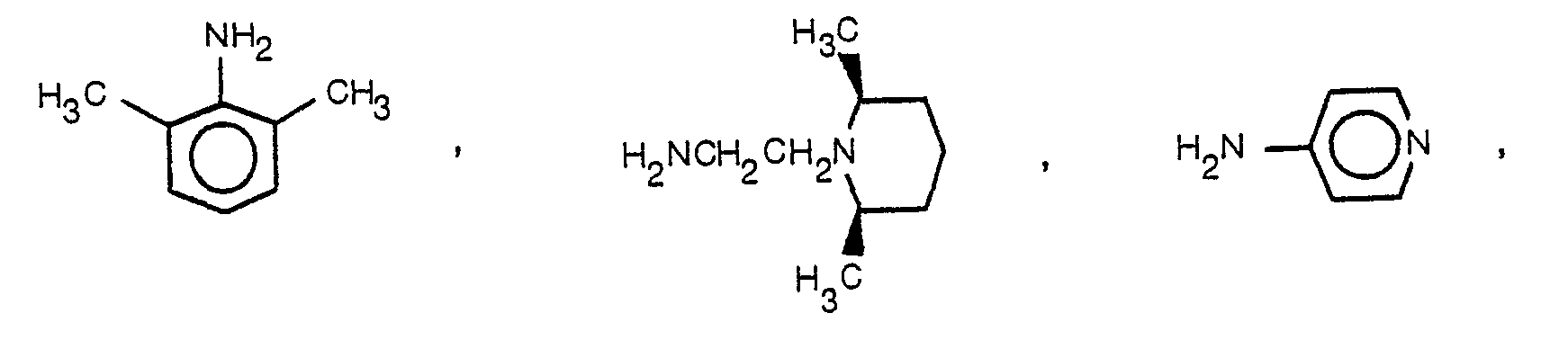
- compounds of the present invention possess structural formula I where R is -CH 2 COR, where R 1 is selected from and
- compositions for the treatment of senility or for reversing the effects of electroconvulsive shock-induced amnesia comprising a pharmaceutically effective amount of a compound having structural formula I as defined above, in combination with a pharmaceutically acceptable carrier.
- composition of the present invention can be used for treating senility or for reversing the effects of electroconvulsive shock-induced amnesia in a mammal, by administering to the mammal in need of such treatment the pharmaceutical composition.
- alkyl is meant to encompass groups derived by removal of one hydrogen atom from branched or unbranched saturated hydrocarbons of from one to four carbon atoms.
- alkoxy is meant to encompass groups of the structure -OR where R is alkyl as previously defined.
- alkenyl is meant to encompass groups derived by removal of one hydrogen atom from branched or unbranched hydrocarbons of up to four carbon atoms containing at least one carbon-carbon double bond.
- the compounds of the present invention are capable of existing both in solvated and unsolvated forms including hydrates.
- the forms solvated with such pharmaceutically acceptable solvents as water, ethanol are equivalent to the unsolvated forms for the purposes of the present invention.
- the compounds of the present invention are capable of existence in both the d- and I-isomeric forms.
- the biological activity may reside in either or both isomers.
- the present invention contemplates both isomeric forms.
- Examples of compounds falling within the scope of the present invention include the following: Dihydro-1H-pyrrolo[1,2-c]imidazo-3,5[2H,6H]-dione.
- the crude 5-isocyanatomethyl-2-pyrrolidinone, III is dissolved in a hydrocarbon solvent such as toluene, and the mixture is heated under reflux to effect the cyclization of the compound III to dihydro-1H-pyrrolo[1,2-c]imidazo-3,5-(2H,6H]-dione, IV.
- a hydrocarbon solvent such as toluene
- Compound IV is employed as an intermediate for the preparation of other compounds in accordance with the current invention by conventional chemical means.
- reaction of IV with a strong base such as sodium hydride followed by treatment with an alkyl, or alkenyl halide, converts IV into the N-alkyl, or N-alkenyl derivative of V.
- the free acid, VI is readily coupled with the desired amine to produce the acetamide in the presence of well-known activating agents such as dicyclohexylcarbodiimide (DCC), carbonyldiimidazole (CDI), or chloroformates.
- DCC dicyclohexylcarbodiimide
- CDI carbonyldiimidazole
- the compounds of the present invention in which the R group contains a basic nitrogen atom such as when R is N-[2-bis(1-methylethyl)amino]ethyl]acetamido, cis-N-[2-bis(2,6-dimethyl-1-piperidinyl)ethyl]-acetamido, or N-4-pyridinyl-acetamido- are capable of forming acid addition salts with pharmaceutically acceptable organic or inorganic acids. Suitable acids include hydrochloric, sulfuric, phosphoric, acetic, citric, oxalic, malonic, salicylic, malic, fumaric, succinic, ascorbic, maleic, mathanesulfonic.
- the salts are prepared by contacting the free base form of compounds of the present invention with a sufficient amount of the desired acid in the conventional manner.
- the salt is isolated by filtration, evaporation, or other conventional means.
- the free base may be regenerated, if desired, by contacting the salt with an aqueous solution of a base such as dilute sodium hydroxide, potassium carbonate, ammonia, sodium bicarbonate.
- the compound dihydro-1H-pyrrolo[1,2-c]imidazole-2(3H)-acetic acid is capable of forming salts with pharmaceutically acceptable metal, ammonium, or organic amine cations.
- pharmaceutically acceptable metal and amine cations for purposes of forming salts include positively charged metal ions such as those derived from sodium, potassium, calcium, magnesium, aluminum, iron, zinc, and the positively-charged ions derived from ammonia and organic nitrogeneous bases strong enough to form such cations.
- Bases useful for the formation of pharmaceutically acceptable nontoxic acid addition salts of compounds containing a carboxyl acid function form a class whose limits are readily understood by those skilled in the art.
- this class of amines can be said to comprise, in cationic form, those of the formula: wherein R a , R b , and R c independently are hydrogen, alkyl of from one to six carbon atoms, cycloalkyl of from three to six carbon atoms, aryl, aralkyl of from seven to ten carbon atoms, hydroxyalkyl of from two to four carbon atoms, or monoarylhydroxyalkyl of from eight to fifteen carbon atoms.
- any two of R a , R b , and R c may form part of a five- or six-membered nitrogen-containing heterocyclic aromatic or nonaromatic ring containing carbon or oxygen, said nitrogen-containing heterocyclic rings being unsubstituted, monosubstituted, or disubstituted with alkyl groups or from one to six carbon atoms.
- organic amine cations contemplated as falling within the scope of the present invention include mono-, di-, and trimethylammonium, mono-, di-, and triethylammonium, mono-, di-, and tripropylammonium (n-propyl and isopropyl), ethylidimethylammonium, benzylammonium, dibenzyl- ammonium, benzyldimethylammonium, cyclohexylammonium, piperidinium, morpholinium, pyrroli- dinium, 4-ethylmorpholinium, 1-n-butylpiperidinium, 2-methylpiperidinium, 1-ethyl-2-methylpiperidinium, mono-, di-, and triethanolammonium, ethyldiethanolammonium, n-butylmonoethanolammonium, tris(hydroxymethyl)methylammonium, phenylmonoethanolammonium.
- ammonium, amine, or metal salts are prepared by reaction of the appropriate acetic or propionic acid compound of this invention with an equivalent amount of an organic amine base or an inorganic base such as ammonium hydroxide, sodium hydroxide, potassium hydroxide, sodium carbonate, calcium carbonate, sodium bicarbonate in an appropriate solvent such as water or an aqueous alcohol, followed by removal of the solvent under reduced pressure.
- an organic amine base or an inorganic base such as ammonium hydroxide, sodium hydroxide, potassium hydroxide, sodium carbonate, calcium carbonate, sodium bicarbonate in an appropriate solvent such as water or an aqueous alcohol, followed by removal of the solvent under reduced pressure.
- the free acid form of the compound may be regenerated from the salts, if desired, by contacting the salt with a dilute aqueous solution of an acid such as hydrochloric.
- the compounds of the present invention may differ somewhat from the salt forms in such physical properties as melting point and solubility in polar solvents such as water, but the salts are otherwise equivalent to the free base forms for the purposes of this invention.
- inert, pharmaceutically acceptable carriers can be either solid or liquid.
- Solid form preparations include powders, tablets, dispersable granules, capsules, cachets, and suppositories.
- a solid carrier can be one or more substances which may also act as diluents, flavoring agents, solubilizers, lubricants, suspending agents, binders, or tablet disintegrating agents; it can also be encapsulating material.
- the carrier is a finely-divided solid which is in admixture with the finely divided active compound.
- the active compound is mixed with a carrier having the necessaryy binding properties in suitable proportions and compacted in the shape and size desired.
- the powders and tablets preferable contain from five to ten to about 70 percent of the active ingredient.
- Suitable solid carriers are magnesium carbonate, magnesium stearate, talc, sugar, lactose, pectin, dextrin, starch, gelatin, tragacanth, methylcellulose, sodium carboxymethylcellulose, a low melting wax, cocoa butter.
- the term "preparation" is intended to include the formulation of the active compound with encapsulating material as carrier providing a capsule in which the active component (with or without other carriers) is surrounded by carrier, which is thus in association with it.
- cachets are included. Tablets, powders, cachets, and capsules can be used as solid dosage forms suitable for oral administration.
- a low melting wax such as a mixture of fatty acid glycerides or cocoa butter is first melted, and the active ingredient is dispersed homogeneously therein as by stirring. The molten homogeneous mixture is then poured into convenient sized molds, allowed to cool, and thereby to solidify.
- Liquid form preparations include solutions, suspensions, and emulsions. As an example, it may be mentioned water or water propylene glycol solutions for parenteral injection. Liquid preparations can also be formulated in solution in aqueous polyethylene glycol solution.
- Aqueous solutions suitable for oral use can be prepared by dissolving the active component in water and adding suitable colorants, flavors, stabilizing, and thickening agents as desired.
- Aqueous suspensions suitable for oral use can be made by dispersing the finely divided active component in water with viscous material, i.e., natural or synthetic gums, resins, methylcellulose, sodium carboxymethylcellulose, and other well-known suspending agents.
- solid form preparations which are intended to be converted shortly before use, to liquid form preparations for either oral or parenteral administration.
- liquid forms include solutions, suspensions, and emulsions.
- solid form preparations are most conveniently provided in unit dose form and as such are used to provide a single liquid dosage unit.
- sufficient solid may be provided so that after conversion to liquid form, multiple individual liquid doses may be obtained by measuring predetermined volumes of the liquid from preparation as with a syringe, teaspoon, or other volumetric container.
- the solid form preparations intended to be converted to liquid form may contain in addition to the active material, flavorants, colorants, stabilizers, buffers, artificial and natural sweeteners, dispersants, thickeners, solubilizing agents.
- the liquid utilized for preparing the liquid from preparation may be water, isotonic water, ethanol, glycerine, propylene glycol, as well as mixtures thereof. Naturally, the liquid utilized will be chosen with regard to the route of administration, for example, liquid preparations containing large amounts of ethanol are not suitable for parenteral use.
- the pharmaceutical preparation is in unit dosage form.
- the preparation is subdivided into unit doses containing appropriate quantities of the active component.
- the unit dosage form can be a packaged preparation, the package containing discrete quantities of preparation, for example, packeted tablets, capsules, and powders in vials or ampoules.
- the unit dosage form can also be a capsule, cachet, or tablet itself, or it can be the appropriate number of any of these in packaged form.
- the quantity of active compound in a unit dose of preparation may be varied or adjusted from 1 mg to 500 mg, preferably to 5 to 100 mg according to the particular application and the potency of the active ingredient.
- the compositions can, if desired, also contain other compatible therapeutic agents such as 3-phenoxypyridine, N-[2-[bis(1-methylethyl)amino]ethyl]-2-oxo-1-pyrrolidineacetamide or dihydro-1H pyrrolizine-3,5(2H,6H)-dione.
- the mammalian dosage range for a 70 kg subject is from 1 to 1500 mg/kg of body weight per day or preferably 25 to 750 mg/kg of body weight per day.
- the dosages may be varied depending upon the requirements of the patient, the severity of the condition being treated, and the compound being employed. Determination of the proper dosage for a particular situation is within the skill of the art. Generally, treatment is initiated with smaller dosages which are less than the optimum dose of the compound. Thereafter the dosage is increased by small increments until the optimum effect under the circumstances is reached. For convenience, the total daily dosage may be divided and administered in portions during the day if desired.
- the effectiveness of the aforementioned compounds was determined by the test designed to show the compound's ability to reverse amnesia produced by electroconvulsive shock.
- the test is fully described in US Patent Number 4,145,347, issued March 20, 1979, and is herein incorporated by reference.
- the test compounds in the present instance were administered orally and the length of electroconvulsive shock was 1.0 second.
- Tetrahydro-3,5-dioxo-1H-pyrrolo[1,2-c]imidazole-2(3H)-acetic acid ethyl ester (1.0 g, 0.004 mol) in methanol, 150 ml, is treated with N-(N,N-diisopropylaminoethylamine (0.55 g, 0.004 mol) and the mixture is stirred at room temperature for 48 hours. The mixture is concentrated in vacuo to yield tetrahydro-3,5-dioxo-1H-pyrrolo[1,2-c]imidazole-2(3H)-acetic acid amide N-(N,N-diisopropylaminoethyl).
Landscapes
- Organic Chemistry (AREA)
- Chemical & Material Sciences (AREA)
- Health & Medical Sciences (AREA)
- Nuclear Medicine, Radiotherapy & Molecular Imaging (AREA)
- Life Sciences & Earth Sciences (AREA)
- Chemical Kinetics & Catalysis (AREA)
- General Chemical & Material Sciences (AREA)
- Medicinal Chemistry (AREA)
- Engineering & Computer Science (AREA)
- Pharmacology & Pharmacy (AREA)
- Bioinformatics & Cheminformatics (AREA)
- Animal Behavior & Ethology (AREA)
- General Health & Medical Sciences (AREA)
- Public Health (AREA)
- Veterinary Medicine (AREA)
- Pharmaceuticals Containing Other Organic And Inorganic Compounds (AREA)
- Nitrogen Condensed Heterocyclic Rings (AREA)
Abstract
Description
- This invention relates to compounds and pharmaceutical compositions useful in the treatment of senility or for reversing the effects of electro-convulsive shock-induced amnesia, a method of preparing the compounds, and of treating senility or of reversing amnesia. More particularly, this invention is concerned with certain derivatives of dihydro-1H-pyrrolo[1,2-c]-imidazolo-3,5[2H,6H]-dione having pharmacological activity for treating senility or for reversing the effects of electroconvulsive shock-induced amnesia, pharmaceutical compositions including these compounds and a method of preparing the compounds.
- The compound, 5-oxo-2-pyrrolidineacetic acid, also known in the optically active form as ecgoninic acid, is disclosed in the literature (G. L Evans, et al., J. Am. Chem. Soc., 72: 2727-2728 (1950), and E. Hardegger, et al., He/v. Chim. Acta., 19: 312-319 (1955)). This compound is employed as a starting material for the preparation of compounds in accordance with the present invention.
- German Offenlegungsschrift No. 2354102 discloses certain pyrrolo [1,2-c]imidazol-3-one derivatives having central nervous system activity including sedative and tranquilizing action. These compounds, differ, however, from the compounds of the present invention in that the latter are diones while the former possess only a single nuclear ketone function.
- German Offenlegungsschrift No. 2354086 discloses certain pyrrolo[1,2-c]-imidazoldiones having tranquilizing and anxiolytic activity. These compounds differ, however, from the compounds of the present invention in that the latter are 3,5-diones while the former are 1,3-diones of the tetrahydropyrrolo[1,2-c]-imidazole nucleus.
- In its broadest aspect, the present invention provides cognition activating compounds of formula I:


- In one subgeneric aspect, compounds of the present invention possess structural formula I where R is alkyl of from one to four carbon atoms, alkenyl of up to four carbon atoms, or phenylmethyl.
- In another subgeneric aspect, compounds of the present invention possess structural formula I where R is -CH2COR, where R1 is alkoxy of from one to four carbon atoms, phenylmethoxyl, or -OH and the pharmaceutically acceptable salts thereof.
- In a further subgeneric aspect, compounds of the present invention possess structural formula I where R is ―CH2COR1 where R1 is -NR2R3 where R2 and R3 are independently hydrogen or alkyl of from one to four carbon atoms.
- In another subgeneric aspect, compounds of the present invention possess structural formula I where R is -CH2COR, where R1 is selected from


- In another aspect of the present invention, there are provided pharmaceutical compositions for the treatment of senility or for reversing the effects of electroconvulsive shock-induced amnesia comprising a pharmaceutically effective amount of a compound having structural formula I as defined above, in combination with a pharmaceutically acceptable carrier.
- The composition of the present invention can be used for treating senility or for reversing the effects of electroconvulsive shock-induced amnesia in a mammal, by administering to the mammal in need of such treatment the pharmaceutical composition.
- As used throughout this specification and the appended claims, the term "alkyl" is meant to encompass groups derived by removal of one hydrogen atom from branched or unbranched saturated hydrocarbons of from one to four carbon atoms.
- The term "alkoxy" is meant to encompass groups of the structure -OR where R is alkyl as previously defined.
- The term "alkenyl" is meant to encompass groups derived by removal of one hydrogen atom from branched or unbranched hydrocarbons of up to four carbon atoms containing at least one carbon-carbon double bond.
- The compounds of the present invention are capable of existing both in solvated and unsolvated forms including hydrates. In general, the forms solvated with such pharmaceutically acceptable solvents as water, ethanol are equivalent to the unsolvated forms for the purposes of the present invention.
- Further, the compounds of the present invention are capable of existence in both the d- and I-isomeric forms. The biological activity may reside in either or both isomers. The present invention contemplates both isomeric forms.
- Examples of compounds falling within the scope of the present invention include the following: Dihydro-1H-pyrrolo[1,2-c]imidazo-3,5[2H,6H]-dione.
- Tetrahydro-3,5-dioxo-1H-pyrrolo[1,2-c]imidazole-2(3H)-acetic acid and the pharmaceutically acceptable salts thereof.
- Tetrahydro-3,5-dioxo-1H-pyrrolo[1,2-c]imidazole-2(3H)-acetic acid methyl ester.
- Tetrahydro-3,5-dioxo-1H-pyrrolo[1,2-c]imidazole-2(3H)-acetic acid ethyl ester.
- Tetrahydro-3,5-dioxo-1H-pyrrolo[1,2-c]imidazole-2(3H)-acetic acid phenylmethyl ester.
- Tetrahydro-3,5-dioxo-1H-pyrrolo[1,2-c]imidazole-2(3H)-acetamide.
- Tetrahydro-N-methyl-3,5-dioxo-1H-pyrrolo[1,2-c]imidazole-2(3H)-acetamide.
- Tetrahydro-N,N-dimethyl-3,5-dioxo-1H-pyrrolo[1,2-c]imidazole-2(3H)-acetamide.
- Tetrahydro-N-(2,6-dimethylphenyl)-3,5-dioxo-1H-pyrrolo(1,2-c]imidazole-2(3H)-acetamide.
- N-[2-[bis(1-Methylethyl)amino]ethyl]tetrahydro-3,5-dioxo-1H-pyrrolo[1,2-c]imidazole-2(3H)-acetamide and the pharmaceutically acceptable salts thereof.
- cis-N-[2-(2,6-Dimethy-1-piperidinyl)ethyl]-tetrahydro-3,5-dioxo-1H-pyrrolo[1,2-c]imidazole-2(3H)-acetamide.
- Tetrahydro-3,5-dioxo-N-4-pyridinyl-1H-pyrrolo[1,2-c]imidazole-2(3H)acetamide and the pharmaceutically acceptable salts thereof.
- Compounds of the present invention are prepared in accordance with the general reaction scheme illustrated below.

- The crude 5-isocyanatomethyl-2-pyrrolidinone, III, is dissolved in a hydrocarbon solvent such as toluene, and the mixture is heated under reflux to effect the cyclization of the compound III to dihydro-1H-pyrrolo[1,2-c]imidazo-3,5-(2H,6H]-dione, IV.
- Compound IV is employed as an intermediate for the preparation of other compounds in accordance with the current invention by conventional chemical means. For example, reaction of IV with a strong base such as sodium hydride, followed by treatment with an alkyl, or alkenyl halide, converts IV into the N-alkyl, or N-alkenyl derivative of V.
- Reaction of compound IV with a strong base such as sodium hydride, followed by treatment with a haloacetic ester produces esters of formula VII. The phenyl methyl ester, VII (Ri = -OCH2phenyl), is readily converted to the free acid, VI (Ri = -OH) by conventional hydrogenolysis. Reaction of the ester compounds, VII, with ammonia or the appropriate amine in a conventional ammonolysis reaction converts VII to the corresponding acetamides, VIII.
- Alternatively, the free acid, VI, is readily coupled with the desired amine to produce the acetamide in the presence of well-known activating agents such as dicyclohexylcarbodiimide (DCC), carbonyldiimidazole (CDI), or chloroformates.
- The compounds of the present invention in which the R group contains a basic nitrogen atom, such as when R is N-[2-bis(1-methylethyl)amino]ethyl]acetamido, cis-N-[2-bis(2,6-dimethyl-1-piperidinyl)ethyl]-acetamido, or N-4-pyridinyl-acetamido- are capable of forming acid addition salts with pharmaceutically acceptable organic or inorganic acids. Suitable acids include hydrochloric, sulfuric, phosphoric, acetic, citric, oxalic, malonic, salicylic, malic, fumaric, succinic, ascorbic, maleic, mathanesulfonic.
- The salts are prepared by contacting the free base form of compounds of the present invention with a sufficient amount of the desired acid in the conventional manner. The salt is isolated by filtration, evaporation, or other conventional means. The free base may be regenerated, if desired, by contacting the salt with an aqueous solution of a base such as dilute sodium hydroxide, potassium carbonate, ammonia, sodium bicarbonate.
- Likewise, the compound dihydro-1H-pyrrolo[1,2-c]imidazole-2(3H)-acetic acid, by virtue of its carboxylic acid functionality, is capable of forming salts with pharmaceutically acceptable metal, ammonium, or organic amine cations. Examples of pharmaceutically acceptable metal and amine cations for purposes of forming salts include positively charged metal ions such as those derived from sodium, potassium, calcium, magnesium, aluminum, iron, zinc, and the positively-charged ions derived from ammonia and organic nitrogeneous bases strong enough to form such cations. Bases useful for the formation of pharmaceutically acceptable nontoxic acid addition salts of compounds containing a carboxyl acid function form a class whose limits are readily understood by those skilled in the art.
- Merely for illustration, this class of amines can be said to comprise, in cationic form, those of the formula:

- Specific examples of organic amine cations contemplated as falling within the scope of the present invention include mono-, di-, and trimethylammonium, mono-, di-, and triethylammonium, mono-, di-, and tripropylammonium (n-propyl and isopropyl), ethylidimethylammonium, benzylammonium, dibenzyl- ammonium, benzyldimethylammonium, cyclohexylammonium, piperidinium, morpholinium, pyrroli- dinium, 4-ethylmorpholinium, 1-n-butylpiperidinium, 2-methylpiperidinium, 1-ethyl-2-methylpiperidinium, mono-, di-, and triethanolammonium, ethyldiethanolammonium, n-butylmonoethanolammonium, tris(hydroxymethyl)methylammonium, phenylmonoethanolammonium.
- The ammonium, amine, or metal salts are prepared by reaction of the appropriate acetic or propionic acid compound of this invention with an equivalent amount of an organic amine base or an inorganic base such as ammonium hydroxide, sodium hydroxide, potassium hydroxide, sodium carbonate, calcium carbonate, sodium bicarbonate in an appropriate solvent such as water or an aqueous alcohol, followed by removal of the solvent under reduced pressure.
- The free acid form of the compound may be regenerated from the salts, if desired, by contacting the salt with a dilute aqueous solution of an acid such as hydrochloric.
- The compounds of the present invention may differ somewhat from the salt forms in such physical properties as melting point and solubility in polar solvents such as water, but the salts are otherwise equivalent to the free base forms for the purposes of this invention.
- For preparing pharmaceutical compositions from the compounds described by this invention, inert, pharmaceutically acceptable carriers can be either solid or liquid. Solid form preparations include powders, tablets, dispersable granules, capsules, cachets, and suppositories. A solid carrier can be one or more substances which may also act as diluents, flavoring agents, solubilizers, lubricants, suspending agents, binders, or tablet disintegrating agents; it can also be encapsulating material. In powders, the carrier is a finely-divided solid which is in admixture with the finely divided active compound. In the tablet, the active compound is mixed with a carrier having the necesary binding properties in suitable proportions and compacted in the shape and size desired. The powders and tablets preferable contain from five to ten to about 70 percent of the active ingredient. Suitable solid carriers are magnesium carbonate, magnesium stearate, talc, sugar, lactose, pectin, dextrin, starch, gelatin, tragacanth, methylcellulose, sodium carboxymethylcellulose, a low melting wax, cocoa butter. The term "preparation" is intended to include the formulation of the active compound with encapsulating material as carrier providing a capsule in which the active component (with or without other carriers) is surrounded by carrier, which is thus in association with it. Similarly, cachets are included. Tablets, powders, cachets, and capsules can be used as solid dosage forms suitable for oral administration.
- For preparing suppositories, a low melting wax such as a mixture of fatty acid glycerides or cocoa butter is first melted, and the active ingredient is dispersed homogeneously therein as by stirring. The molten homogeneous mixture is then poured into convenient sized molds, allowed to cool, and thereby to solidify.
- Liquid form preparations include solutions, suspensions, and emulsions. As an example, it may be mentioned water or water propylene glycol solutions for parenteral injection. Liquid preparations can also be formulated in solution in aqueous polyethylene glycol solution. Aqueous solutions suitable for oral use can be prepared by dissolving the active component in water and adding suitable colorants, flavors, stabilizing, and thickening agents as desired. Aqueous suspensions suitable for oral use can be made by dispersing the finely divided active component in water with viscous material, i.e., natural or synthetic gums, resins, methylcellulose, sodium carboxymethylcellulose, and other well-known suspending agents.
- Also included are solid form preparations which are intended to be converted shortly before use, to liquid form preparations for either oral or parenteral administration. Such liquid forms include solutions, suspensions, and emulsions. These particular solid form preparations are most conveniently provided in unit dose form and as such are used to provide a single liquid dosage unit. Alternatively, sufficient solid may be provided so that after conversion to liquid form, multiple individual liquid doses may be obtained by measuring predetermined volumes of the liquid from preparation as with a syringe, teaspoon, or other volumetric container. When multiple liquid doses are so prepared, it is preferred to maintain the unused portion of said liquid doses at low temperature (i.e., under refrigeration) in order to retard possible decomposition. The solid form preparations intended to be converted to liquid form may contain in addition to the active material, flavorants, colorants, stabilizers, buffers, artificial and natural sweeteners, dispersants, thickeners, solubilizing agents. The liquid utilized for preparing the liquid from preparation may be water, isotonic water, ethanol, glycerine, propylene glycol, as well as mixtures thereof. Naturally, the liquid utilized will be chosen with regard to the route of administration, for example, liquid preparations containing large amounts of ethanol are not suitable for parenteral use.
- Preferably, the pharmaceutical preparation is in unit dosage form. In such form, the preparation is subdivided into unit doses containing appropriate quantities of the active component. The unit dosage form can be a packaged preparation, the package containing discrete quantities of preparation, for example, packeted tablets, capsules, and powders in vials or ampoules. The unit dosage form can also be a capsule, cachet, or tablet itself, or it can be the appropriate number of any of these in packaged form.
- The quantity of active compound in a unit dose of preparation may be varied or adjusted from 1 mg to 500 mg, preferably to 5 to 100 mg according to the particular application and the potency of the active ingredient. The compositions can, if desired, also contain other compatible therapeutic agents such as 3-phenoxypyridine, N-[2-[bis(1-methylethyl)amino]ethyl]-2-oxo-1-pyrrolidineacetamide or dihydro-1H pyrrolizine-3,5(2H,6H)-dione.
- In therapeutic use as cognition activators, the mammalian dosage range for a 70 kg subject is from 1 to 1500 mg/kg of body weight per day or preferably 25 to 750 mg/kg of body weight per day. The dosages, however, may be varied depending upon the requirements of the patient, the severity of the condition being treated, and the compound being employed. Determination of the proper dosage for a particular situation is within the skill of the art. Generally, treatment is initiated with smaller dosages which are less than the optimum dose of the compound. Thereafter the dosage is increased by small increments until the optimum effect under the circumstances is reached. For convenience, the total daily dosage may be divided and administered in portions during the day if desired.
- The effectiveness of the aforementioned compounds was determined by the test designed to show the compound's ability to reverse amnesia produced by electroconvulsive shock. The test is fully described in US Patent Number 4,145,347, issued March 20, 1979, and is herein incorporated by reference. The test compounds in the present instance were administered orally and the length of electroconvulsive shock was 1.0 second.
- The following criteria are used in interpreting the percent of amnesia reversal scores: 40 percent or more (active = A), 25 to 39 percent (borderline = C), and 0 to 24 percent (inactive = N).
- The table below indicates the percent amnesia reversal determined for representative examples of compounds in accordance with the present invention when administered orally to standard laboratory animals in the test referenced above.

- The following preparative examples are provided to enable one skilled in the art to practice the present invention. The examples are merely illustrative of the present invention.
- A solution of 5-oxo-2-pyrrolidineacetic acid, 13.3 g, 0.09 mol) in methylene chloride, 250 ml, is stirred and is treated with diphenylphosphoryl azide (33 g, 0.12 mol) followed by triethylamine (11 g, 0.11 mol). The solution is stirred 16 hours and is concentrated in vacuo. The resulting yellow oil (5-oxo-pyrrolidine-2-methylisocyanate) is dissolved in toluene, 100 ml, and the solution is heated at 80°C for six hours. The product forms as a white precipitate and is isolated by filtration. After sublimation at 170°C and 0.5 mm pressure, dihydro-1H-pyrrolo[1,2-c]imidazo-3,5(2H,6H)-dione has a mp of 223-225°C.
- A slurry of dihydro-1H pyrrolo[1,2-c]imidazo-3,5(2H,6H)-dione (4.3 g, 0.03 mol) in tetrahydrofuran, 250 ml, is treated with a 50% sodium hydride in mineral oil suspension (1.73 g, 0.036 mol). After H2 evolution is complete, ethyl bromoacetate (6.0 g, 0.036 mol) is added and the mixture is refluxed for one hour. The mixture is filtered and concentrated in vacuo. The residue is treated with anhydrous diethyl ether and filtered. After purification using flash chromatography over silica gel, elution with 10% methanol: methylene chloride, tetrahydro-3,5-dioxo-1H-pyrrolo[1,2-c]imidazole-2(3H)-acetic acid ethyl ester has a mp of 99-101°C.
- A slurry of dihydro-1H-pyrrolo[1,2-c]imidazo-3,5(2H,6H)-dione (4.4 g, 0.03 mol) in tetrahydrofuran, 250 ml, is treated with a 50% sodium hydride in mineral oil suspension (1.73 g, 0.036 mol). After H2 evolution is complete, methyl bromoacetate (5.5 g, 0.036 mol) is added and the mixture is refluxed for one hour. The mixture is filtered, concentrated in vacuo. The residue is treated with anhydrous diethyl ether and filtered. Purification using flash chromatography over silica gel, elution with 10% methanol:methylene chloride yields tetrahydro-3,5-dioxo-1H-pyrrolo[1,2-c]imidazole-2(3H)-acetic acid methyl ester.
- A slurry of dihydro-1H-pyrrolo[1,2-c]imidazo-3,5(2H,6H)-dione (4.4 g, 0.03 mol) in tetrahydrofuran, 250 ml, is treated with a 50% sodium hydride in mineral oil suspension (1.73 g, 0.036 mol). After H2 evolution is complete, benzyl bromoacetate (8.3 g, 0.036 mol) is added and the mixture is refluxed for one hour. The mixture is filtered, concentrated in vacuo. The residue is treated with anhydrous diethyl ether and filtered. Purification using flash chromatography over silica gel, elution with 10% methanol: methylene chloride yields tetrahydro-3,5-dioxo-1H-pyrrolo[1,2-c]imidazole-2(3H)-acetic acid benzyl ester.
- A solution of tetrahydro-3,5-dioxo-1H-pyrrolo[1,2-c]imidazole-3,5(2H)-acetic acid benzyl ester (2.9 g, 0.01 mol) in tetrahydrofuran, 250 ml, is treated with H. gas in the presence of a Pd/C catalyst. After H2 uptake is complete, the solution is filtered through filter aid and concentrated in vacuo to yield tetrahydro-3,5-dioxo-1H-pyrrolo[1,2-c]imidazole-2(3H)-acetic acid.
- A slurry of dihydro-1H pyrrolo[1,2-c]imidazo-3,5(2H,6H)-dione (8.8 g, 0.06 mol) in tetrahydrofuran, 250 ml, is treated with a 50% sodium hydride in mineral oil suspension (3.5 g, 0.072 mol). After H2 evolution is complete, iodomethane (10.2 g, 0.072 mol) is added and the mixture is refluxed for one hour. The mixture is filtered, concentrated in vacuo. The residue is treated with anhydrous diethyl ether and filtered. Purification using flash chromatography over silica gel, elution with 10% methanol:methylene chloride yields 2(3H)-methyl-tetrahydro-3,5-dioxo-1H-pyrrolo[1,2-c]imidazole.
- A slurry of dihydro-1H-pyrrolo[1,2-c]imidazo-3,5(2H,6H)-dione (8.8 g, 0.06 mol) in tetrahydrofuran, 250 ml, is treated with a 50% sodium hydride in mineral oil suspension (35 g, 0.072 mol). After H2 evolution is complete, iodoethane (11.3 g, 0.072 mol) is added and the mixture is refluxed for one hour. The mixture is filtered, concentrated in vacuo. The residue is treated with anhydrous diethyl ether and filtered. Purification using flash chromatography over silica gel, elution with 10% methanol:methylene chloride yields 2(3H)-ethyl-tetrahydro-3,5-dioxo-1H-pyrrolo[1,2-c]imidazole.
- A slurry of dihydro-1H-pyrrolo[1,2-c]imidazo-3,5(2H,6H)-dione (13.2 g, 0.09 mol) in tetrahydrofuran, 250 ml, is treated with a 50% sodium hydride in mineral oil suspension (5.2 g, 0.09 mol). After H2 evolution is complete, allylchloride (6.9 g, 0.09 mol) is added and the mixture is refluxed for one hour. The mixture is filtered, concentrated in vacuo. The residue is treated with anhydrous diethyl ether and filtered. Purification using flash chromatography over silica gel, elution with 10% methanol:methylene chloride yields 2(3H)-allyl-tetrahydro-3,5-dioxo-1H pyrrolo[1,2-c]imidazole.
- A slurry of dihydro-1H pyrrolo[1,2-c]imidazo-3,5(2H,6H)-dione (4.4 g, 0.03 mol) in tetrahydrofuran, 250 ml, is treated with a 50% sodium hydride in mineral oil suspension (1.73 g, 0.036 mol). After H2 evolution is complete, phenylmethylchloride (4.6 g, 0.036 mol) is added and the mixture is refluxed for one hour. The mixture is filtered, concentrated in vacuo. The residue is treated with anhydrous diethyl ether and filtered. Purification using flash chromatography over silica gel, elution with 10% methanol:methylene chloride yields 2(3H)-phenylmethyl-tetrahydro-3,5-dioxo-1H-pyrrolo[1,2-c]imidazole.
- A solution of tetrahydro-3,5-dioxo-1H-pyrrolo[1,2-c]imidazole-2(3H)-acetic acid methyl ester (1.0 g, 0.004 mol) in methanol, 150 ml, is saturated with anhydrous ammonia. The mixture is allowed to stand 24 hours at room temperature. The solution is concentrated at reduced pressure to yield tetrahydro-3,5-dioxo-1H-pyrrolo[1,2-c]imidazole-2(3H)-acetic acid amide.
- Tetrahydro-3,5-dioxo-1H-pyrrolo[1,2-c]imidazole-2(3H)-acetic acid ethyl ester (1.0 g, 0.004 mol) in methanol, 150 ml, is treated with N-(N,N-diisopropylaminoethylamine (0.55 g, 0.004 mol) and the mixture is stirred at room temperature for 48 hours. The mixture is concentrated in vacuo to yield tetrahydro-3,5-dioxo-1H-pyrrolo[1,2-c]imidazole-2(3H)-acetic acid amide N-(N,N-diisopropylaminoethyl).
- A mixture oftetrahydro-3,5-dioxo-1H-pyrrolo[1,2-c]imidazole-2(3H)-acetic acid ethyl ester (1.0 g, 0.004 mol) and cis-2,6-dimethylpiperidinoethylamine (0.63 g, 0.004 mol) in methanol, 150 ml, is stirred at room temperature for 72 hours. The mixture is concentrated in vacuo to yield after purification by chromatography on Si02 (elution with 10% methanol saturated with gaseous ammonia in methylene chloride) tetrahydro-3,5-dioxo-1H-pyrrolo[1,2-c]imidazole-2(3H)-acetic acid amide N-(cis-2,6-dimethylpiperidinoethyl).
- A solution of tetrahydro-3,5-dioxo-1H-pyrrolo[1,2-c]imidazole-2(3H)-acetic acid (1.0 g, 0.005 mol) and triethylamine (0.505 g, 0.005 mol) in methylene chloride, 150 ml, is treated with isobutyl chloroformate (0.683 g, 0.005 mol) with stirring at 0°C until the free acid is converted into the activated mixed anhydride. The solution is filtered to remove the triethylamine hydrochloride and the filtrate is treated with 4-aminopyridine (0.47 g, 0.005 mol). The mixture is stirred at 24 hours at room temperature and concentrated in vacuo to yield after purification by chromatography over silica gel (elution with 10% methanol saturated with anhydrous gaseous ammonia in methylene chloride) tetrahydro-3,5-dioxo-1H-pyrrolo[1,2-c]imidazole-2(3H)-acetic acid amide N-(4-pyridinyl).
- A solution of tetrahydro-3,5-dioxo-lH-pyrrolo[1,2-c]-2(3H)-acetic acid (1.0 g, 0.005 mol) and dicyclohexyl carbodimide (1.04 g, 0.005 mol) in methylene chloride, 150 ml, is stirred and treated with 2,6-dimethylaniline (0.6 g, 0.005 mol) at 0°C. The mixture is allowed to warm to 25°C and filtered to remove dicyclohexylurea. The filtrate is concentrated in vacuo to yield after purification by chromatography over silica gel (elution with 10% methane in methylene chloride) tetrahydro-3,5-dioxo-1H-pyrrolo[1,2-c]imidazole-2(3H)-acetic acid amide N-(2,6-dimethylphenyl].
Claims (9)




Priority Applications (1)
| Application Number | Priority Date | Filing Date | Title |
|---|---|---|---|
| AT85305959T ATE41662T1 (en) | 1984-08-24 | 1985-08-22 | DERIVATIVES OF DIHYDRO-1H-PYRROLO(1,2-C>IMIDAZOLE3,5-DIONE FOR PERCEPTION ACTIVATION. |
Applications Claiming Priority (2)
| Application Number | Priority Date | Filing Date | Title |
|---|---|---|---|
| US06/643,989 US4582838A (en) | 1984-08-24 | 1984-08-24 | Derivatives of dihydro-1H-pyrrolo[1,2-c]imidazol-3,5-dione as cognition activators |
| US643989 | 1984-08-24 |
Publications (2)
| Publication Number | Publication Date |
|---|---|
| EP0174136A1 EP0174136A1 (en) | 1986-03-12 |
| EP0174136B1 true EP0174136B1 (en) | 1989-03-22 |
Family
ID=24582983
Family Applications (1)
| Application Number | Title | Priority Date | Filing Date |
|---|---|---|---|
| EP85305959A Expired EP0174136B1 (en) | 1984-08-24 | 1985-08-22 | Derivatives of dihydro-1h-pyrrolo(1,2-c)imidazol-3,5-dione as cognition activators |
Country Status (5)
| Country | Link |
|---|---|
| US (1) | US4582838A (en) |
| EP (1) | EP0174136B1 (en) |
| JP (1) | JPS6157586A (en) |
| AT (1) | ATE41662T1 (en) |
| DE (1) | DE3568987D1 (en) |
Families Citing this family (6)
| Publication number | Priority date | Publication date | Assignee | Title |
|---|---|---|---|---|
| IT1233860B (en) * | 1988-02-08 | 1992-04-21 | Isf Spa | PERHYDROAZACYCLA ALCA (1,2-A) IMIDAZOLE BY NOOTROPIC ACTIVITY |
| US5200406A (en) * | 1988-02-08 | 1993-04-06 | I.S.F. Societa Per Azioni | Pharmaceutically useful 2,5-dioxo-1H-octahydroimidazo[1,2-A]azepines |
| US4937258A (en) * | 1989-09-12 | 1990-06-26 | Berlex Laboratories, Inc. | Pyrrolo[1,2-c]imidazolone derivatives as PDE inhibitors |
| JPH04103585A (en) * | 1990-08-24 | 1992-04-06 | Nisshin Flour Milling Co Ltd | Compound having pyrrolidine ring |
| ITMI20030573A1 (en) * | 2003-03-24 | 2004-09-25 | Nikem Research Srl | NOOTROPIC ACTION COMPOUNDS, THEIR PREPARATION, |
| JP4832212B2 (en) * | 2006-08-17 | 2011-12-07 | 富士通株式会社 | Card, housing and card mounting structure |
Family Cites Families (2)
| Publication number | Priority date | Publication date | Assignee | Title |
|---|---|---|---|---|
| GB1393230A (en) * | 1972-11-03 | 1975-05-07 | Lepetit Spa | Pyrrolo-1,2-c imidazol-3-one derivatives |
| AR201011A1 (en) * | 1972-11-03 | 1975-02-06 | Lepetit Spa | PROCEDURE TO PREPARE A PIRROLO (1,2-C) IMIDAZOLDIONA |
-
1984
- 1984-08-24 US US06/643,989 patent/US4582838A/en not_active Expired - Fee Related
-
1985
- 1985-08-22 AT AT85305959T patent/ATE41662T1/en not_active IP Right Cessation
- 1985-08-22 EP EP85305959A patent/EP0174136B1/en not_active Expired
- 1985-08-22 DE DE8585305959T patent/DE3568987D1/en not_active Expired
- 1985-08-23 JP JP60184347A patent/JPS6157586A/en active Pending
Also Published As
| Publication number | Publication date |
|---|---|
| JPS6157586A (en) | 1986-03-24 |
| DE3568987D1 (en) | 1989-04-27 |
| US4582838A (en) | 1986-04-15 |
| EP0174136A1 (en) | 1986-03-12 |
| ATE41662T1 (en) | 1989-04-15 |
Similar Documents
| Publication | Publication Date | Title |
|---|---|---|
| KR100244626B1 (en) | Piperazine derivatives as 5-ht1a antagonists | |
| SU1320207A1 (en) | Dextrorotatory enanthiomer or (r)-alpha-ethyl-2-oxo-1-pyrrolidineacetamide possessing mnesic activity | |
| US4755517A (en) | Derivatives of xanthine, pharmaceutical compositions and methods of use therefor | |
| CA1317597C (en) | 3,6-dihydro-1,5(2h)-pyrimidinecarboxylic acid esters | |
| DE4427838A1 (en) | Condensed azepine derivatives, pharmaceutical compositions containing them and methods for their preparation | |
| JPH0643406B2 (en) | 1-acyl-3- [4- (2-pyrimidinyl) -1-piperazinylpropanes | |
| US4582838A (en) | Derivatives of dihydro-1H-pyrrolo[1,2-c]imidazol-3,5-dione as cognition activators | |
| US3860606A (en) | Tetrahydro-imidazo-dibenzo-oxazepines, thiazepines and-diazepines | |
| US4547519A (en) | Tetrahydro-3,5-dioxo-1H-pyrrolizine-7a(5H)-carboxylic acid and benzyl esters and amides thereof and their use in reversing amnesia | |
| EP0170460B1 (en) | Derivatives of N-[2-(tetrahydro-3,5-dioxo-1H-pyrrolizin-7a(5H)-yl)ethyl]amine | |
| US4525476A (en) | N-[1-oxo-3-(5-oxo-2-pyrrolidinyl)propyl]-alpha-aminoacids and derivatives as cognition activators | |
| US4559358A (en) | 5-Oxo-2-pyrrolidinepropanoic acid and derivatives for reversing electroshock amnesia | |
| US4551470A (en) | Hexahydro-3,5-dioxo-1H-pyrrolizine-2-carboxylic acid and derivatives, and use for reversing electroconvulsive shock amnesia | |
| US4621097A (en) | Saturated cycloalkyl[c] pyrrole-2(1H)-acetic acid amides and derivatives thereof | |
| US4454327A (en) | 5-Oxo-2,2-pyrrolidinedipropanoic acid and ester derivatives thereof | |
| FI76794B (en) | FOERFARANDE FOER FRAMSTAELLNING AV NYA TERAPEUTISKT ANVAENDBARA SPIROTIAZOLIDINDIONDERIVAT. | |
| EP0040332B1 (en) | Antihypertensive lactams | |
| US5741907A (en) | Pharmacologically active enantiomers | |
| US4758585A (en) | Saturated cycloalkyl (B) pyrrol-1 (2H)- acetic acid amides and derivatives thereof | |
| US4607043A (en) | Tetrahydro-3,5-dioxo-1H-pyrrolizine-7a(5H)-carboxylic acids and derivatives as cognition activators | |
| US4590204A (en) | 5-oxo-2,2-pyrrolidinedipropanoic acid and derivatives as cognition activators | |
| EP0354885A1 (en) | Novel derivatives of 6,11-dihydro-dibenzo[c,f][1,2,5]-thiadiazepine 5,5-dioxide, salts thereof and appropriate processes for the preparation thereof | |
| US4548947A (en) | 1-(Substituted-aryl)-dihydro-1H-pyrrolizine-3,5-[2H,6H-]diones and use for reversing amnesia | |
| US3538113A (en) | N-substituted phthalimidines | |
| US4584313A (en) | (Substituted-phenyl)-5-oxo-2-pyrrolidinepropanoic acids and esters thereof, and use for reversing electroconvulsive shock-induced amnesia |
Legal Events
| Date | Code | Title | Description |
|---|---|---|---|
| PUAI | Public reference made under article 153(3) epc to a published international application that has entered the european phase |
Free format text: ORIGINAL CODE: 0009012 |
|
| AK | Designated contracting states |
Kind code of ref document: A1 Designated state(s): AT BE CH DE FR GB IT LI LU NL SE |
|
| 17P | Request for examination filed |
Effective date: 19860818 |
|
| 17Q | First examination report despatched |
Effective date: 19880426 |
|
| ITF | It: translation for a ep patent filed | ||
| GRAA | (expected) grant |
Free format text: ORIGINAL CODE: 0009210 |
|
| AK | Designated contracting states |
Kind code of ref document: B1 Designated state(s): AT BE CH DE FR GB IT LI LU NL SE |
|
| REF | Corresponds to: |
Ref document number: 41662 Country of ref document: AT Date of ref document: 19890415 Kind code of ref document: T |
|
| REF | Corresponds to: |
Ref document number: 3568987 Country of ref document: DE Date of ref document: 19890427 |
|
| ET | Fr: translation filed | ||
| PGFP | Annual fee paid to national office [announced via postgrant information from national office to epo] |
Ref country code: LU Payment date: 19890705 Year of fee payment: 5 |
|
| PGFP | Annual fee paid to national office [announced via postgrant information from national office to epo] |
Ref country code: AT Payment date: 19890727 Year of fee payment: 5 |
|
| PGFP | Annual fee paid to national office [announced via postgrant information from national office to epo] |
Ref country code: GB Payment date: 19890731 Year of fee payment: 5 |
|
| PGFP | Annual fee paid to national office [announced via postgrant information from national office to epo] |
Ref country code: SE Payment date: 19890802 Year of fee payment: 5 |
|
| PGFP | Annual fee paid to national office [announced via postgrant information from national office to epo] |
Ref country code: FR Payment date: 19890821 Year of fee payment: 5 |
|
| PGFP | Annual fee paid to national office [announced via postgrant information from national office to epo] |
Ref country code: DE Payment date: 19890830 Year of fee payment: 5 |
|
| ITTA | It: last paid annual fee | ||
| PG25 | Lapsed in a contracting state [announced via postgrant information from national office to epo] |
Ref country code: LU Free format text: LAPSE BECAUSE OF NON-PAYMENT OF DUE FEES Effective date: 19890831 |
|
| PGFP | Annual fee paid to national office [announced via postgrant information from national office to epo] |
Ref country code: NL Payment date: 19890831 Year of fee payment: 5 |
|
| PGFP | Annual fee paid to national office [announced via postgrant information from national office to epo] |
Ref country code: CH Payment date: 19891002 Year of fee payment: 5 |
|
| PGFP | Annual fee paid to national office [announced via postgrant information from national office to epo] |
Ref country code: BE Payment date: 19891115 Year of fee payment: 5 |
|
| PLBE | No opposition filed within time limit |
Free format text: ORIGINAL CODE: 0009261 |
|
| STAA | Information on the status of an ep patent application or granted ep patent |
Free format text: STATUS: NO OPPOSITION FILED WITHIN TIME LIMIT |
|
| 26N | No opposition filed | ||
| PG25 | Lapsed in a contracting state [announced via postgrant information from national office to epo] |
Ref country code: GB Effective date: 19900822 Ref country code: AT Effective date: 19900822 |
|
| PG25 | Lapsed in a contracting state [announced via postgrant information from national office to epo] |
Ref country code: SE Effective date: 19900823 |
|
| PG25 | Lapsed in a contracting state [announced via postgrant information from national office to epo] |
Ref country code: LI Effective date: 19900831 Ref country code: CH Effective date: 19900831 Ref country code: BE Effective date: 19900831 |
|
| BERE | Be: lapsed |
Owner name: WARNER-LAMBERT CY Effective date: 19900831 |
|
| PG25 | Lapsed in a contracting state [announced via postgrant information from national office to epo] |
Ref country code: NL Effective date: 19910301 |
|
| NLV4 | Nl: lapsed or anulled due to non-payment of the annual fee | ||
| GBPC | Gb: european patent ceased through non-payment of renewal fee | ||
| PG25 | Lapsed in a contracting state [announced via postgrant information from national office to epo] |
Ref country code: FR Effective date: 19910430 |
|
| REG | Reference to a national code |
Ref country code: CH Ref legal event code: PL |
|
| PG25 | Lapsed in a contracting state [announced via postgrant information from national office to epo] |
Ref country code: DE Effective date: 19910501 |
|
| REG | Reference to a national code |
Ref country code: FR Ref legal event code: ST |
|
| EUG | Se: european patent has lapsed |
Ref document number: 85305959.0 Effective date: 19910410 |